

Hello and welcome aboard this report, which marks our return to the north of this immense country that is Argentina. At the same time, it signals the end of our journey through Patagonia and as well the beginning of the end for our vacation…
Introduction
It was in the autumn of 2024 that a trip already postponed several times was finally able to be organized. My father has crossed the milestone of turning 70 the previous summer, and it was more than time for him to enjoy his gift: a trip to Patagonia! There would therefore be four of us on this journey: my two parents, my girlfriend and I.
The first small challenge in planning the trip and the routing was that we were not departing from the same city. My parents were leaving from Grenoble near the Alps, while my partner and I were departing from Toulouse South-west of France.
Several options were available to reach Buenos Aires. Air France offered flights with convenient schedules, but fares of €1,400 without checked baggage were rather discouraging when departing from regional airports. Iberia proposed an interesting alternative, but the return schedules to Lyon were not ideal, and the fare without checked baggage was still around €1,100.
Out of curiosity, we looked at departures from Paris and came across a very attractive offer from Air Europa at €783 round trip, with convenient schedules for those commuting from other french cities. Departure from Paris Orly was on Saturday late afternoon, with a return on Sunday morning at 9:30 a.m. Fares including checked baggage were, unsurprisingly, about sixty euros more expensive, but still reasonable.
For me personally, this was particularly appealing as I hold SkyTeam Elite Plus status, of which Air Europa is still a member. This also allowed us all to have the same departure point from a Paris airport and to be on the same international flights.
For domestic flights, we kept things simple by booking exclusively with the national carrier, Aerolíneas Argentinas, which offered fares comparable to low-cost airlines on domestic routes, with the added benefit of better schedules. On certain routes, such as El Calafate–Bariloche or Trelew–Buenos Aires Aeroparque, they were in fact the only airline operating those flights.
This resulted in the following routing:
Enchainement de vols
- 1UX1226 - Economy - Paris => Madrid - Boeing 787-9
- 2
- 3
- 4
- 5AR1807 - Economy - Trelew => Buenos Aires - Boeing 737-700
- 6UX42 - Economy - Buenos Aires => Madrid - Boeing 787-9
- 7UX1027 - Economy - Madrid => Paris - Boeing 737-800
This route is operated exclusively by Aerolíneas Argentinas (AR), with between 2 and 3 daily flights between the capital of Chubut province and Buenos Aires Aeroparque. AR operates its entire short-to-medium haul fleet here, ranging from Austral's E190s to the Boeing 737 MAX 8. Our flight, originally scheduled as an E190, was upgauged to a Boeing 737-700… well still another new entry for the logbook! ^^
As for the report itself, given the exotic nature of this route, it's an exclusive, much like Trelew airport. It’s worth noting that there is another airport 100km further north in the tourist town of Puerto Madryn, where we stayed.
Regarding the database of the website Trelew is a new airport entry and flights on board B737-700 of AR are quite unusual as well.
Afternoon departure from Trelew
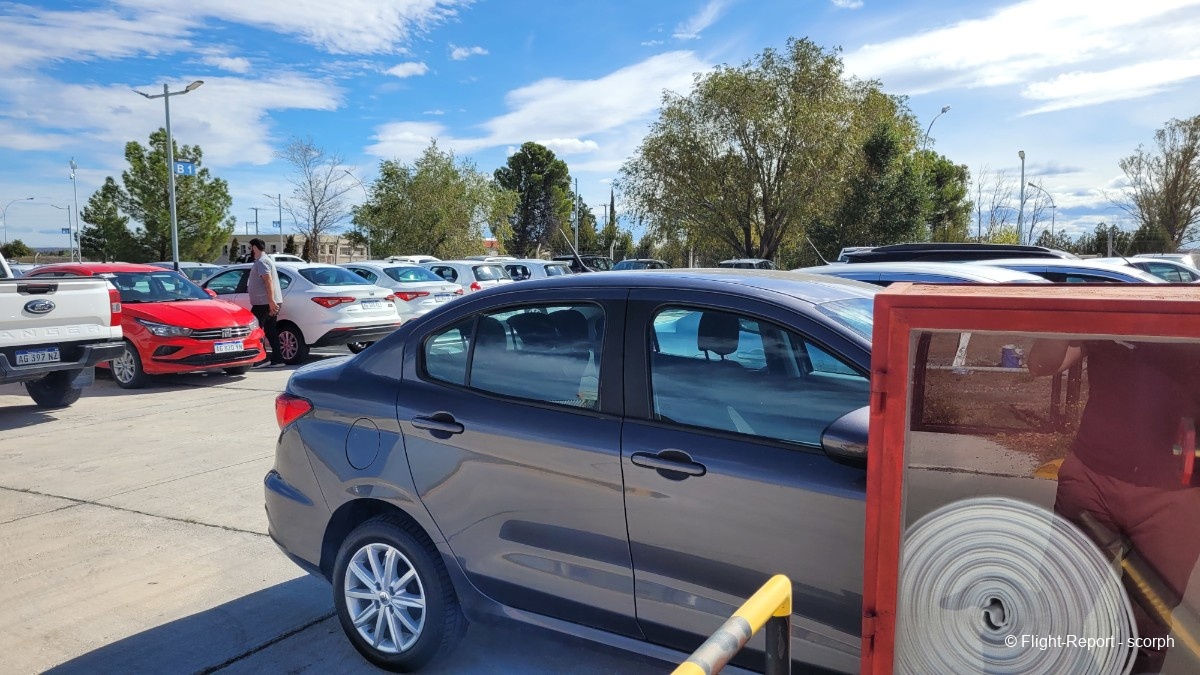
We arrived early at Trelew airport, having only booked our vehicle until 2:00 PM for a 4:00 PM departure. In the end, everything went smoothly, and we reached the airport parking lot 45 minutes ahead of schedule. Without waiting further, we began the drop-off formalities for our Fiat Cronos, the final rental car of the trip, which gave us absolutely no trouble at all.
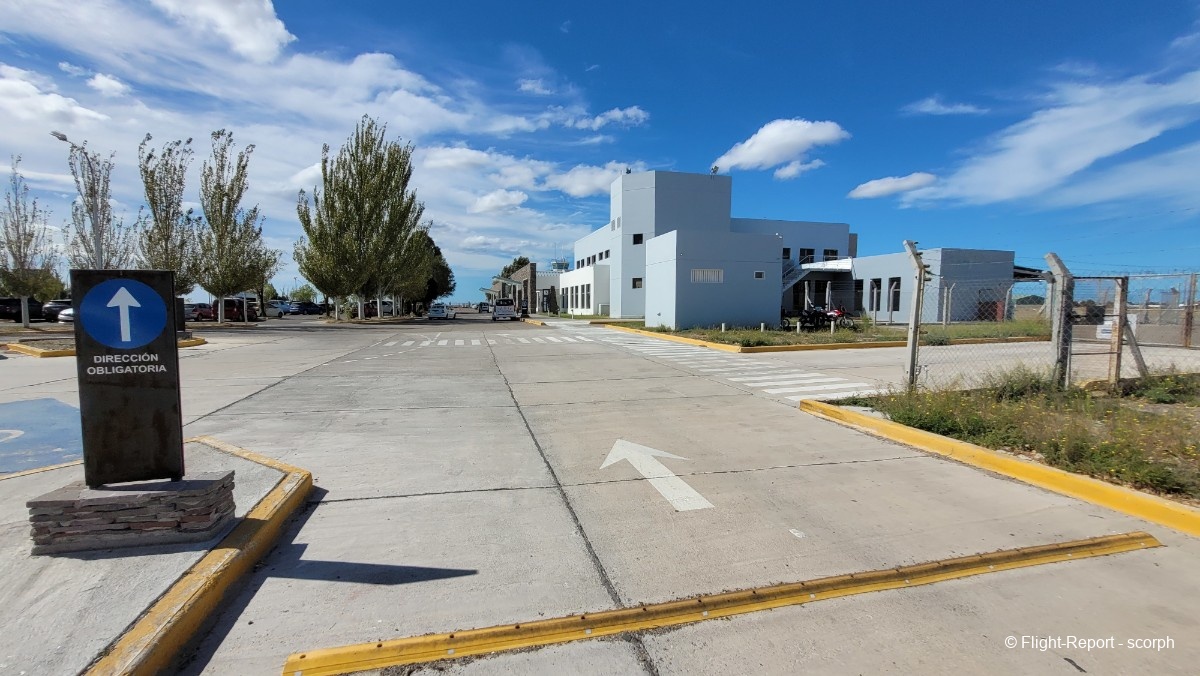
An overview of the single terminal, which is quite spacious for an airport that handles a maximum of 3 or 4 daily flights. The leftmost section serves as the departures zone, while the rightmost is for arrivals.
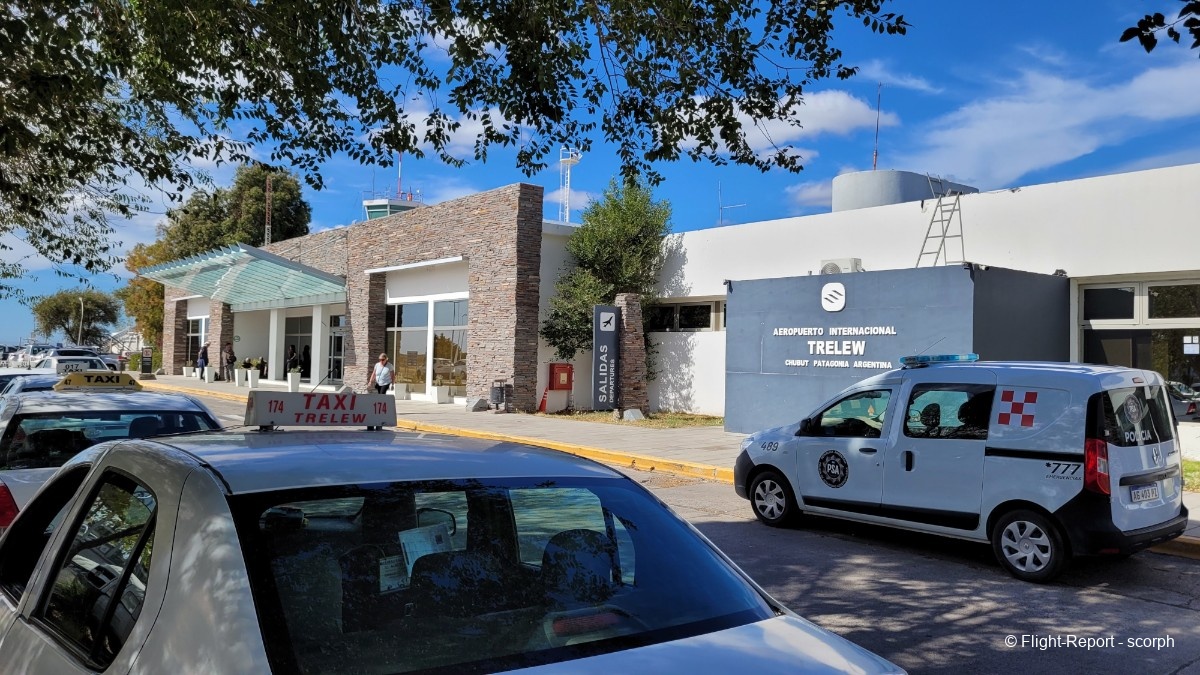
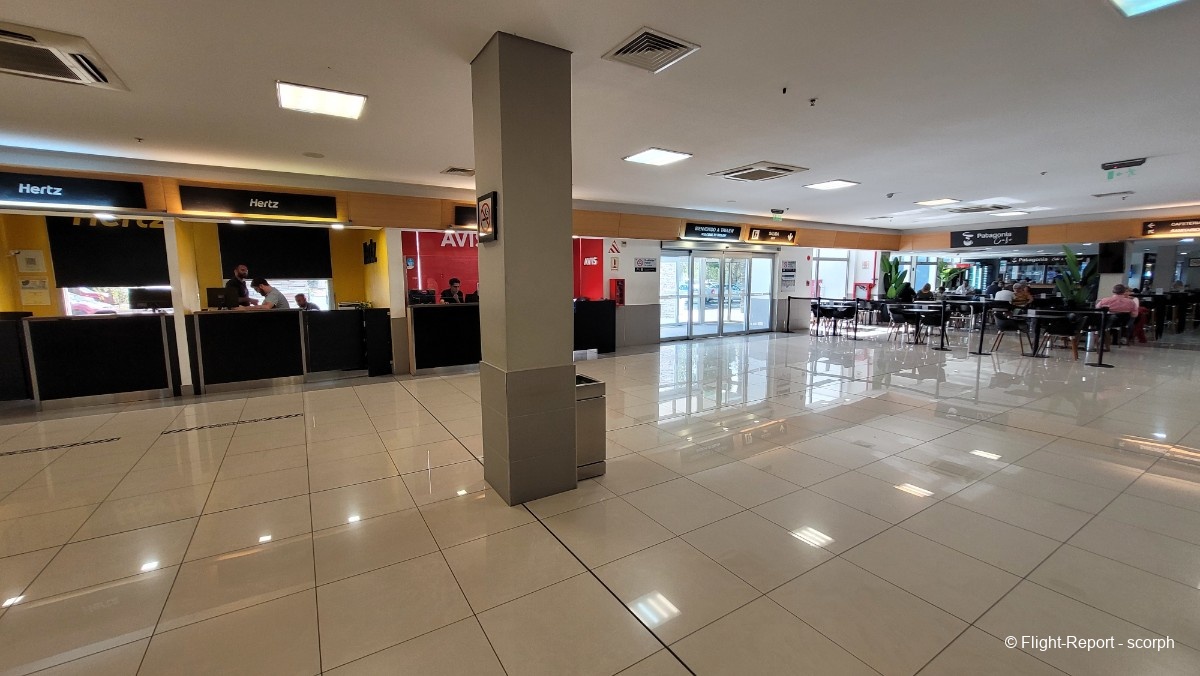
Unsurprisingly, the arrivals area features the car rental booths, as well as a café in the common area connecting departures and arrivals.
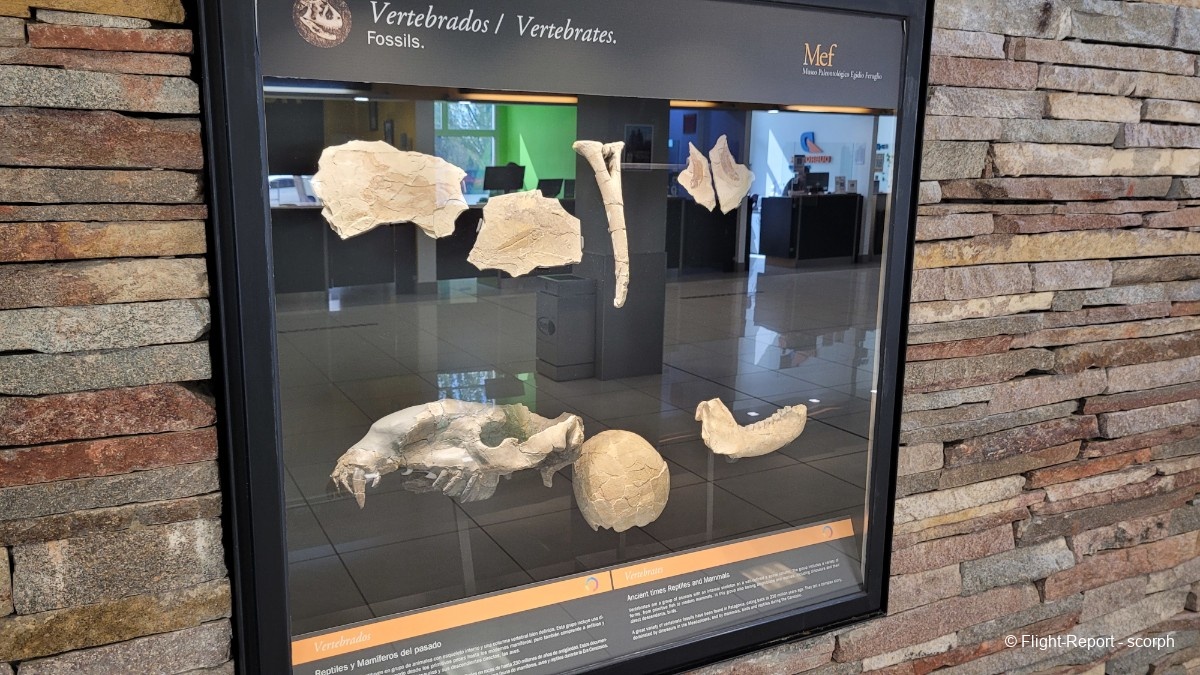
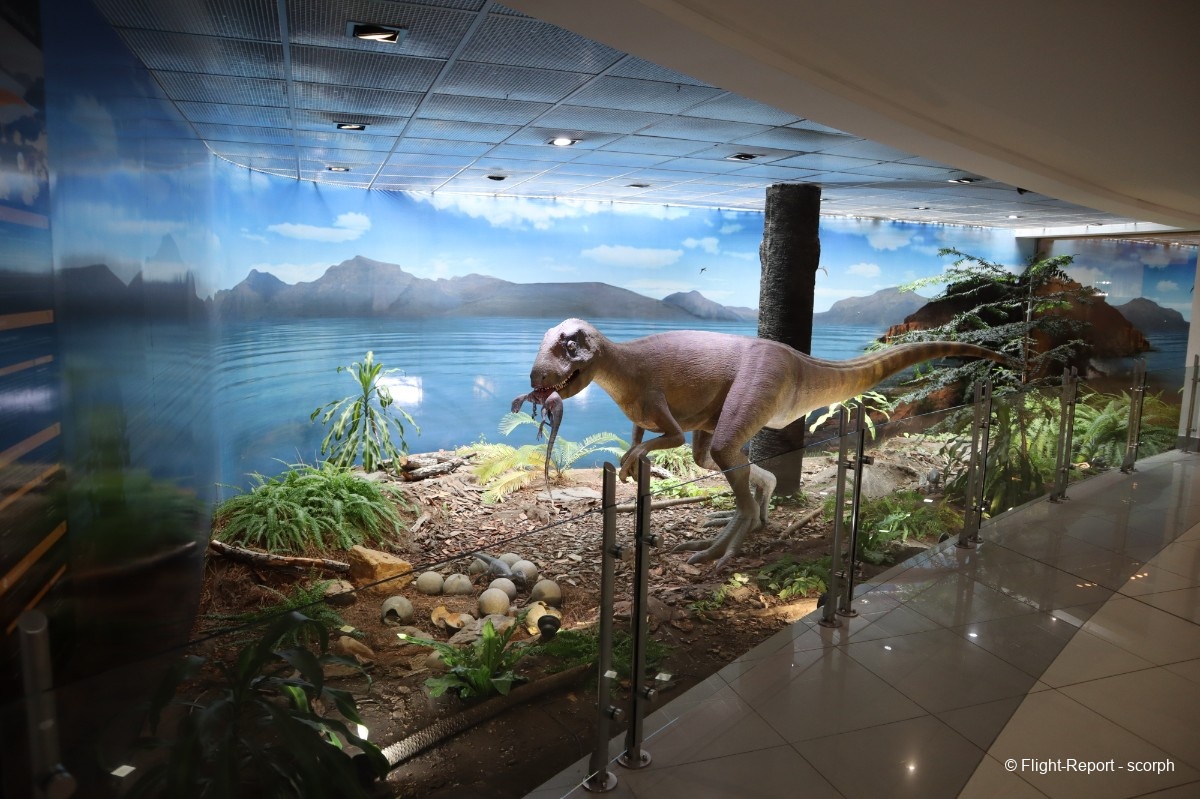
On the walls, there are small displays of dinosaur bones, a reminder that Chubut is famous for its fossil discoveries.
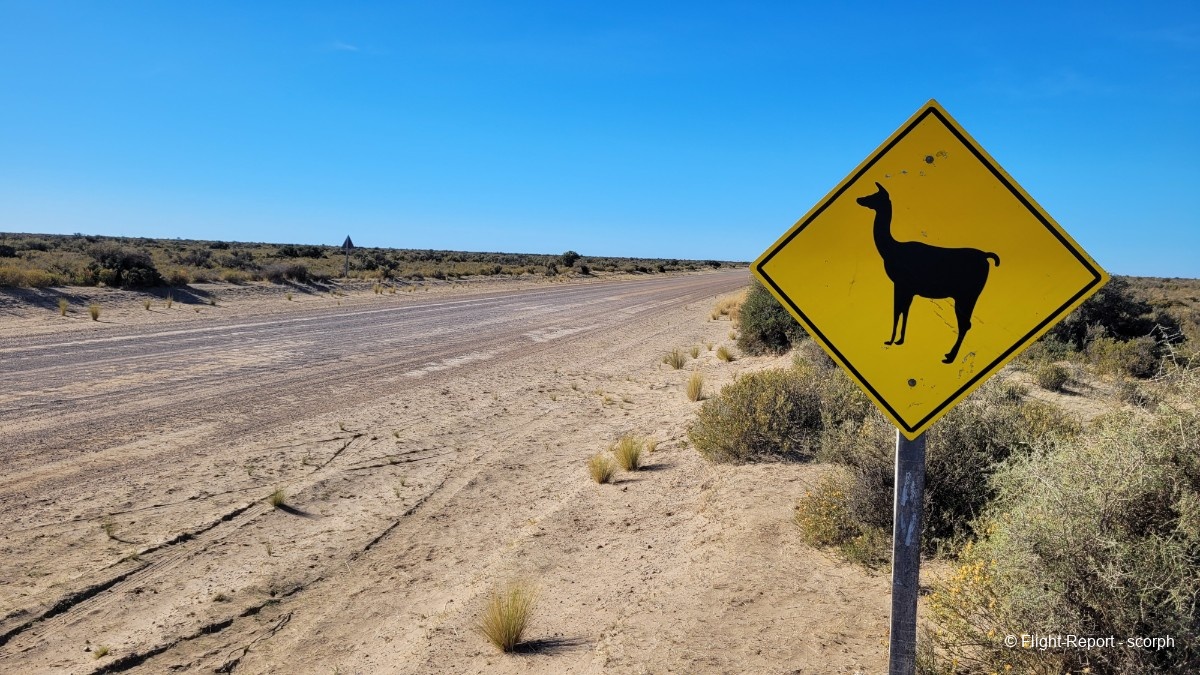
In fact, a bit further along, there’s even a life-sized representation of a specimen thankfully, the Guanacos we met on the roadside during the trip seem sightly less aggressive!
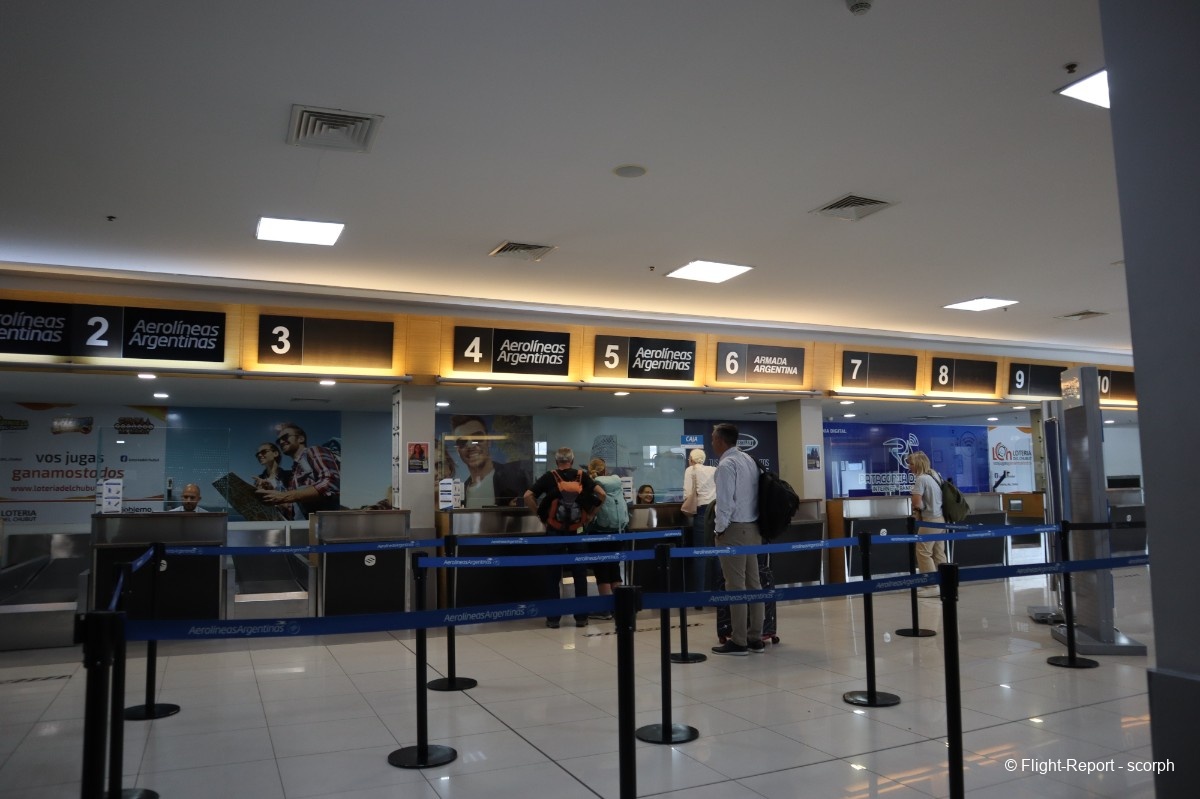
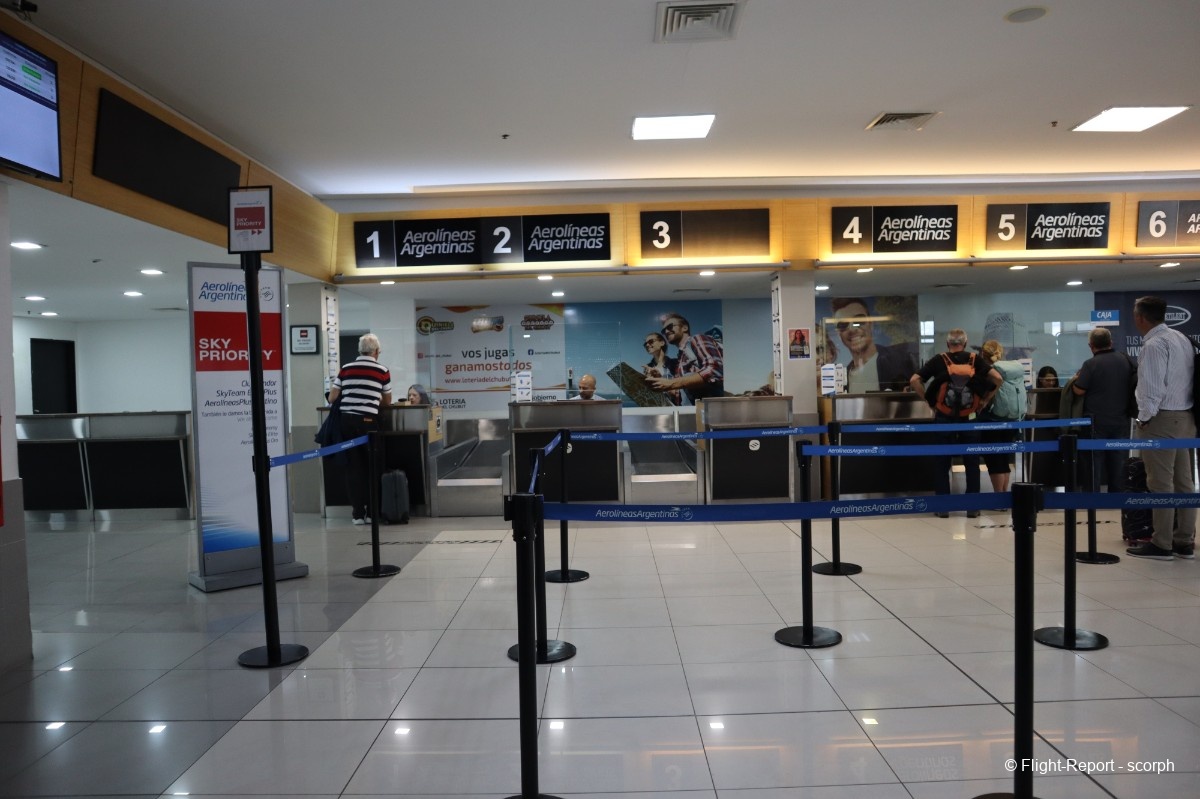
We then headed toward the Aerolíneas Argentinas check-in counters. With no fewer than five counters open (including one for SkyPriority) for the two departing flights, the setup was quite impressive. Since there wasn't a single passenger in the SkyPriority lane, I was checked in before I knew it. The agent at the counter was also quite pleasant.
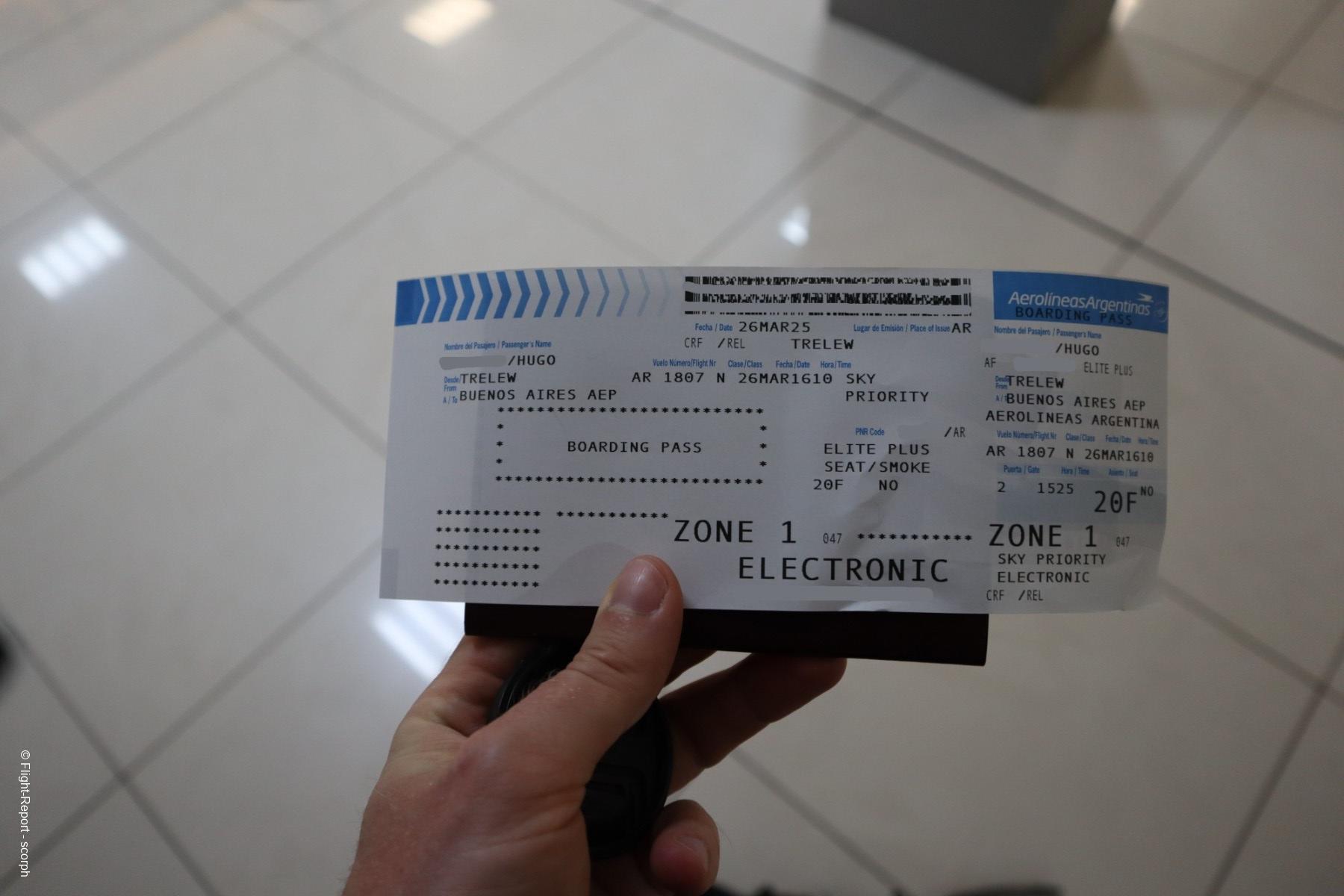
The boarding pass (BP) as issued looks great with the full AR colors, but it has the thickness, of a cigarette paper.
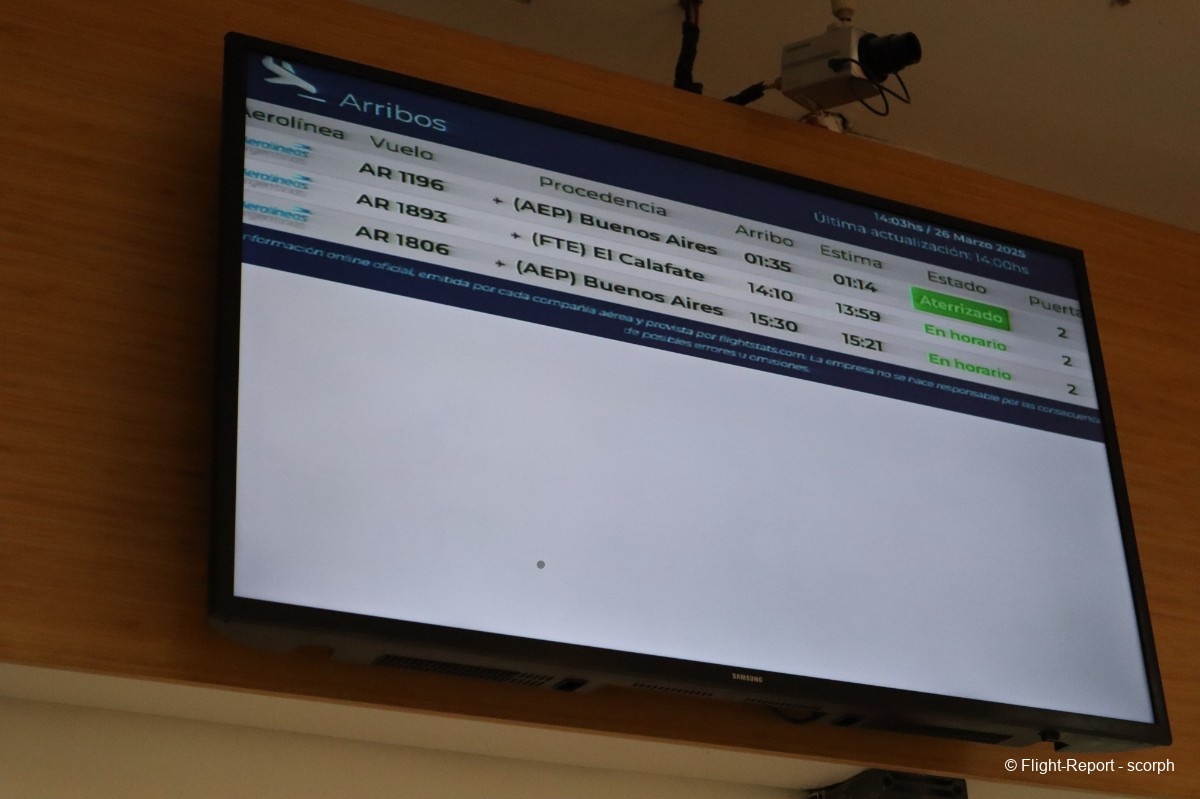
The Flight Information Display System showing today's arrivals; it's worth noting that some AR flights have 'red-eye' schedules unsurprisingly, these are often the cheapest ones.
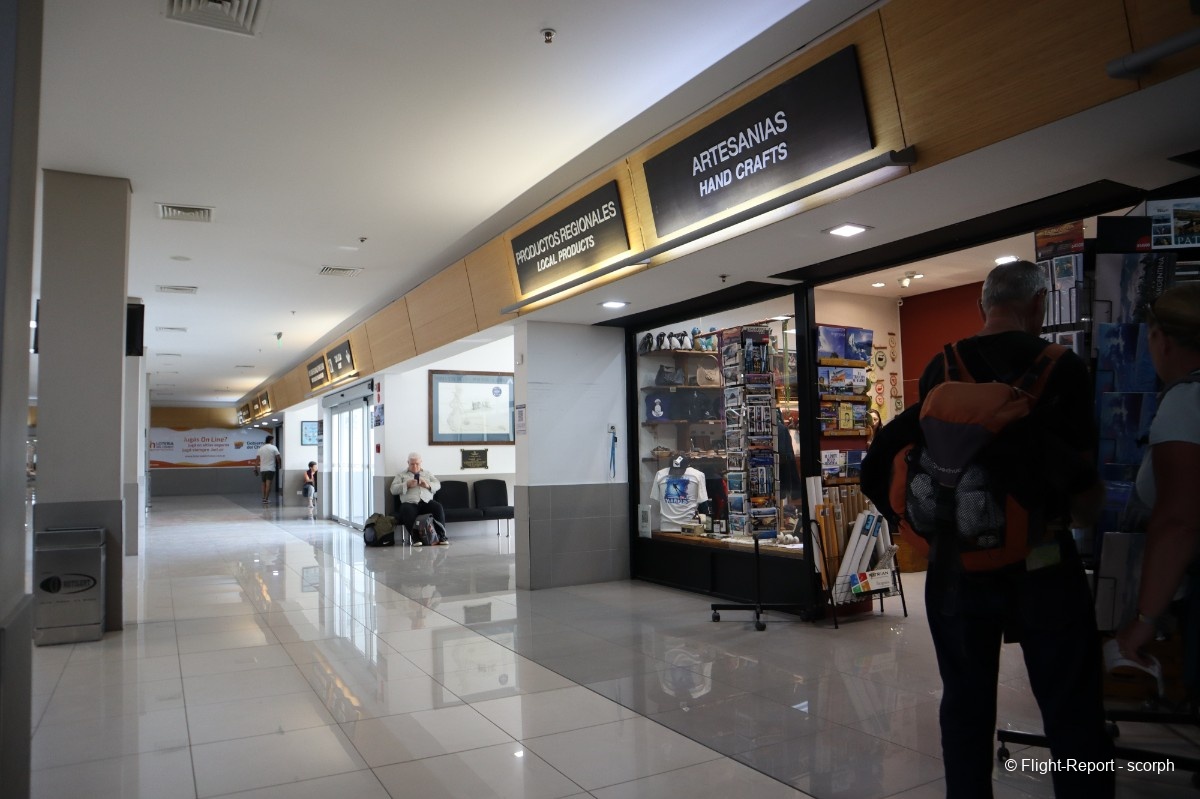
In this area, a few souvenir shops are available for any last-minute purchases.
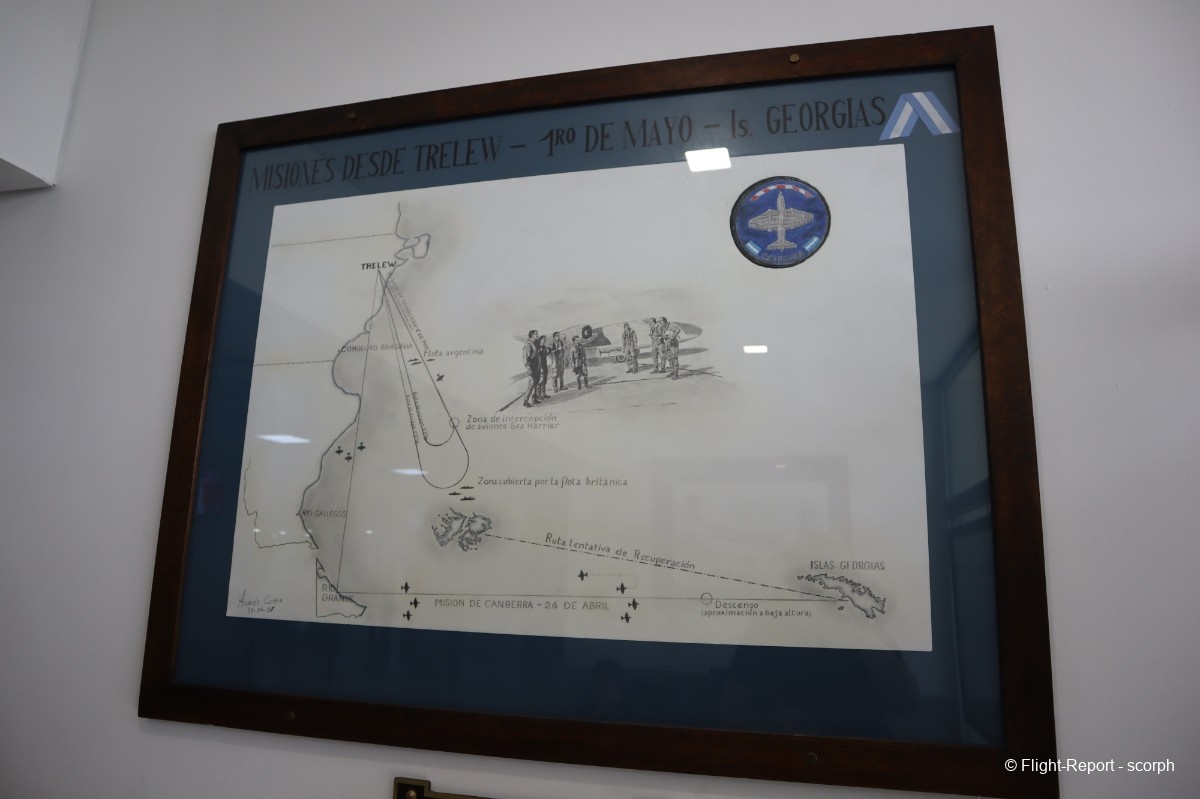
In the waiting areas, posters pay tribute to the heroes of the Falklands/Malvinas War. Indeed, Trelew Airport still serves as an Argentine naval air base today. The poster details the bombing raids carried out by the 2nd Bombardment Squadron on the Falkland/Malvinas Islands and as far as the South Sandwich Islands in 1982, flying, … you couldn't make this up … their 'British Electric Canberra'.
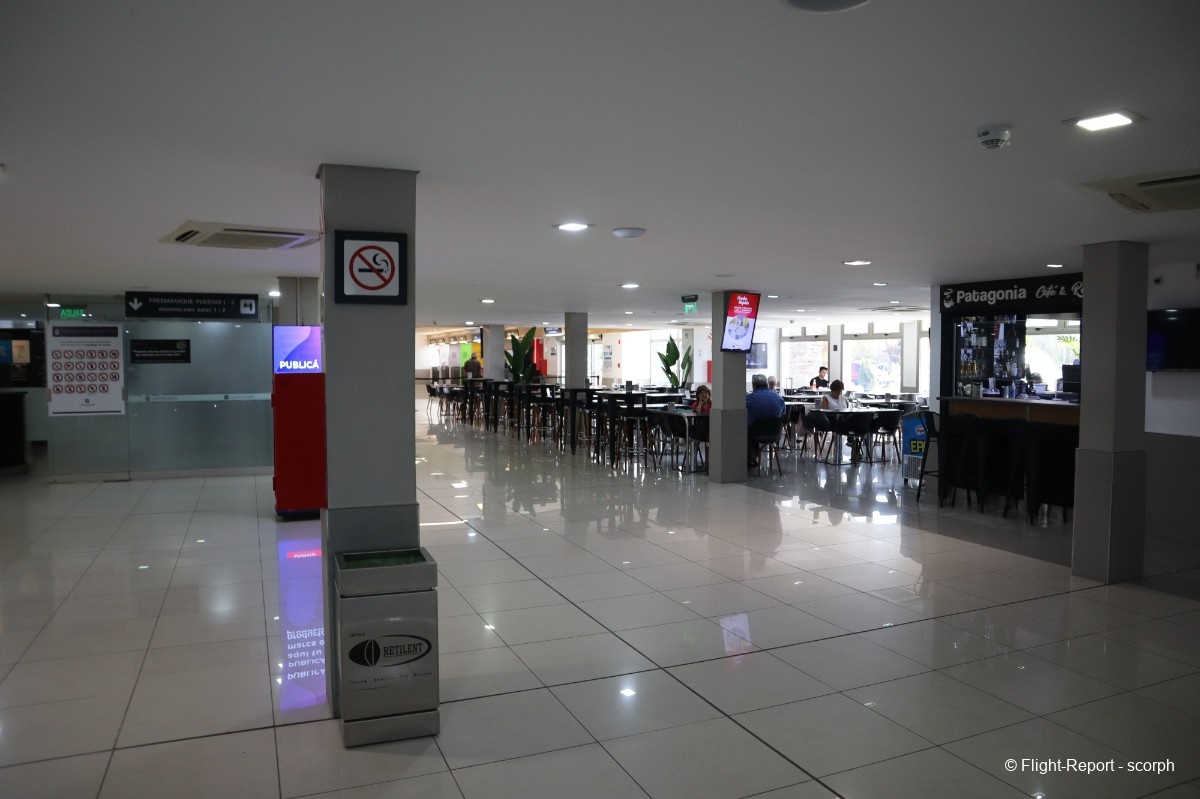
On the catering side, we have two sides of the coin: the cafeteria, which seems to be doing a roaring trade, and on the flip side, a 'W' lounge accessible only to Priority Pass holders and certain credit card members as Aerolinas doesn't offer the access to there passengers with status.
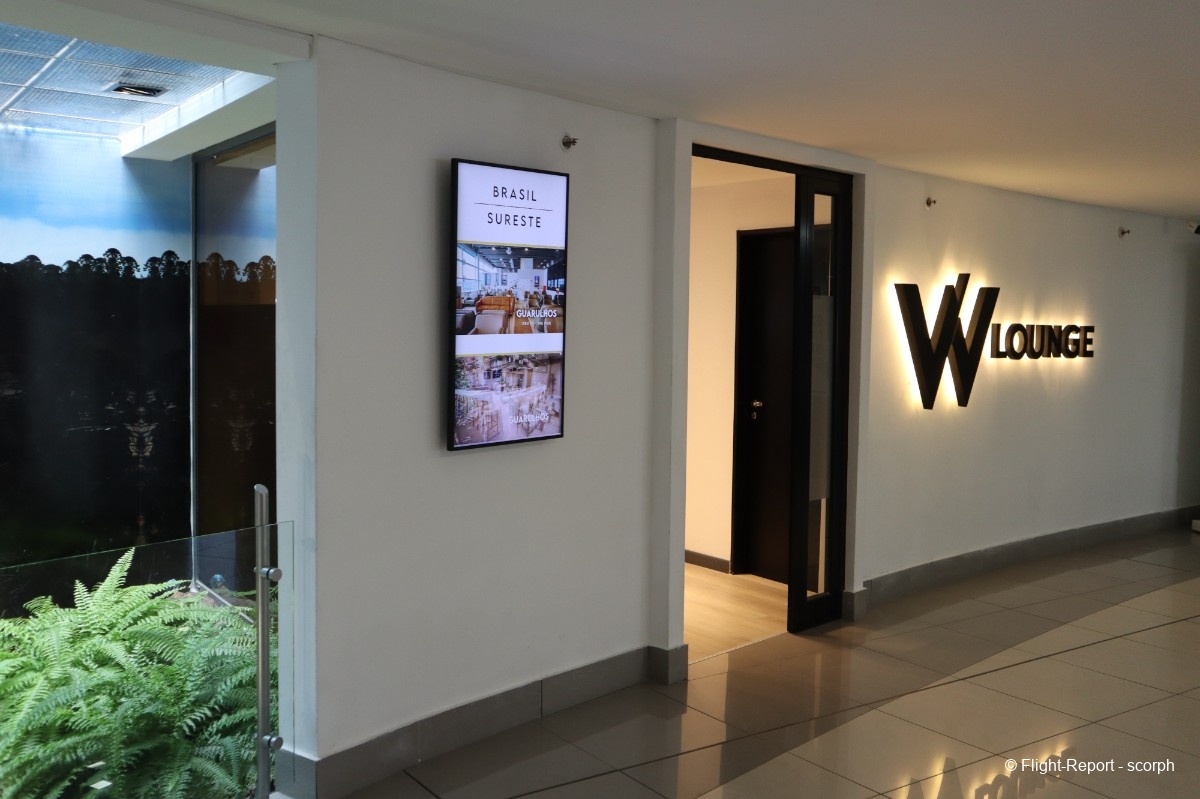
We’ll have to wait a little before heading through security; as it turns out, you’re only allowed through one hour before the flight. Fortunately, the free Wi-Fi works perfectly, as it does everywhere else in Argentina. It’s a good thing, too, because the 4G at the airport is sluggish, to say the least.
Once the time came, the parents and I joined the line for the security checks. We got through very quickly with the help of the friendly staff. After a short trip upstairs, we reached the airside departures area, which is really just one large boarding area.
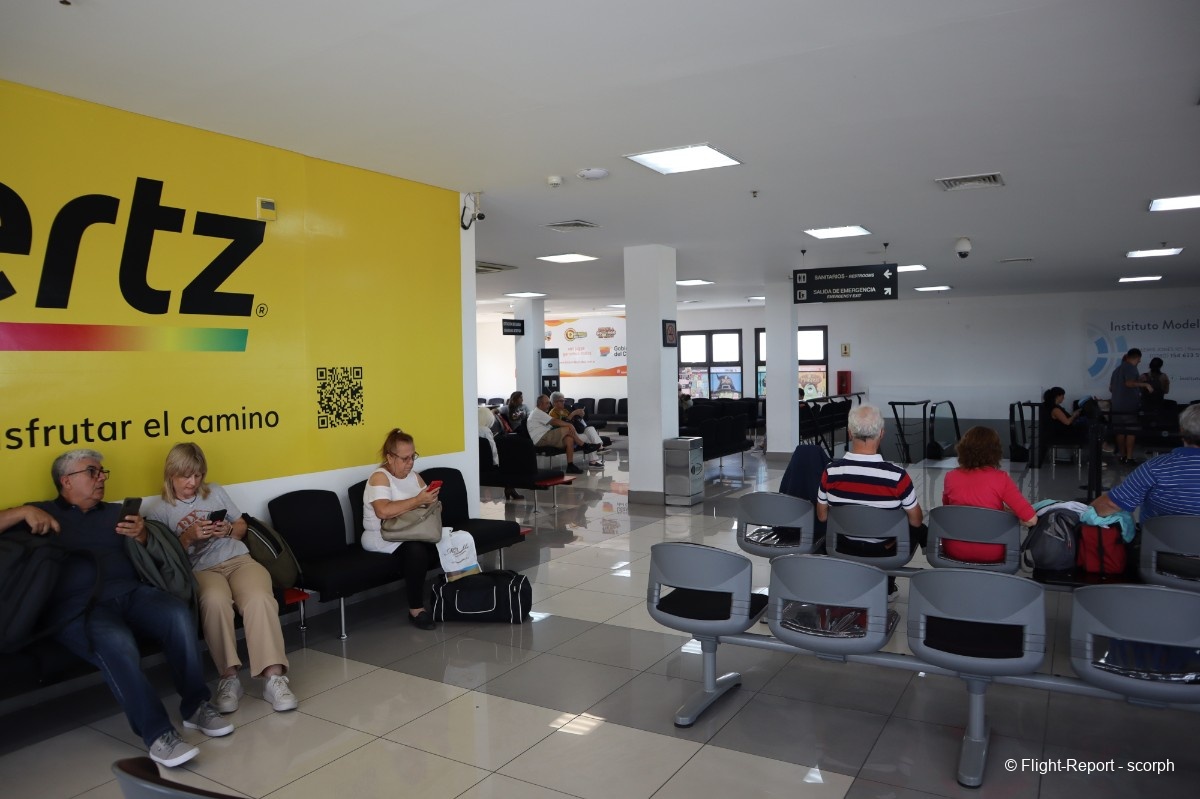
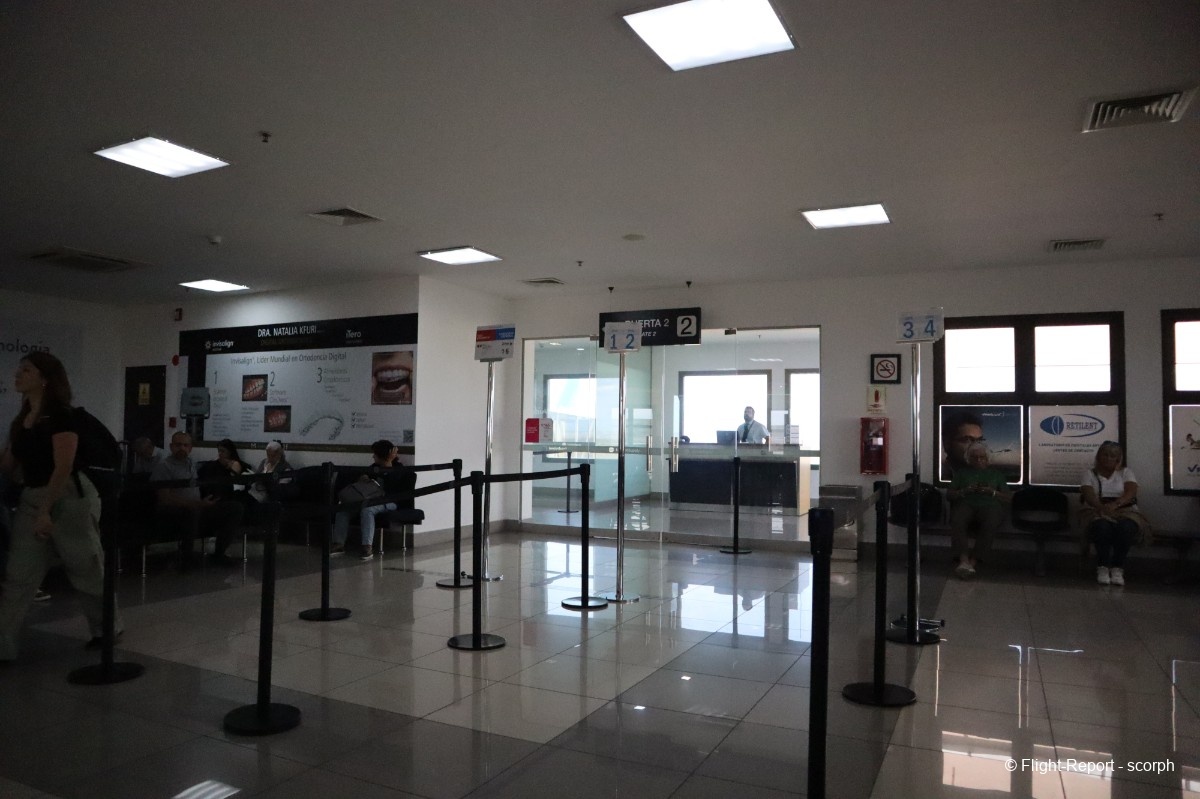
You can find the essentials there: a snack bar, restrooms, Wi-Fi, and plenty of seating for the wait. Our gate is listed as number 2, though I haven’t seen any sign of number 1… ^^
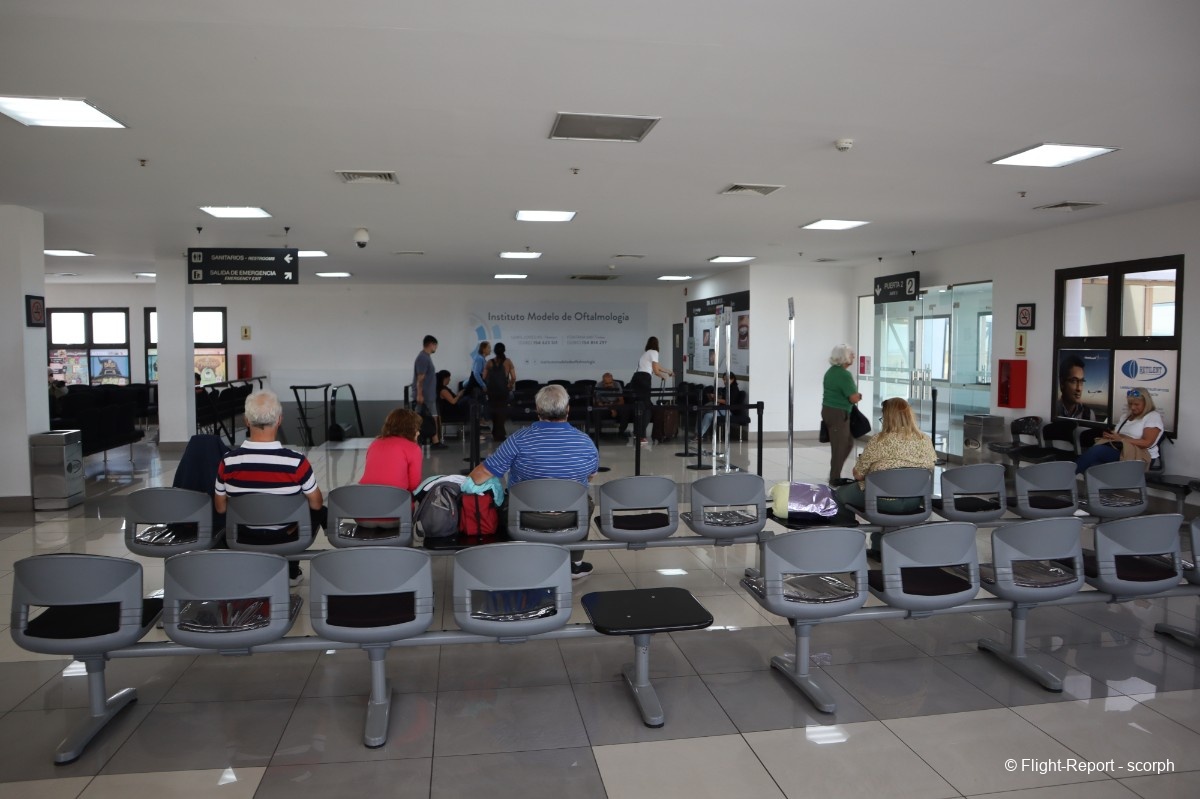
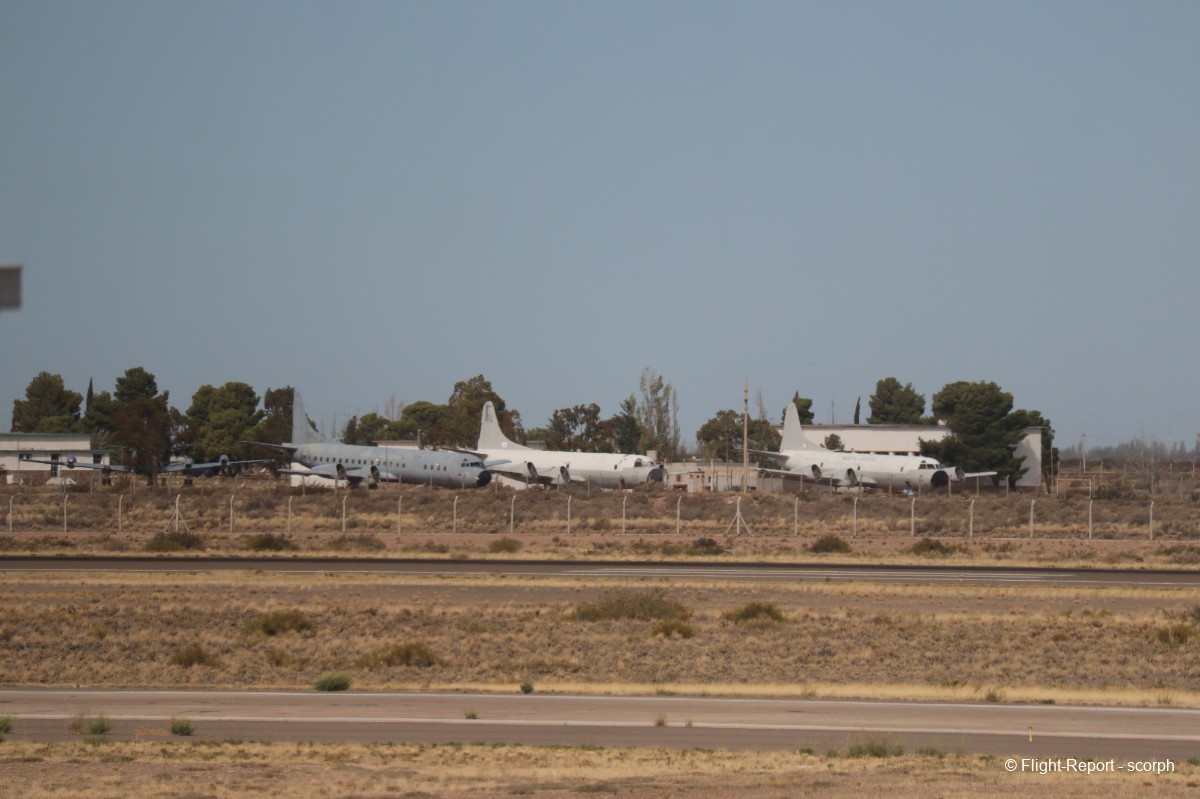
I had to be a bit sneaky to avoid drawing too much attention while taking photos of the exterior; as it happens, the naval air base is located right across from us. Advertising posters had unfortunately been plastered over the windows overlooking the runway, but not everywhere just enough for me to snap some shots of those Lockheed P-3 Orion airframes and also, I believe, an Electra (the passenger transport version of the P-3).
Our aircraft for the day arrives fairly quickly; as expected (well, after the aircraft swap a few weeks earlier), it is indeed a Boeing 737-700. Bad luck for me: it is one of the more recent ones operated by AR, equipped with winglets and painted in the new livery. (AR has two other non-wingleted 737-700s, which is quite rare, some of which sport retrojet liveries).
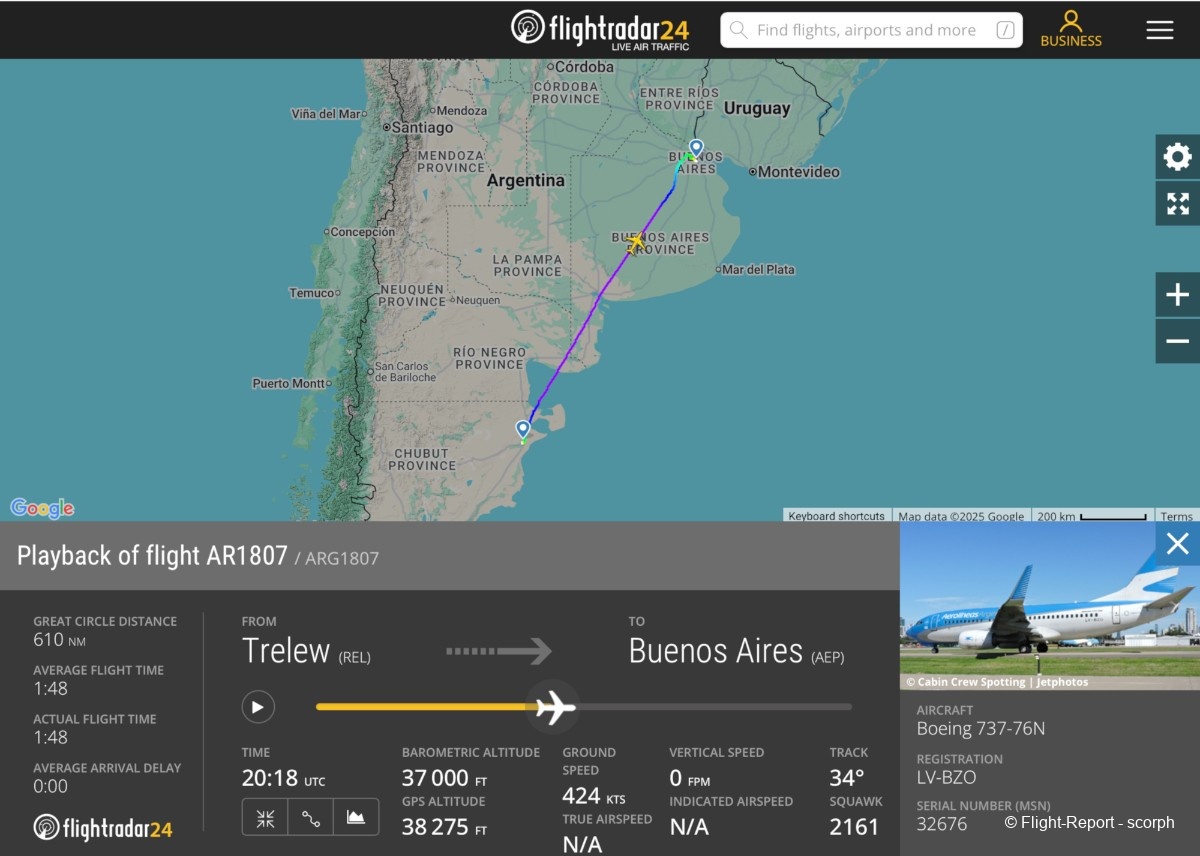
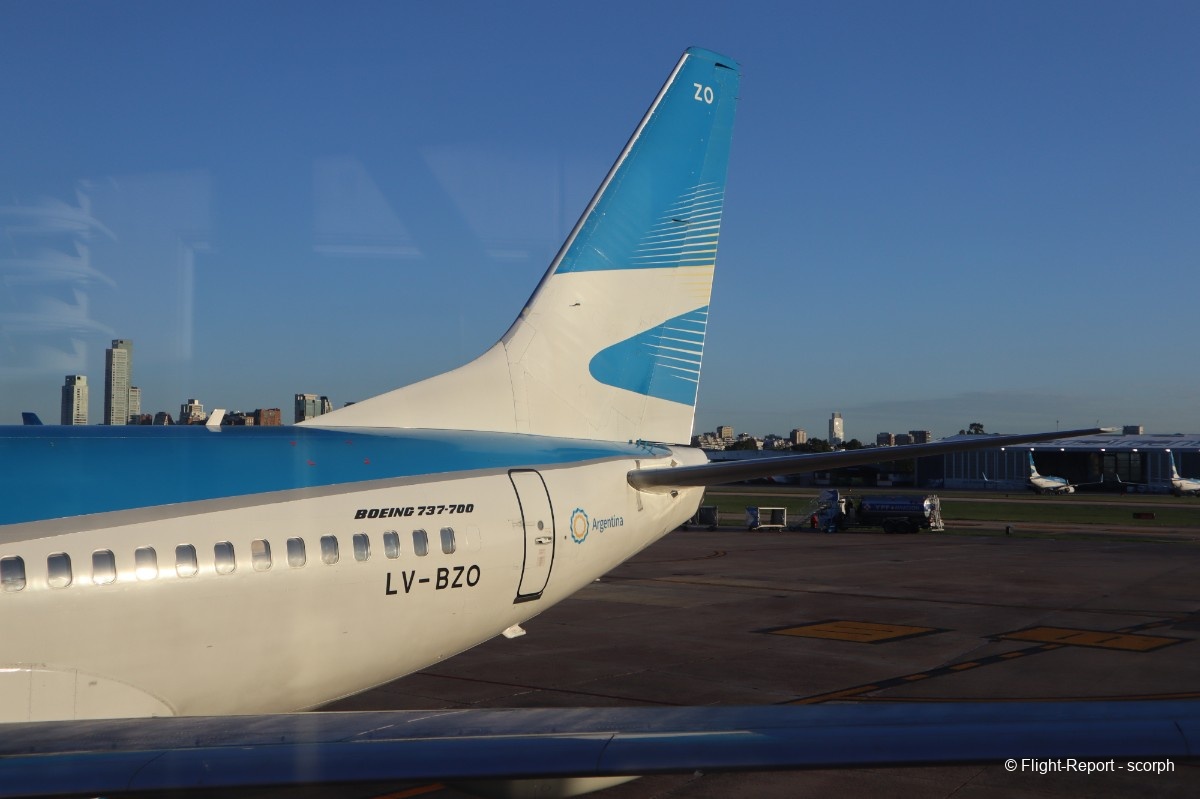
Registered as LV-BZO, it has 18 years on the clock and has spent its entire career with Aerolineas Argentinas. It is arriving from Buenos Aires (AEP).
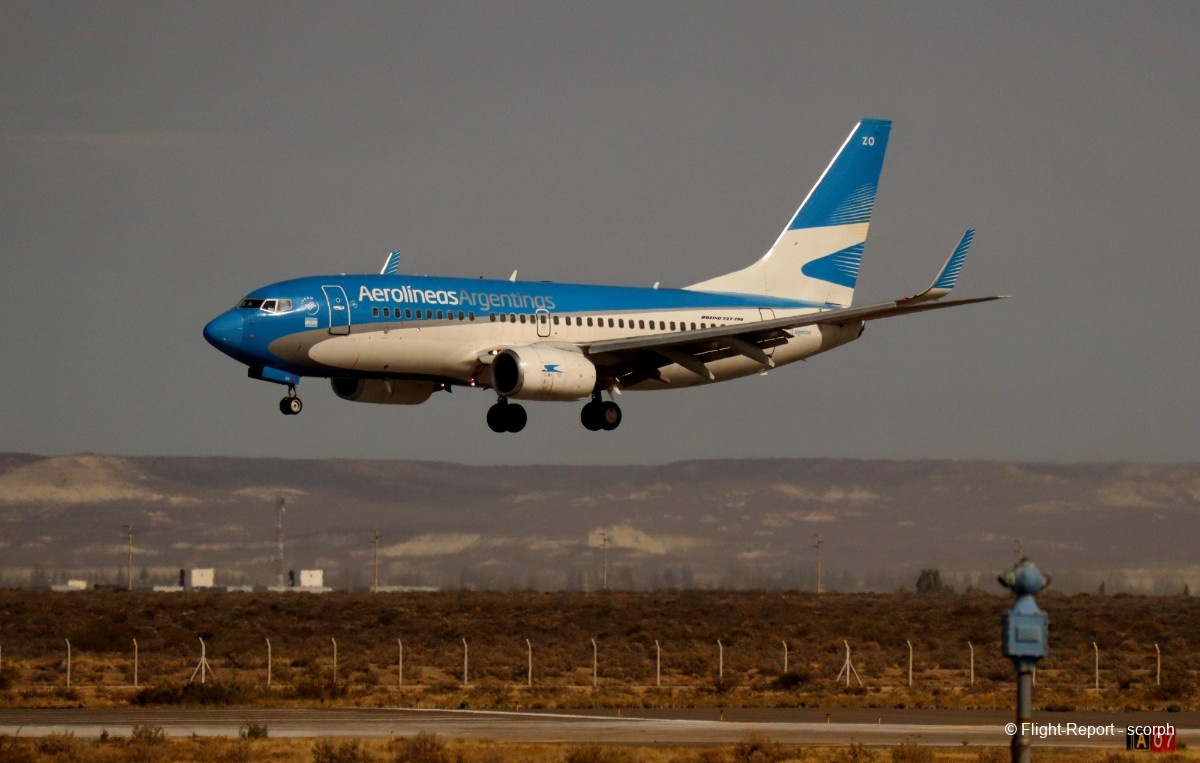
The passengers arriving from the capital disembark quickly, and then it’s our turn to get ready to board. In true American fashion, the boarding zones are perfectly marked and strictly followed.
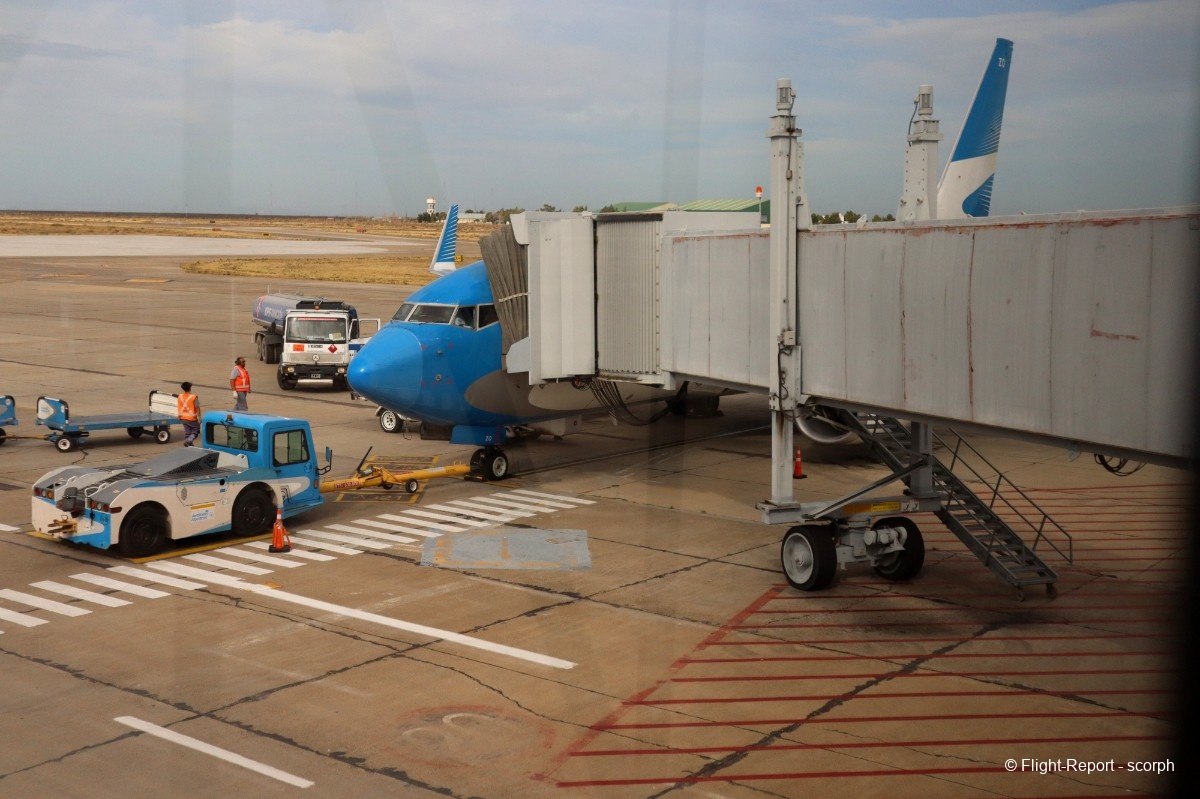
Even though Trelew airport is far from being a mega-hub, boarding is still done via a jet-bridge. The first section is glass-walled, offering a great view of the pointed nose of our 737.
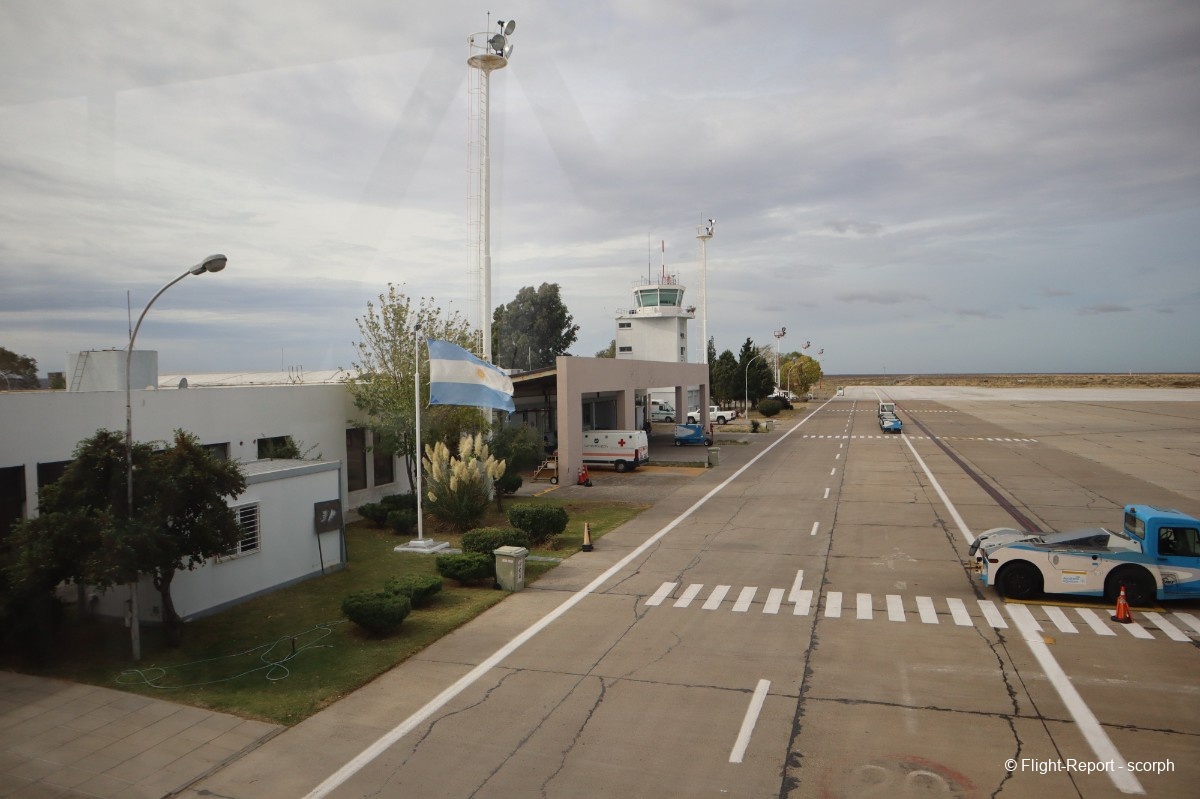
But it also offers a good view over a large part of the small Trelew terminal.
On board AR Boeing 737-700
Sorry the following photos are a bit dark (I forgot to change my camera settings).
The welcome on board from the Purser was brief; his attention was understandably focused on boarding a blind passenger.
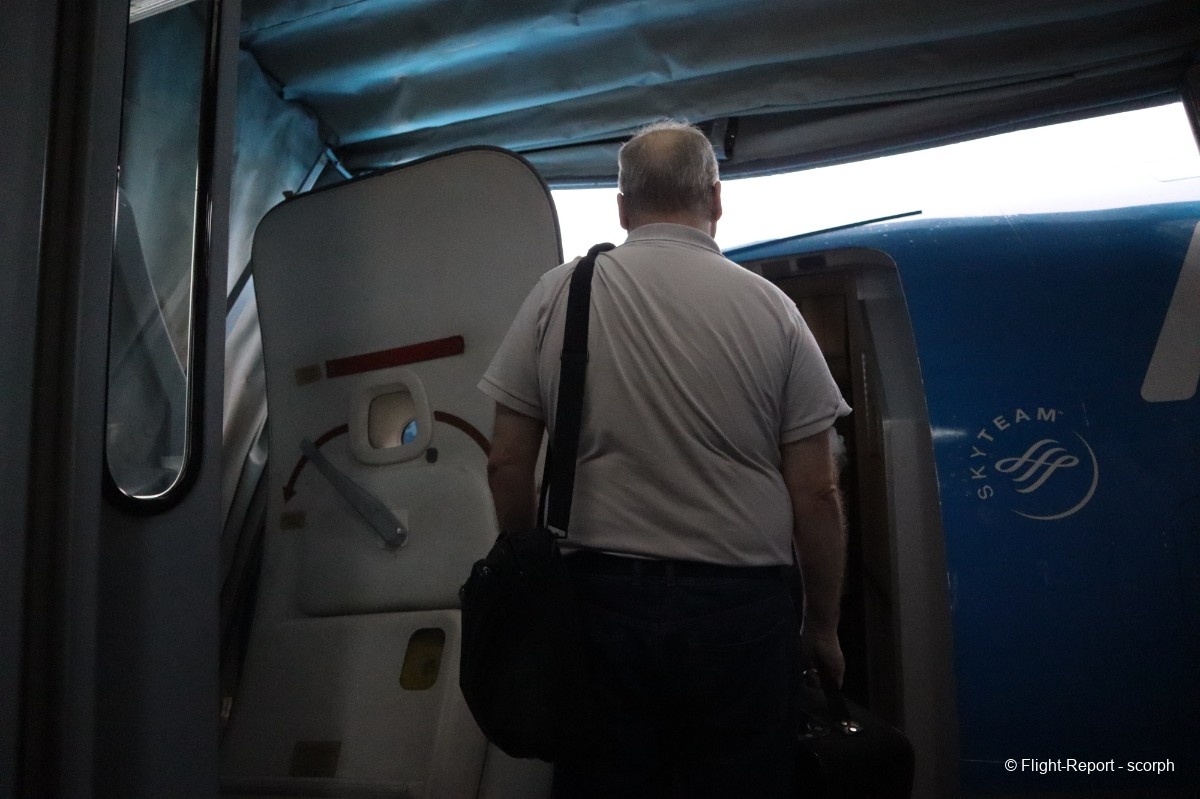
I make my way up the cabin, passing through the small Business Class (J) with its 2-2 configuration occupying the first two rows.
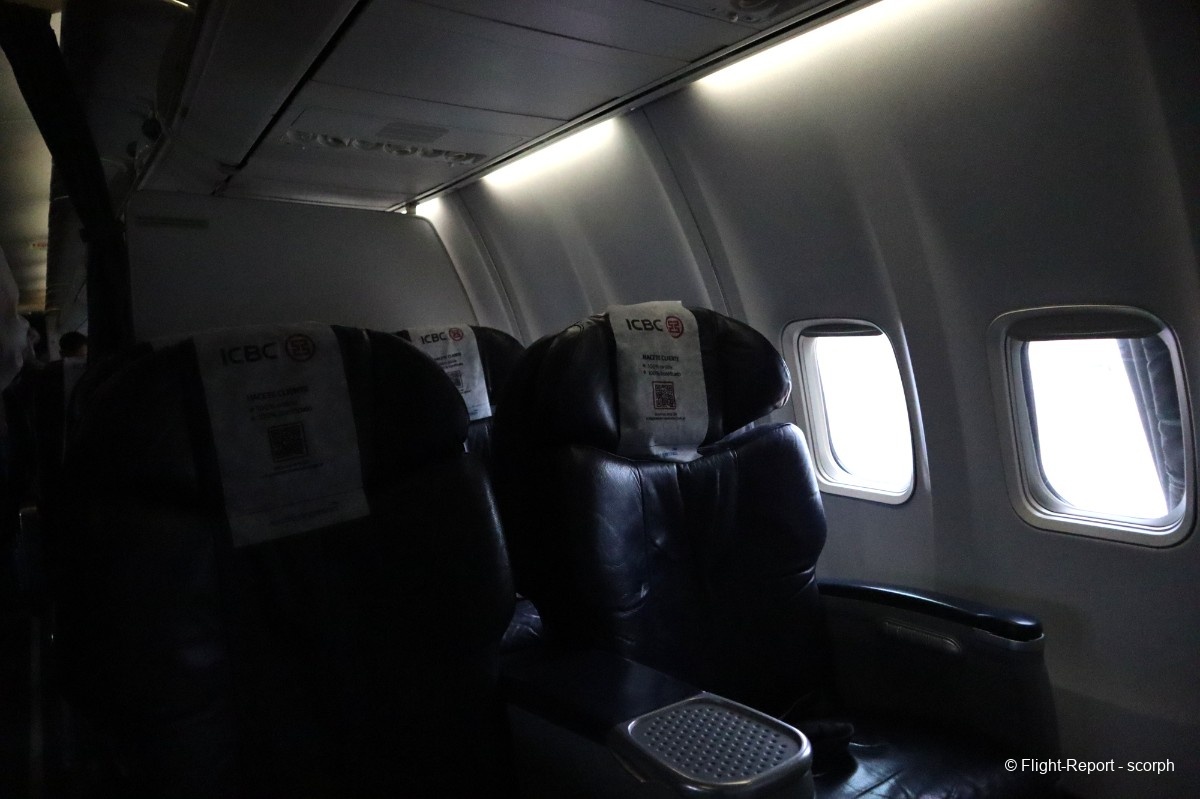
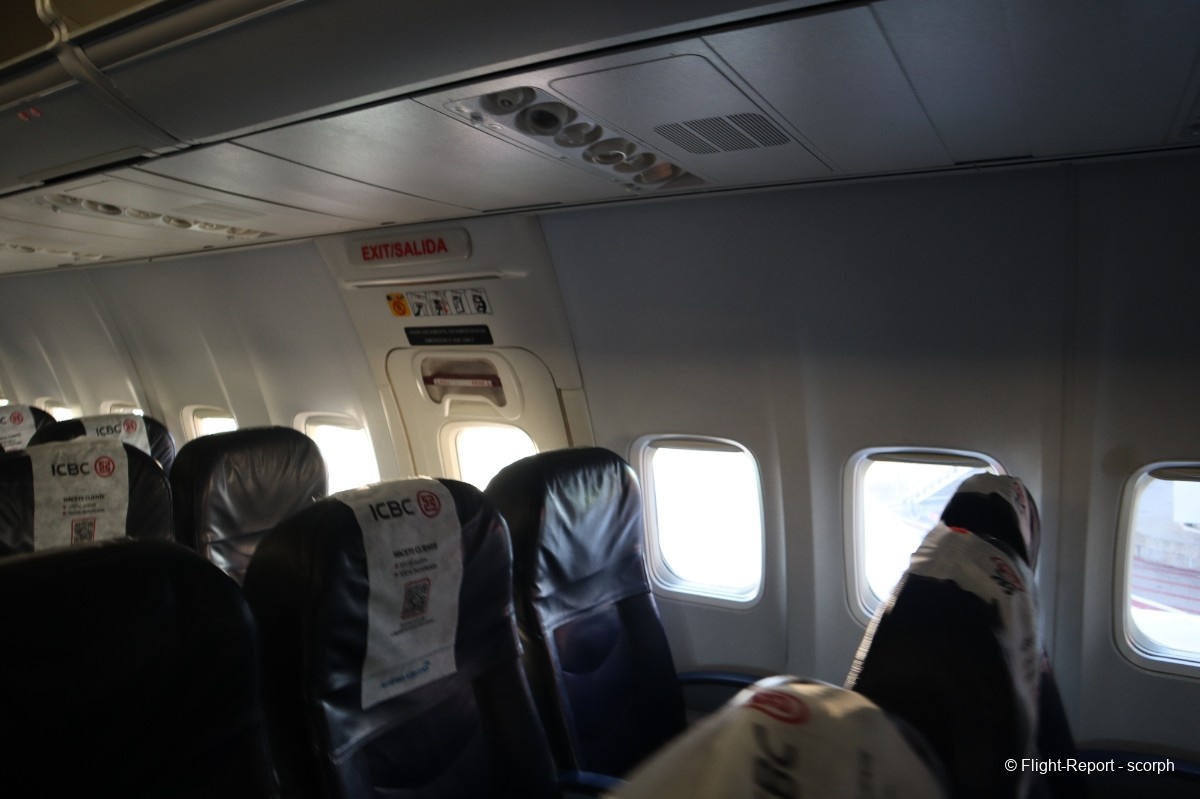
Before heading almost to the back of the aircraft, where I had pre-selected 20F. It’s worth noting that seat selection is included in most of AR’s fares. Returning to the cabin itself you can tell it’s vintage.
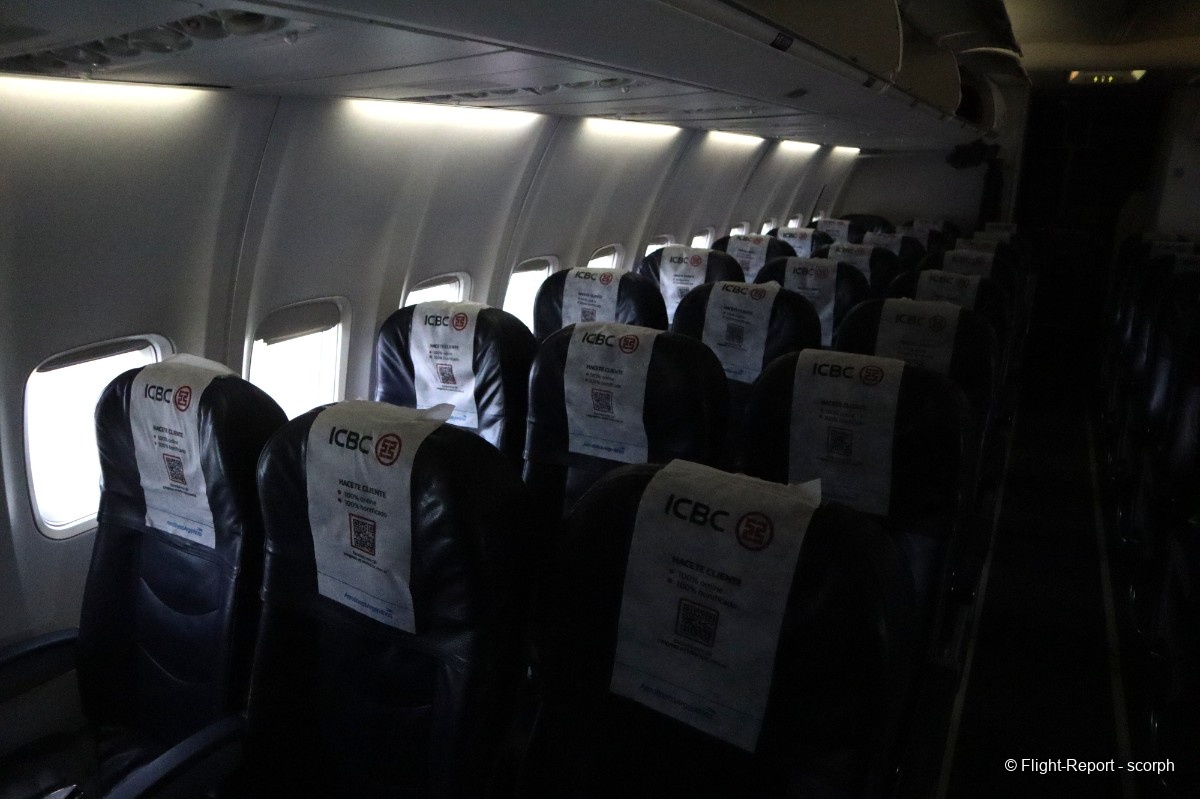
The seats (which are leather, at least) are quite thick and a bit worn, but they have one major flaw in my opinion: the backrest doesn't reach high enough. In fact, when sitting with my back straight, the top of the seat only reaches the middle of my neck and I’m only 1.75 meters tall!
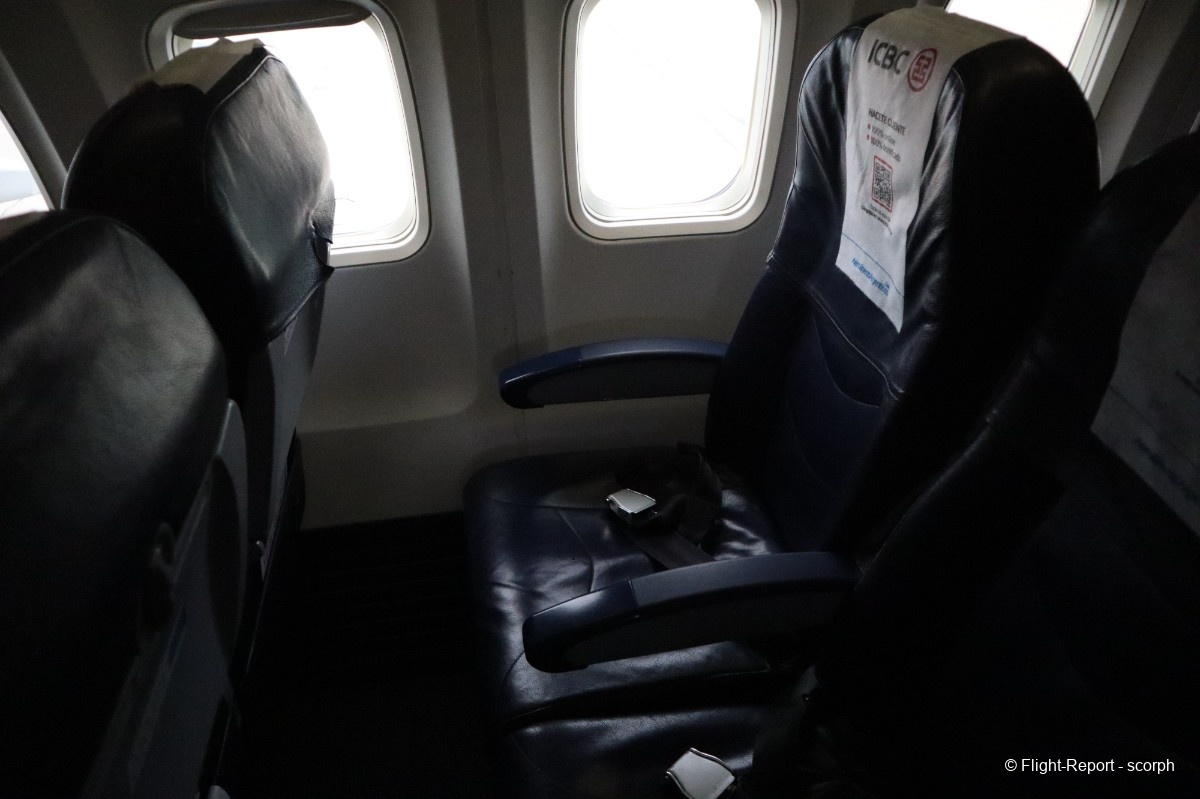
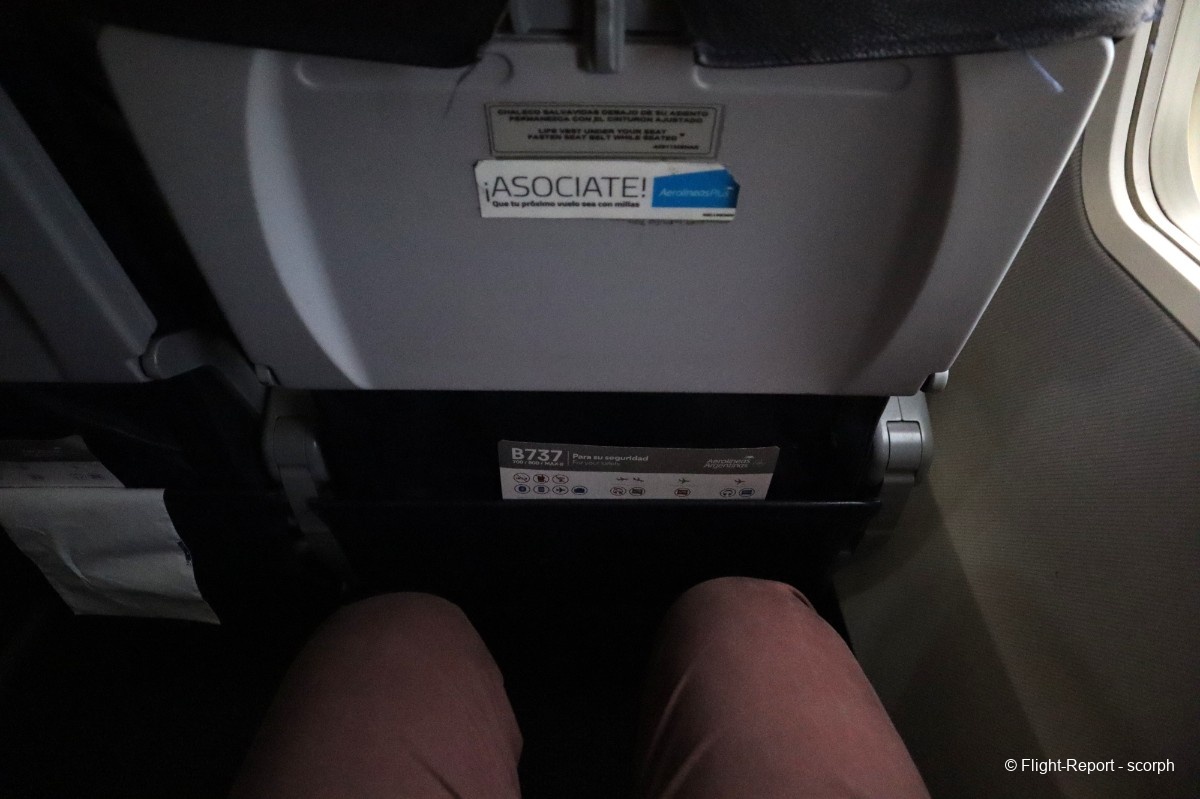
As for the legroom (pitch) from a passenger’s perspective, it’s actually quite good.
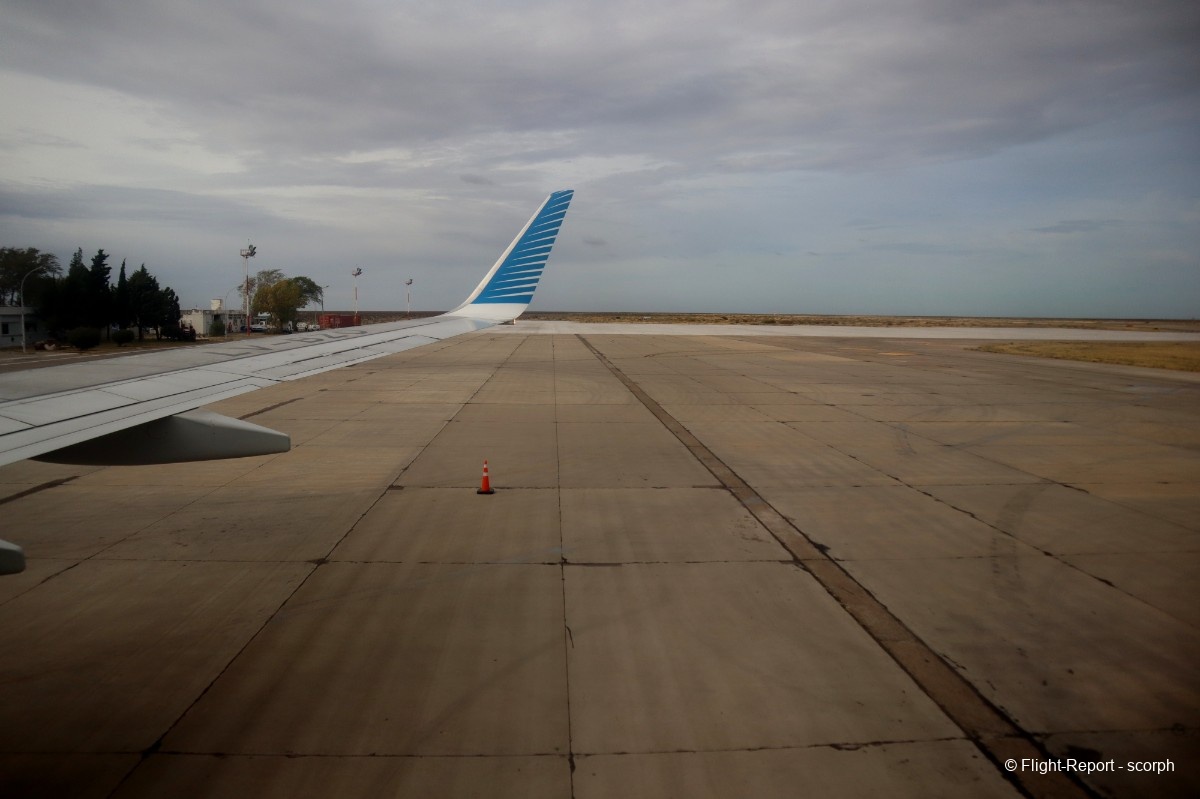
The view through the window, which isn't perfectly aligned with my seat well, let's just say you aren't exactly overwhelmed by the traffic at Trelew Airport.
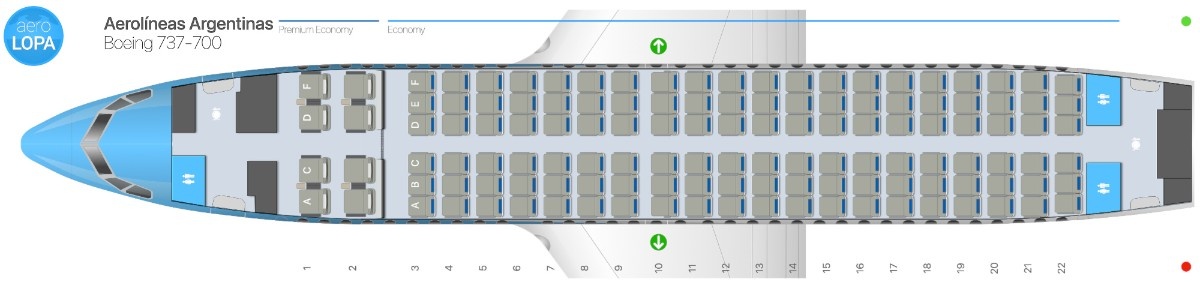
The cabin layout, according to the AeroLopa database: only 128 seats on this shortened version of the 737.
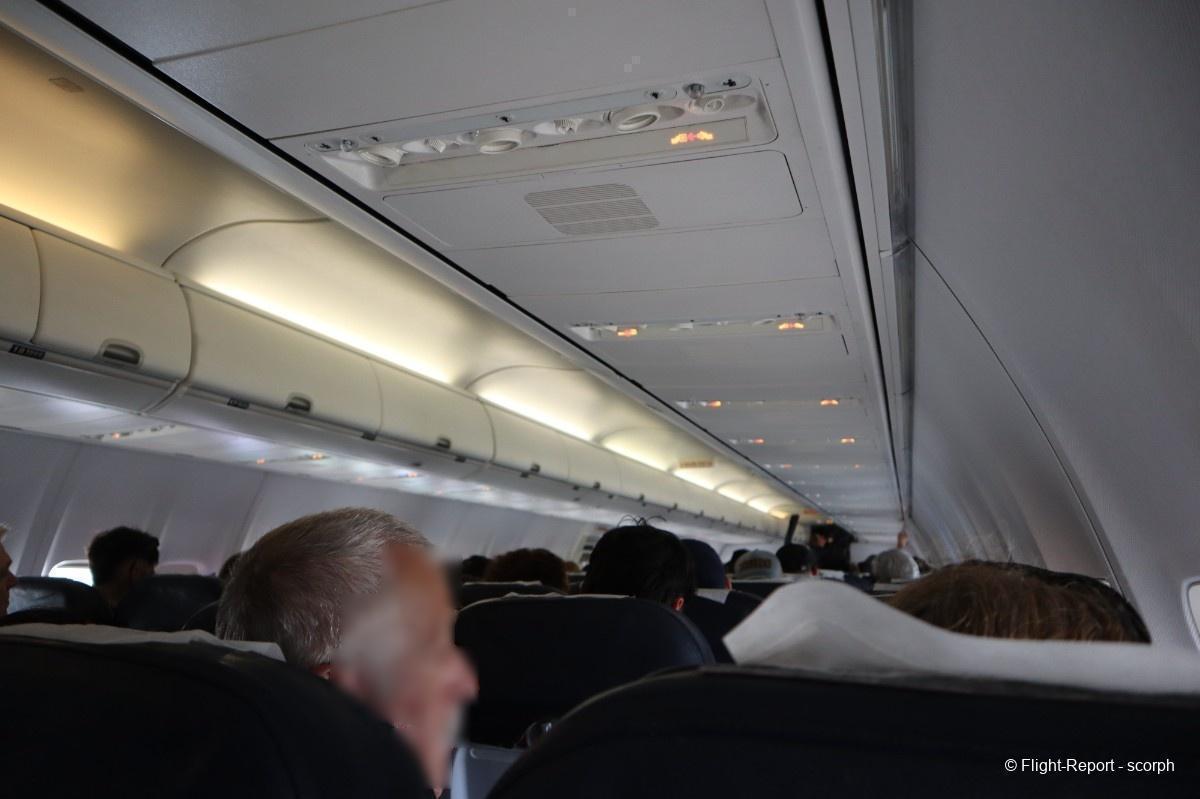
Just like my previous flights with AR, boarding is completed quickly. Our crew loses no time in performing the safety demonstrations manually.
Pushback is perfectly once again on time, offering a general view of the terminal which is rustic, to say the least, despite being equipped with a single jet-bridge.
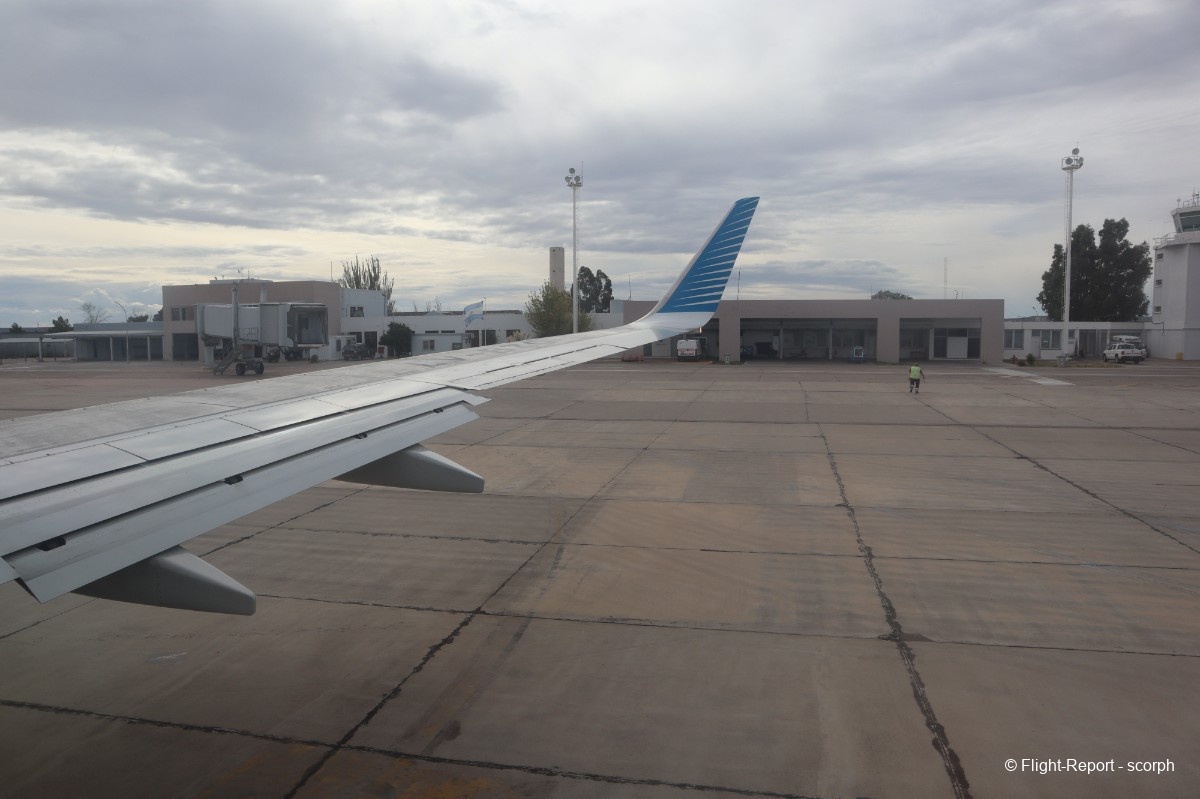
The taxi to the single runway is very short for this departure on Runway 07. It’s worth noting that the terminal is located practically at the holding point for that runway.
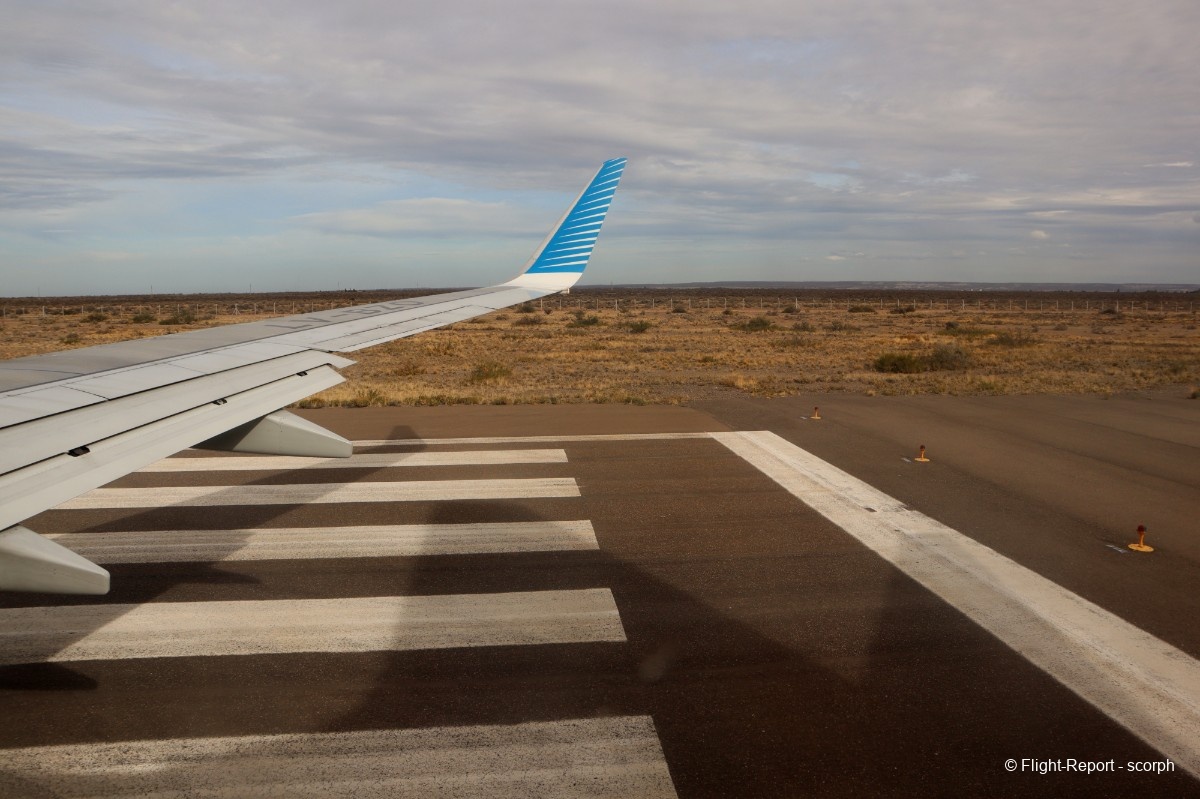
Our pilots push our two CFM-56 engines to take-off power. In the background, the facilities of the "Almirante Zar" Naval Air Base come into view, along with the hulks of several Lockheed P-3 Orions. It's worth noting that a bit further along, an airworthy example was visible on the apron, one of the second-hand aircraft recently purchased from Norway.
Our little 737-700 has no trouble at all lifting us off the ground.
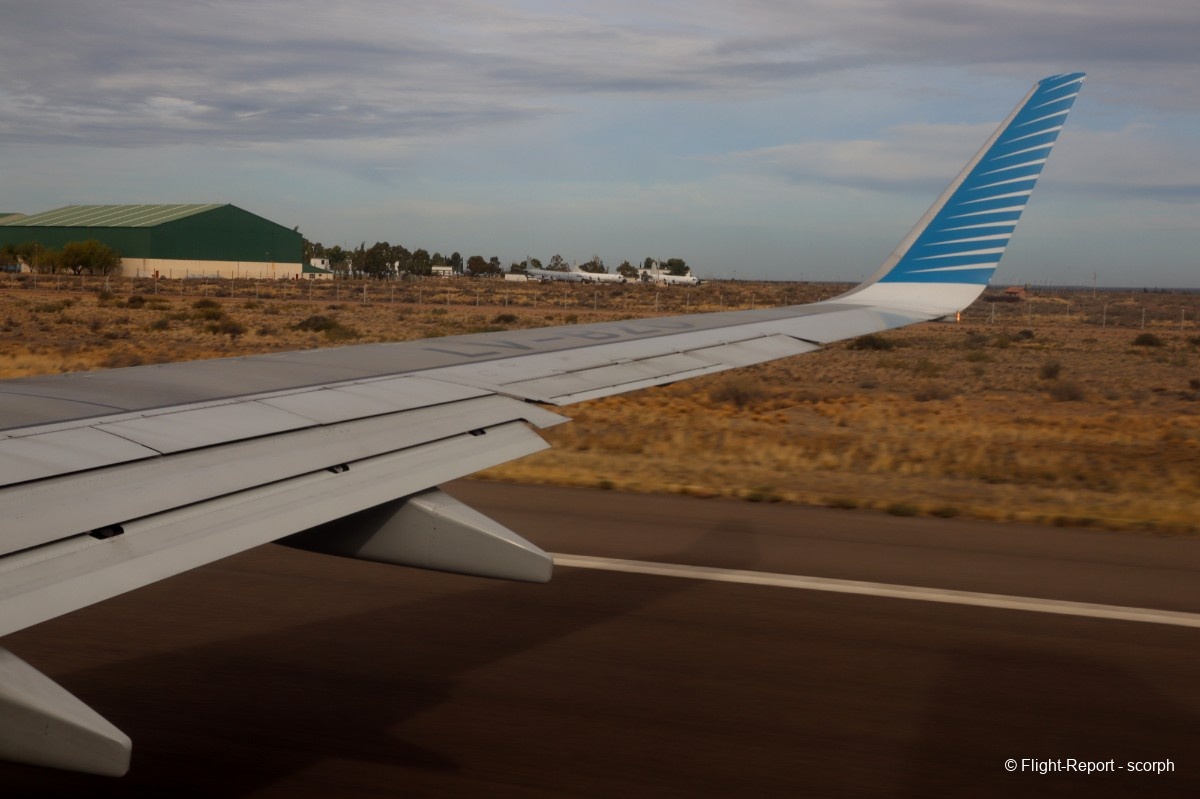
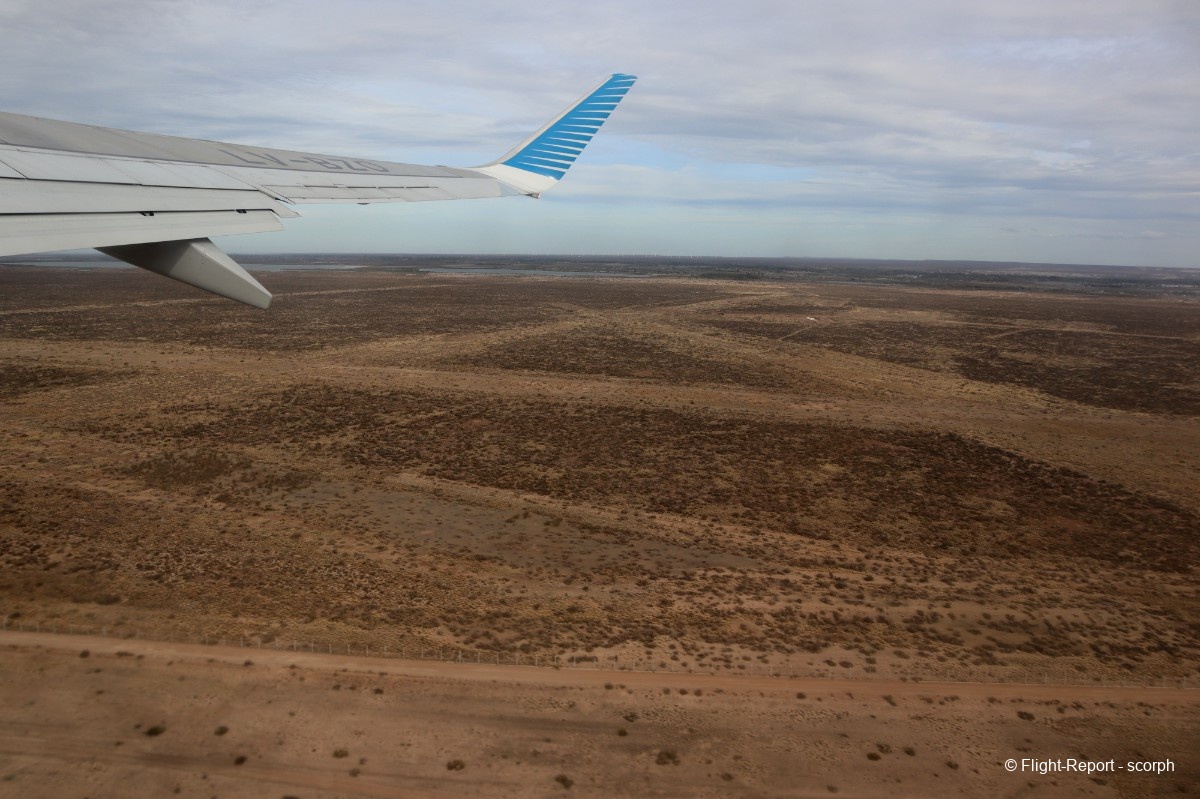
We quickly gain altitude over the Pampa, the vast arid plains where Guanacos roam. In the distance, the Atlantic Ocean becomes visible.
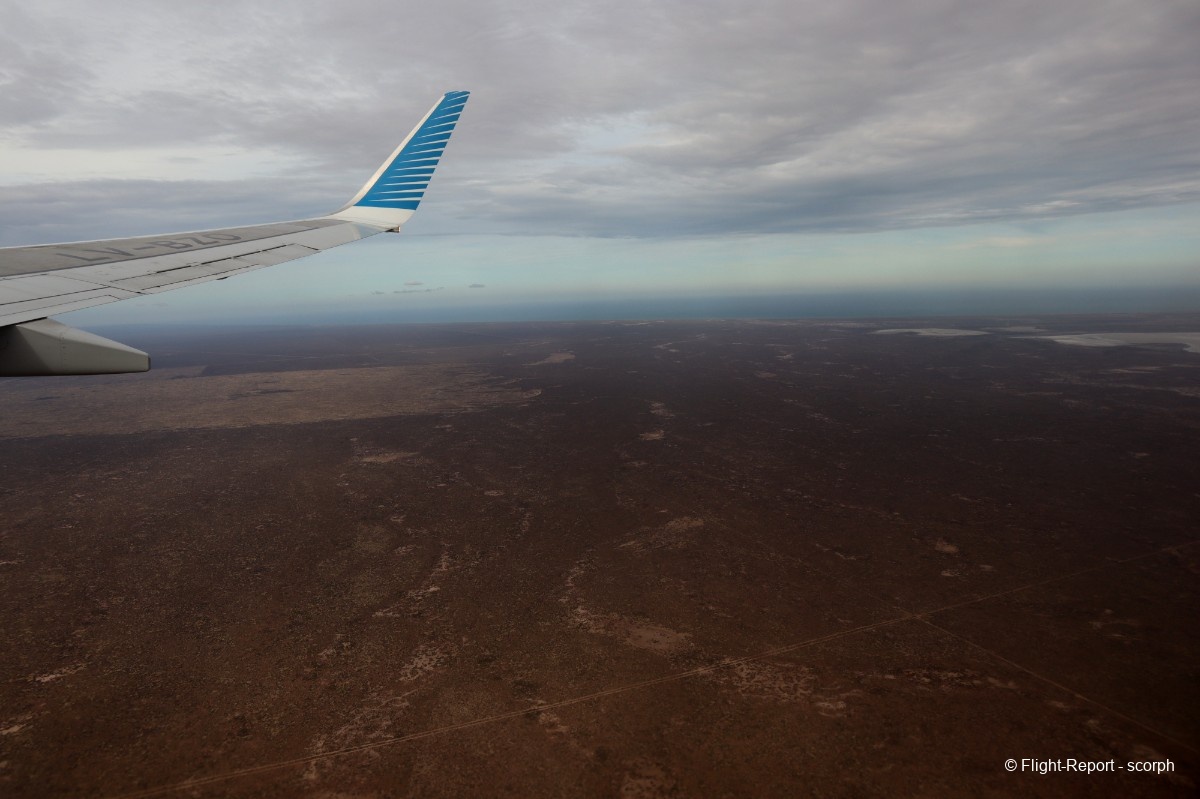
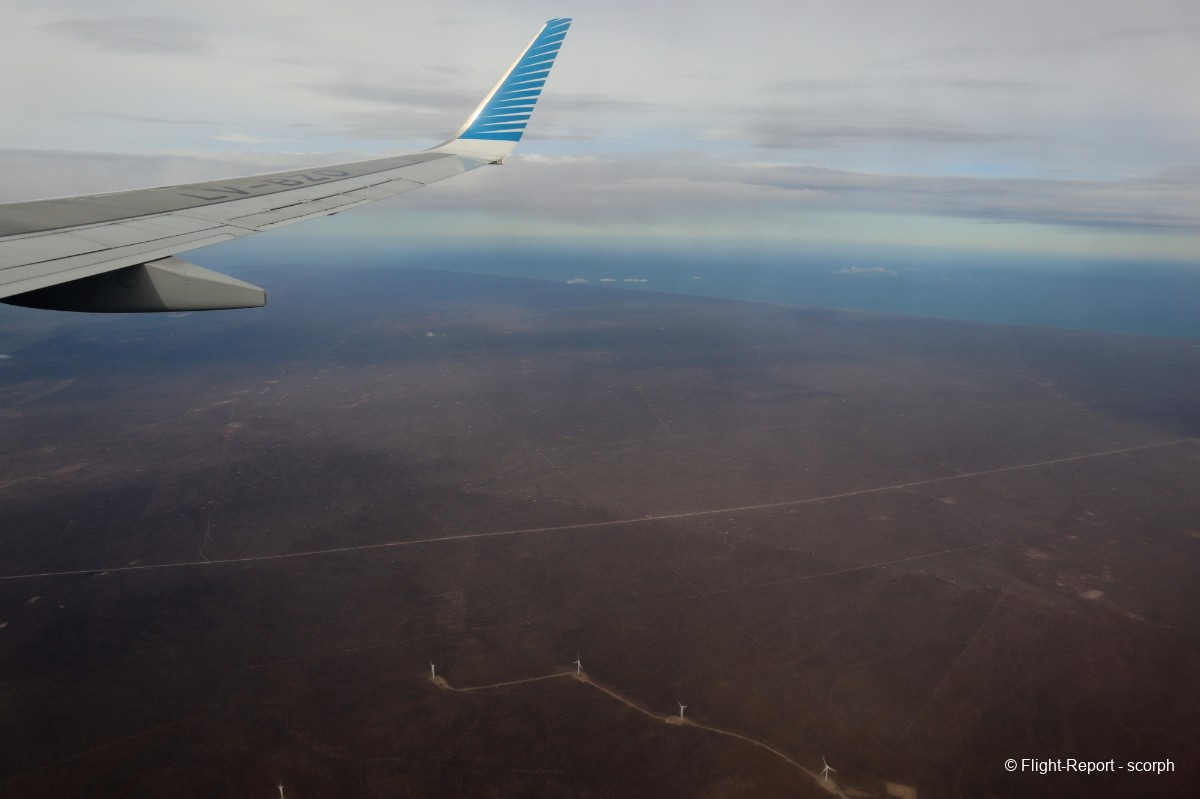
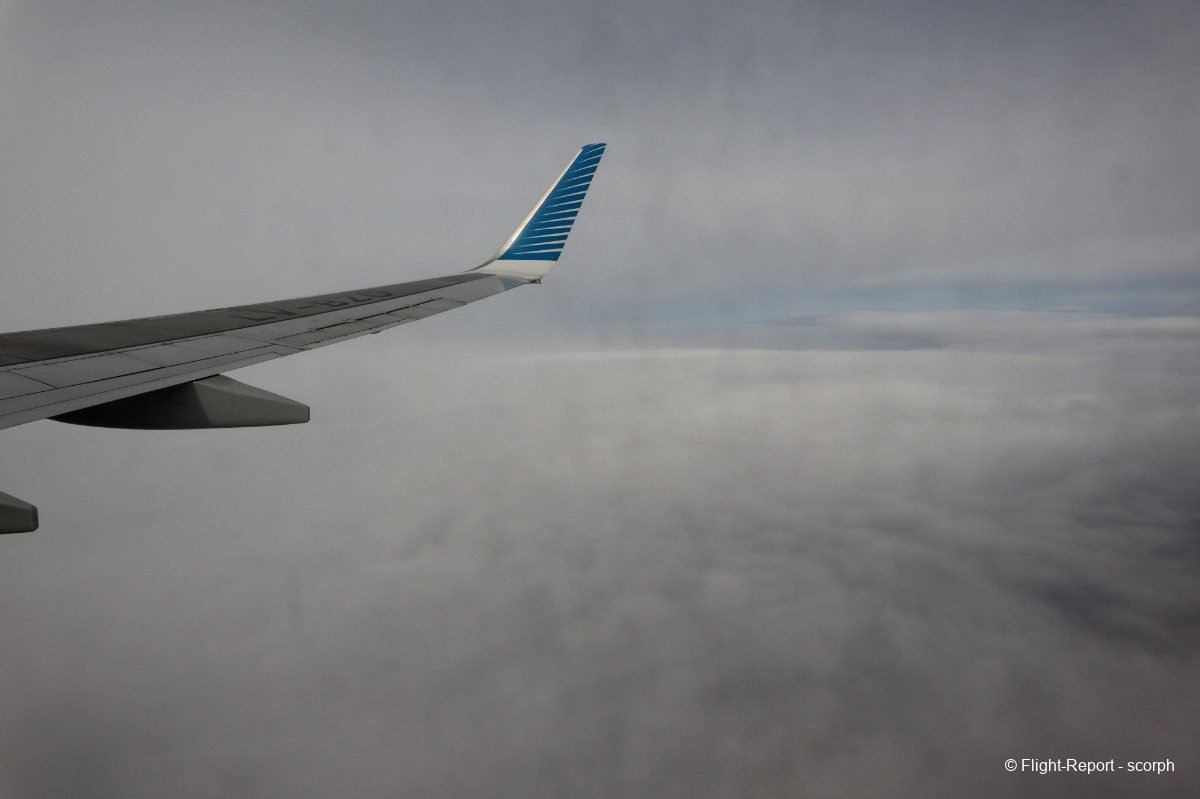
Unfortunately, the climb to our cruising altitude quickly takes us above the clouds, even before we can catch a glimpse of the seaside resort town of Puerto Madryn. Regrettably, the view will remain obstructed almost till the end of the flight.
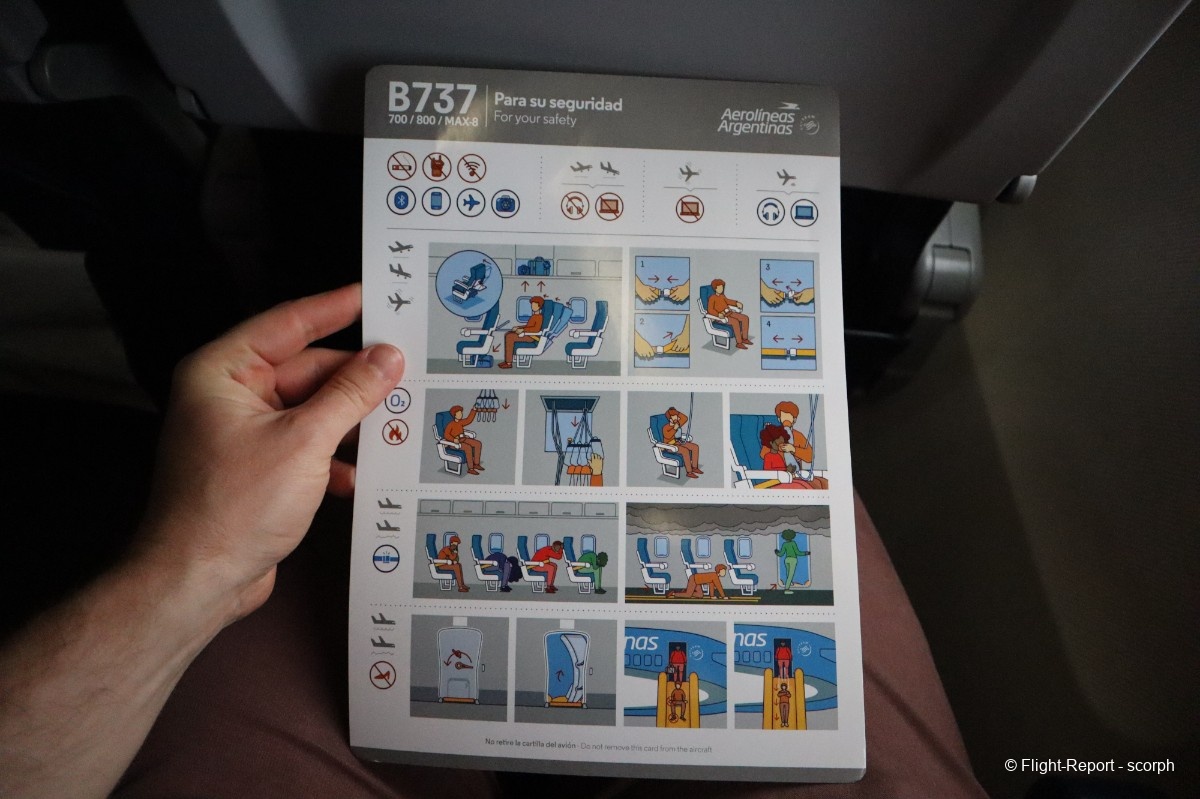
The safety card, which is common to all Boeing 737 variants operated by AR, is the only document available in the seat pocket.
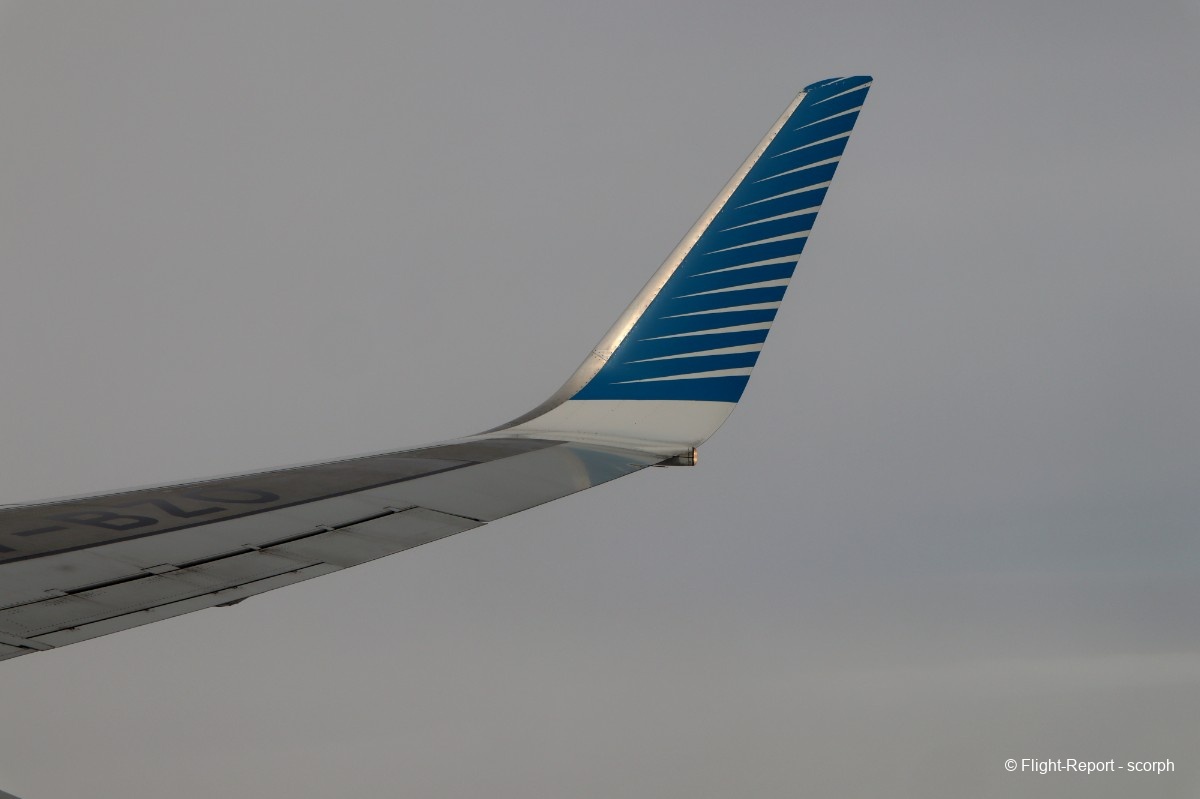
A close-up of the winglet, painted in the colors of the Argentine flag which are also the colors of the national carrier.
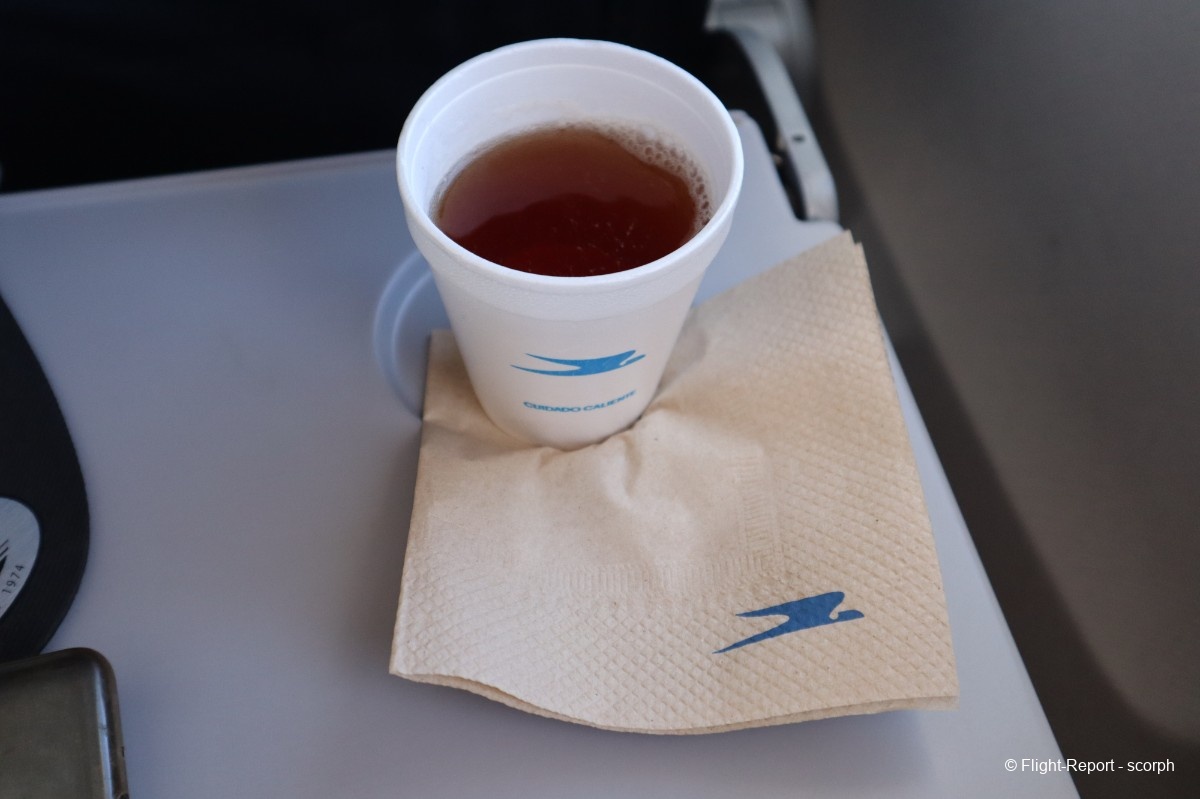
Once we reach our cruising altitude, our mixed crew comes through with the trolley. It’s a drinks-only service, and I opt for a tea. No food is offered, whether complimentary or via BoB (Buy on Board).
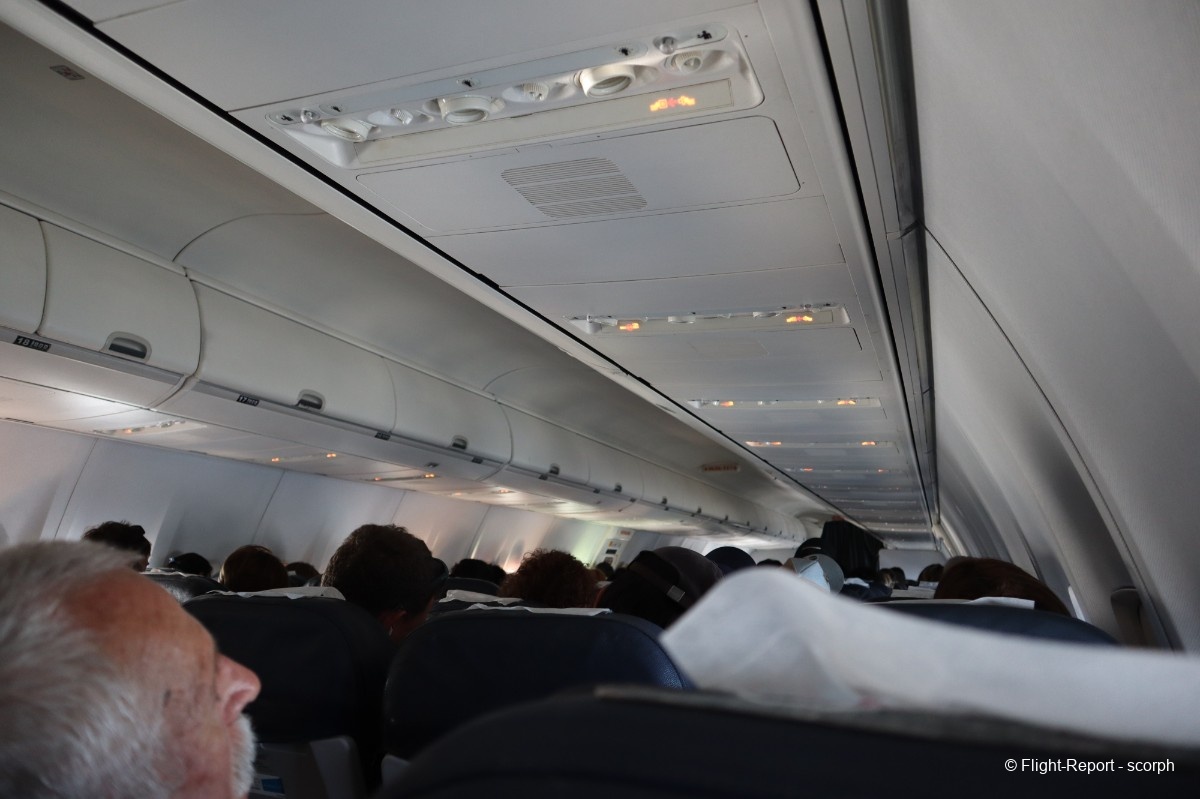
The cabin is quite full for this flight, and with a lack of In-Flight Entertainment, most passengers opted for a quick nap including my dad, just ahead of me.
The route followed by our flight today: 37,000 ft on the airspeed indicator and an almost perfectly straight path toward Buenos Aires.
The clouds will clear as we enter the state of Buenos Aires. It is also at that moment that our descent toward the ground begins.
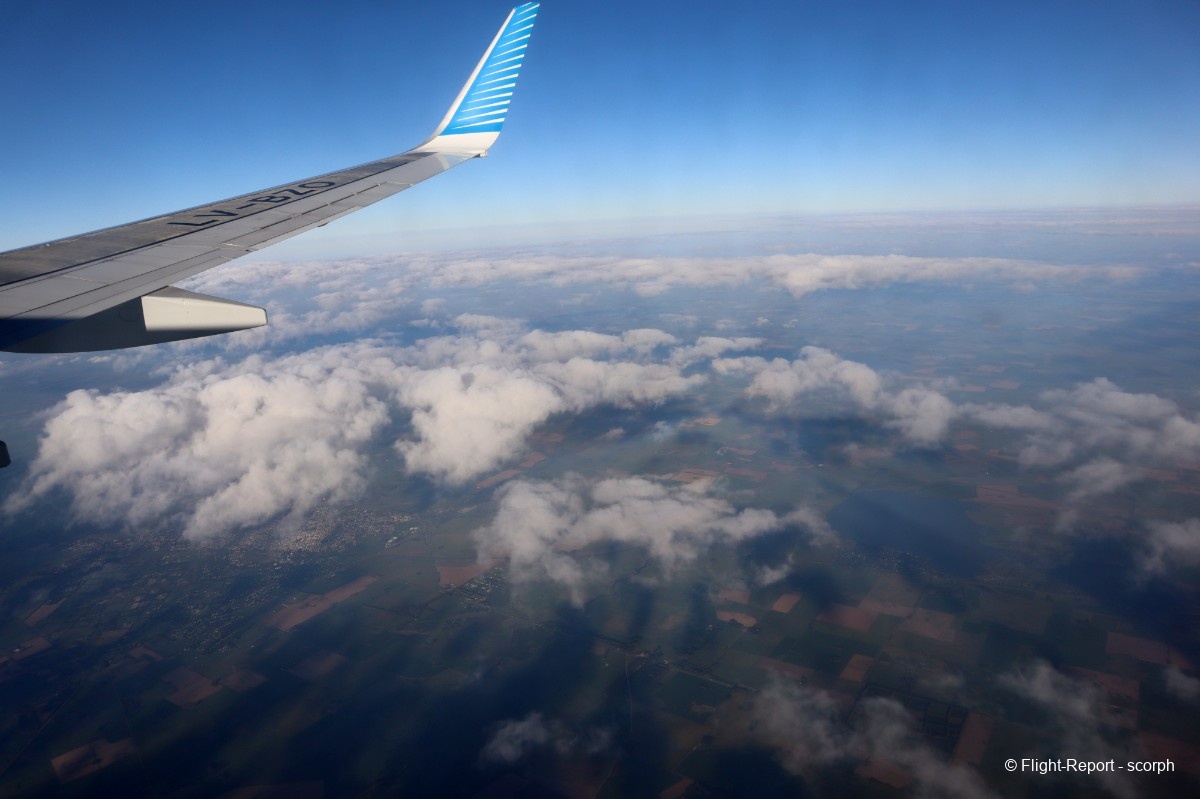
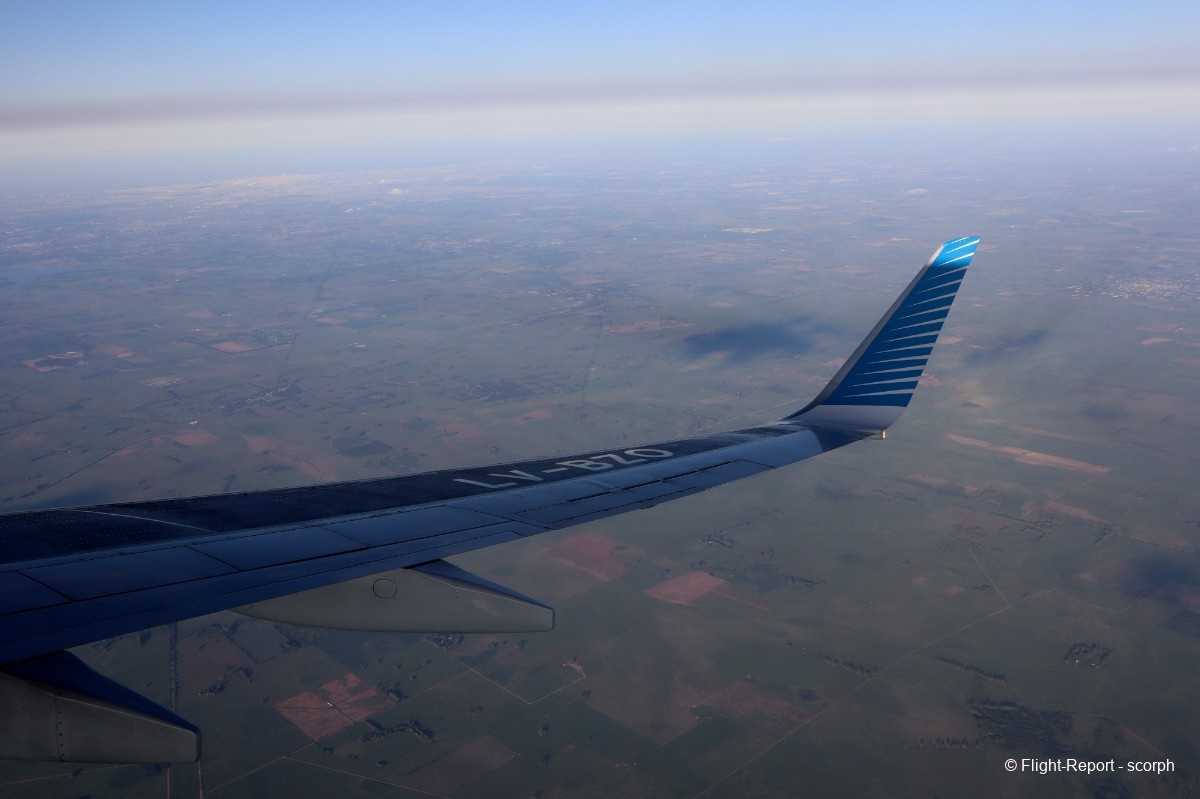
As we approach the Argentine capital, we begin to see the first housing developments, both completed and under construction, surrounding artificial lakes. Our arrival into Buenos Aires will take us around the eastern side of the Argentine megacity, passing near the city of General Rodríguez.
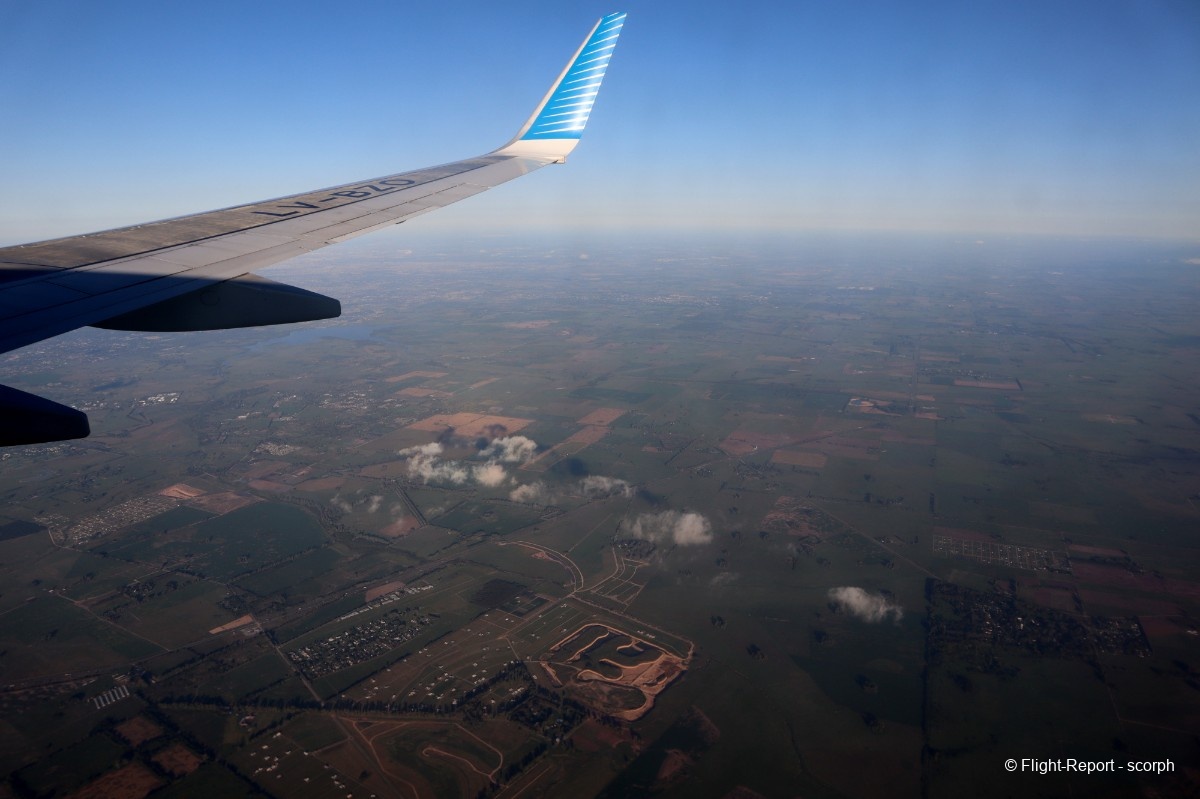
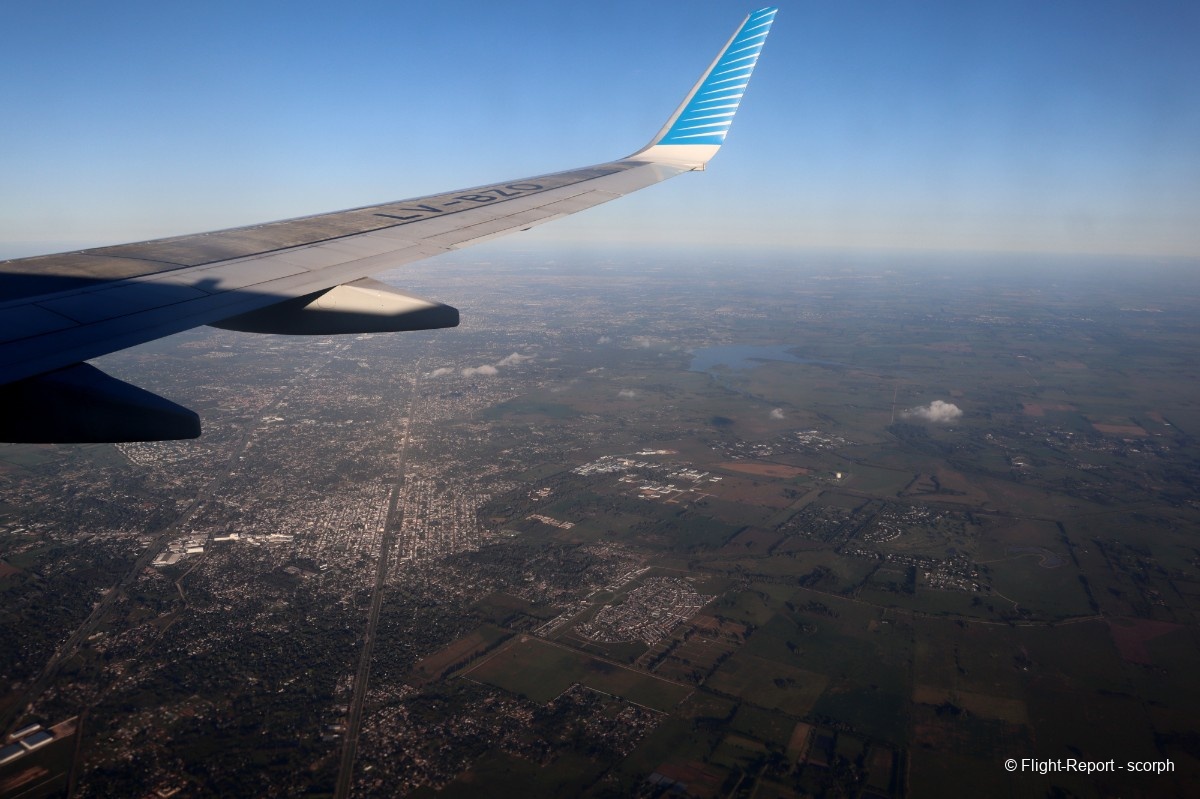
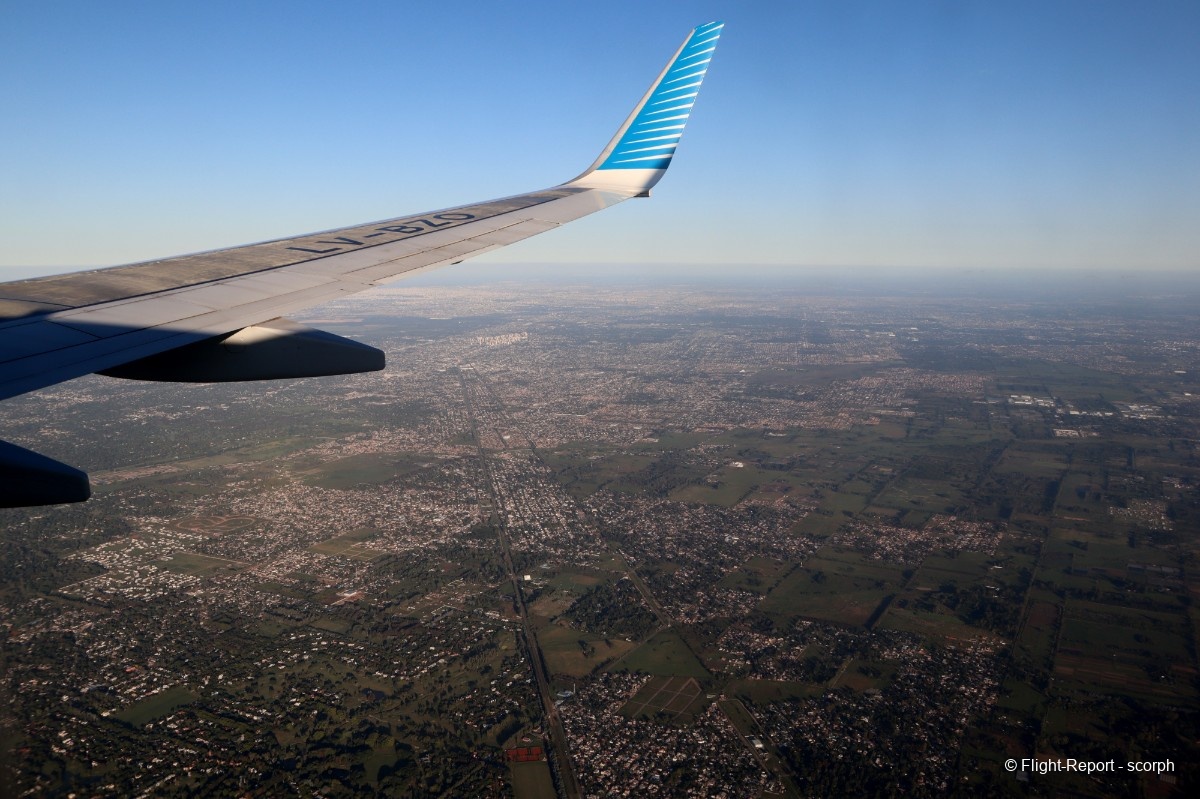
We are getting closer to the ground, but also to the city center. The housing is becoming increasingly dense. The trend seems to be owning a home in a housing built on the shores of an artificial lake.
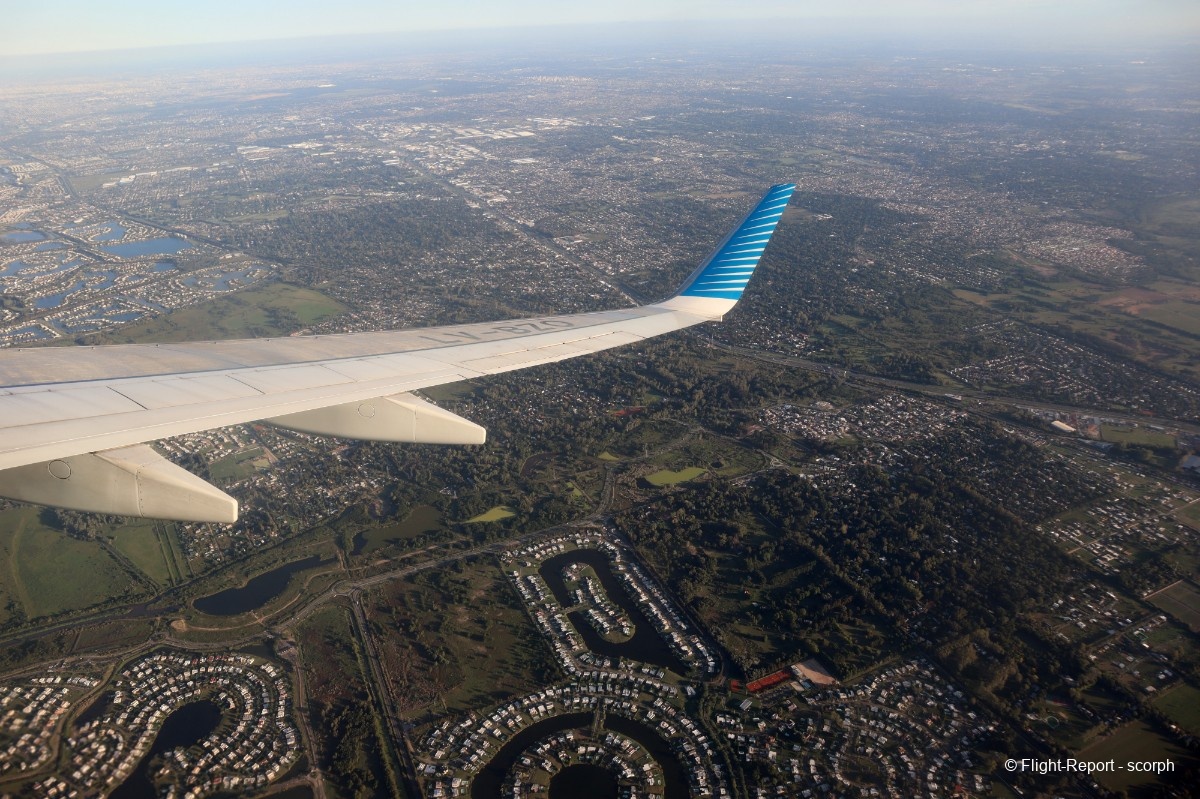
We are aligning with the neighborhood-level approach of San Fernando; in fact, we can see the small Reconquista River.
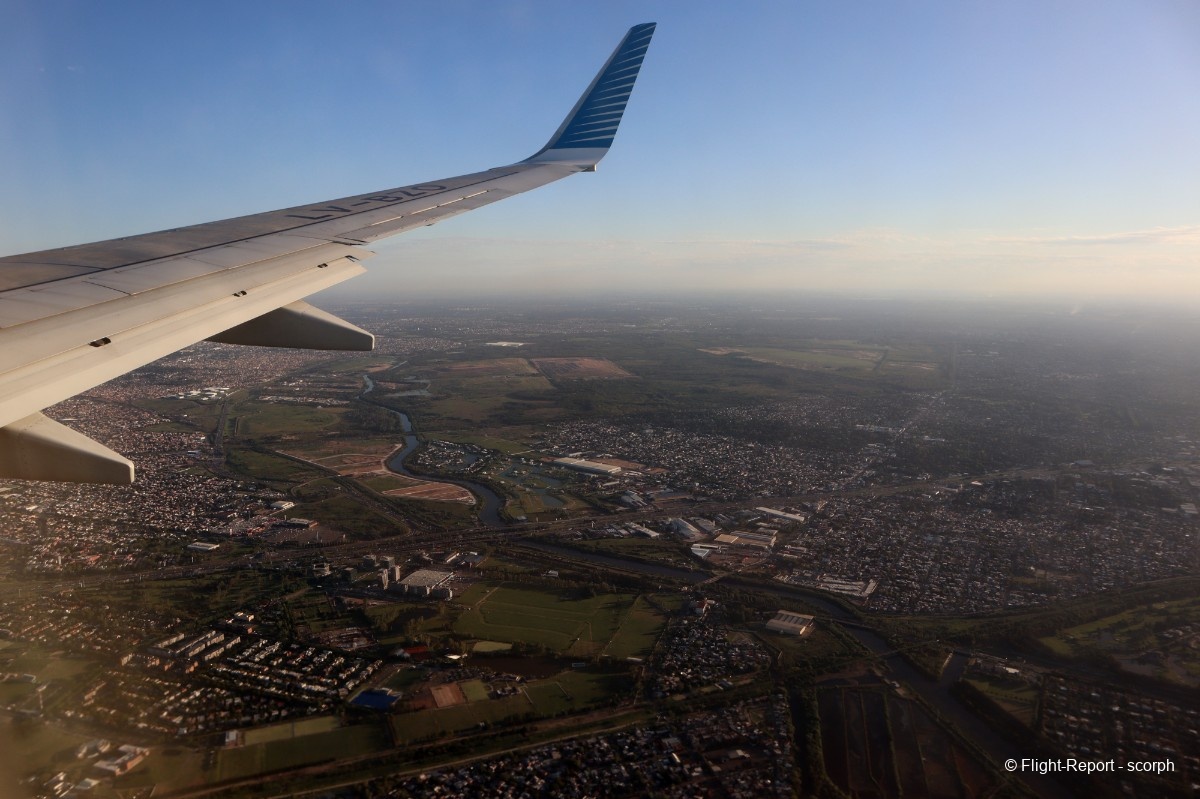
As we progressively get closer to Aeroparque, one can see the buildings growing larger and larger as the downtown area nears.
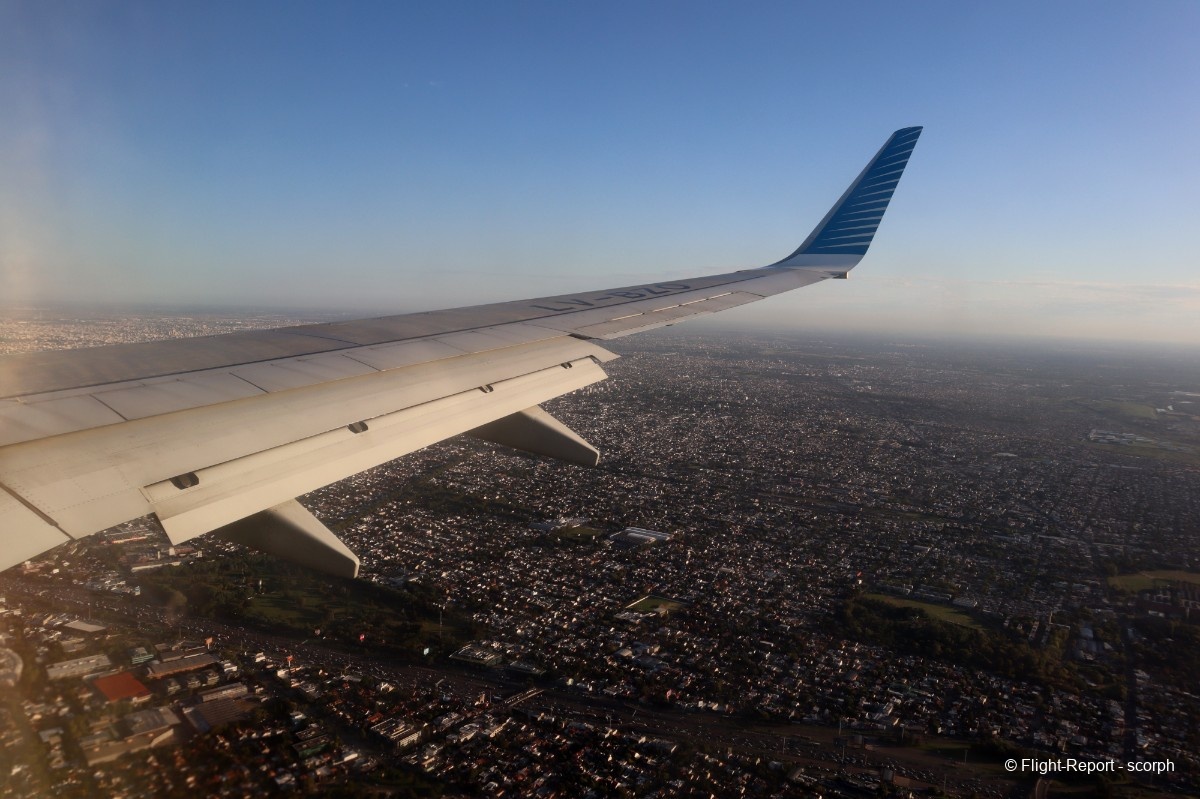
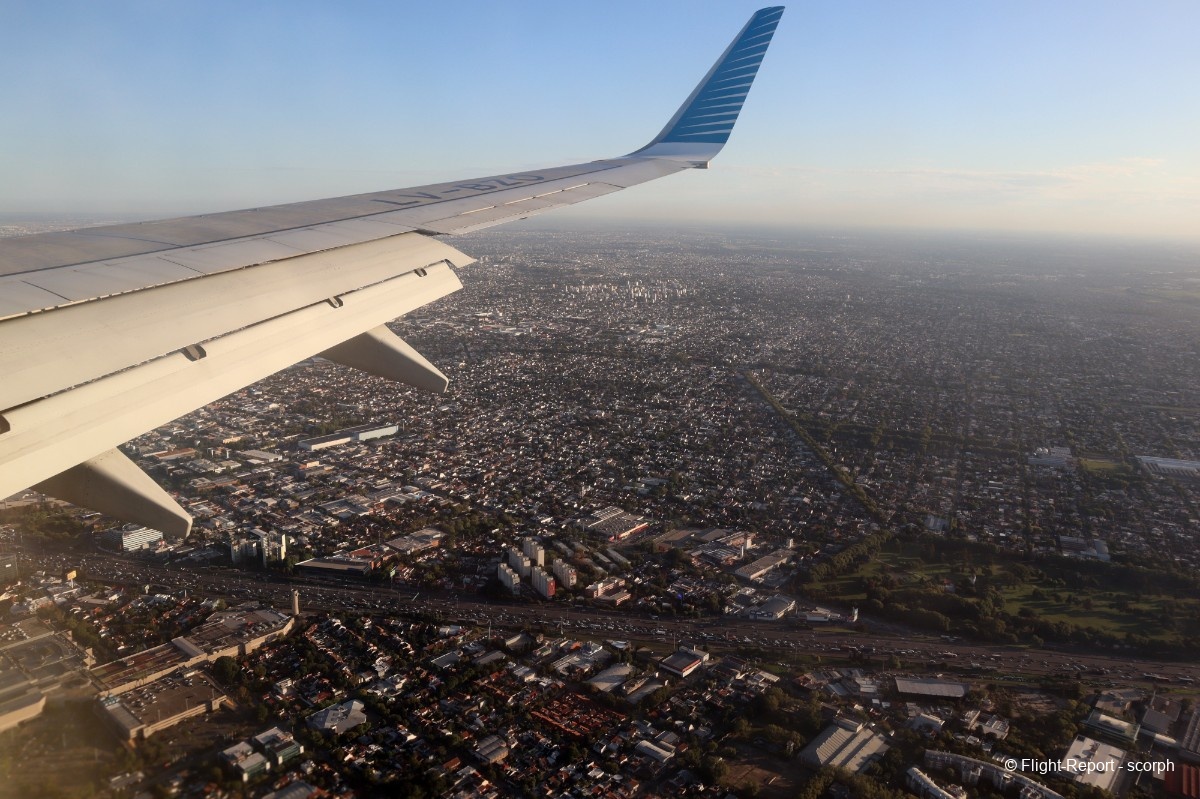
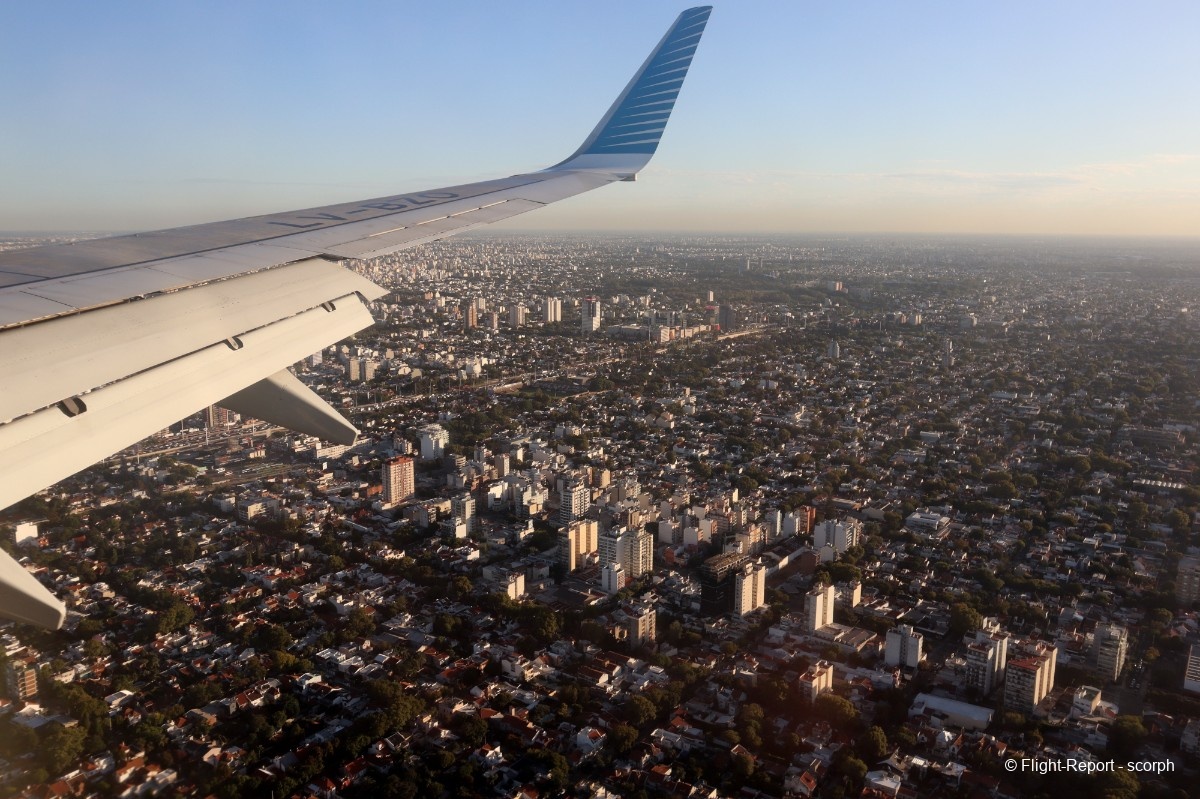
We will then fly over Avenida General Paz, which is the main beltway of the Argentine capital; like any major city, it’s completely jammed at this hour as offices let out.
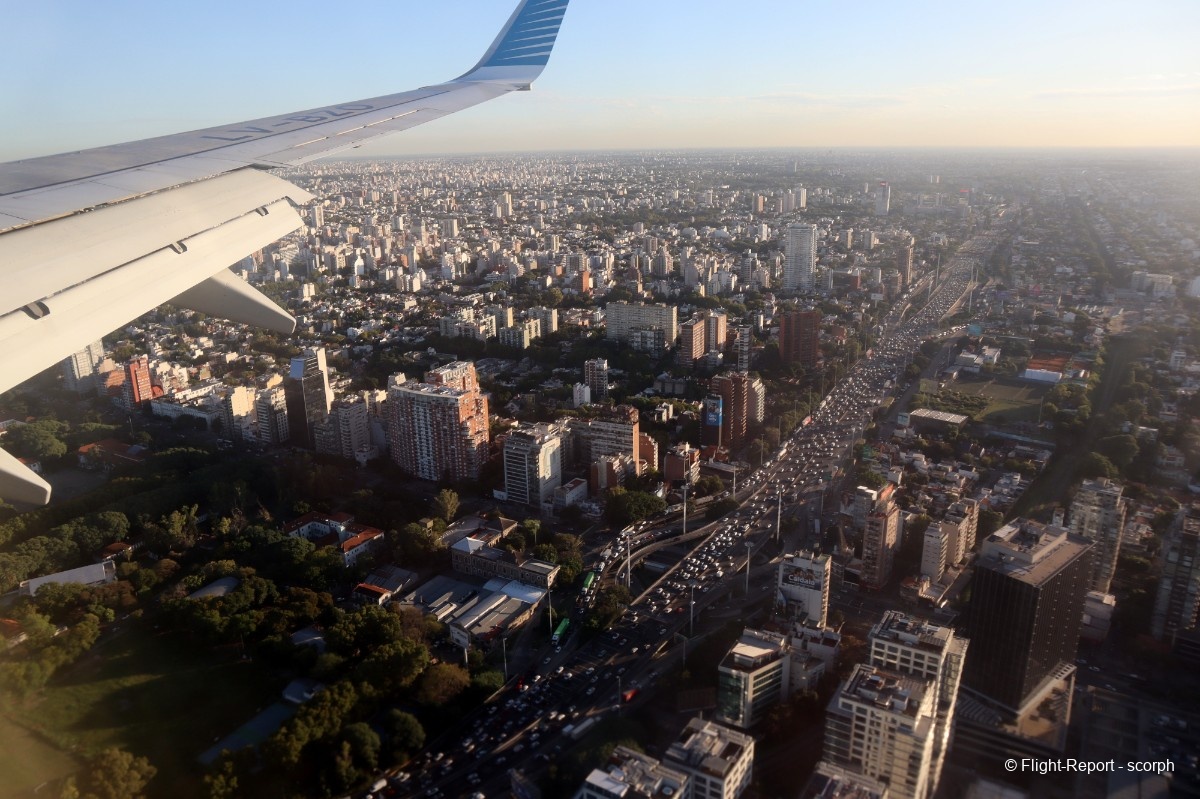
The final approach really gives the impression that our plane is going to land right on top of the buildings in the Mitre, Nuñez, or Belgrano neighborhoods.
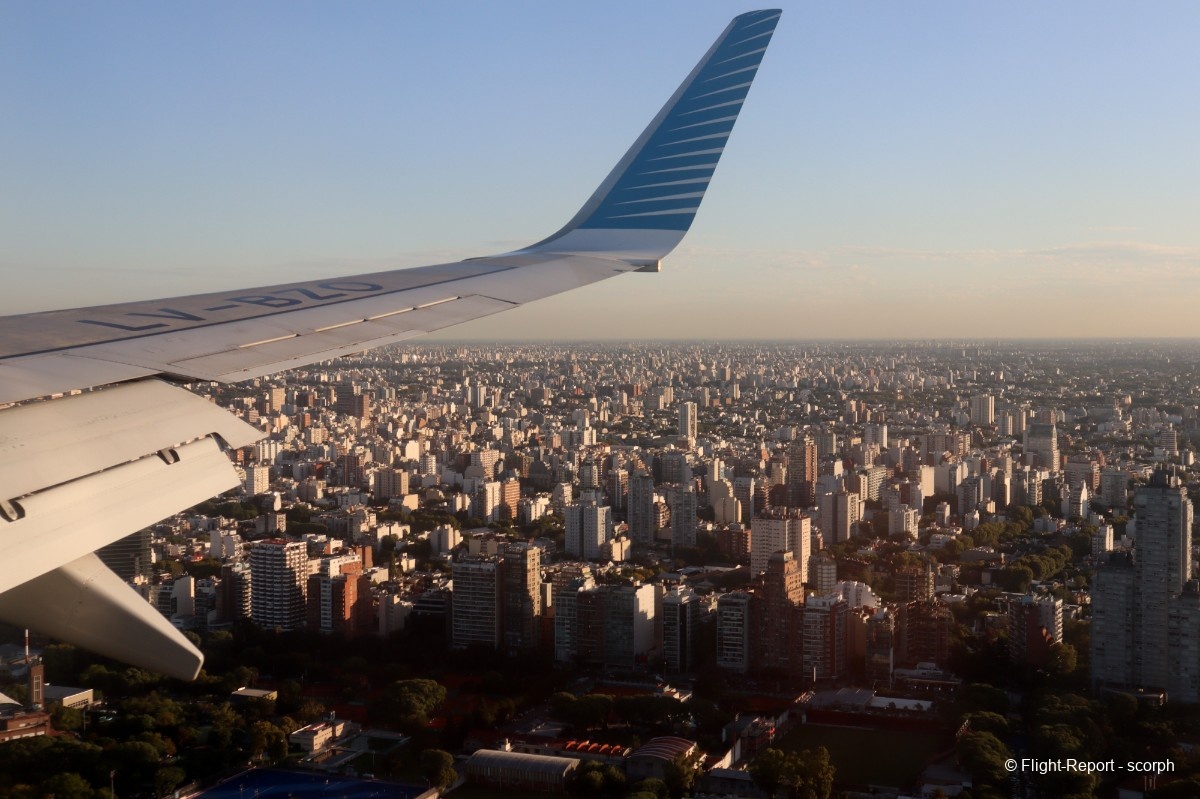
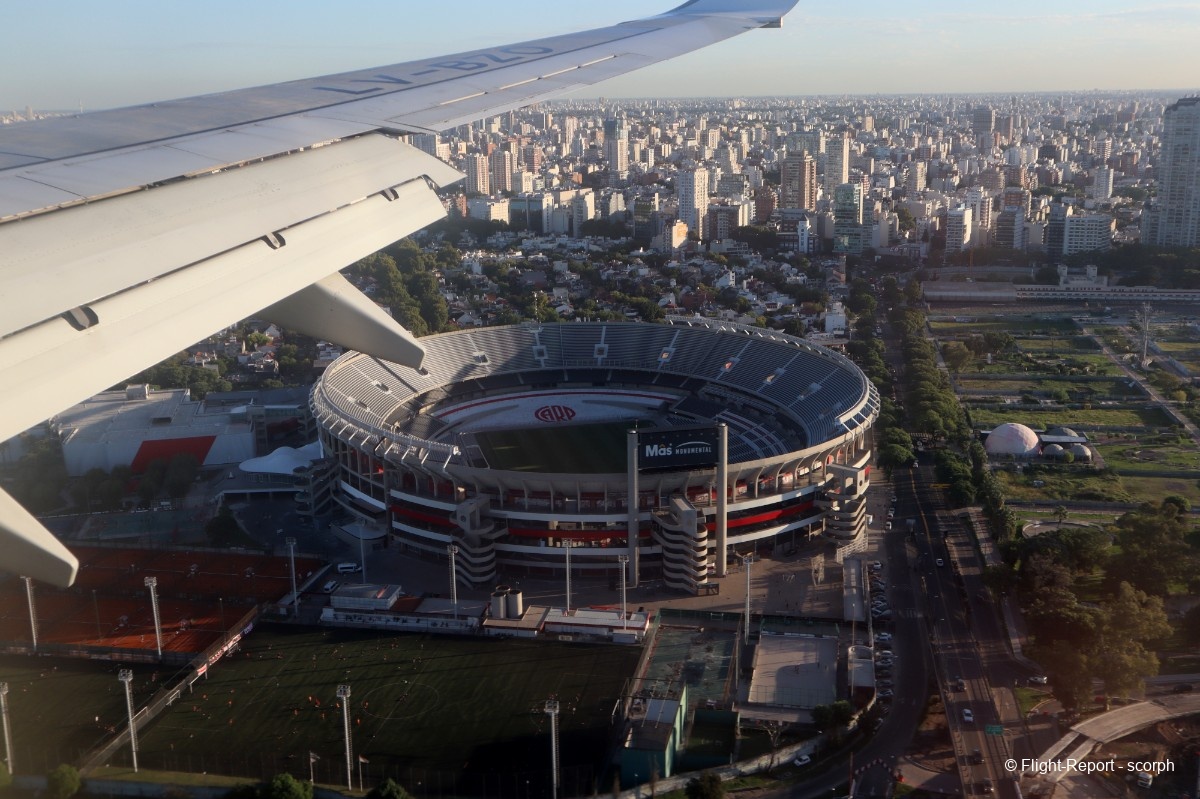
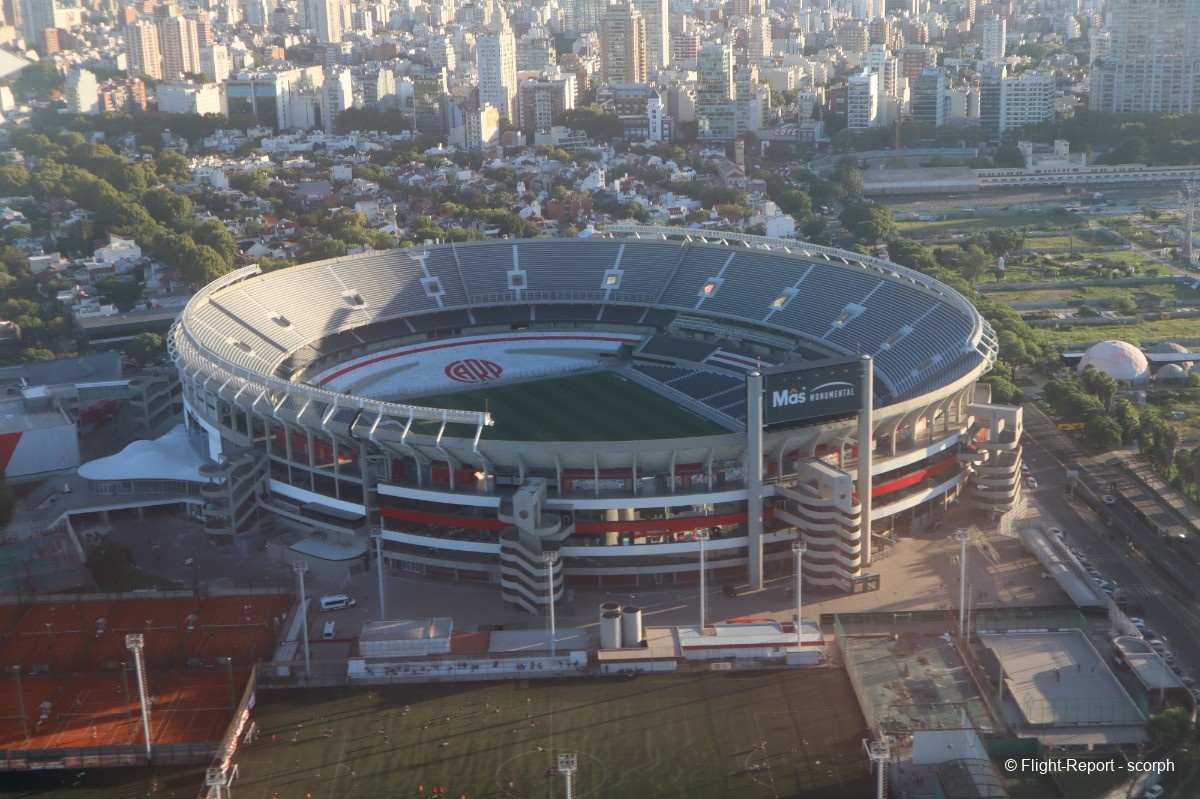
We are also passing very, very close to the famous Estadio Monumental, home of Argentina's most successful club, the renowned Club Atlético River Plate. This massive and legendary open-air stadium currently has a capacity of 85,000 seats and is hosting matches of the national team.
Just a few seconds of flight left; we can see the trees of Parco Norte, separated from the airport by Avenida Leopoldo Lugones, which serves as the northern beltway for Buenos Aires and provides access to AEP airport.
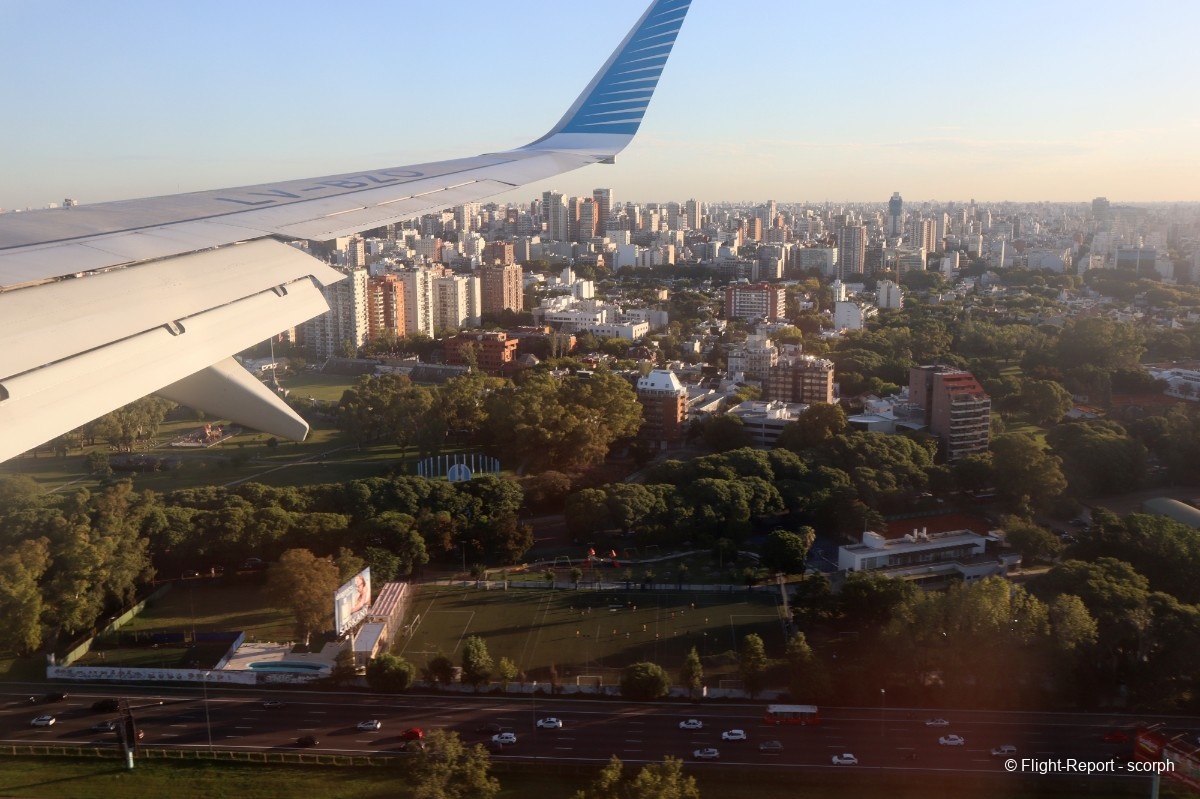
A gentle touchdown on the tarmac of Runway 13 at Aeroparque. The braking is also moderate; you can tell the pilots are landing smoothly, feeling like at home in AEP.
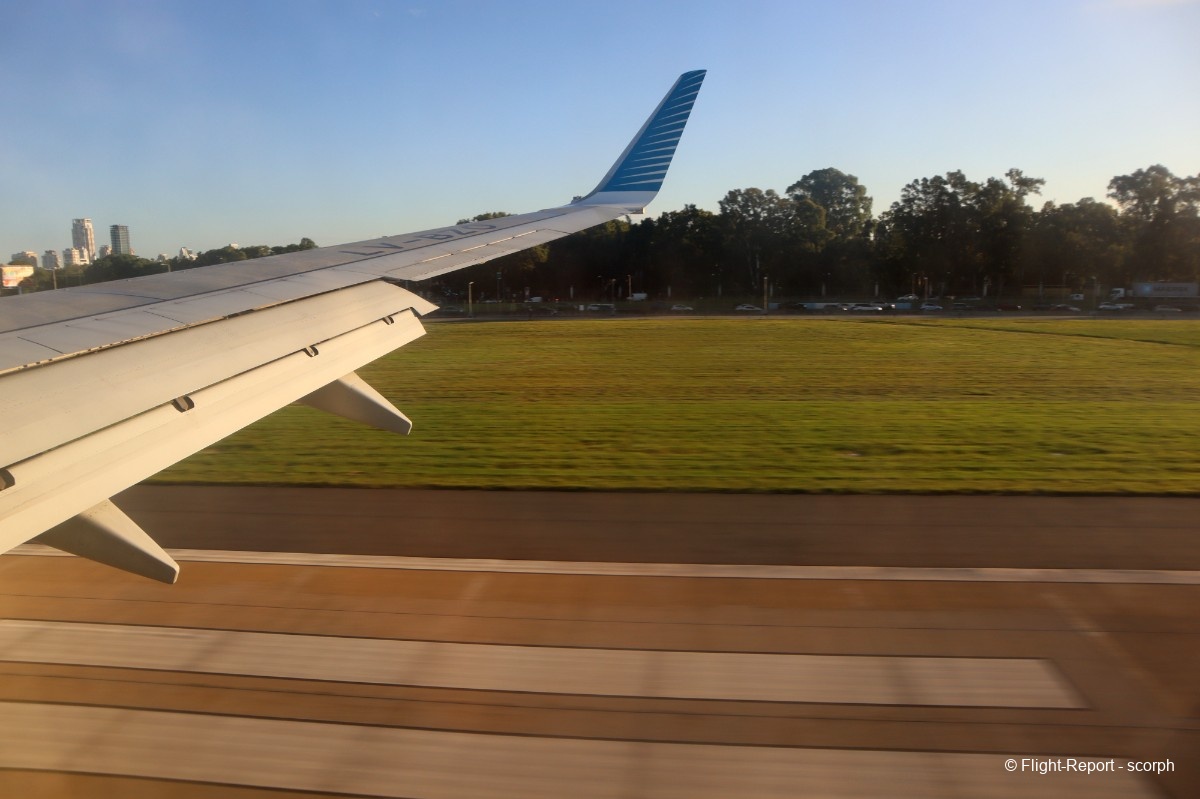
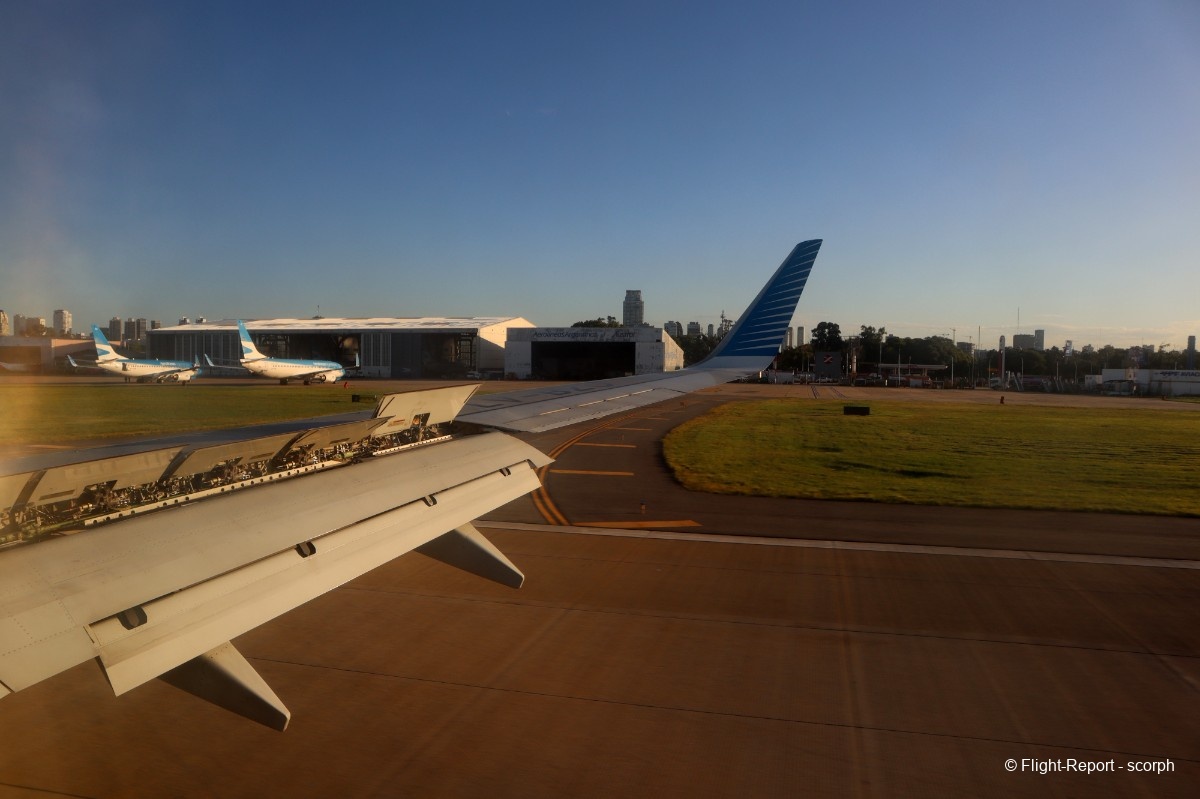
On the right side of the runway are the maintenance hangars for Austral and Aerolíneas Argentinas.
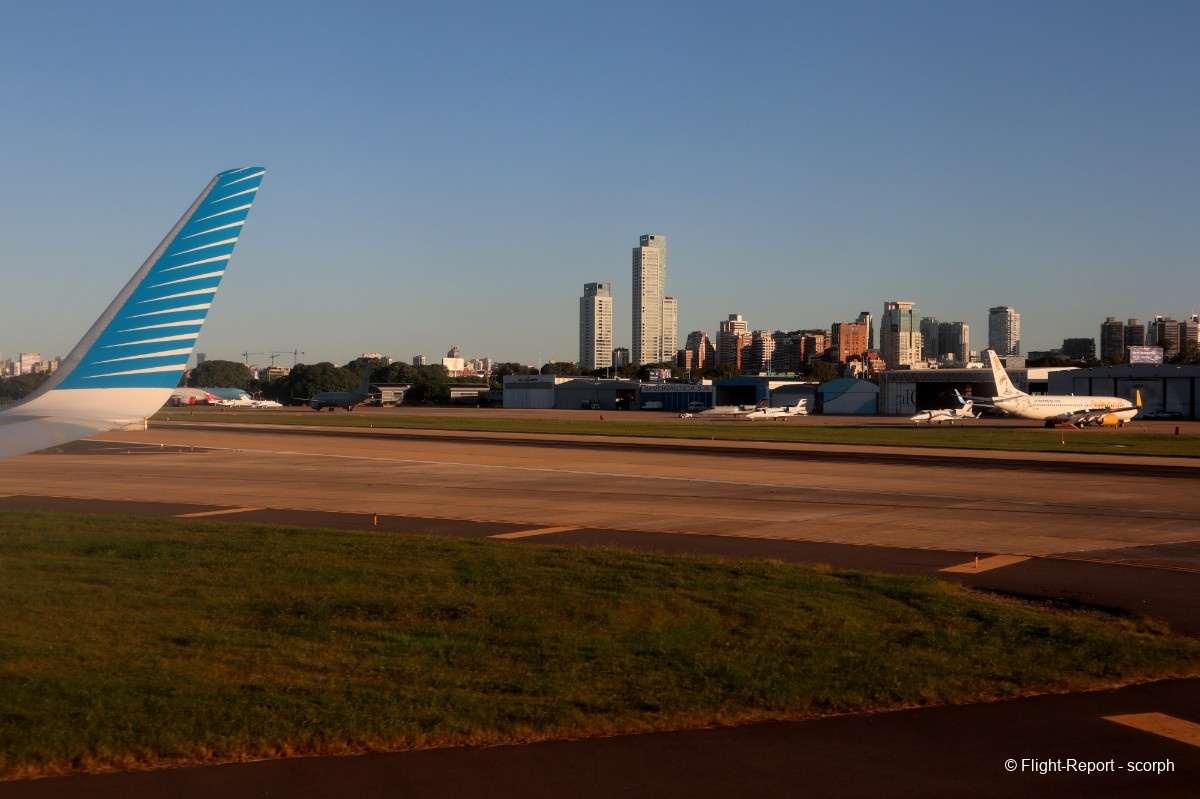
While at the end of the runway stands the towers located in the northern section of the Palermo neighborhood, known as 'Palermo Chico'.
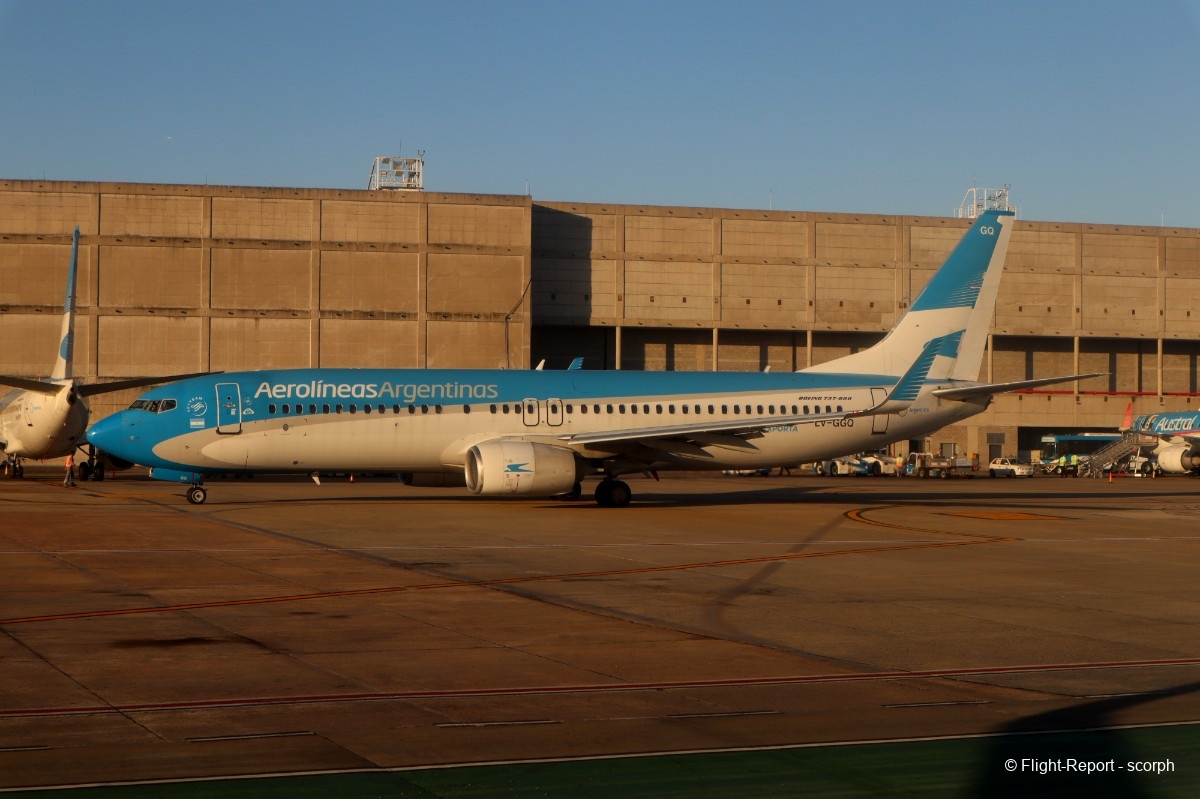
On the way, we pass this Aerolíneas Argentinas Boeing 737-800 departing for Ushuaia.
And also this other Aerolíneas Argentinas Boeing 737 MAX 8, this time departing for San Carlos de Bariloche.
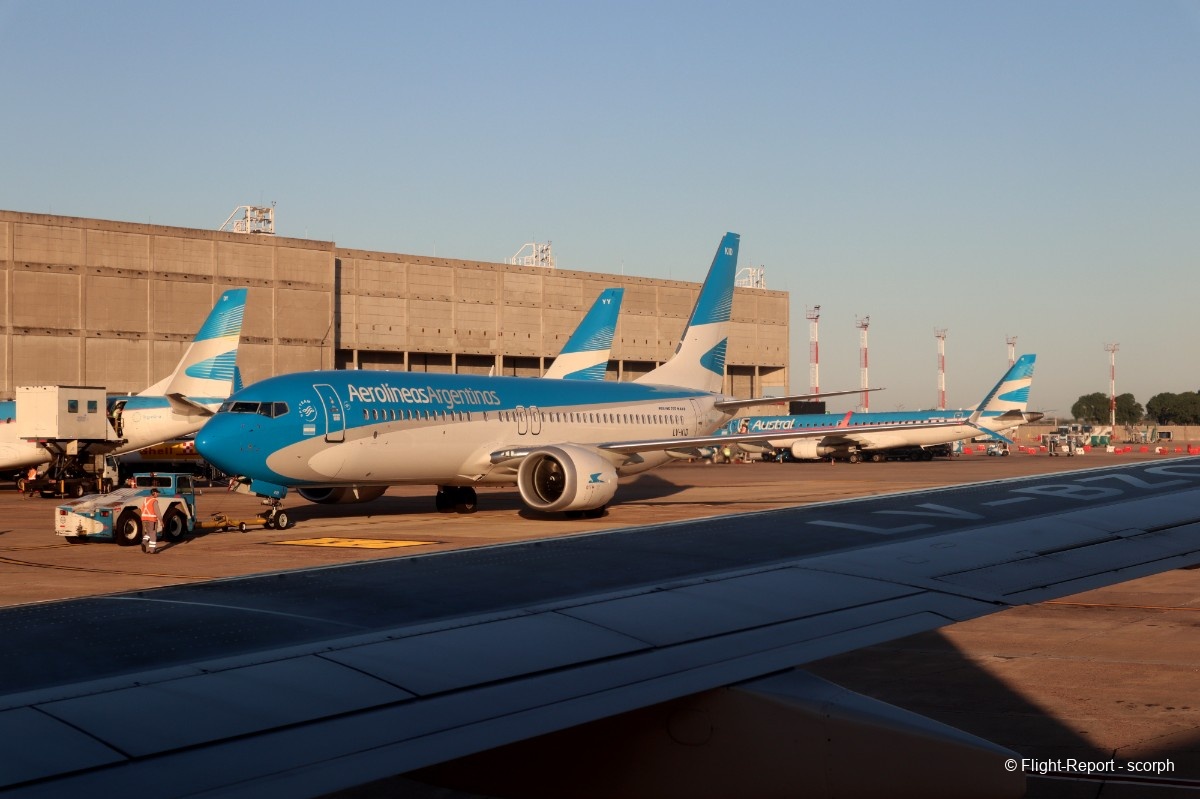
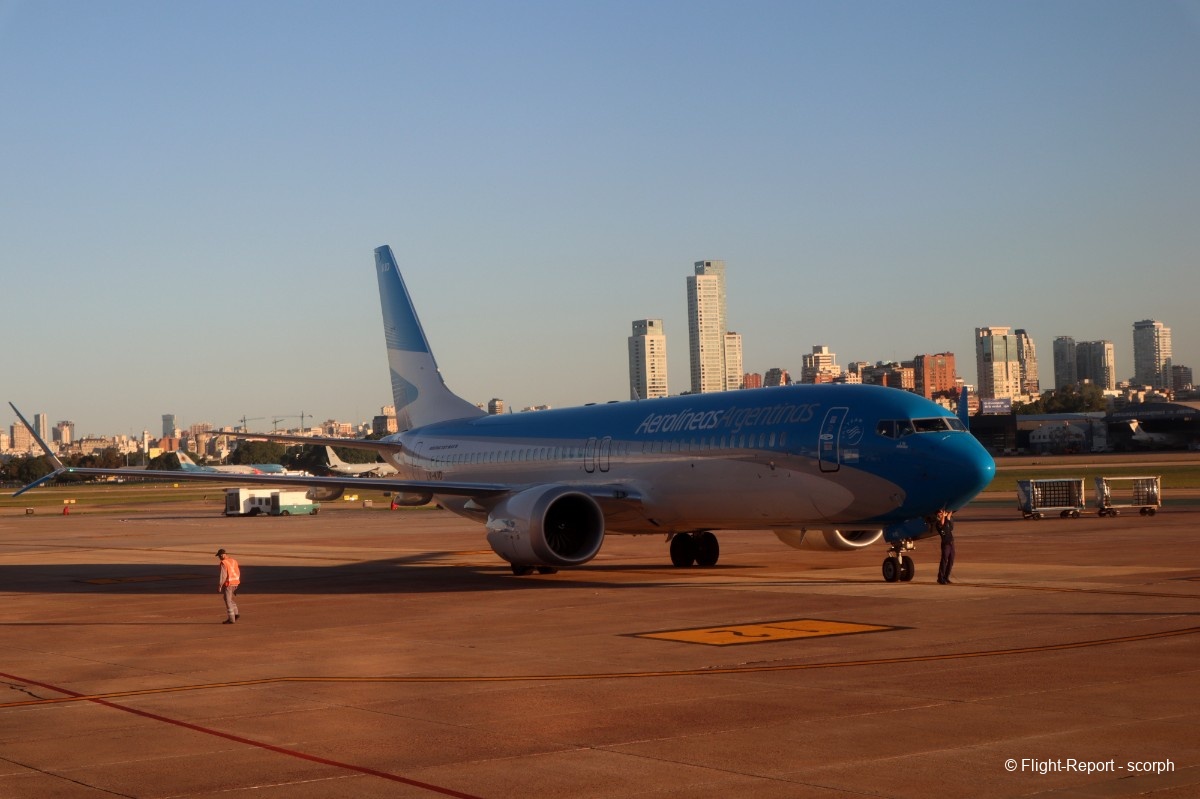
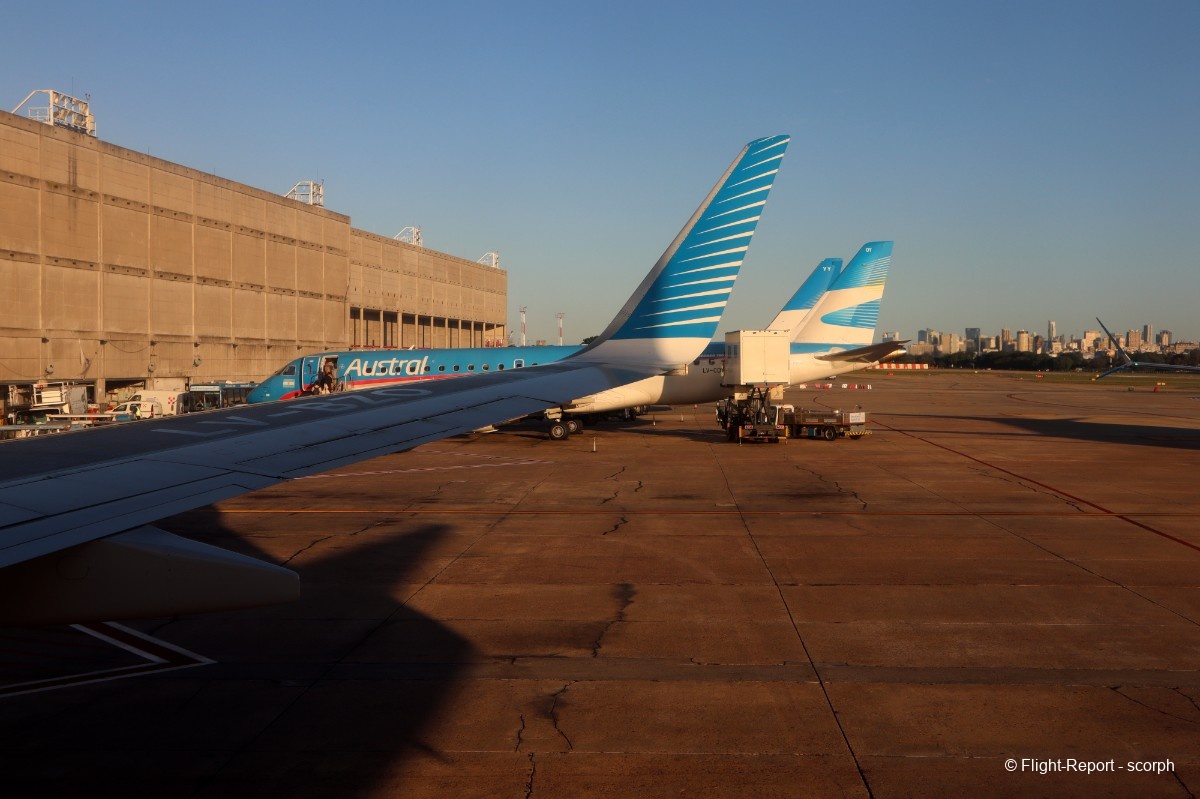
On our end, we will be parked at the last jet bridge at this end of the terminal, alongside those Embraer 190s from the subsidiary Austral (the aircraft originally scheduled to operate our flight).
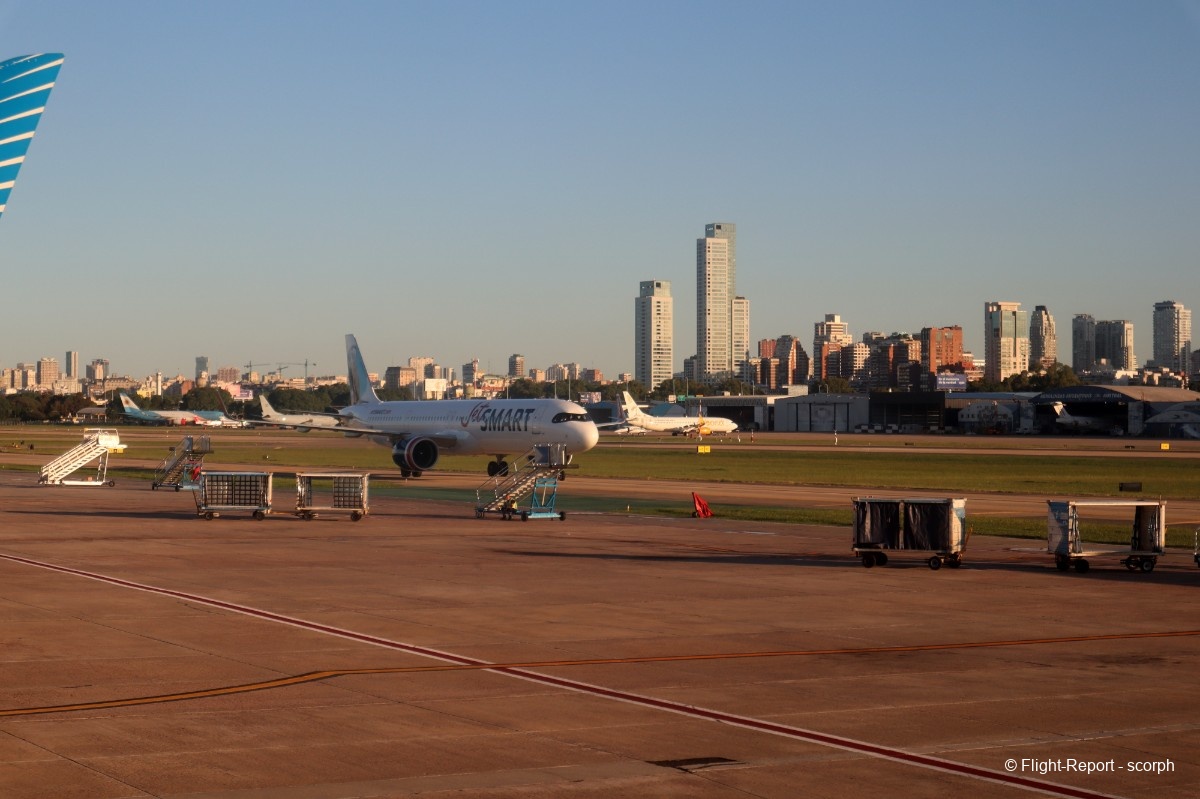
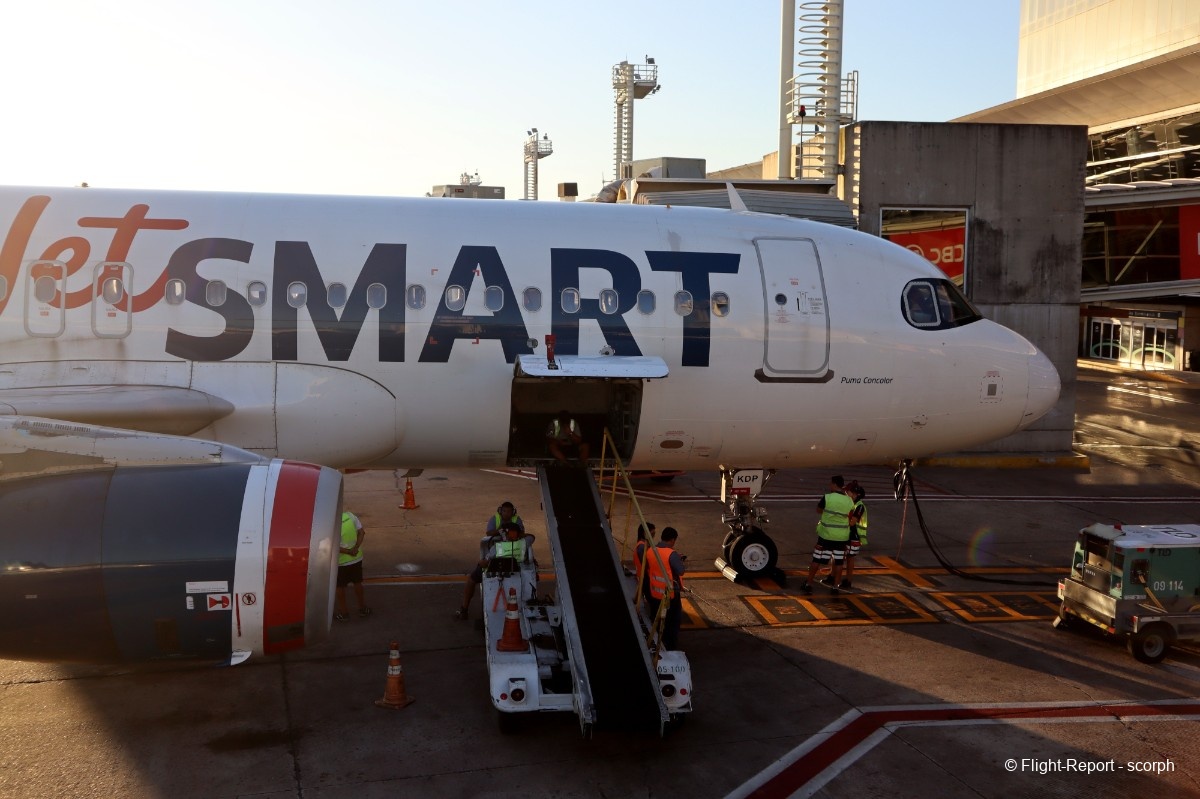
By the time the deboarding operations begin, this JetSmart Airbus A321neo passes at our 6 o'clock.
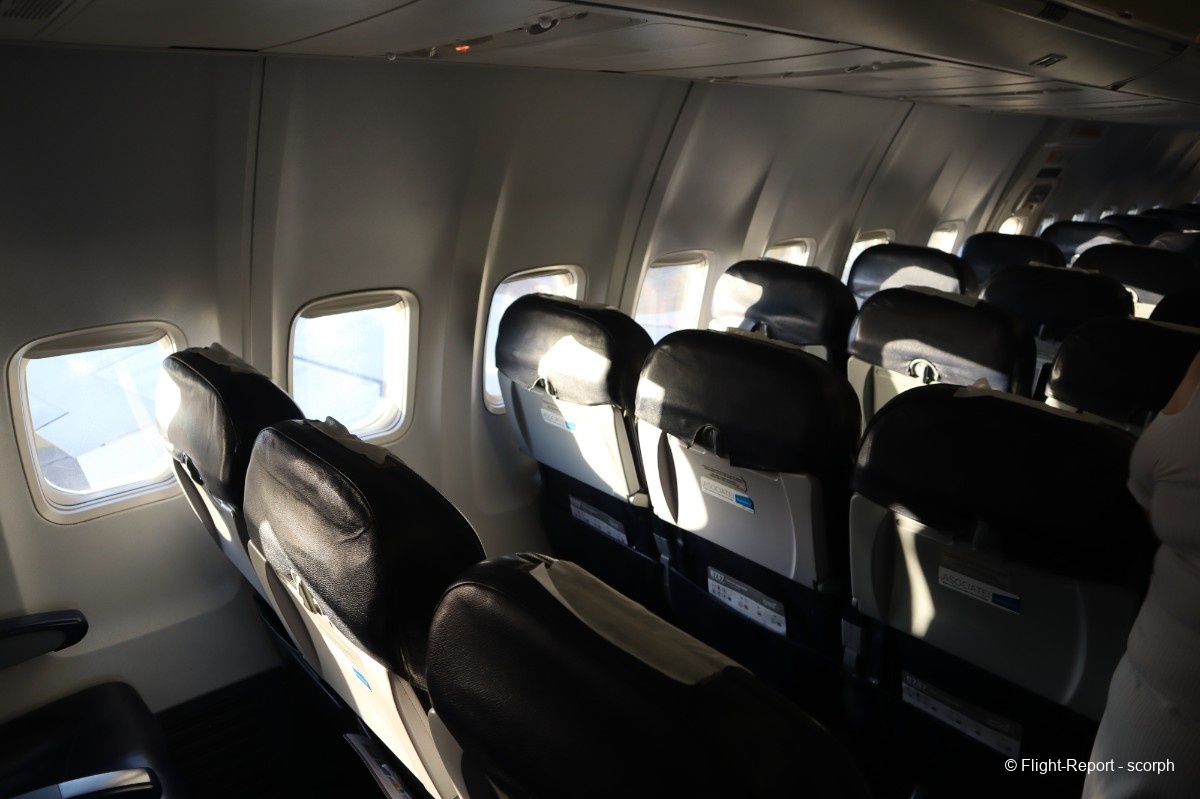
The disembarkation will be quite fast, even for those of us seated at the very back. It is high time to leave this cabin, which was far from comfortable, after a rather robotic salute from the crew at the door.
Disembarking via a glass jetbridge, and a final look at the tail of our Boeing 737-700 of the day, bye bye Zulu Oscar
Our neighbor to the right is visible through the glass walkway; it's a JetSmart Airbus A320 that arrived from Neuquén just a few minutes before us
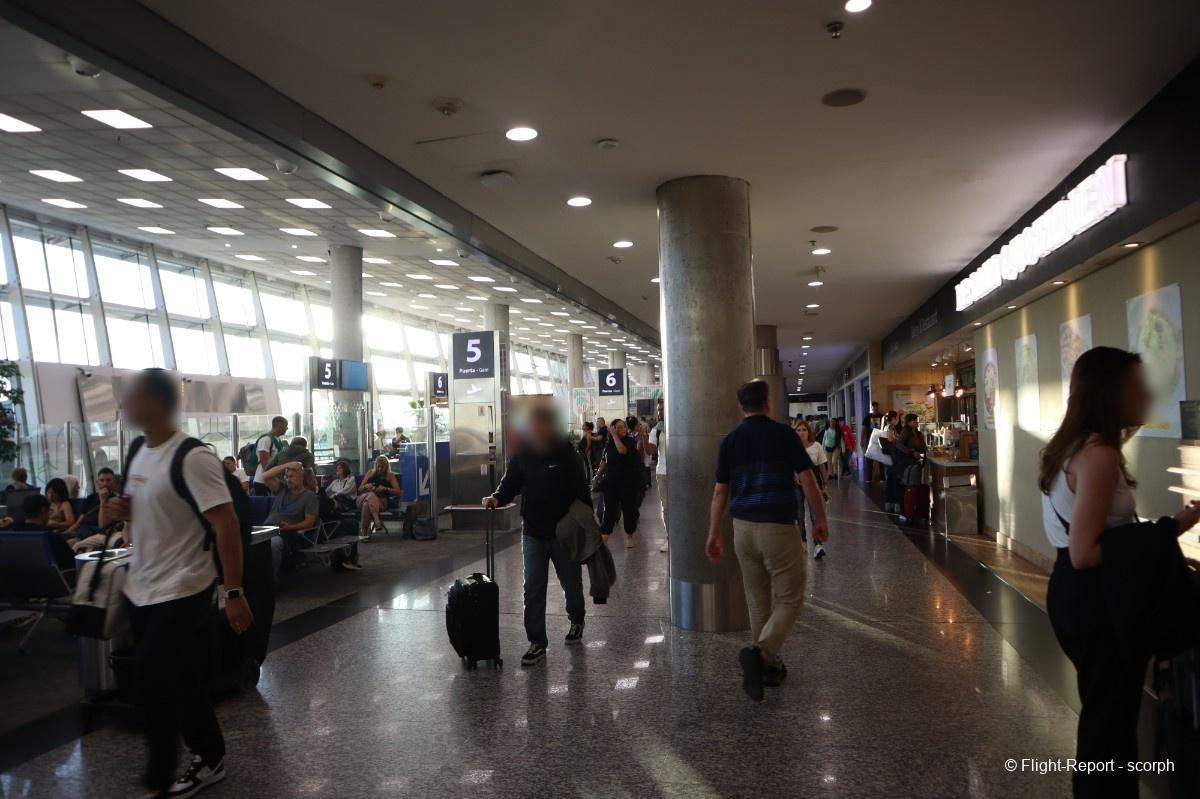
Upon exiting the jet bridge, you arrive immediately airside in the domestic departures hall without any additional checks. I understand why Aerolíneas often offers very short domestic connections at Aeroparque; transit there seems particularly easy. That said, doing a Bariloche–Trelew route with a layover at AEP must take at least 6 hours, whereas a direct flight wouldn't exceed 2 hours. Anyway, we headed toward the exit, weaving through the many passengers departing for every corner of the country.
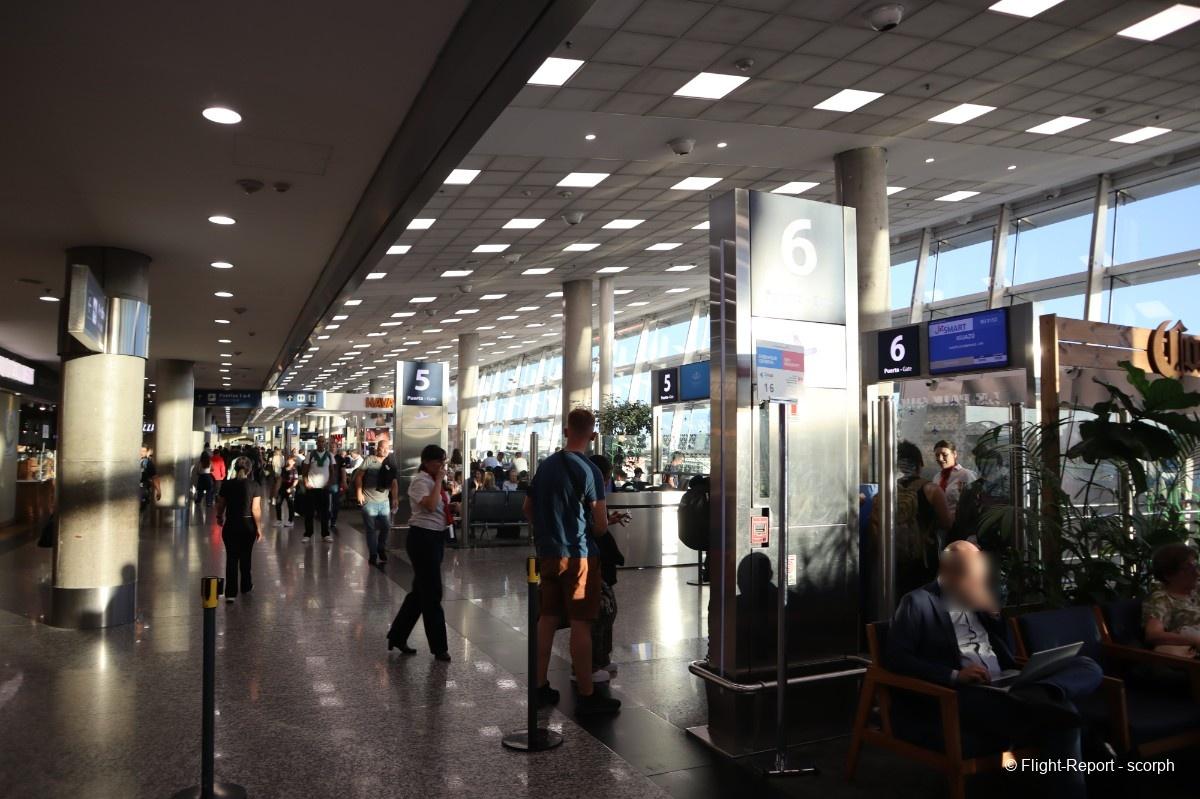
We headed to the carousel, where our luggage came out fairly quickly, less than 5 minutes after we arrived at the belt, which is a pretty good score for an airport having the size of AEP.
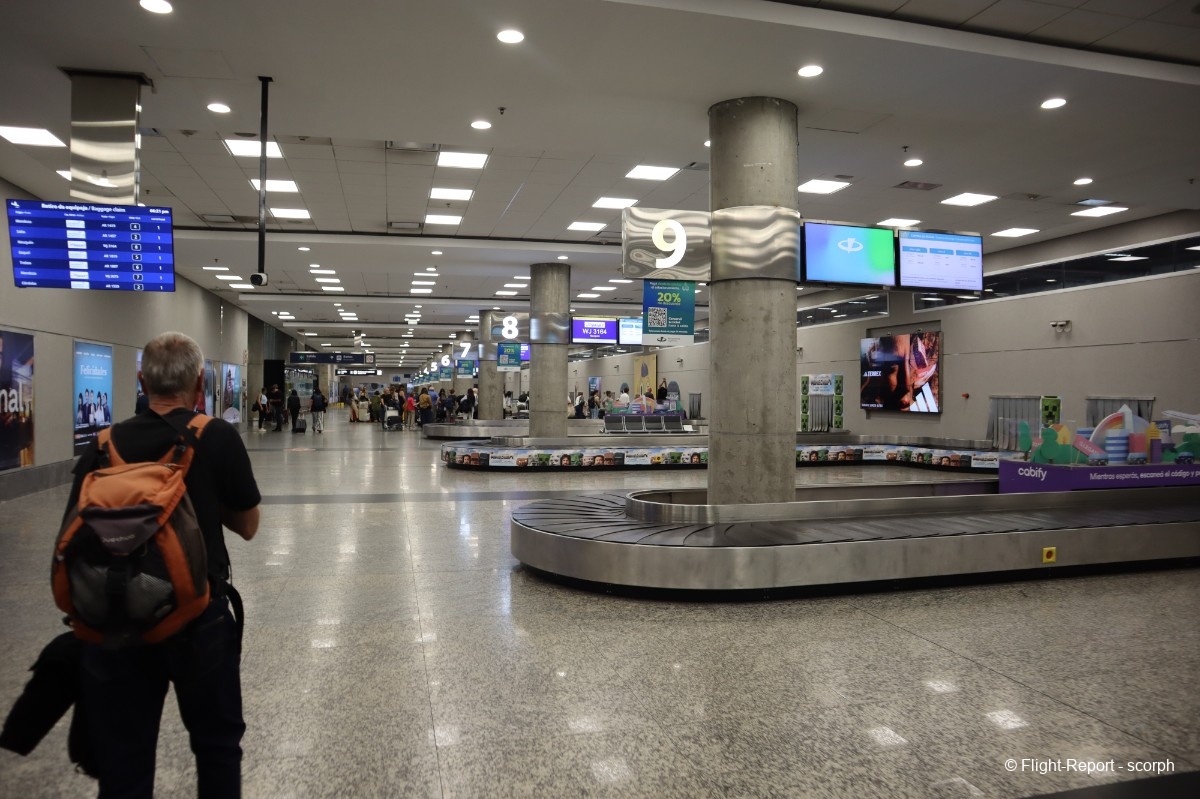
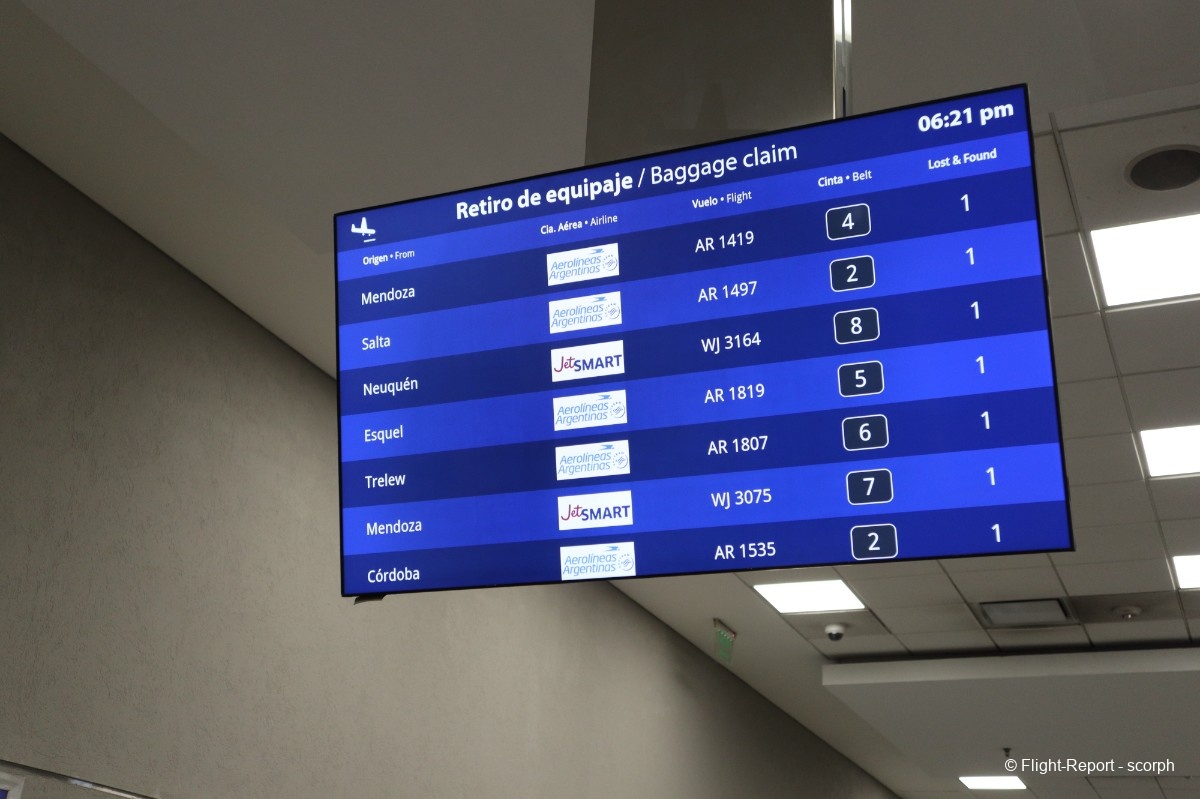
It'll be baggage carousel 6. By the way, the screen gives you an idea of the current arrivals in the domestic zone.
Heading toward the exit, the groundside area handles both departures and arrivals. It’s quite narrow and long, and there are a lot of people. That said, you’ll also find plenty of shops there, especially dining options.
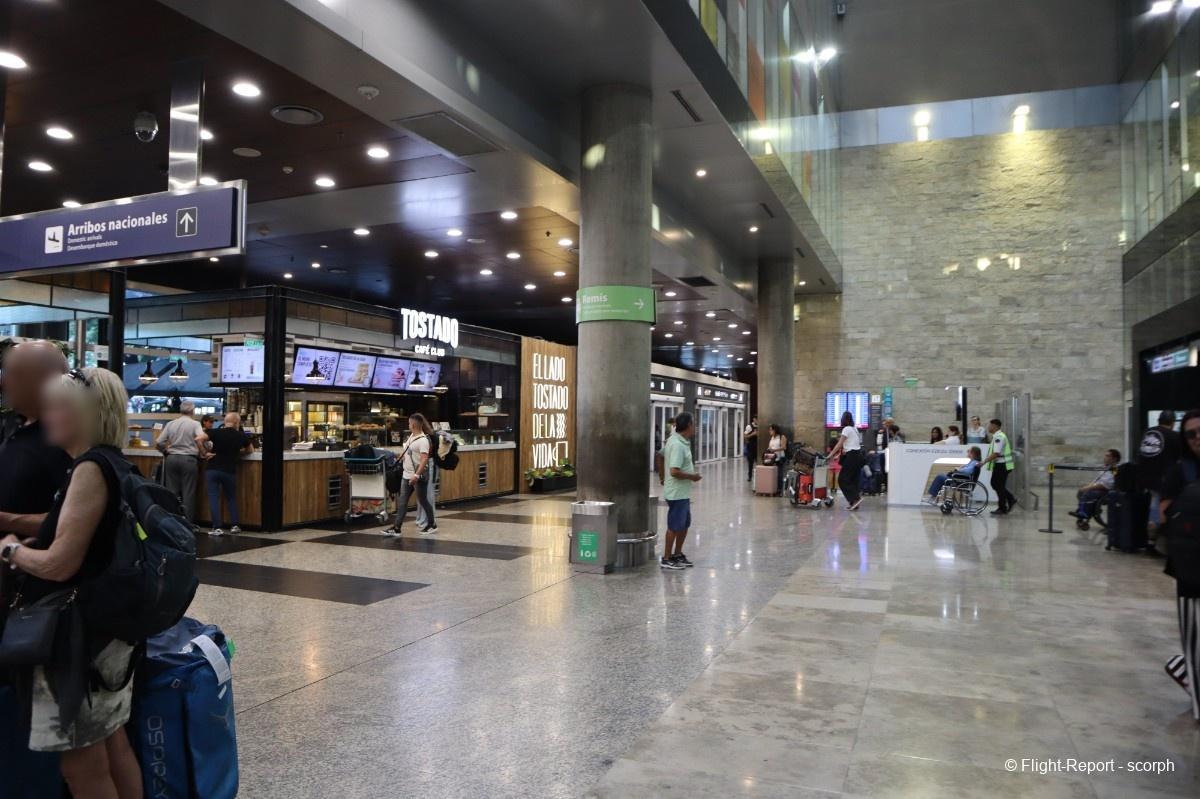
To get around more easily and quickly, it is best to go out onto the forecourt; as in most airports around the world, you will find taxis right outside the exit.
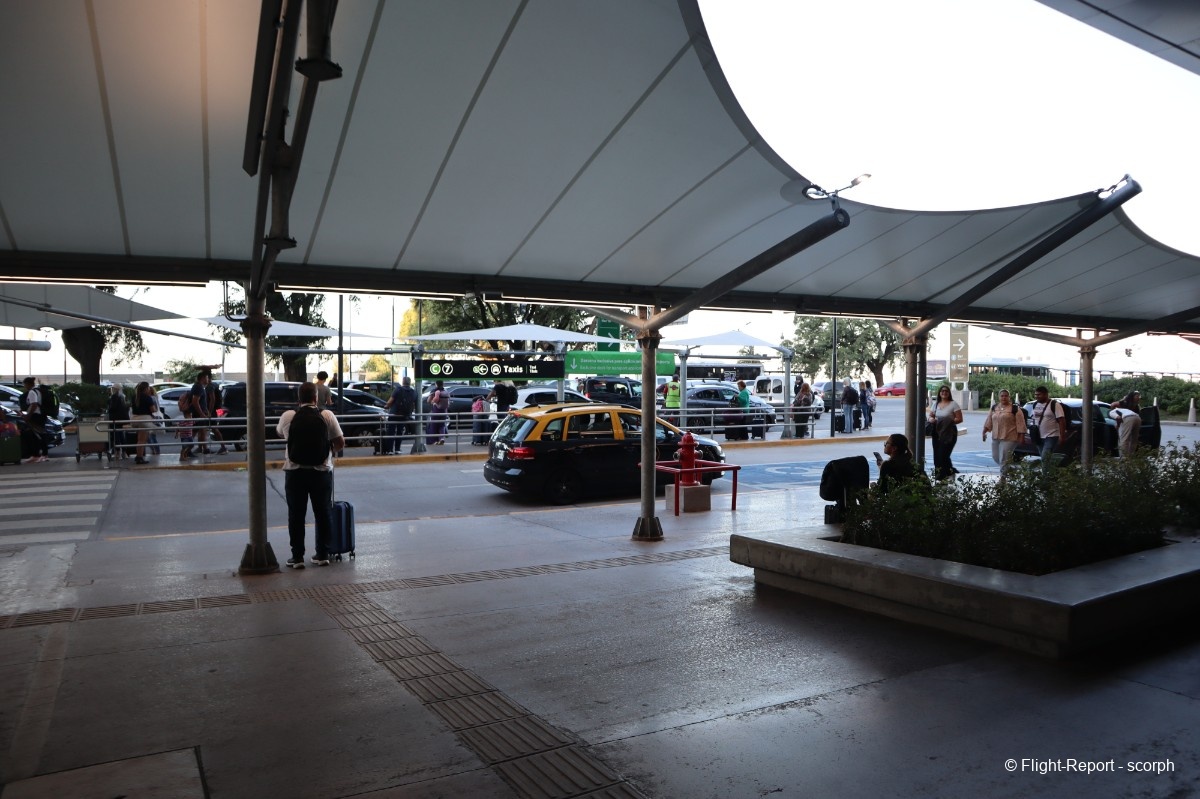
As for us, we’ll head toward the city bus stops located about fifty meters from the exit, under the watchful eyes of the reigning football world champions, Argentina. You’ll notice, in passing, that part of the building features green walls.
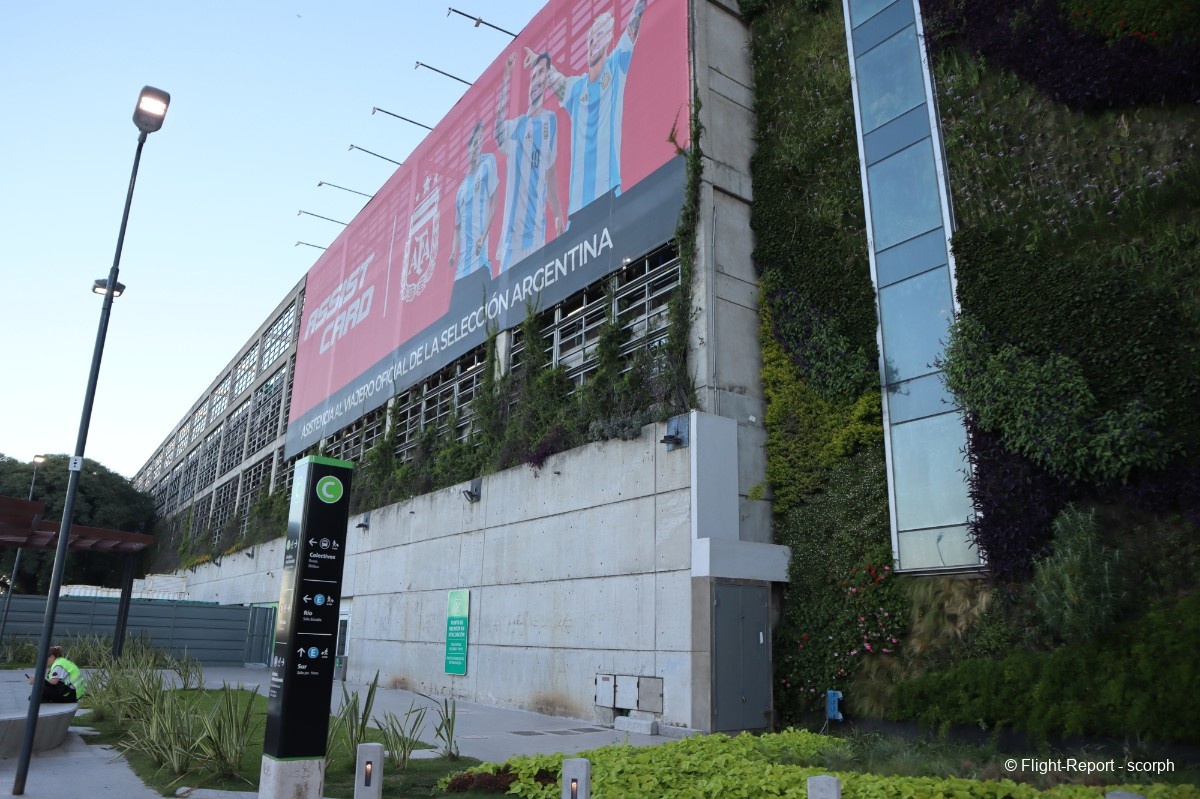
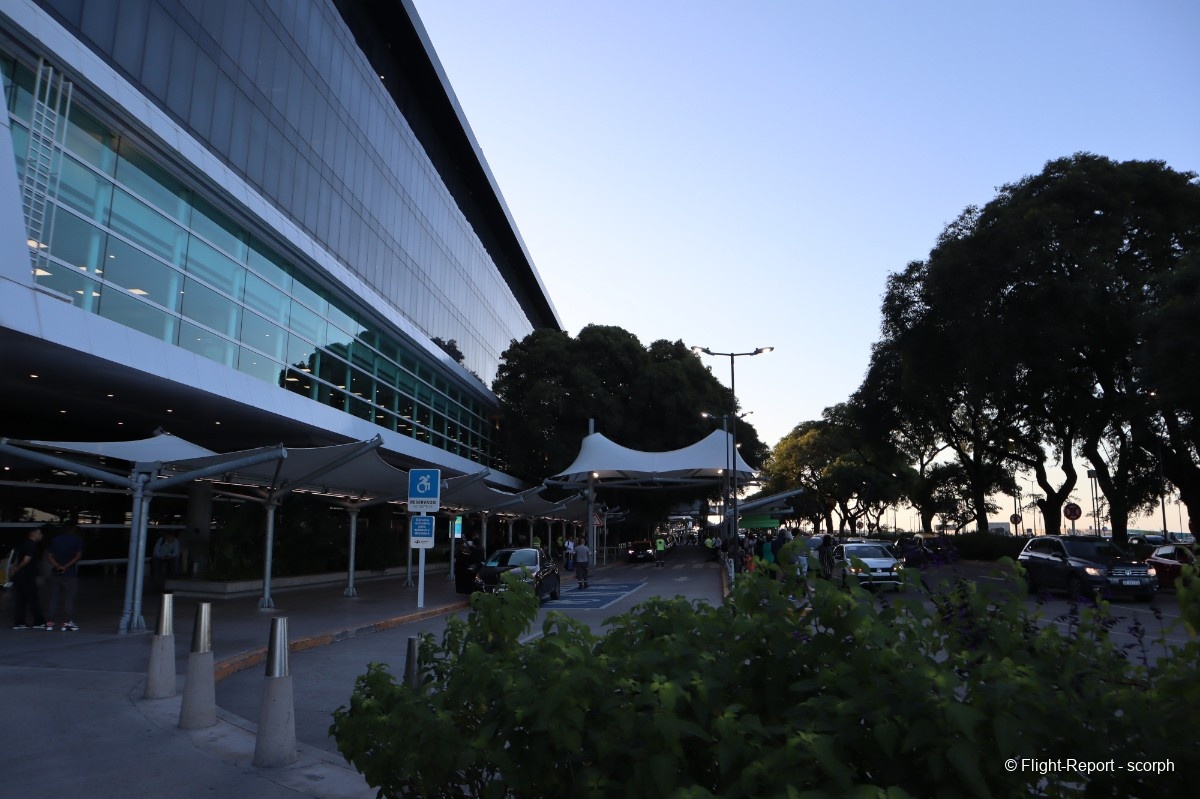
The bus stop is not really far, we waited quite a long time for a bus on the line passing through the city center and the obelisk district, where we were staying for this final stage in the capital
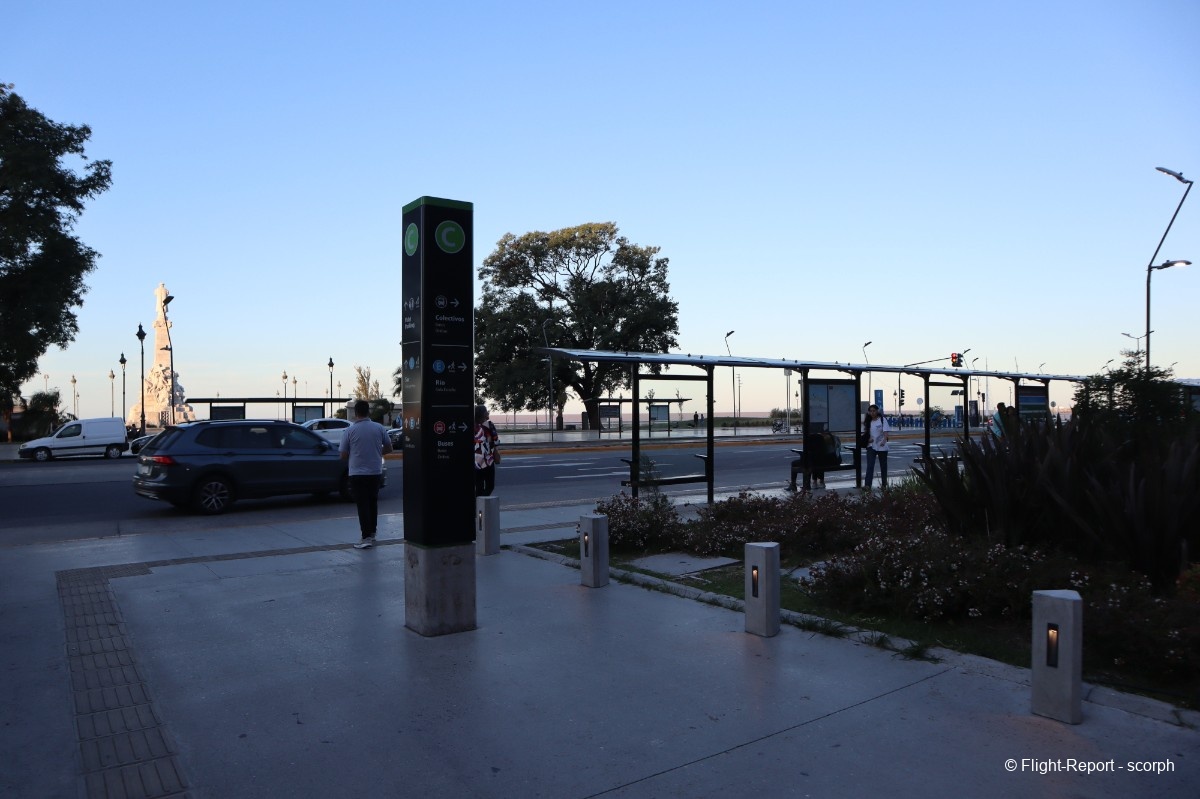
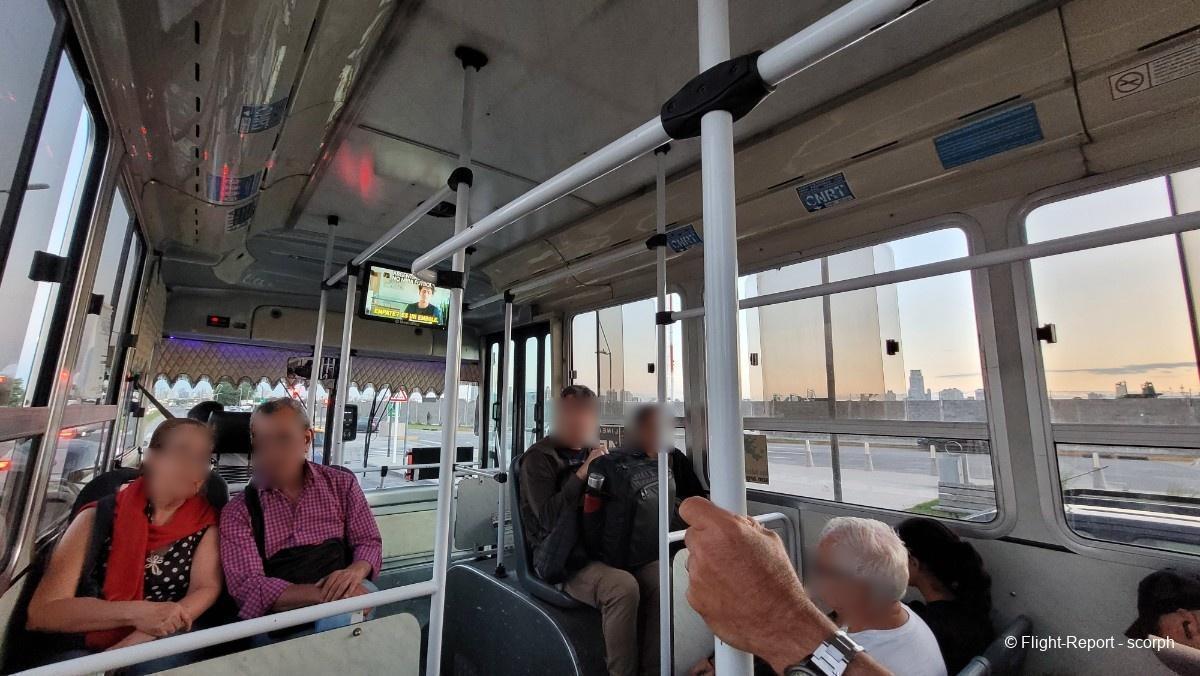
The bus will likely be packed, and I’ll be standing for the entire trip. It’s worth noting that this is a standard city bus, not really designed for passengers with luggage. The ride lasts nearly 30 minutes with a driving style that is 'sporty,' to say the least. The only real positives are that it’s well-marked and clearly indicated for tourists, and Google Maps works well. Another plus is the fare, if my memory is correctly, it’s around €0.50 with the SUBE card (the only accepted form of payment).
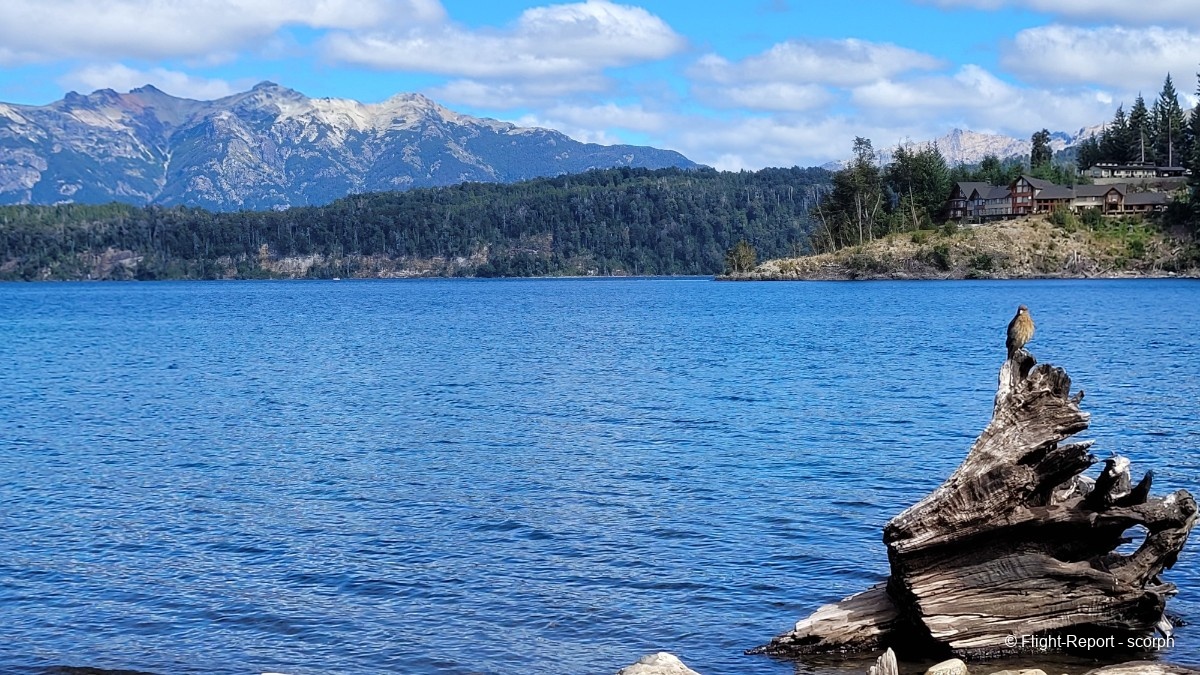
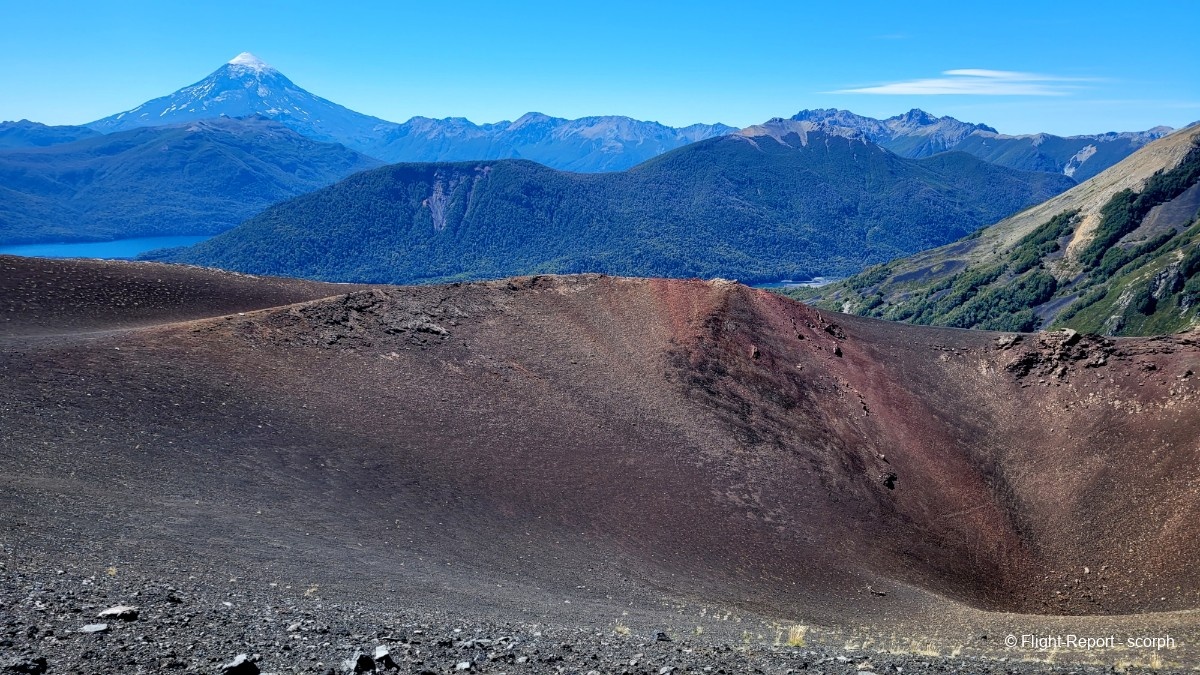
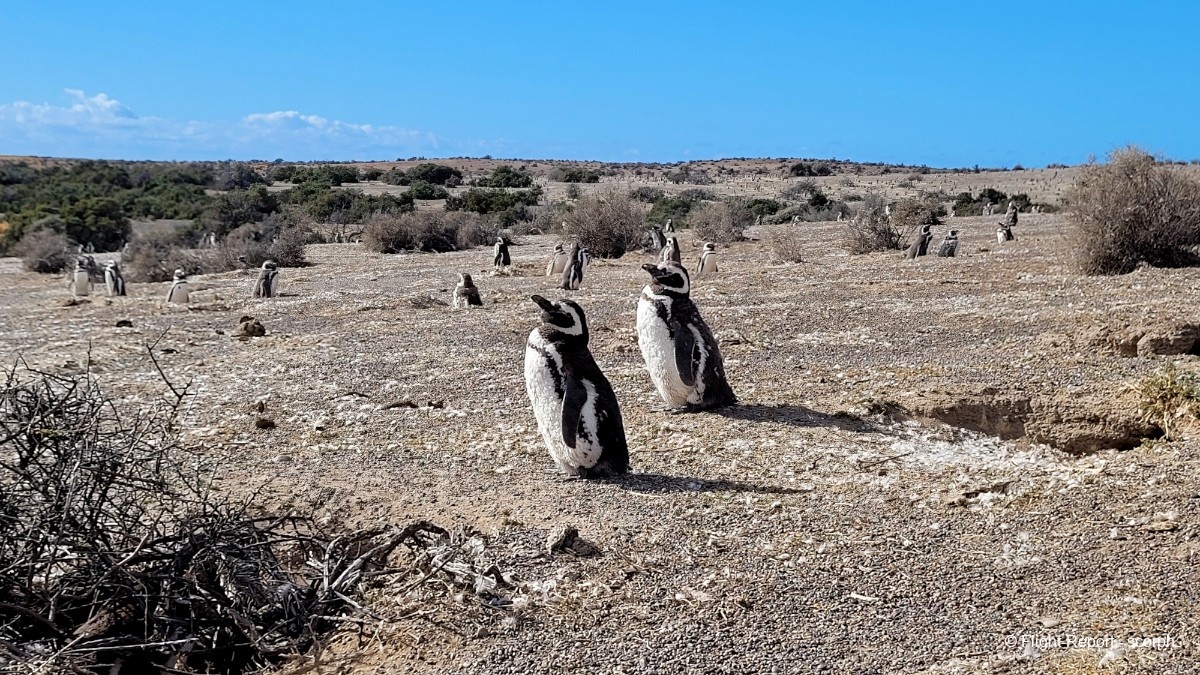
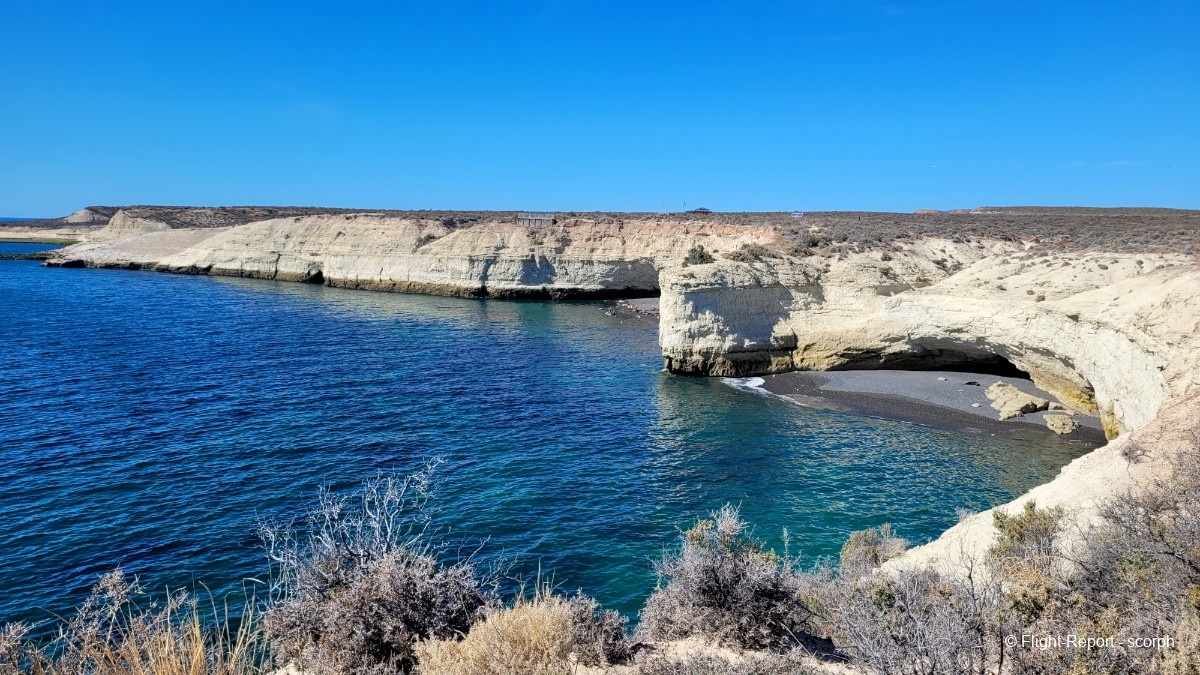
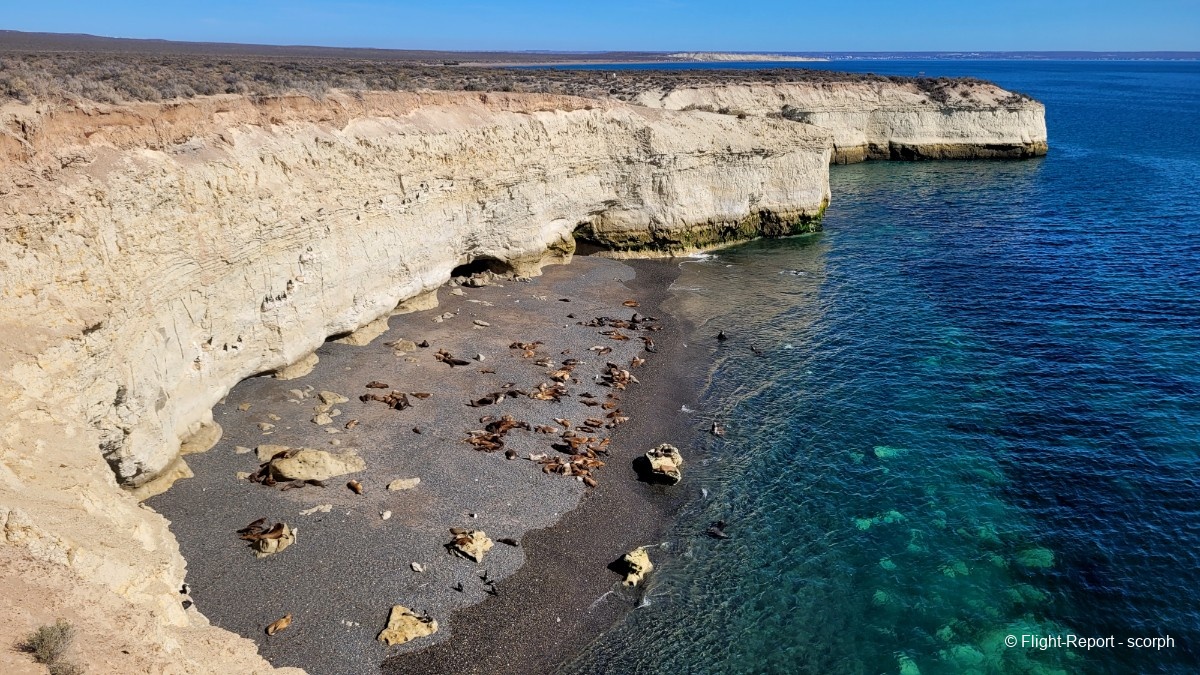
This marks the end of this short series of Argentine domestic flights. We’ll be meeting up again soon for the UX flights back to the Old Continent. In the meantime, I’ll leave you with a little tourist bonus featuring the Bariloche region as well as the Valdés Peninsula.