

Hello everyone and welcome aboard! We’re continuing this Argentine routing with a slightly more exotic segments with the three domestic flights, all operated by the local flag carrier, Aerolineas Argentinas (AR).
Introduction:
It was in the autumn of 2024 that a trip already postponed several times was finally able to be organized. My father has crossed the milestone of turning 70 the previous summer, and it was more than time for him to enjoy his gift: a trip to Patagonia! There would therefore be four of us on this journey: my two parents, my girlfriend and I.
The first small challenge in planning the trip and the routing was that we were not departing from the same city. My parents were leaving from Grenoble, while my partner and I were departing from Toulouse.
Several options were available to reach Buenos Aires. Air France offered flights with convenient schedules, but fares of €1,400 without checked baggage were rather discouraging when departing from regional airports. Iberia proposed an interesting alternative, but the return schedules to Lyon were not ideal, and the fare without checked baggage was still around €1,100.
Out of curiosity, we looked at departures from Paris and came across a very attractive offer from Air Europa at €783 round trip, with convenient schedules for those commuting from the provinces. Departure from Orly was on Saturday late afternoon, with a return on Sunday morning at 9:30 a.m. Fares including checked baggage were, unsurprisingly, about sixty euros more expensive, but still reasonable.
For me personally, this was particularly appealing as I hold SkyTeam Elite Plus status, of which Air Europa is still a member. This also allowed us all to have the same departure point from a Paris airport and to be on the same international flights.
For domestic flights, we kept things simple by booking exclusively with the national carrier, Aerolíneas Argentinas, which offered fares comparable to low-cost airlines on domestic routes, with the added benefit of better schedules. On certain routes, such as El Calafate–Bariloche or Trelew–Buenos Aires Aeroparque, they were in fact the only airline operating those flights.
This resulted in the following routing:
The air link between Buenos Aires and El Calafate is virtually the only gateway to this region of Patagonia. The area is home to two major tourist destinations, the Perito Moreno Glacier and the small town of El Chaltén at the foot of the famous Fitz Roy mountain, for all intents and purposes, very isolated from the rest of the world.
Regarding connections, both of the Argentine capital's airports serve the route:
From Jorge Newbery (AEP): Located more centrally in Buenos Aires, this airport sees the bulk of the traffic. Aerolíneas Argentinas (AR) leads the way with an average of six daily flights. The Argentine subsidiary of the Chilean low-cost carrier, JetSmart, also operates a few flights per week.
From Ezeiza (EZE): There is also a significant offer from here, with two daily flights operated by AR (some days using the Airbus A330, primarily for cargo capacity). Two other competitors also operate one daily flight each from EZE: JetSmart (using A320s) and the Argentinian low-cost carrier Flybondi (using Boeing 737-800s).
In terms of existing trip reports, there is three report on this specific route and direction, most recent posted by NKGflyer before the COVID pandemic, covering a night flight with AR.
Departure from Buenos Aires regional airport during the afternoon.
After a day spent relaxing and starting our tour of Buenos Aires, it’s already time to continue our journey south toward Patagonia. El Calafate will be our next destination.
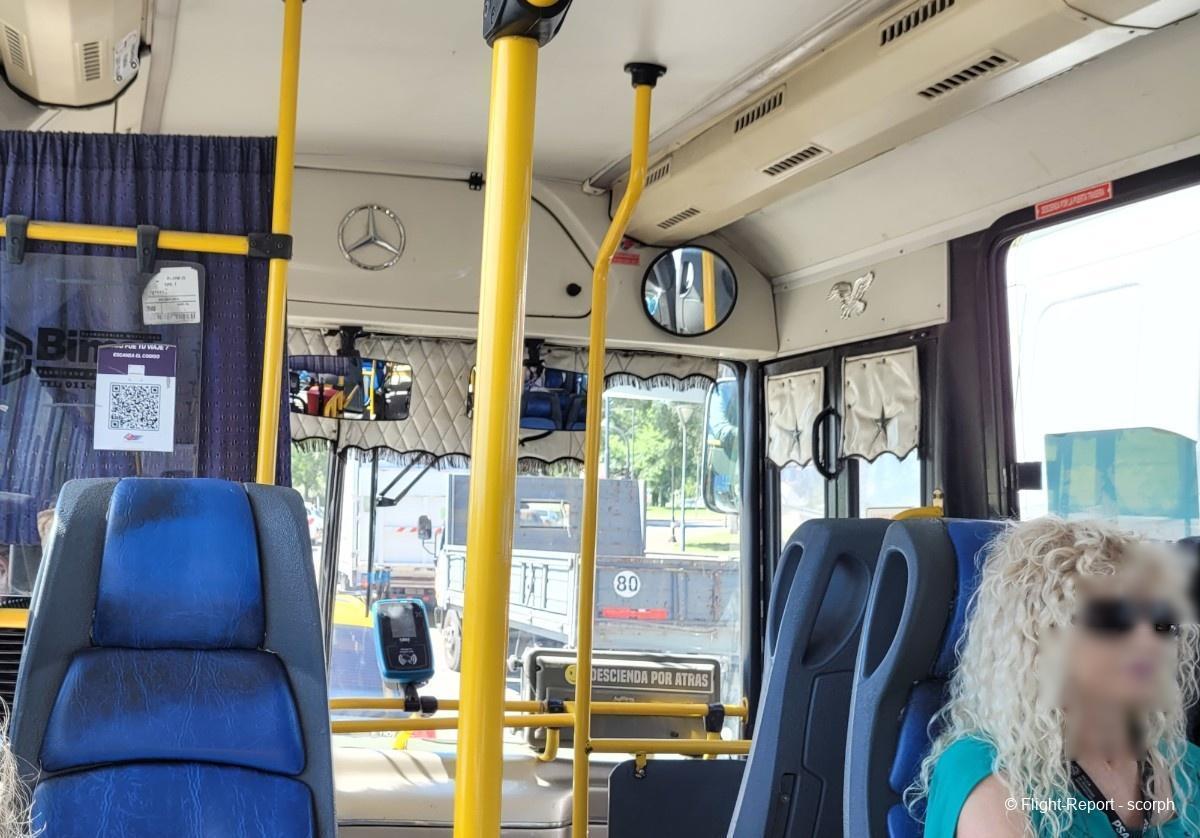
Following a night and a full 24 hours in the residential neighborhood of Palermo district, we head to the airport by bus from Palermo station. The journey via the 160 or 166C bus is direct and costs only 465 ARS (approximately €0.40) a great deal, especially since the bus is nearly empty at this midday hour.
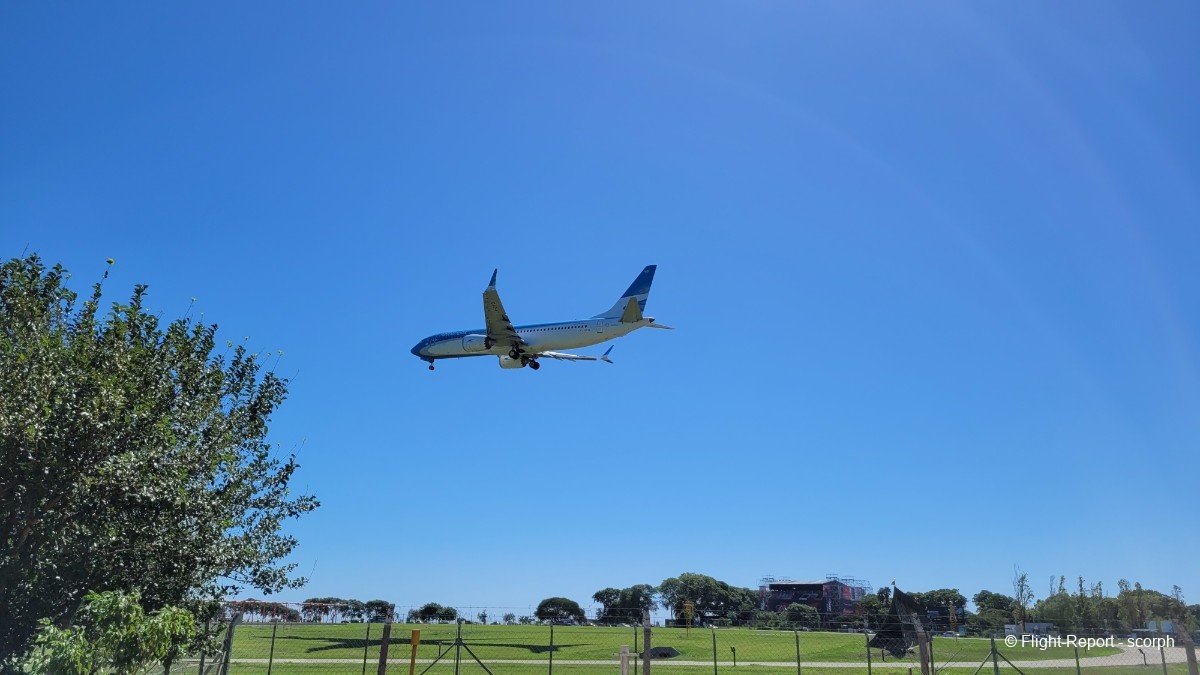
Aeroparque has a location that is unique, to say the least. Situated in the north suburb of Buenos Aires, it stretches along the Rio de la Plata estuary. Since its construction, Buenos Aires has grown significantly, and the city now completely surrounds the airport. So much so, that the terminal was built on the river side rather than the city side, meaning you have to drive around the runway to reach the terminal buildings.
Despite this, the airport is incredibly close to the city center, making it very convenient. Seen from the bus, here is an Aerolíneas Argentinas 737 MAX 8 on final.
The bus drops us off on the boulevard near the arrivals area. On one side of the road lies the Rio de la Plata, and on the other, the terminal which looks quite modern with its façade featuring a mix of glass and living green walls.
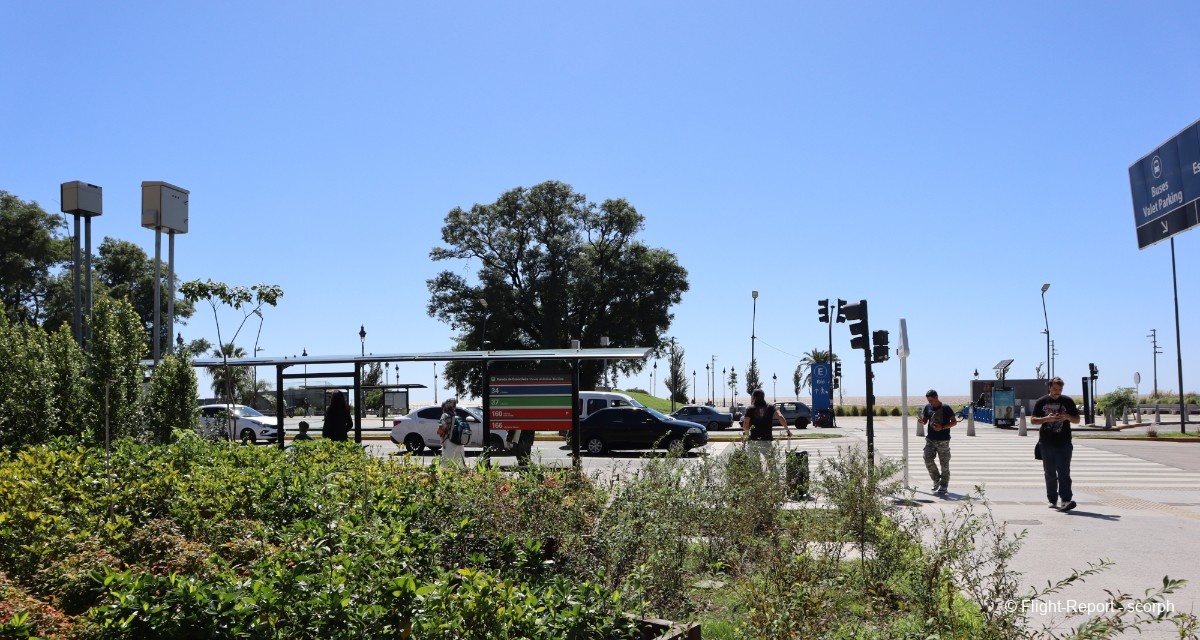
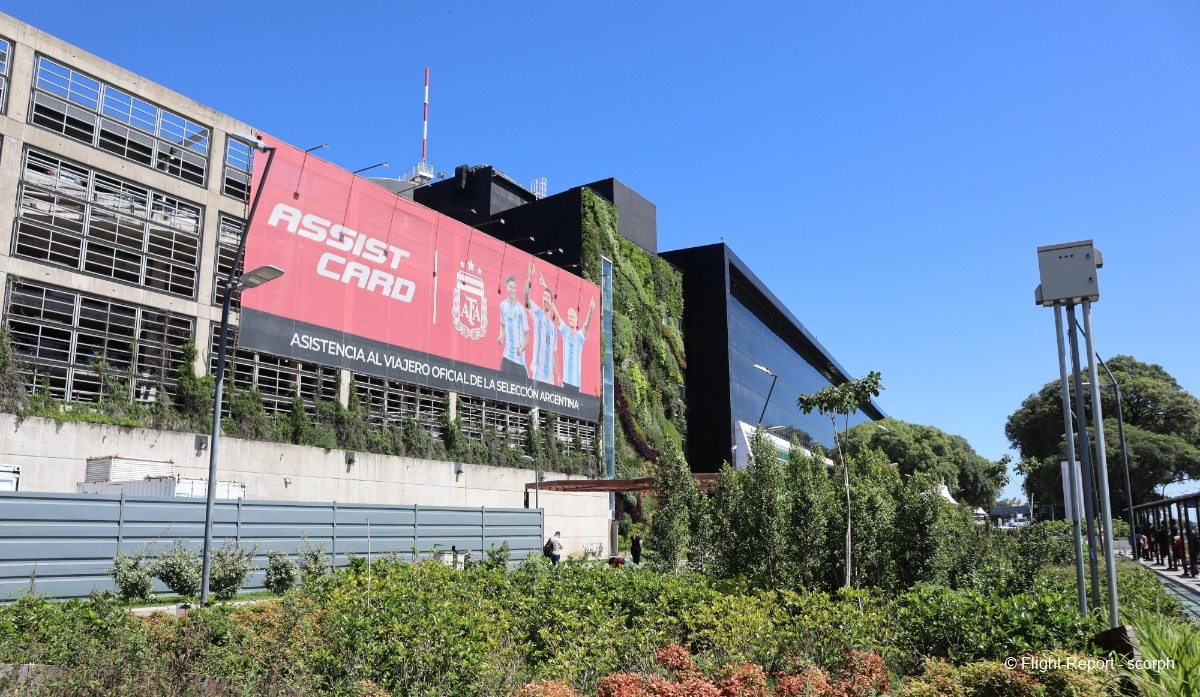
We walk about a hundred meters along the terminal to reach the departures entrance.
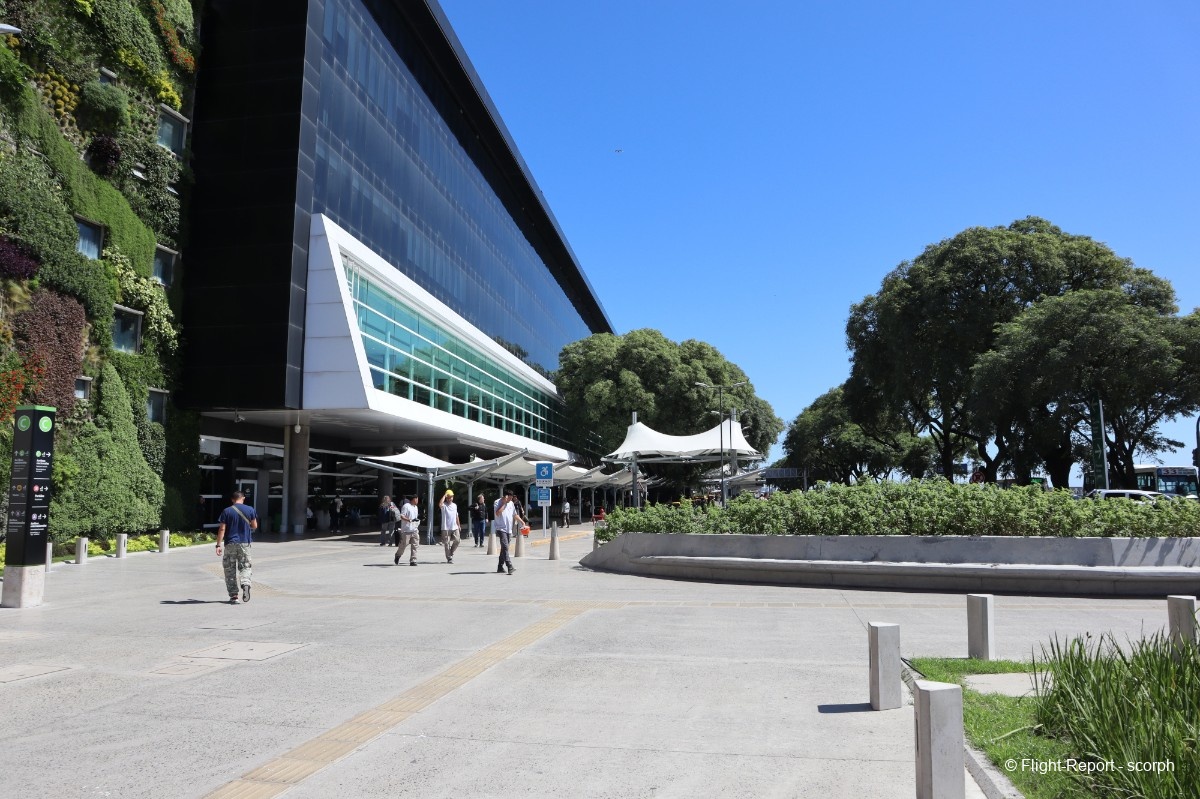
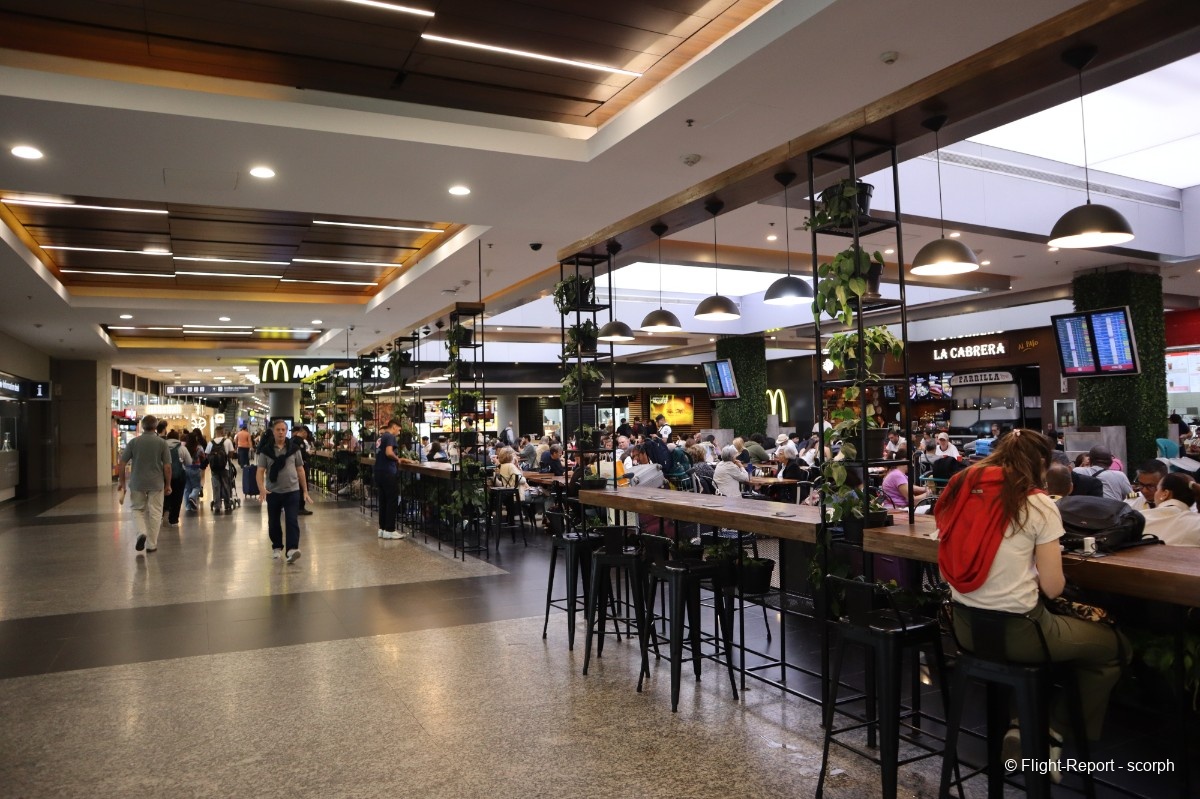
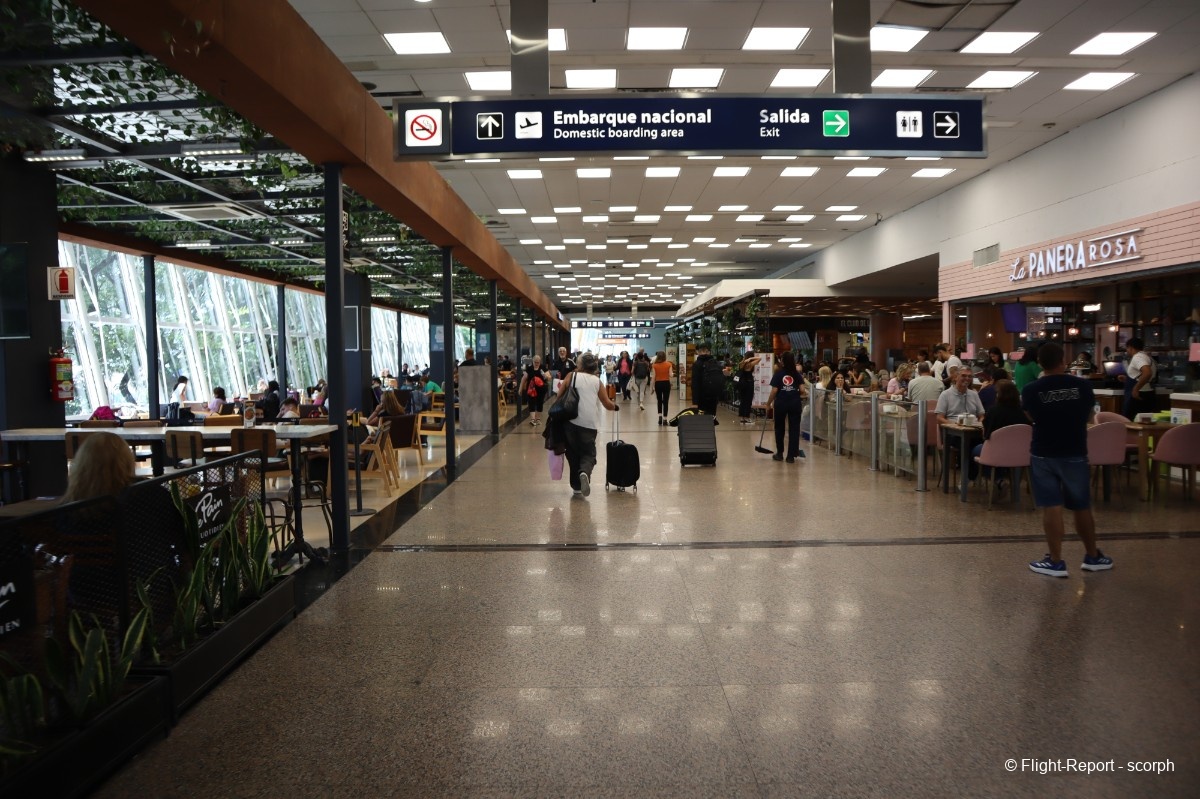
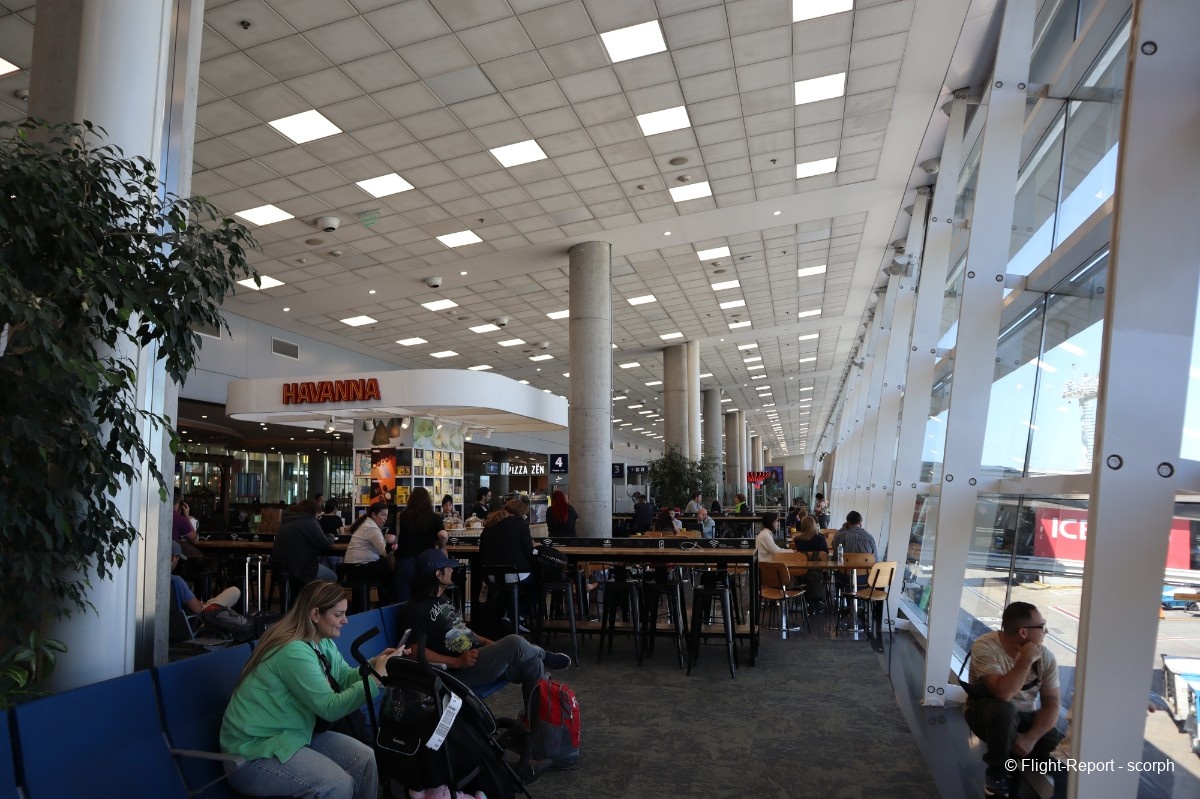
Once inside, you come across the landside food court, which features only fast-food chains (which are very common throughout the Argentine capital).
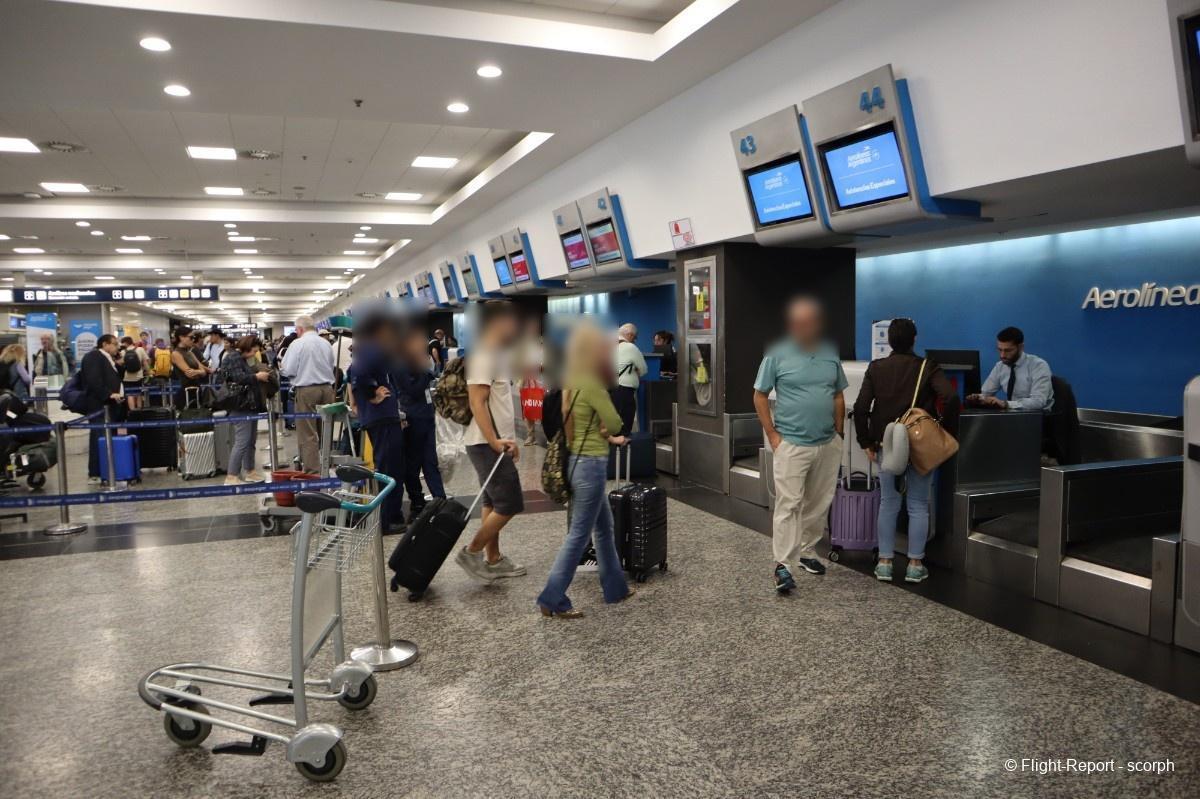
We have to walk the entire length of the terminal to reach the Aerolíneas Argentinas check-in area. Be aware that there are three separate check-in zones: one for international flights and two for domestic flights one dedicated to southbound flights and the other for northbound flights.
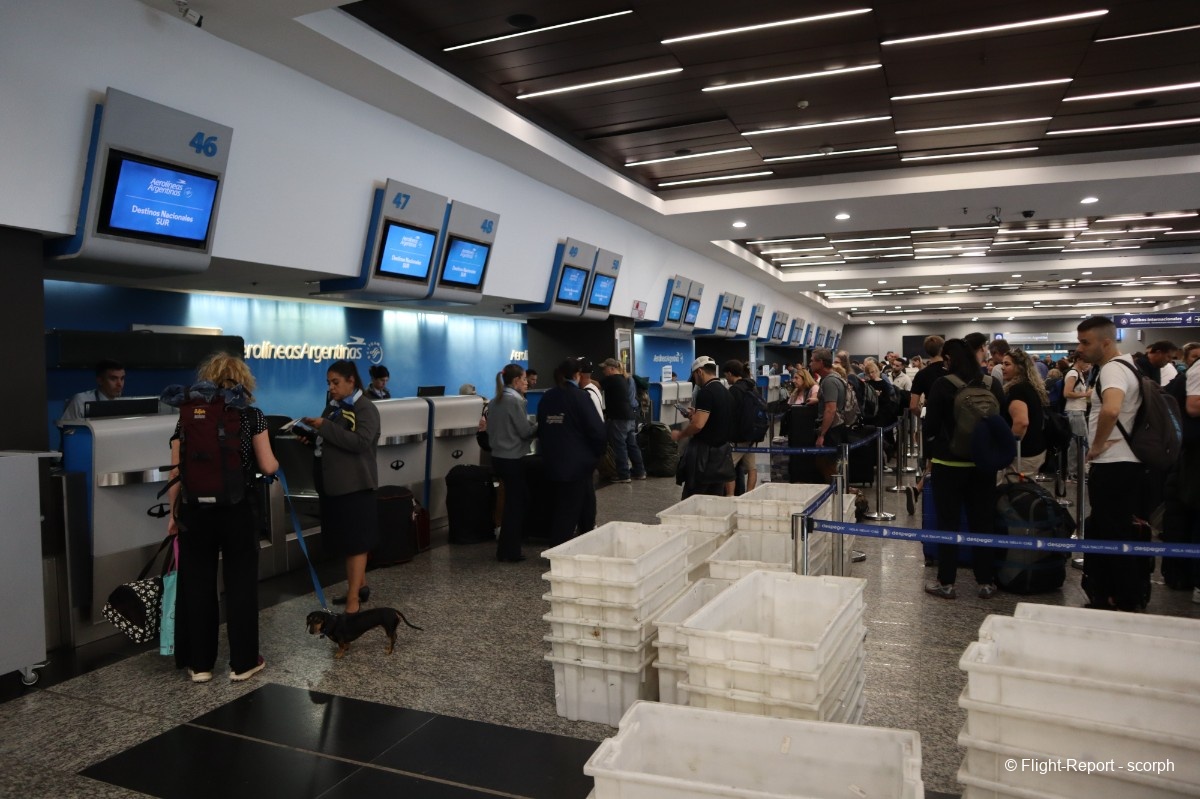
My family heads toward the South zone, while I make my way to the SkyPriority counter, which serves all destinations. For my part, check-in is handled quickly by a very professional agent.
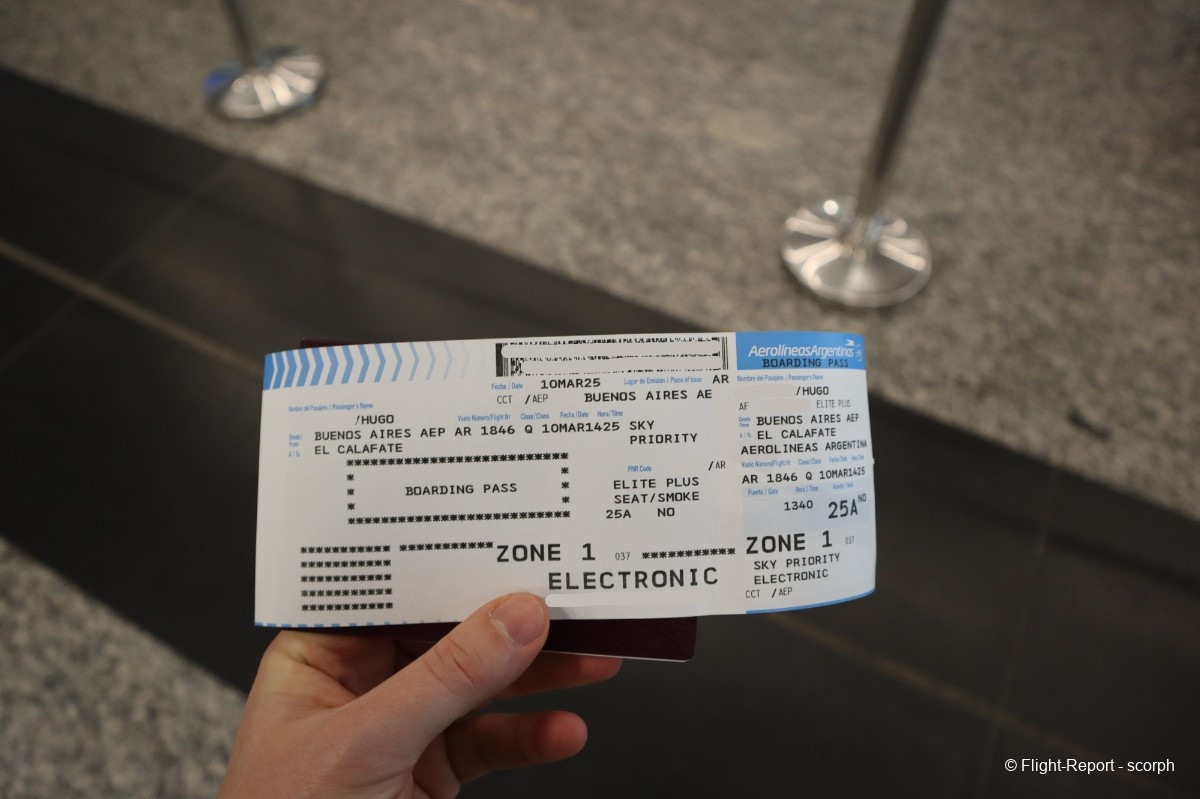
The printed boarding pass looks quite nice, featuring the colors of Argentina's national carrier; unfortunately, the paper itself is closer to the thickness of a grocery receipt.
To reach the departures level, you have to go up one floor. For reference, the Aerolíneas lounge is located landside on the arrivals level. It seems that AR, unlike AF, does not offer lounge access to SkyTeam Elite+ passengers on domestic flights. I could have potentially tried my luck, but there was already a long queue to enter, so I preferred to head straight airside with my family.
Still on the landside upper floor, there are more dining options, including a second Starbucks all with a view overlooking the Rio de la Plata.
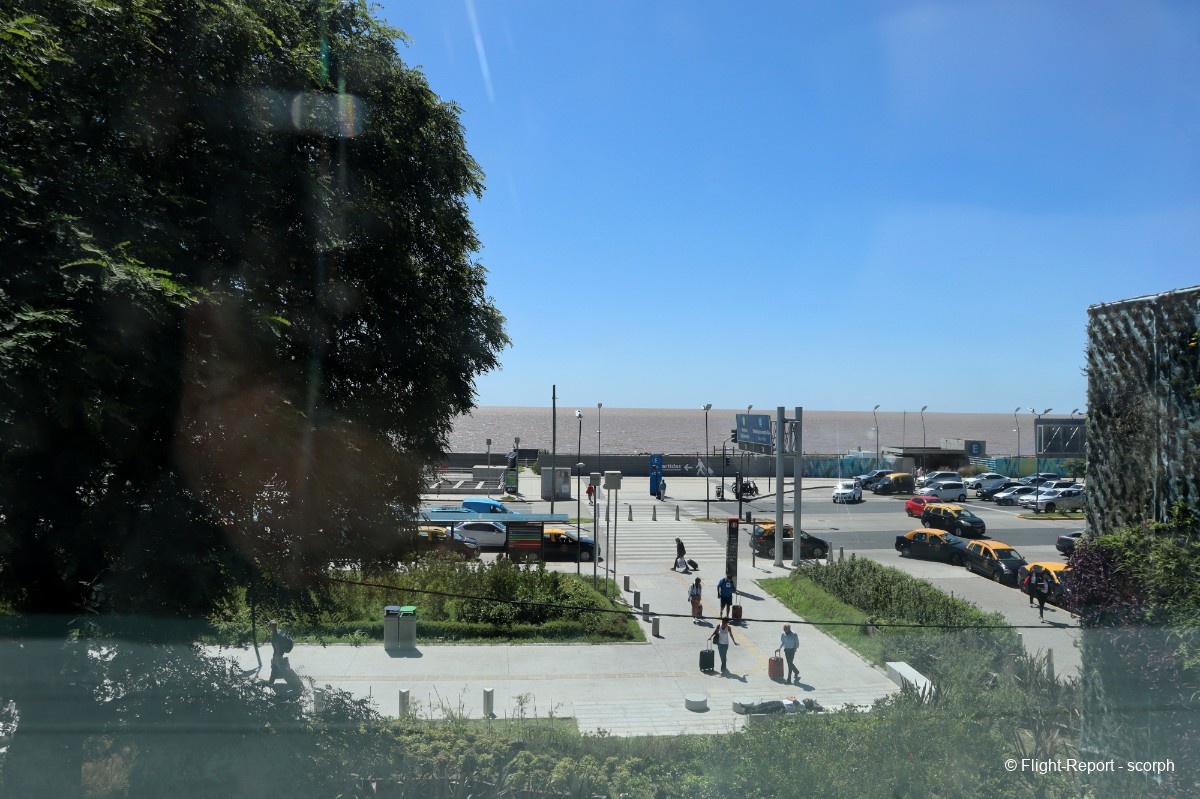
The FIDS showing today's international departures.
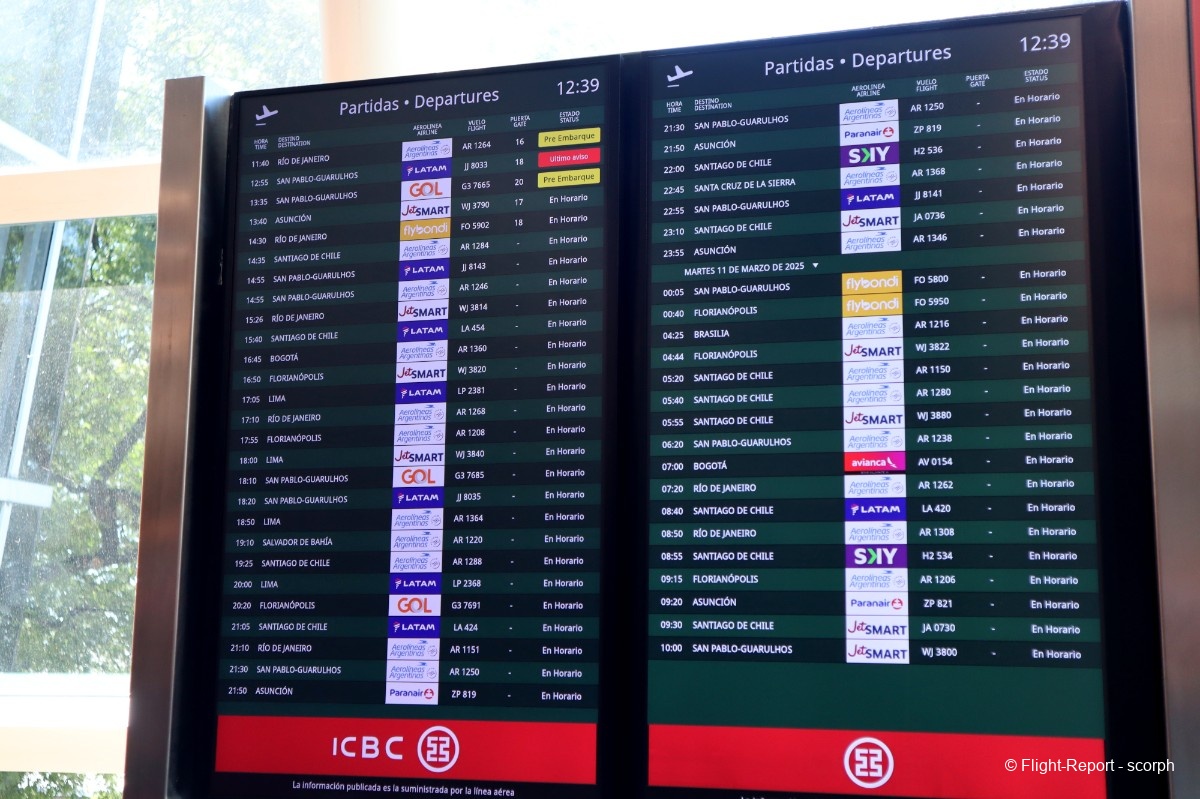
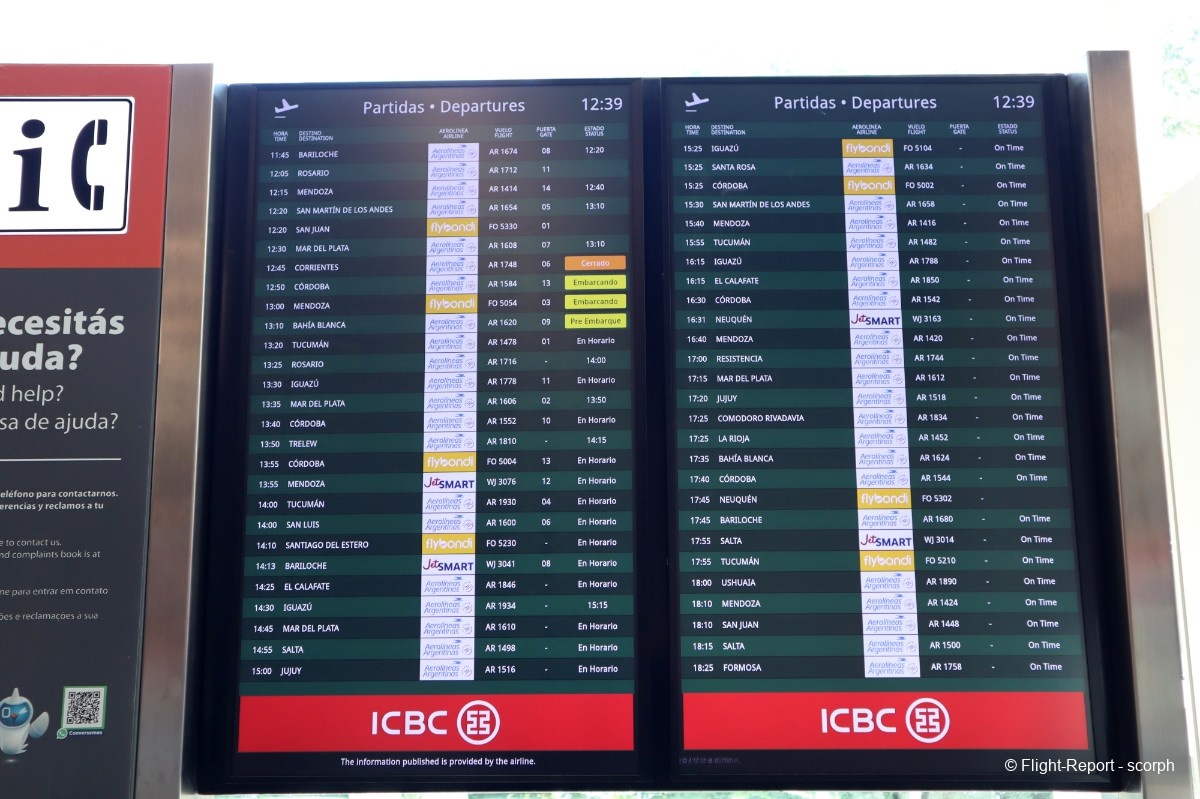
And the domestic departures, with flights to every corner of the country operated largely by AR
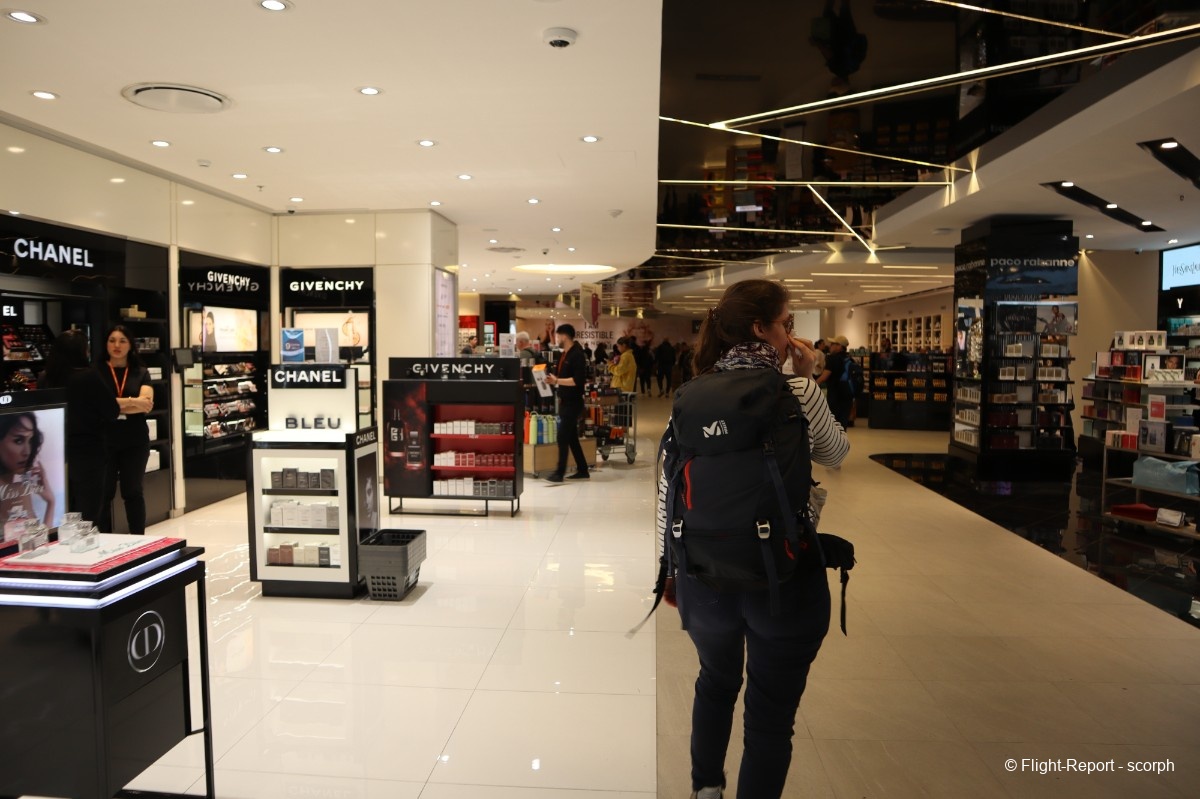
Heading to security a pre-check of the tickets is performed by a friendly agent who points out that we share the same first name! 😁 The rest of the screening was uneventful, though there was a unique local requirement: you have to remove your shoes (even though I was wearing sneakers), and every passenger receives a pat-down. The agents were quite pleasant, and the wait was short. Once through the checkpoint, we did a quick walk through the duty-free shop without buying anything.
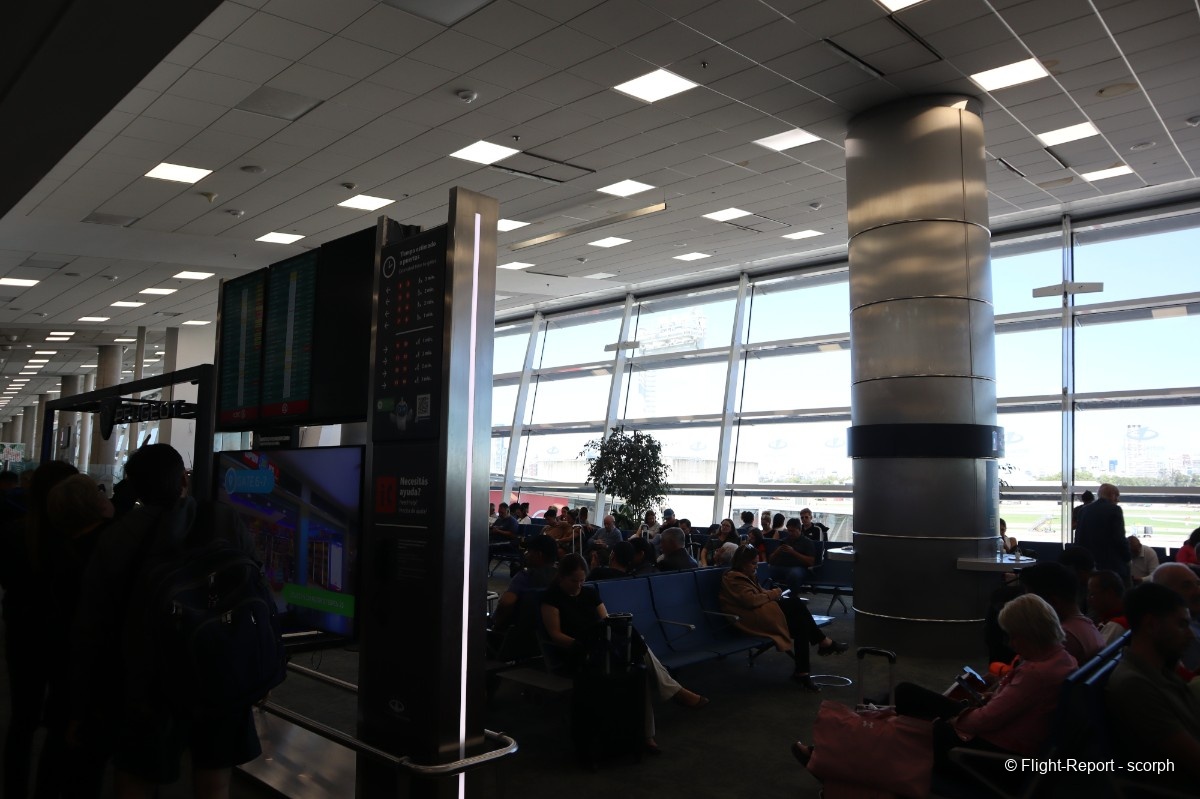
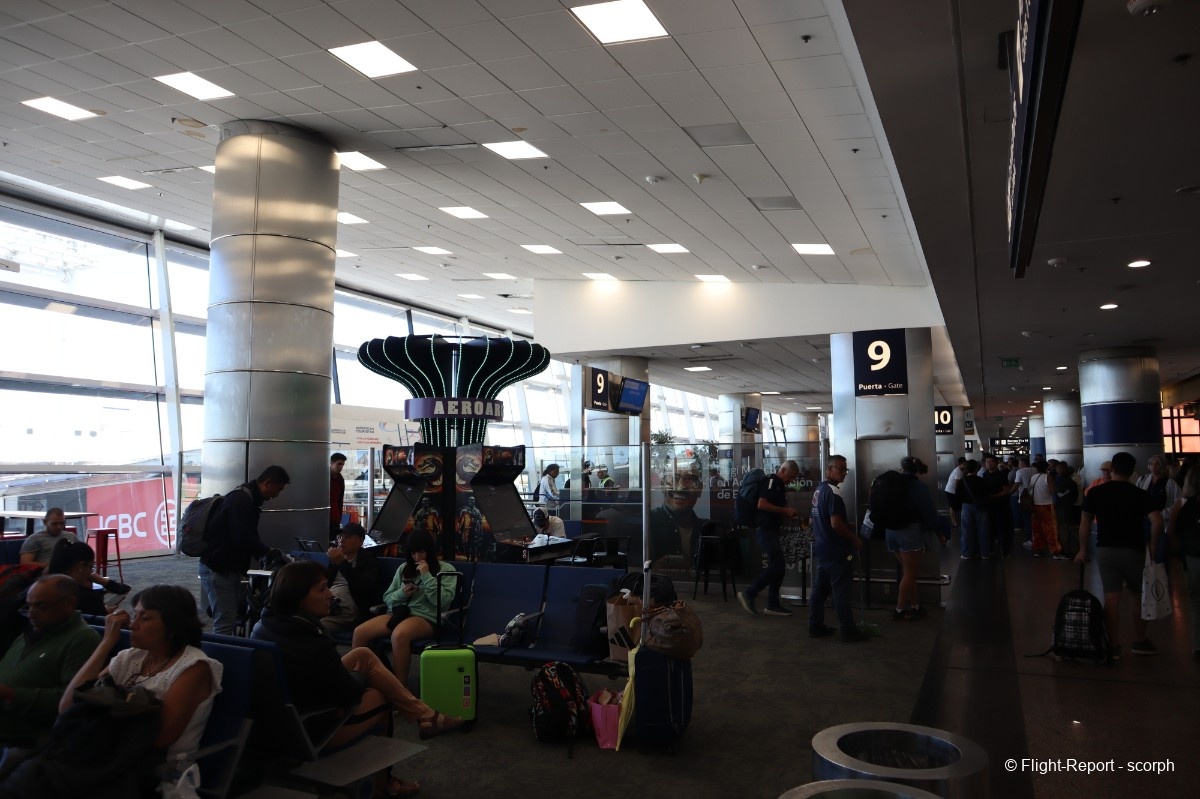
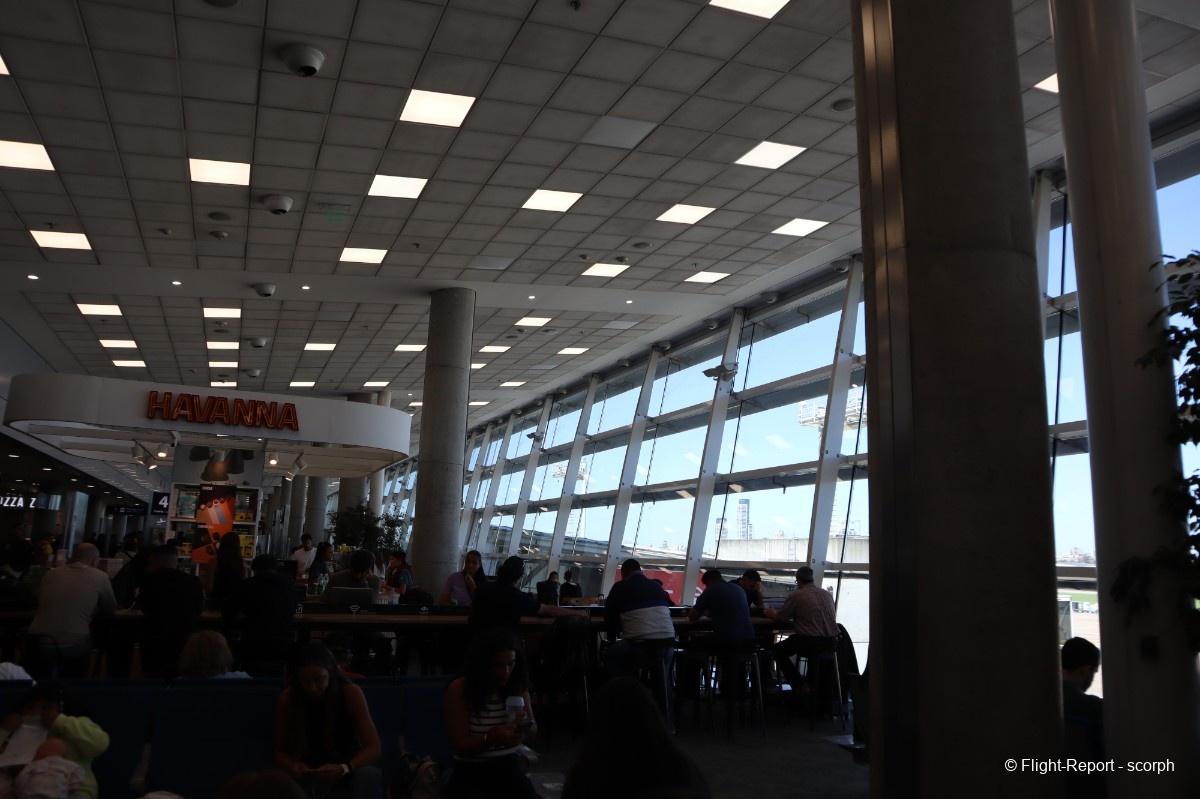
We quickly emerge into the heart of the terminal, which features 14 domestic gates lined up along a large glass window facing the runway. It offers a 5-star view of the aircraft movements on Aeroparque’s single runway. Although it's crowded, it is still easy enough to find a seat.
Spotting AEP trafic
You know me, no lounge access plus a great view of the planes means one thing: a spotting session! For those who aren't interested, get those fingers or mouse wheels ready to scroll. :-p
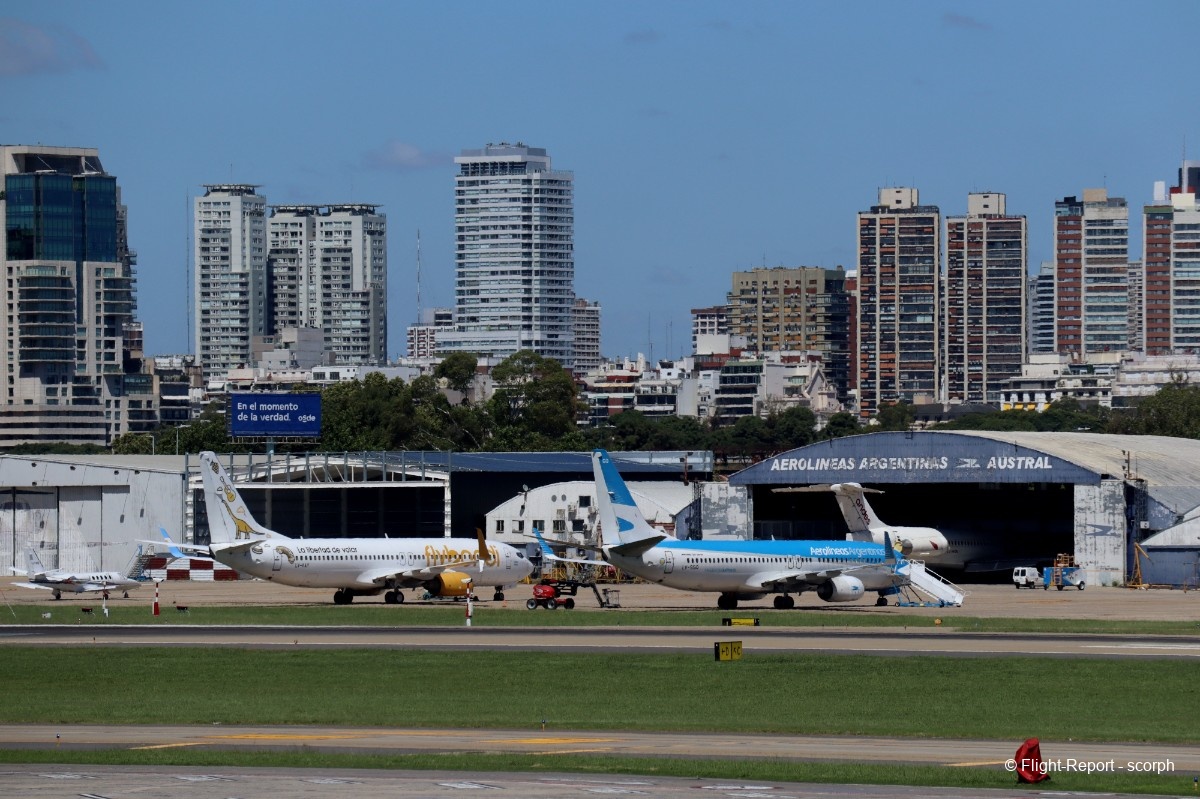
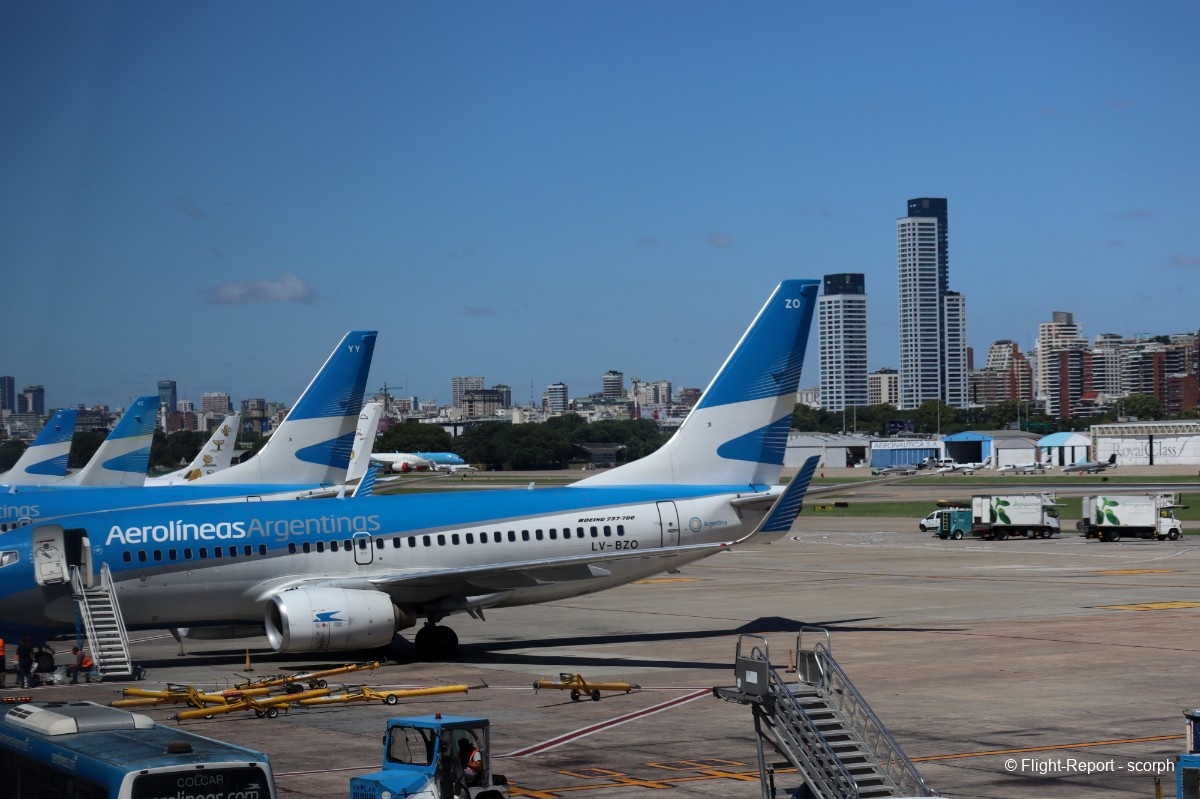
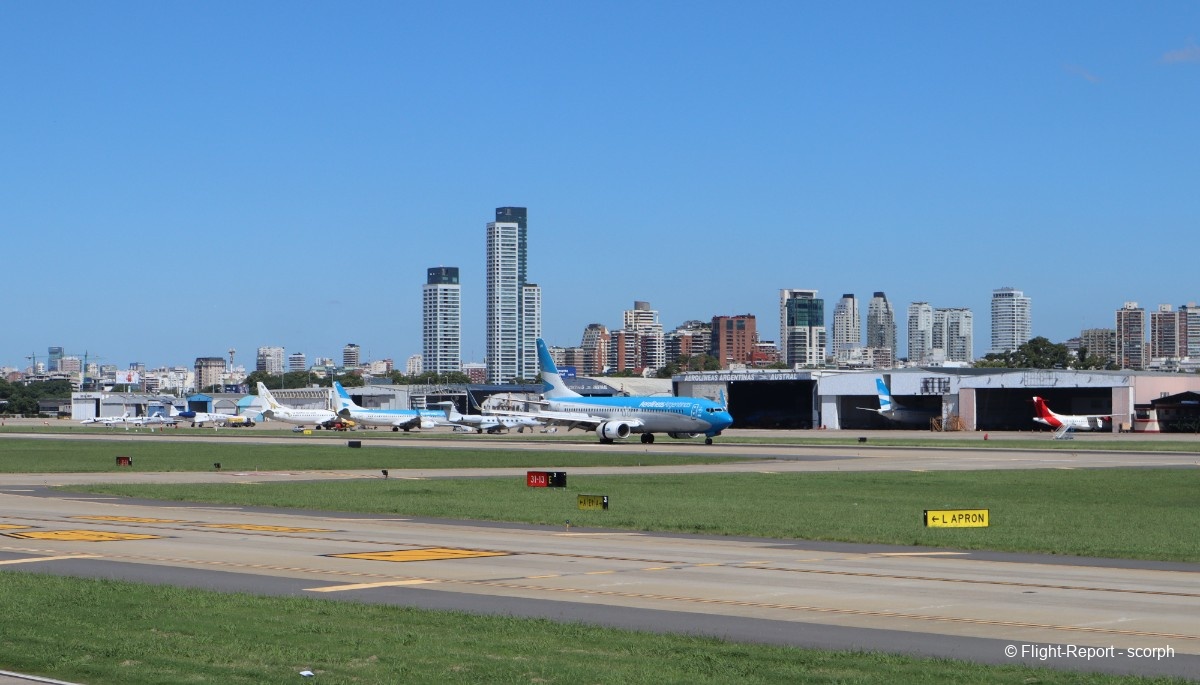
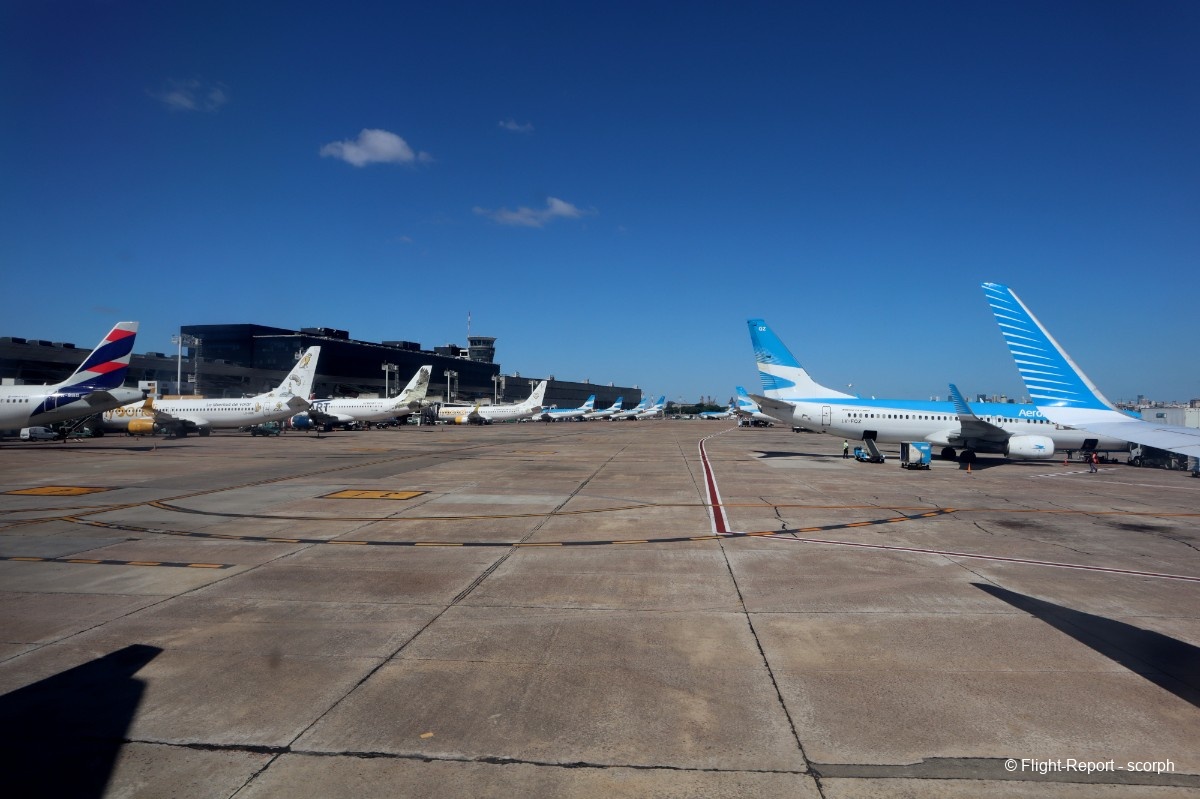
Here is a general view of the airfield, showing the line of tails from aircraft parked at remote stands. On the other side of the runway, you can see the hangars for local airlines (you can even make out an MD-83 from the now-defunct Andes) and private jets, with the towers of nearby Buenos Aires city rising in the distance.
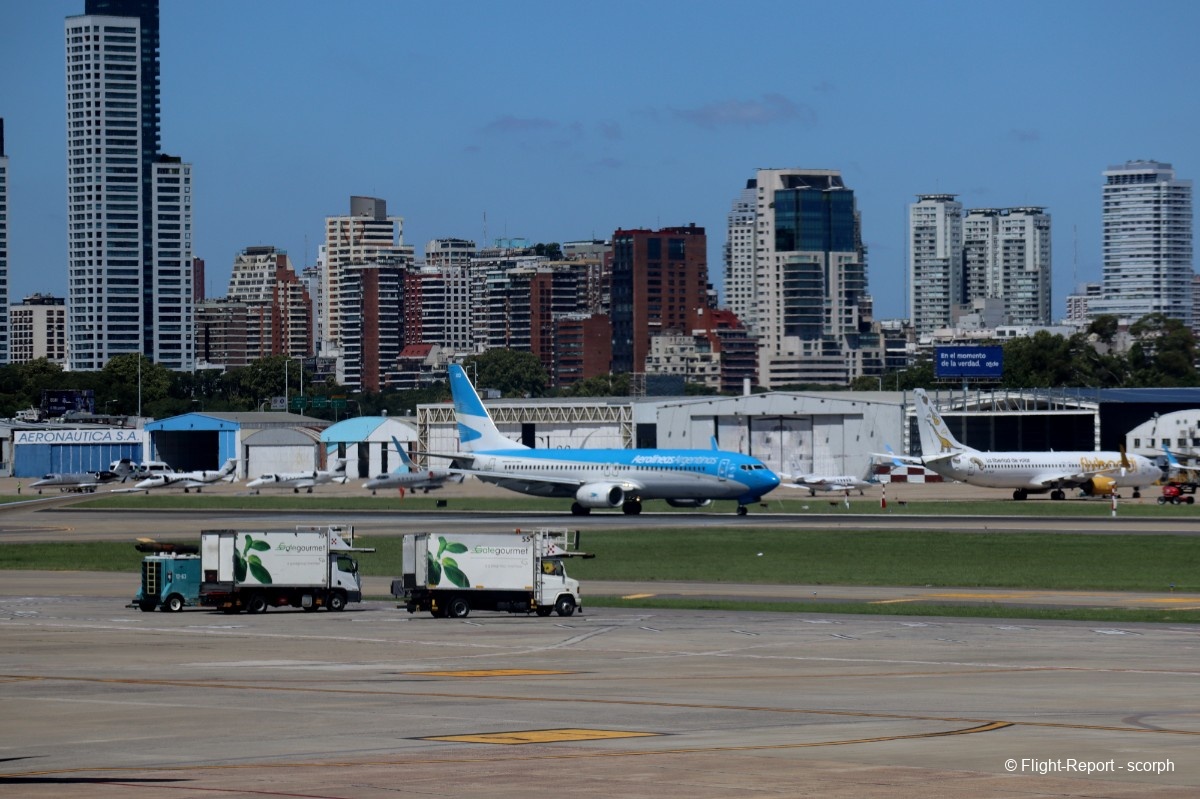
Next, an E-190 in the full Aerolíneas Argentinas livery arrives from Jujuy, a small town located on the Bolivian border. I have to say, I find the AR livery particularly striking and well-executed.
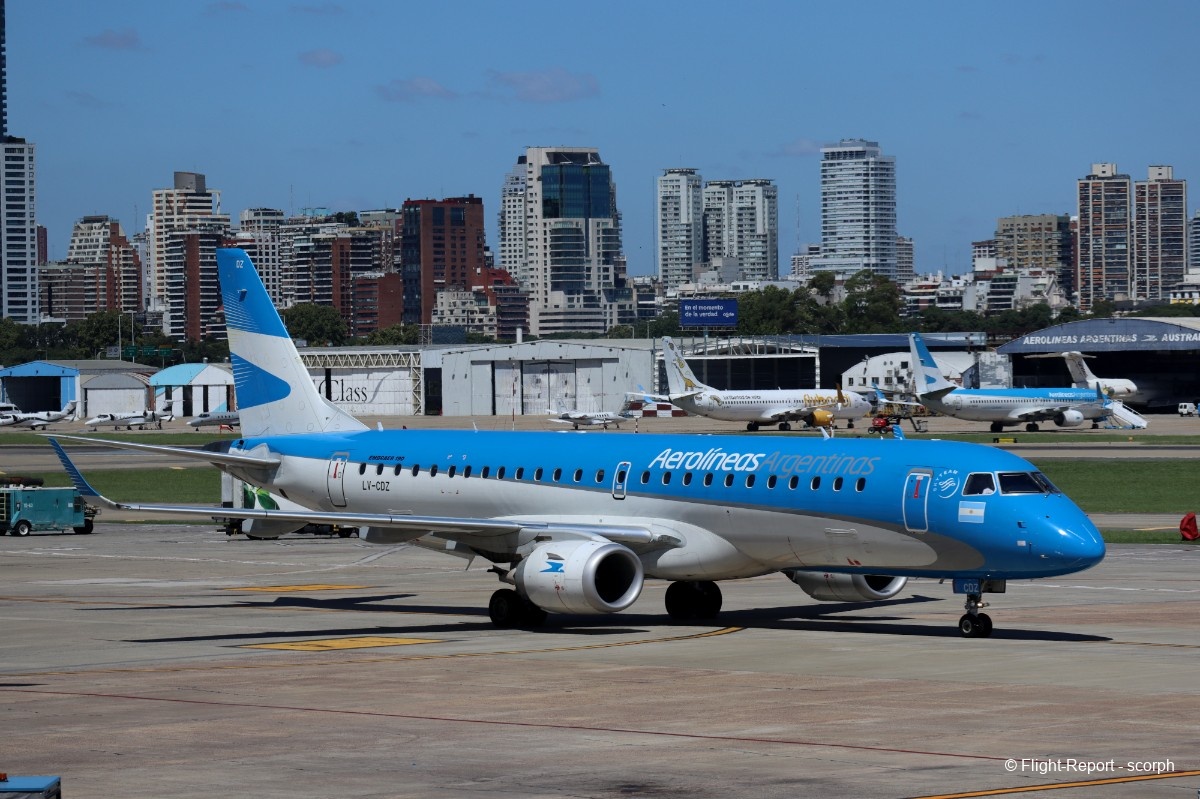
Although Aeroparque is the smaller of the two Buenos Aires airports in terms of size, it still handles a very steady flow of traffic. Here is an AR Embraer 190, still sporting the old colors of the regional subsidiary Austral, departing for San Luis a city located halfway between Mendoza and Córdoba.
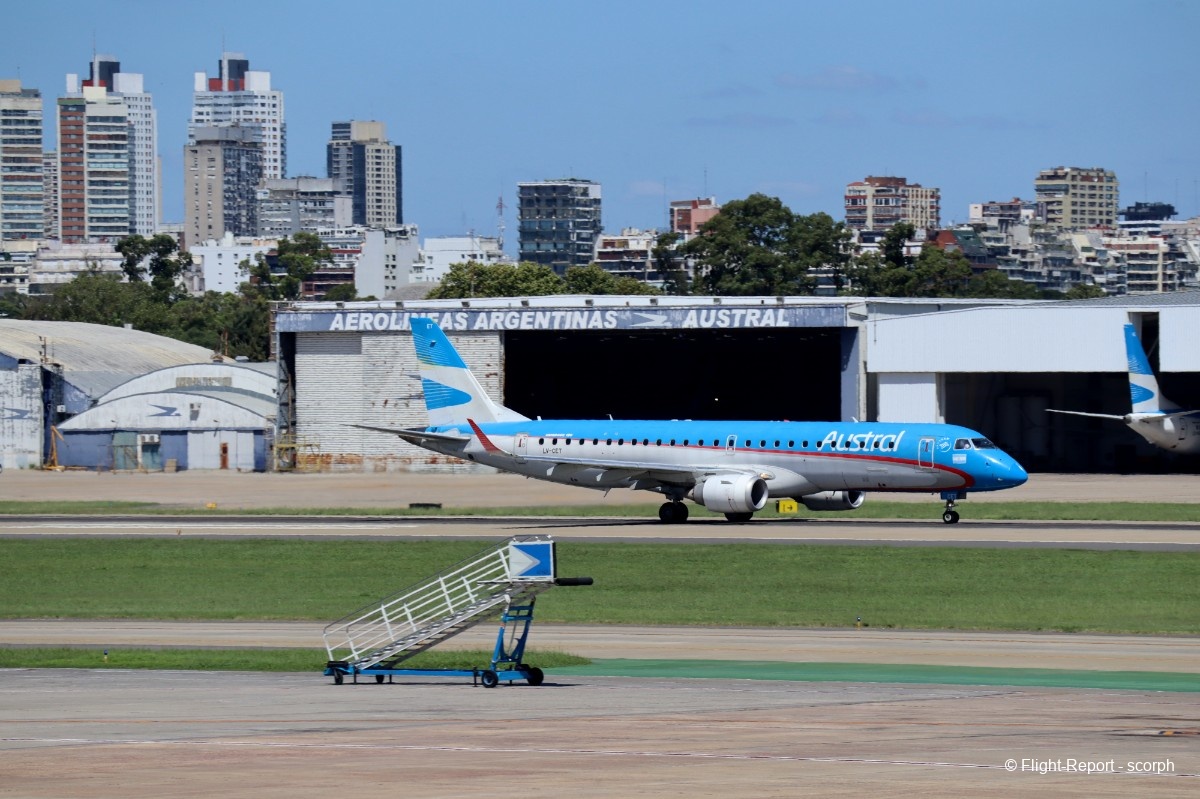
Blue is definitely in style today! Here is an Aerolíneas Boeing 737-800 taking off for Córdoba.
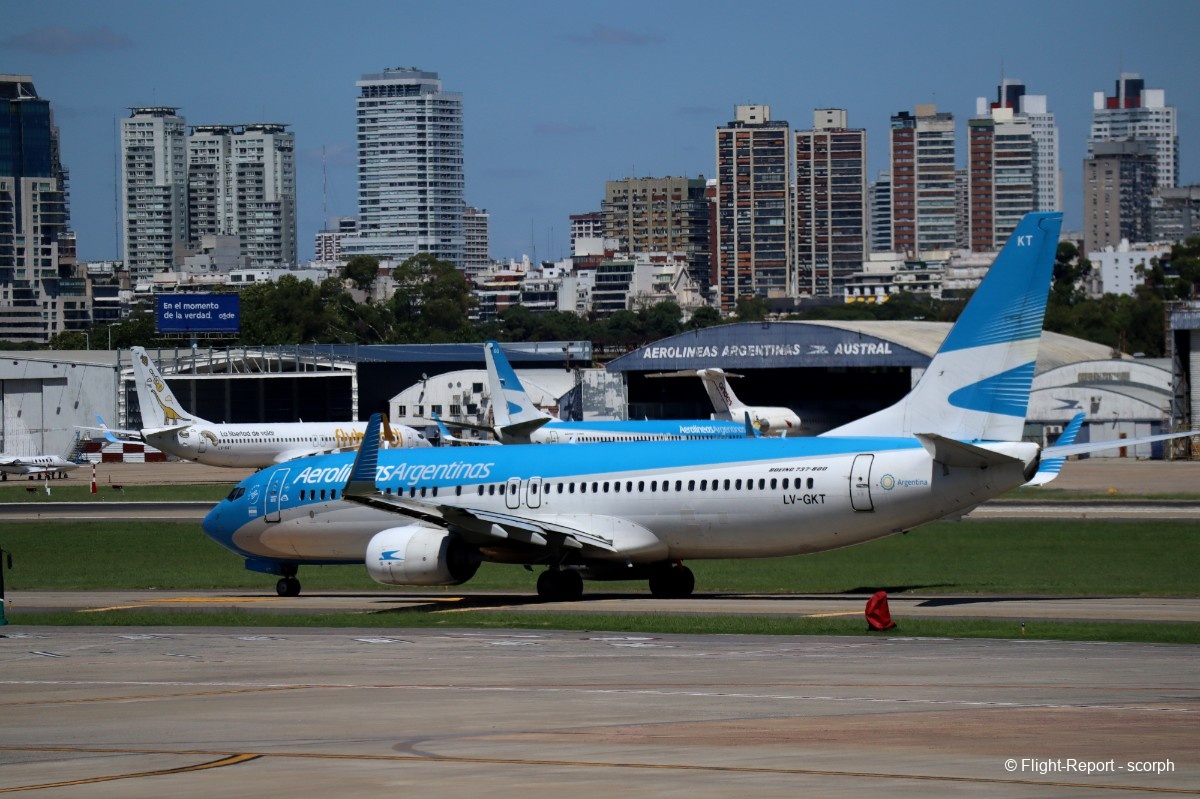
Sticking with the blue theme, here is a private Gulfstream GV touching down.
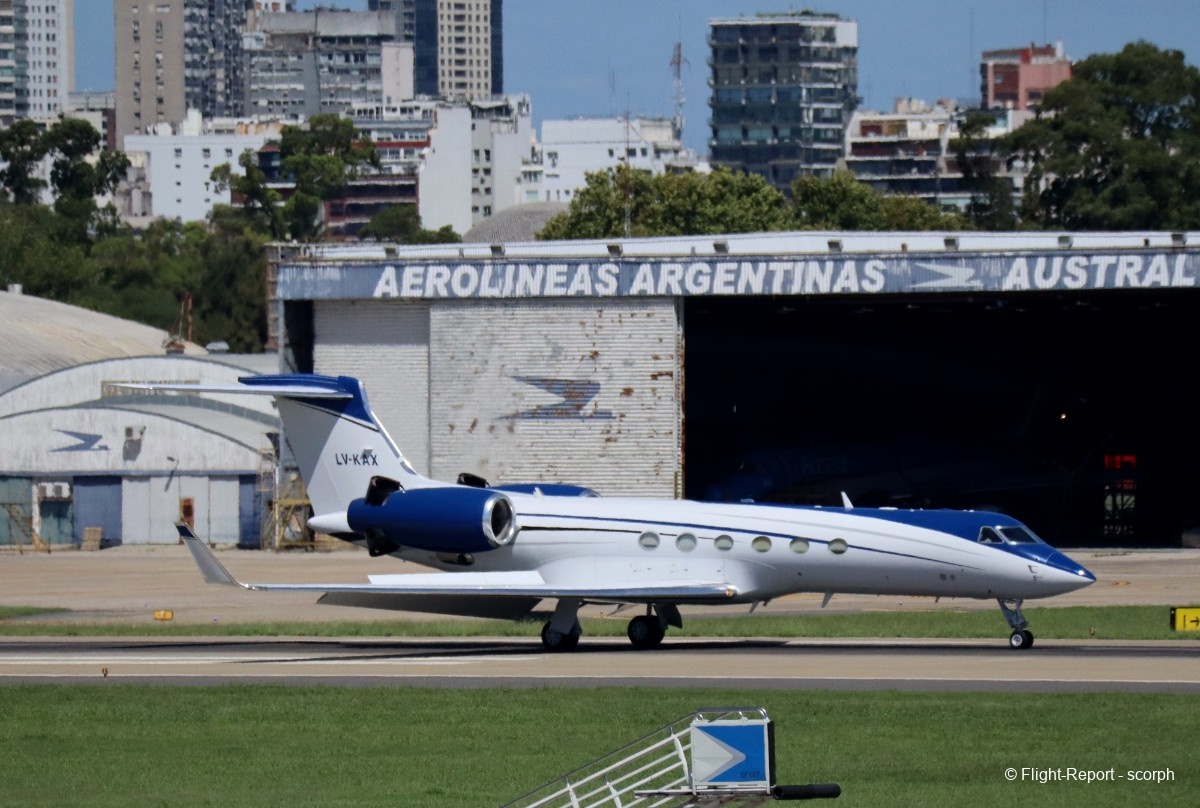
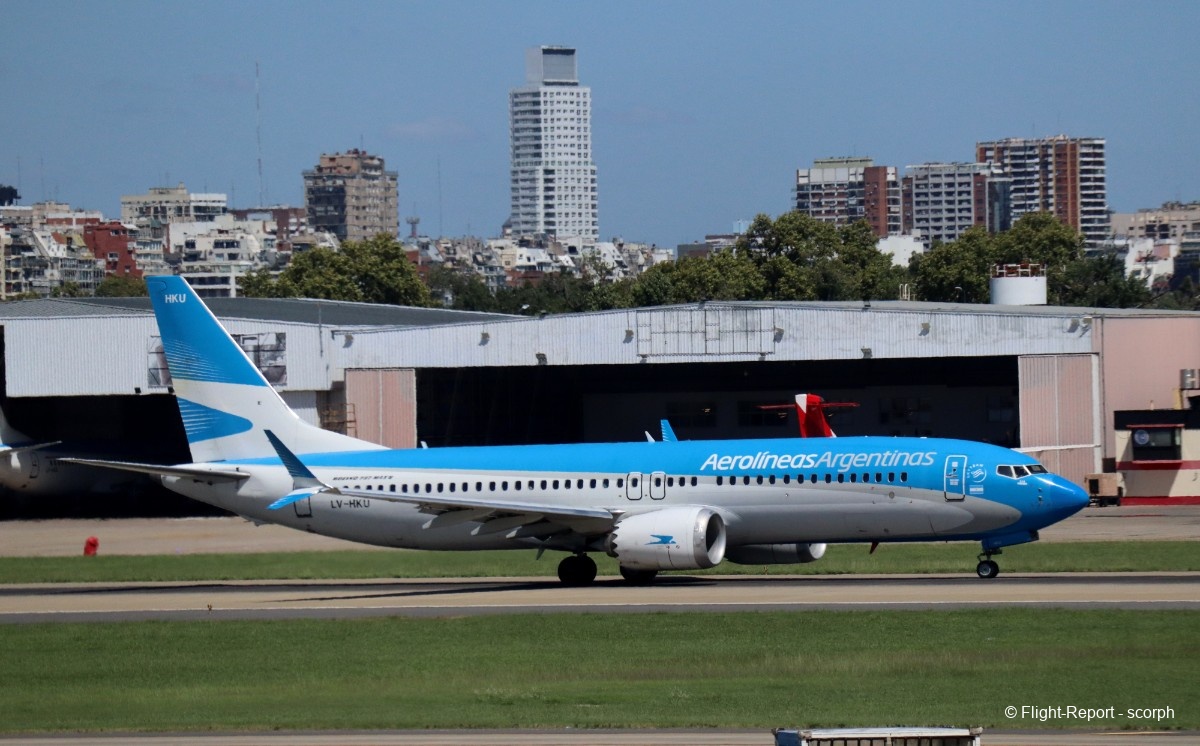
Aerolíneas now also use a substantial fleet of Boeing 737 MAX-8s, even though the bulk of their short-to-medium-haul fleet is still made up of 737NGs (-700/-800). Here is one of them taking off for San Martín de los Andes in Patagonia.
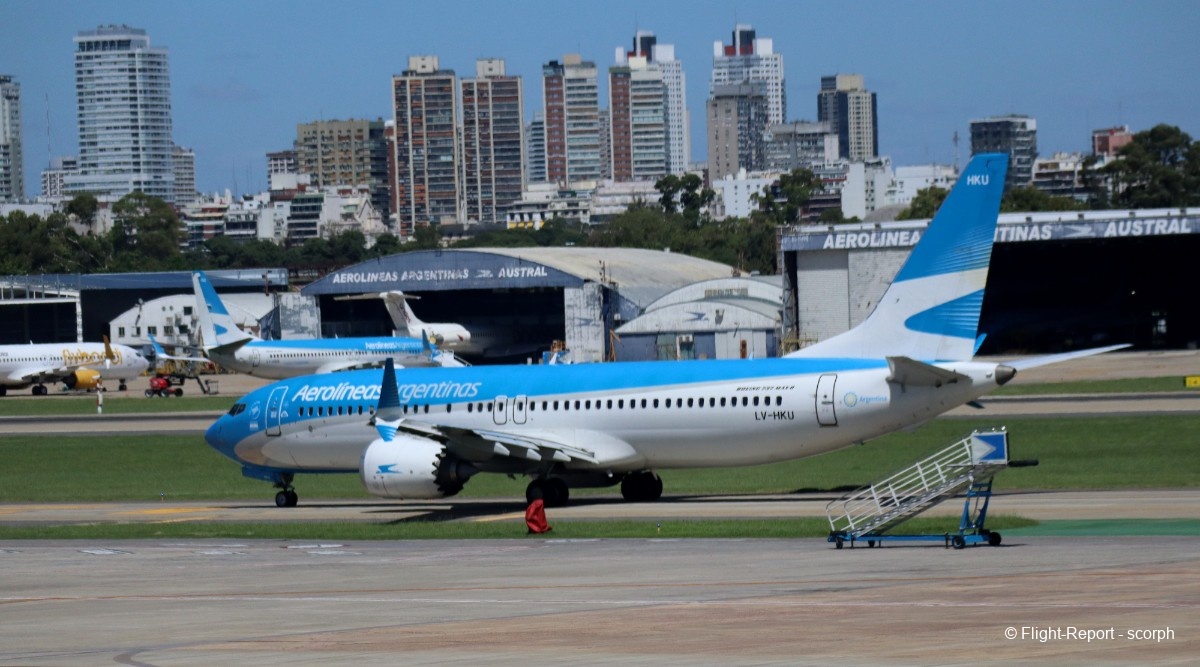
The runway has just cleared, and here comes a Flybondi Boeing 737-800 touching down from Salta. You’ll notice the lack of winglets on this rather old -800 model.
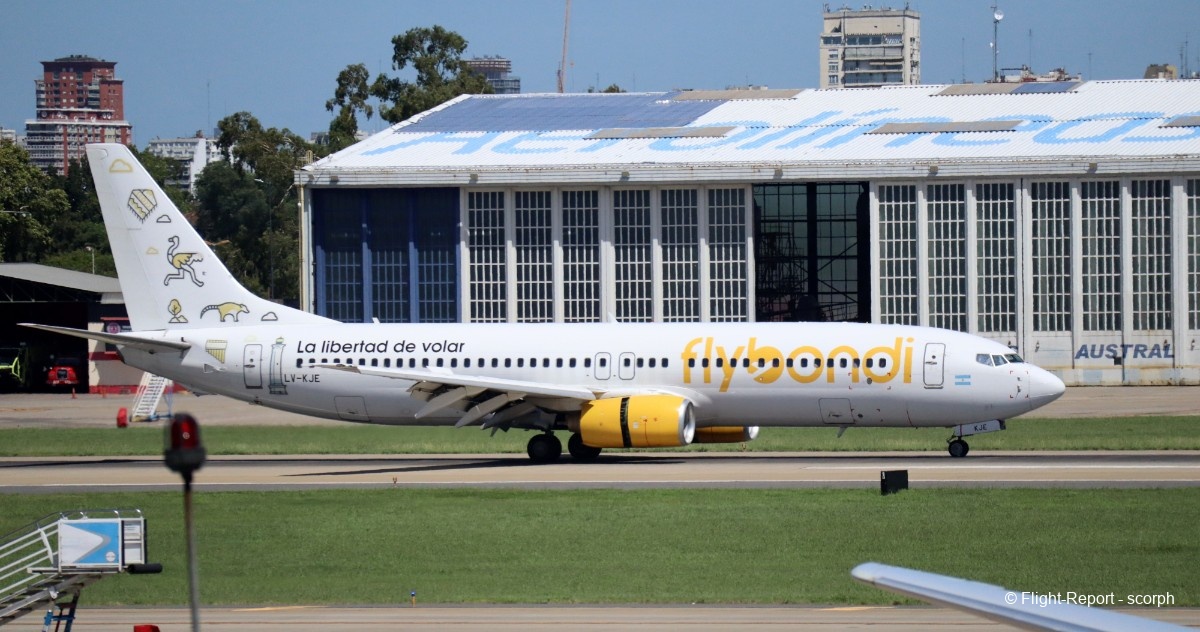
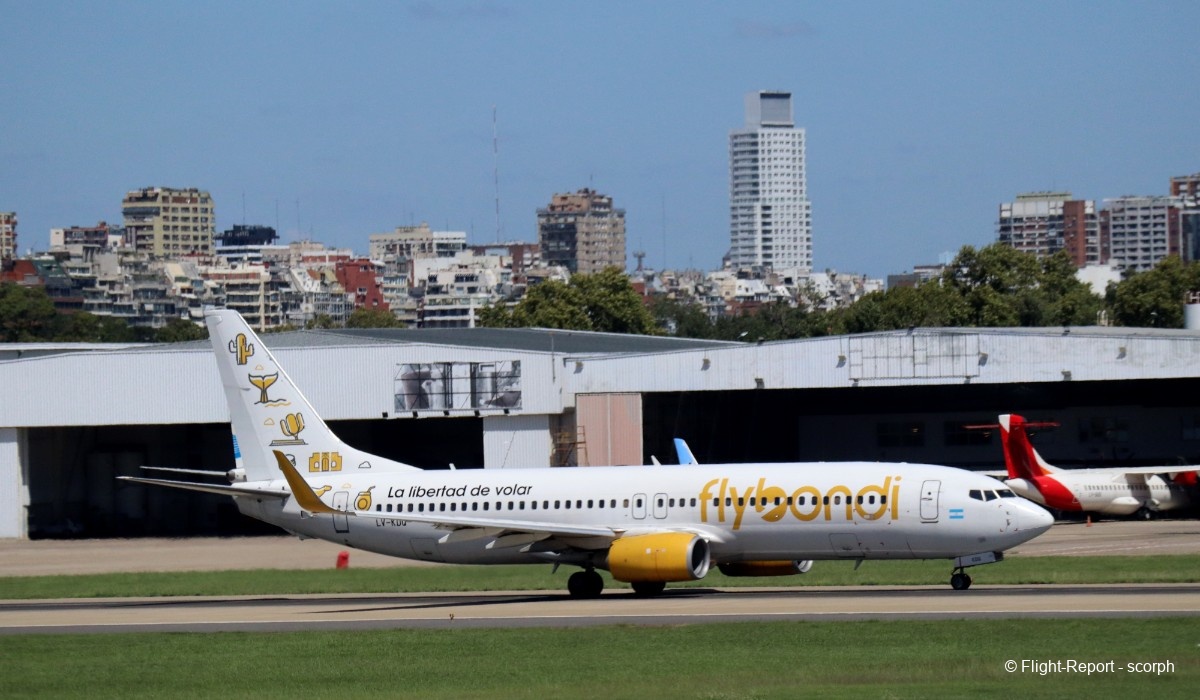
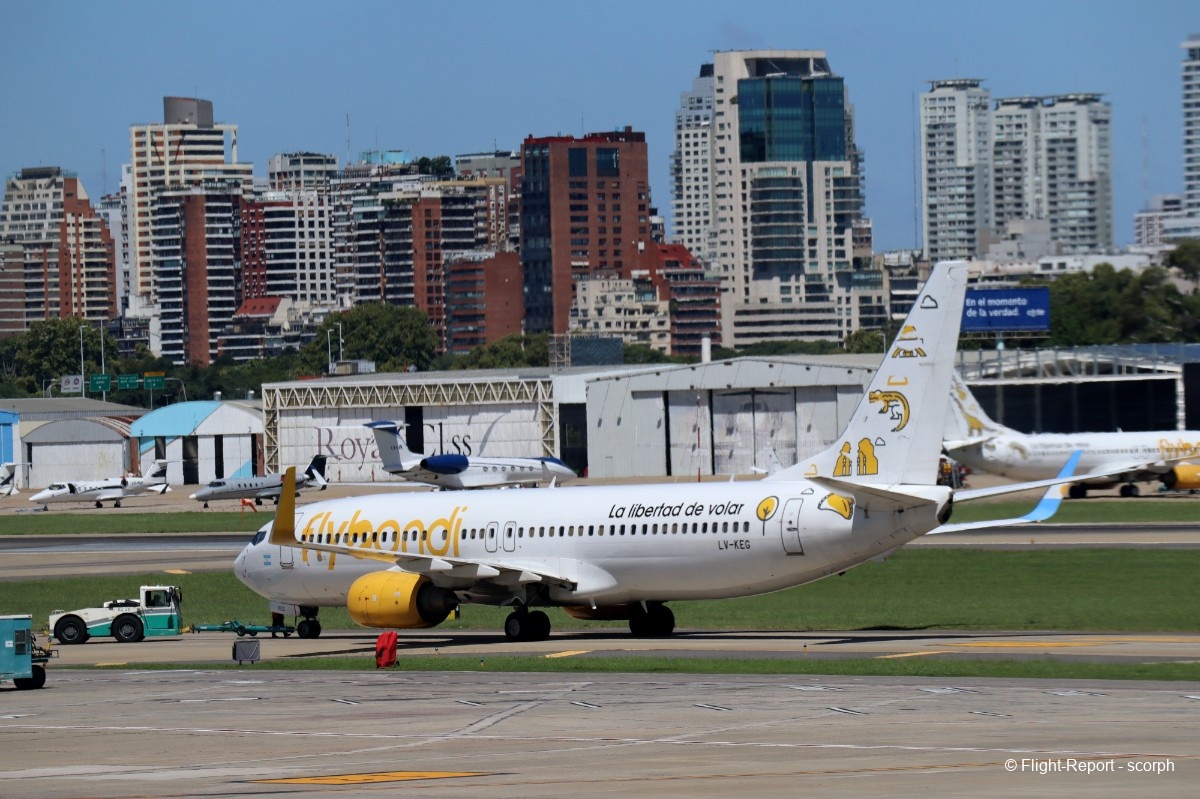
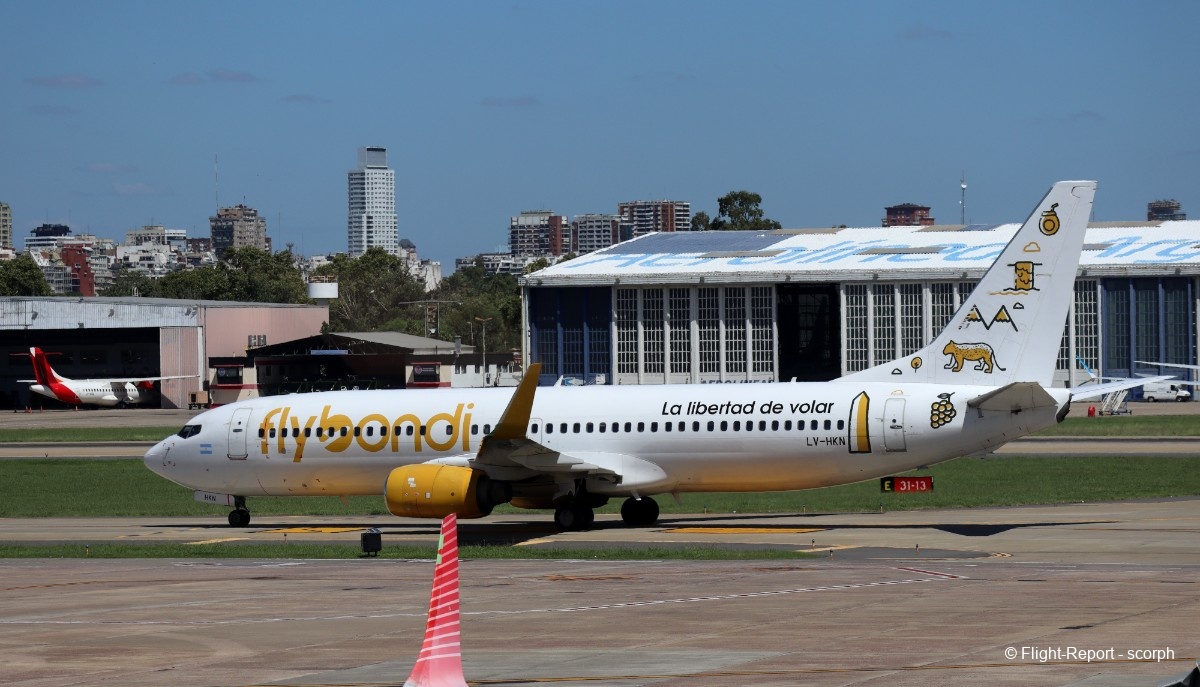
Flybondi is truly the second-largest player at Aeroparque; here is another Boeing 737-800 arriving from Mendoza. You’ll notice that the small illustrations on the tail vary from one aircraft to another.
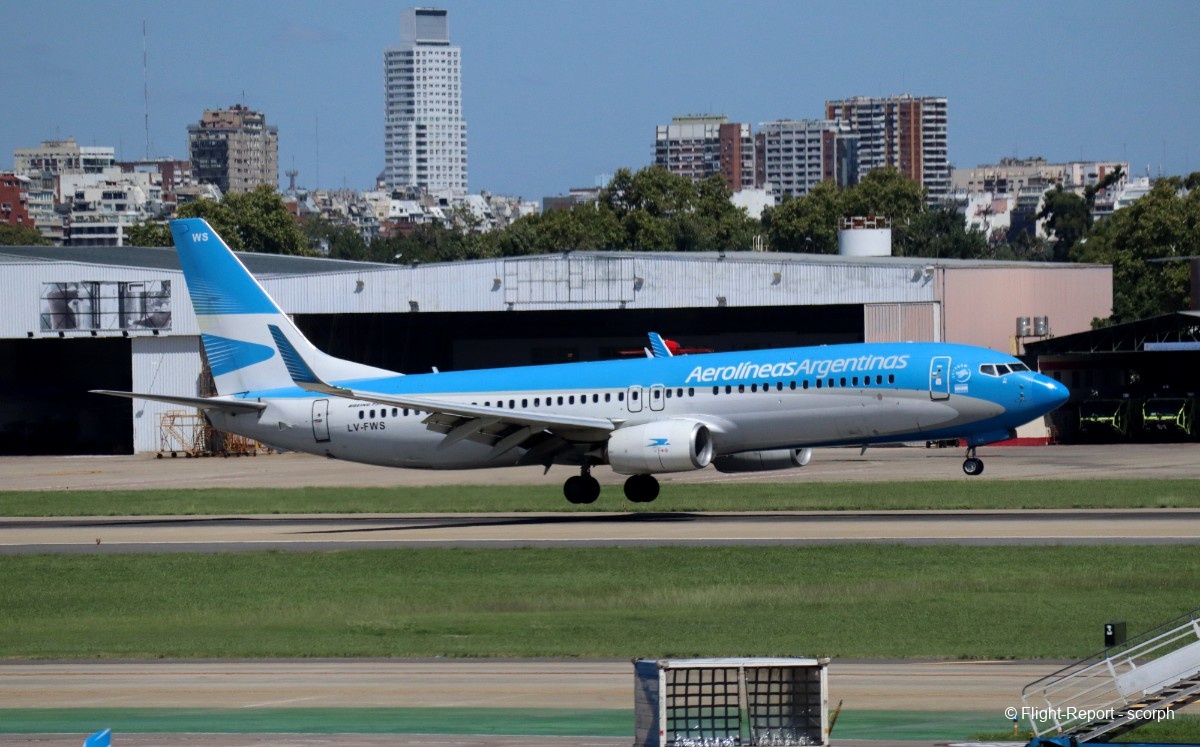
Next, it's time for our aircraft of the day to make its entrance, arriving from Tucuman. LV-FWS is a Boeing 737-800 with just over 10 years on the clock. It has always flown under the colors of the Argentine carrier, although it was initially destined for the Russian airline UTair, which never took delivery due to financial difficulties.
Another Embraer E-190 of Austral, arriving from Catamarca, a small airport serving the province of the same name, located in an arid region near the Chilean border.
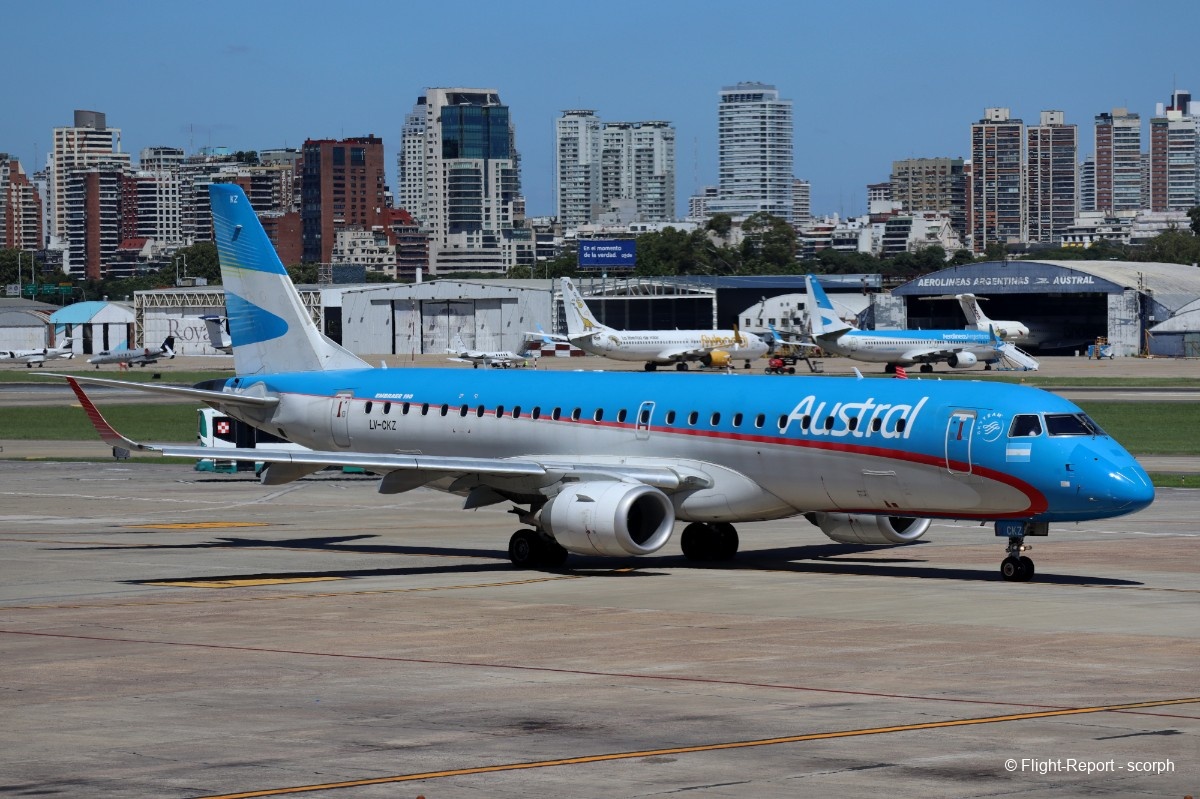
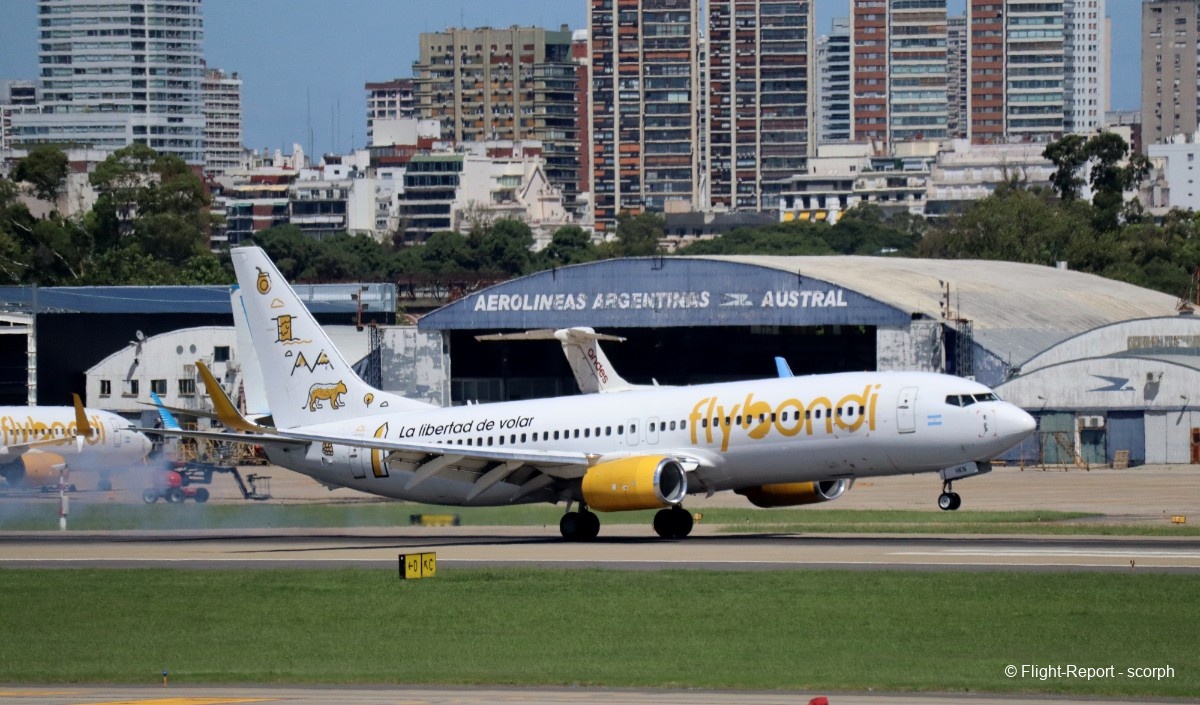
Arriving from Córdoba with a significant delay is this Flybondi Boeing 737-800.
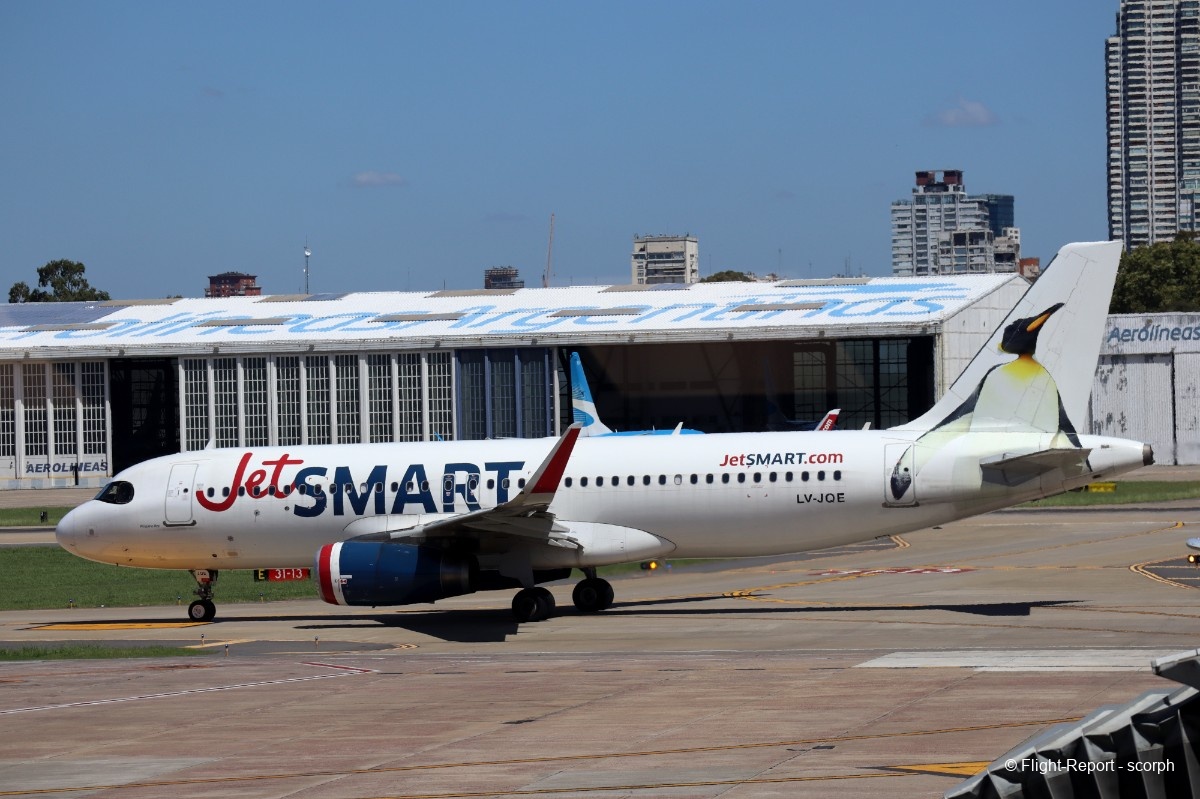
Another airline with diverse tail art is the Chilean low-cost carrier JetSmart, which has an Argentine subsidiary. Much like the American airline Frontier, their Airbus fleet features a different animal on every tail (which I think is very cool). This A320 is departing for Asunción, Paraguay.
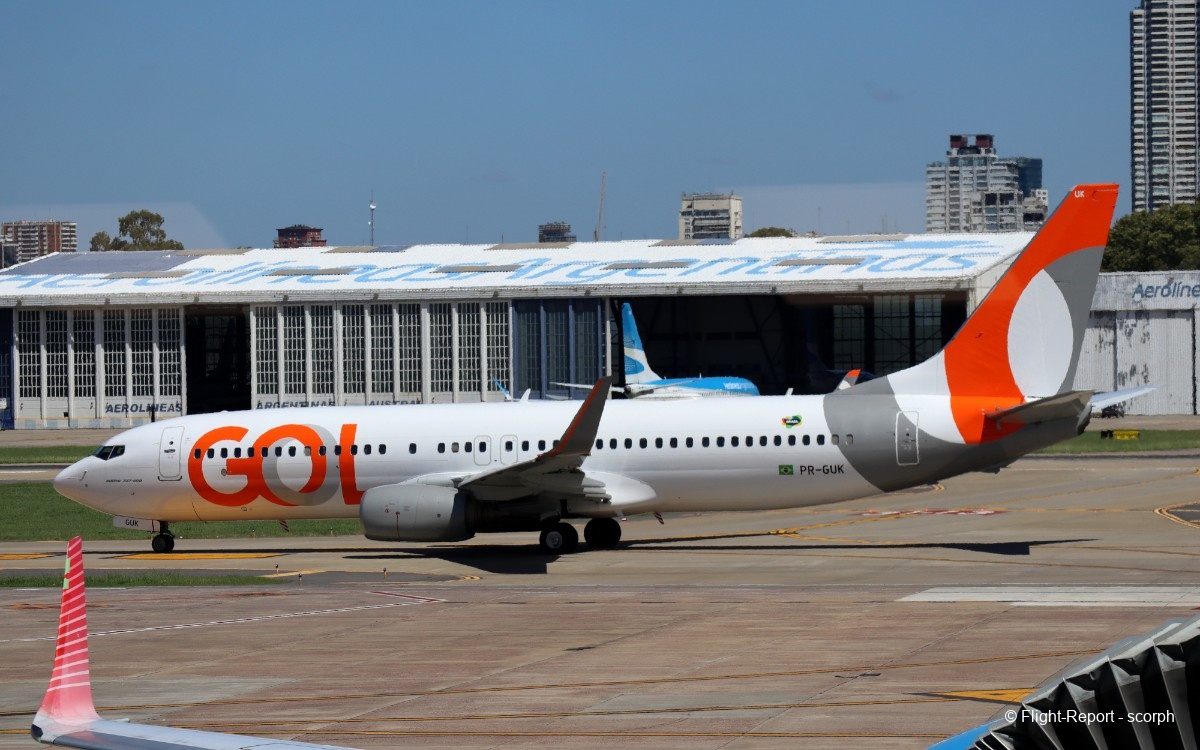
It will be followed a few moments later by this GOL Boeing 737-800, the Brazilian low-cost carrier, departing for São Paulo (GRU).
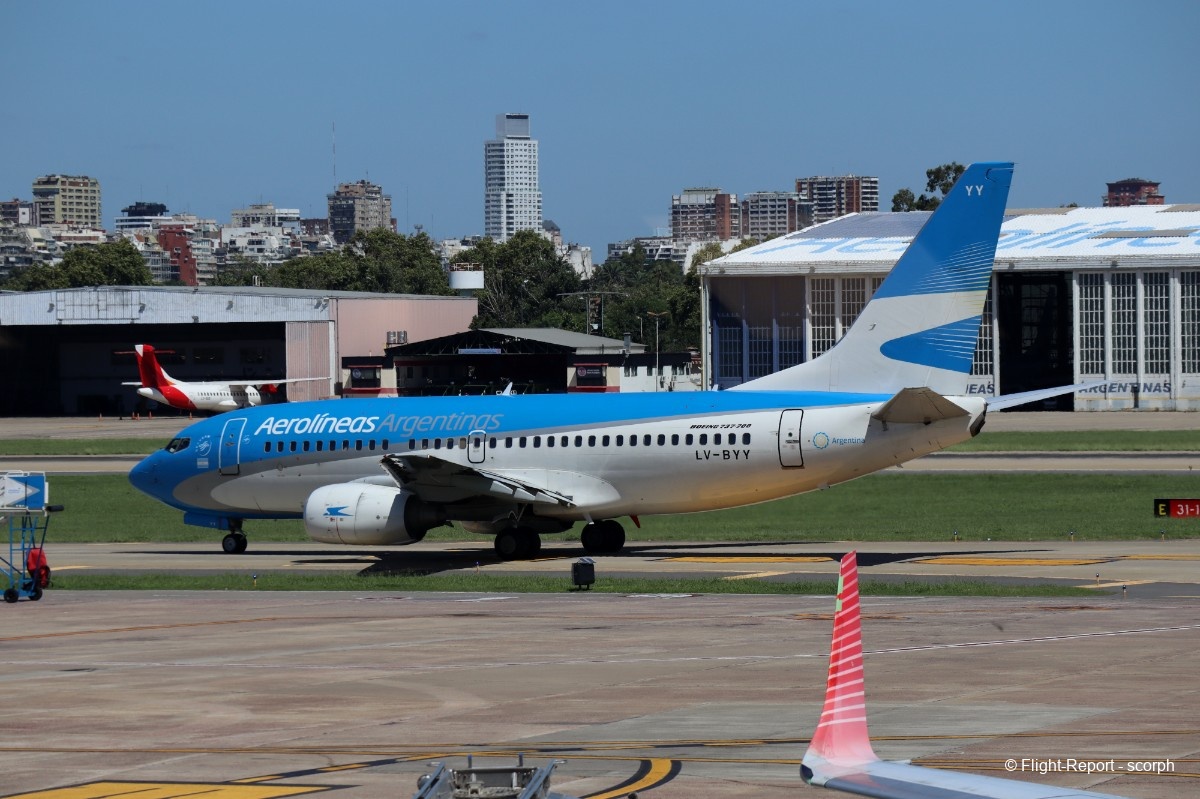
This winglet-free Boeing 737-700 from Aerolíneas is a bit of a rarity. Despite its age, the old-timer is gearing up for its flight to Puerto Iguazú.
Boarding
After a spotting session that was, I must say, quite exotic for a Frenchman like me, it’s time to head back to my family as we’ll be boarding soon.
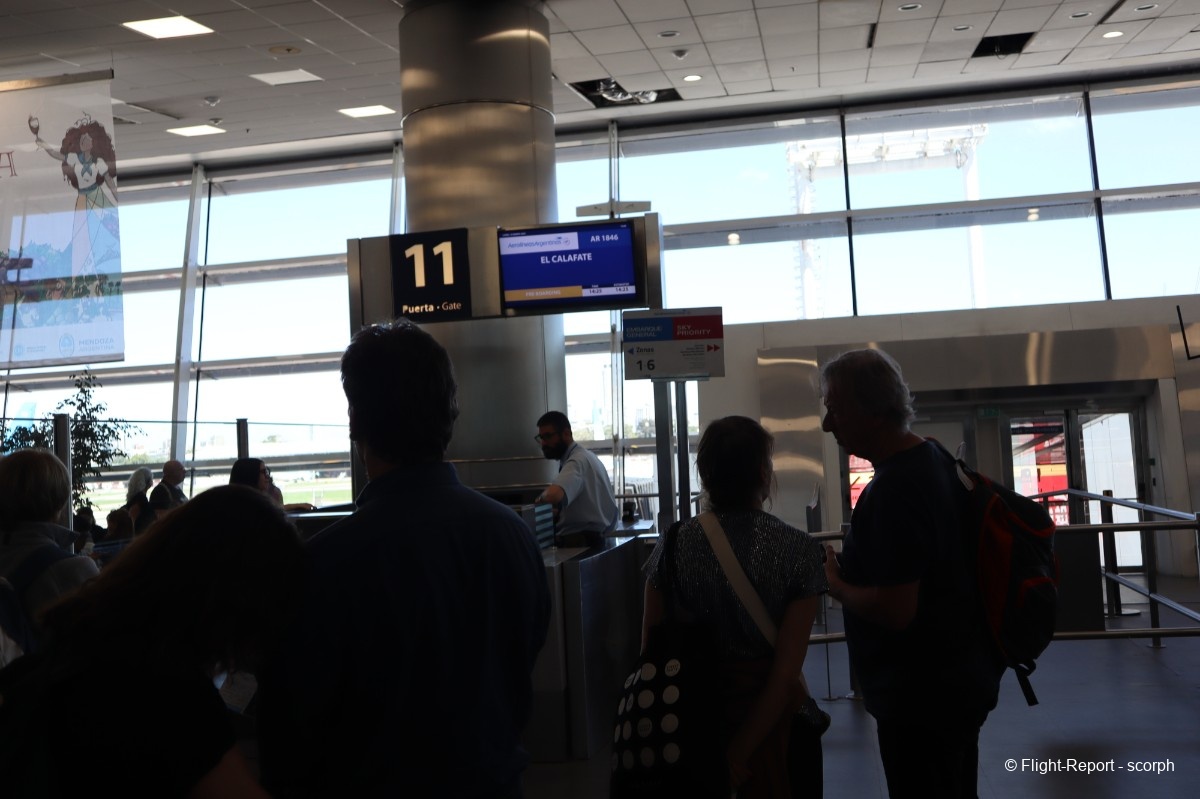
Boarding will take place at Gate 11 with a slight delay. No reason was officially given though from what I could see, it looked like they were testing the aircraft's navigation lights.
At our actual scheduled departure time, I spotted the ground crew beginning to load our 737’s cargo holds as boarding finally got underway at the gate. Our aircraft was parked on the remote parking stand.
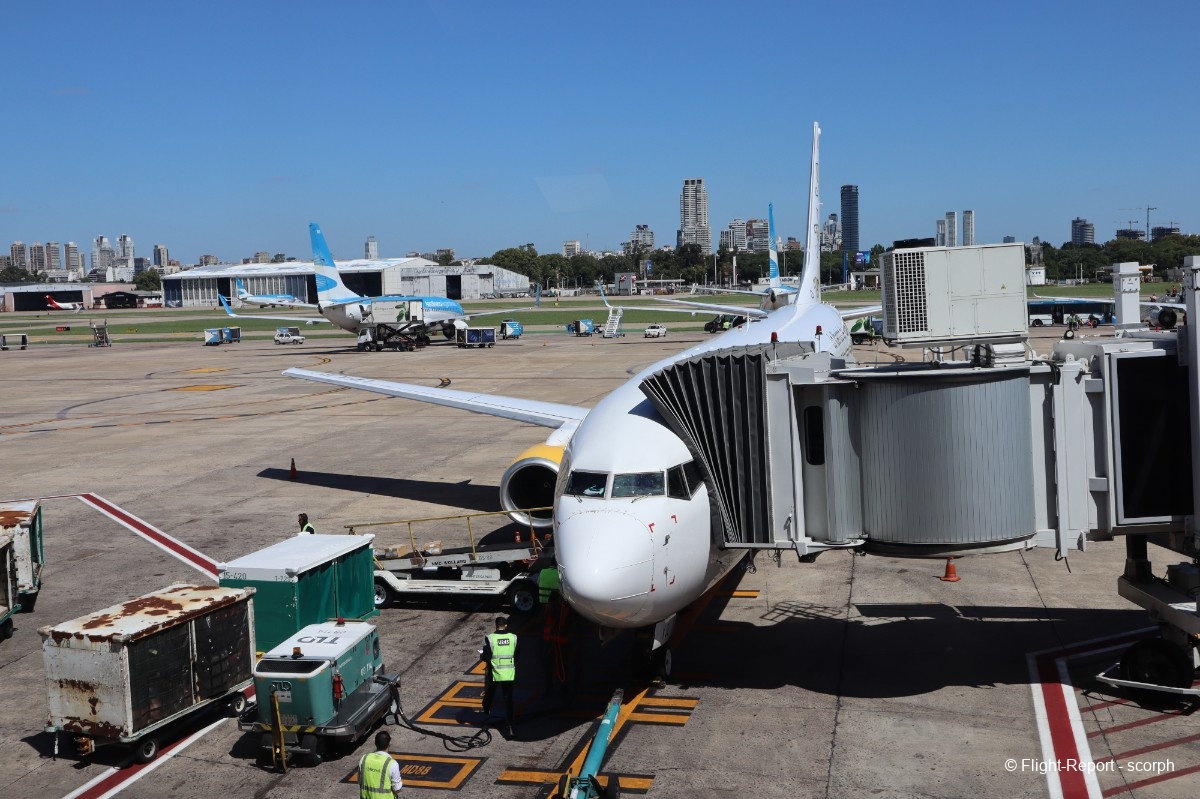
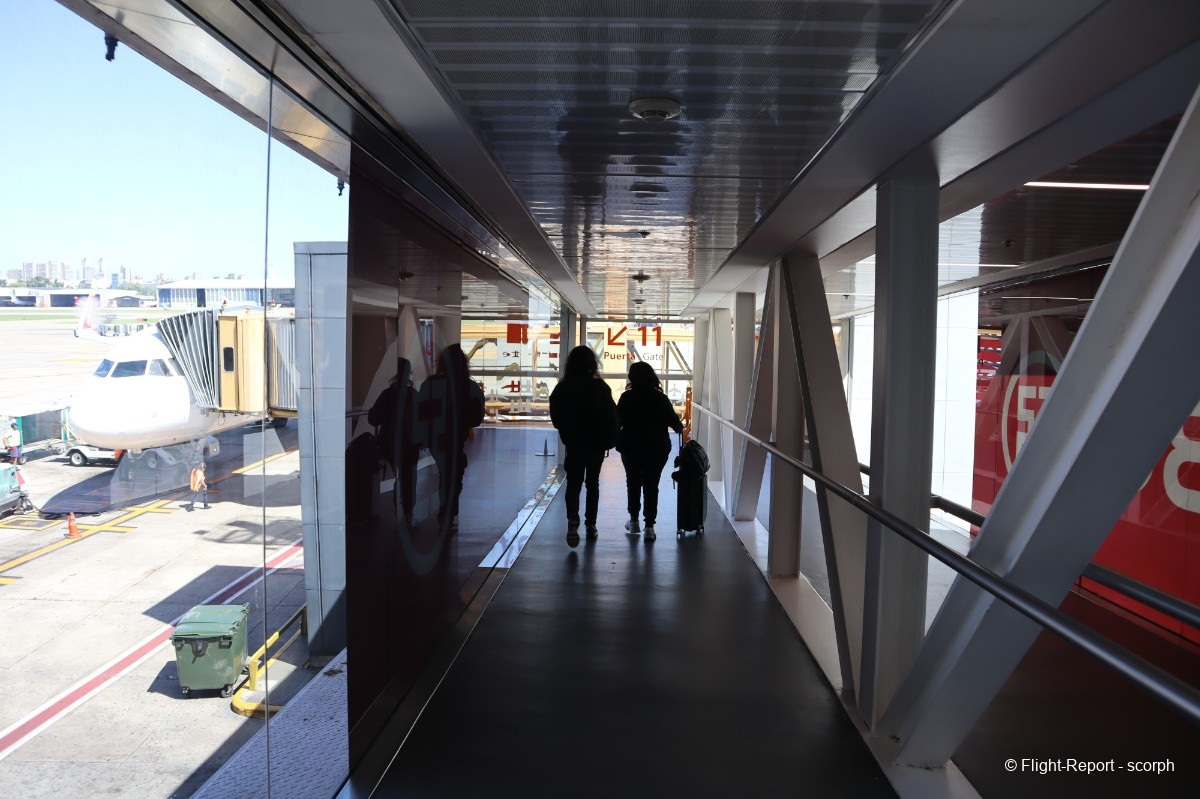
With a JetSmart A320 occupying our gate, it’s a bus boarding as expected for our aircraft parked out on the apron. The SkyPriority process was handled flawlessly, followed by a quick walk down the stairs to the waiting bus
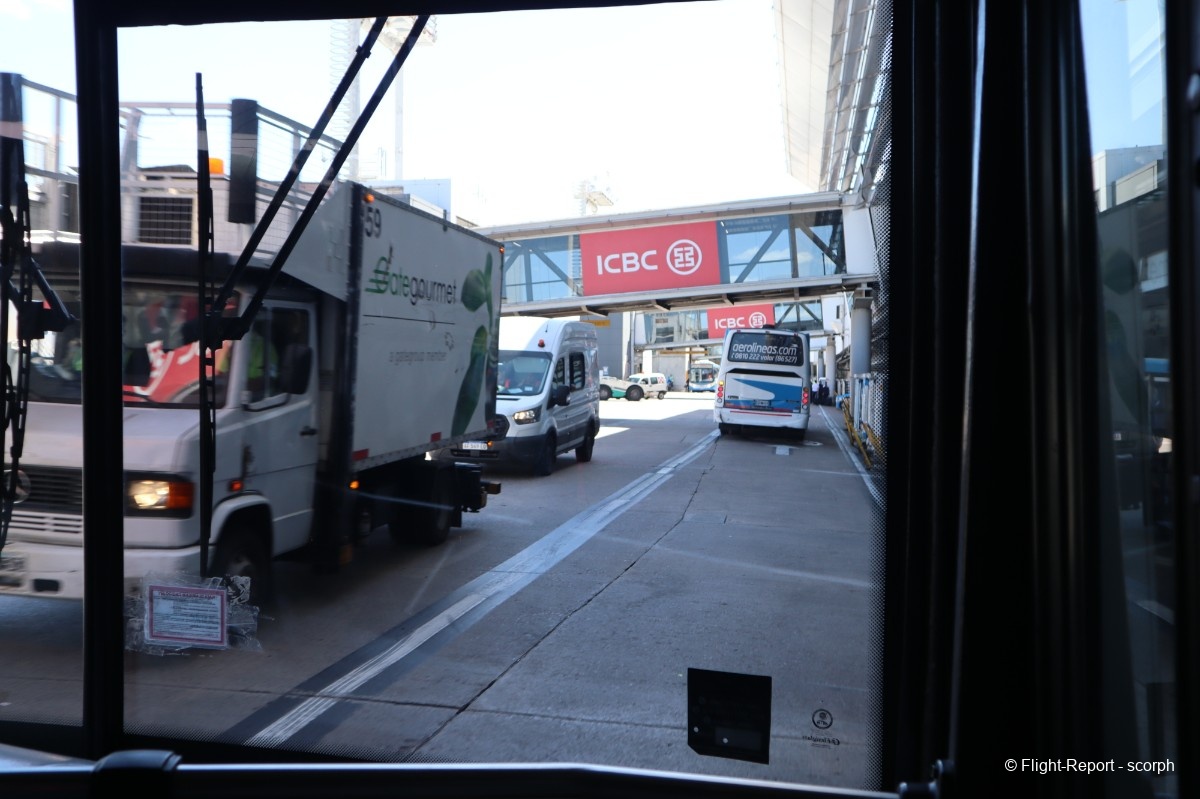
A quick trip across the tarmac the parking stands are very close to the taxiing areas. Clearly, the infrastructure here isn't meant for long-haul aircraft traffic.
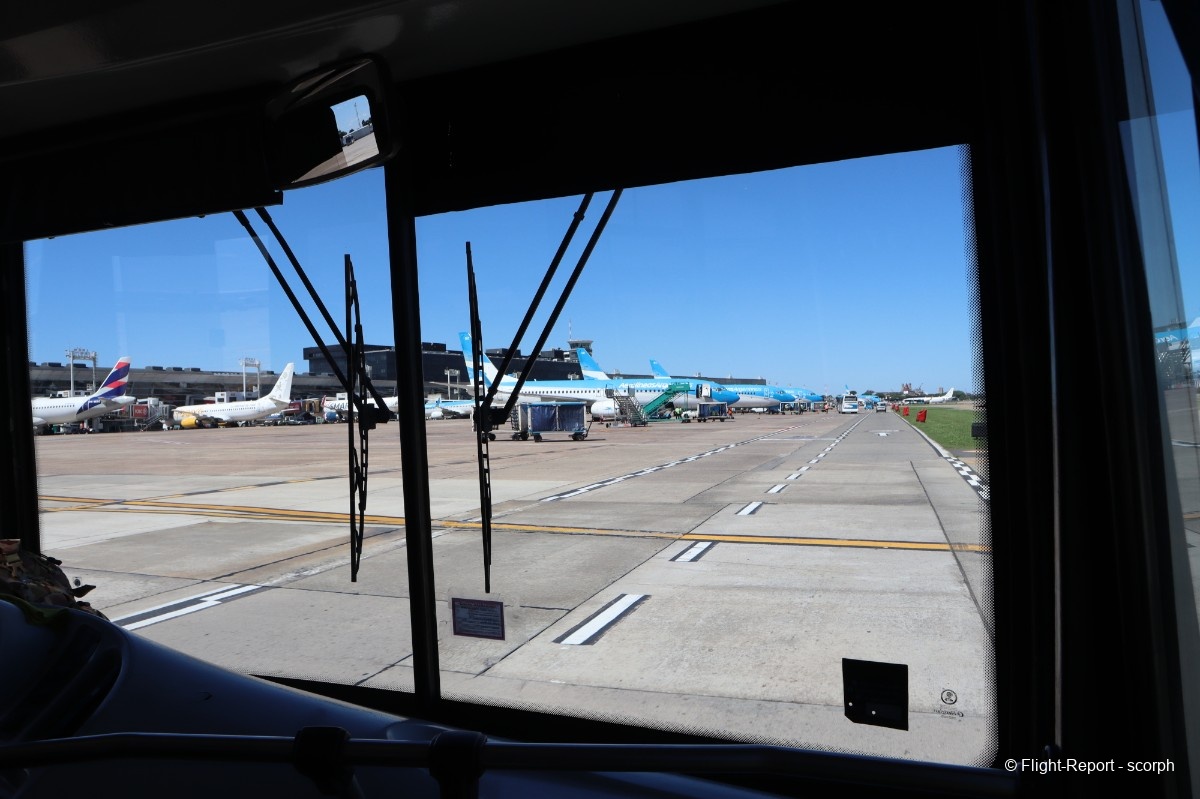
Our aircraft finally comes into sight. The bus doors open and the crowd of passengers quickly pours out to board. It is such a pleasure for an AvGeek to board via the tarmac in this perfect 20-degree weather. I’m in heaven, happily capturing every detail of the machine that will carry us to Patagonia today.
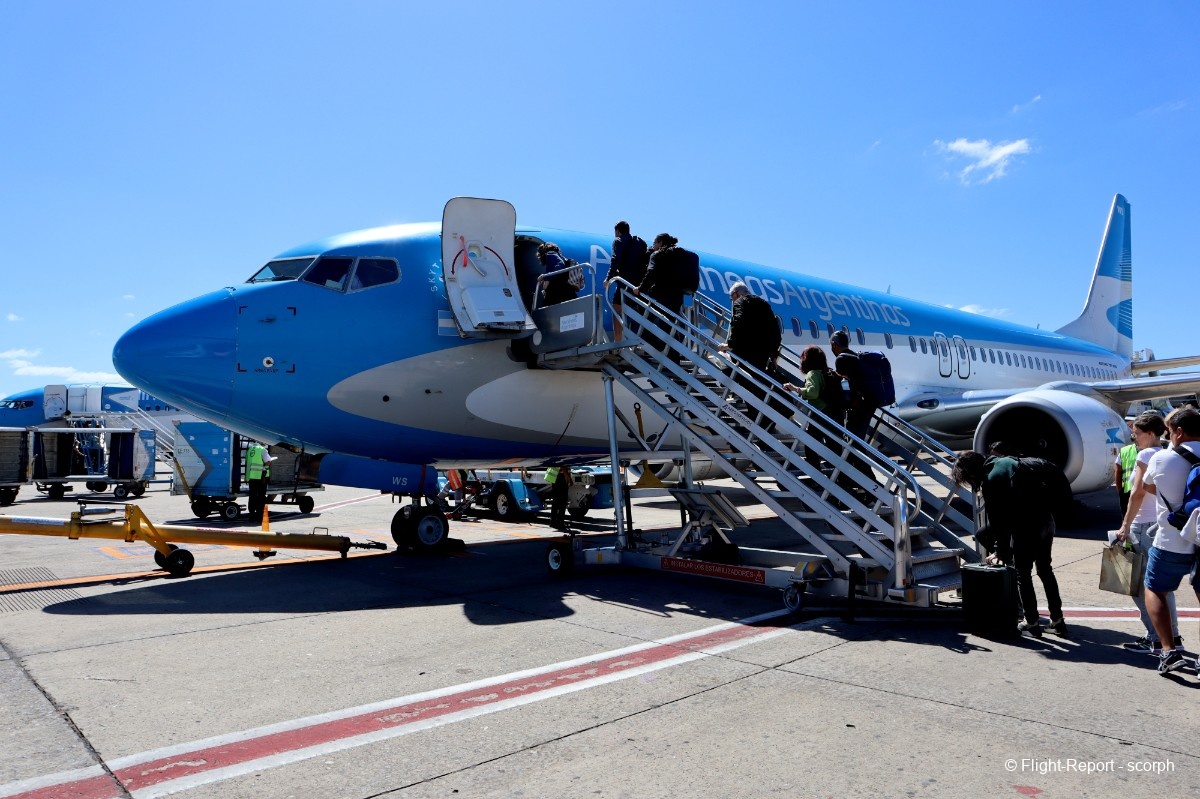
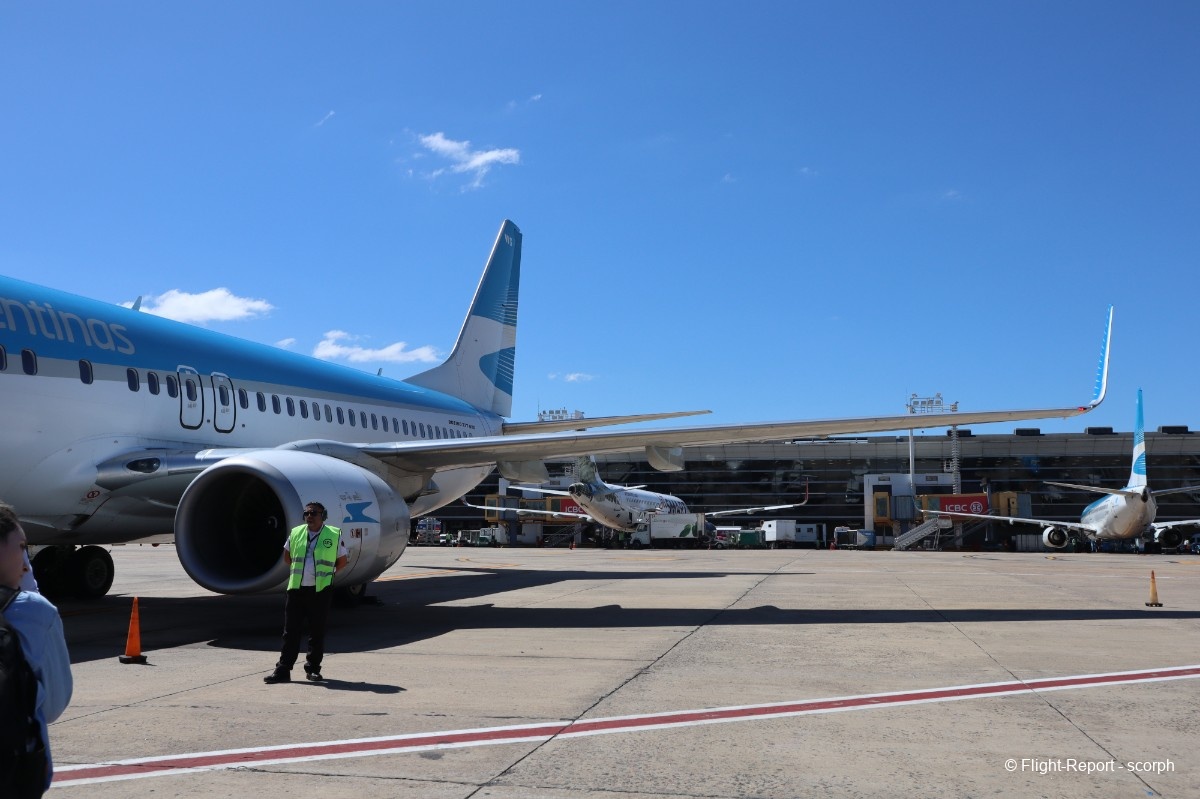
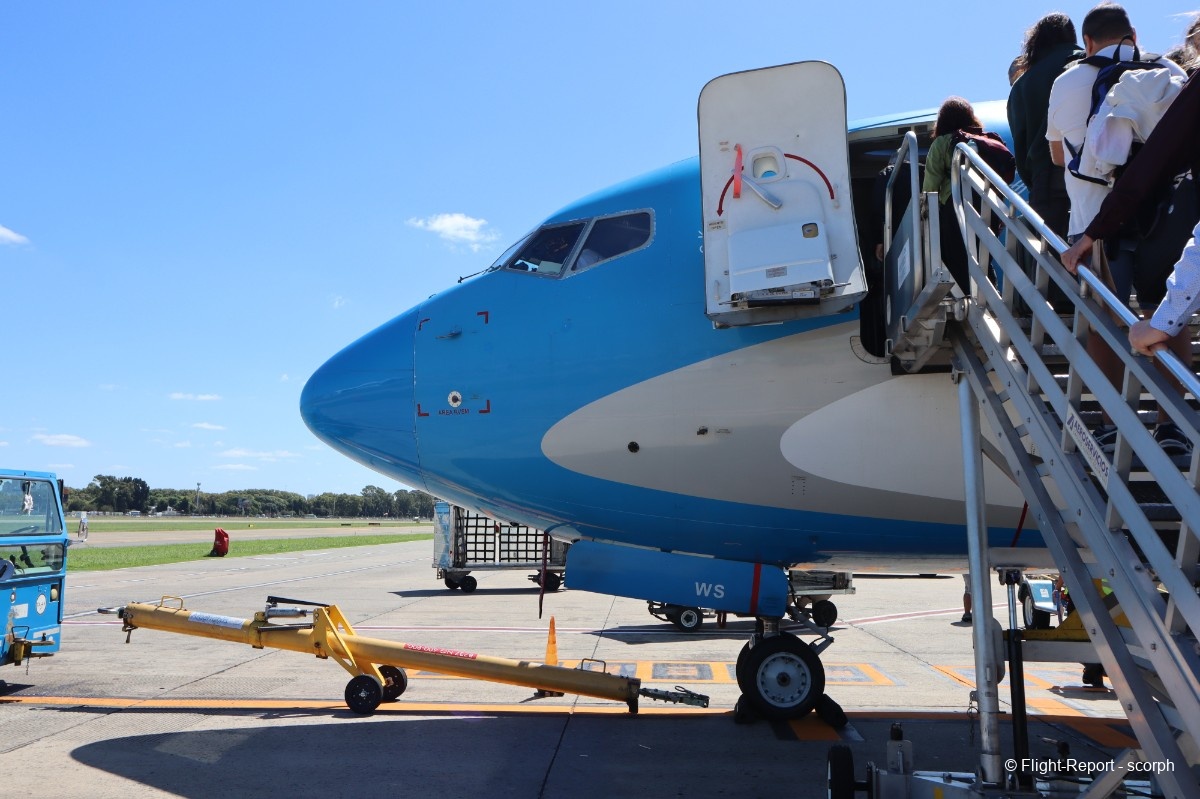
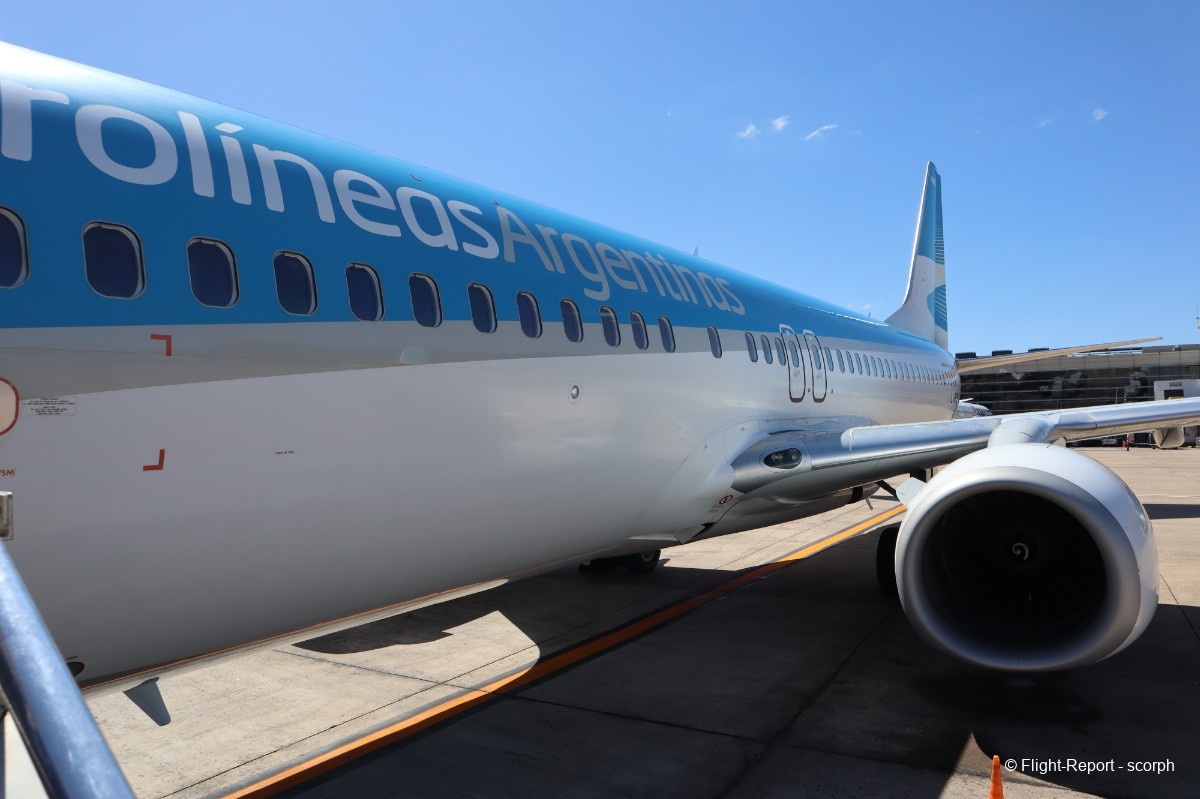
A short wait on the stairs gave me the chance to photograph this Aerolíneas 737 on arrival, with the city’s skyscrapers as a background.
On board Aerolineas Boeing 737-800
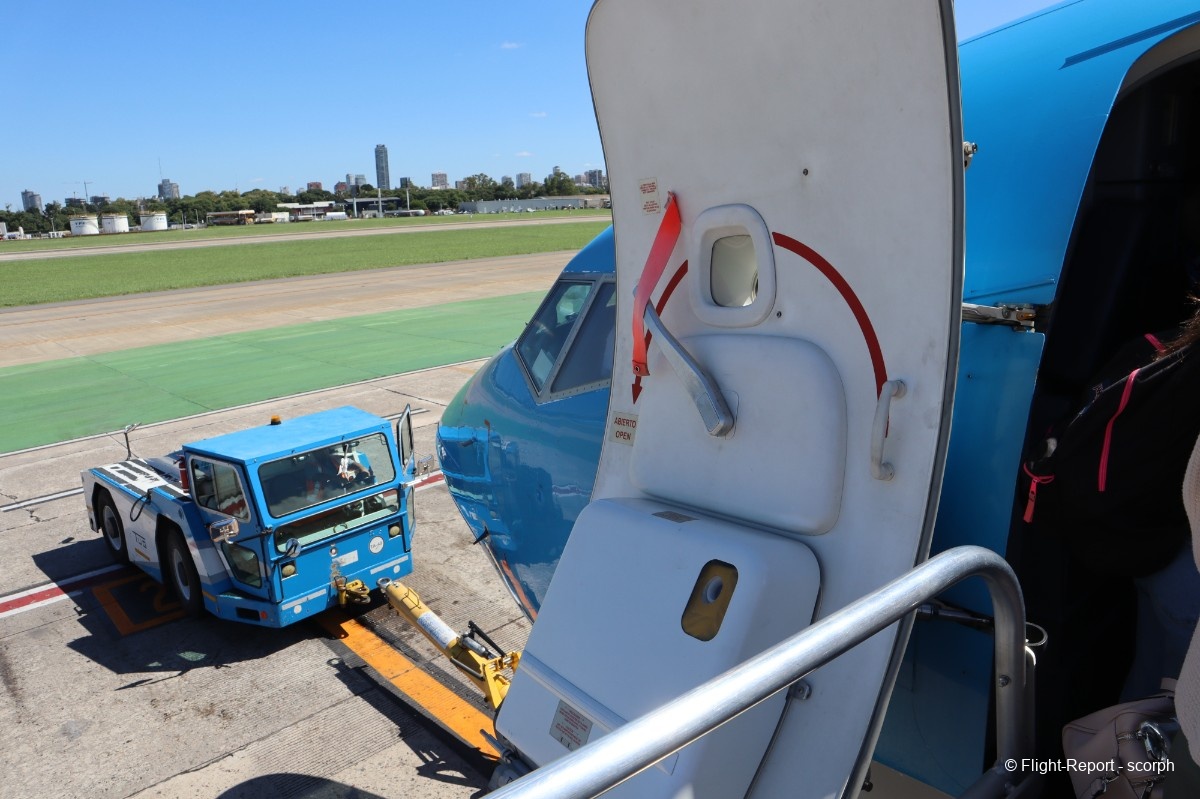
Push is already in place as we are crossing the aircraft door.
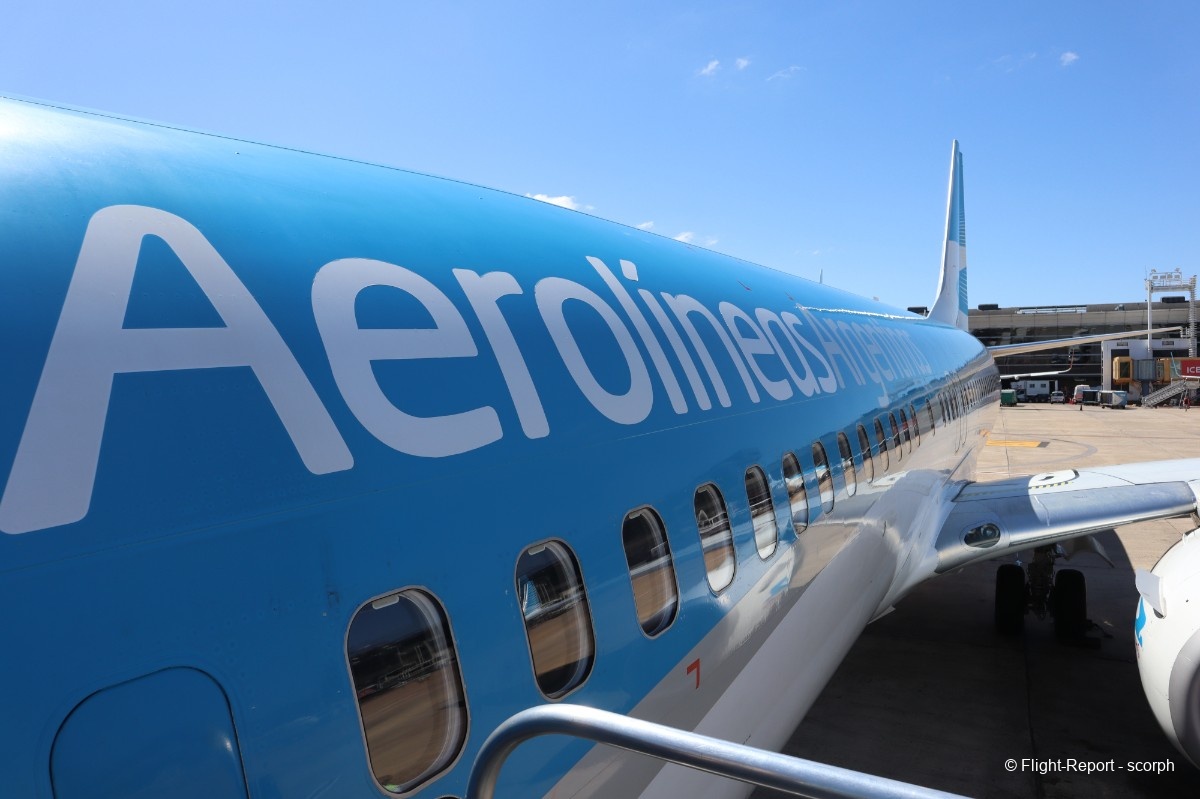
Time for a fuselage shoot! The welcome from the two female flight attendants working the front of the cabin was polite, though not particularly cheerful.
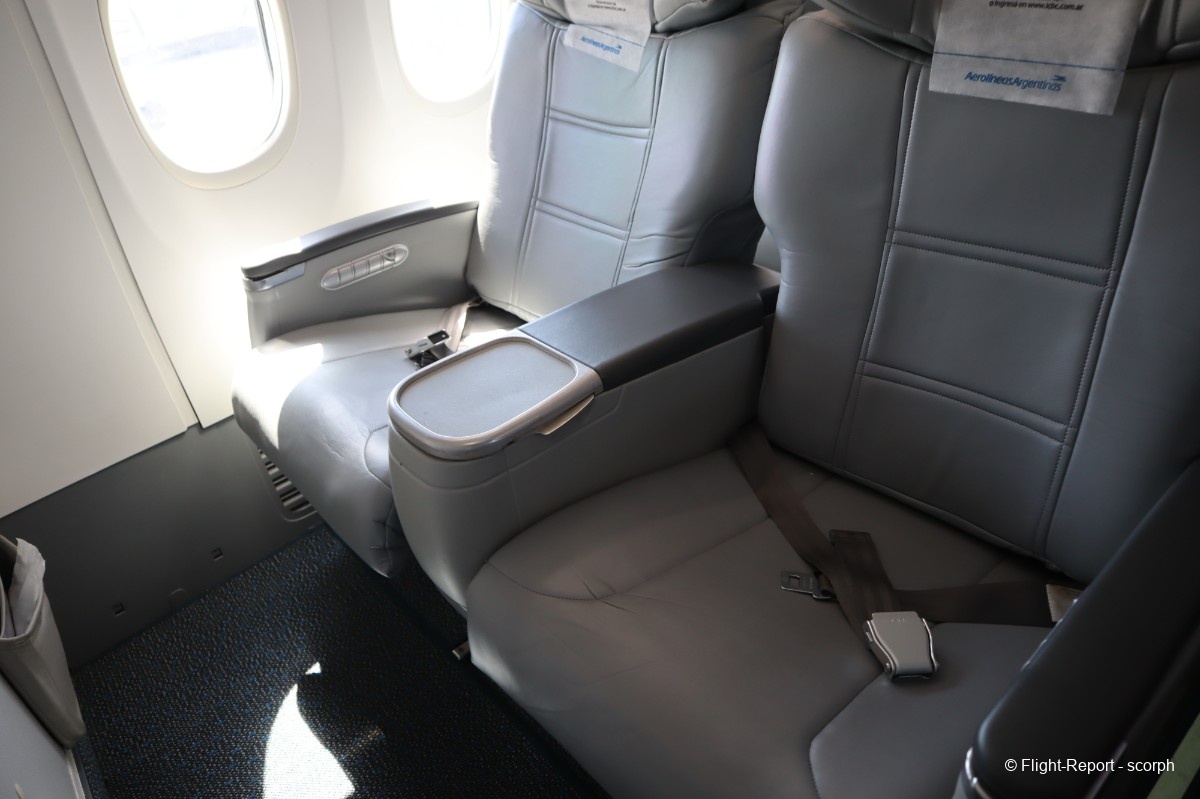
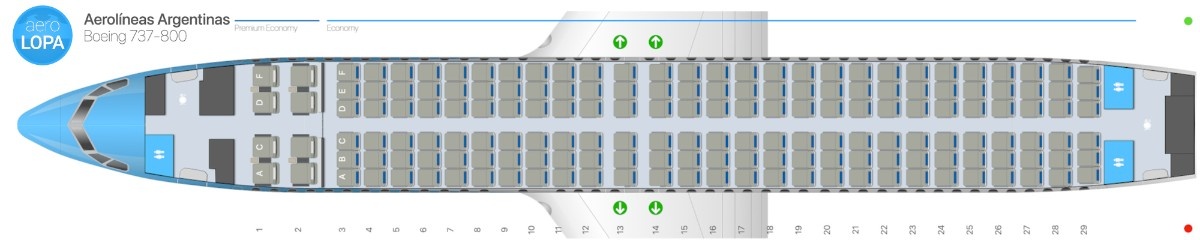
The plane is equipped with two rows of J-class recliners (8 seats in total) which looked remarkably comfy. You can definitely feel the American influence in the cabin layout.
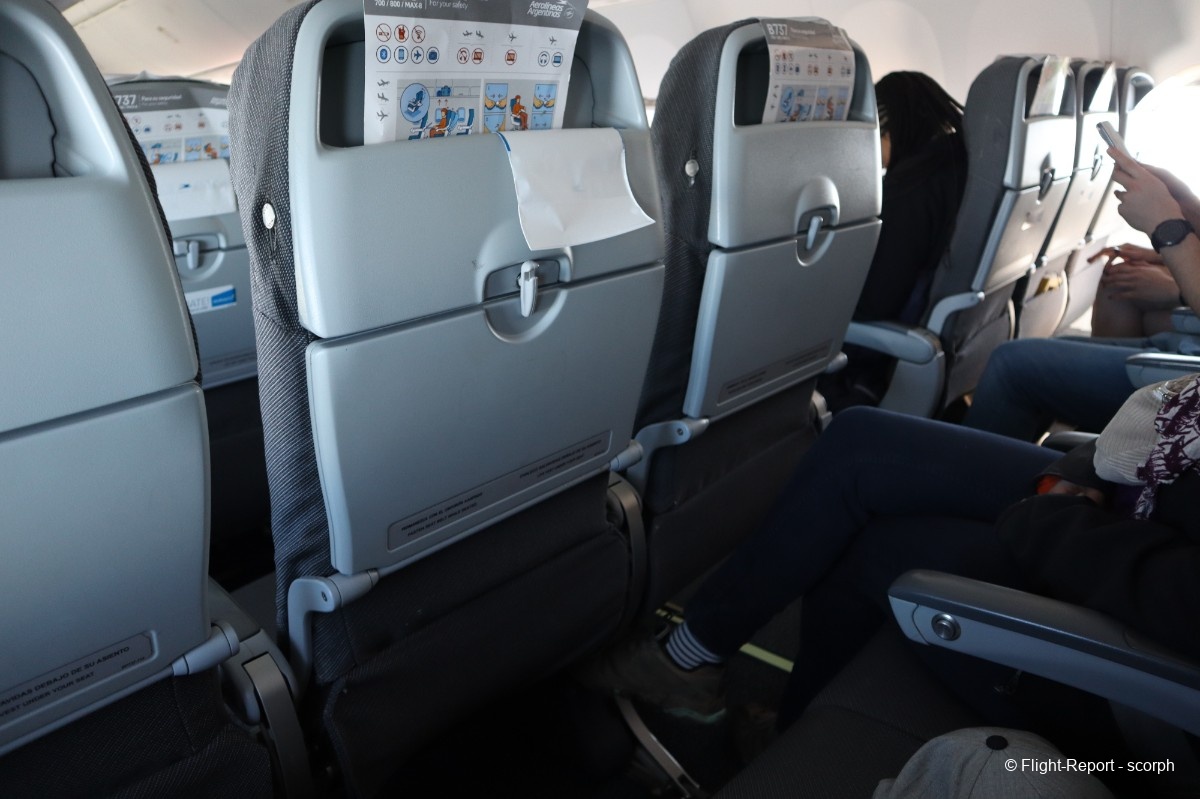
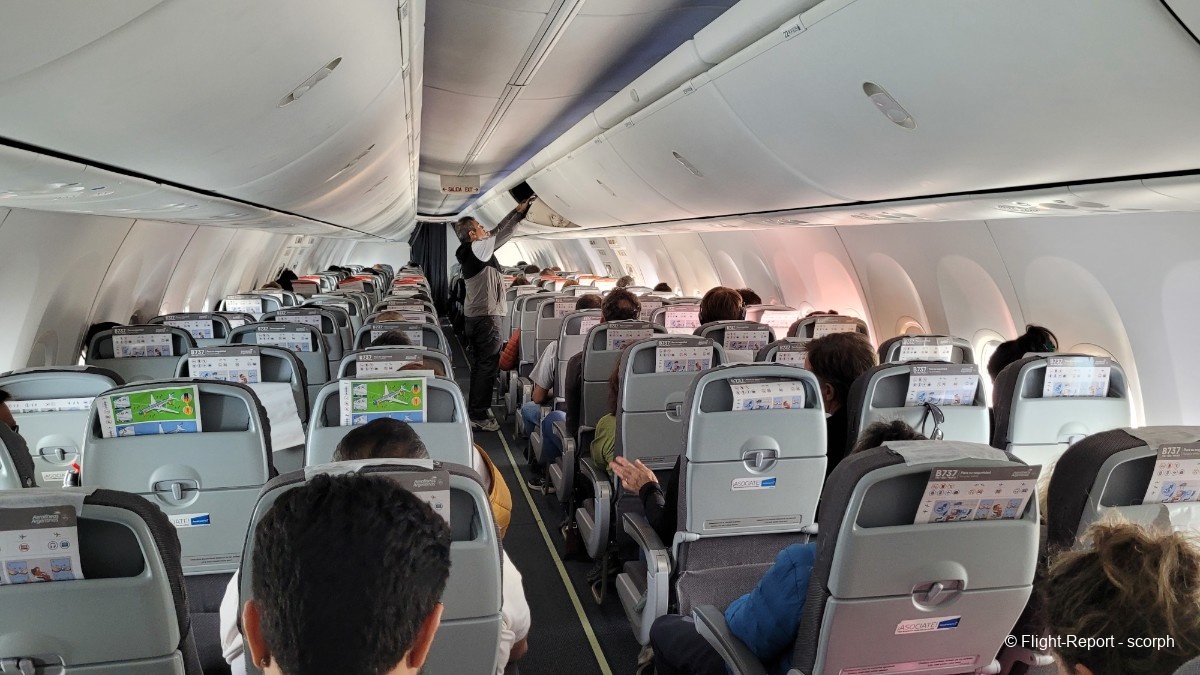
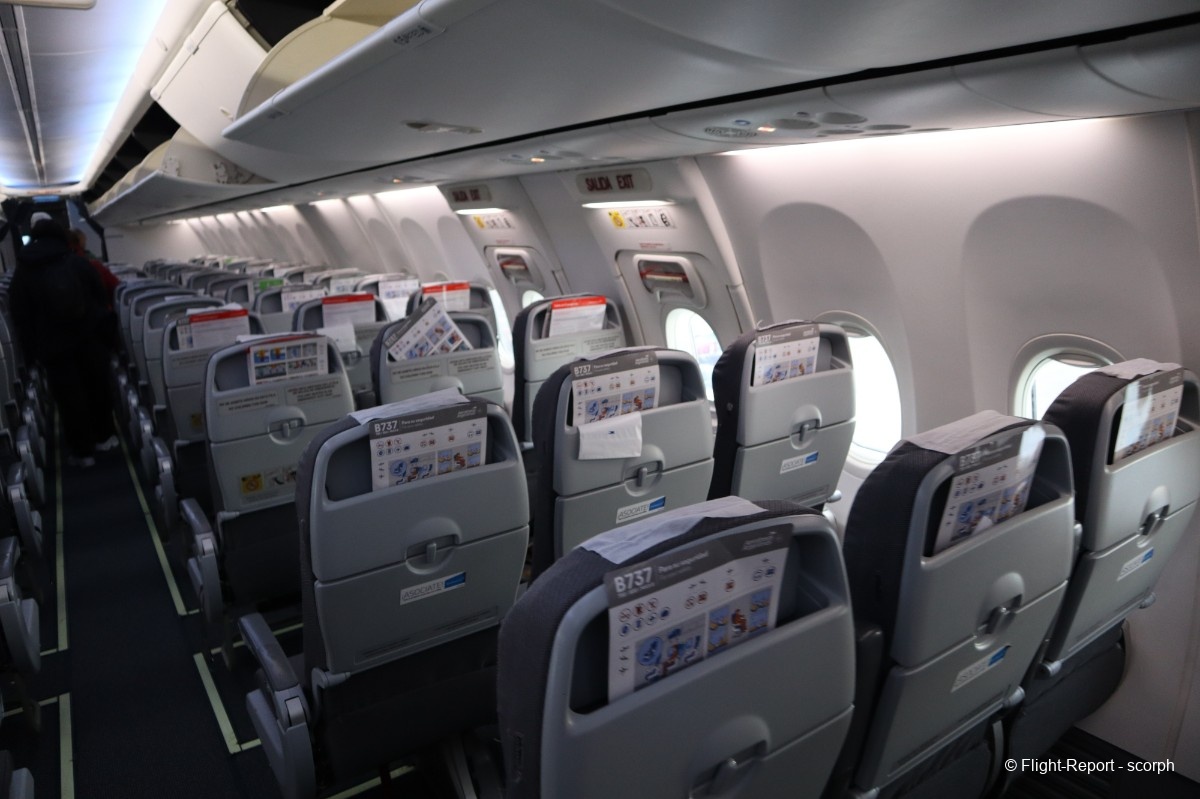
Moving back, the economy cabin features 162 seats. They’re pretty unremarkable, finished in a standard grey fabric that blends right in.
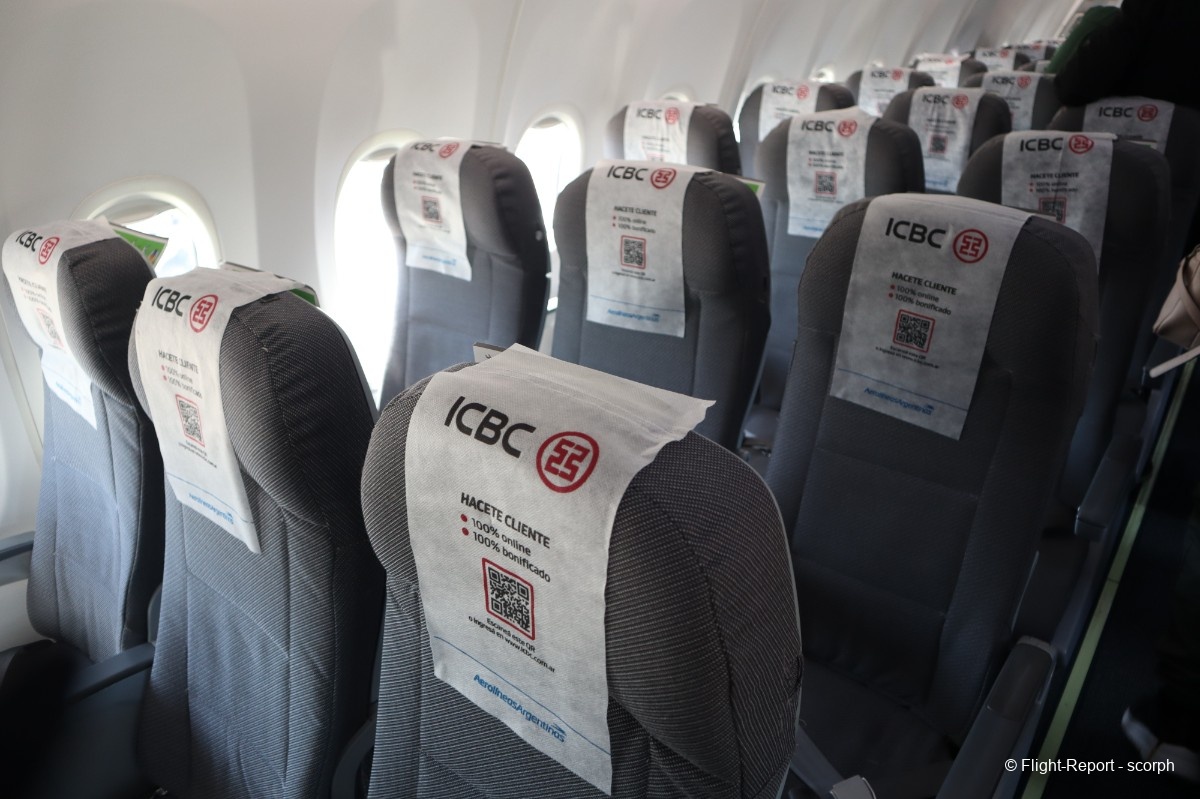
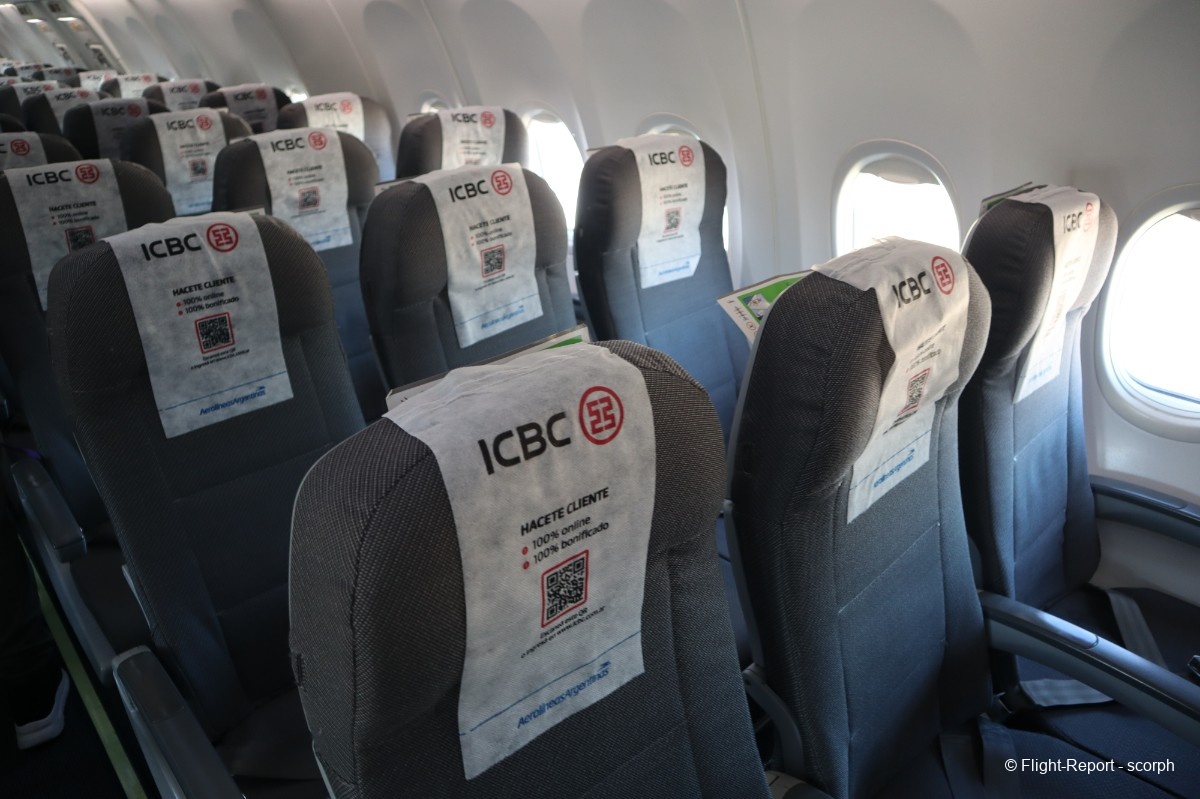
Watch out for Row 9 on the left side it’s just like the infamous Row 11 on Ryanair, it has no window!
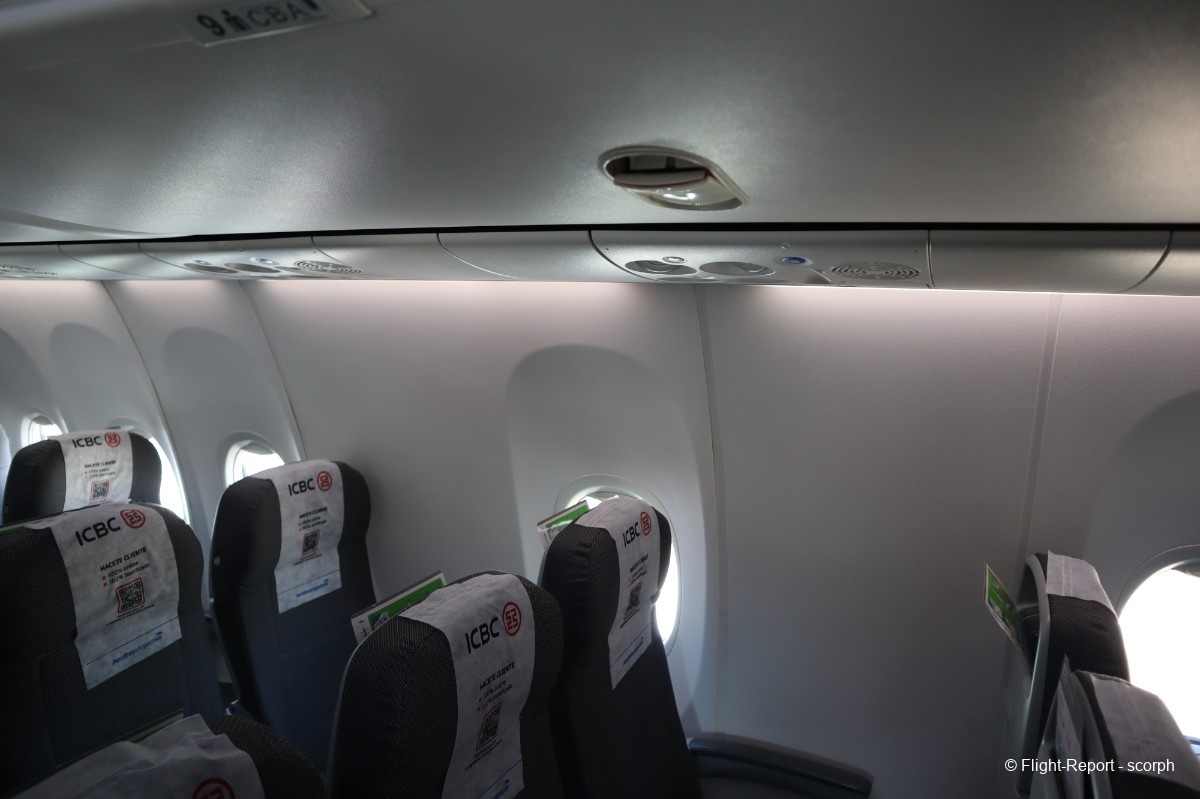
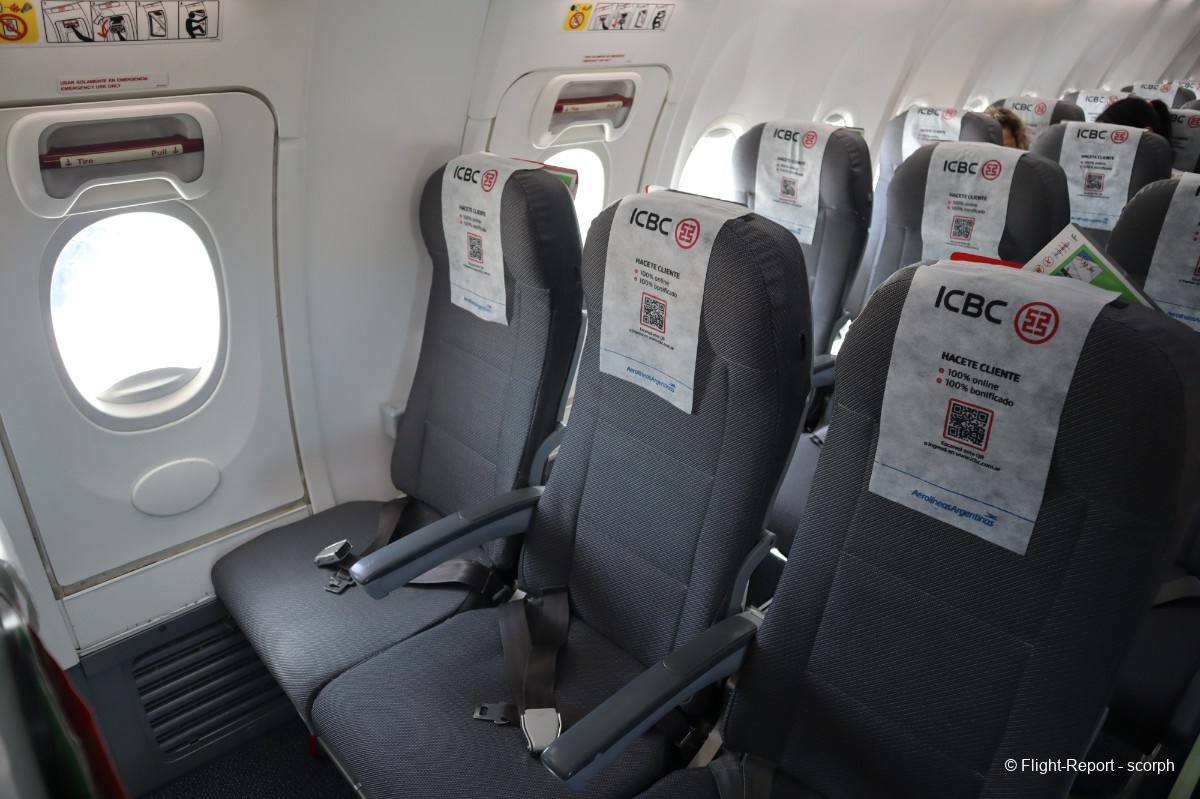
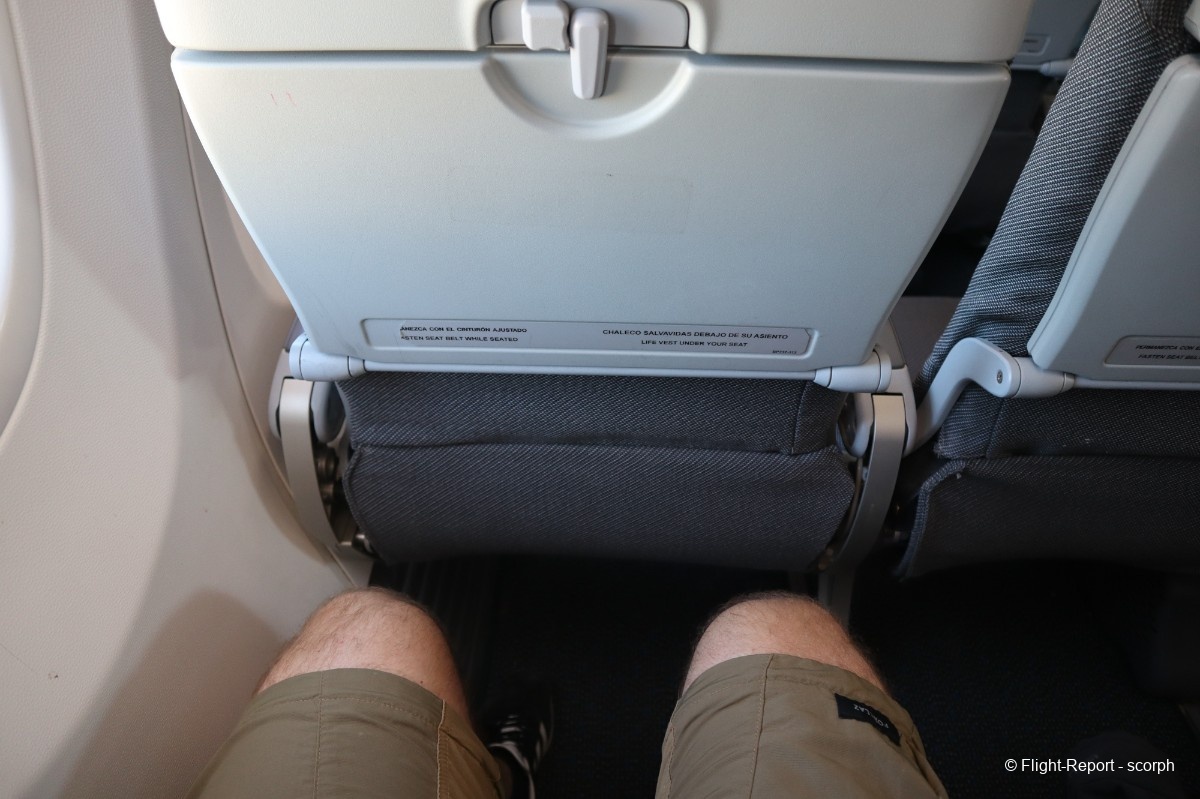
Don't expect any style points for this cabin, but the comfort is okay. The seats aren't slimline, and there’s an honorable 31" pitch, though adjustable headrests are missing. It's very low-tech no Wi-Fi, outlets, or IFE which feels a bit sparse for 3-hour-plus flights.
The cabin layout provided by Aerolopa website
The seat pitch, however, is quite decent in what turns out to be a fairly low-density cabin layout.
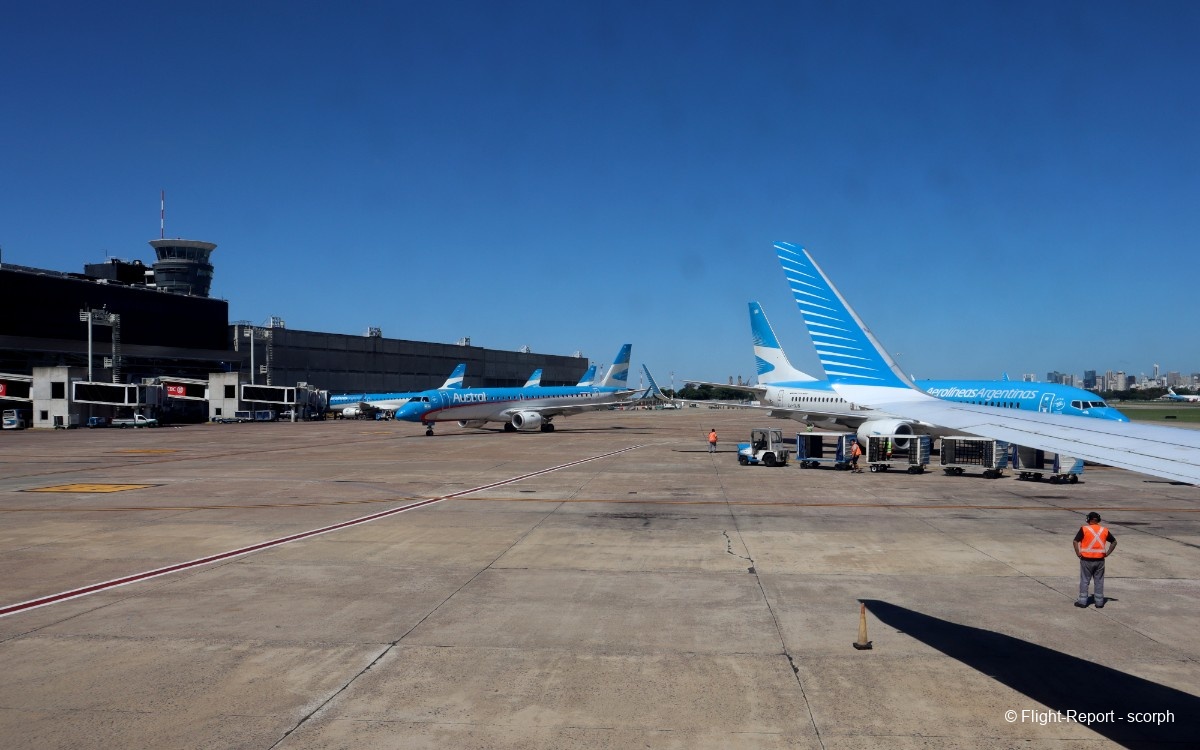
As we wait for the second busload of passengers, there’s a steady stream of traffic passing right behind us on Aeroparque’s cramped apron.
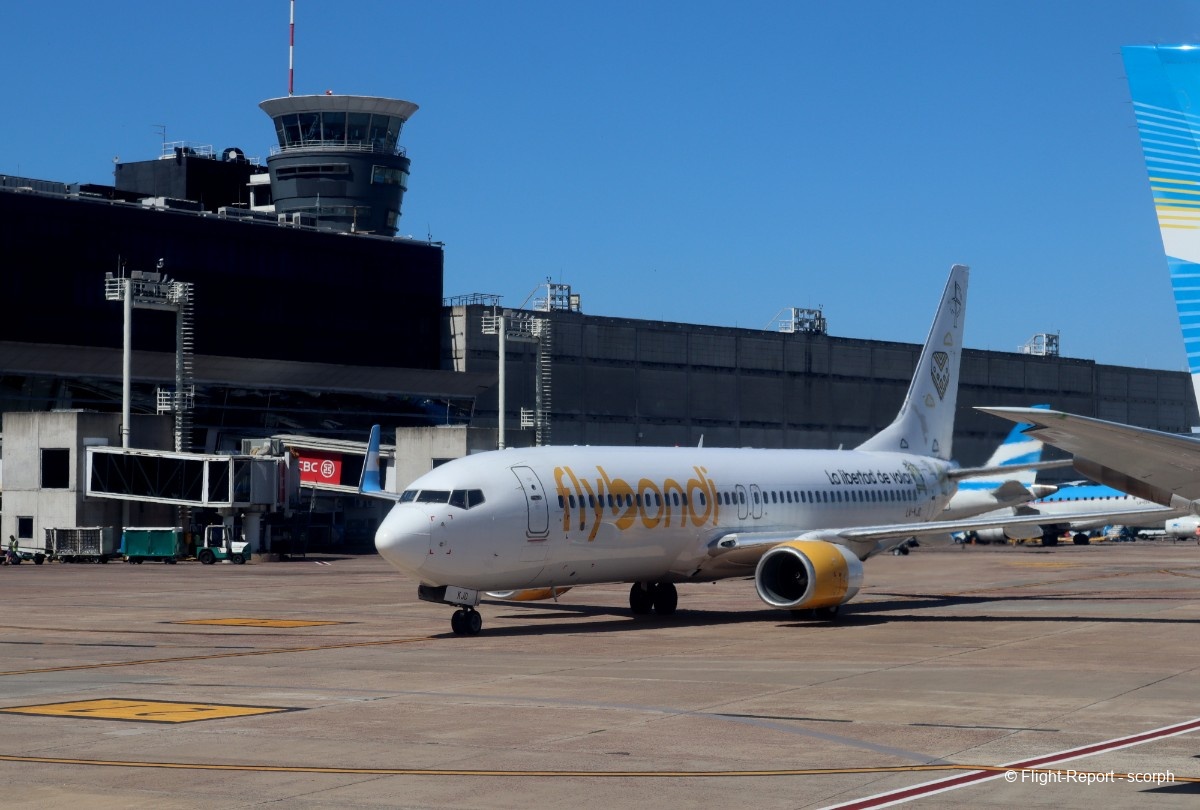
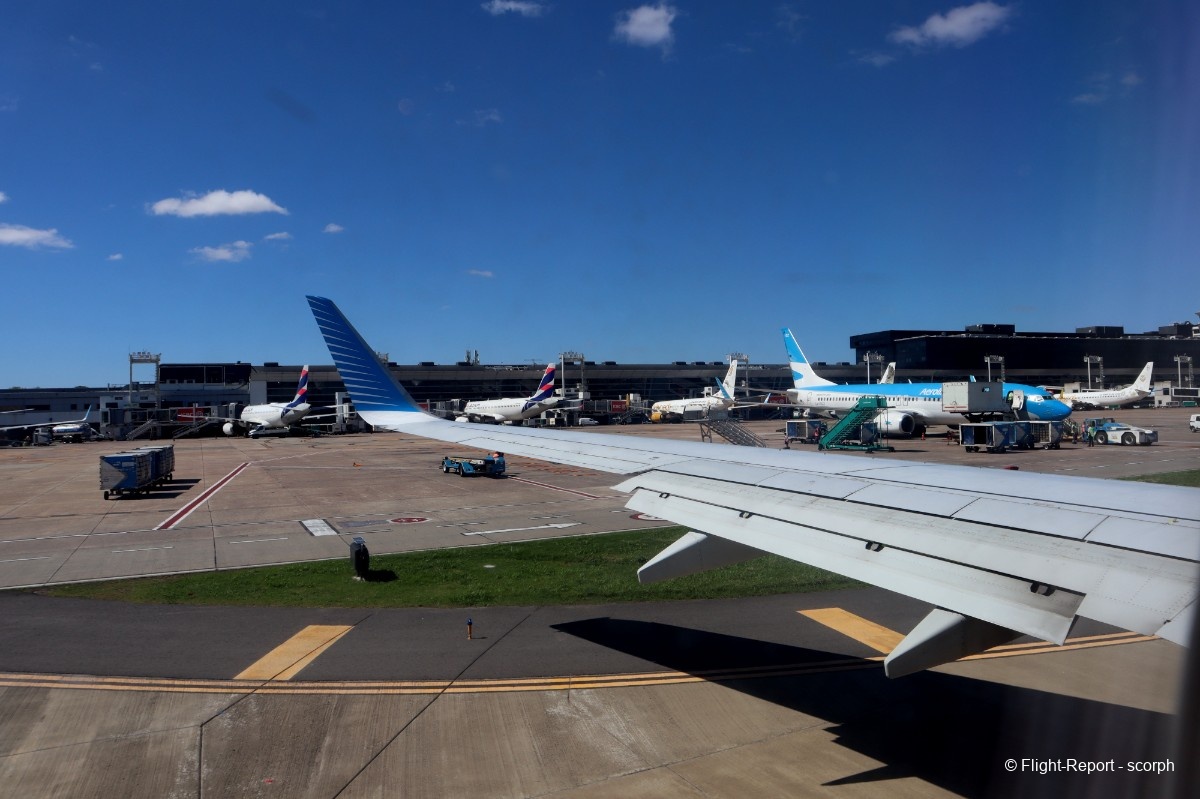
Pushback finally commenced with a 20-minute delay, followed by a taxi out for a Runway 31 departure.
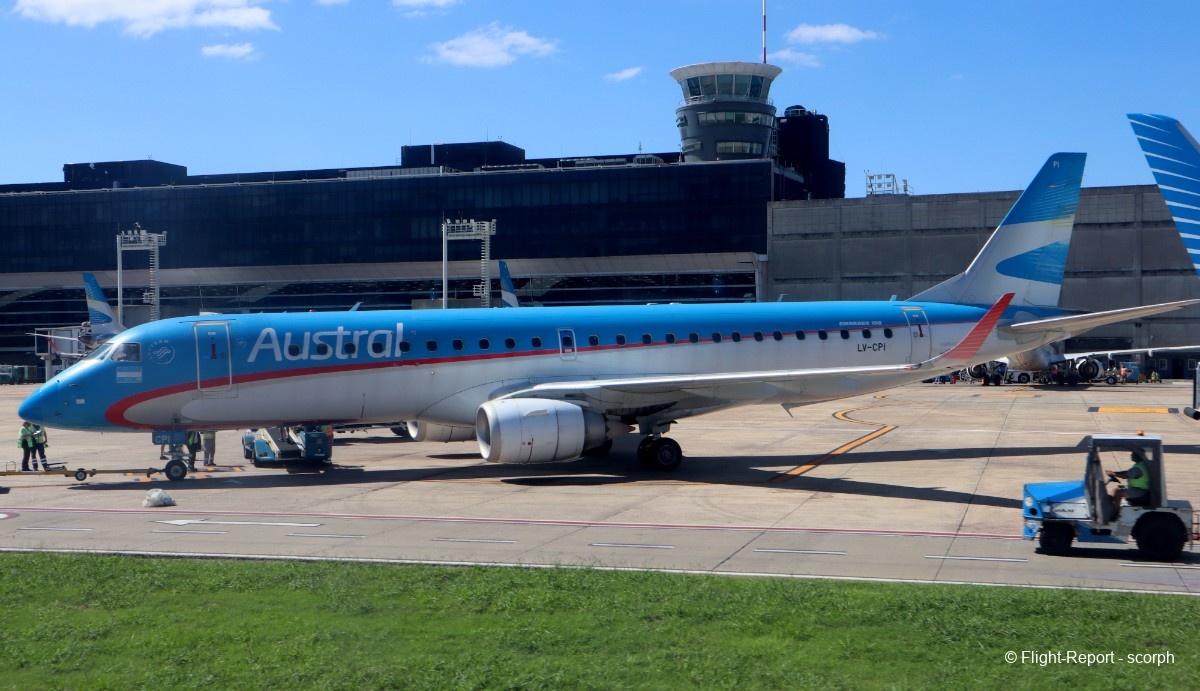
On our way, we passed this Austral Embraer 190, which took off for Mar del Plata shortly after us.
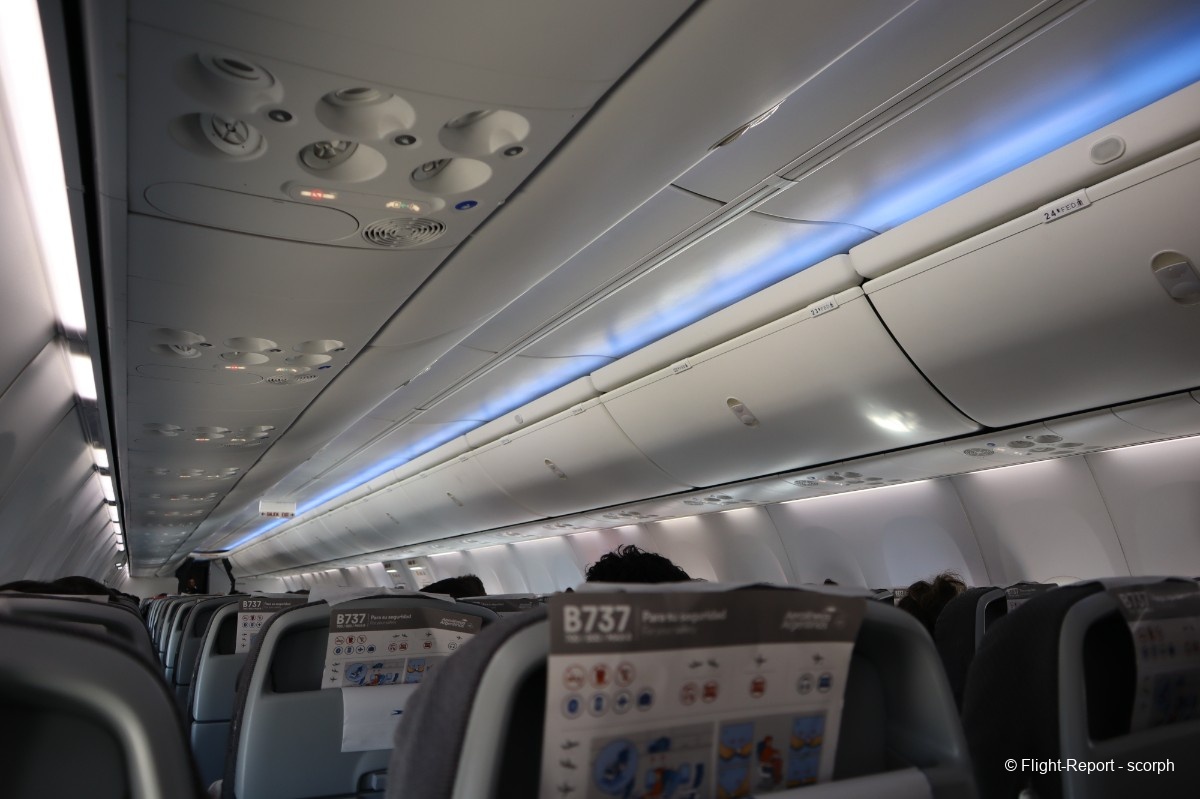
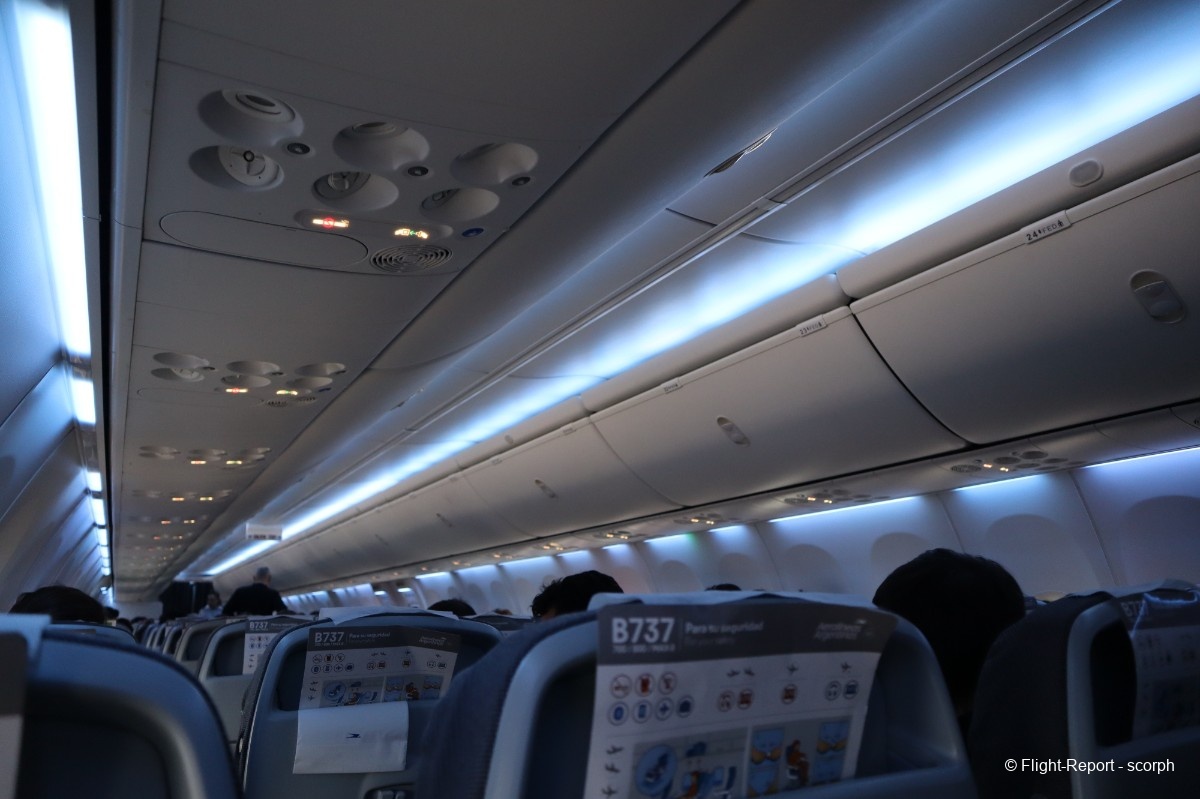
Cabin secured for departure. We're looking at a load factor of roughly 80-90% today. Interestingly, this aircraft features the Boeing Sky Interior.
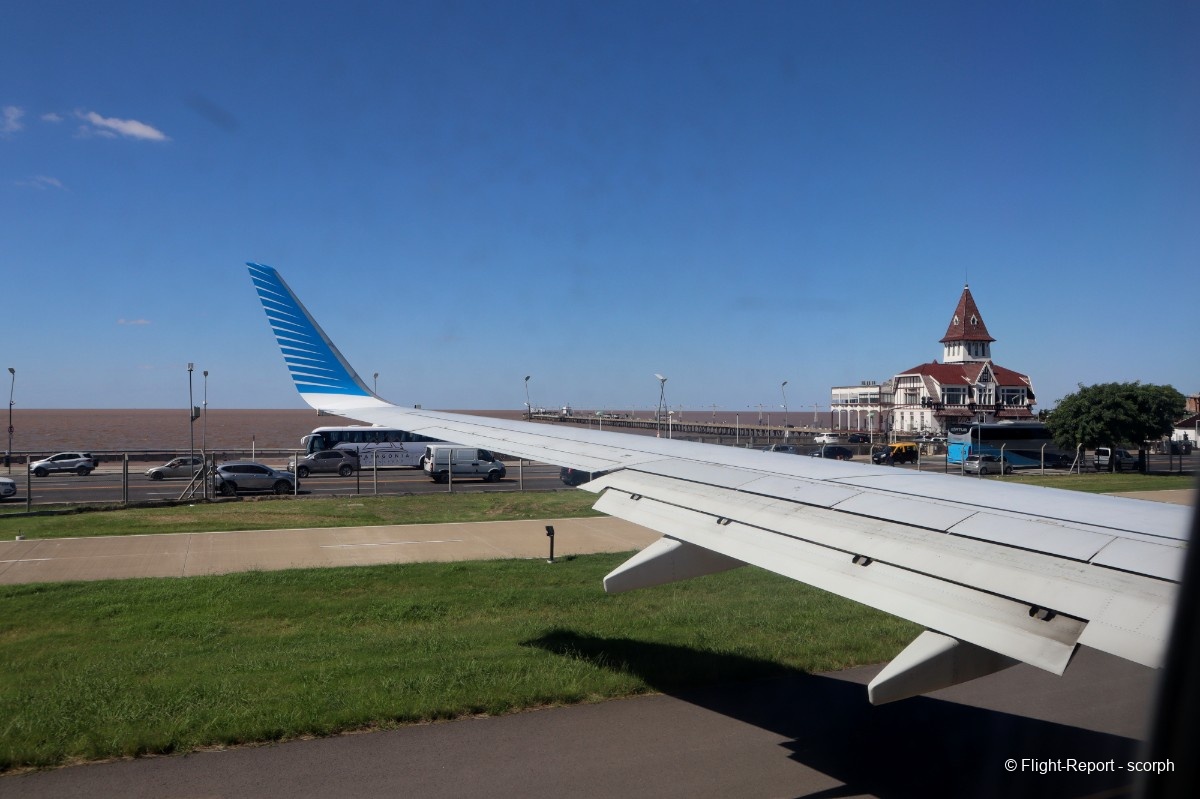
While taxiing, we get a rather unique view of the Rio de la Plata; the building with the original architecture overlooking the pier actually houses a restaurant.
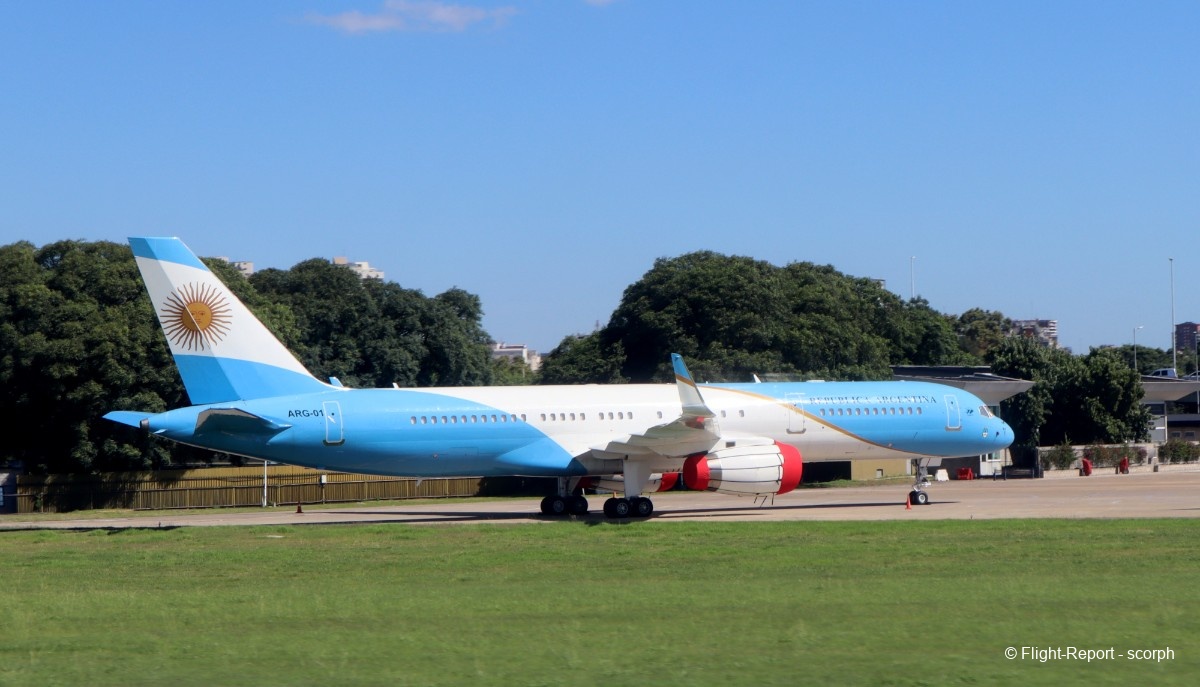
We can even see the Argentine presidential Boeing 757-200, which, I have to admit, has a magnificent livery
We had to wait a few minutes for another aircraft to depart ahead of us before we could line up. Once cleared, our pilots didn't waste any time spooling up the two CFM-56 engines to takeoff power; our Boeing quickly lifted off, climbing away with a beautiful view of the Belgrano and Palermo skylines.
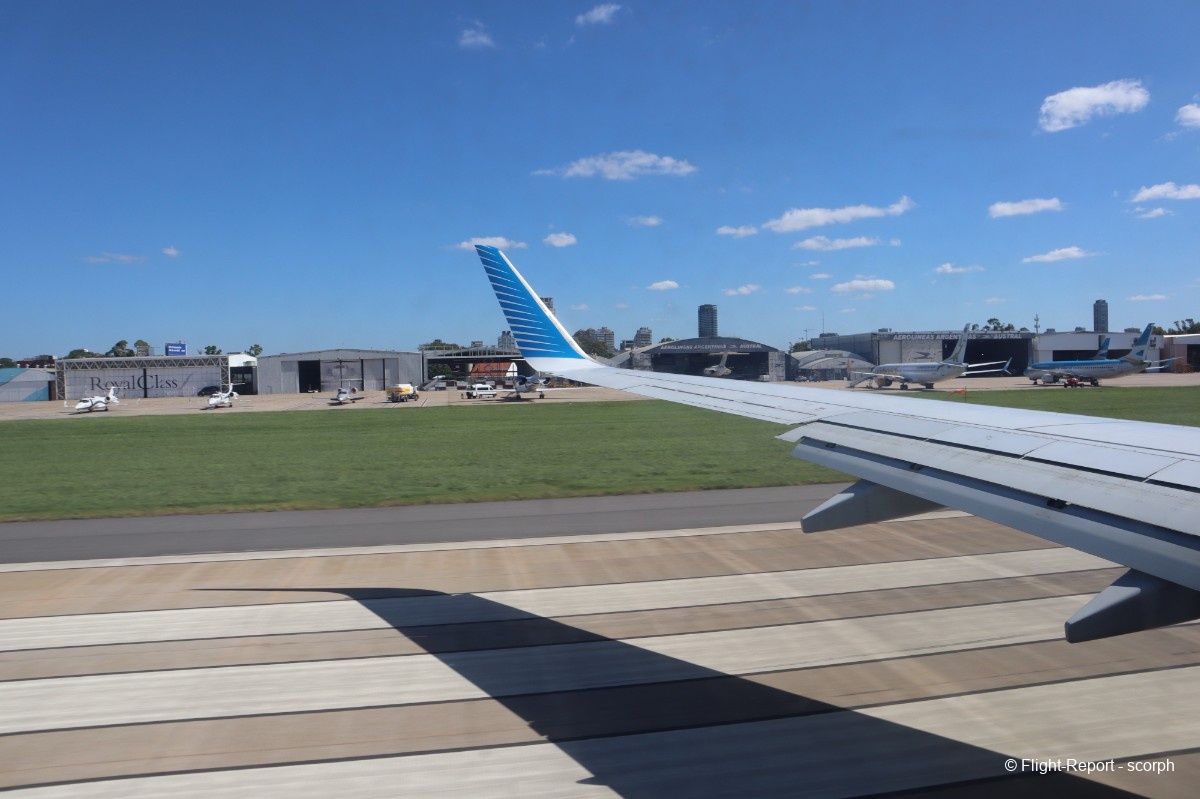
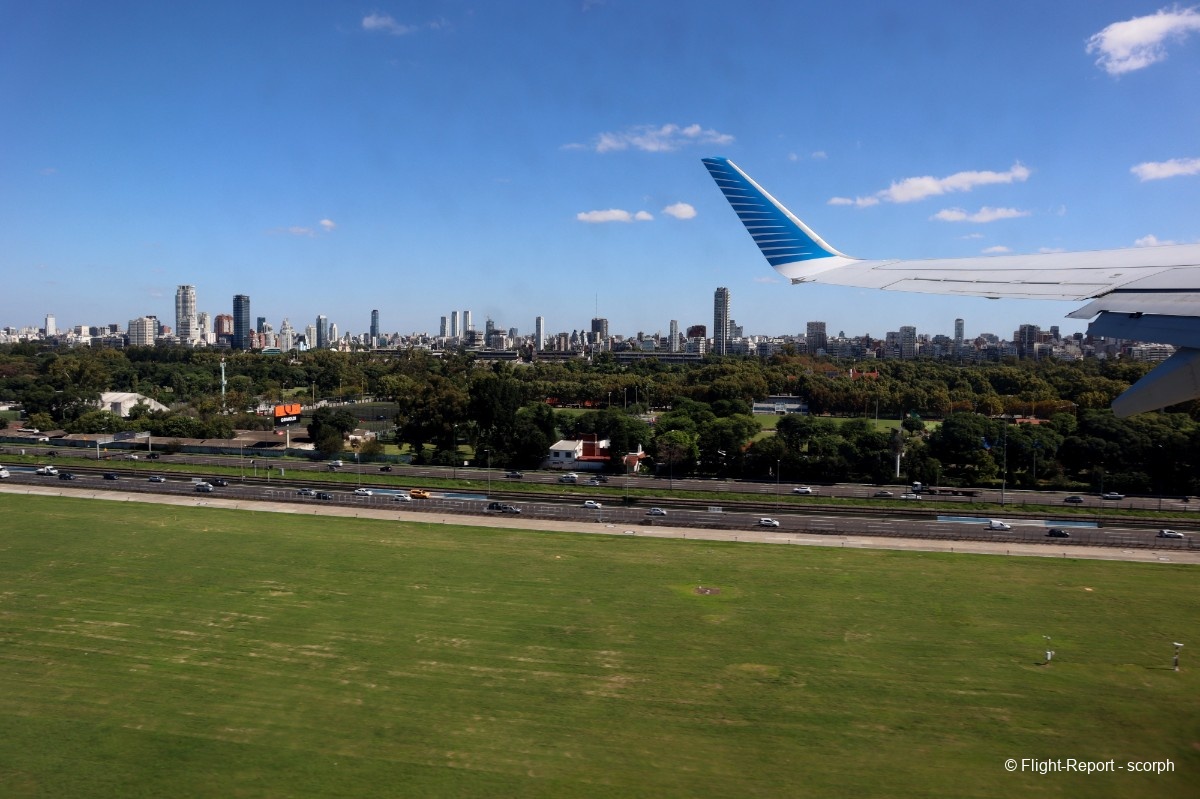
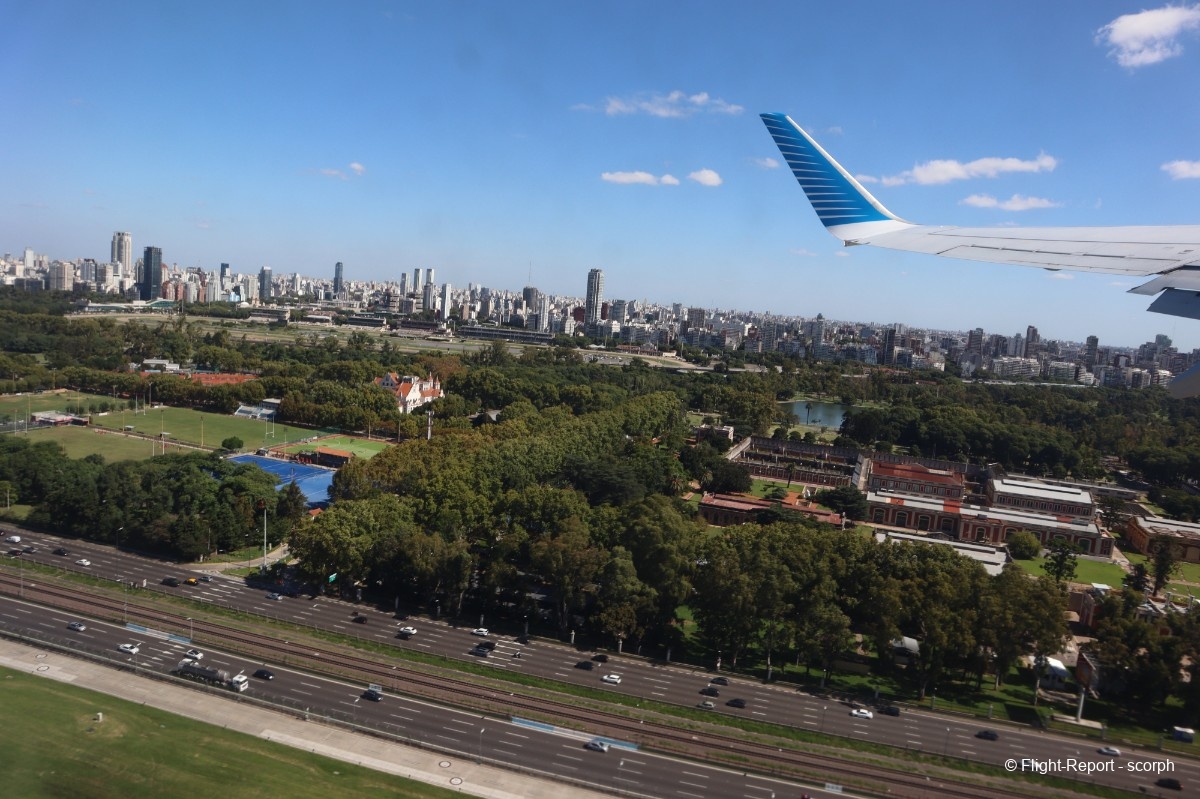
As we climb, we’re treated to a panoramic view of the vast city of Buenos Aires stretching to the horizon with its thousands of buildings. It’s hardly surprising when you realize that more than a third of the country's total population lives in the Buenos Aires metropolitan area.
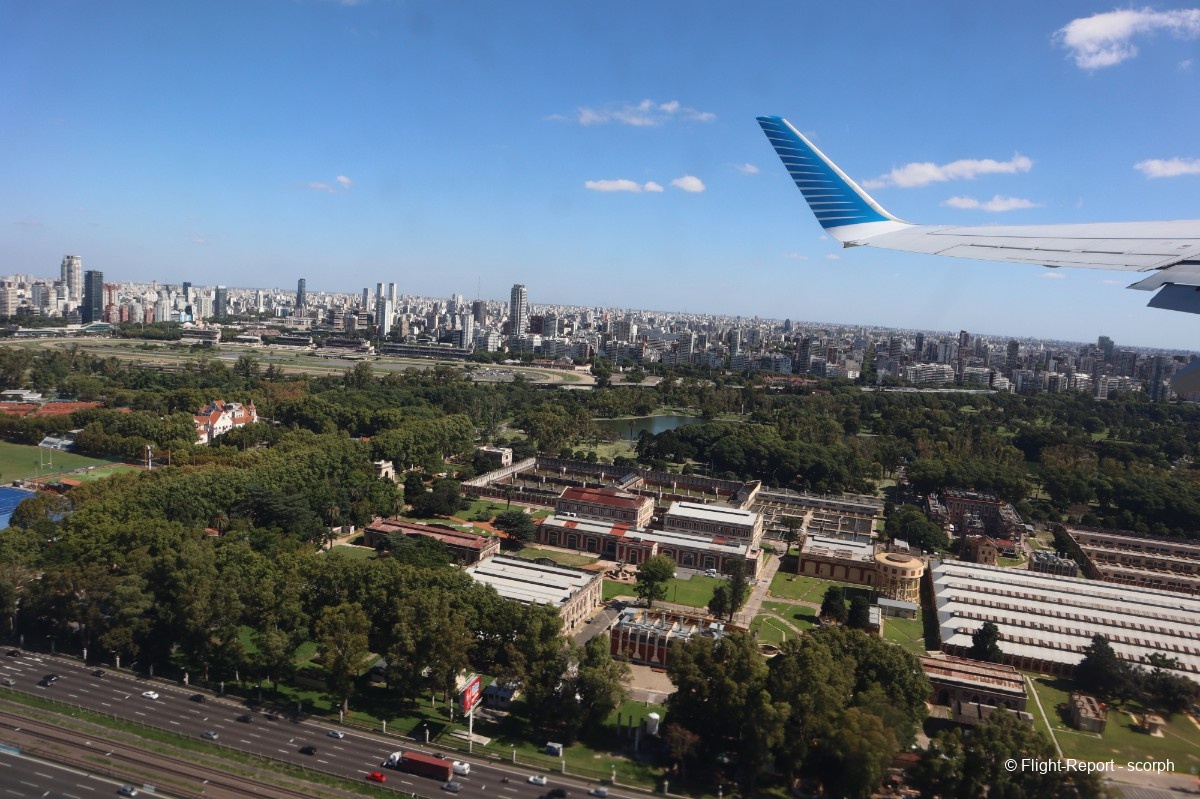
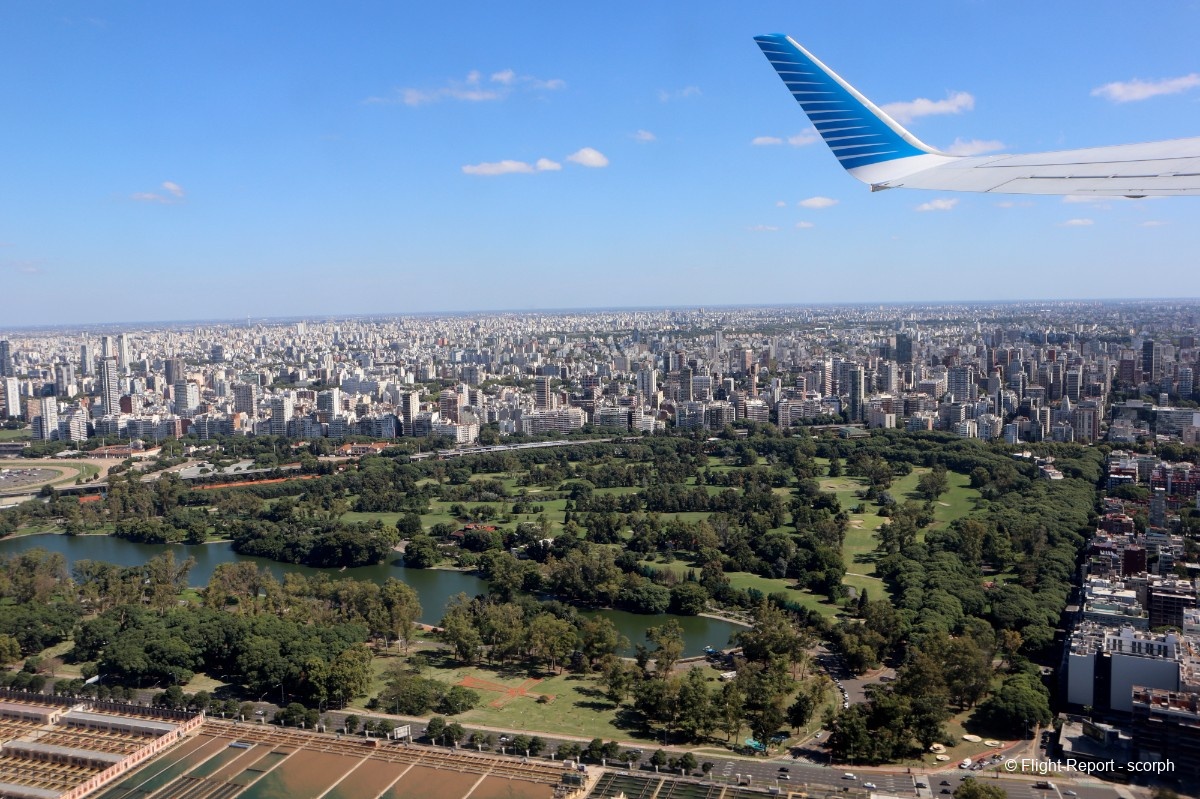
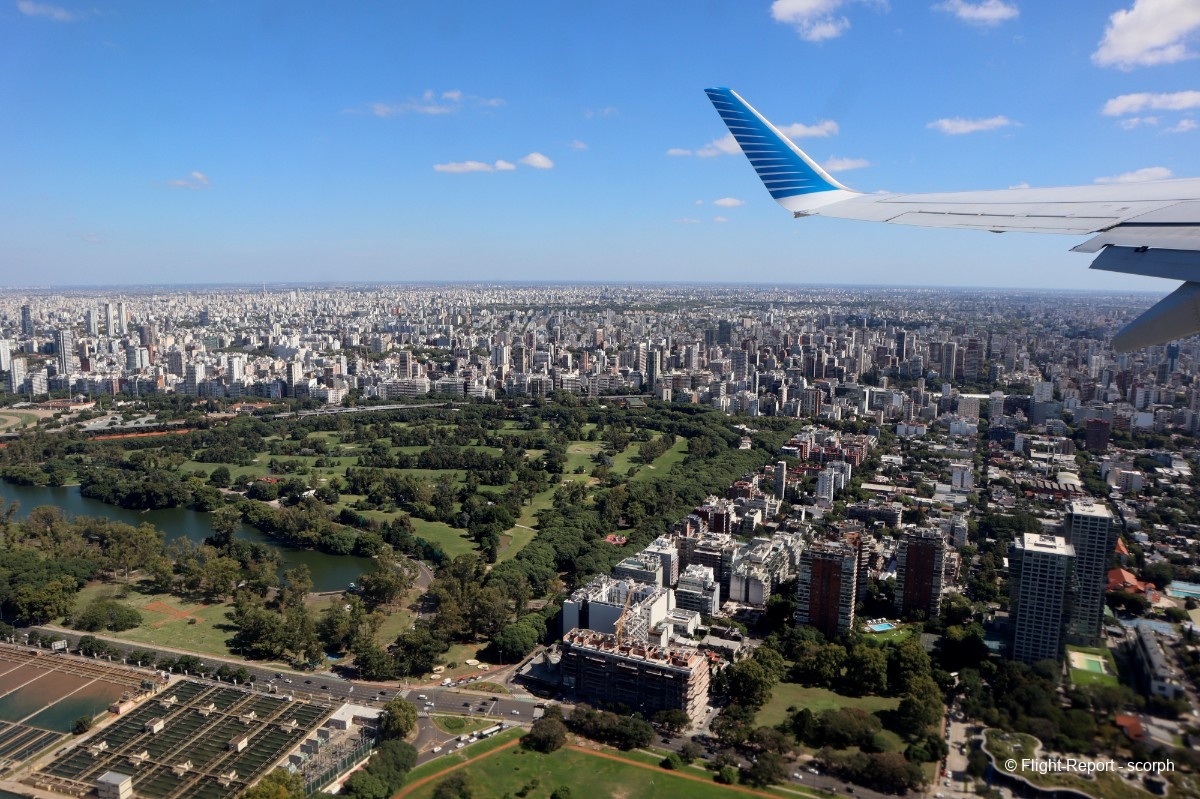
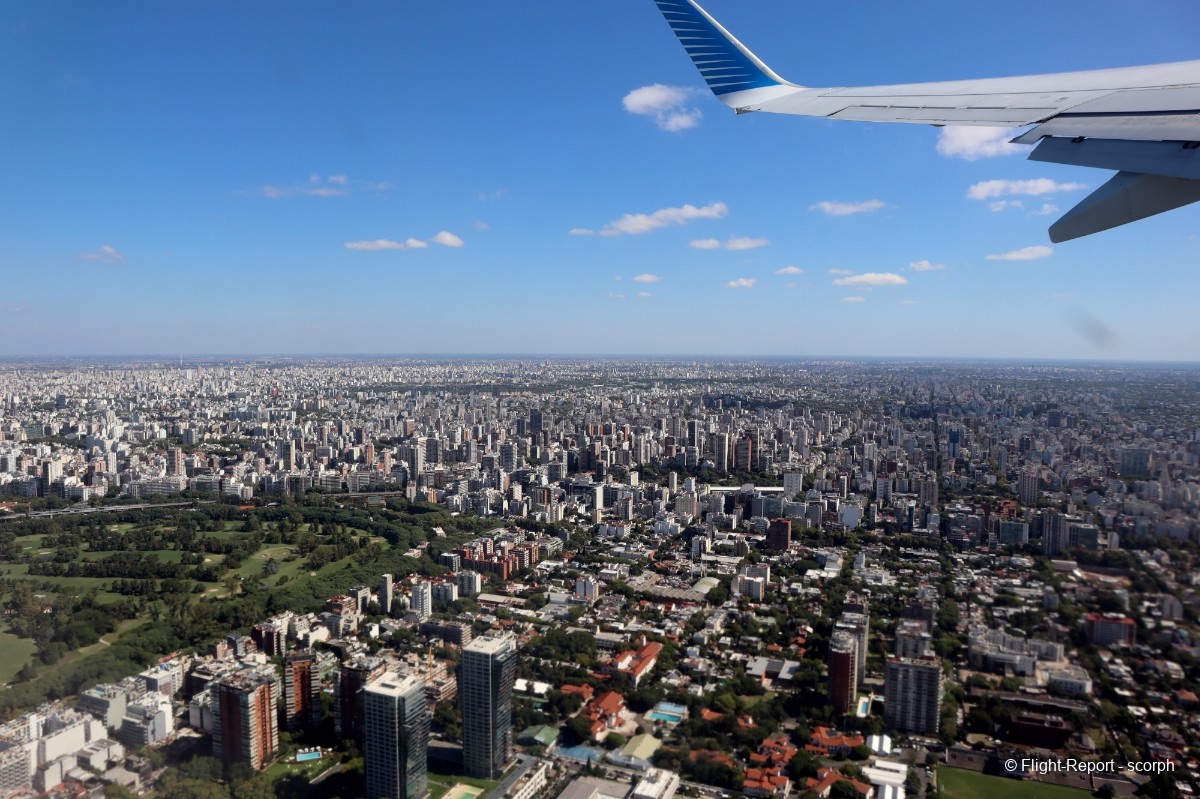
Just after the initial climb-out, we performed a right-hand break away from the urban area, clearly a noise abatement procedure.
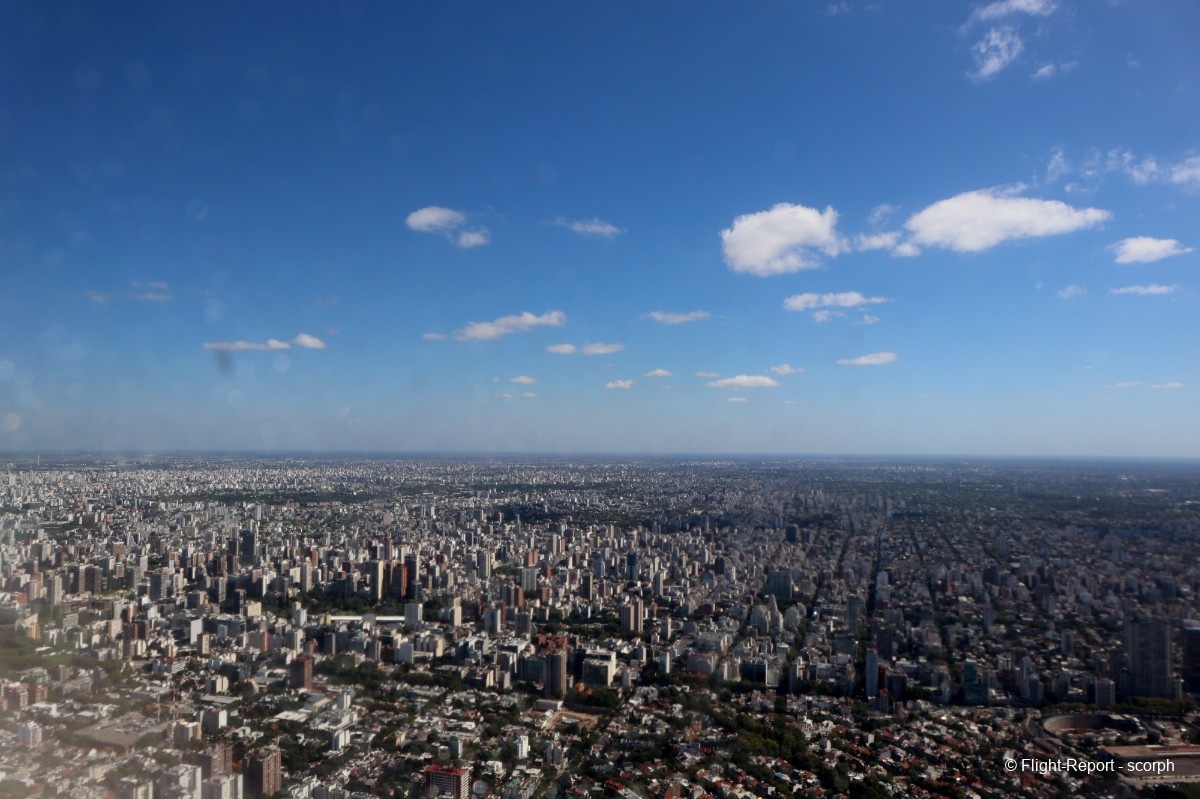
We headed north for a few moments, flying over the Rio de la Plata to perform a holding pattern and gain altitude, before turning south toward Patagonia. In the distance, we could make out the coastline of the Uruguayan side of the river
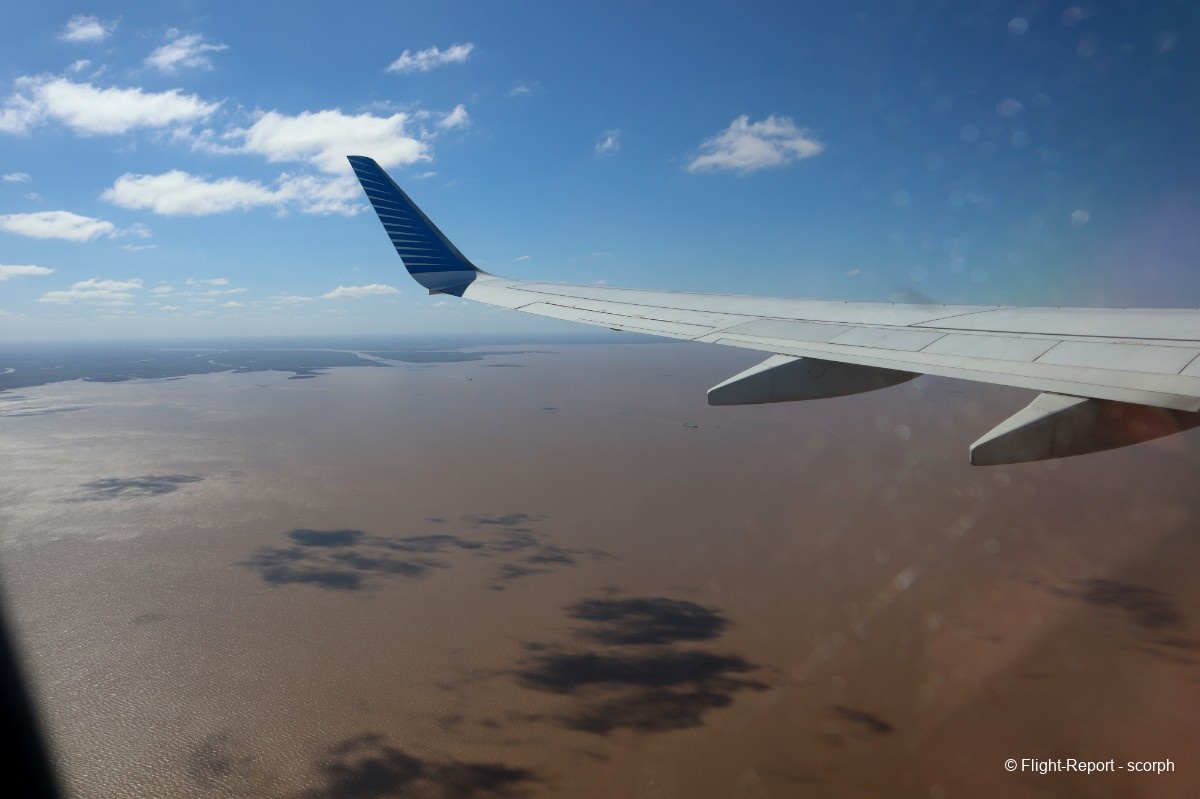
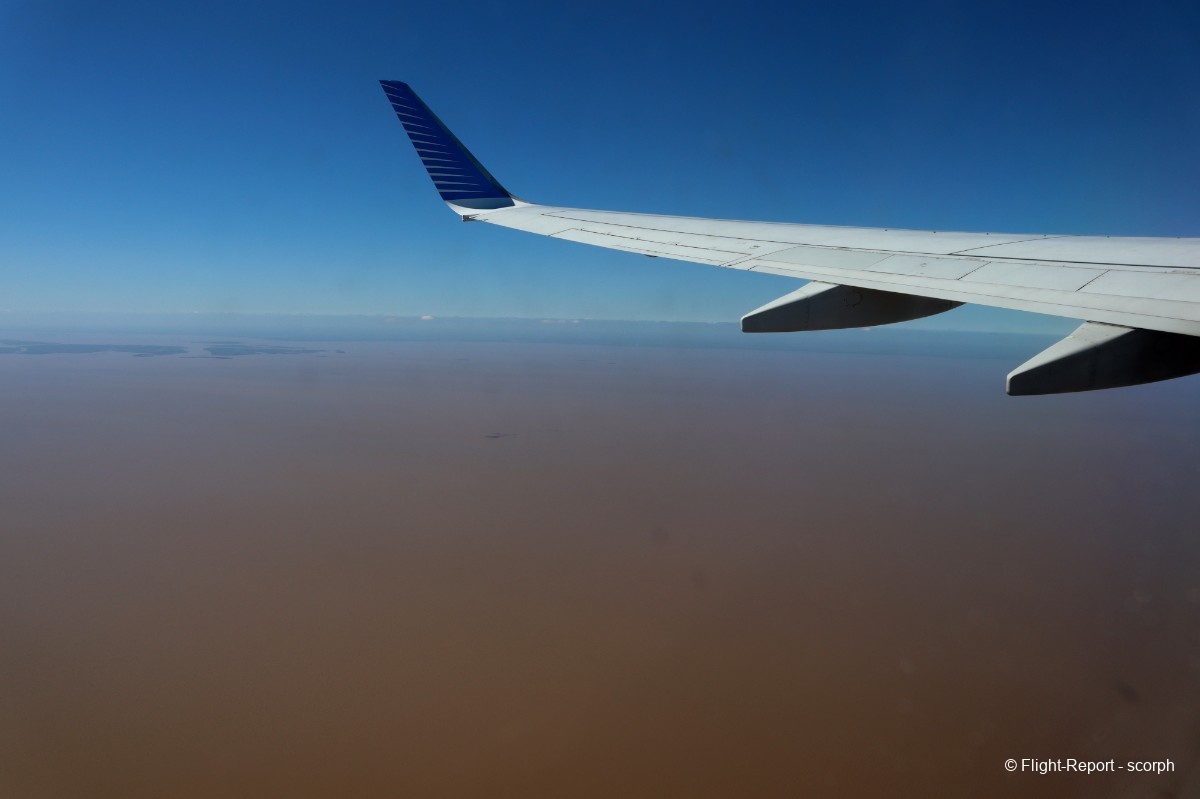
Before crossing back to the southern shore the Argentine side, obviously skirting the south of Buenos Aires. Off in the distance, the city of La Plata, which shares its name with the delta, comes into view.
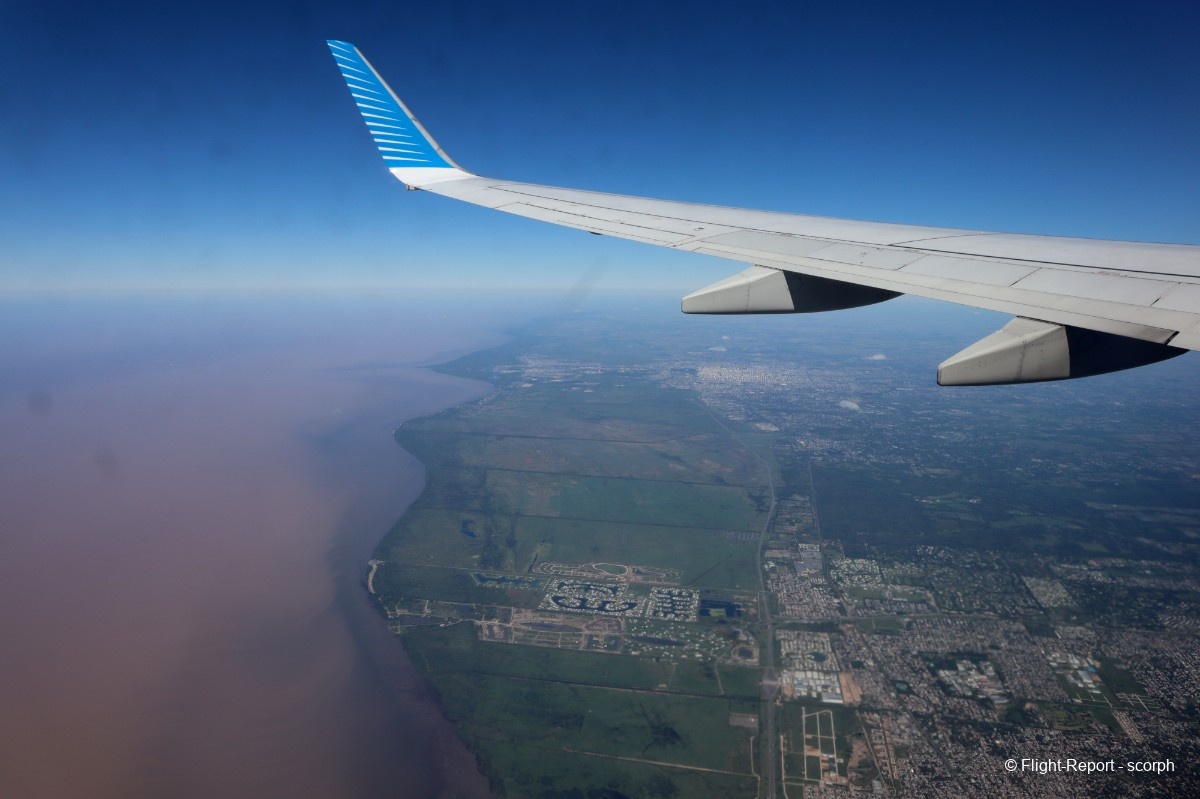
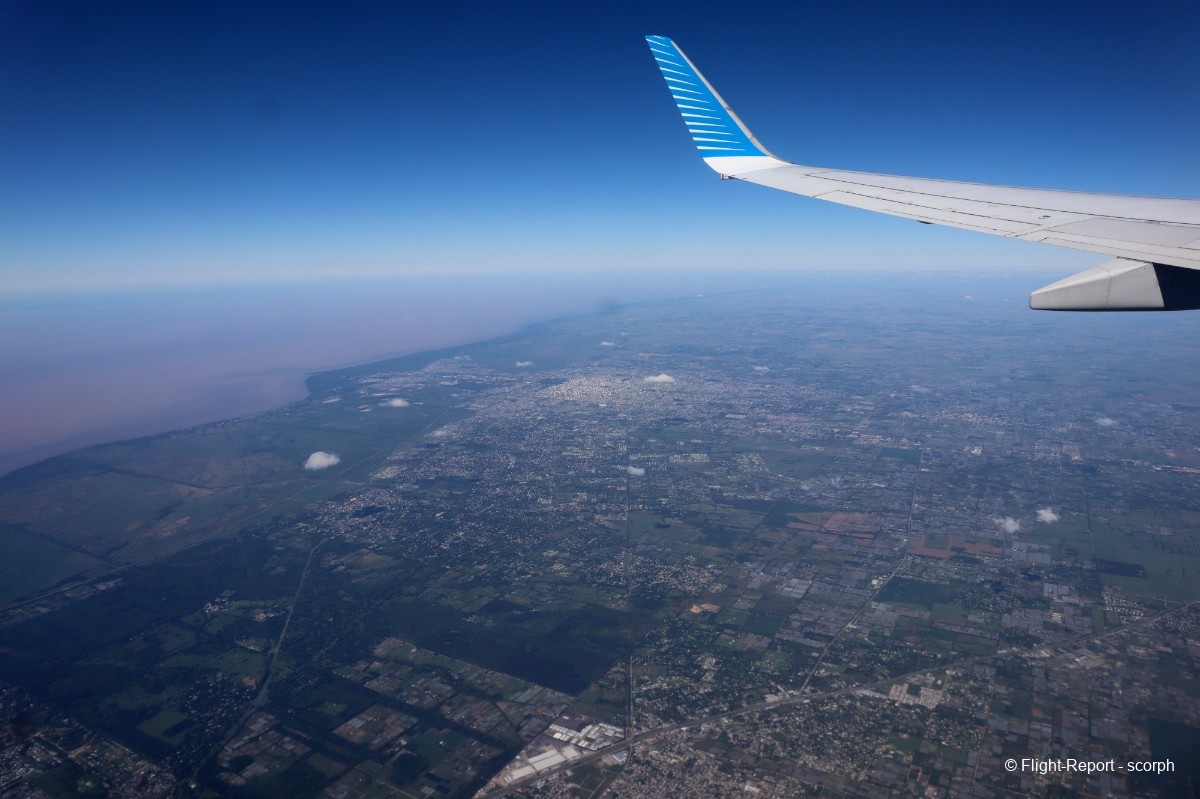
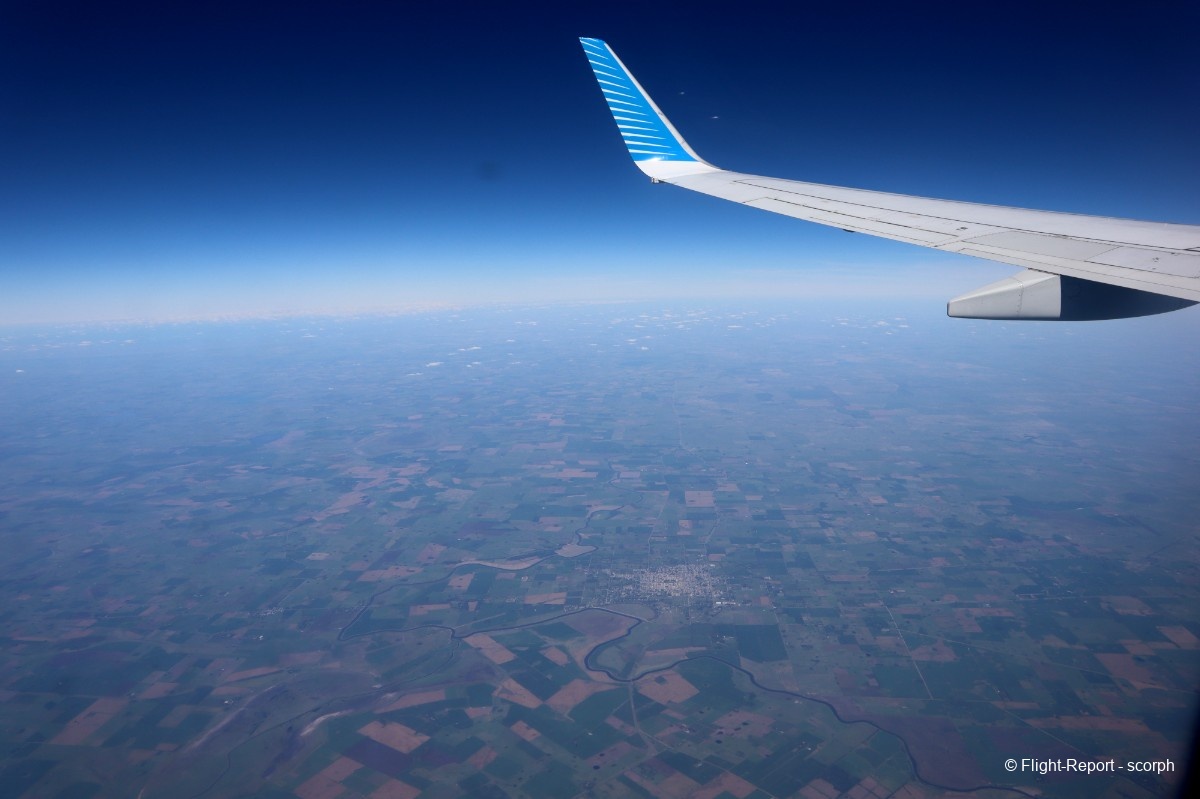
Our initial climb-out followed the fertile plains of the Buenos Aires region, still vibrant green even at the tail end of the summer season.
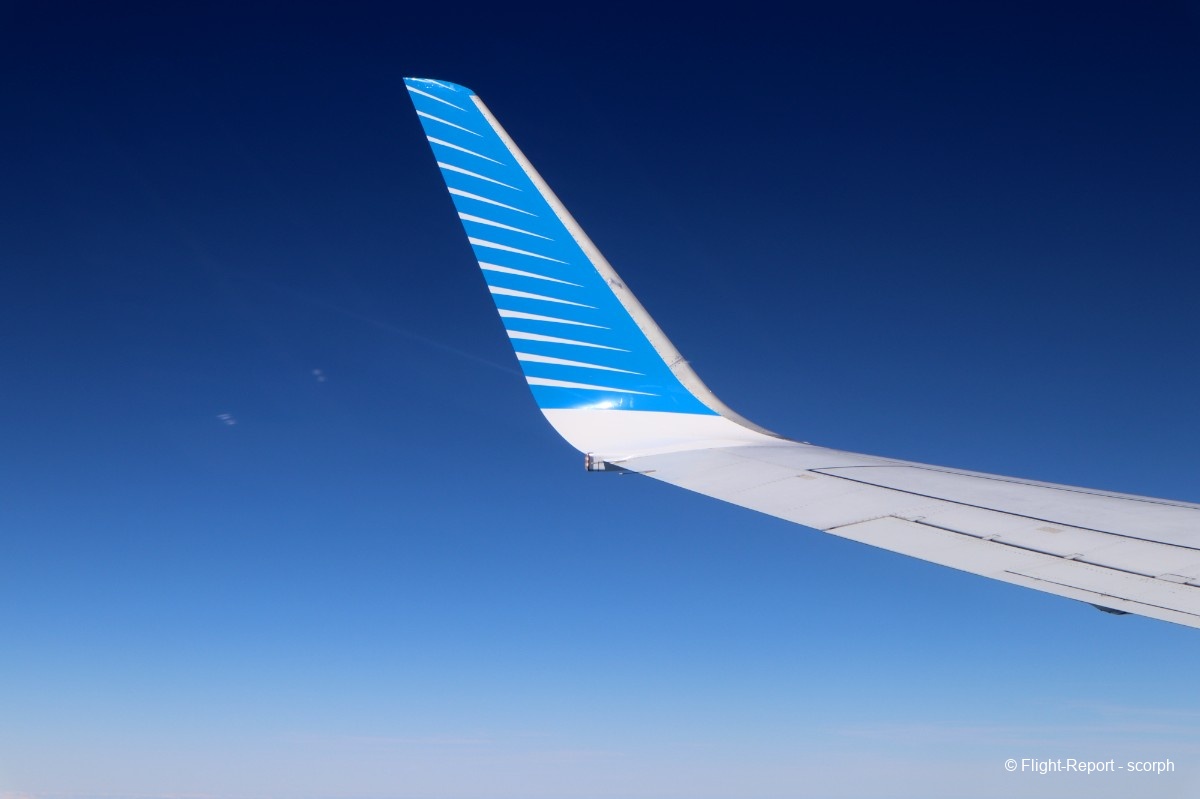
A close-up of our winglet, proudly sporting the Aerolíneas Argentinas colors.
My partner and I were lucky enough to have a whole row of three to ourselves, which significantly improved our comfort on this long narrow-body flight.
Once we reached cruising altitude, the crew turned off the seatbelt sign, leaving passengers free to move about the cabin. I took the opportunity to check out and use the aft lavatories, which were kept clean.
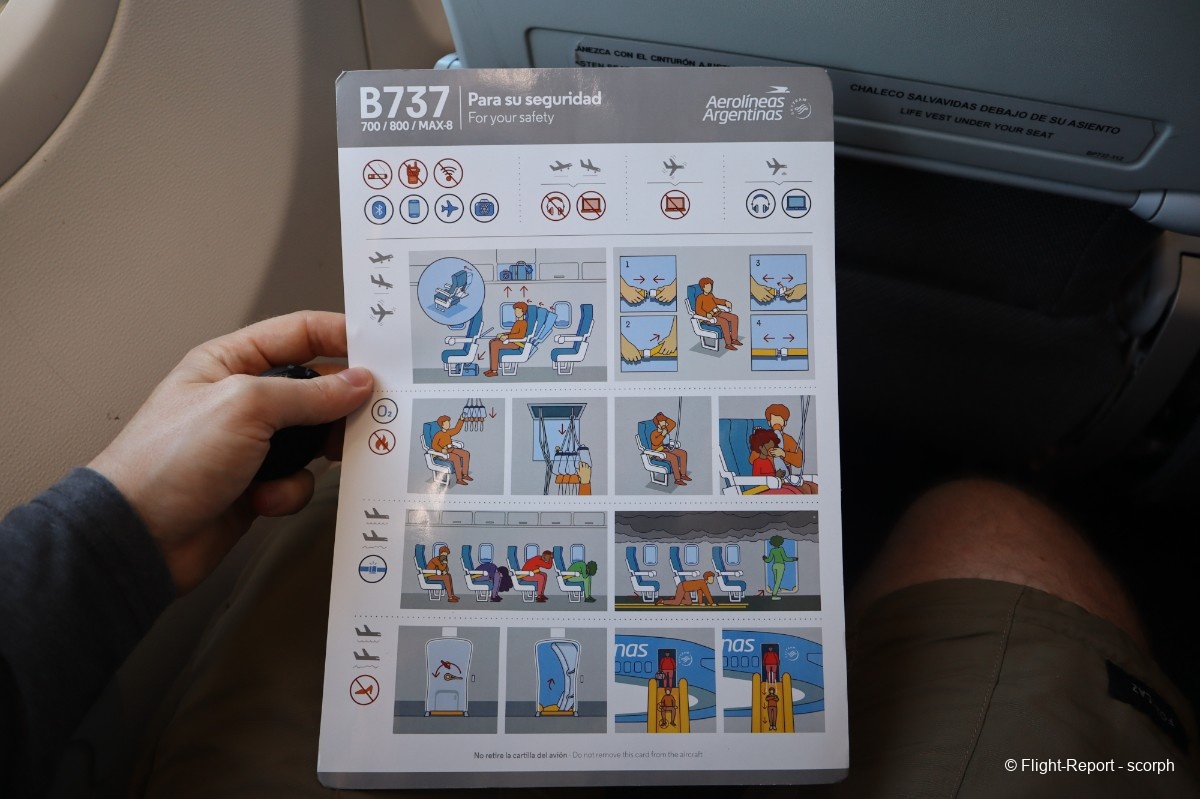
The mandatory safety card, which covers all the Boeing 737 models currently in service with AR.
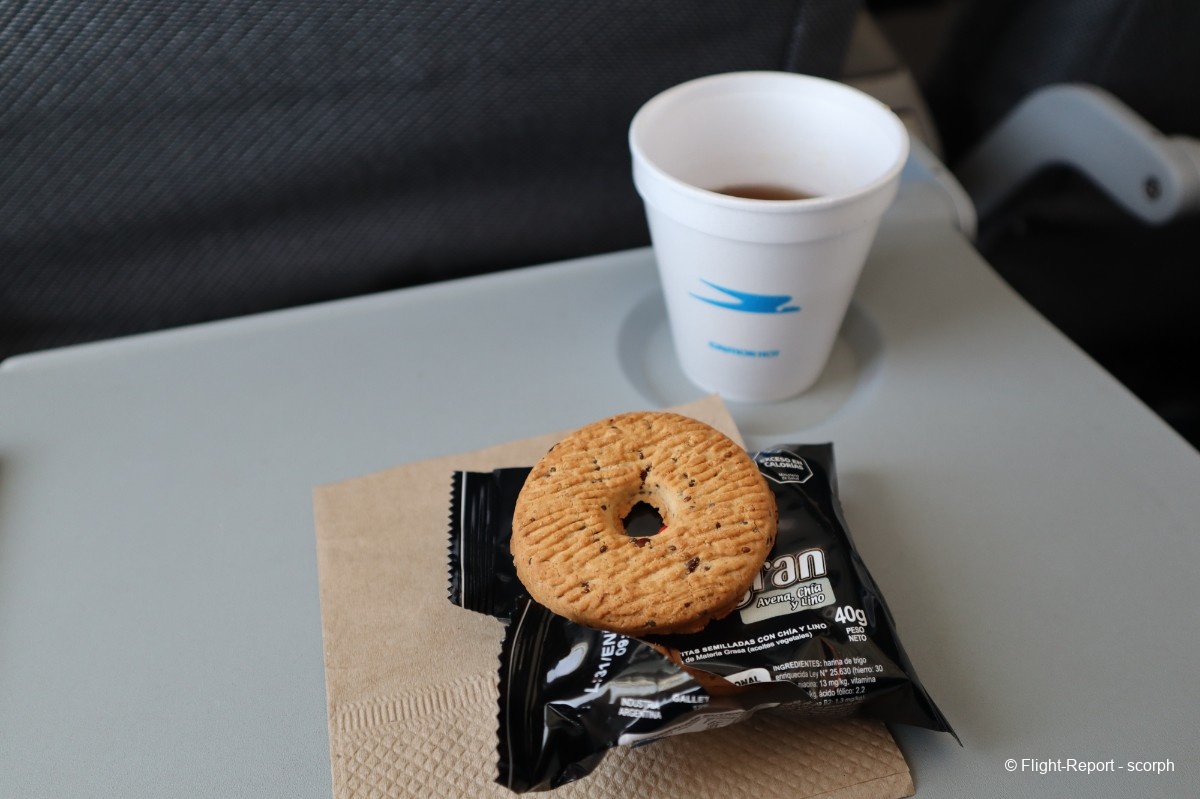
Midway through the flight, the trolley made a brief appearance in the aisle to serve a complimentary drink, tea for me, along with a small pack of biscuits, which were actually quite tasty.
During our cruise, we followed a route parallel to the Argentine coastline for a good portion of the flight. Here, we're cutting across the Valdés Peninsula somewhere we’ll actually visit in a few weeks. This natural reserve is famous for being a sanctuary for many marine species, including whales, orcas, and Magellanic penguins.
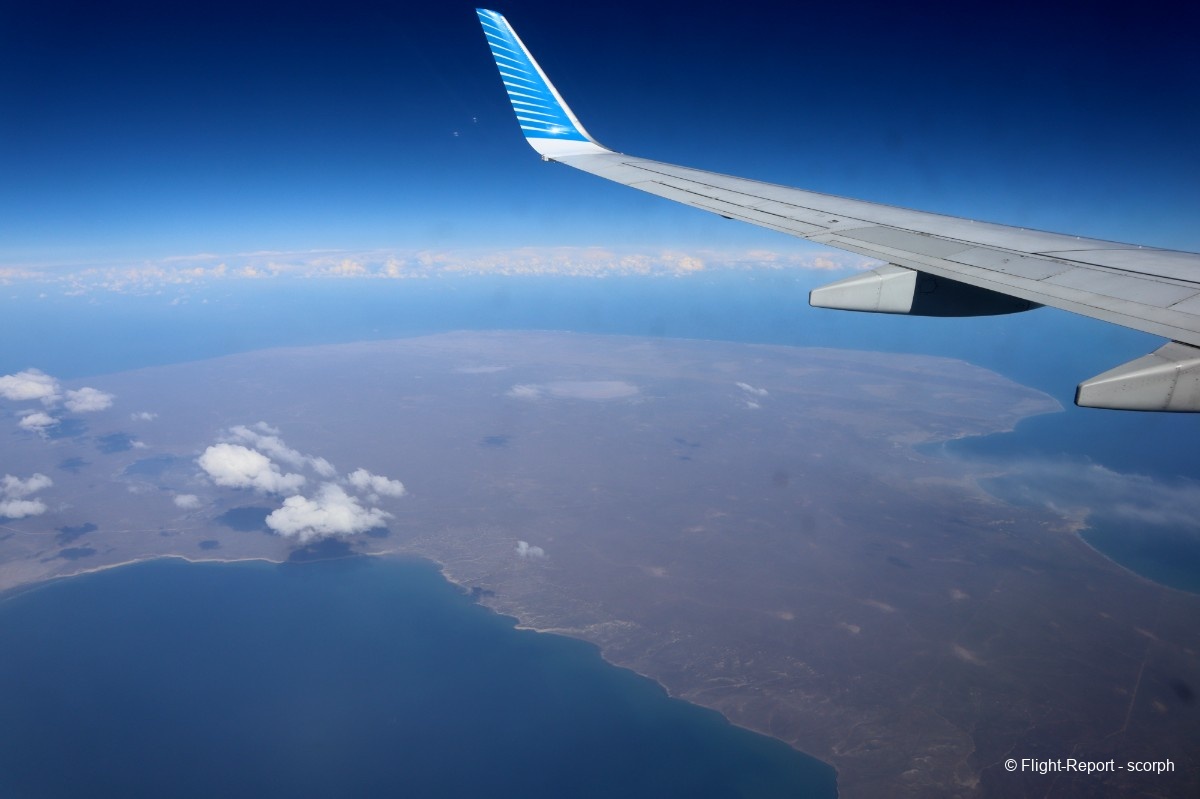
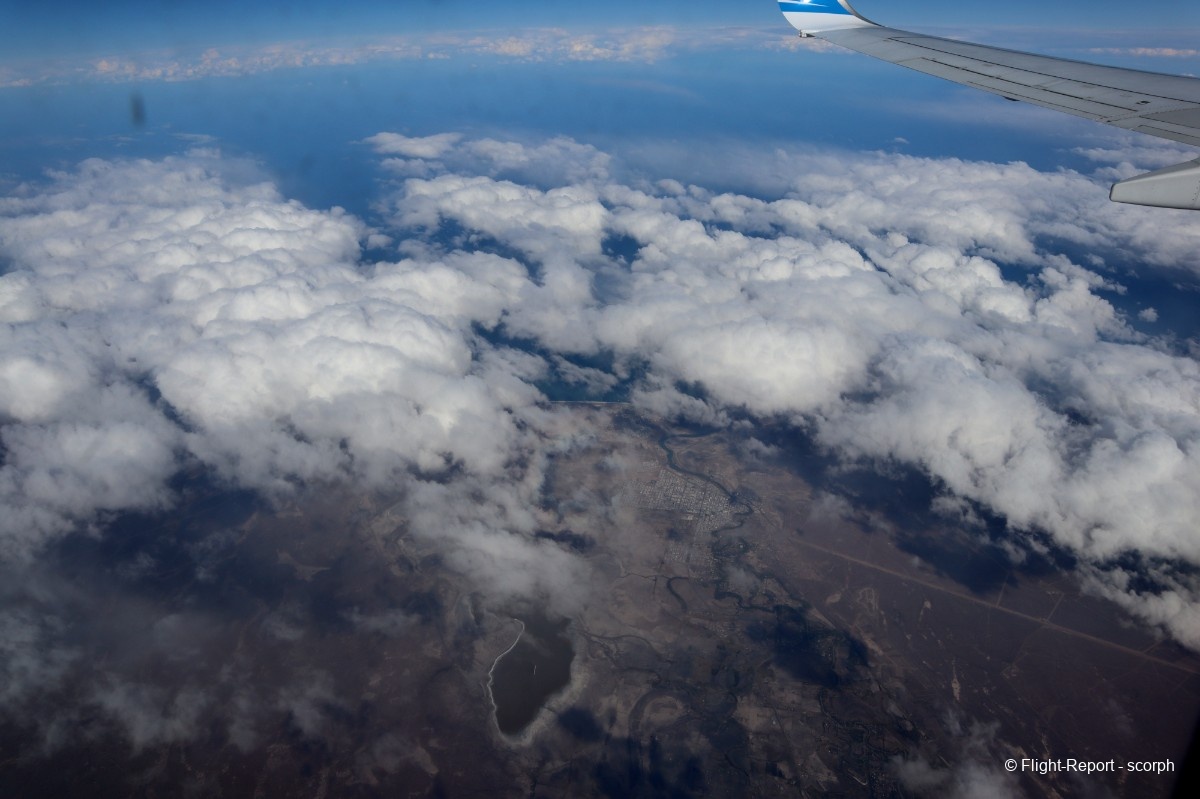
Unfortunately, a good portion of the flight was spent above a more or less dense cloud cover. Here, you can see the salt pans near Trelew, which, during the season, host large colonies of flamingos.
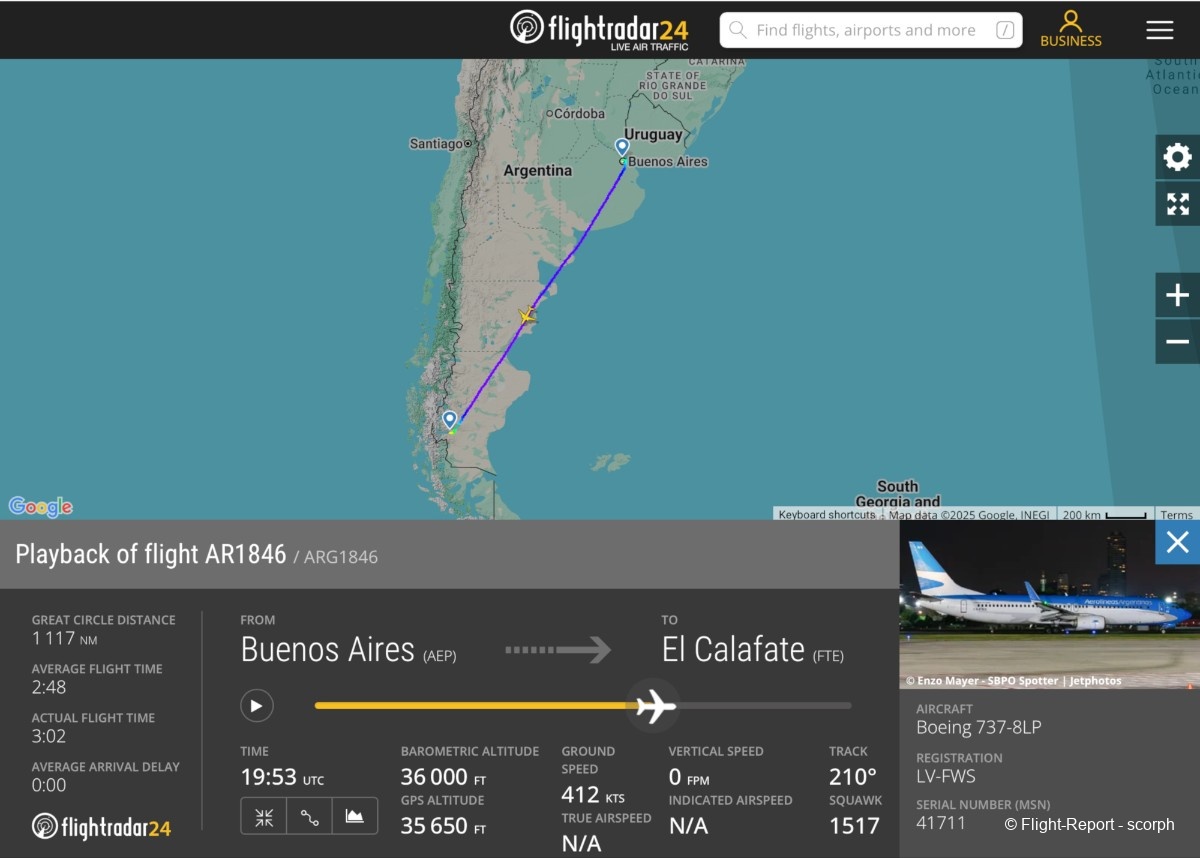
Today’s flight path as seen on FlightRadar24: we hugged the Argentine coastline for much of the journey. Our cruise level was set at 36,000 ft.
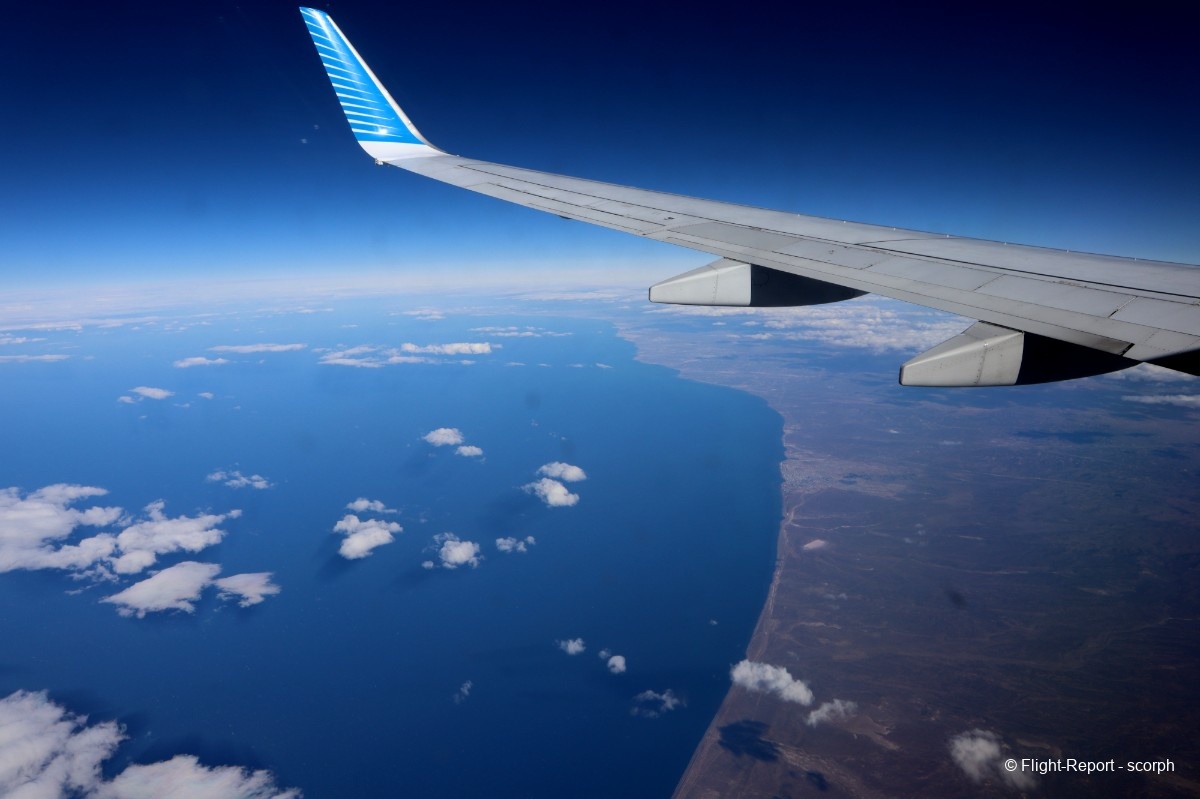
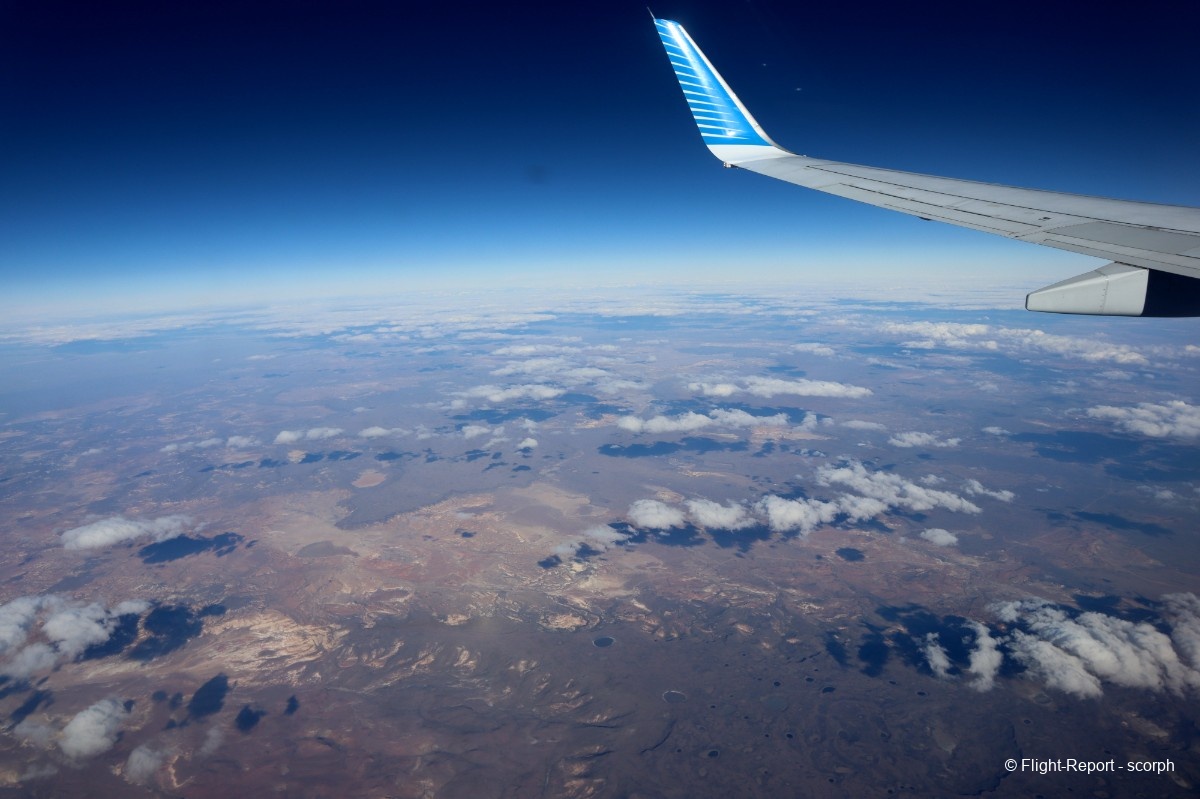
A final glimpse of the Atlantic as we turn inland. For the last third of the journey, we're heading toward the mountain summits that line the border with Chile.
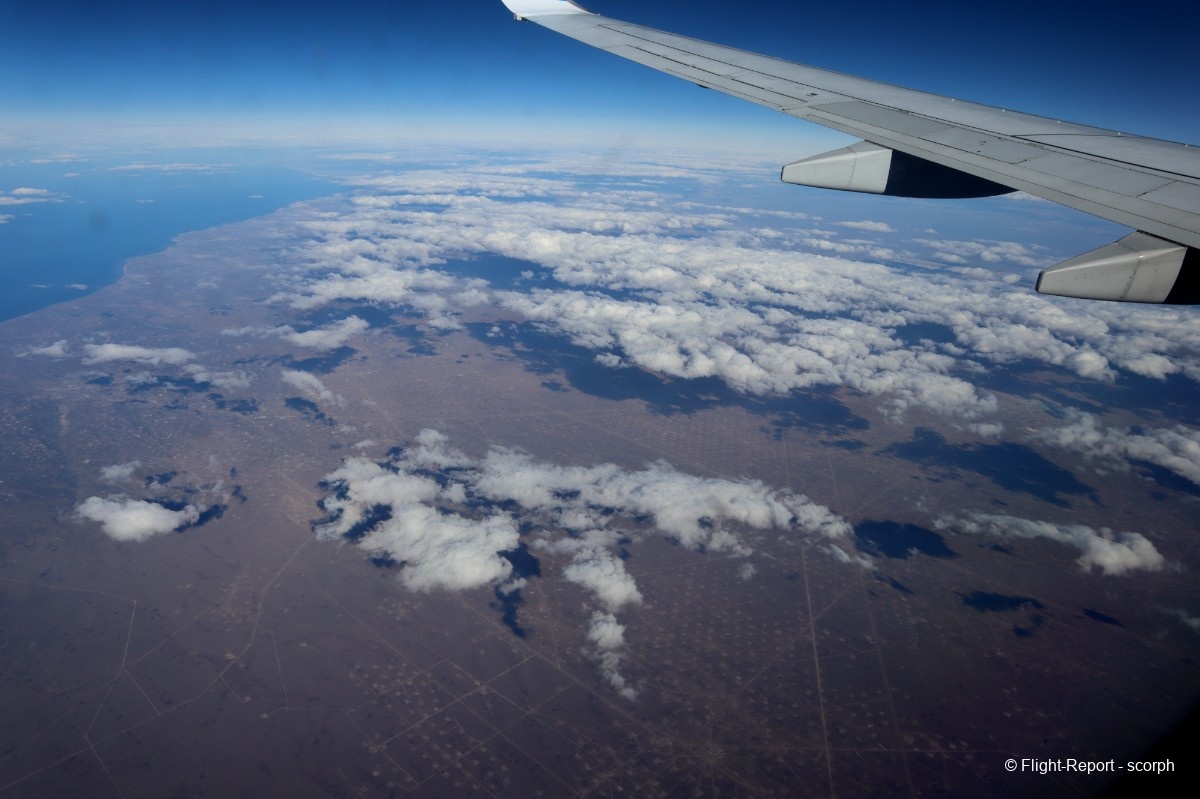
A stark and inhospitable landscape, where only vast wind farms stand out a clever use of these windswept Patagonian plains.
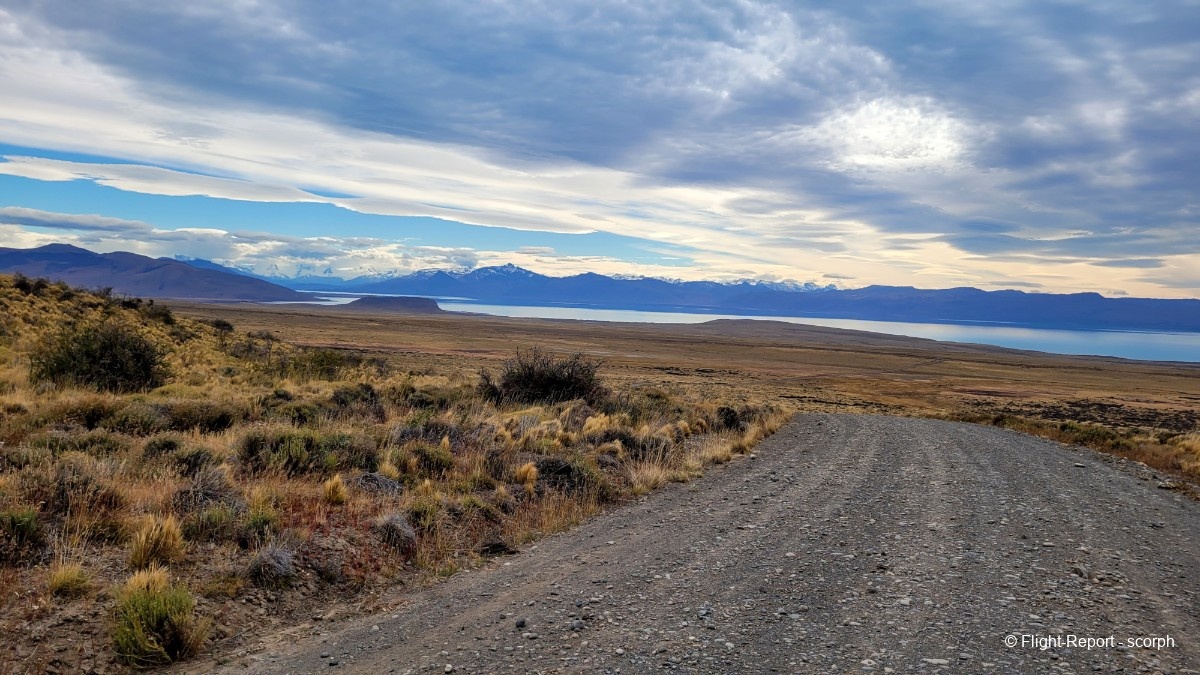
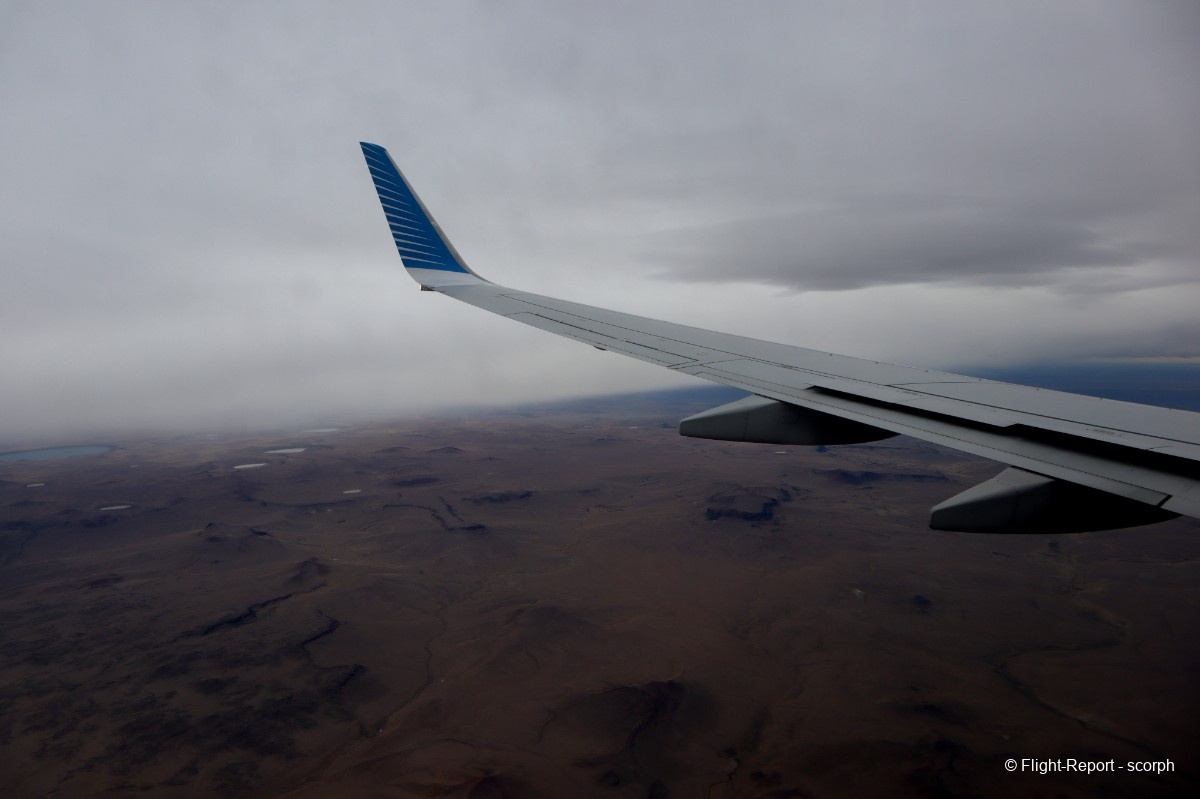
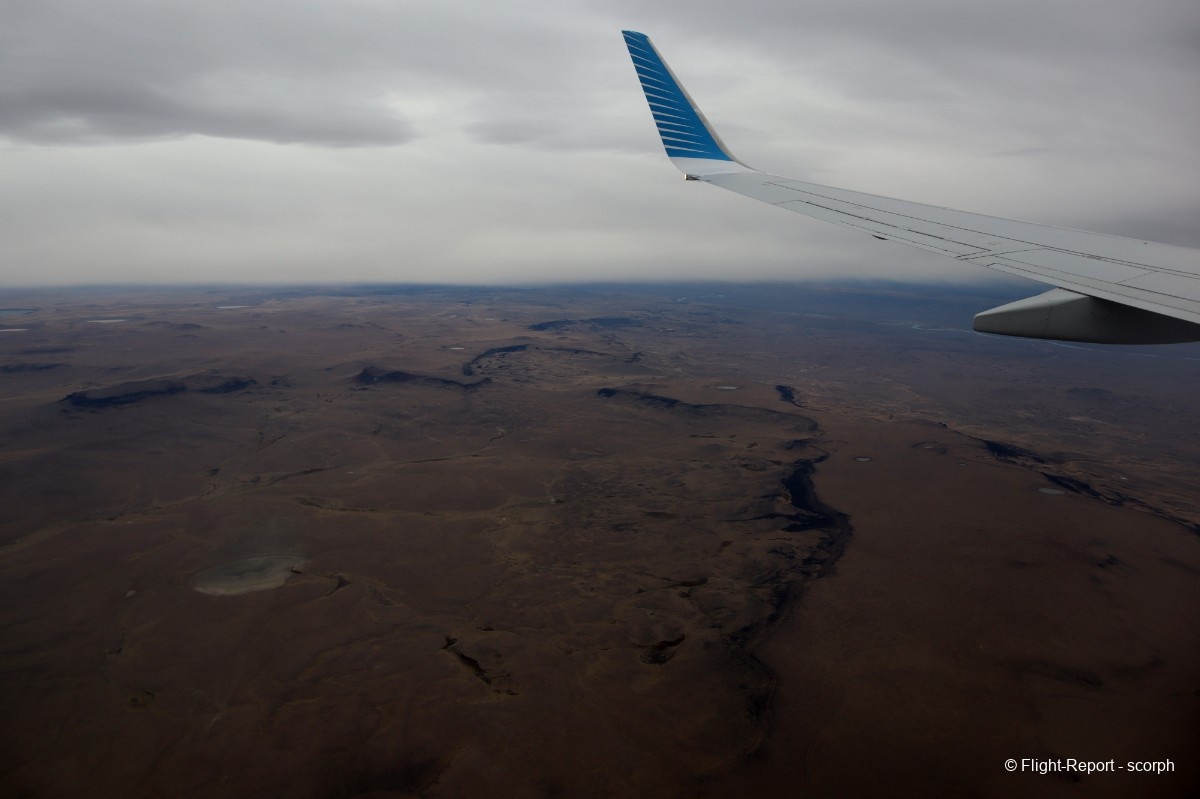
We began our approach to El Calafate under overcast skies, flying over the pampa. It's a vast, untouched, and nearly desert-like land that extends to the horizon.
The cabin is being prepared for our upcoming landing, and the mood lighting has been activated.
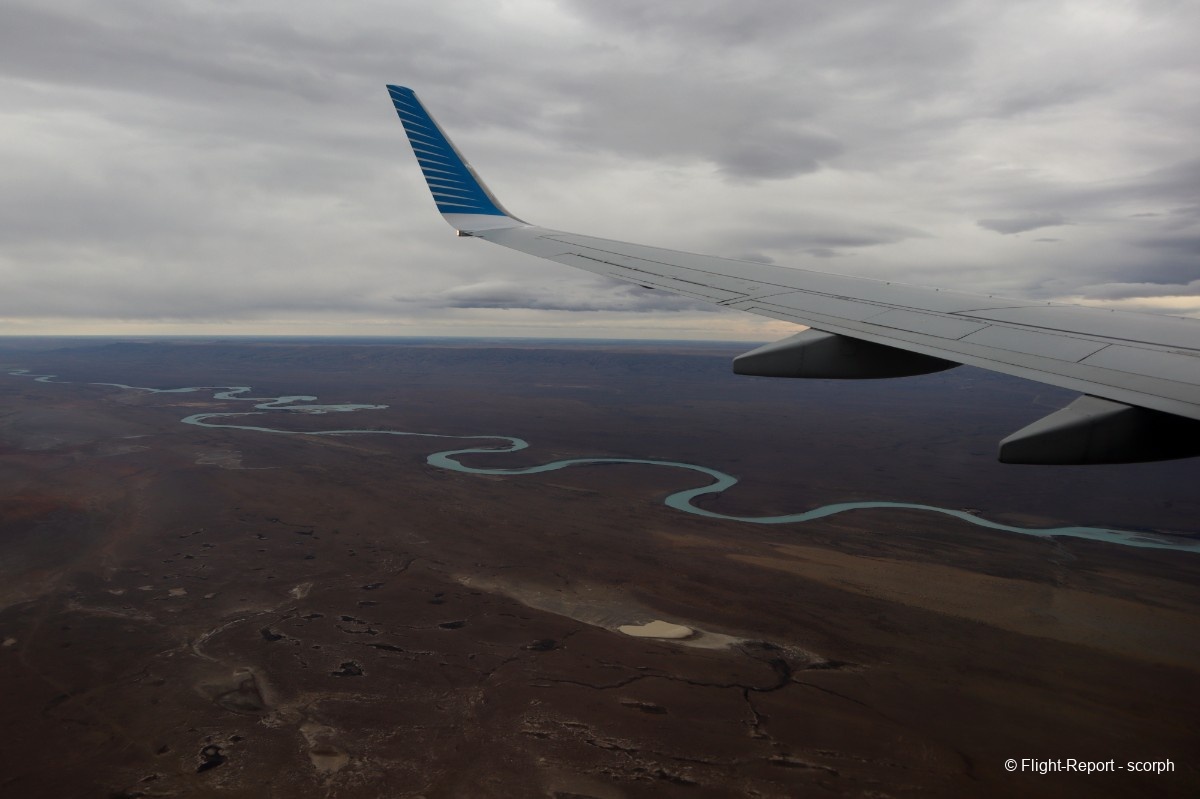
We are flying over the Santa Cruz River, watching its turquoise waters meander through the plains.
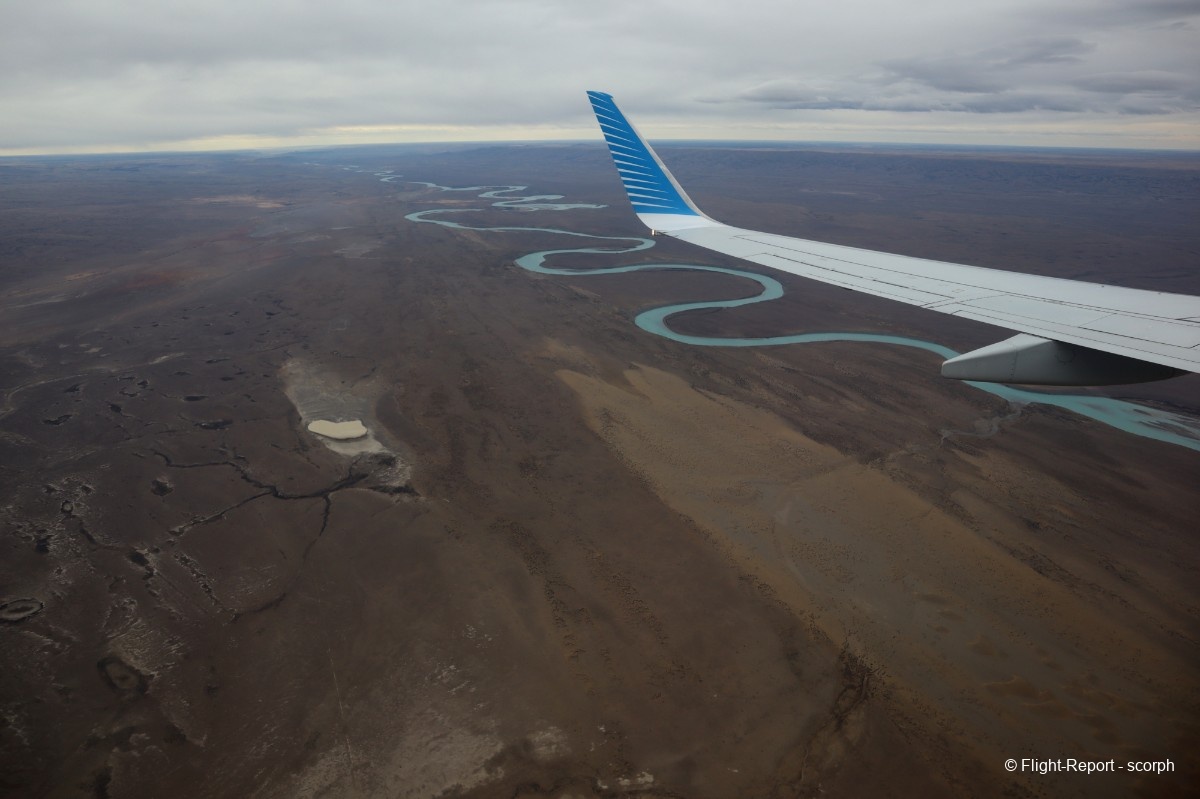
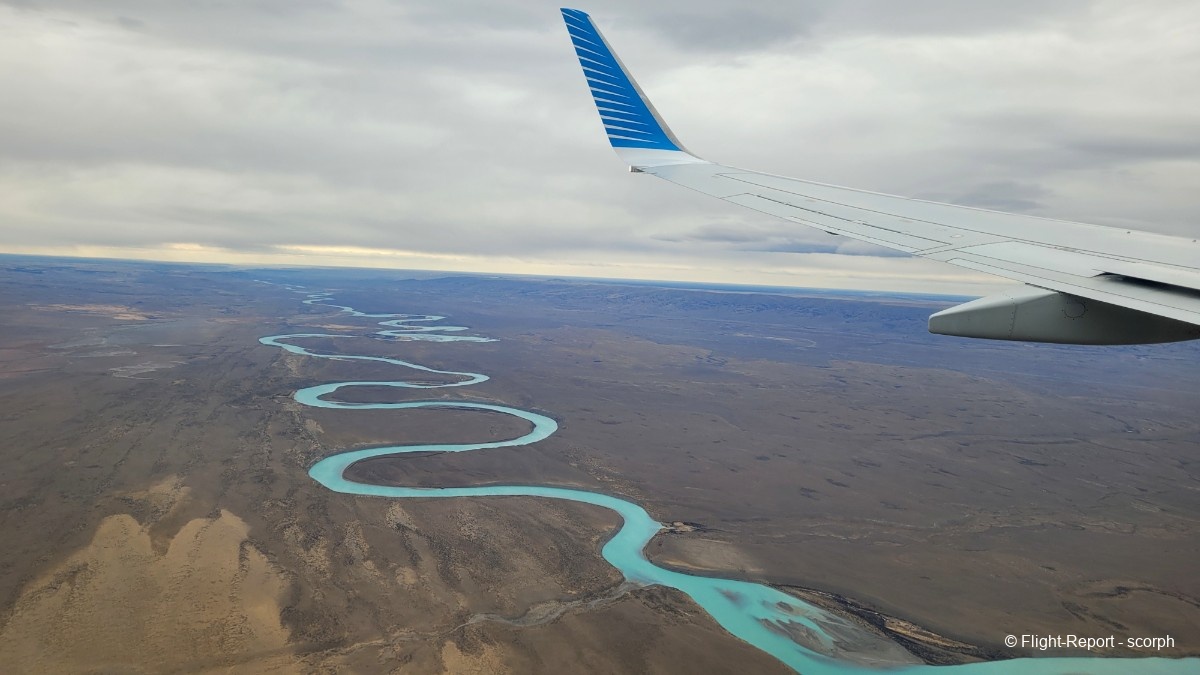
While on the horizon, the snow-capped peaks, an extension of the Andes mountain range, make their appearance
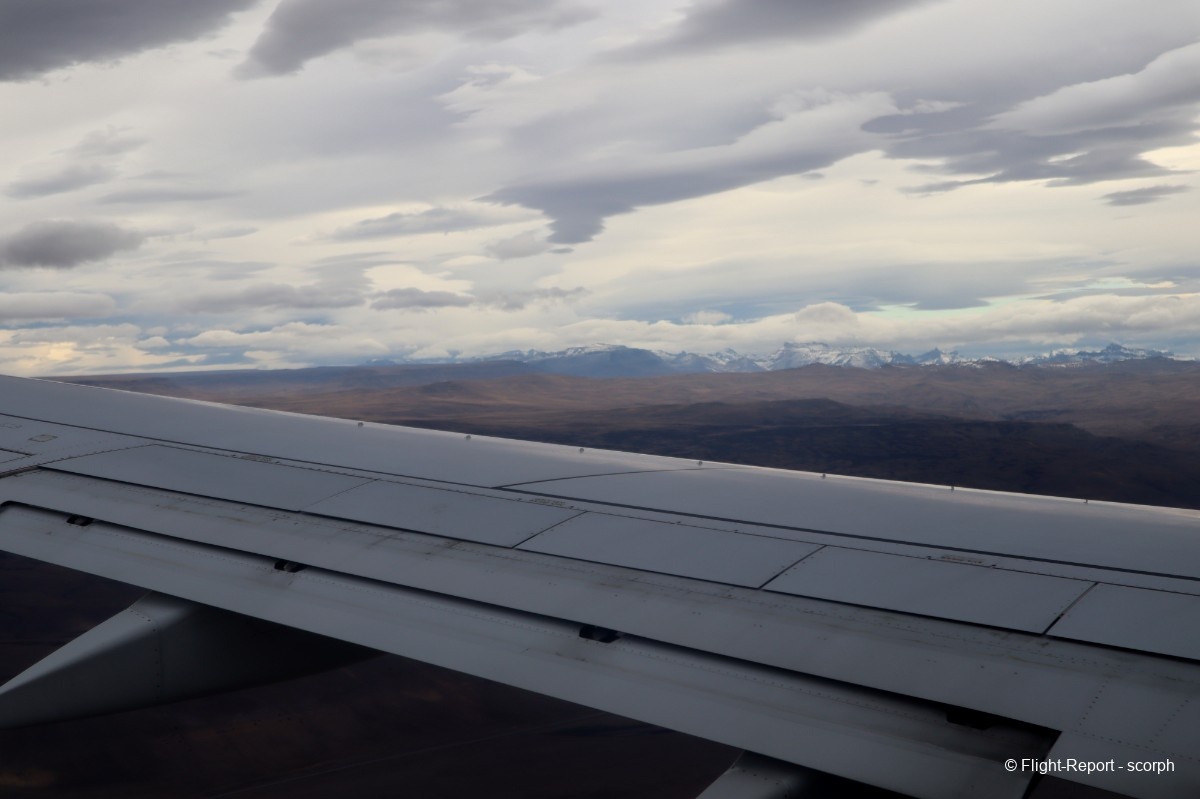
On final for runway 25
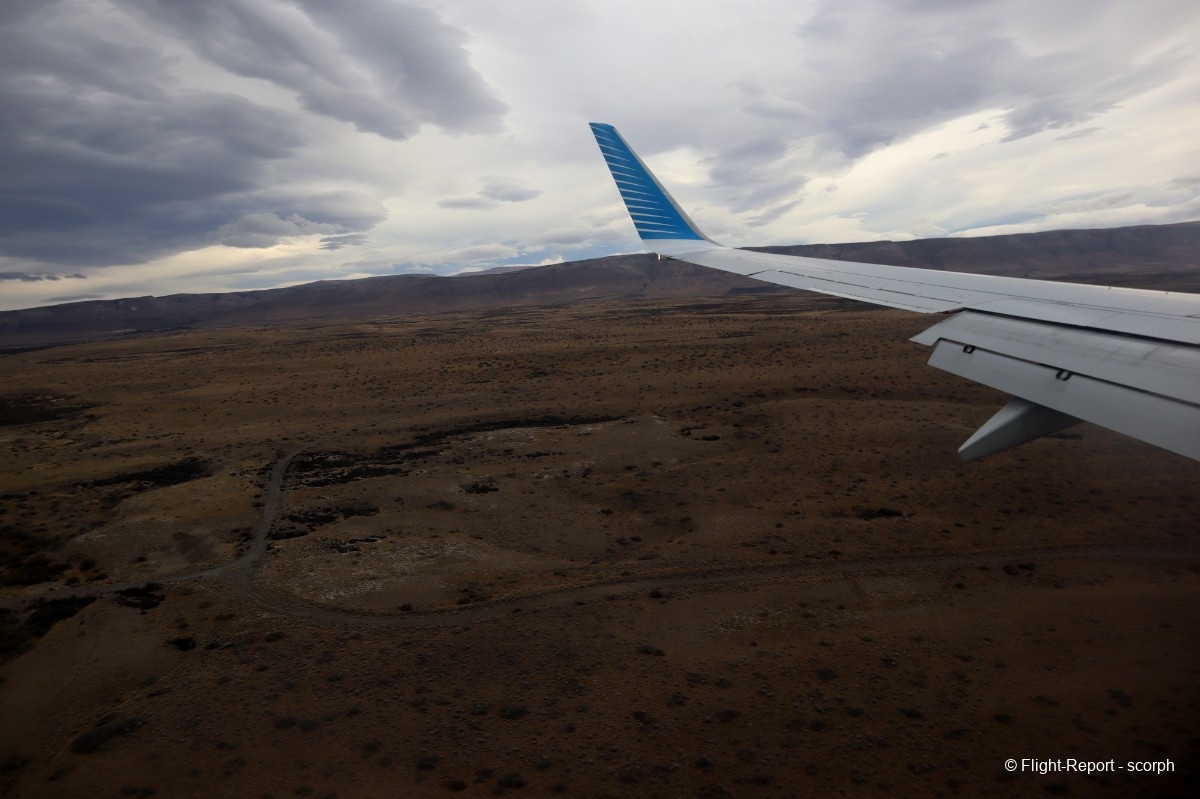
Afternoon landing in El Calafate
A smooth touchdown on the tarmac of El Calafate’s single runway, which handles our Boeing with ease thanks to its 2,500 meters of asphalt.
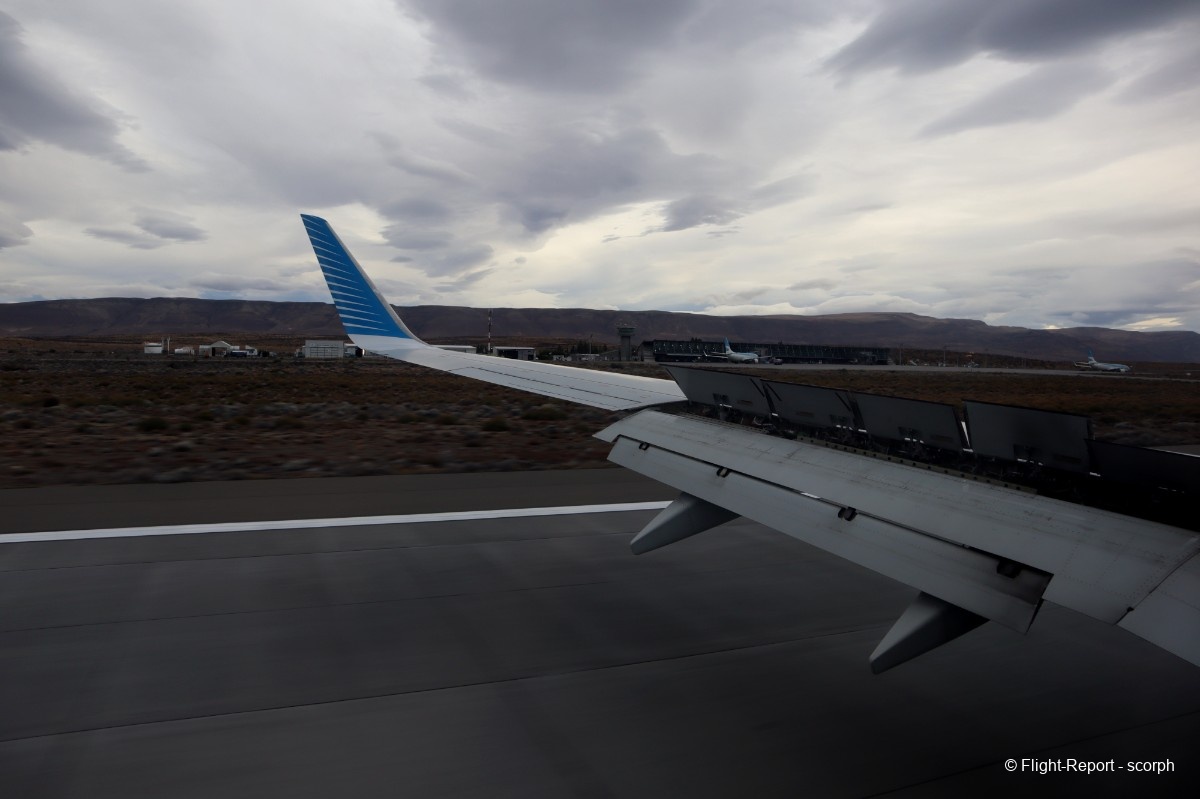
That said, you’d better not miss the only taxiway; otherwise, it’s a 180-turn on the turnaround pad at the end of the runway. An unusual detail: the runway is lower than the terminal, so the taxiway has a noticeable incline as you head up to the gates.
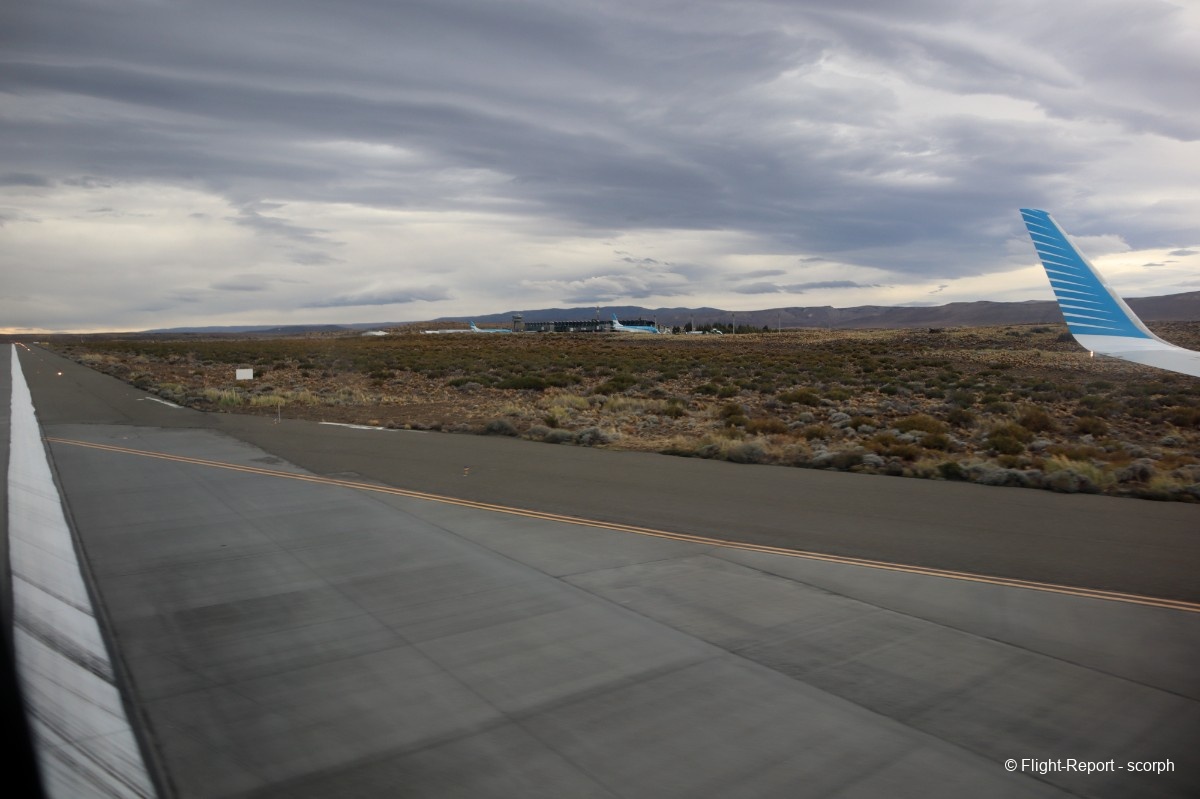
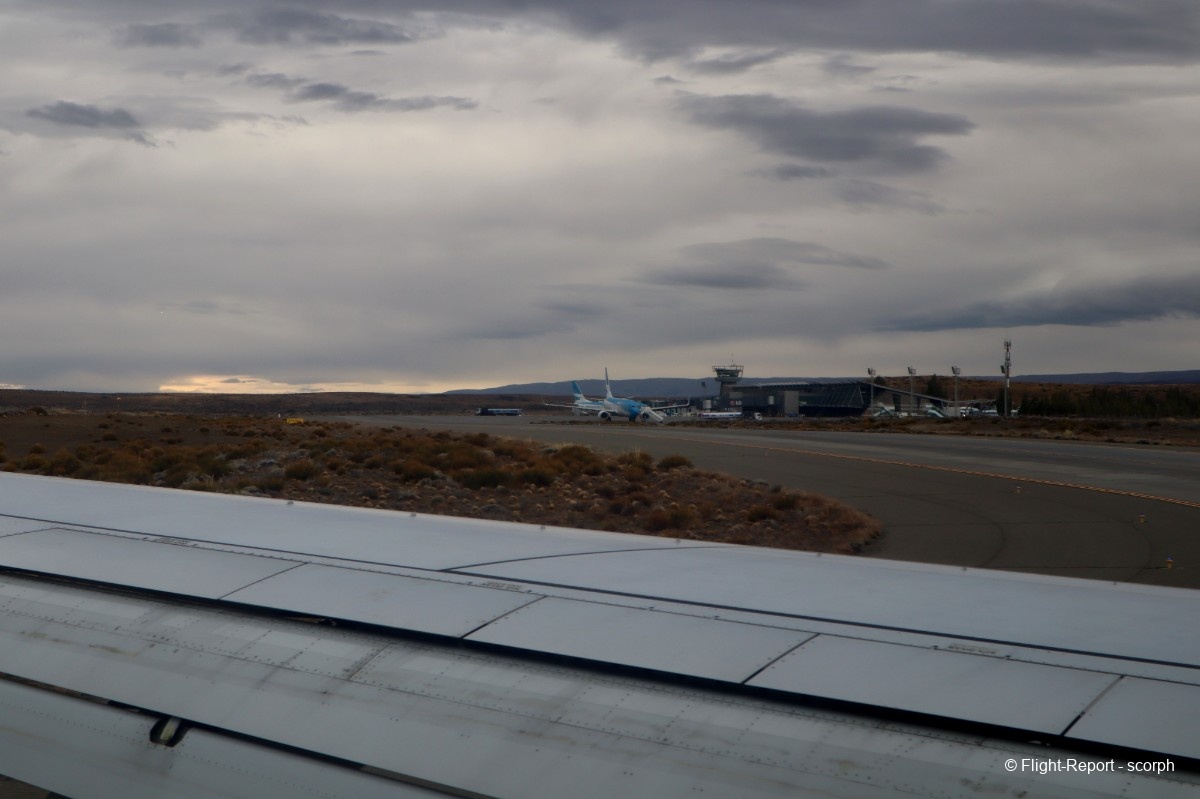
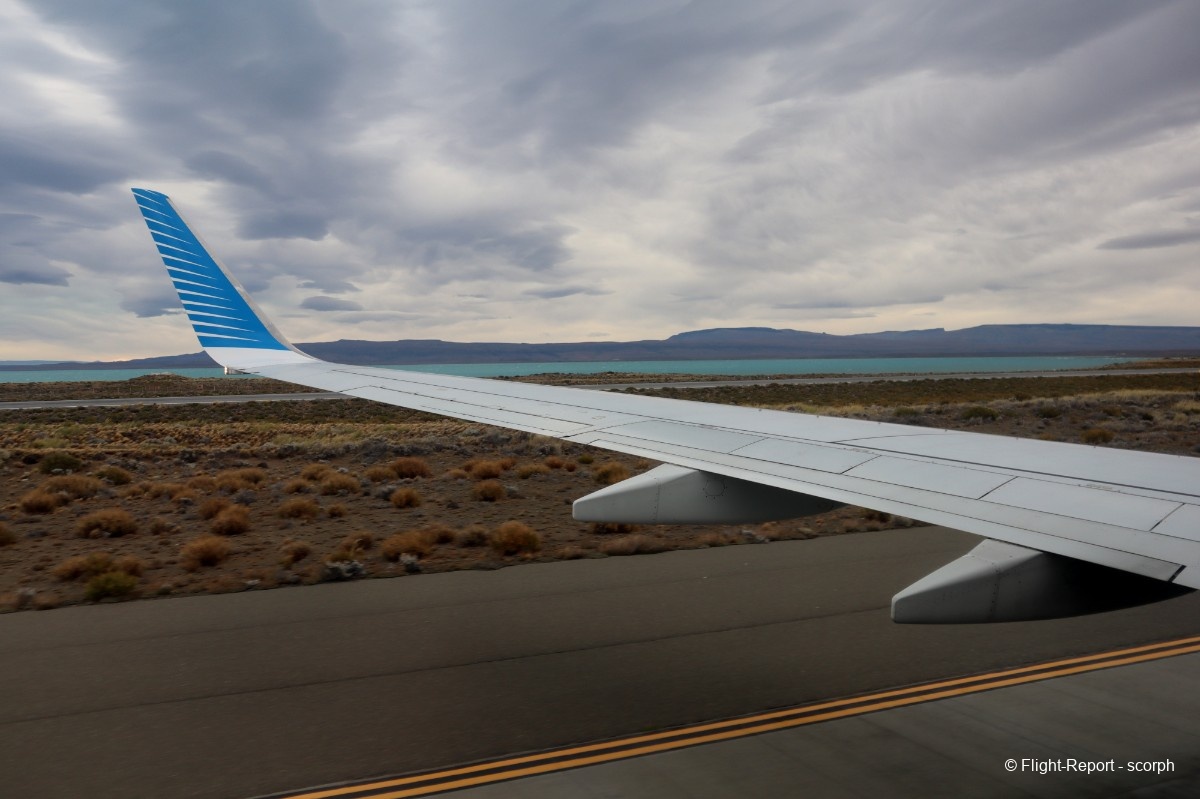
Once we reached the terminal, we were treated to a stunning view of Lake Argentino and its incredible turquoise water.
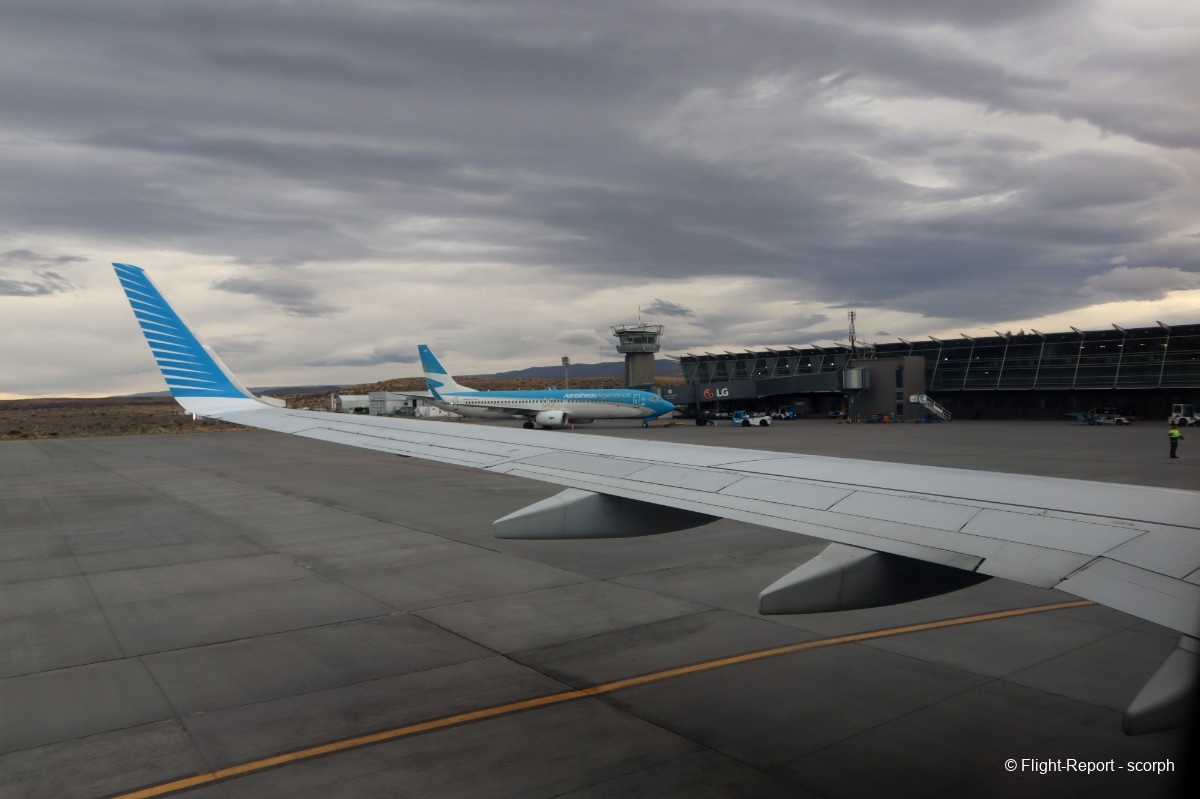
One last turn and we’re parked at the gate of this quite modern terminal, right next to a sister ship.
Disembarkation began quickly, and we left the aircraft with a friendly farewell from the crew at the door.
Disembarkation was via a jet-bridge quite an impressive facility for an airport without massive traffic, but undoubtedly essential during winter conditions or when the wind blows too hard, which happens very regularly in this area.
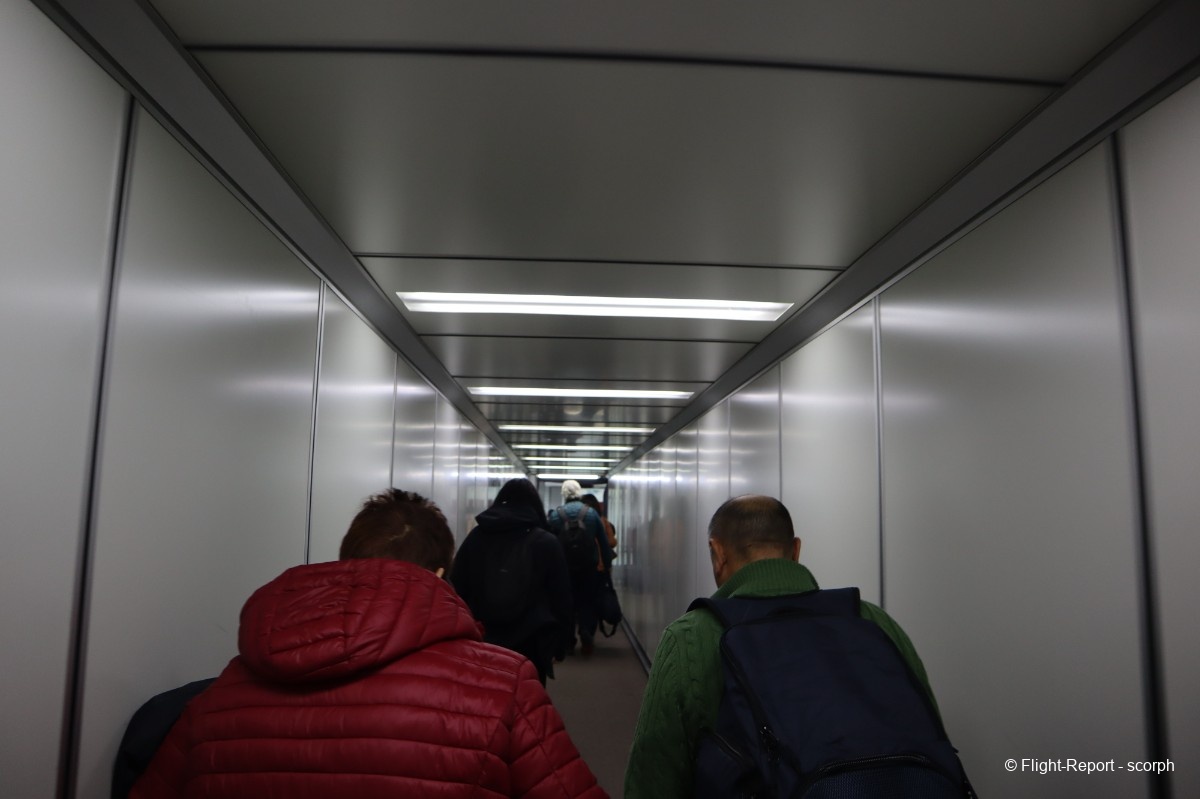
The jet-bridge is glass-walled, offering a great view of the terminal and the apron at El Calafate’s Comandante Armando Tola Airport.
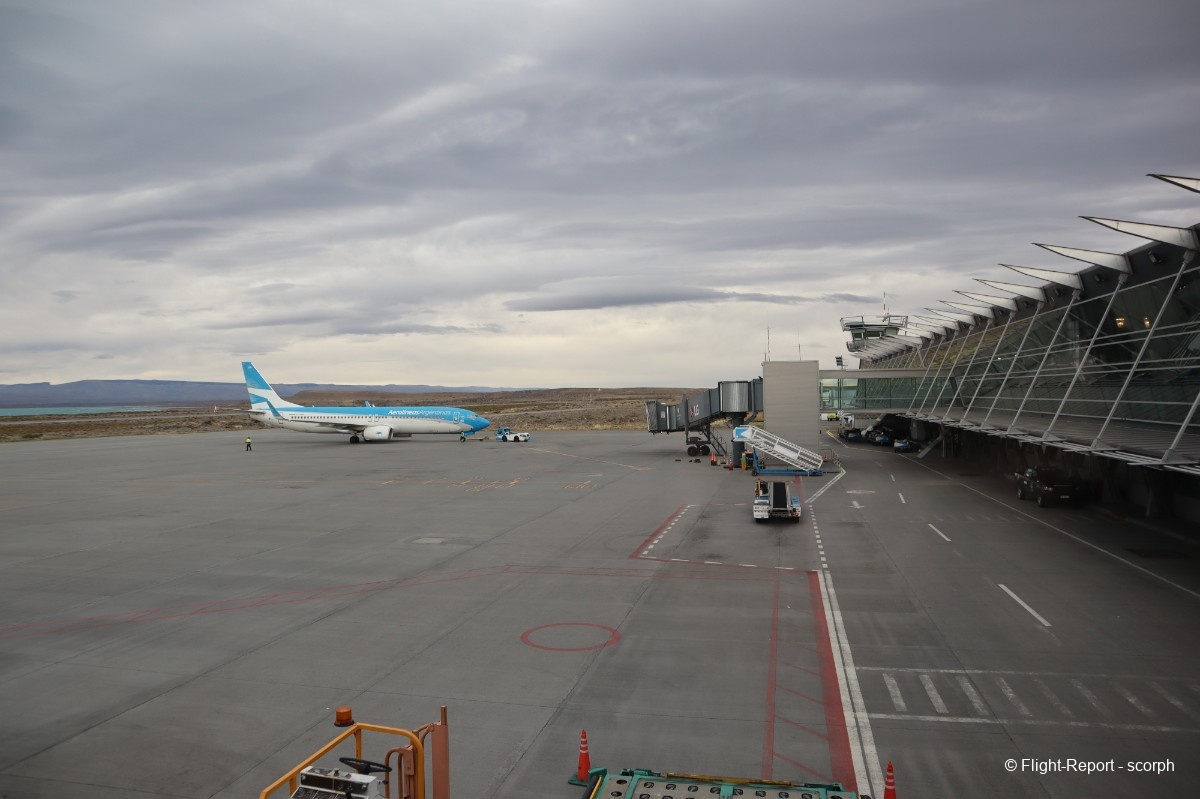
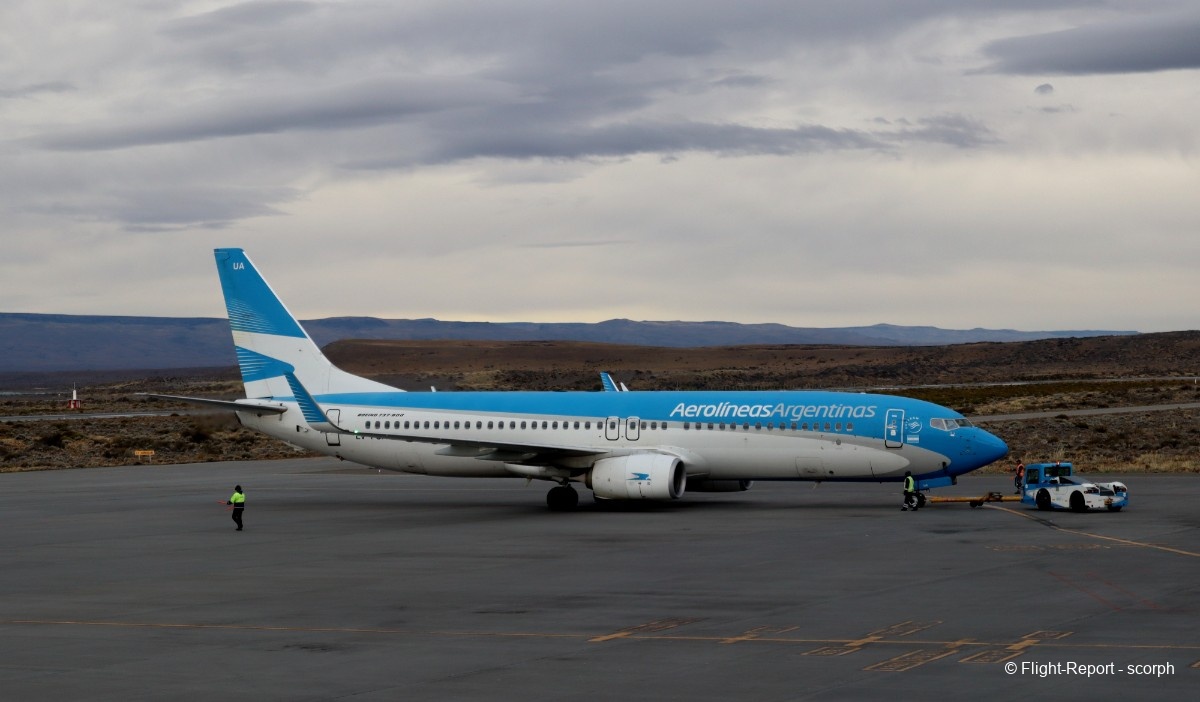
From there, we could see an Aerolíneas Argentinas Boeing 737-800 pushing back for its flight to Buenos Aires.
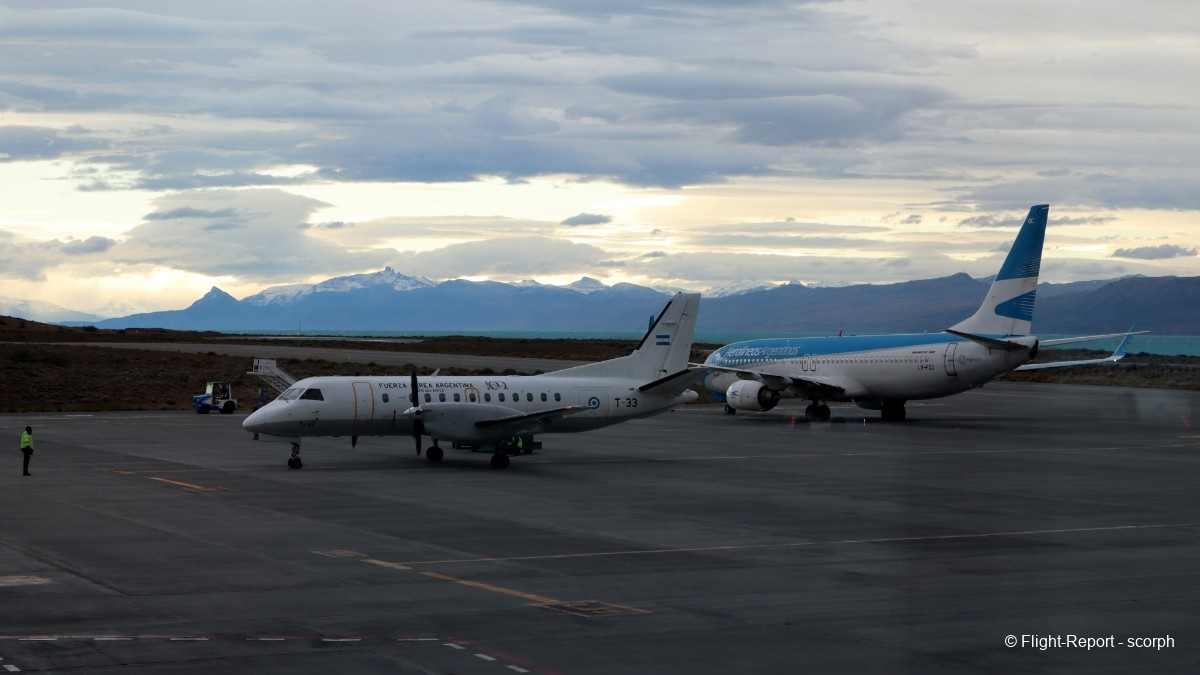
On the other side of the tarmac, a roar fills the air as an Argentine Air Force Saab 340 arrives. They operate public flights for regional connectivity with a 100% 'av-geek' fleet, including Saab 340s, Embraer ERJ-140s, and most notably, a few Fokker F-28s likely the last ones still in service worldwide after more than 50 years of operations!
We headed quickly to the baggage claim area, though the luggage took a little while to appear on the carousel. Once we had our bags, we went through a formal sanitary inspection, complete with sniffer dogs and scanners.
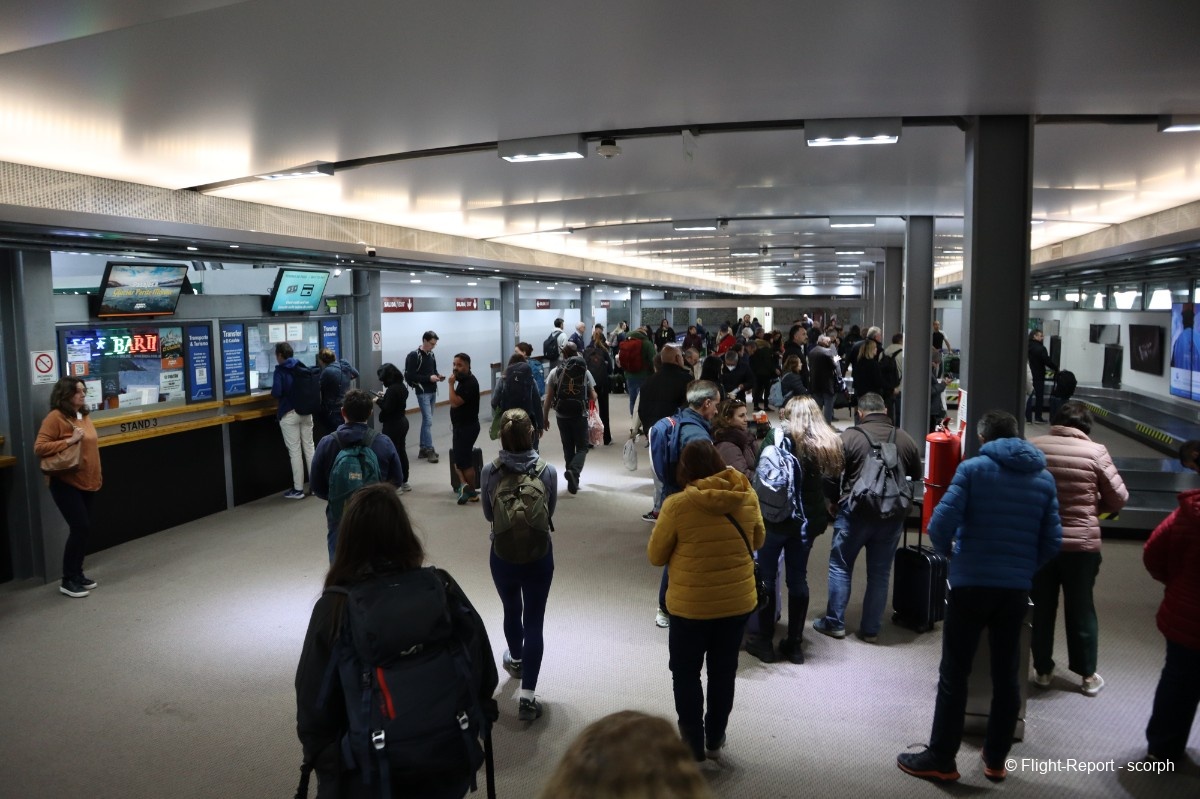
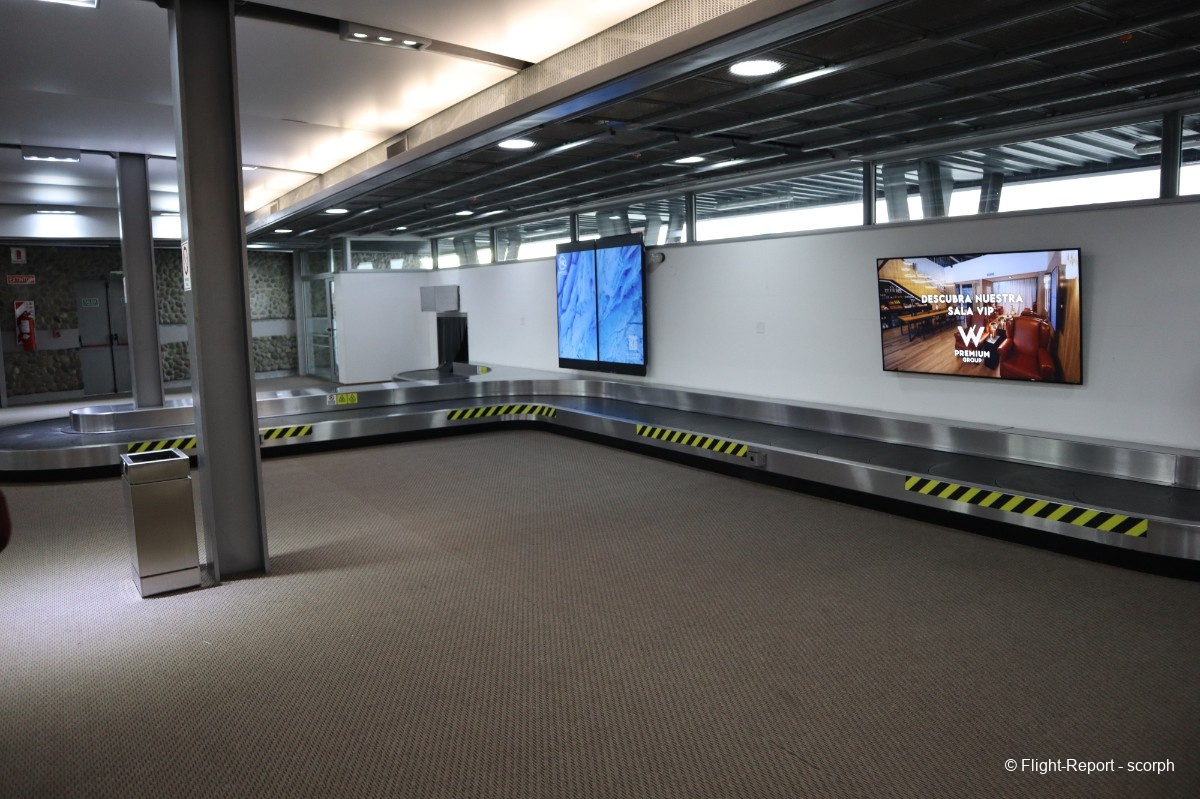
We soon reached our car rental desk. The staff was friendly and repeatedly warned us about the strong winds and the sudden crossings of guanacos a type of local llama that roams free across the pampa.