


Hello everyone and welcome aboard this new report, featuring one of the major highlights of this travelling the long-haul flight of our trip to Argentina, which took place at the beginning of 2025.
Introduction
It was in the autumn of 2024 that a trip already postponed several times was finally able to be organized. My father has crossed the milestone of turning 70 the previous summer, and it was more than time for him to enjoy his gift: a trip to Patagonia! There would therefore be four of us on this journey: my two parents, my girlfriend and I.
The first small challenge in planning the trip and the routing was that we were not departing from the same city. My parents were leaving from Grenoble, while my partner and I were departing from Toulouse.
Several options were available to reach Buenos Aires. Air France offered flights with convenient schedules, but fares of €1,400 without checked baggage were rather discouraging when departing from regional airports. Iberia proposed an interesting alternative, but the return schedules to Lyon were not ideal, and the fare without checked baggage was still around €1,100.
Out of curiosity, we looked at departures from Paris and came across a very attractive offer from Air Europa at €783 round trip, with convenient schedules for those commuting from the provinces. Departure from Orly was on Saturday late afternoon, with a return on Sunday morning at 9:30 a.m. Fares including checked baggage were, unsurprisingly, about sixty euros more expensive, but still reasonable.
For me personally, this was particularly appealing as I hold SkyTeam Elite Plus status, of which Air Europa is still a member. This also allowed us all to have the same departure point from a Paris airport and to be on the same international flights.
For domestic flights, we kept things simple by booking exclusively with the national carrier, Aerolíneas Argentinas, which offered fares comparable to low-cost airlines on domestic routes, with the added benefit of better schedules. On certain routes, such as El Calafate–Bariloche or Trelew–Buenos Aires Aeroparque, they were in fact the only airline operating those flights.
This resulted in the following routing:
The range of flights between the Spanish capital and the Argentine capital is quite extensive, with up to six daily flights. Half of these are operated by the local market leader, Iberia, using Airbus A350 aircraft, with an impressive three flights per day.
On the other hand, Aerolíneas Argentinas operates up to two daily flights using Airbus A330-200s. Air Europa plays the role of the underdog on this route, with a single daily flight operated by a Boeing 787-9.
As far as i know, this route will be an addition to the database. in addition this will be the first report on UX Boeing 787-9 for a long range flight.
Late connexion in Madrid
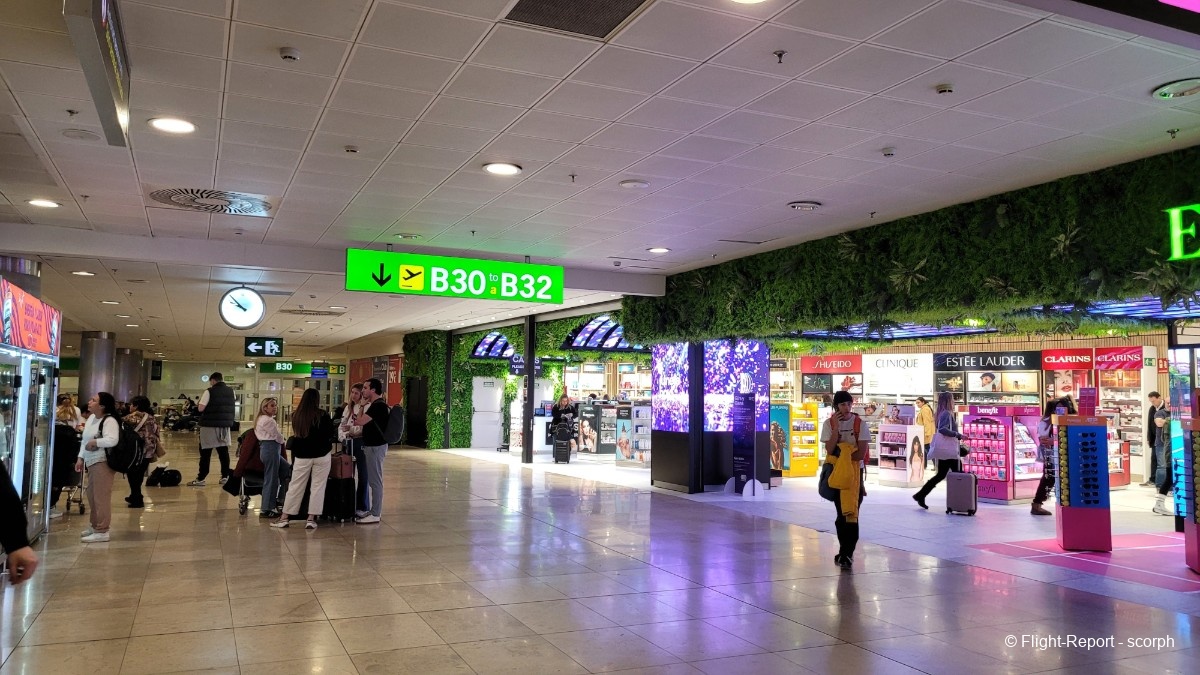
Arrived a few minutes early from our Air Europa flight from Orly, we make our way through the terminal from T3 to T1, where Air Europa’s intercontinental flights are boarding. This is my first time using this part of Madrid airport, and although it looks better than the antediluvian T2, it is still somewhat narrow and not really up to the most modern standards. That said, there are a few shops available, all of which are still open at this late hour.
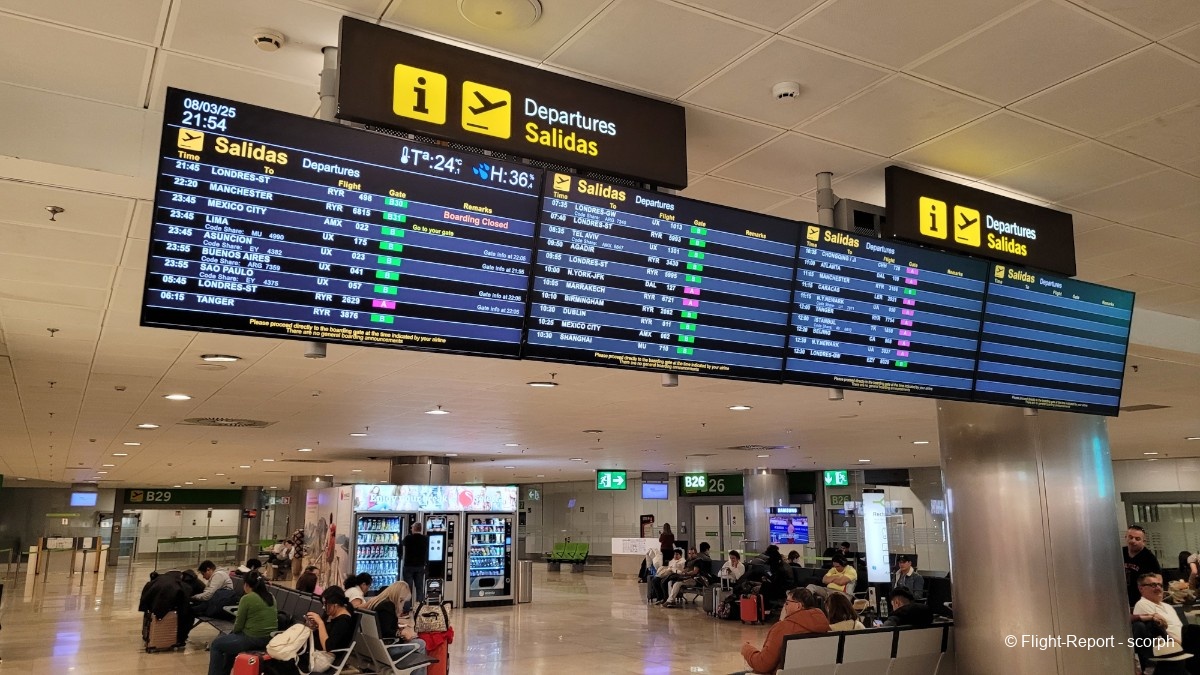
Departures scheduled from Terminals 1 to 3 are displayed on the FIDS, where we can see the wave of late-night departures to South America, with flights to Lima, Asunción, São Paulo, and of course our flight to Buenos Aires.
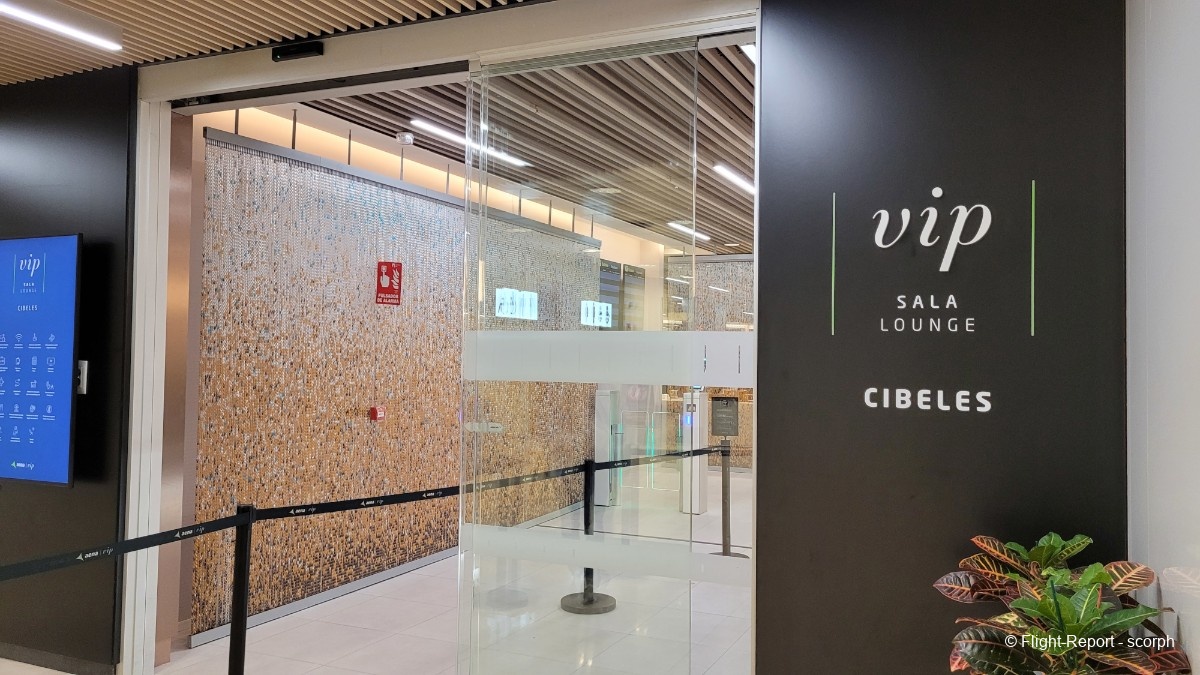
Cibeles lounge
As a SkyTeam Elite Plus member, I leave my parents behind in the terminal and head with my partner toward the ‘Cibeles’ Lounge, operated by the airport authority Aena, which welcomes passengers on Air Europa’s intercontinental flights. The lounge is of medium size and quite crowded when we arrive. It features a terrace that must be very pleasant in summer, but on this occasion it is closed due to the rather extreme weather conditions over Madrid that night.
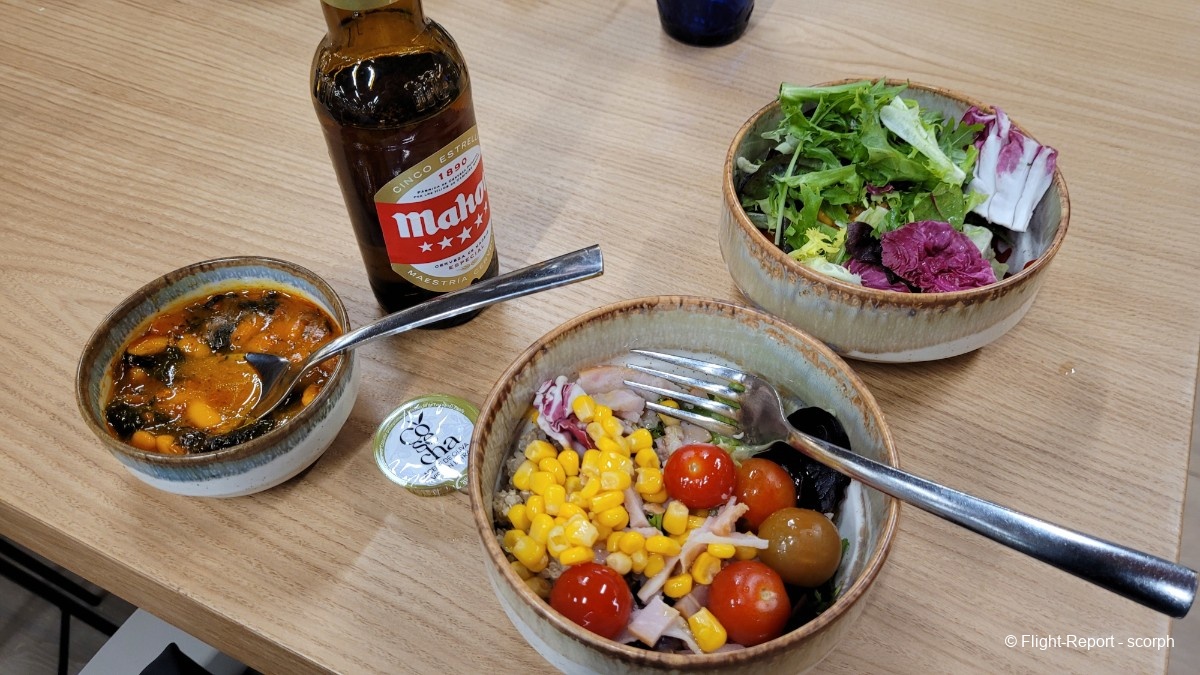
The catering offering is quite appealing, with a good selection of sandwiches and yogurts for passengers in a hurry. Beyond that, you’ll find the usual lounge classics, including a few pastries of varying appeal, a salad bar, and assorted fruit. A special mention goes to the small individual ramekins of hot dishes, which are truly excellent.
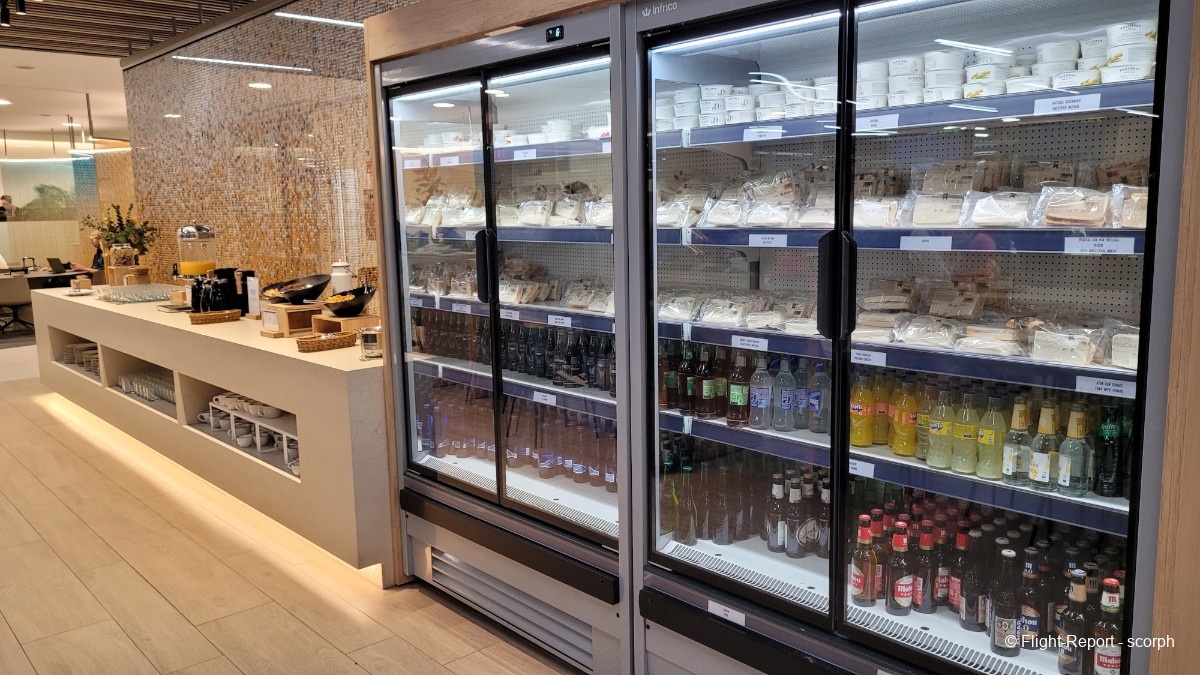
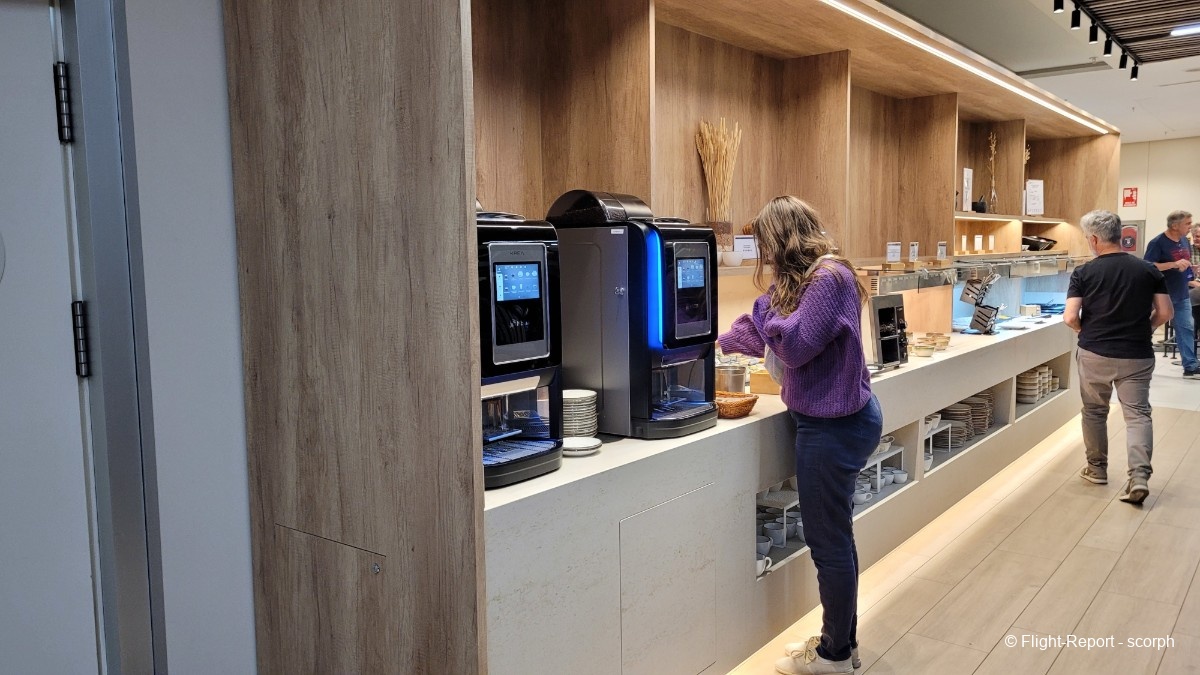
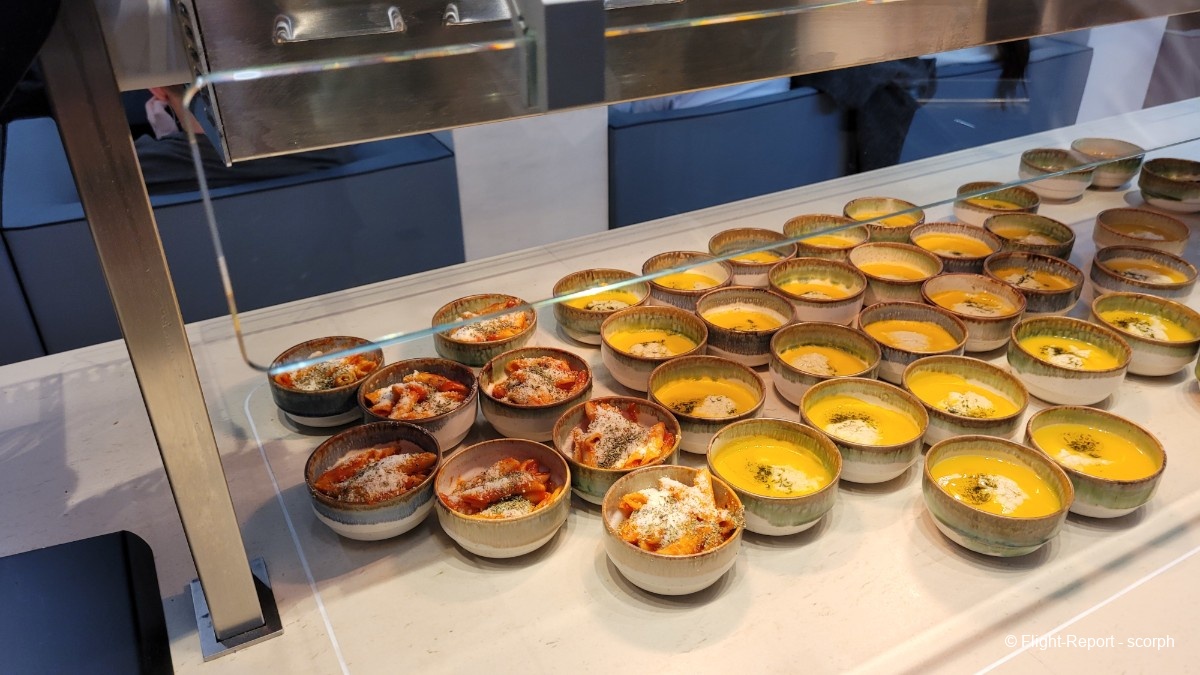
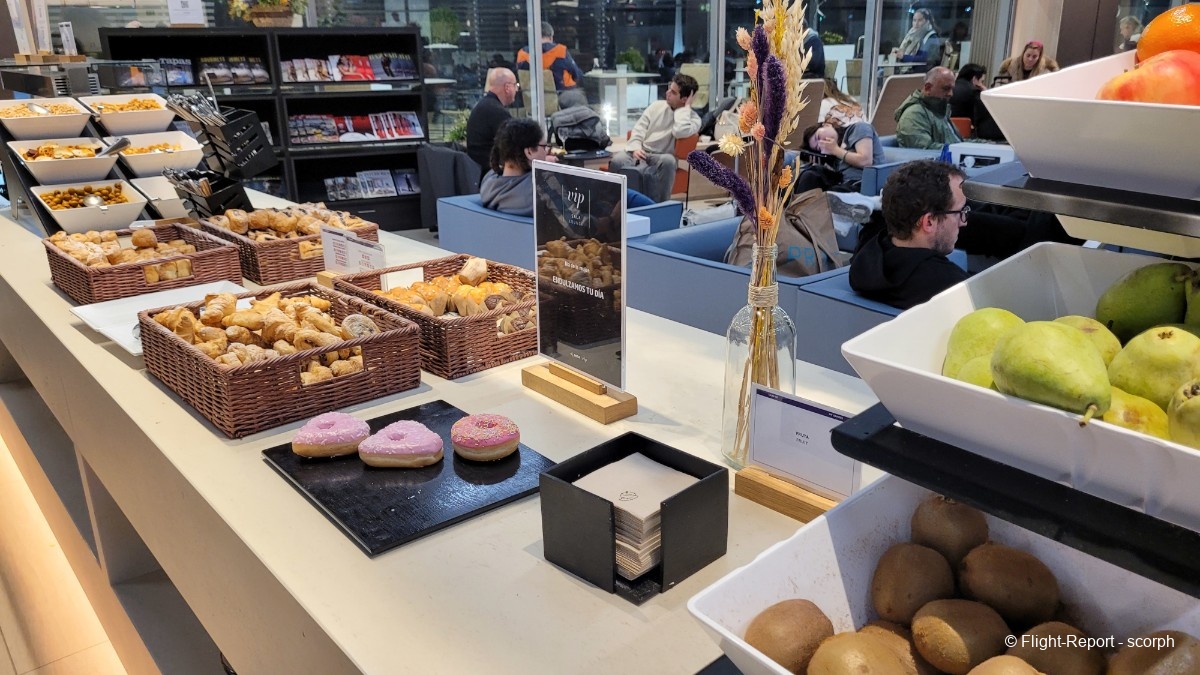
Here is one of my selections honestly very good for a meal before a long flight, with a well-stocked salad bar offering fresh products.
Boarding
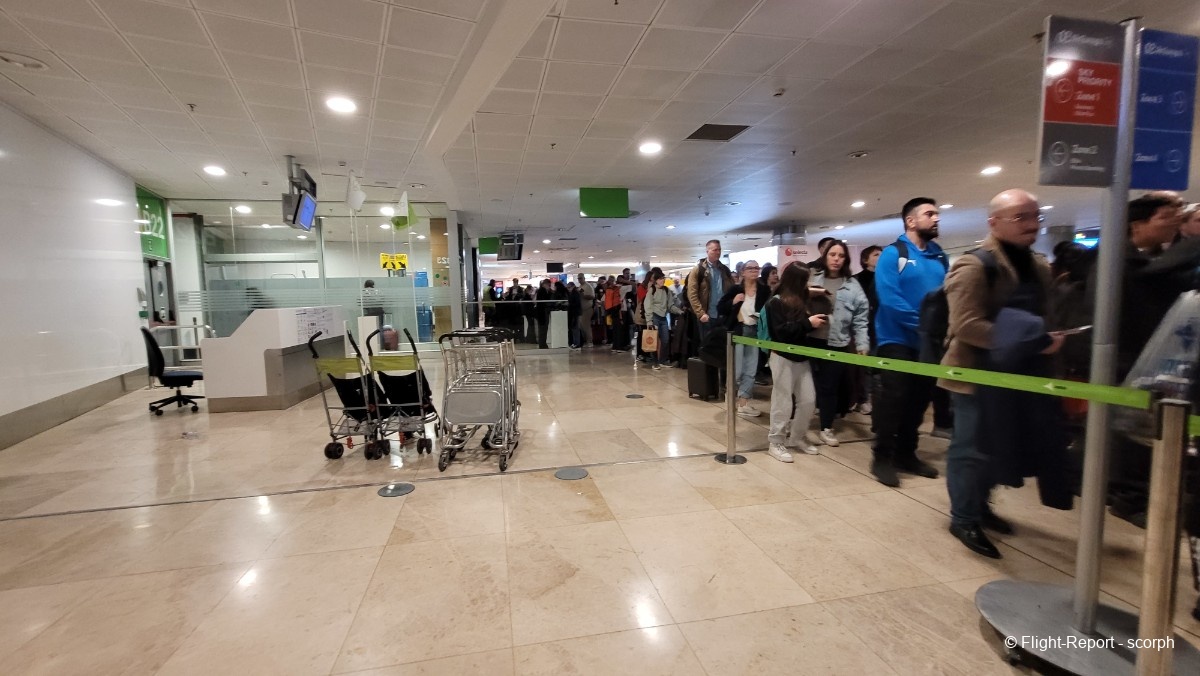
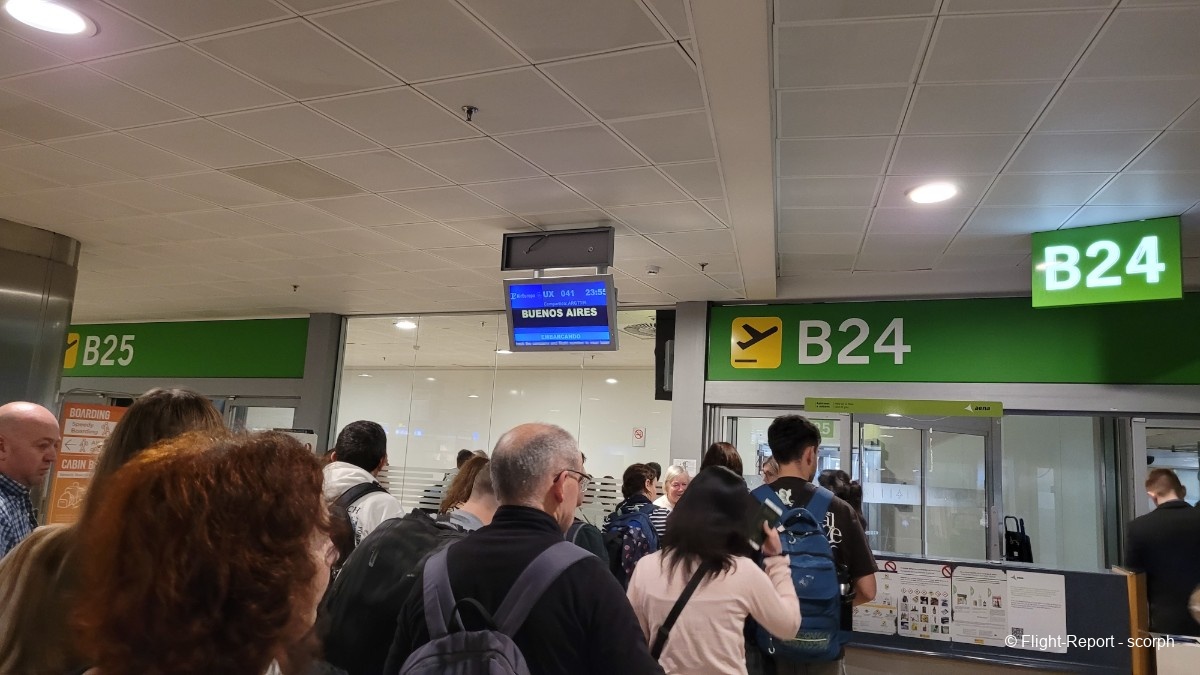
After enjoying a good meal in the lounge (it must be said that Air Europa does not have the best reputation for its economy-class catering), we head toward gate B24, from where our flight will board. It turns out to be quite a mess, as three Air Europa long-haul flights São Paulo, Asunción, and Buenos Aires are boarding in the same area within minutes of each other, in a part of the terminal that is clearly not designed to handle such traffic.
A bit of traffic jam on the jet-bridge as well.
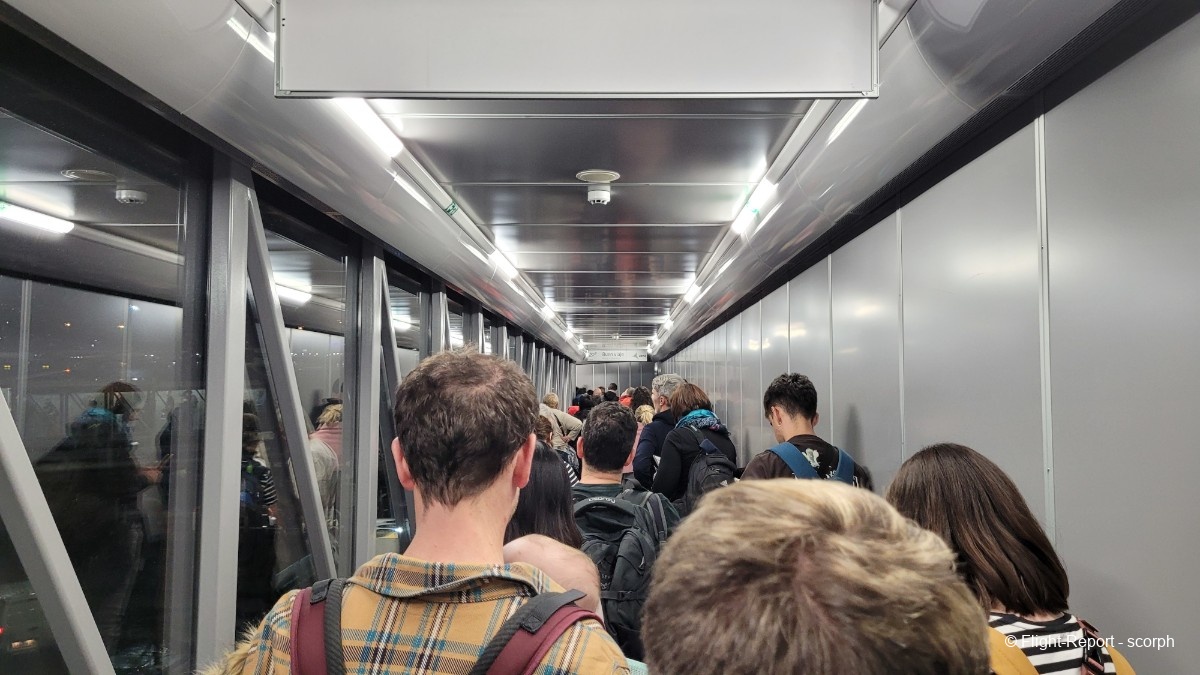
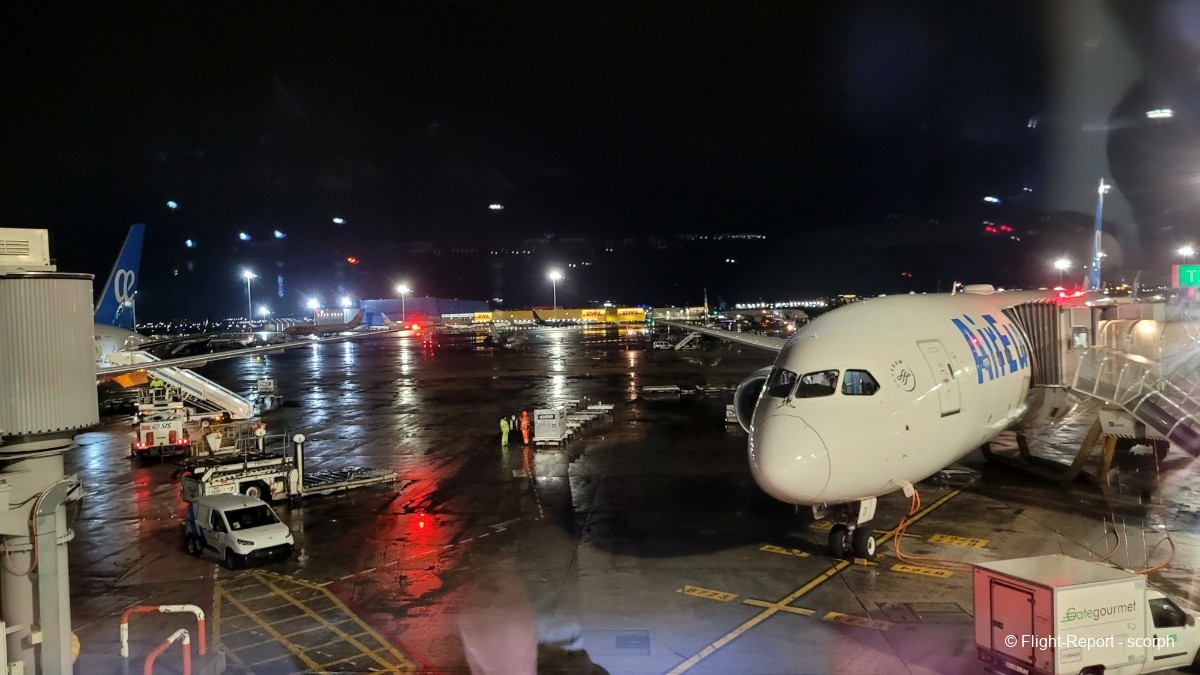
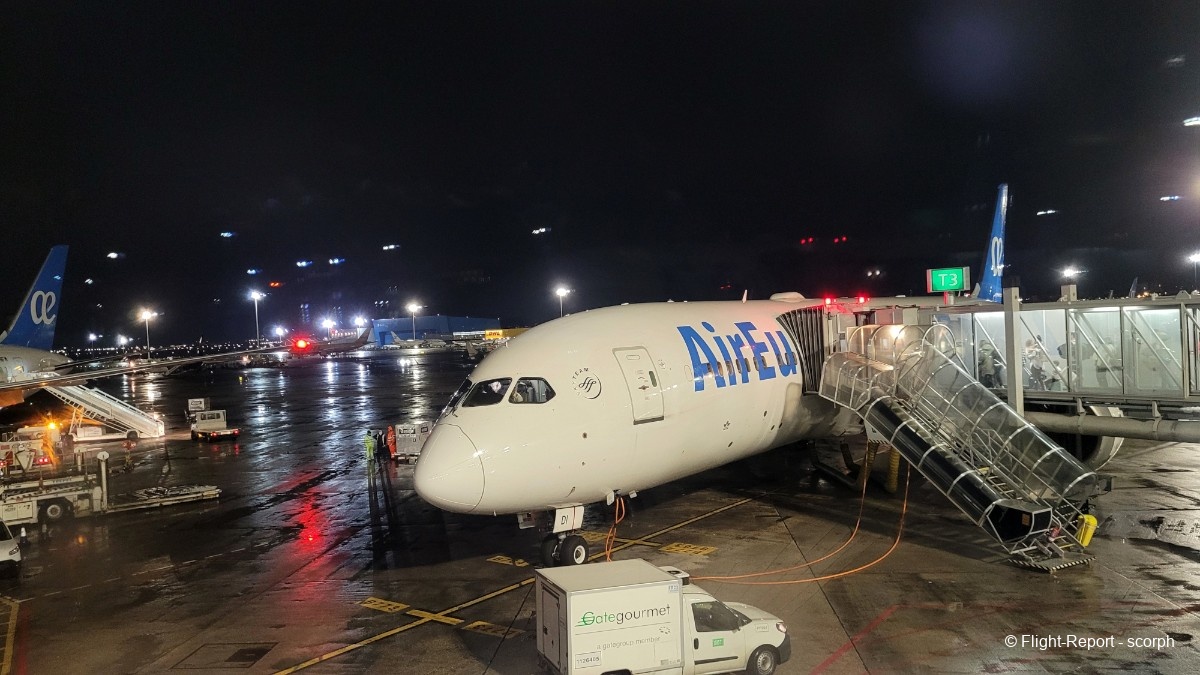
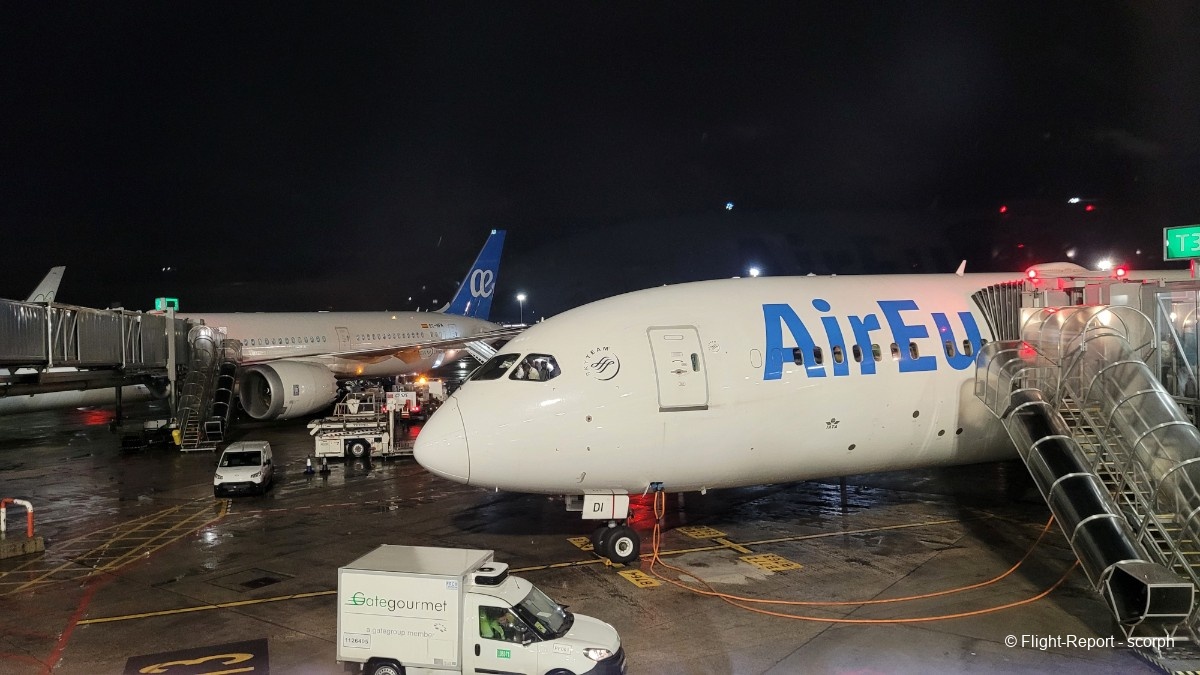
The advantage is that the jetbridge has glass walls, allowing us to catch a glimpse of our evening B787-9 that will take us to South America.
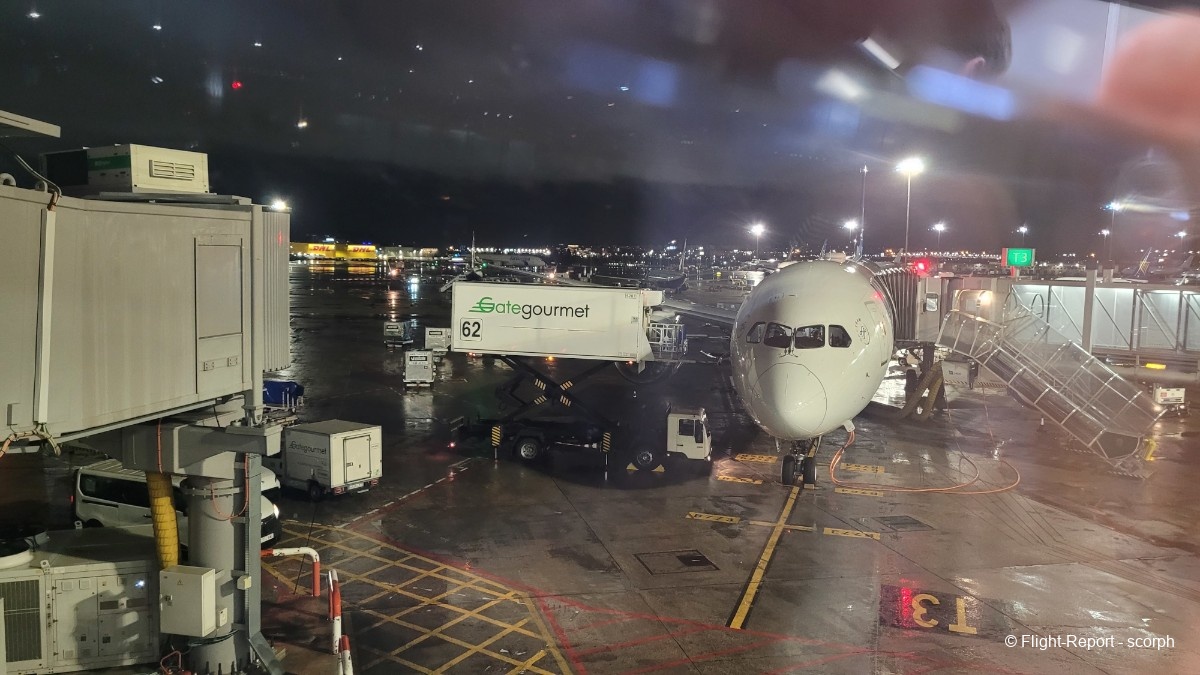
And we find the aircraft that brought us here on our flight from Paris. EC-ODI, a Boeing 787-9 that was just under five years old at the time of our flight.
On board UX Boeing 787-9
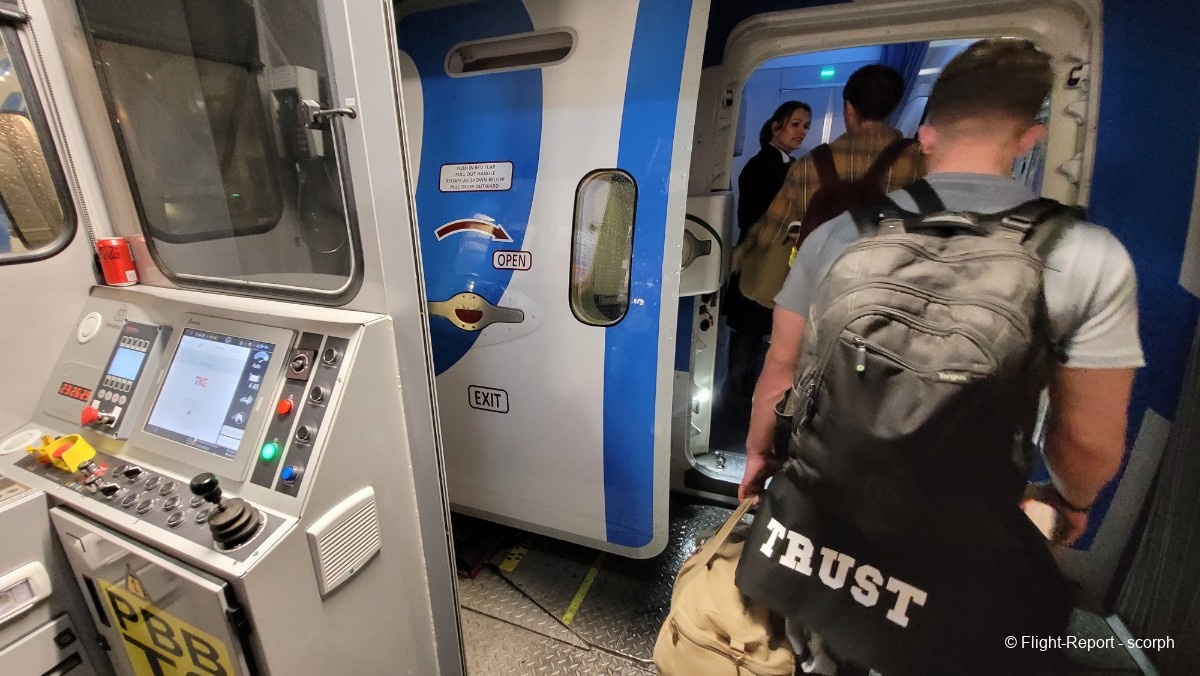
At the end of the jet bridge, we reach door 2L, through which we will board, with a friendly welcome from the crew at the door, which is largely female composed.
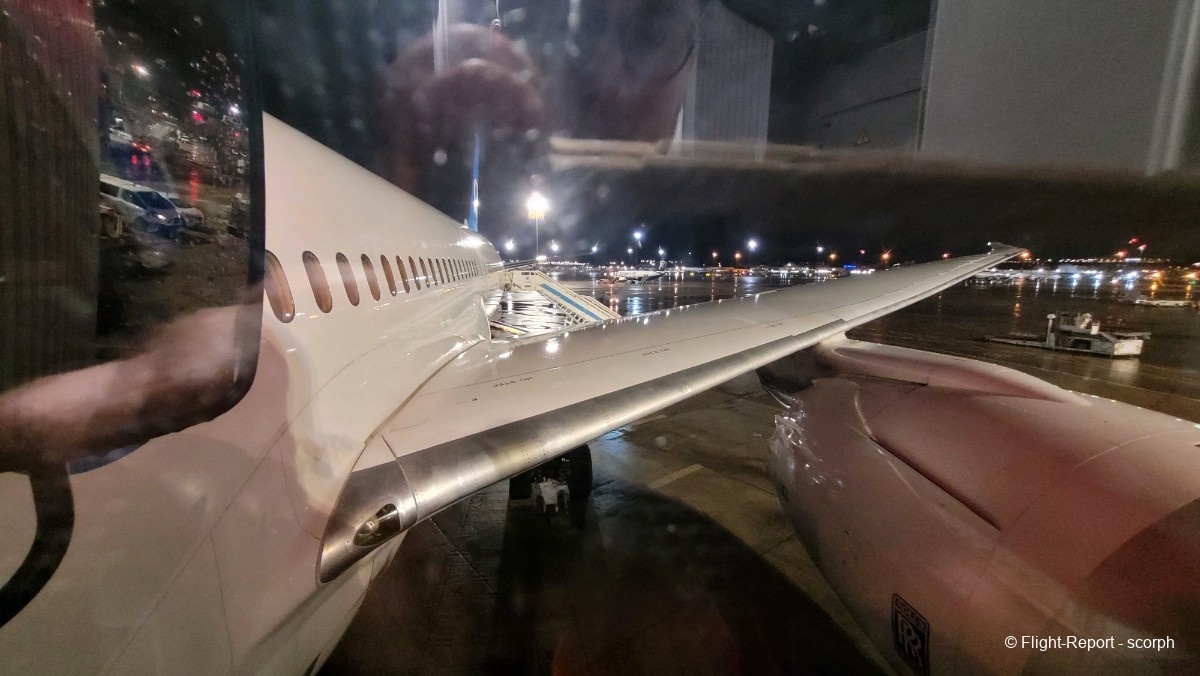
Fuselage shoot a bit dark and wet.
For the cabin and seats, we find the Recaro CL3710 seat, which is of fairly good quality, with an adjustable headrest and a bit of recline, all in the airline’s blue tones.
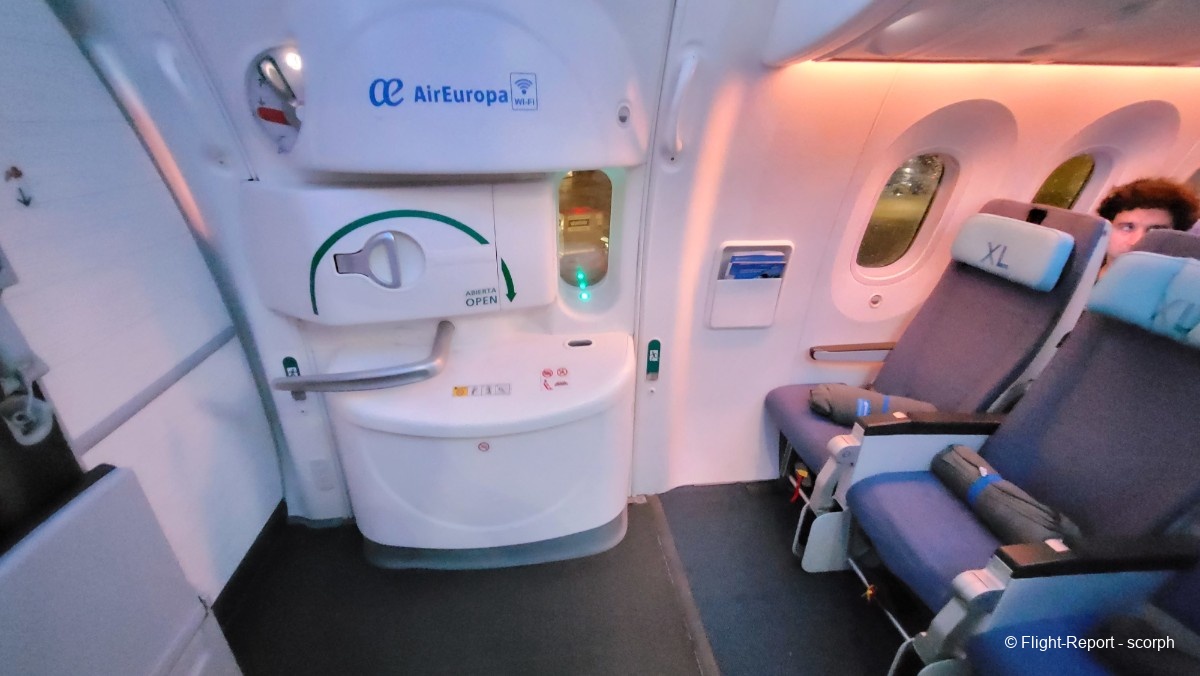
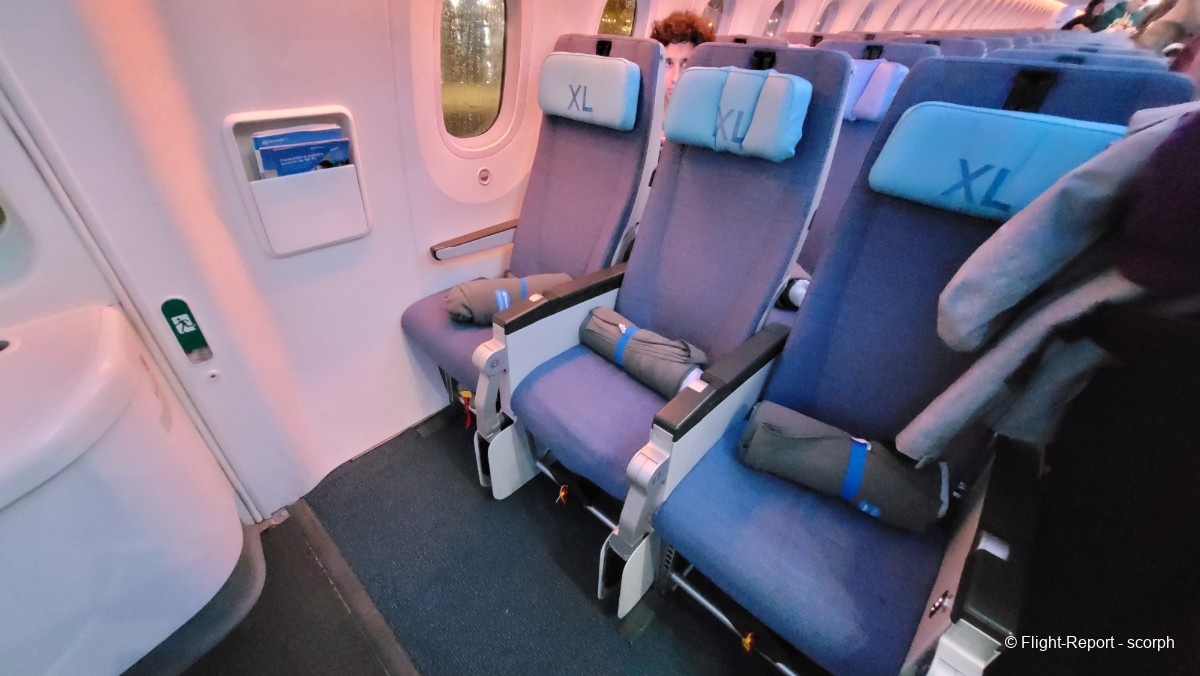
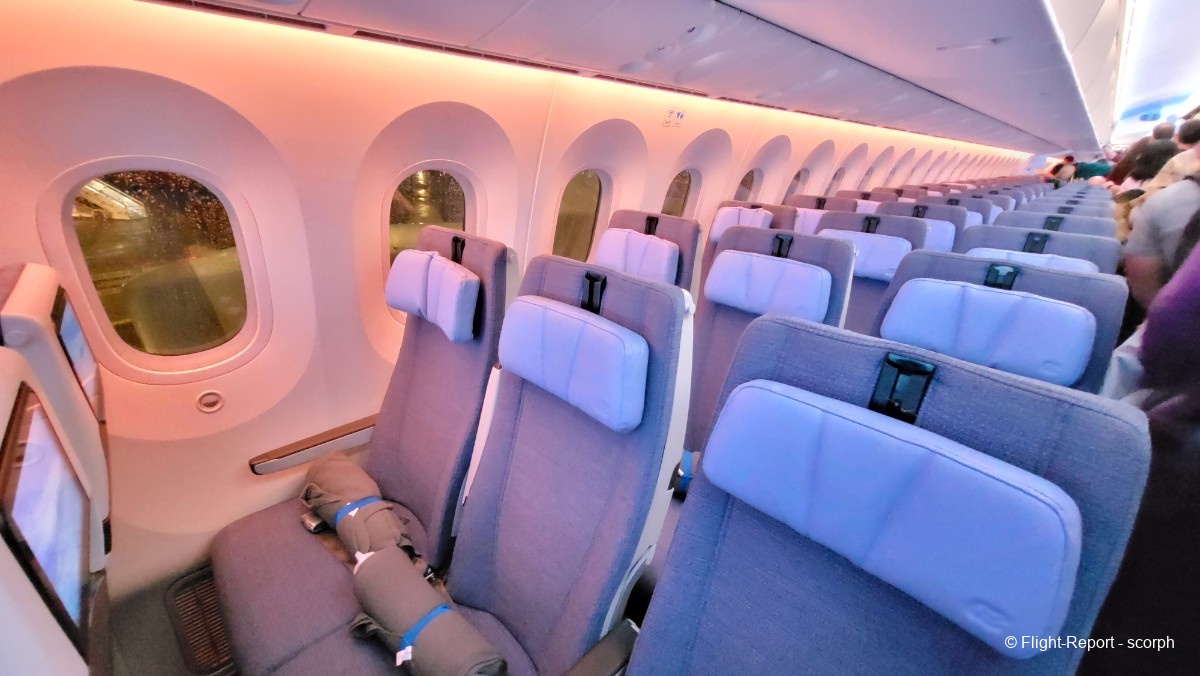
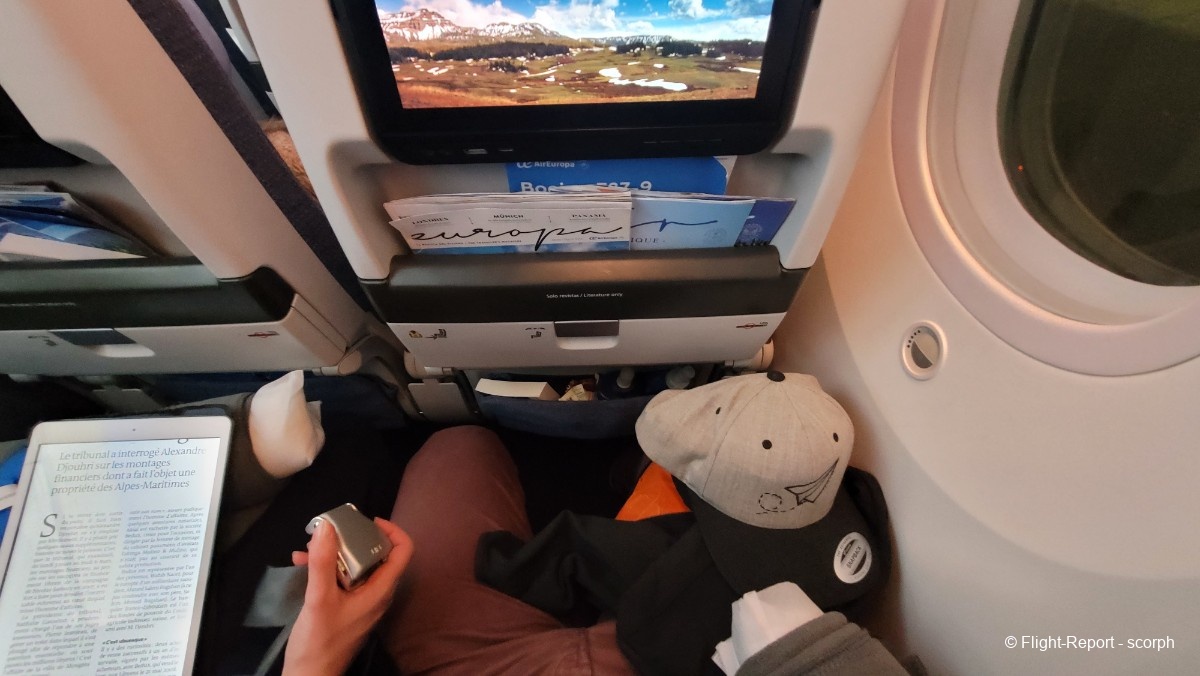
I arrive at our row and into my living space for the next 12 hours.
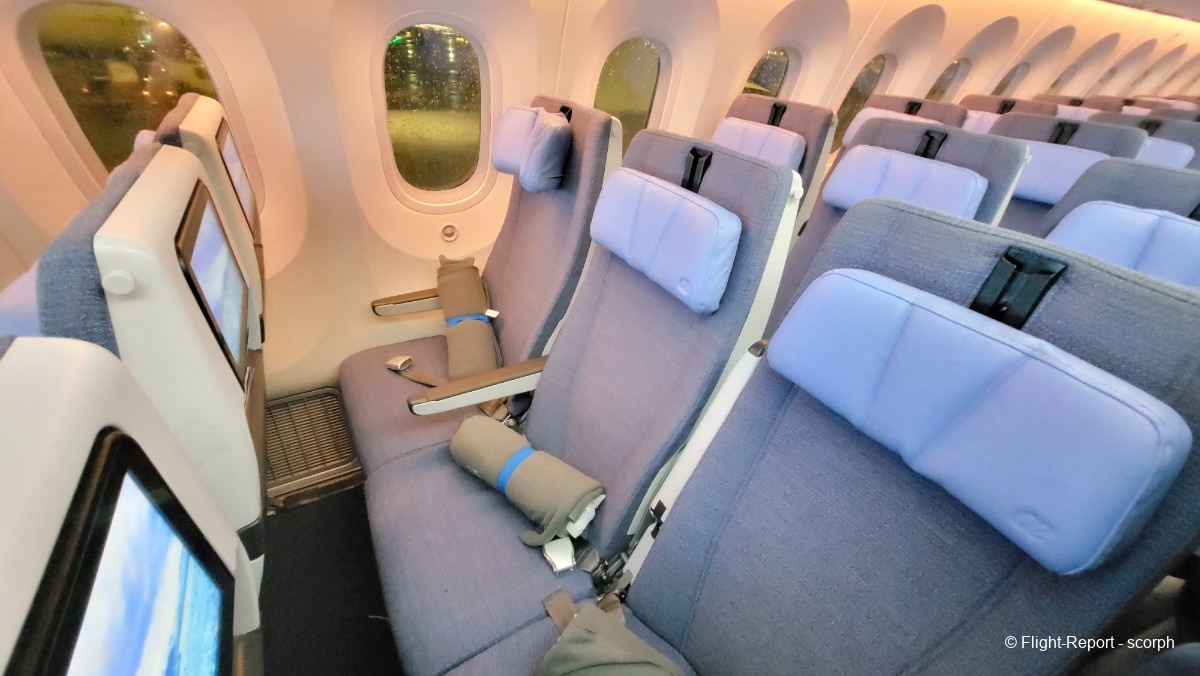
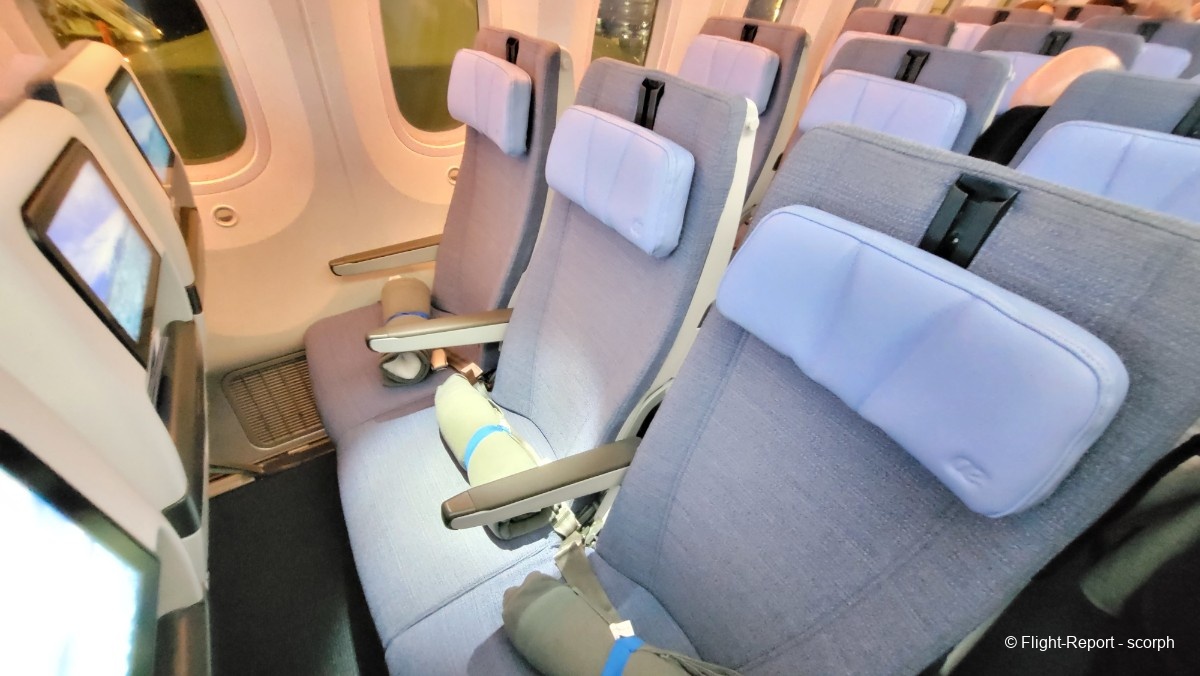
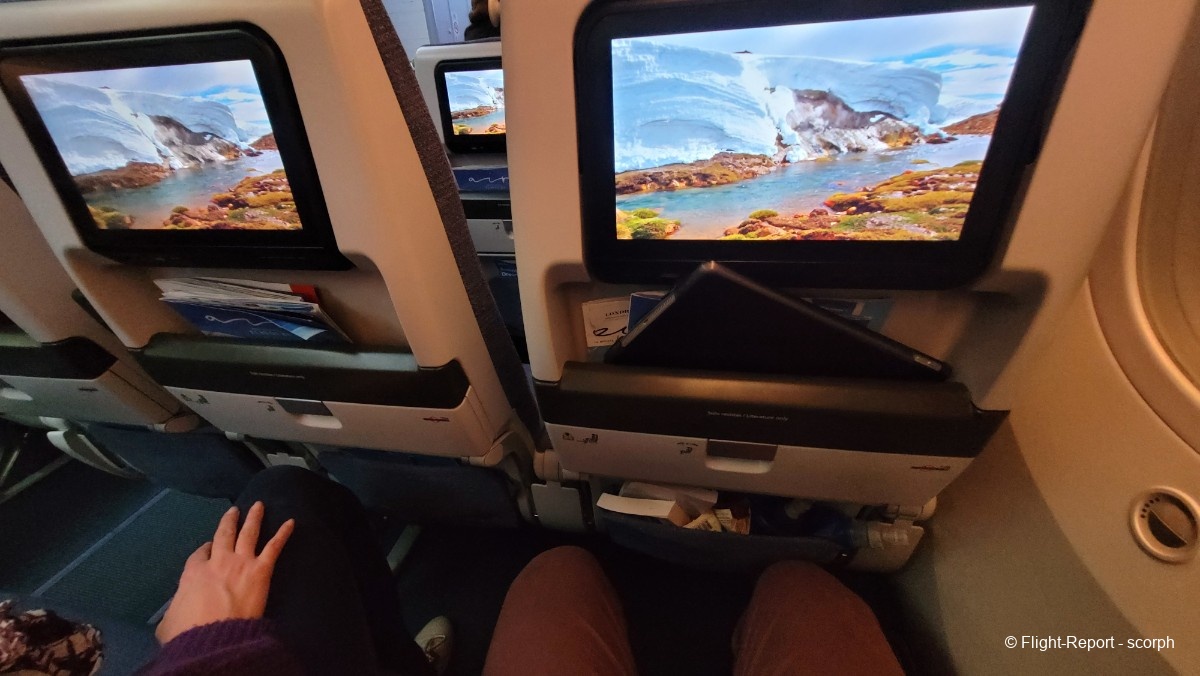
The only downside of this cabin on a long-haul flight remains the seat pitch. Fortunately, I’m not very tall, but for passengers over 1.80 meters, it must really become a problem.
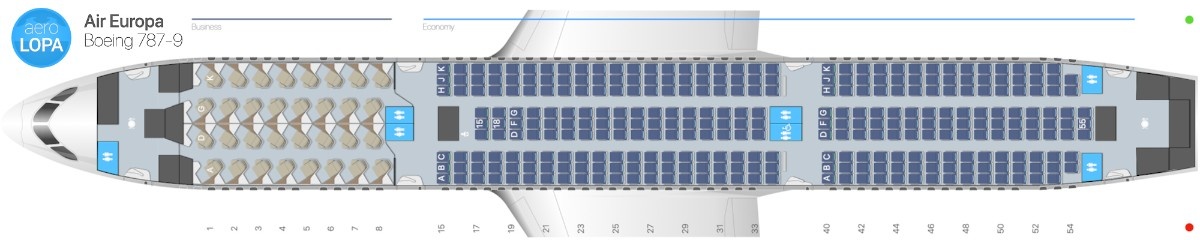
The cabin layout provided by the excellent Aerolopa website; as we can see, the configuration is rather dense for a B787-9, with a total of 339 passengers.
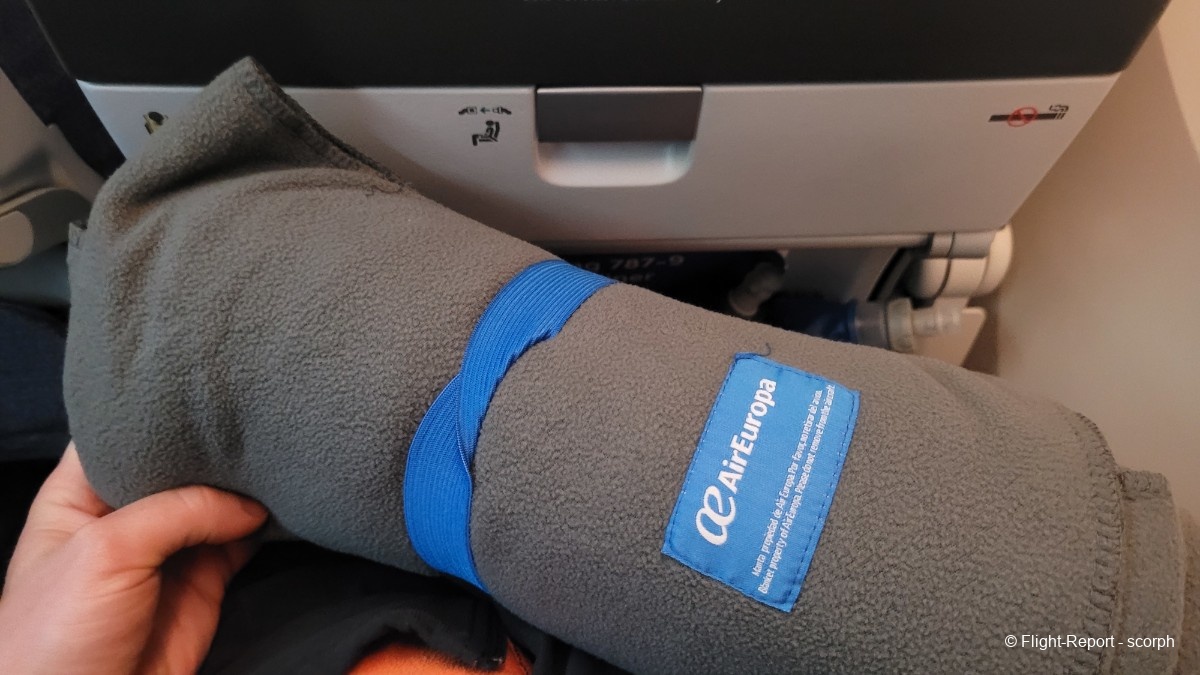
A blanket with a small pillow inside is available at the seat, and for once without excessive plastic packaging. I must admit I was pleasantly surprised: while the small cushion is very basic, the blanket is quite comfortable.
The window is perfectly aligned with my seat, even though for the start and a large part of the flight it won’t matter much given the day’s weather conditions and the fact that much of the journey is scheduled as a night flight.
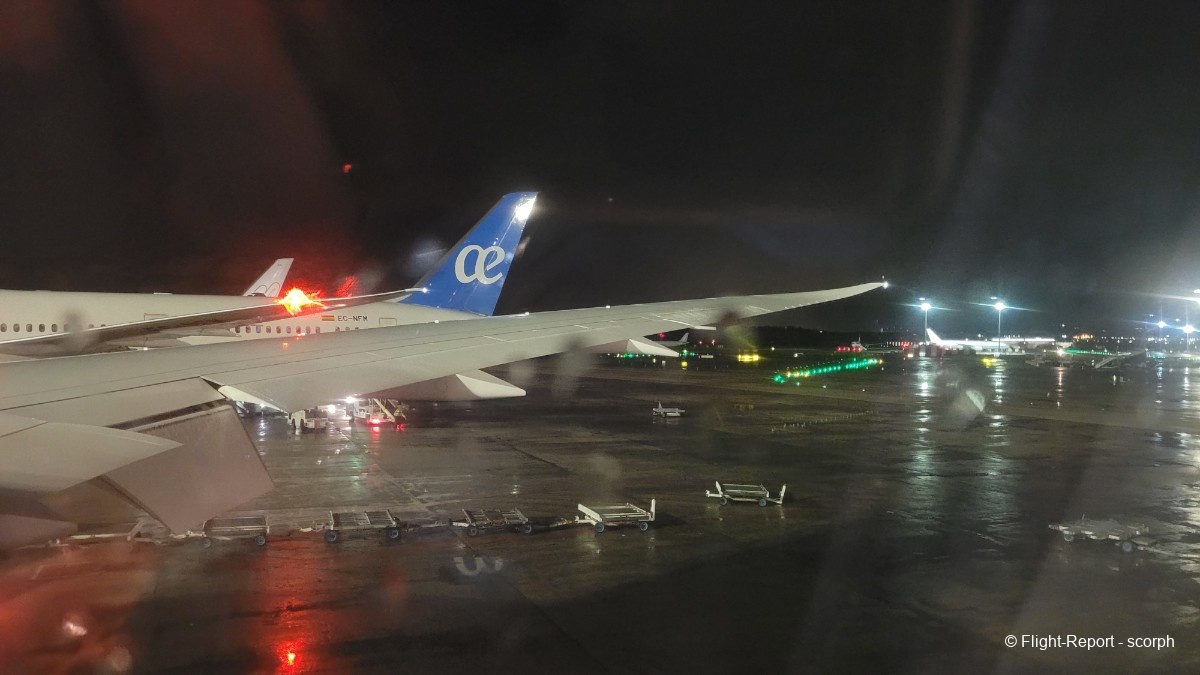
Boarding seems to have been completed for a while, but we are still waiting. Behind us, a very beautiful Aeromexico Boeing 787-9 in the Quetzal livery is pushing back for a departure bound for the capital, Mexico City.
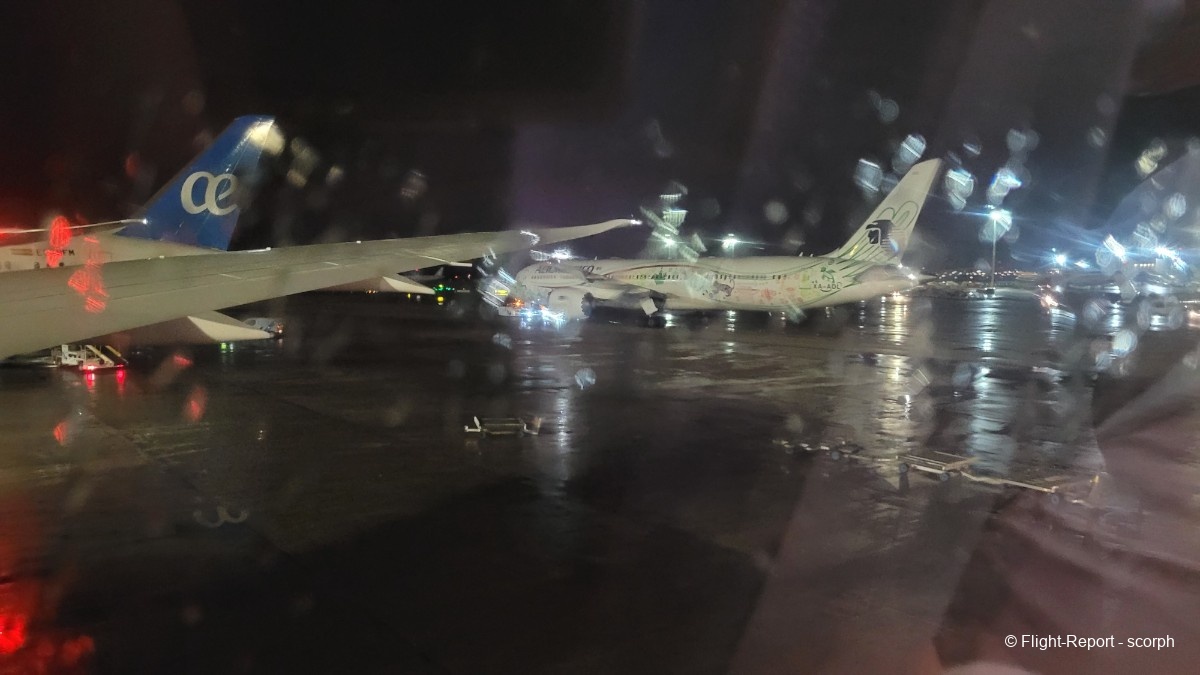
Boarding continues rather slowly. The flight will be almost full tonight, with only a few empty seats. The cabin crew will ask some volunteer passengers to change seats so that families with a baby can have more space, and also so that nearby passengers can avoid having a toddler too close to them ^^.
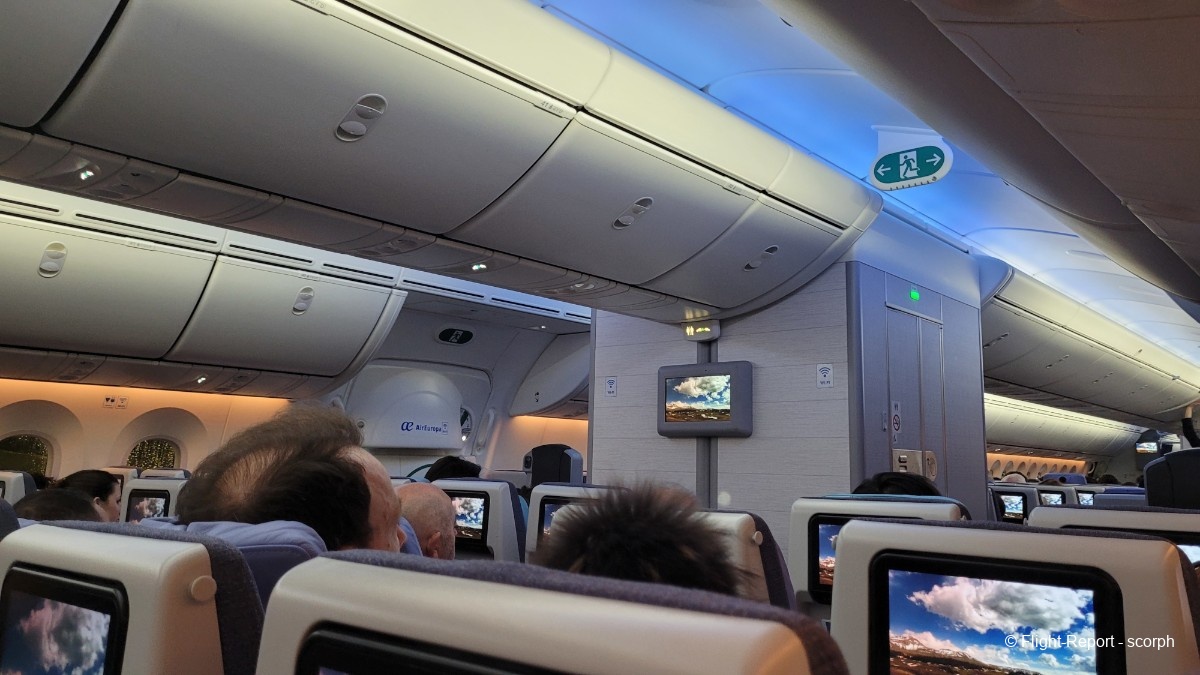
After a rather long wait, the safety demonstrations (bilingual Spanish/English) are shown on the in-flight entertainment screens.
We finally push back with a good half-hour delay compared to the scheduled time. The push toi place literally at the same time as our neighbor, another UX B787-9 bound for São Paulo.
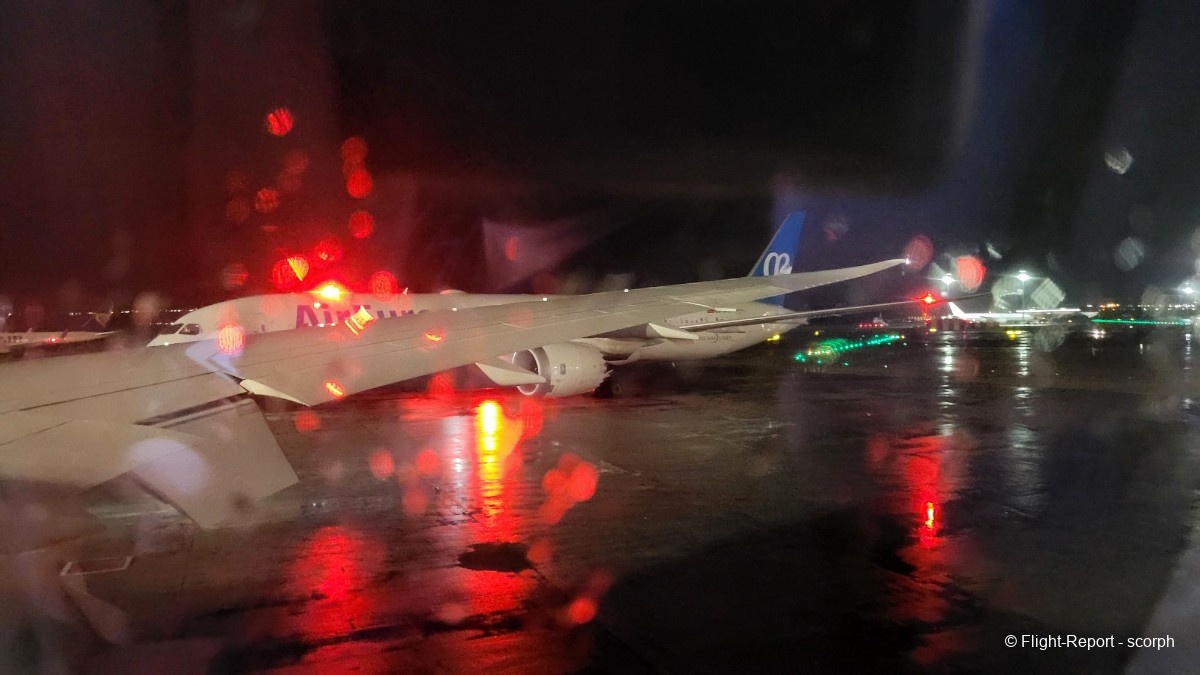
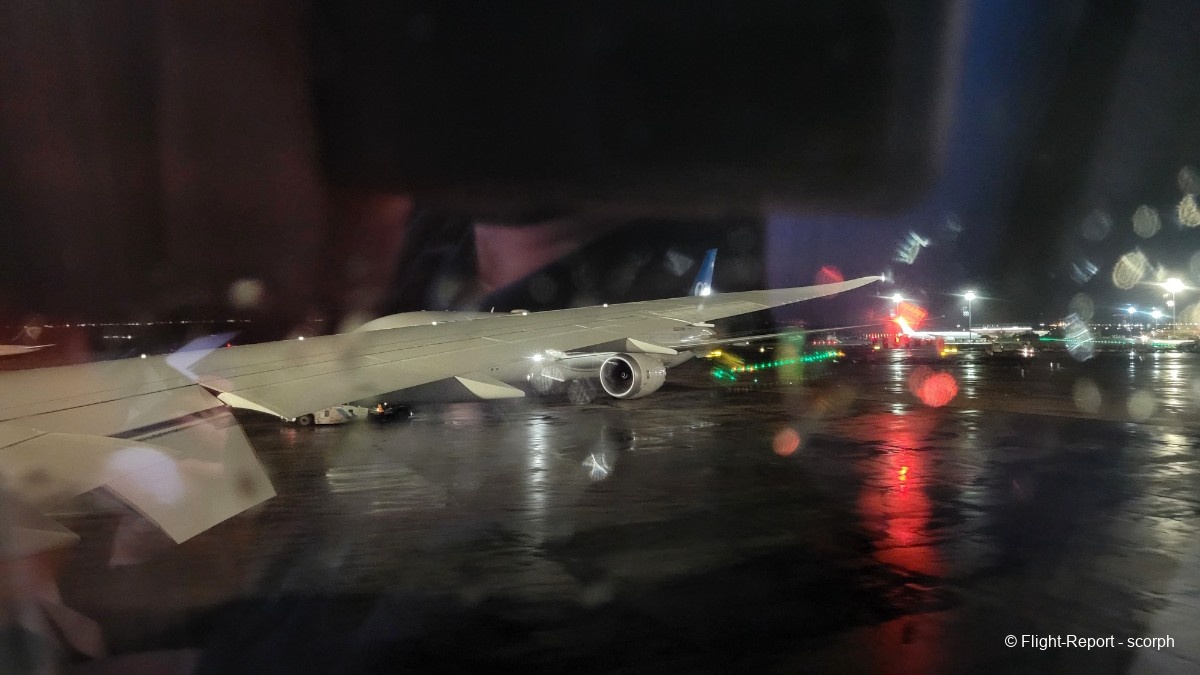
The taxi will be very, very long to reach the threshold of runway 14L, as many taxiways were closed for construction, forcing us to take a long detour that brought us almost to the level of Terminal 4.
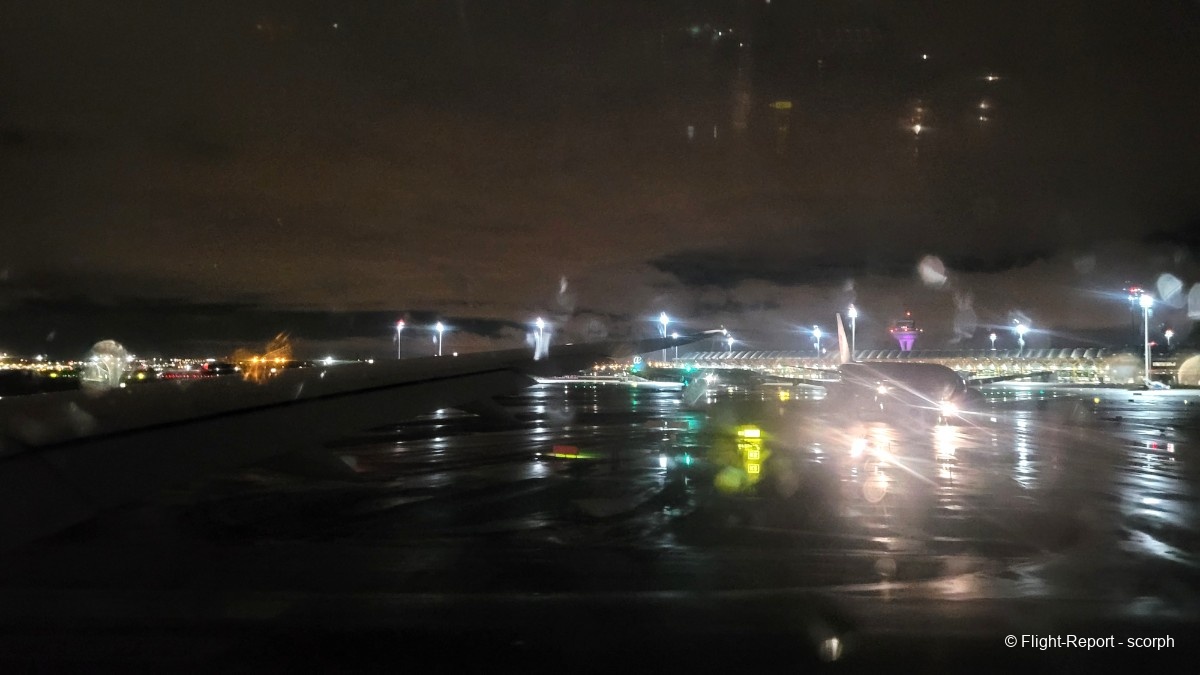
We then have to wait a few more seconds lined up on the runway for the wake turbulence from the preceding aircraft to dissipate before we are cleared for takeoff and our pilots push our two Rolls-Royce Trent 1000 engines to takeoff power.
Despite an aircraft heavily loaded with passengers and fuel for this long flight, we quickly gain altitude above the lights of the Spanish capital visible in the distance.
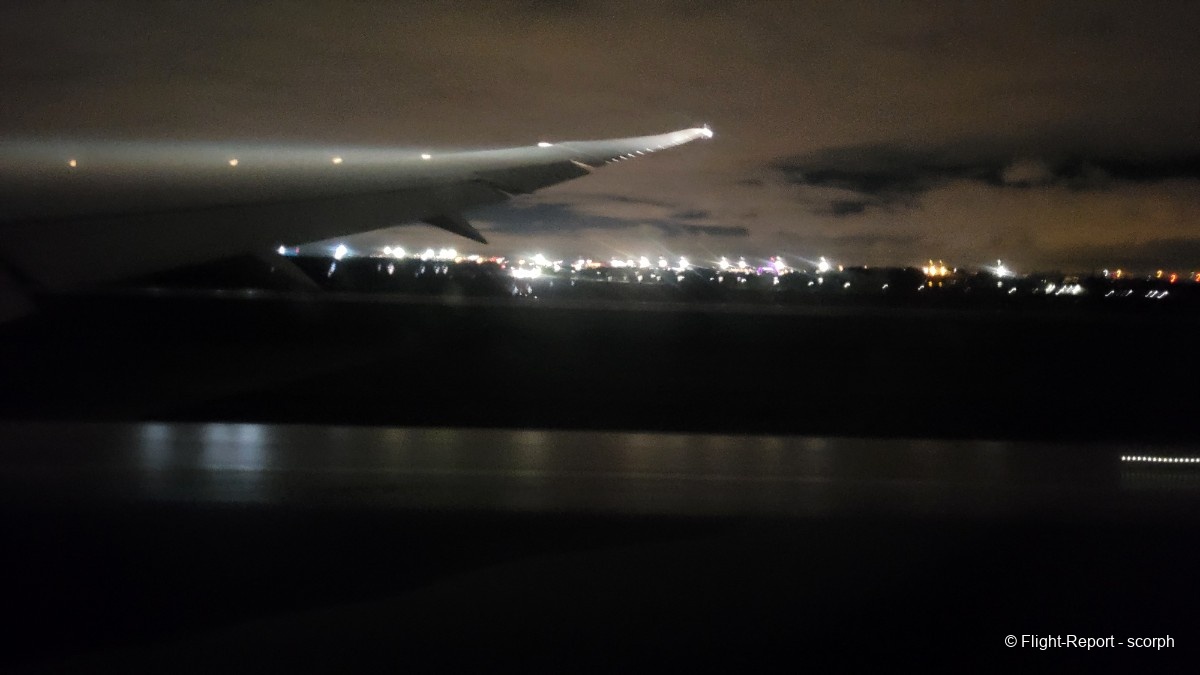
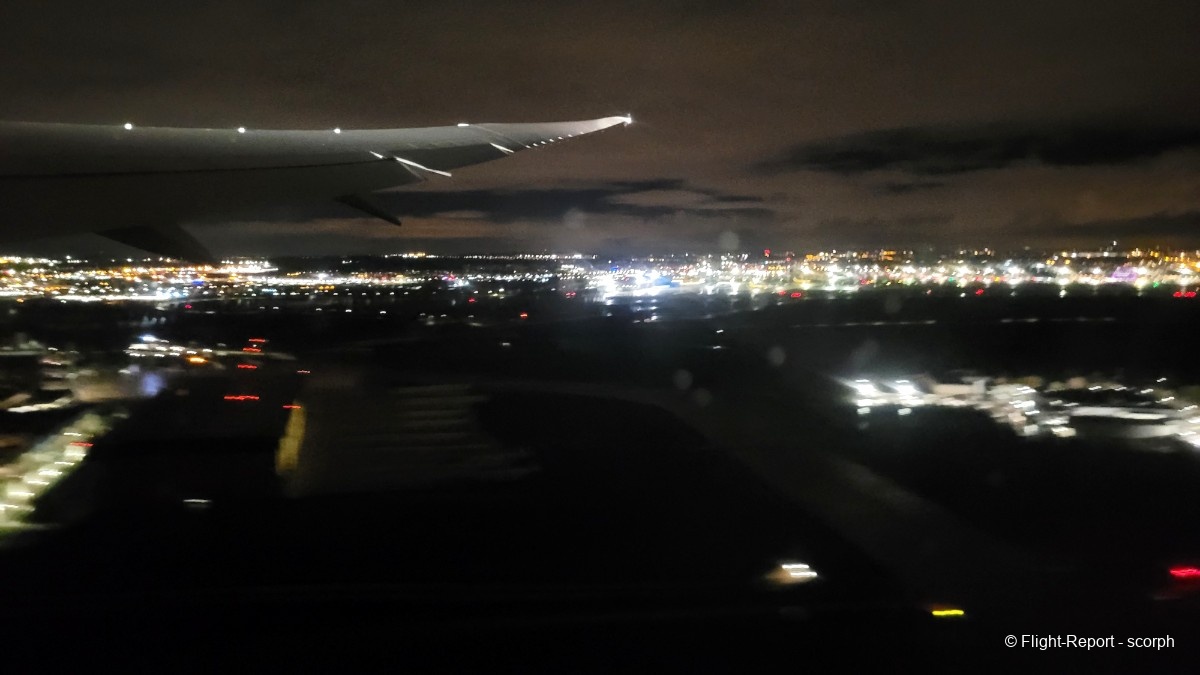
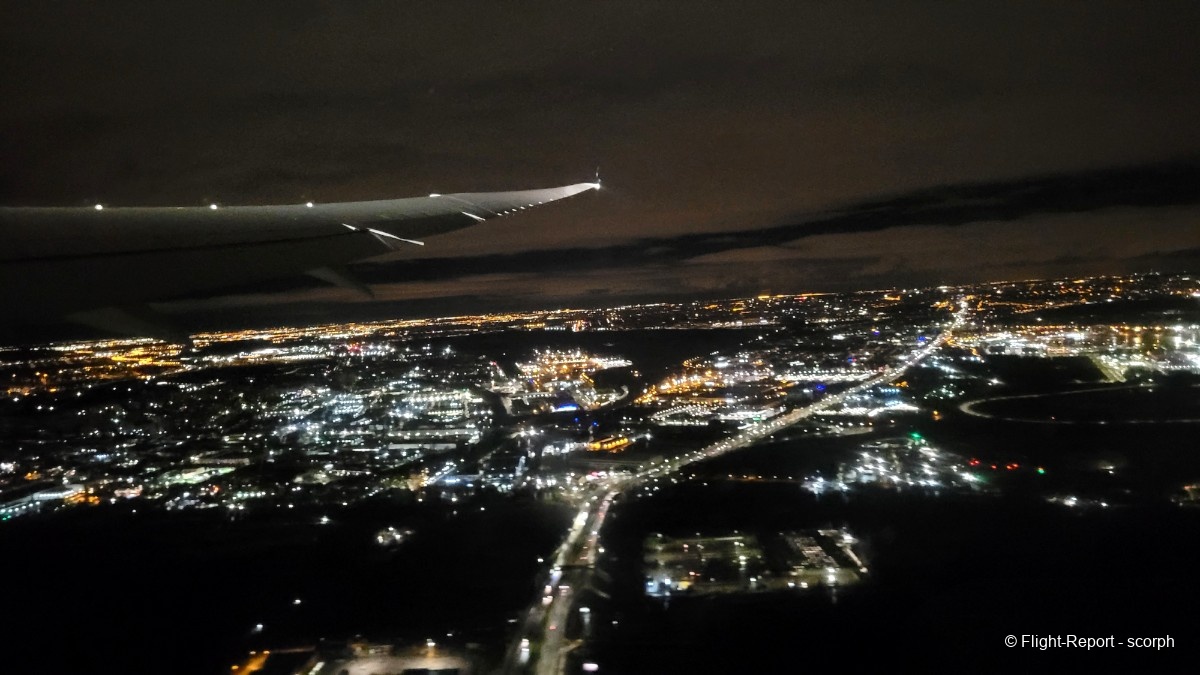
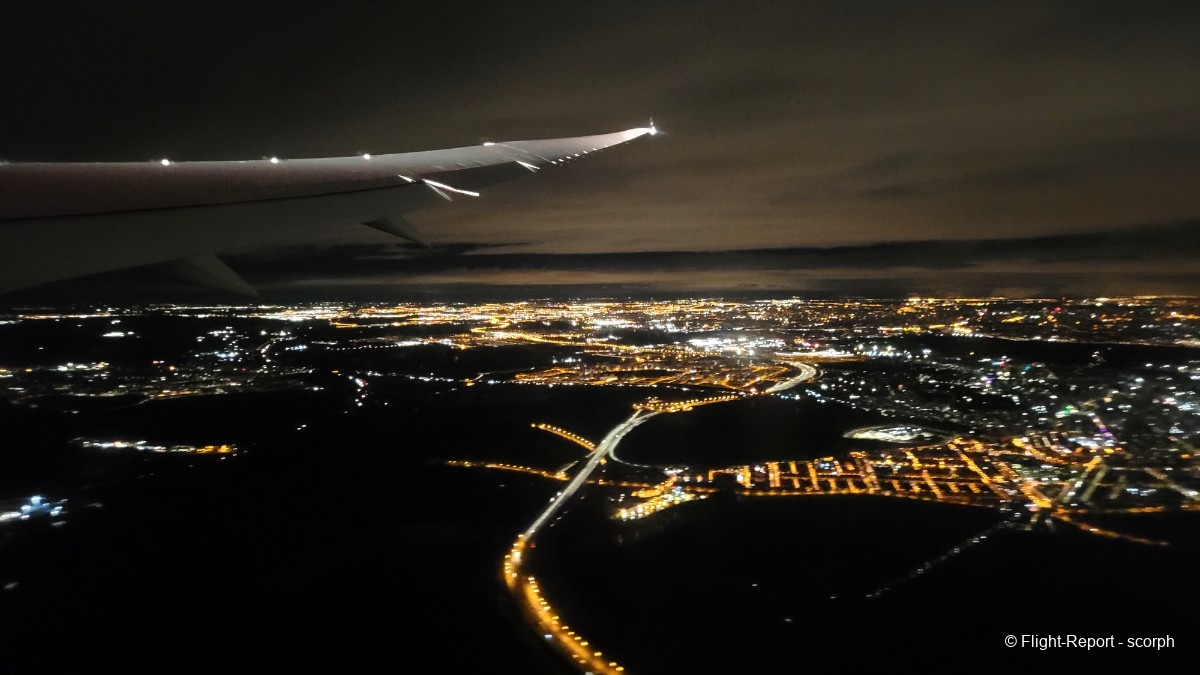
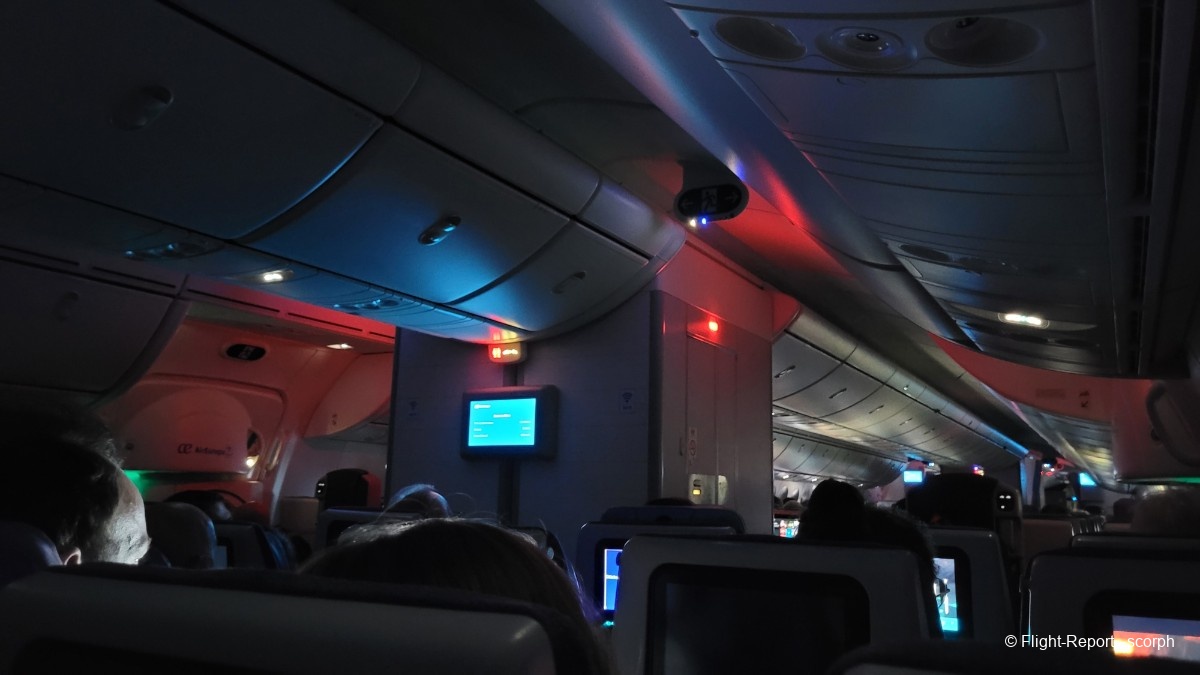
Of course, during taxi, takeoff, and the initial climb, the cabin lights are turned off as mandated by EASA regulation.
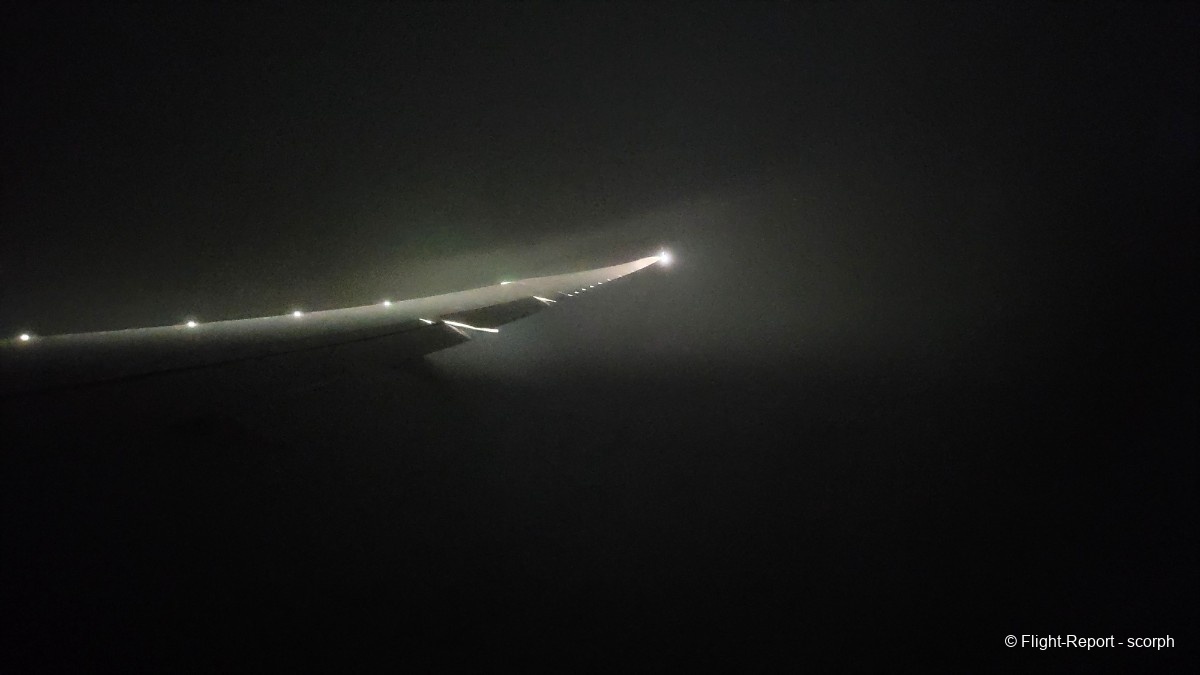
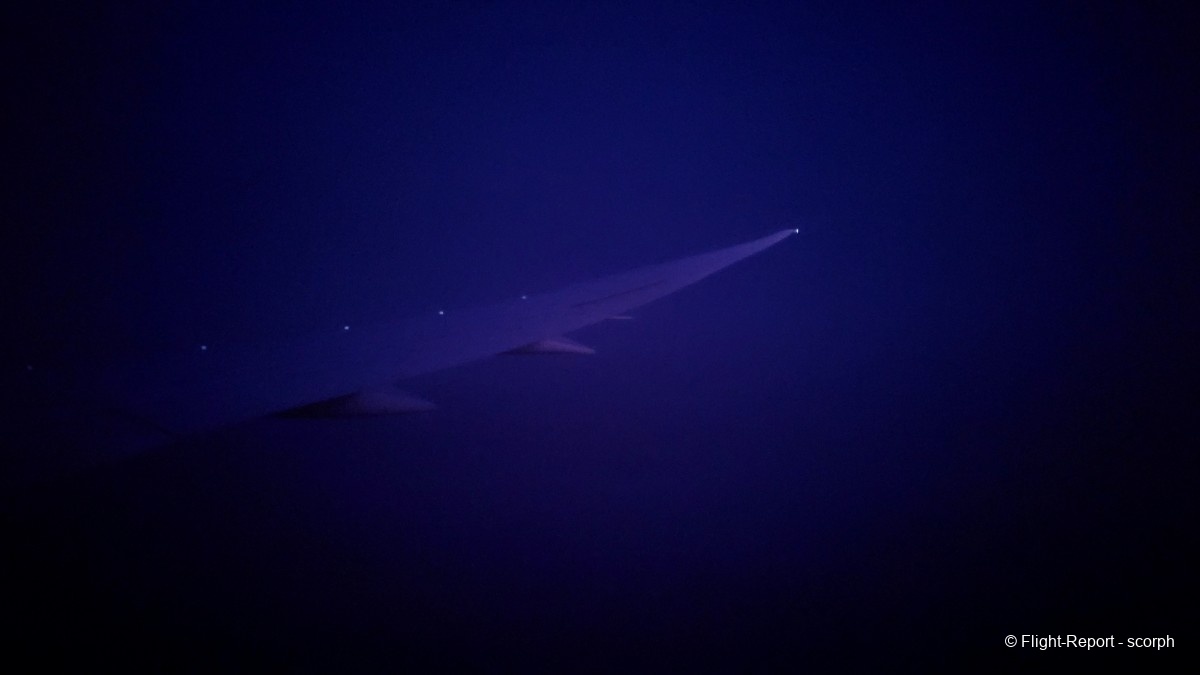
Illuminating the elegant, flexible wingtip of our 787 as it contrasts against the ink-black night.
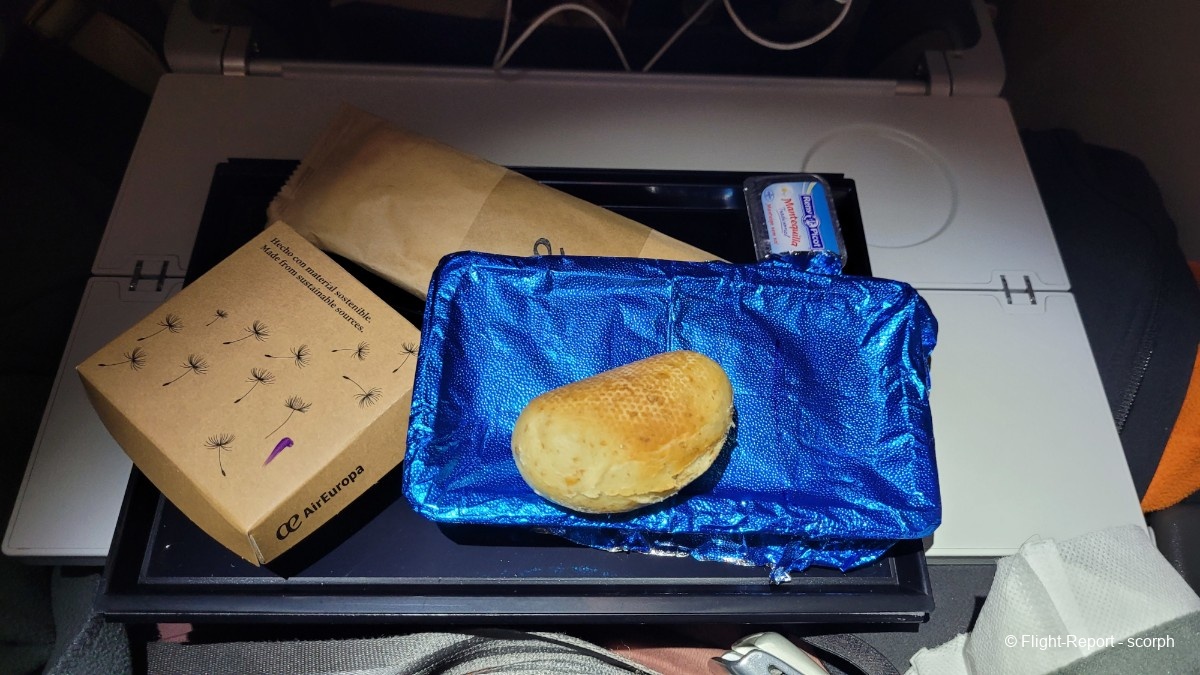
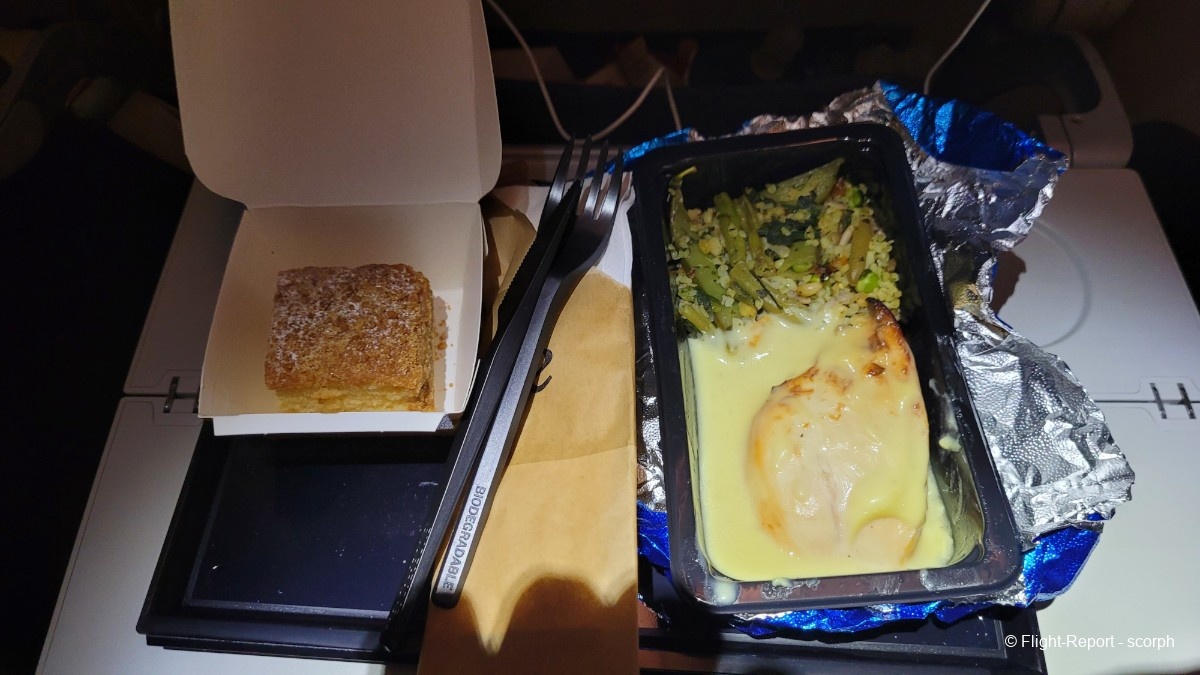
Just under two hours after takeoff, the trolley made its appearance. It was time for the traditional 'Chicken or Pasta' or in our case, '¿Pollo o pasta?'. Here is the tray as it was served.
Let’s be honest: this clearly isn't gourmet airline catering. However, even if it was very basic, the chicken was a good size and everything on the tray tasted good. The bread, while not high quality, was served warm. That little roll actually slipped away from me and remained missing for the rest of the flight. Fortunately, the crew made several passes to offer more bread to any passengers who wanted it.
Just after the meal, the passenger in the aisle seat informed us that he had taken a sleeping pill and that we should probably use the restroom now while we still could. Outside, even though it was dark, our winglet was still illuminated by the moonlight. It’s worth noting that the crew didn't use the central lockout system for the window dimmers, leaving passengers free to control them manually.
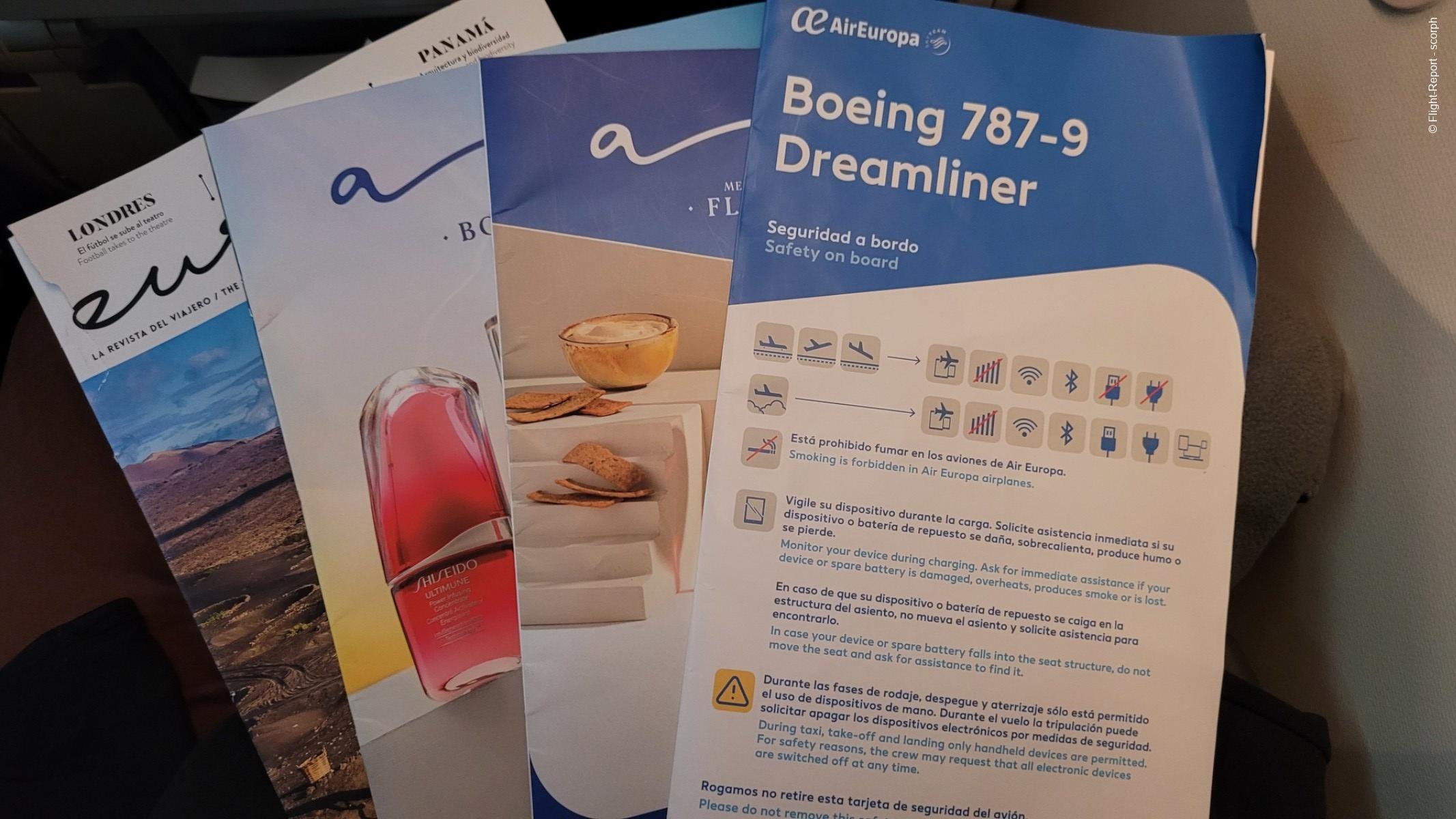
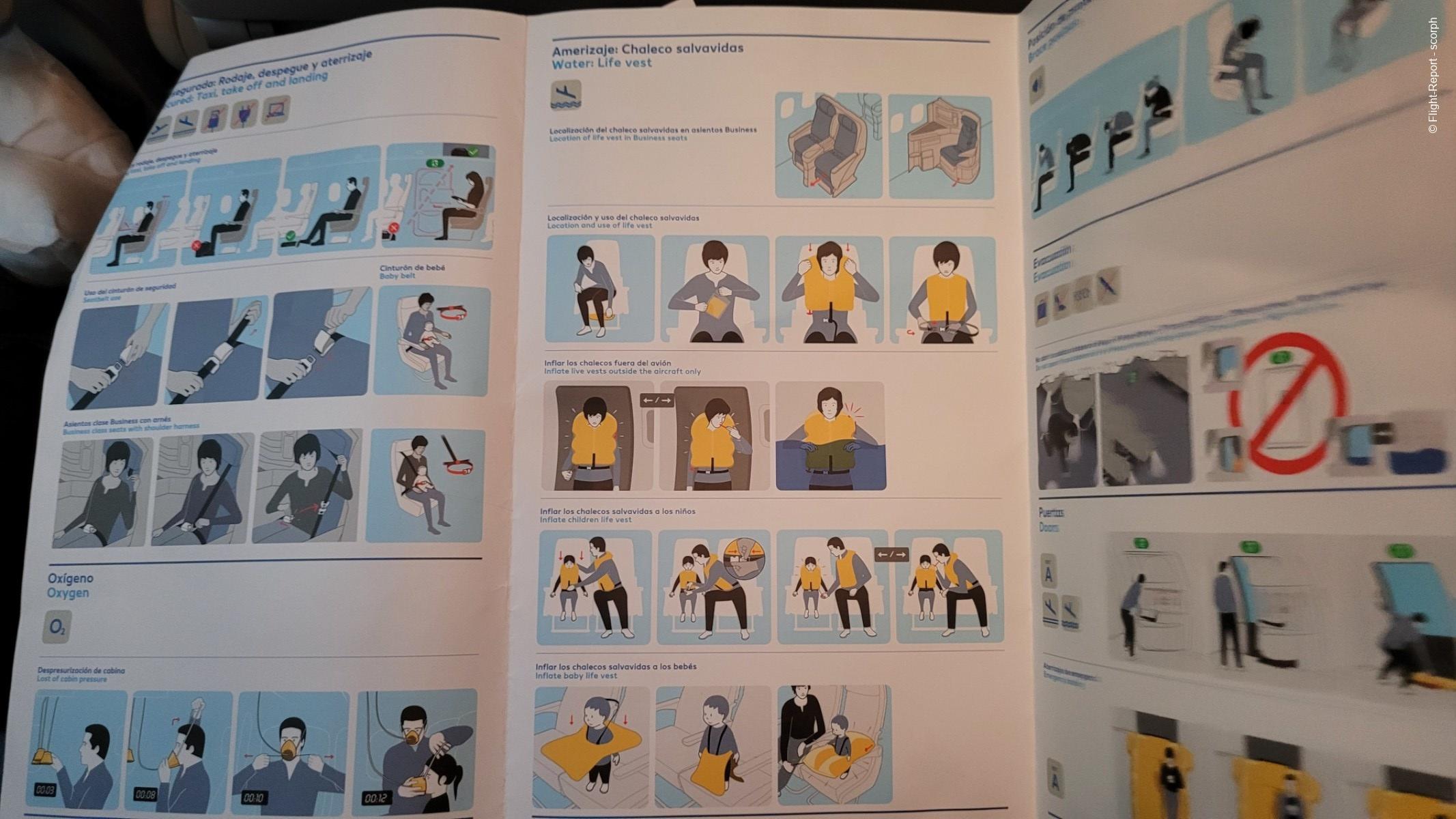
A look at the contents of the seat pocket, which contains several items; we start with the traditional three-fold safety card.
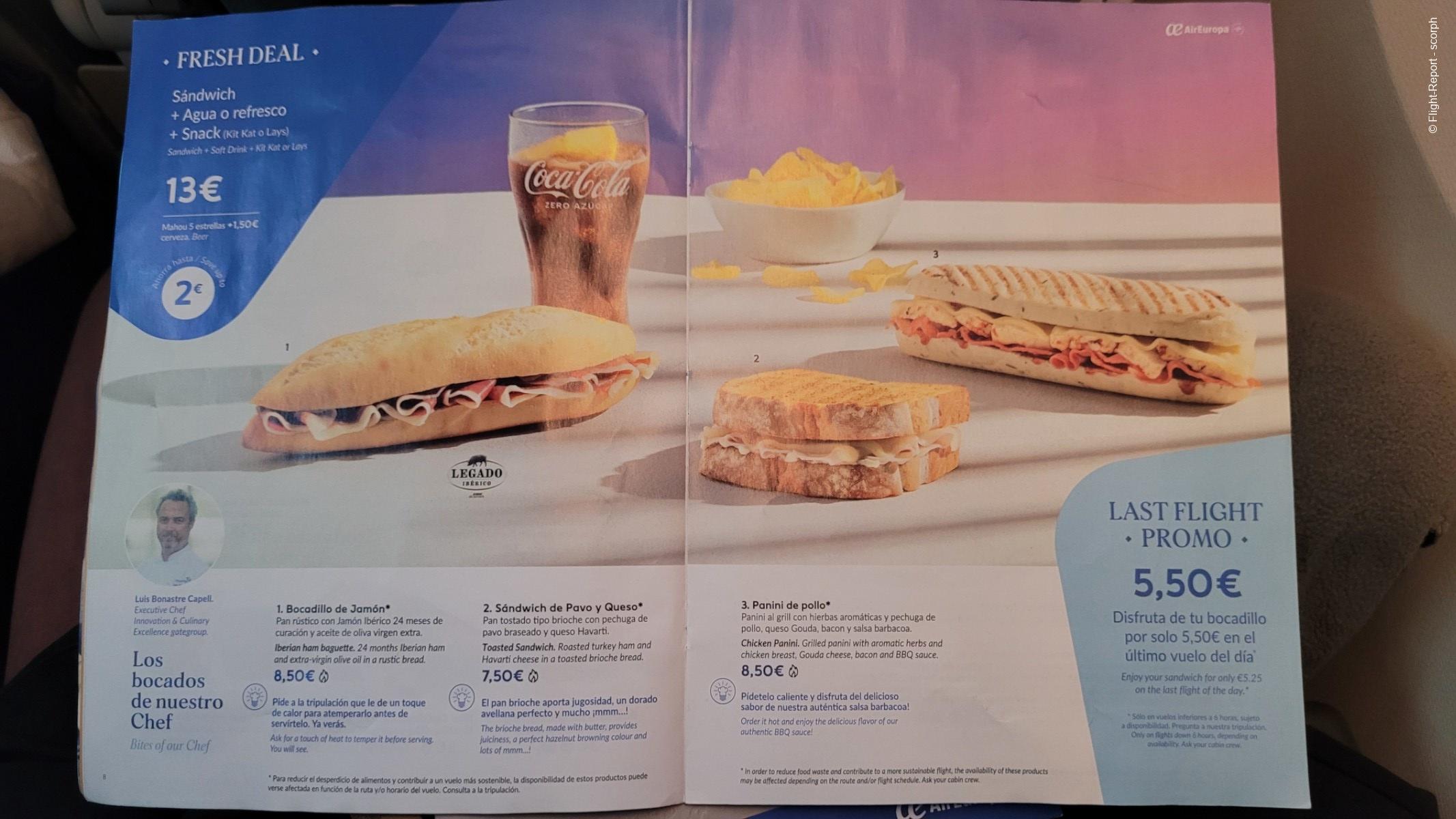
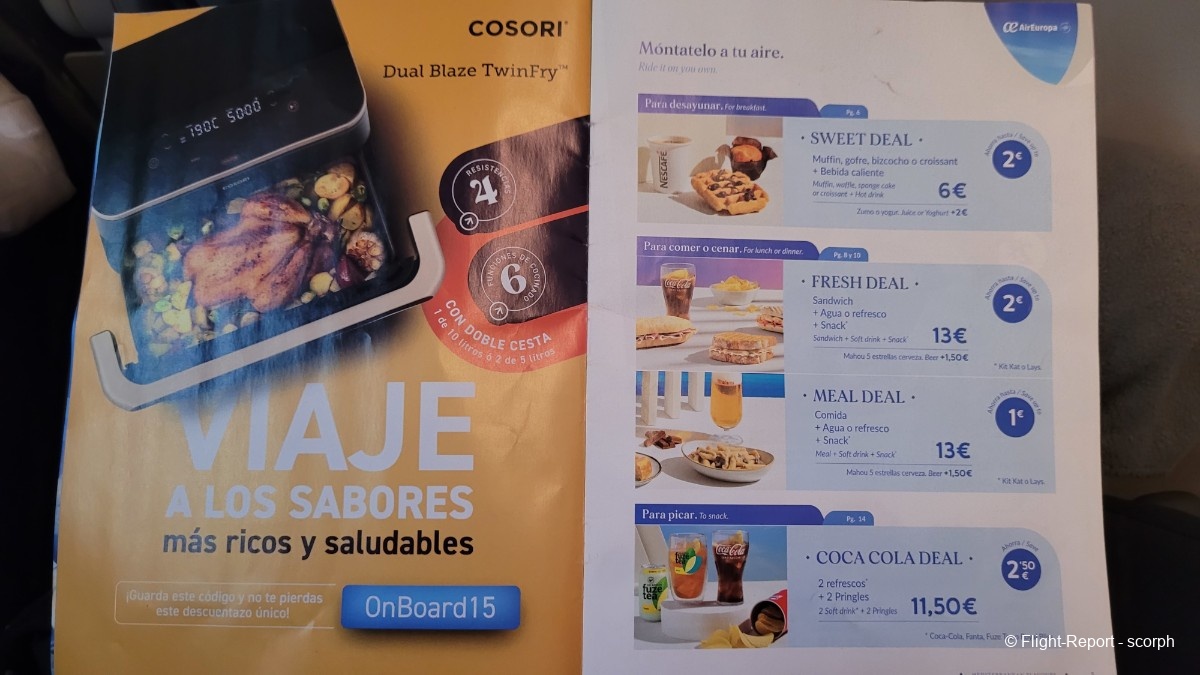
Another item that is rarer on a long-haul flight: an buy onboard magazine. In fact, Air Europa (UX) offers a BOB service on the European routes where they frequently deploy their Boeing 787s. On these long-haul flights, it is also possible to purchase certain à la carte items to supplement the meager catering offered by the Spanish carrier on its longest routes.
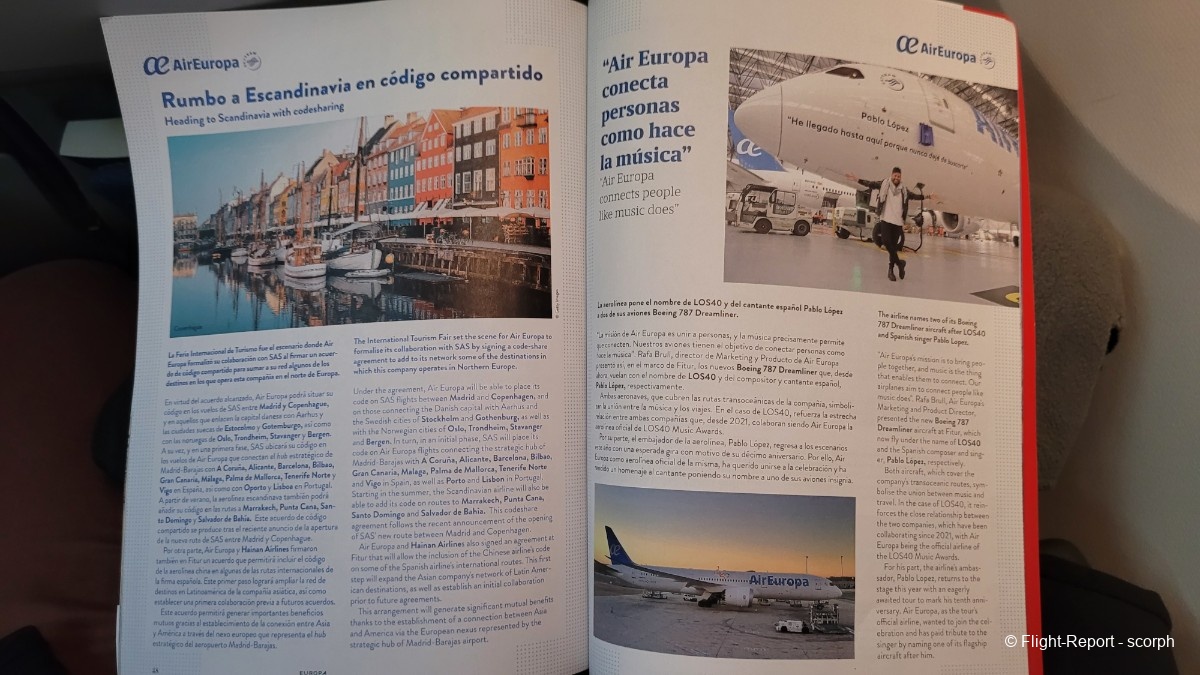
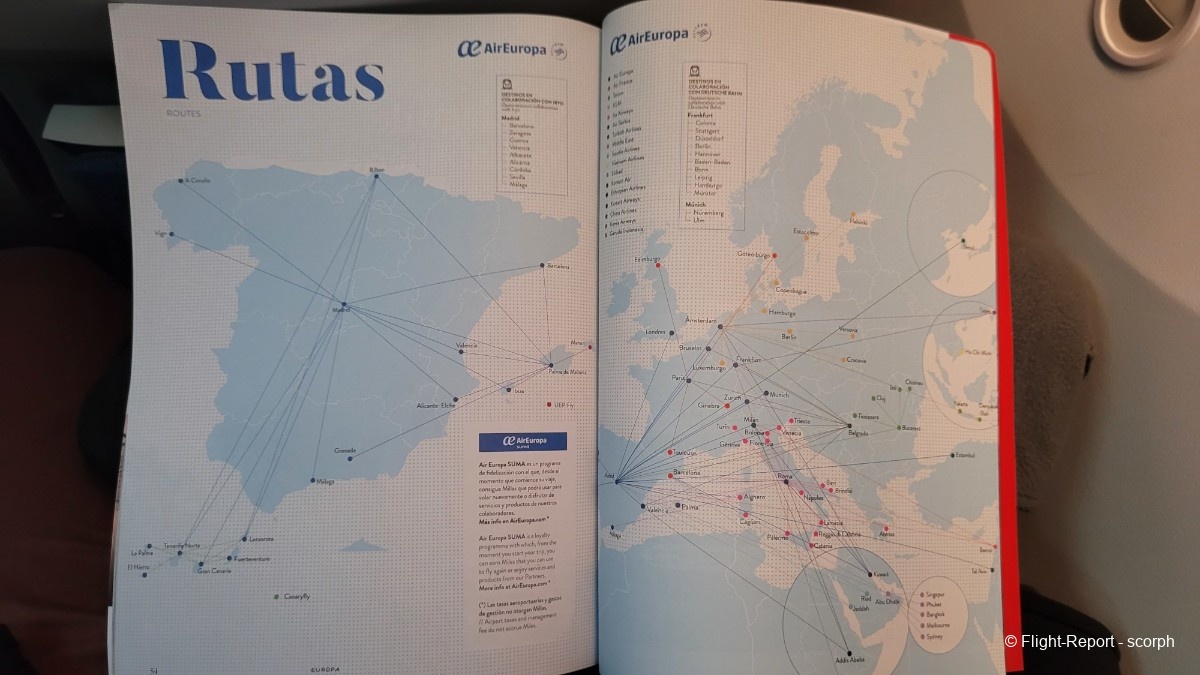
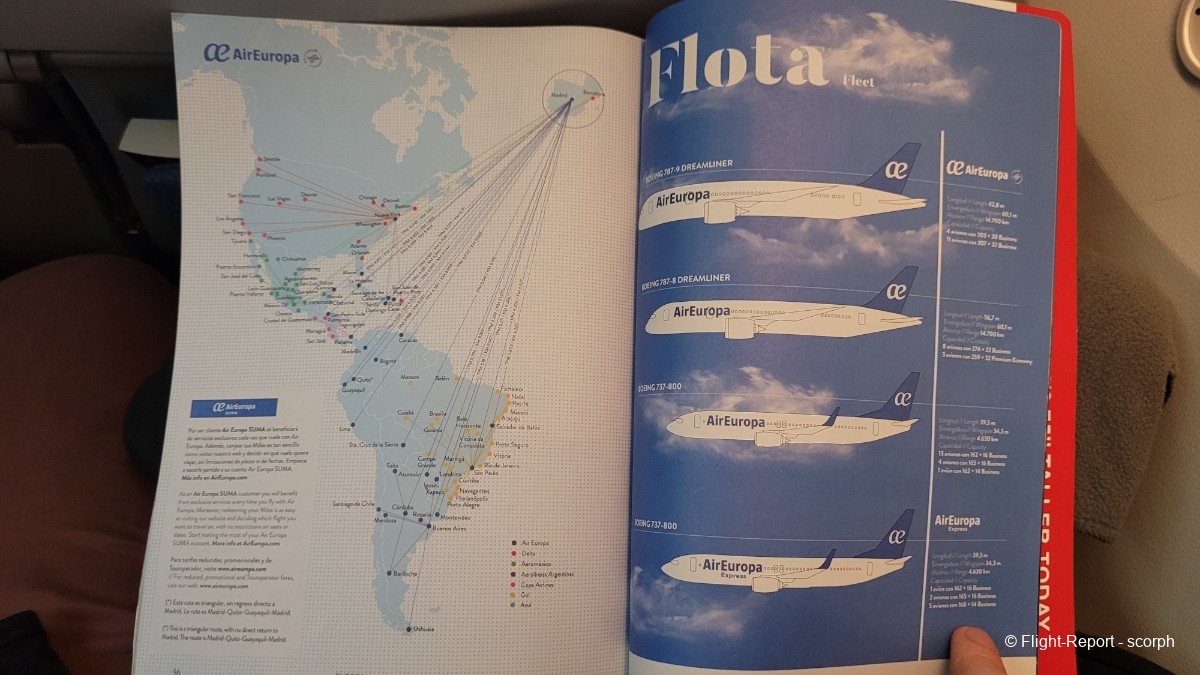
The seat pocket also contains a duty-free shopping magazine as well as the inflight magazine, simply titled Europa. Inside, you'll find a few travel features on destinations within the UX network, along with several corporate pages showcasing the airline, its latest news, its Latin America-centered network, and its 100% Boeing fleet.
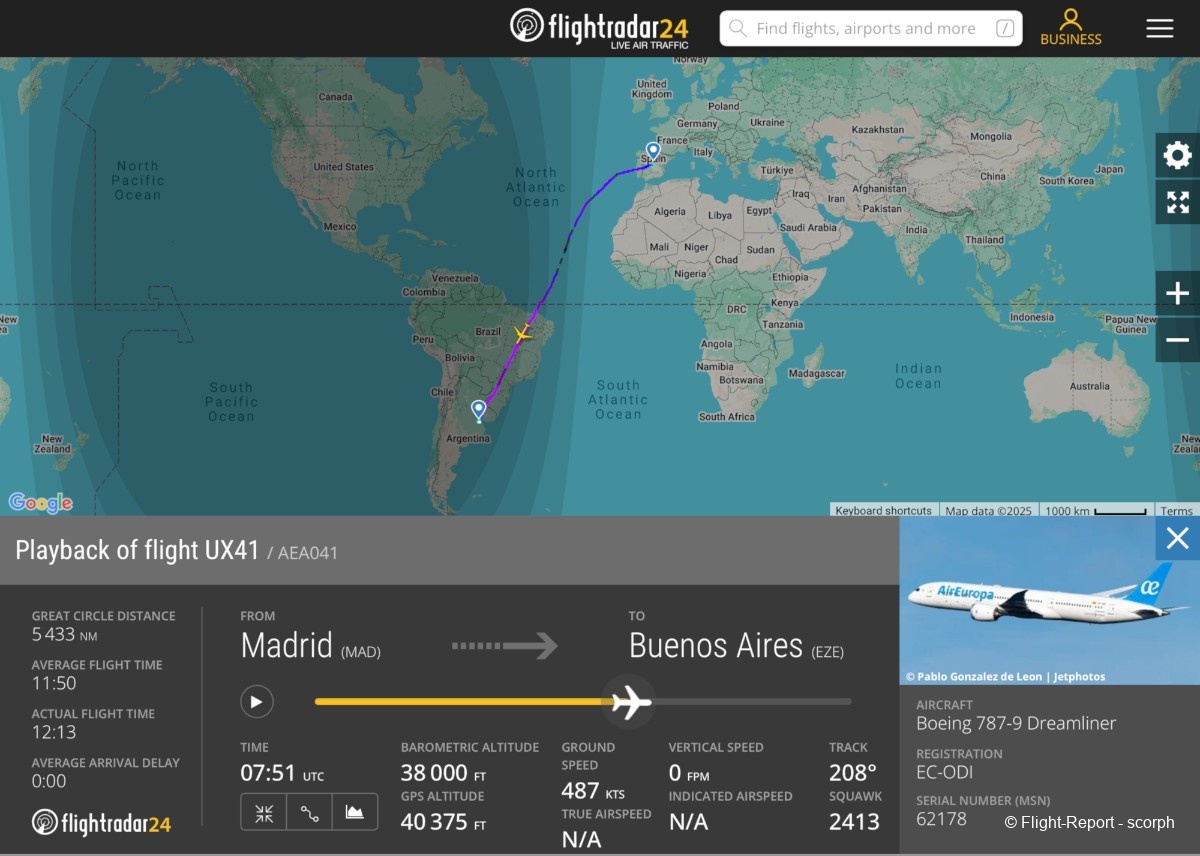
The flight path followed by today's flight was mostly flown at night, with a cruising altitude of 38,000 ft.
I spent a good portion of the flight entertaining myself with the IFE. All economy class seats are equipped with the Panasonic eX3 system which, although it is far from being one of the largest or most modern, remains of quite good quality.
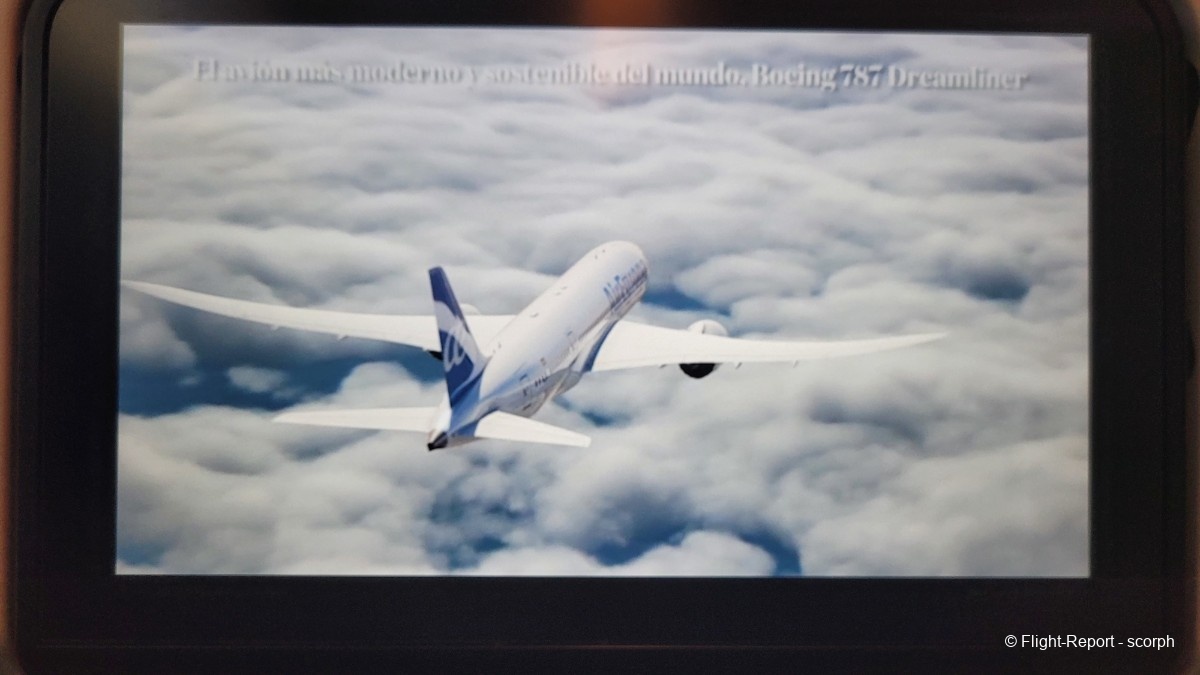
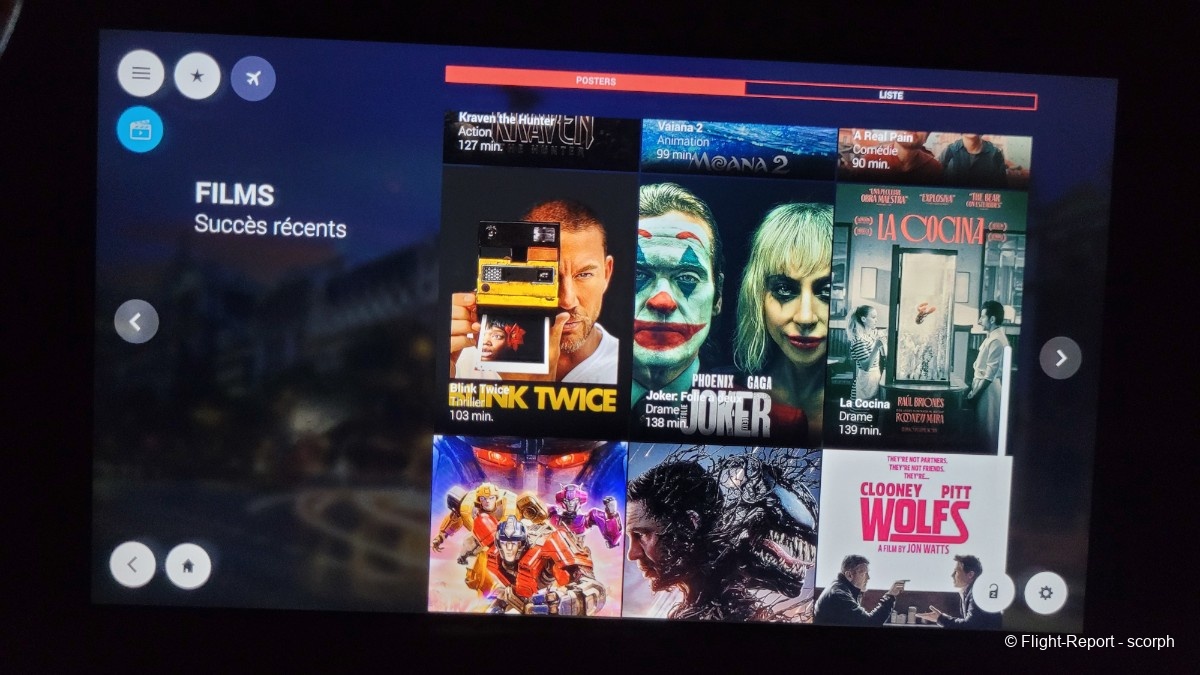
In terms of content, UX also pleasantly surprised me. Although it’s a far from the variety you’d find on IFEs from Turkish Airlines or Emirates, there is still plenty of choice with nearly sixty titles, including several recent releases. However, the music selection is where it falls short you'll have to make do with a few generic playlists.
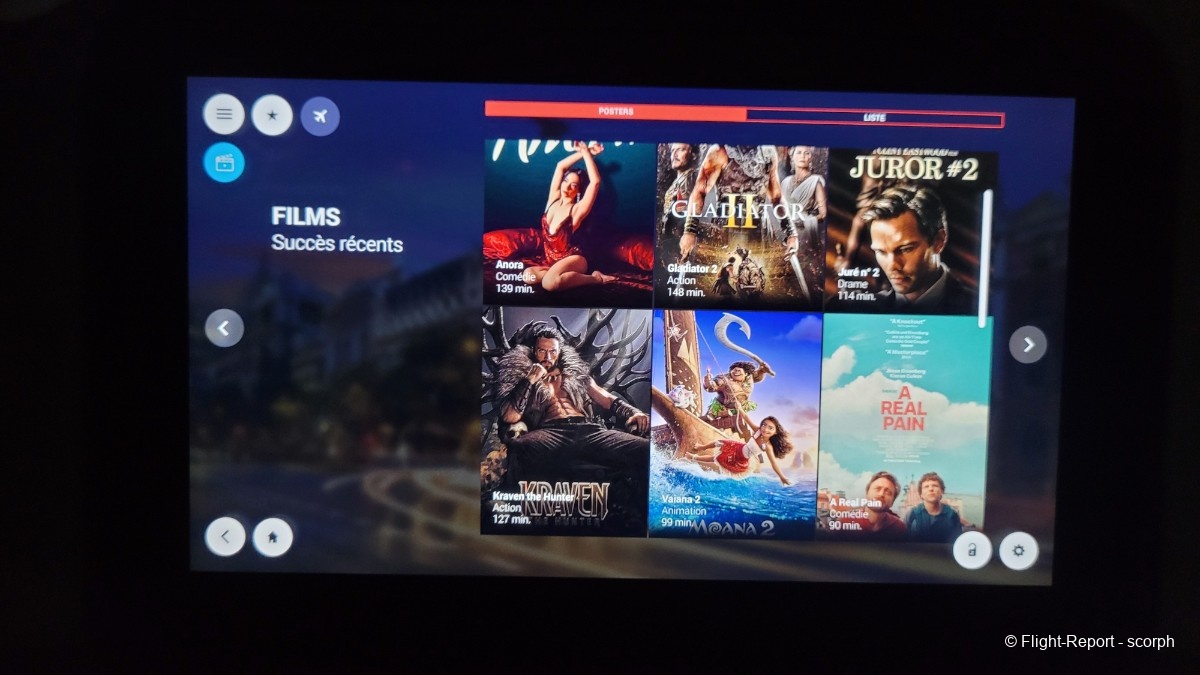
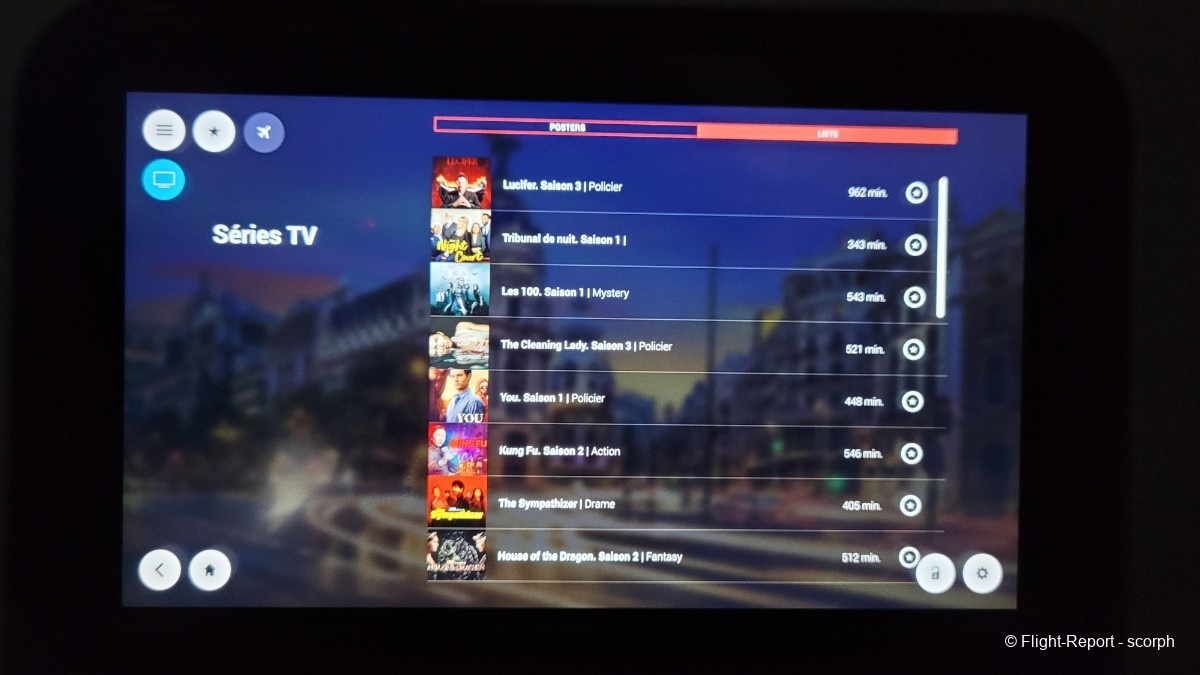
One great feature is the TV series section; there are plenty of titles, but more importantly and unlike the majority of airlines, they offer full seasons!
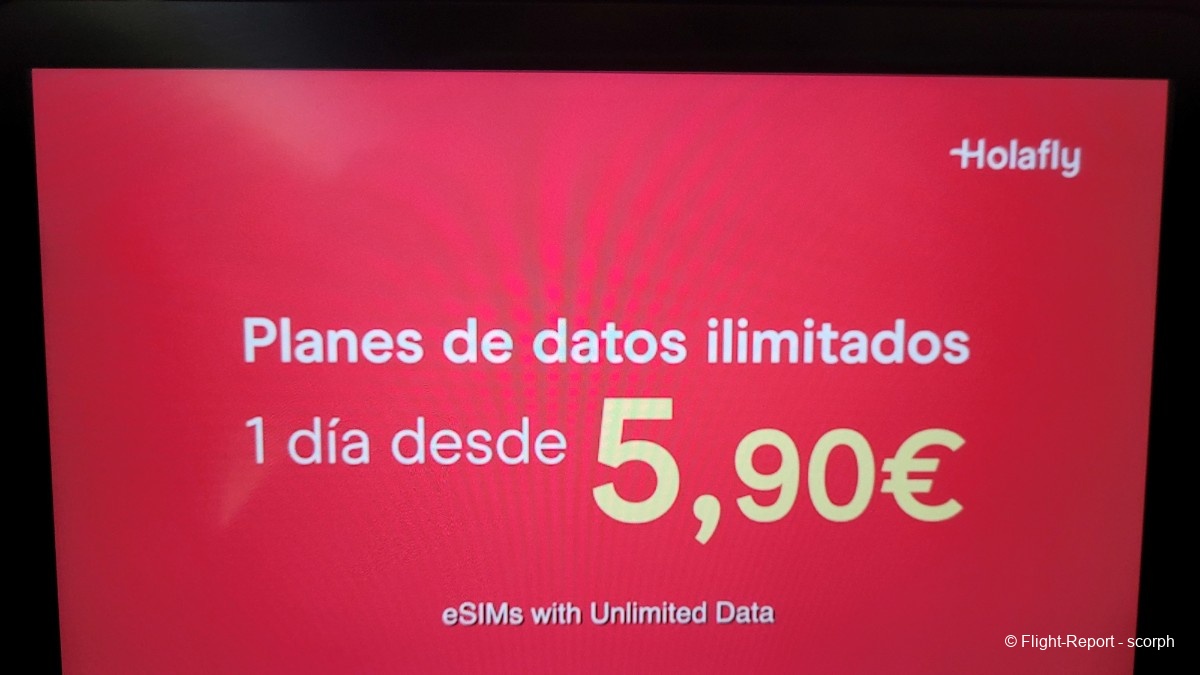
On the other hand, you'll have to sit through a short ad for a Hispanic SIM provider whose company name could easily be confused with an airline.
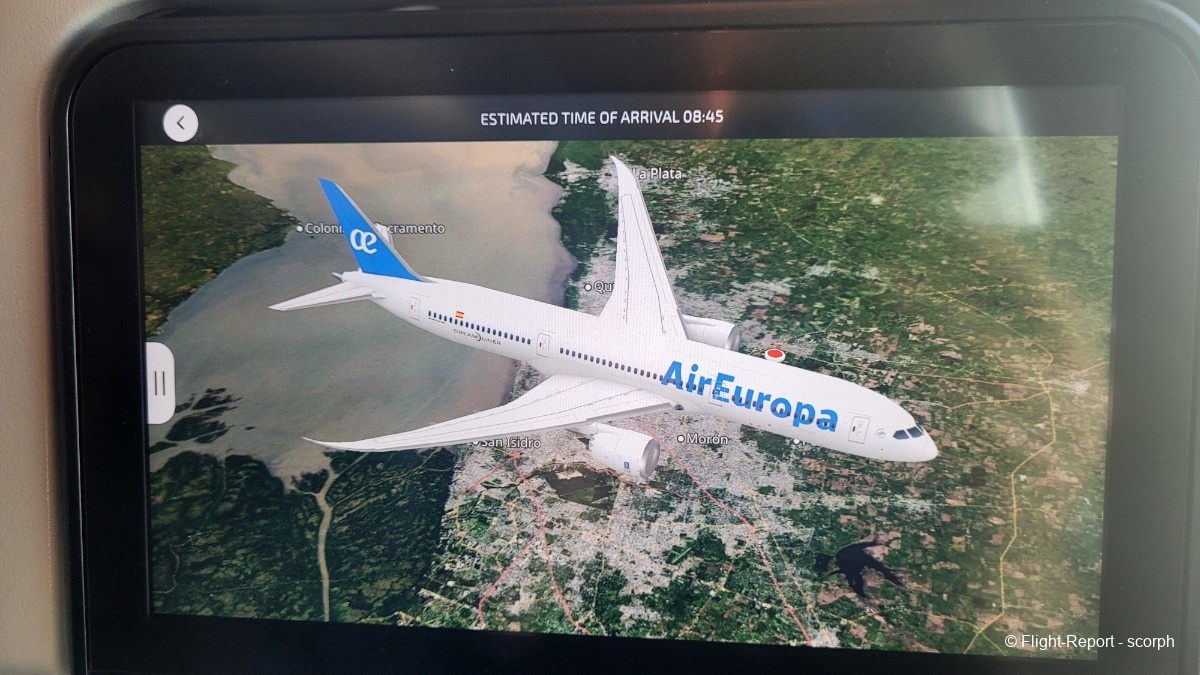
As for the moving map, it features the Flightpath3D suite, which is also excellent, offering many different views and a perfectly modeled aircraft.
I dozed off for a few hours and spent a good part of my time watching the series « The 100 ». When I woke up, the sun had already risen over a high-altitude sea of clouds. There's no denying it the 787 wing is a truly beautiful piece of engineering.
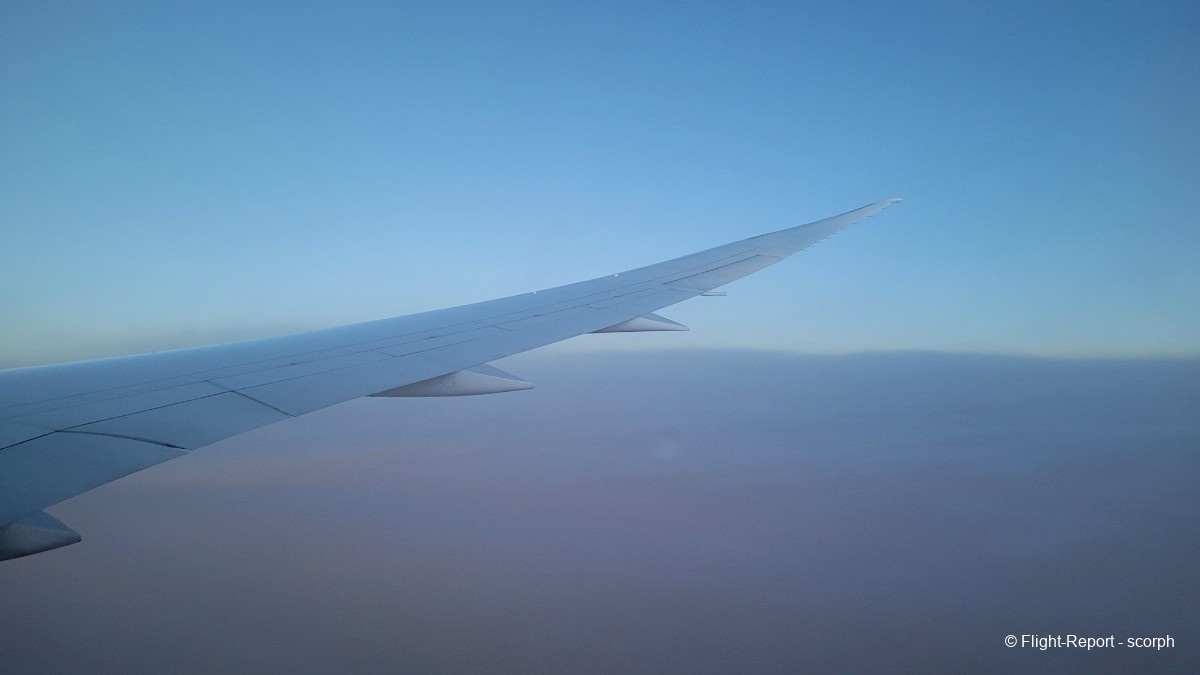
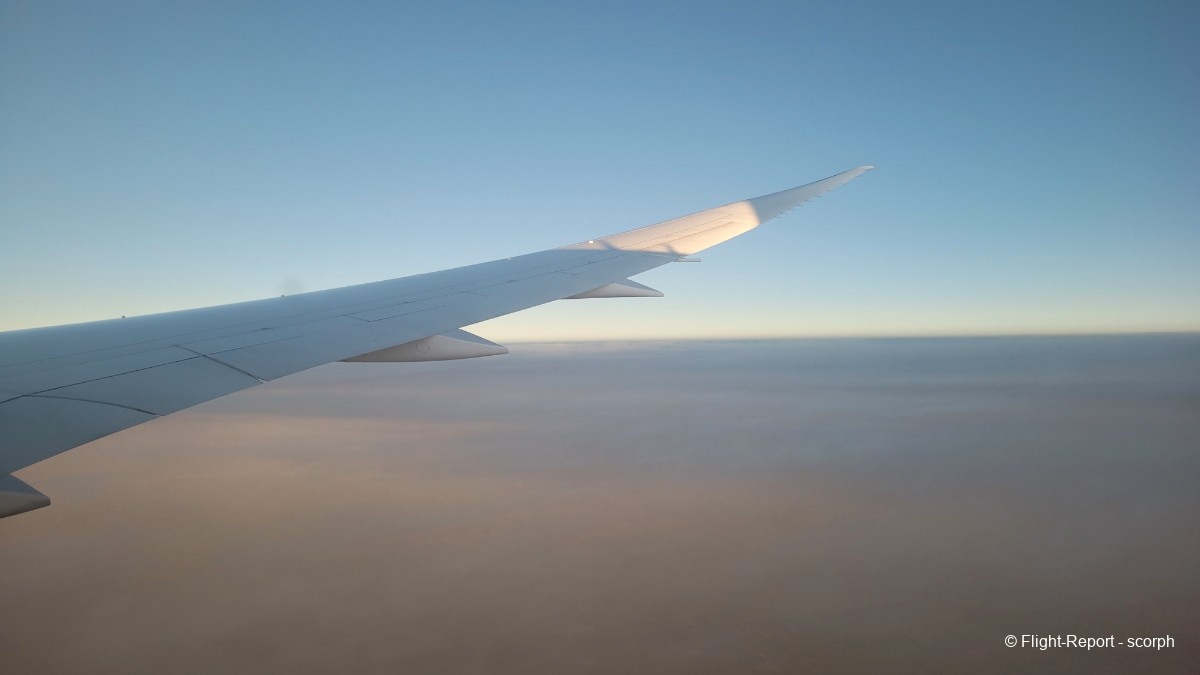
We are in an equatorial zone, and even though we are cruising at 38,000 ft, we occasionally pass through the tops of cloud columns fortunately without a hint of turbulence.
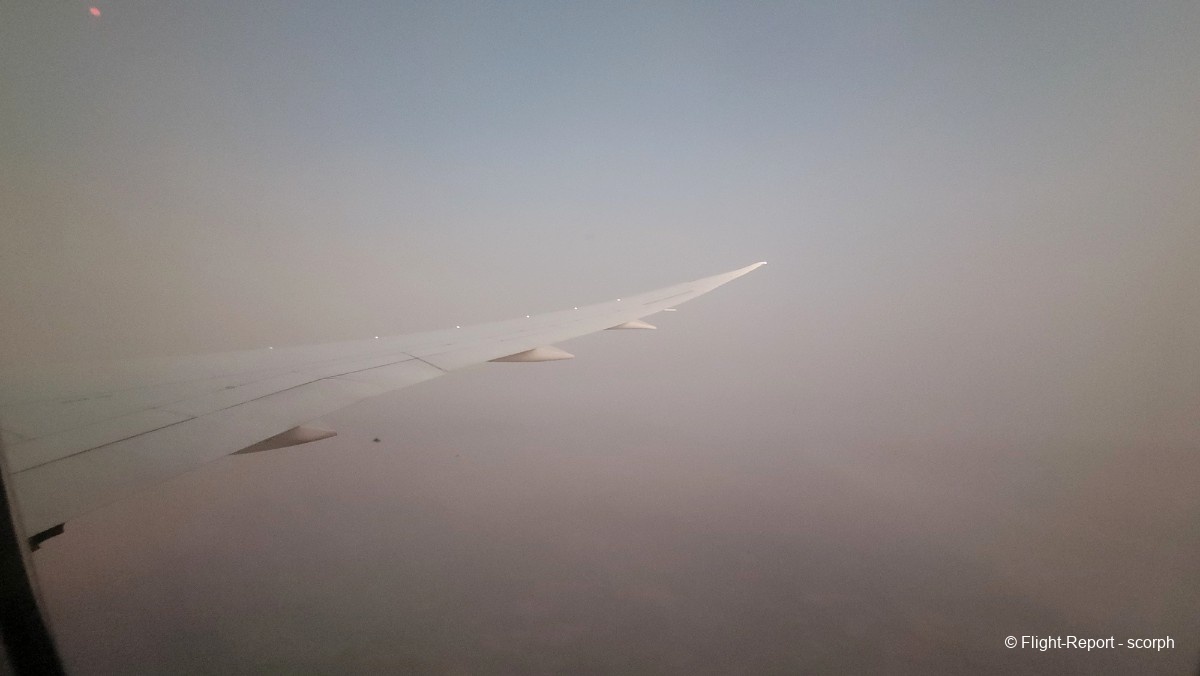
Then, it cleared up as we reached Southern Brazil.
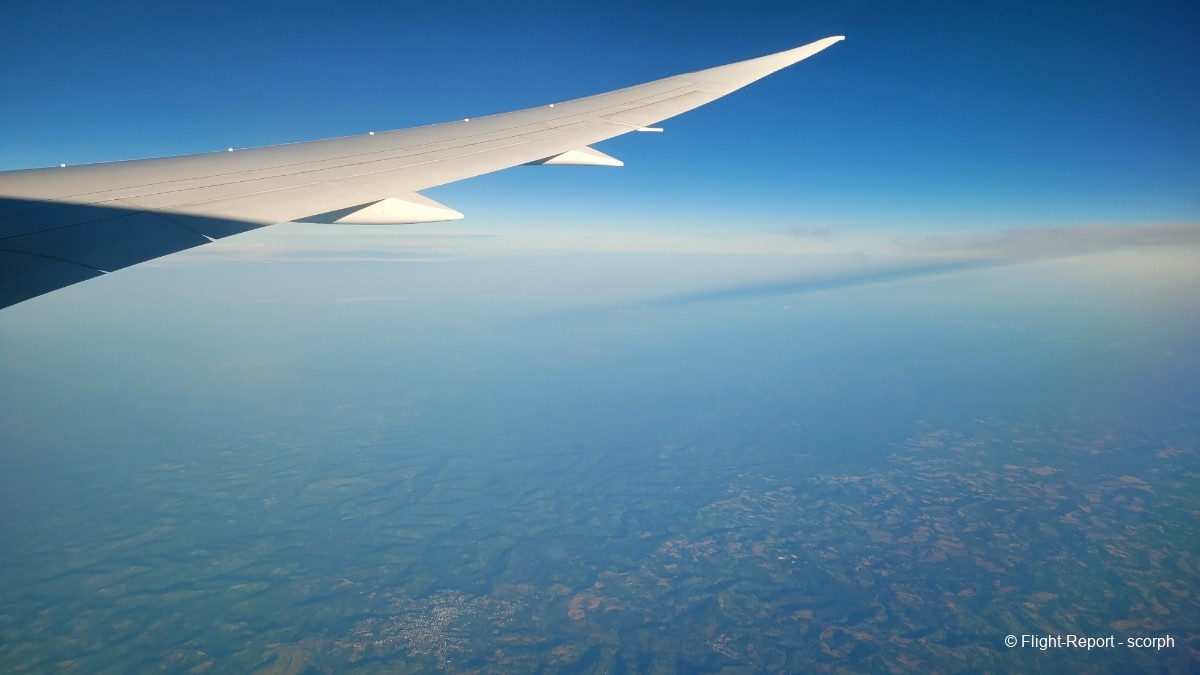
I think I recognize a reservoir on the massive Paraná River, at the border of the states of São Paulo, Paraná, and Mato Grosso do Sul.
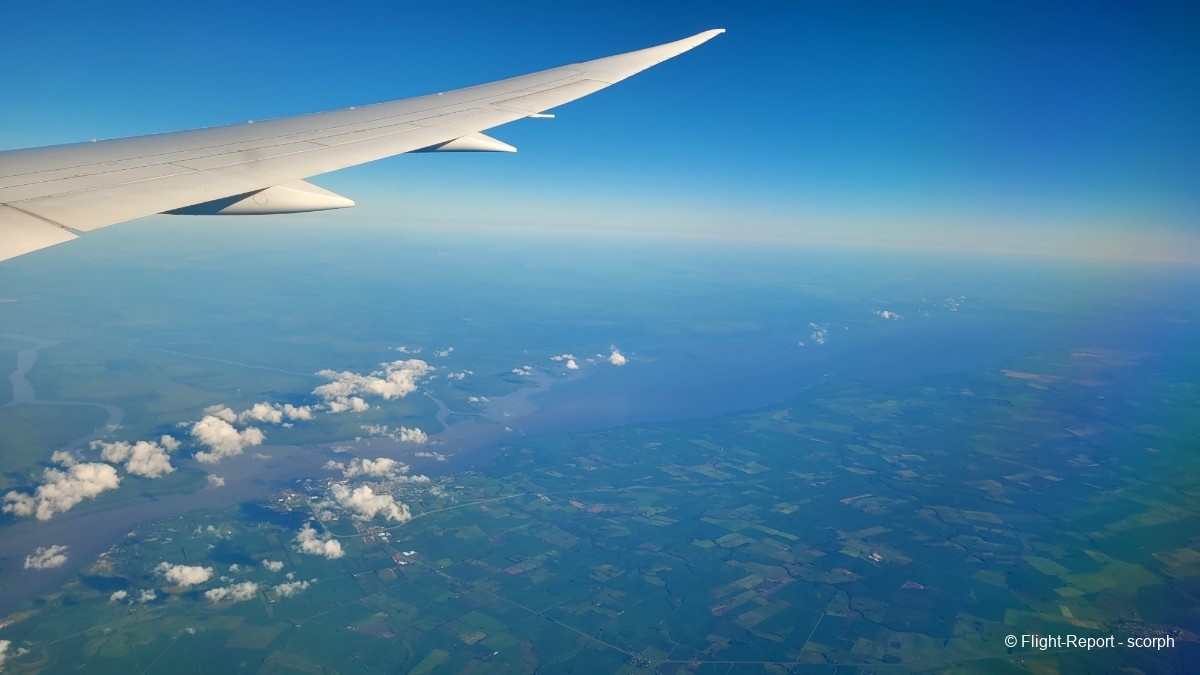
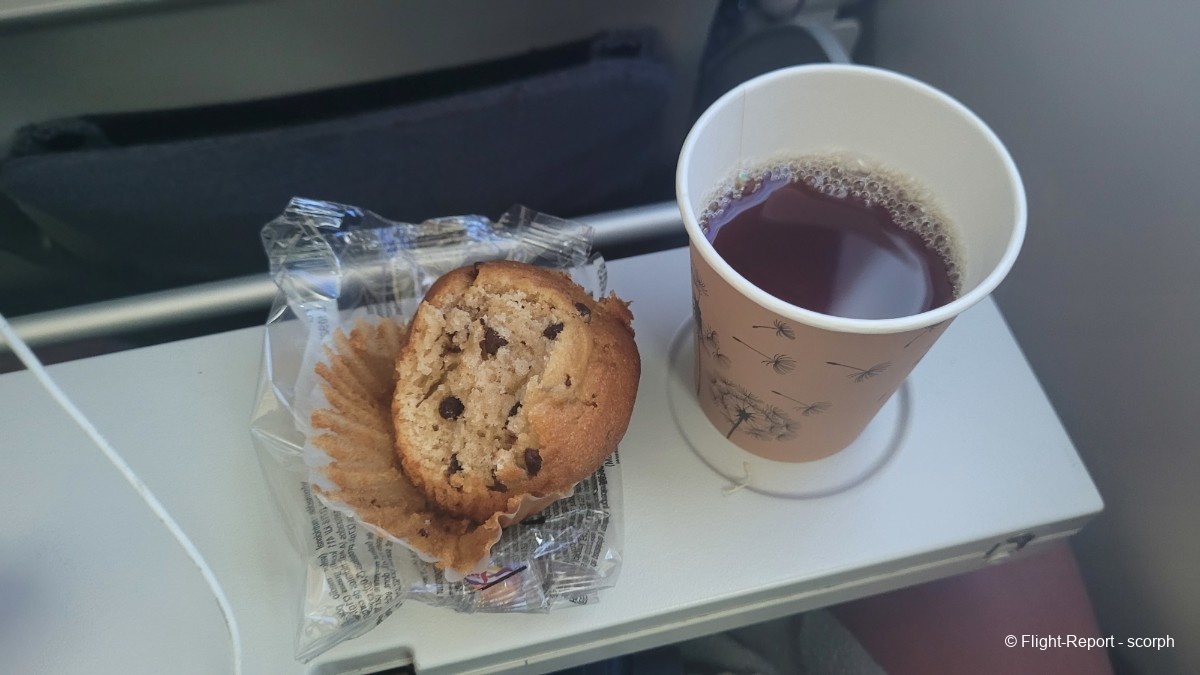
As we approached the Argentine border near Foz do Iguaçu, the crew began distributing pre-ordered breakfasts, as well as a small snack for everyone else, including us. It consisted of tea or coffee and a small chocolate chip muffin. Just enough to keep our jaws busy for a few moments.
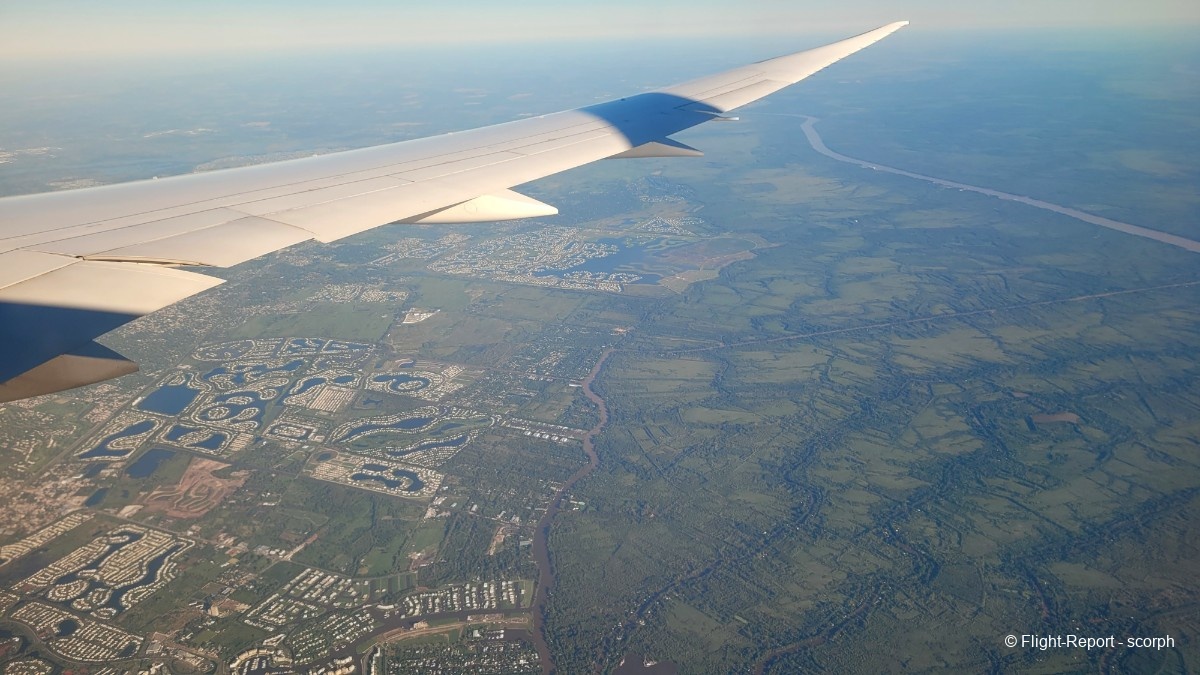
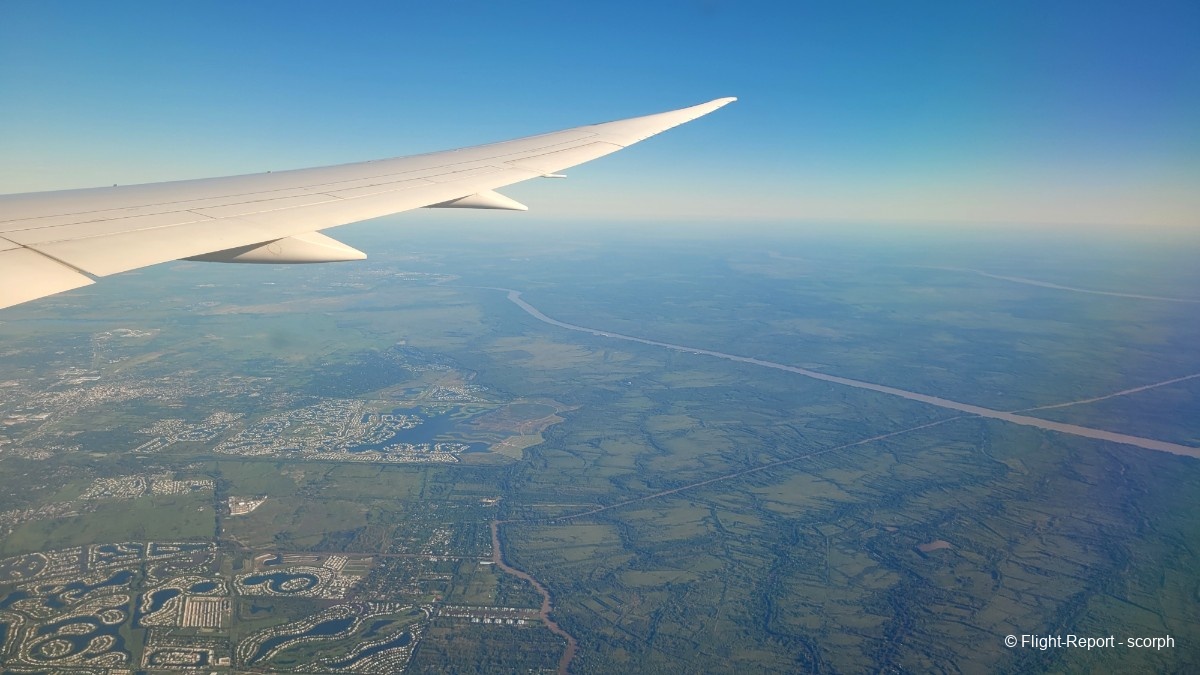
After nearly 12 hours of flight, we finally catch sight of the northern outskirts of the massive city of Buenos Aires, with the residential areas of Belén de Escobar built around artificial lakes. Meanwhile, in the distance, the Paraná River can still be seen winding through its final kilometers before flowing into the Tigre Delta.
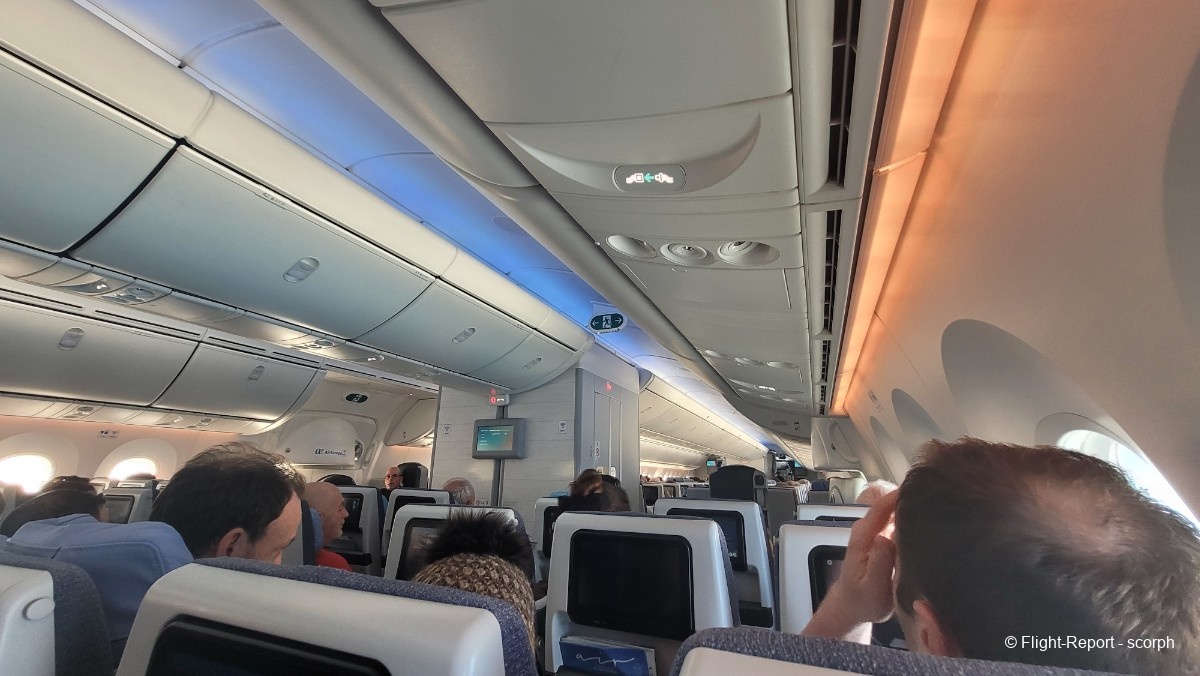
Cabin is being prepared for our upcoming landing.
We bypassed the Argentine capital to the west, spotting the city of General Rodríguez in the distance. Geography-wise, the surroundings of Buenos Aires are very flat and very green!
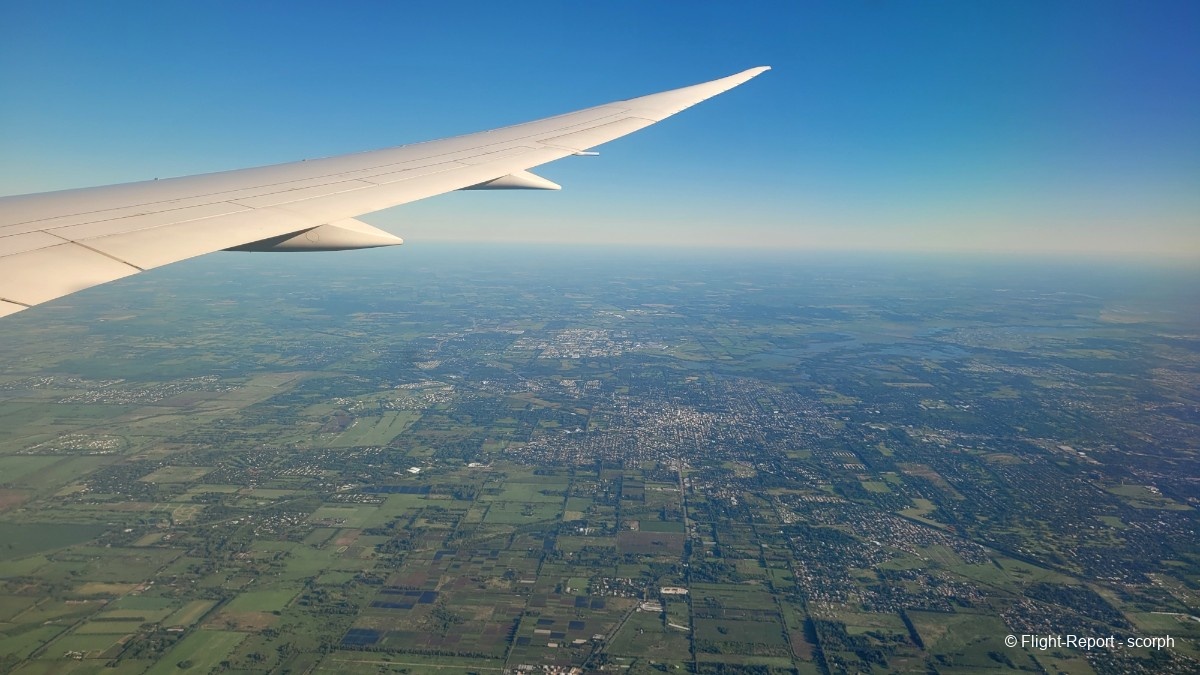
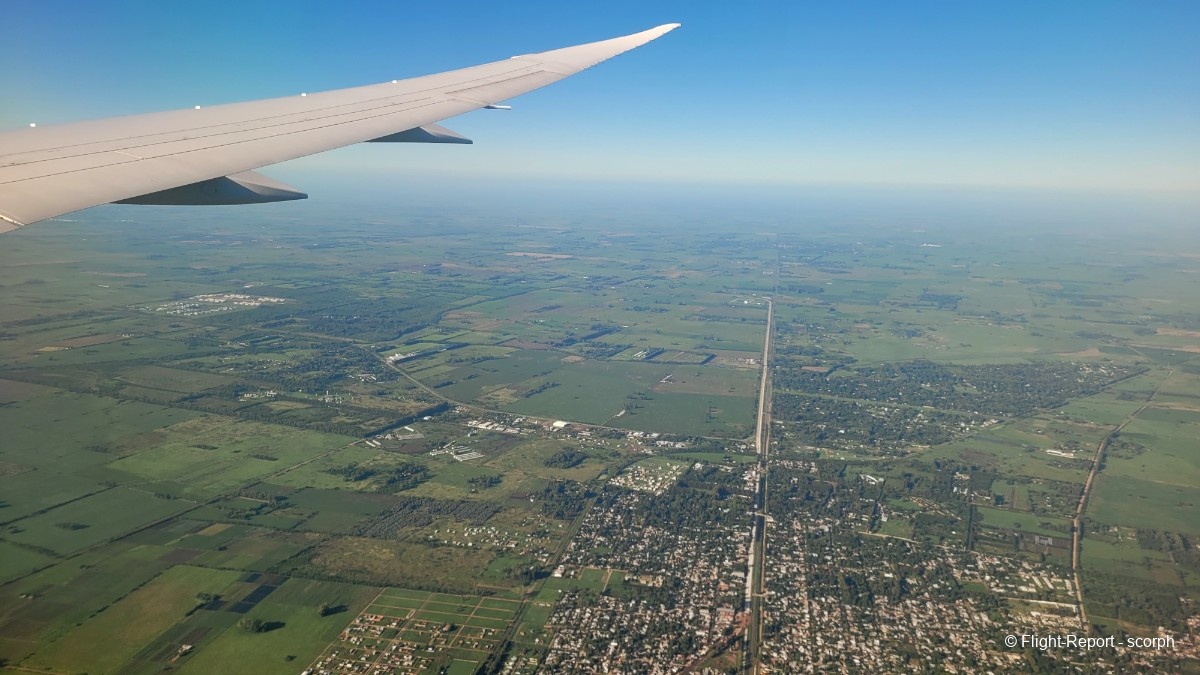
It was an approach for Runway 11, which took us over the outskirts of Barrio San Pedro during finals. Looking at the city layouts, there's no doubt about it, we are over a typical American-style grid!
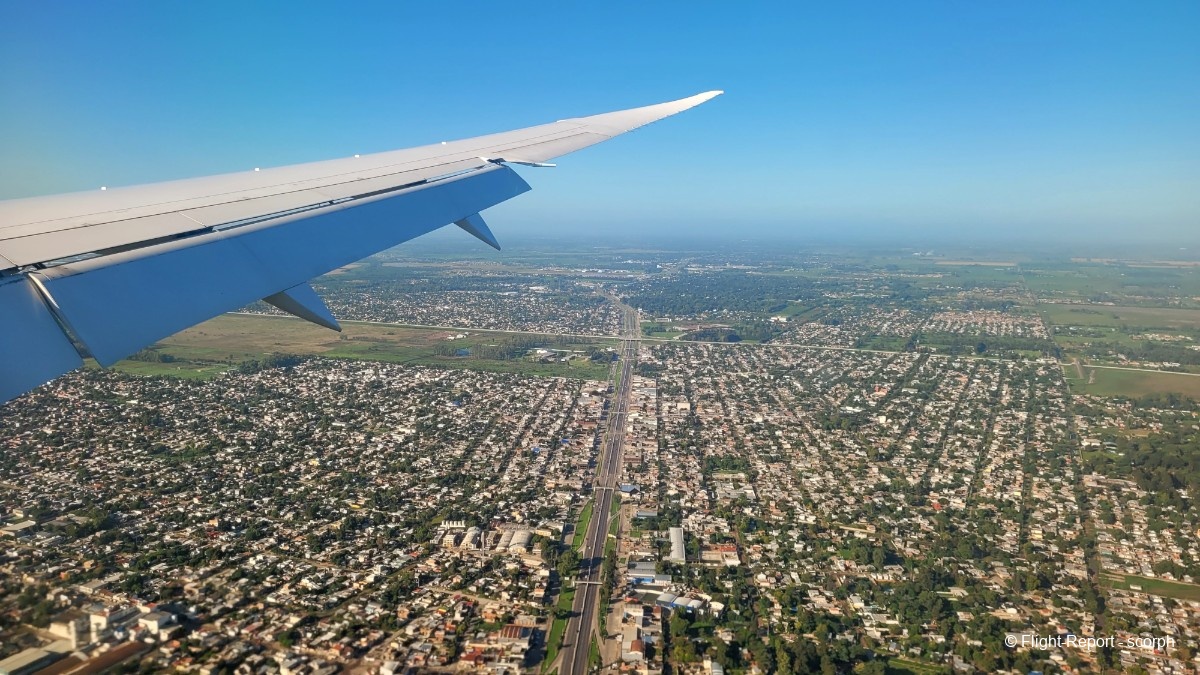
Landing on the Buenos Aires sun !
A smooth touchdown followed by some fairly gentle braking as we arrived on the tarmac at Ezeiza International Airport.
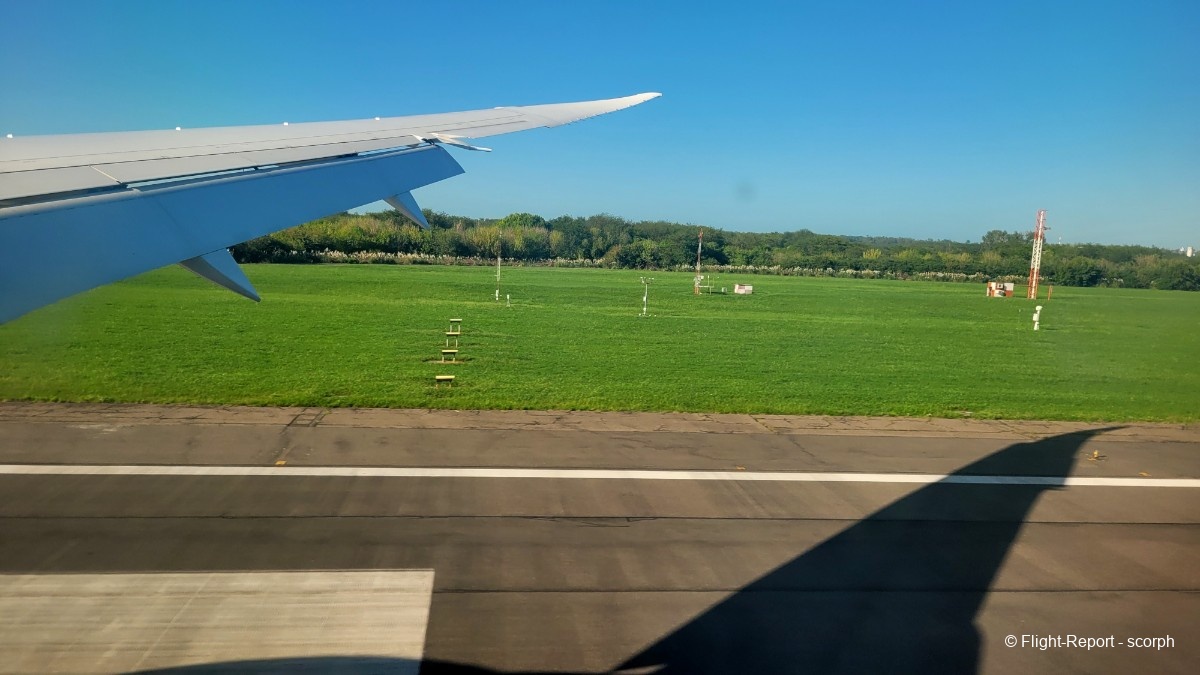
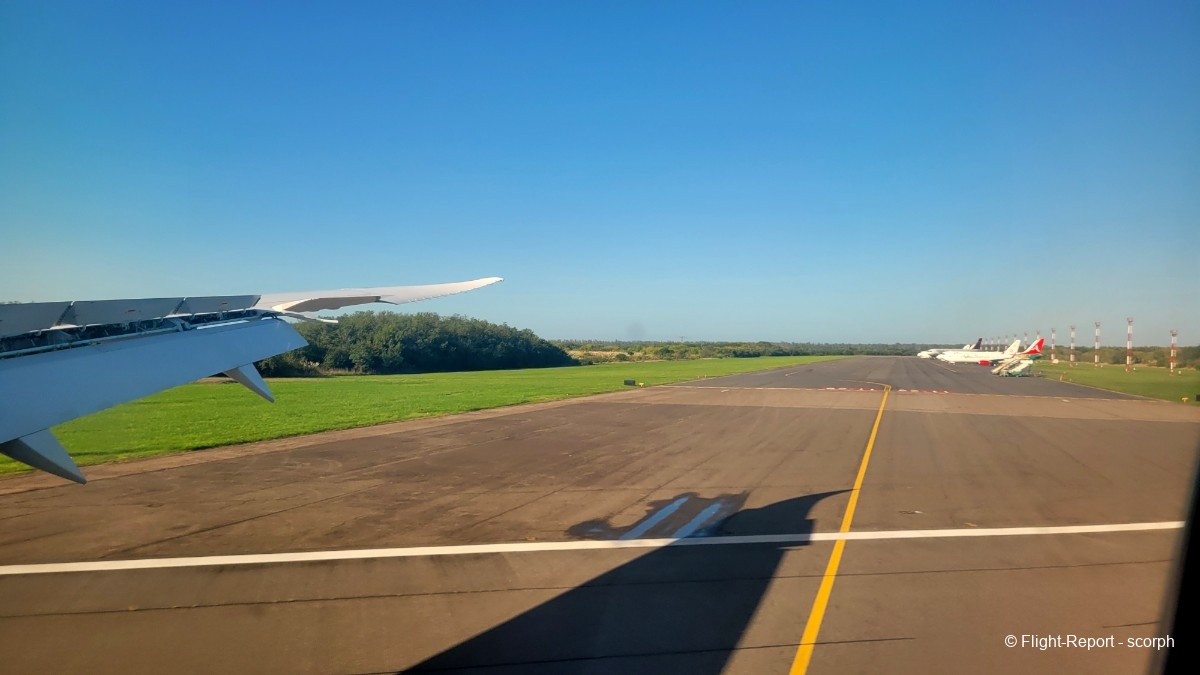
We vacated at the end of the runway after crossing the intersecting Runway 17/35.
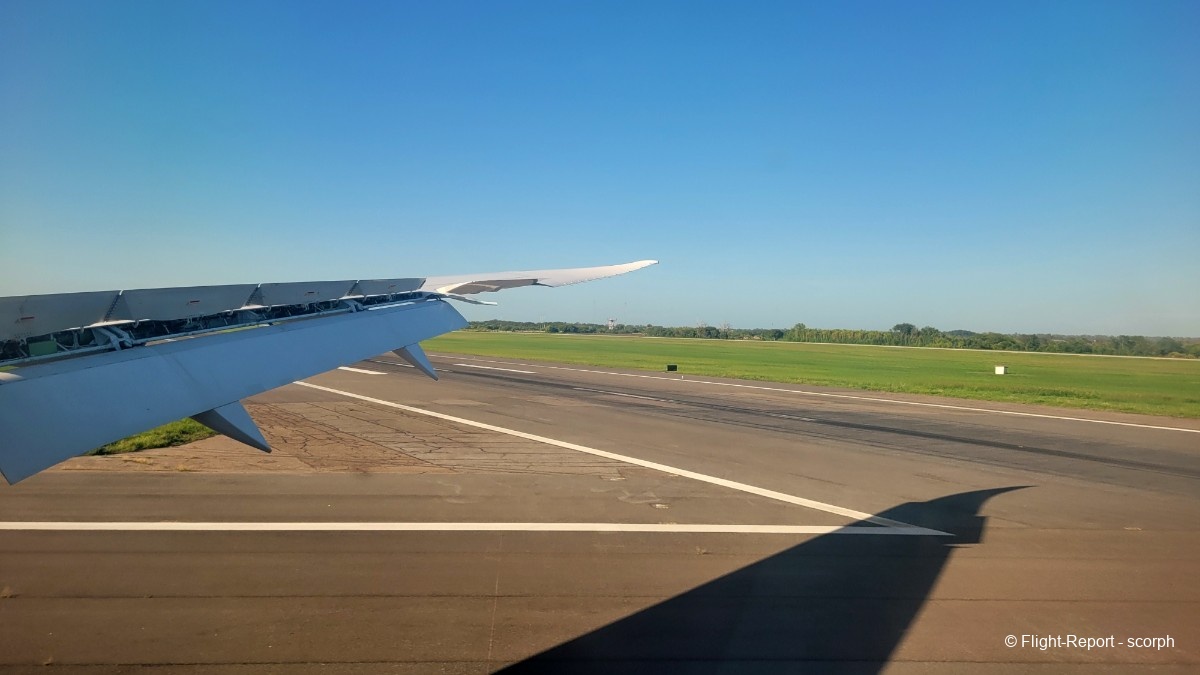
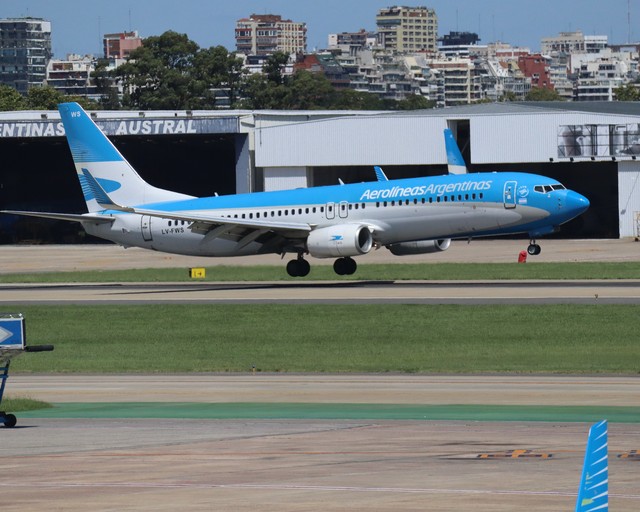
During the taxi, we already started spotting a few local specimens, like this Aerolíneas Argentinas Boeing 737-800 (spoiler alert for what's coming next!).
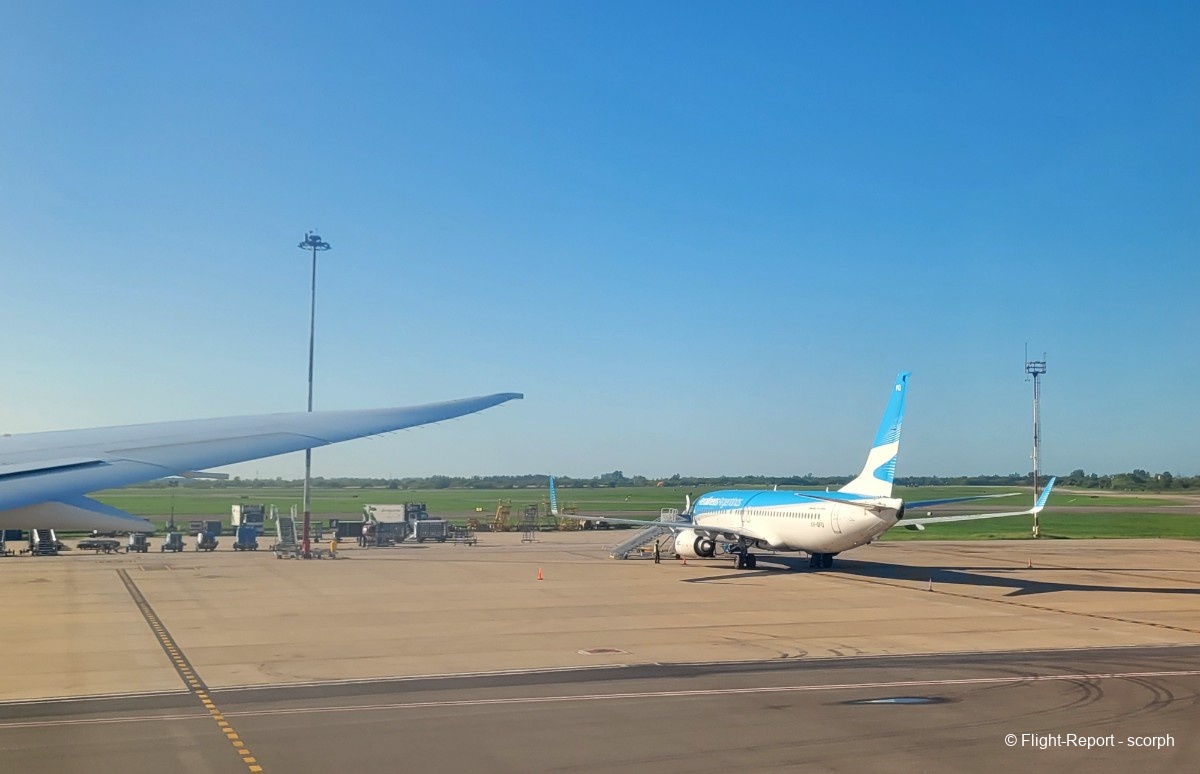
In the distance, we can make out the cargo area, featuring a DHL Boeing 767 freighter with its signature flashy colors.
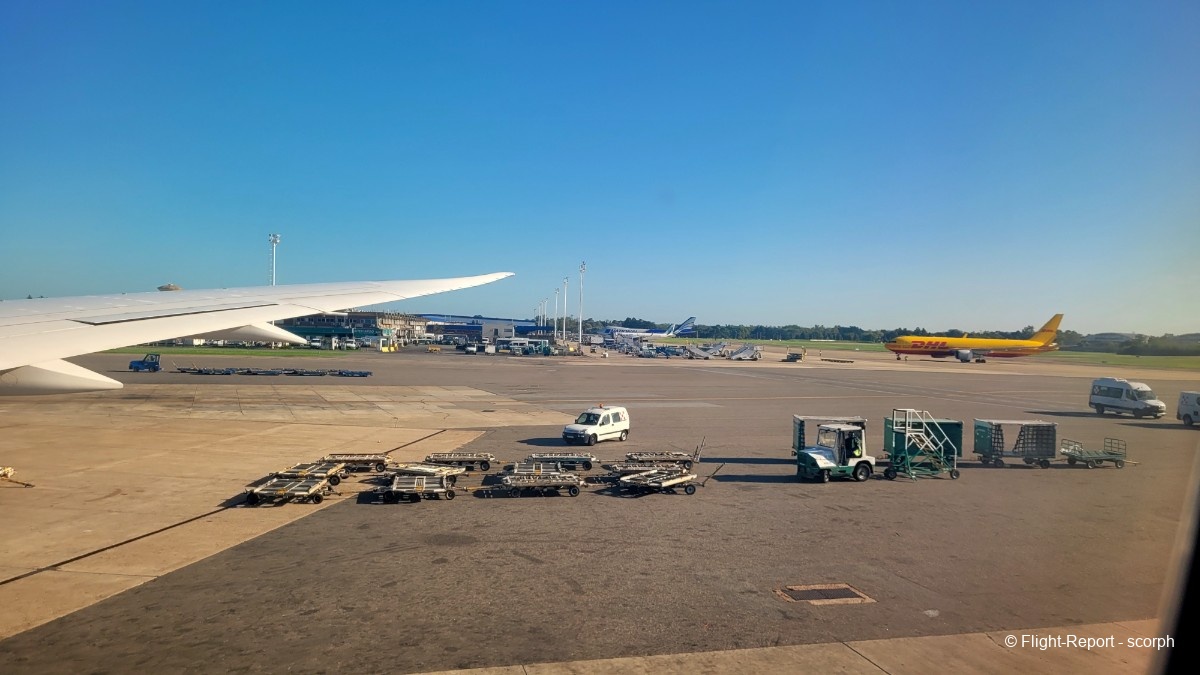
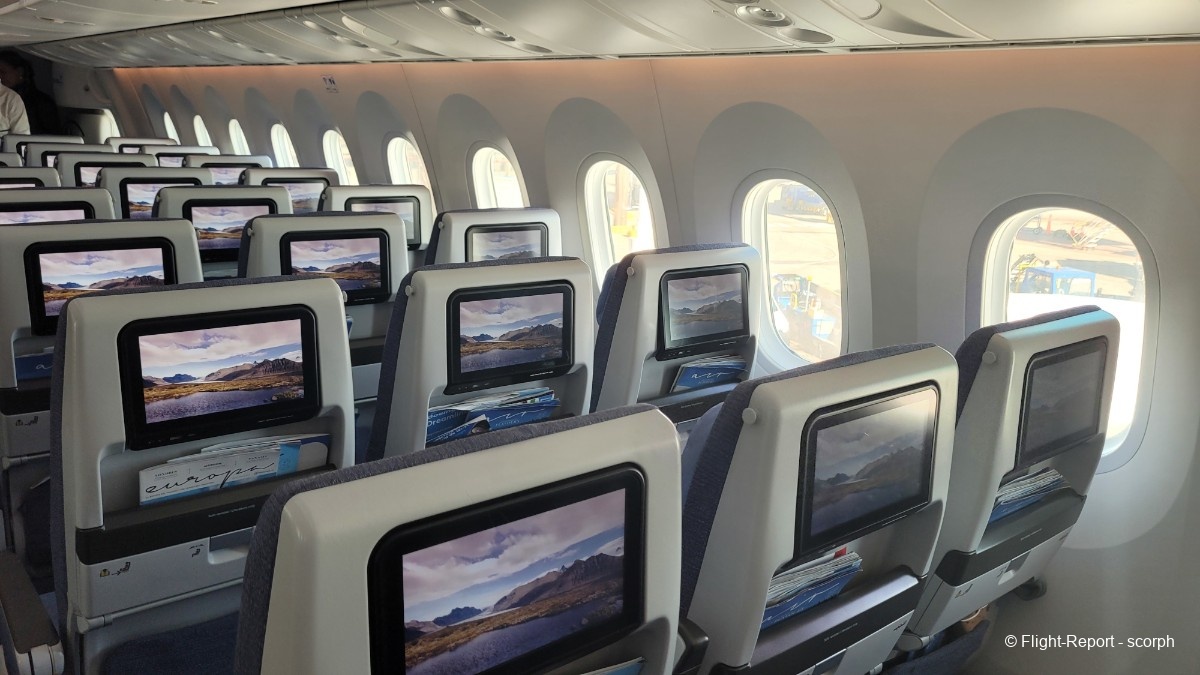
The airport isn't huge, so we reached our stand pretty quickly. Of course, being on a full long-haul flight and sitting right at the back meant a slow exit. I was more than ready to get out of my seat I'd been sitting still for so long I was dying to stretch my legs.
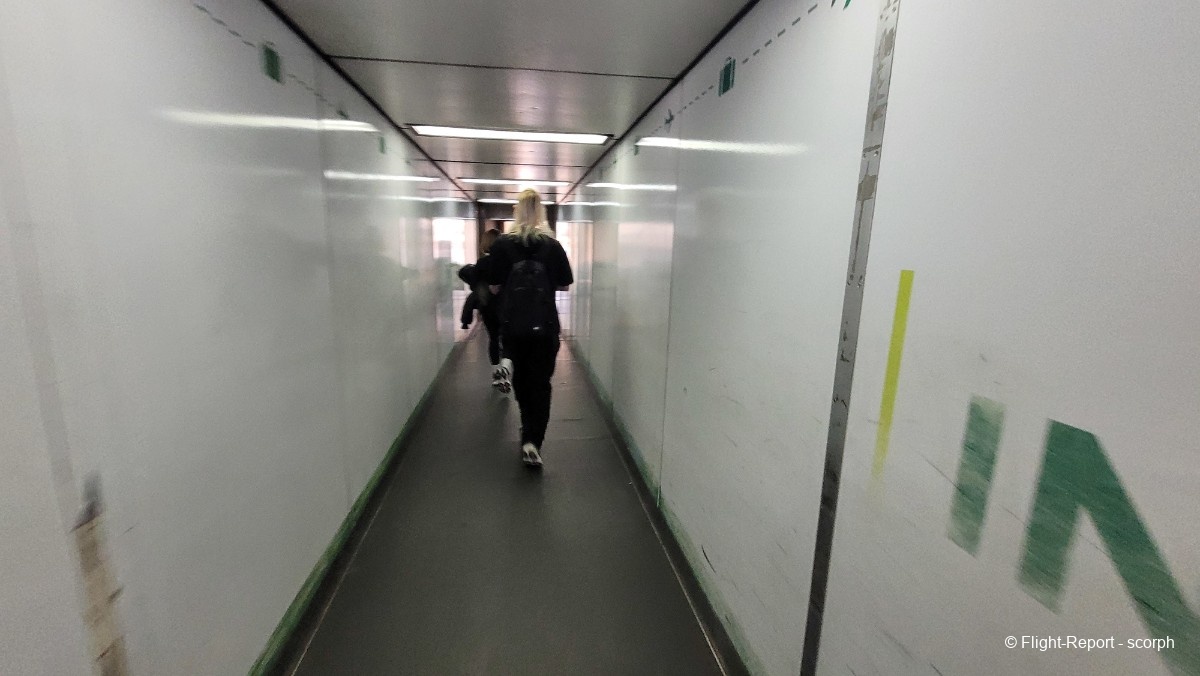
Disembarkation was through a jetway at door 2L. The crew members at the door were all smiles as we headed out.
A final look at the nose of the aircraft that served us for the last 13 hours and delivered us safely to our destination.
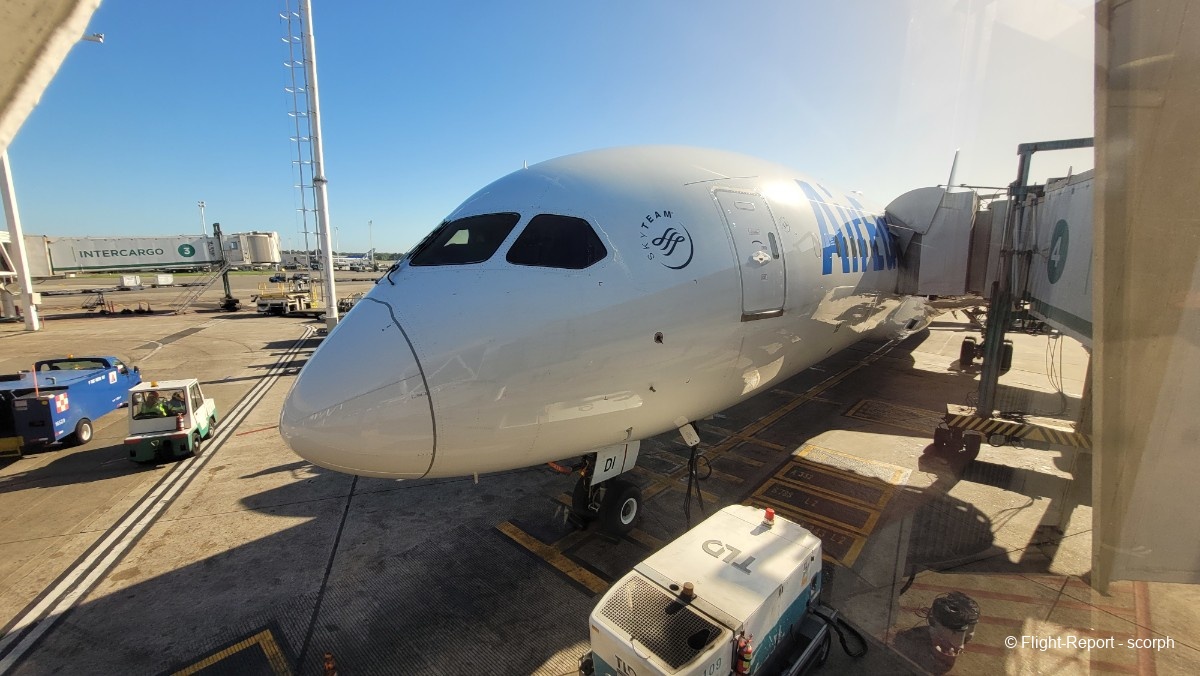
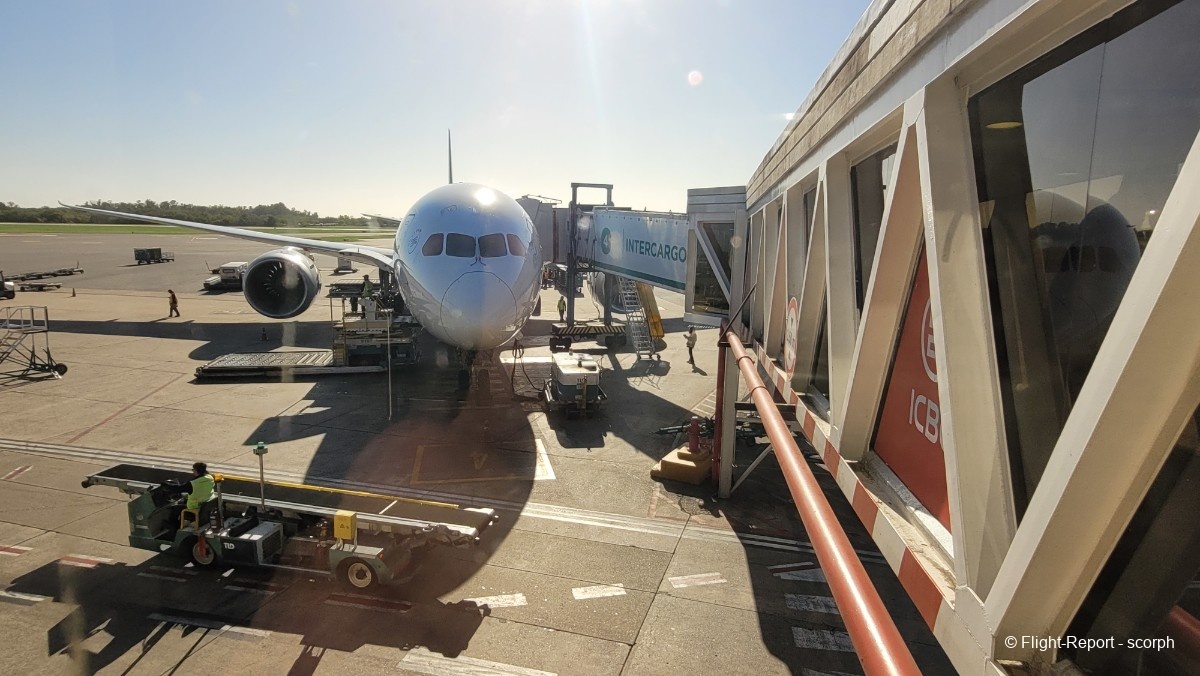
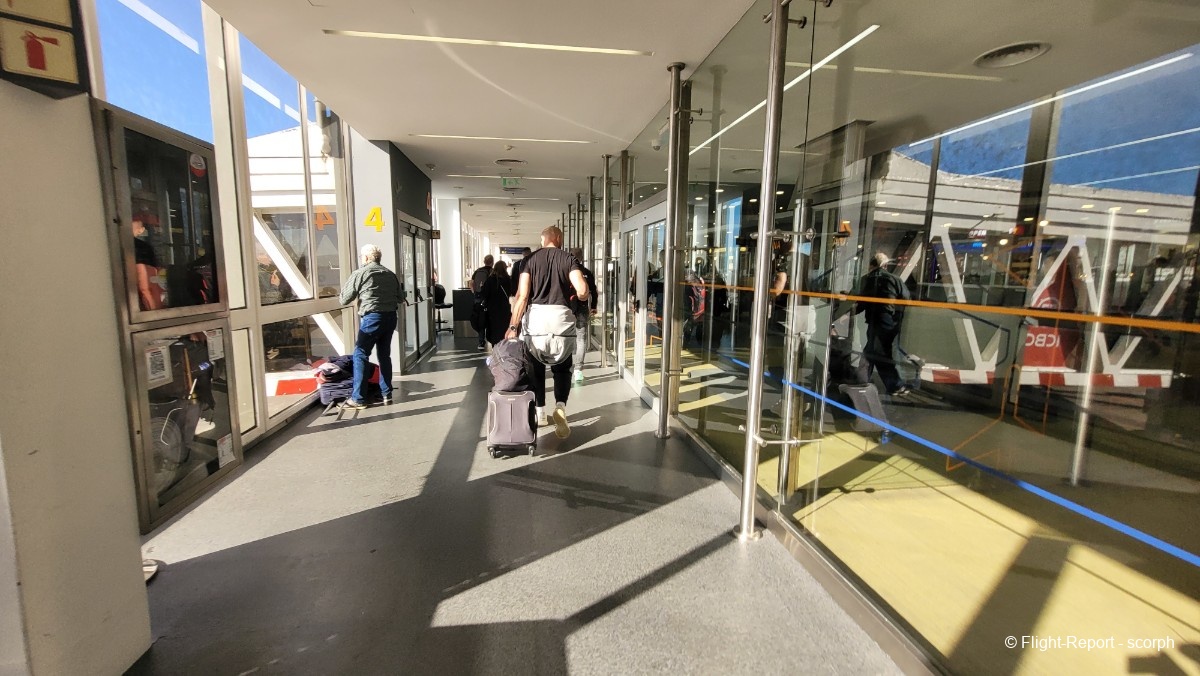
We're making good time through the arrivals hall, where the glass walls let in plenty of natural light. It’s clear we’ve switched hemispheres. Goodbye to the grey March weather in Europe, and hello to the sun. Now, just a bit of a trek to get to passport control.
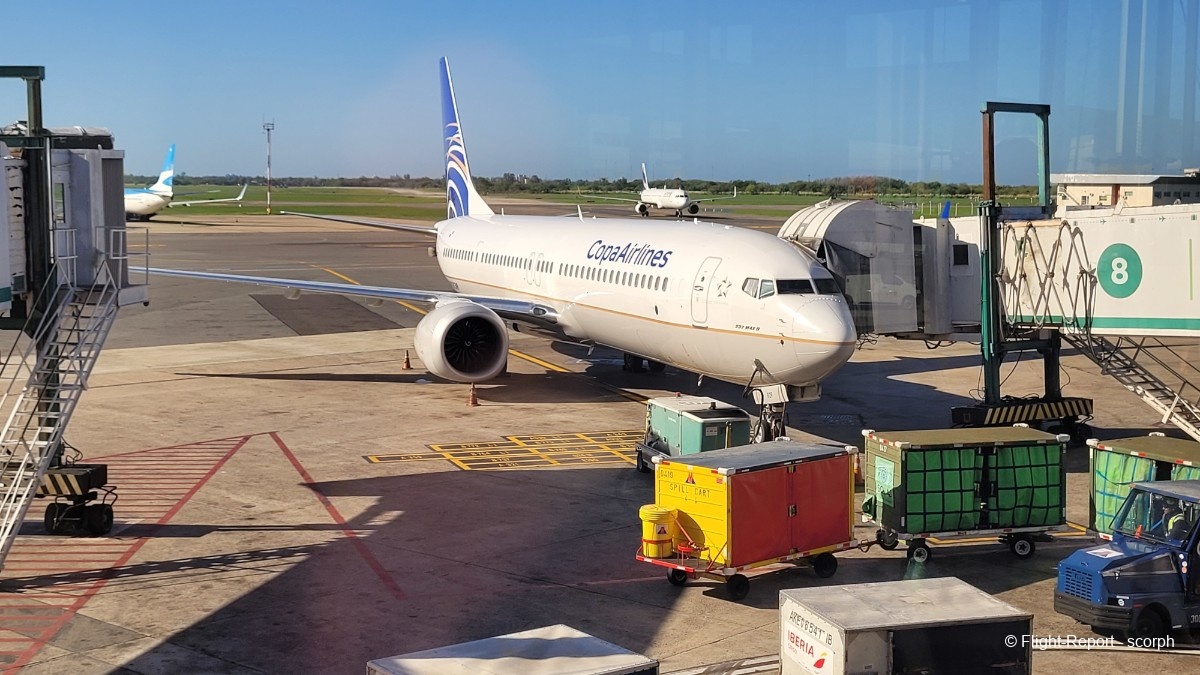
Our path toward immigration and the exit takes us past a few visitors, such as this Copa Boeing 737 MAX 9 arriving from Panama City. A 6.5-hour journey that makes it one of the longest narrow-body routes for this specific airframe
A few other European arrivals got here first, including an Iberia A350-900 from Madrid. If you look closely, it's actually blocking the view of another A350-900 from the Italian airline ITA right behind it.
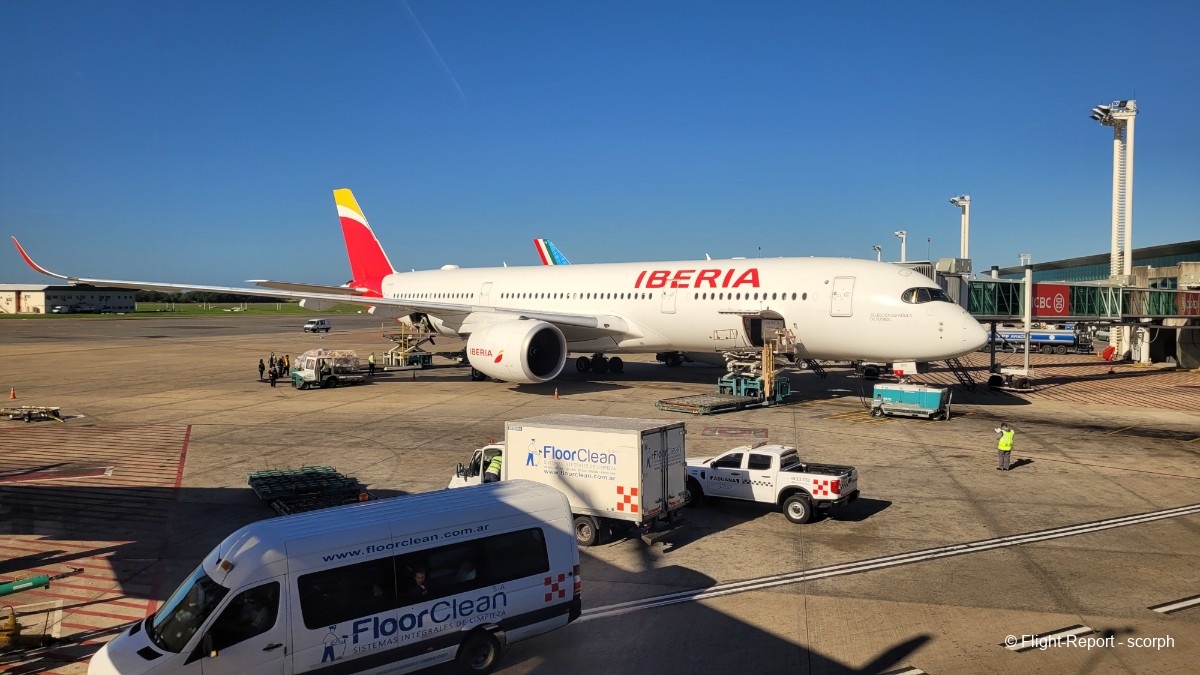
Immigration took about five minutes. Just time for a quick restroom break (they were nice and clean). I didn't even get a stamp in my new passport! After the usual questions and a 'Bienvenido a Argentina,' I was through. My luggage was already waiting for me on the carousel, so no delays there.
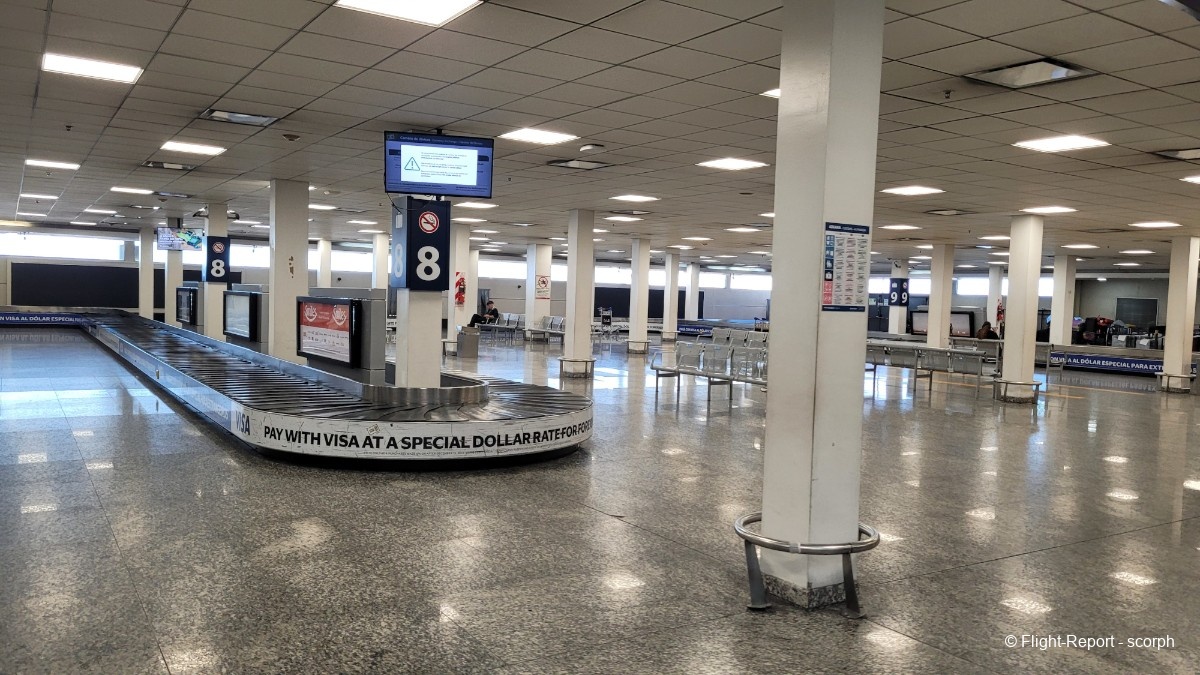
We quickly made our way groundside. I looked for a shop to get a local SIM card and found one thanks to the directions from one of the friendly ladies at the information desk; unfortunately, the plans they offered didn't quite suit my needs. On our way, we were approached by a taxi driver who seemed honest; he offered a rate slightly lower than Uber for a large vehicle, better suited for the four of us and our luggage, and the option to pay in dollars, avoiding the need to exchange money at the airport.
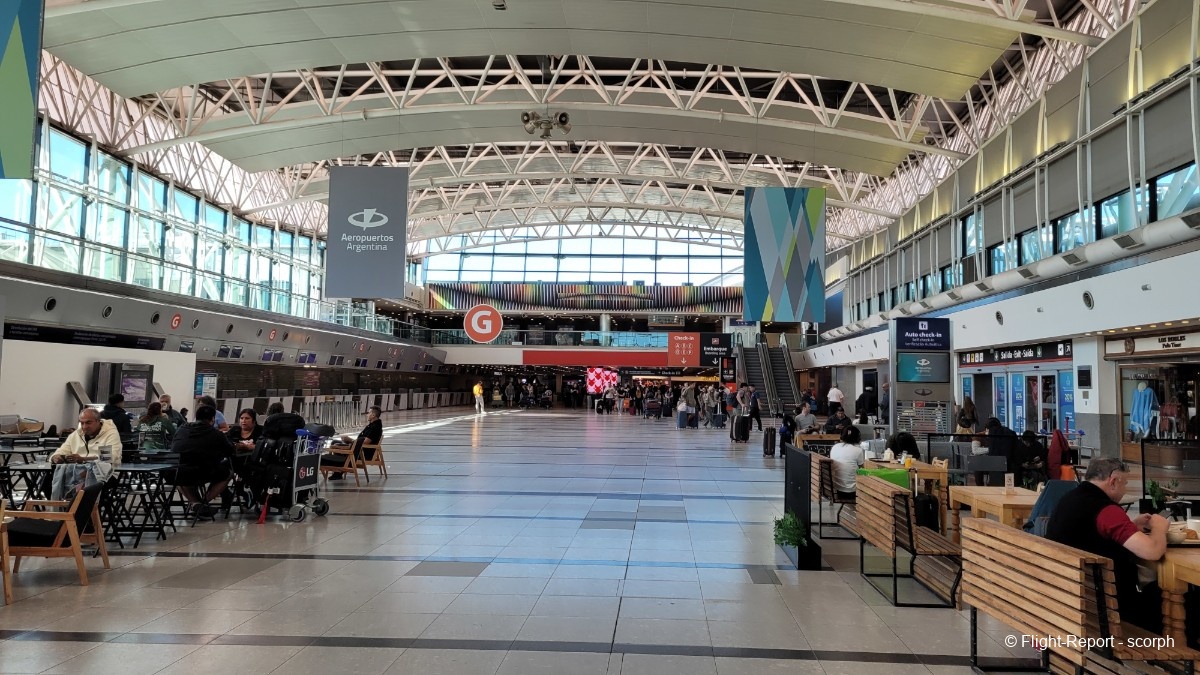
We headed after him toward the departures level where he’d parked. On the way, we walked right under the iconic golden chandelier that is a signature feature of the Ezeiza departures hall.
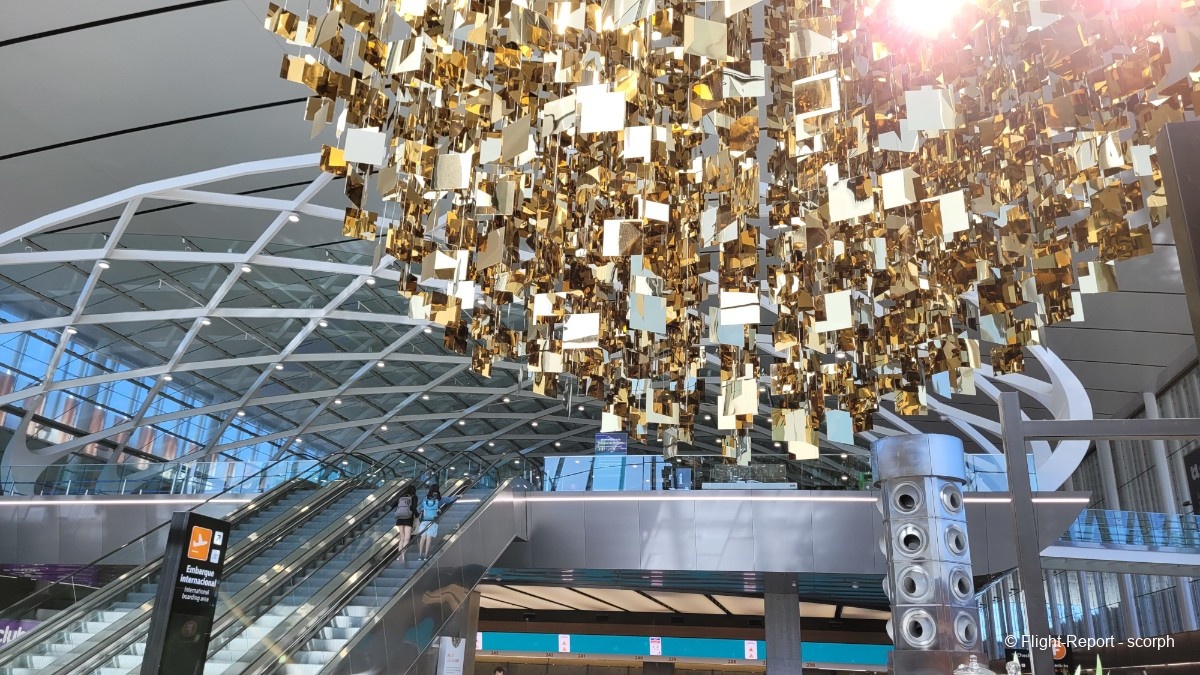
A close-up look at the Ezeiza departures board this morning shows a diverse mix of destinations.
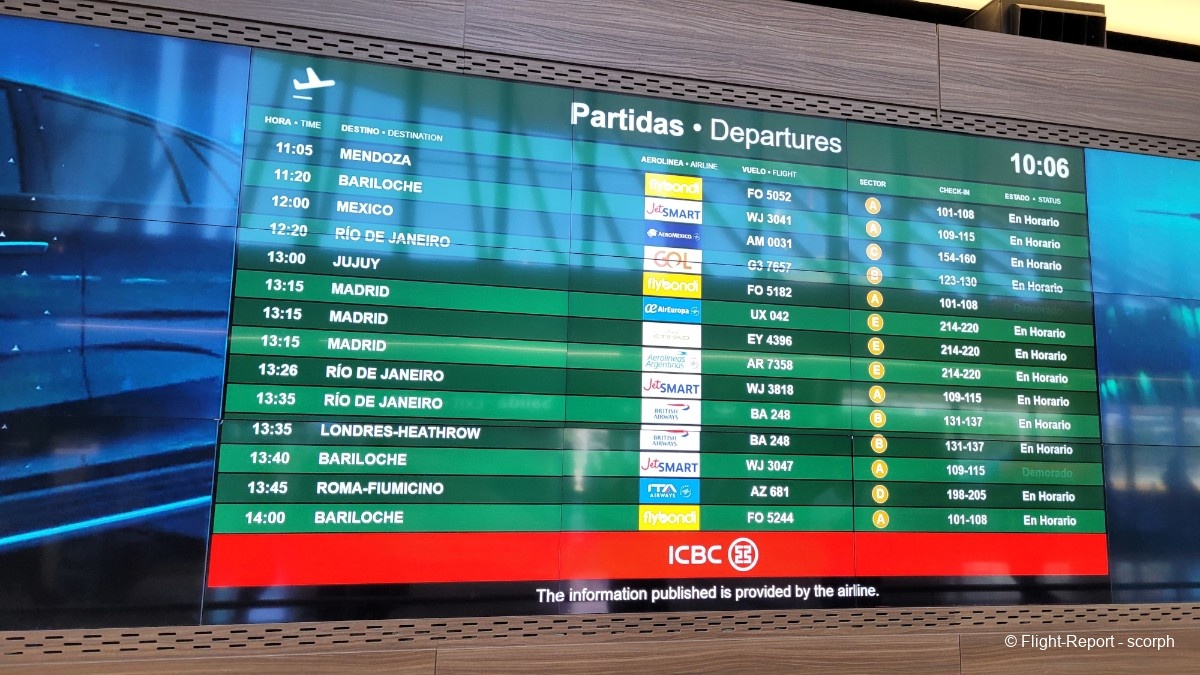
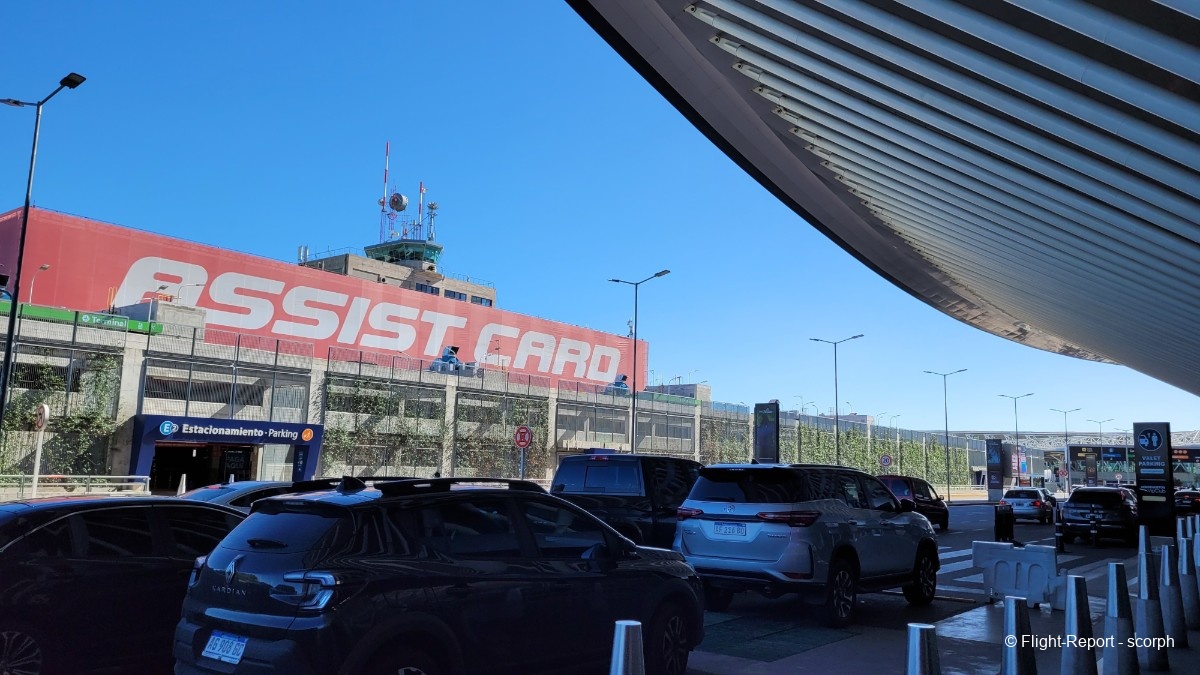
And finally, we stepped out into the bright Buenos Aires sun to load the whole family and all our gear into our taxi, the driver was very welcoming,and made our way toward Palermo
That’s it for this report! I’ll see you soon for the next part of the trip as we head off on some Argentinian domestic flights.
Thanks for sharing!