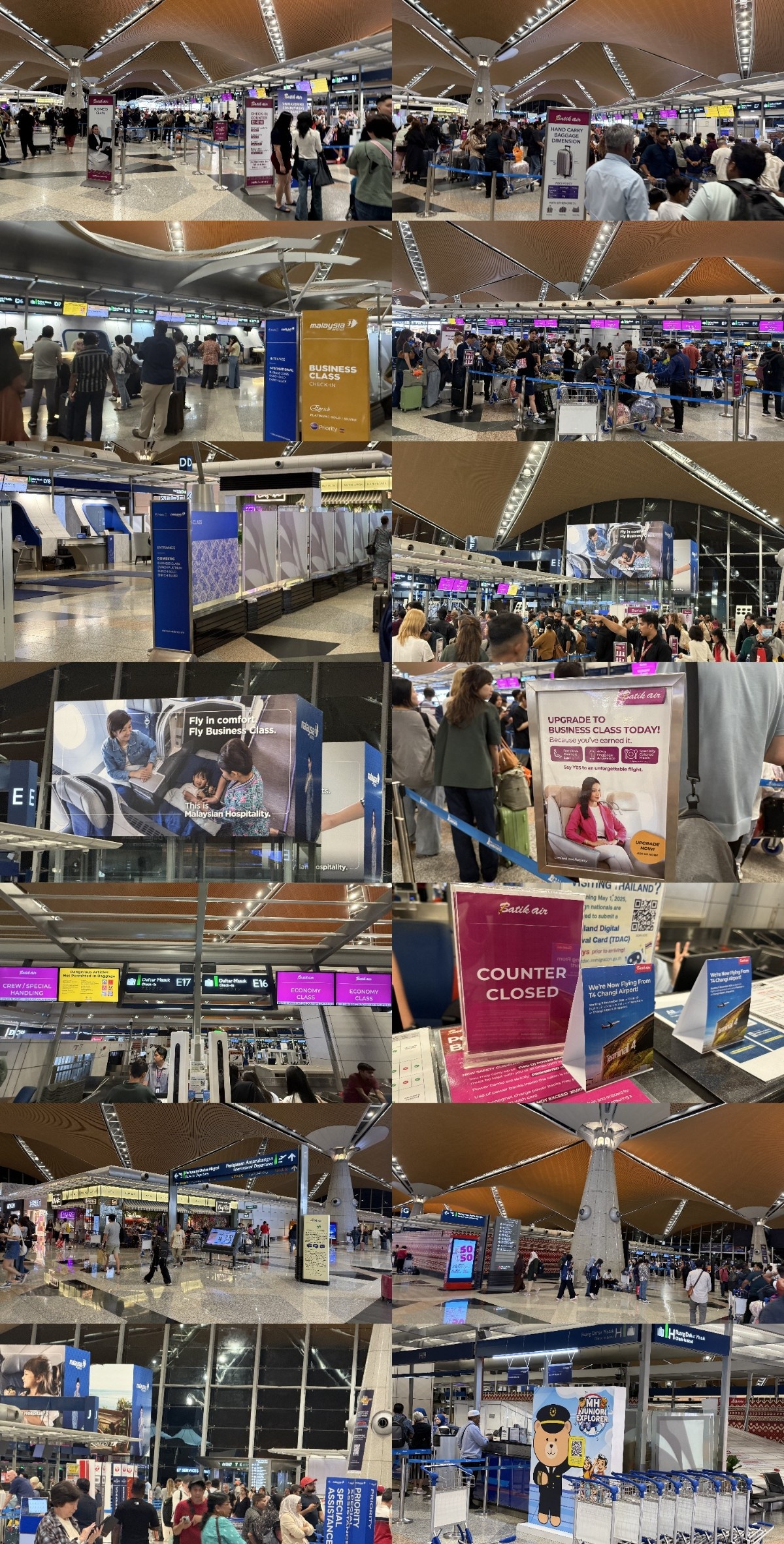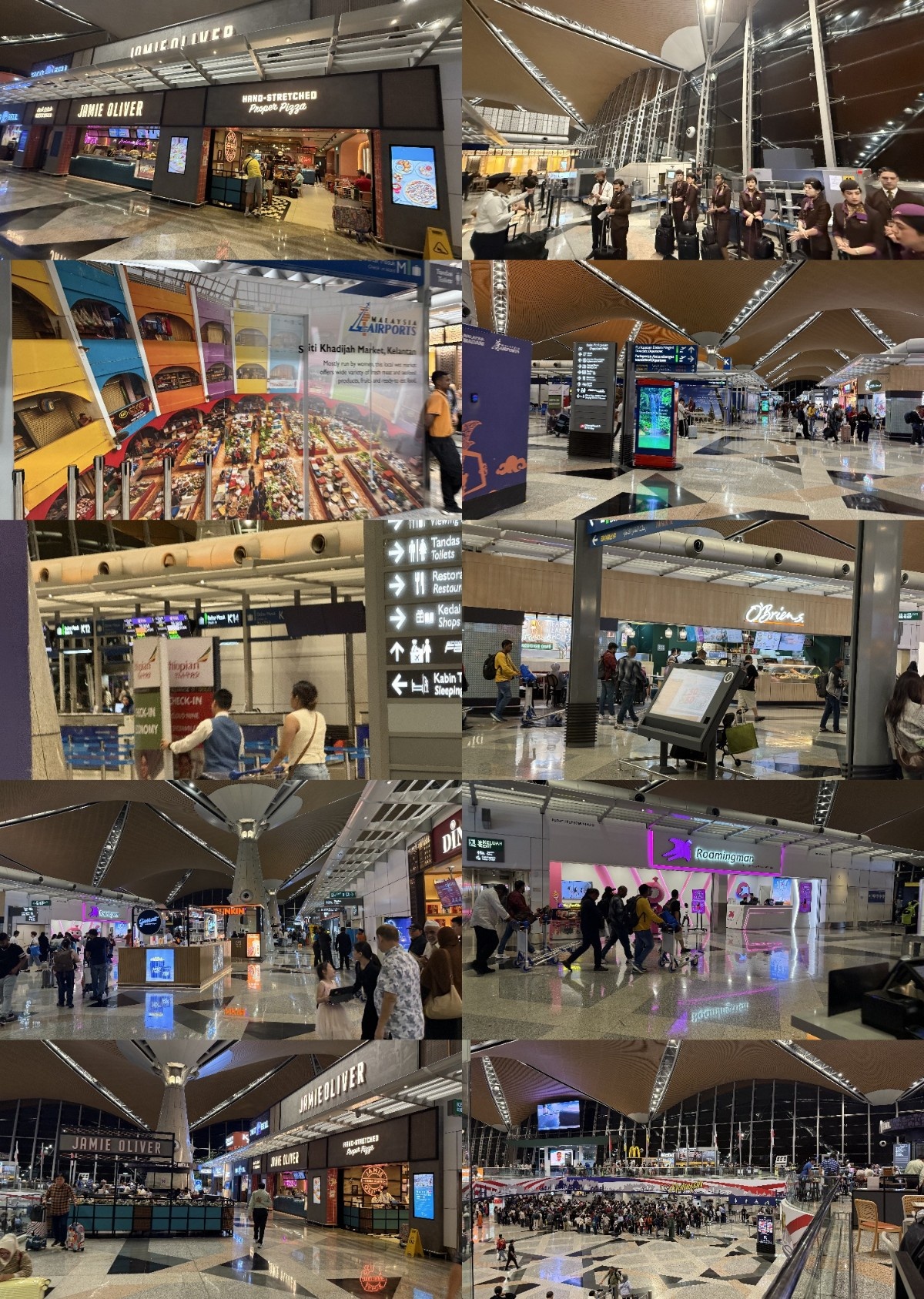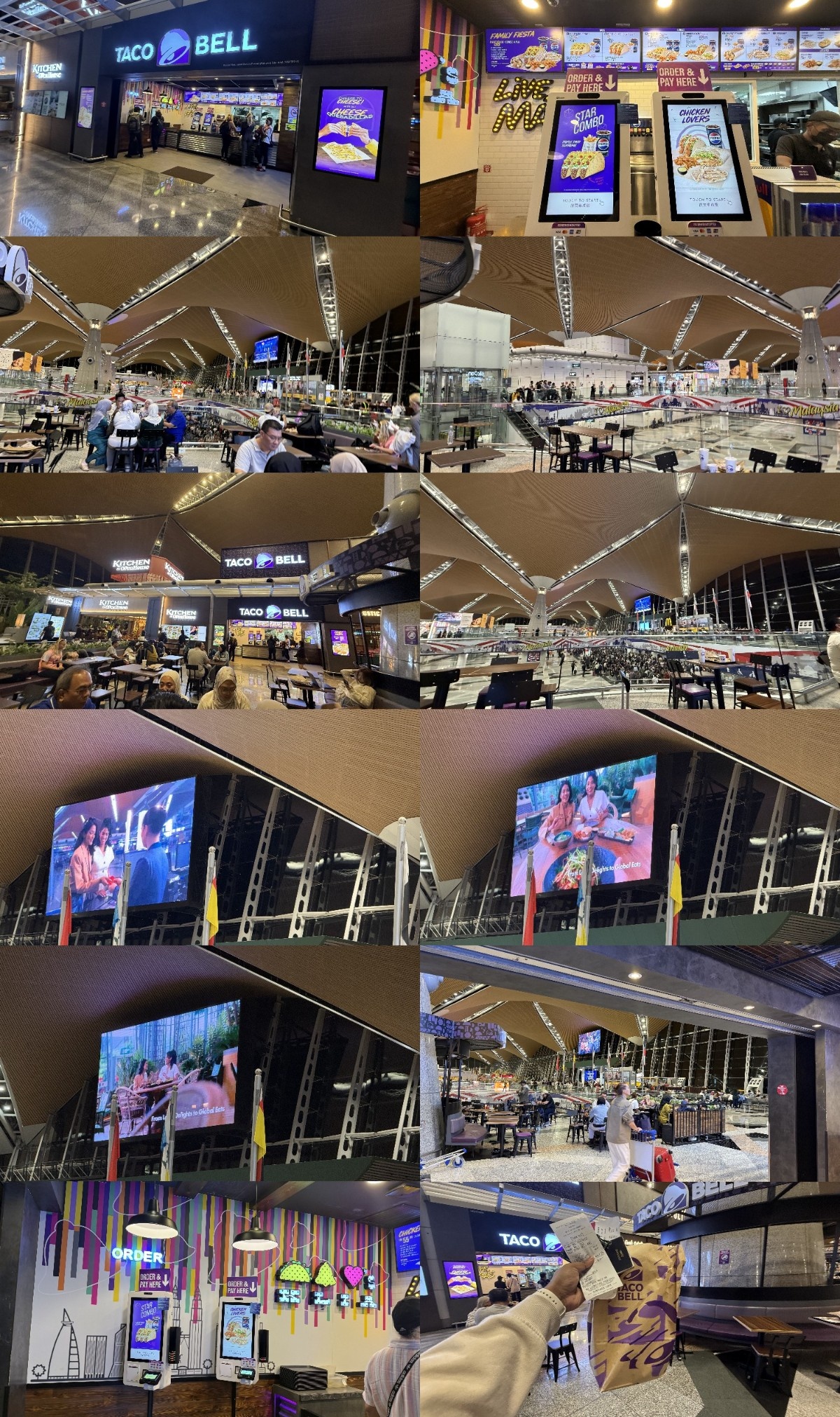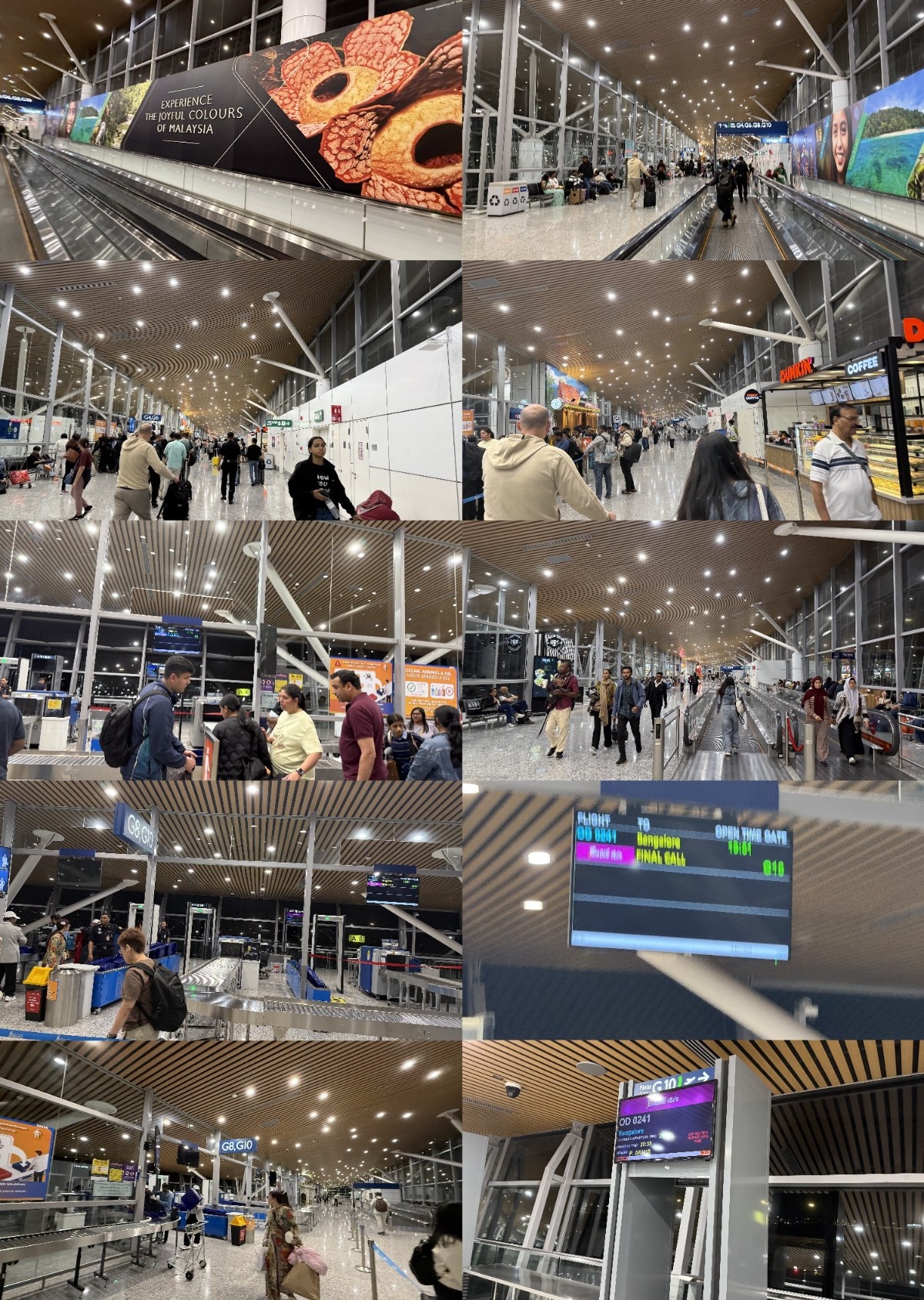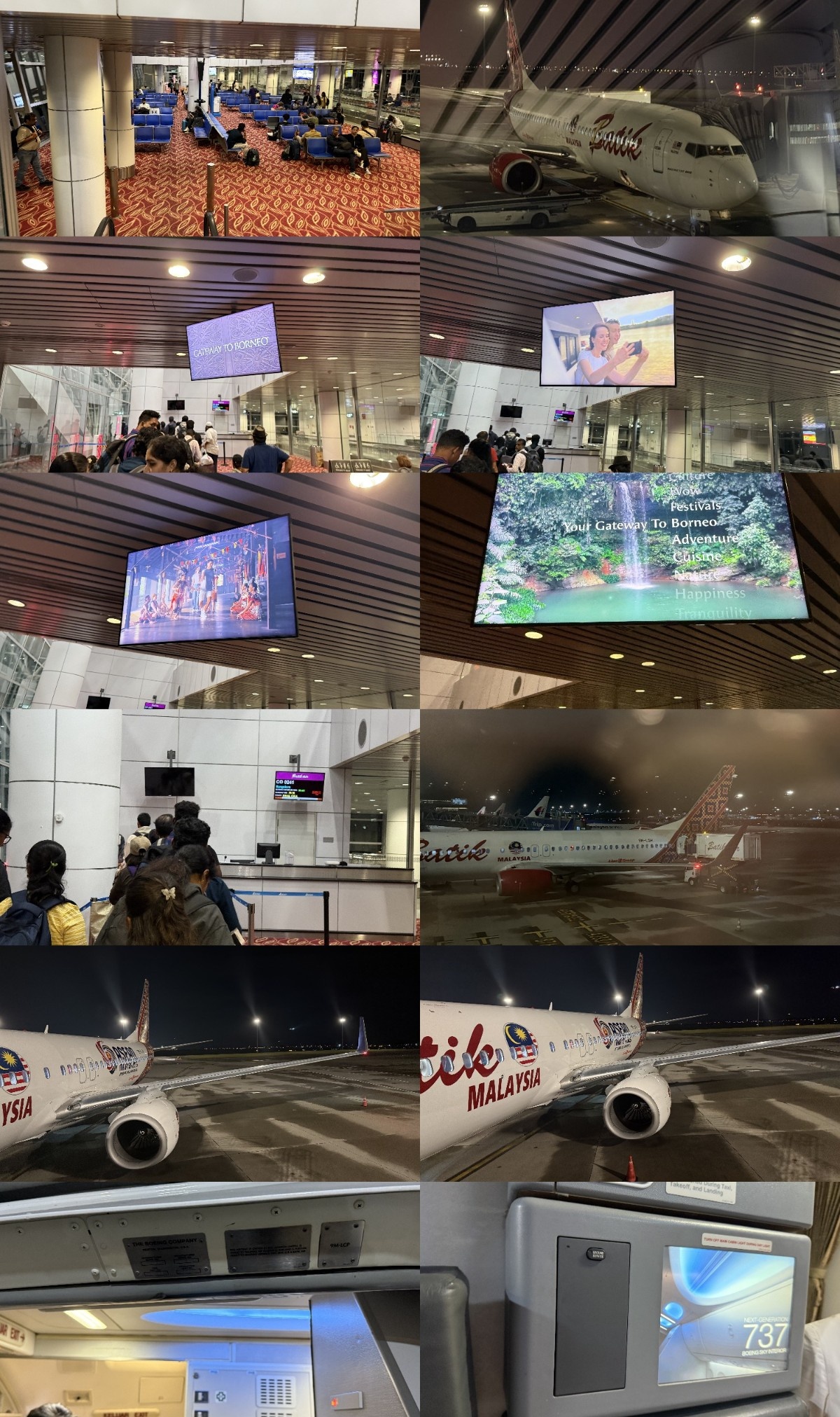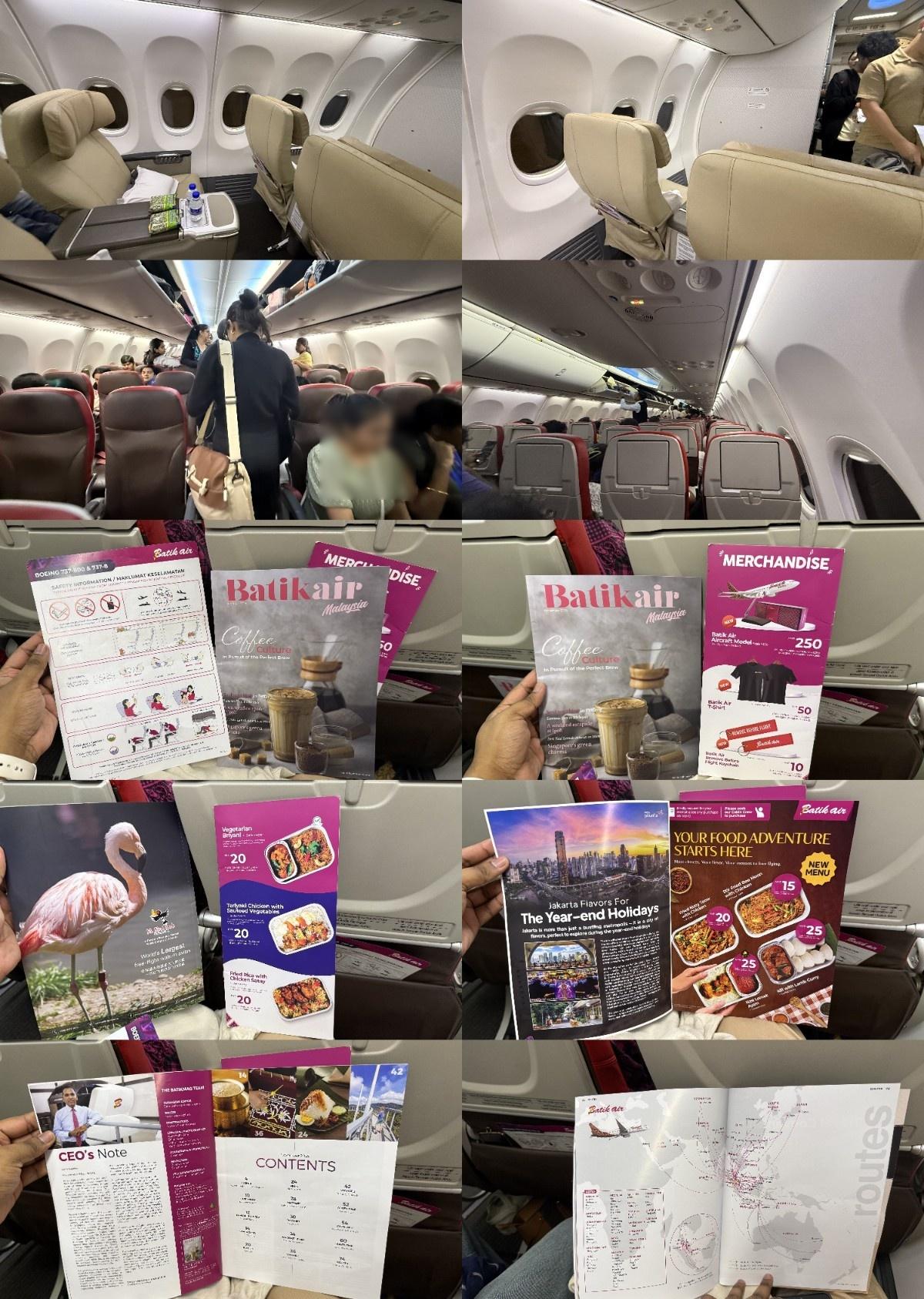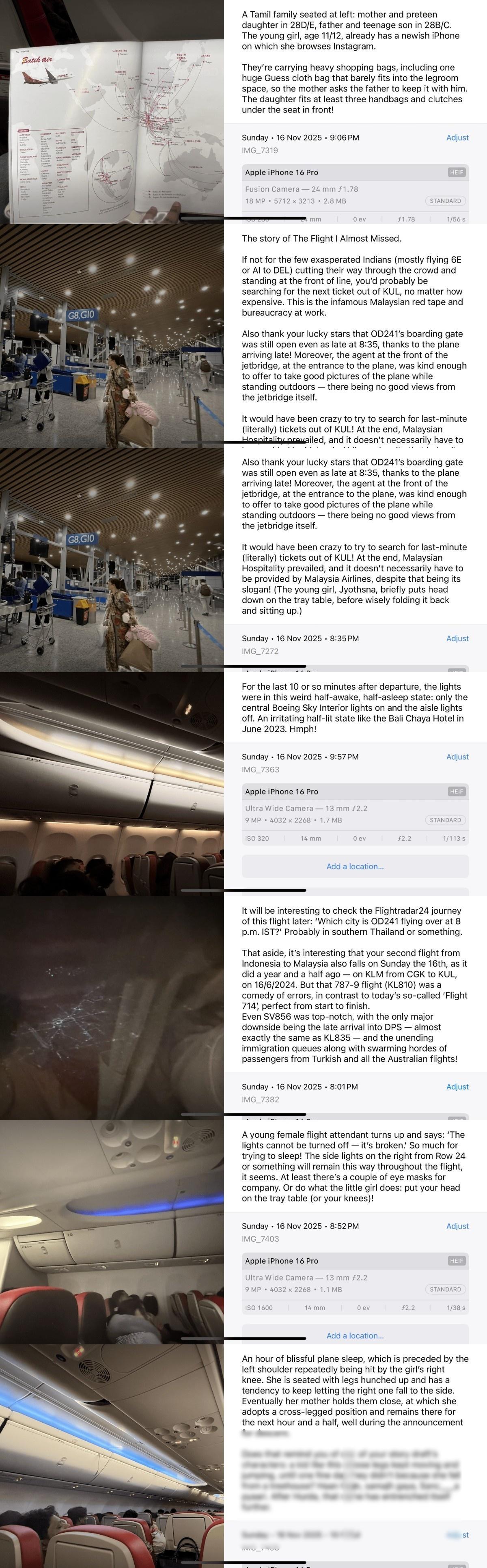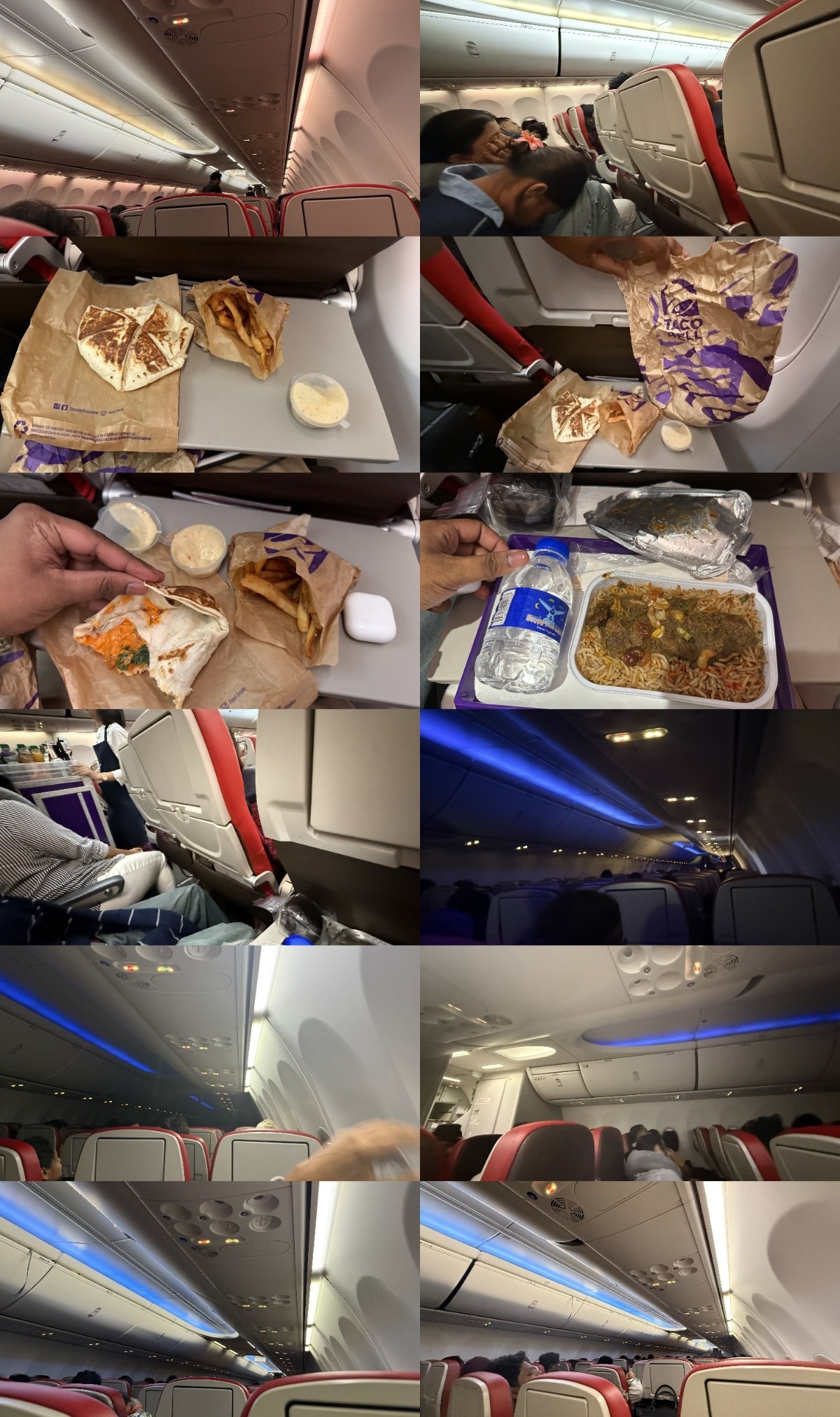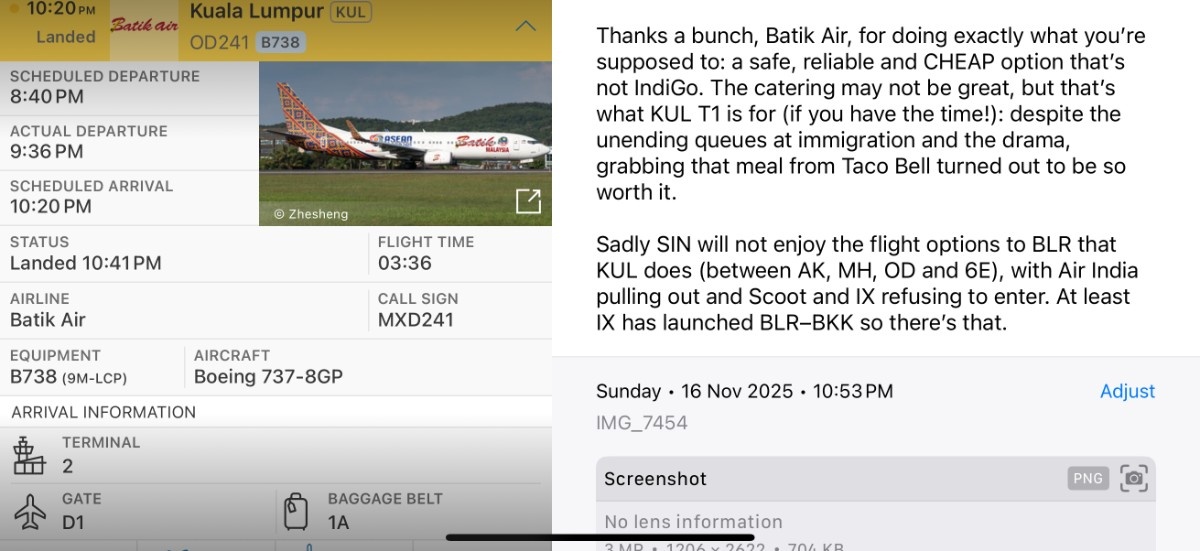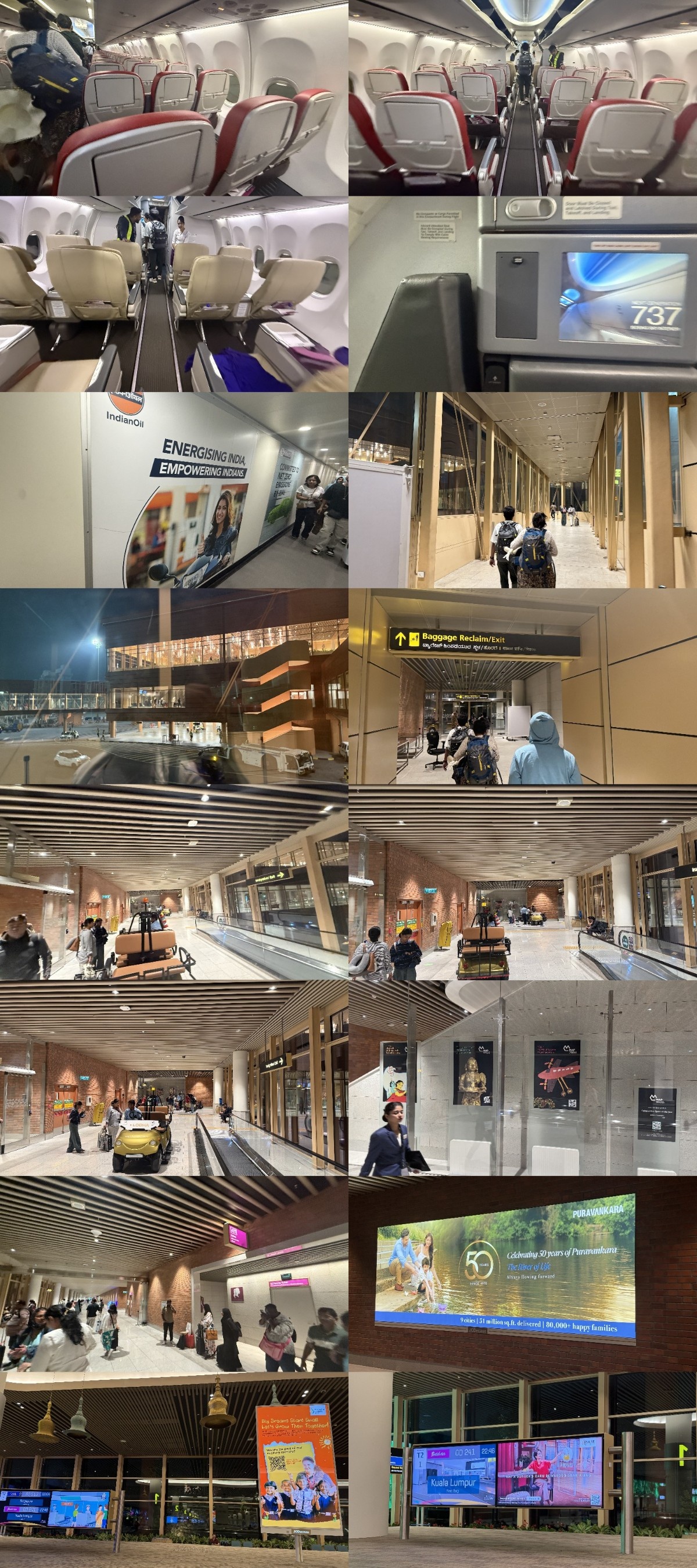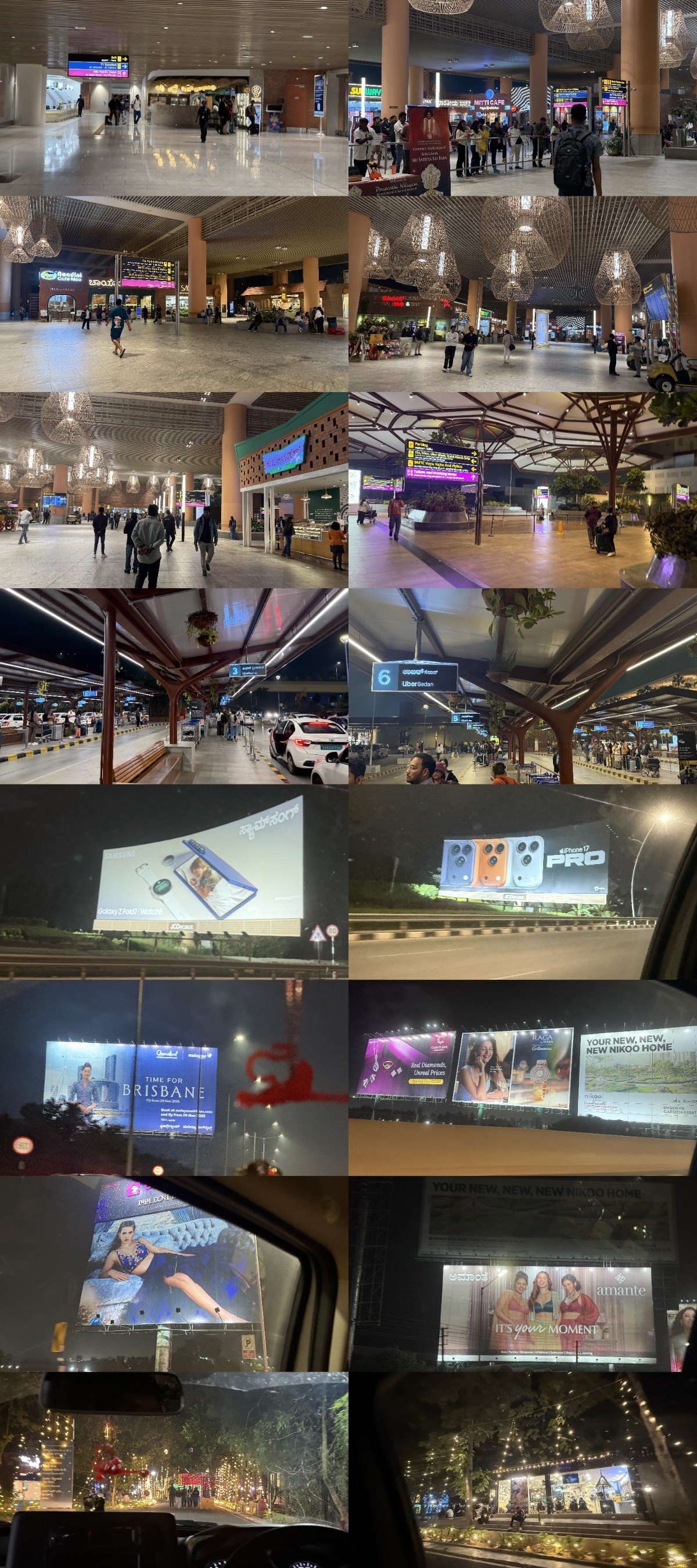


Another of my warnings for a report very heavy on text and pictures — including the Travelling Bonus at the end, featuring a flight (Batik Air Malaysia to Bengaluru) that I only just managed to board in the nick of time!
Introduction: The MH A330neo, Southeast Asia’s latest and greatest widebody today
This report continues my whirlwind three-night trip to Denpasar (Bali) in the middle of November 2025, with the express purpose of reviewing Saudia’s new fifth-freedom route from Singapore to Denpasar on the 787-10, as well as Malaysia Airlines’ new A330-900neo from DPS, which is what I’ll be doing here. As short as the trip was, compressed into a single weekend, it was simply exhilarating to be able to experience two spanking-new spiffy cabins in quick succession… though it did go a bit sideways towards the end, as I almost missed my Batik Air flight back to India! (Briefly touched upon in the Travelling Bonus below.)
In my previous instalment, I talked at length about not only the Saudia flight itself — operated by HZ-AR33, the airline’s newest widebody today, with a special ‘The Red Sea’ sticker — but also the bigger-picture overall transformation of the airline. Since unveiling a new retro-inspired logo and livery in 2023, along with a new brand identity, corporate font and everything else, SV has gone all-out with its entire strategy and approach in gearing itself as a leading global airline — well before Riyadh Air opens public commercial flights. This rings even more true in the conflict-ridden world of 2026, with the so-called ‘ME3’ — Emirates, Etihad and Qatar — greatly hamstrung by the war between the US/Israel and Iran, as Saudia and its Jeddah hub mostly escaped unscathed. The ME3’s loss may well be Saudia’s gain, as JED remains safe from the missiles and drones that have plagued much bigger hubs like Dubai and Doha.
In a different part of the world a six- to seven-hour flight away from the Middle East, Malaysia Airlines has been quietly doing the same thing: trying to recapture some of the premium traffic that’s long been dominated by its illustrious neighbour to the south, namely SQ. Except there’s no Saudia-style new livery and brand identity: instead, the newness comes in MH’s new planes. Specifically these all-singing, all-dancing A330-900neos used for medium-haul flights, which reuse the 9M-MN* series that was first used by the six white-elephant A380s which are doomed for the scrapyard. These A330neos will gradually replace the aging A330-300s and antiquated A330-200s, and have fresh new Business suites — namely the Collins Aerospace Elevation (for which MH is the global launch customer!). Moreover, MH A330neos have free Wi-Fi in ALL cabins, powered by Viasat, which is very hard to beat — only SQ offers that otherwise!
Along with these A330neos comes a new corporate font — Mundial, replacing the longstanding Gotham (one of the world’s most popular fonts), which was used for a decade — and a new slogan, ‘Your Gateway to Asia & Beyond’. These have been instrumental in rebuilding MH’s image in the 2020s and beyond as a regional force to reckon with — if not a top-tier 5-star airline like Oneworld partners Cathay Pacific, Qatar Airways and Japan Airlines, which are all recognised as among the finest airlines in existence. Suffice it to say that this A330neo, 9M-MNL (only three months old!), was a sea change from my previous A330-300 flight on MH in October 2022 — my first time on any A330 and any Oneworld airline! — which still nicely surprised me despite the aging, difficult-to-use IFE.
The steady reinvention of Malaysia Airlines — with easily the best typography in Southeast Asia
When I first talked about MH on this website three years ago, in February 2023, it was slowly trying to emerge from its financial and reputational shadow. First the dual black-swan tragedies of MH370 and MH17 in 2014, then the 1MDB scandal, and then the COVID-19 pandemic all left it badly battered and bruised. However, MH is blessed with incredible resilience — not only of its leadership and employees, but also of the Malaysian people as a whole. They have helped MH get back on its feet after an exceptionally turbulent decade (2014–23) and slowly build its new reputation in the 2020s. At the time I’d also written in the conclusion of the flight review:
I would much rather fly the cutting-edge A330-900neo when it enters service with the airline in a couple of years’ time. Hopefully that will give me a much better impression of MH.
With these new A330neos — as well as the 737 MAXes, though those are far inferior, having no seatback IFE — MH is well poised to refresh its fleet in the near future. And in a few more years, we should be seeing 737 MAX 10s with lie-flat Business Class beds, depending on when the MAX 10 gets certified. But MH’s biggest asset, according to me, is its outstanding branding and typography skills, which neither Singapore Airlines nor anyone else in Southeast Asia can match — and only fellow Oneworld member Cathay Pacific (apart from, perhaps, Korean Air after its big 2025 rebrand) does so in all of East Asia. Not a single airline in Southeast Asia, in my opinion, can come close to the sheer perfection with which MH executes its typographic identity. MH was already incredibly consistent with Gotham for a decade, and the new Mundial font — which is also used by Airtel, one of India’s largest telecom companies (with a massive presence across South Asia and Africa) — takes it to the next level. From ads to the website to the sexy new MHstudio IFE (based on the Safran RAVE system), Mundial is used in every single application possible.
That’s not all: MH’s Going Places magazine is one of very few today published by Ink Global, my favourite publisher in terms of how brilliantly it designs its magazines. On the other hand, Singapore Airlines and its longstanding Baker Signet font — paired with other fonts like Gotham or Proxima Nova — is timeless and classic, but has already started to lose some of the edge and verve that MH nails so spectacularly. The less said about SQ’s Montserrat-ridden KrisWorld the better, and it simply cannot hold a candle to MHstudio, which runs rings around KrisWorld with its crisp design and interface (though perhaps not the content selection or live TV!).
With such impeccably high standards of typography — which was also the case for Saudia — I was more than excited to fly Malaysia Airlines’ A330neo out of Denpasar after a stay of barely 36 hours. This is the MH A330neo’s only narrowbody route, as it predominantly serves Australia (Sydney, Melbourne, Perth) and New Zealand (Auckland) otherwise, in addition to Tokyo–Narita elsewhere in Asia. At Malaysia Airlines it’s very rare indeed to get a widebody instead of a 737 on a short-haul sector, so this was a pretty special route. Not to mention, this was the third ‘Flight 714’ in my flying history — after SQ714 (SIN–BKK) in December 2022 and CX714 (SIN–HKG) in August 2024 — which is a tip of the hat to Tintin aficionados, as Flight 714 to Sydney was the penultimate complete Tintin book released!
As I commented on OMAAT‘s recent first-impressions post of the MH A330neo’s Business Class in February 2026:
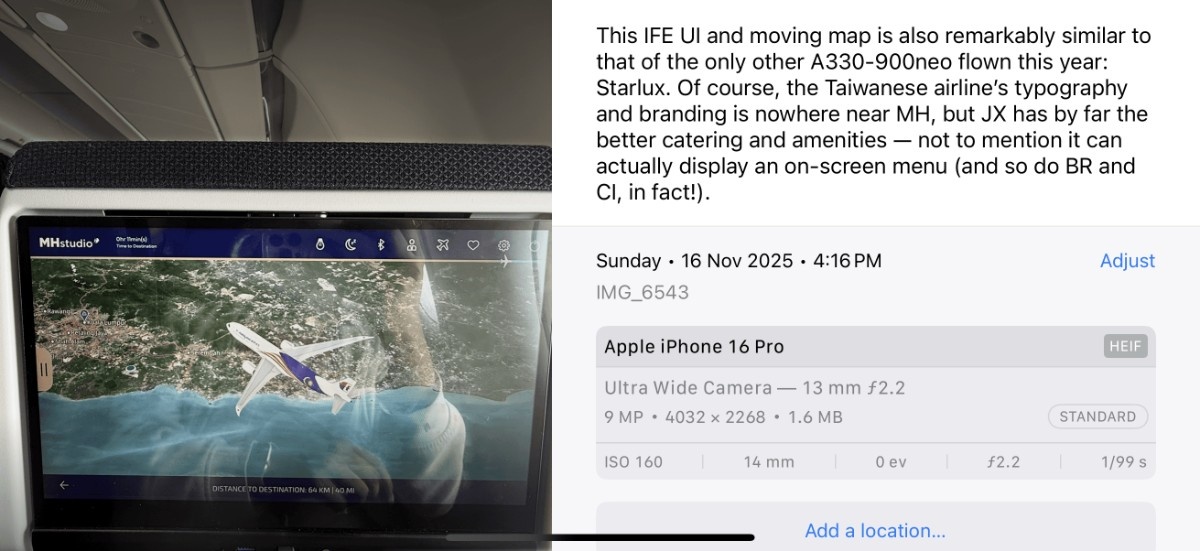
MH really has improved a lot in recent times, and the A330neo represents perhaps its best hard product — thanks especially to the new IFE, which you’ll also find on Starlux’s A330neo. The J suites are certainly much better than what SQ has on longhaul A350s and 777s.
Where MH perhaps shines the most is in its marketing and branding, as I consider it to be the best in Southeast Asia, better even than SQ. The consistency with MH’s typography is miles away from the rather slipshod look of KrisWorld — and as hard as it is to fault SQ otherwise, this is where MH beats it by a huge margin.
It’s really lovely to see TG and MH find their groove again after years of losses, and stand out with a competent hard and product. They’re now on par with KE, at least, if not stalwarts like NH, JL and CX. On the other hand, GA has fallen really badly indeed, and its future is nowhere near as rosy as TG and MH.
Enchainement de vols
- 1SQ511 | Bengaluru to Singapore | 13 November 2025 | A350-900 | 9V-SHG
- 2
- 3MH714 | Denpasar to Kuala Lumpur | 16 November 2025 | A330-900neo | 9M-MNL
- 4OD241 | Kuala Lumpur to Bengaluru | 16 November 2025 | 737-800 | 9M-LCP
However, there is another state-owned flag carrier in Southeast Asia that was once well-regarded, despite losing money like TG and MH, but has not witnessed any sort of postpandemic reinvention with new aircraft like those two. Instead, unfortunately, SkyTeam member Garuda Indonesia has almost completely lost whatever lustre and shine it had in the 2010s, with what was then one of the world’s best First Class products. Far from inducting new aircraft like TG and MH are, Garuda is struggling to keep its existing planes flying. Neither does it have a single A350 or 787 on order, nor does it have new 737s (only secondhands), and many of its A330s and 777s tend to remain parked at its Jakarta hub. Though there are five A330-900neos — as I’ve flown once — two are reseved for Hajj and the others are generally parked. The future is sadly much bleaker for GA — despite having such lovely cabin crew — than for TG or MH.
Pre-departure: This time for DPS International, a stone’s throw away
Sunday, 16 November, morning. I’d had half a mind to make another visit to he Beachwalk Shopping Centre at Kuta (after my previous visit there in June 2023), one of Bali’s most well-known shopping centres, especially as it was very close to my hotel. But that would require waking up at at least 9 in the morning, given that my flight was departing at 1 in the afternoon…
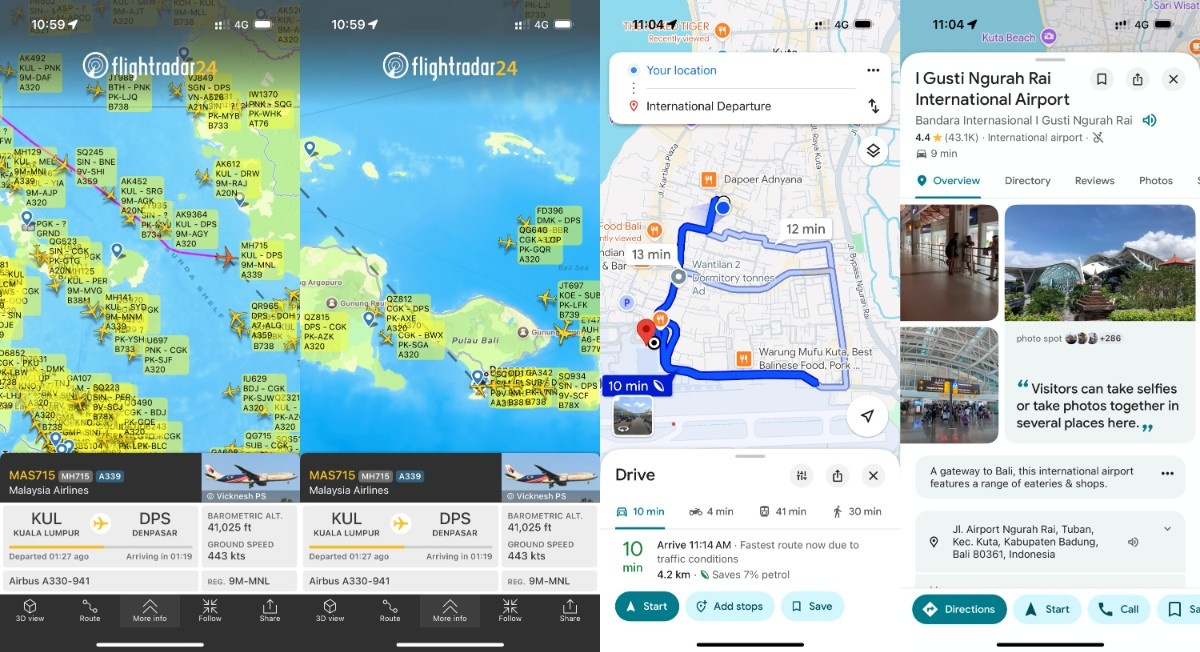
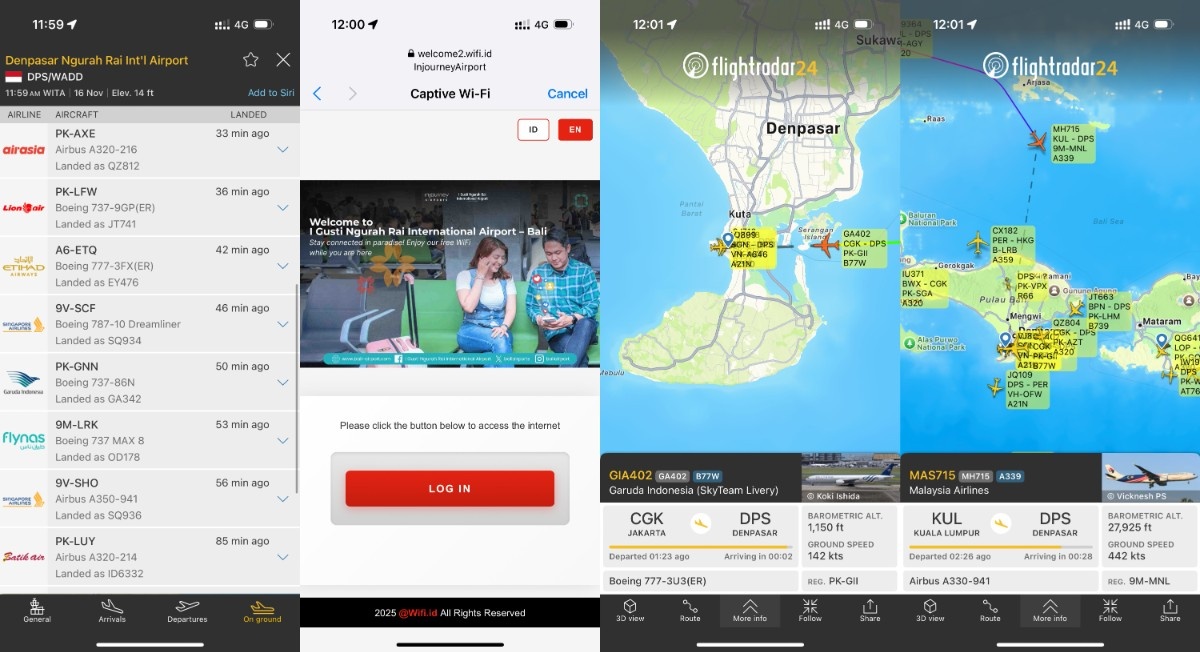
…and, of course, I slept throughout the morning. It took a phone call from the hotel’s reception to wake me up, as it was just an hour before check-out time, and two hours before departure! In a trice, I got dressed and checked where my inbound plane was on Flightradar24. As it turned out, 9M-MNL — no, nothing to do with Manila (which I visited earlier in May 2025) — was halfway through on its journey from Kuala Lumpur, and would be landing in a little over an hour.
The hotel was barely a ten-minute drive away from I Gusti Ngurah Rai International Airport, and I thanked my lucky stars that I was not in some remote, exotic, rustic area of the island like Ubud. Not many tourist destinations can get you to the airport in ten minutes flat — certainly not an airport as major as Denpasar!
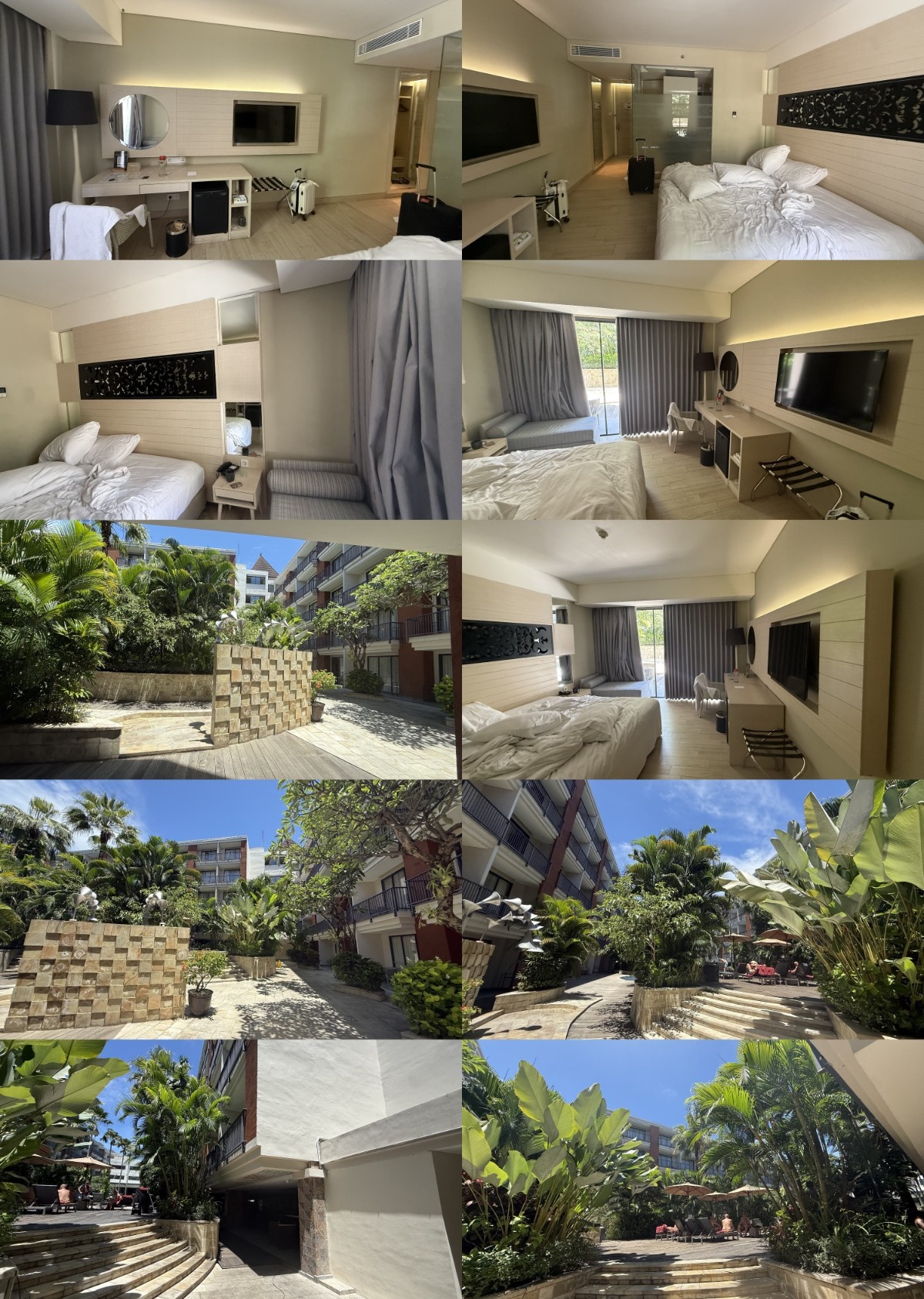
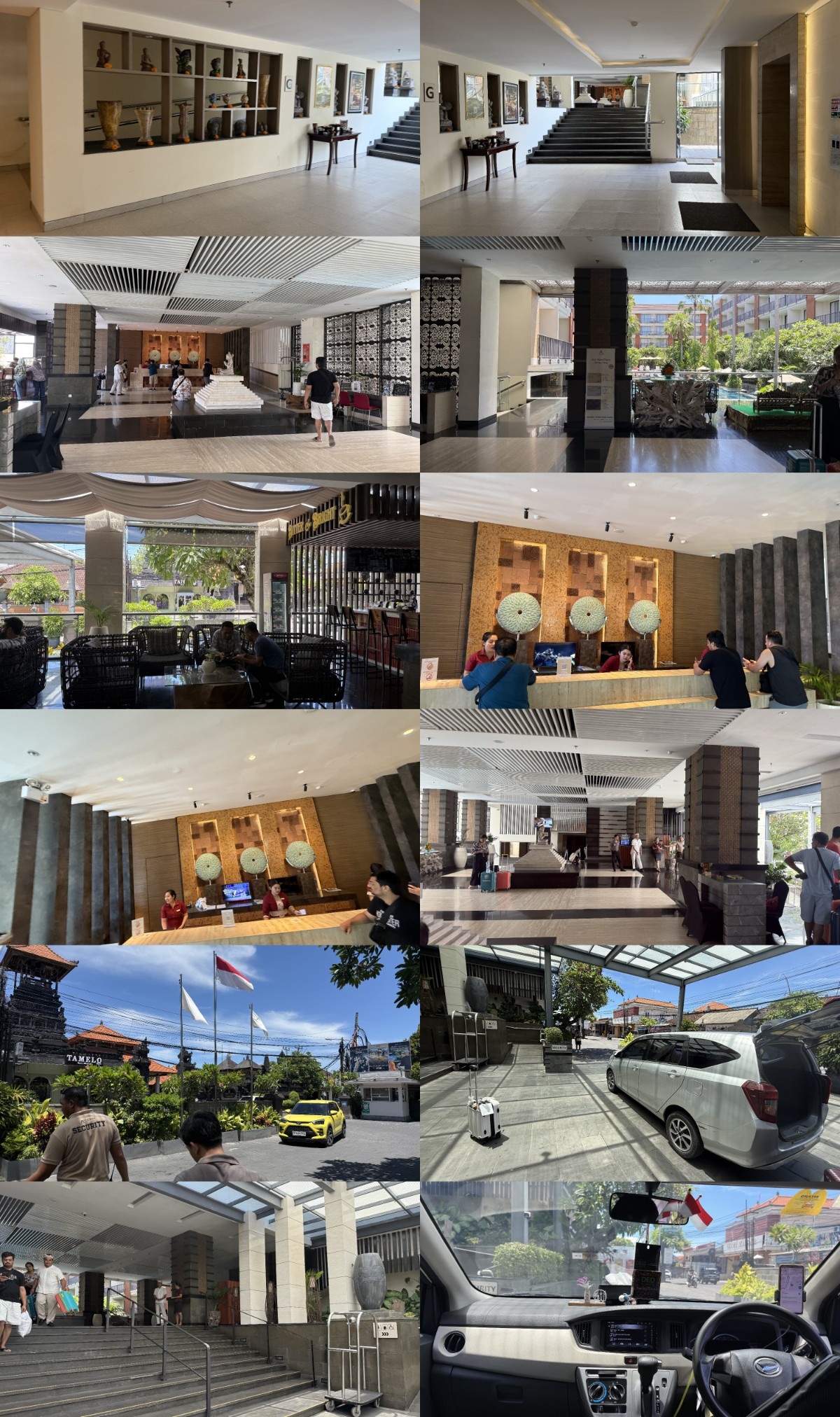
The room for the night was a pretty, modern, well-lit place at the Anathera Resort Kuta, located right next door to a swimming pool and garden. It may look like it cost hundreds of dollars — far from it! Bali is blessed with accommodations that are as cheap in price as they are tasteful in décor, service and signature hospitality.
So much so that I could afford to stay in two different places for the two nights I was here, the first one being the Episode at Kuta, next door to the sprawling Mal Bali Galeria mall.
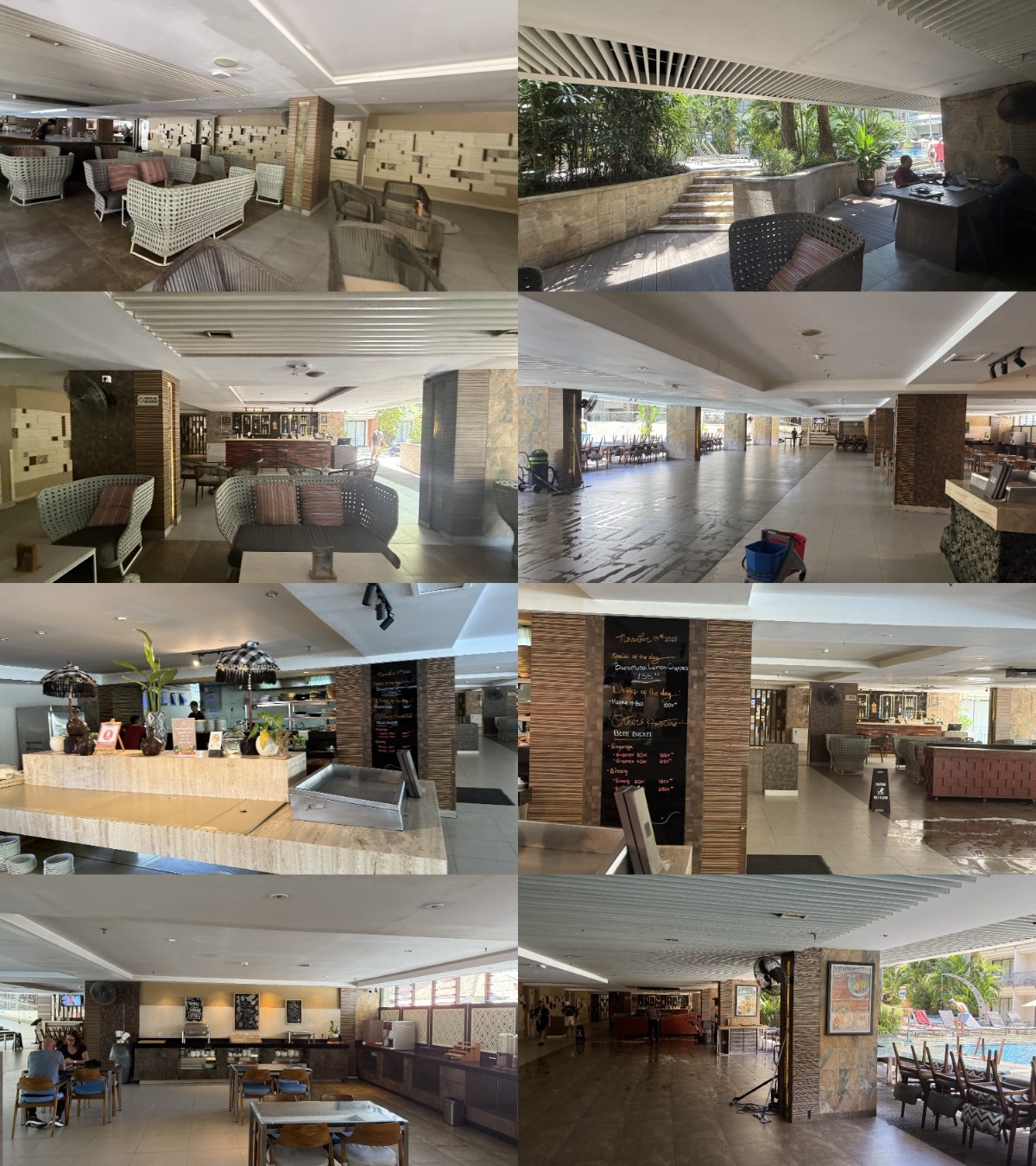
I briefly strolled to the next-door restaurant, whose breakfast buffet had closed just a short while ago — not that I especially care a lot for breakfast when I travel — and whose menu of the day was written on an elegant black slab of stone.
In contrast, my previous visit to Bali in June 2023 was at a much smaller inn, but there I did not forget to tuck in to a classic Indonesian nasi goreng and cold coffee before boarding my Garuda Indonesia A330-300 to Jakarta.
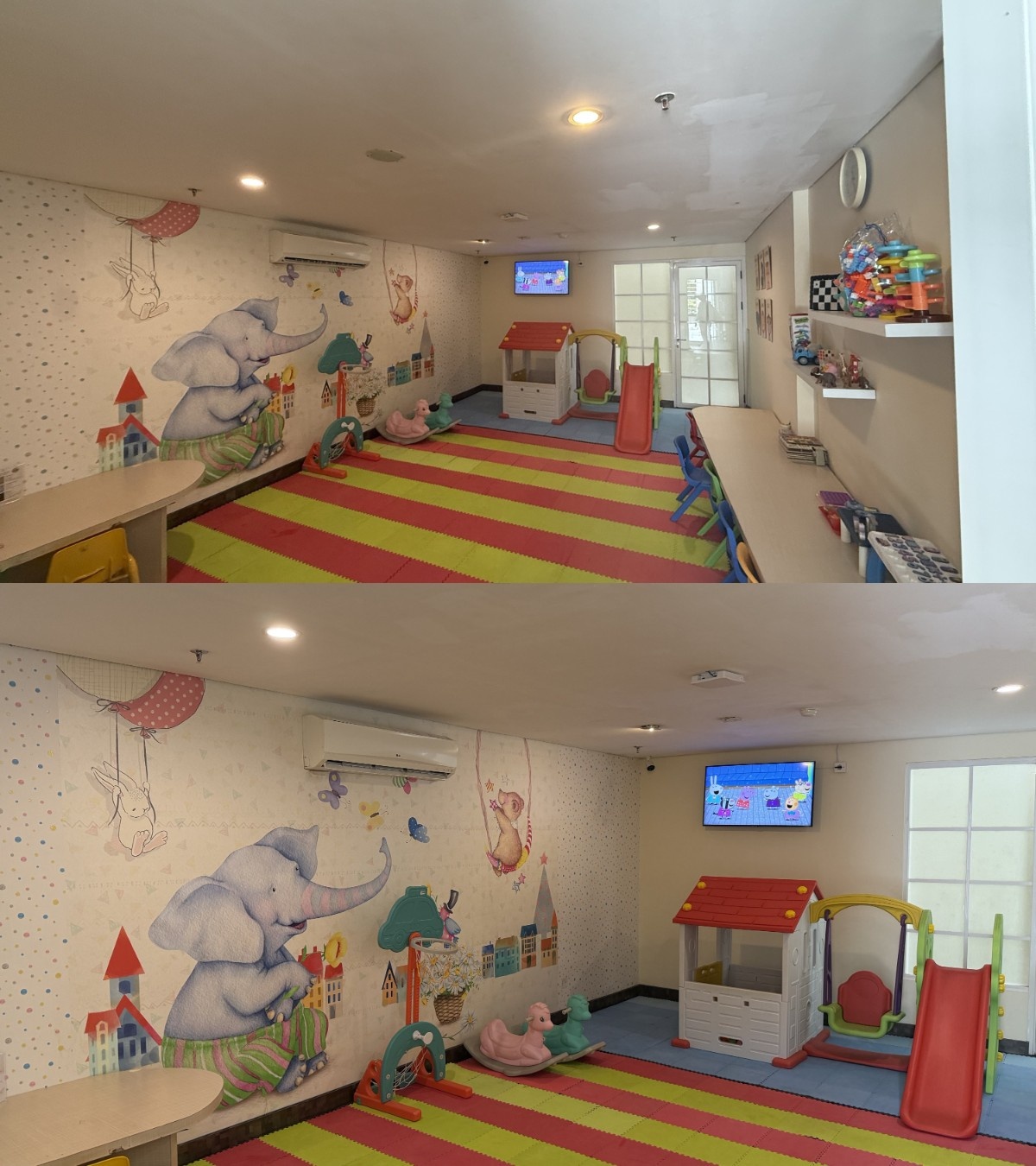
I would be remiss not to include the real purpose of staying a night at the Anathera Resort Kuta. On the hotel’s Agoda/Booking.com page was a picture so cute and delightful that I couldn’t resist staying here: the children’s play room, which featured a dreamlike wallpaper of a baby elephant and some other animals. I simply cannot resist baby elephants, and despite there being so many other adorable baby animals, I find elephants to be especially gentle and lovely beasts. 🥰
As it turns out, my room was located right next to the children’s play room!!! To say that I was cock-a-hoop would be greatly understating matters. Needless to say, I couldn’t help myself from lingering in this colourful, childlike play area for a bit, and be momentarily transported back to my own childhood. There are few animals that can reduce me to a puddle of mush the way baby elephants can! 😇
With bag and baggage in tow, I proceeded up the ramp and handed over the keys to the friendly female receptionist, after which a bellman kindly collected my luggage and bundled it into the waiting Gojek taxi. Before very long, I’d sped out of the opulent corridors of the resort where tourists from across the world were enjoying a lazy Sunday by the pool.
En route, I passed by a very dilapidated-looking Garuda Indonesia office — a metaphor for the state of the airline itself — before passing by one of several Harris Hotels on the island. This is the Indonesia-specific brand of The Ascott Limited, the global hospitality management company.
All too soon, barely 36 hours since I last saw them, I glimpsed the dome and traditional façade of I Gusti Ngurah Rai International Airport. This felt familiar except, unlike the last time I’d come here (June 2023), I now went where presumably most people go from here: the international terminal.
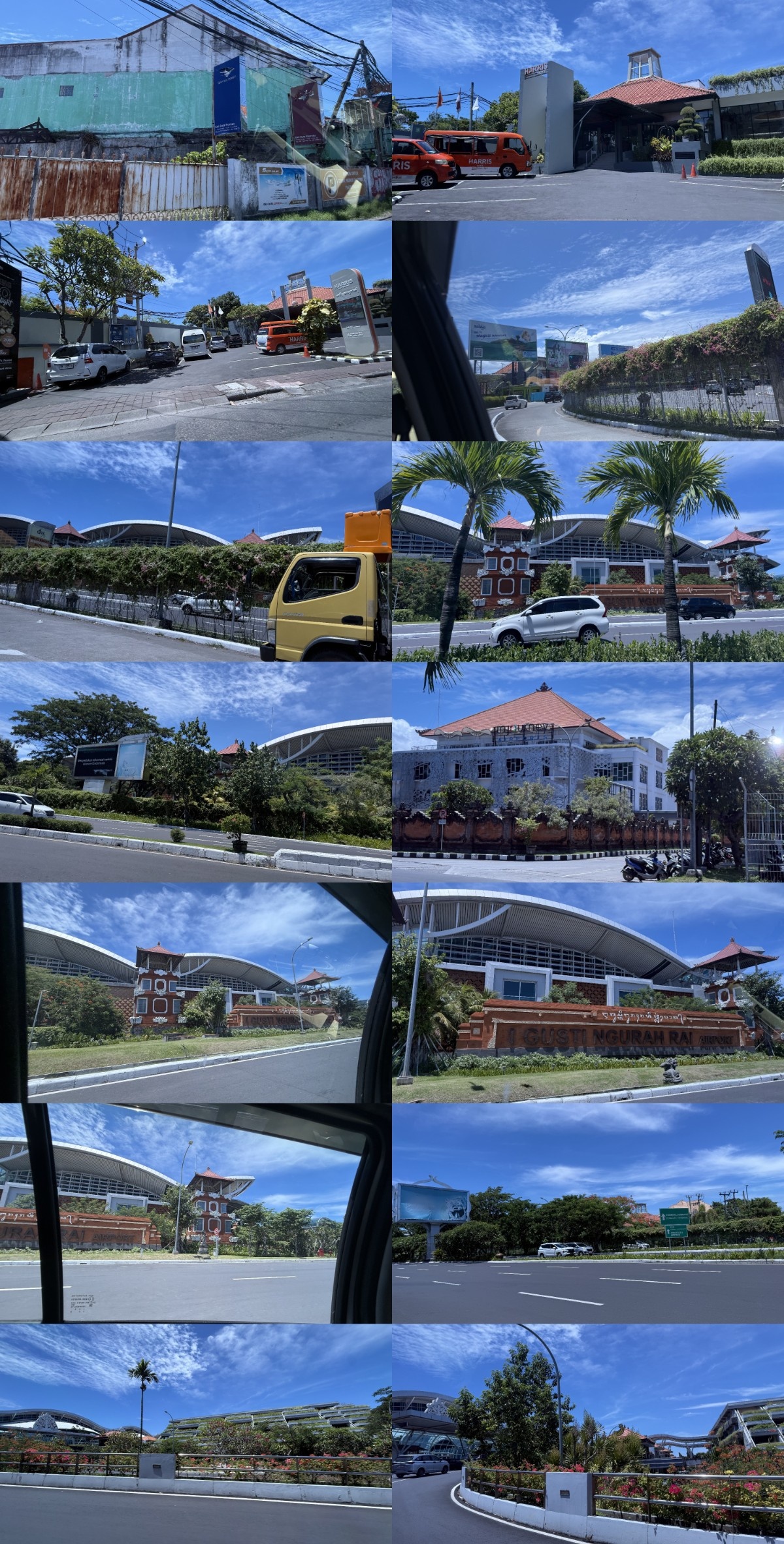
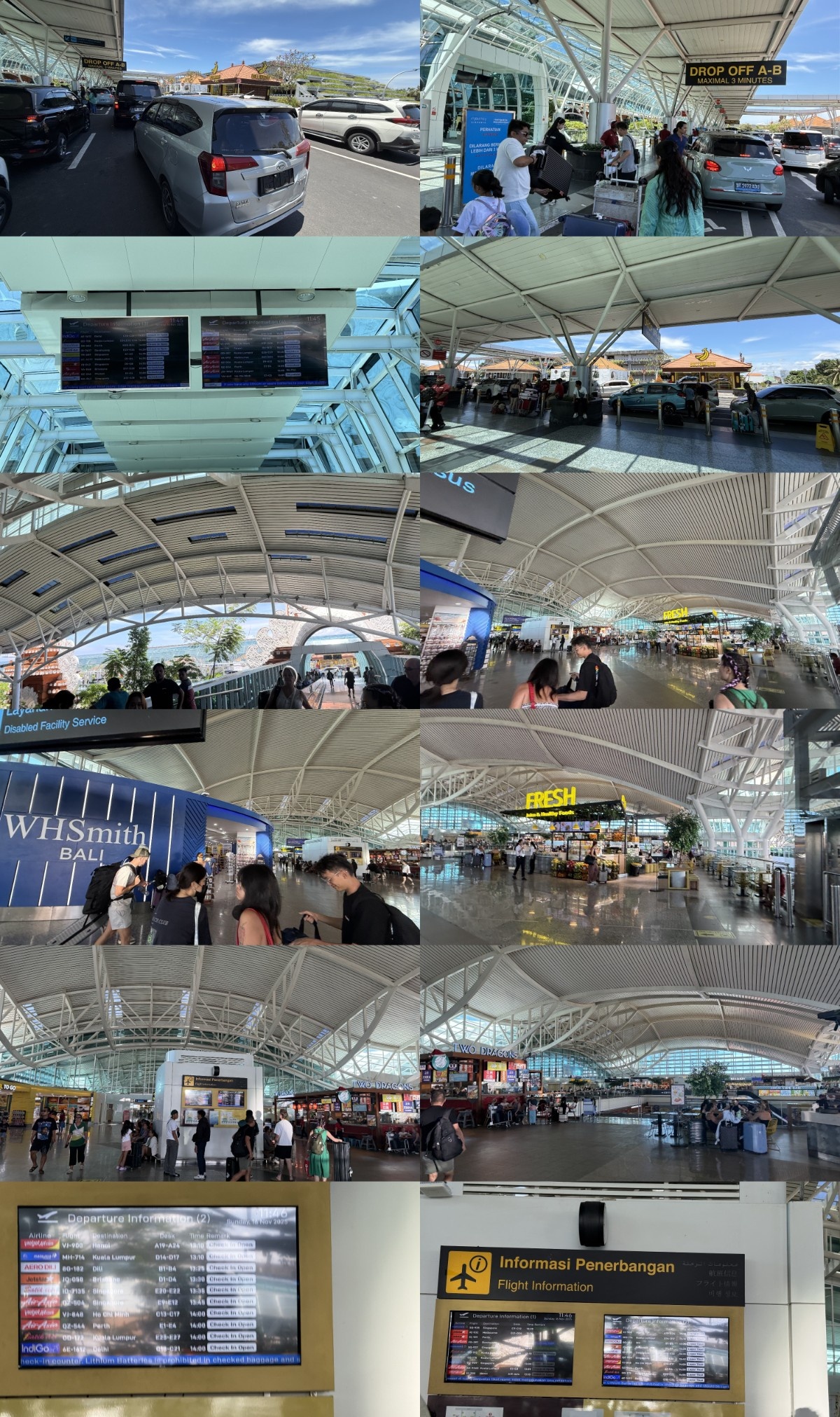
An upwardly undulating road later, I reached the international departures’ drop-off driveway at DPS — how that alliterates! — and checked how much time I had left for check-in. Not a lot! I was cutting it too close, with the time now being 11:50 and the check-in counters for MH714 closing at 12 sharp, so I needed to rush, hell for leather.
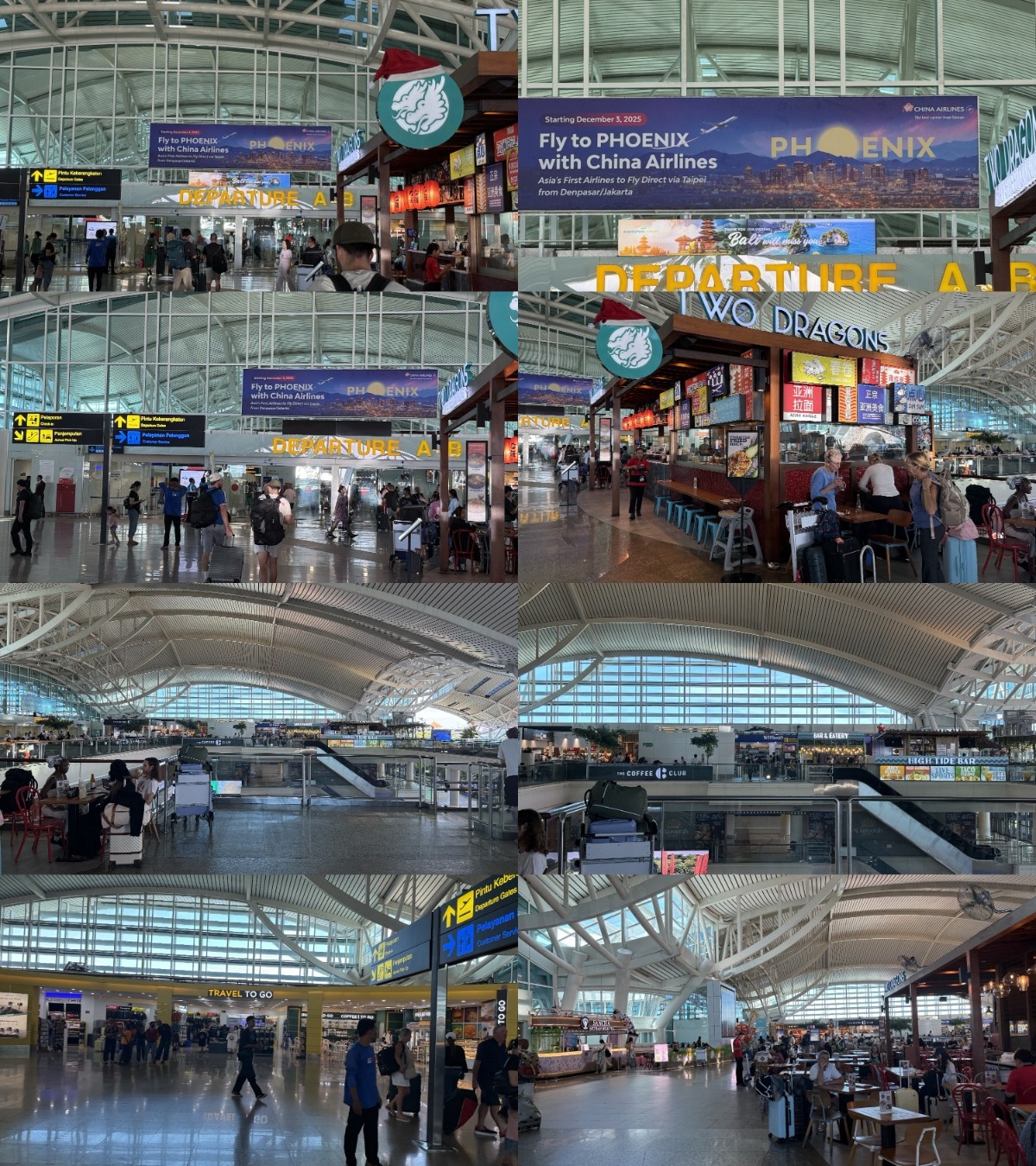
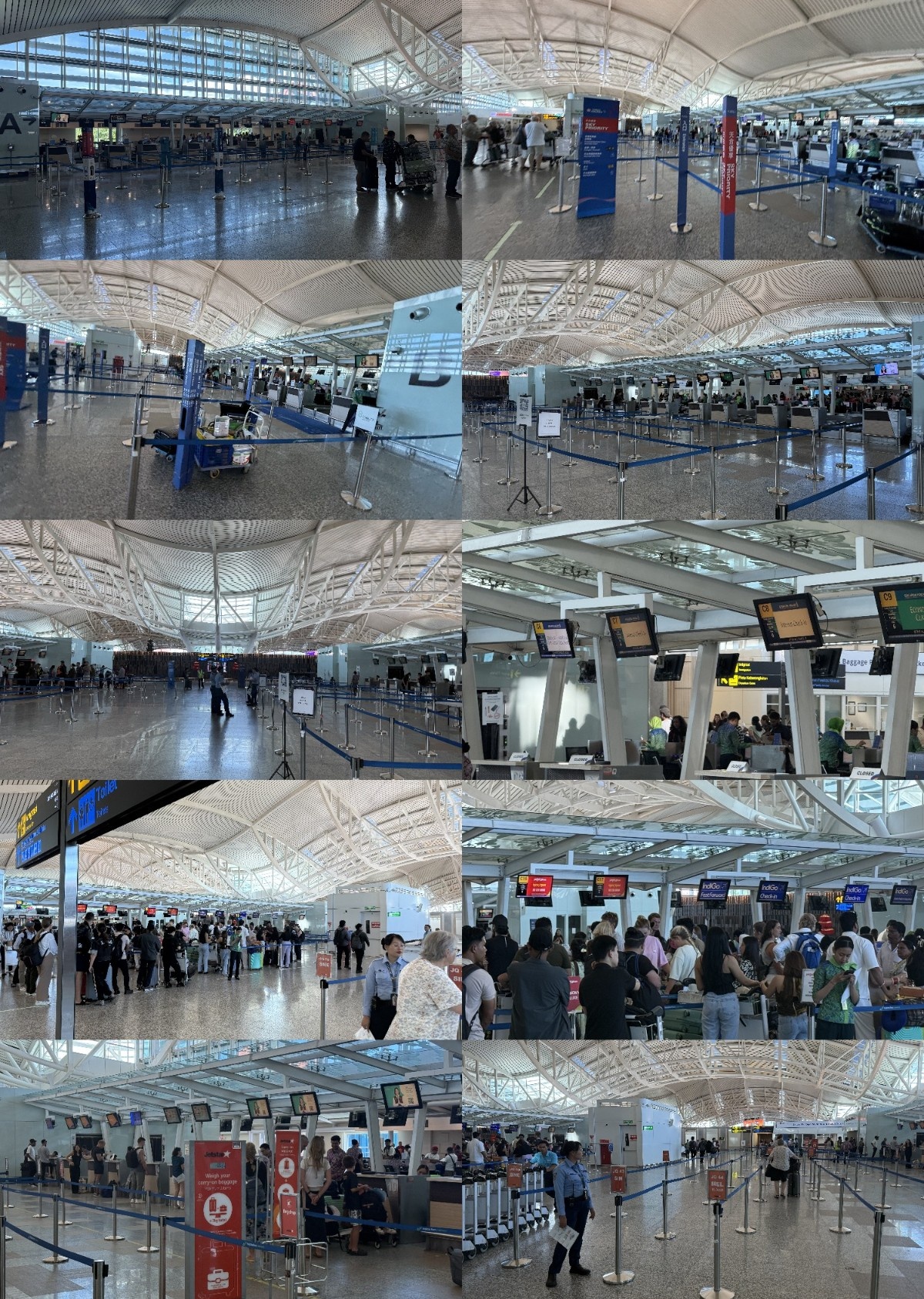
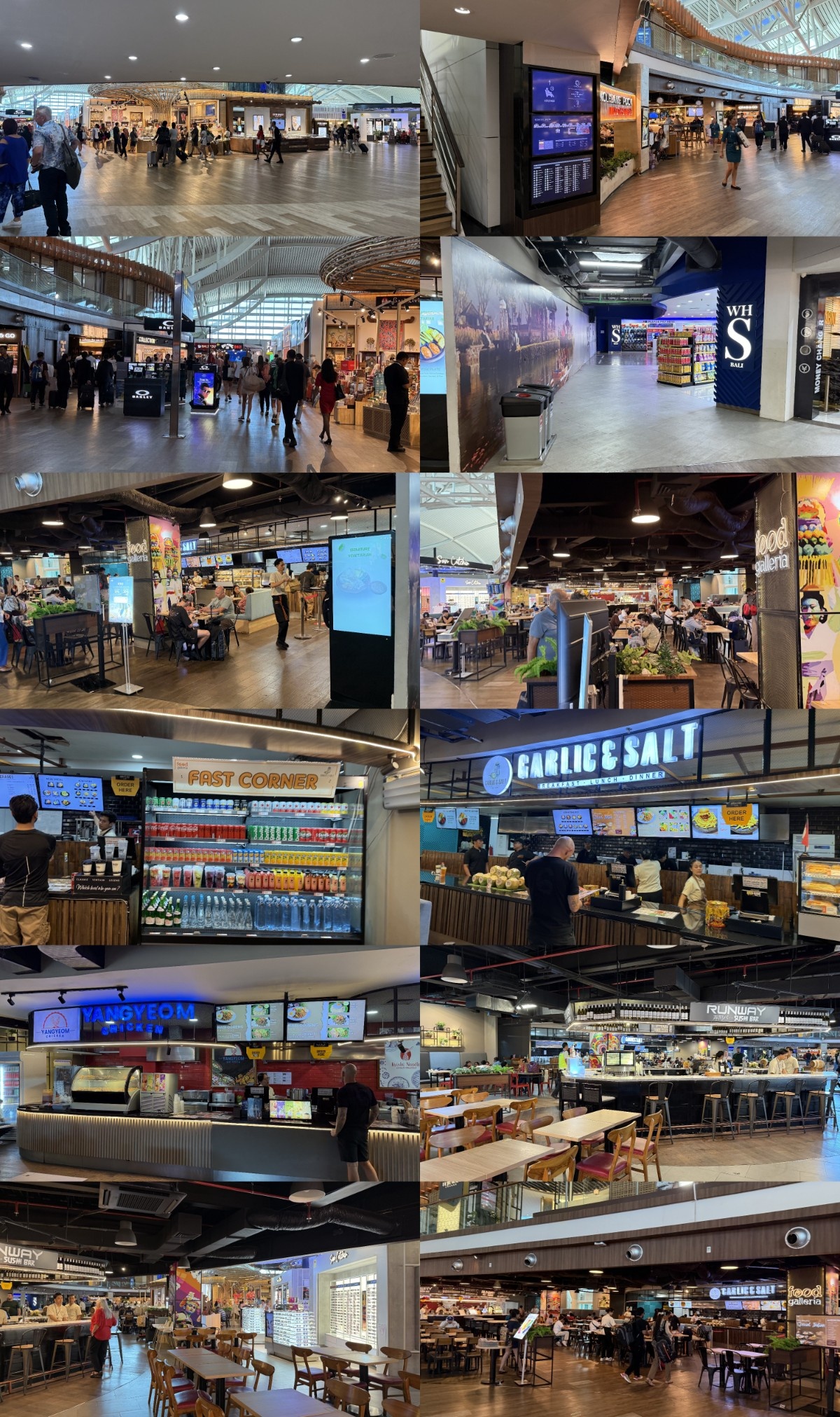
Note that I wrote needed to rush, and not rushed, because… I still managed to get some time in between for the obligatory clicks of the place. Curiously, DPS’ international departure area starts with a sprawling retail area instead of the check-in counters. All the better to drive up (pun intended) retail footfalls, if you ask me!
Placed strategically at the centre of the pre-departure retail area was an ad for China Airlines’ new service to Phoenix, Arizona, which was timed just in order to beat its Taiwanese competitor Starlux, which had also announced PHX flights, to the punch.
It’s curious how China Airlines’ slogan here was The best carrier from Taiwan — a controversial statement in two ways. Both in terms of calling itself better than its critically acclaimed rivals EVA Air and Starlux Airlines, and because of explicitly mentioning its country — something that won’t sit well with Beijing! (Also, I’ve seen ads for the airline on buses in Jakarta that use another slogan: From TAIWAN since 1959. Yes, Taiwan was written in uppercase — and I can’t help but feel that that’s a deliberate move to rile up Beijing…)
That said, CI is a rather underrated carrier compared to its more illustrious Taiwanese peers. I’m happy to have flown its spanking-new A321neo — from Taipei to Manila in May 2025; I haven’t reviewed it on this site yet — and also plan to fly its A350 from Singapore to Taipei in May 2026. That late-night flight in May 2025 (CI709 TPE–MNL) was one of only two flights on SkyTeam airlines that I took in all of 2025, with the other being the Saudia flight (SV856) that brought me here to Denpasar.
Inside the main terminal’s check-in area, the daily flight for the aforementioned China Airlines was accepting passengers, as was one of several daily Singapore Airlines flights. However, more personally intriguing was a long line of Indians queueing up for one of IndiGo’s daily flights to India — this one being to Delhi, making a technical stop in the eastern city of Bhubaneswar (BBI).
(IndiGo only flies A320neos to Denpasar — nonstop from Bengaluru, one-stop from Delhi and Mumbai — and not A321neos, until it takes delivery of more A321XLRs. Of those, so far only VT-NLA has been delivered to the airline, and this A321XLR started flying to Athens in January 2026.)
Aside from that, various Jetstar flights’ check-in lines were demarcated by the destination and flight number on a placard: JQ43 to SIN*, JQ44 to MEL, JQ58 to BNE, etc.
*The flight to Singapore is a fifth-freedom flight operated by Jetstar Australia itself, and not the now-defunct Singaporean subsidiary, Jetstar Asia (code: 3K), which ceased operations in July 2025 — as I’ve written a tribute for here.
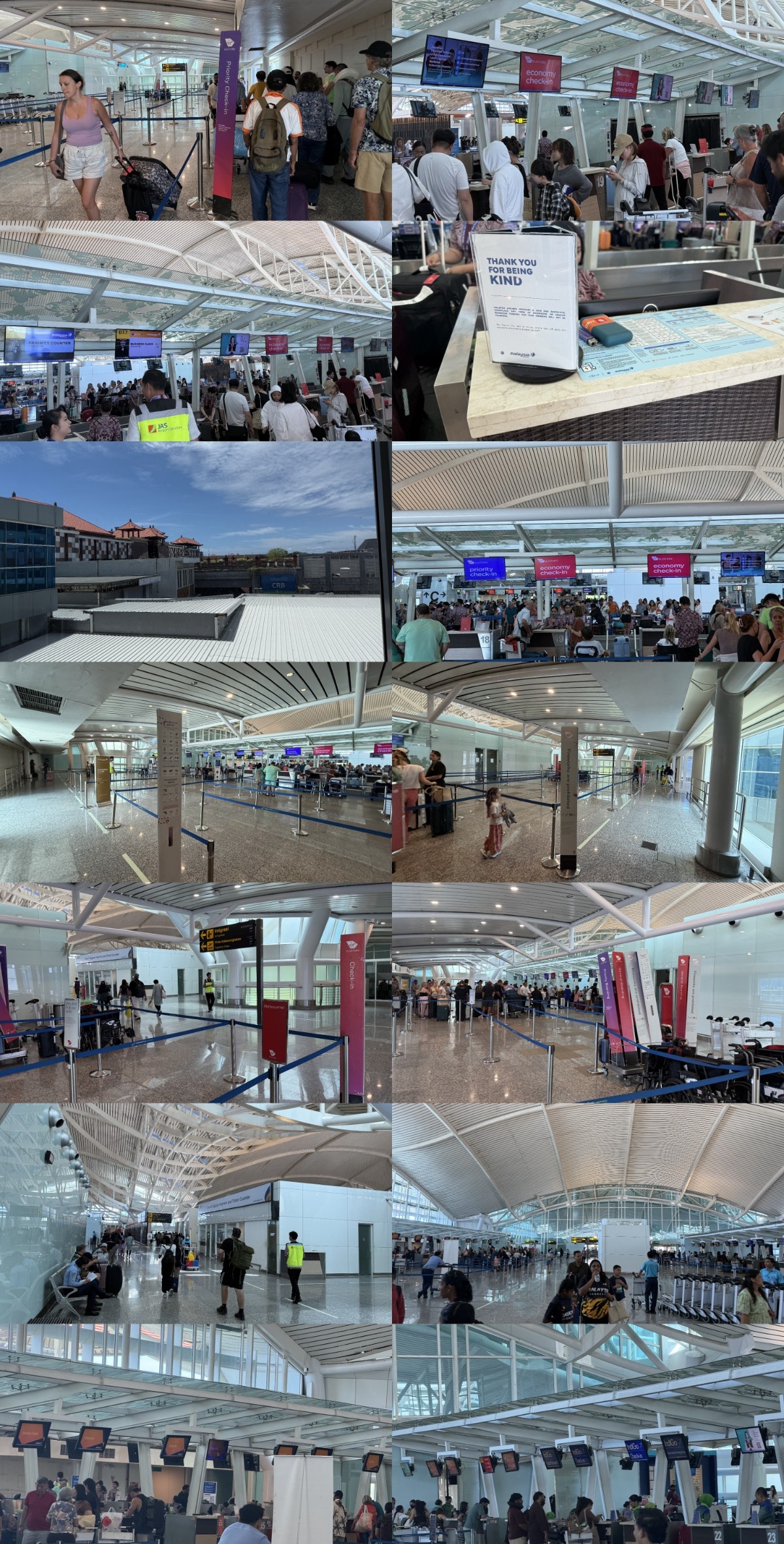
Then I moved to the far right end of the terminal, where Malaysia Airlines’ check-in was taking place. At the adjacent Virgin Australia counters, passengers were lining up for VA50 to Brisbane and VA92 to Melbourne. This is not an airline that I otherwise ever see, given its absence from Singapore.
As it stands, the line for MH714 was mostly empty, and I was one of the last passengers waiting — I’d barely made it in time! Quickly, I got my heavy bags through, received my boarding pass, then moved on to the immigration and security screening. A bunch of Virgin Australia standees were bunched together and placed at one side, as check-in continued for its competitor Jetstar, which also has a ton of flights Down Under.
I might note here that there are only two Oneworld members (at least as far as I know) which place the alliance’s blue-circle logo to the left of their own: Malaysia Airlines is one, and the other is Qatar Airways. This is presumably because these two put their icon — the Wau kite for MH, the Oryx for QR — to the right of the wordmark. Other members of the alliance like Qantas, Cathay Pacific and SriLankan all have their icon to the left (if there is one — some like Alaska and Finnair don’t have it) and the Oneworld logo to the right.
This inconsistency has always rankled me, with MH and QR refusing to be in step with other members of the alliance — in contrast to SkyTeam, where all members, without exception, put the alliance logo to the right of their own. As for the world’s largest airline alliance, the ‘A Star Alliance Member’ text — nowadays shortened to simply ‘Star Alliance’ in ads since 2025 — used to mostly appear below the airline’s logo, but now frequently appears to the right as well.
There’s another area where Qatar Airways is mentioned alongside Malaysia Airlines below, and that’s with respect to their Indian Premier League team sponsorship — but that’s for later…
Some widebody planes were on the ground: both new jets from SQ and an older Etihad 777-300ER that’d flown all the way in on the longer journey from Abu Dhabi. Besides my A330neo, which had half an hour to go, another widebody was on short final after an equally short flight — and this was a special plane: PK-GII, Garuda Indonesia’s SkyTeam-liveried 777-300ER as GA402 from Jakarta.
That reminded me of my first flight into Denpasar in June 2023 — also on a SkyTeam-liveried 777-300ER, but on KLM from Singapore instead. That’s one flight that was so lovely, I will never forget…
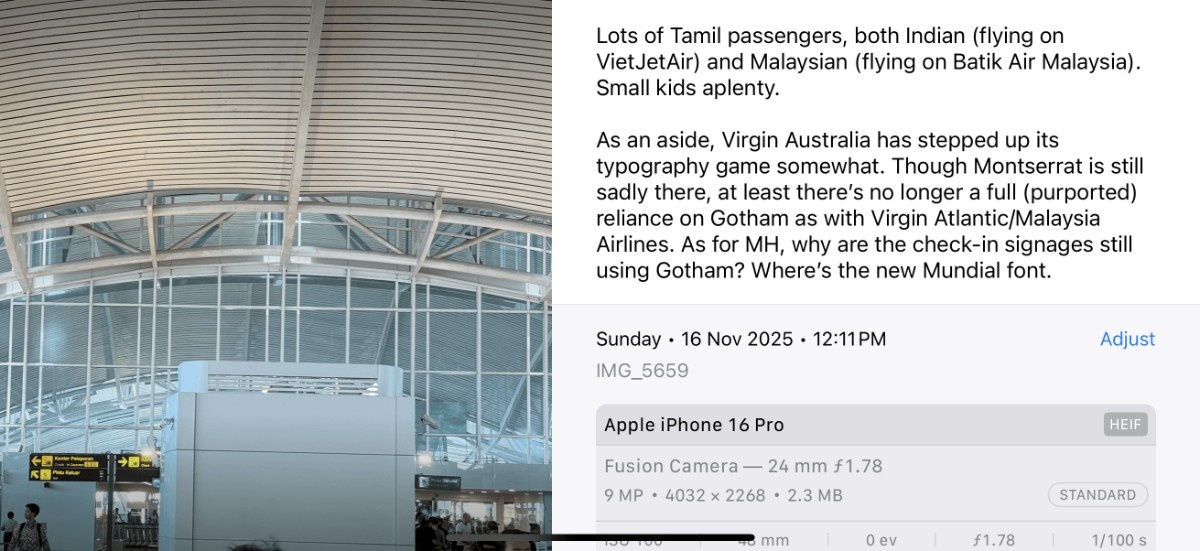
Aside, it seems Virgin Australia has upped its typography game in the last year or two, swapping out the dreadfully overused Montserrat (a pet peeve of mine) and bringing in GT America — also the interface font of X (Twitter) — instead.
Meanwhile, though Malaysia Airlines officially introduced a new corporate typeface, Mundial, in 2023, some check-in signs still use the omnipresent Gotham — and that remains the corporate font of the other Virgin airline, Virgin Atlantic, which has stuck resolutely to it. Both MH and Virgin Atlantic — but not Virgin Australia — have used Gotham with the utmost consistency (despite it being so overused), which I respect.
DPS international departures: More luxurious than I’d thought
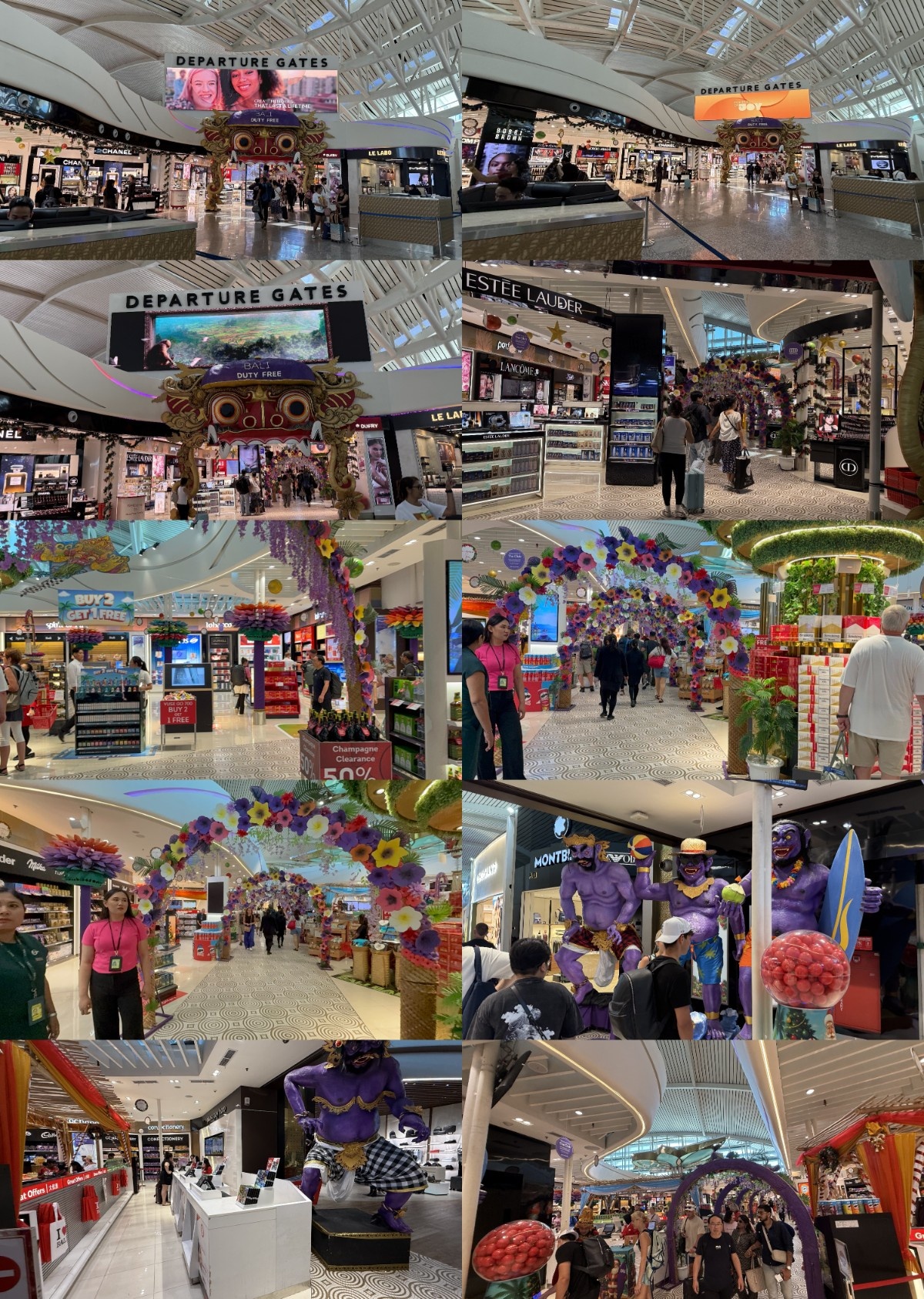
With security and immigration done, I proceeded to the sprawling departure area, which was filled to the brim with luxury brands — something that I’d not expected at a leisure airport like this. At the start was a huge Dufry-run duty-free store, bedecked with all sorts of artificial flowers. There were also some terrifying-looking monster-like figures, clad in barely anything but a loincloth or shorts!
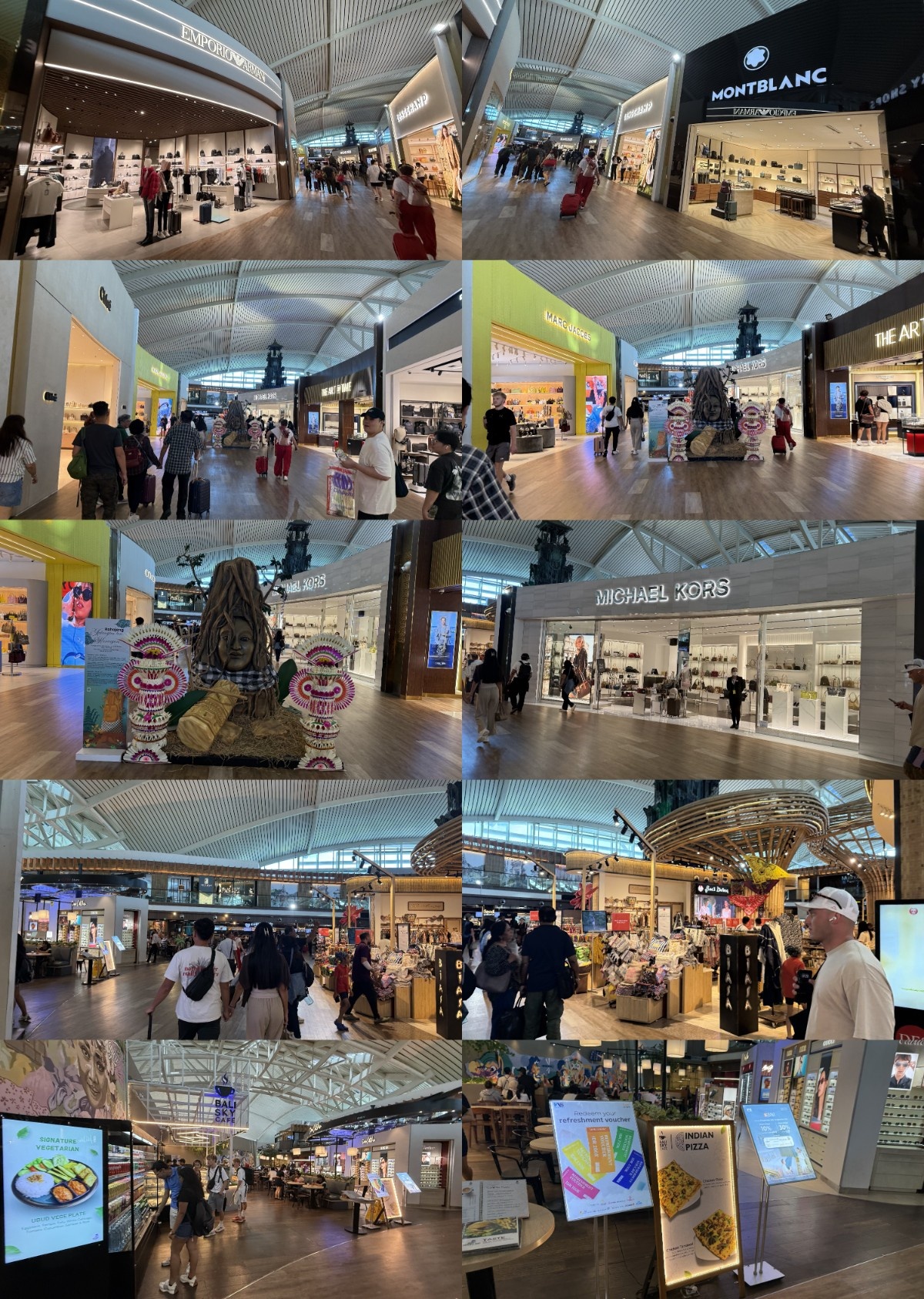
Admittedly Bali is one of the world’s most famous tropical tourist destinations, but I still tend to associate the likes of Montblanc, Le Labo, Emporio Armani and Michael Kors with massive global hubs like Changi, BKK and HKG — I haven’t ever been outside Asia so far, so can’t comment for other continents — and not leisure airports like DPS.
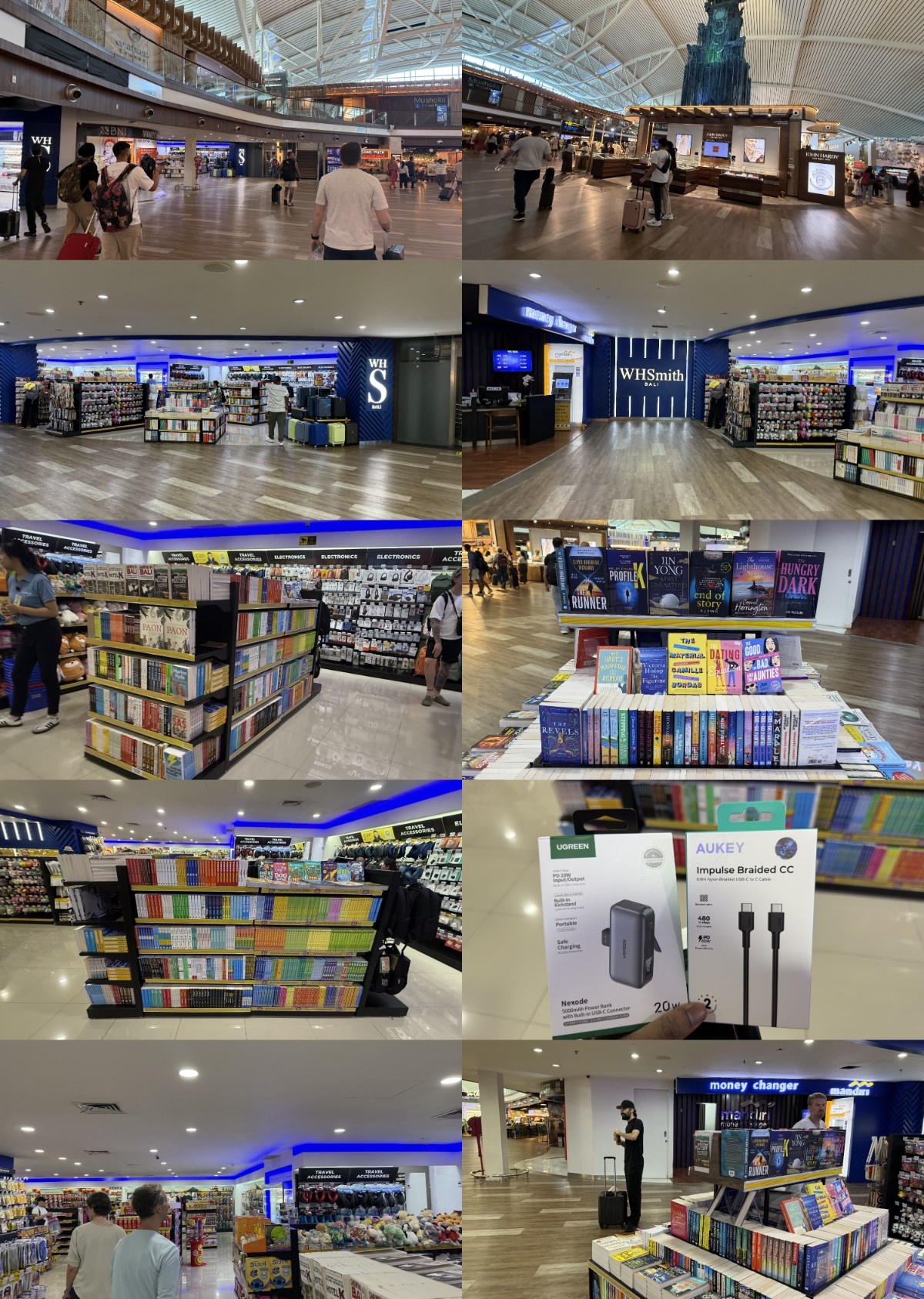
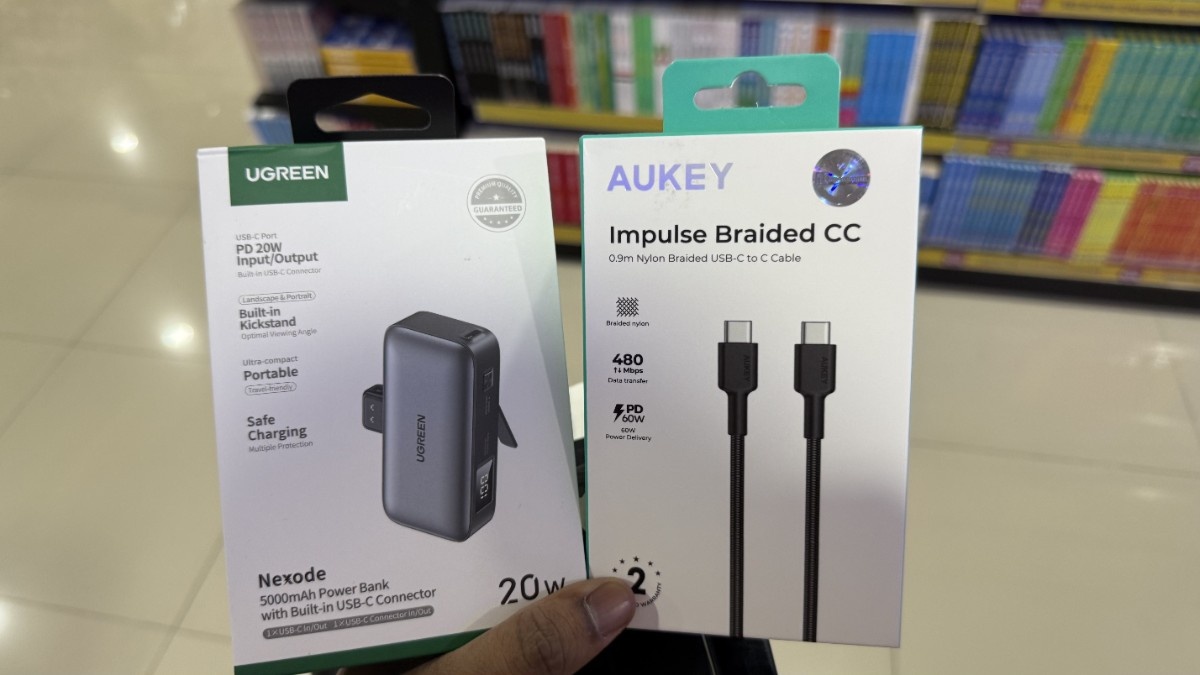
Even so, there was quite the respectable selection of luxe and bling, and every so often a Balinese traditional touch would be placed in between. A sculpture here, a mosaic there. I went to a WHSmith store and parted with a chunk of cash to get a power bank and a charging cable, which, at IDR 500,000 (US$30) combined, were pretty pricey for Indonesian standards.
Then I headed to the massive food area, which was chock-full of cuisines that were both affordable and flavourful. Indian, Korean, Western, Asian, ASEAN: I was having a hard time deciding between them all — and, more’s the pity, my flight didn’t have a lot of time left before the gates closed! What’s worse, most of them would need 10–15 minutes to prepare the food, and I didn’t have all that time…
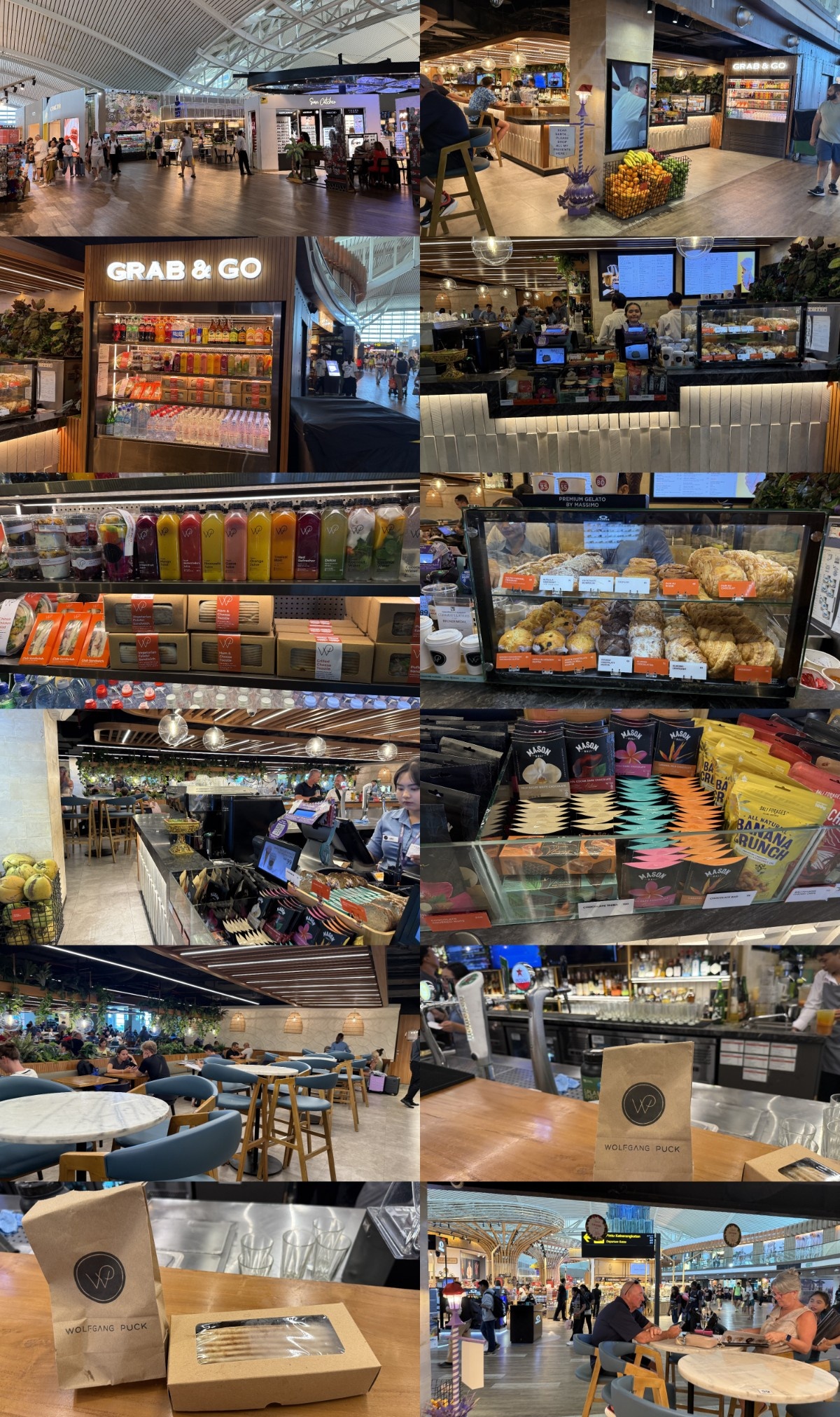
Eventually I settled on Wolfgang Puck and its grab-and-go selection, partly because its wraps and subs looked healthy enough, and partly because there wasn’t any other place I could find that had a selection like this. I’d never dream of eating at Wolfgang Puck at Changi, but Denpasar with its relatively affordable prices was a good place to try. They reheated the wrap that I ordered, and I was good to go — literally.
As I went straight ahead, even more boutiques and shops presented themselves. While I’m not a fan of the high ceilings, I was more than surprised that DPS managed to have these many retail stores — and high-quality ones at that. Each of them tempted me to part with some more of my Singapore dollars (which I had a stash of), but I held firm. After all, it wouldn’t be long before the doors closed on me — literally and otherwise!
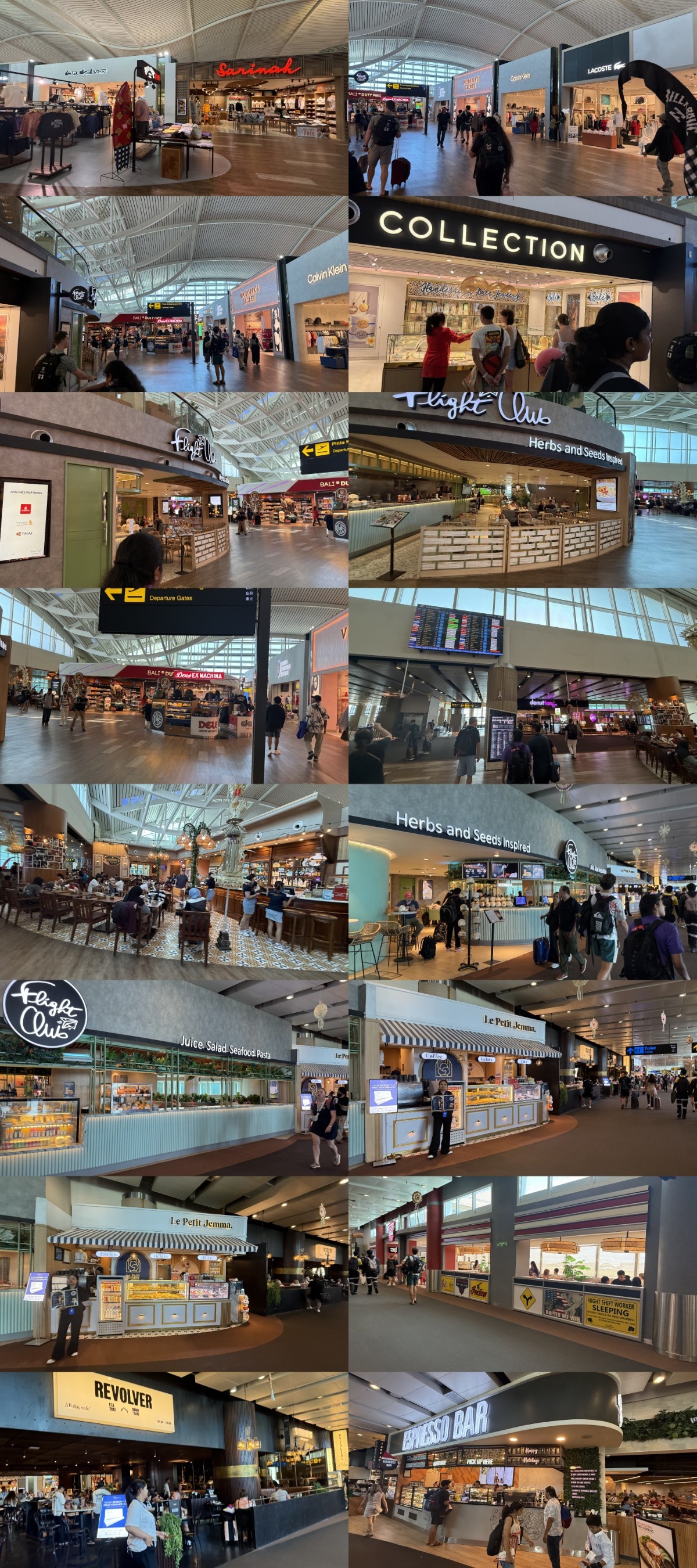
Yet more food: Leading up to the departure gates at DPS
But soon I could not resist myself. As I turned left towards the departure gates, my legs were unable to keep pace with the growling of my tummy. I knew I had to rush, what with my Malaysia Airlines A330neo having already been waiting for passengers for some time…
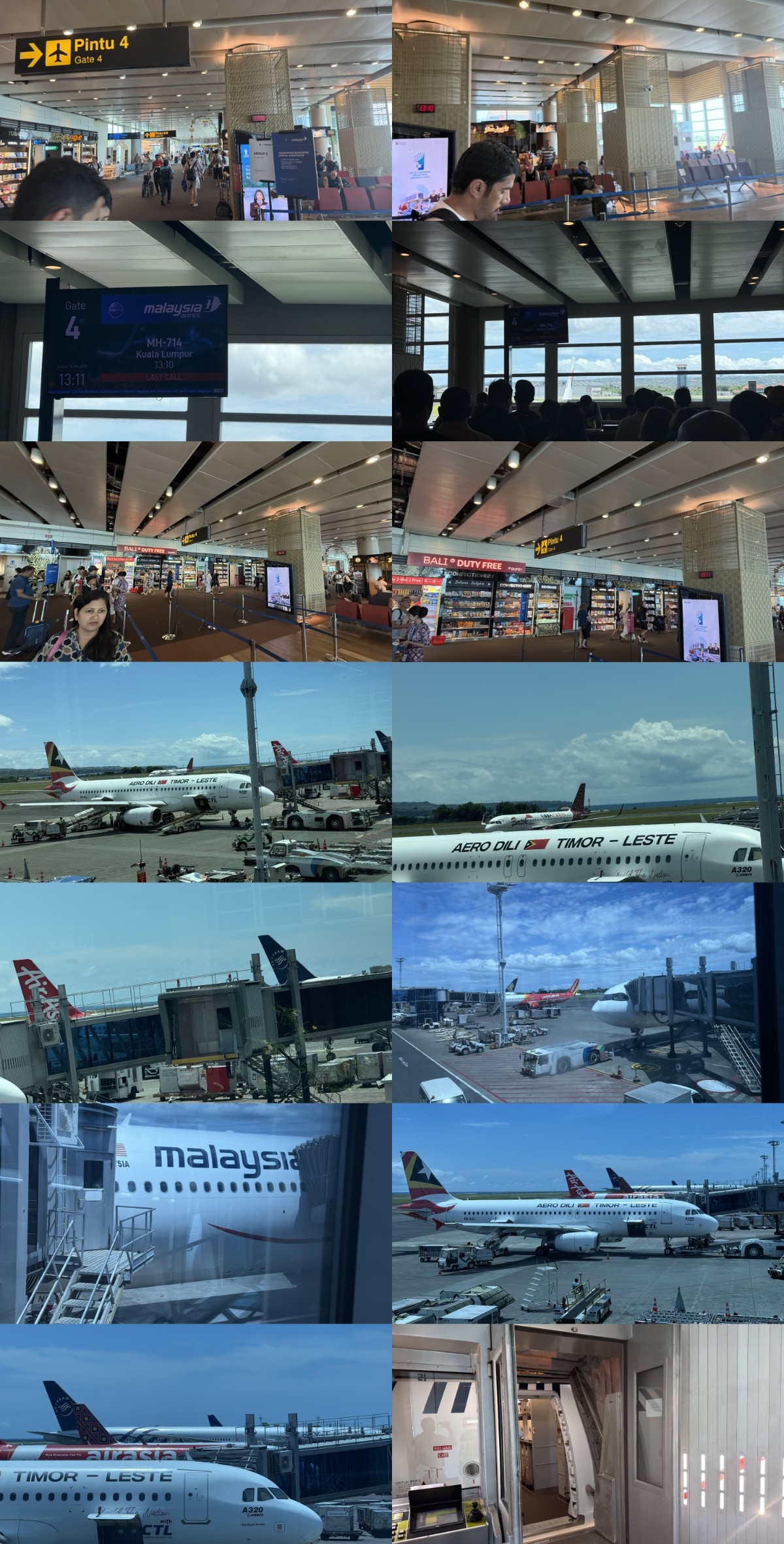
However, I could not afford to give my ever-clicking phone some rest at this juncture. Especially not with that Garuda Indonesia 777-300ER in SkyTeam livery standing right within sight, not to mention colourful A320s from domestic carrier Pelita Air and even an airline as exotic as Aero Dili (!!!) from Timor-Leste!
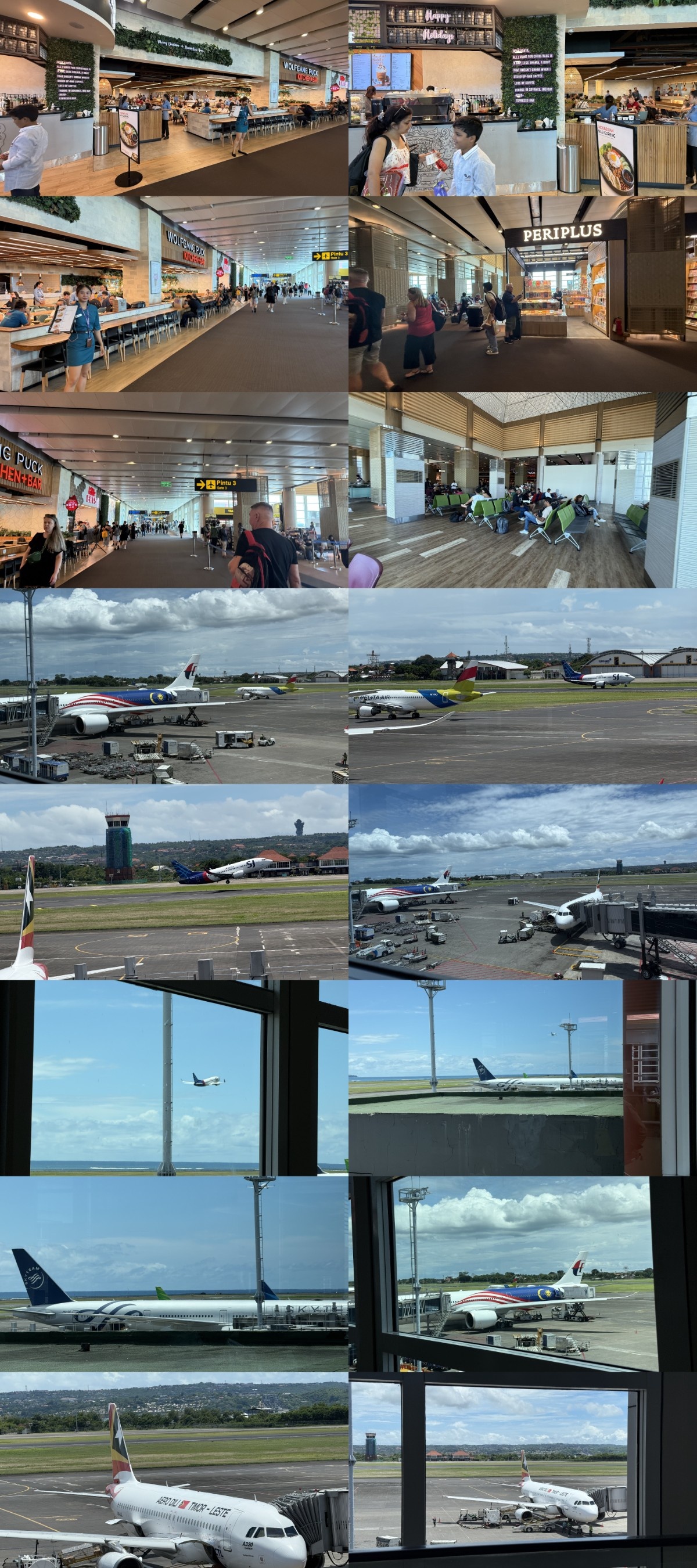
As far as that Aero Dili A320 was concerned, the 2008-built 4W-AAL is the only A320 in the airline’s tiny fleet — with the only other plane in the entire fleet being an A319 registered 4W-AAO. The 8G181/182 rotation between Dili and Denpasar is almost always the only route that 4W-AAL operates — apart from a few flights to Oecusse (OEC), also in Timor-Leste — but the A319 serves other places too: namely Singapore as well as Xiamen (XMN) and Fuzhou (FOC) in China, with Kuala Lumpur and Darwin upcoming.
(Of all the places you can fly an A319… Xiamen and Fuzhou?! Does it get any more RANDOM than that? Presumably this is driven by business traffic from those two specific Chinese cities…)
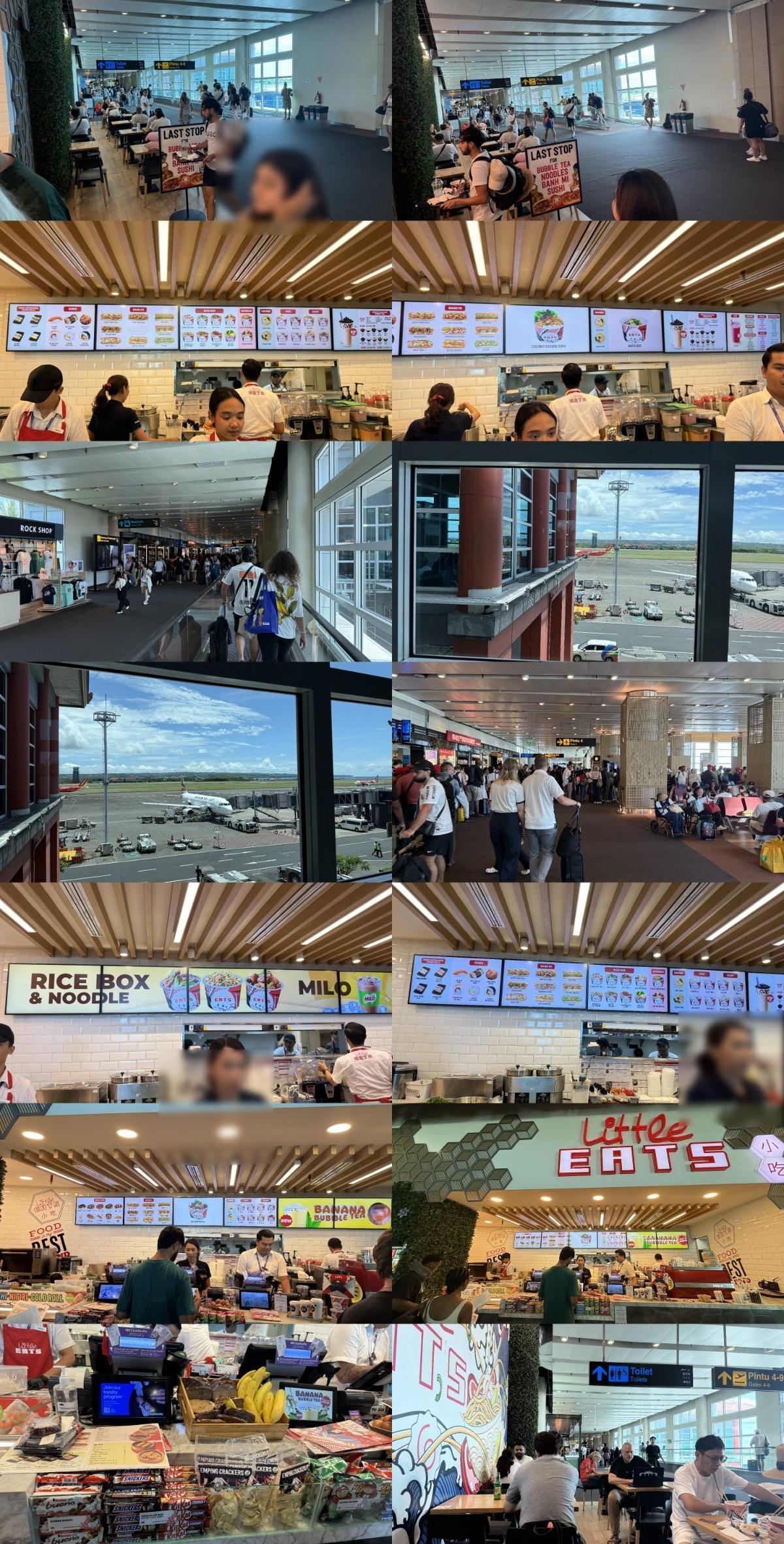
I knew I needed to order at least SOMETHING more to eat, and fast. Every place was so tantalising that I simply could not stop myself from digging in. It’s this Little Eats store that did it for me — I knew I simply HAD to take away from here, come what may. After confirming that there was indeed a significant queue lining up for MH714, I sprinted past the Hard Rock Cafe’s Rock Shop and decided that I had to place an order.
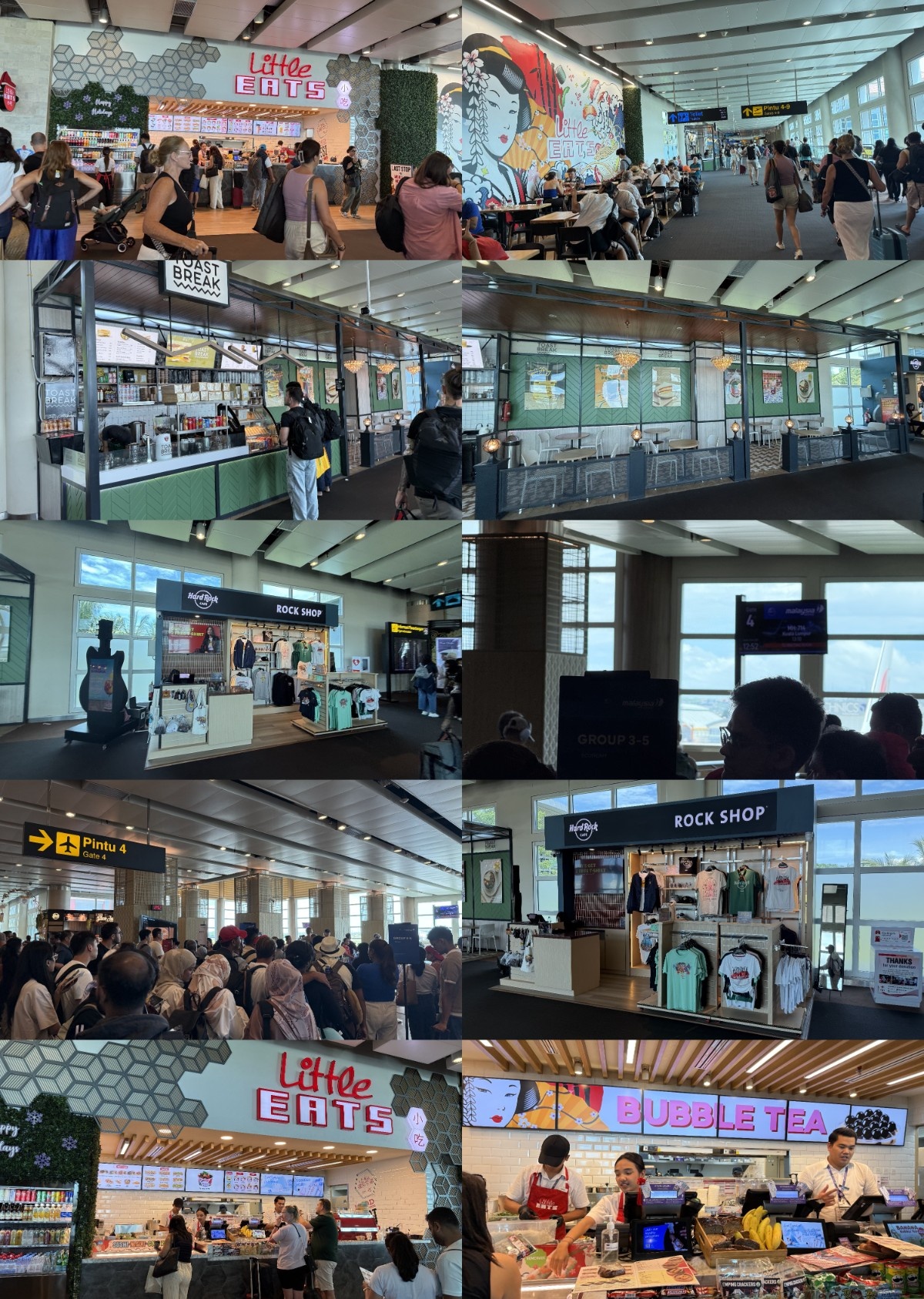
With so many Asian rice bowls on offer, I struggled to choose one — they were all SO appetising — and eventually zeroed in on the coconut chicken curry rice bowl, which would take ten minutes to prepare. I might’ve waited longer, but that would mean missing the flight. I told the girl at the counter to hurry up as much as she could, then fretted and fumed a bit, and at 1:10 it was finally ready.
Then I dashed to Gate 4 as fast as my legs could physically carry me, and as fast as the throngs of holidaymakers allowed me to push through them. At least I wouldn’t be hungry on board, no matter what the food offered!
Indeed, I’d made it in the nick of time, as those familiar letters, FINAL CALL, were clearly visible from the screen. I’d seen that message so many times in my flying history that I remained mostly unfazed. Anyway, all that huffing and puffing to grab a last tasty taste of Indonesian flavours was well worth the effort expended.
Now all that was left was to step on board this aircraft that may bear the registration of Manila’s airport, but is unlikely to ever fly there, as low-yielding as that city is. This A330neo is cut out for more premium things like Sydney and Tokyo, things that the existing aging fleet of A330s never could do so well!
The flight: Boarding and departure
Flight: Malaysia Airlines MH714/MAS714
Date: Sunday, 16 November 2025
Route: Denpasar–I Gusti Ngurah Rai (WADD/DPS) to Kuala Lumpur International (WMKK/KUL)
Aircraft: 9M-MNL, Airbus A330-900neo
Age: Only 3 months at the time! (built: 8 August 2025, delivered: 29 August 2025)
Seat: 36K (starboard side, window)
Boarding: 1:15pm WITA/MYT, UTC +8
Departure: 1:40pm WITA/MYT
Arrival: 4:30pm WITA/MYT
Duration: 2 hours 50 minutes
Notes:
• Second flight on a Malaysia Airlines A330. The first, MH180 (KUL–MAA) in October 2022, was my first time on any Oneworld airline and any A330, and showed to me firsthand just how great Malaysia Airlines’ brand identity is — even though the A330-300 itself (9M-MTH) left a lot to be desired in the hard product.
Other than that, I flew a number of MH 737s in 2024–26, including a flight in Business Class on the 737 MAX 8 in April 2025 — though that was more for the so-called ‘Oneworld lounge safari’ at Changi Airport rather than the flight itself! I’ve yet to publish that report on this site, though.
• Second flight from Indonesia to Malaysia (and first from Denpasar); I’ve not flown in the other direction (MY–ID) yet. The first was KLM’s comically subpar 787-9 fifth-freedom flight from Jakarta to Kuala Lumpur in June 2024, and the third was the exact same CGK–KUL flight — but with a much better product (KLM’s Premium Comfort) — in January 2026.
• Third ‘Flight 714’ in my flying history — this one is for Tintin aficionados! — after SQ714 (SIN–BKK) in December 2022 and CX714 (SIN–HKG) in August 2024, both on A350s.
• Third flight on the Airbus A330neo, after Garuda Indonesia’s PK-GHE in June 2024, and Starlux Airlines’ B-58304 in May 2025 — JX772 SIN–TPE, my first time to Taiwan. I’m yet to publish any of my travels to Taiwan from May 2025 here — I was in Taipei for barely a few hours — though I expect to do so in the summer of 2026.
Spoiler alert: Starlux A330neo (SIN–TPE), Thai A320 (TPE–BKK), EVA 777-300ER (right back to TPE), China Airlines A321neo (TPE–MNL), Philippine Airlines A321 (MNL–SIN) — all in just over 48 hours!
Collins Elevation seats? Not for me. Wi-Fi? FREE, FREE, FREE!
Far be it for me to think of setting foot inside the pointy end of this A330neo — but when has that ever stopped me from taking pictures of the Business Class seats with doors? (I do, however, have a flight planned in Business Class on an A330neo — the short 1.5-hour hop on Starlux Airlines from Taipei to Hong Kong in May 2026.) As I’ve noted earlier, the MH A330neo is the worldwide launch plane for the Collins Aerospace’s Elevation product, which is basically the existing Super Diamond product with doors slapped on. In contrast, the Starlux A330neo is also the launch platform for the Safran Skylounge Core seats, which don’t have doors but are otherwise more thoughtfully designed.
All that aside, I found it very funky that the mood lighting above the Business cabin was in all sorts of shades — yellow, blue, pink, green, orange… In general, MH uses blue and only blue in its branding, disregarding the yellow and red that’s also found in the Malaysian flag, so this struck me as being at once off-brand and energetic. Given that Malaysia Airlines has been trying to move away from having a sense of humour — as seen with its new safety video (covered below) — the mood lighting certainly didn’t appear to be a deliberate choice…
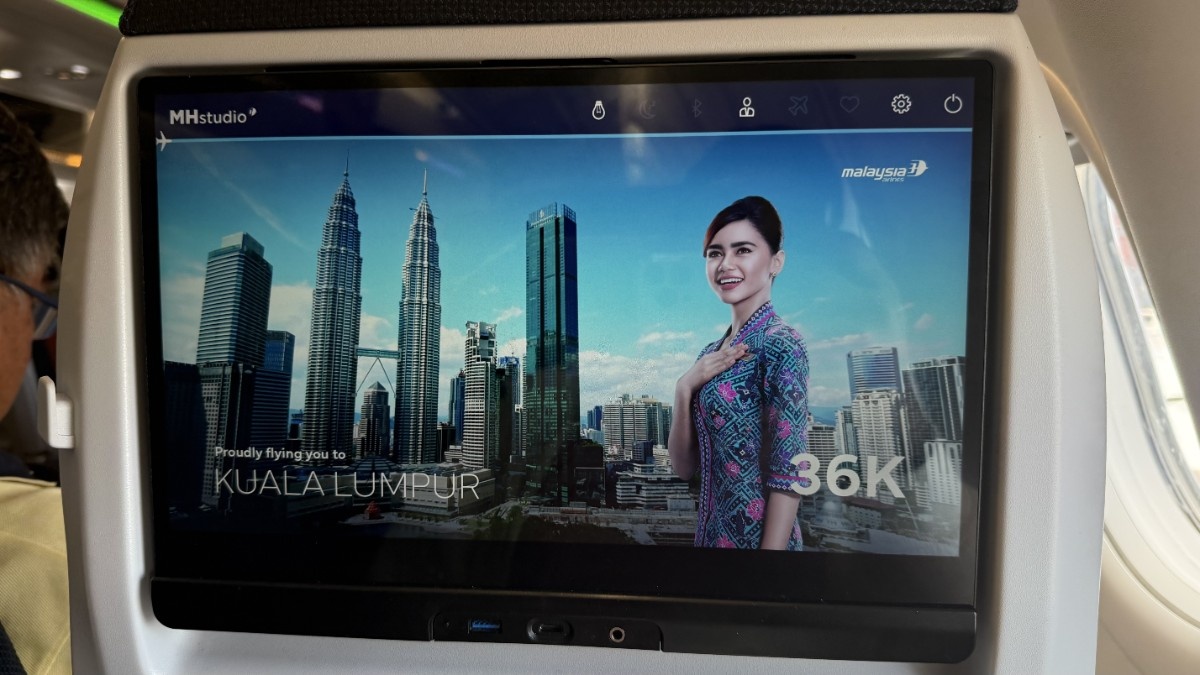
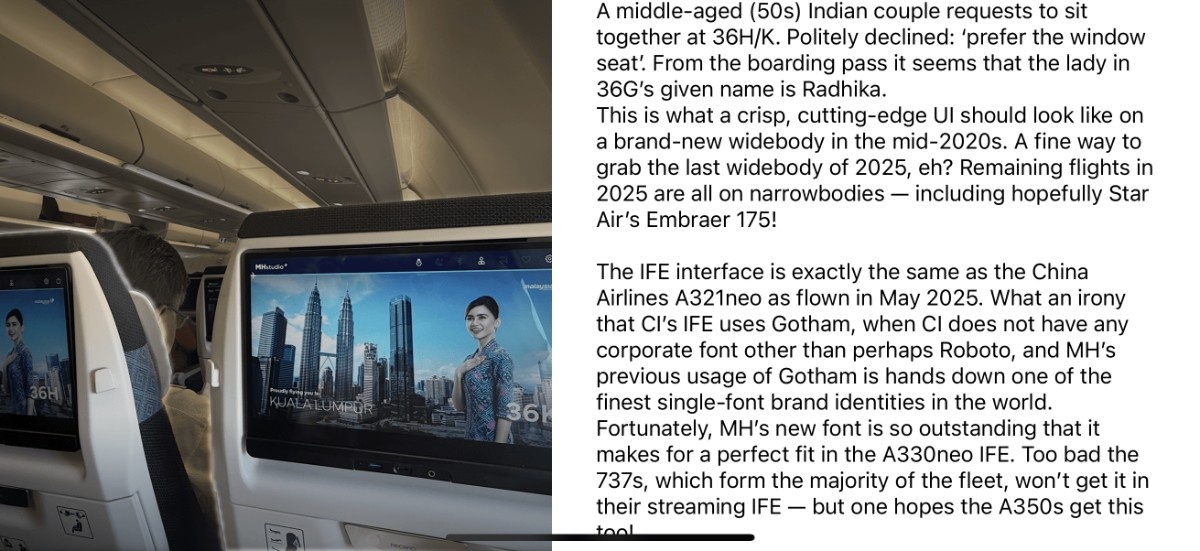
Some A330s that I’ve flown — Starlux’s A330neo in May 2025 included — have row numbers exceeding 50, which I love, but the MH A330neo isn’t among them. Here 36K was the furthest back that I could get while maintaining the all-important right-hand window seat, and moreover it was nice to be boarding a 2-4-2 widebody for a change instead of the standard 3-3-3 that I find on A350s and 787s. Waiting for me was a crisp and clear MHstudio interface, with a nice big screen that was so much better than what I’ve usually gotten on widebodies. It certainly puts SQ’s glare-filled A350 screens to shame!
Also, despite this being only a three-month-old aircraft, I didn’t find any trace of the so-called ’new plane smell’. Or maybe the problem is with my olfactory senses, as I’ve never been able to know that ’new plane smell’ in all my years of flying!
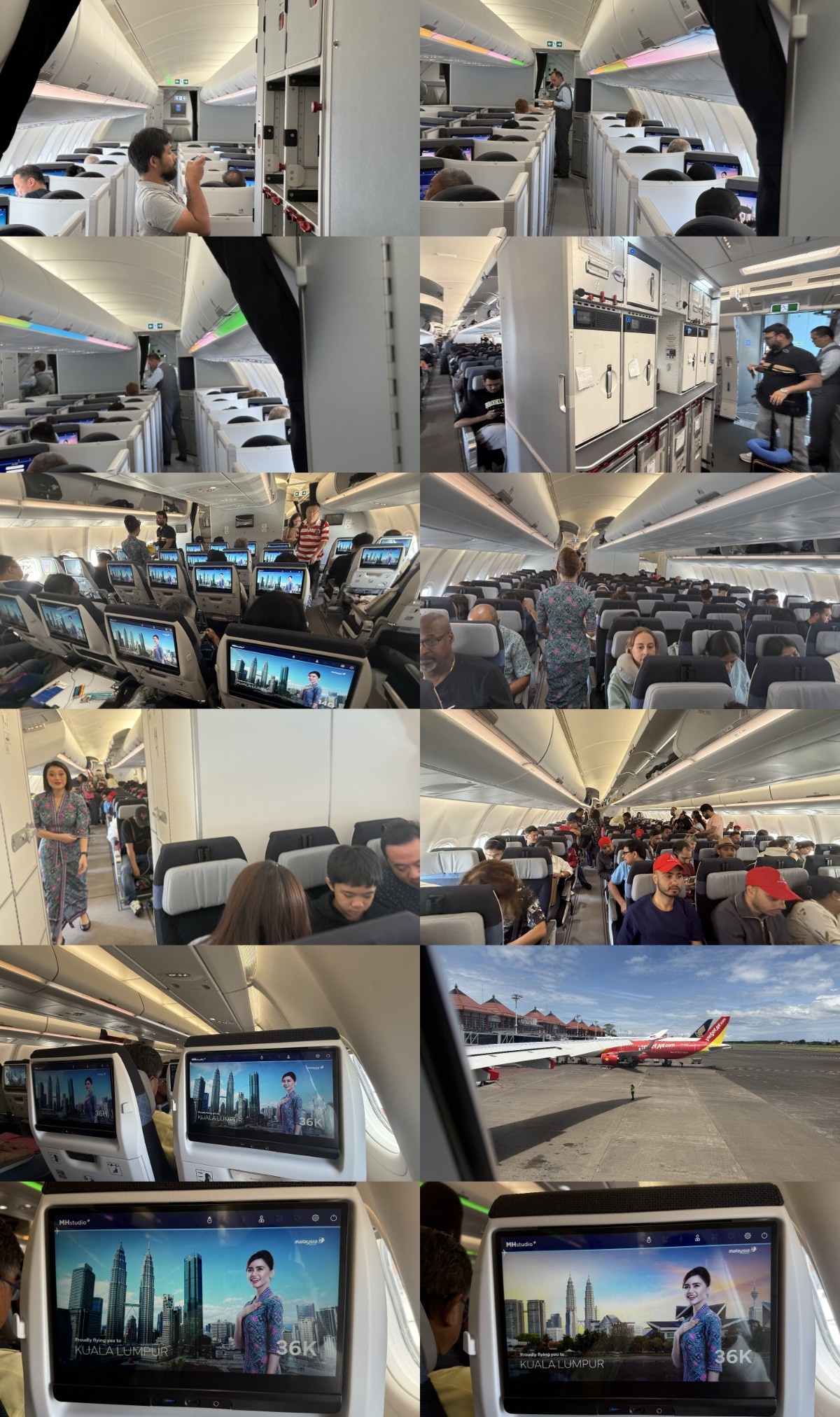
Onboard announcements on MH always start with ‘Ladies and gentlemen, boys and girls’, and this time was no different. Juhar (at least that’s what I heard), the male inflight supervisor, extended a warm welcome to ‘our esteemed Enrich and Oneworld frequent flyer members’, and he ended with the line ‘we hope you enjoy our Malaysian Hospitality’. (To draw another comparison with Starlux, the Taiwanese carrier also has a unique greeting — ‘Hello everyone’ — instead of the standard ‘Ladies and gentlemen’ or ‘Dear passengers’ that most airlines have.)
Again, I cannot emphasise enough here that — in terms of aesthetics, typography (yay for the Mundial font!) and navigation — MHStudio completely blows KrisWorld out of the water, though KrisWorld still wins in terms of the actual content selection and the wide range of titles on offer. Not to mention, this was the very bleeding edge of IFE screens in Economy Class: a much sharper and nicer display than the smaller, glare-ridden screens that SQ’s A350s, 787s and 737 MAXes on a comparable route offer.
The more I fly Singapore Airlines, the more I cannot help but note how its KrisWorld IFE (filled with the cheap Montserrat font) has drastically fallen behind compared to much more polished systems from other airlines — particularly Oneworld members like Malaysia Airlines, Qatar Airways and Cathay Pacific, as well as non-alliance airlines like Etihad, whose A350-1000 I’ve loved. Apart from Cathay Pacific, no other Northeast Asian airline, no matter how cutting-edge the aircraft itself — JAL’s domestic A350 (as I flew in May 2025) comes to mind — has a competently designed IFE system.
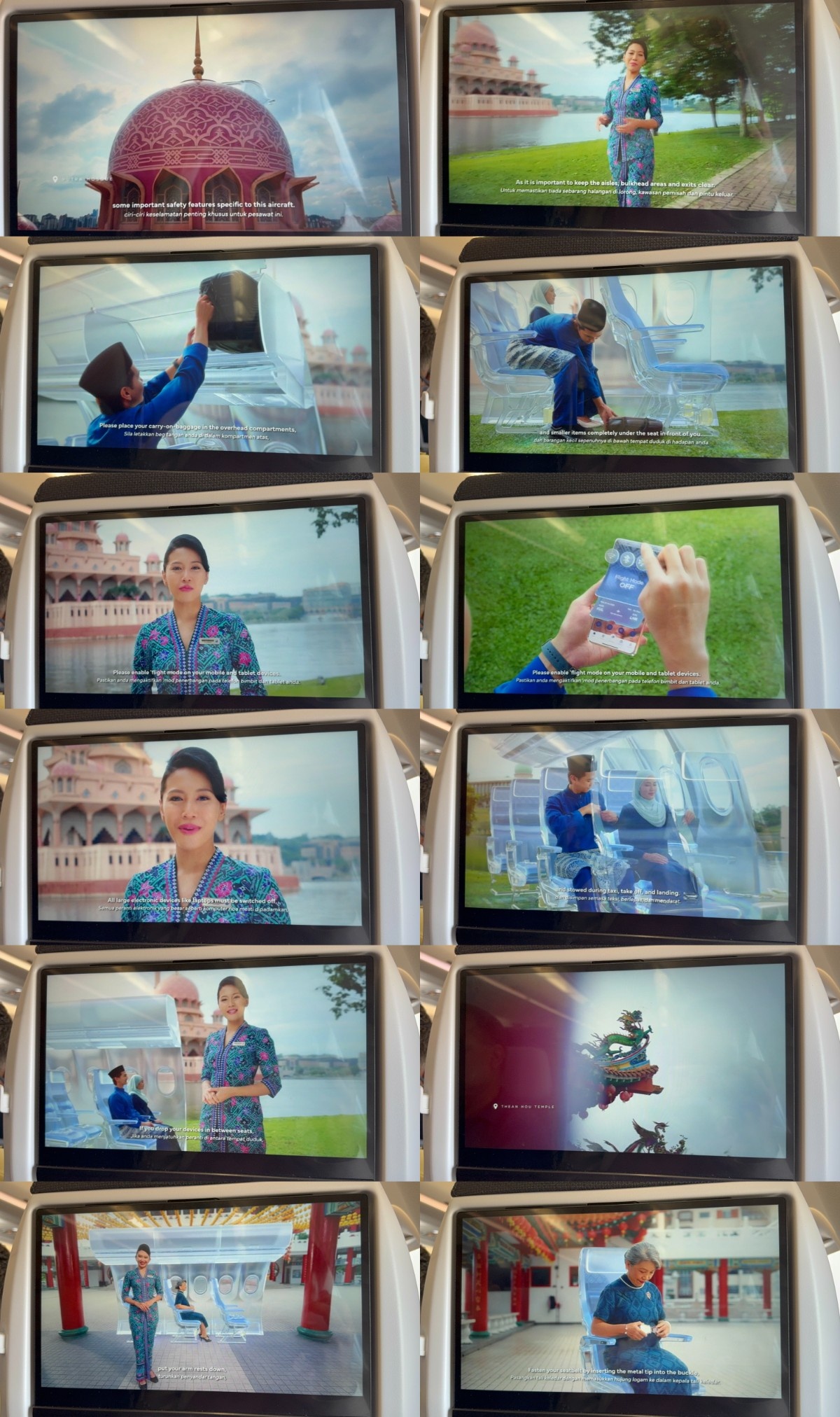
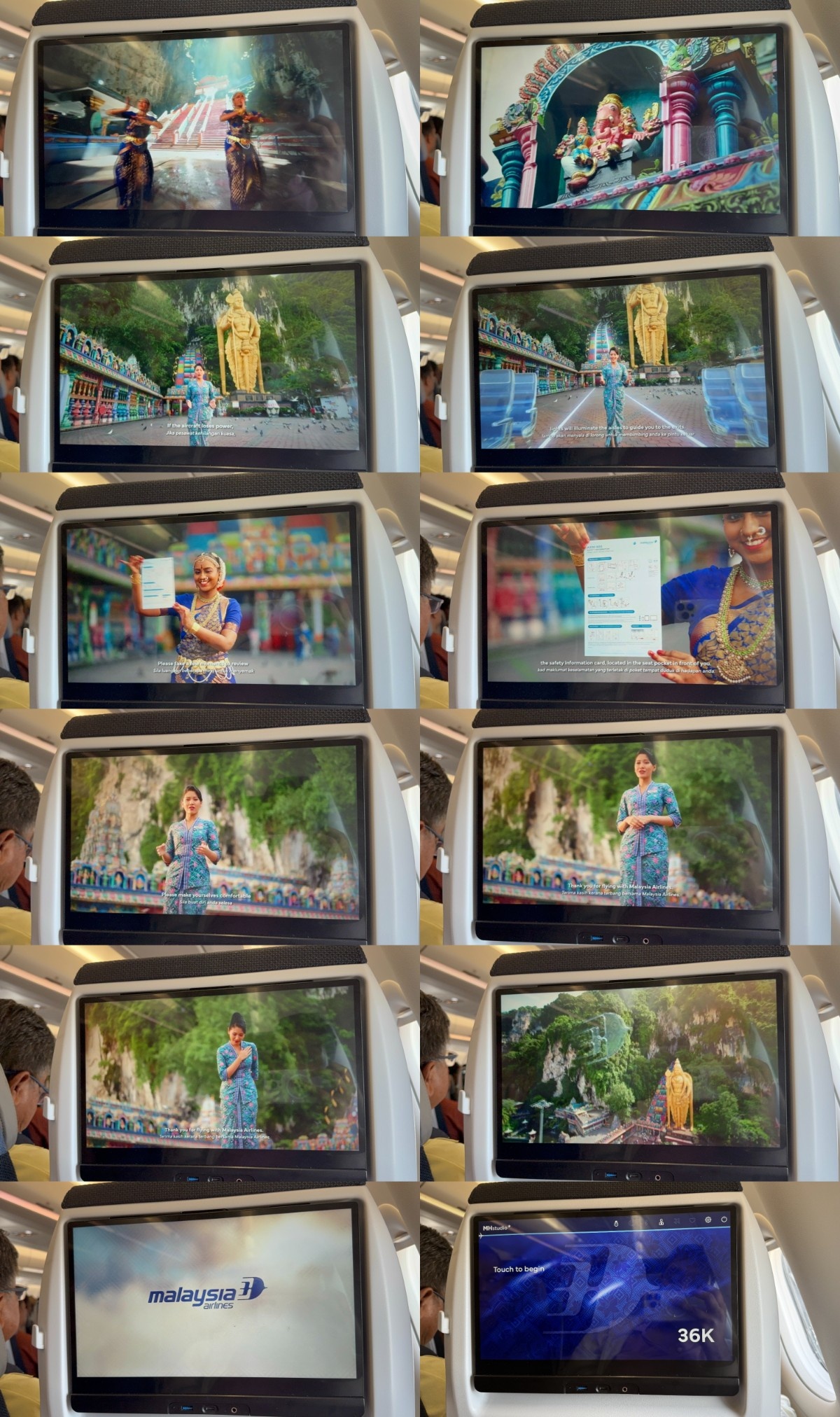
Most often, I have some time to relax and adjust in my seat before the plane pushes back, but here Malaysia Airlines’ new touristy safety video from September 2025 started to play almost immediately. As with so many other safety videos nowadays — including SQ’s, also introduced in September 2025 — the focus is much more on Malaysian tourism, culture and heritage, and much less on the safety features of the plane. While the format is predictable, it certainly made for a drastic departure from MH’s previous hyper-energetic, sass-packed Satu, Dua, Tiga, Jom dance routine that must surely rank as one of the most exaggerated safety videos this world has ever seen.
As OMAAT says about MH’s new video — and it’s almost impossible for him to talk about ANY safety video nowadays without mentioning Emirates’ how-refreshing-to-stick-to-the-basics video at the end:
When everyone is “creative,” no one is creative
I’ve said it before, and I’ll say it again. We’ve gotten to the point where default safety video format includes roaming around a country, with no signs of an aircraft anywhere. I thought this concept was creative when we first saw it introduced, but in the meantime, it’s the most common type of safety video. Like, when an airline introduces a new safety video, my first thought is “okay, let’s see how they choose to roam around their home country with no signs of an aircraft.”
And then he goes on to insert his mandatory praise for Emirates’ no-bullshit safety video (which I initially agreed with, but now find to be rather bland in contrast to ANA’s Pokémon video or Etihad’s Louvre Abu Dhabi video):
Last year we saw Emirates unveil its new “no-nonsense” safety video, and I really like it. How nice to just stick with the basics. When everyone else tries to be different, there’s something nice about just being the same.
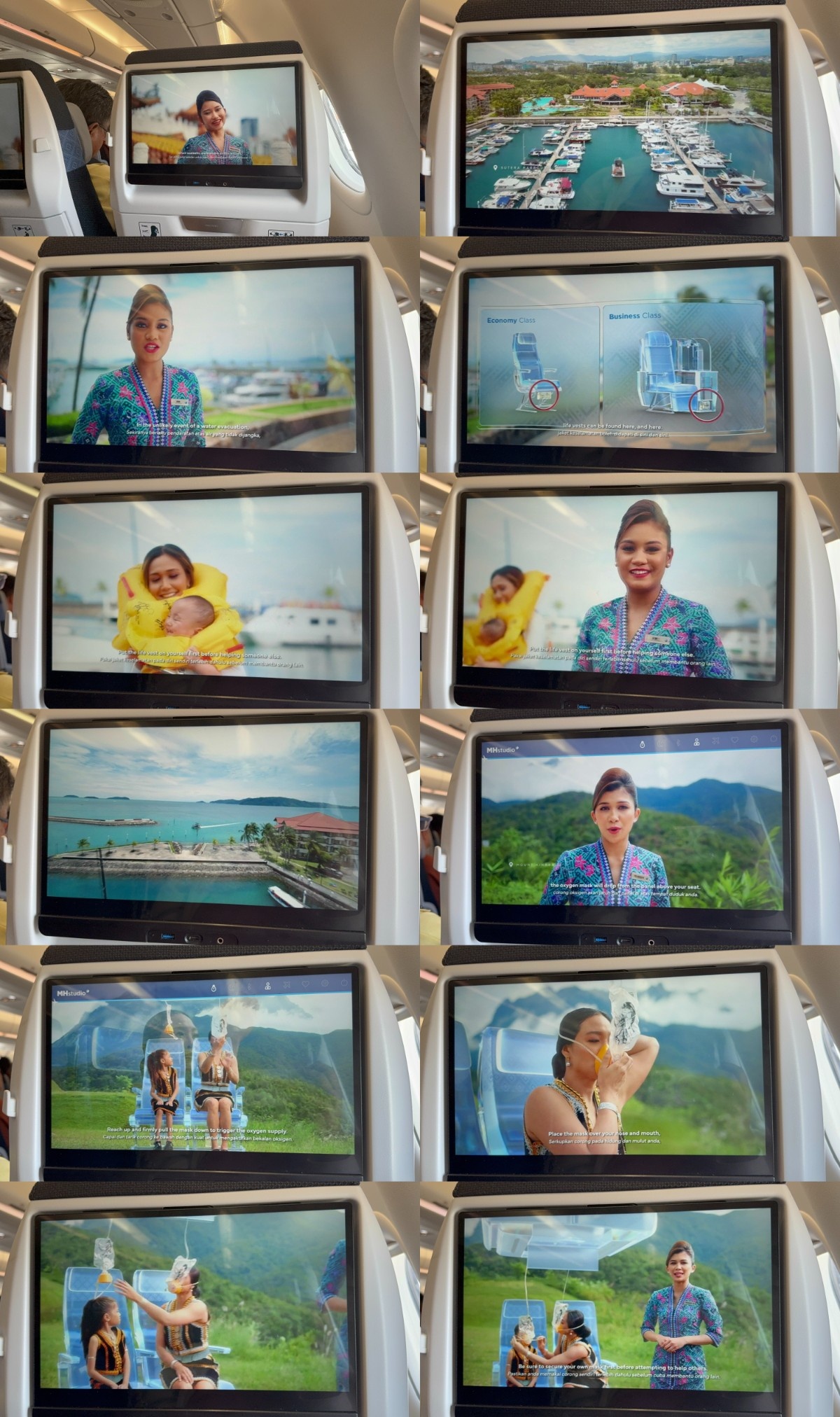
As I’d said about Malaysia Airlines’ old safety video — the exaggerated dance number that was reminiscent of the erstwhile Virgin America’s VX Safety Dance — back in 2023:
Those accustomed to the splendid and elegant SQ safety video with its quieting instrumental music and picturesque locales — as on my previous flight — are in for quite the shock with this peppy, in-your-face dance routine. All I can say is this: do not fly Malaysia Airlines if you want to be soothed and becalmed.
To me, however, it was kind of fun, and showed that MH had more than a little spunk, verve and joie de vivre, à la the safety videos of Air New Zealand or the erstwhile Virgin America. If anything, I think it’s a statement to show that AirAsia is not the only fun airline in the country; the national flag carrier, despite its hardships and unenviable past, can afford to let its hair down every now and then.
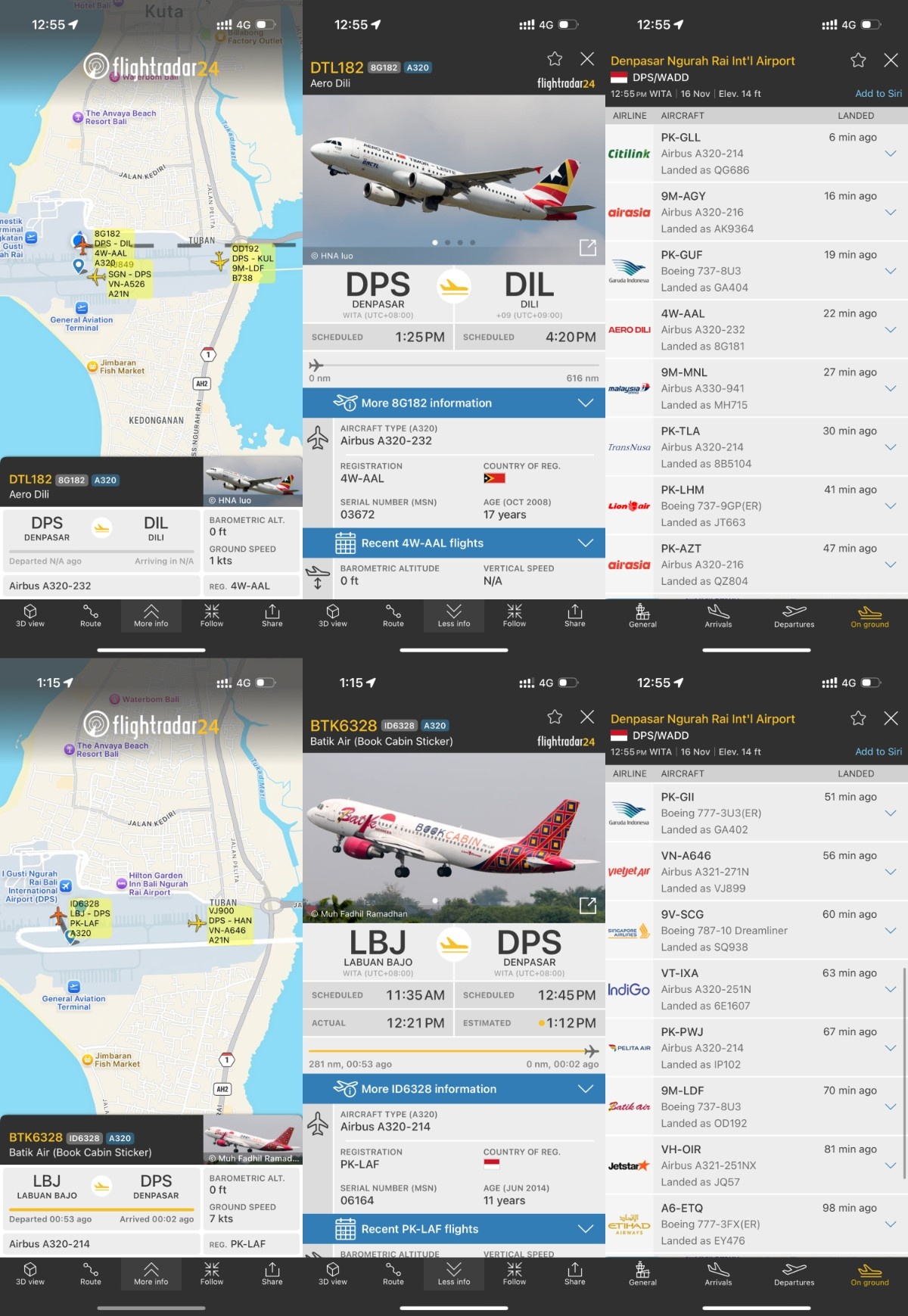
Well, well, how times have changed! Anyway, as the Aero Dili A320 inched closer to takeoff, before finally departing over the azure-blue sea, I had a closer look at some of the other aircraft on Flightradar24. As you can see, MH’s A330neos are almost singularly focused on flying to Australia and New Zealand, apart from the Tokyo (Narita) route and this lone Denpasar route.
And they better, given that MH’s A350s concentrate solely on London and Paris, with a bit of Doha thrown in between. Which means Sydney, Melbourne and Auckland were desperately lacking modern, premium cabins (with the aging A330-200s/300s being comparatively unacceptable) before these A330neos stepped into the breach. These will at least help MH to counter the stranglehold of Singapore Airlines for flights between Australia and Southeast Asia — and, amazingly, with much better cabin products than SQ!
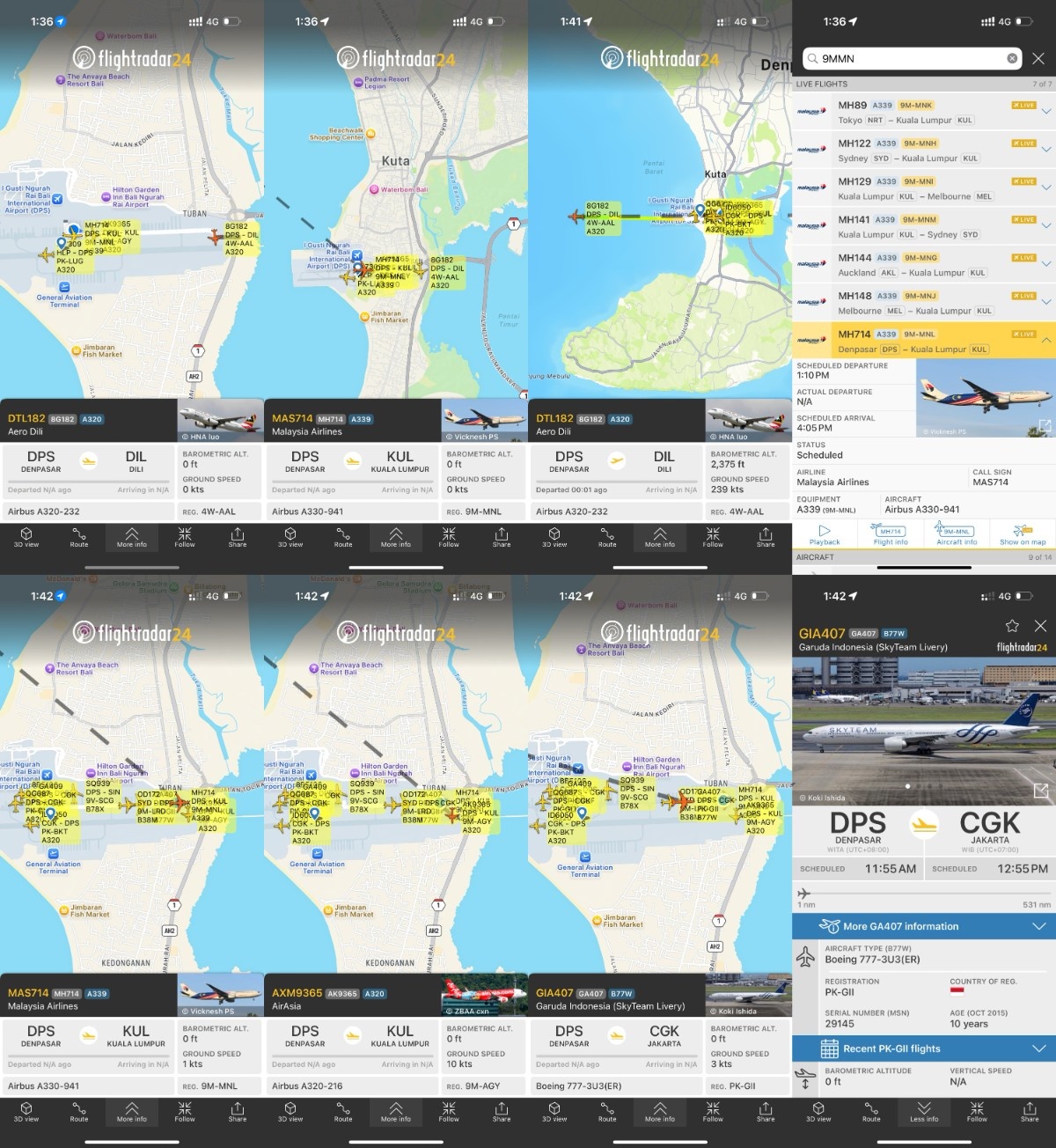
Now it was our turn to pull out of the gate, with an AirAsia A320 (9M-AGY) with a colourful Discover Macau decal standing right beside. I decided to leave the IFE exploration for after takeoff, and instead focused on getting the best views out the window, as first the AirAsia A320 and then the SkyTeam-liveried Garuda 777 followed us to the runway. I could not believe my good luck in terms of how excellent the views were — especially with such glorious weather!
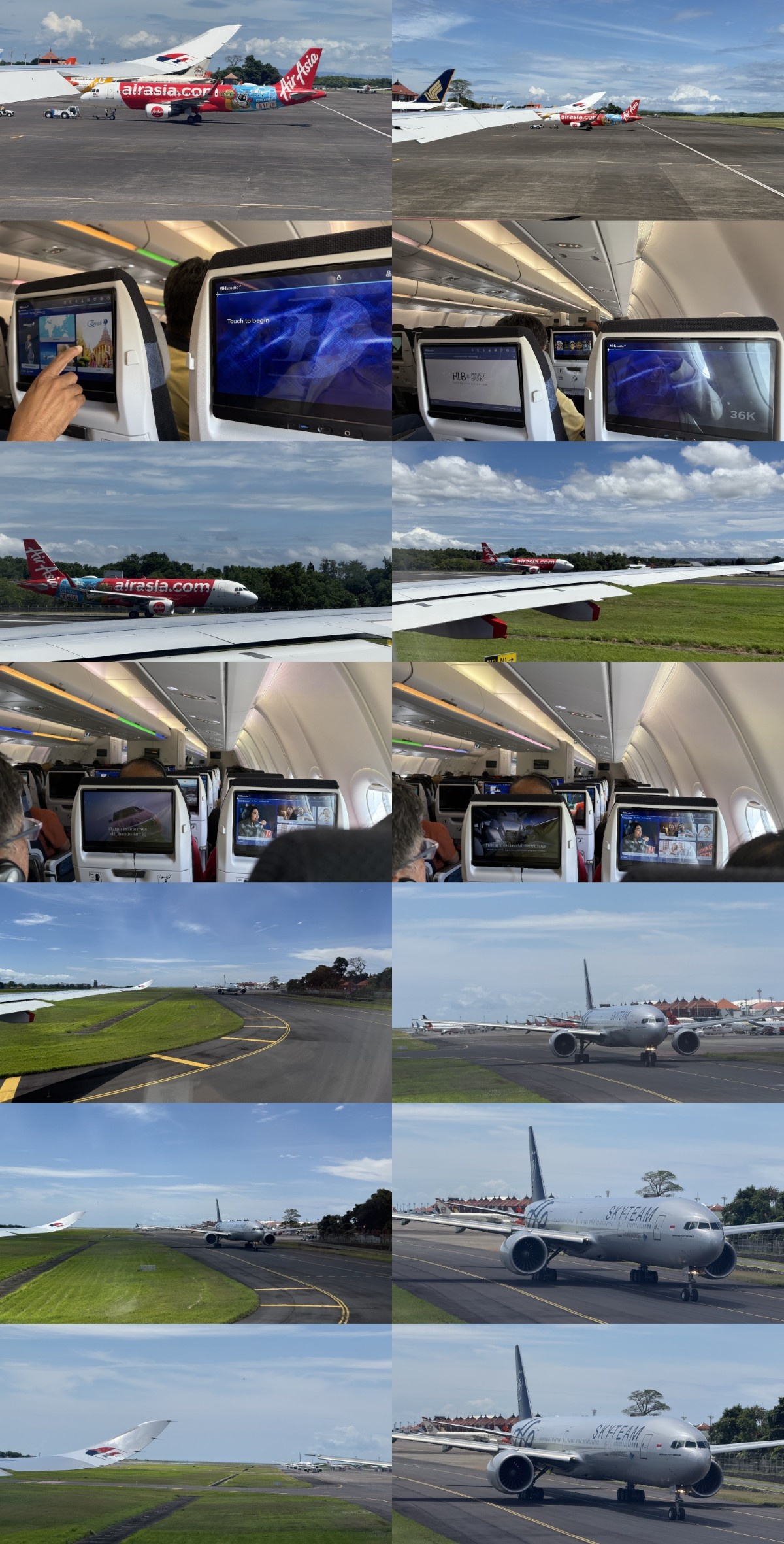
The windows afforded for sweeping, panoramic, crystal-clear shots of all the planes parked, with the Garuda 777-300ER in the SkyTeam livery taking pride of place among those about to join mine on the runway. Among those at the terminal, the Etihad 777-300ER in the old livery was the biggest one, as the others (IndiGo, VietJetAir, etc.) were mostly narrowbodies.
We made a U-turn towards the runway, with the Garuda 777 hot on our tail. As a Singapore Airlines 787-10 and Jetstar A321LR began their taxis to the runway, the wheels of my A330neo picked up speed before hitting full throttle. And then we lifted off, passing right above a Garuda 737-800 (PK-GUF) with an Aku Cinta Indonesia special livery, and then an A320 (PK-GLL) of GA’s budget subsidiary Citilink with a bright blue sticker for Traveloka, one of Southeast Asia’s biggest online travel agencies.
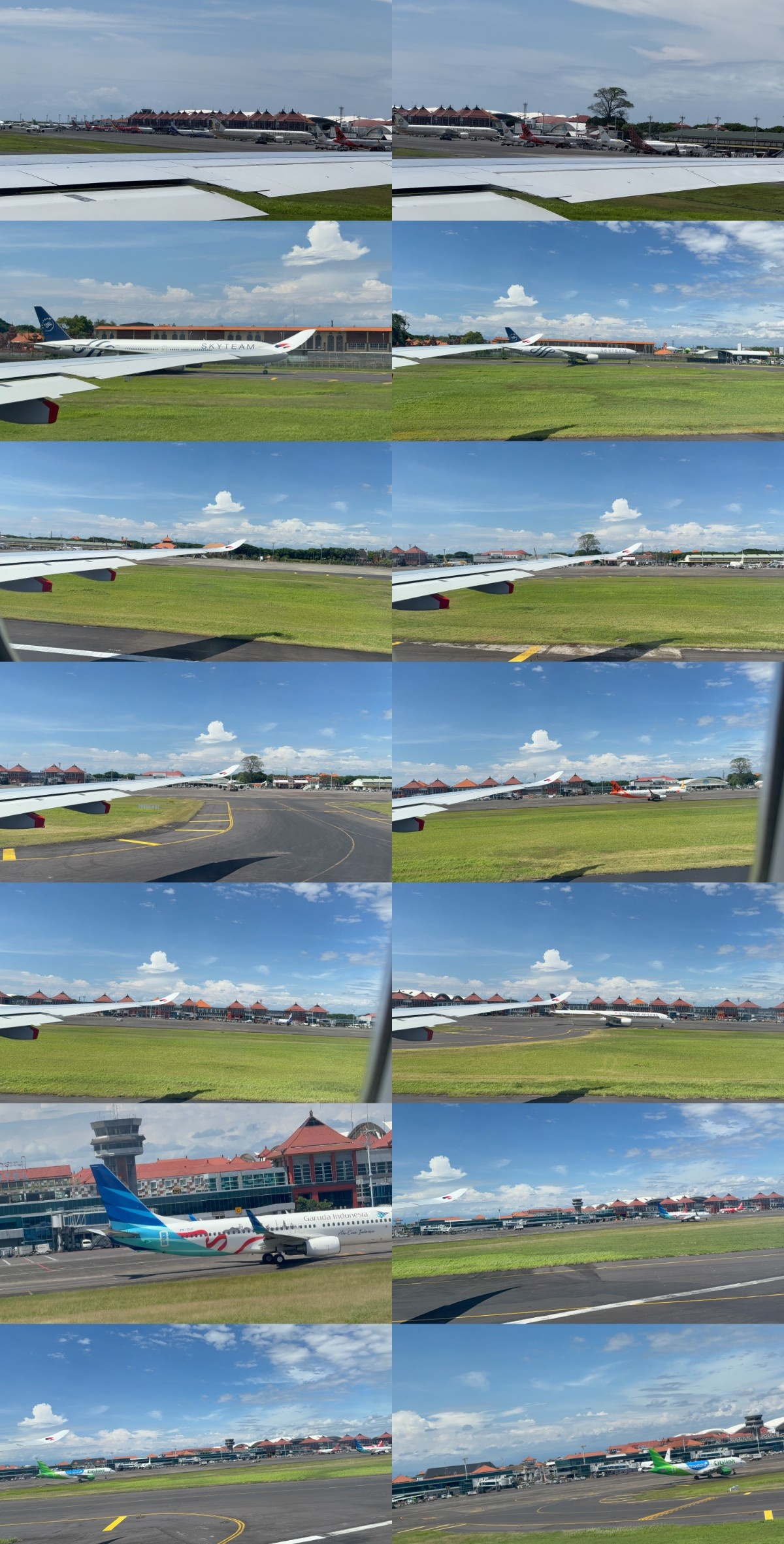
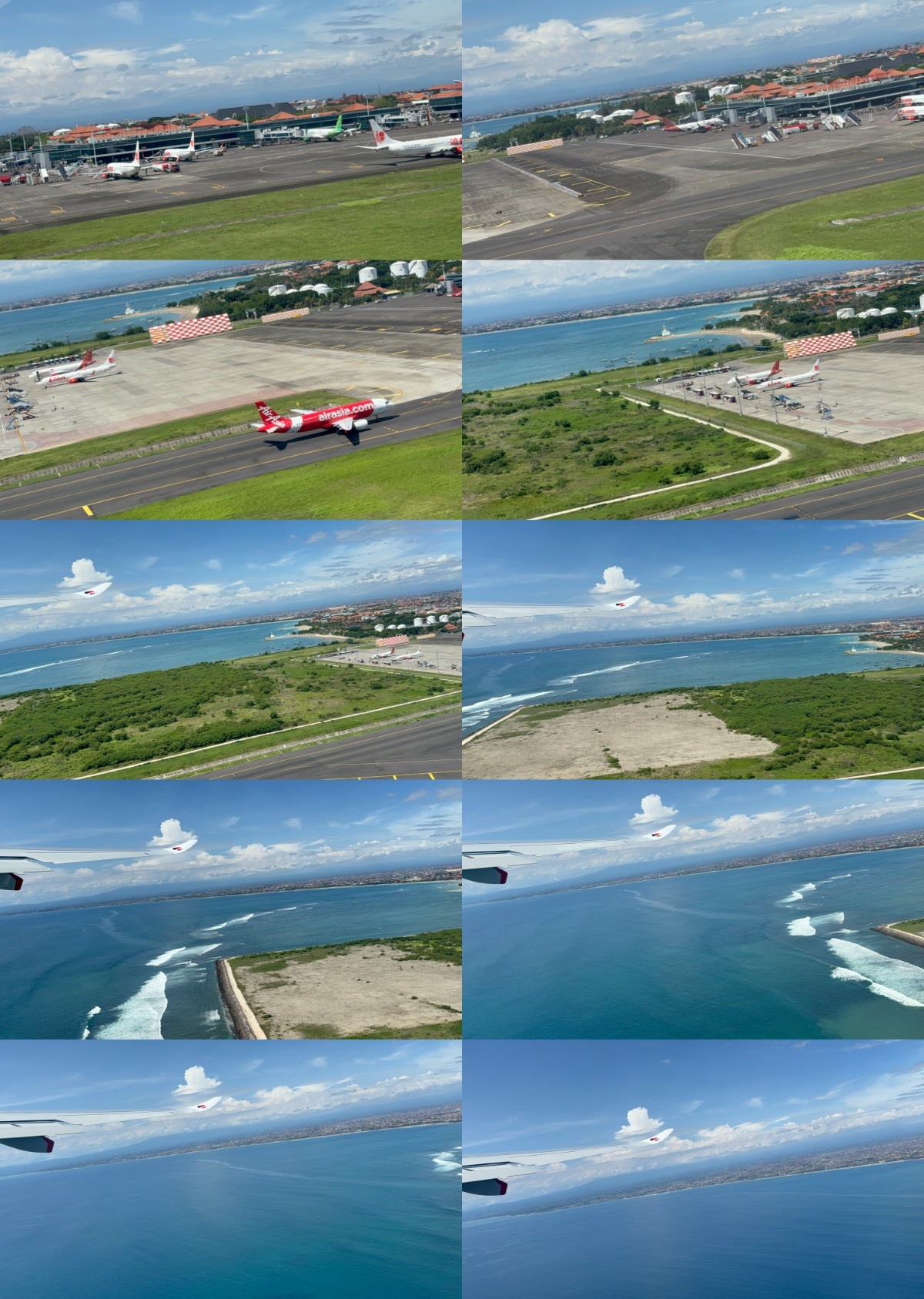
Further out in the distance, a bunch of Lion Air, Batik Air and AirAsia A320s and 737s showed themselves before we took off over the ultramarine water. DPS, like Singapore Changi and Tokyo Haneda, is blessed with an outstanding seaside location that guarantees spectacular views — aside from also being just a stone’s throw from the city centre.
I’ve already written about the magnificent DPS departure experience before, and writing about it again would not do justice to the amazing sea views. So please enjoy the views for yourself — as I did!
MHstudio and Going Places: The best in the business (besides CX) in all of East Asia
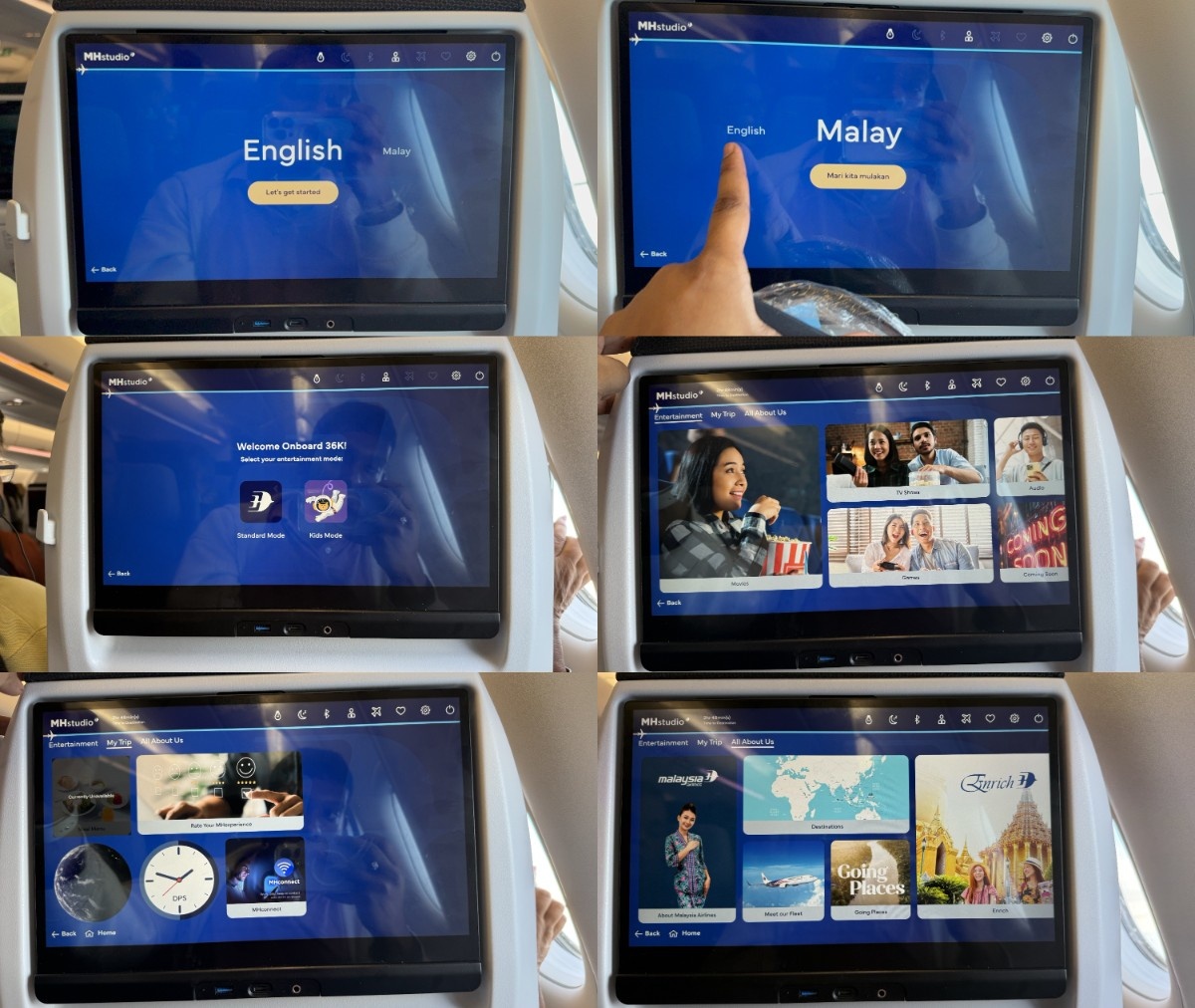
Perhaps the only complaint I have about MHstudio’s interface is that it’s only available in English and Bahasa Malaysia, not any other language. The Safran RAVE-based IFE is, in every other aspect, leaps and bounds ahead of KrisWorld and every other IFE system I’ve seen in East Asia — save for Cathay Pacific’s equally brilliant system, which used to give its IFE system a very similar-sounding name (StudioCX) but no longer uses that name. The large tiles were reminiscent of what I’d seen on China Airlines’ A321neo in May 2025, with the added advantage of everything featuring MH’s new Mundial font — something that very few airlines in East Asia (other than Cathay) do.
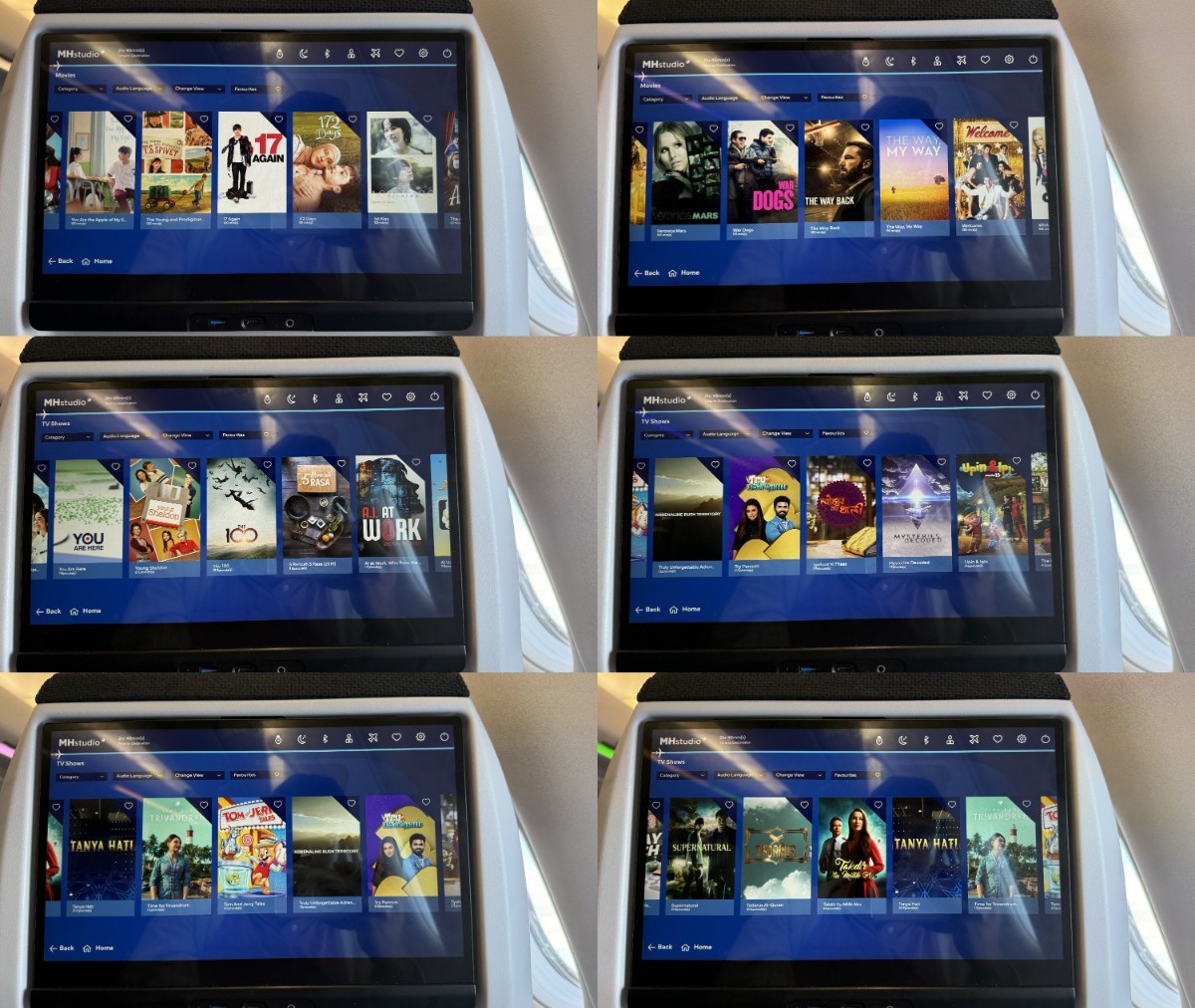
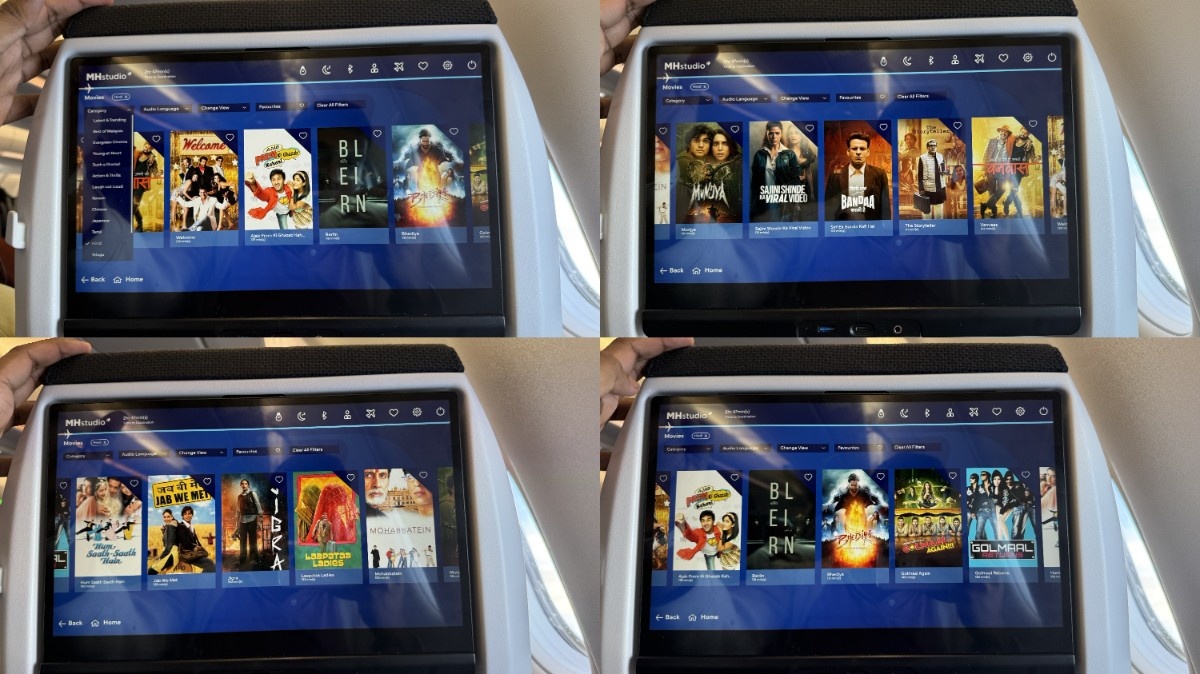
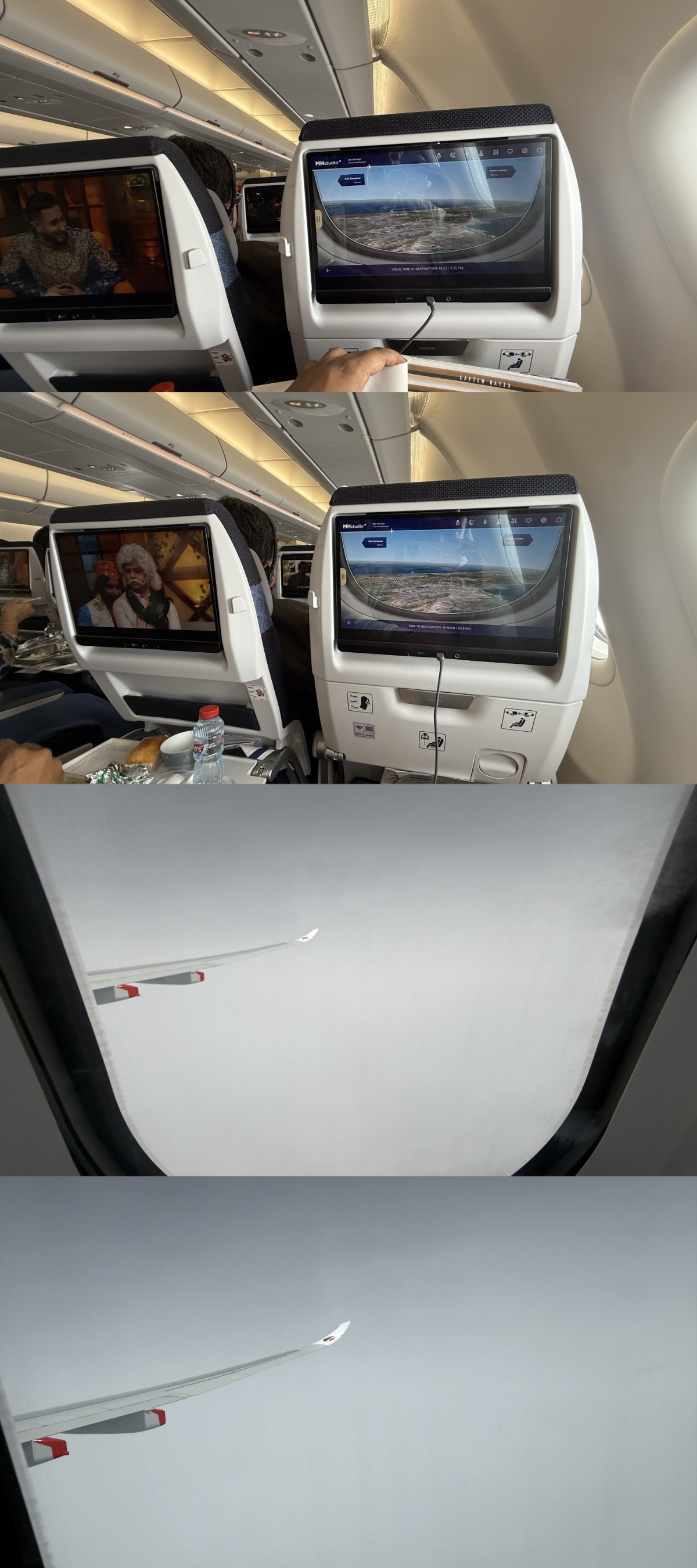
I first did what I typically do: browse through the Indian movie selection, which boasted of a number of new, older and classic Bollywood and other Indian titles. That would’ve been enough as far as I was concerned, though I’m more interested in the informational things — the ‘About Us’ and cabin details pages (if they exist), moving maps, destination previews, on-screen magazine and more. That’s exactly what Qatar’s thoroughly detailed Oryx One IFE did, as did Etihad’s E-Box and — most recently for me — Saudia’s BEYOND system. I’m happy to report that MHstudio not only matched those Gulf airlines’ entertainment systems, but even outclassed them in a few aspects!
Before any of that, though, a post-takeoff tourism video was screened that showed a number of landscapes, jungles, towns, villages, seas, lakes, temples, cities and — above all — people from across the length and breadth of the country: both the peninsular portion and the provinces of Sabah and Sarawak on Borneo island. For some reason this wasn’t shown properly on my seat’s screen, so I had to take these pictures from the adjacent passenger’s screen, which was only possible since he was sleeping.
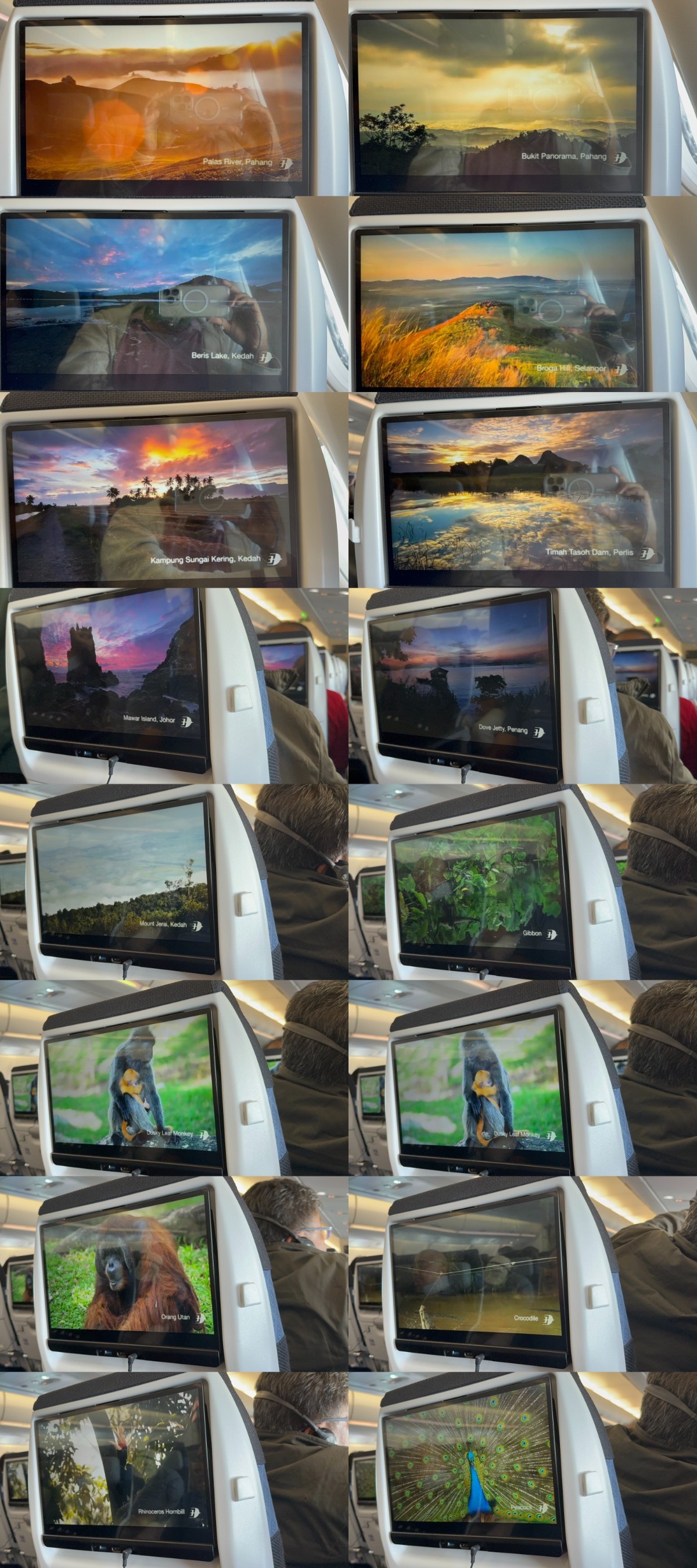
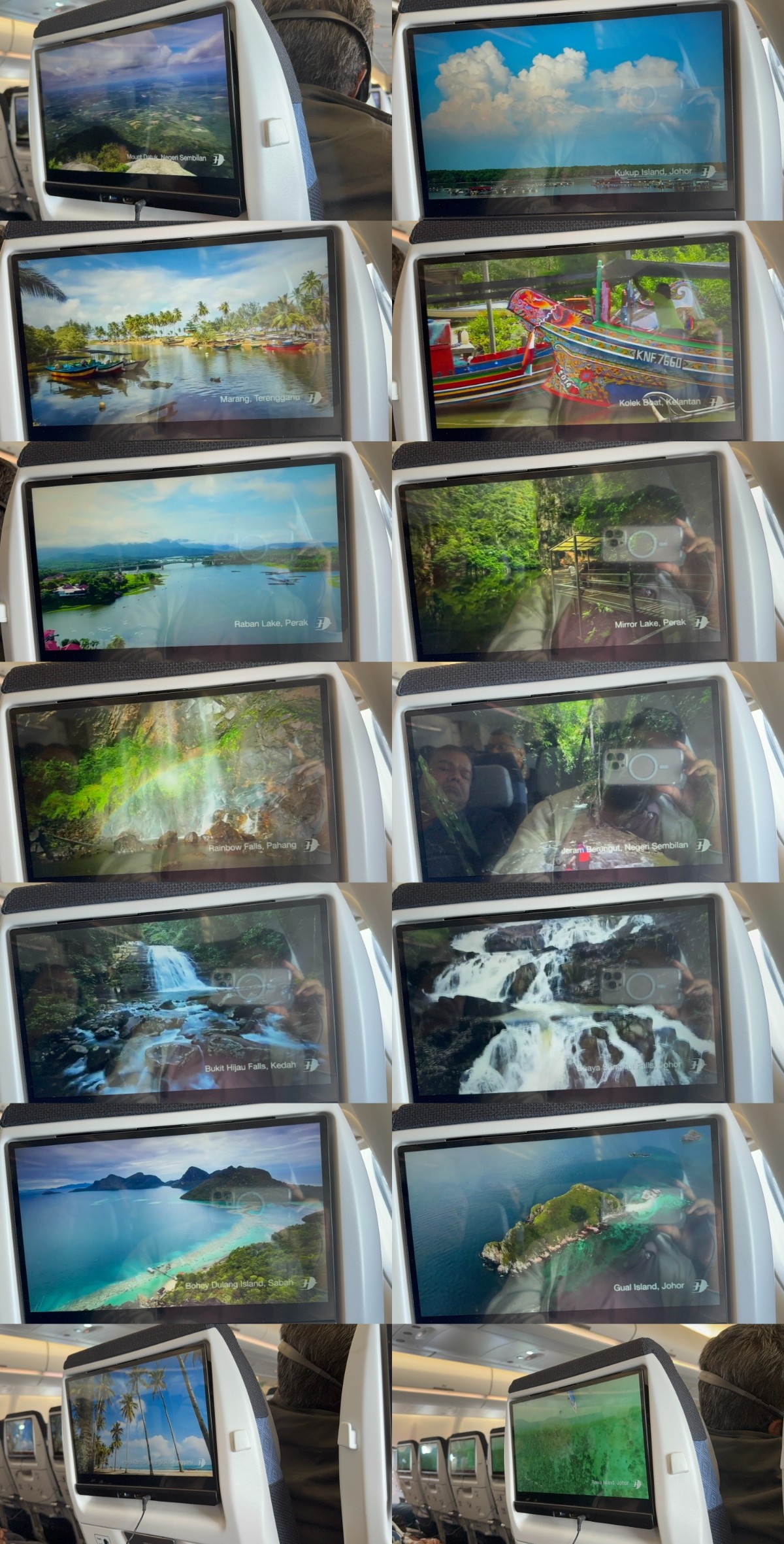
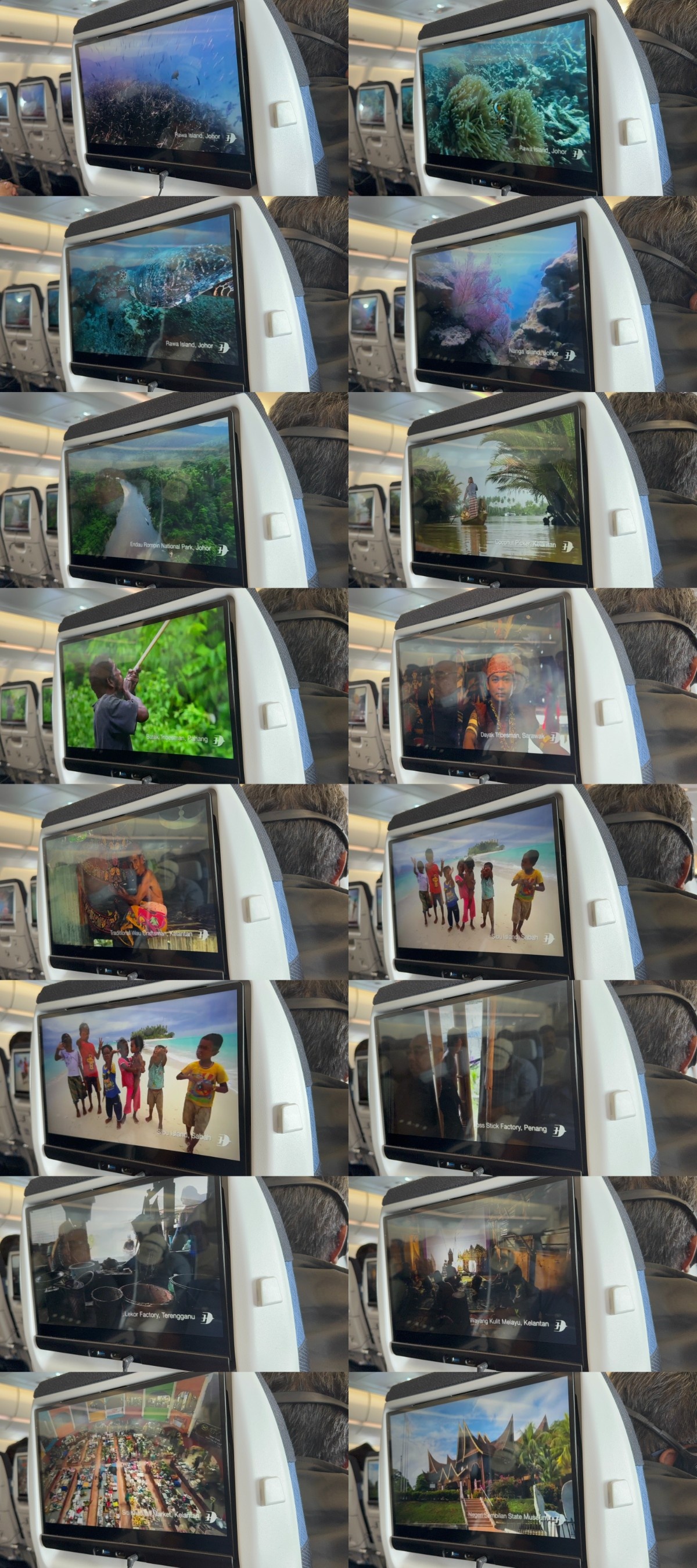
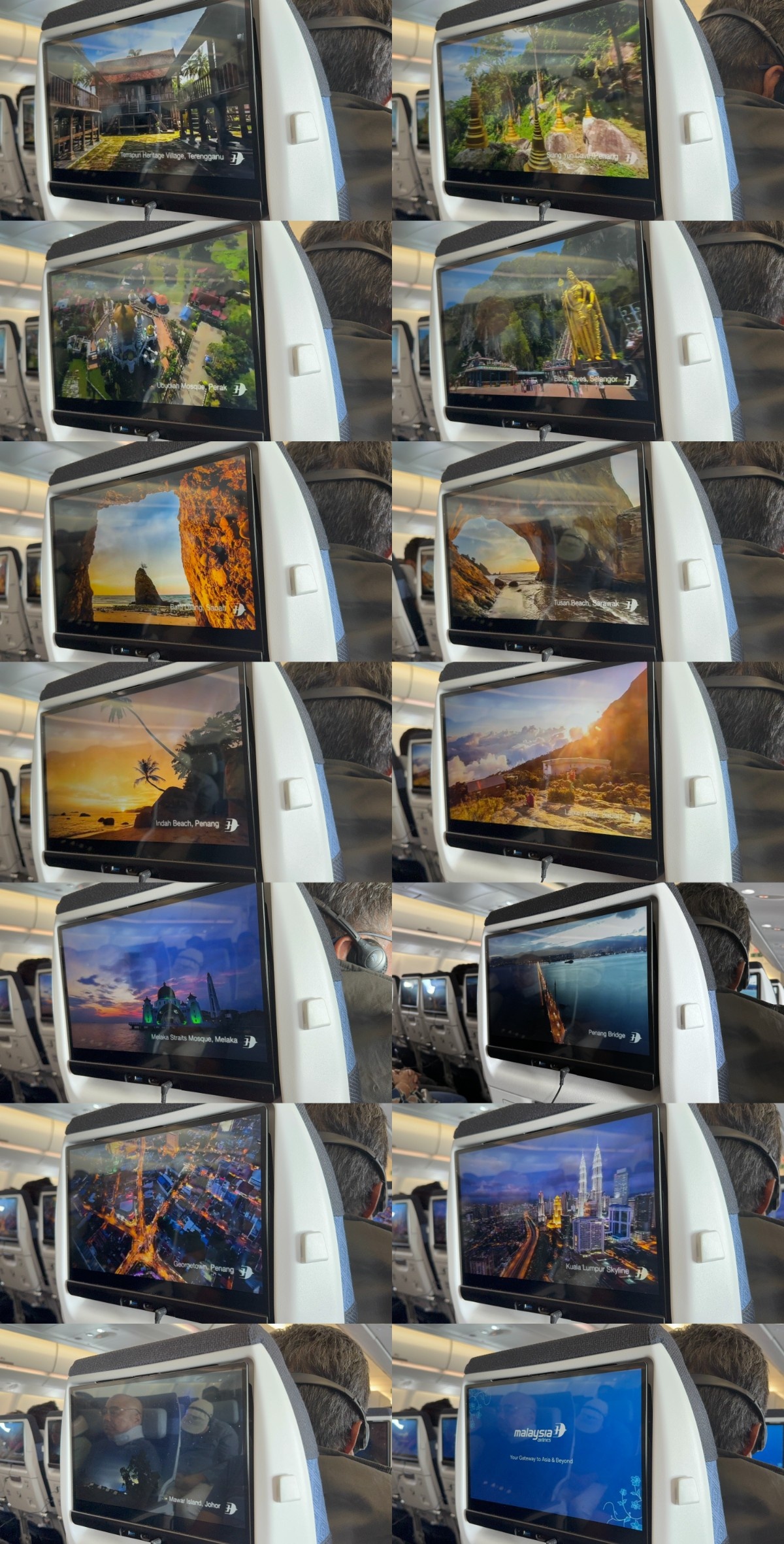
While picturesque, no doubt I do think this sort of tourism-focused video was a bit old-fashioned and unnecessary of MH — especially when the safety video itself had shown most of the same things. In my opinion, Oneworld partner SriLankan Airlines did it best by roping in veteran cricketer Kumar Sangakkara and Bollywood actress Jacqueline Fernandez — two of the island’s most well-known celebrities, particularly so in India — and created a catchy soundtrack to go with it, as I’ve written about during my SriLankan flights in 2023.
However, SriLankan did also release a more mellow version of a tourism video — with a wordless focus on the sights and sounds themselves, much like what MH did — and executed it much better.
Another area where MH has a significant leg-up over the competition in East Asia is the inflight magazine, Going Places, and to some extent the duty-free magazine, Temptations. I’ve written time and again about how Going Places is one of the best in the business globally, coming as it does from Ink Global, my favourite magazine publisher in the world. However, I’d not given much thought to Temptations all this while. When you have a proper inflight magazine this awesome, not giving much attention to a duty-free magazine is understandable — especially when this airline is not like Singapore, SriLankan or Emirates, which have only duty-free magazines and not actual magazines.
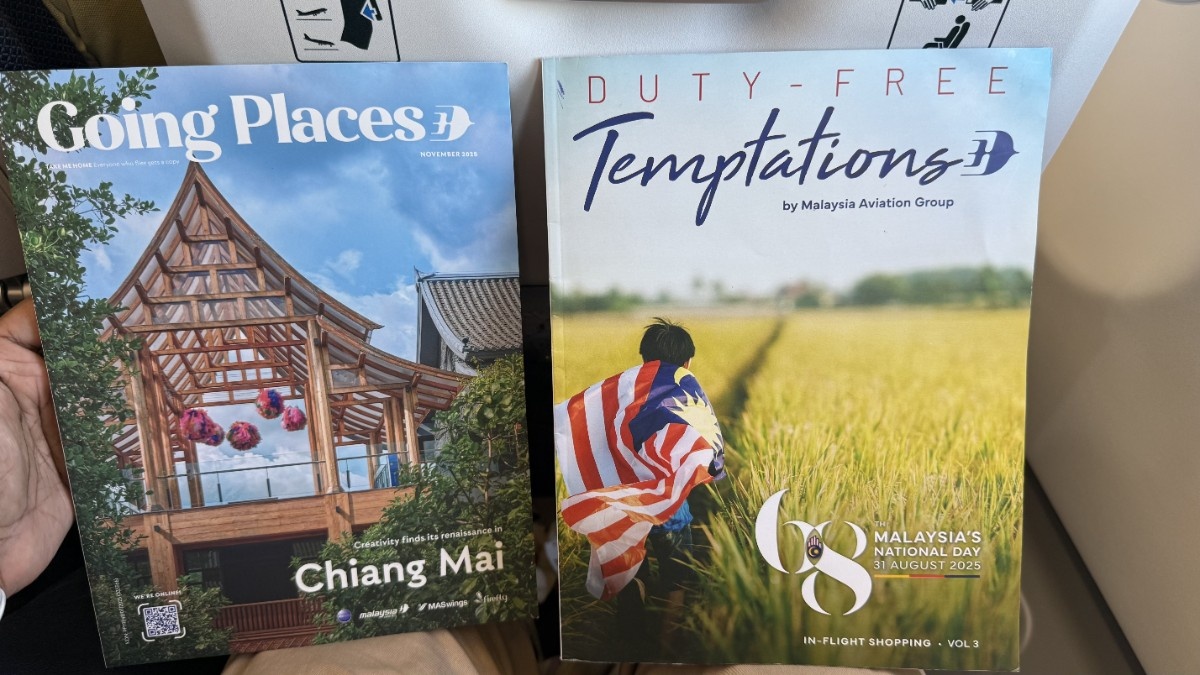
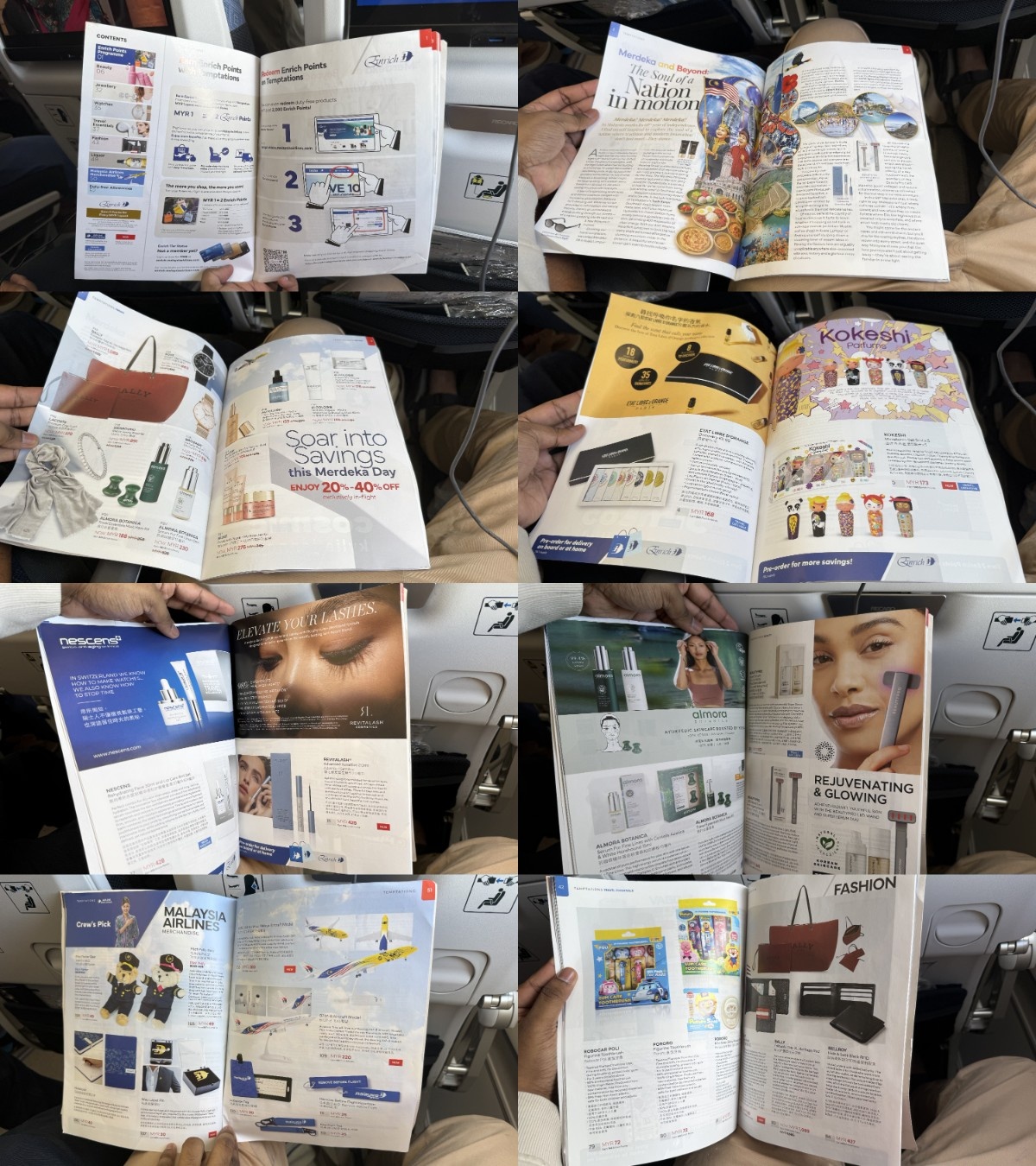
And yet Temptations, too, managed to pack a surprise in the form of a piece on Malaysia’s 68th National Day (the cover story), which fell on 31 August 2025. However, it could not resist slipping in product promotions into it! I’d have liked a more impartial, neutral article, but… never mind. At least there were plenty of MH-branded goodies (like teddy bears and model planes) on offer, but unfortunately I wouldn’t be buying any of it — my cupboard is overflowing with merch from East Asian airlines like SQ, CX and TG! (Full resolution here.)
As you can well expect from not only Malaysia Airlines but the entire Malaysia Aviation Group (including low-cost/regional subsidiary Firefly), every single thing features the new Mundial font…
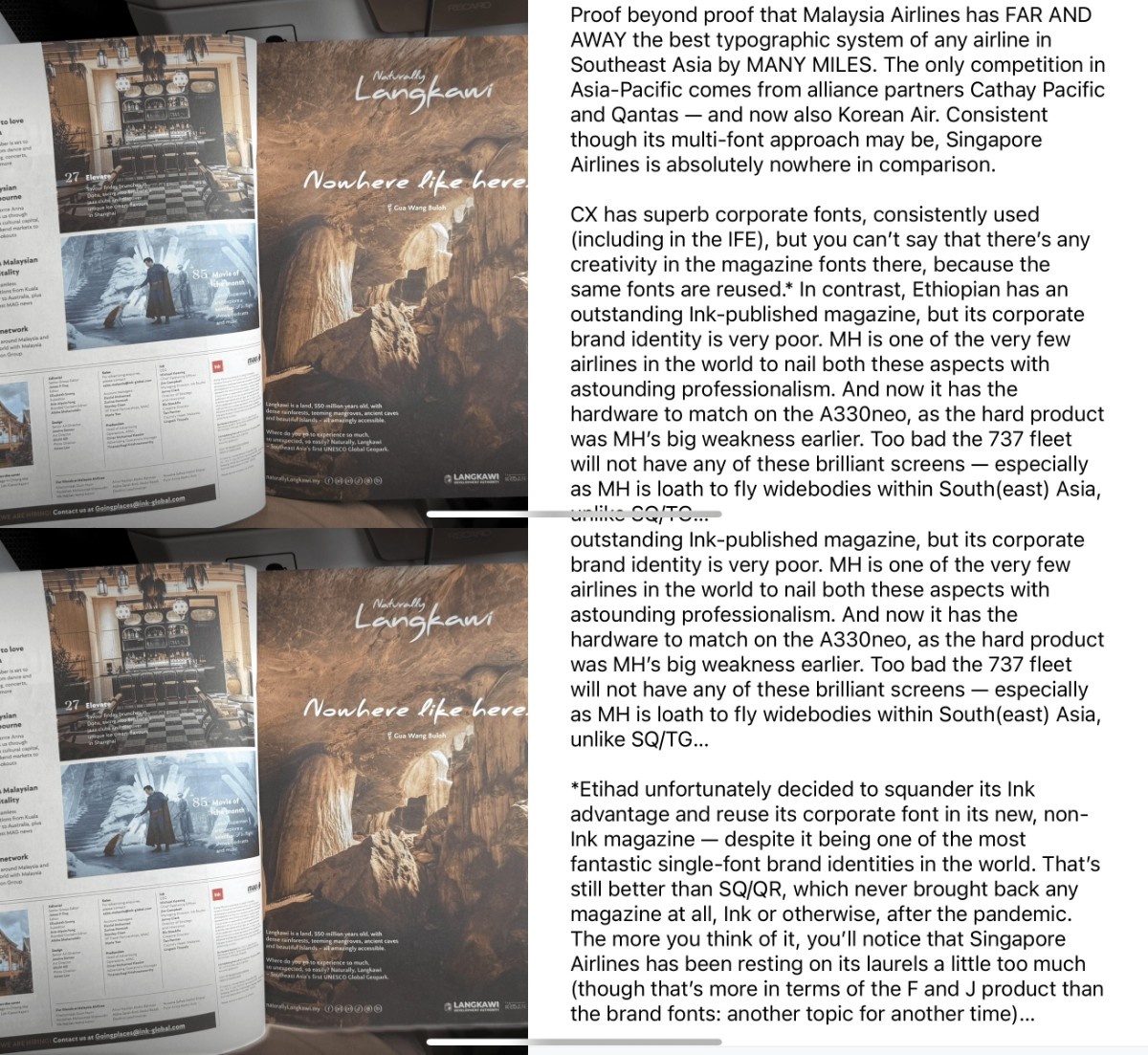
…except for Going Places, the main inflight magazine, which uses a different and more ecletic combination of fonts — all the more so with Ink Global’s magazines’ three-font strategy. This means that typography-wise, Malaysia Airlines is simply TOO FAR AHEAD of the competition in Southeast Asia, as it uses bold, unconventional typographic choices where others stick to predictability. I’m sorry to keep on rambling about fonts, but I really must appreciate what MH does to stand out from the rest — and clearly this is what it’s chosen as a differentiator.
Even the otherwise flawless Cathay Pacific simply reuses its corporate fonts in its eponymous Cathay magazine, without rocking the boat too much. In contrast, MH, which already has Mundial as a blockbuster new corporate font, went ten steps ahead with its Ink-published magazine and employed a truly exciting layout and design. The London-based media company tends to employ a three-font strategy for its magazines: a serif, a sans-serif and a more ecletic, whimsical choice that reflects the airline’s home — none of which are popular, hackneyed fonts. For Going Places it’s a pretty, flared serif; for Ethiopian’s Selamta — which oddly moved to a different publisher in September 2025 — it was a more offbeat ‘jungle-like’ font that brought out Africa’s exuberant, raw energy.
I’d already flown the low-cost carriers Cebu Pacific and the now-defunct Jetstar Asia in May 2025 (between Singapore and Manila), both of them also having superb Ink-published magazines — Smile and (the last-ever issue of) Where Next?, respectively. But an LCC’s cheerful brand identity is one thing, and the quiet, refined image of a premium flag carrier is quite another. Kudos to MH for sticking with Ink for its magazines, where others like Etihad and now Ethiopian — which, unlike MH or Etihad, doesn’t otherwise have a great brand identity — couldn’t. There is not another airline in the region that comes close in terms of branding and typography — most definitely NOT Singapore Airlines, despite its consistent usage of its signature Baker Signet font. (Perhaps Royal Brunei does — delightfully different as it is — but it’s too small…)
This list would have been much bigger if not for the many magazine discontinuations by airlines. Either the airline stopped publishing magazines altogether after COVID-19 (like Singapore Airlines and Qatar Airways) — though Ink still maintains a SilverKris website (if not a magazine) for SQ — or, in the case of Etihad and Ethiopian, it went for a different magazine publisher. Sometimes the airline itself shut down, as seen with Jetstar Asia in 2025.
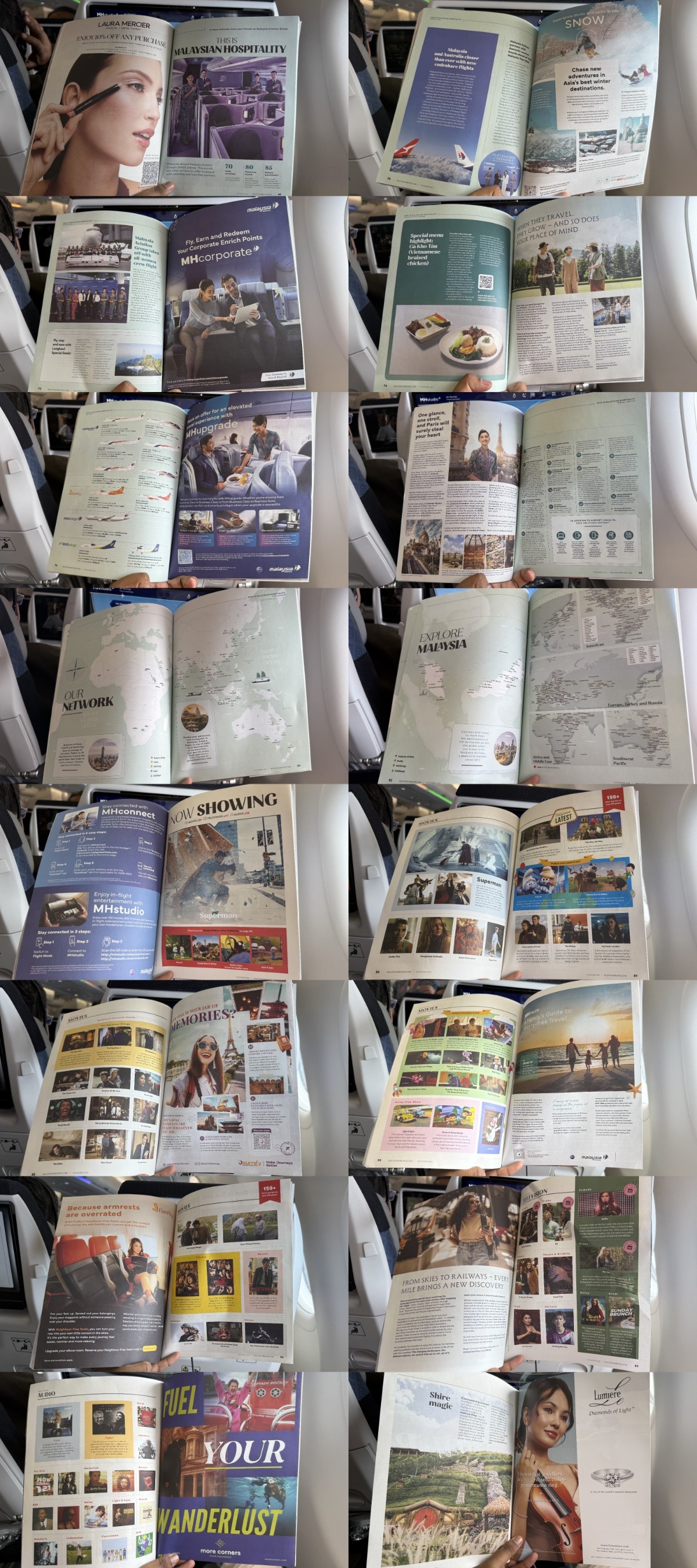
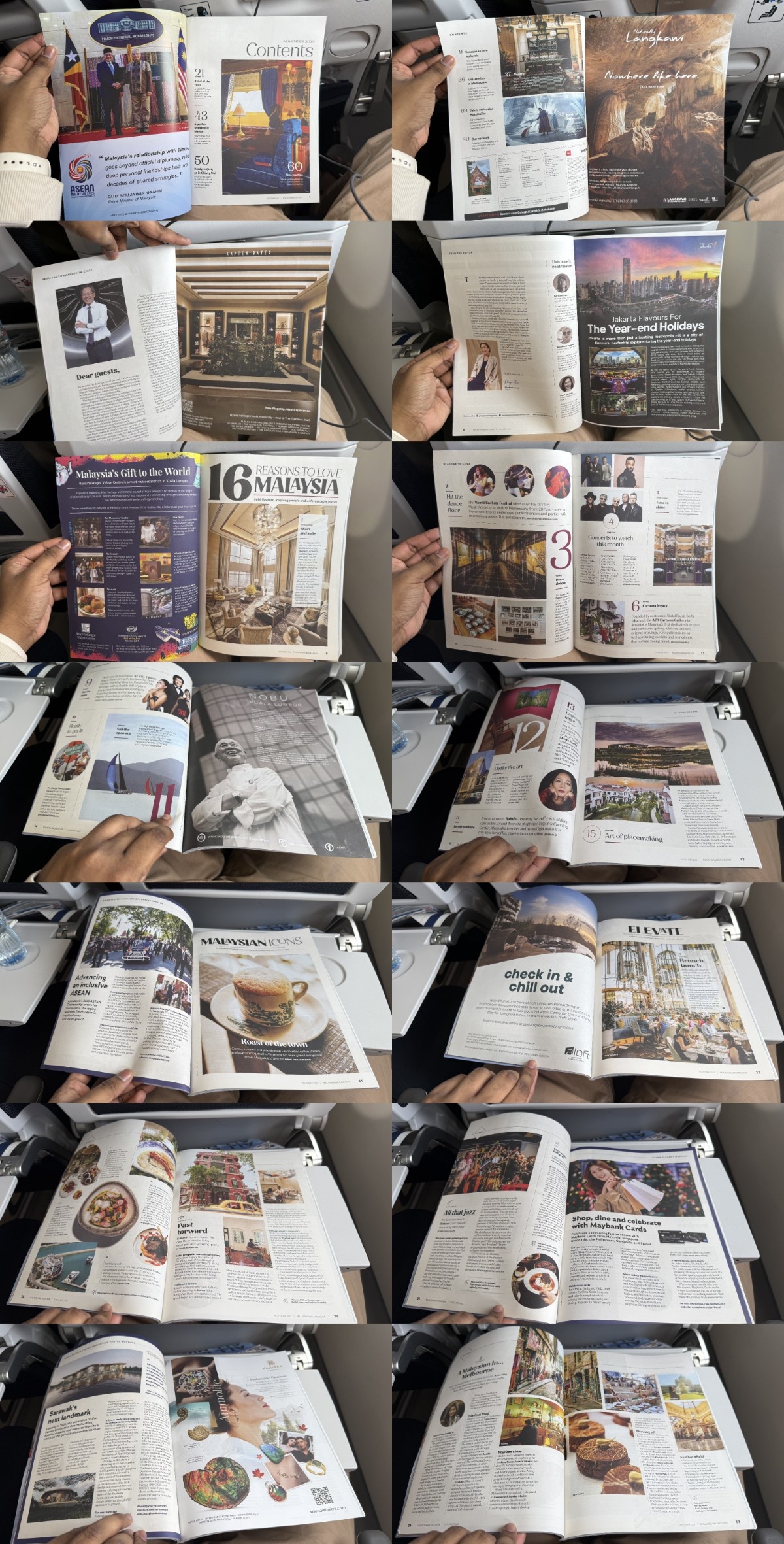
Now that I’ve spilled enough Ink (pun intended) about just how fantastic MH’s magazine and overall corporate identity is, here are a few snippets from the magazine itself. Oh my, look at those dainty headings — ‘Our Network’, ‘Explore Malaysia’, ’Now Showing’ and, above all, the airline’s longtime motto: Malaysian Hospitality. This, I say, is exactly what an inflight magazine should look like, and every time I read a low-quality publication — as I did on the very next flight on Batik Air Malaysia, back home to Bengaluru — I need to remind myself that great airlines, like MH, and their magazines still exist today. (Full-resolution images: airline information pages, prefatory pages, article features.)
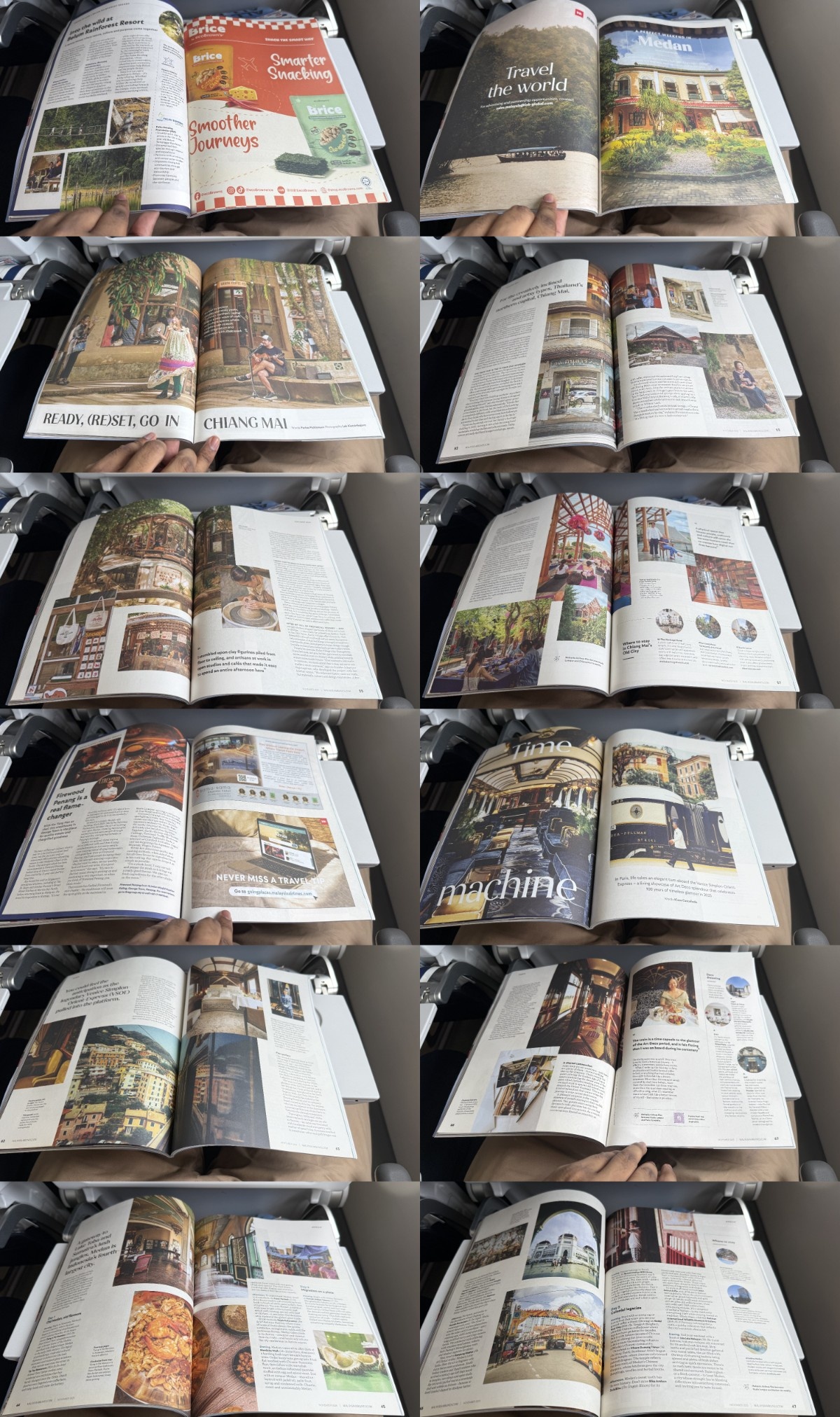
One thing I didn’t notice in the magazine was a lot of corporate (especially sports) sponsorships: MH is the only Southeast Asian full-service carrier to have a number of them, whereas SQ steers clear of all sports sponsorships other than the Singapore Grand Prix. In fact, MH now has an A330-300 (9M-MTL) painted in a Manchester United special livery, nearly two decades after cross-country rival AirAsia had one in 2006.
More recently, January 2026, Malaysia Airlines inked a deal with Mumbai Indians (MI), one of the most powerful franchises in the history of the multi-billion-dollar Indian Premier League (IPL) cricket championship, with a joint-record five championship titles. (It’s owned by Mukesh Ambani, the richest man in Asia, as part of his Reliance Industries conglomerate.) This gave MH some extra visibility in the lucrative Indian market, especially by virtue of its association with one of the highest-valued franchise leagues in the world, boasting of such stalwarts as Hardik Pandya, Jasprit Bumrah, Rohit Sharma and Suryakumar Yadav. (Think of Messi, Cristiano Ronaldo and Mbappé in the same team — THAT’S what I’m talking about!) Similarly, domestic rival AirAsia sponsors Sunrisers Hyderabad (SRH), another well-known IPL franchise, though not nearly as successful as MI.
Aside from this, the sponsorship lends itself to another interesting juxtaposition of codes: MH and MI — where MI previously used to stand for neighbouring SilkAir, Singapore Airlines’ now-defunct regional subsidiary!
Going back a decade, around 2015, Etihad Airways — as well as its now-defunct partner Jet Airways, once India’s largest airline — used to sponsor Mumbai Indians. But today Etihad is the title sponsor of MI’s arch-rival Chennai Super Kings (CSK) instead, which also won five titles. So much so that A6-EJB, Etihad’s sole A320neo, is painted in a Chennai Super Kings special livery! (AirAsia similarly has an A320neo, 9M-AGE, in Sunrisers Hyderabad livery.) And Qatar Airways used to be the title sponsor of Royal Challengers Bengaluru (RCB) — which won the 2025 edition, its first trophy ever — before the 2026 edition started. In fact, Qatar Airways terminated its RCB sponsorship around the same time that Malaysia Airlines, its Oneworld partner, joined forces with MI.
This shows how much airlines across the Middle East and Southeast Asia have increasingly been taking note of major IPL franchises, to cash in on the immense Indian travelling population. MI and CSK have won five IPL championships each, so partnering with such storied franchises is no mean feat for Malaysia Airlines (and Etihad Airways)! (Notice the slightly modified MH logo on the MI jerseys below, with the word ‘airlines’ somewhat bigger and horizontally centred.)

If there’s a weak point of Malaysia Airlines’ A330neo, it’s the catering
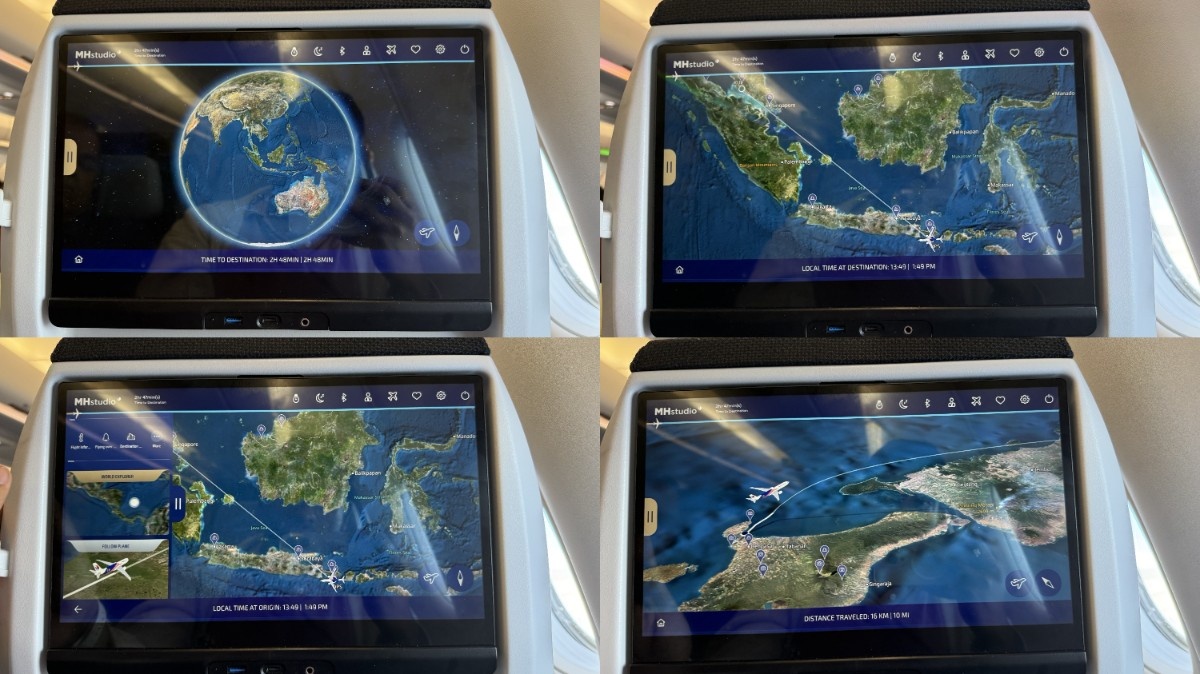
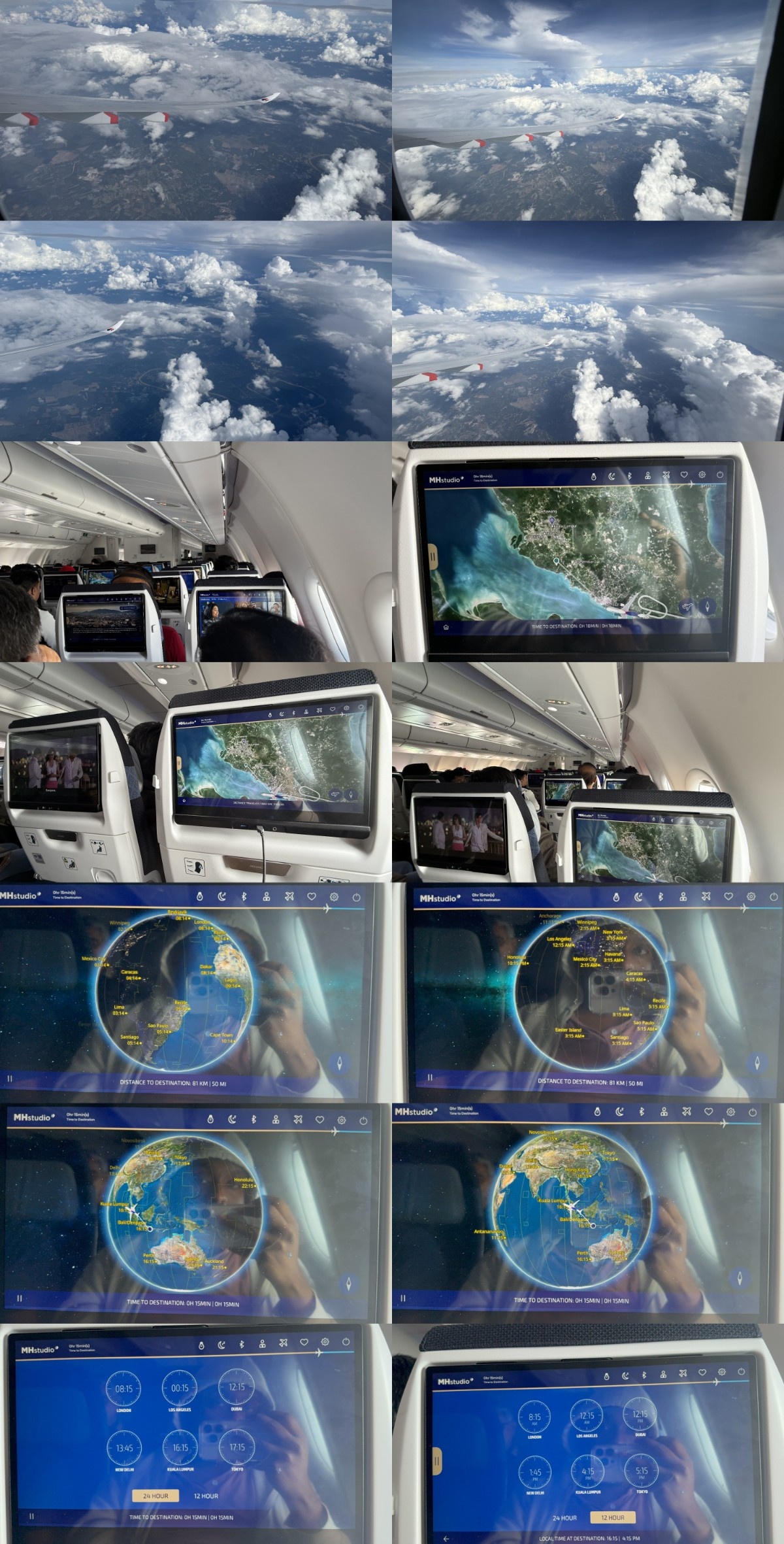
After perusing through the magazine, exquisitely designed as it was, I noticed that I was only half an hour into the 2.5-hour journey from Denpasar to Kuala Lumpur. The handy, nifty flight-information overlay popup gave quite the overview of where and how fast I was flying — though I daresay the location was a bit too detailed!
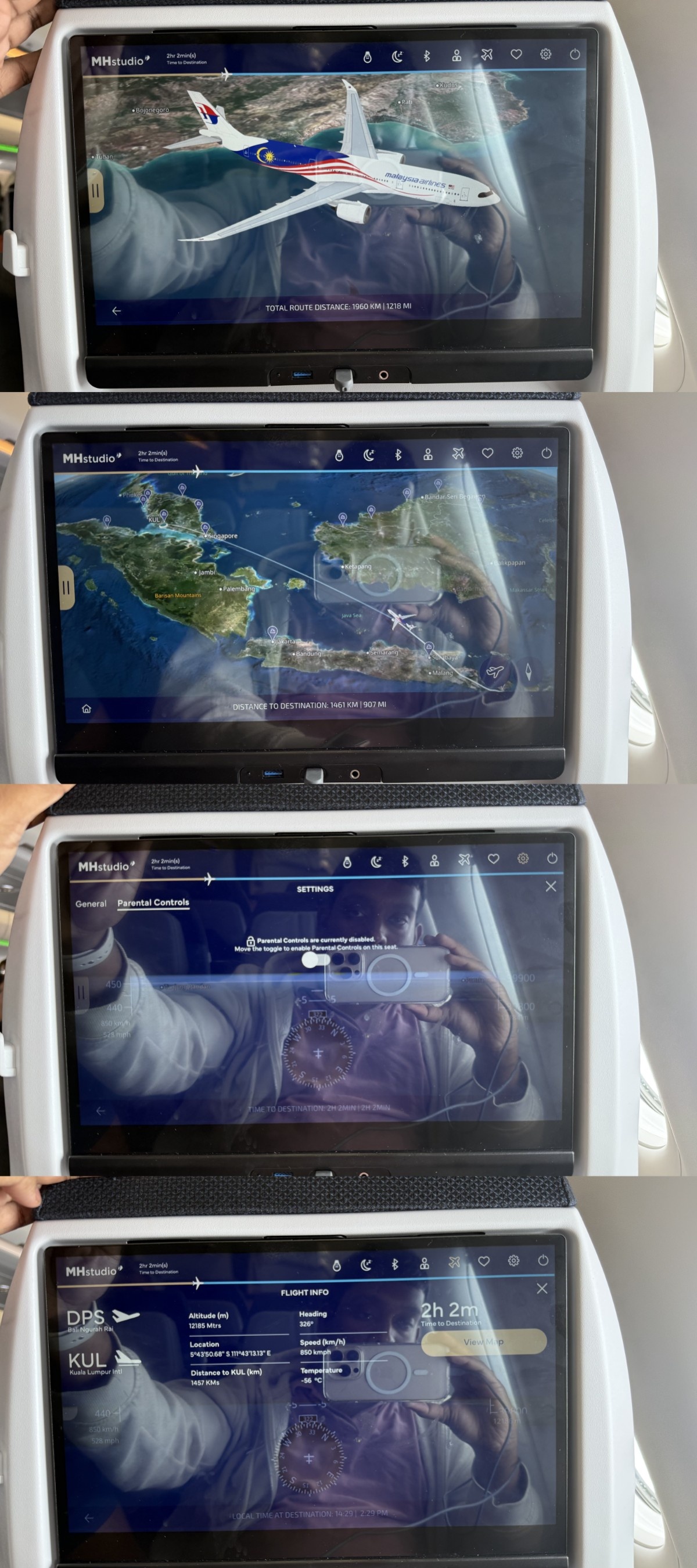
Now a male flight attendant started rolling out the lunch service, and I opted for the chicken option — I don’t think there were any details as to what exactly was being served — which he handed over so that I could plonk it down on my tray table. (Finally, something that Singapore Airlines does bettter than Malaysia Airlines when it comes to menus — SQ lets you know in advance (through its online menus) what you’re going to eat on board…)
The flight might have been going swimmingly well all along, but I have to admit that the meal was the one (major) letdown of this sector. It was an exercise in blandness. Yes, I can’t stand spicy food, but that doesn’t mean that you take out all the flavour from the chicken-and-rice dish — which MH sadly did. The cabbage salad was no good either, and I’m not a fan of airlines serving only fruits — instead of proper cakes or sweetmeats — in the name of desserts. And then there was that dry bread roll, a pet peeve of mine (but, then again, MH can hardly be blamed for that)… Certainly, it didn’t compare favourably to the scrumptious dinner that Saudia served on the inbound sector two days before.
The previous (and first) time I flew an MH A330 — three years prior, in October 2022 — I’d called the meal a ‘micro-banquet’ and commended the airline for not serving that unnecessary dry roll of bread and chiplet of butter. Then the meal was much simpler, with a packet of peanuts and a dry cake to go with it, and yet it managed to taste so much better. ‘Do it simple, do it right,’ I’d commented at the time… only for that to be turned on its head this time around!
Fortunately, other recent MH flights of mine — all on 737s — have had far better catering than this leg from Denpasar. On a morning flight in January 2026 from Kuala Lumpur to Bengaluru, I was served nasi lemak with chicken rendang — perhaps one of the best breakfast dishes I’ve had on a Southeast Asian airline, and a far cry from the often subpar breakfasts I’ve had on SQ!
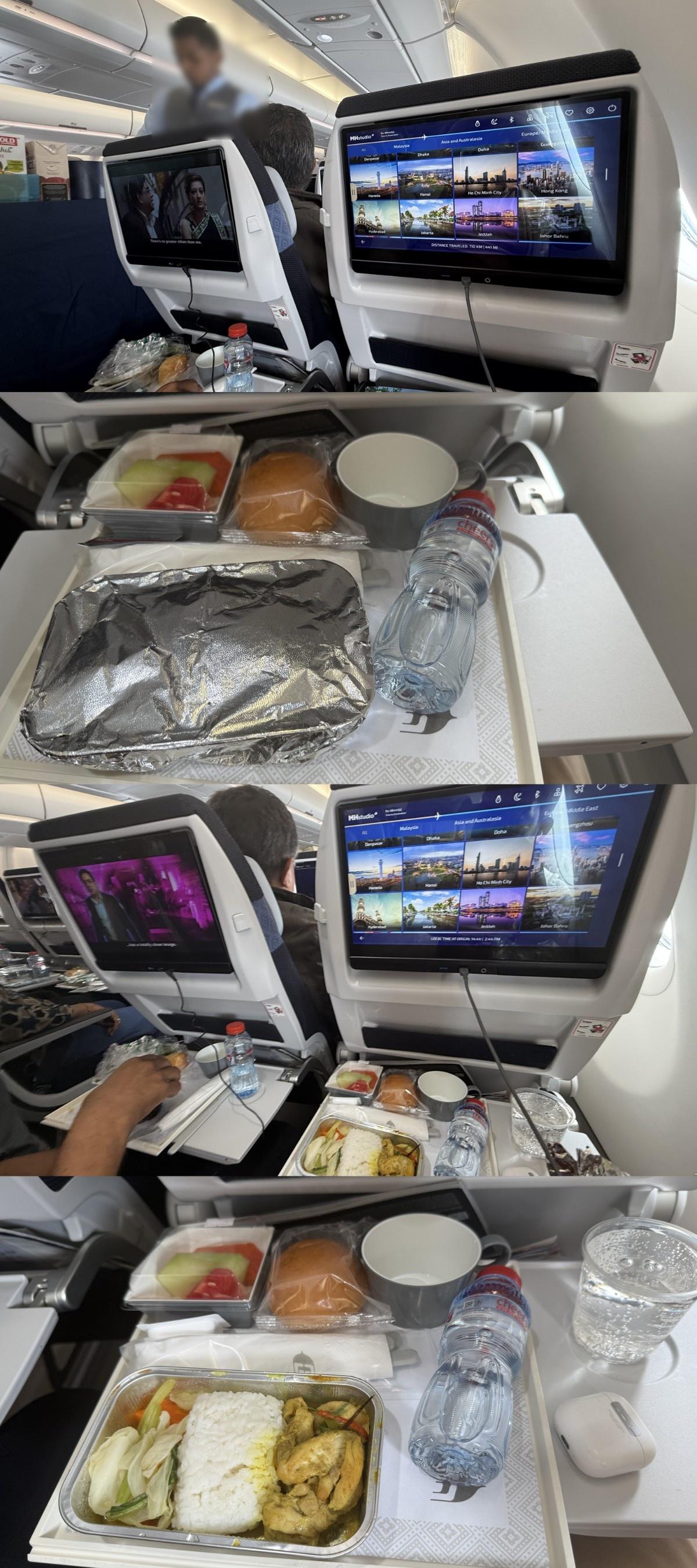
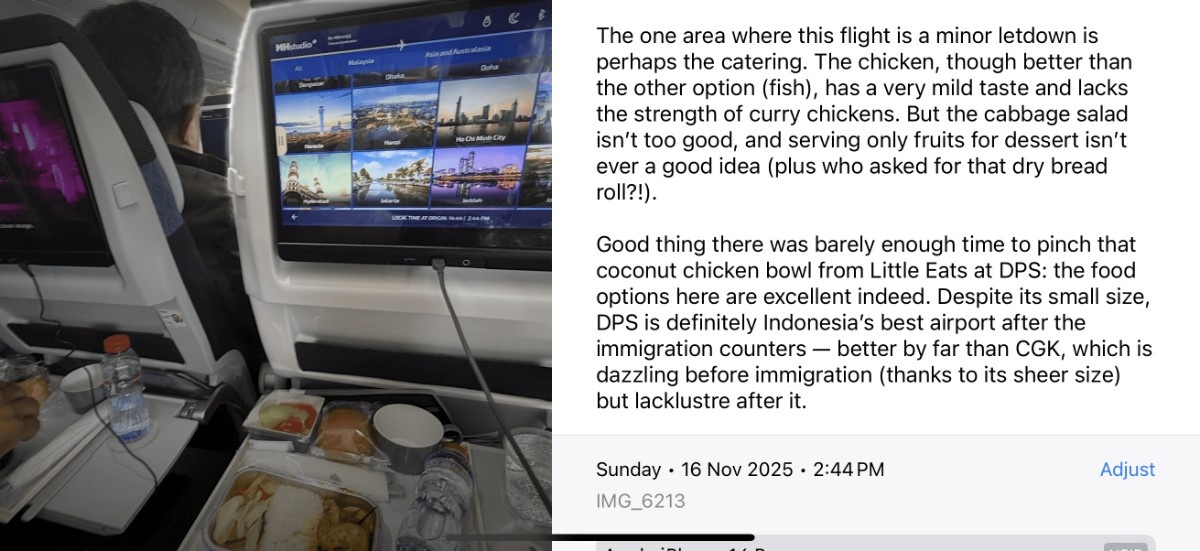
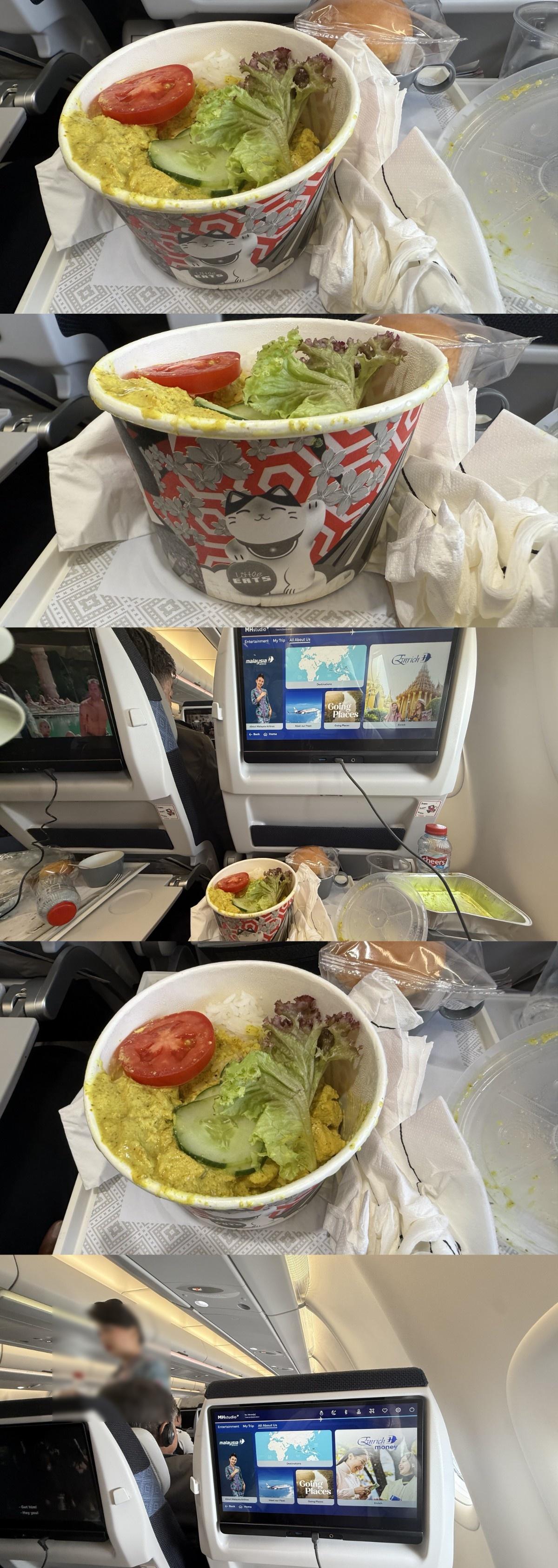
Good thing then that I managed to grab that bowl of Coconut Chicken Curry Rice from Little Eats! It provided all the Indonesian flavour and kick that I was looking for — and missed badly with the onboard meal. I’m so glad I spared the time — and the money — on this tasty and nutritious bowl!
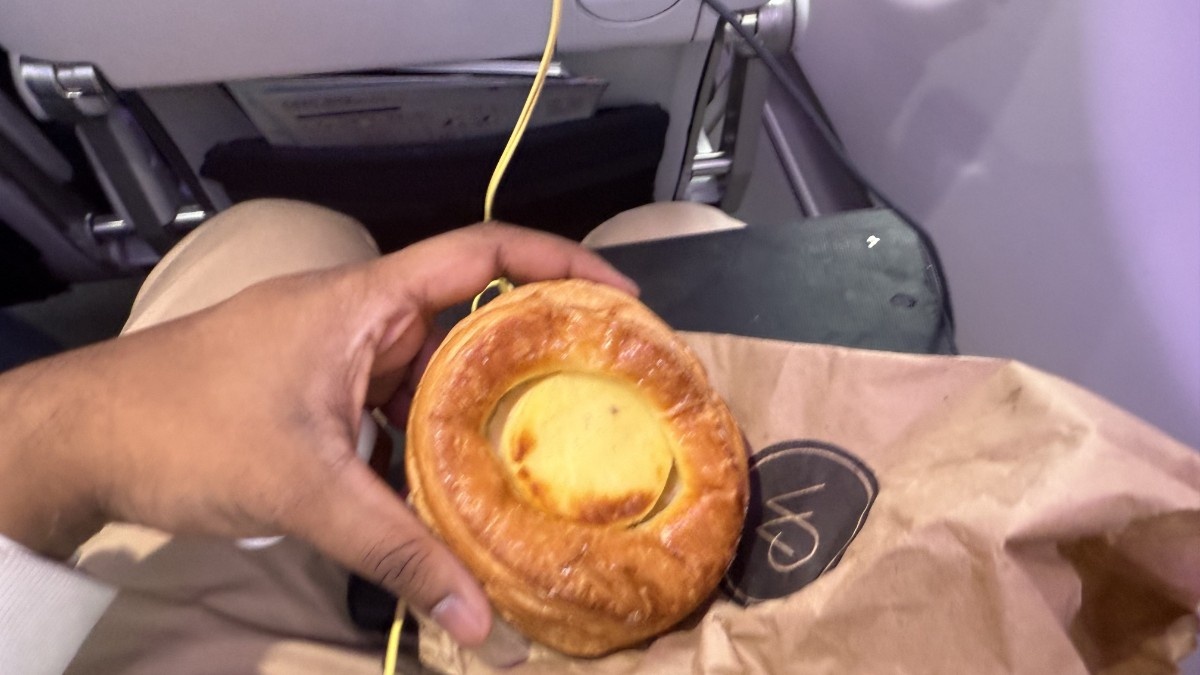
Afterwards I also tucked into a custard roll that I’d bought from Wolfgang Puck, and boy, was it decadent — more than enough to replace the dry, ‘fruitless’ apology of a fruit dessert that MH served!
Destination overviews: Excellent but not to Saudia’s brilliant level
Being an IFE and moving-map nerd, there was no doubt that I had to check out what MH had by way of destination overviews. Saudia on the inbound flight spoiled me so much with its simply marvellous Lonely Planet-esque destination overviews that it would be hard for any other airline to come close. But MH did!
There were crisp HD photos of the most picturesque views of many global cities, including domestic Malaysian destinations. They really captured the awe and splendour of some of the world’s most scenic places. Each city had a few pictures along with a brief description of its major sights and landmarks, often sourced from leading travel guides like Lonely Planet, Frommer’s and Fodor’s. That said, however, the detailing and wording of each place was not to the brilliant level of Saudia — or, for that matter, what you’ll find on the Panasonic Arc system, as I’ve seen on Air India’s A350 and ex-Vistara A321neo, and also SQ’s 737 MAX IFE and most recently Etihad’s A350-1000.
I reserved particular attention for Singapore, given my innate familiarity with its attractions both big (Gardens by the Bay, Esplanade) and flying-under-the-radar (CHIJMES, East Coast Park) through the ages!
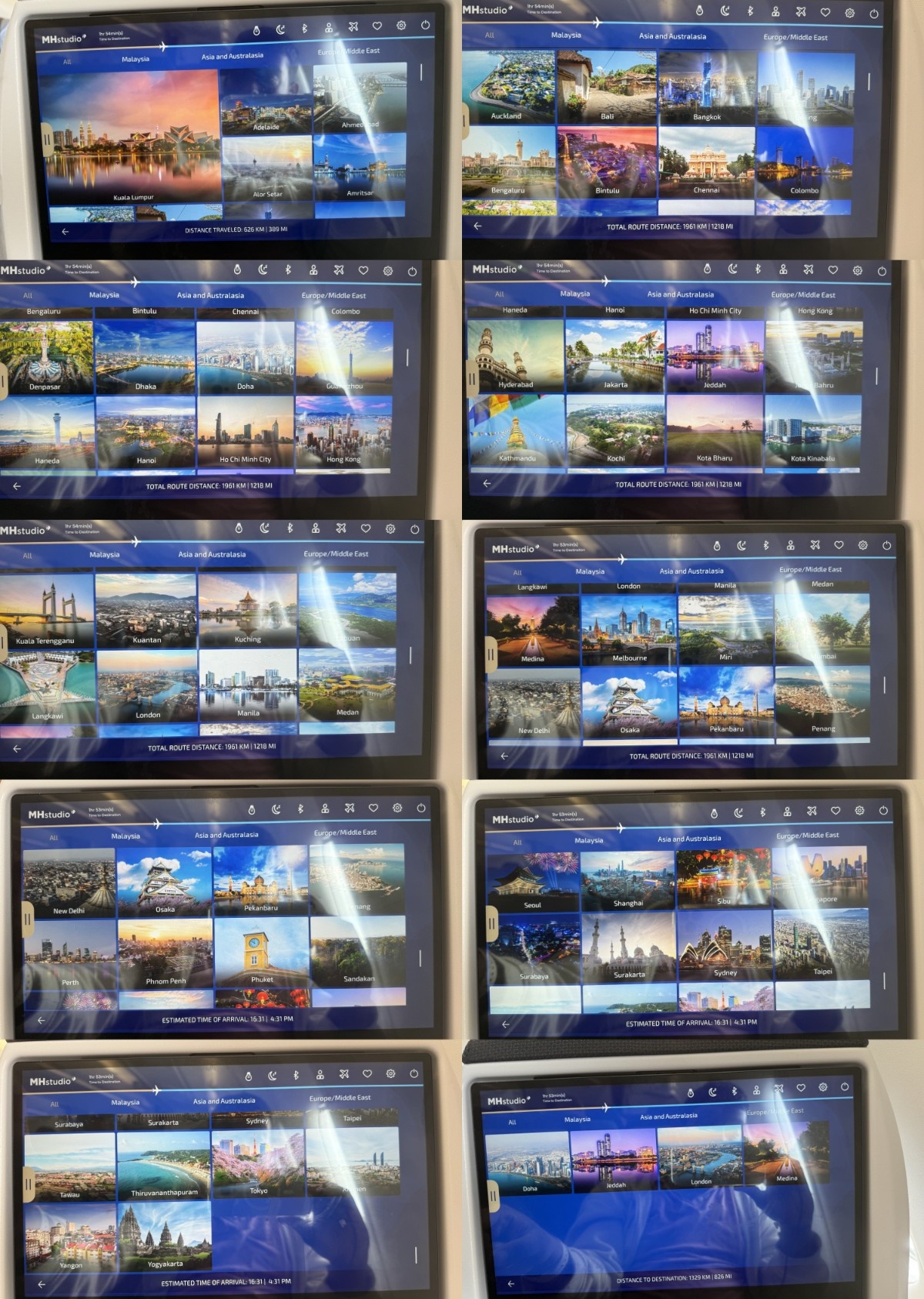
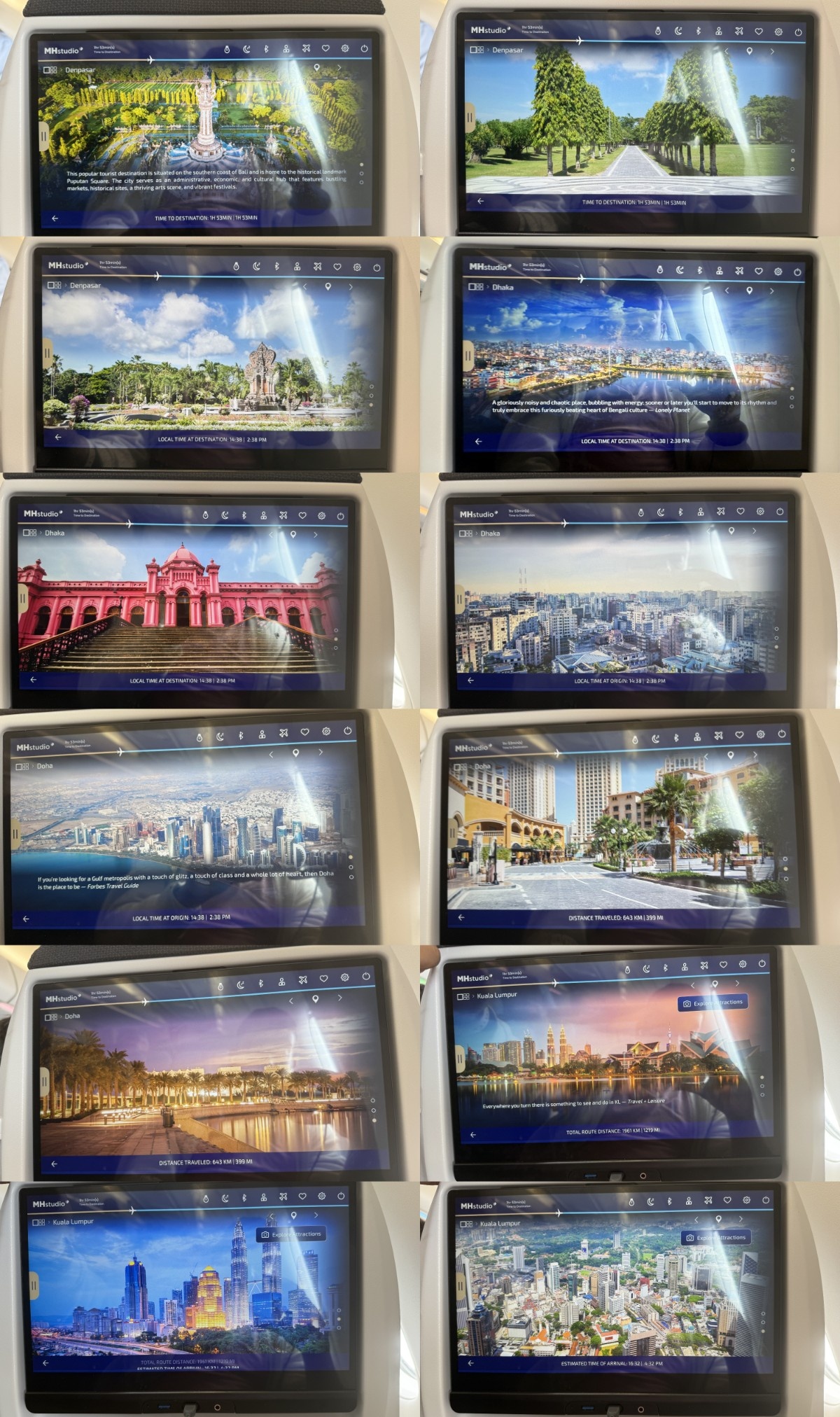
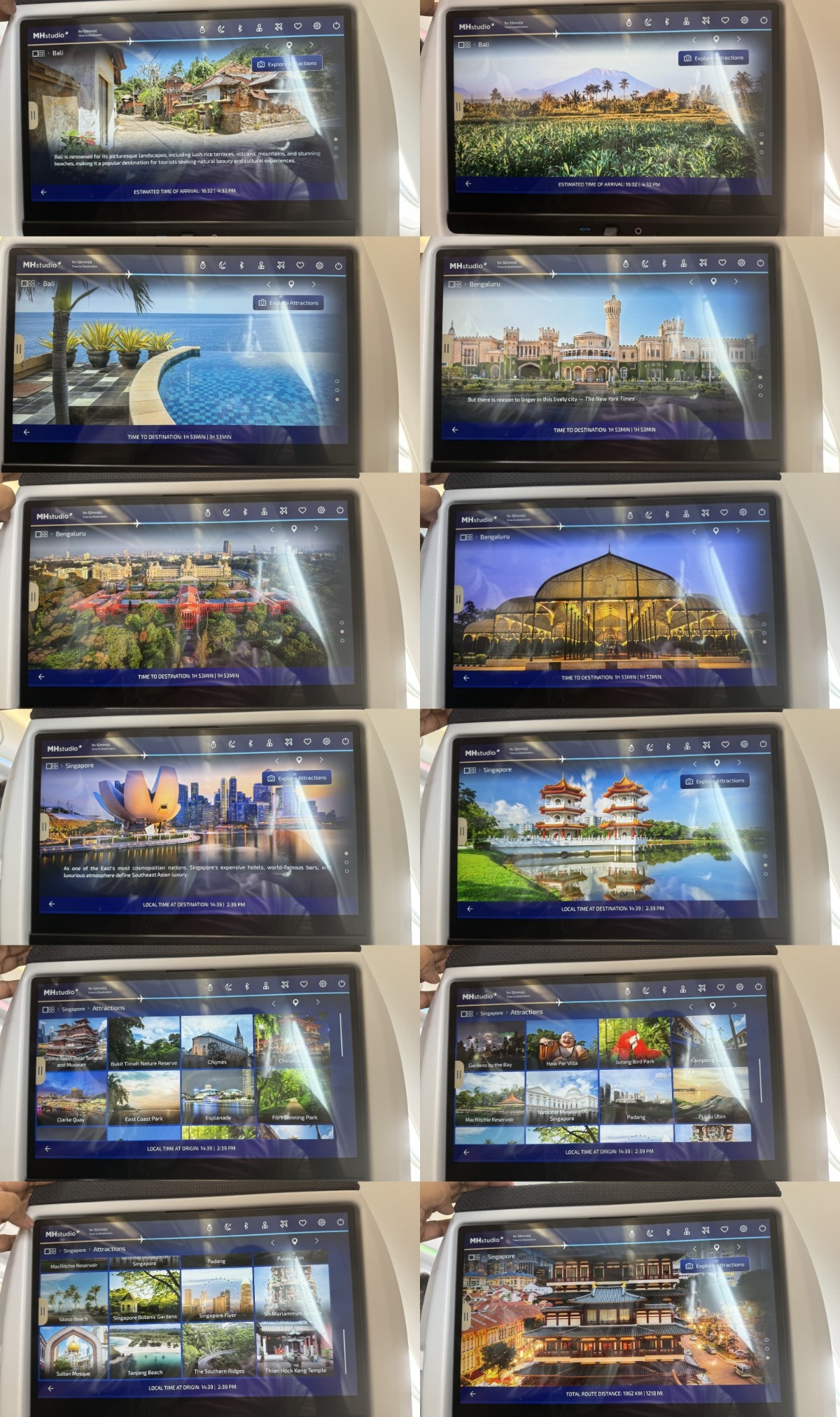
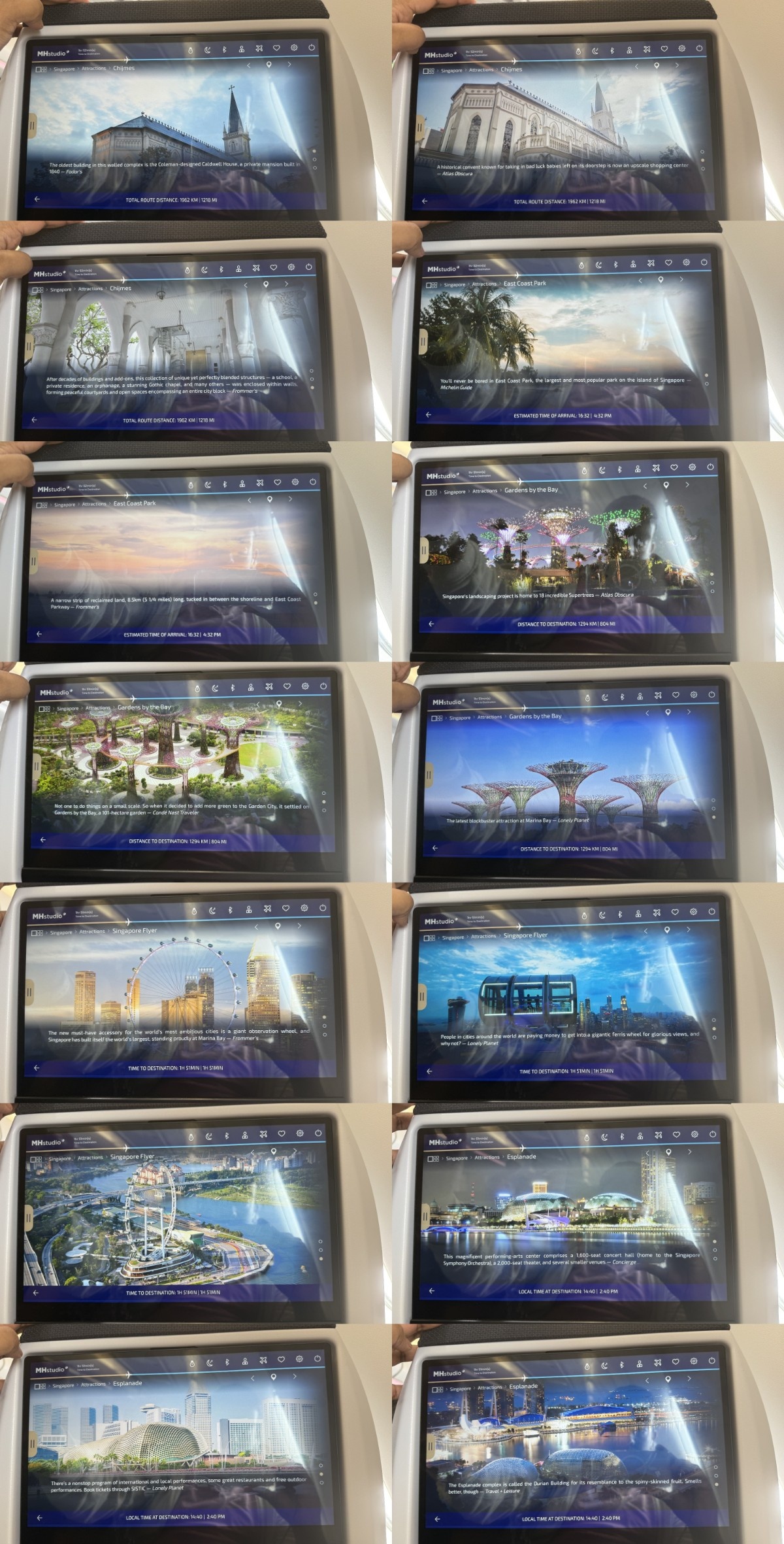
Similarly, I dived through as many pictures of Indian cities as I could, followed by underrated Southeast Asian metros like Manila, Hanoi and especially that hidden gem, Phnom Penh. The one-liners by renowned travel experts did a lot to bring out glamour and heritage in equal measure. However, the incredibly detailed overviews and See/Eat/Do guides that Saudia had couldn’t quite be matched by this system, however sleek and huge its screen might be.
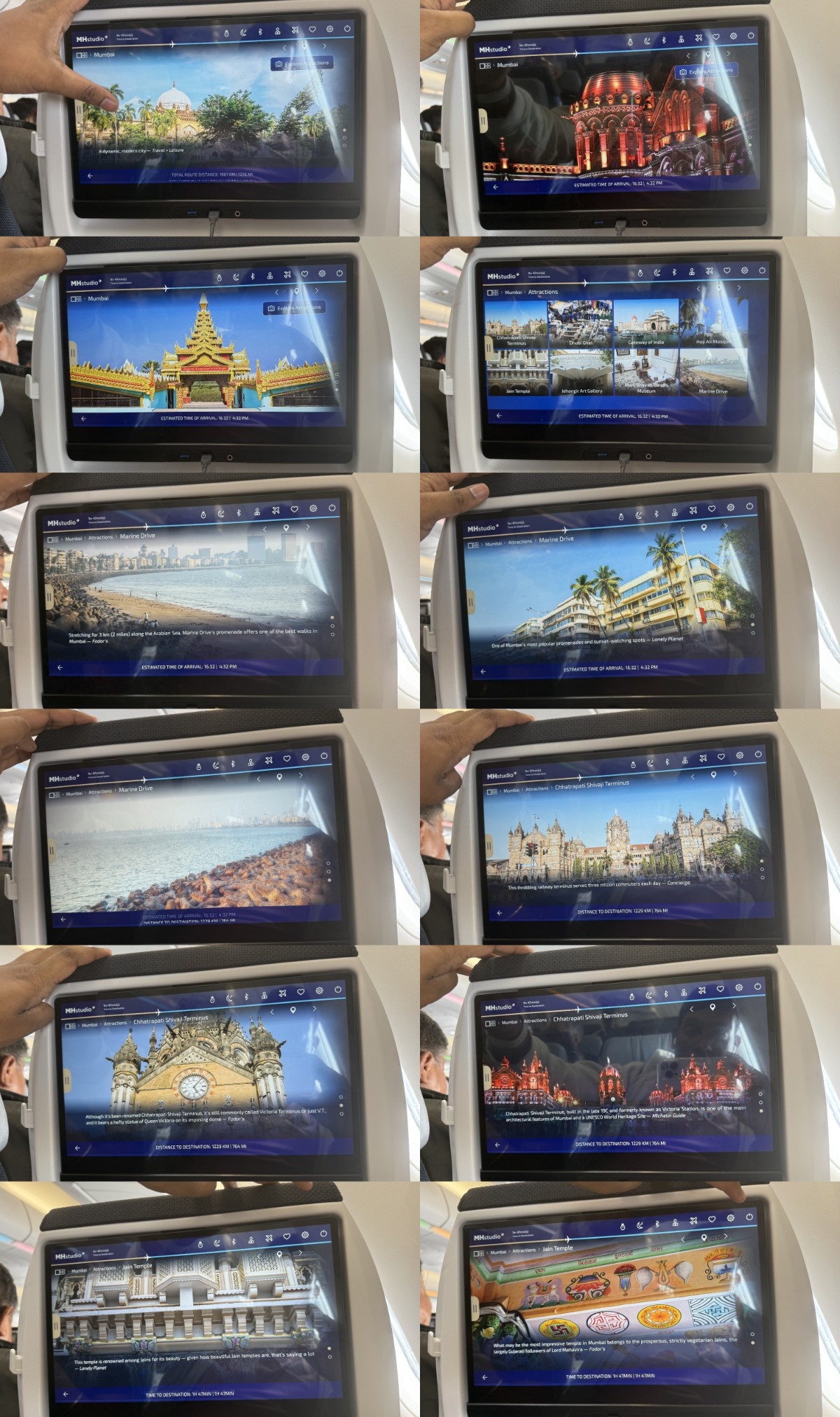
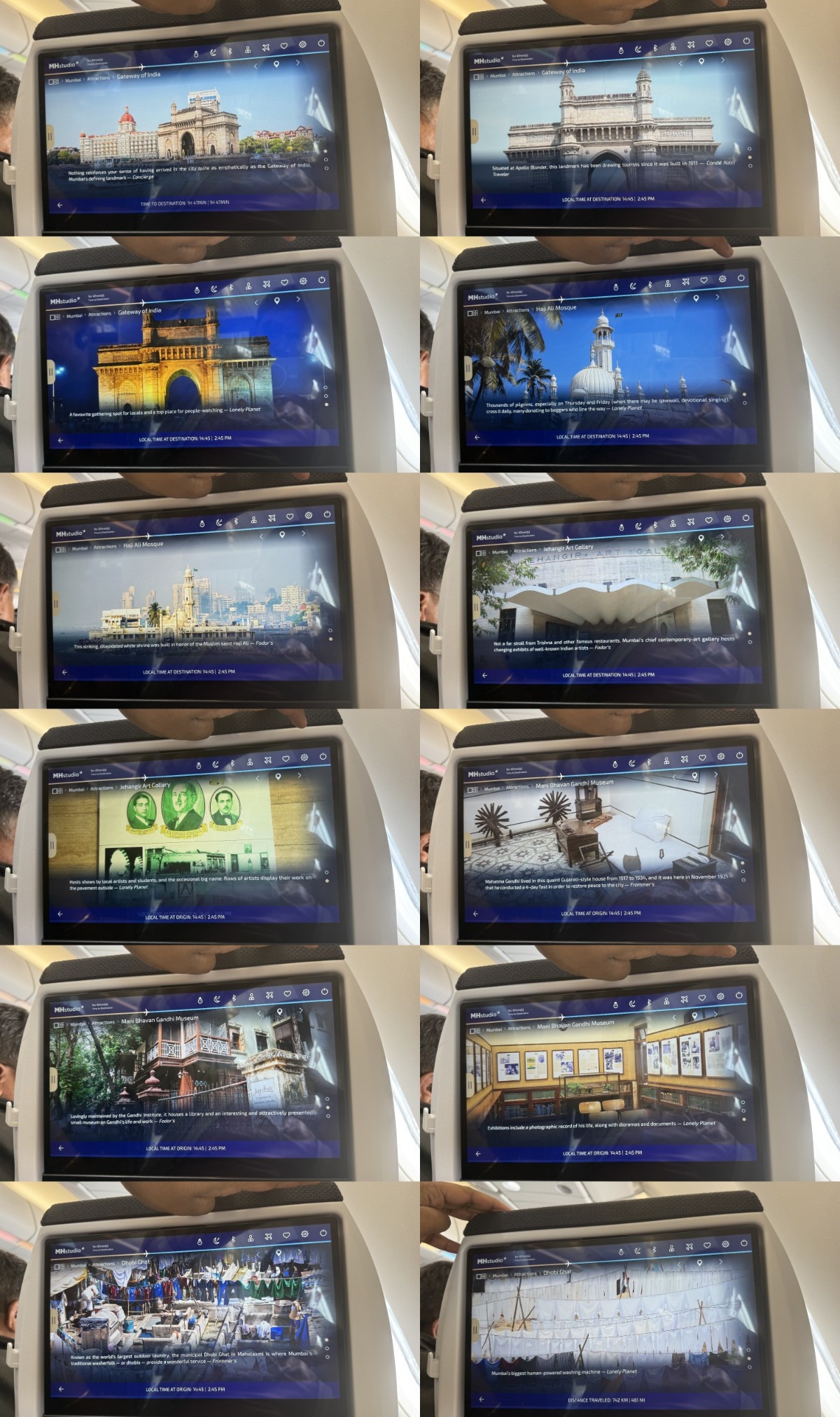
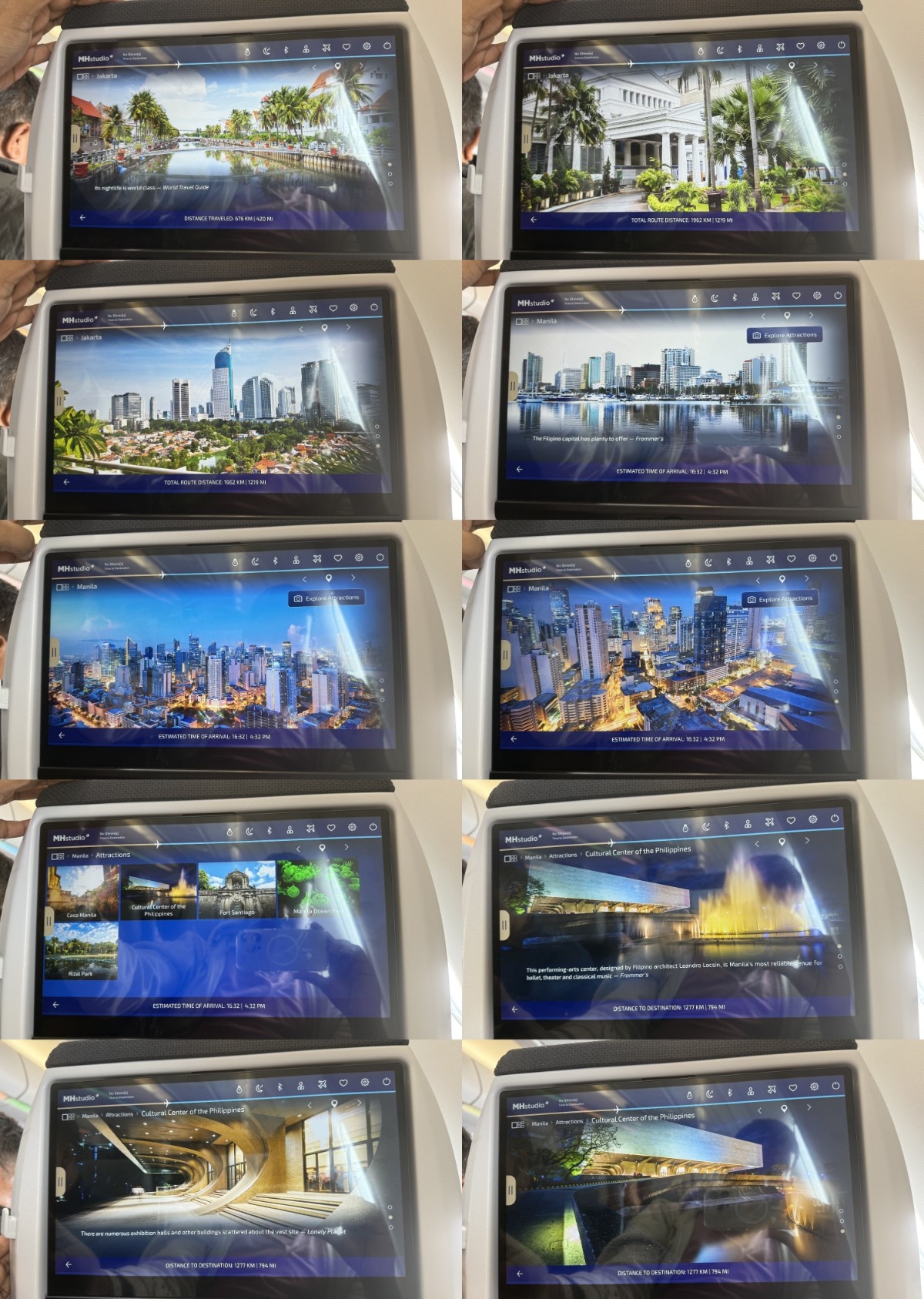
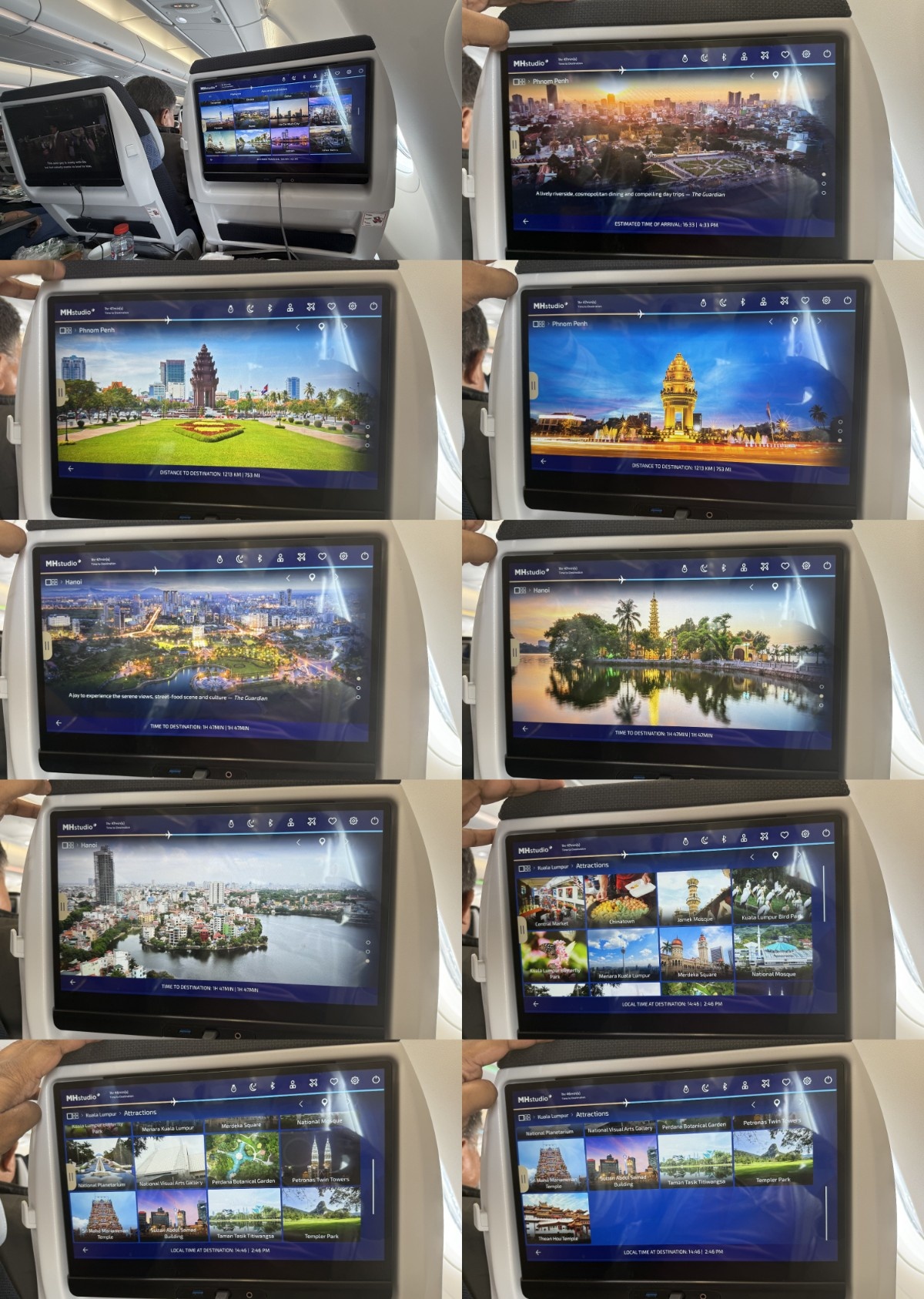
Cathay Pacific is another airline that came to mind with its well-rounded, well-written destination overviews, but CX had very few places compared to the comprehensive list on offer here in MHstudio’s moving map.
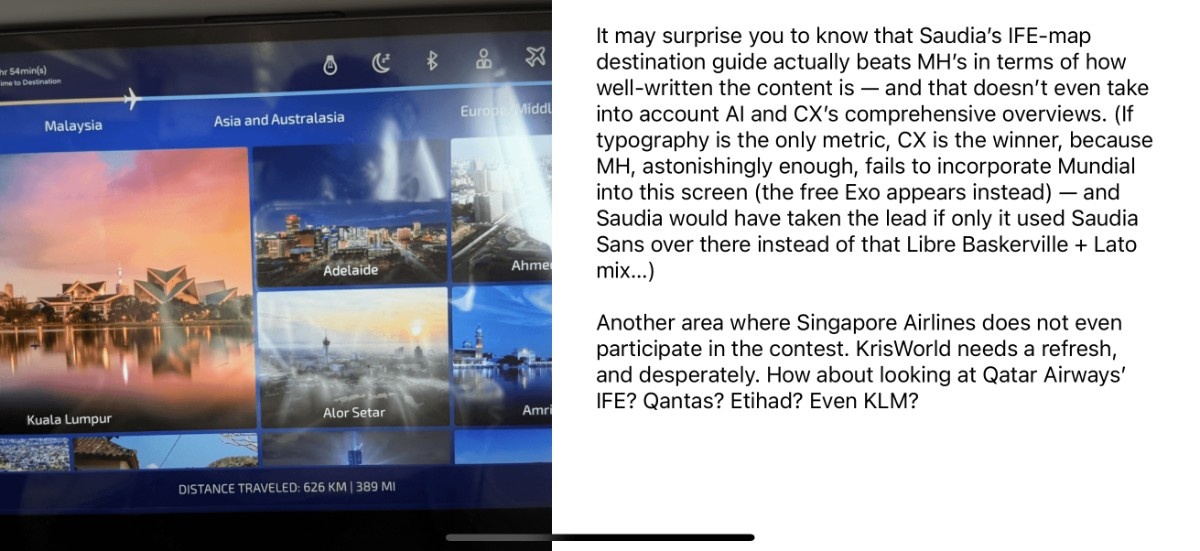
Again, this was an area where KrisWorld simply no-shows for the contest: you’re never going to get a lowdown on where SQ flies and what to do there — though there’s the SilverKris website for that, with the print magazine being discontinued. However, there’s no denying that KrisWorld has greatly fallen behind the pack — and the same goes for a lot of SQ’s hard products, which are singlehandedly supported by SQ’s immense goodwill and profitability.
Putting the system through its paces: MHstudio’s informational and entertainment pages
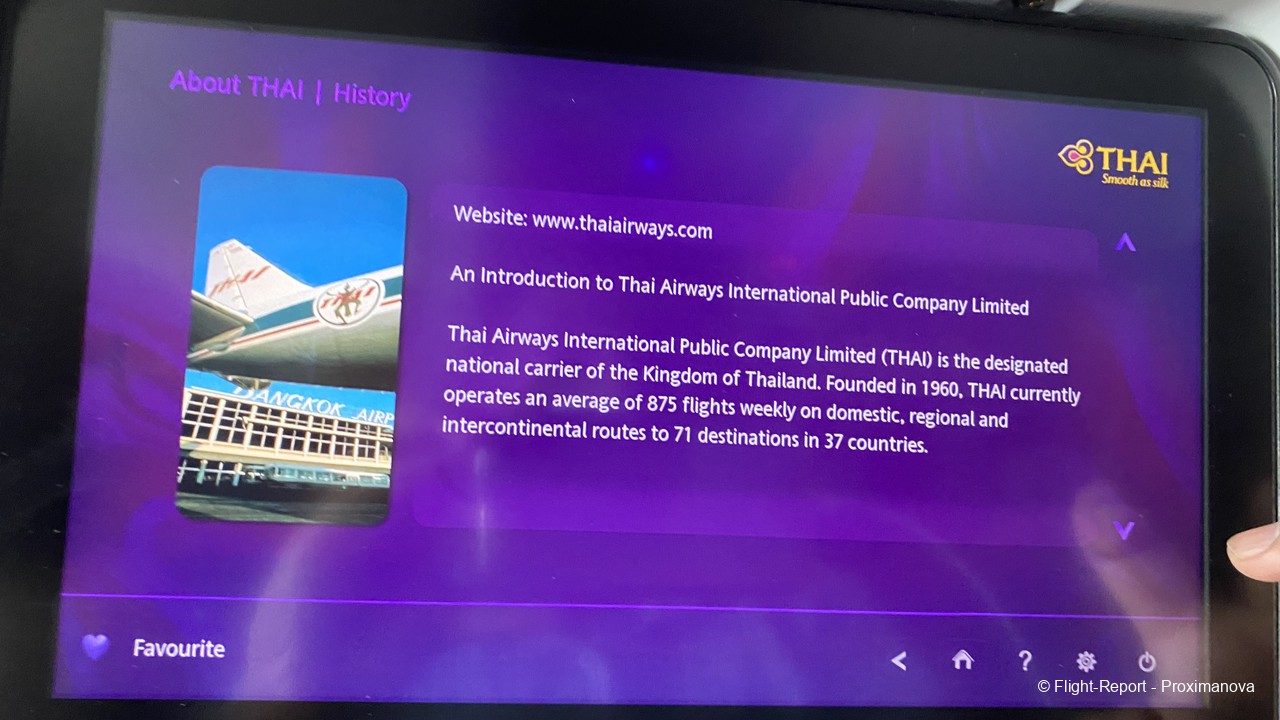
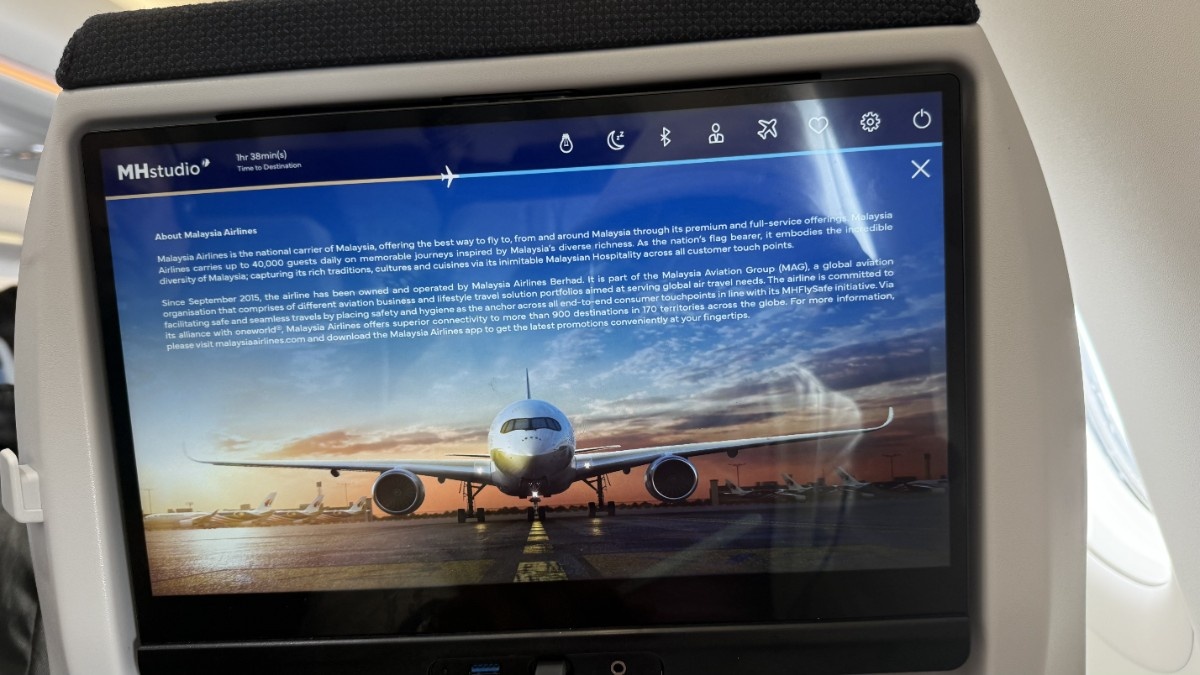
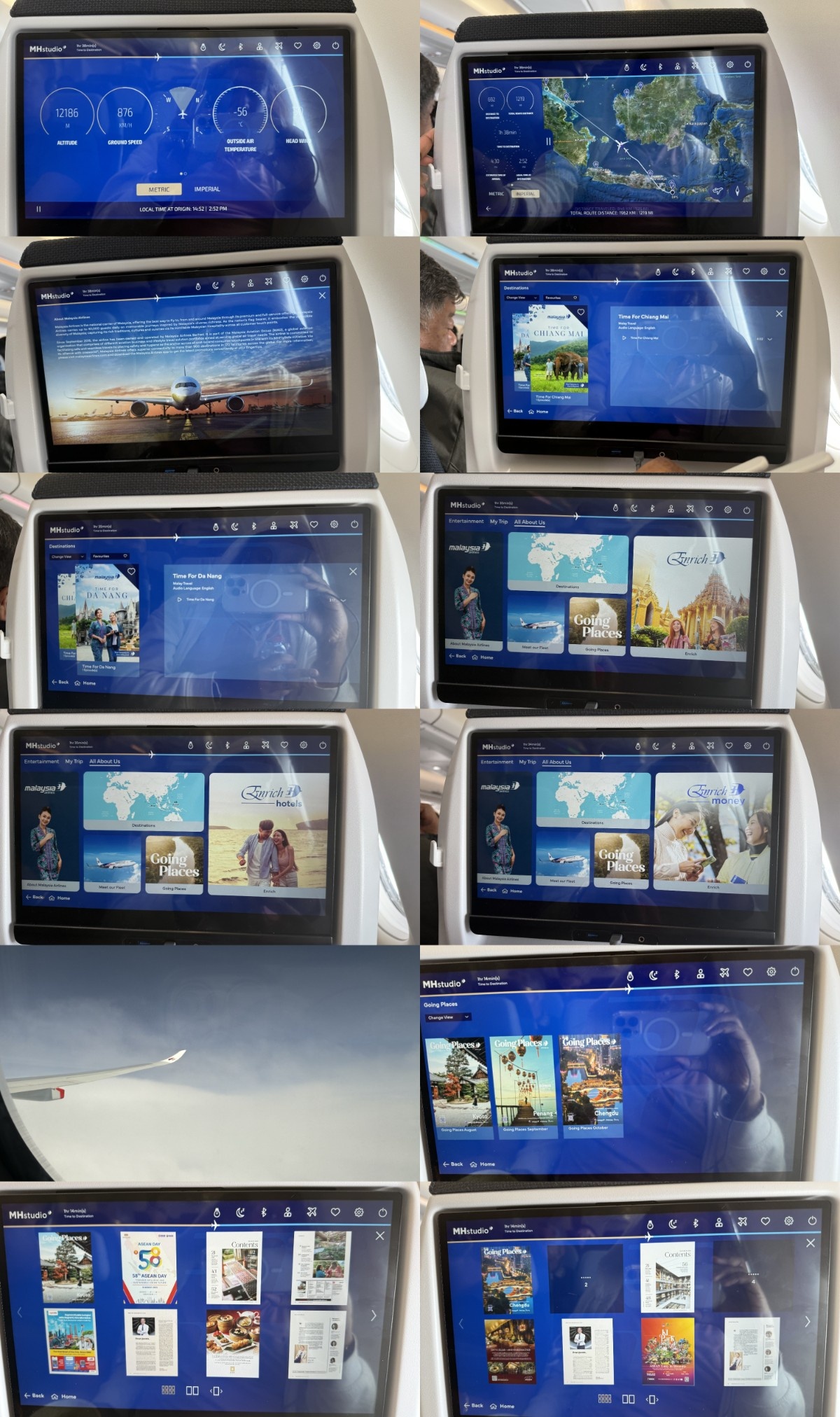
It was time to move to other things, such as airline-specific details, and here too MHstudio did not disappoint at all. Its About Us section was filled with pride and an effusive legacy, in a way that did not sound like a dry Wikipedia article — as Thai Airways, which is much less competent in English, did in its own About Us page — but instead felt honest and professional like any Western airline would. Once again, this is something that you’ll never find in Singapore Airlines’ KrisWorld: a shameful omission for an otherwise globally lauded airline.
There were only two tourism videos directly from the airline — ‘Time for Da Nang’ and ‘Time for Chiang Mai’ — which were an insight into Vietnam’s and Thailand’s most well-known off-the-beaten track cultural hotspots. (I went to Chiang Mai a decade ago, in 2016, on my first visit to Thailand.)
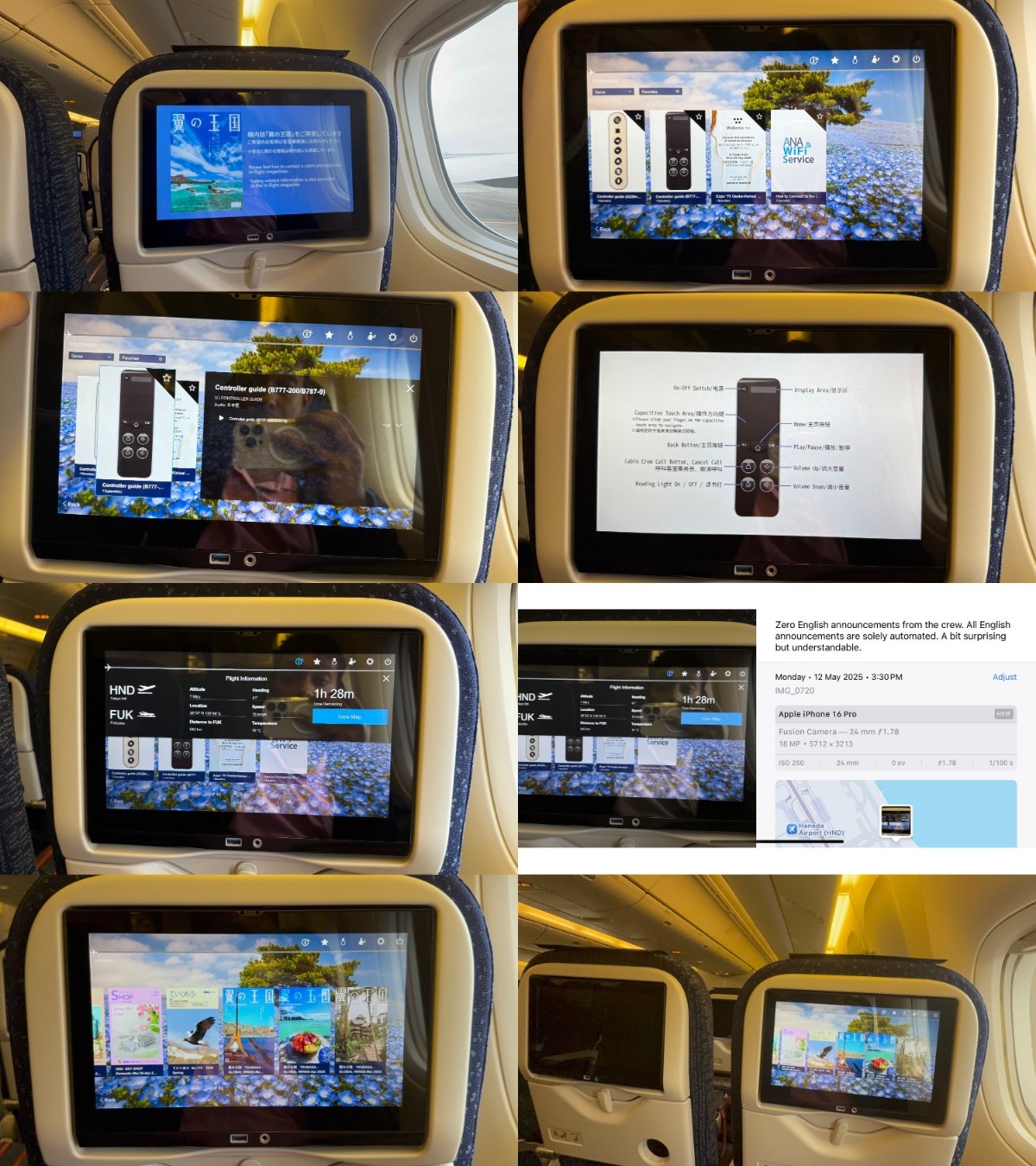
As far as the rest of the About Us section was concerned, there were digitally flippable editions of the Going Places magazine. That’s something I’ve seen on an ANA domestic flight, but of course that magazine — the online-only Tsubasa Global Wings — is nowhere near as professional and strikingly designed as this one.
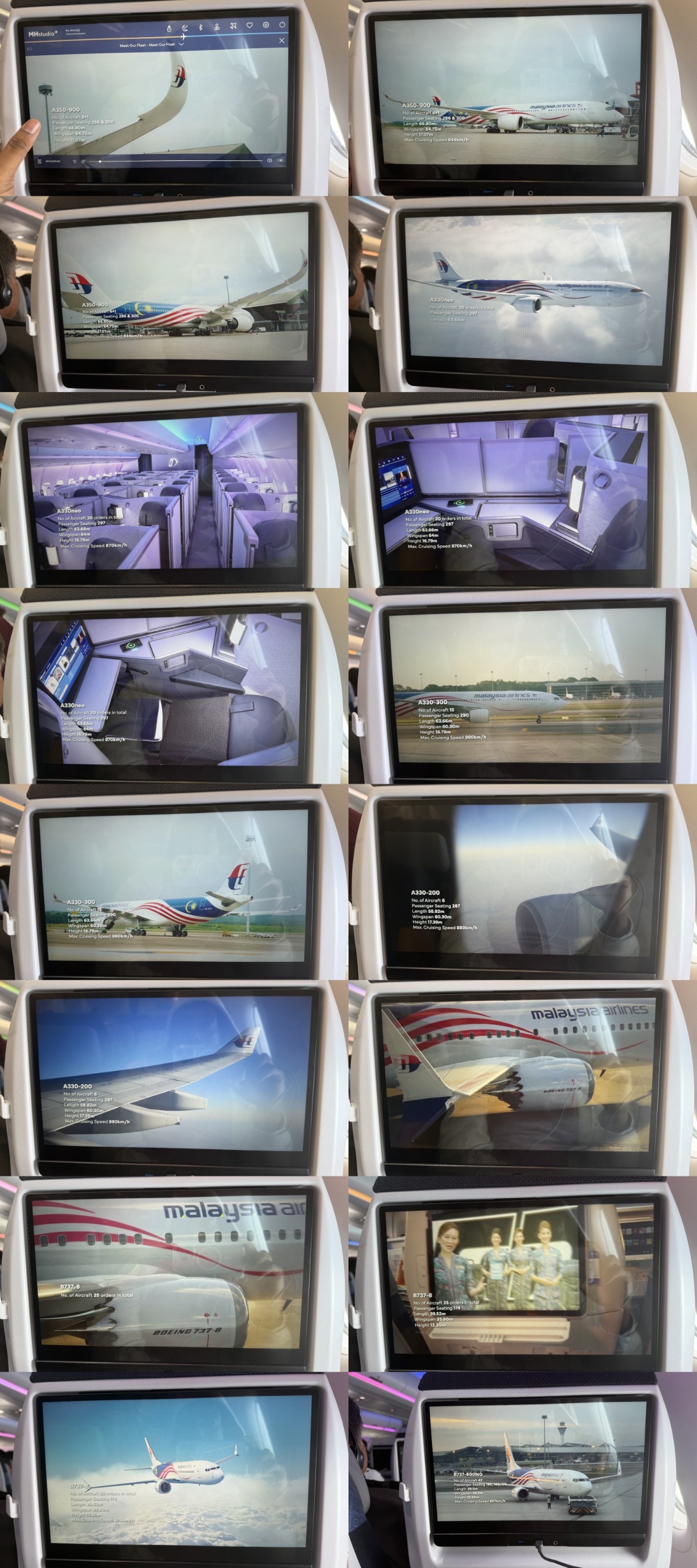
Then there was a very nicely produced video about Malaysia Airlines’ fleet: all-Airbus for widebodies, all-Boeing for narrowbodies — similar to its (much smaller) Oneworld partner Fiji Airways, which also operates A330s, A350s and 737s, plus ATR 72s. (MH’s regional subsidiary Firefly operates ATRs and a few 737s.) Conversely, airlines like Air New Zealand and former Oneworld member LATAM Airlines — formerly also Air India before its first A350 arrived in 2023 — operate Airbus narowbodies and Boeing widebodies, though LATAM did operate A330s and A350s in the past.
However, including fleet numbers isn’t a wise idea for a video, as they will remain static and cannot be periodically updated like a magazine can do. With more and more A330neos and 737 MAXes streaming into the fleet — and that’s a pun, because the 737s have only streaming IFE, no screens — those numbers will quickly become outdated!
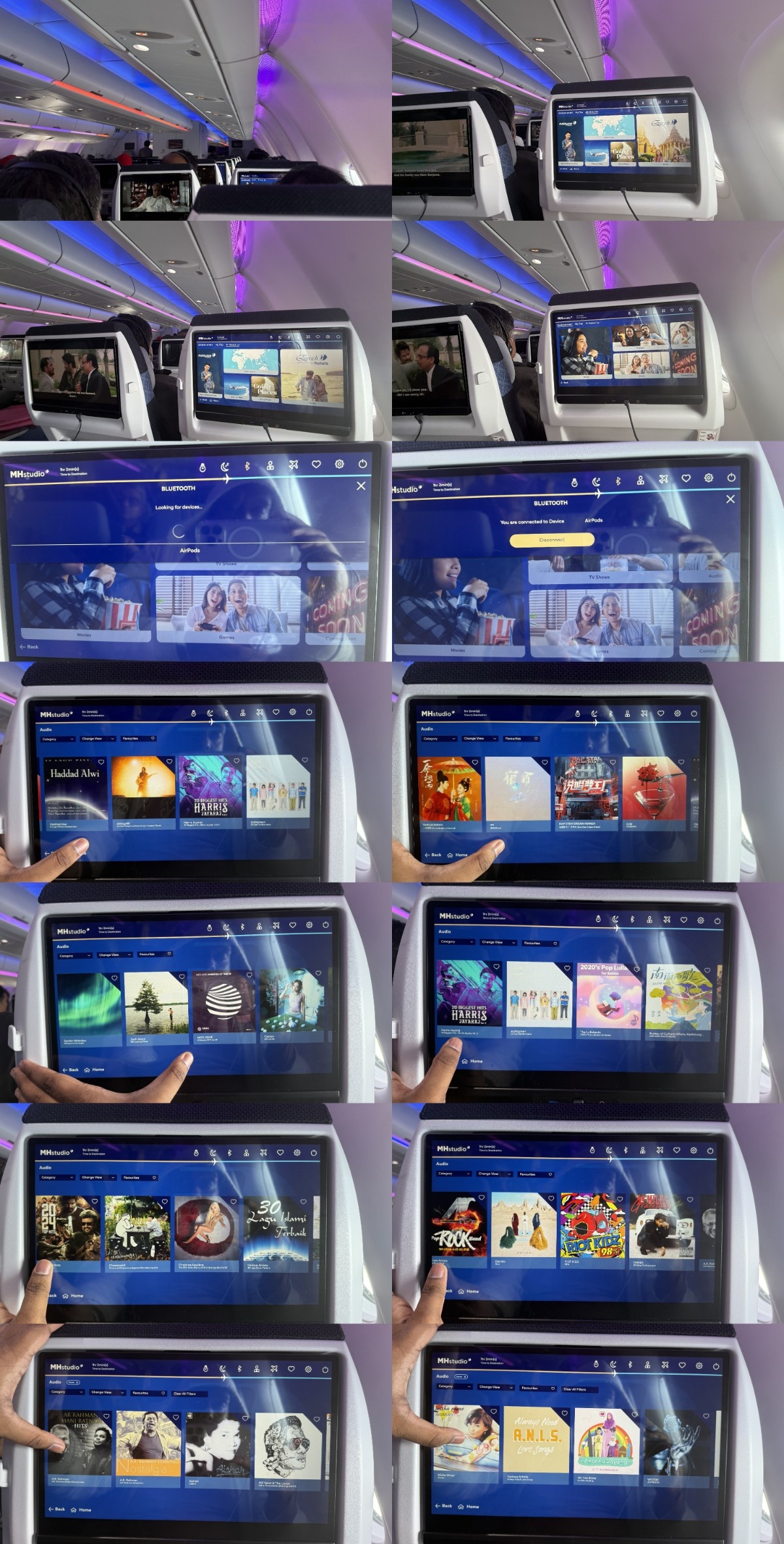
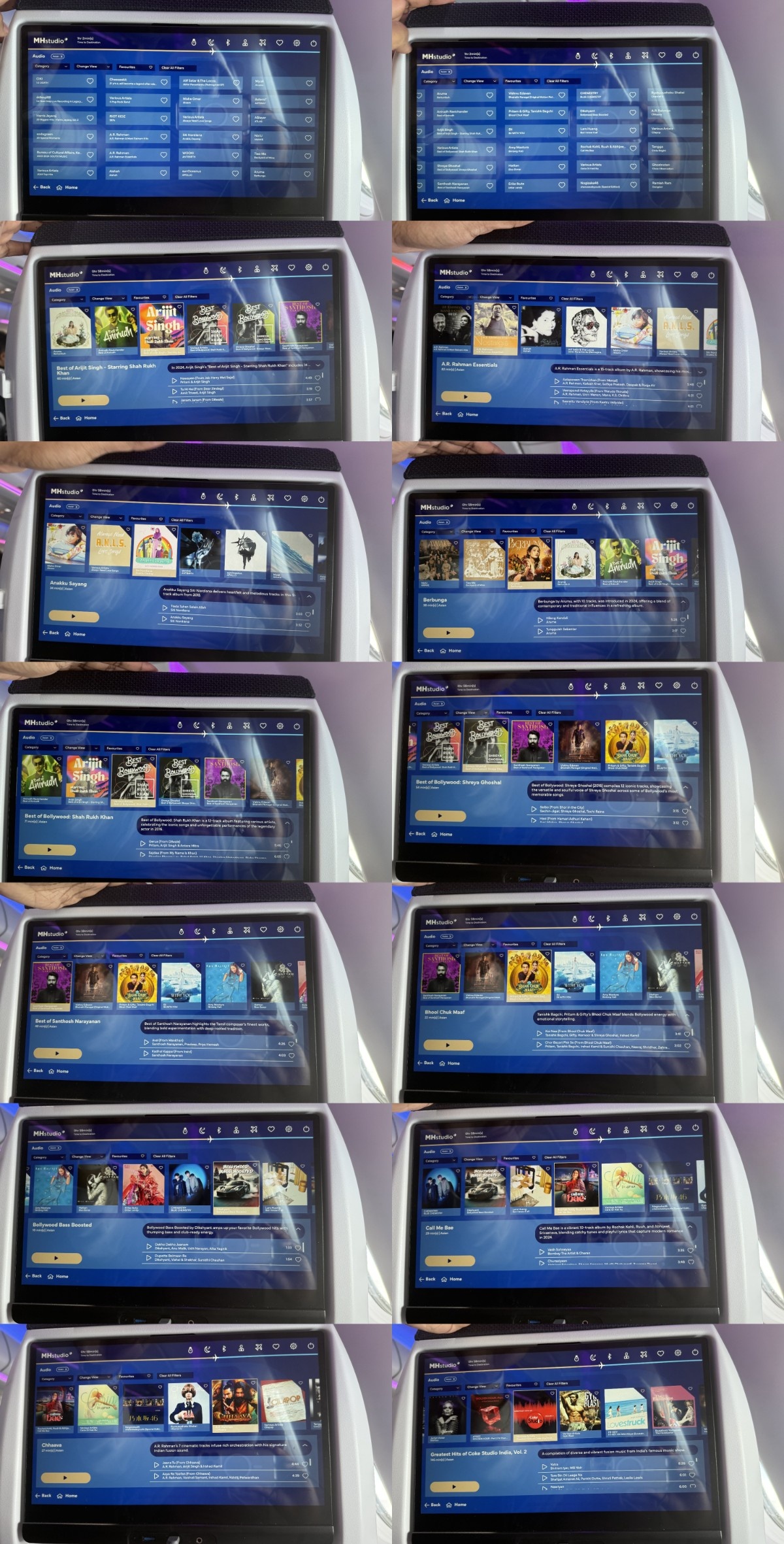
Now I moved to the entertainment section, which is what most passengers care about onboard. Starting with the music, there was quite the range of artists from the world over, as well as Malaysia and Asia.
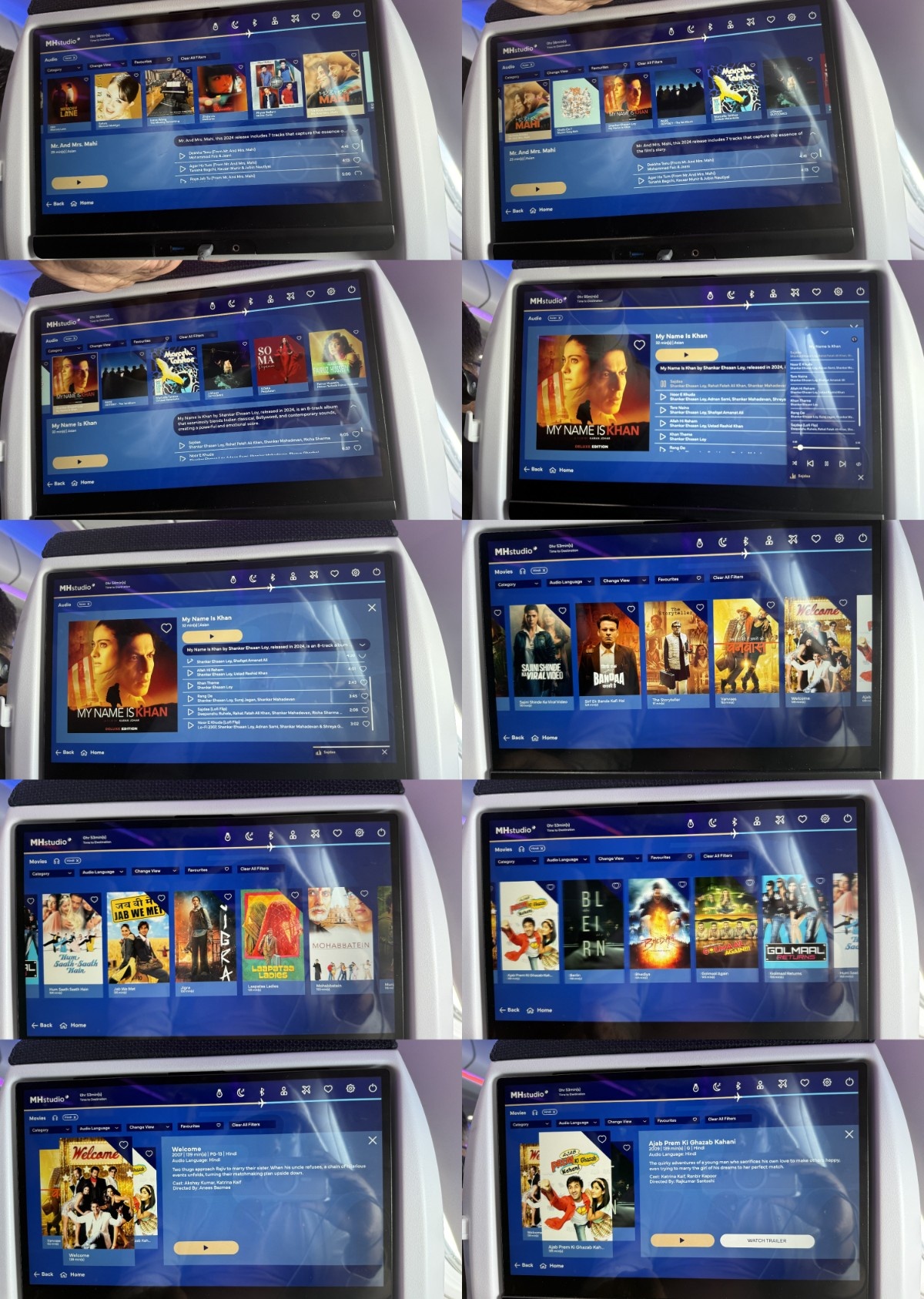
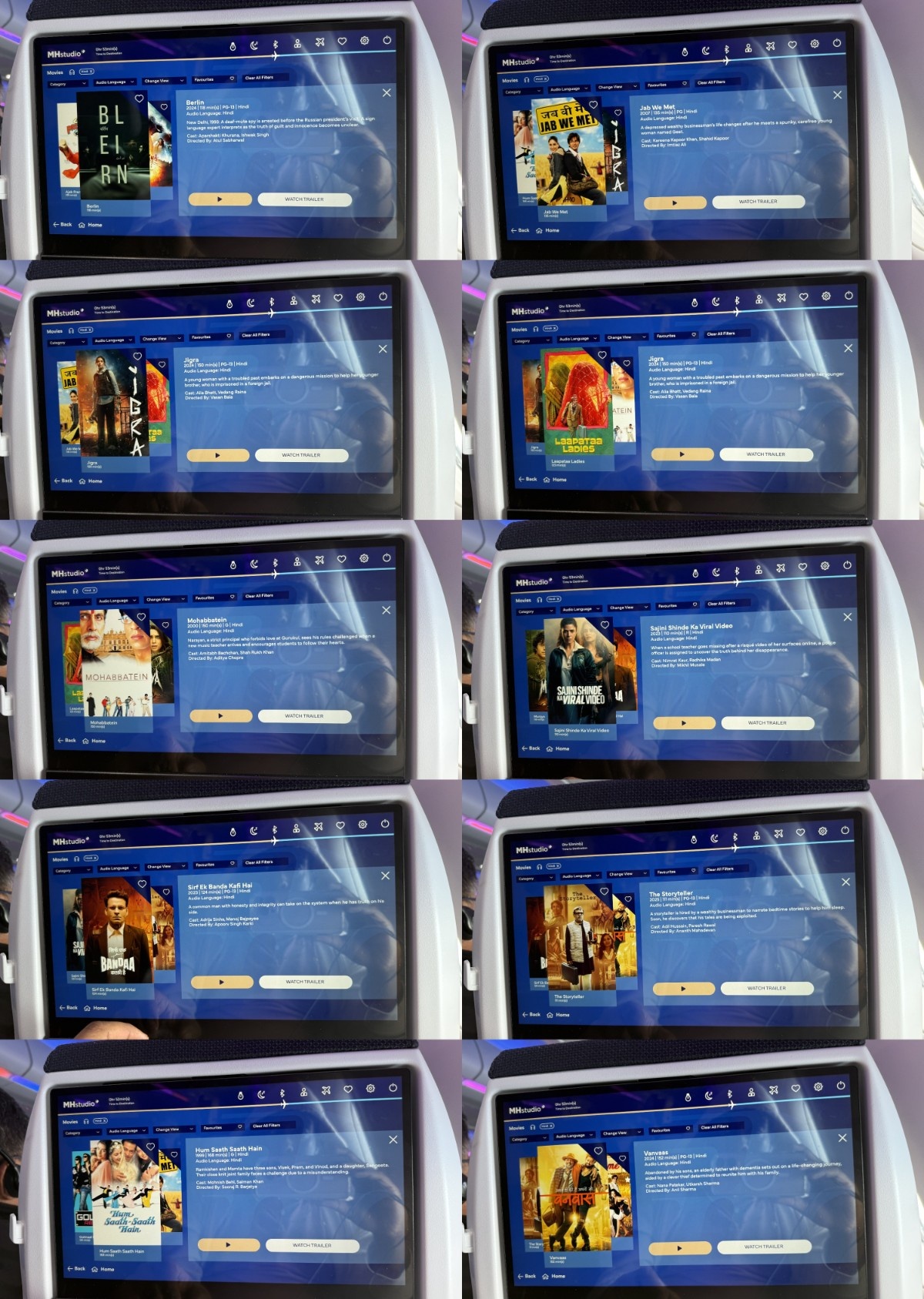
Next I moved to the Indian (specifically Bollywood) music and movie selection on offer, and happily there were a large number of fairly recent titles. The critically acclaimed comedy-drama Laapataa Ladies was among them, as well as some smaller recent movies like Sajini Shinde Ki Viral Video and Berlin — all 2024 releases. True aficionados, however, will gravitate towards the modern classics, like the 2007 rom-com Jab We Met, or the 1999 and 2000 family dramas Hum Saath-Saath Hain and Mohabbatein.
(I don’t care much for Hollywood or Asian movies — other than that one time at the end of 2023 when I decided to watch Barbie on Cathay’s A321neo with razor-sharp 4K displays! And also perhaps a couple of occasions in May 2025: the Hawaii-themed drama The Descendants (2011) on ANA’s 787-9, and the 2025 Amazon Prime Video comedy You’re Cordially Invited on Starlux’s A330neo, which also had a cutting-edge screen like this A330neo did.)
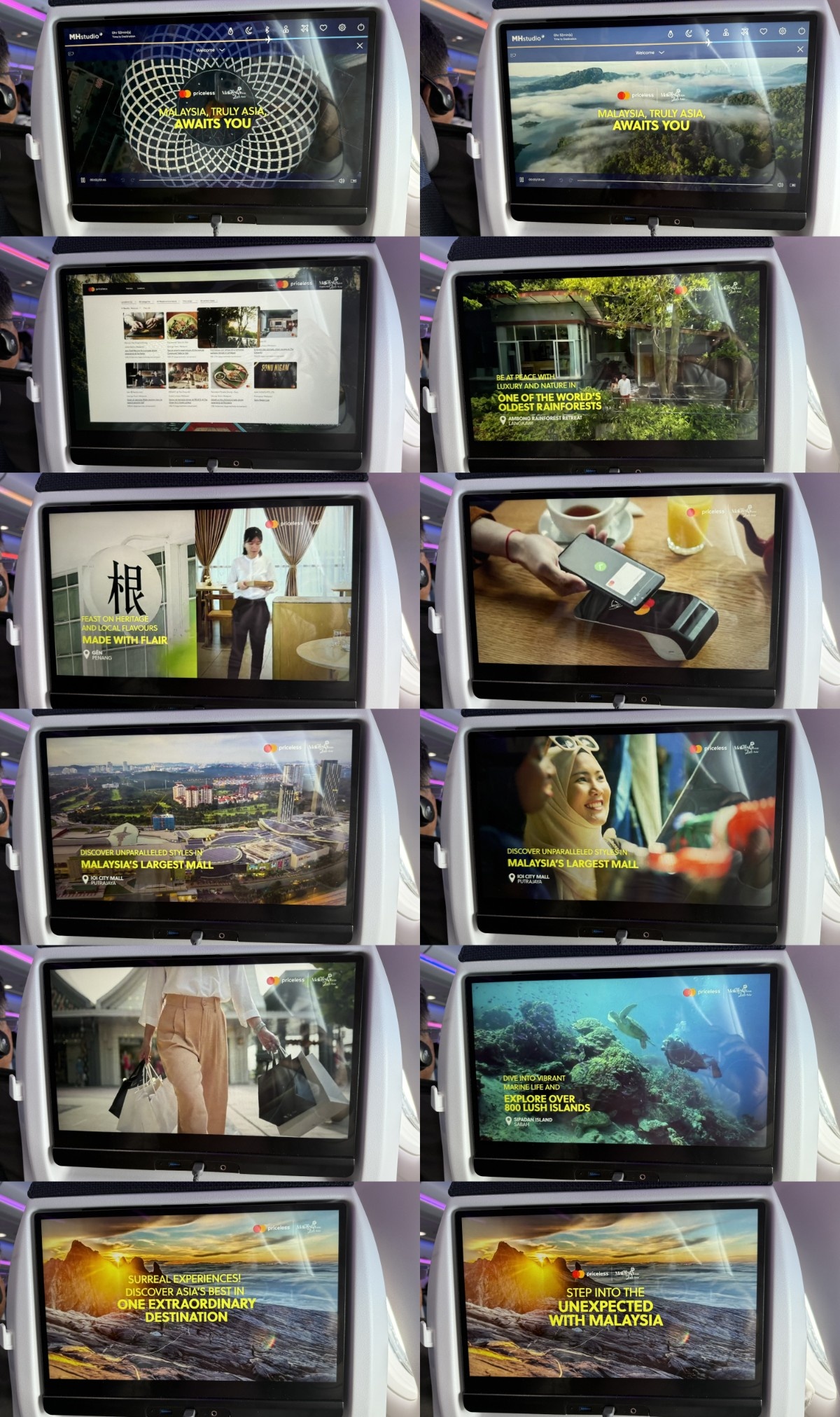
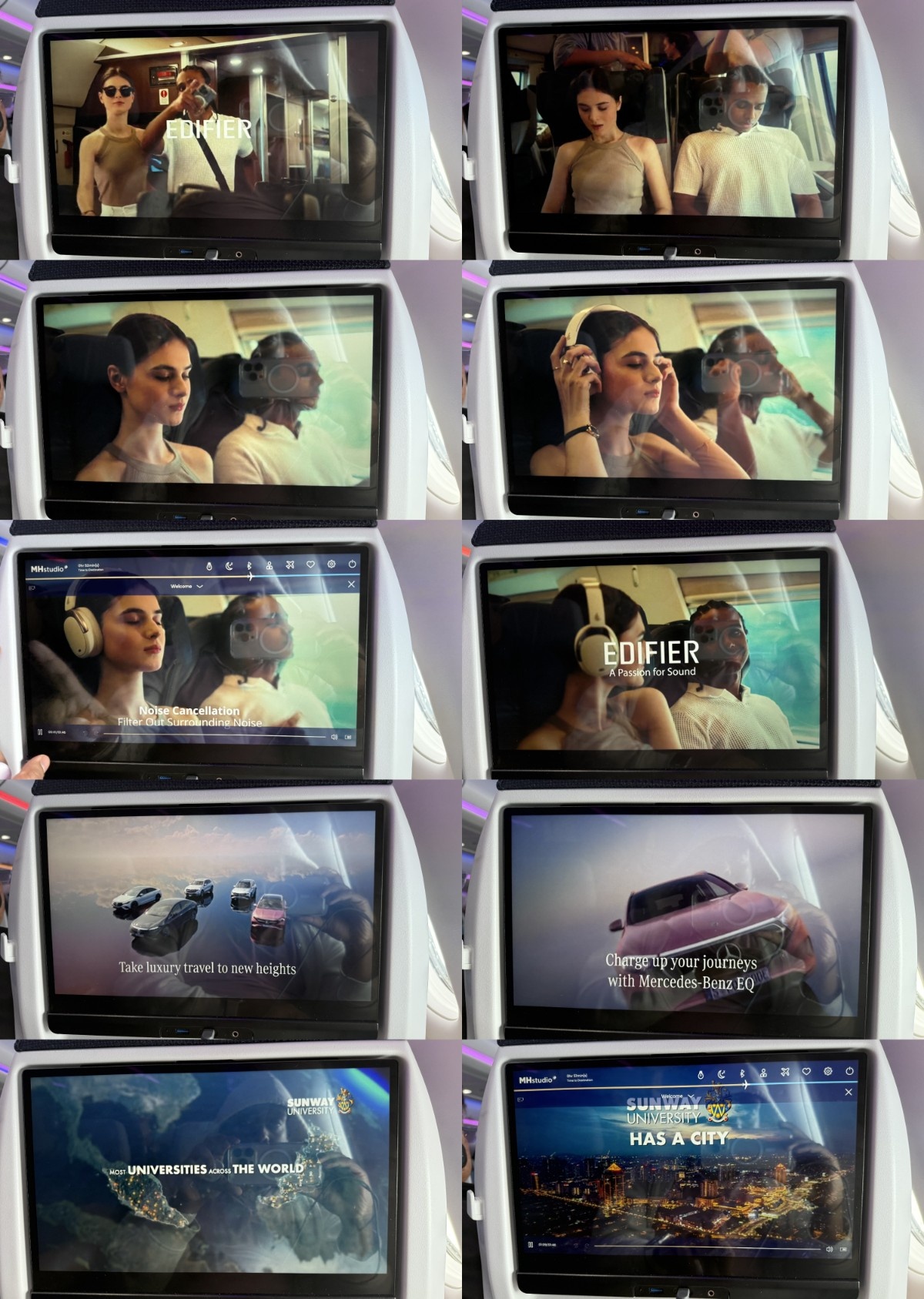
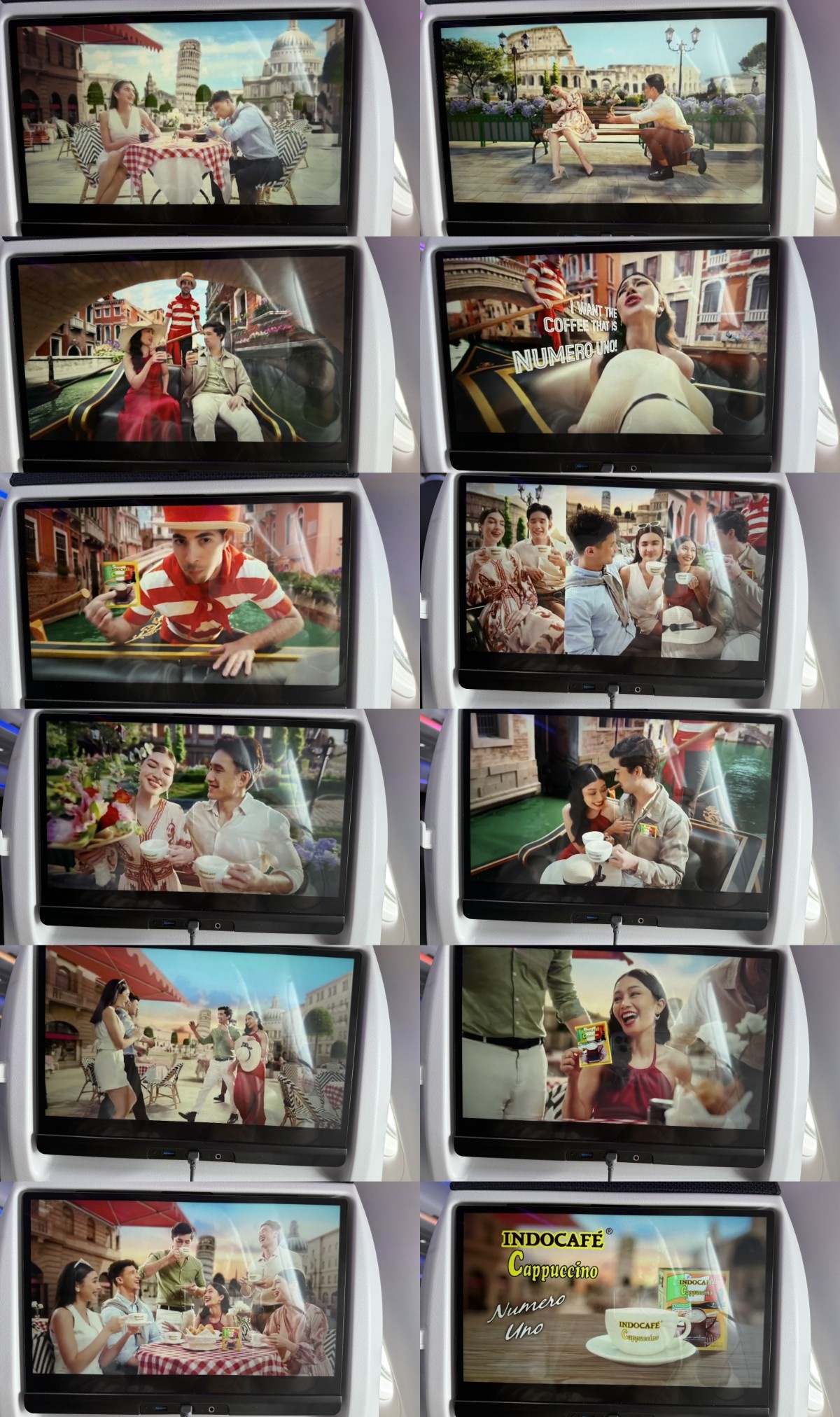
Any further browsing was interrupted by a bunch of pre-landing commercials: Mastercard’s Priceless partnering with Tourism Malaysia; headphones by the Chinese audio company Edifier, which I’d never heard about before; the Mercedes-Benz EQ family (MH has a partnership with them for a private terminal transfer); Malaysia’s Sunway University — ‘most universities have a campus; [this one] has a city’ — and, most pompously, Indocafé’s cappuccino featuring some gorgeously dressed folks crusing down the canals of Venice in a gondola… Ostentatious!
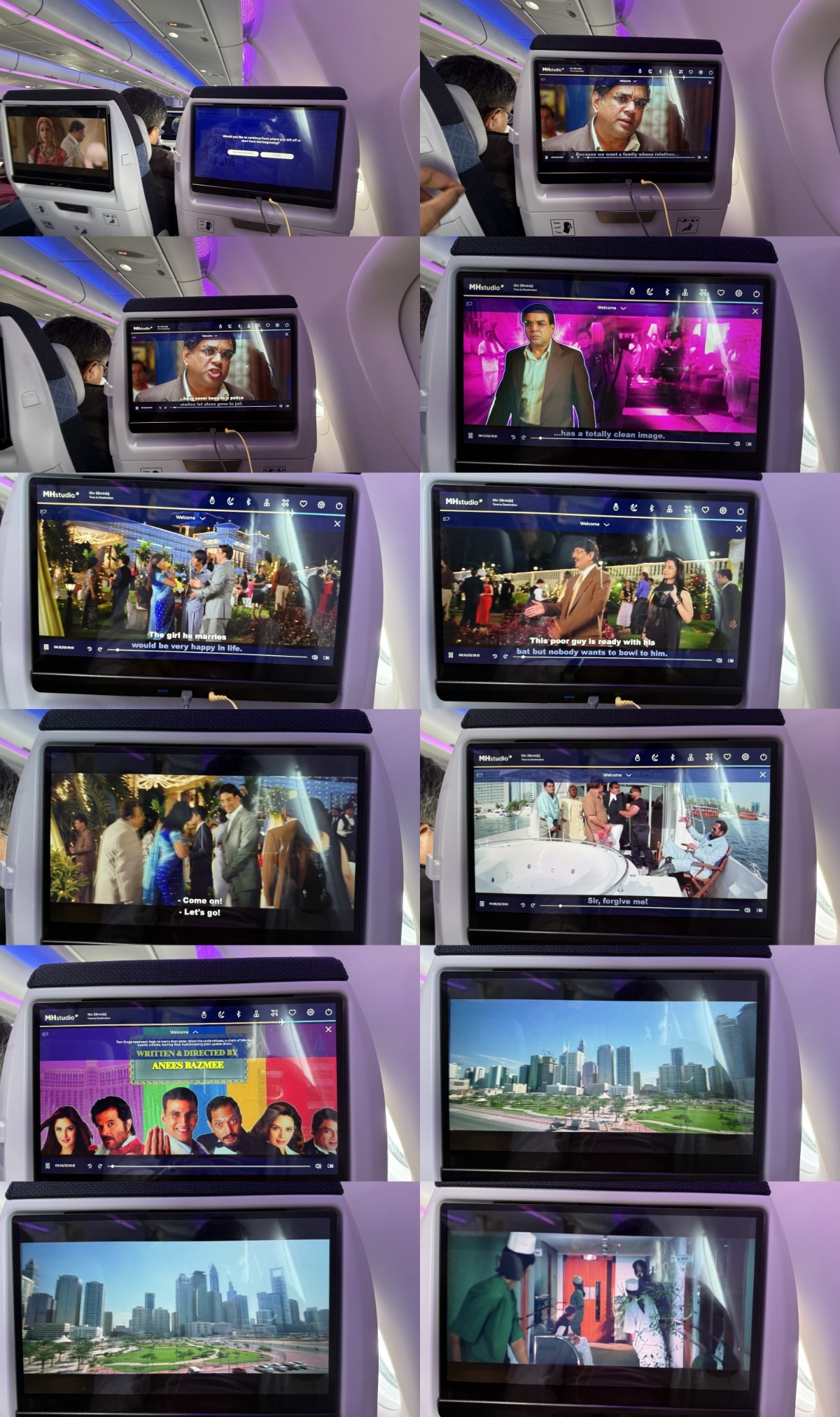
Quickly, after these unskippable ads passed, I simply decided to ape my neighbour and watch the first few frames of the 2007 Bollywood comedy Welcome — which, I’m sorry to say, I haven’t watched. Shame on me!
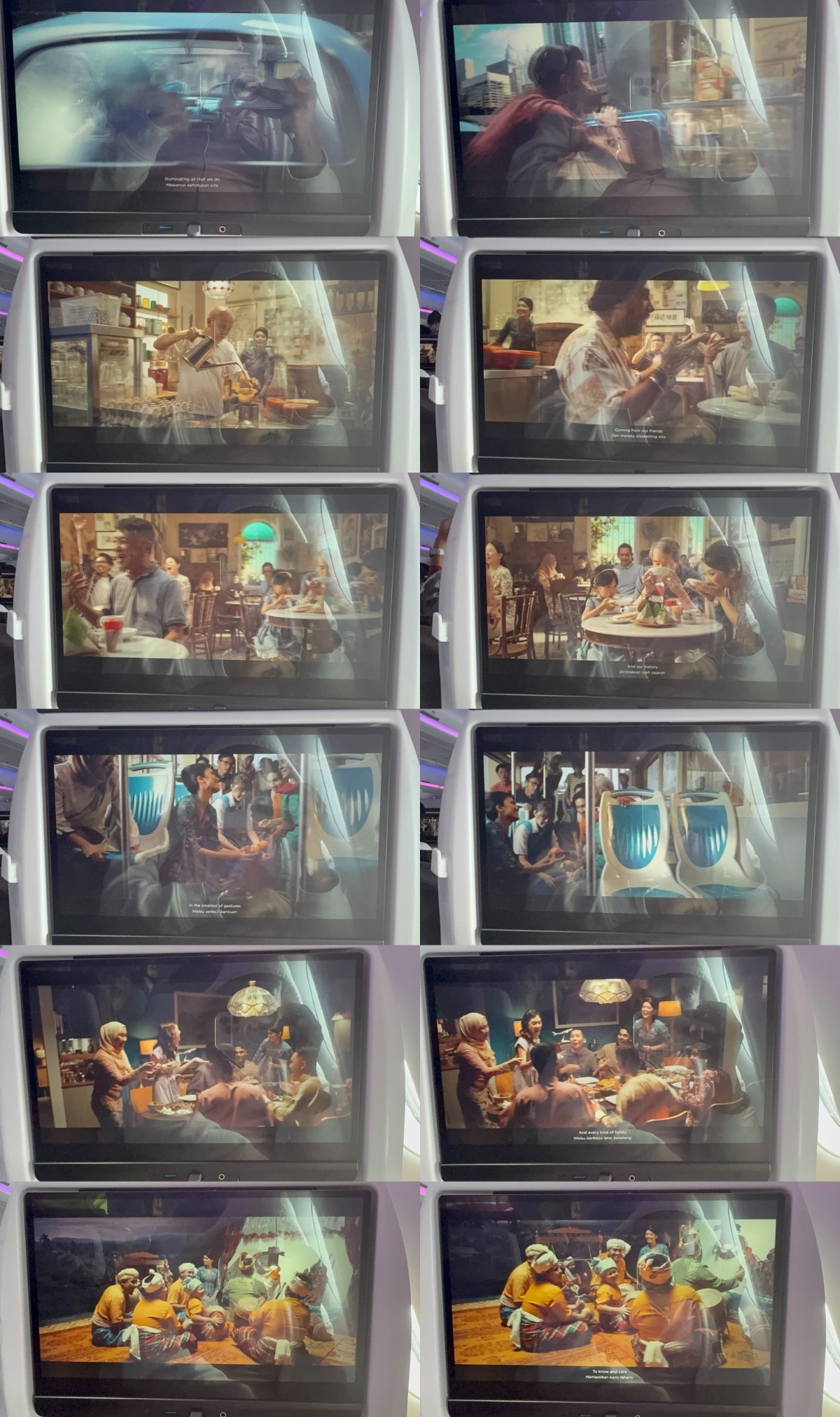
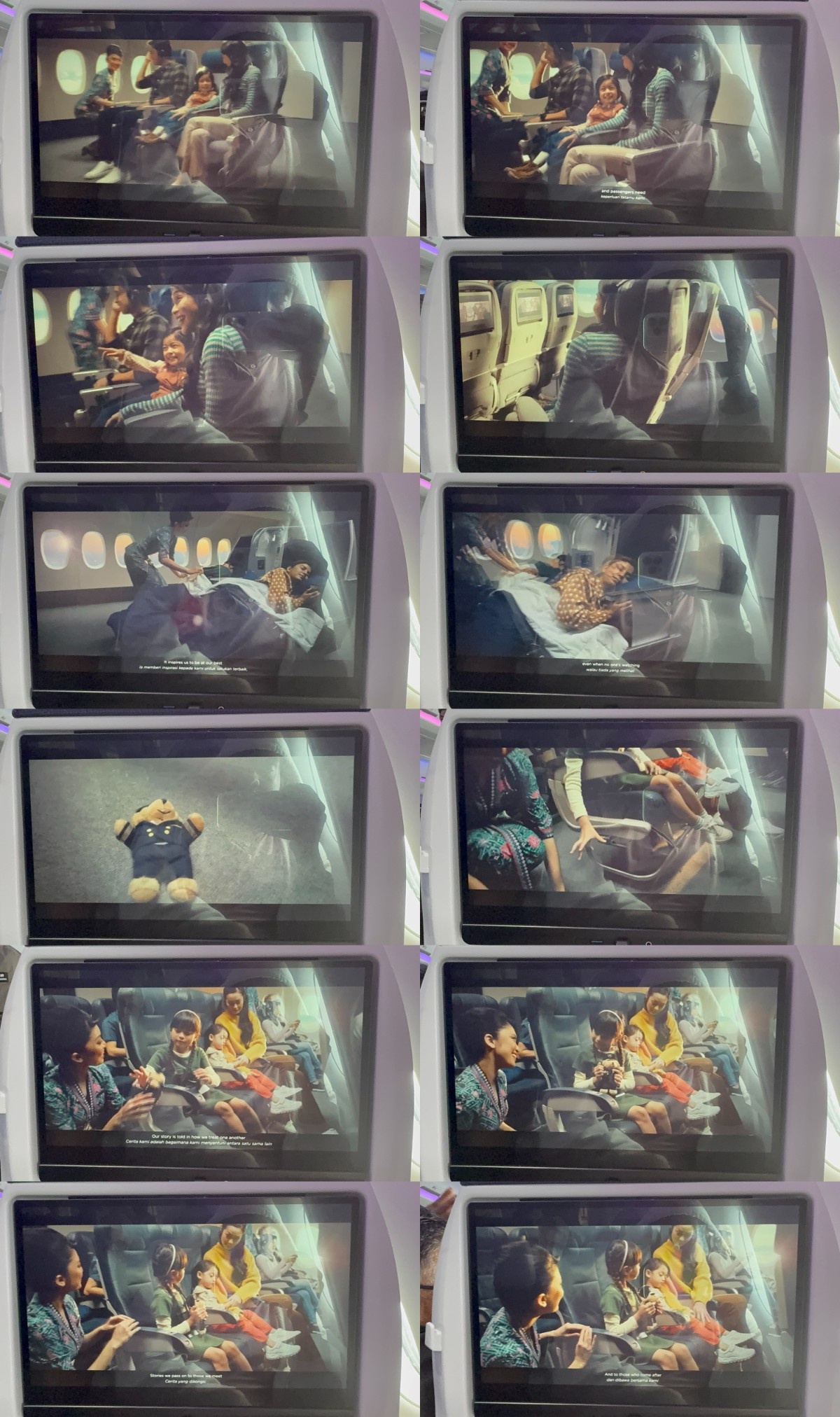
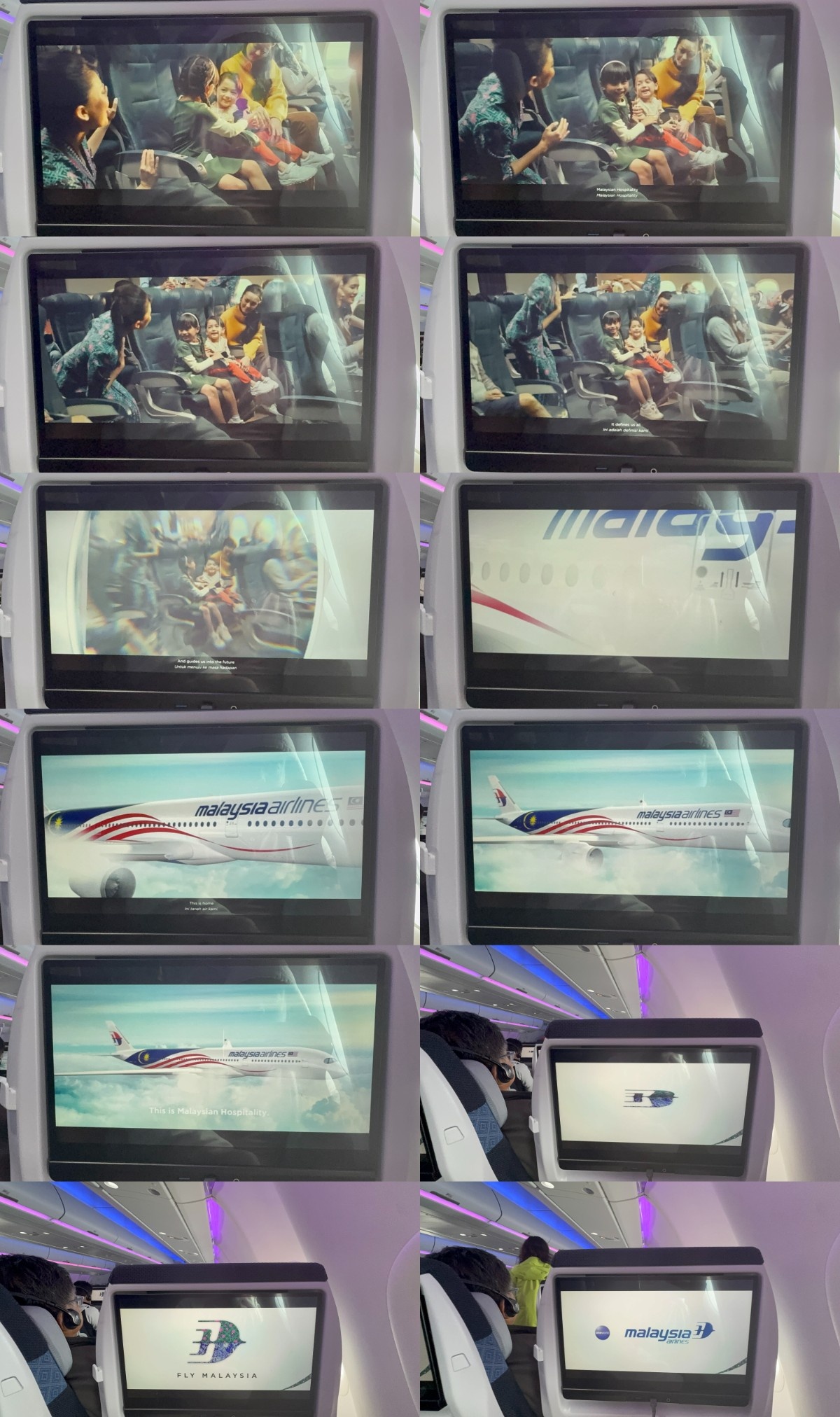
But soon enough my viewing was interrupted again. If that series of commercials felt a little too out of place, fret not! Now was screened a very touching, heartfelt ad, which celebrated Malaysian street life and heritage while also showcasing the airline’s trademark ‘Malaysian Hospitality’ for good measure. It goes without saying that my favourite part was where a cabin crew picked up a fallen teddy bear and handed it to a little girl, without even asking for them. 🥰 She (the little girl) then passed the teddy bear to her little sister, and, needless to say, both kids’ faces were aglow in delight — especially the younger sister — with the mother of the two girls smiling at the cabin crew just as the subtitle ‘Malaysian Hospitality’ appeared.
While no doubt well-made, it felt a little too close to SQ’s self-portrayal, if you ask me — quiet, humble, understated care and elegance. Even so, I don’t think SQ would have been able to pull off what MH had done here — certainly not with such professional, honest branding!
Here’s the text from the ad: Illuminating all that we do / Coming from our friends / And our history / In the smallest of gestures / And every kind of family / To know and care / and passengers need / It inspires us to be at our best / even when no one’s watching / Our story is told in how we treat one another / Stories we pass on to those we meet / And to those who come after / Malaysian Hospitality / It defines us all / And guides us into the future / This is home / This is Malaysian Hospitality.
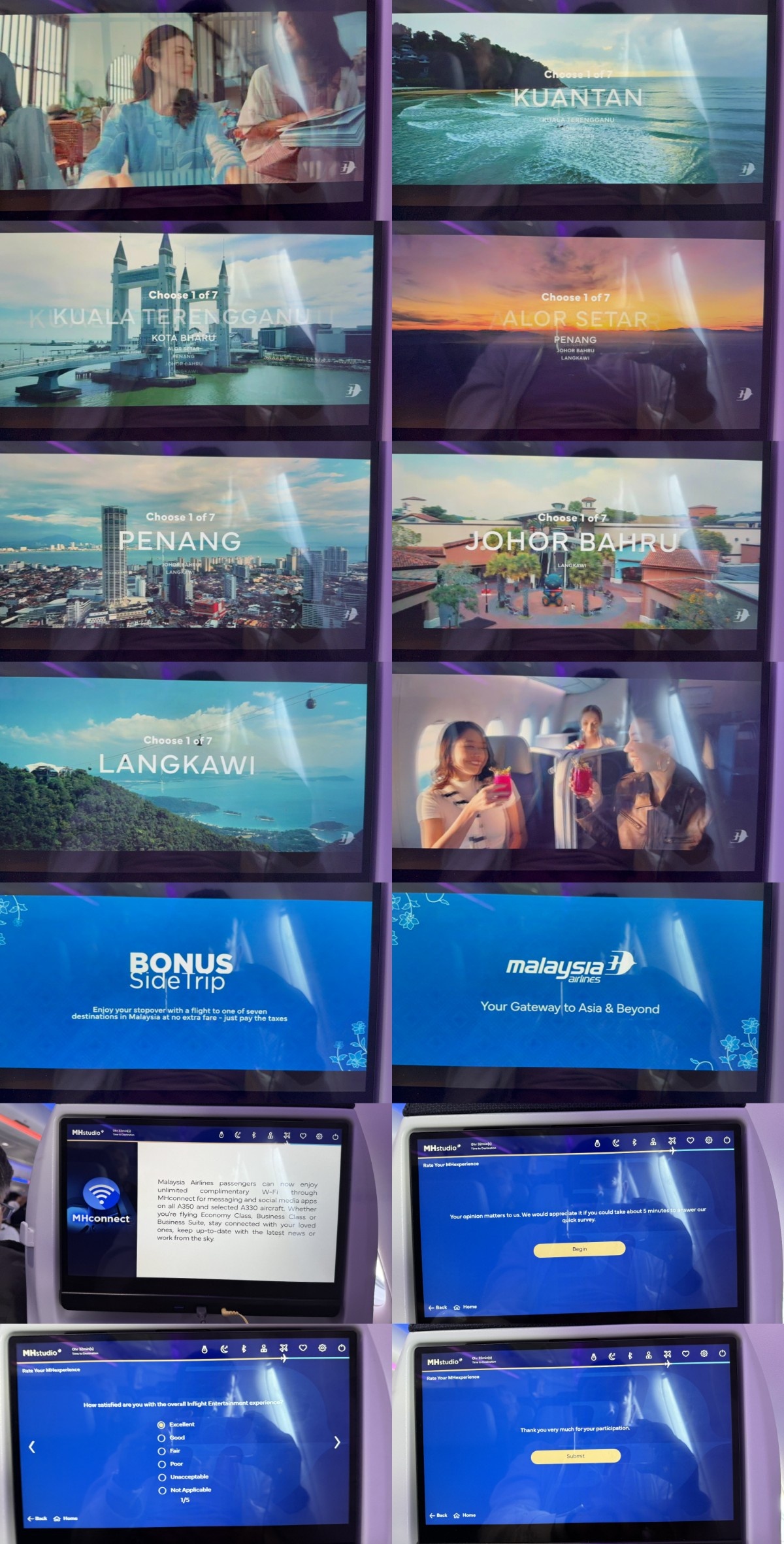
This was followed by an innovative promotion: choose one of seven free stopovers across Peninsular Malaysia at no extra cost as part of the airline’s Bonus Side Trip offer. This really doubled down on the airline’s new ‘Your Gateway to Asia & Beyond’ slogan.
After this, for completeness’ sake, I completed the feedback survey, which was called ‘Rate Your MHexperience’, and naturally gave it an Excellent rating. But that alone would not have driven home my satisfaction with this A330neo — catering aside — as this report’s words do!
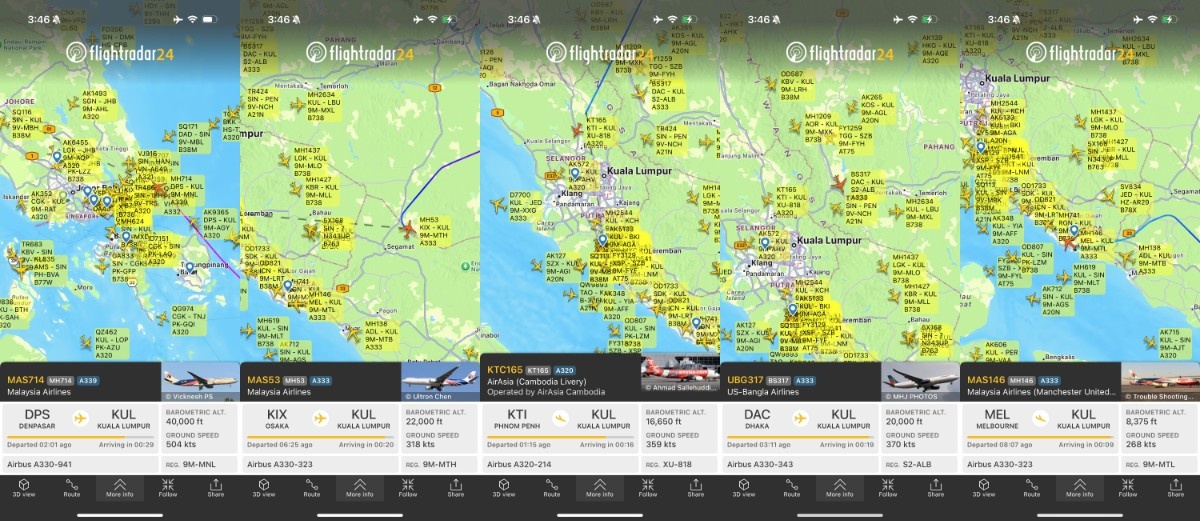
With not much time to browse anything from MHstudio, I made use of the absolutely free MHconnect Wi-Fi that I hope MH maintains as a long-term competitive strategy, at least on the A330neo. Then, obviously, I visited Flightradar24 in the skies — is that even a question?!
By now we were moving closer and closer to descent, and were close to making landfall over Peninsular Malaysia. A couple of MH A330-300s were preparing to land from Melbourne and Osaka, and were moving closer to us.
A clear afternoon landing in KUL’s palm plantations — overtaken (overcast?) by rain
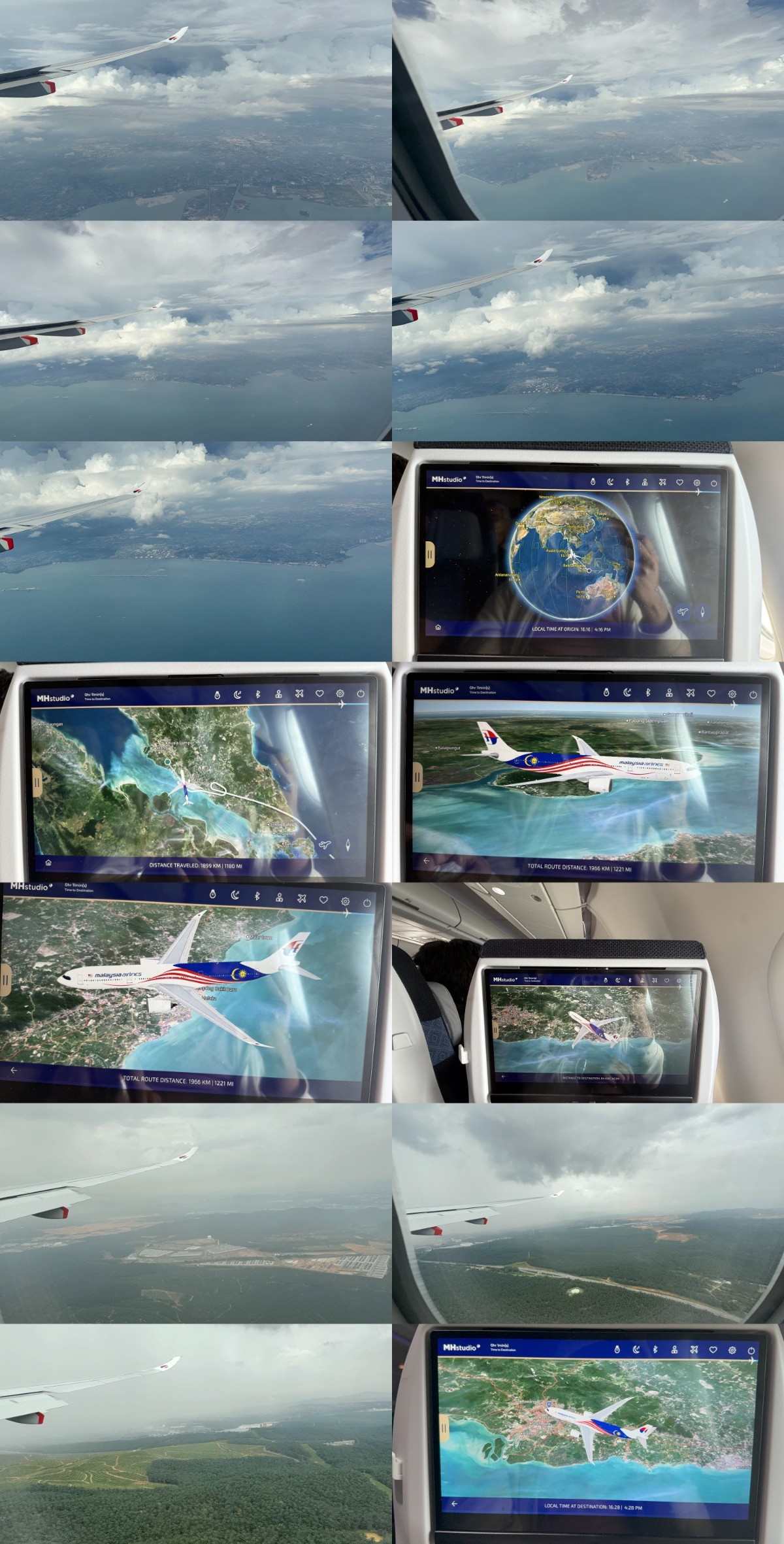
At a quarter to four, the A330neo and its sweeping, curved winglets neared the palm plantations surrounding KLIA. The airport lies in Sepang, some 45–50 km south of the cities — of which Kuala Lumpur is only one; others include Petaling Jaya, Putrajaya and Shah Alam — that make up the Klang Valley conurbation, and at the very bottom of Selangor state, which surrounds Kuala Lumpur proper and the Federal Territory of Putrajaya.
As always, the FlightPath3D maps were informative and highly detailed, and this has now become one of my favourite moving-map systems — surpassing Panasonic’s Arc system (as written above) in a few areas. I’ve seen this on a few other planes, like the Starlux A330neo (as I flew in May 2025) and the United 787-9, as I flew in January 2026 on the BKK–HKG fifth-freedom route.
The viewing angles and rich 3D renders of the descending plane in FlightPath3D — coupled with the smooth shots of the sea from the window — almost compensated for the lack of a tail camera!
At almost exactly half-past four in the evening, the three-month-old 9M-MNL made a smooth landing on the KLIA runway, in the middle of all the palm plantations that typify this place. Almost immediately, however, it started raining — and bang went my plans of getting cool shots of the planes parked on the tarmac…
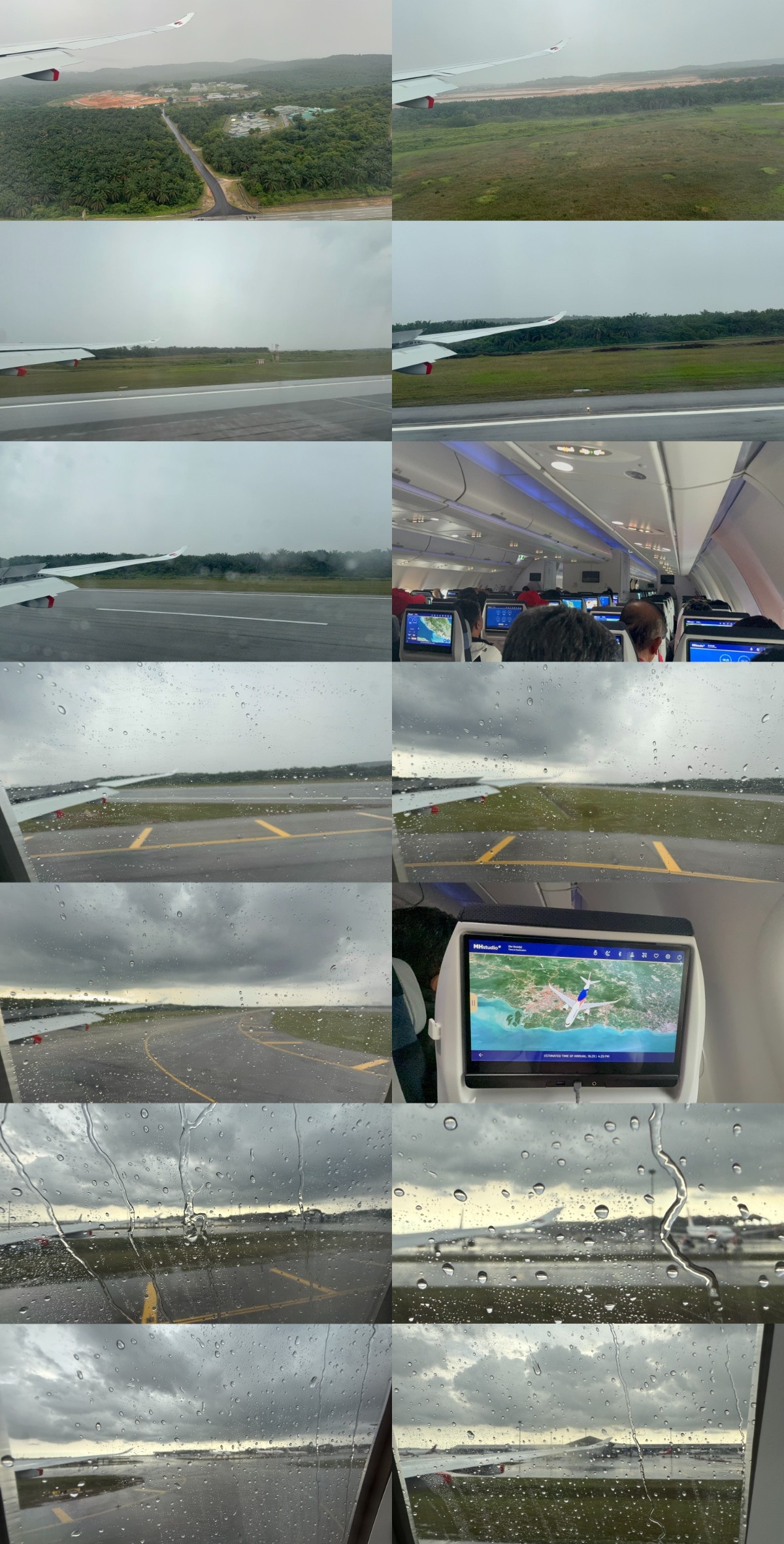
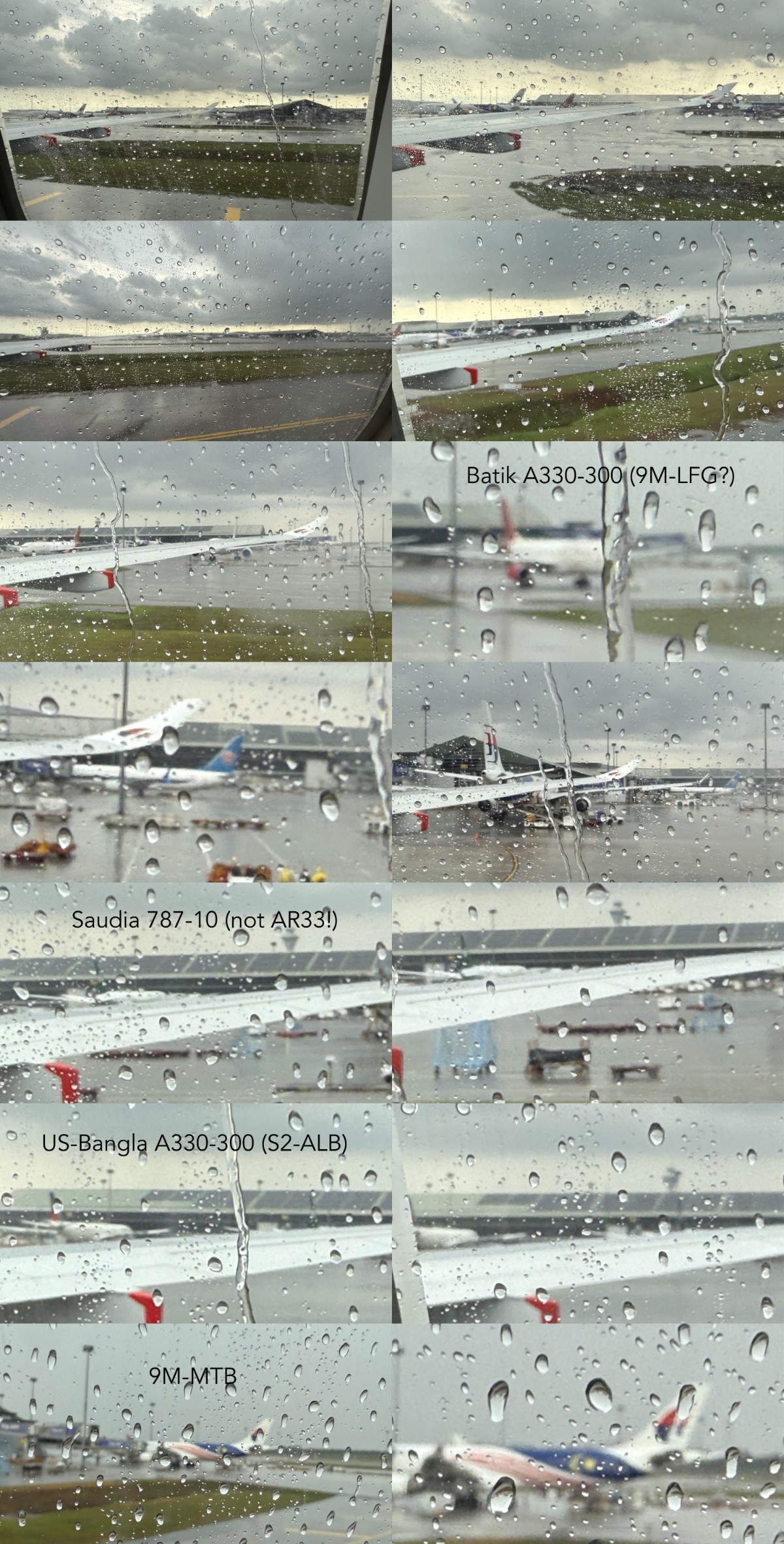
Rain when taxiing before departure, or after landing, at airports has always been a pet peeve of mine. With even my advanced iPhone 16 Pro camera refusing to cooperate, and even its Macro mode not getting the details like it normally does, I had no choice but to manually spot the aircraft registrations and add them on the pictures as overlays!
As all the text shows on the pictures, there were A330-300s from MH (9M-MTB) and Batik Malaysia (9M-LFG), a Saudia 787-10 (HZ-AR29) — though not HZ-AR33 with a ‘The Red Sea’ special sticker, which had brought me to Denpasar two days before — and an all-economy, IFE-less, jam-packed A330-300 (S2-ALB), recently acquired, from Bangladeshi private-carrier US-Bangla Airlines.
Surely flying on the 436-seater US-Bangla A330-300 must be a highly unpleasant experience. It has none of the branding attitude and friendliness that Cebu Pacific of the Philippines — from where US-Bangla got its three A330-300s (S2-ALA/ALB/ALD) — has on its similarly cramped and congested 459-seater A330-900neos!
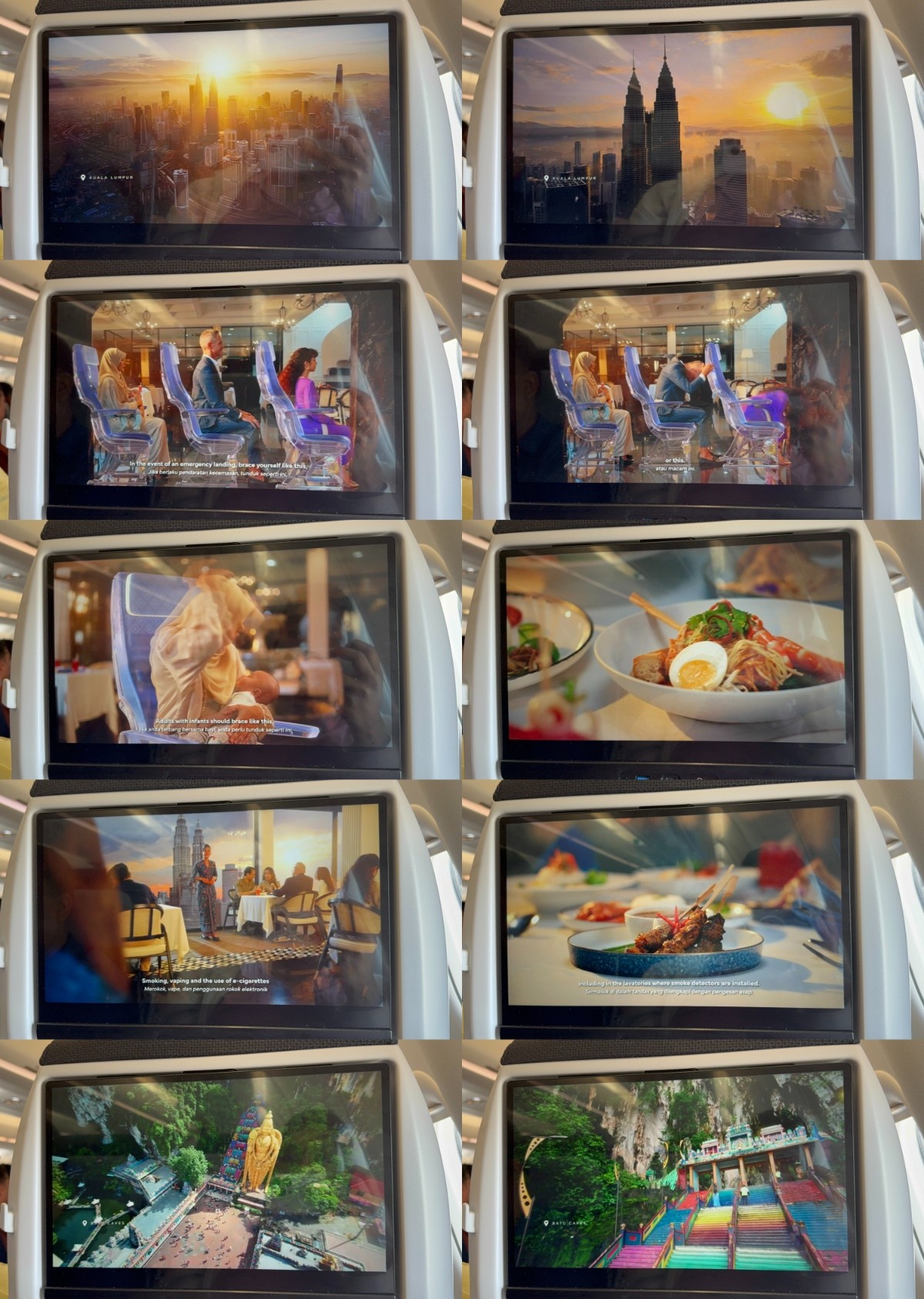
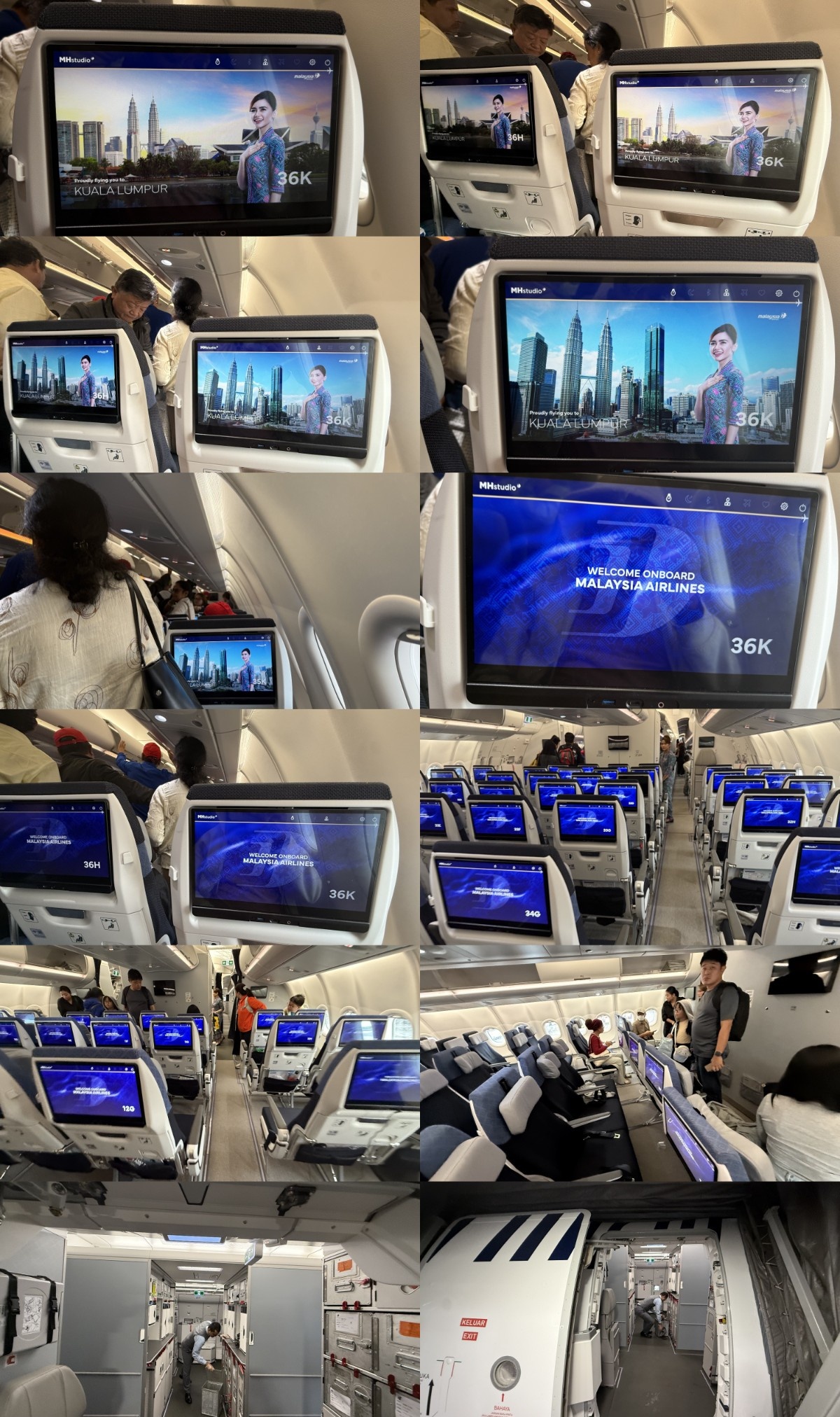
The MHstudio IFE returned to the welcome screens — two shots of the Kuala Lumpur skyline, one of them focusing more on the Petronas Twin Towers than the other — along with a new one with the words ‘Welcome to Malaysia Airlines’ and a wau kite pattern, which I hadn’t seen before.
For me, there wasn’t much of a need for thank-yous and goodbyes as far as the cabin crew was concerned — but I made them anyway. If any airline needs such encouragement, it’s probably Garuda Indonesia, which remains mired in an unending abyss of product and fleet mediocrity that belies its outstanding cabin crew and service. MH, however, has well and truly overcome its gloomy post-MH370/17 era and has stepped into a brighter future with new planes, refreshed service and by far the best IFE, branding and typography in all of East Asia.
Thus, feeling secure and confident about MH’s prospects, I waved a brief thank-you to the cabin crew and commended them for their service and product transformation, before making for the exit door. (Unfortunately, Malaysia Airlines’ A330s don’t have the airline’s cute tradition of writing something special above the exit door that MH’s 737s do. What I saw on 9M-MXJ — the first 737 I flew in six years after avoiding the type — was deeply moving and affected me personally…)
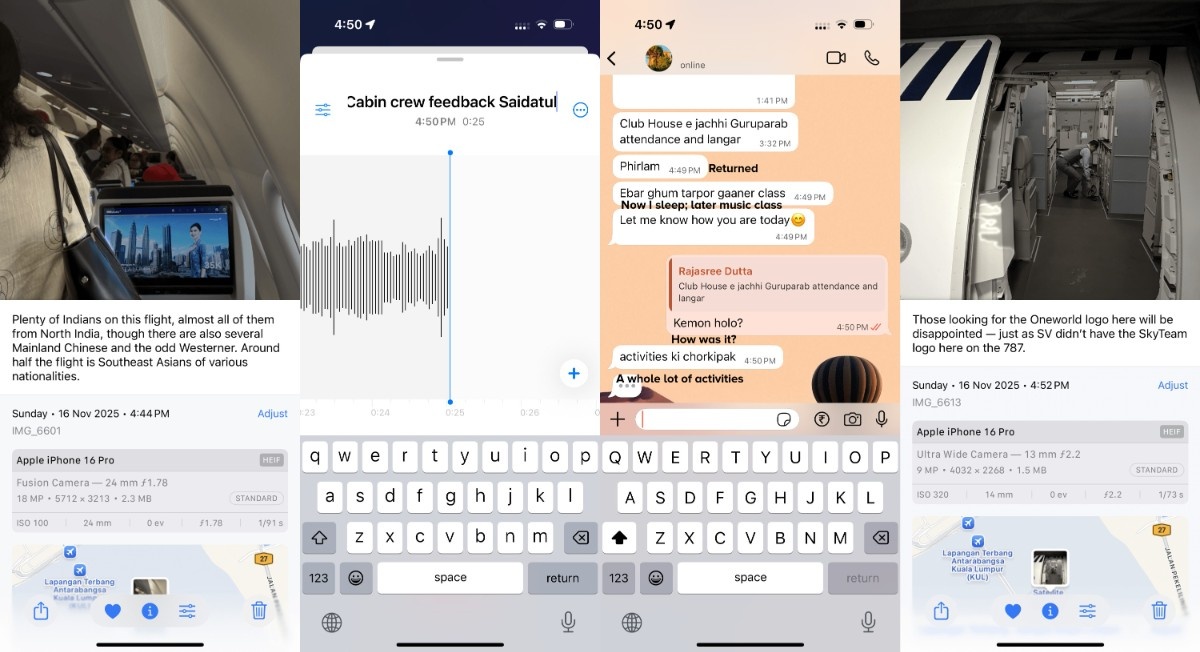
After briefly getting in touch with my mom — who’d been completely kept in the dark regarding my whereabouts and travel plans — I made to turn towards the other aircraft visible from the jetbridge.
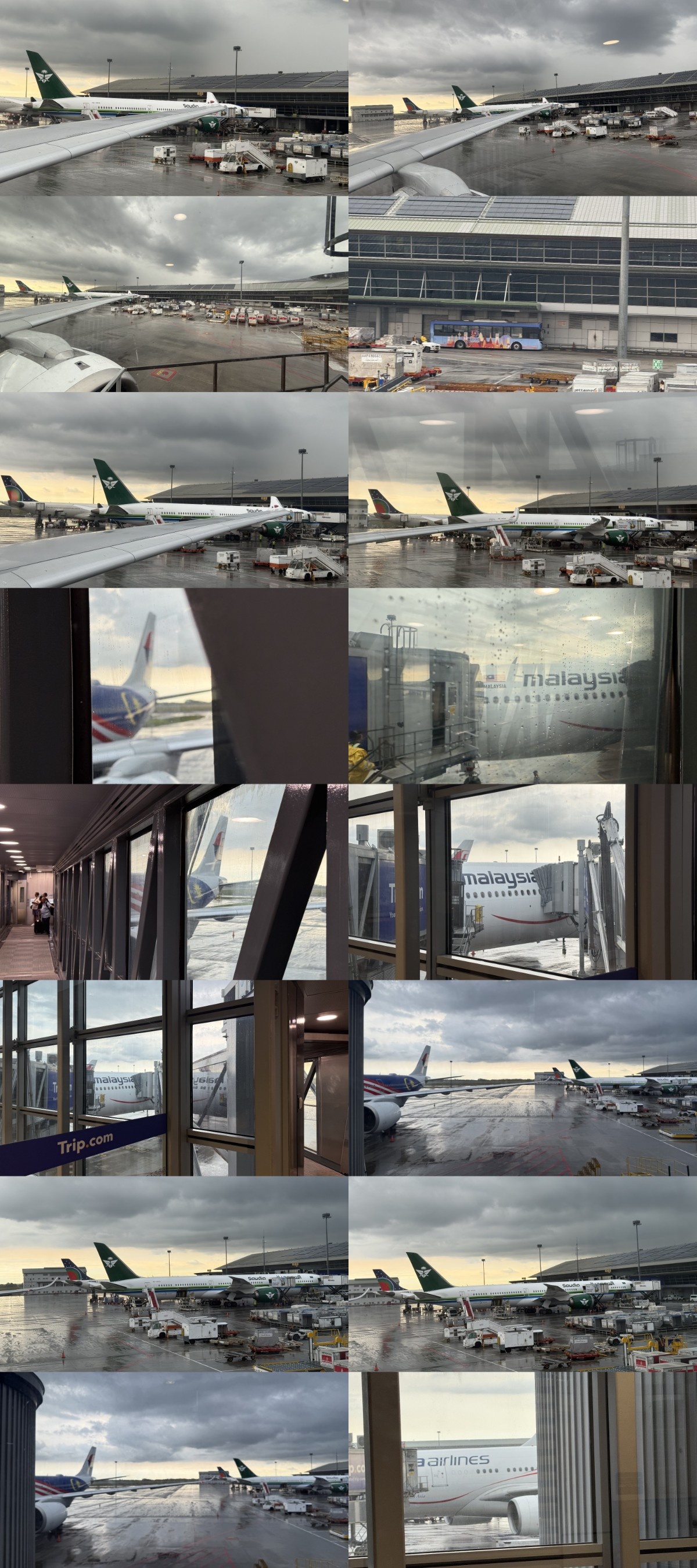
As mentioned above, the Saudia 787-10 (HZ-AR29) with its gorgeous, elegant, retro-futuristic cheatline livery and the much more mundane US-Bangla A330-300 (S2-ALB) were the prominent aircraft at this part of KLIA’s Satellite Terminal building.
After I got in a few clear shots of them — with the rain having mercifully cleared (though the skies remained overcast, a gloomy grey) — I eventually got off 9M-MNL, my final widebody of 2025! (There were a few Indian domestic planes lined up in December, including an Embraer 175 of the regional carrier Star Air on Christmas Day — the first non-Airbus, non-Boeing plane that I’d ever flown.)
Aerotrain at last: My first time on this symbol of Malaysian mismanagement
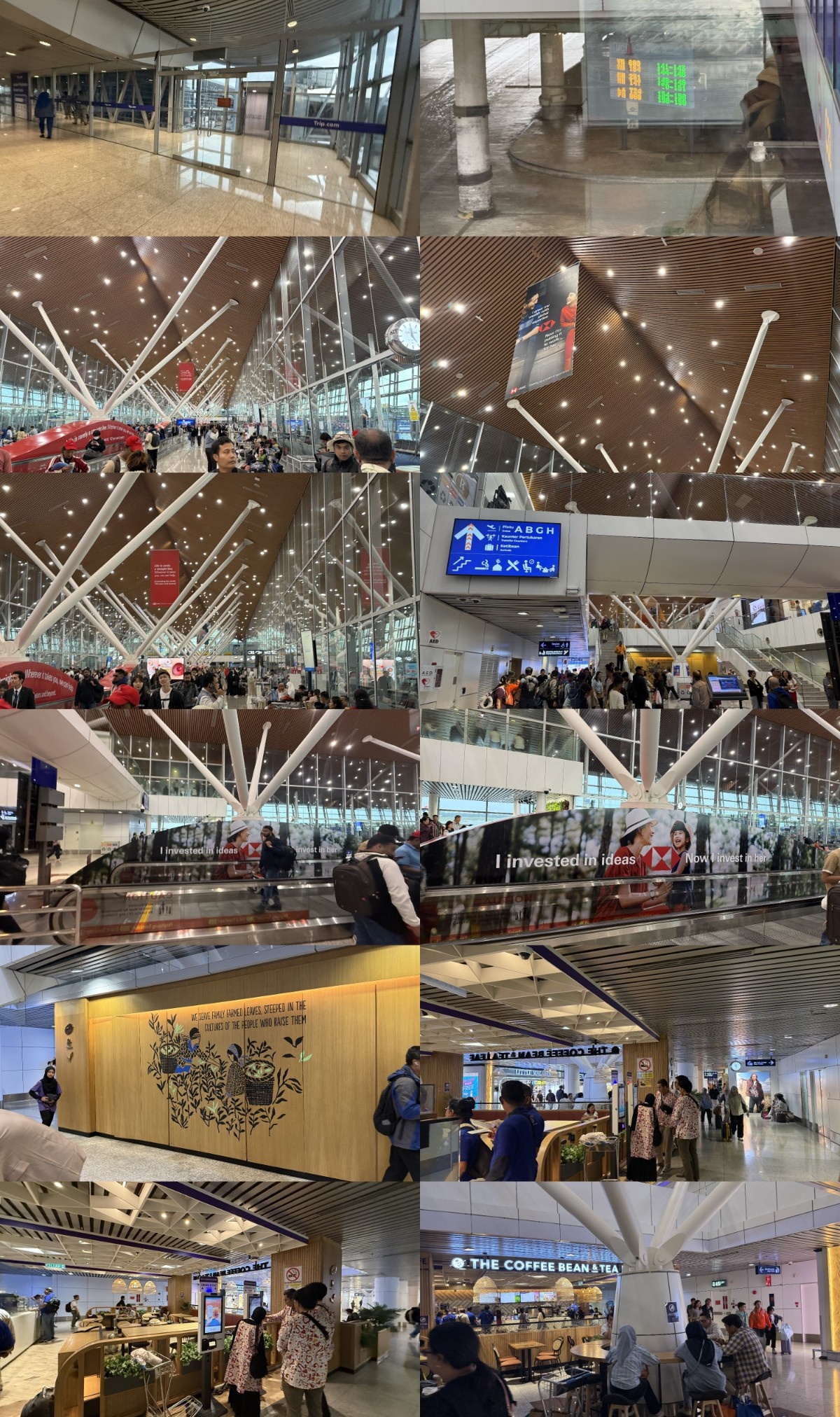
On entering the Satellite Terminal and going past all the HSBC-branded, arch-shaped travellator ads, I made my way through to the central atrium. KLIA Termnal 1’s boarding gates are very much like Changi’s and Tokyo Haneda’s (at least the domestic terminals), in the sense that arriving and departing passengers use the same corridors — and unlike most other airports that I’ve seen.
The Satellite Terminal at KLIA, with gates numbered C — both these high-ceilinged ones with HSBC ads, and lower-ceilinged ones next to the (now-functional-again) Aerotrain — are where most international airlines’ flights take place, with the local Malaysia Airlines and Batik Air Malaysia instead using the G and H gates at the main terminal.
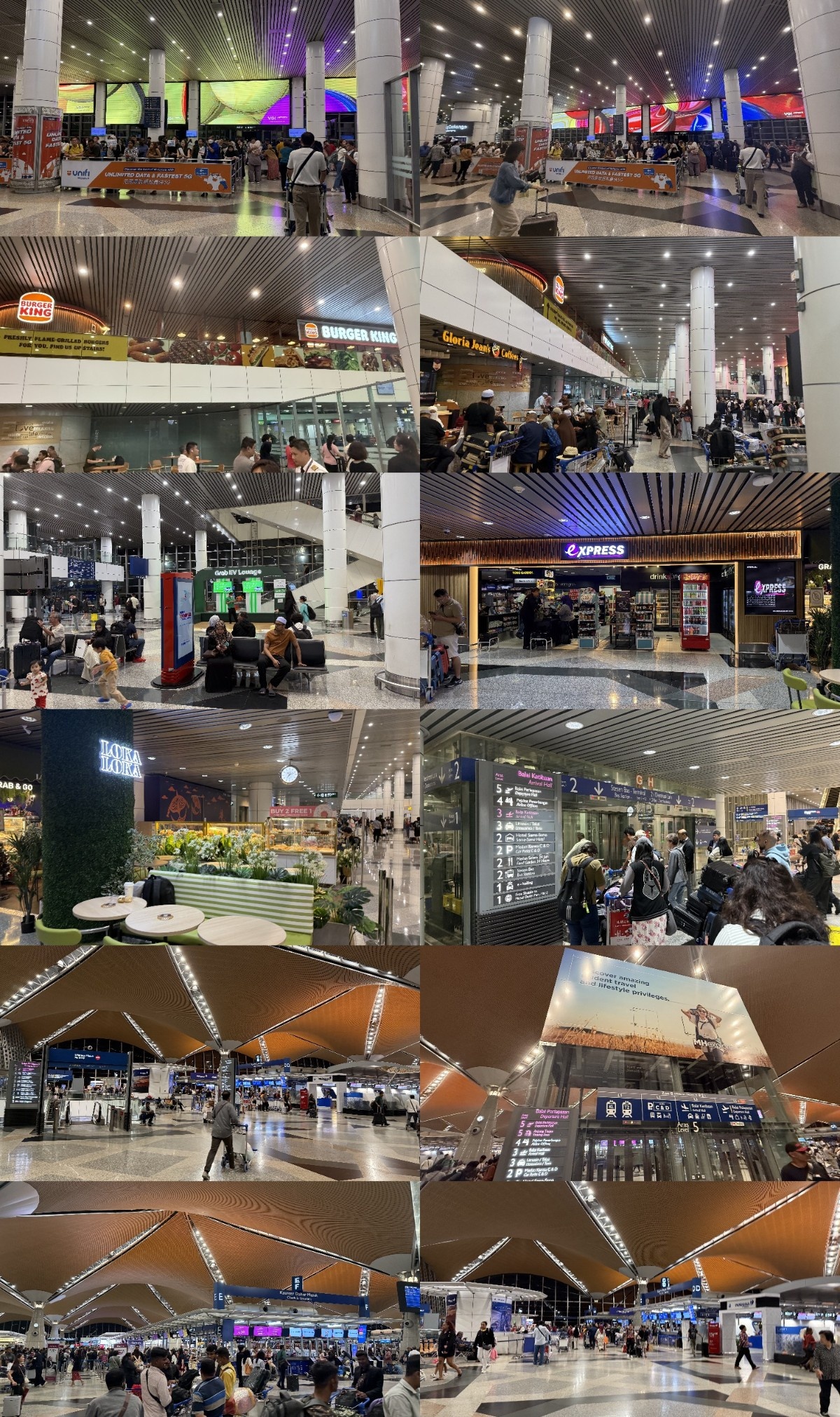
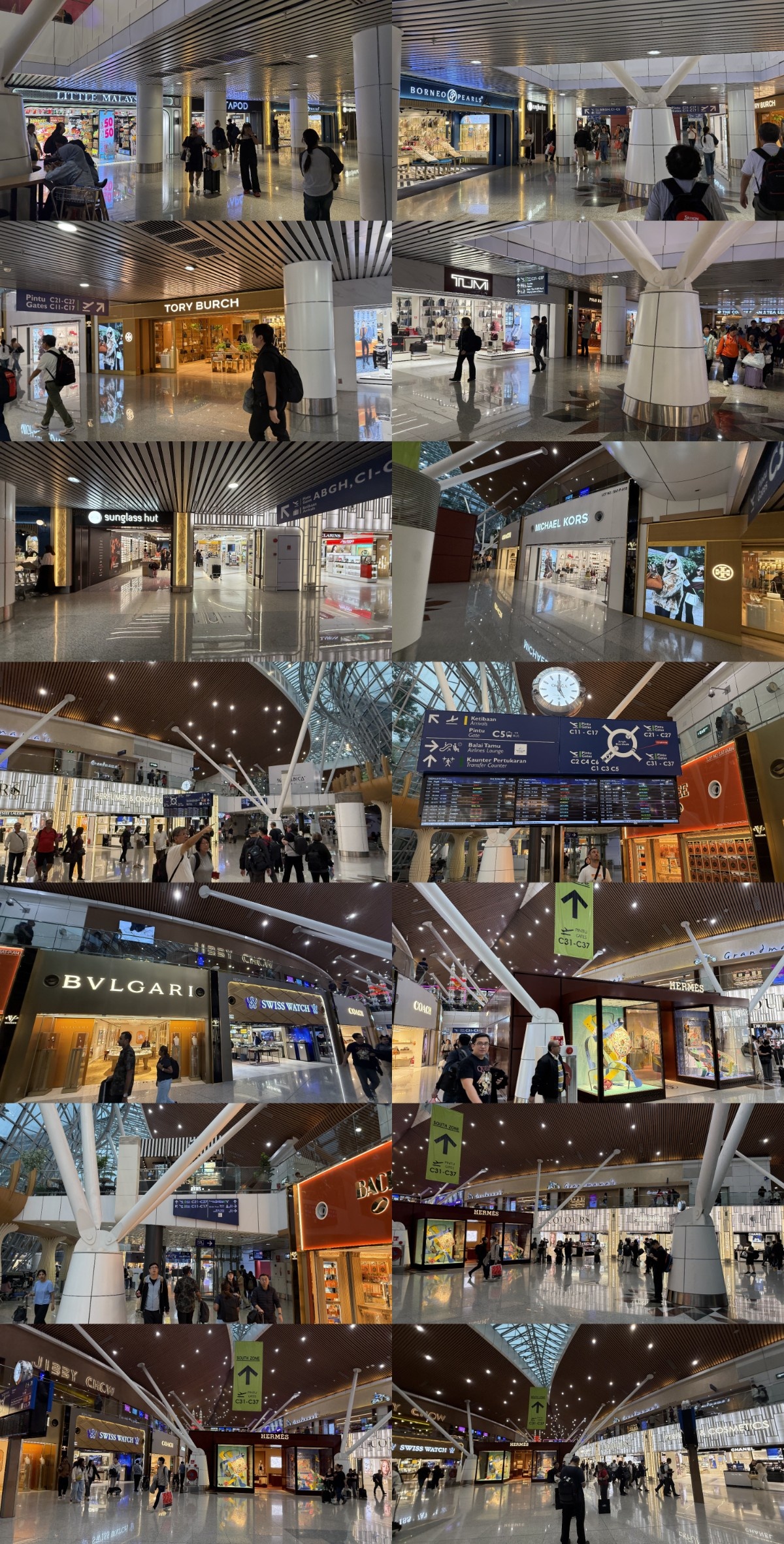
More and more high-end shops — Michael Kors, Tory Burch, Tumi, BVLGARI, the works — followed, after which I finally arrived at the central atrium with its KLIA Jungle Boardwalk… though I’m afraid I’ve never been able to spend a lot of time at the Satellite Terminal in all my trips here, no matter how eye-catchingly gorgeous it may be!
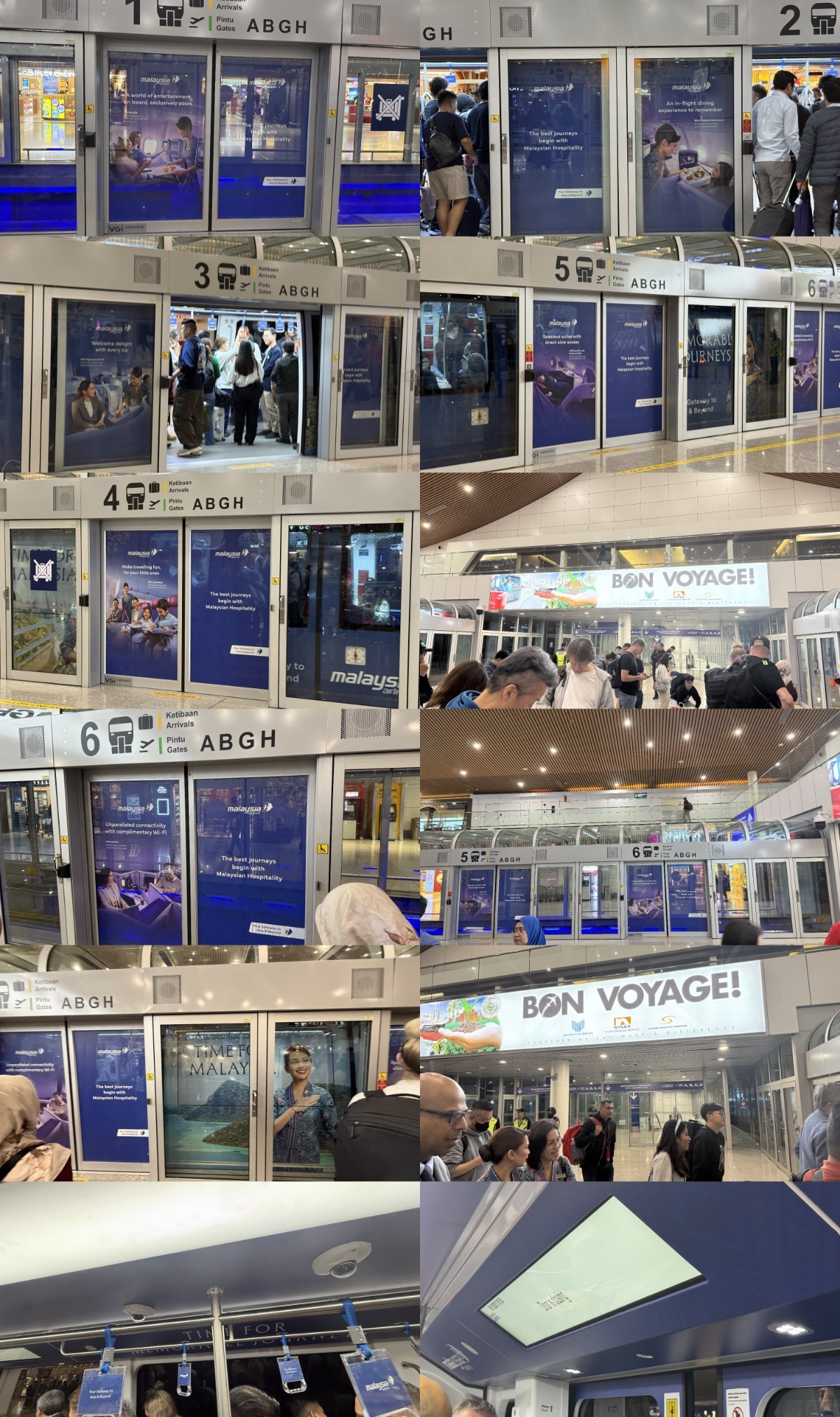
And now I came to something that I’d never seen before in my life — not in person, that is. More specifically, the Aerotrain connecting the Satellite Terminal to the Main Terminal Building, which was reopened in July 2025 after more than two years of repair. Those two years saw a litany of passenger complaints, decrying it as a symbol of Malaysian disrepair and inefficiency, all while Changi to the south continued to win acclaim after acclaim. (Once again, Changi has been adjudged the World’s Best Airport for 2026 by Skytrax, a whopping 14-time winner.)
I’ve been flying to KLIA since that epic weekend trip in May 2023 — including that memorable Ethiopian Airlines KUL–SIN fifth-freedom flight — which was shortly after the Aerotrain was decommissioned for a more than two-year maintenance break in March 2023. Not that I especially missed it, because I’ve been treated to some AMAZING bus rides between the two buildings with majestic views of the aircraft parked on the apron.
Now the Aerotrain doors were all plastered with ads for MH’s latest and greatest A330neo (which I’d just flown) — both the Business Class suites and the back of the bus, with features ranging from the free Wi-Fi (across ALL cabins!) to making the journey fun for little ones. After years of only imagining how must this train ride have been, I would finally be able to experience it for myself.
No sooner did the train car’s doors close than the people mover whisked away, whooshing past the low-ceilinged C1–C6 gates and into the open air, with a Starlux A321neo from Taipei being the most prominent visitor that I could see. There were also a bunch of Batik Malaysia 737-800s parked nearby as we approached the Main Terminal Building. One of these 737-800s, 9M-LCP with an ‘ASEAN Malaysia’ special sticker, would take me back home to Bengaluru in a few hours’ time — though I almost missed that flight! (Explained in the Travelling Bonus at the end.)
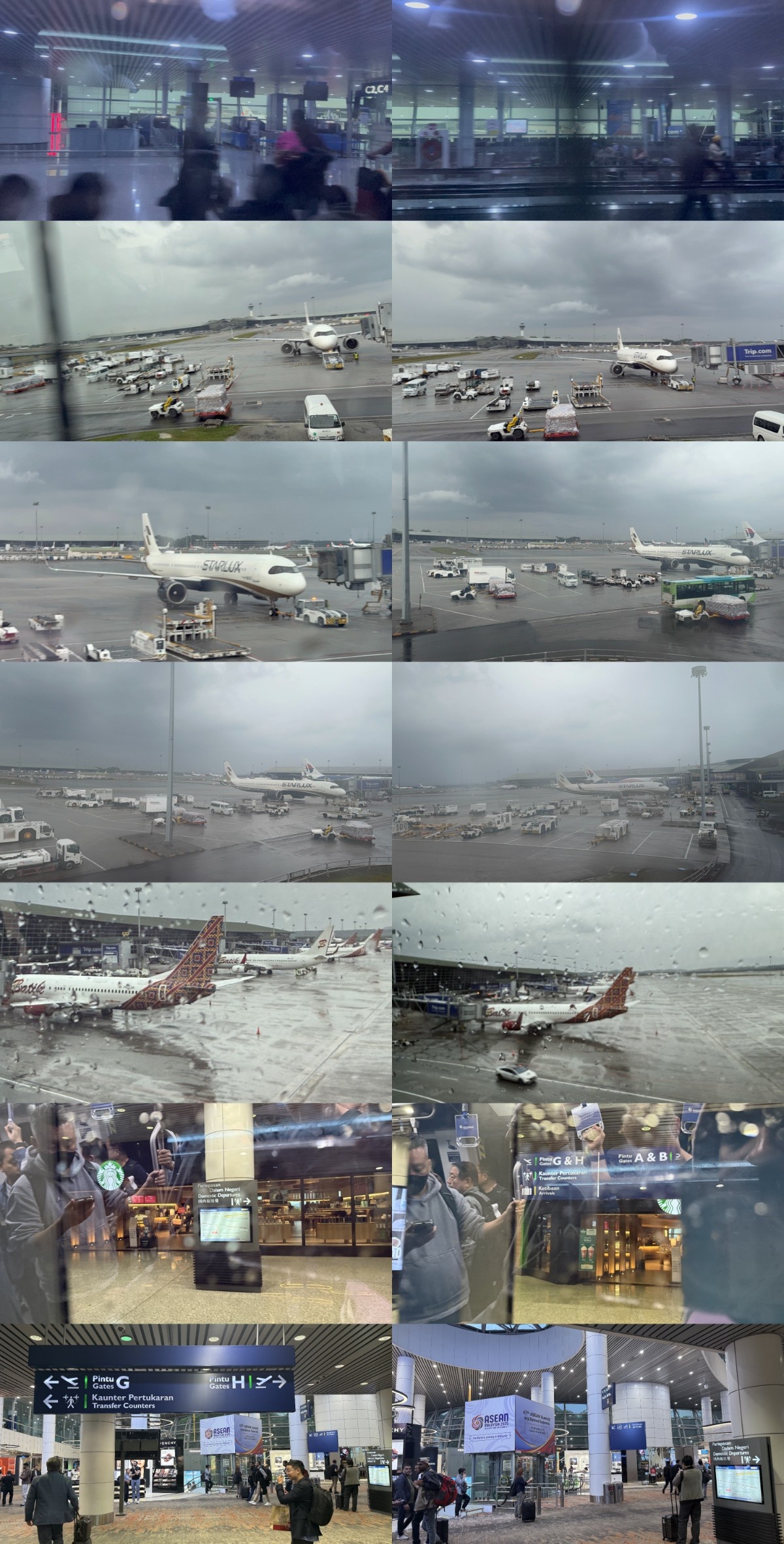
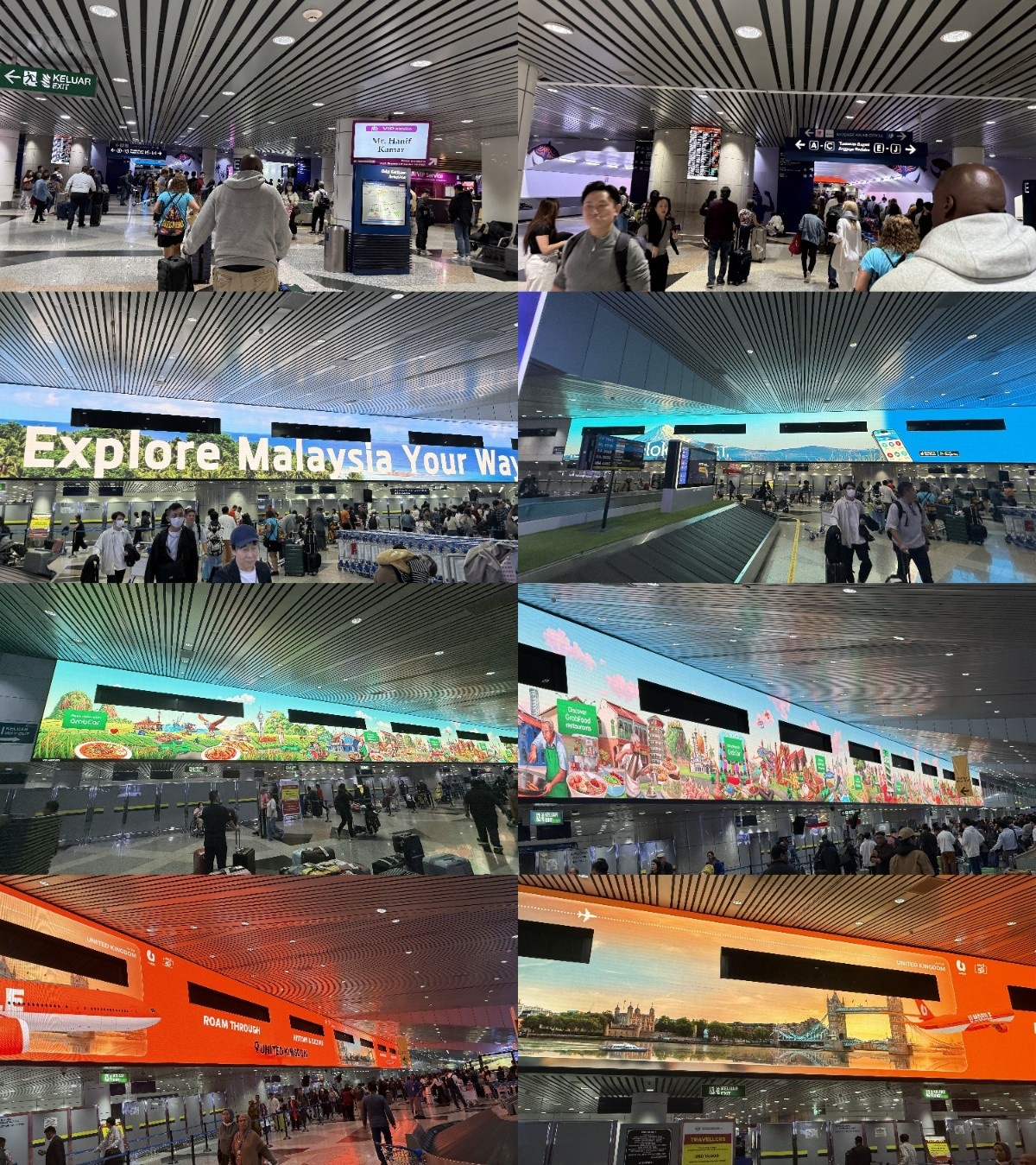
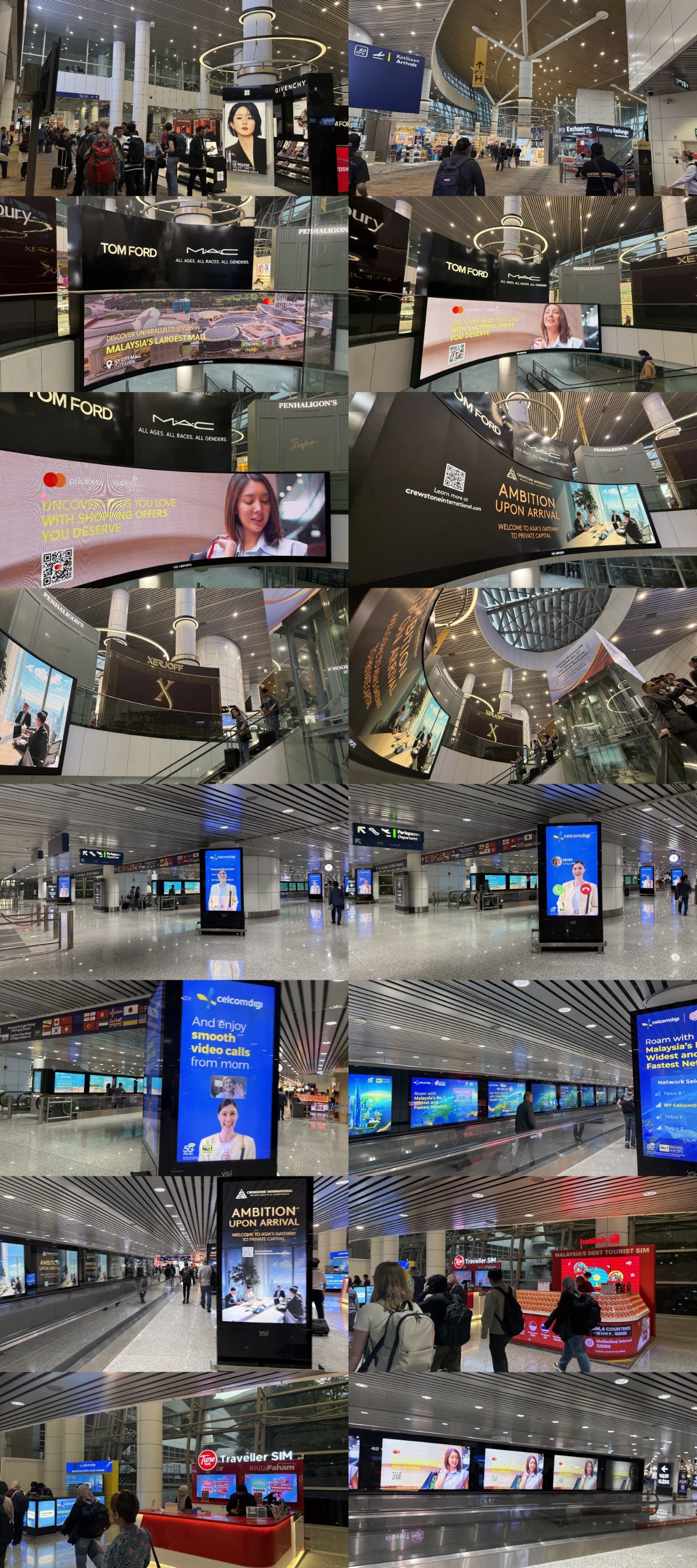
At length I arrived at the Main Terminal Building: too bad they don’t have that multi-plane model aircraft display (as I saw twice on Ethiopian in 2023) any more, where the 787s in the exhibit feature were bigger than the A380s! After this, I took the escalator a level down to the immigration counters, surrounded on all sides by Ma(ster)c(ard) ads — cosmetics and credit cards all at once…
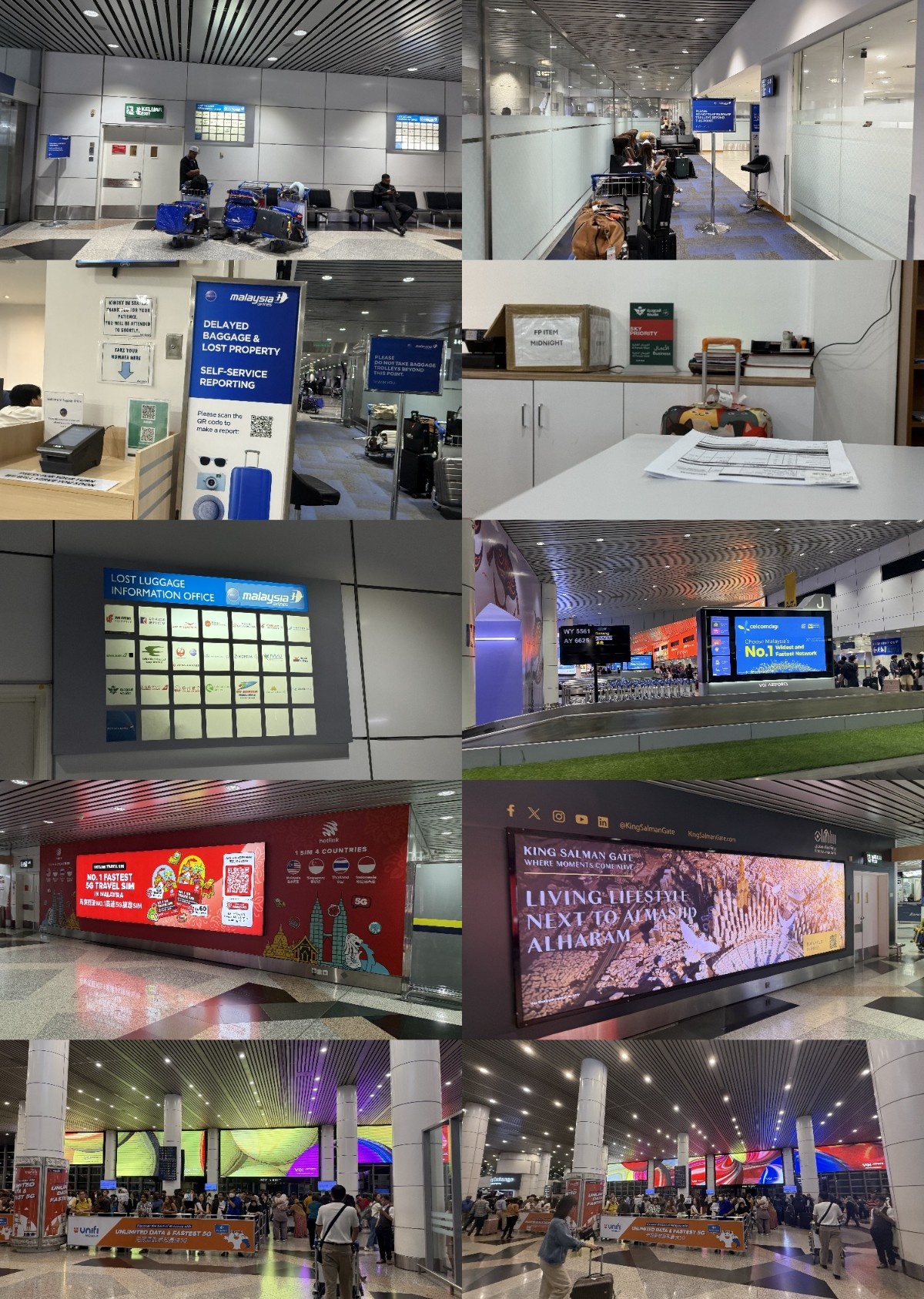
The lower level with its immigration counters — none of the sprawling ceilings that the immigration counters in Changi’s four terminals have — were populated mostly by telecom companies, and CelcomDigi in particular. It’s a shame that the country’s largest telco — formed in 2023 by the merger of Axiata-owned Celcom and Telenor-owned Digi — refused to take a page out of its illustrious flag carrier’s impeccable branding and typography playbook, and chose the clichéd and borderline insufferable Montserrat font instead…
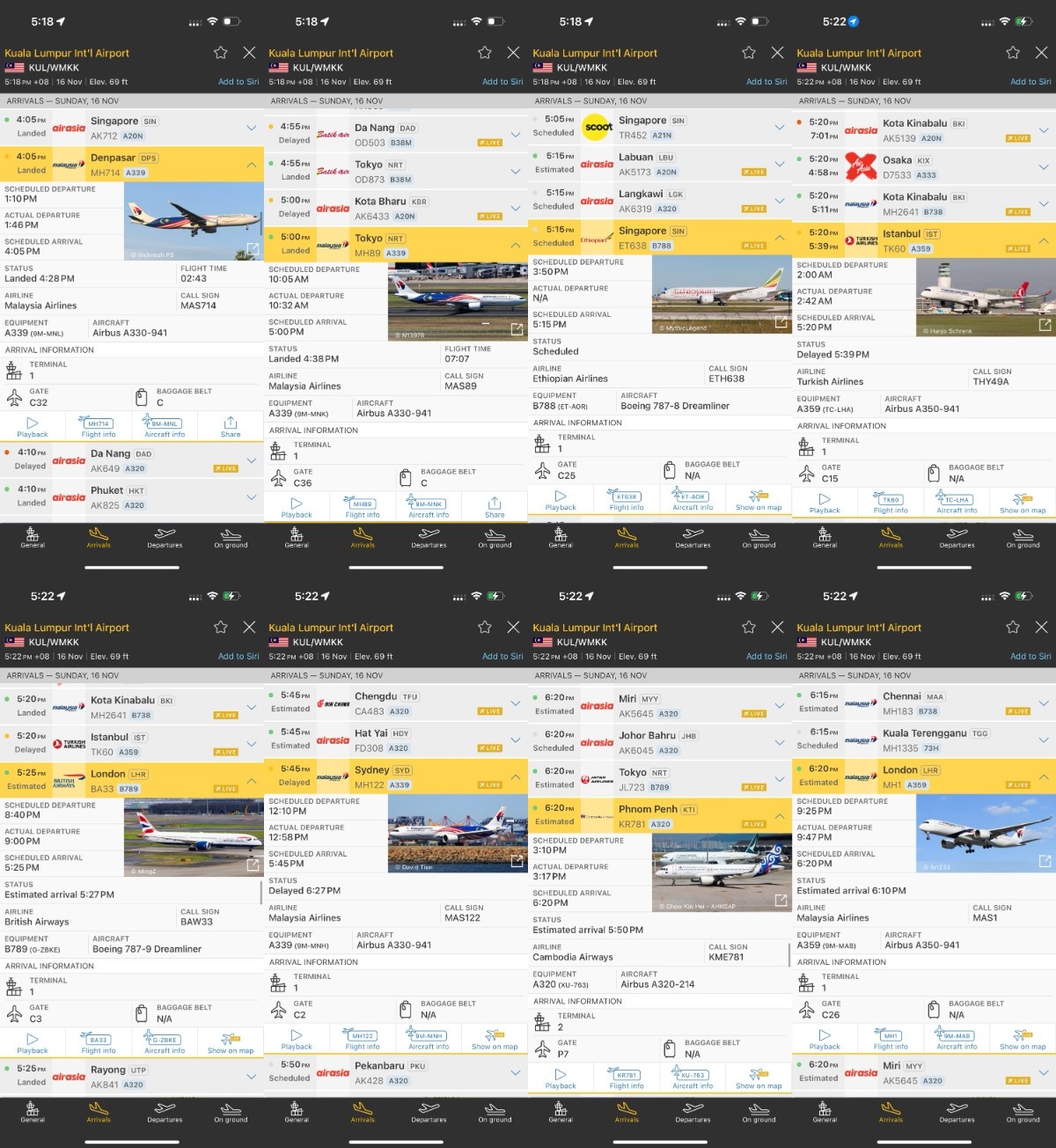
As I waited in the immigration line — I needed to pick up my luggage before heading to the next flight — I had a look at all the longhaul aircraft that were arriving. This was as good a time as any to catch these big boys, with a large number of widebody planes touching down between five and seven in the evening.
These included both MH’s own A330-300s/A330neos and more far-flung airlines, such as Ethiopian’s 787 (which I flew on the short SIN–KUL evening hop in July 2023), a Turkish Airlines A350 and also a British Airways 787-9. With BA having relaunched its KUL service in April 2025, it will extend it to Melbourne come January 2027 with a new fifth-freedom service on the 787-9. This is similar to Turkish’s fifth-freedom A350 flight from Singapore to Melbourne, or for that matter Finnair’s upcoming Bangkok to Melbourne fifth-freedom A350 route that launches in October 2026. (While Turkish Airlines also flies from Kuala Lumpur to Sydney, that’s not a fifth-freedom service — you need to be flying from Istanbul — unlike the SIN–MEL sector.)
And for those of you who’re confused as to what exactly fifth-freedom flights are, here’s a small primer from OMAAT — and here’s a comprehensive list of these flights from Australian Frequent Flyer.
Other than these widebodies, one of the more exotic visitors was a Cambodia Airways A320 from Phnom Penh’s spanking-new Techo (KTI) airport. As I’ve discussed previously, this airline has some weird, wild and wacky routes — above all from Singapore to Sanya on China’s Hainan island!
These fifth-freedoms from Southeast Asia to Melbourne — Turkish via Singapore, Finnair via Bangkok and later BA via Kuala Lumpur — will be even more relevant to me in late 2026. I’m going on a 2.5-month exchange programme at the Melbourne Business School from September to December 2026 (too early for BA’s KUL–MEL service!), and I fully intend to fly there on the TK A350 fifth-freedom route from Singapore.
If time permits I might fly Finnair’s new Bangkok–Melbourne A350 route as well, which starts from October 2026 — probably in December after the exchange is over. The Nordic airline’s A330s have already been flying Down Under for Oneworld partner Qantas since 2023, with selected flights from Sydney to Bangkok and Singapore! Too bad that Emirates has now discontinued its longstanding Singapore to Melbourne service…
At long last, with the clock nearing six, I showed my online Malaysia Digital Arrival Card (MDAC) and made it into Royal Malaysian territory, with these fabulously lit duty-free and cosmetics shops…
…but OH NO! It now struck me that I’d forgotten to bring a small sling bag with me from the plane! Normally this contains my passport, along with a stack of past boarding passes, but this time my passport was mercifully on my person. Now I’d have to head to the Malaysia Airlines lost-and-found office after collecting my heavy luggage!
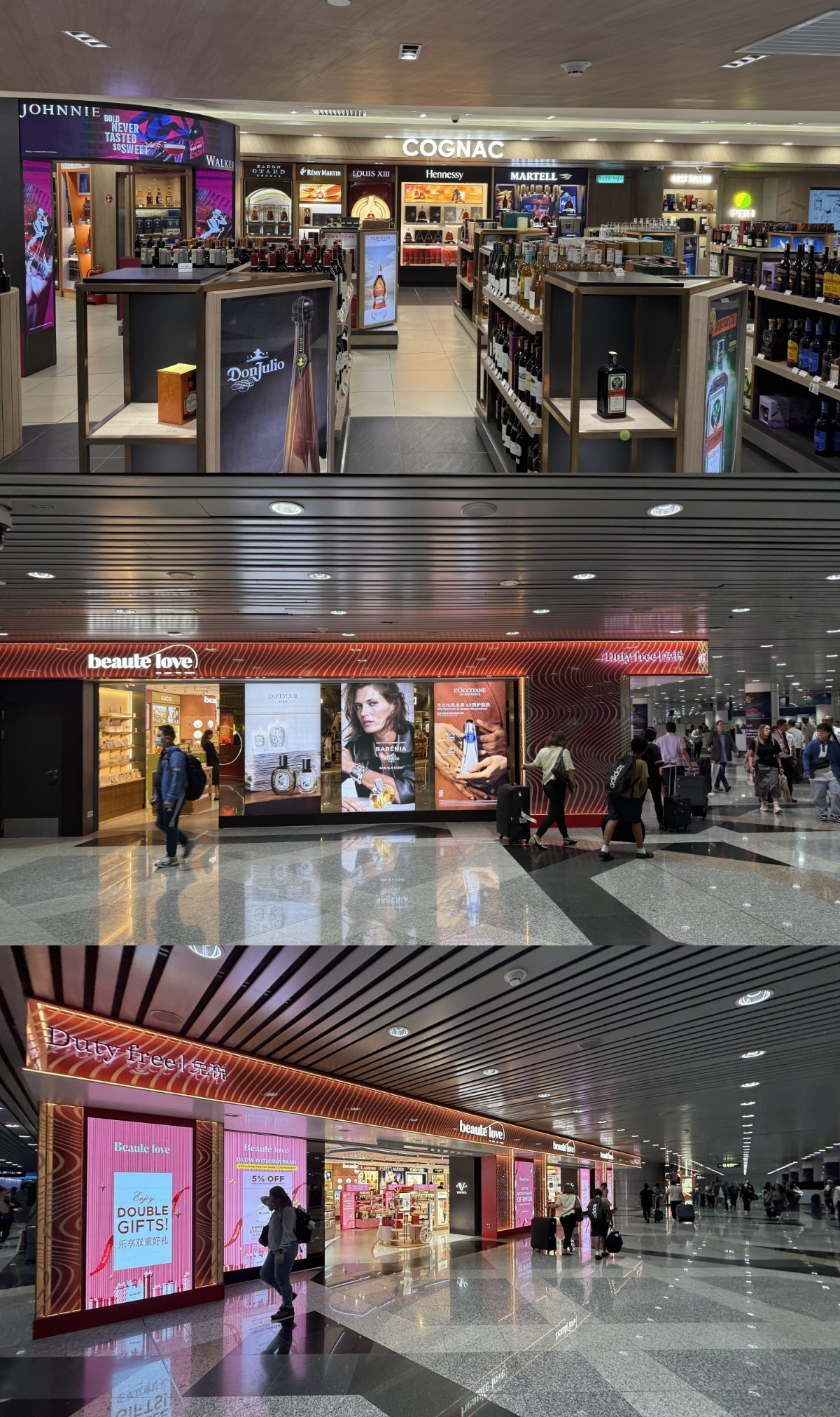
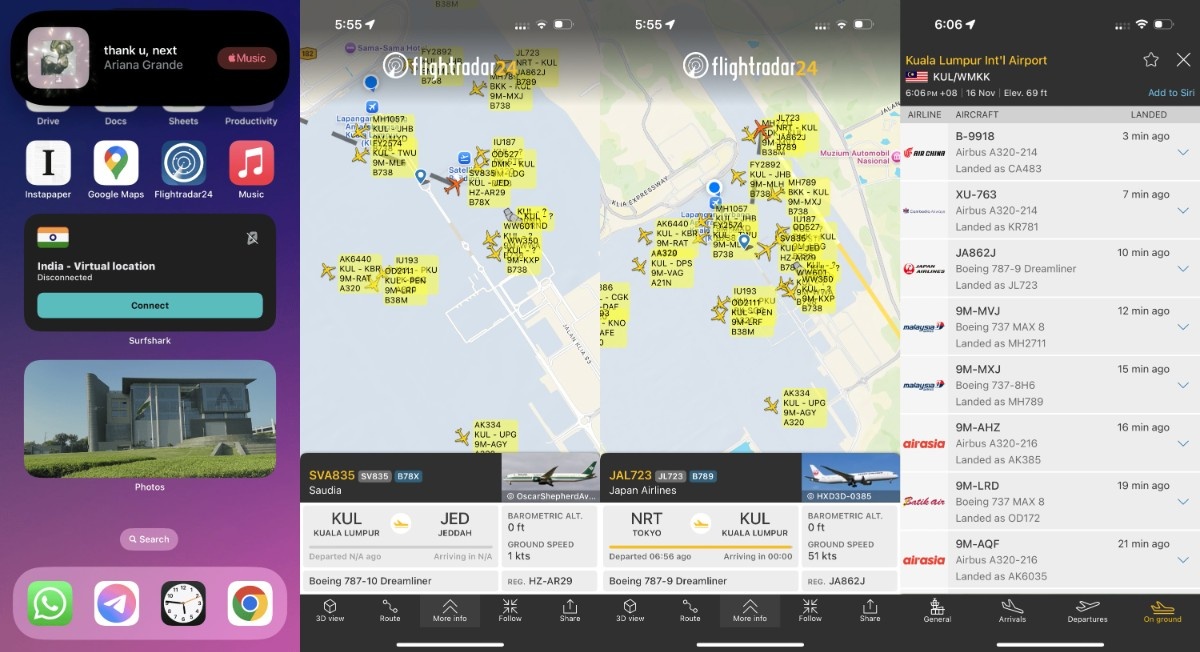
Almost as some sort of signal, Ariana Grande’s thank u, next — as my iPhone’s built-in Shazam feature promptly showed — started to play from the Beaute Love cosmetics store. That was a kind of metaphor for my next course of action — thank you, Malaysia Airlines, for the superlative A330neo, but I had much bigger tasks on hand now.
Like going to the MH lost-and-found office and registering a report for the lost bag, followed by heading up to the departure level to catch my Batik Air flight back home to Bengaluru. In fact, I might not even have made it back to India that night, thanks to the INSANE departure immigration queue… but a bit of quick thinking and desperate gestures saved the day. It’s all there in the Tourism Bonus below…
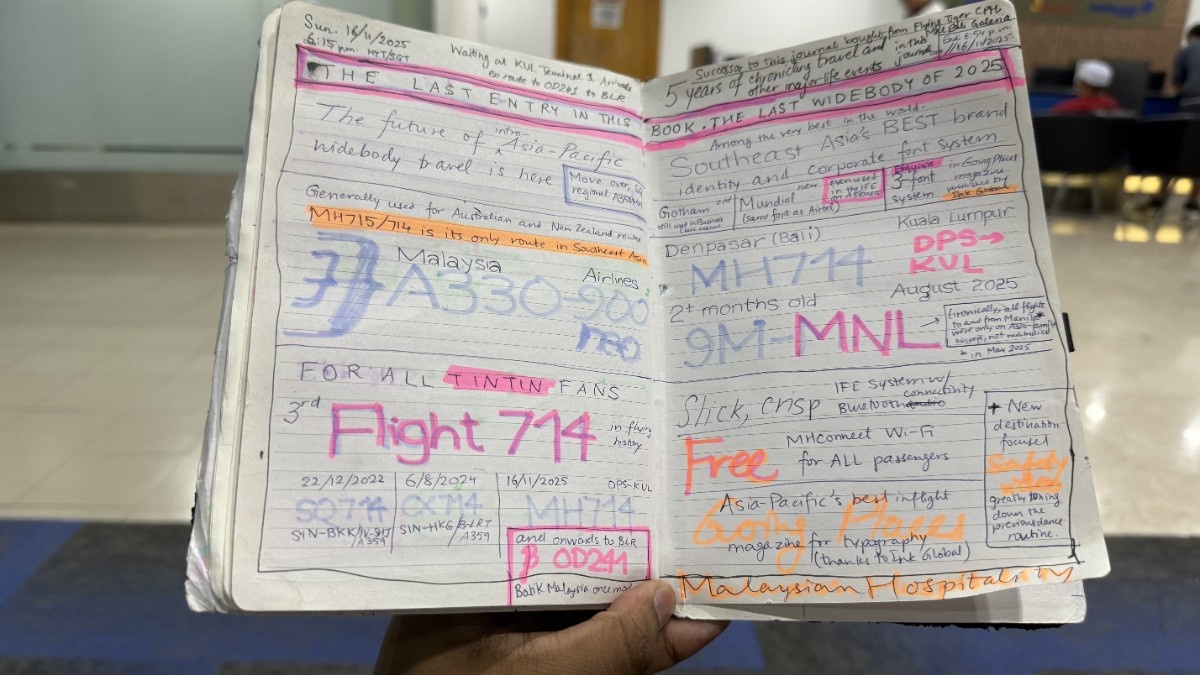
I’ll leave you with this last bit from my journey: as I was waiting to be attended upon in MH’s lost-and-found office, I continued my longstanding tradition of writing a journal entry about my trip. Incidentally, this was the last page of the book, which had been serving me for five years — ever since Singapore Airlines’ Restaurant A380 @Changi dinner in the COVID-locked-down days of October 2020.
How fitting, then, that I wrapped up this book with my last widebody flight of 2025: one in which I ended up taking an incredible 45 flights (a personal record) across 16 airlines — many of which (like Starlux above) I haven’t even come around to posting a proper review on this site!