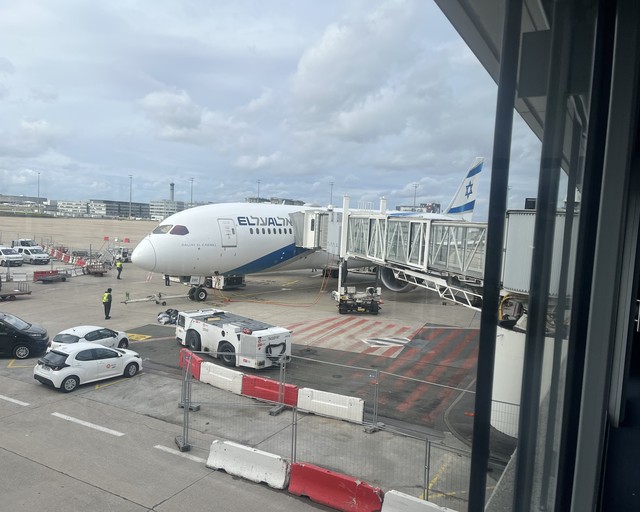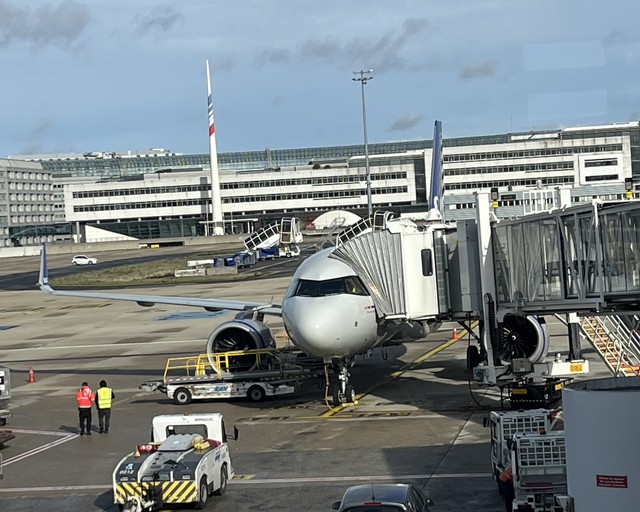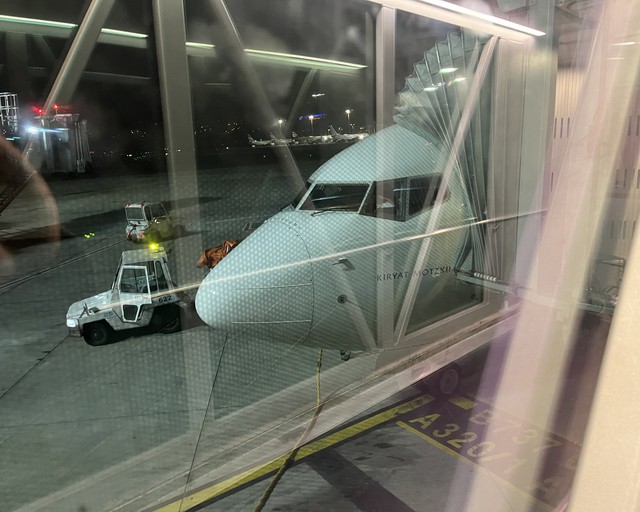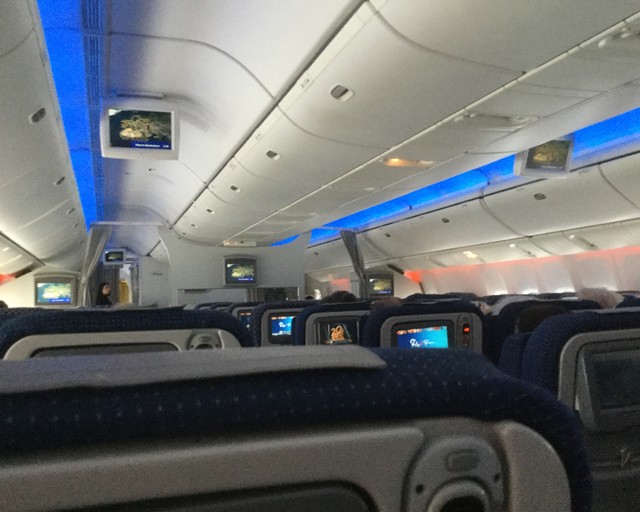


Hello and welcome to this review of the flight from Rome-Fiumicino Airport (FCO) to Copenhagen-Kastrup Airport (CPH), which I took on 16 February 2026 to get to the NordicFuzzCon furry convention in Malmö, Sweden.
Since, this flight, alongside my other flights to the convention and back home, are the first flights I took after joining Flight-Report, this report will be much more detailed and image-rich than my previous ones, and would also be written in mostly real-time rather than retrospectively.
BACKGROUND
My flight tickets for the convention were booked in September, well in advance of the convention and even a month ahead of the convention's registration opening.
The flight itinerary I took for the trip was:
Flight routing
- 1
- 2SK682 - Economy - Rome → Copenhagen - Airbus A320neo
- 3
- 4
When researching flight options, I first went to El Al's website: with the exception of the flight to Rome, which I eventually picked, all flights on offer had short layover times below what I'd consider acceptable - to the disbelief of my dad, who I consulted about the flights with. (A rule I learned from an internet friend is to never book flights with layovers shorter than 90 minutes; while I only learned this rule in May 2024, my dreadful 90-minute layover in Schiphol three months before helped cement it as the minimum layover time in my mind.)
The flights on offer on El Al's site were:
- TLV departure 06:40, CPH arrival 13:25, 1h20m layover in MXP (LY387->SK1684)
- TLV departure 06:10, CPH arrival 14:30, 3h layover in FCO (LY385->SK682) [ultimately selected]
- TLV departure 16:15, CPH arrival 21:50, 1h layover in VIE (LY363->SK696)
- TLV departure 06:00, CPH arrival 11:40, 1h layover in WAW (LY5101->SK752)
- TLV departure 10:45, CPH arrival 16:25, 1h layover in WAW (LO156->SK2762)
Another complicating factor was the fact that I wanted to fly at least one of the flights on a widebody plane. Given that this was the off-peak season, I would have to route my flight either via London-Heathrow or via Paris, as these are the only European destinations El Al consistently flies widebodies to year-round. Since El Al's website did not offer any routing from CPH via LHR/CDG (although there were routings from ARN via LHR, they would have required me to plug the gap from Malmö to Stockholm by a three-to-four hour train journey: I could not find any conveniently-timed train since SJ, the Swedish national railway, have yet to publish their 2026 schedule at the time), I instead had to resort to ITA Matrix, a professional flight-finding tool recommended by the HaMatmidim frequent flyer blog, to find my flight.
Since ITA Matrix is a professional tool, It does not let you book the flight on your own; instead, you'd have to forward the details of your booking to a flight agent, who would book the flights for you. My dad was a great help in this, as he helped me book the flights through his own travel agent - though, of course, I was the one who paid for them.
Through ITA Matrix, I found out that there's a routing available from CPH via CDG to TLV, taking flights SK565 from CPH to CDG and LY324 from CDG to TLV. Though some of El Al's TLV-CDG flights are operated by the narrowbody fleet, LY324 is consistently operated by a widebody, which made it more attractive to me.
At the time of the initial booking, LY324 was scheduled to be operated by a 777-200 - the oldest and largest widebodies in El Al's fleet, which underwent a full cabin renewal in 2023-25; though I have flown on El Al's 777s before, it was always on their pre-renewal cabins. Due to low demand for seats on LY324, however, it was reassigned to a 787-800 (the smallest widebodies in El Al service) in mid-December.
In addition, on 8 February, eight days before the flight, I was informed that my El Al flight would be pushed forward by half an hour, from a 06:10 departure to a 05:40 one. This made my planned three-hour layover into a three-and-a-half hour layover.
ROME-FIUMICINO AIRPORT - FROM LY385 TO SK682
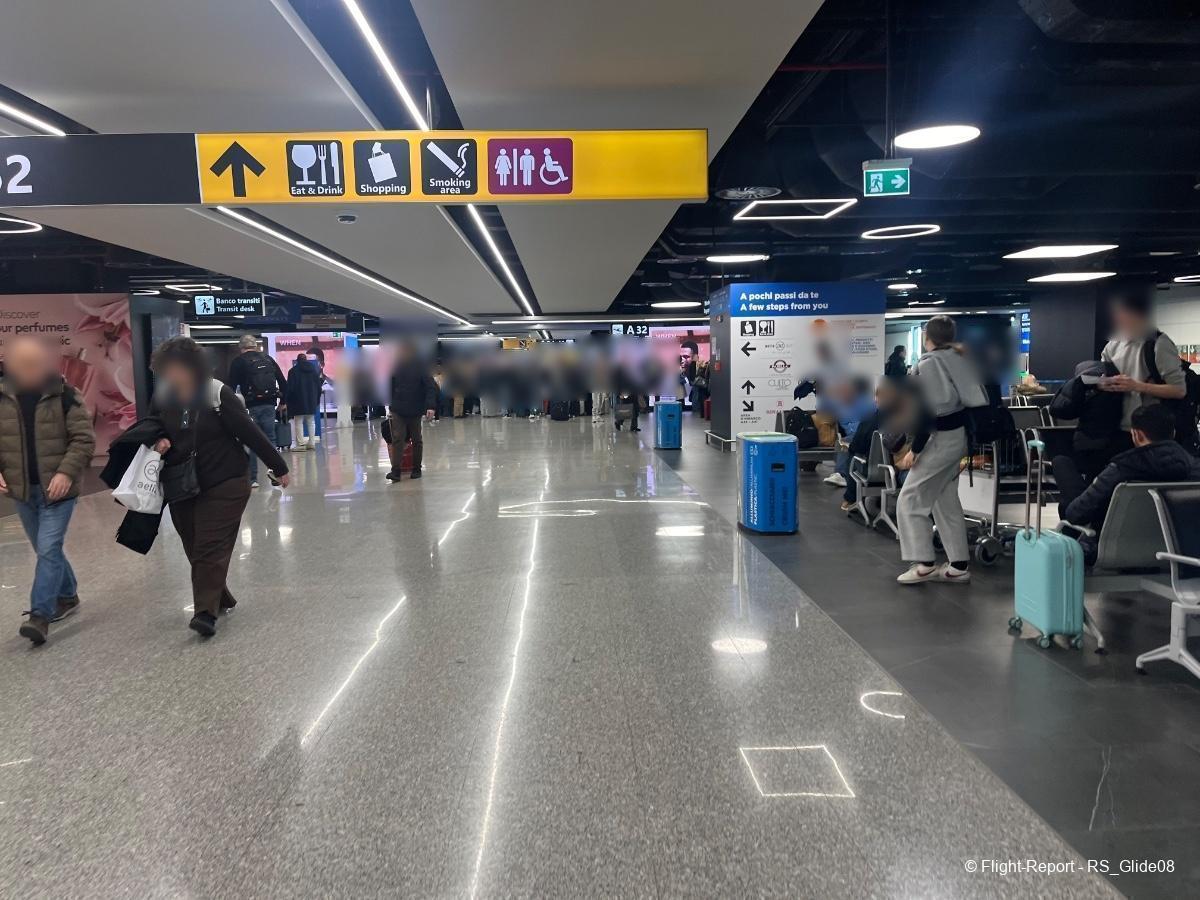
After exiting baggage claim (which I had entered accidentally due to a mishap in the passport control for entering the Schengen Area). The second security check was swift and went smoothly, and I quickly made my way to the A section (used for inta-Schengen flights). In a neat coincidence, at the center of the section was the Eataly restaurant, which was where I wanted to eat during the layover (if this was possible).
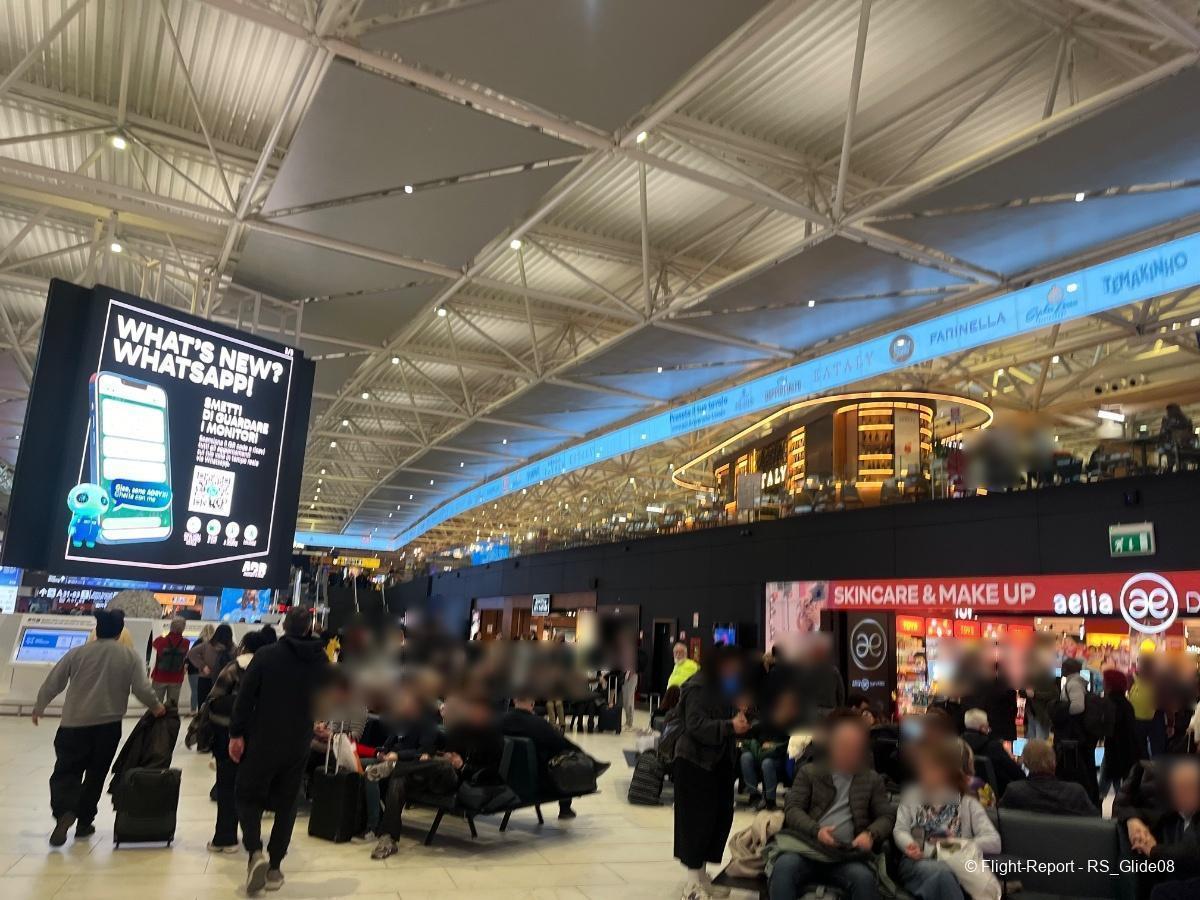
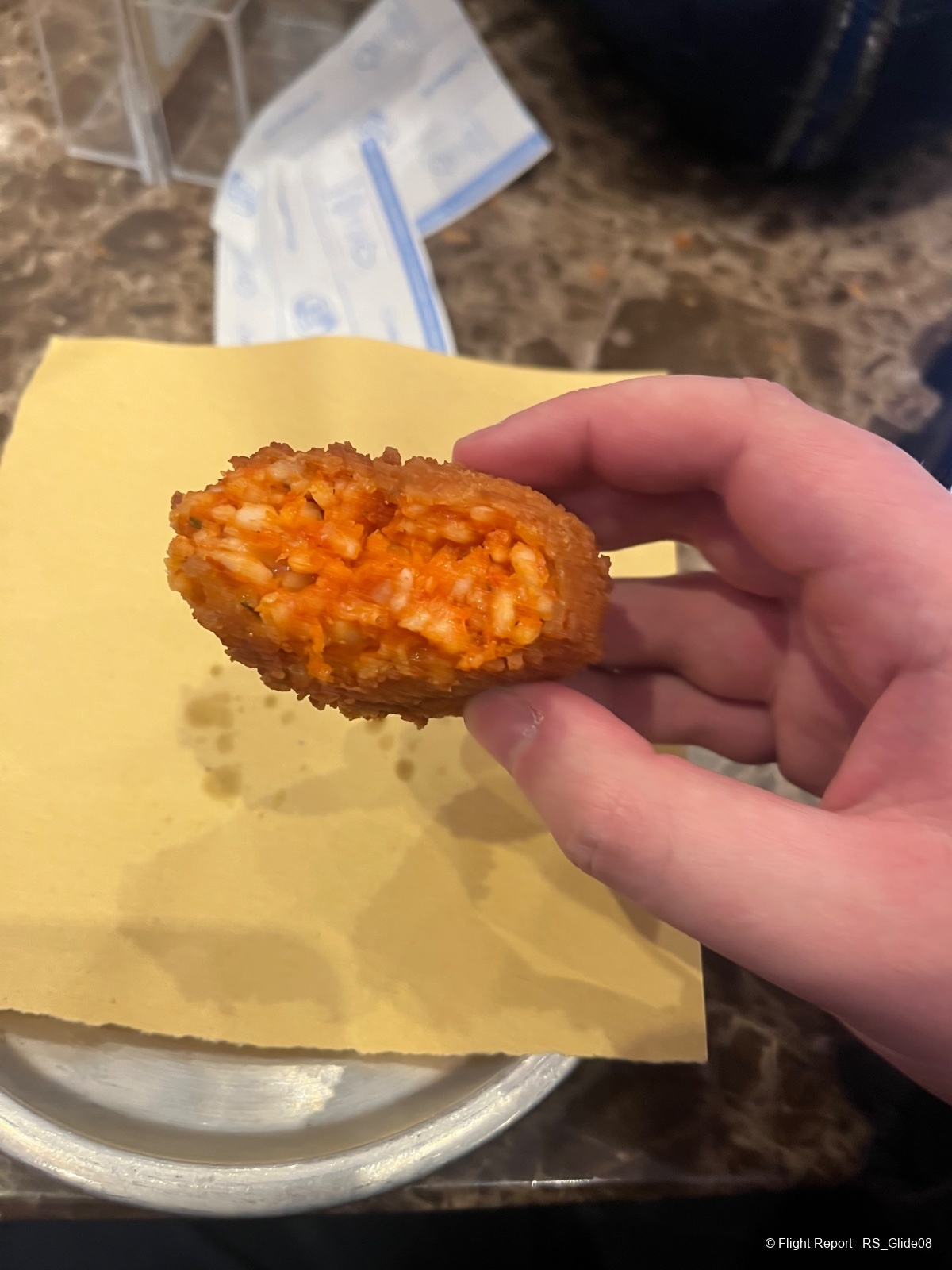
Unfortunately, the restaurant ran a breakfast menu at the time, and the meals I wanted to have - except supplì al telefono, a fried cheese-and-tomato sauce-filled-rice ball that's considered a local delicacy in Rome - were in the lunch/dinner menu. So instead, I opted for a breakfast of a supplì alongside hot chocolate and a cream croissant:

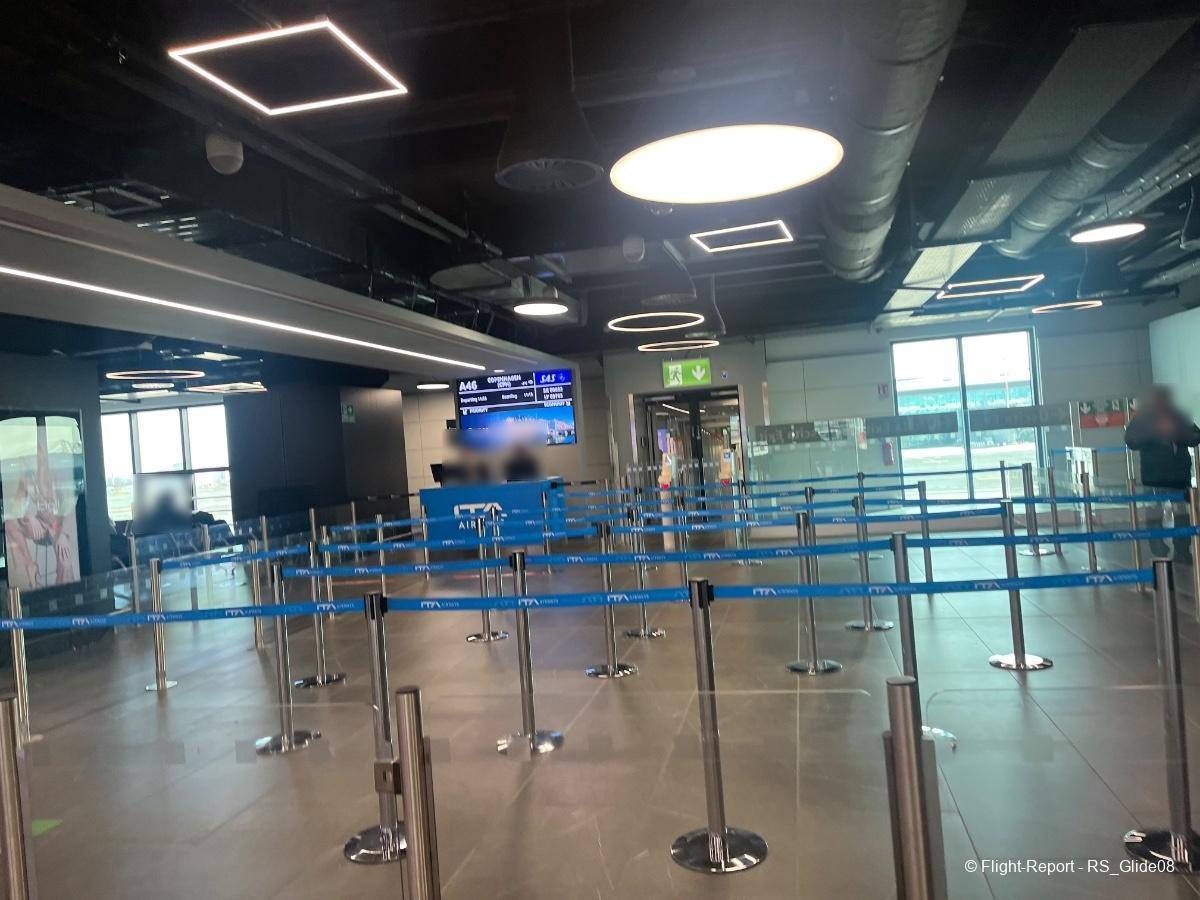
I waited in Eataly until 10:45, when the gate was announced, with my flight taking off from gate 46. It was a short, ten-minute walk from the restaurant to the gate.
THE FLIGHT ITSELF
Boarding was announced to begin at 11:39, though the actual process only commenced at 11:44. As there was a passenger in a wheelchair, the plane had to undergo special preparations, so boarding was held up until 11:55.
Among the remaining passengers, I was among one of the first to board, making it on board the plane by 11:57.
As a passenger with a non-visible disability, I am qualified for priority boarding, though I only make use of it in my solo flights for obvious reasons - and, of course, I only come after mobility-impaired passengers.

Aircraft information:
LN-RGM "Silje Viking"
Airbus A320-251NEO (construction number 7277)
Delivered new to SAS 9 December 2016; 9 years and 3 months old at the time of the flight.
This was my first (and as of the initial writing of this report, the only) time flying on that plane.
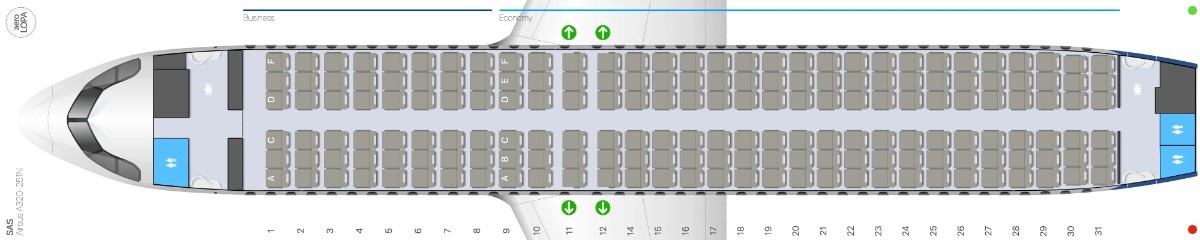
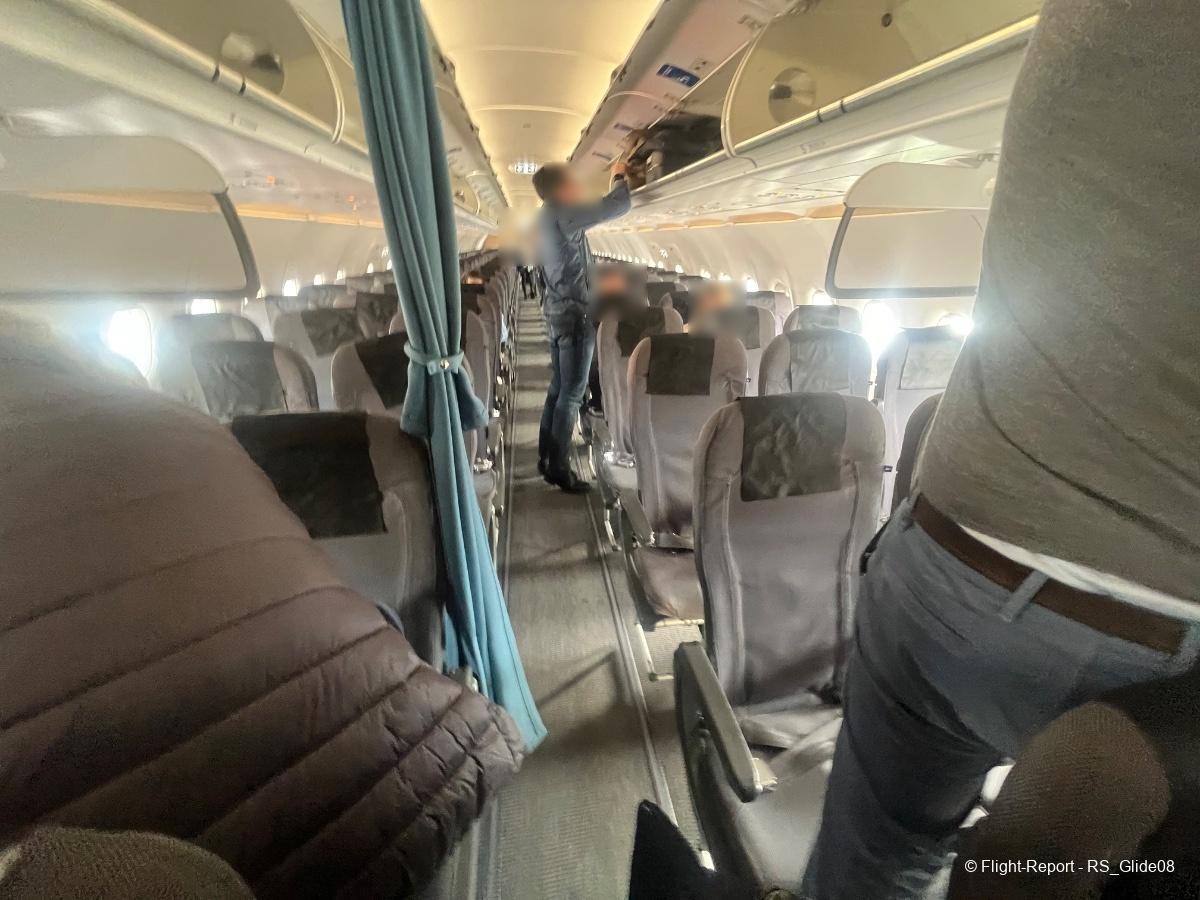
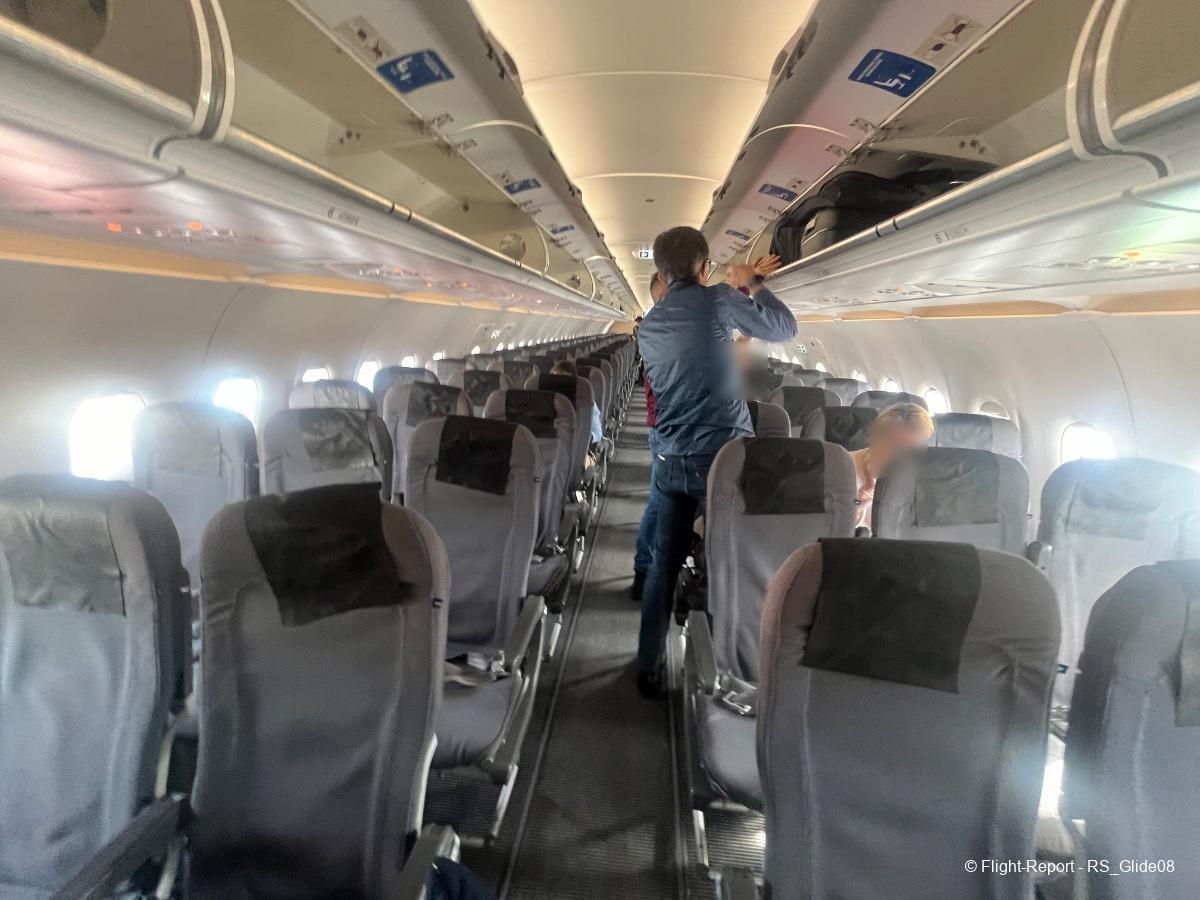
On the A320neo, SAS utilizes Recaro BL3520 seats having 18-inch seat width and 29-inch row pitch, in a 3-3 configuration. However, the first ten rows of the cabin (1 to 10) have increased legroom seats with 30-inch pitch, and the emergency exit row seats have 34-inch pitch.
There are 30 rows of 6 seats each, making for a total of 180 seats in the cabin.
Each seat has one USB-A plug, located at the seatback in front, which is good for charging smartphones and tablets on the go, but laptop users get the short end of the stick. There was no in-flight entertainment whatsoever, though there was Wi-Fi in the flight (using Viasat technology; free for high-tier SAS frequent flyers, paid for everyone else).
In the annoyingly-persistent European short-haul tradition, Business class does not use dedicated seats, only economy-class seats with the middle seat left vacant and unbookable, which enables the boundary between Business and Economy to be moved dynamically. Business class usually takes up much of the increased legroom seats; in this particular flight, the boundary between Business and Economy class was set at Rows 4/5, which meant there were effectively 16 business seats and 156 economy seats.
The seats themselves were cheap, thin, and hard. Although they had an adjustable armrest, they had no heardrest whatsoever, which messed with my muscle memory (I repeatedly reached to the back of the seat to raise a headrest that wasn't there). While their thinness means that the 29-inch pitch leaves just as much legroom as 32-inch pitch does with stockier seats - and in my particular case, made stowing my fursuit head bag (a large personal item that does not fit into all overhead compartments) under the seat in front of me easier - the seats were not particularly comfortable, and outright became uncomfortable after two hours of flight time. There was also not enough room to store both my iPad and my chargers in the seat's storage pocket.
This sort of hard product is barely adequate on most intra-European flights (which are one- to two-hour hops), and completely unacceptable on flights of three or more hours.
Unfortunately, this state of affairs - spartan seats, no in-flight entertainment, and no distinct business class, - is very common across many European airlines. While this is understandable in low-cost carriers, the fact that full-service airlines (such as Lufthansa, SWISS, and SAS) do so as well is a travesty, and even a few steps shy of scamming their own customers, doubly so when their soft product and service are excellent (as SAS's indeed was). The short-haul fleets of full-service airlines should, as a bare minimum, have thicker and more comfortable seats with at least 30-inch pitch, a bring-your-own-screen IFE system (where you connect your smartphone or tablet to an internal Wi-Fi network without internet connection, and use it as the IFE system's screen), and larger recliners in Business class.
Cabin views:
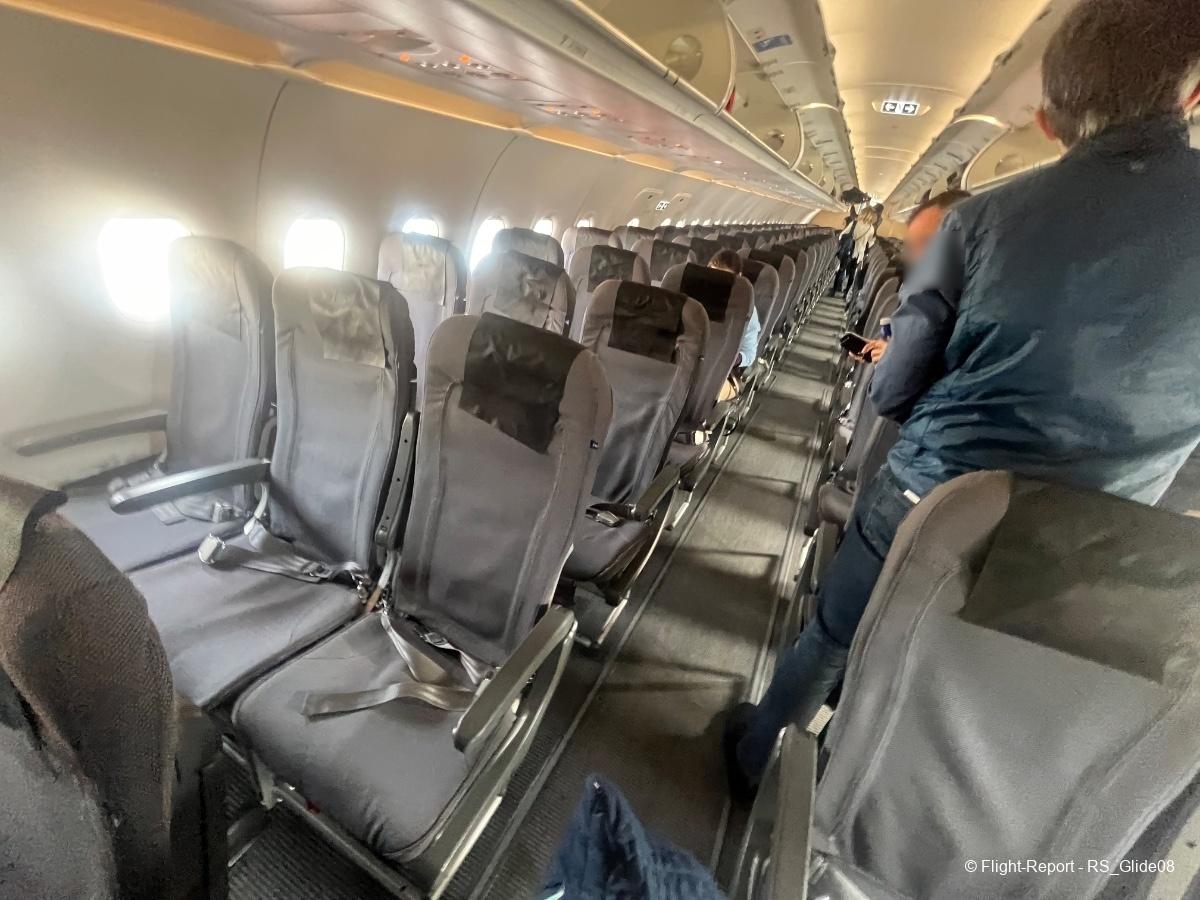


View from the seat:

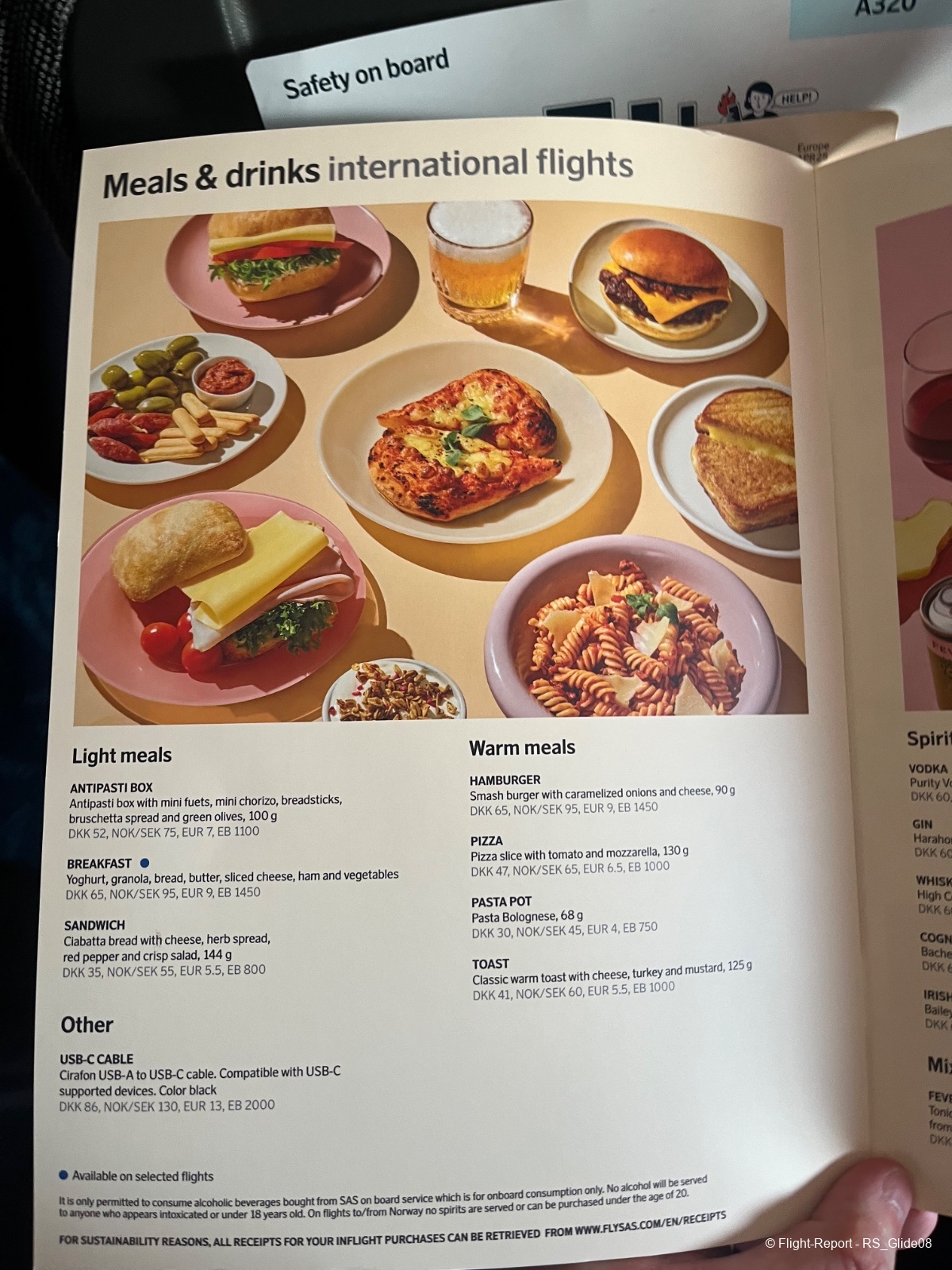
After taking my seat, I reviewed the buy-on-board menu, which was placed in the literature pocket:


At 12:19, the crew began a safety demonstration. Since the plane had no screens - not even drop-down screens in the PSU - to play a safety video with, I opted to download one to my iPad.
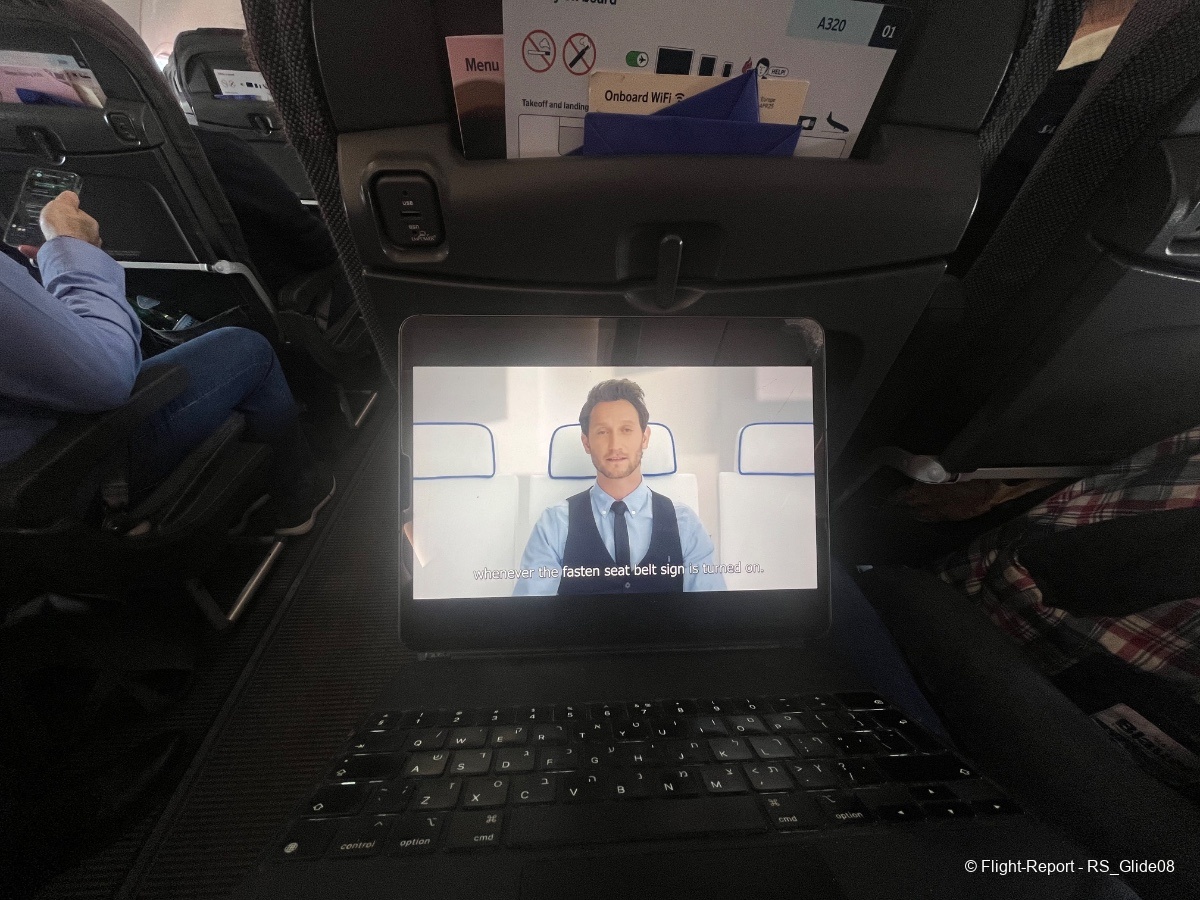
Boarding completed was sounded at 12:21, and pushback began at 12:29. By 12:37, we were off the ground, though the climb up was rather turbulent.

Meals were served around 30 minutes after takeoff. I chose the cheeseburger (which was paid), and a cup of water and tea with sugar (which were both complementary). After paying for the meal, I told the flight attendants that I would like to use the toilet. In a positive surprise, they let me go ahead instead of telling me to wait until they reach the back of the plane. However, the trolley's position did prevent me from reaching my seat afterwards, though the crew - again in a positive surprise - helpfully moved it forward to allow me to go back to my seat.

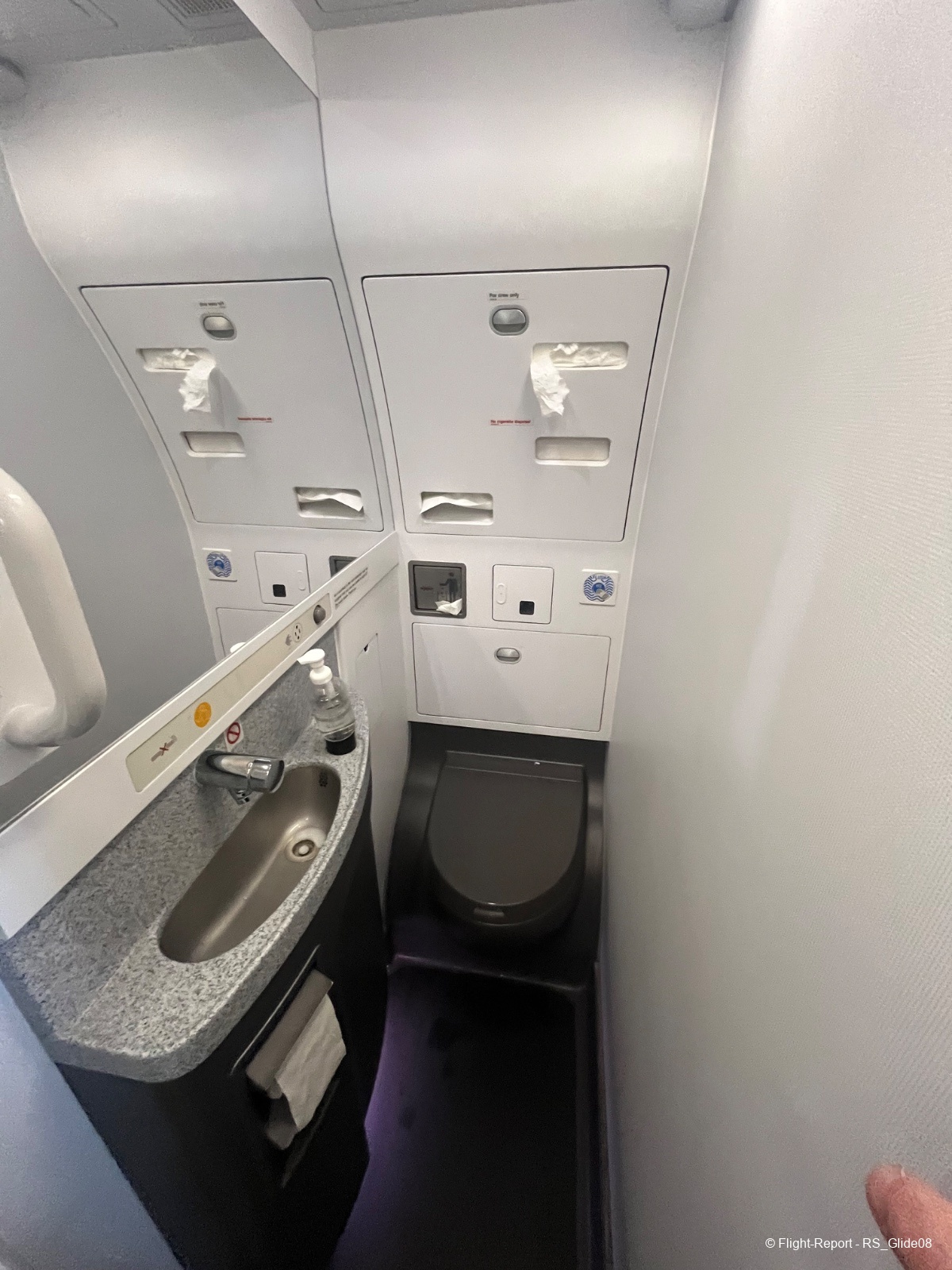
The toilet on SAS' A320s is located at the tailcone section, with one of the stalls - the one I happened to use - having a jumpseat built into its door, and the other having a trimmed corner to account for the curvature of the fuselage. This also means that the galley takes only half the width of the plane.

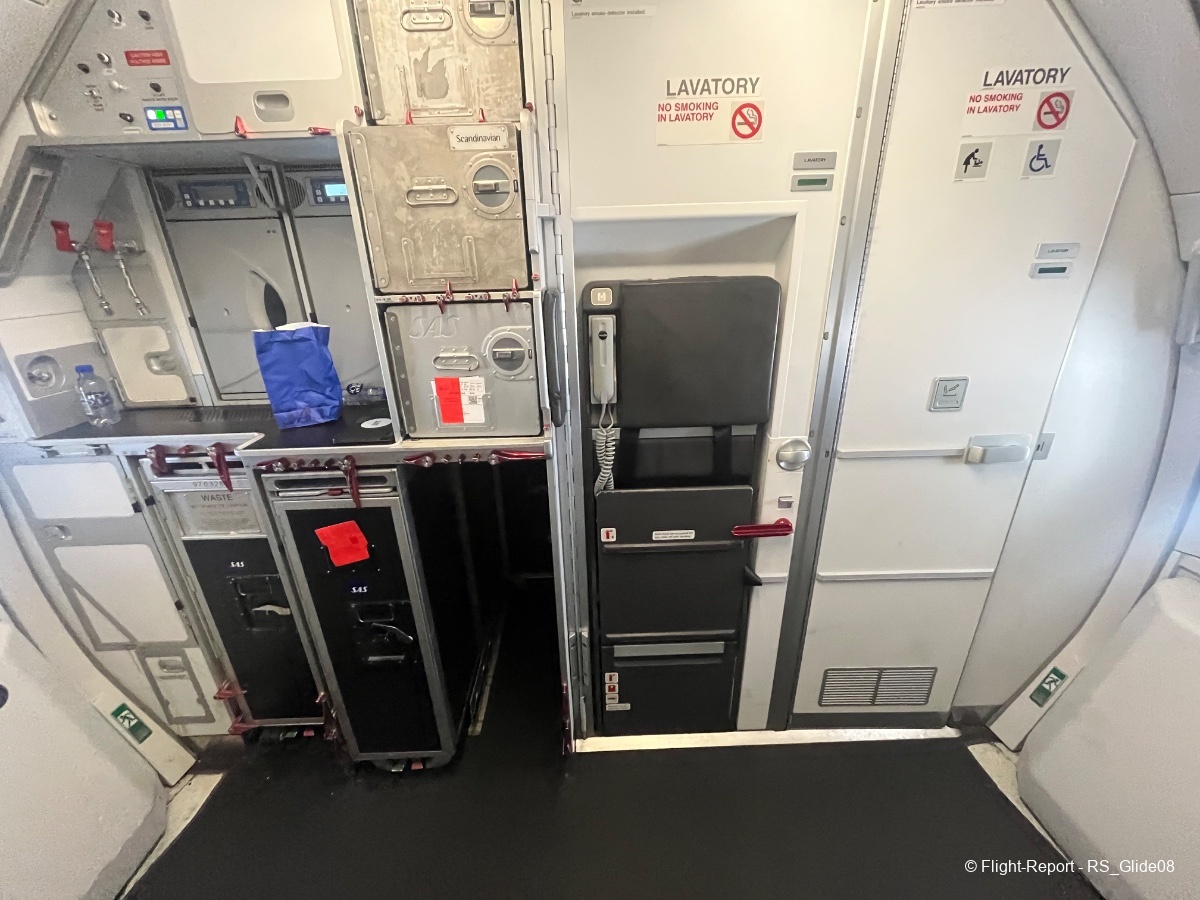
The stall was very narrow, and I initially struggled to use it for a few seconds.
The food was delicious, but the caramelized onions in the hamburger weren't to my taste (alas, beggars can't be choosers 30,000 feet in the air). Once I was (mostly) done eating, I asked a flight attendant to take away the box and told her I was going to the bathroom again, this time to wash my hands. The attendant was proactive in offering me wet wipes instead.
Afterwards, I asked the person seated next to me if I should take away their trash as well. While they declined, reasoning that an attendant would come pick it up anyway, they did accept my offer of cleaning up their table. I ended up putting the wet wipes' packaging in the same up the person seated next to me used for their trash, and called the flight attendant to take it away: once they did, they offered me a bottle of water, which I happily accepted.


Around this time I began to watch the only in-flight entertainment I had: the assorted few HaPijamot episodes I had saved to my iPad.

Descent began at 14:28, and at around 14:38, the seat began to feel uncomfortable. Although this was a two-hour flight, where the seat becoming uncomfortable two hours after takeoff is no issue, it should be reminded that SAS operates these intra-European planes on longer routes as well, including their flights from CPH to TLV which are easily four hours long.
ThAmager, Kastrup Airport, and, Saltholm during descent, with Scania and Malmö in the distance:
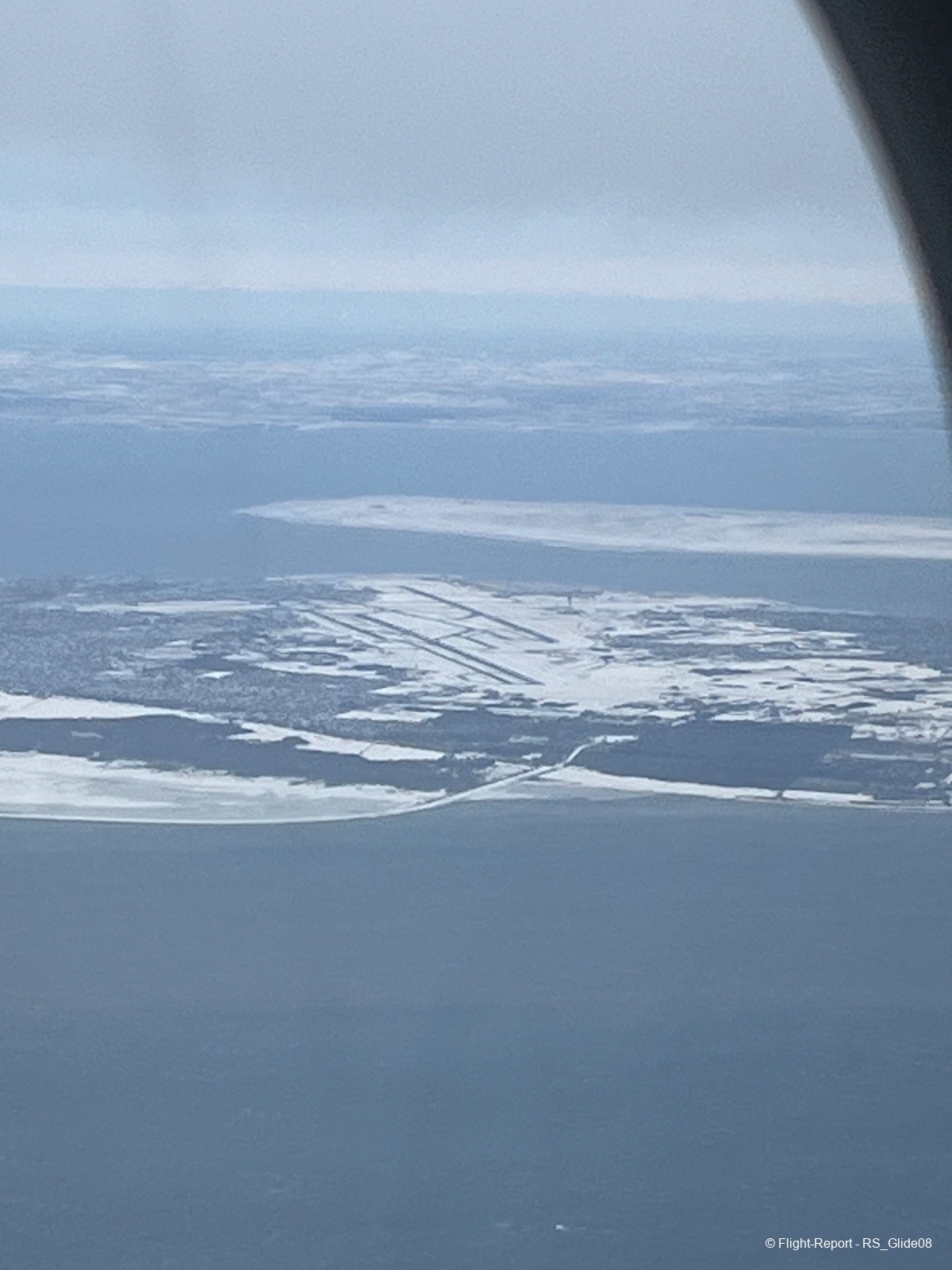
Views of Copenhagen during descent:
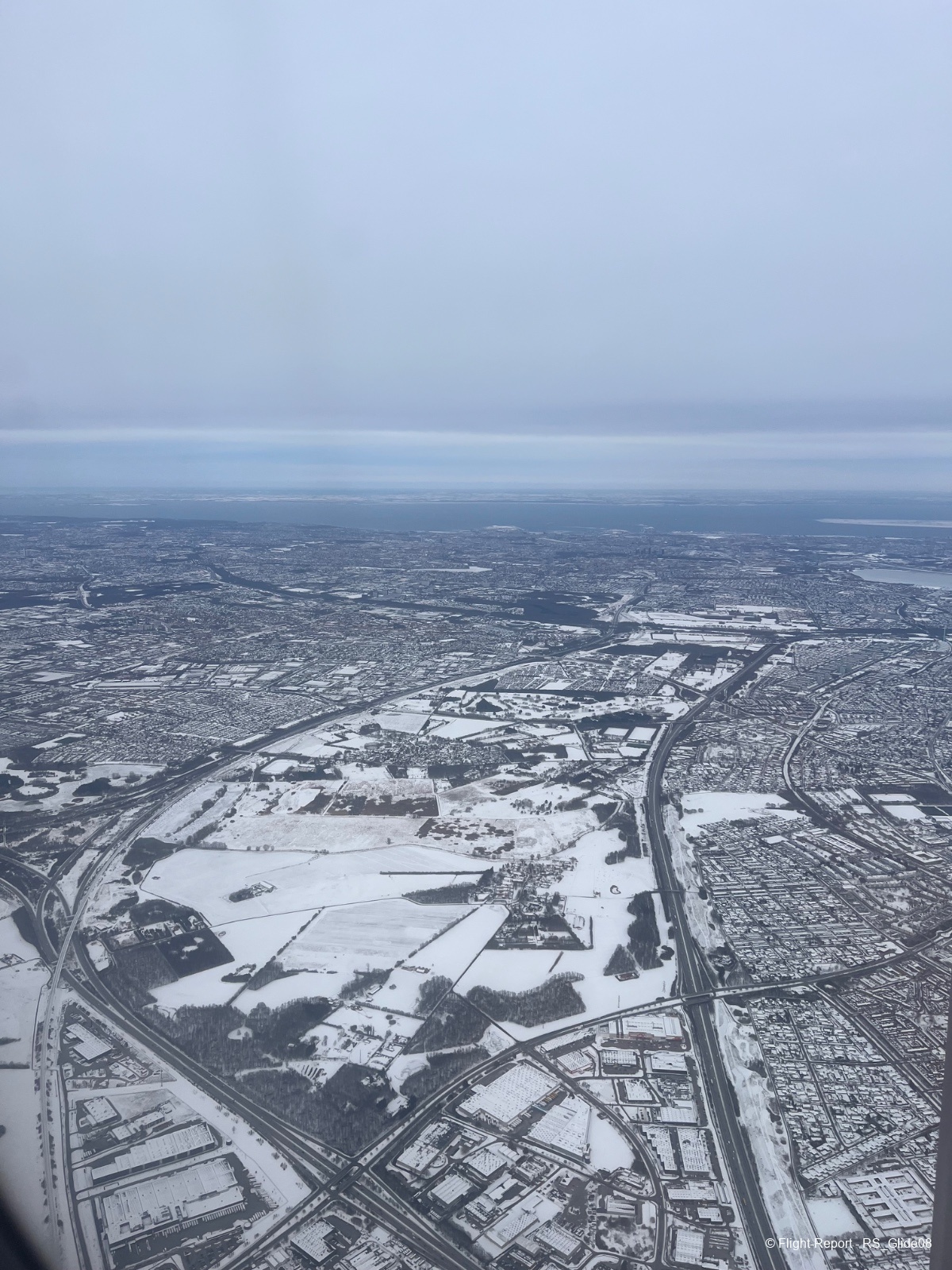
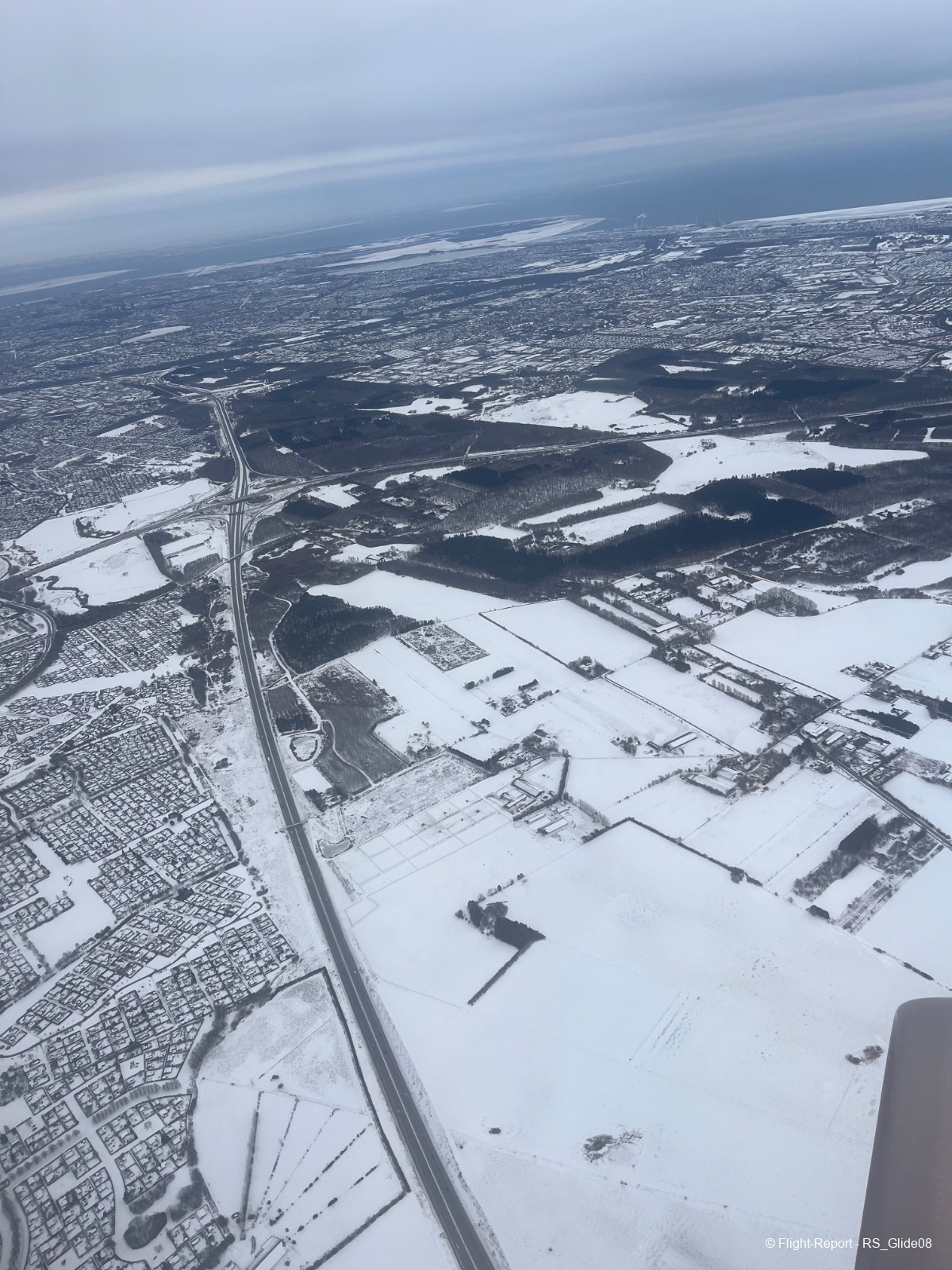
The plane touched down in Kastrup at 14:48.
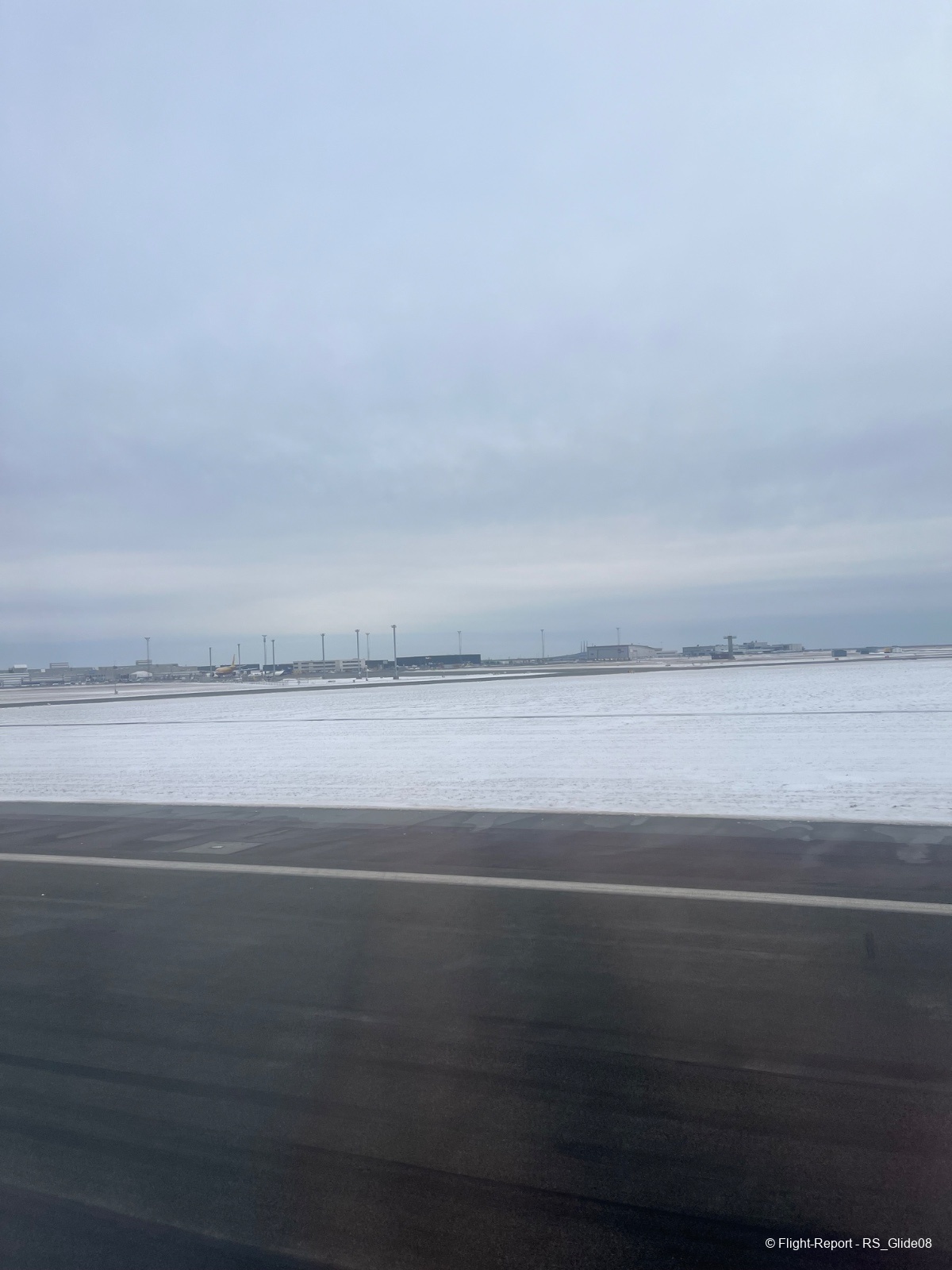
By 14:57, I was off the plane; the walk from the gate to baggage claim was quick. In an interesting coincidence, the stairway to baggage claim was located right beside the SAS lounge, which will be my a focal point for the next flight.