


Hello everyone!
Today’s story is about a flight that is, without exaggeration, highly unconventional for this route. Everyone has long grown accustomed to Airbus A320/321s and Boeing 737s of various airlines and configurations on flight between Moscow and Sochi. However, at the end of the year before last, Aeroflot decided to make a pleasant surprise: every Sunday throughout the winter season, flights were operated by Rossiya’s Boeing 747-400s – aircraft that had been reactivated after a two-year hiatus.
During the holiday period, frequencies naturally increased, but under normal circumstances these flights were performed steadily every Sunday, allowing crews to re-acquaint themselves with the type. Flying to Sochi on a Boeing 747 remained possible until early September of last year.
The Boeing 747 has long borne the title “Queen of the Skies” for its elegant shape and unmistakable silhouette (along with the even more famous nickname, Jumbo Jet). A flight aboard it truly becomes an epoch-defining experience.
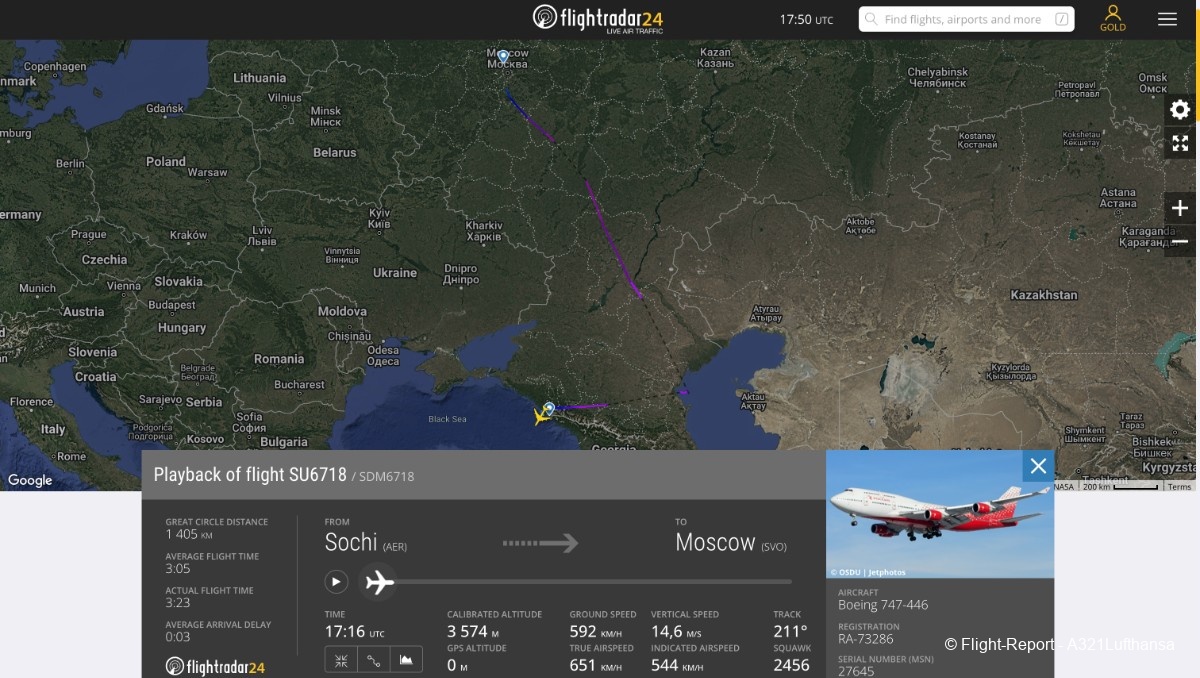
While cargo 747s are still relatively numerous worldwide, the passenger variant is disappearing at an alarming rate. Apart from Russia (3 aircrafts – RA-73286, RA-73289 and RA-73290), the Boeing 747-400 remains in service with Air China (2), Lufthansa (8), Iran’s Mahan Air (1 active aircraft), Atlas Air (5 passenger-configured aircraft for charters), and Moldova’s charter operator Terra Avia (also 1 active aircraft).
The more modern Boeing 747-8, originally conceived as a highly niche modification, now surpasses the 747-400 in the number of aircraft in regular passenger service. It is flown by Lufthansa (19 aircrafts, two of which will leave the fleet this year and transfer to the U.S. Air Force – one has already completed its final flight on December 31), Air China (5), and Korean Air (4; its former 6 frames were sold to the U.S. Air Force (5) and the South Korean government (1).
Rossiya Airlines is a subsidiary of Aeroflot Group featuring the following fleet:
1. Airbus A319 (18)
2. Airbus A320 (8)
3. Boeing 737-800 (12)
4. Boeing 737-900ER (2)
5. Boeing 747-400 (3 active, 3 parked) – all inherited from Transaero
6. Boeing 777-300 (1 active, 4 parked) – inherited from Transaero as well
7. Boeing 777-300ER (2 active, 3 parked) – all used to be Emirates' double-class frames
8. Sukhoi SuperJet 100 (60 active, 15 parked) – mostly inherited from Aeroflot, used mainly on regional flights and Aeroflot Shuttle program featuring very frequent flight between St. Petersburg and Moscow Sheremetyevo and Vnukovo airports
Mostly all flights (except some charters) operate under Aeroflot's SU code instead of its own FV.
I purchased my ticket for this flight using 11000 Aeroflot Bonus miles plus a fee of 2500 rubles (around 27 euros), and paid additional 1600 rubles (17.5 euros) to select my seat on the upper deck – having got a chance like this, I decided to use it up to full extent.
Sochi-Adler V.I. Sevastyanov Airport
Sochi-Adler Airport (also named after the famous Russian cosmonaut and pilot Vitaly Sevastyanov) used to be the only gateway to Krasnodar region in Russia until last summer due to the well-known situation (Gelendzhik Airport was reopened in July 2025 and Krasnodar in September – however flights to both cities still make a detour via Sochi or neighboring mountains on outbound flights).
It operates two runways – 02/20 and 06/24 (the former is usually used for landings on heading 02, the latter for departures on heading 24 – due to its location in front of mountains) – and a compact terminal divided into domestic and international sections.
I arrived at the airport with a comfortable margin, almost 3 hours before the scheduled departure time. Stunning snow-capped mountains are visible in the background – those are located already not on Russian territory as the airport is just 7 km away from the border.
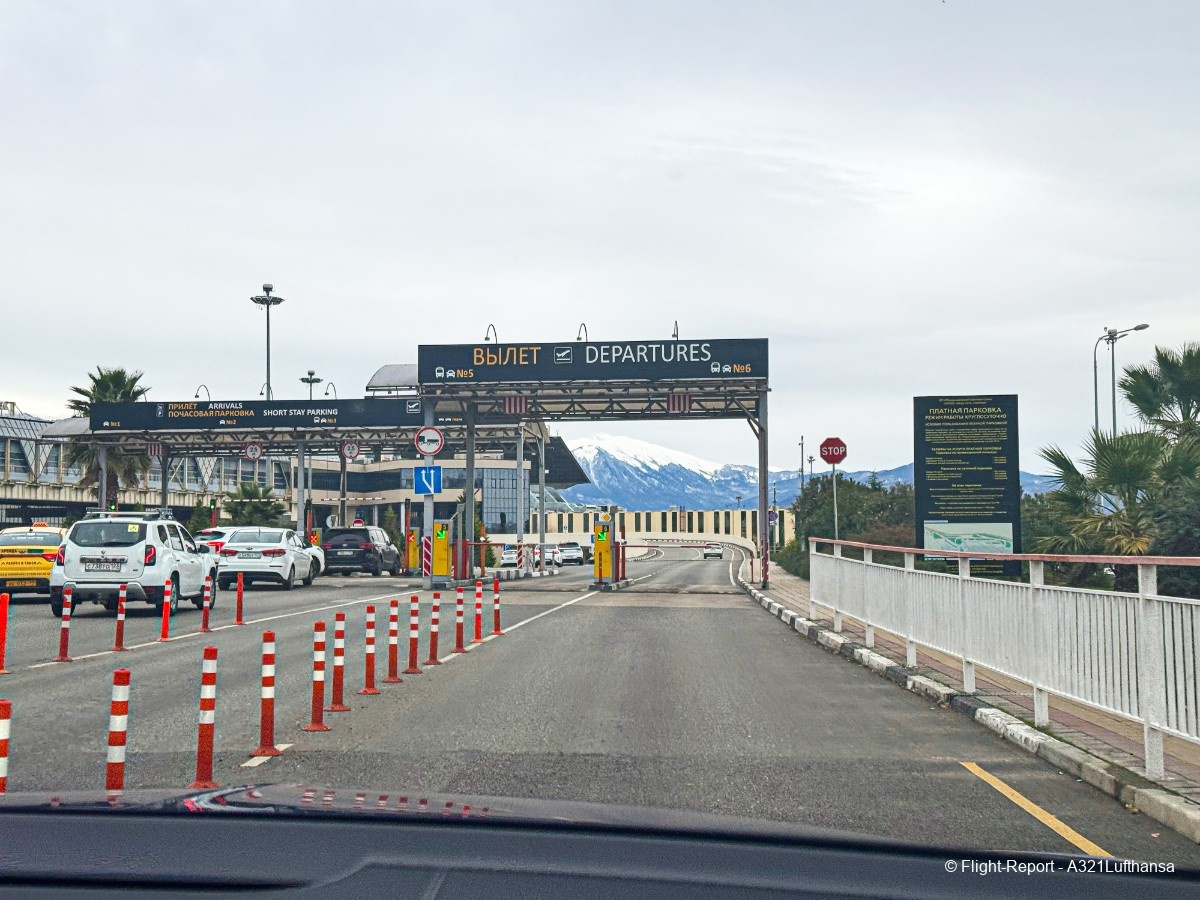
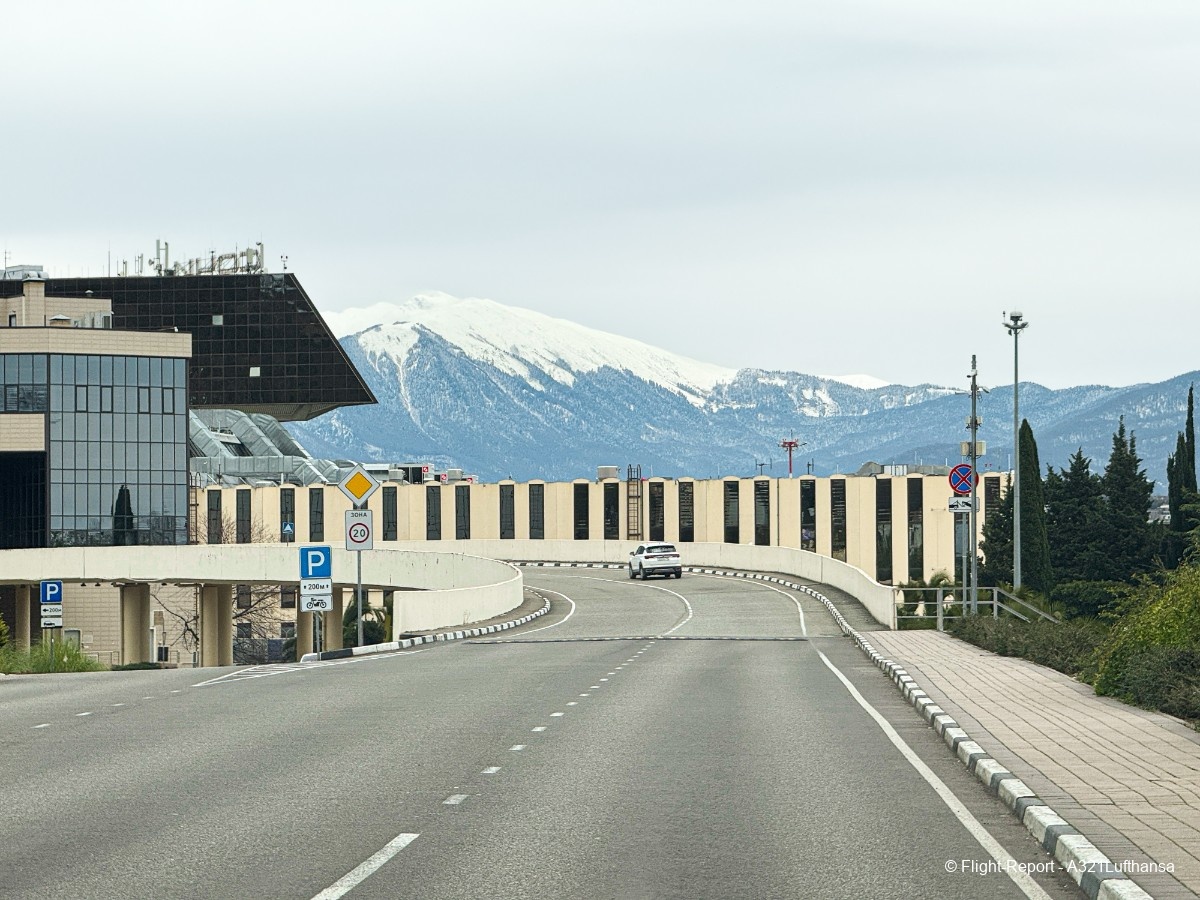
After being dropped off in departures area, it's time to enter the terminal. Russian airports have a mandatory security check at the entrance, luckily the line was relatively short.
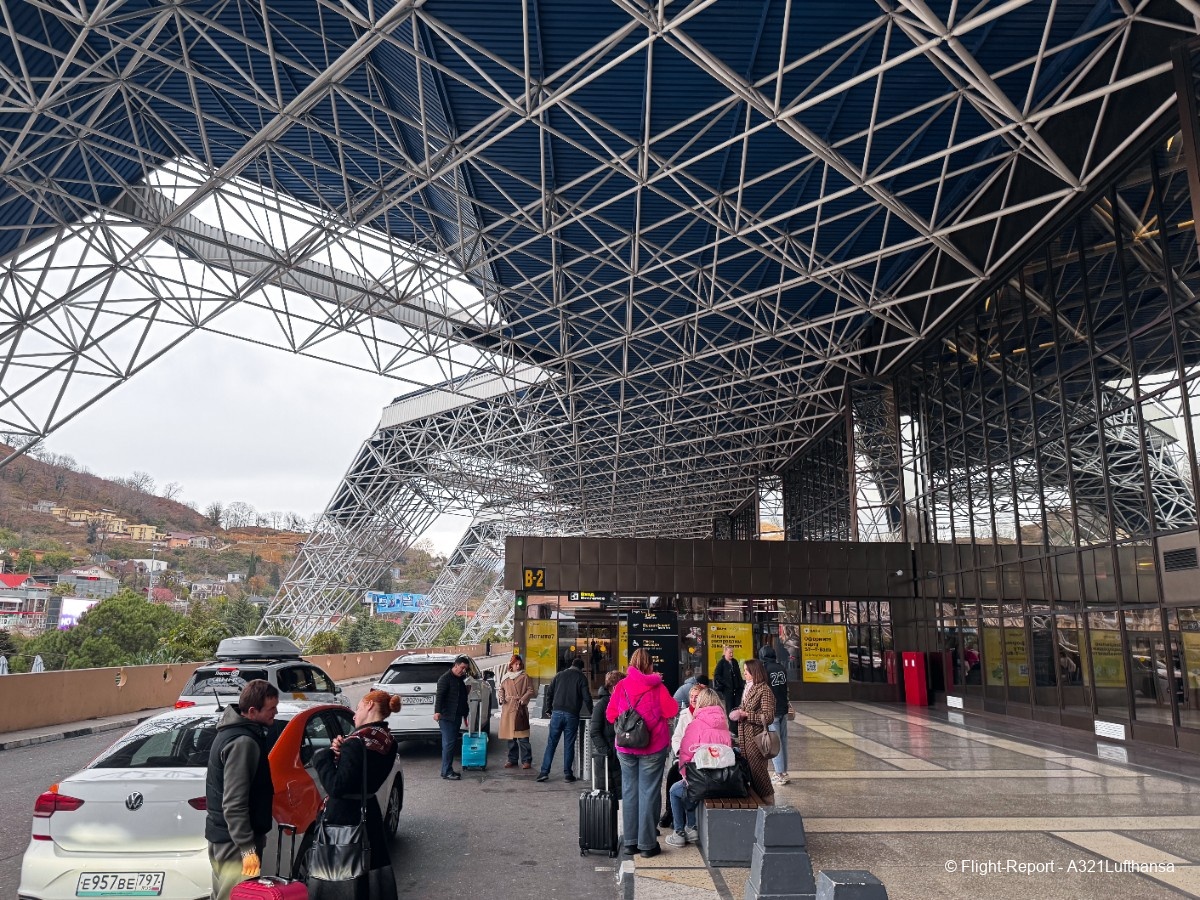
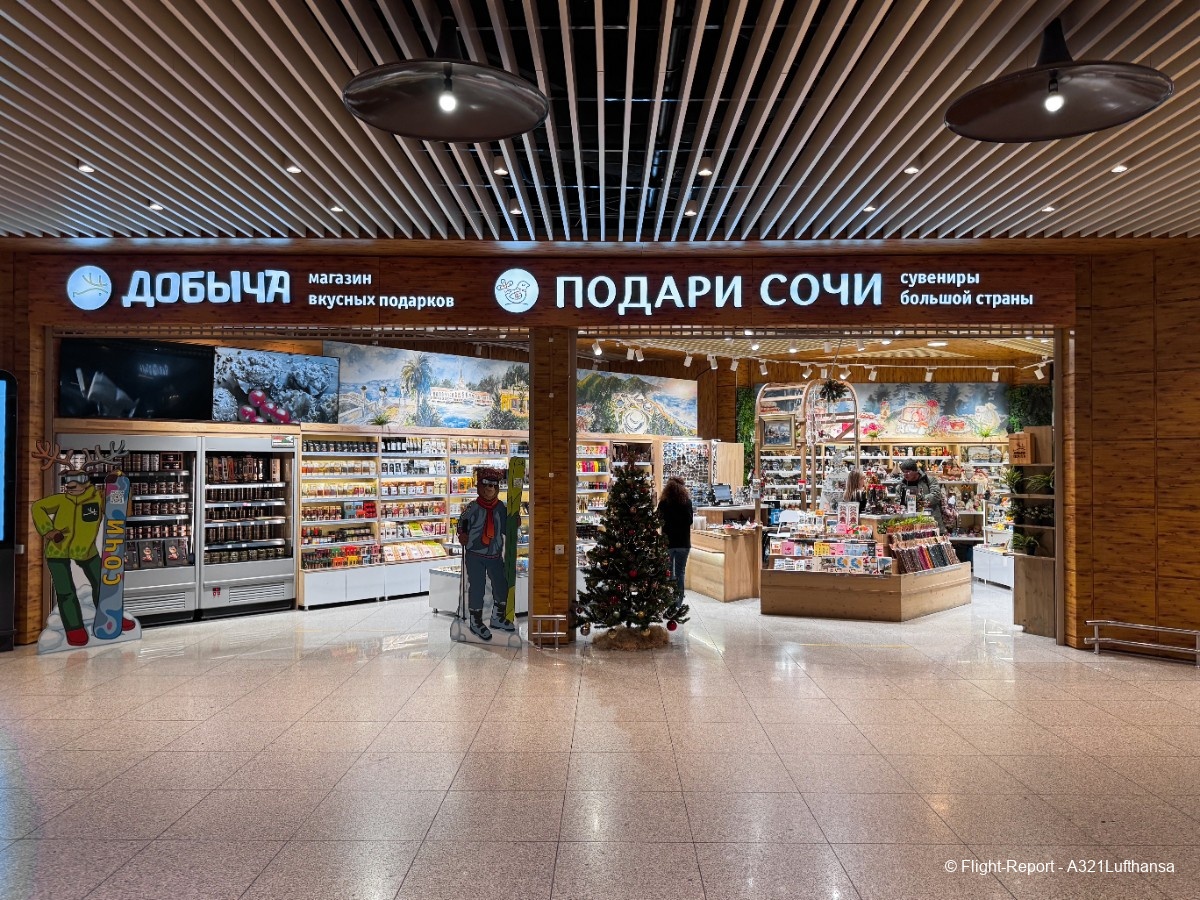
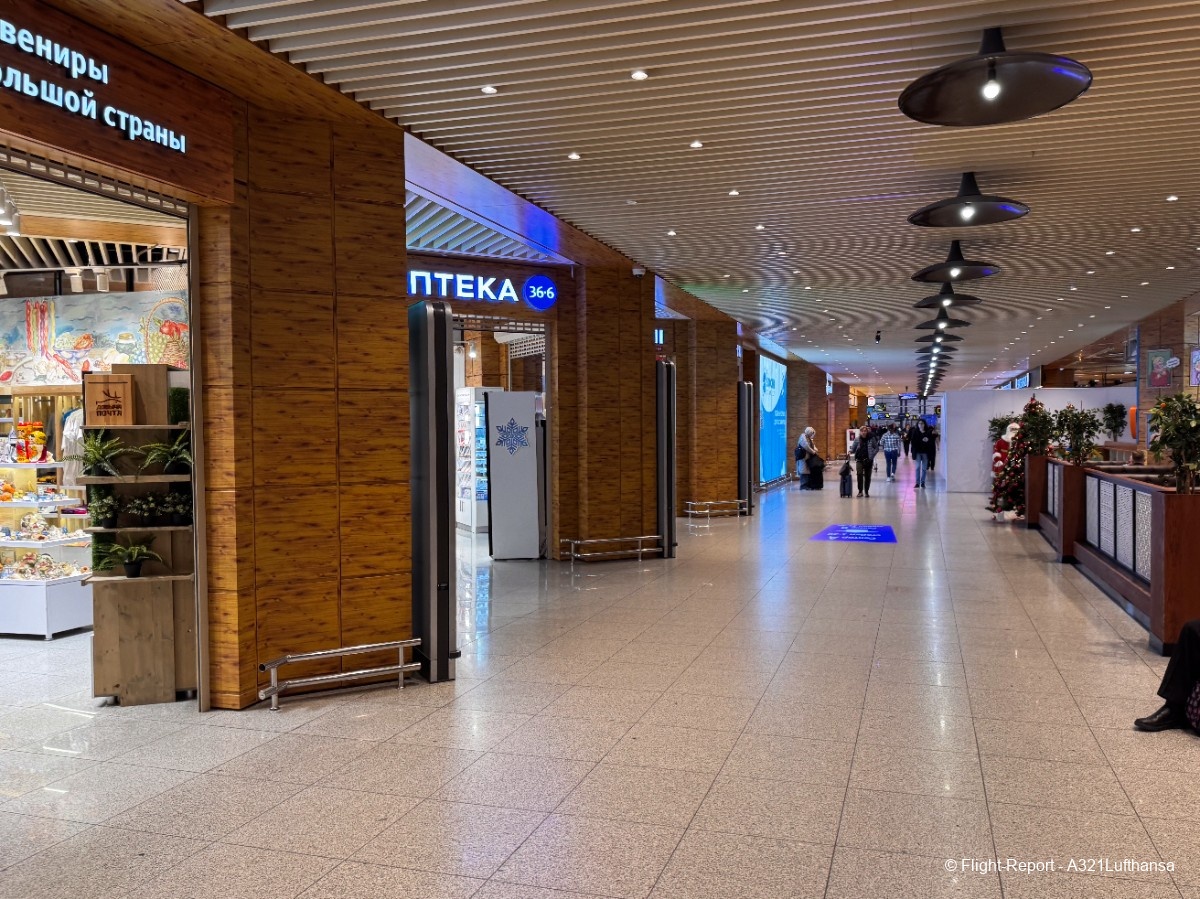
Upon entering terminal there is a large chain of souvenir shops, pharmacy and cafes occupying the corridor separating check-in halls for domestic and international flights. In one of those cafes I'll be waiting for my aircraft's arrival after checking in.
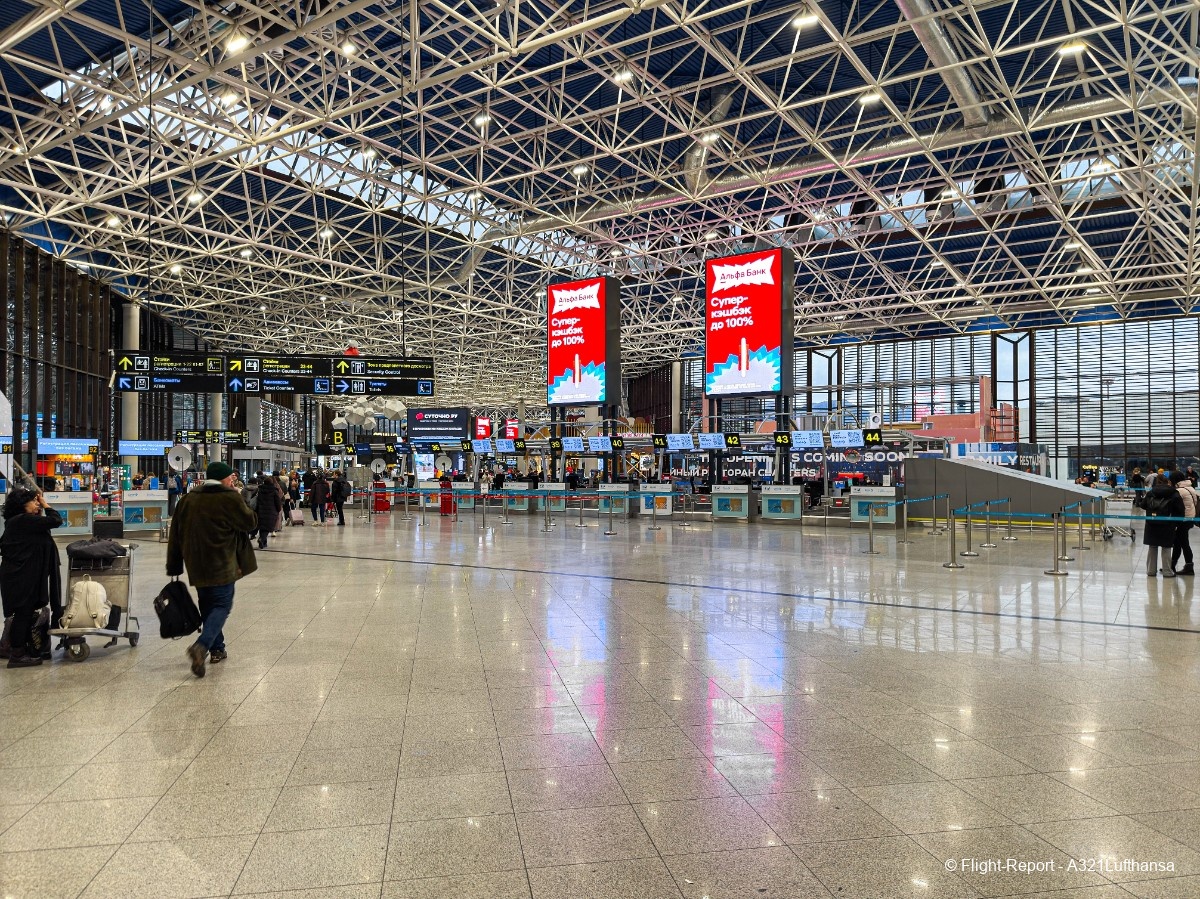
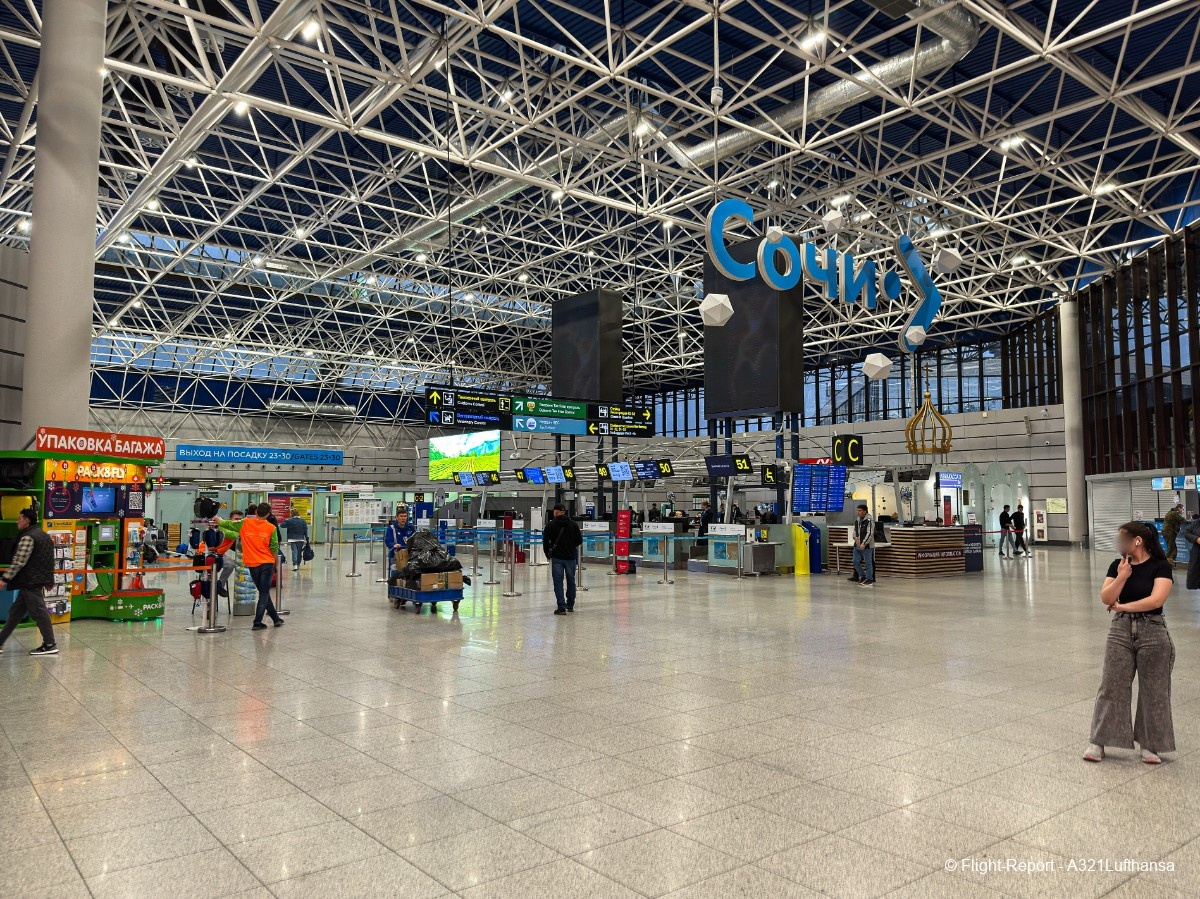
So it's time to turn left to the domestic check-in hall which in fact features two areas – A and B (check-in for international flights is designated as C). This part of terminal is the most spacious and pleasant compared to cramped and dull gates area and arrival zone:
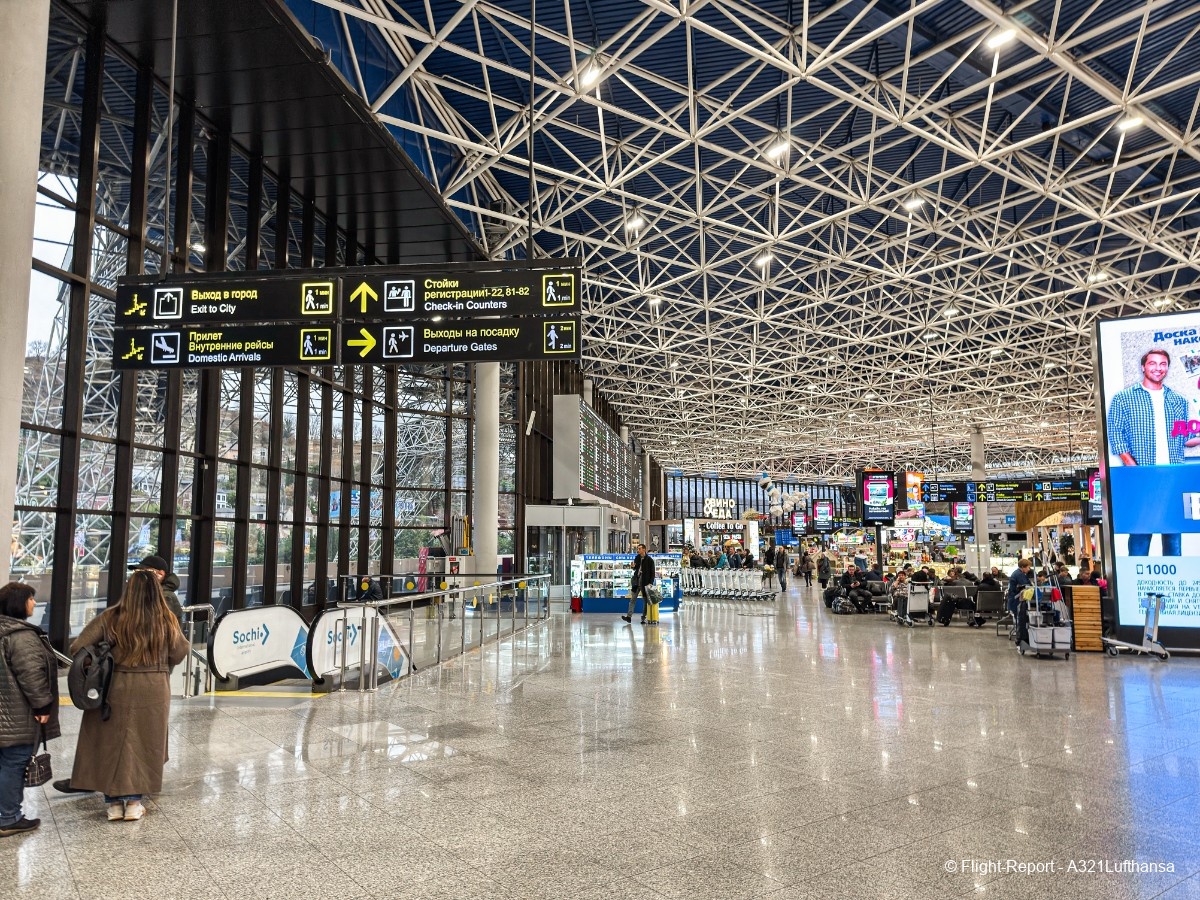
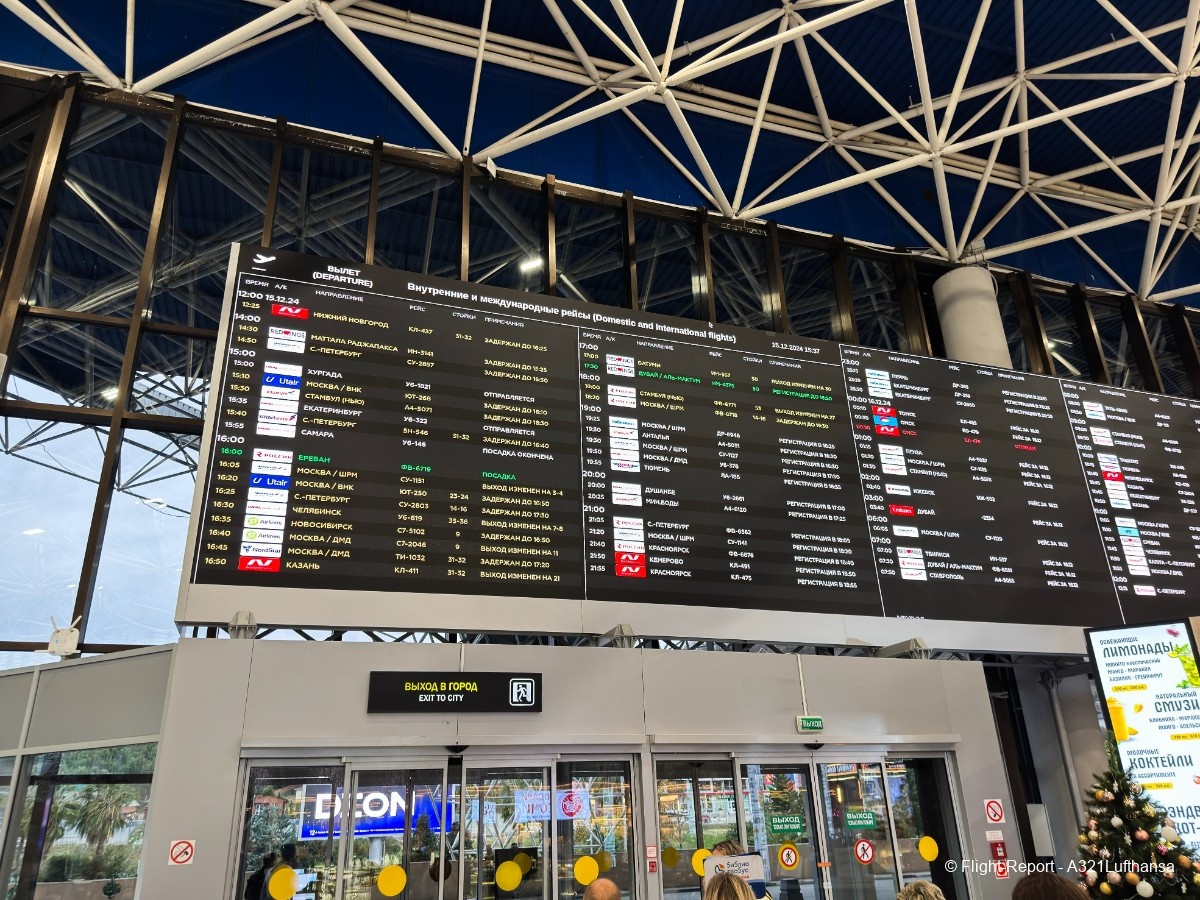
There is a large departures board hanging above the exit. My flight SU6718 was scheduled for 18:20, but my Jumbo Jet had departed good 2 hours late from Moscow, so the new departure time from Sochi was pushed back to 19:30:
Aeroflot and Rossiya flights were checked in at counters 12-16. As you can see, there were virtually no queues. Most likely, the bulk of passengers on Aeroflot’s St. Petersburg flight had already checked in, while many passengers from my flight had yet to arrive:
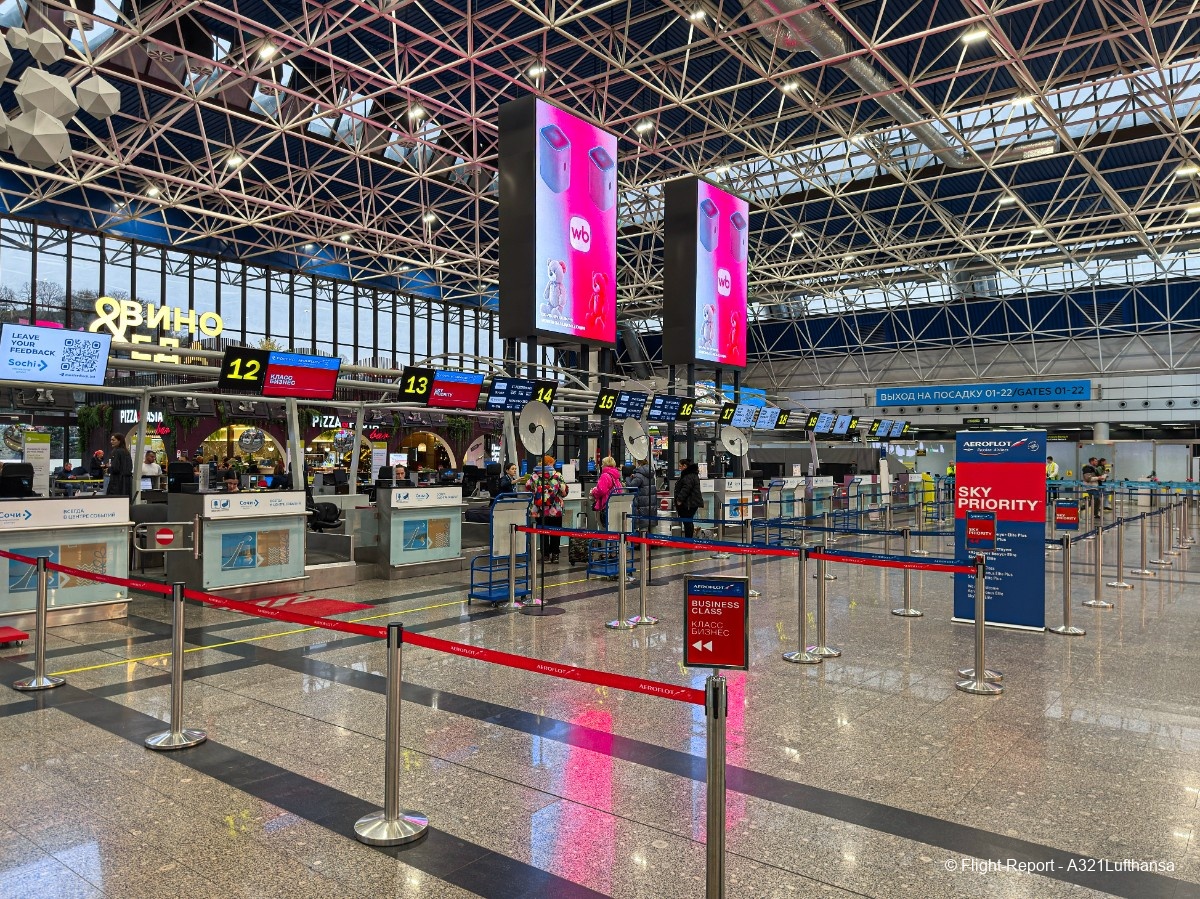
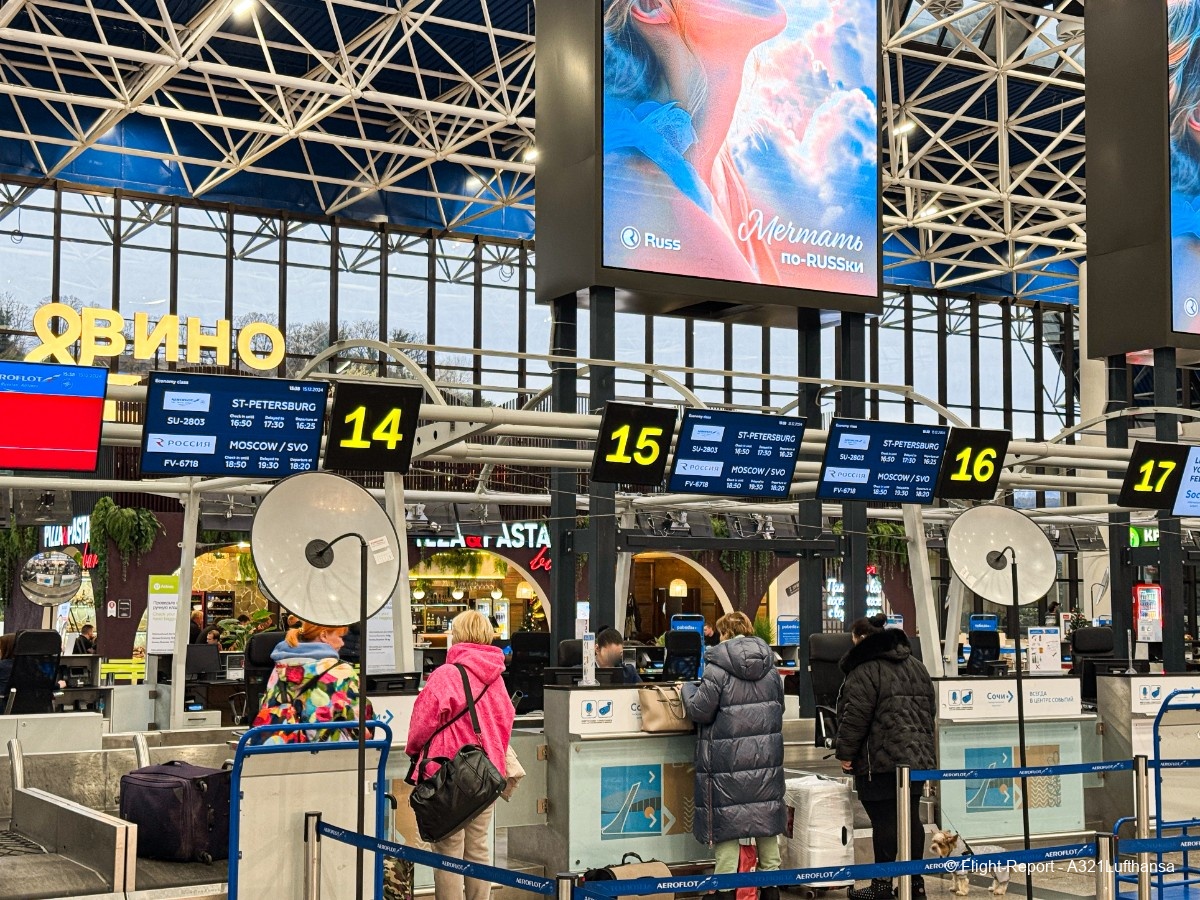
After dropping off my suitcase and receiving my boarding pass with precious UD (Upper Deck) boarding zone (given how cramped the gates area is, priority boarding is a really pleasant feature), I decided to refrain from going immediately to the security check. First, due to delay, and the main reason is that my flight was to depart from gate 1 where it is virtually impossible to take a photo of the aircraft. So I decided on a tactical move: not to rush into the gates area and instead capture the aircraft’s arrival from outside (gate 1 is perfectly visible outside the terminal). For the moment, I allowed myself a brief pause in the local massage chairs:
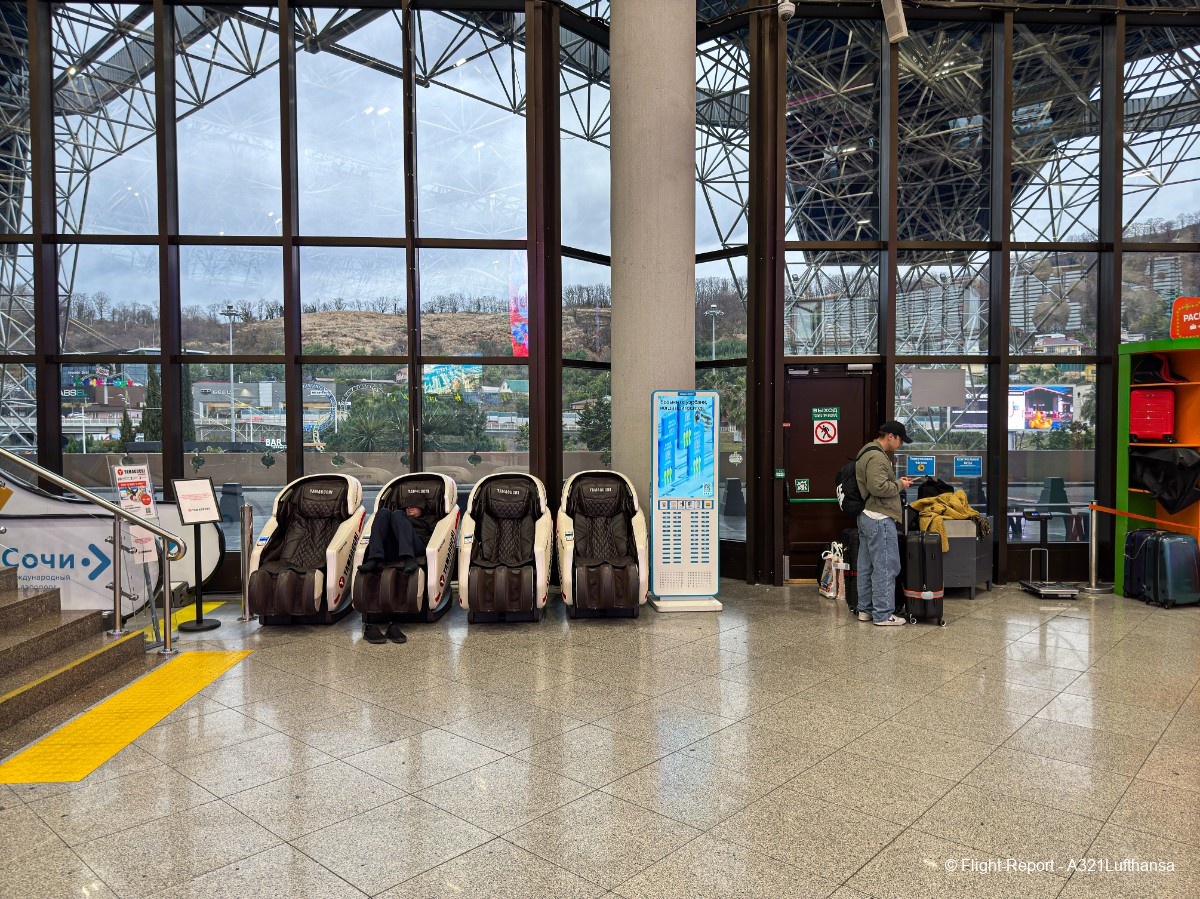
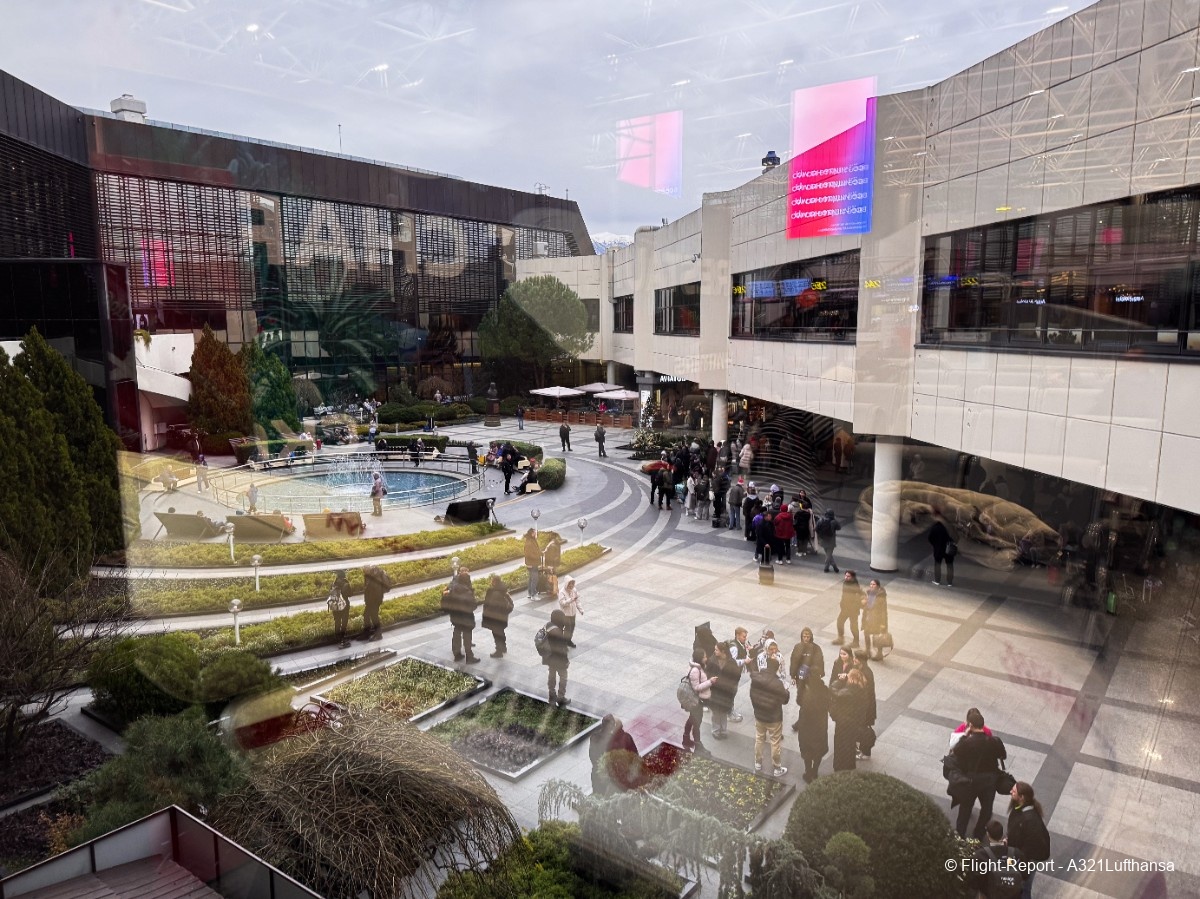
From the other side you can see the most appreciated perk of Sochi airport – the whole huge garden at the disposal of departing passengers – entrance is possible from the gates area. I'll show it later on in details:
Then I walked to the check-in area C dedicated to international flights. Only few of them were departing then. Batumi, Istanbul, Antalya and Dubai – all served by either Red Wings or Azimuth or Rossiya – all on SSJ-100s. A small chapel is also located there – quite rare for airports/
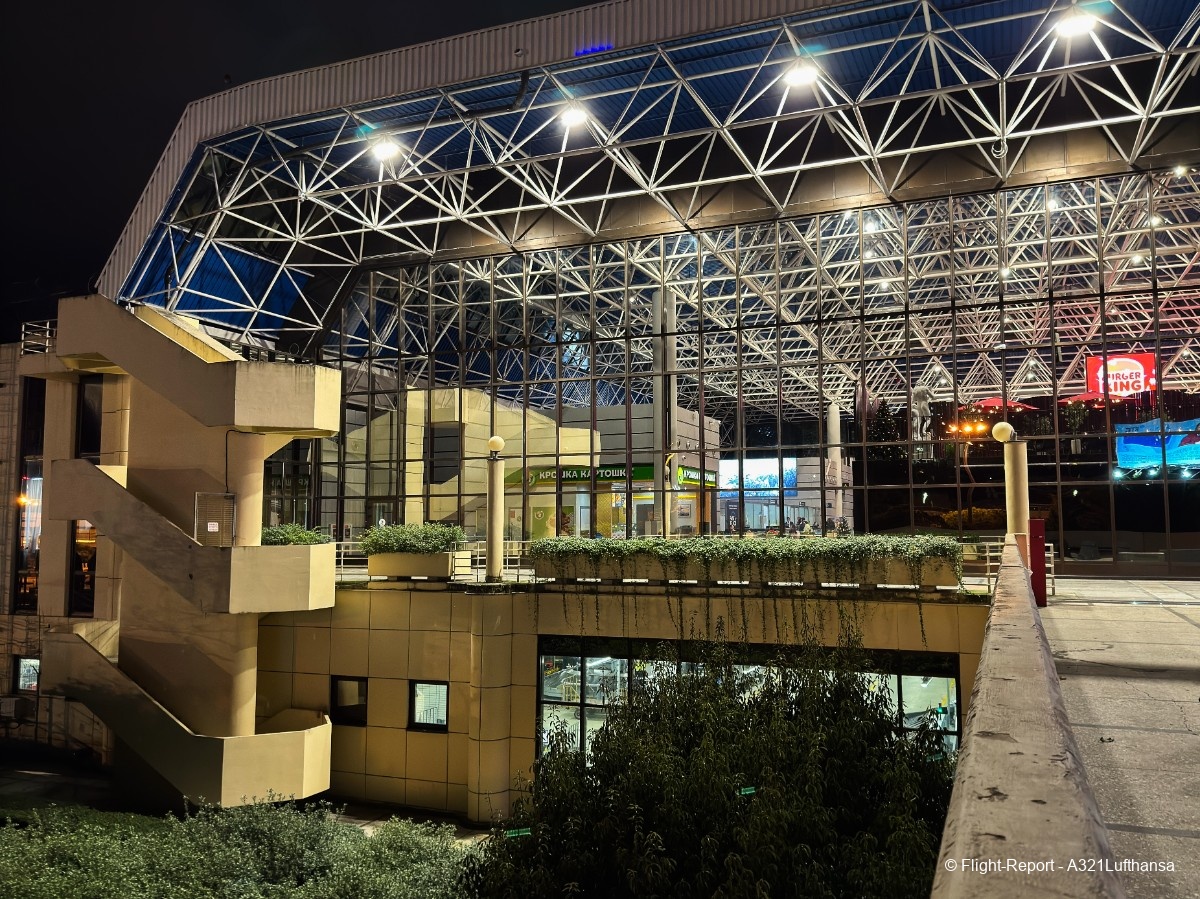
Then I sat down in Spaten Haus cafe to do some work and wait for my Jumbo's arrival over a glass of German dark beer. Eventually, the moment had come. I stepped back outside, walking to the far end of the departures area, where the terminal is clearly visible from the side:
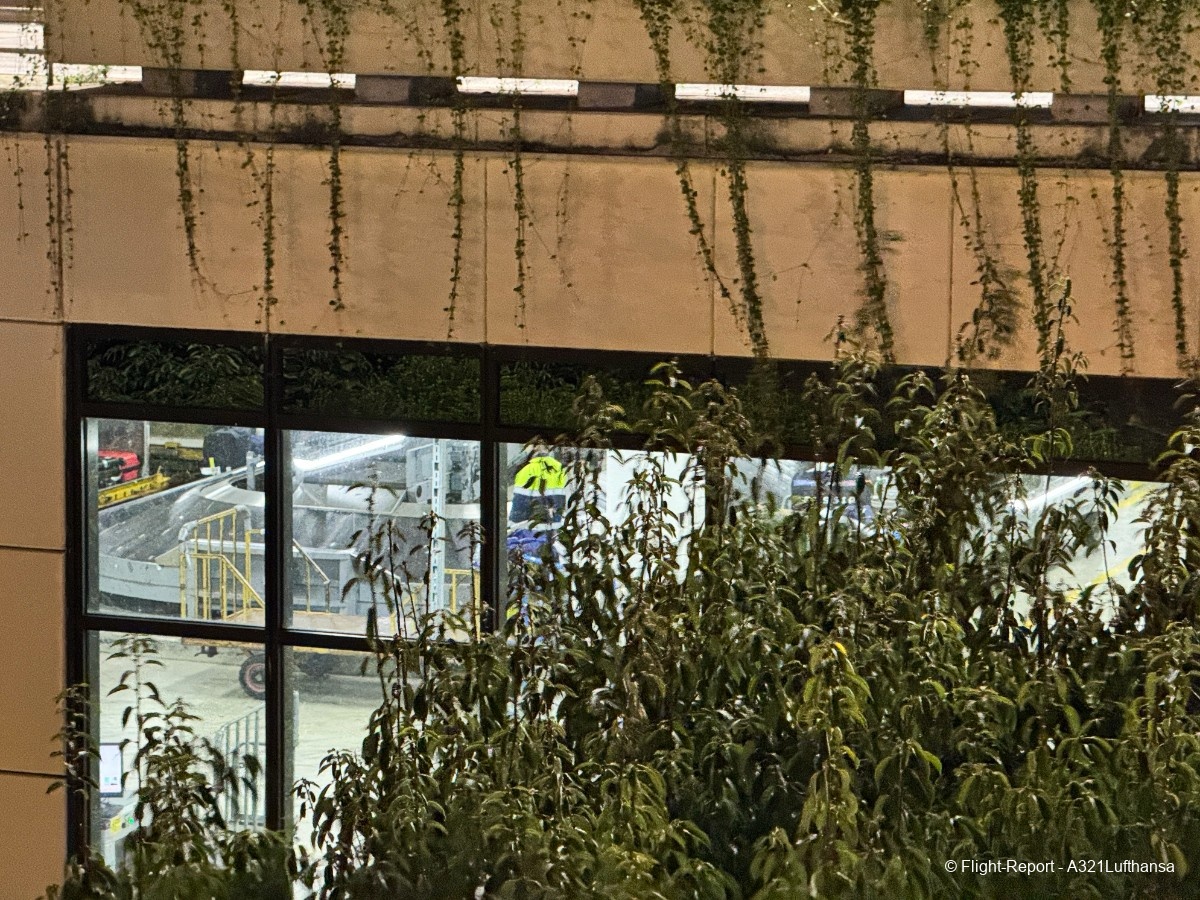
A deep, powerful roar filled the apron, and my breath was slowly taken away – my Jumbo had finally arrived.
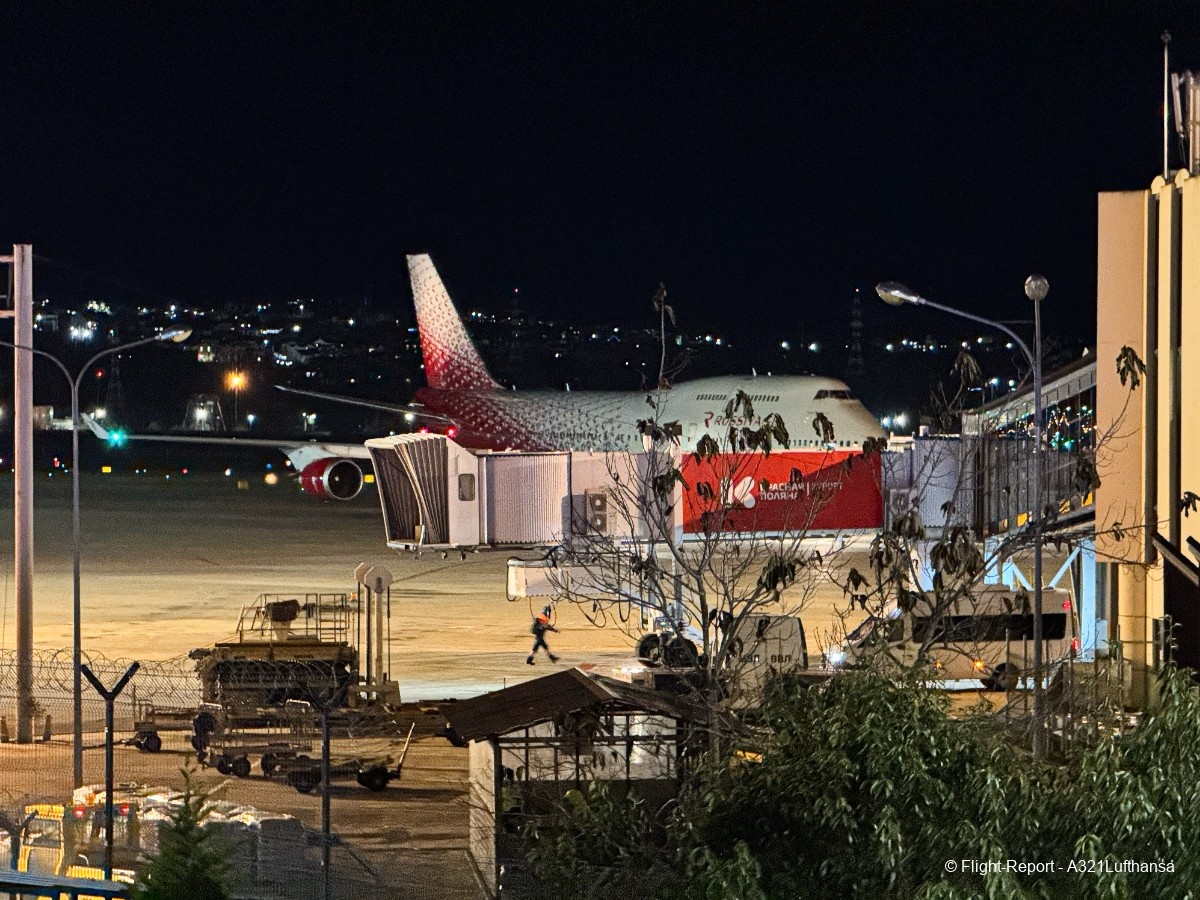
As it taxied in to the gate 1, I fired off countless shots. In my view, these two turned out best:
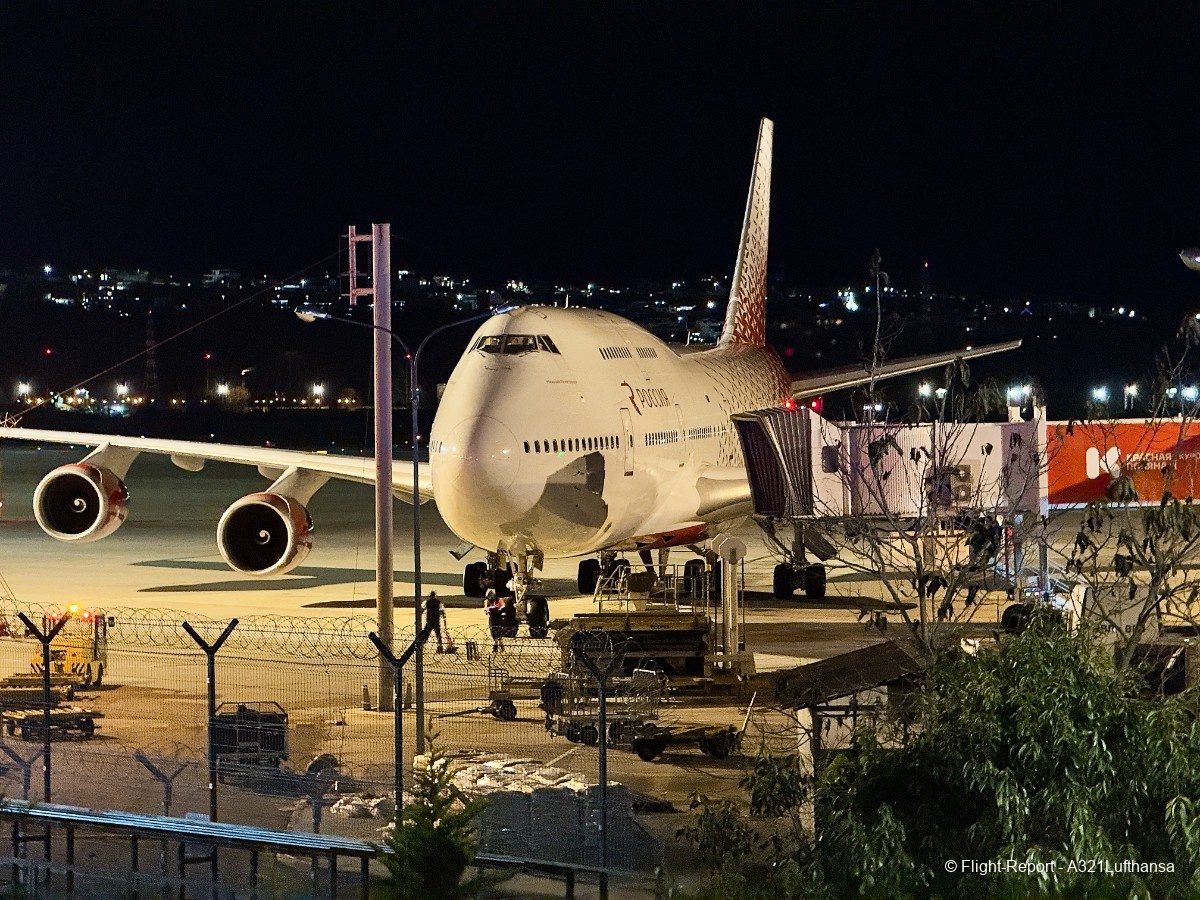
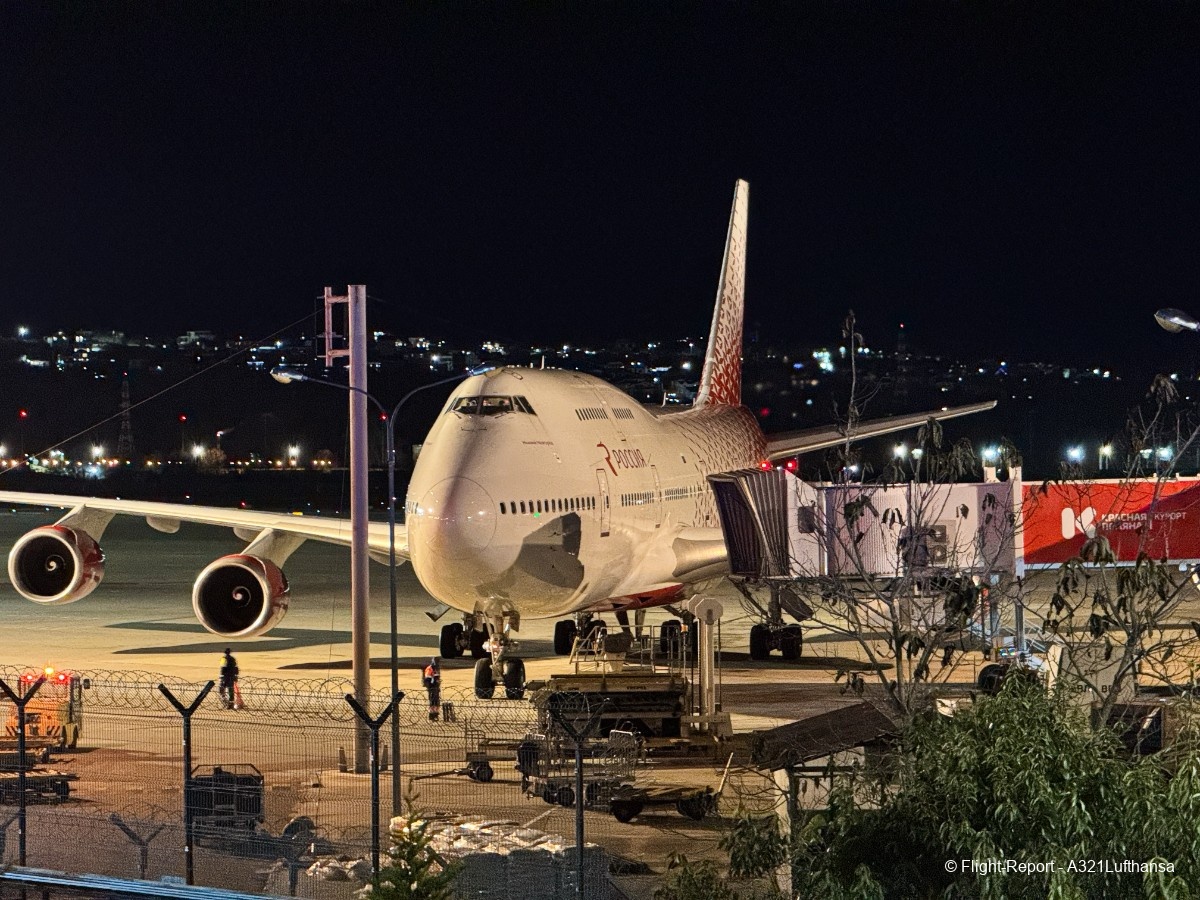
After my so-called Japanese syndrome had passed (fittingly, this aircraft has a Japanese past), it was time to head back inside:
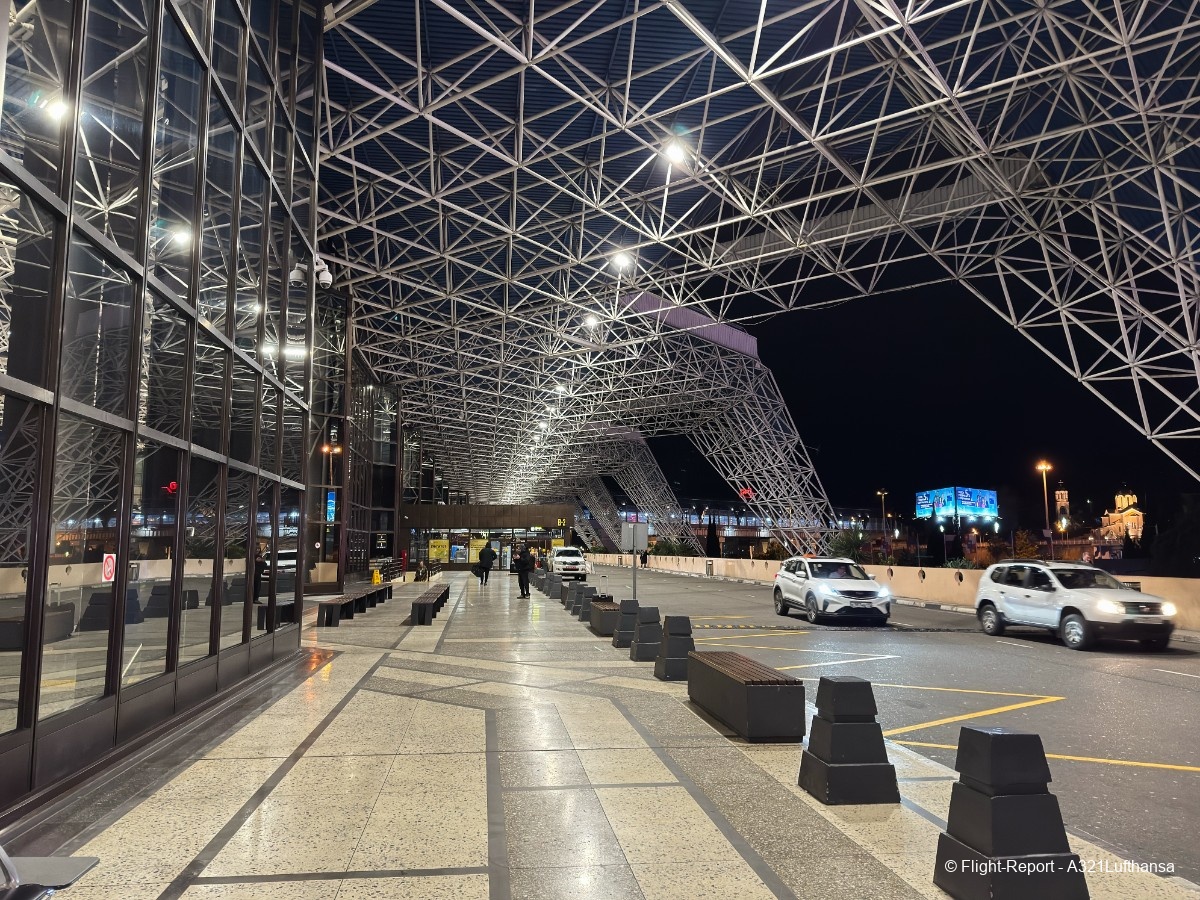
Ten minutes later, having passed both security checks – at the terminal entrance and into the gates area – I found myself in a large shop on the way to the gates, notable mainly for its decidedly uncompetitive prices:
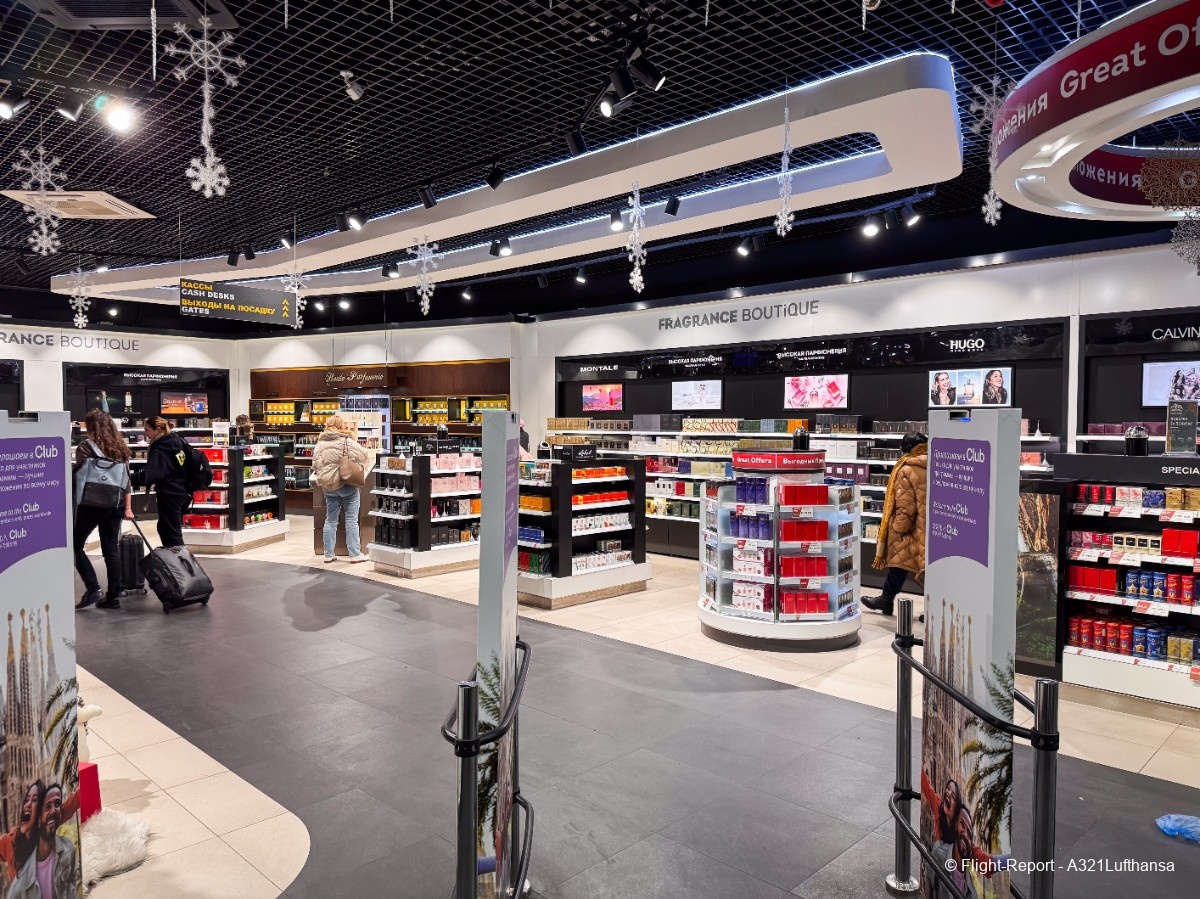
Beyond it you find the notoriously narrow corridor with multiple gates. It is frightening to imagine what happens here during the summer peak season:
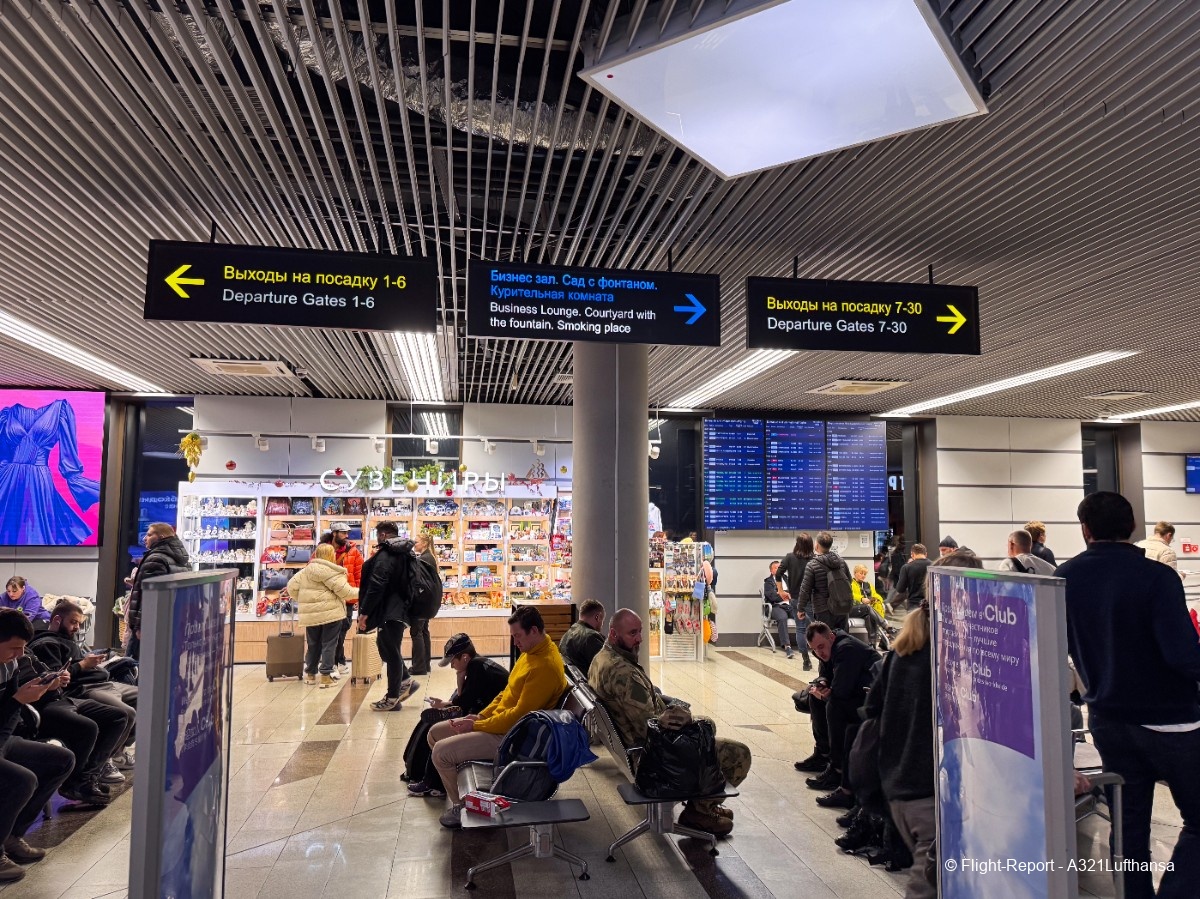
My gate was located to the left. However, I didn't hurry there as I had more than enough time at my disposal due to the departure delay.
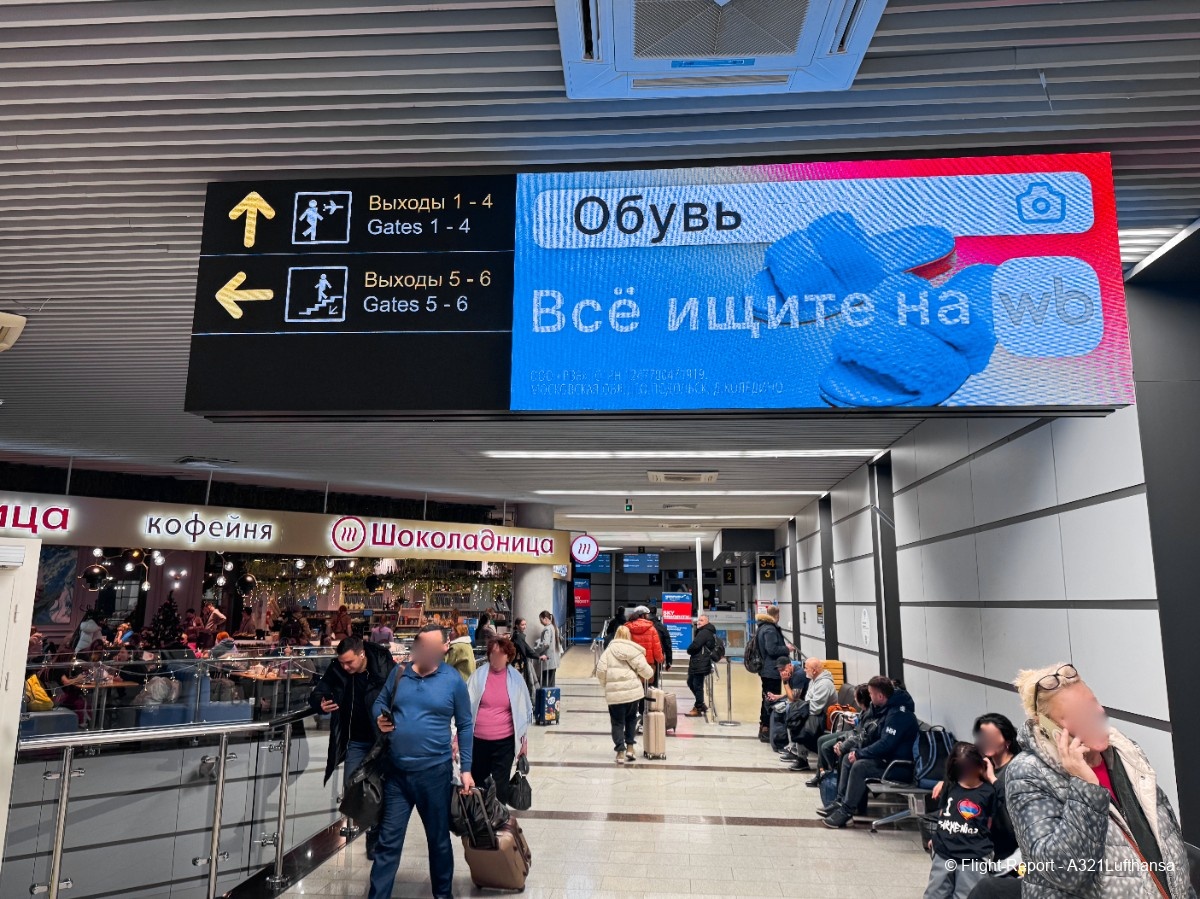
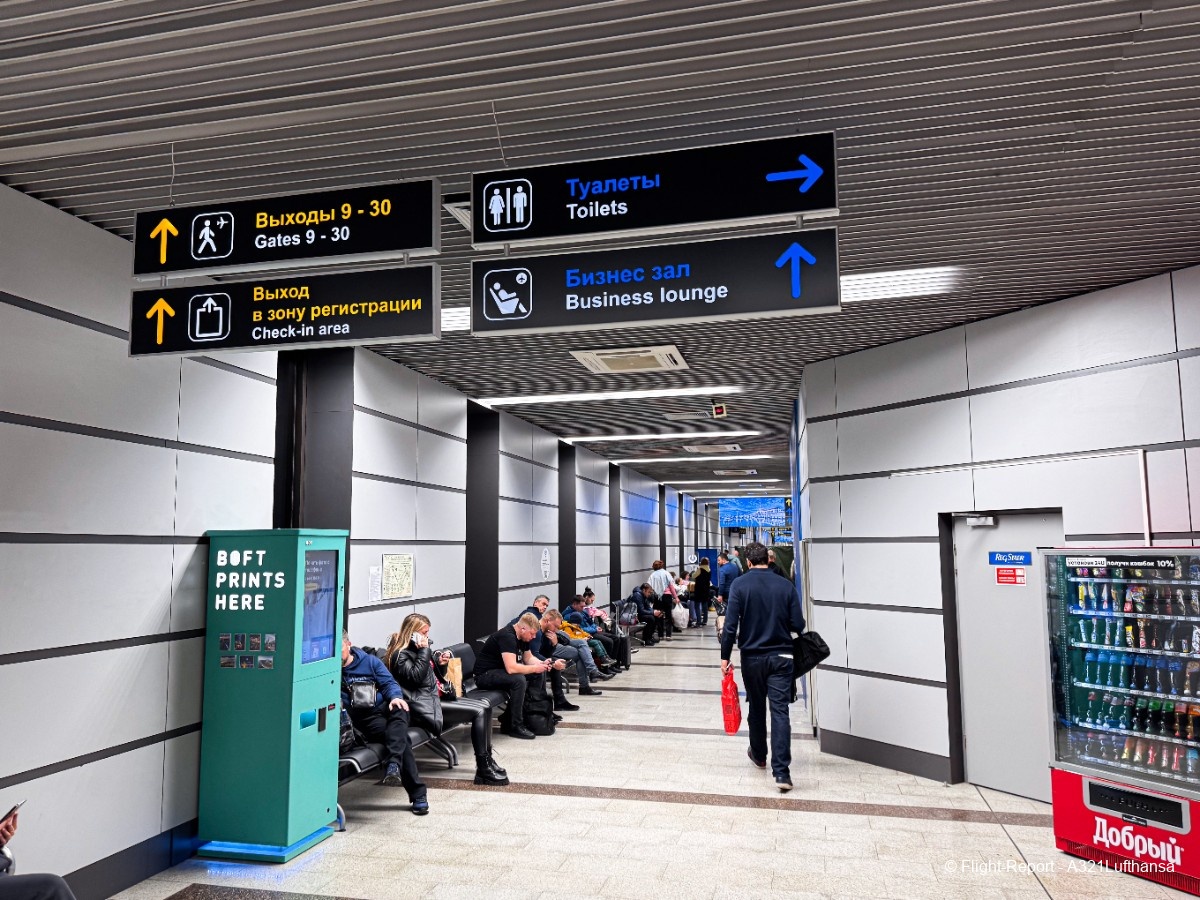
I decided not to waste my time and walk from the cramped gates area to the inner garden. You need to follow signage in the opposite direction – and then turn right and down the stairs:
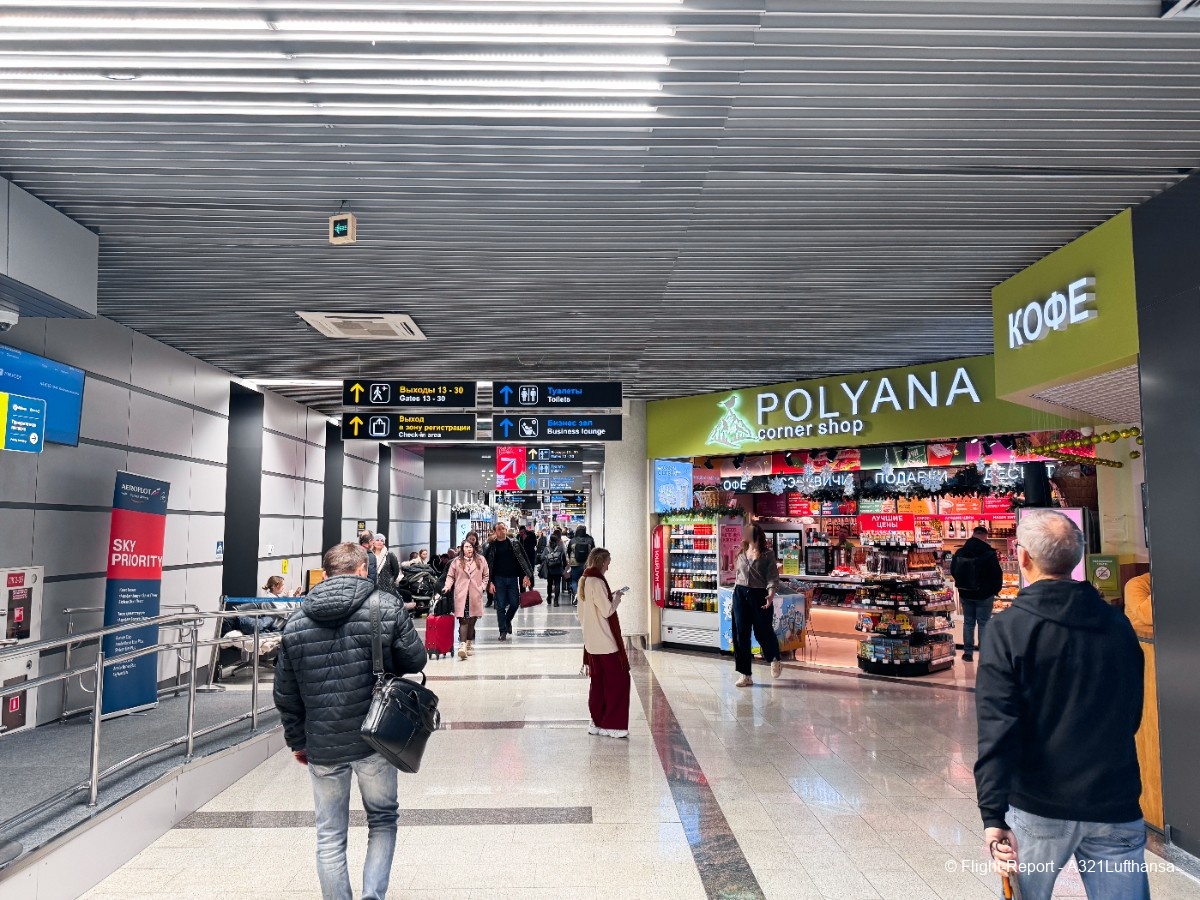
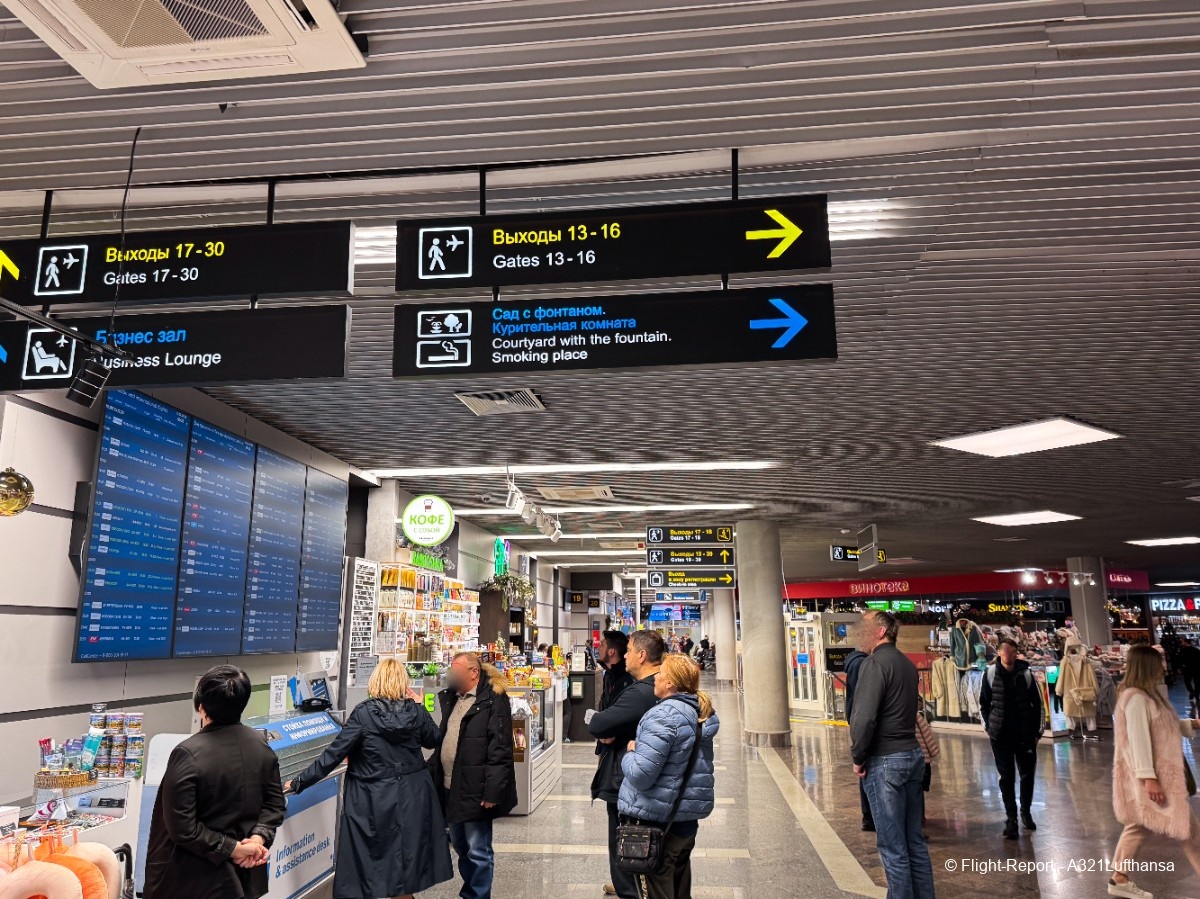
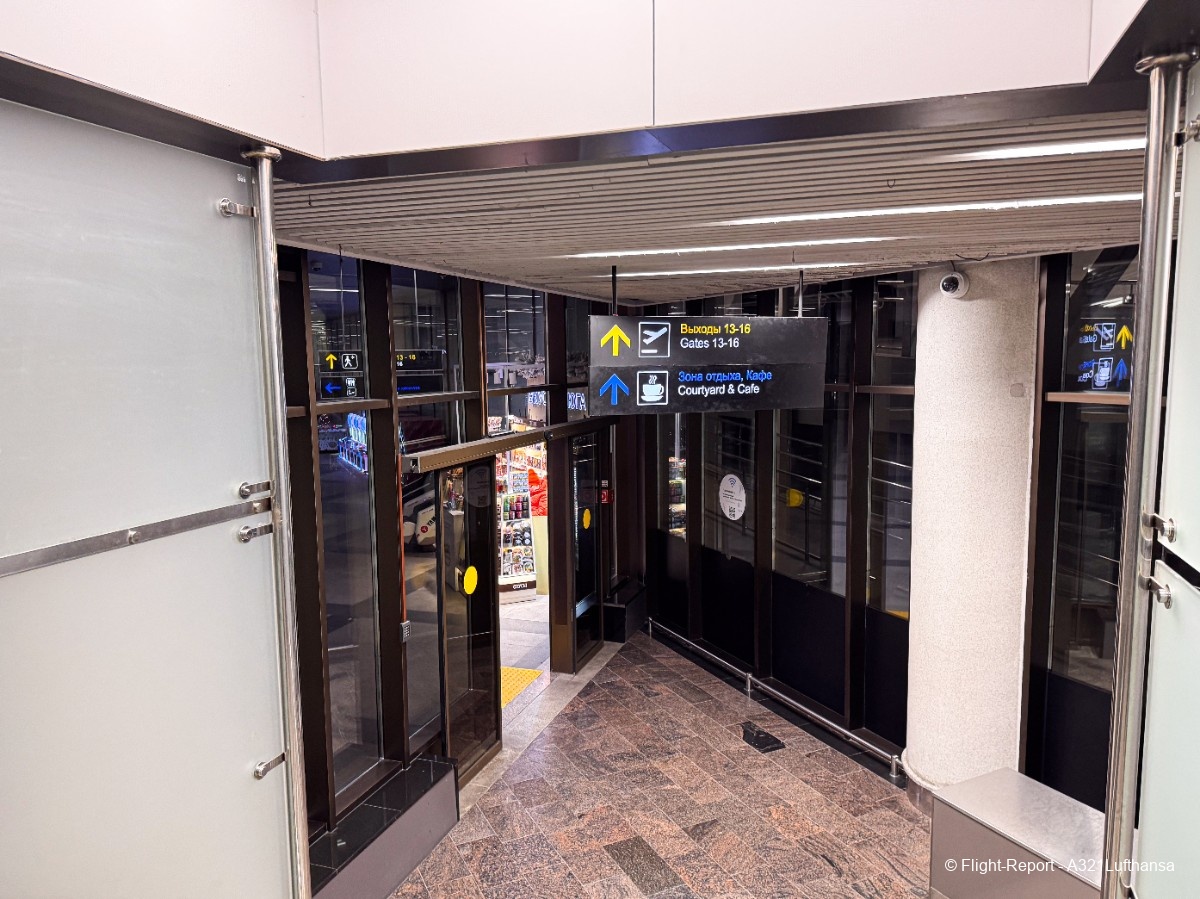
In the courtyard you stumble upon 4 bus gates – quite a rare experience:
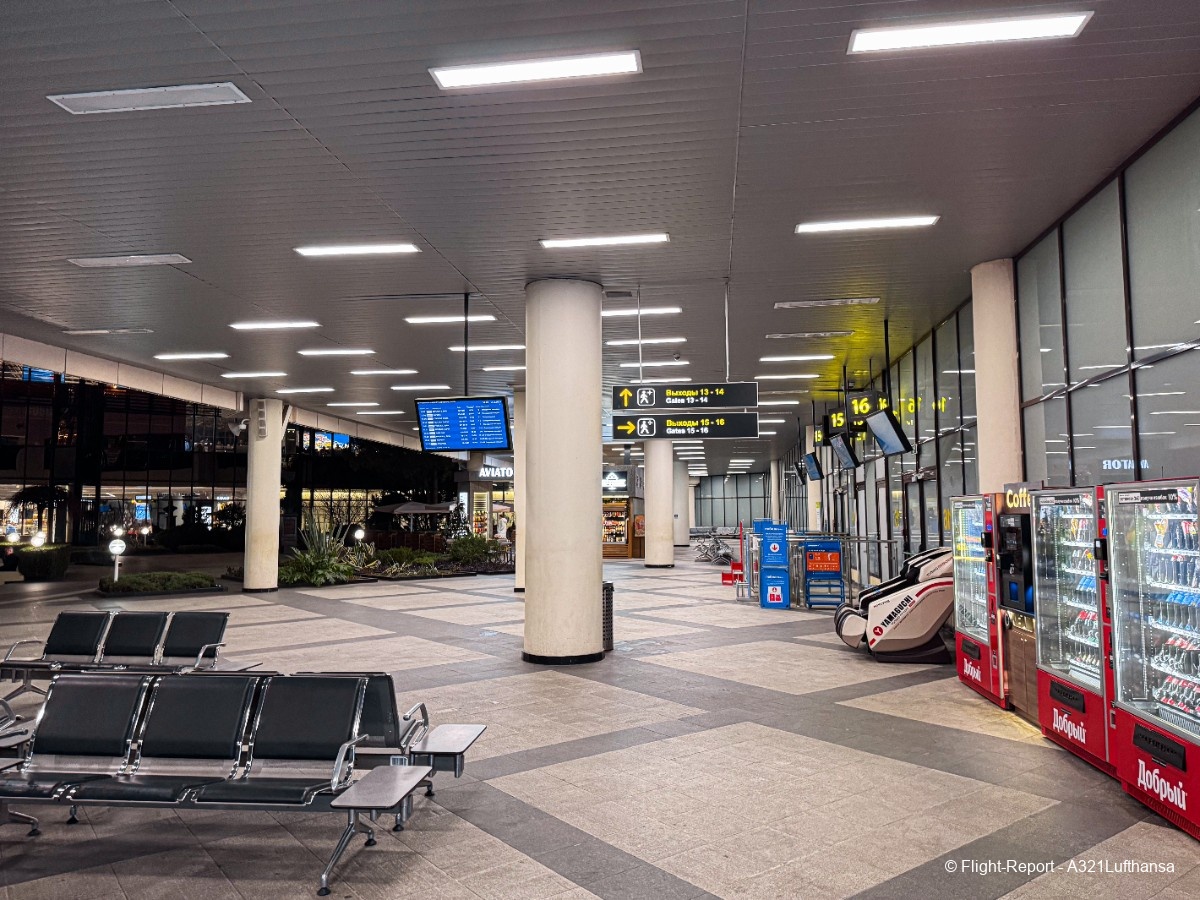
Alongside there is a small cafe named Aviator:
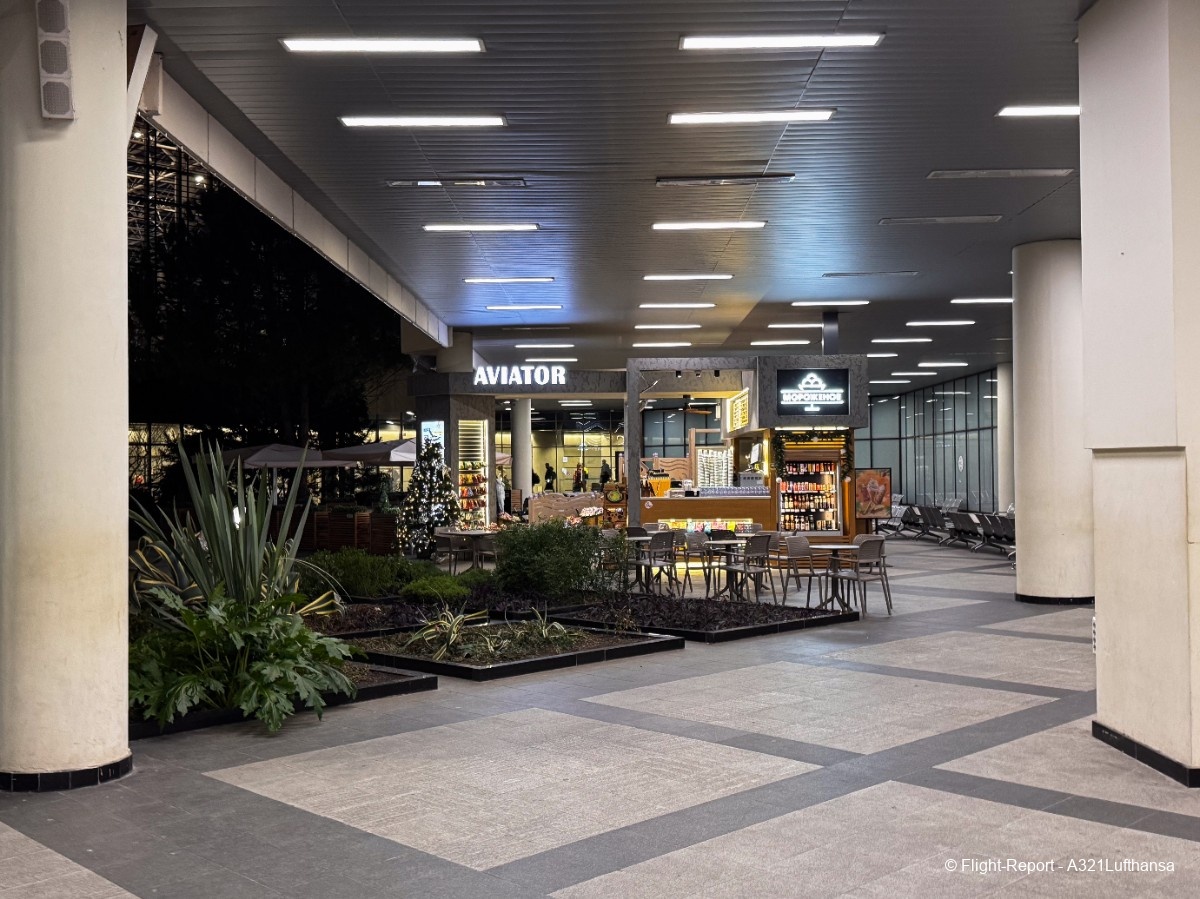
The garden itself is spacious, and it's really pleasant to spend time outside in quite warm 10 degrees in mid-December (after just 2 degrees the day before, which is considered as a really freezing weather for Sochi with its subtropical climate):
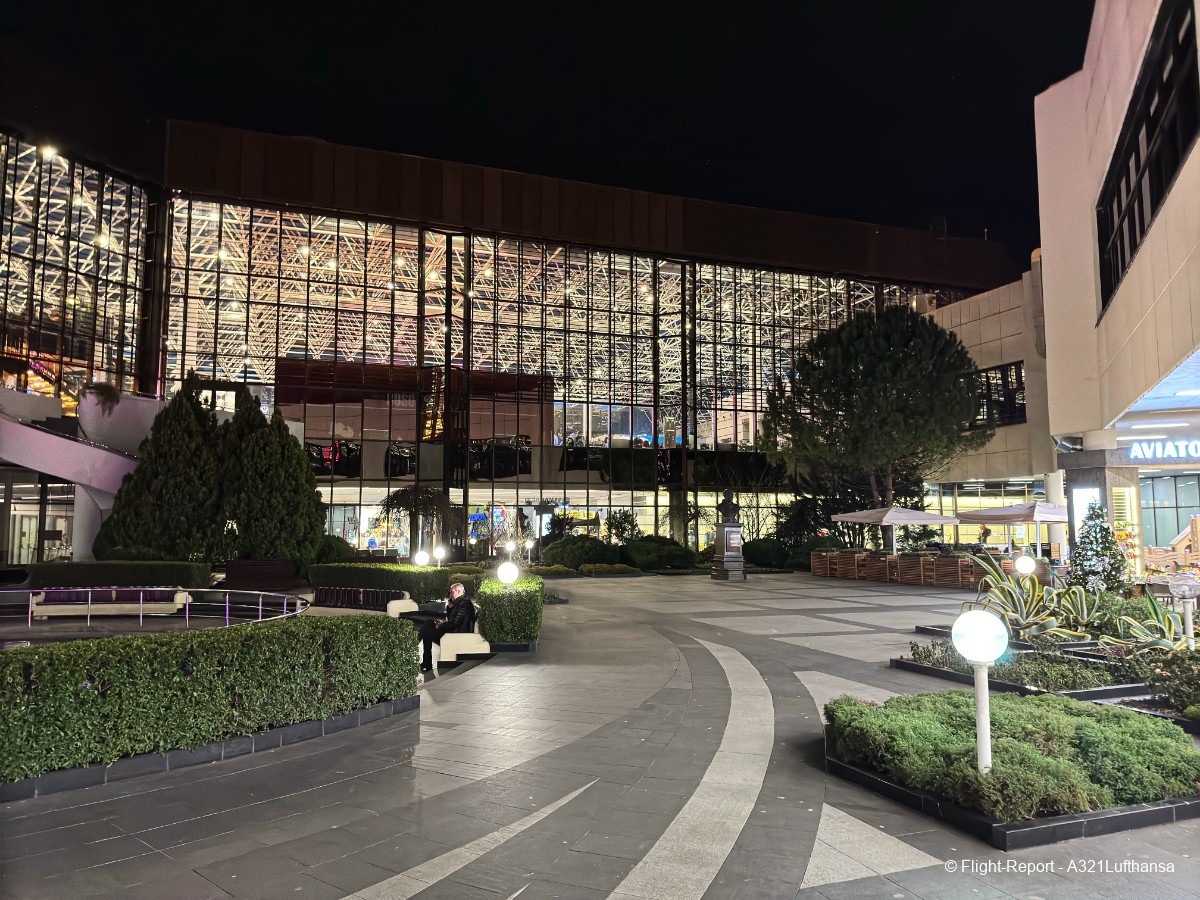
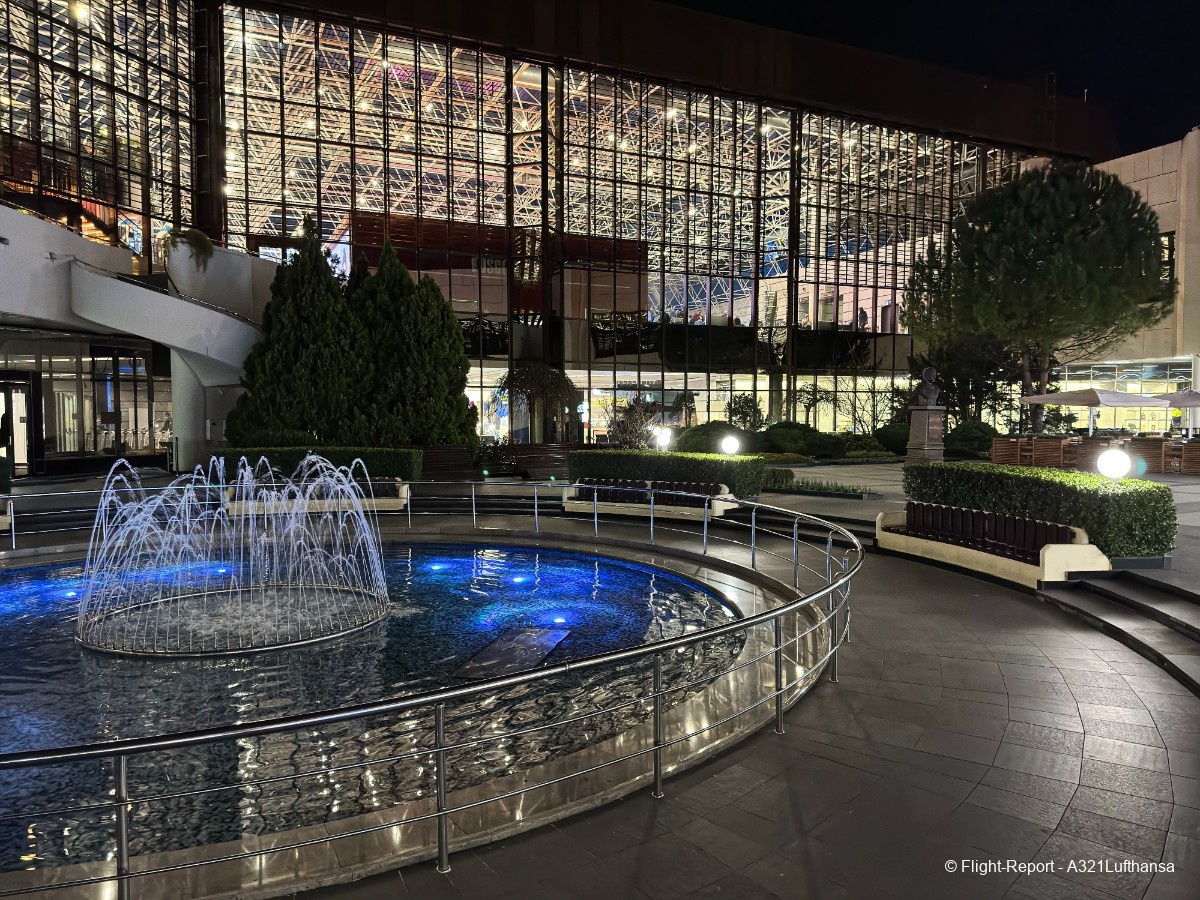
The fountain has a really beautiful illumination in the evening:
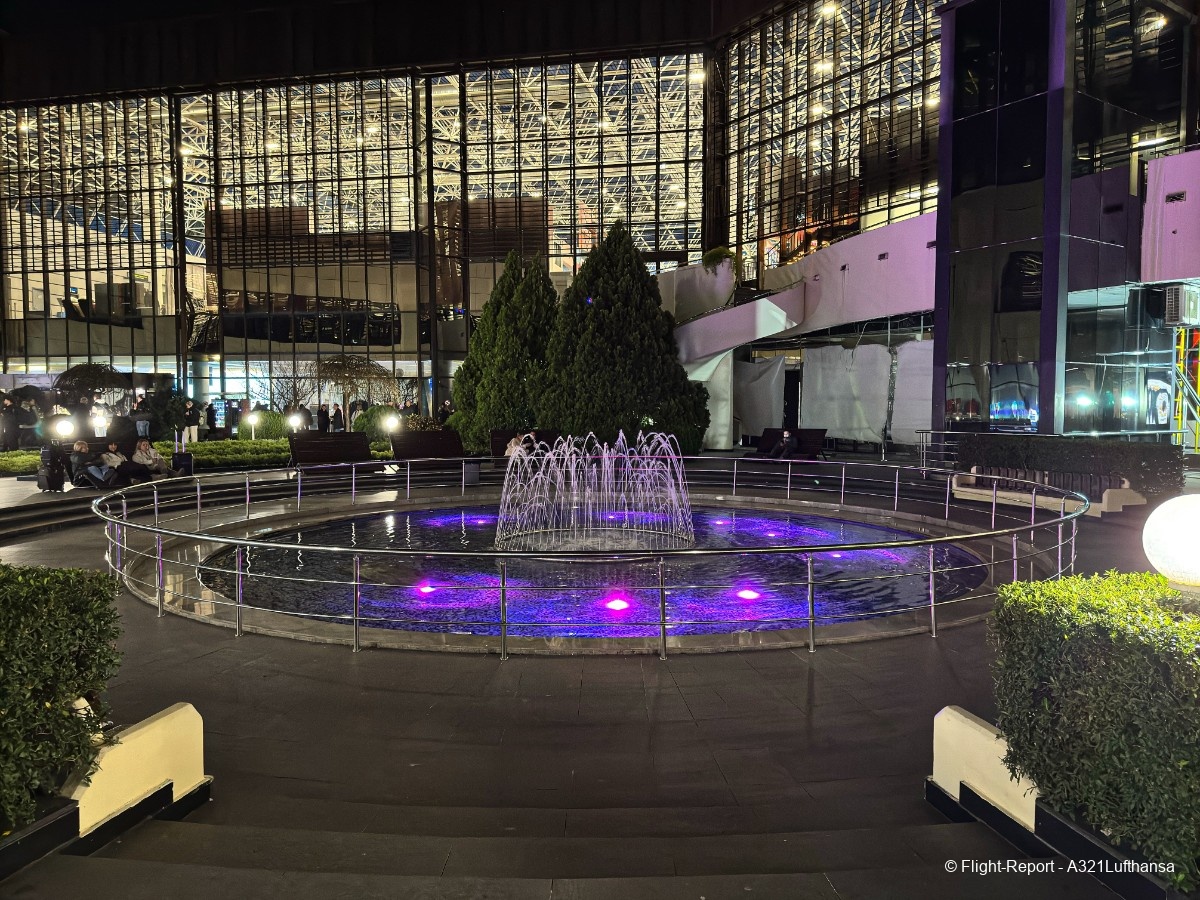
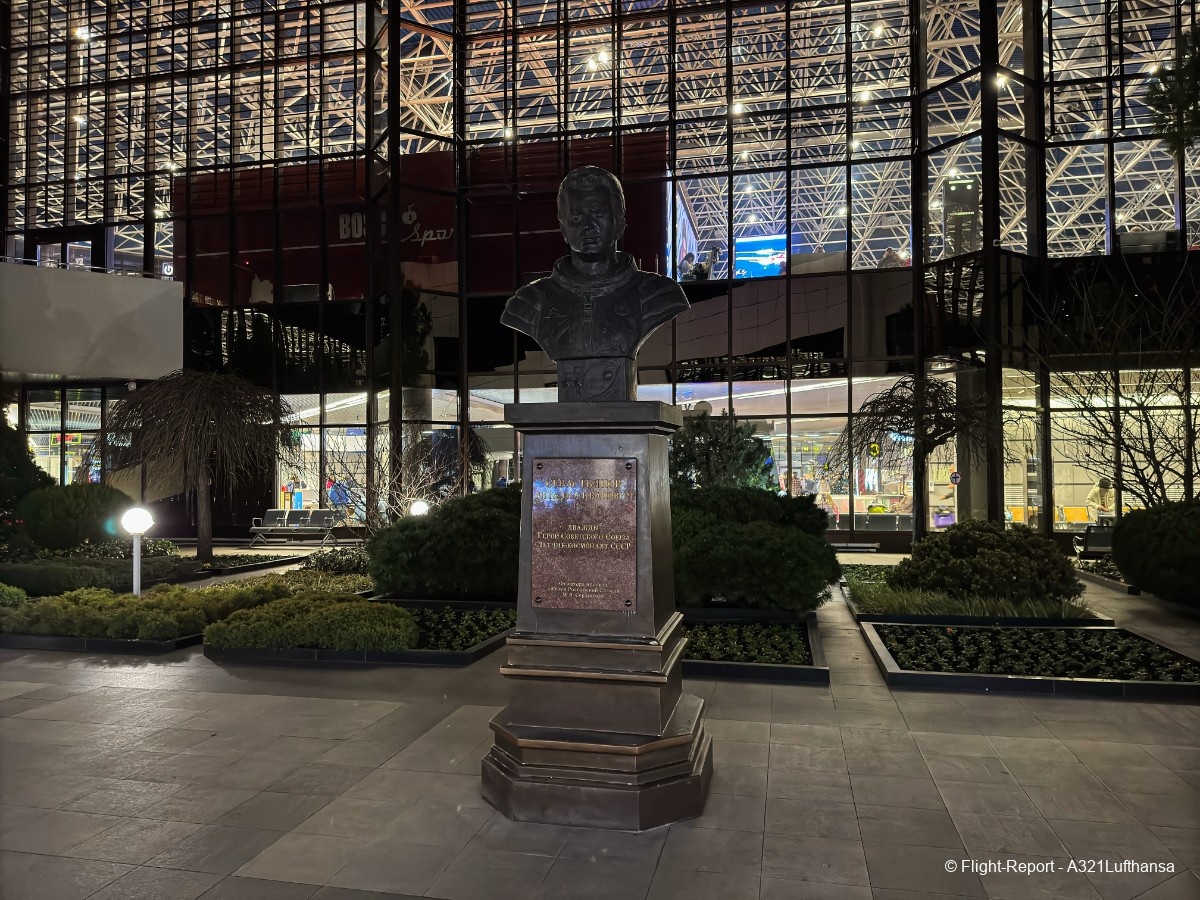
Nearby you can find a statue of twice Hero of the Soviet Union, cosmonaut Vitaly Sevastyanov, after whom the airport is named:
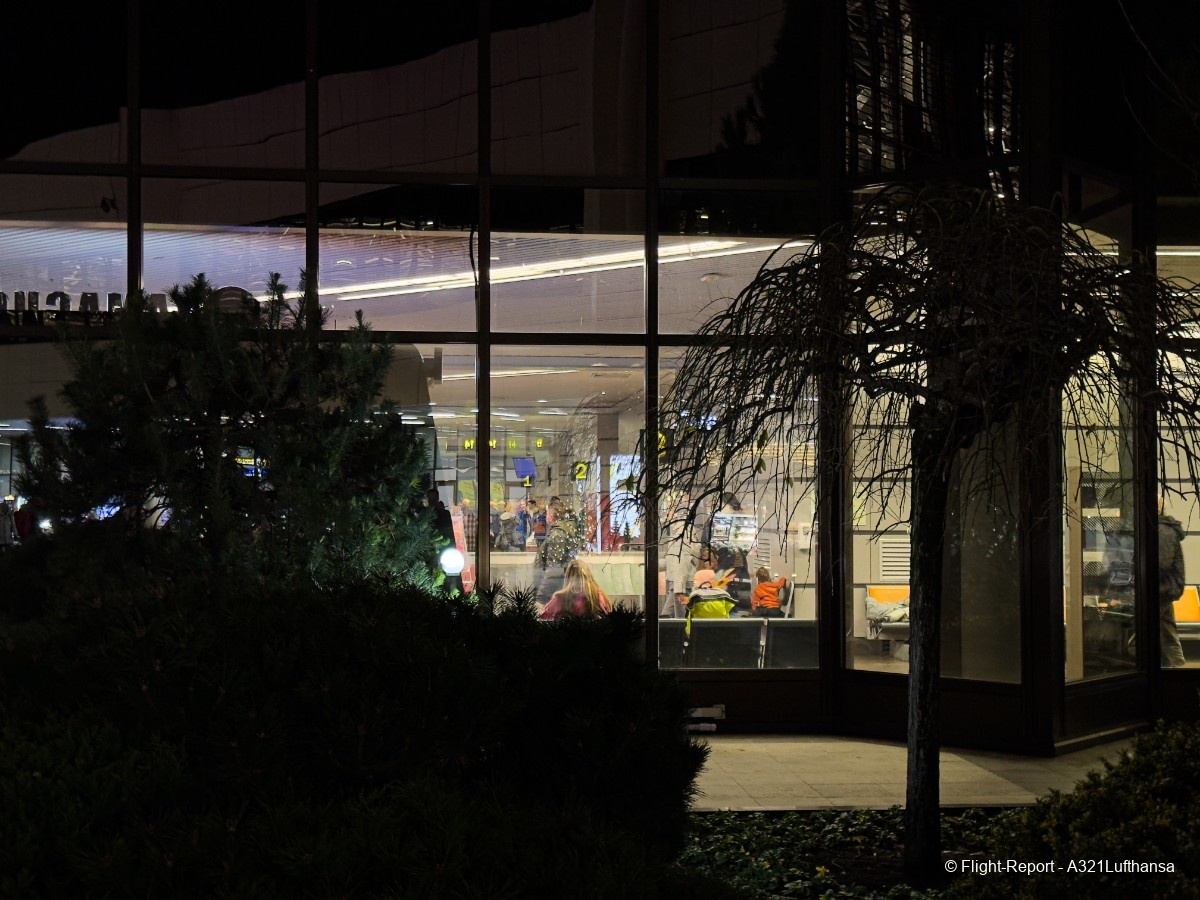
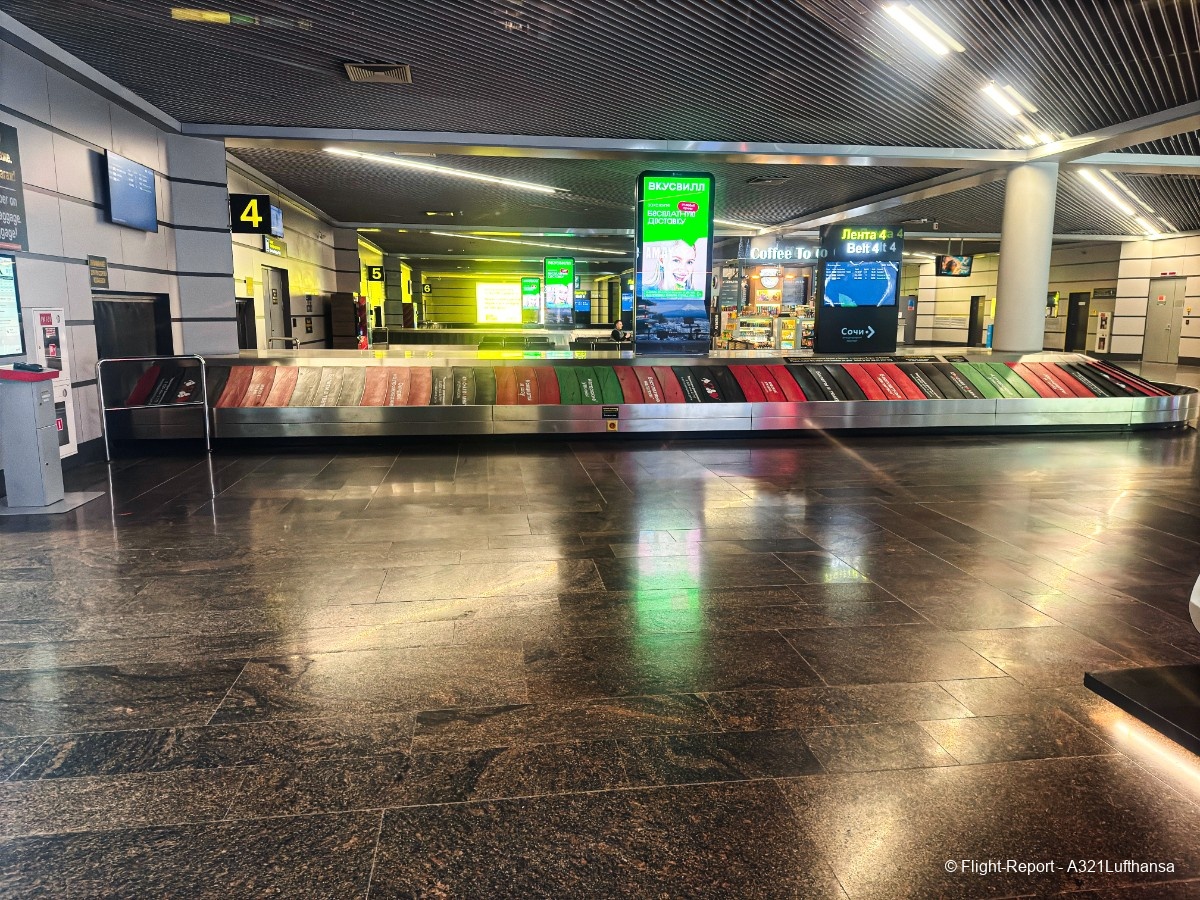
From here you can peer through the windows into the baggage claim halls for both domestic and international arrivals. As you can see, the latter one was completely deserted:
The garden is richly decorated with local shrubbery and other vegetation:
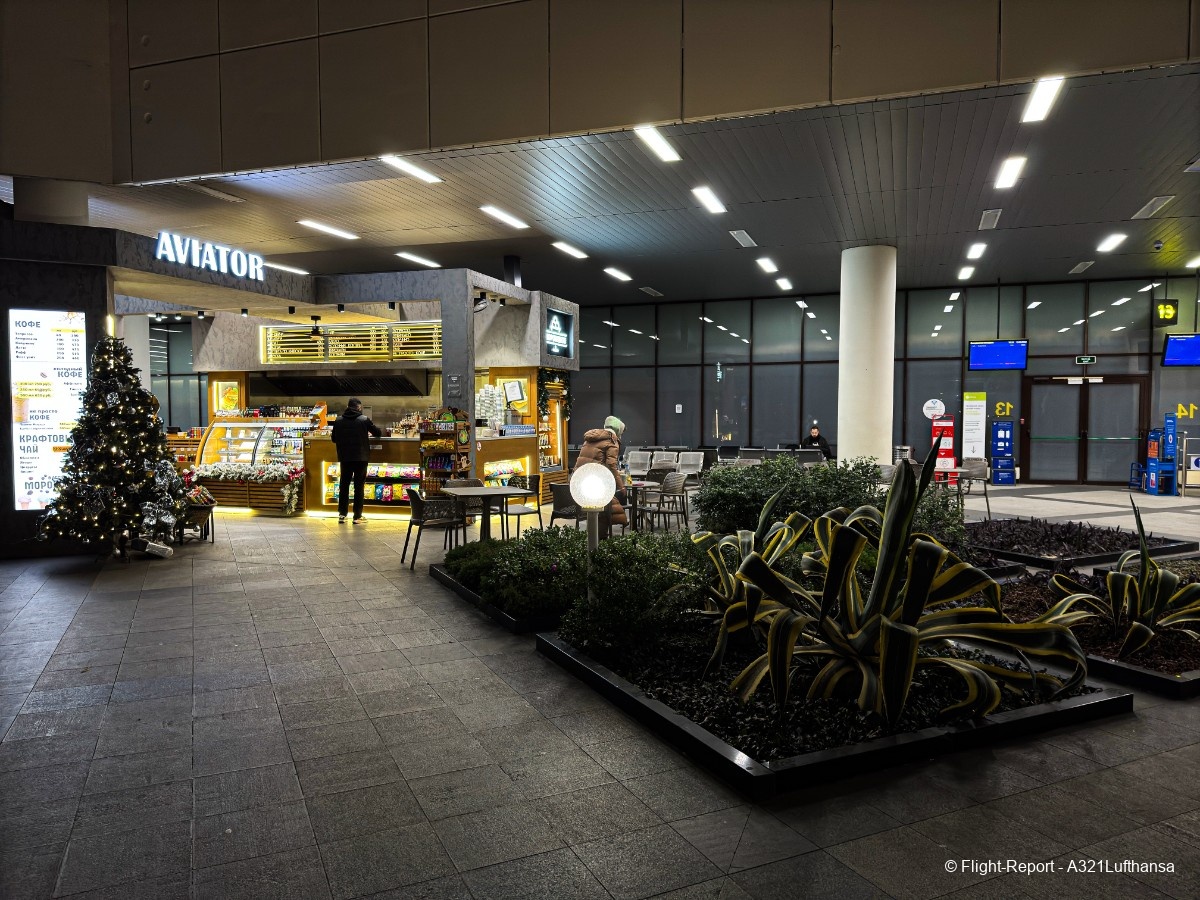
The departure time was approaching, so it was time to head back inside:
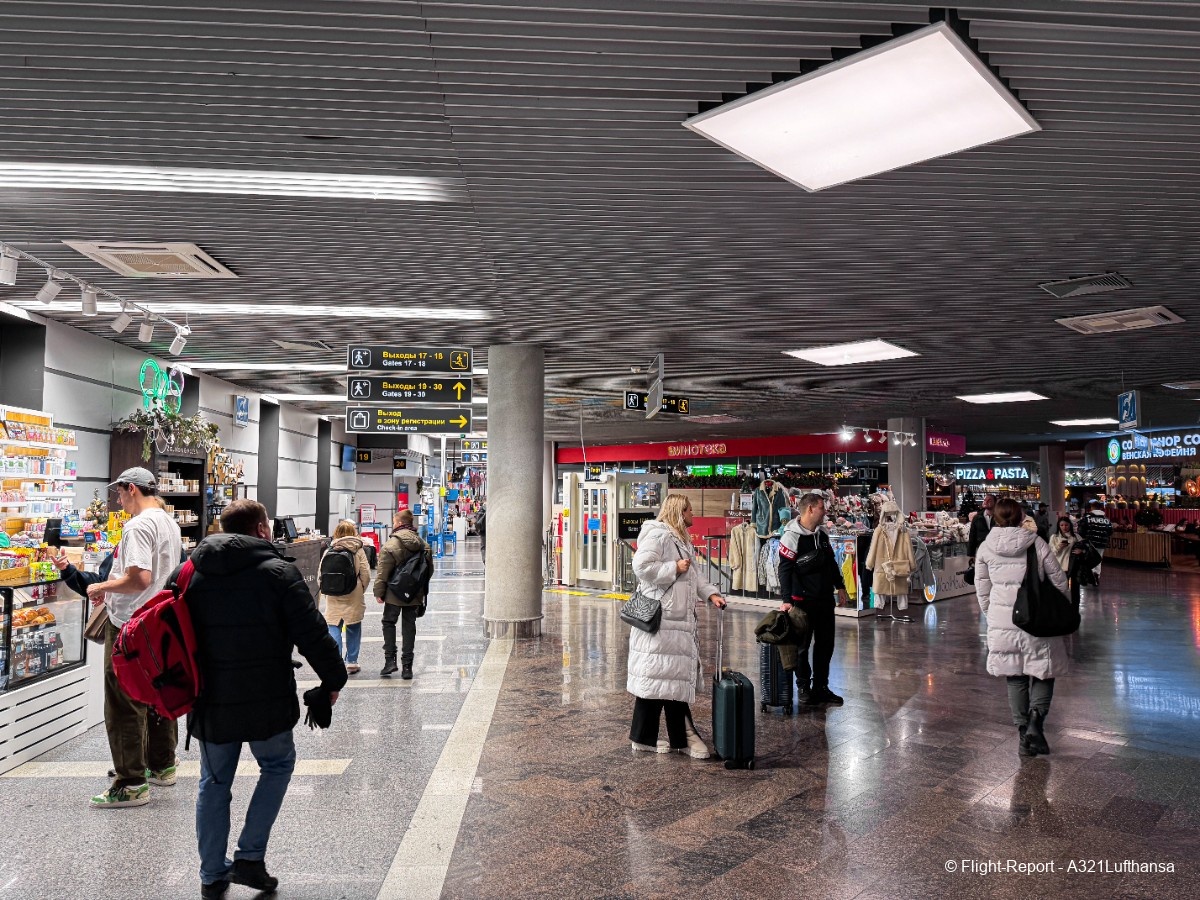
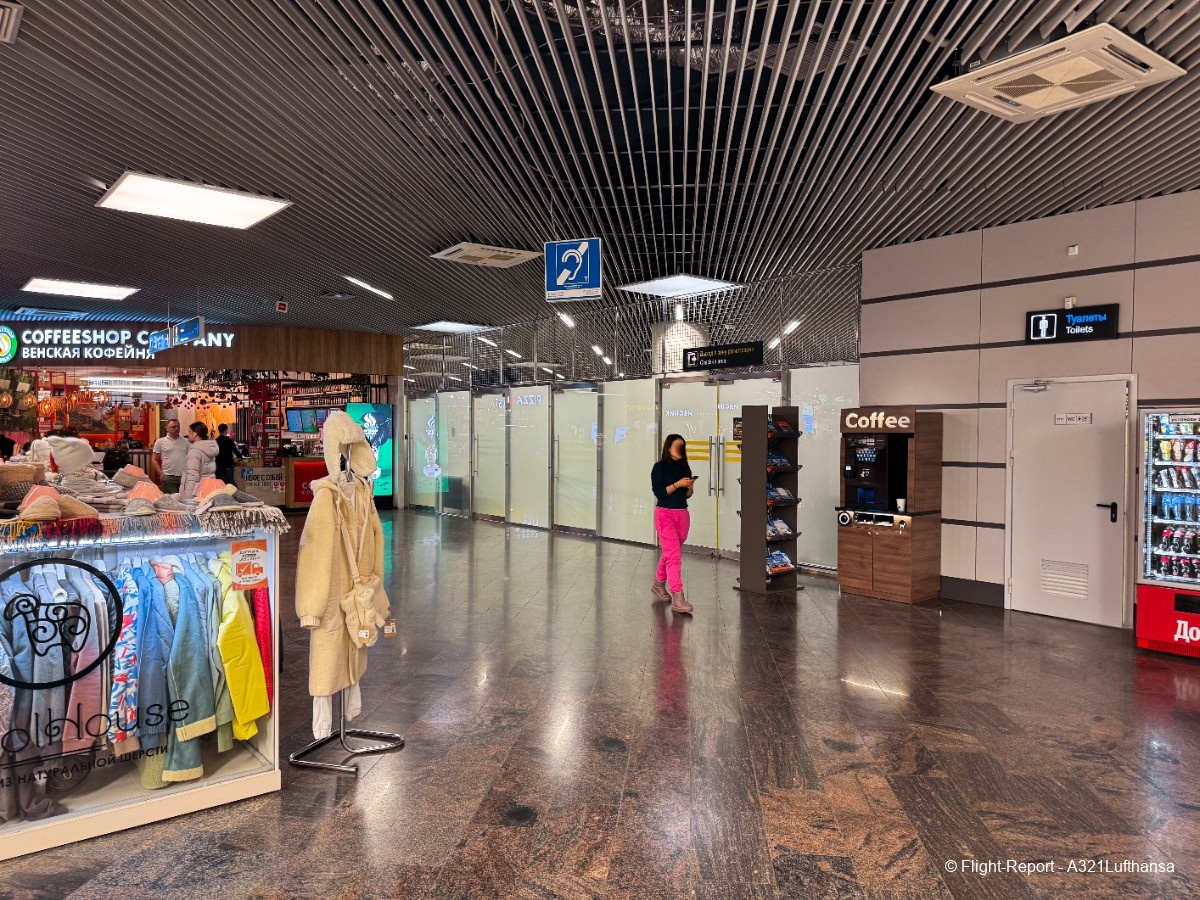
I step across the whole gates area back to my gate 1:
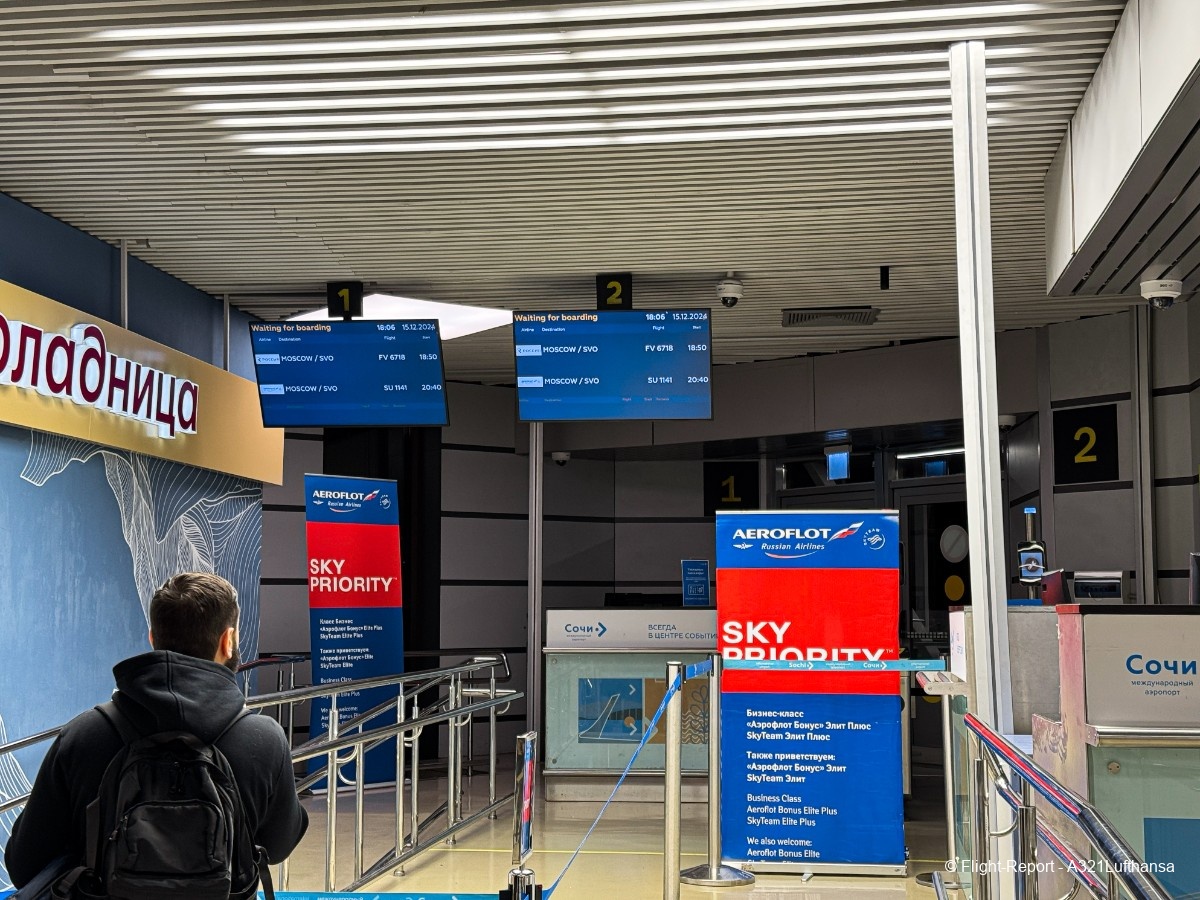
There was already a big queue for my flight, and I had to wait quite a long time until the boarding had finally began. It had become clear that we wouldn't depart at 19:30 as well.
Eventually, at 19:10, boarding was announced and greeted with applause. Many passengers, like me, were anticipating a flight on the legendary Jumbo Jet.
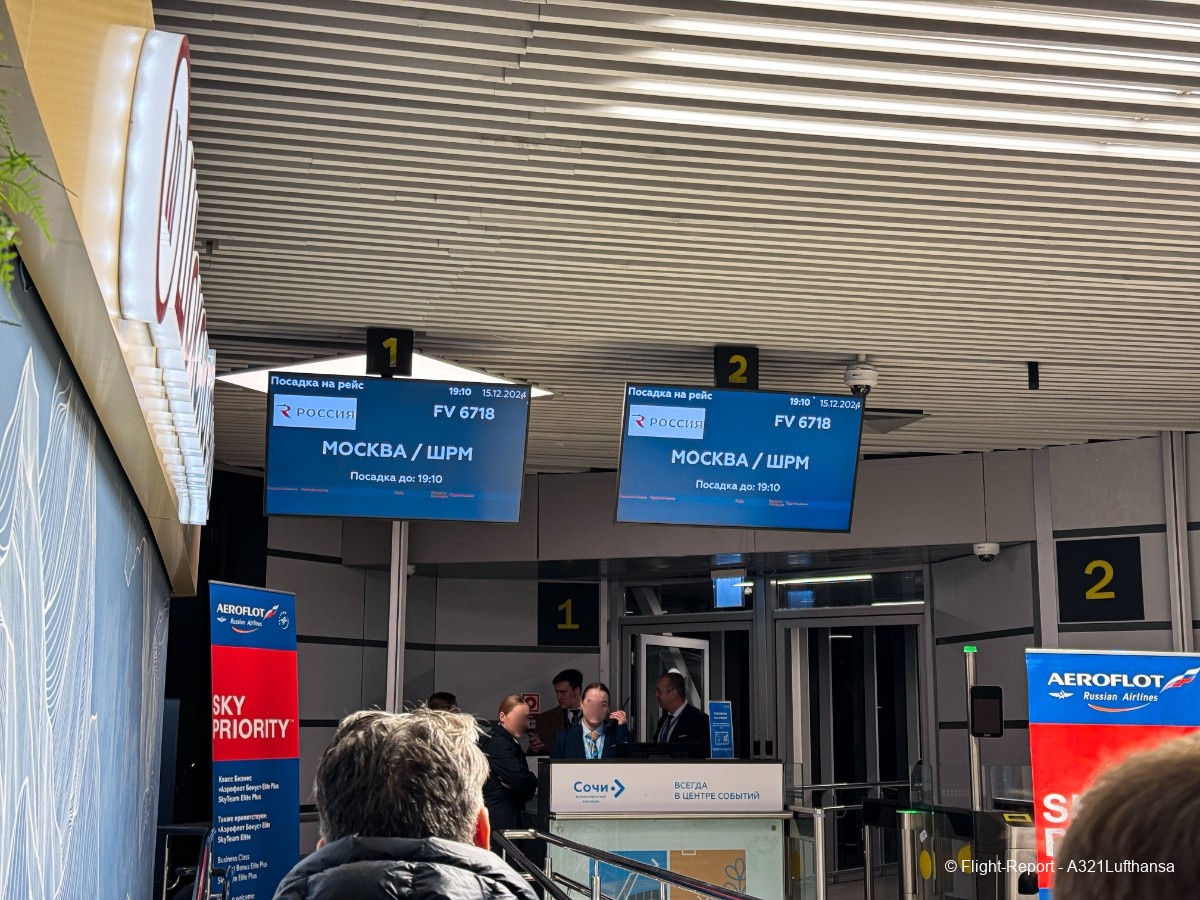
Fortunately, my upper-deck seat spared me from standing at the very end of the line, allowing me to board among the first. As mentioned earlier, from this gate the best view you can hope for is something like this — which is why I had prudently photographed the aircraft’s arrival from outside:
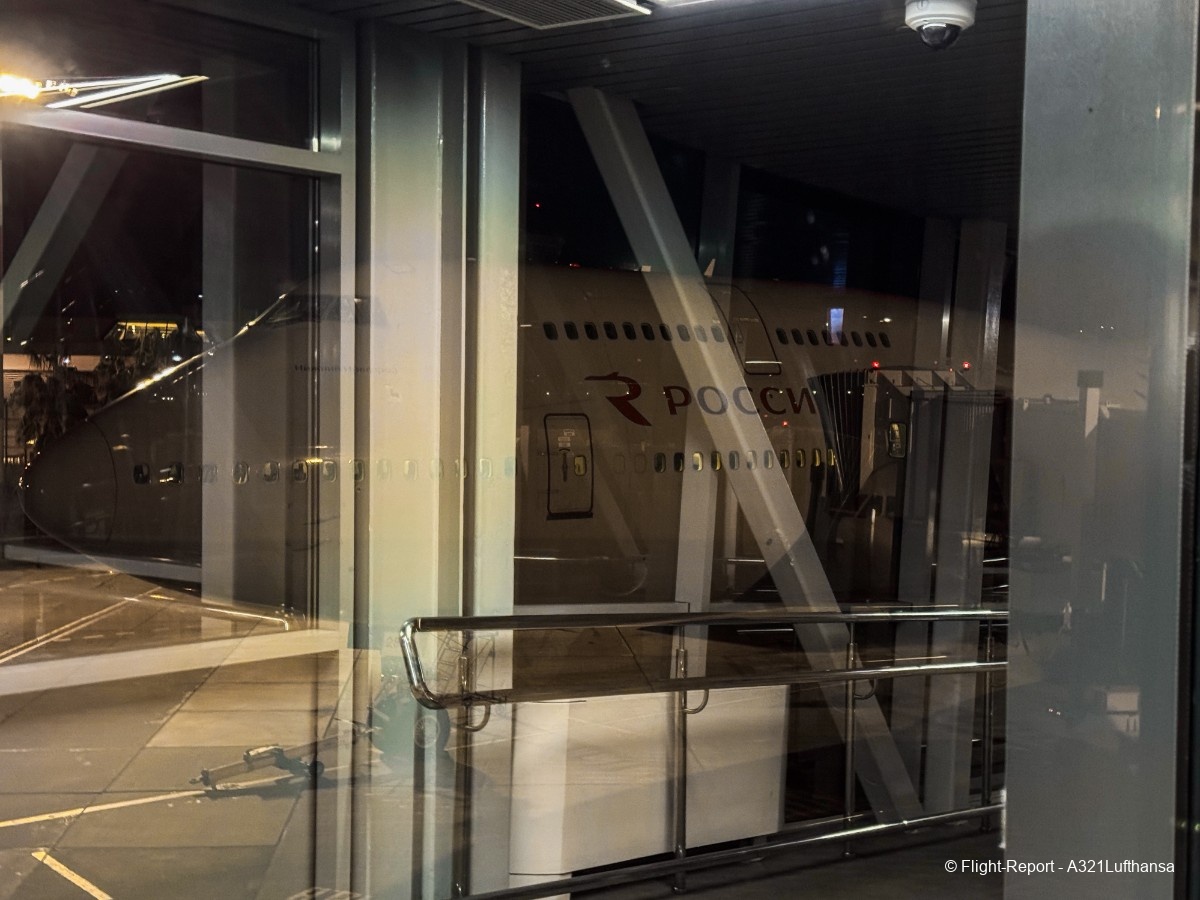
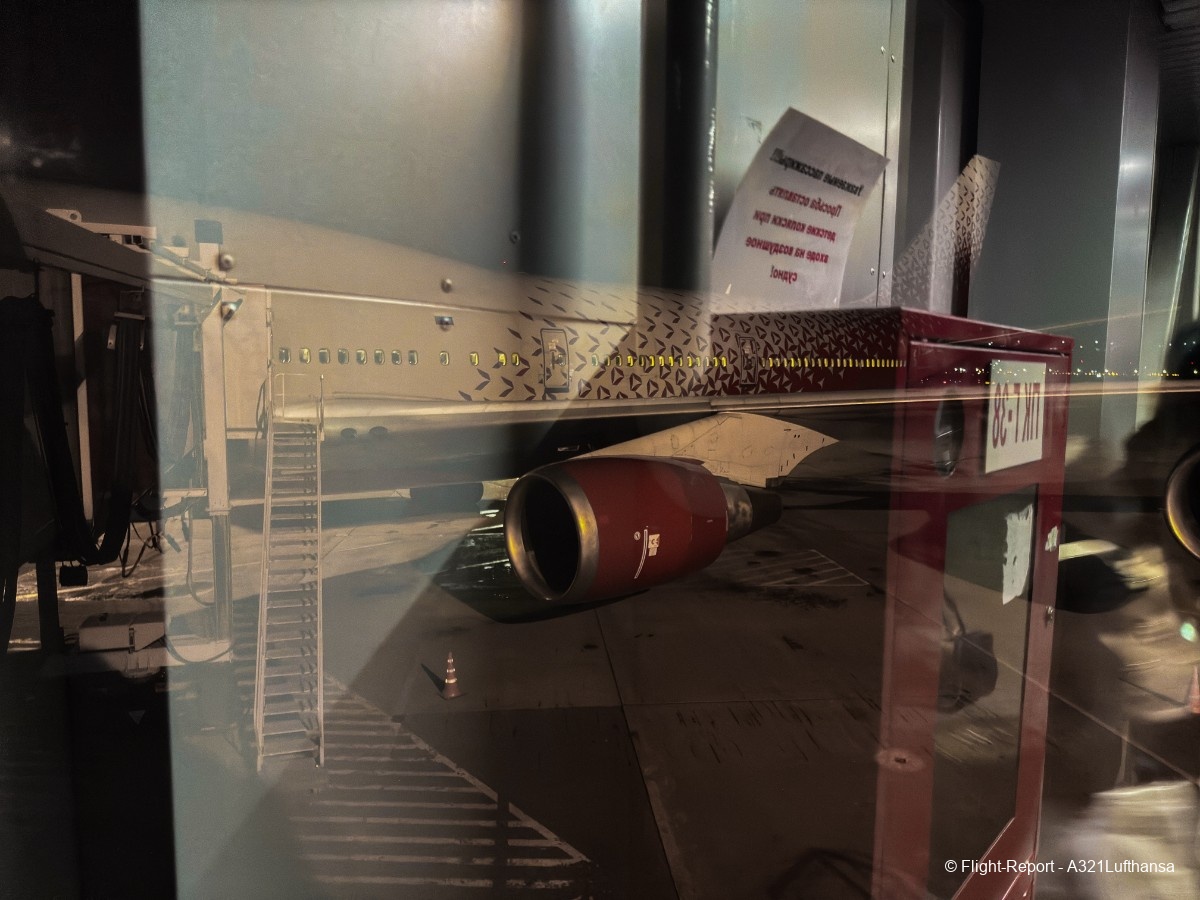
Flight from Sochi to Moscow on the legendary Jumbo Jet
<i style="">Aircraft information
Aircraft type: Boeing 747-446
Tail number and name: RA-73286 “Nizhny Novgorod”
First flight: 11.12.2000
Delivery date: 08.06.2016
Test registration: N747BA
From late 2000 until 2011, this aircraft flew with Japan Airlines as JA8921. Later in 2011 it was transferred to Transaero, receiving the registration EI-XLF, and remained there until the airline’s bankruptcy in 2015. It was during its Transaero years when the aircraft acquired its famously dense 12/512 layout, with just three rows of business class on the upper deck.
The aircraft joined Rossiya’s fleet in June 2016, initially retaining its EI-XLF registration. In March 2022 it was re-registered as RA-73286.
Flight information
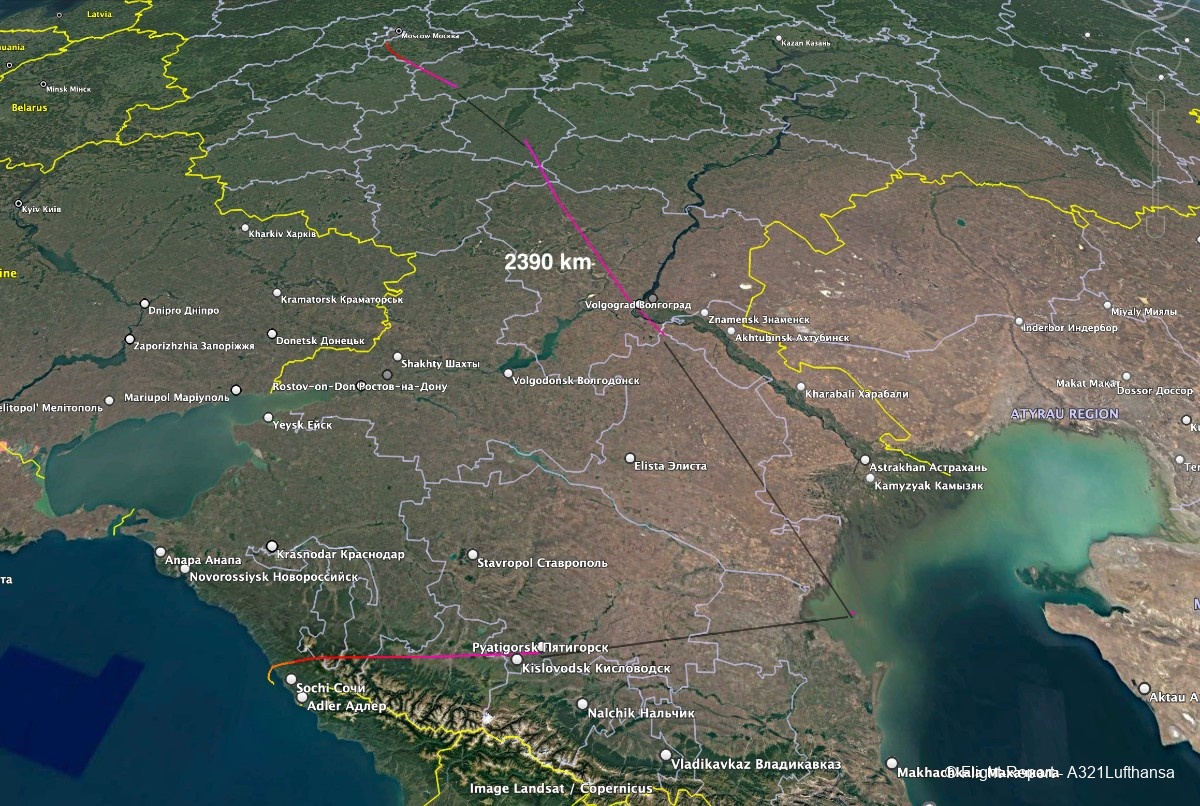
The route led over the southern part of the Republic of Adygea, Karachay-Cherkessia (Ust-Dzheguta), Stavropol Krai (Pyatigorsk), Kabardino-Balkaria and the Chechen Republic, then across Dagestan. Over the Caspian Sea the track turned towards Astrakhan, crossed Kalmykia towards Volgograd, and then passed over Saratov, Tambov, Ryazan, Tula, and Moscow regions before reaching the capital.
The distance flown was 2390 km instead of direct 1405 km, with a flight time of 3 hours 2 minutes.
Here you can see how strongly is GPS jammed in Russia nowadays as a good part of the flight was completely out of the coverage – of course the older transponder had played an additional role.
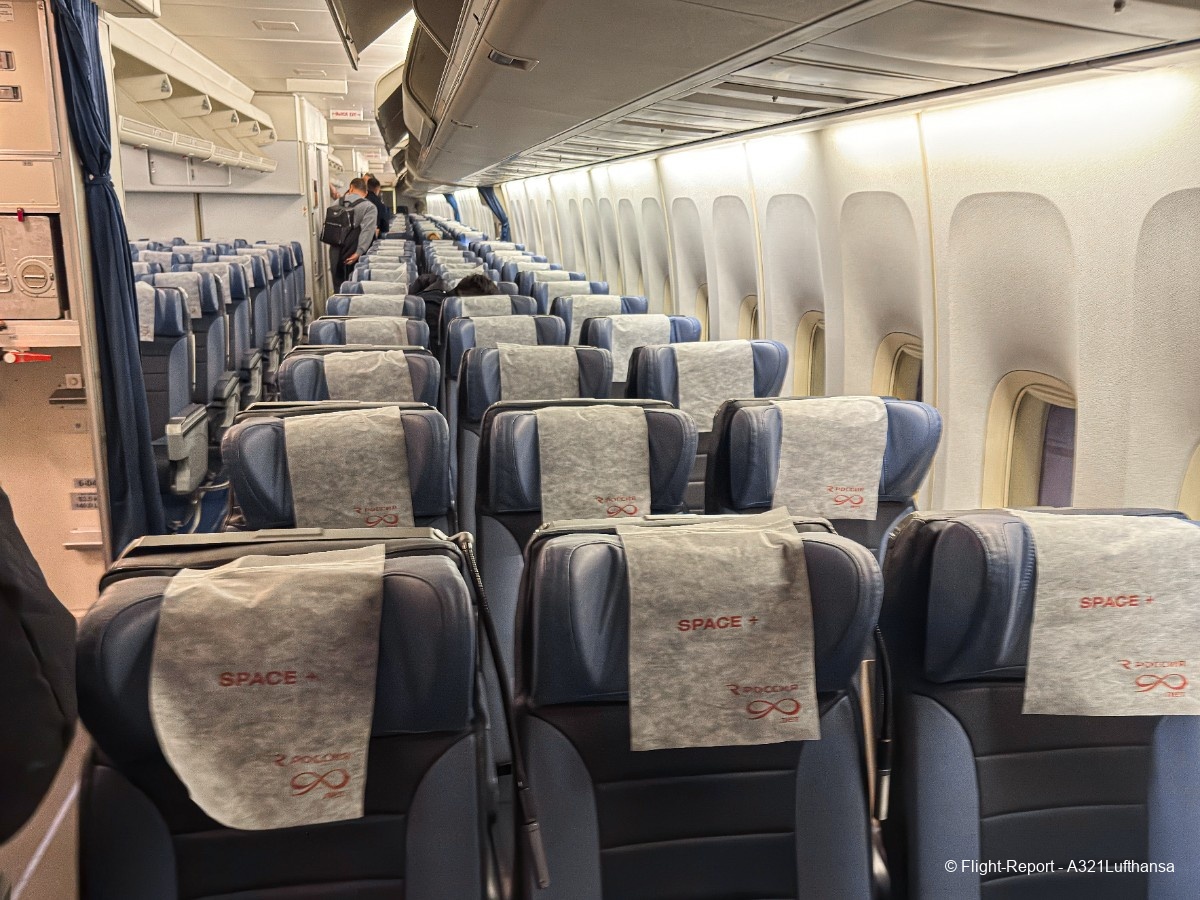
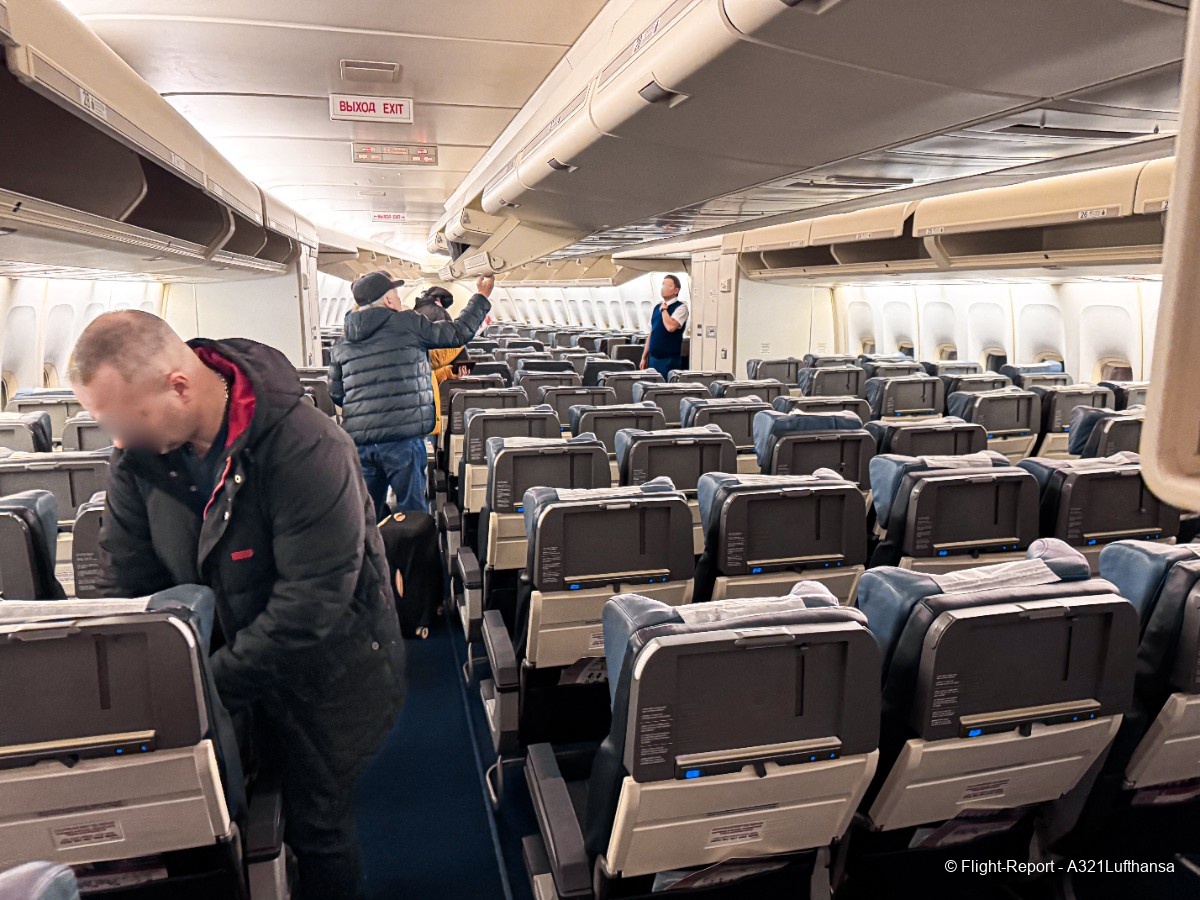
Stepping on board, I captured a general view of the maindeck cabins. Quite evident that the dense layout (astonishing 483 economy seats) was achieved largely by removing partitions between certain cabins:
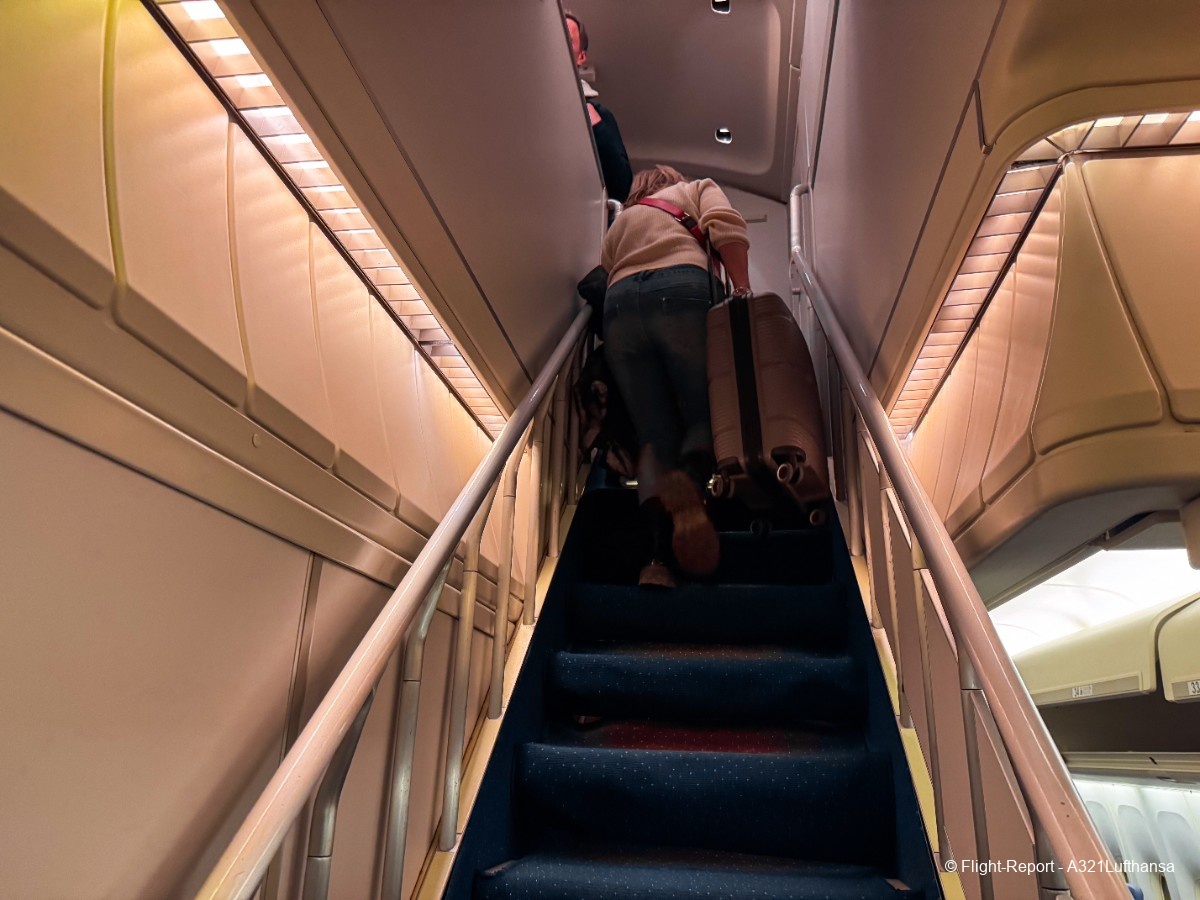
I climbed the staircase to the upper deck, and my breath was shortly taken away for the second time: it was the first time in my life when I was flying upstairs. On Emirates’ A380 back in 2022, I had not even managed to visit the upper deck, let alone sit there.
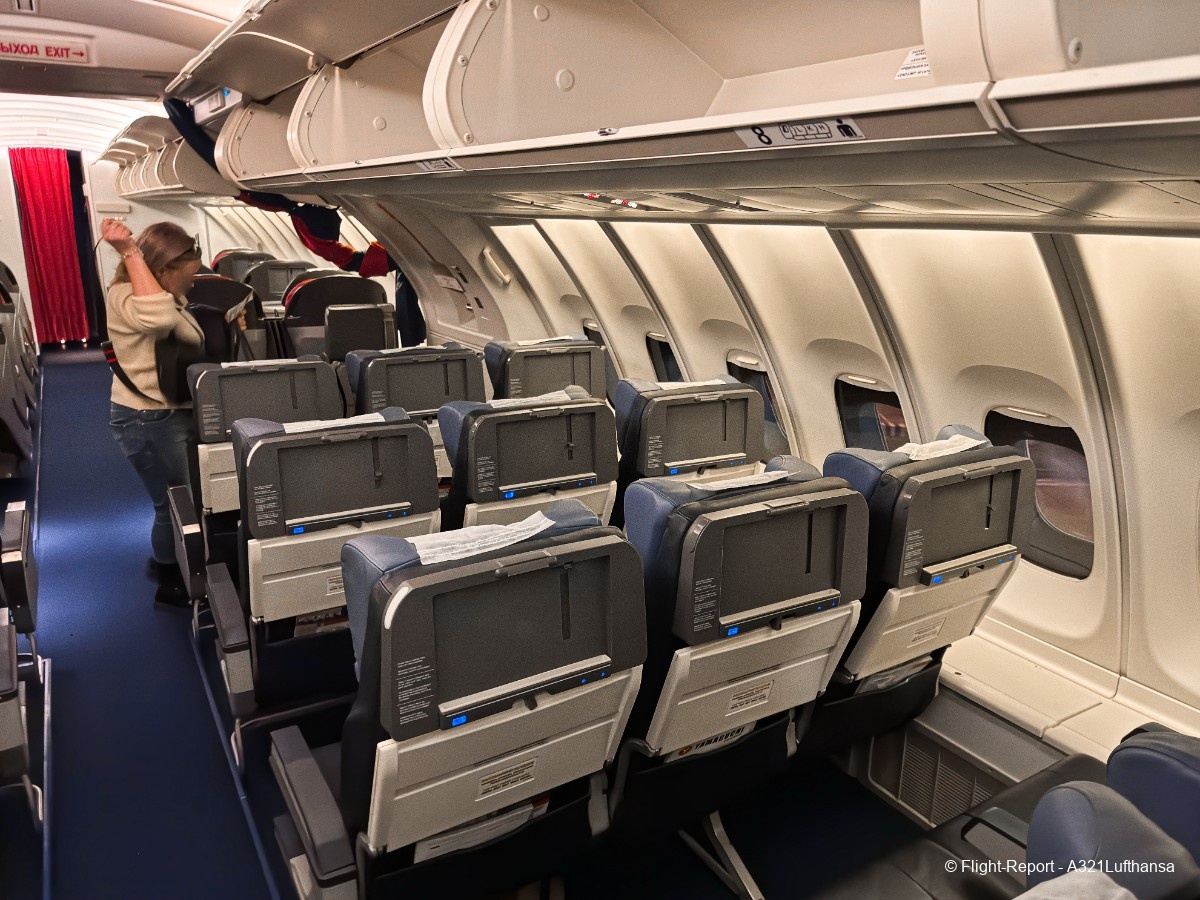
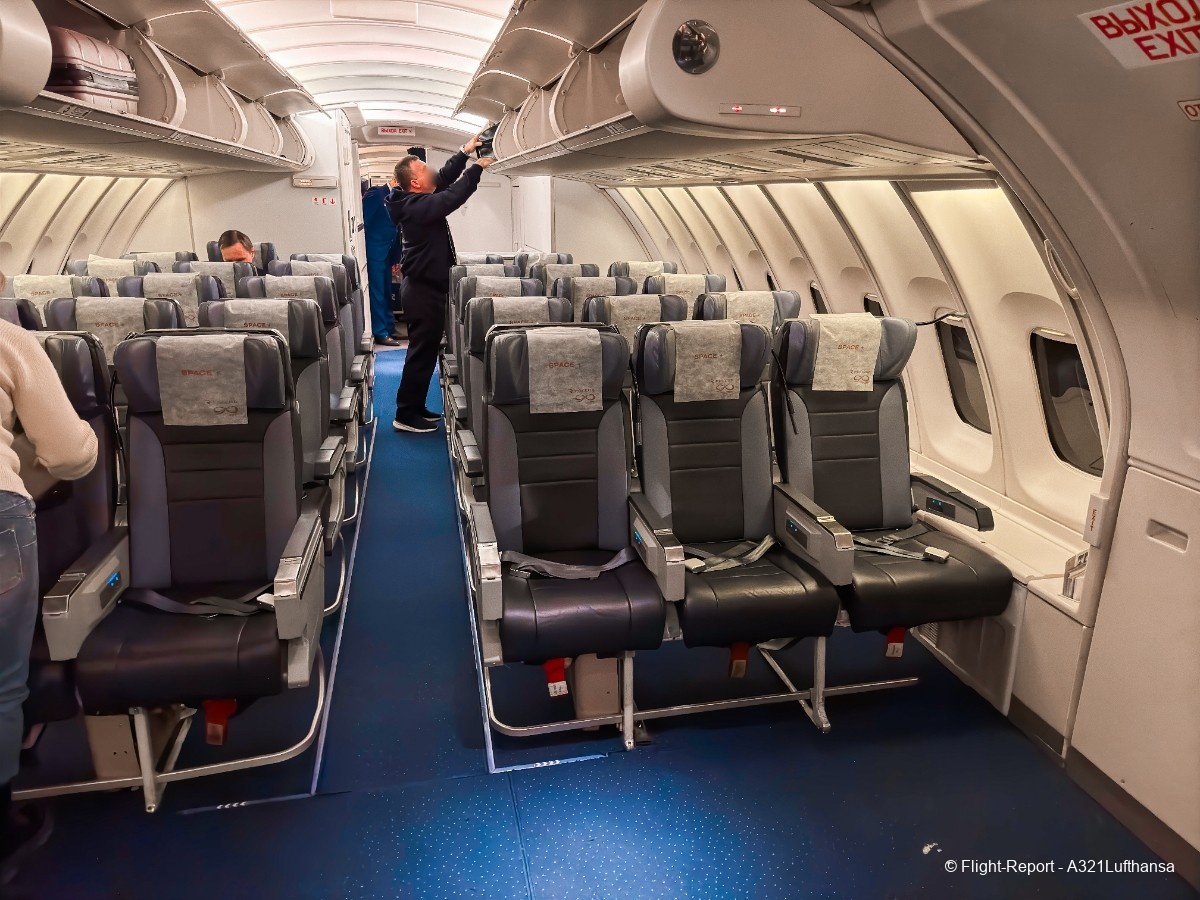
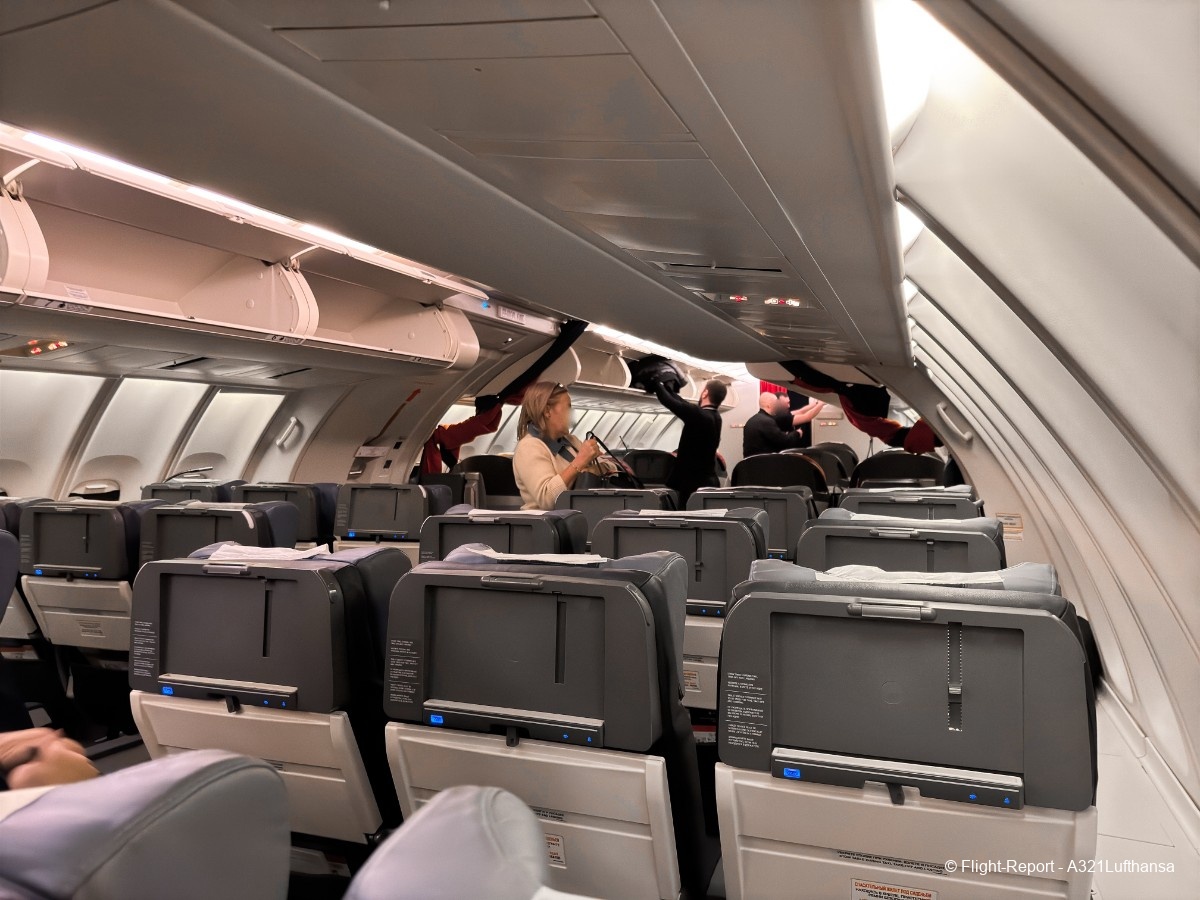
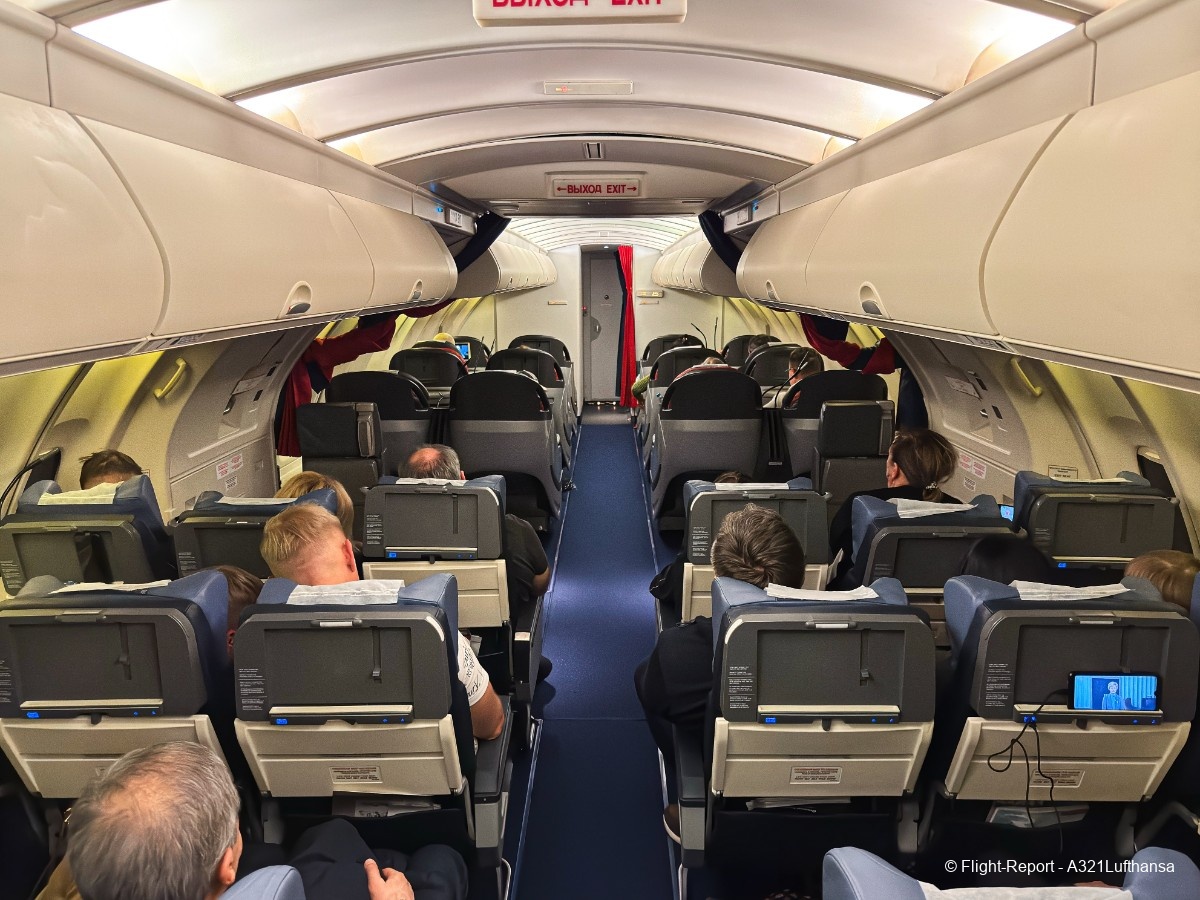
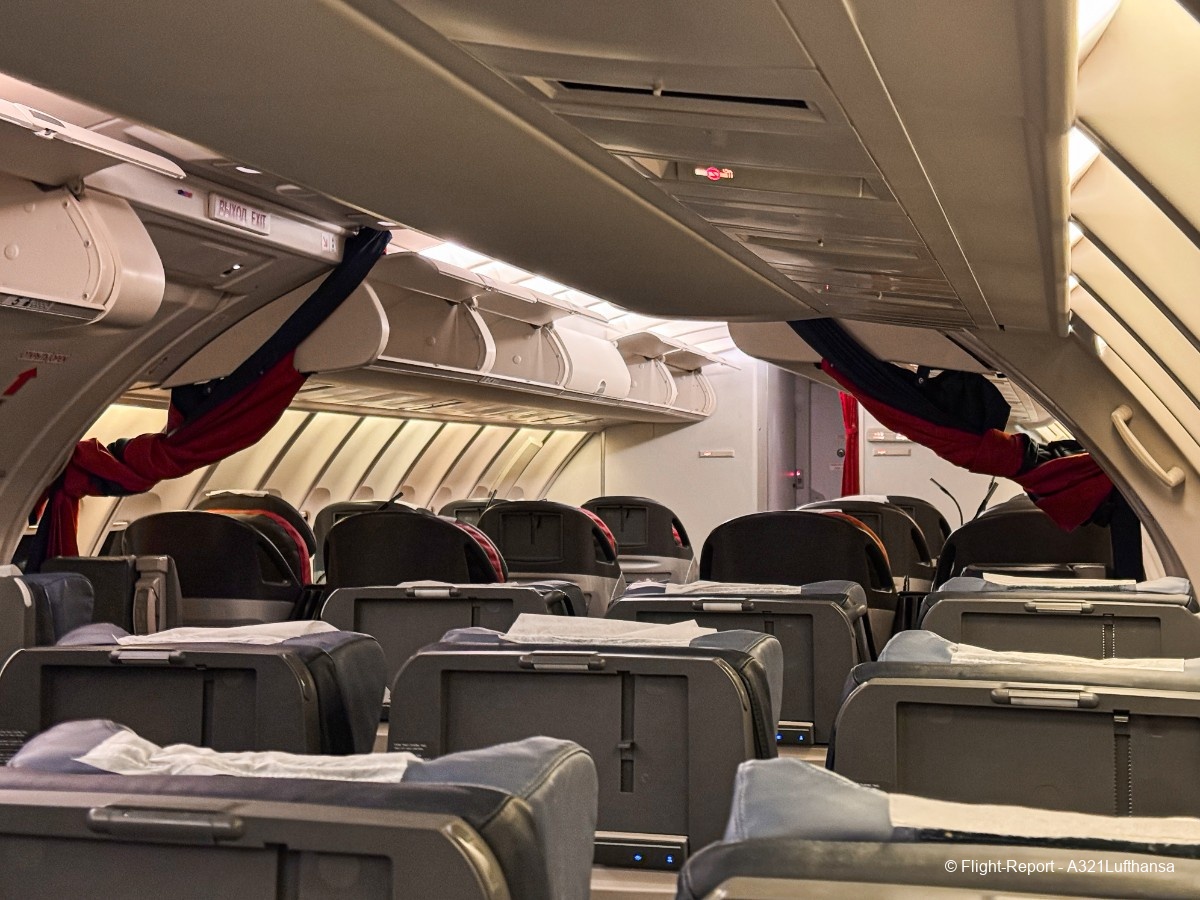
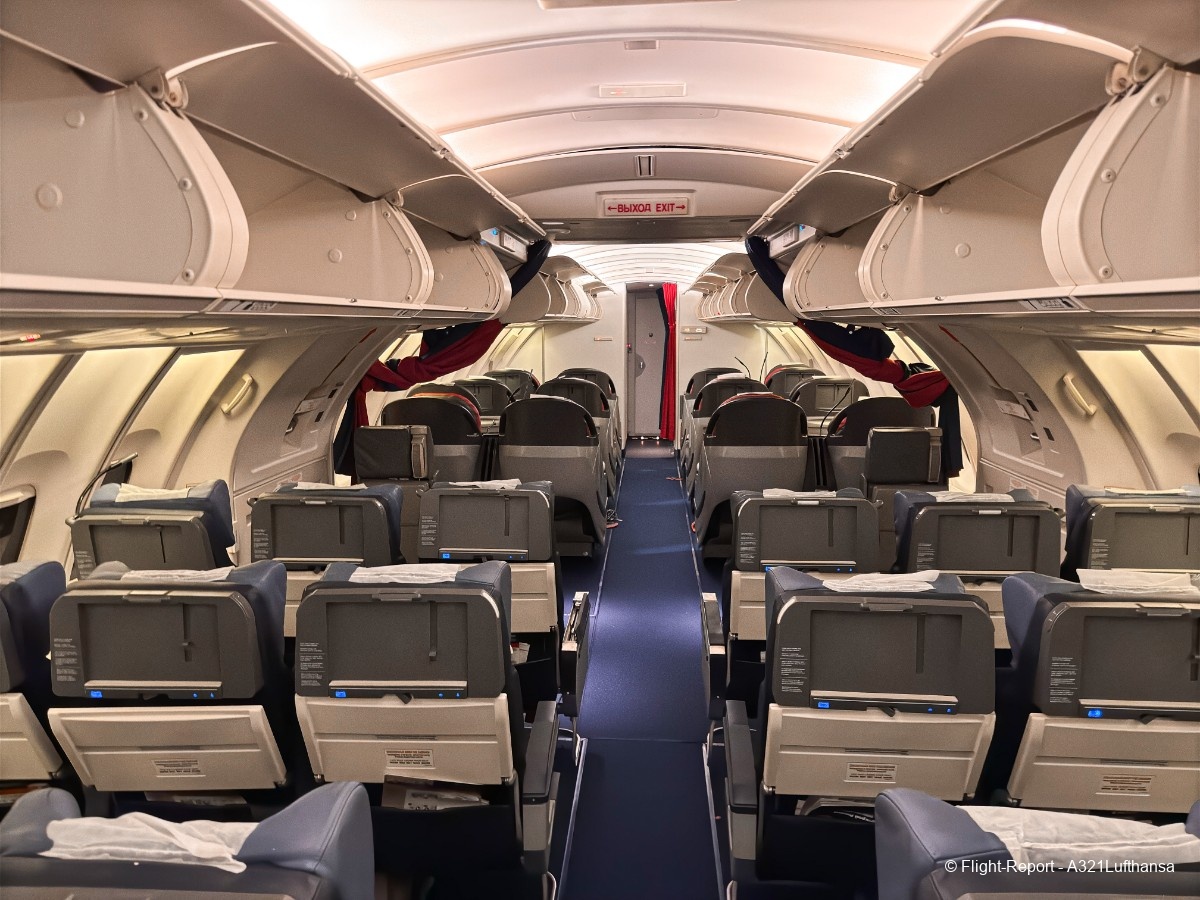
The upper deck houses 29 economy seats across 5 rows (with seat 9A missing in the last row on the left side). Incidentally, the seat model (Recaro 3410 from the late 1990s) dates back to the JAL era. In Transaero, adjustable headrests were added, and a few years after joining Rossiya's fleet, the seats received the airline’s signature upholstery.
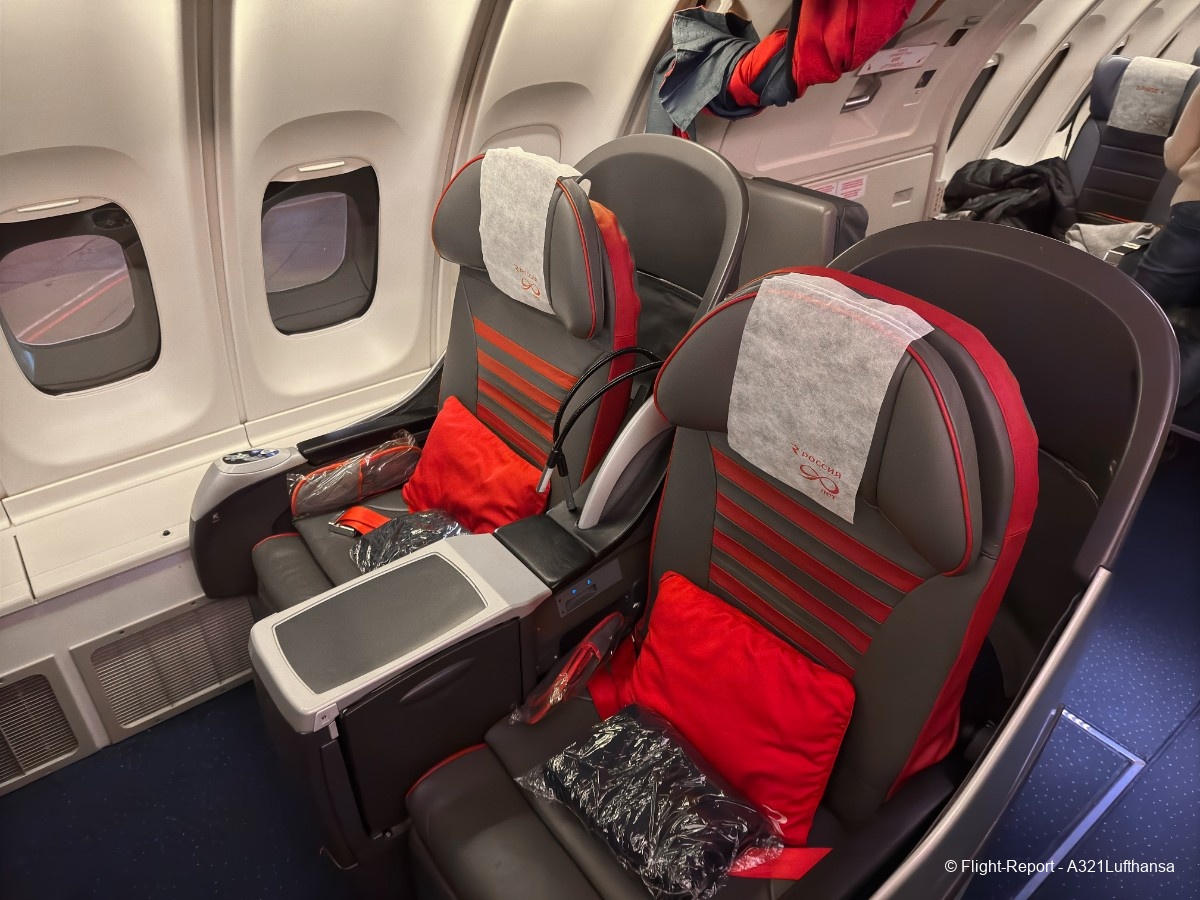
Unfortunately I failed to identify business class seat model, but it definitely originates from JAL as well:
My seat was 9L – the last row on the starboard side of the upper deck. Seat width measured approximately 44-45 cm (17.4-17.7 inches):
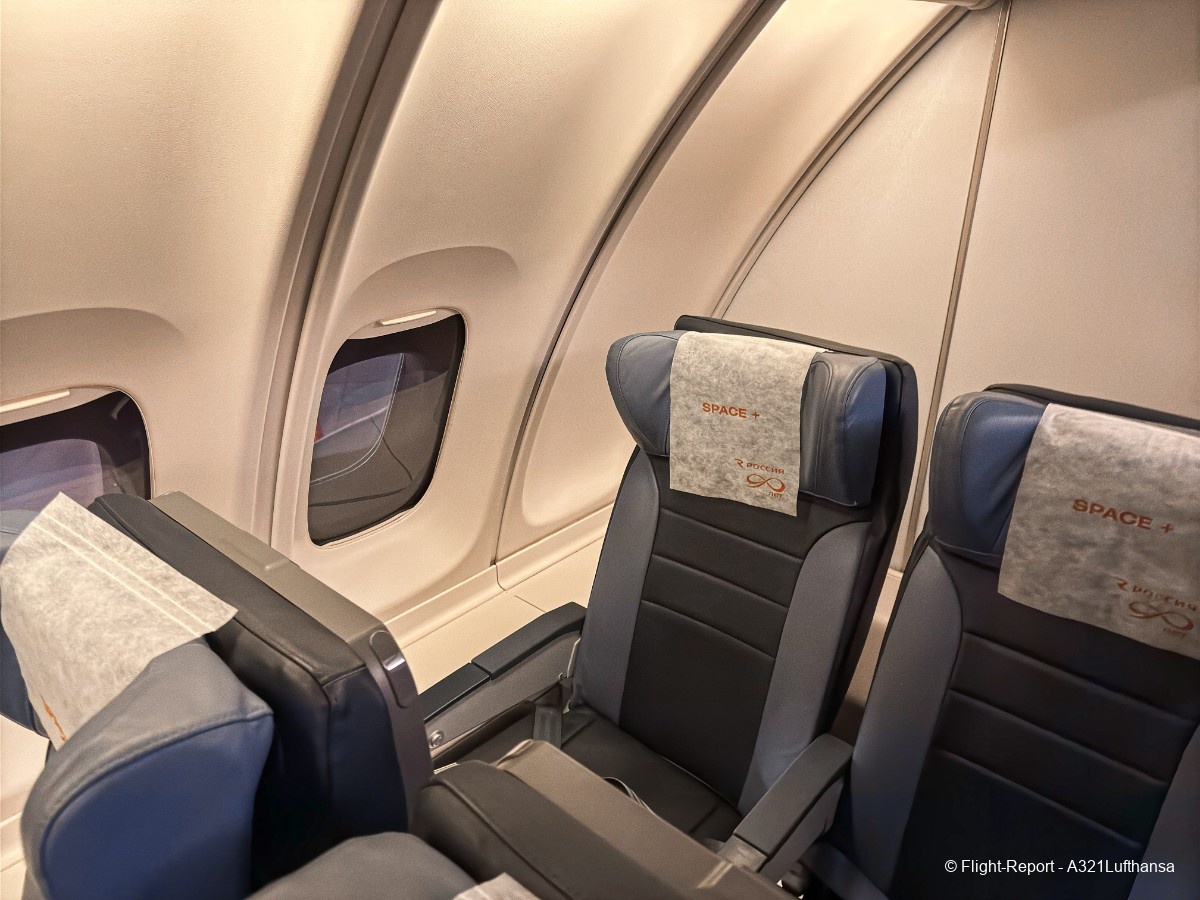
This is how the seat looks when reclined. The angle is generous and not restricted, despite being the last row:
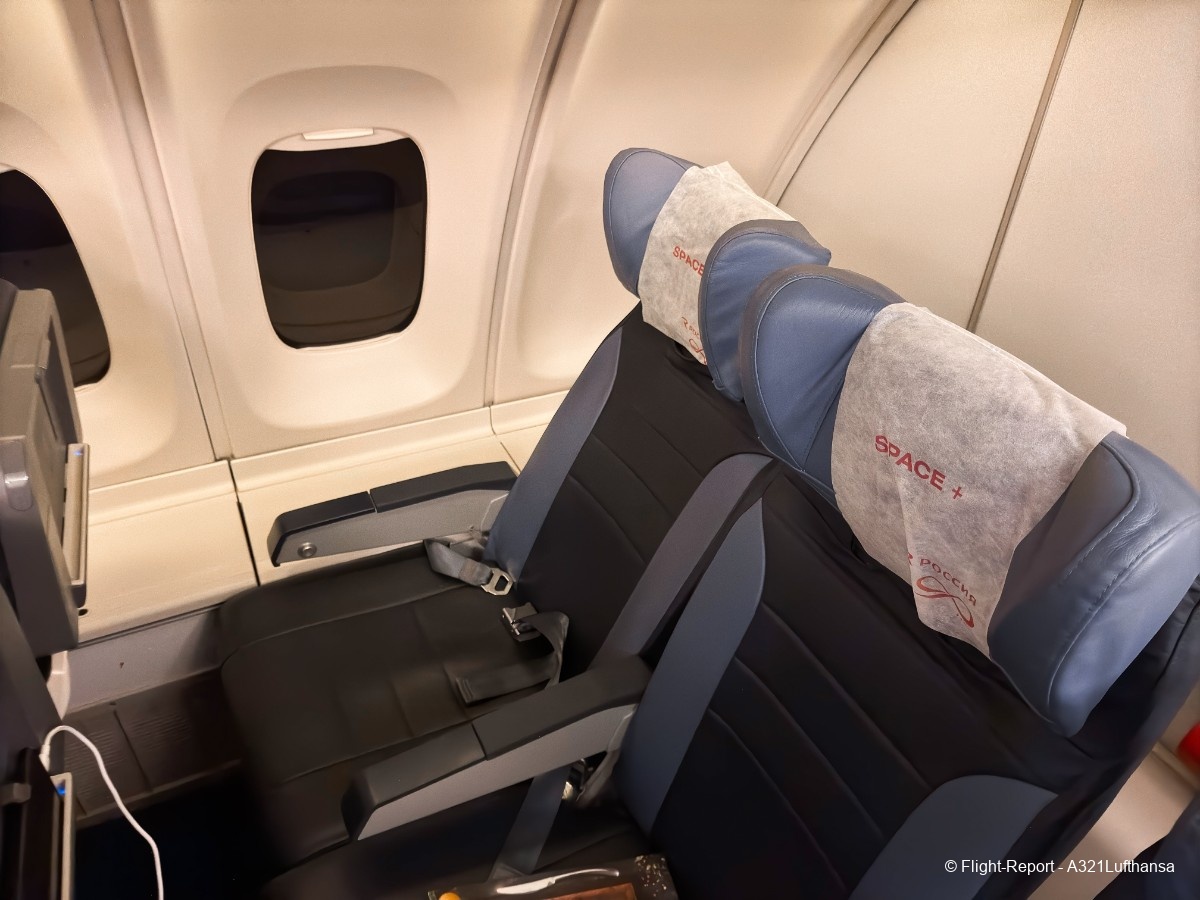
Legroom was truly excellent – it is easy noticeable why upper-deck seats are sold as Space+:
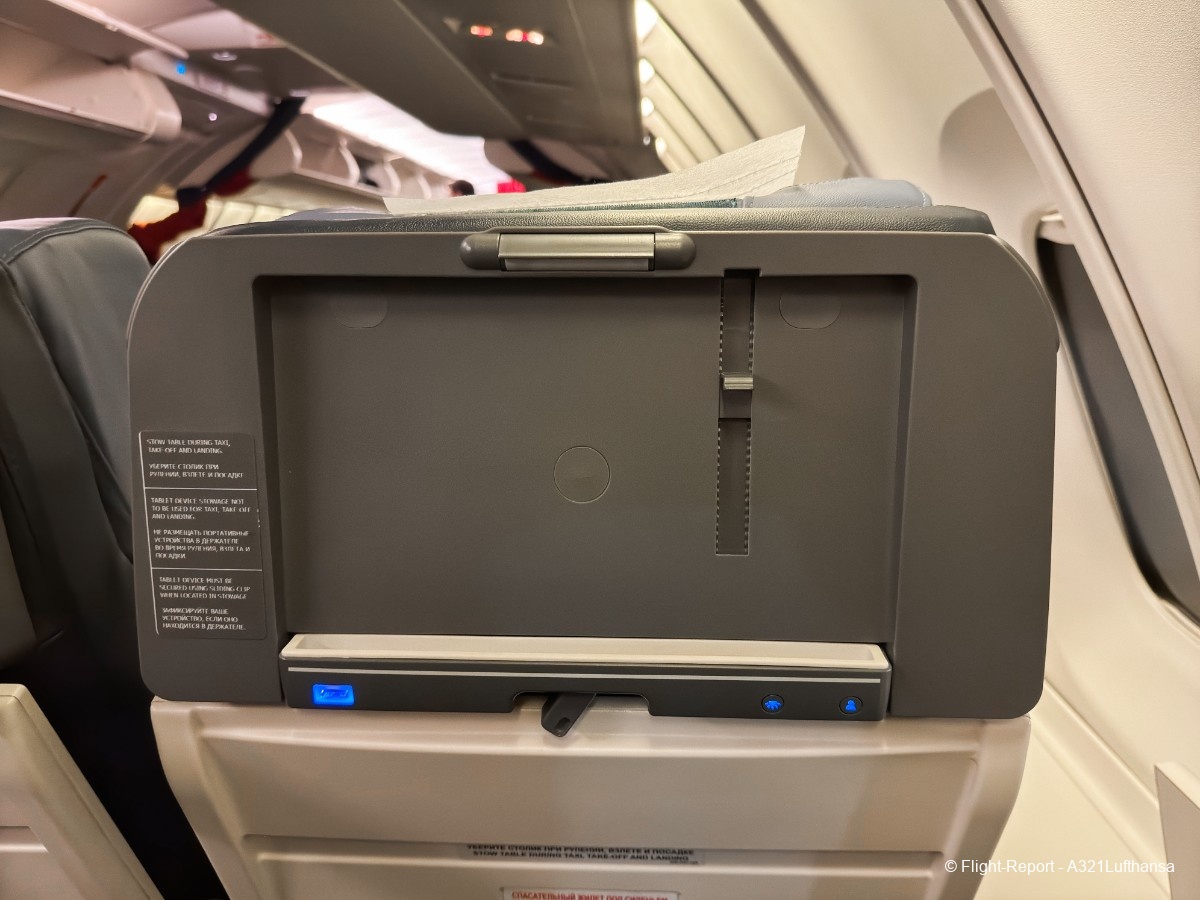
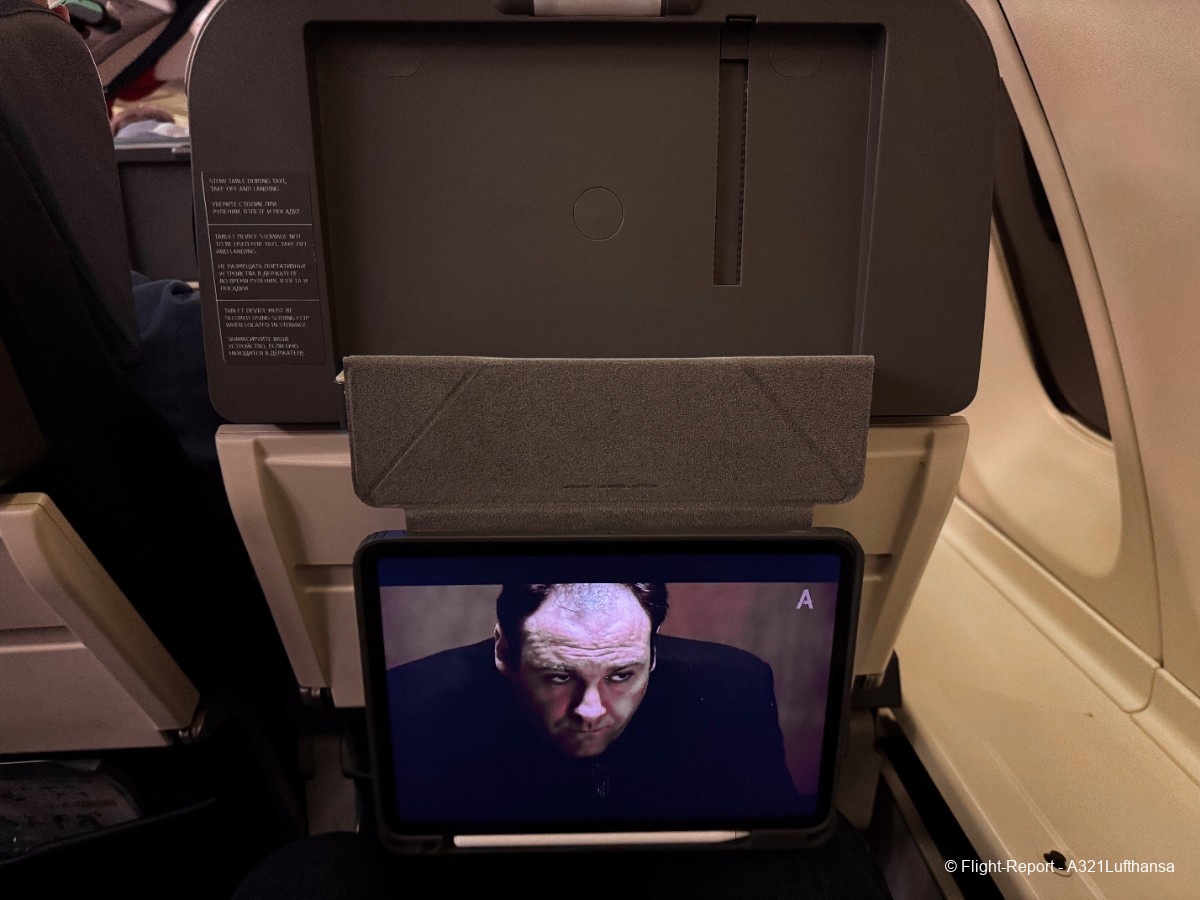
Rossiya chose to remove the largely non-functional and dated IFE and replace it with a plastic frame featuring a device holder. Unfortunately, the retaining clip is located inside the frame rather than on top as on Aeroflot aircraft, severely limiting gadget size – my 11-inch tablet didn't fit. The same unit houses a USB port together with light switch and passenger service button:
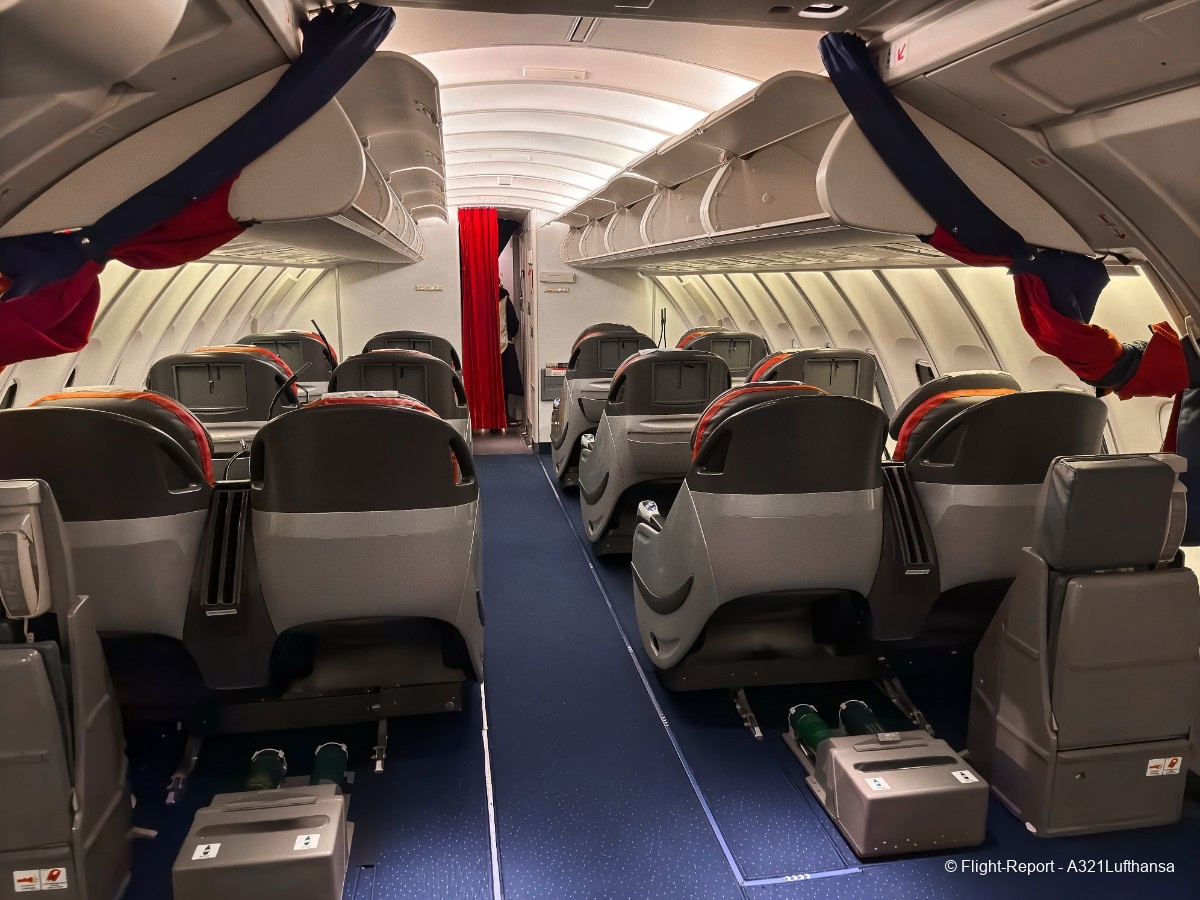
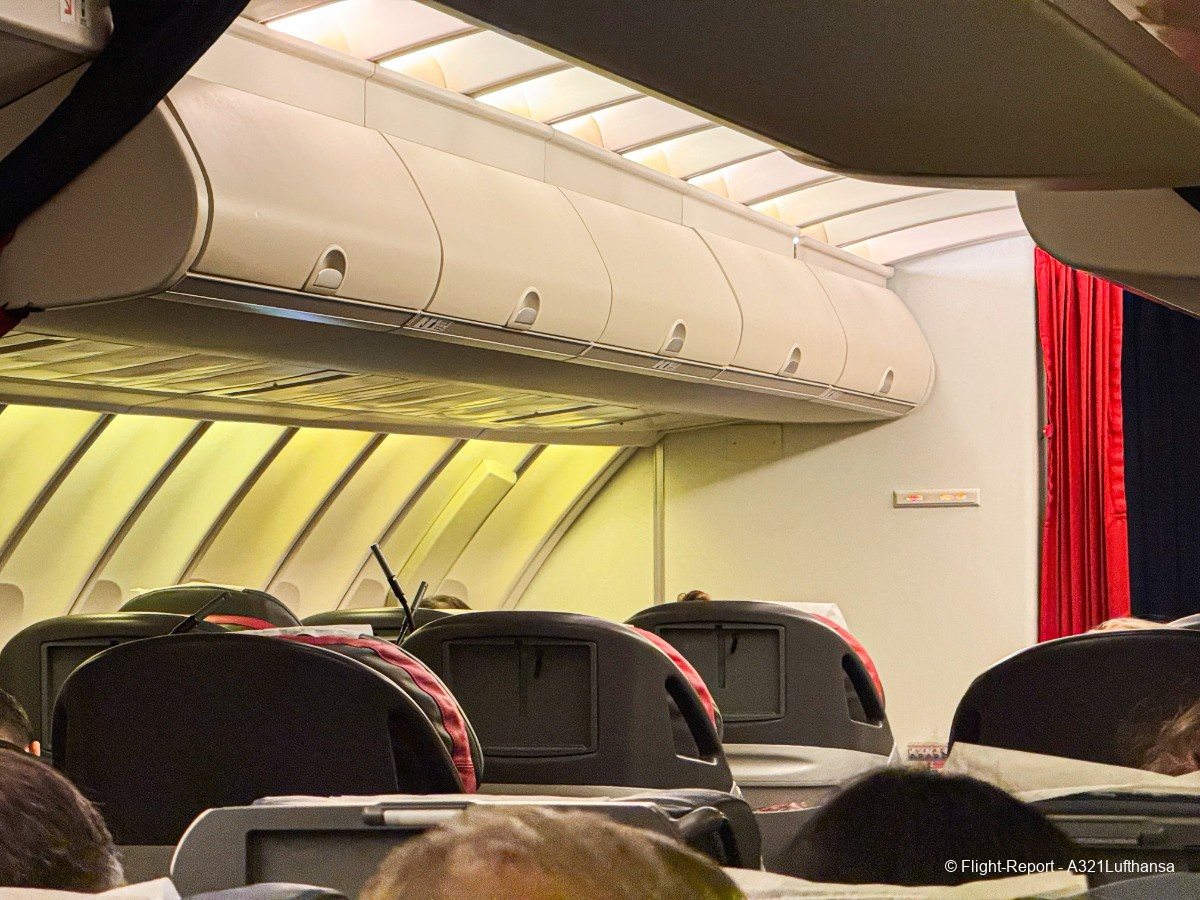
In the business class the IFE was also removed:
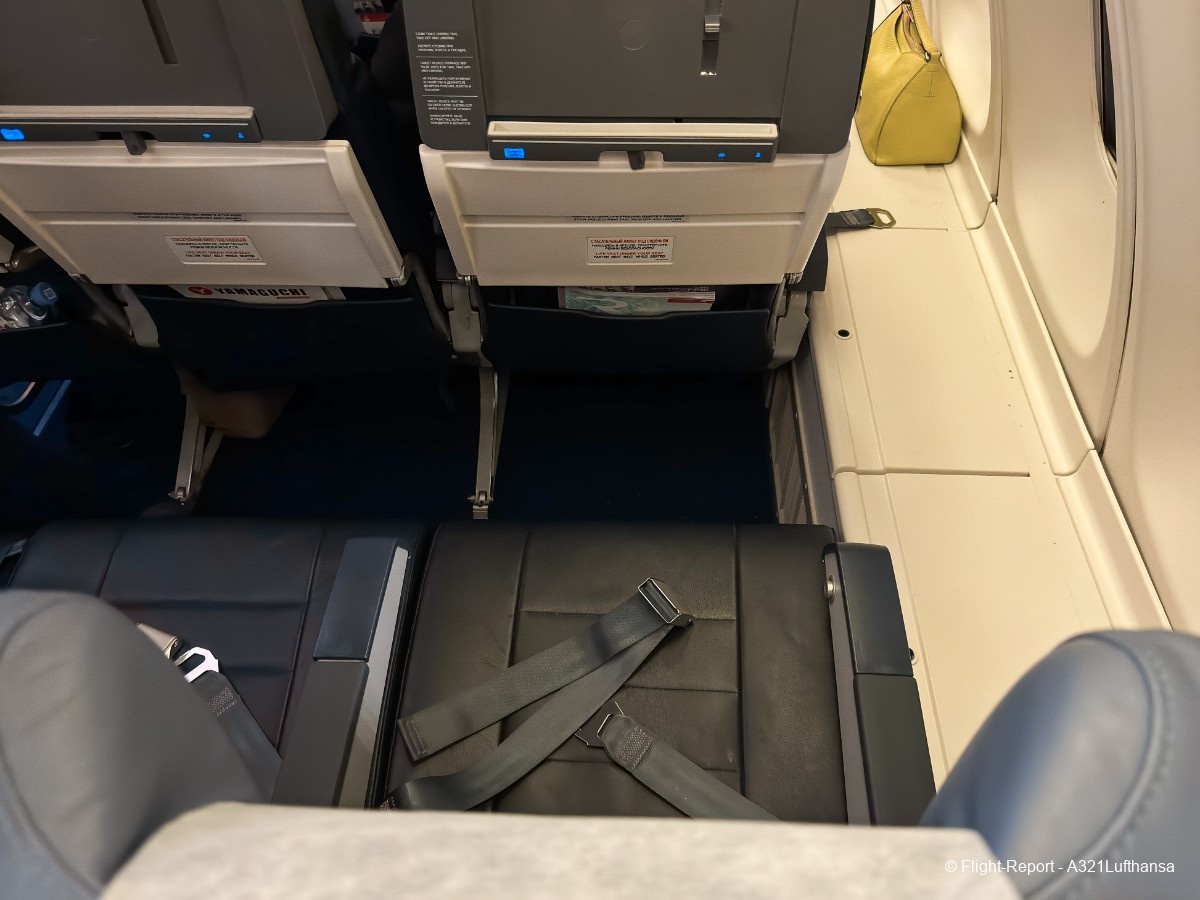
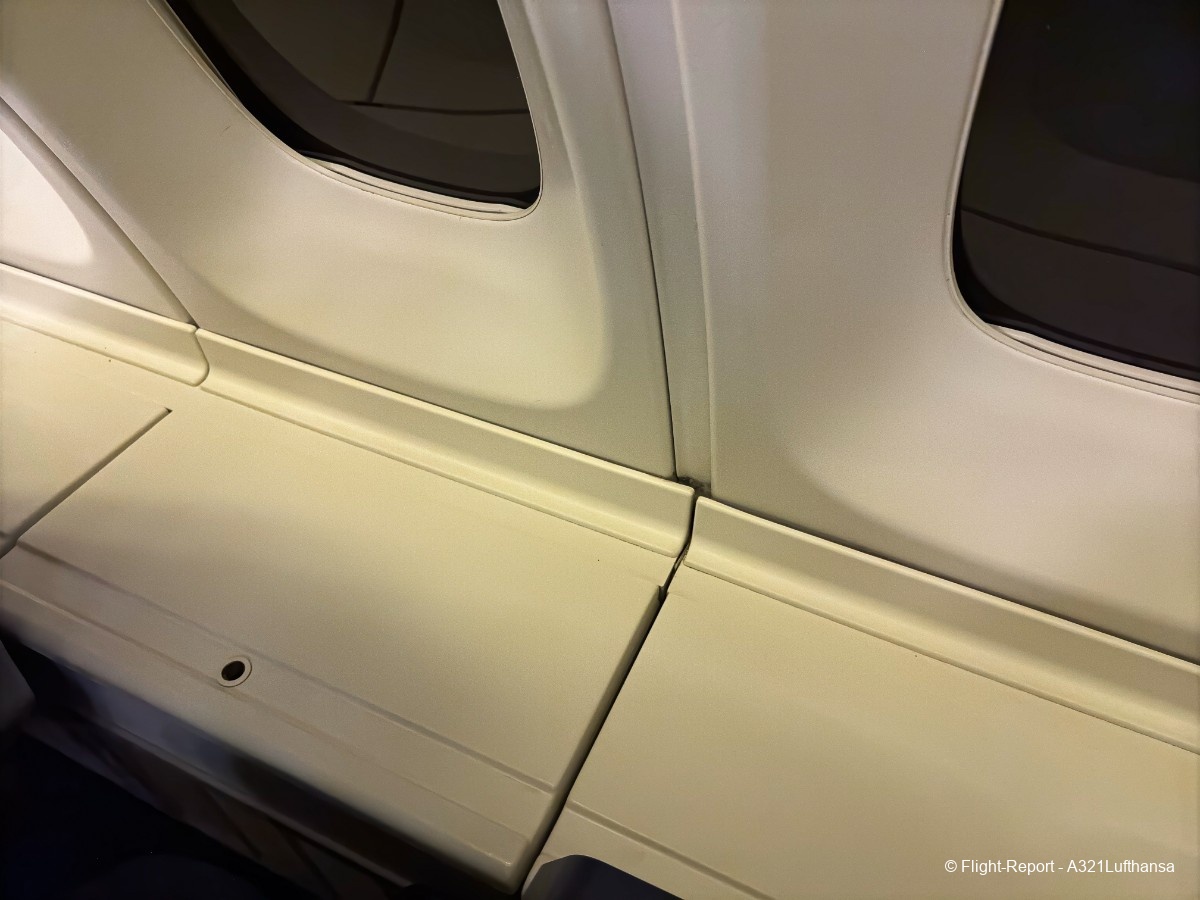
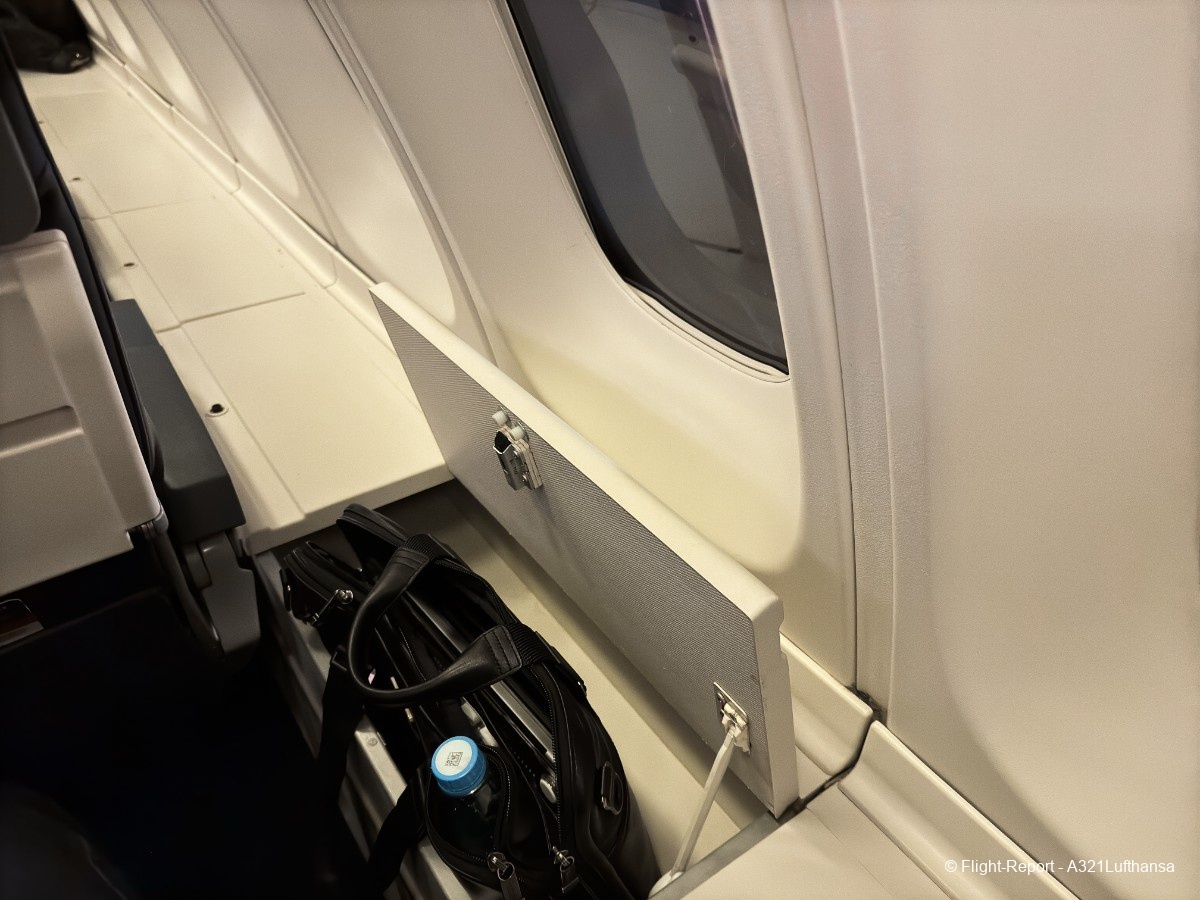
The most convenient feature of the 747’s upper deck is the large personal storage compartment by the window. I didn't need the overhead bin at all, and my bag was not occupying my legroom as well:
In the meantime boarding was still going on:
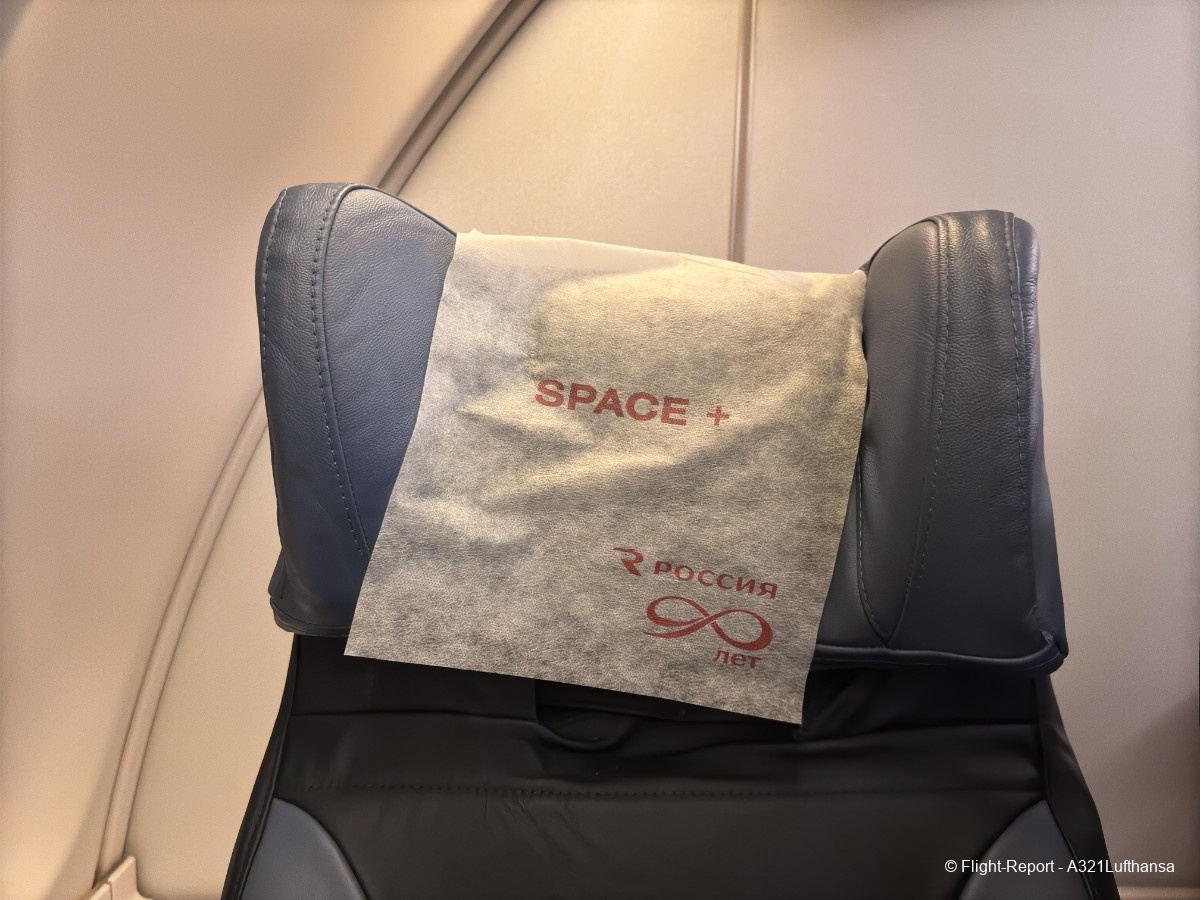
The headrest design inherited from the Transaero era proved exceptionally comfortable:
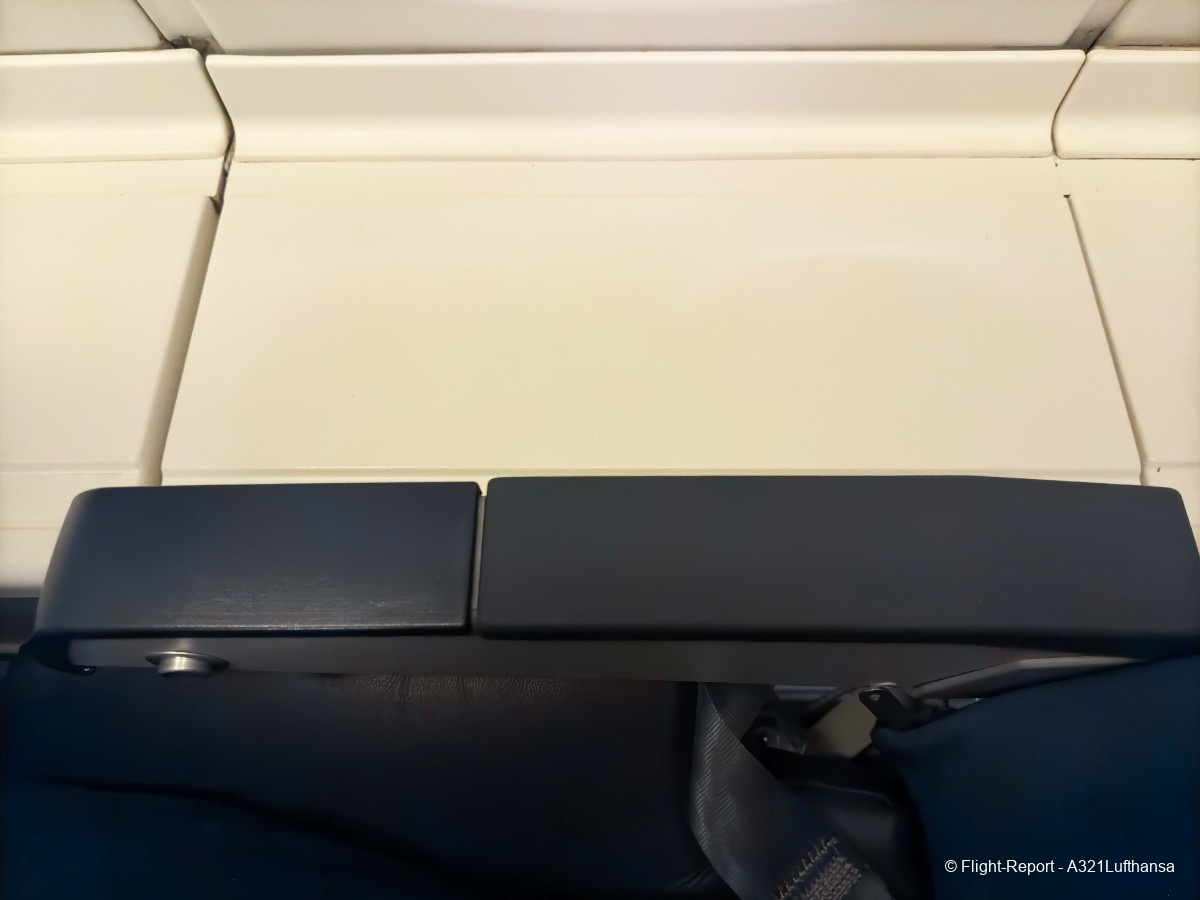
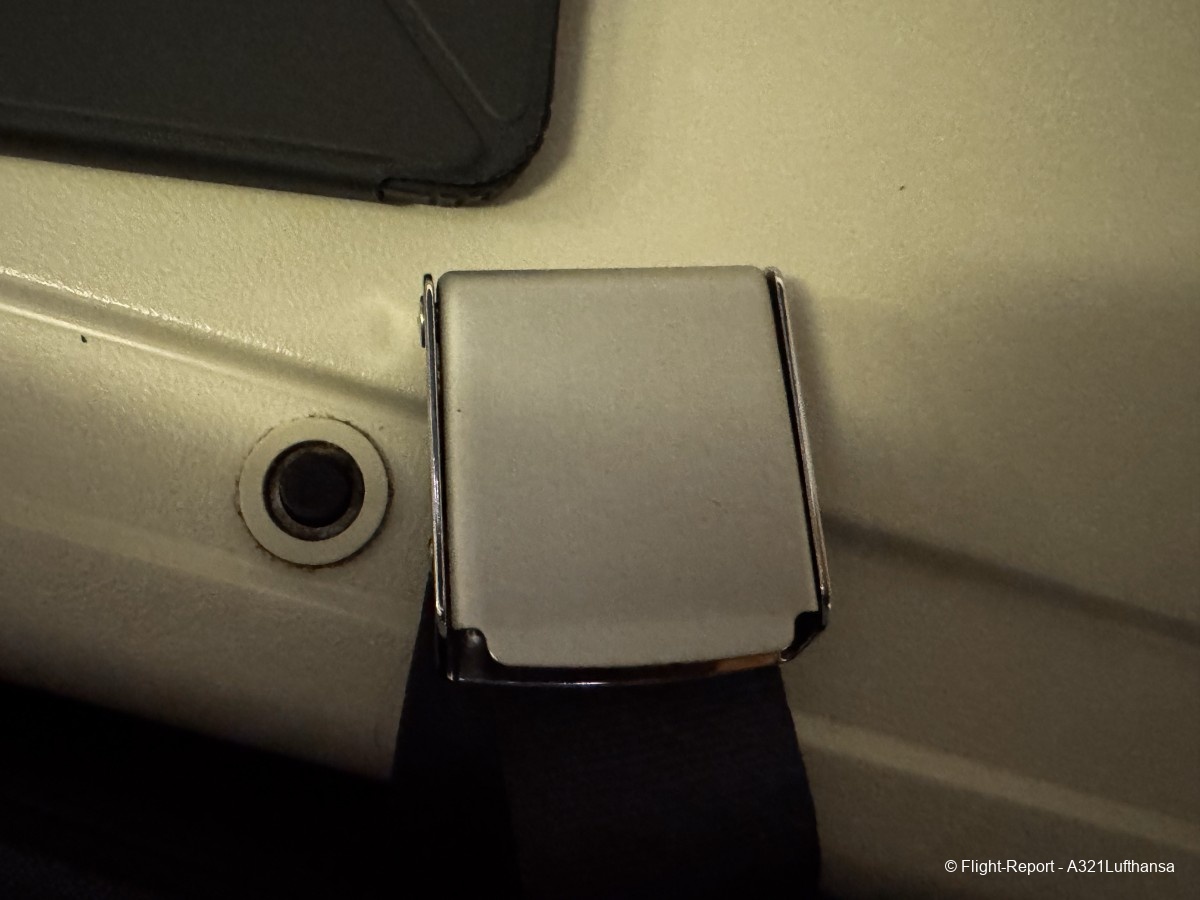
The armrest and seatbelt buckle were in neat condition, the latter being without airline logo:
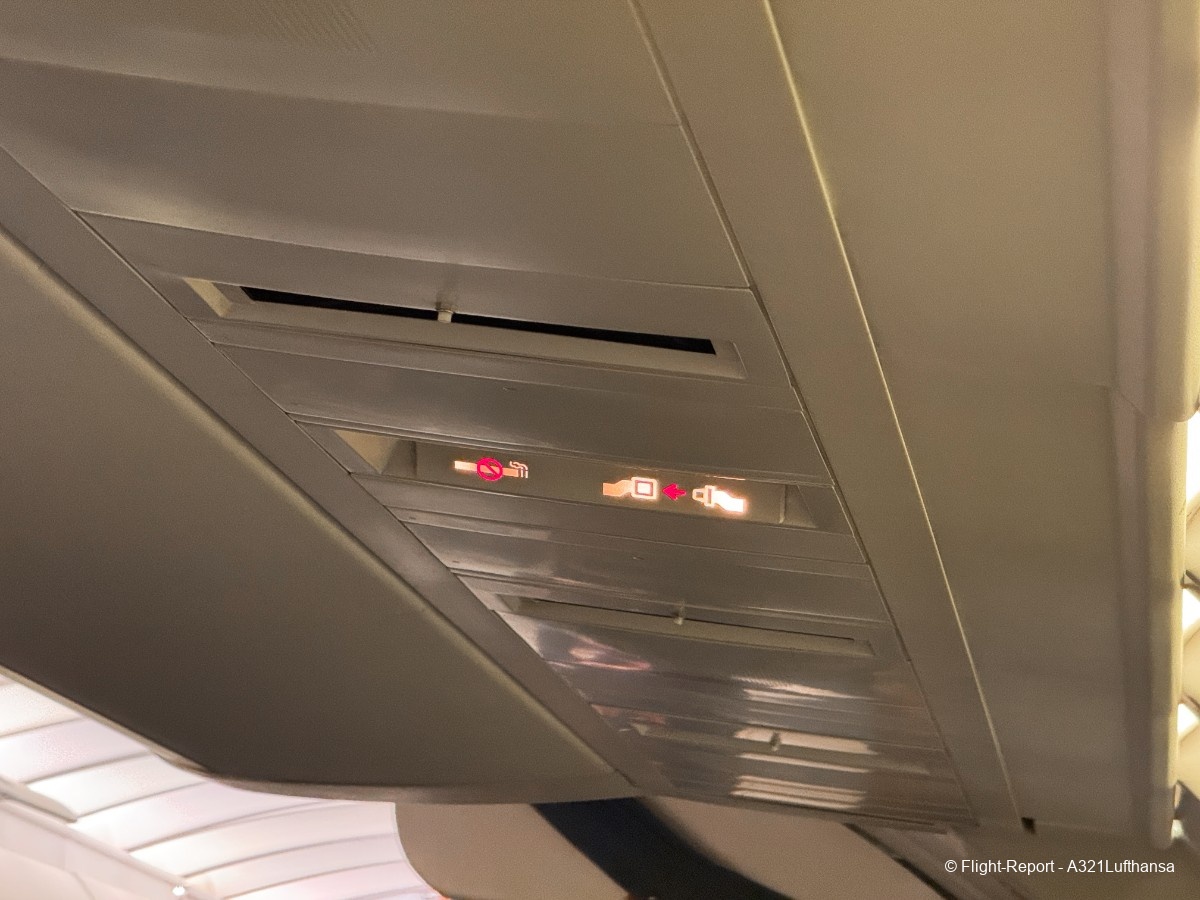
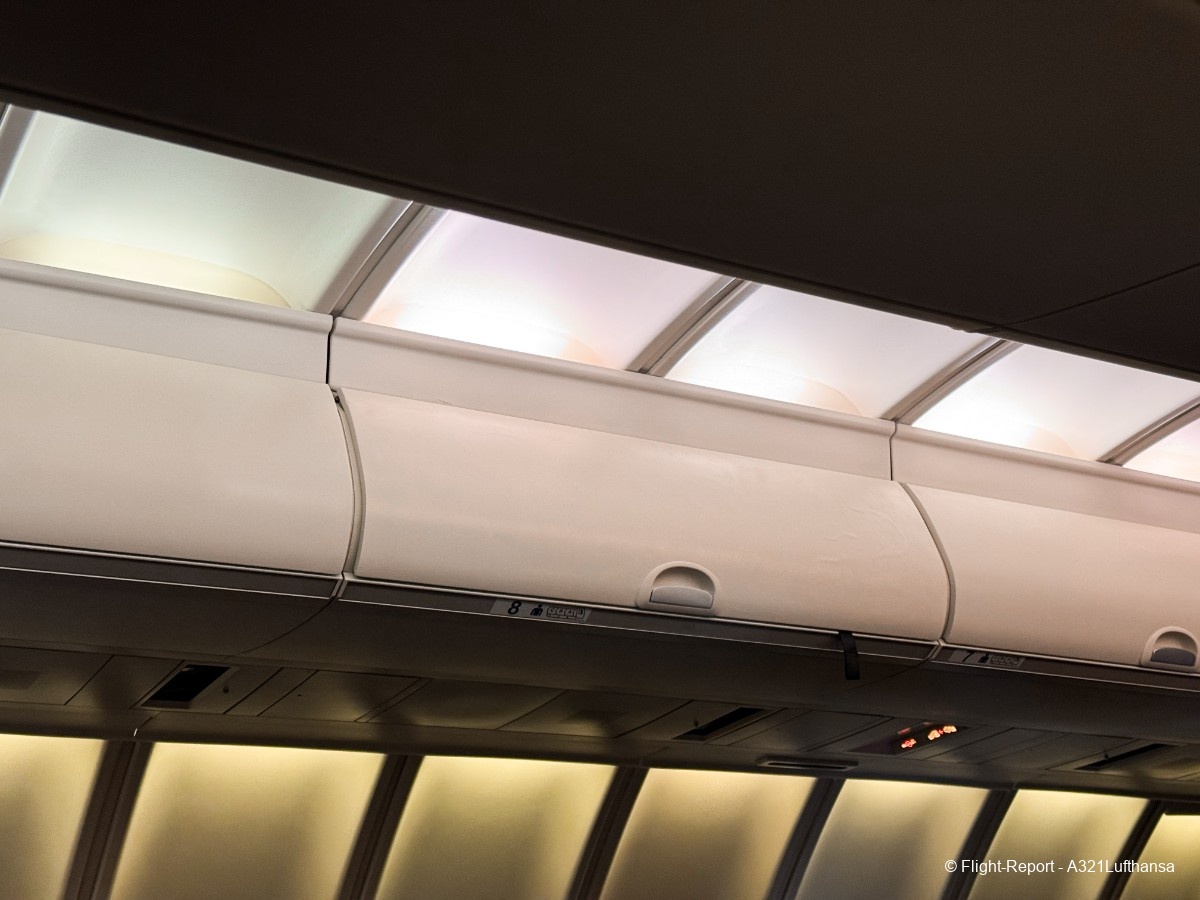
Passenger service units and overhead bins are completely standard for B747:
Outside, the airport’s VIP terminal and its vehicles were visible:
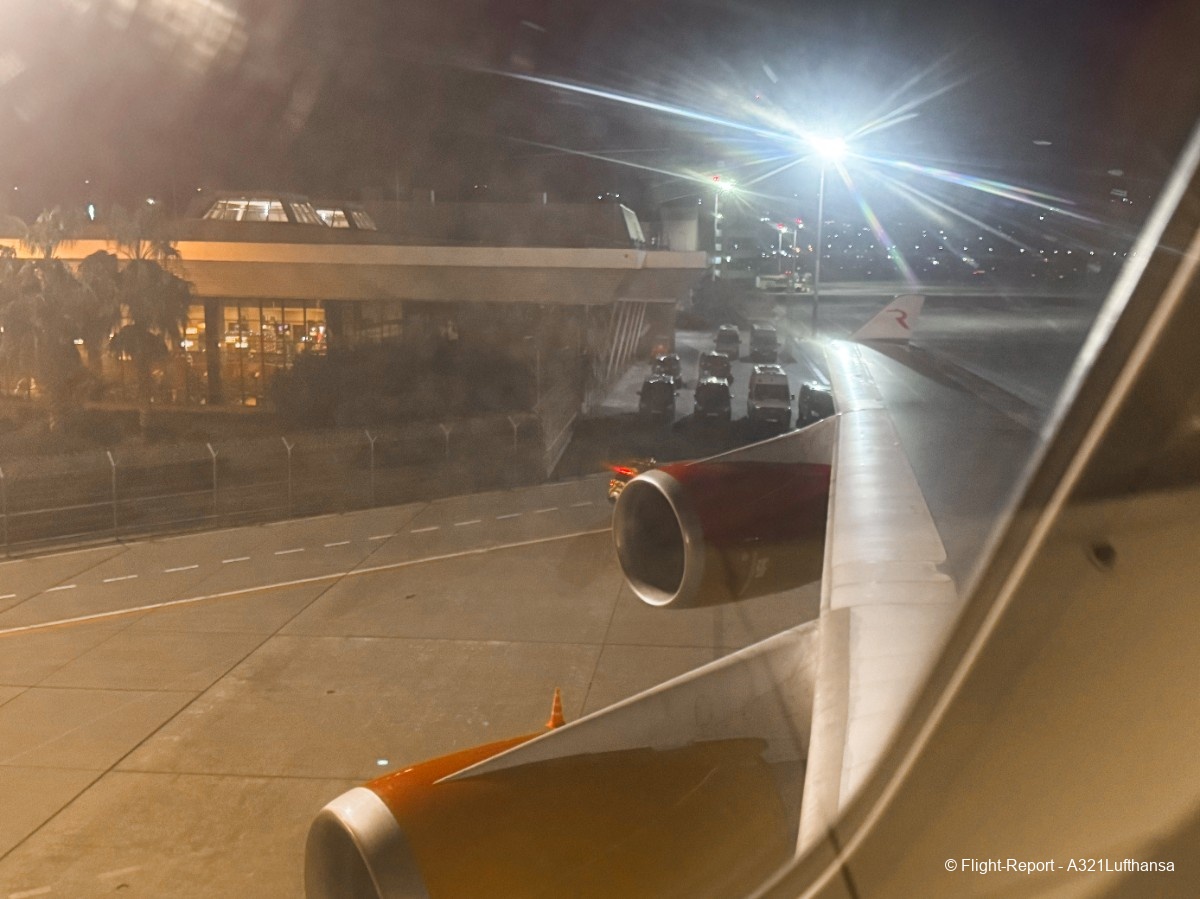
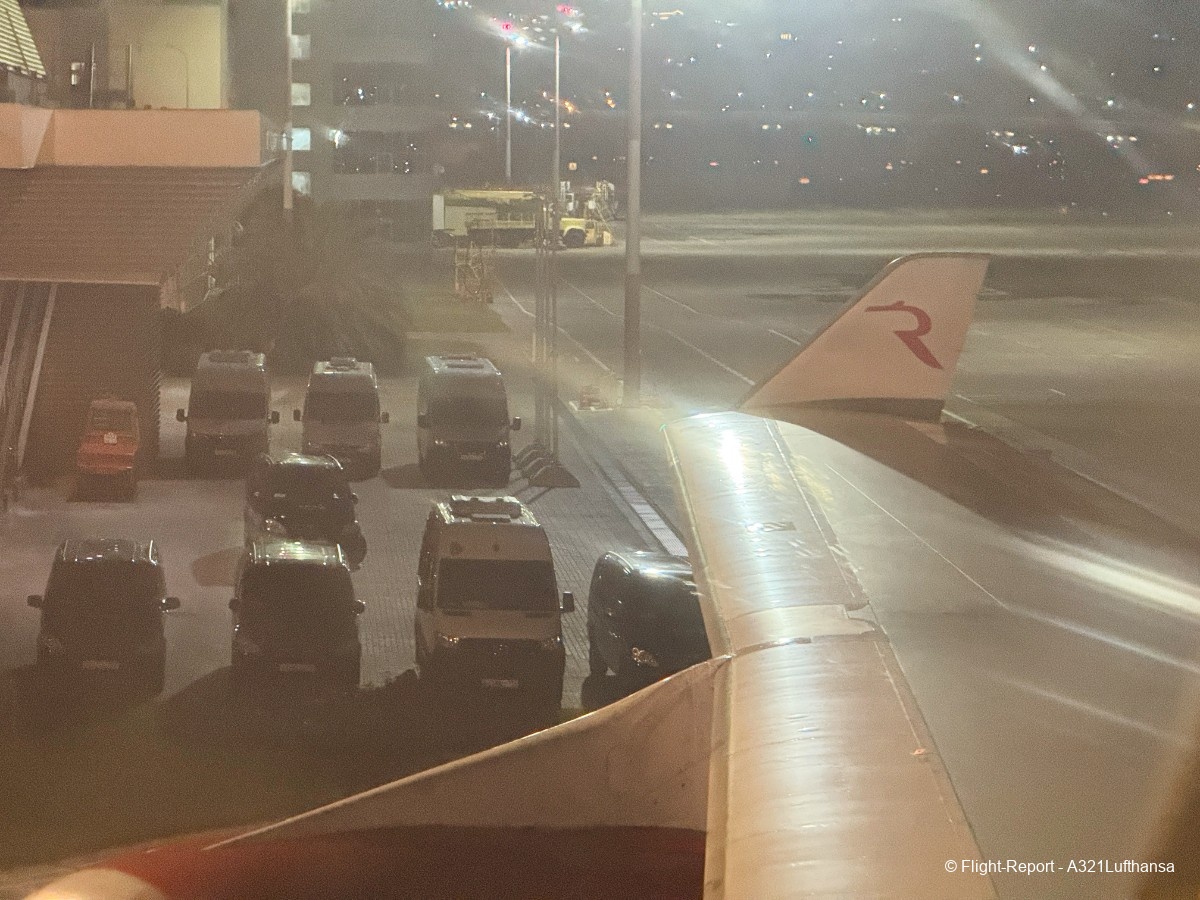
At 20:02, pushback finally began. Watching everything from such a height felt utterly unfamiliar:
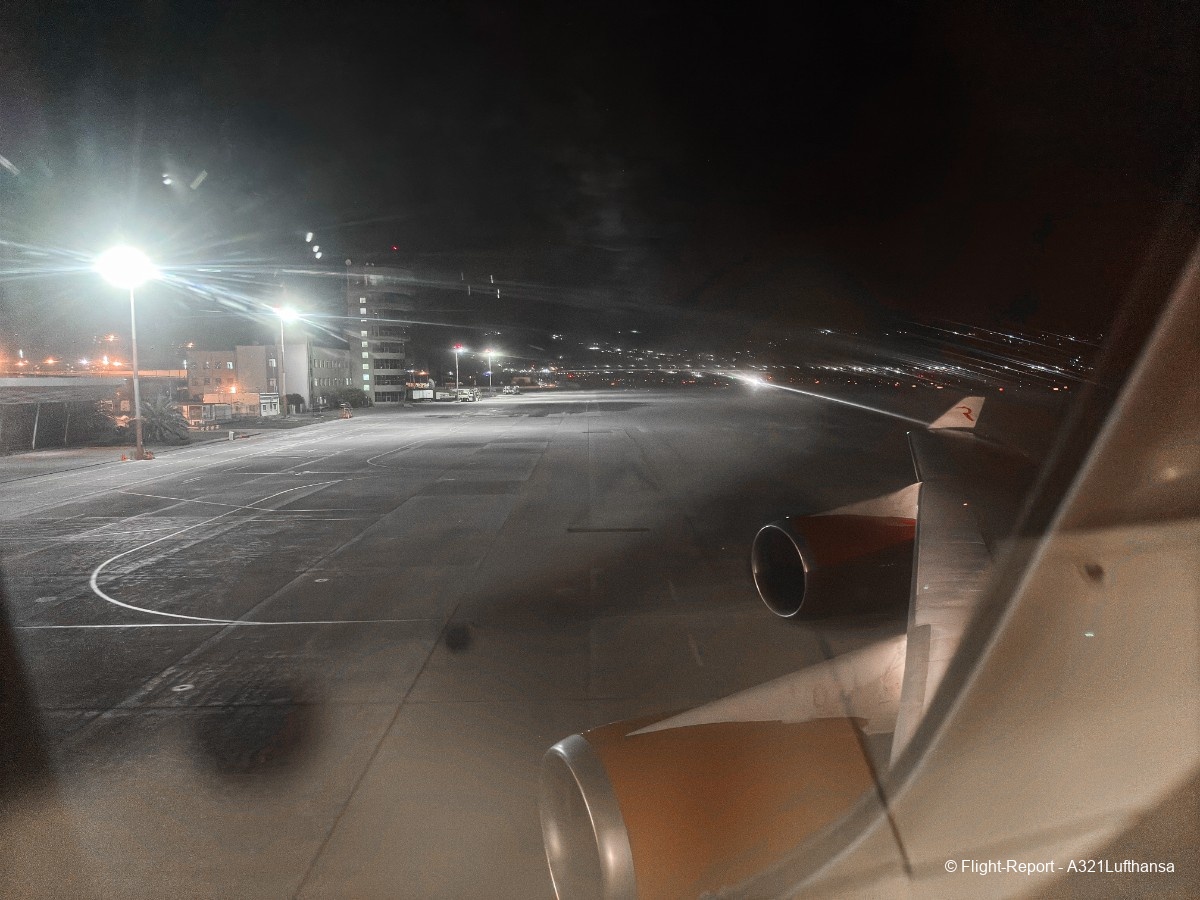
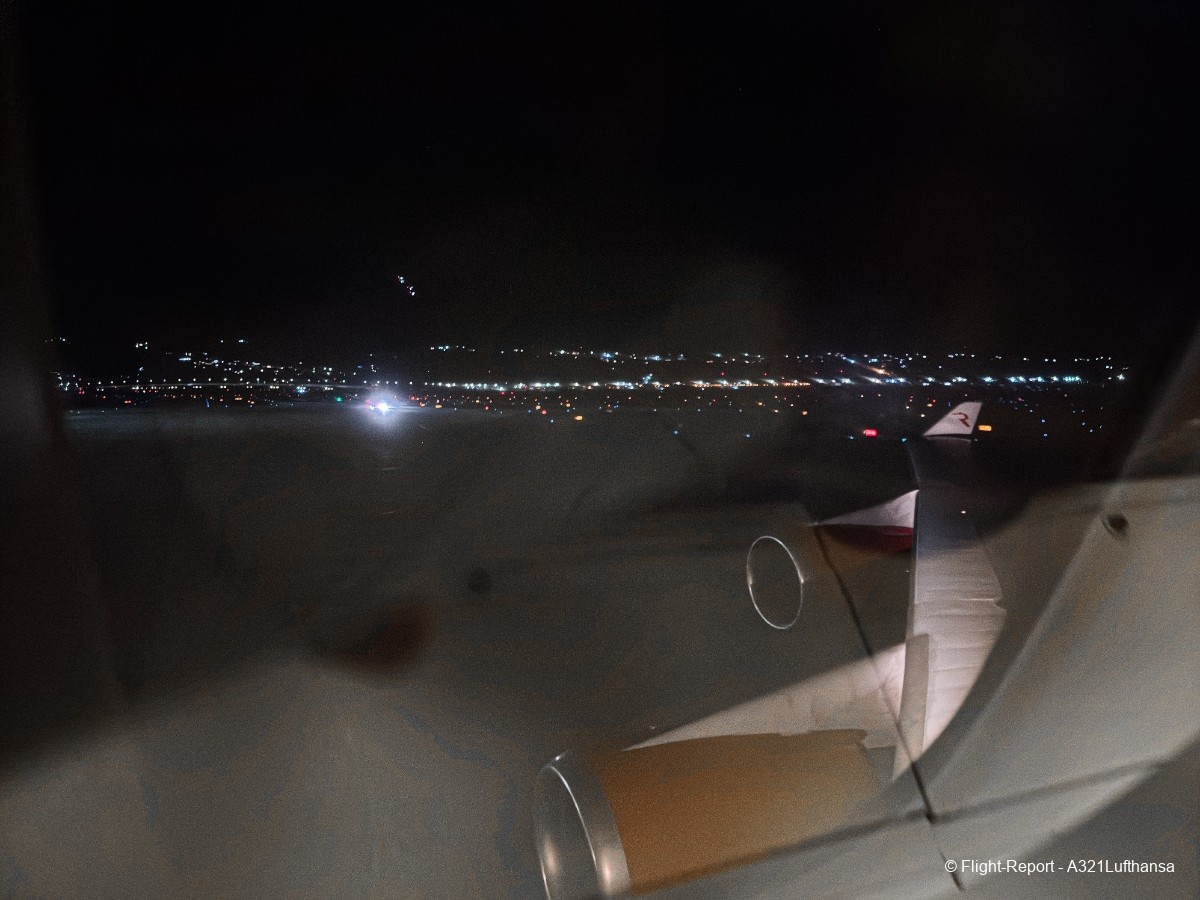
An Azimuth SSJ-100 is taking off before us:
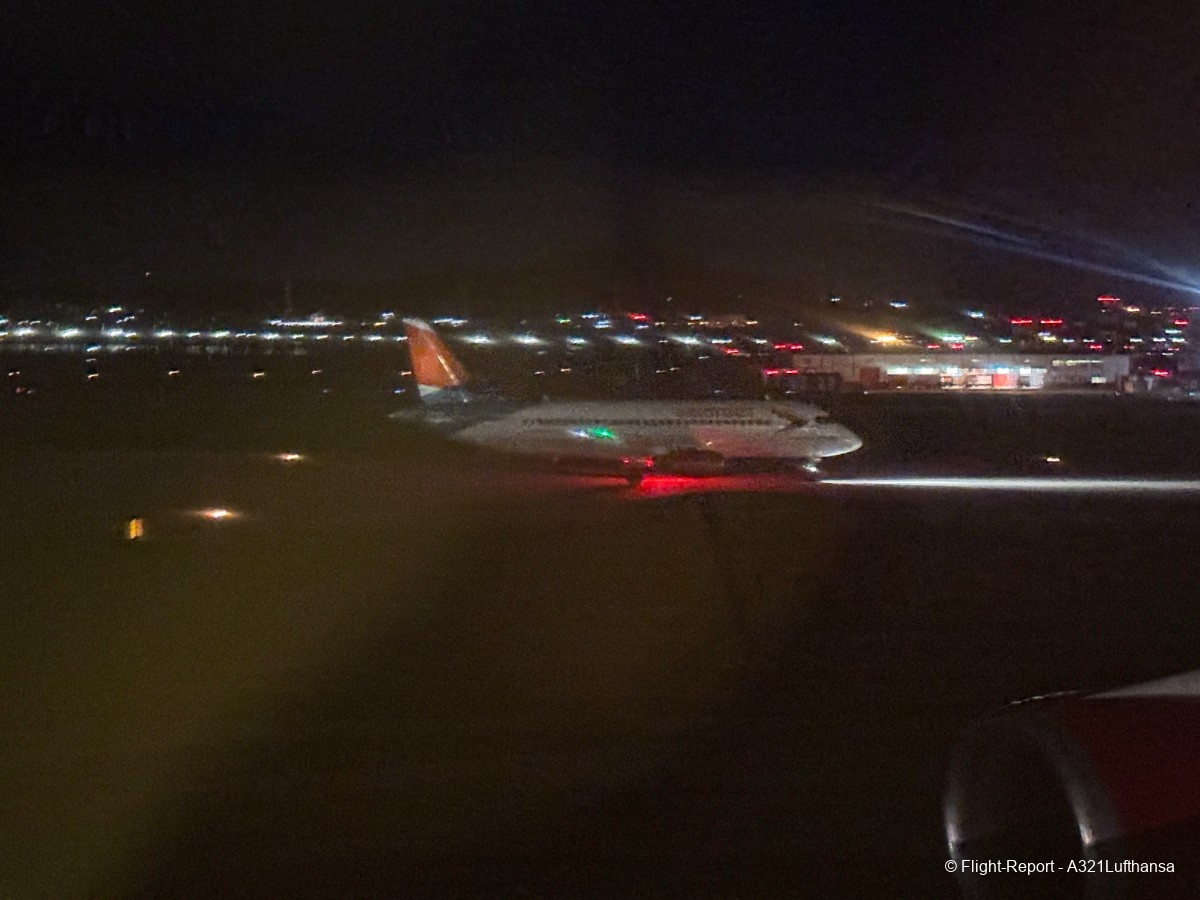
We start our taxi towards runway 24:
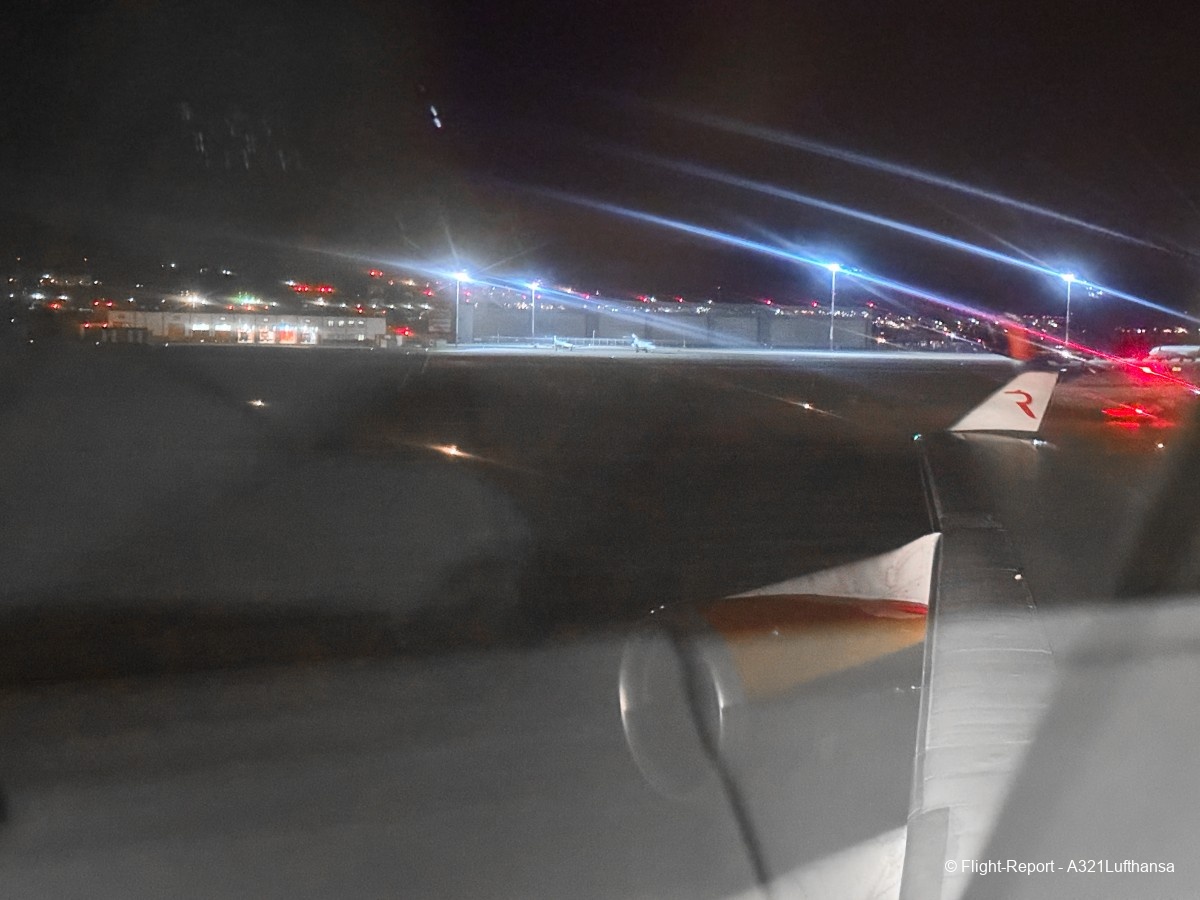
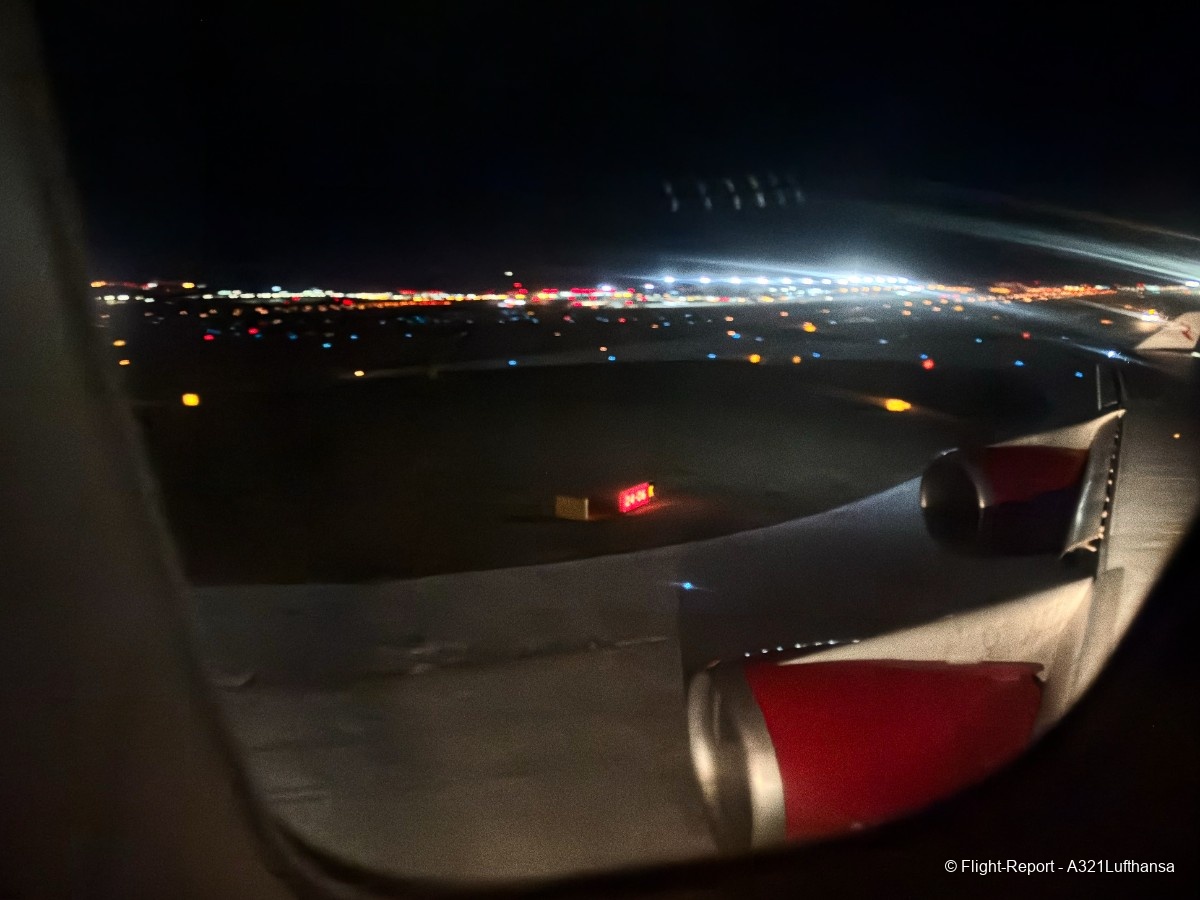
After 1:50 delay we were finally cleared for takeoff, and without the slightest hesitation, 4 mighty GE CF6-80 engines surged into takeoff power, and our Queen of the Skies thundered down the runway:
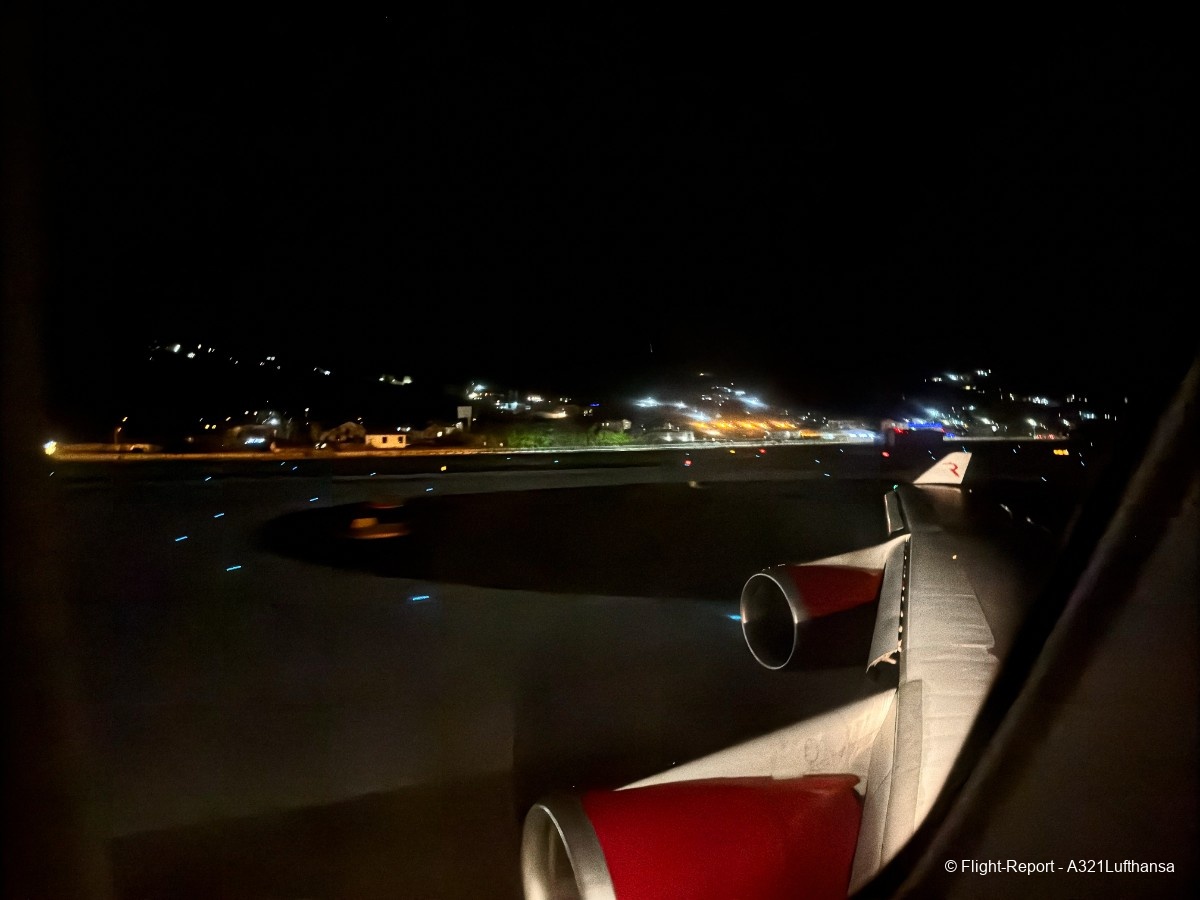
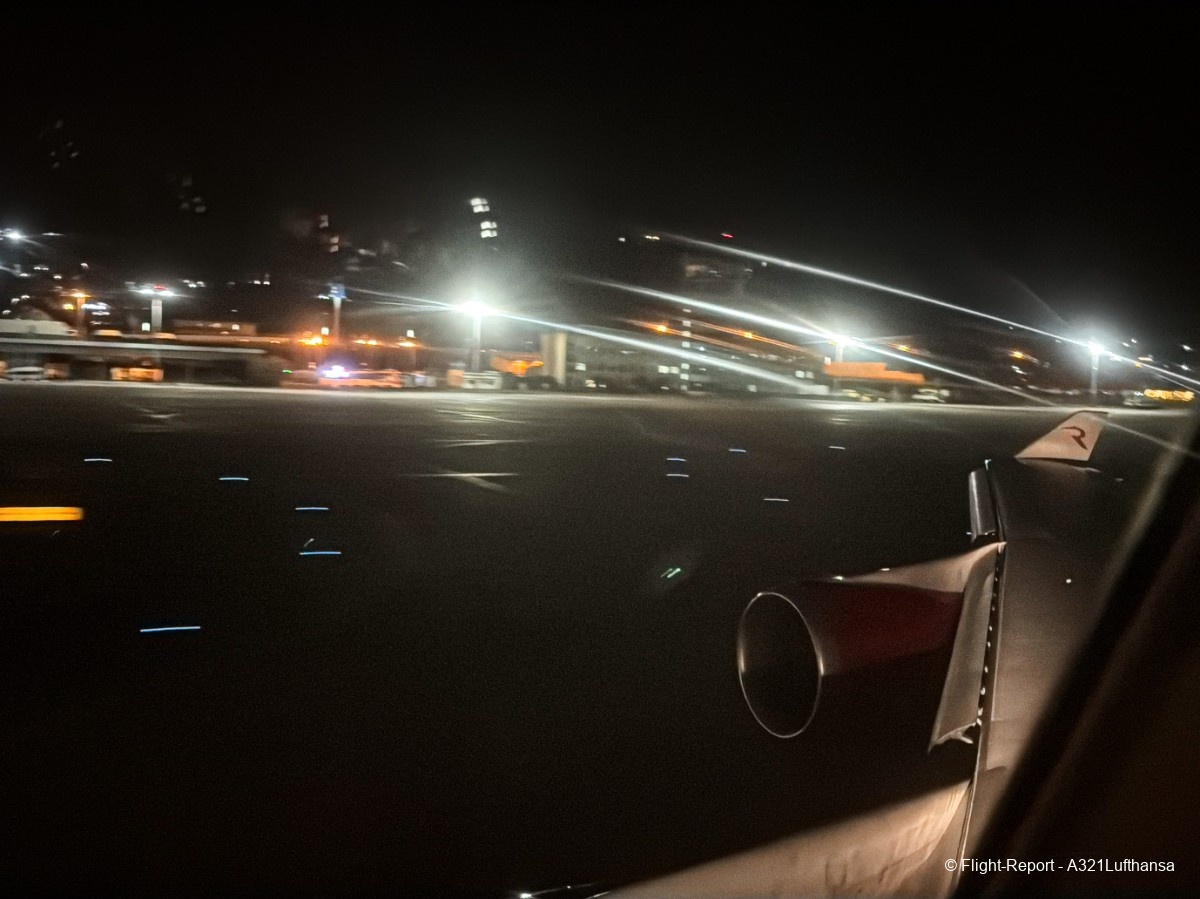
And we skyrocket above suburbs of Adler – the district where the airport is located, being administratively part of Sochi (though it's located 27 km from the city centre). Sochi is the world's longest city being spread at 145 km along the seaside.
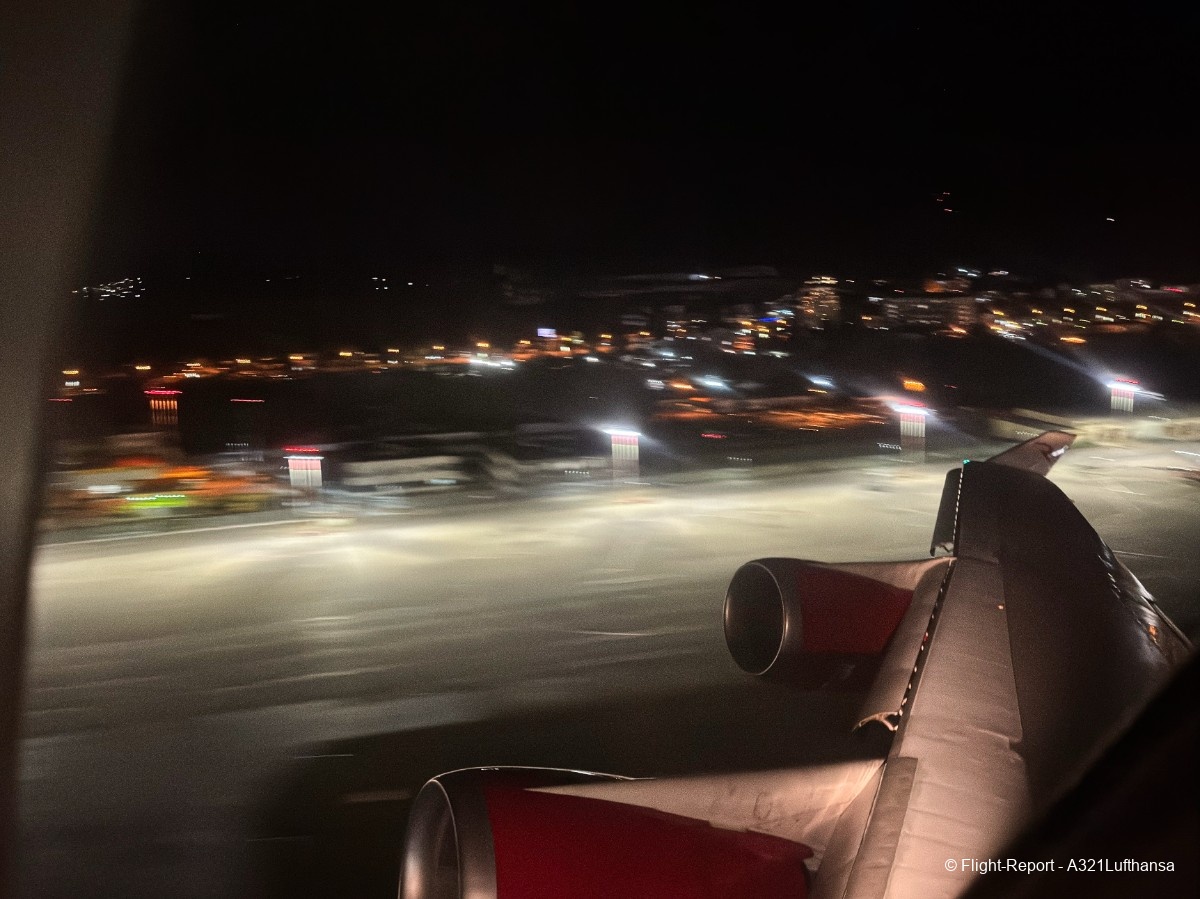
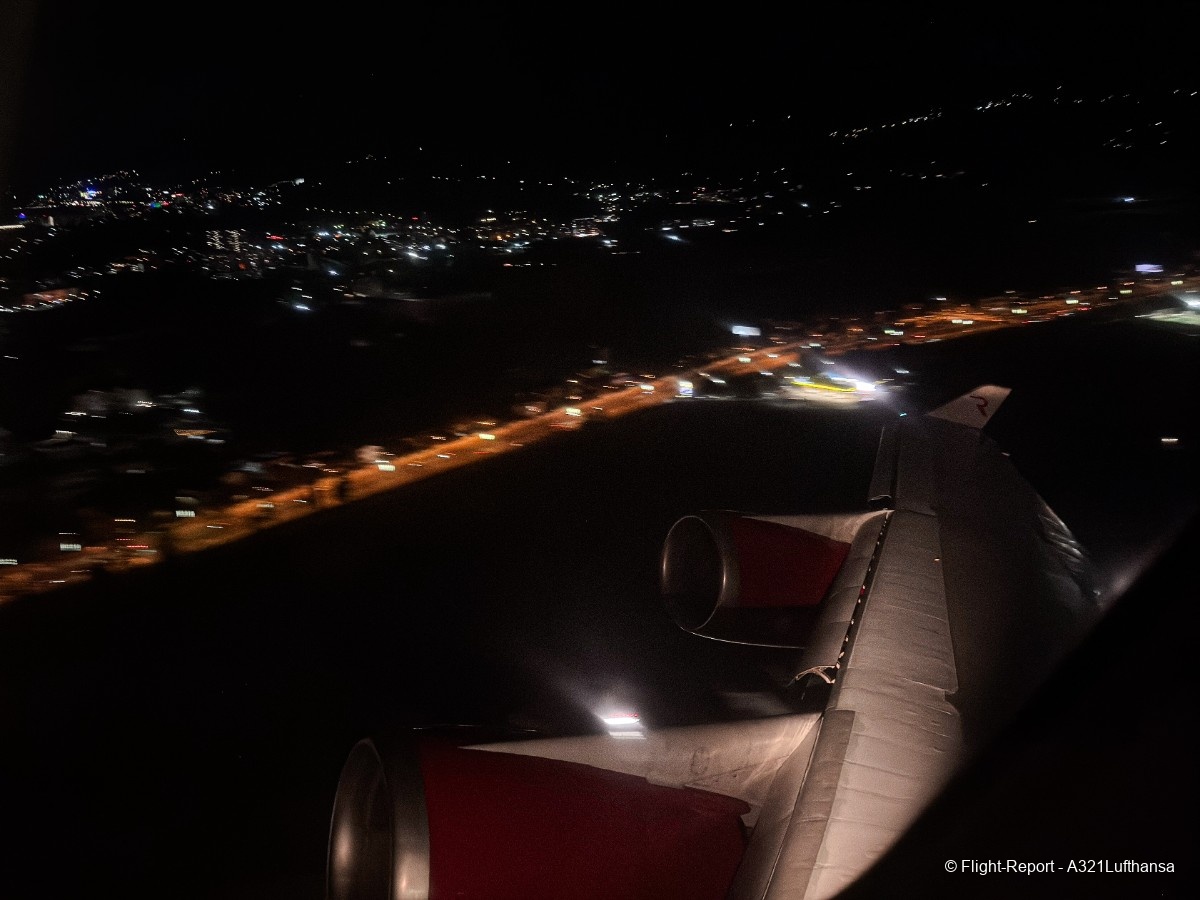
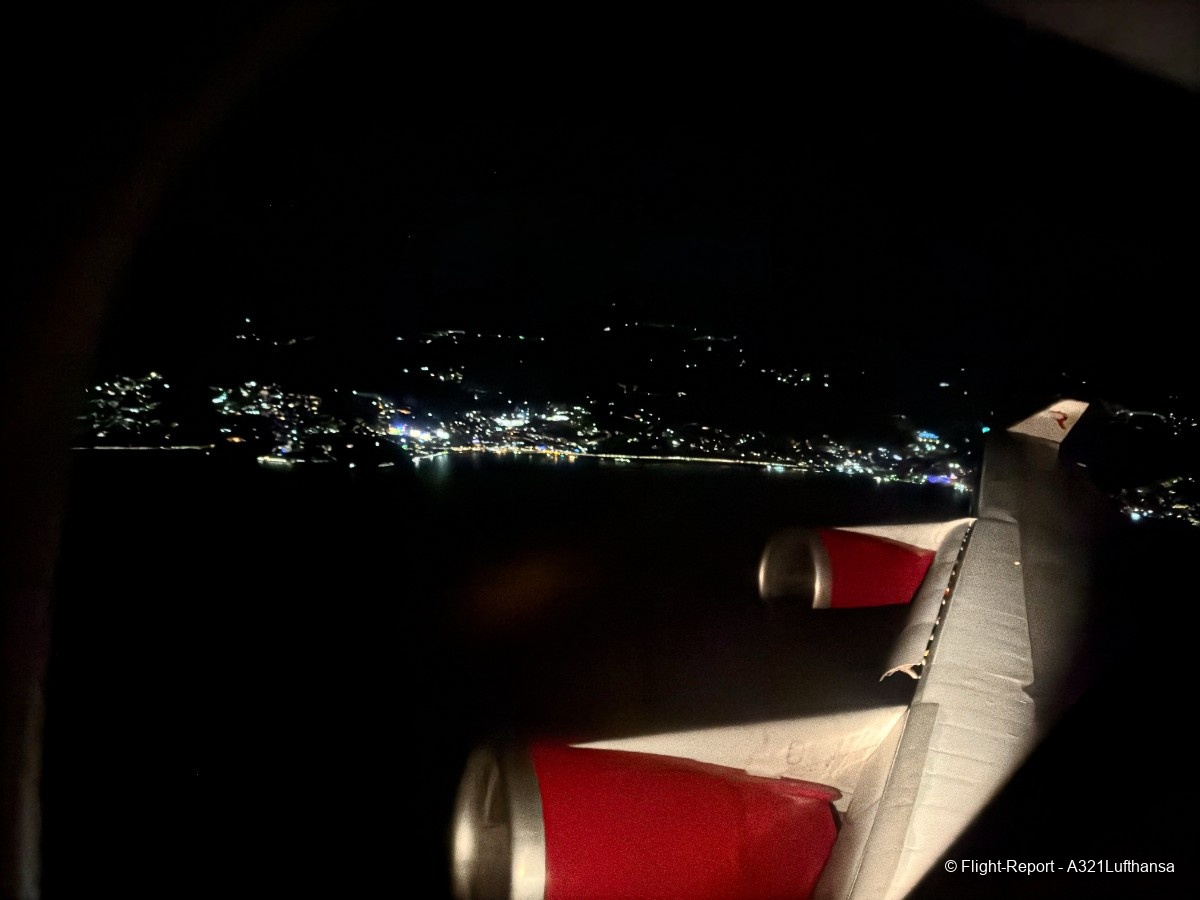
After takeoff we turn right above the Black sea with the coastline perfectly visible for around a minute:
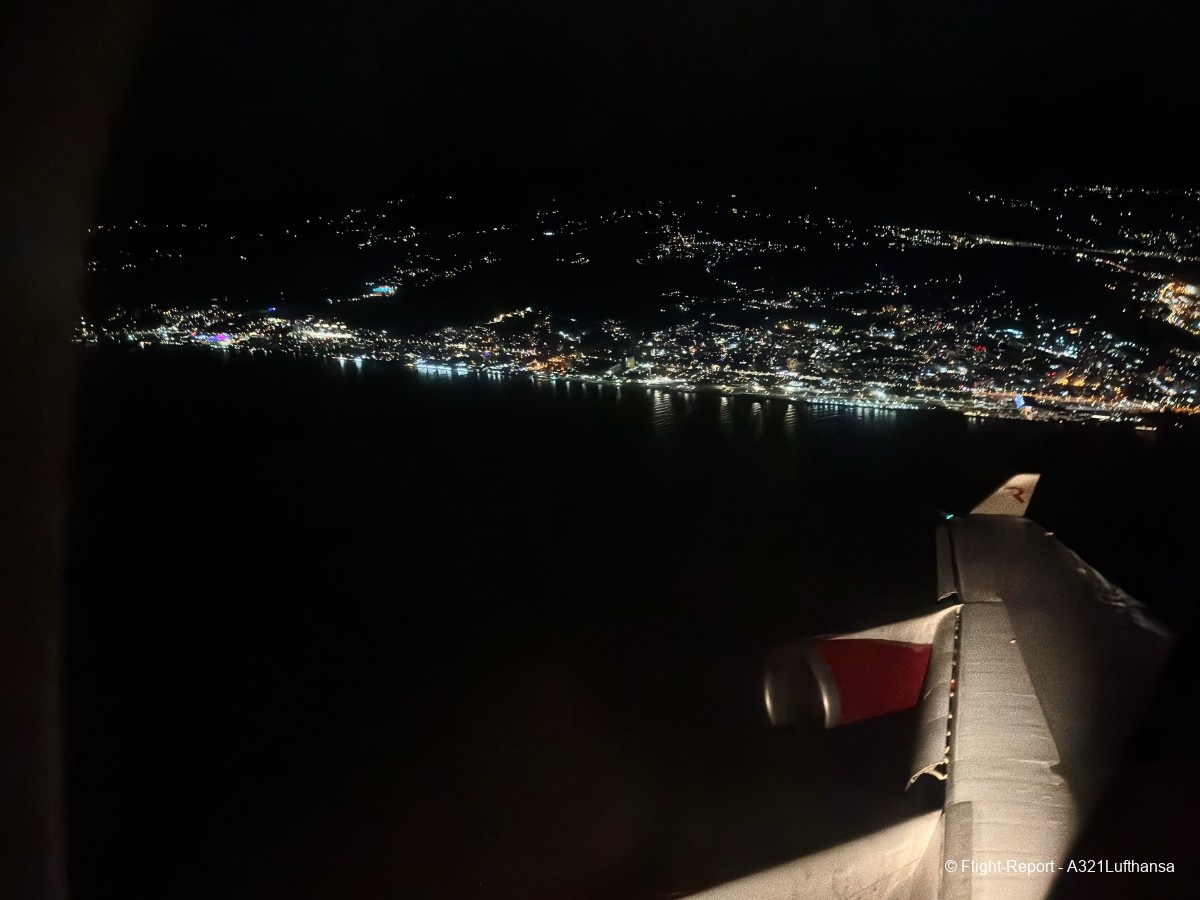
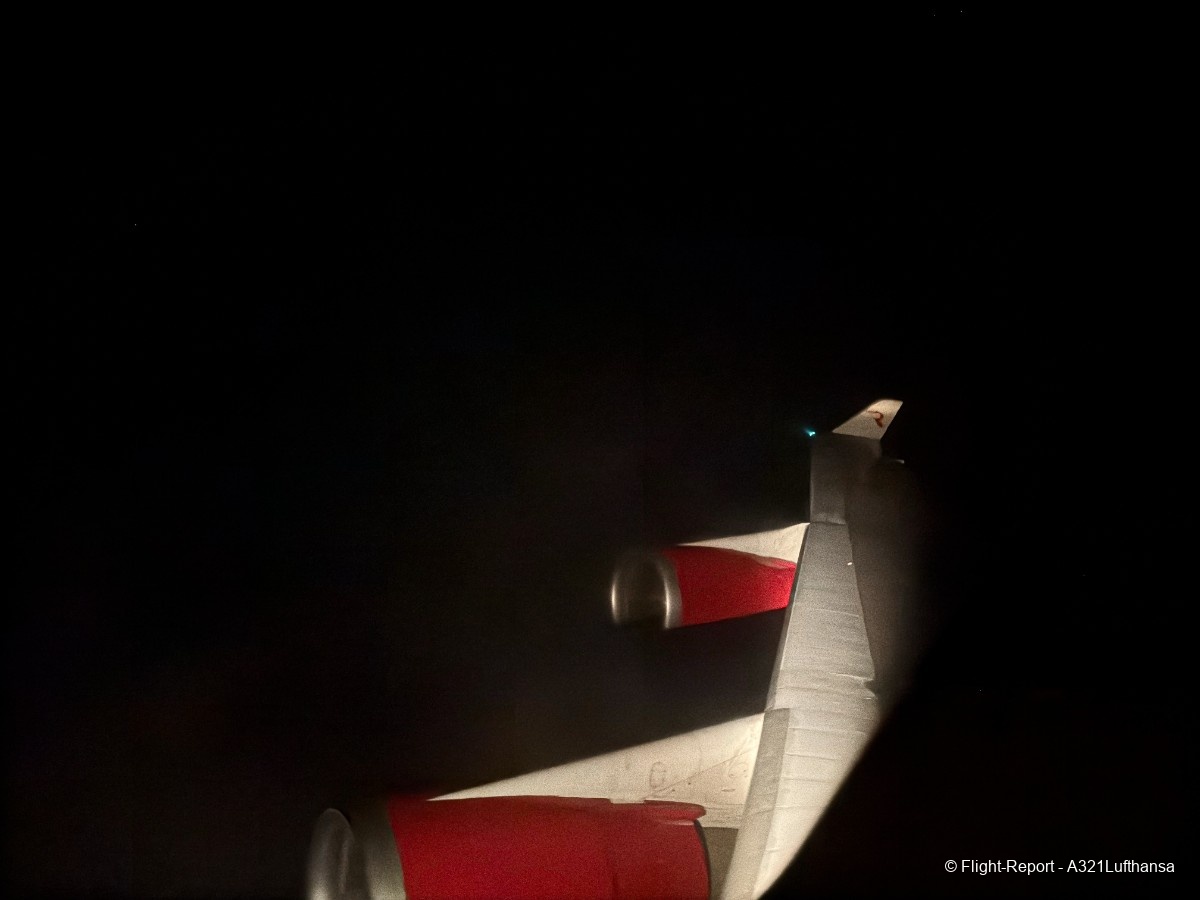
Then we disappear in dense clouds layer:
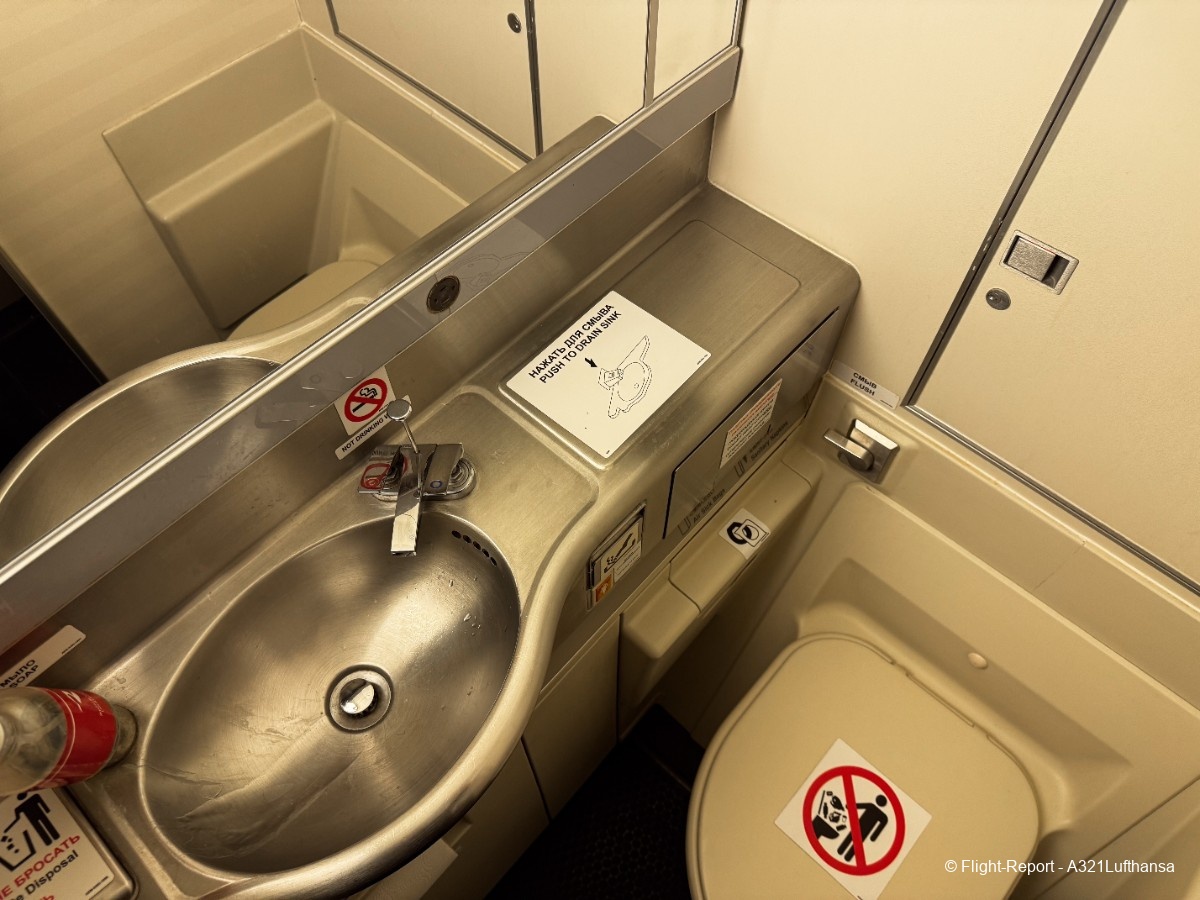
After reaching our cruising altitude I decided to briefly inspect the lavatory – my eyes immediately stumbled upon remaining signage in Japanese:

Then I take a photo of the upper deck overview:
Then I check the seat pocket in front of me, the contains of which are mostly familiar after Aeroflot, as it's the parent airline of Rossiya.
First comes the safety card:
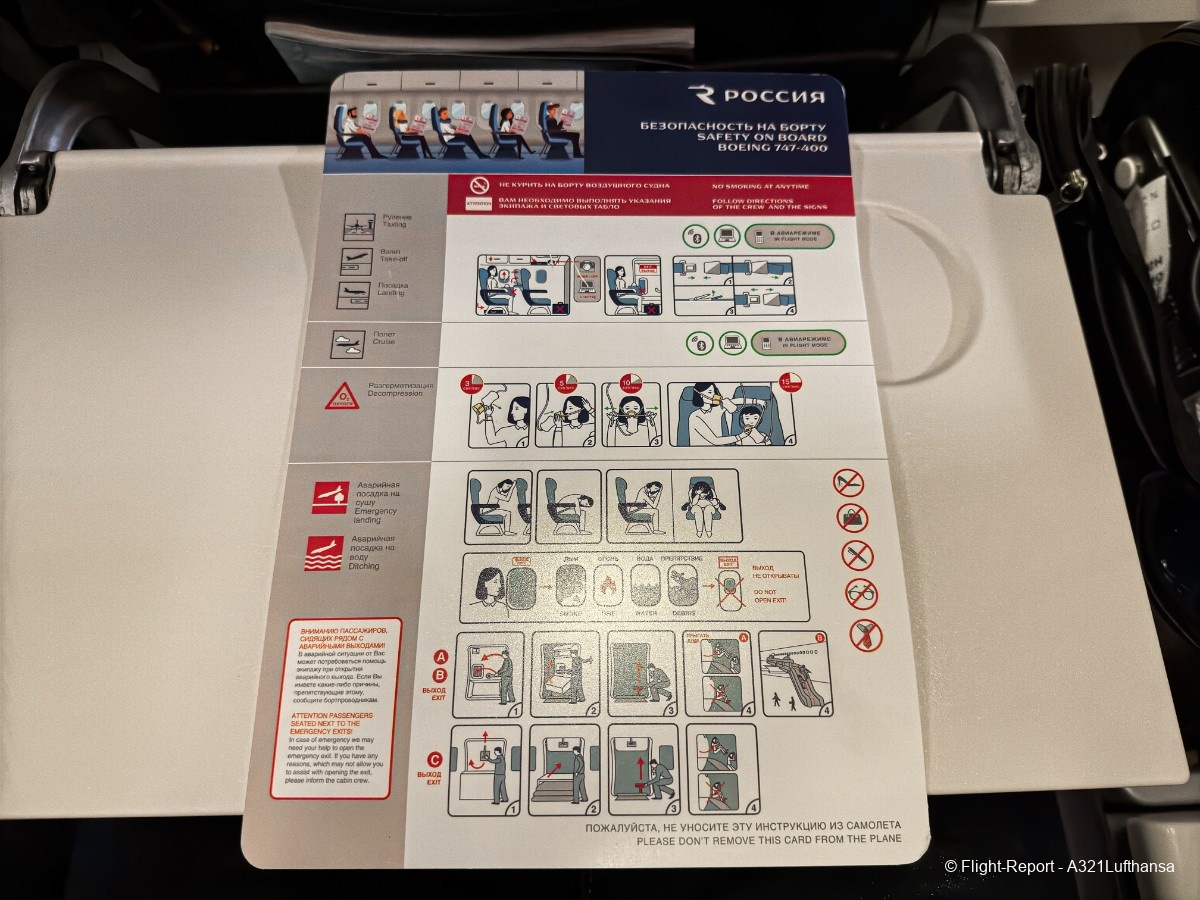
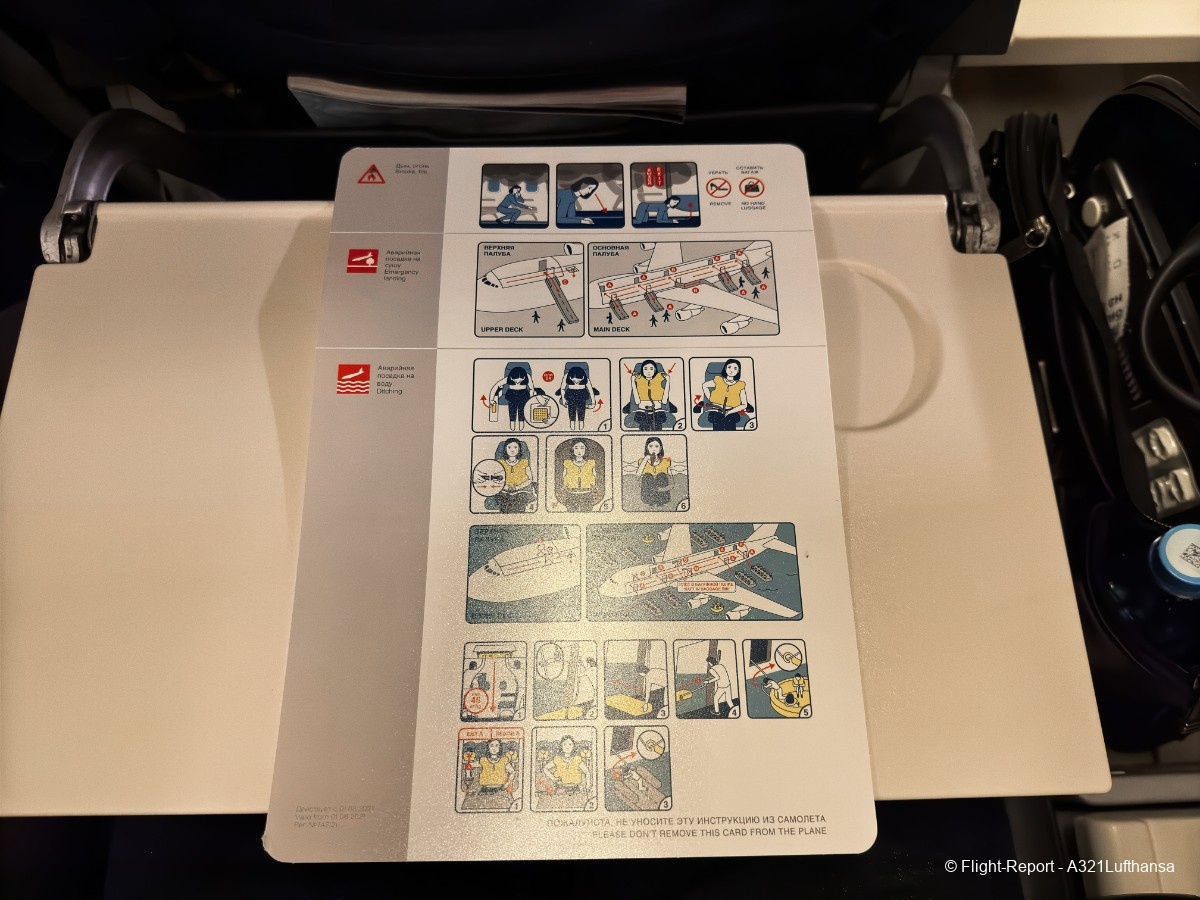
Then comes the inflight magazine with large amount of information about the fleet, special liveries, terminal maps etc.
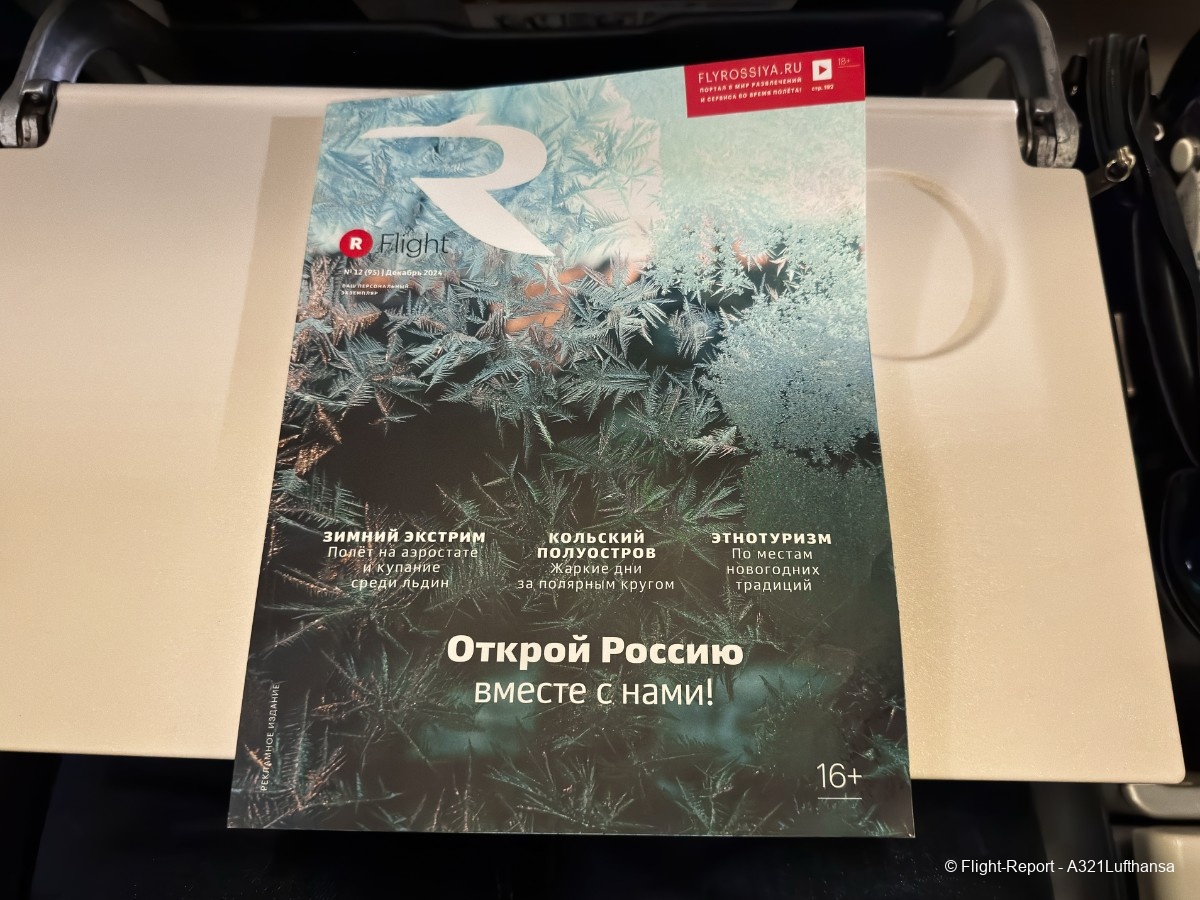
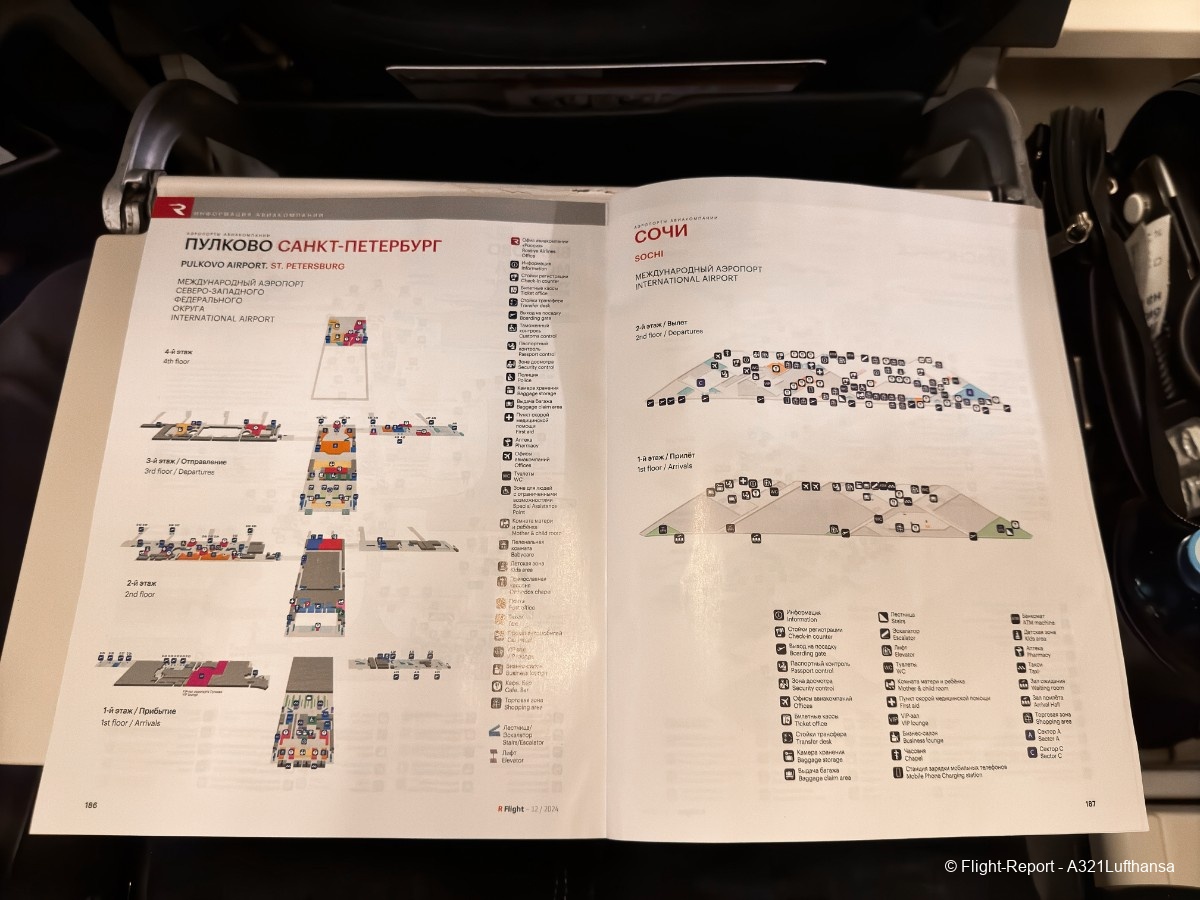
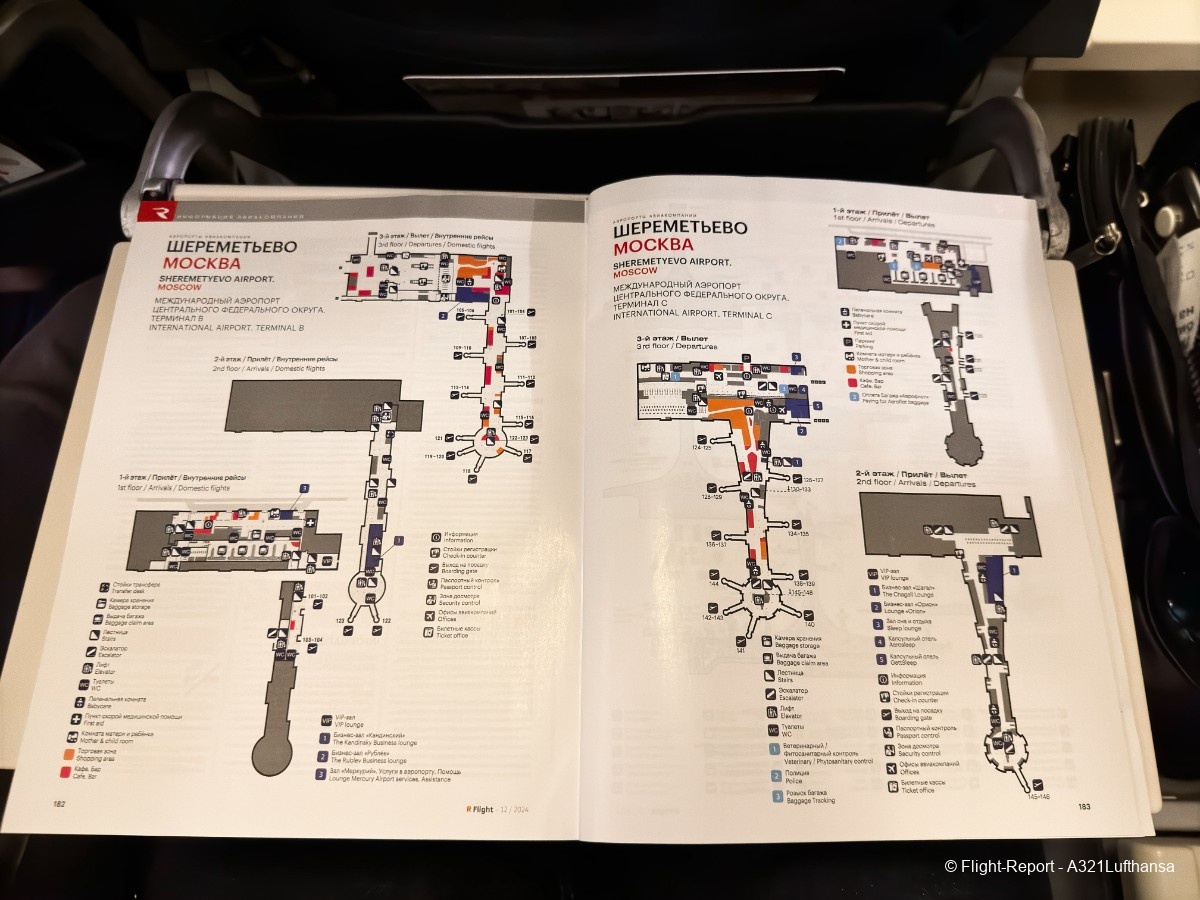
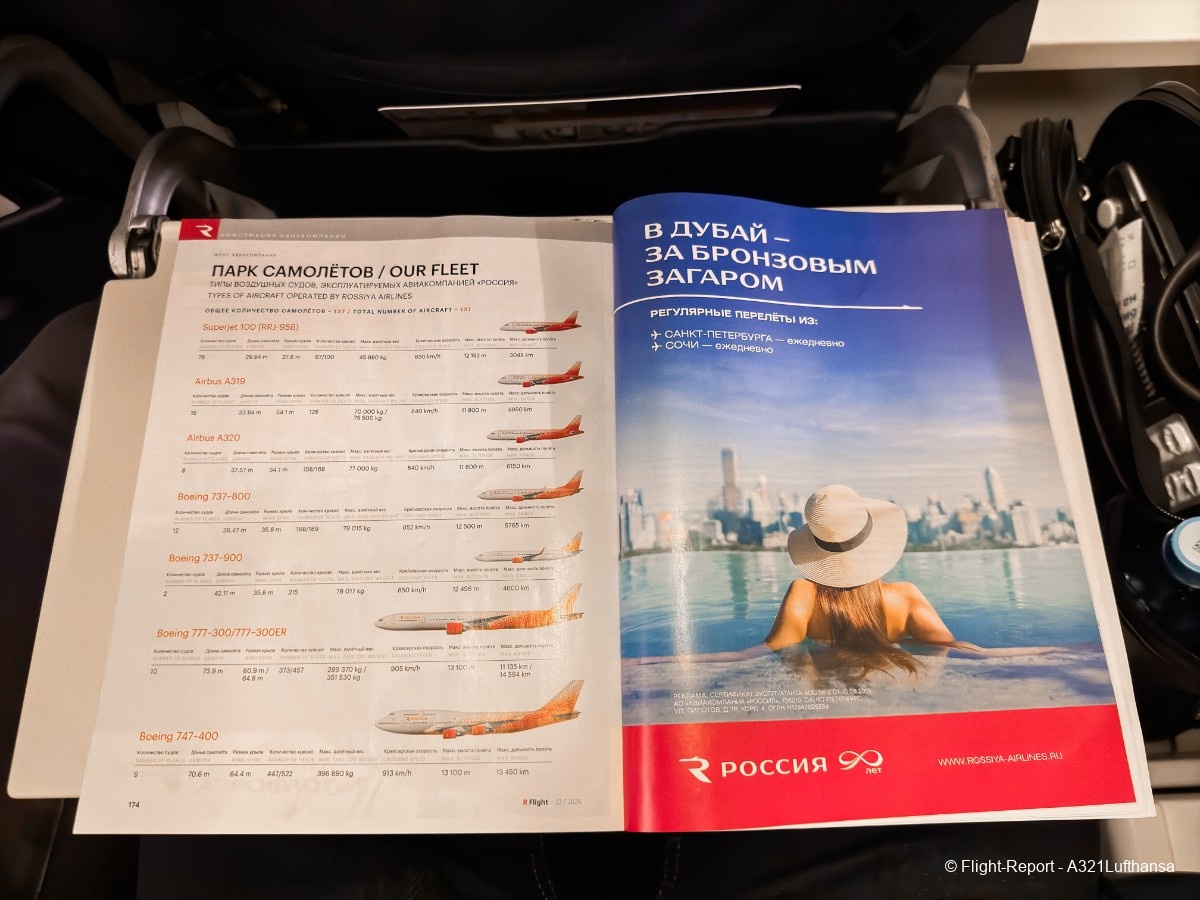
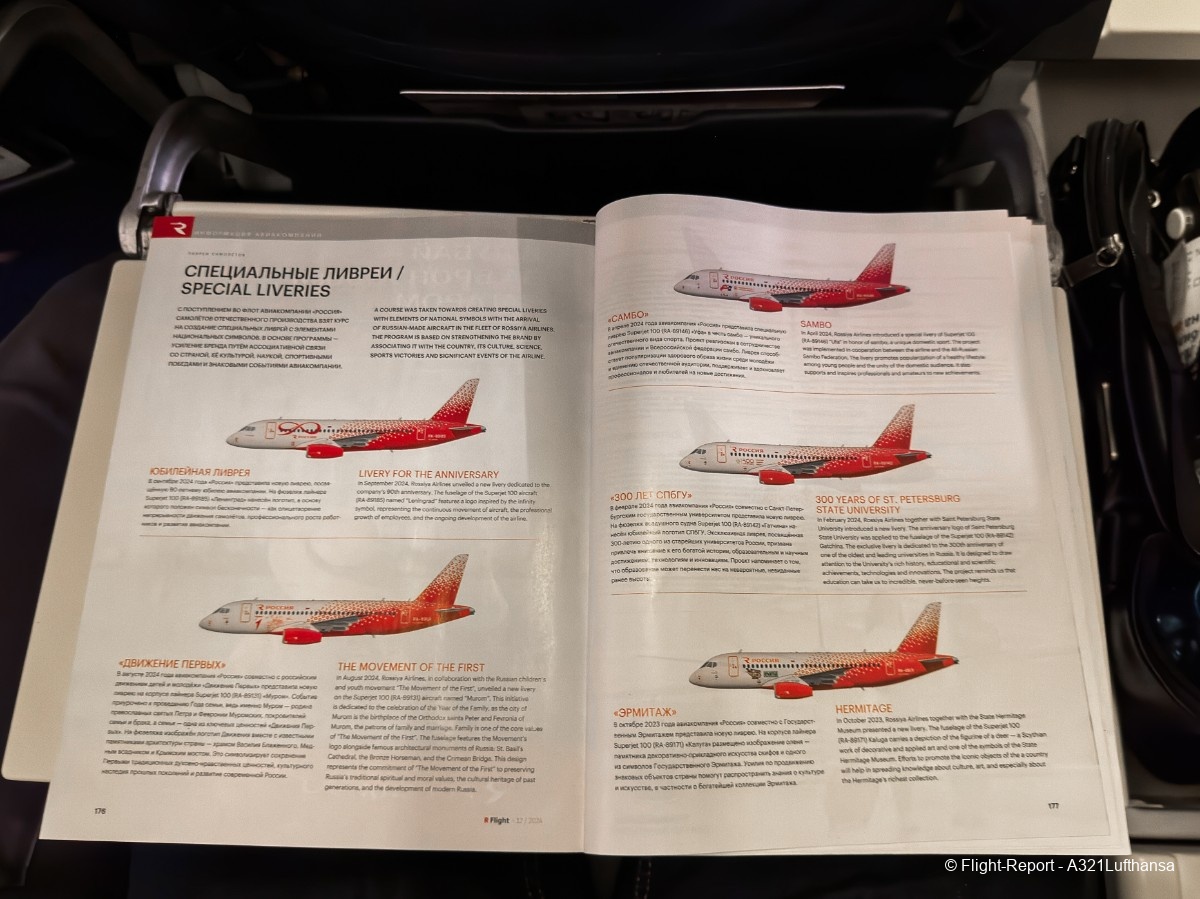
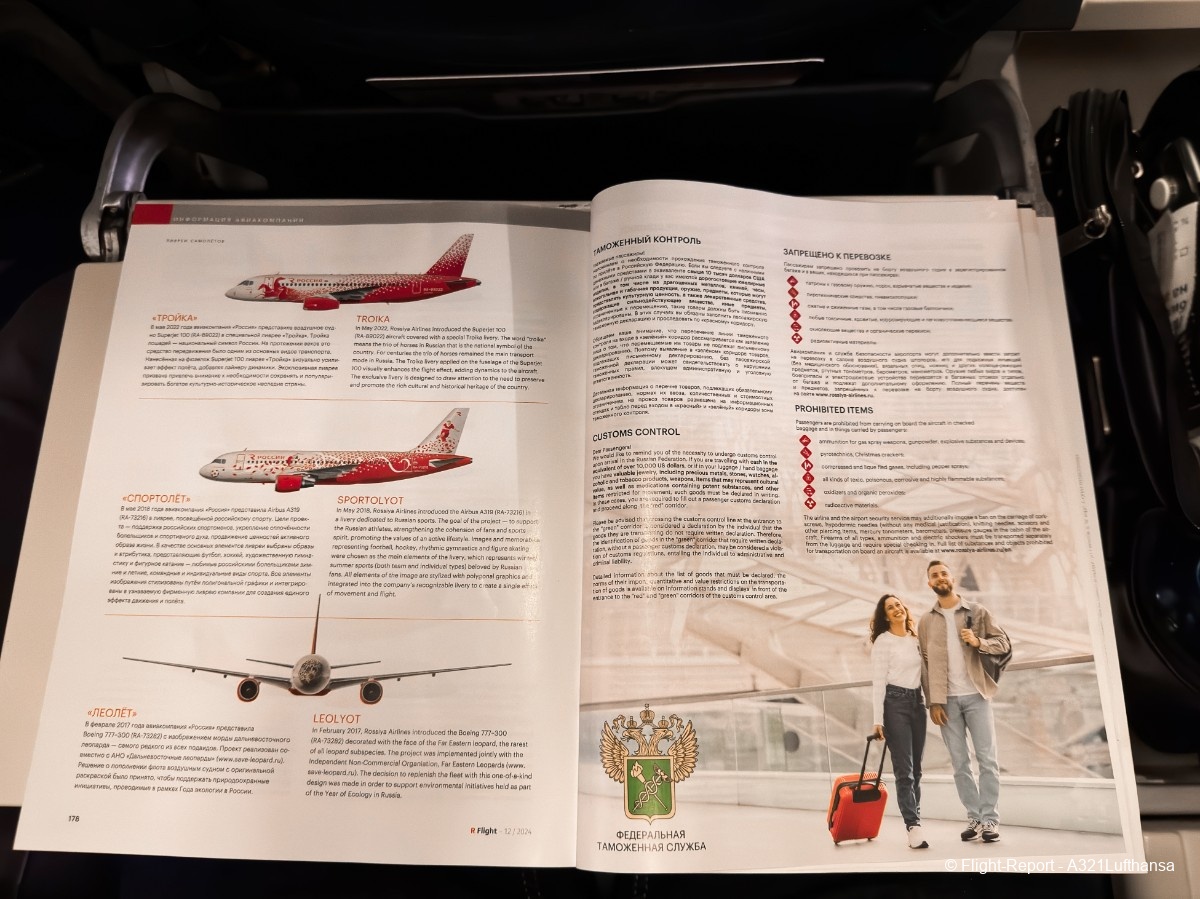
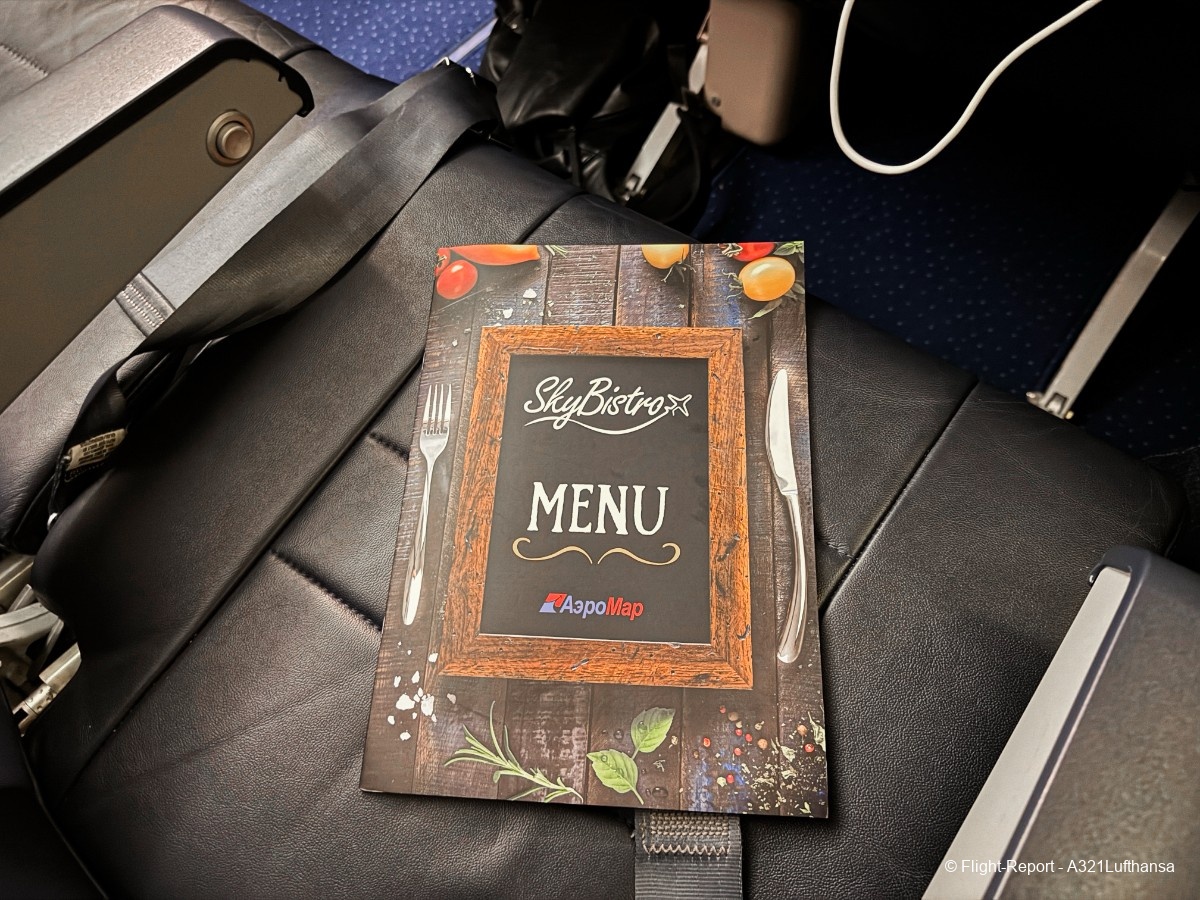
And finally, the BoB menu:
After certain attempts I eventually managed to find a way to secure my tablet in the device holder – once service began, I simply placed it on top of the storage compartment by the window.
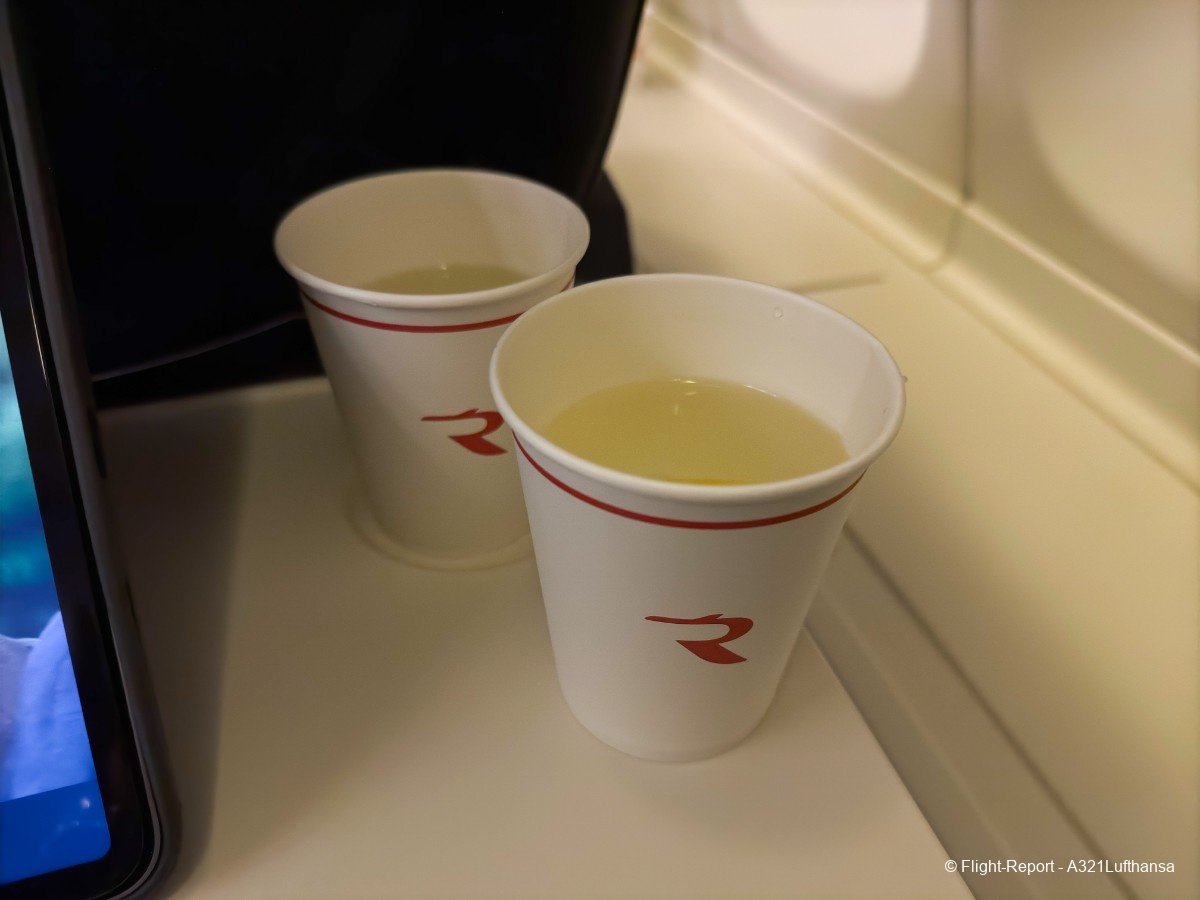
Soon the inflight service commenced. Thanks to the small size of the upper deck cabin, everything proceeded very efficiently. Drinks were offered first, and I chose water with lemon:
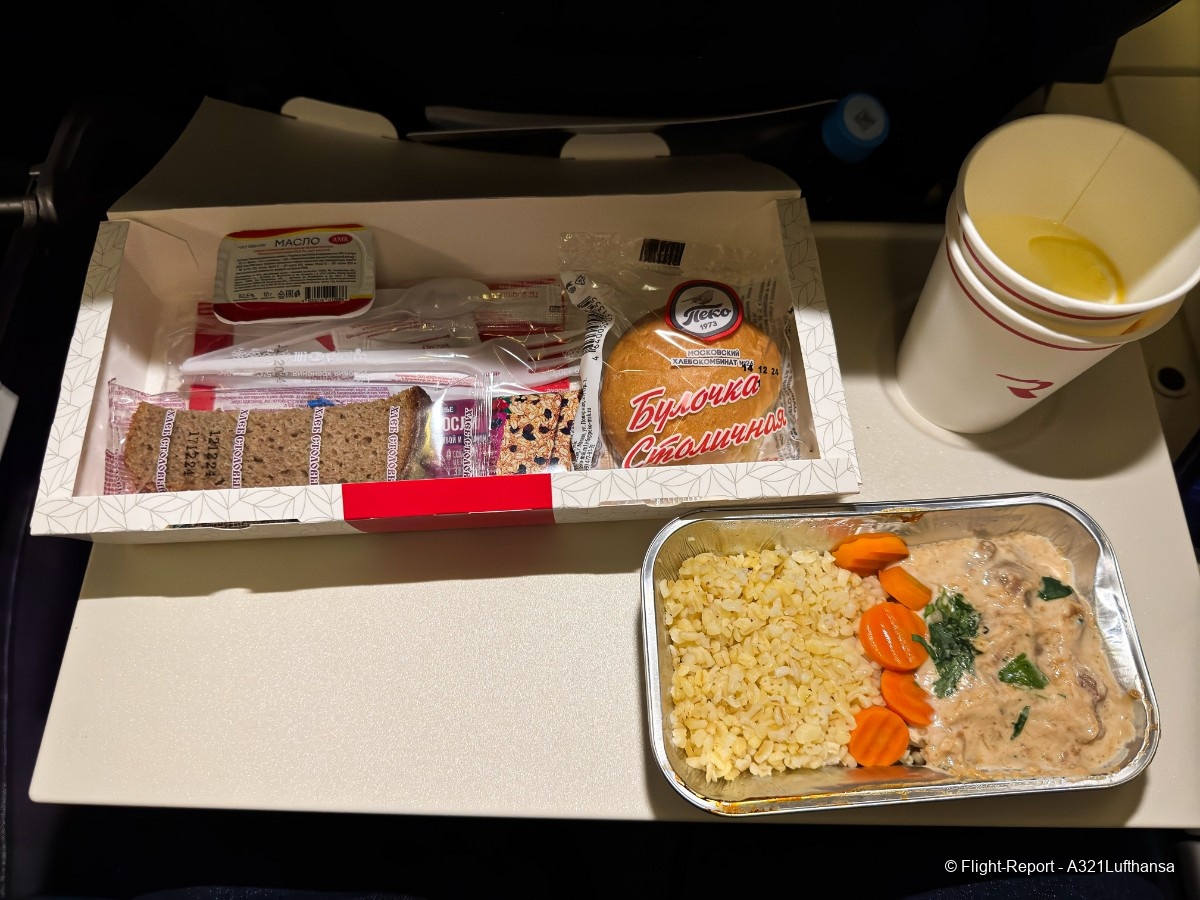
Hot meals followed shortly. Portions were somewhat more modest than on Aeroflot flights, and no starter was provided.
1) Main course – chicken with vegetables in mushroom sauce served with bulgur (the alternative was cheese pasta and one other option that I don't remember anymore);
2) Dessert – a muesli bar.
A standard set completed the tray: bread, butter, and cutlery.
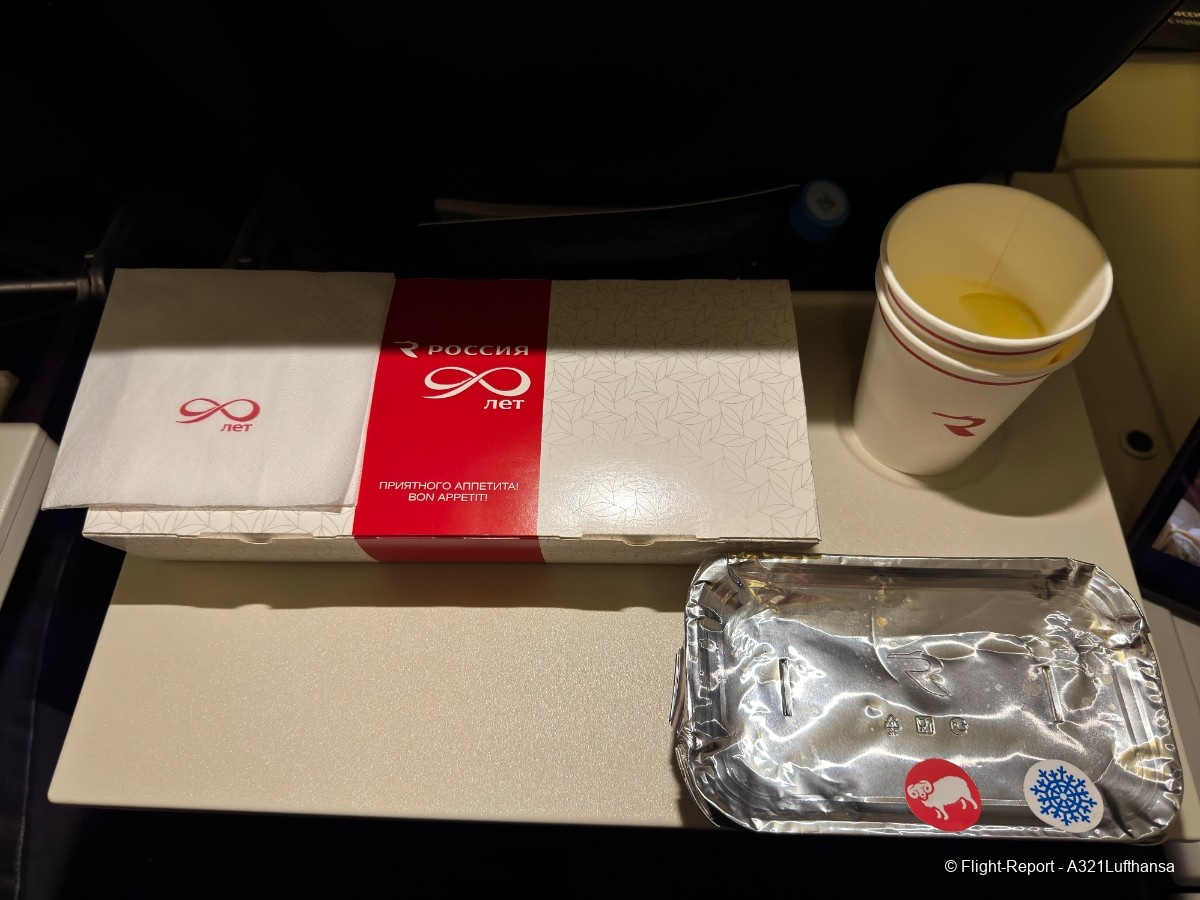
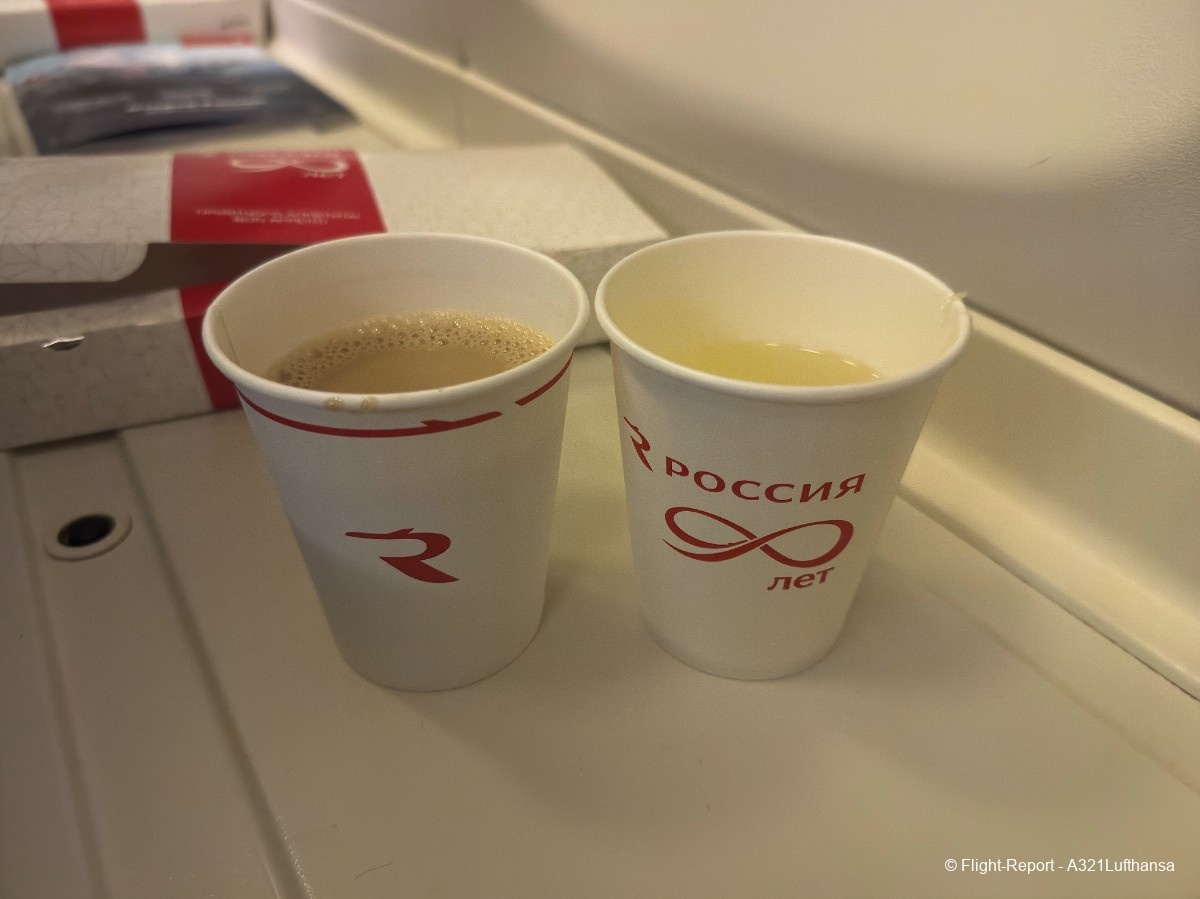
During the second drink service I chose a cup of coffee and water with lemon again. One of cups was dedicated to 90th anniversary of Rossiya Airlines in 2024 (as it is considered as the successor of Leningrad aviagroup of Soviet Aeroflot):
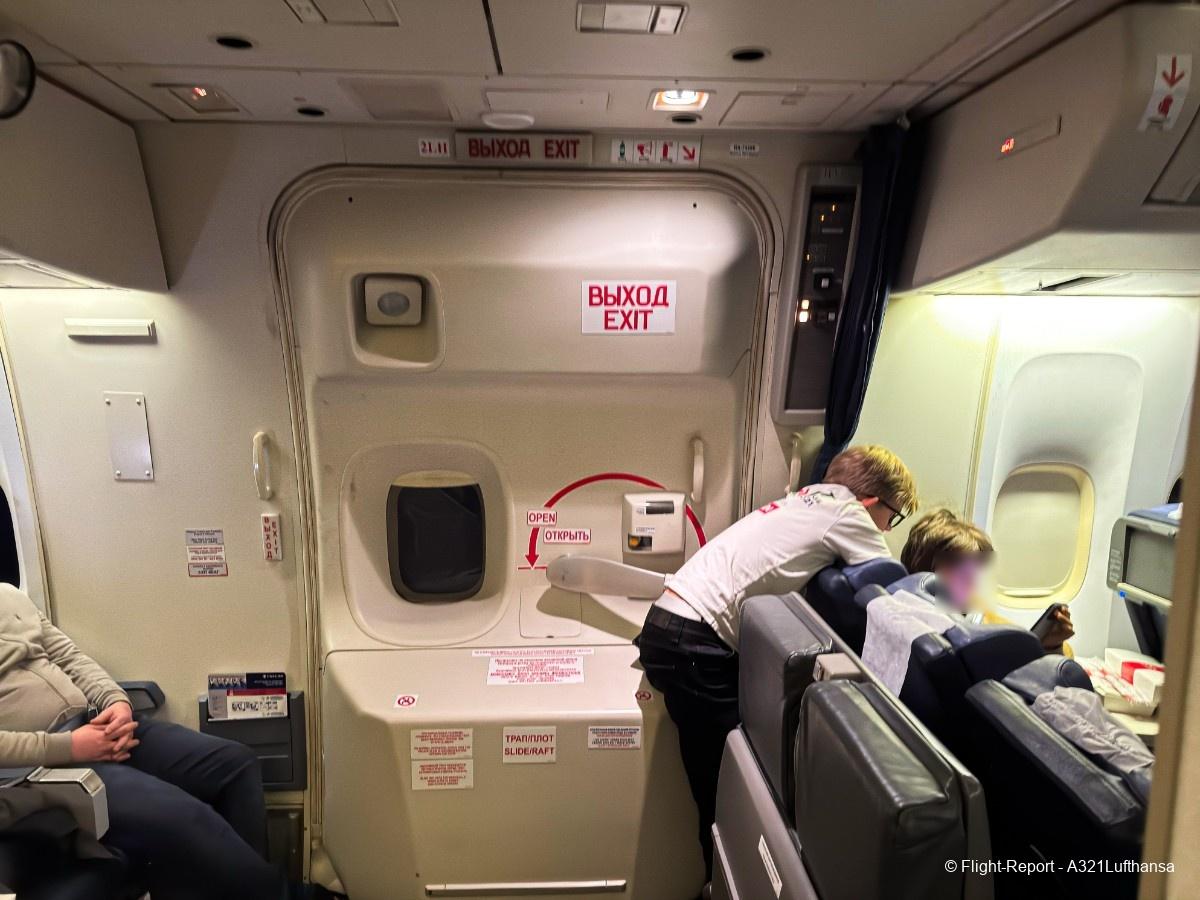
After a filling dinner I decided to visit to the main deck. After walking down the stairs I find myself near the exit used for boarding and deboarding:
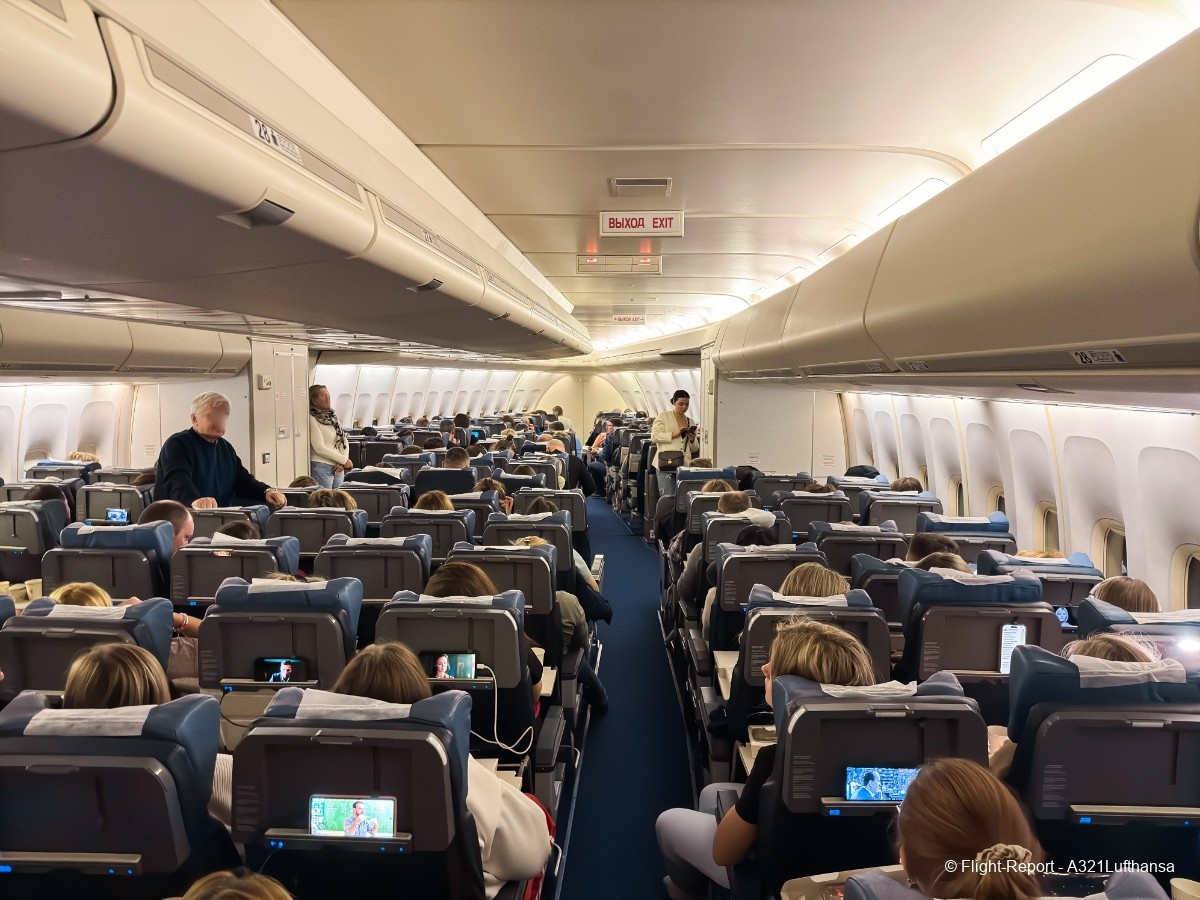
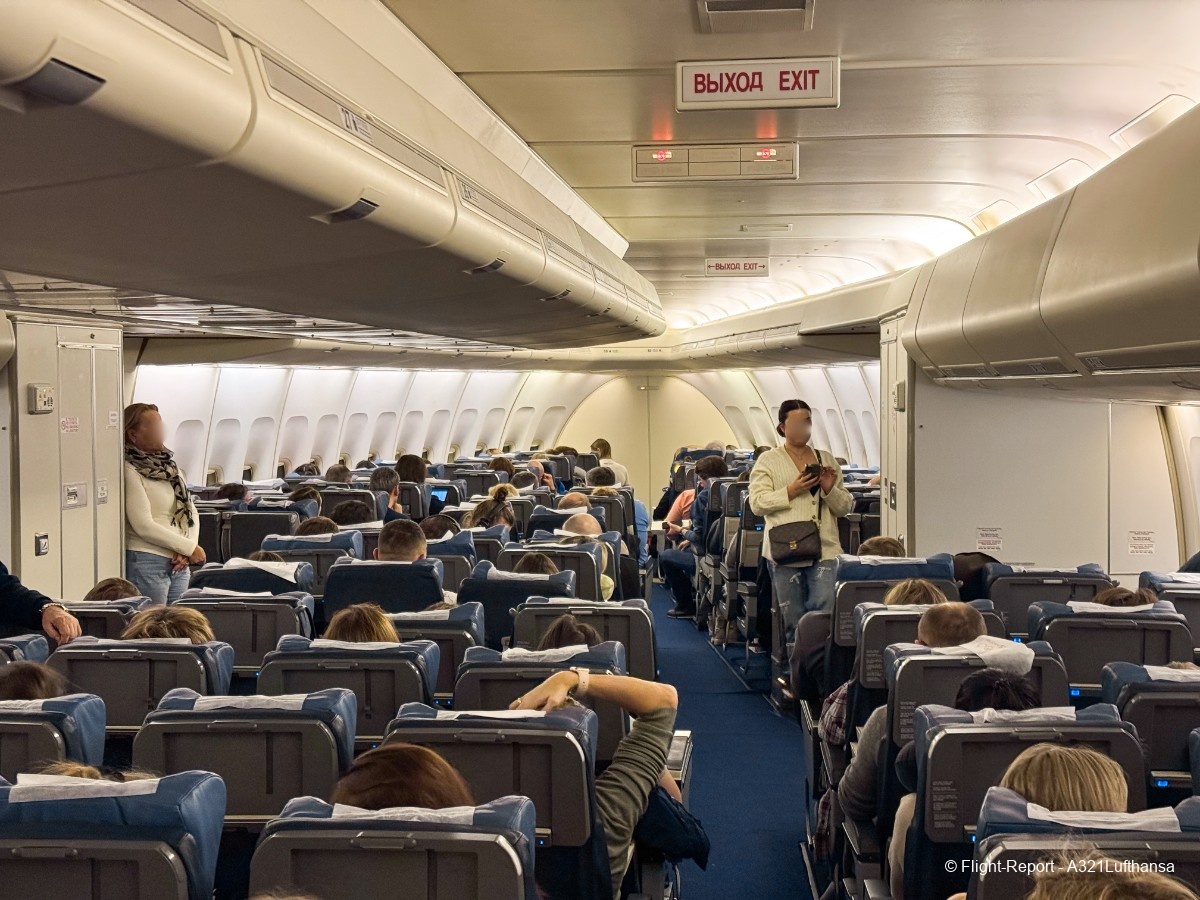
After that I take a couple of photos with the main deck cabin overview from both sides:
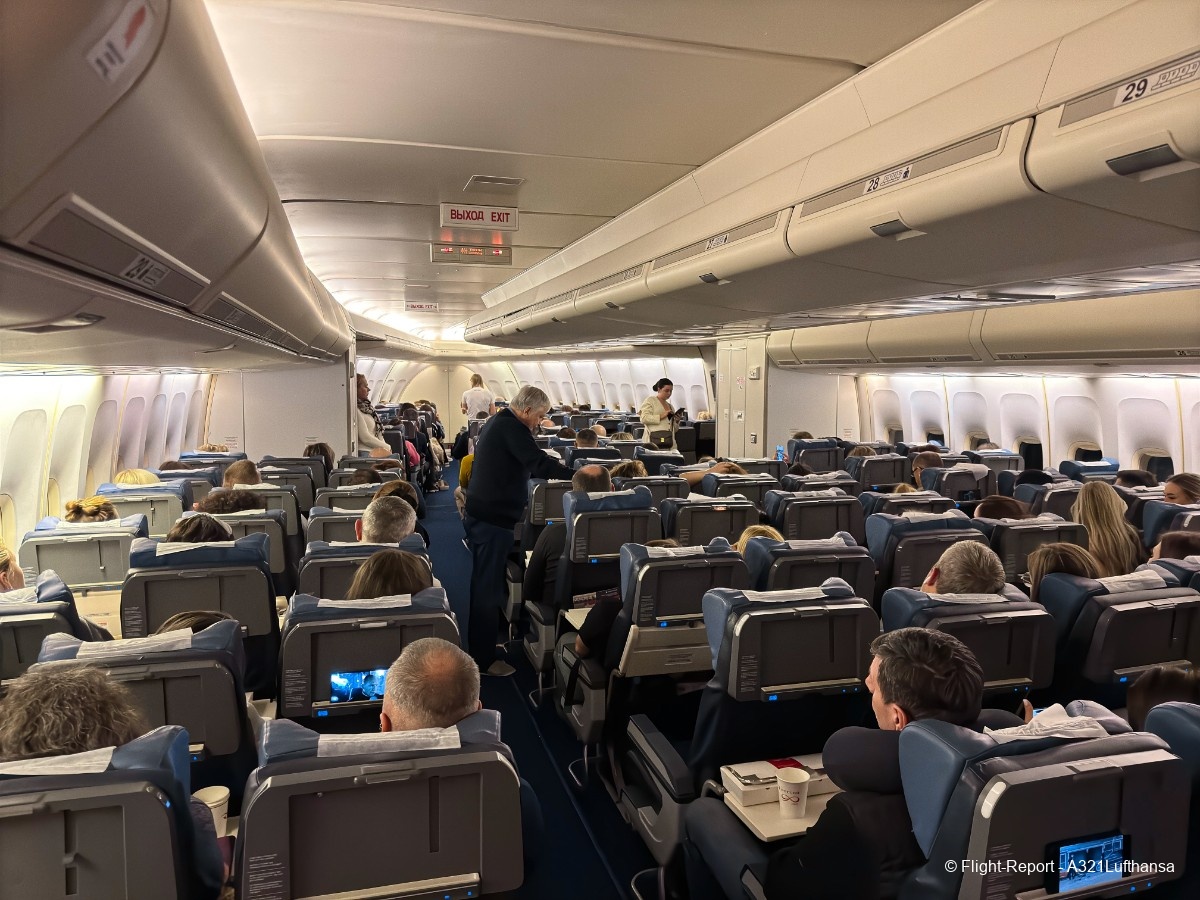
And a close-up of the frontmost cabin where the first class is normally located. Would have been a nice experience to travel in one of 3 front rows as well.
Finally, the time has come to climb up the stairs again as the descent was to begin soon:
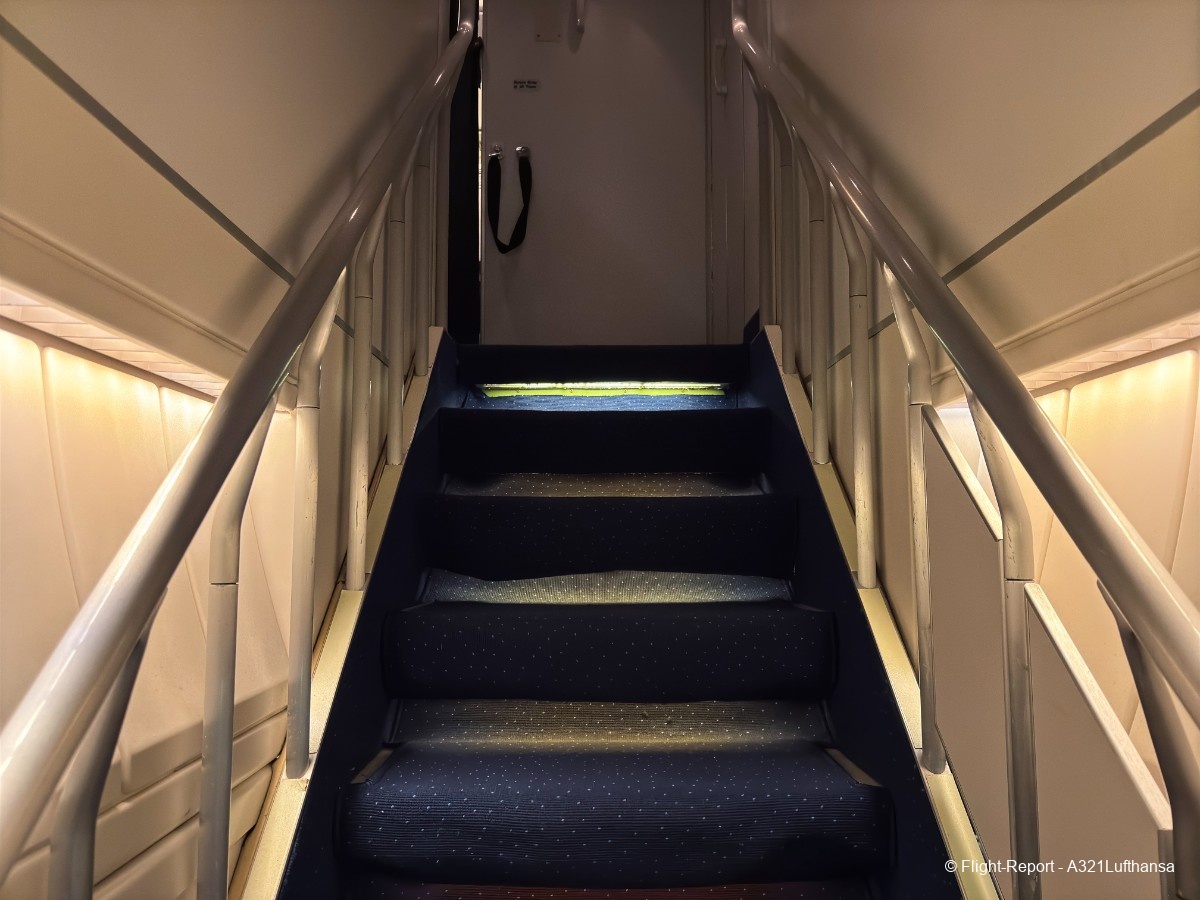
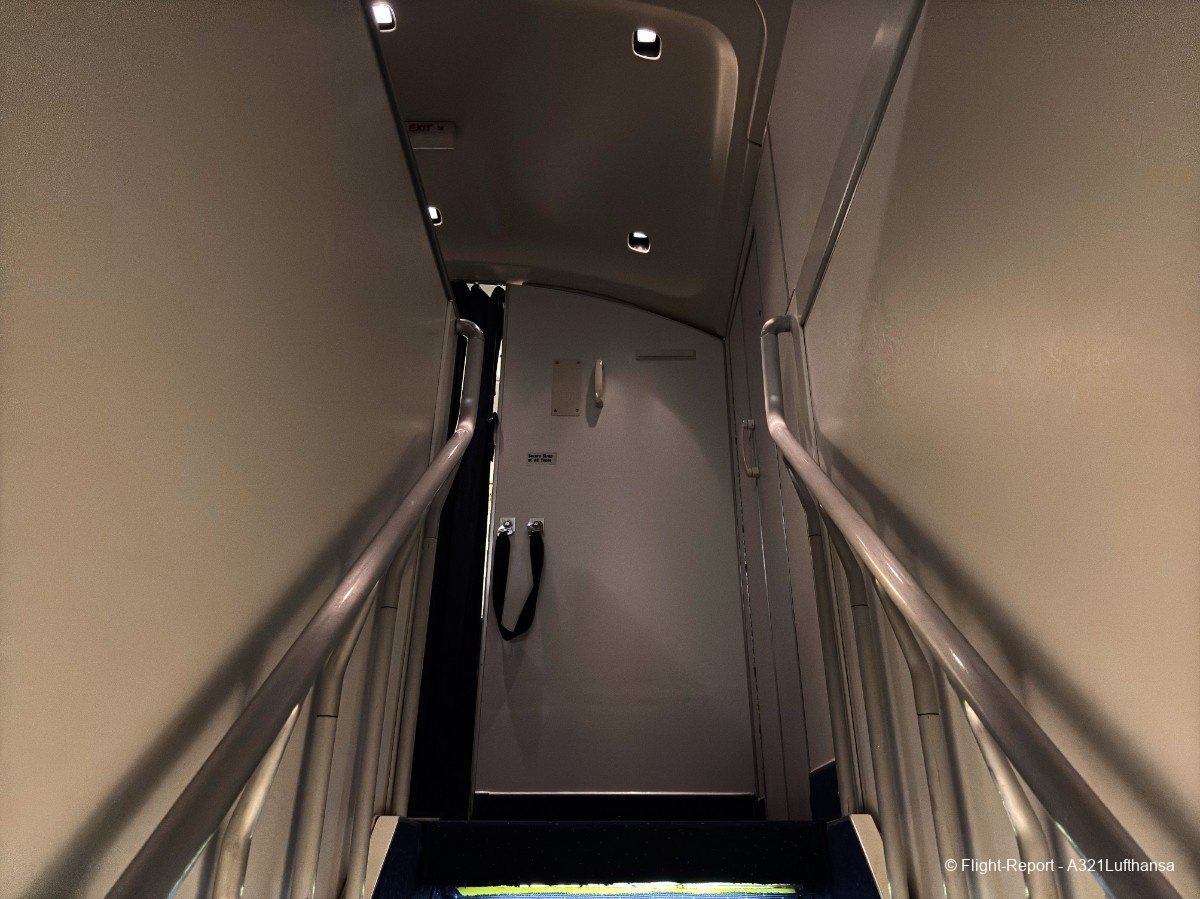
It indeed began after passing by Ryazan, a quite huge town in the south-eastern direction from Moscow. It is known as the homeland of airborne troops.
In a bit more than 10 minutes the lights of Moscow shimmered beneath the thick cloud layer. Alas, I never seem to get clear weather when arriving on this approach… Flights from Sochi (and other flights from the southern direction) to Sheremetyevo usually bypass Moscow from the western side, providing passengers with stunning city overview in case of clear weather.
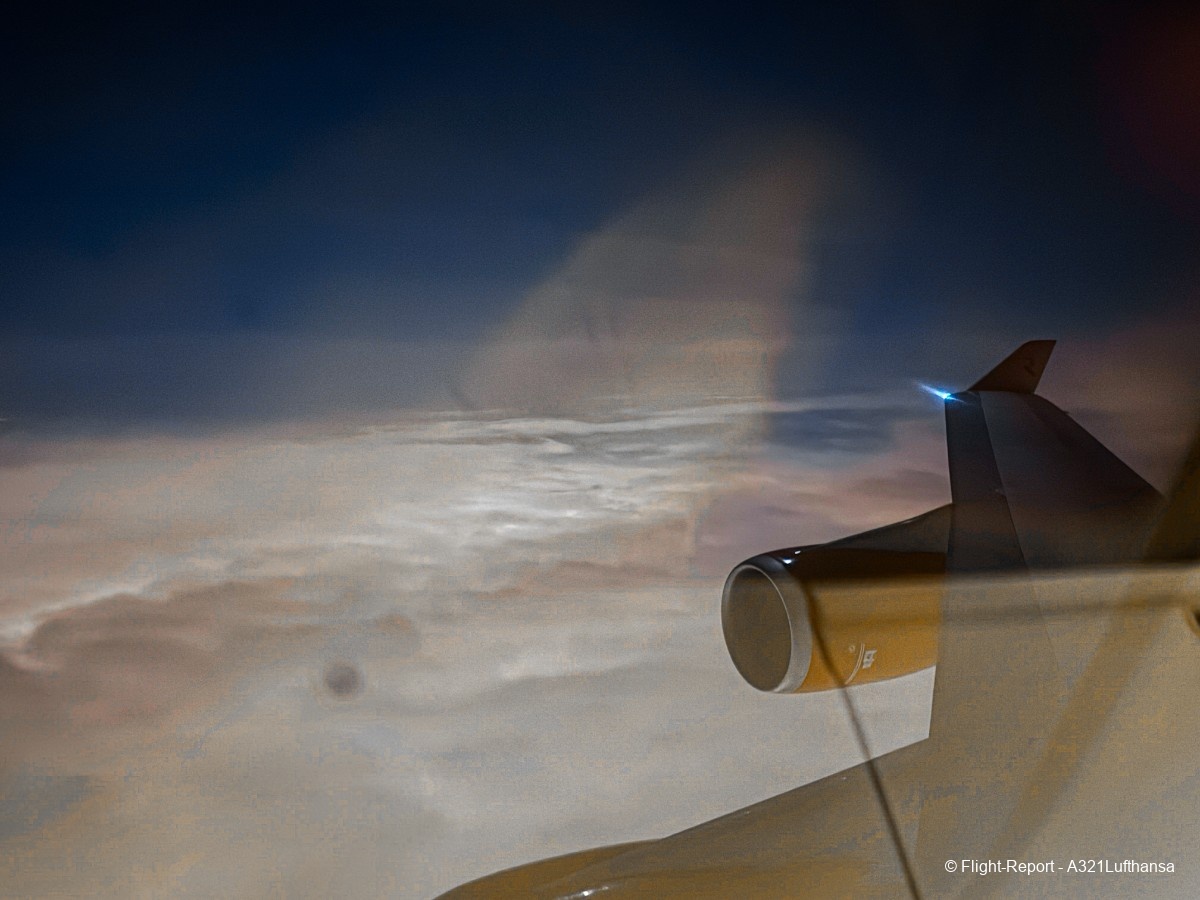
For another 20 minutes we manoeuvred over northern Moscow Region, as the approach was from the east, breaking through the clouds and slipping back into quite dense fog from time to time:
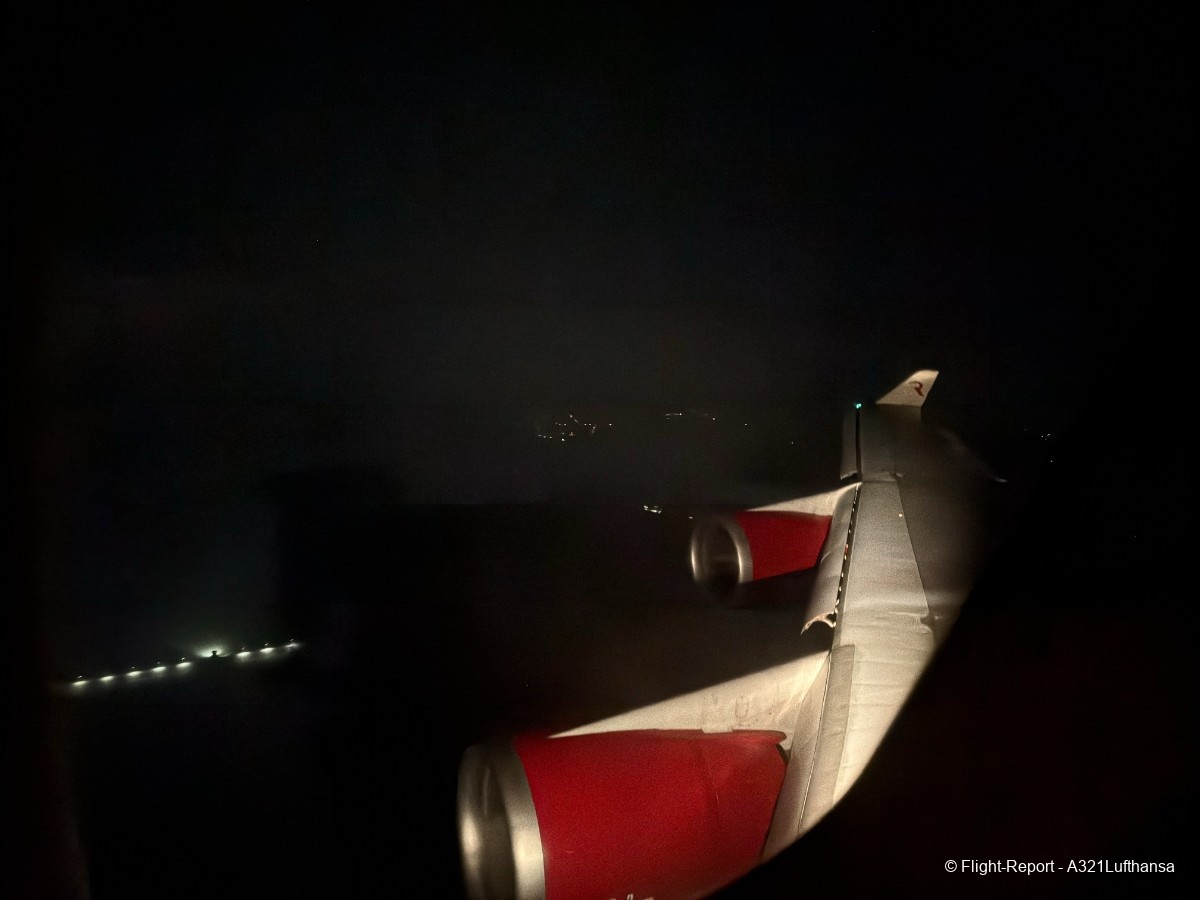
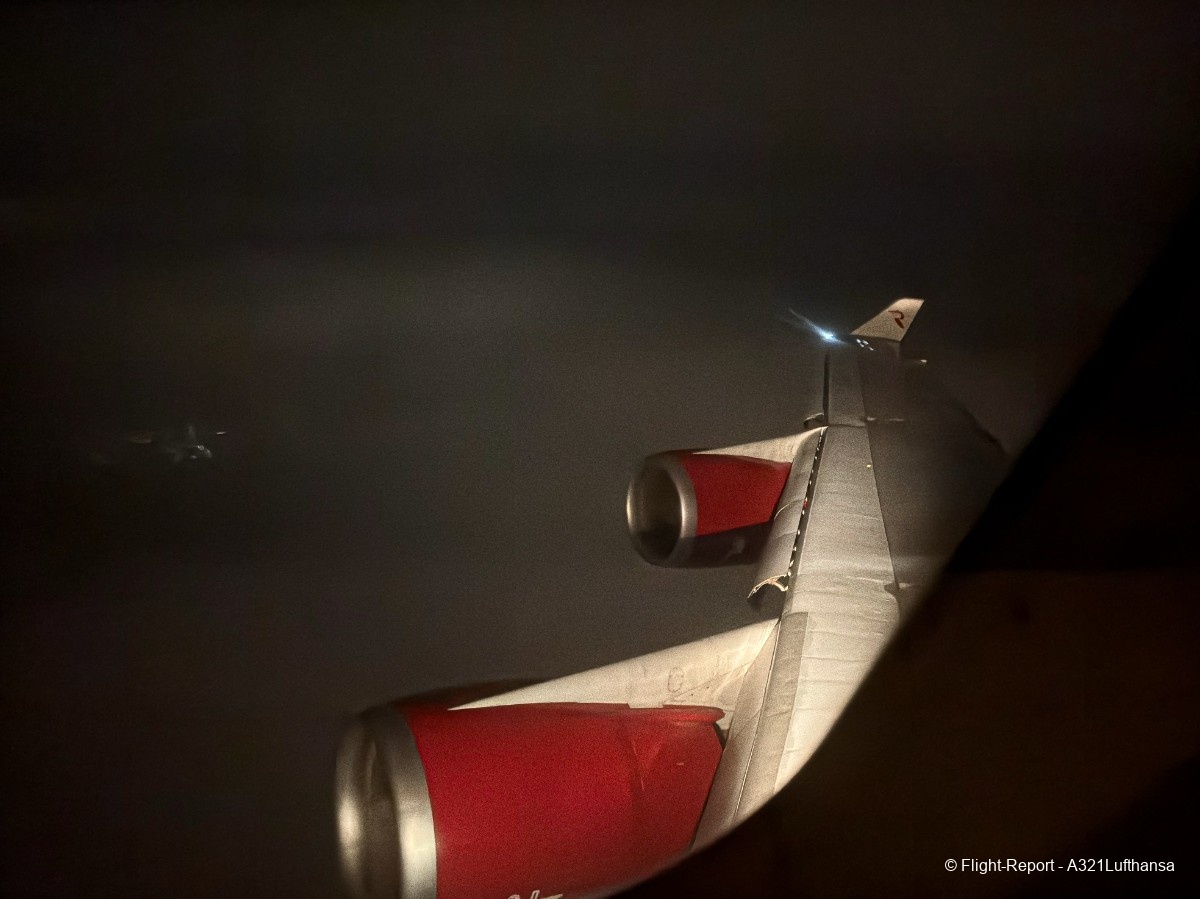
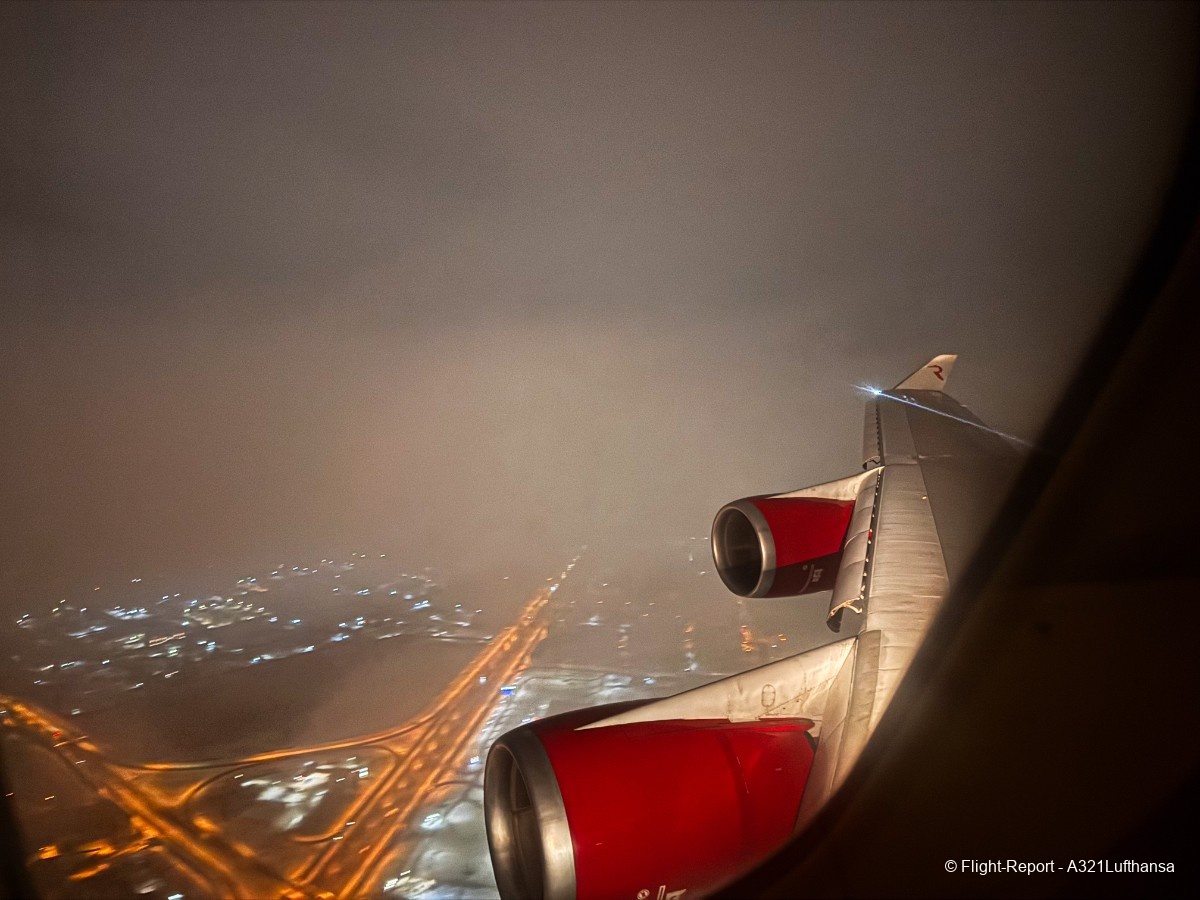
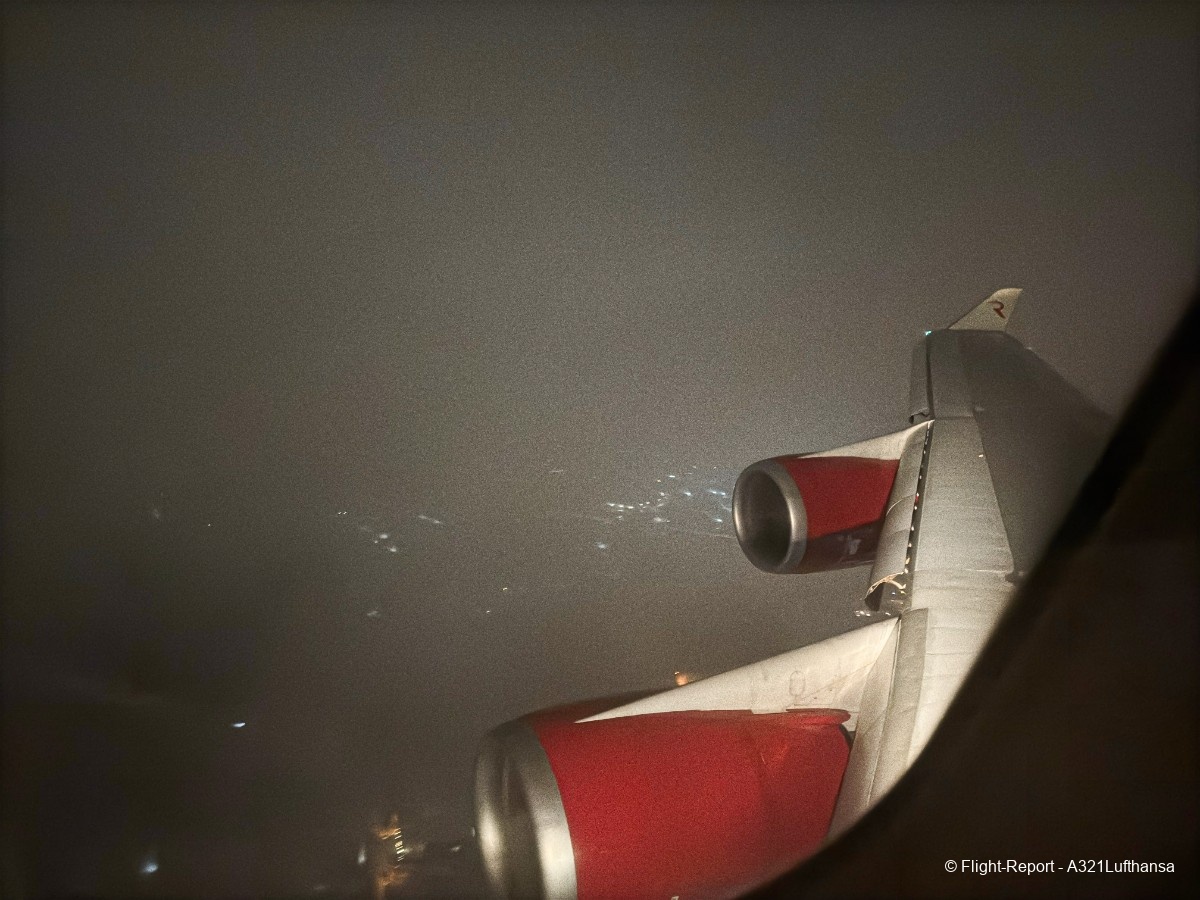
Finally emerging from clouds and fog, we found ourselves on final approach:
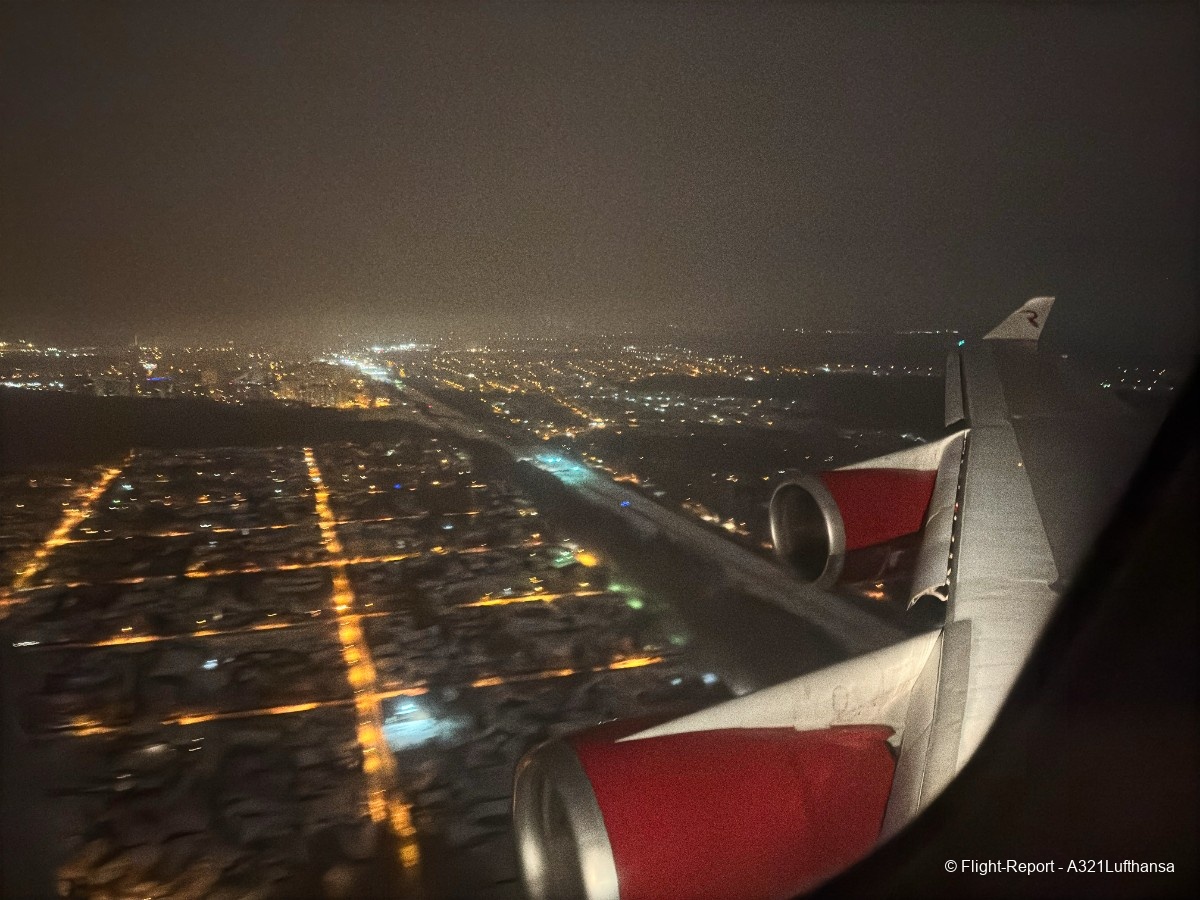
Familiar SVO apron appeared:
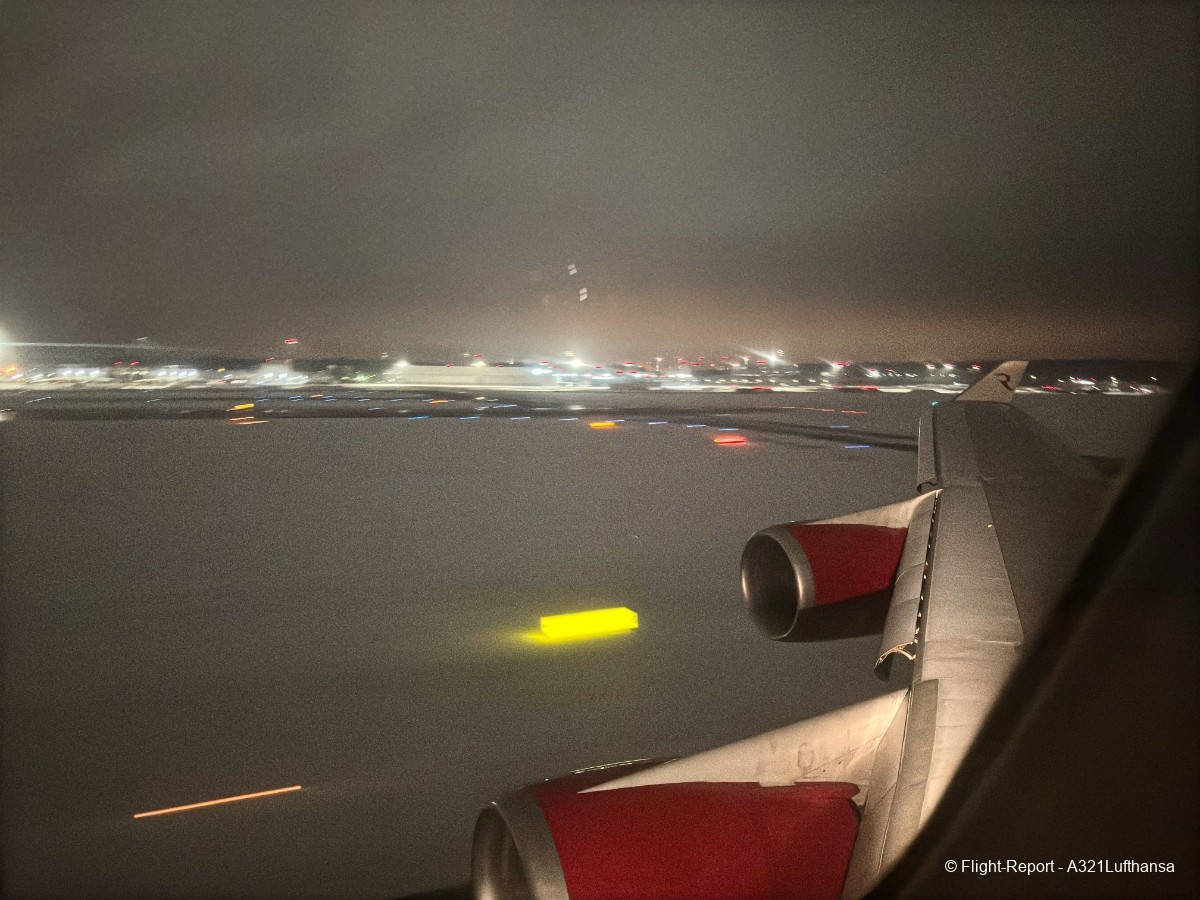
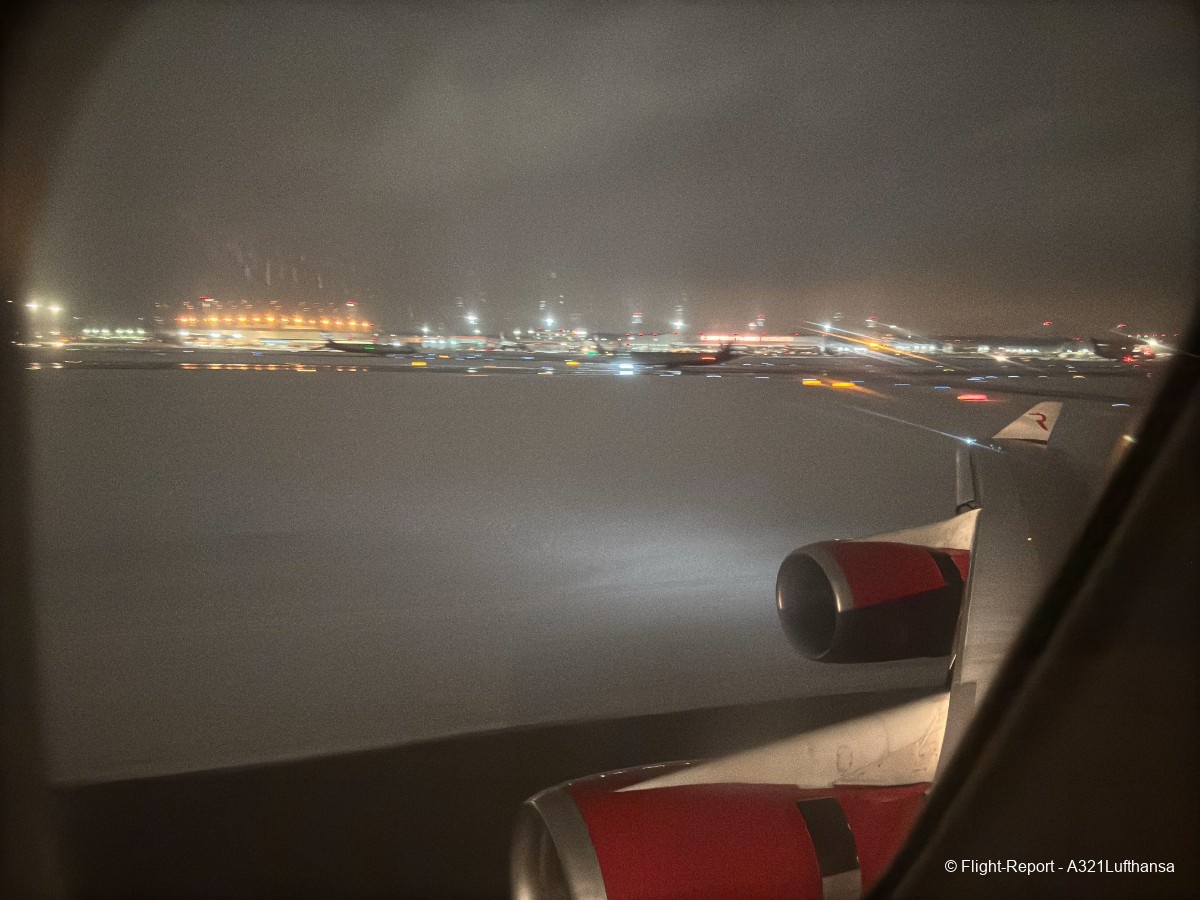
And after good 3 hours of flight (which is approximately 20-30 minutes faster than on an A320/321 or B737) we smoothly touched down the runway 24L with both northern terminals (B and C) clearly visible:
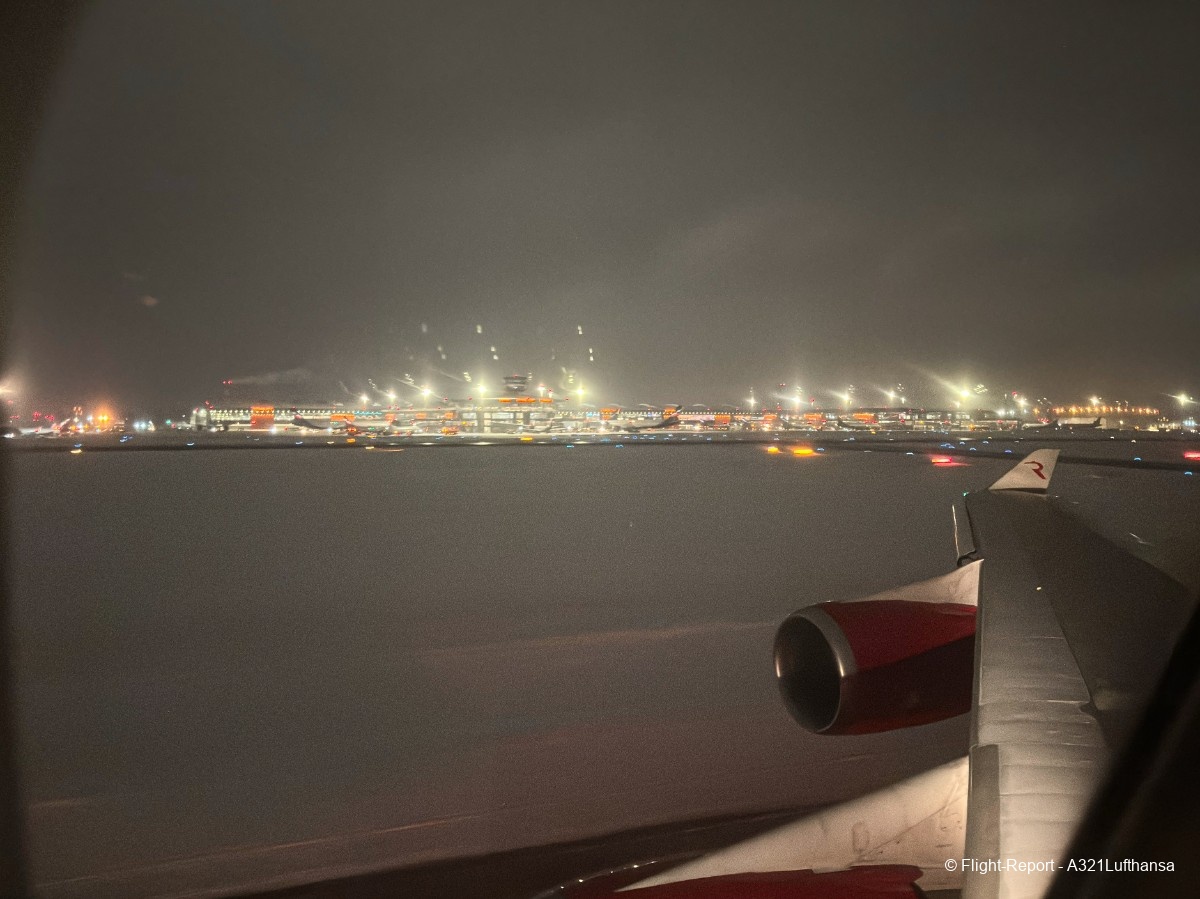
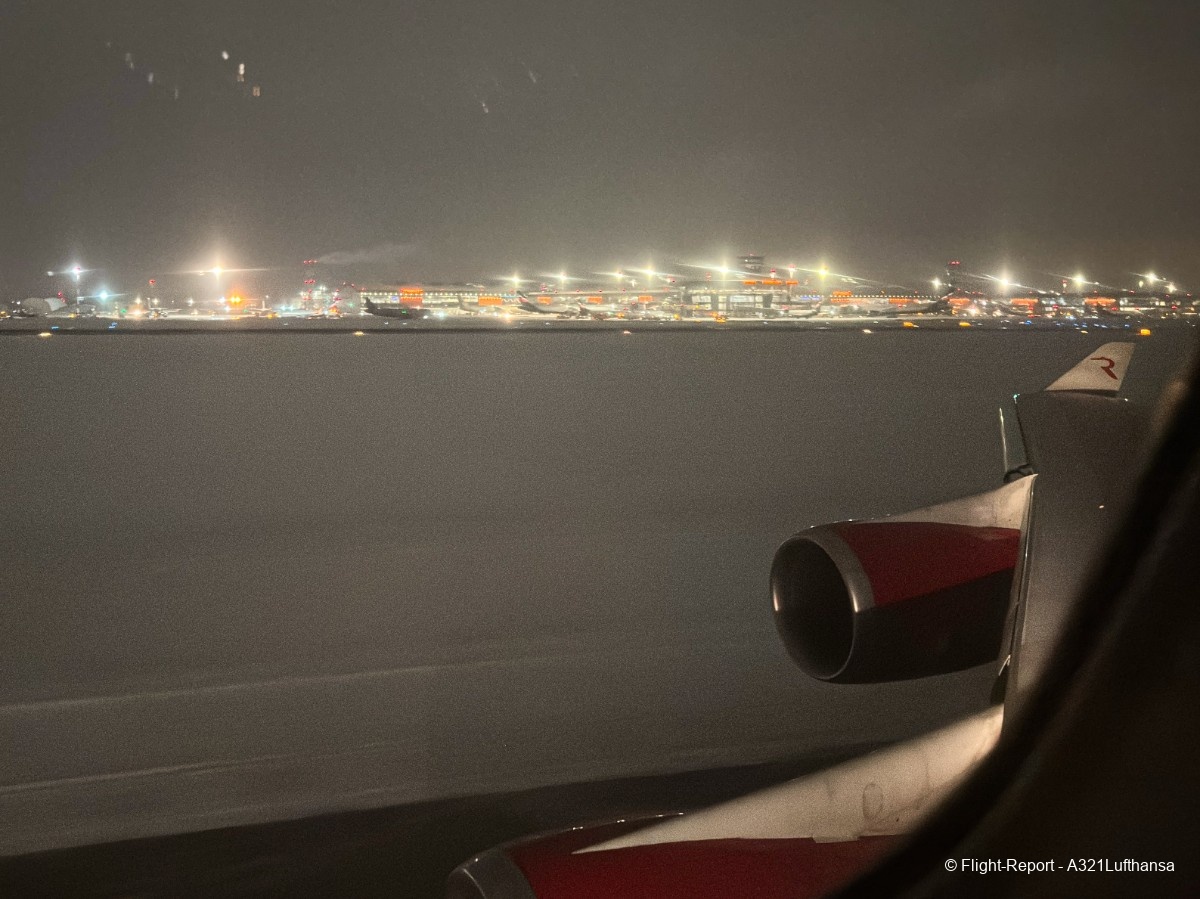
We taxied off unhurriedly and crossed the adjacent runway 24C, from which I had departed just a couple of days earlier:
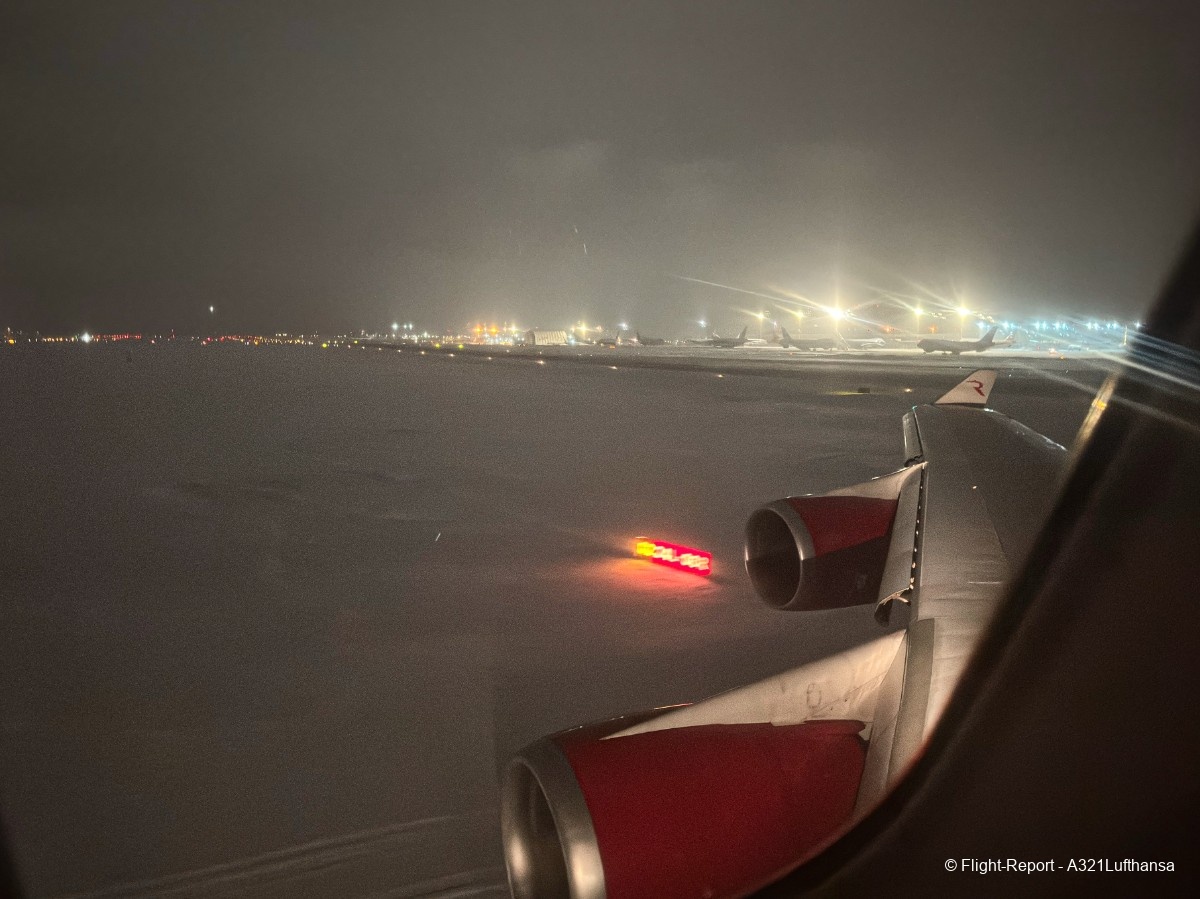
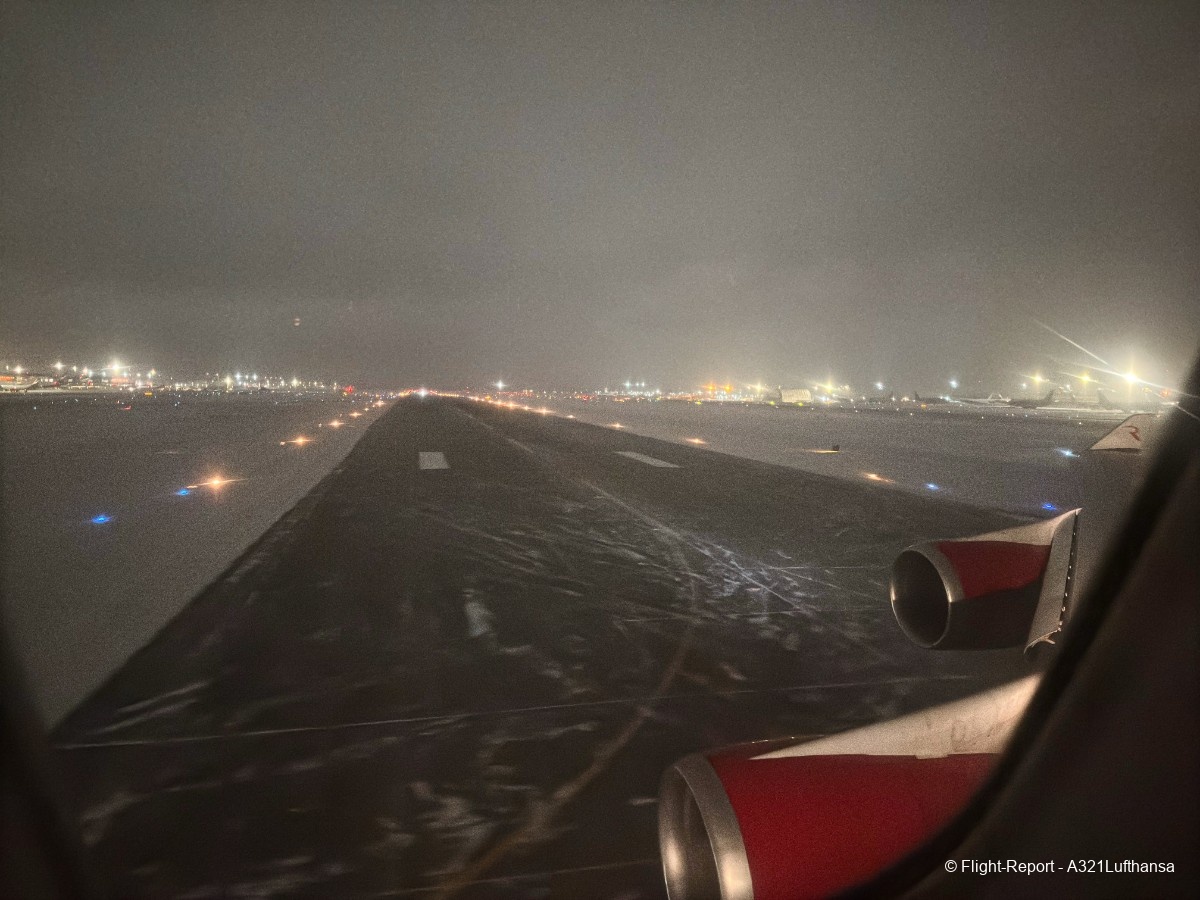
Both terminals came back into view. A hopeful thought stirred – maybe after +10°C in Sochi we would be given a jetbridge in freezing -10°C in Moscow?
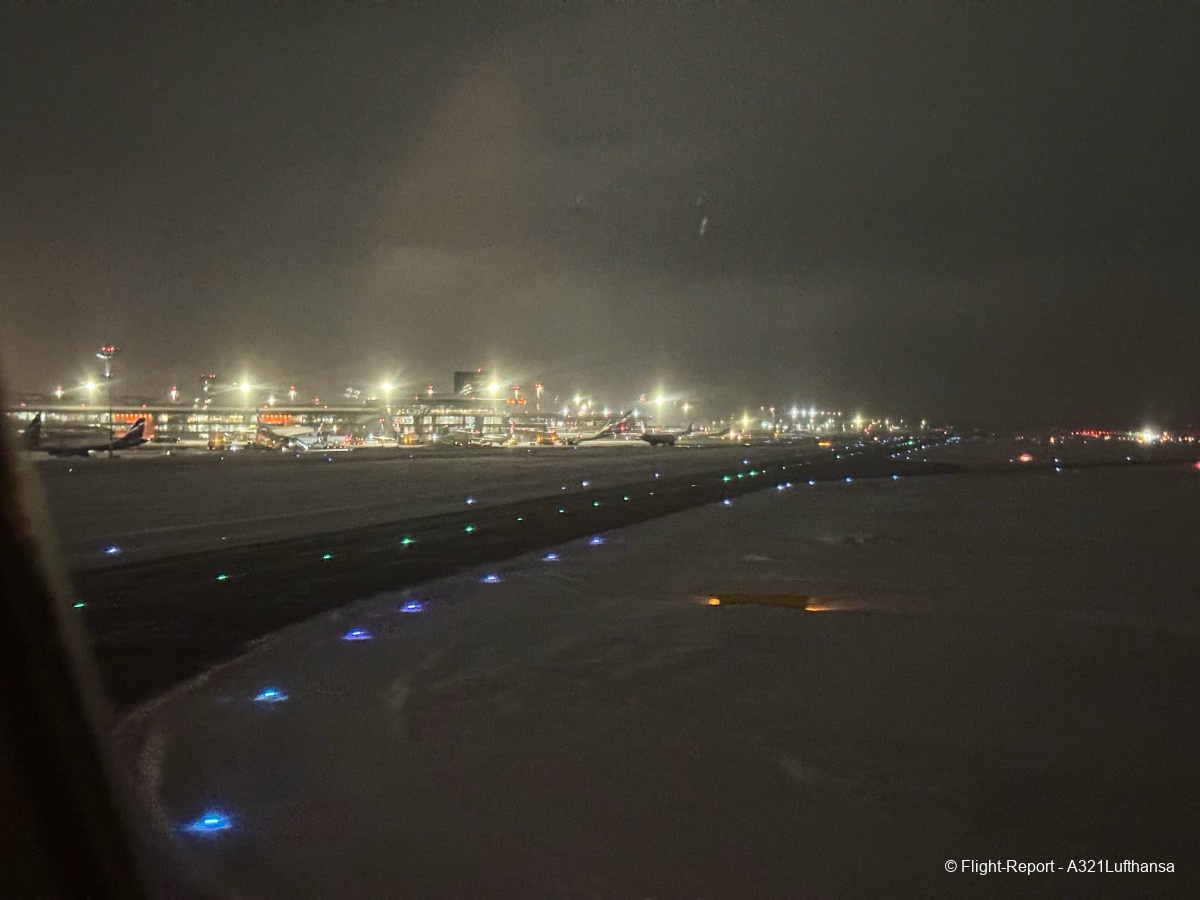
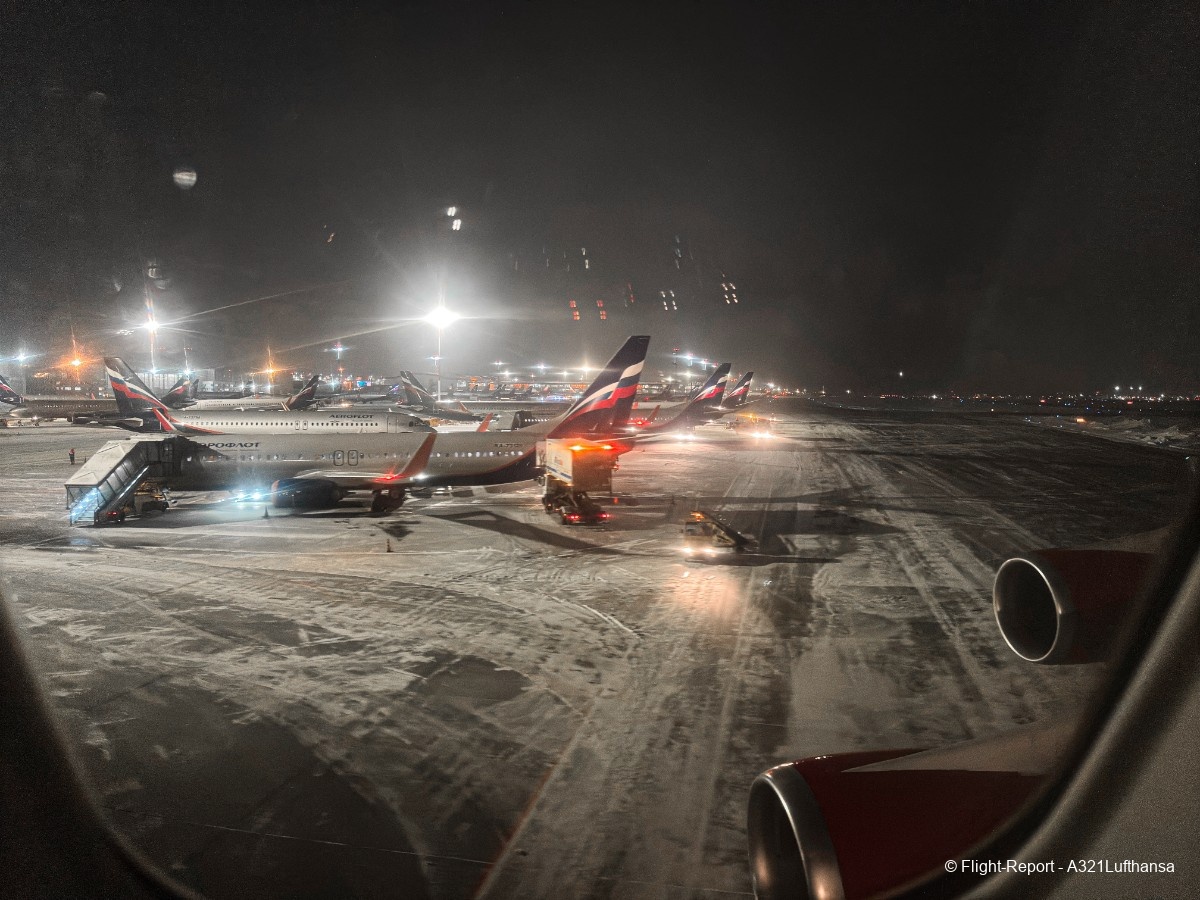
Unfortunately, our flight was not the case. We turned left towards remote stands. The next flight of our Jumbo was scheduled only 2 weeks later, once again to Sochi. The following Sunday, its sistership was due for its turn in service.
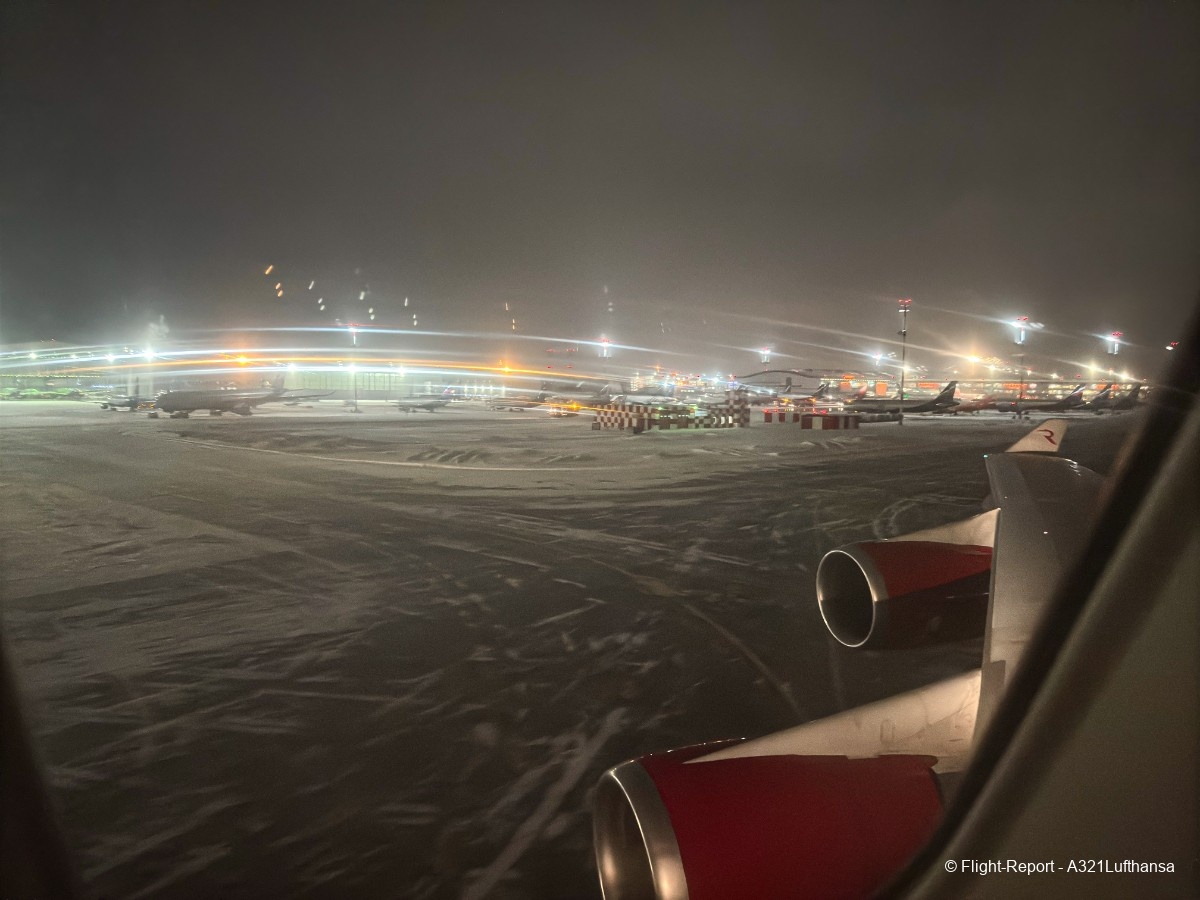
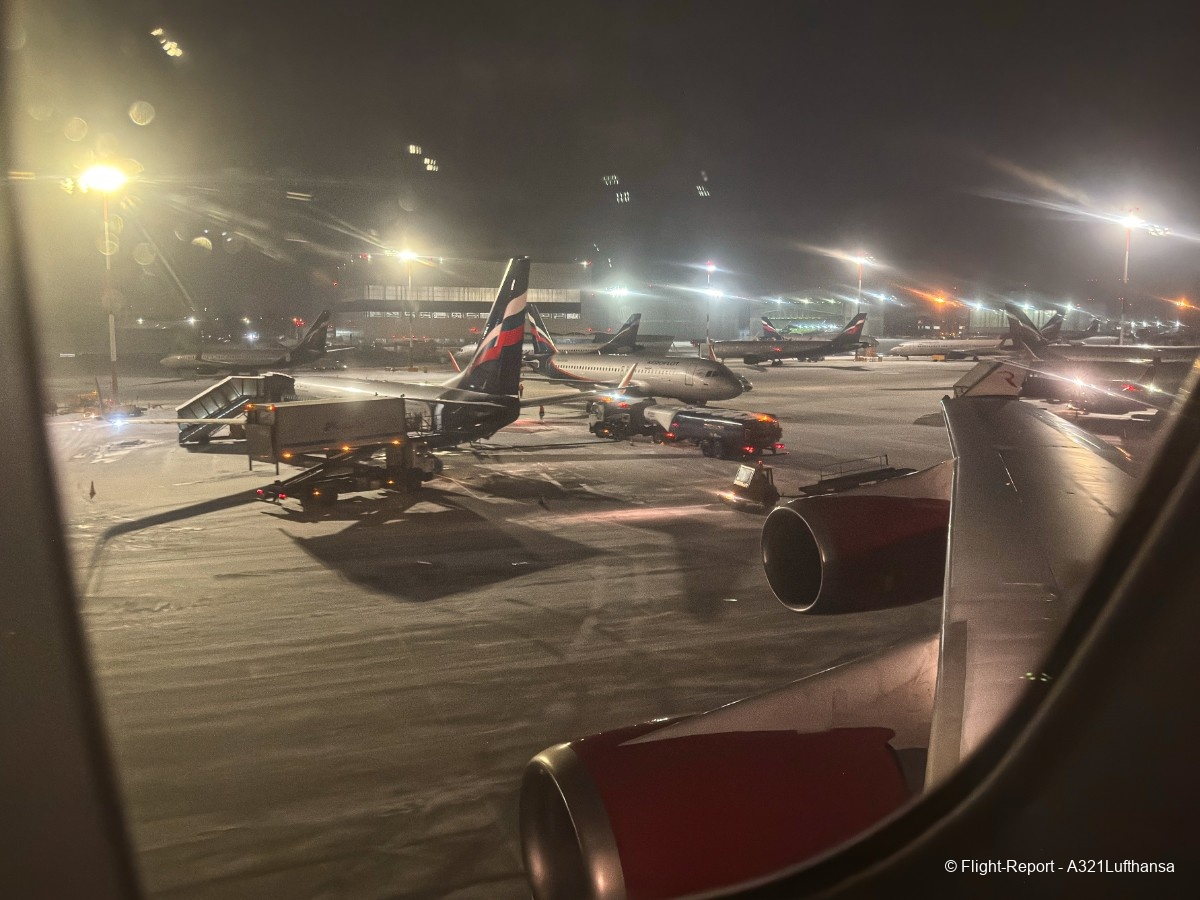
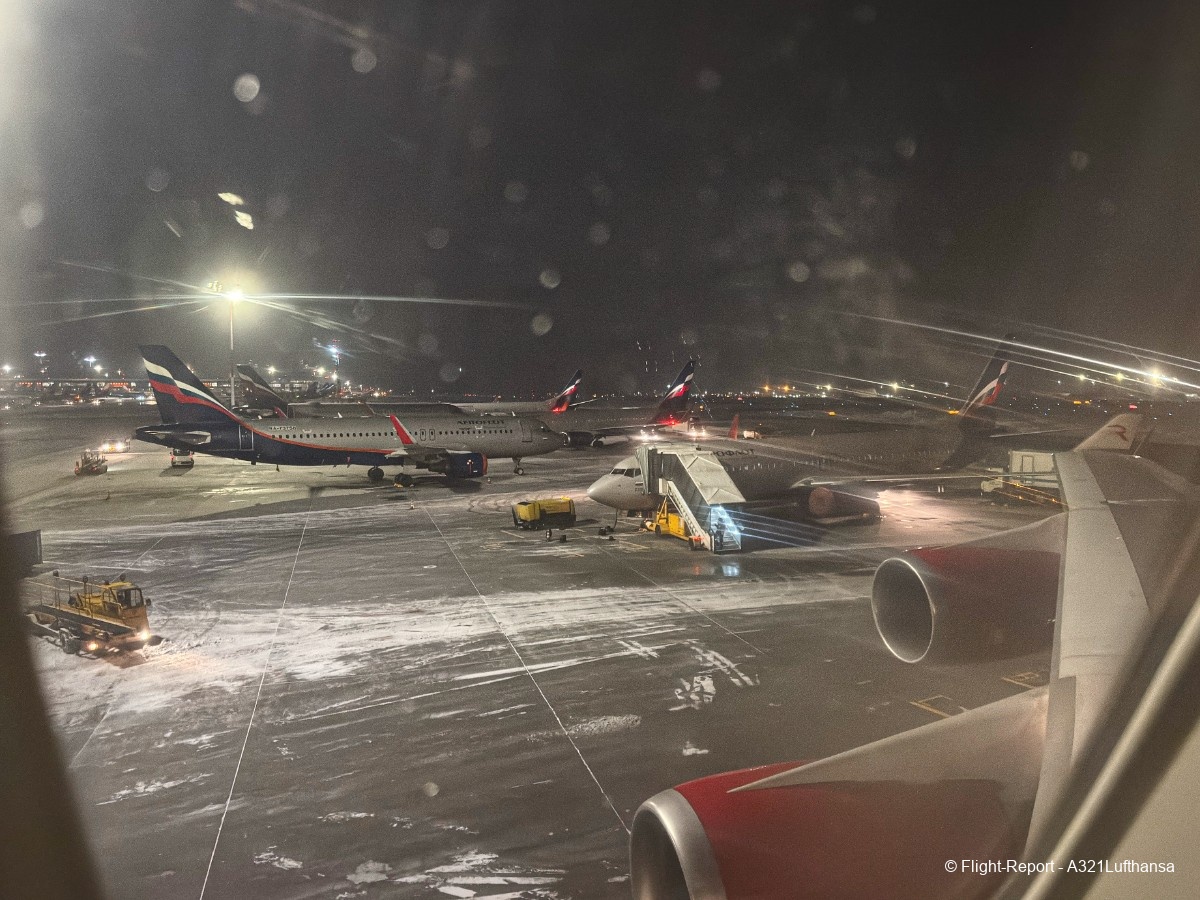
We parked beside an Aeroflot Boeing 737-800 and A320, which from the lofty perspective of a 747’s upper deck looked like toys:
It took around 10 minutes for the deboarding to begin, but I was in no hurry to end this historic flight aboard a legend. At last the cabin emptied, and I stood up from my seat:
Before leaving, I asked the crew whether it might be possible to visit the cockpit, recalling a recent review where the author had managed to do so upon arrival in Sochi. I was told that instructor pilots were aboard this flight (the aircraft having only recently returned to service after a two-year hiatus), so approval would be very unlikely.
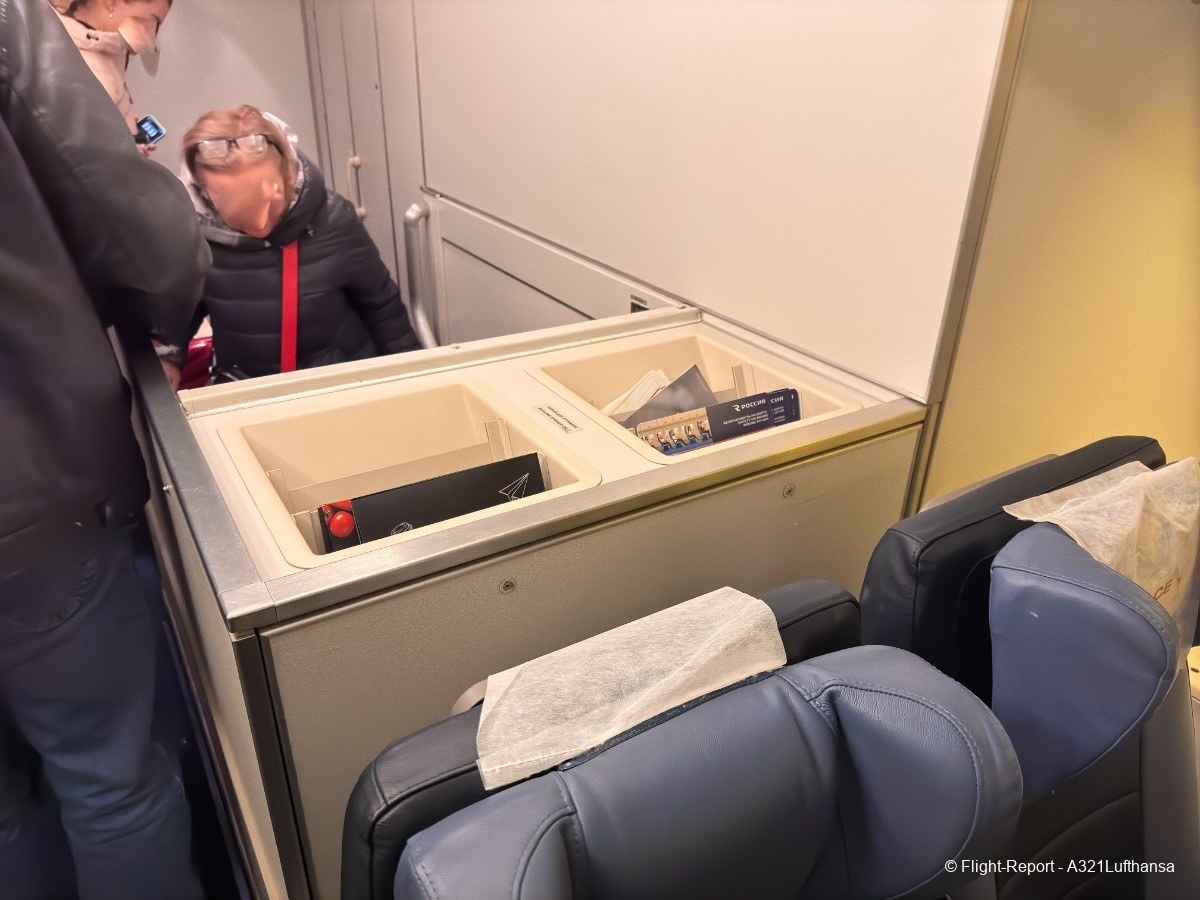
Alas, there was nothing to be done in this situation. One last look around the cabin, and I headed down the stairs:
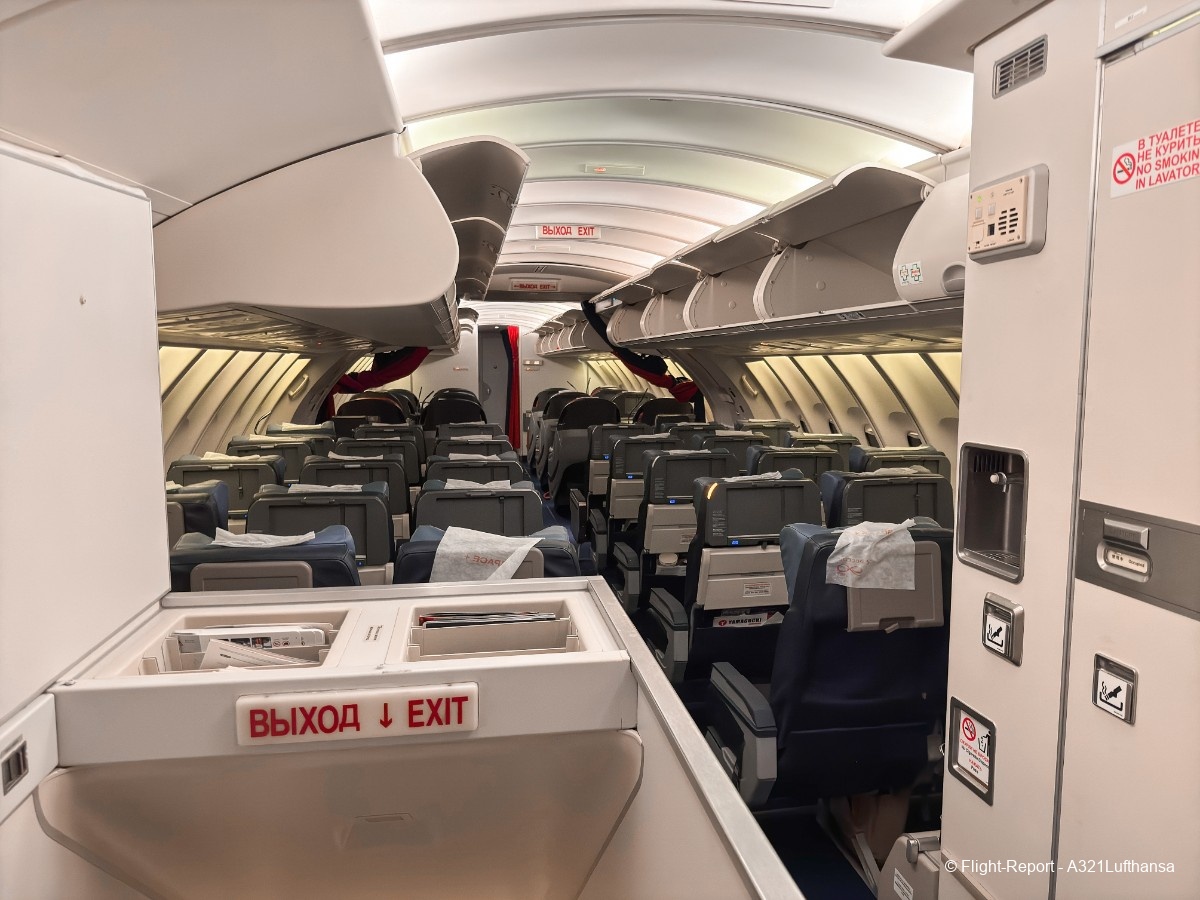
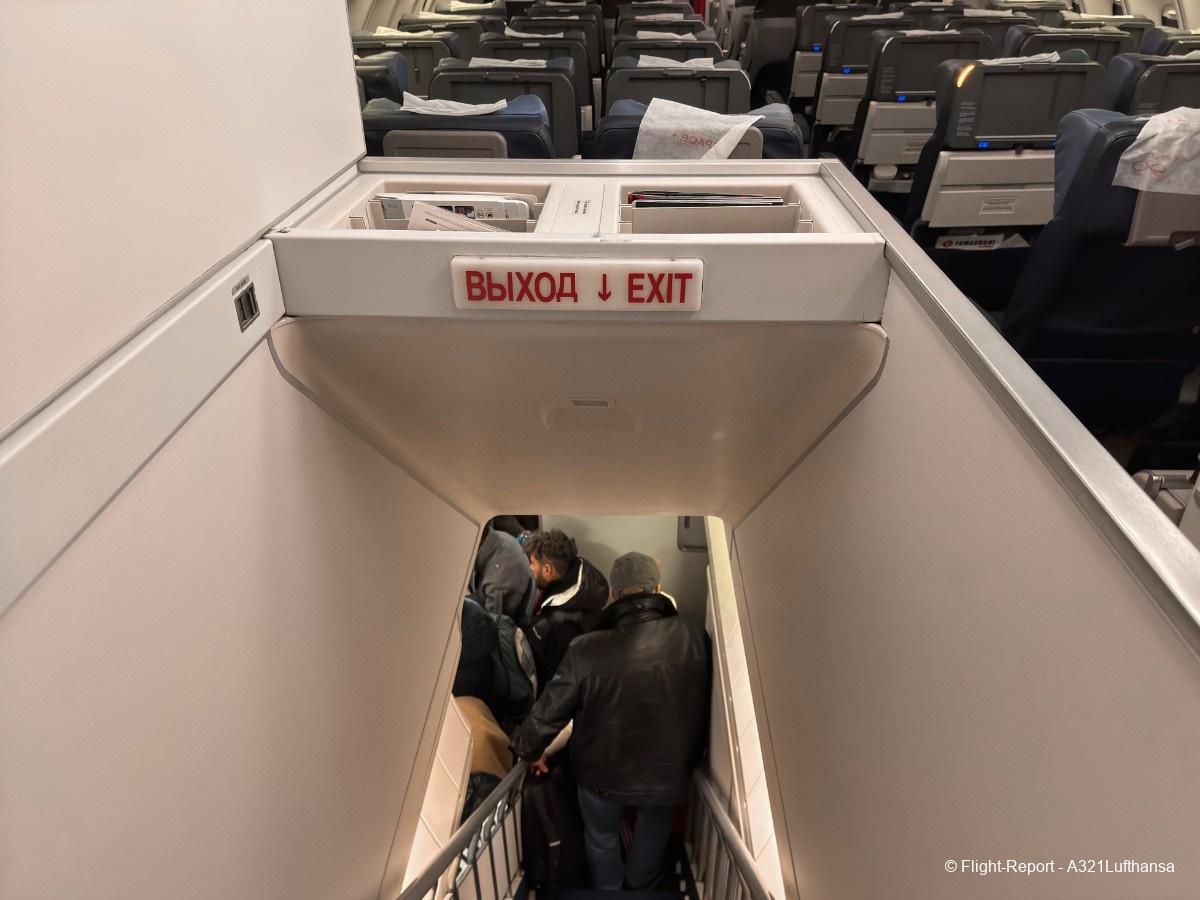
The upper deck and nose section were given priority during disembarkation, so passengers in the rest of the main deck waited until everyone ahead had exited:
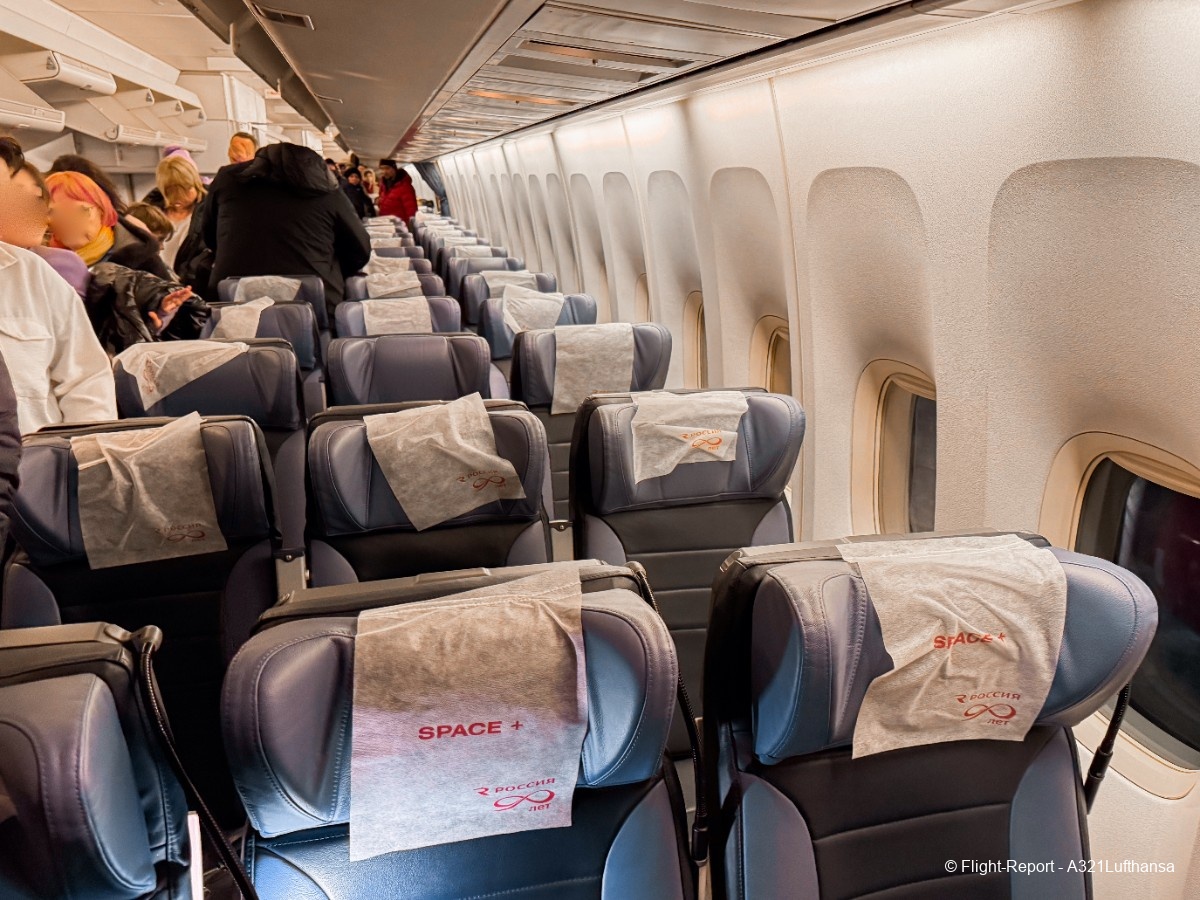
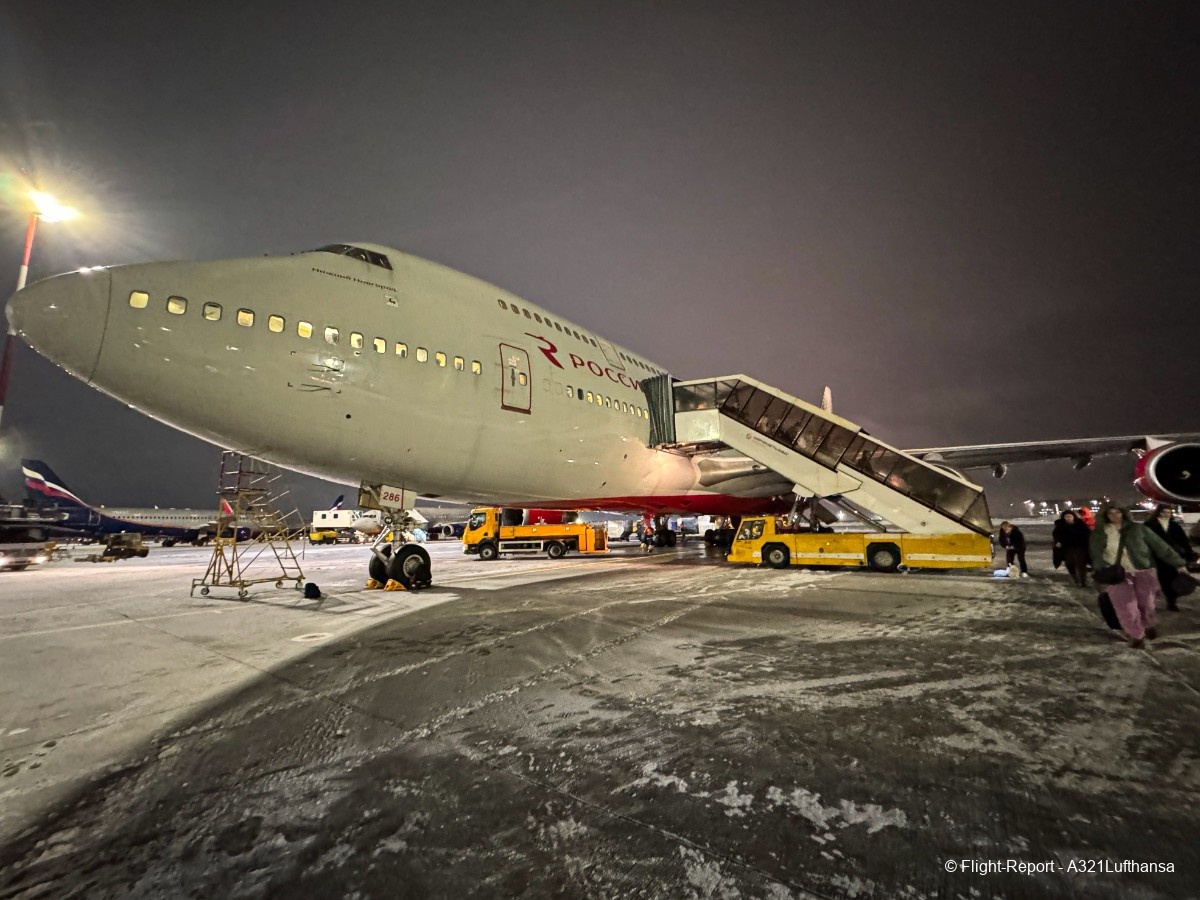
A covered stairway was used, making it impossible (given the snowy weather) to capture a good shot of the engines from there:
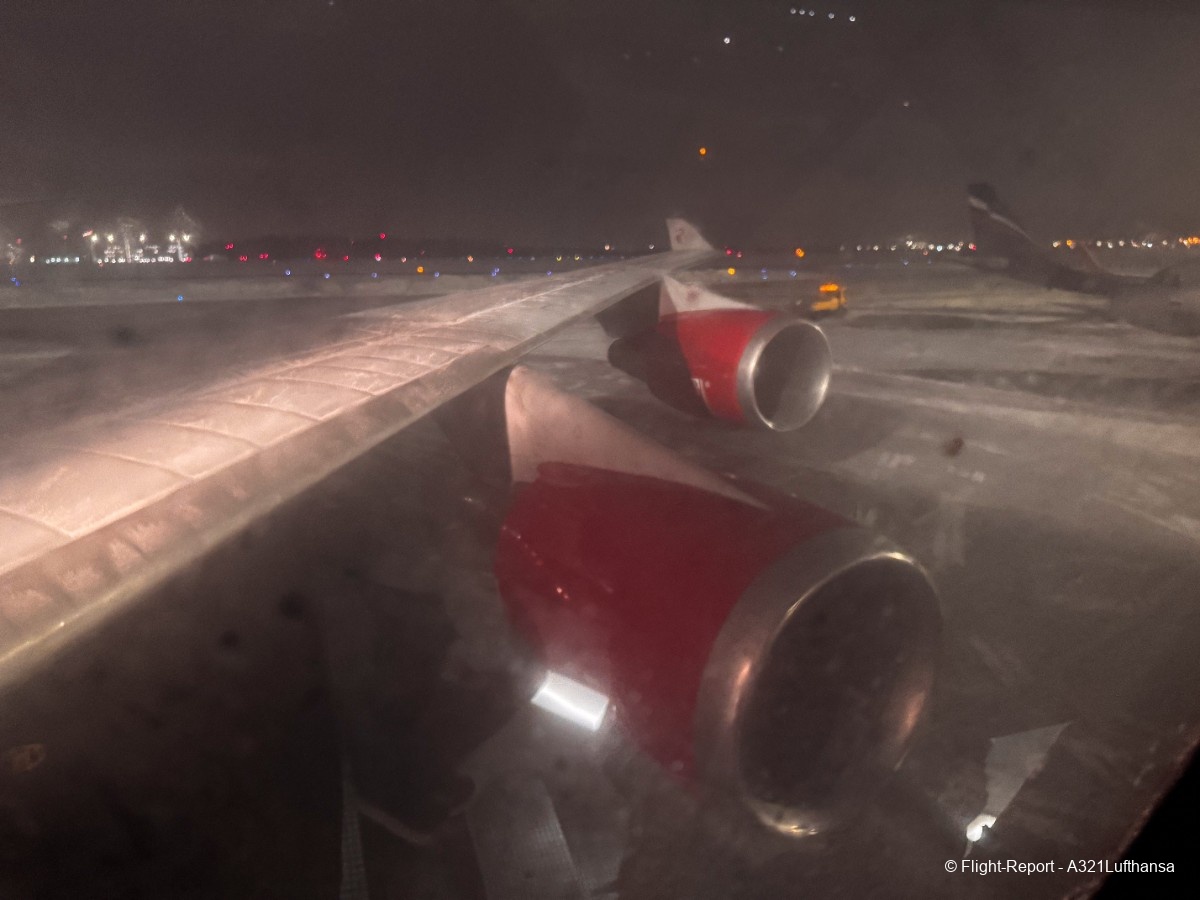
However, it was easily doable after deboarding the aircraft. Only then do you truly feel its sheer power:
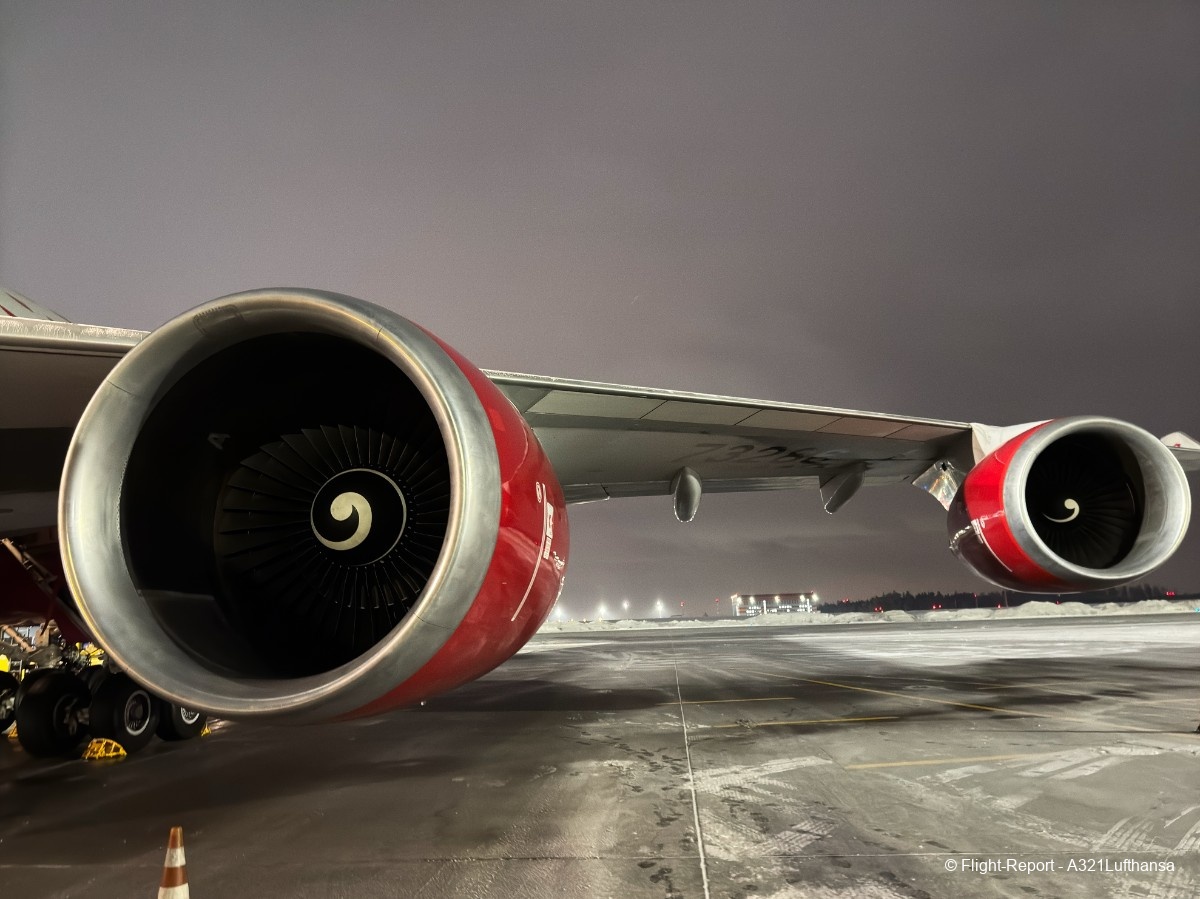
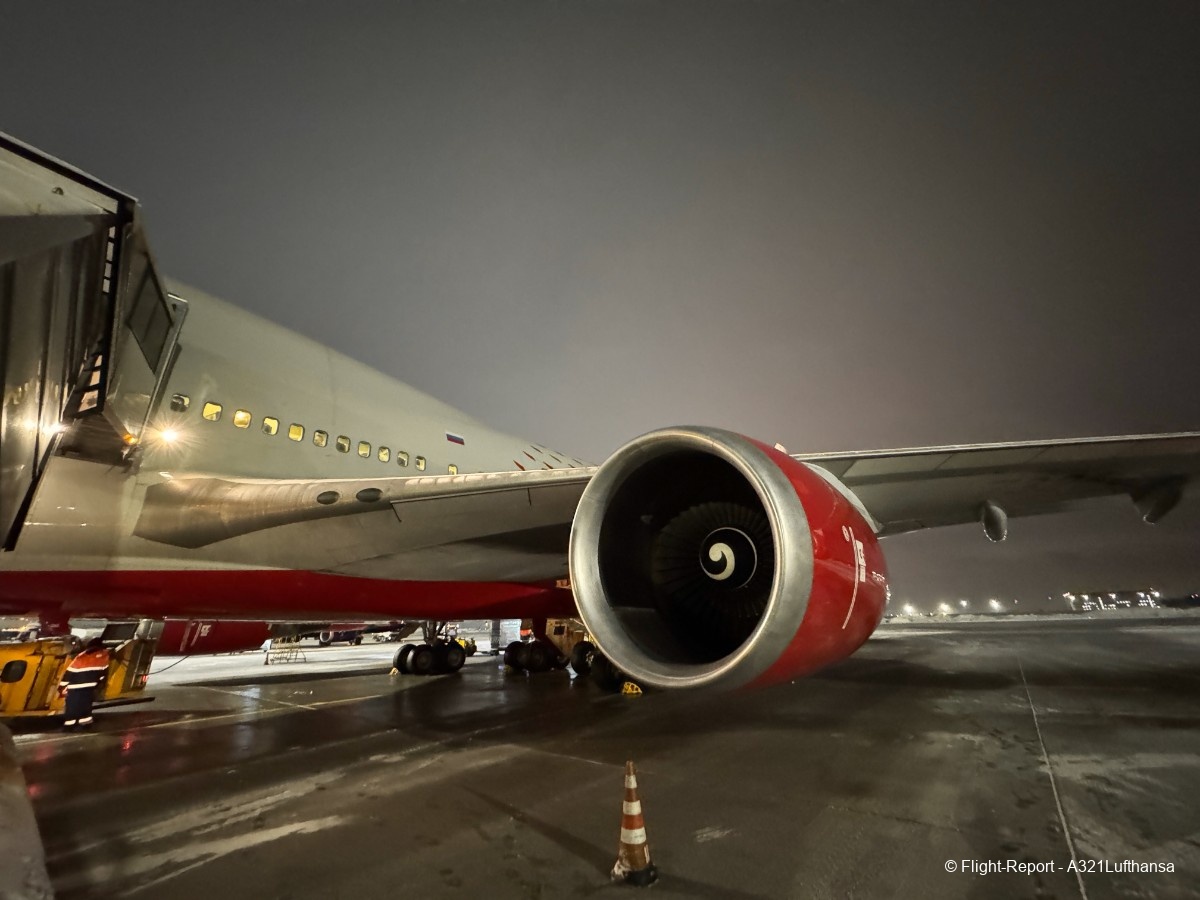
Despite the cold, I lingered outside, taking a few more photos. Many passengers were doing the same, posing in front of the legendary Queen of the Skies:
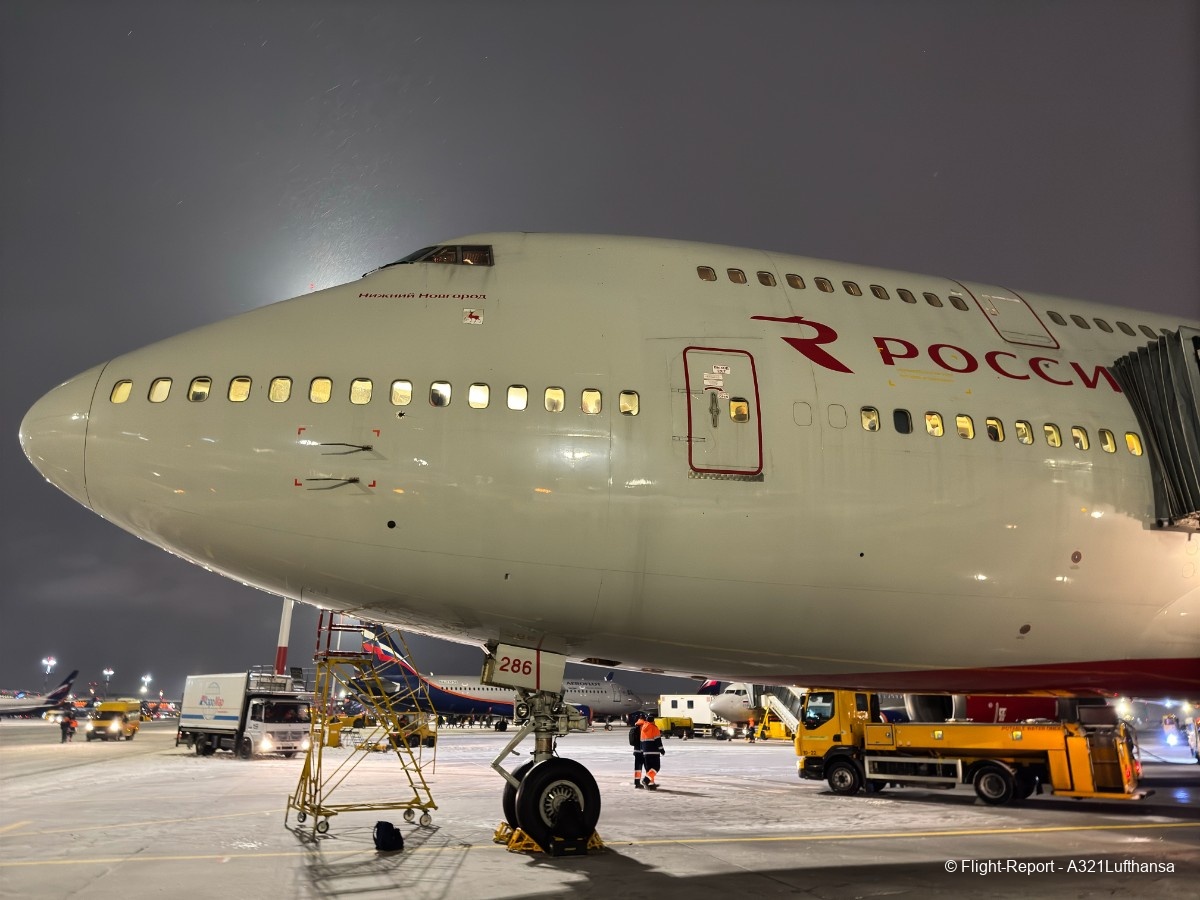
But all things must end. I took a final snap of the aircraft. I hope this will not be my last flight on a Boeing 747. Next, I'm eager to try one of the few remaining, more modern 747-8s.
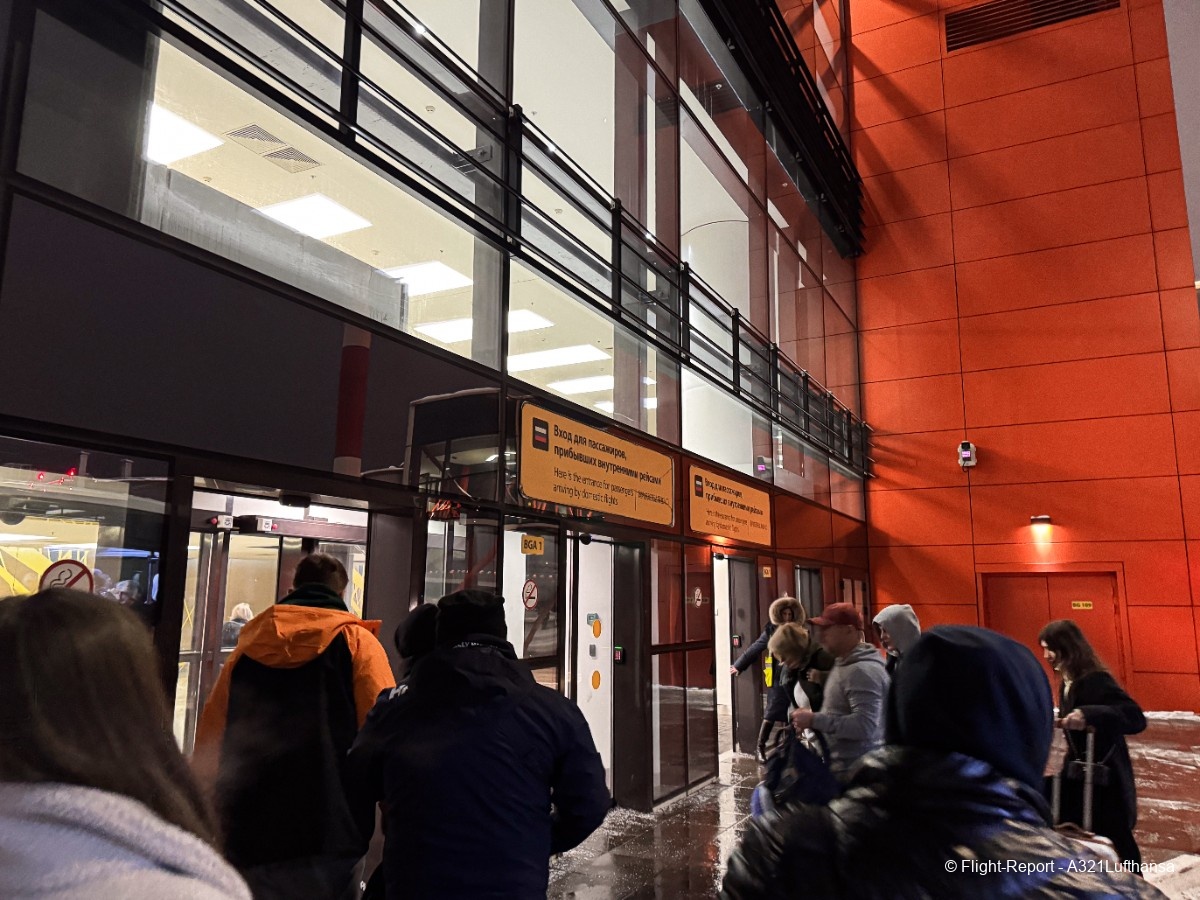
Moscow Sheremetyevo Airport, Terminal B
The distance to the terminal was considerable, and the bus moved at an unhurried pace. 10 minutes later I finally stepped inside:
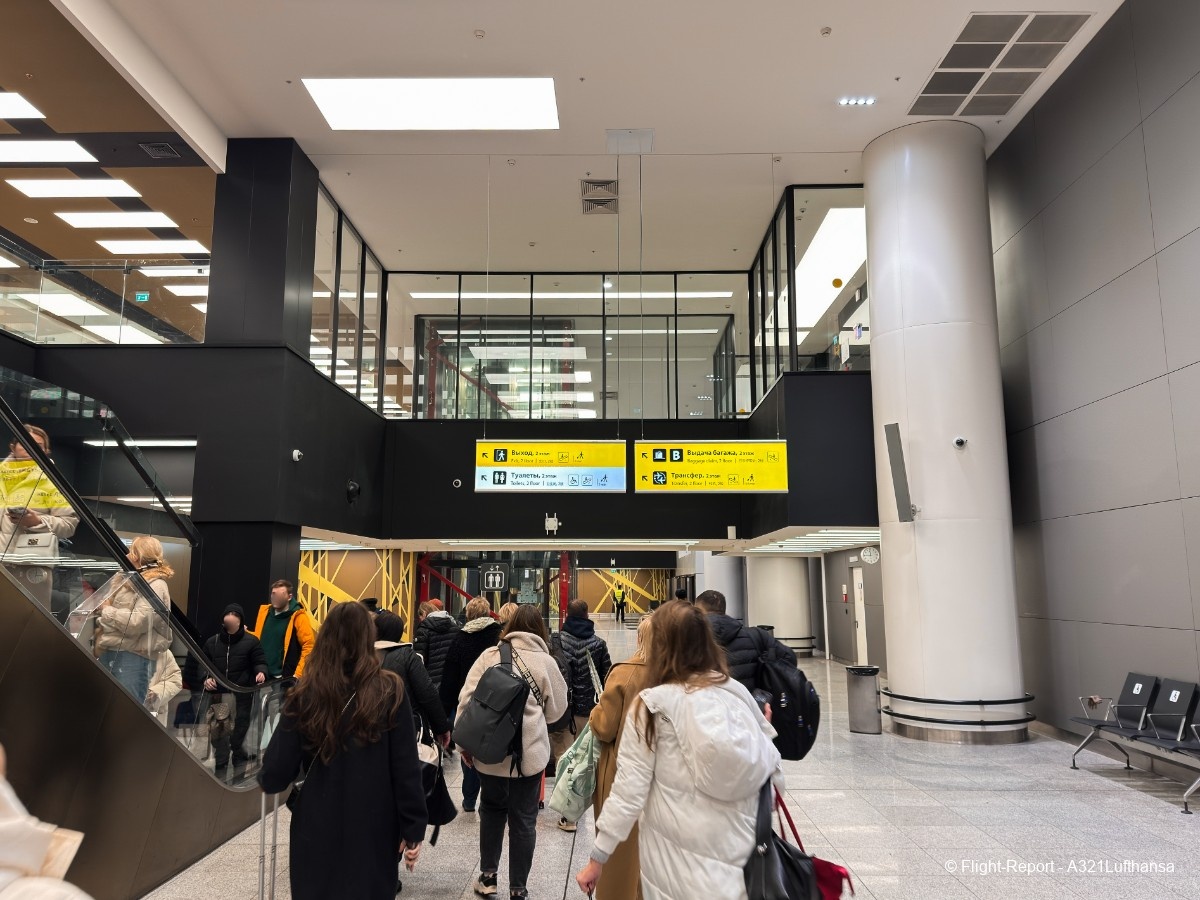
Then I walked up the escalator:
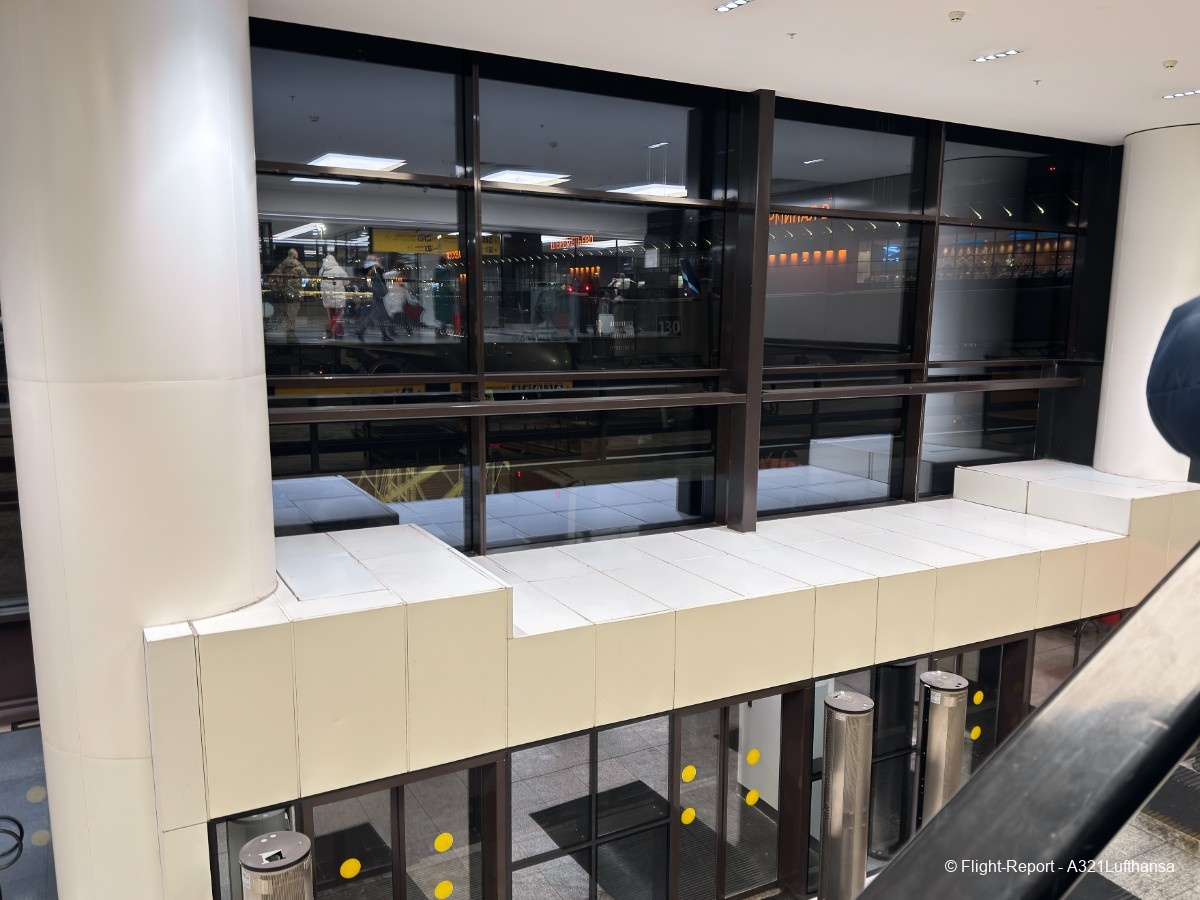
And found myself in the arrivals corridor. The only advantage of a bus arrival is that you won't have to walk far as the terminal's pier is relatively long.
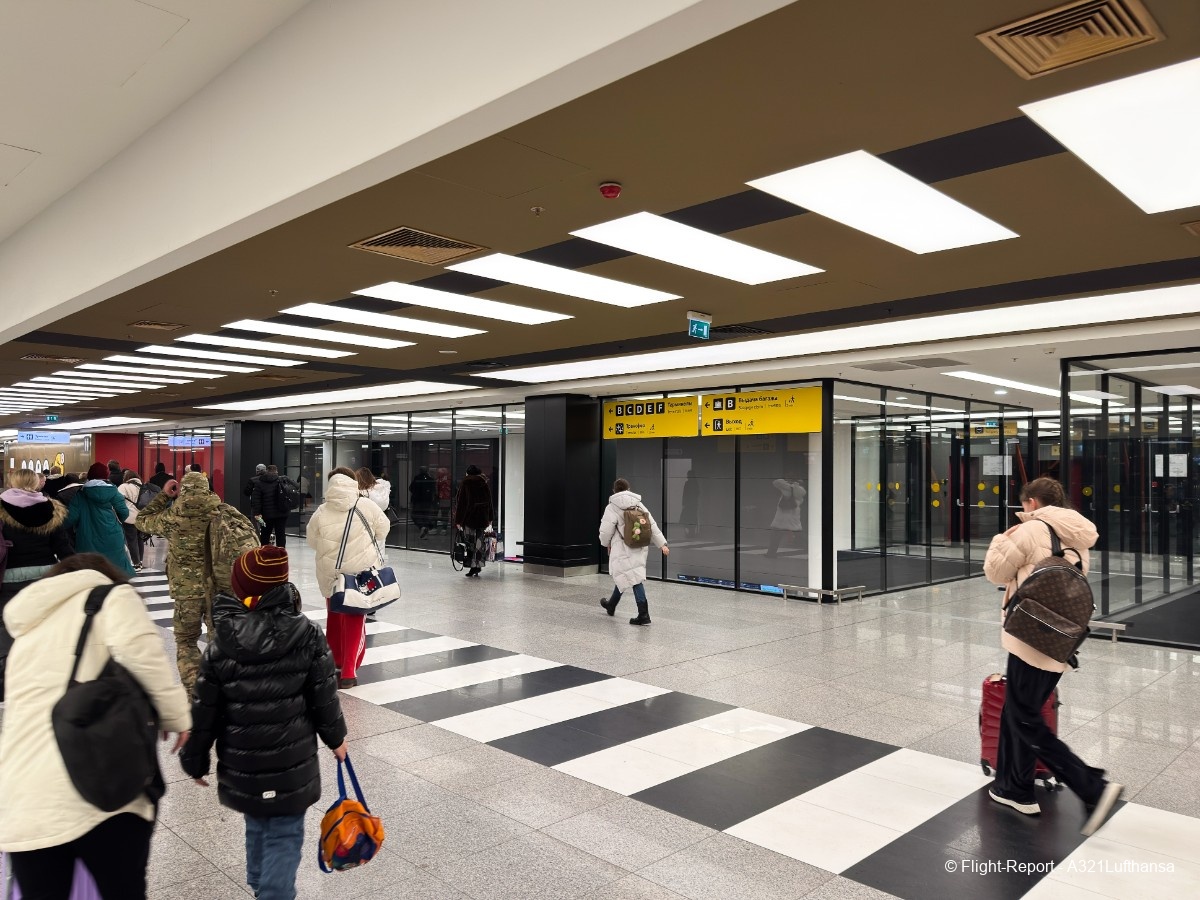
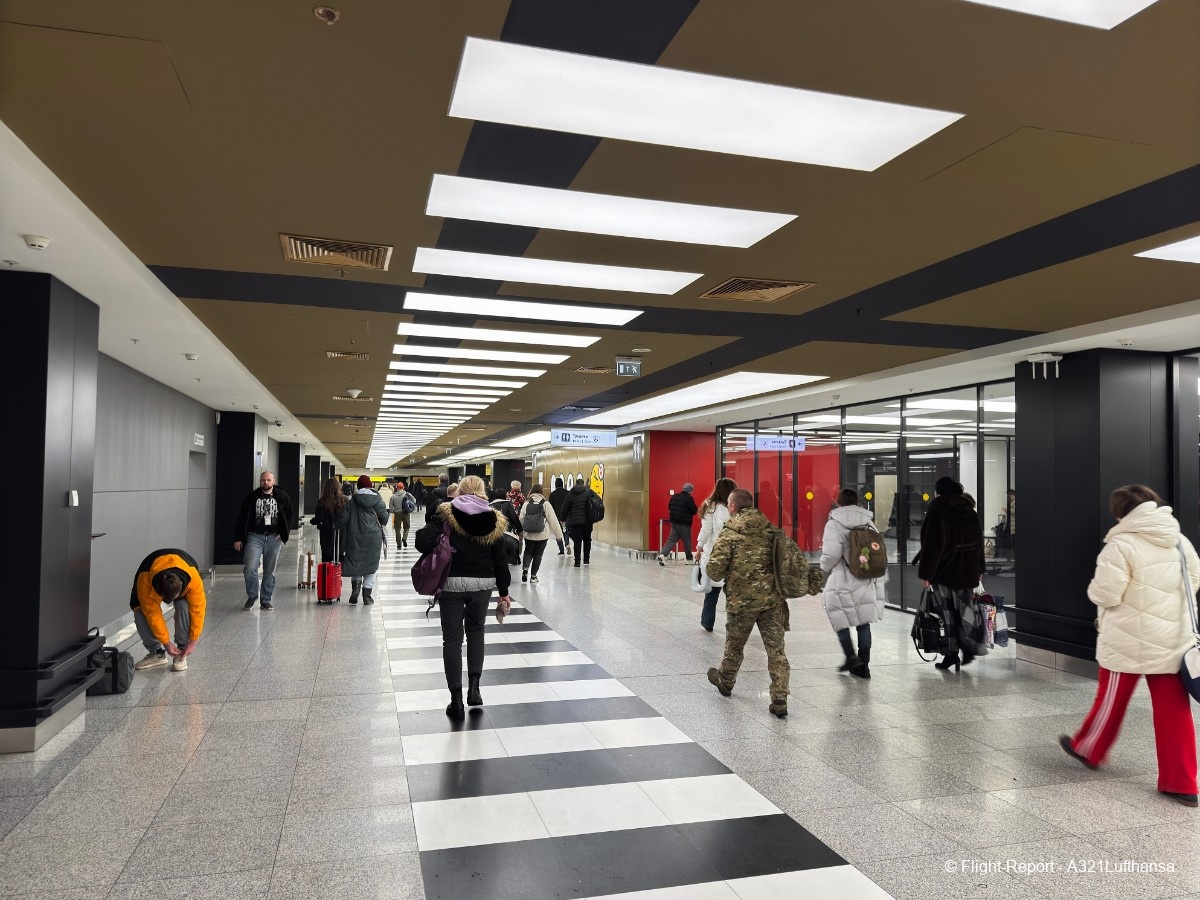
Along the way, I decided to stop by the restroom. From the corridor leading there you get a view of the departures area – specifically the descent toward bus gates 101-104:
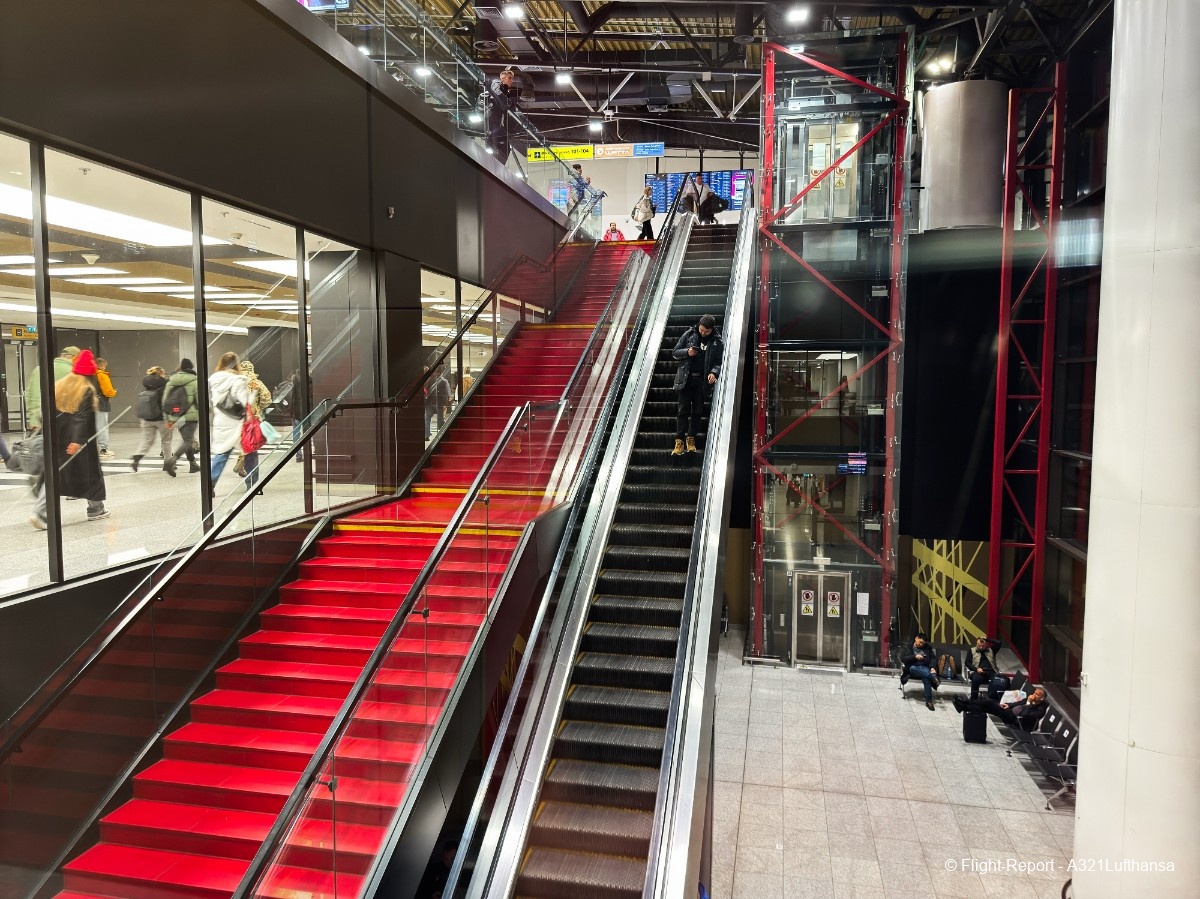
At the end, passenger flows split: transit passengers proceed straight to an additional security check. Personally, I believe it is time to abolish screening between domestic flights altogether, as is done in many countries, and allow transfer passengers to exit directly into the gates area.
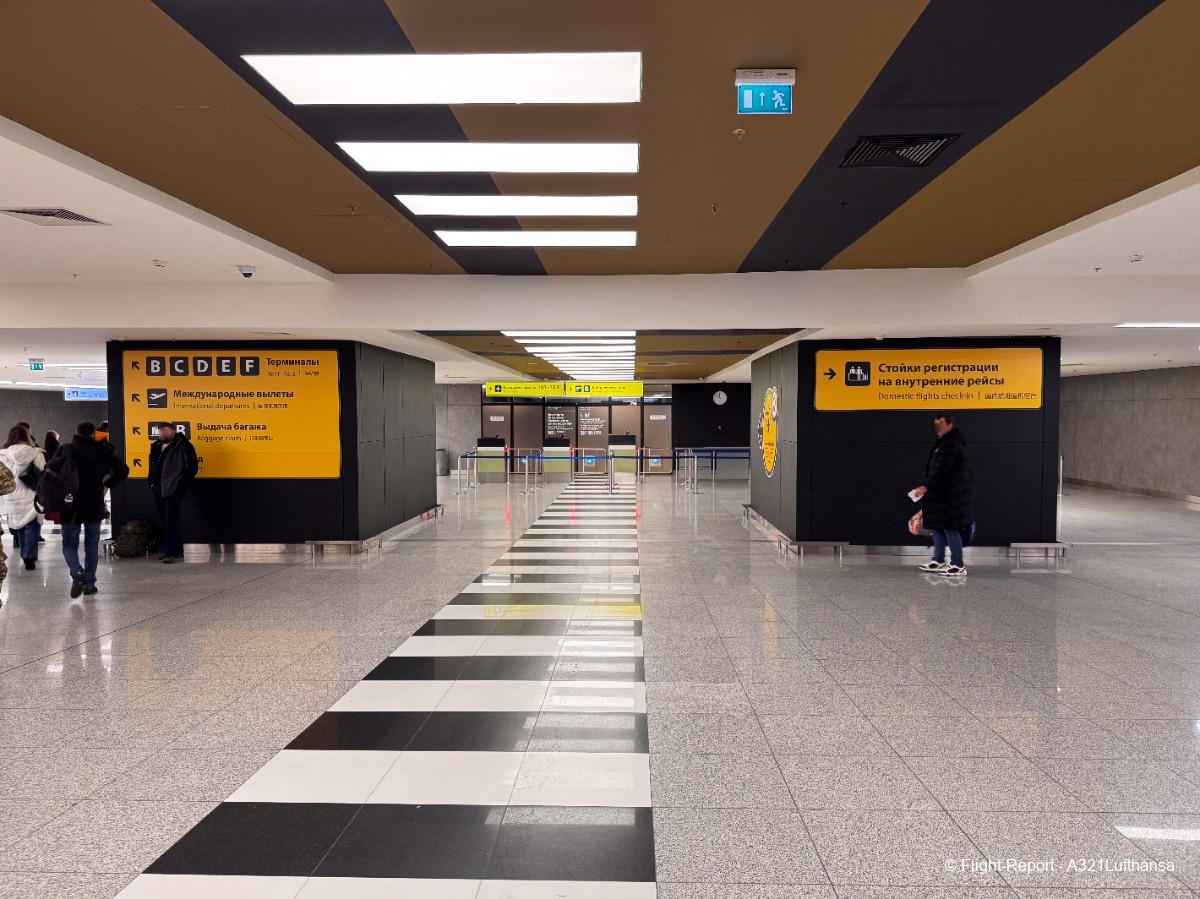
All other passengers turn slightly left and descend the escalator:
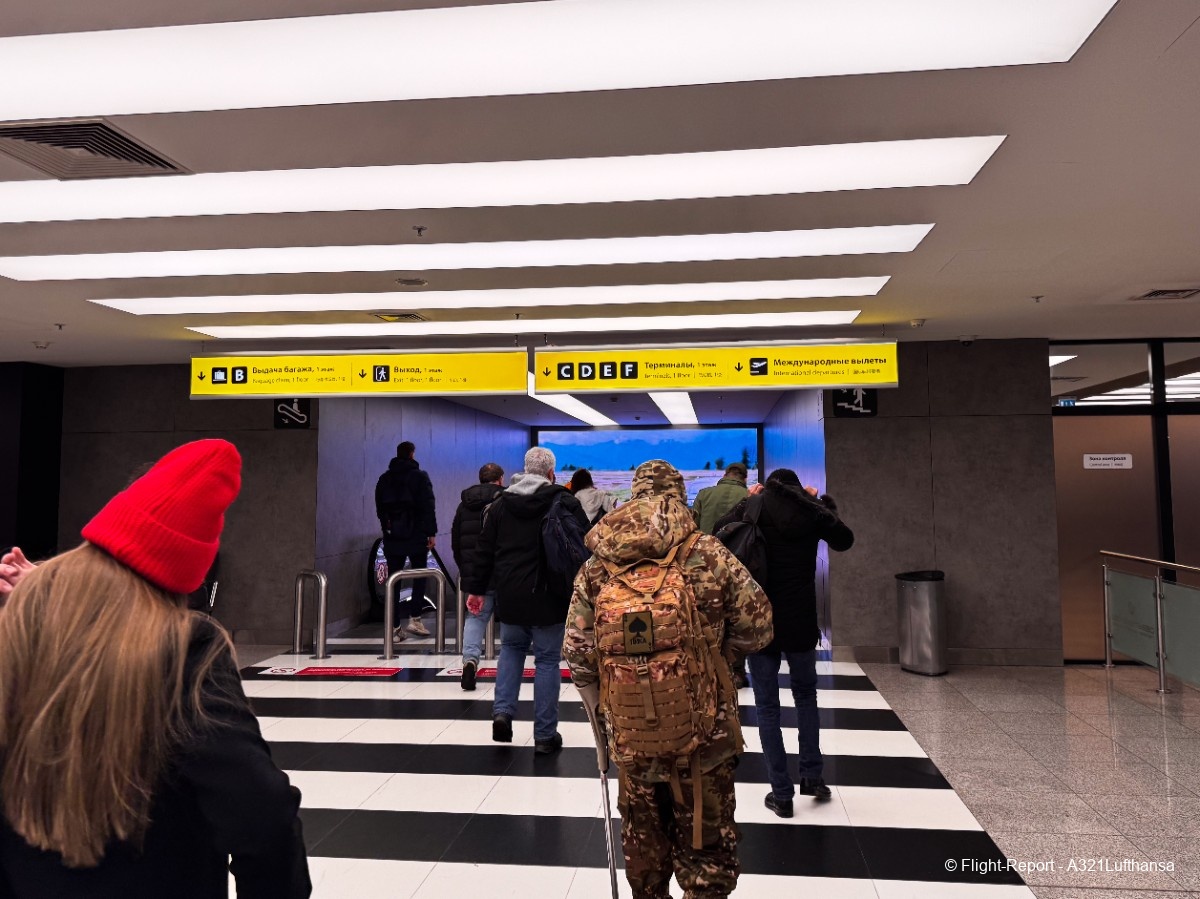
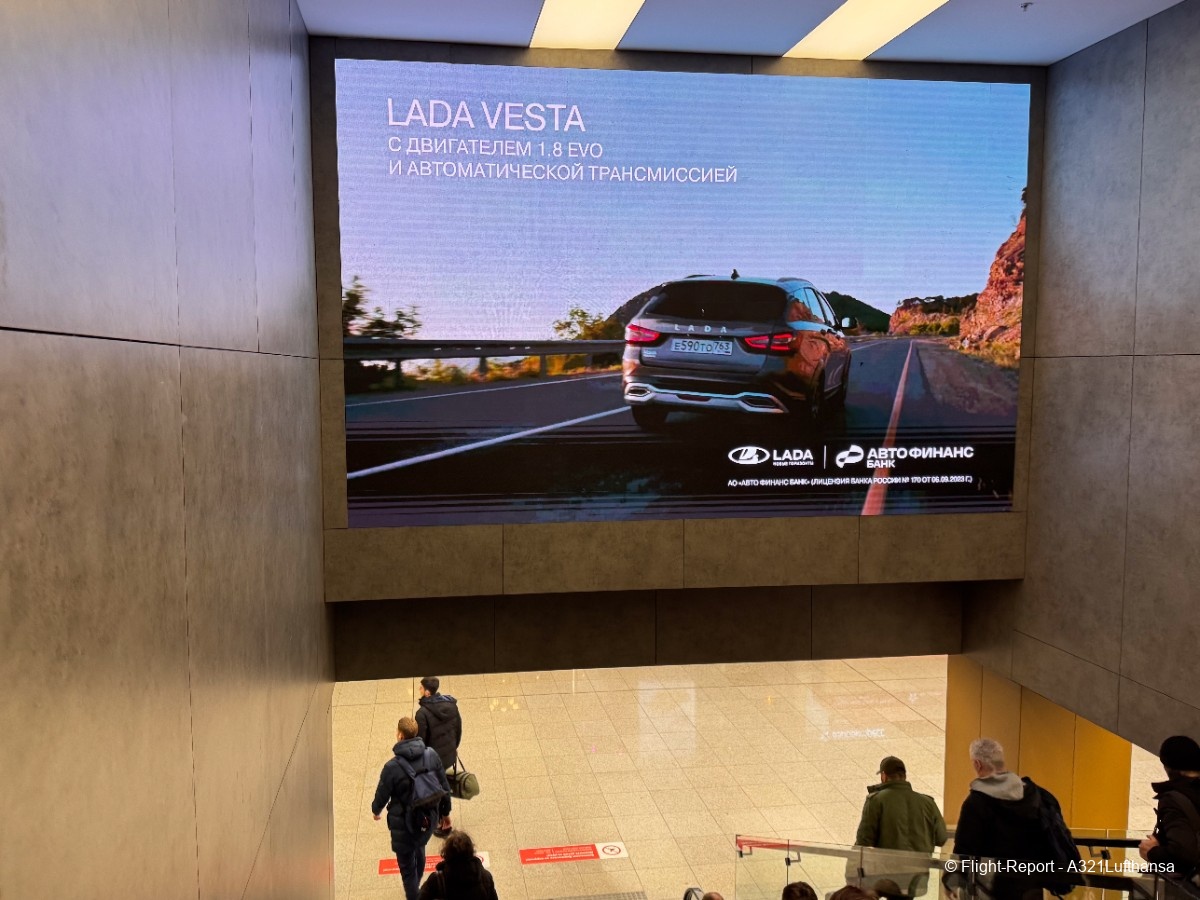
After that you enter a really spacious baggage claim hall featuring 6 belts:
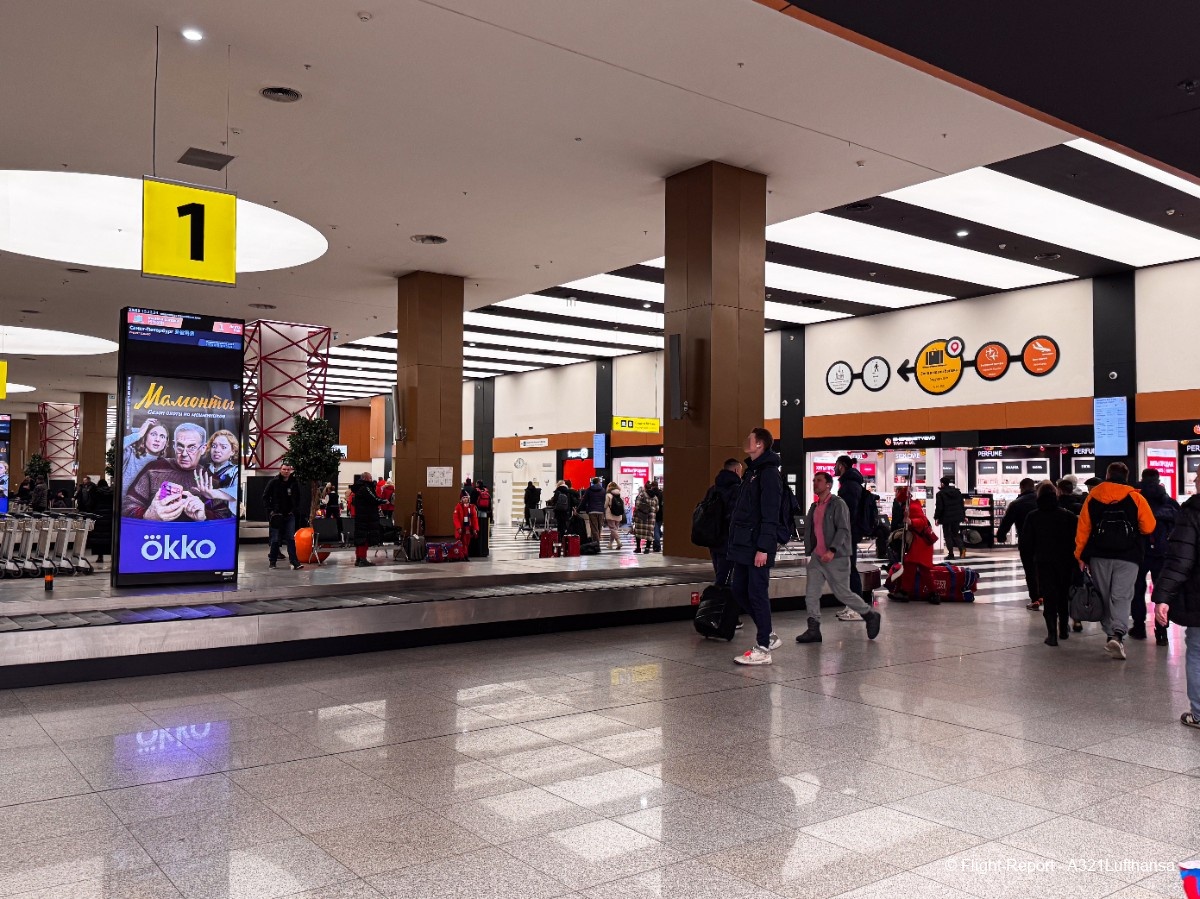
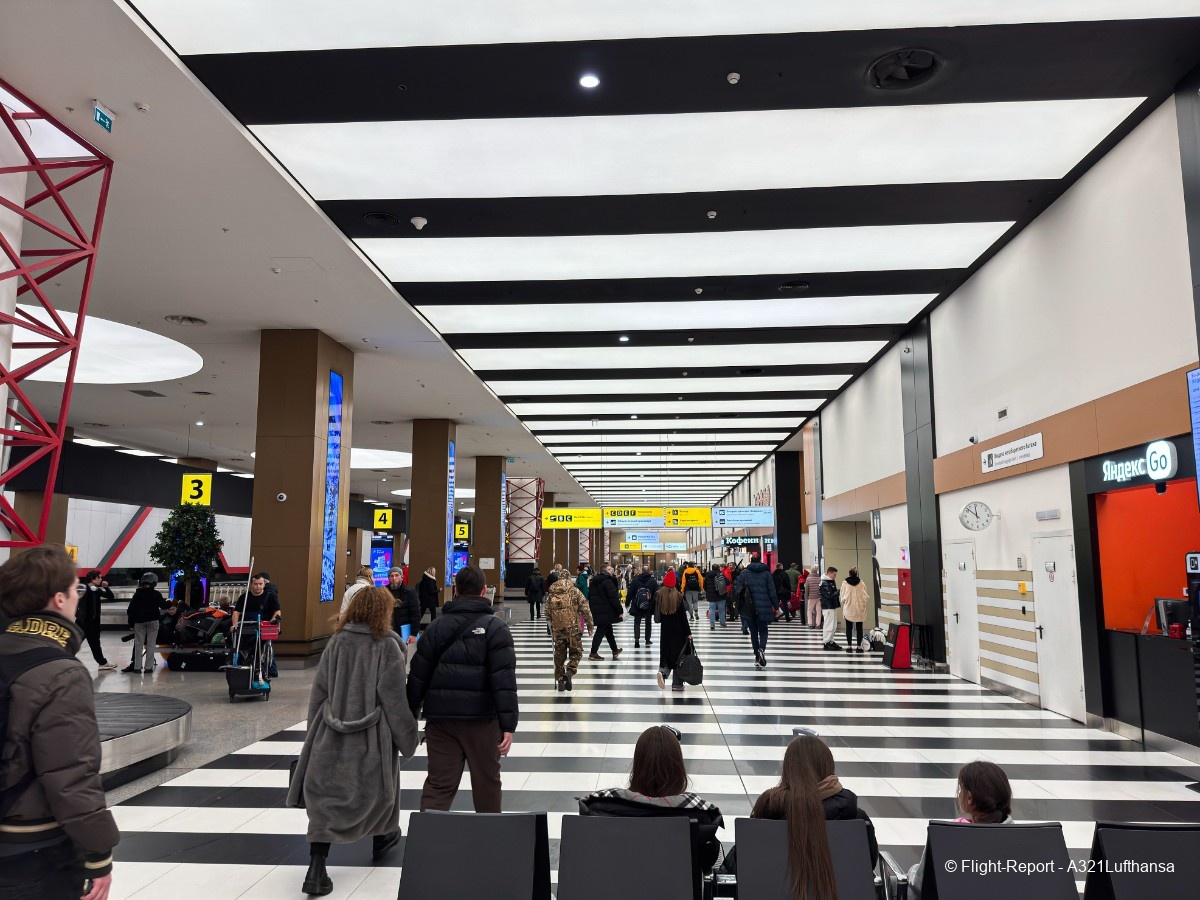
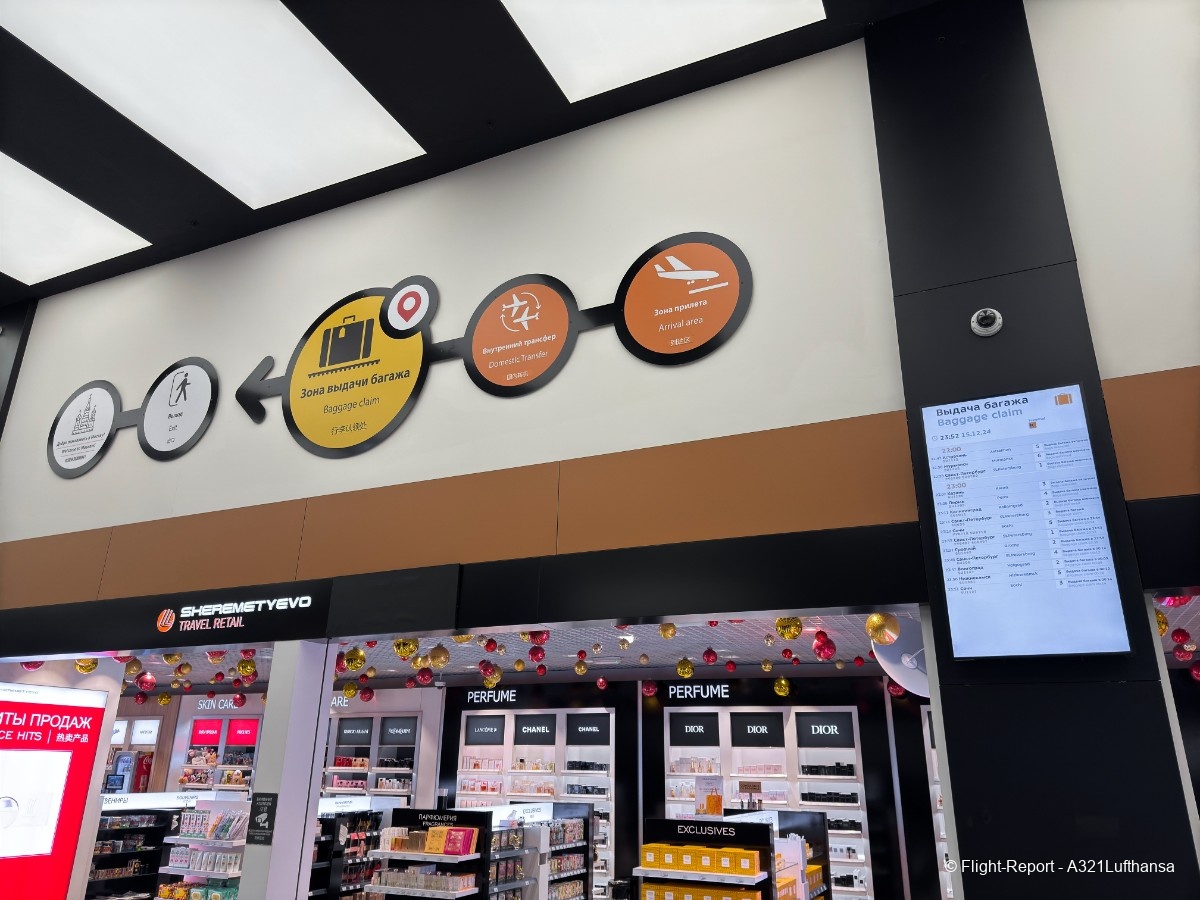
The signage is quite stylish, and here I checked the board to see where I'll get my suitcase:
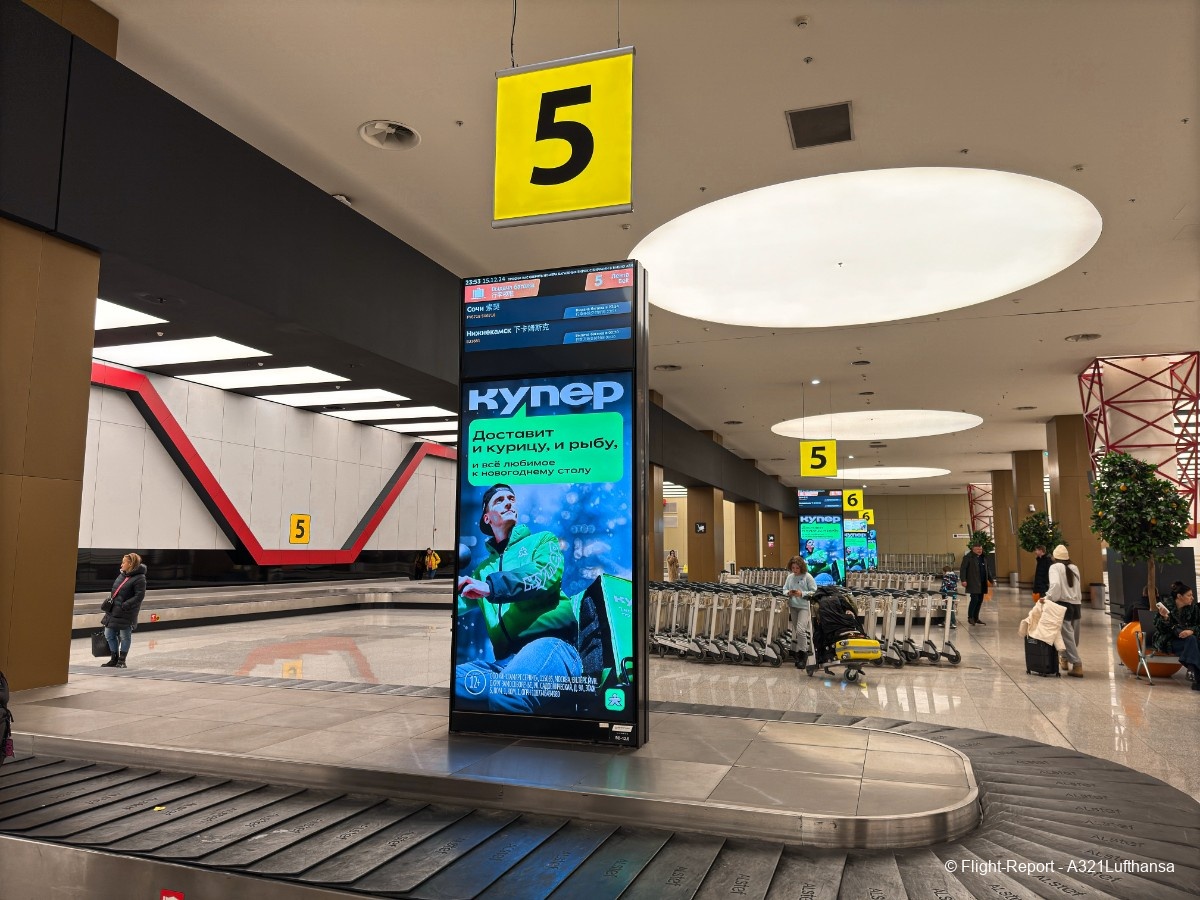
Baggage from my flight was reclaimed on one of the farthest belts – 5:
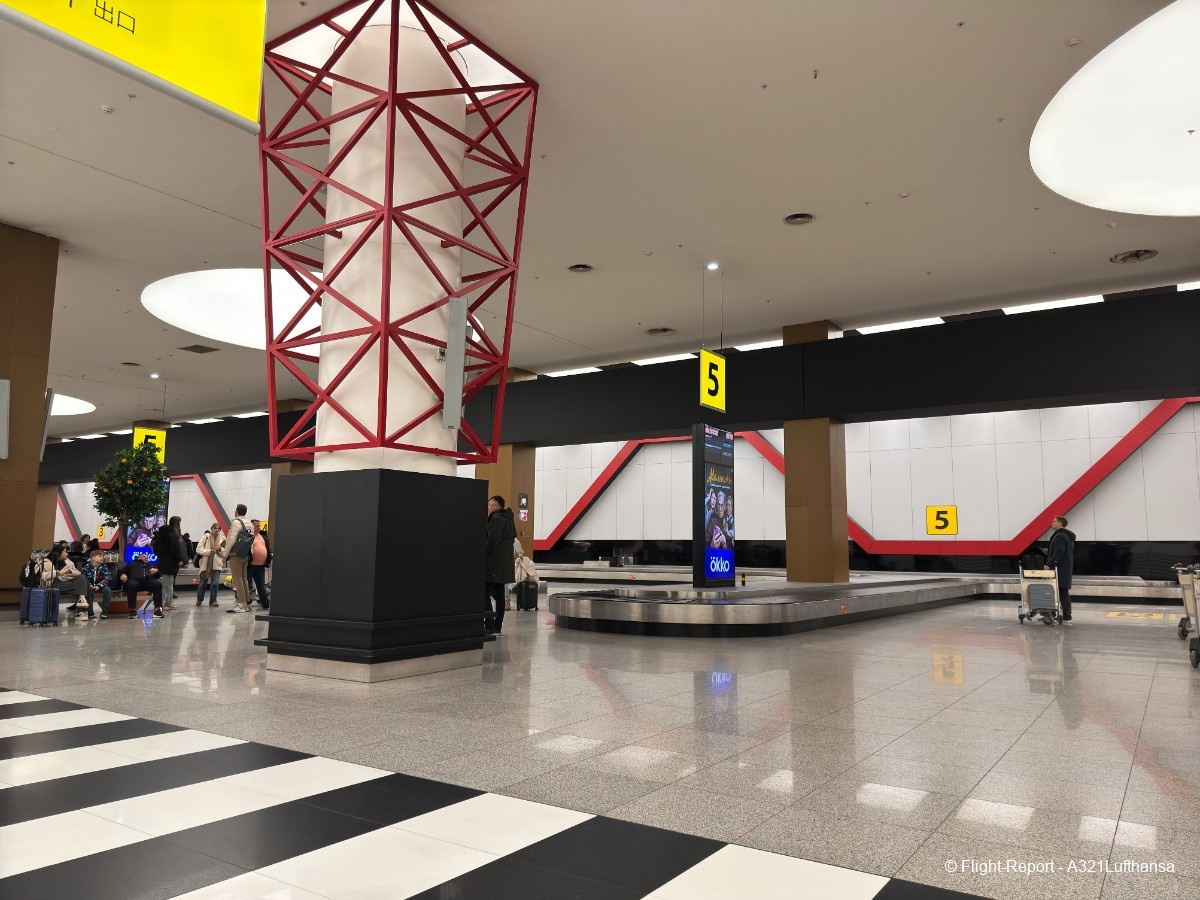
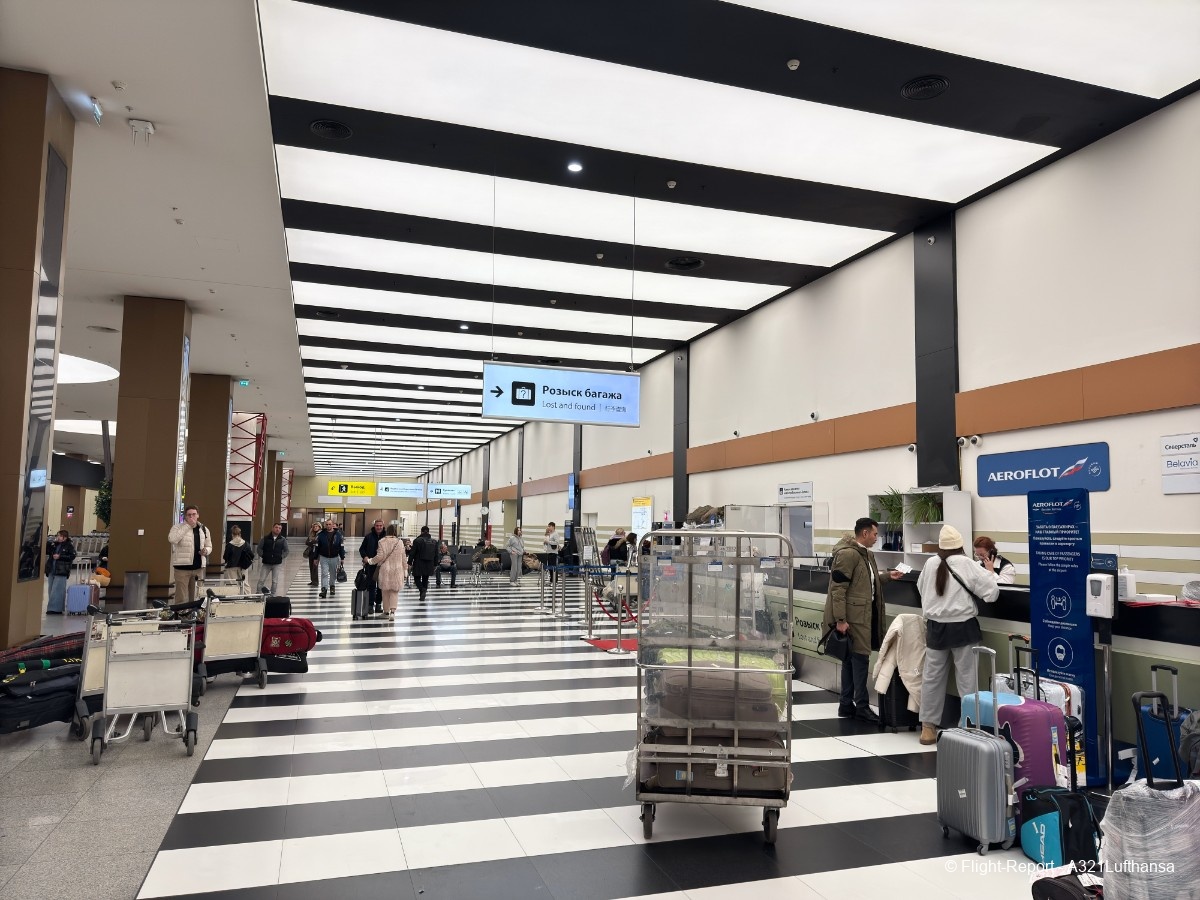
Opposite the belt you can find the lost and found desk. At the far end of the hall, there used to be a direct passage to passport control for passengers departing on international flights. Now, passengers arriving from Belarus exit there. It is a rather odd system, considering that in Vnukovo, Domodedovo and other Russian airports, such flights arrive in international terminals or their dedicated sections.
In 20 minutes my bag finally appeared (good 40 minutes had passed since deplaning), and it was time to head for the exit:
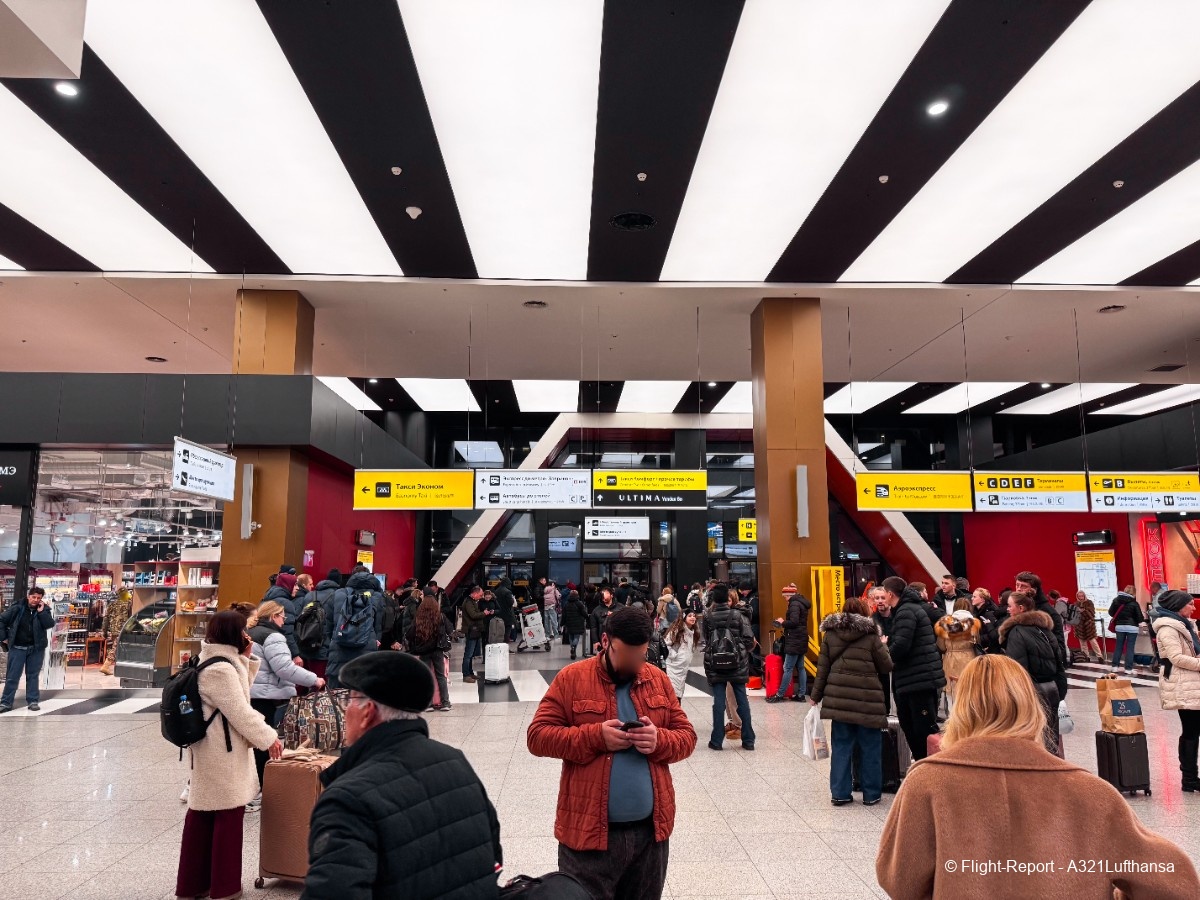
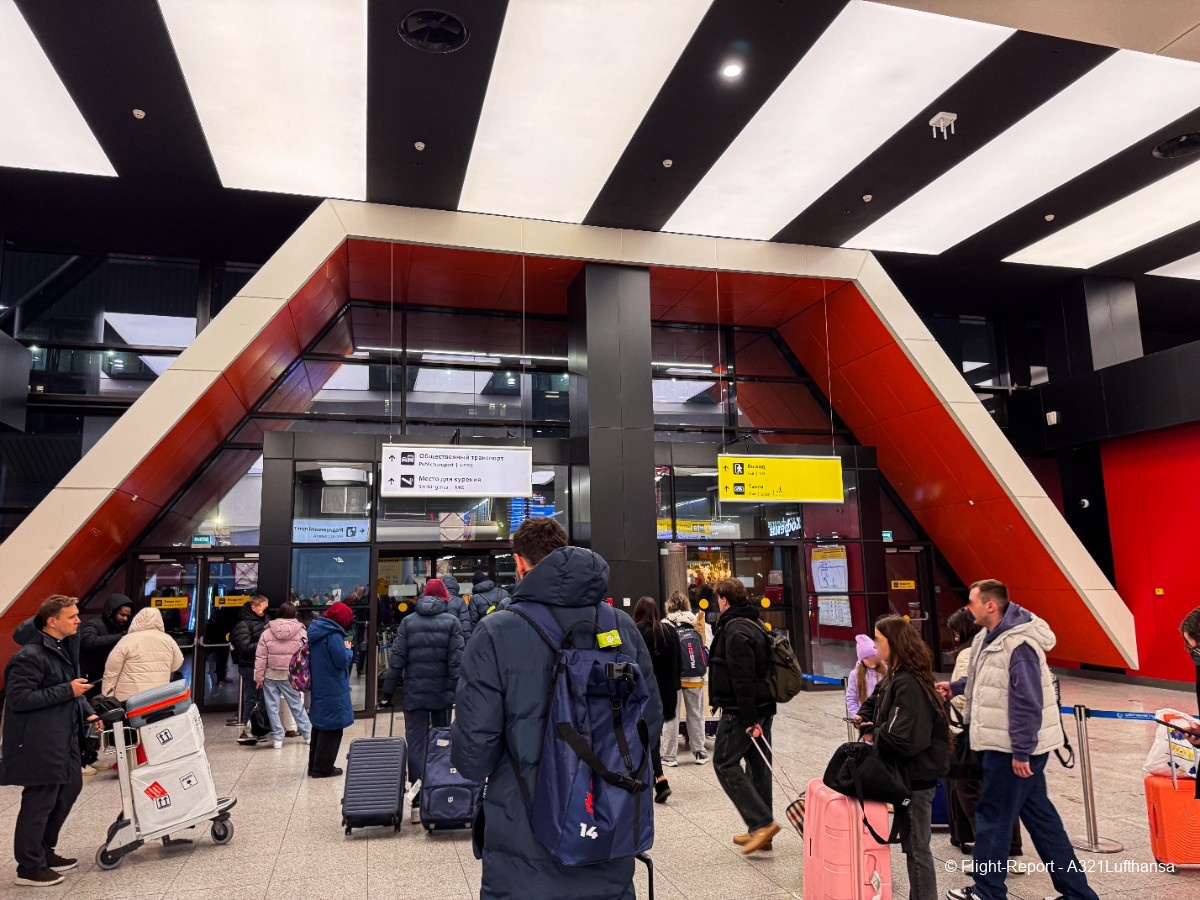
Outside there was an absolute chaos. I had to wait for a car around 15 minutes in the freezing cold – worse than Domodedovo airport in its worst days.
Thanks for sharing this unique flight on a Boeing 747-400!
Thank you for your comment!