


Hi, dear FR members and readers!
In this FR I'd to review a domestic flight in Brazil from Foz do Iguacu (IGU) to Sao Paulo Guarulhos (GRU) on GOL Linhas Aereas Intelligentes - a Brazilian "luxury lowcost".
Having flown from SCL to MVD on JetSMART, I spent several days in Montevideo, crossed La Plata from Colonia del Sacramento to Buenos Aires (where I also visited Tigre in the delta of Parana), from where I made my way to Puerto Iguazu overland via San Ignacio, Encarnacion (with a trip to Trinidad), Asuncion (with a trip to Jaguaron) and Ciudad del Este (including visiting Monday waterfall, Itaipu dam and the junction of Parana and Iguazu rivers).
The IGU-GRU flight on G3 was a positioning flight to the transatlantic leg VCP-ORY on Azul. This FR also includes a bonus containing the transfer from GRU to VCP and the review of VCP.
Initially a B7M8 was announced to operate my flight G31173, but later was changed to B738. Both aircraft types are extremely boring for me, but I got the youngest G3 B738 with the same cabin as G3 B7M8s have.
Back in 2016 during my very first trip to Latin America I flew 4 G3 segments in Brazil (GRU-SDU-GRU, GRU-IGU-CGH) on older B738s with the old pre-refurbishment cabins and now I got to fly the new product.
GOL And Its Fleet
GOL Linhas Aereas Intelligentes S.A. (G3) was founded in 2001. Between 2007 and 2013 G3 owned the Varig brand, but this name refers to the "new Varig", whereas the legendary "old Varig" collapsed in 2008.
G3, being the 3rd Brazilian airline by fleet size, operates exclusively narrowbody Boeing fleet in all-economy layout, which currently (early 2026) consists of 59 B7M8s (Y186), 65 B738s (Y186) and 12 B737s (Y138) with the latter being gradually phased out. Also G3 has 9 cargo B738Fs, which are operated by Mercado Libre.
The main hubs of G3 are GRU, GIG and CNF; focus airports are CGH, SDU and POA. From these airports G3 operates its vast network, covering almost the entire Brazil.
In 2024-2025 G3 went through Chapter 11 restructurization to avoid bankcruptcy.
Foz Do Iguacu Airport (IGU)
IGU, located south-east from Foz do Iguacu town (whose name simply means "mouth of Iguazu river" as the town is located near the junction of Iguazu and Parana rivers) halfway to the world-known Iguazu waterfalls and is the gateway to the Brazilian side of the waterfalls.
Having visited the waterfalls (both sides - Brazilian and Argentinian) back in 2016, with the memories being still strong, this time (mid-May 2024) I didn't visit the waterfalls again (instead I visited Monday waterfall near Ciudad del Este in Paraguay, which is also quite impressive, but is not crowded at all) and just transited through Foz do Iguacu on my way from Paraguay to Sao Paulo area.
One can reach IGU from Foz do Iguacu city centre by taking bus 120 from Muffato supermarket (after IGU this bus continues to the waterfall). While riding the bus I noticed how much everything had changed since my previous visit: whereas in 2016 the town was bland and forgettable, in 2024 it looked really nice, like a town of a First World country. Moreover, near the road to the airport a number of the future hotels were under construction. Obviously, the post-Covid tourism is booming here and it make the town flourish.
I arrived at the airport 2 hours before the flight, when it was getting dark.
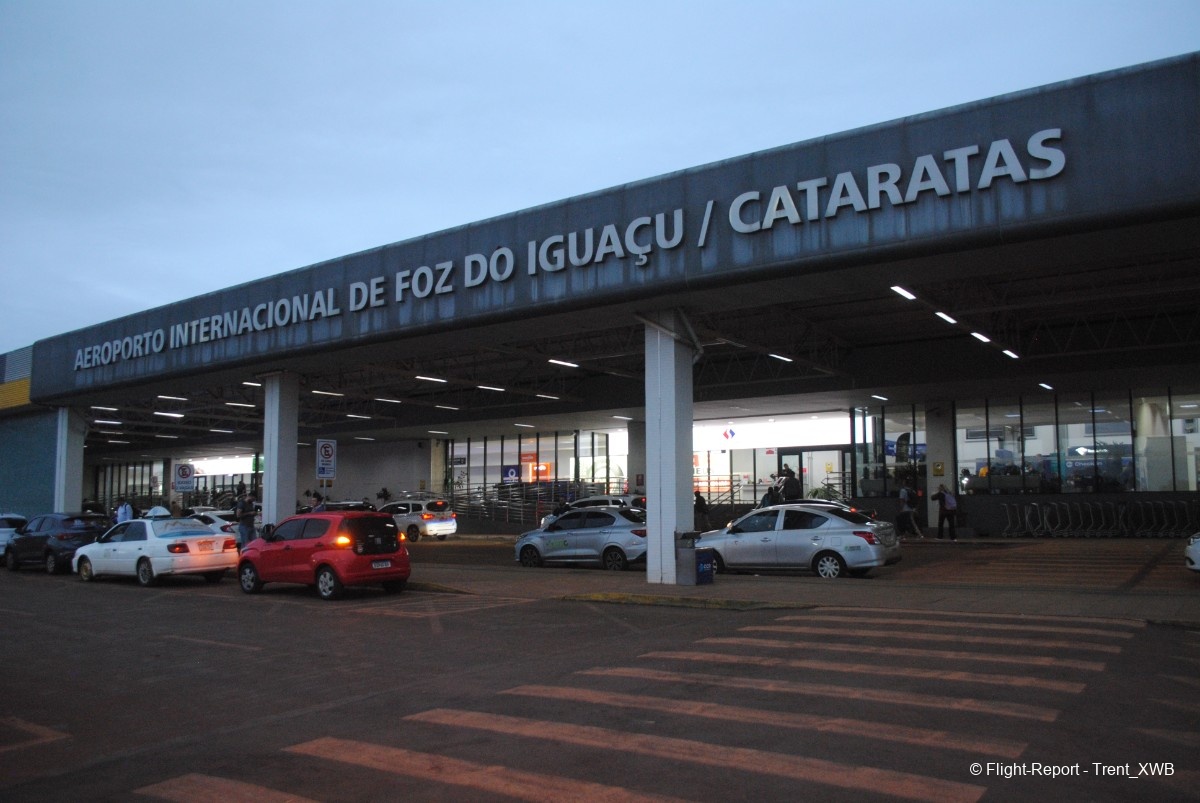
IGU terminal from the outside.
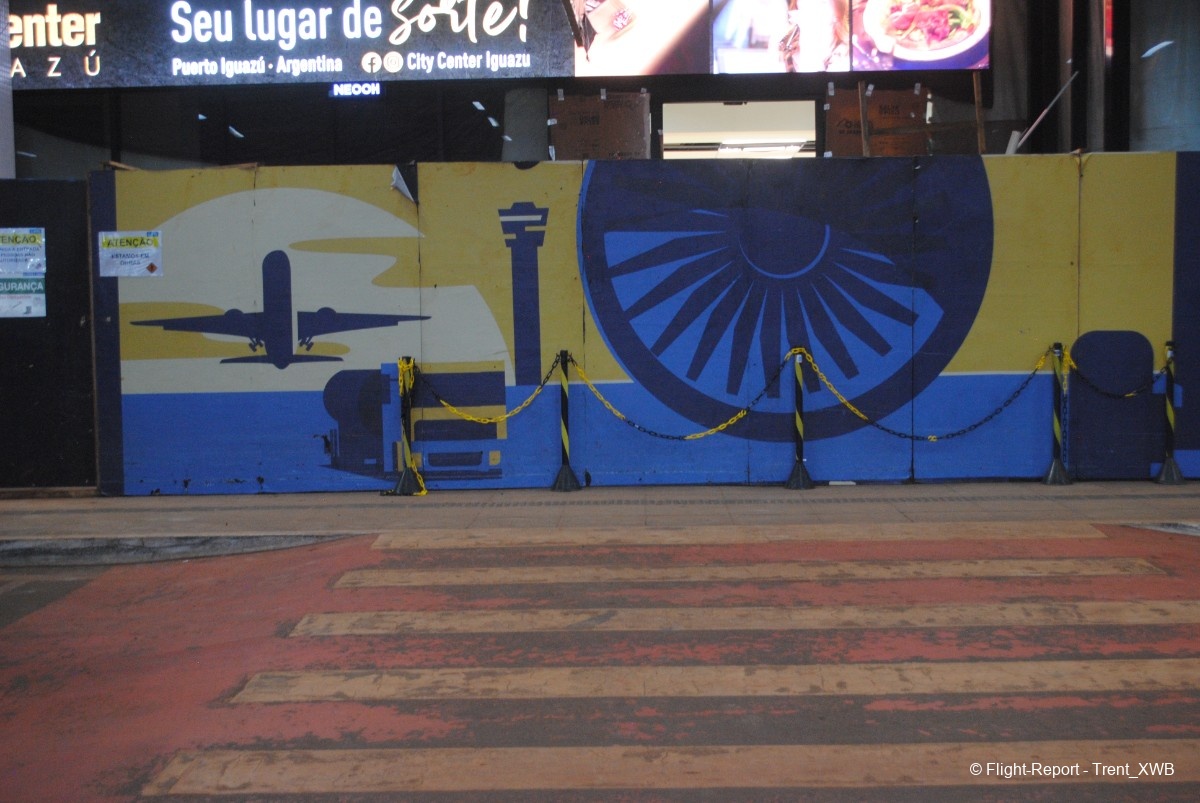
A nice mural outside the terminal. I have to say that Foz do Iguacu turned into a town of murals - a saw a number of beautiful murals from the bus. Back in 2016 I didn't see any mural there.
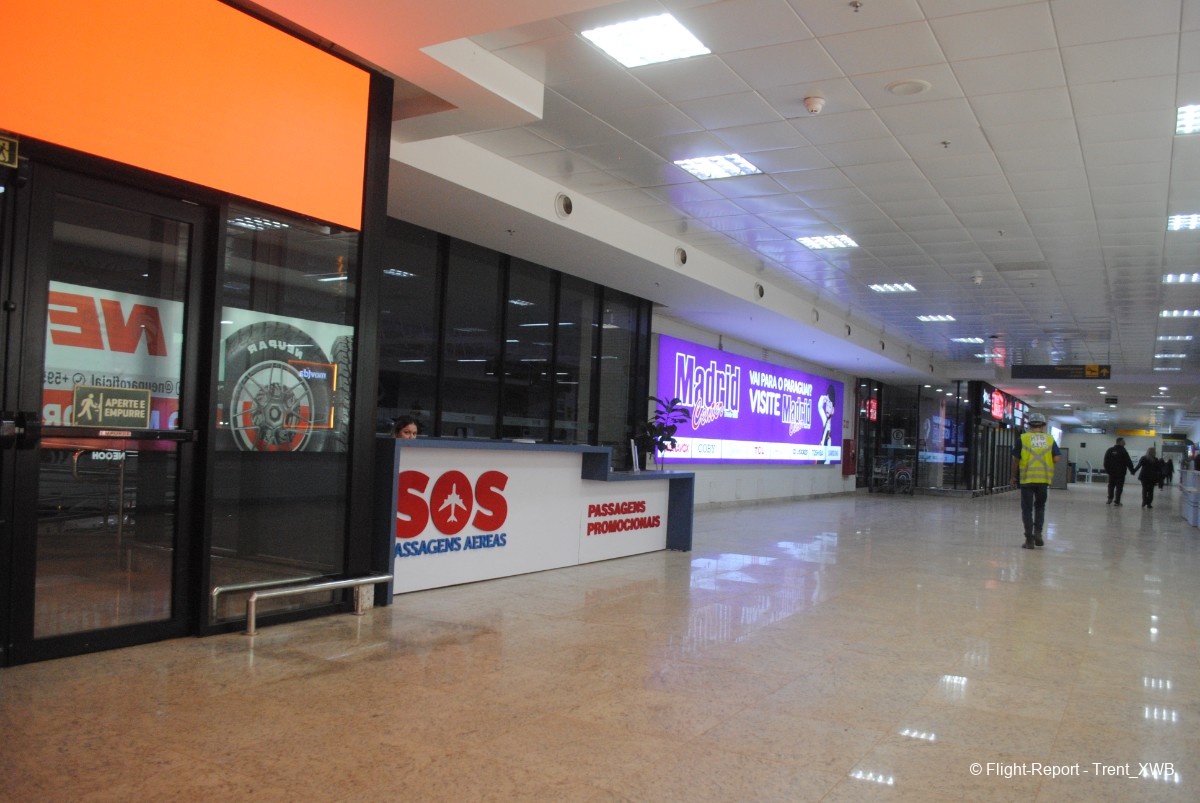
The ground level of the terminal. The low ceiling, creating some claustrophobic feeling, reminds that the building is very old (built in 1974).
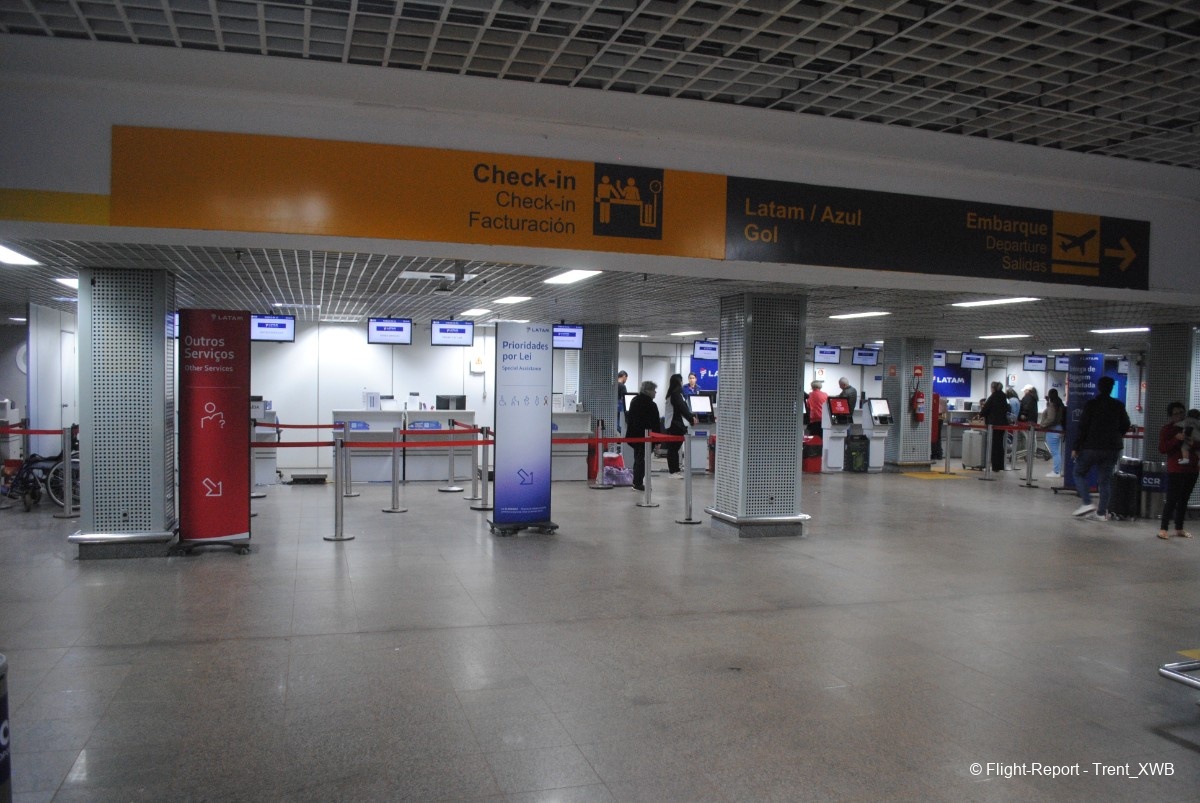
Check-in desks for LATAM and GOL. Not for me - I don't have luggage for check-in and have electronic BP.
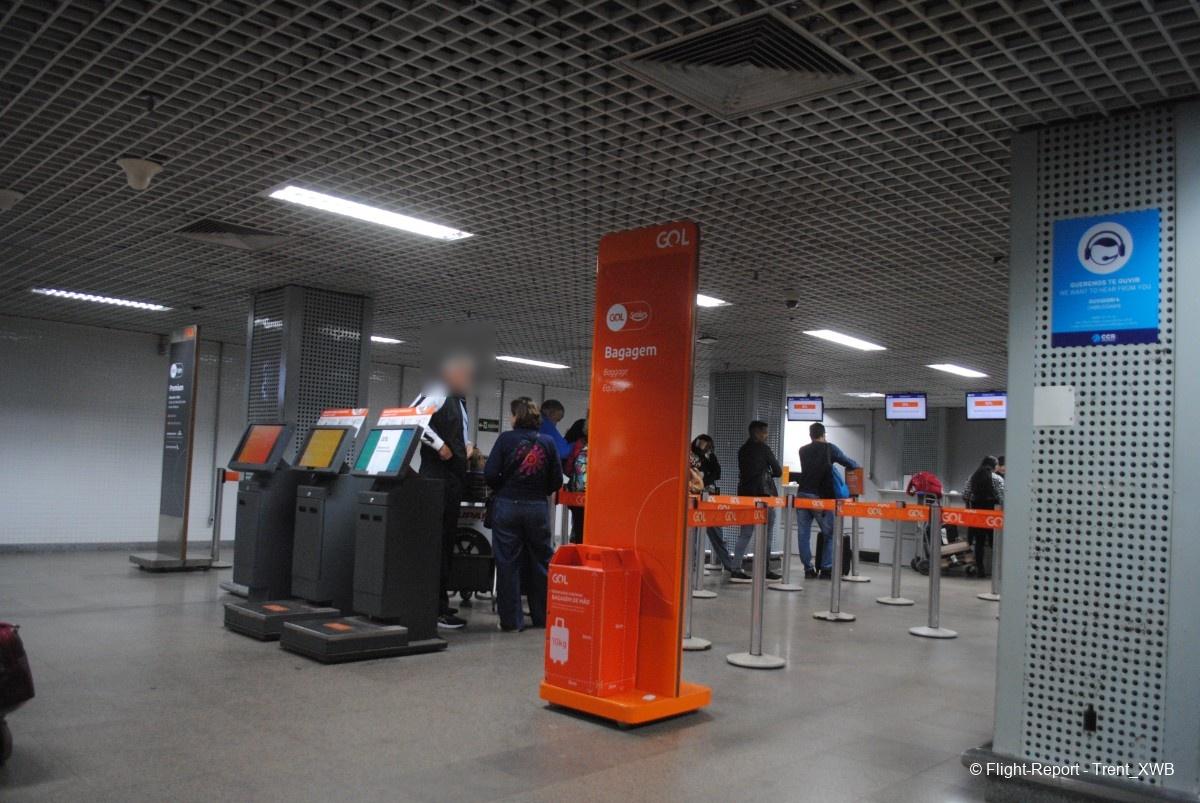
Back in 2016 boarding gates (walk-in ones - no jetbridges, no buses) were also on the ground level. But since them something (one can think of post-Covid overtourism) has happened that made the authorities to renovate the terminal, and now, thankfully, passengers have to go upstairs from this claustrophobic zone.
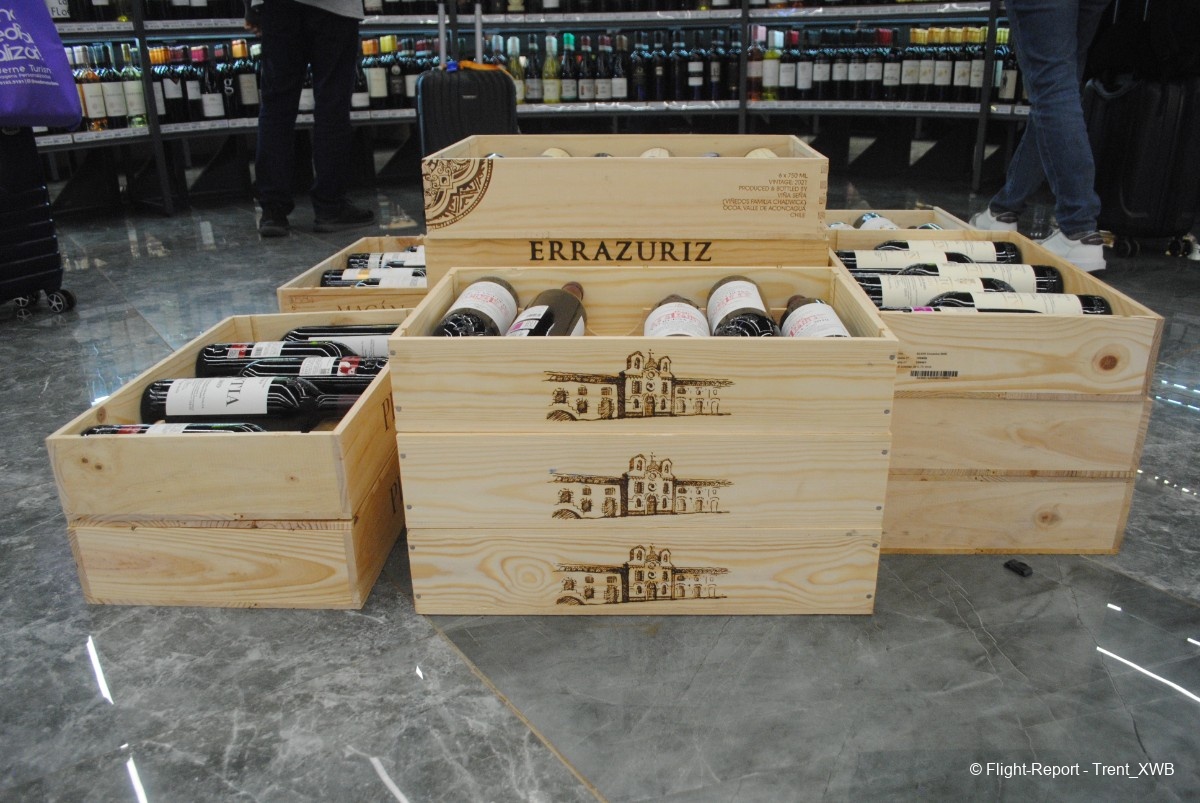
After security control there is a very interesting duty-free shop with beautifully presented wines of Chilean brand Errazuriz (the place of origin of these wines is Aconcagua valley in central Chile - if you fly into SCL from the east or from the north, you overfly this valley during the descent).
Then there are some beautiful figures of jaguars, capybars and indigenous people (Guarani).



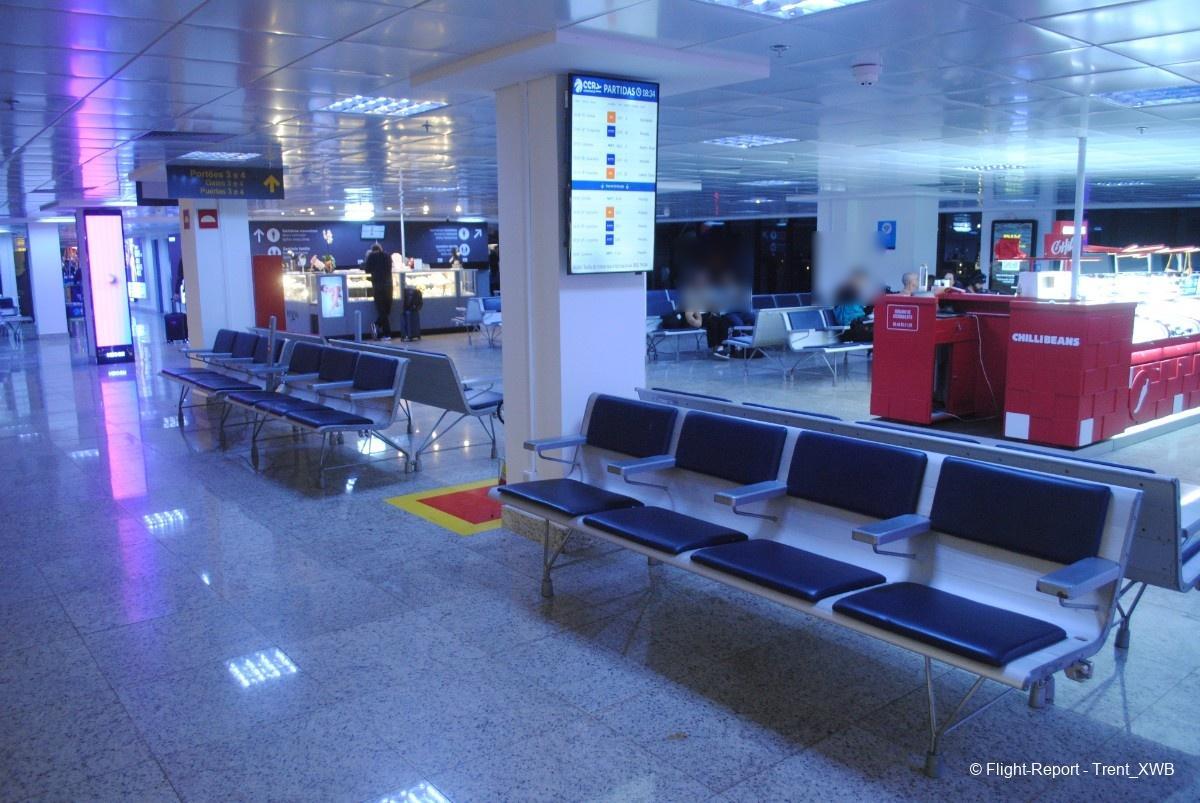
The waiting zone near gates back in 2016 was just an upstair terrace with apron views. Now it has been renovated.
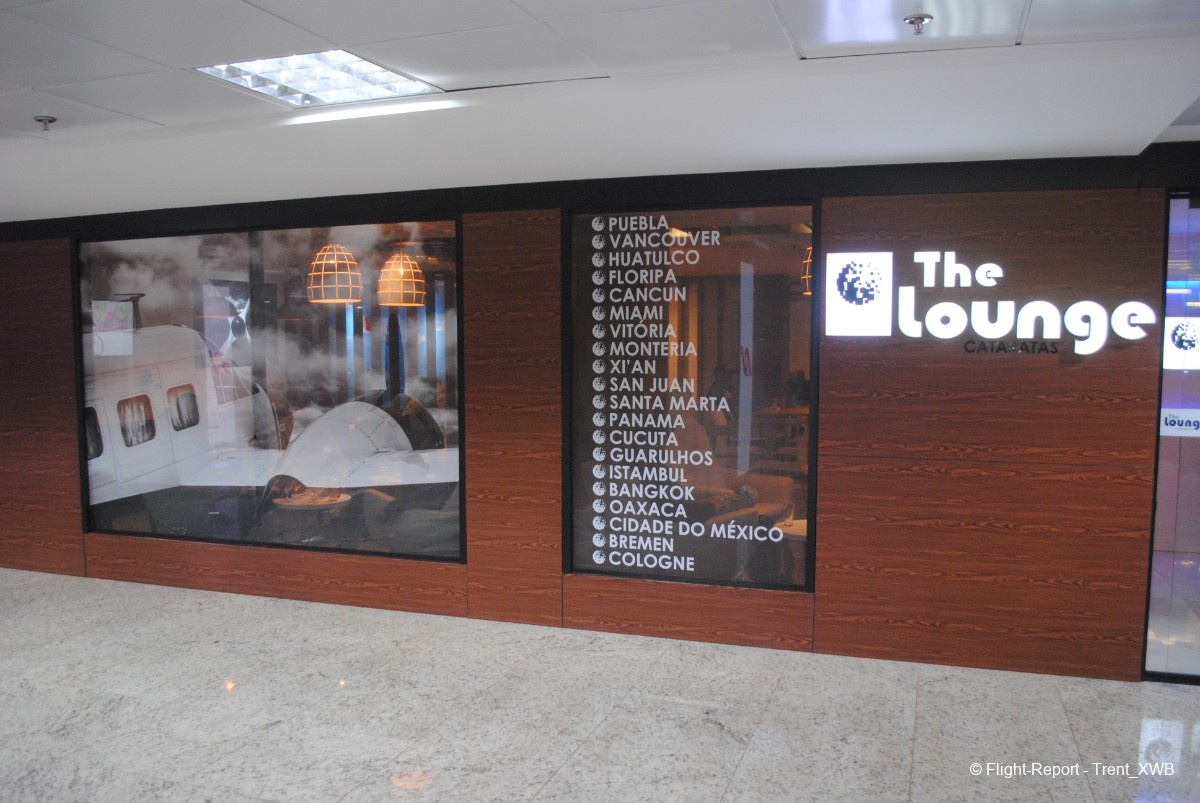
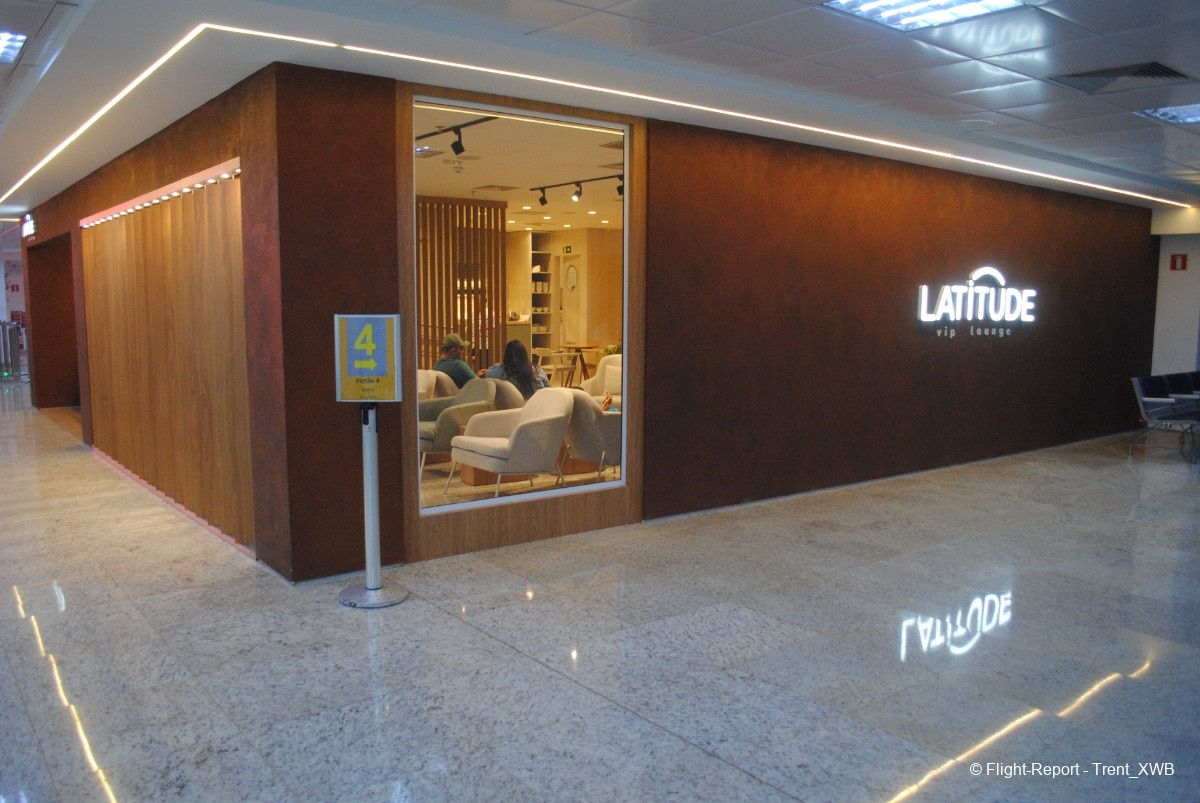
There are a couple of small lounges…
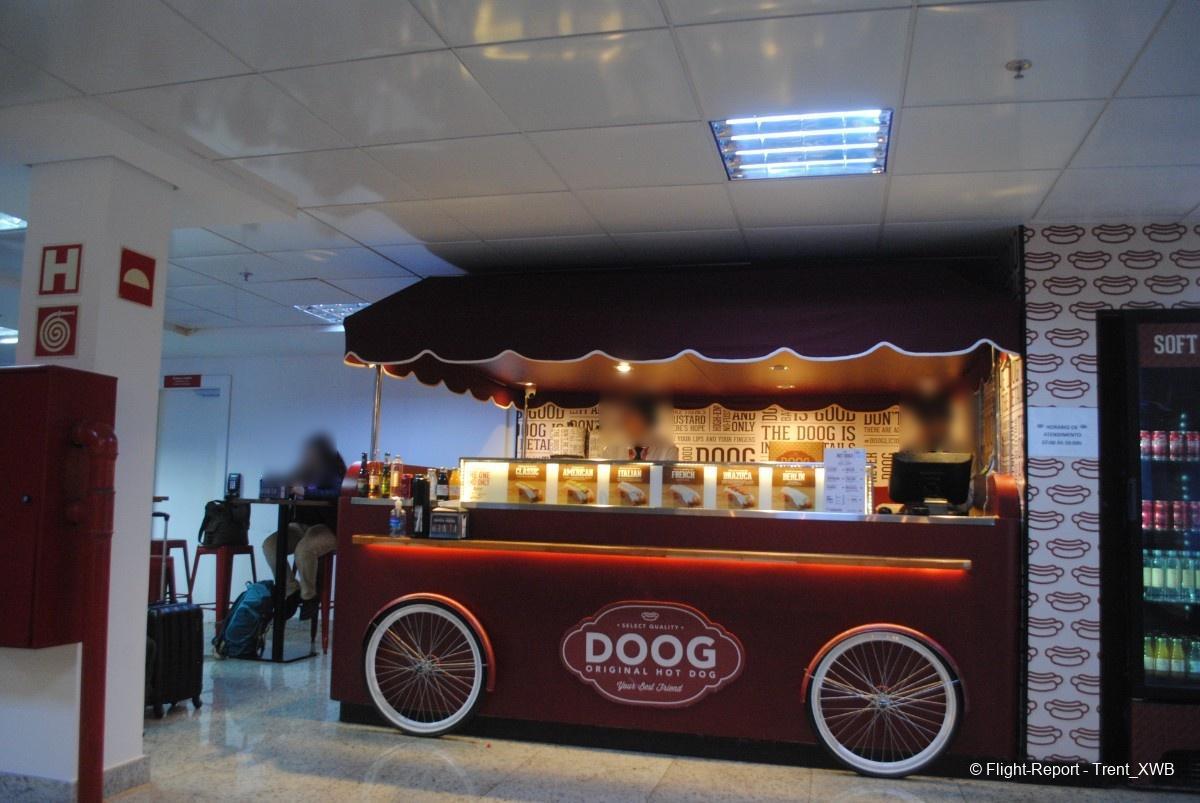
… and some eateries as well.
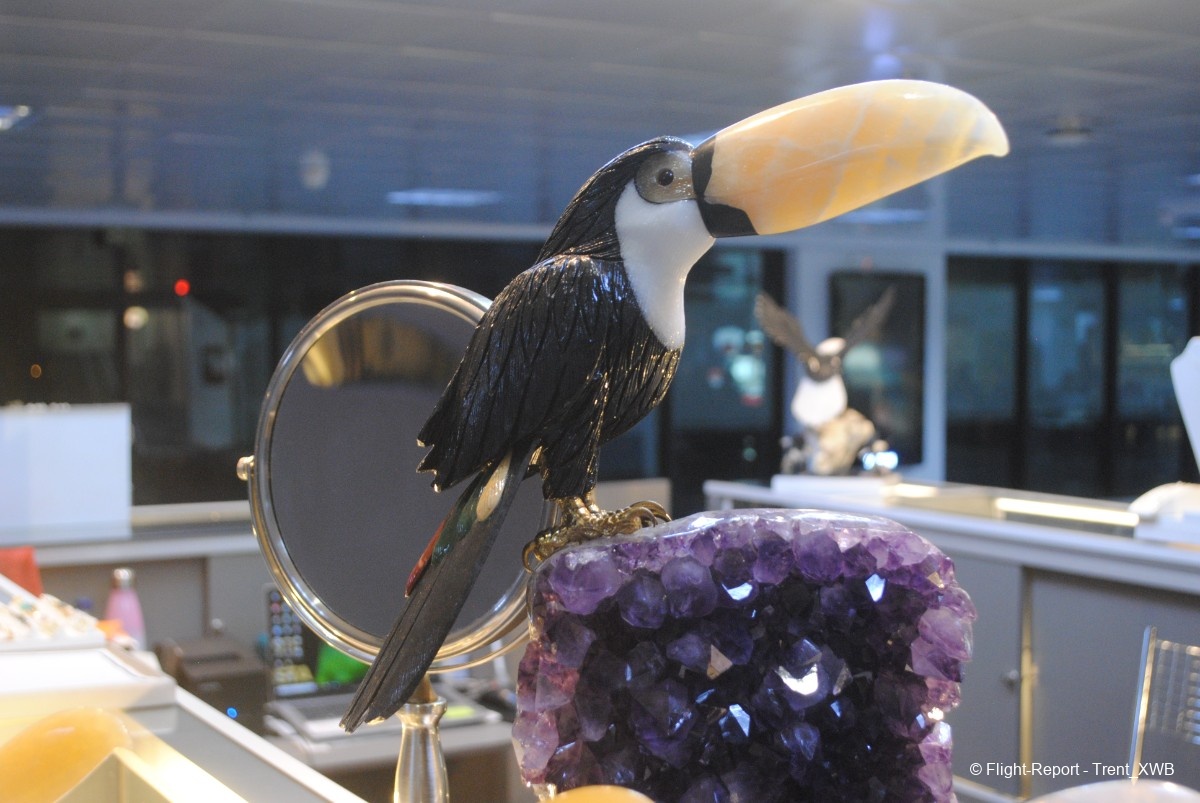
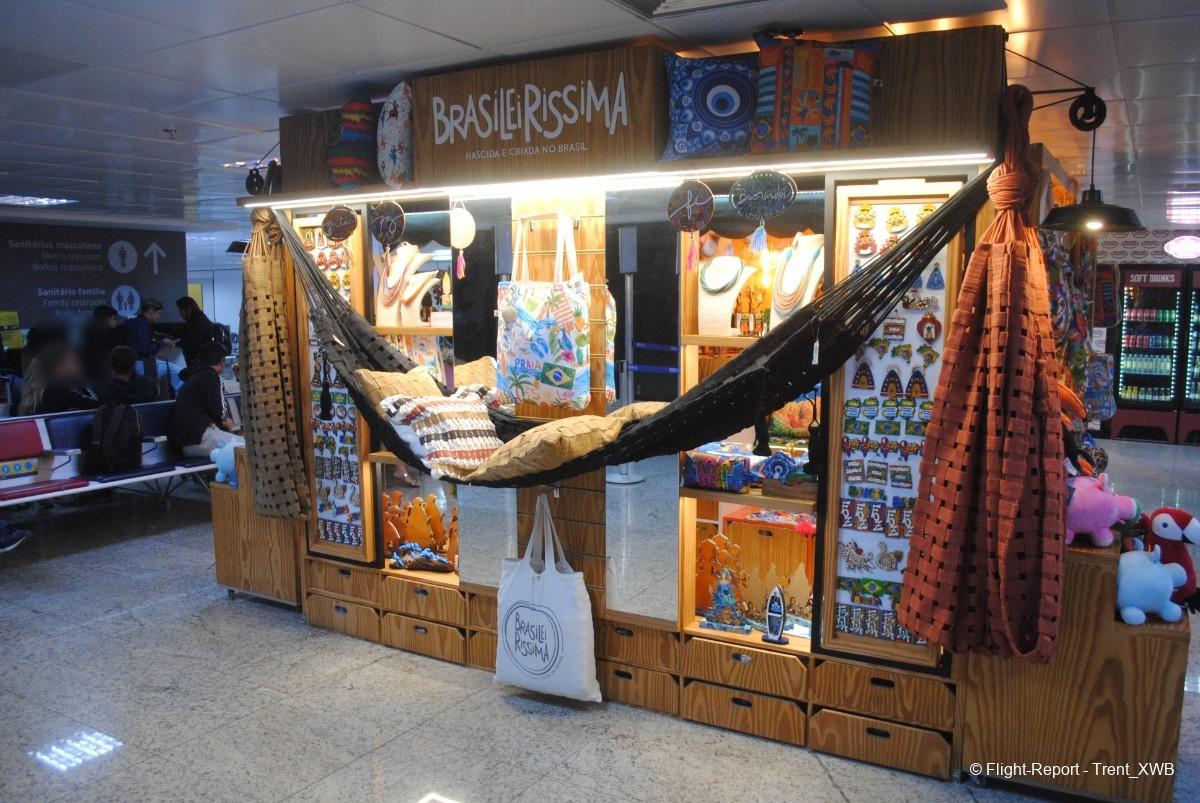
In addition to the duty-free shop, there are a few souvenir shops, where one can find, for example, this beautiful tucan.
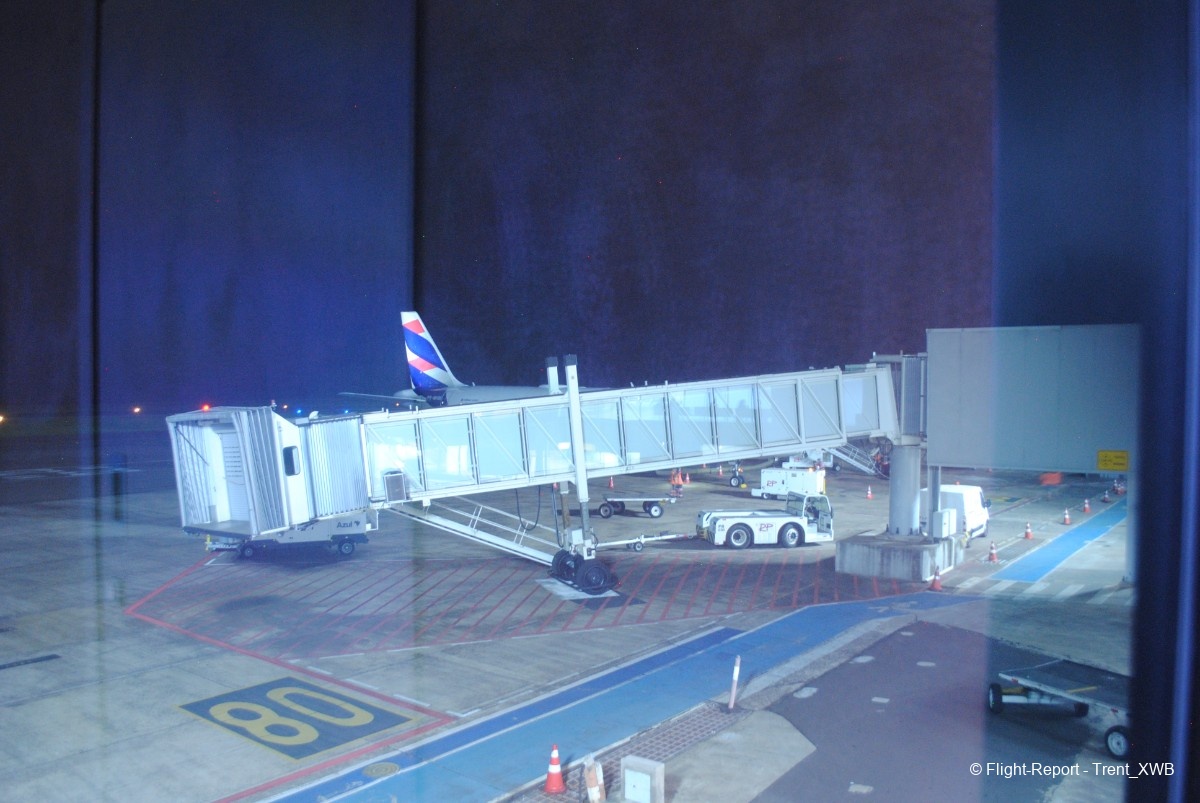
And yes - these jetbridges! Glad to see that even small airports in Brazil are moving forward with renovation. For comparison - IGR airport on the other (Argentinian) side of Iguazu river looks frozen in time from what I know about it.
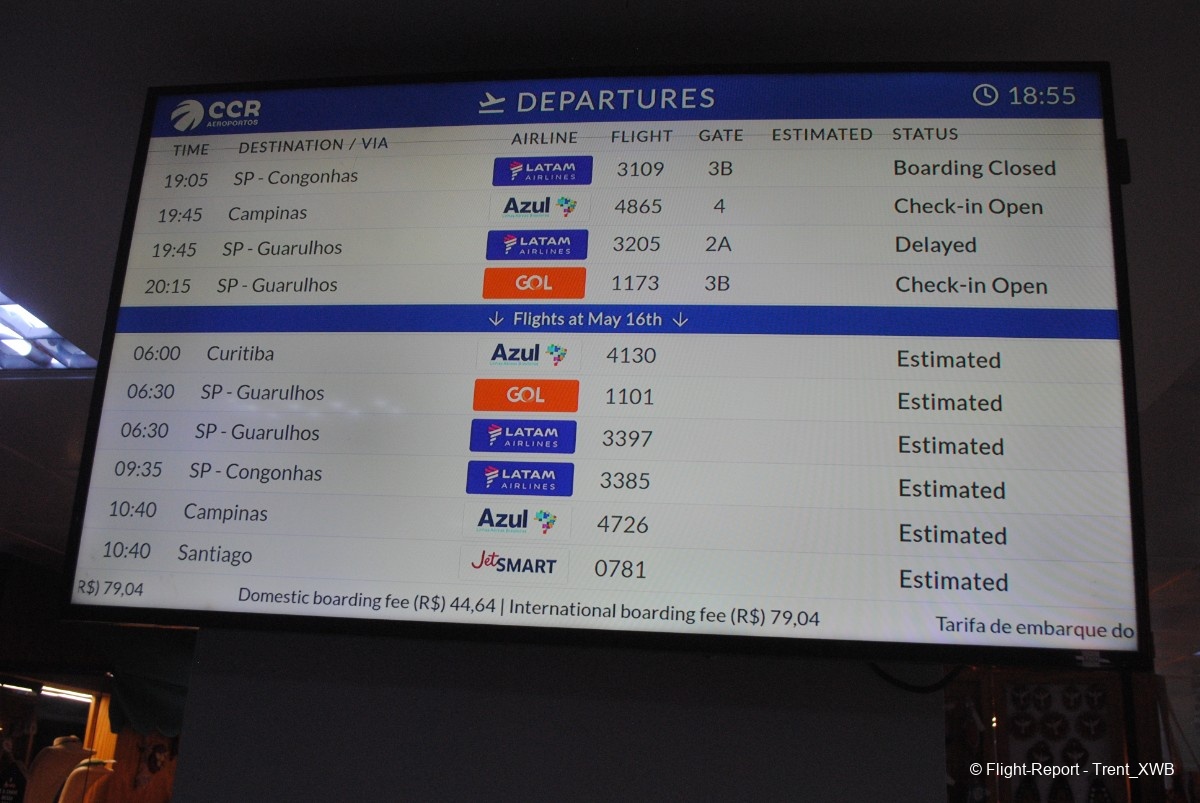
FID with departures for tonight (with my flight being the last one) and tomorrow morning. Whereas the Brazilian "big 3" - LATAM, Azul and GOL - serves only domestic destinations from IGU, JetSMART Chile with its seasonal flights to SCL is the only airline which justifies the "international" title of IGU. These 4 mentioned carriers make the full list of the airlines serving IGU.
The Aircraft
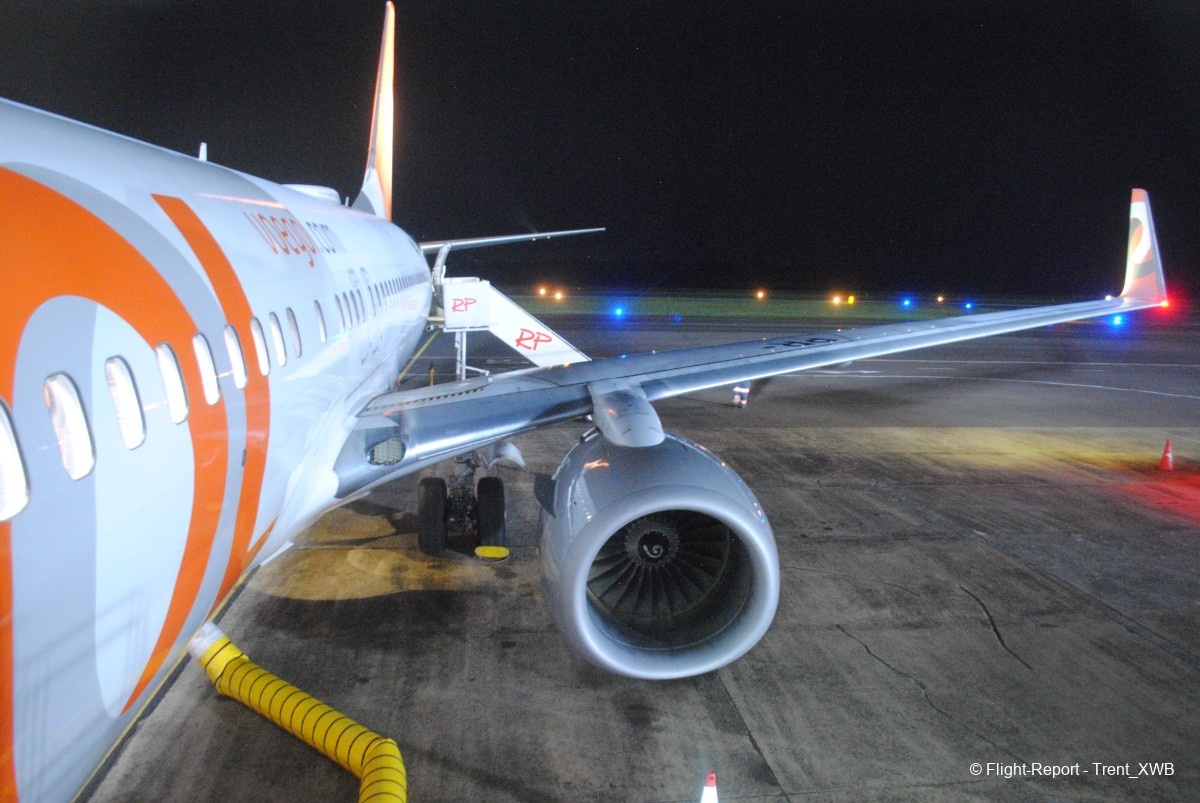
The aircraft of tonight has arrived - 2016-built PR-GYD, the G3's youngest B738 (but not the last - G3 also opportunistically took some older B738s from other carriers, including now-defunct ones, like Jet Airways). For the comparison, G3's oldest B738 (PR-GTC) is 2006-built.
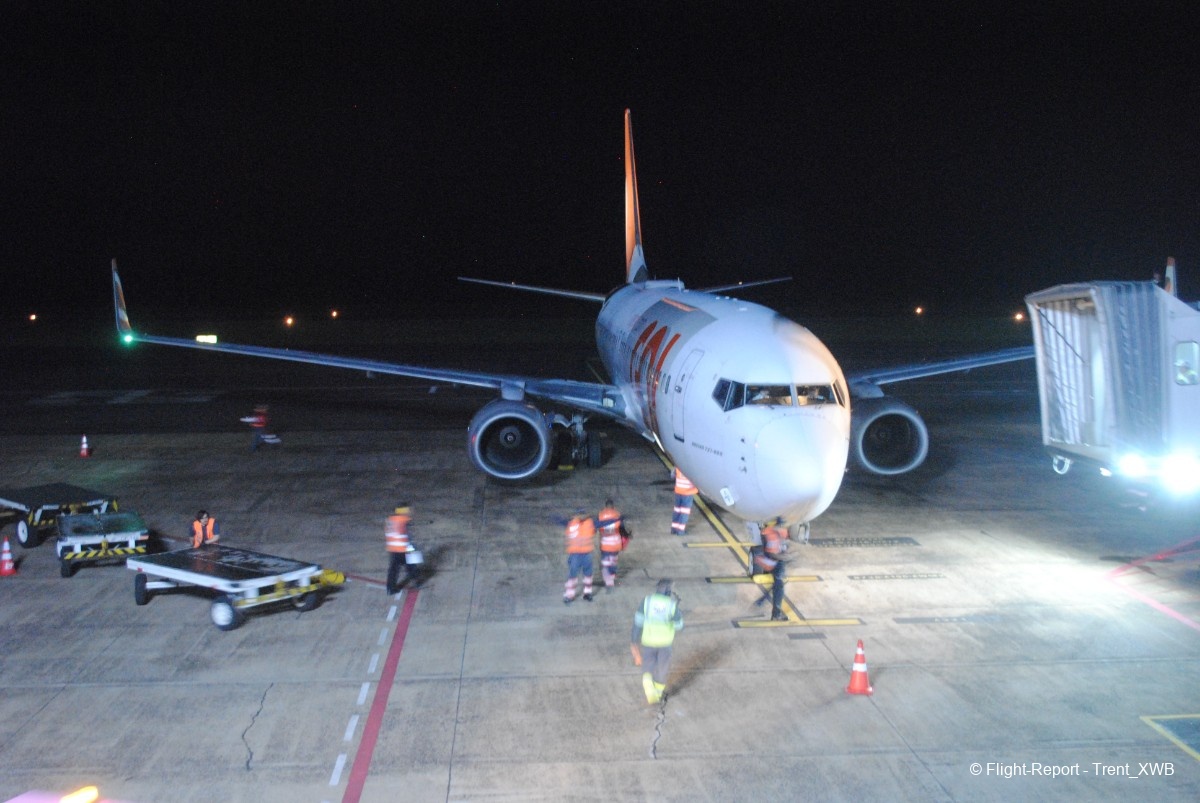
Engine, wing and fuselage view from the jetbridge.
The Cabin
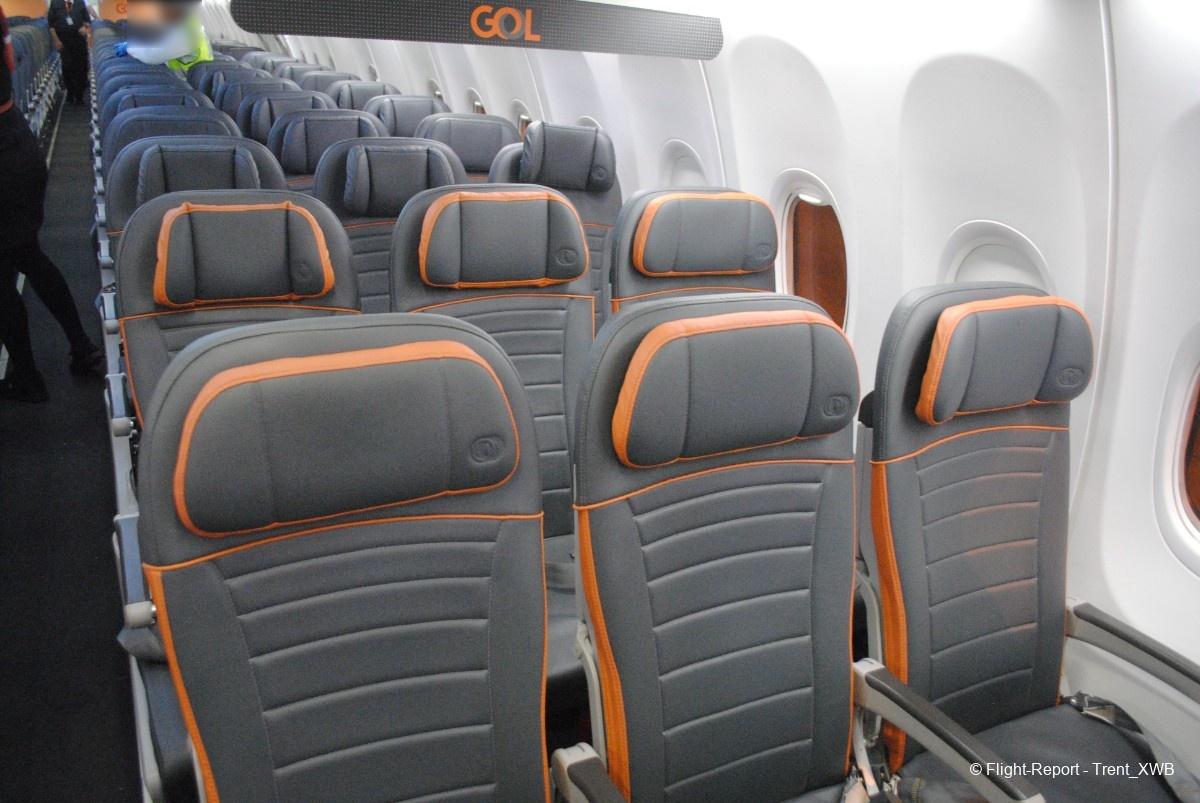
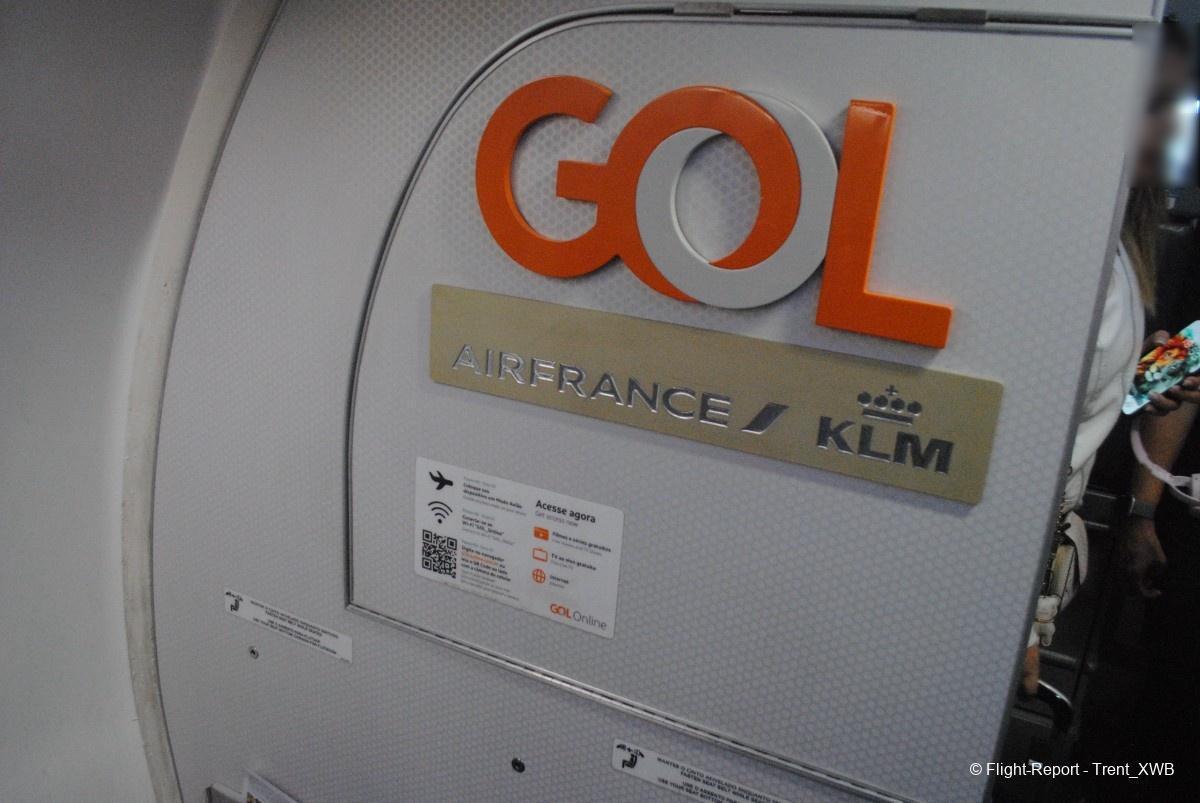
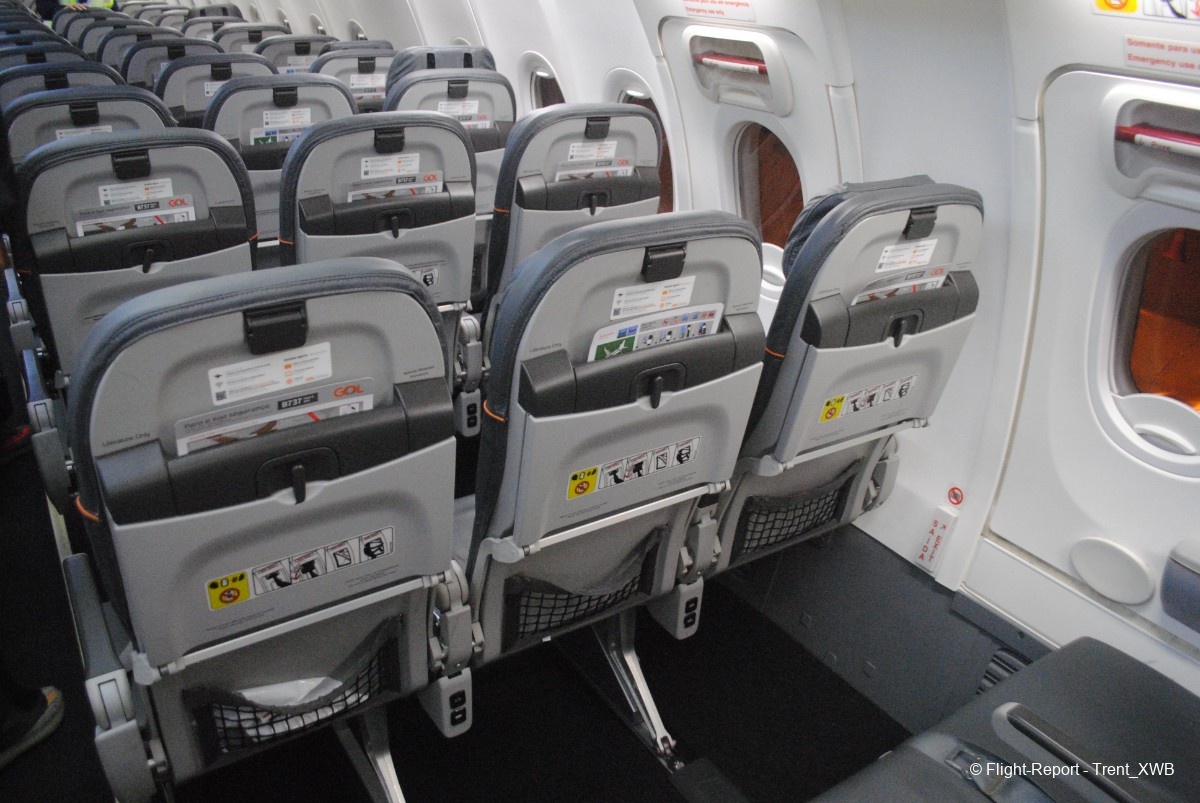
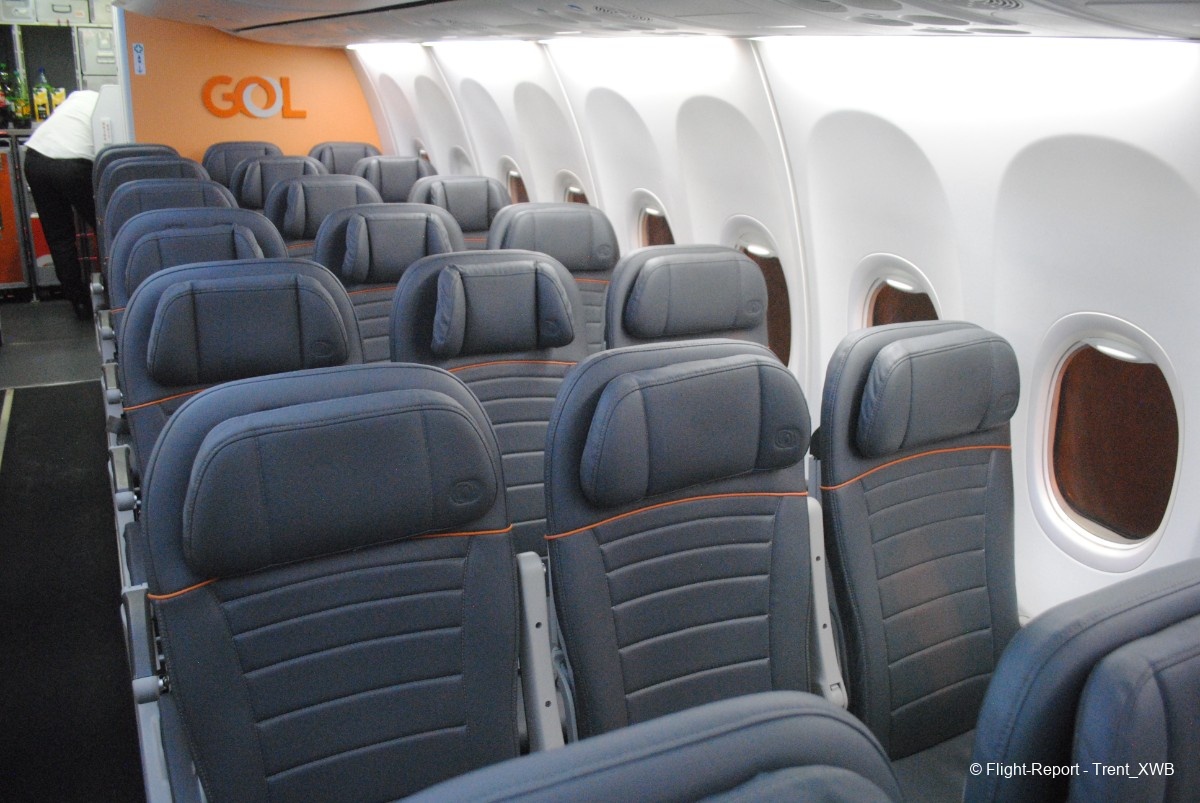
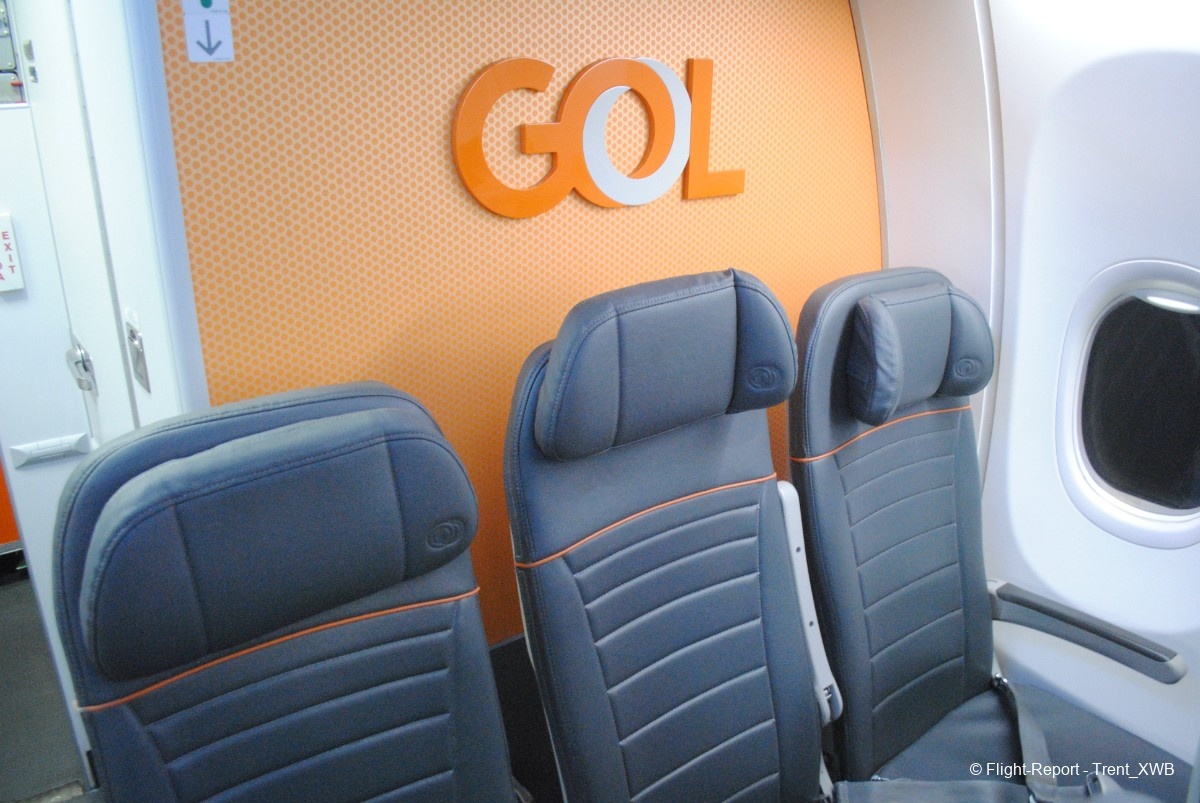
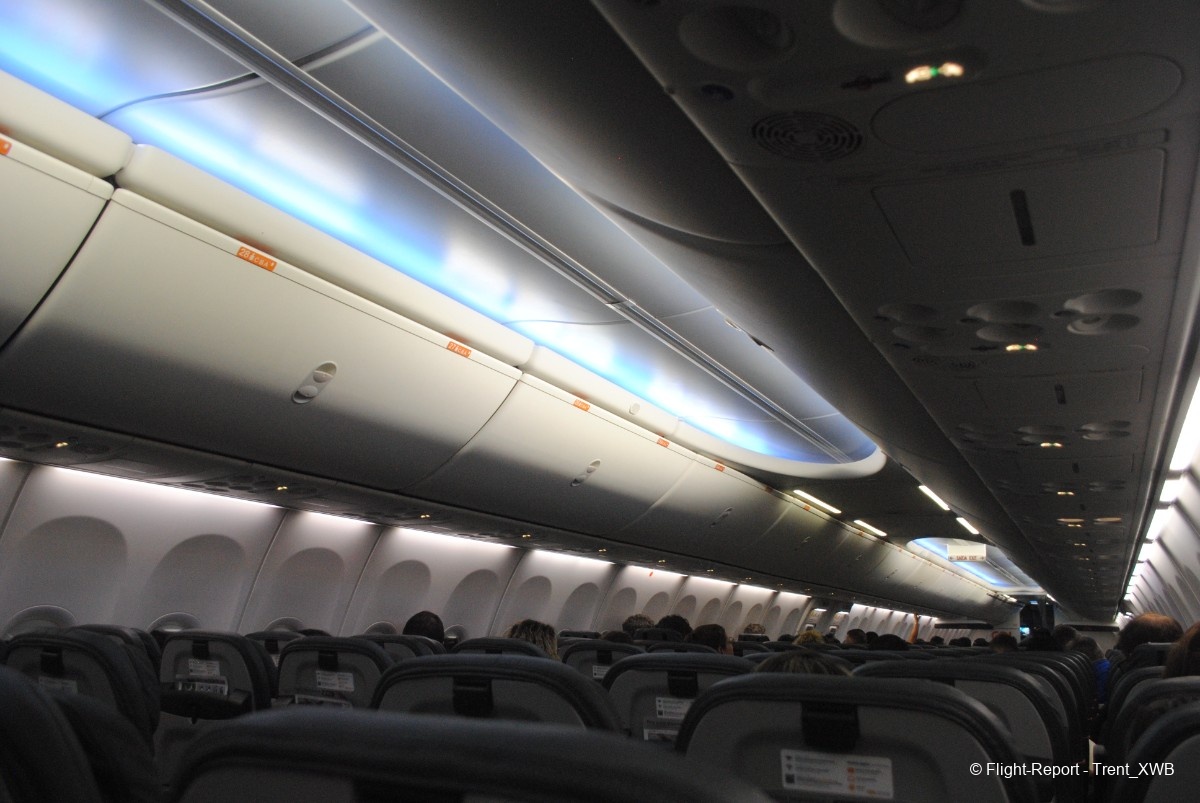
The cabin consists of 186 Recaro BL3530 seats (which is a slight modification of well-known short-haul Recaro's "iron board") having "leather" upholstery, adjustable headrest, tray table, hard upper and soft lower seat pockets and 2 underseat USB ports per 3 seats. The seats do recline, and the 5 front rows feautre increased pitch. The bulkhead is decorated with G3 logo, emphasizing the partnership with AF-KL Group. One can find the same cabins in G3 B7M8s.
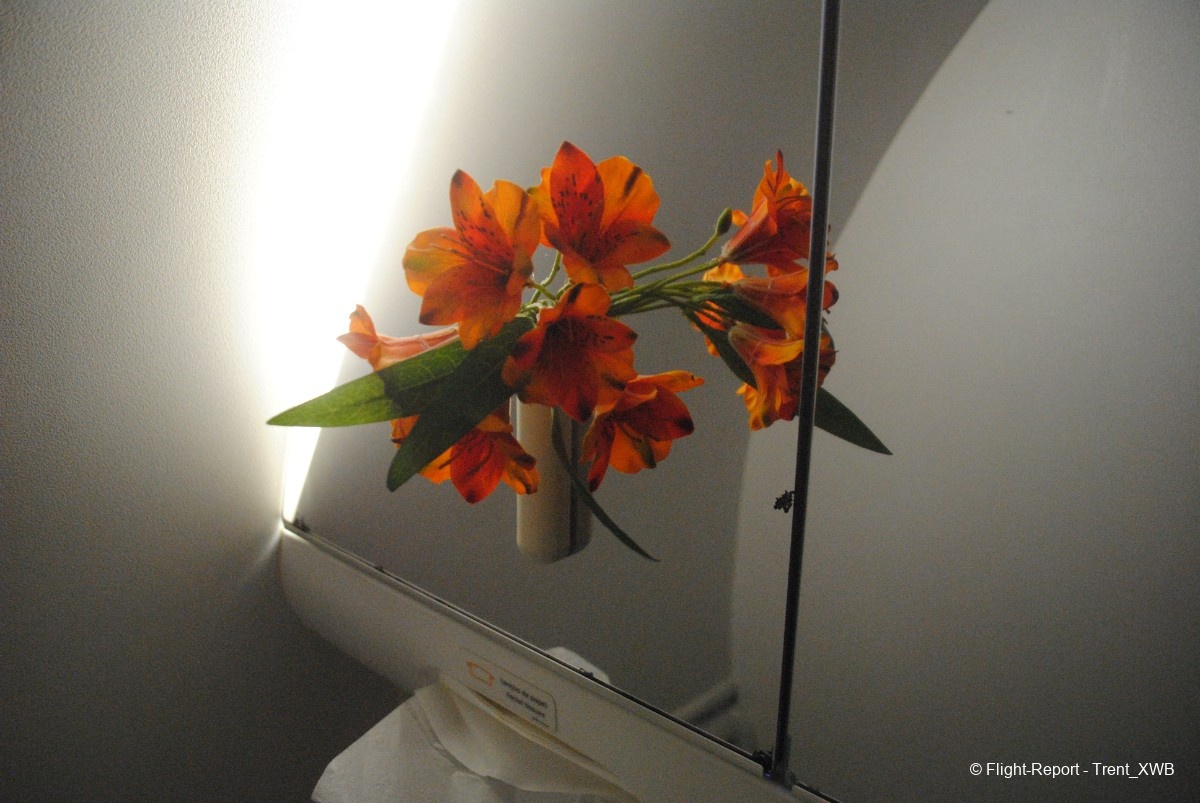
The lavatory is nicely decorated and has a detailed instruction for washing the hands.
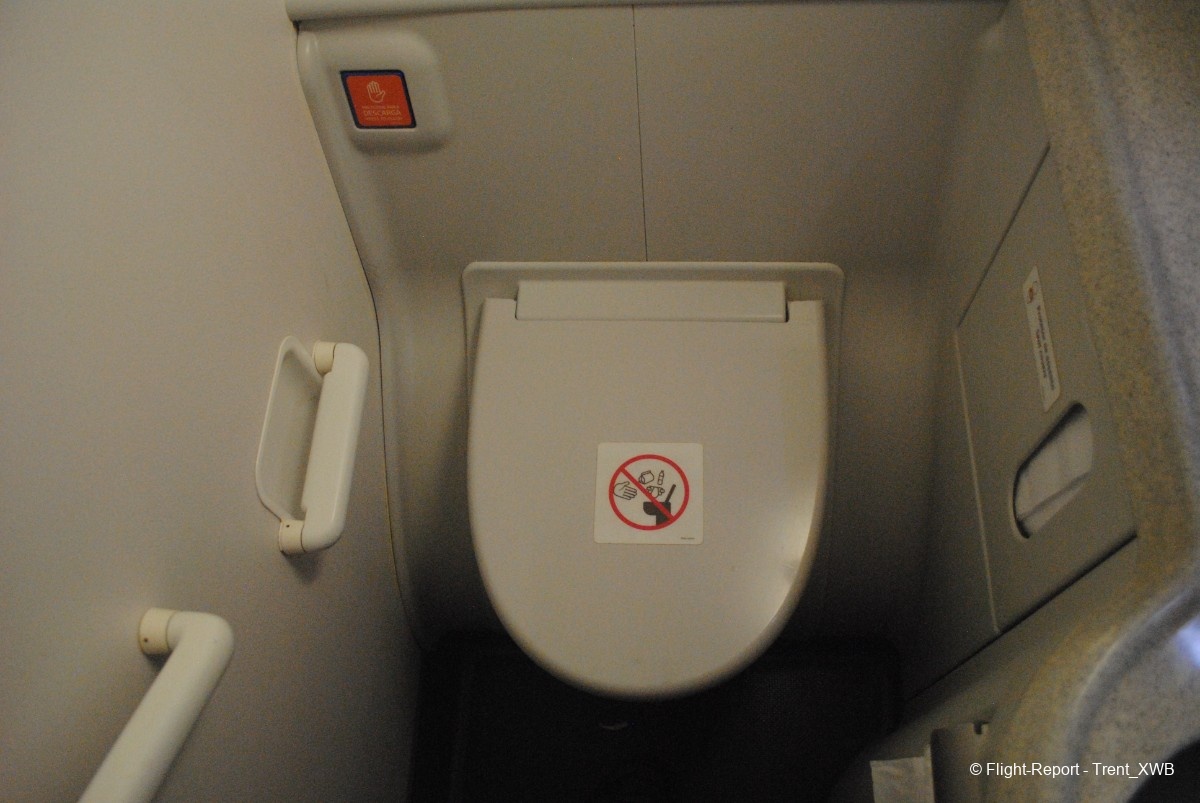
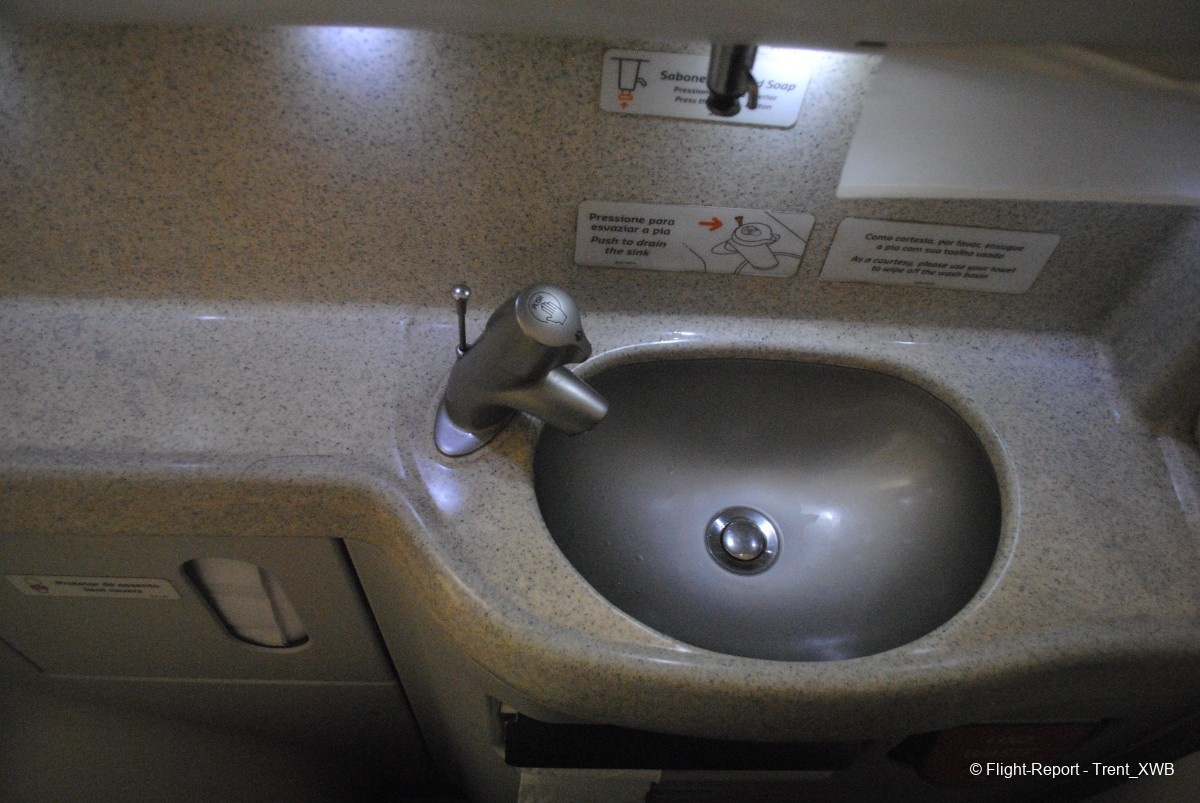
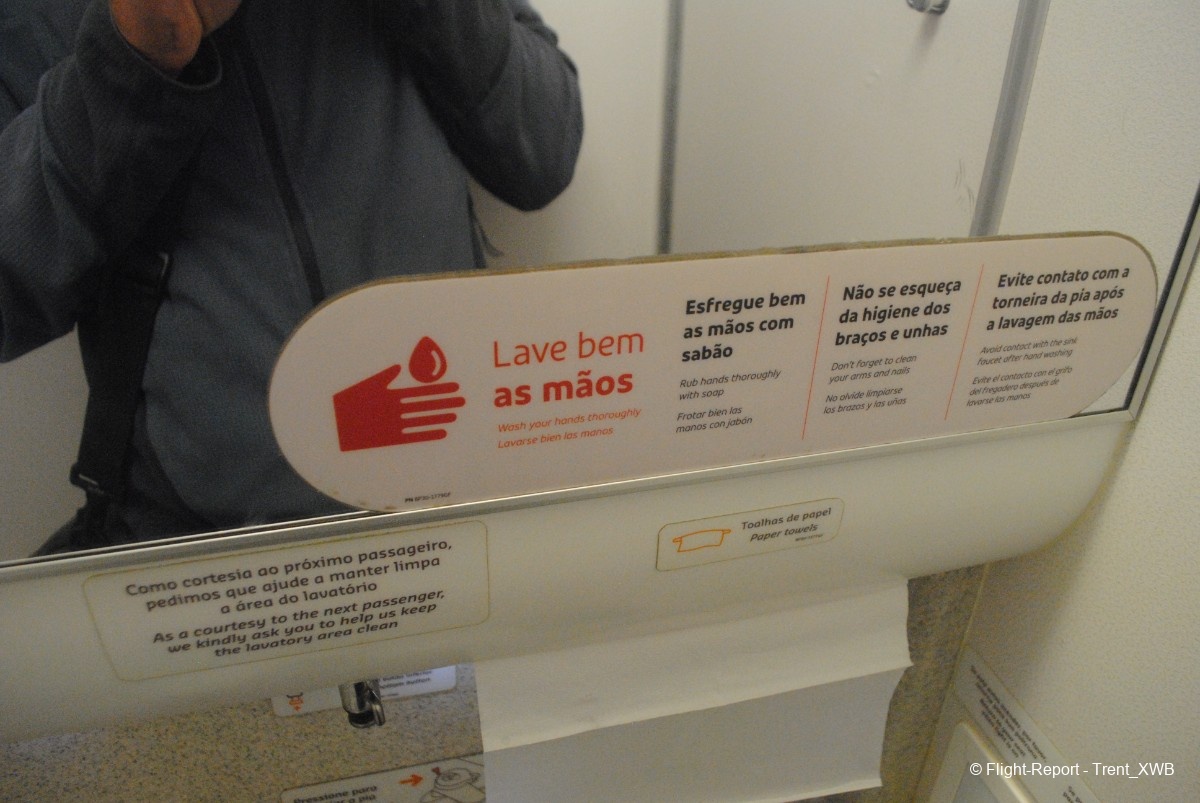
The airplane features Sky Interior, which is standard for post-2011 B737NGs and all the MAXes.
Safety card - the only content of the seat pockets.
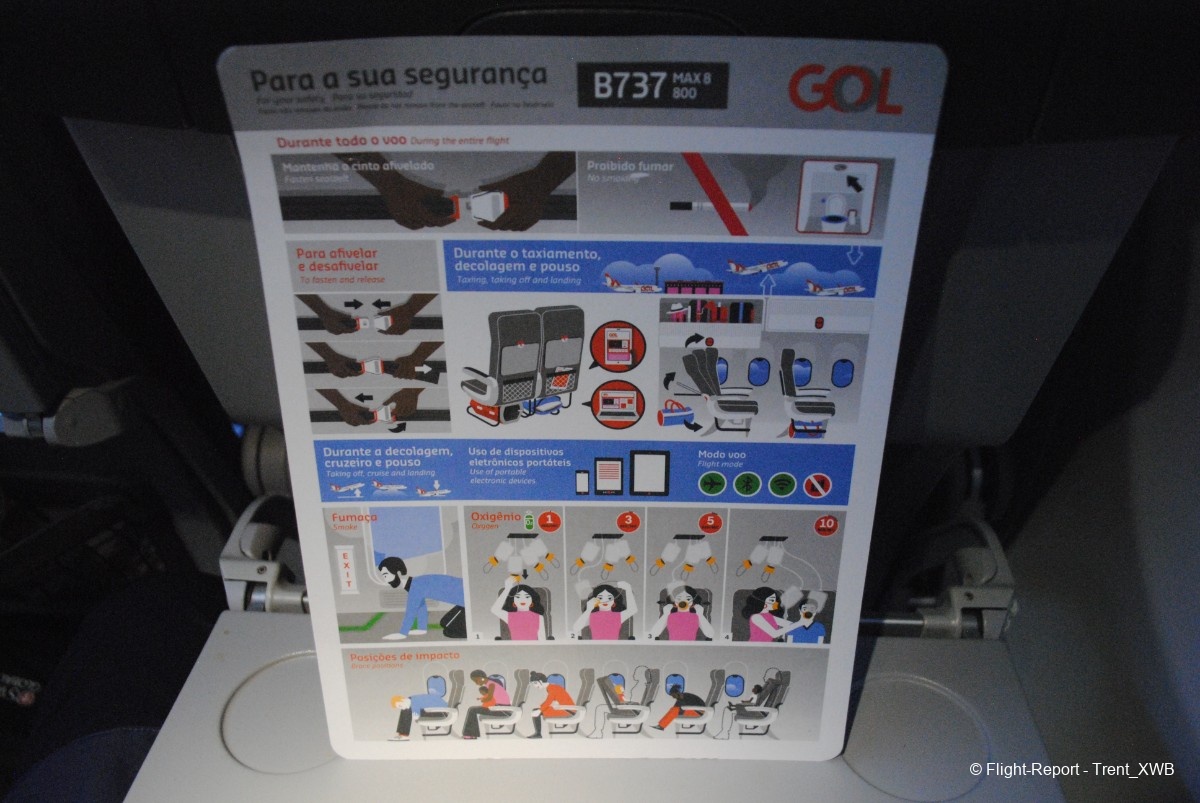
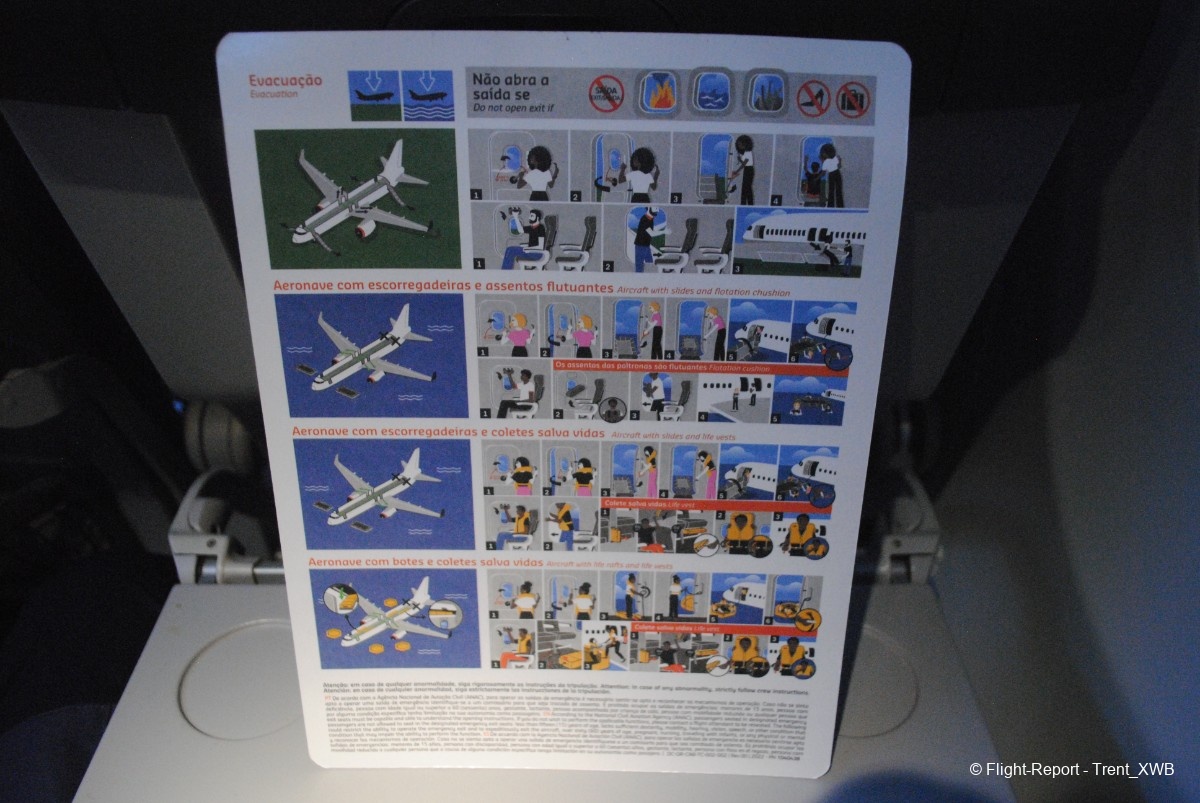
The Flight
As the flight was fully nighttime, there's nothing to write home about the views (worth noting that daytime flights from IGU to the east give an excellent possibility to partially see the waterfalls after takeoff if you're sitting on the right side).
G3 stands out from traditional ULCC for significantly higher prices (Brazilian aviation rules doesn't permit true ULCC model in the country) and the presence of complimentary inflight snack and drink service. The G3 crews are very nice and welcoming, which is common for Brazil.
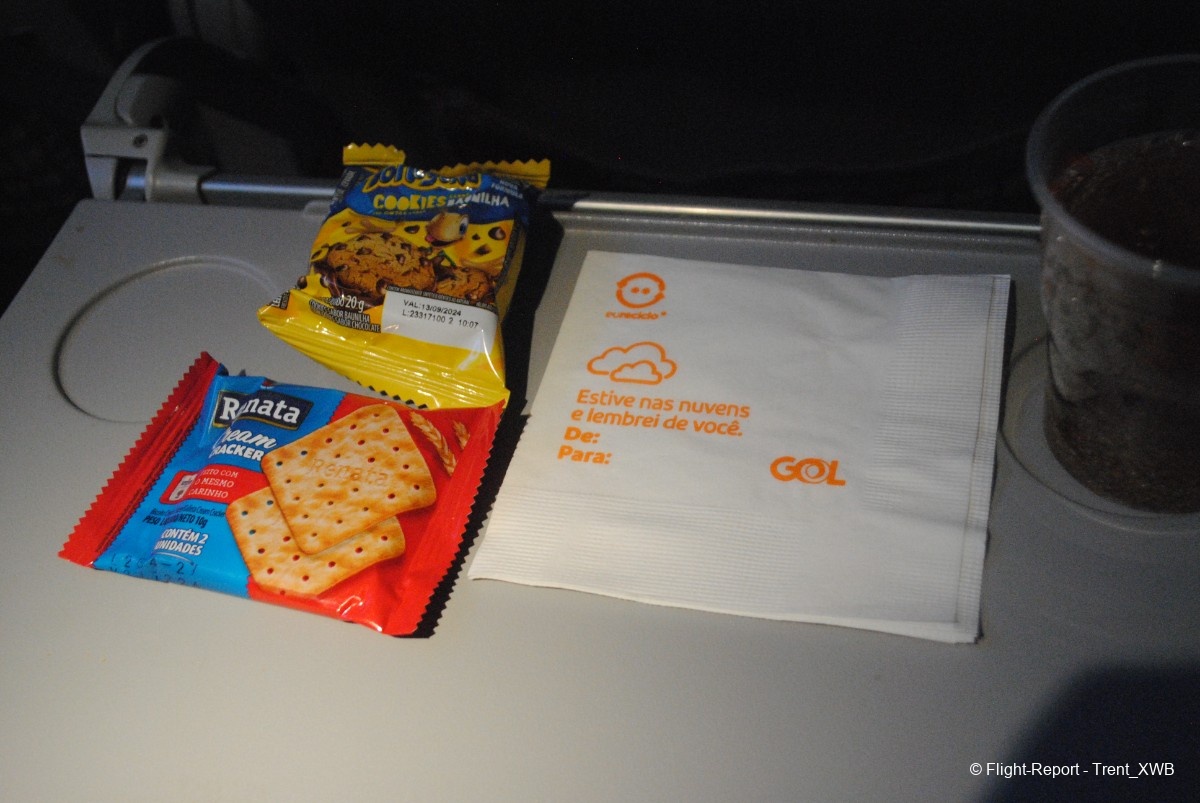
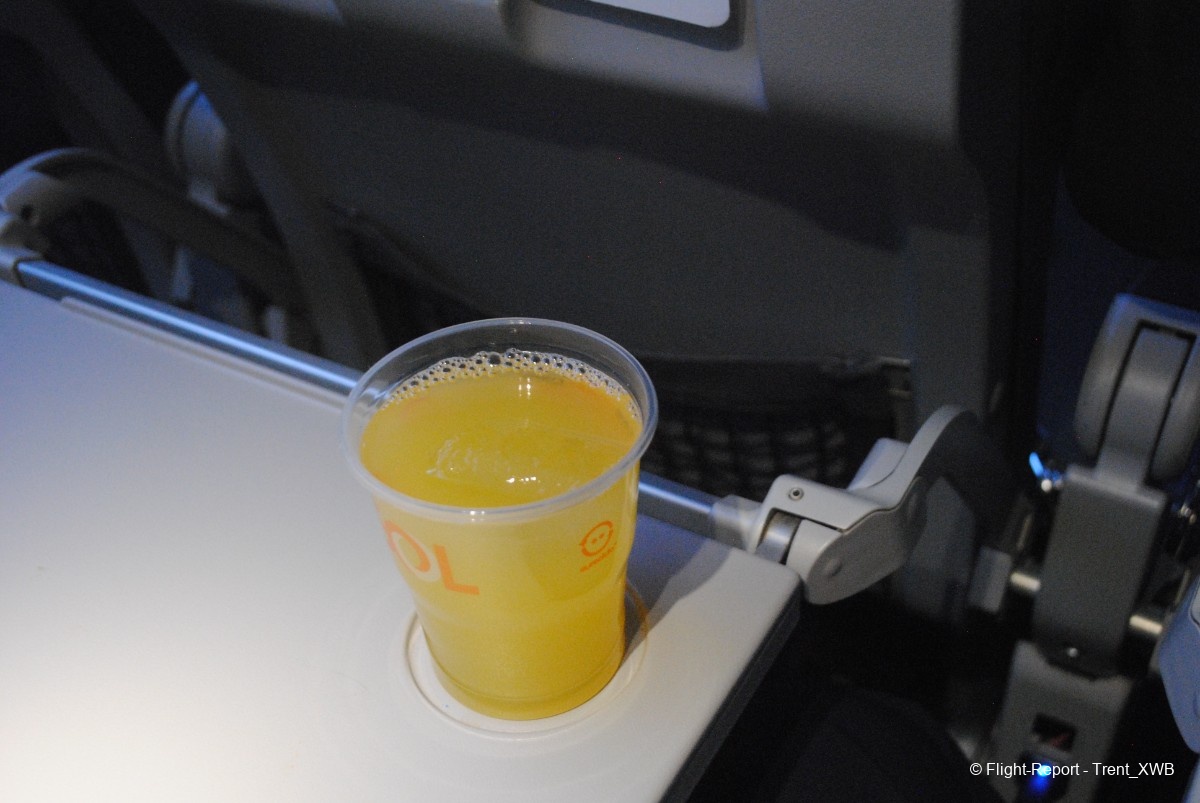
After landing in GRU we passed by T3 with a lot of widebodies of LATAM and foreign airlines, but due to the high speed and darkness I was not able to make decent photos of these planes. We arrived to the west pier (gates 201-229) of Terminal 2.
Sao Paulo Guarulhos International Airport (GRU). Airlines And Their Aircraft Types
GRU, being the "Atlantic" hub of the South America, is the largest and busiest airport in all the Latin America (the 2nd is BOG, the 3rd is MEX). No surprise that GRU receives by far the most various and avgeek-interesting traffic (especially widebodies) than the other major Latin American airports.
Aerolineas Argentinas: from AEP 3-4x daily on B7M8, B738, B737.
AeroMexico: from MEX daily on B789, B788.
Air China: from PEK via MAD 3x/week on B789.
Air Europa: from MAD daily on B789.
Air France: from CDG 2x daily on B77W (with first class), B77E, A359.
American Airlines: from MIA 3x daily on B77W (with first class), B77E, B788; from DFW 1-2x daily on B789, B788; from JFK daily on B789.
Arajet: from PUJ 1x/week on B7M8.
Avianca: from BOG 3x daily on A20N.
Azul (base in GRU): A21N, A20N, E295, E195.
Boliviana de Aviacion: from VVI daily on B738 (occasionally on A332).
British Airways: from LHR daily on A35K.
Copa Airlines: from PTY up to 6x daily on B7M9 (with lie-flat business).
Delta Air Lines: from ATL 2x daily on A339, A333; from JFK daily on A339.
Emirates: from DXB daily on A380 (with first class).
Ethiopian Airlines: from ADD daily (with EZE tag) on B77L.
GOL (hub in GRU): B7M8, B738, B737.
Iberia: from MAD 1-2x daily on A359, A333, A332.
ITA Airways: from FCO 2x daily on A359, A339.
KLM: from AMS 1-2x daily on B77W, B789.
LATAM (hub in GRU): B77W, B789, B788, A21N, A321, A20N, A320, A319.
Lufthansa: from FRA daily on B748 (with first class); from MUC 3x/week on A359.
Qatar Airways: from DOH 2-3x daily on B77W, B77L, A35K.
Royal Air Maroc: from CMN 4x/week on B789.
Sky Airline: from SCL daily on A20N; from LIM daily on A20N.
South African Airways: from JNB 4x/week on A333; from CPT 2x/week on A333.
Swiss International Air Lines: from ZRH daily (with 2x/week EZE tag) on B77W (with first class).
TAAG Angola Airlines: from NBJ 4x/week on B78X.
TAP Portugal: from LIS 2-3x daily on A339; from OPO 3x/week on A339.
Turkish Airlines: from IST 1-2x daily (with daily EZE tag and 6x/week SCL tag) on A359.
United Airlines: from EWR daily on B77E; from ORD daily on B78X; from IAH daily on B789; from IAD daily on B764.
GRU stands out by being:
1) The only airport in Latin America that receives A380 flights (EK).
2) One of just 3 airports in Latin America that receive B748 flights (LH). The other 2 are EZE and MEX.
3) One of 14 airports in Latin America that receive B77W flights. The other 13 are EZE (EK, MU, AA), GIG (EK, AF), LIM (AF, KL), BOG (EK), PTY (KL), CUN (AC, AF), PBM (KL), CUR (KL), FDF (AF), PTP (AF), HAV (SU), VRA (N4) and HOG (N4).
4) One of just 3 airports in Latin America that receive B77L flights. The other 2 are EZE (ET) and MEX (EK).
5) One of just 3 airports in Latin America that receive A35K flights. The other 2 are FDF (TX, BF) and PTP (TX).
6) One of just 5 airports in Latin America that receive B78X flights. The other 4 are BOG (KL), CTG (KL), PTY (KL) and CUR (KL).
7) One of 15 airports in Latin America that receive A339 flights. The other 14 are EZE (DL), VCP (AD hub), GIG (AZ, TP), POA (TP), CNF (TP), BSB (TP), SSA (TP) REC (TP), FOR (TP), CUN (TP, DE), LRM (DE), SJD (DE), BGI (DE), TAB (DE).
8) One of just 2 airports in Latin America that receive B764 flights. The other is EZE (DL).
9) One of just 6 airports in Latin America that receive flights with first class cabins. The other 5 are EZE (EK, LH, MU), GIG (EK), SCL (BA), BOG (EK) and MEX (LH).
10) The airport that receive the most number (5) of flights with first class cabins in Latin America.
Planespotting From T2 GRU
Let's continue the FR with some nighttime planespotting from the west pier of T2 GRU.
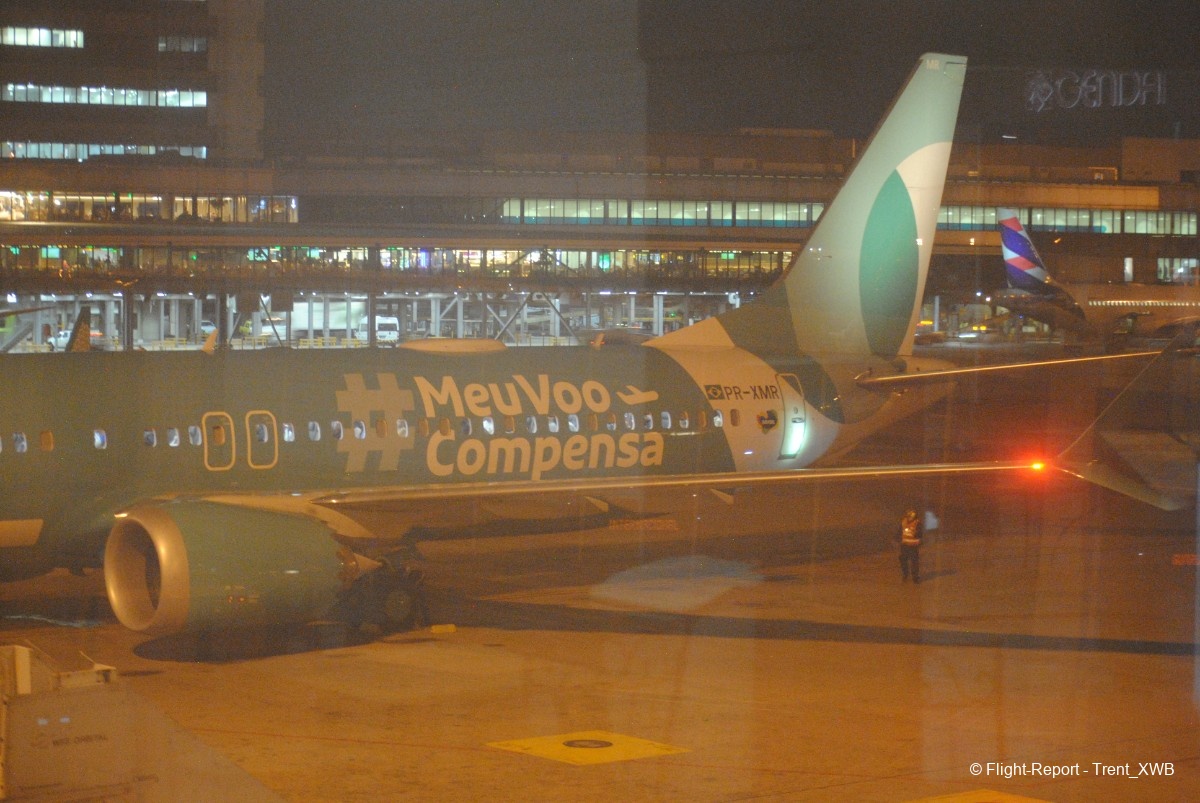
G3 B7M8 (PR-XMR) in the #MeuVooCompensa green livery.
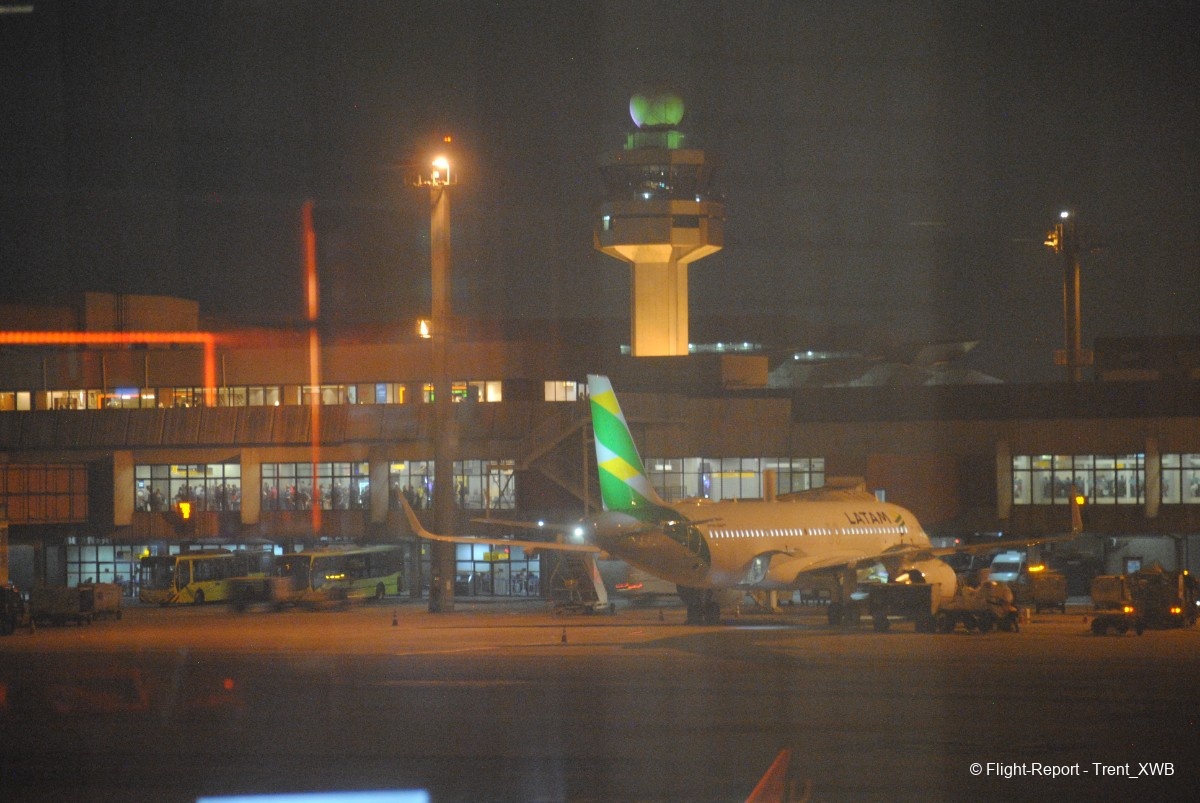
LATAM A20N (PR-XBG) in the "Brasil Flag" livery near the domestic part of T2's east pier. Note that the ATC tower is by coincidence also lit with green.
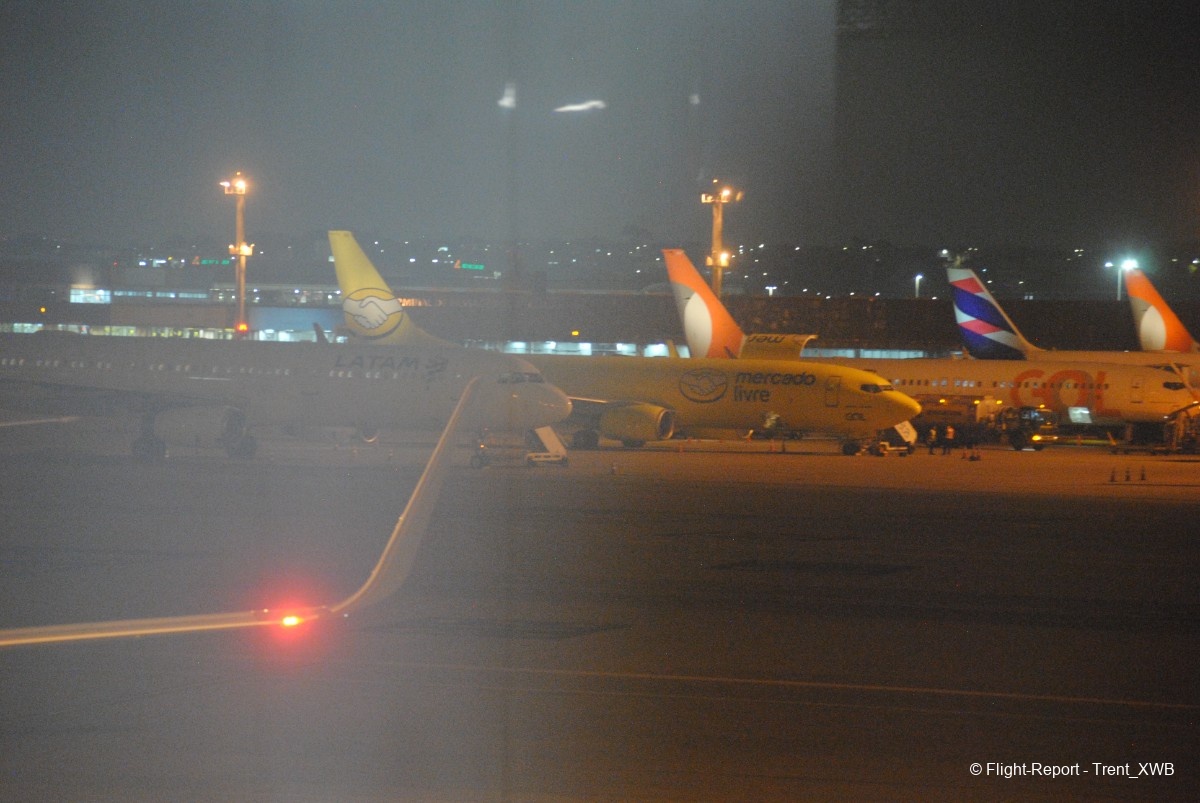
G3 B738 in the "Mercado Livre" livery with the opened cargo door.
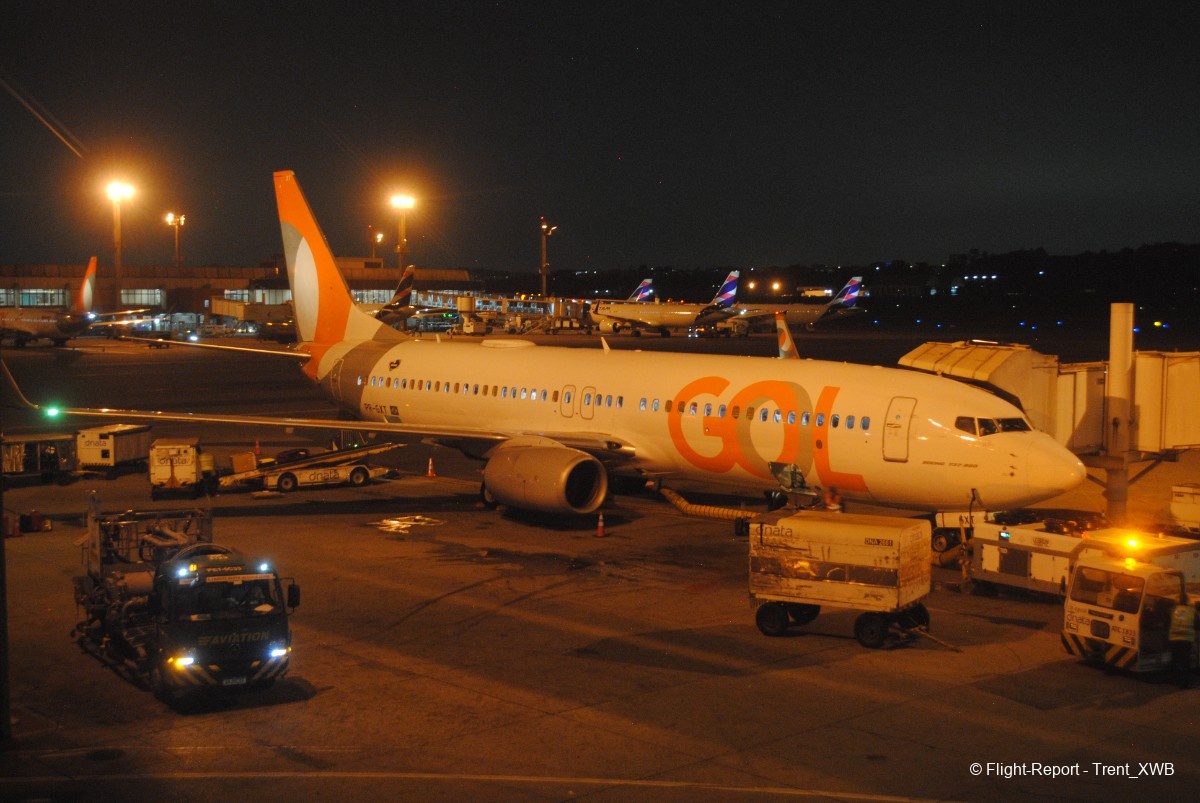
G3 B738 (PR-GXT) and the domestic part of the east pier of T2 on the backdrop.
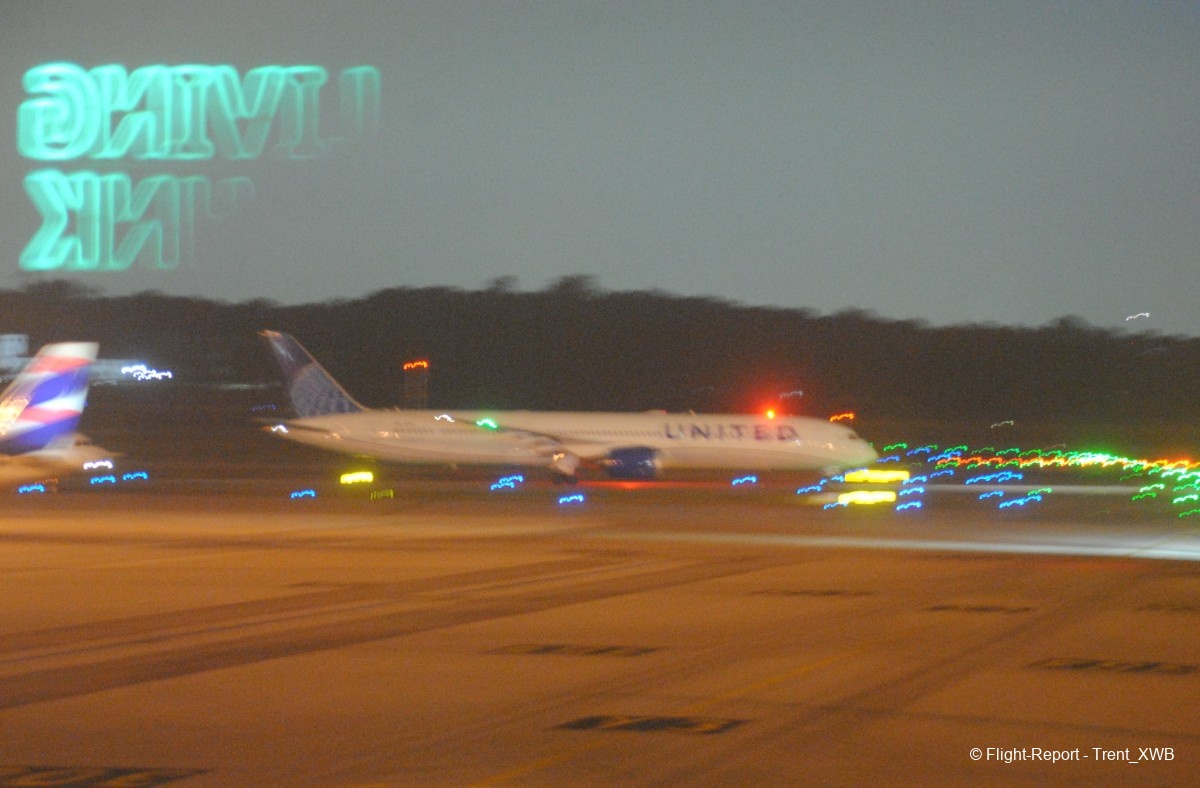
UA B78X, departing for ORD. Sorry for the blurry photo due to the darkness and distance.
GRU T2: Domestic Airside
As usual in Brazil, domestic flights are disembarked right into the domestic airside. It's very convenient if one has domestic connection. I'm not connecting, I have to spend the night in GRU. Historically the west pier of T2 was designed for domestic flights, which resulted in the absence of arrival galleries and thus one can easily access the windows for planespotting.
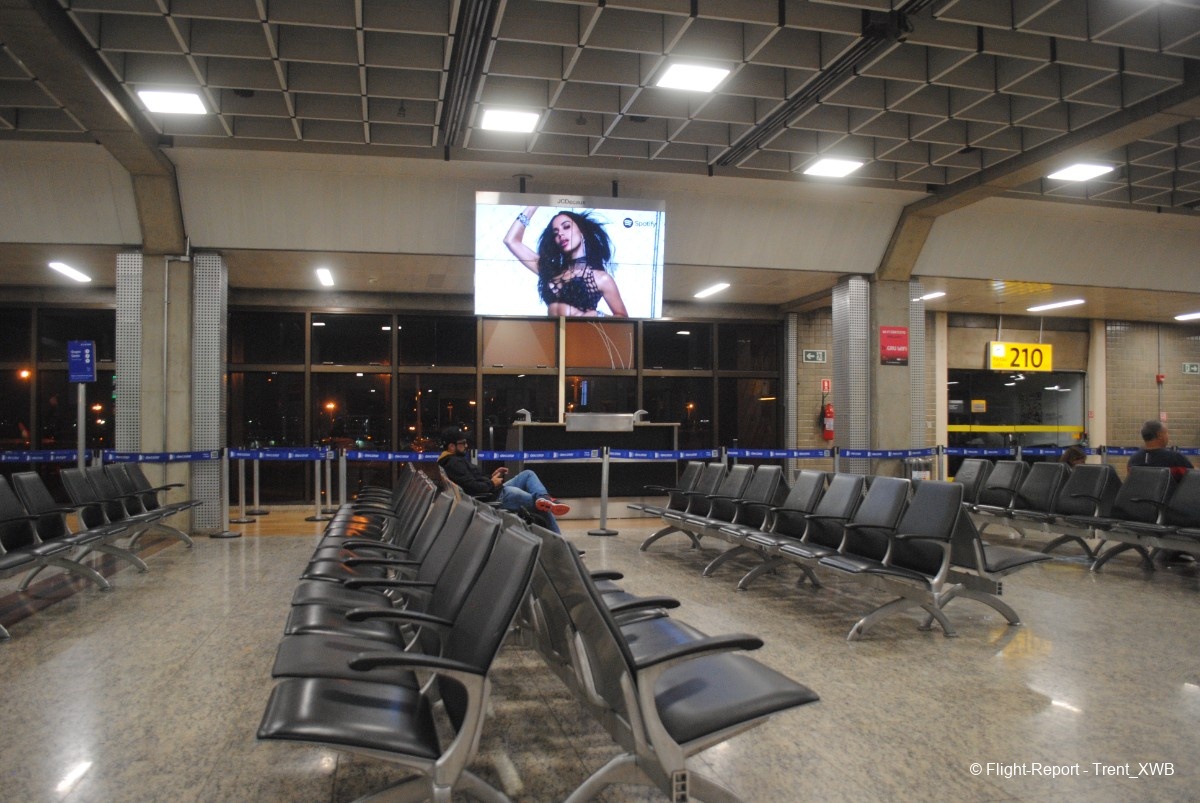
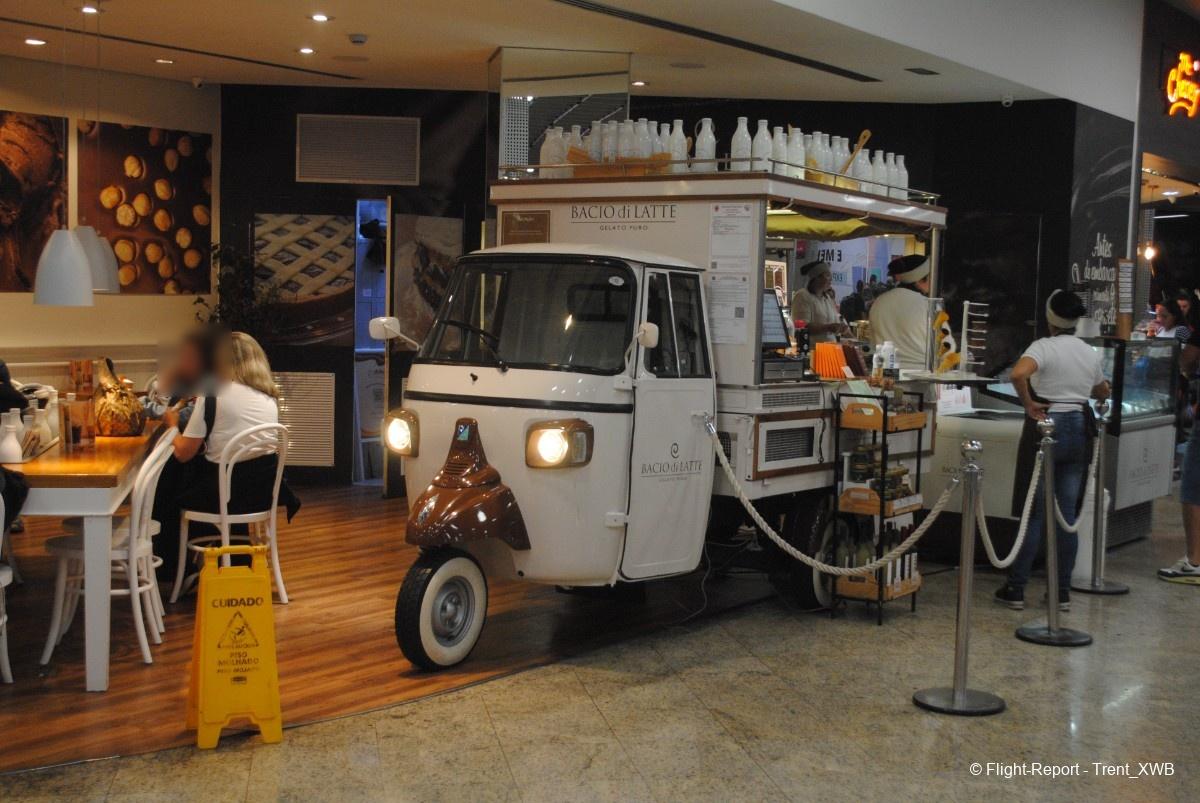
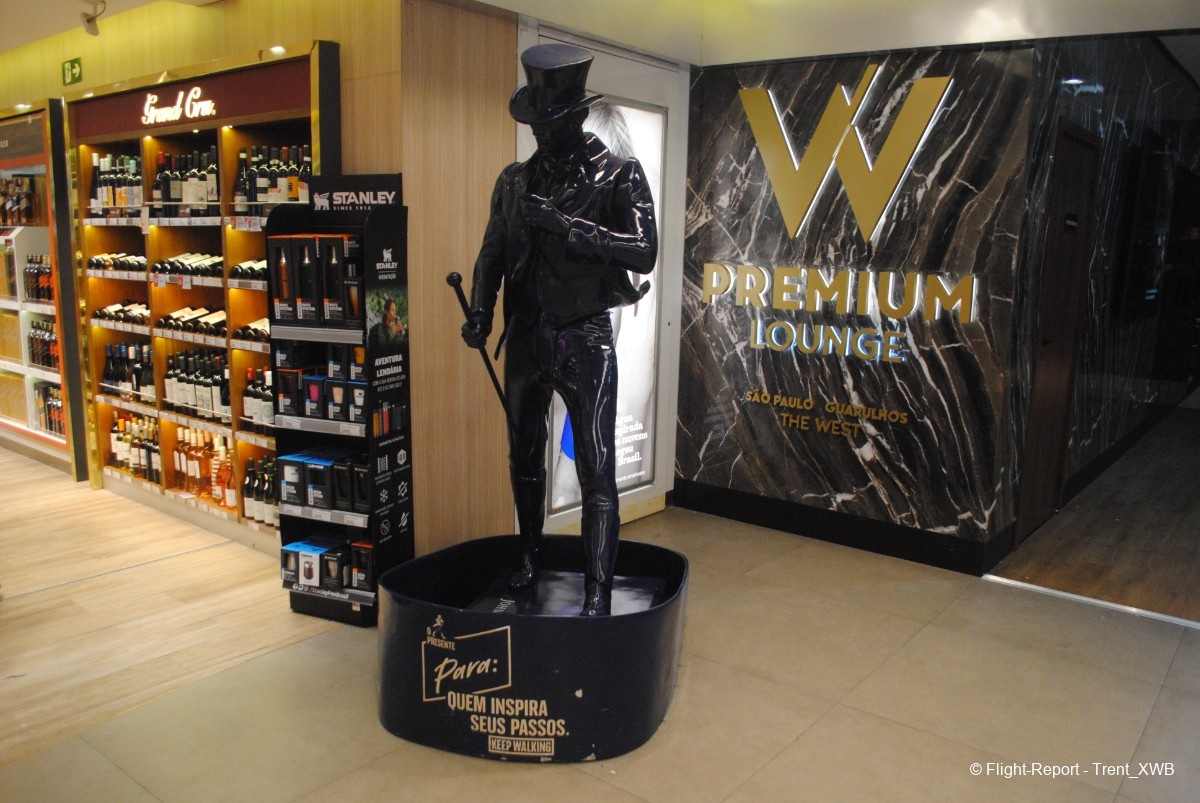
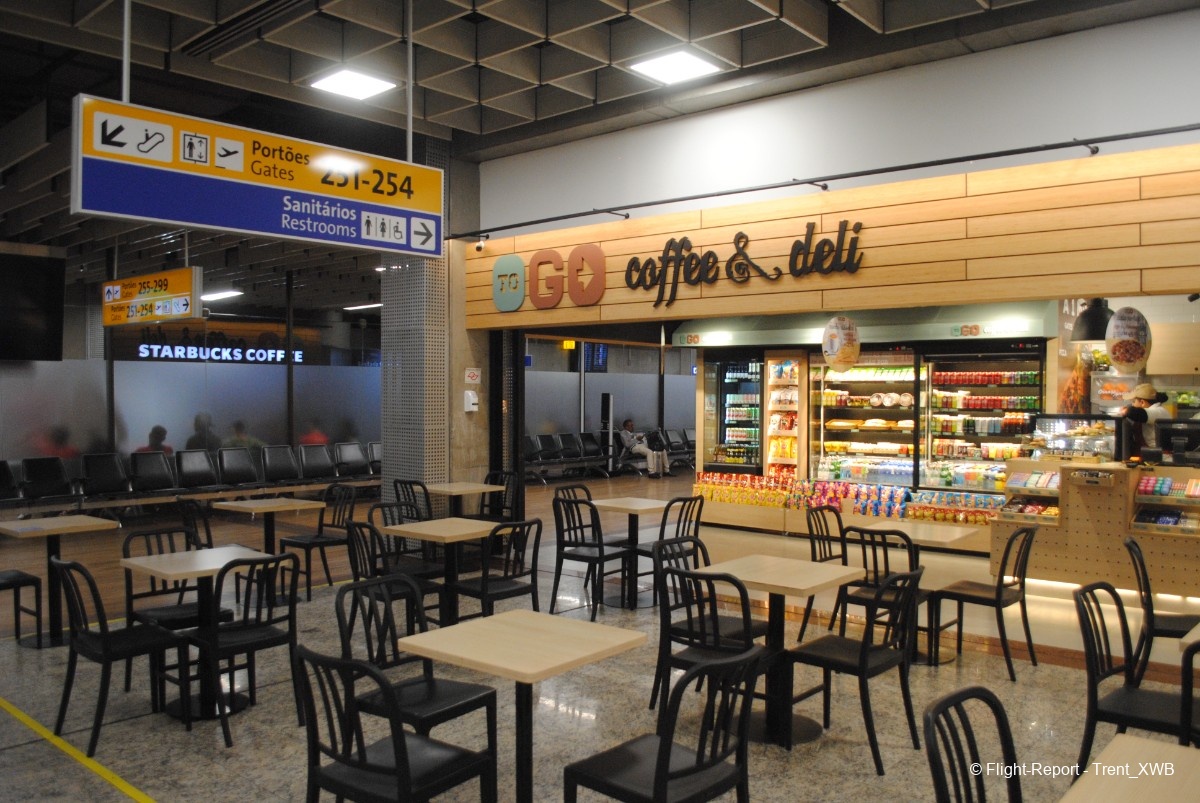
The west pier has quite a number of shops and eateries. The "steampunk" seats on the 5th photo in this gallery look nice in this aging terminal.
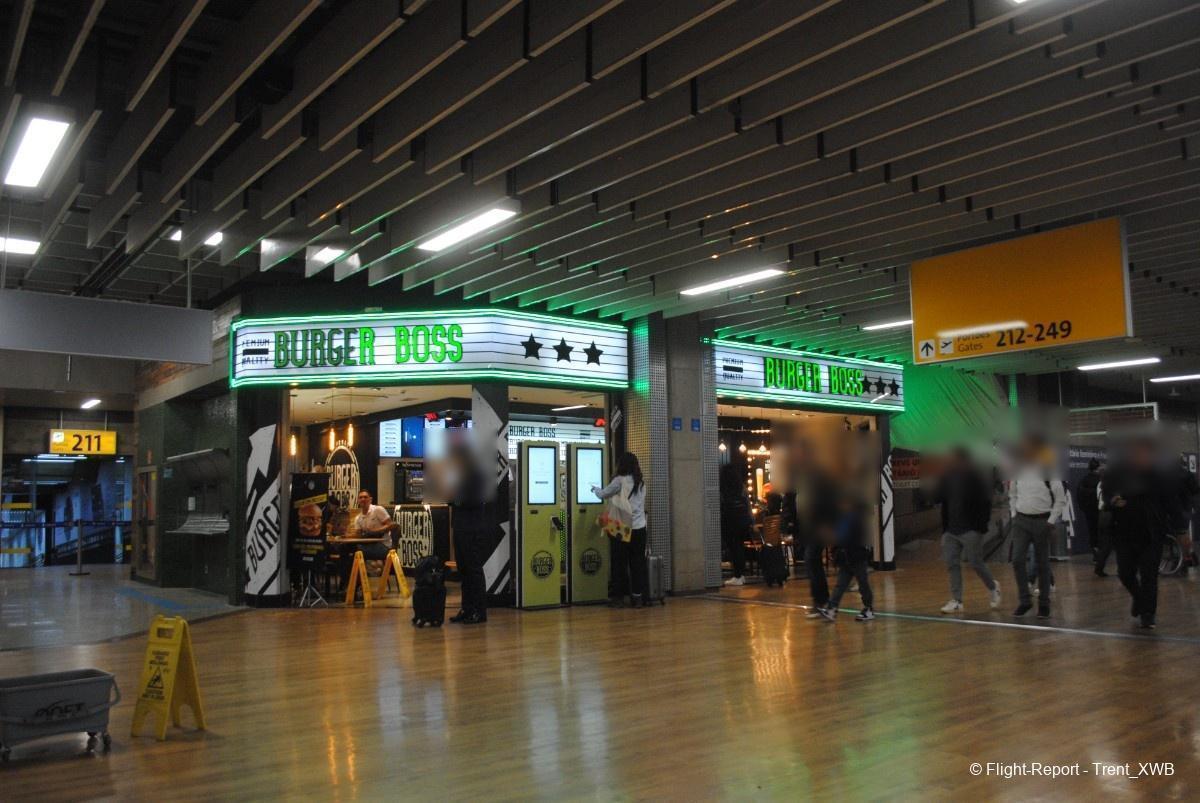
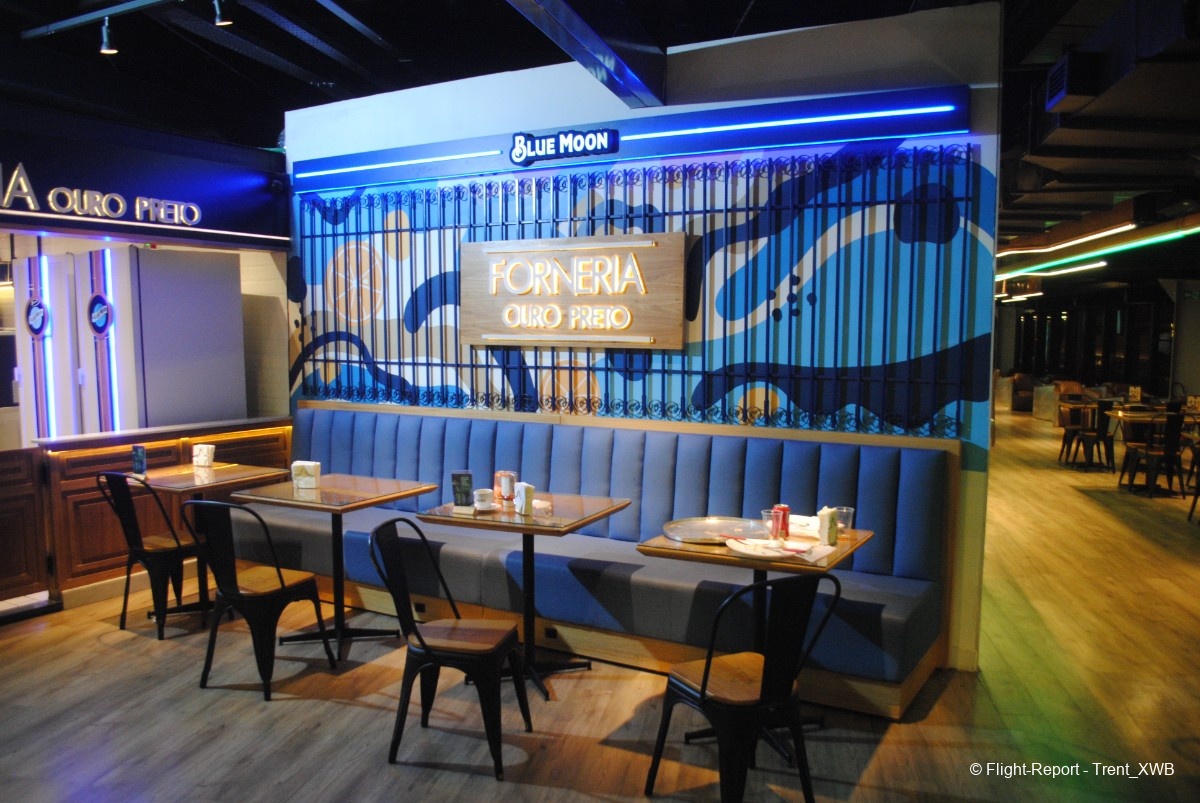
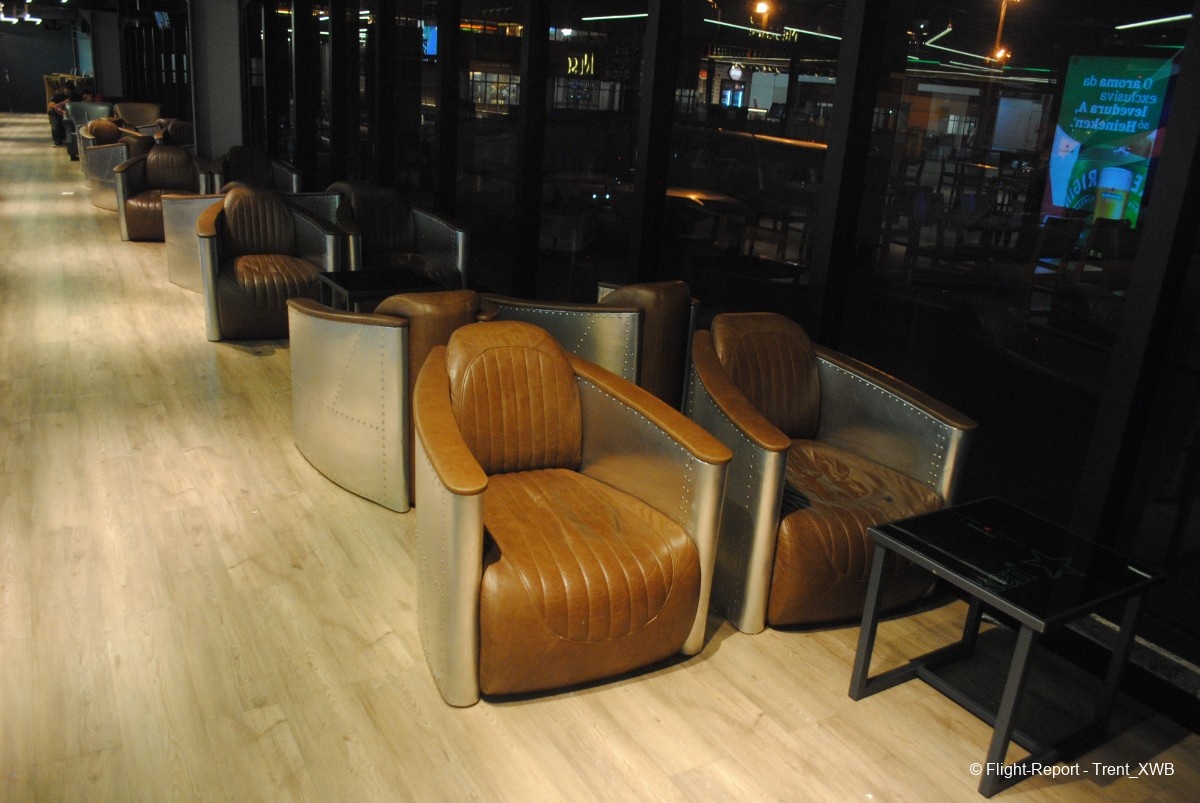
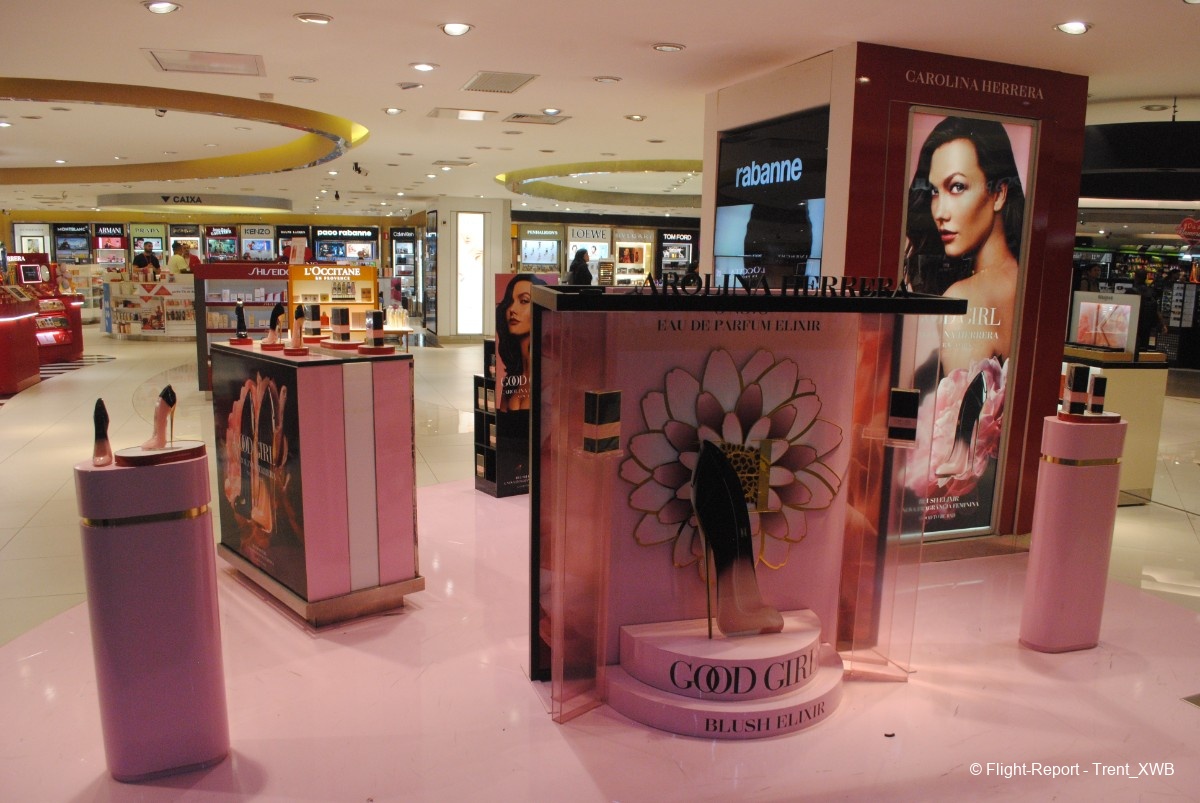
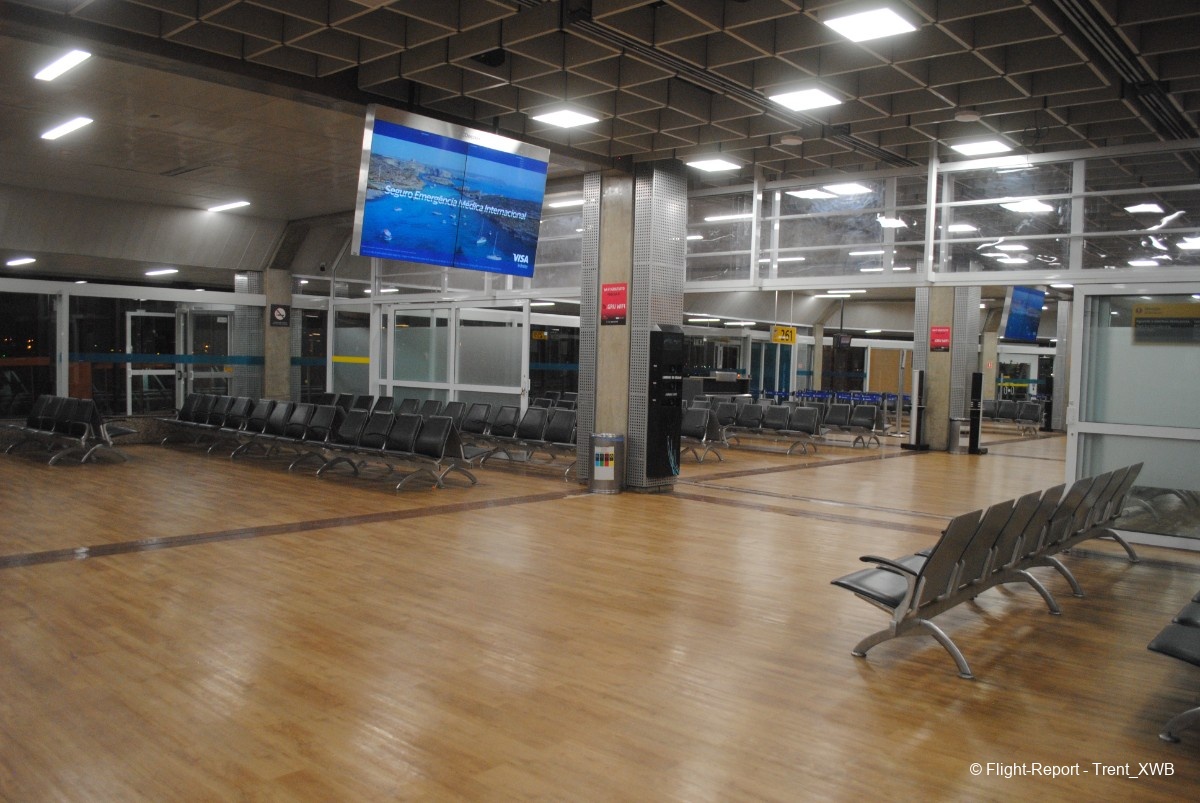
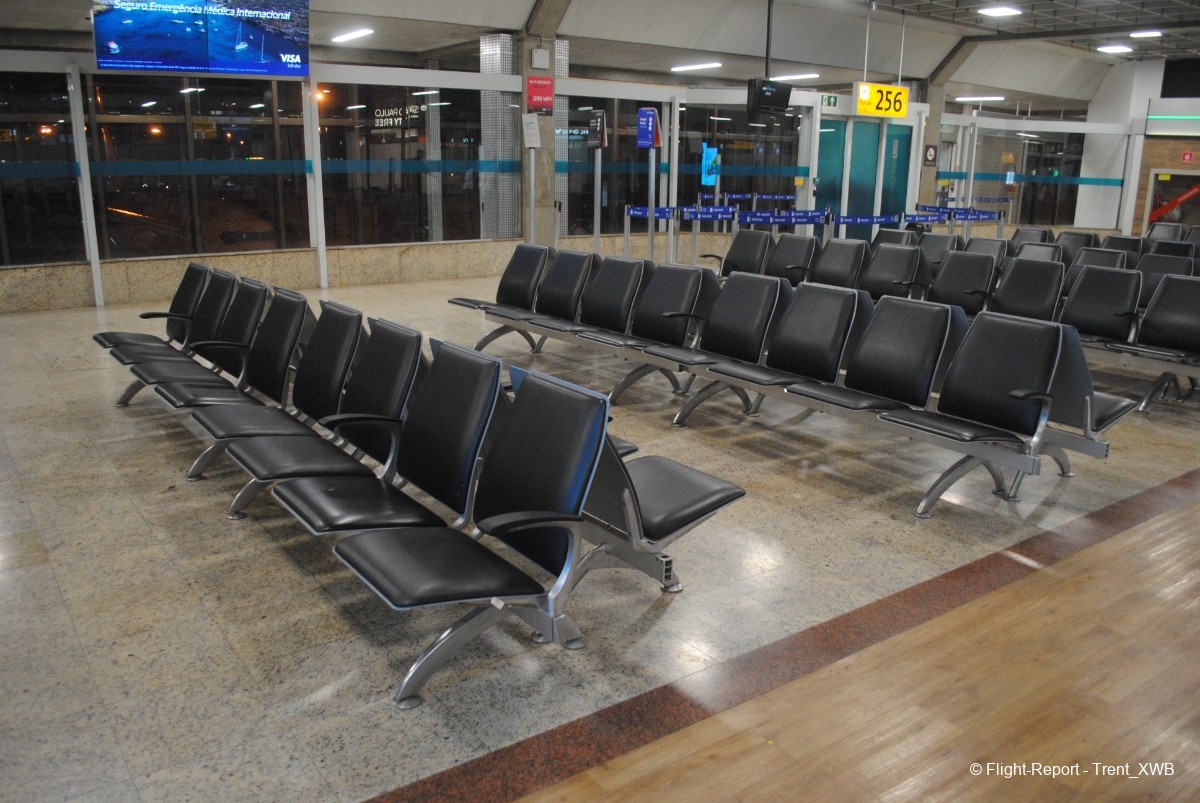
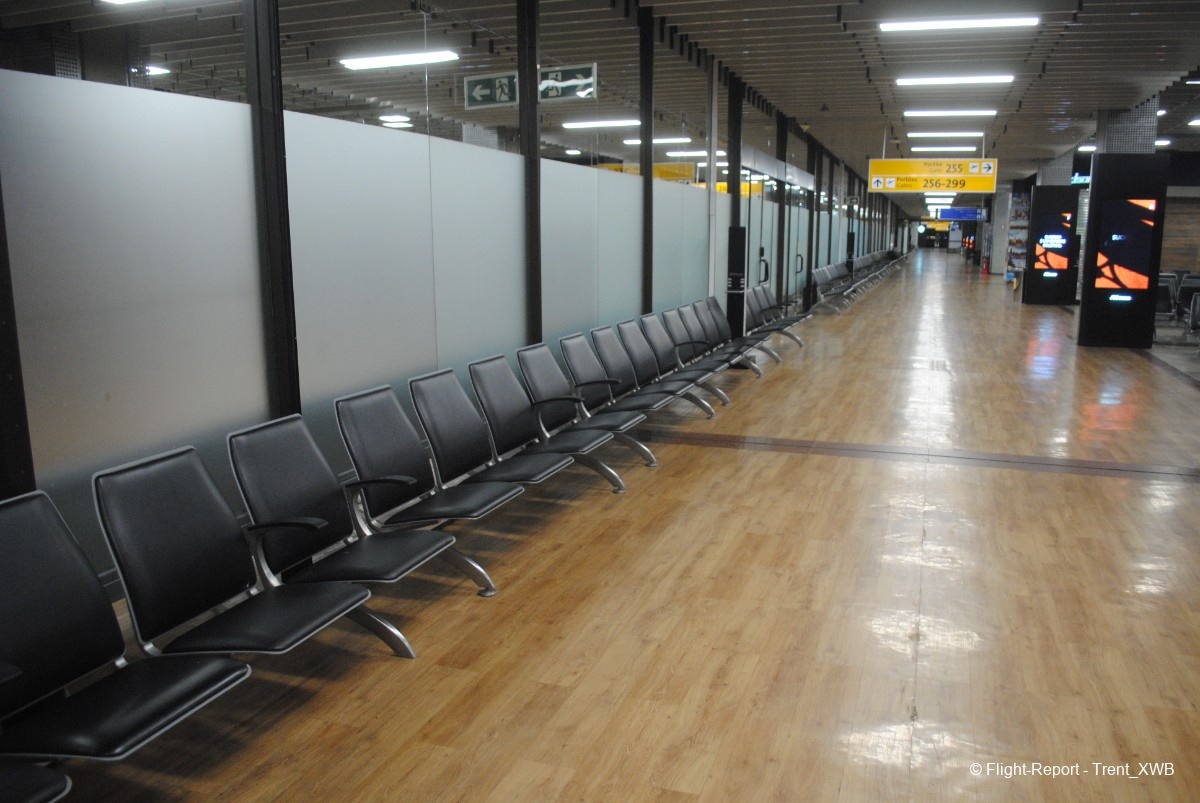
The domestic part of the T2's east pier (gates 250-265) looks quite different. This pier was historically designed for international flight (and thus has arrival galleries, which are obstacle for planespotting), but with the opening of new T3 in 2014 lost its significance, as all but few airlines moved to T3, and now just a handful of its gates are international. The domestic part of this pier looks deserted at night and has much less facilities than the west pier.
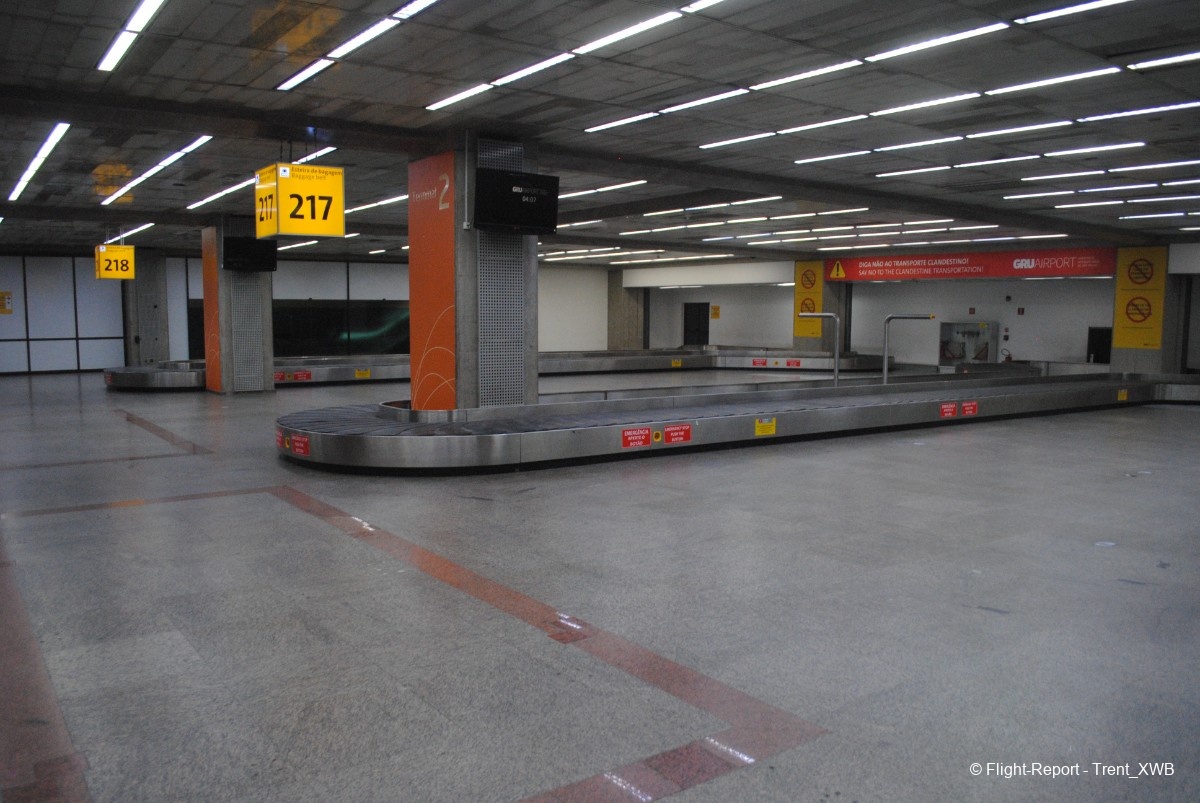
Domestic luggage claim hall.
GRU T2: Landside
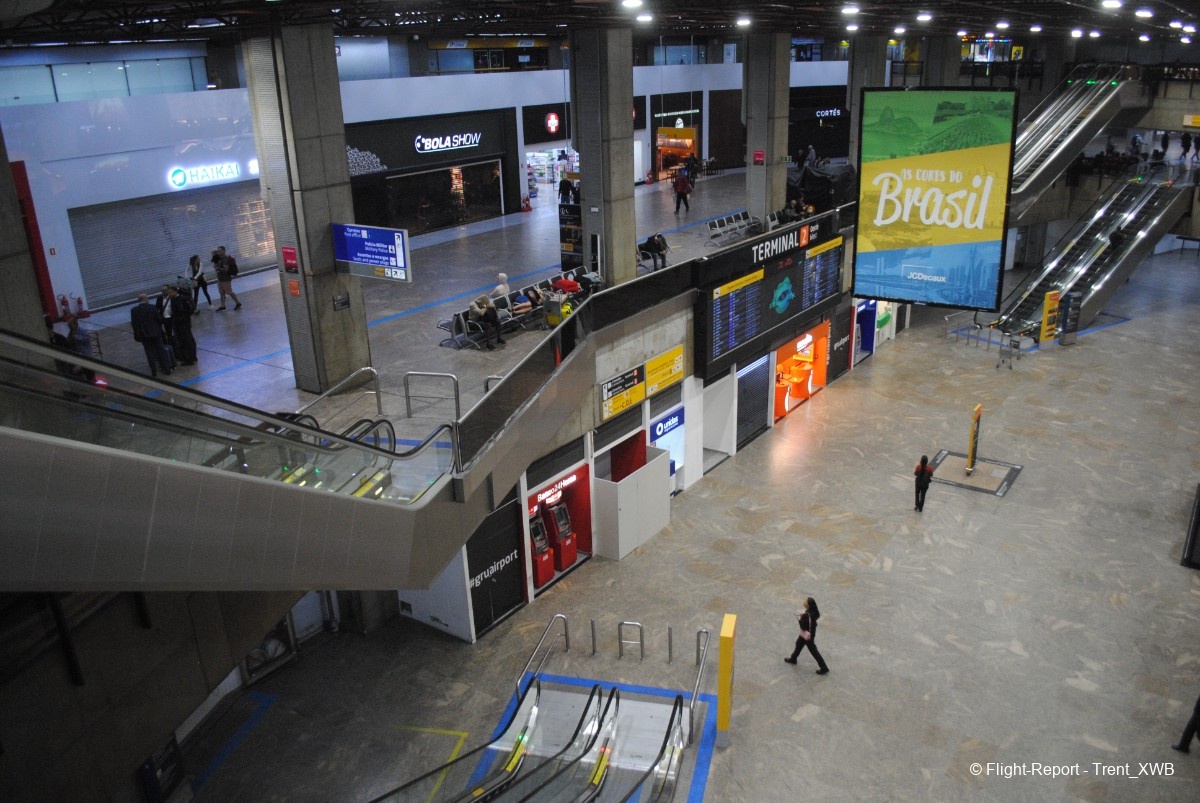
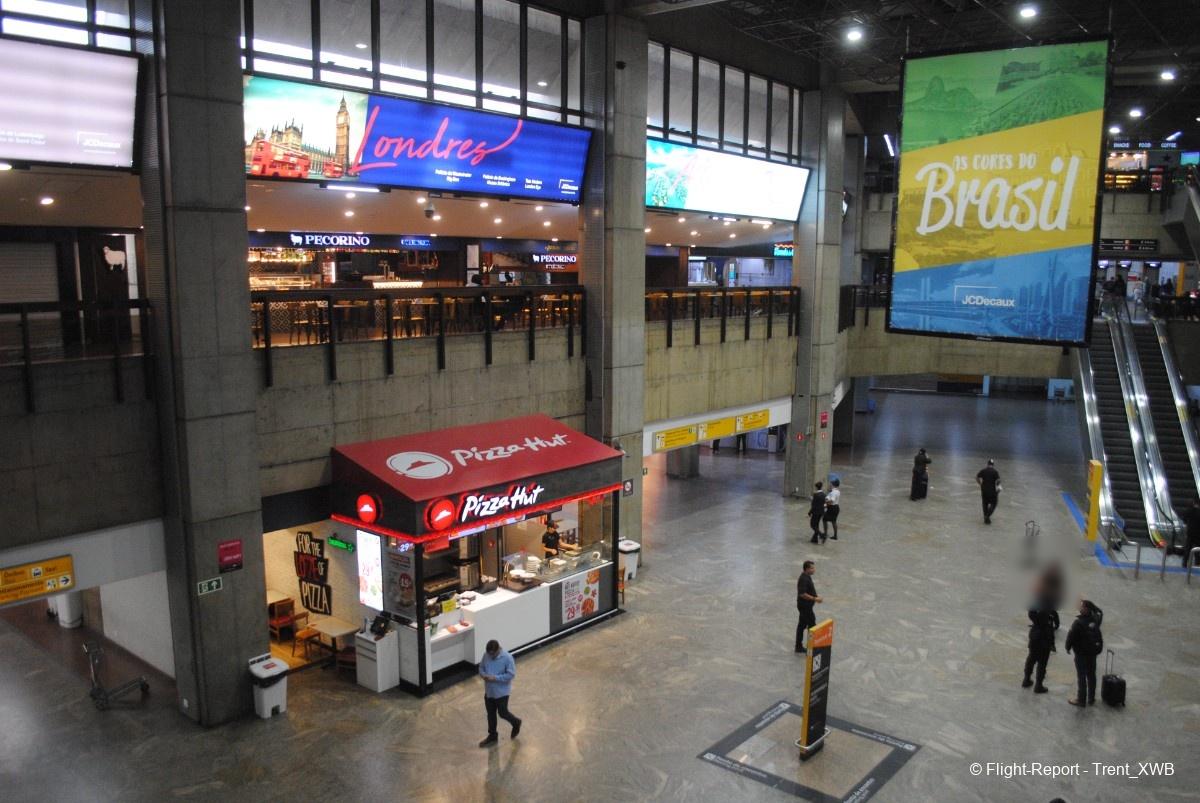
The main hall of T2 with the arrivals on the ground level and entrance to the departures level.
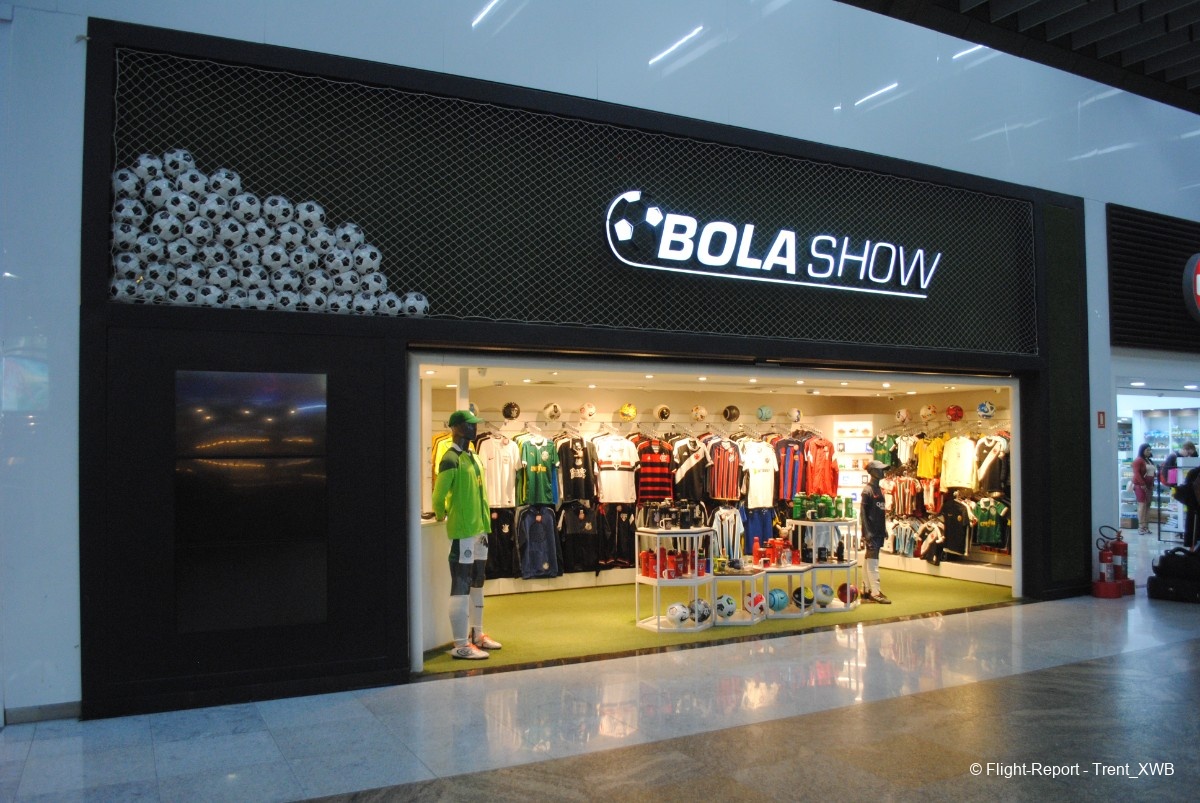
A shop for football lovers.
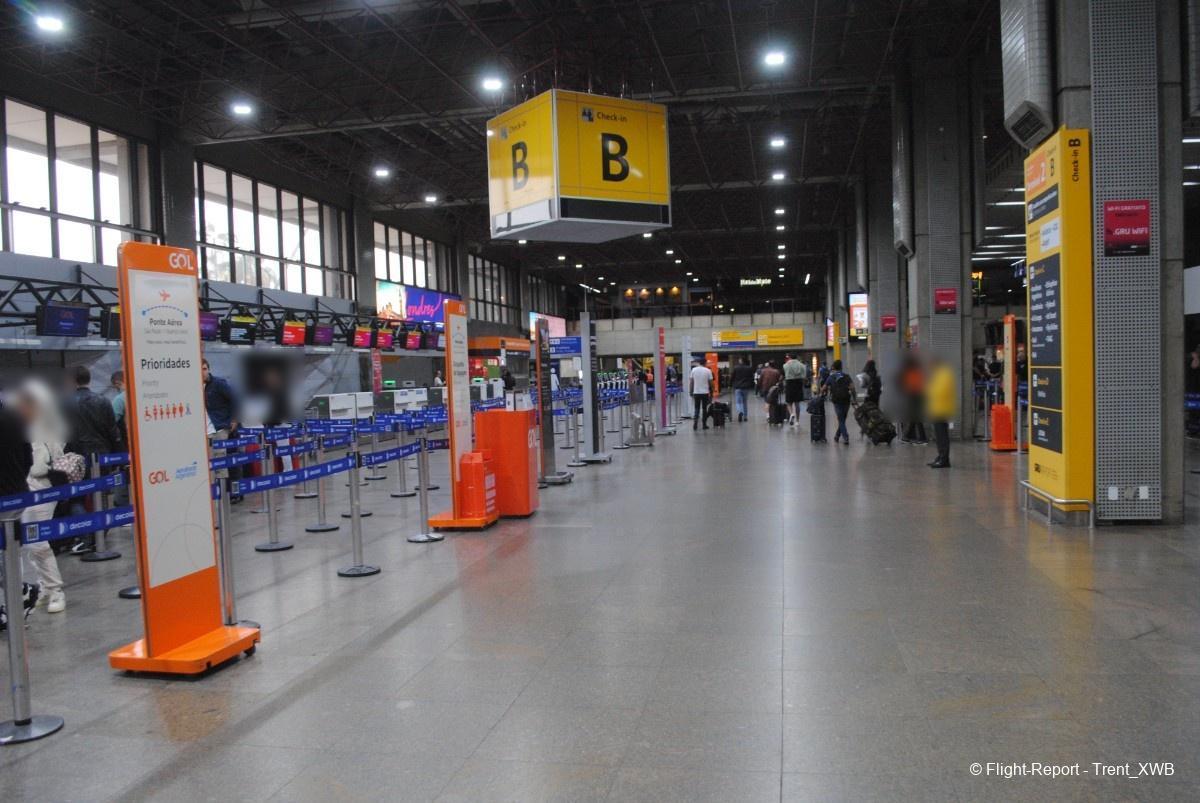
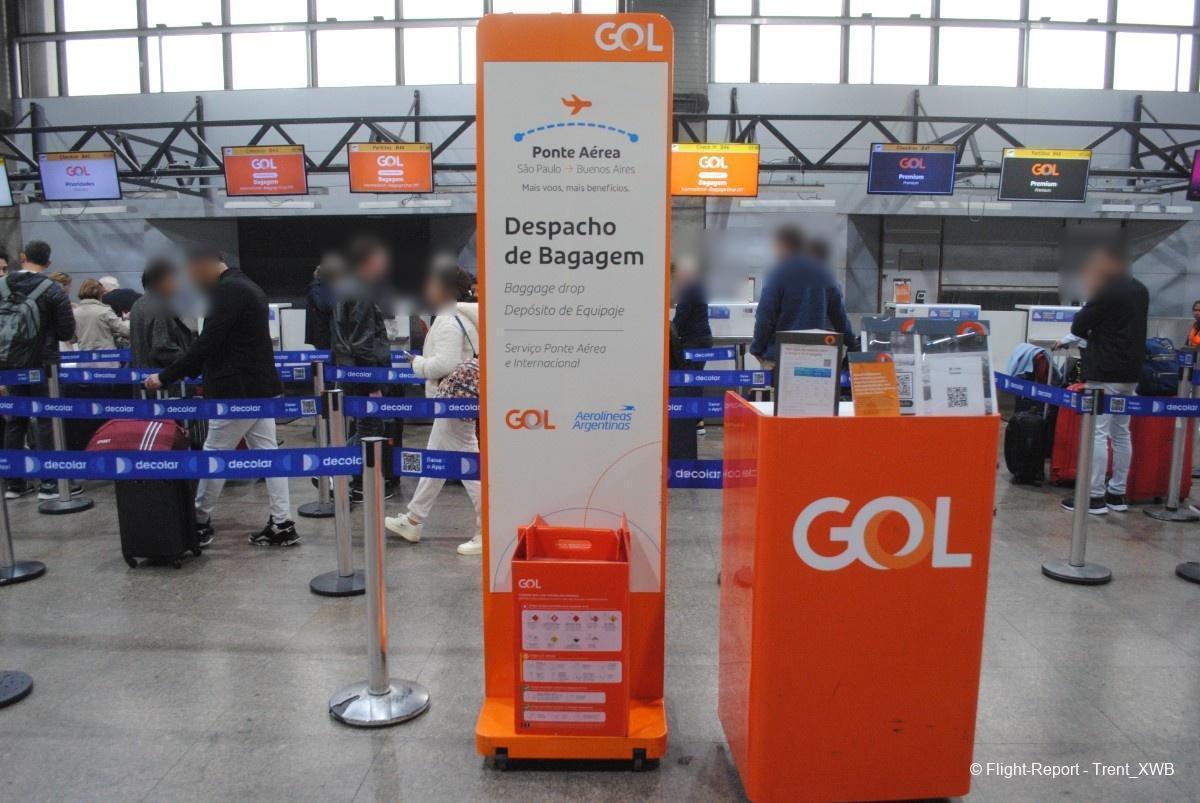
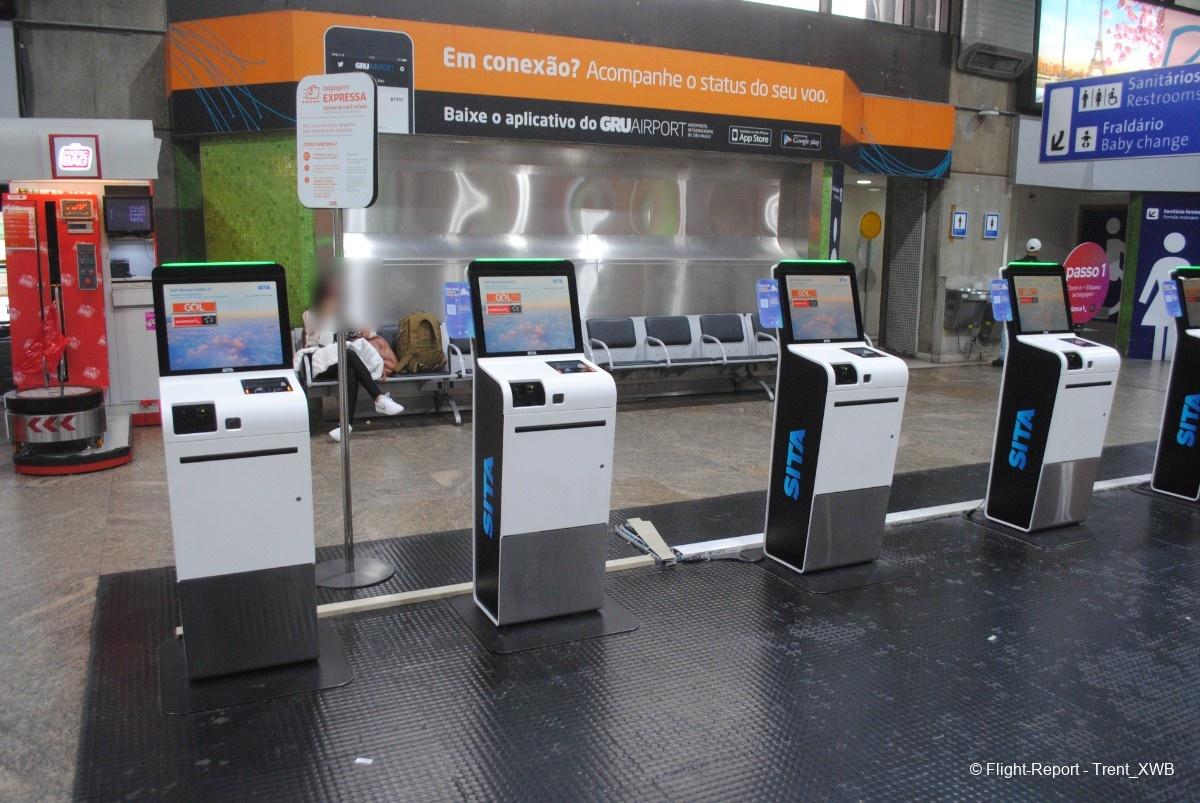
The landside of T2 consists of the enfilade of 4 check-in halls: B, C, D, E (quite gloomy ones, I have to say).
Hall B:
Hall C:
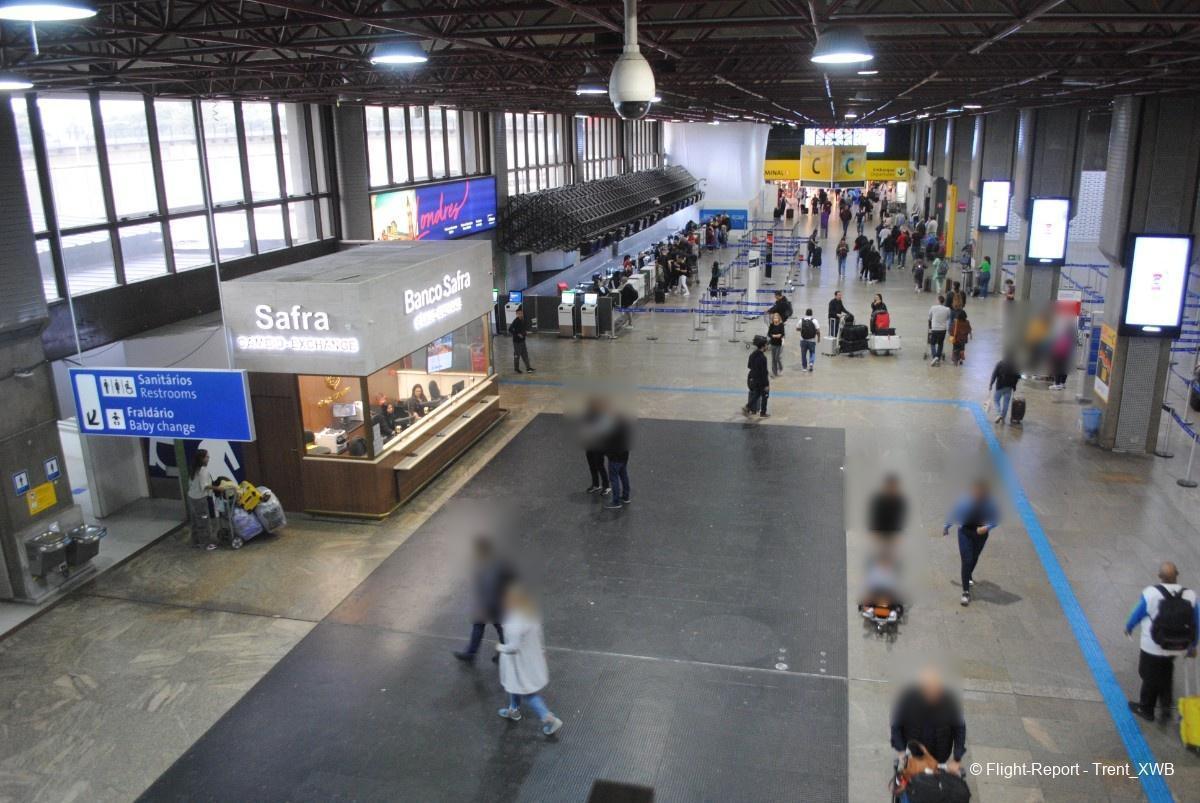
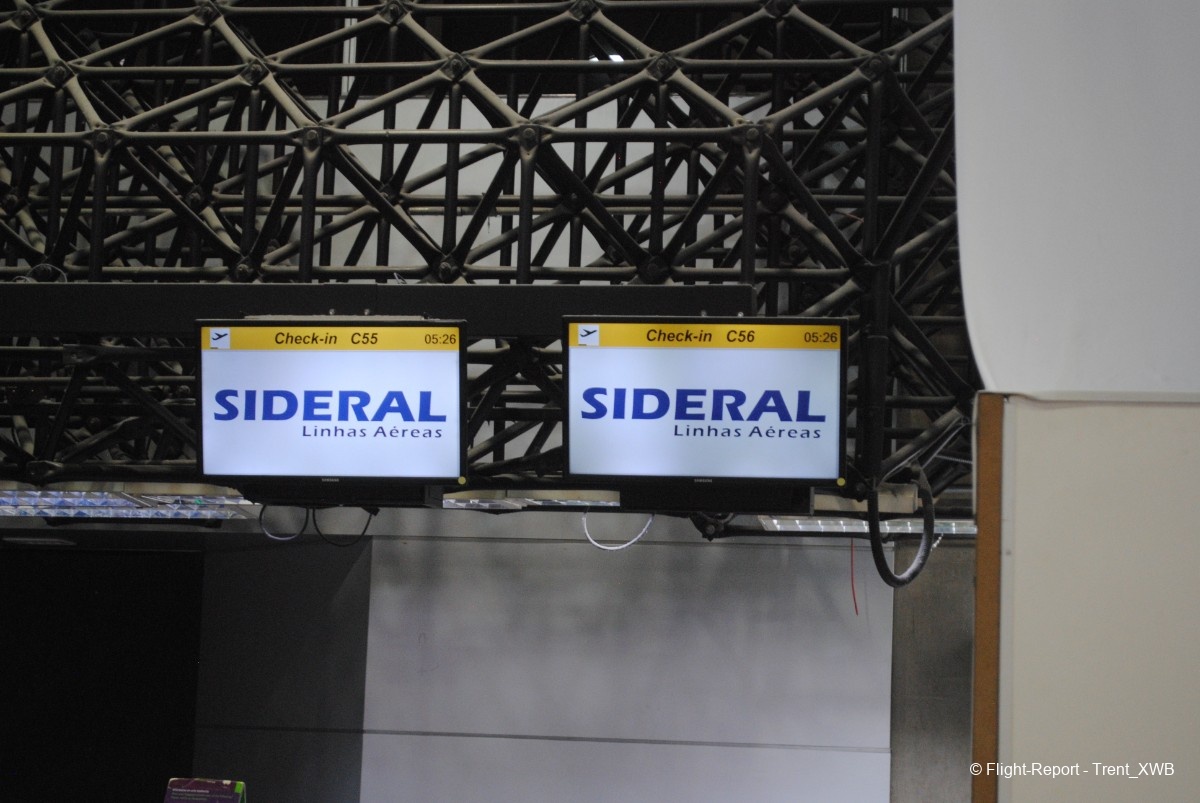
Check-in desks of Sideral Linhas Aereas: a small carrier, operating 1 B738, 1 B737 and 2 B733 on passenger flights.
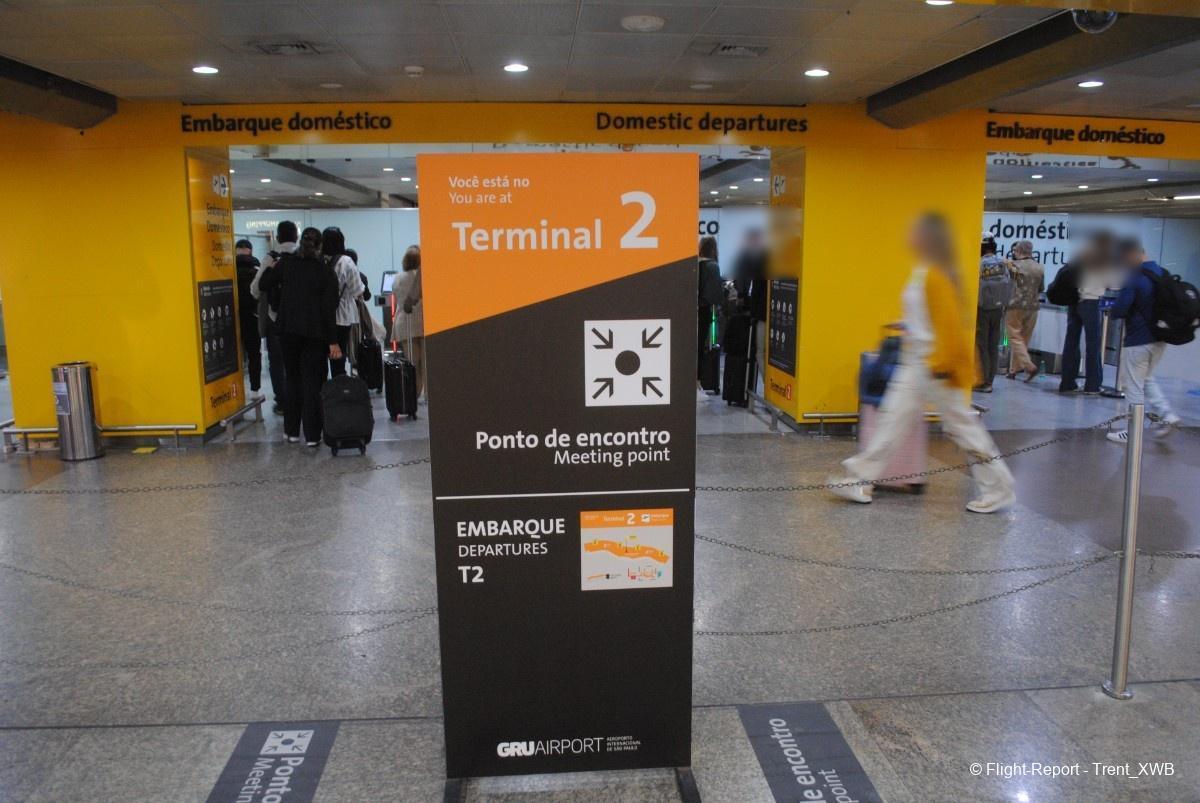
Entrances to departures between C and D halls.
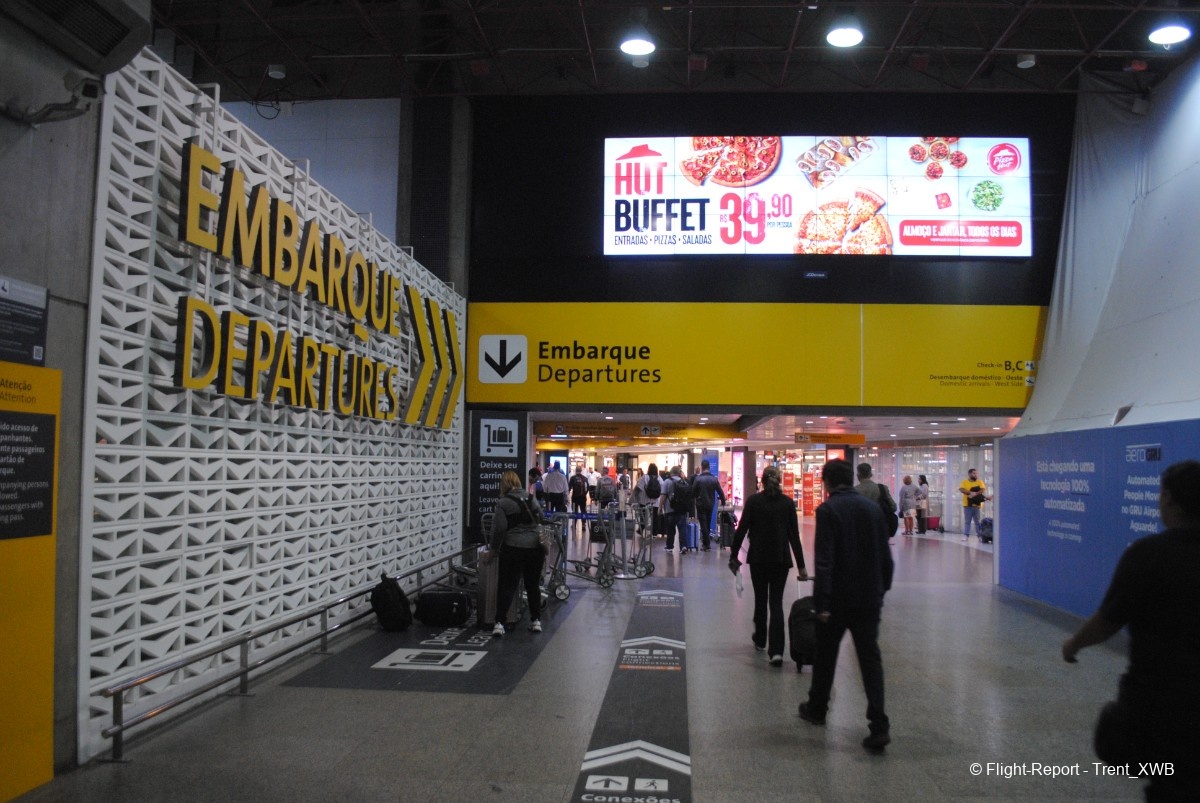
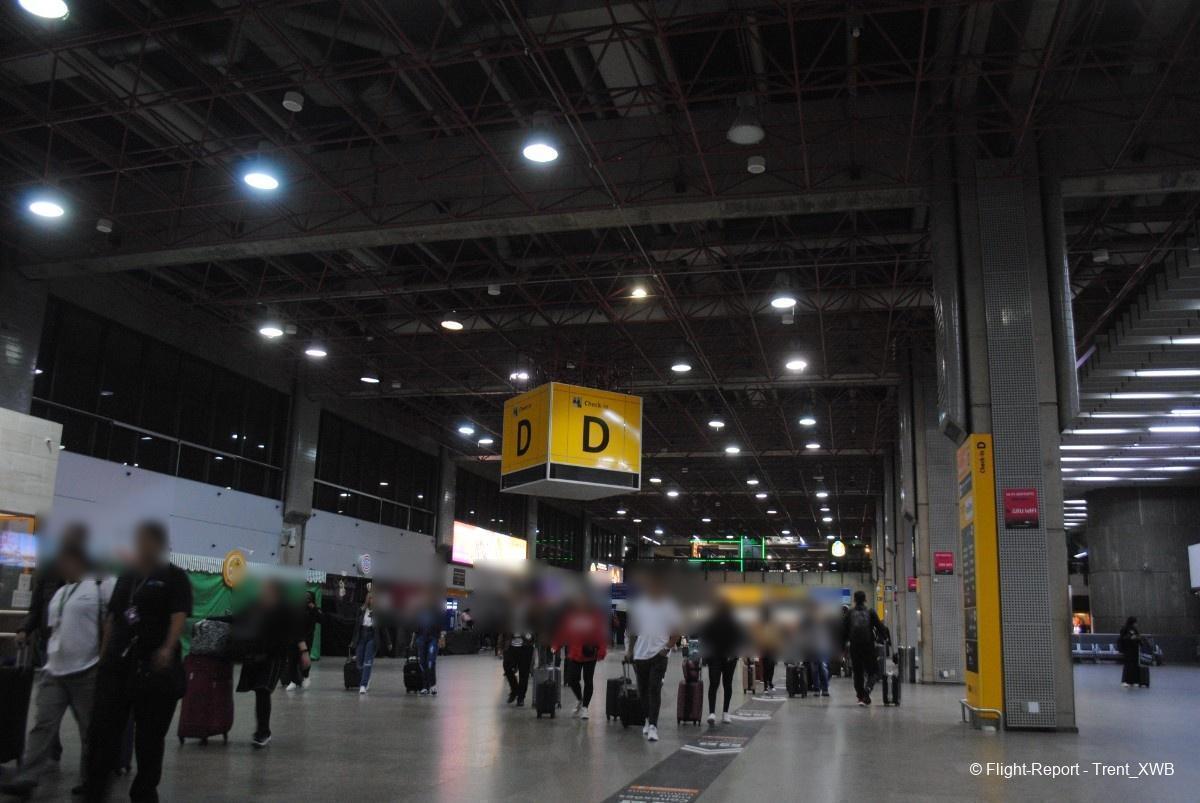
Hall D:
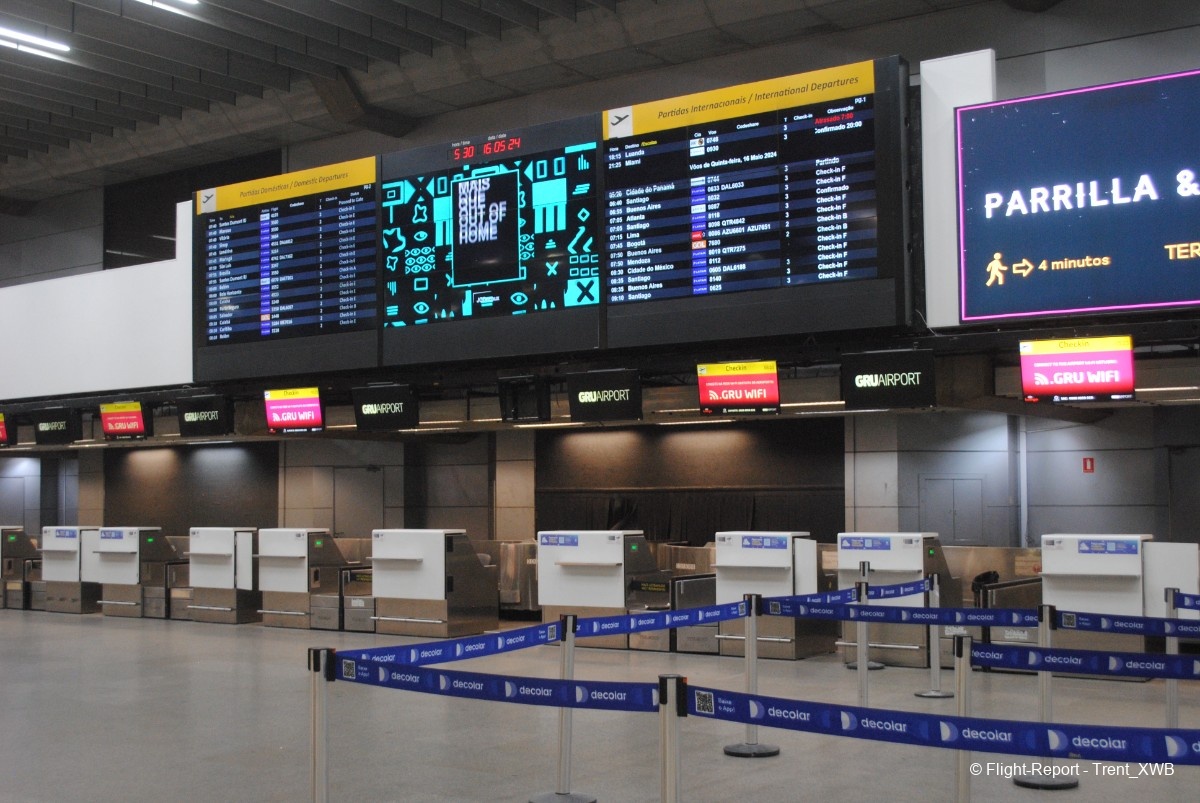
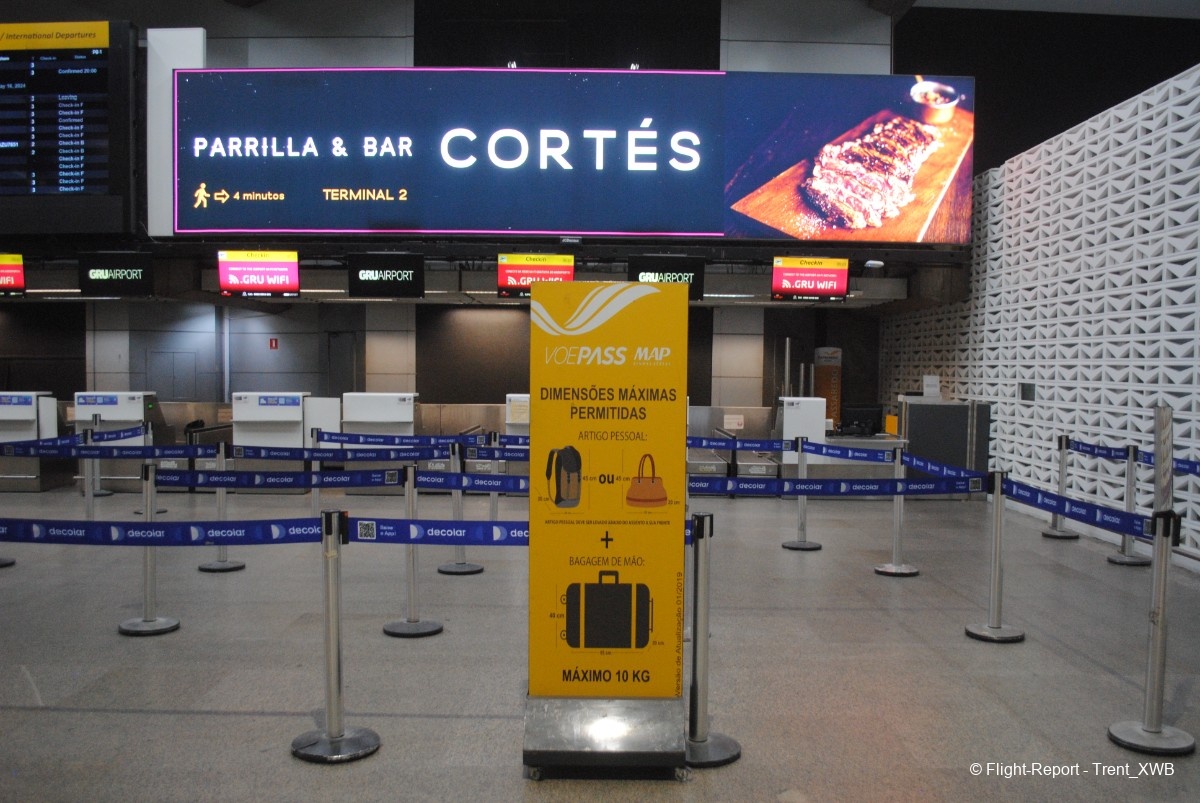
In memoriam of now-defunct Voepass (ex Passaredo), which was unable able to recover after the tragic crash of AT75 in August 2024 not far from GRU and ceased the operations in March 2025.
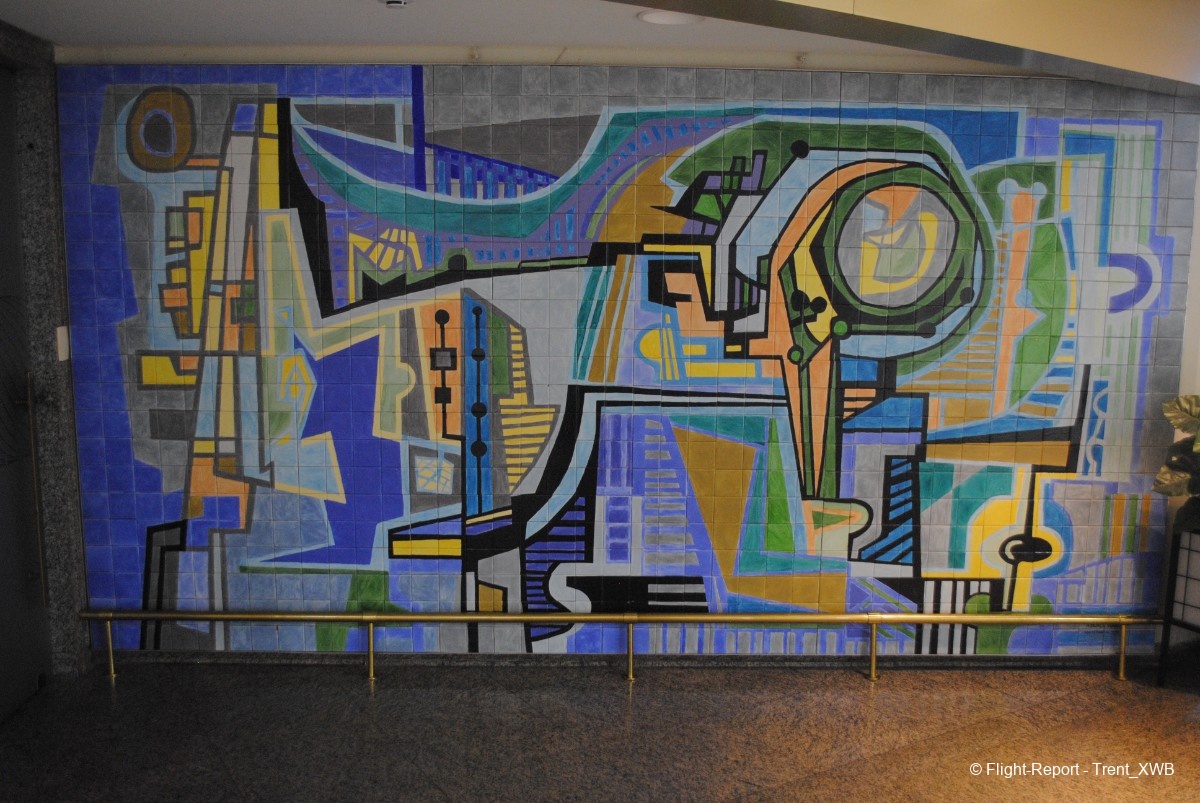
A beautiful panel and some eateries between D and E halls.
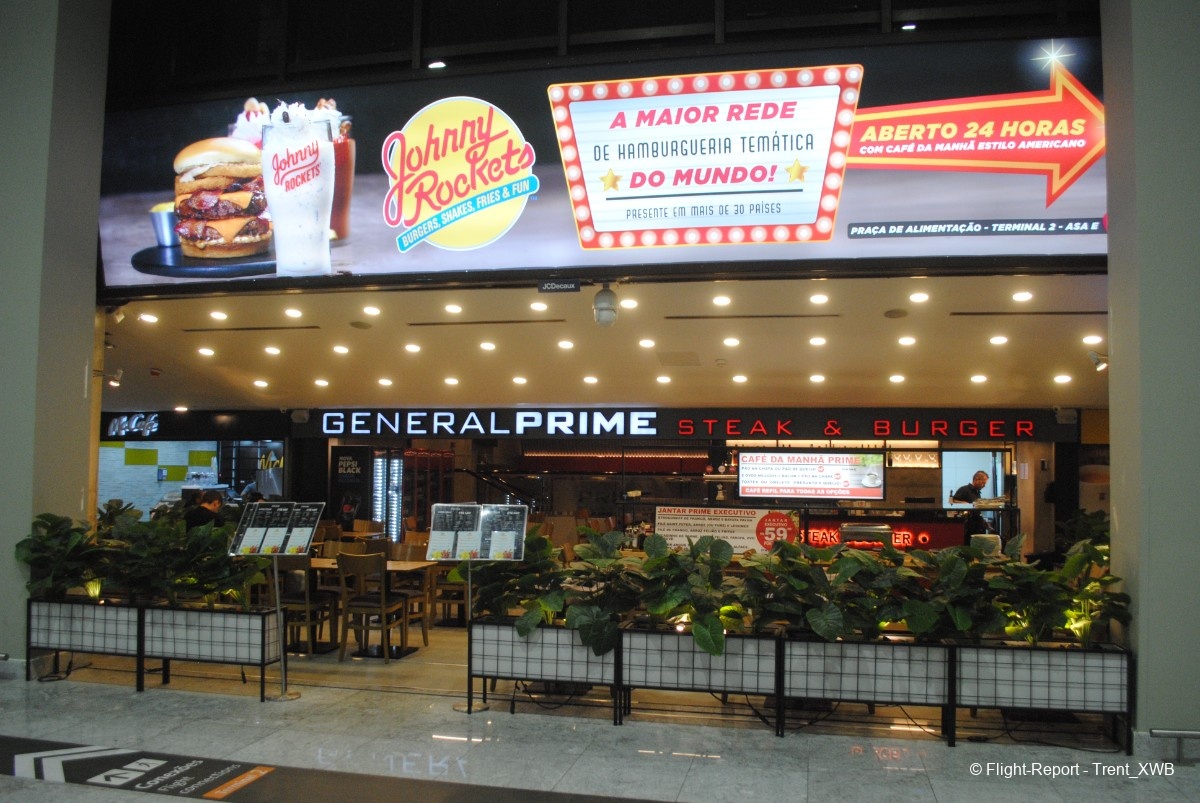
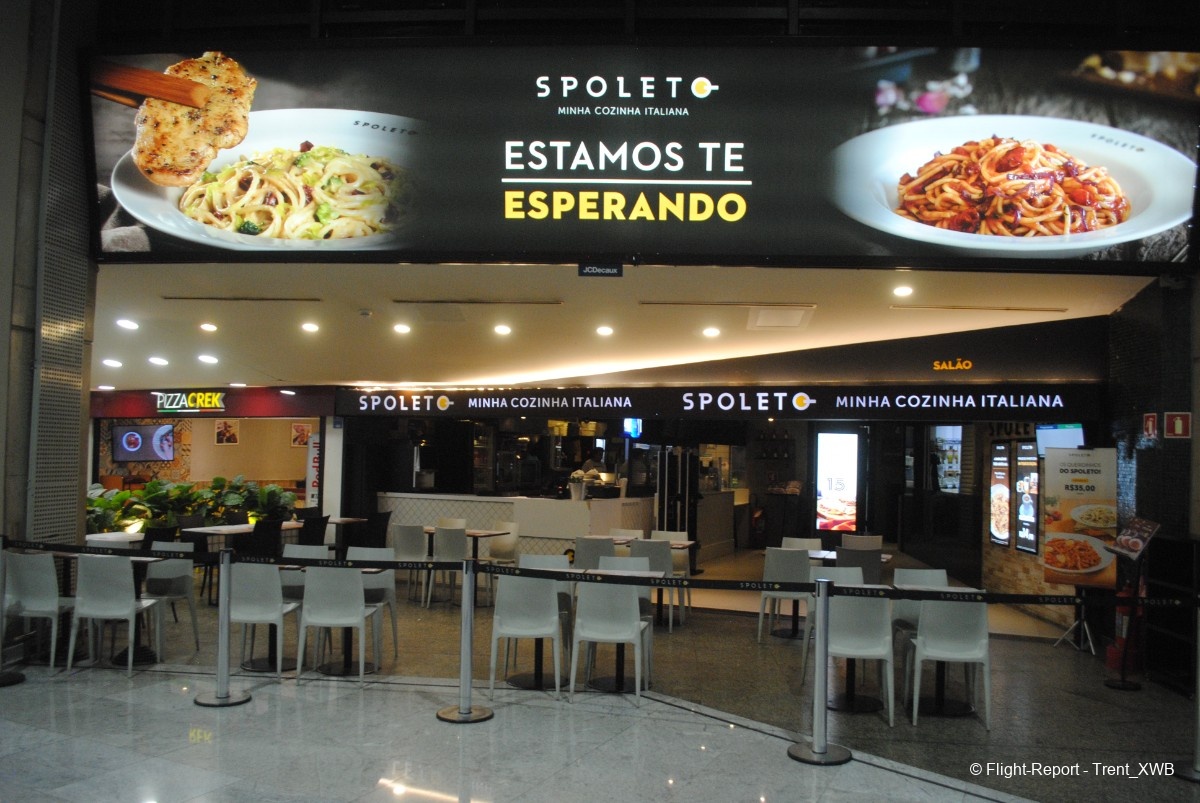
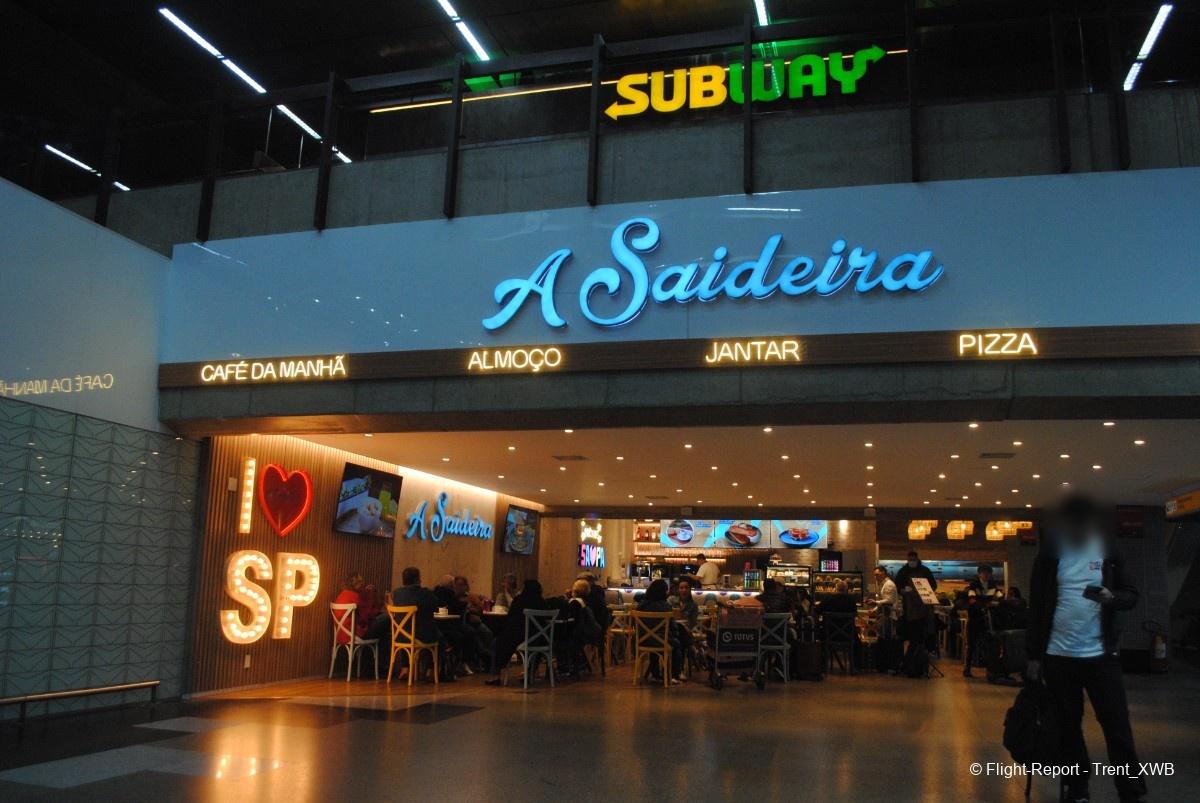
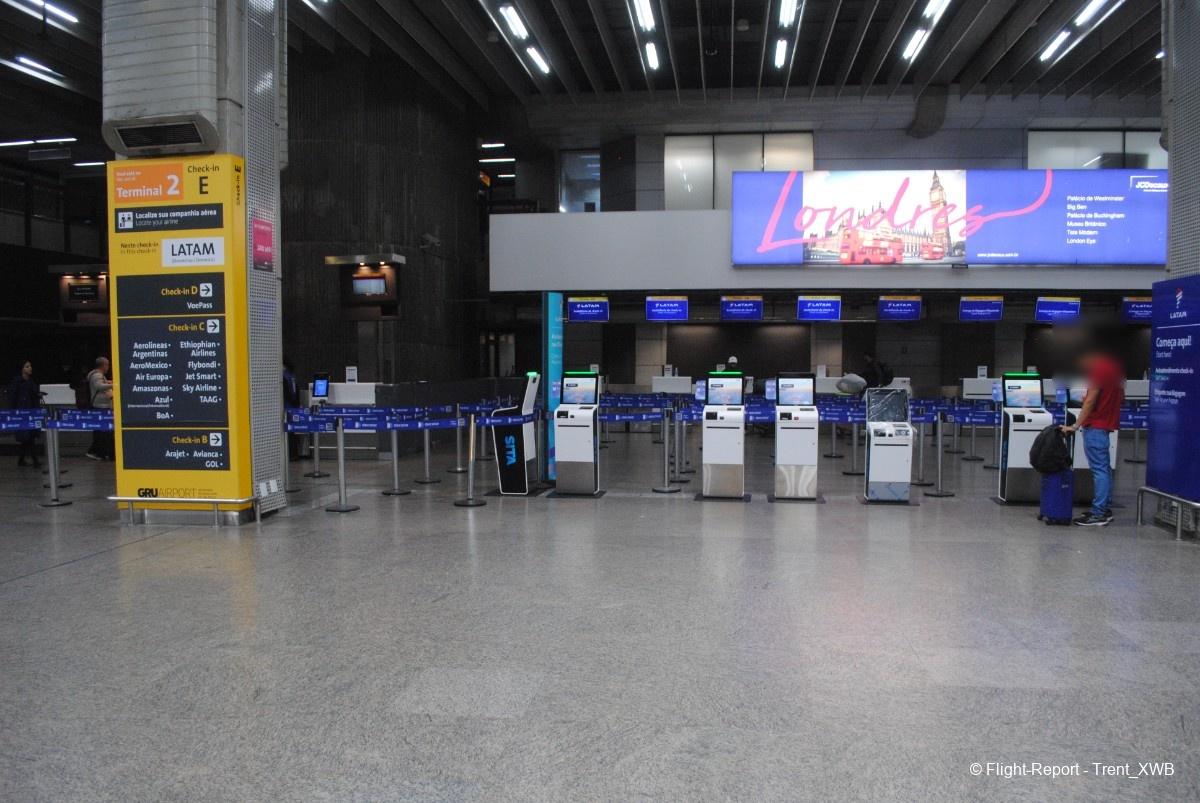
Hall E:
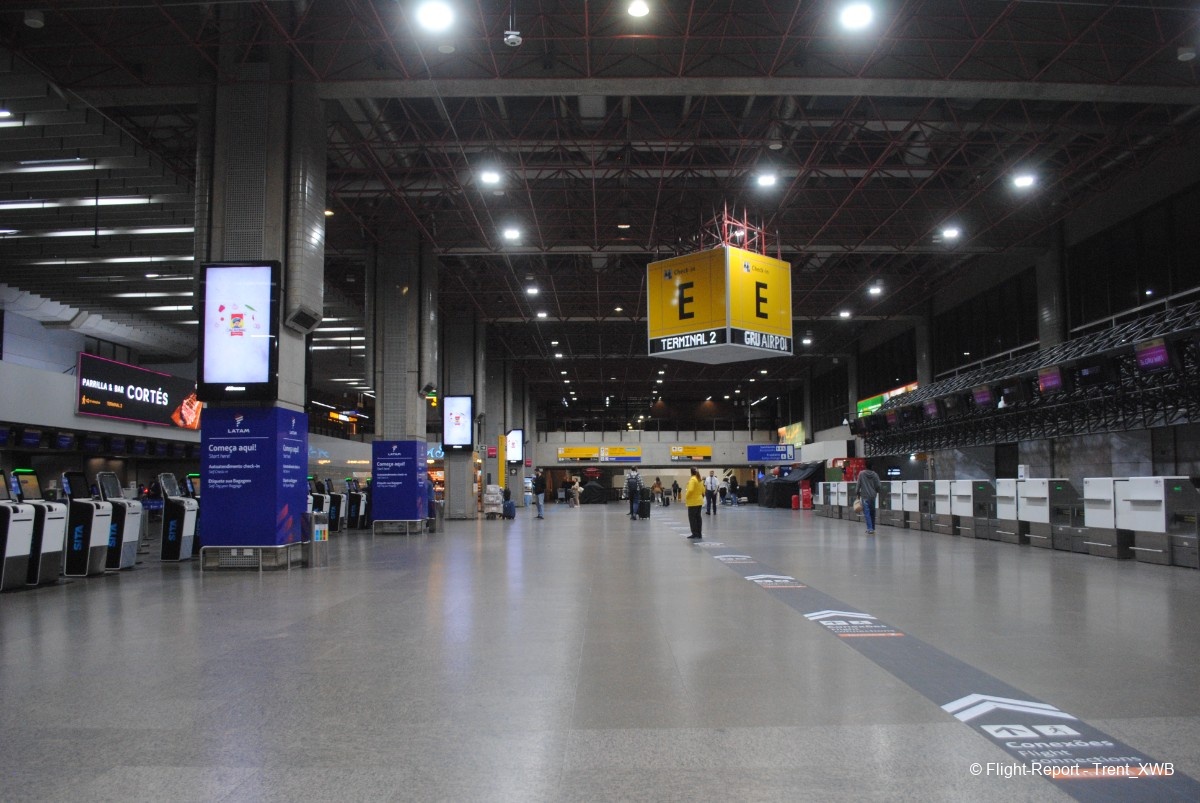
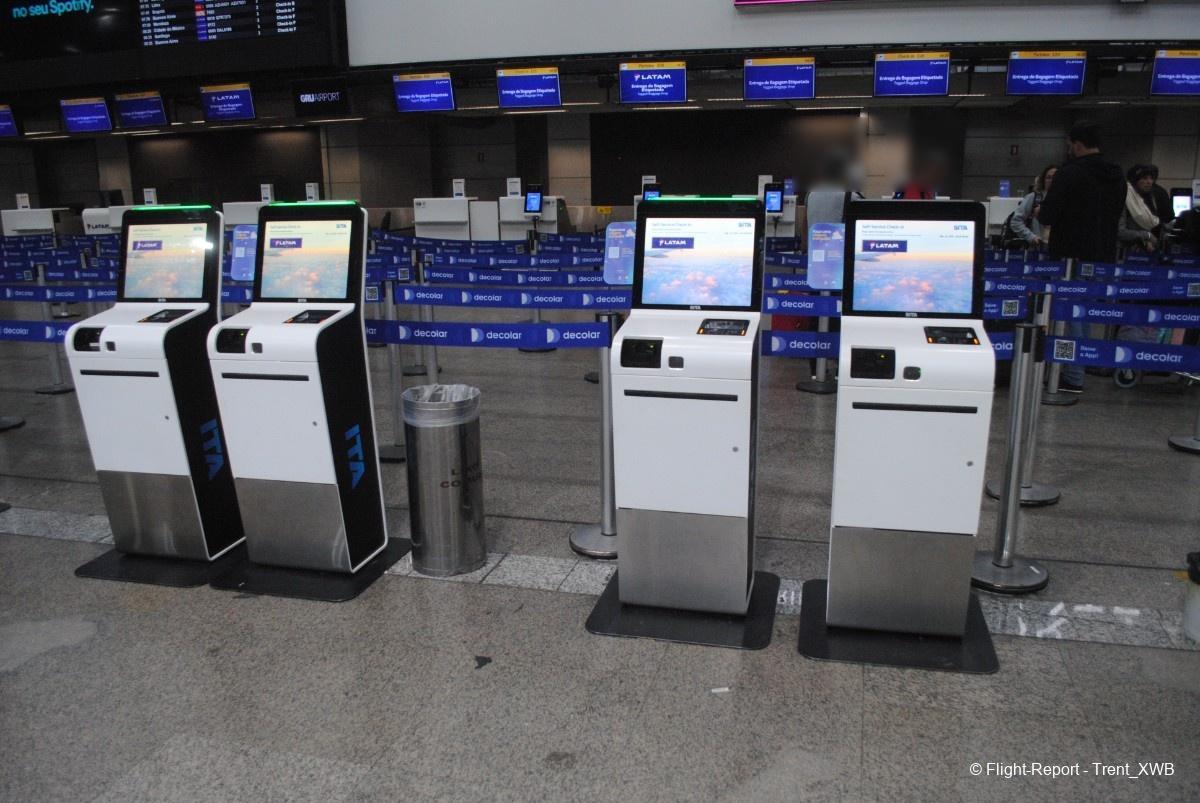
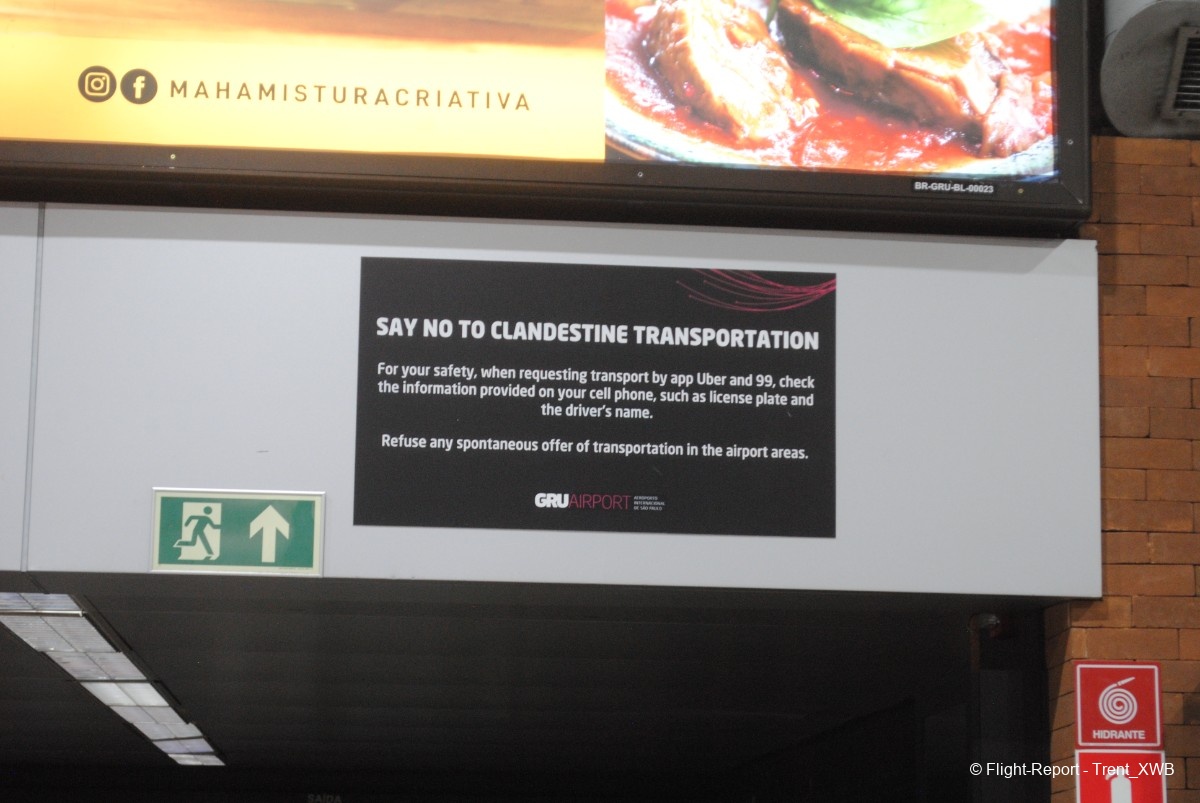
A reminder that Brazil is not the safest country in the world. But with common sense and some gutfeel you'll be fine.
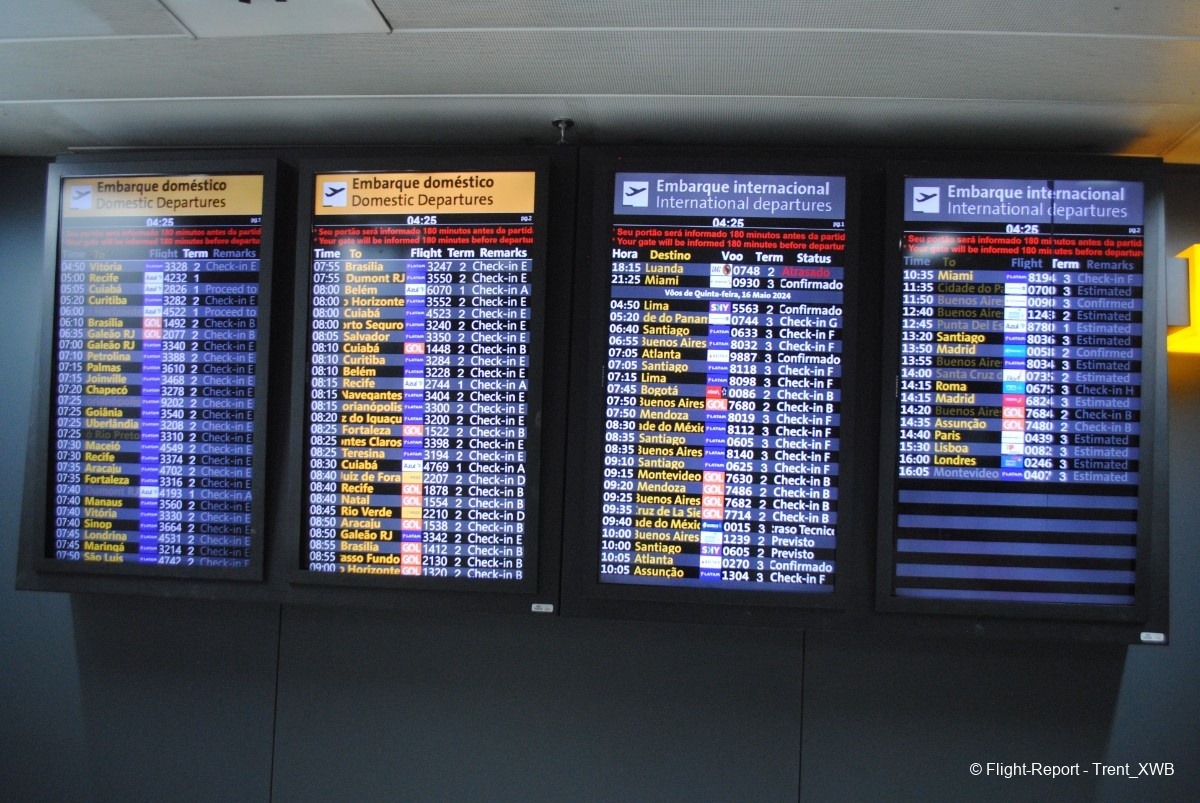
Early morning FID for departures as an excellent illustration of how bustling is GRU.
T3 GRU: Landside
Let's explore my favorite T3 GRU, which is connected with T2. I'll show only landside, because this time I'm leaving Brazil via VCP. I showed a bit of T3's airside in the FR of LATAM GRU-SCL flight on B77W, which I took in February 2017.
The long gallery, connecting T2 with T3 landside.
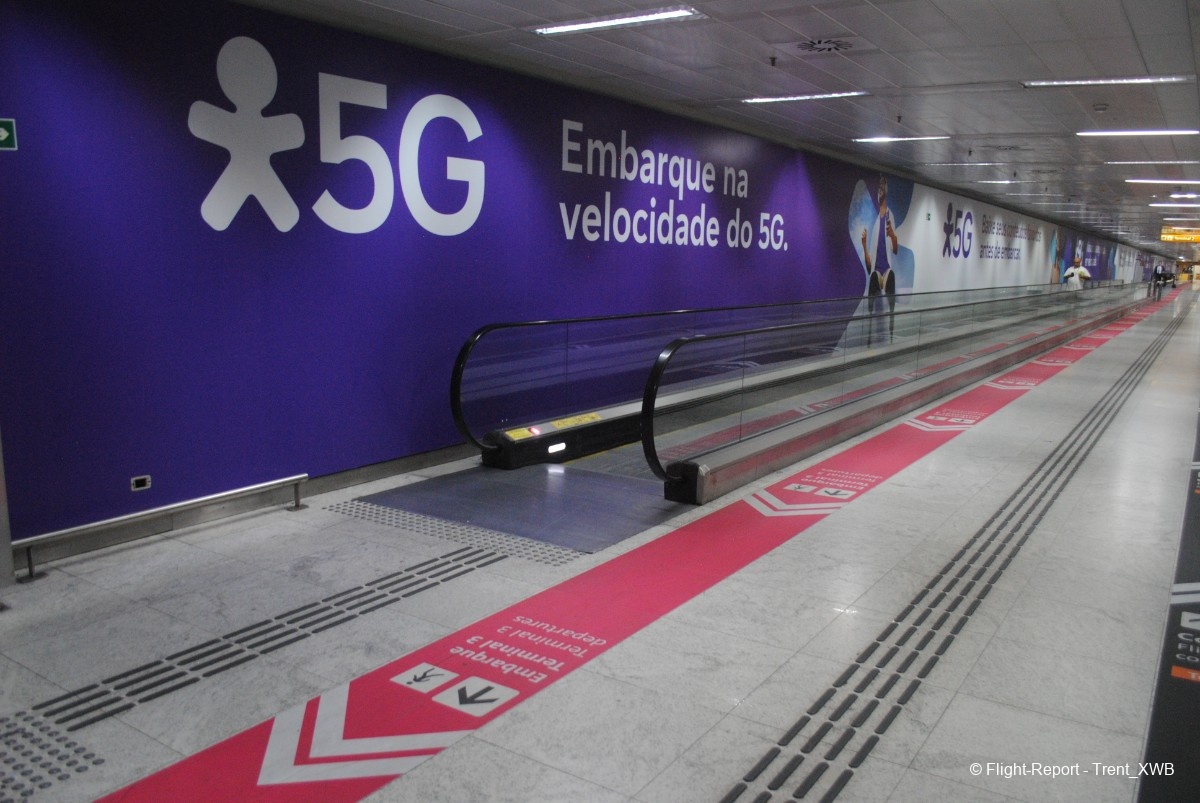
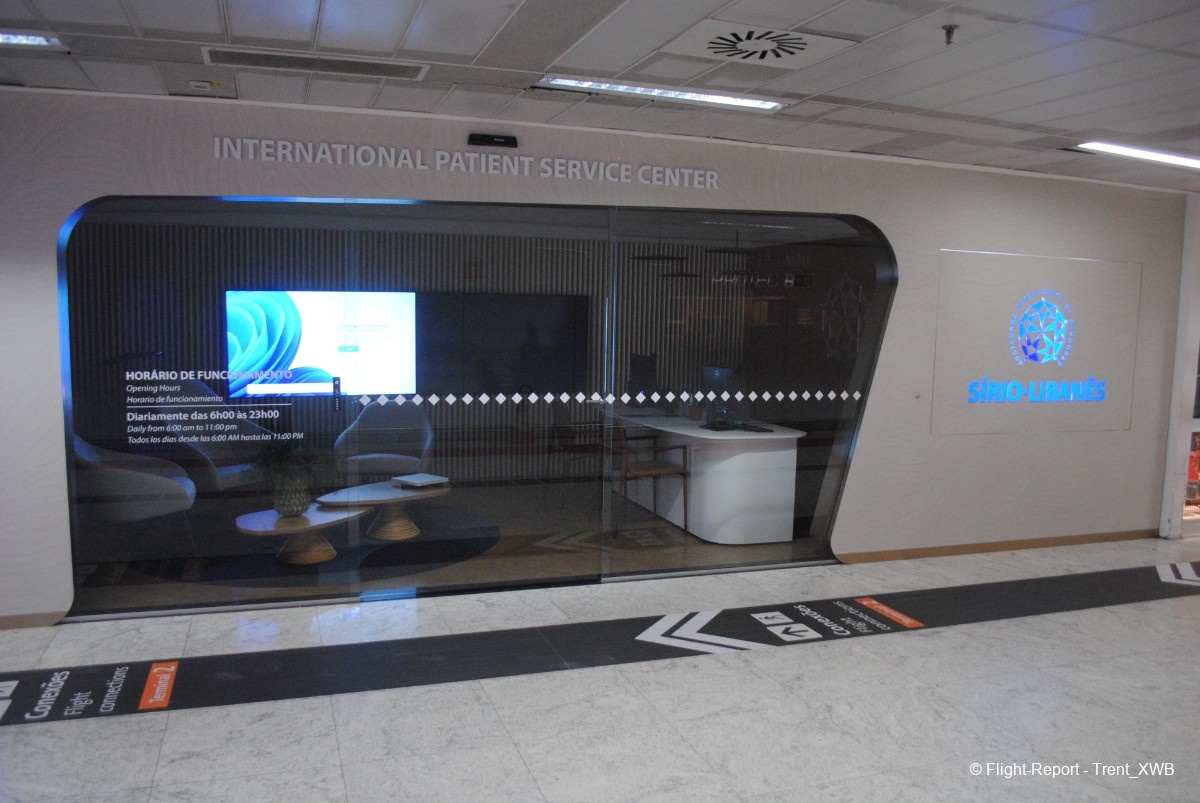
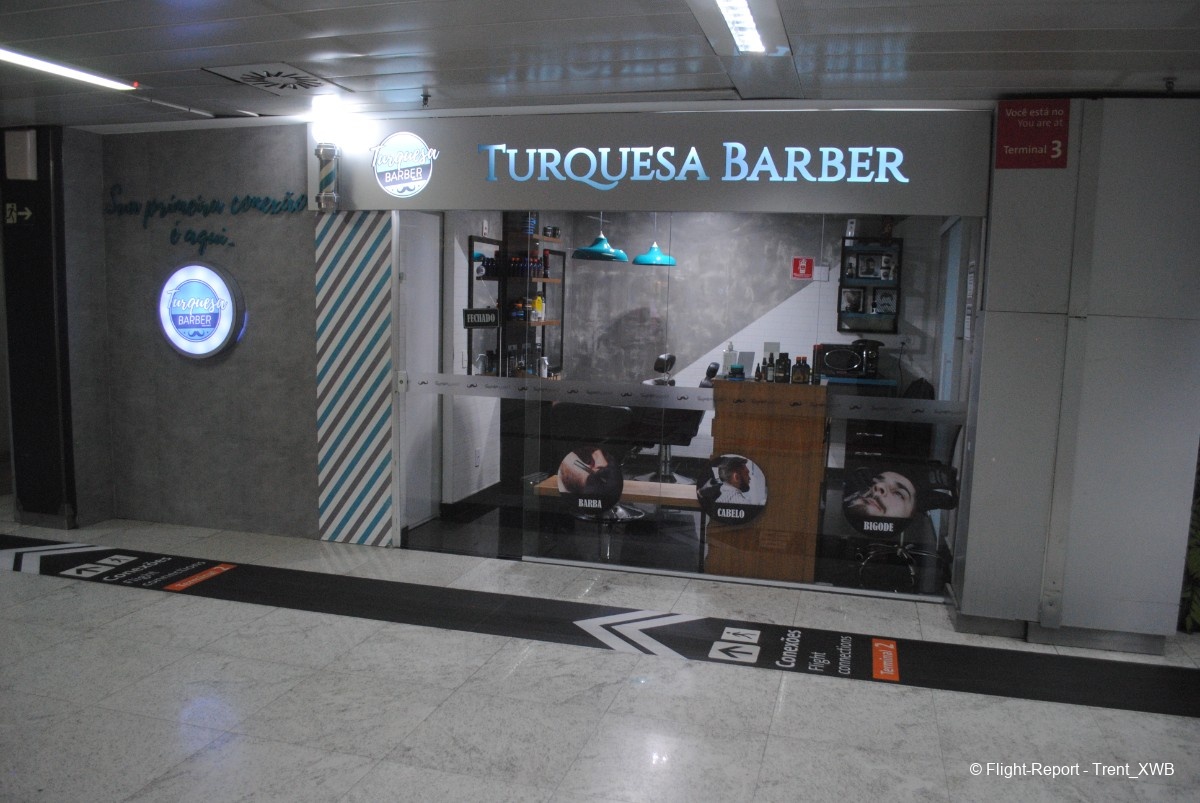
Some interesting services in the gallery.
The list of airlines, operating from T3. Worth noting that pre-Covid Delta was in T2, but when LATAM left Oneworld and aligned to SkyTeam and DL, DL moved to T3.
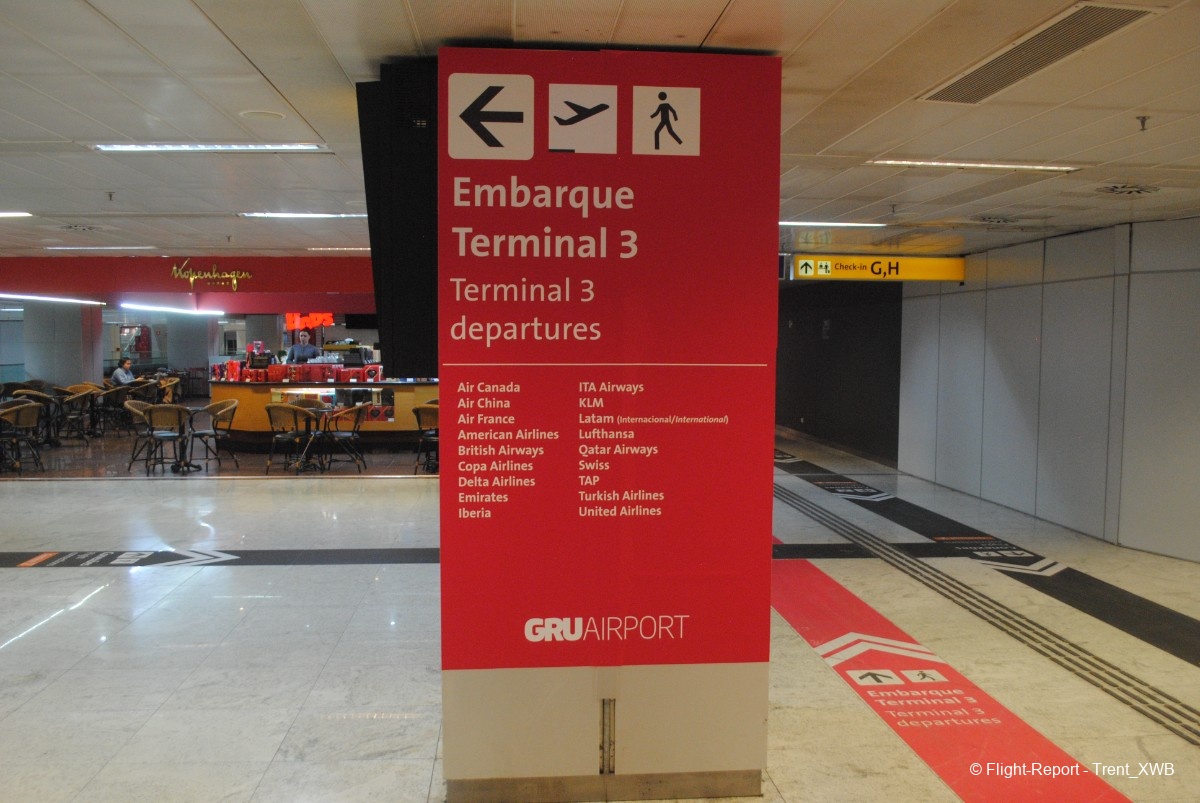
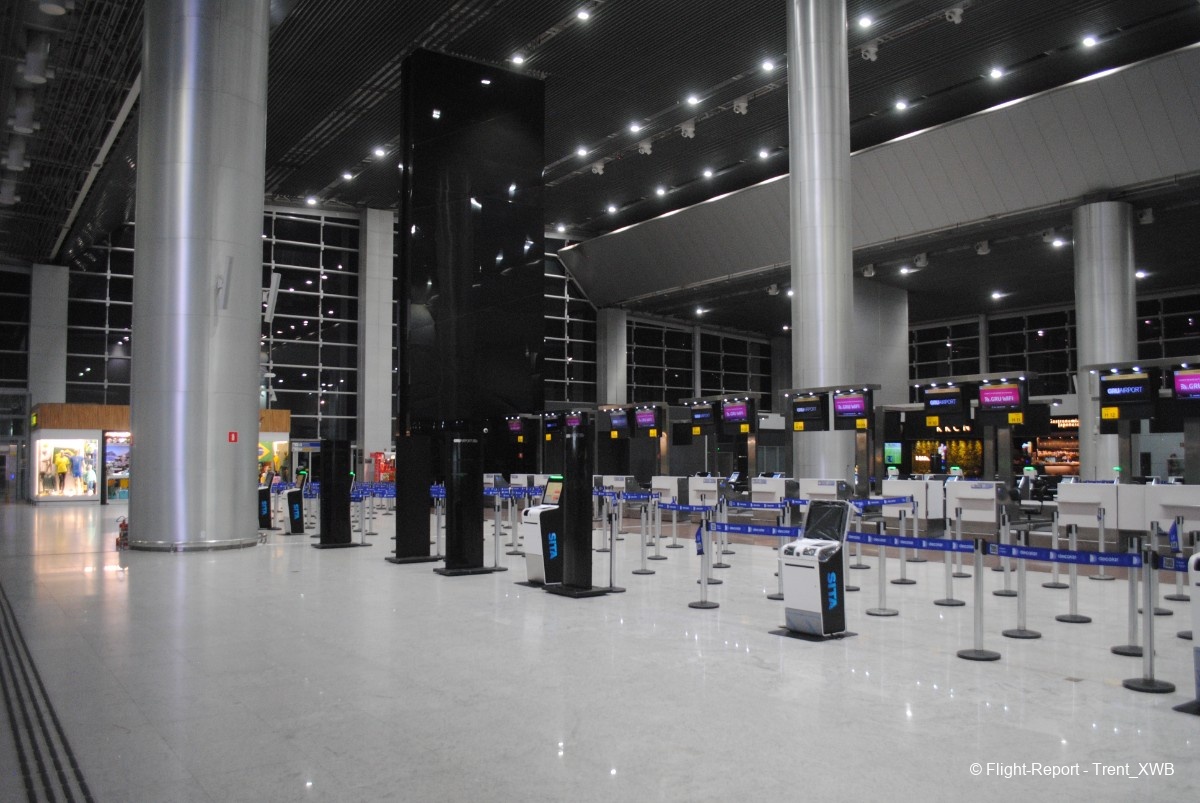
The check-in hall of T3 consists of 3 "isles". Egyptair, which no longer serves GRU, should be removed from this list.
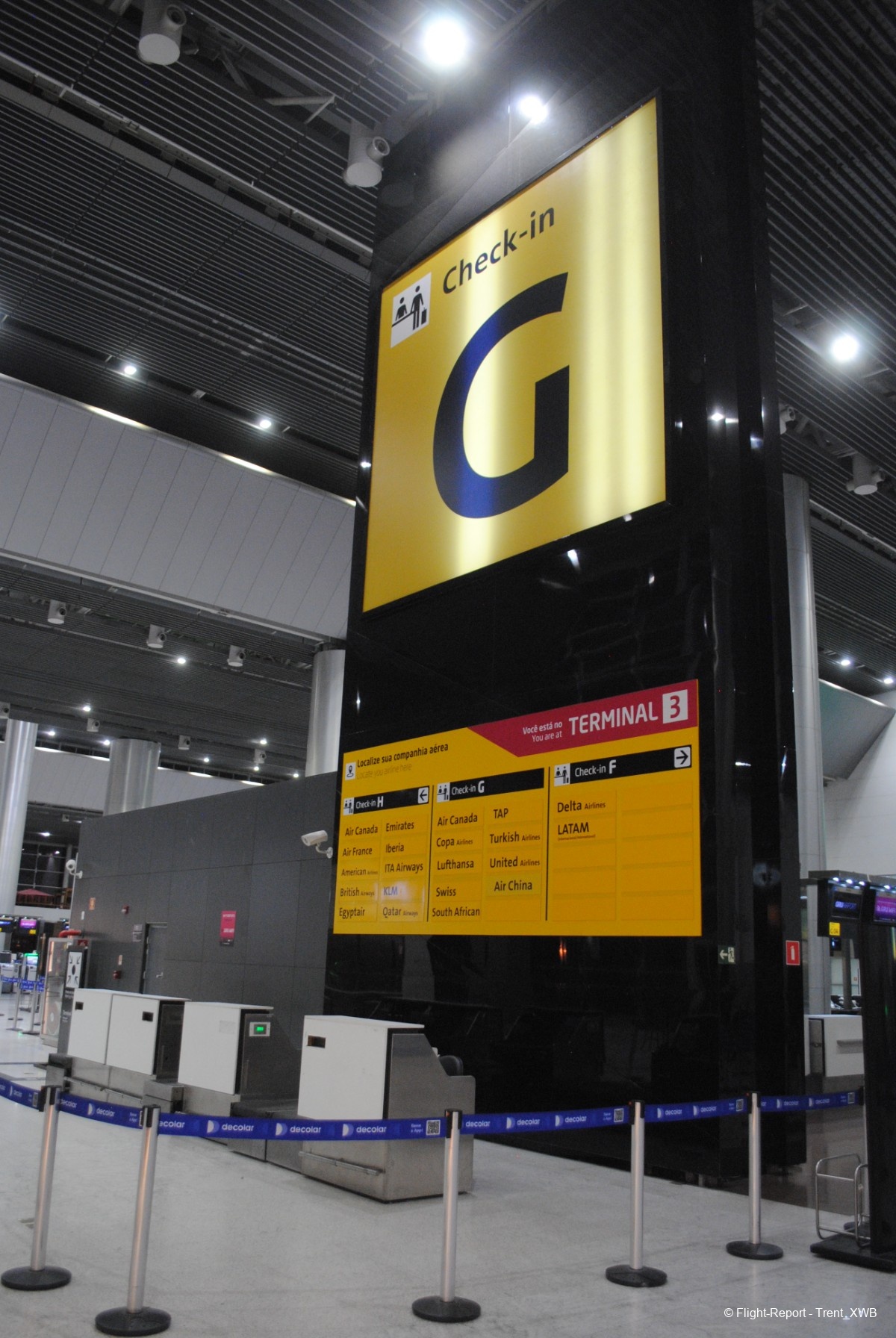
Views of the spacious check-in hall of T3. However, it starts to show its age (T3 was built 12 years ago) and not so spacious as the halls of the newest terminals of mid-2020s standard. But the best part of T3 is its pier with excellent spotting possibilities in almost any time of the day. I was regretting a bit that this time my transatlantic flight was not from T3 GRU, but from distant VCP.
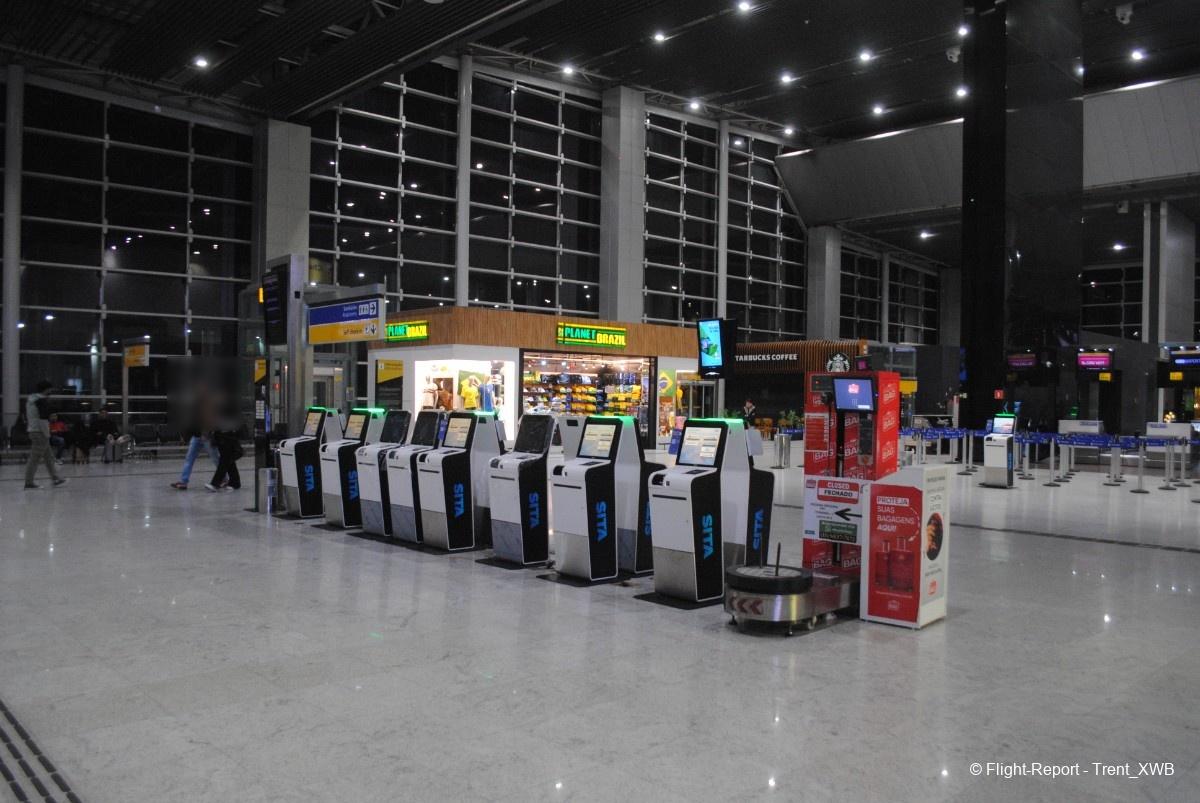
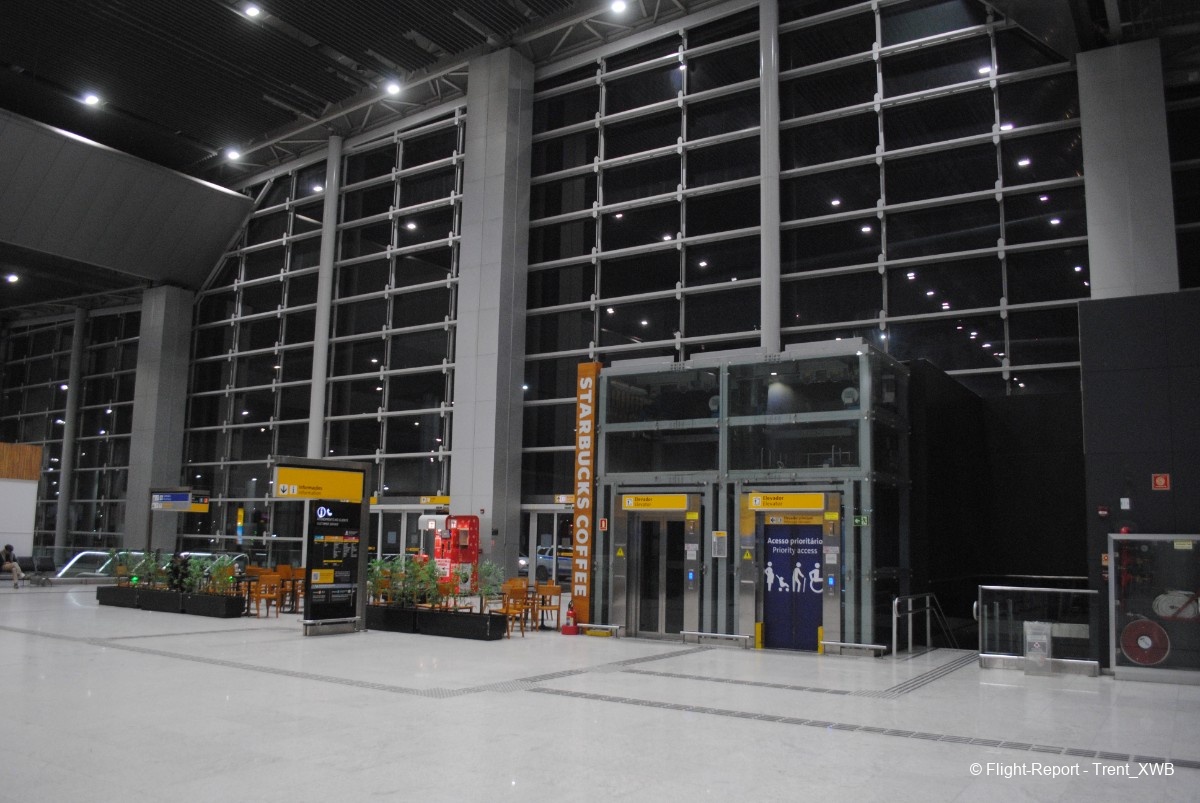
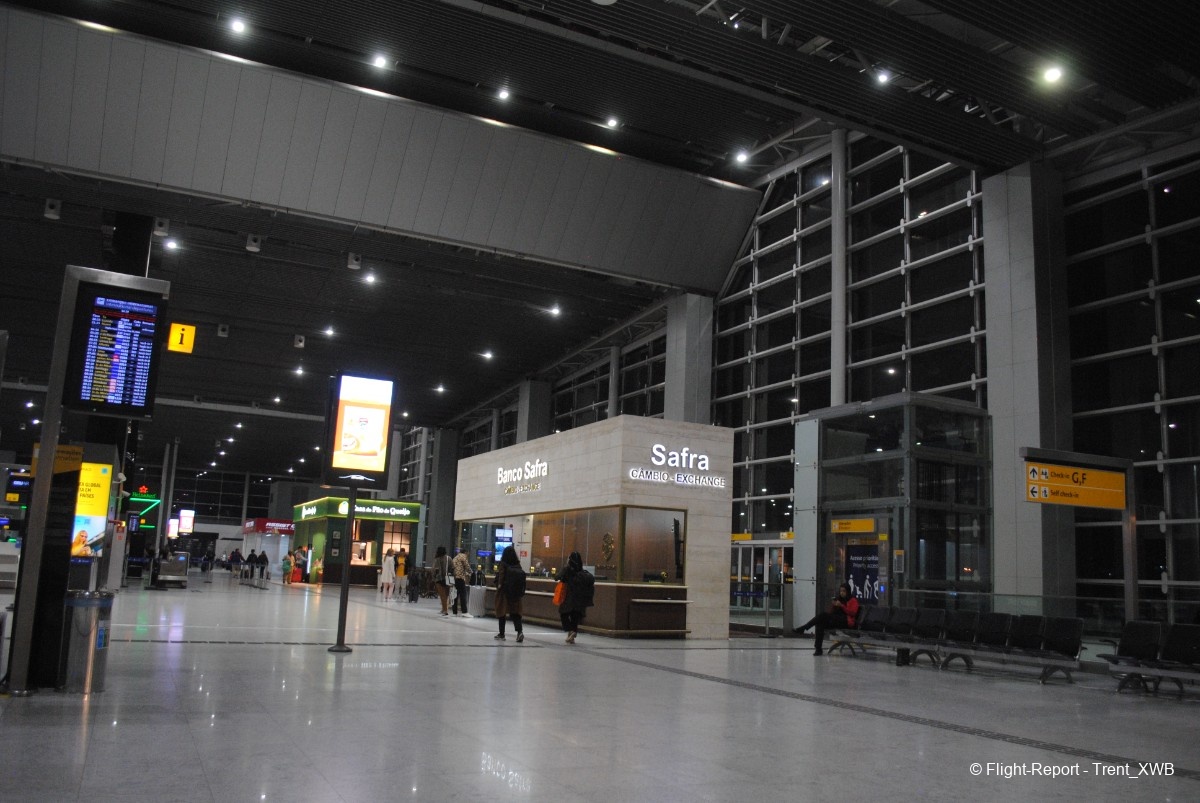
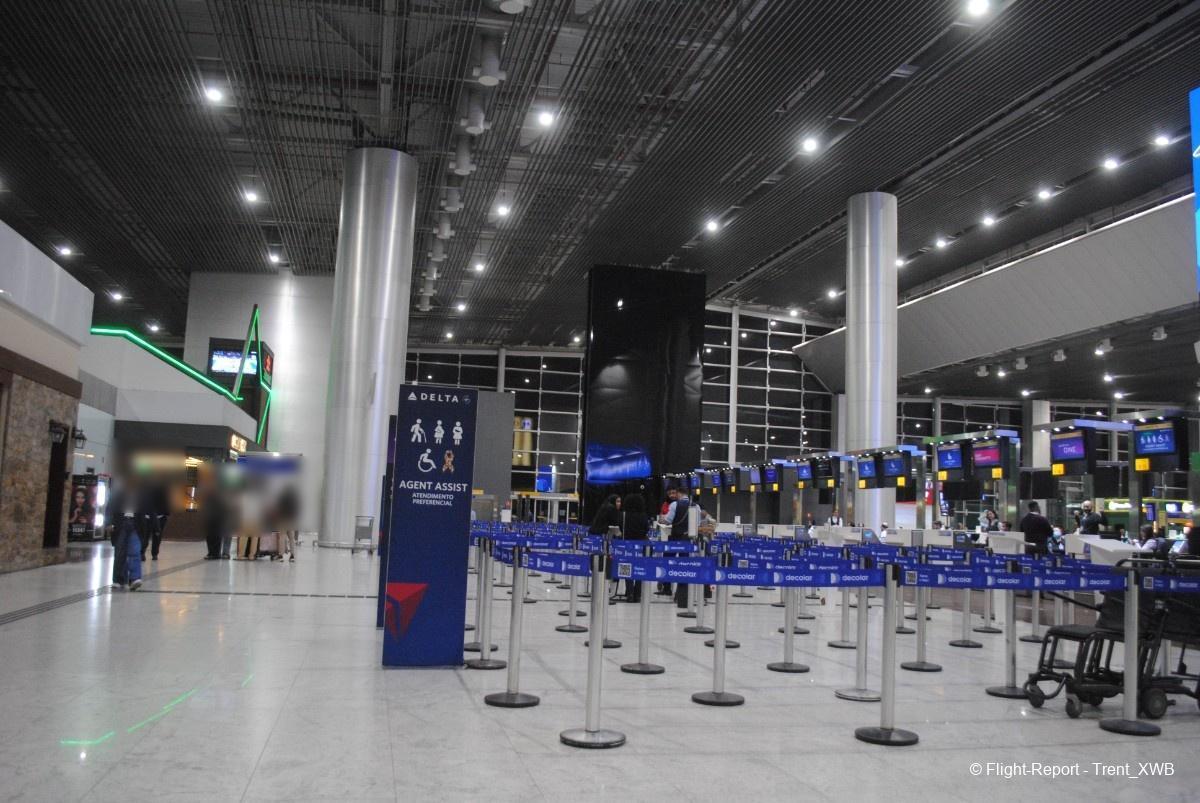
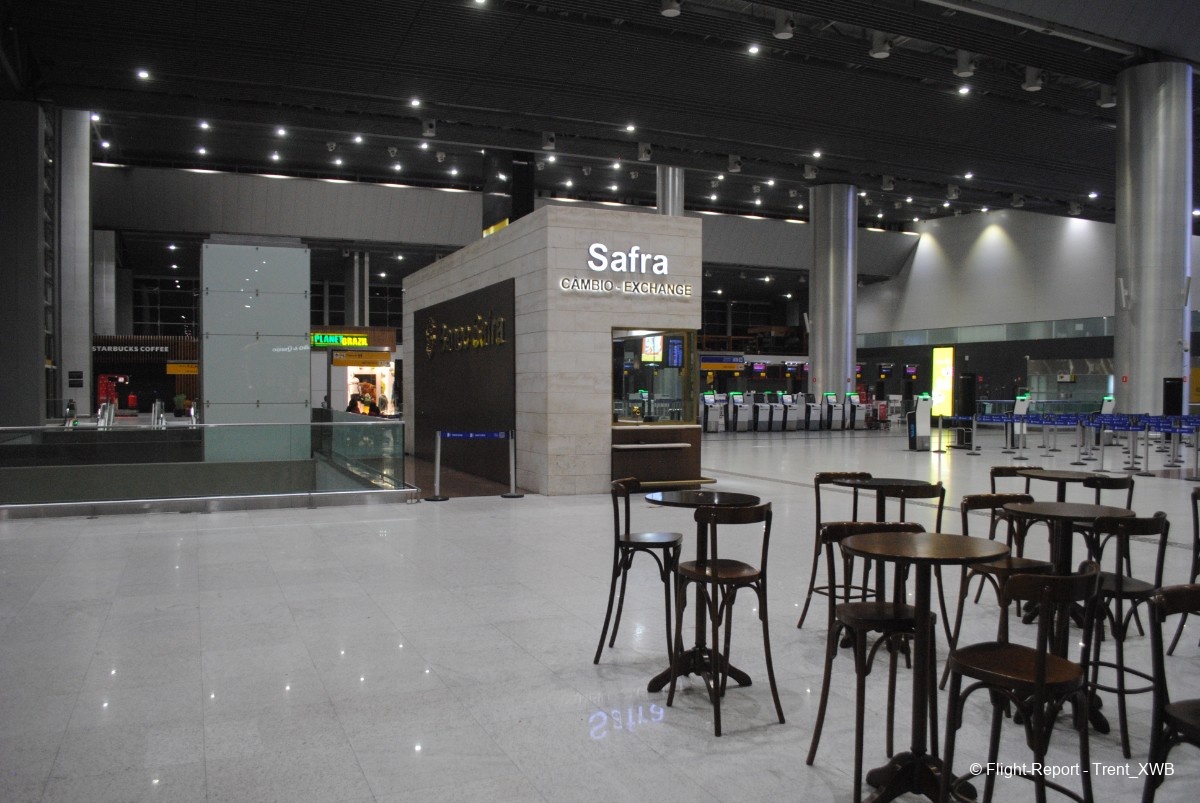
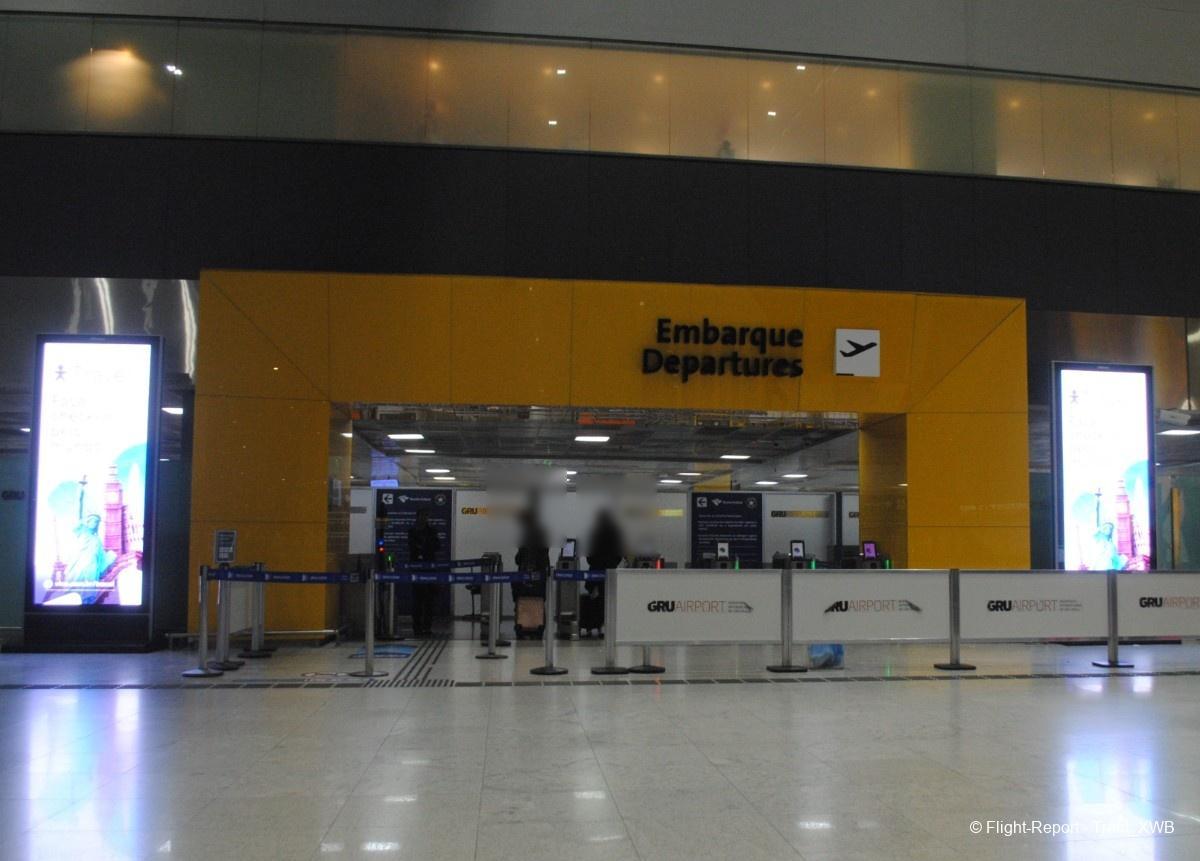
Entrance to the departures. Not this time. I will miss T3 GRU…
A restaurant on the ground level with the opening to the check-in hall.
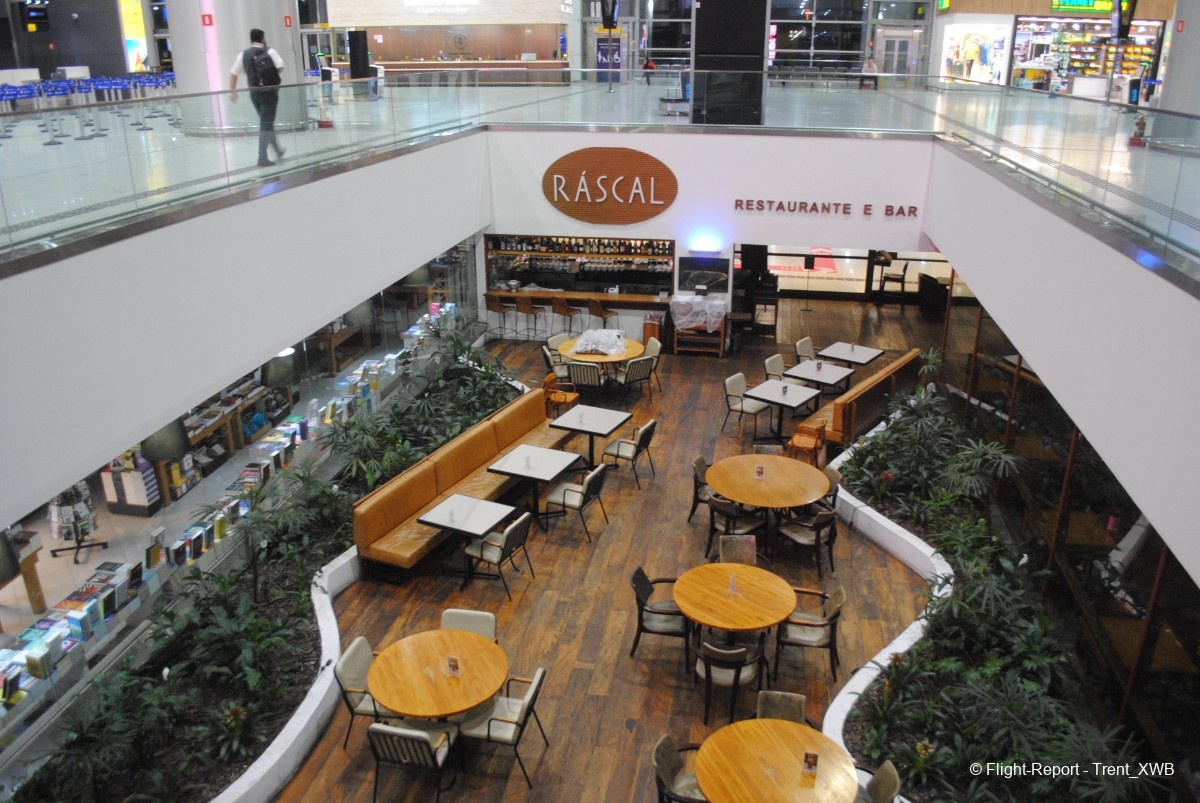
Views of the arrivals (ground level).
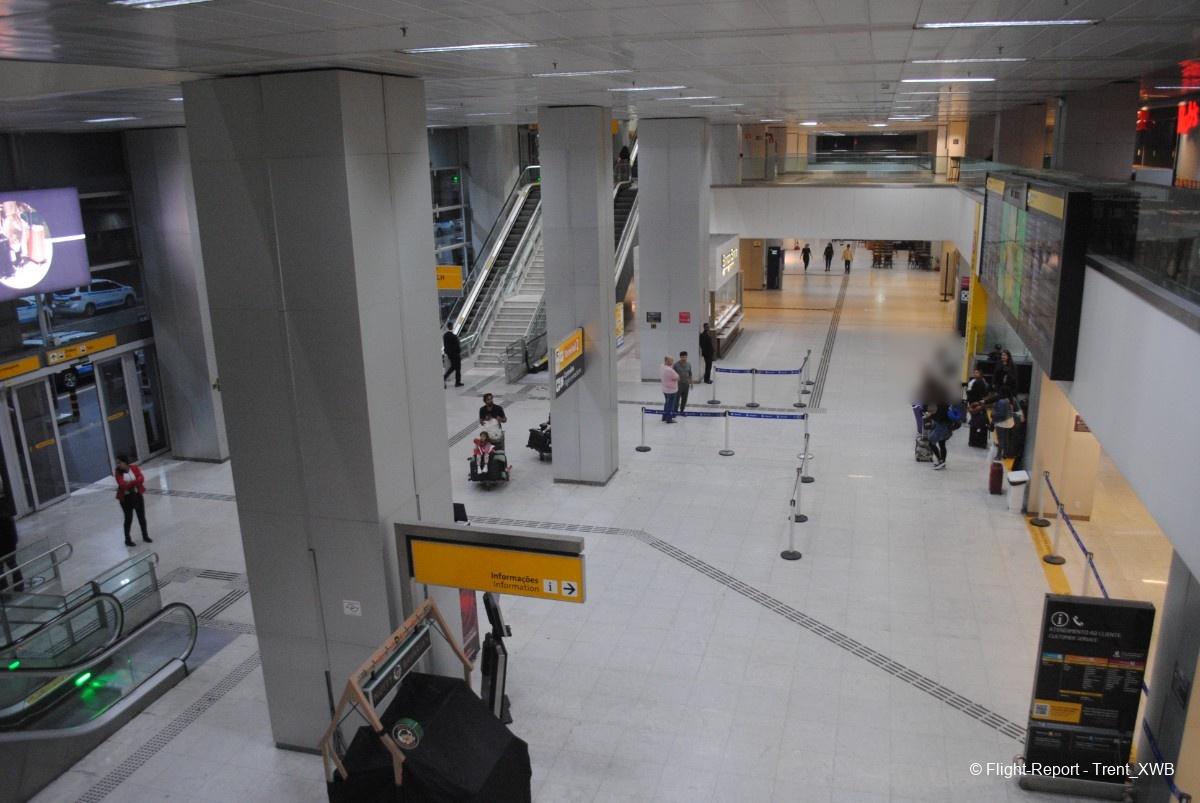
LATAM's desks for connecting passengers and a cafe named "3 Coracoes" (3 hearts).
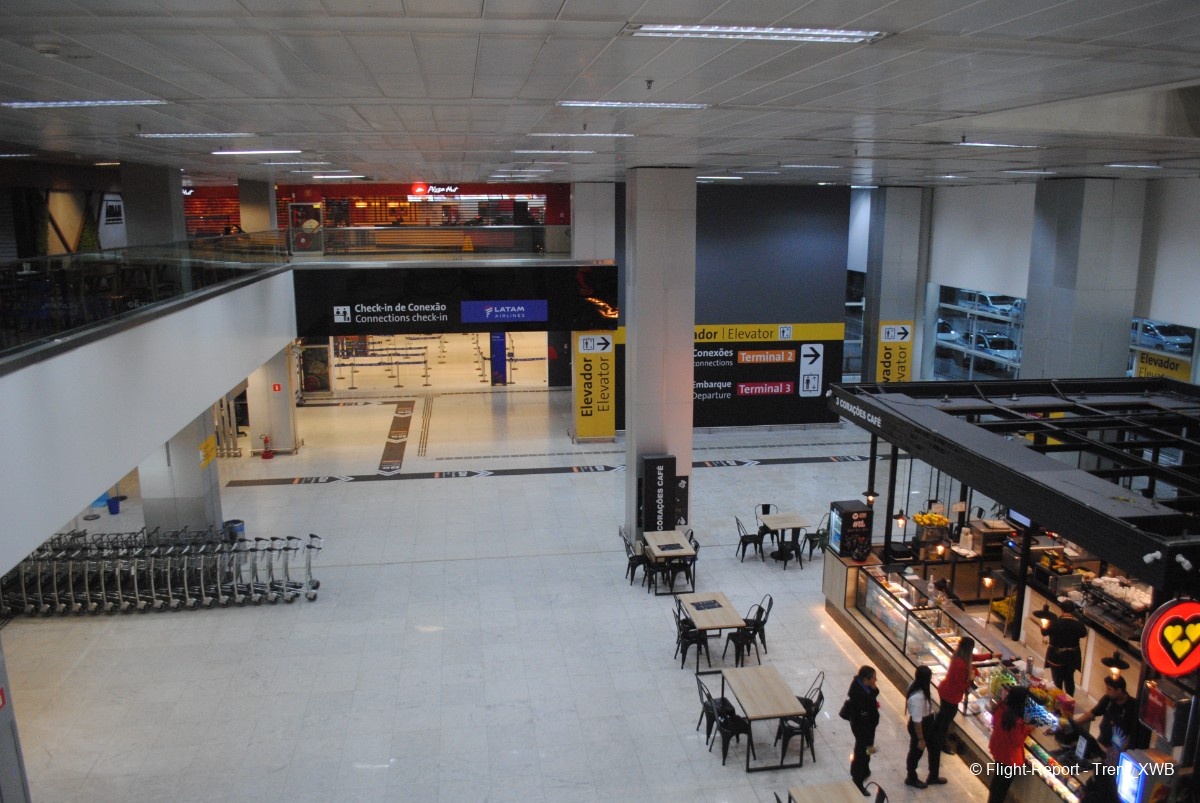
Some popular eateries and cafes on the arrivals level.
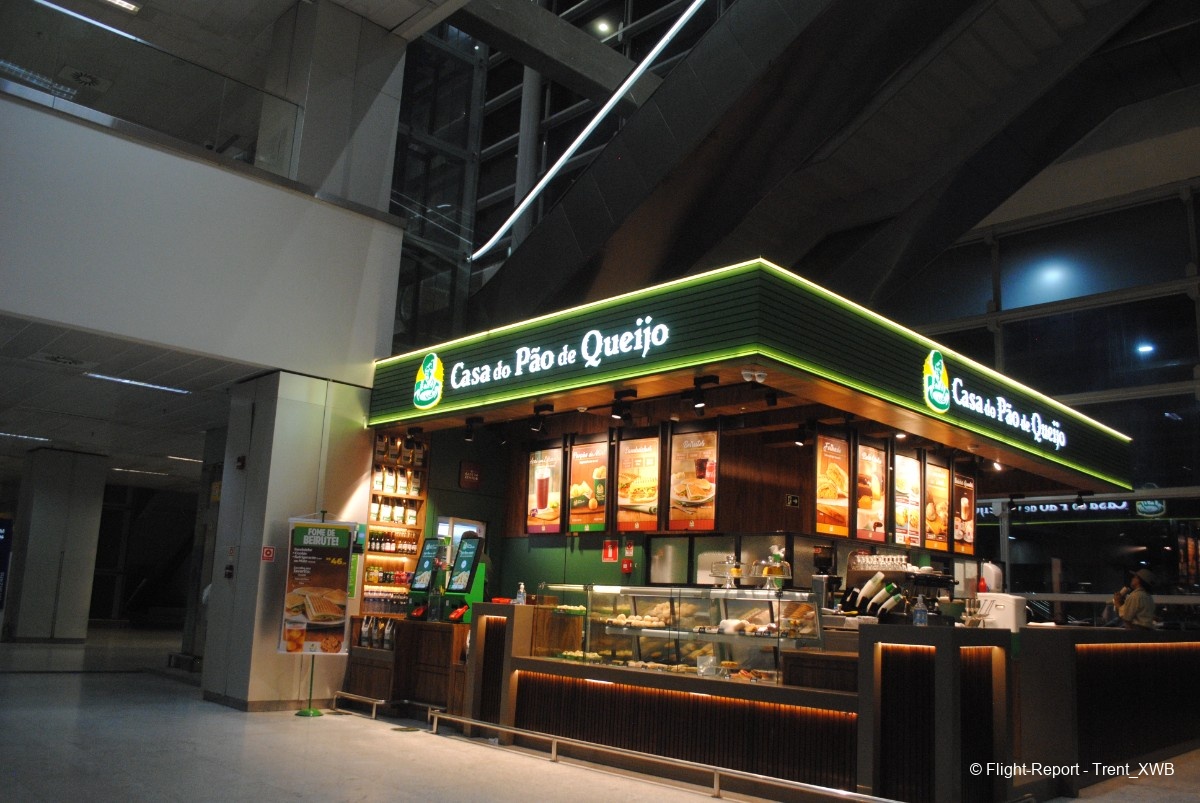
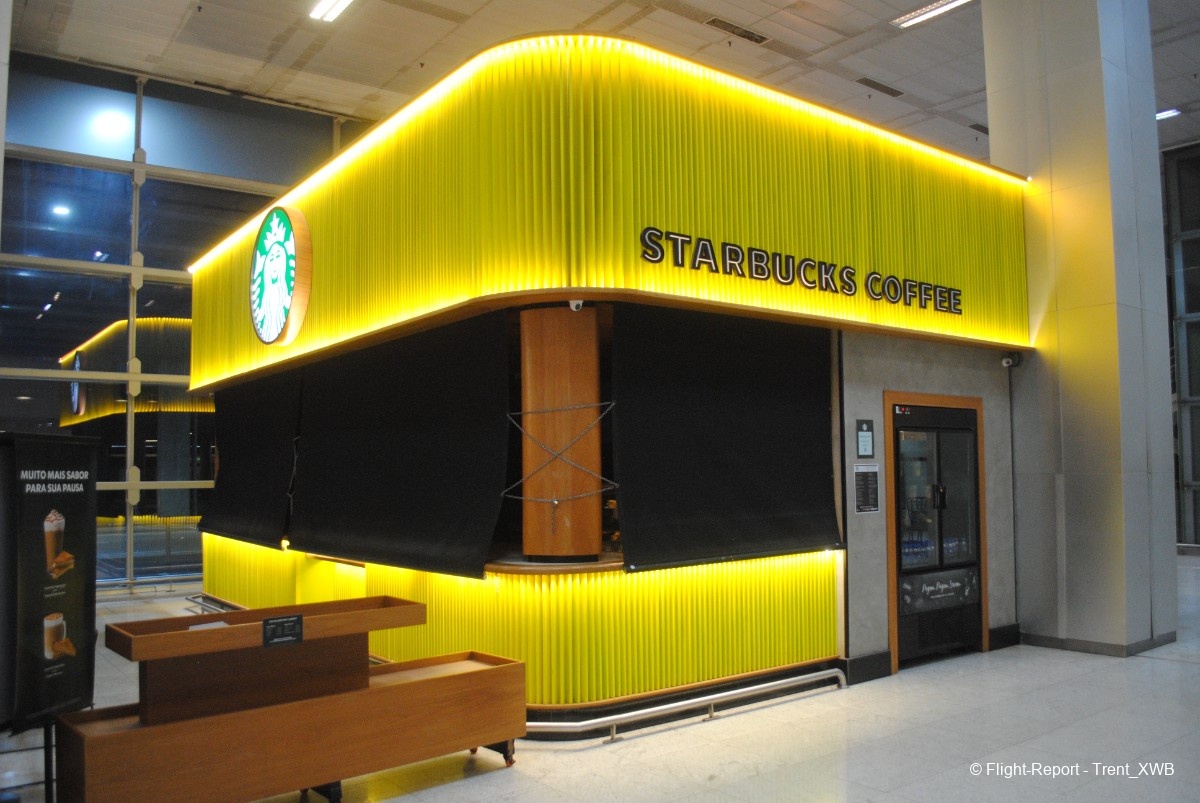
Time to leave the airport and go outside.
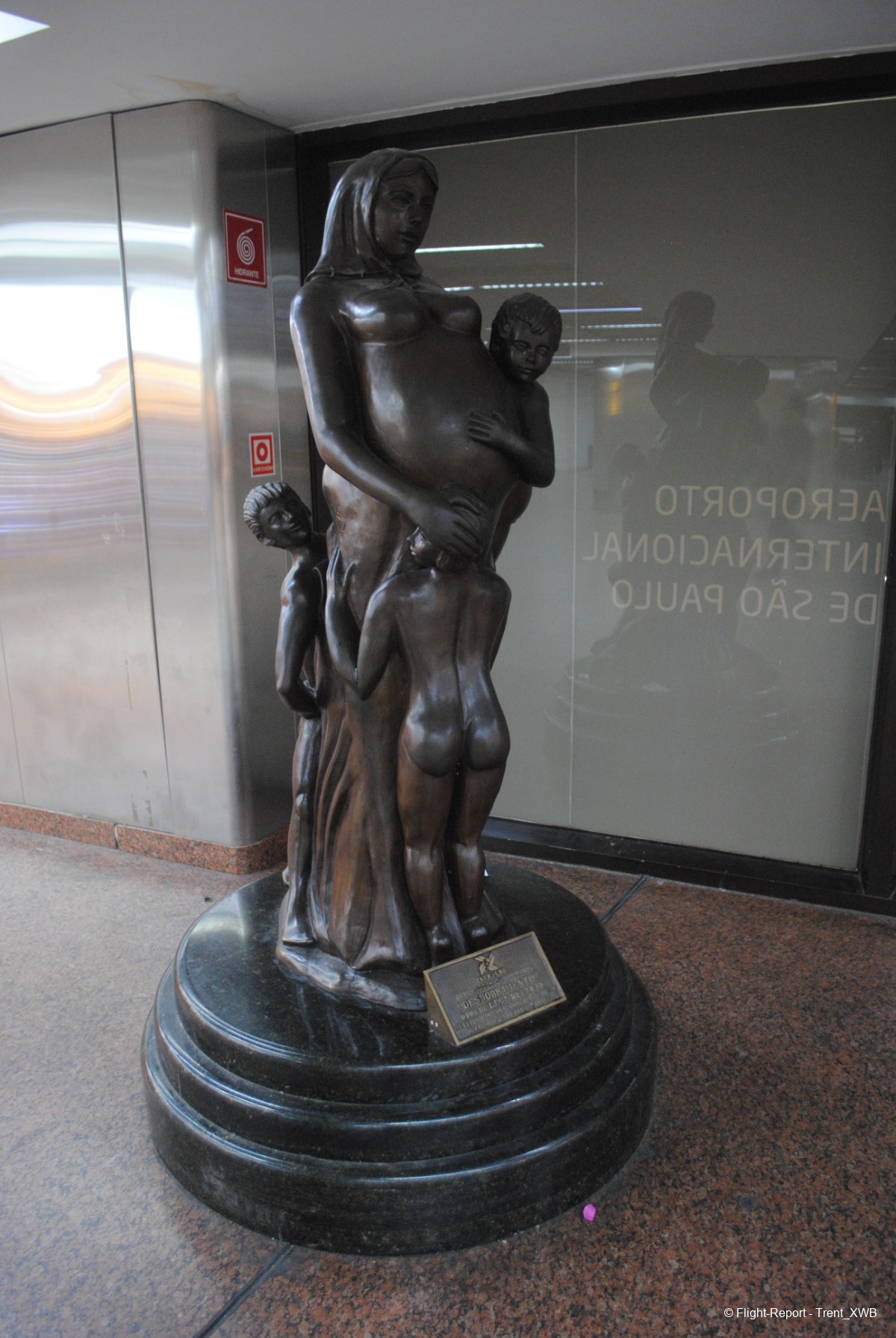
A sculpture named "Unfolding" (author - Lecy Beltran) near the main entrance to T2 (one can also find here a Carrefour, open 24 hrs).
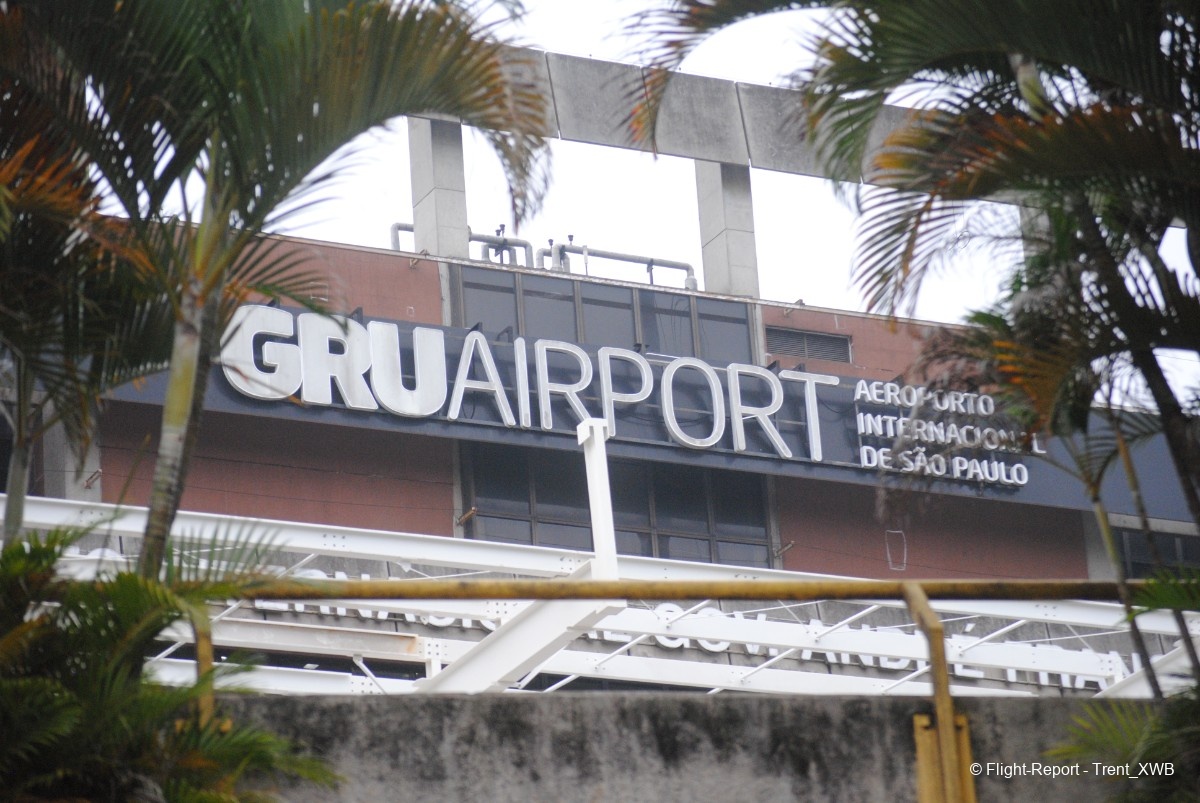
T2 from the outside.
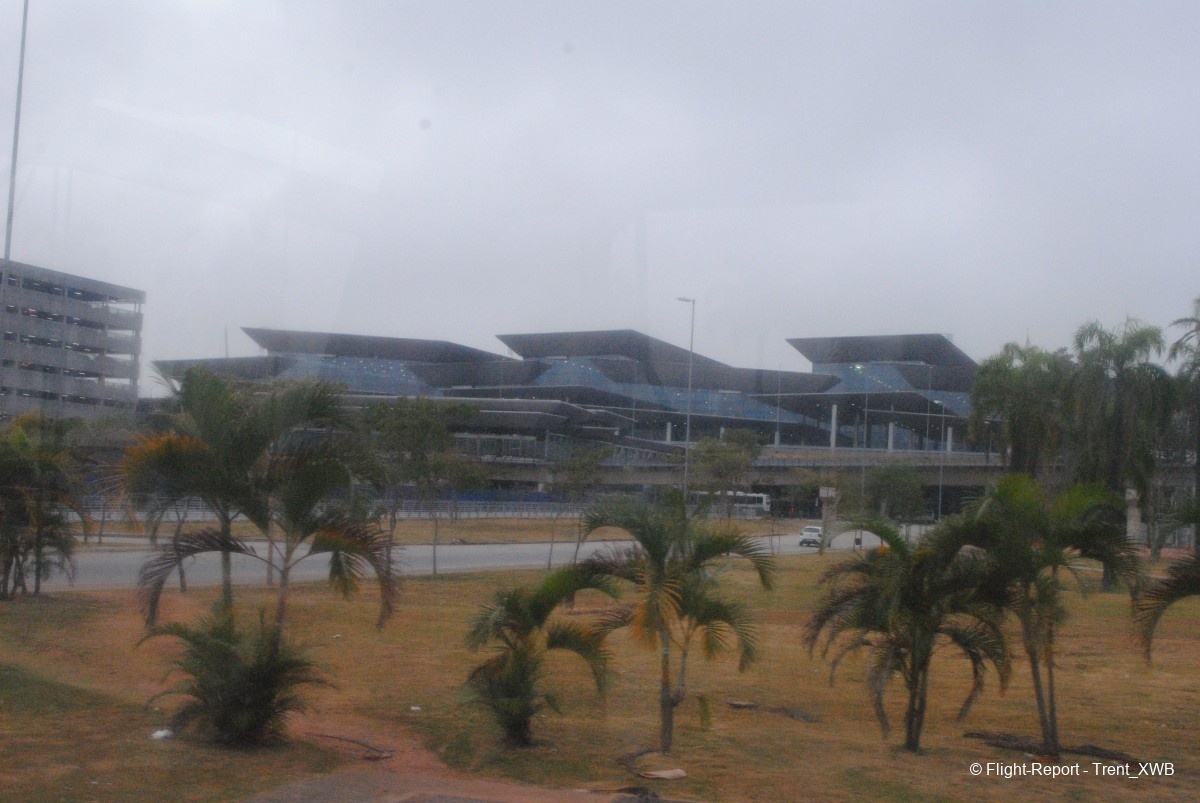
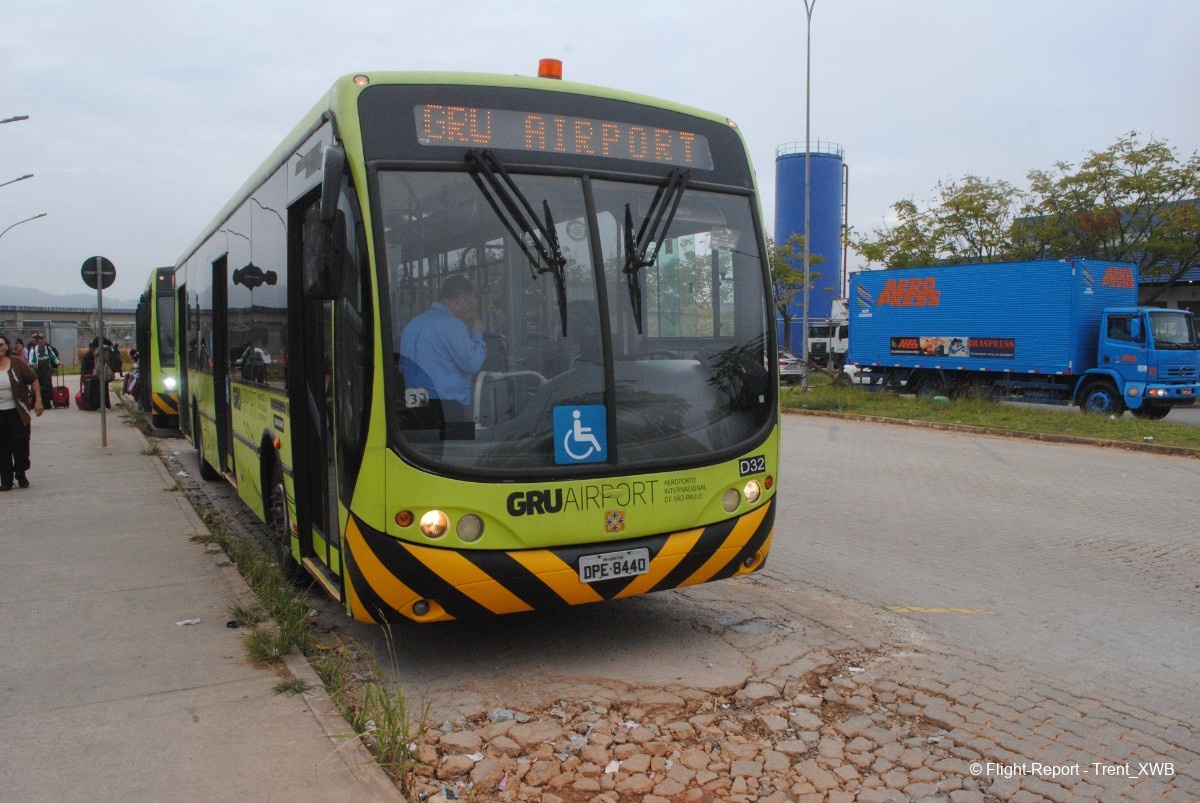
Beautiful T3 from the outside (a view from the shuttle, connecting the terminals with the LRT station).
GRU CPTM: From The Airport To The City
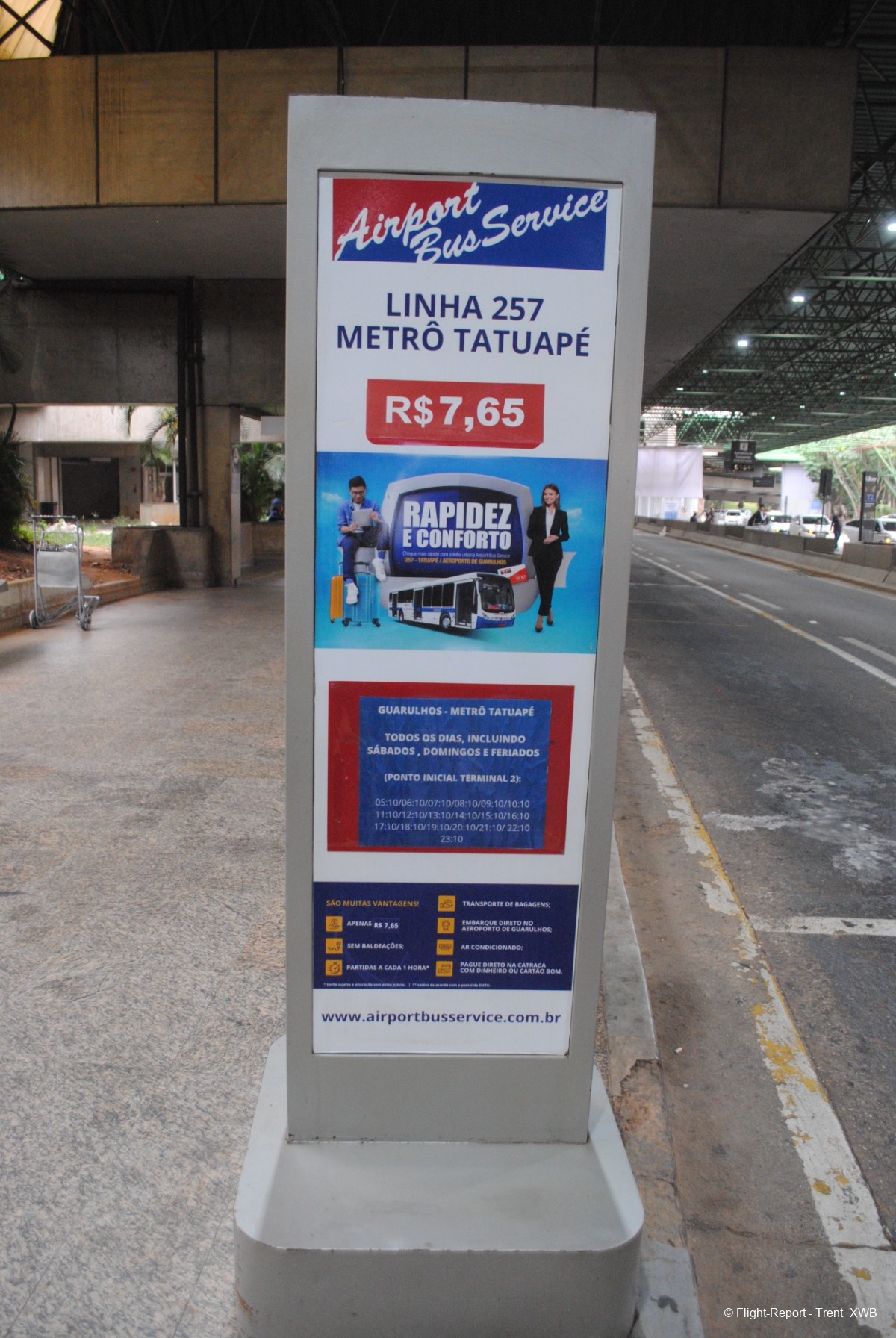
Until 2018 GRU had only one option of public transport to the city: the bus 257, connecting T2 with Tatuape subway station (Line 12). I used this bus back in 2016. Now this bus runs not so frequently: just hourly. Worth noting that this bus is prone to traffic jams, which are not infrequent on the highway, connecting Guarulhos with Sao Paulo.
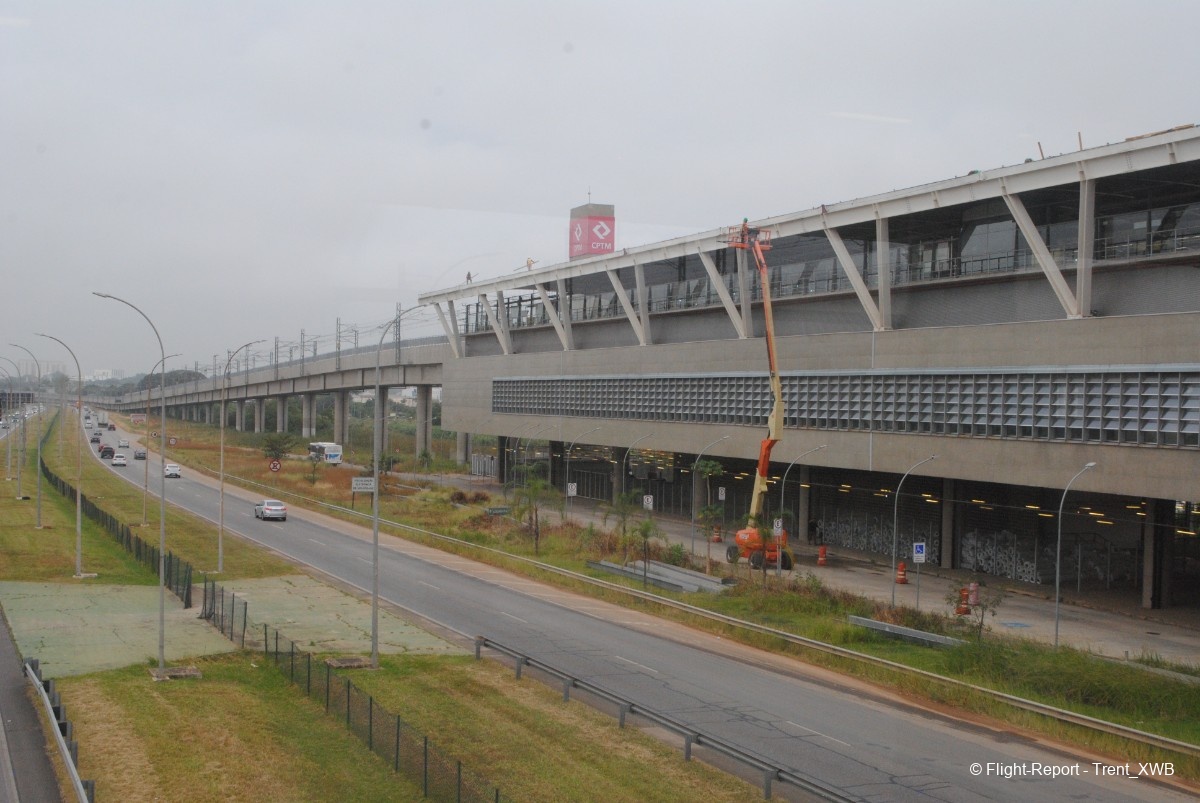
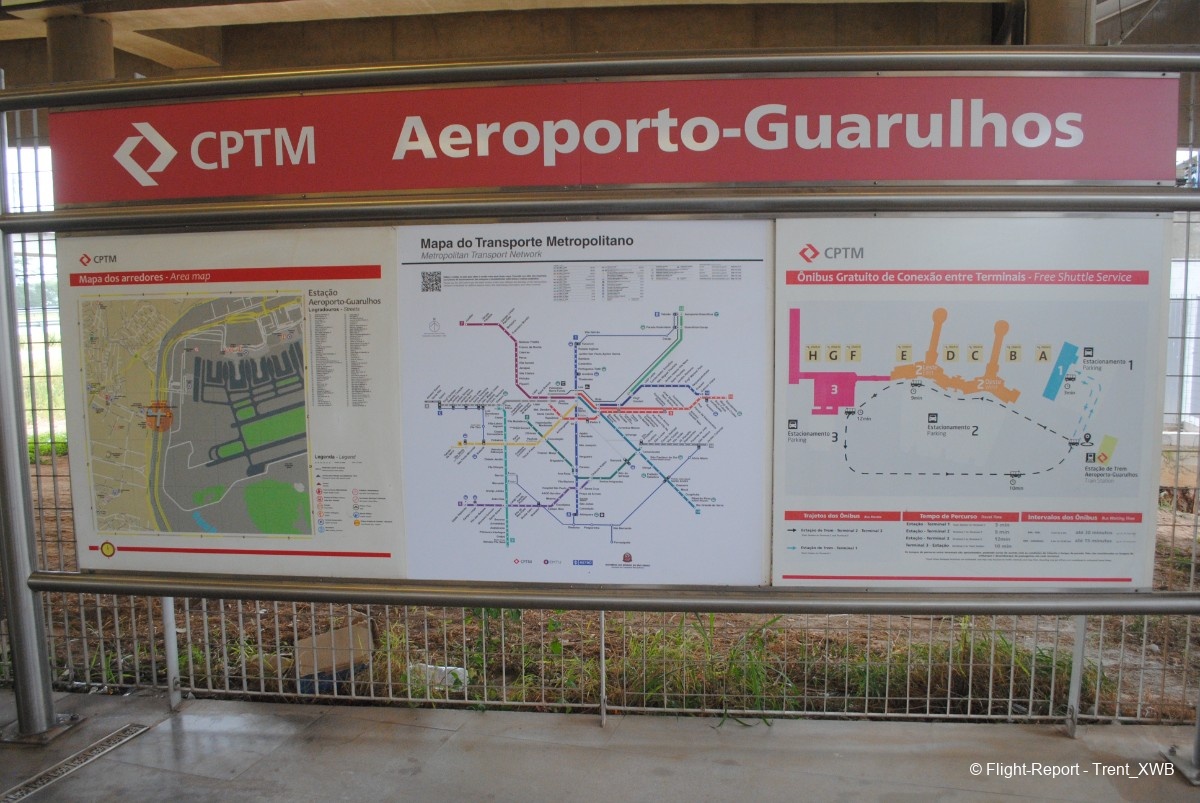
But now you have much better option: CPTM (Companhia Paulista de Trens Metropolitanos) Line 13, connecting GRU with Engenheiro Goulart station (Line 12). The thing is that GRU CPTM station was built not near the main terminal complex (T3 + T2), but near T1, and one has to take a free shuttle, which makes circuit route around the terminals. But there are some good news: GRU is about to launch the people mover, connecting T3, T2, T1 and GRU CPTM.
GRU CPTM station (Line 13).
The scheme of the airport shuttle and the map of the vast CPTM network (one of the best in the western hemisphere, on par with Santiago de Chile' and Buenos Aires' ones).
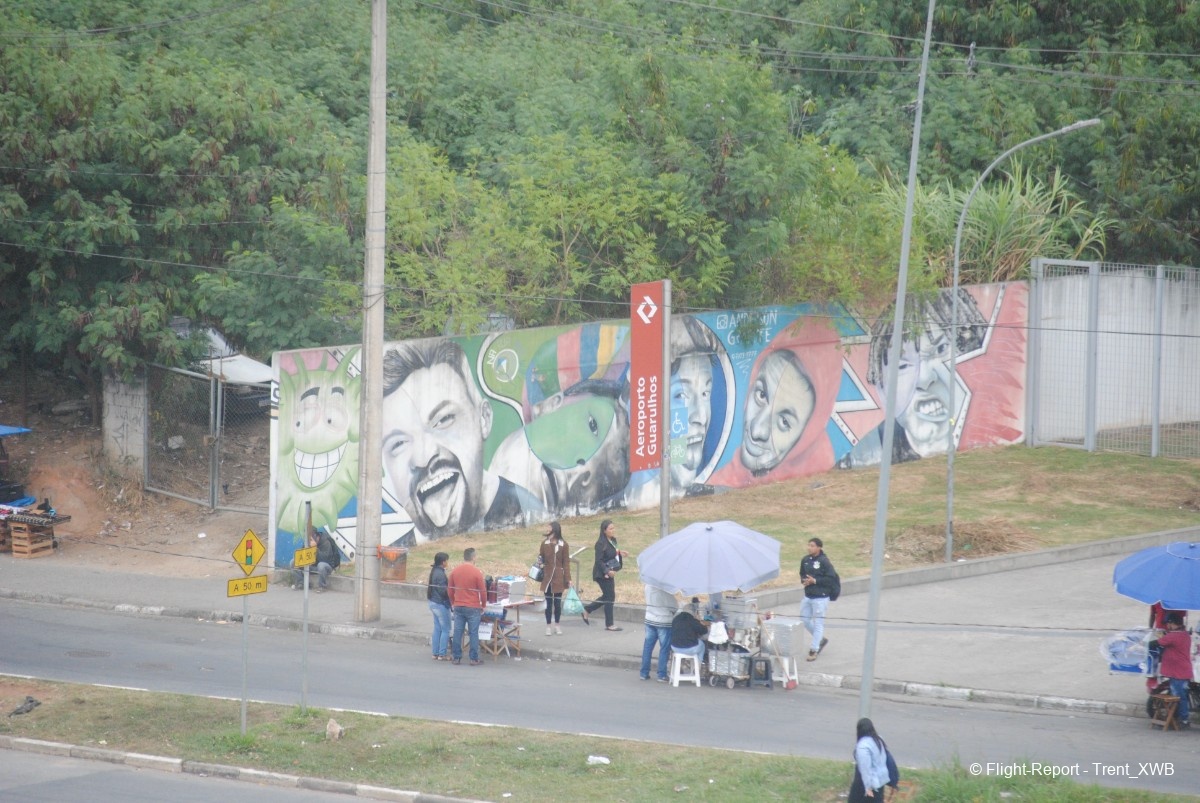
Sao Paulo - one of the world's capitals of murals. One can already see some of them from this station.
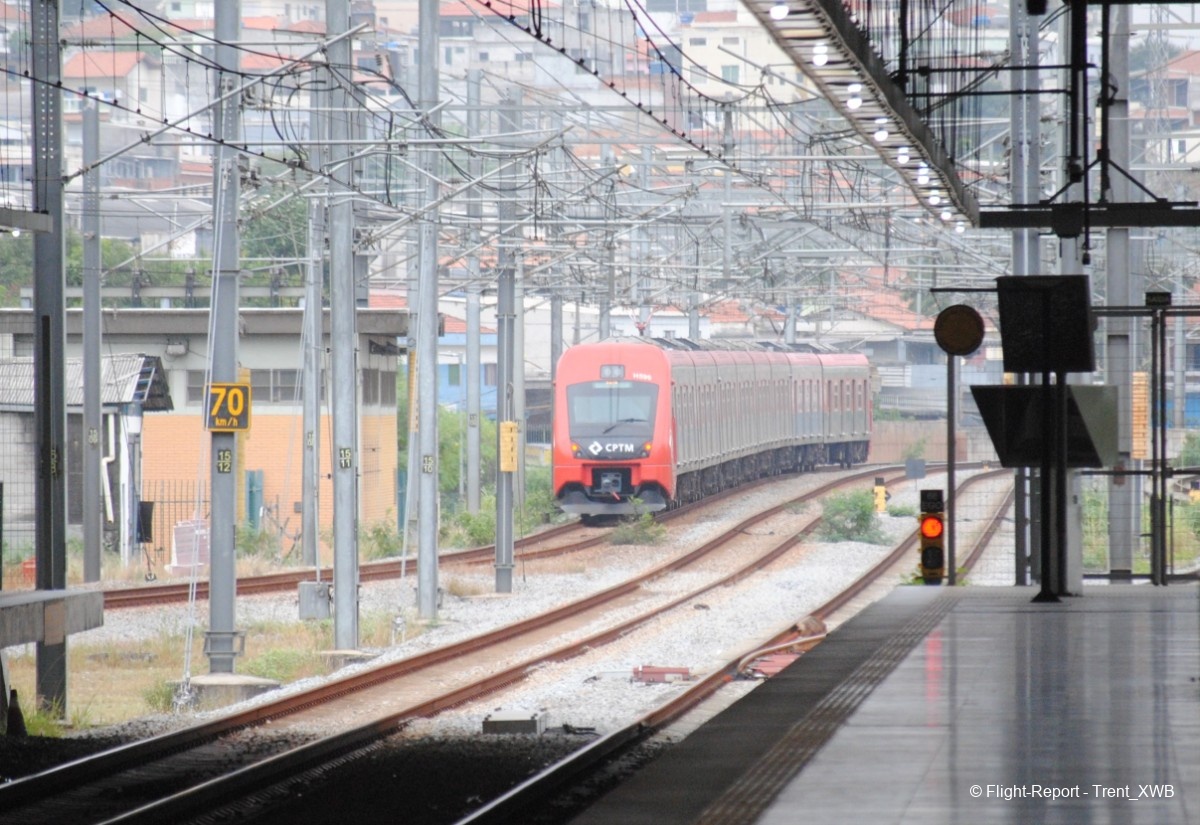
The typical CPTM train on the Line 13.
Planespotting From GRU CPTM Station
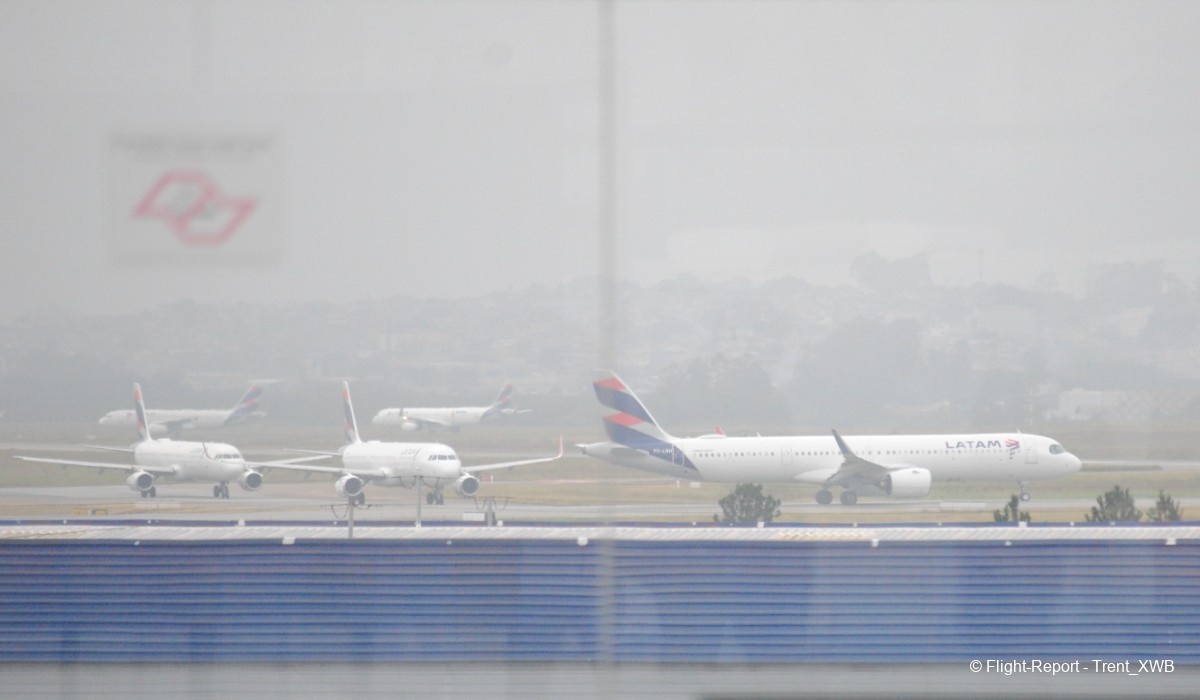
GRU station turned to be quite a good point for planespotting, having nice angles of view of the GRU runways.
A then-brand-new LATAM A21N (PS-LBH) and a row of LATAM narrowbodies.
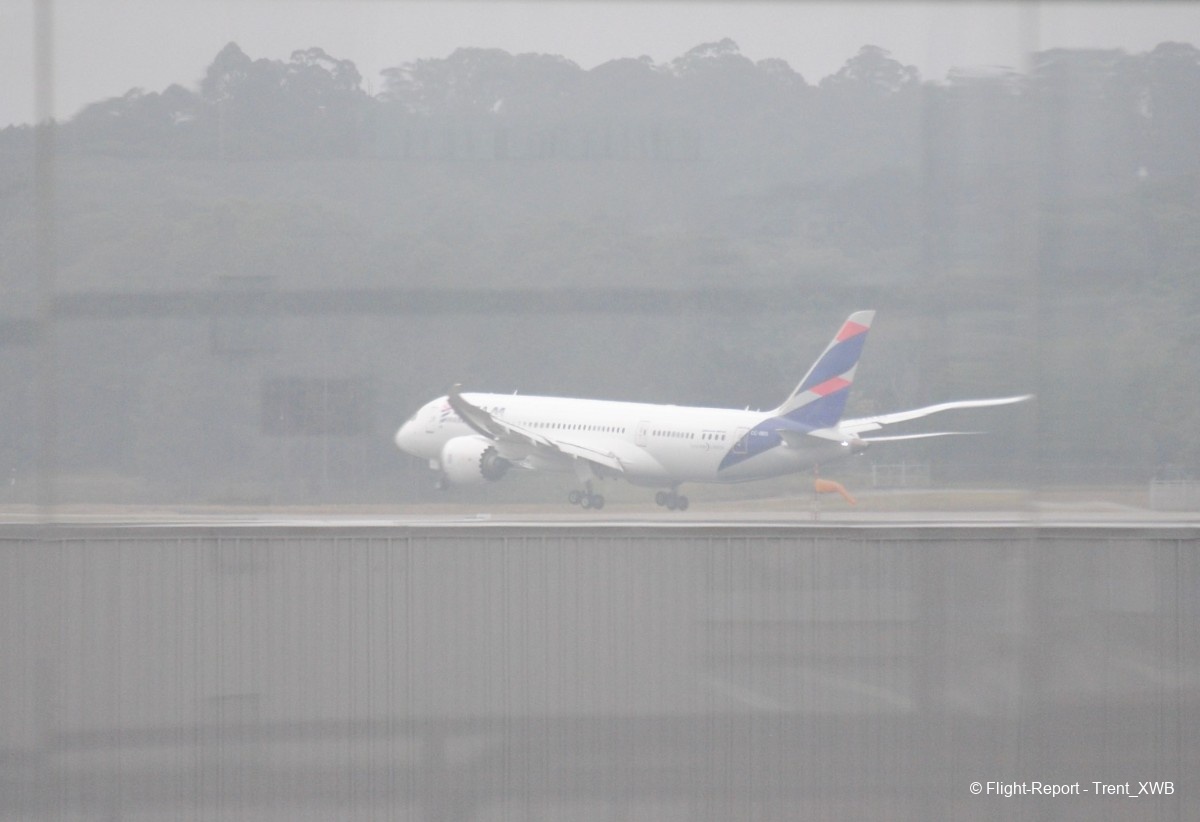
LATAM B788 landing.
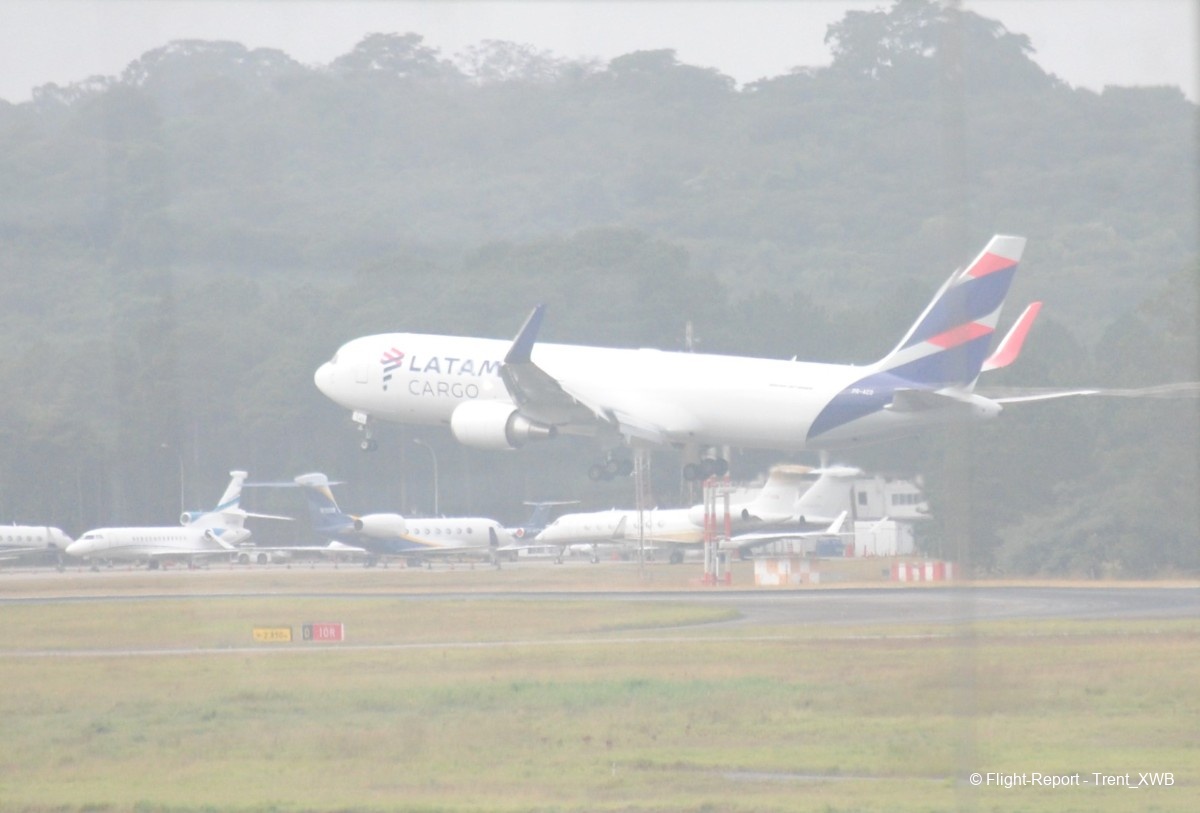
LATAM Cargo B763F (PR-ACO) landing with some vortex from the wing.
An Atlas Air B748F (who knows - probably the last built one) taxiing to the runway, followed by a Dreamliner, and a row of narrowbodies on the parallel taxiway.
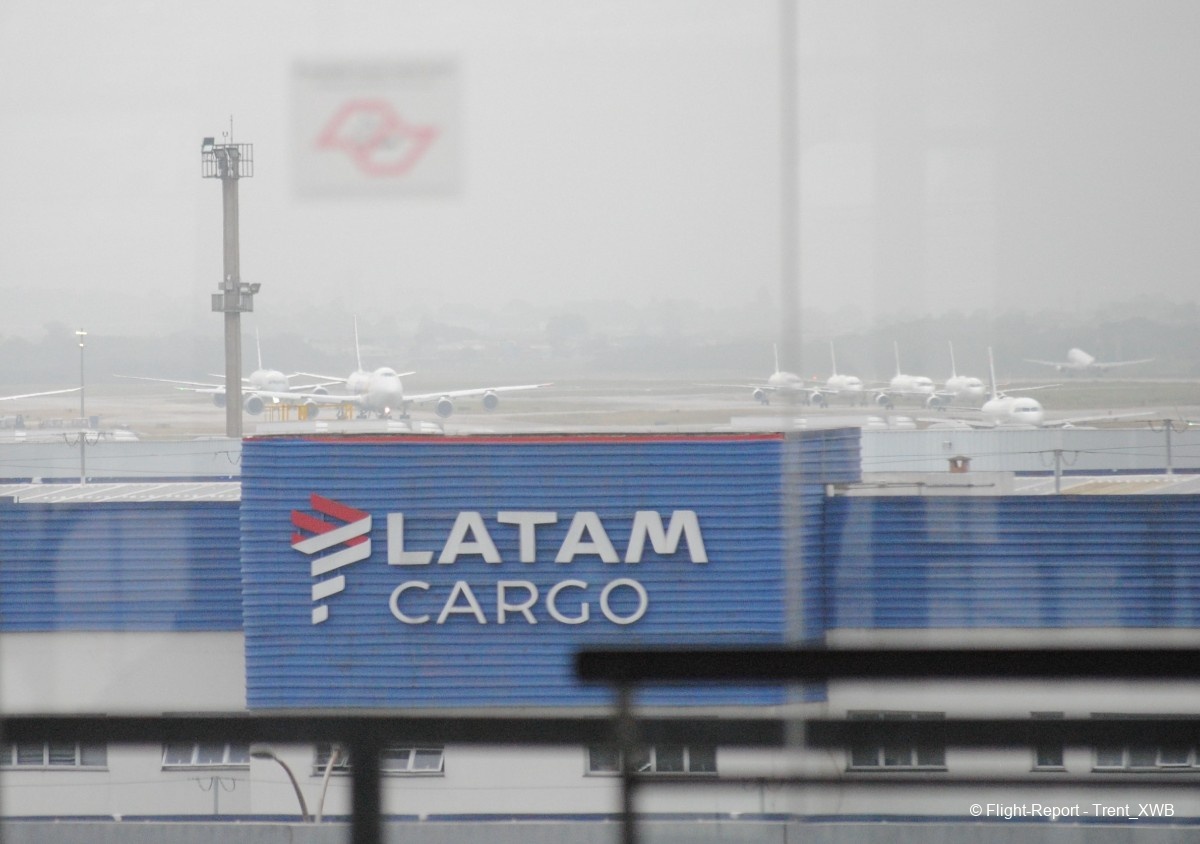
Bonus: From Guarulhos (GRU) To Campinas (VCP) On Public Transport
And now I'll show how I transferred from GRU to VCP. If you have enough time, you can follow my way. Buses from Sao Paulo to VCP depart from rodoviario (bus station) Tiete, located near Portuguesa-Tiete station of CPTM Line 1. Getting from GRU to Portuguesa-Tiete requires 3 connections:
1) Line 13: GRU –> Engenheiro Goulart.
2) Line 12: Engenheiro Goulart –> Bras.
3) Line 7 or 11: Bras –> Luz.
4) Line 1: Luz –> Portuguesa-Tiete.
A display at the Bras station calling for humanitarian help (canned foods) for the inhabitants of Rio Grande do Sul state, which was flooded in May 2024. I flew over mighty Uruguay river and its numerous tributaries on GRU-SCL flight in 2017, and one can easily imagine how high can these rivers rise after prolonged rains.

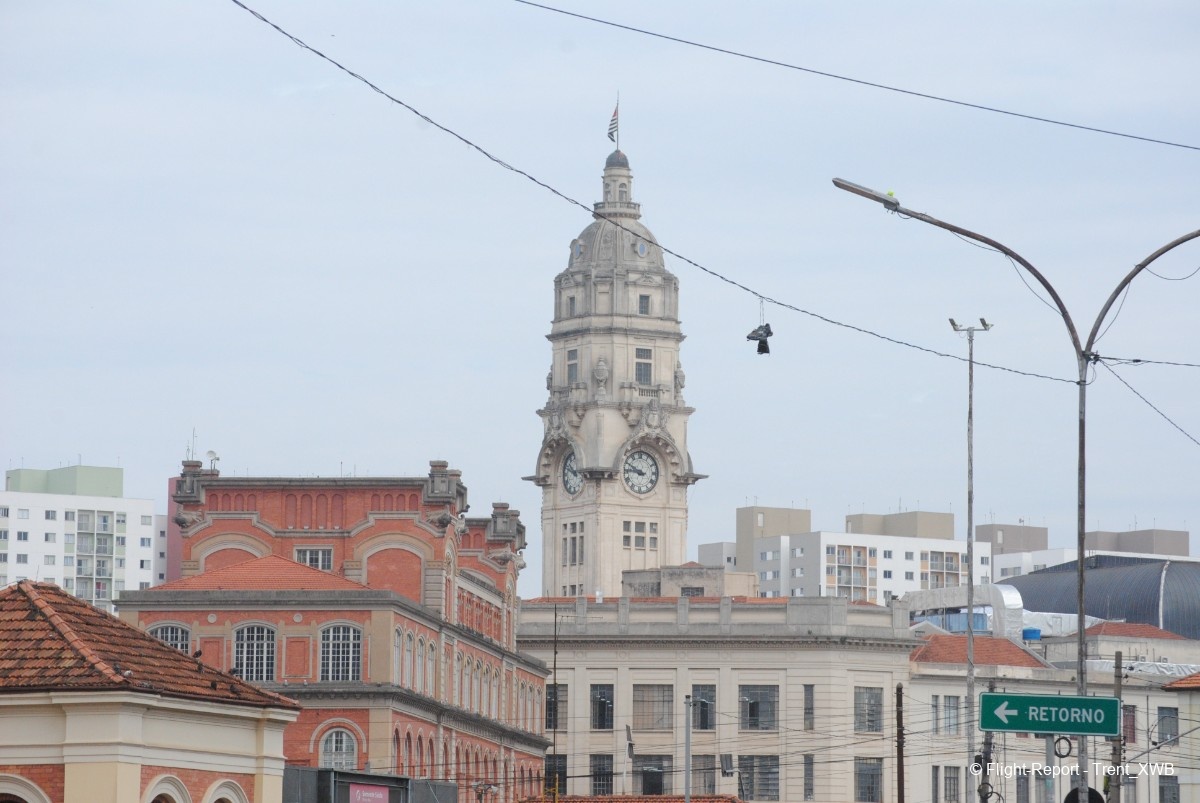
Connecting at the Luz CPTM stations means that one finds himself in the beautiful historic building of the former railway station Luz, which reminds St. Pancras station in London. It was a nice surprise for me.
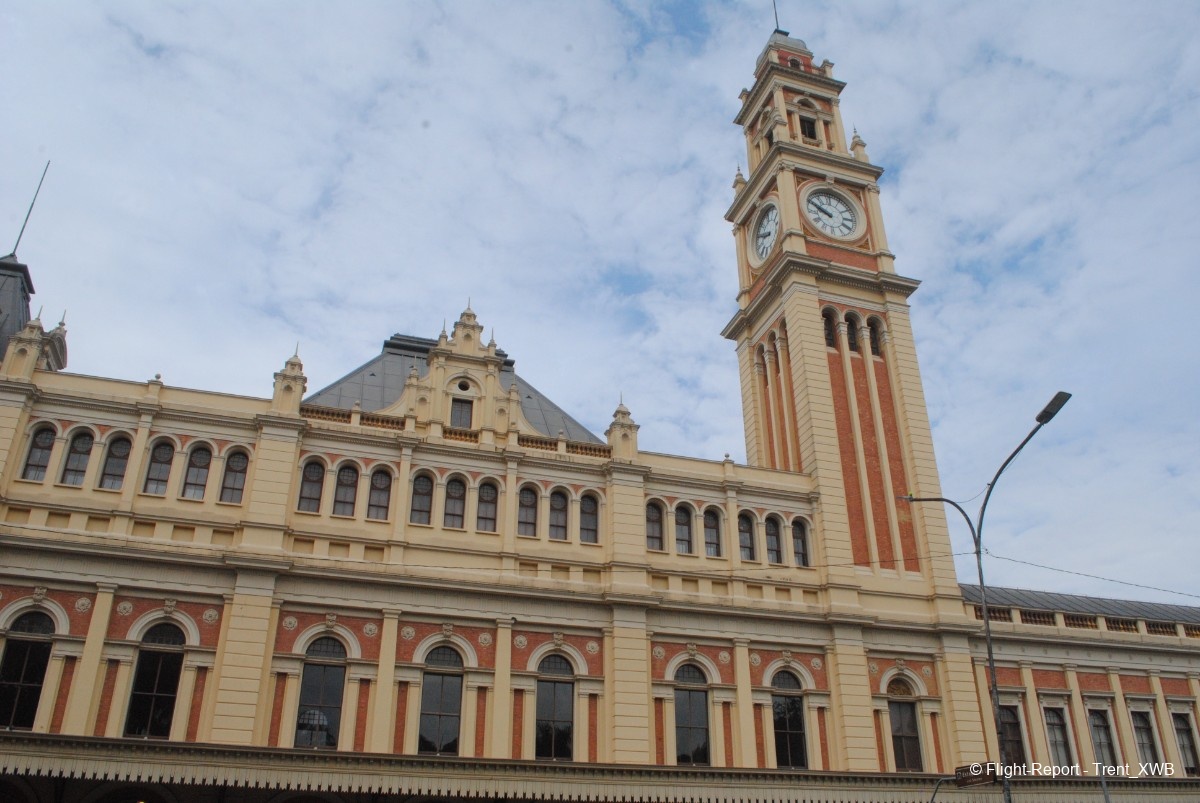
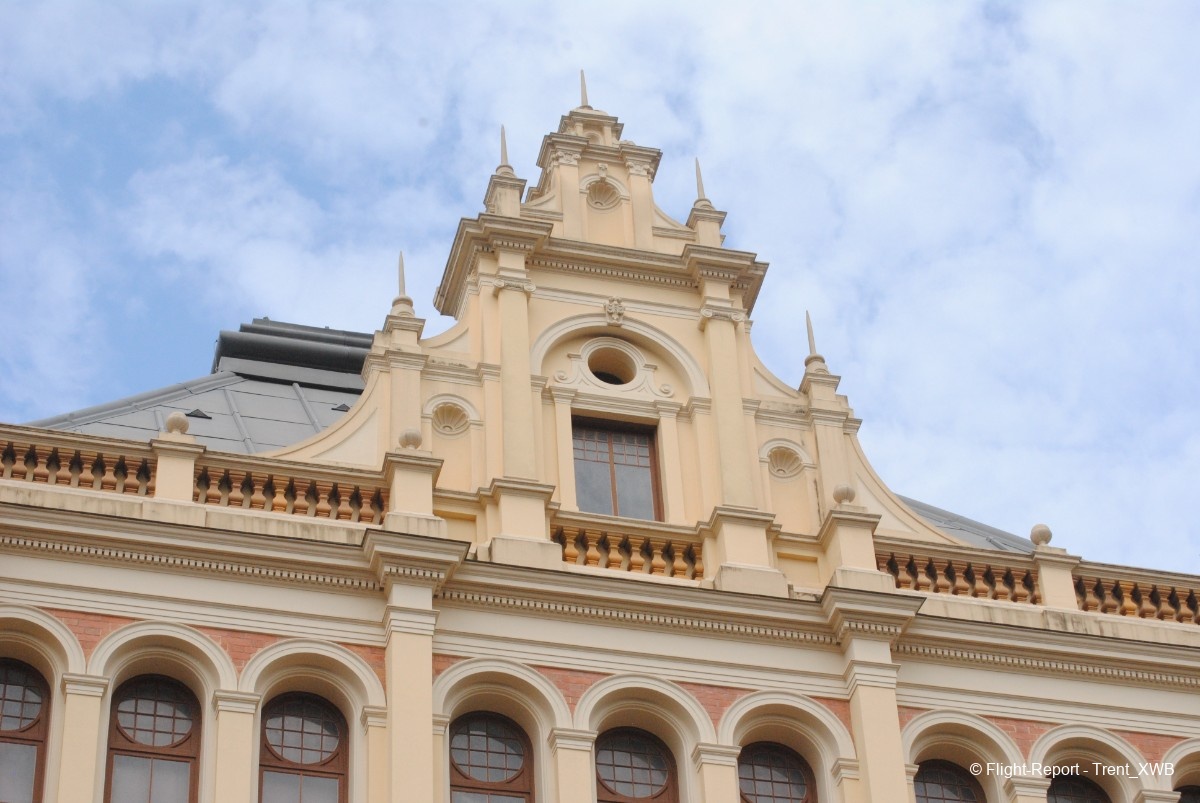
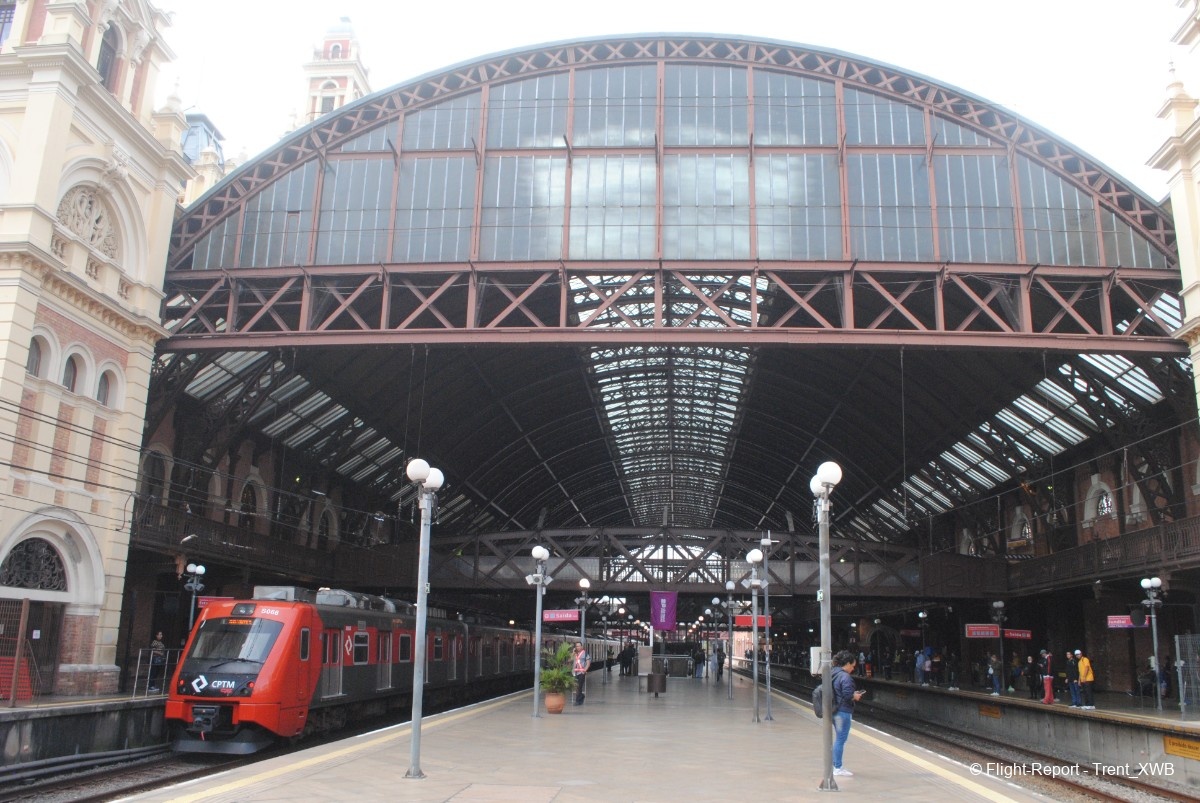
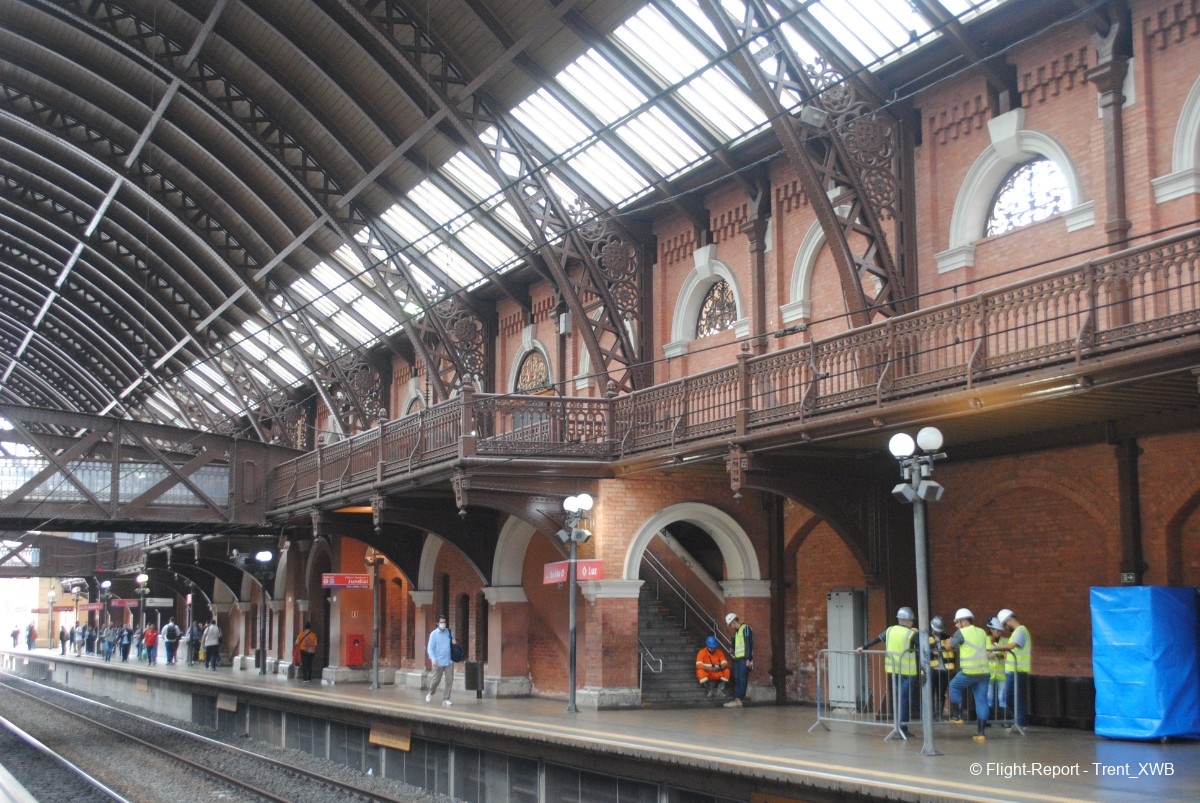
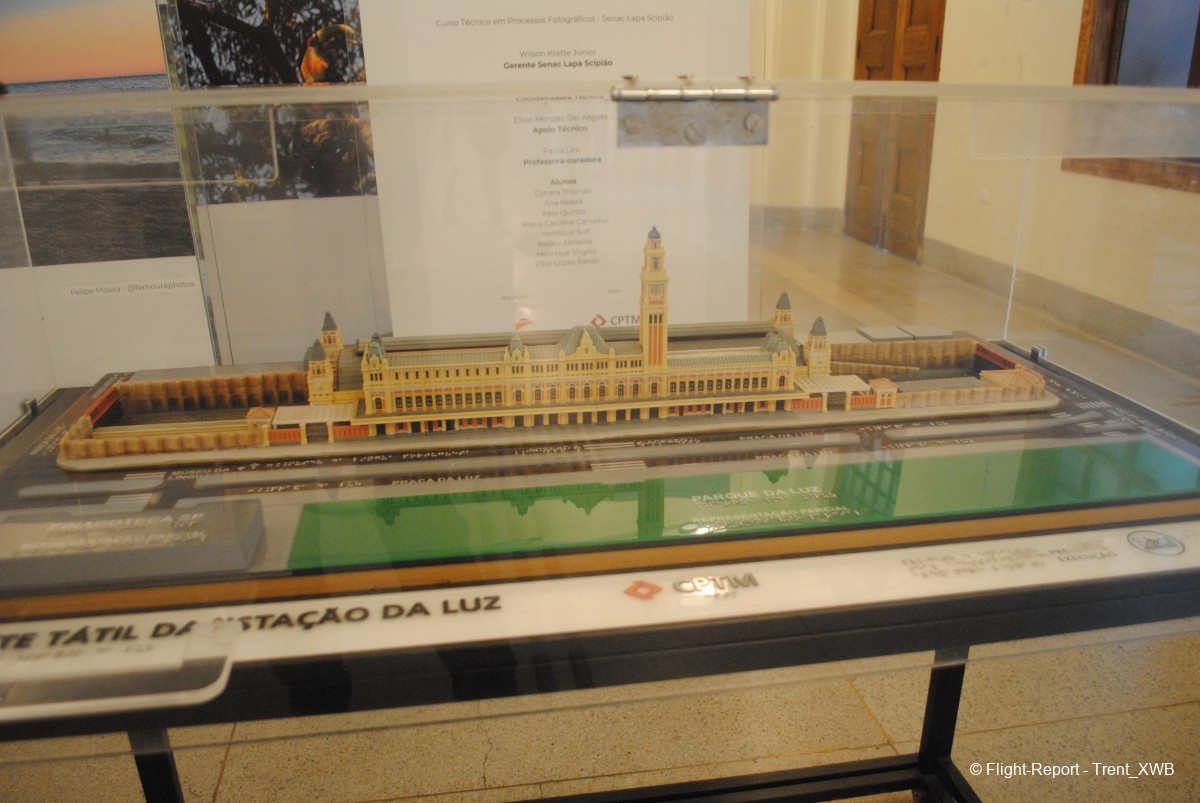
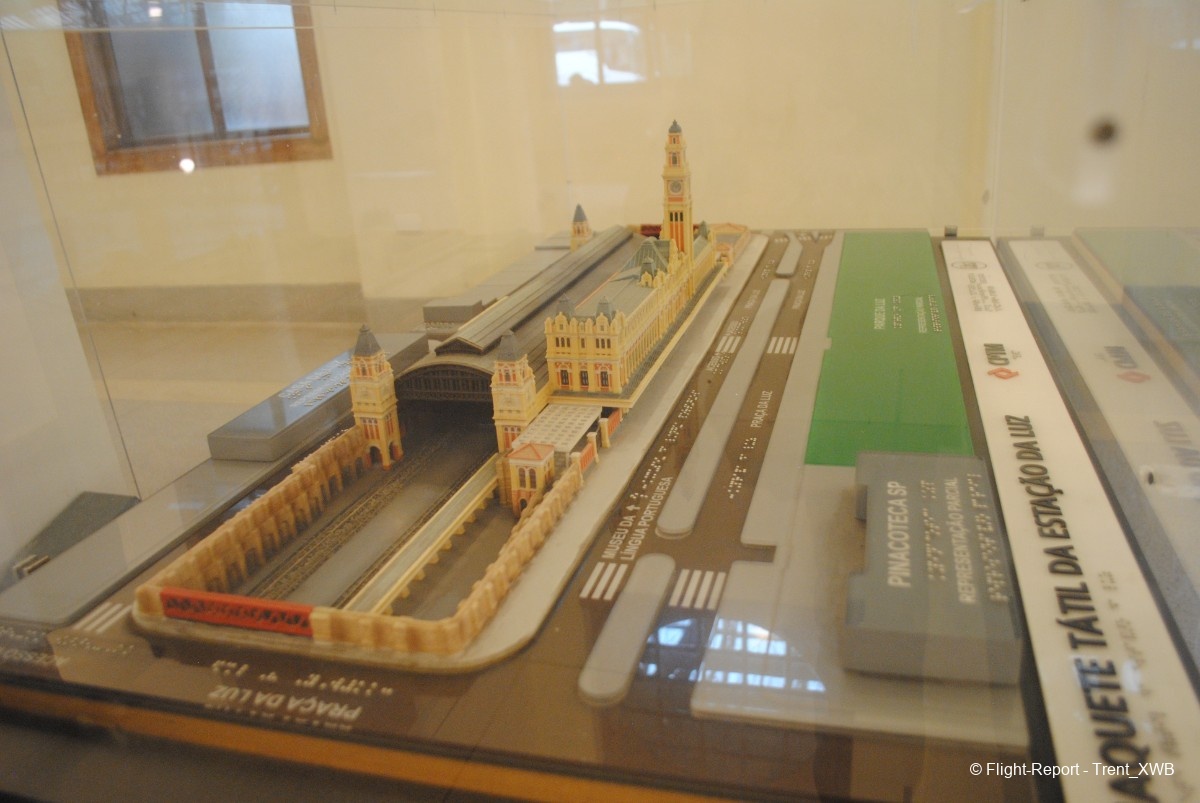
Some Porto vibes outside of the Luz station.
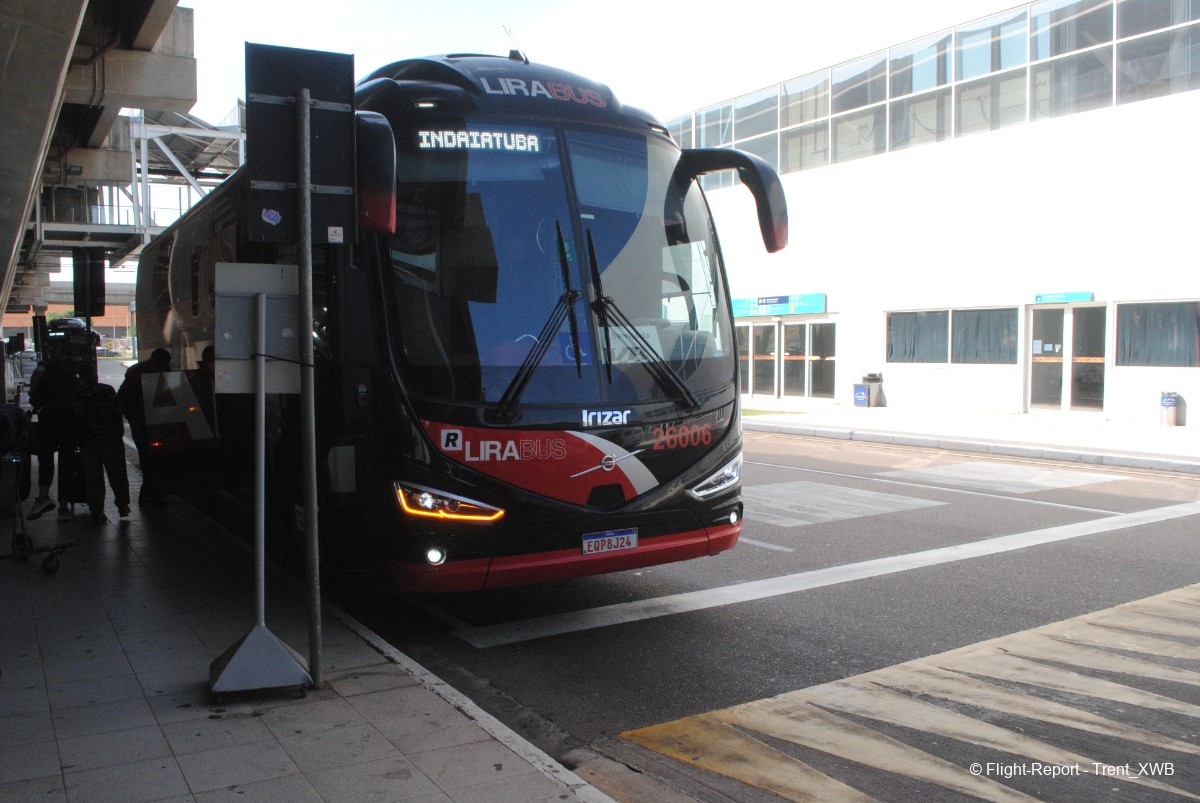
The bus that took me from Tiete rodoviario to VCP airport (arriving ahead of schedule, which was nice). There are a lot of departures from Tiete to VCP during the day. One can buy tickets online in advance on the rodoviario's website. Intercity buses in Brazil (and in Argentina as well) are so much better than ones in New Zealand, where I was before during this round-the-world trip.
Bonus: Campinas Viracopos International Airport (VCP)
Airport system of Sao Paulo area is quite similar to the one of Paris.
The French capital has CDG (with its sofisticated multi-terminal structure) north-east of the city centre in the reasonable distance (well-connected by RERs), has ORY south of the city centre - and closer and connected by a tram with the city's subway network - which can be considered as a "city airport", and then there is BVA 85+ kilometres from the city north-north-west.
The Brazilian financial capital has GRU (also multi-terminal, but much simplier than CDG) north-east of the city centre in the reasonable distance and connected by CPTM, has CGH south-south-west of the city centre and in a quite close distance - a true city airport, and then there is VCP 90+ kilometres from the city north-north-west.
Well, even non-passenger historic airports - Paris Le Bourget, hosting the aviation museum and general/private aviation, and Sao Paulo Campo de Marte (named after Champ de Mars in Paris!), also hosting general/private aviation, are located quite similarly in relation to their respective city centres!
Whereas ORY is an international airport, serving widebody flights, CGH is a domestic airport (former international one) with only narrowbody flights.
At the same time, there are some more similarities between BVA and VCP. BVA is Ryanair-dominated international airport with a few another ULCC carriers. VCP is Azul-dominated international airport with a bit of GOL and LATAM flights. But Azul, being a hybrid-type carrier, is not an ULCC, and VCP also serves passenger- and cargo widebodies.
From 1960 to 1985 VCP served as the main airport of the Sao Paulo area as CGH's runway became too short for the intercontinental jetliners. But the large distance from VCP to Sao Paulo city centre was forcing passengers to fly instead to GIG and connect there for CGH. With the inauguration in 1985 of much better located GRU which became the main Sao Paulo airport, VCP went into sharp decline.
VCP got the new pulse of life in late 2000s when the Brazilian aviation authorities realized that it's very suitable for cargo operations. In 2008 was launched Azul, which made VCP its hub and then the number of flights from VCP increased dramatically. The current passenger terminal was inaugurated in 2015.
Considering the distance between VCP and Sao Paulo city, it's better to take VCP as Campinas airport, not as "Sao Paulo area airport". The same is applicable to BVA - it's Beauvais airport, not a Paris area airport.
The name of VCP airport - Viracopos - is funny, meaning "turn glasses" (i.e. drinking alcohol).
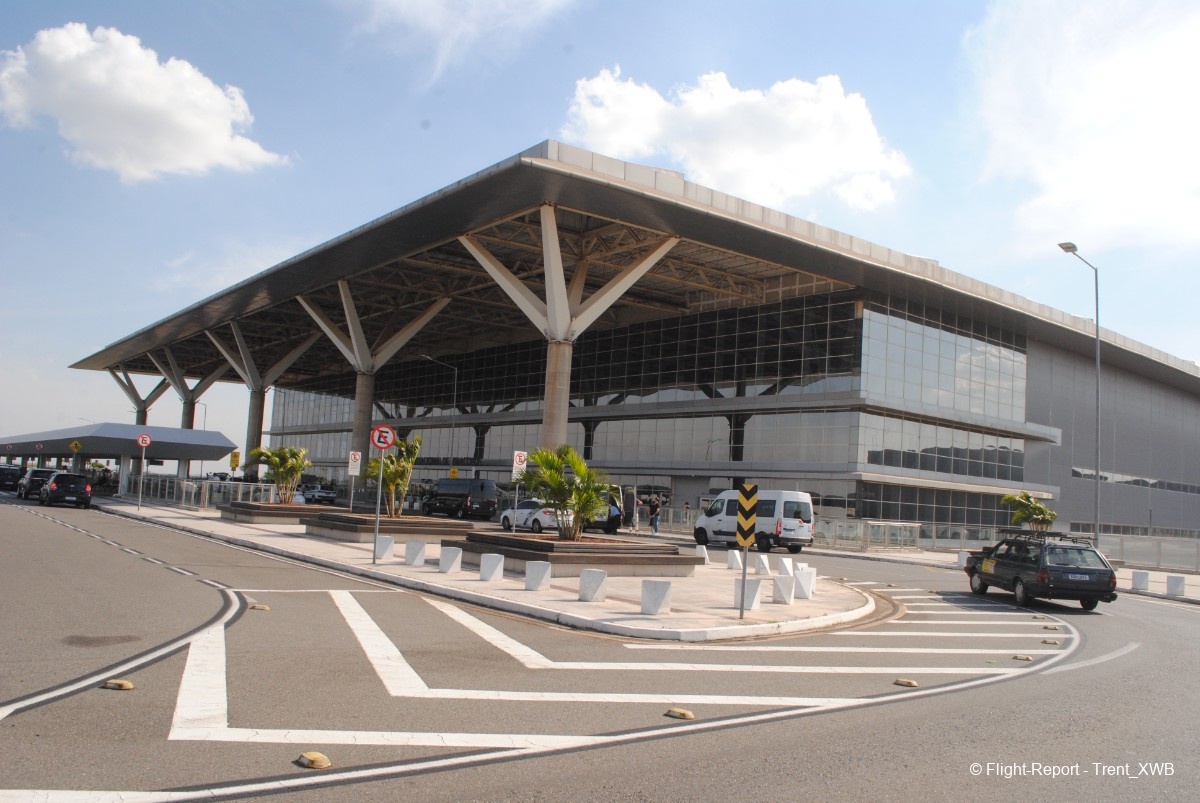
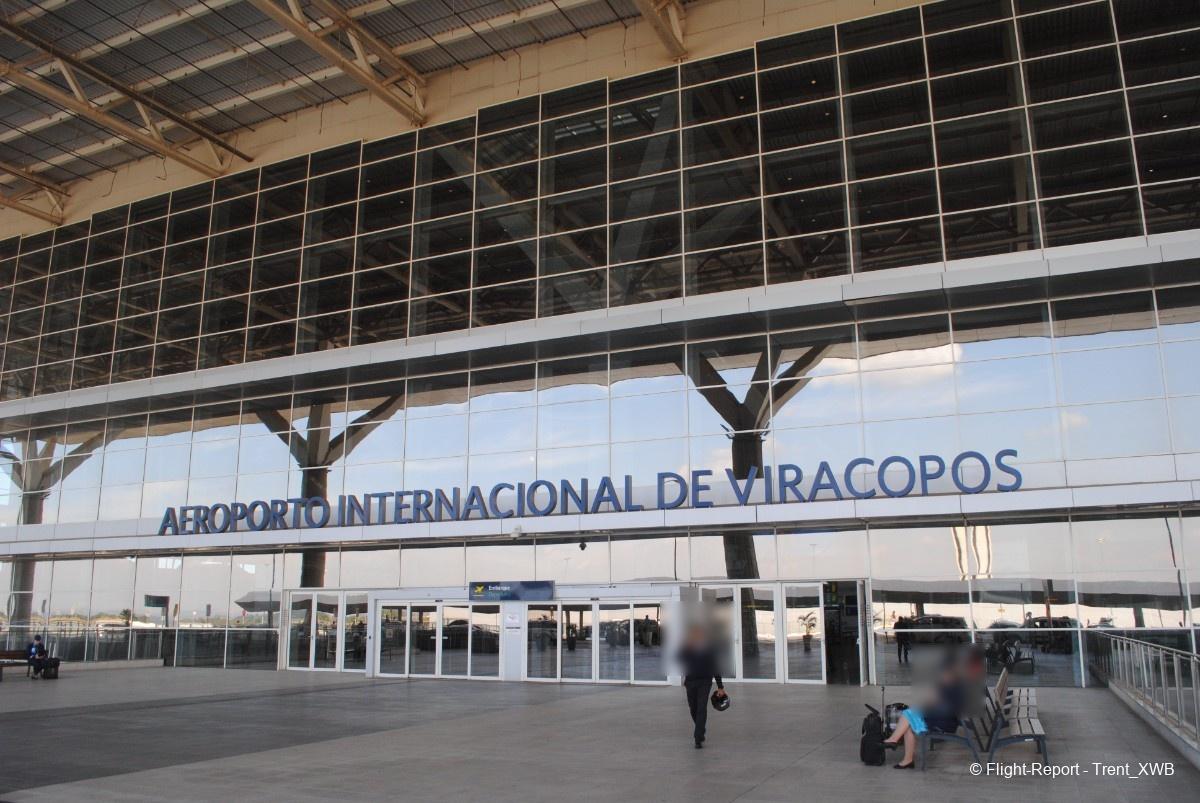
General view of VCP terminal from the outside with its signature pillars.
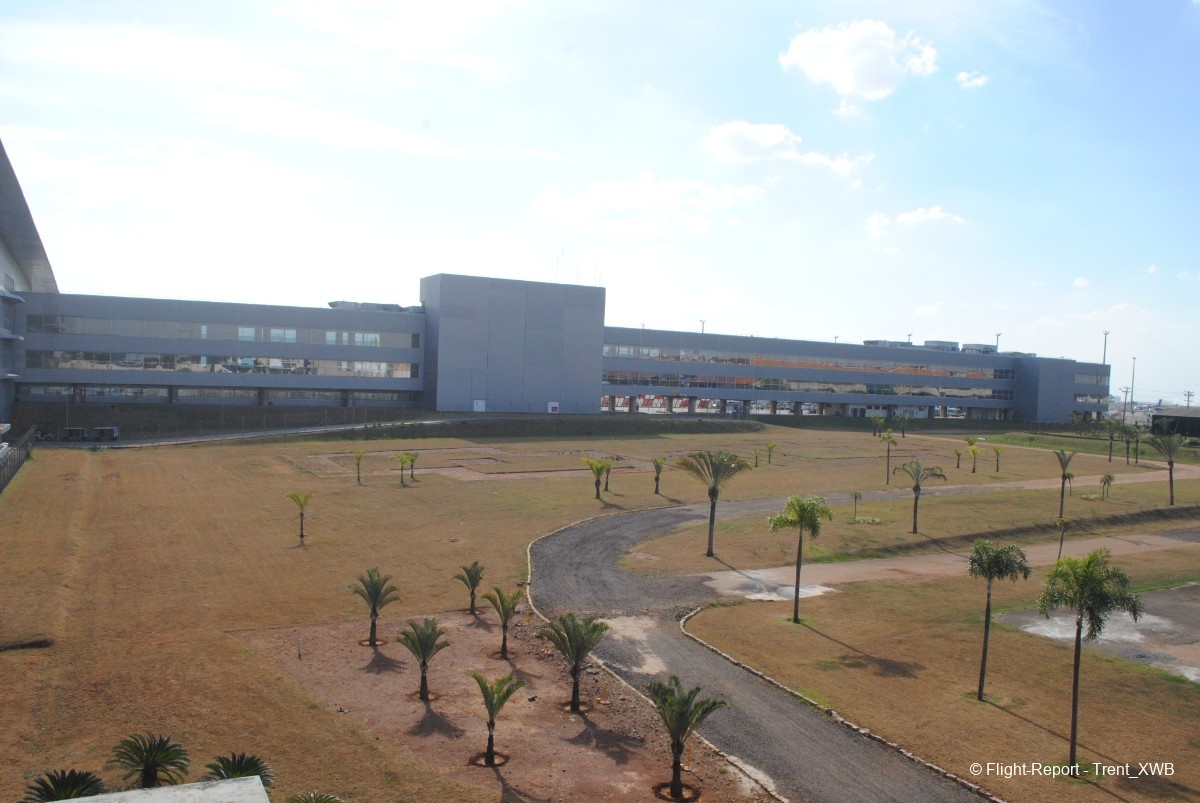
The domestic pier from the outside.
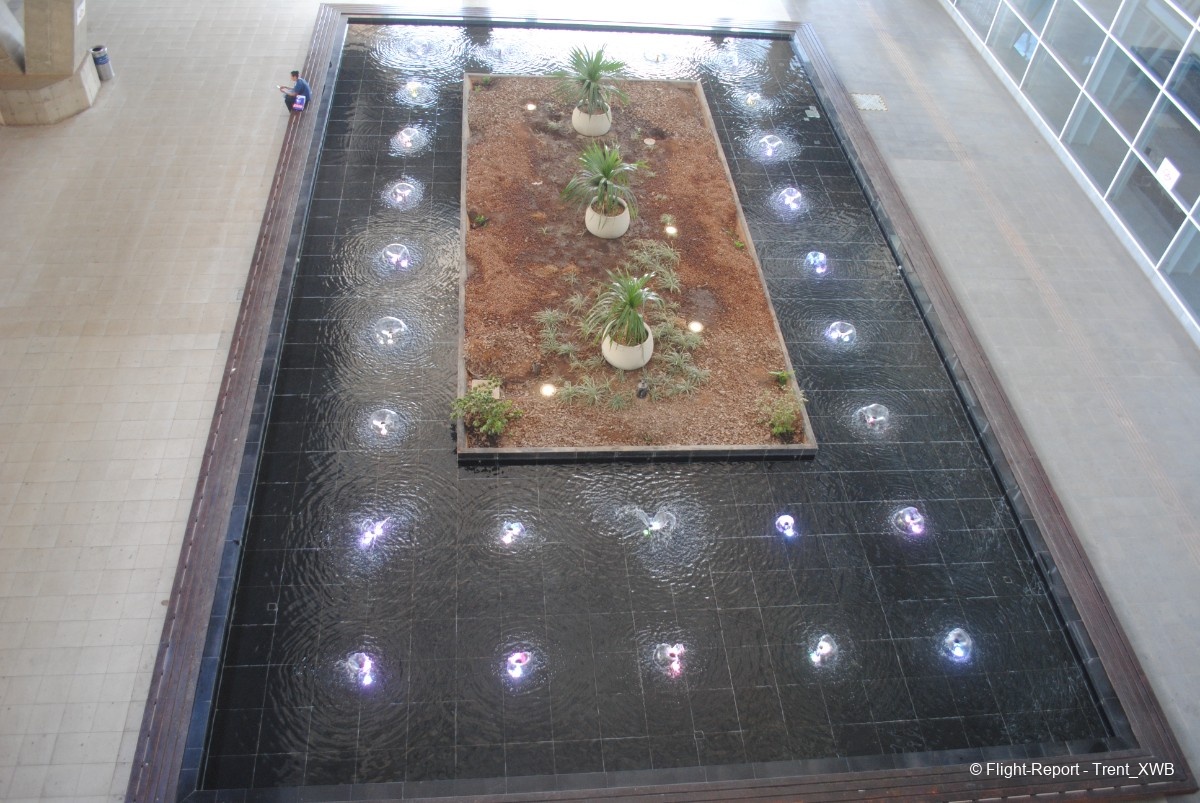
A nice fountain on the arrivals level.
The entrance to the terminal at the departures level.
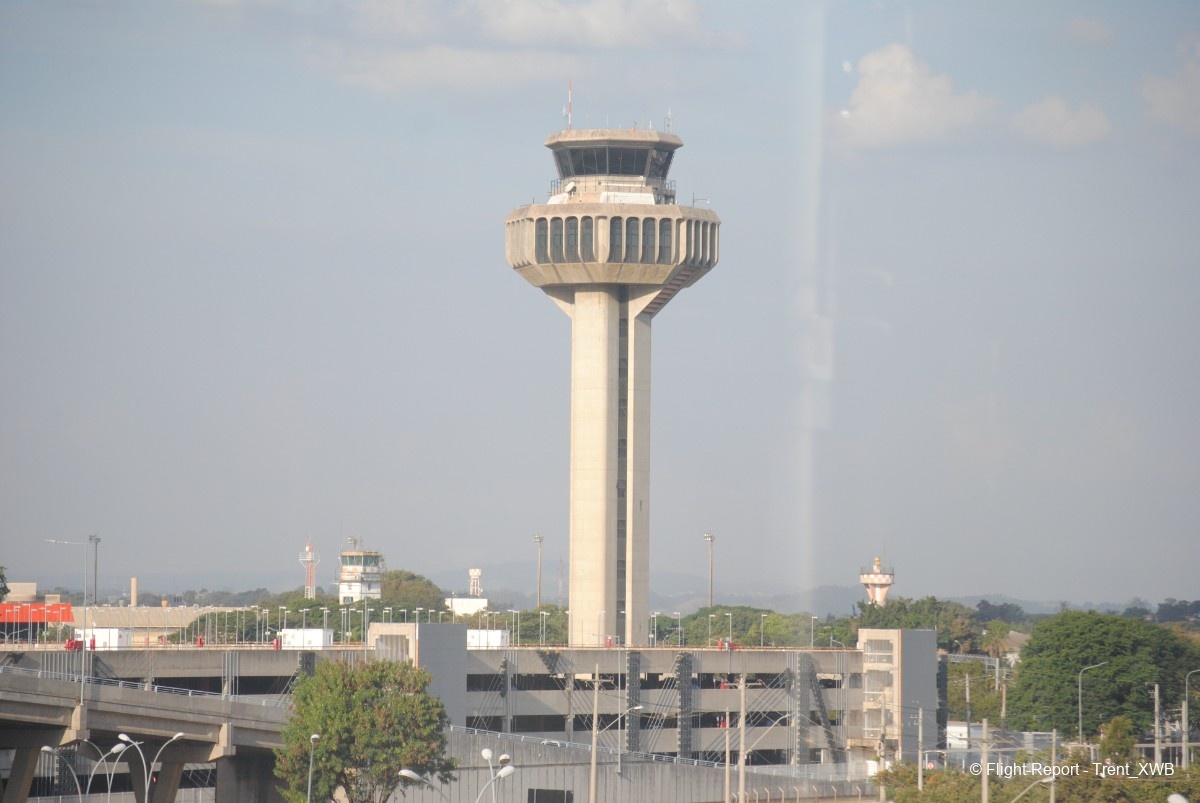
The brutalist-style ATC tower.
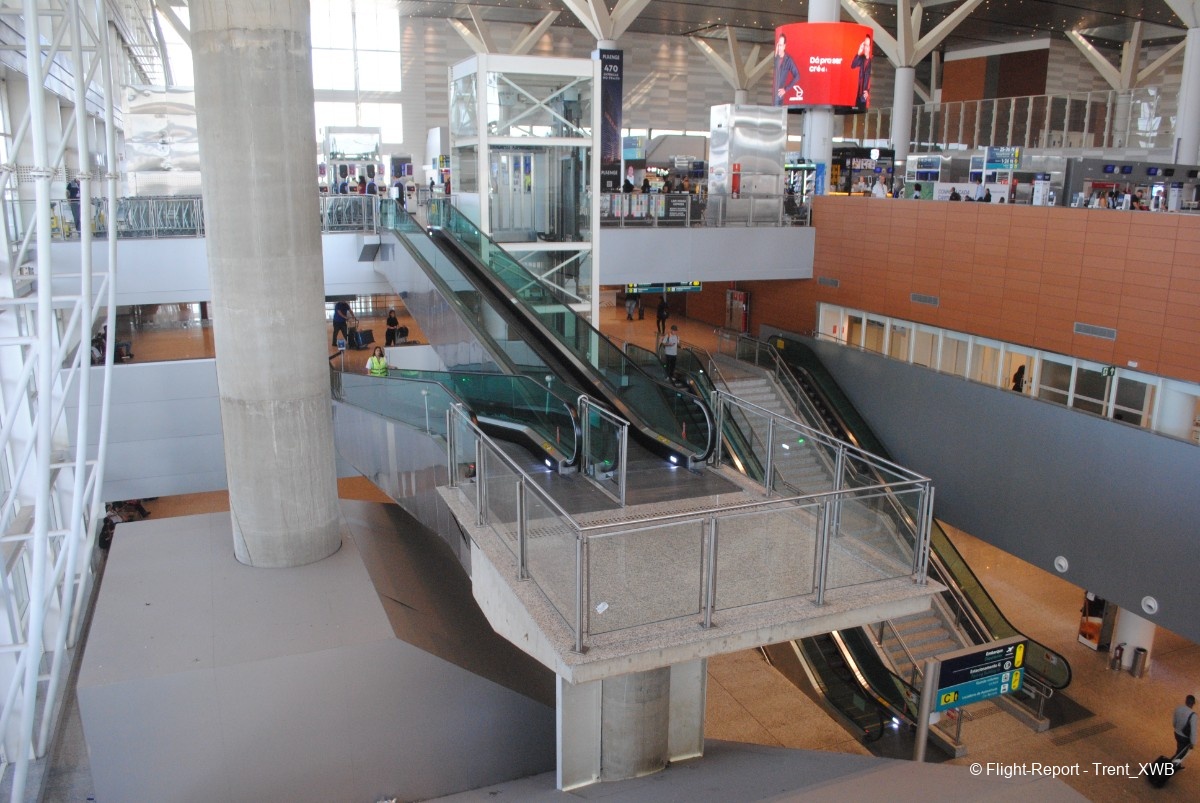
A view of the different levels of the terminal, from arrivals to departures.
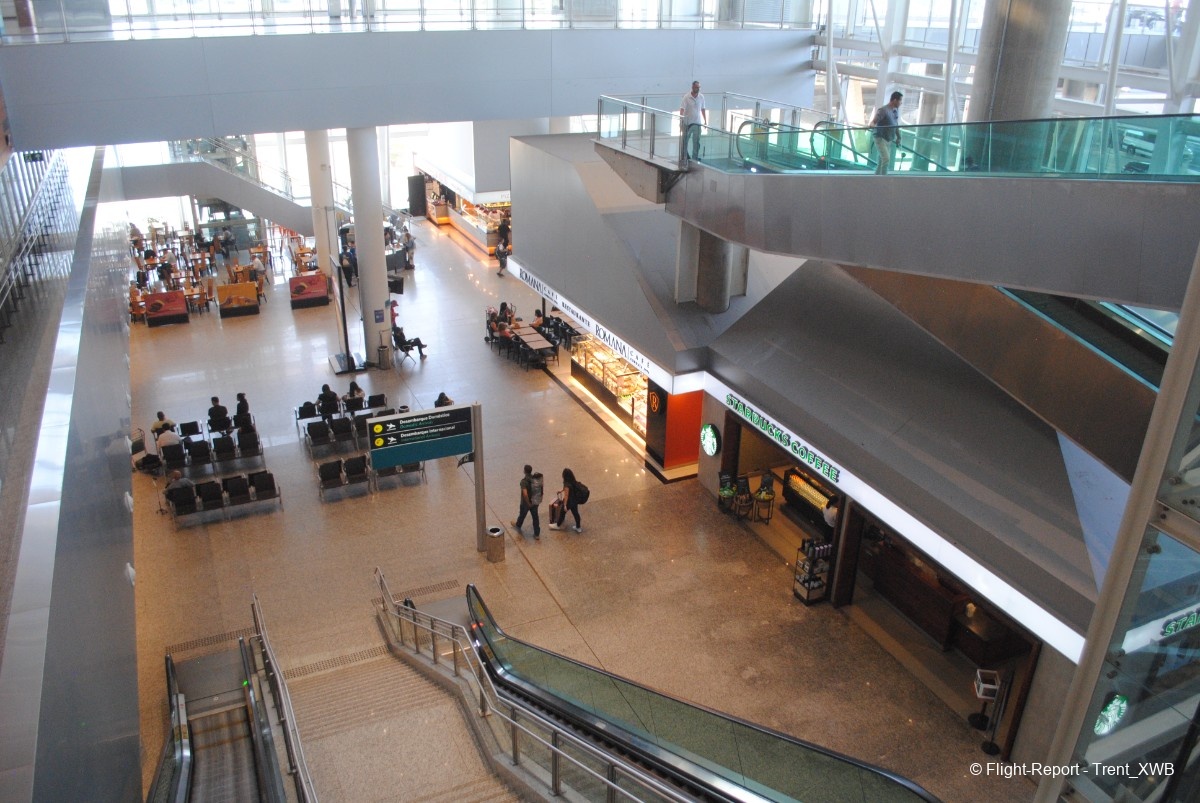
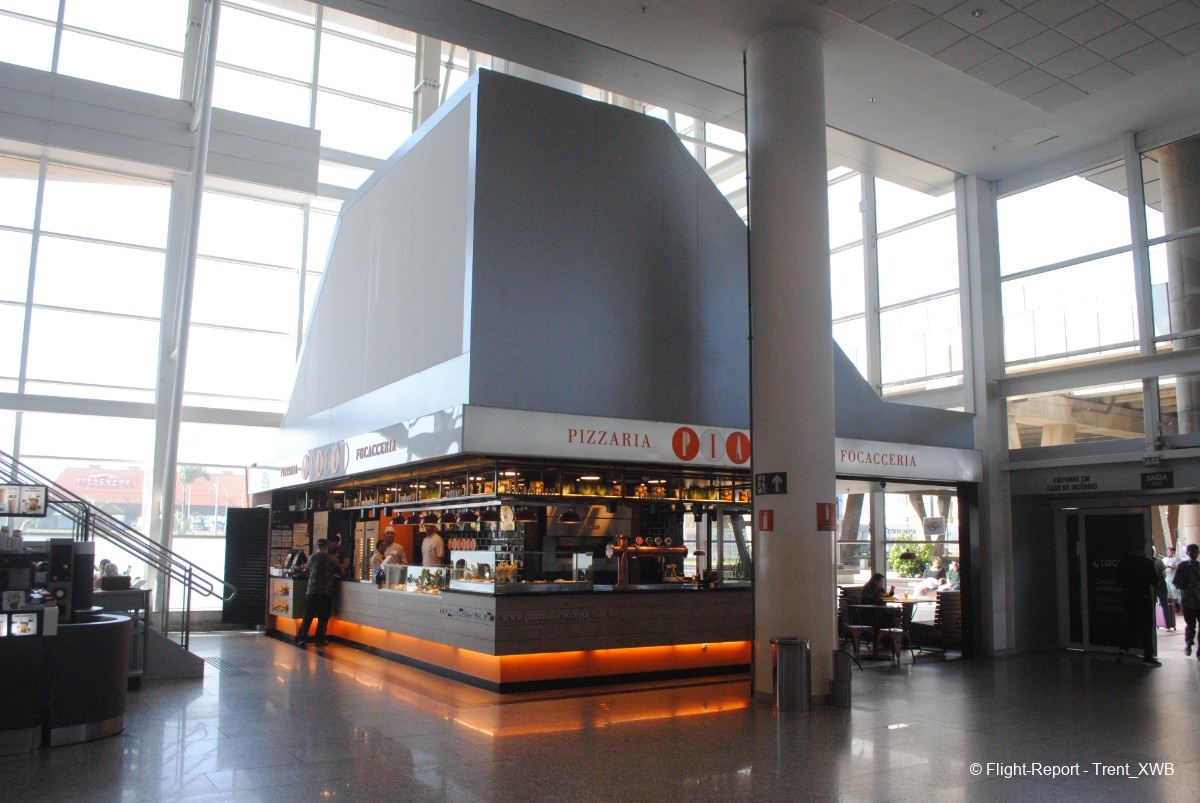
Let's go to the arrivals level first. One can see some cafes and eateries there.
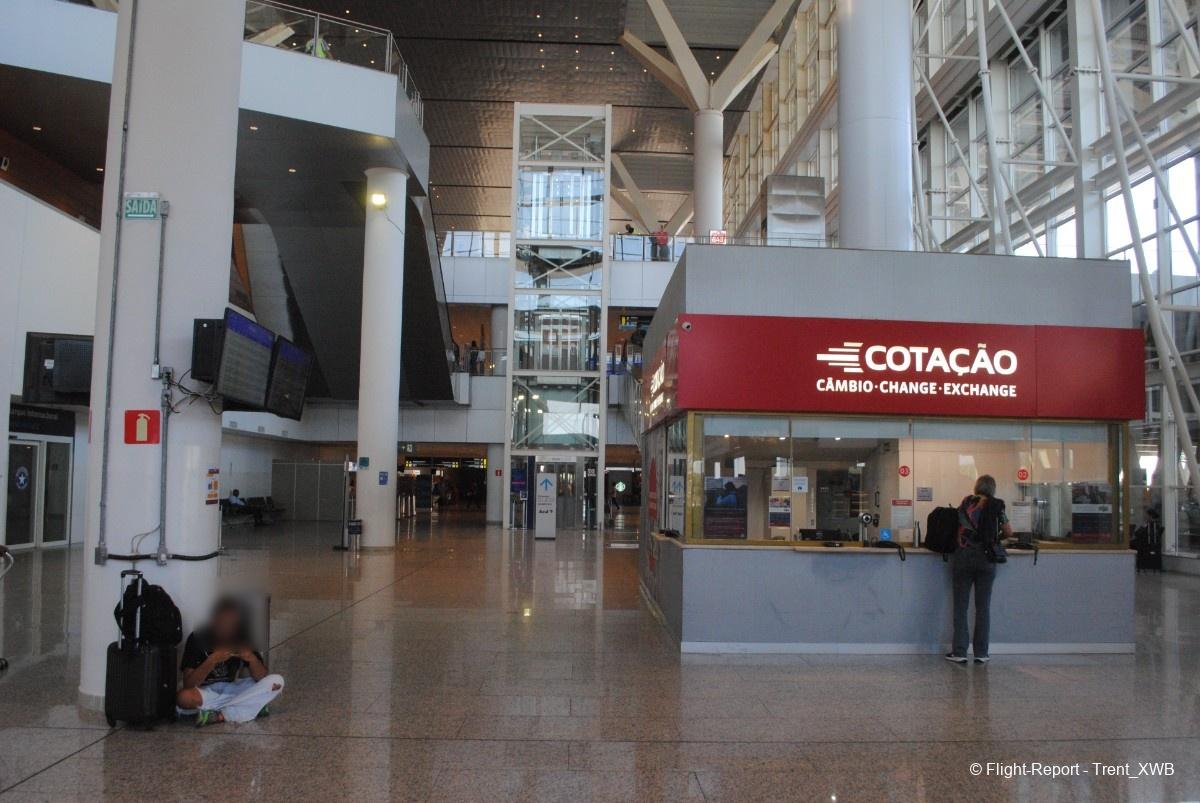
There's a money exchanger as well.
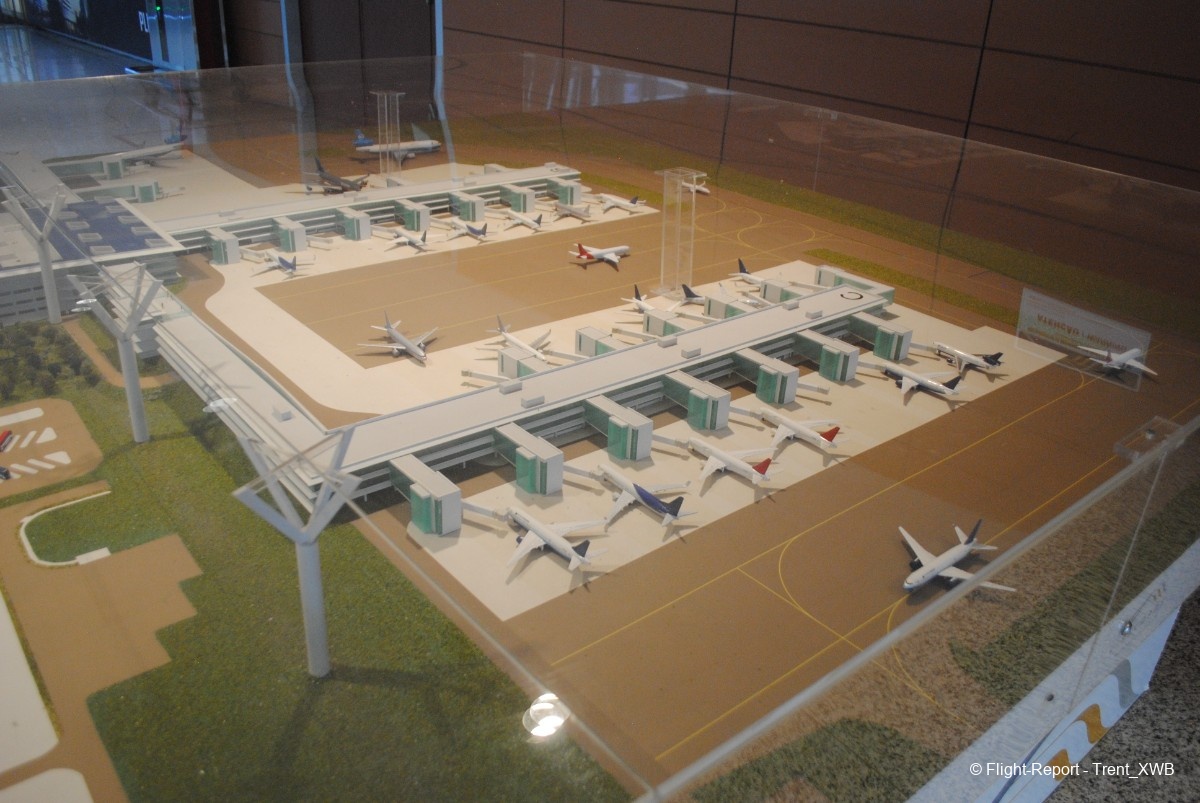
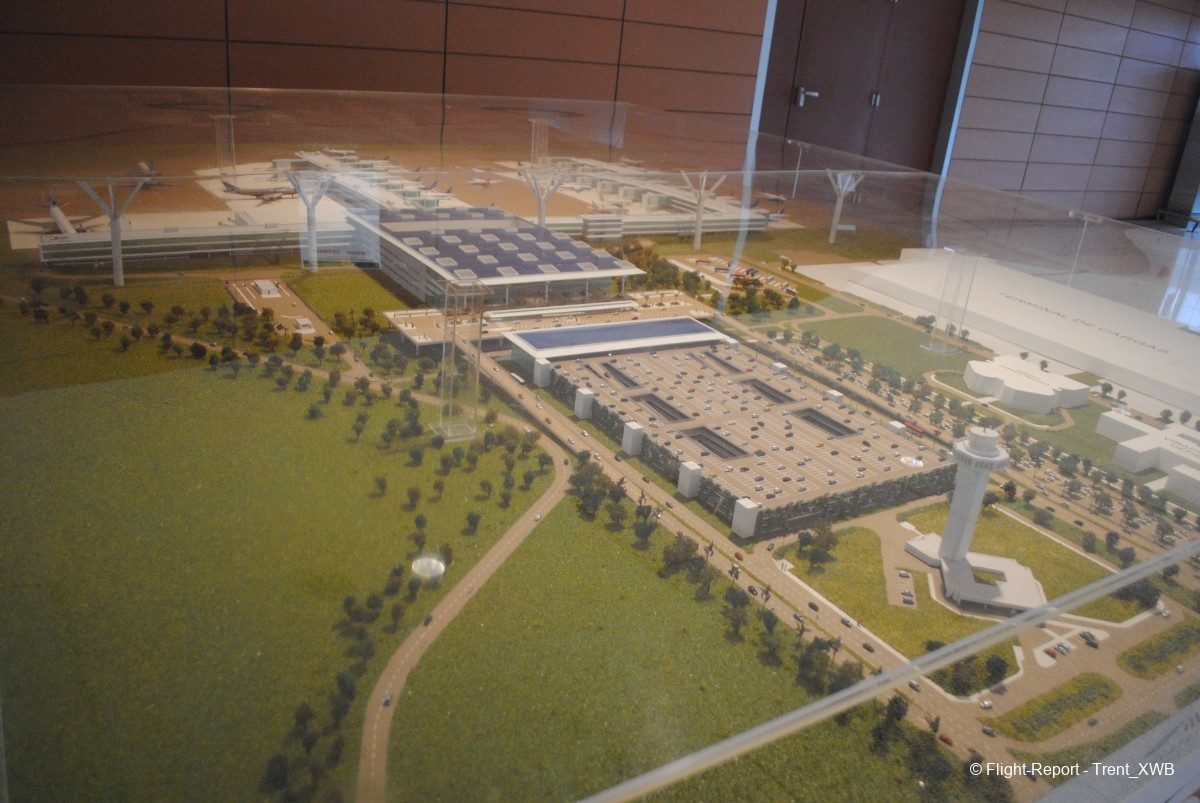
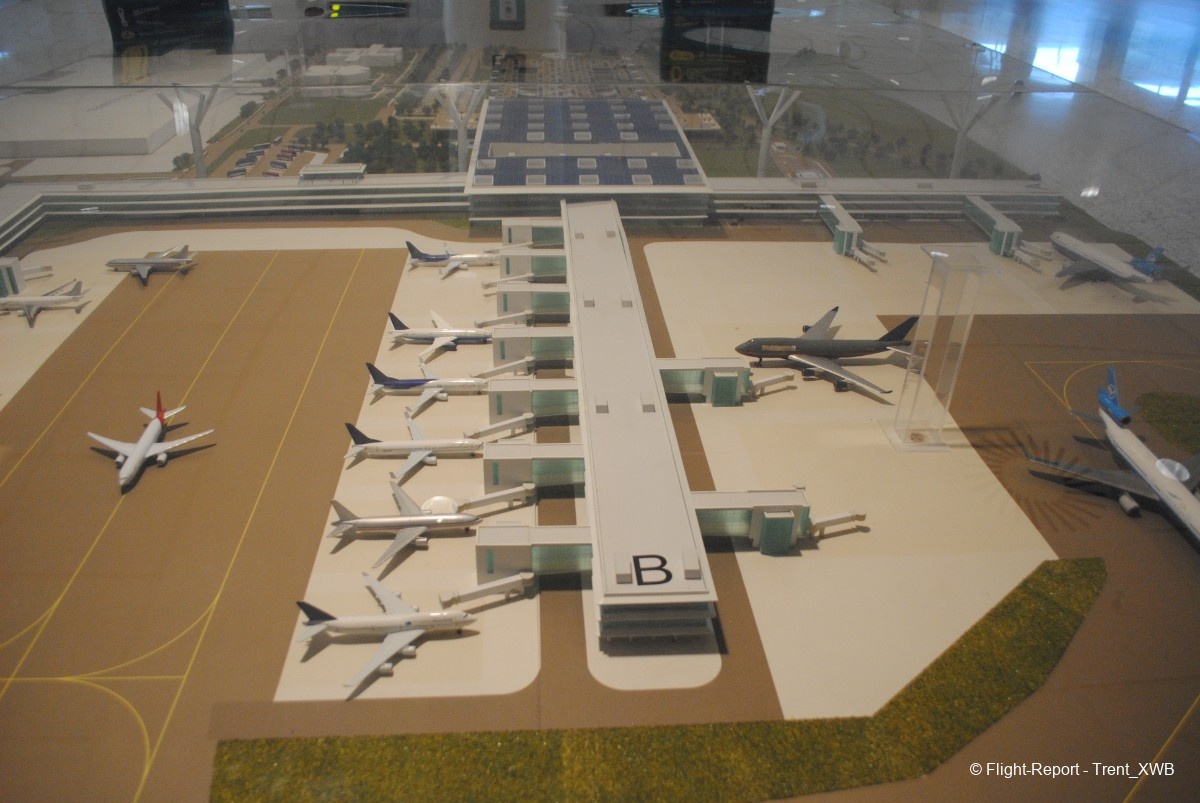
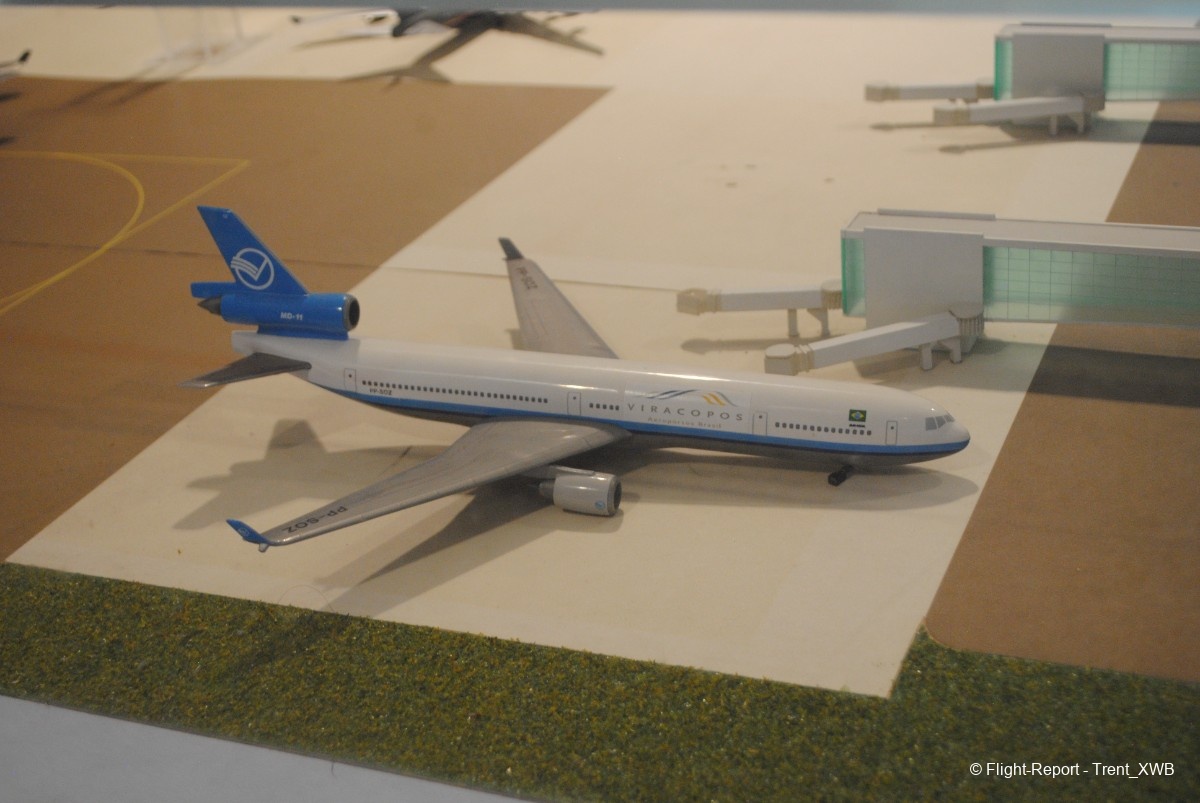
One can also find a nice mock-up of the airport there.
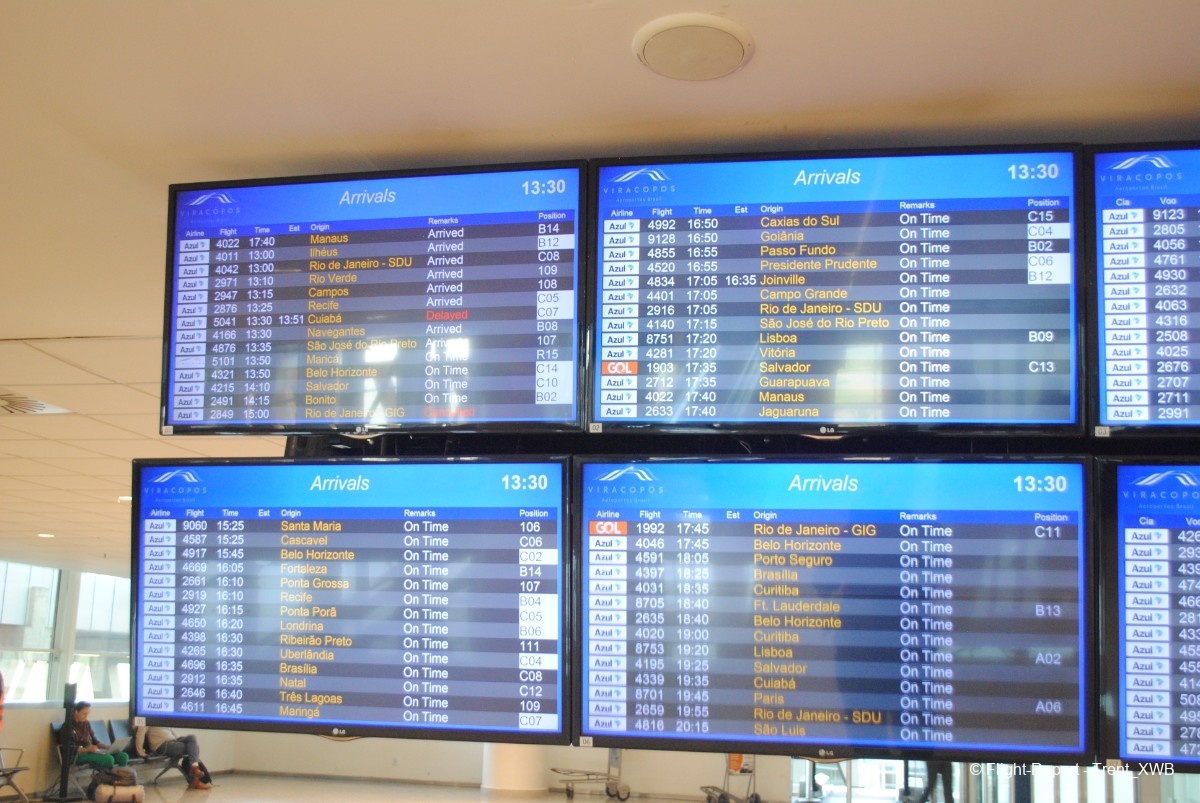
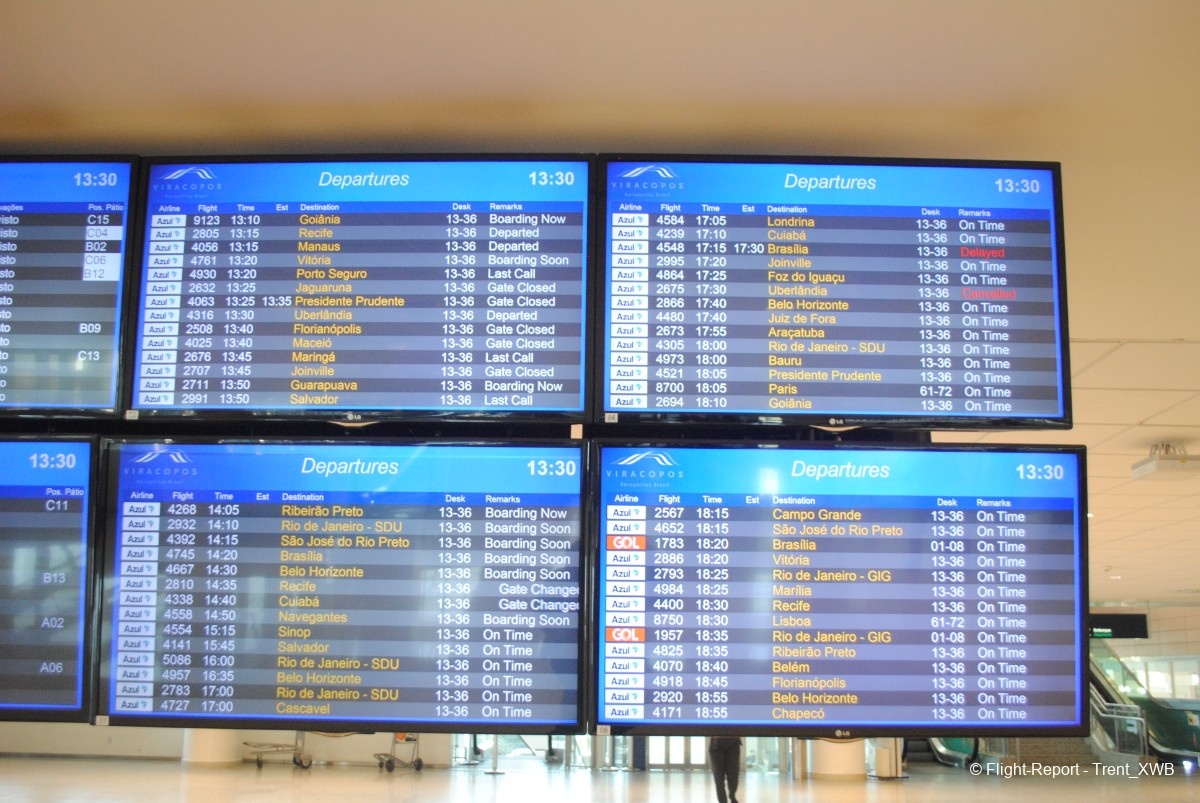
FID for arrivals and departures. An absolute domination of Azul with a very limited presence of GOL. Almost all the flights are domestic with just a few international ones (on AD A339s and A332s). My flight AD8700 to ORY is, sadly, operated by A332, not by initially announced A339.
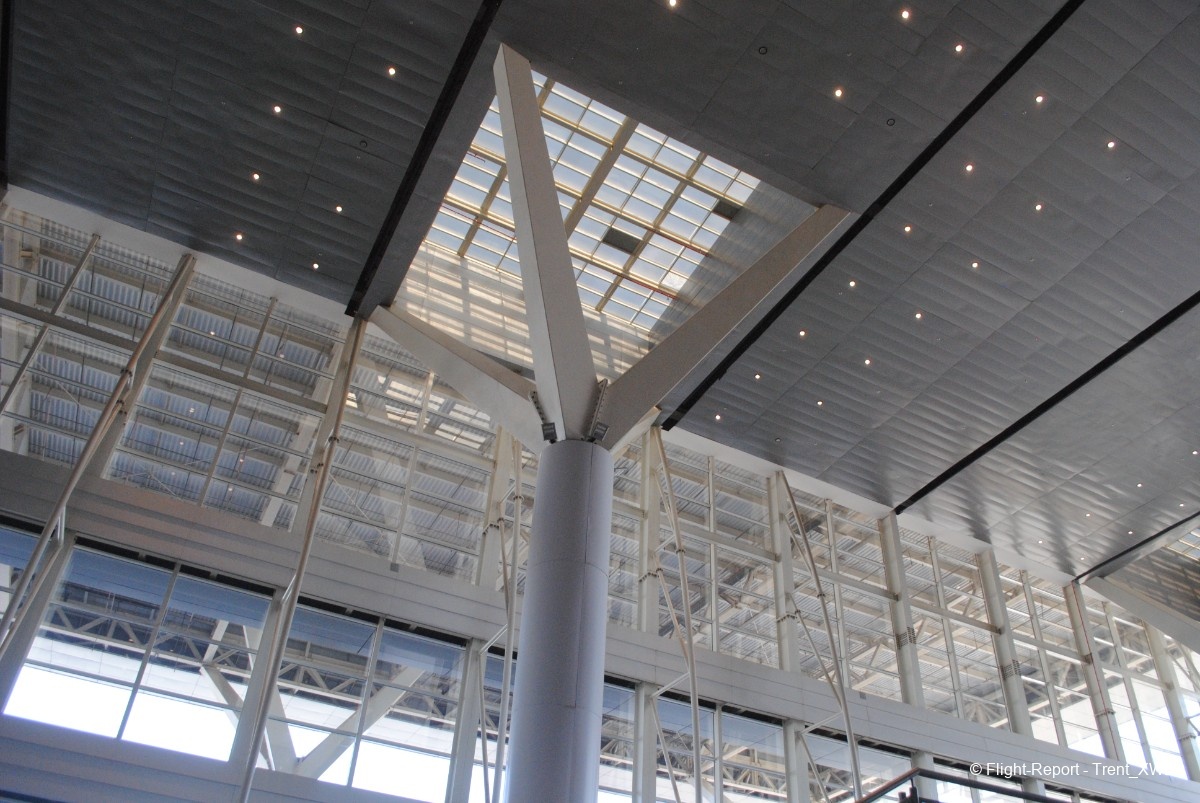
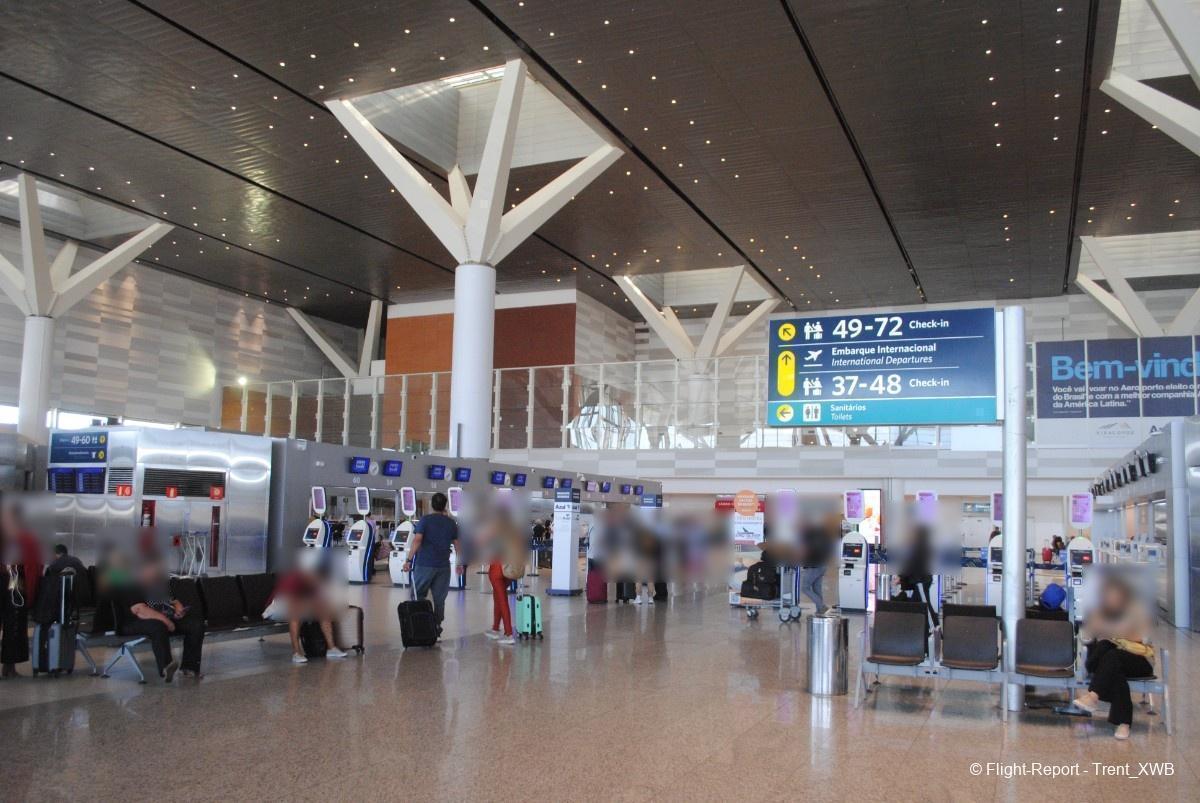
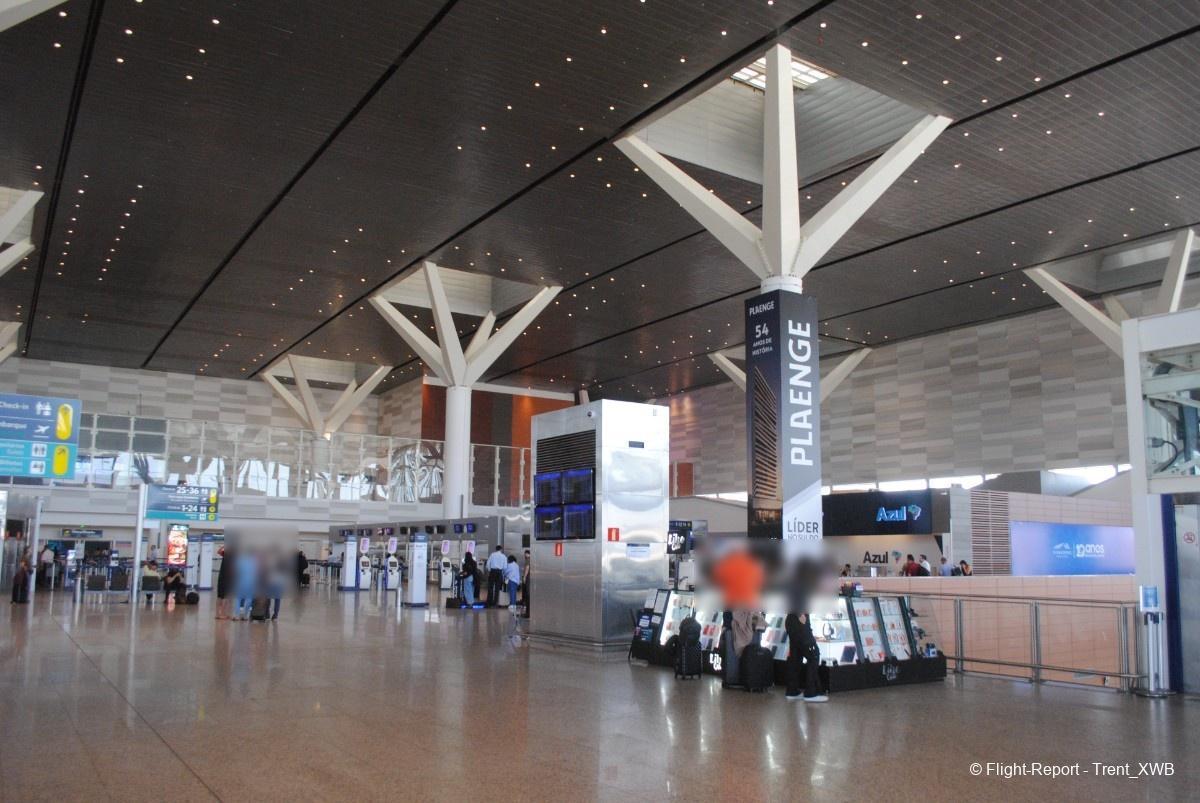
Back to the departures level. The check-in hall is spacious and airy, and the ceiling is supported by the pillars similar to those supporting the terminal roof from the outside.
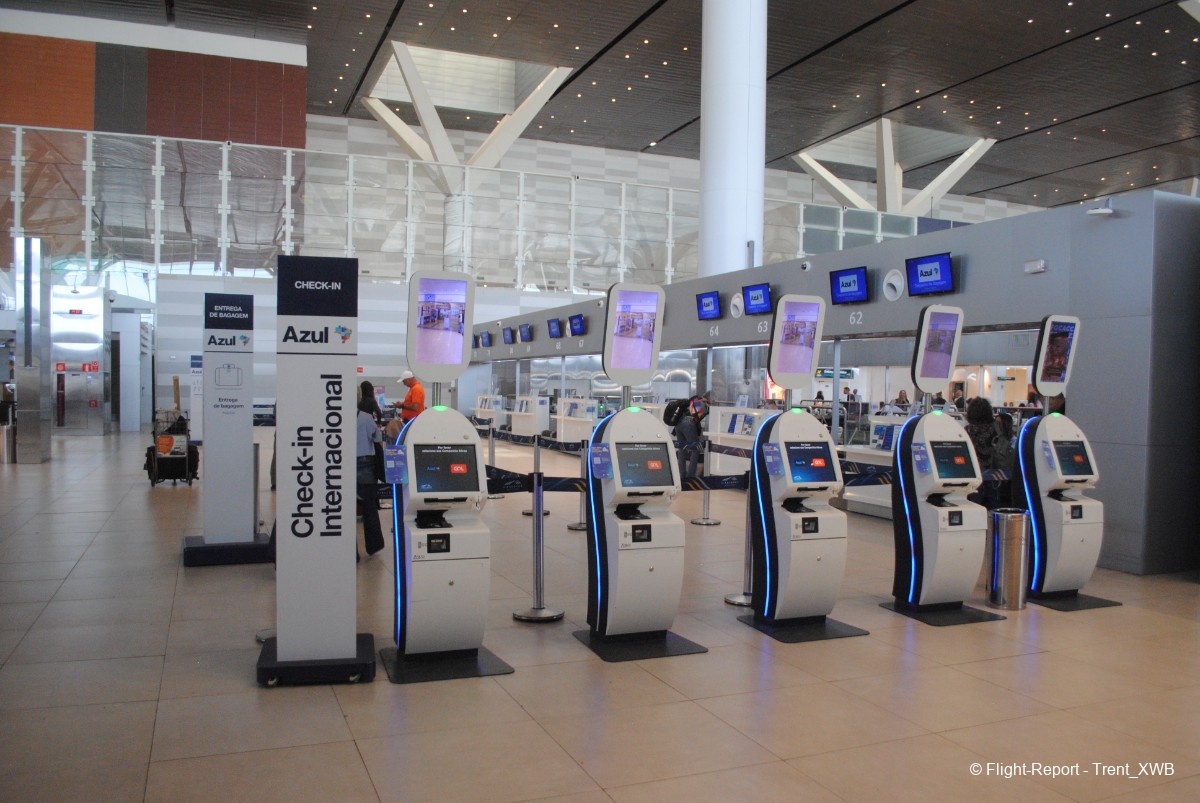
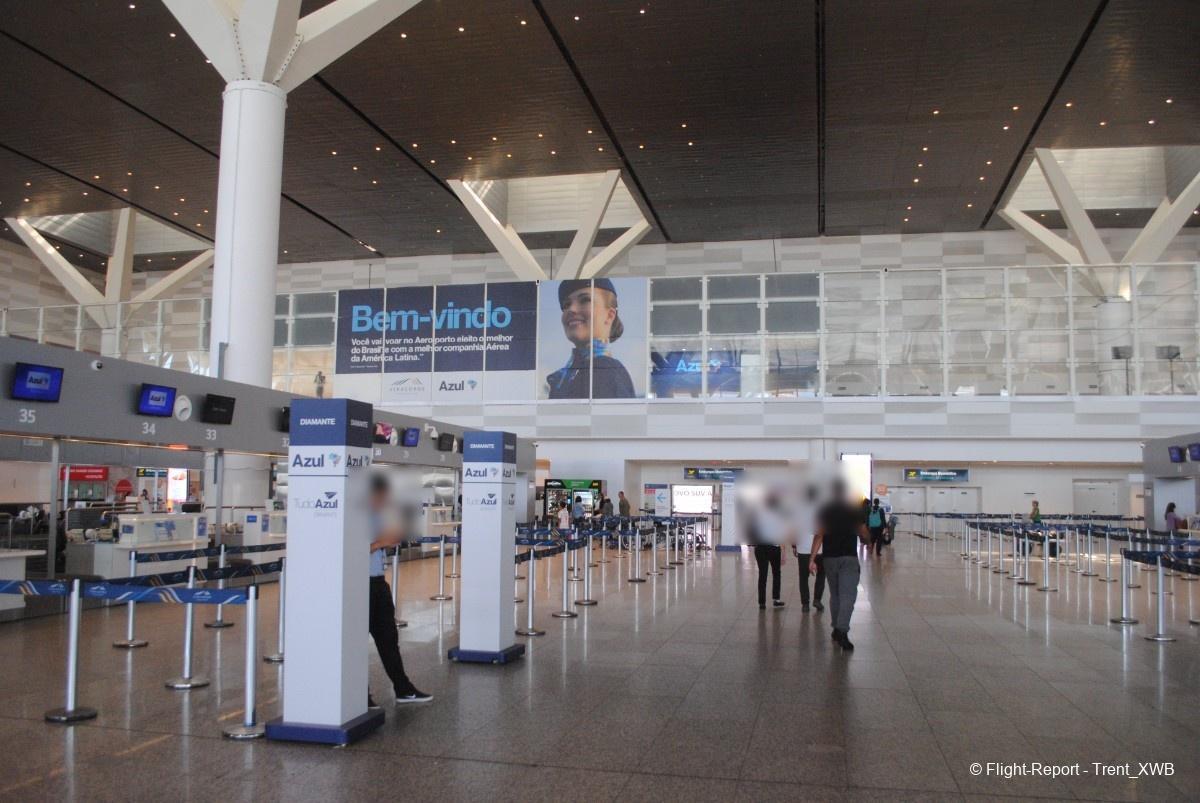
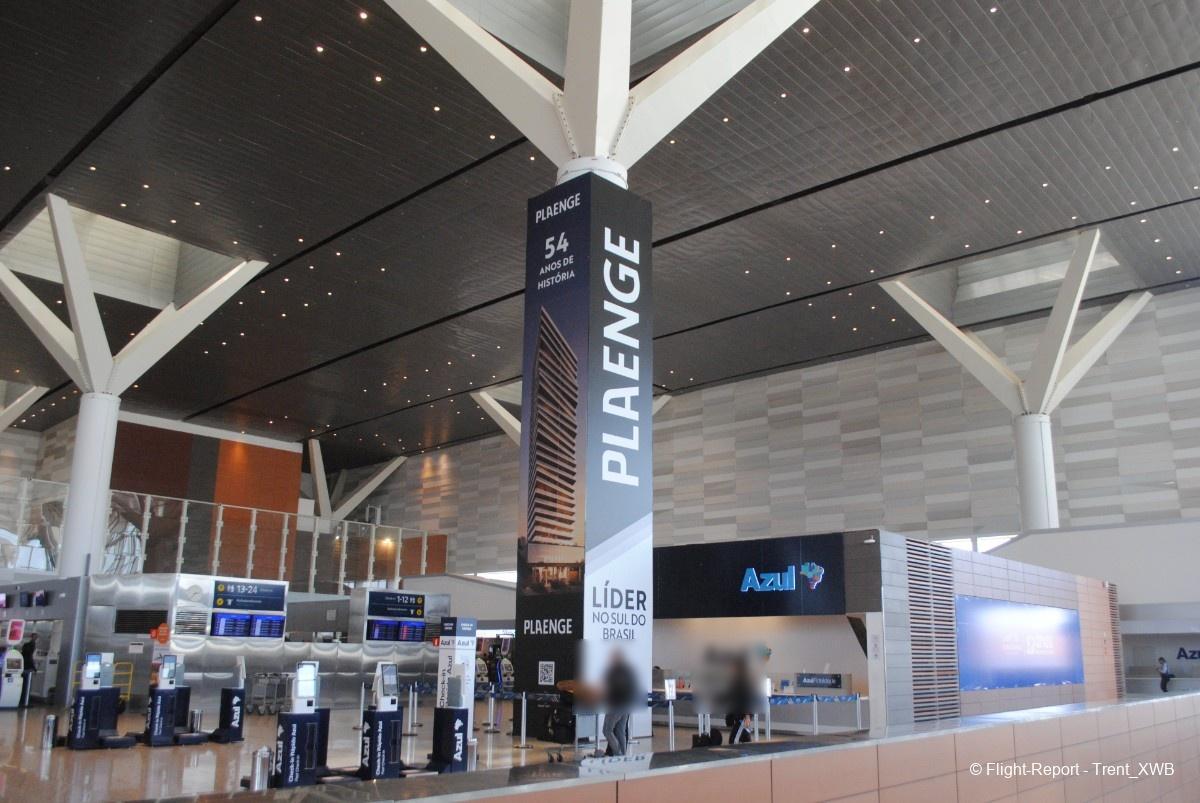
Azul check-in desks. The welcoming poster in the center tells that VCP was chosen the best airport in Brazil and Azul was chosen the best airline in Latin America. I can agree that it's probably true for AD's domestic flights in Brazil and domestic connections in VCP, but for international flights - not at all. I didn't like much the international gates area, and my experience with Azul on transatlantic flight turned to be very disappointing.
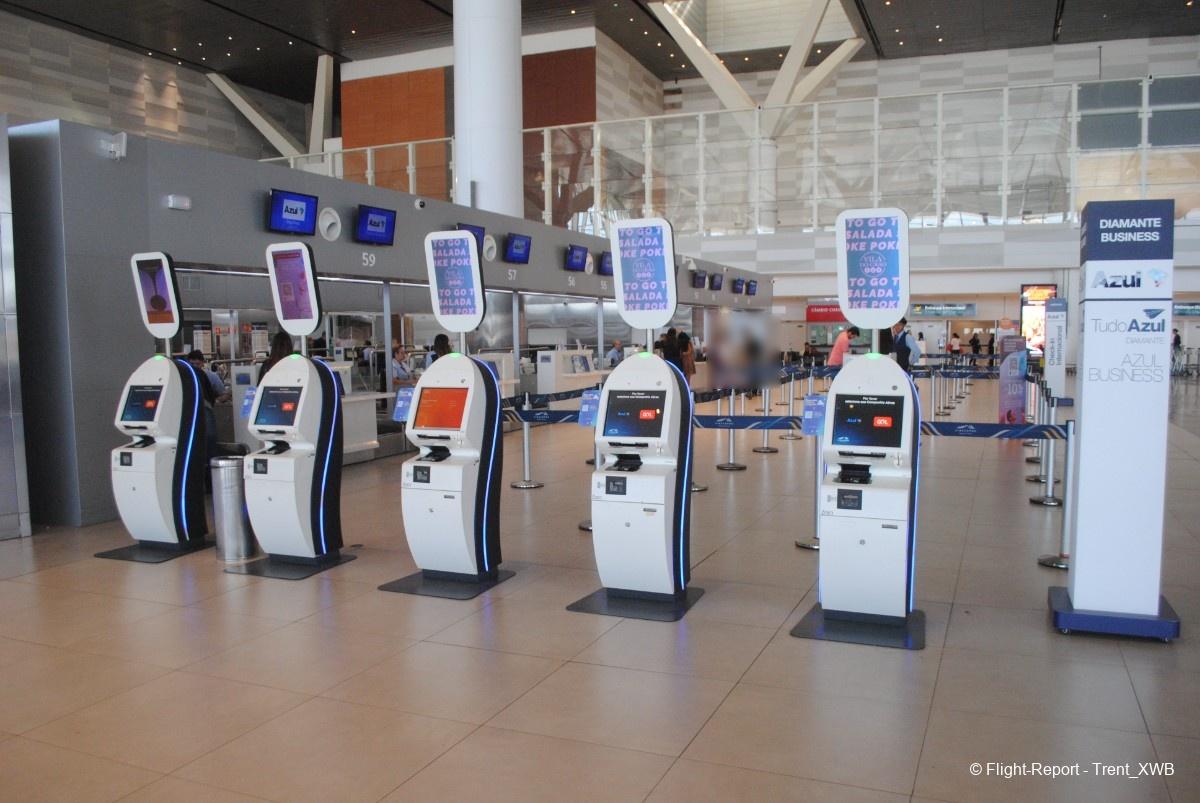
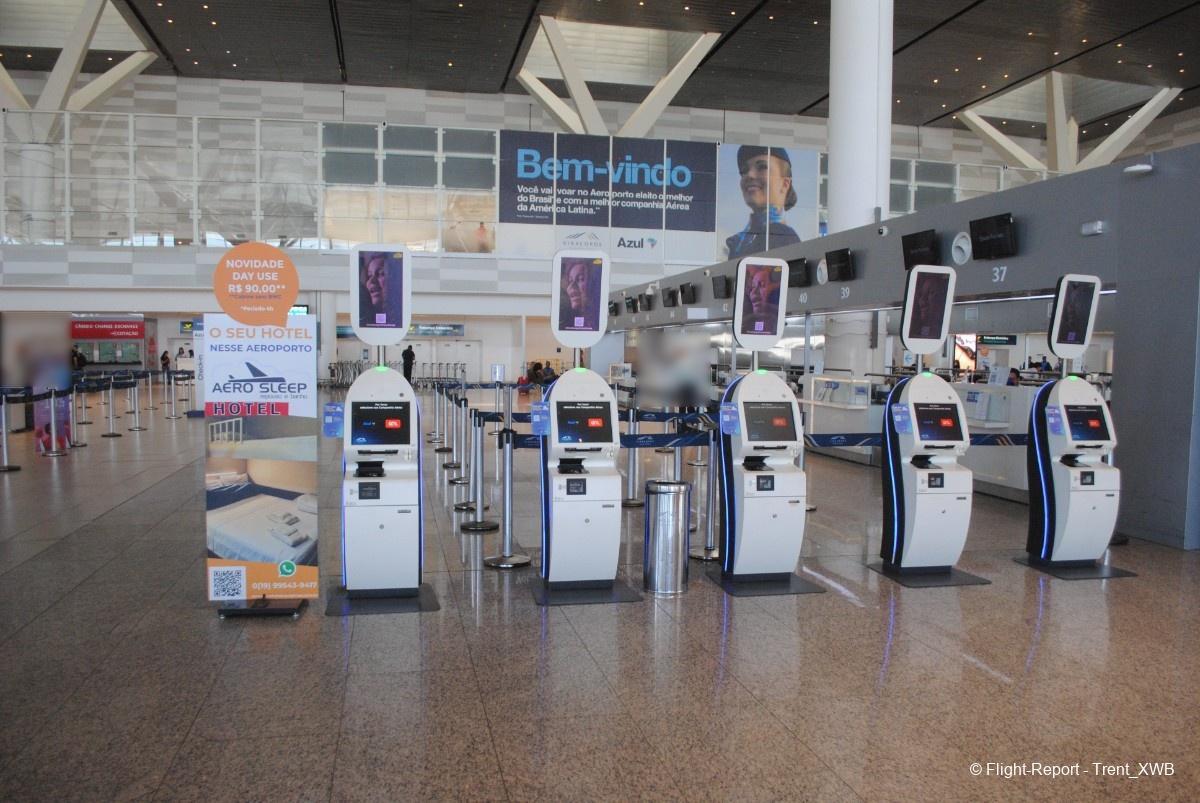
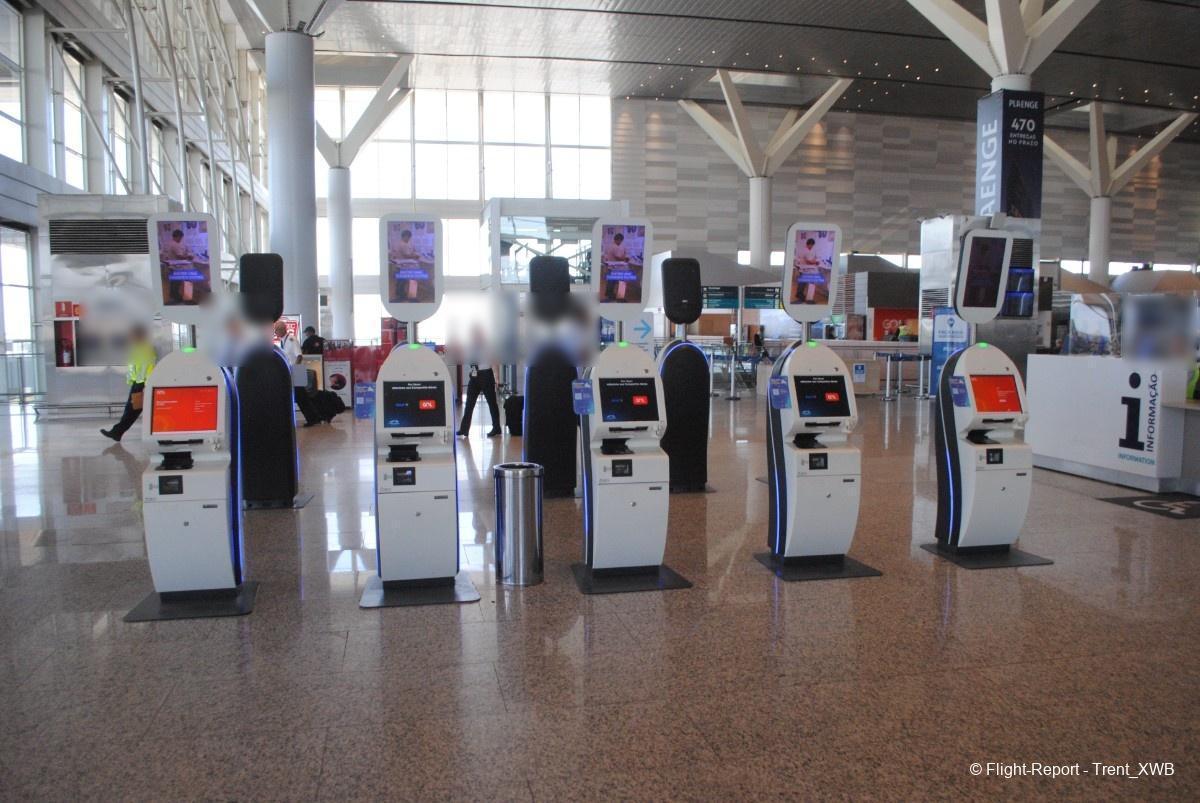
Some more self check-in machines in the center of the hall and the information desk.
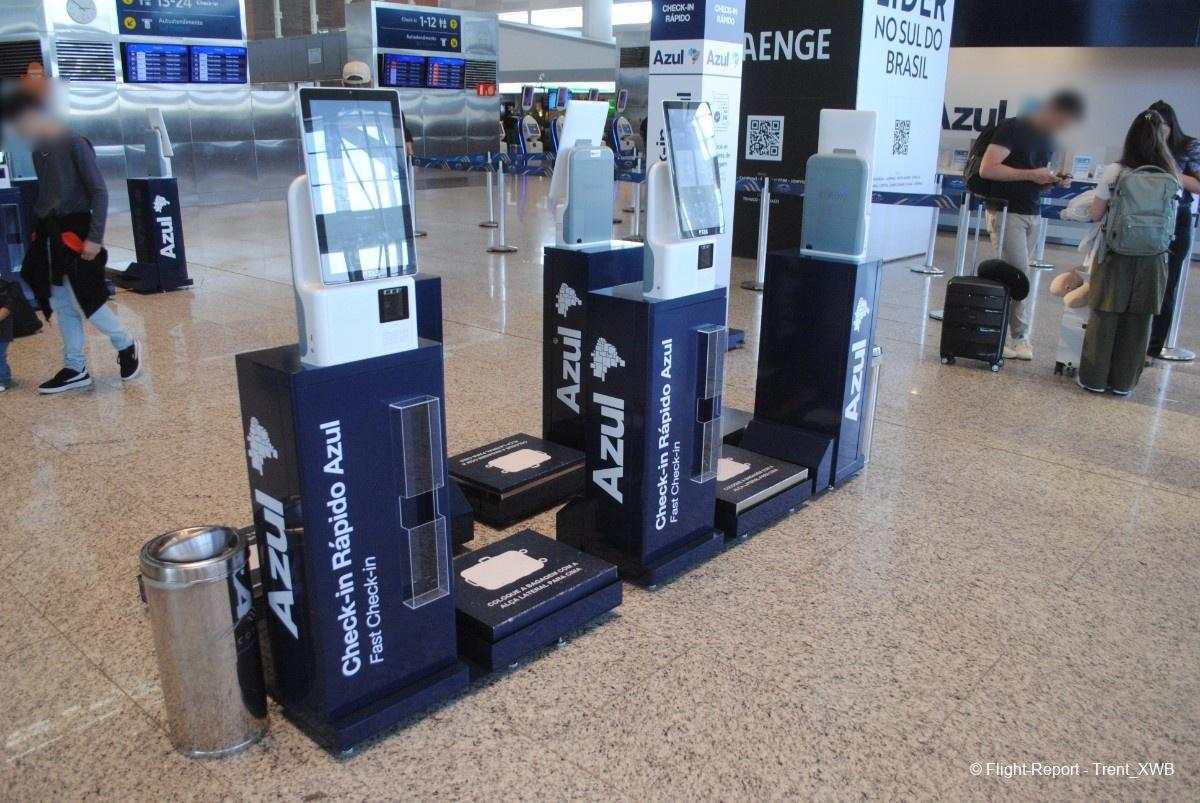
"Fast check-in" machines.
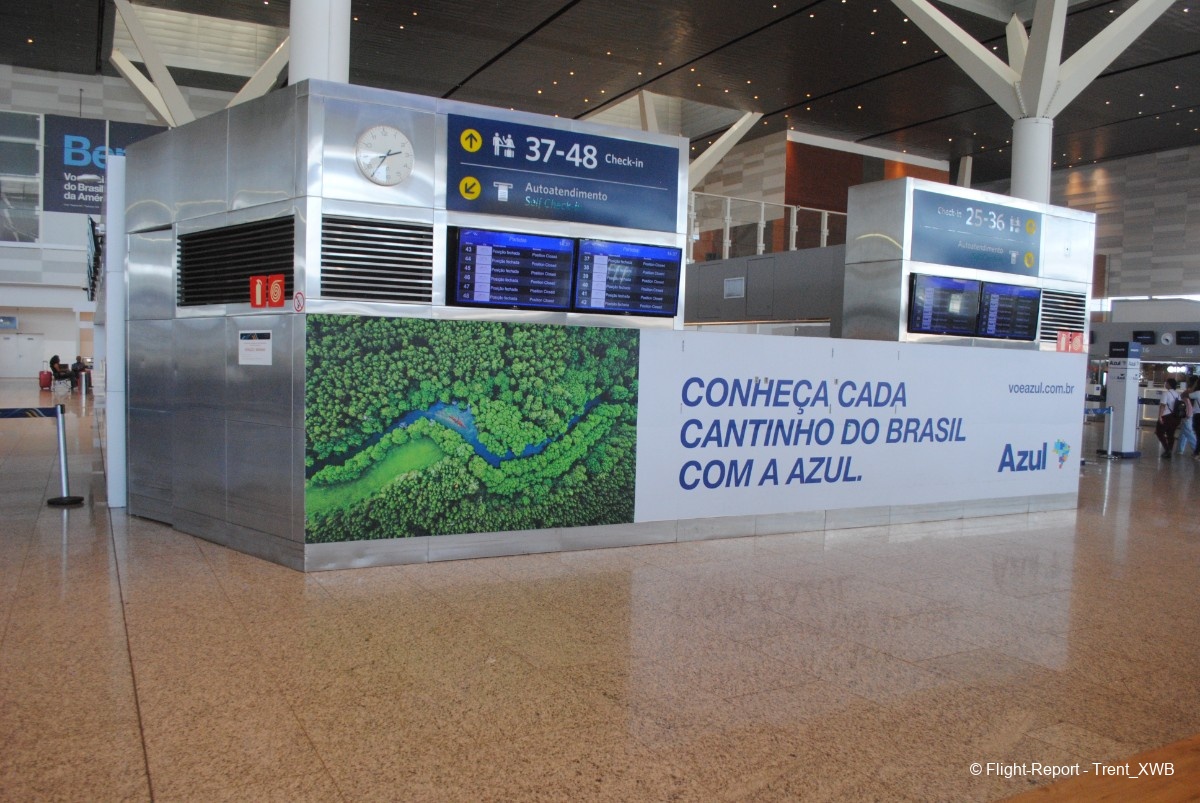
This motto means "Explore every corner of Brazil with Azul". AD has really vast domestic network out of VCP.
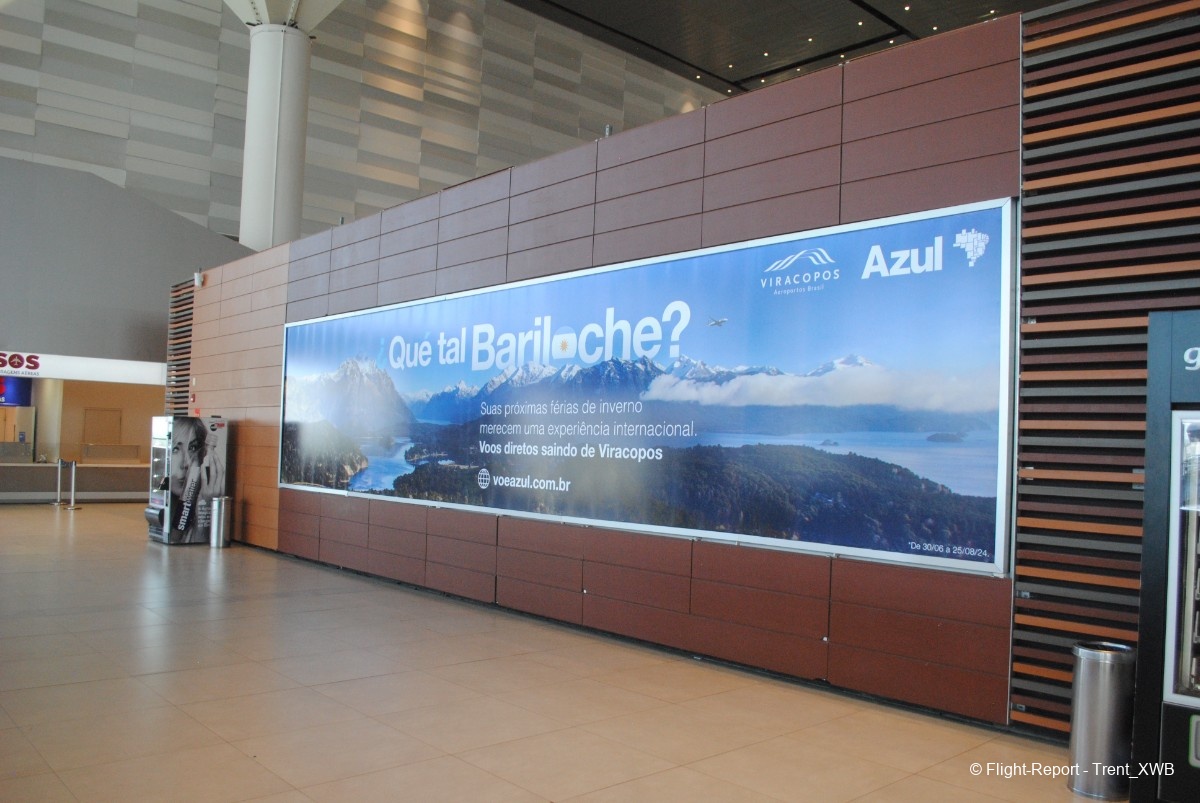
Promotion of AD's flight to BRC. AD prefers to avoid competition on intra-South-American international routes and chooses ones underserved by LATAM or GOL.
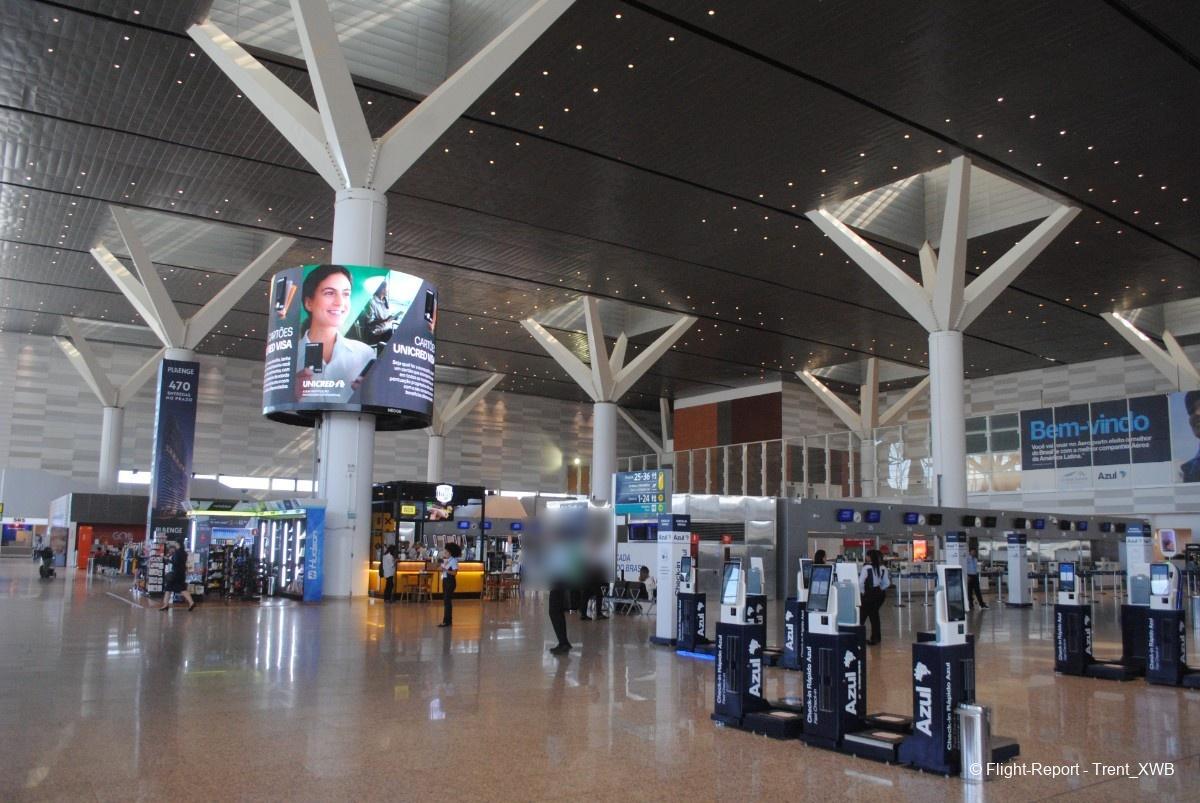
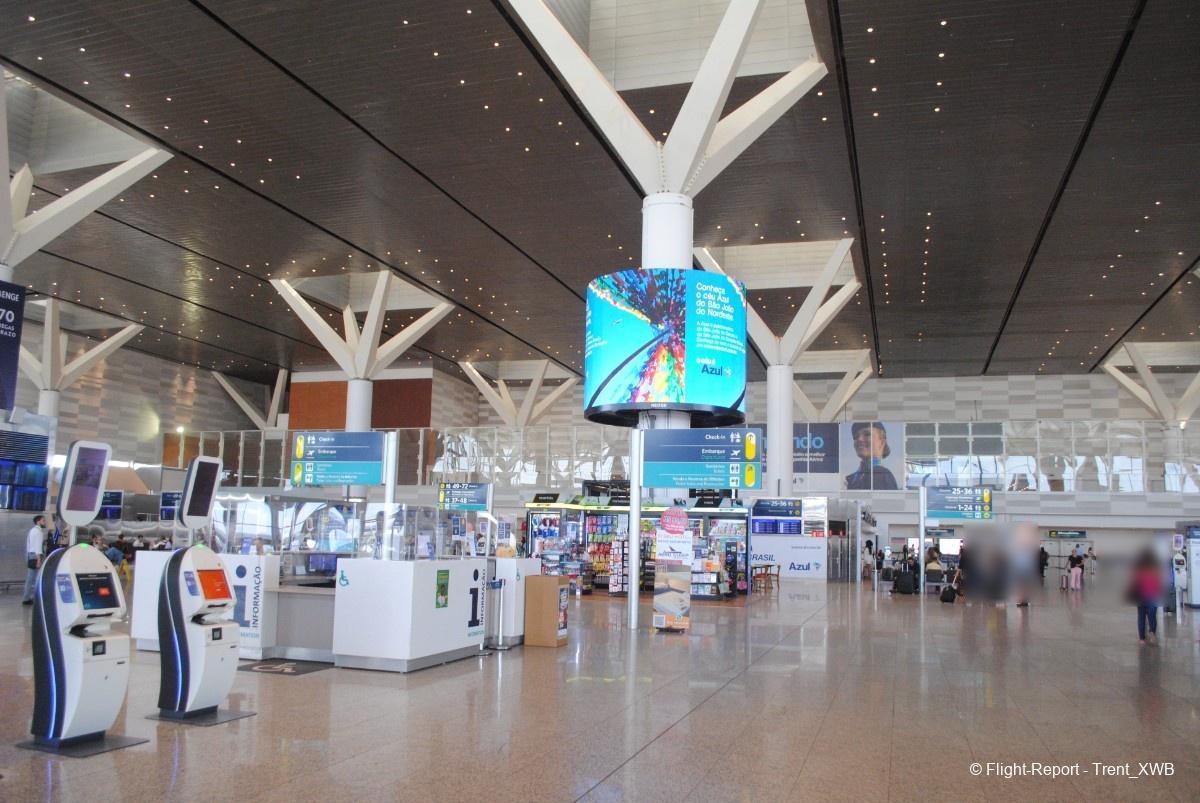
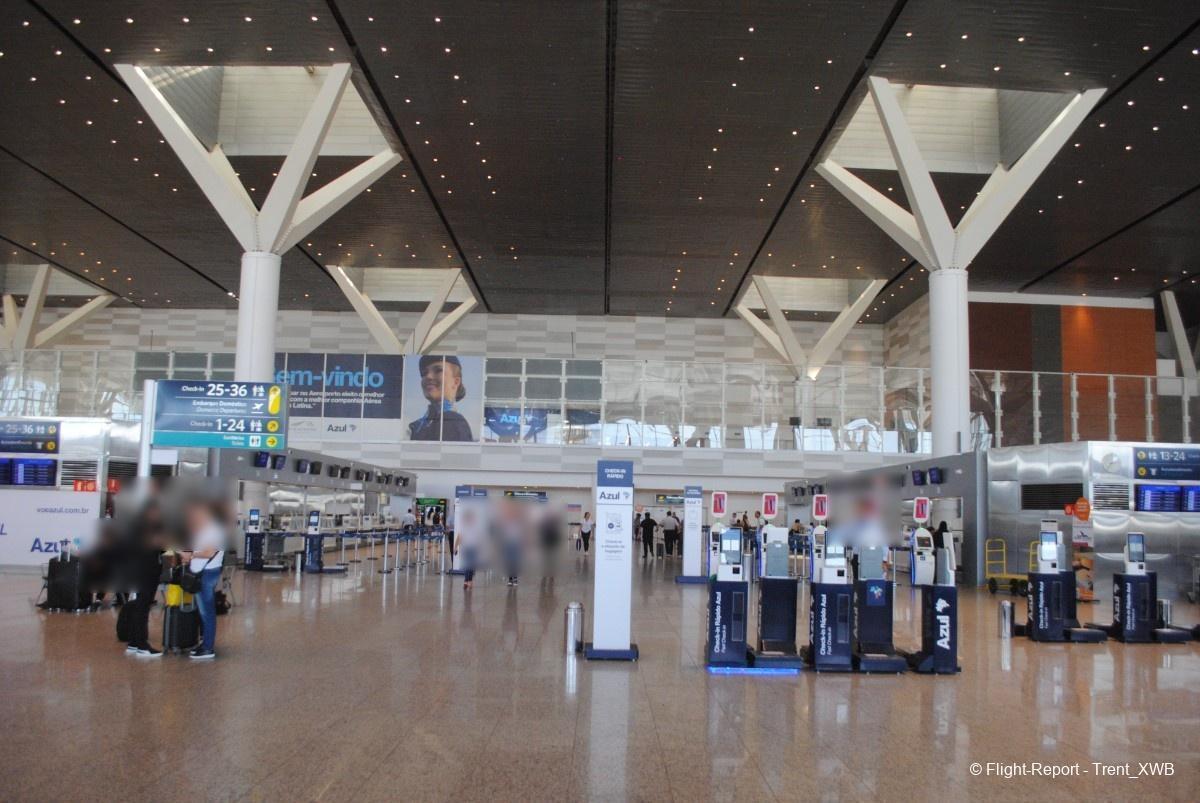
General views of the spacious check-in hall. Honestly speaking, the landside part of the terminal is the only thing I like in VCP.
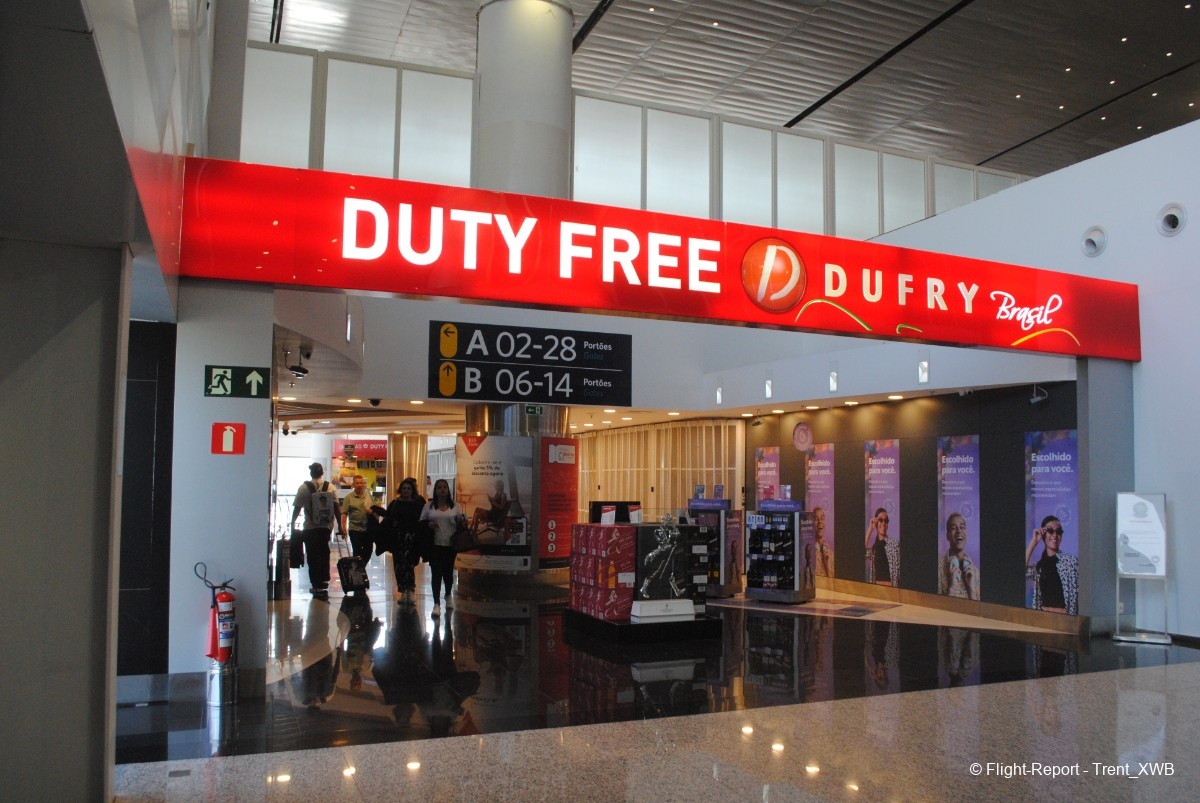
The duty-free shop after the immigration. My flight was departing from the smaller pier A. The access to the pier B was closed.
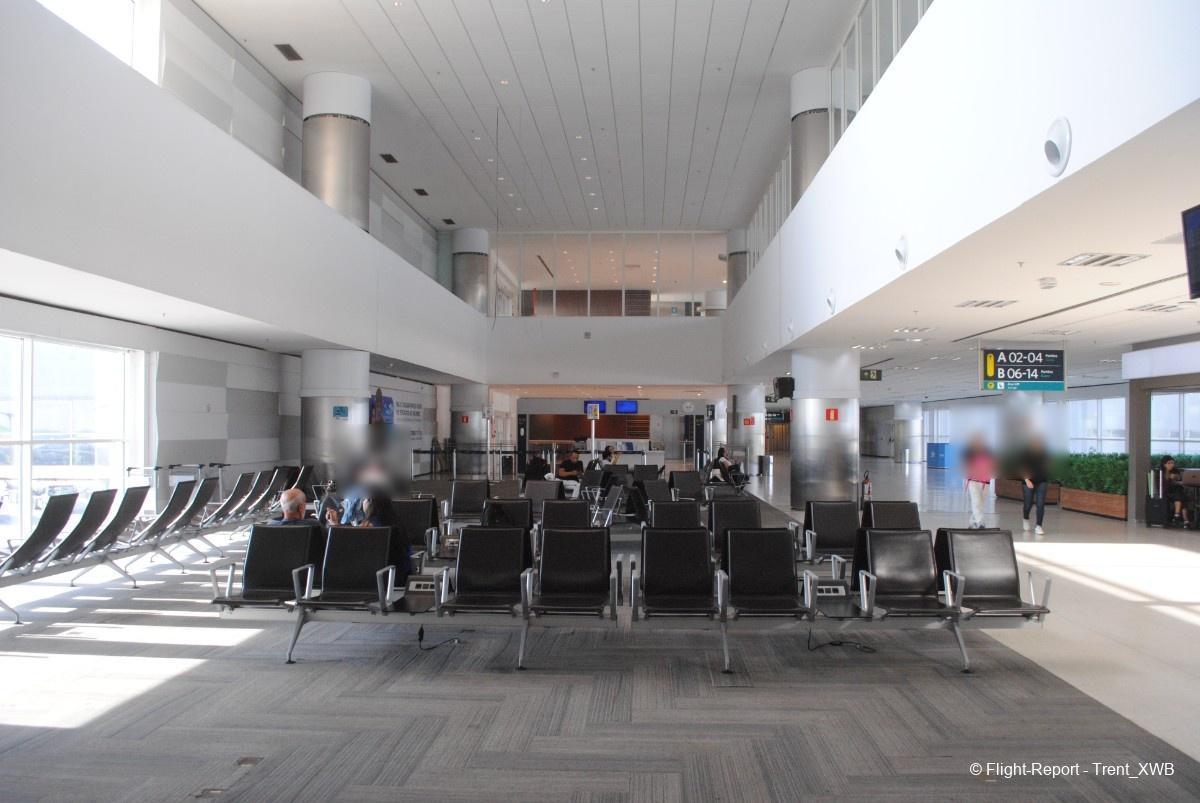
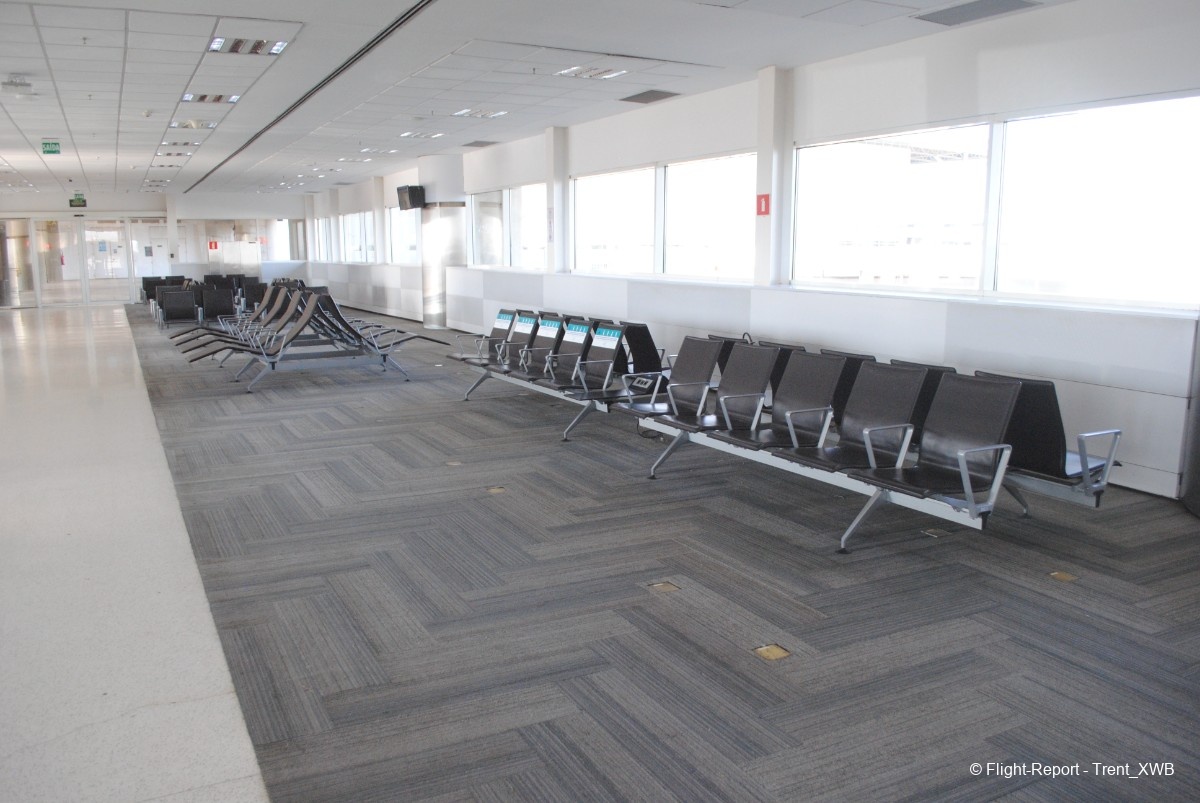
The international pier A is relatively small and dull, albeit having enough seating. The orientation of this pier doesn't allow to see the runways and the apron of domestic pier, where the most movements take place. As I said before, it was not possible to visit another pier - B, from where it could've been possible to see something interesting.
Planespotting In VCP
And, finally, some planespotting I made in VCP.
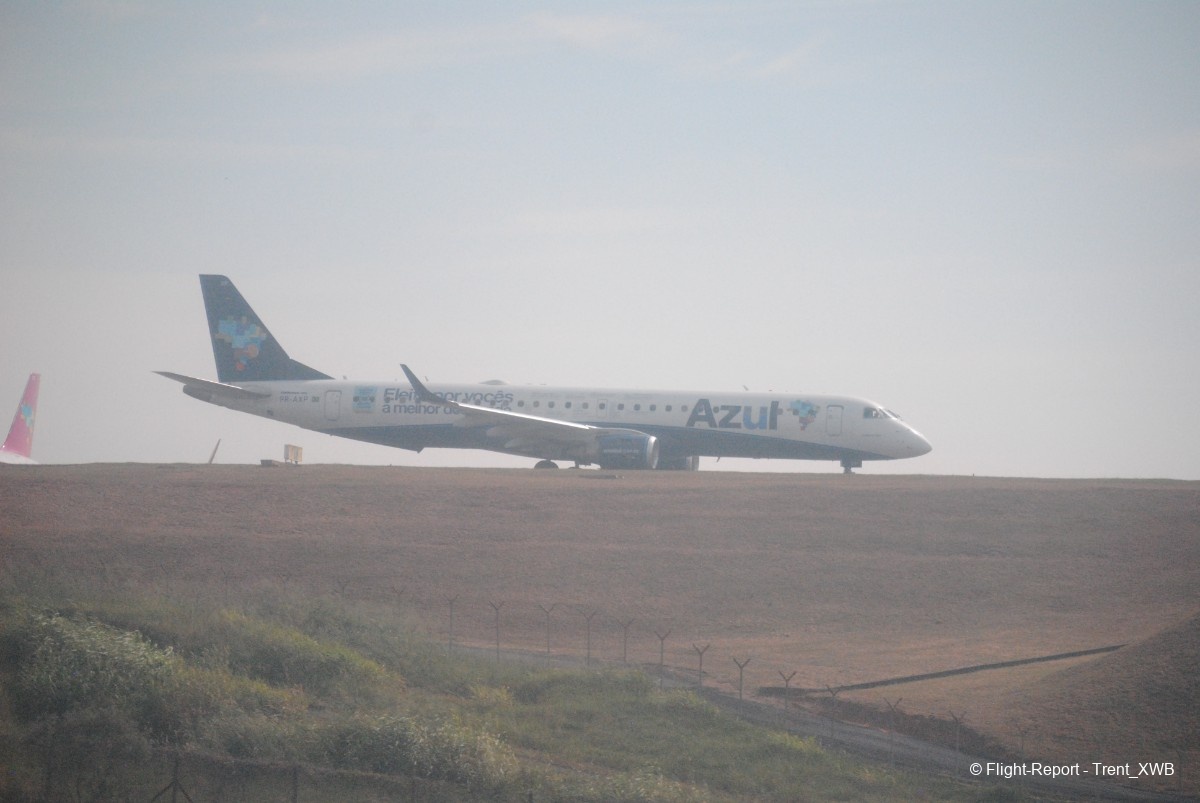
AD E195 (PR-AXP) seen from the bus, which took me to VCP. To the left one can see the tail of AD A20N (PR-YRS) in the "Pink Ribbon" livery.
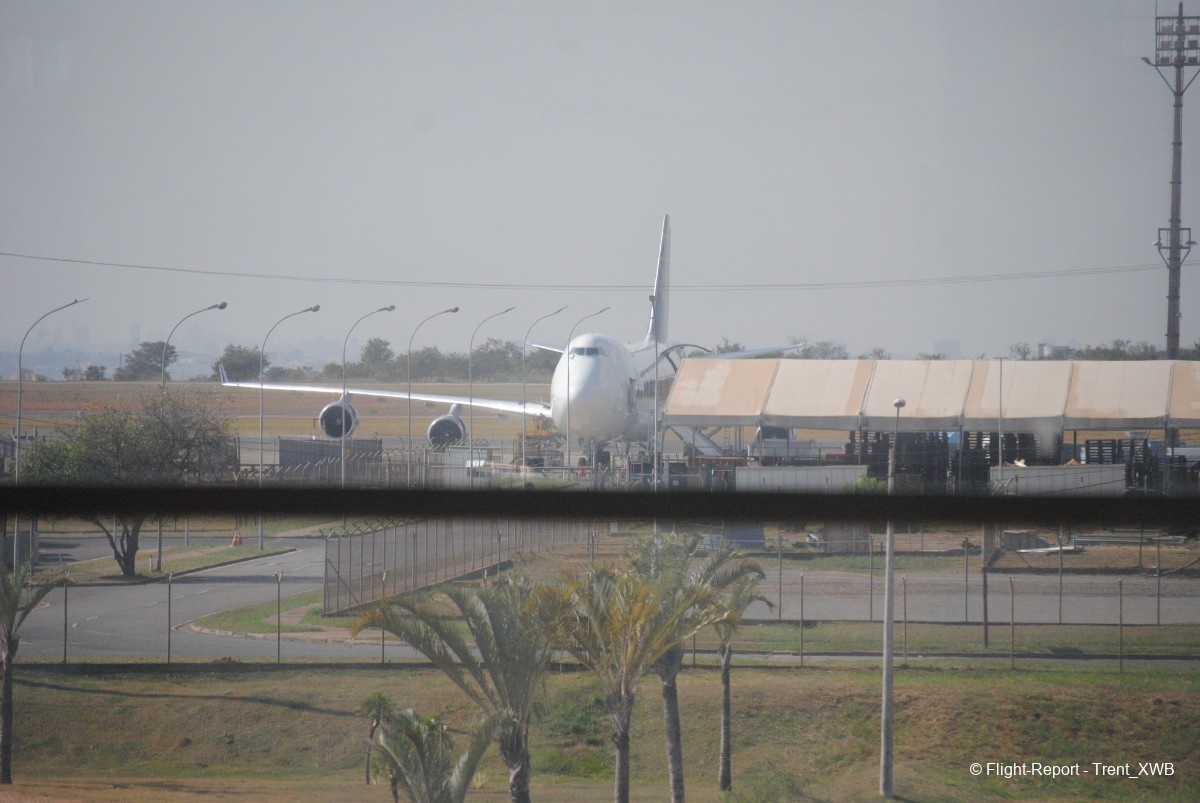
An Atlas Air B744F, seen from the landside of the VCP terminal.
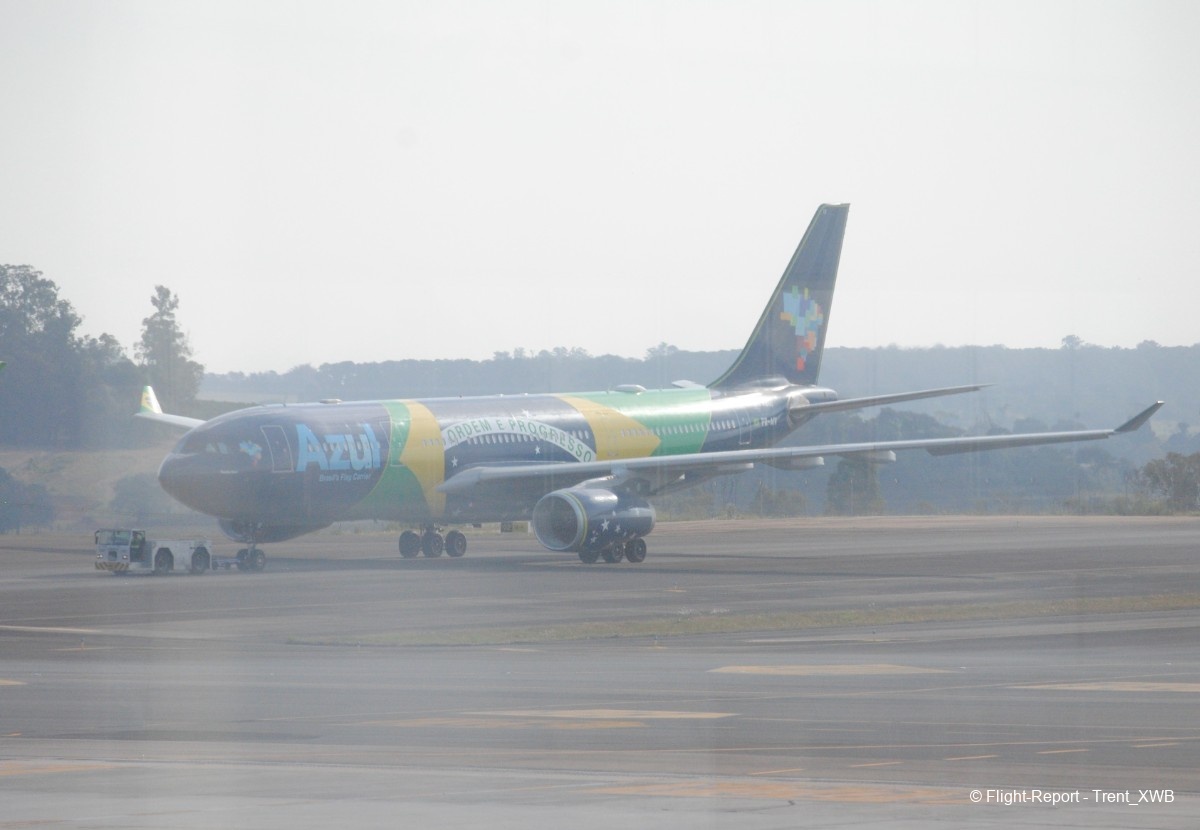
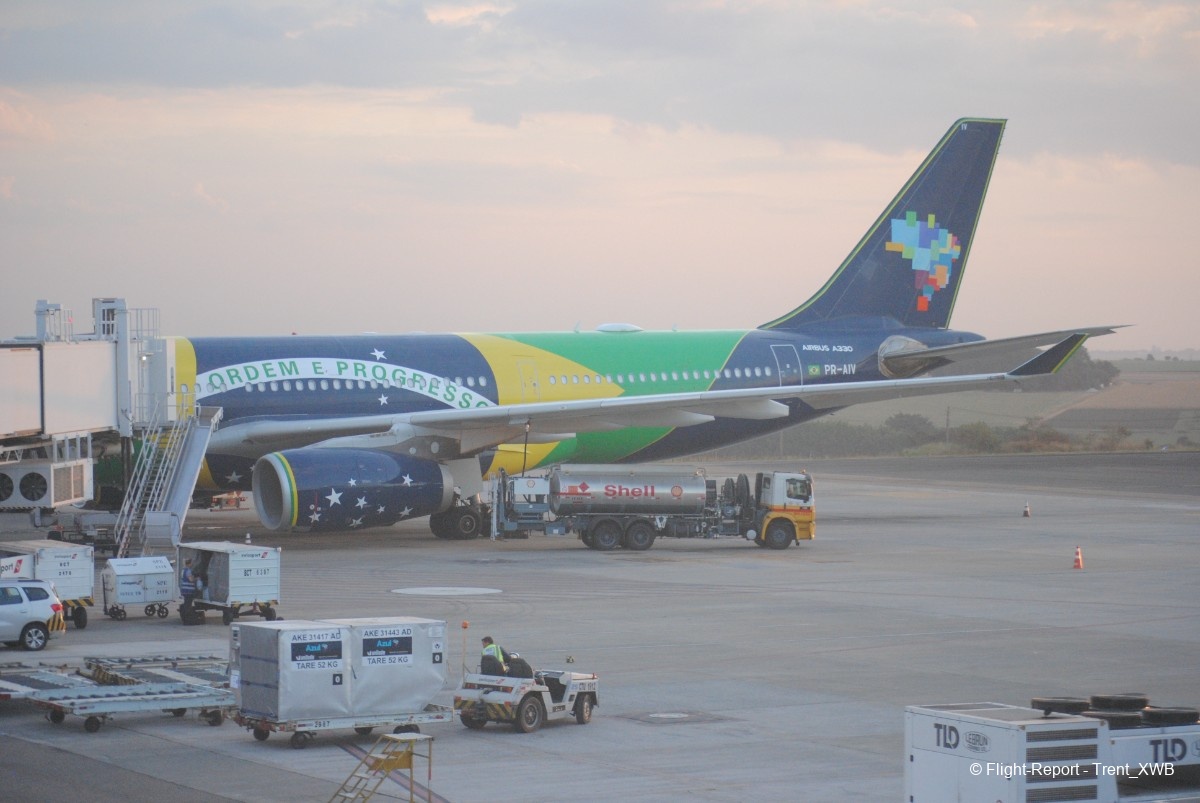
AD A332 (PR-AIV) in the beautiful "Brazilian flag" livery, which operated the late evening flight to LIS.
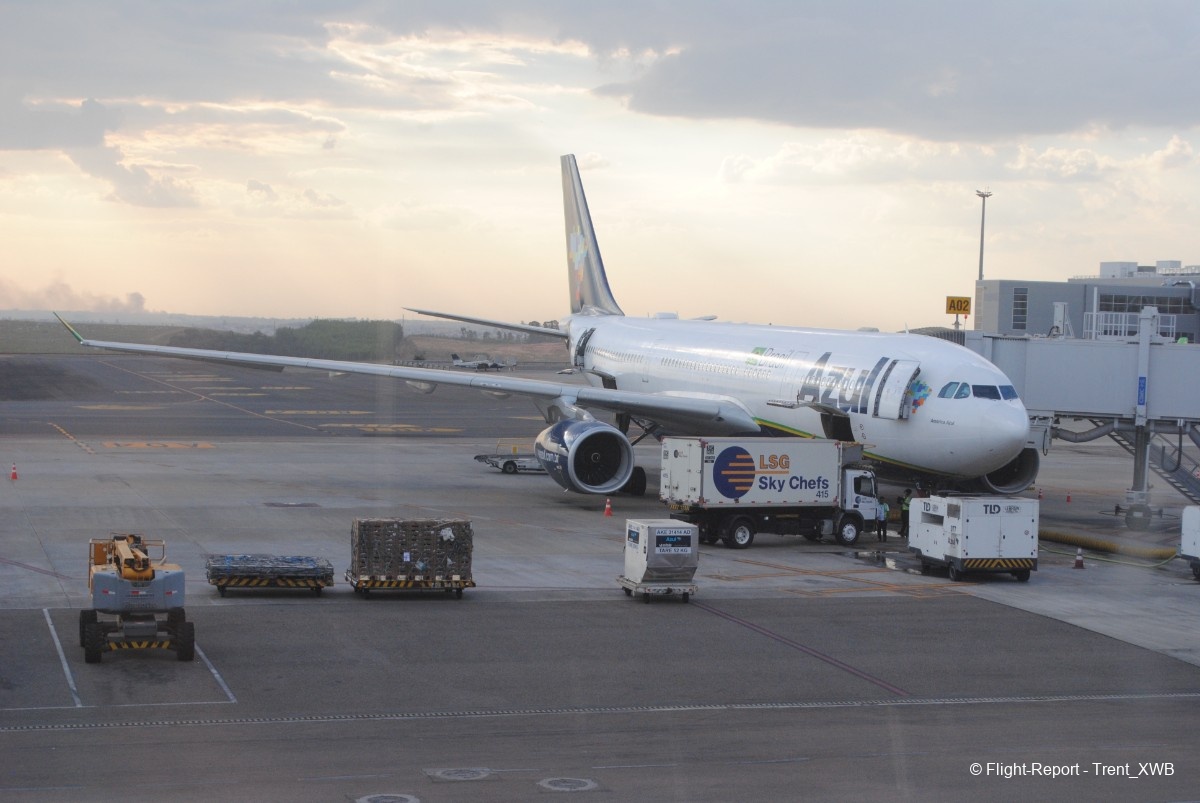
AD A332 (PR-AIZ) in the standard livery, which operated my VCP-ORY flight. The experience was very disappointing - from the economy seats to the meals, and only smiles and hospitality of the crew partially made things up.
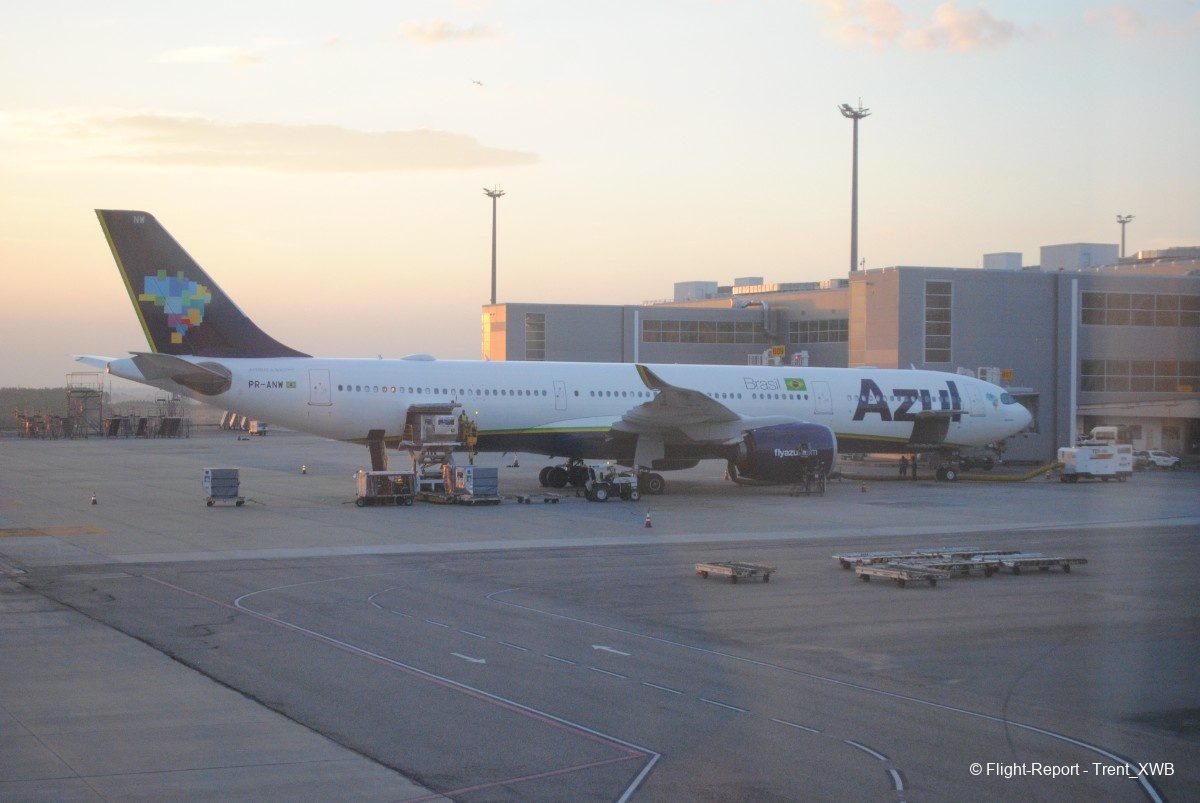
AD A339 (PR-ANW) that operated earlier evening flight to LIS. I should've chosen this flight instead of AD8700. Eventually I got to fly an A339 (a much better one than AD's) in September 2024 on ITA Airways FCO-YYZ flight.
Thank you for you attention and see you in the next FRs!