


After finishing my college entrance exams as a South Korean student I went and did what most people who are into aviation like me would do, fly. I was fortunate enough to have the busiest air route in the world, GMP-CJU near where I live. As Asiana's 767 is flying this route and is set to retire in May 2025, I decided to go to Jeju and come back, with the sole purpose of flying on the 767. A so-called quick turn was set. I would go to Jeju on OZ8927 and wait for around 4 hours while the 767 does two more legs of GMP-CJU and fly back on the same plane again on OZ8964.
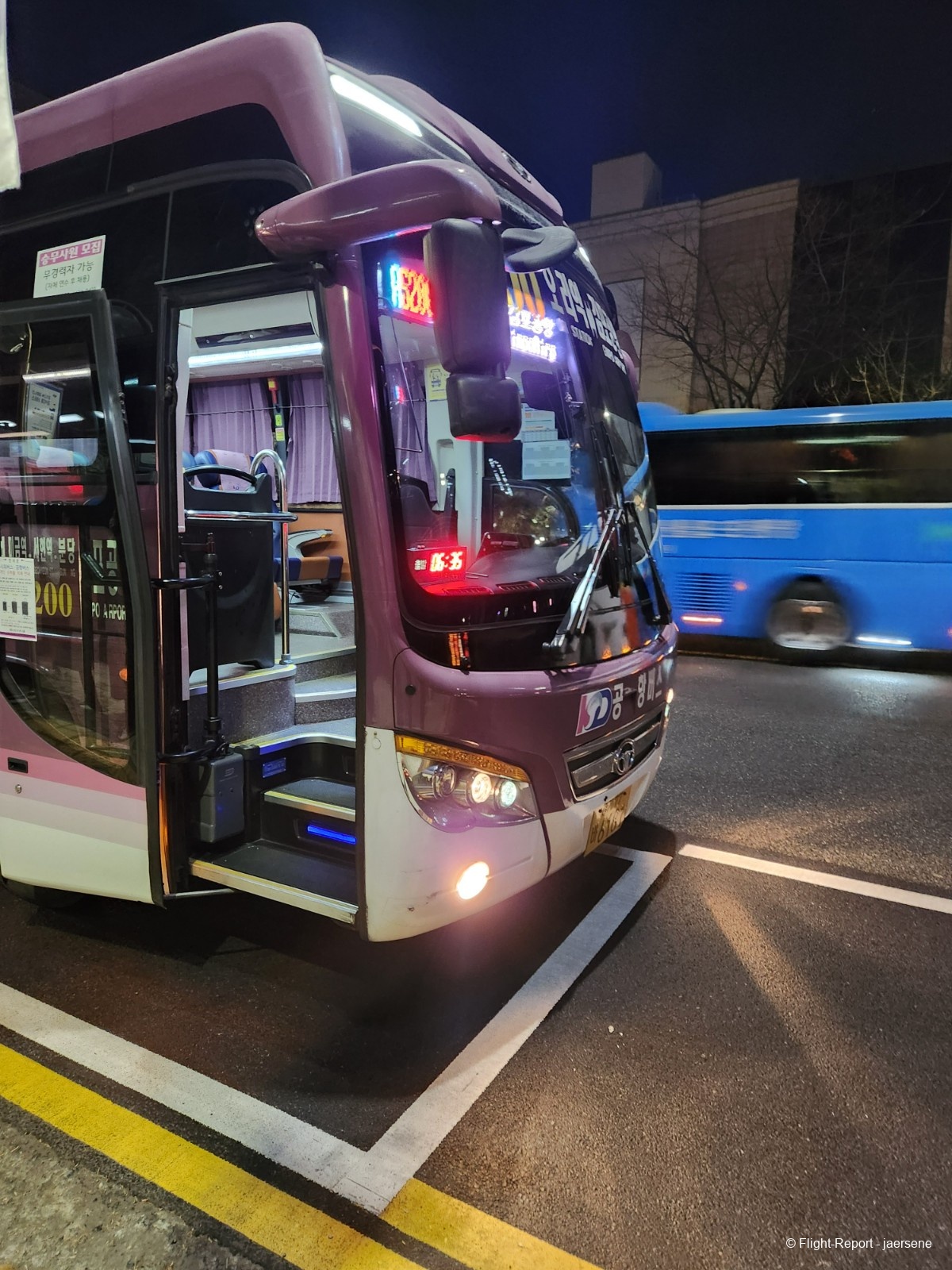
I'd be taking the bus today to Gimpo Airport. This was an around 6:30AM bus to the airport. You might ask why I'd take such an early bus when my flight was in 5 hours, but it is my habit to go to the airport as soon as possible. I love roaming around airside catching all the various departures. Plus, better safe than sorry.

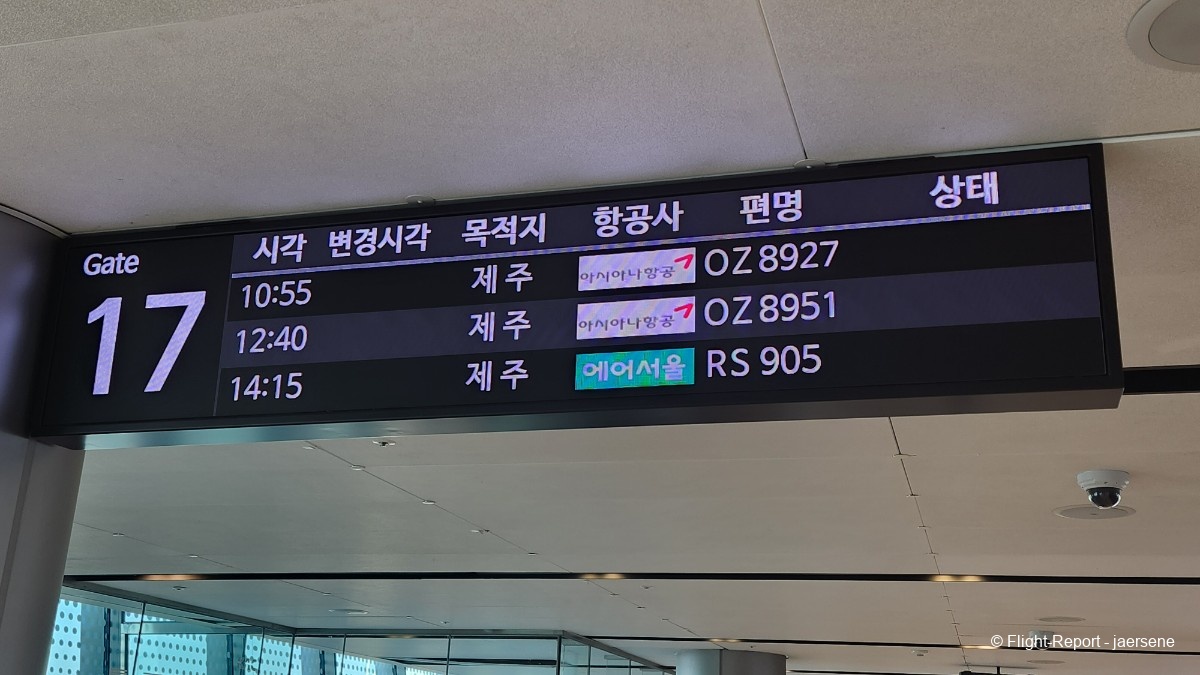
GMP has a curfew due to noise restrictions, so the departures start at 6 in the morning. You can see the busy schedule on the FIDS, covered with flights to CJU. My flight isn't shown yet, as I had arrived early. Security was a breeze, as it is a domestic flight, and I got to enjoy about 90 minutes of roaming and plane spotting.
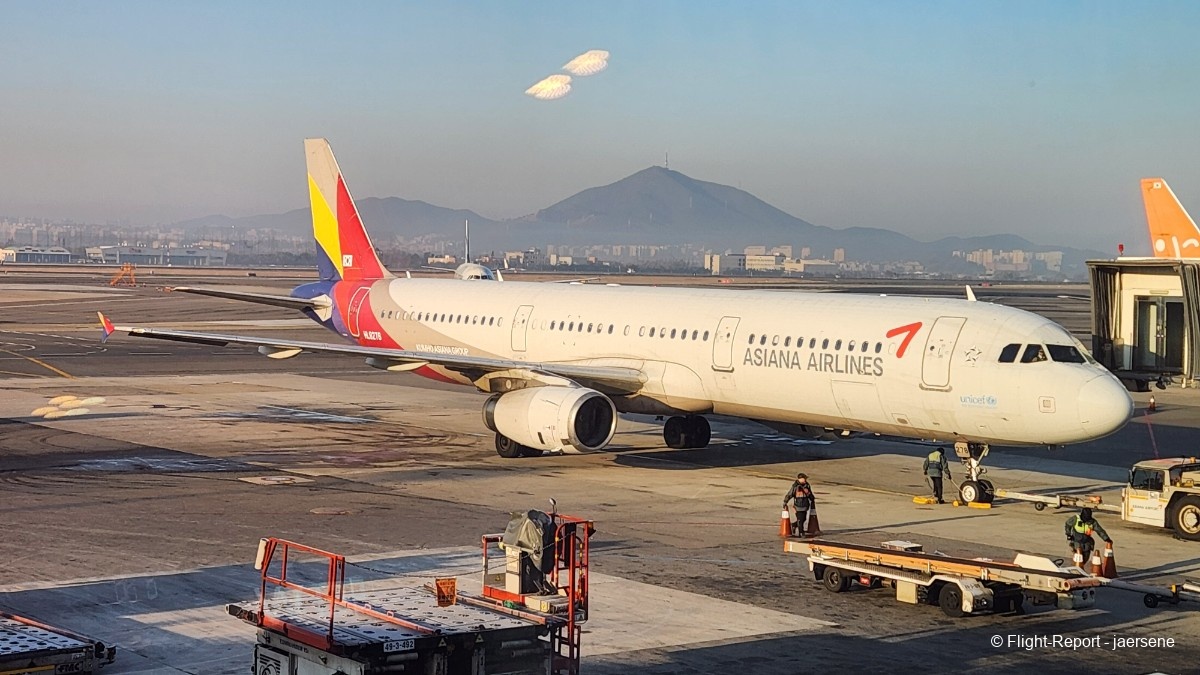
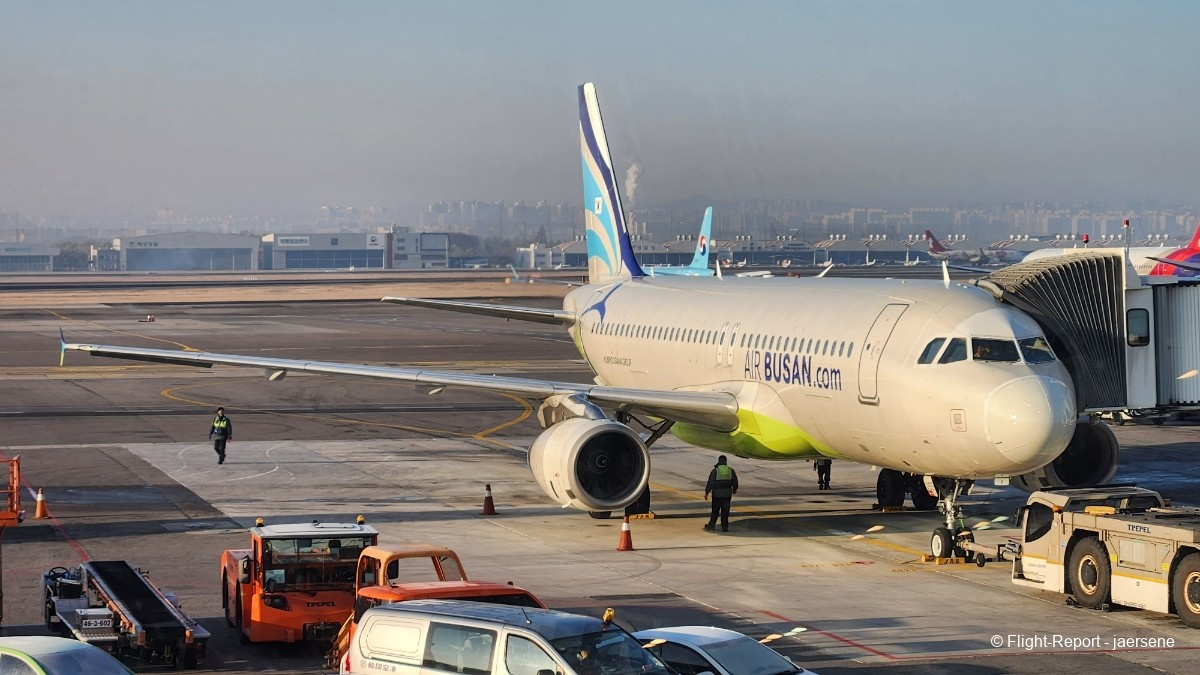
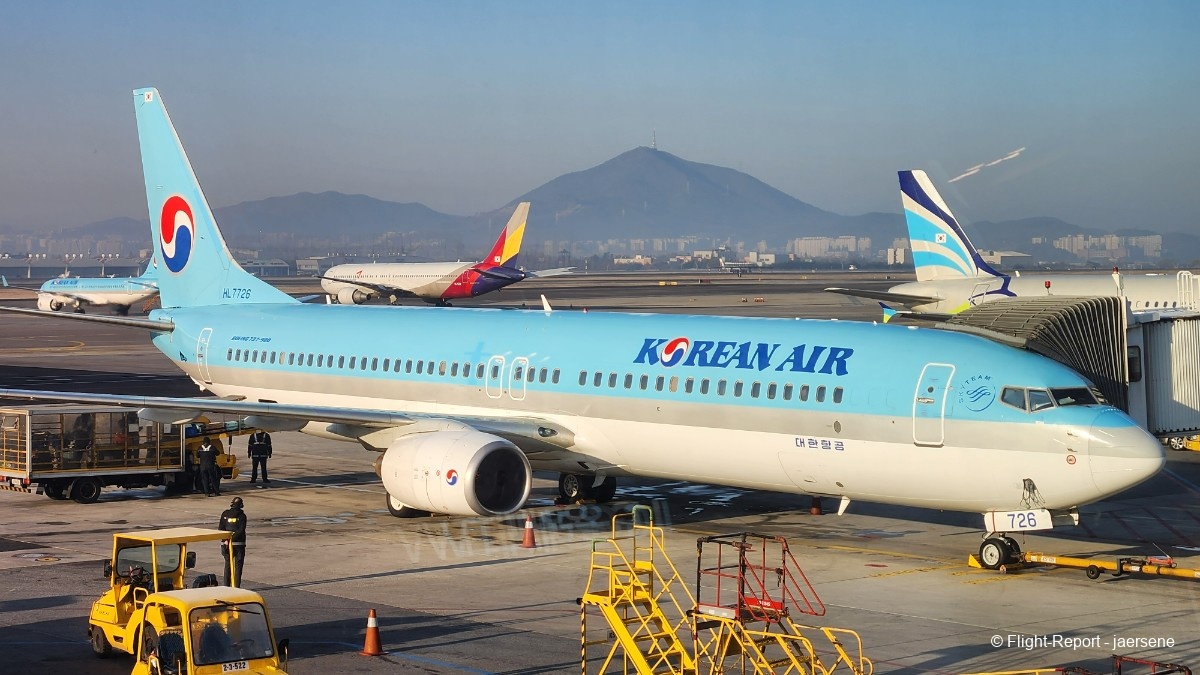
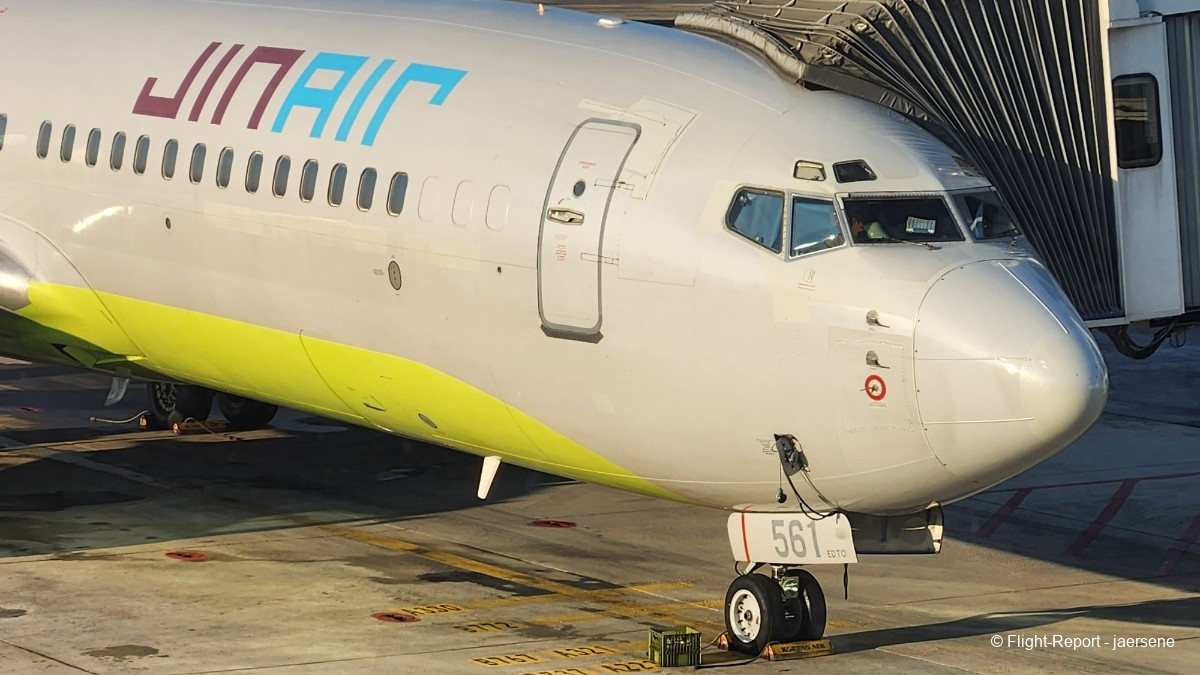
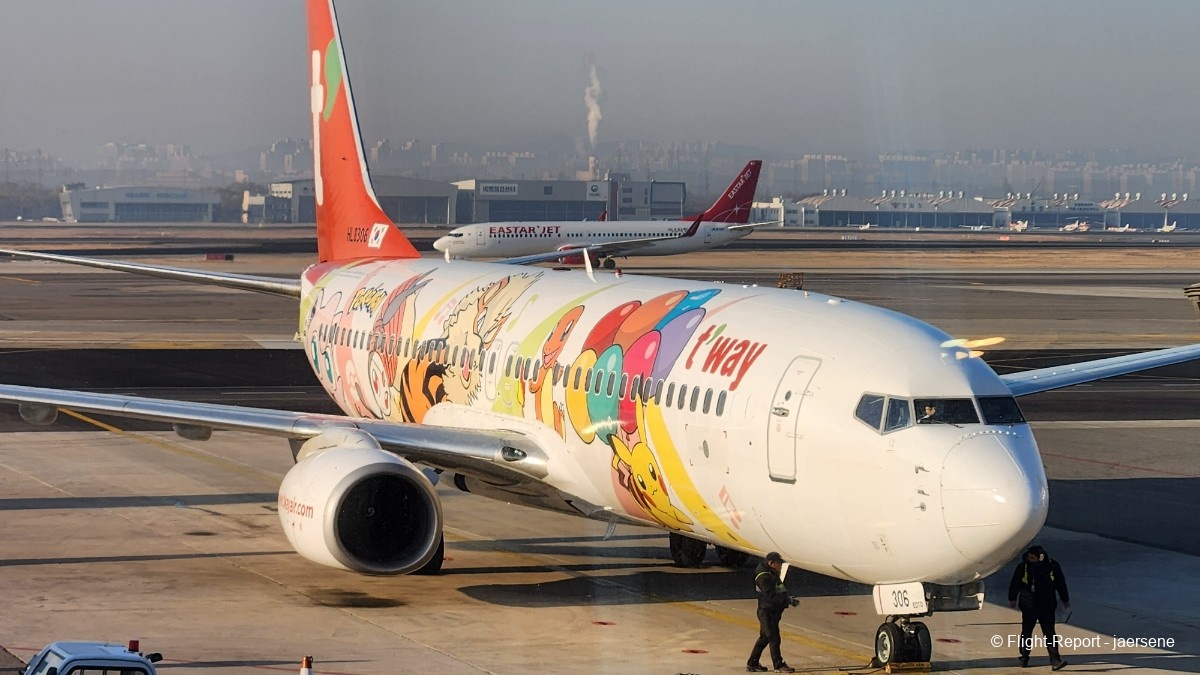
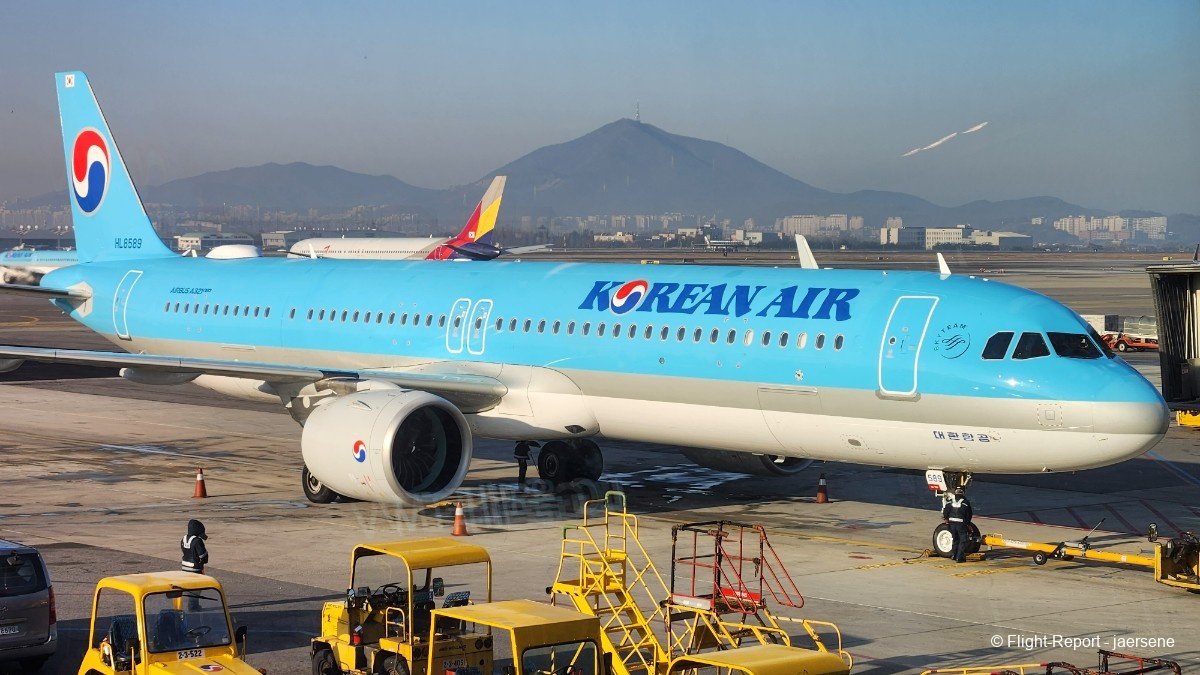
Some of the GMP departures waiting at the gate. There were some interesting traffic, like the endangered Air Busan A320, Jin air 737 in the old livery with eyebrows, T'way 737 with the Pokémon special livery HL8306, and the Korean Air A321neo. It hadn't been long since they debuted their A321neos, so it was pretty awkward seeing the NEO in the Korean Air colors. People have been giving their thoughts on the livery on the NEO and how awkward the silver cheat line is or how the tail logo is a bit misplaced, but I personally have no issue with them. I just would've loved the mask on the cockpit windows.
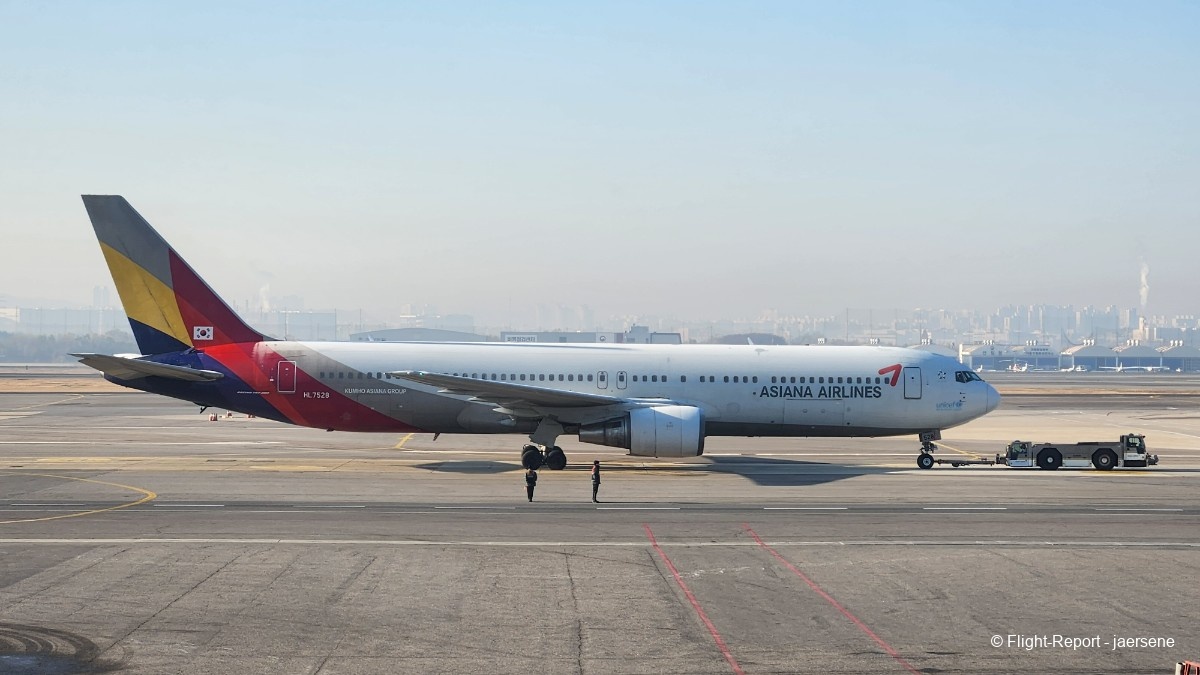
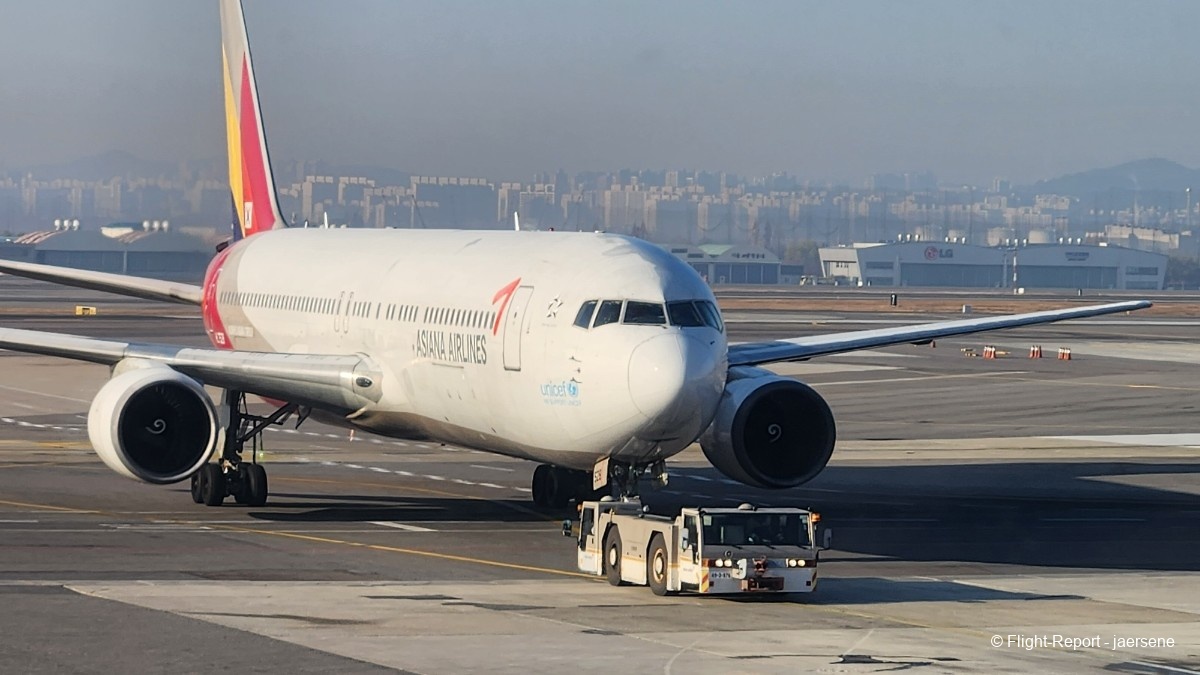
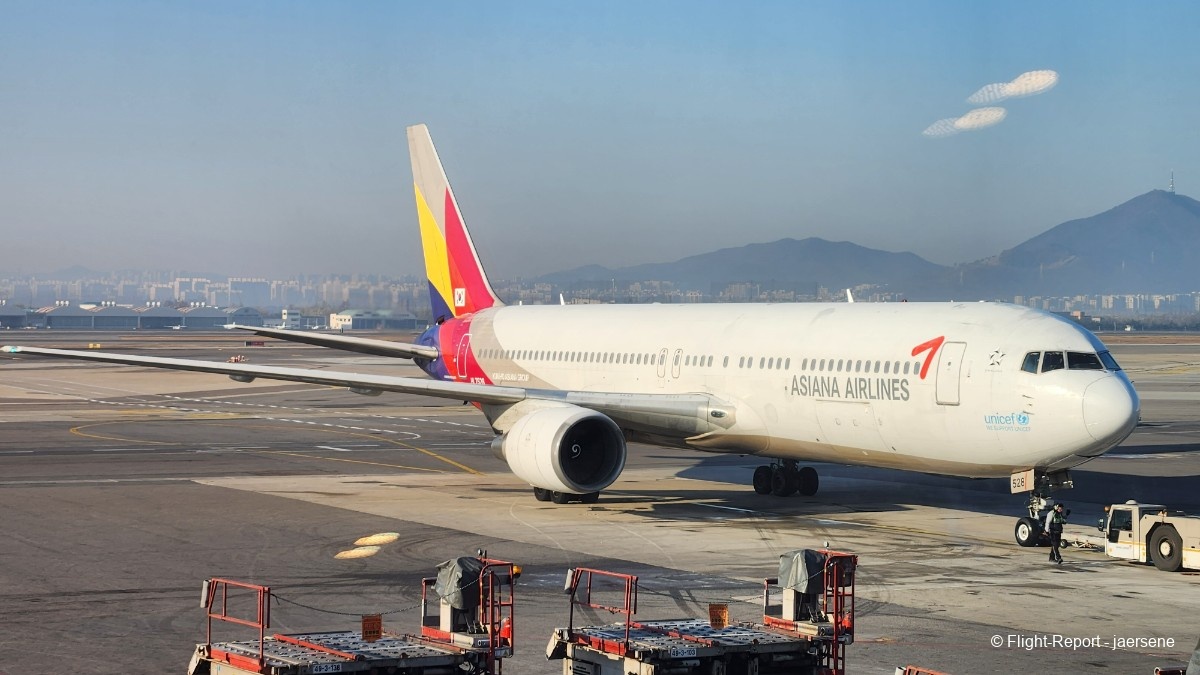
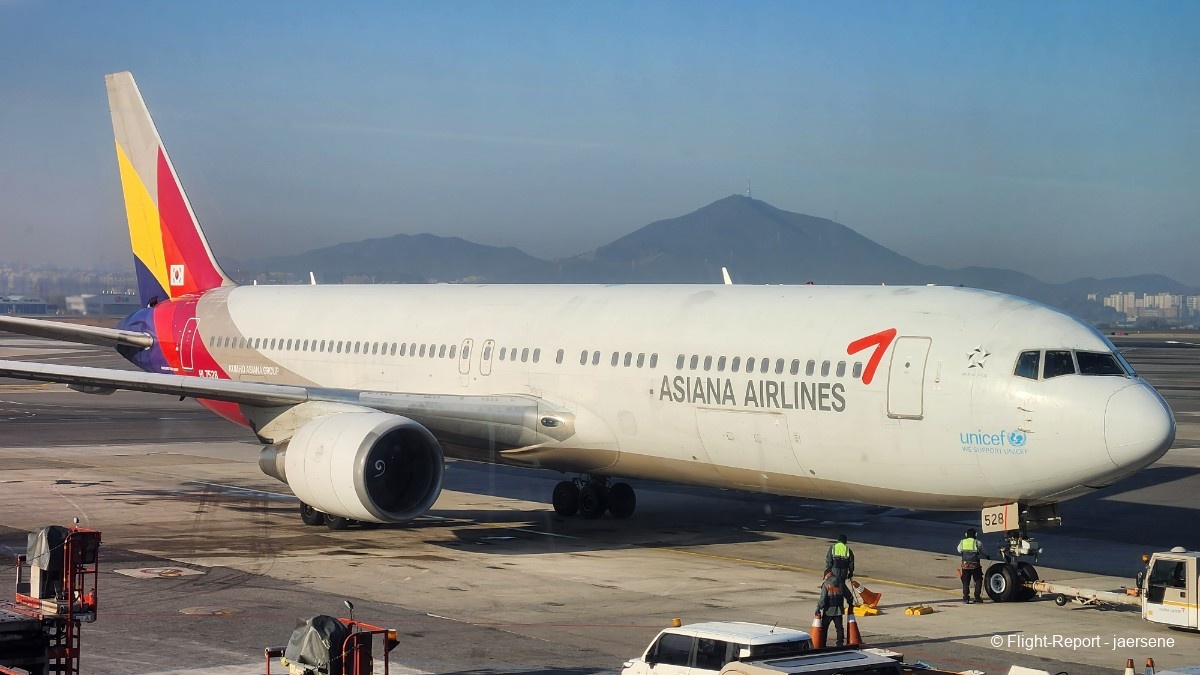
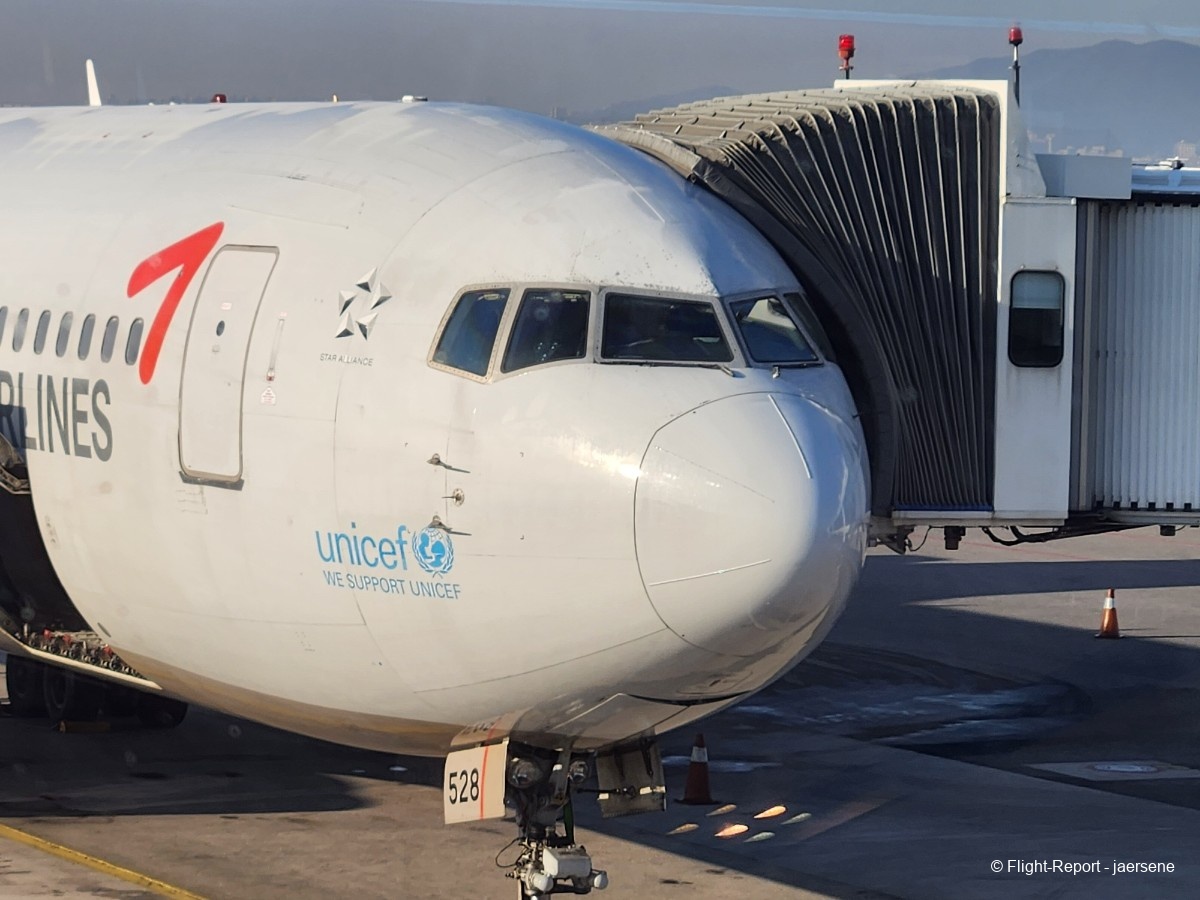
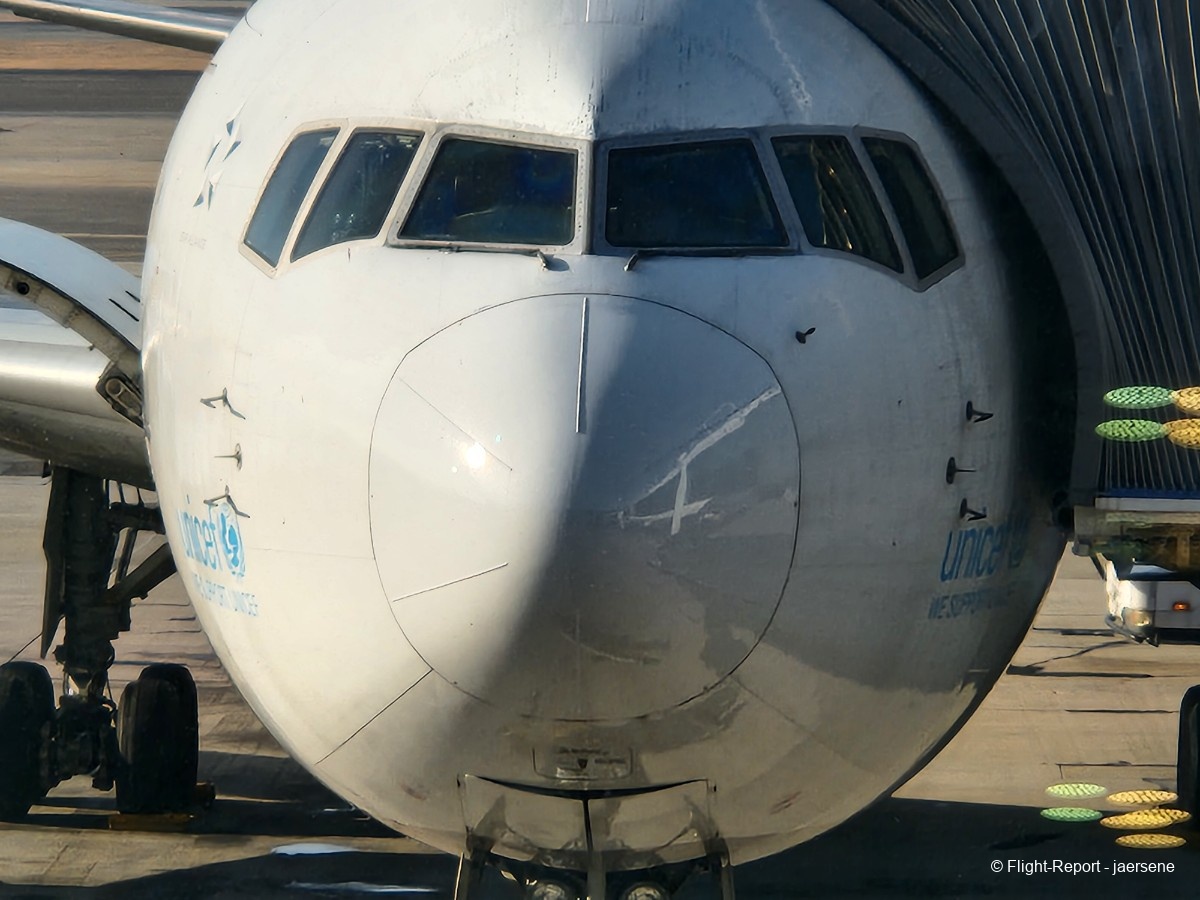
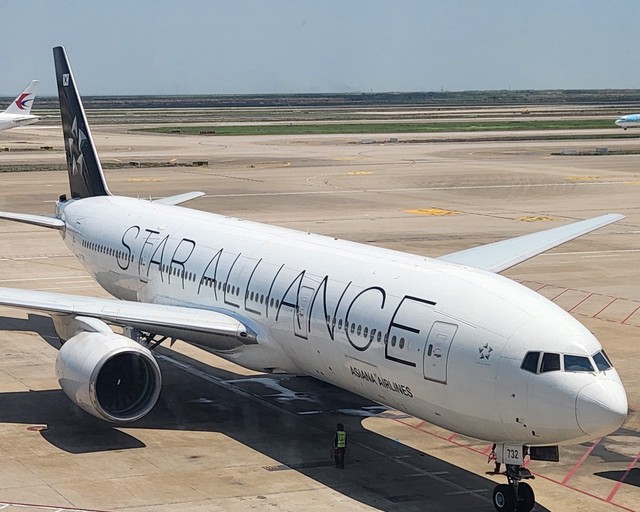
Our aircraft for today, HL7528, was pulled to gate 17 from the parking stand, as it was its first flight for the day. This would be my second 767 flight ever, however my first after gaining consciousness/clear memory. I was on OZ733 from ICN to HAN back in 2017, on HL7516 which was wearing the Star Alliance livery.
Another quirk, this is the last remaining 767-300 non-ER variant currently operating commercially, I believe.
Korea is currently going through a major shift in commercial aviation, and with the retirement of the 747 previously in March and the 767 in 2025, it feels like changes are rapid, not really in a good way.
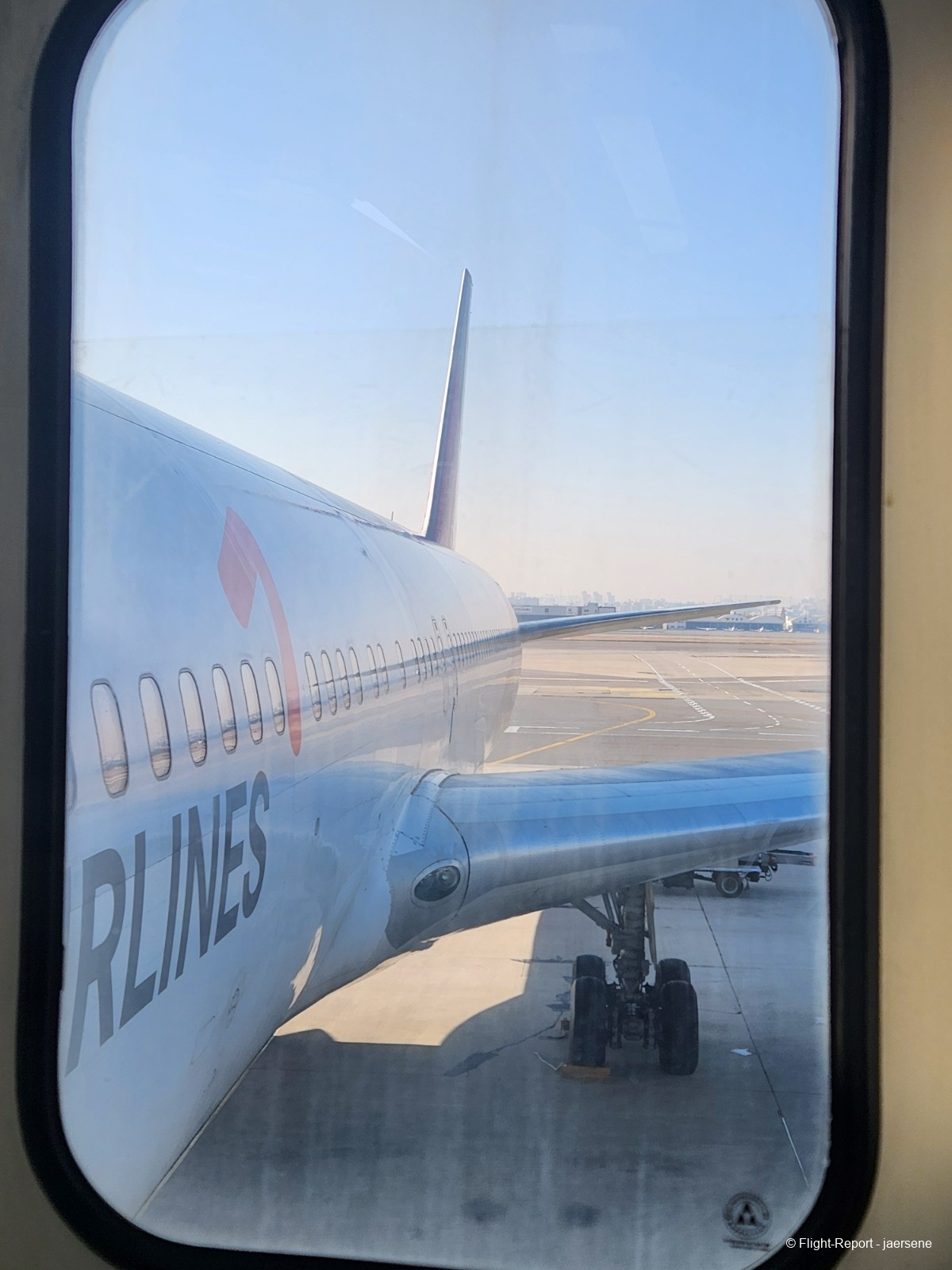
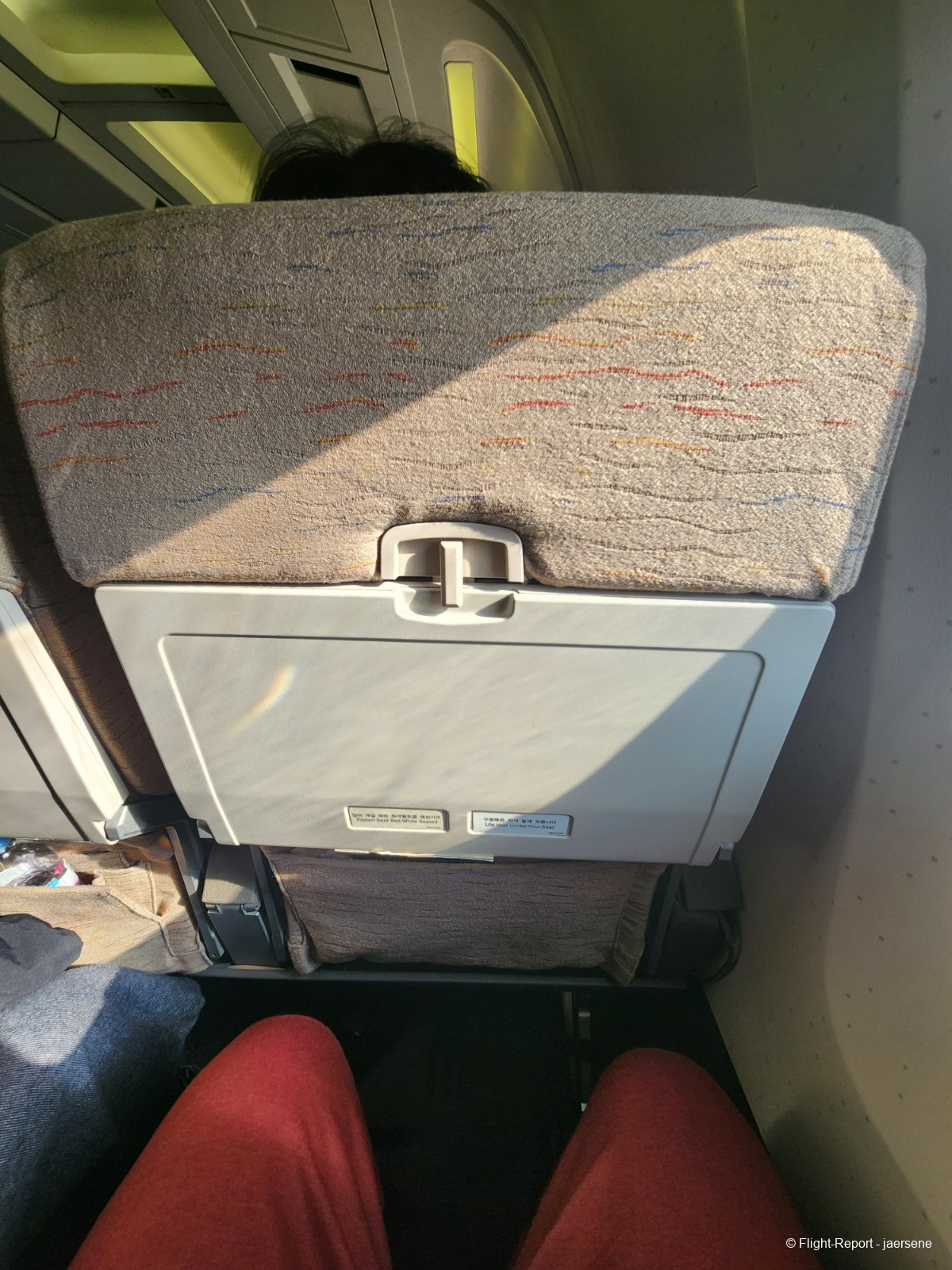
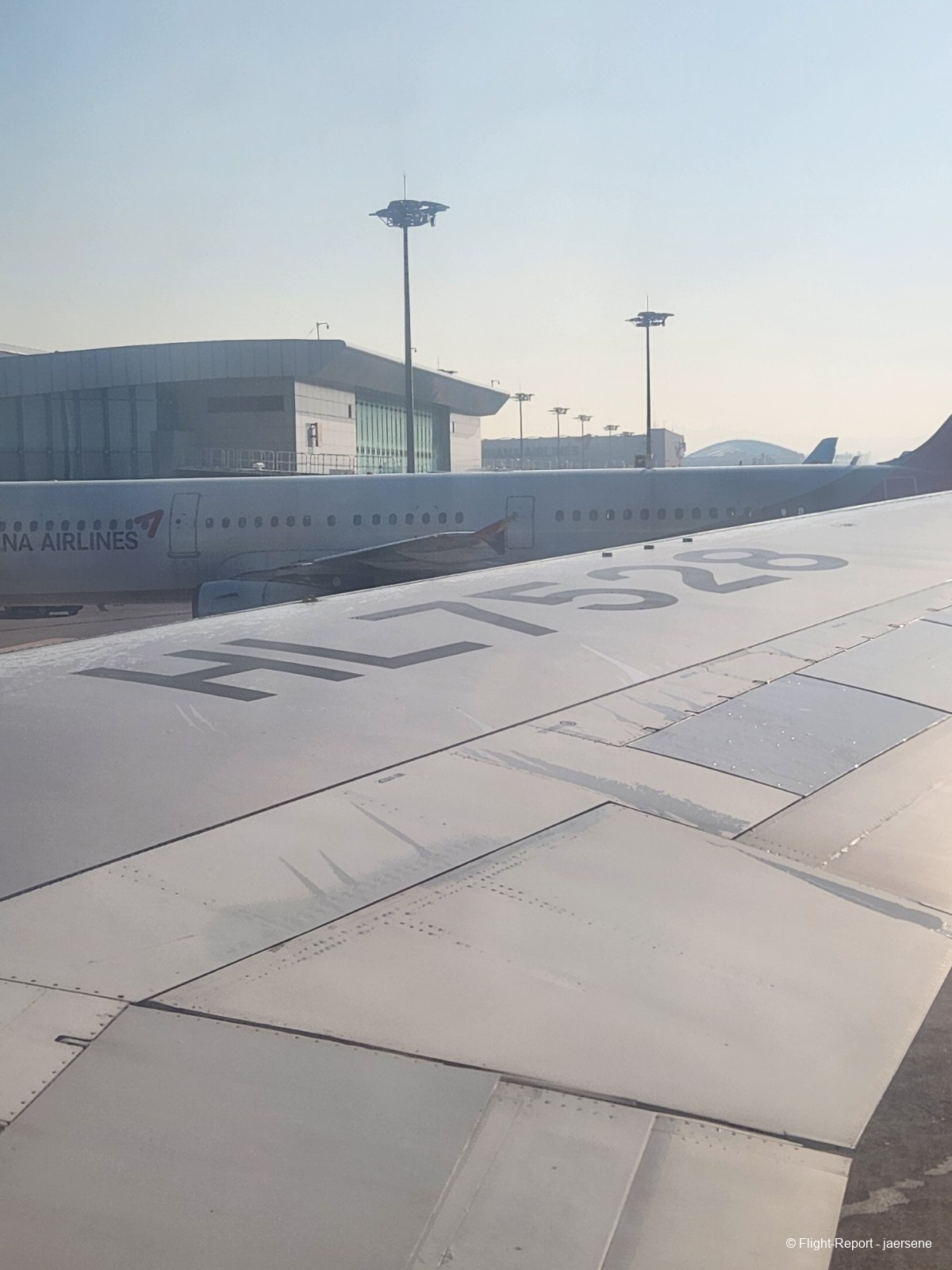
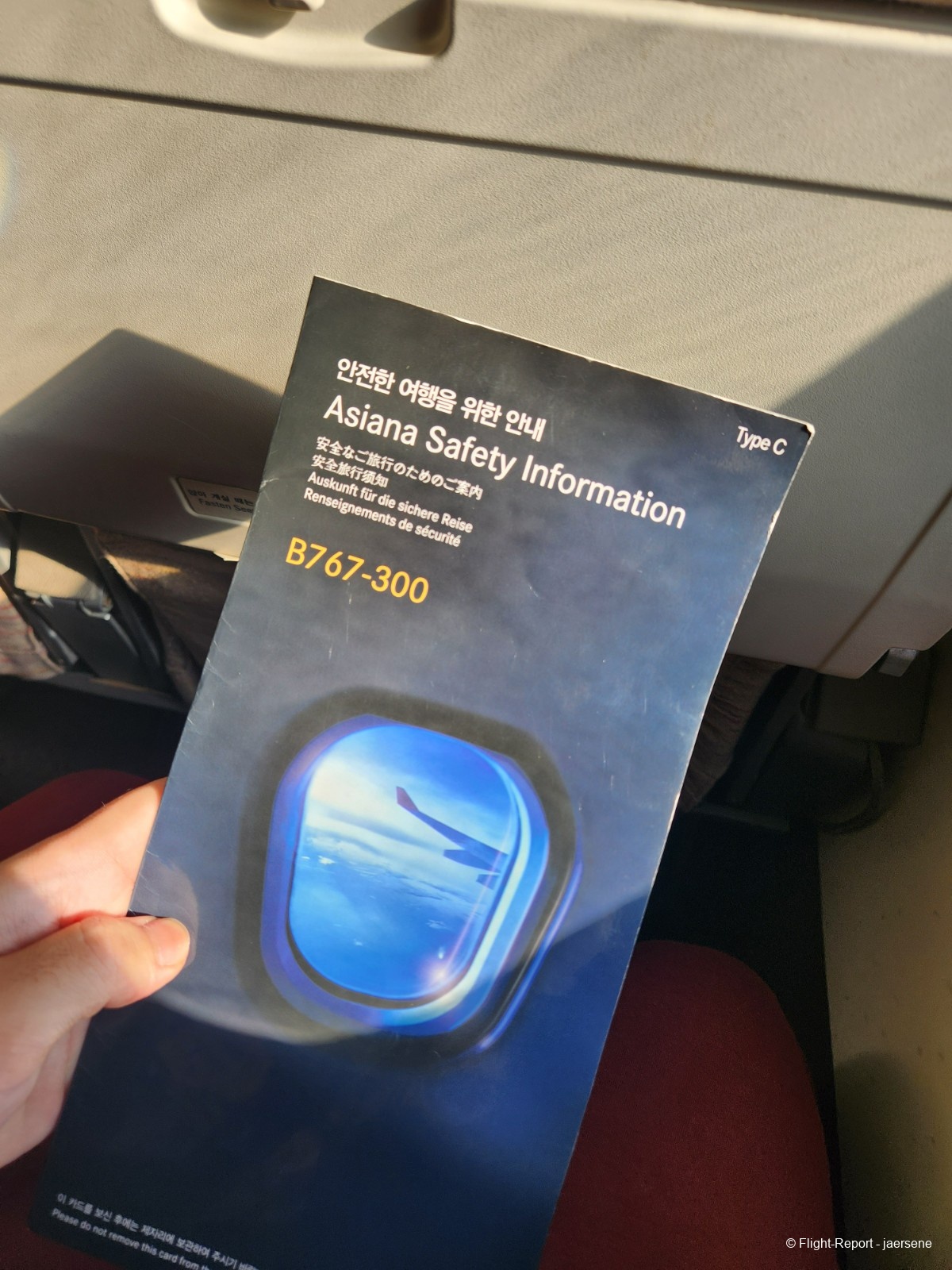
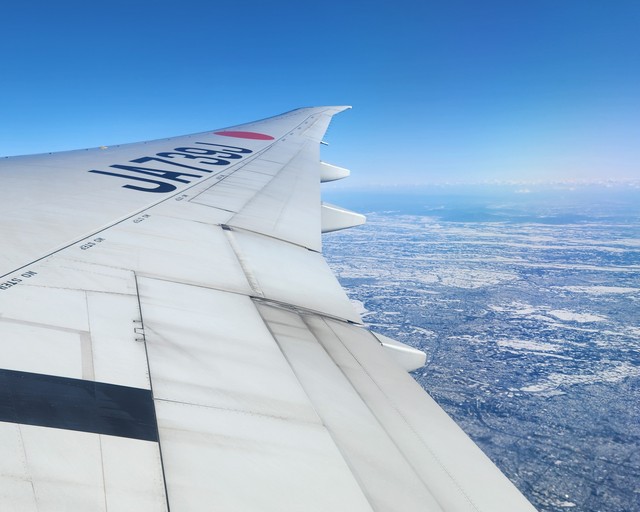
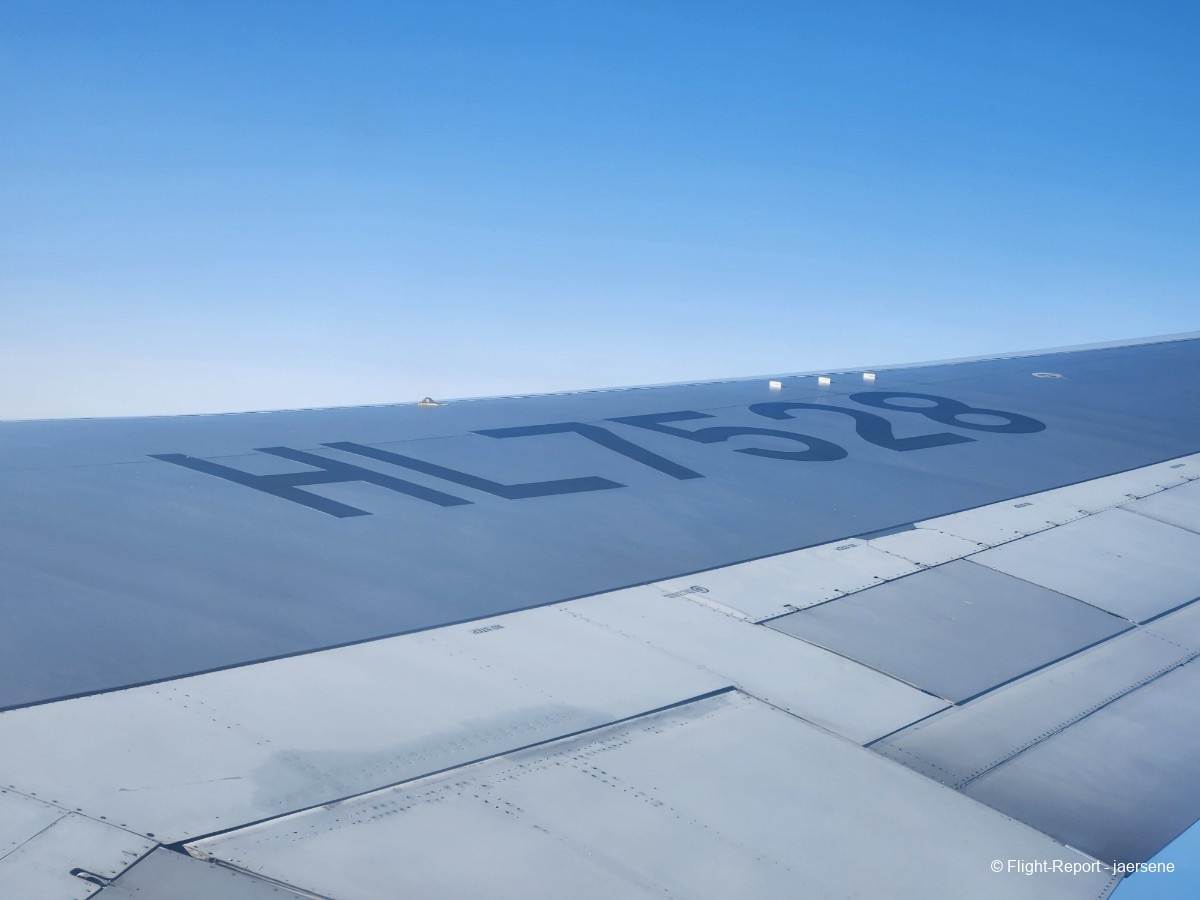
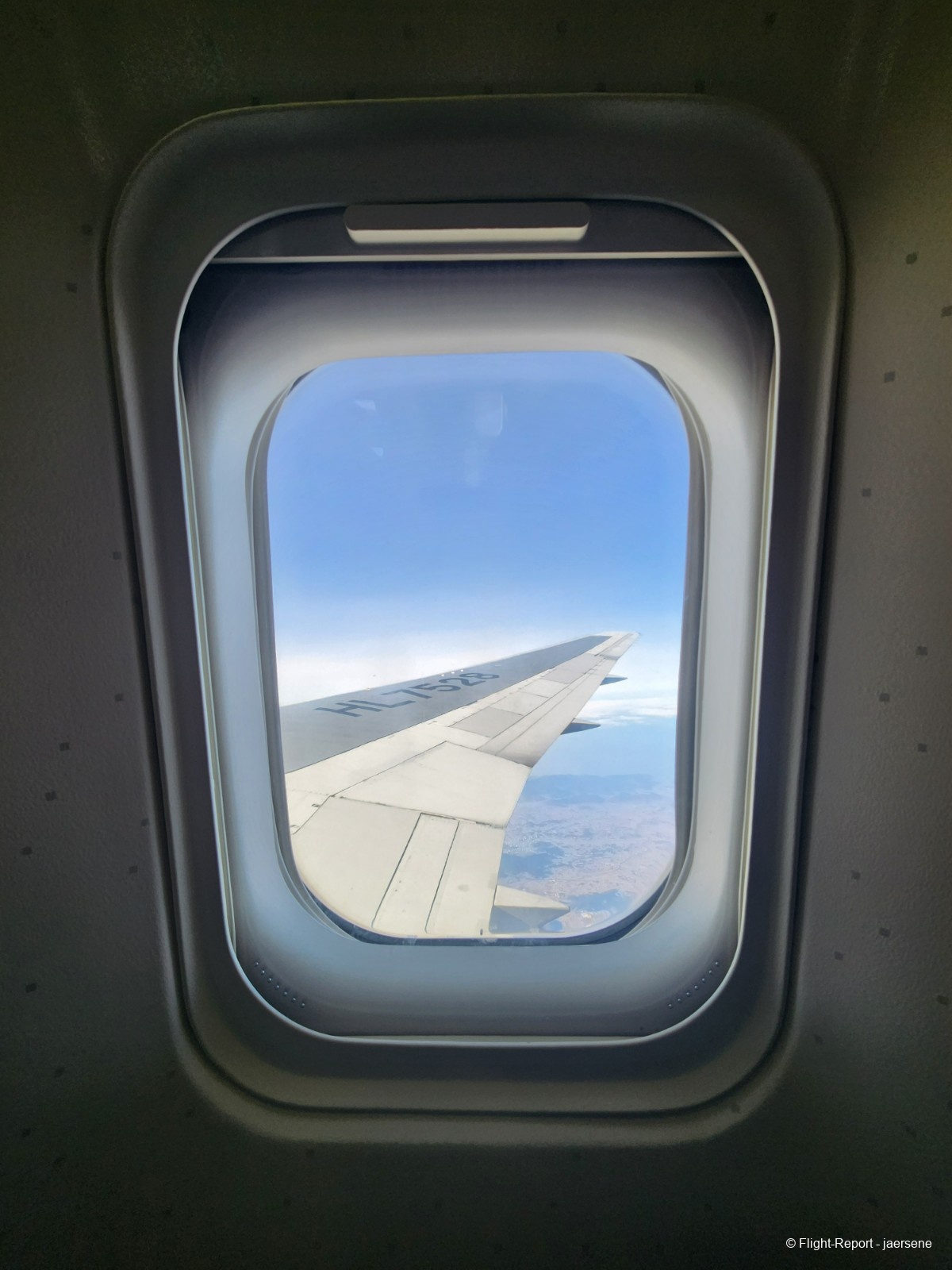
I boarded through the L1 door and found my way to seat 38K. I had carefully searched through the internet to find my ideal window seat, which came to be 38K. My ideal window seat is just aft of the wing, where I can see the land clearly and be able to see the aft of the wing, the workings of the flight control systems. Also, if you're on an aircraft registered in South Korea, you can see the registration on the right side wing. I like to sit on that side just to have the registration in the picture.
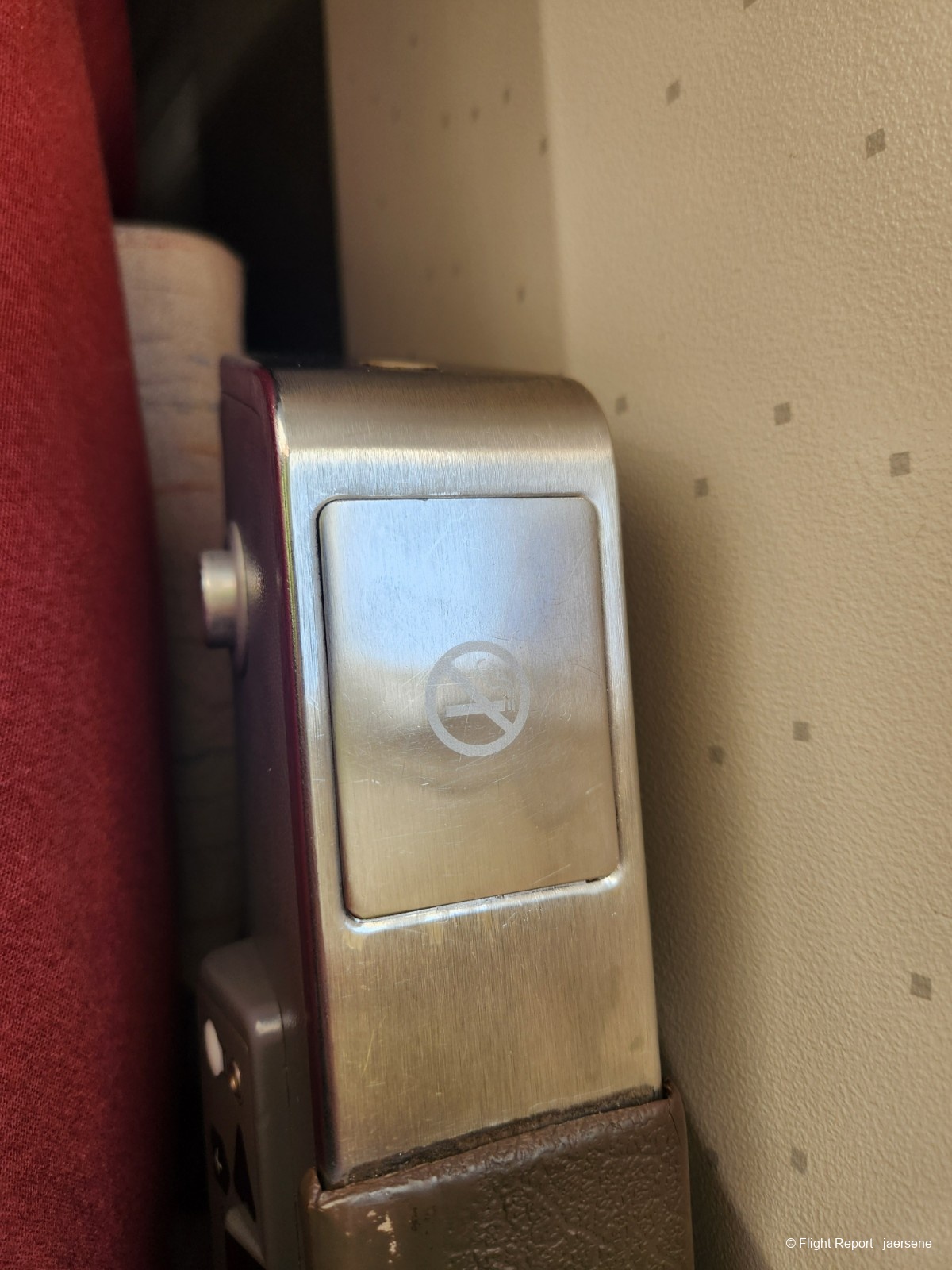
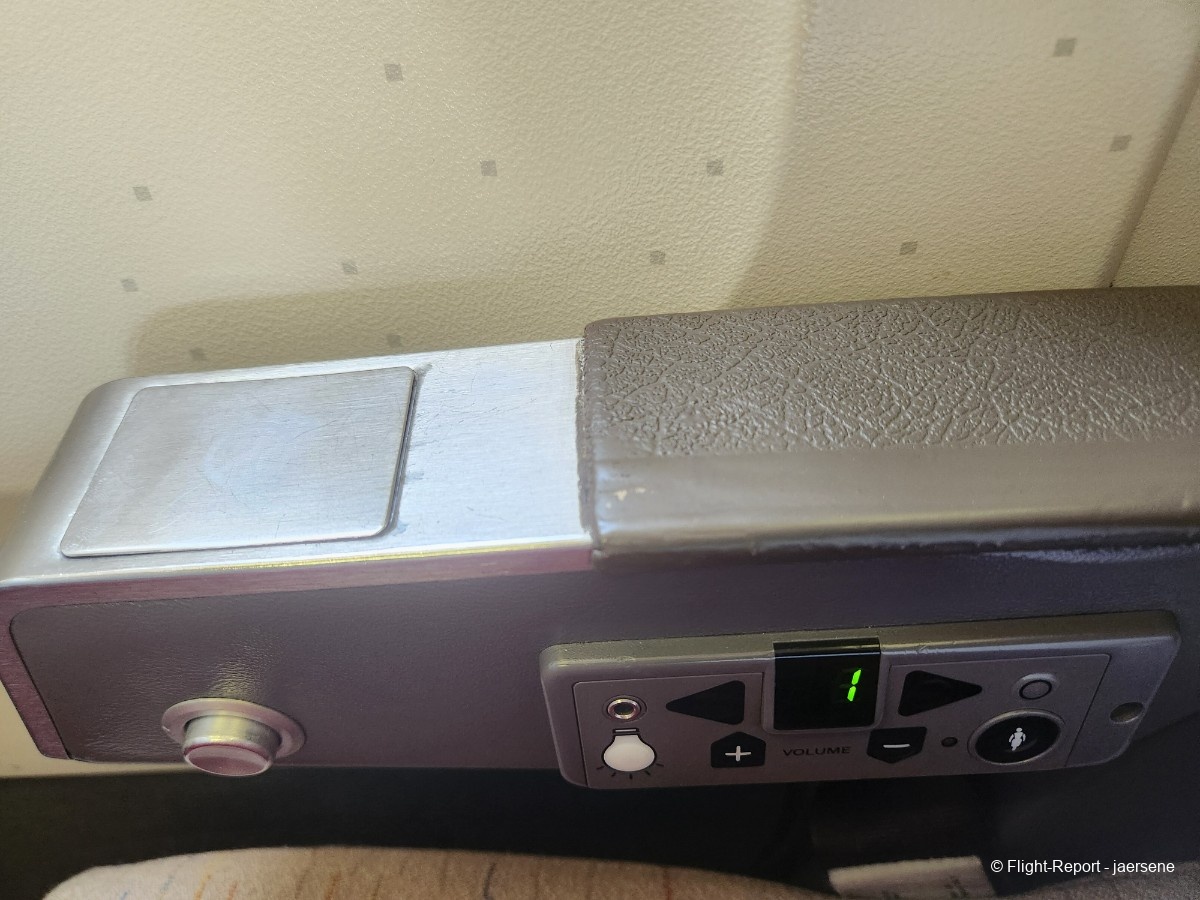
You can see the classic seats fitted on the 767, which I presume to be the original seats from when it was first delivered in the 1990s. It is also uniquely, in the modern era, fitted with ashtrays on the armrests. I presume it was for when smoking on planes were allowed.
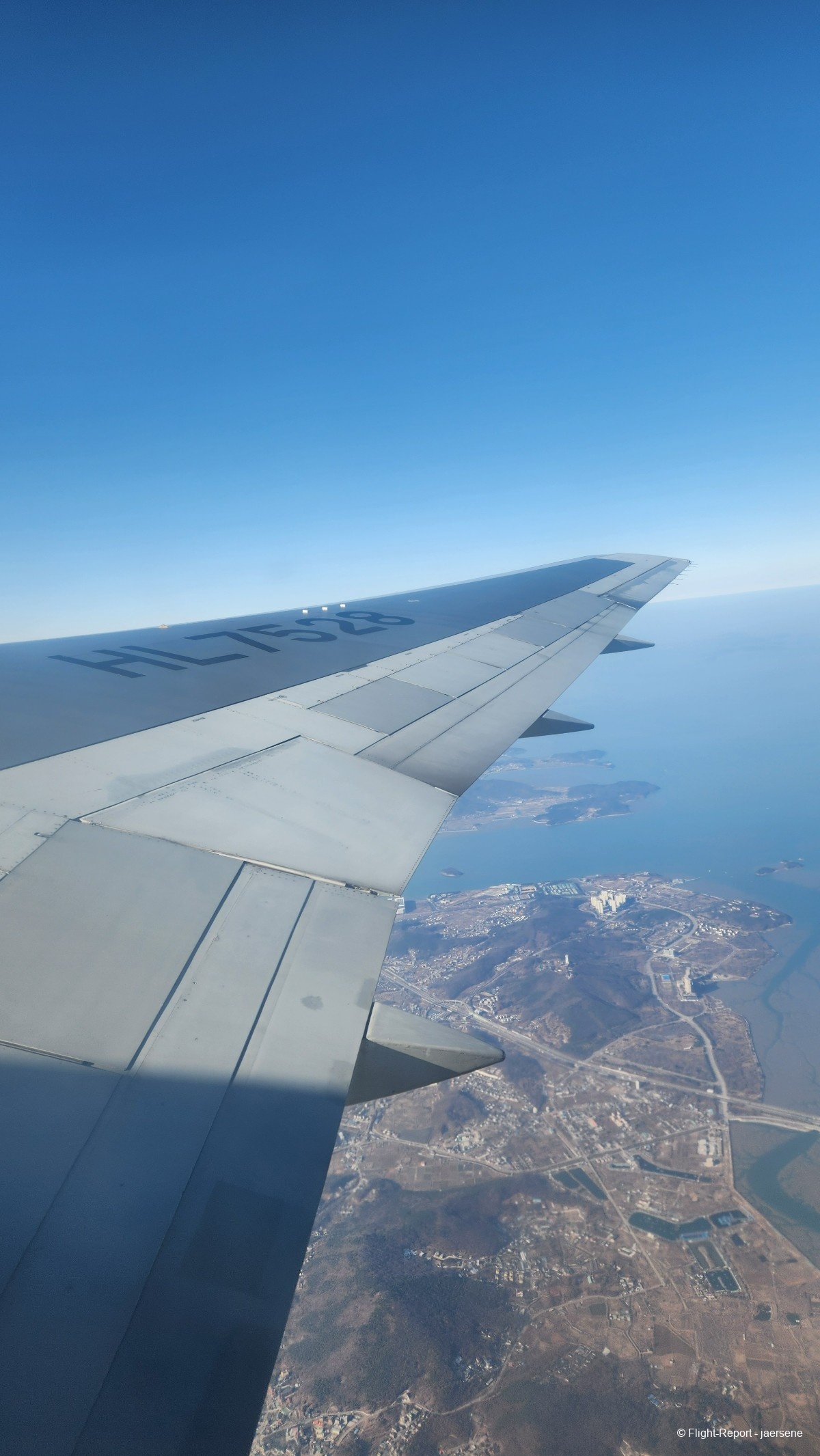
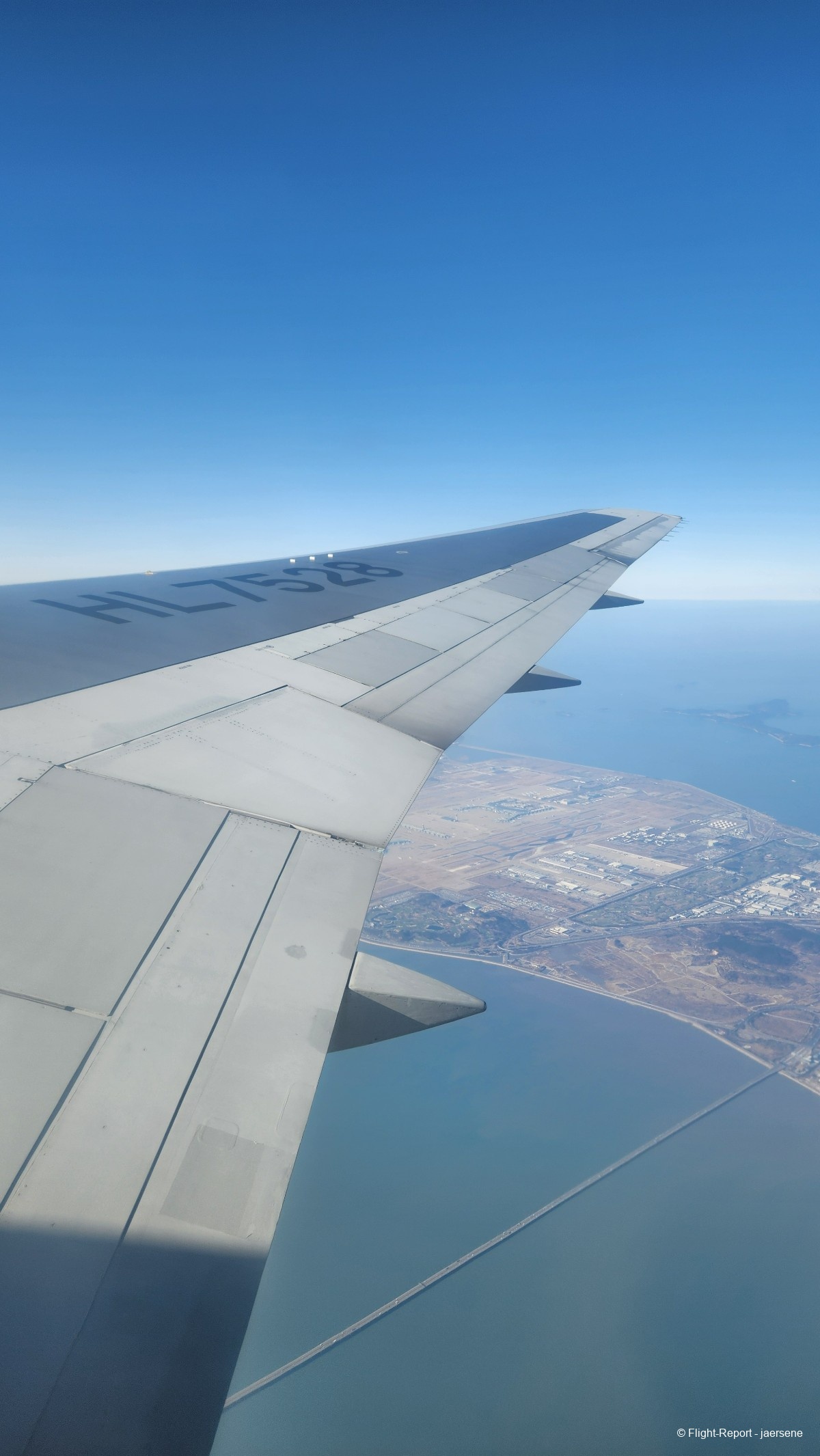
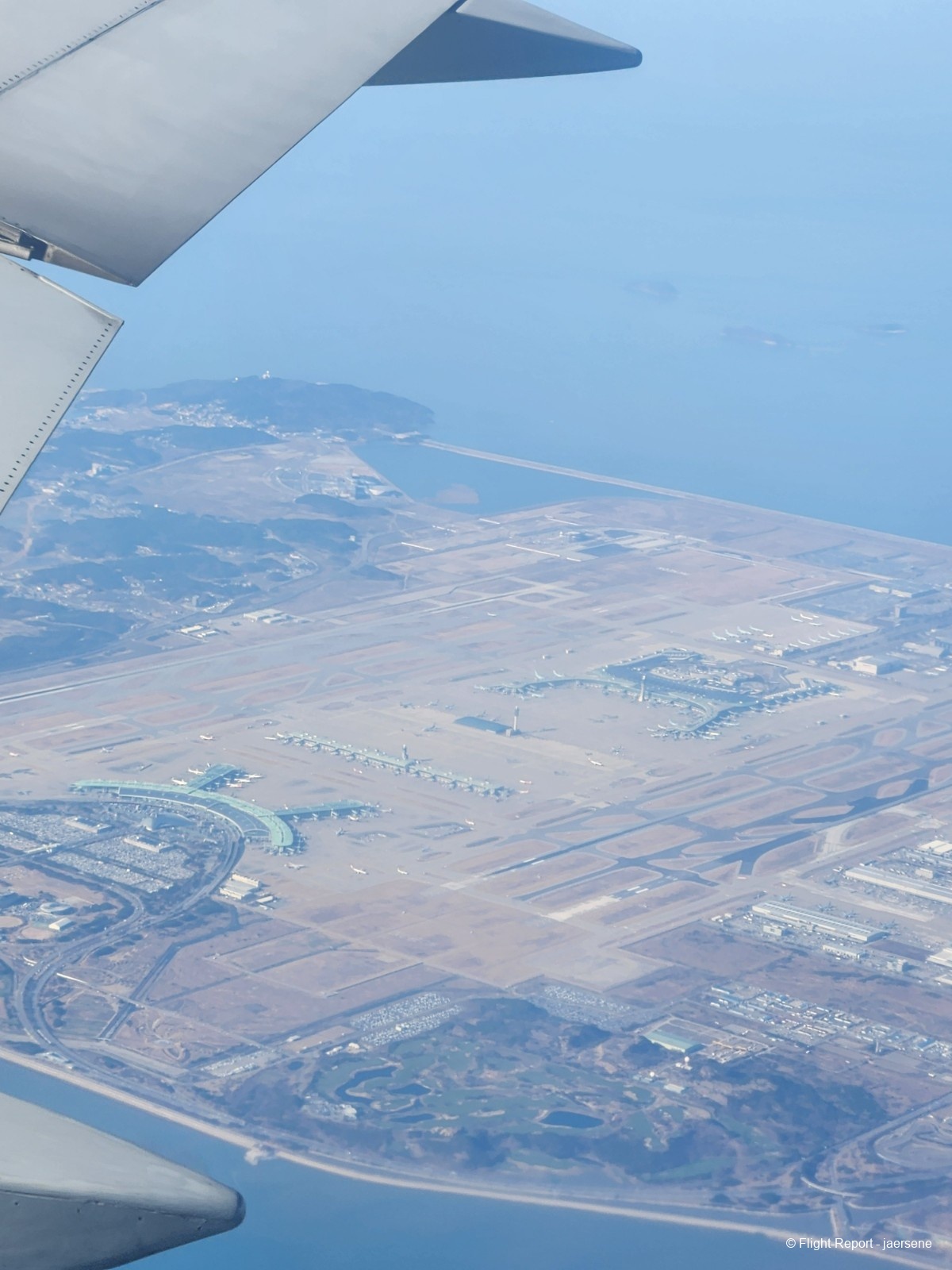
We took off from GMP on runway 32L and turned left to head south on our BULTI 2T departure. As you cans see from the picture, if you're lucky with good weather and visibility, you'd be able to see ICN from above. Also, if the wind is westerly, it seems to be an indication of good weather. When the winds were easterly, I found the weather to be bad. I was hoping to see actual planes takeoff or land, but my camera wasn't powerful enough. Maybe I didn't look hard enough.
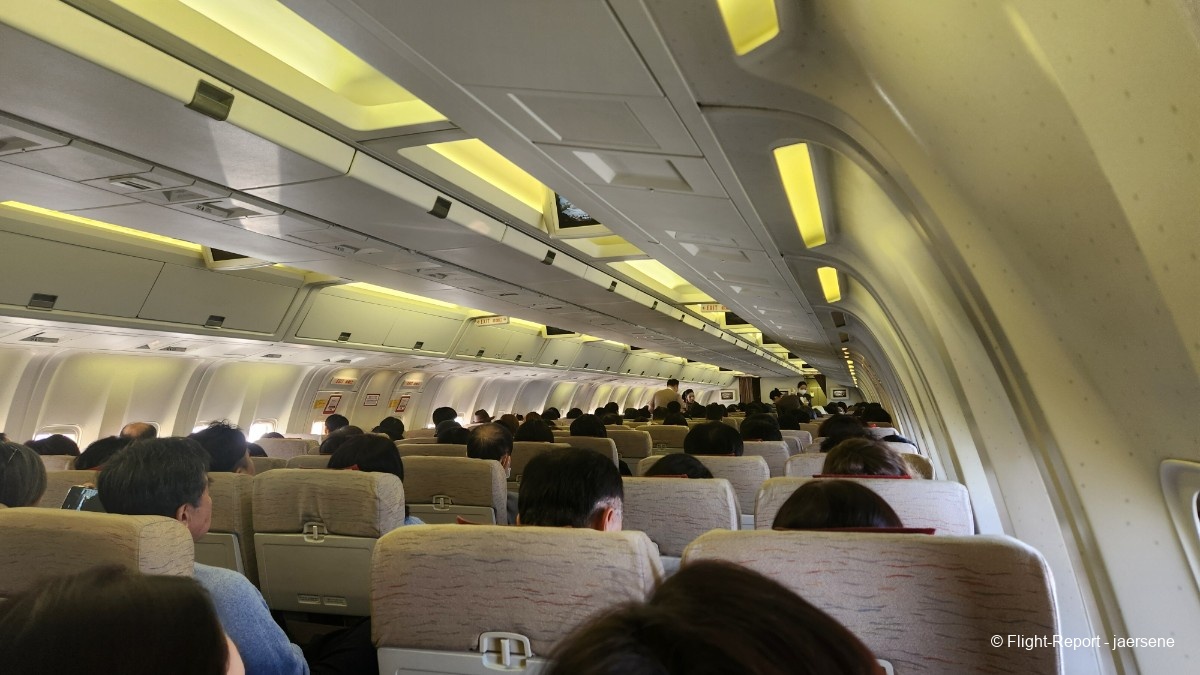
A look of the cabin while we were at cruise and the flight attendants were handing out drinks. As you can see, the seats are well preserved from when the aircraft was brand new. With the absence of IFEs, I felt the seats themselves to be a bit shorter in height, but I don't know the actual measurements so don't quote me on that. Also, the overhead bins are in is old, standard type, without the pivoting hinges or sleek curves that modern airliners have to maximize space. Due to the old style, the middle bins are higher, almost as if they are not there like the modern business class cabins. This certainly makes the cabin feel more spacious, which I appreciate.
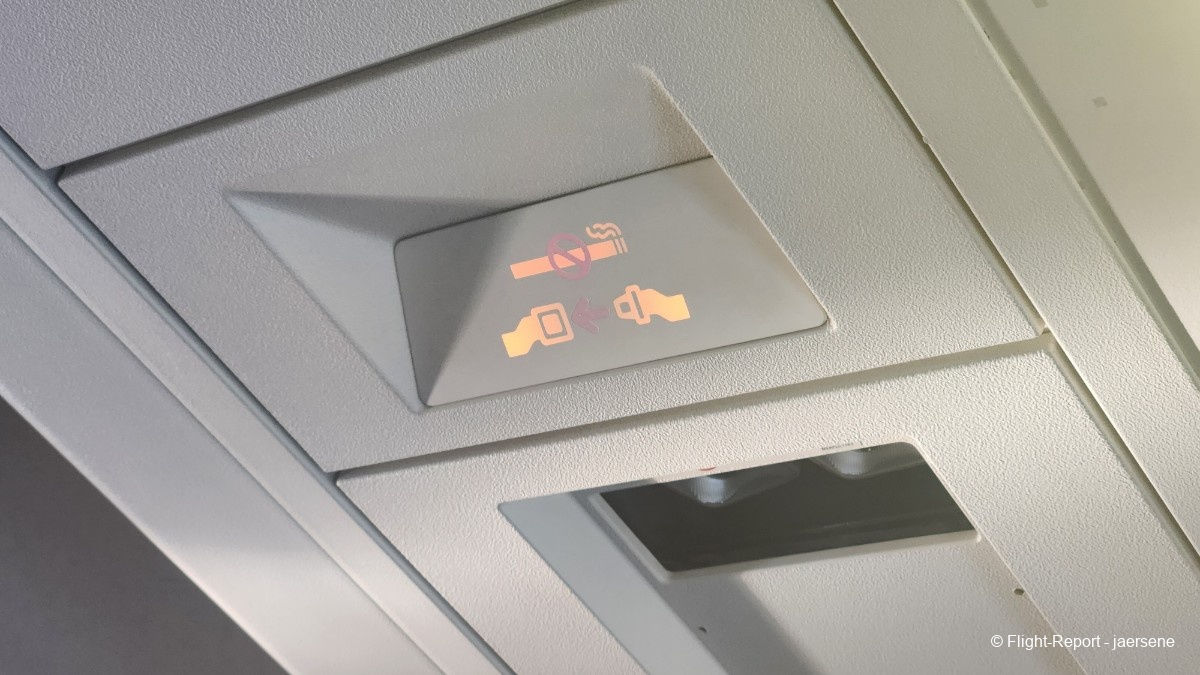
Everything seems to be more angled in this aircraft. Looking at that overhead panel while modern planes have literal screens dedicated to displaying no smoking and seatbelt signs is quite a big gap in technology for me to grasp.
On another note, the walls having the grey squares are one of the quirks that Asiana's aircraft possess. This was put into the spotlight when Korean Air took delivery of Asiana's A350 as their own due to the merger. Some of the walls that were fixed had those square spots, seen as traces of Asiana on a Korean Air aircraft whose planes typically didn't have any spots and were plain white.
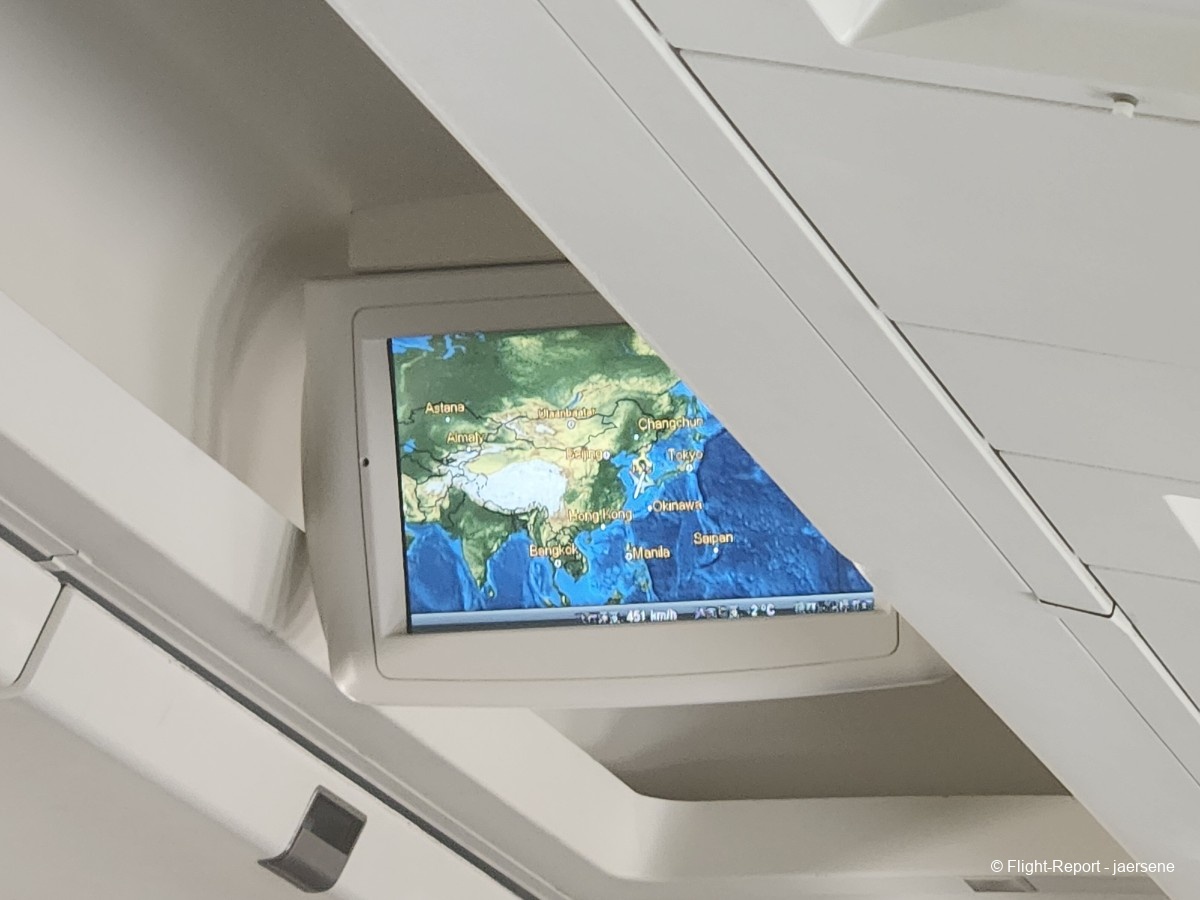
A picture of the flight map showing an unnecessarily large portion of the world. We were on approach into CJU when this was taken. The overhead screen flicked through the world map and flight information in Korean, English, and Chinese. As the theme of the flight was retro, it was nice seeing a screen. I should be thankful for just having a screen in itself. It probably was the pinnacle of technology back then. Although I remember having the same screen on my flight to Hanoi mentioned above on HL7516 and being shown a movie, although I don't remember what. It was a child-friendly animation, I believe, maybe Inside Out.
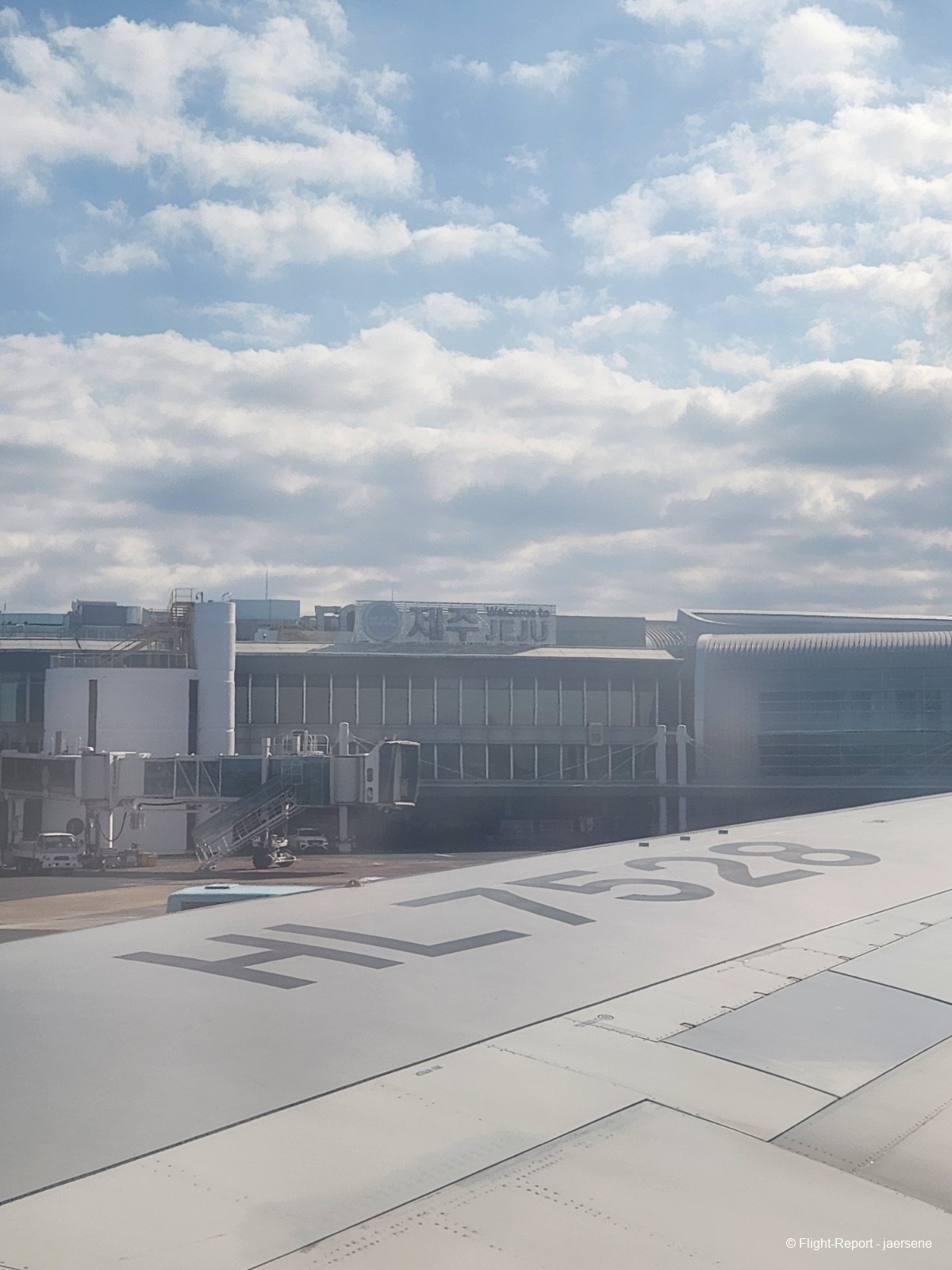
Welcome to Jeju! I struggled with glare from the window all throughout the flight so this picture came out a bit blurry. I wanted to get the CJU sign with the registration on the wing as it would be a sight that wouldn't be seen in just a few months.
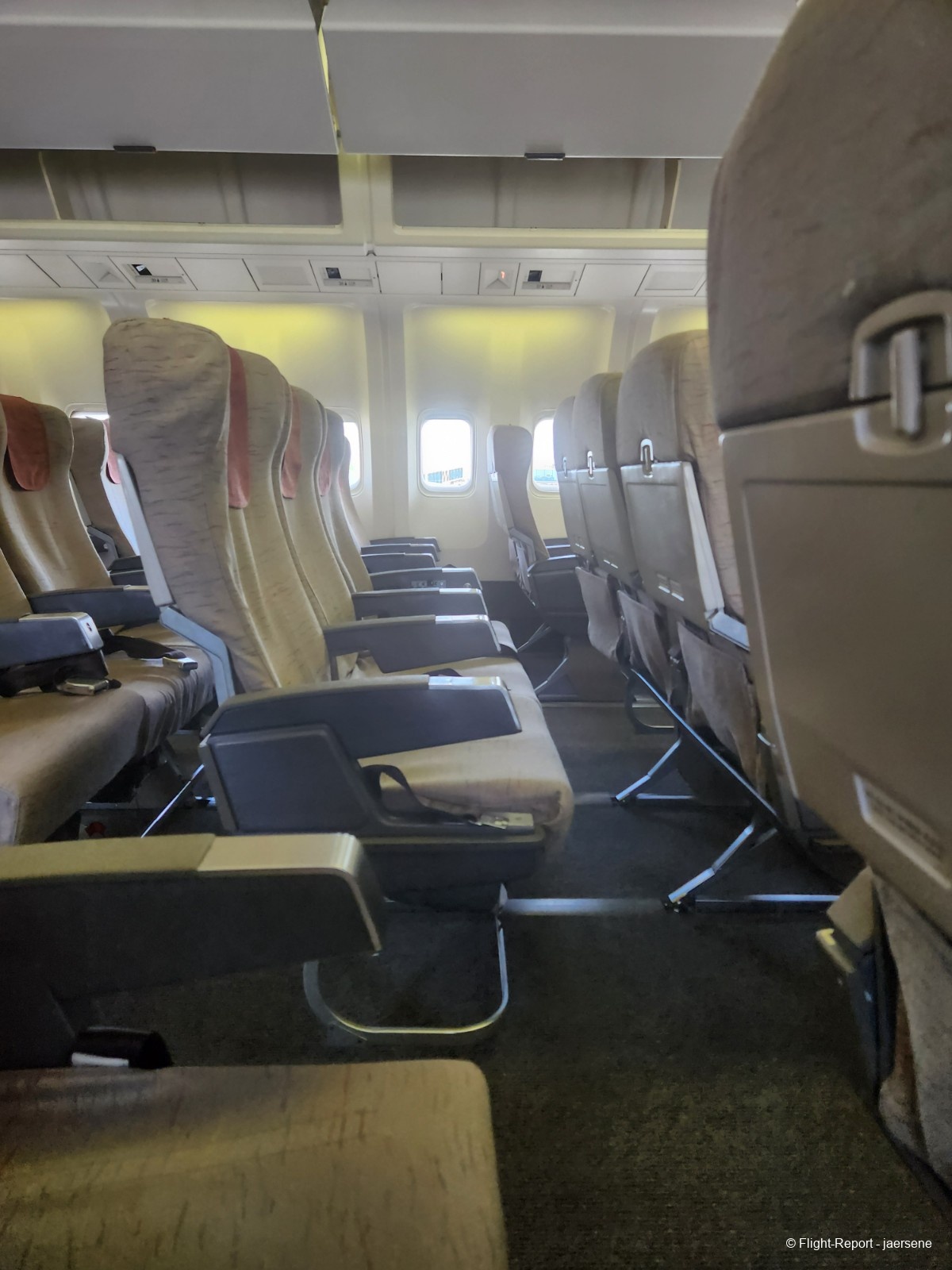
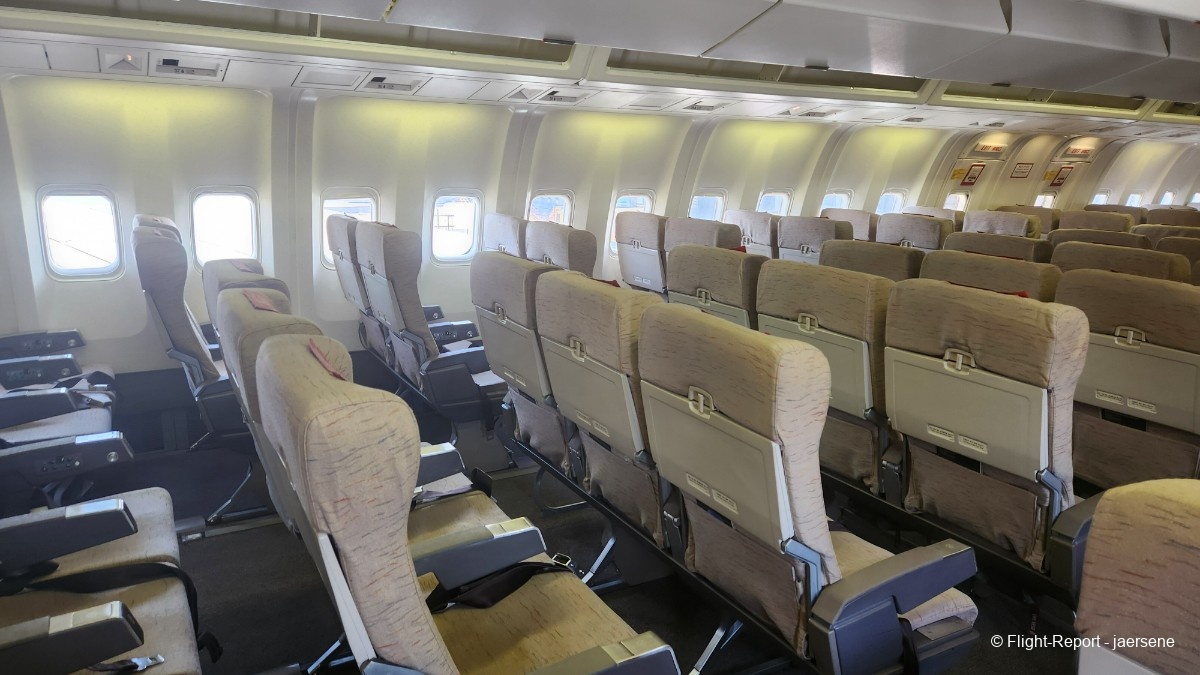
I got one more look at the cabin before I deplaned. Another thing is that these seats don't have headrests. Although the overall padding of those thick retro seats makes up for the absence.
On the thick armrests were AUX controllers and AUX ports for the overheat screen. I didn't check when I was on it but it probably wasn't working.
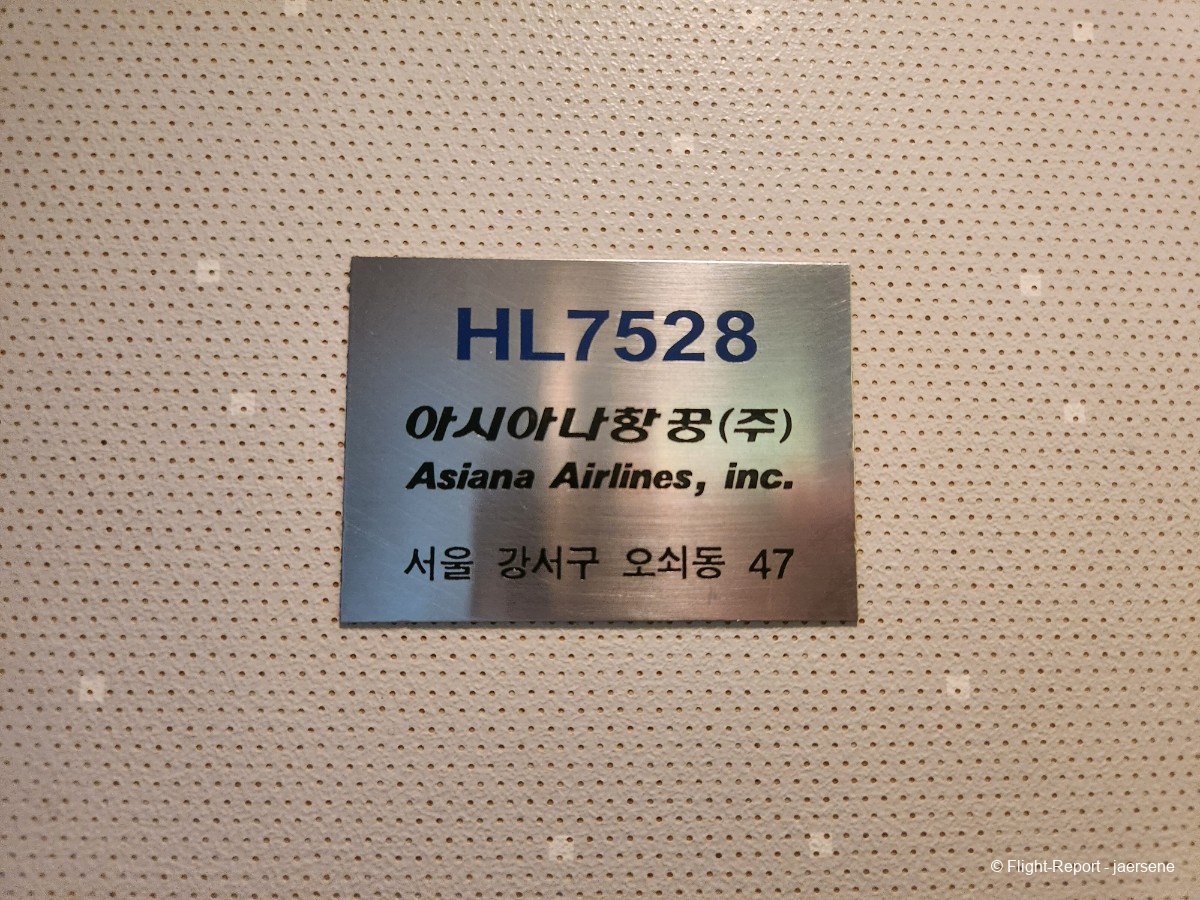
When deplaning on a Korean registered aircraft, make sure to check the walls on the L1 door. There are plaques that show the registration number and the operator. The last line is the address of the airline office, but it seems to be absent on most aircraft nowadays. I don't know if this is true for any other nations, but I have seen a label on a Lufthansa plane highlighting the aircraft's registration.