
I went to a two-week trip to Angola, São Tome and Principe, Gabon, Côte d'Ivoire and Bissau Guinea. I took the following flights:
Keflavík to Lisbon, Icelandair
Lisbon to Luanda, TAAG
Luanda to São Tomé, TAAG
São Tomé to Principe, STP Airways
Principe to São Tomé, STP Airways
São Tome to Libreville, ASKY
Libreville to Cotonou to Abidjan, Air Côte d’Ivoire
Abidjan to Lomé, ASKY
Lomé to Dakar to Bissau, ASKY
Bissau to Lisbon, TAP
I came from Abidjan. Most people on the flight connected to one of ASKY's many destinations such as Bamako. My connection was to Bissau via Dakar.
There's was security control for connecting passengers. Although there were several channels, it was still very slow.
Lomé Airport looks modern from the outside but not from the inside. ASKY has its hub there, but the airport is clearly not able to deal with the high number of connecting passengers. The terminal is overcrowded, especially around the gates. The gates are often changed, information is not sufficient (although there's a very loud speaker) and boarding is chaotic.
It was around midday by the time I cleared security control and I hadn't eaten anything yet. The only restaurant I could find was more like a canteen. The meal I had was tasty and cheap, and it was a positive experience.
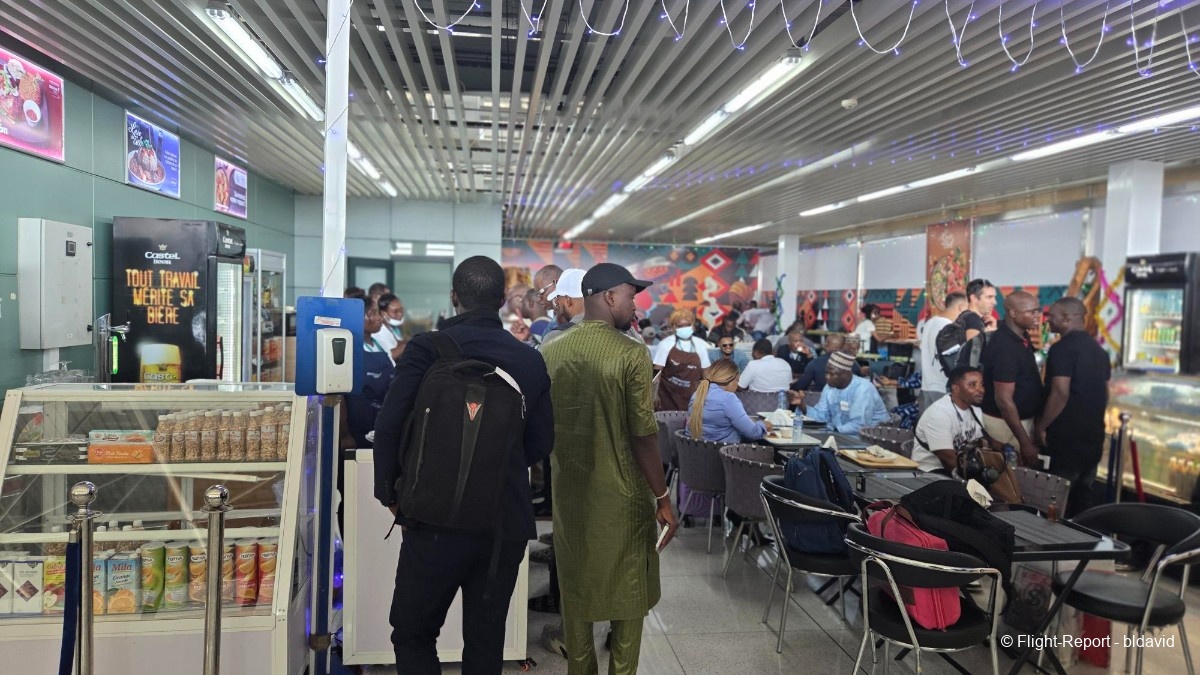
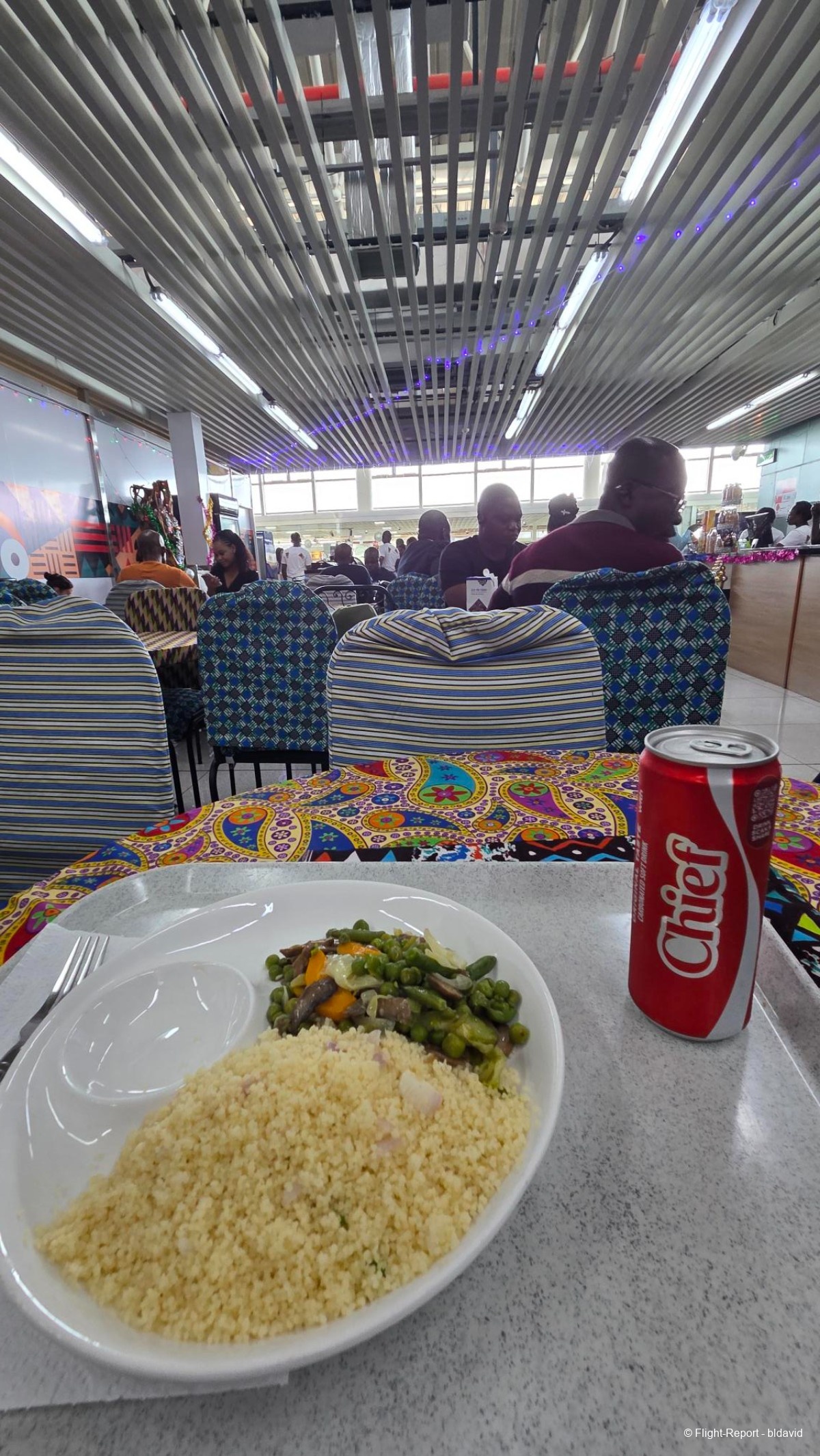
I took a few photos of the parts of the terminal that were not crowded.
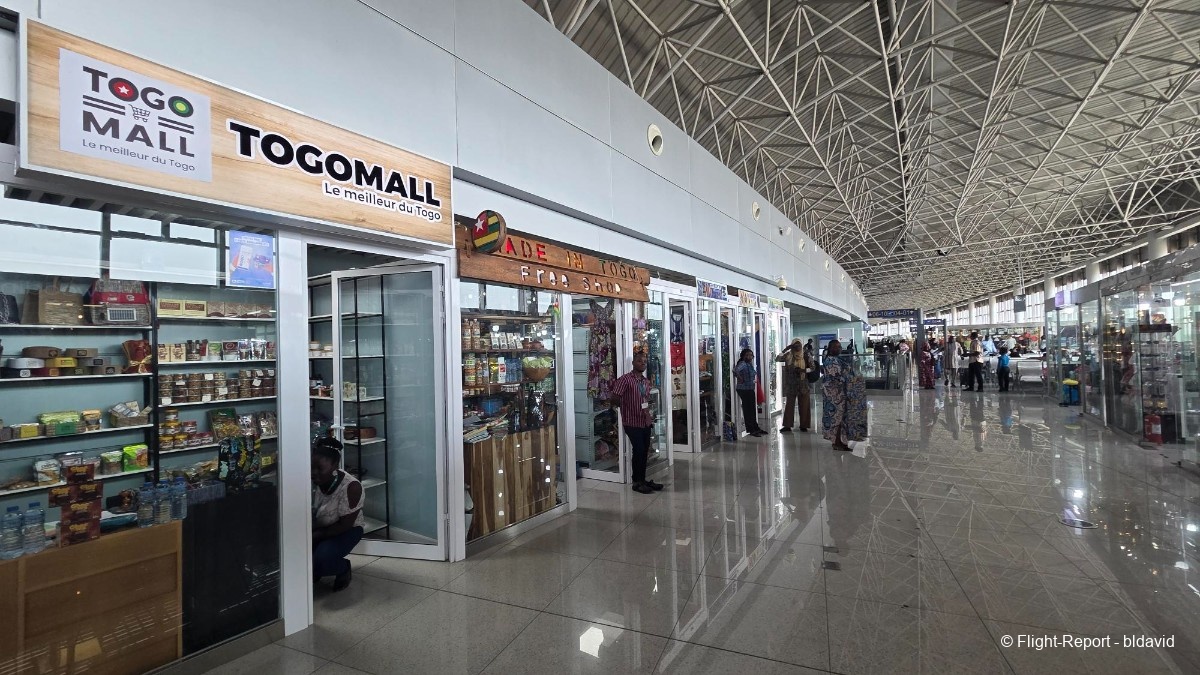
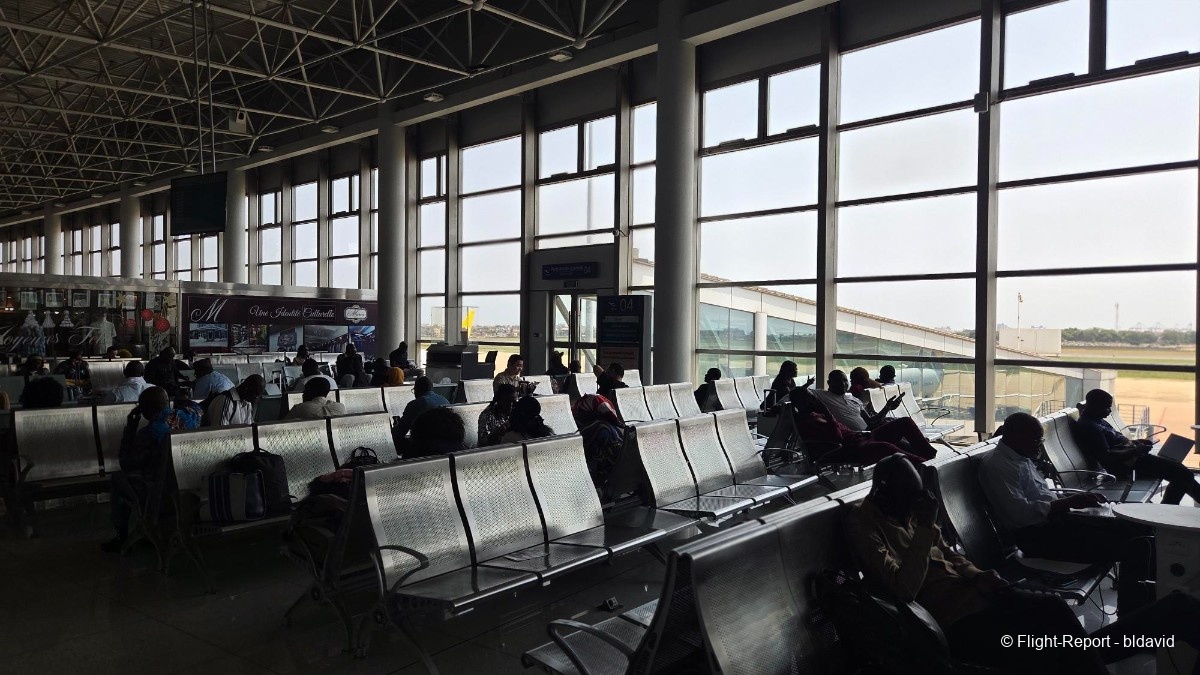
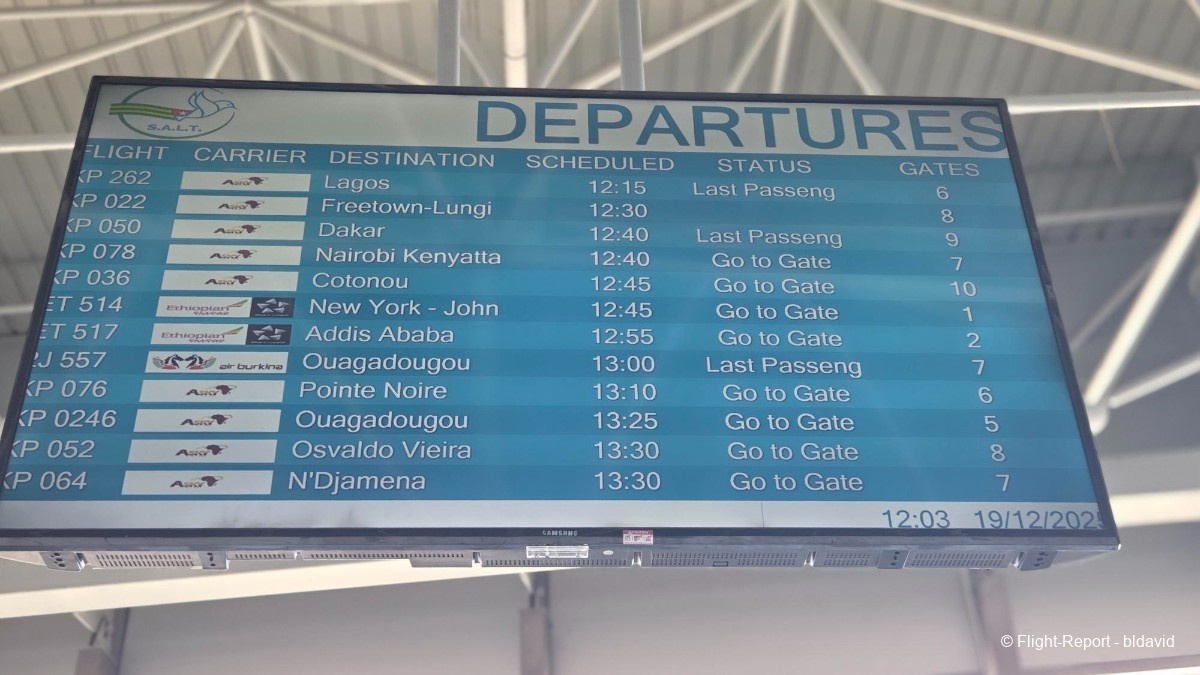
There were quite a few departing flights in a short time.
Boarding was by bus from the gates downstairs. That area was especially overcrowded. There was a guy walking around with a lot of cash in his hands - a mobile moneychanger, like at railway stations in Eastern Europe in the early 1990s.
The view from the terminal.
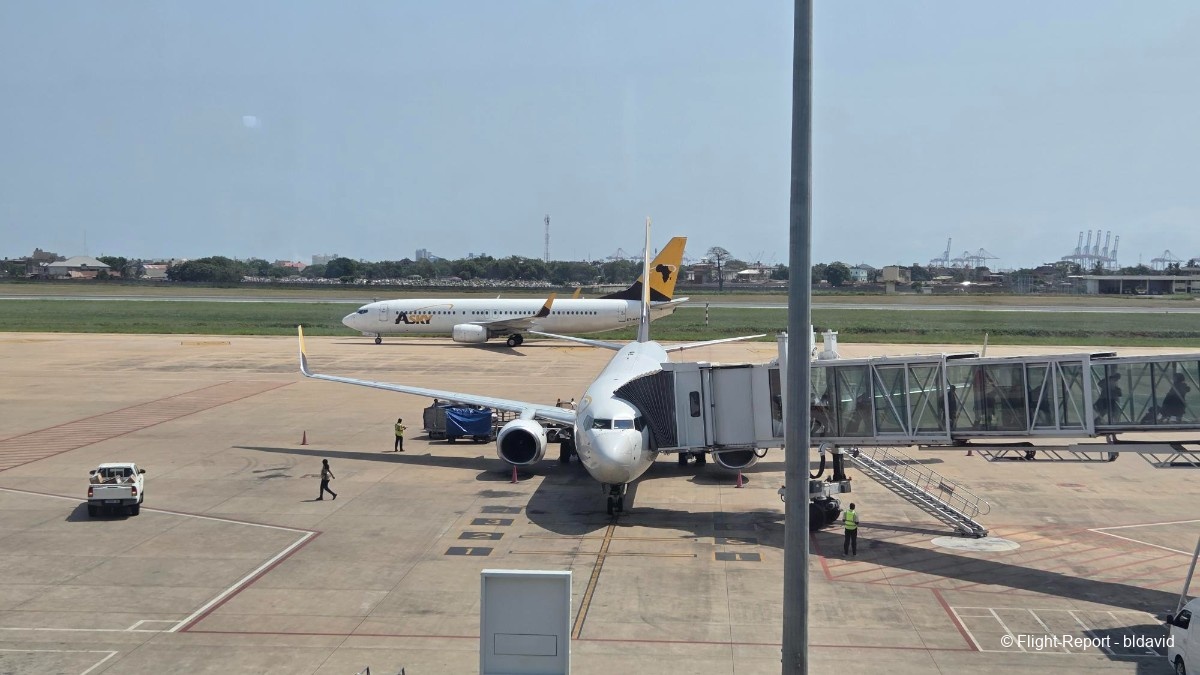
Boarding was painfully slow: it took around 60 minutes for a B737. Boarding cards were checked again and manually ticked off on a paper sheet at the stairs as we were going down to the bus.
Business class passengers were taken by minibus and the economy passengers were taken by a Iarge bus. I didn't mind the ride as we had good planespotting:
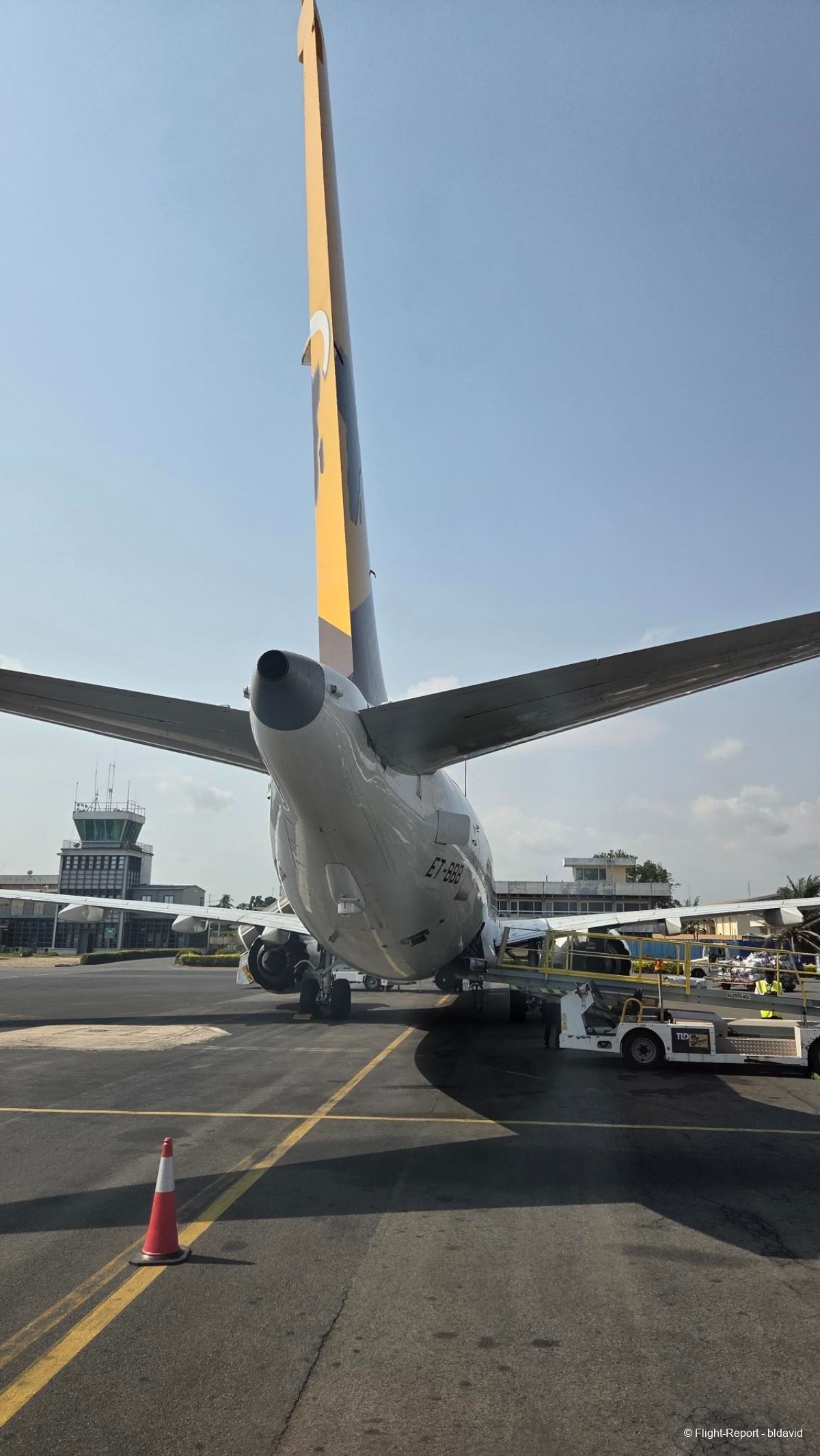
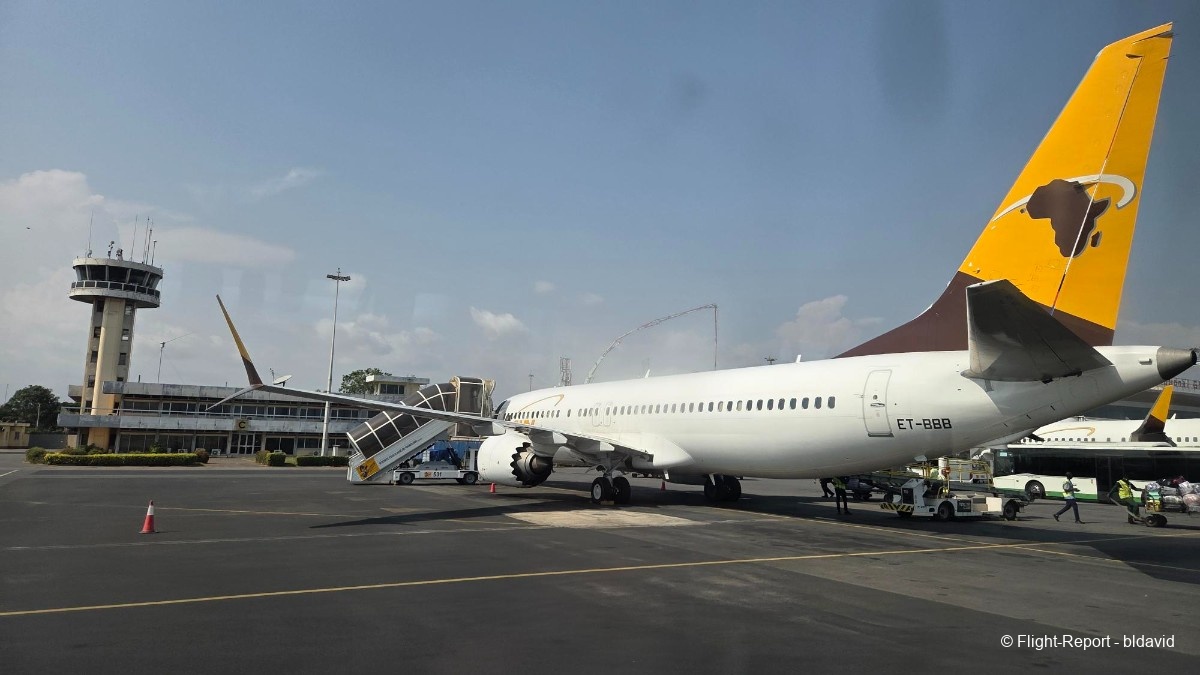
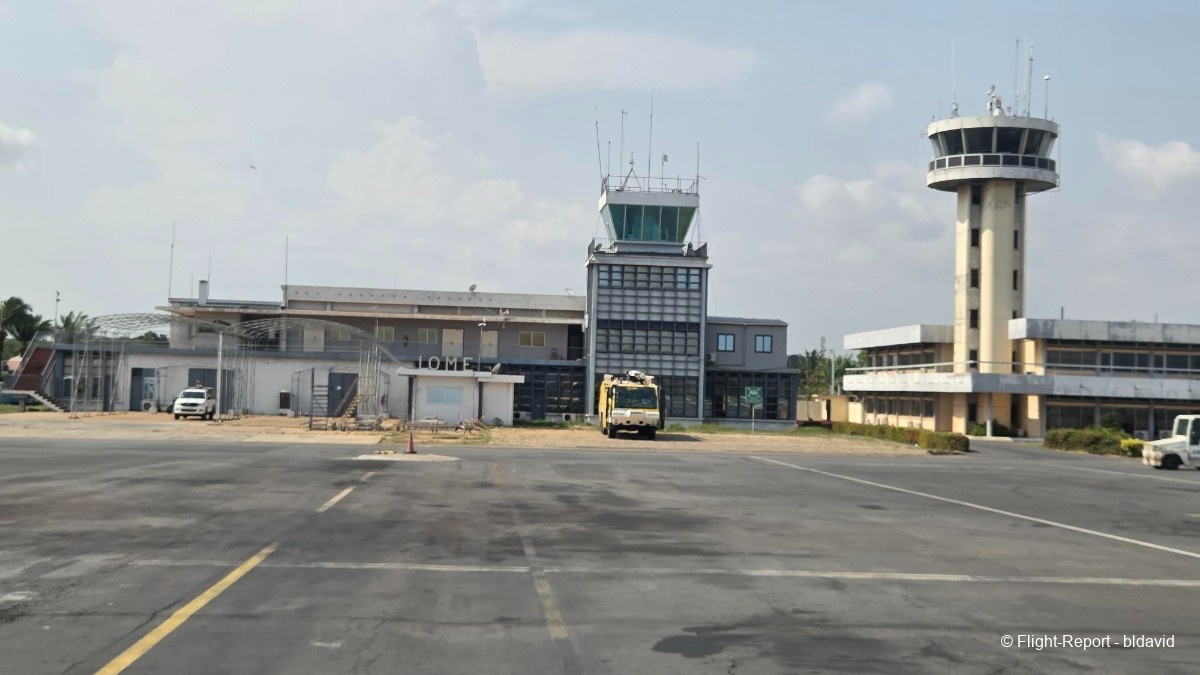
The old terminal building:
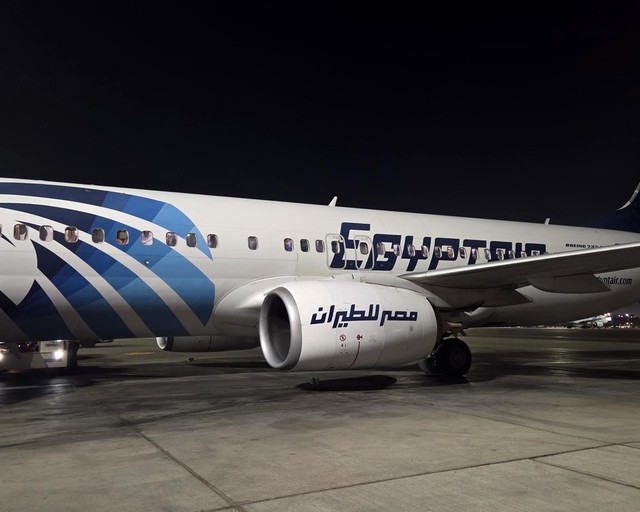
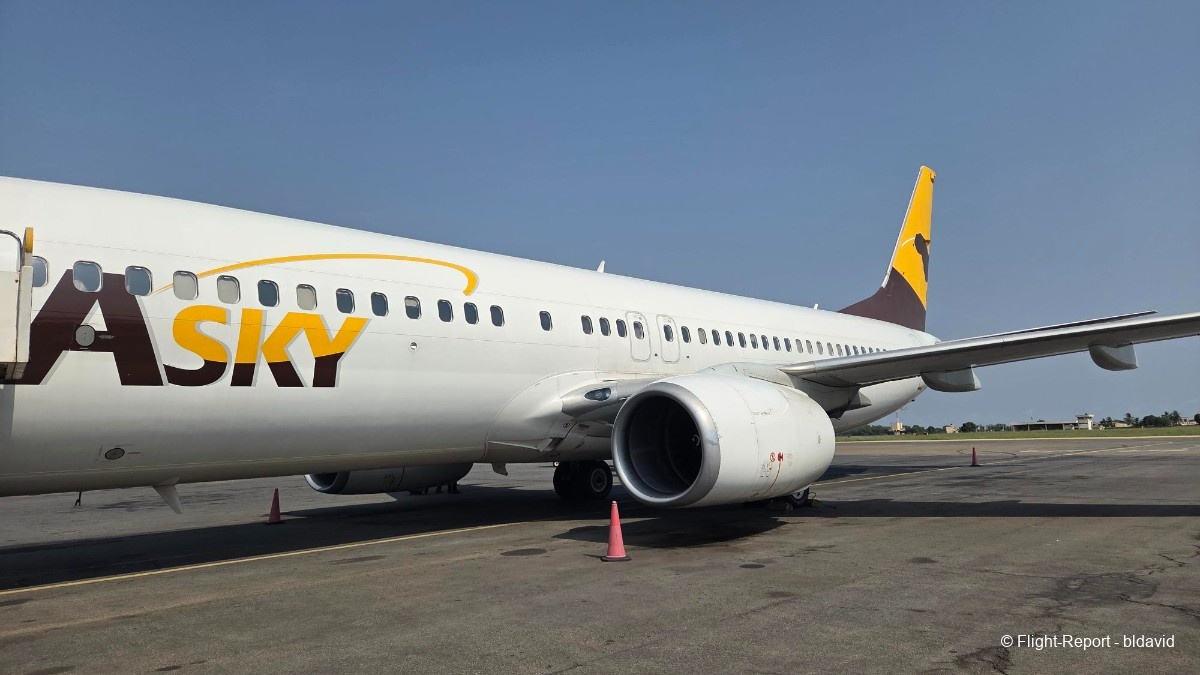
Our plane today was ET-BAH, built in 2013.
There's a proper business class with four rows of seats in a 2+2 configuration - see the photo in my previous flight report.
Economy has a standard 3+3 configuration.
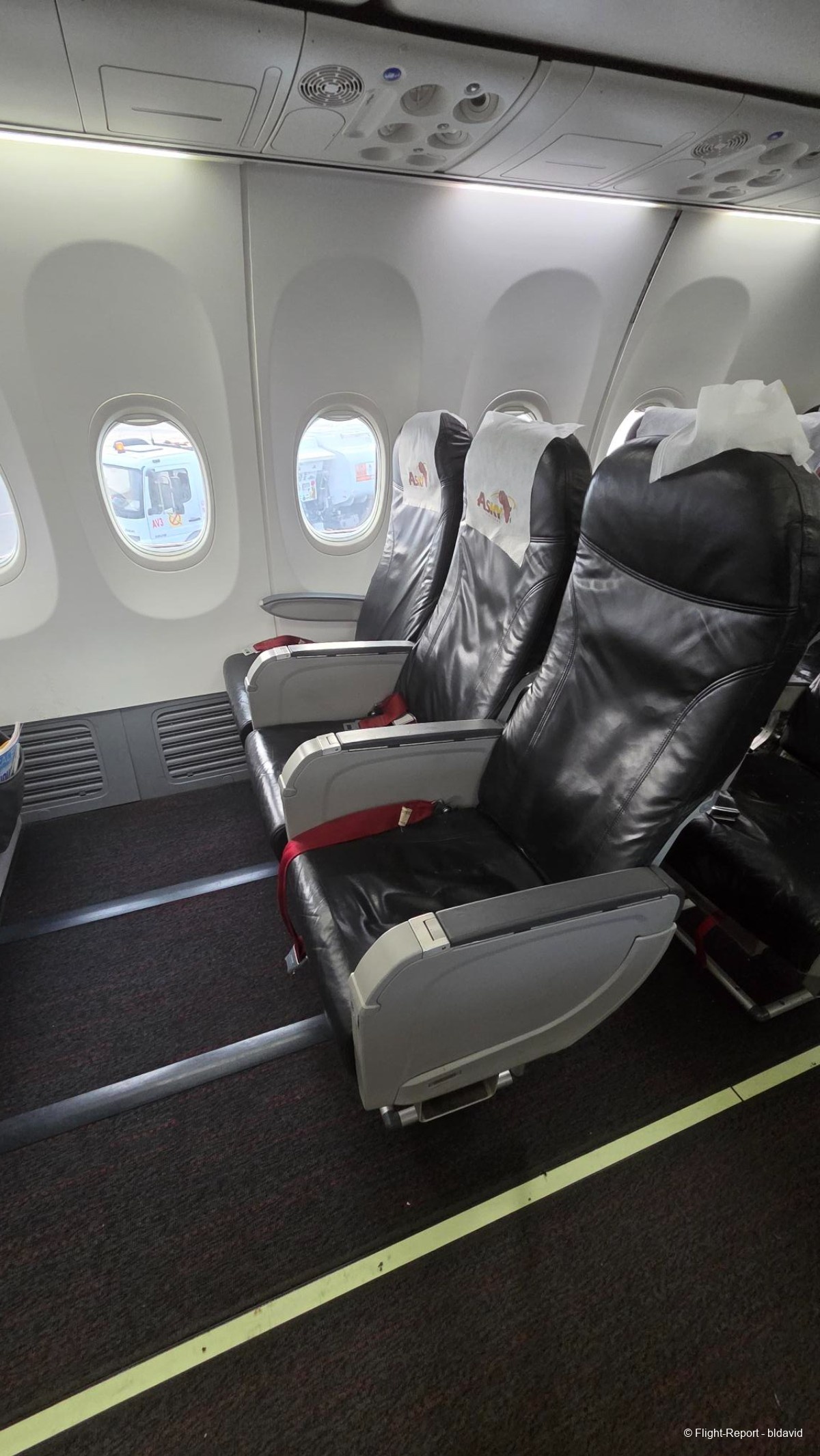

It was almost completely full. Air conditioning was barely working, and it was very hot in the cabin. Some people were in the plane for over an hour before departure.
A flight time of 3 hours and 10 minutes to Dakar was announced.
Push-back was at 14.52 for a scheduled departure time of 13.30. Around this time the cabin felt like a sauna.
We took off at 15.01.
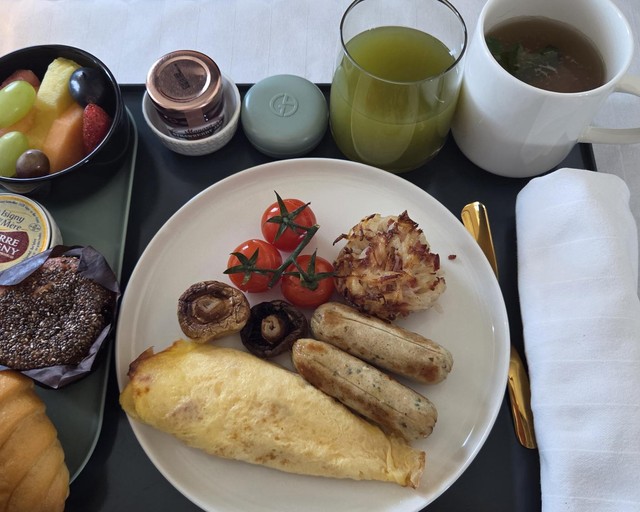
A snack was served only 10 minutes after take-off.
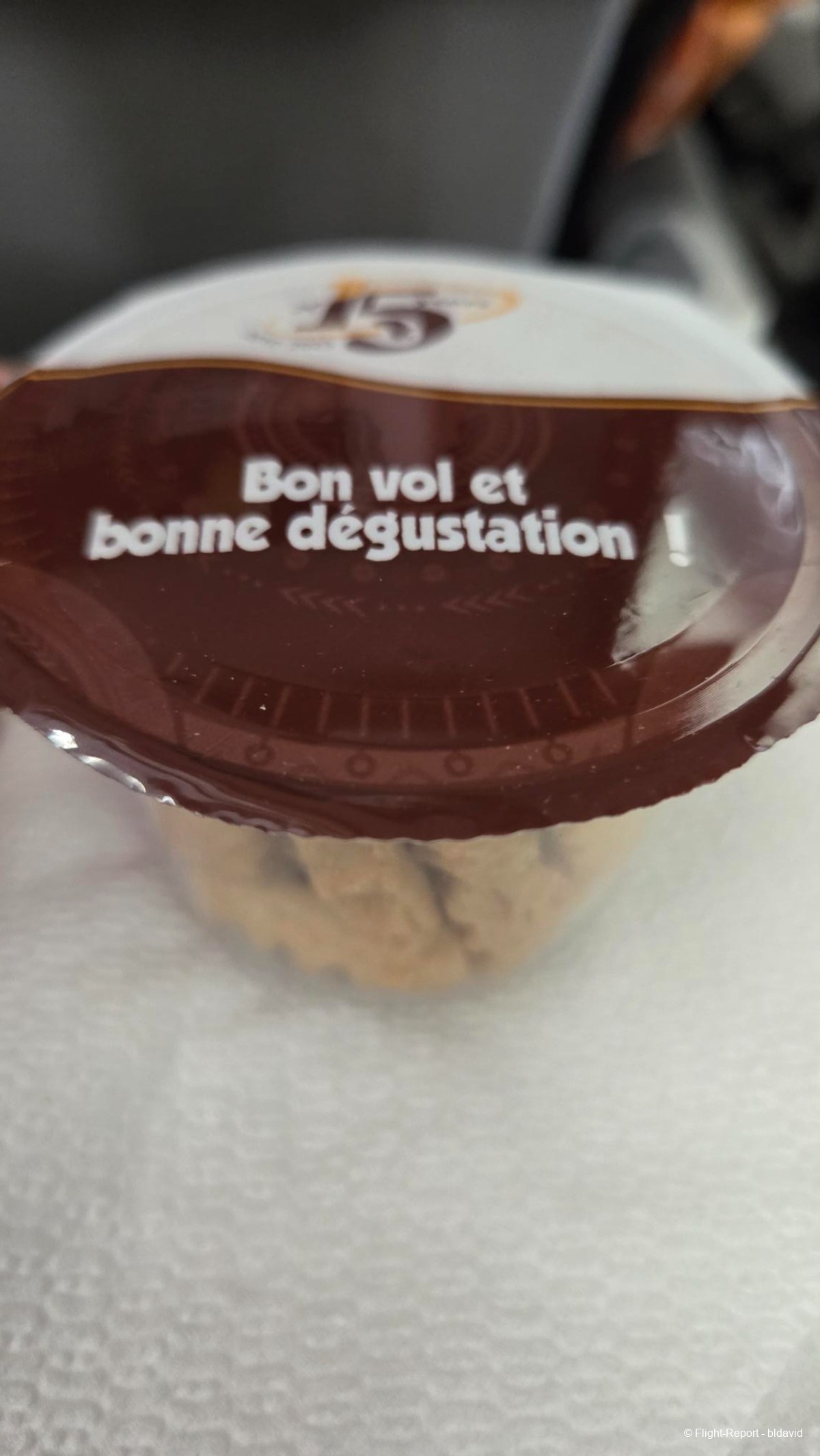
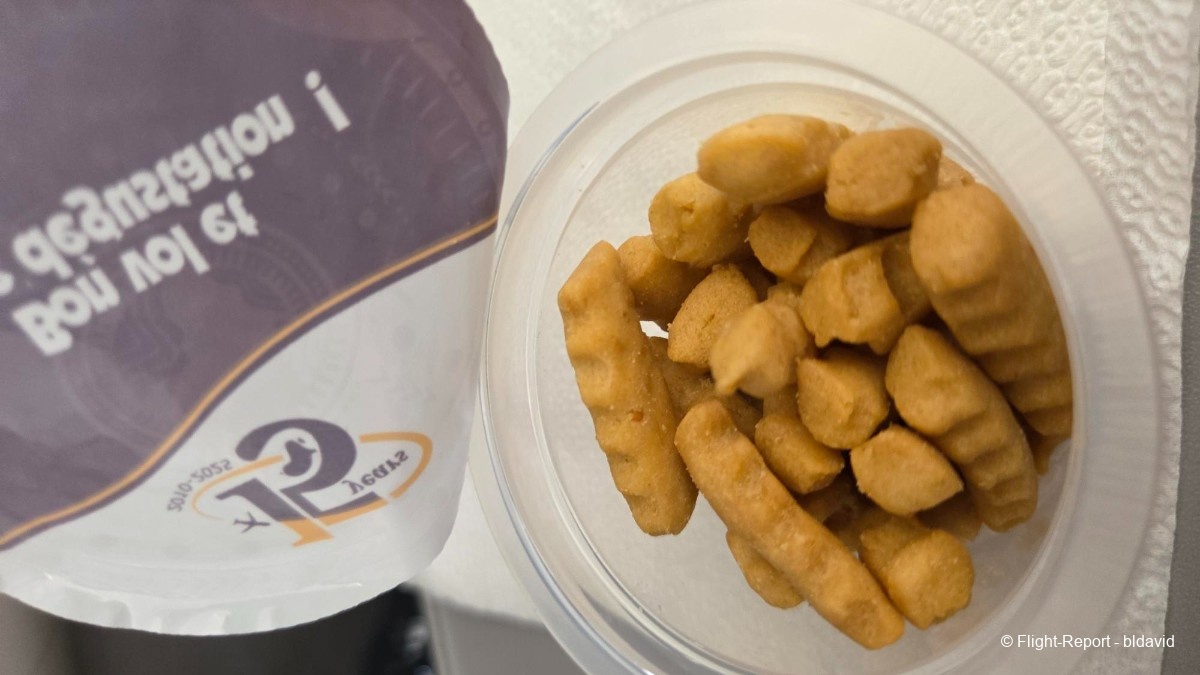
Meal service got to my row at 15.43. The choice was chicken or beef. I had chicken with rice. It was OK.
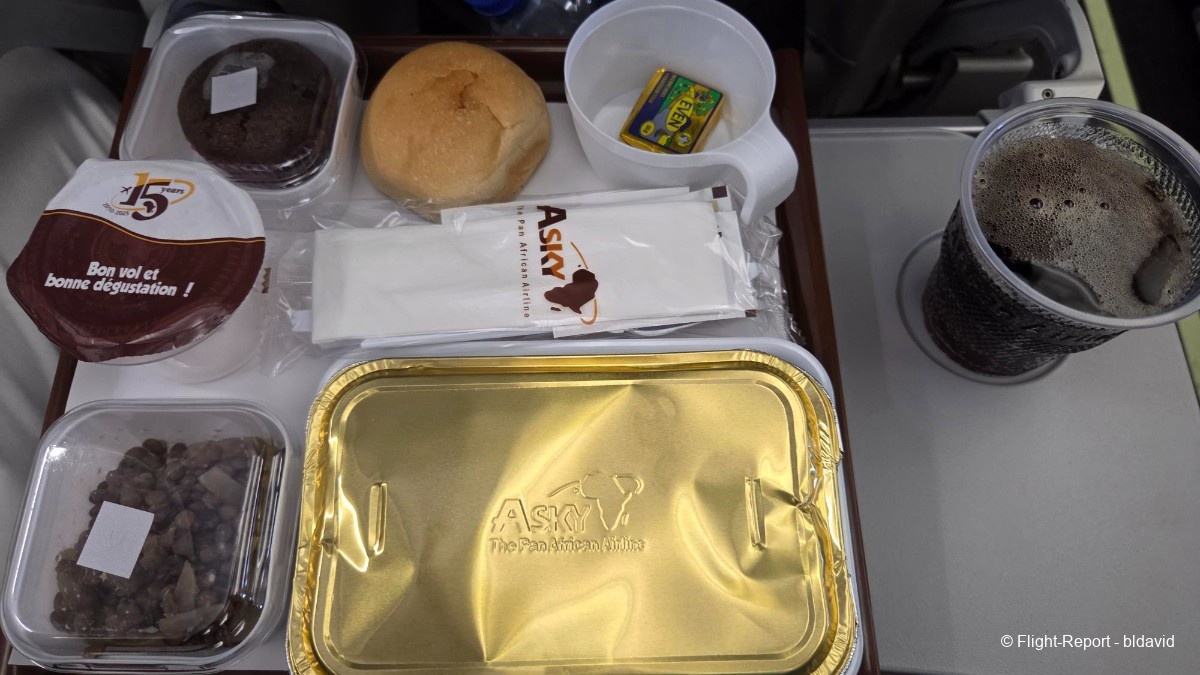

After a chaotic departure and a busy meal service, the rest of the flight was quiet and uneventful.
A small but interesting fact: the pilots or the cabin crew, whenever doing a PA, almost never said the word Dakar, only Diass, the name of the village near the airport.
We landed in Dakar at 18.01 and were at the gate at 18.06 for a scheduled arrival time of 17.15.
Passengers continuing to Bissau had to stay on-board. About 90% of the passengers got off.
New passengers boarded and the plane filled up to about 60%.
Push-back was at 19.01 and we took off at 19.10 for a scheduled departure time of 18.05.
Flight time was only 40 minutes between Dakar and Bissau.
A drink was served during this short flight.
We landed in Bissau at 19.51 and engines were stopped at 19.56 for a scheduled arrival time of 19.05.
Visa on arrival was easily available for € 85 paid in cash. No advice registration is required. I got the visa in five minutes.
My impressions of Guinea-Bissau
Elections were held in late November, and when the results were to be published, military officers seized power in a coup d'état. In December, two days before my arrival, the wife of the desposed president was arrested by the Portuguese authorities in Lisbon after she had arrived there on a business jet with 5 million Euros in cash.
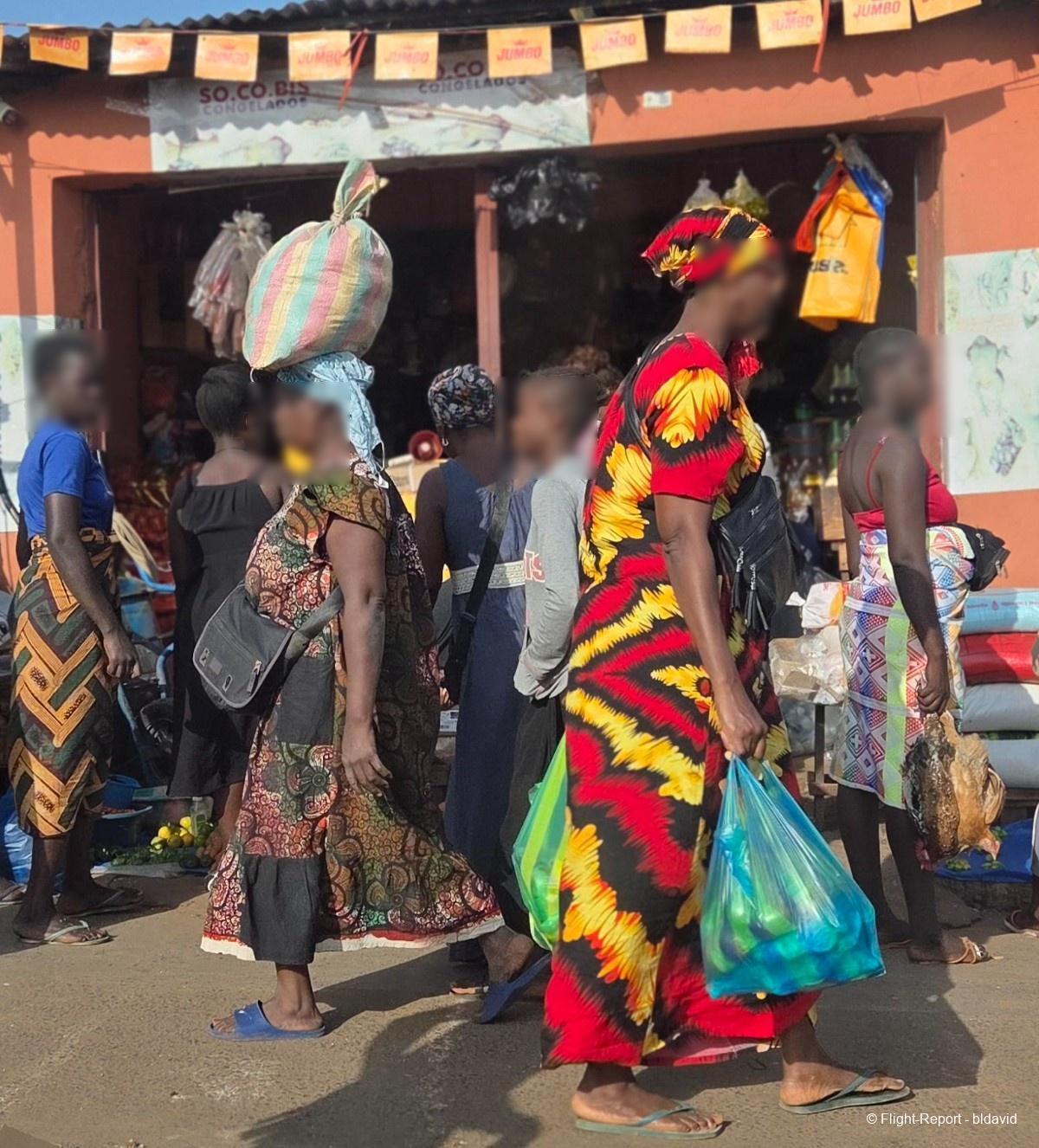
None of the above could be felt there. Bissau is a lovely small town with many quiet streets but also some bustling authentic markets, an active fishing port with pirogues and friendly people. The country is poor, although I saw quite a few nicely dressed people, and some in Bissau show their wealth with luxury cars.
I liked my stay in Bissau.
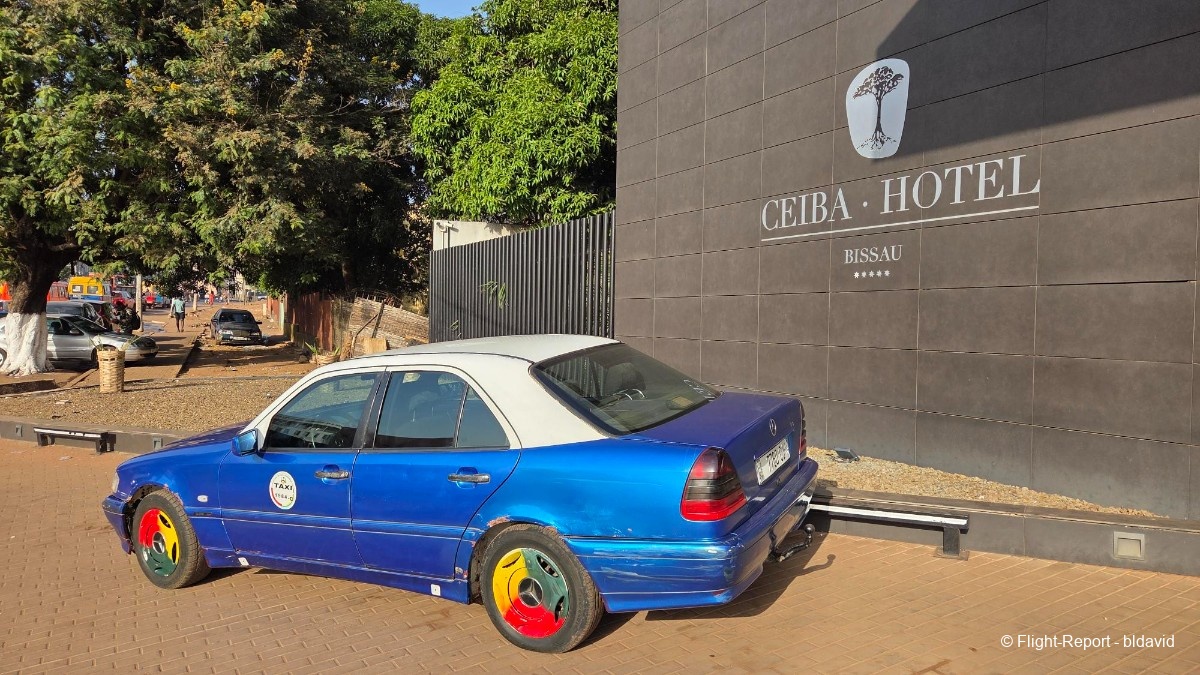
A typical Bissau taxi in front of Ceiba Hotel, the best hotel in the city.
Bustling street market.
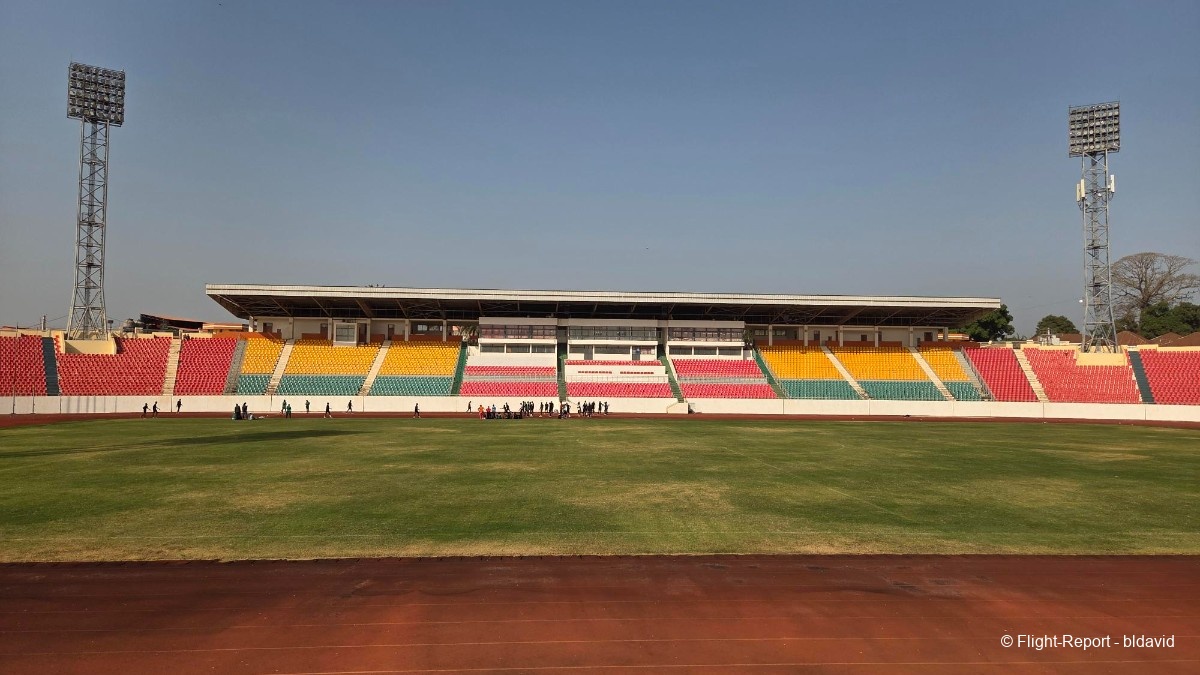
I had a look inside the stadium.
Pirogues at the busy fishing port.

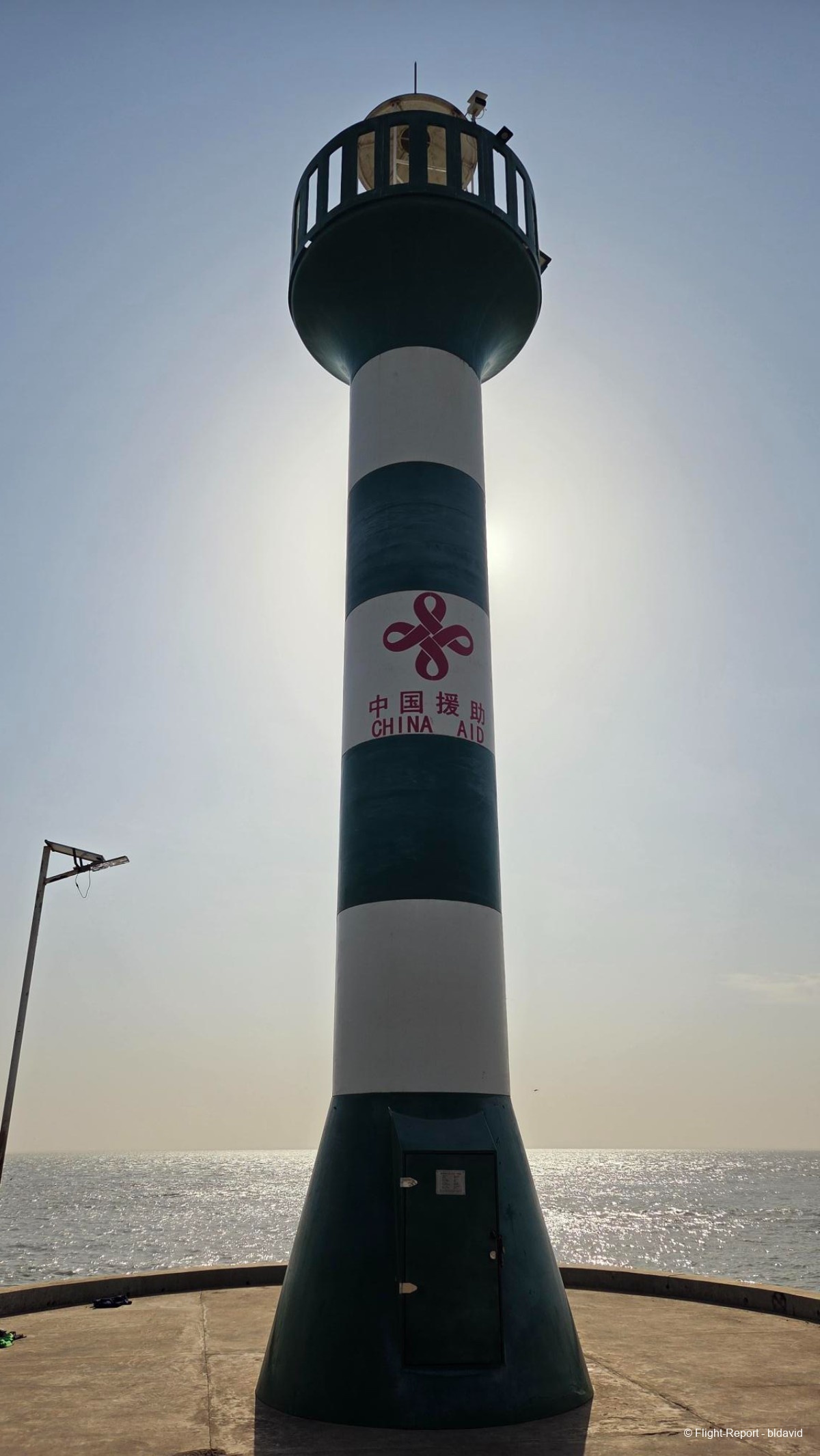
A lighthouse.
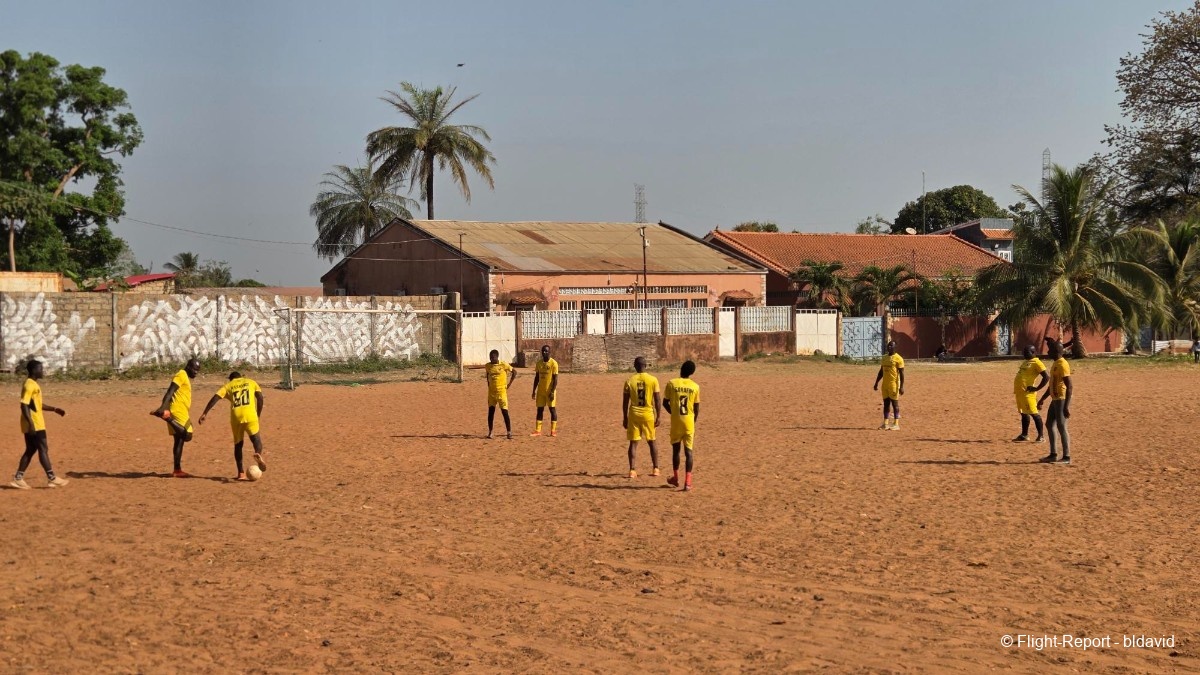
People playing football.
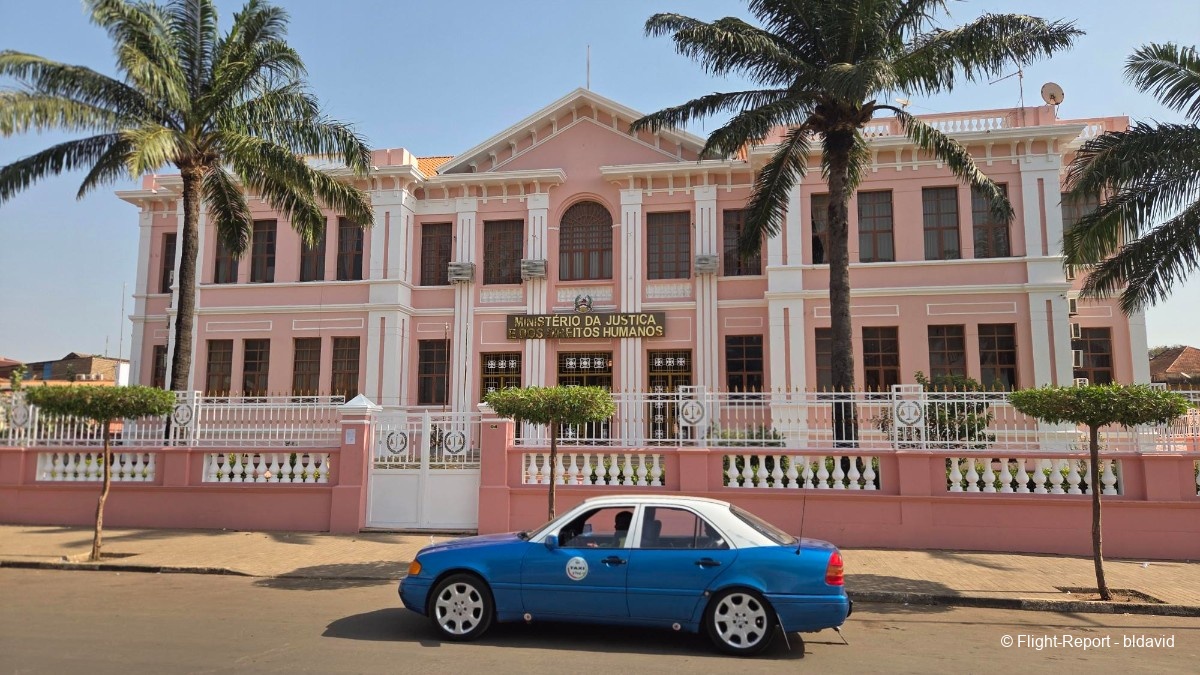
Another typical taxi in front of the Ministry of Justice.
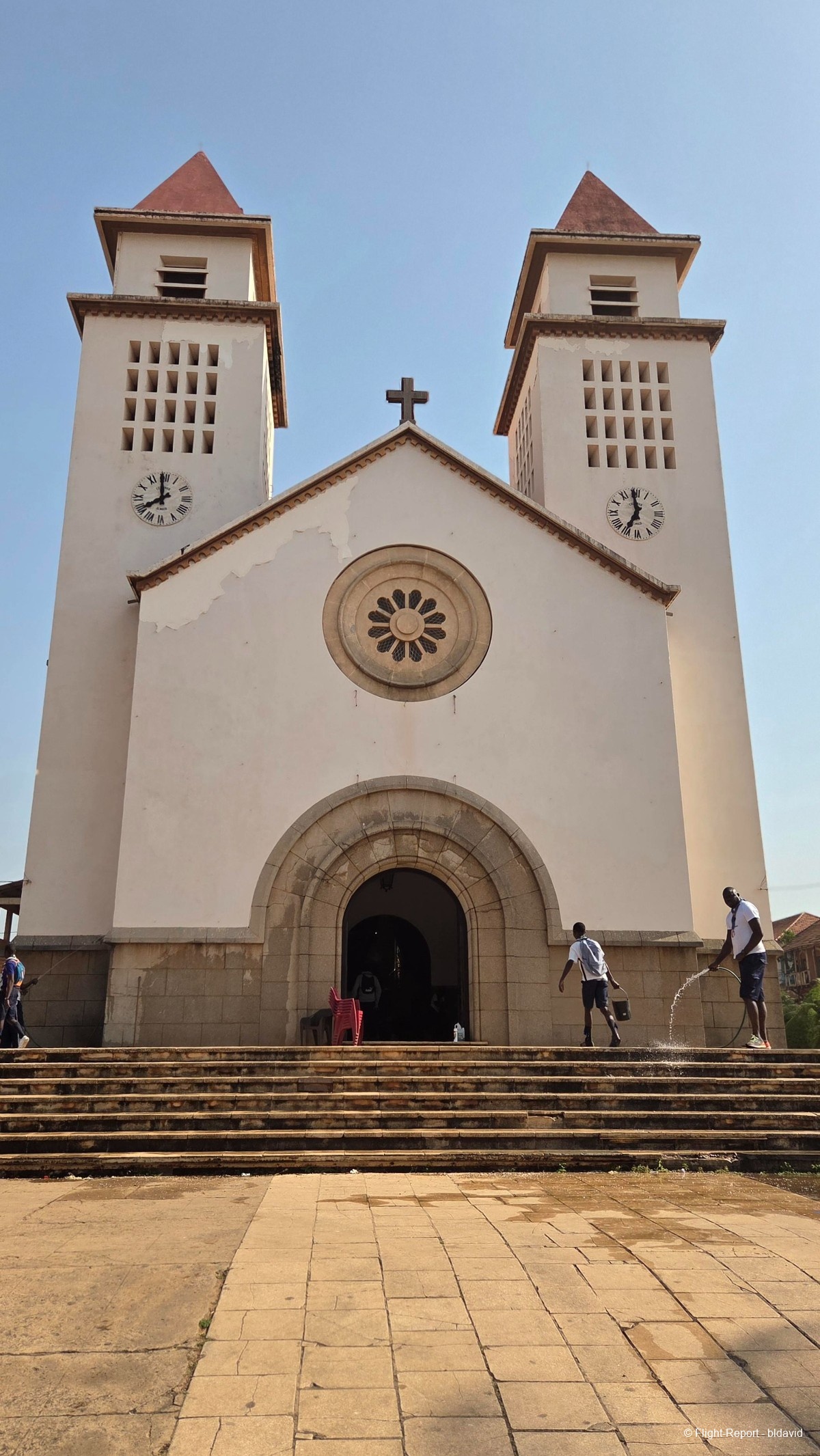
The Cathedral.
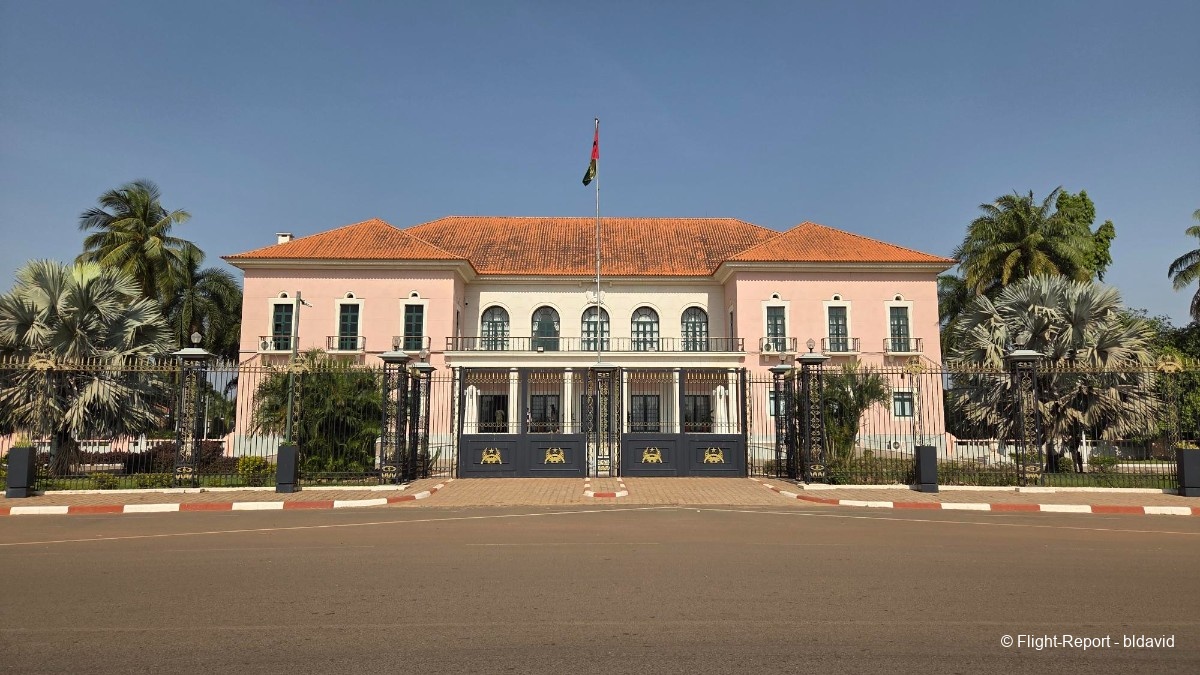
The Palace of the Republic.
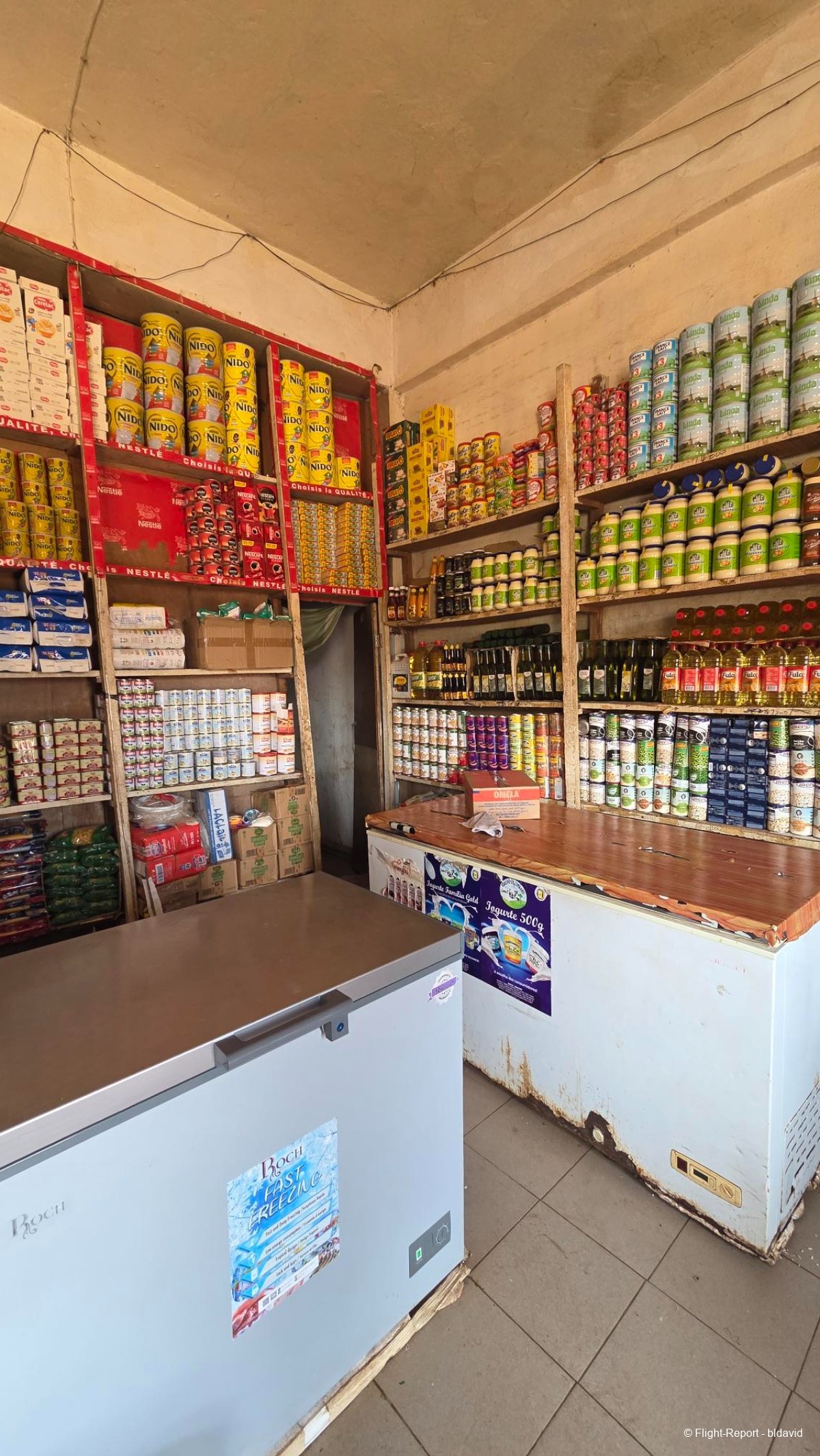
A local shop in downtown Bissau - it feels like time travel.
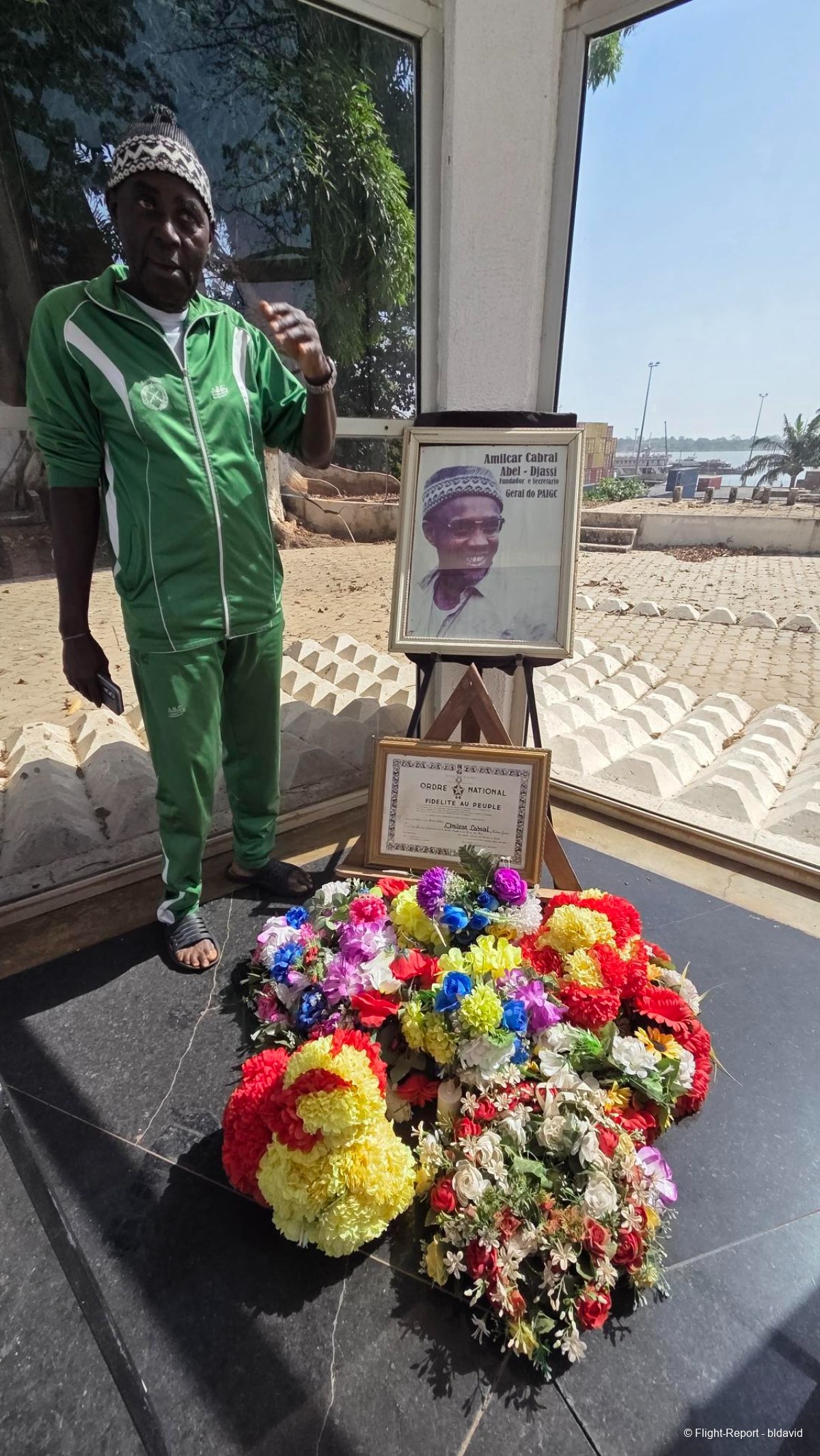
At the tomb of independence war hero Amílcar Cabral.
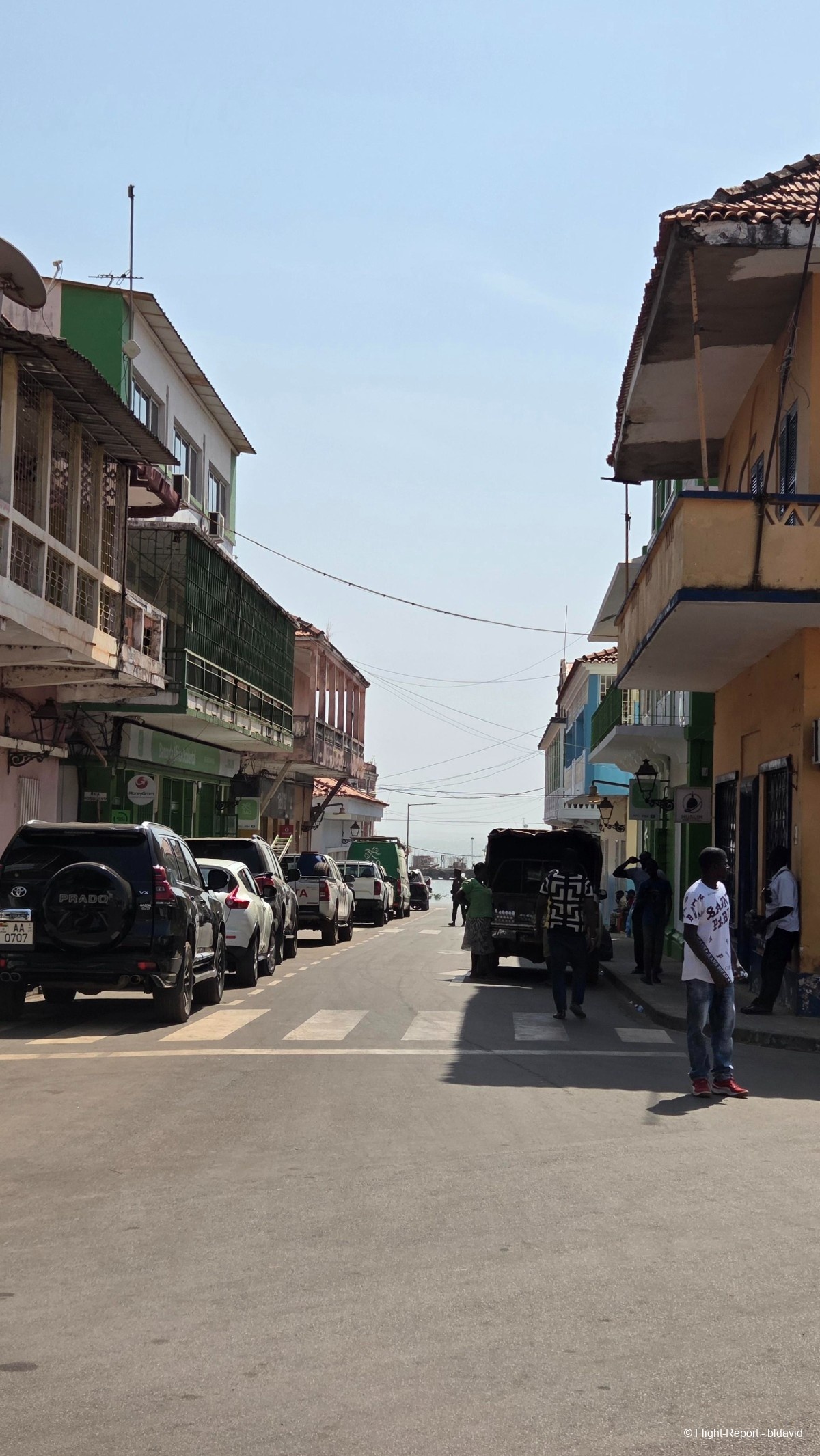
A typical street in downtown Bissau.
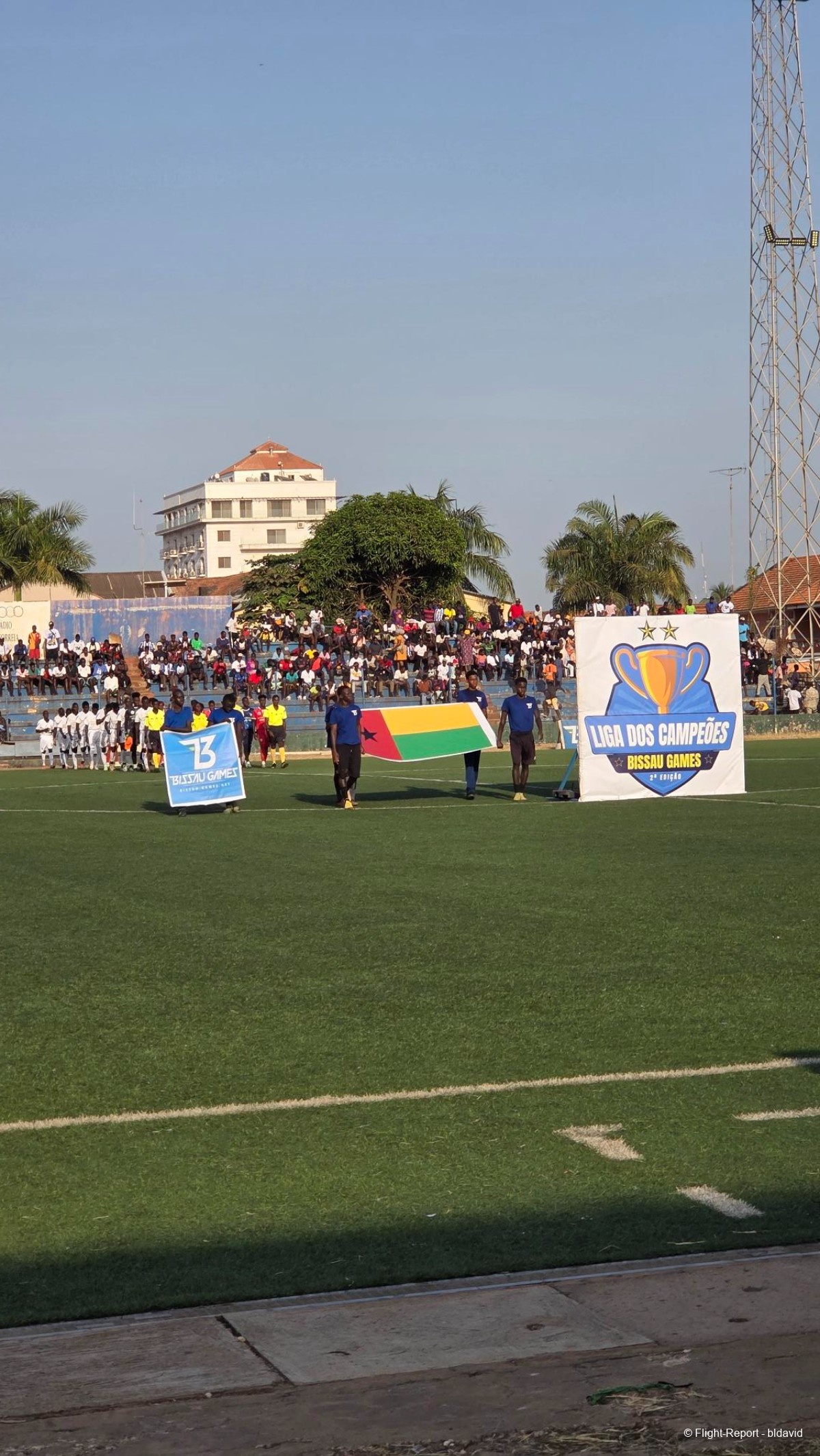
I went to a local game, called Liga dos Campeões, where the UEFA Champions' Leage music was played before the match.
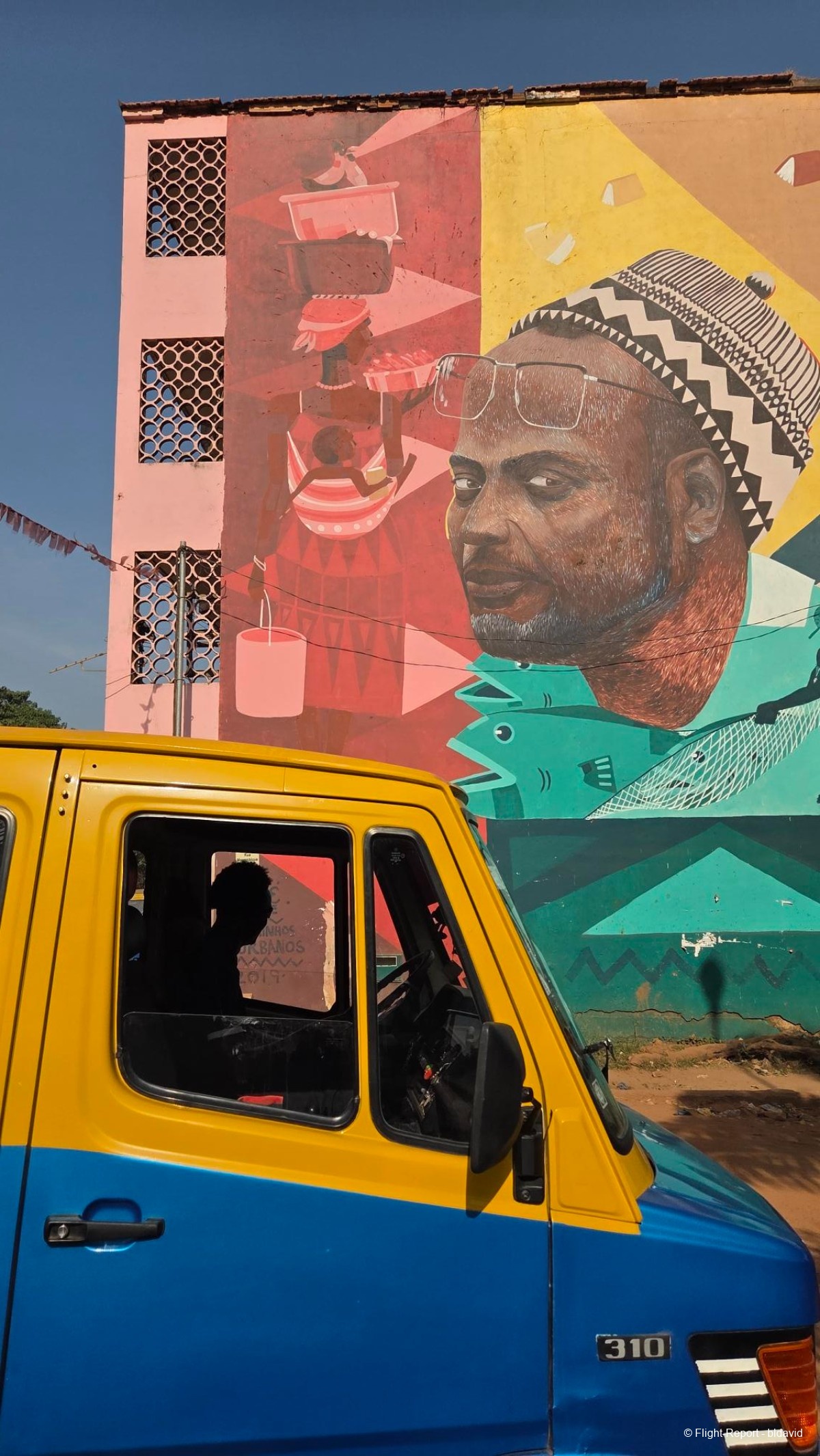
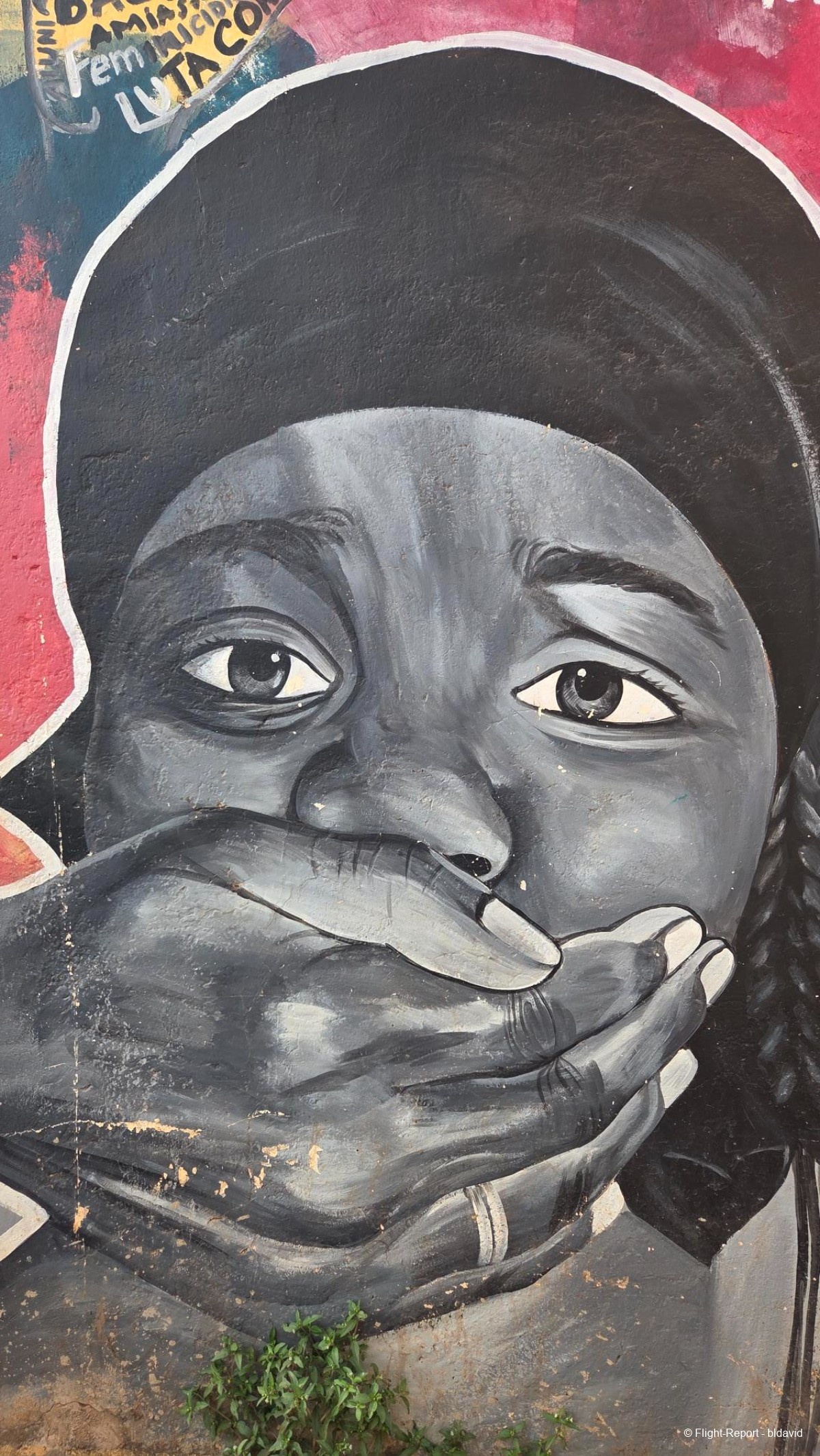
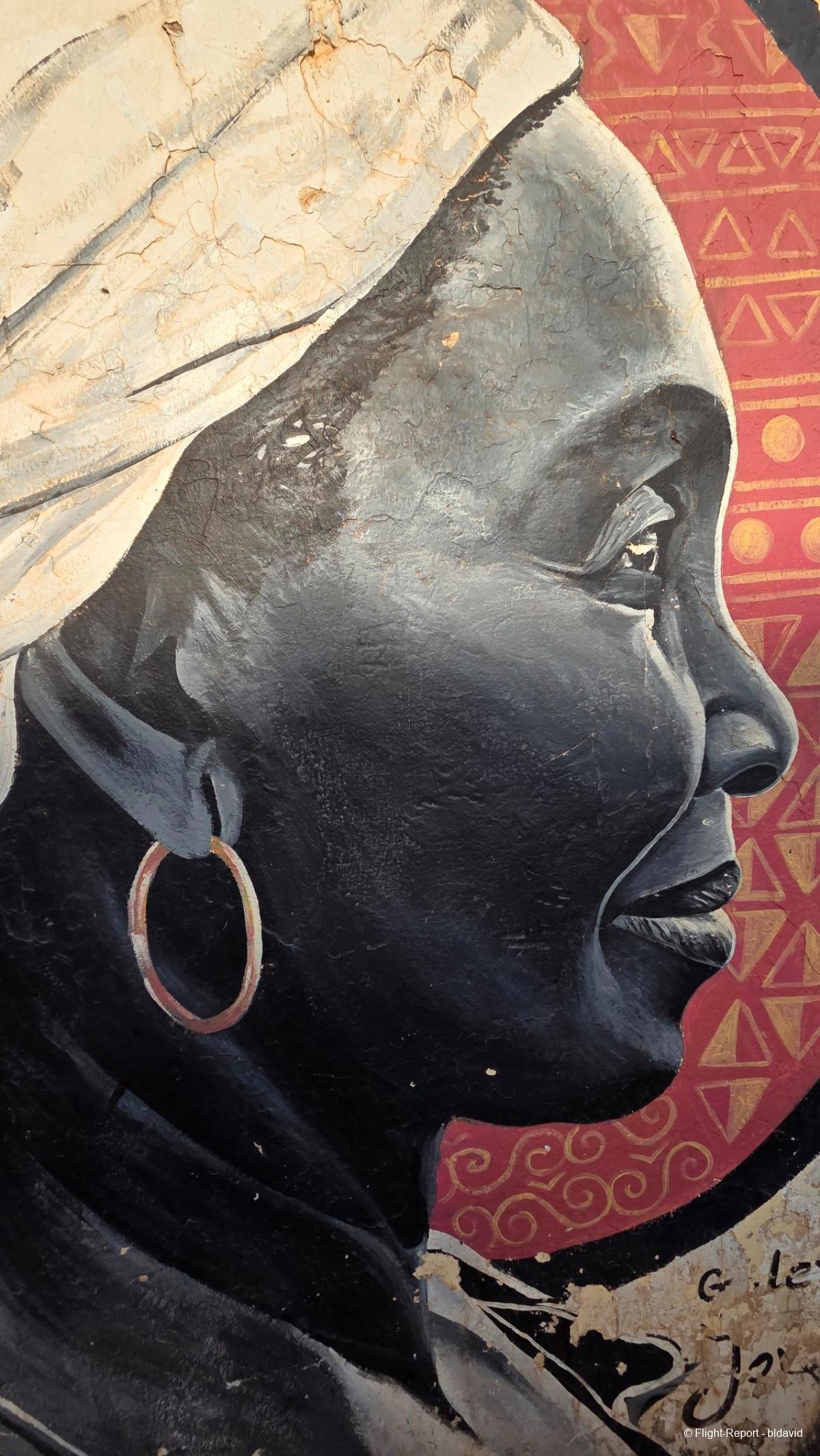
Street Art in Bissau.