


Hi, dear flight-report members and readers!
In this report I'd like to review a flight on an extremely generic aircraft with very generic cabin, but from very interesting airport on a very interesting route with amazing views: an FlyArystan flight from Shymkent (CIT) to Kutaisi (KUT).
Needless to say that FlyArystan is not in the FR airline database, so I had to choose the name of its parent airline for the header.
Intro
I started my visit to Central Asia in the end of May - beginning of June 2025 by taking 3 Wizzair flights: FCO-EVN + EVN-AUH + AUH-SKD (probably I'll make FRs of the two latter in memoriam of Wizzair Abu Dhabi). As we all know, Wizzair discontinued its AUH subsidiary from September 1 2025 due to the tensions with Abu Dhabi authorities, which was really sad, considering how many interesting routes (including a bunch of Central Asian destinations: NQZ, ALA, BSZ, TAS, SKD) it had before closure. When I had to make a detour from Central Asia to Georgia and Armenia in late September 2025, I had to find a new link between these geographically separated regions.
I already heard something about FlyArystan and its flight between Almaty and Kutaisi, but when I looked through FS website, I discovered that there were also flights from Shymkent to Kutaisi, but with their schedule ending on September 29 (in this FR I'll try to explain the reasons why FS's CIT-KUT flights didn't live long). So, I booked in advance a ticket on the last flight CIT-KUT, and it costed me just 65 EUR, which was an absolute deal, beating even gone "Wizz AUH" fares.
Moreover, back then I knew very little about Shymkent airport. But when I was flying from Kokshetau (KOV) to CIT on a SCAT CR2, I discovered from the inflight magazine that CIT got a new shining terminal. When I arrived there, I had 3 hours before the departure of my FS flight to KUT, and I explored this new terminal, which seems to be not only the newest, but also one of the best new-gen airport terminals in the whole Central Asia!
And the flight itself, due to its routing and favorable weather conditions, gave the possibility to see Central Asia and Caucasus from some non-trivial angles. The limitation of 150 photos per FR was barely enough to put everything significant about this flight here.
FlyArystan And Its Fleet
FlyArystan (FS) is a low-cost subsidiary of Air Astana (I've already reviewed KS flight from ALA to NQZ on its current flagship B763) and the first ULCC in the Central Asia. The word "Arystan" means "Leo" in Kazakh, and names Ruslan and Rustam originate from this word.
Being a part of Air Astana Group, FS also doesn't fly to Russia and avoids its airspace.
The current FS fleet consist of 13 A20Ns (in Y188 layout) plus 15 A320s (in Y180 layout). Though, all the A20Ns, being PW-powered, are grounded: KC Group needs their engines to keep KC A21N fleet (which is also PW-powered) airworthy in light of the infamous PW GTF durability issues. As one can guess, KC is not the top-priority client of PW and cannot get the replacement solutions fast, so it has to rely on itself.
So, currently the entire FS network is operated by A320s.
EI-KBA…-KBG were transferred from the parent KC, EI-KBN and -KBO were taken from Vistara, EI-KBX was taken from short-lived SaudiGulf Airlines, EI-KBY, -KFF and -KFG - from Wizz Air, EI-KBZ and -KFE - from Hong Kong Express. All the A320s except EI-KBA have winglets.
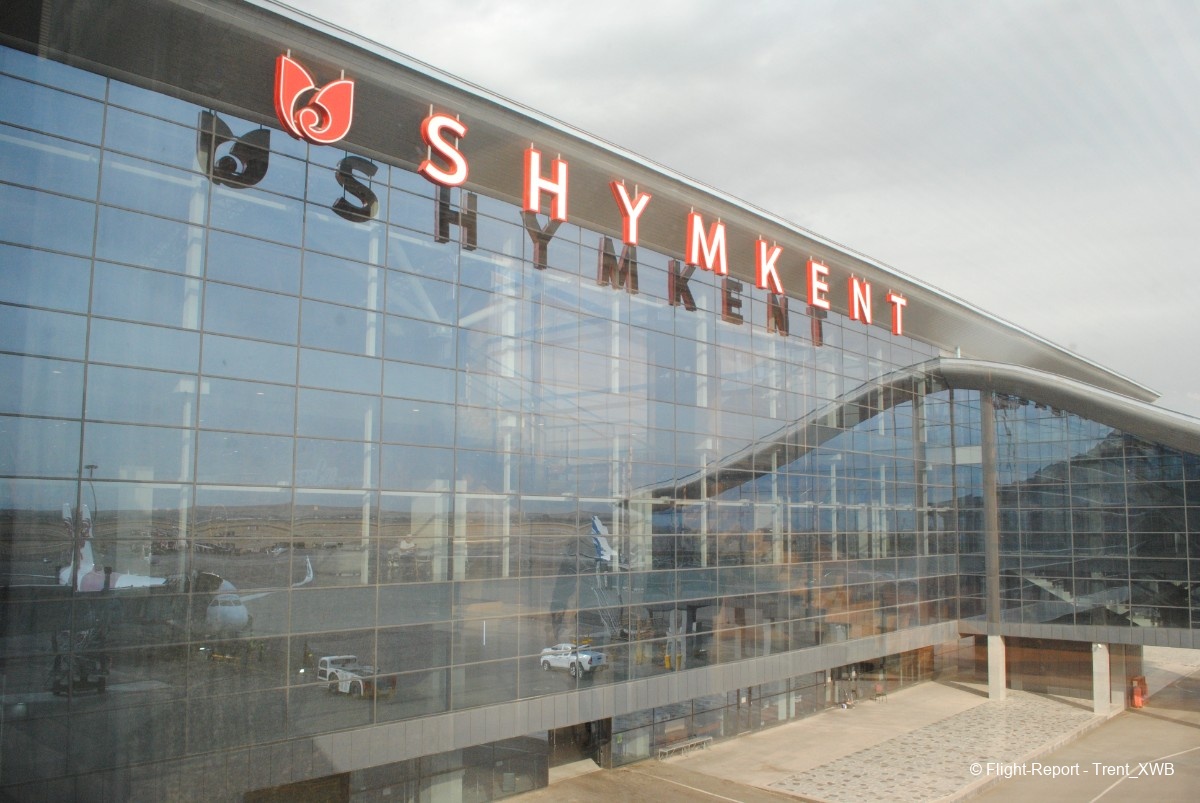
Shymkent International Airport (CIT) And Its New Terminal
CIT is located north-west of Shymkent city, not far from the city centre. In the name "Shymkent" "shym" means "turf" or "grass" and "kent" (derived from Persian kand/khand) means "settlement" (in the name of neighboring Tashkent, the capital of Uzbekistan, "tash" means "stone").
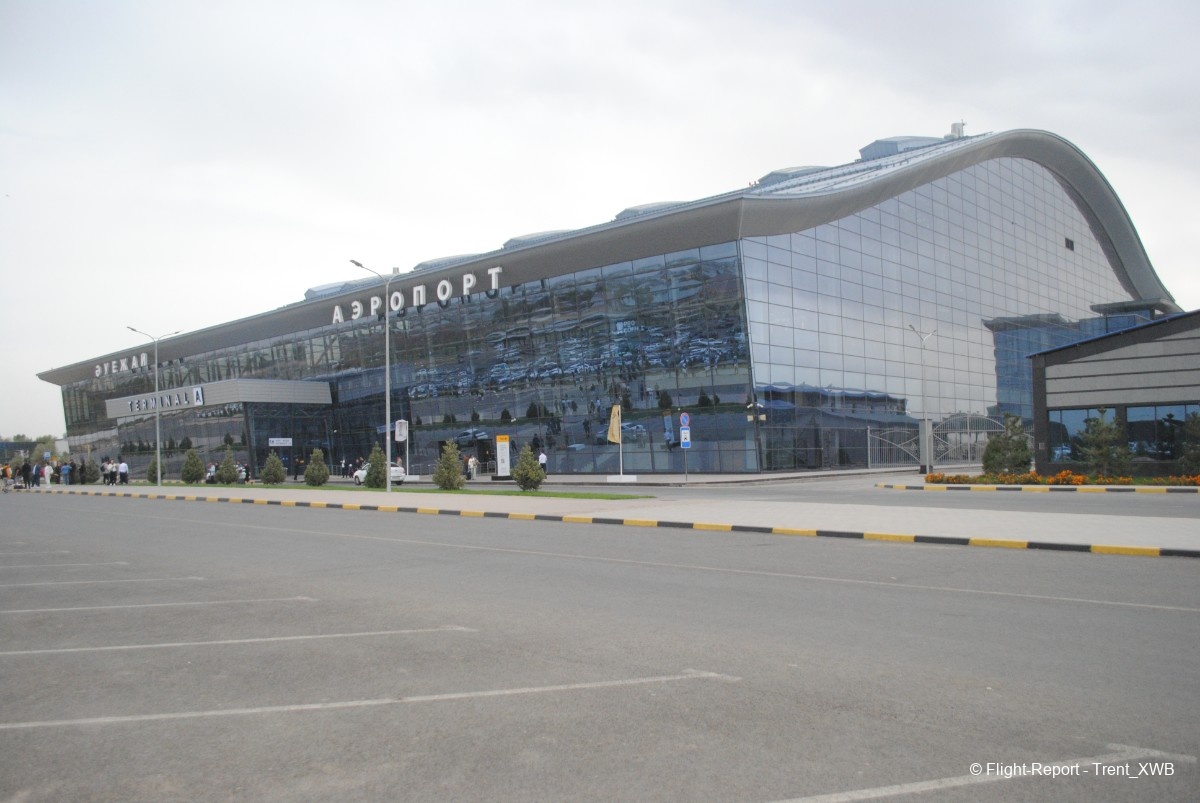
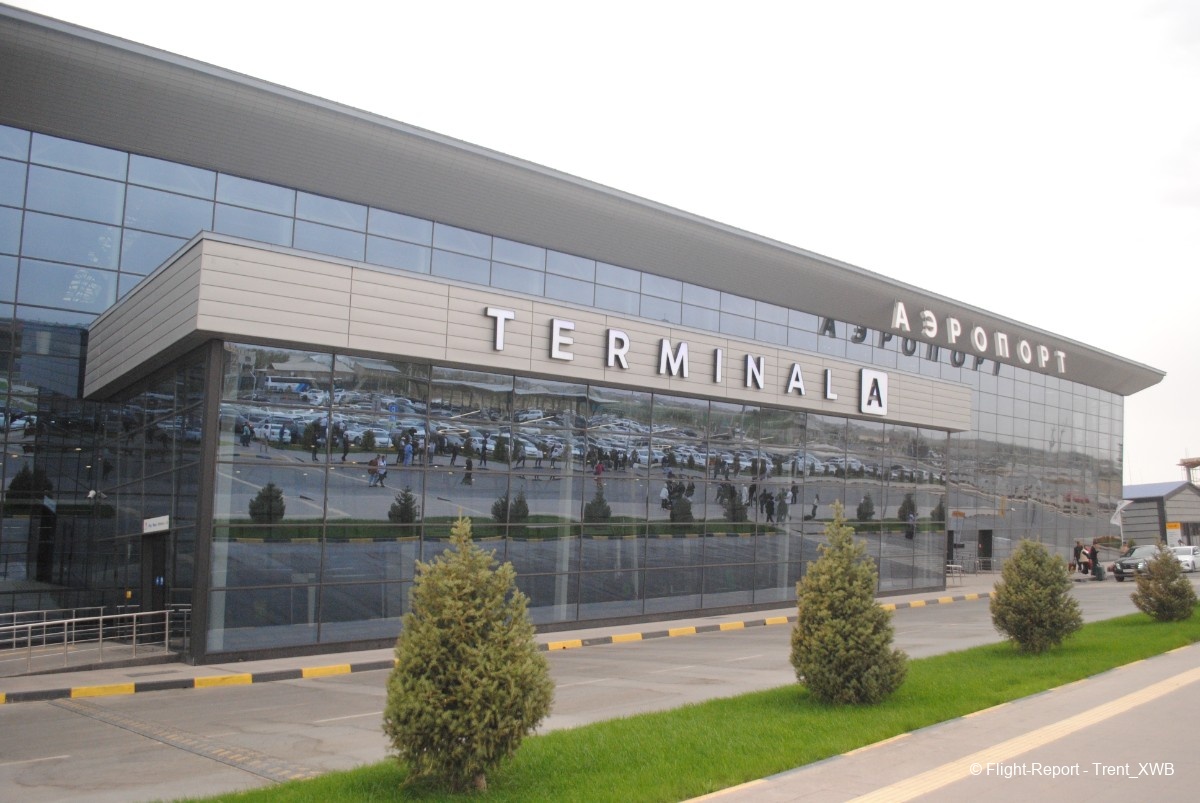
Before the end of 2024 CIT has a single small Soviet-built terminal. But on 25 December 2024 a new modern international Terminal A was opened. It's the newest international airport terminal in Kazakhstan and in the whole Central Asia. The new international Terminal 2 in ALA (which I partially covered in the FR of SCAT ALA-UKK flight on B735) is the second-youngest, being opened 1 June 2024. Having visited airside of T2 ALA later (I also flew ALA-KUT on FlyArystan in December 2025 and, probably, will make a FR later), I'd like to say that CIT's new terminal is definitely superior and I rate it as the best terminal in Central Asia.
Views of CIT Terminal A from the outside:
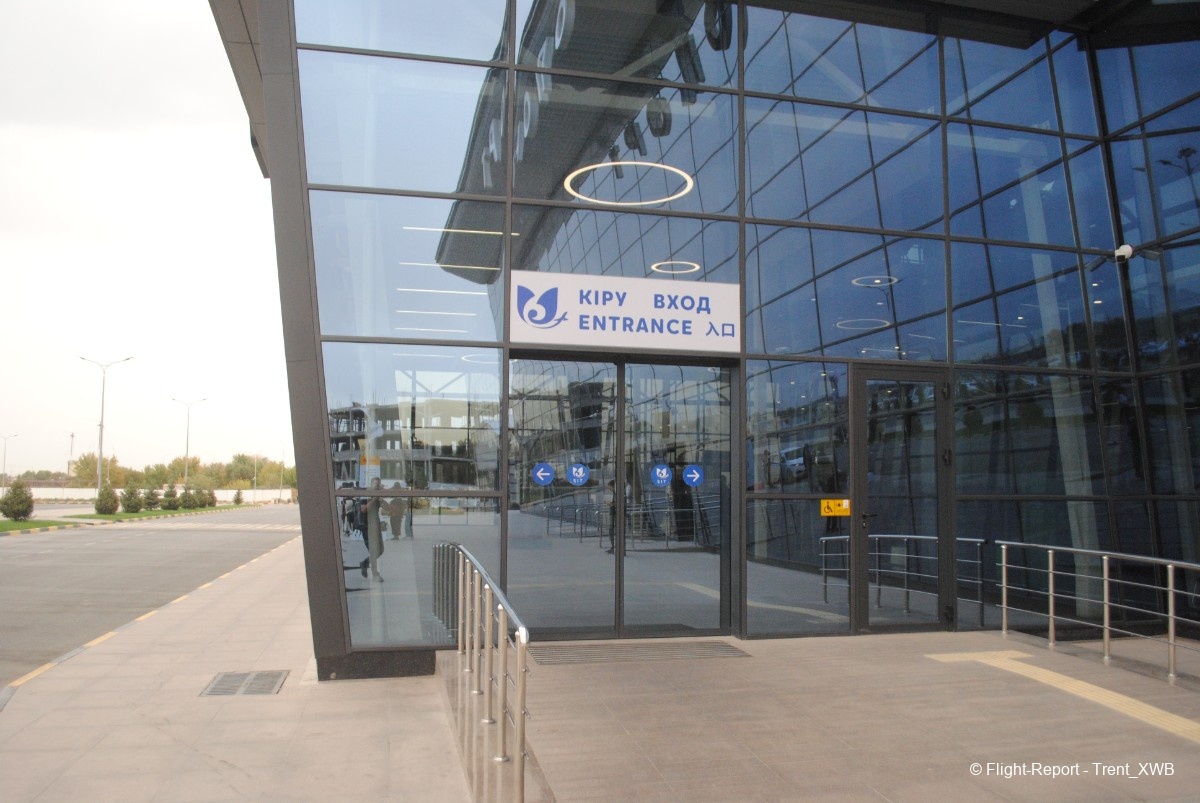
The entrance to the terminal.
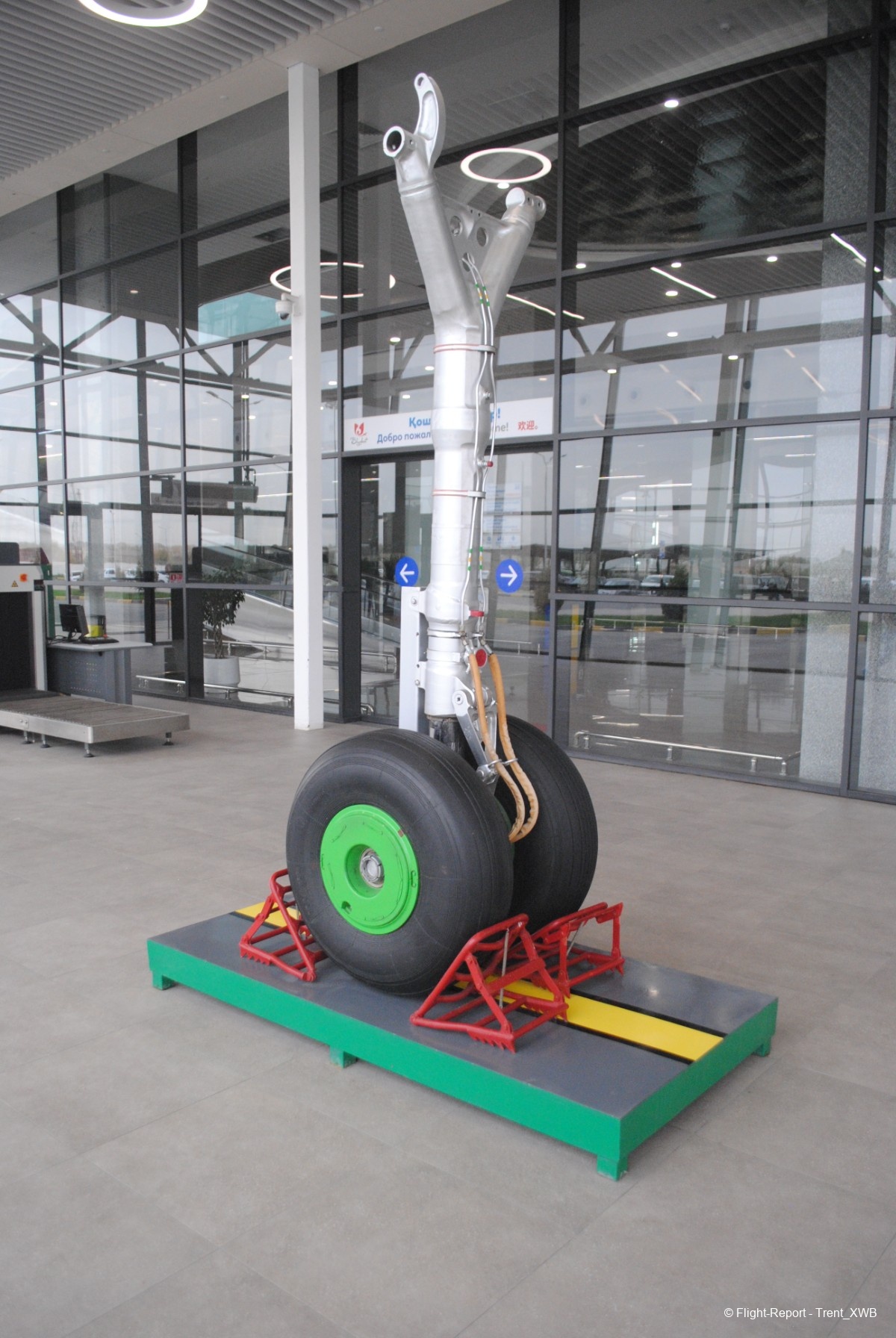
Before entering the ground level, one can see an aircraft's nosegear.
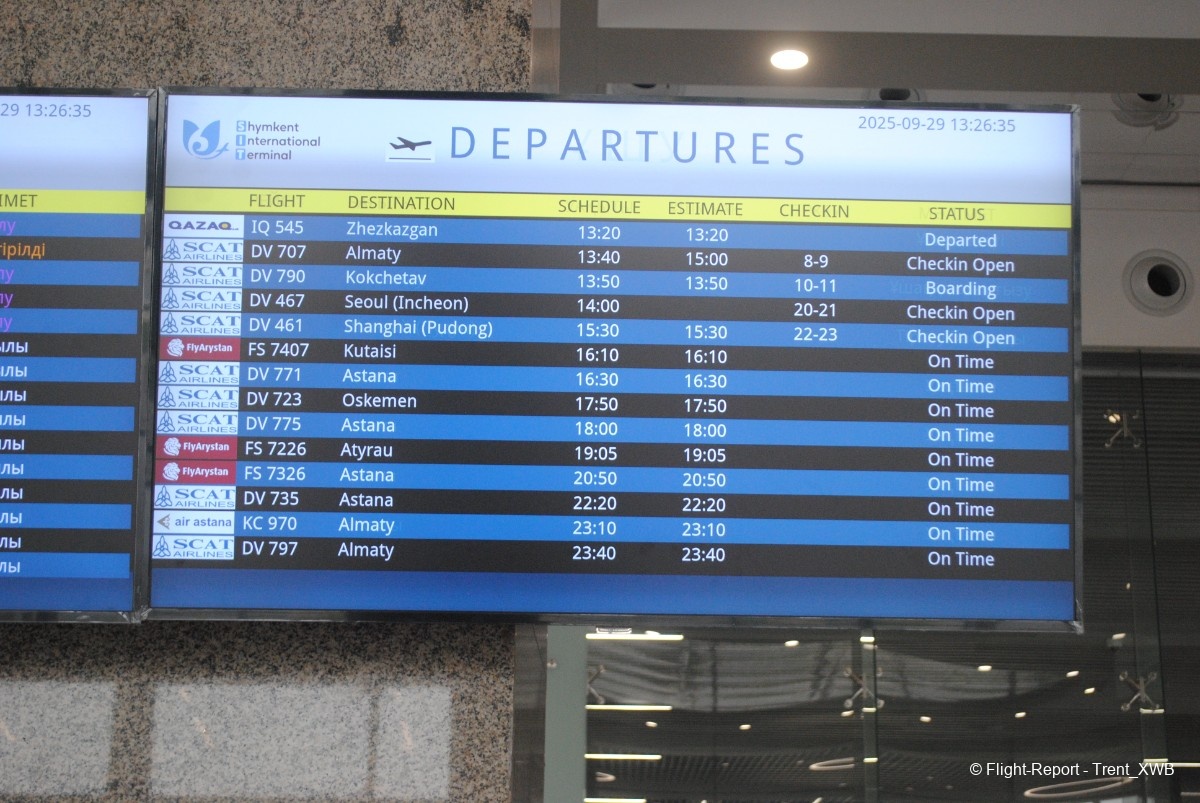
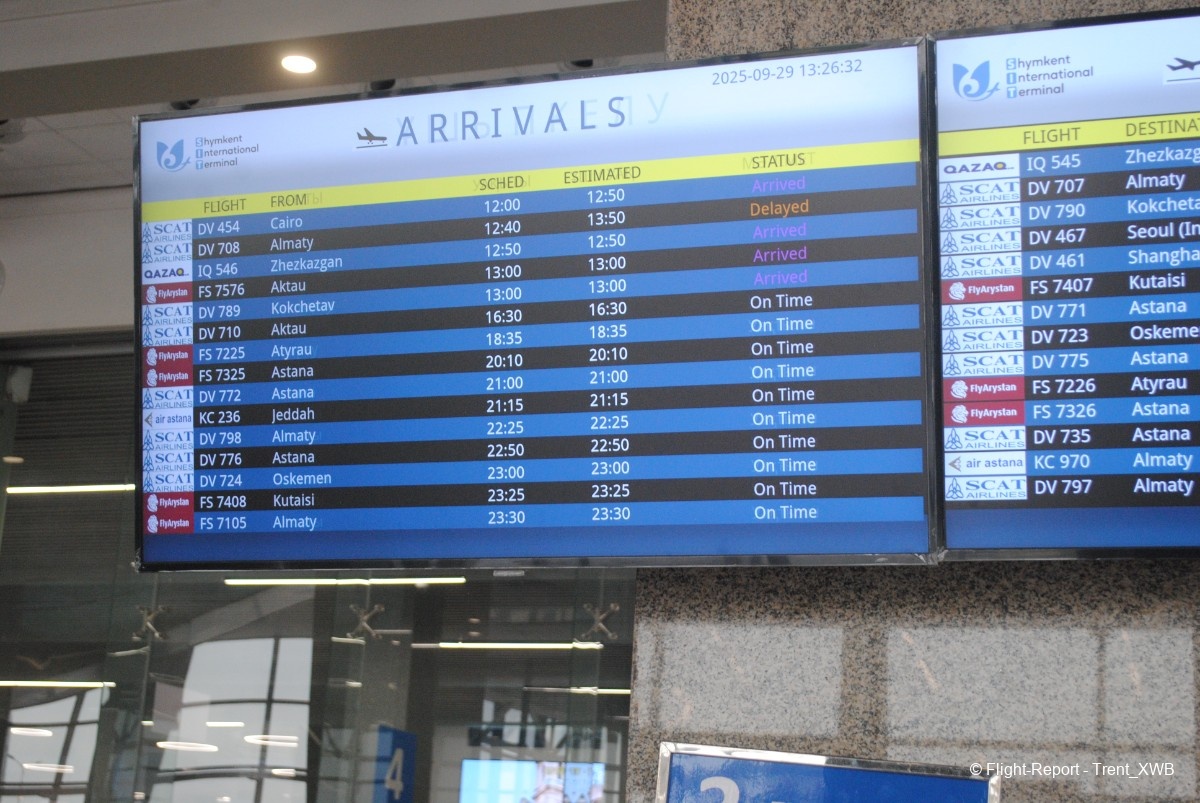
I've already shown the arrivals zone in the FR of the preceding KOV-CIT flight on DV's CR2, so here I'll just show FIDs of arrivals and departures.
As one can see, just a few international departures (for ICN, PVG, KUT) and a few international arrivals (CAI, JED, KUT) for today (September 29 2025). Most of the flights are domestic and the dominating carrier is apparently SCAT, as CIT is the DV's main hub.
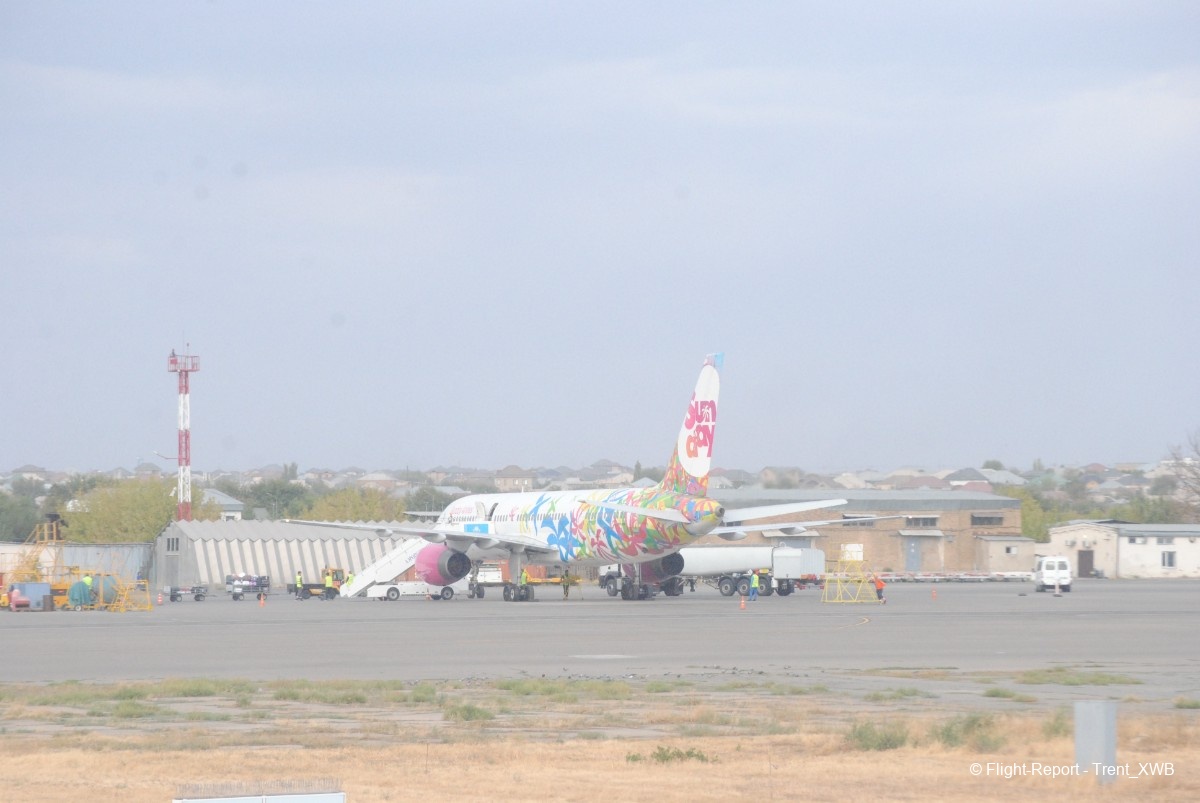
Domestic flights CIT-NQZ DV771 and DV735 were operated by Sunday Airlines' B752 (UP-B5705) that day, and I even thought about ditching my CIT-KUT flight and fly back to Astana on this very rare aircraft, but decided to follow my plan on visiting Georgia and Armenia and to return to Kazakhstan a bit later (and I made it to fly this B752 on NQZ-ALA flight in the end of October). Considering how beautiful were the views on CIT-KUT (you'll see further) and the fact that this flight was the last international FS flight from CIT, giving the possibility to see the new terminal from airside, it was the right decision.
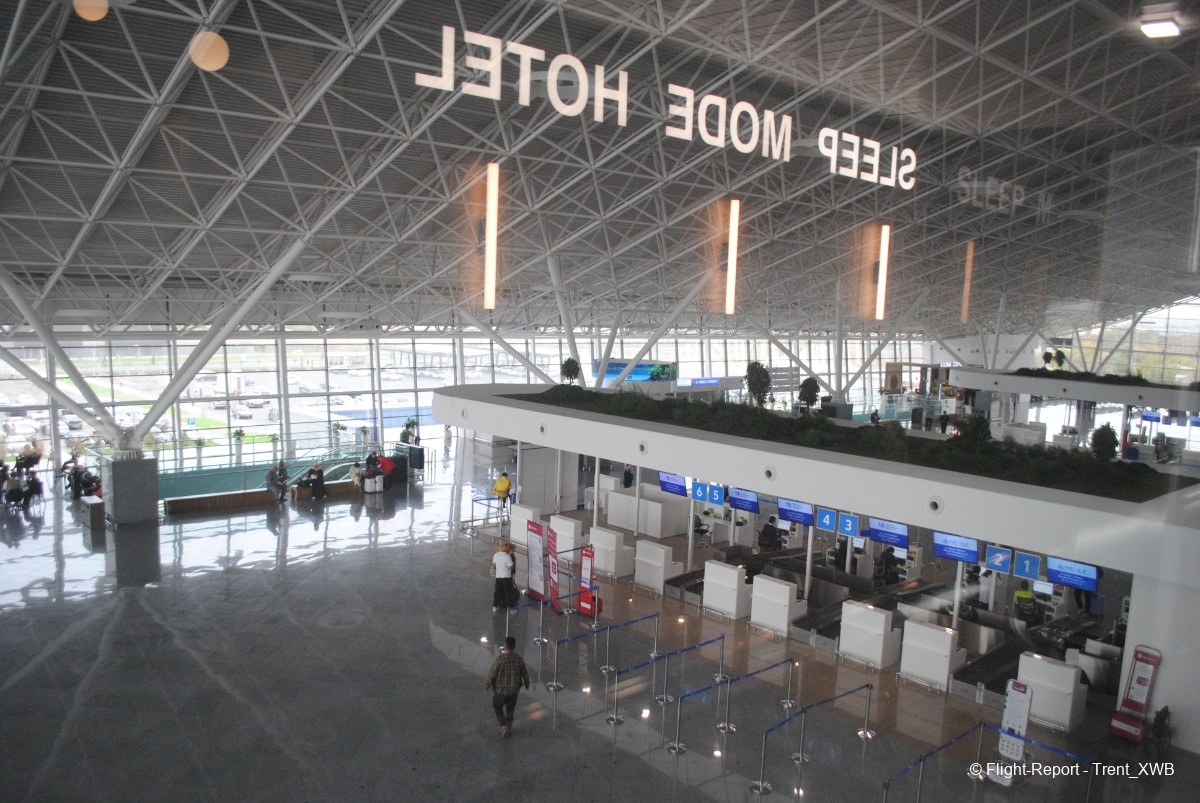
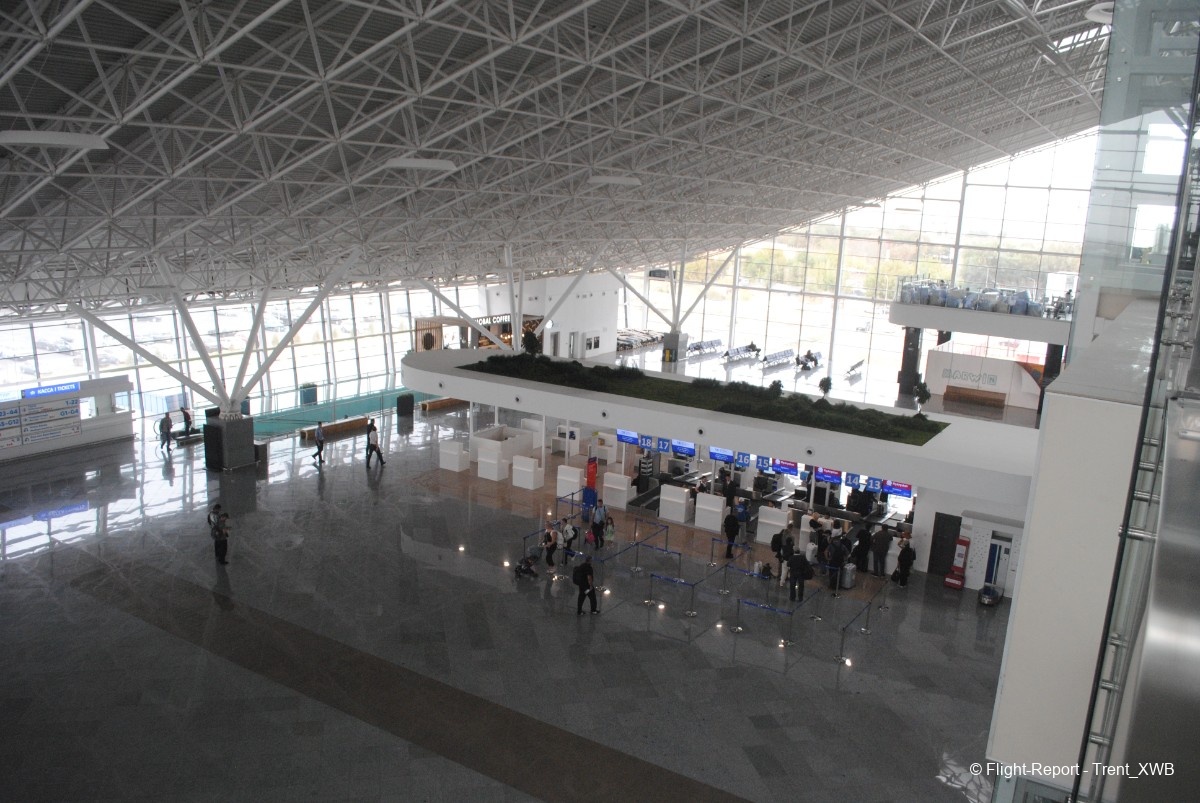
The check-in hall is located on the 2nd floor. You can see, how spacious and airy it is:
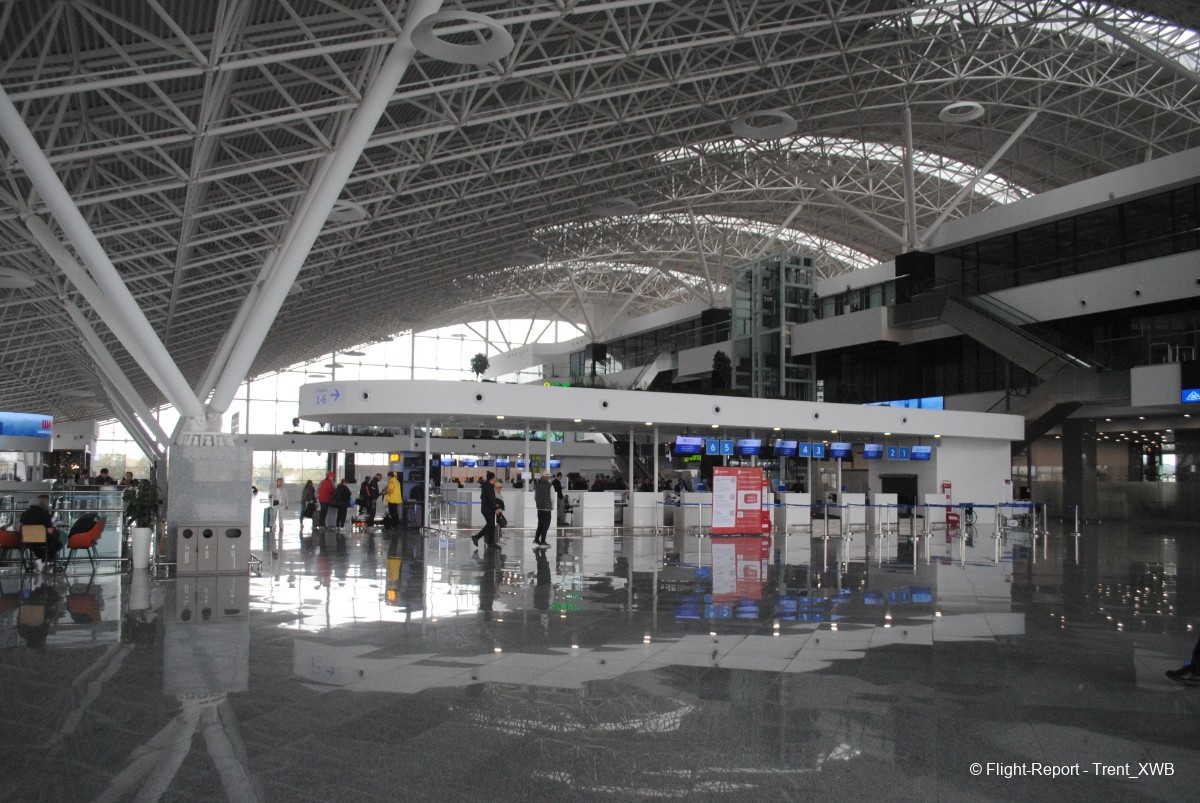
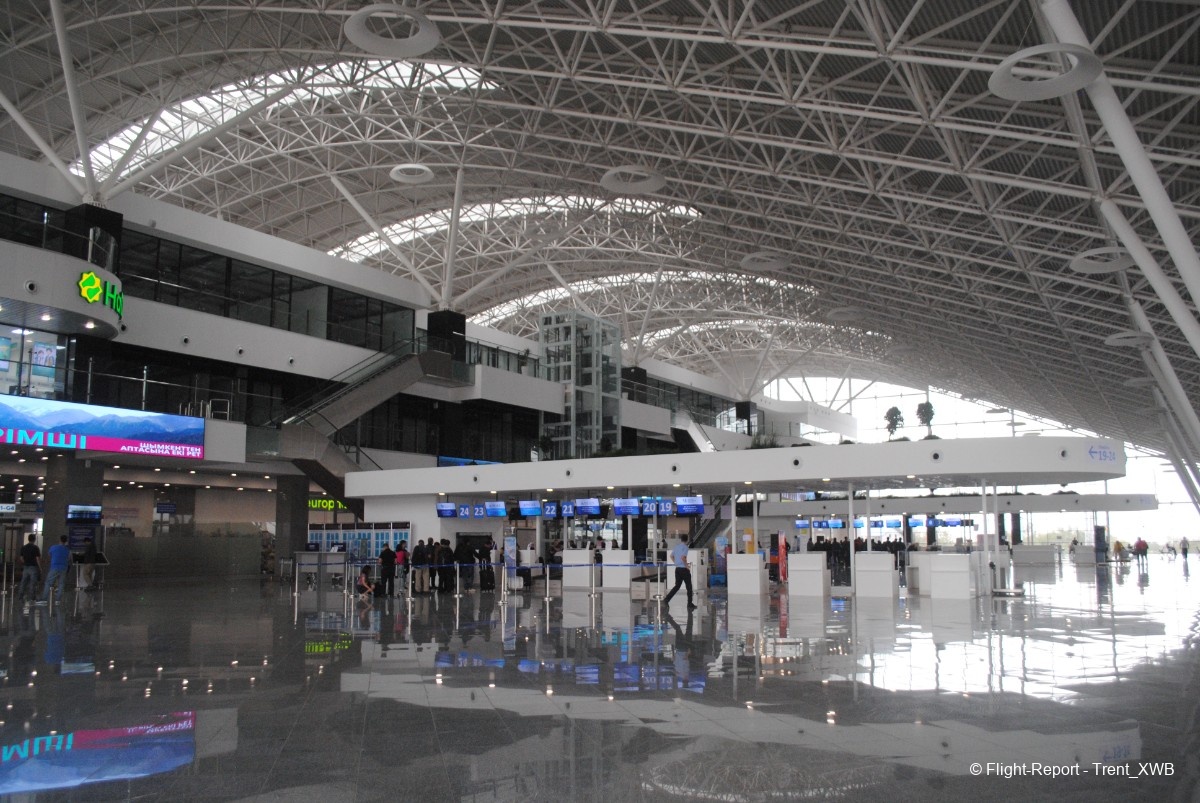
There are 2 check-in "isles"
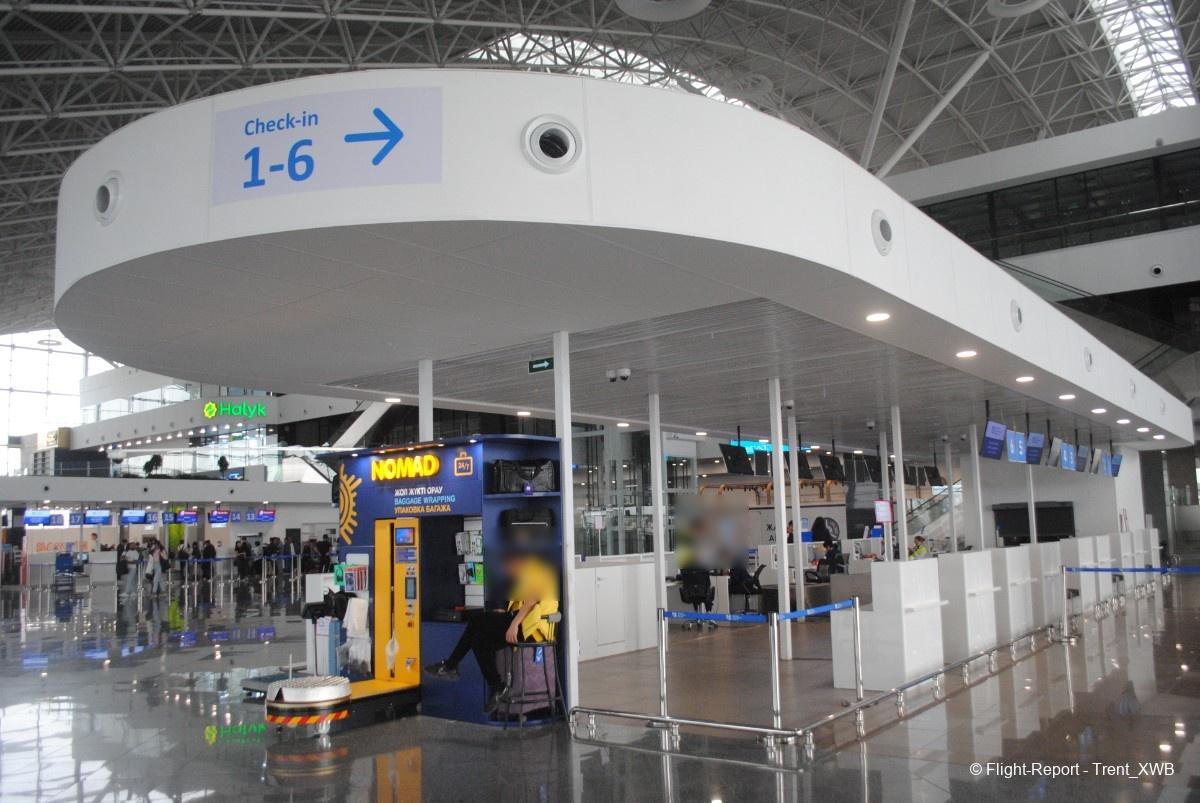
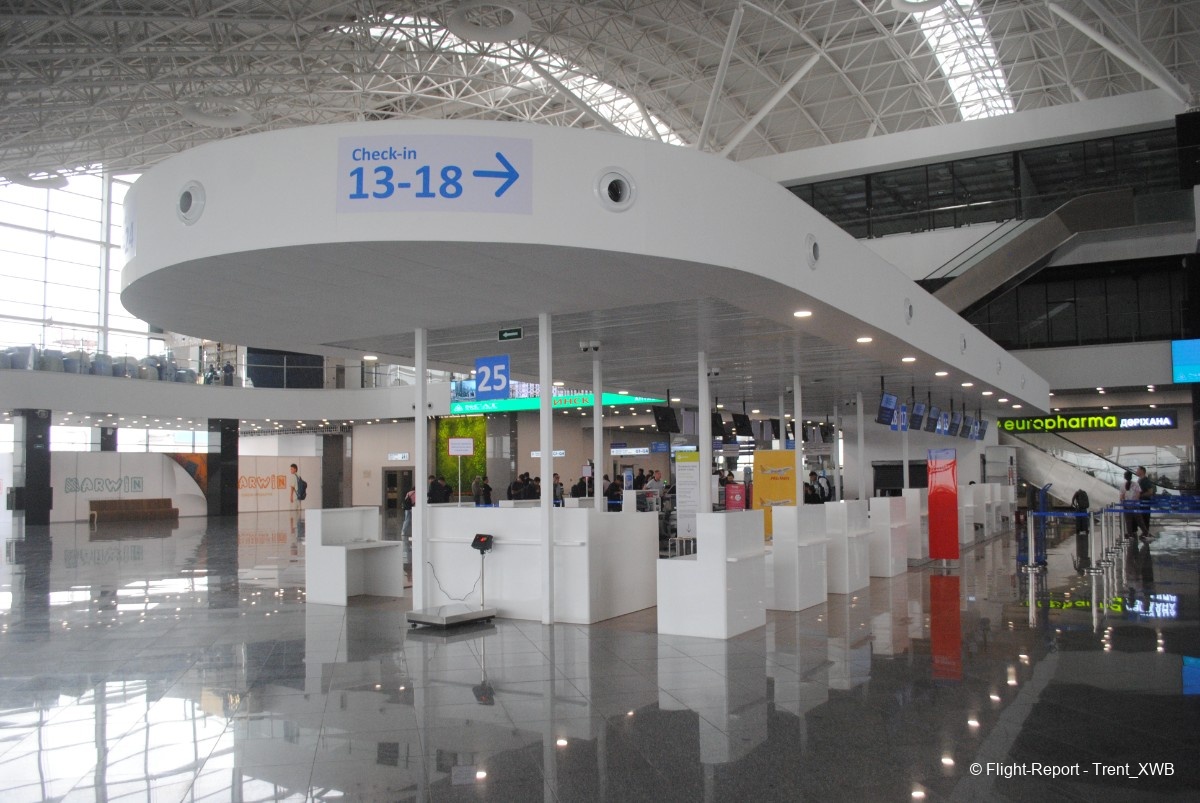
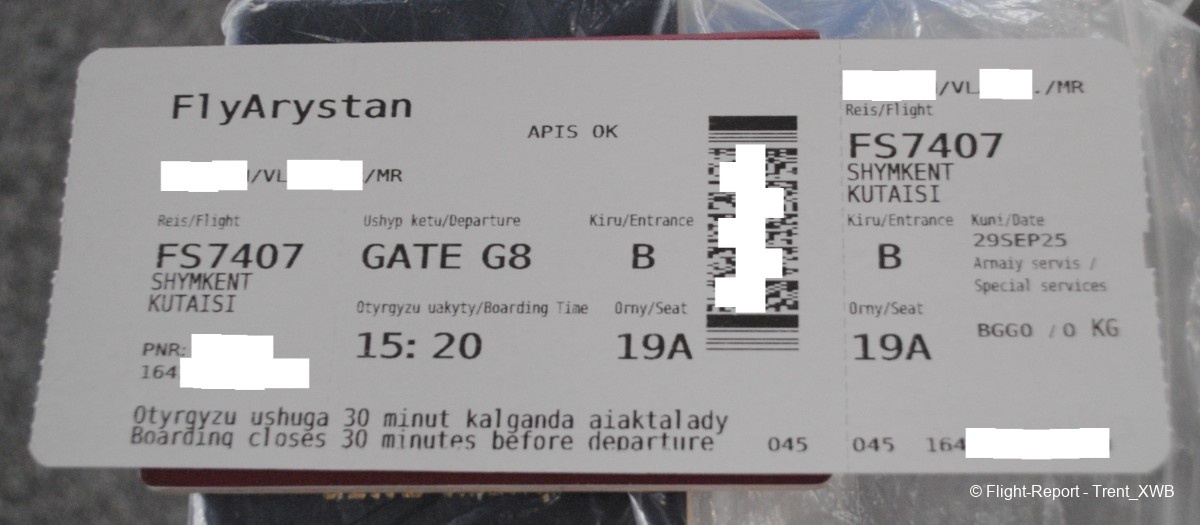
The check-in desk for my flight FS7407 was 13 in the 2nd "isle".
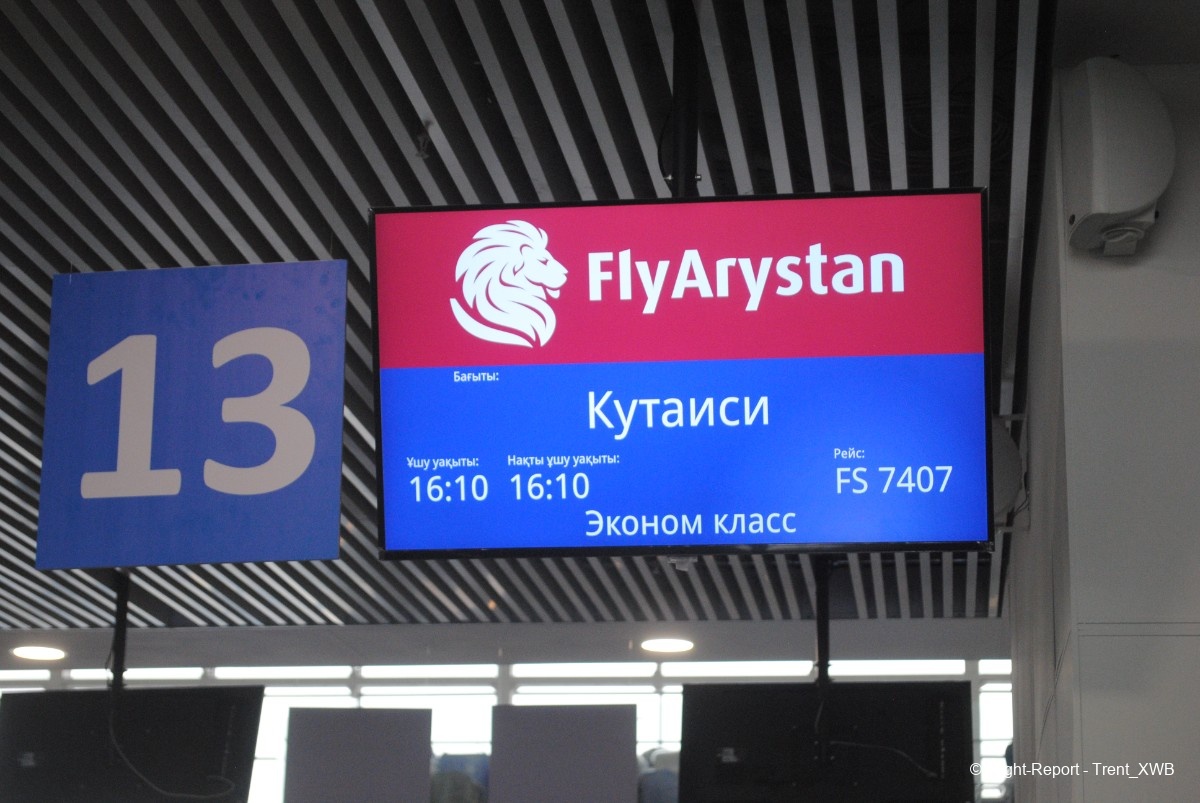
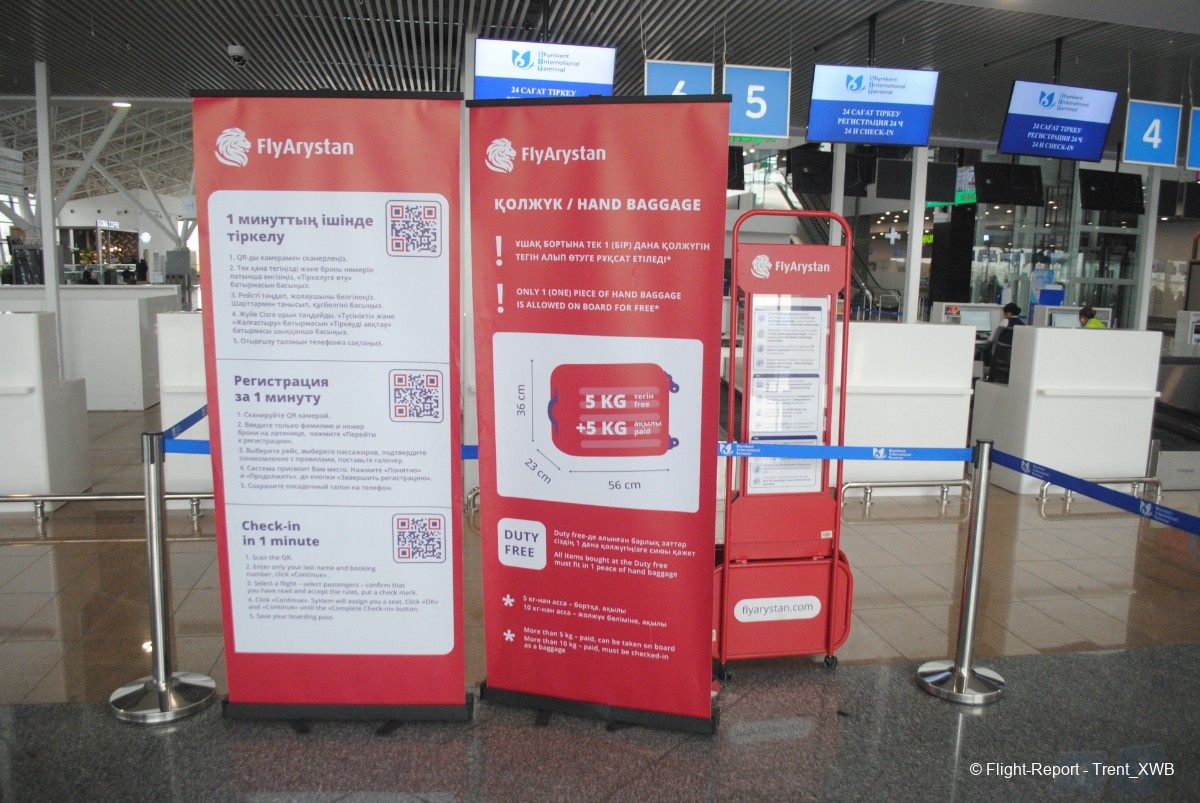
Even though I made online check-in, electronis BP was not generated and I had to visit the desk. One has to remember that FS has very strict limitations on hand luggage weight (5 kg), but here in CIT my backpack was not weighed (later, on KUT-ALA and ALA-KUT flights there was obligatory weighing at the check-in desks, and I had to use some tricks to put the weight of my backpack down to 5 kg).
BTW, here are the FS's rules about hand luggage.
This is the space between the check-in "isles" with an elevator to go upstairs. The screens around the hall promote SCAT's international destinations from CIT.
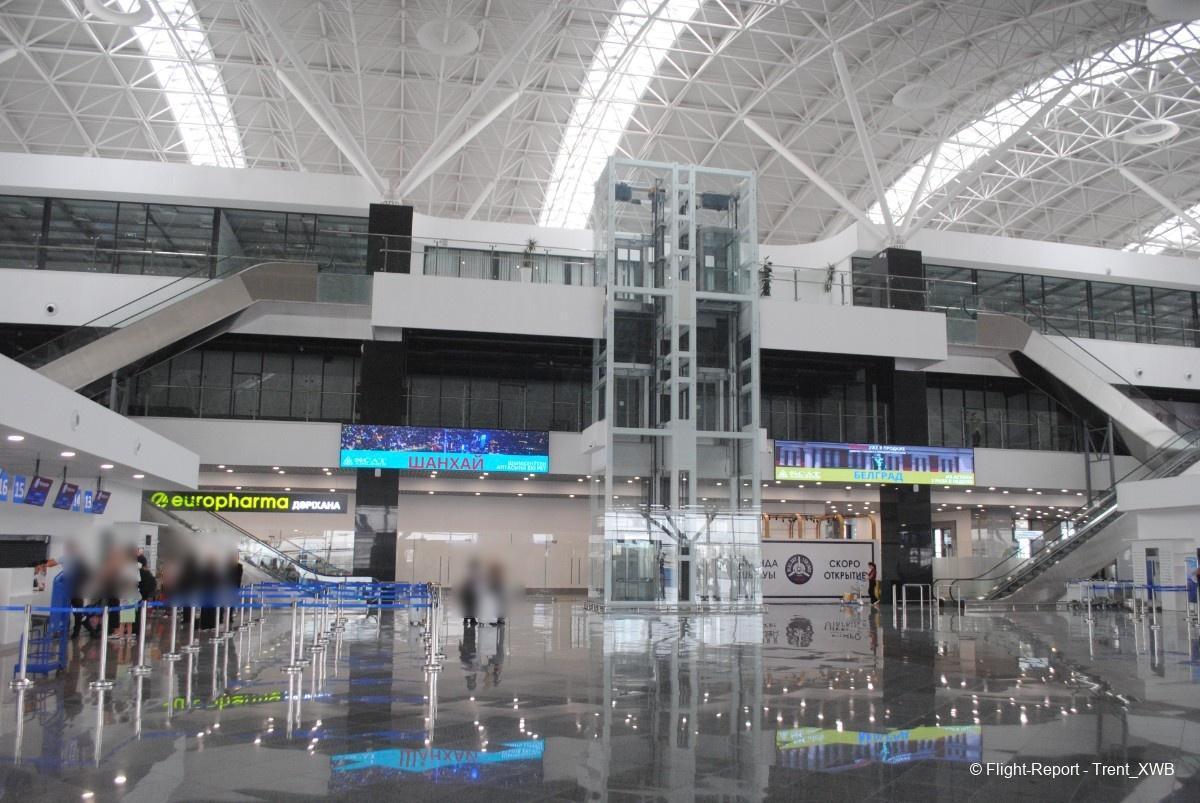
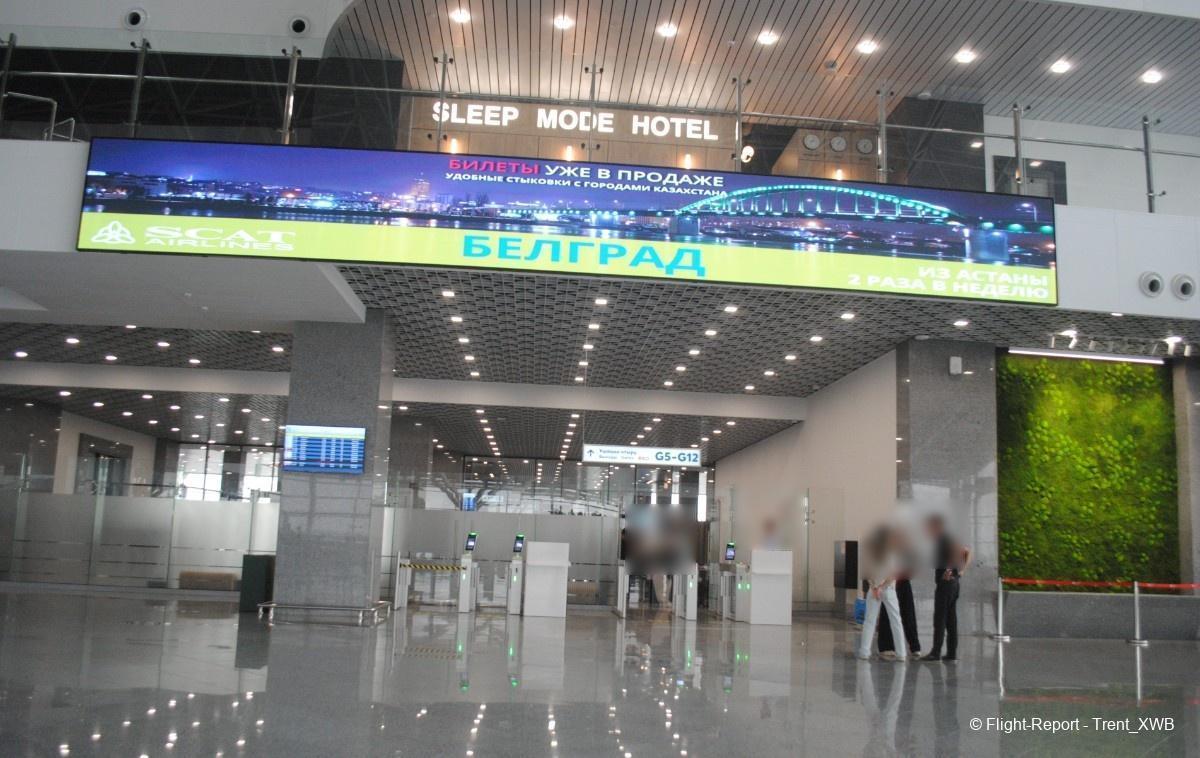
The hall in the vicinity of the 1st check-in "isle":
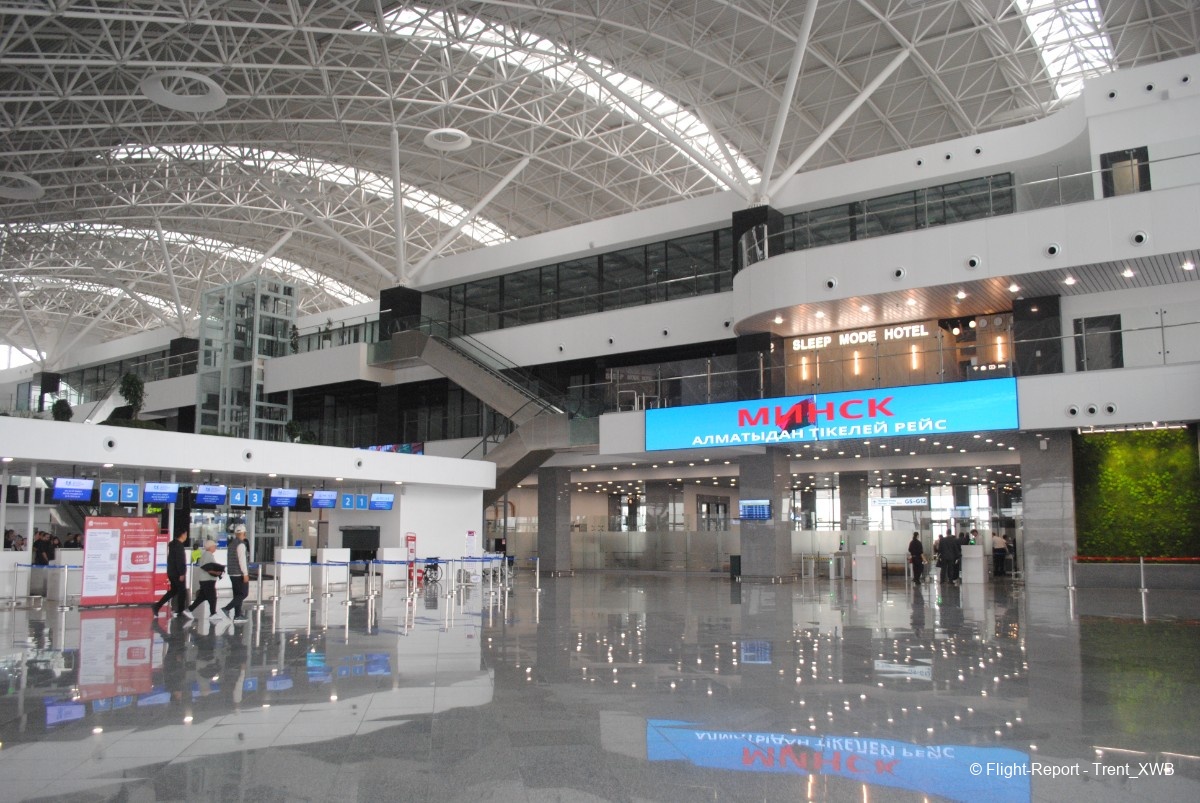
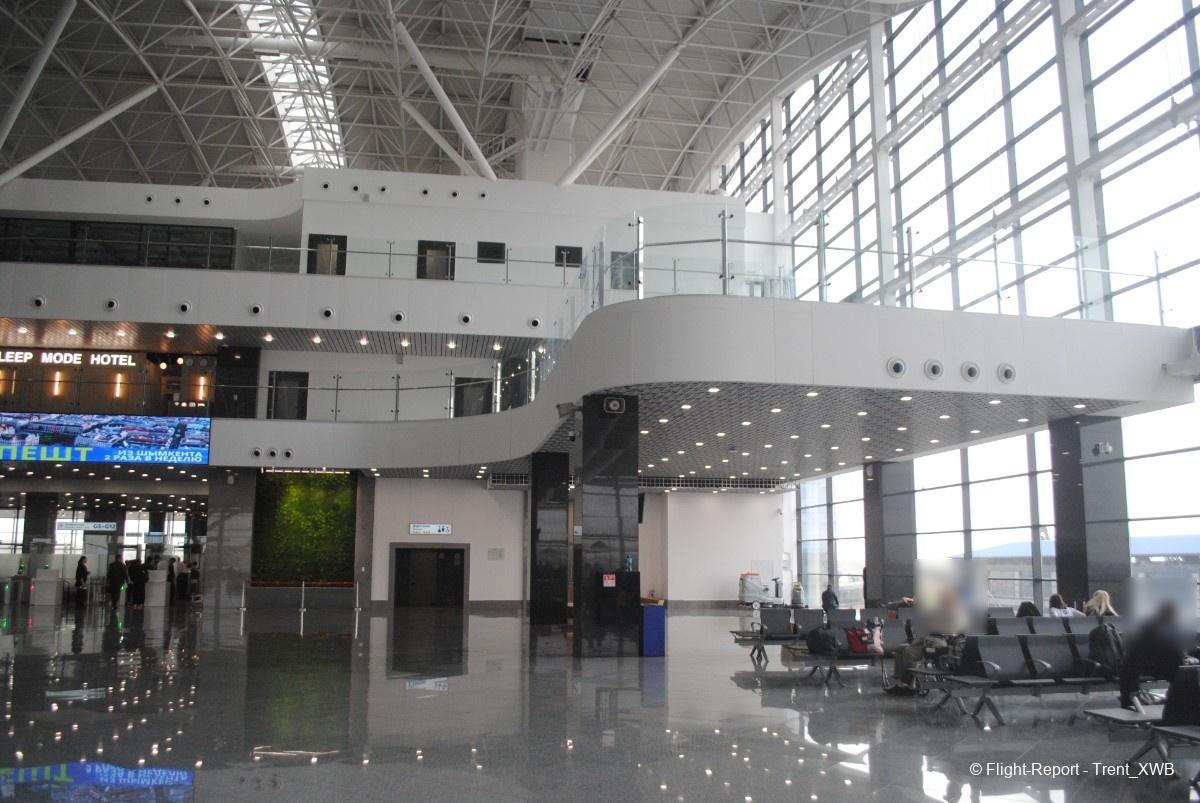
This is where the entrance to the security control for domestic gates (G5-G12) is located.
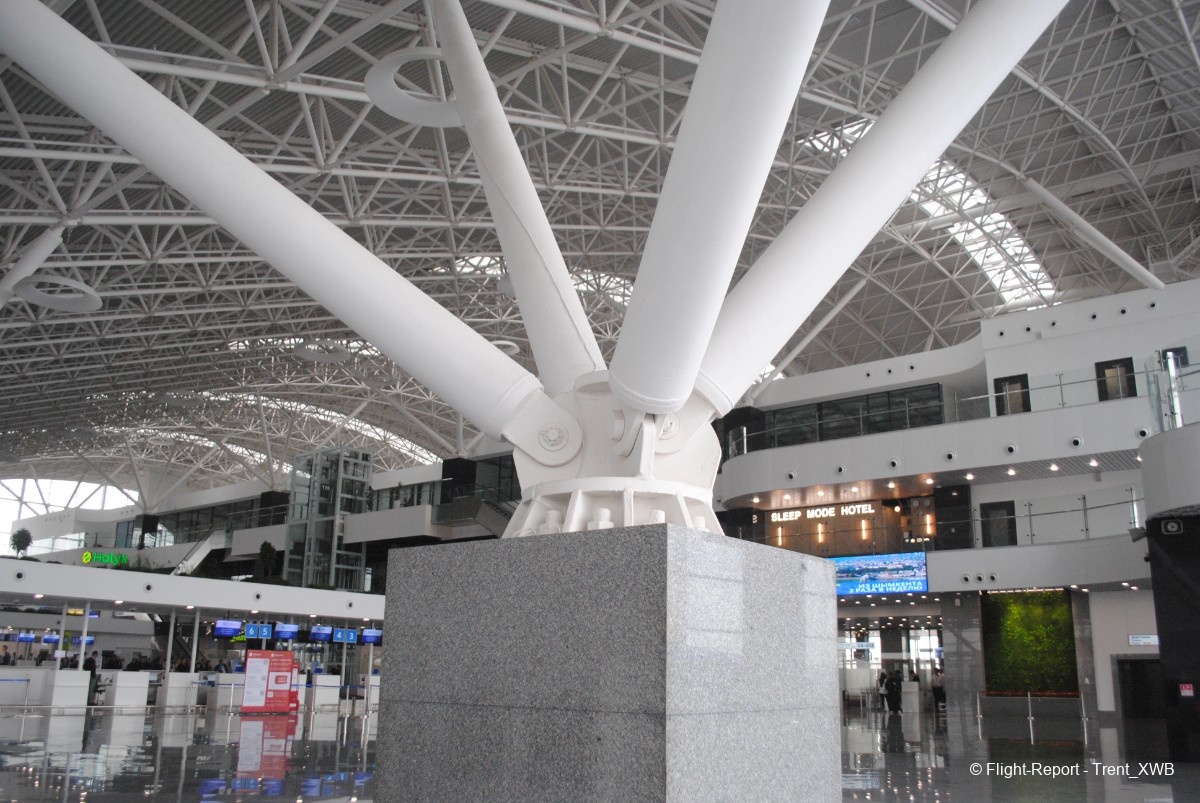
On of the "pillars", holding the wave-like roof.
The hall in the vicinity of the 2nd check-in "aisle":
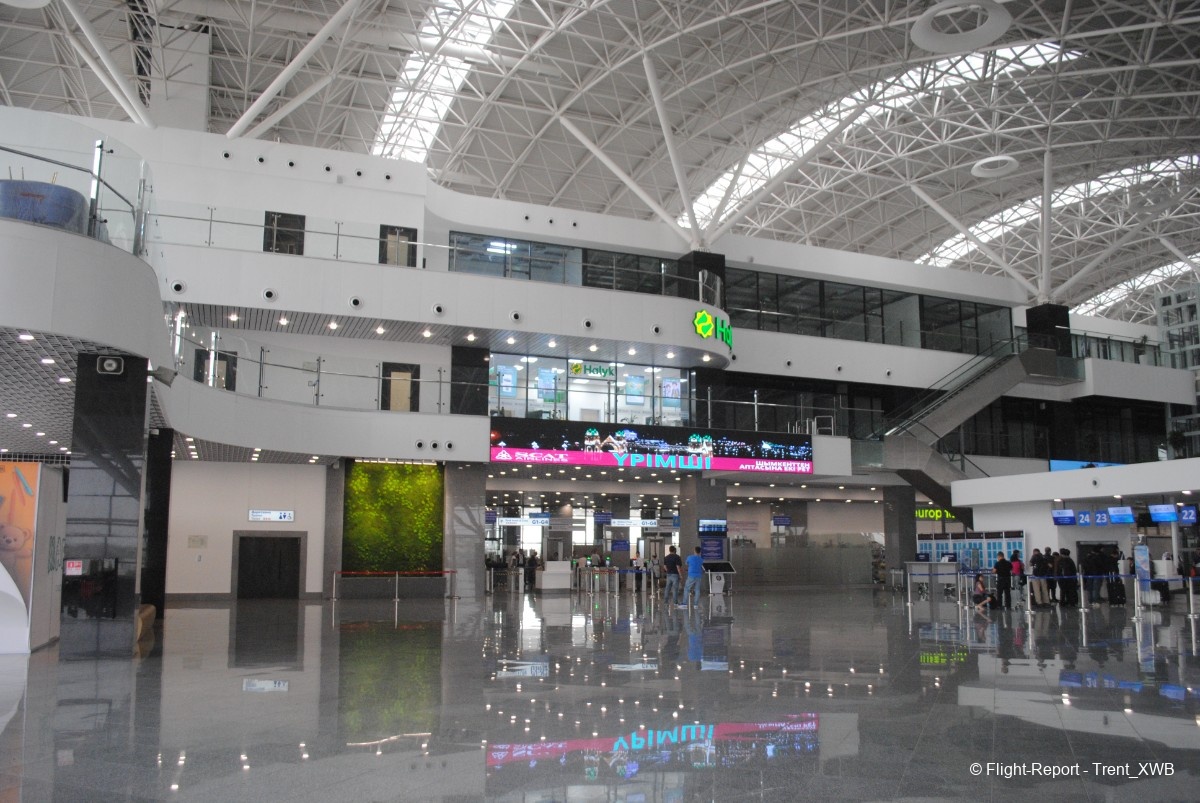
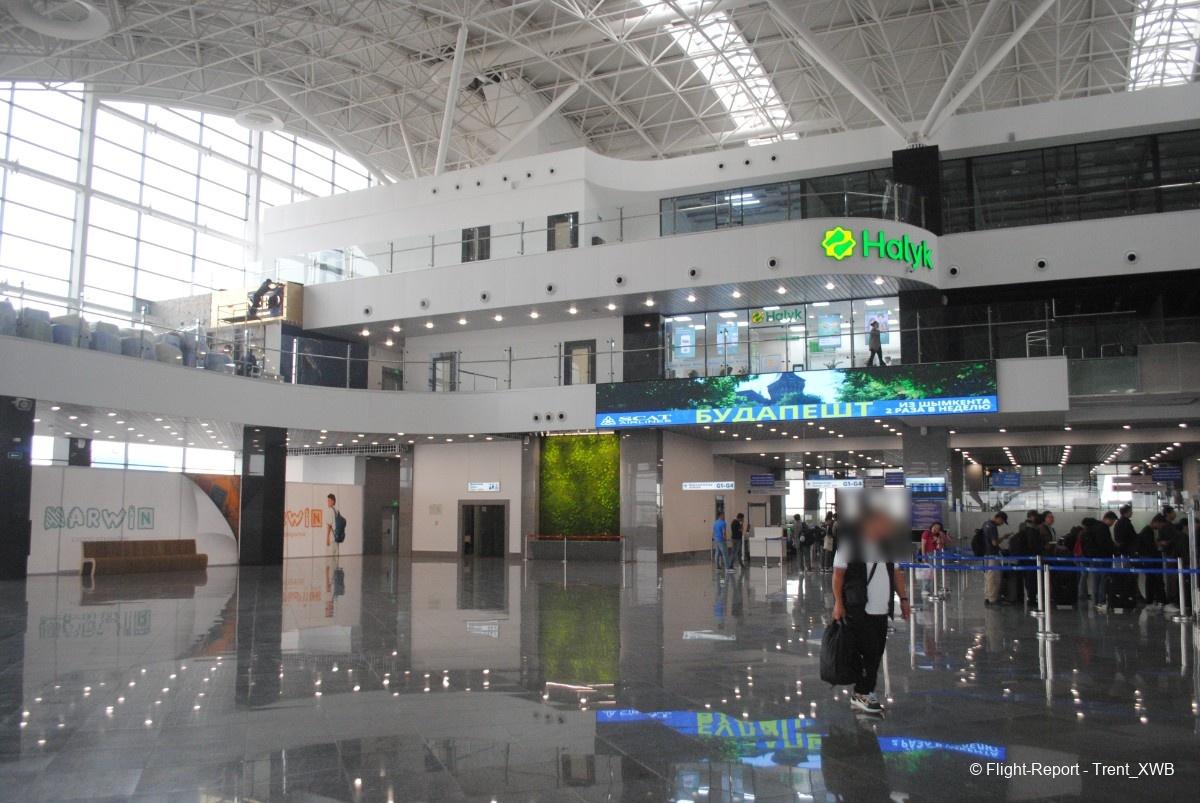
This is where the entrance to the security control and immigration for international gates (G1-G4) is located.
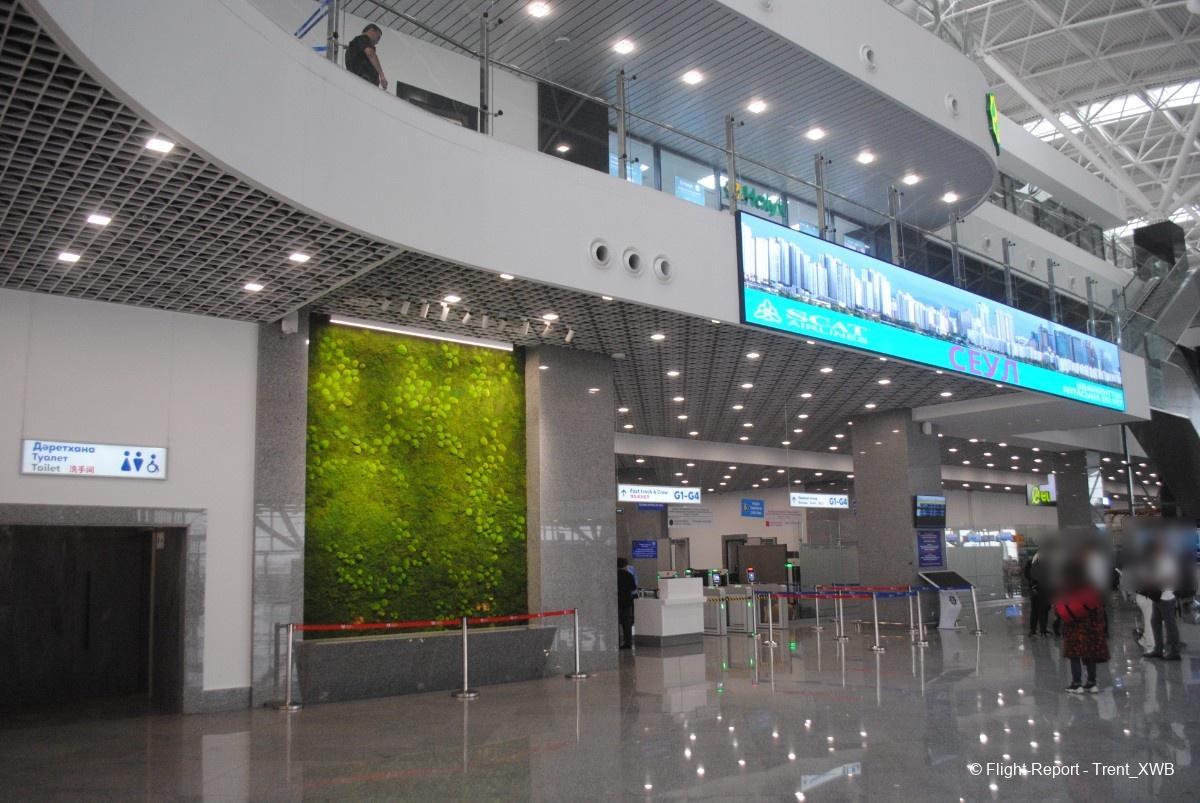
The terminal is so new that even some equipment is still unpacked.
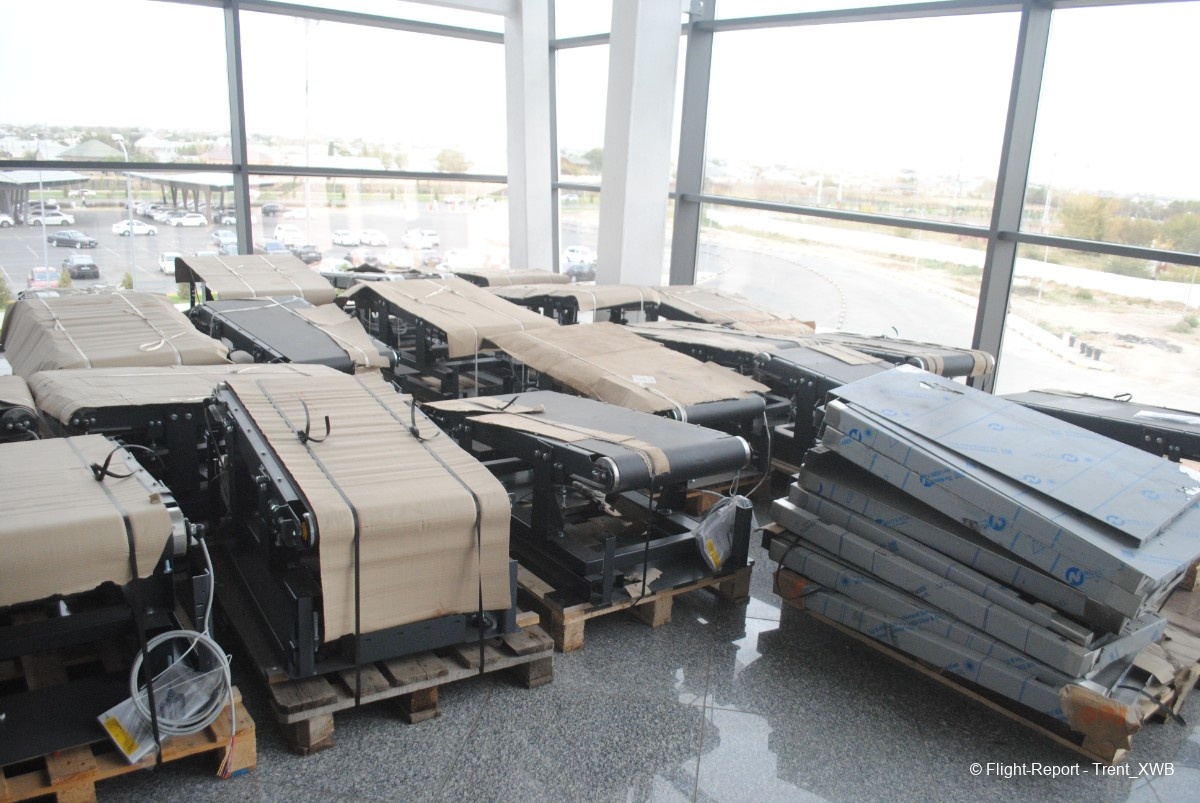
The signage in Kazakh, Russian, English and Chinese in the check-in hall.
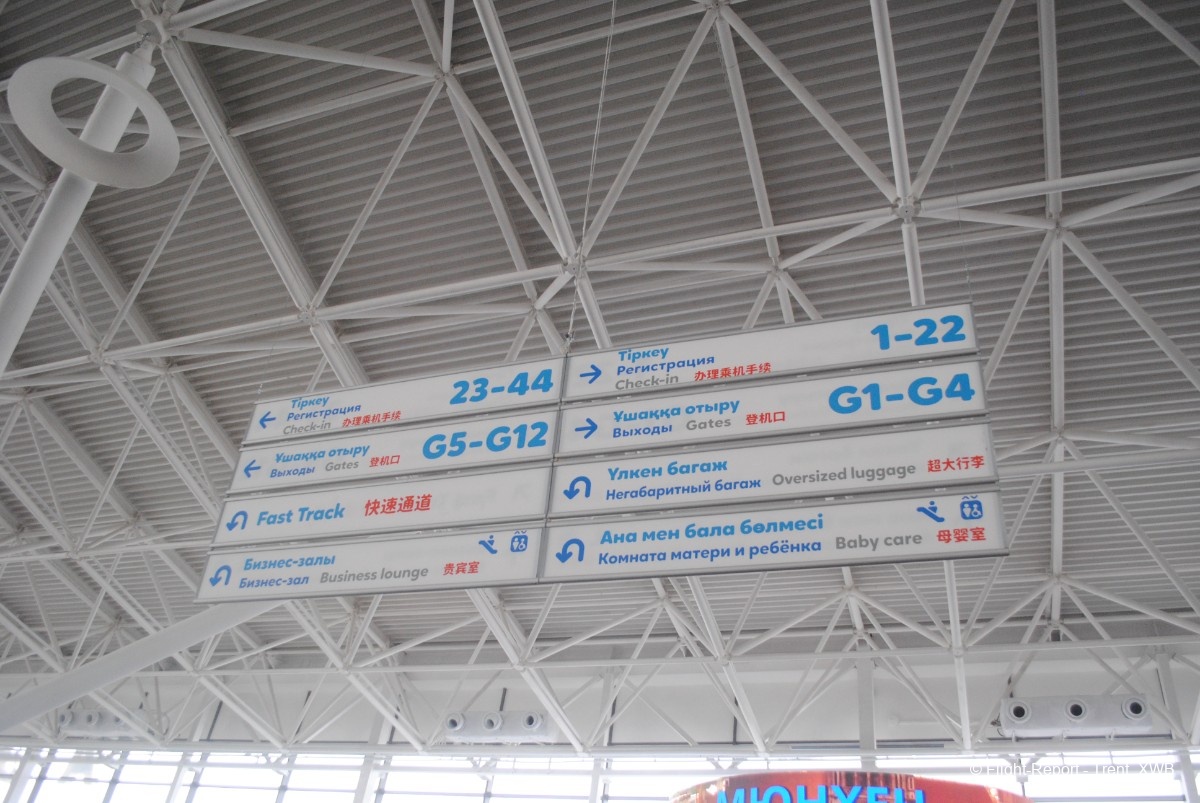
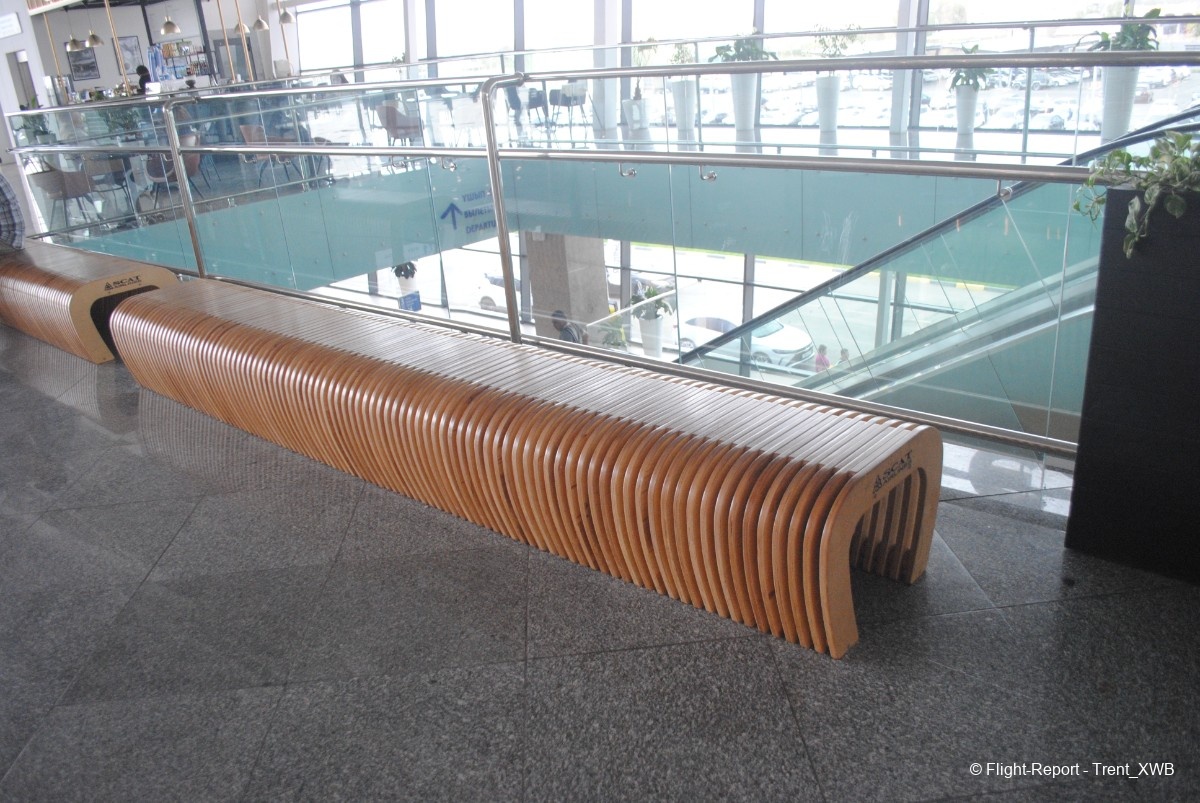
SCAT-branded benches near the travolators to the ground level.
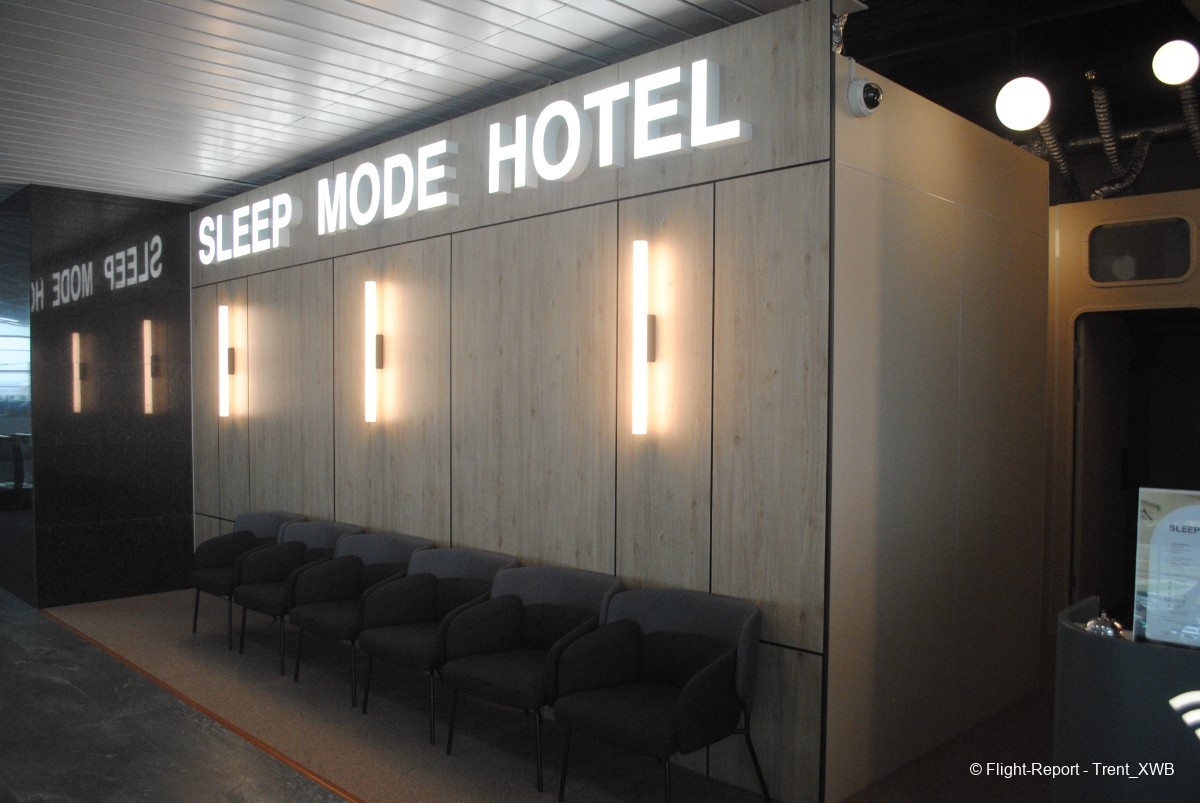
Above the entrance to G5-G12 gates there is a capsule hotel, though, not fully open yet.
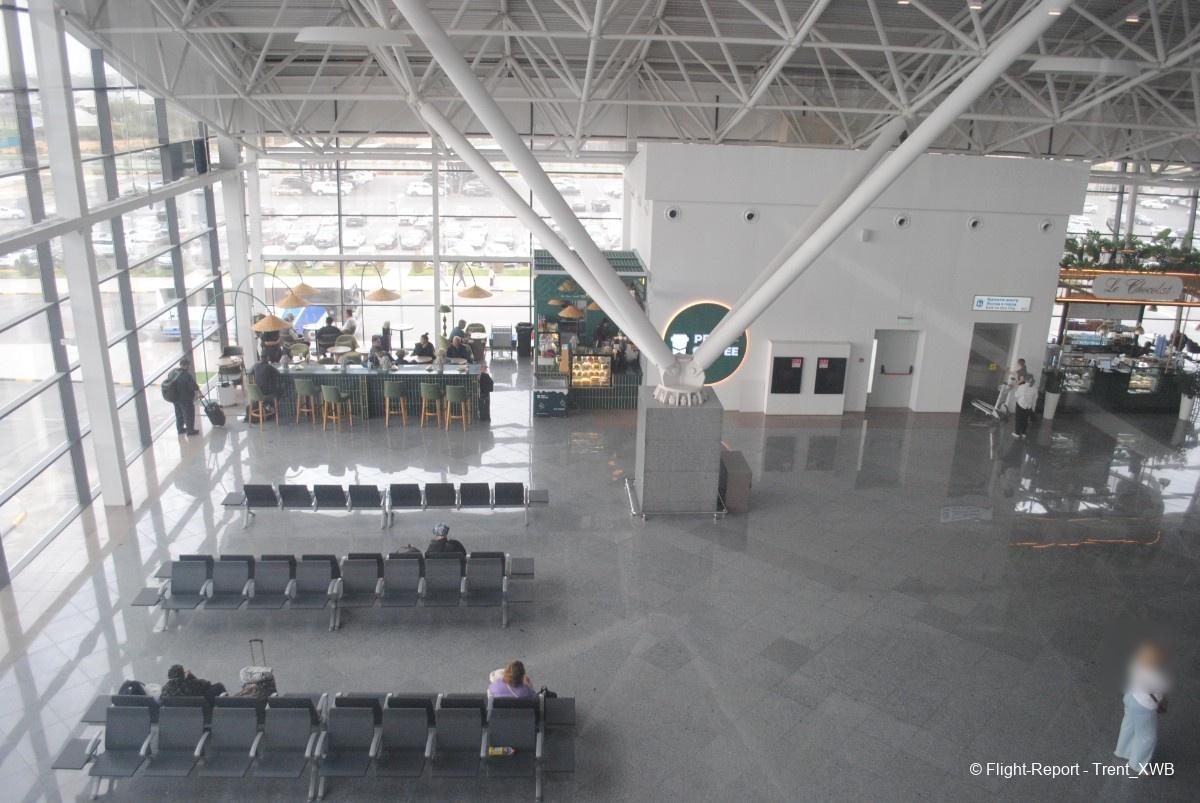
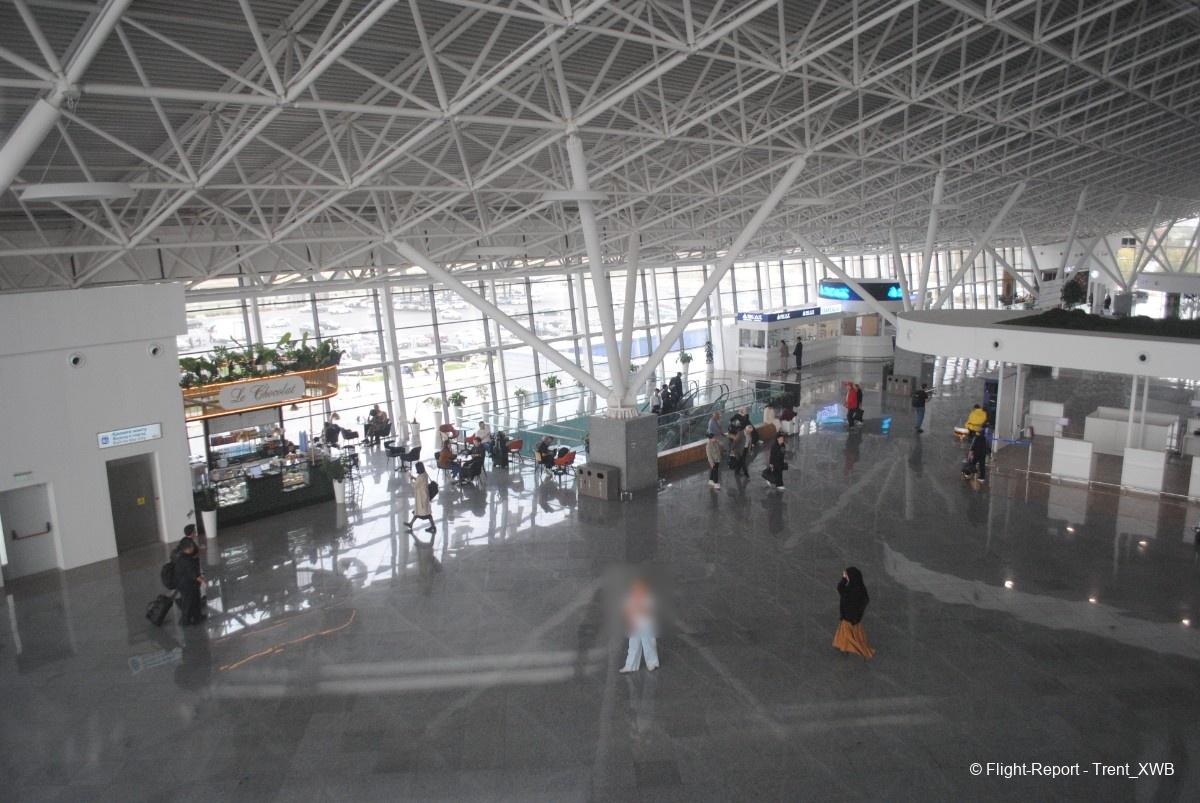
Views of the check-in hall from upstairs. As one can notice, there are very few cafes or food stores in the landside part of the terminal. Probably, more to come in the future.
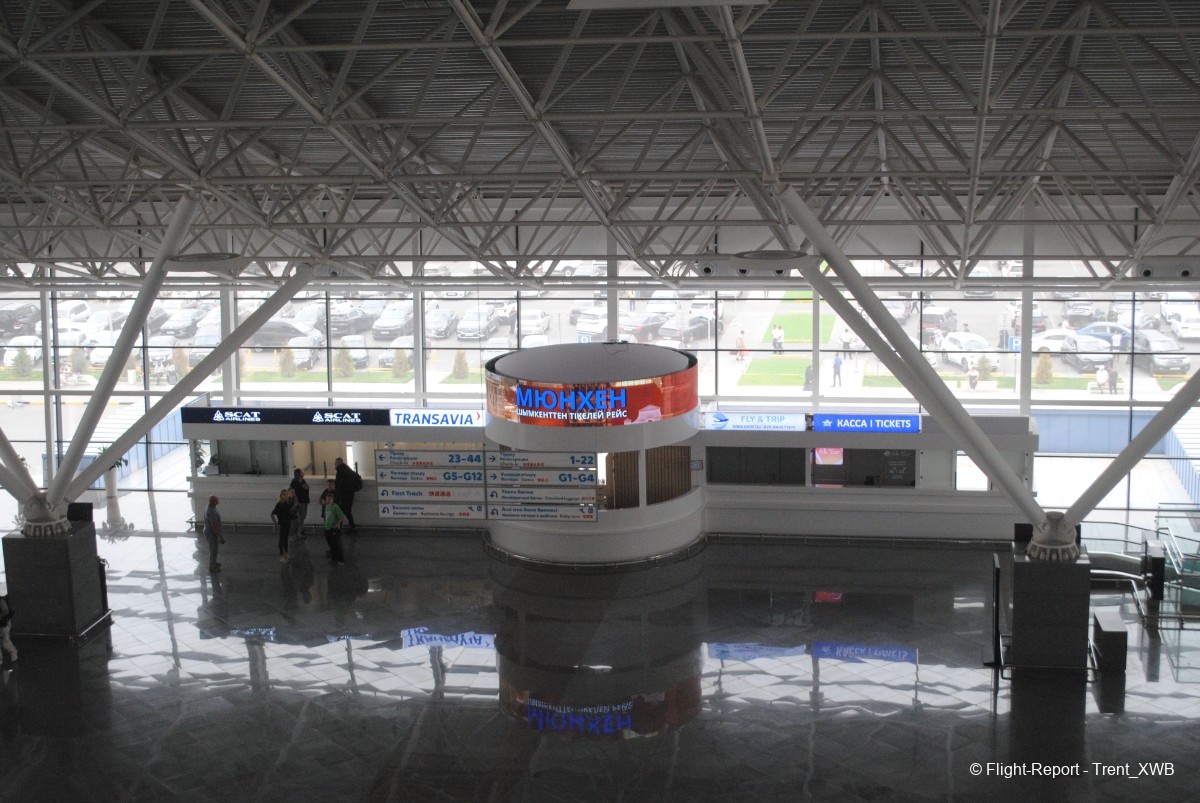
Ticket office in the central part of the hall.
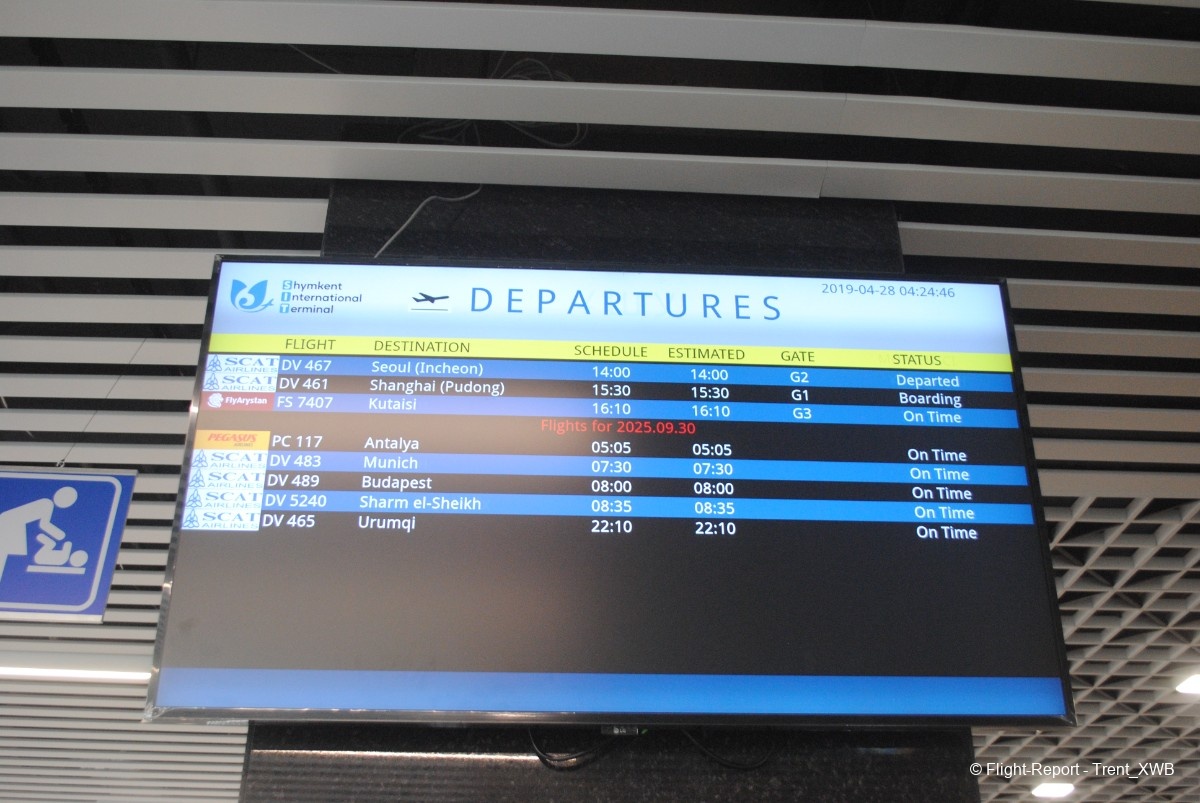
Let's go airside to the international gates area. FID for international departures for the rest of this day (with my FS7407 being the last one) and for the next day. Quite a few for this terminal. CIT is definitely underserved in terms of international flights. Notice the 13.5-hour gap between morning and evening international departures for the next day.
The international gates area is very spacious and airy with a lot of seating and a lot of screens, promoting DV's international destinations.
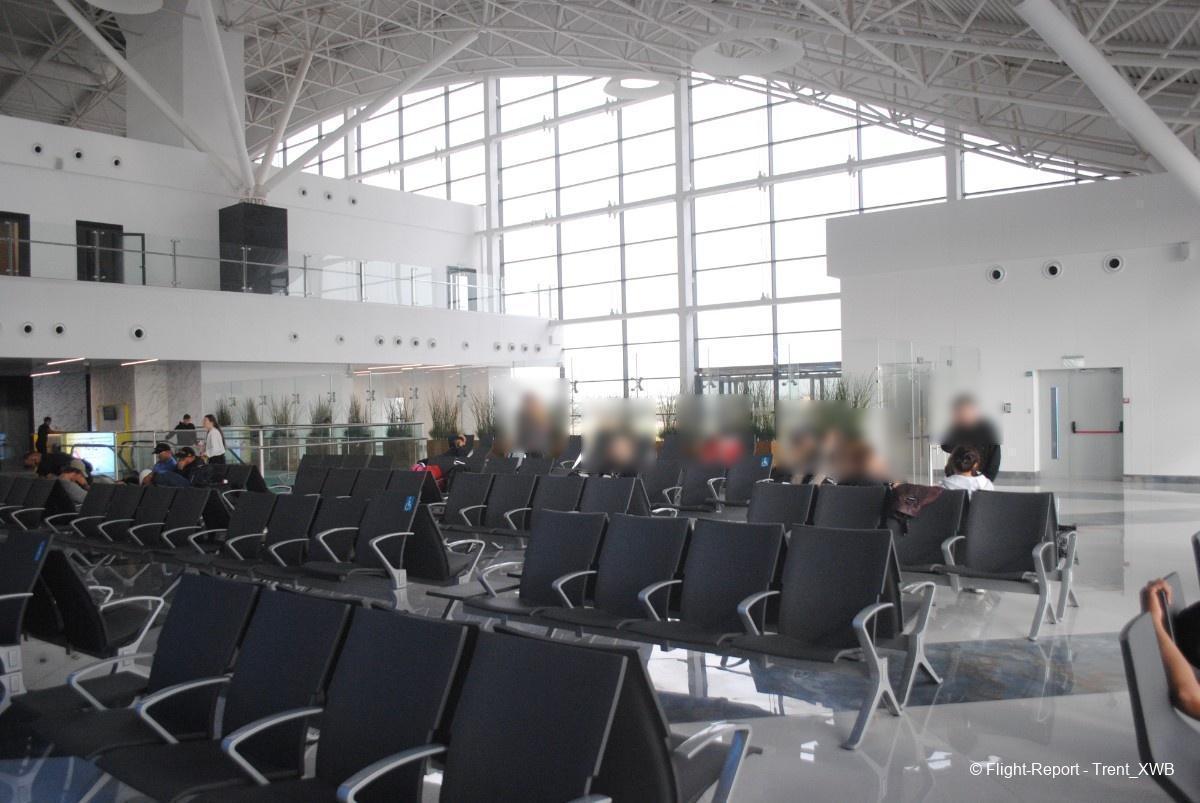
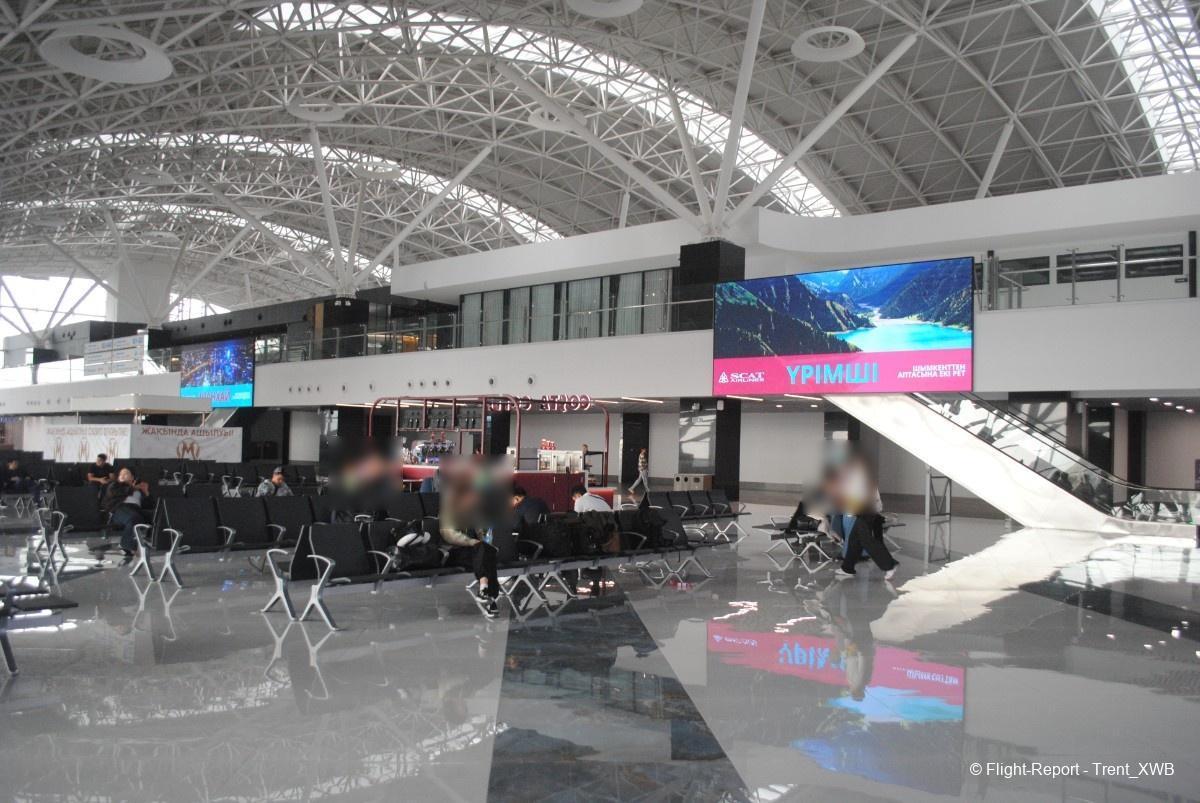
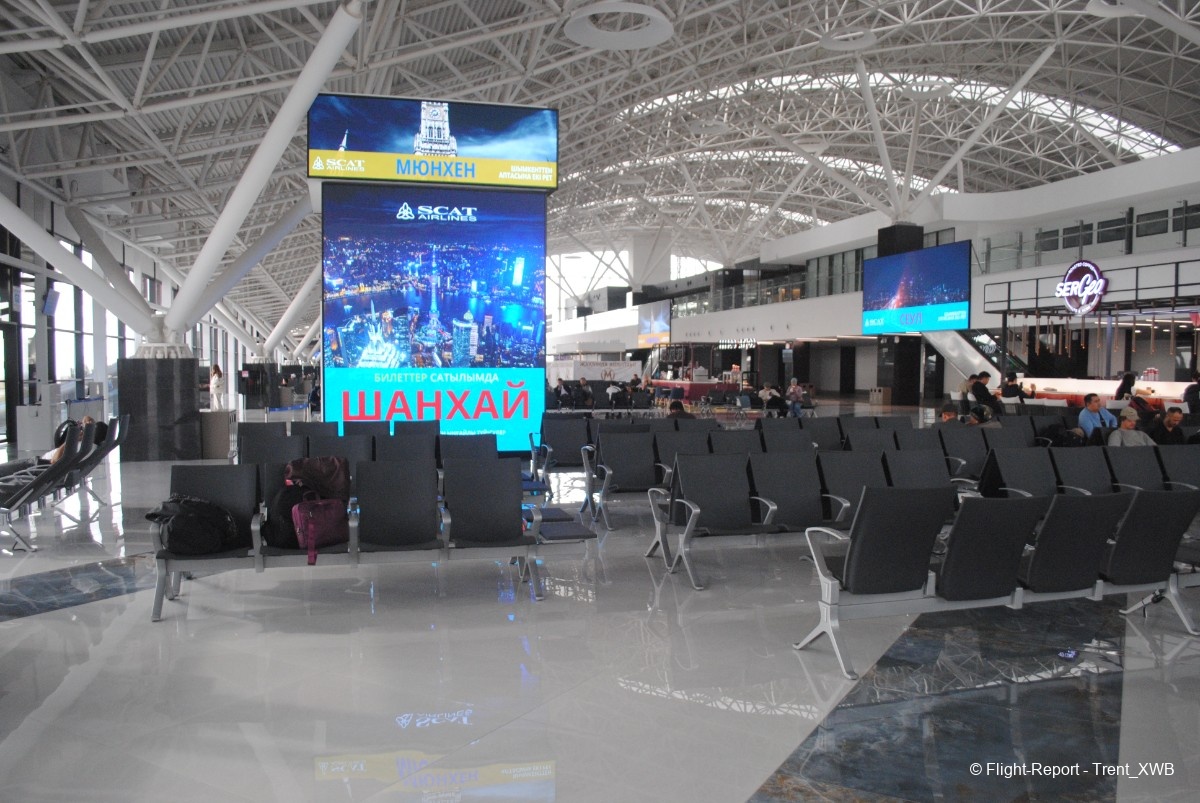
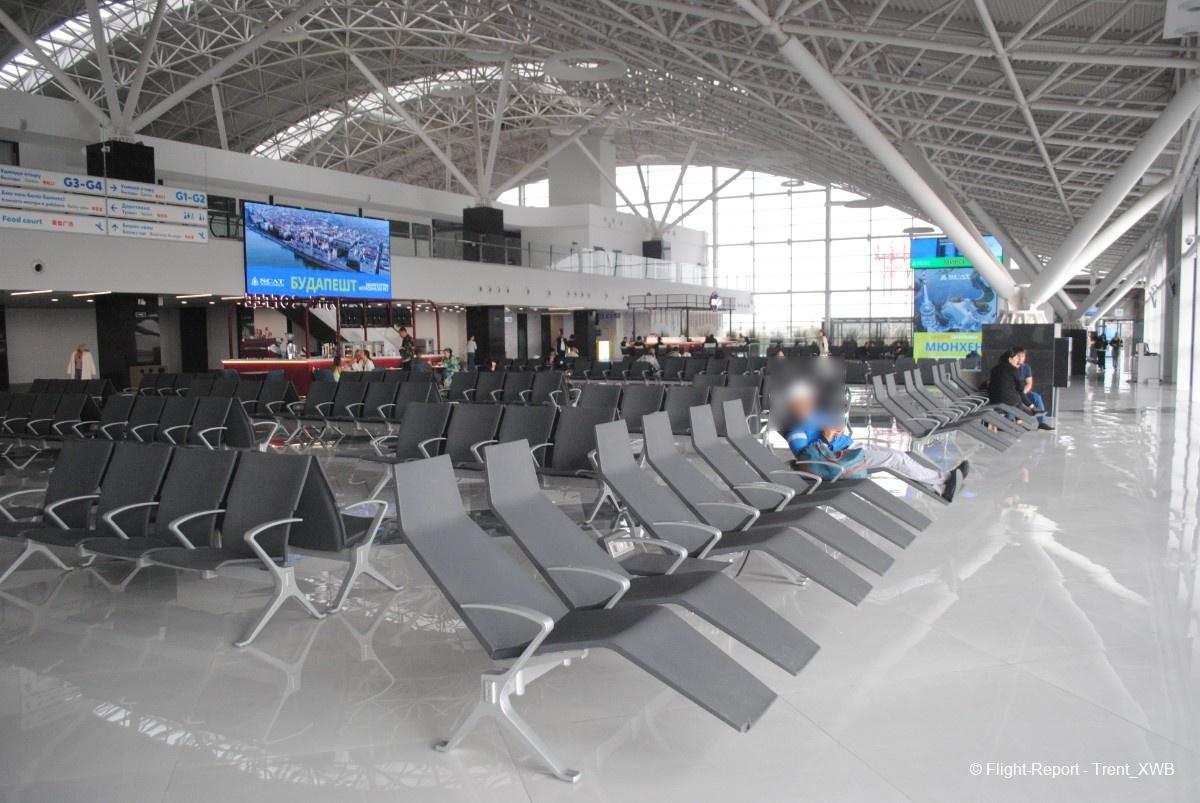
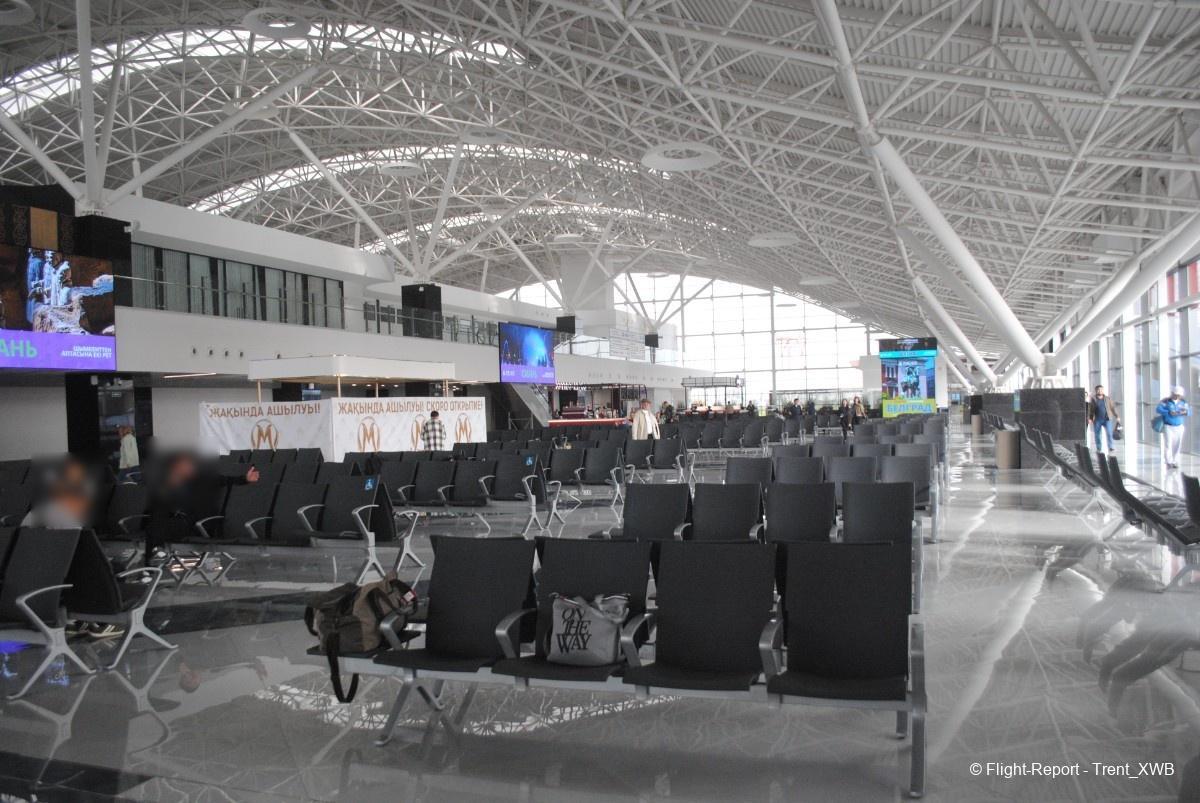
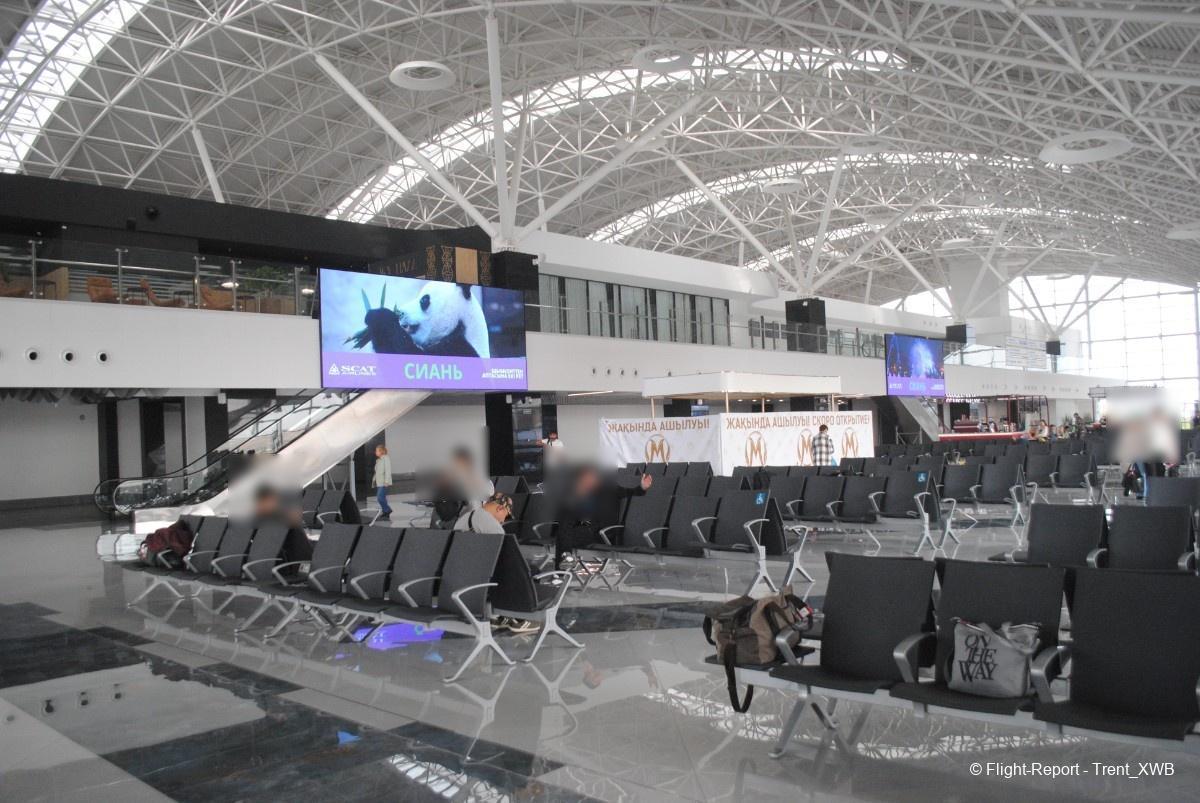
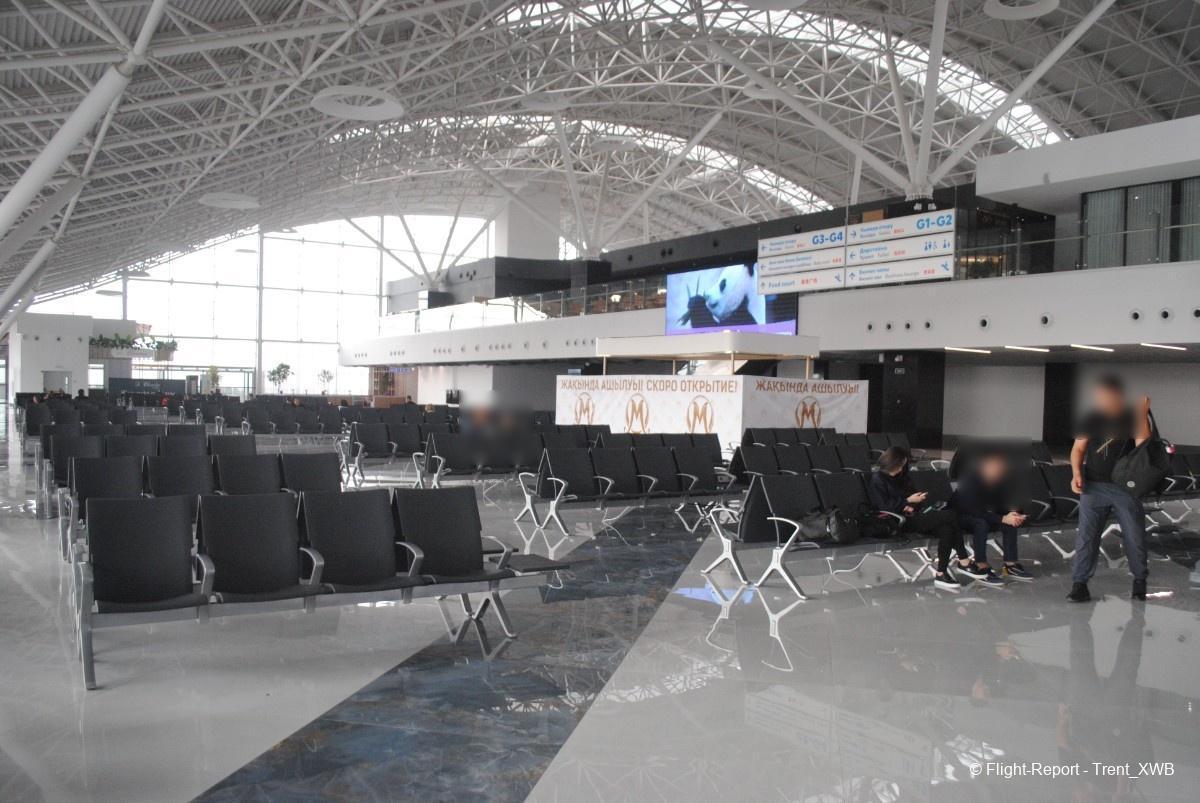
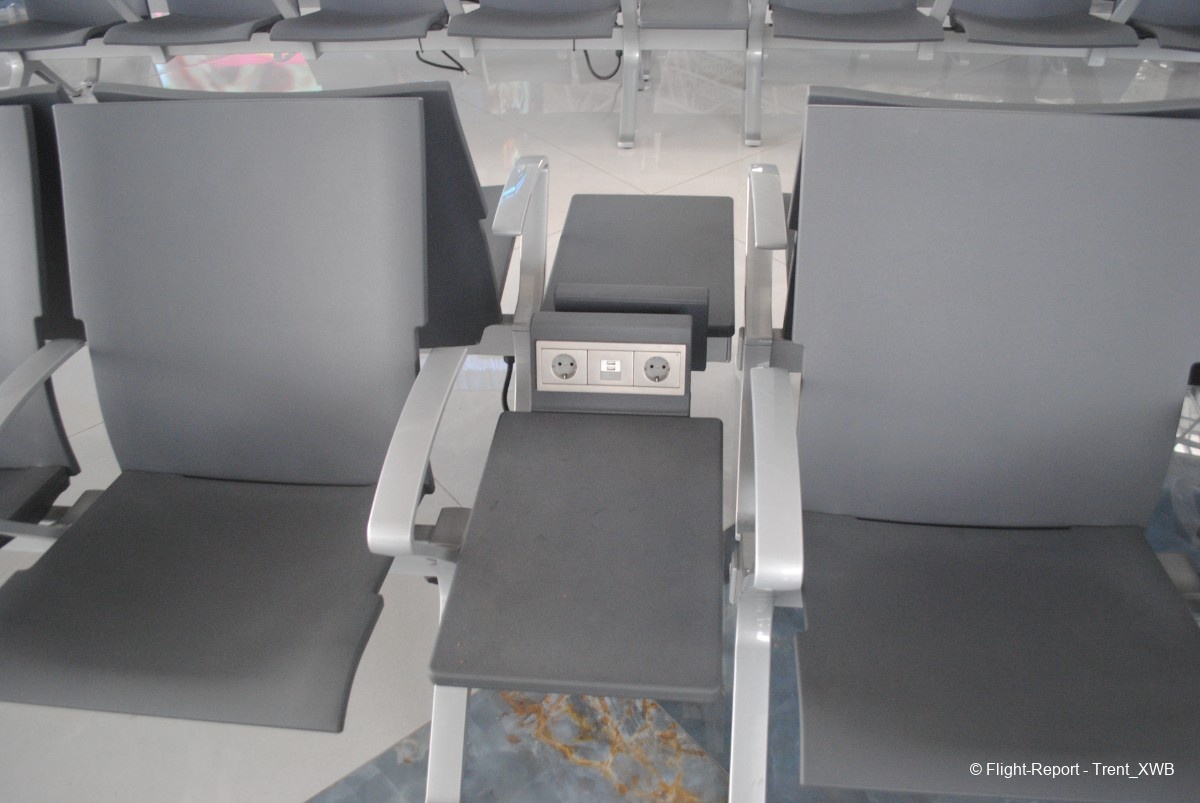
The seat blocks have power sockets and USB ports for charging devices.
Upstairs there's a single business lounge, which looked empty despite seemingly being open.
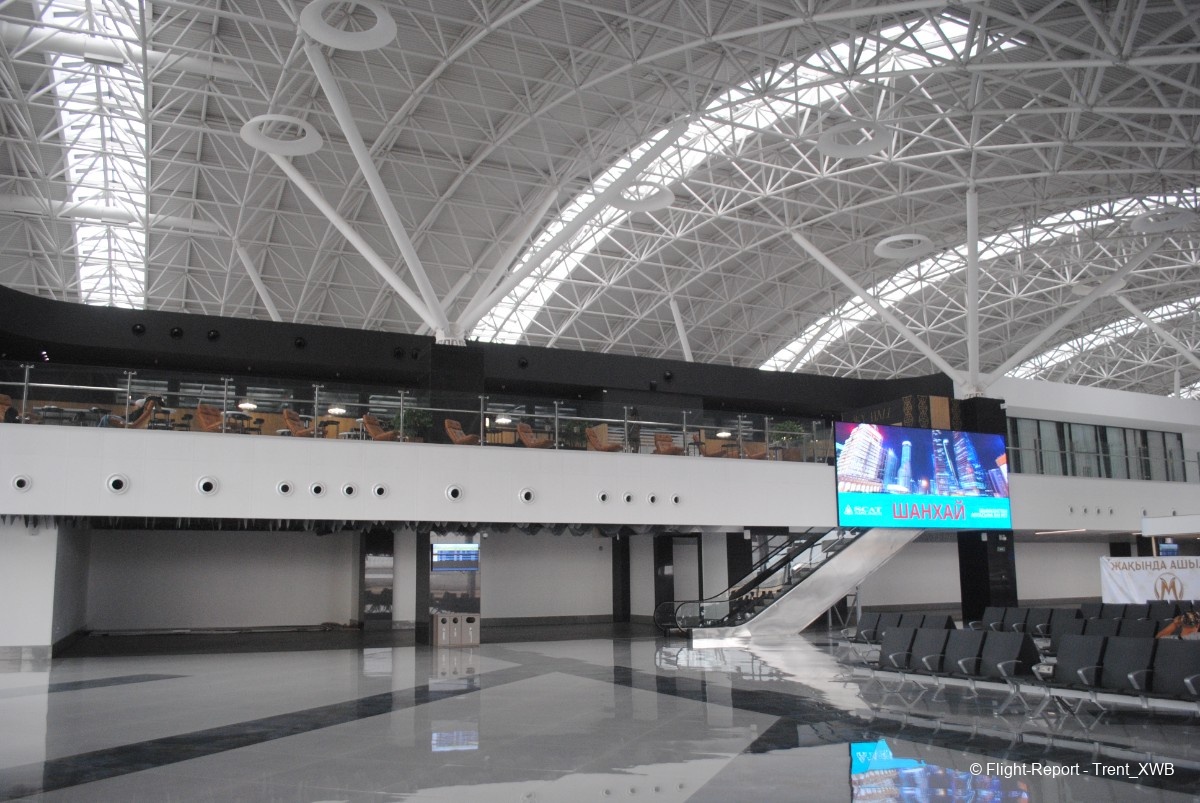
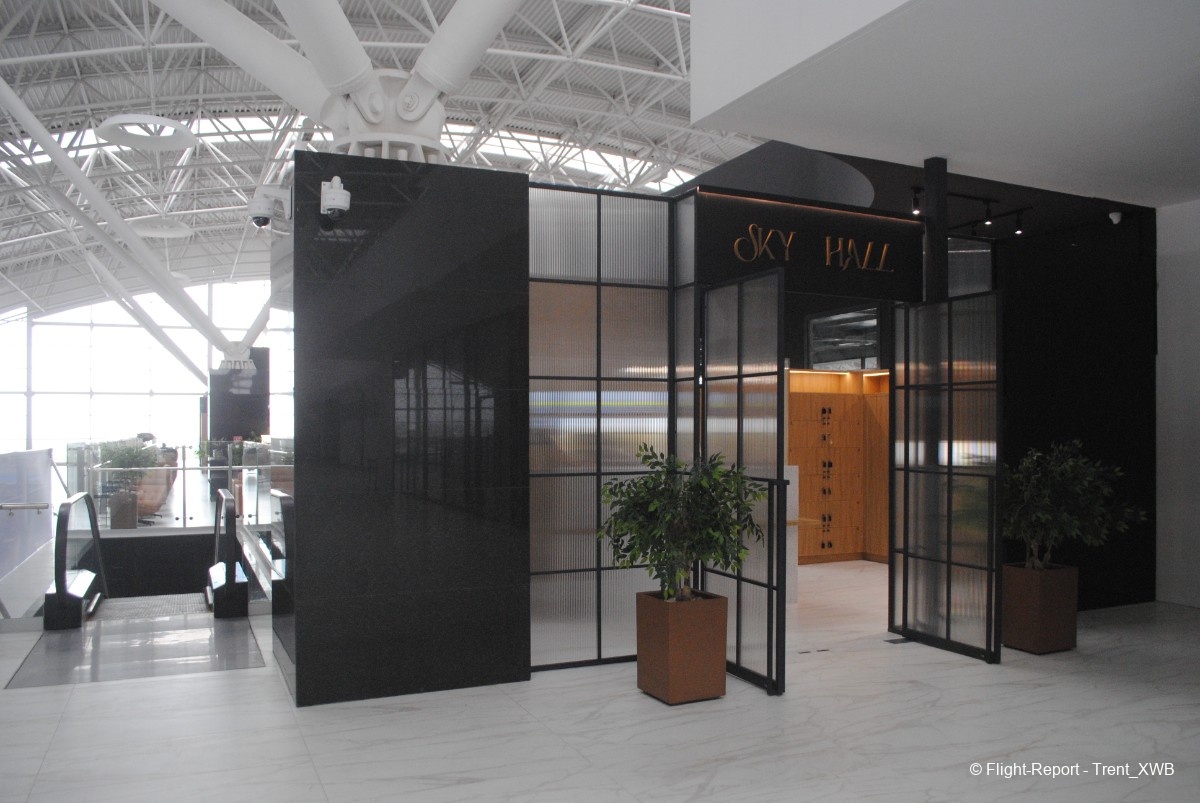
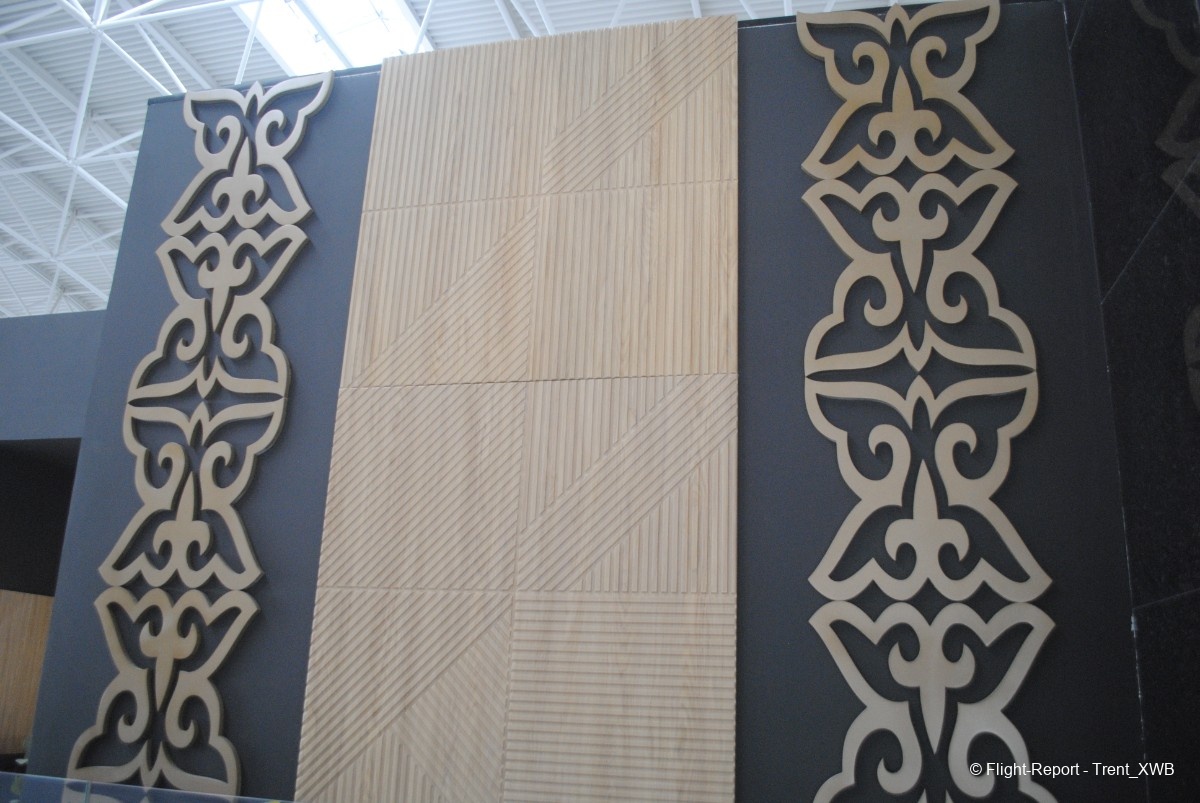
A couple of views of the airside area from upstairs. One can notice that the area has just a couple of cafes.
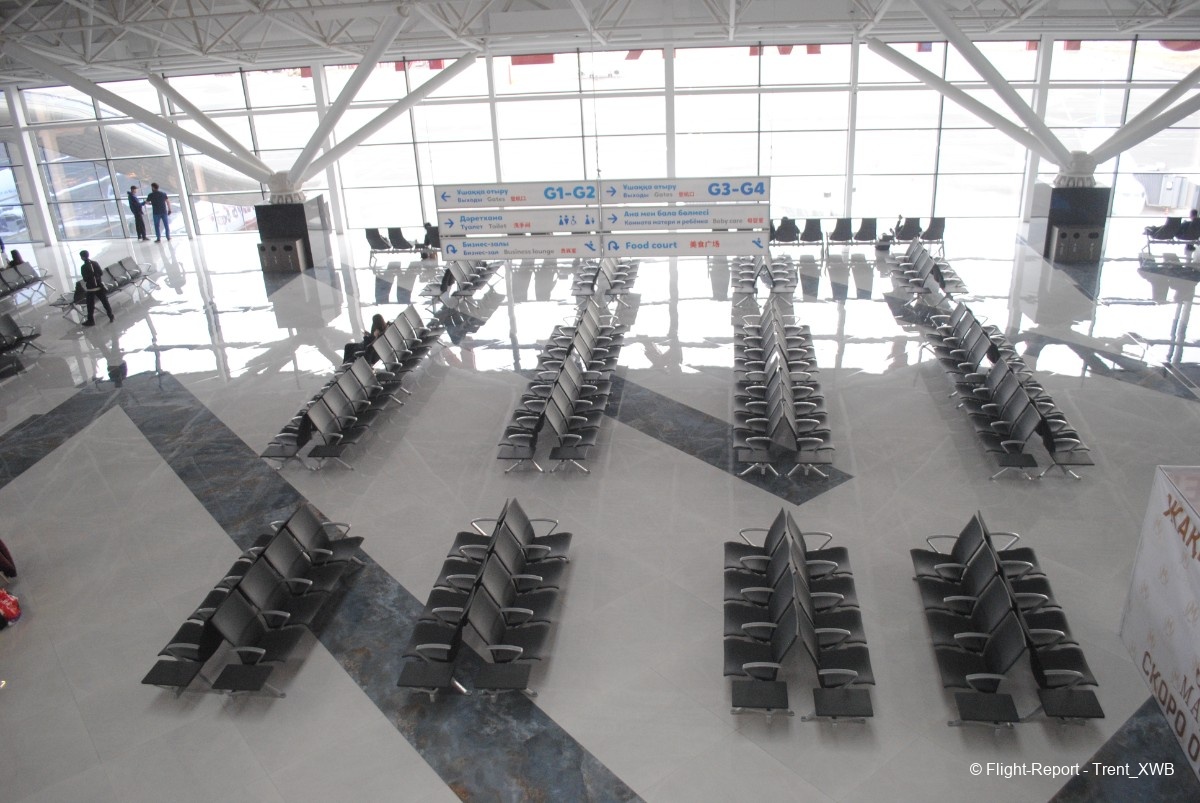
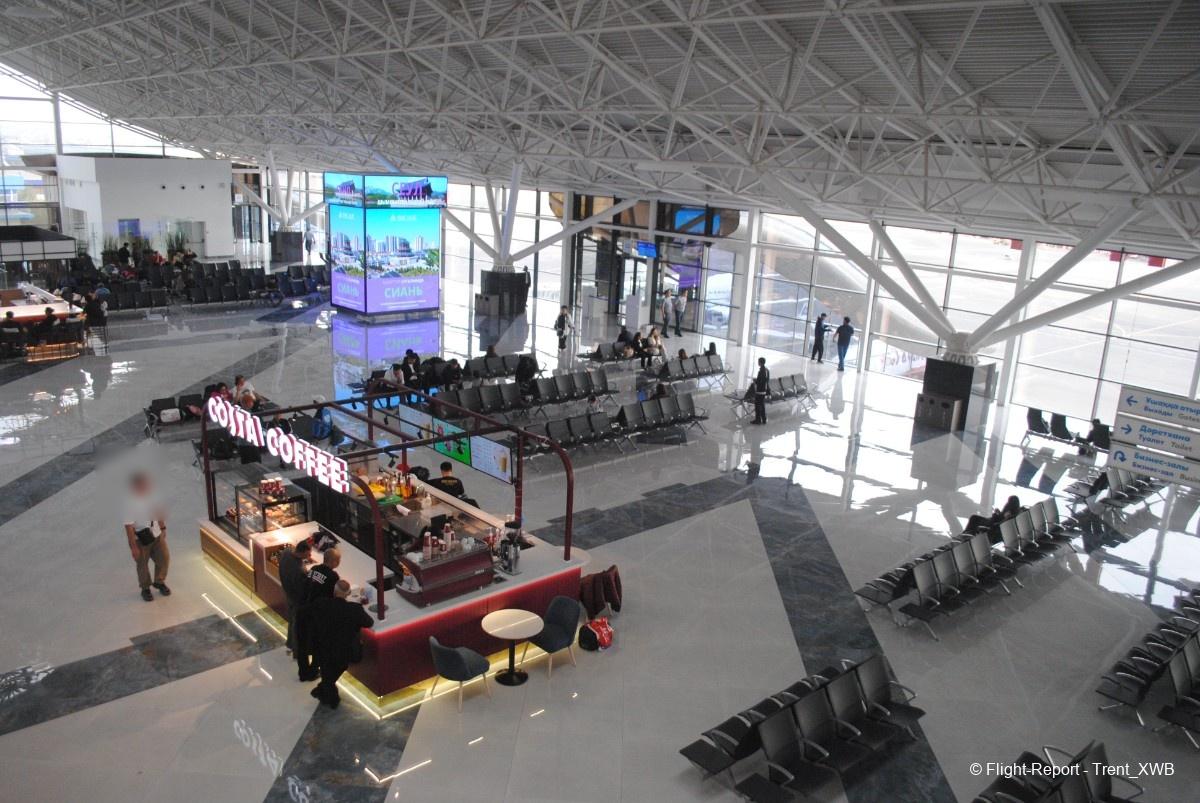
Some cafes are yet to open.
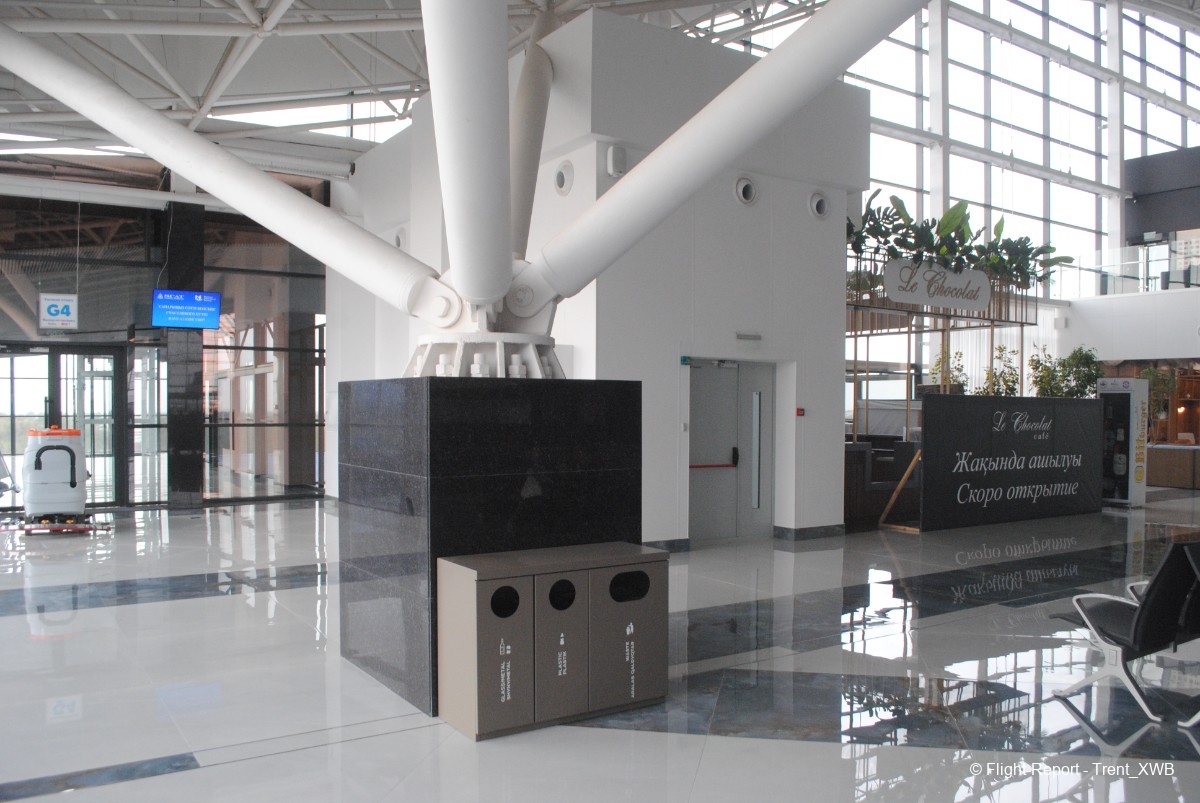
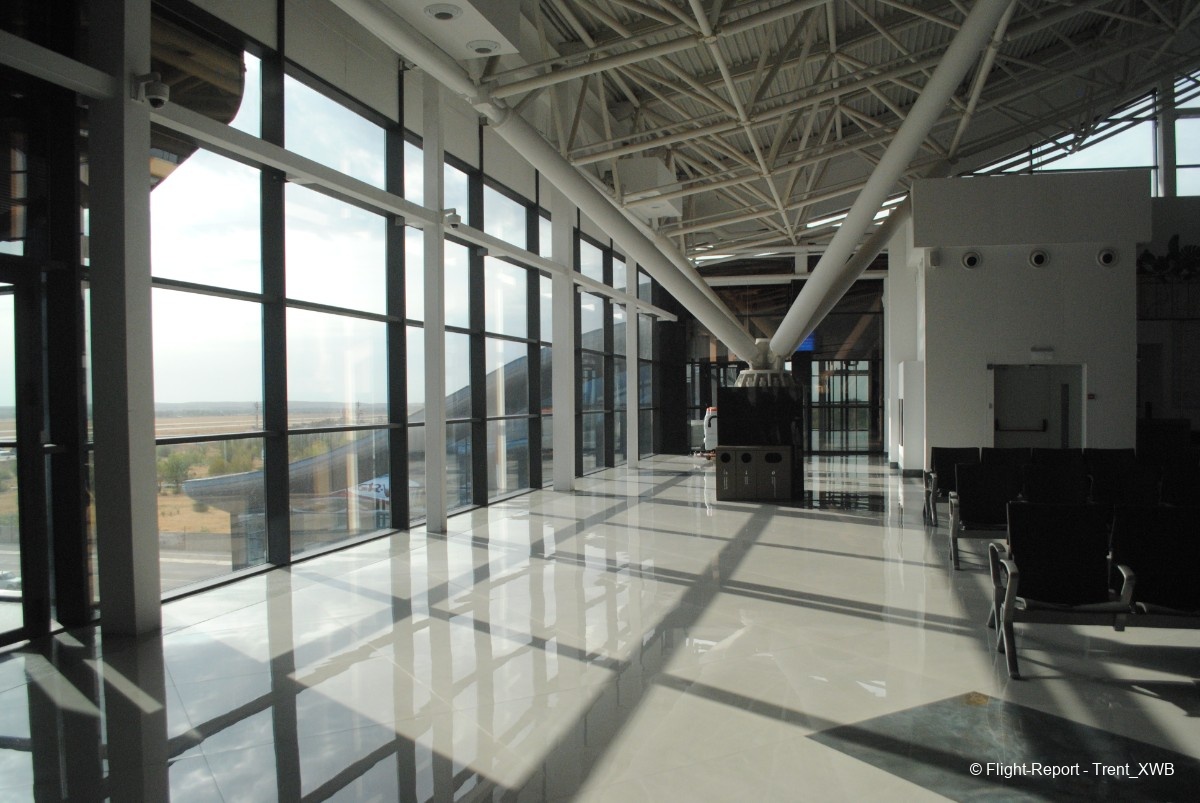
There is a lot of natural light in the area and the windows are large and easily accessible, which makes the terminal perfect for planespotting.
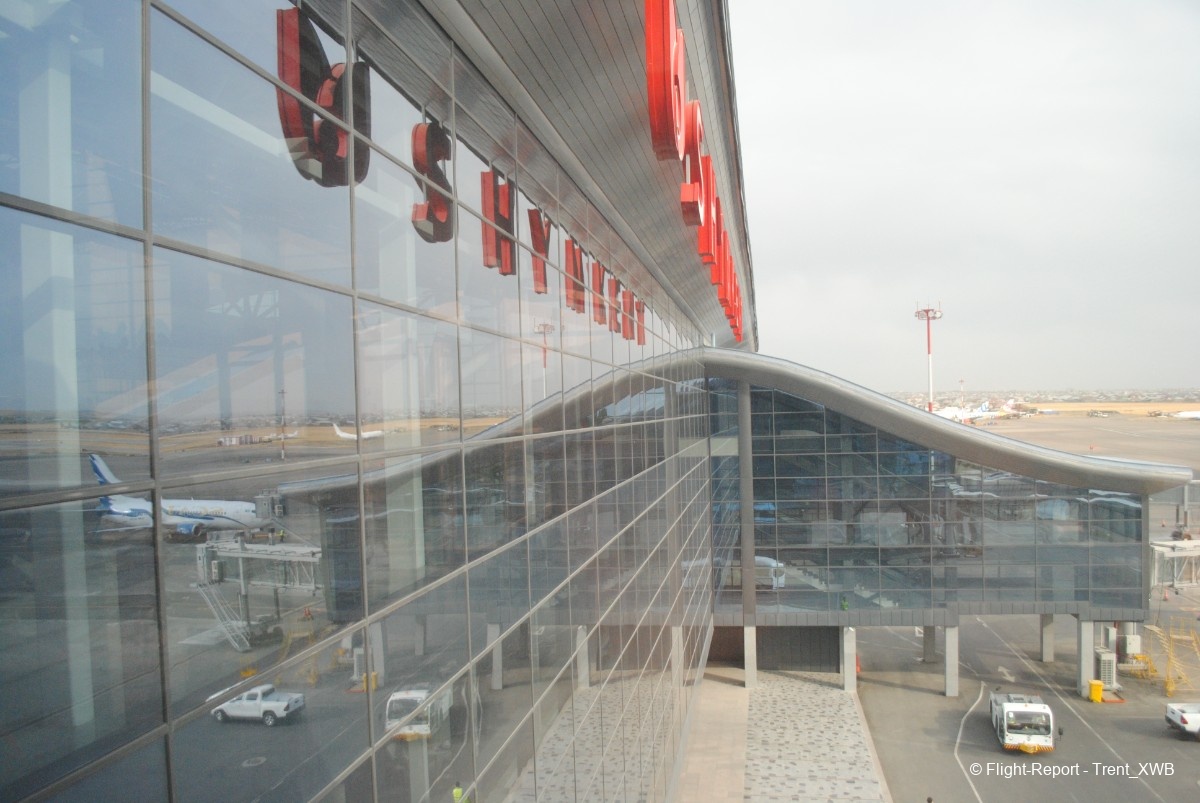
A couple of views of the terminal's facade from G3 gate on the way to the jetbridge.
Planespotting From CIT Terminal
Even despite the small number of international flights, there is quite a lot to see from the terminal.
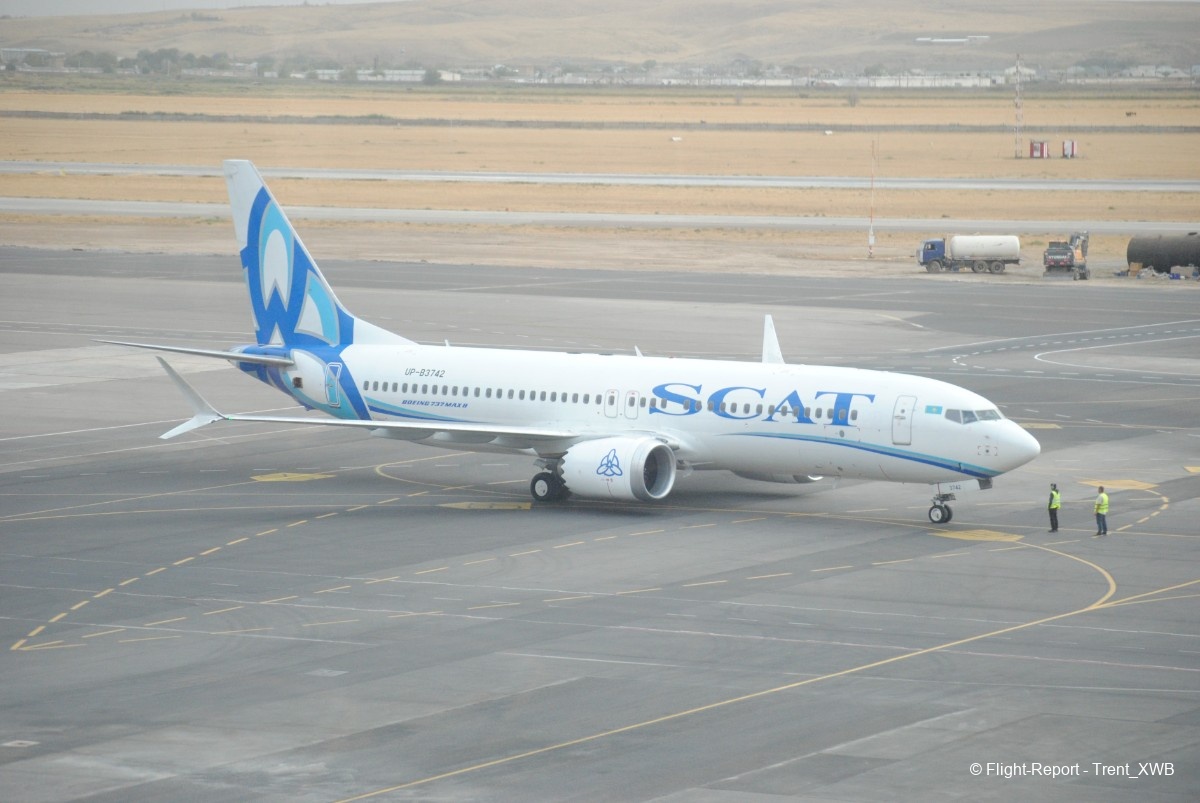
DV B7M8 (UP-B3742) departing for Shanghai (PVG). On the backdrop one can see a Soviet tank car KamAZ.
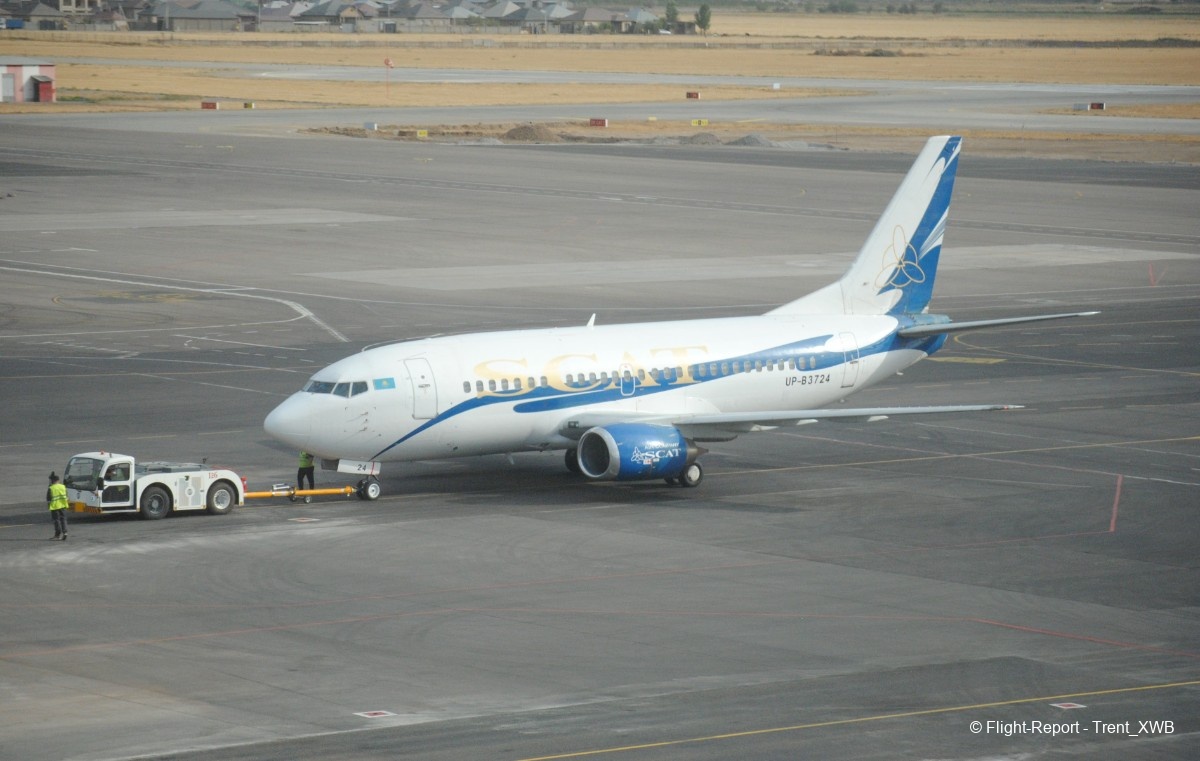
DV B735 (UP-B3724) in the beautiful old livery, being towed to the domestic gate. I flew on its sibling (in the new livery) from ALA to UKK.
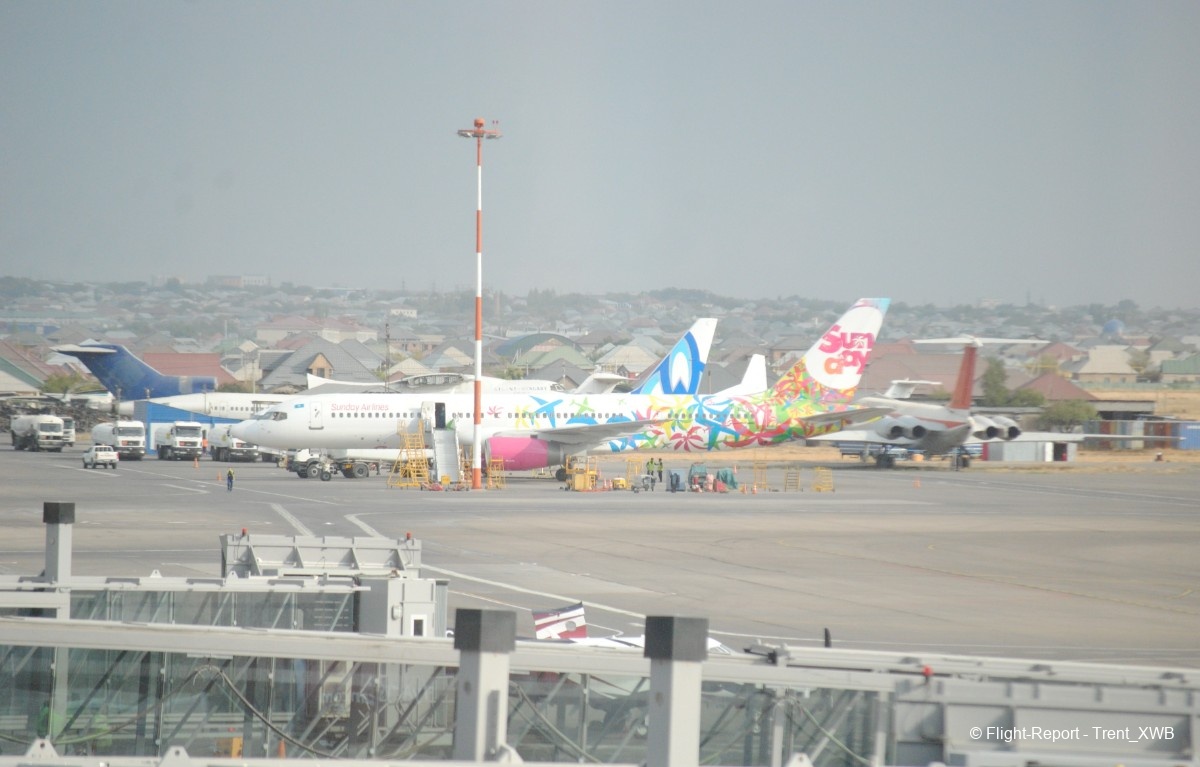
Sunday Airlines B752 (UP-B5705), being prepared for domestic flight to NQZ. I flew this aircraft a month later from NQZ to ALA. On the backdrop one can see T-tails of unairworthy B727 and Ilyushin Il-62.
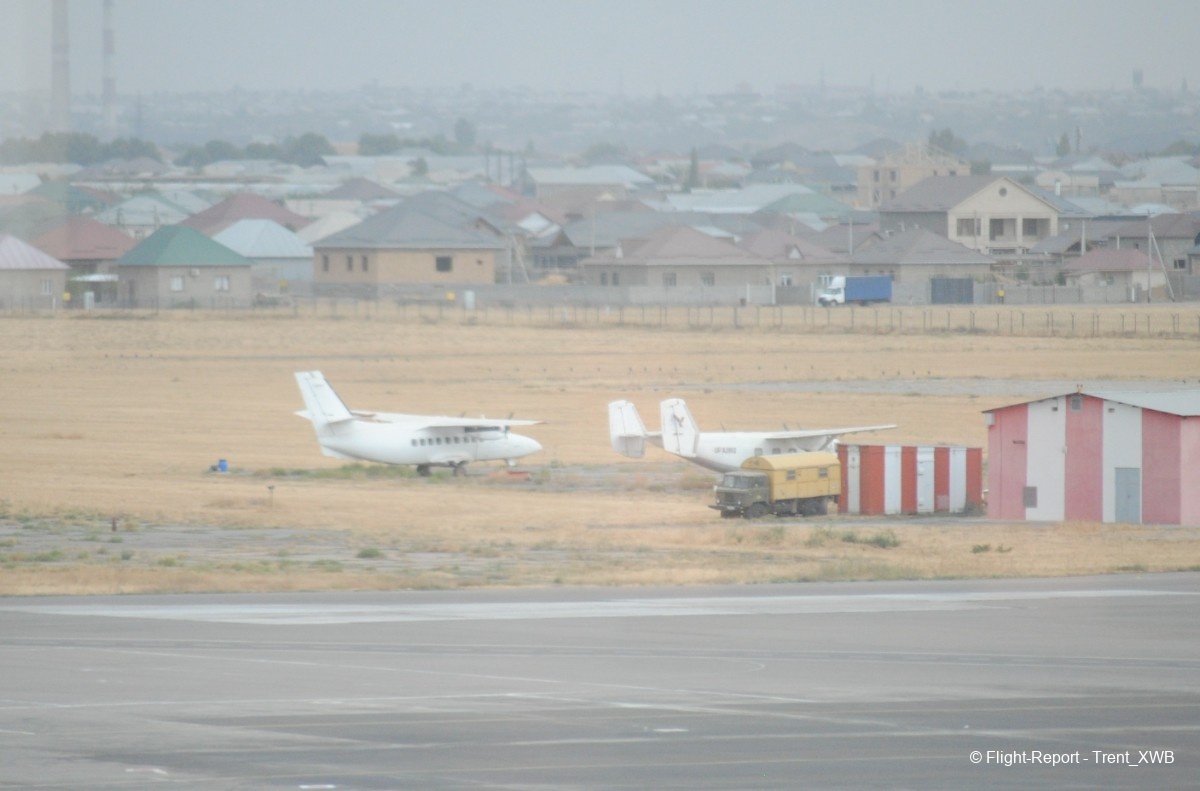
L410 and Antonov An-28. Back then I was sure that passenger operation of An-28 in Central Asia is over. But thanks to Bldavid, now from his FR I know that An-28 is still in operation in Tajikistan (though, getting a ticket is very tricky). I was in Tajikistan in June 2025 well before he published his FR. Maybe I'll be able to visit this country again in the future and try my luck with An-28. Concerning L410, I already flew this type in Georgia in 2022, and it's also operated in Central Asia by Uzbekistan's Silkavia. Near An-28 one can see the iconic Soviet "unimog" GAZ-66, nicknamed "Shishiga" or "Gashish".
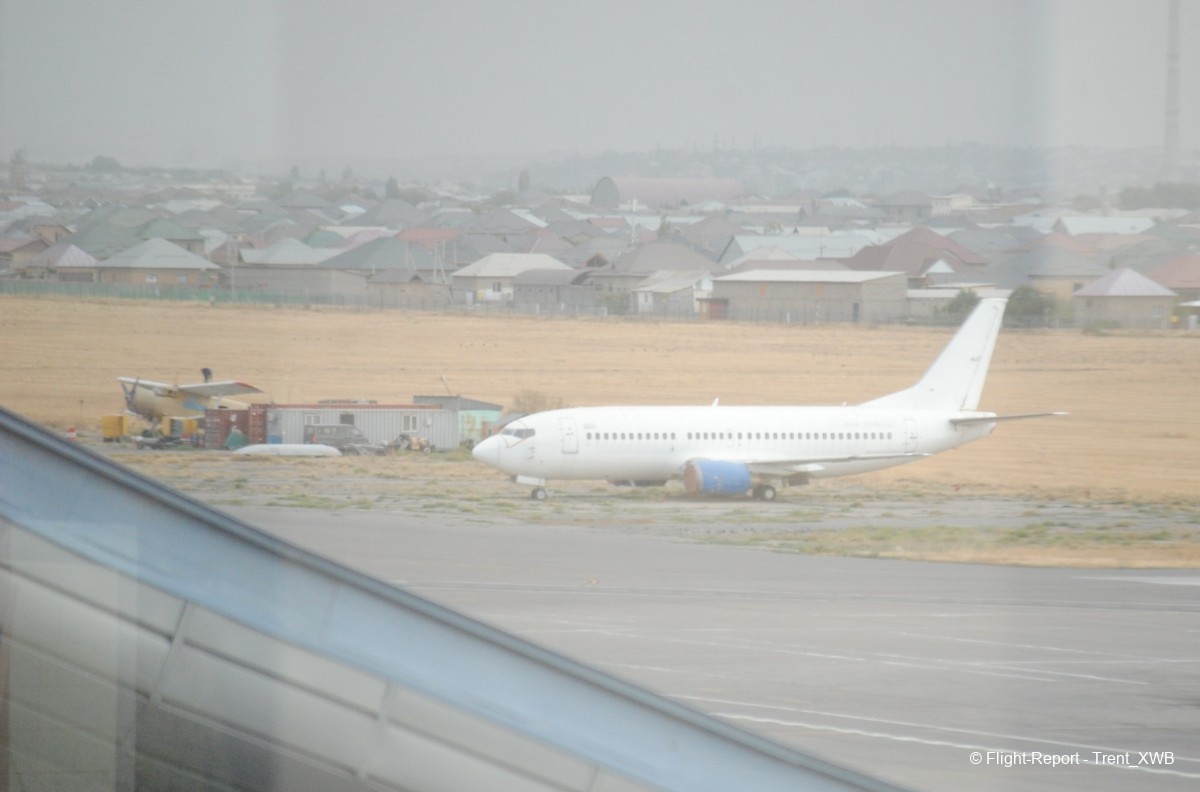
B733 of unknown provenance and iconic Soviet piston biplan Antonov An-2.
The Aircraft
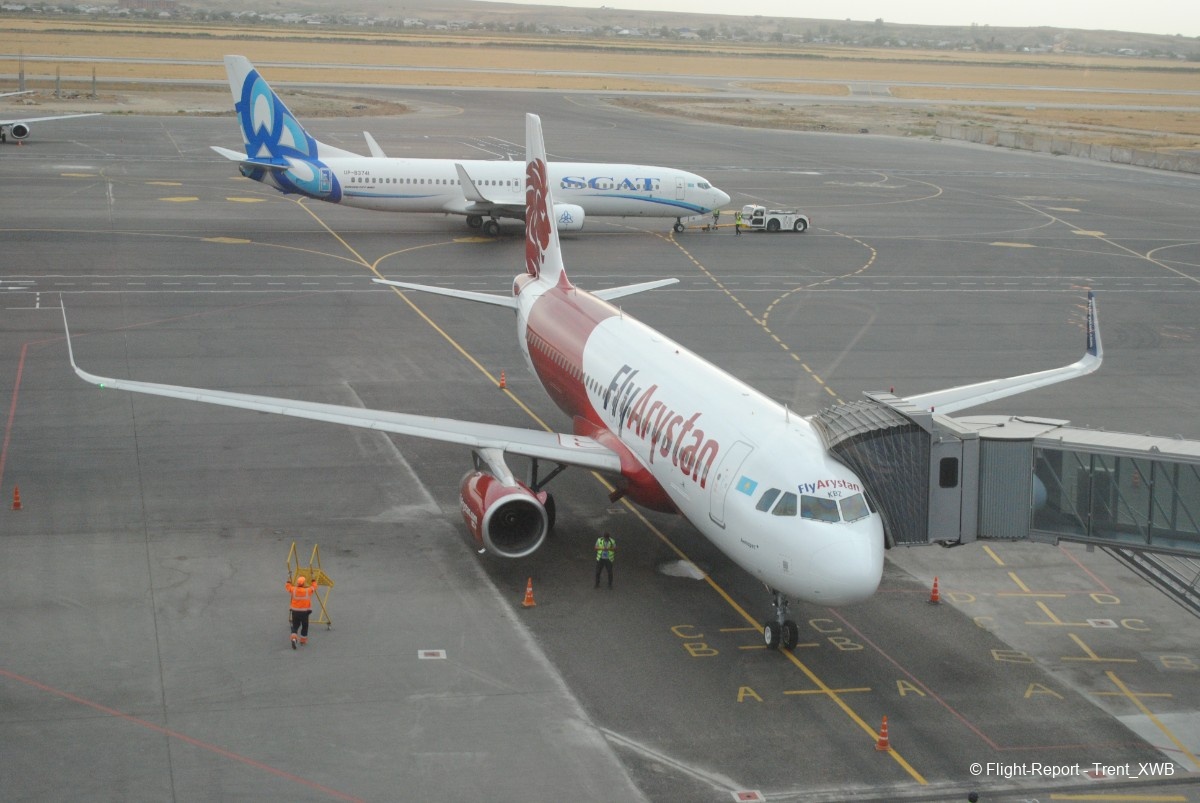
My flight from Shymkent to Kutaisi was operated by 2013-built EI-KBZ, previously flown by Hong Kong Express.
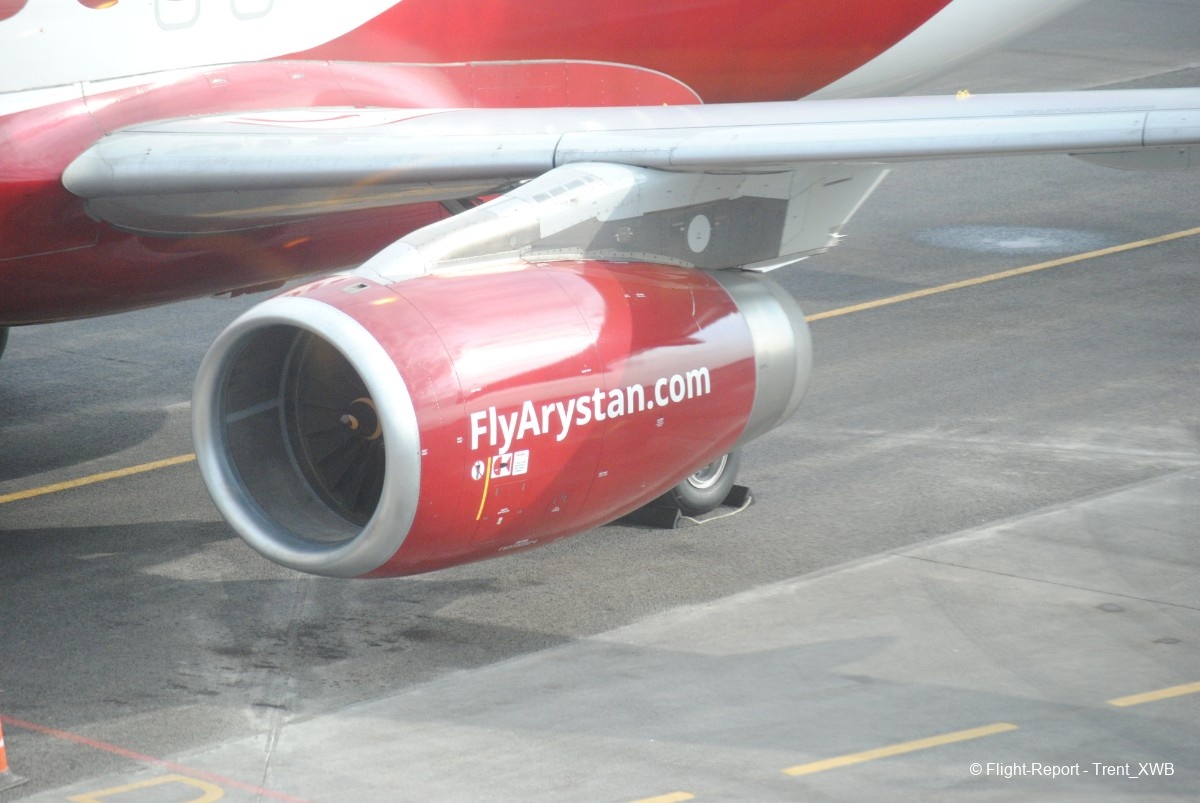
The aircraft is powered by IAE V2527-A5 engines.
The Cabin
The cabin has 180 economy seats in 3-3 layout. The seat model is well-known Recaro BL3520 "NEK", also known as "iron board". For example, Lufthansa uses these seats in its A32X fleet (except new A21Ns). As for me, these seats are tolerable only for short flight of 1-2 hours, but not for longer flights like this one. But for the price I paid (65 EUR) I was ready to suffer in these seats. The seats have "leather" upholstery, antimacassar with FS logo, hard upper seat pocket, coat hanger and tray table. And they do recline, in contrast to the seats of European ULCCs like Wizzair, Ryanair and EasyJet.
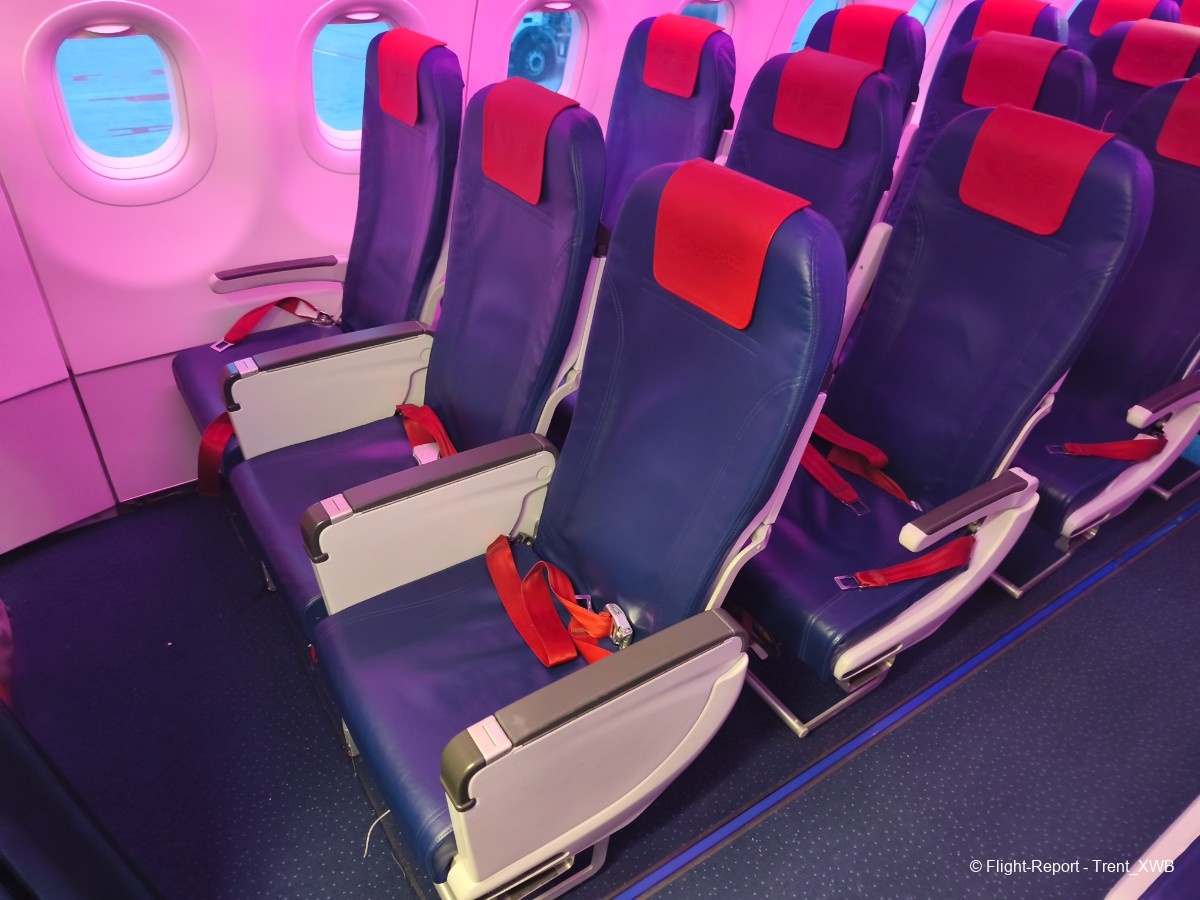
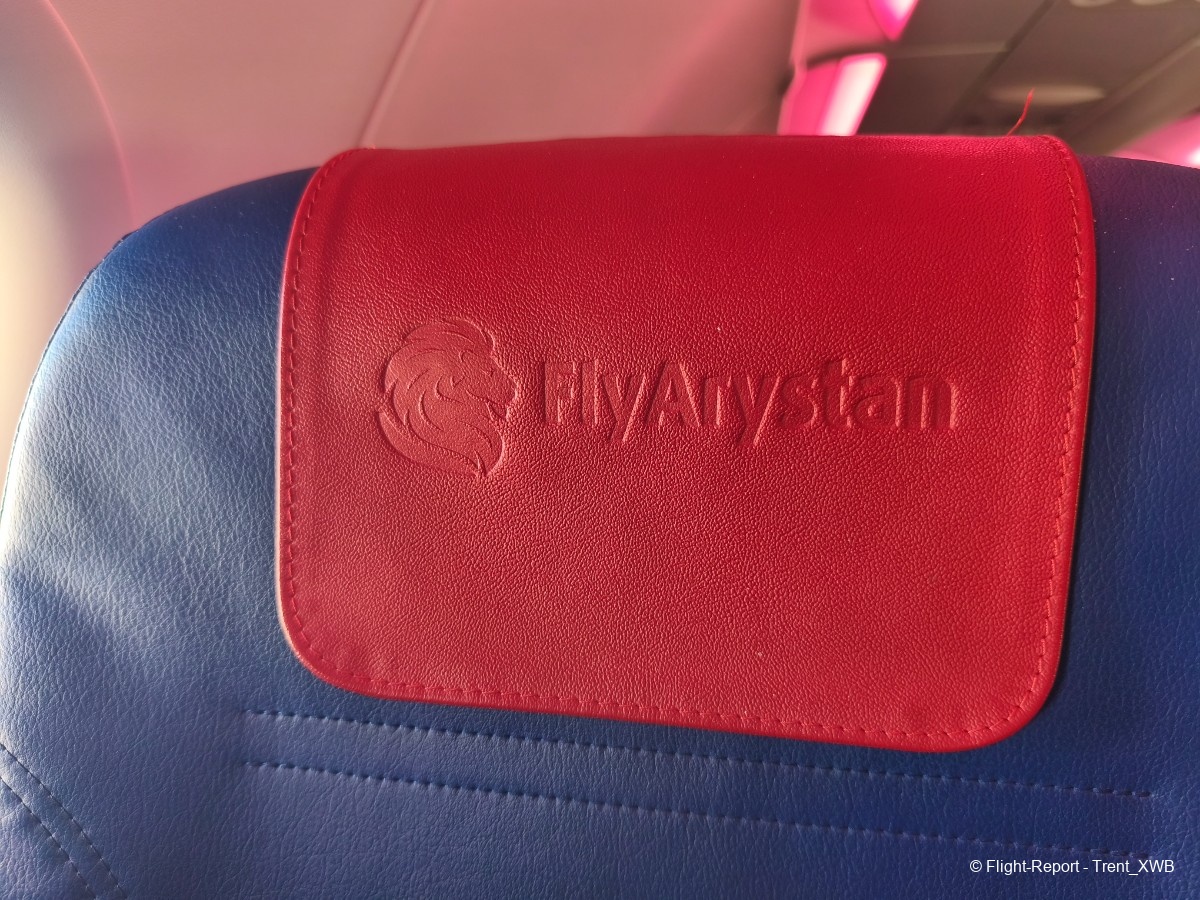
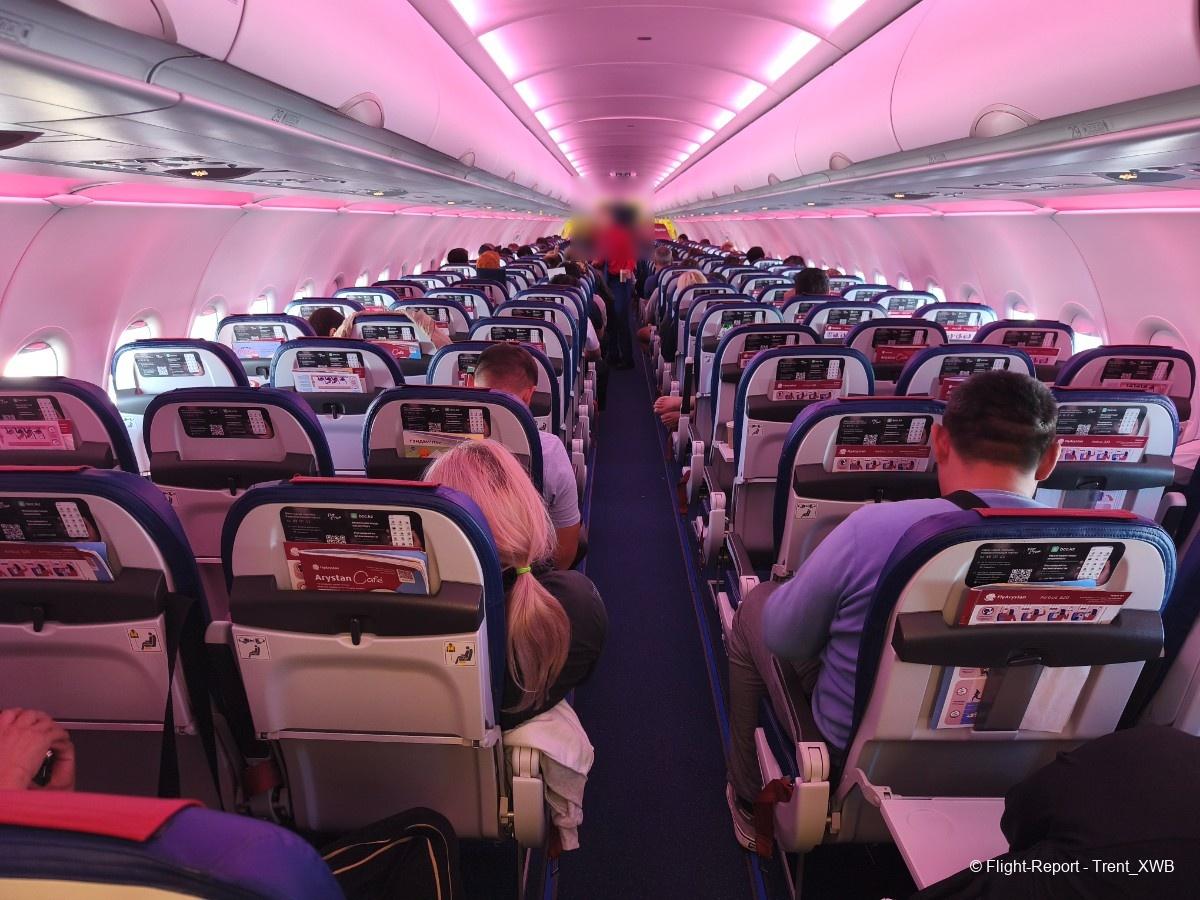
My original seat was 19A, but onboard I chose 4F due to cabin load being far from full (probably, one of the reasons why FS discontinued CIT-KUT flights was inability to achieve consistent high load factor). The beautiful pink moodlighting of the cabin, present on the photos, was turned on the entire flight from the boarding. Also, some nice melodies was played the most part of the flight. The crew were very nice, as usual for airlines in Kazakhstan. As one can guess, no inflight service is provided except buy-on-board, as usual for ULCCs.
The Flight
Pushback commenced on time. Some apron views of the beautiful new terminal.
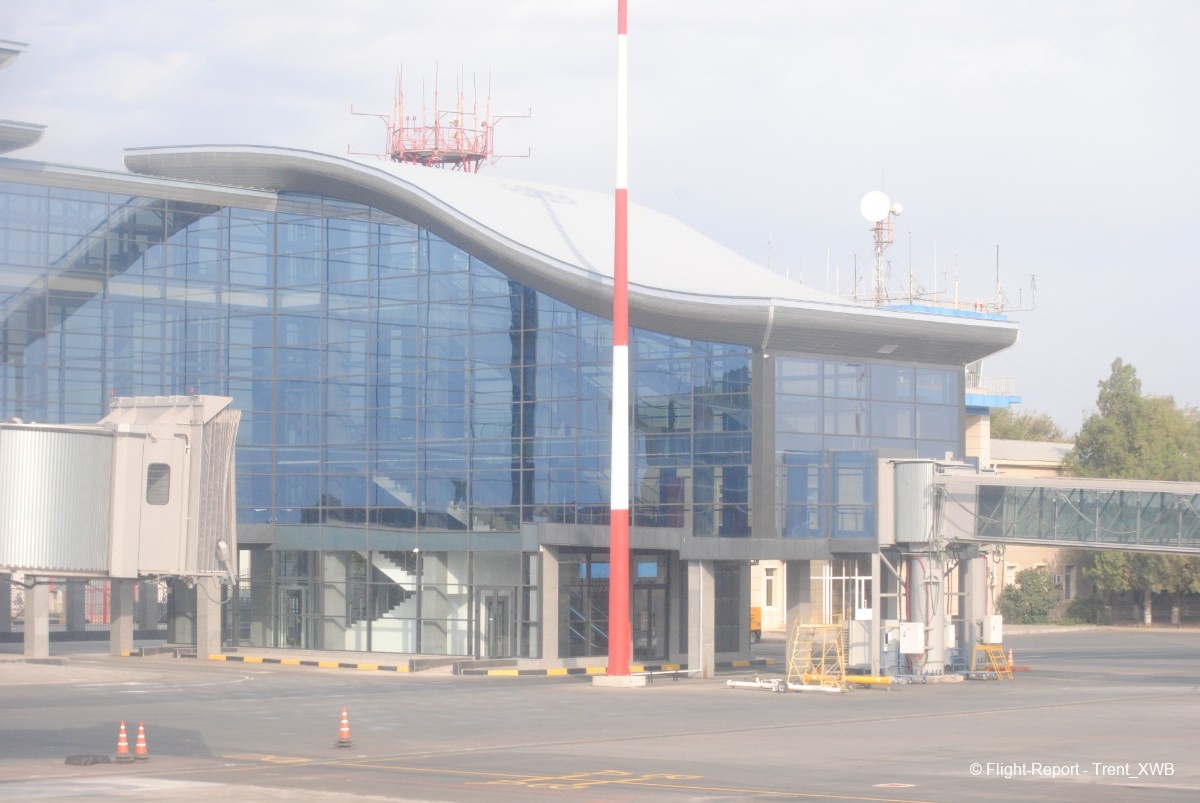
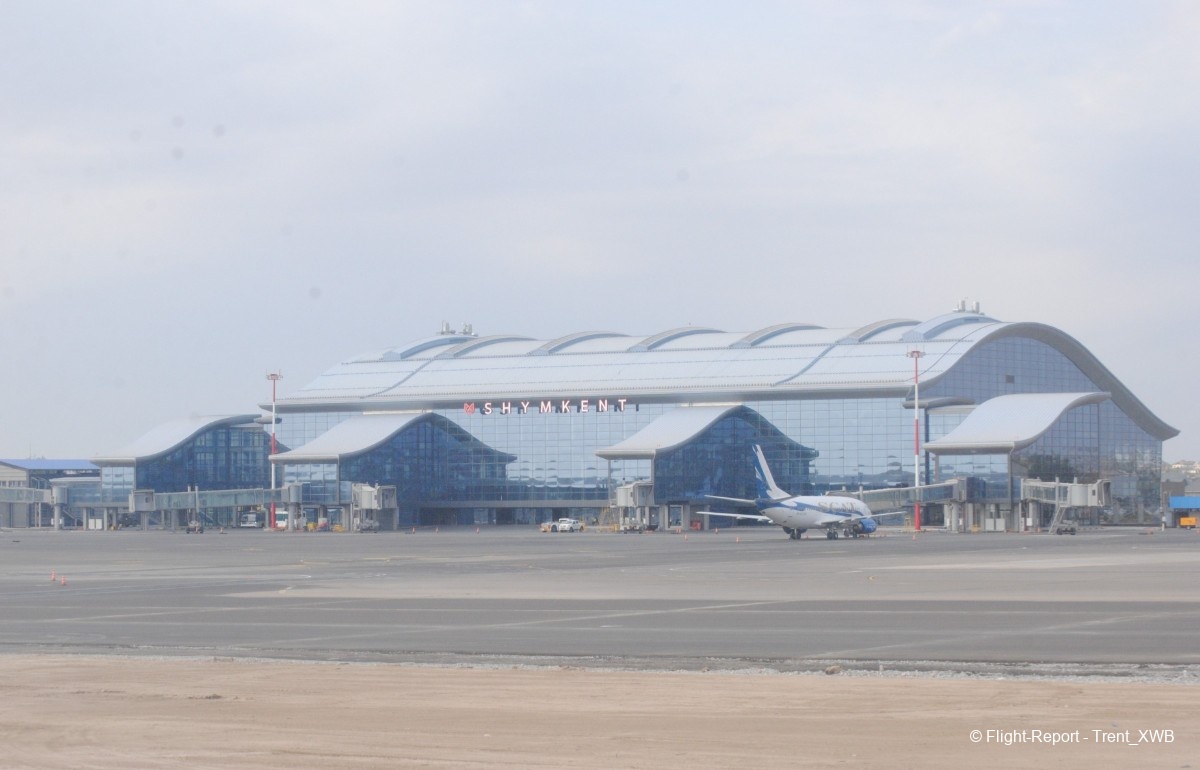
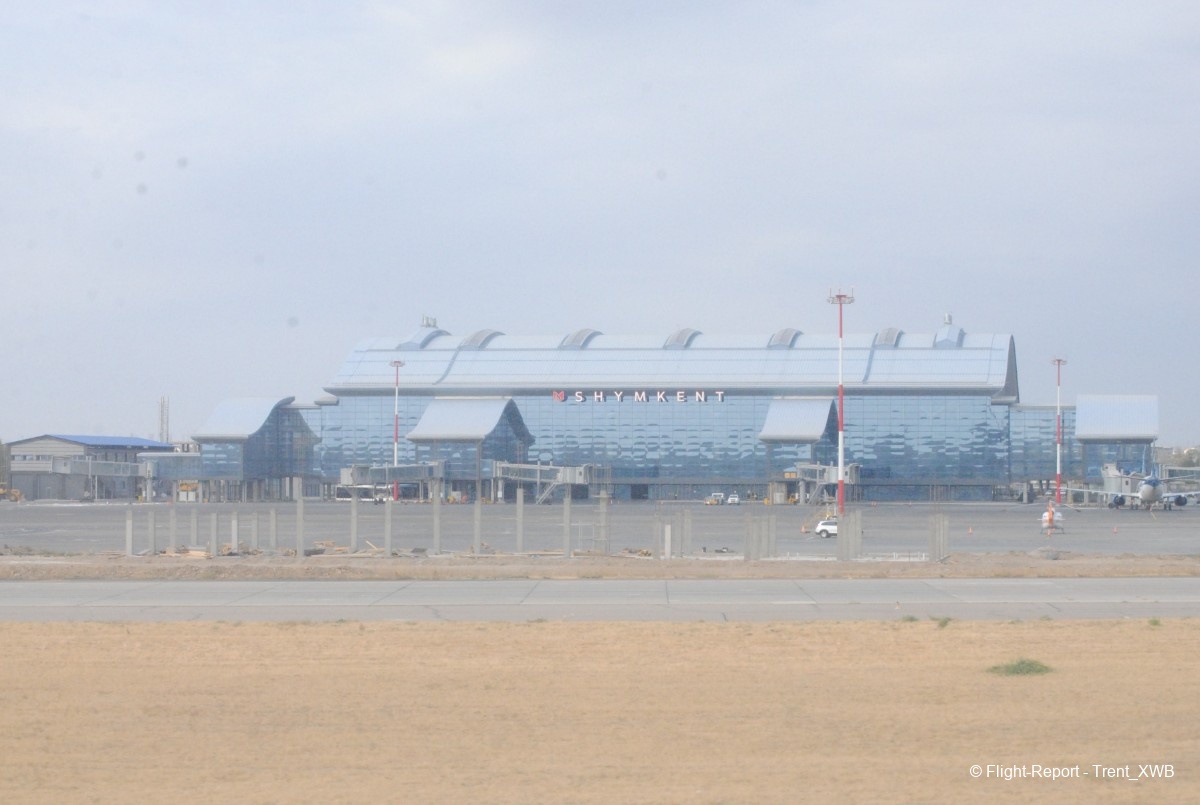
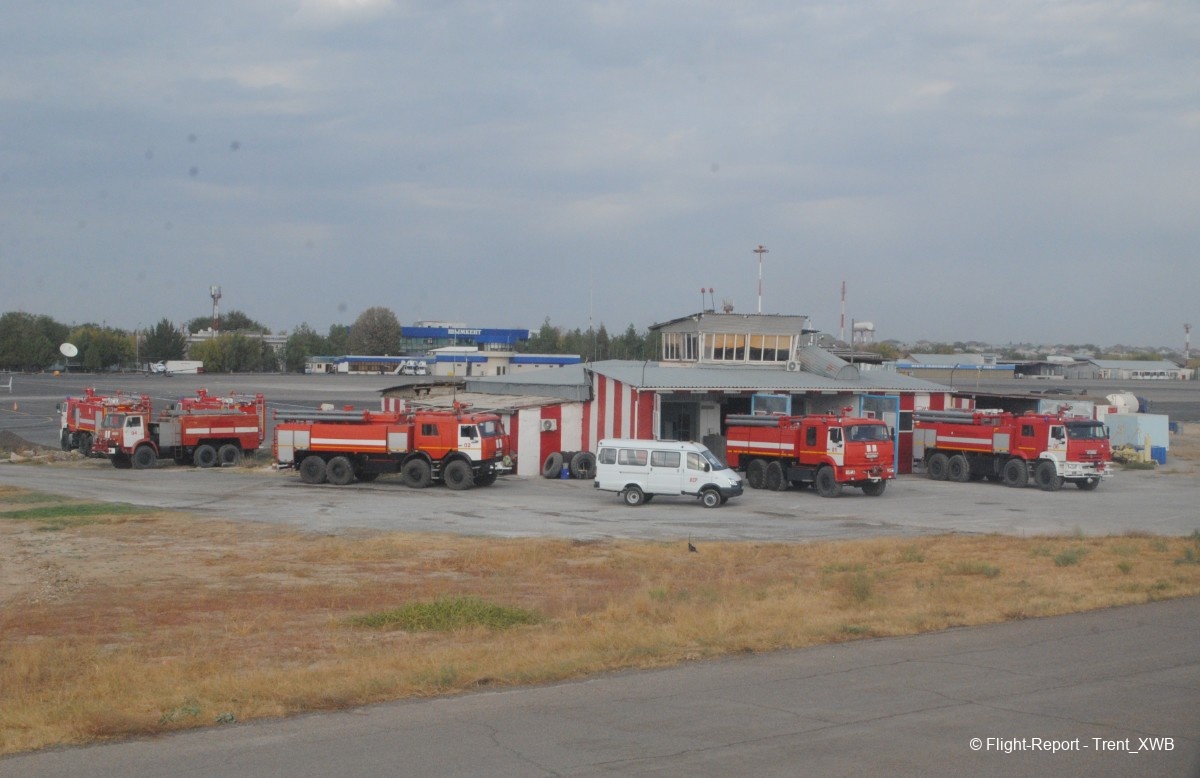
The firefighting depot with Russian-built KamAZ trucks and the old small obsolete terminal on the backdrop.
Sunday's B752, being refueled before the flight to Astana, scheduled 20 minutes later after my flight. How I wanted to be onboard of this beauty, and, thankfully, realized it a month later.
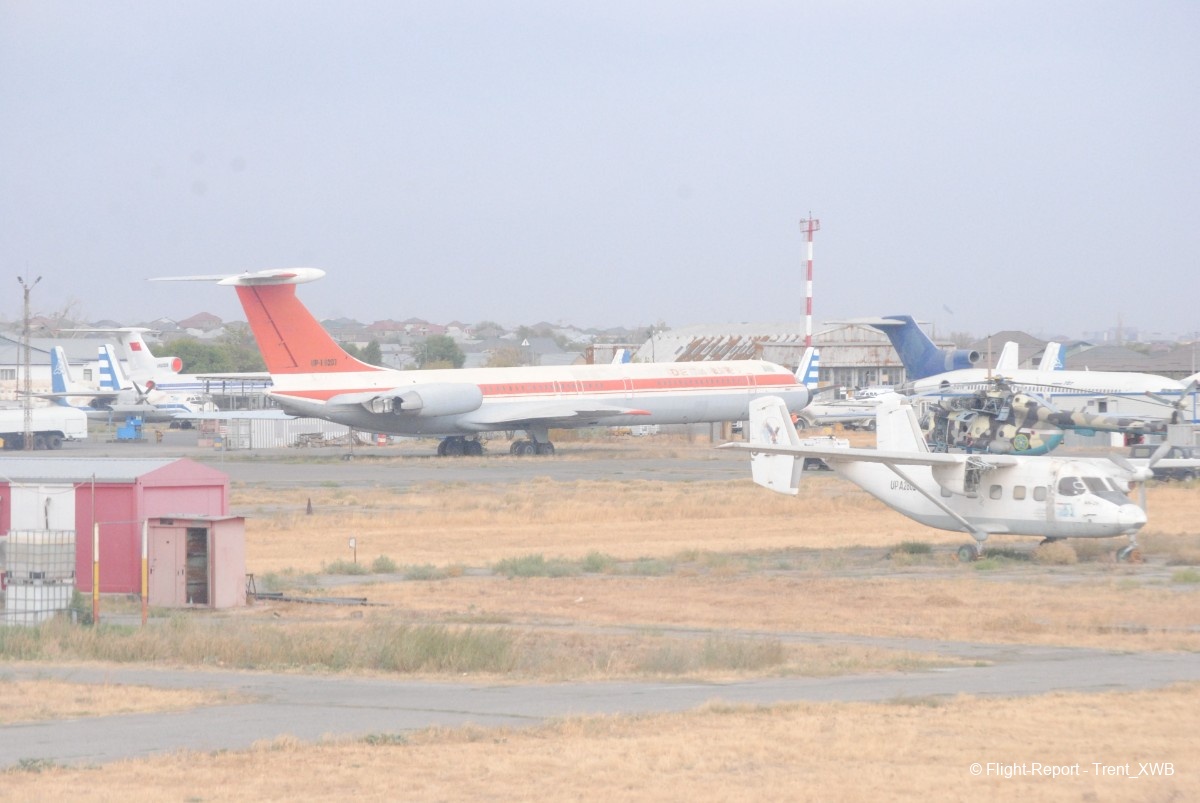
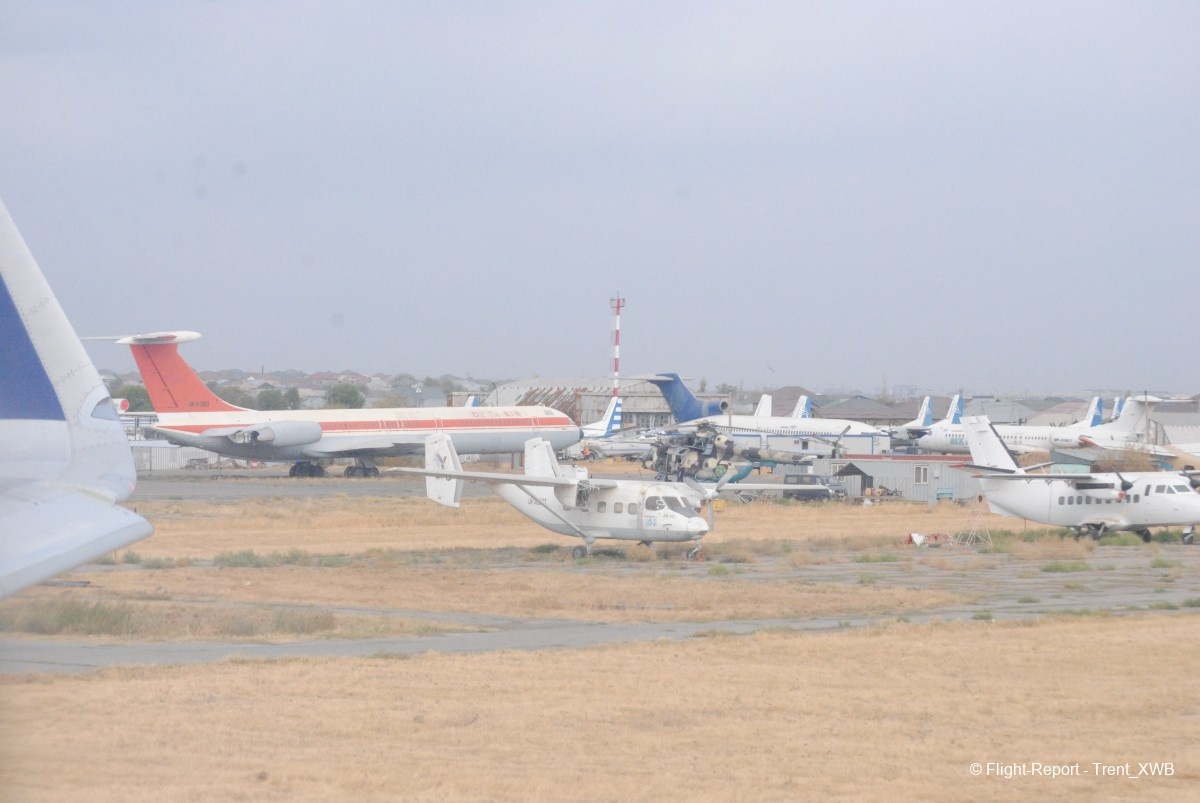
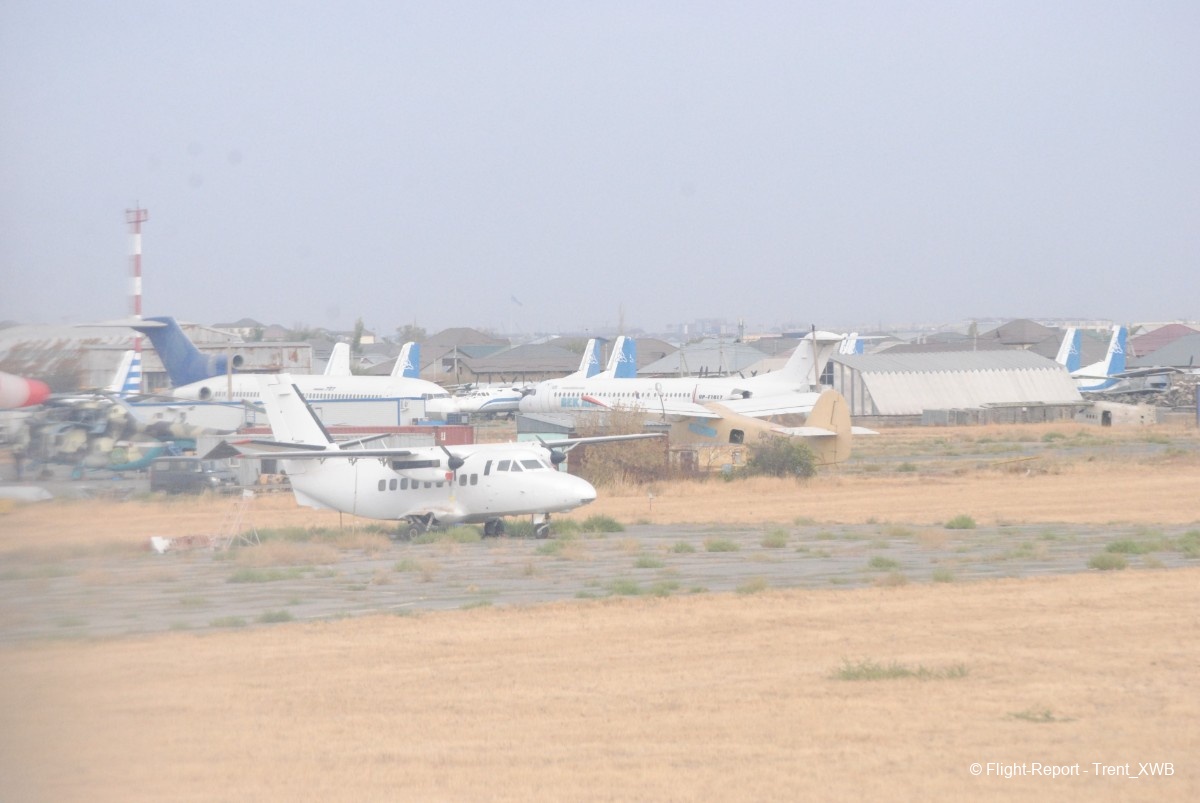
One of the most interesting part of CIT aside of the new terminal - very nostalgic airplane graveyard with Ilyushin Il-62, Tupolev Tu-154 (with Soviet flag on its tail!), B727, F100, Antonov An-28, L410 and a lot of Antonov An-24s (a week before I flew the last An-24 in passenger service in the country from UKK to KGF).
Takeoff from CIT.
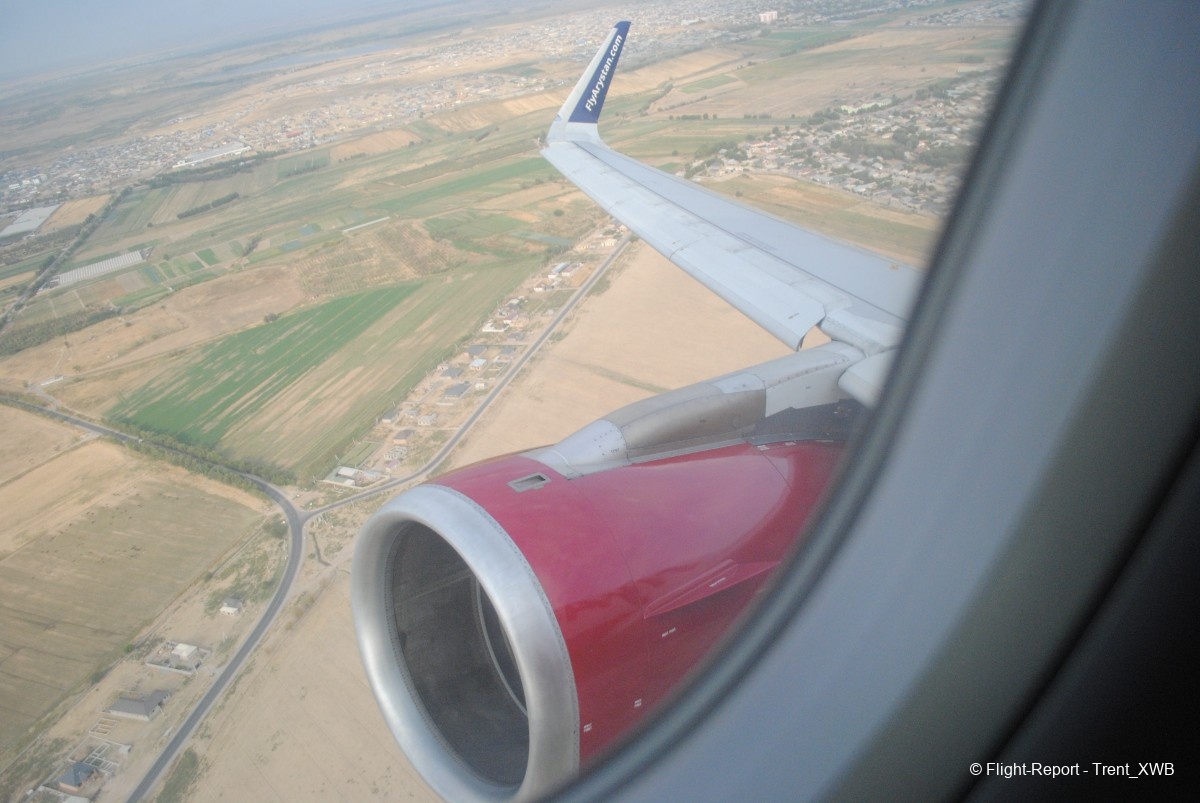
Crossing Syr Darya ("darya" literally means "river" in Central Asian dialects of Persian language) - the longest river in Central Asia, originating in Tian Shan mountains near Fergana Valley and flowing through Uzbekistan, Tajikistan and Kazakhstan into the northern remnants of the Aral Sea. The waters of Syr Darya (and of the another largest Central Asian river Amu Darya) are extensively taken out for agricultural irrigation and this resulted in almost the entire disappearance of the Aral Sea.
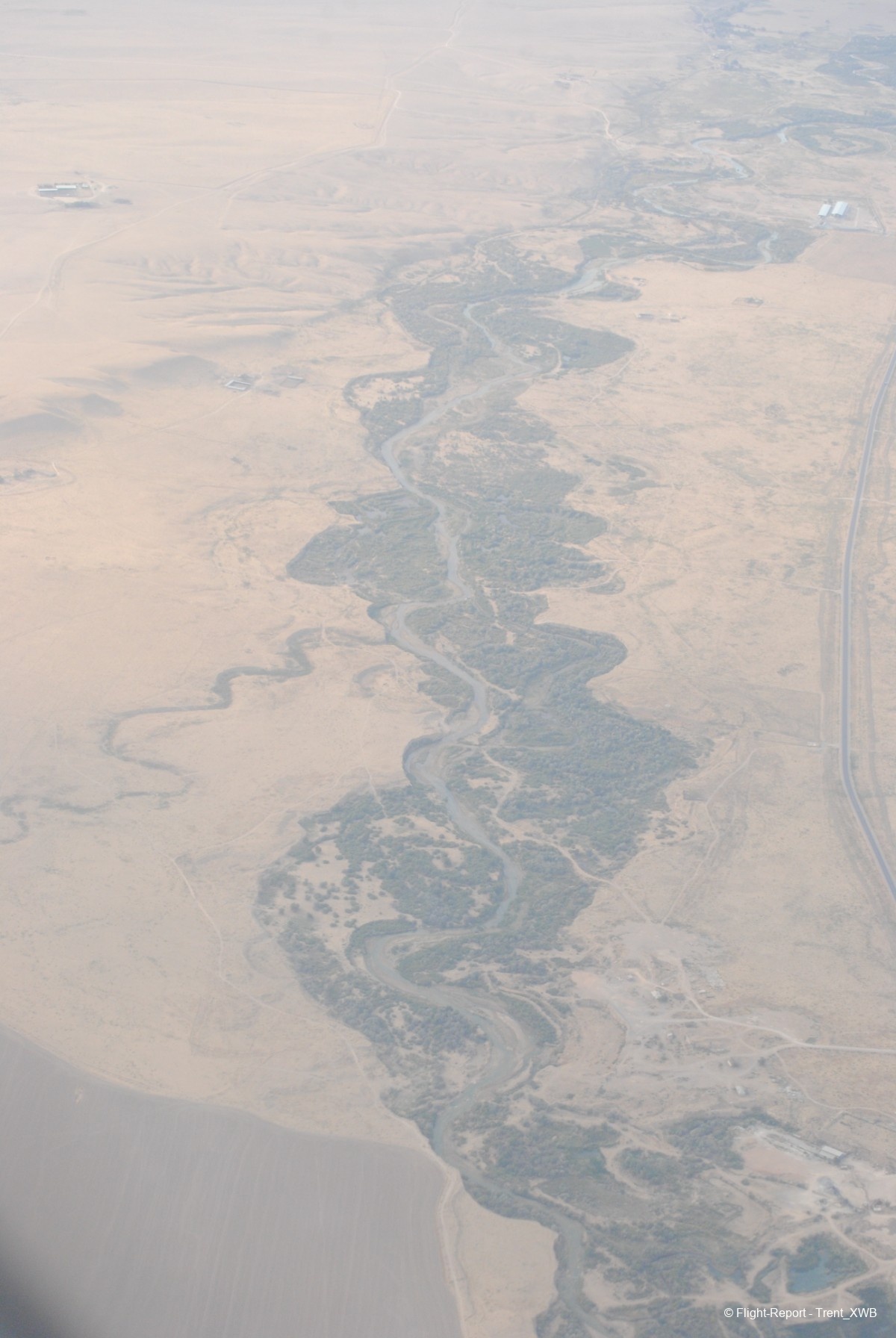
Then arid spaces of Kyzylkum desert (located between Syr Darya and Amu Darya rivers) begin.
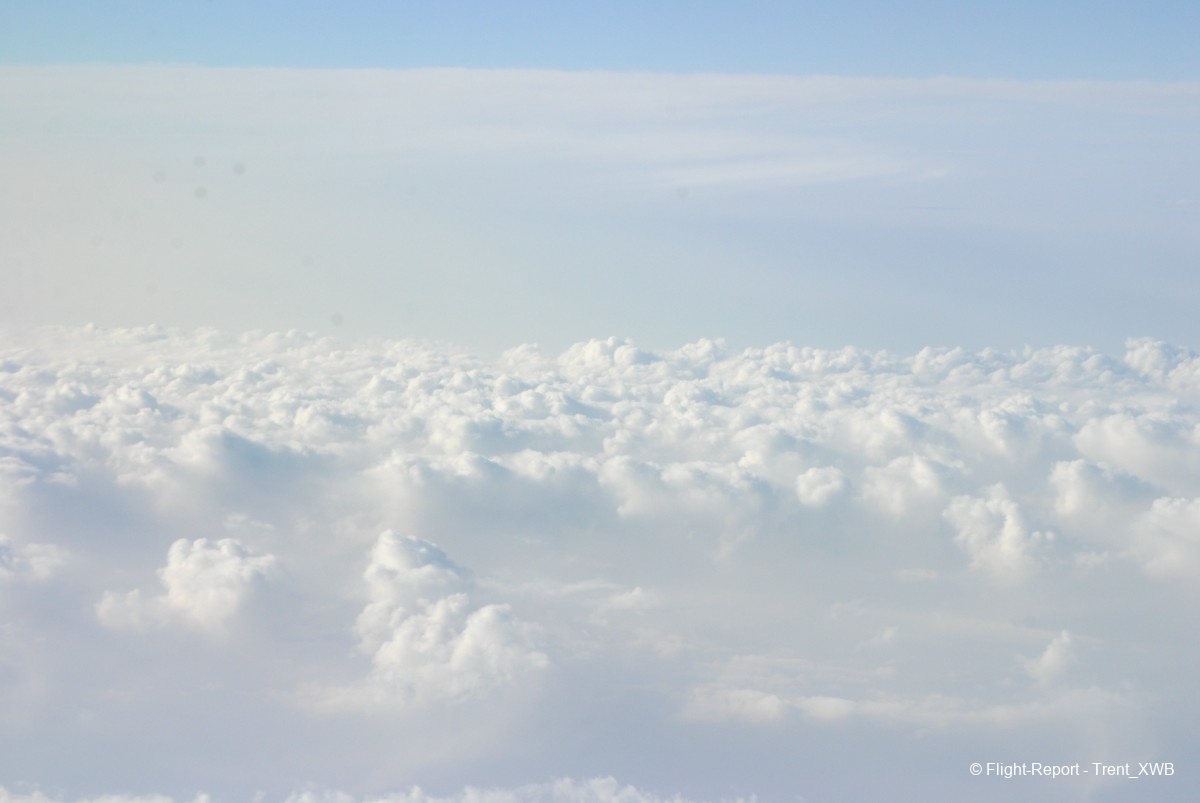
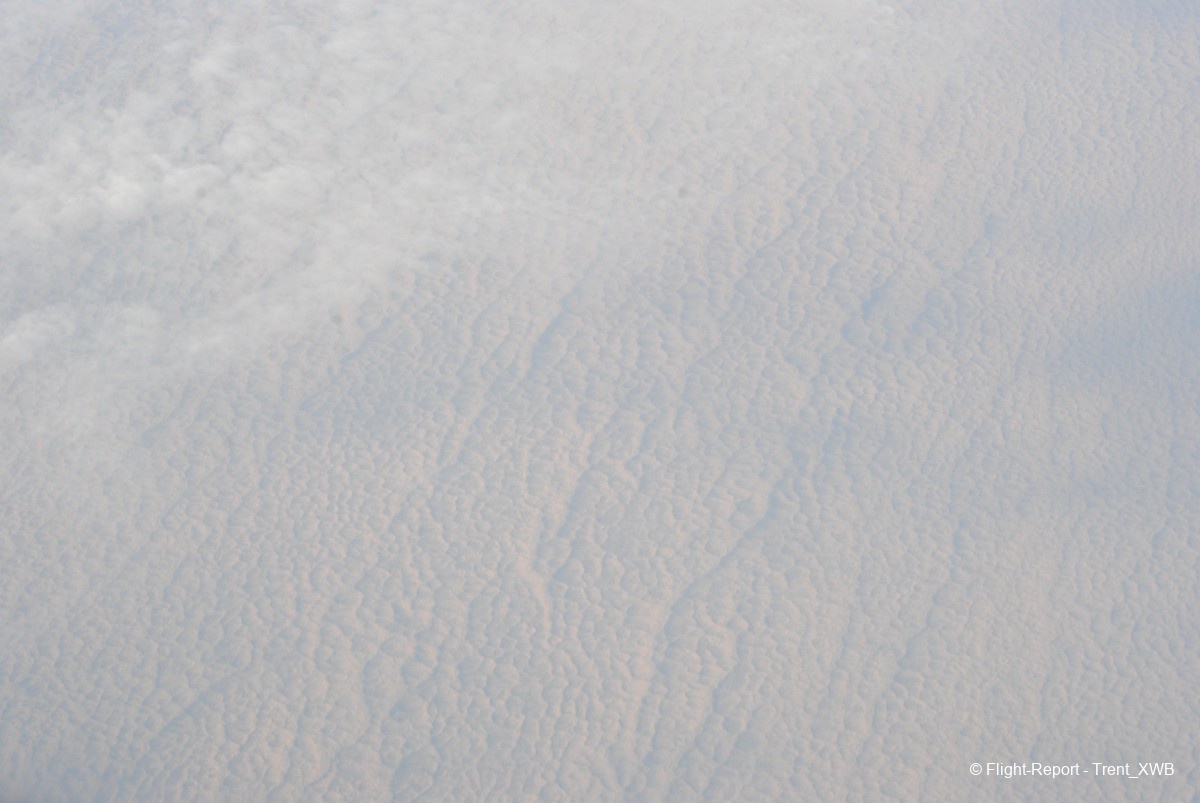
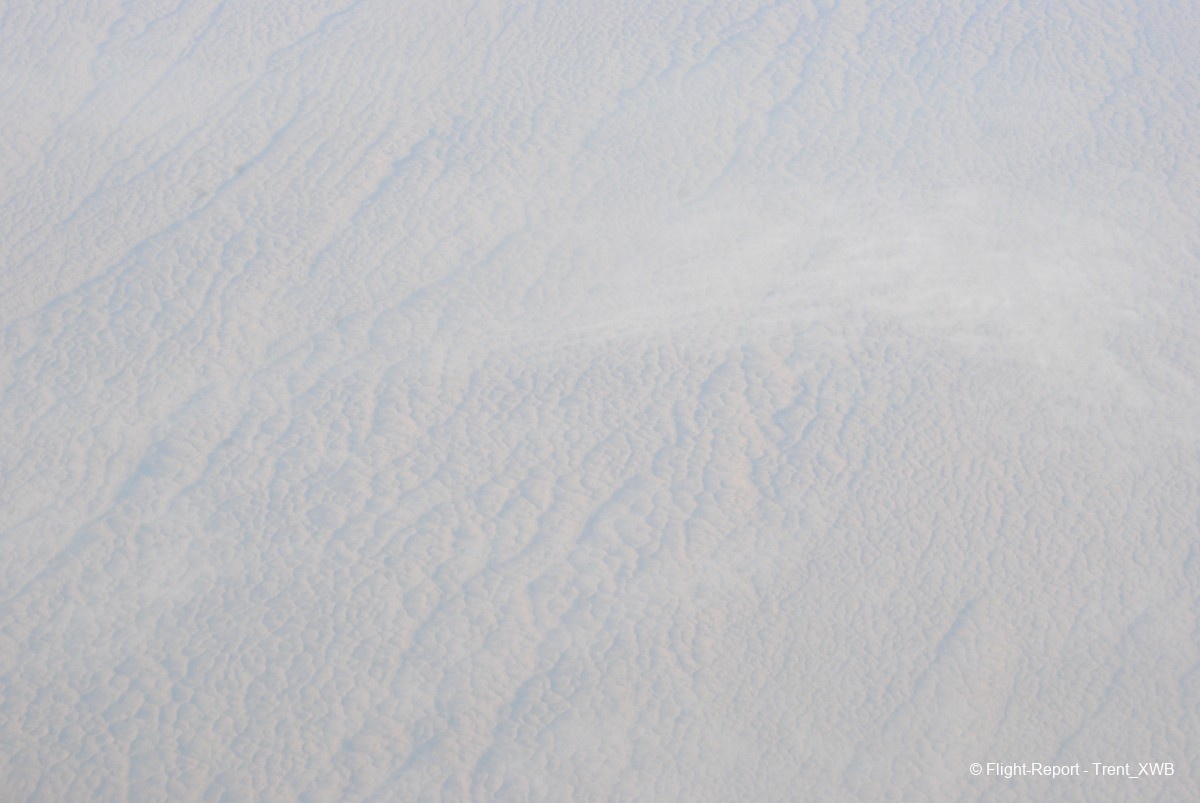
Beautiful clouds over Kyzylkum.
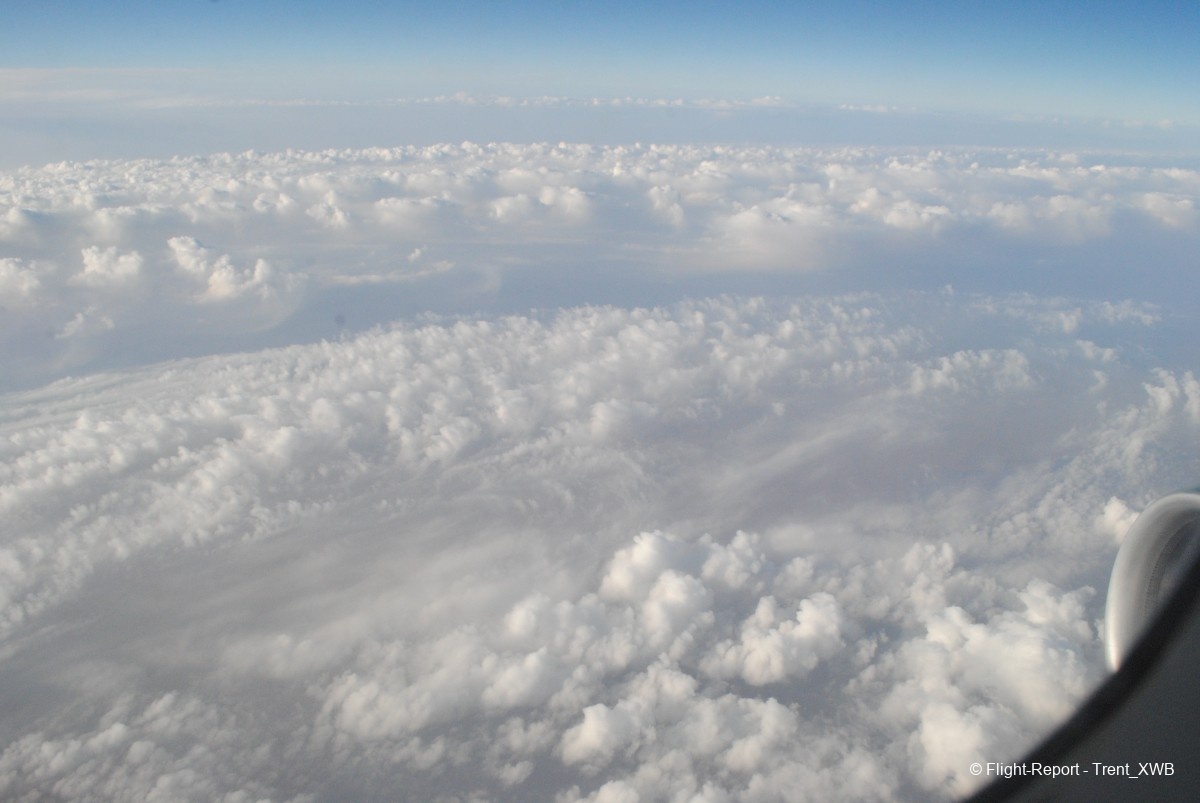
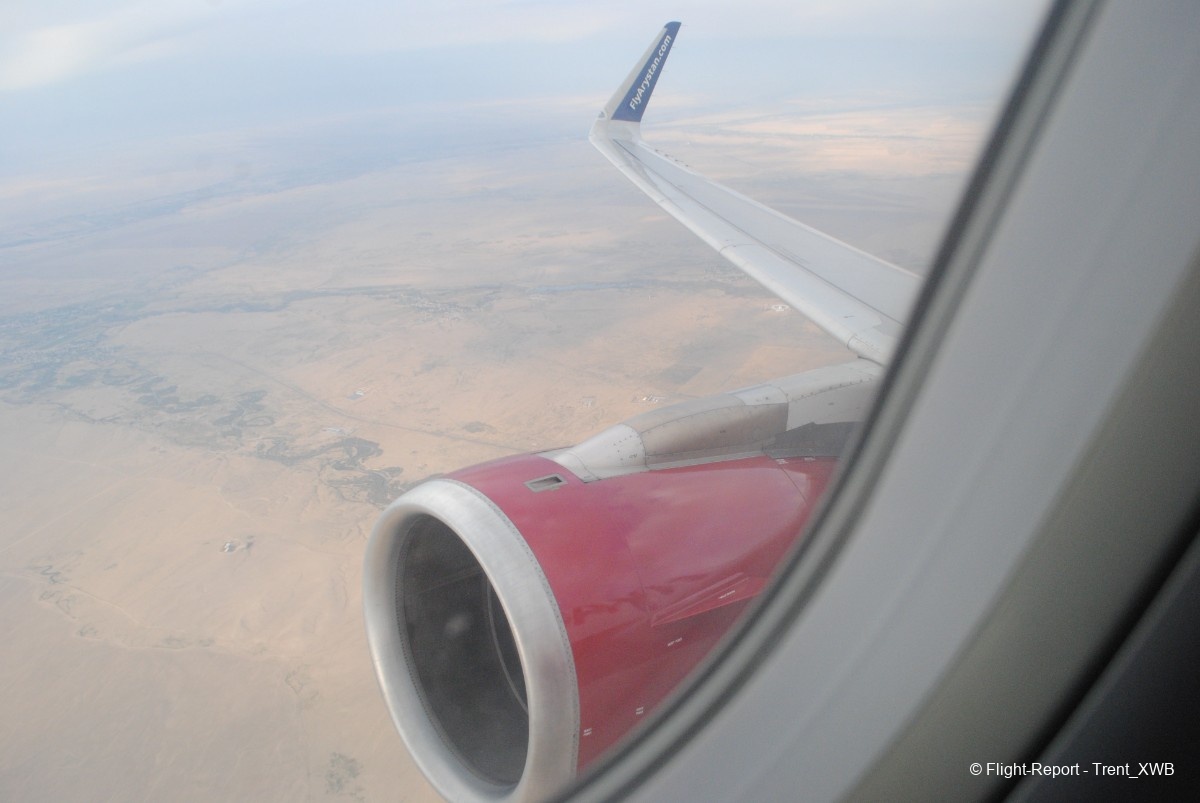
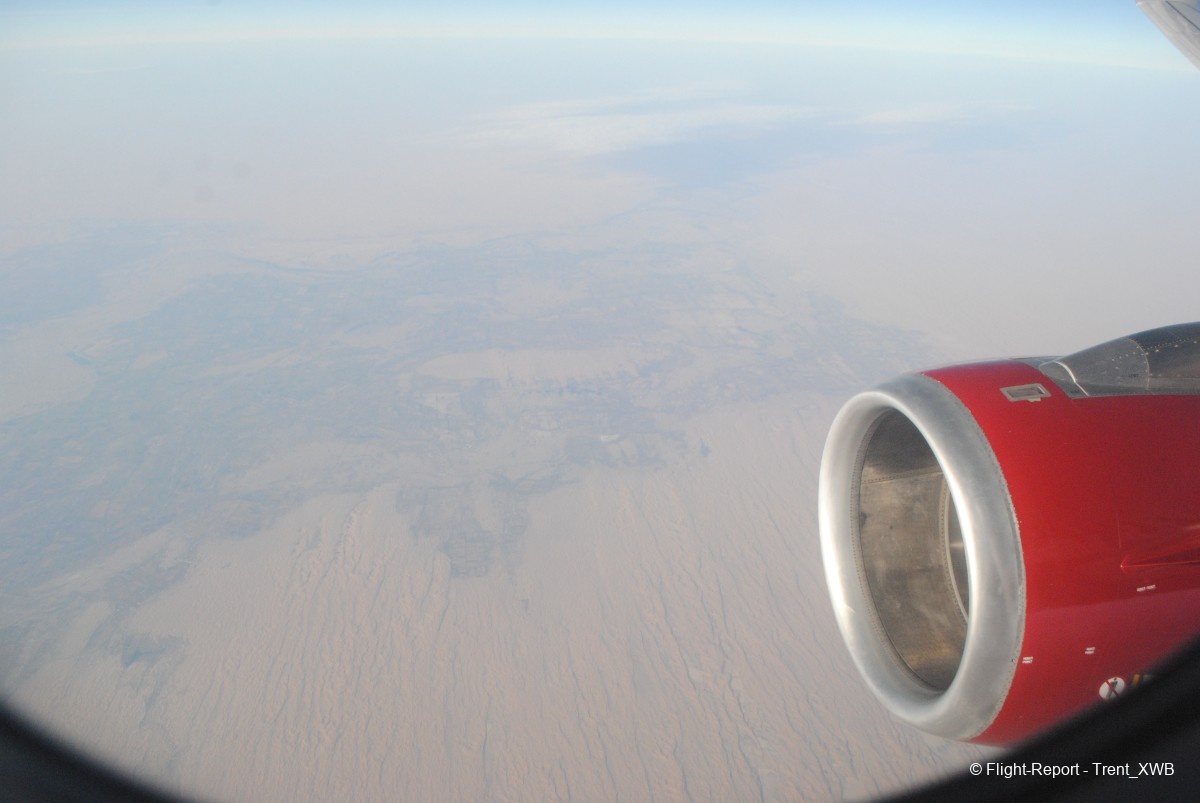
A perfect wing- and engine view over Kyzylkum.
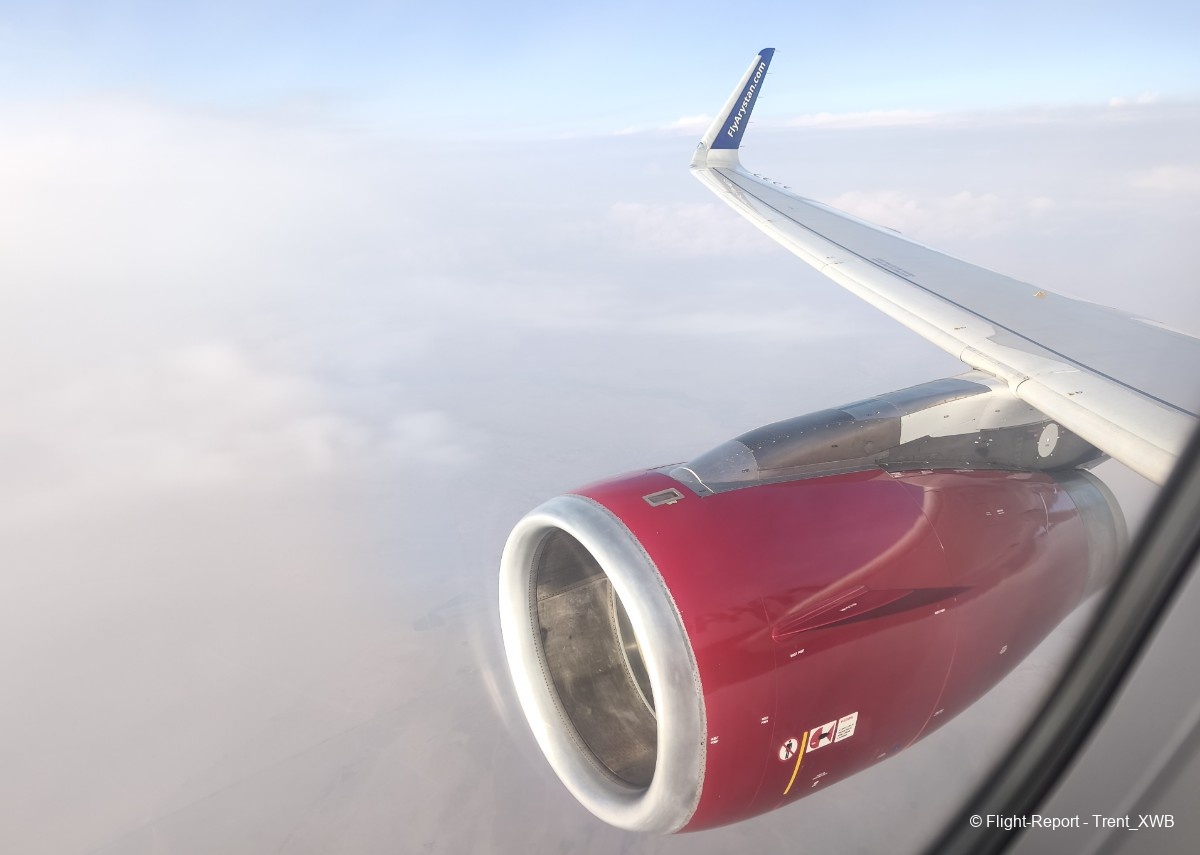
The sandy part of Kyzylkum. In Turk languages "kyzyl" means "red" and "kum" means "sand".
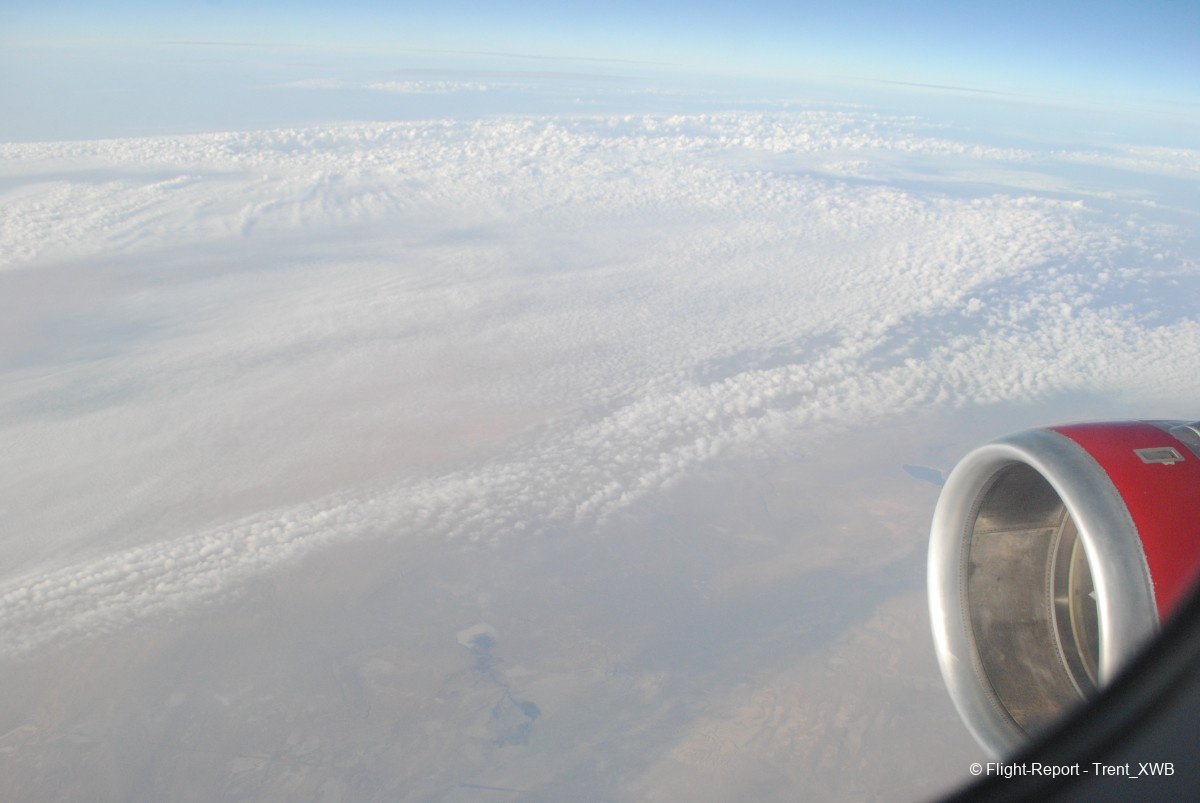
Sand dunes of Kyzylkum from above.
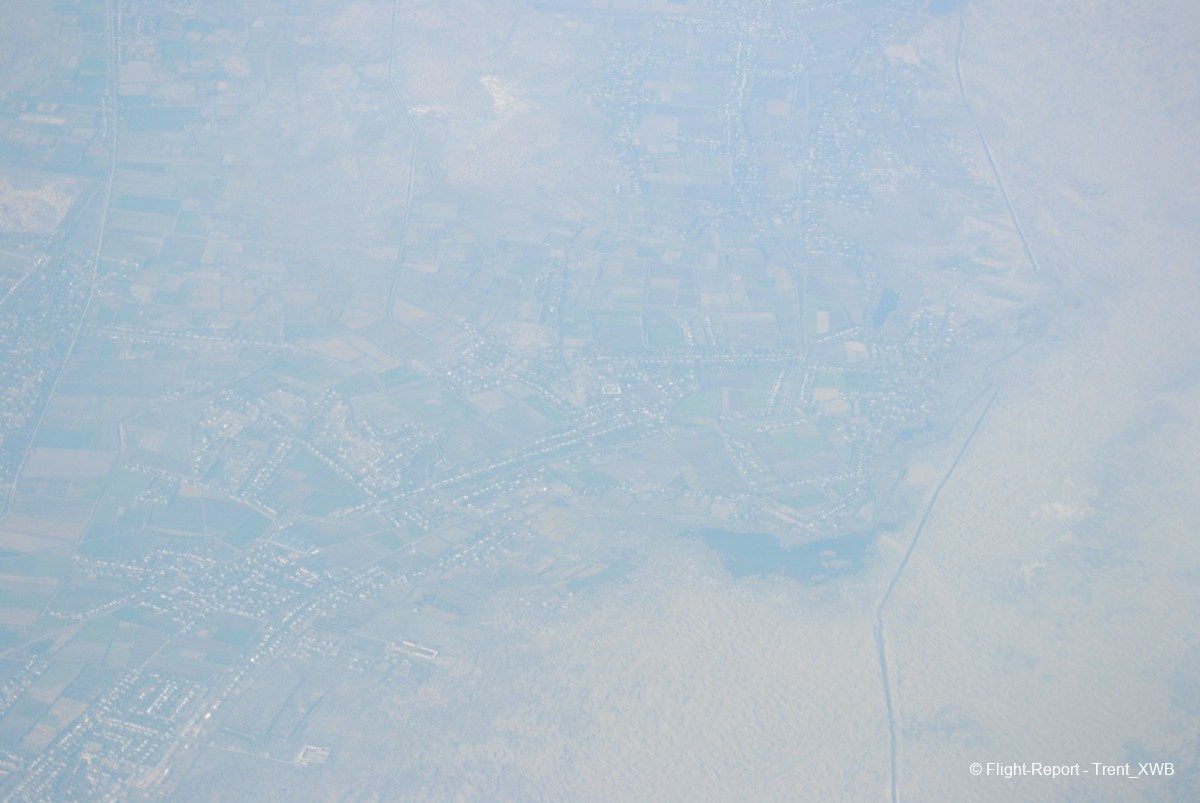
Approaching oases in western Uzbekistan in Amu Darya basin.
Northern part of Kyzyl-Shiva town in Republic of Karakalpakstan (western part of Uzbekistan). One can clearly see water channels, supplying the settlement with water.
Beruniy town on mighty Amu Darya river in Karakalpakstan. Amu Darya originates in Pamir mountains and flows towards the southern remnants of the Aral Sea.
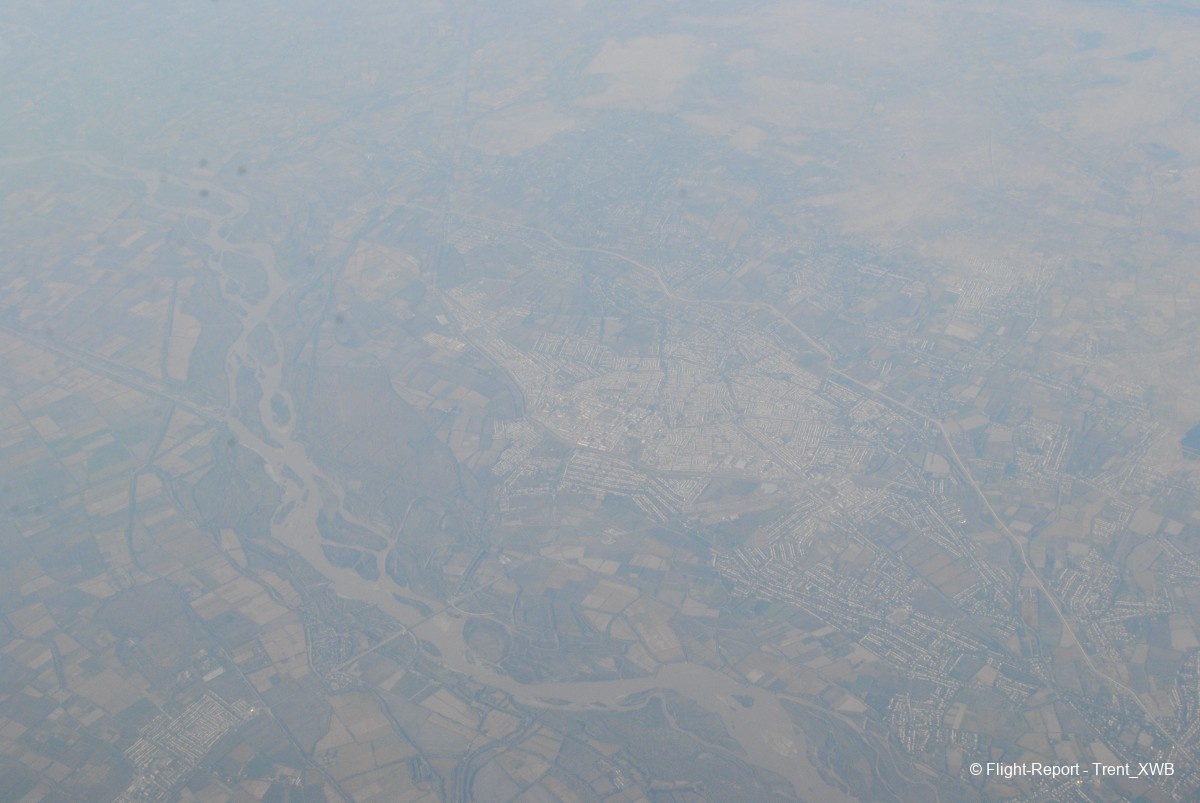
Shavat town in Khorezm region of Uzbekistan. On the left side of the plane is Khiva, where I've been in early June 2025.
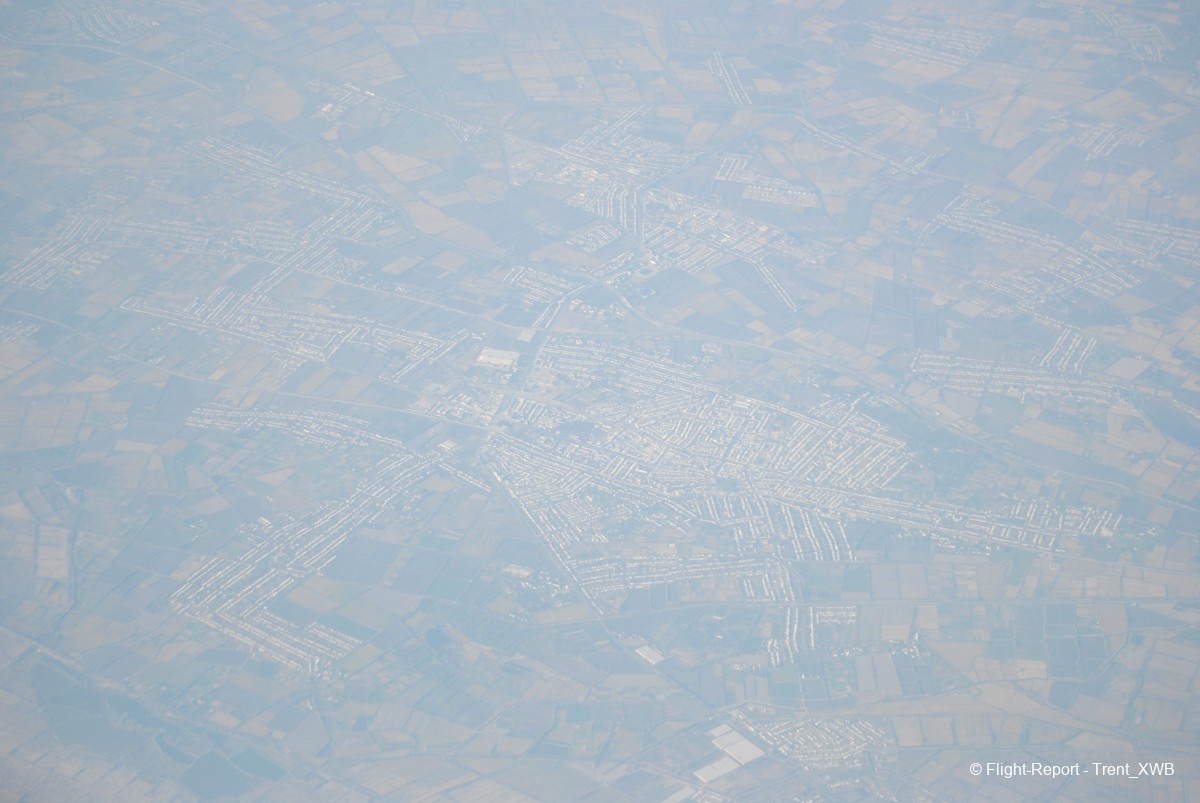
Water channels near the Uzbekistan-Turkmenistan border.
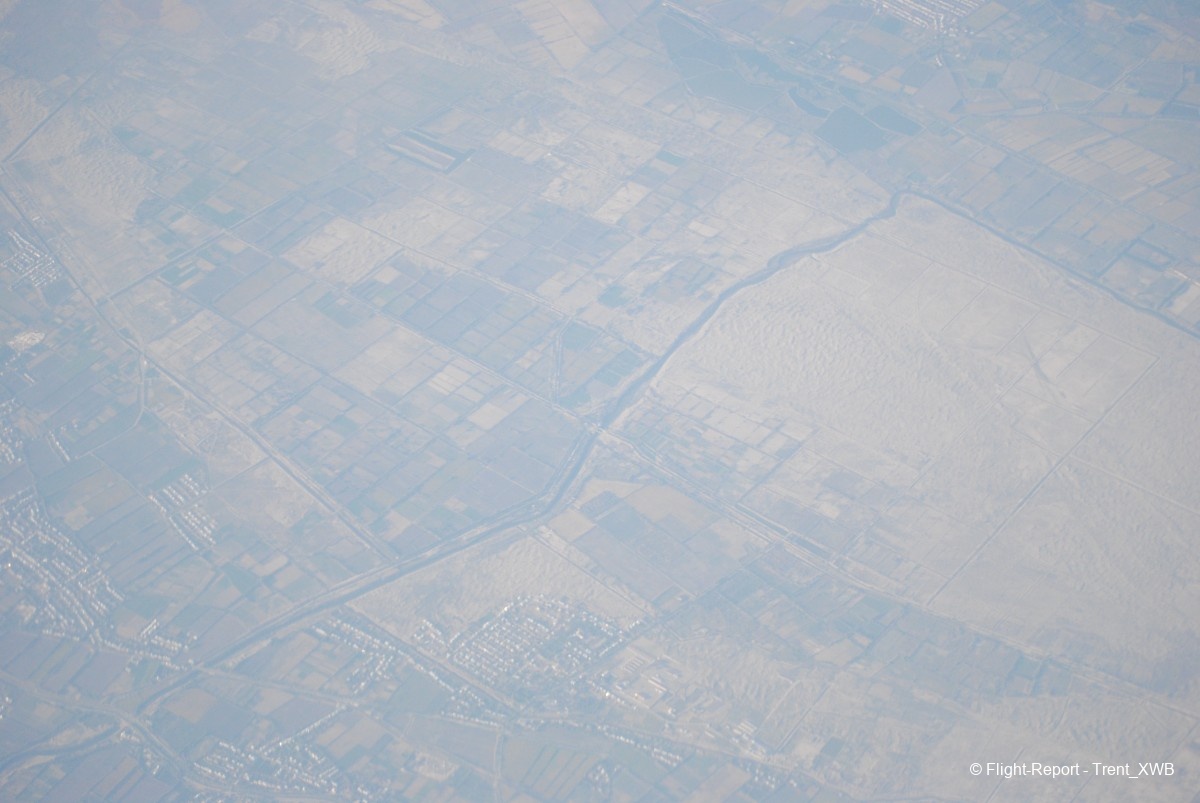
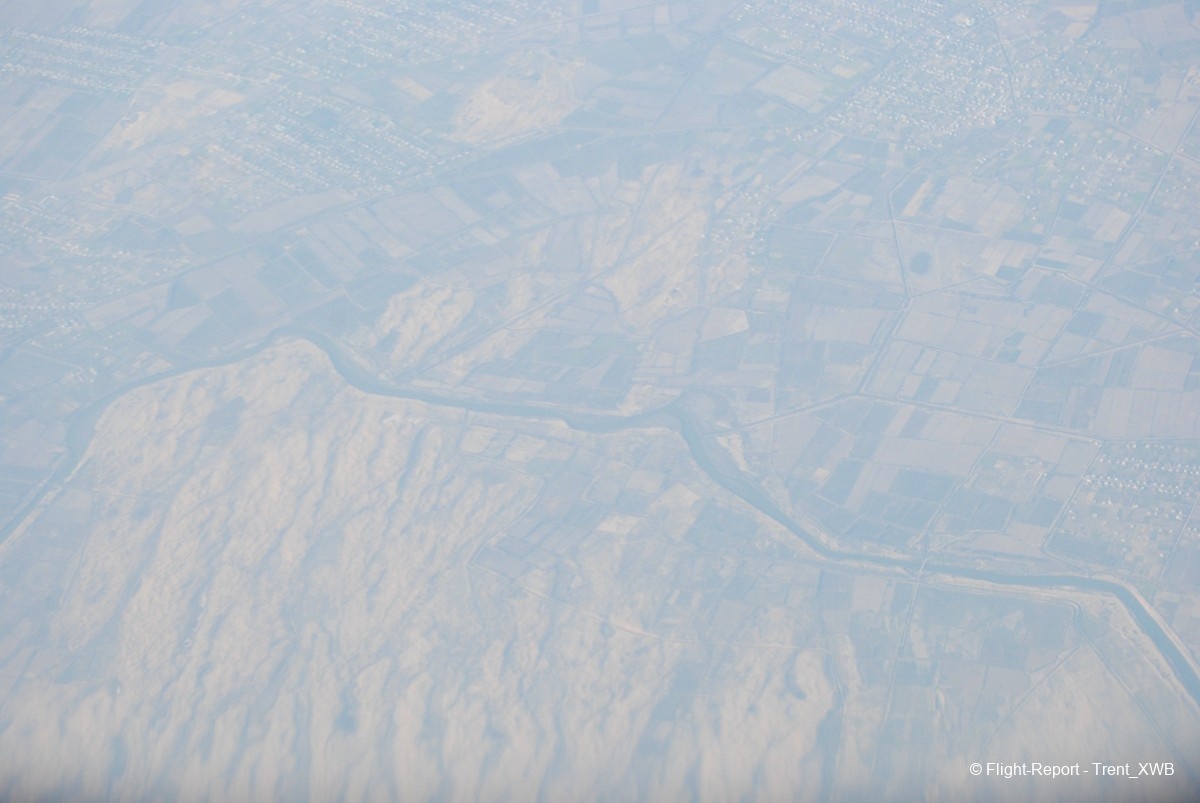
Gorogly town in Turkmenistan. For the first time I see this country, which is tricky to visit: one has to join an expensive guided tour; individual tourism is not permitted. Hopefully, Turkmenistan will follow Saudian way and open to individual tourism in the foreseeble future…
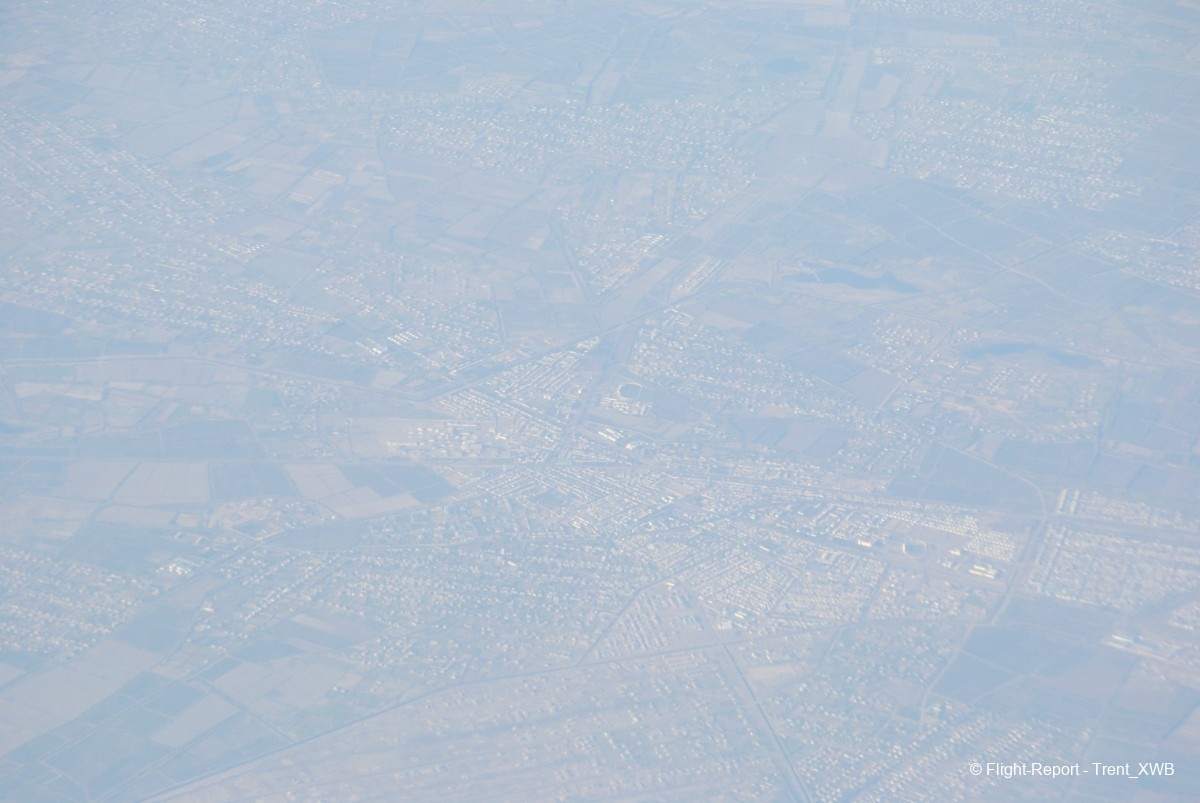
A border between oases and desert between Gorogly town and Sarykamysh lake.
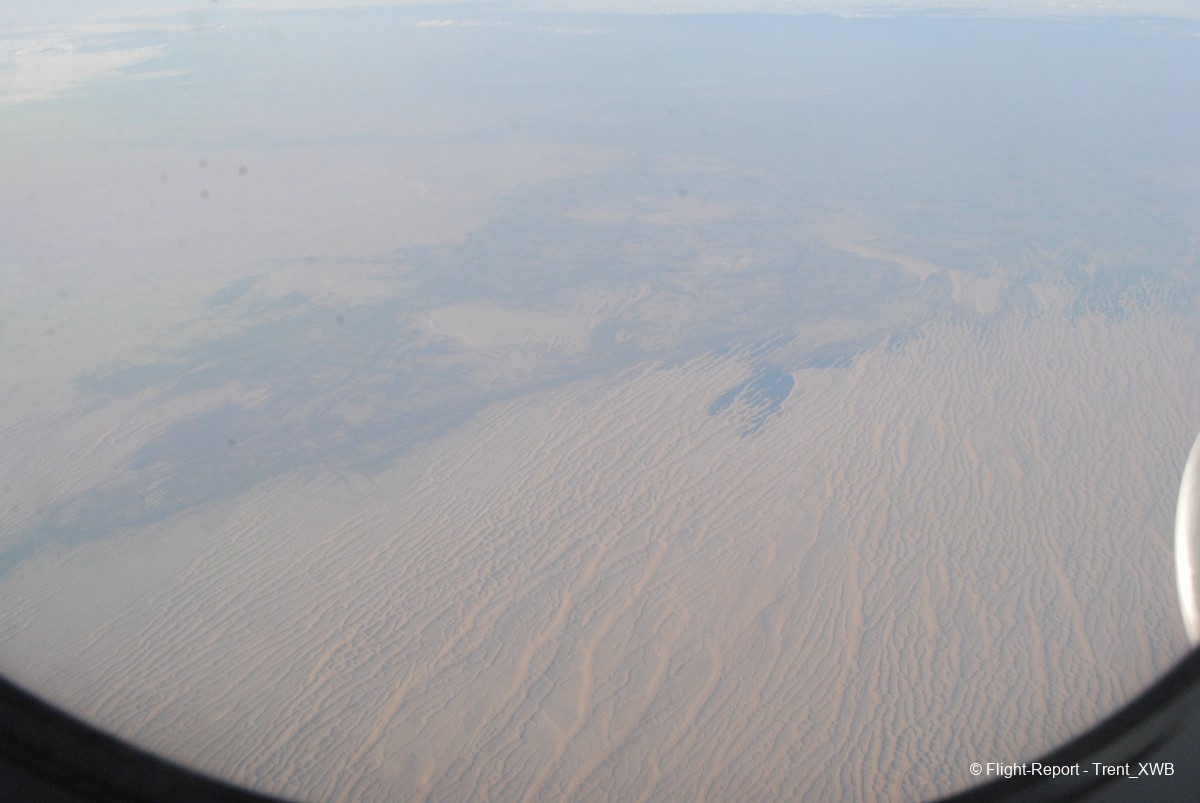
An irrigation channel transferring water from Amu Darya towards Sarykamysh lake.
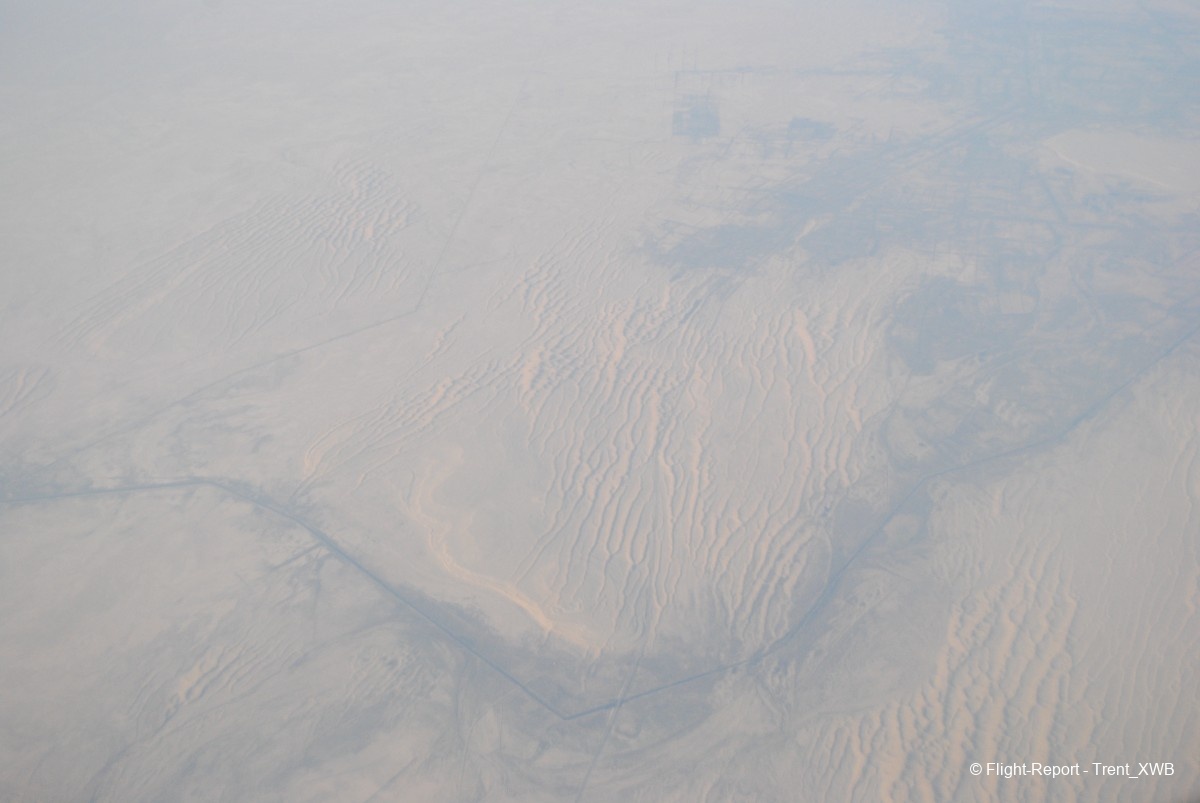
The old south-east bank of Sarykamysh lake.
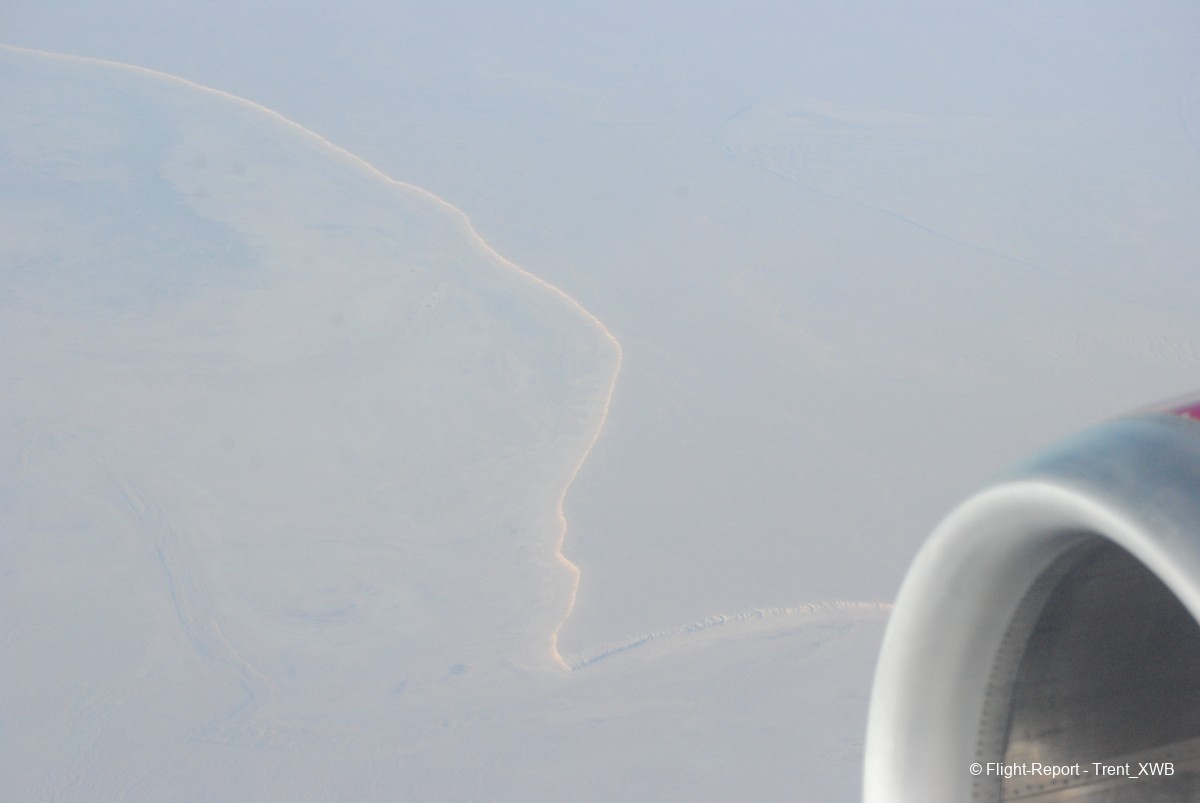
The southern remnants of the "larger" Sarykamysh lake, connected with the channel from Amu Darya. To the south from this point famous Darvaza gas crater is located.
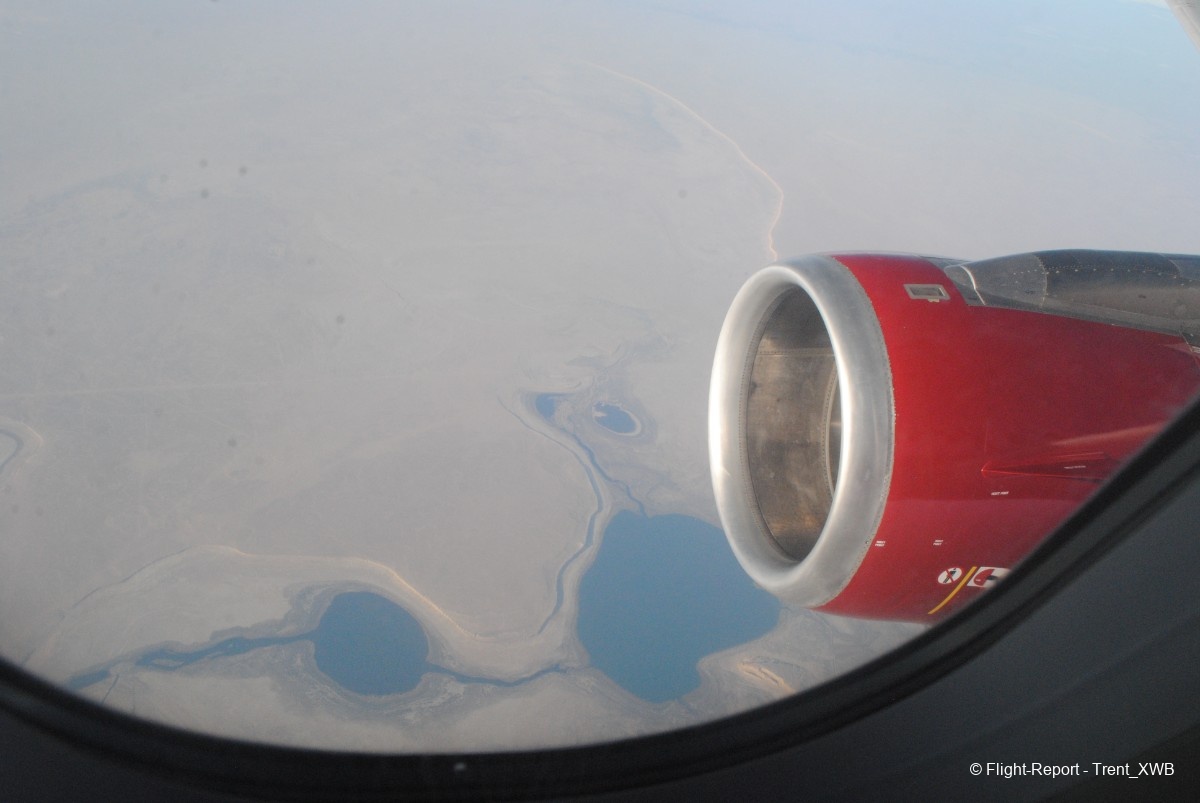
Sarykamysh lake in its current state. It's the largest lake in Turkmenistan. "Sary" means "yellow" and "kamysh" means "reed" (BTW, the word "kamysh" is also used in Russian).
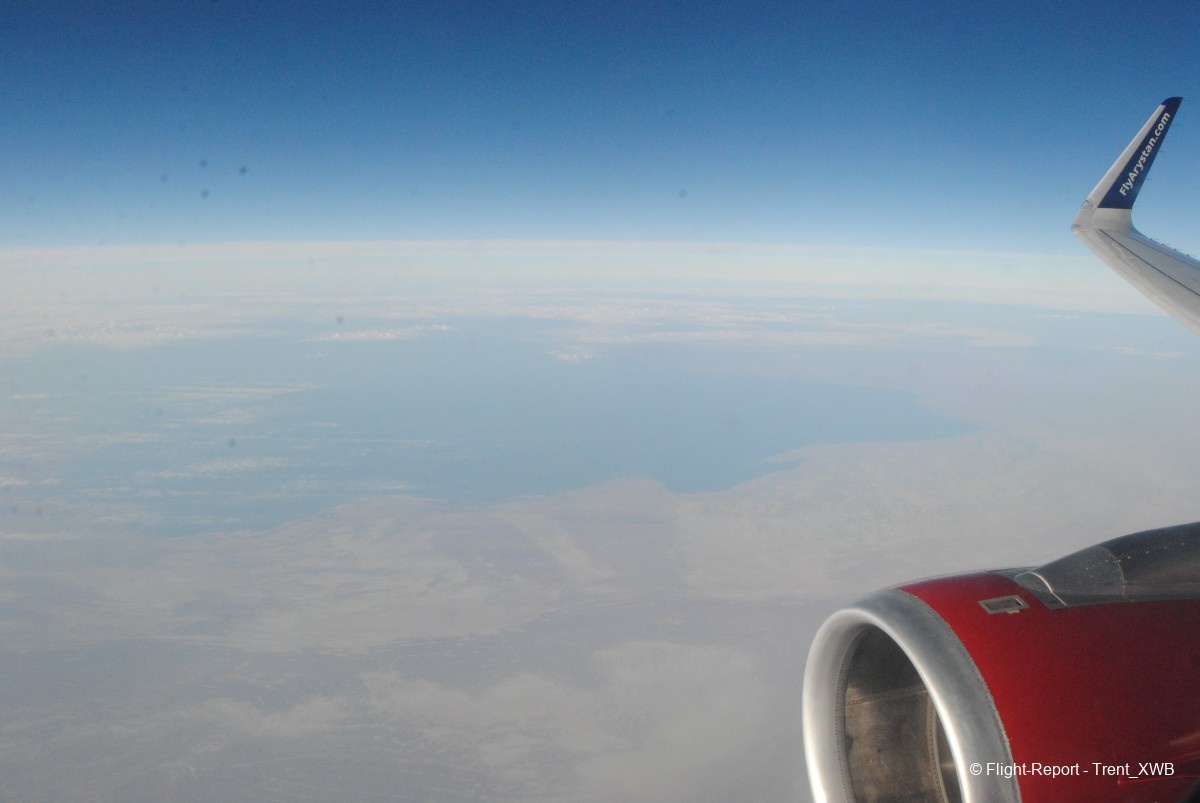
The old south-west bank of Sarykamysh lake, where Turkmenistan-Uzbekistan border is located (we're still in the Turkmenistan's airspace).
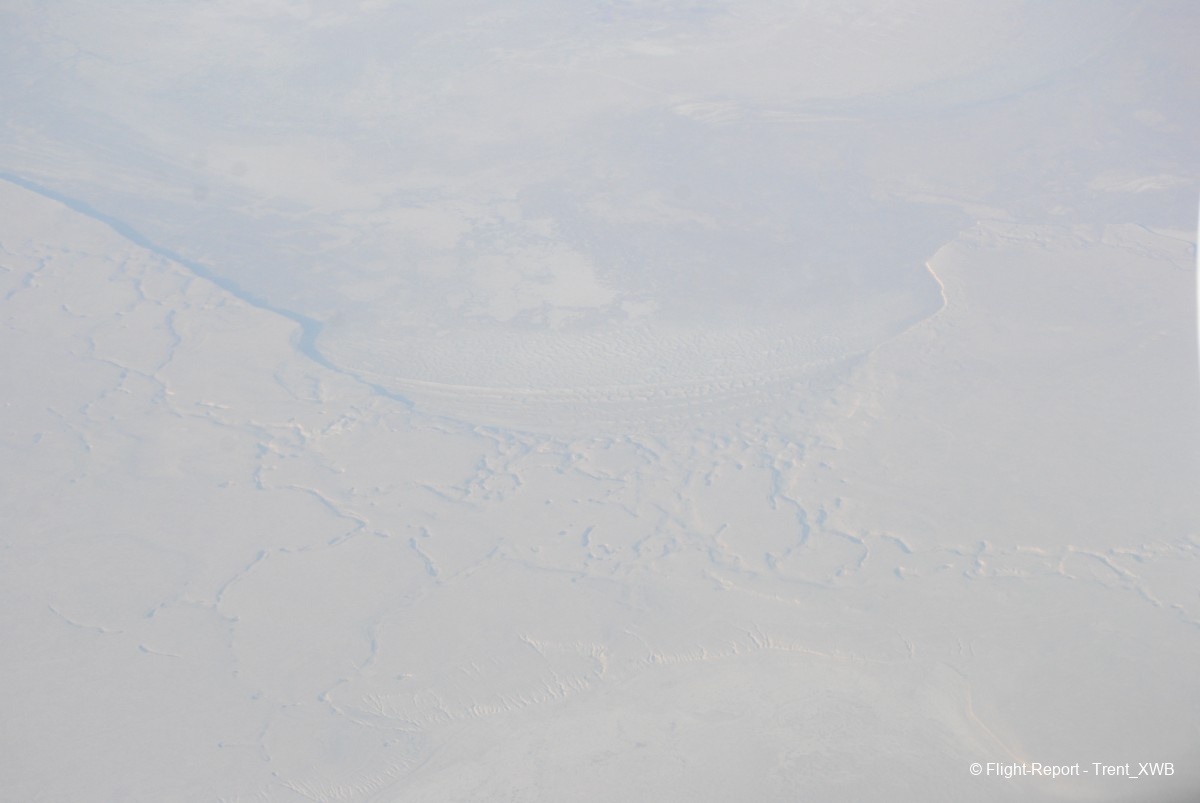
Flying over beautiful landscapes south-west of Sarykamysh lake. This is where the Caspian Sea used to be in ancient times.
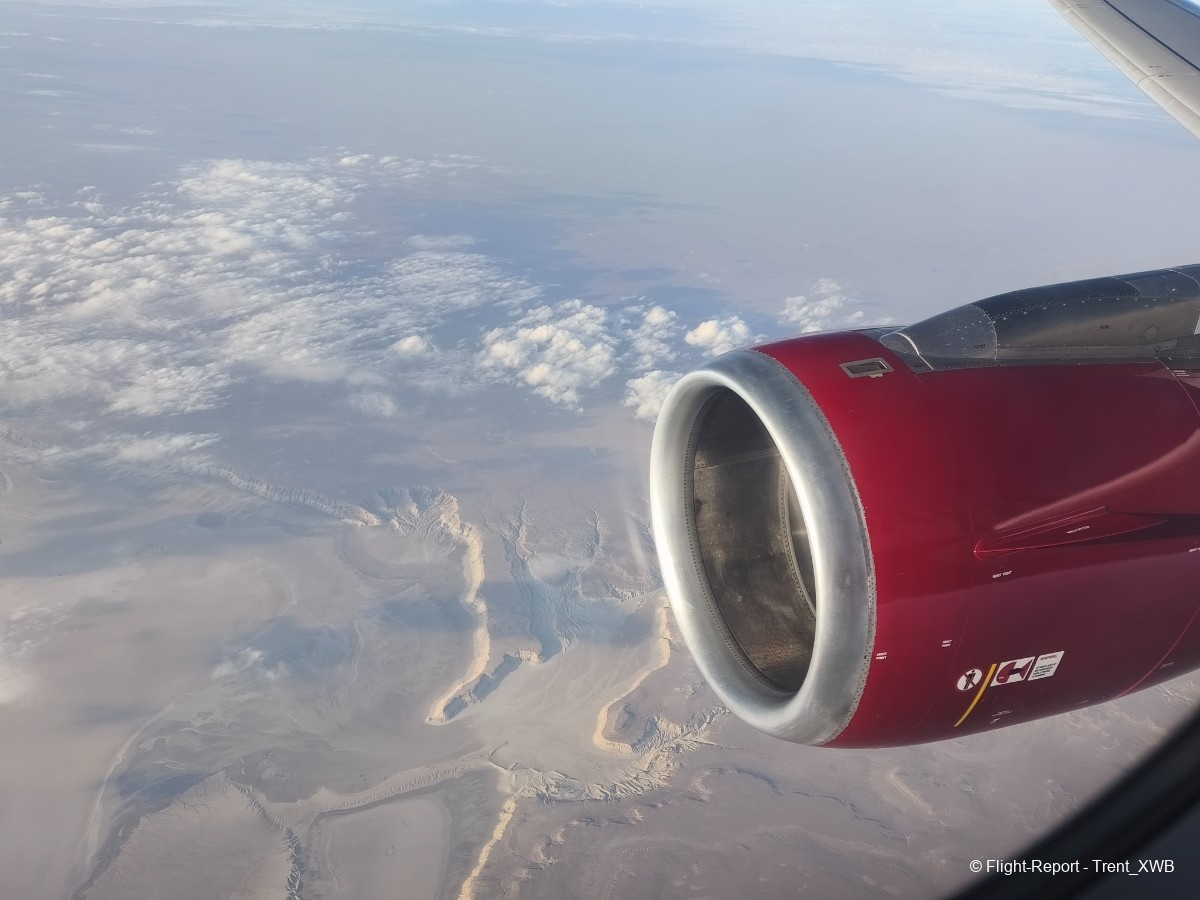
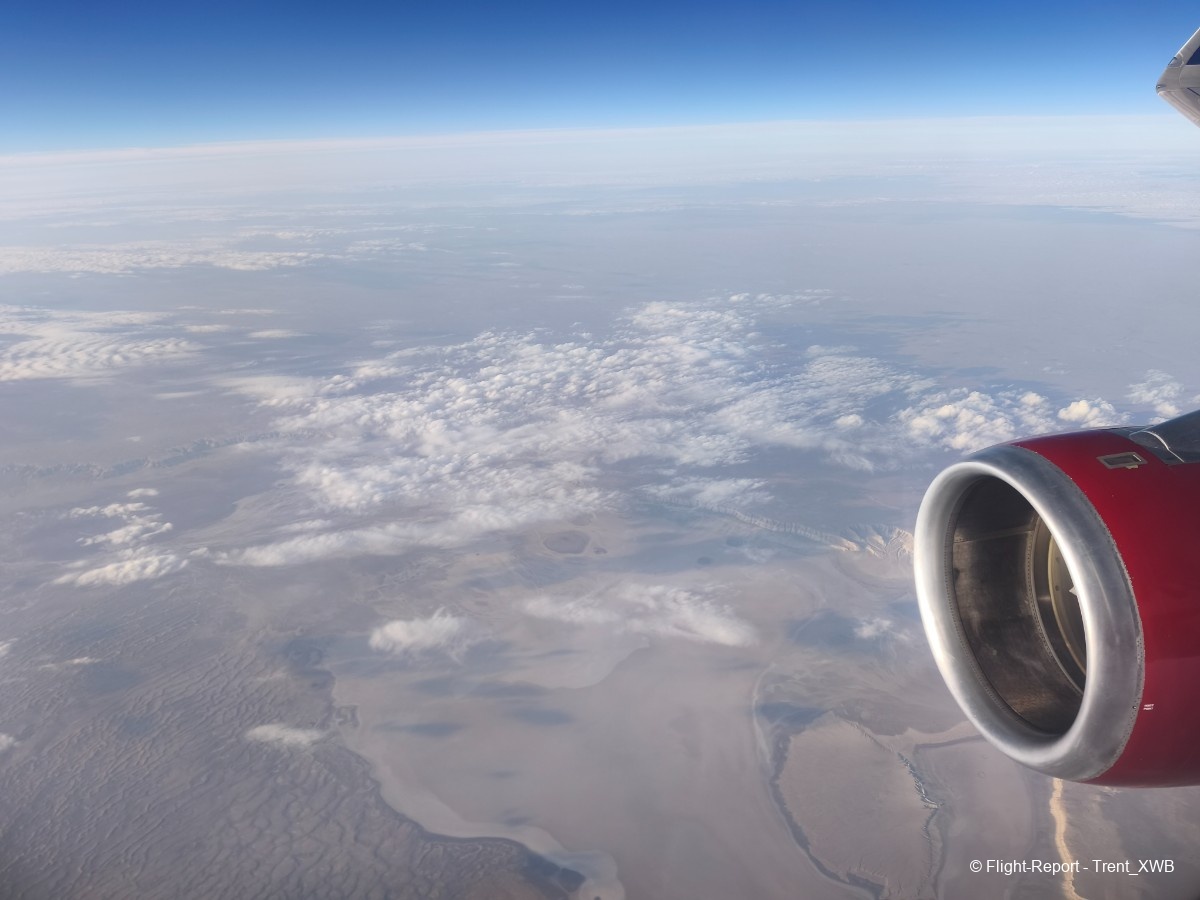
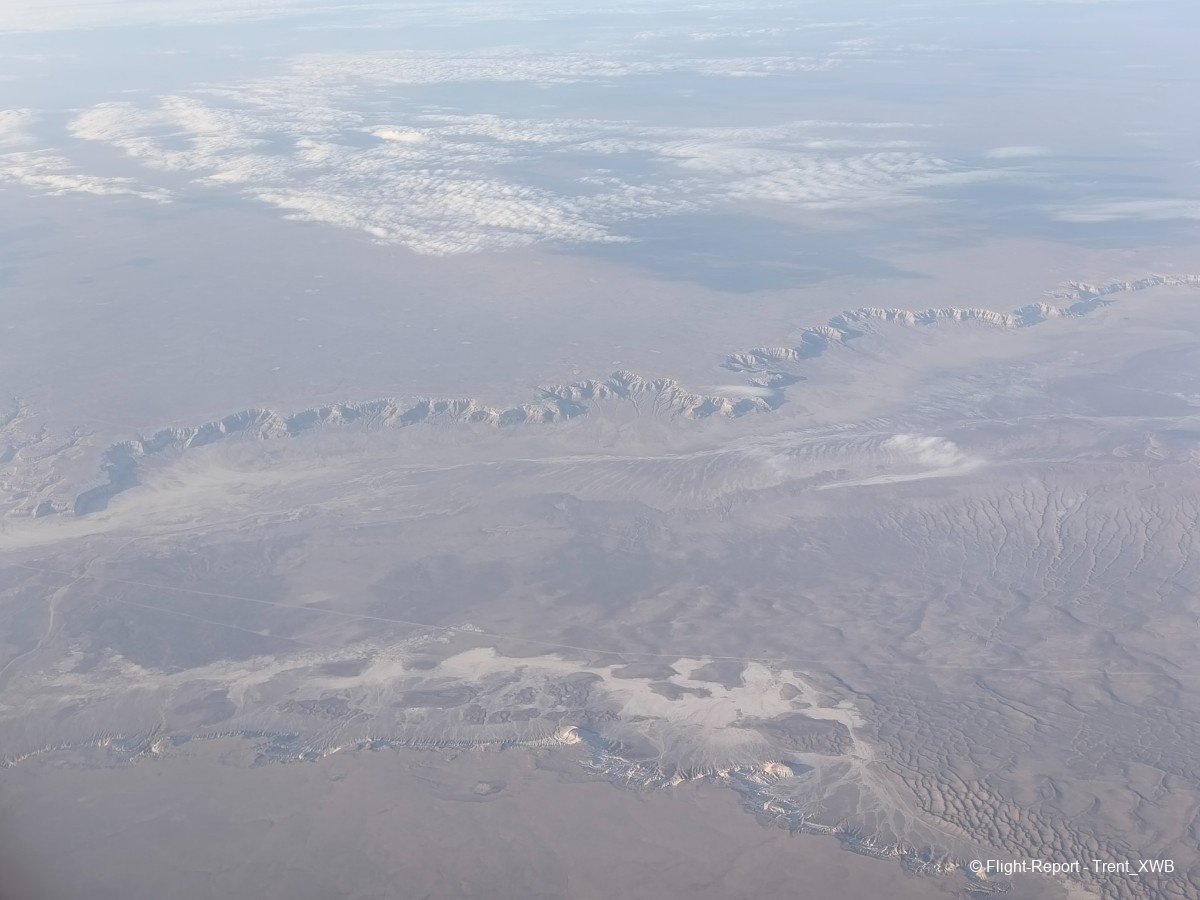
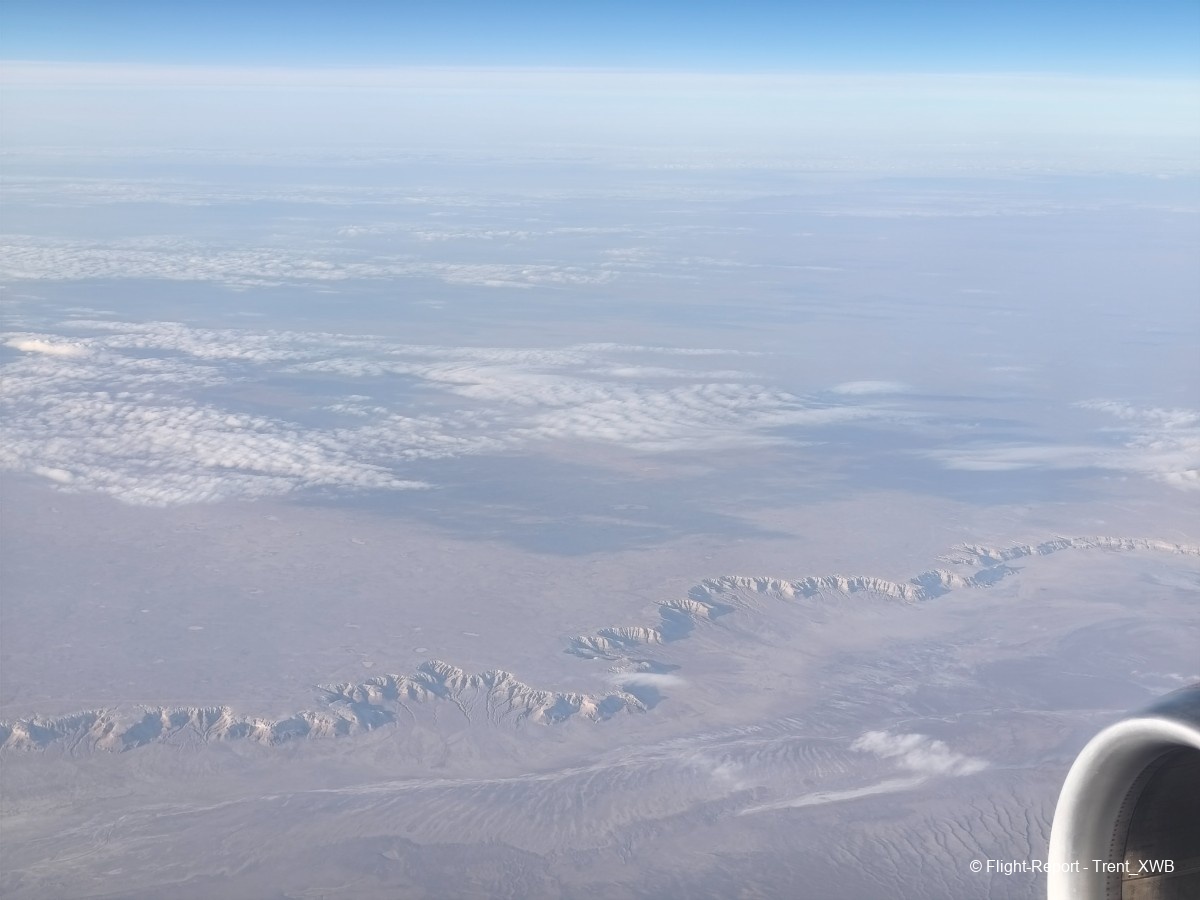
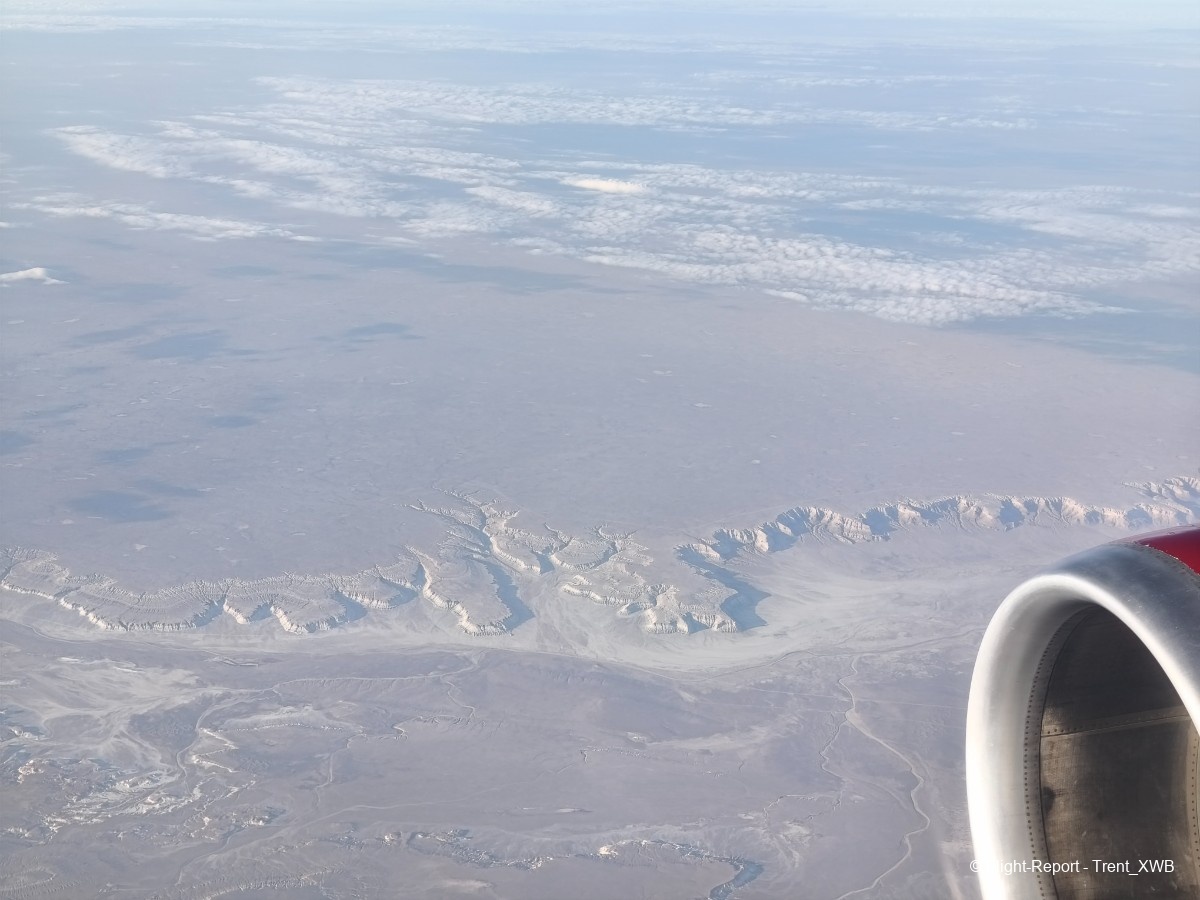
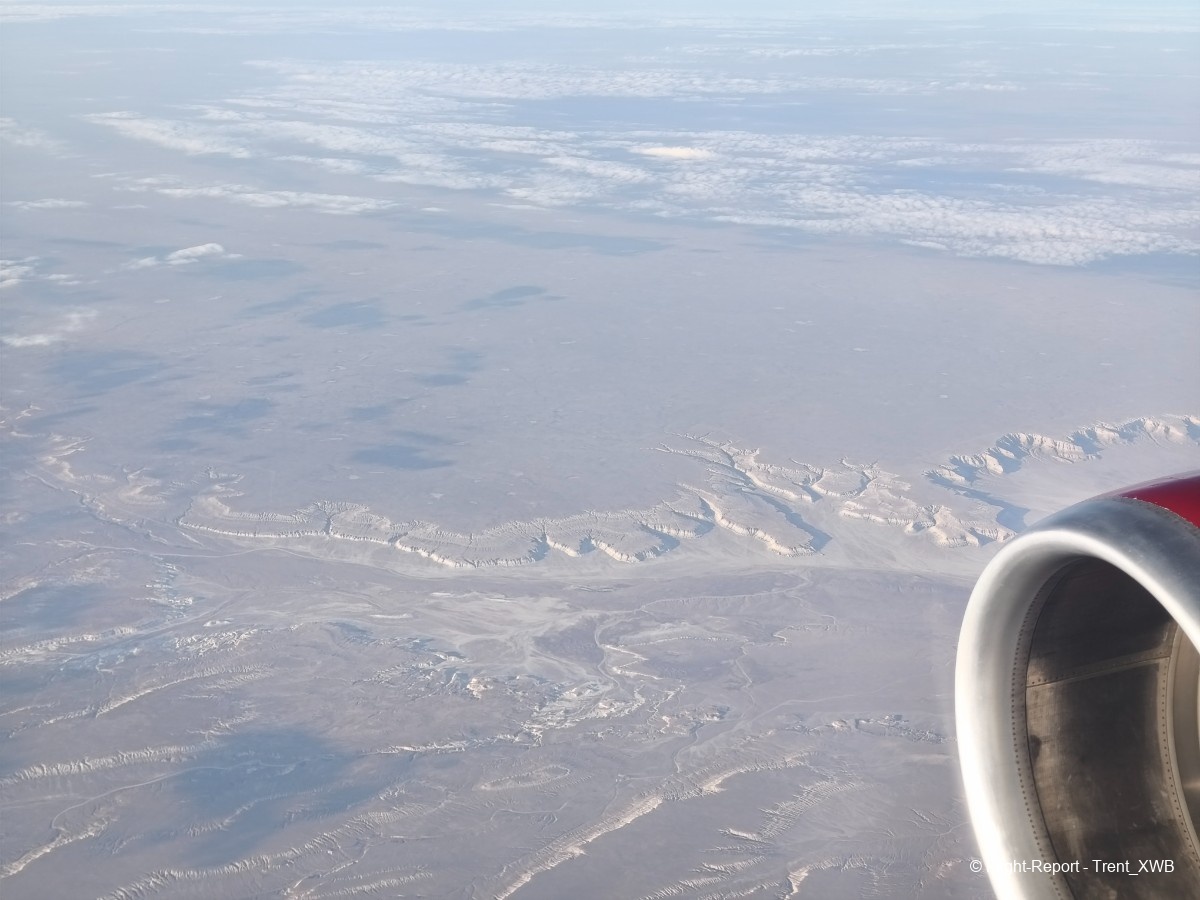
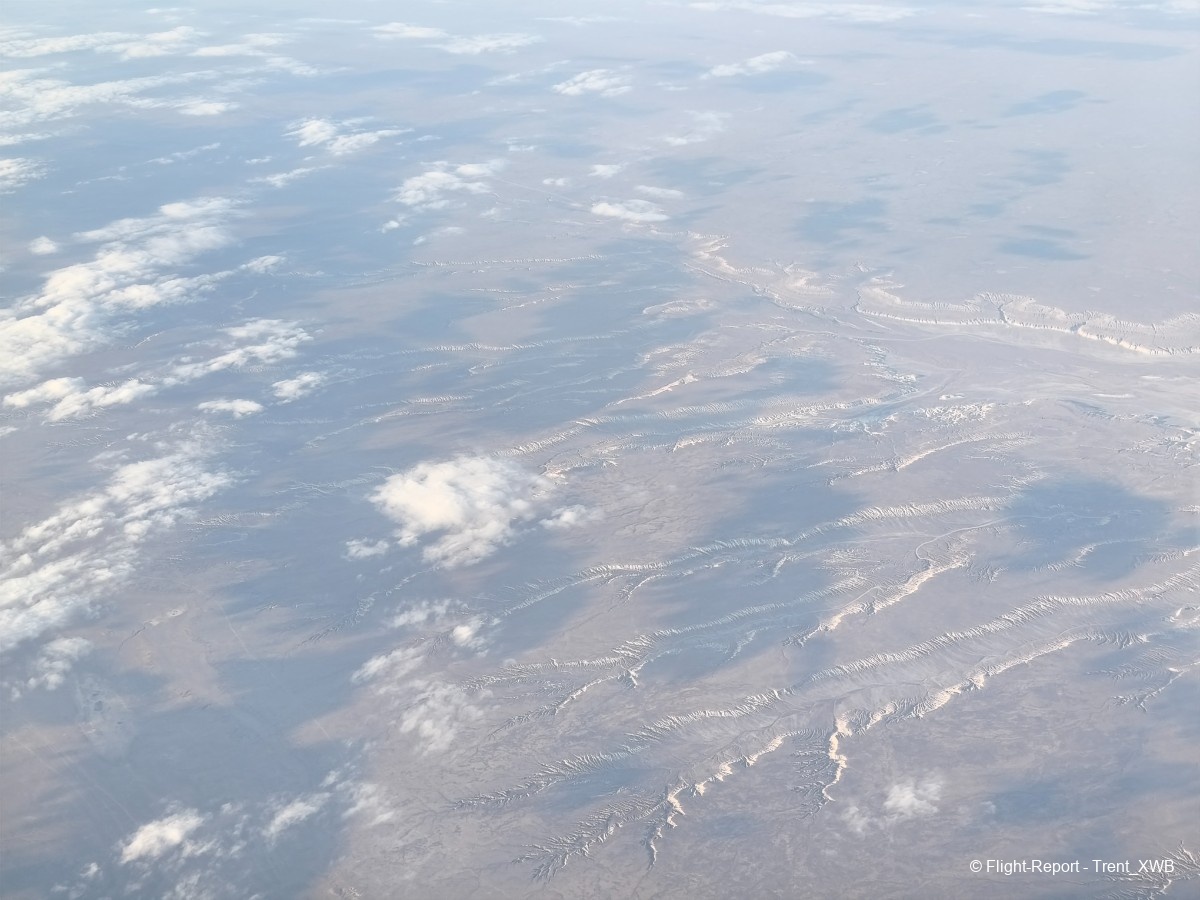
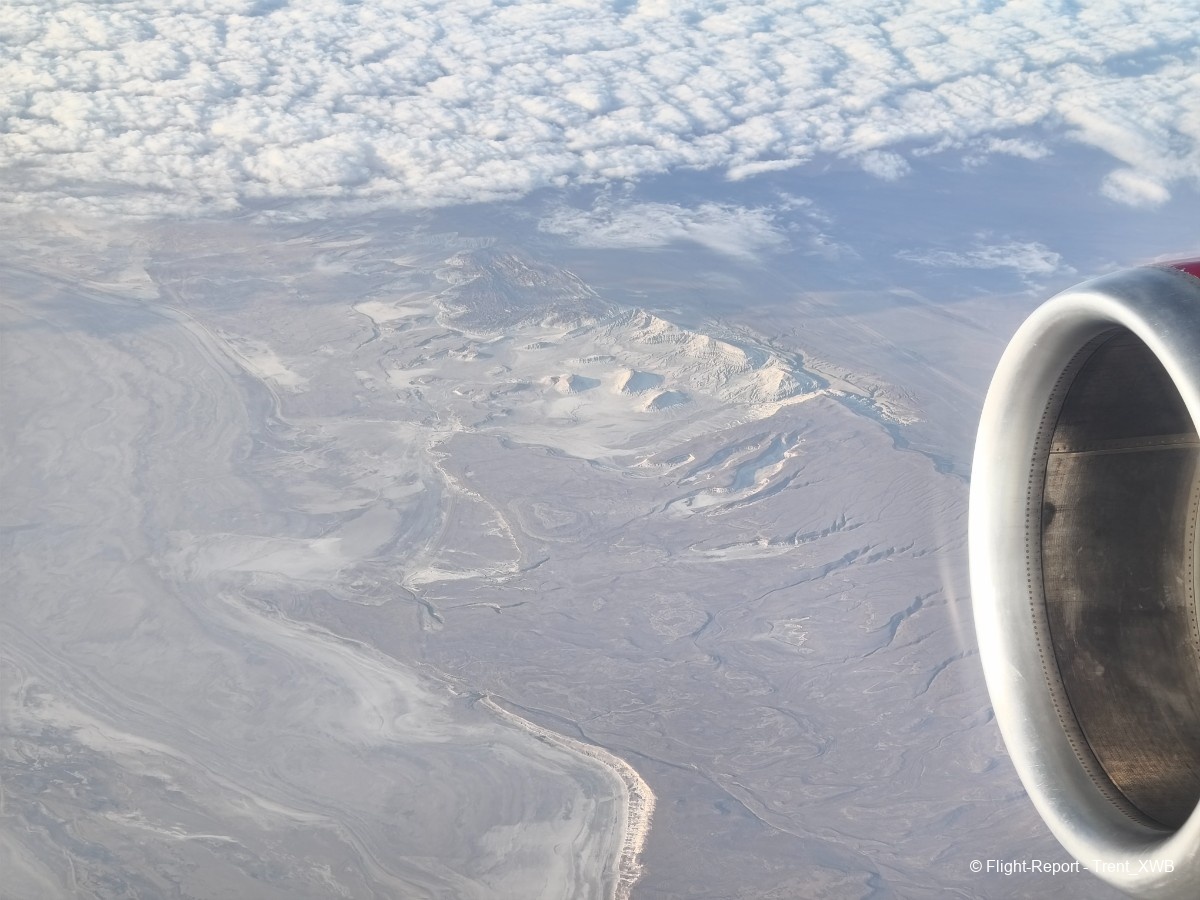
Approaching Garabogazkol.
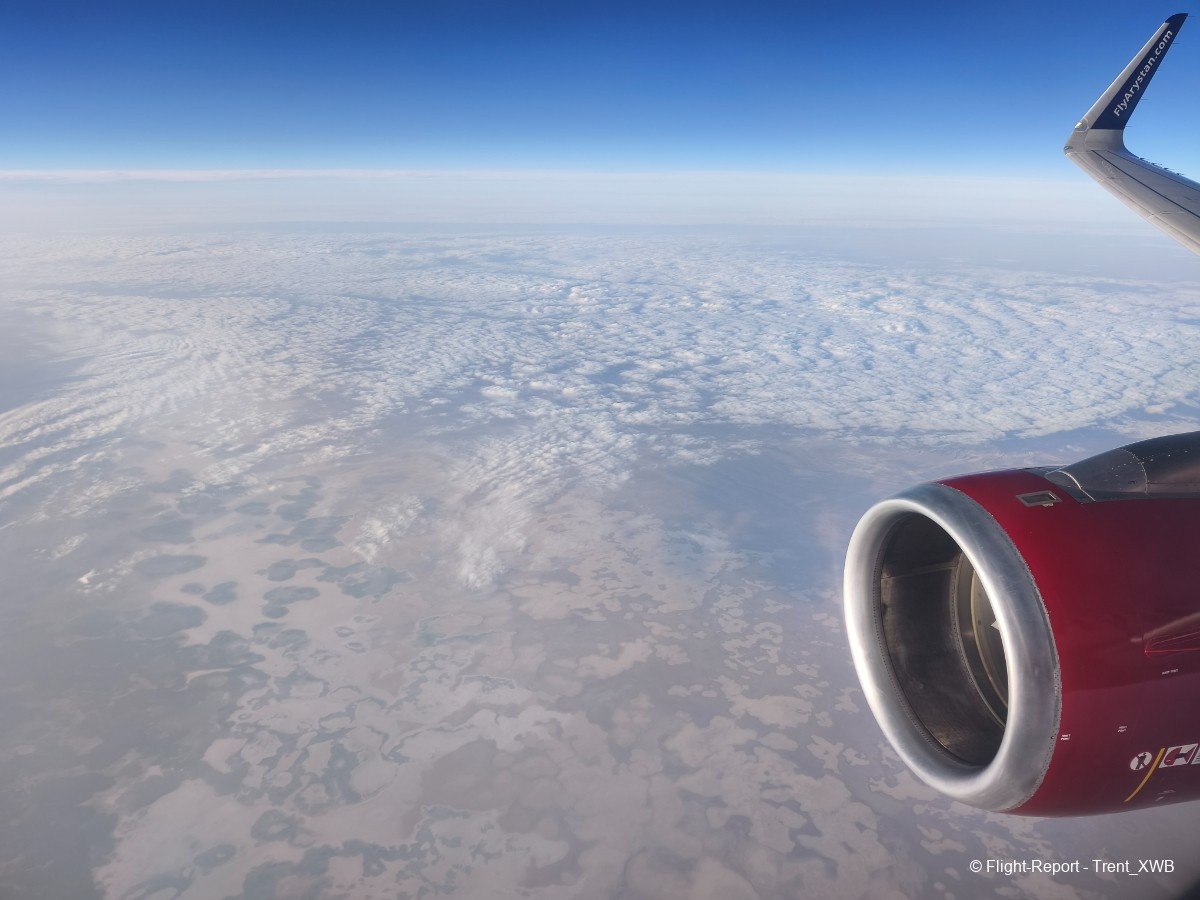
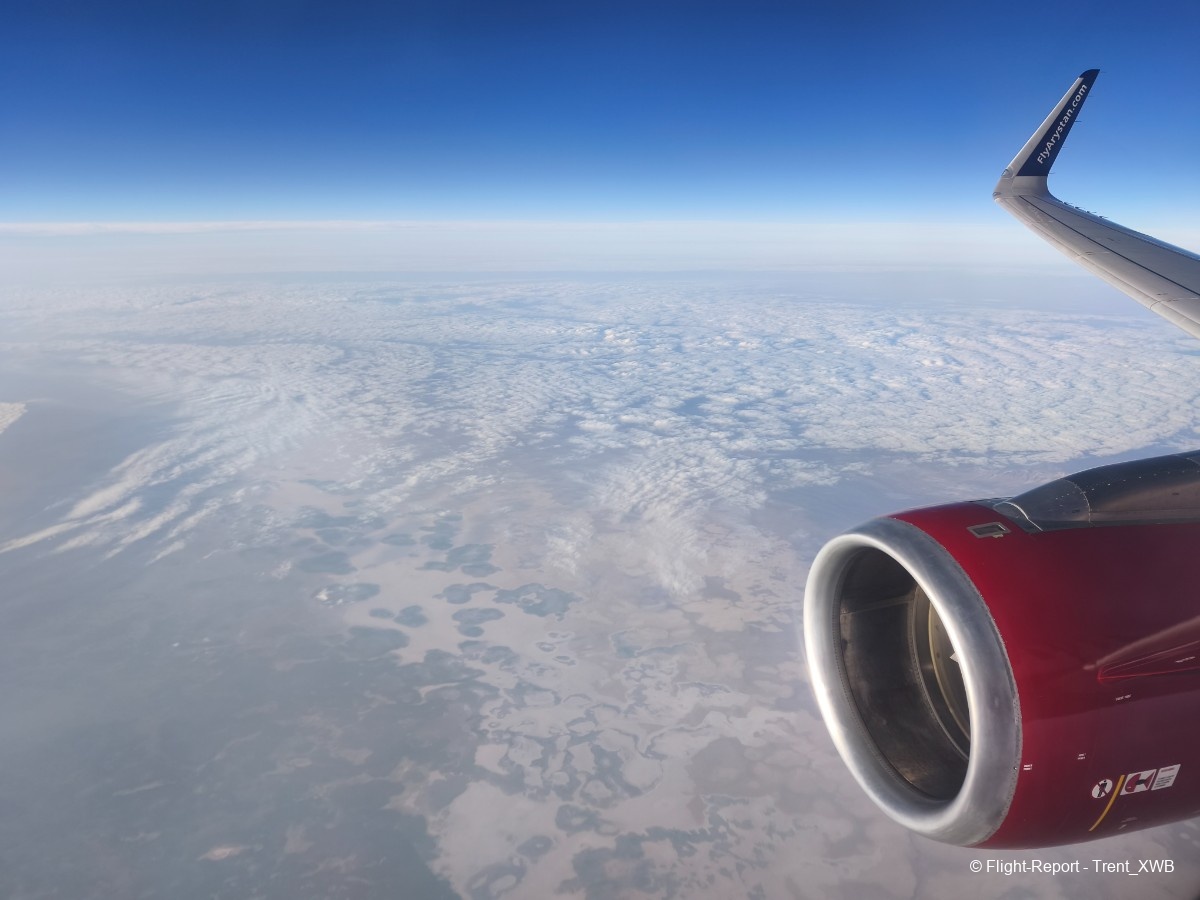
Garabogazkol ("Black Strait Lake") - a shallow lagoon in the westernmost part of Turkmenistan, connected with the Caspian sea.
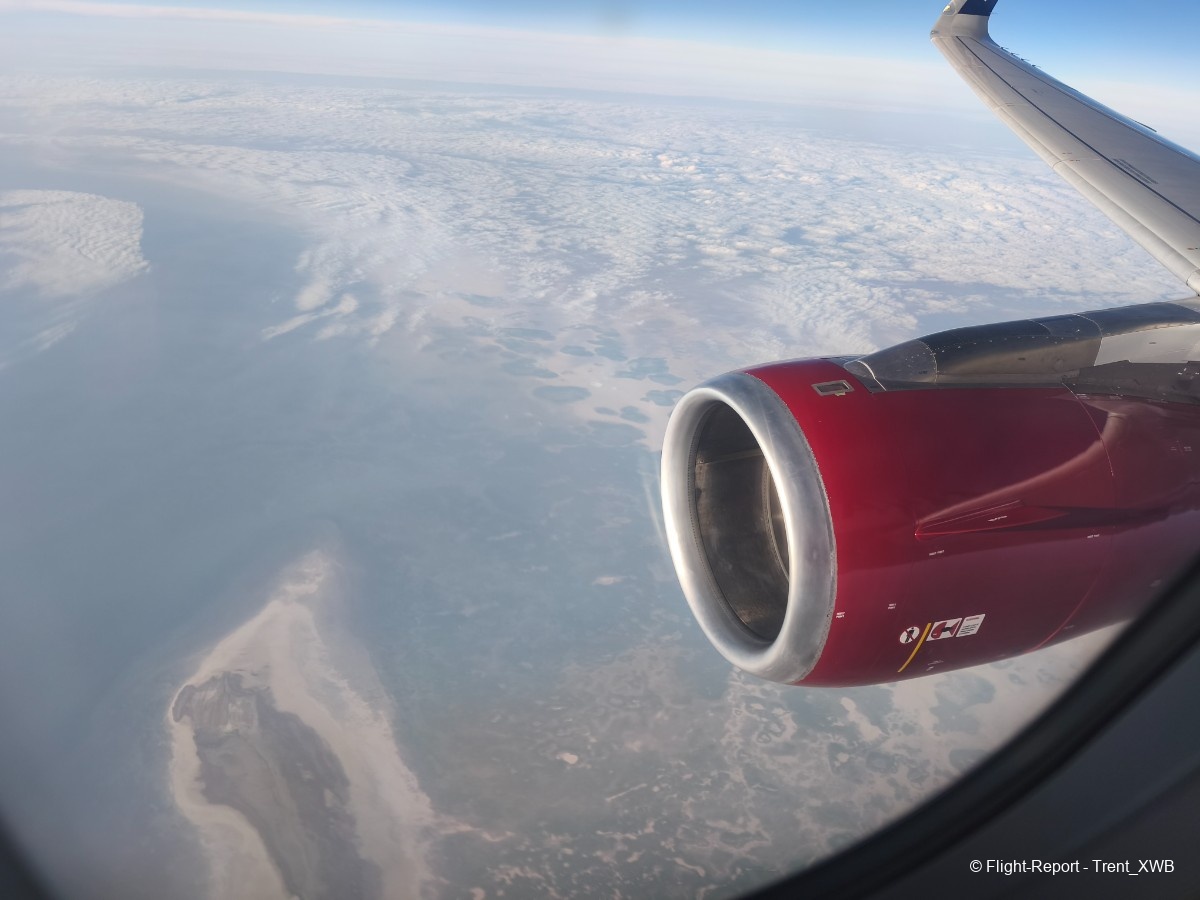
Beautiful "sheet" of clouds over Garabogazkol.
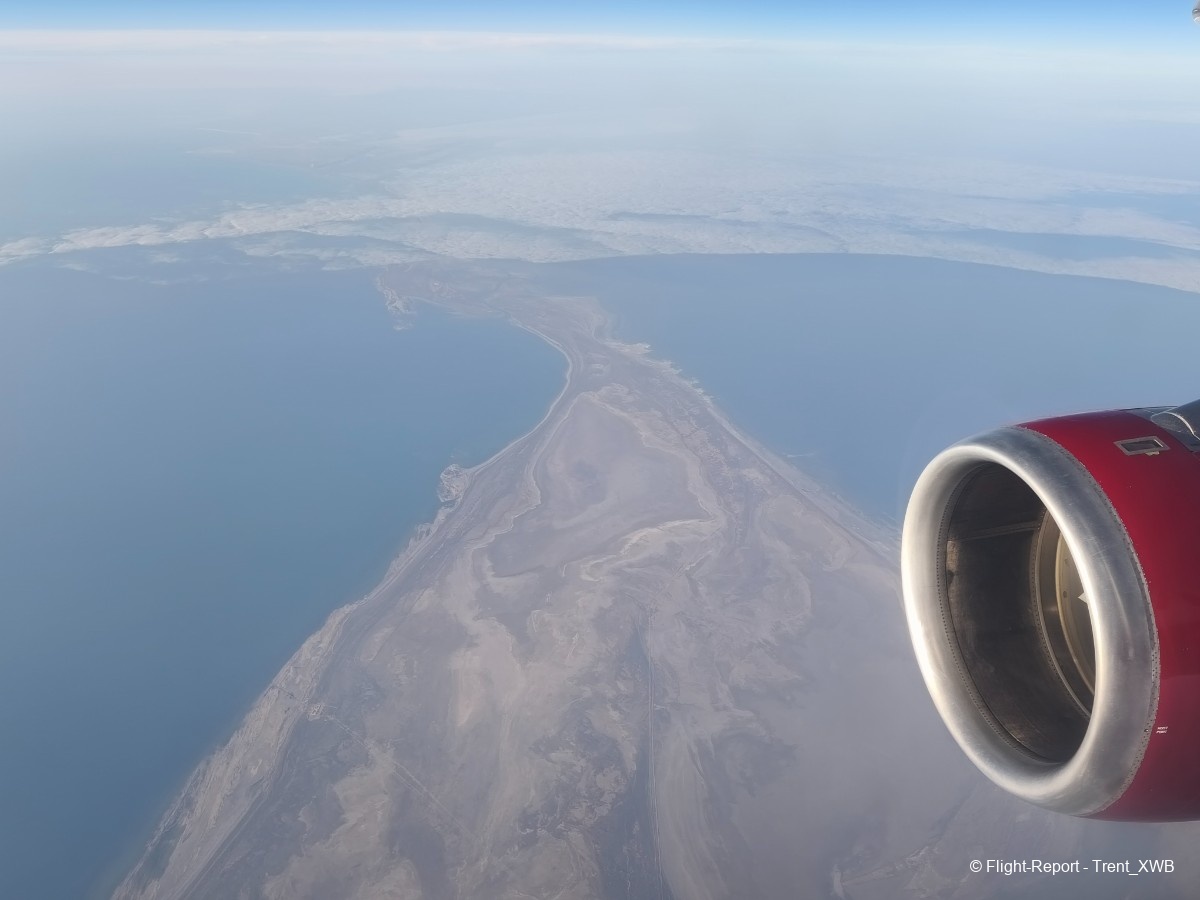
The sea spit, dividing the Caspian Sea (to the left) and Garabogazkol (to the right). We're leaving the Turkmenistan's airspace. I guess among the reasons that led FS to discontinue CIT-KUT flights were not only insufficient loads, but also necessity to pay to Uzbekistan and Turkmenistan for overflight rights. For example, FS flights between ALA and KUT (which have stable high loads) make a detour to north to not use Uzbekistan's airspace.
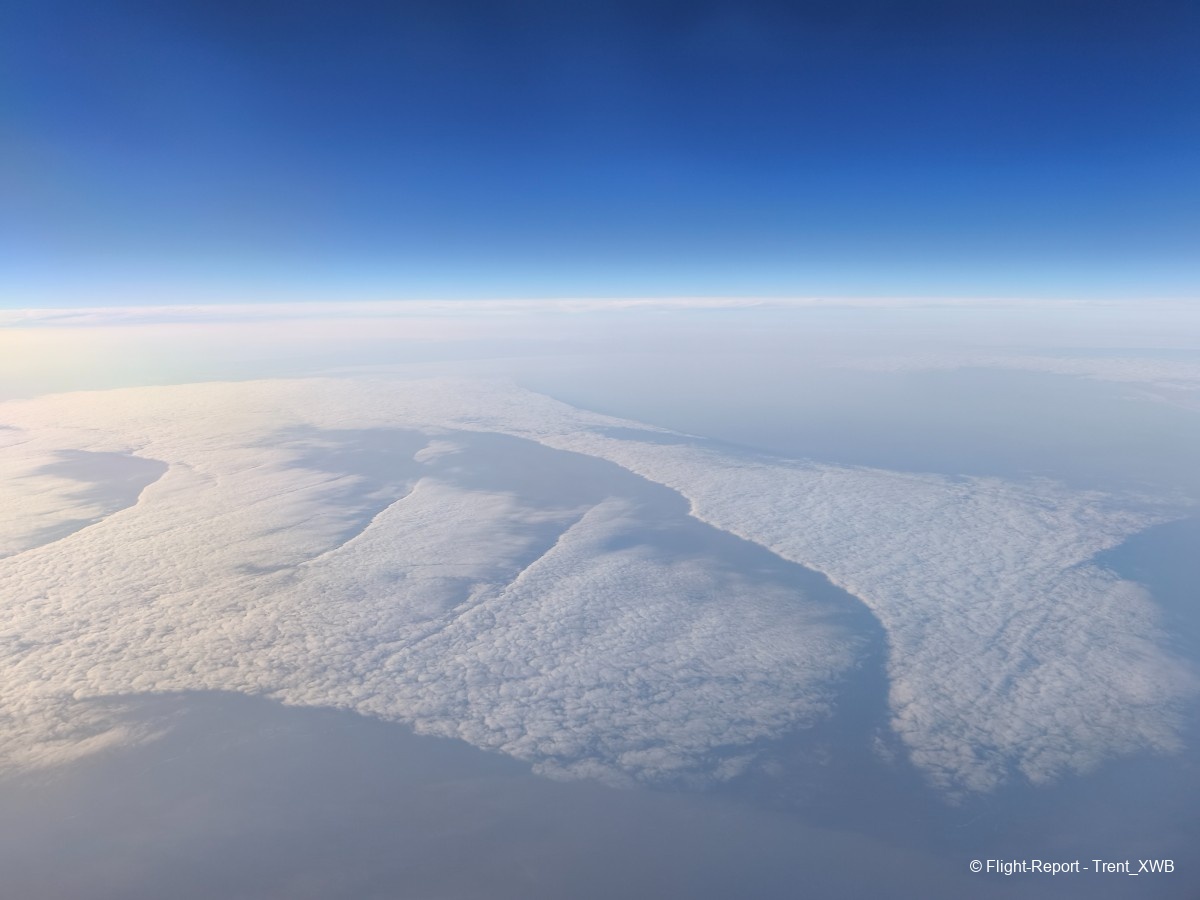
Beautiful "sheets" of clouds over the Caspian Sea with some interesting border effects.
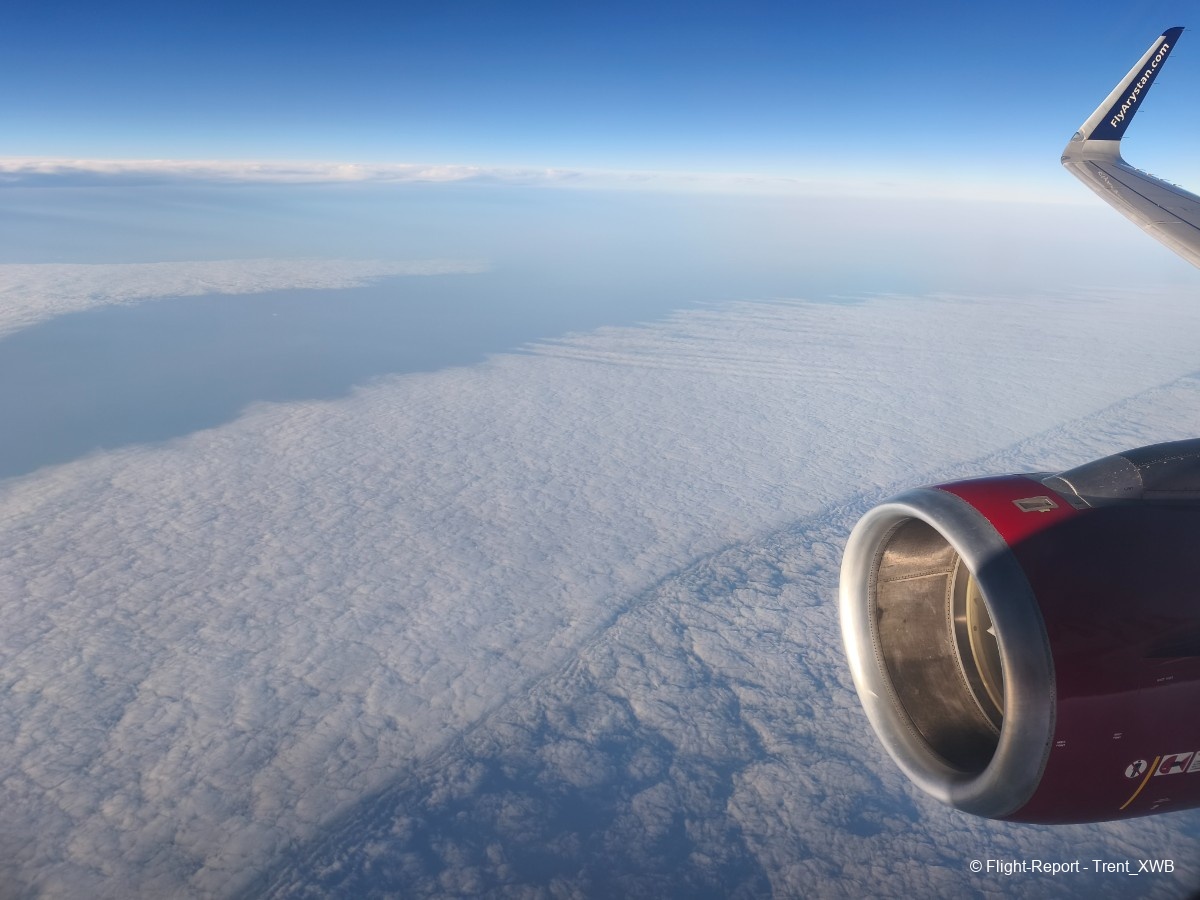
The western part of Caspian was completely covered by clouds.
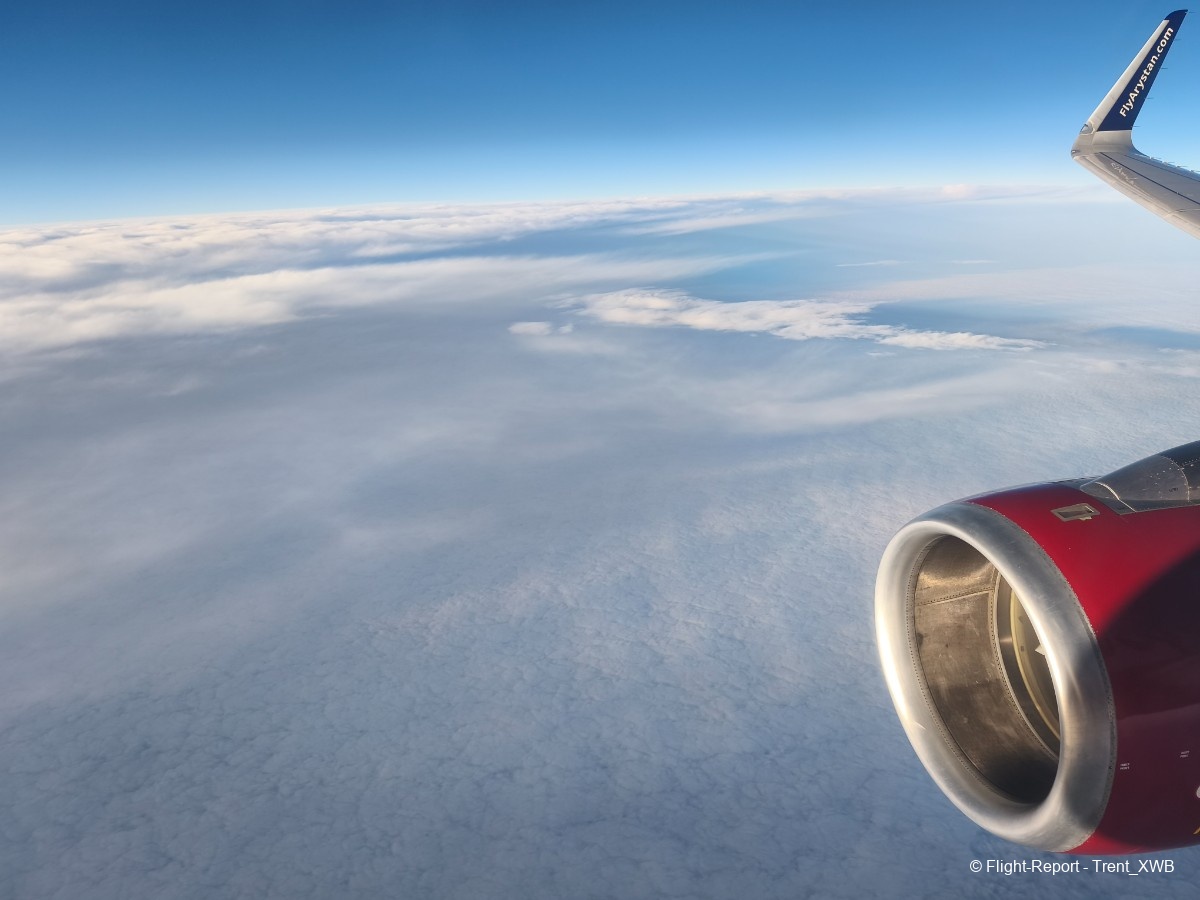
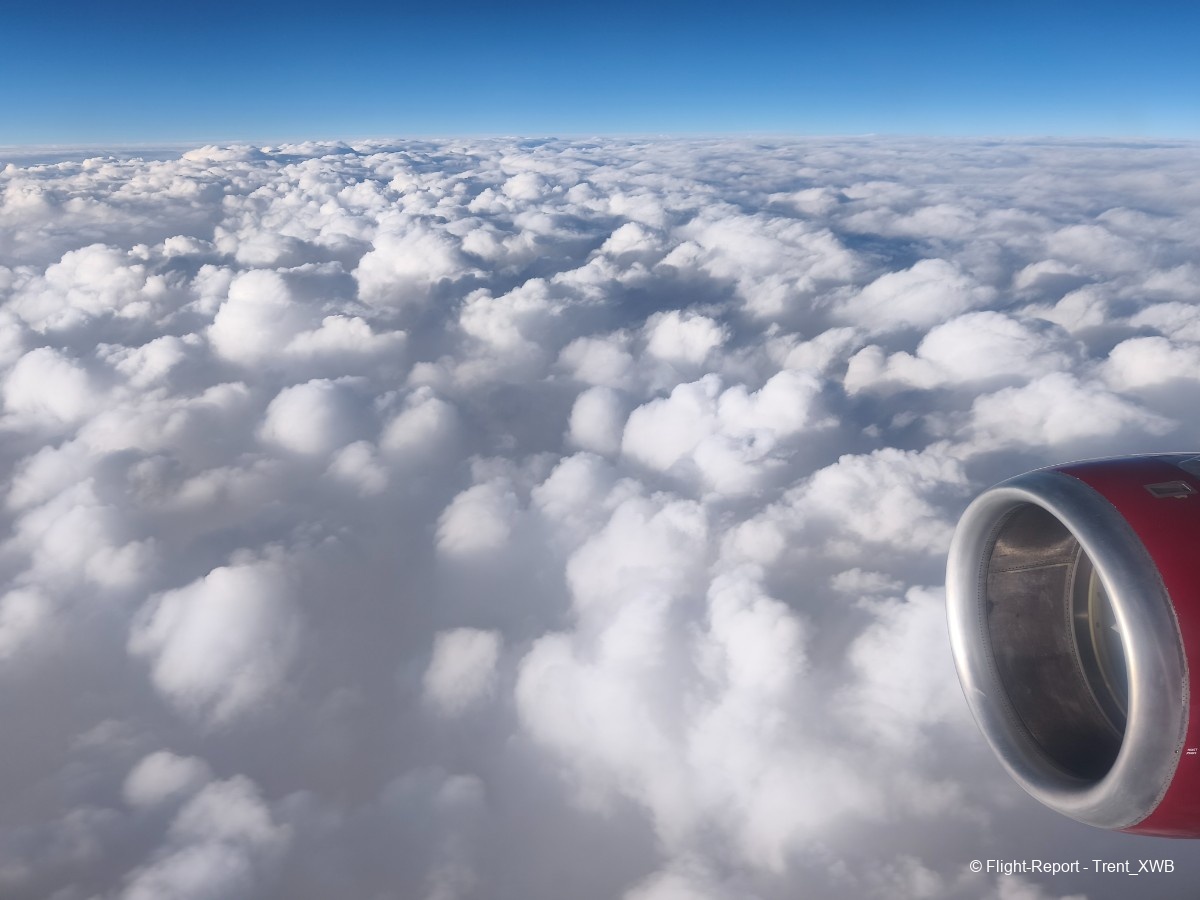
Beautiful fluffy clouds near Azerbaijan.
And then the mountains of East Caucasus begin to rise above the clouds.
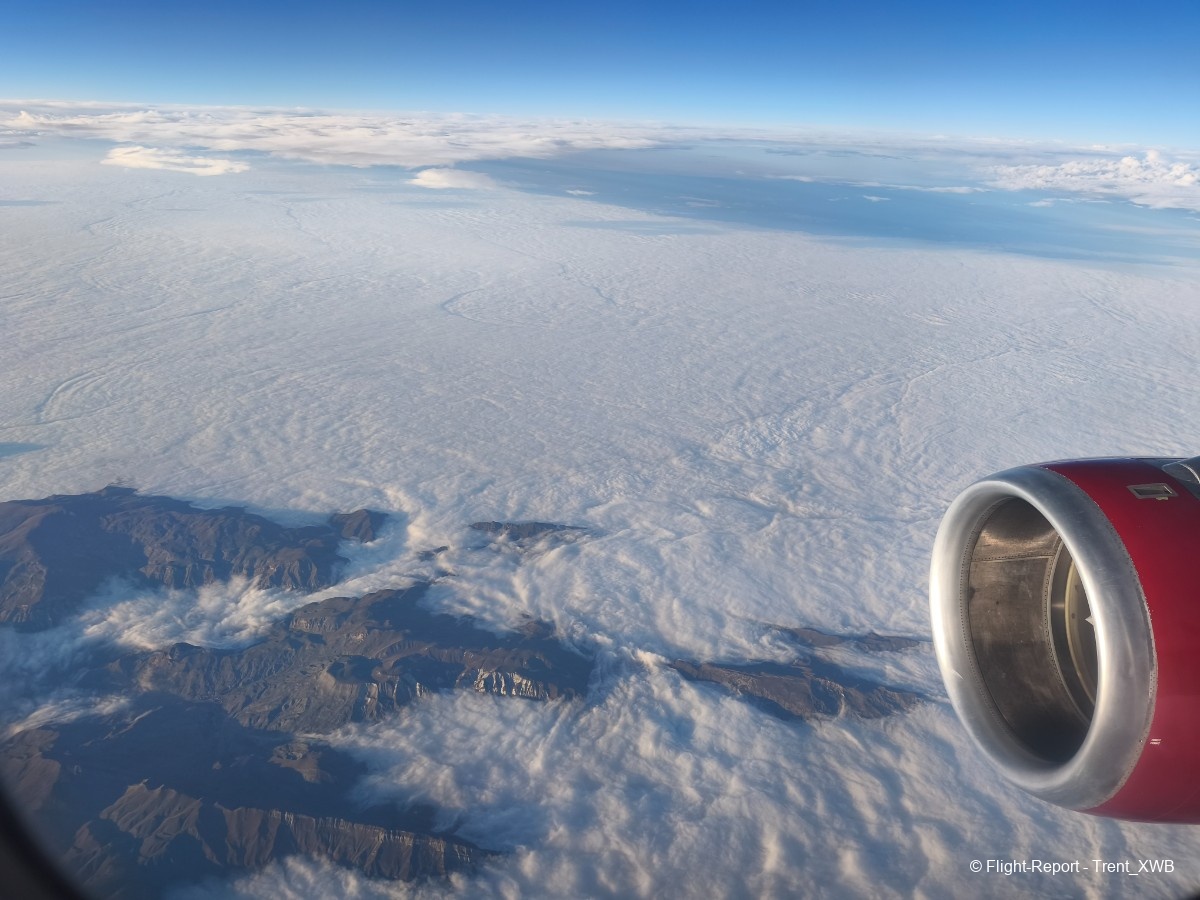
We're flying in the same "bottleneck" over Azerbaijan between Russia and Iran, where I flew in late November 2023 on the unforgettable Korean Air ICN-CDG flight on B748, and I see the same beautiful mountains I saw from the Jumbo. Let's remind that FS, being part of KC group, avoids Russian airspace. This very flight CIT-KUT, connecting Kazakhstan and Georgia via airspaces of Uzbekistan, Turkmenistan and Azerbaijan, is an excellent illustration of the fact how post-Soviet countries build ties between themselves without Russia and live without Russia.
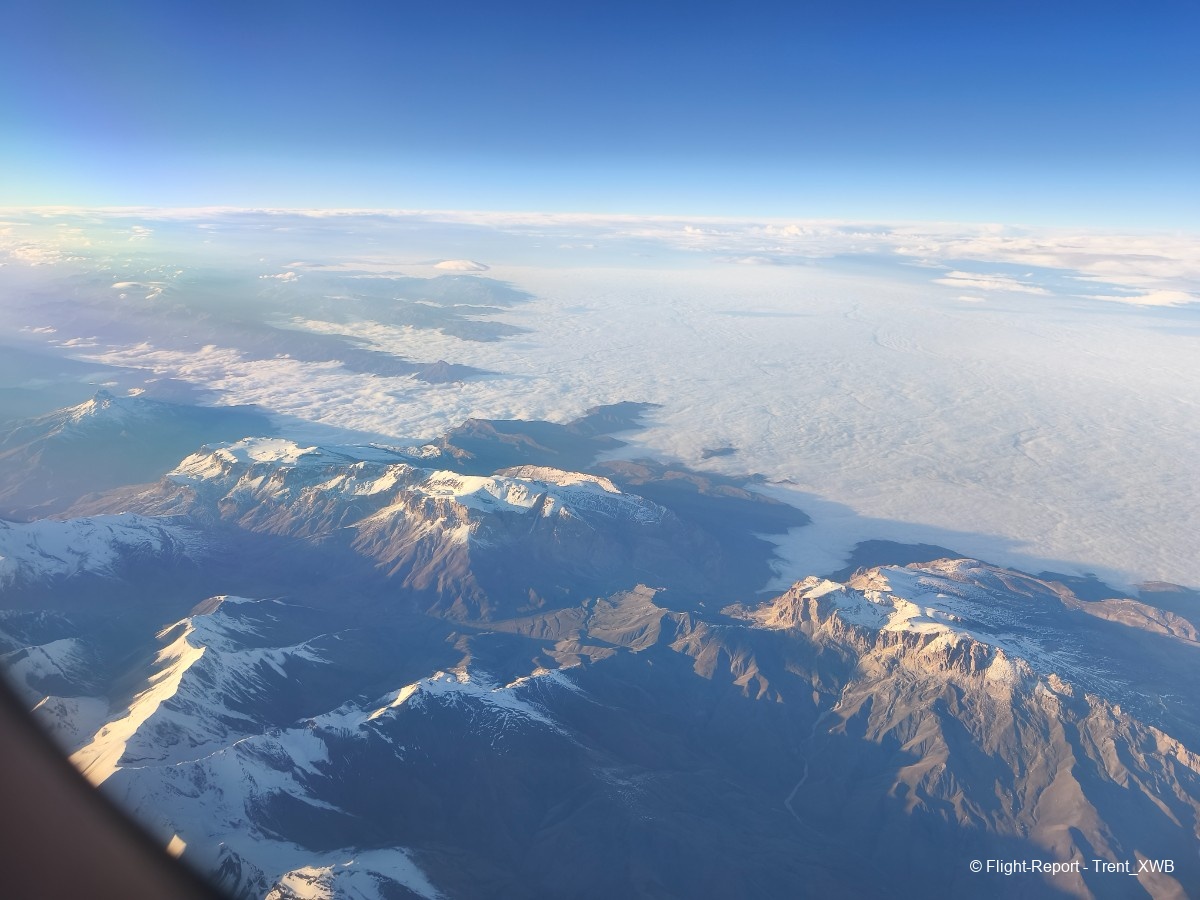
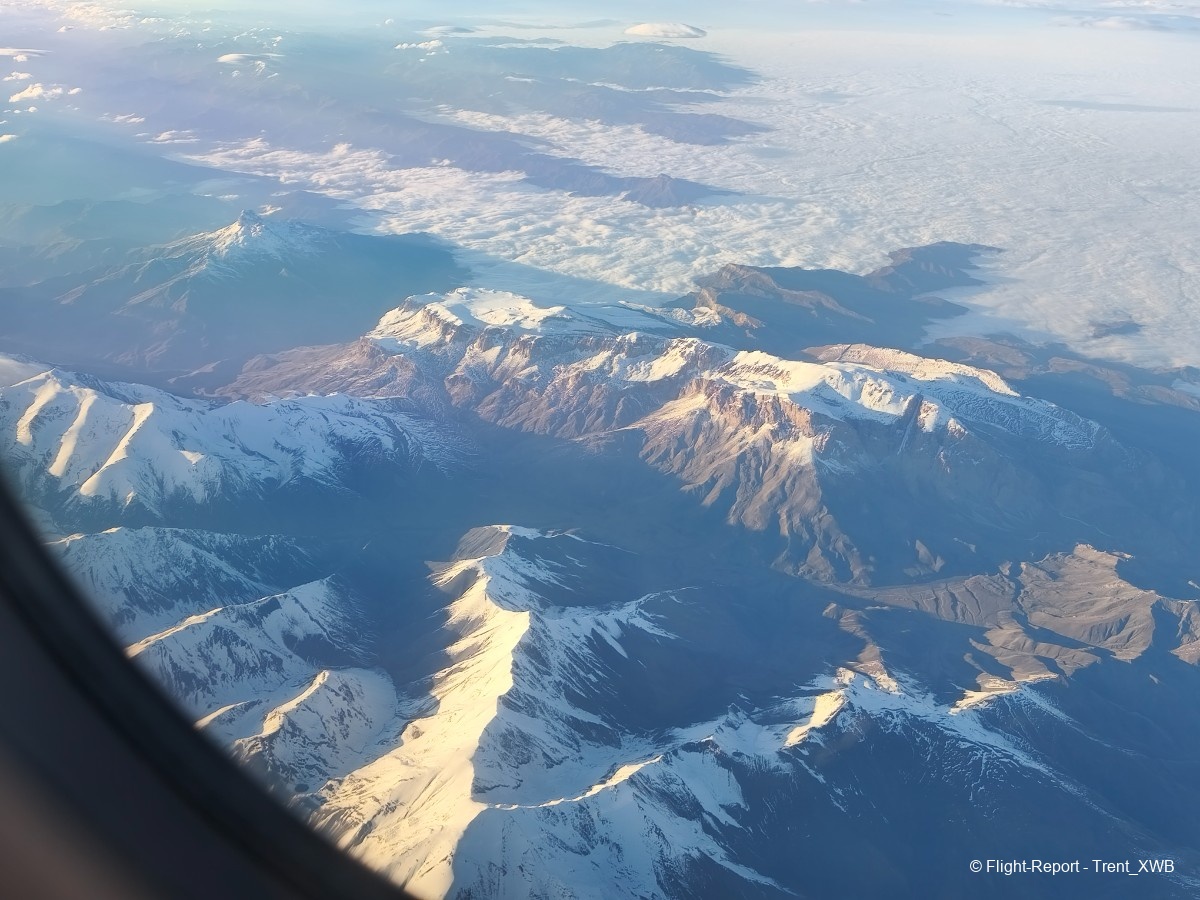
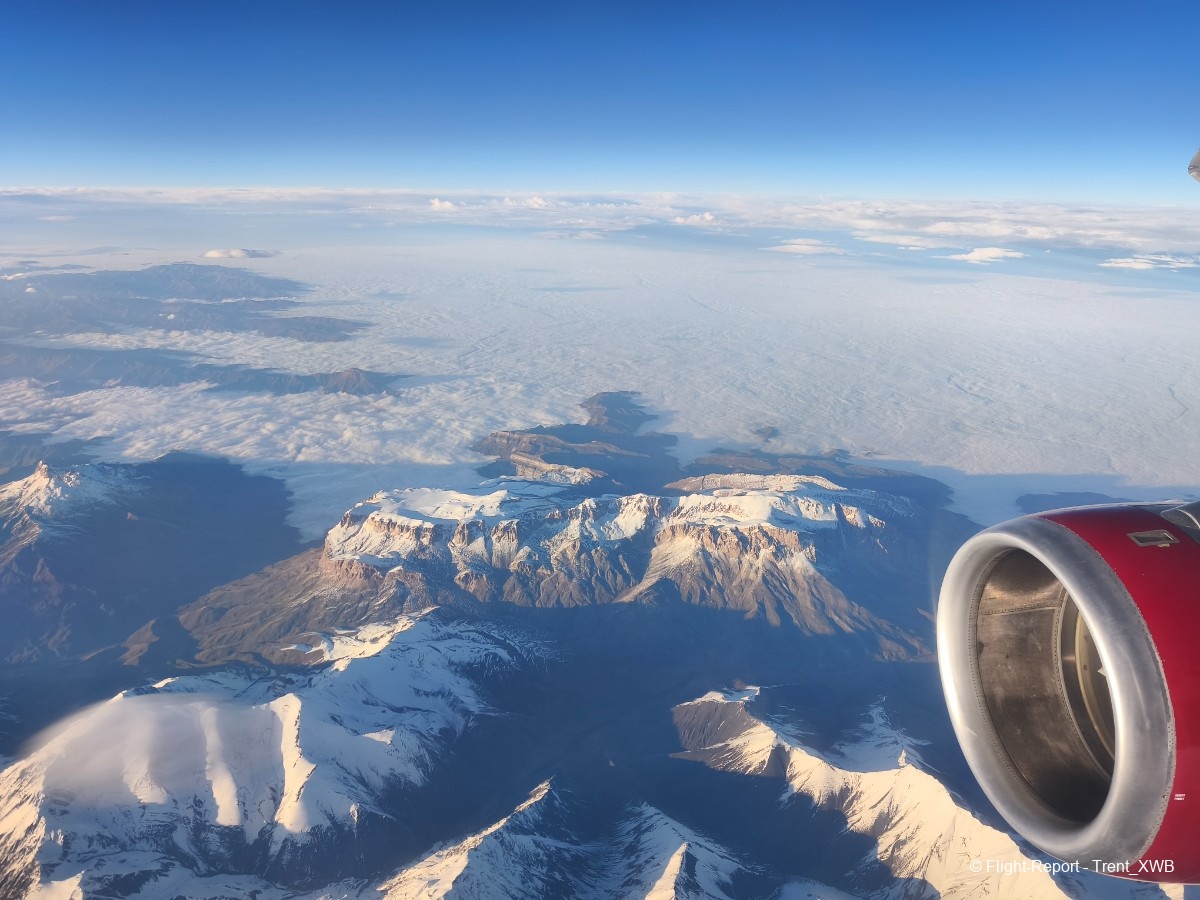
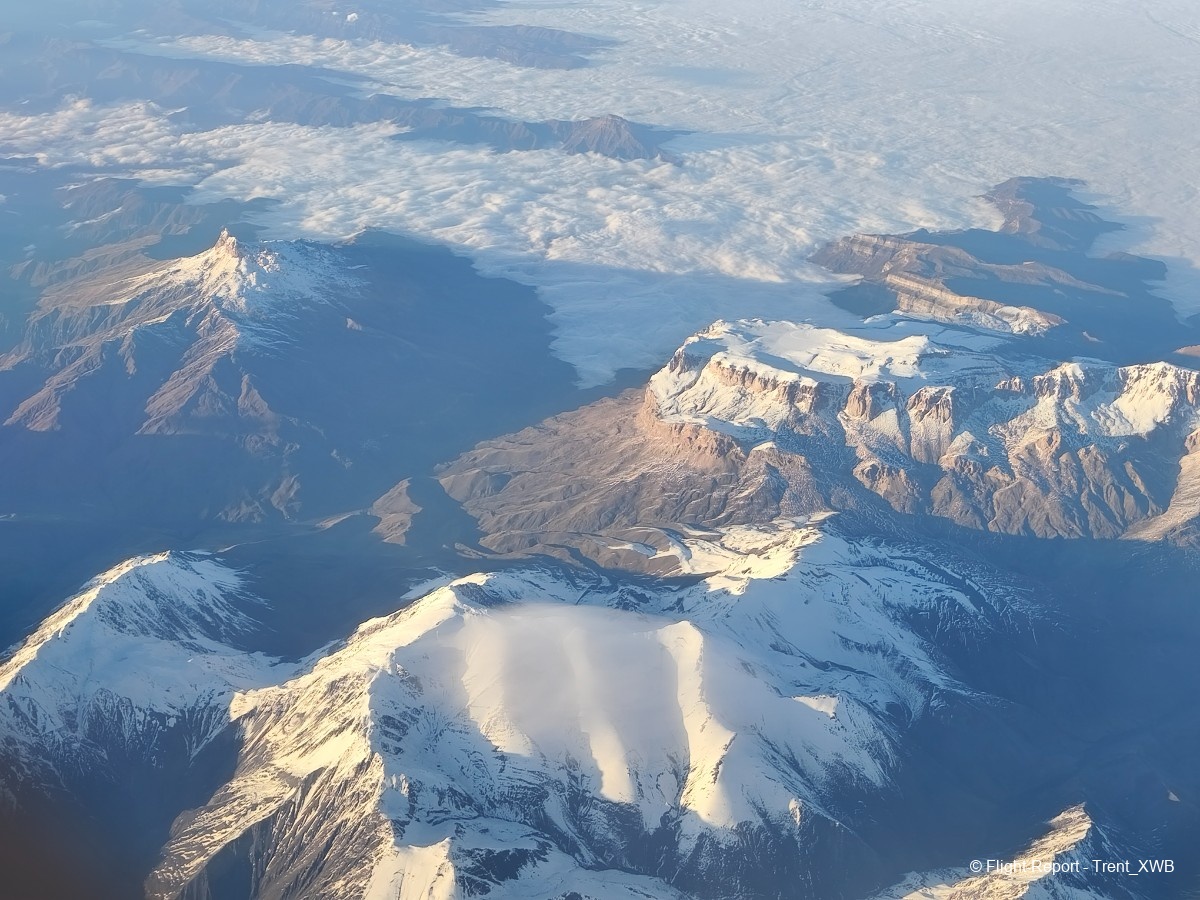
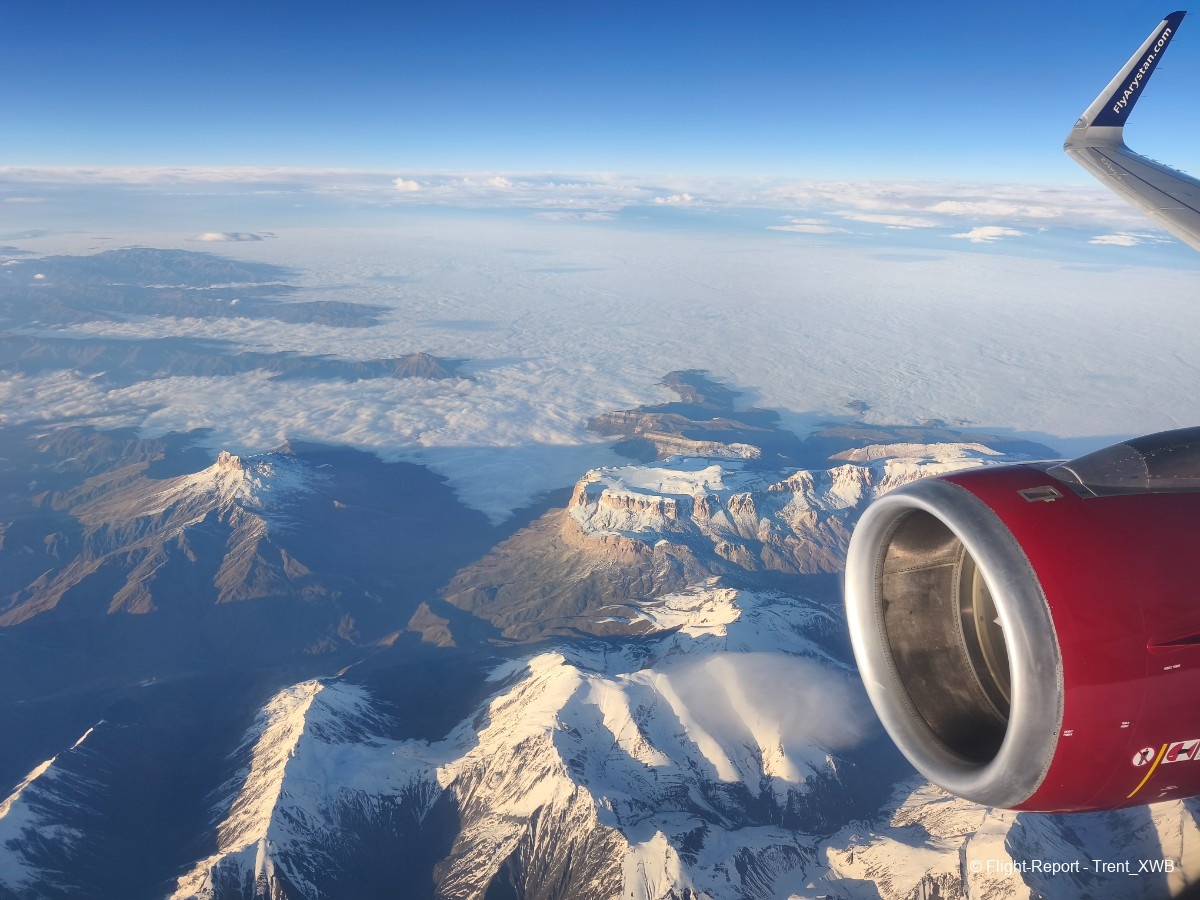
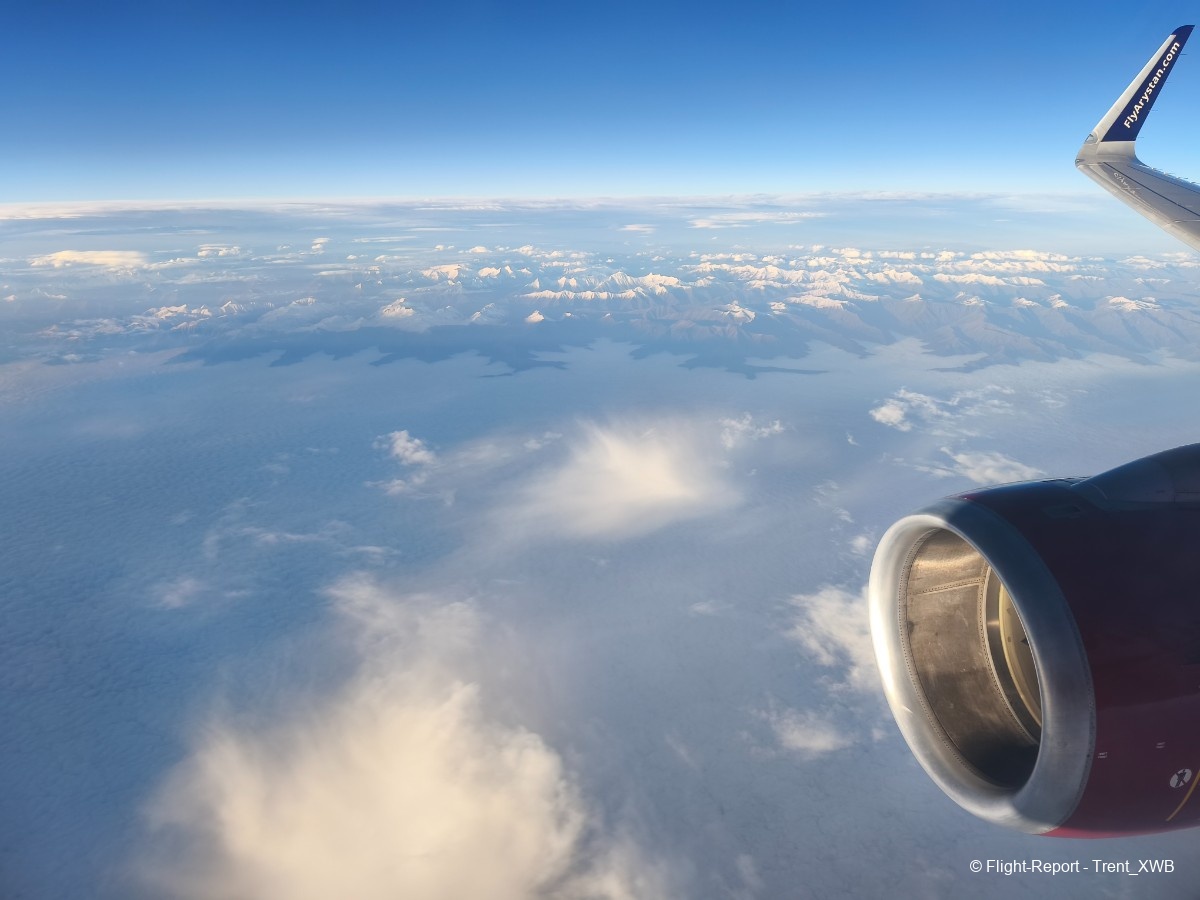
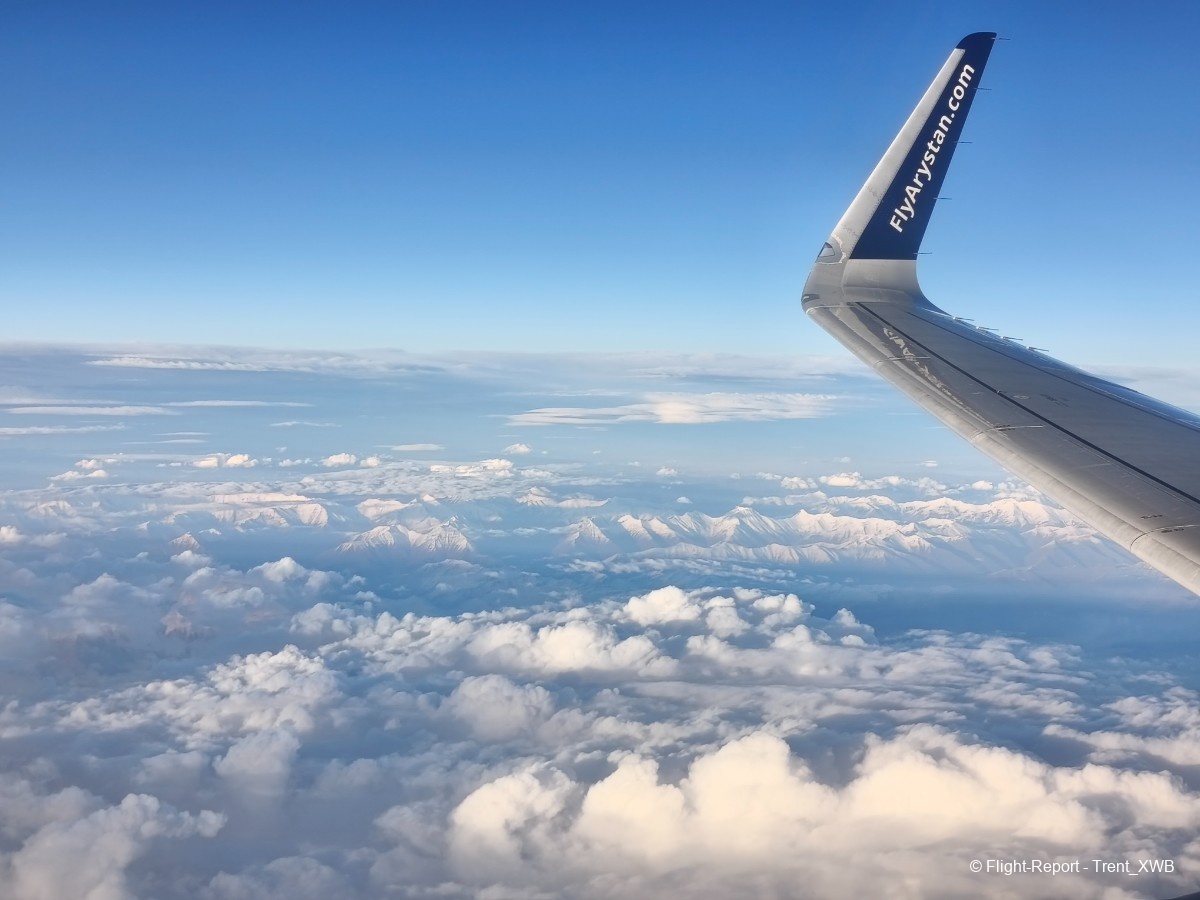
Dark and snow-capped East Caucasian mountains are stunning in the evening light. The cloud layer below only adds to the beauty of these sights.
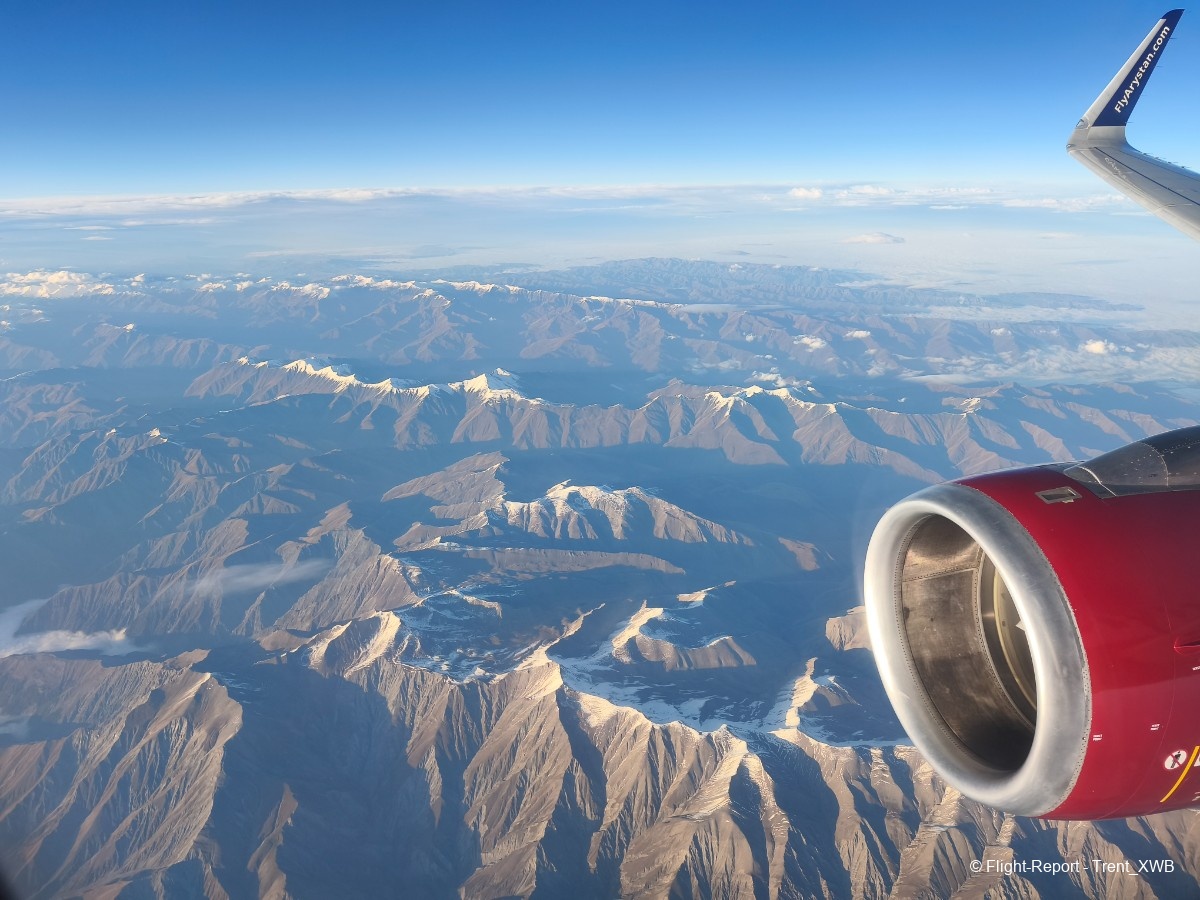
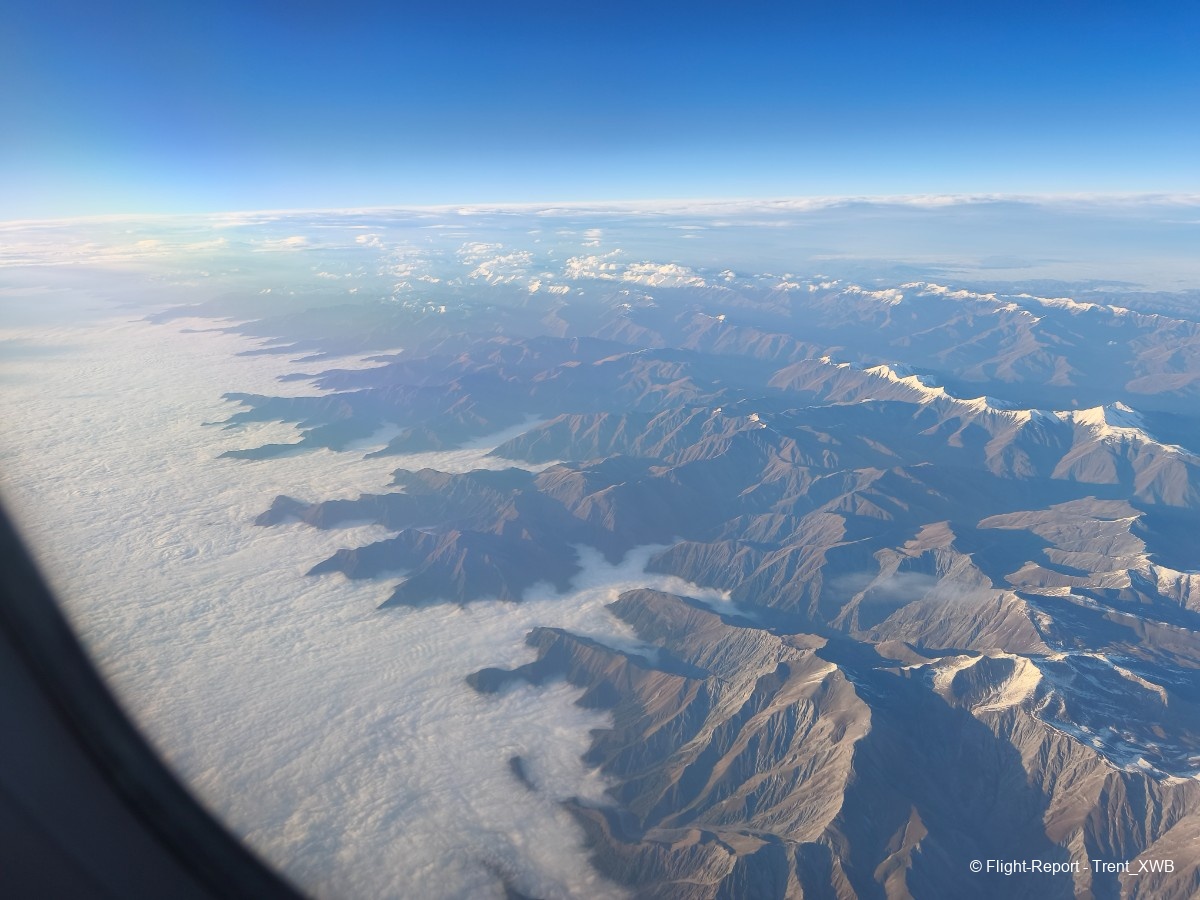
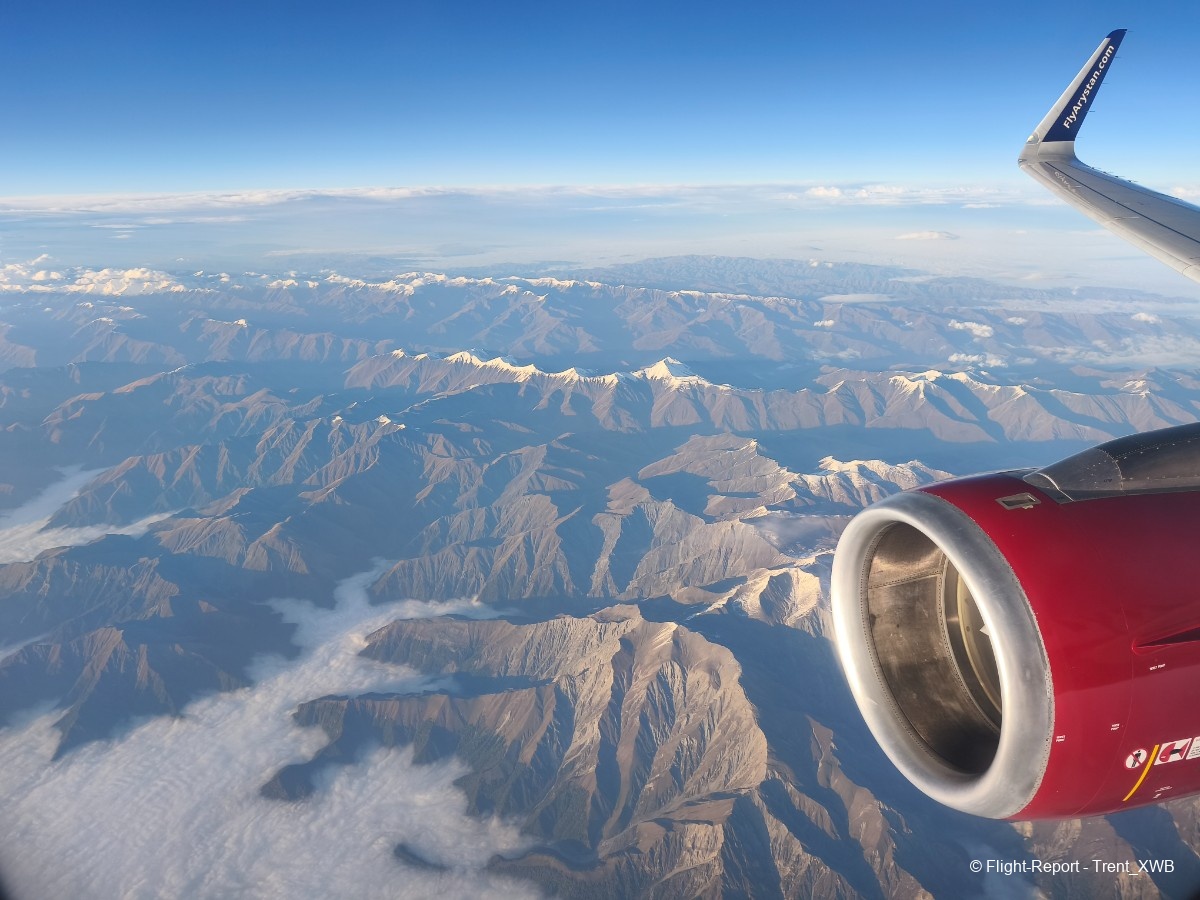
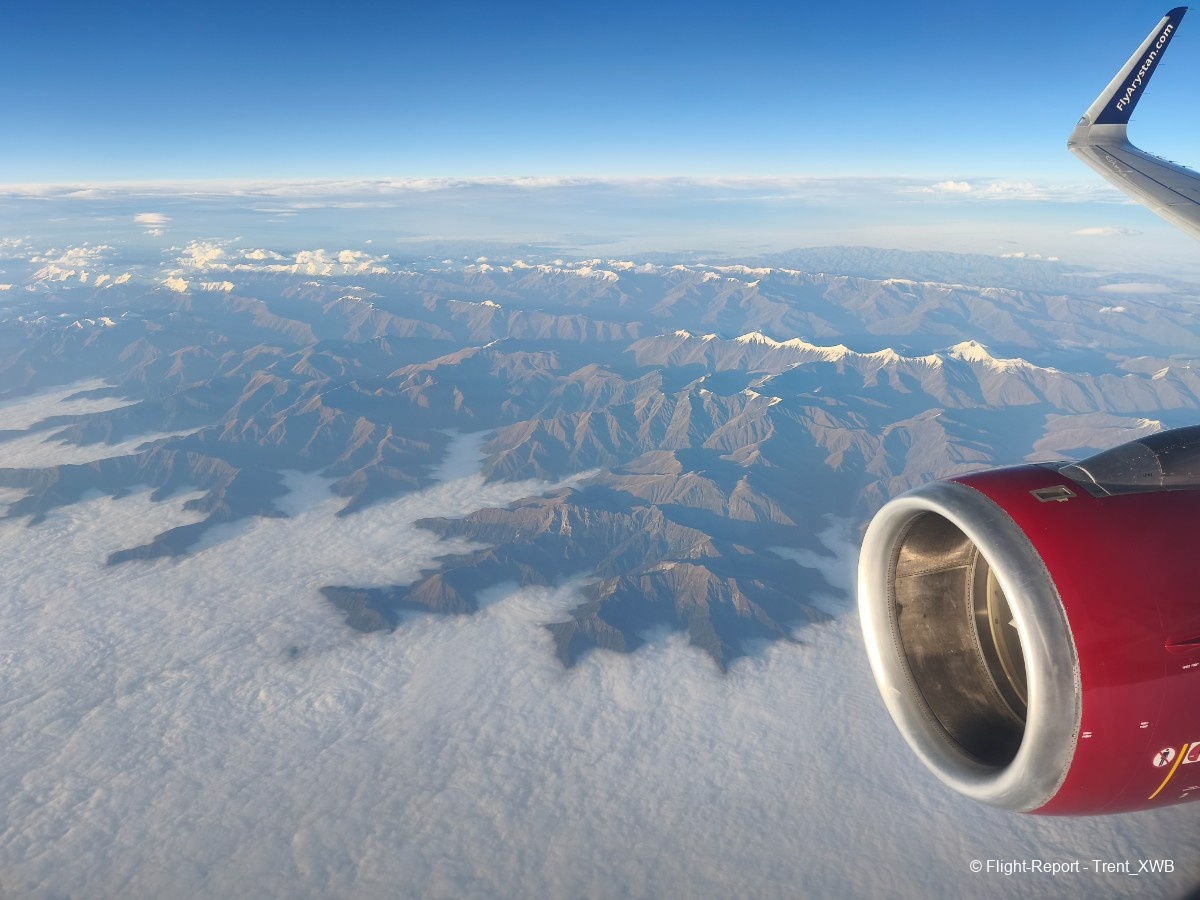
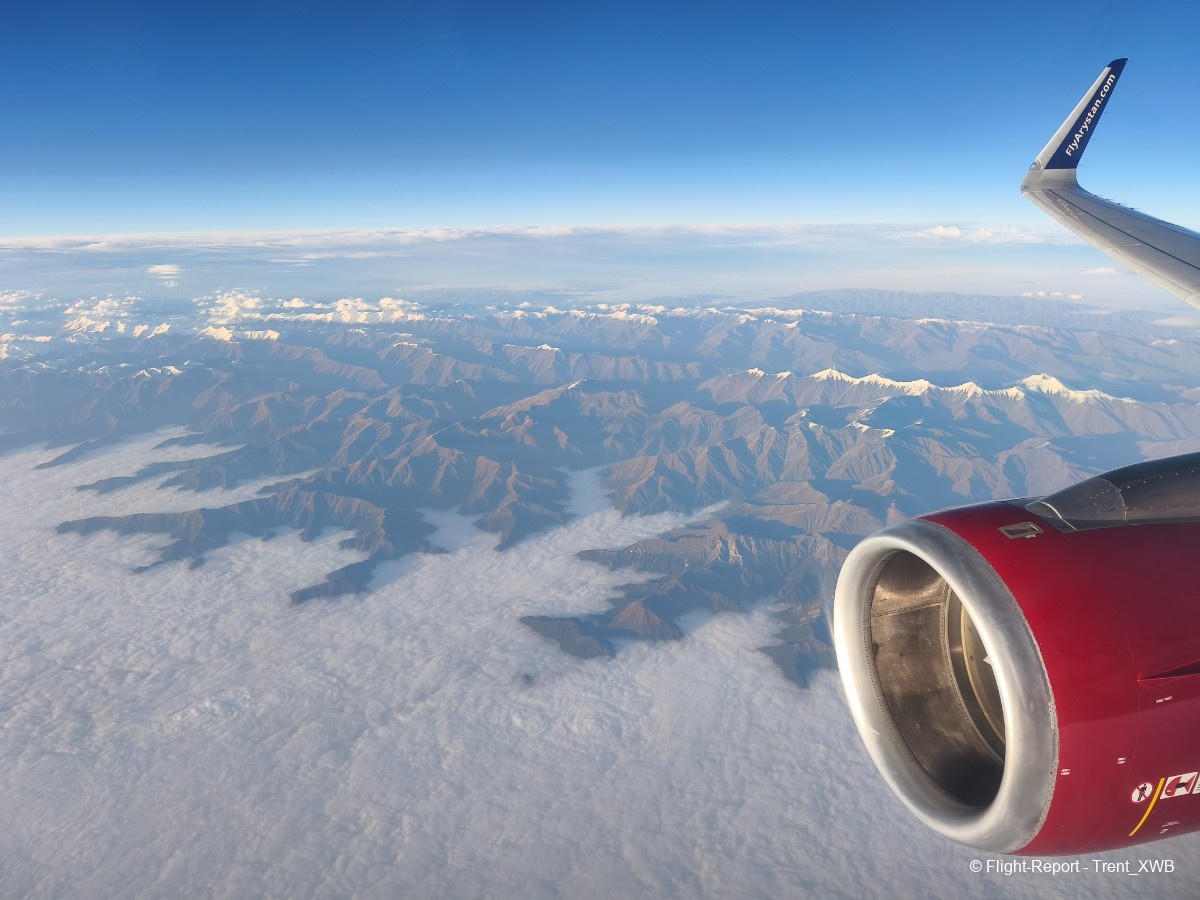
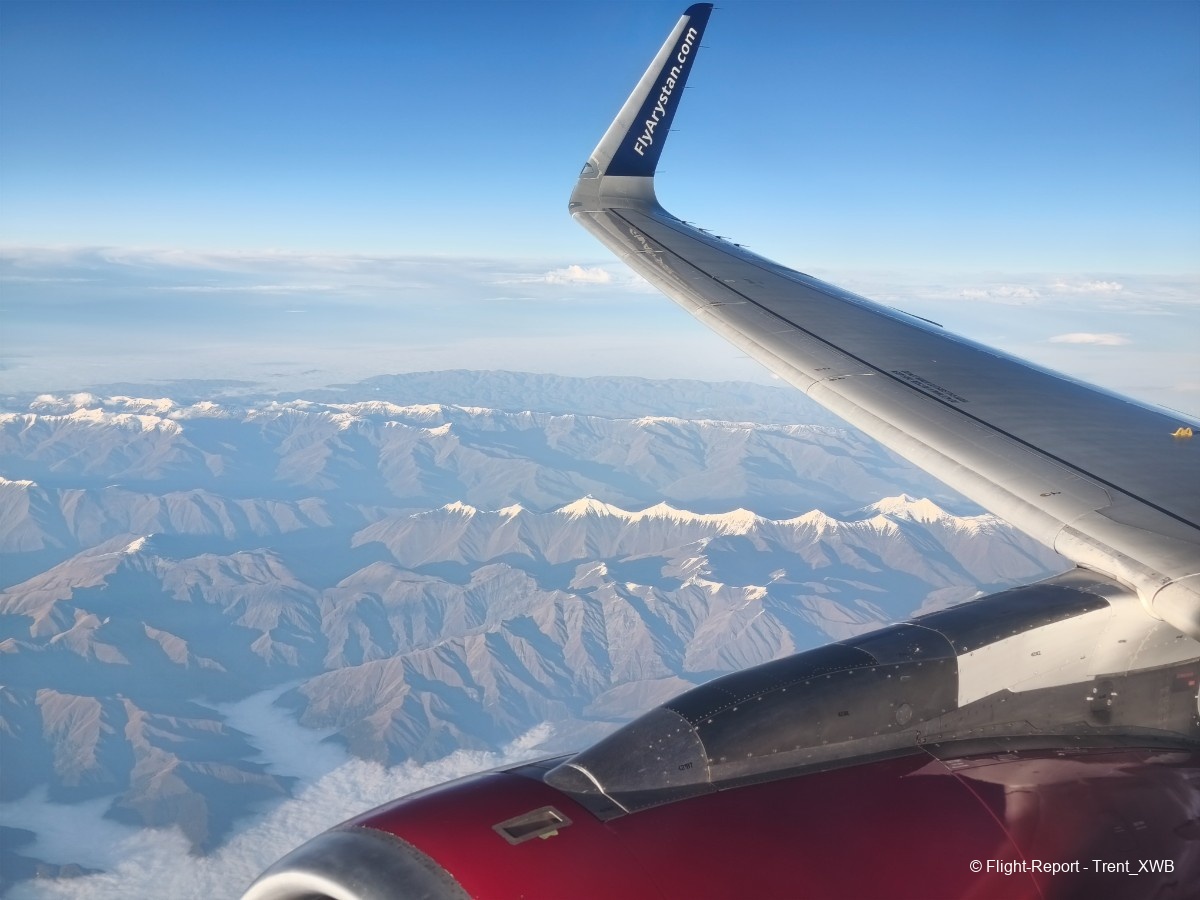
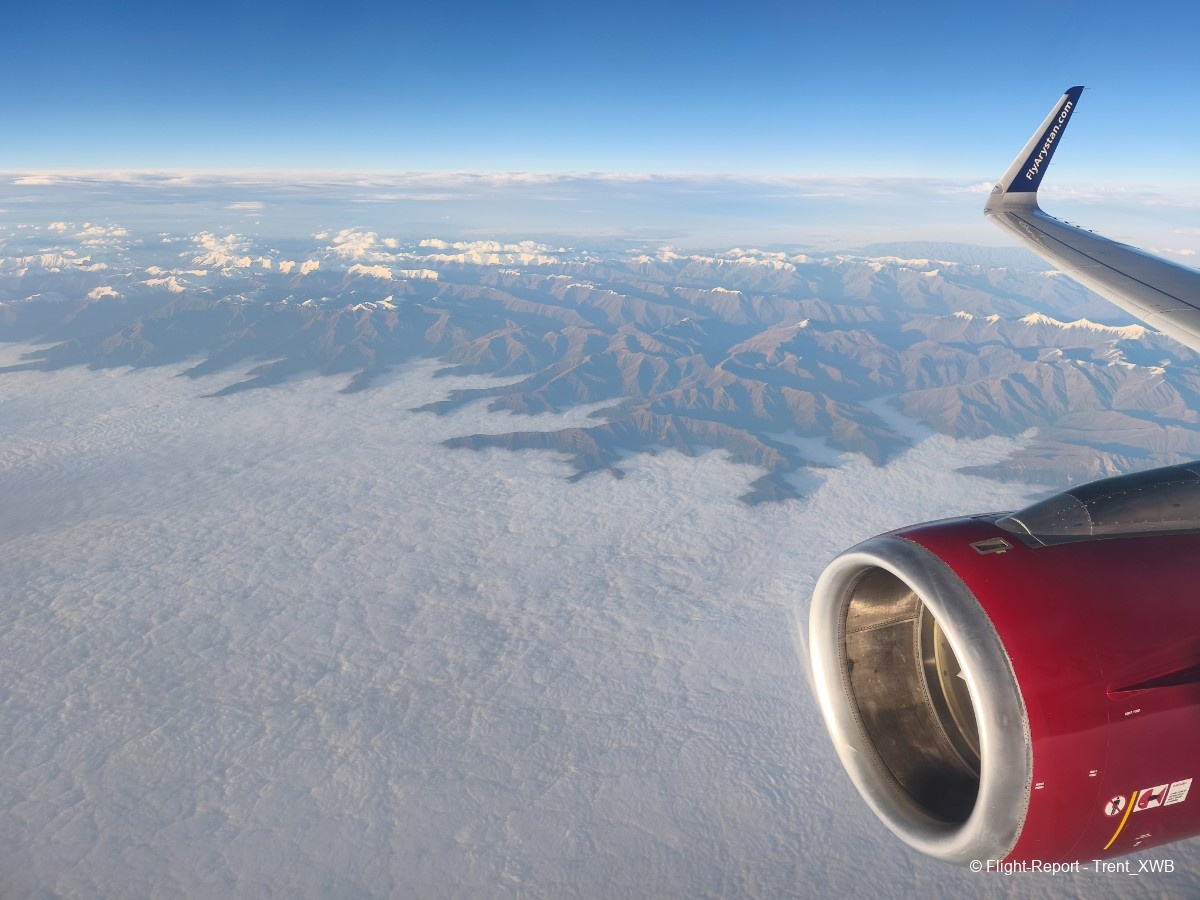
We're leaving snow-capped ridges far away in the distance as we're entering the Georgian airspace.
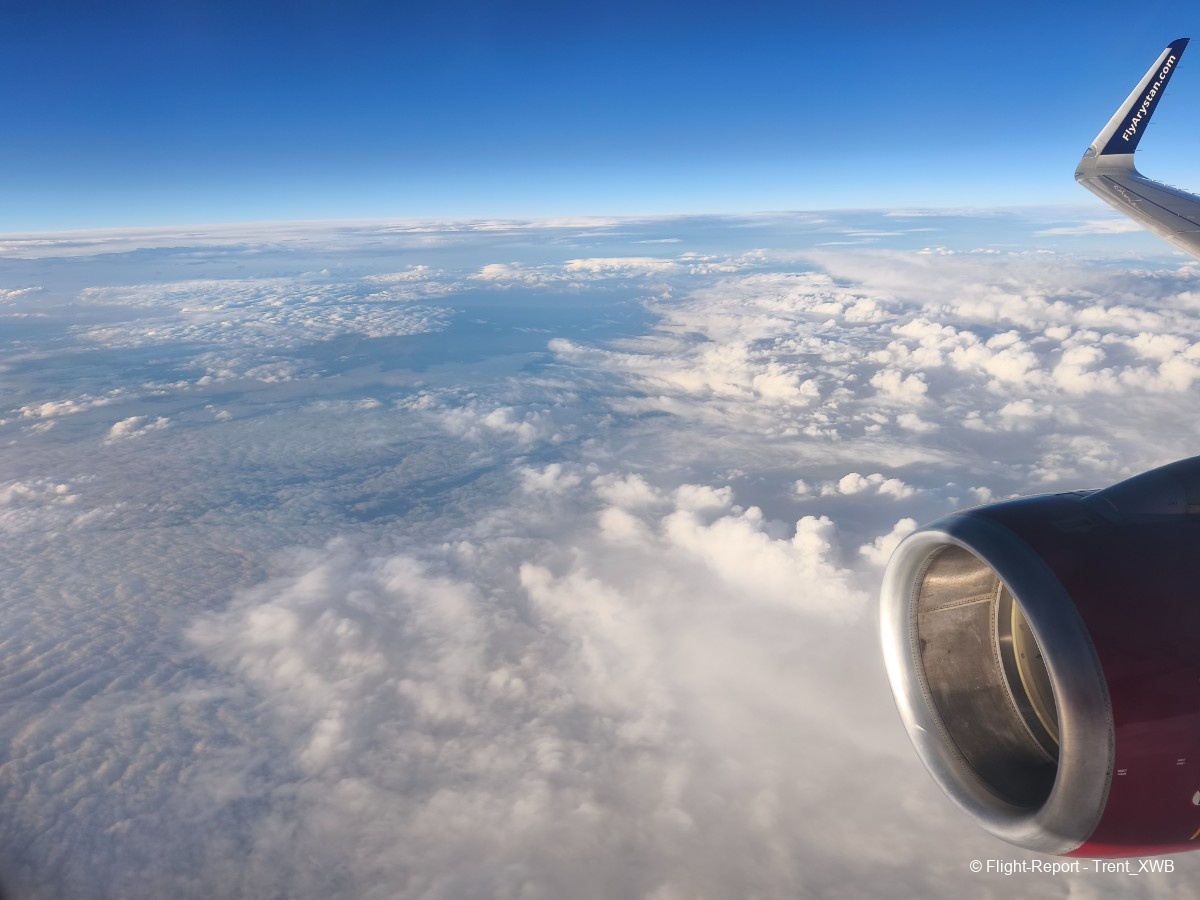
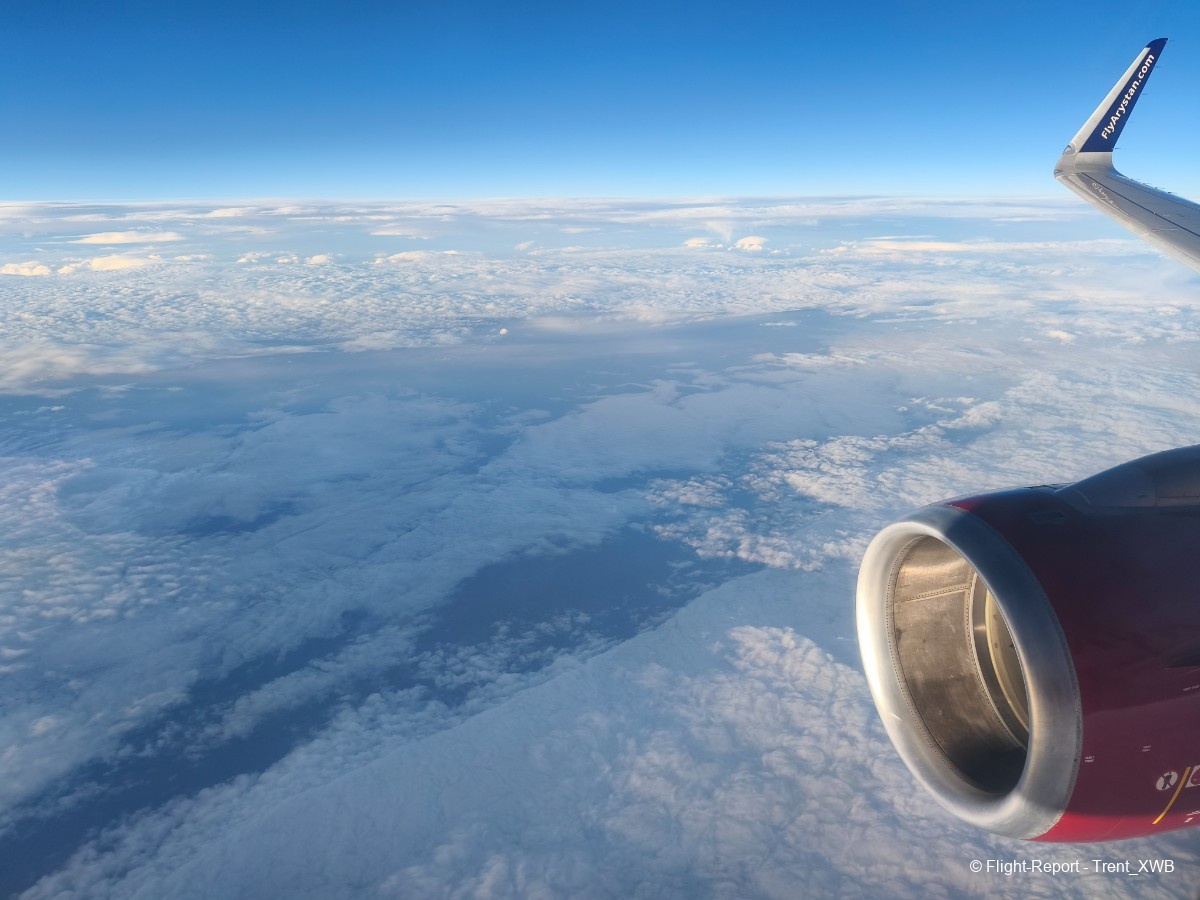
The layers of clouds over Georgia, created by a rolling cyclon, make a beautiful sight from above.
Starting our descent to KUT.
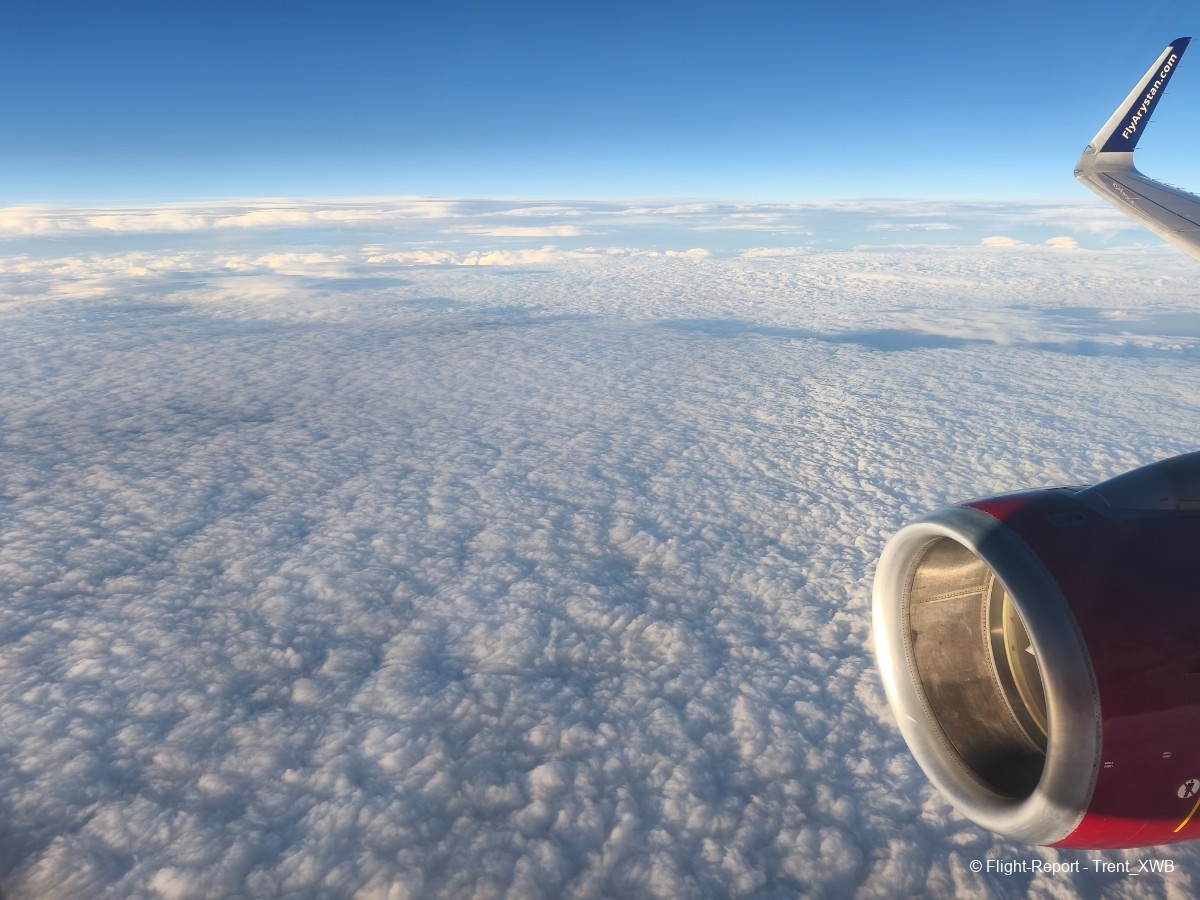
Approaching the cloud layer, beautifully lit by the setting sun.
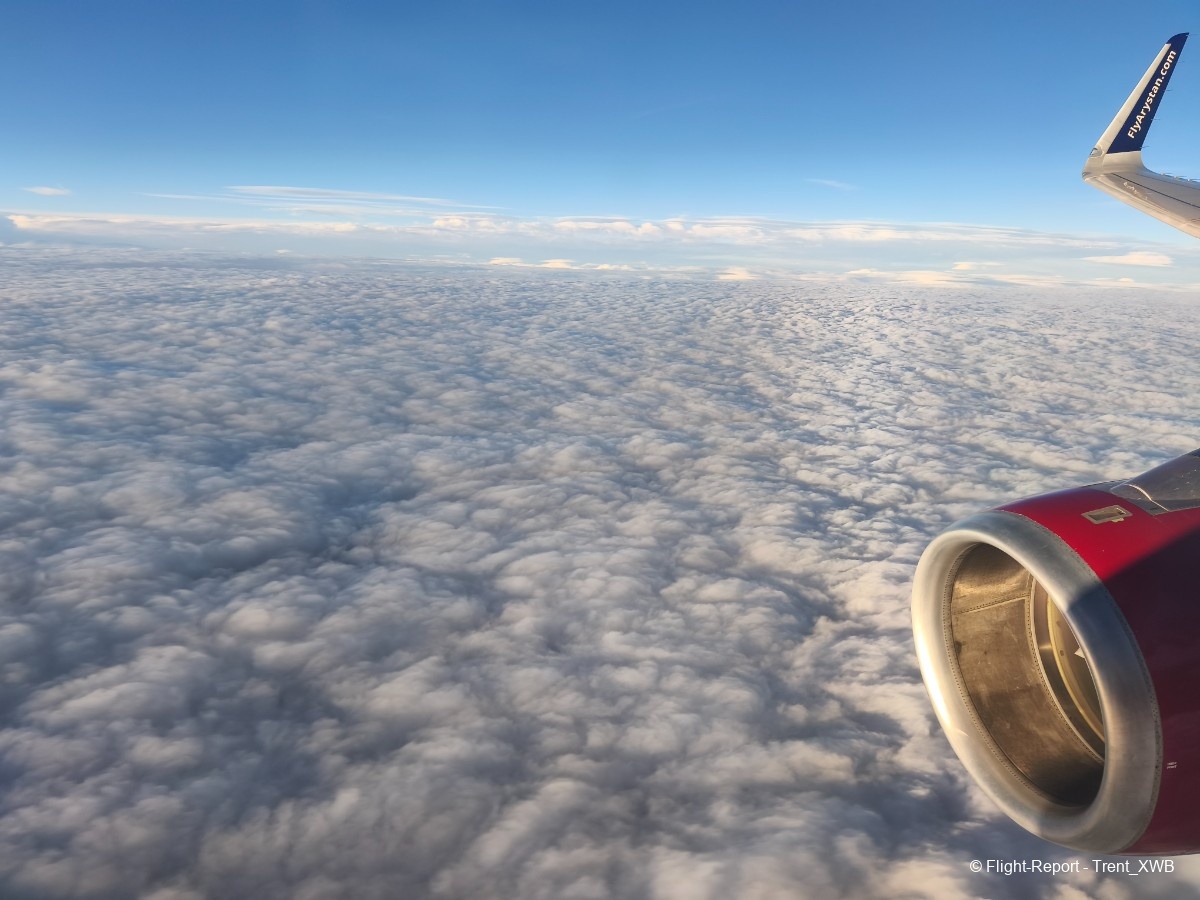
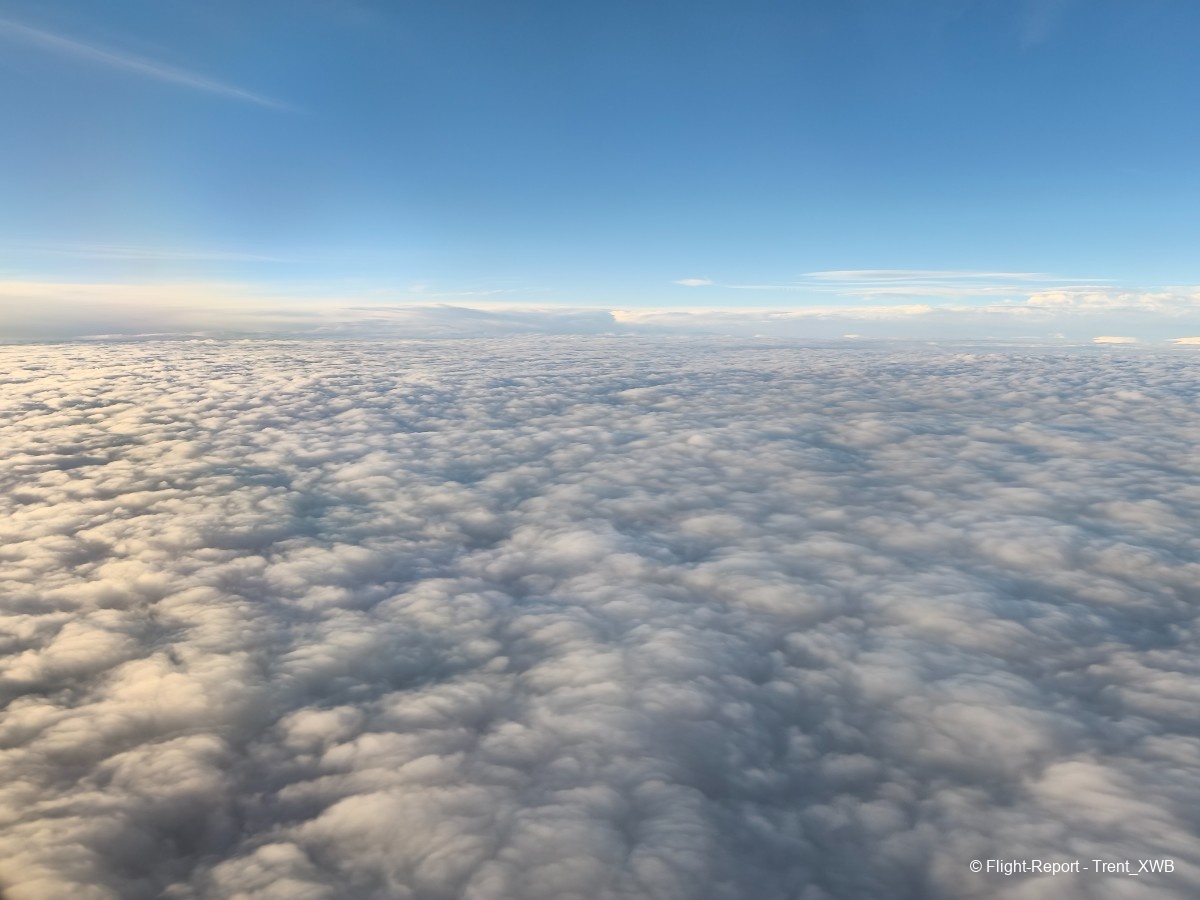
Descending below the clouds over Imeretian landscapes.
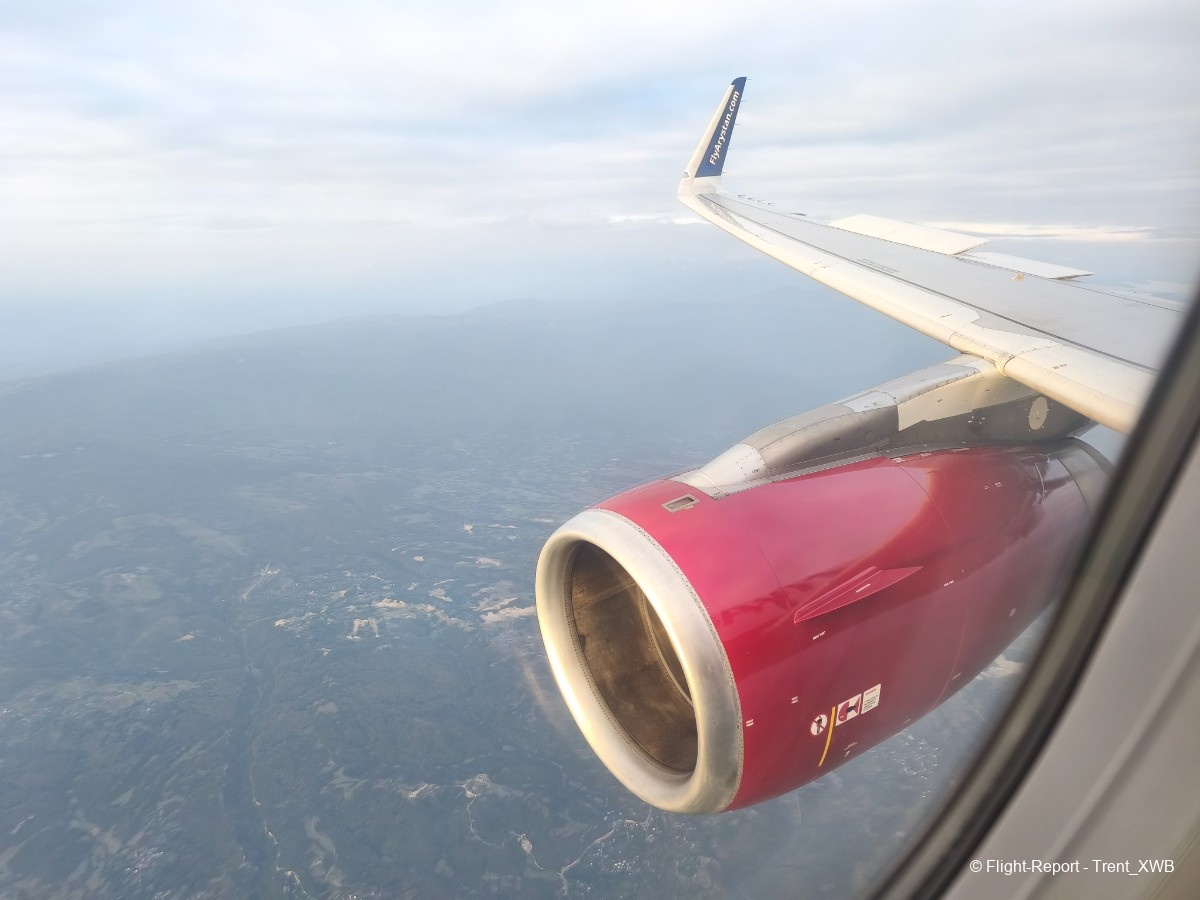
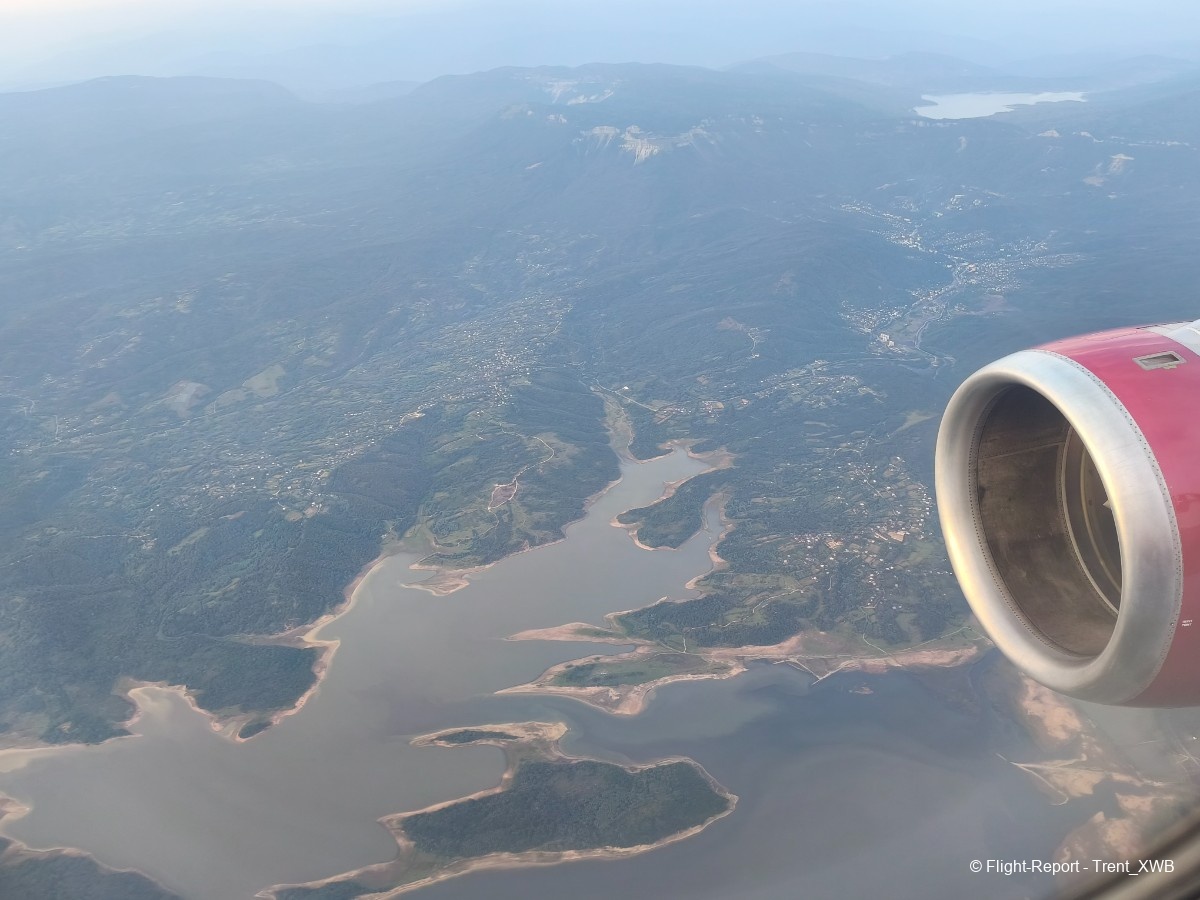
Tikbuli and Shaori reservoirs east of Kutaisi.
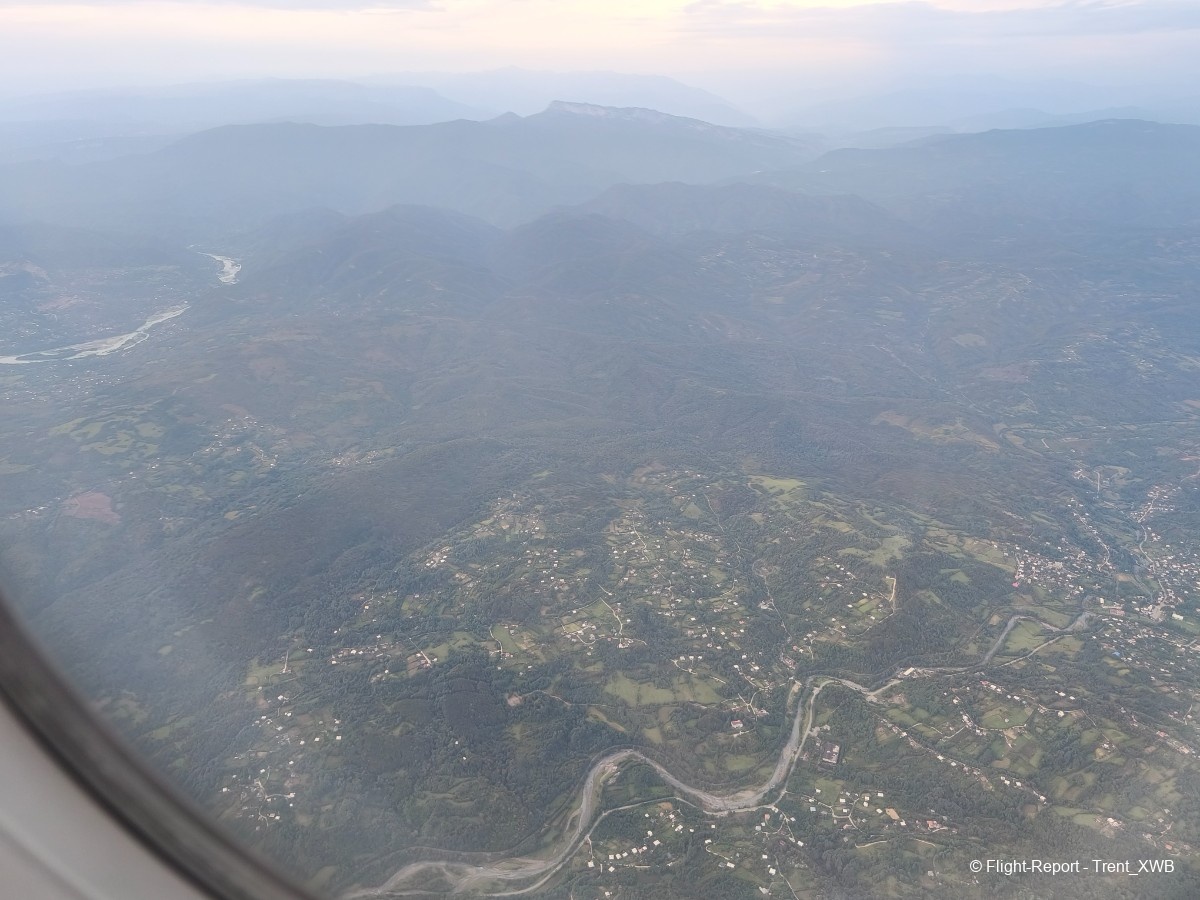
Tskaltsitela and Rioni rivers.
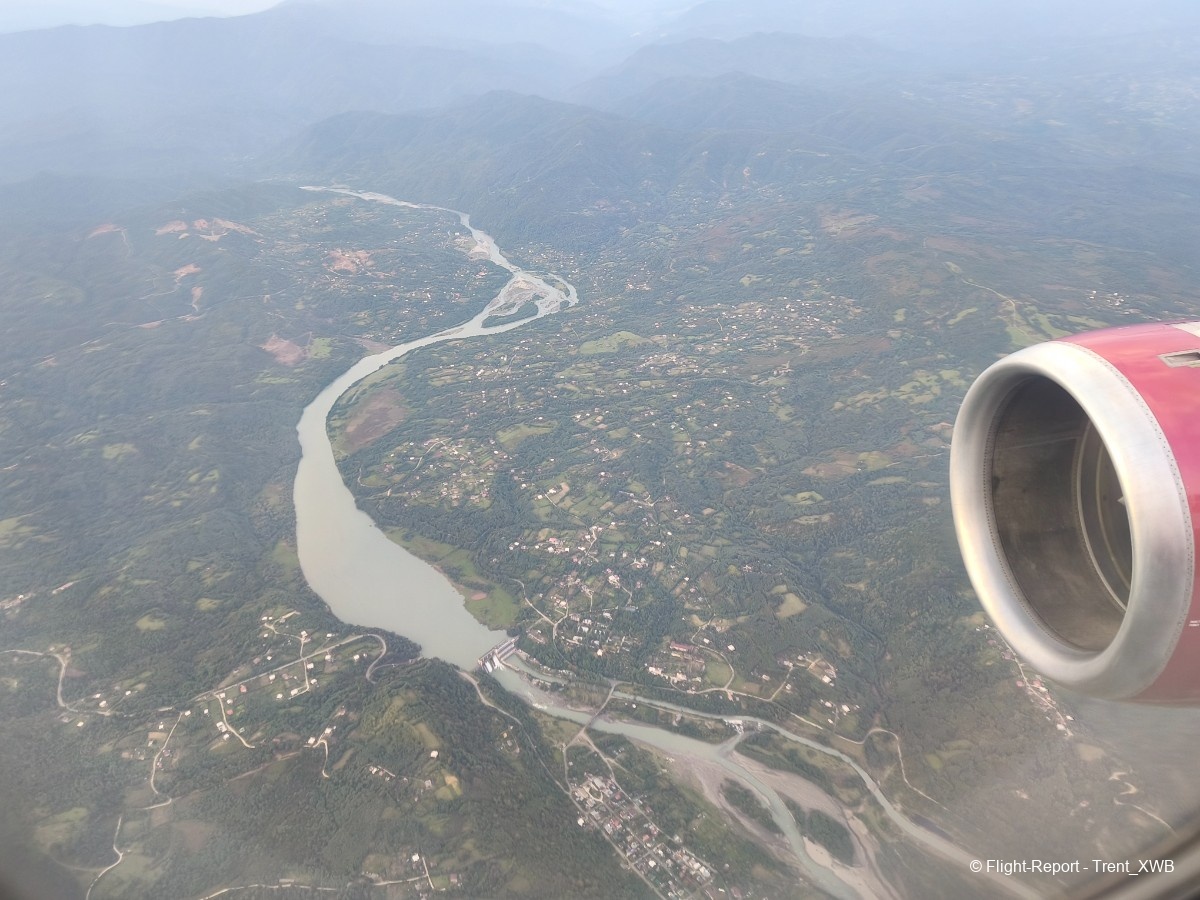
Gumati reservoir on Rioni river north of Kutaisi.
Landscapes near Tskaltubo.
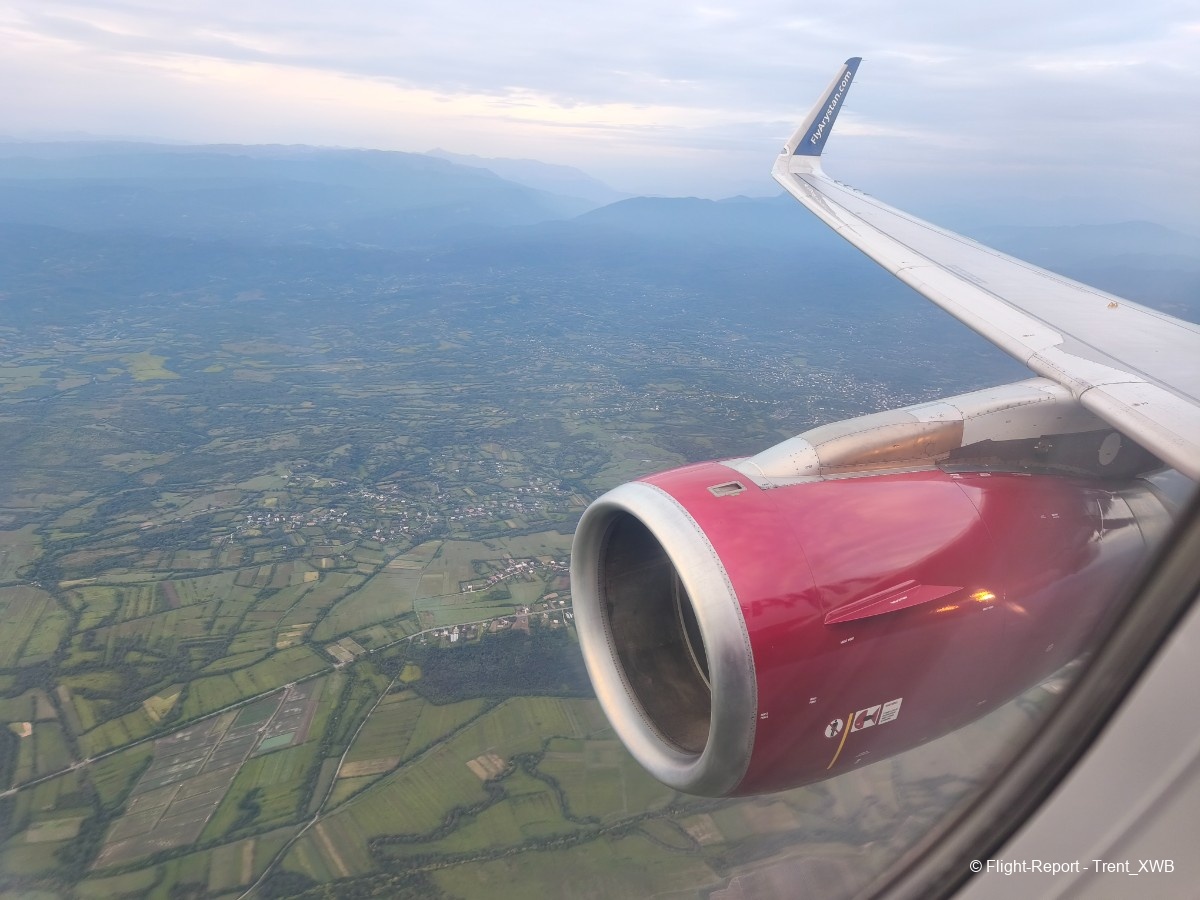
Tskhenistskali river near Maidani.
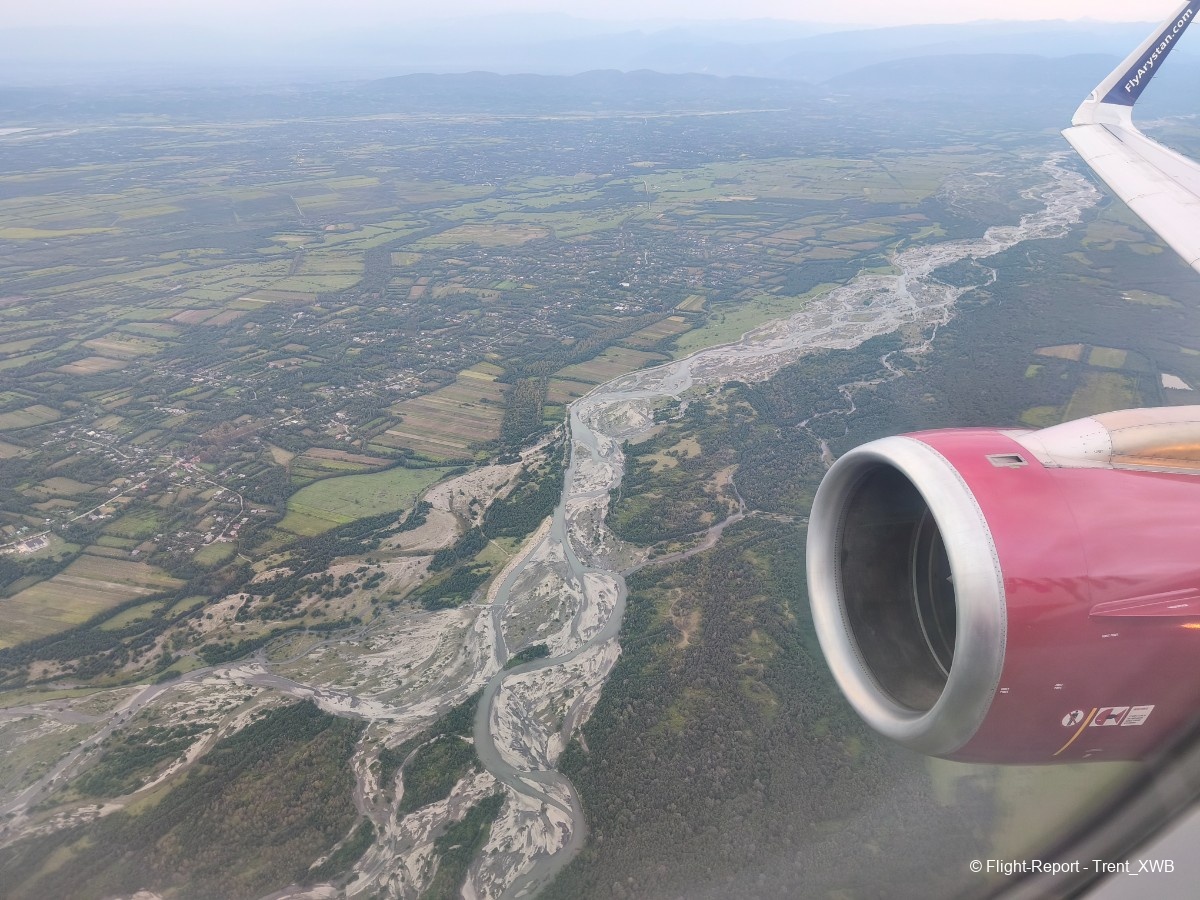
Rioni river in its lower course and fluffy low clouds.
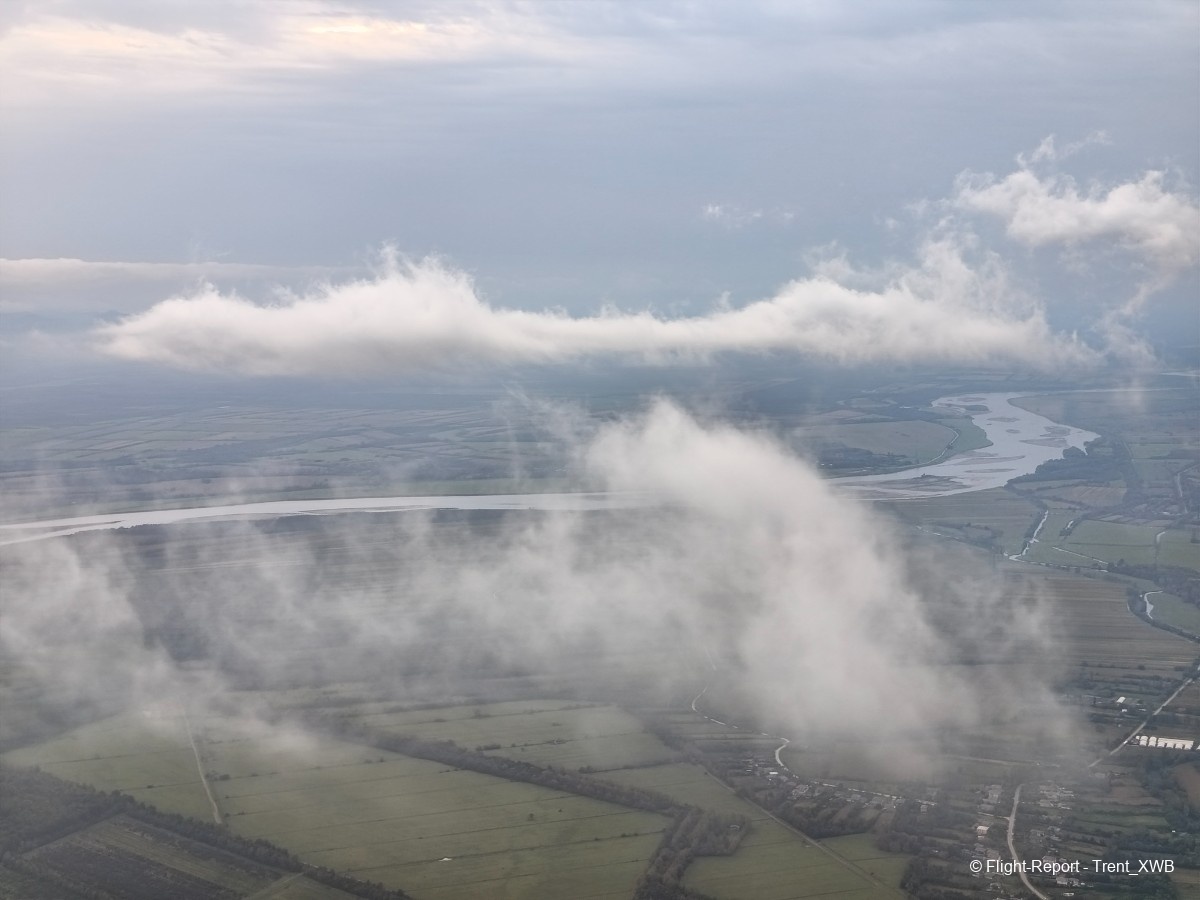
Confluence of Tskhenistskali and Rioni rivers.
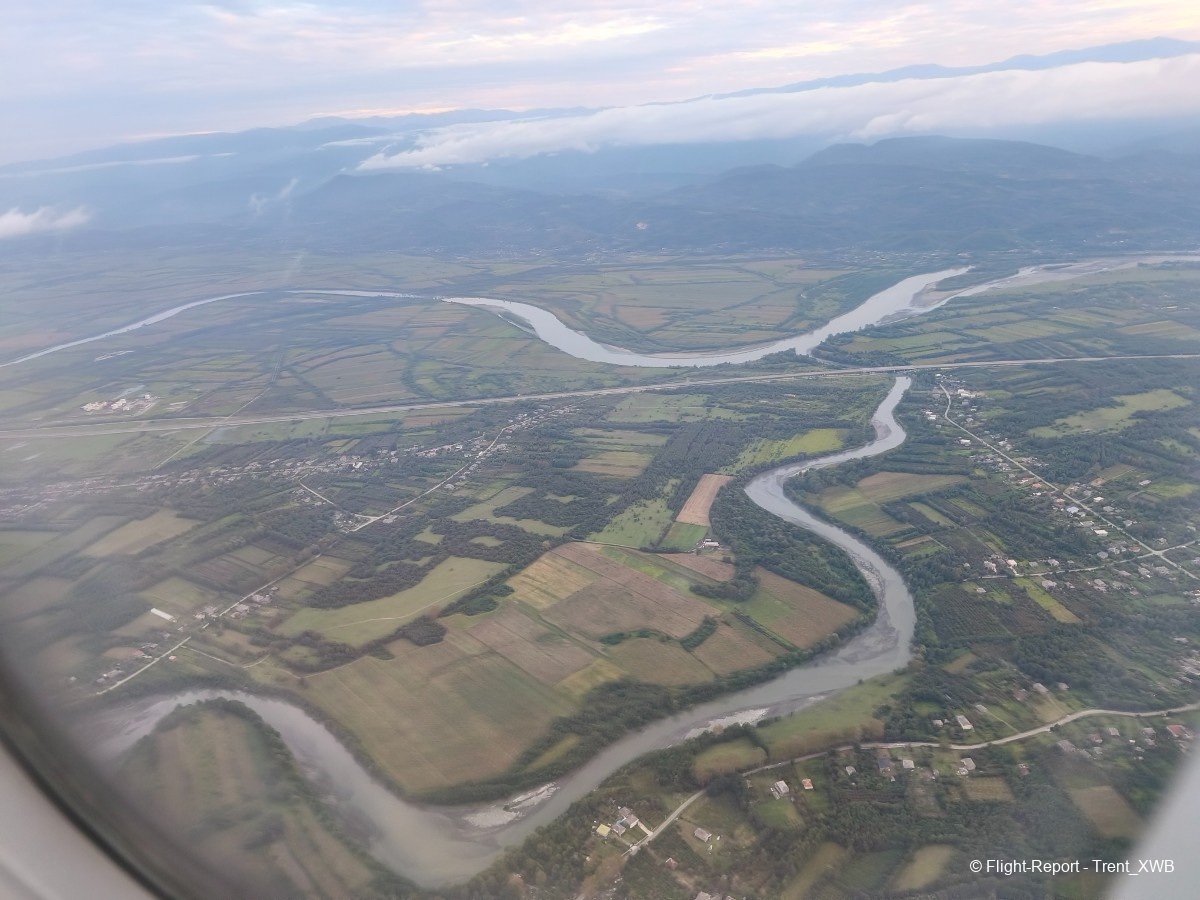
Rioni river near Samtredia as we're approaching KUT.
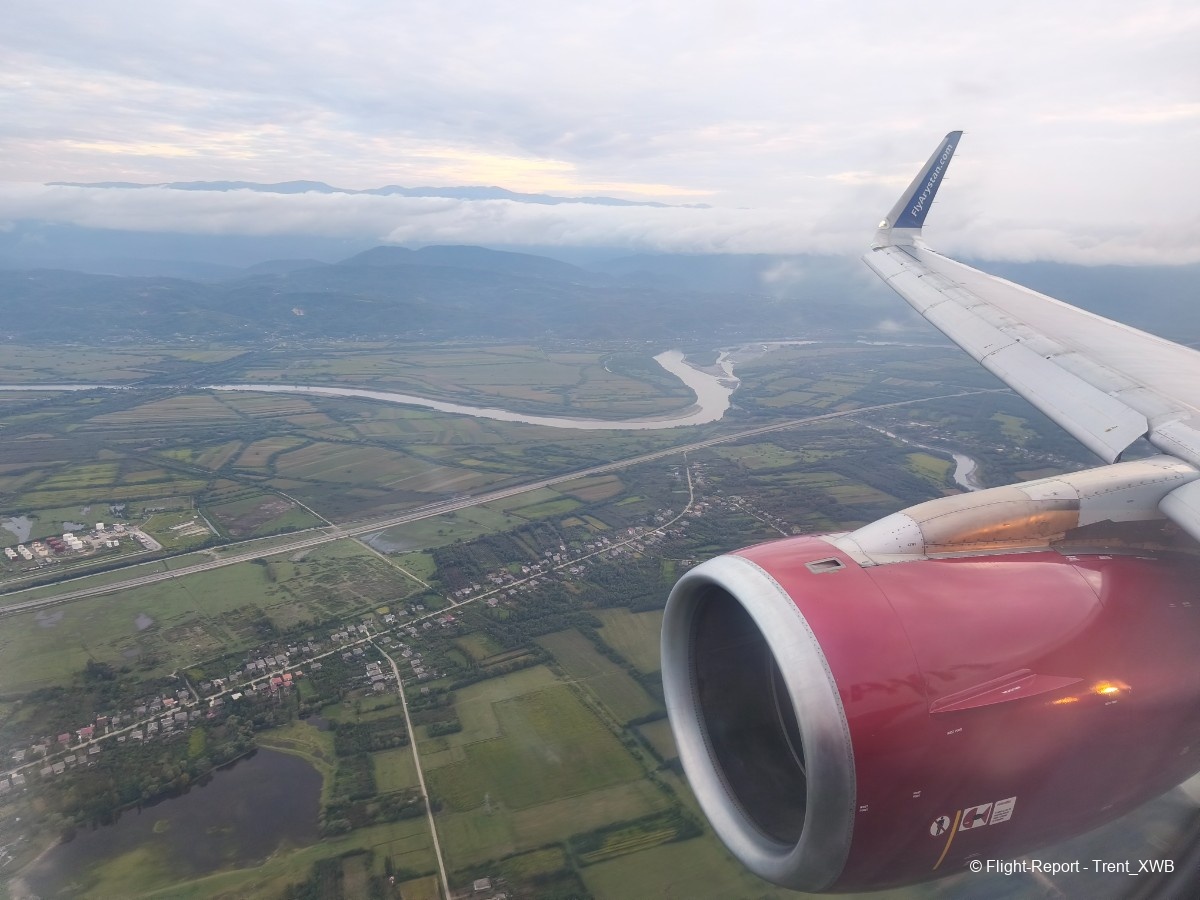
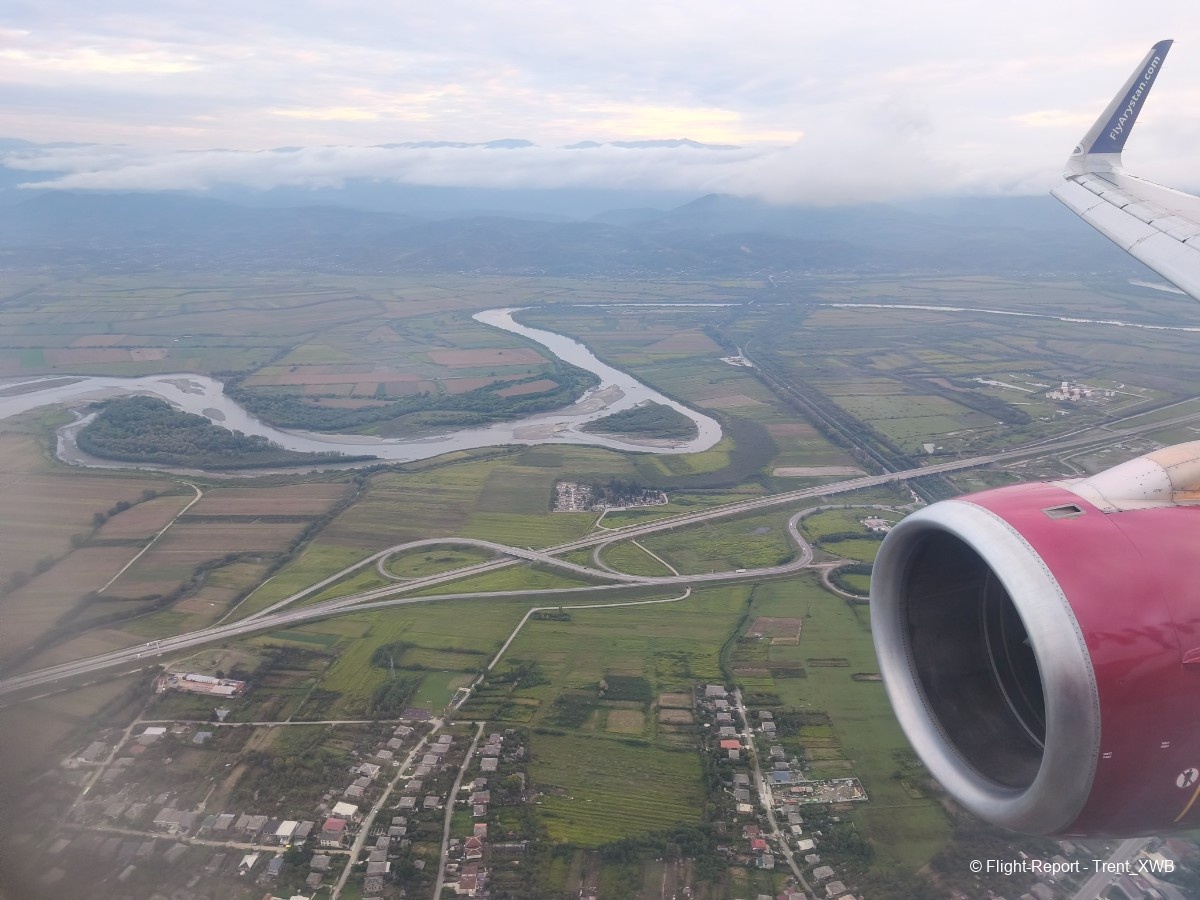
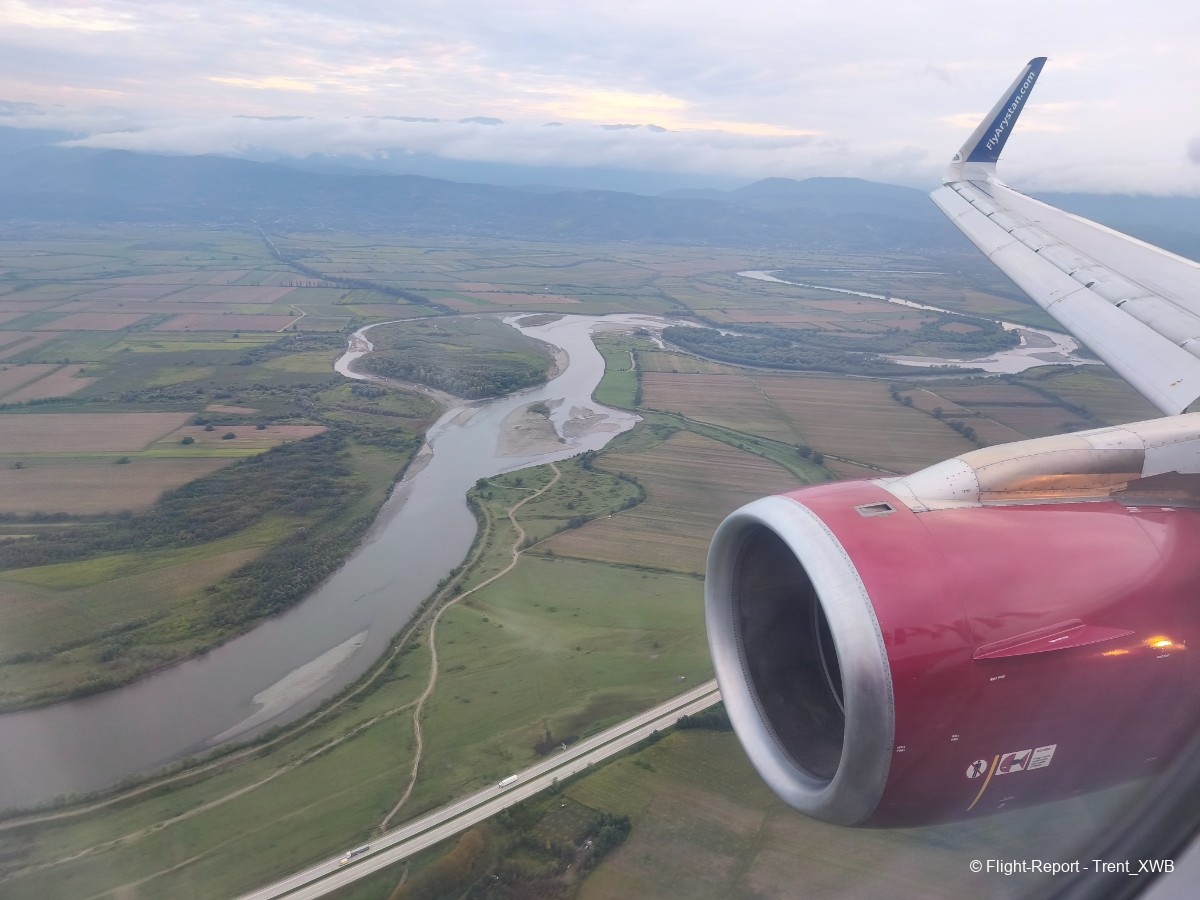
When we were passing the confluence of Gubistskali and Rioni rivers, just a few kilometers from the west end of KUT runway, the pilots put thrust levers into TOGA mode, and the aircraft started to climb. The descent and approach were quite bumpy and, apparently, the flight crew decided to go around because the final approach was going to be unstable. It was just 3rd "go around" I experienced in my almost 350 flights.
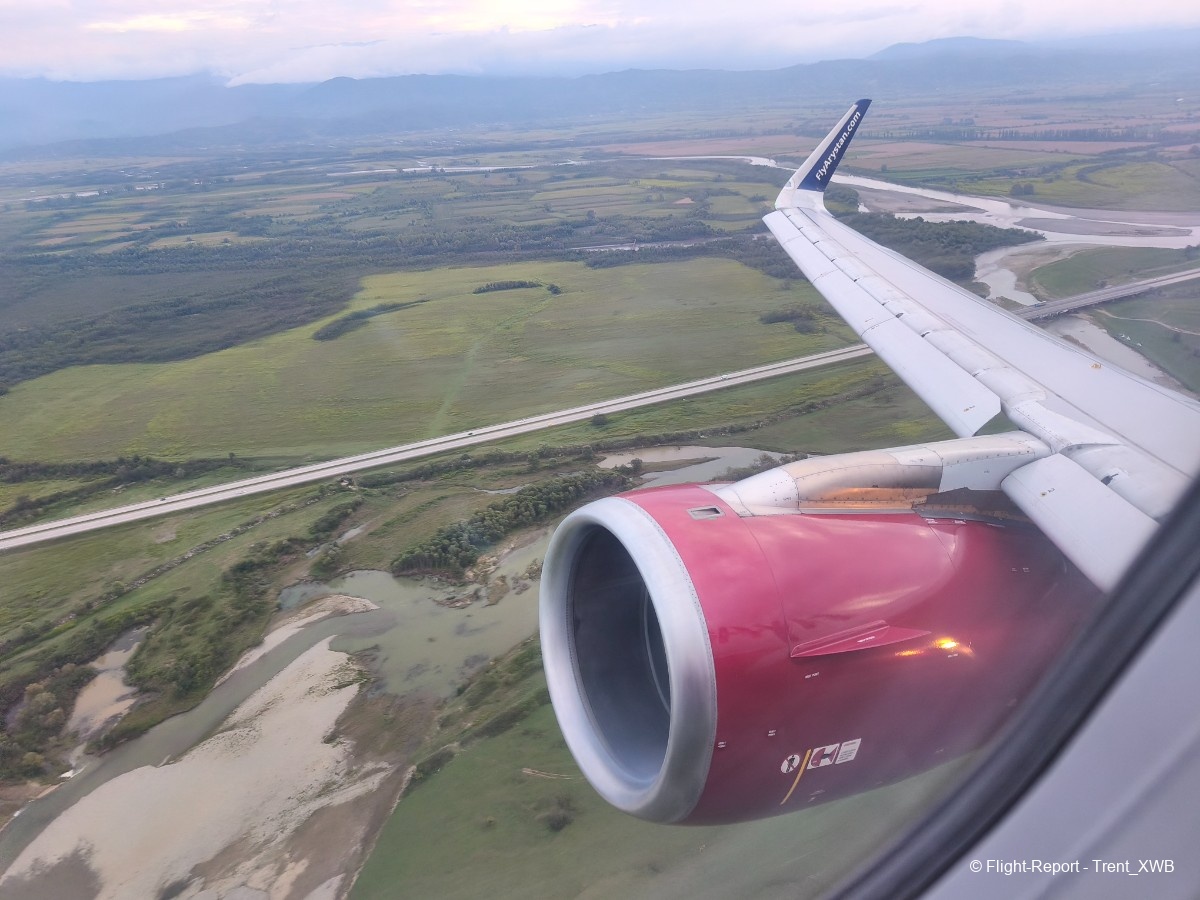
Rioni river near Kveda Bashi.
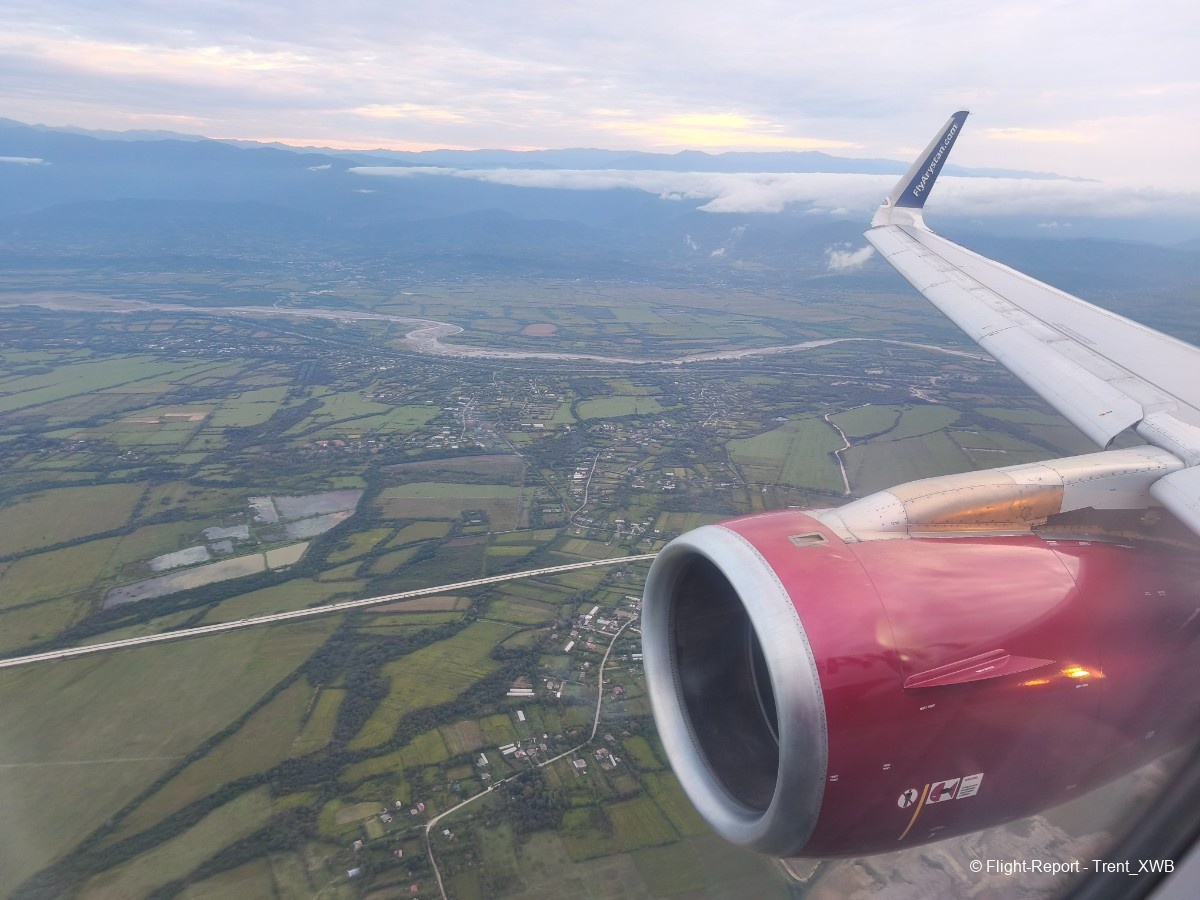
Flying over Mukhiani.
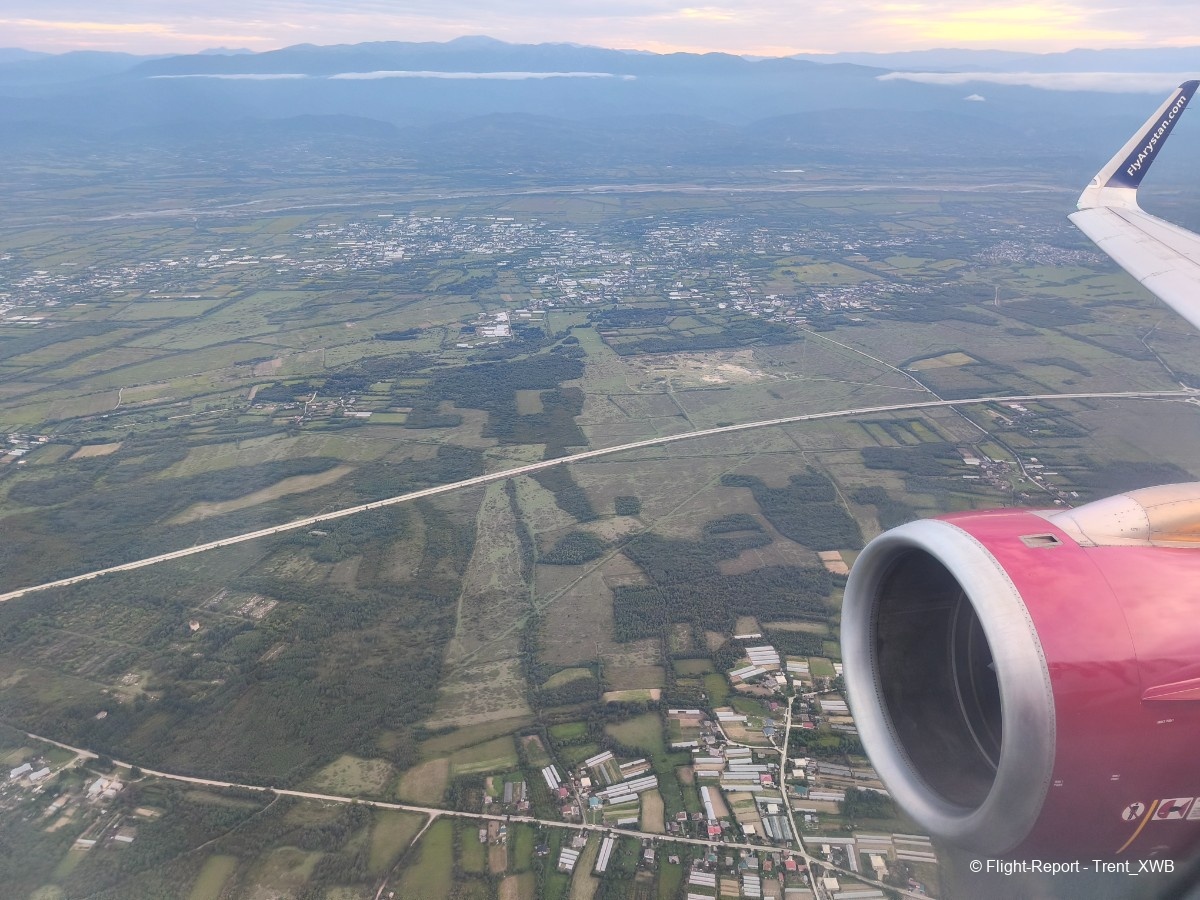
Vartsikhe reservoir on Rioni river south of Kutaisi.
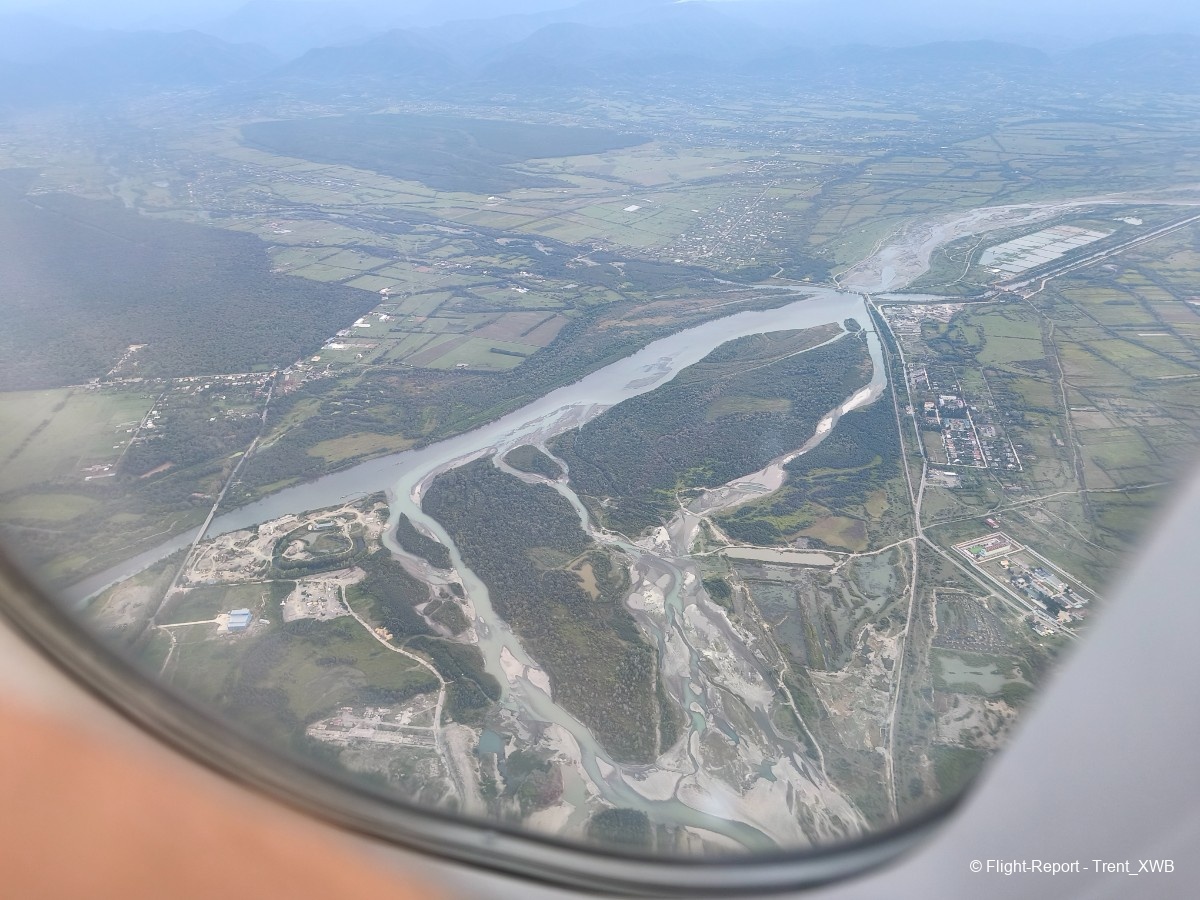
This time we're approaching KUT from the opposite direction - from the east.
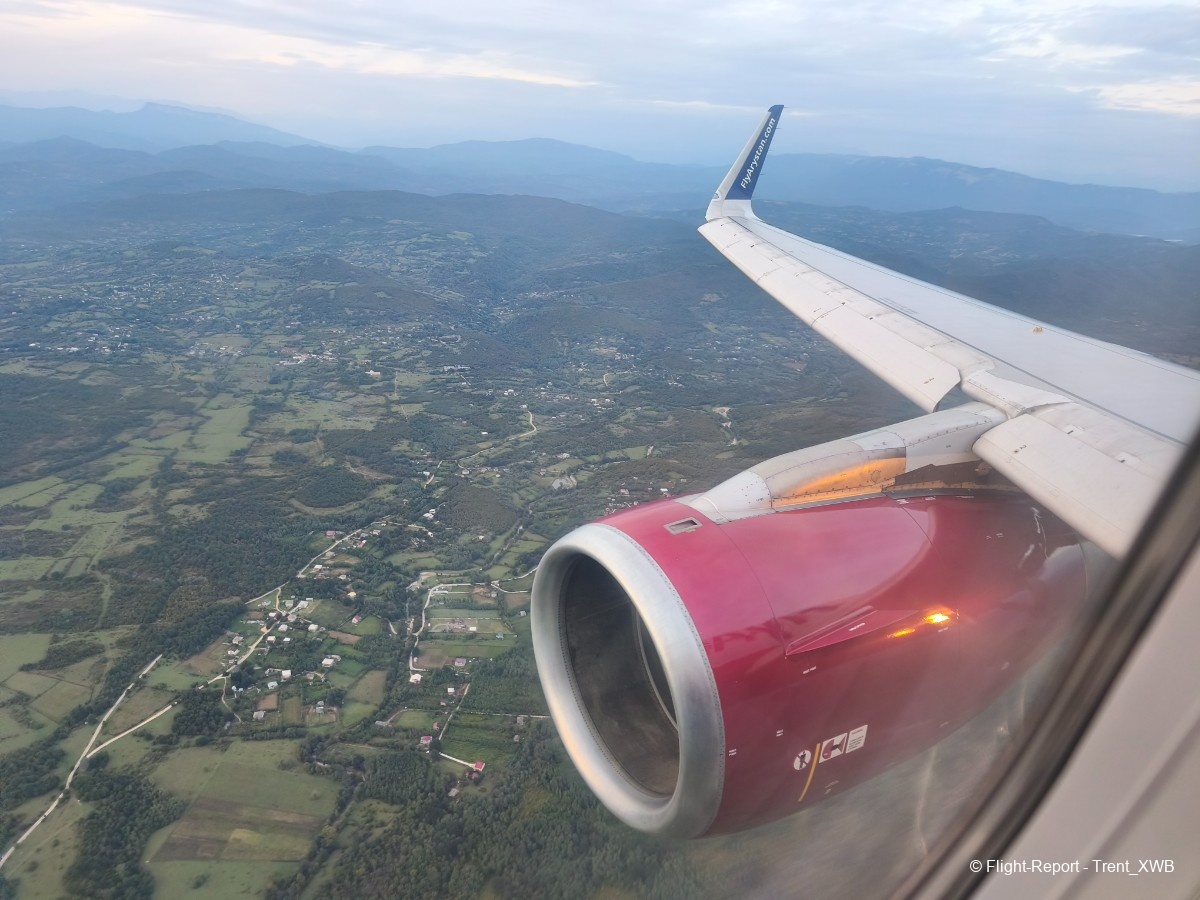
Kutaisi town in sight.
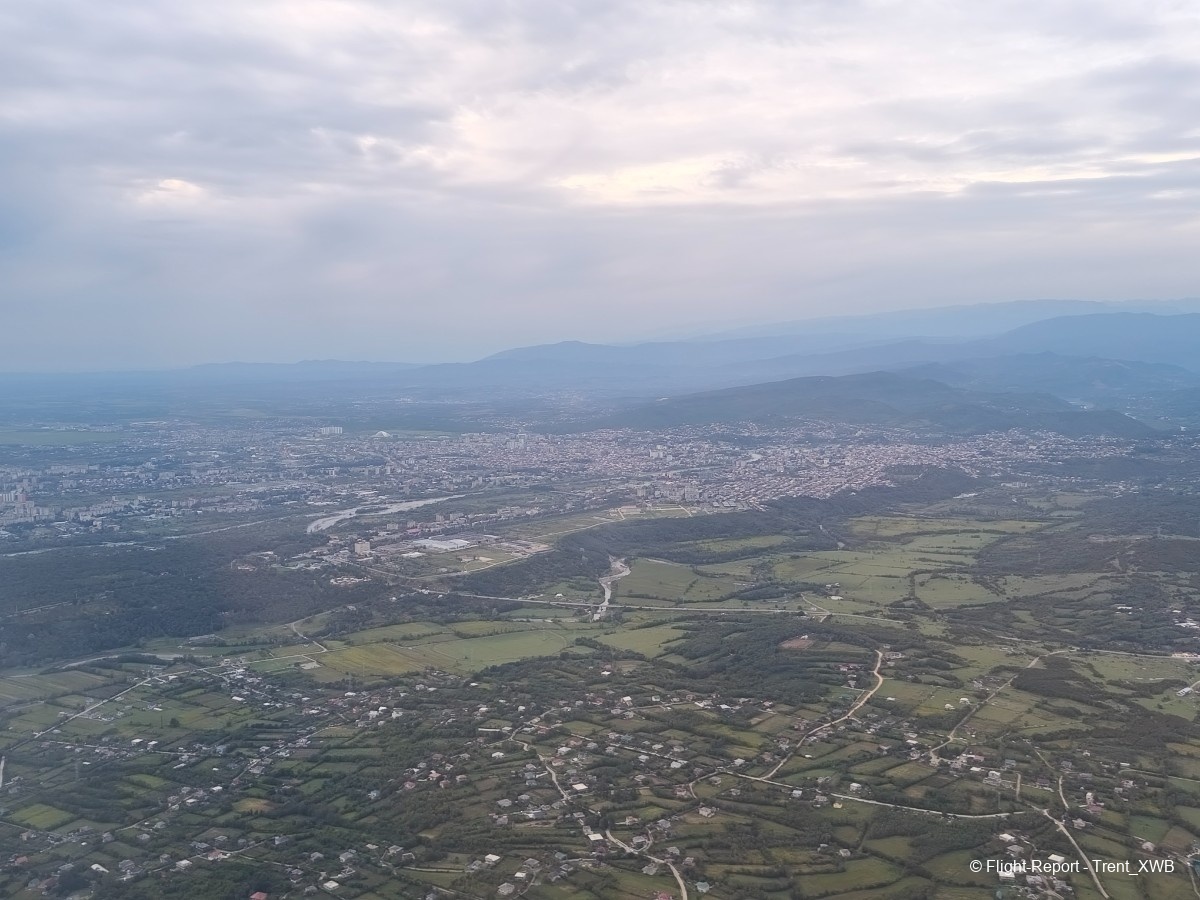
Rioni river splits Kutaisi into two parts.
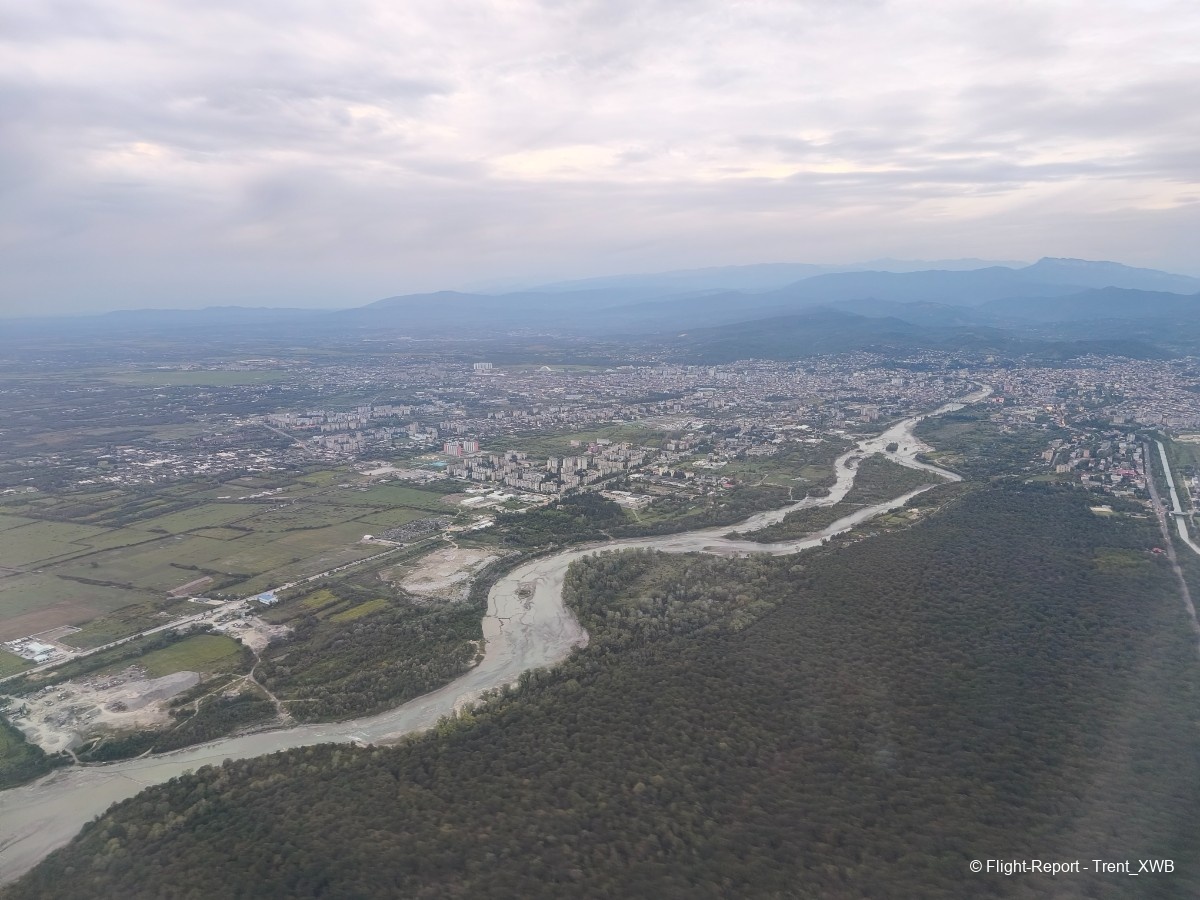
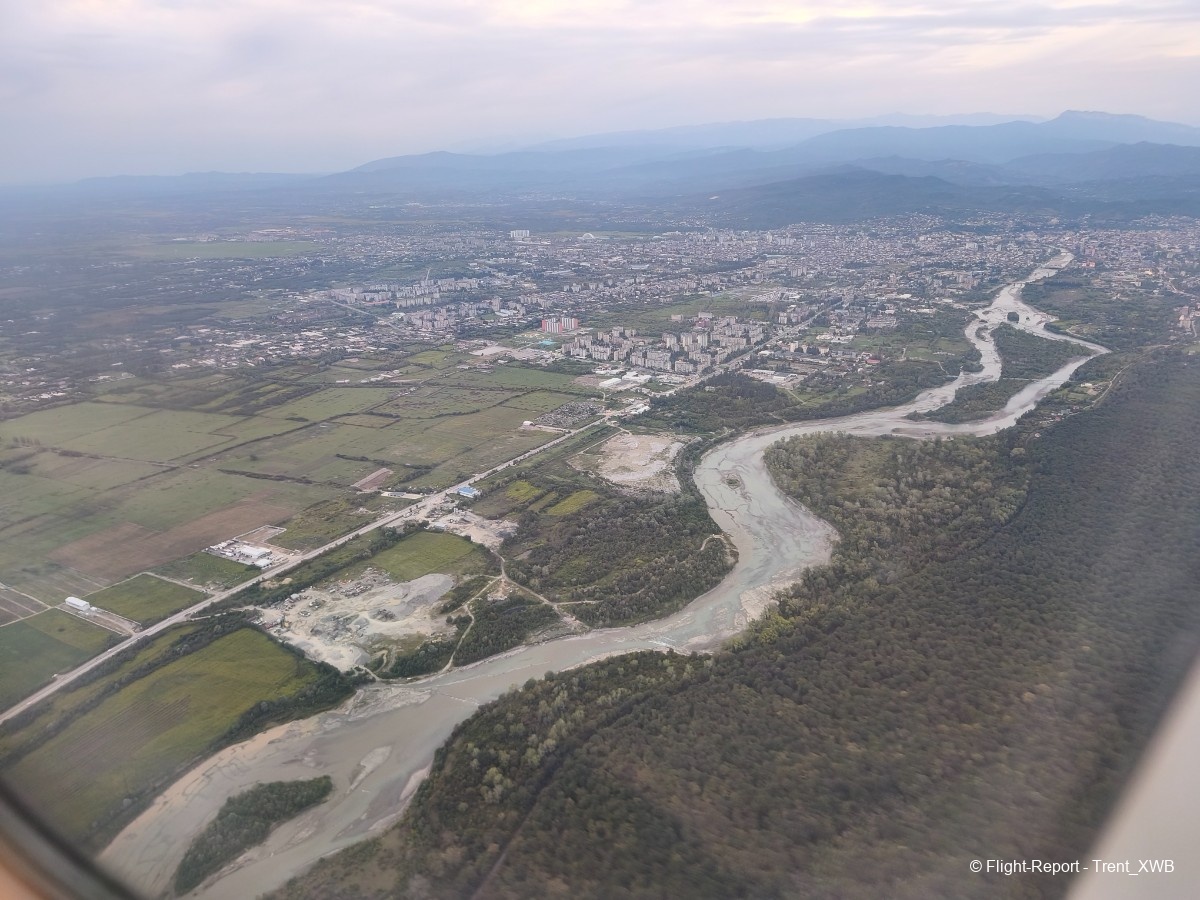
Passing Samgebro and getting ready for the final approach.
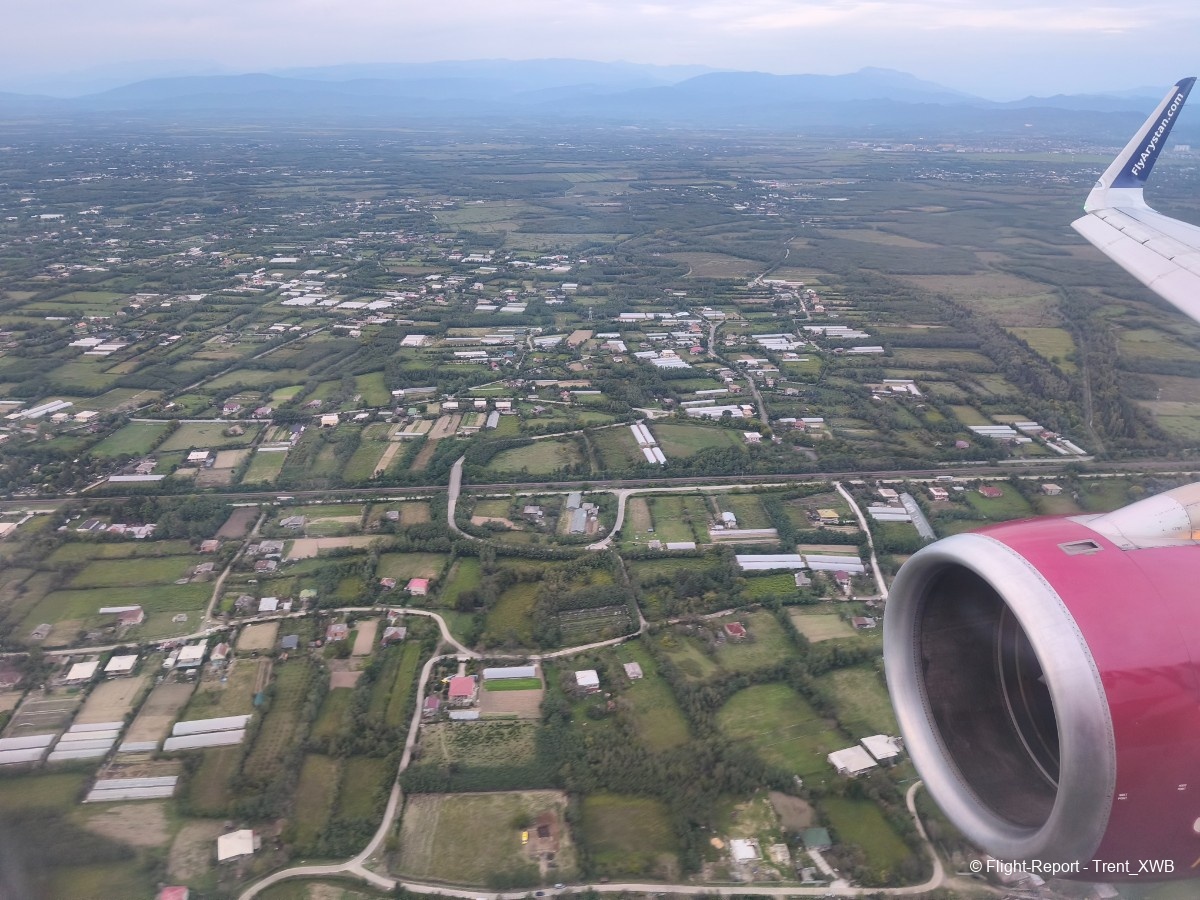
Finally landing in KUT. Welcome to Georgia!
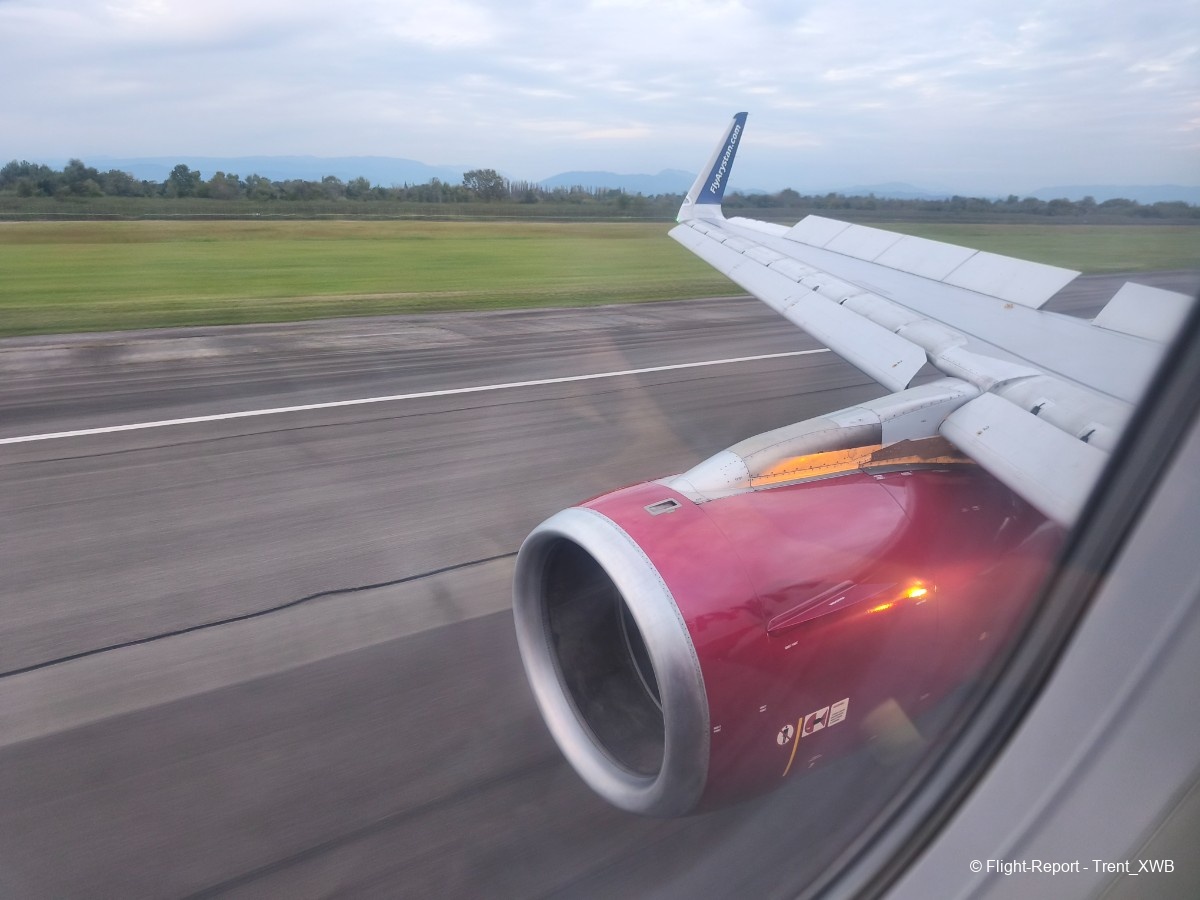
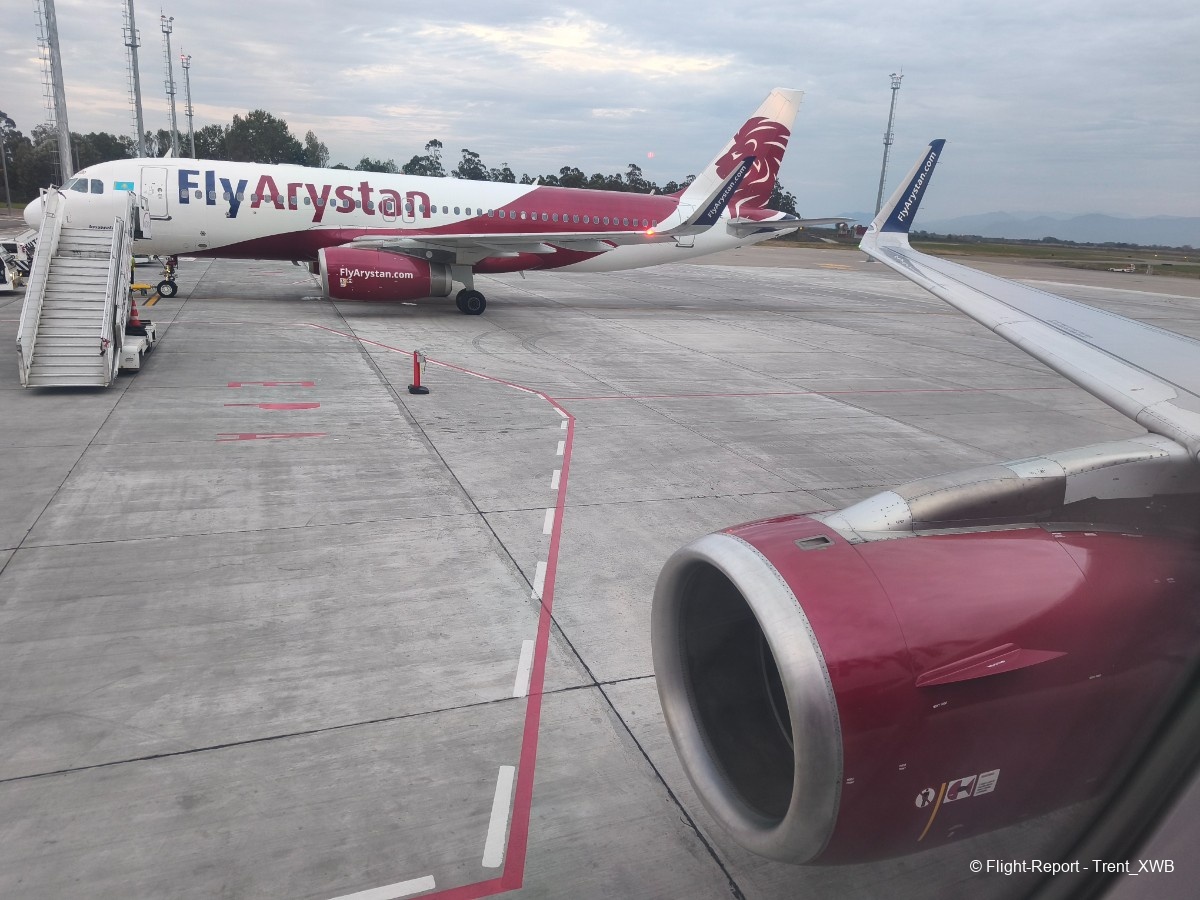
Parking near another FS A320 (EI-KBE), which arrived from ALA (if I remember correctly). I was happy to leave the aircraft as my back was hurting after almost 4 hours in these Recaro seats.
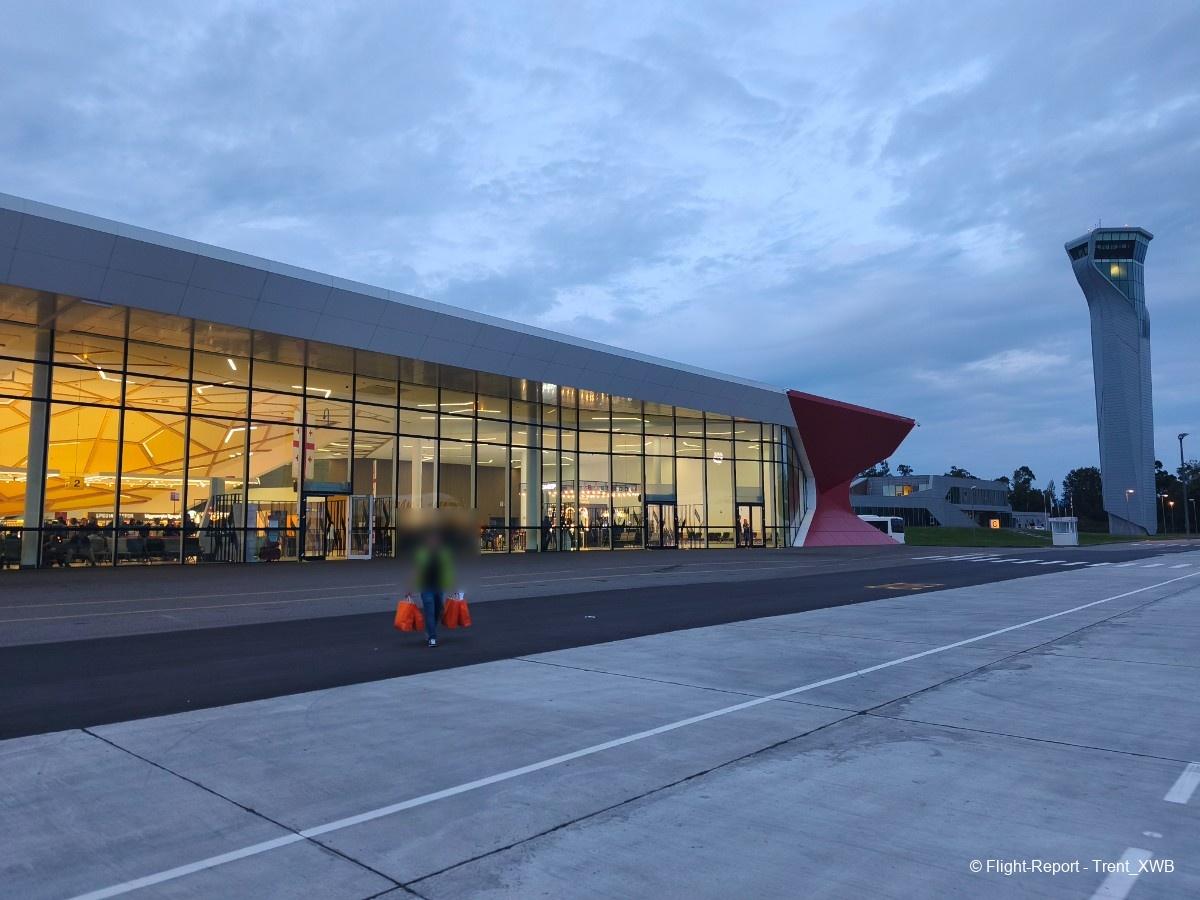
KUT ATC tower and a view of the international gates area from outside.
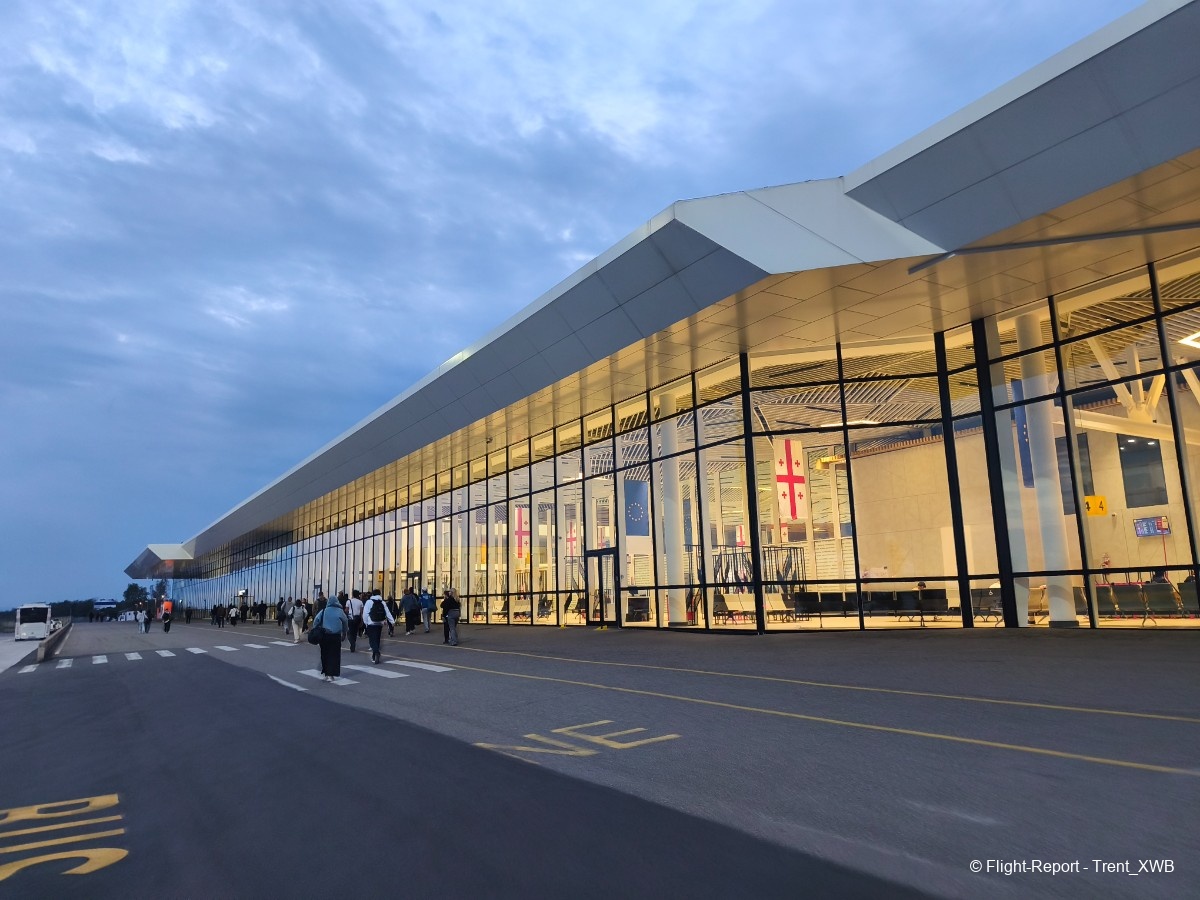
International arrivals area.
Thank you for your attention and see you in the next FRs!
Another cool exotic review! Thanks for being the first to review FlyArystan--generic cabin indeed considering how fancy parent carrier Air Astana's cabins are, but understandable as it's an LCC subsidiary. I've added FS FlyArystan to the database for you and updated the Flight-Report with the new carrier. In the future, don't hesitate to use the Contact Us form to request additions of new carriers and airports.
Thanks for sharing!
Kevin, thanks for the comment! Despite being generic, FS cabins look fresh (considering 12+ age of their A320s), and cabin moonlighting also adds to the vibe. LH's A320s/A321s/A20Ns with similar cabins look dull.
Thanks for the reminding about "contact us", I'll use it to fix my others FR about Central Asian aviation.