


Hi, dear flight-report members and readers!
This special FR opens the big series of FR from Central Asia (not in chronological order), where I spent several months this year. It turned out that the region, having some rare and almost extinct aircraft types, is a kind of avgeek paradise, and I explored it's aviation theme to some extent.
I want to begin with the detailed review of a domestic flight in Kazakhstan between its two main cities - Almaty and Astana - on one the coolest widebodies based in the region: Air Astana Boeing 767-300ER. Not only KC's small widebody fleet consists of 3 very last produced passengers B763, but I managed to get the newest of them - the last ever built one. It's been so long since I last flew a B763 (ex-LATAM one on a transatlantic GRU-MXP flight in March 2017), and when I found an opportunity to fly a shining KC B763 from ALA to NQZ for just 65 EUR (a "light" fare with hand luggage only), I immediately jumped in. I bought the ticket just 1 day before departure and immediately made online check-in.
Air Astana And Its Fleet
Air Astana is the flag carrier of Kazakhstan with some British management and capital (this is the reason why KC ceased flights to Russia and avoids its airspace). The word "Astana" simply means "capital city" in Kazakh. So, the new capital of the country, ex-Tselinograd, is named just "Capital".
In the past KC had very diverse fleet - among its former aircraft types were F50s, B752s, A319s, A320s and E290s. Now KC's narrowbody fleet is streamlined to:
11 A321neoLRs in C16_Y150 long-haul layout (with one of the best narrowbody lie-flat business cabins in the world);
2 A321neos with ACF exit doors configuration in C28_Y156 mid-haul layout;
4 A321neos with old (A321ceo-like) doors config in C28_Y151 mid-haul layout;
2 A321 in C28_Y151 layout;
11 A320neos in C16_Y132 layout.
Worth noting that most A320s that KC operated in the past, are now a part of A320 fleet of KC's lowcost subsidiary Fly Arystan. FS also has 13 A320neos, but all of them are grounded - as well as 4 KC's A320neos. Guess why? Because all the neos of Air Astana Group are PW-powered, and in light of the infamous PW GTF durability issues the KC Group removed "alive" engines from A20Ns to keep flying more efficient A21Ns, especially luxurious LRs.
But the best part of KC is definitely its small widebody fleet consisting of the end-of-the line PW-powered B767-300ERs in 2-class C30_Y193 layout: 2013-built EI-KEA and EI-KEB, and 2014-built EI-KEC - the one I got on my flight. All KC fleet was re-registered from Kazakh P4- reg to Irish EI- reg in 2022 (for example, ITA Airways fleet is also EI-registered).
KC's B763s operate a number of international flights - mostly from ALA - like ALA-ICN, ALA-HKT, ALA-MLE, ALA-DXB, and quite often (at least in the summer schedule) operate domestic rotations between the old and new capitals, sometimes twice a day (like was on my date, and I chose the latest departure out of the two).
Recently KC ordered 8 B789s which are supposed to be delivered between 2026 and 2027. This may spell the near end for KC B763s (probably they will be sold for freighter conversion; though, cargo airlines favor GE CF6 engines for B763, so let's see…).
The World's Youngest Remaining Passenger B767-300ER Fleets/Subfleets
In the retro-FR of GRU-MXP flight on 2013-built ex-LATAM B763 (which was then converted to freighter) I reviewed the state of the current B767 fleets (including -200ER, -300ER and -400ER modifications) in the world.
Let's now find out which airlines can boast of having the youngest passenger B763s (production of B764s and B762s ended loooong before the end of pax B763 production) based on first flight and delivery dates of the frames (FF, DD in brackets). Let's consider only 2010-2014-built frames (i.e. no older than 15 y.o., which is roughly the mid-life term for a relatively modern airframe).
1) Air Astana: EI-KEC (FF 2014.05.30, DD 2014.06.26), EI-KEB (FF 2013.10.01, DD 2013.10.18), EI-KEA (FF 2013.09.06, DD 2013.09.25)
2) Uzbekistan Airways: UK67006 (FF 2013.05.19, DD 2013.06.28), UK67005 (FF 2013.02.27, DD 2013.05.14), UK67004 (FF 2012.02.10, DD 2012.02.24), UK67003 (FF 2012.01.23, DD 2012.02.07).
3) MIAT Mongolian Airlines: JU-1021 (FF 2013.03.28, DD 2013.05.13).
4) Azerbaijan Airlines: 4K-AZ82 (FF 2012.06.08, DD 2012.06.26), 4K-AZ81 (FF 2011.05.16, DD 2011.05.31).
5) All Nippon Airways: JA627A (FF 2012.03.05, DD 2012.03.22), JA626A (FF 2011.12.09, DD 2012.01.16), JA625A (FF 2011.09.19, DD 2011.10.02), JA624A (FF 2011.08.23, DD 2011.08.31), JA623A (FF 2011.03.13, DD 2011.03.29), JA622A (FF 2011.02.15, DD 2011.02.22).
6) Japan Airlines: JA659J (FF 2011.11.27, DD 2011.12.14), JA658J (FF 2011.11.09, DD 2011.11.17), JA657J (FF 2011.10.09, DD 2011.10.20), JA656J (FF 2011.08.10, DD 2011.08.22), JA655J (FF 2011.07.11, DD 2011.07.28).
As one can see, the world's youngest passenger B763s are based across the whole Asia from Azerbaijan to Japan, with the end-of-line ones being in Kazakhstan, Uzbekistan and Mongolia.
Almaty International Airport (ALA)
ALA is located just north-east out of the city and connected with the city centre by several bus routes. Although, these buses are slow and traffic jams are common, so it takes quite a time to get there.
ALA consists of 2 adjacent terminal - aging domestic T1 (opened in the end of 2003) and very modern international T2 (opened in 2024). I will show both in some of the next FRs (as I had several flights to/from ALA); here I want to use the limit of 150 photos per FR for the aircraft and NQZ airport.
The Aircraft
At the time I got to the airport it was clear that currently there were 2 B763 in ALA: EI-KEA and EI-KEC. EI-KEB was operating ICN rotation.
On my date - 21 October 2025 - there were planned 2 evening ALA-NQZ flights: the earlier KC995 and the later KC855 (mine). When EI-KEA appeared on flightradar24 as KC995, I realized that I hit jackpot.
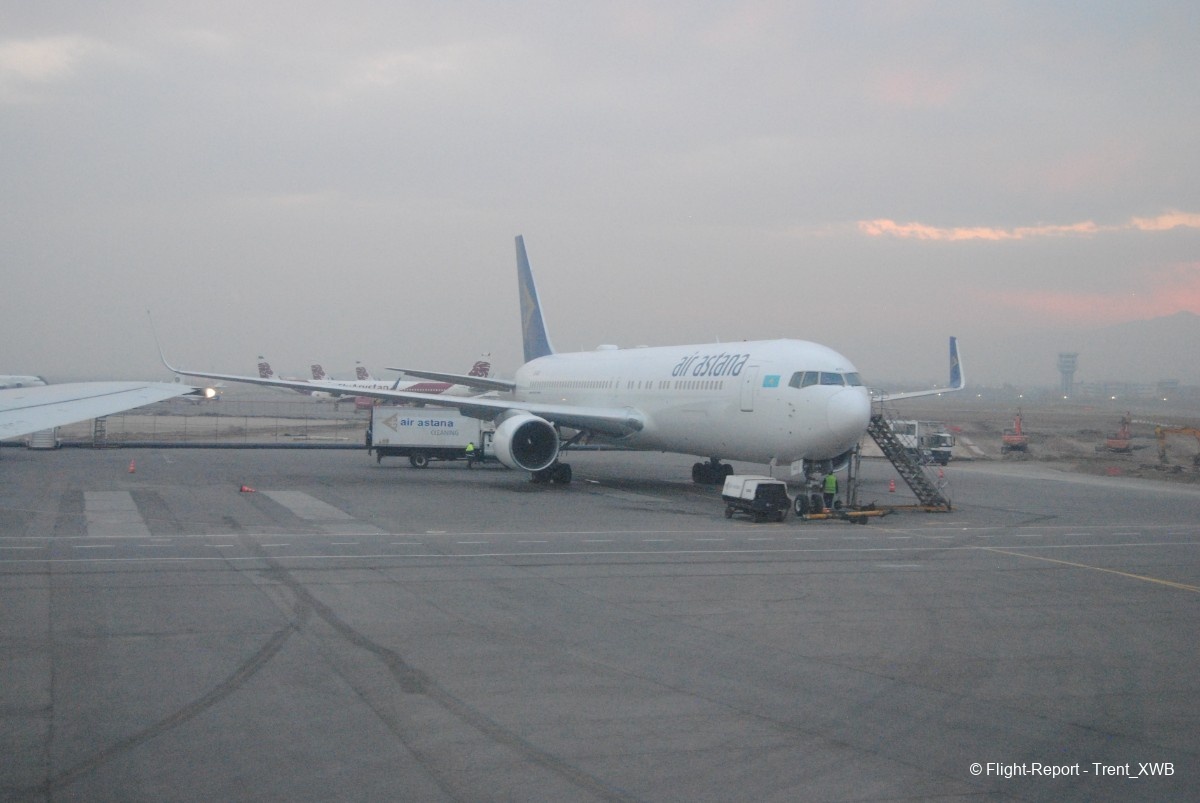
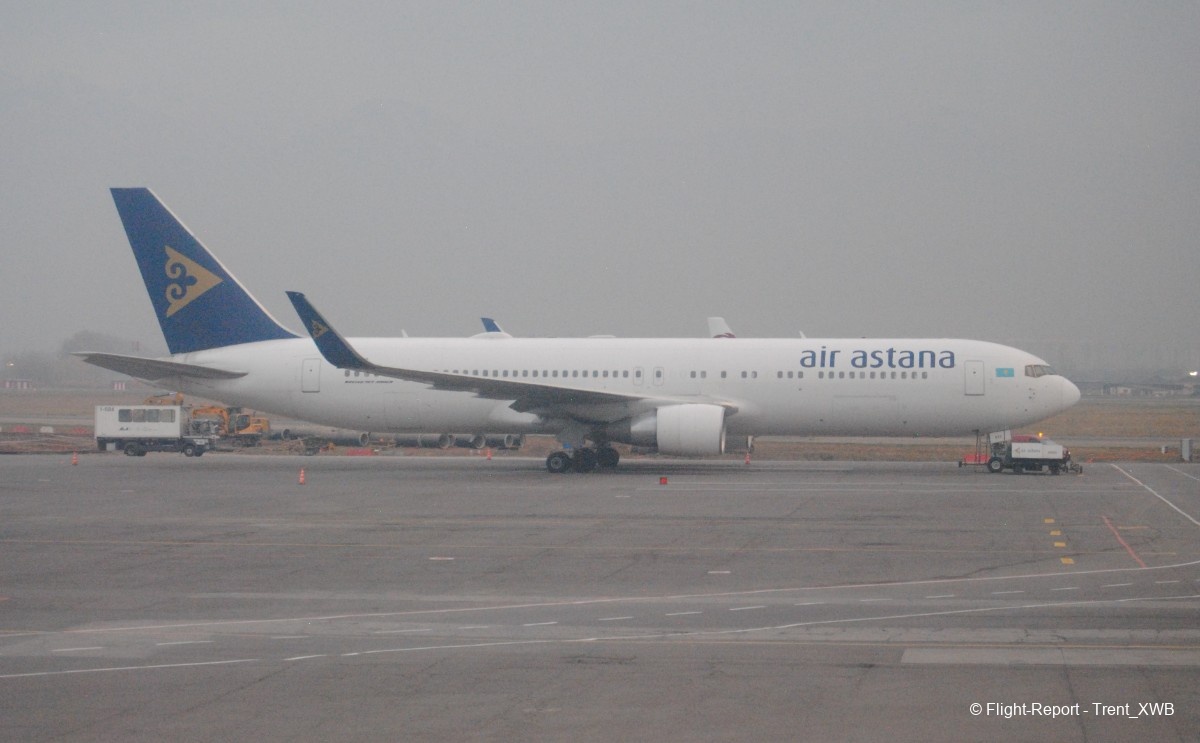
An here it is the beauty of today - 2014-built EI-KEC, the very last passenger-built B763, that will operate my flight KC855.
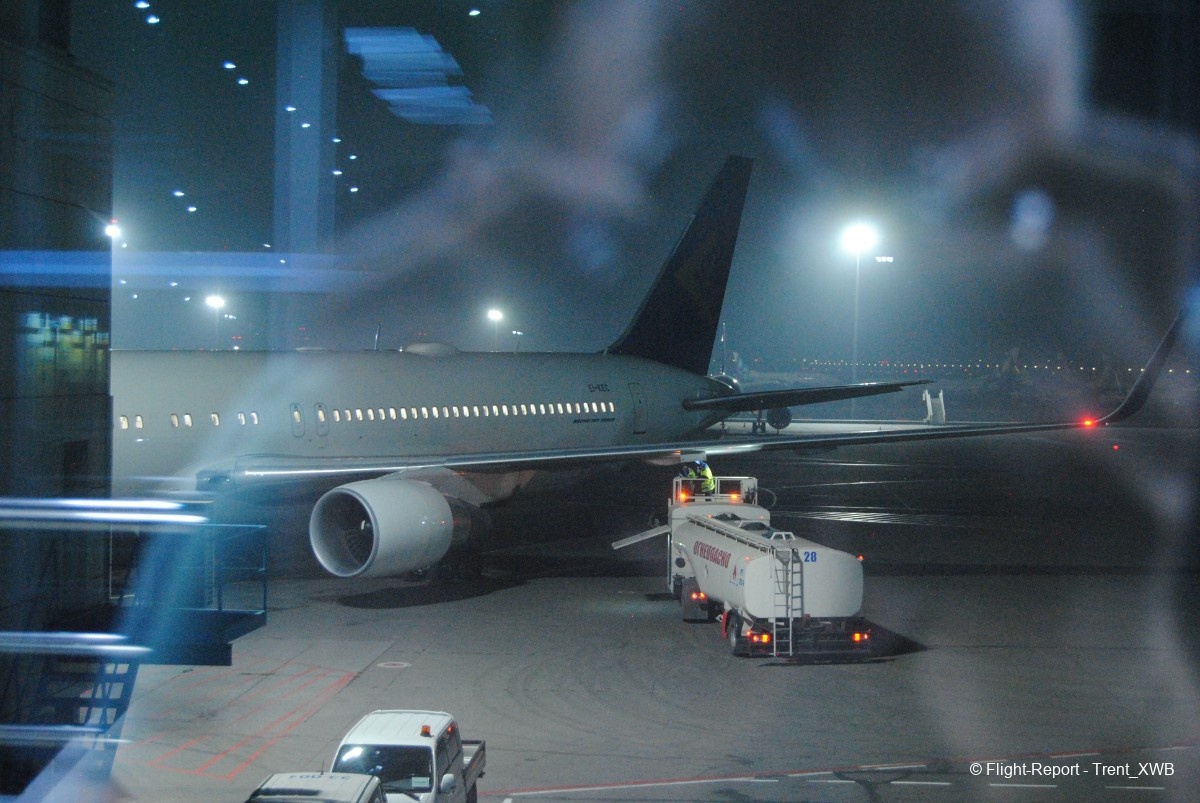
As all the available views of the aircraft were obstructed by the elements of T1, I'll show its photos, made a week later, when I returnen to ALA on another interesting aircraft and was taxiing by.
Boarding
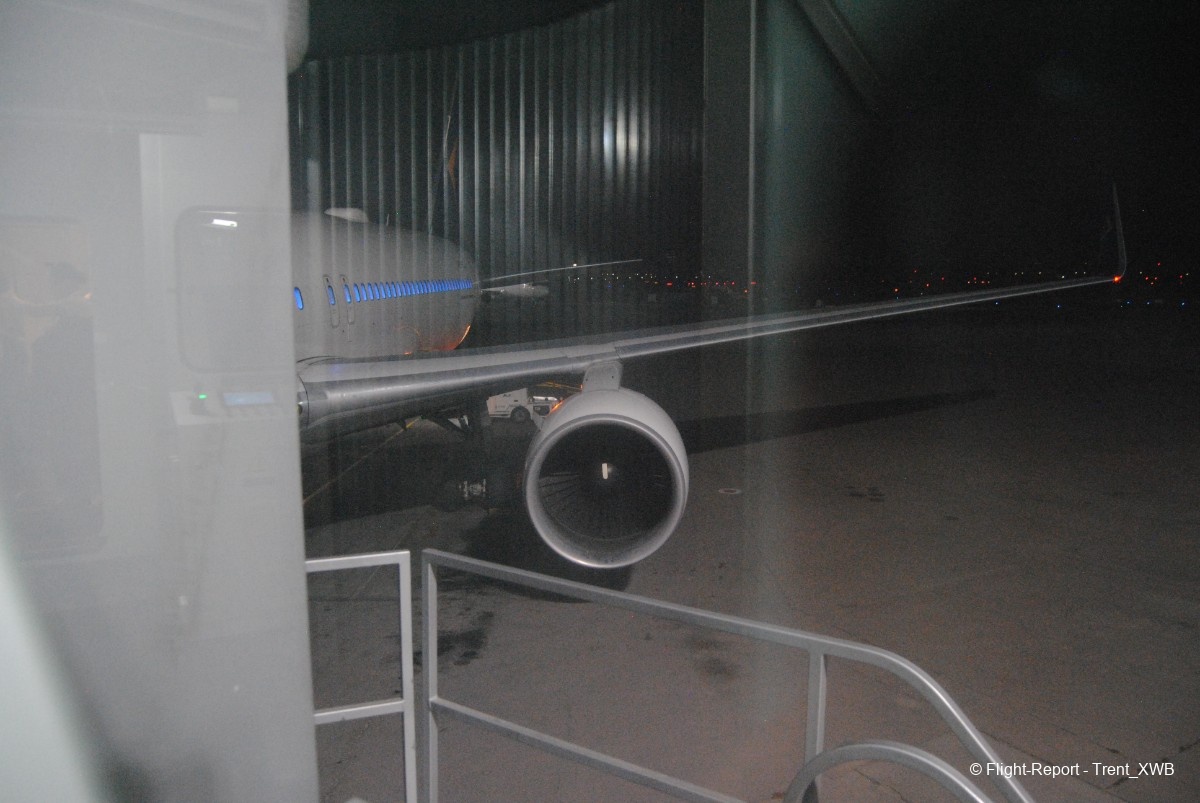
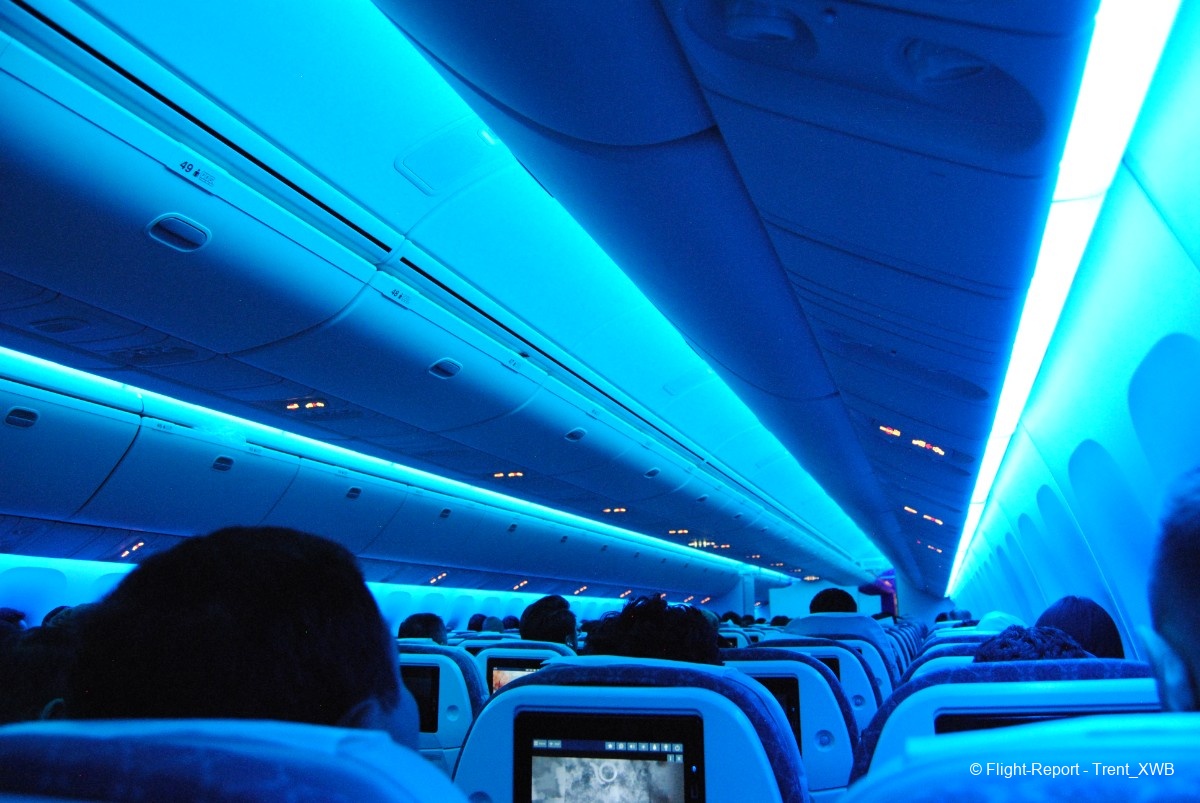
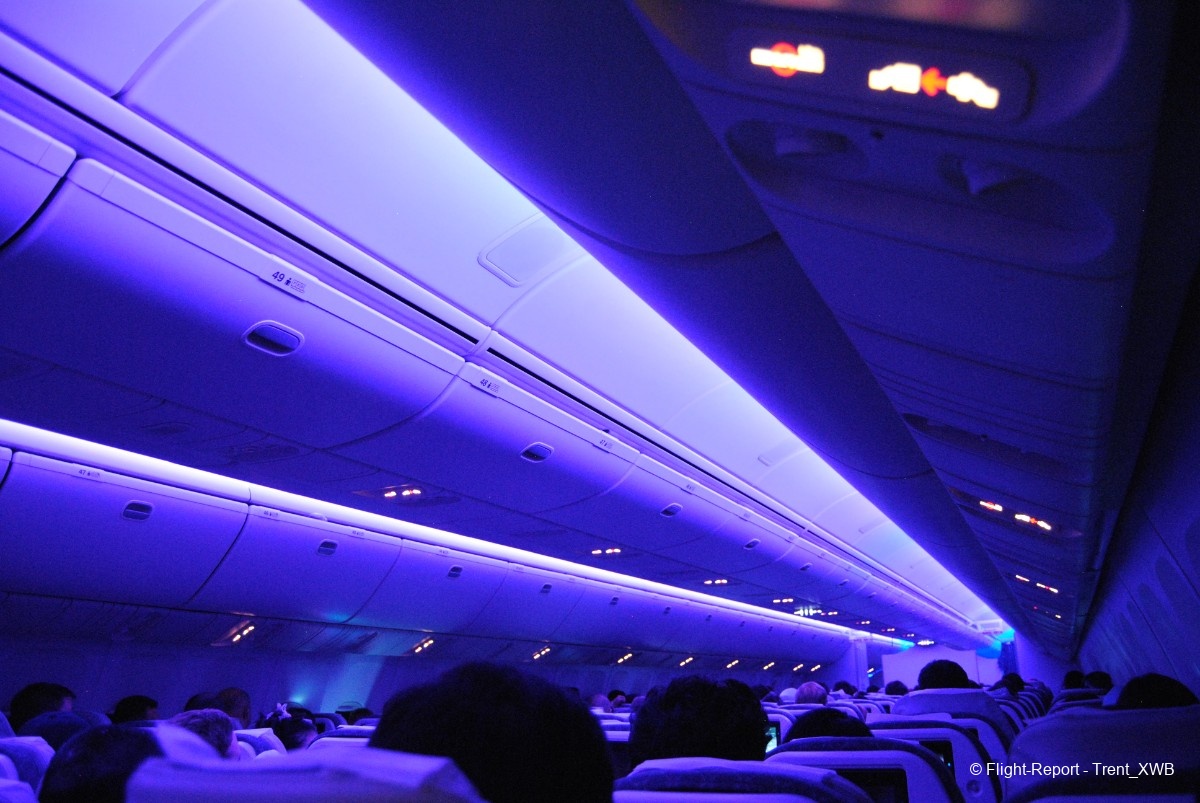
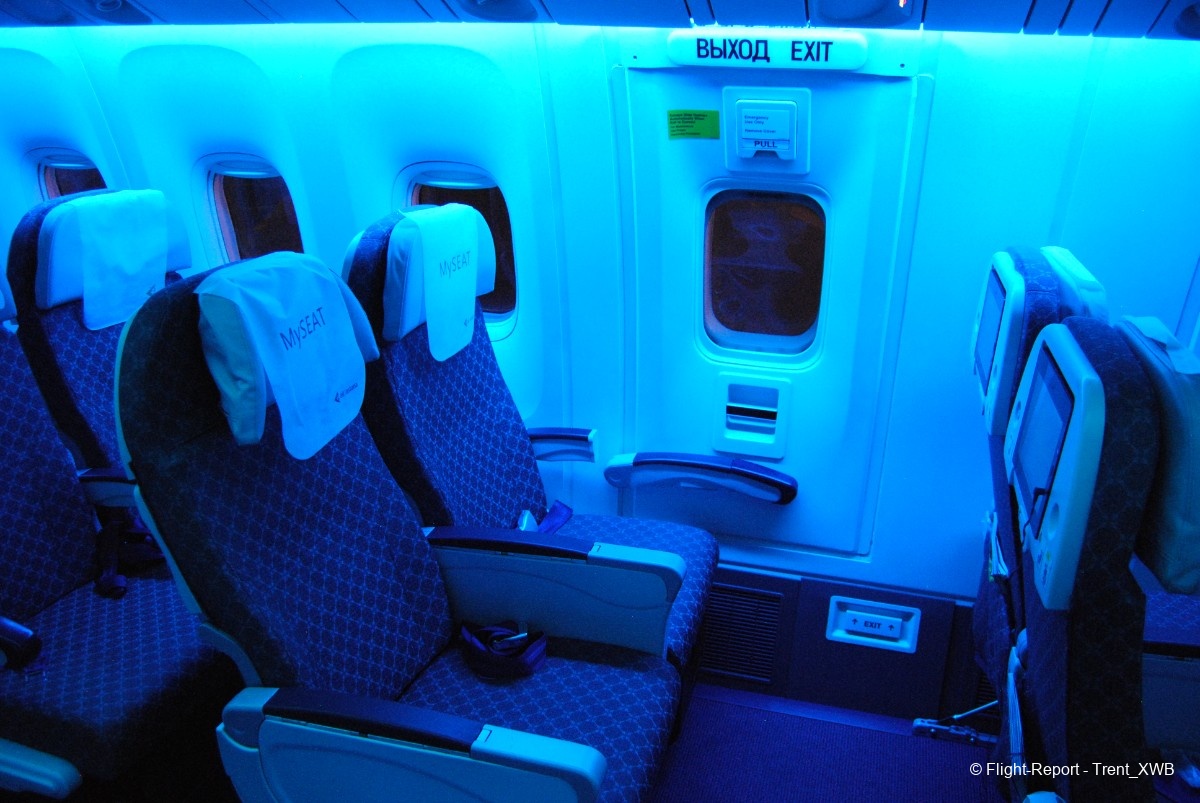
View of the wing and portside PW4060 engine. This is my first time flying a PW-powered B763 (and just 3rd time flying a B763 after SCL-GRU-MXP LATAM flights back in 2017). Notice that cabin lighting is changed to "boarding mode" vivid blue (you'll see further, how crazy it is).
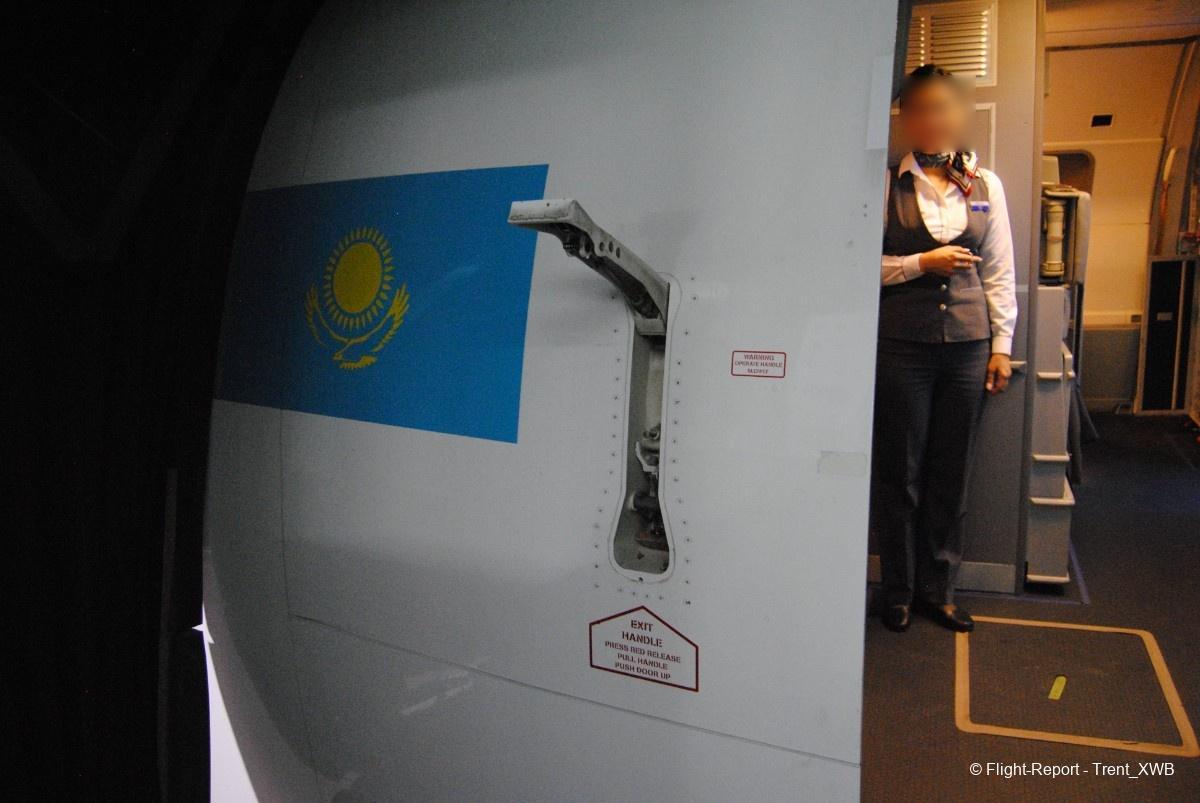
The fuselage near 1L door (let's remind that B767's main doors open upwards into the fuselage) and very welcoming FA.
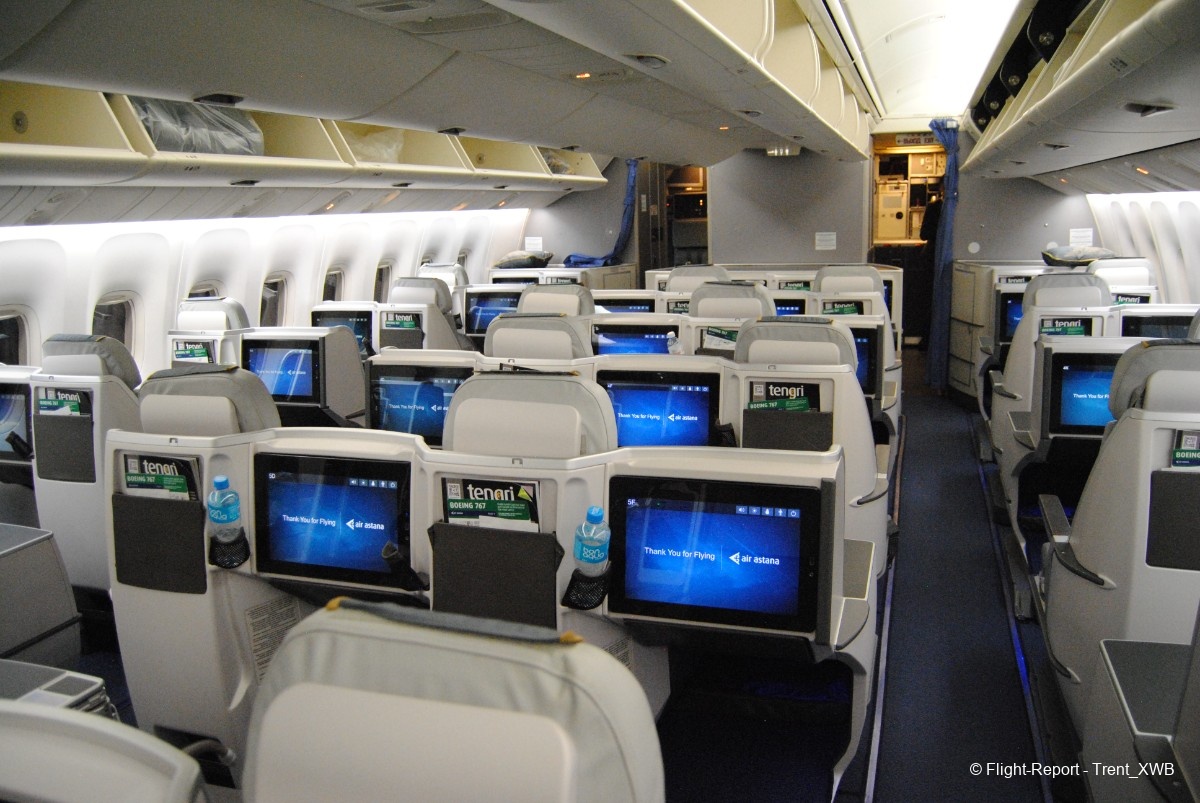
The Business Cabin
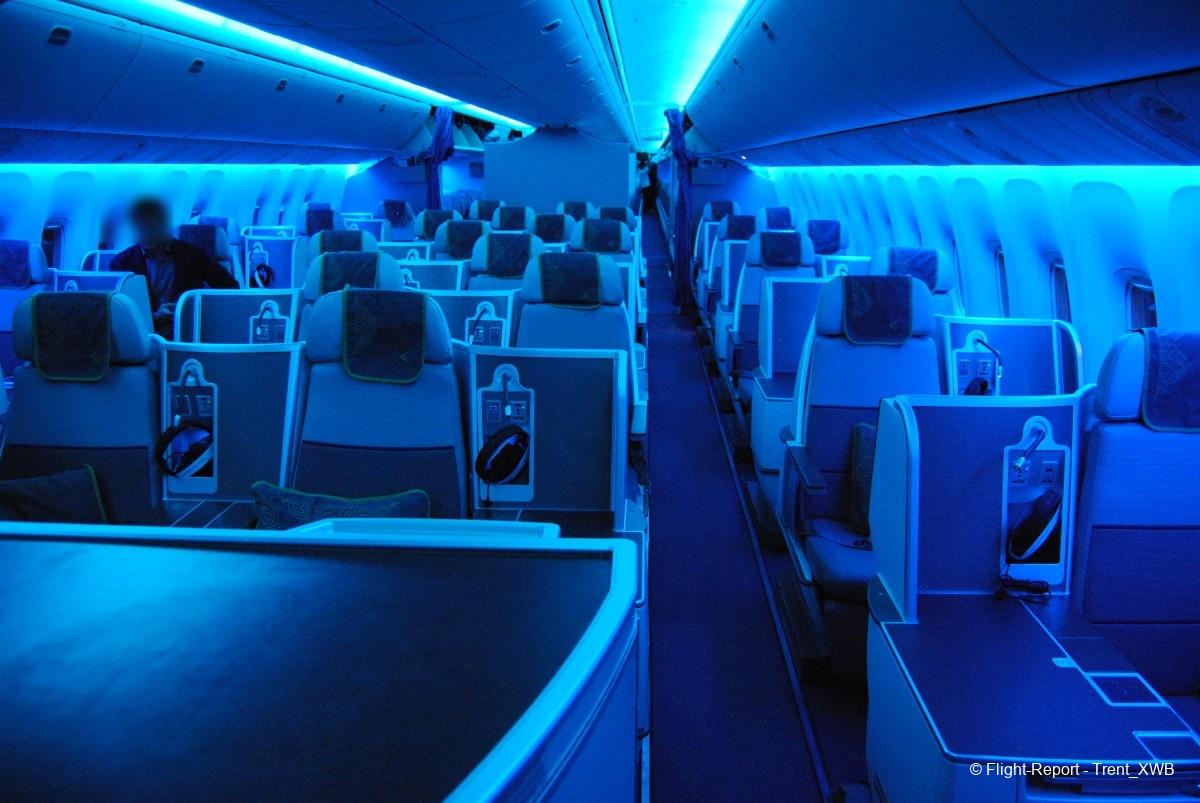
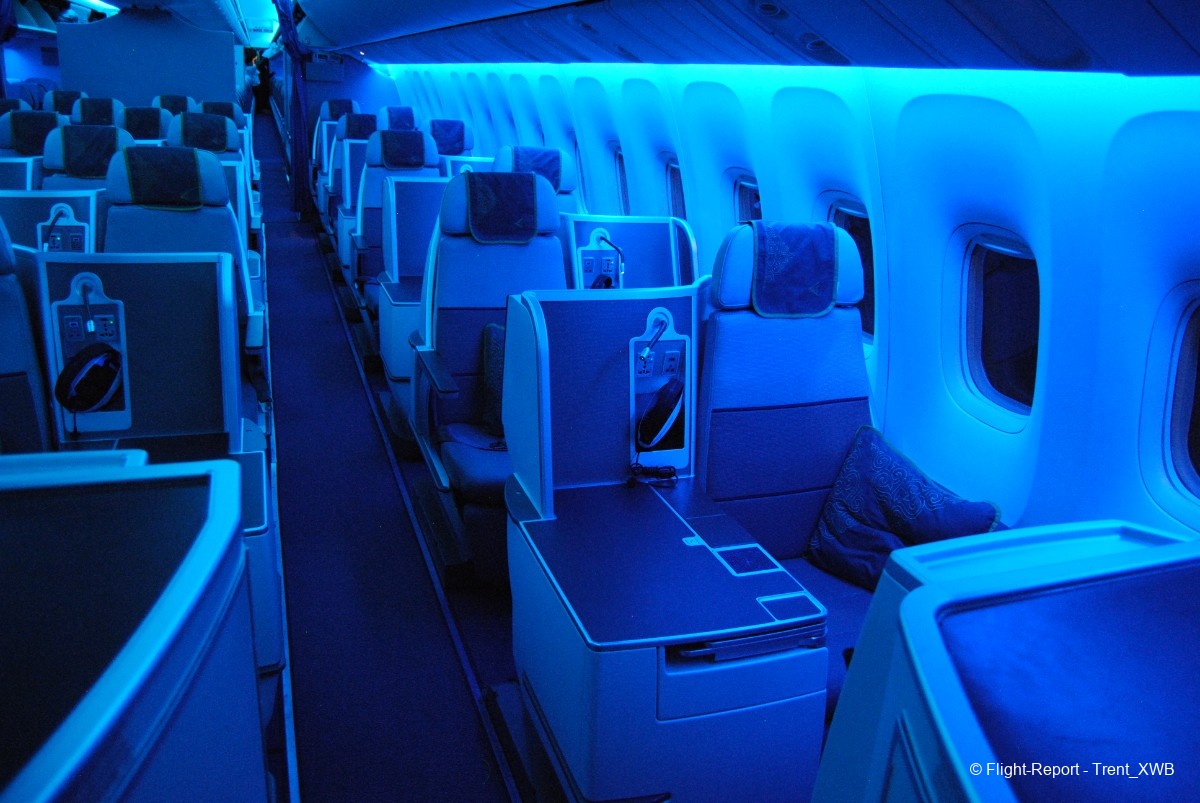
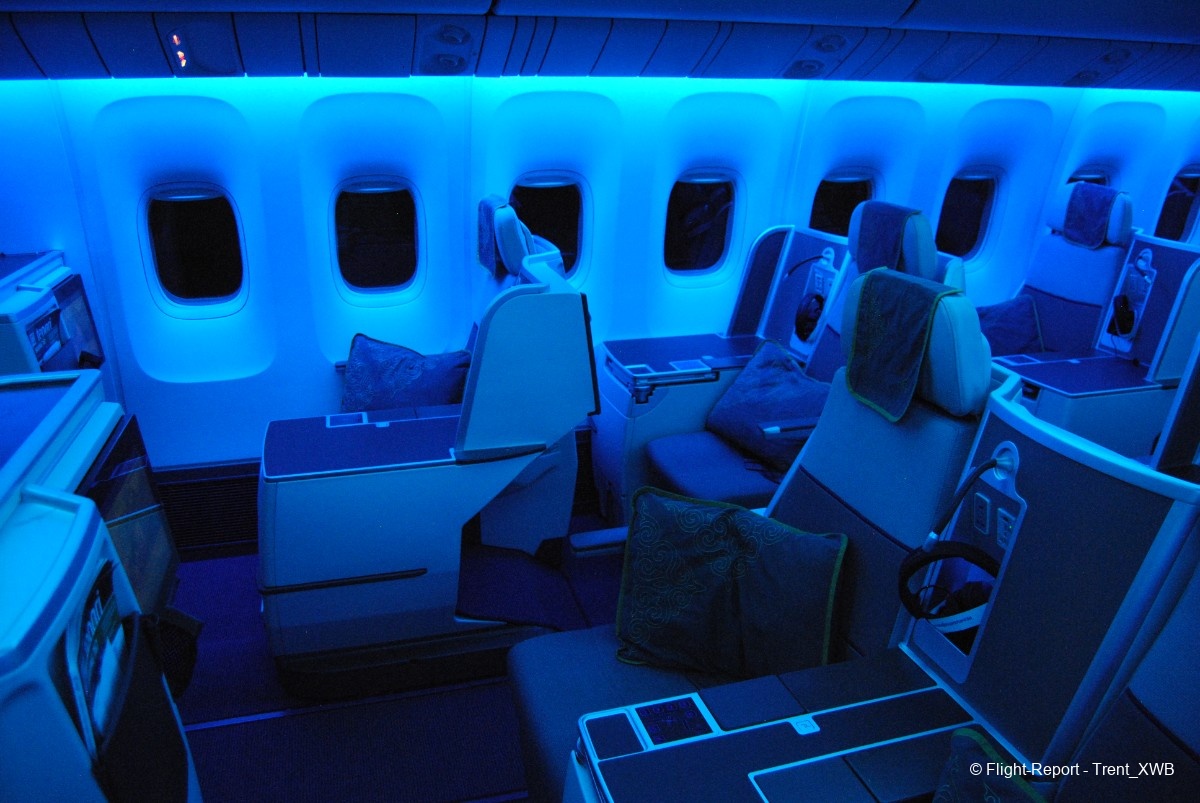
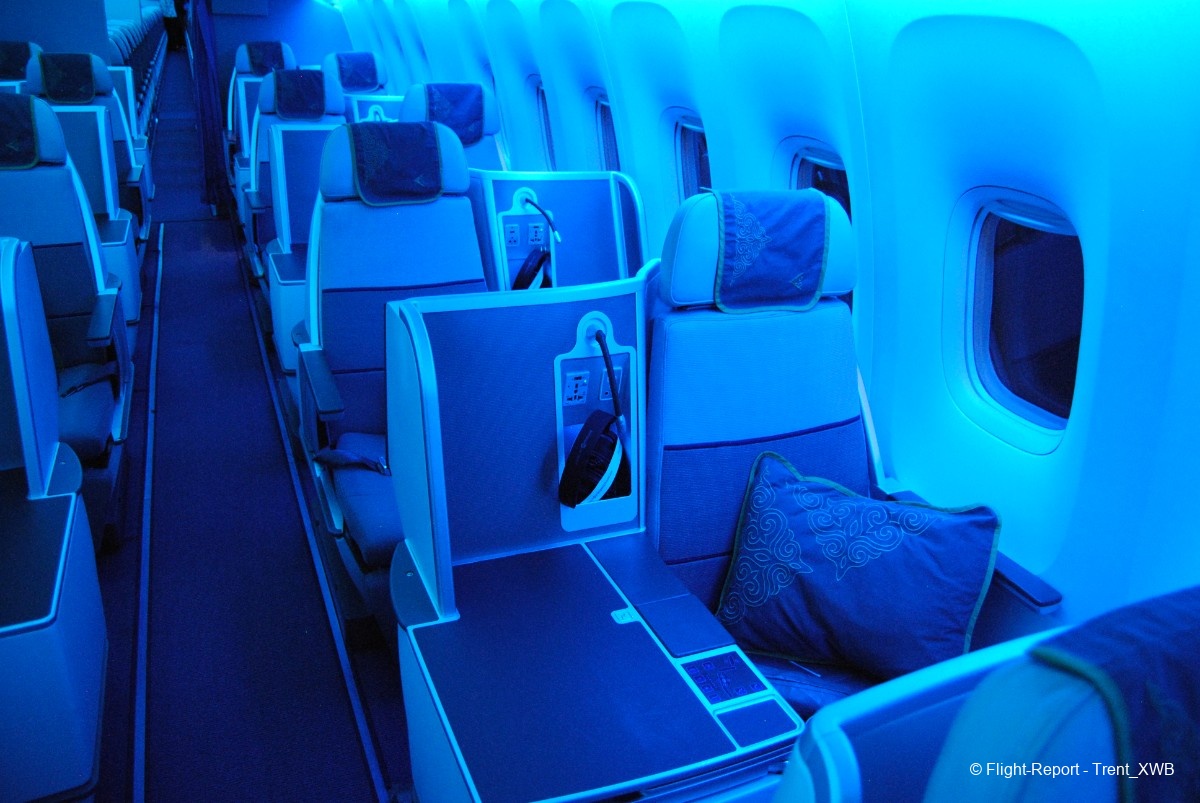
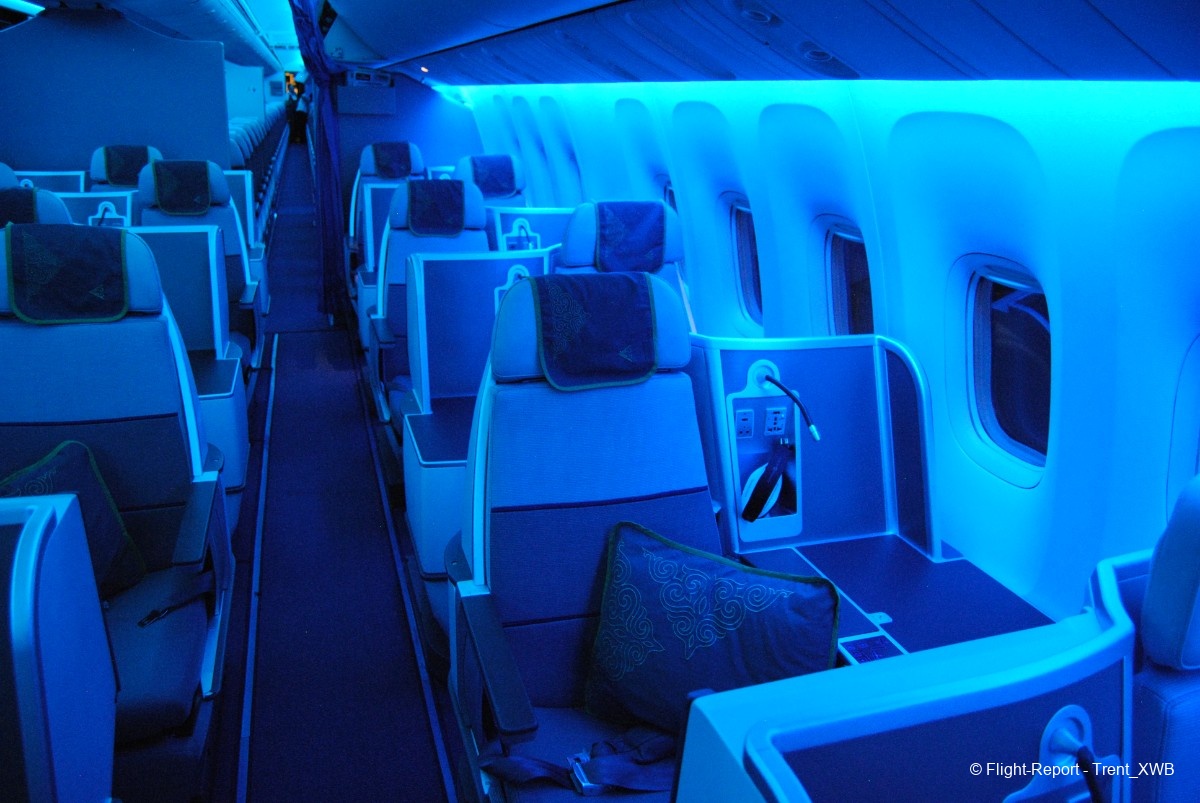
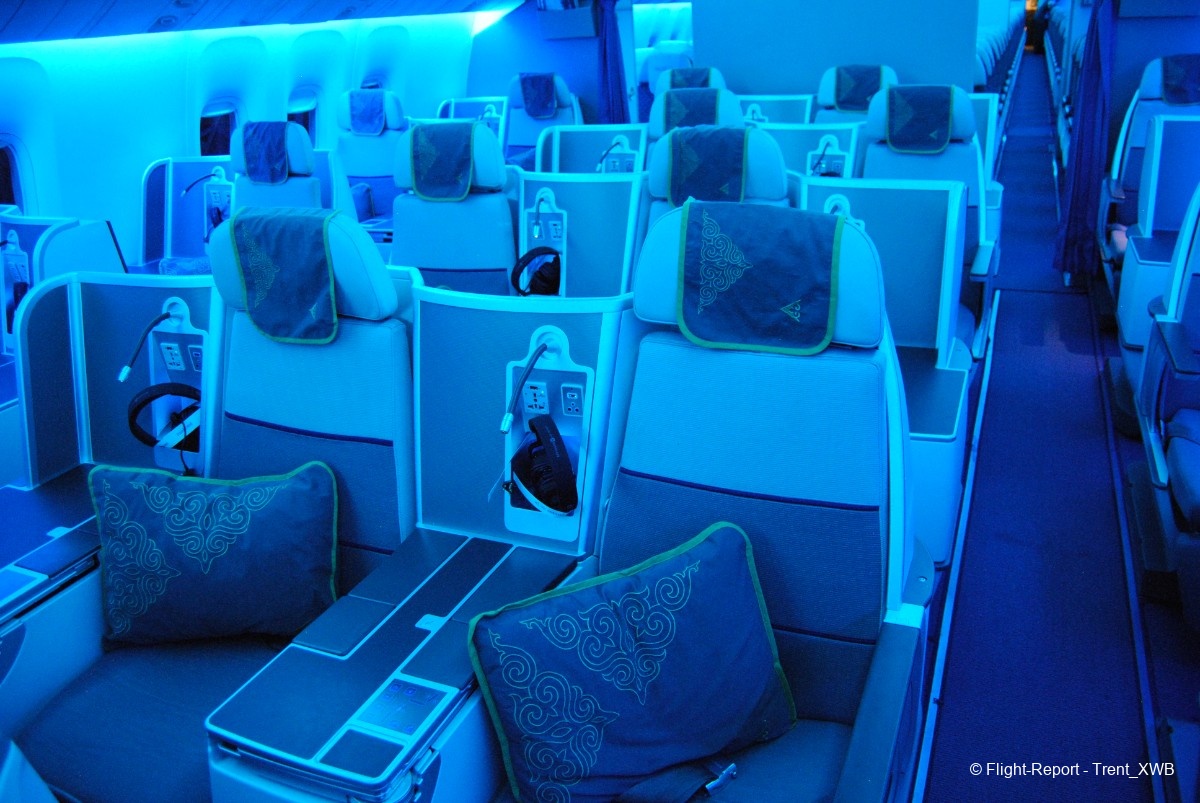
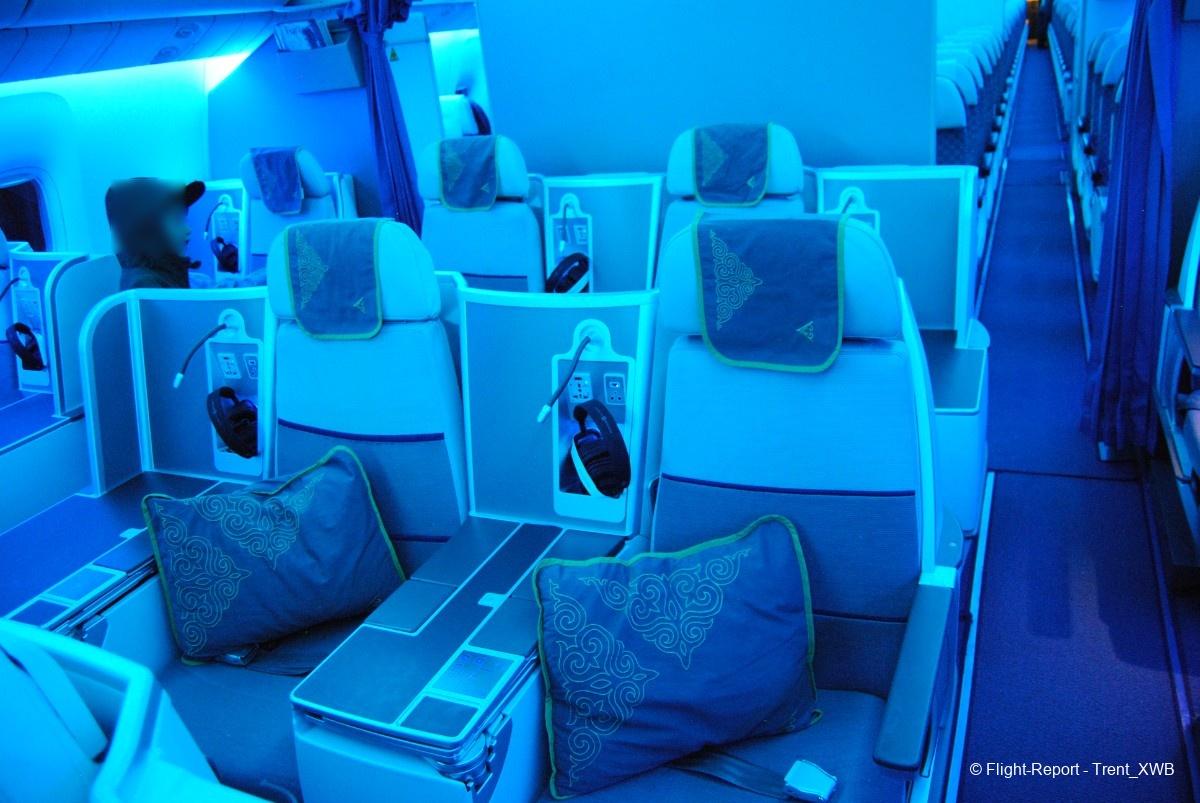
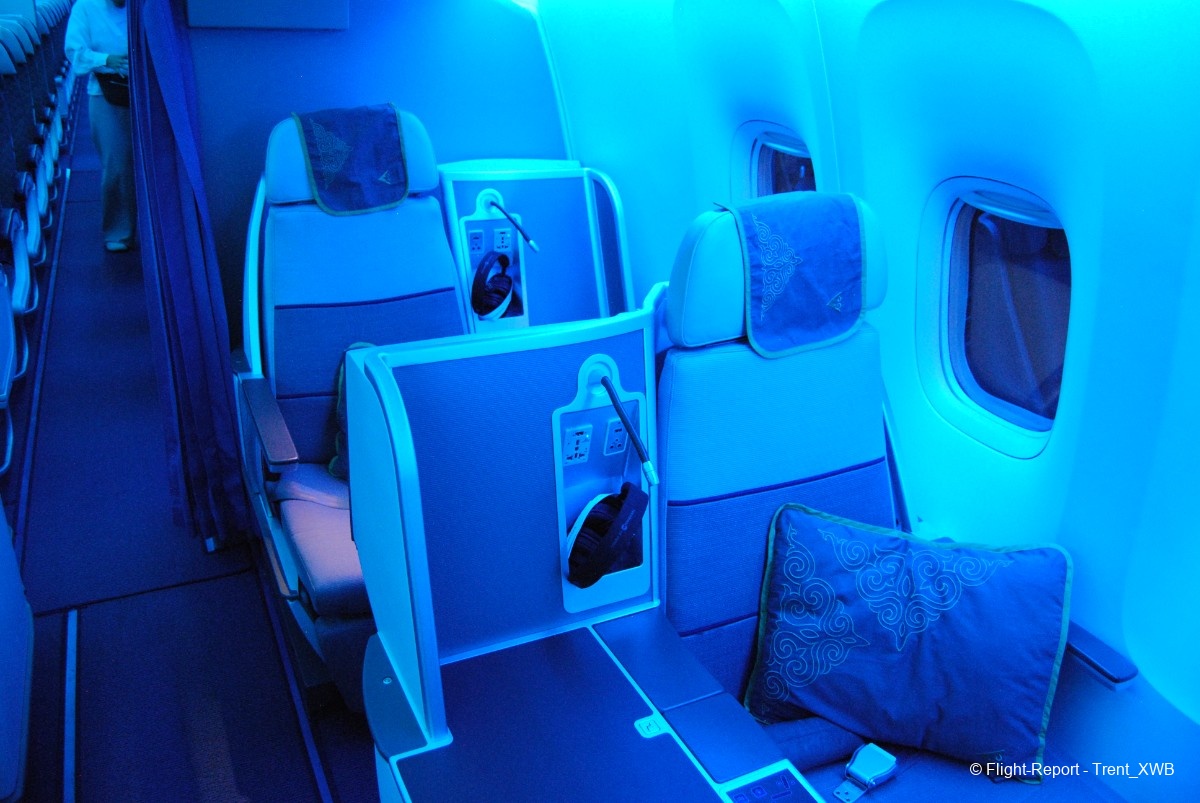
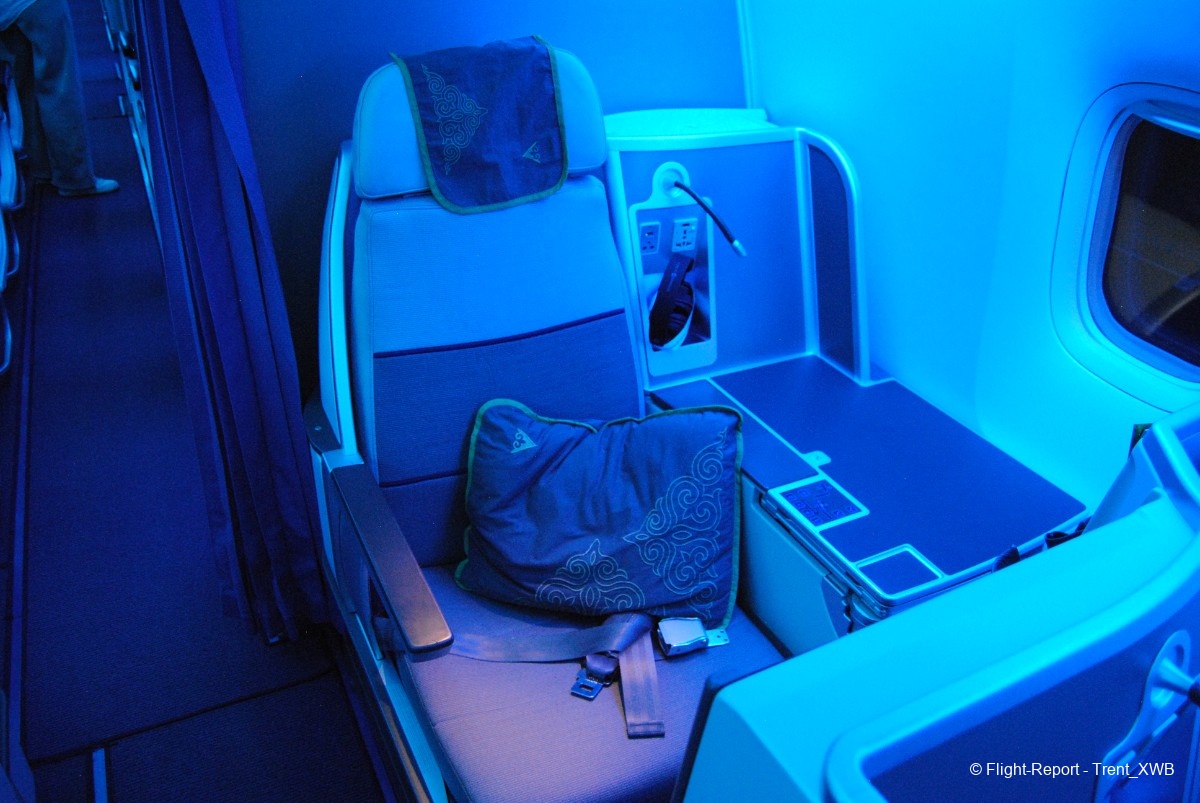
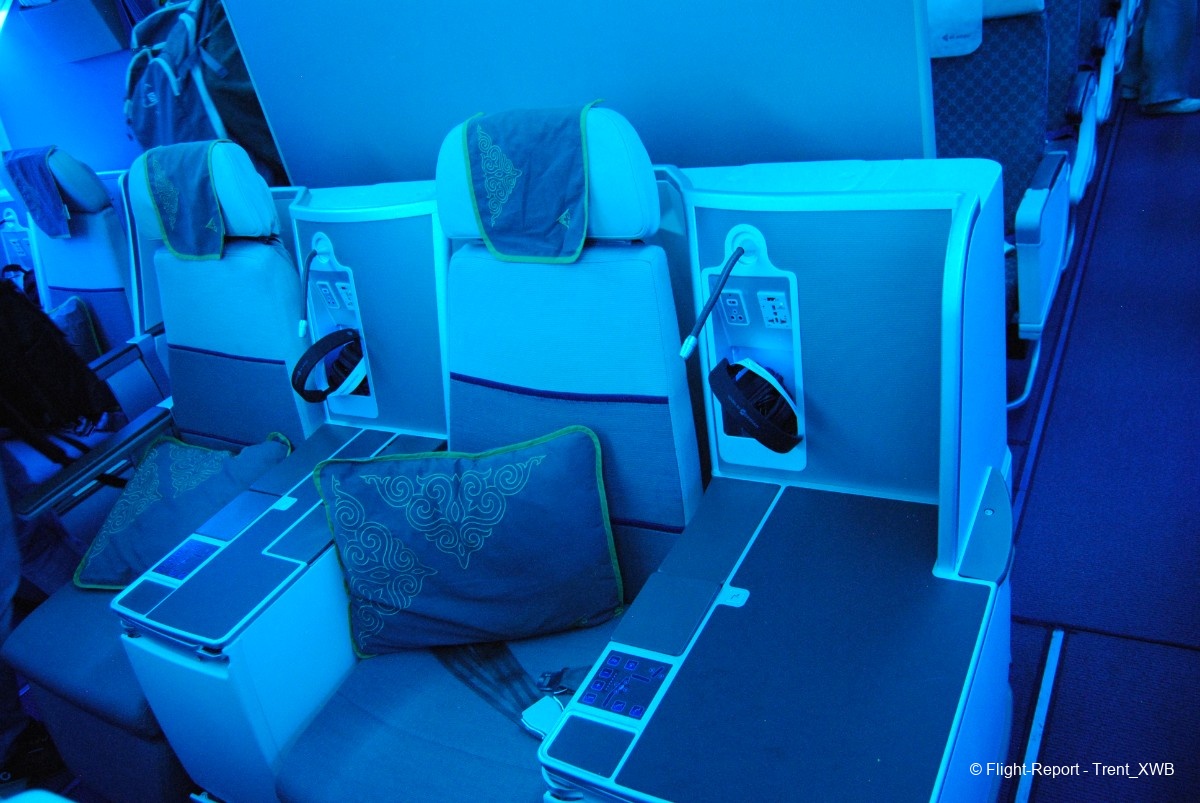
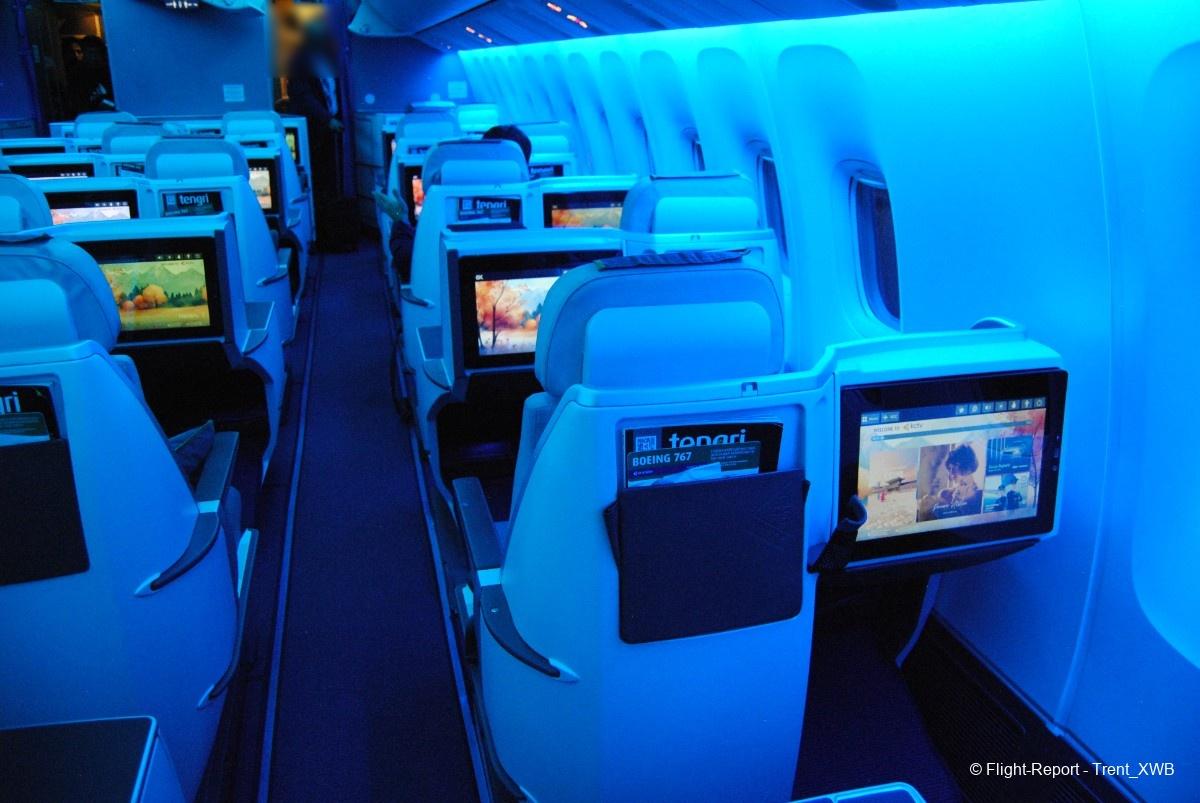
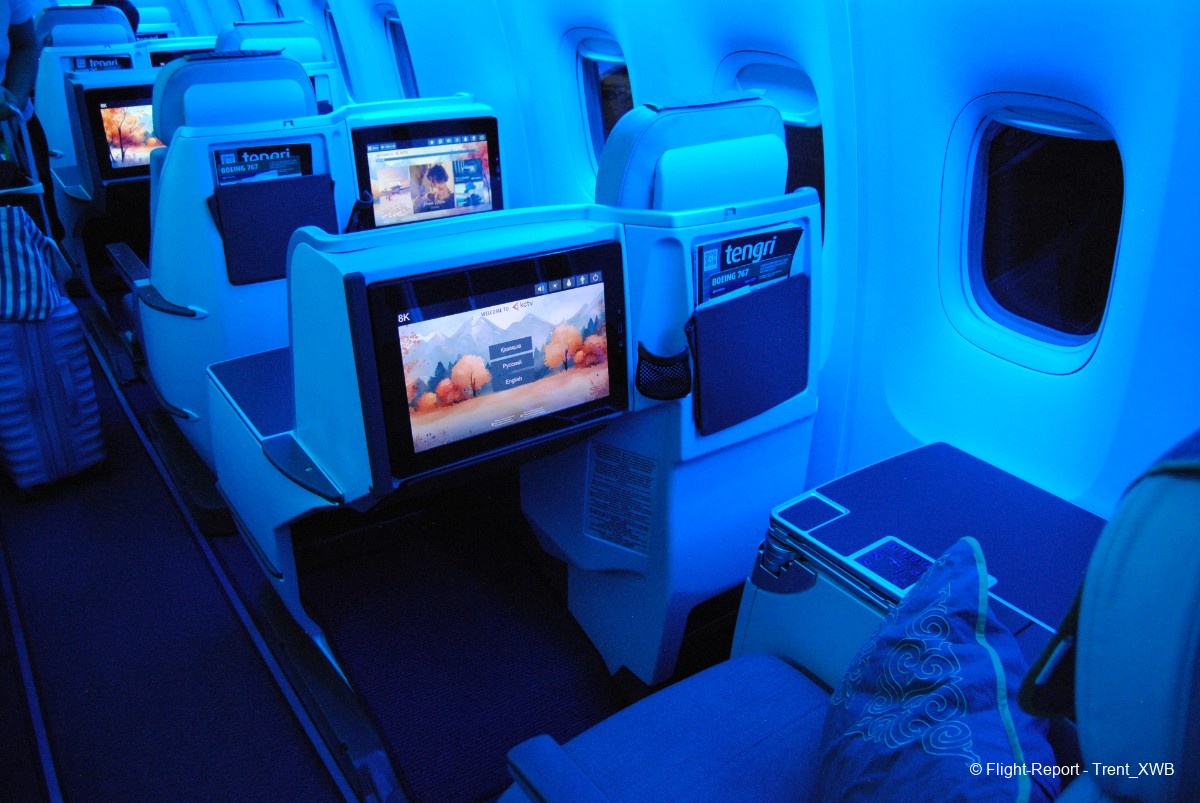
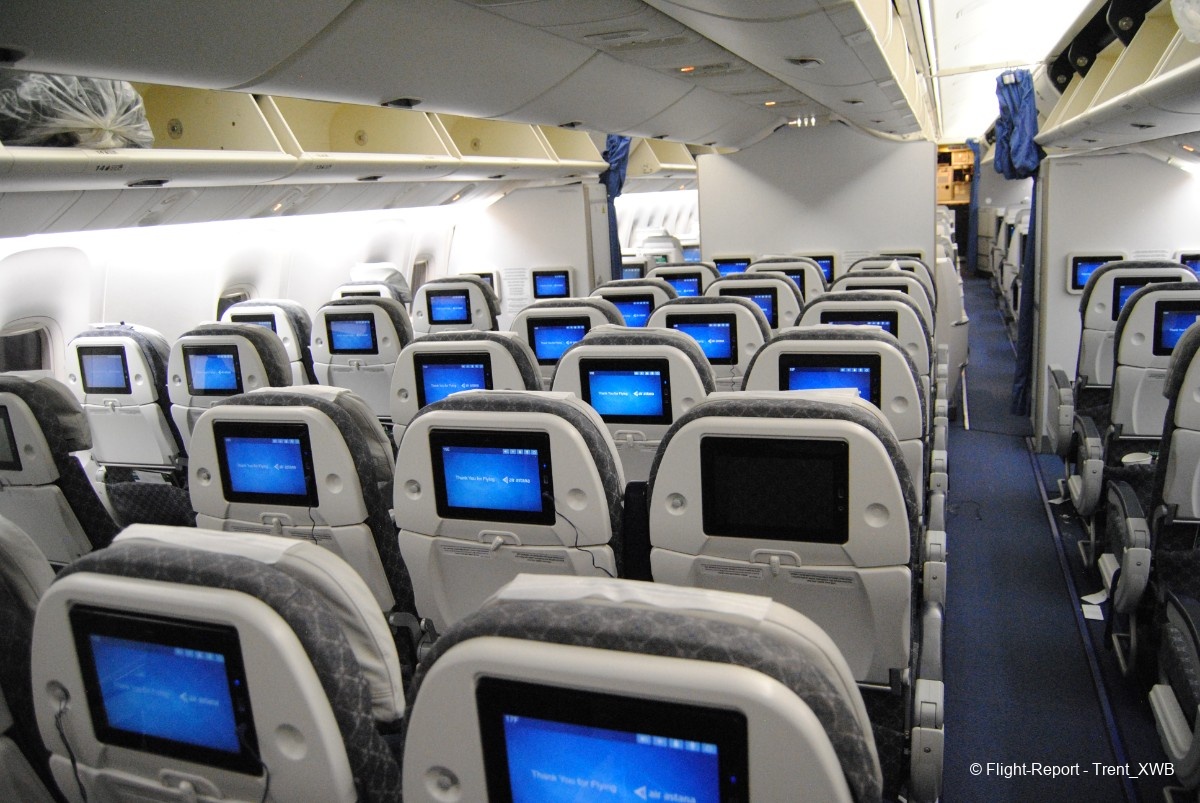
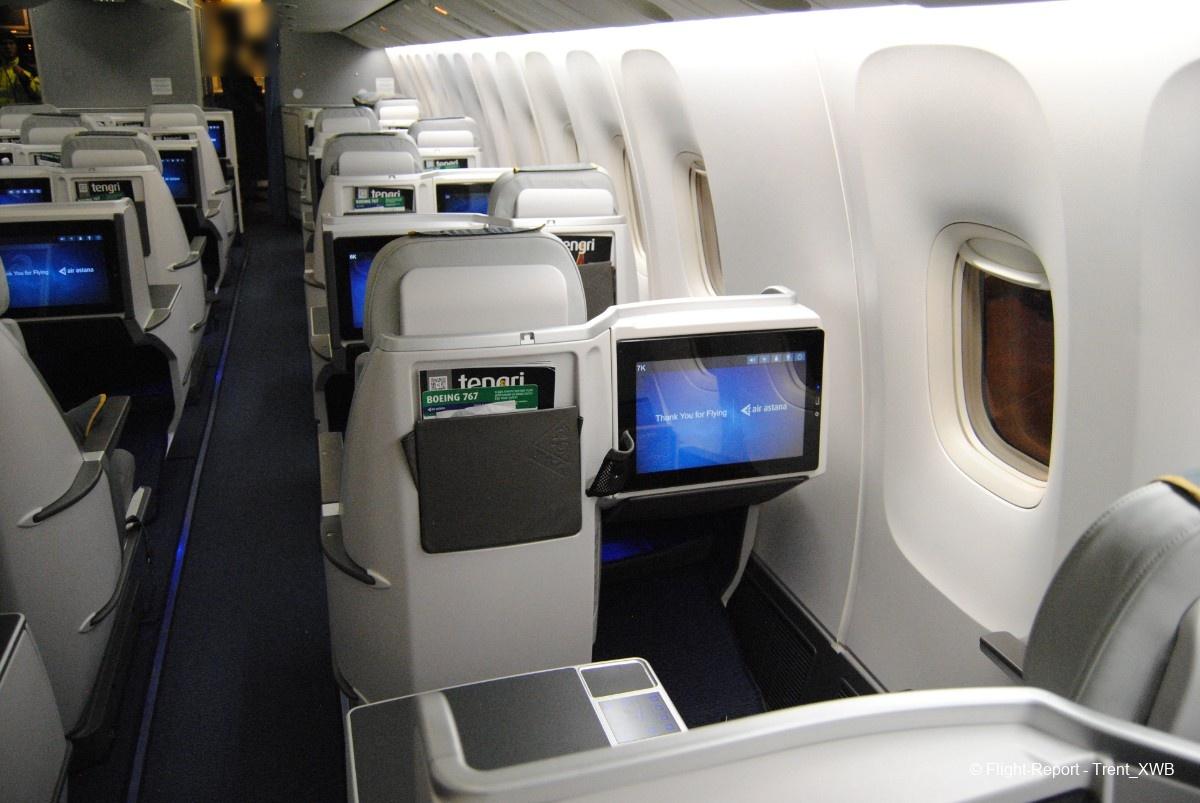
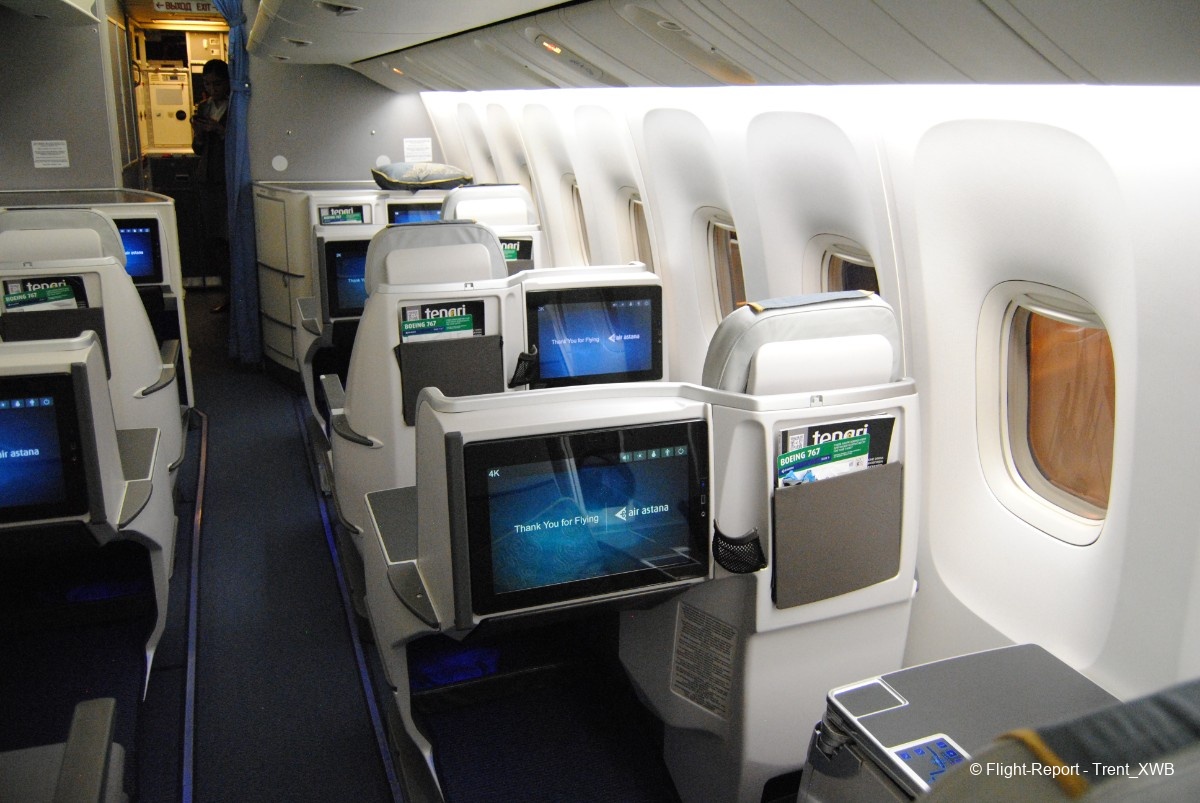
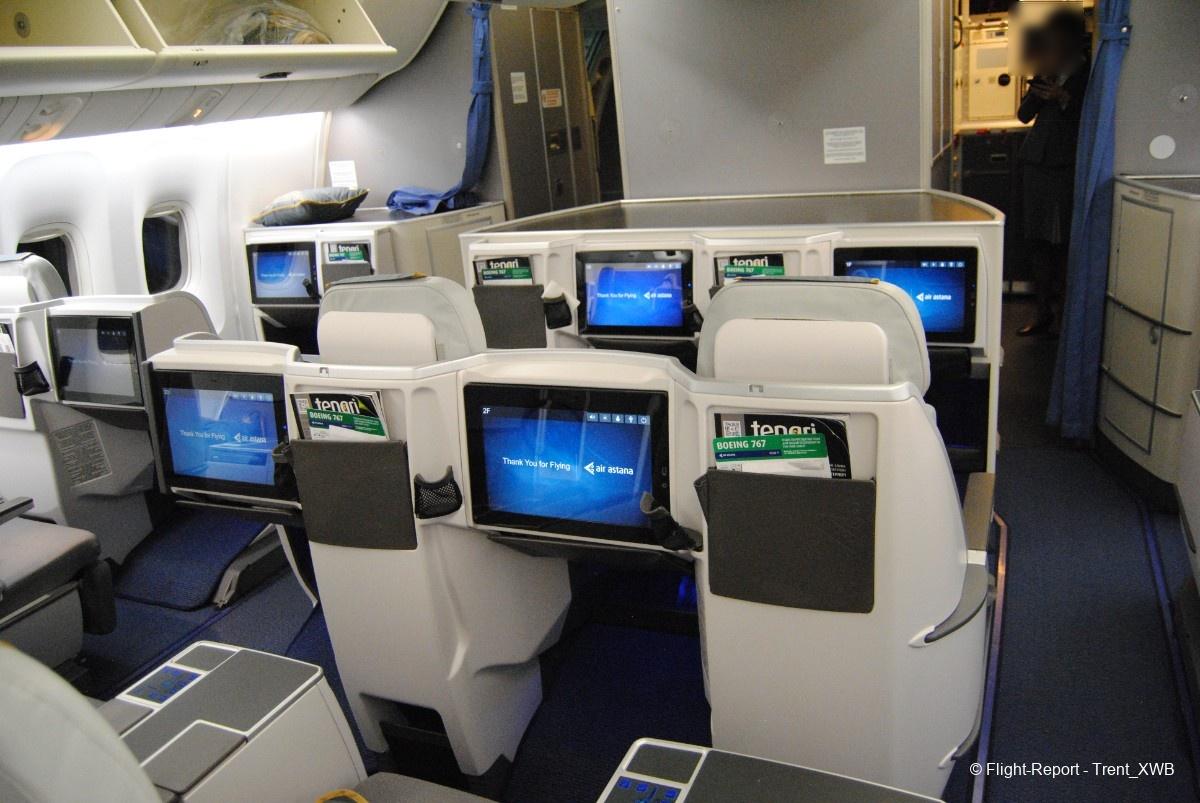
The large business cabin stretches from 1L/R almost to the wing. It consists of 30 Thompson Aero Vantage seats, configured in staggered 1-2-1 pattern in rows 1-8. These seats are one of the most solid business seat models, having some significant advantages (like large unrestricted footspace) compared to typical reverse herringbone seats, but also having some drawbacks: aisle-oriented seats are very exposed. For example, these seats are popular among some Lufthansa Group airlines: Swiss use them in B77Ws, A343s and A333s, Edelweiss use them in A343s and Austrian use them in B772s and B763s (BTW, OS B763 are also PW-powered, but are ancient compared to the KC ones). Delta Air Lines also use these seats as "Delta One" business class in its A359s, A339s, B764s and B763s.
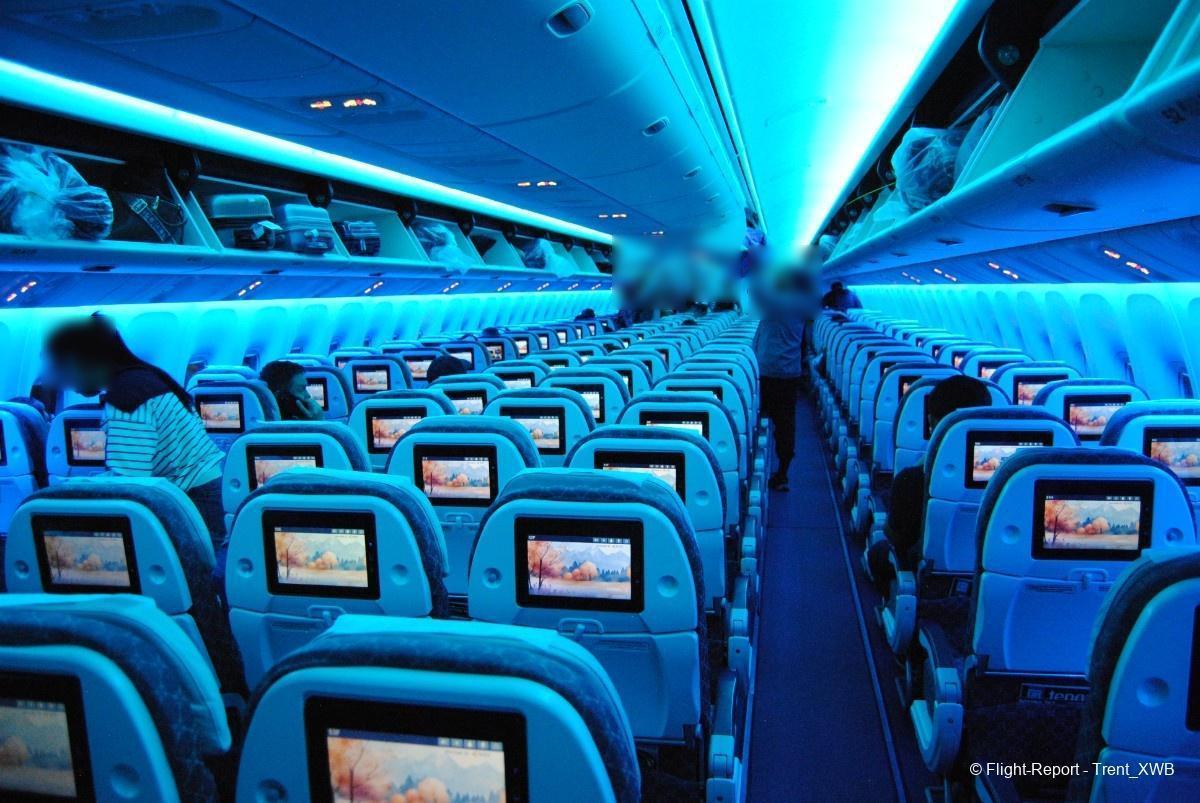
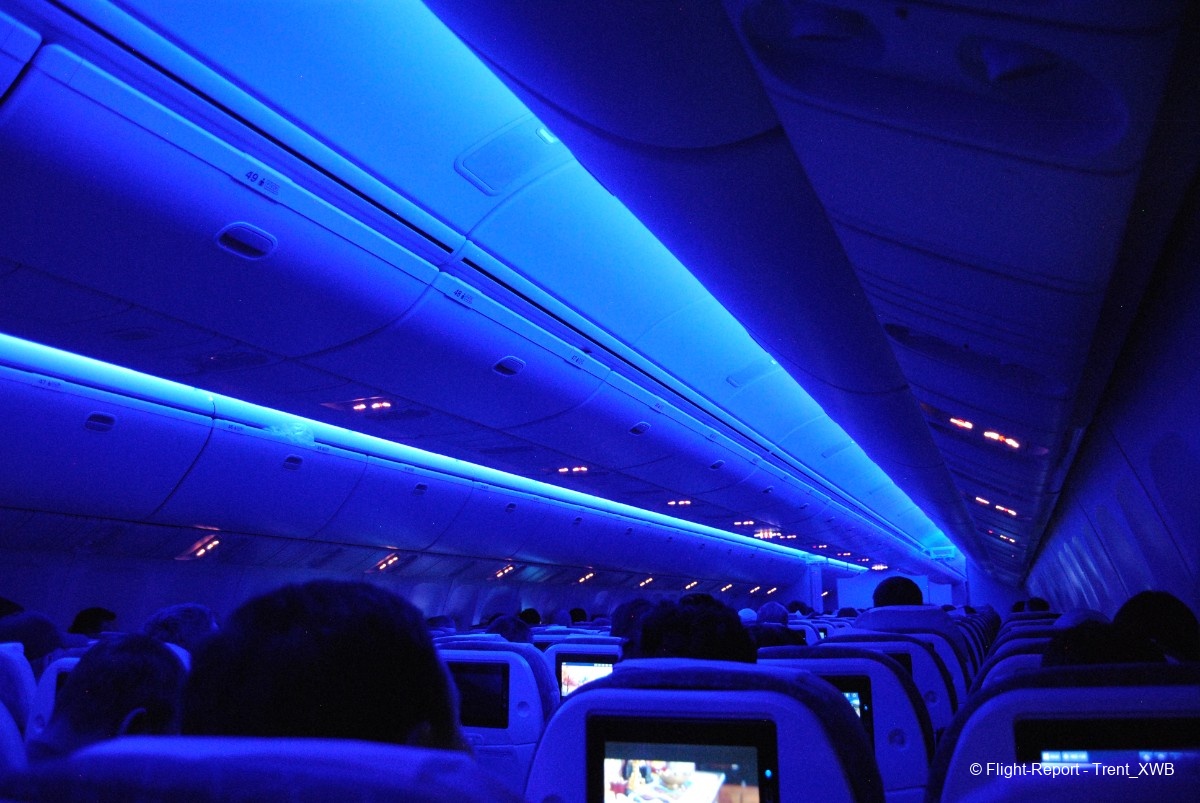
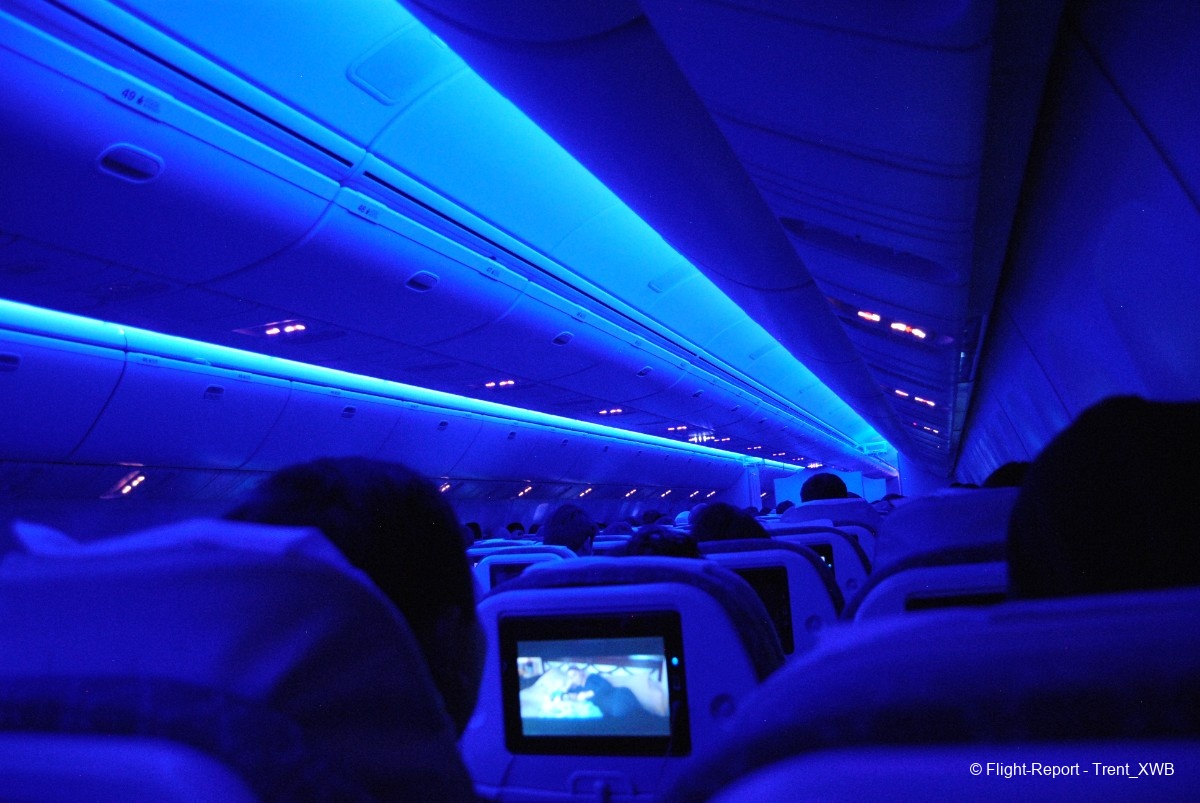
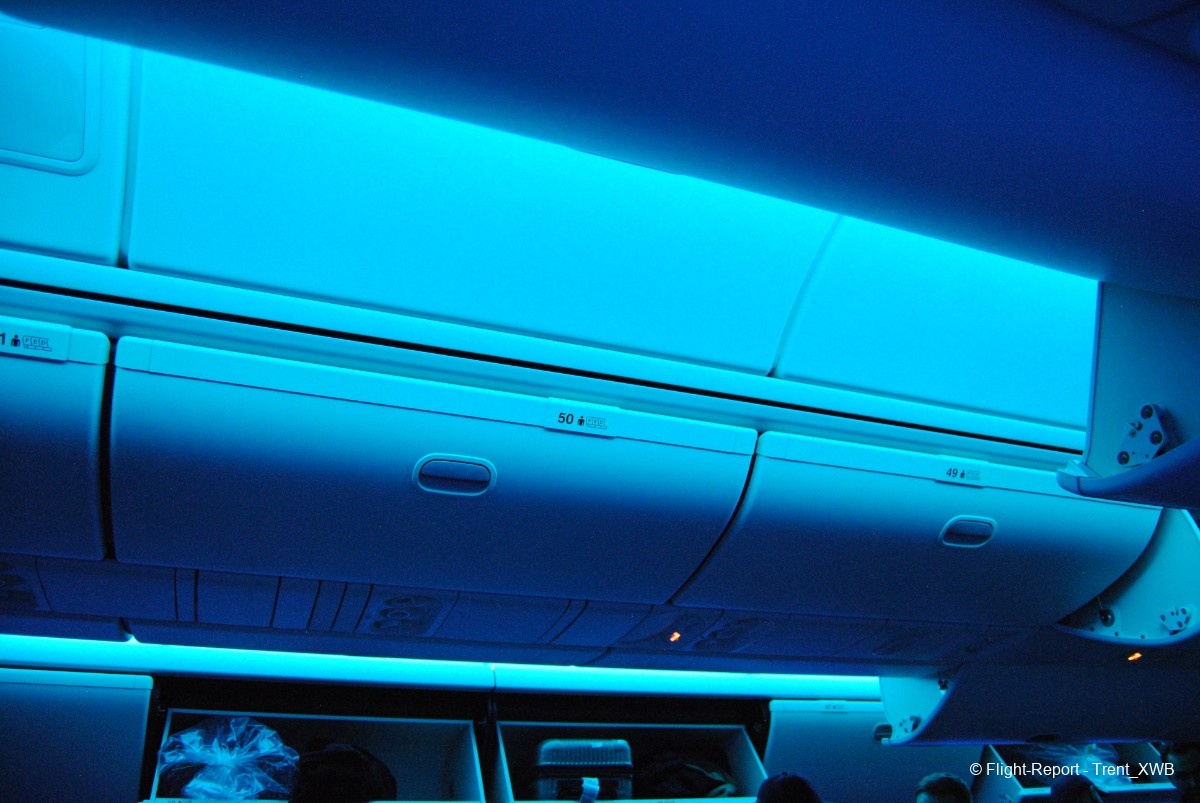
And now one can see how crazy the cabin moodlighting is. My camera also got crazy and sometimes was not able to properly set the exposure.
The Front Economy Cabin
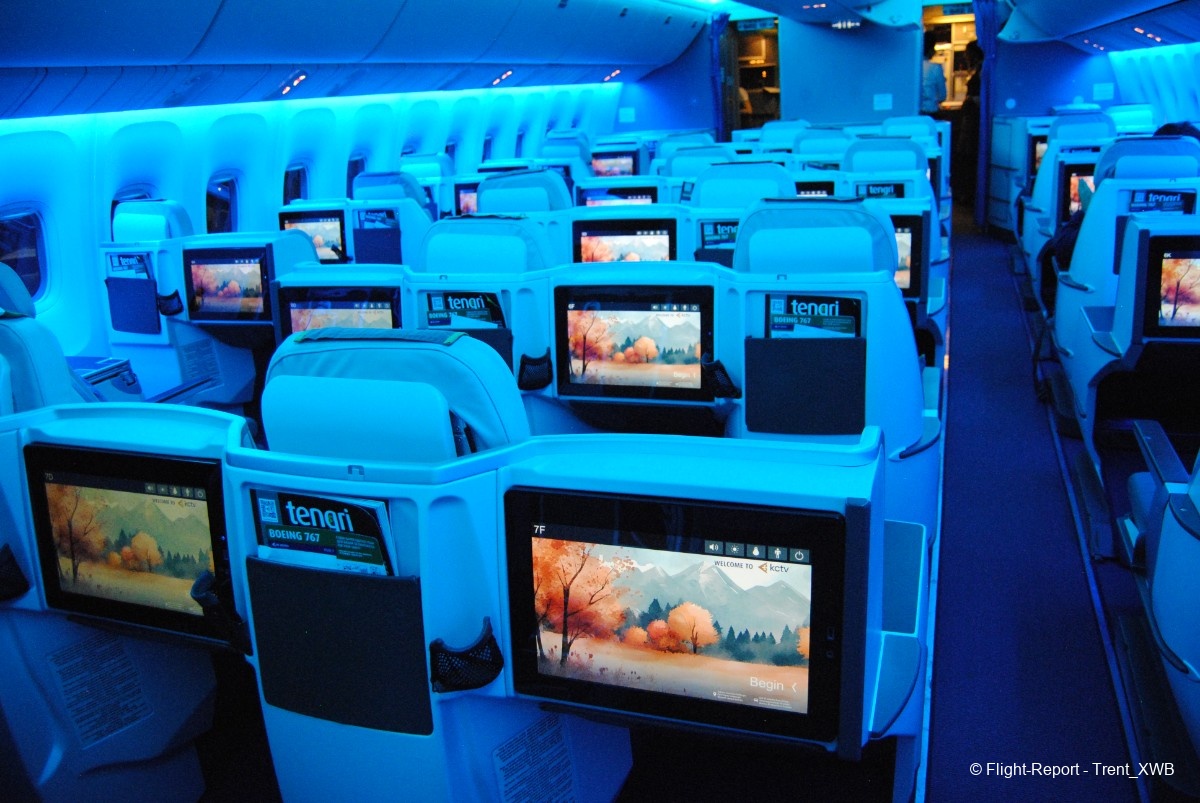
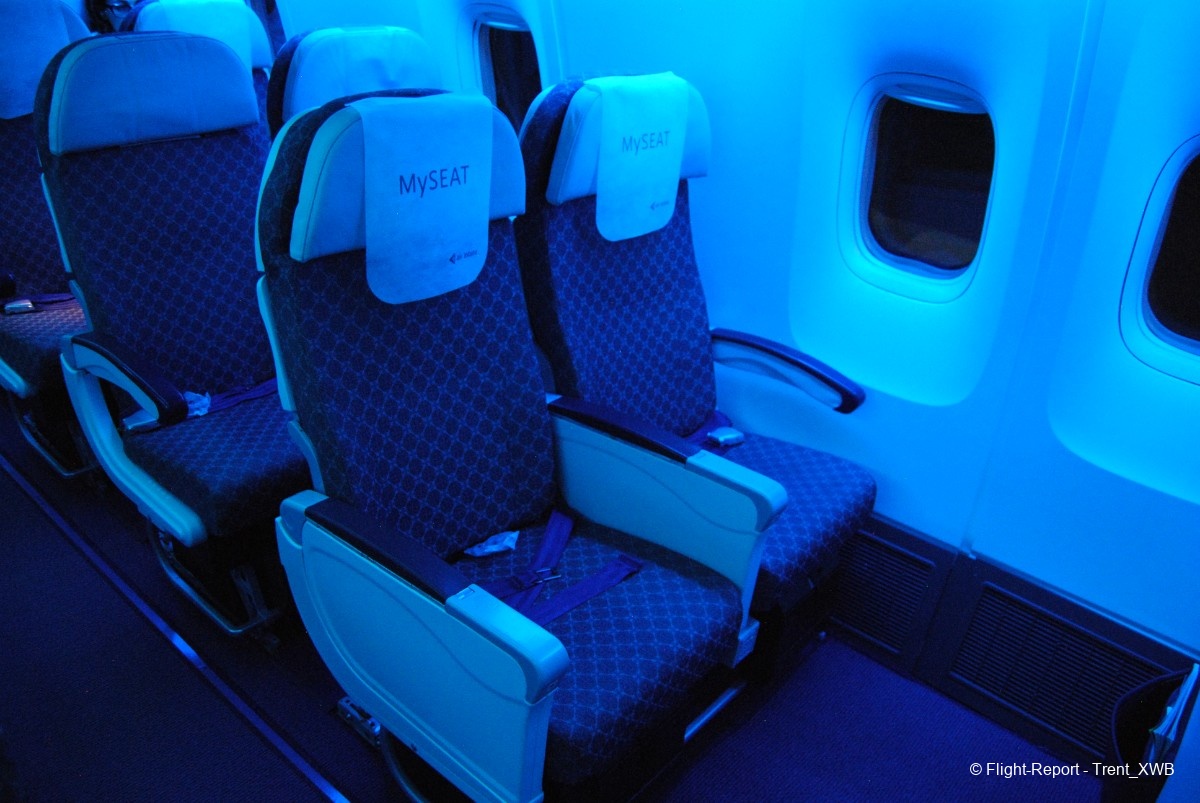
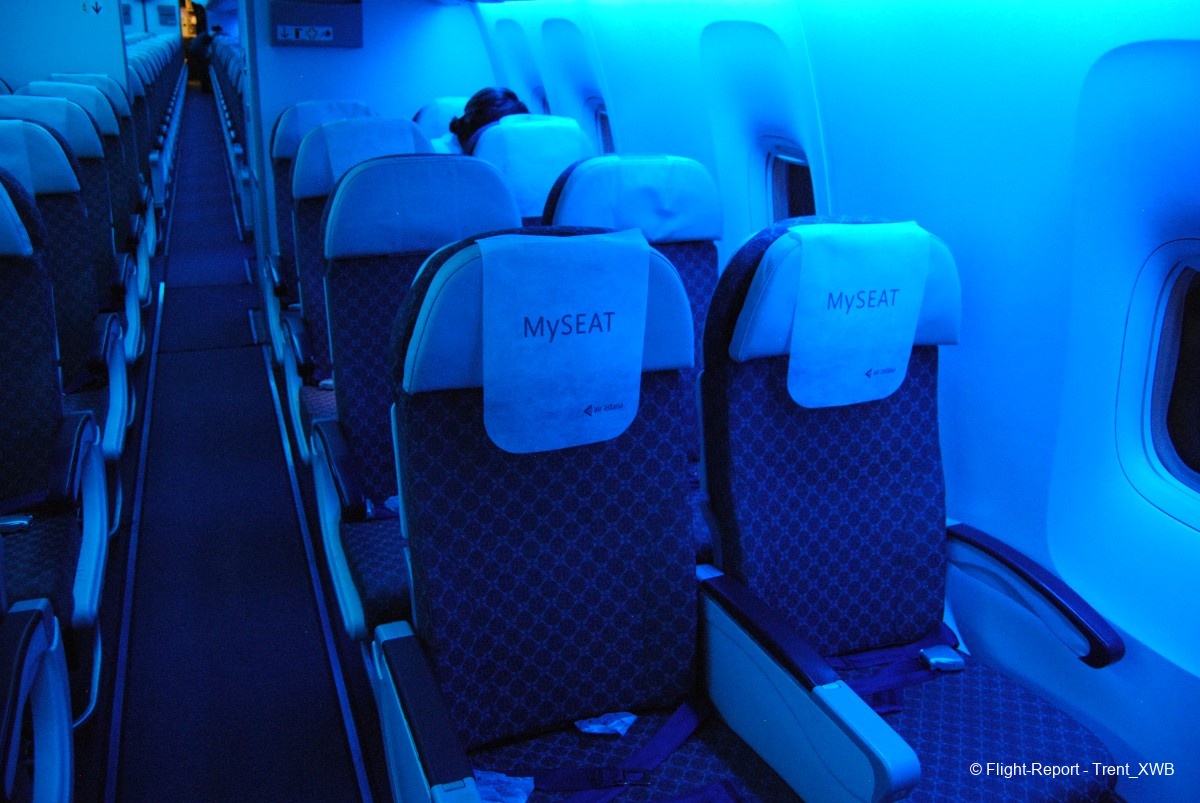
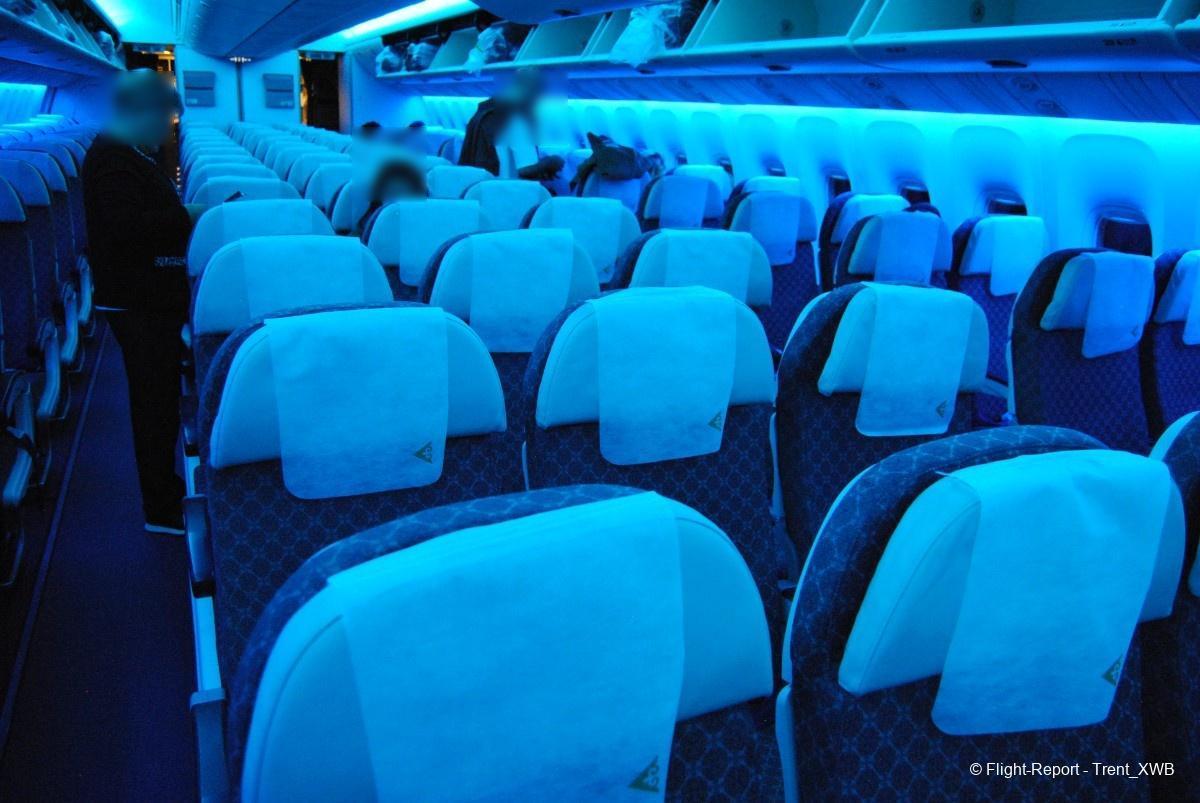
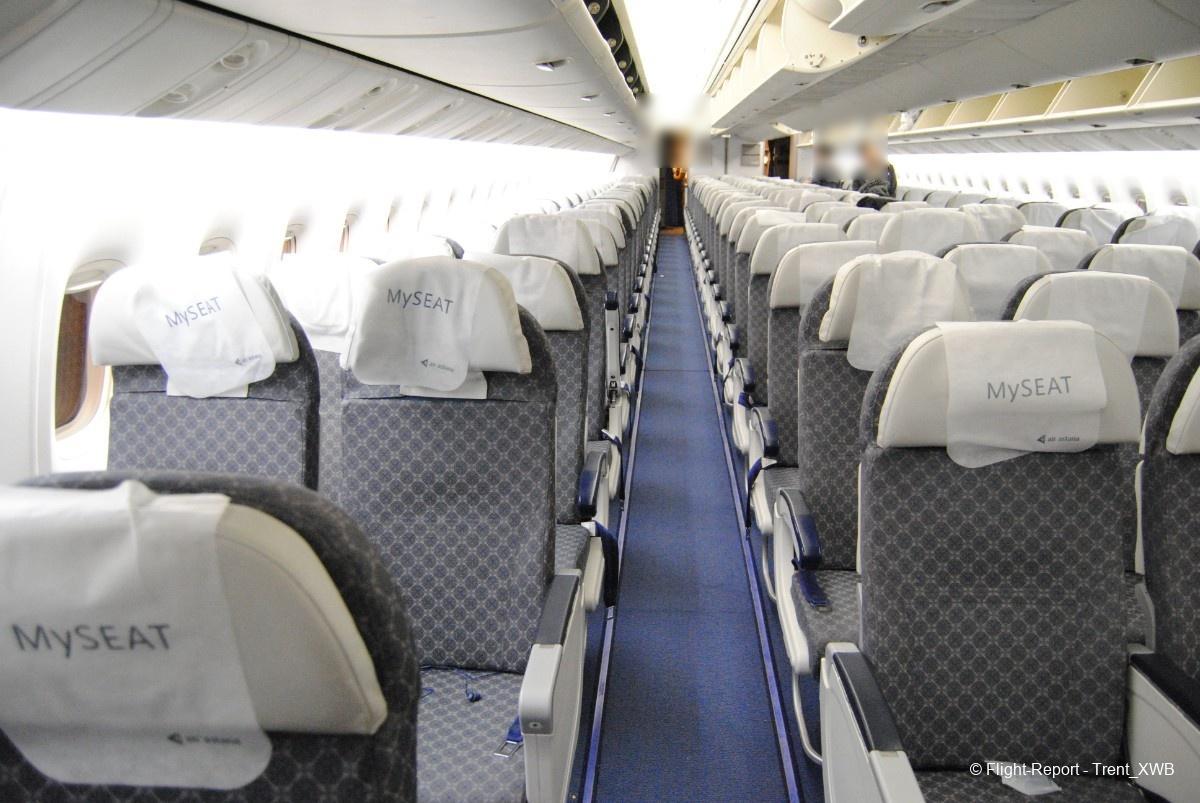
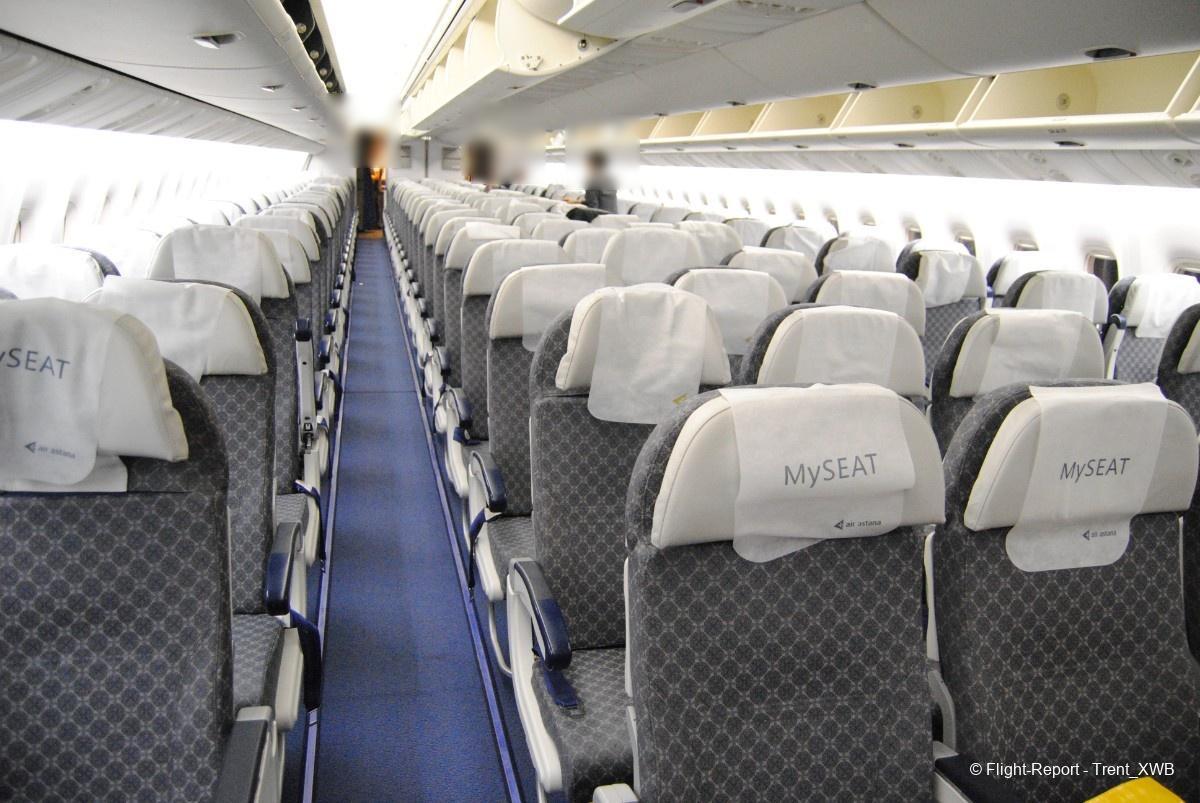
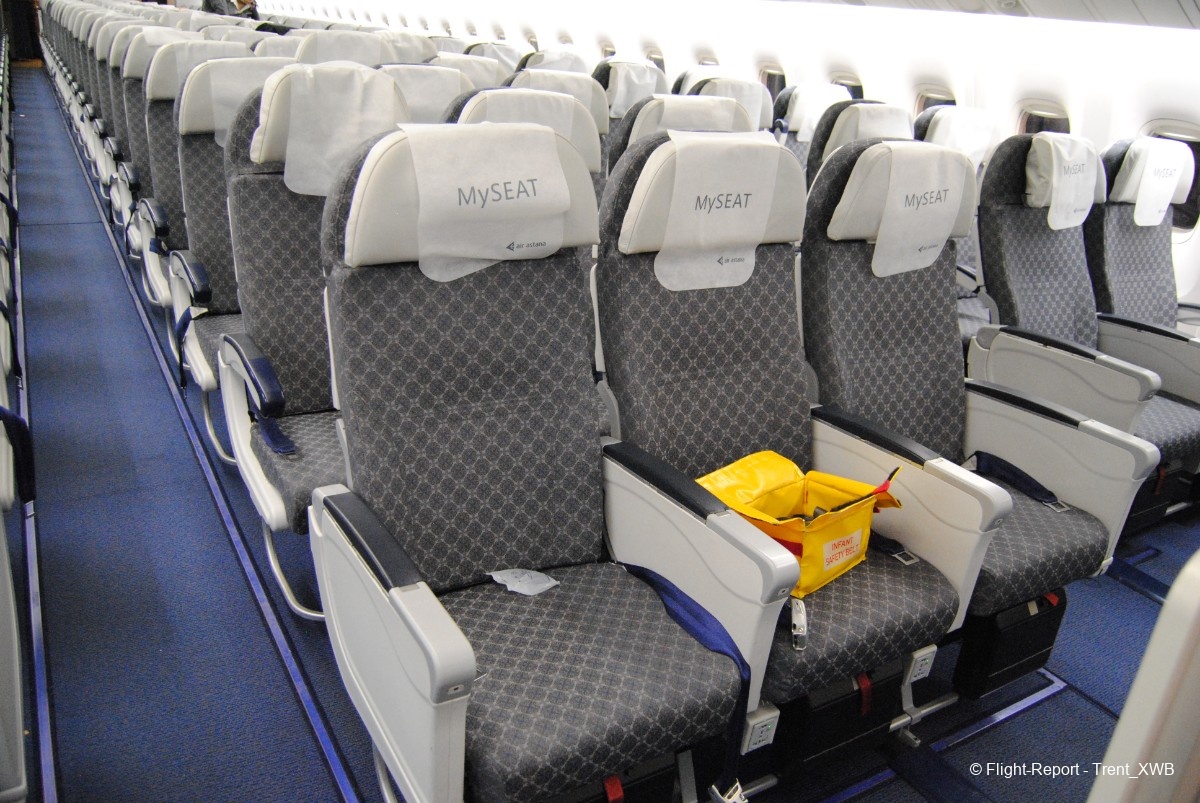
The economy class consists of 193 seats in comfortable 2-3-2 layout, standard for B767.
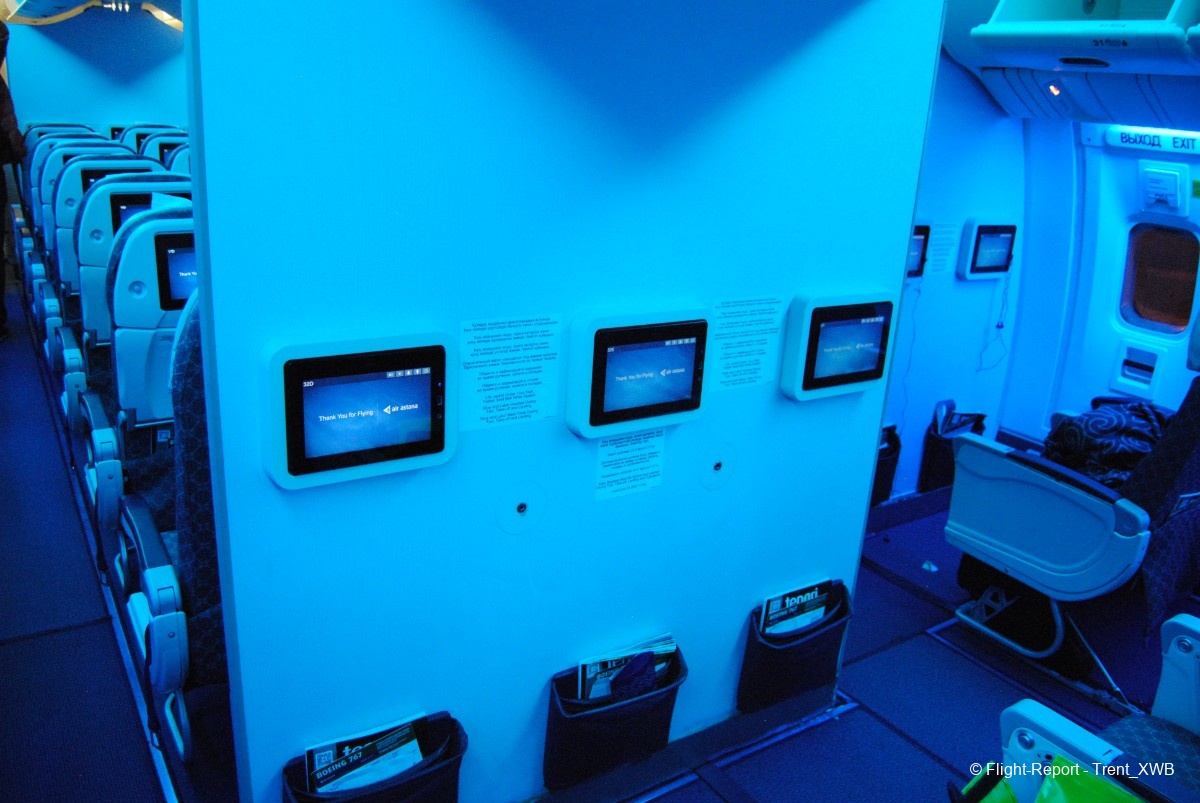
Even though KC B763s have the same exit door formula as ex-JJ ones and the same position of lavatories before overwing exits, KC ones have separate small front economy cabins due to divider after row 17, whereas ex-JJ ones had one large cabin.
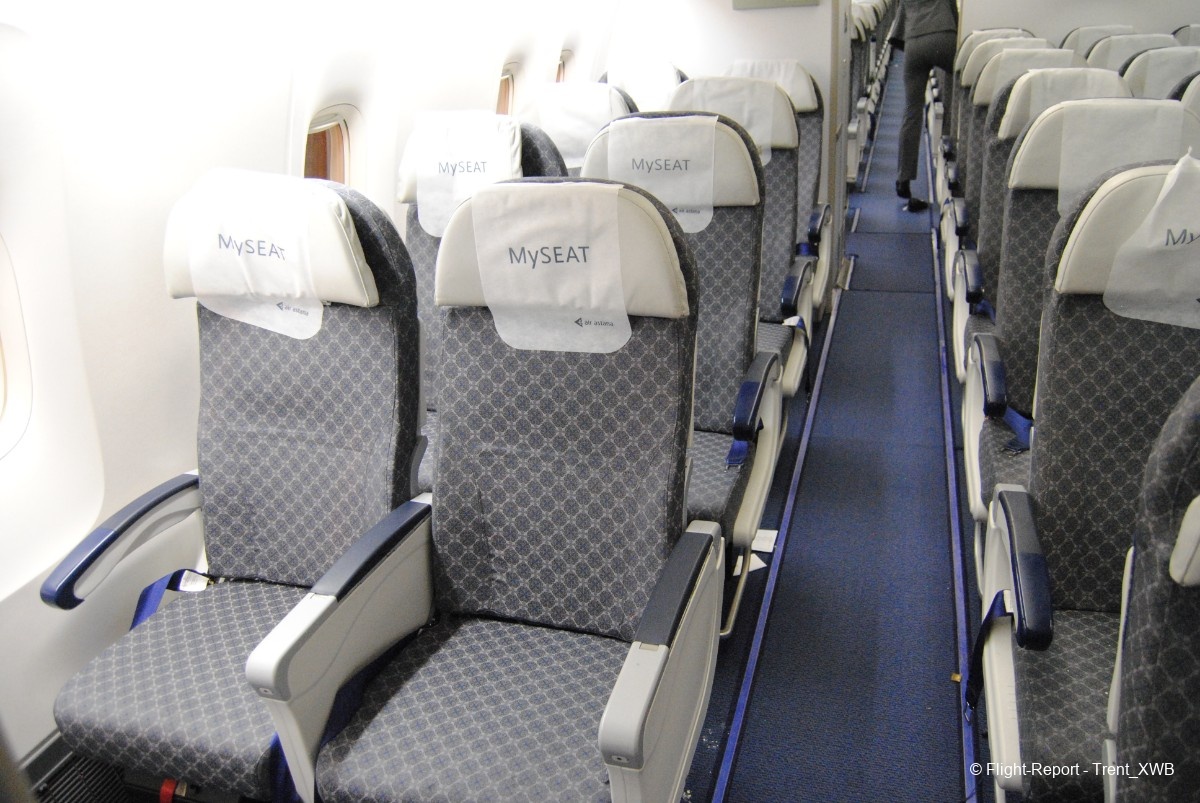
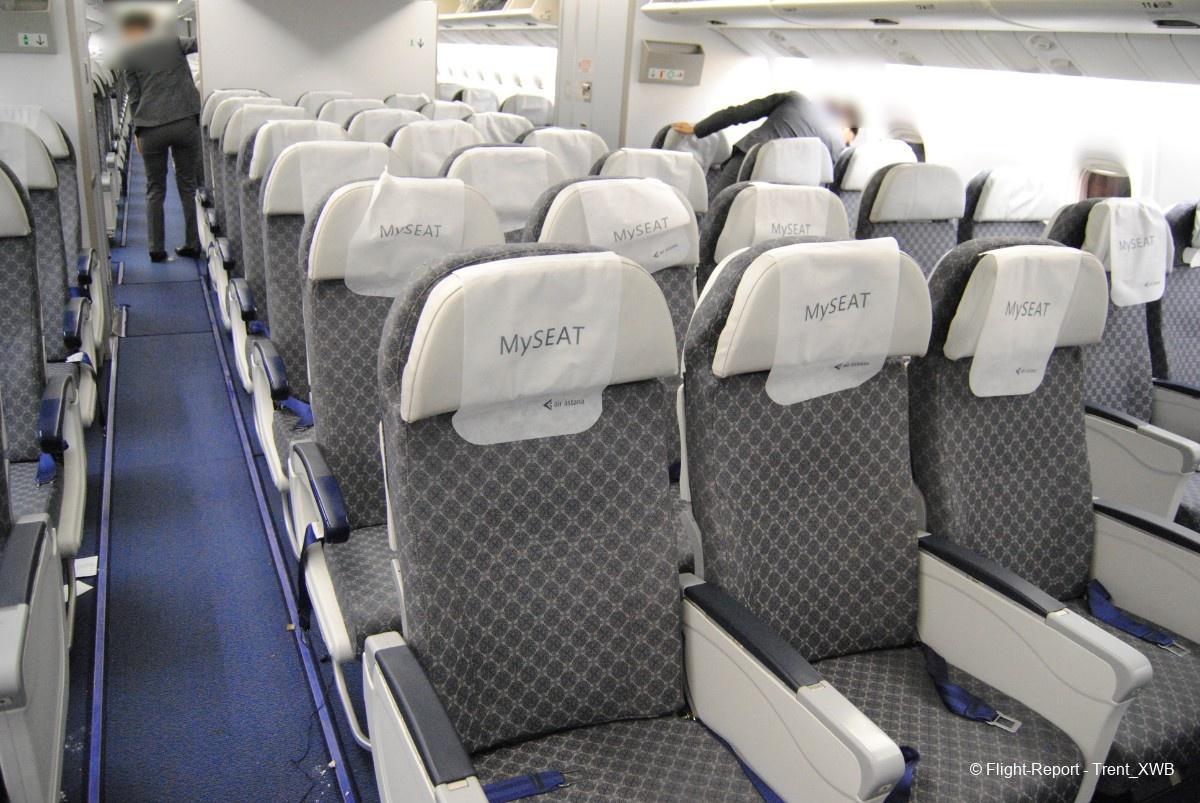
The front economy cabin consists of just 37 seats (rows 11-17) and feels very "private".
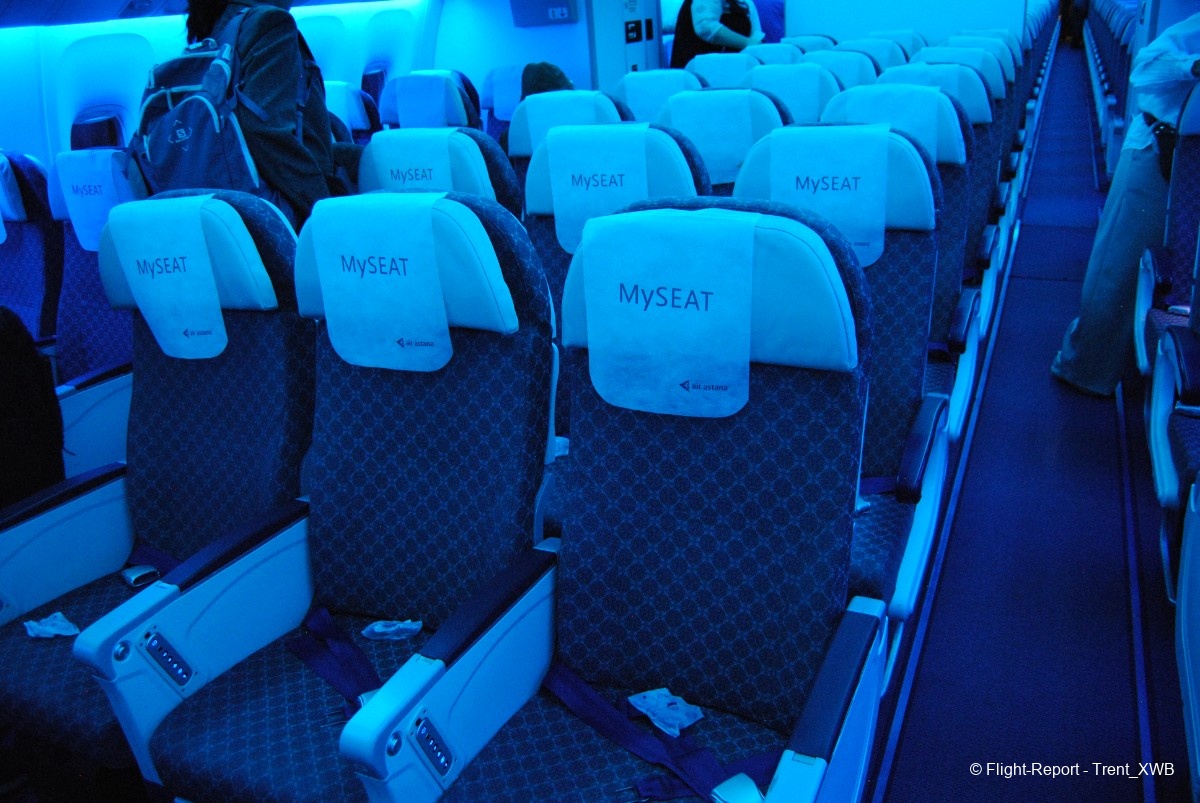
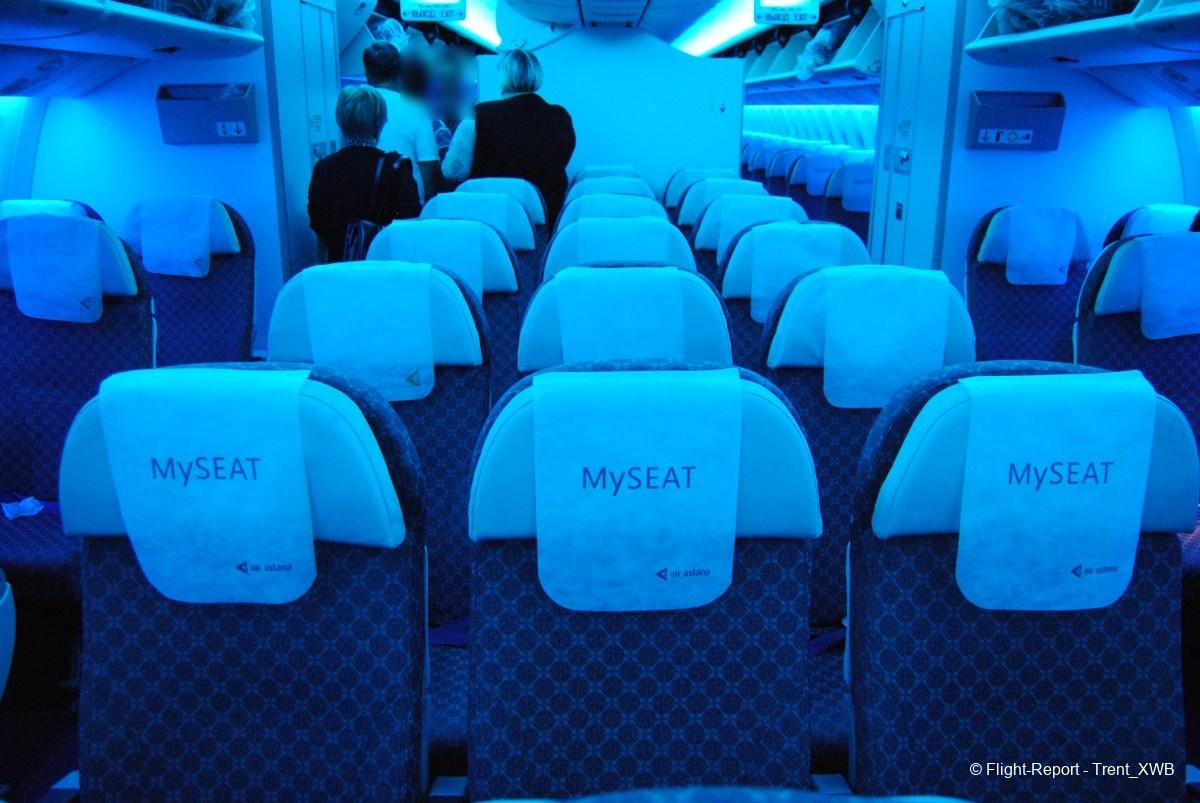
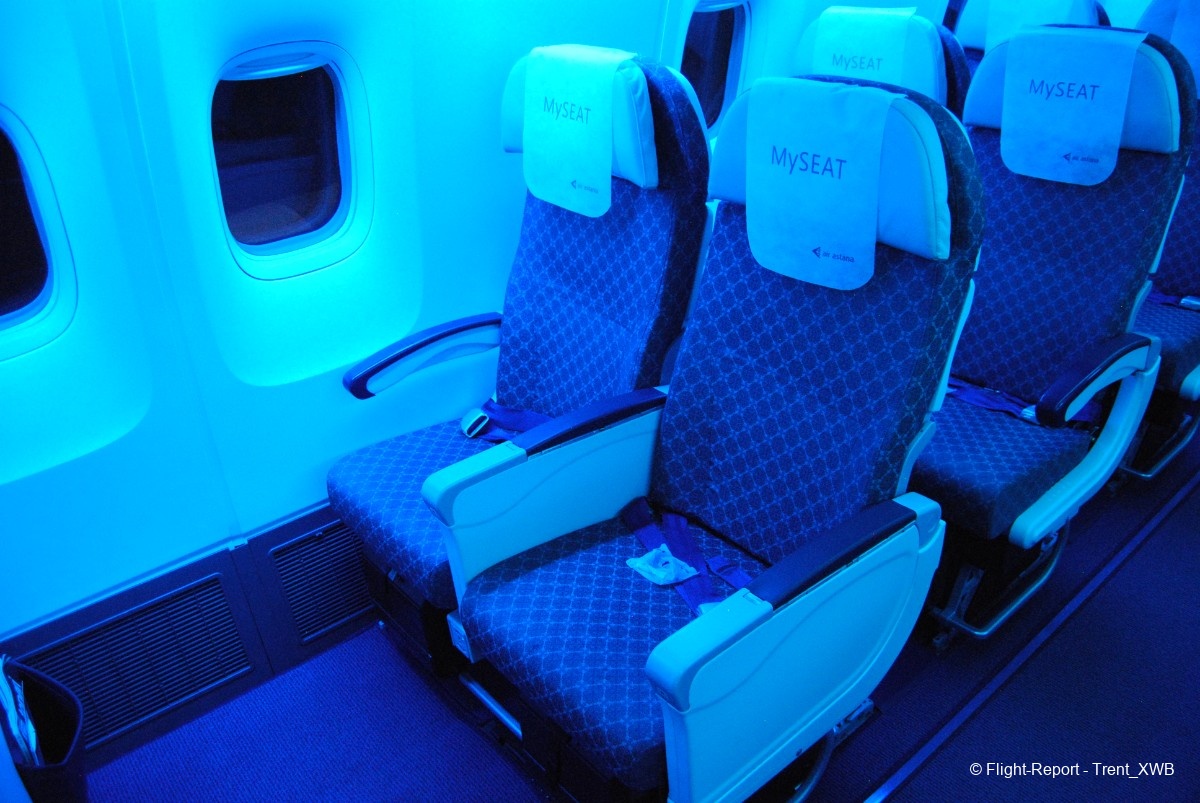
The Rear Economy Cabin
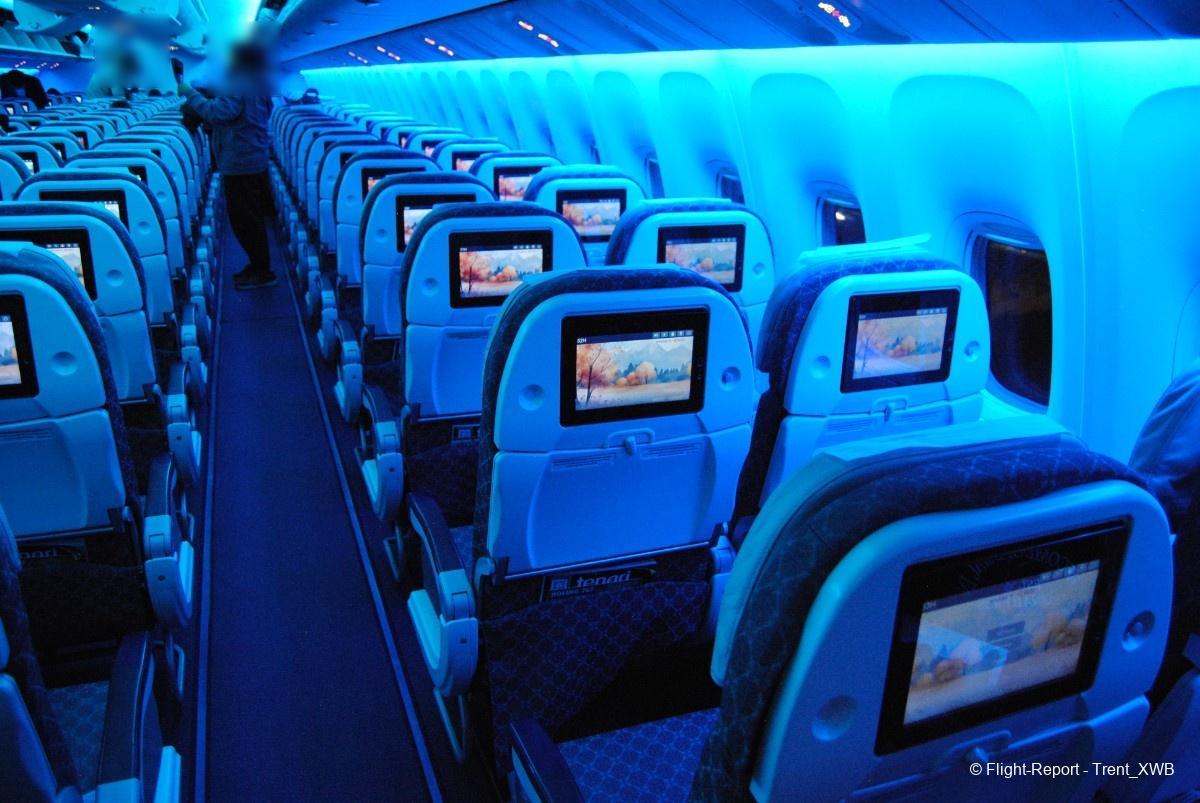
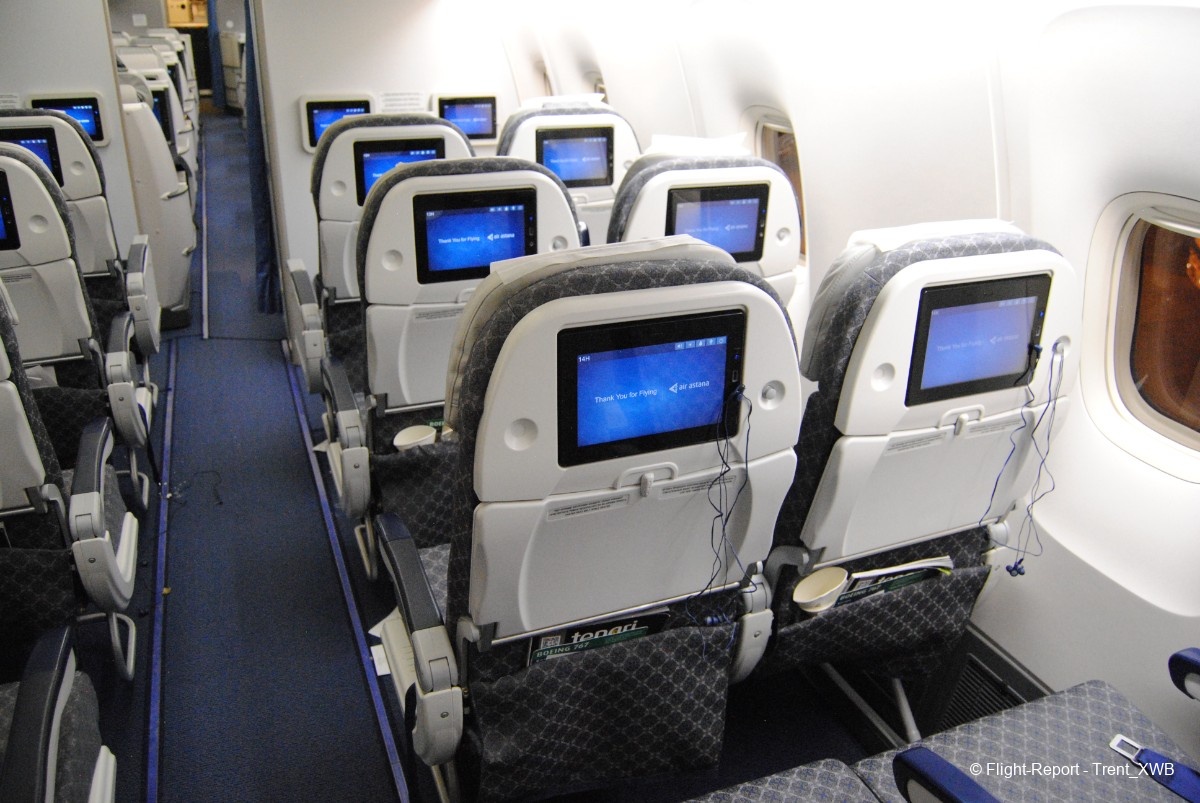
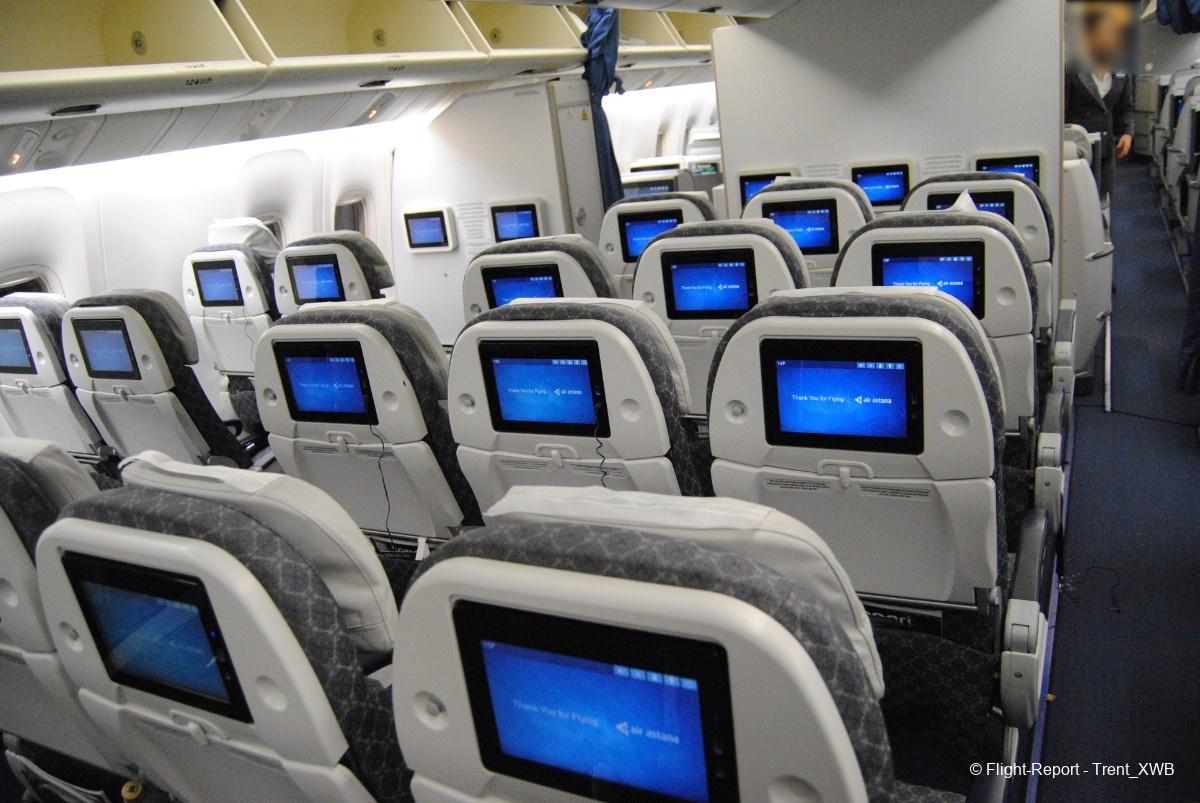
The rear economy cabin consist of 156 seats (rows 31-53 - notice the numeration gap relative to the previous cabin!)
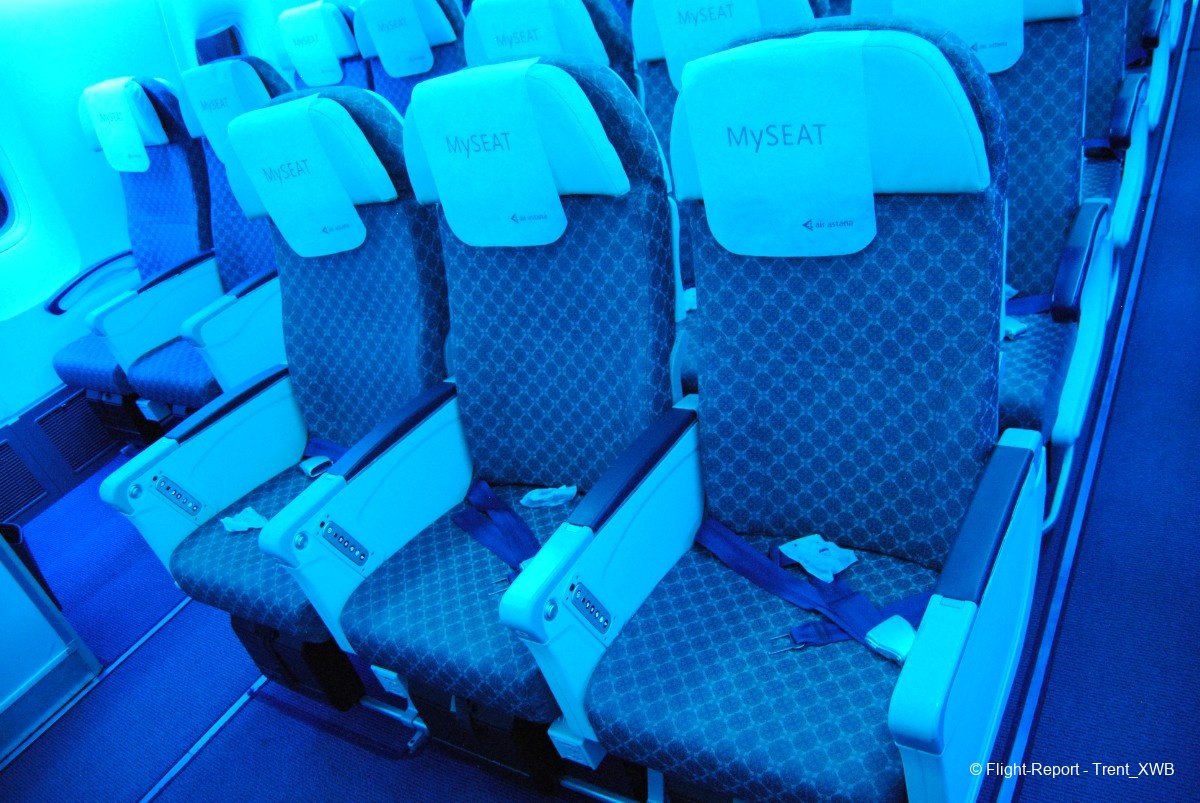
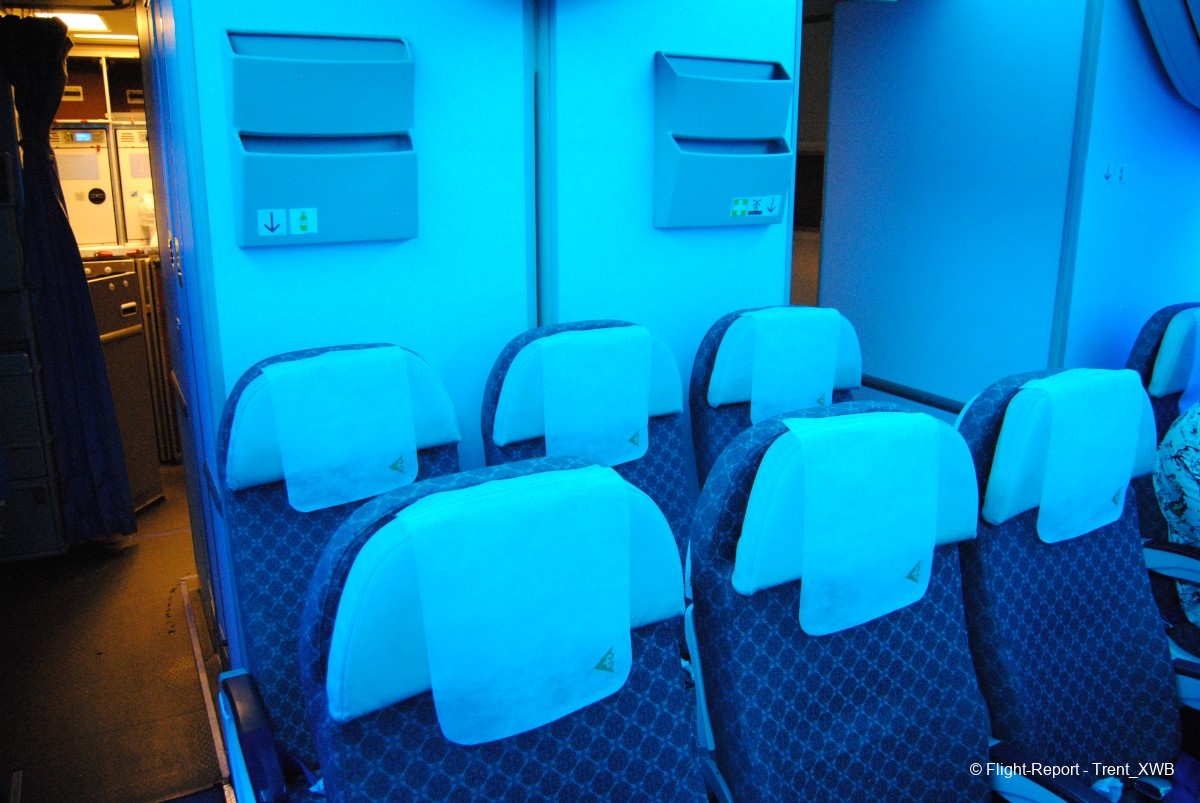
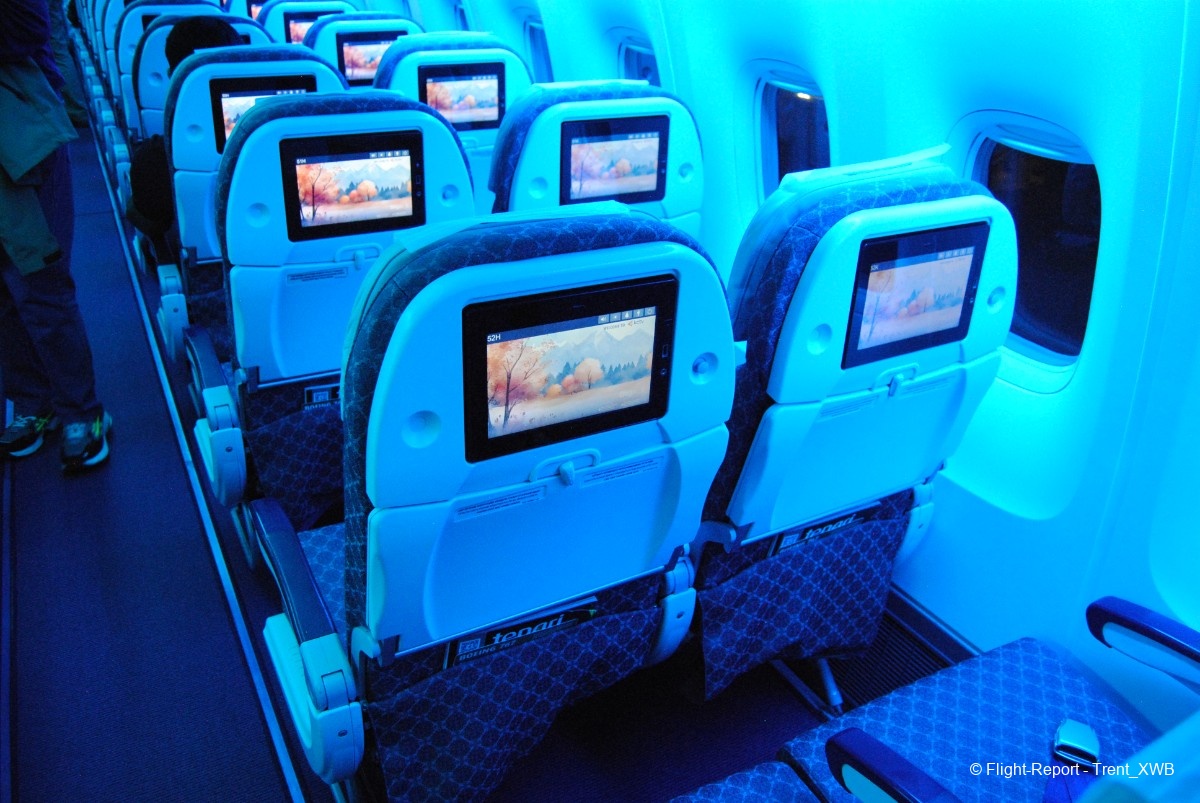
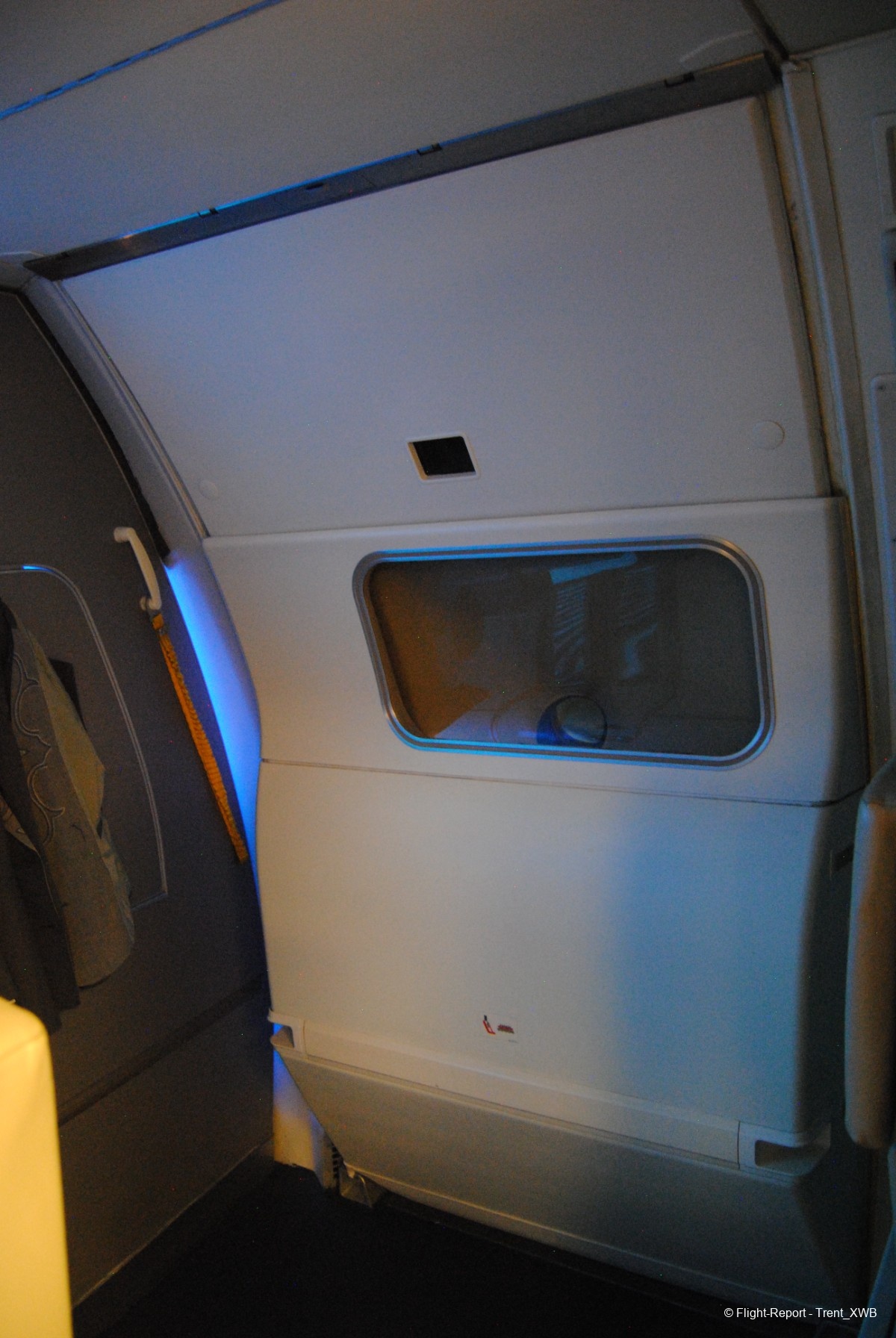
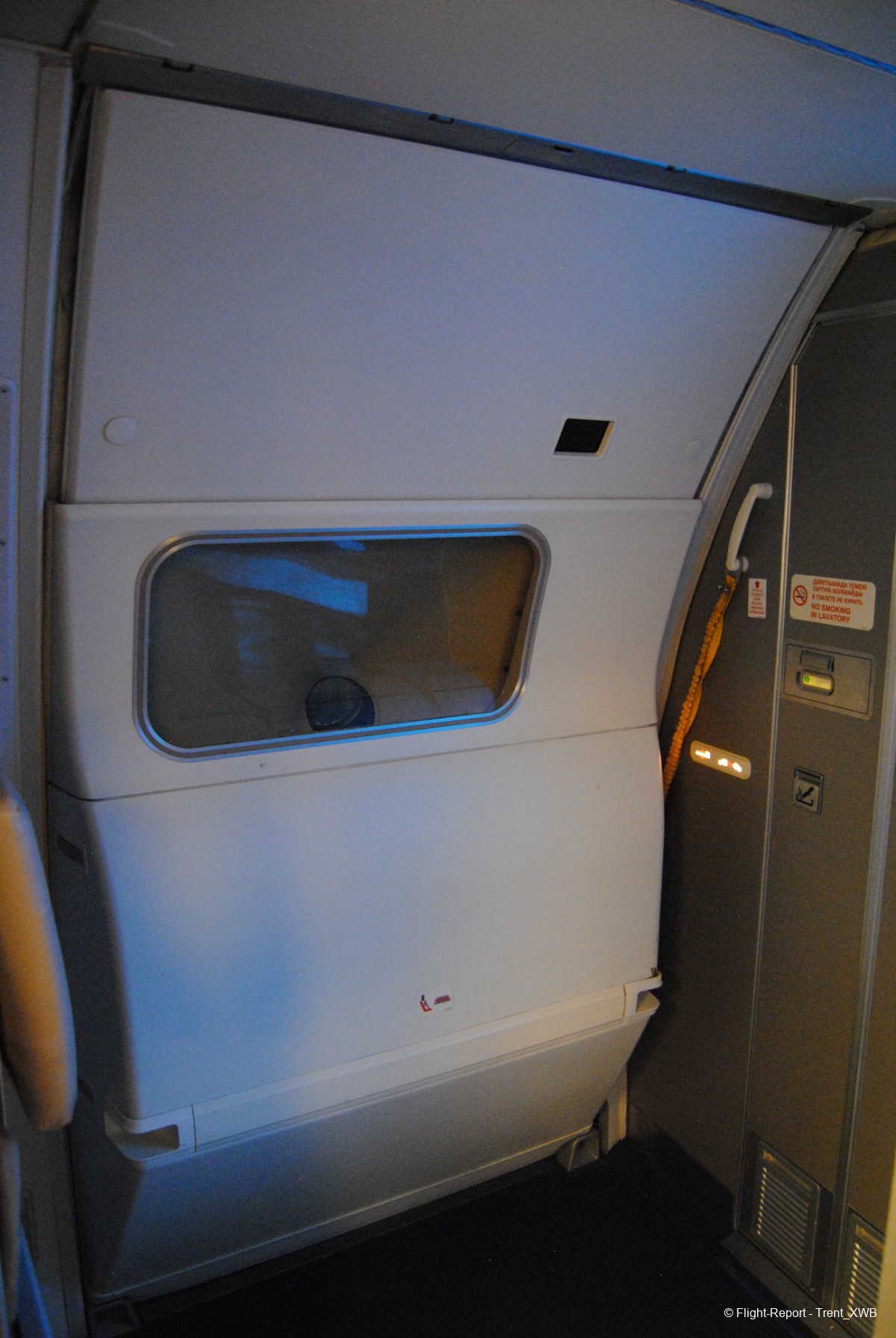
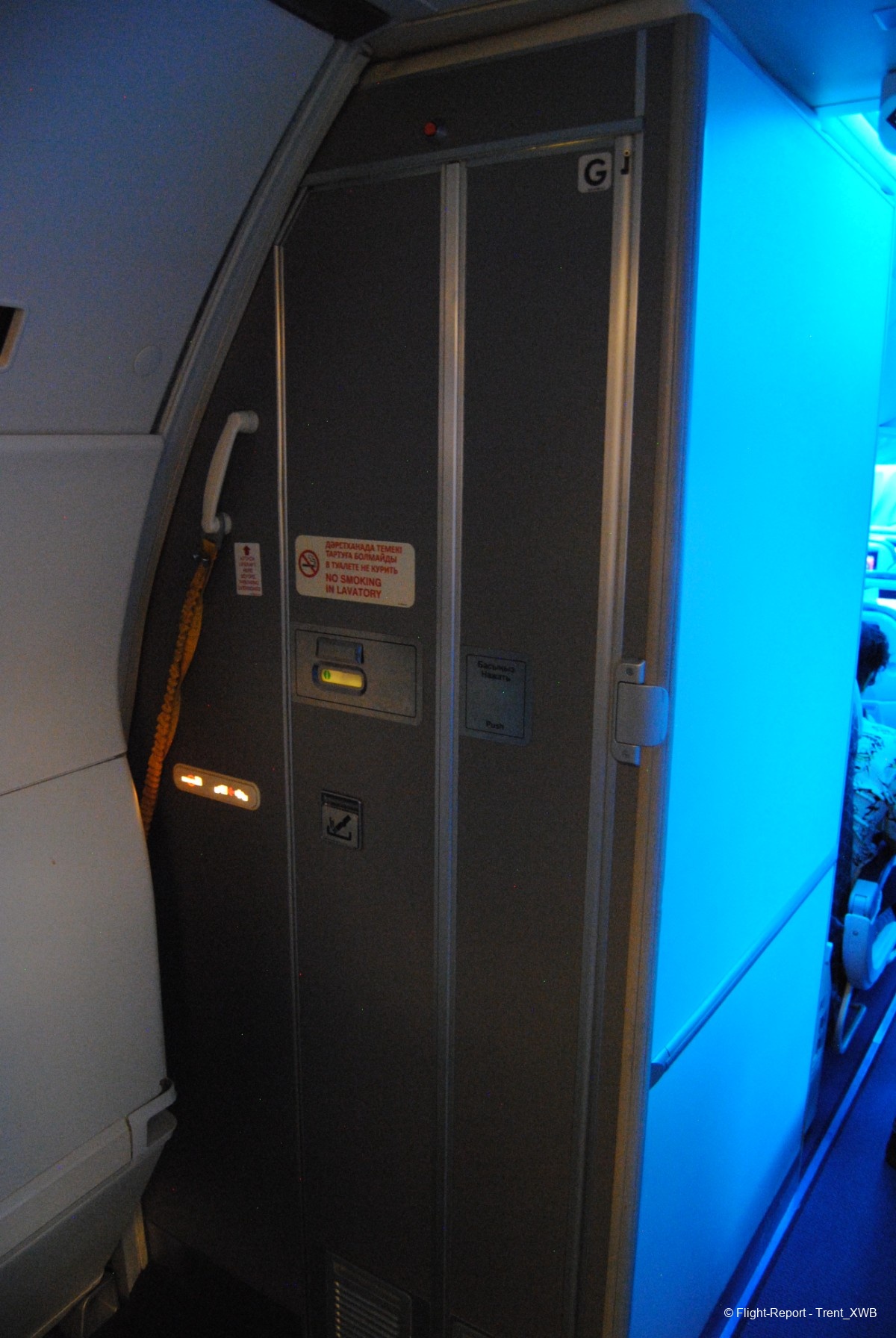
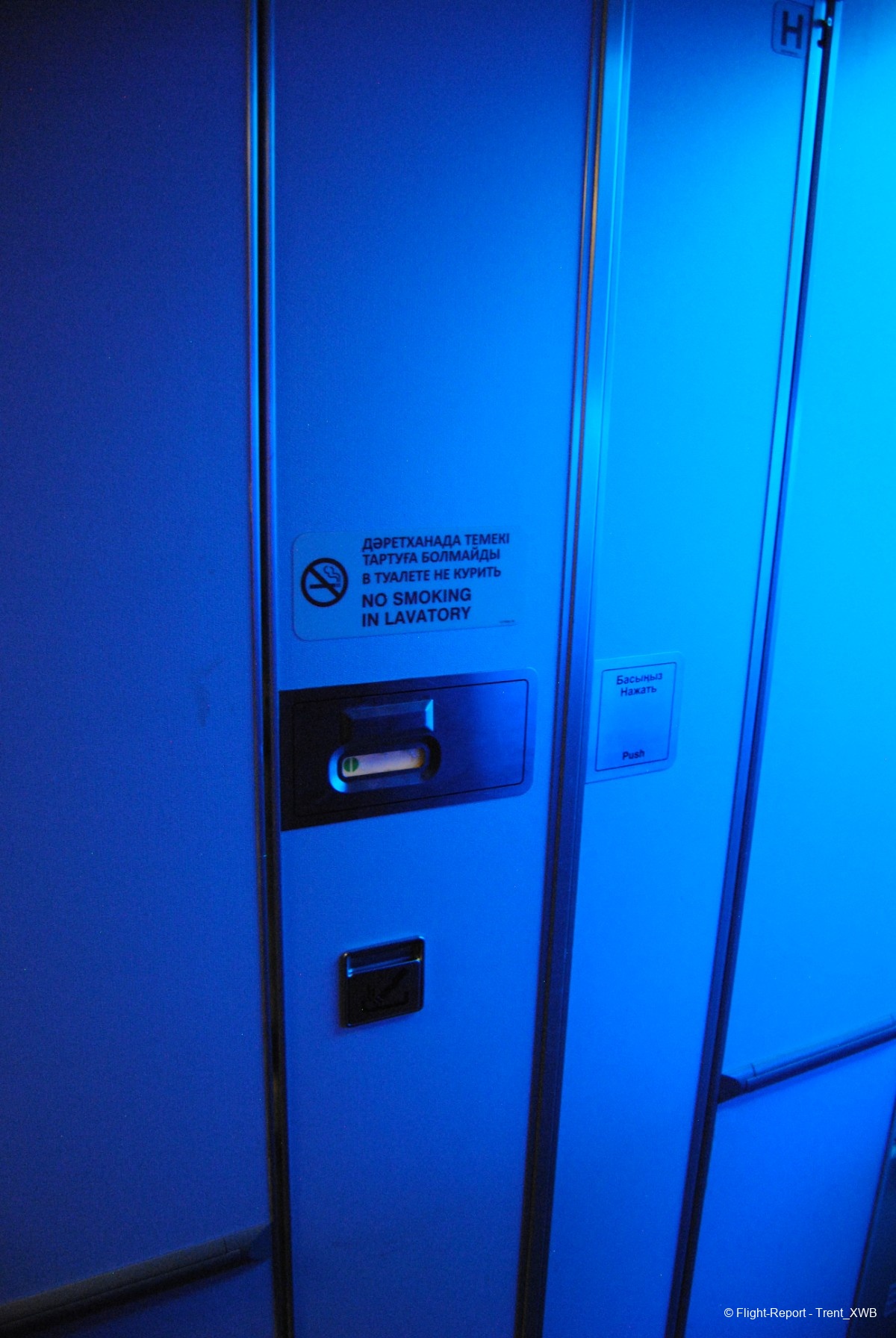
The 2L/R doors (let's remind that main doors open upwards) and the lavatories near them.
The Economy Seat
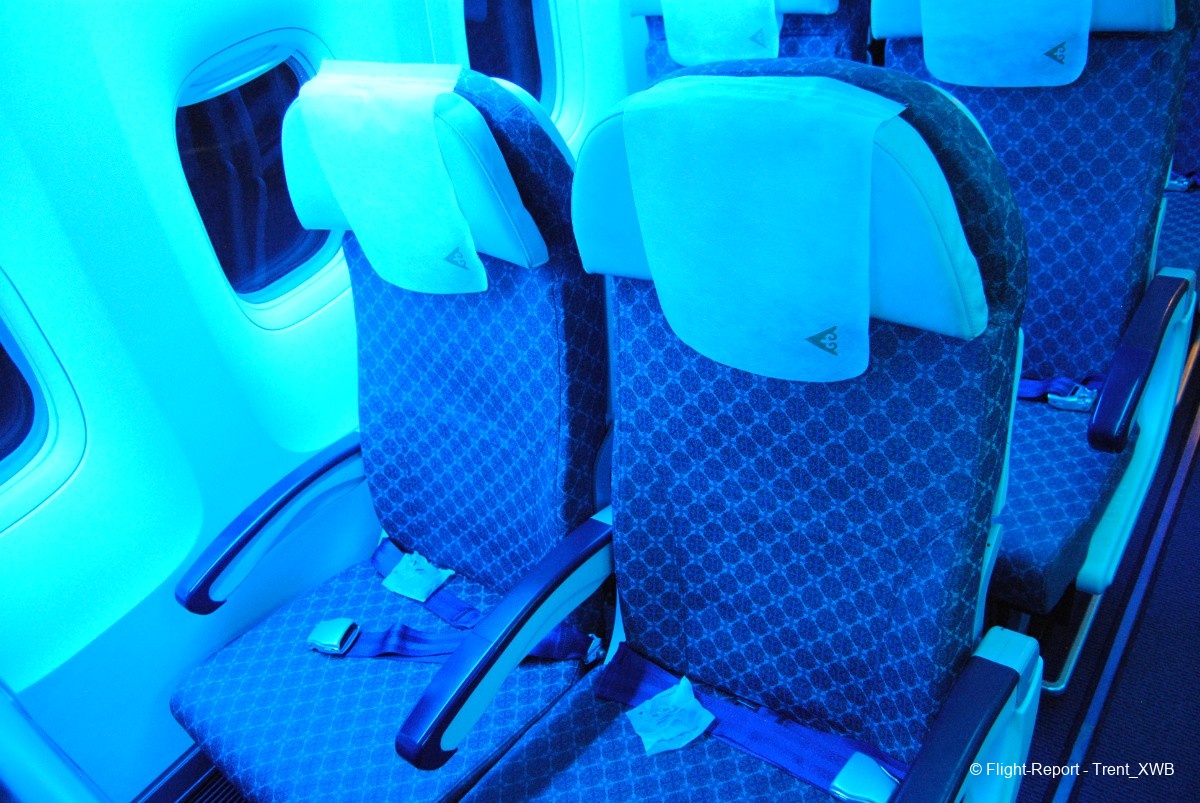
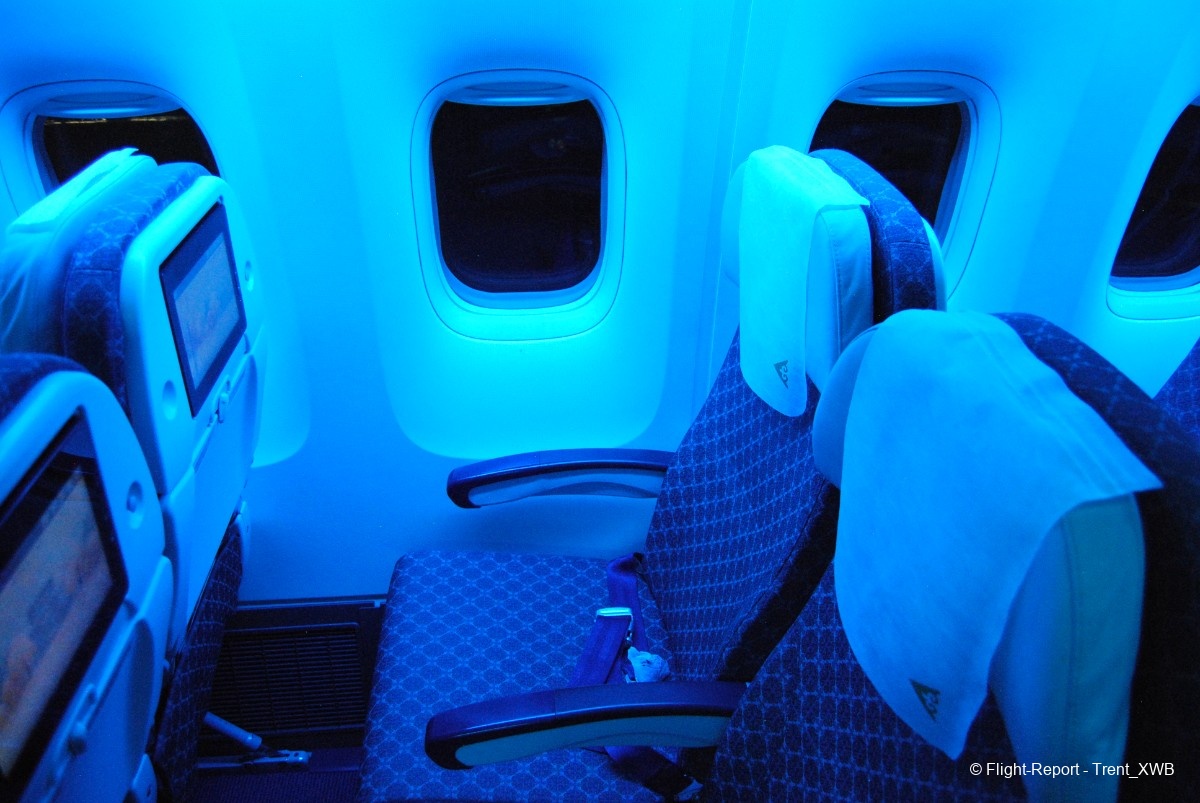
My seat is 50K in the rear part of the rear economy cabin. It has one well-aligned window. The seat model is customized Weber 5751 (no longer in production), which is one of the most comfortable modern economy seats ever produced. It has good padding (though, less thick than, for example these seats in Turkish Airlines B77Ws and A333s have). The cabin and the seats look factory new, despite the 11-year age of the aircraft!
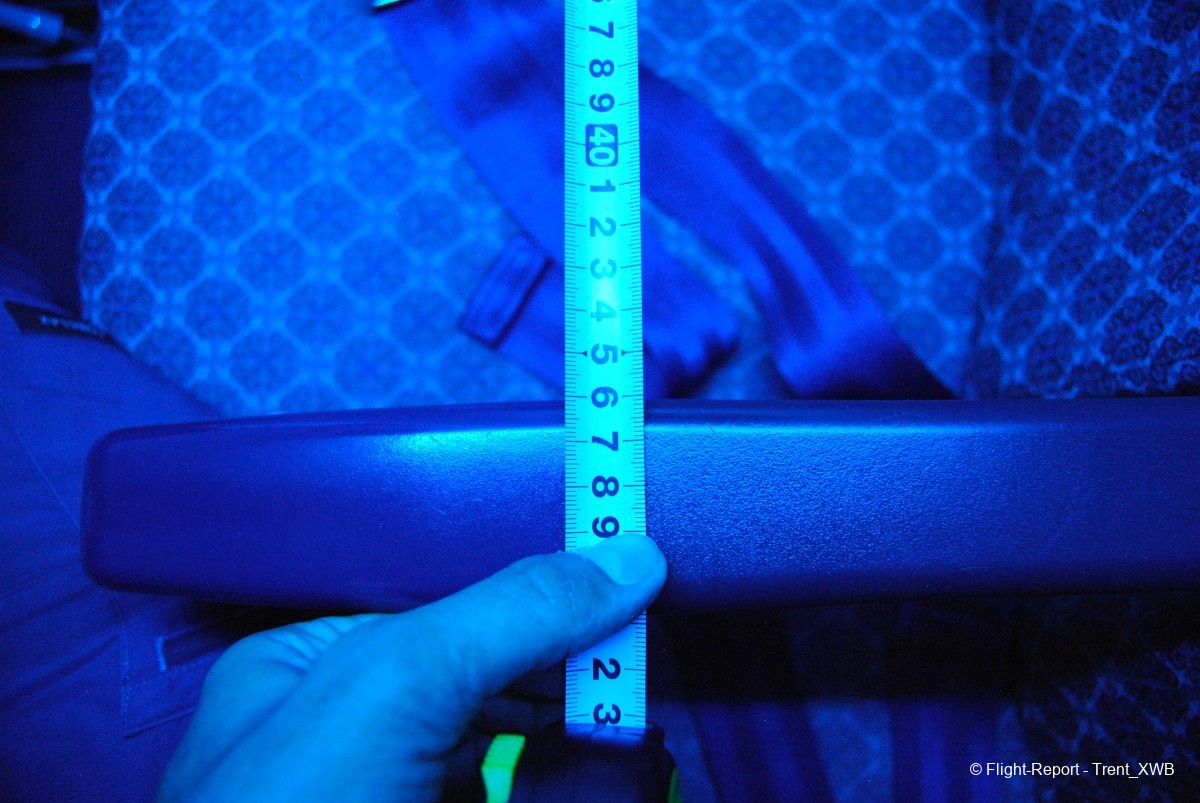
The seatwidth is generous 18.1", which is on par with 3-3-3 B777 and maximum 2-4-2 A330 seatwidth. Combined with the comfortable 2-3-2 layout, it results in one of the best economy cabins in the world. I'd definitely fly this aircraft with great pleasure on a long-haul flight up to its maximum range!
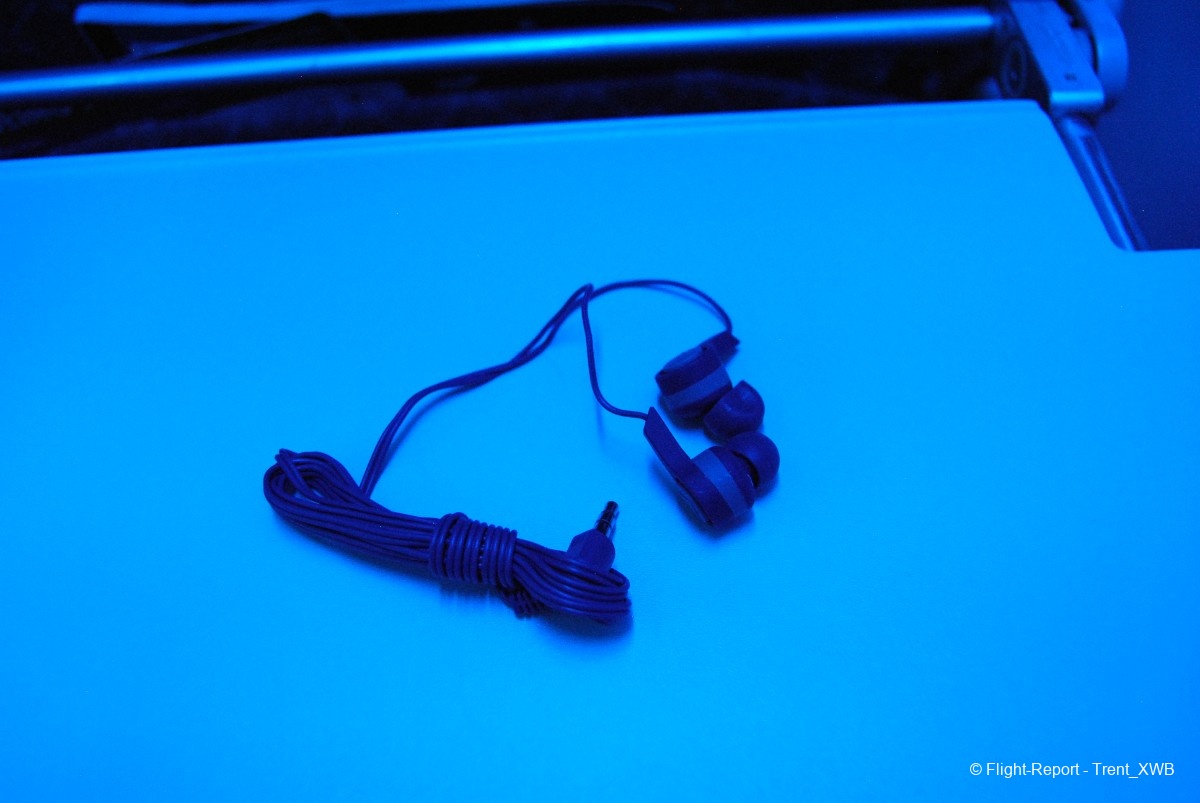
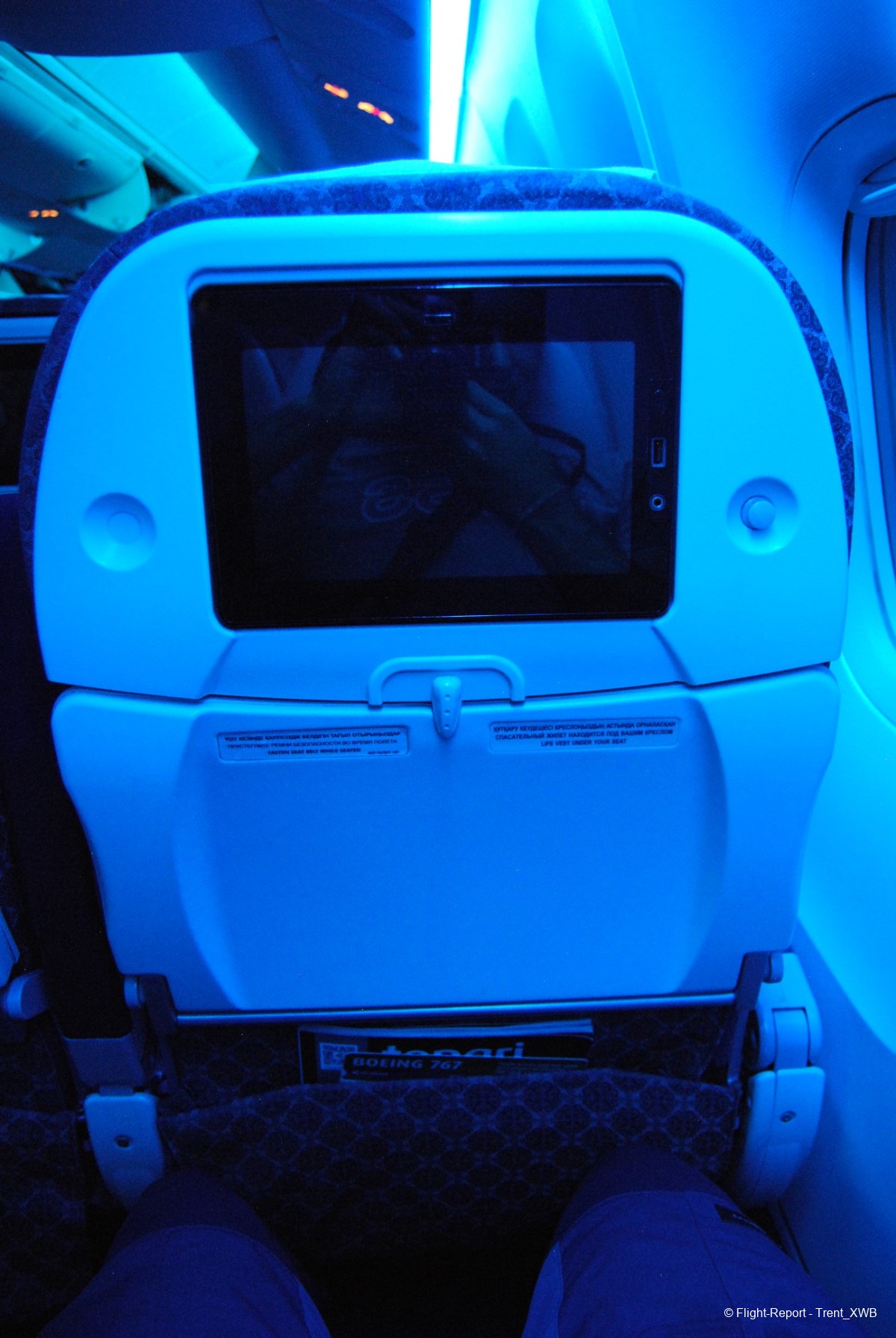
The seat has adjustable headrest, IFE with the screen of reasonable size and USB port, one-piece tray table and seat pocket. The row pitch is very good. Waiting on the seat were simple earplugs.
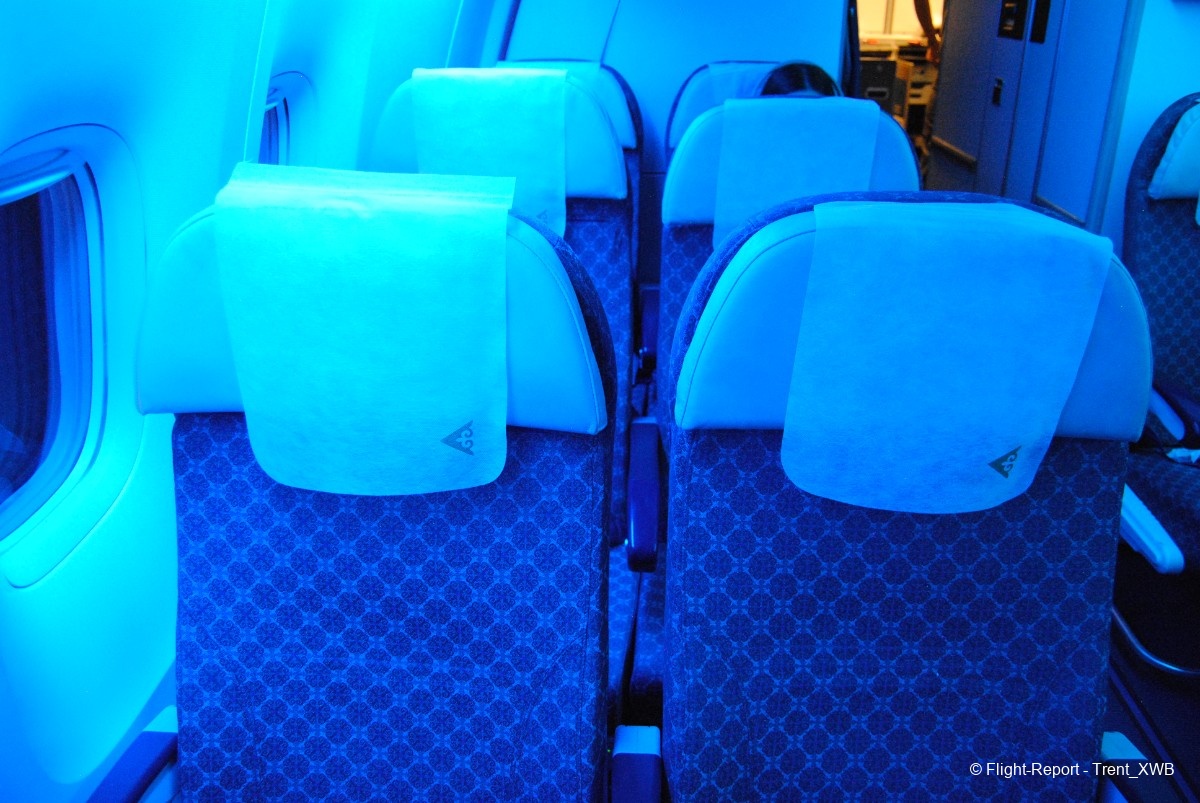
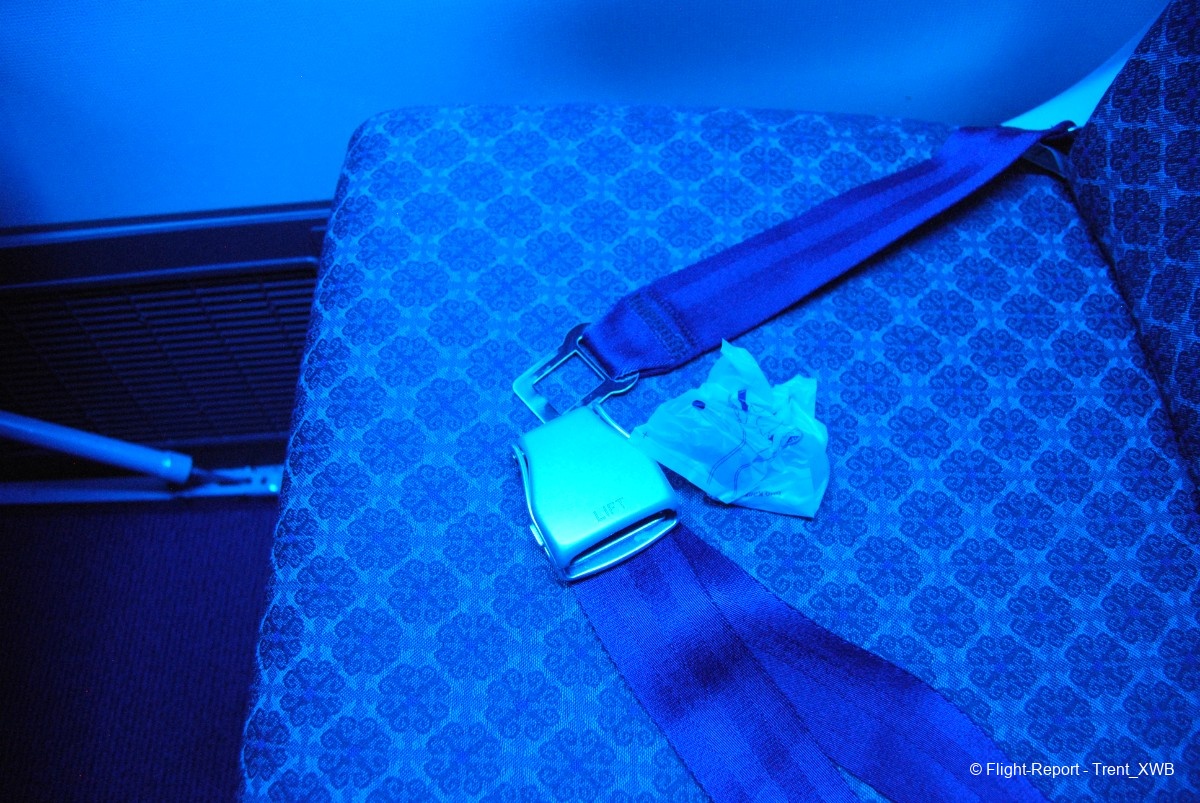
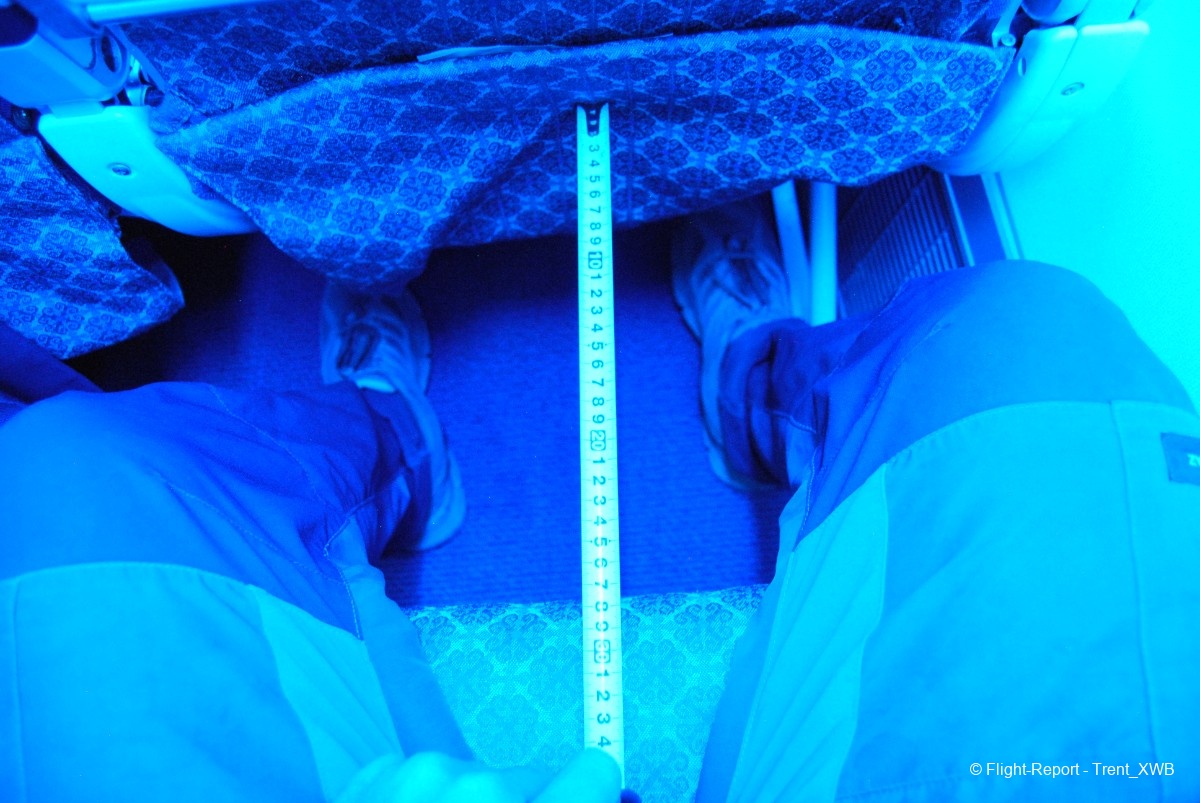
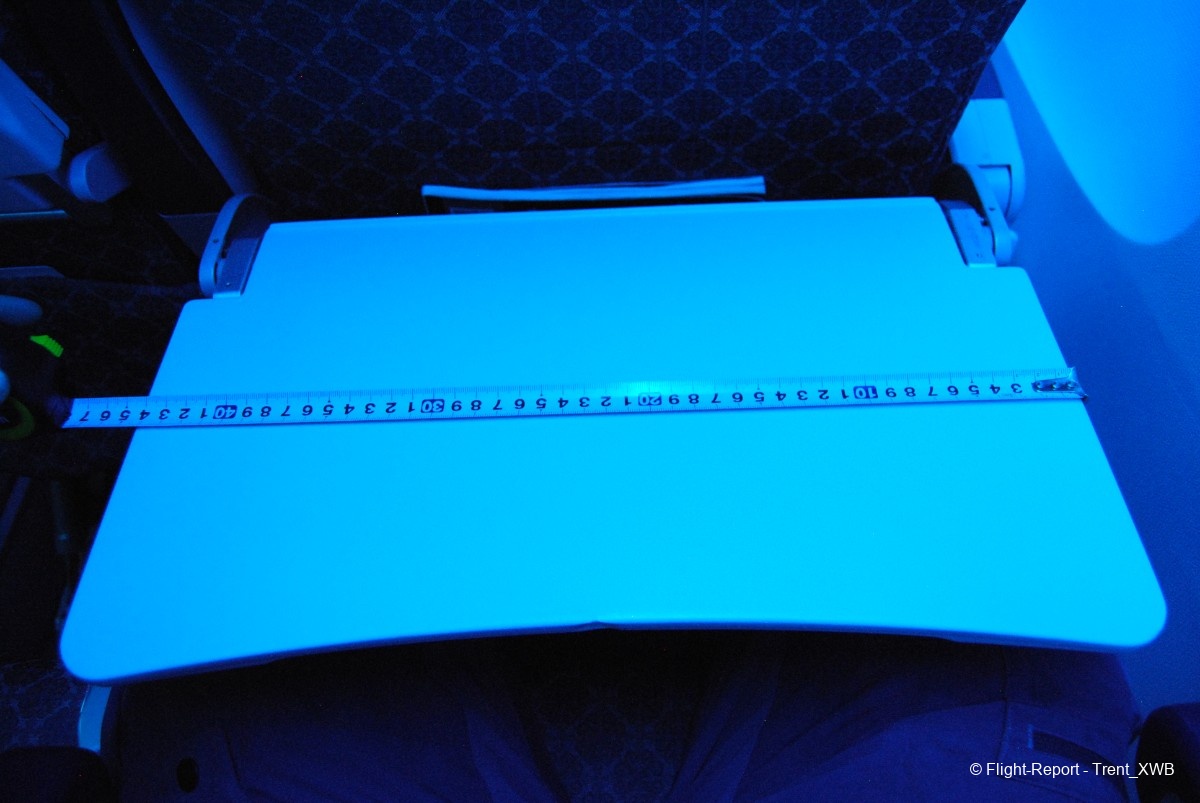
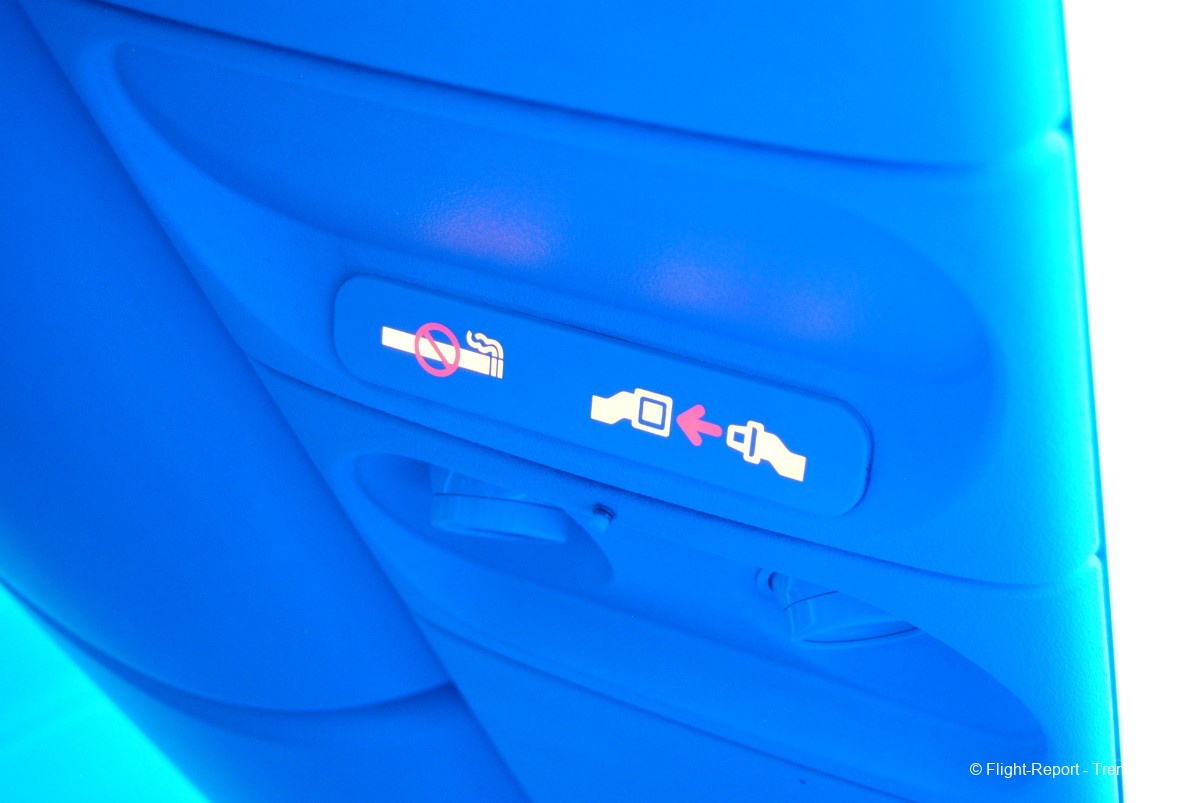
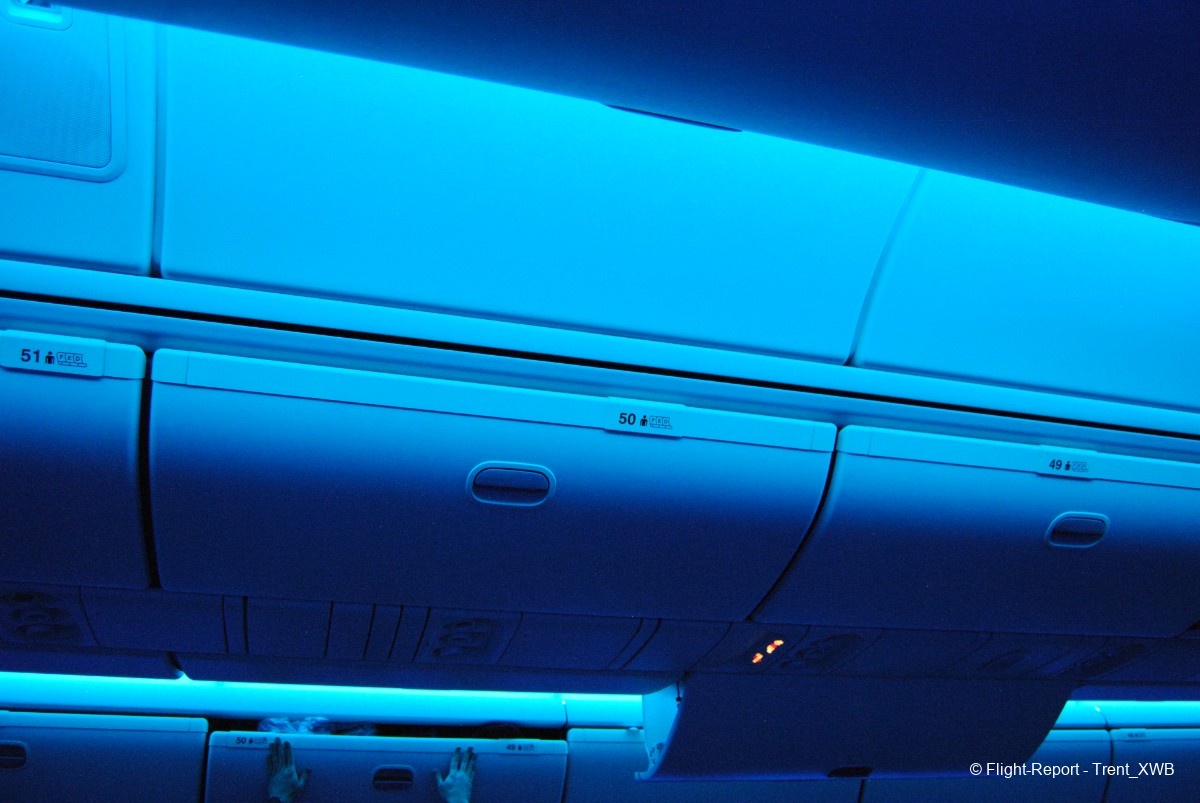
The overhead panel (without airvents) and signature interior, which is standard for B767 after 2000.
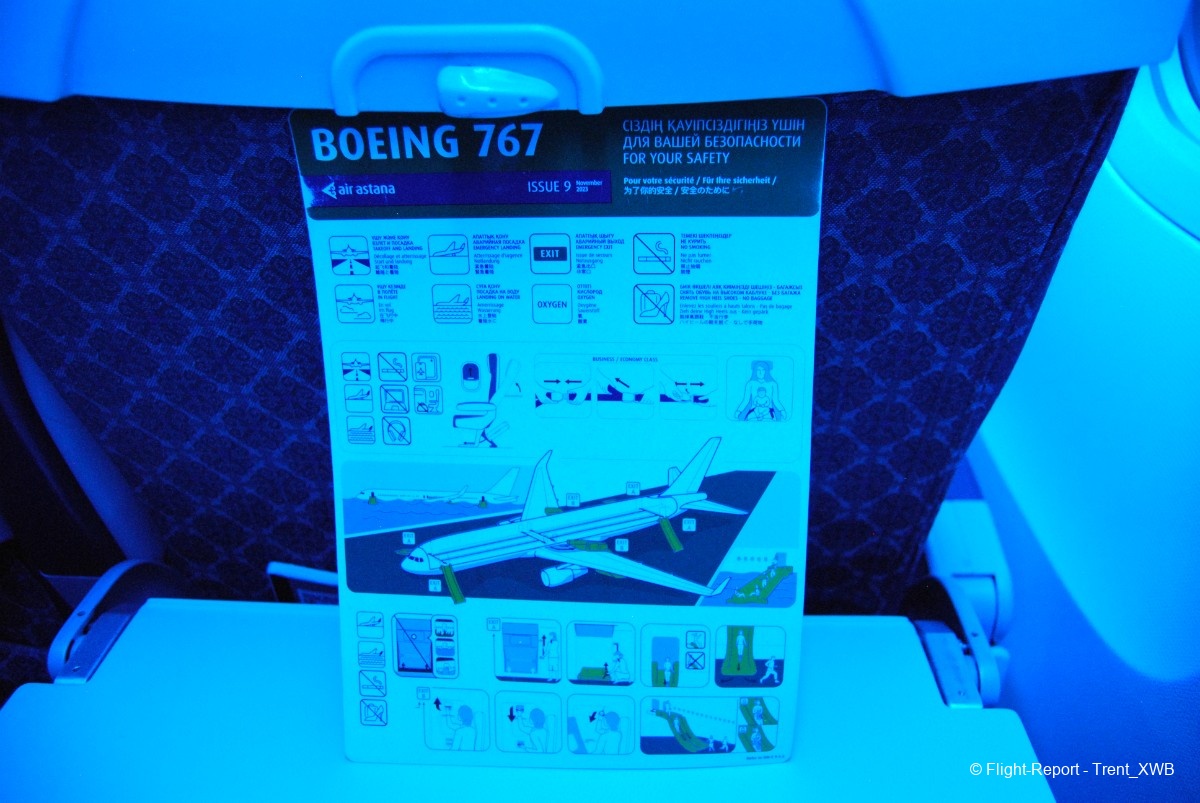
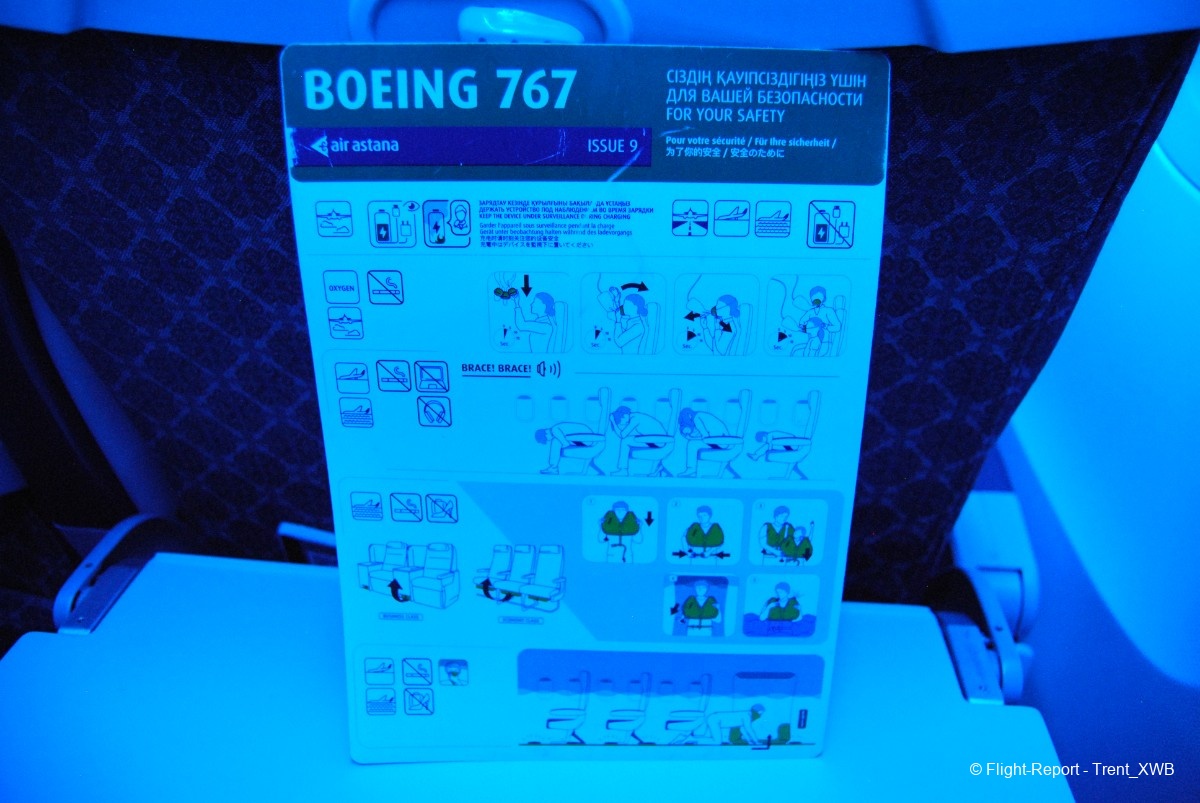
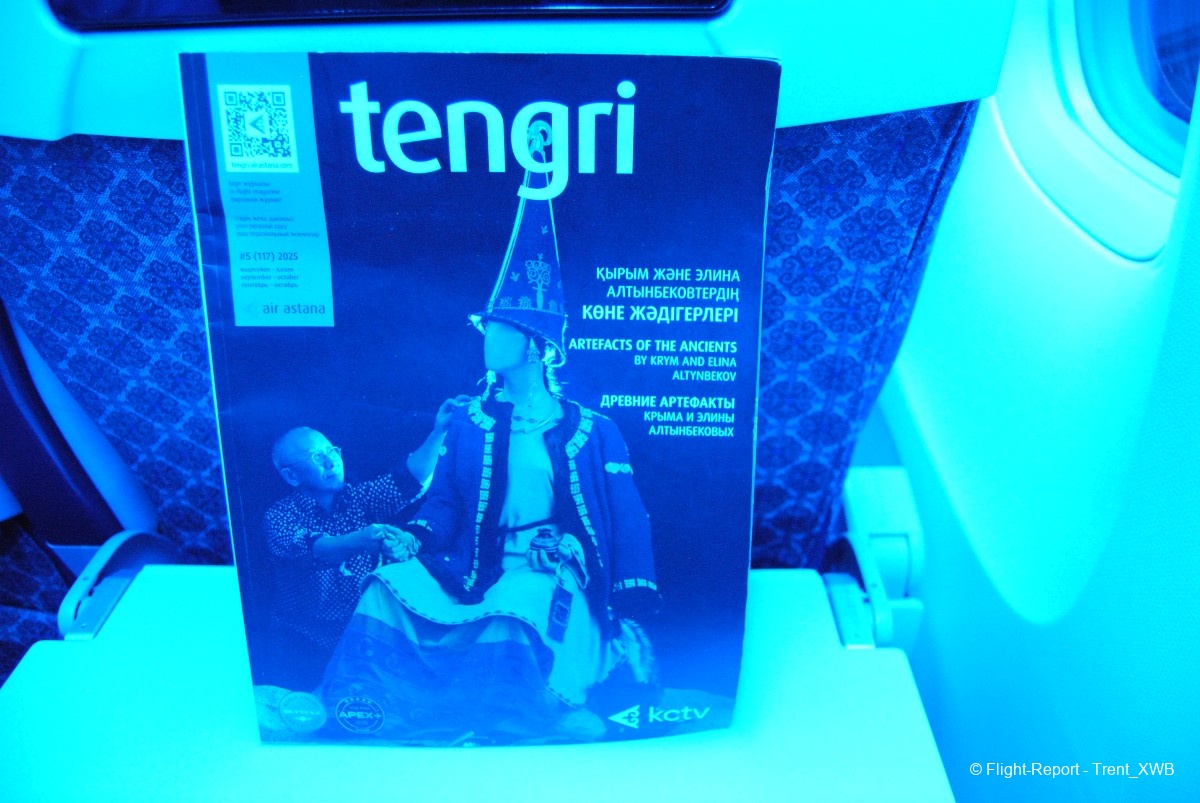
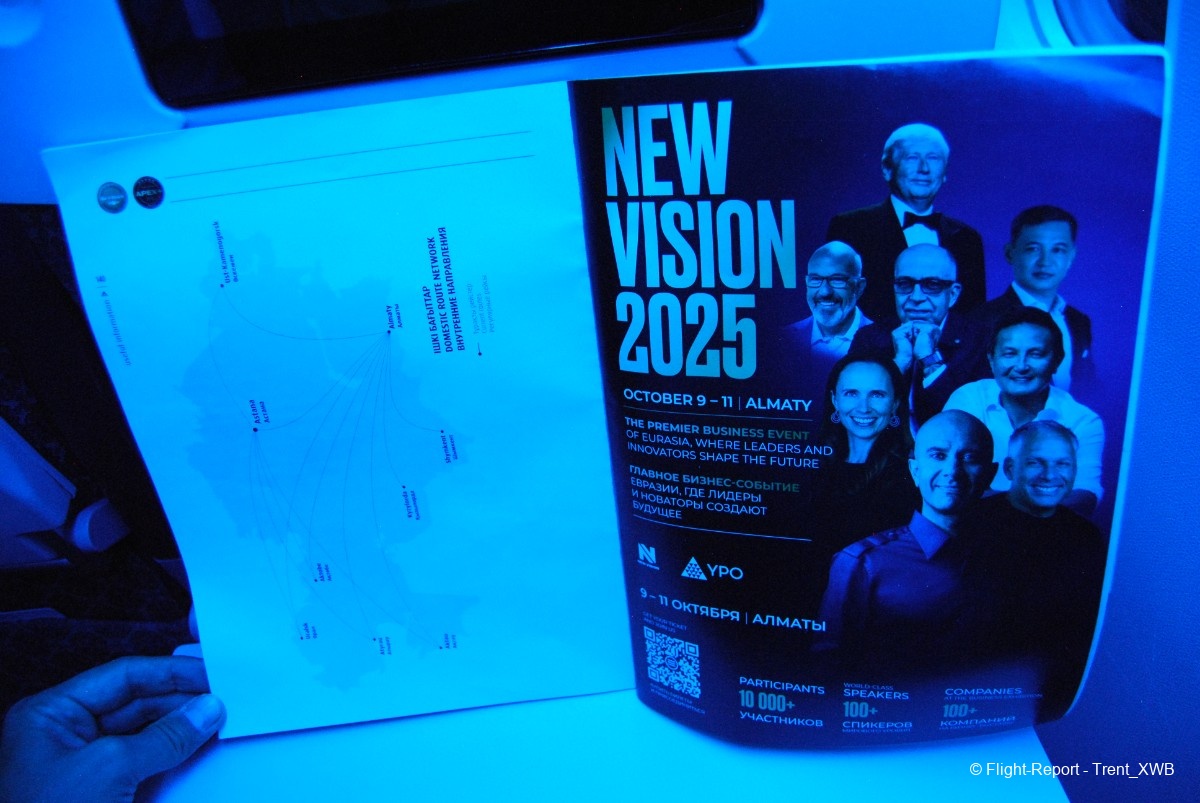
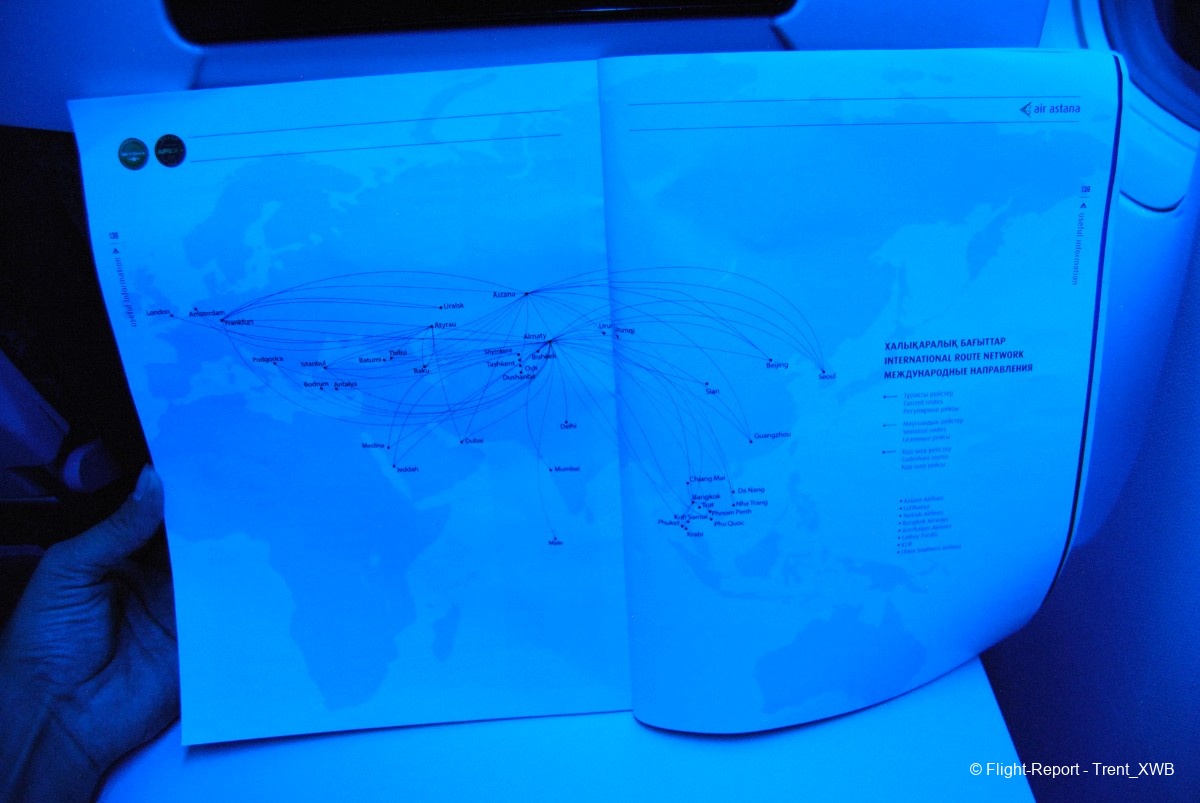
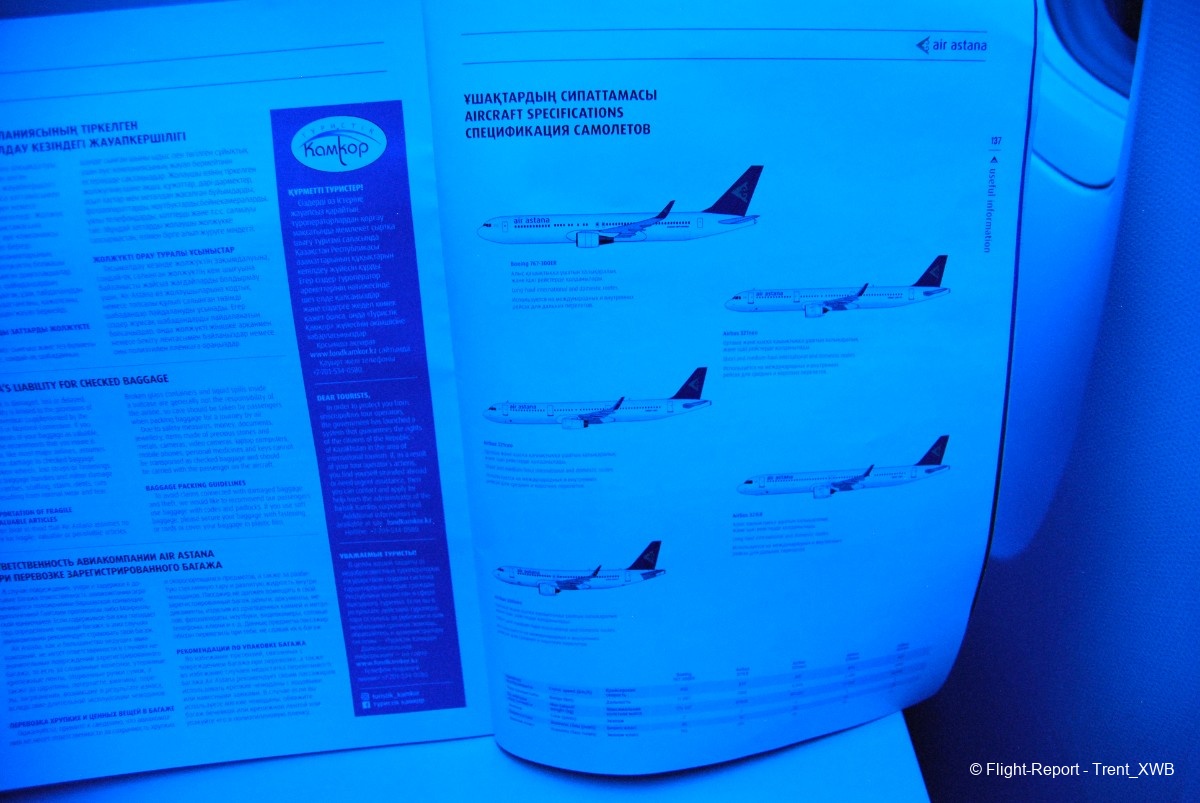
The seatpocket content: safety card and inflight magazine with the schemes of domestic and international networks and fleet page.
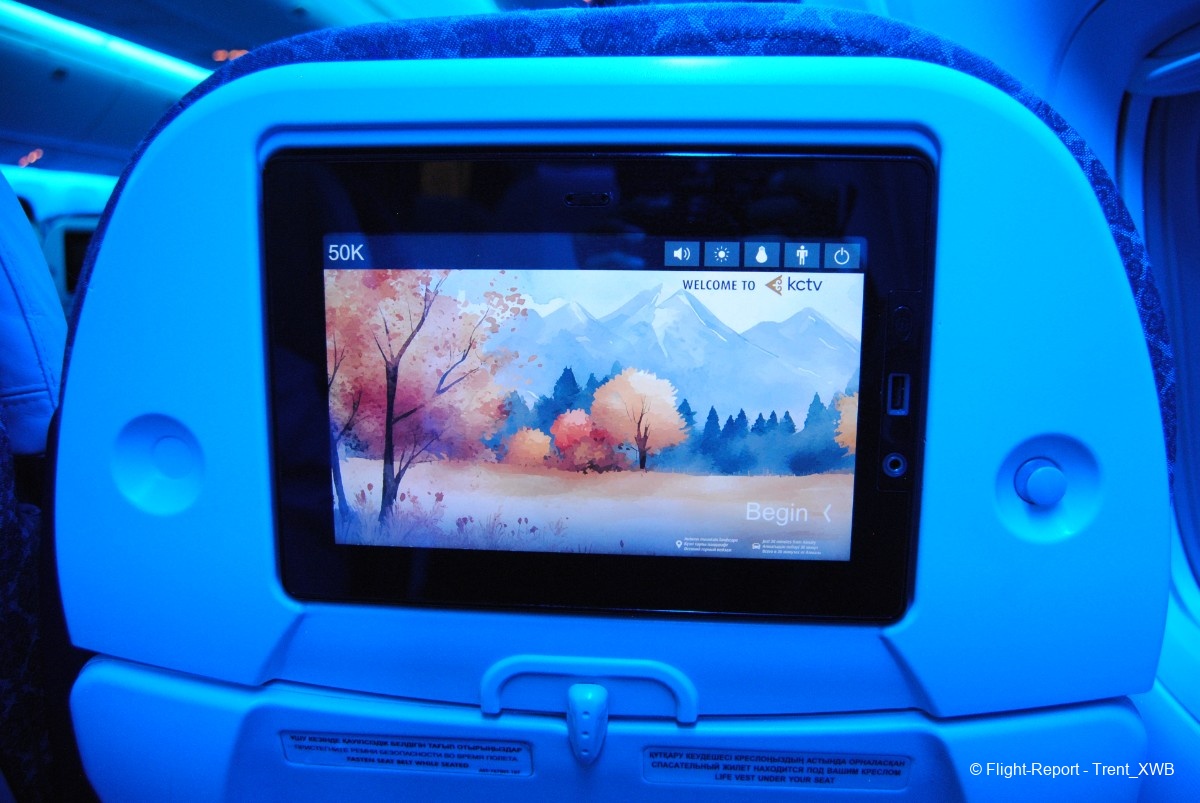
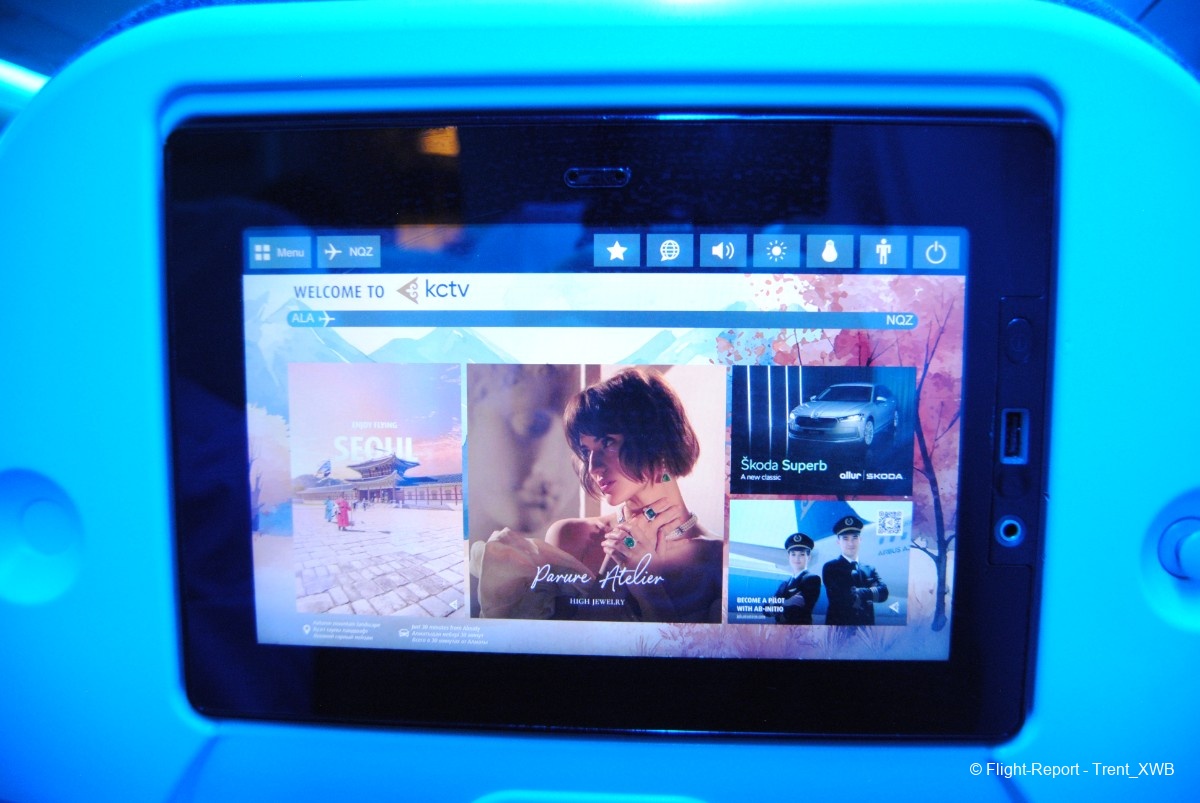
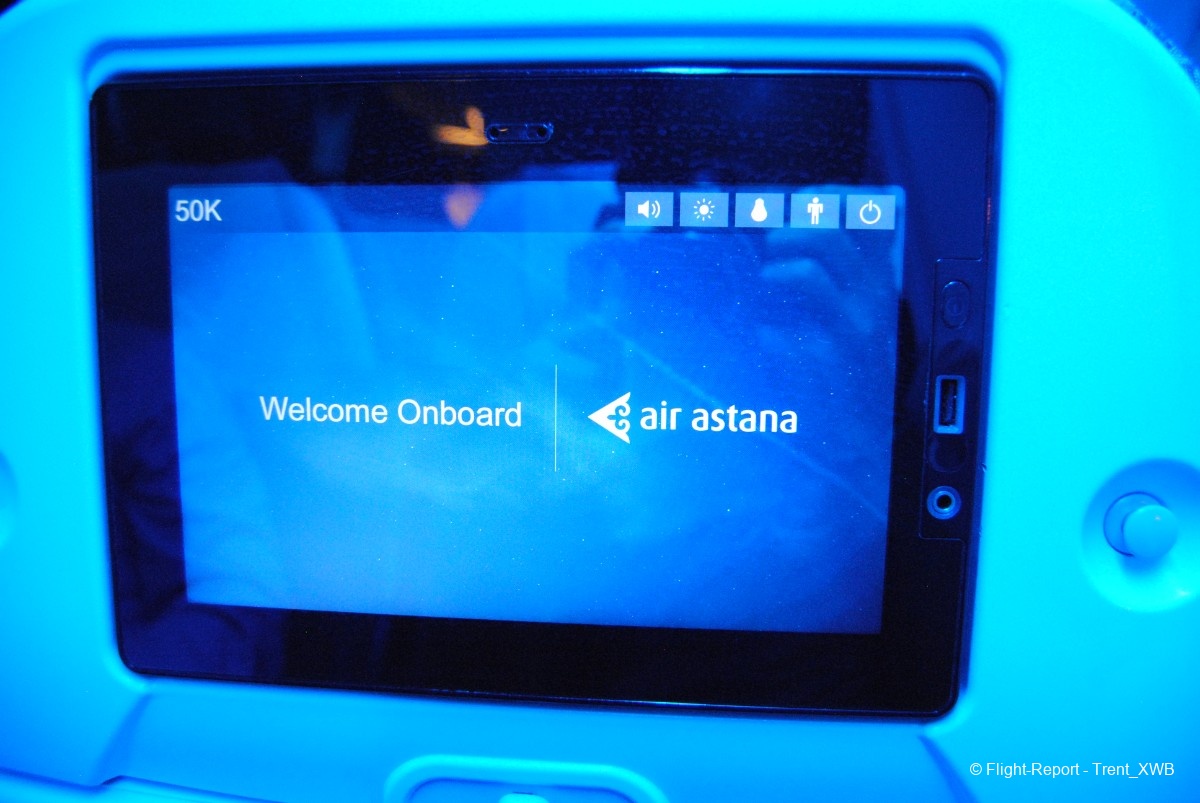
IFE with beautiful welcoming picture, its menu and some examples of the content.
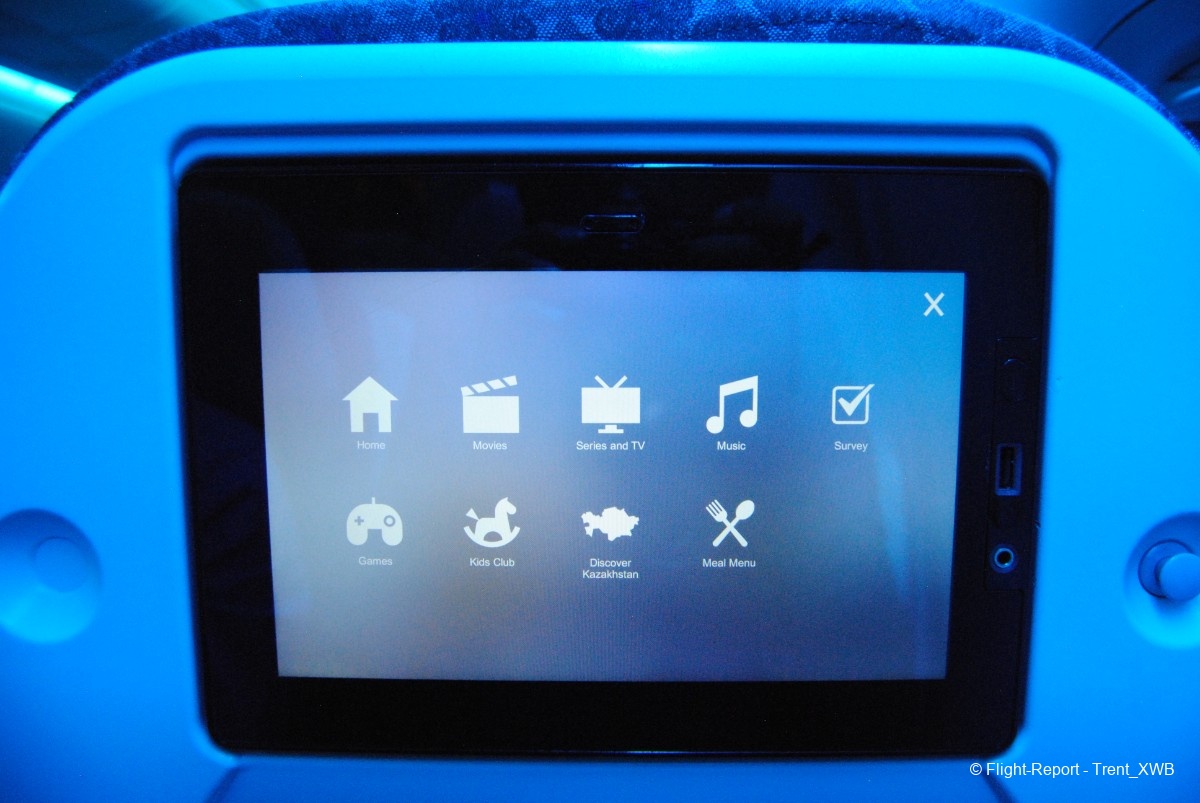
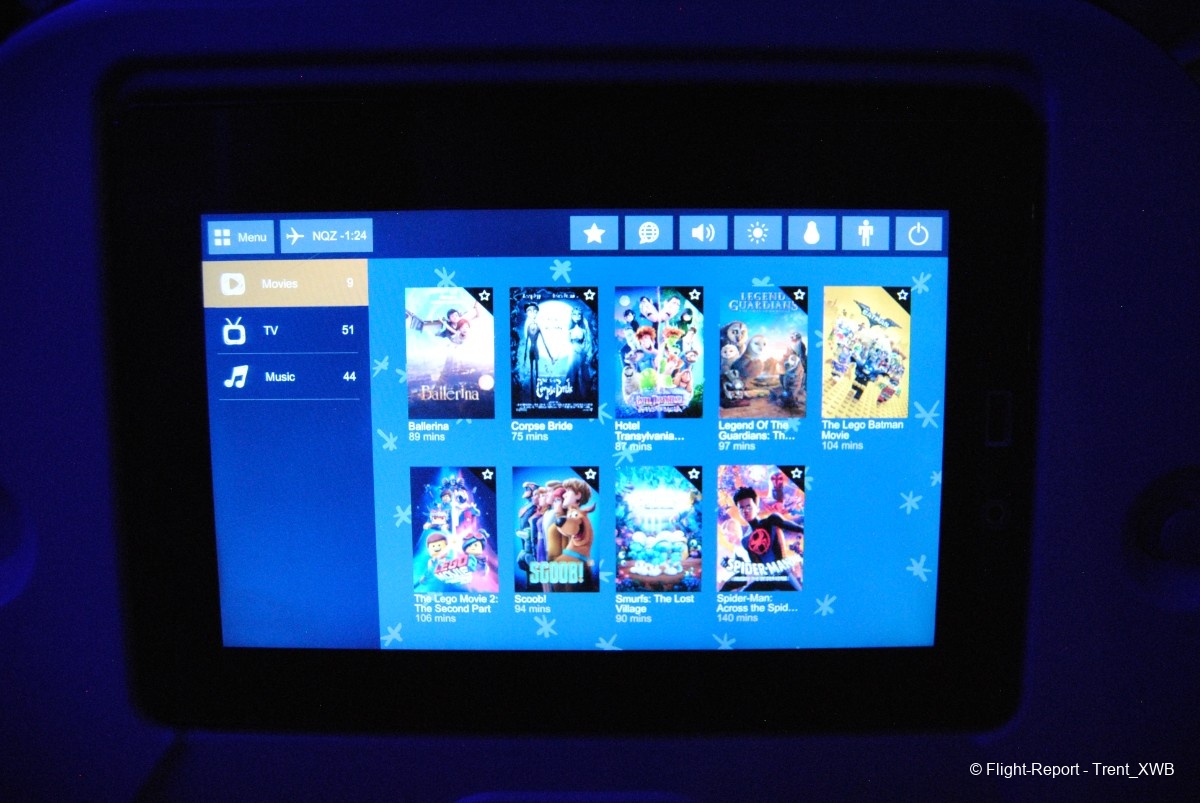
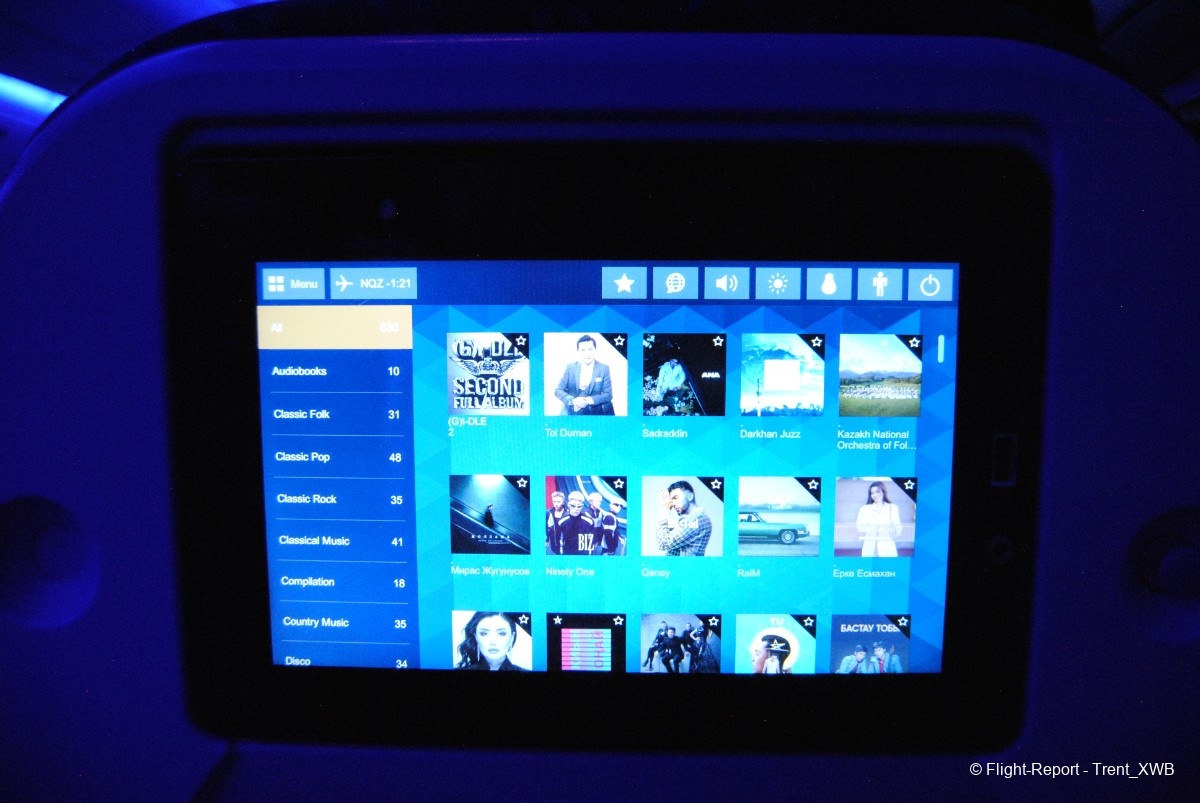
The cabin is ready for departure.
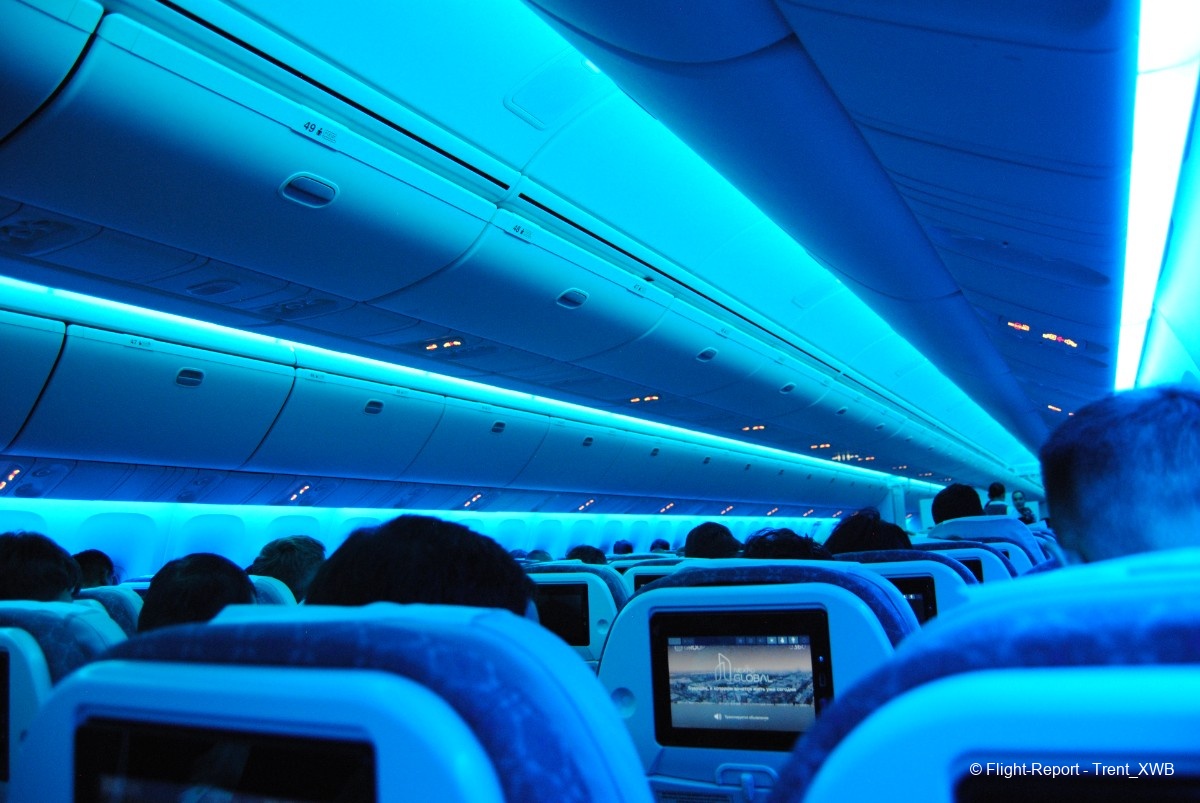
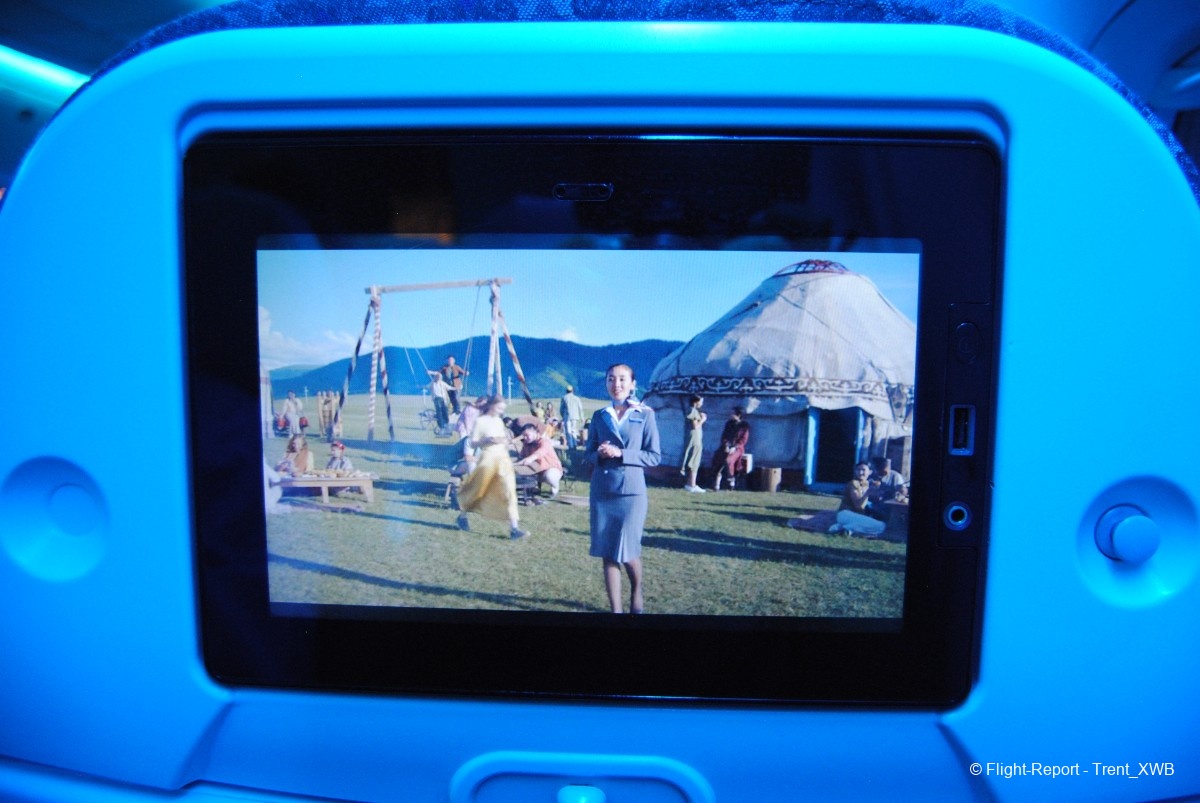
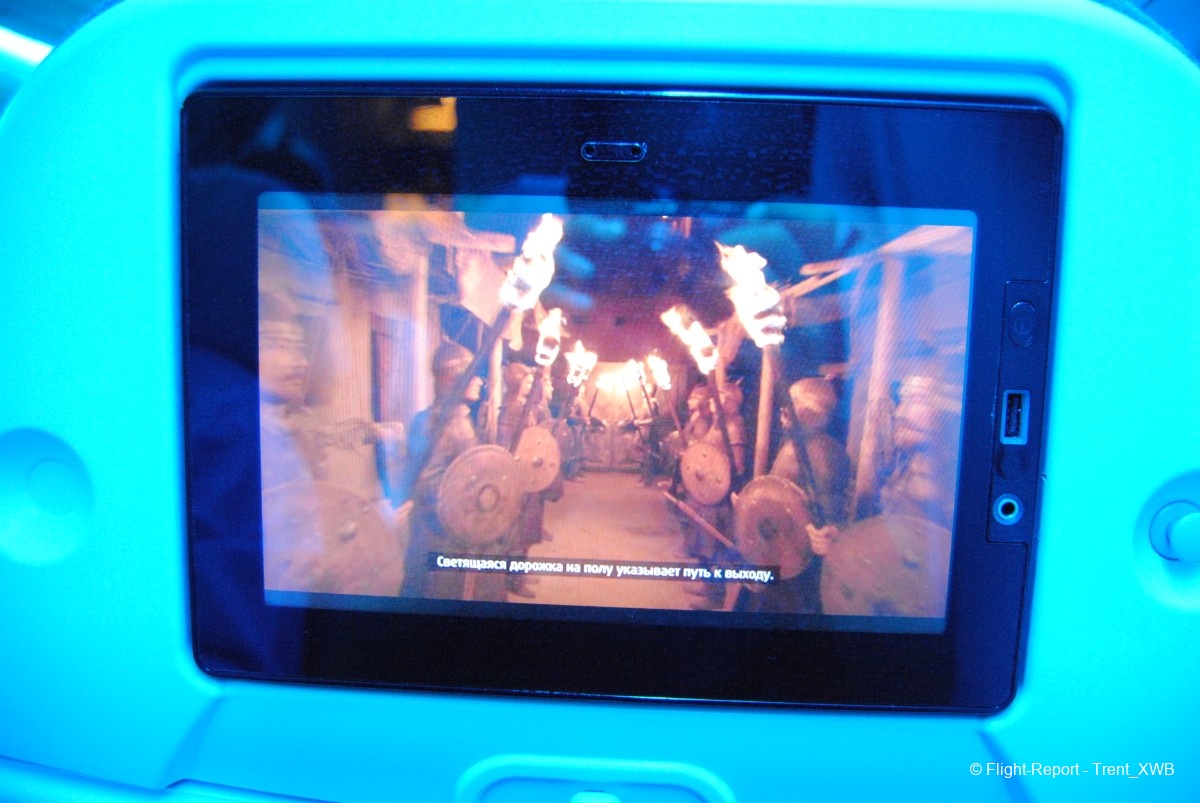
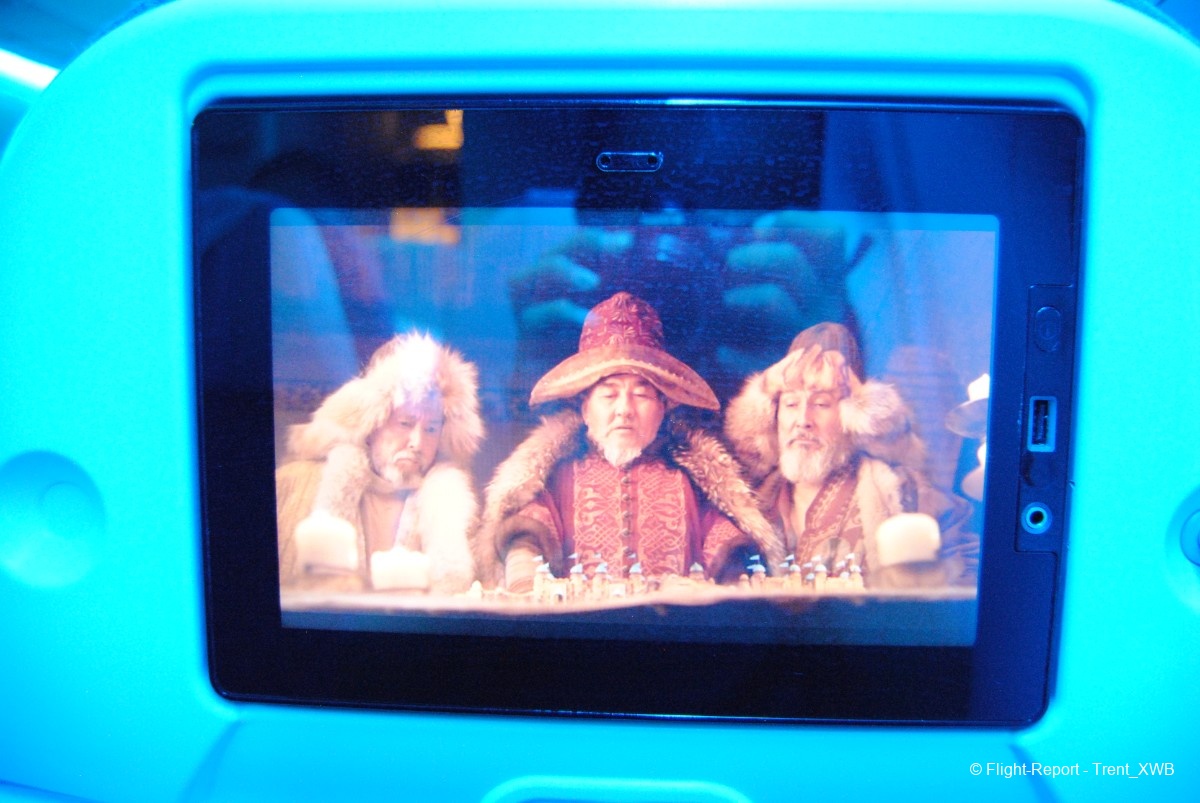
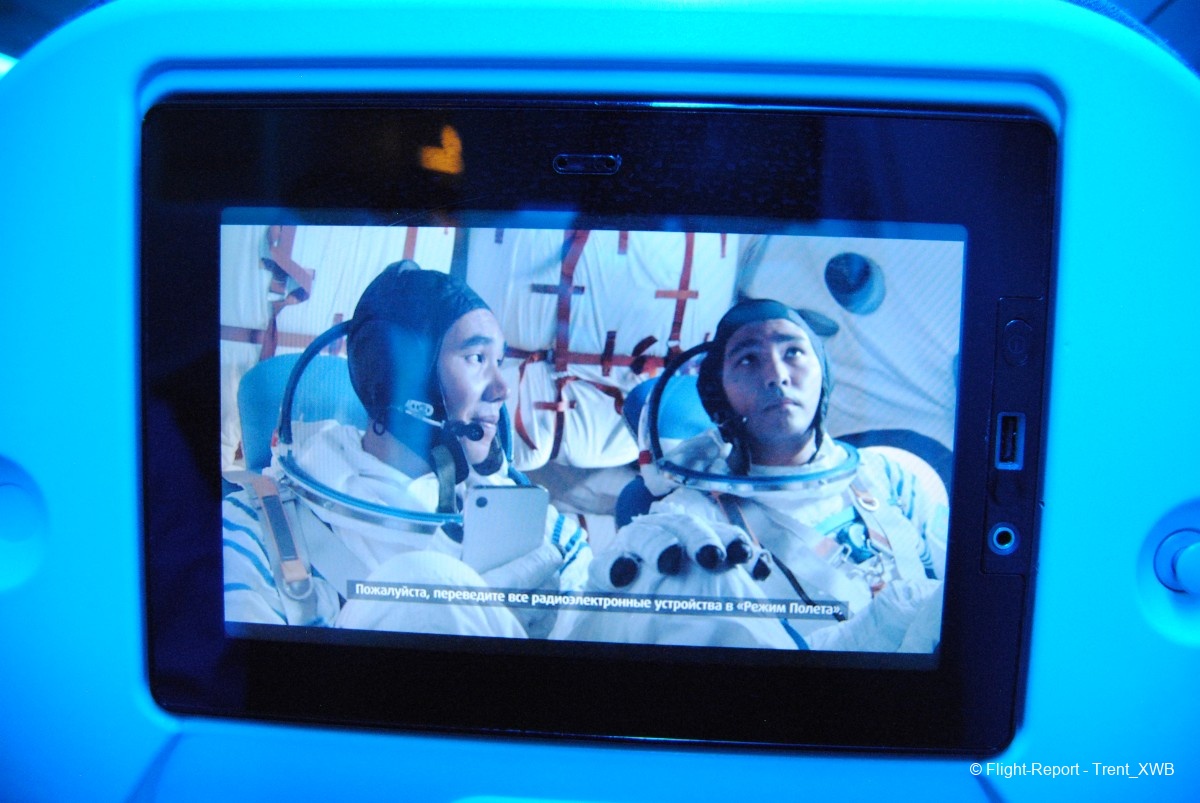
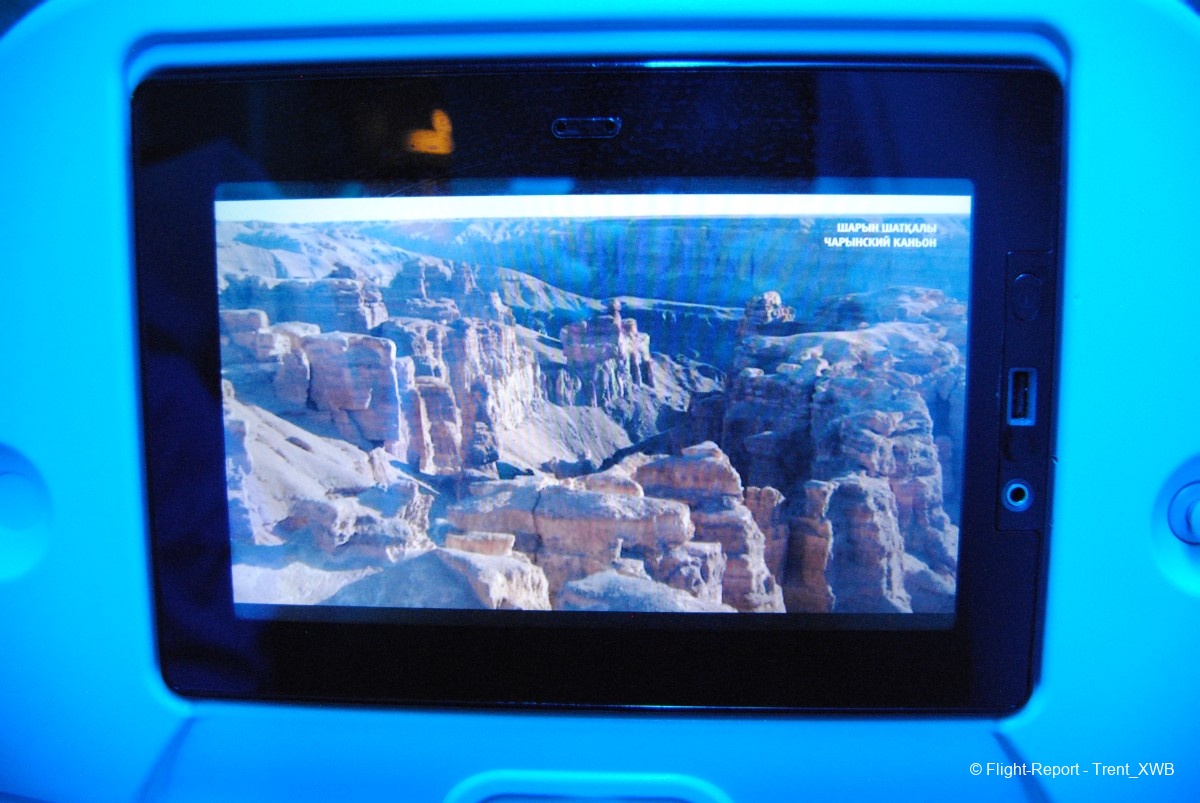
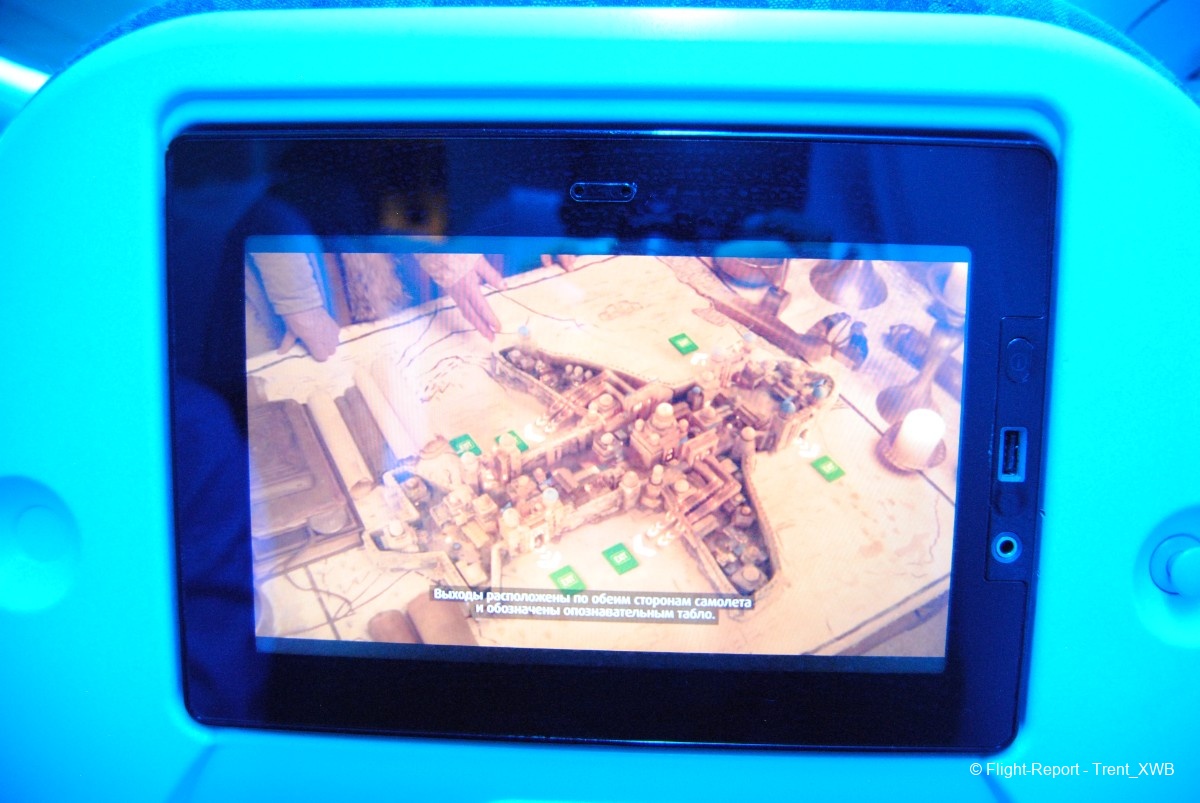
Pushback begins and safety video is played. Note how beautiful and creating it is, highlighting the Kazakh culture and sightseeings of the country!
A view of the domestic T1 ALA.
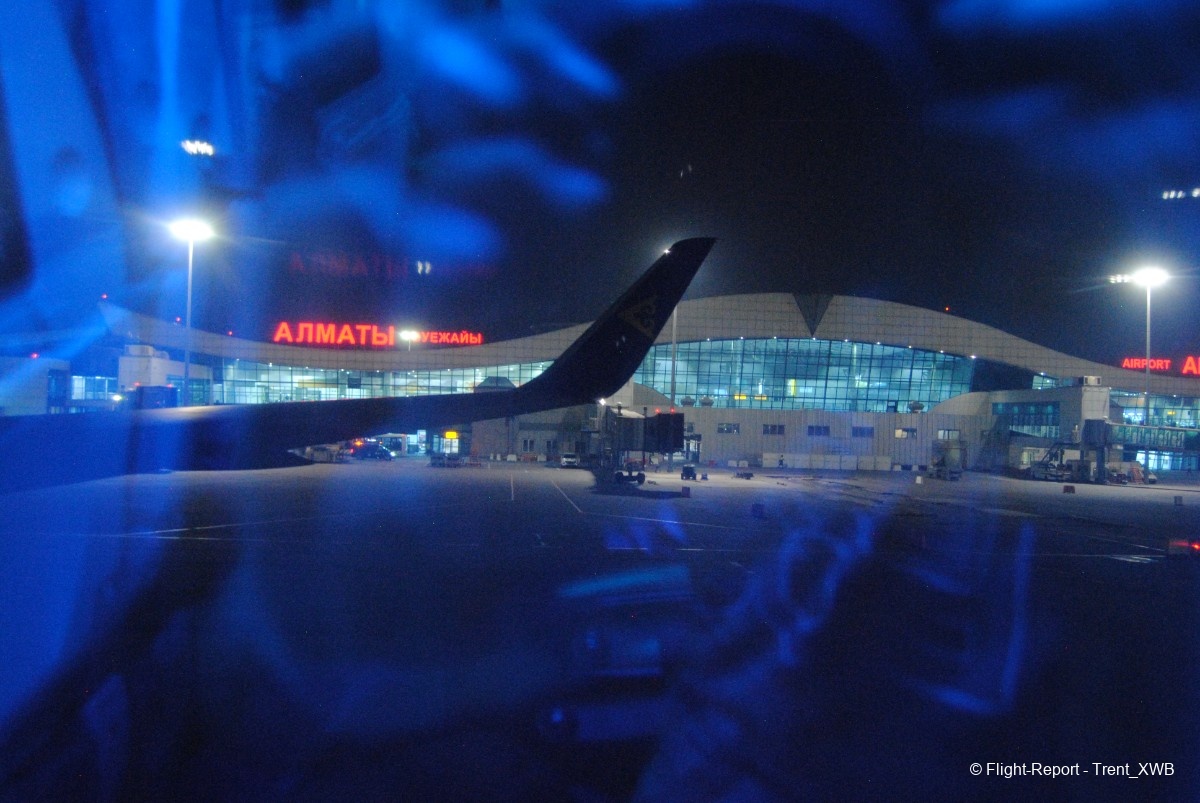
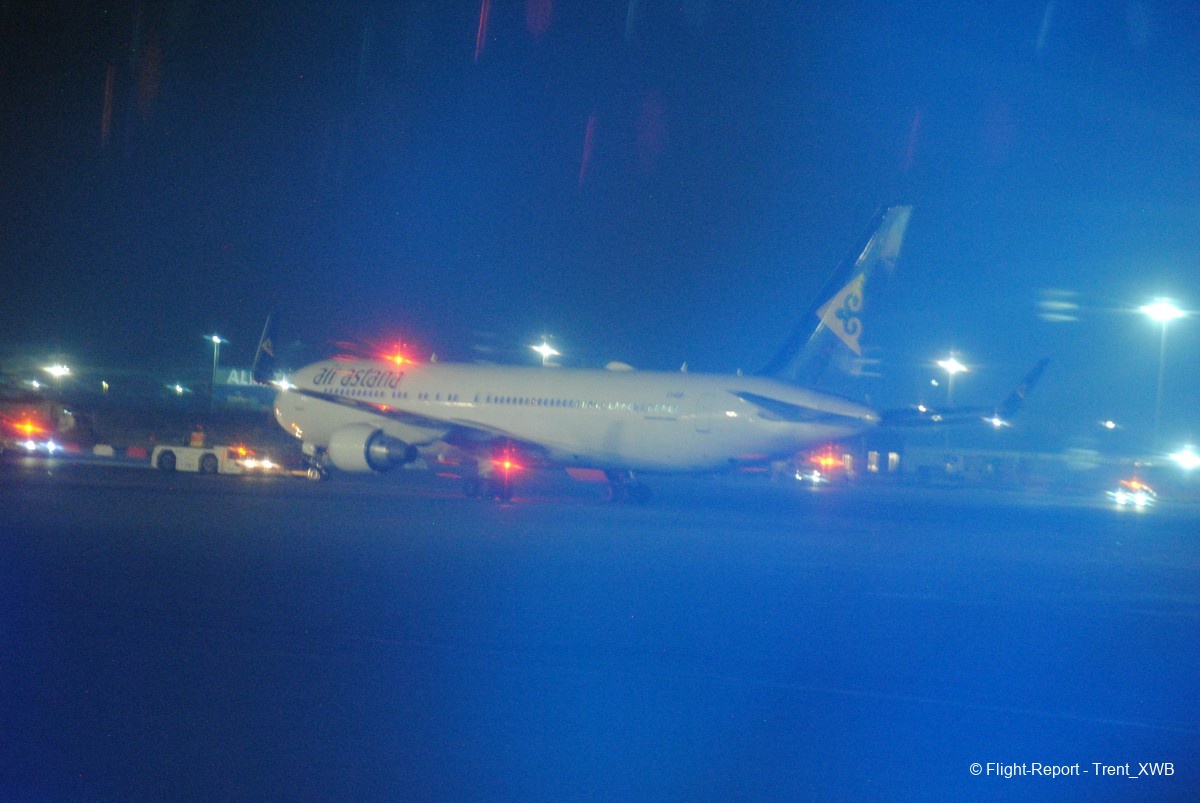
Taxiing past our sibling. It's definitely EI-KEB (which has arrived from ICN), because EI-KEA is in NQZ.
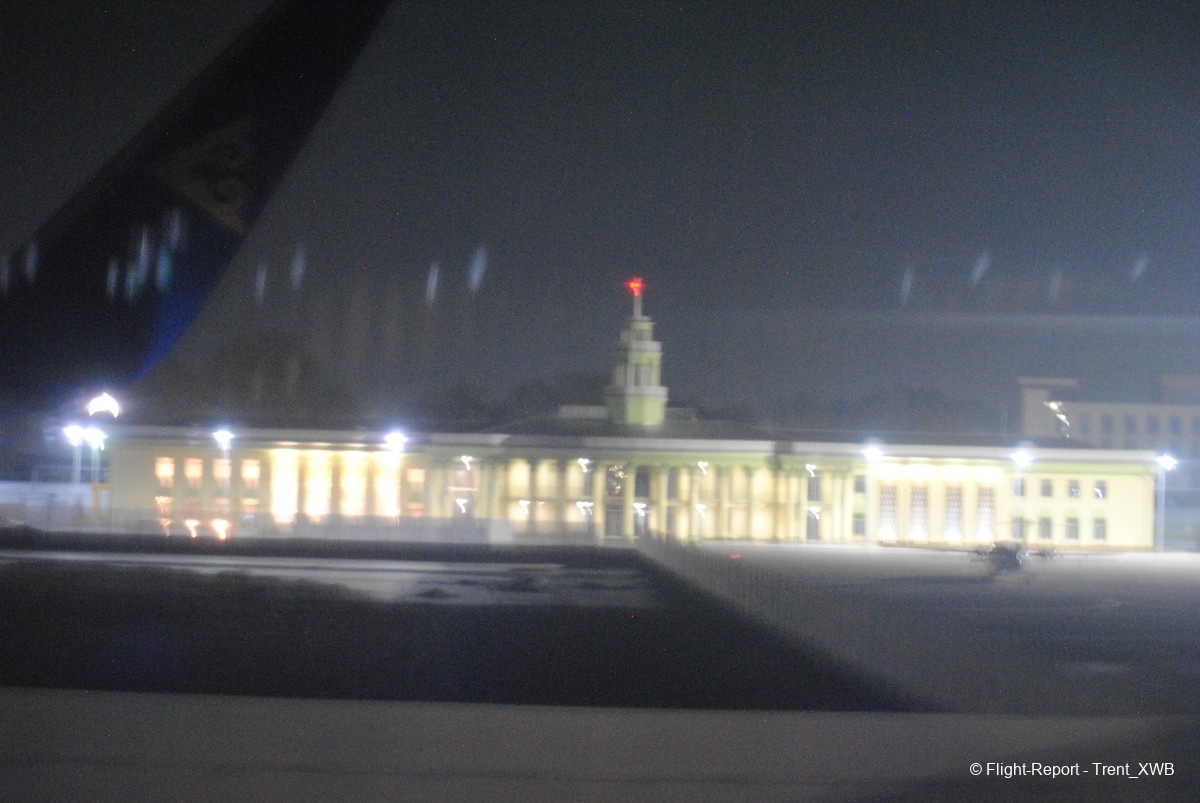
Beautiful very first soviet terminal of Almaty, which is now used for business aviation.
Cabin lighting is switched to takeoff mode.
Takeoff from ALA.
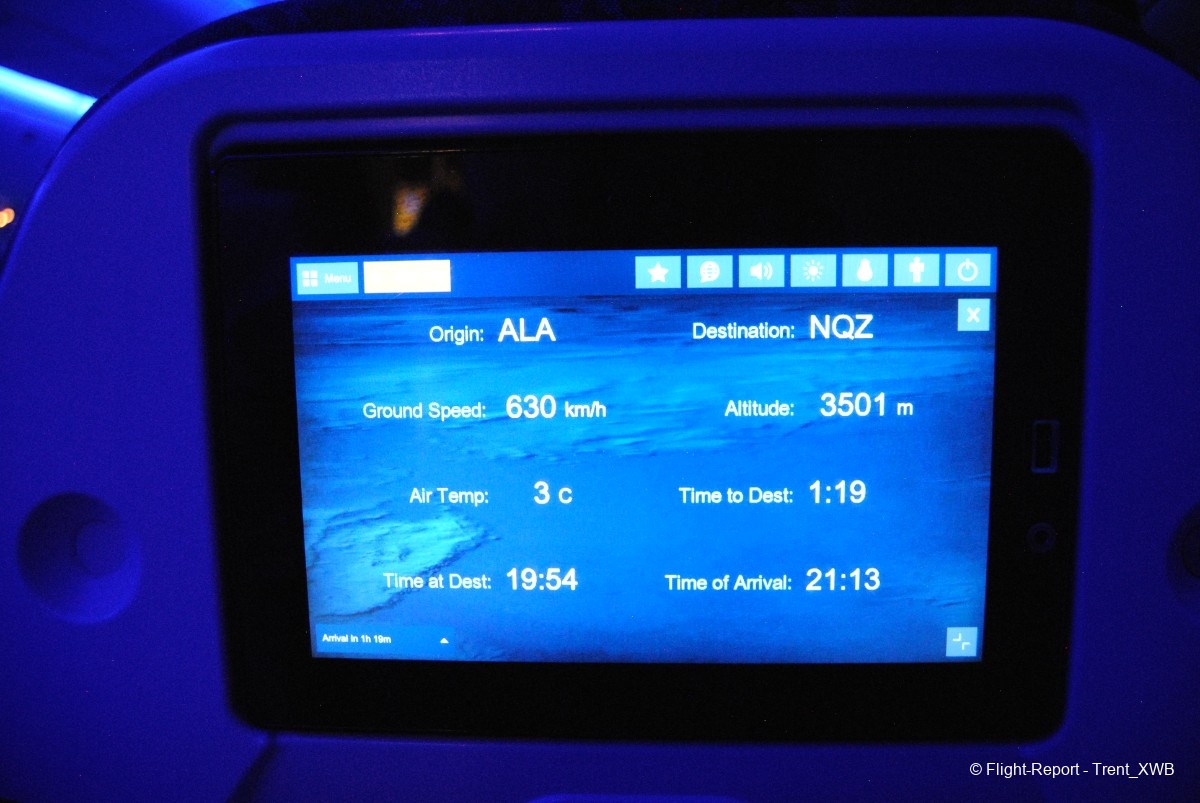
Flight data during climbout:
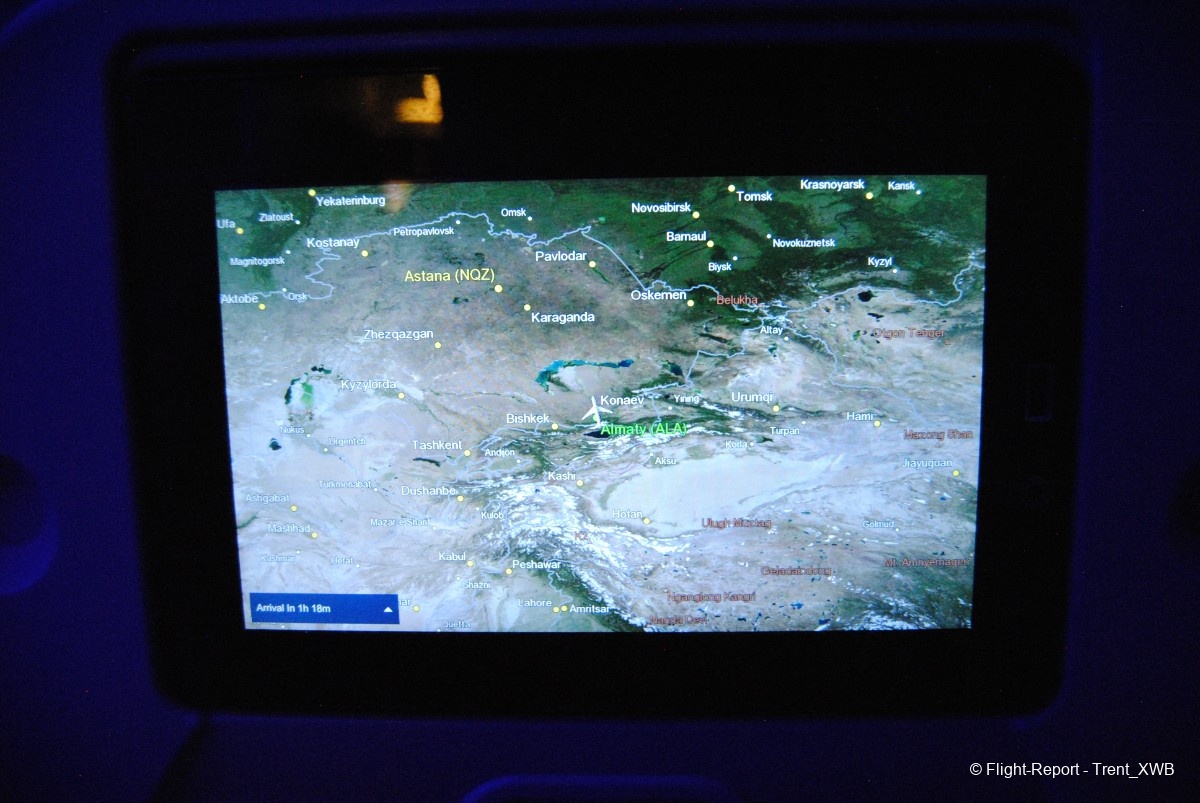
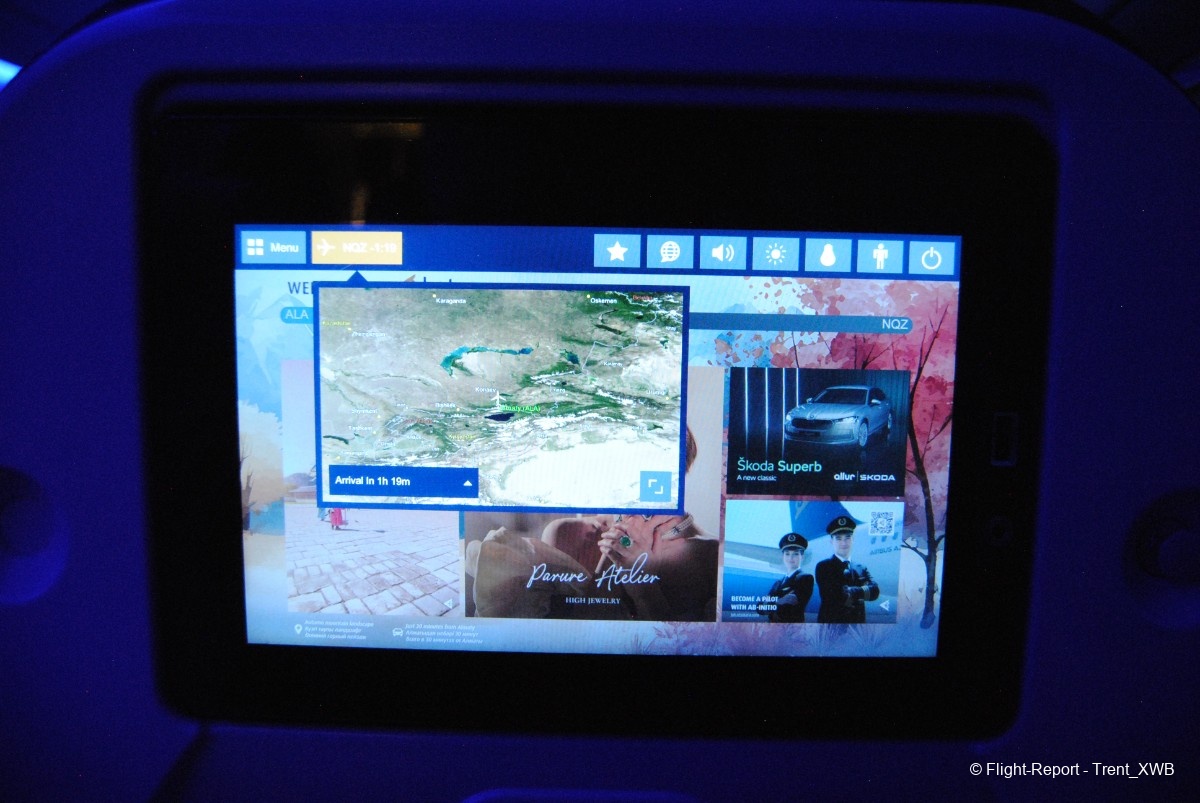
The flight map, which can be displayed as "picture in picture".
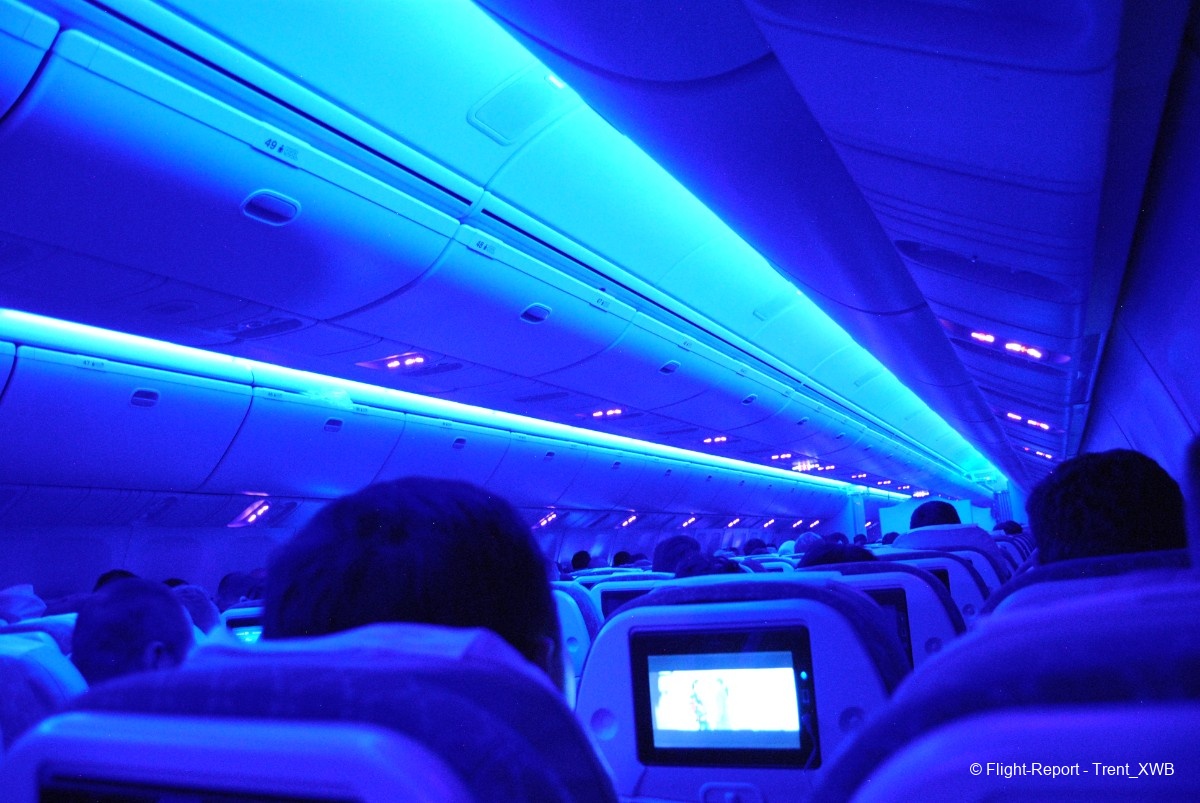
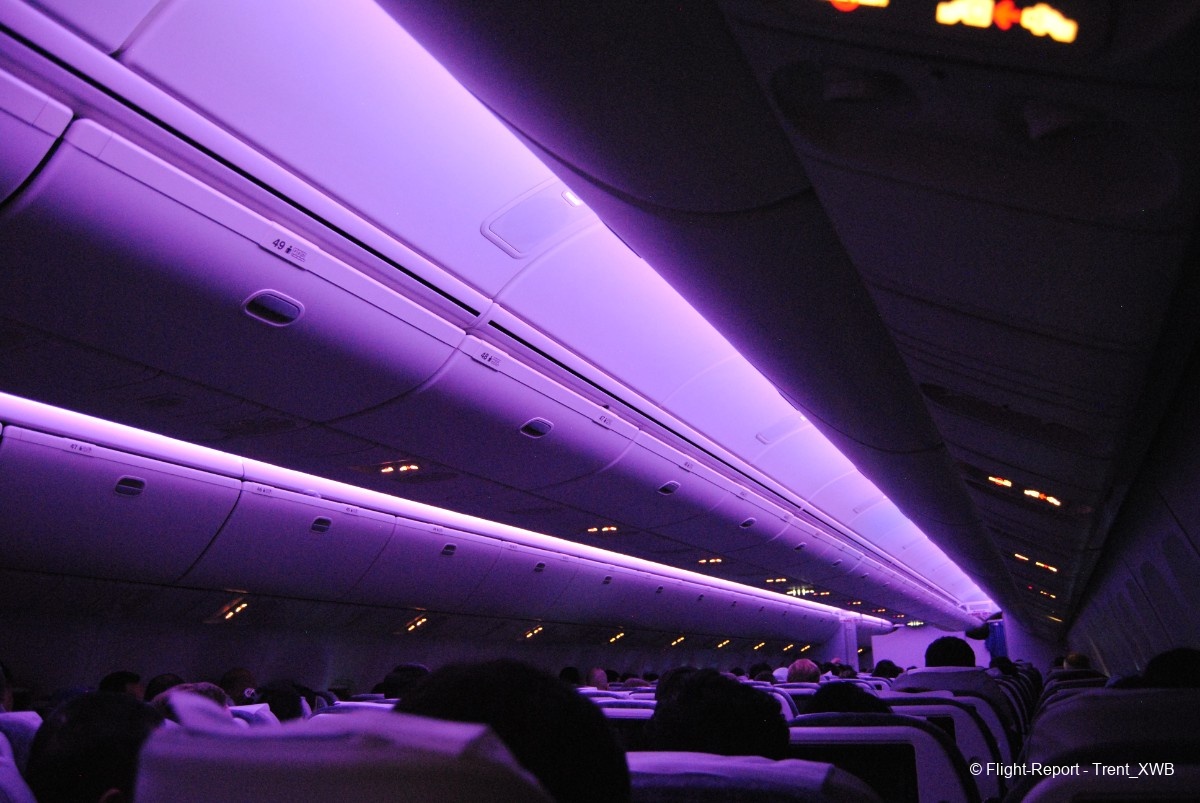
As we're reaching the cruise altitude, the cabin lighting is turned back to deep blue, then to lilac.
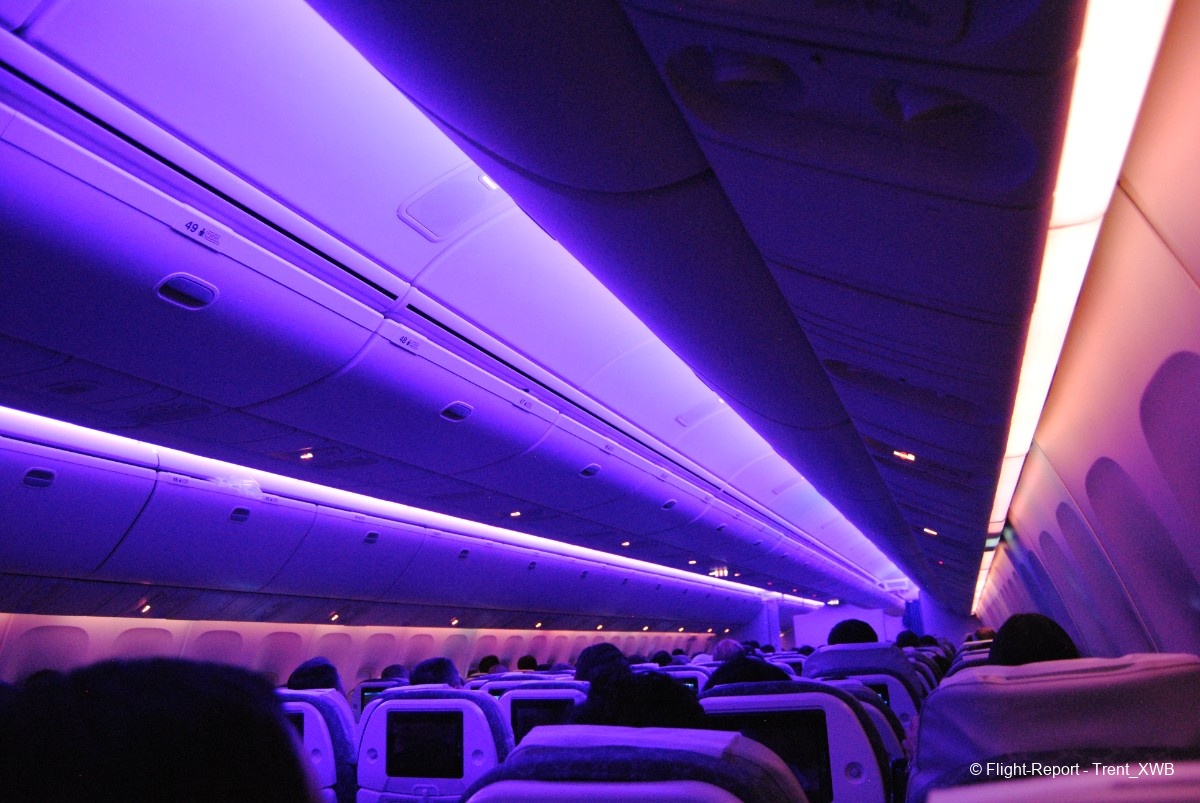
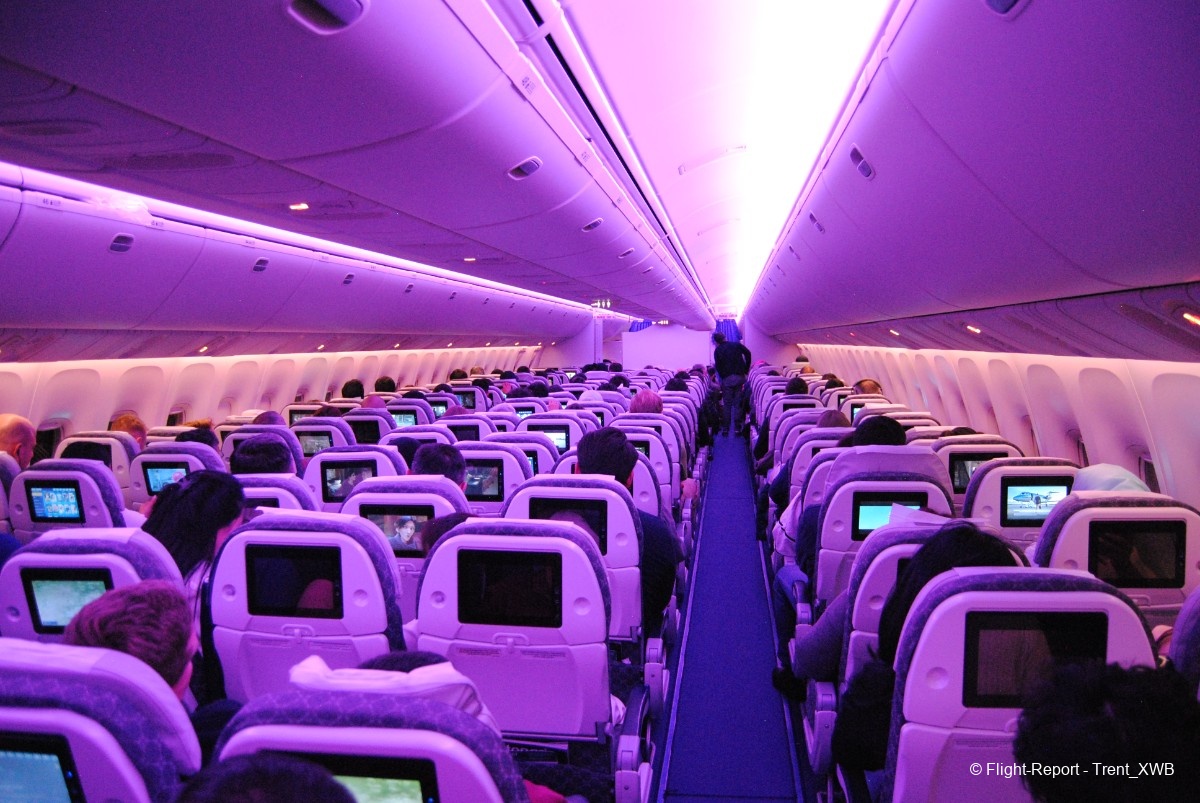
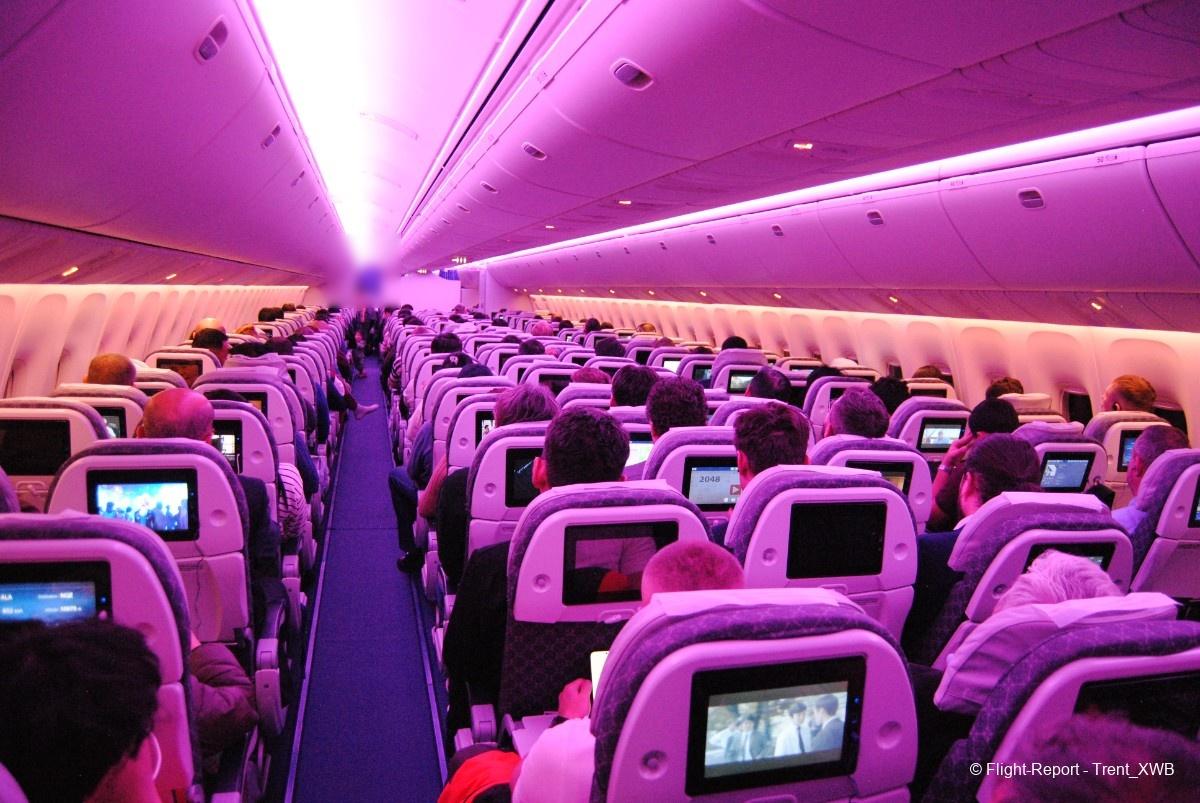
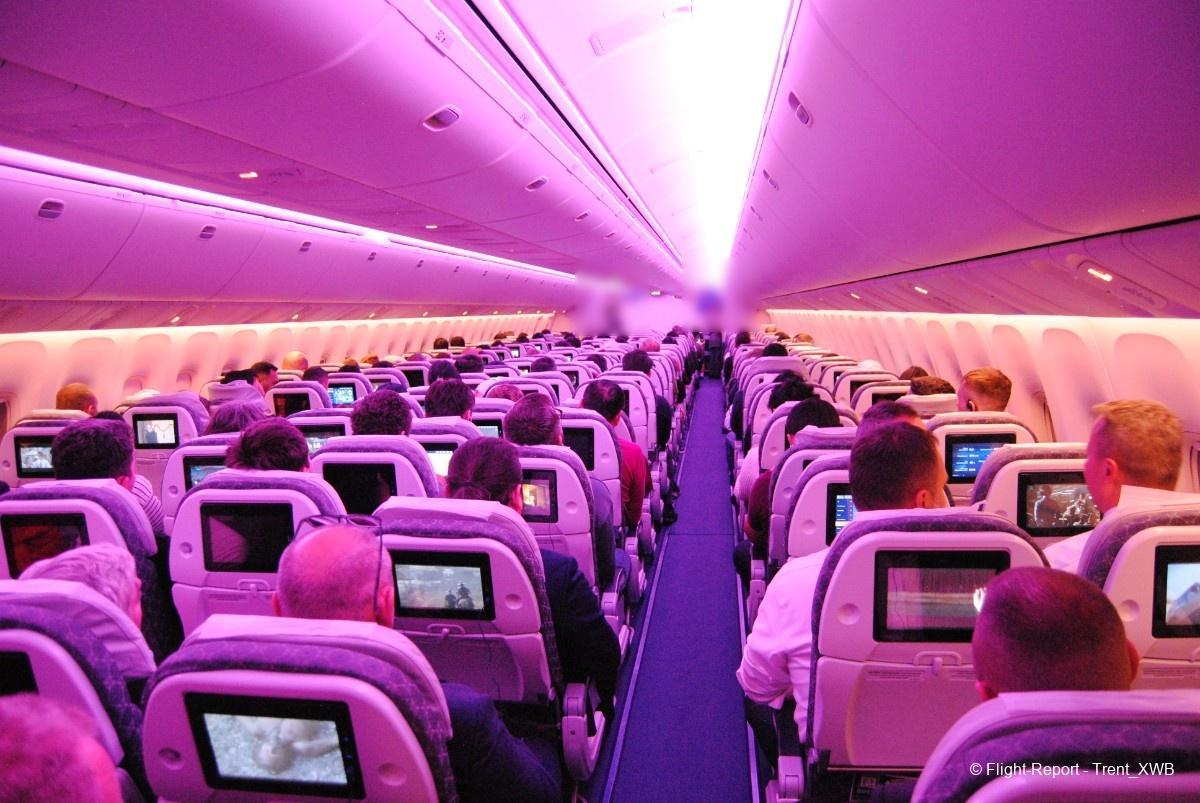
An inflight view of the rear economy cabin in lilac lighting.
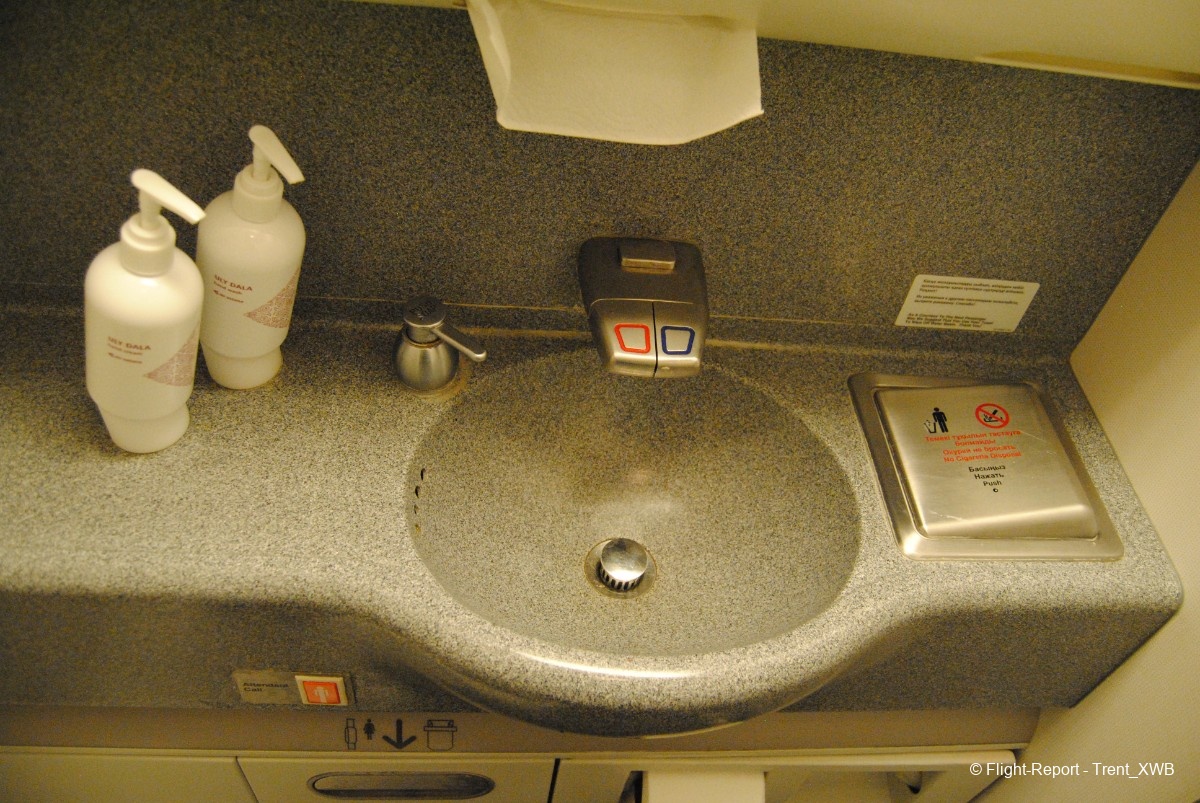
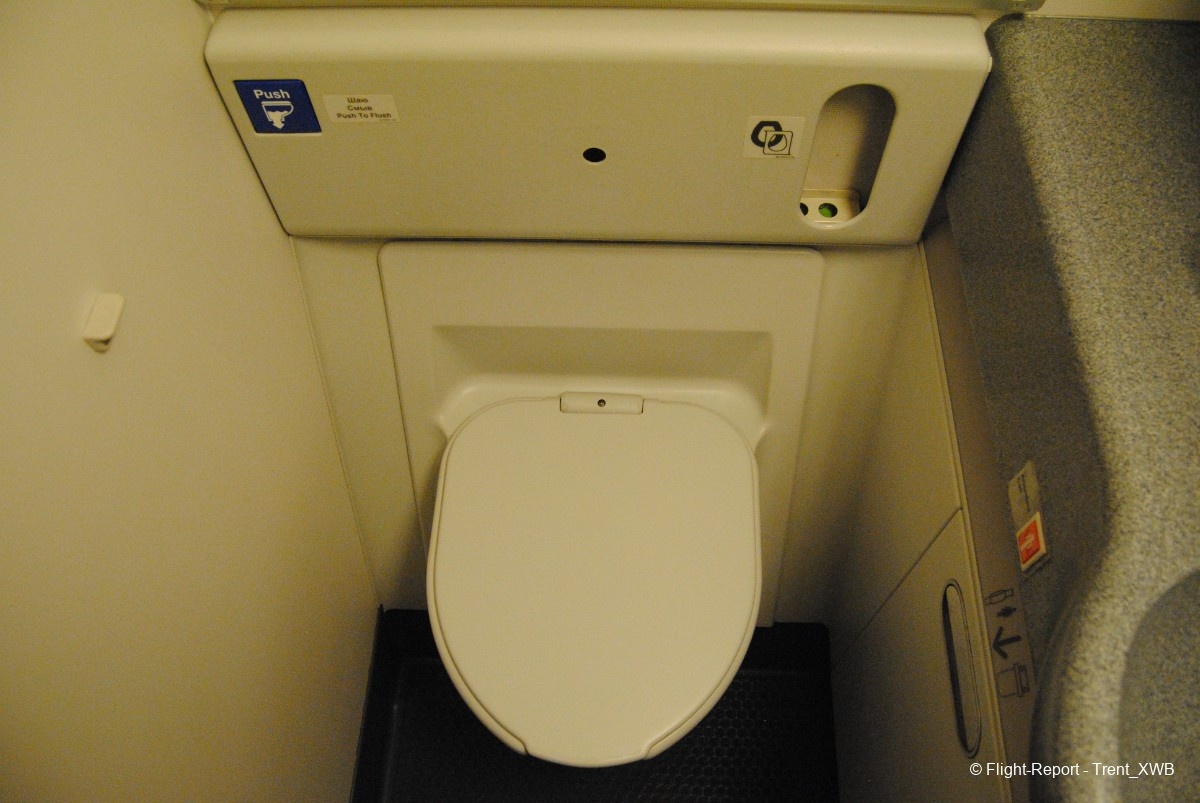
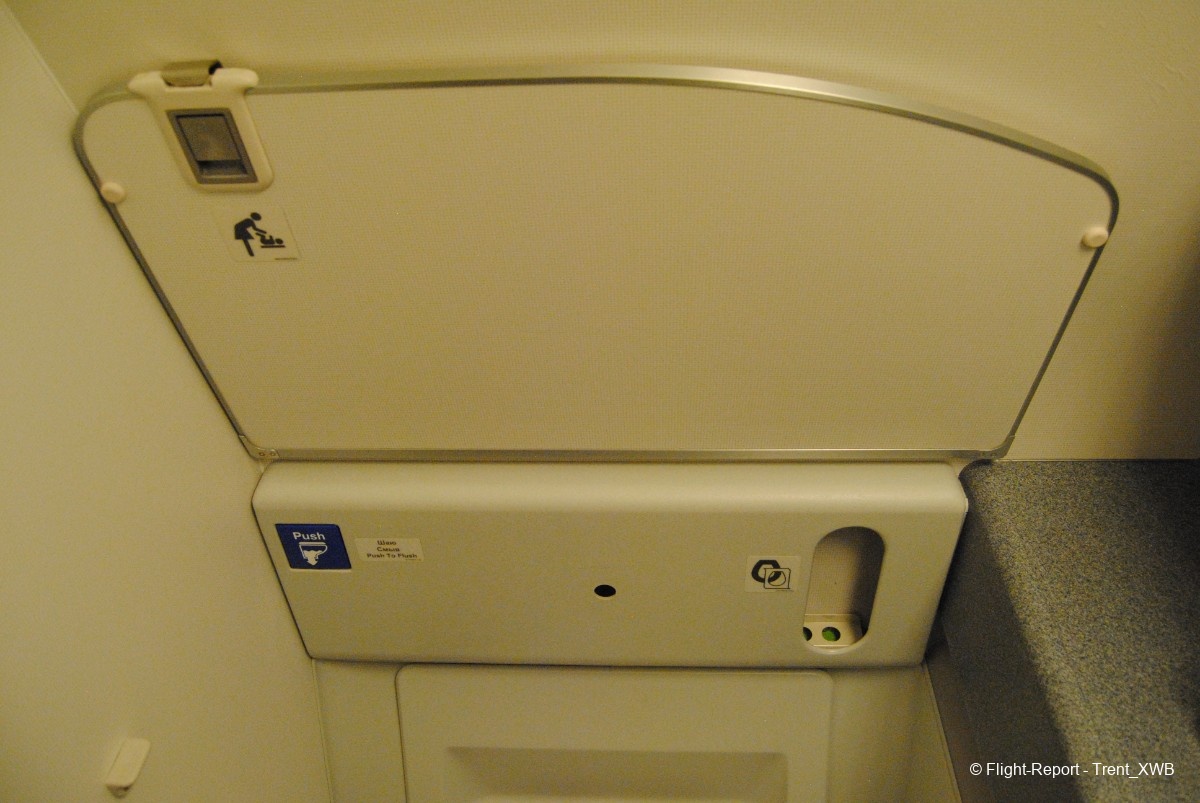
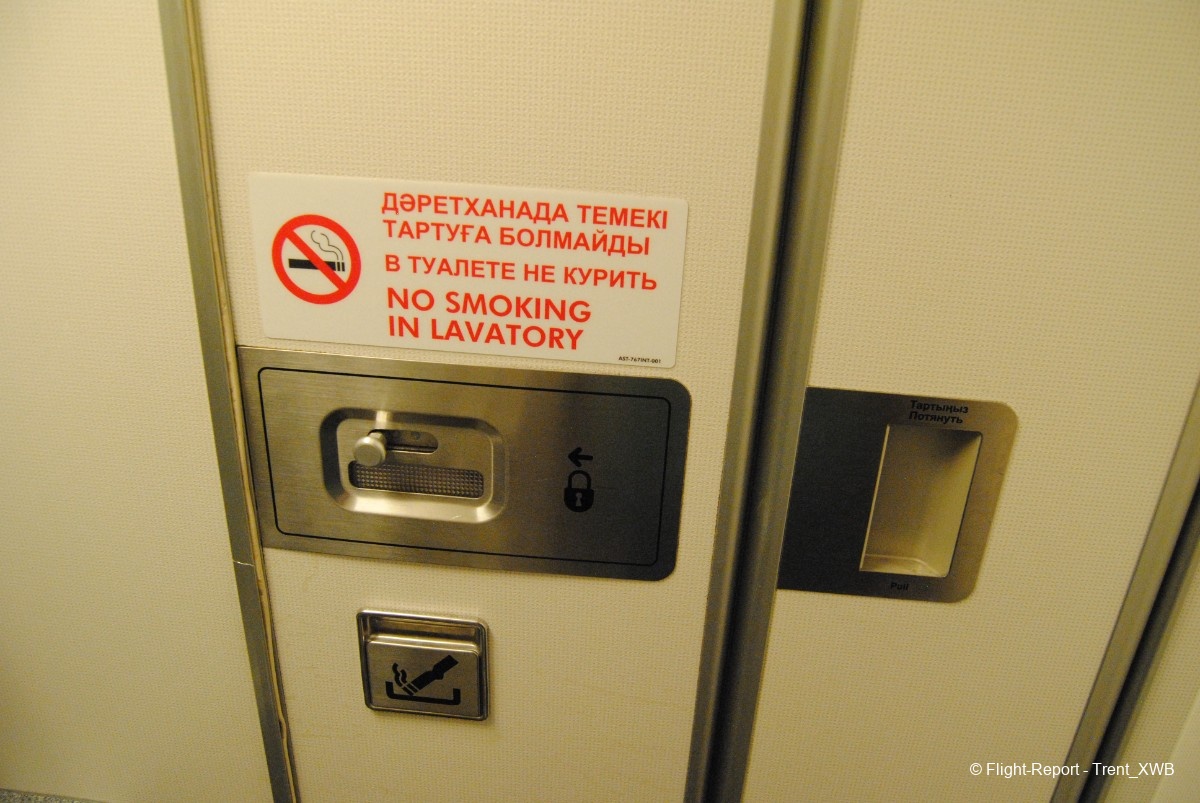
Tour de lavatorie. The lavatory reminds those in B777 and is clean and tidy.
A couple of inflight views of the rear economy when cabin lighting is switched to pink.
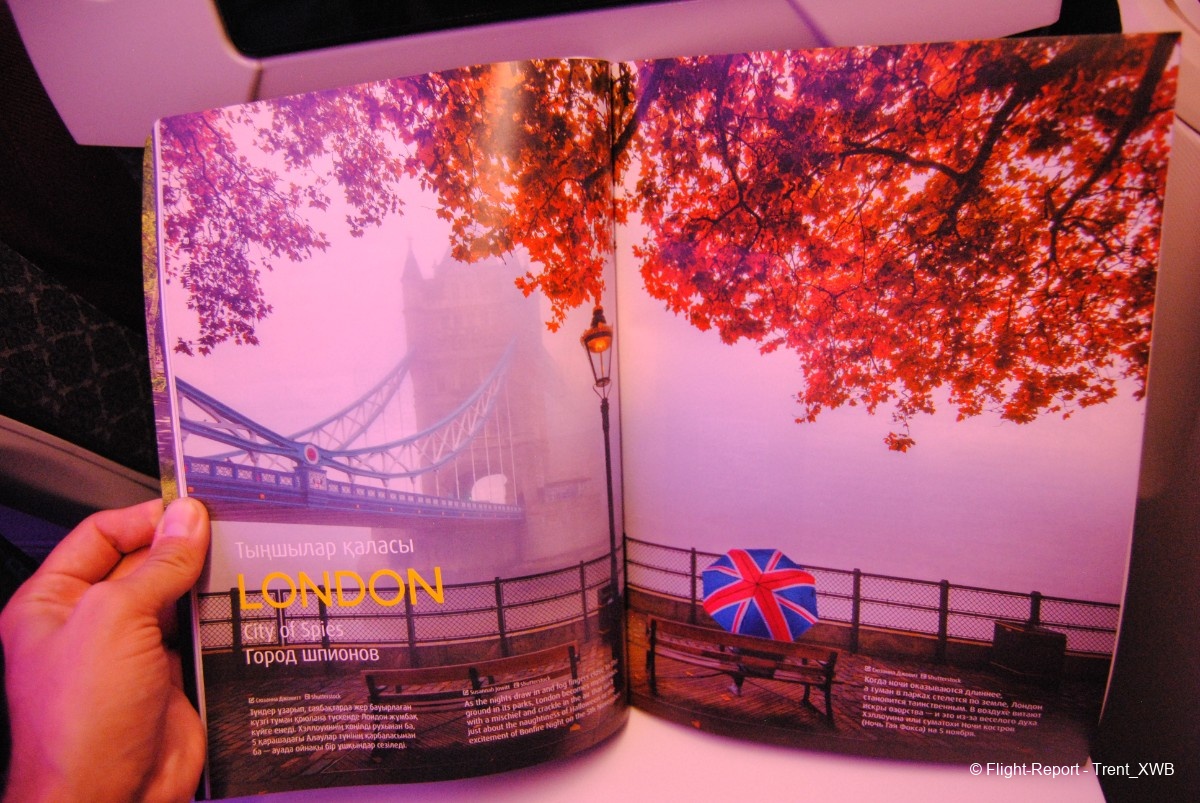
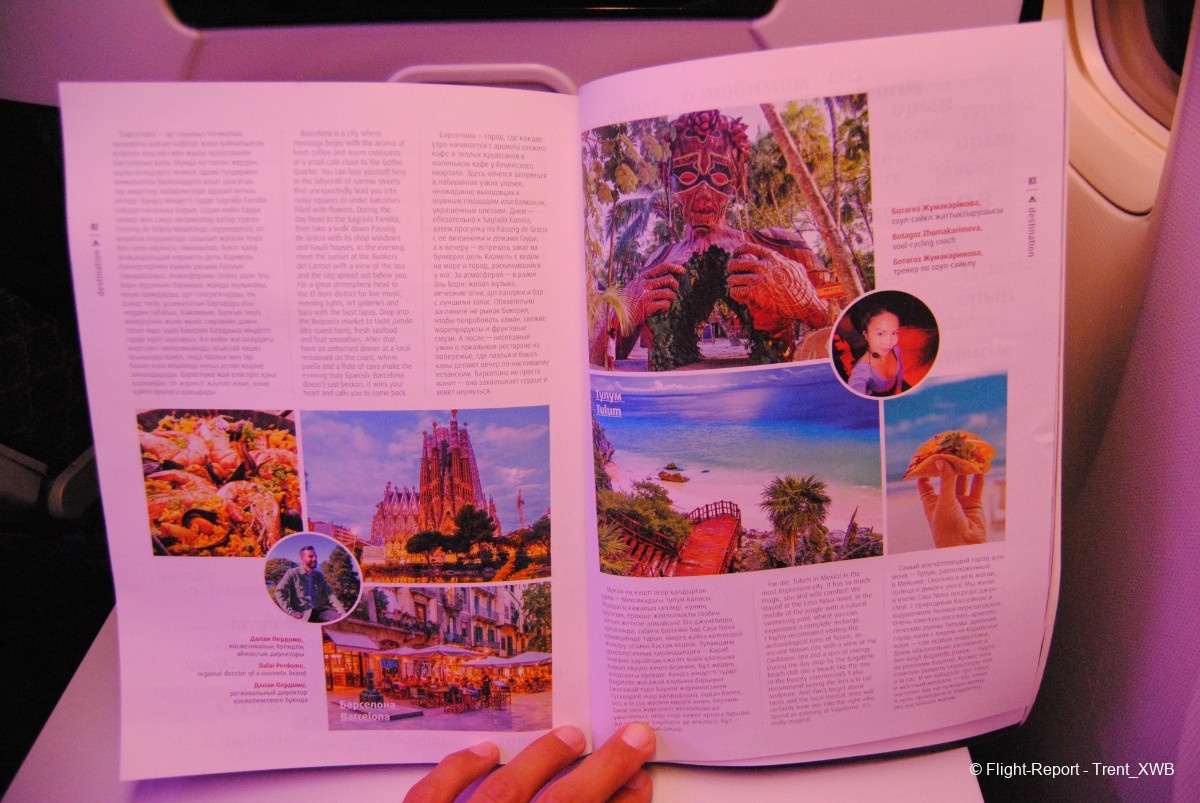
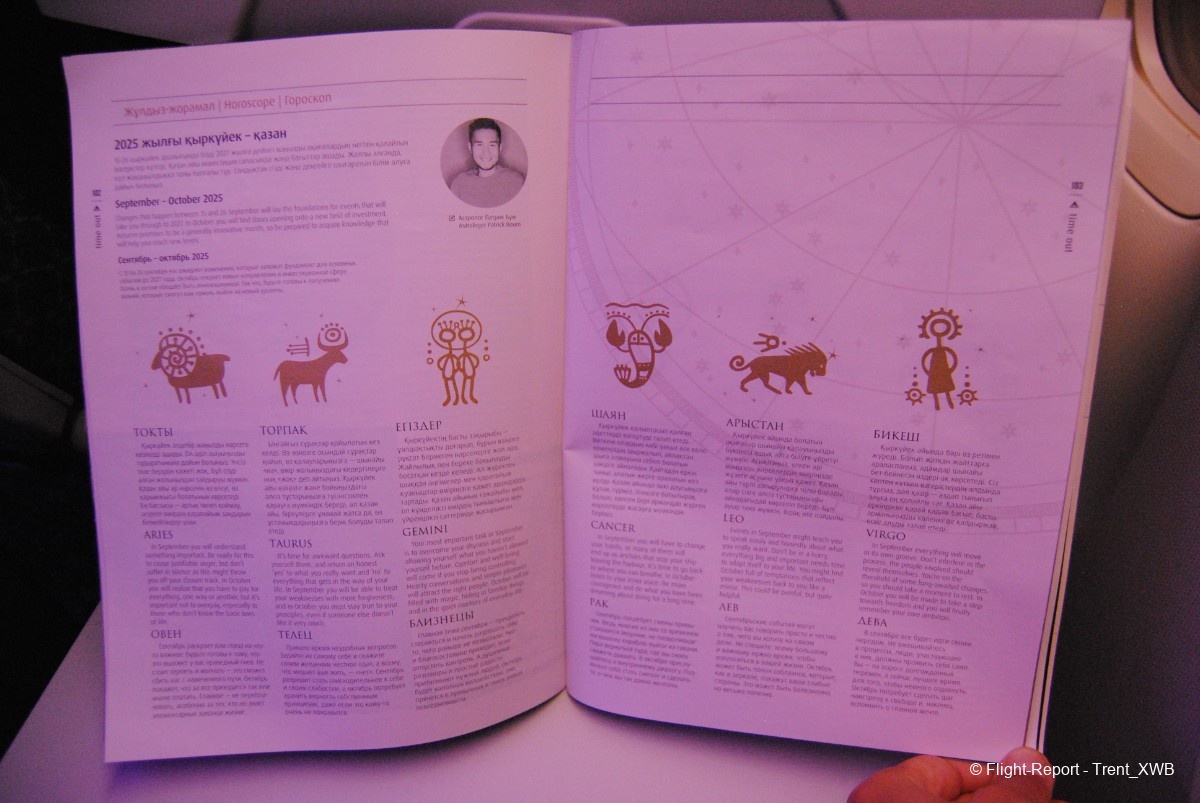
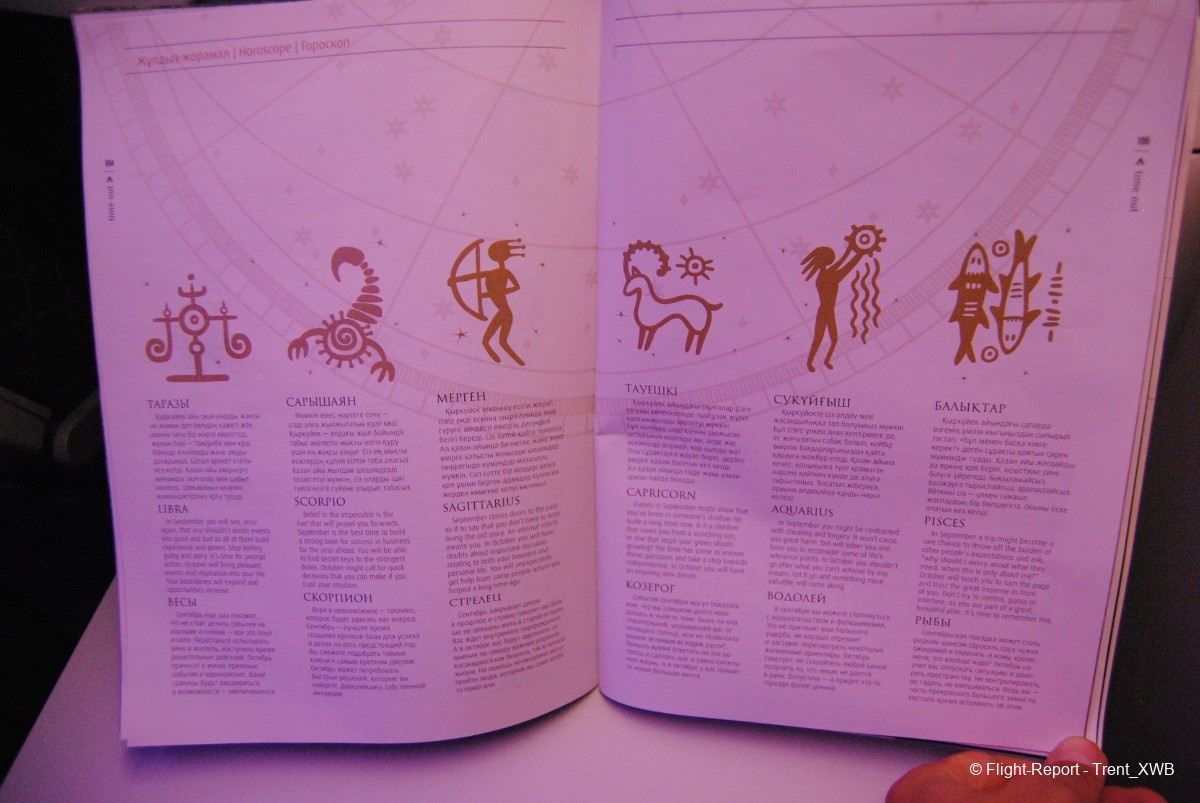
A dive into the inflight magazine, including the horoscope. It's interesting how zodiac signs are named in Kazakh: Aries = Tokty, Taurus = Torpak, Gemini = Egizder, Cancer = Shayan, Leo = Arystan (BTW, names Ruslan and Rustam are derived from this word), Virgo = Bikesh, Libra = Tarazy, Scorpio = Saryshayan (i.e. "yellow cancer"), Sagittarius = Mergen, Capricorn = Taueshki, Aquarius = Sukuygysh ("su" means water), Pisces = Balyktar. BTW, I'm Taueshki :)
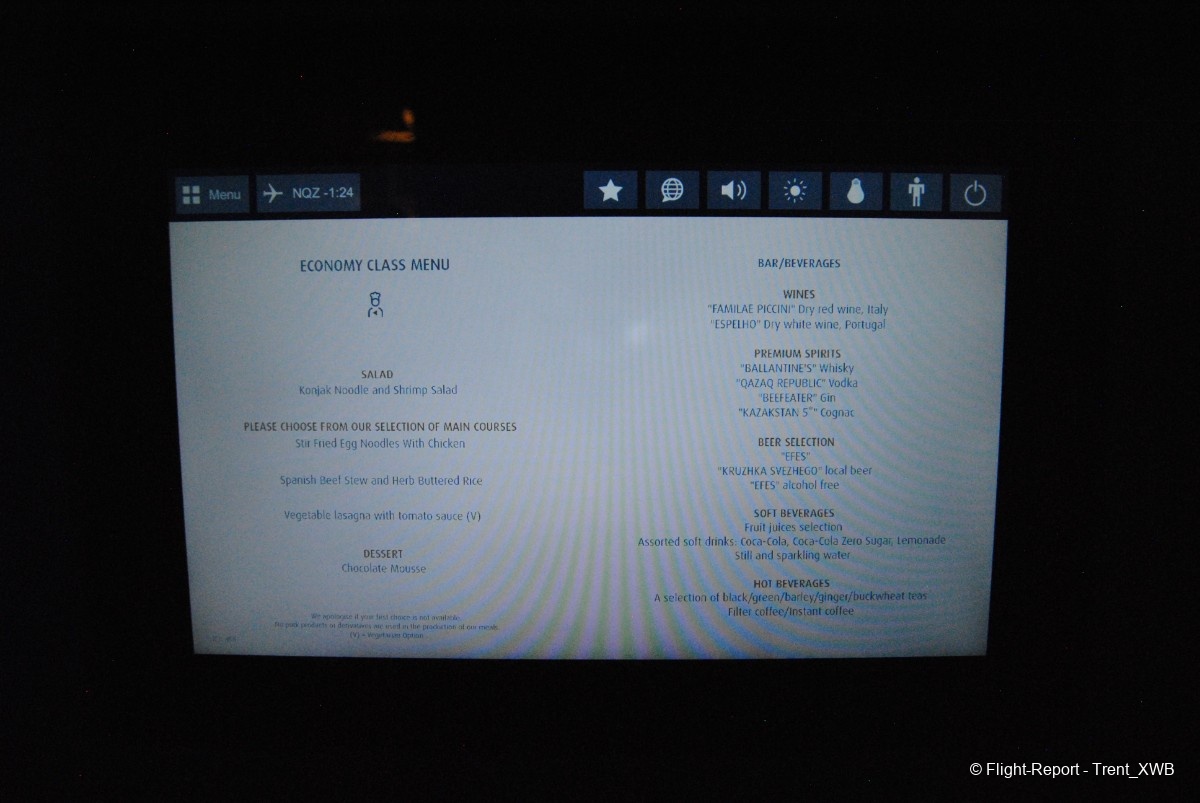
IFE can even display the inflights meals selection. But this one is definitely not about this short domestic flight, probably it's from previous international longhaul (ICN, if I remember correctly).
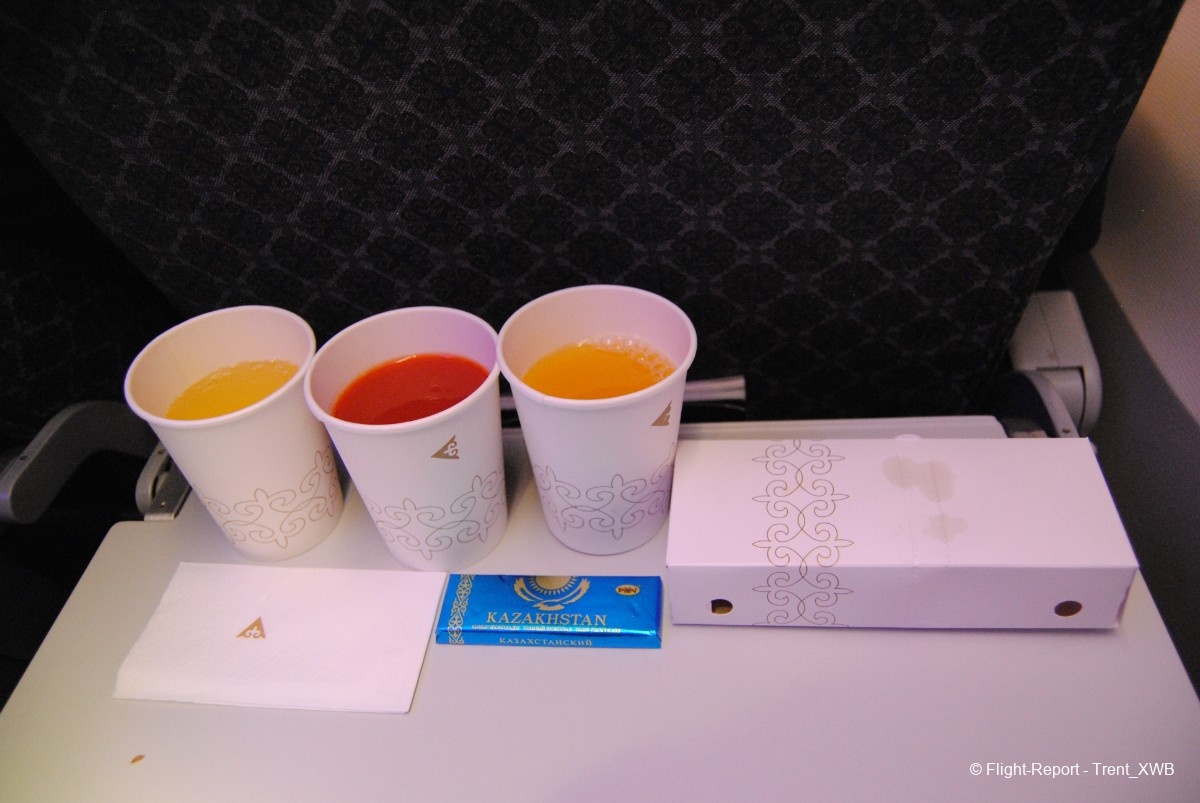
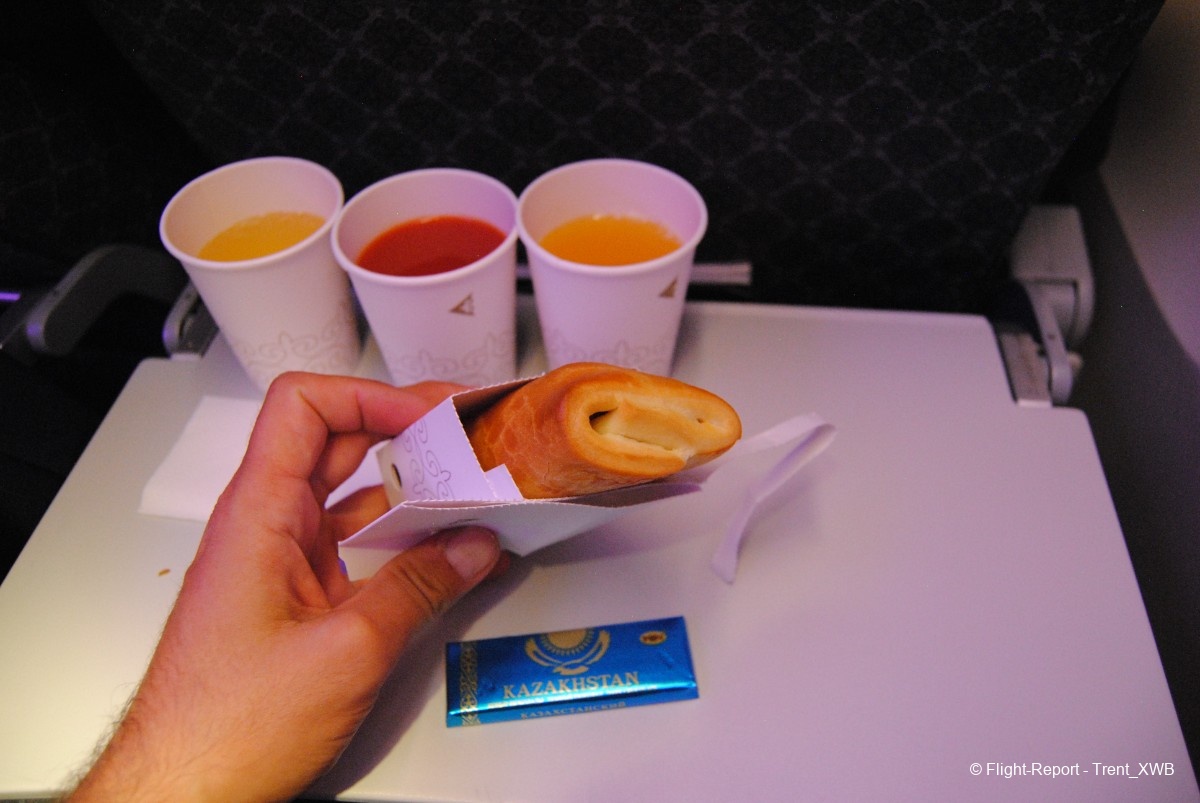
Today's meal service consists of tasty warm chicken sandwich, a Kazakh chocolate bar (which is actually very cheap, but still tasty) and a selection of drinks. Very good level of service for such a flight! The crew are very nice and welcoming too.
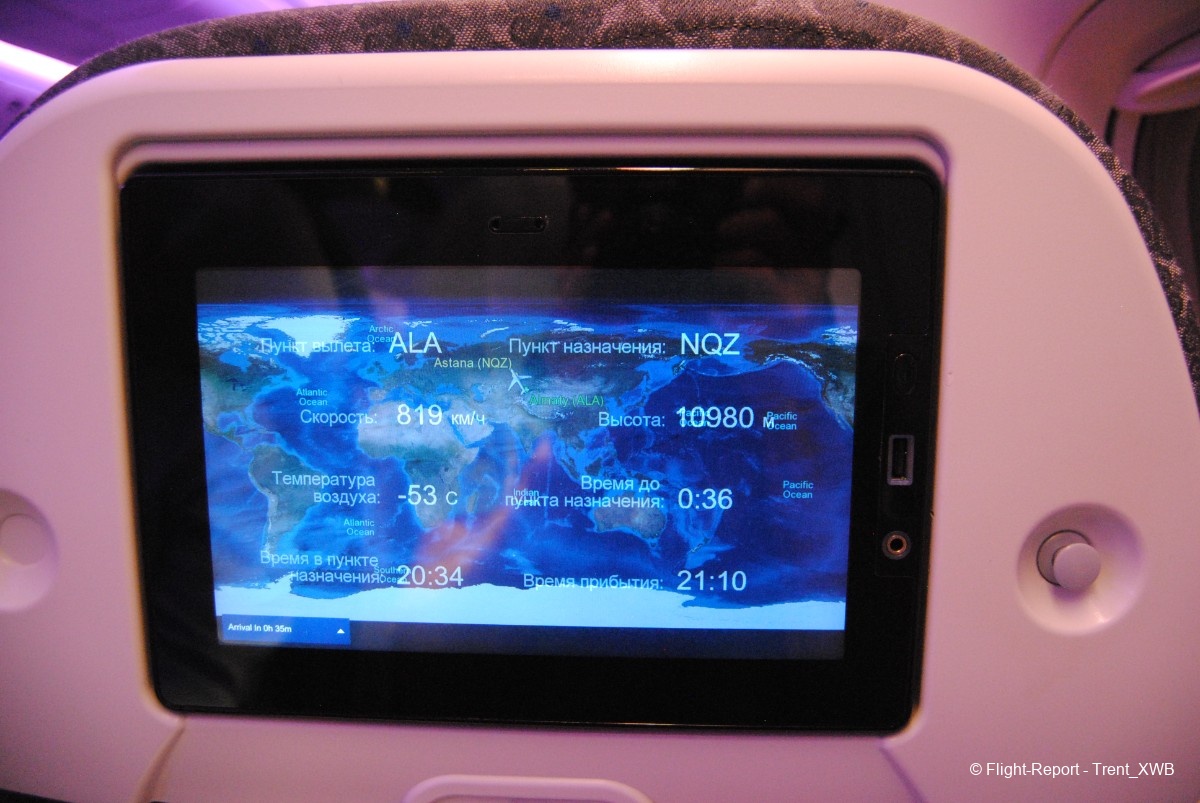
Flight map and flight data as we've almost covered 2/3 of the distance.
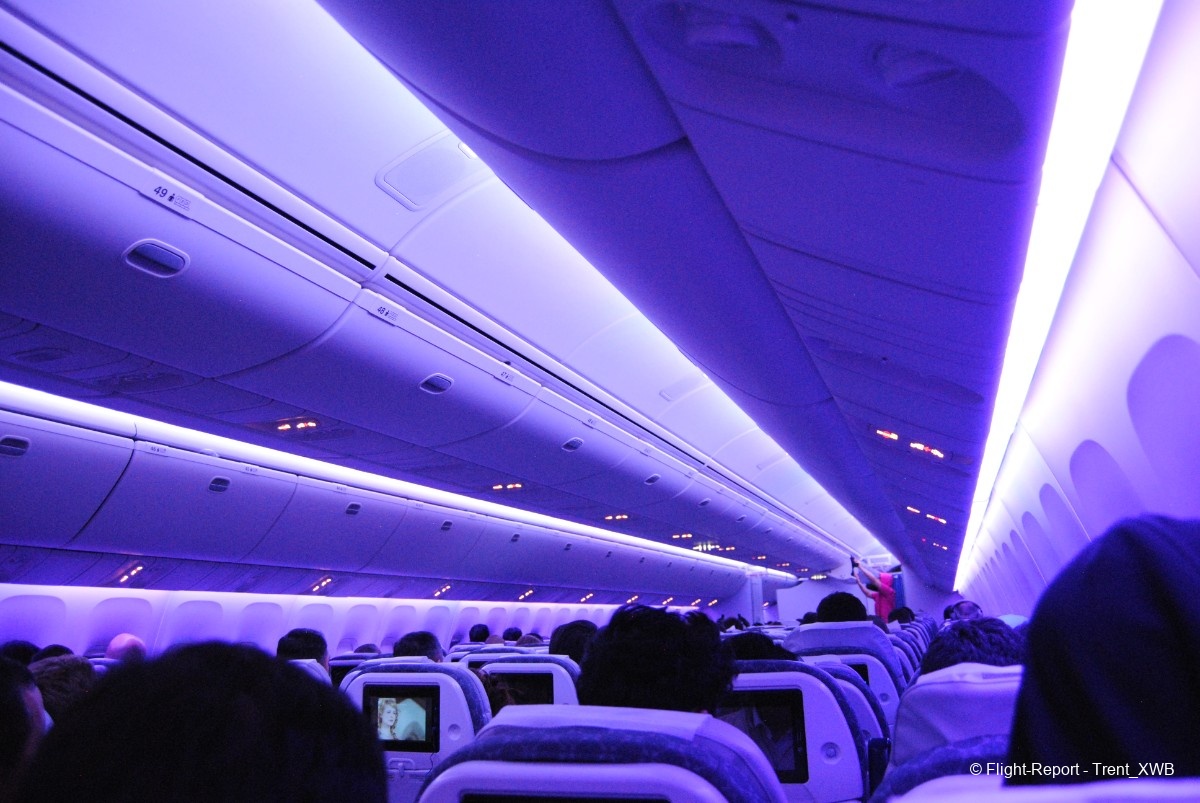
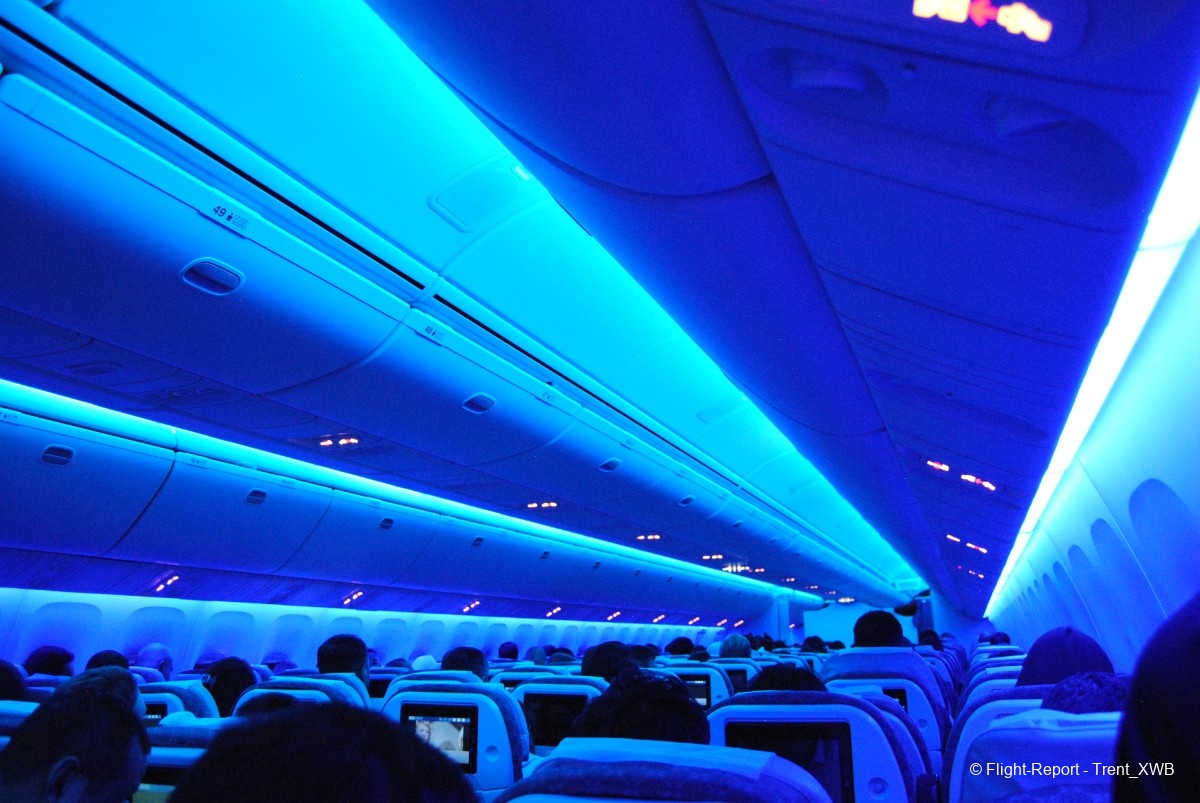
The cabin lighting after the meal service is turned to light lilac, then to deep blue, then to dark lilac.
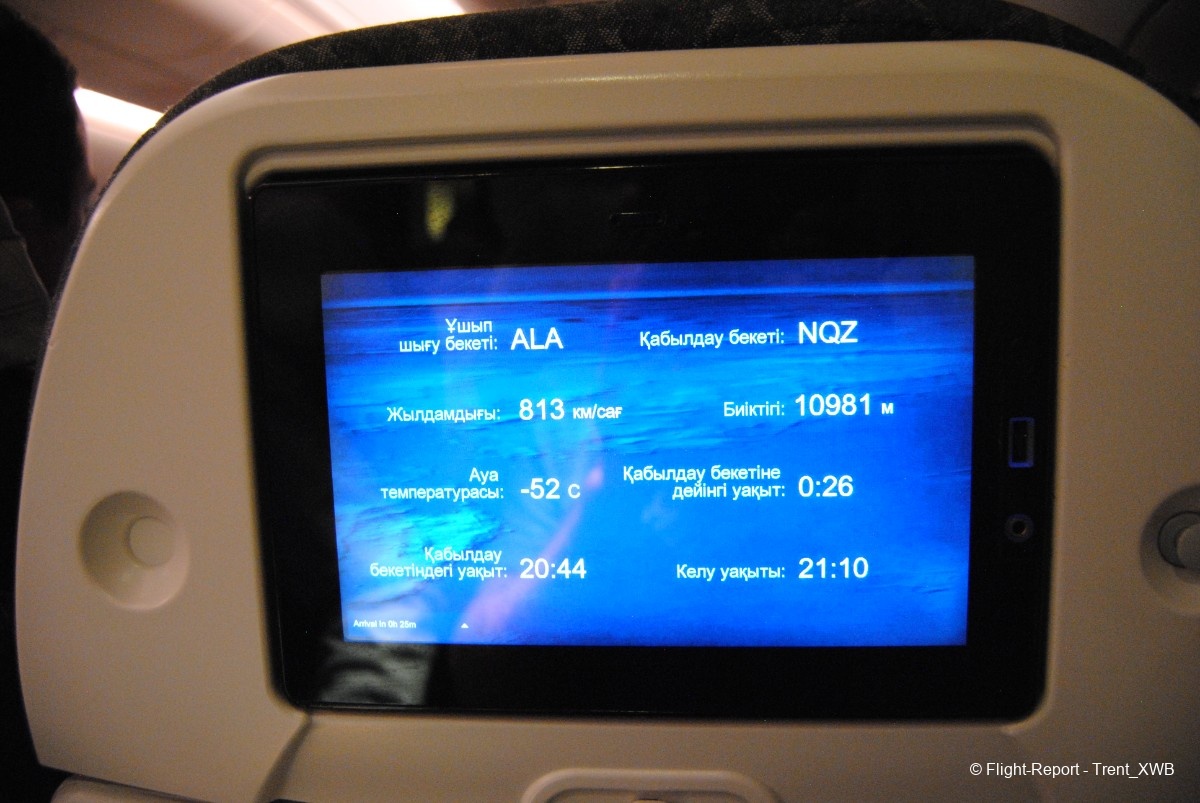
The flight data in Kazakh before the start of descent (BTW, the word "beketi" generally means "station").
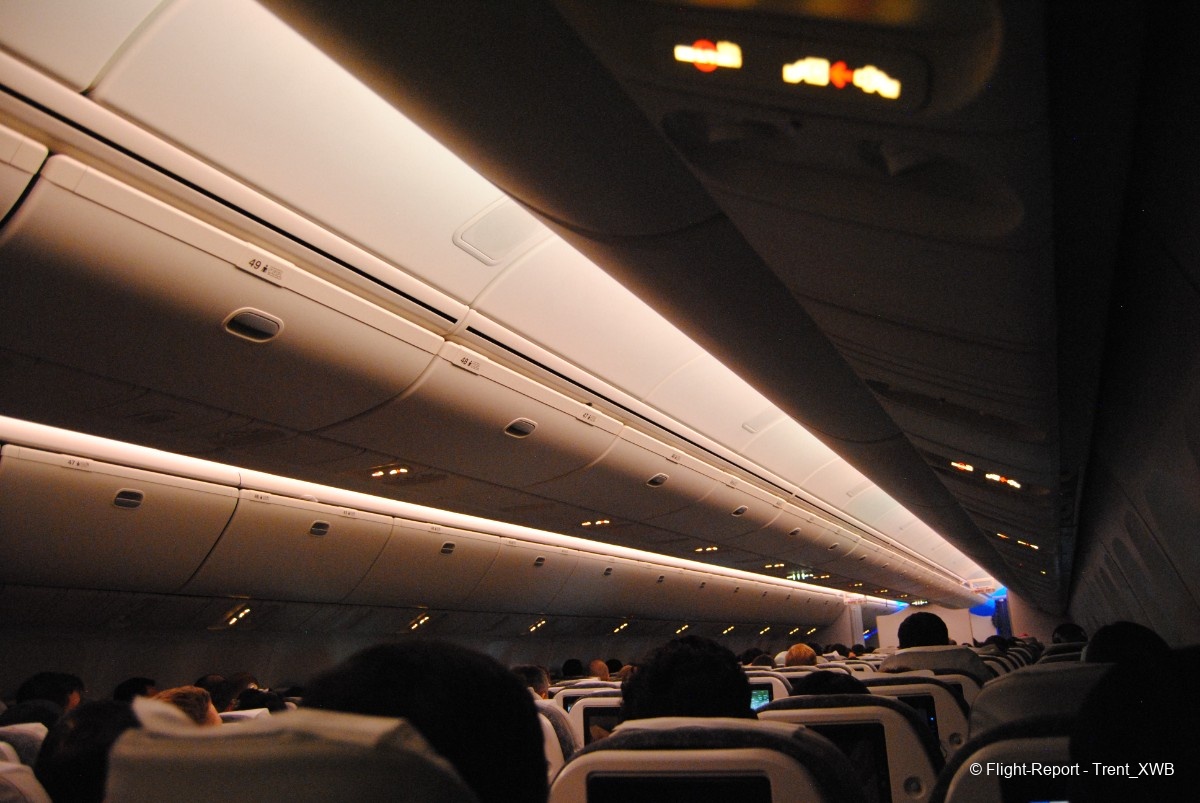
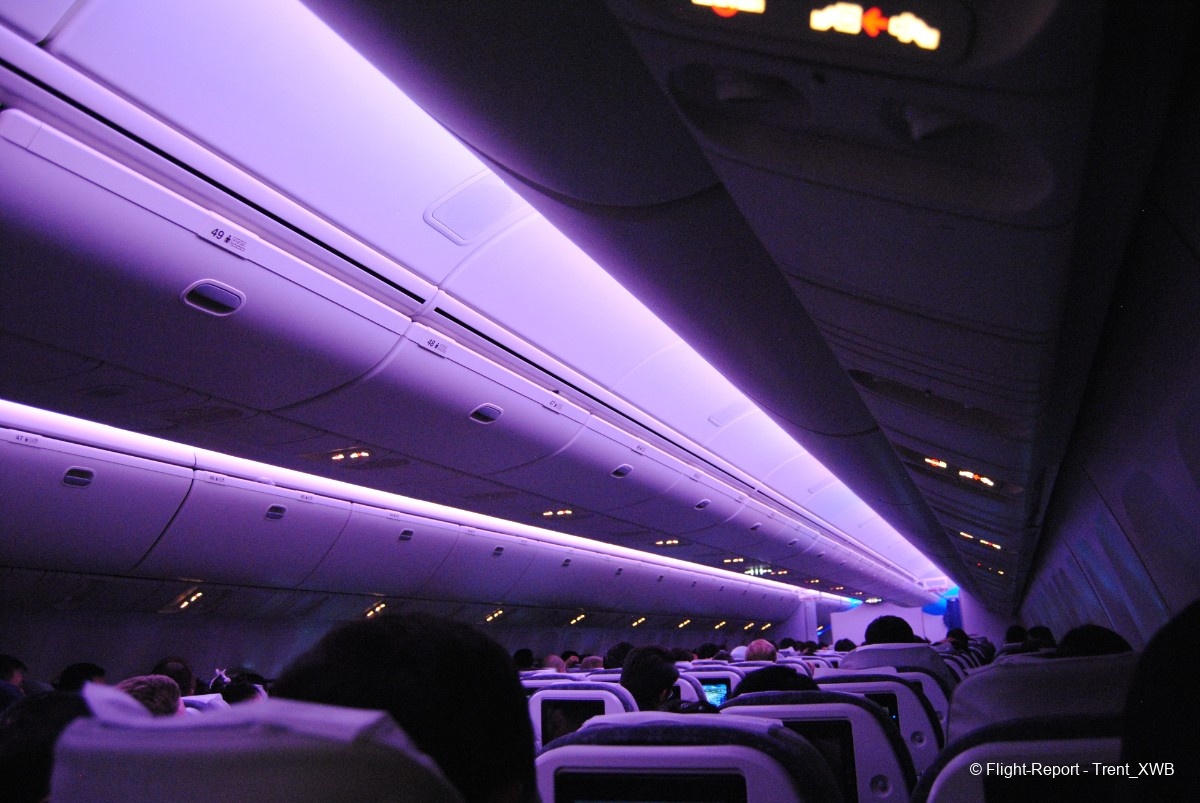
Another round of cabin lighting switching: dark yellow - lilac - violet - dark blue.
Approaching NQZ.
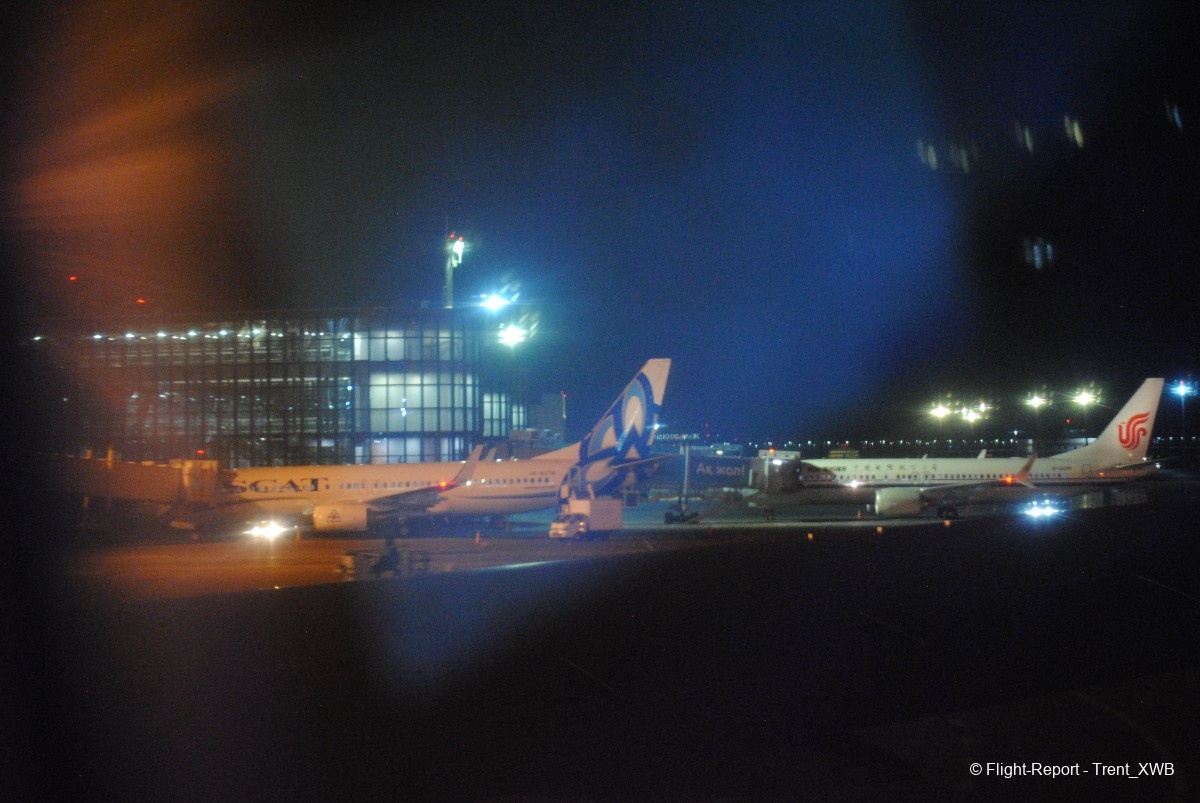
Taxiing past international T1 NQZ with SCAT B738 and Air China B7M8.
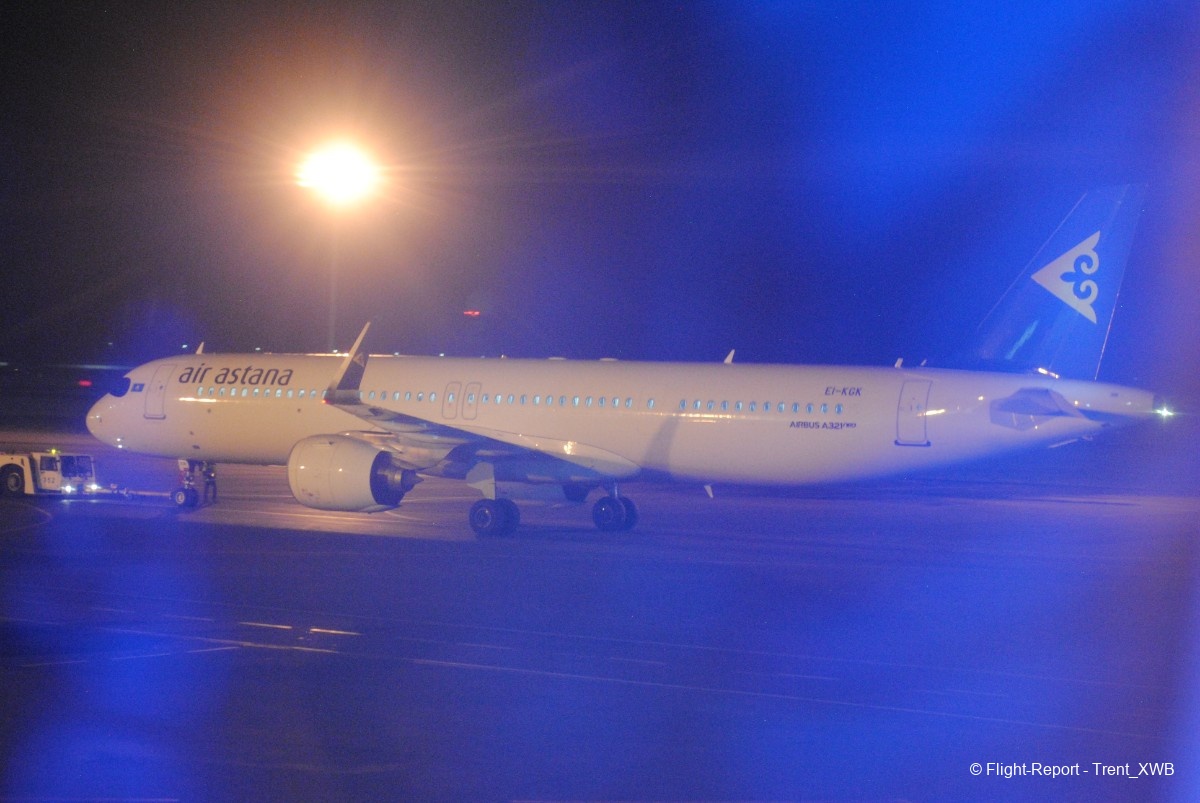
A swanky A321neoLR (EI-KGK) in long-haul C16_Y150 featuring the same Thompson Aero Vantage seats in business (in 1-1 to 2-2 layout) as our B763. Though, economy seats in KC LRs are uncomfortable Recaro CL3710. These LRs also fly between the Kazakh capitals from time to time, so maybe I'll try it when I visit Kazakhstan the next time. BTW, the only narrowbody with lie-flat business I've ever flown by now, is equally swanky FlyDubai B7M9 with the same Thompson Aero Vantage seats in C and Recaro CL3710 in Y.
Parking near domestic T2 NQZ.
IFE after the flight.
Disembarkment starts.
My seat 50K after the flight.
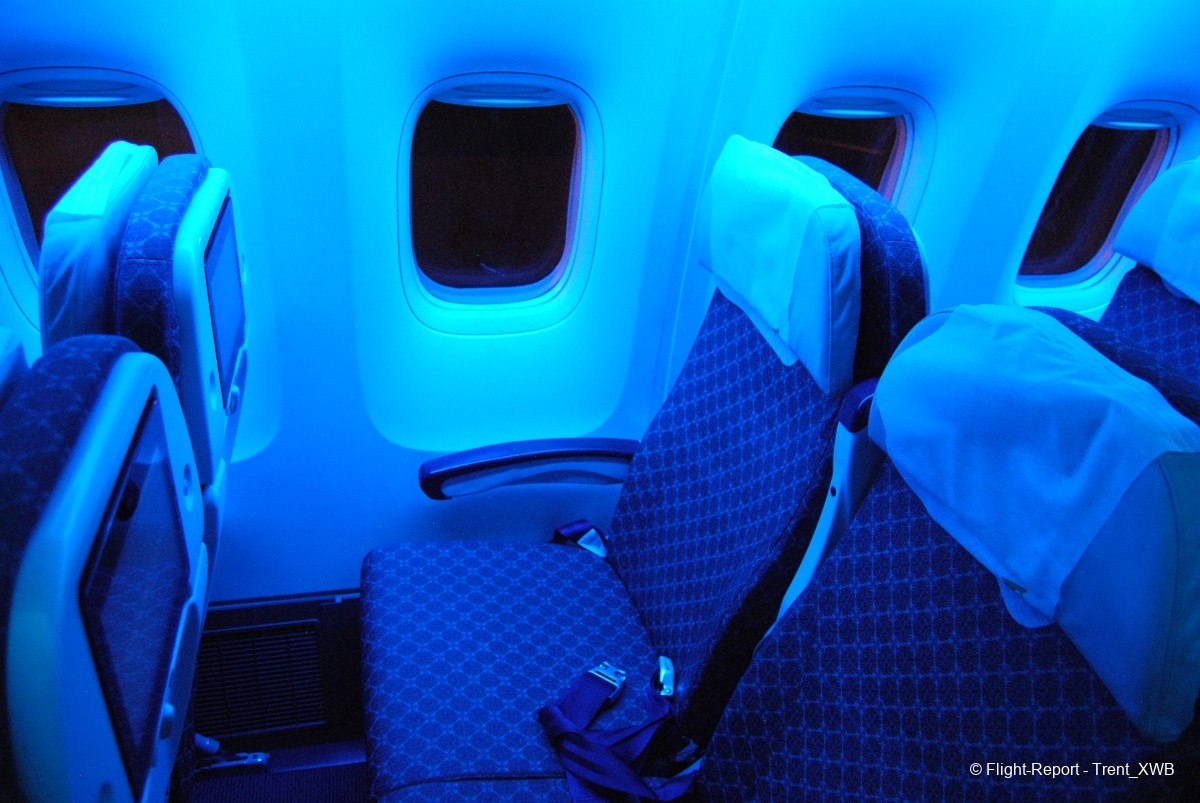
The Rear Economy Cabin After The Flight
Views of the rear economy cabin upon disembarkment. Note that 53JK (photos 1,2 in the gallery) seat block doesn't have window.
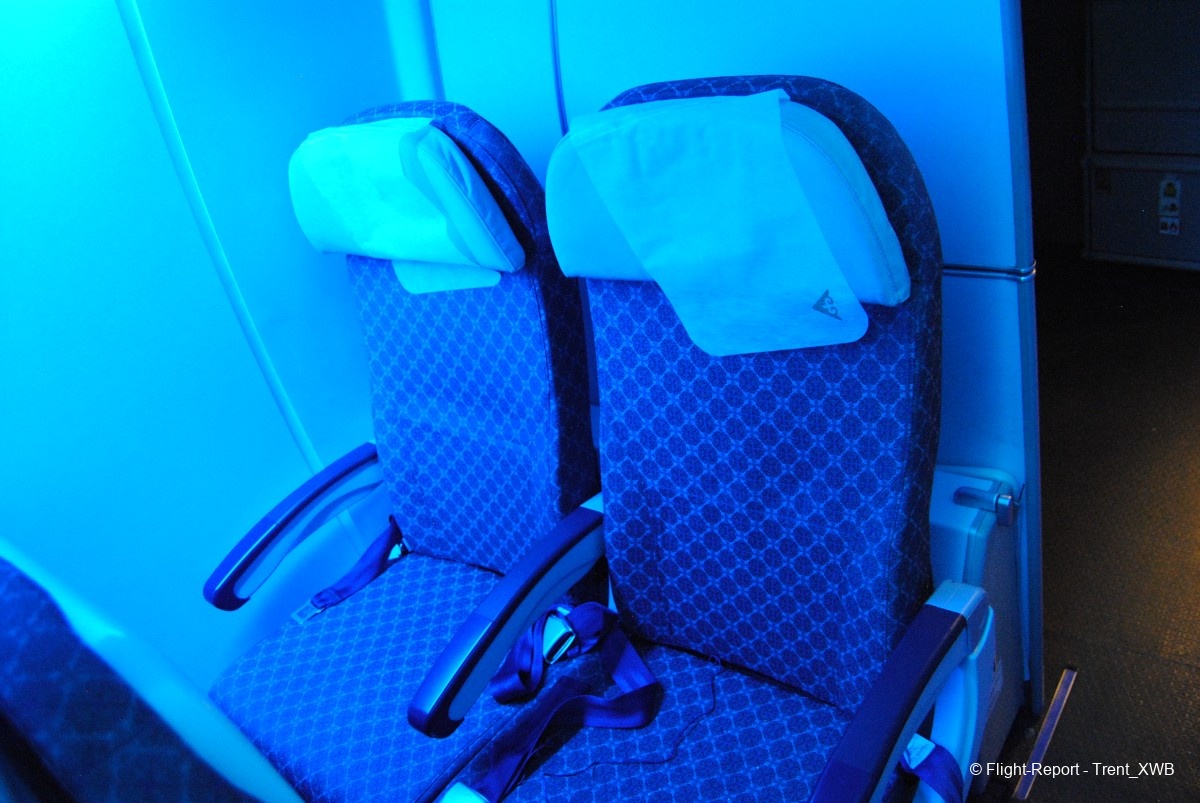
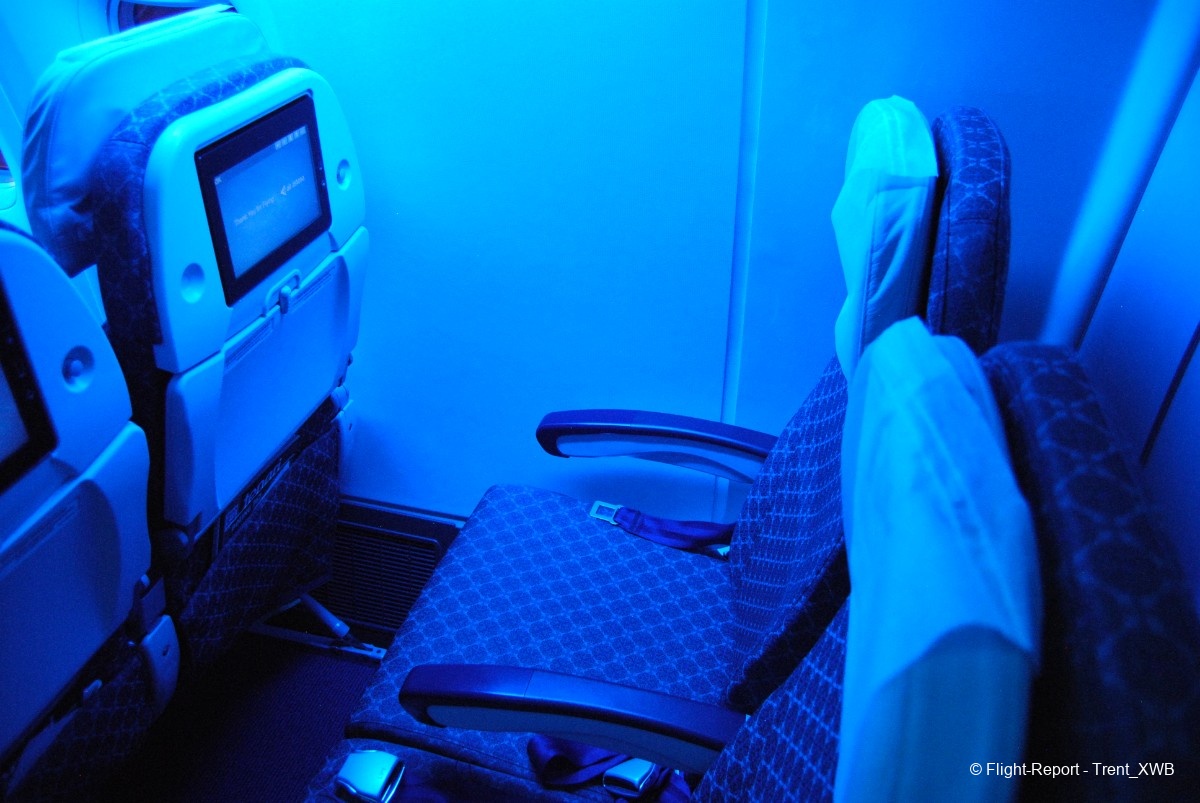
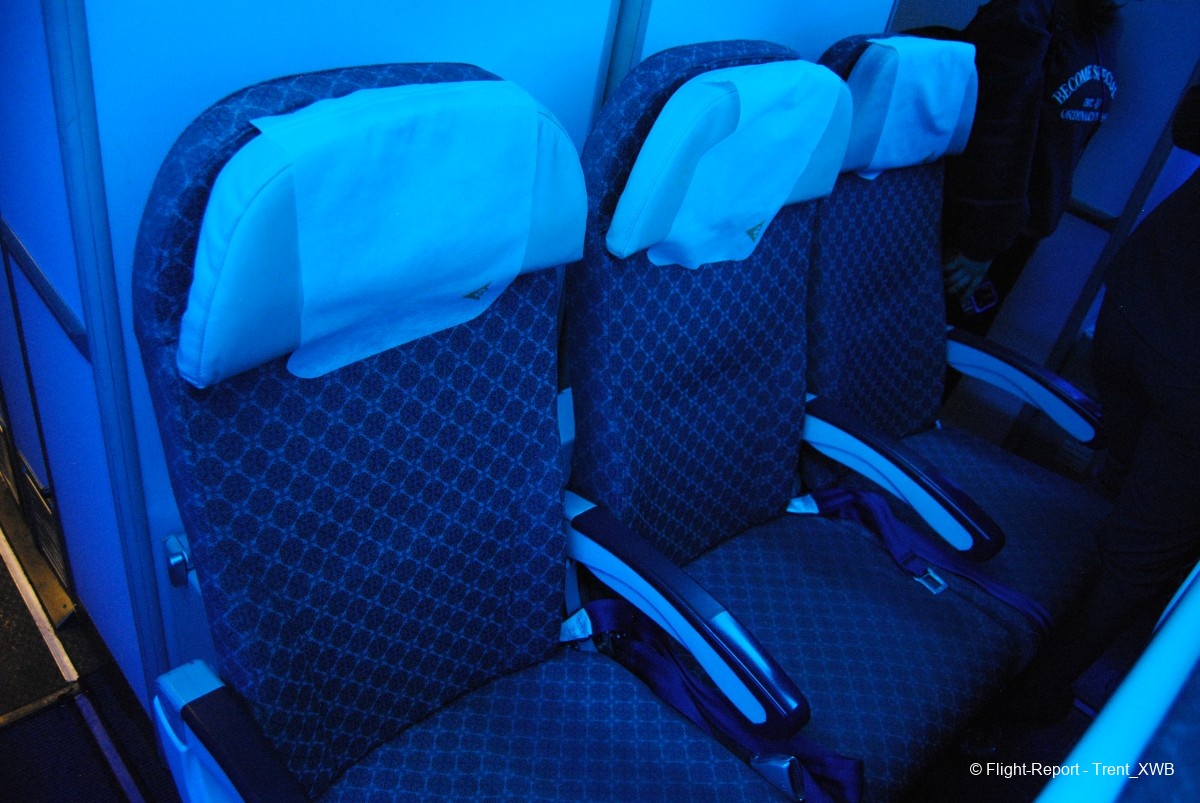
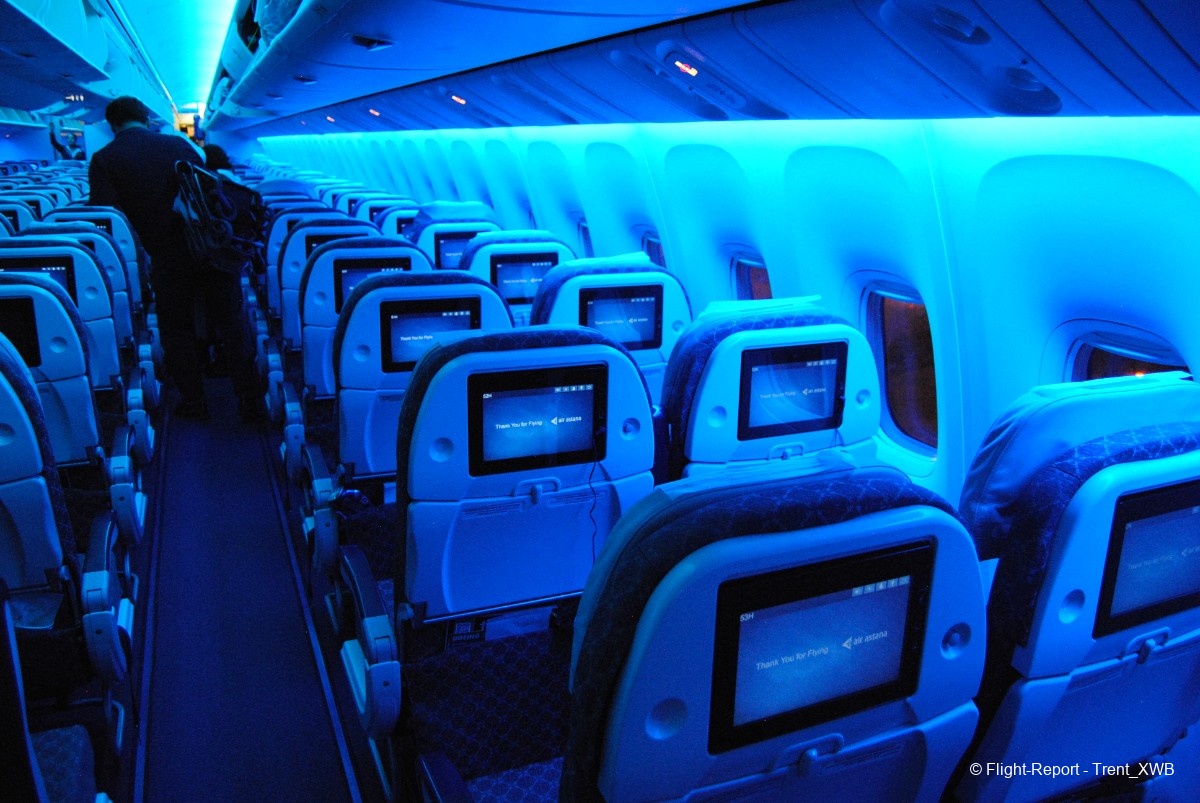
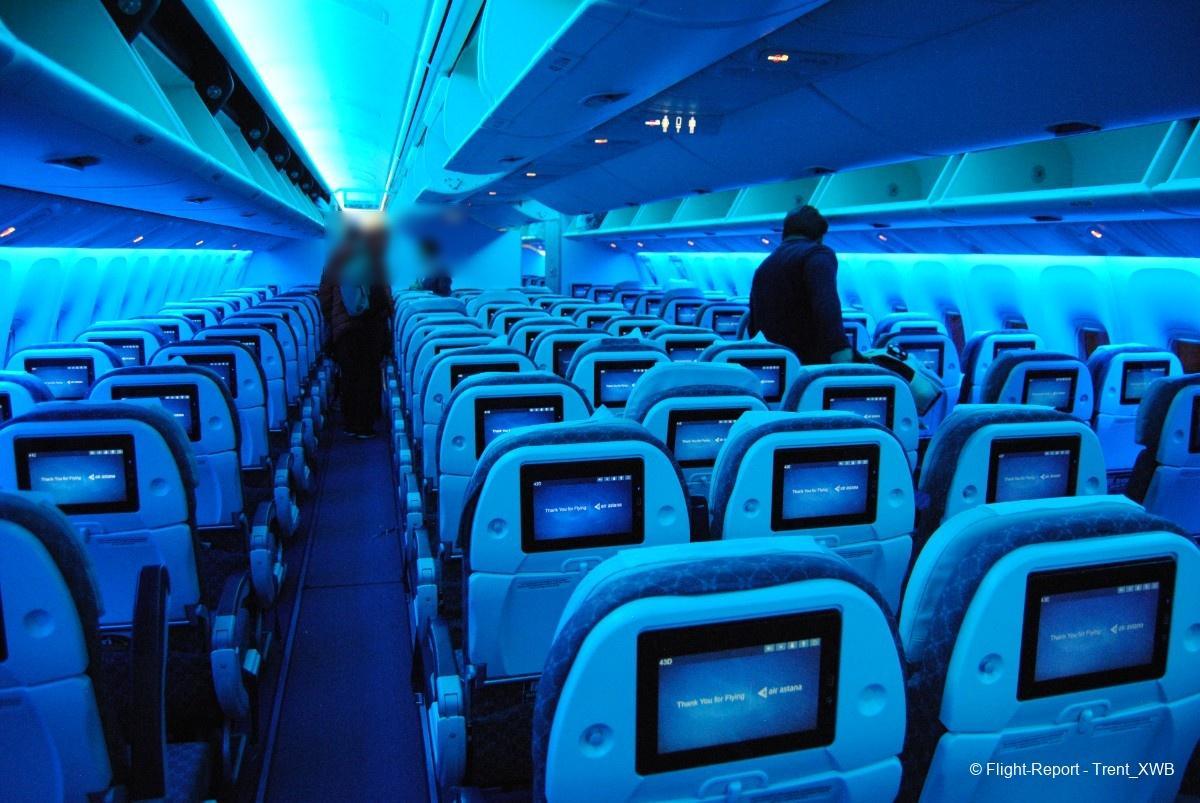
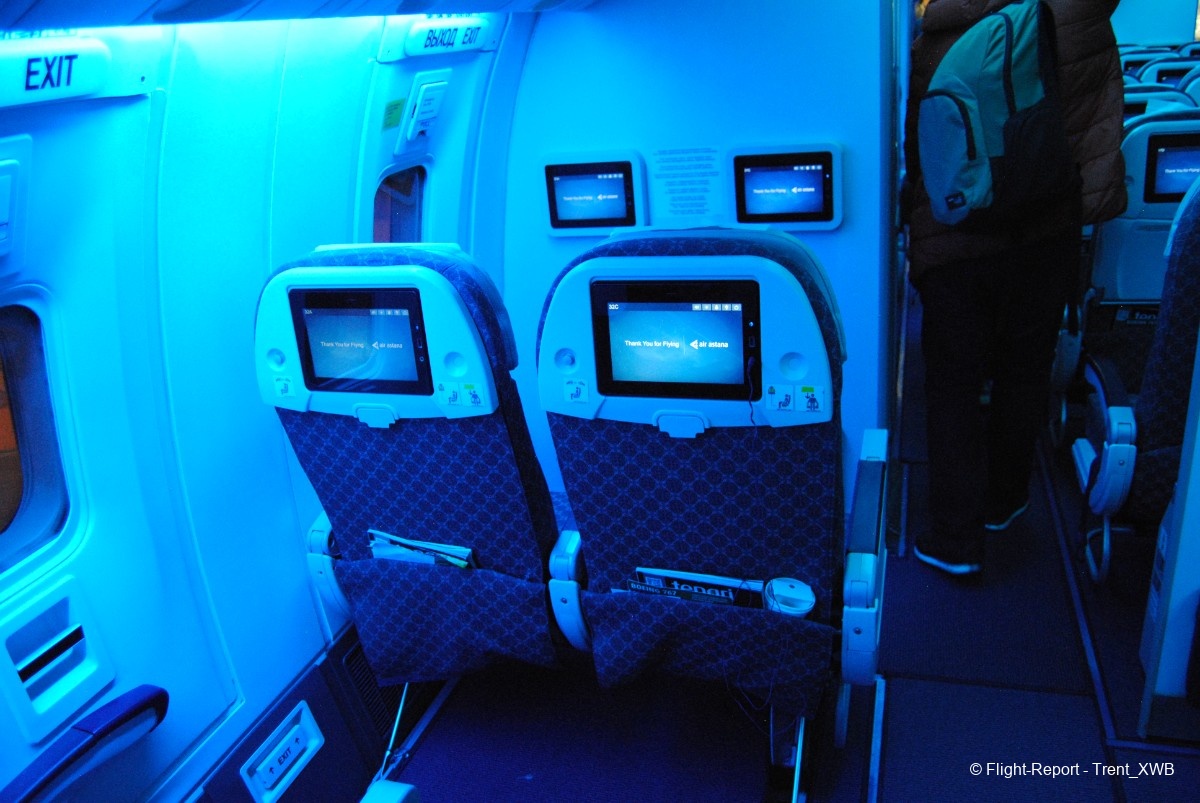
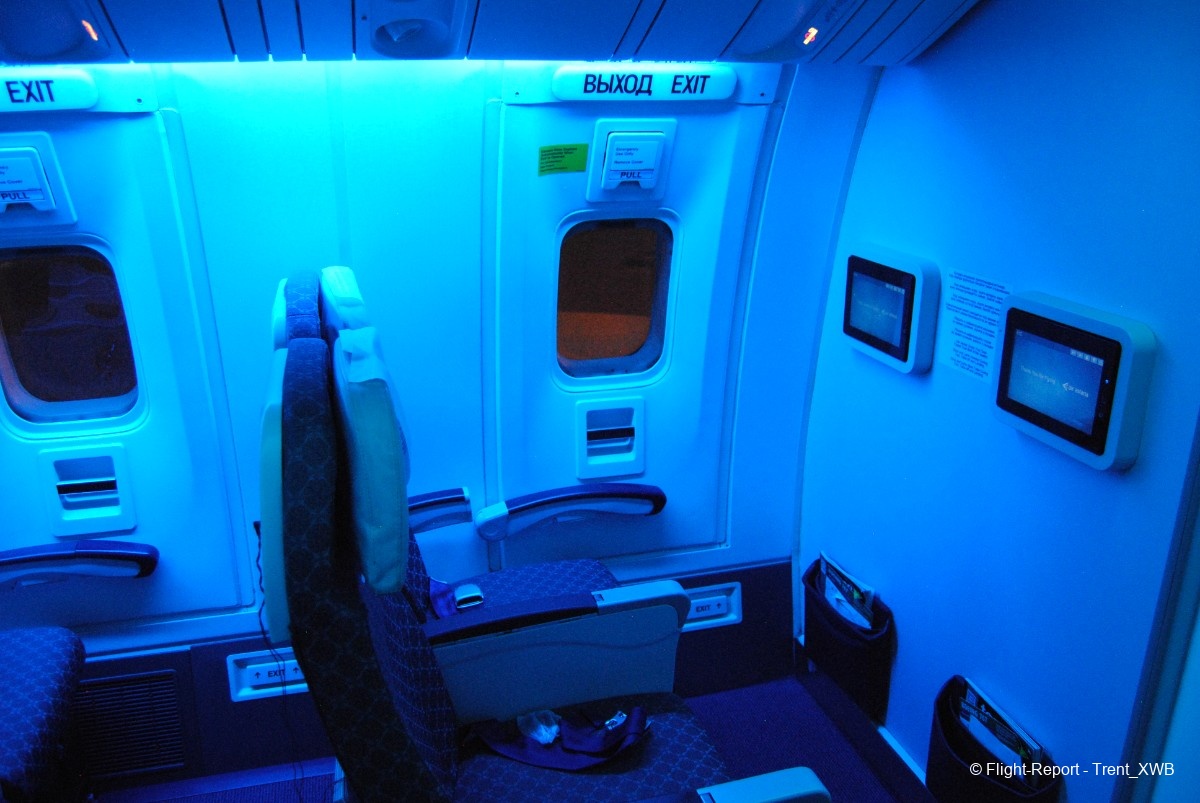
Overwing exit rows 31-32. As one can notice on the last photo in the gallery, the crew eventually turned on the normal lighting instead crazy blue, which is way better for taking photos of cabin!
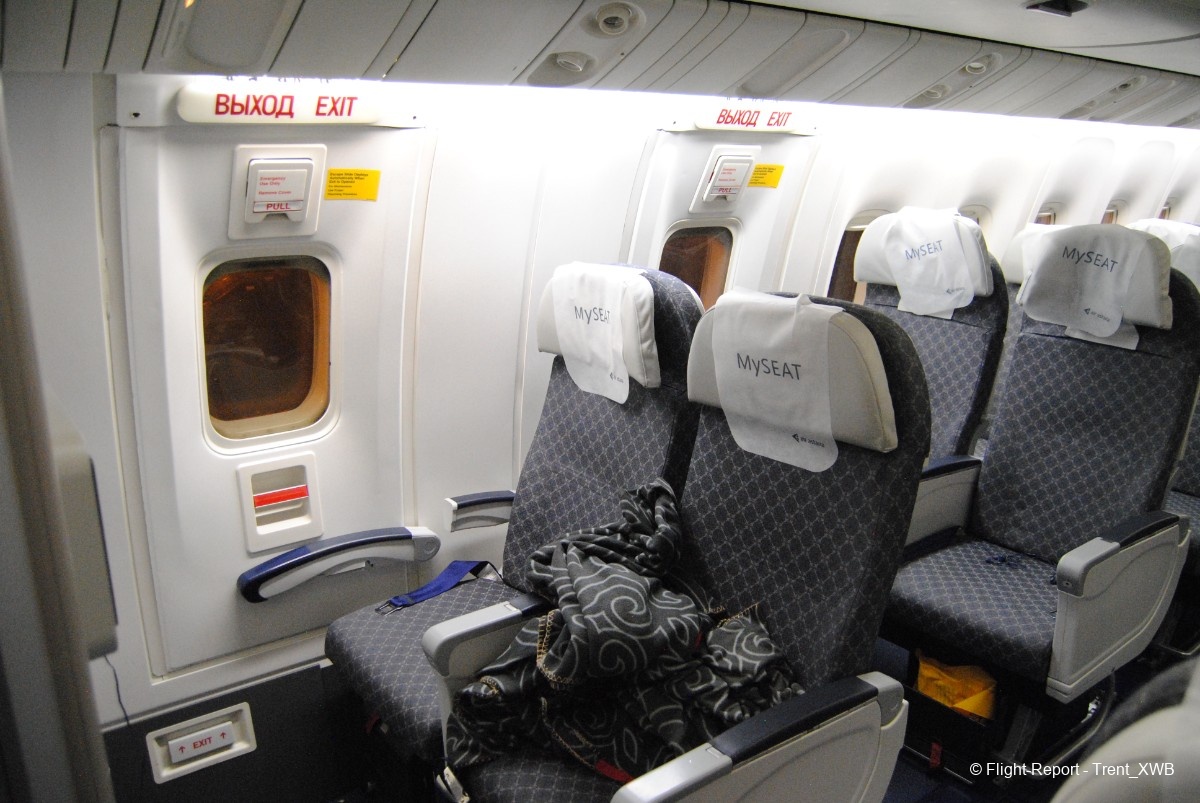
Views of the rear economy in the normal lighting.
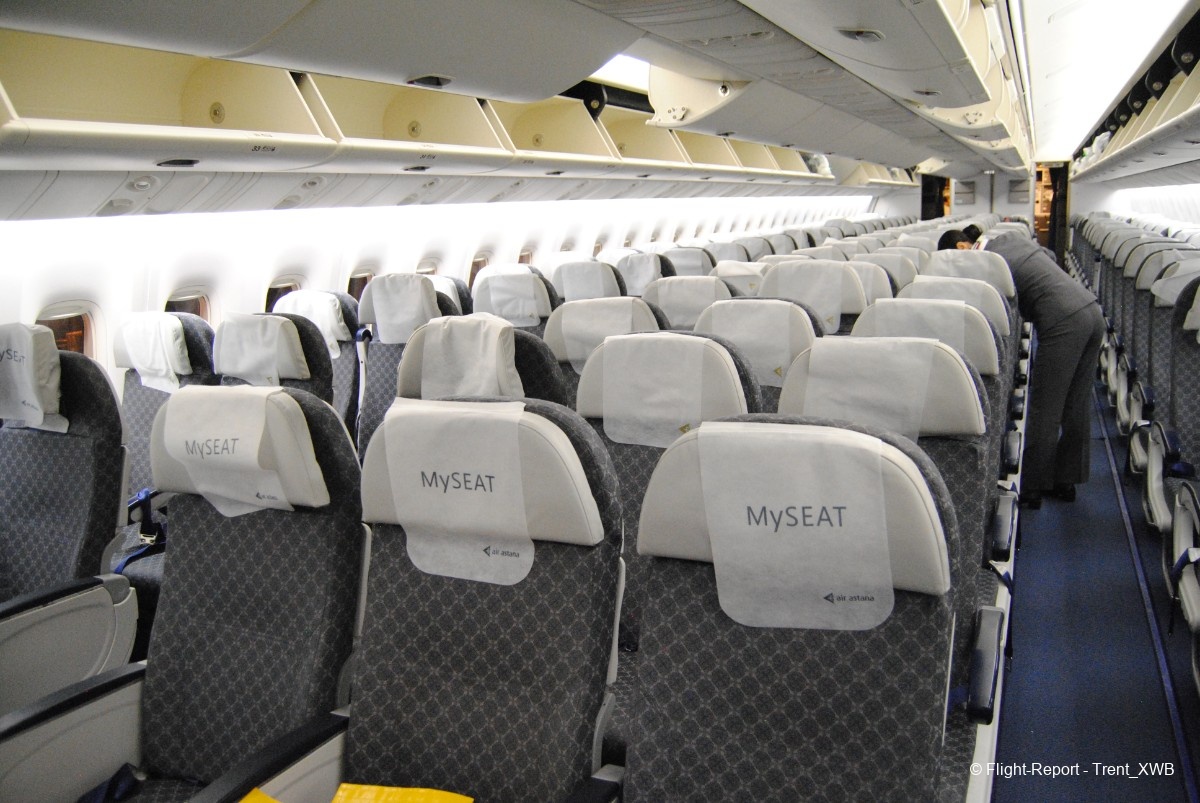
The Front Economy Cabin After The Flight
Views of the front economy cabin in the normal light.
The Business Class Cabin After The Flight
And, finally, views of the business cabin in the normal light. The time was really clocking out and I had to hurry.
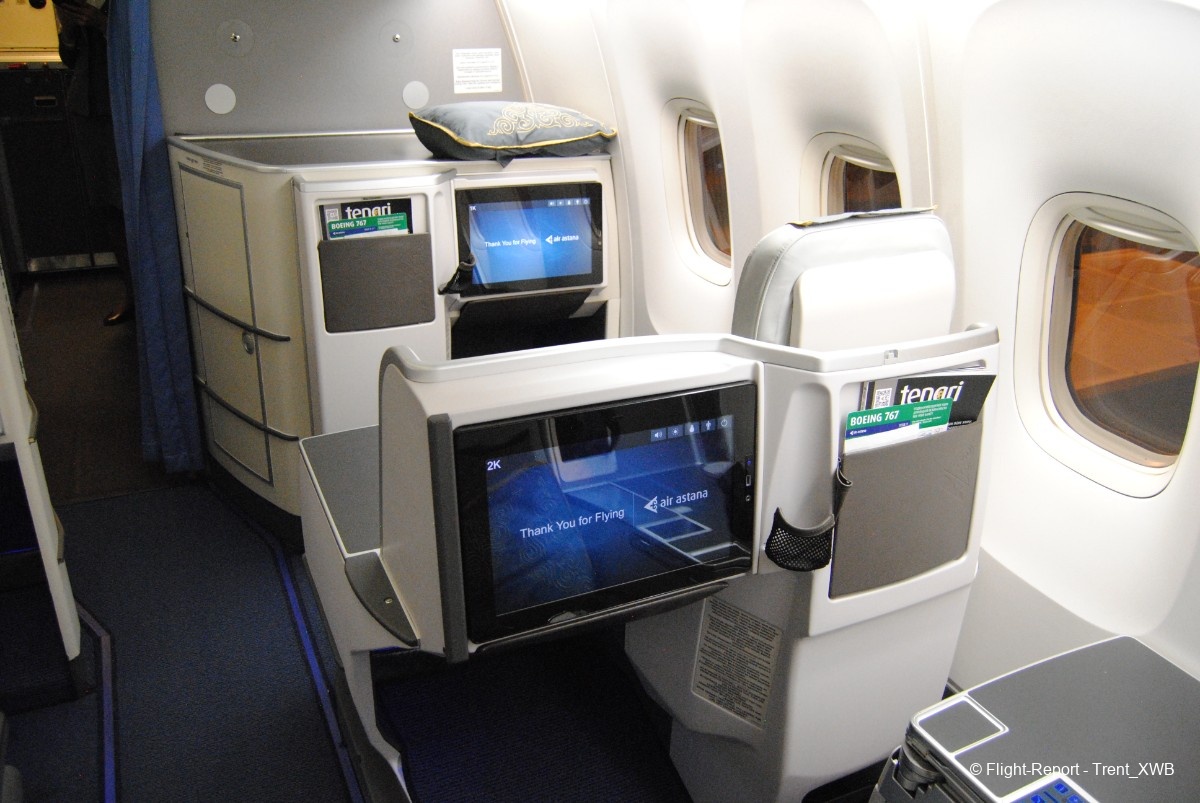
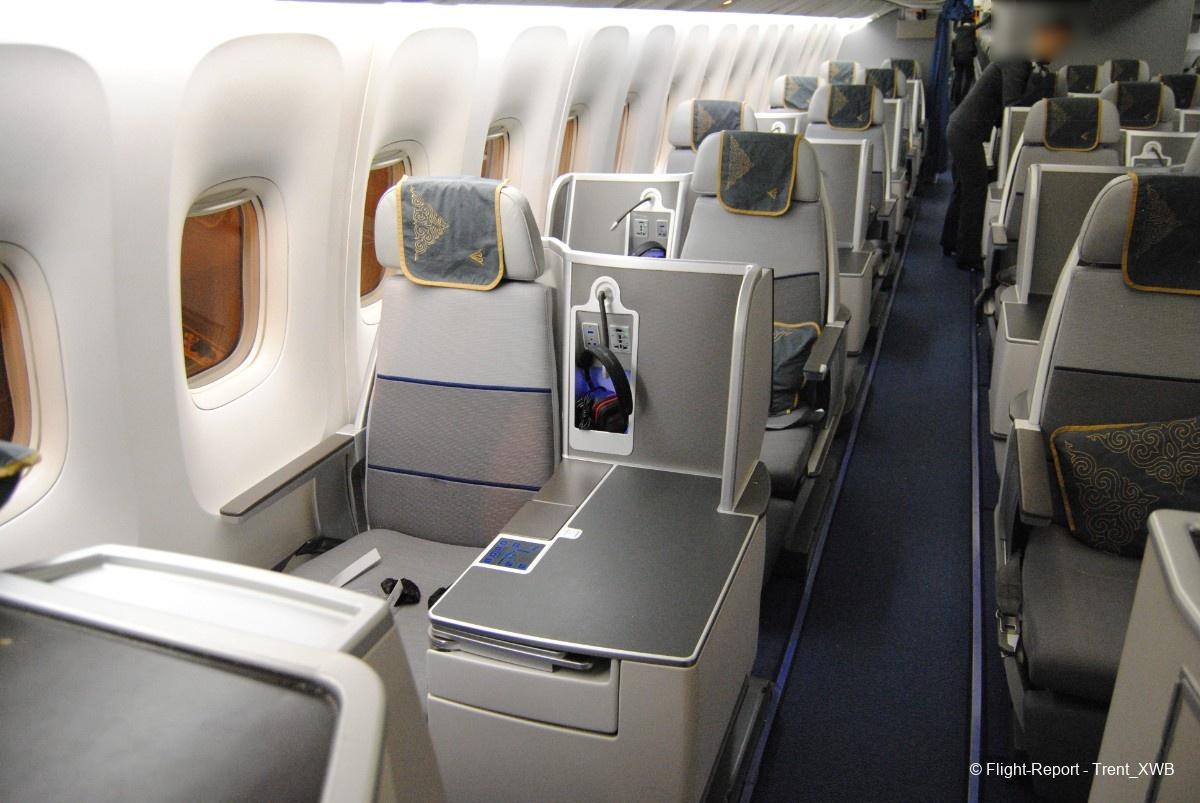
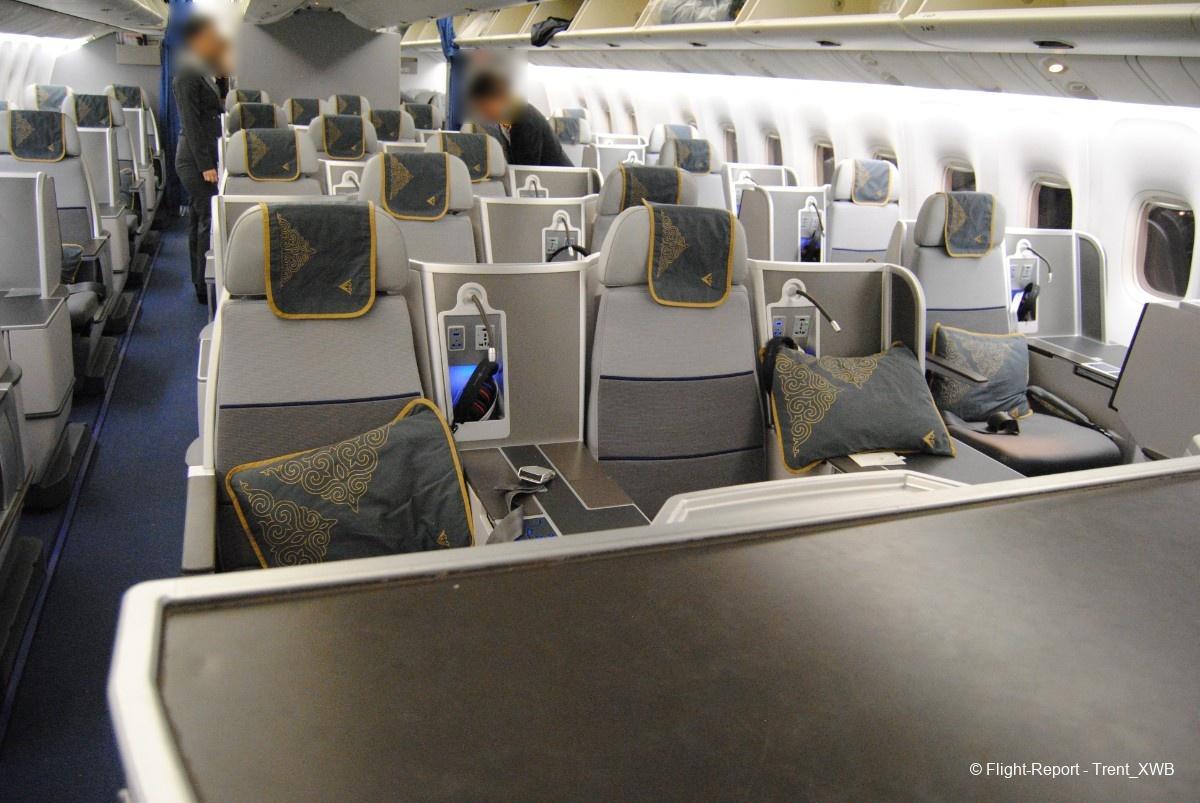
The Aircraft After The Flight
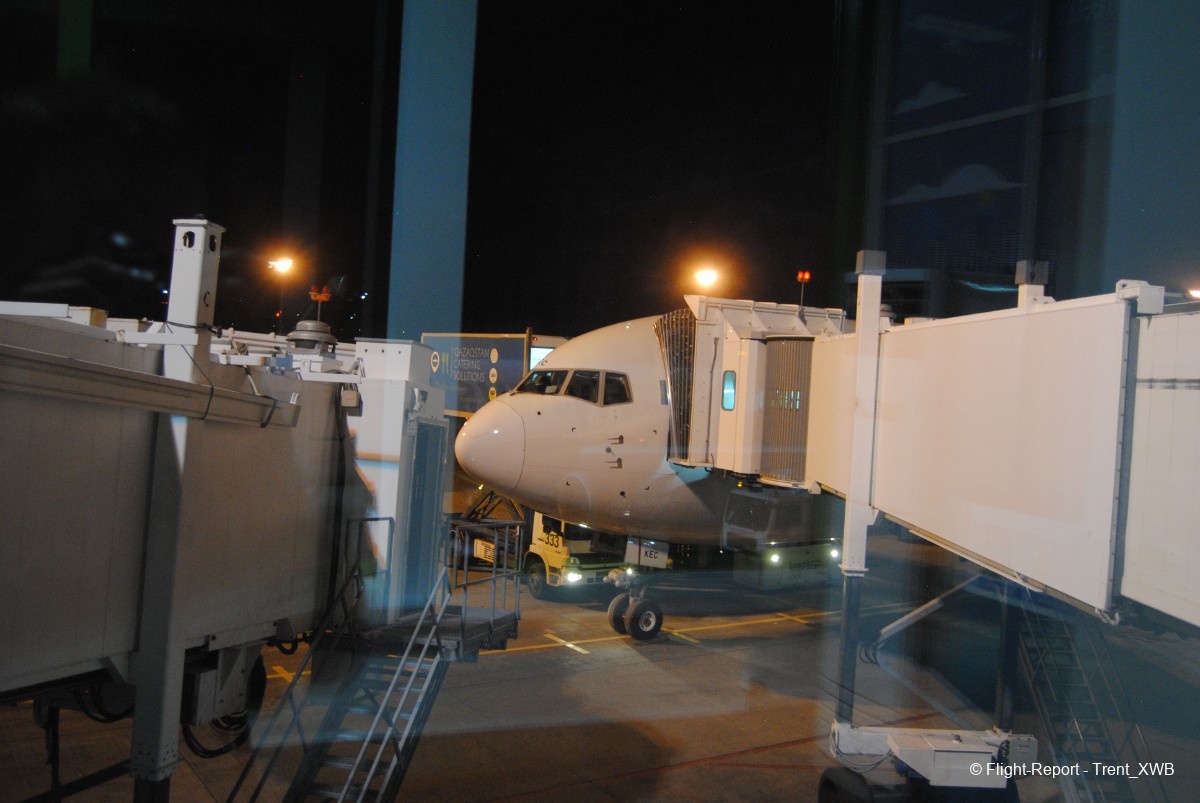
Wing and portside PW4060 engine view from the jetbridge.
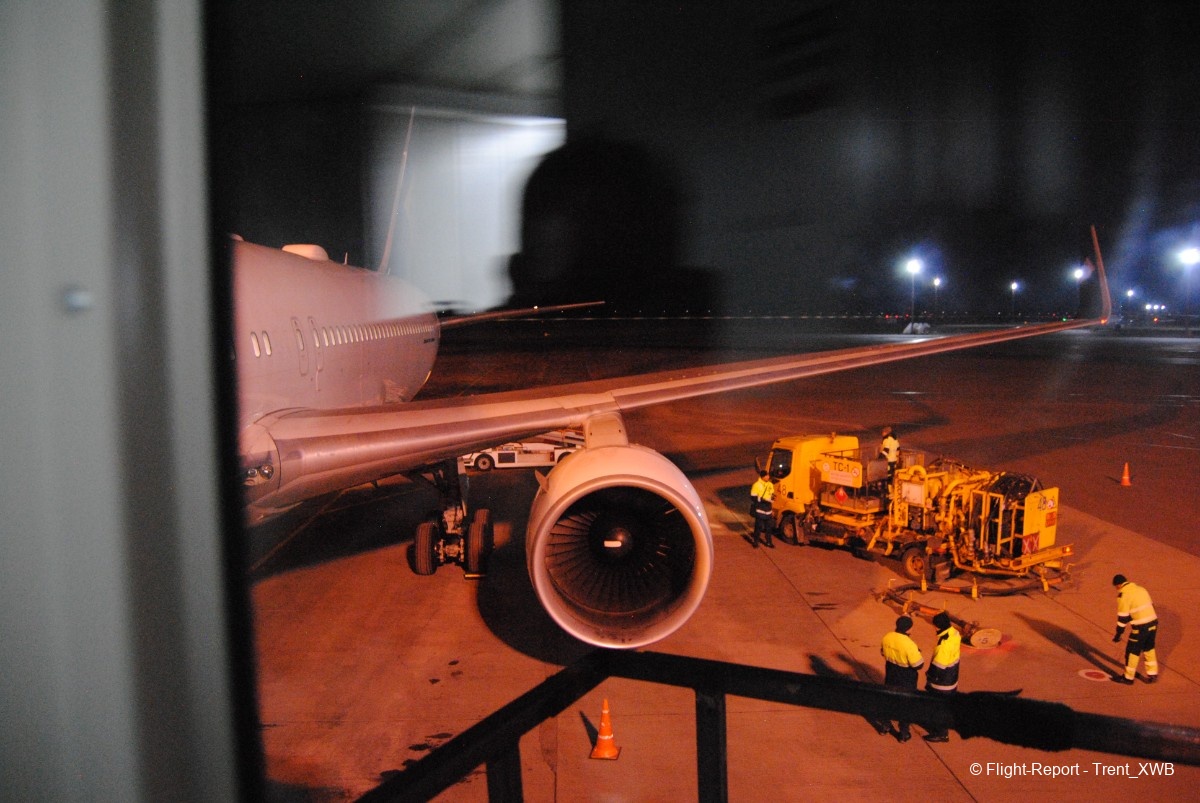
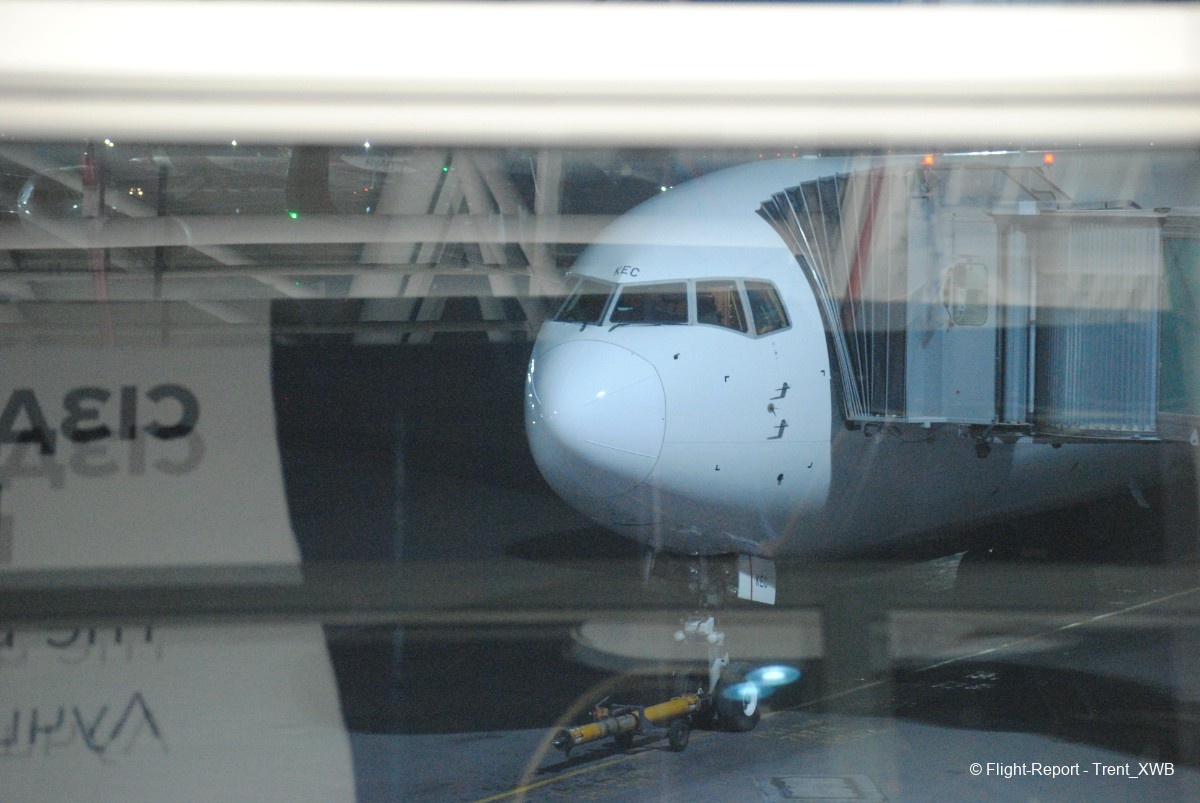
Nose view from the terminal. Sadly, it T2 NQZ views of the aircraft were also blocked by the jetbridges.
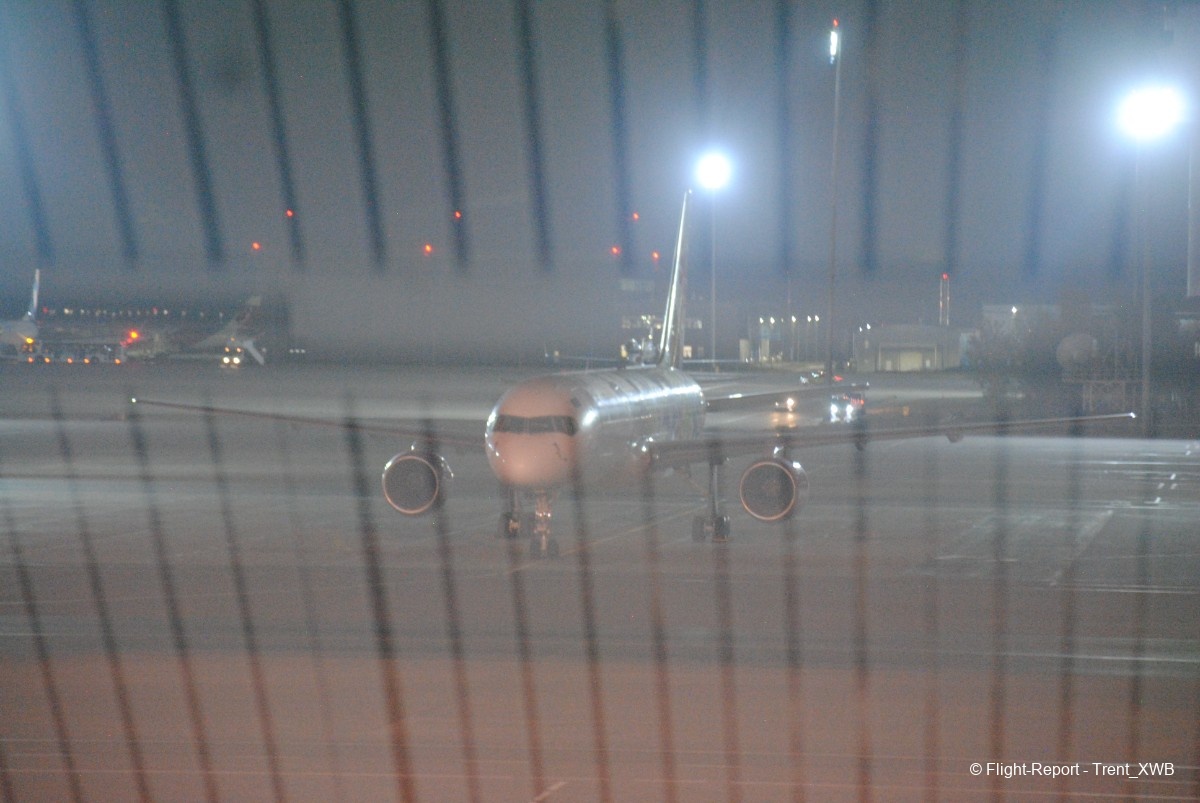
Planespotting From T2 NQZ
And here's the reason I came to NQZ: at that time the only active Central Asian B752 (UP-B5705) of Sunday Airlines (leisure subsidiary of the another large Kazakh airline SCAT) was based in Astana, and I wanted to try to fly it. It will be the star of the show in the next FR.
Astana NQZ Domestic T2
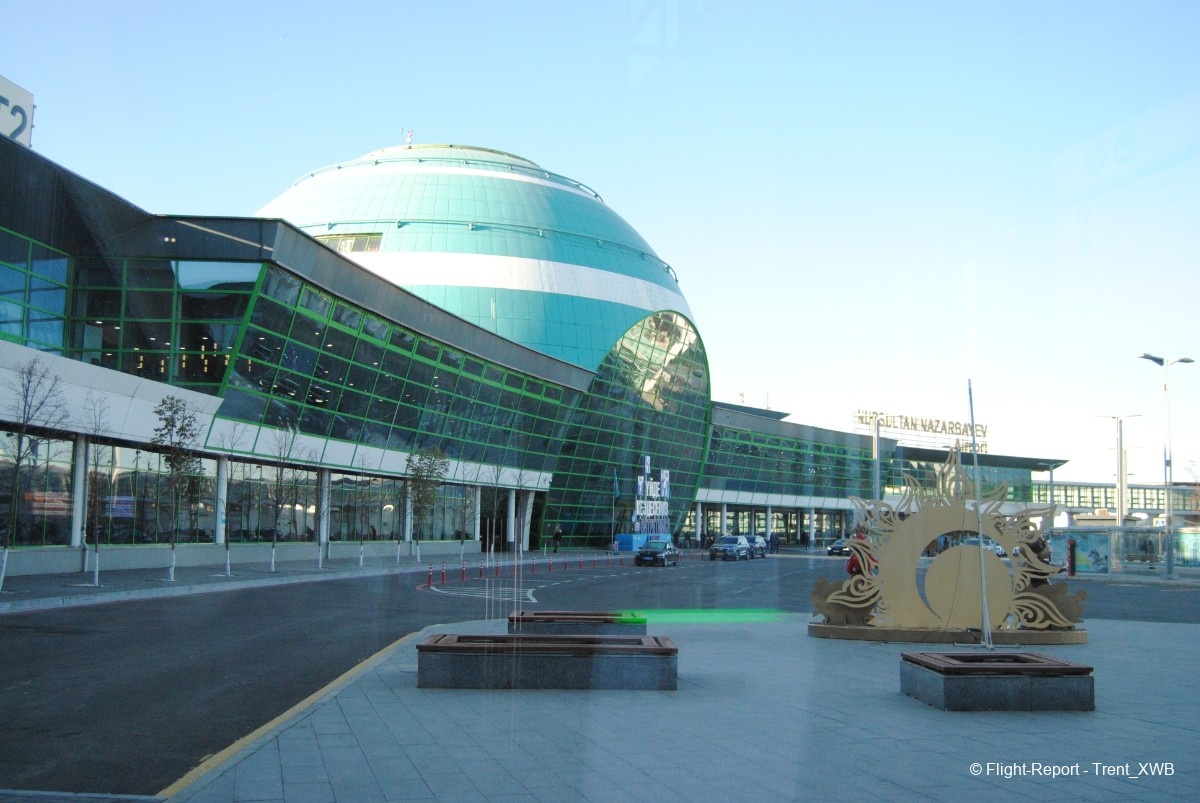
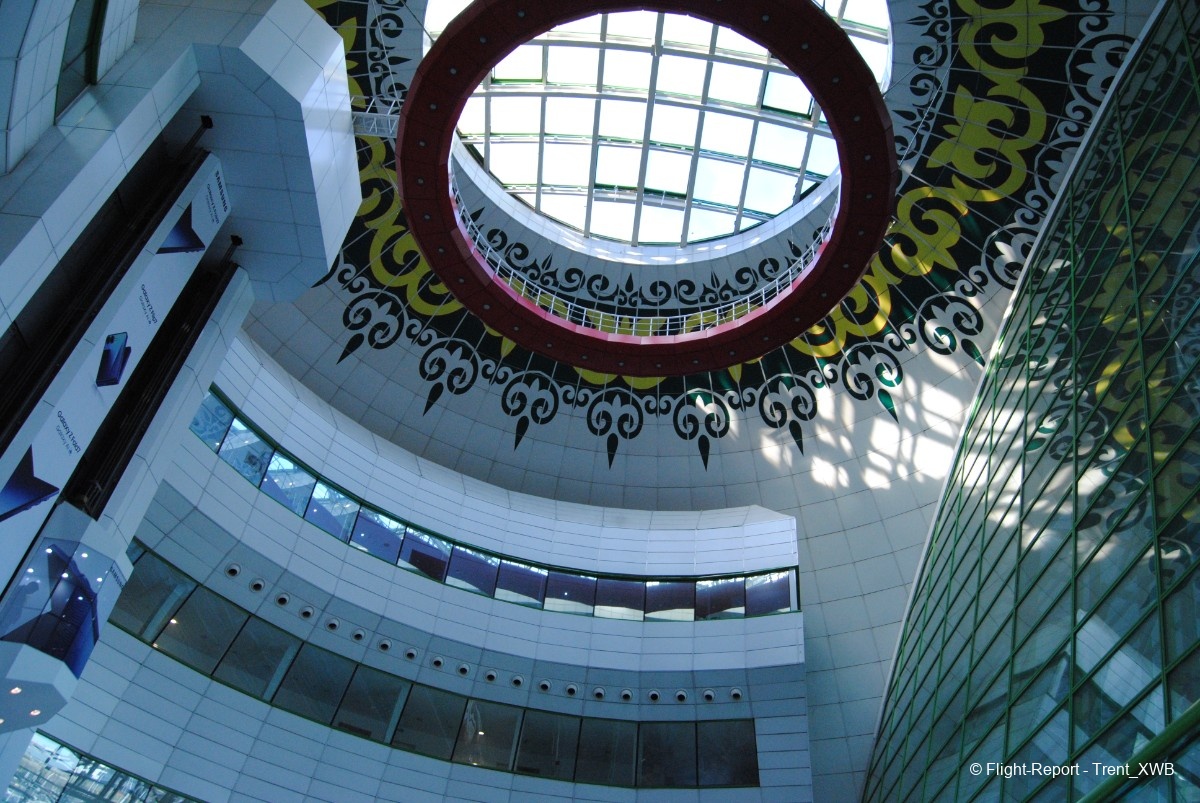
Now I want to show views of the domestic Terminal 2 of NQZ. It was built in 2005 and has very interesting architecture of the main hall.
T2 from outside.
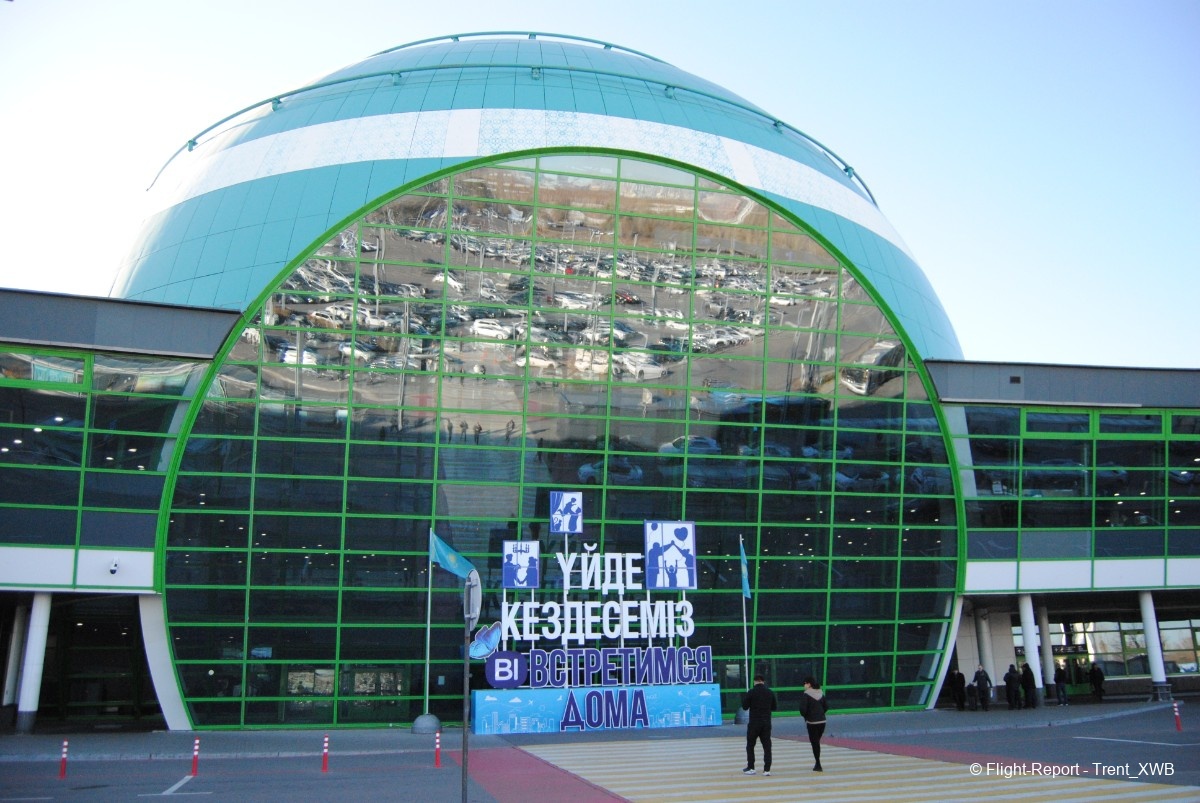
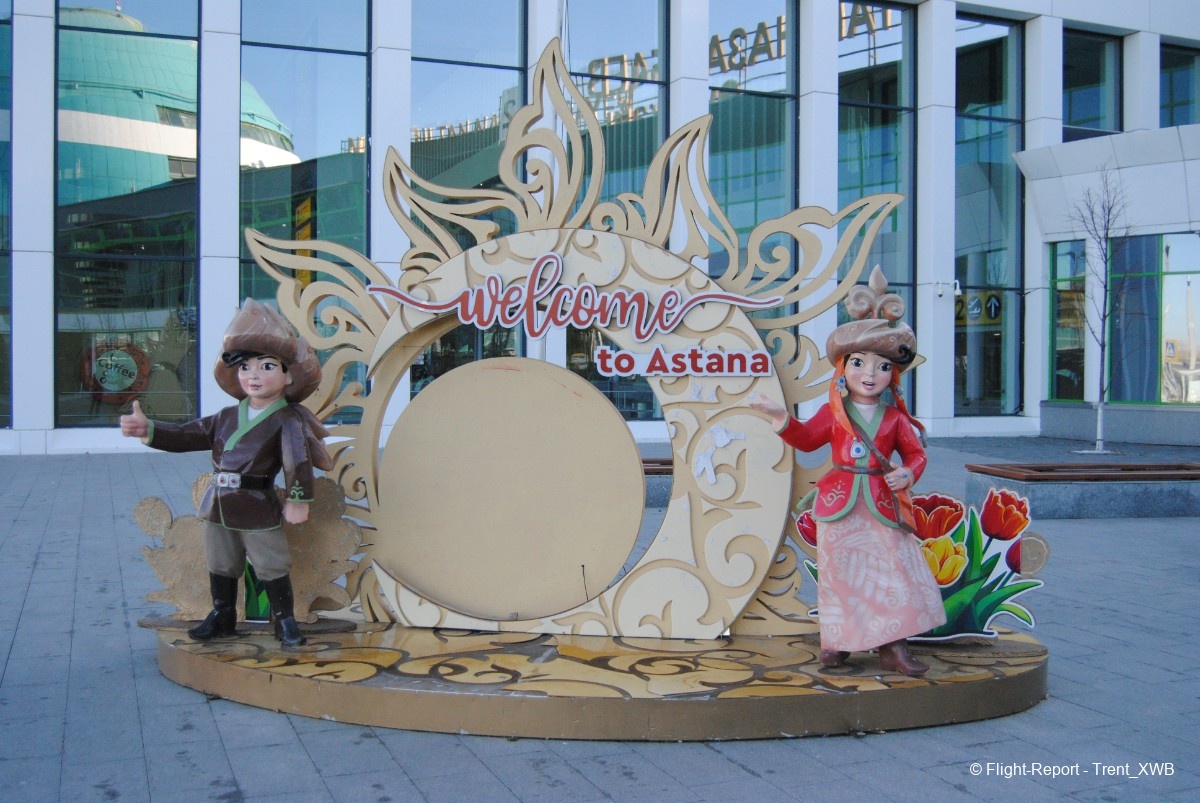
A nice promotion of Kazakh identity.
The dome of the sphere from inside.
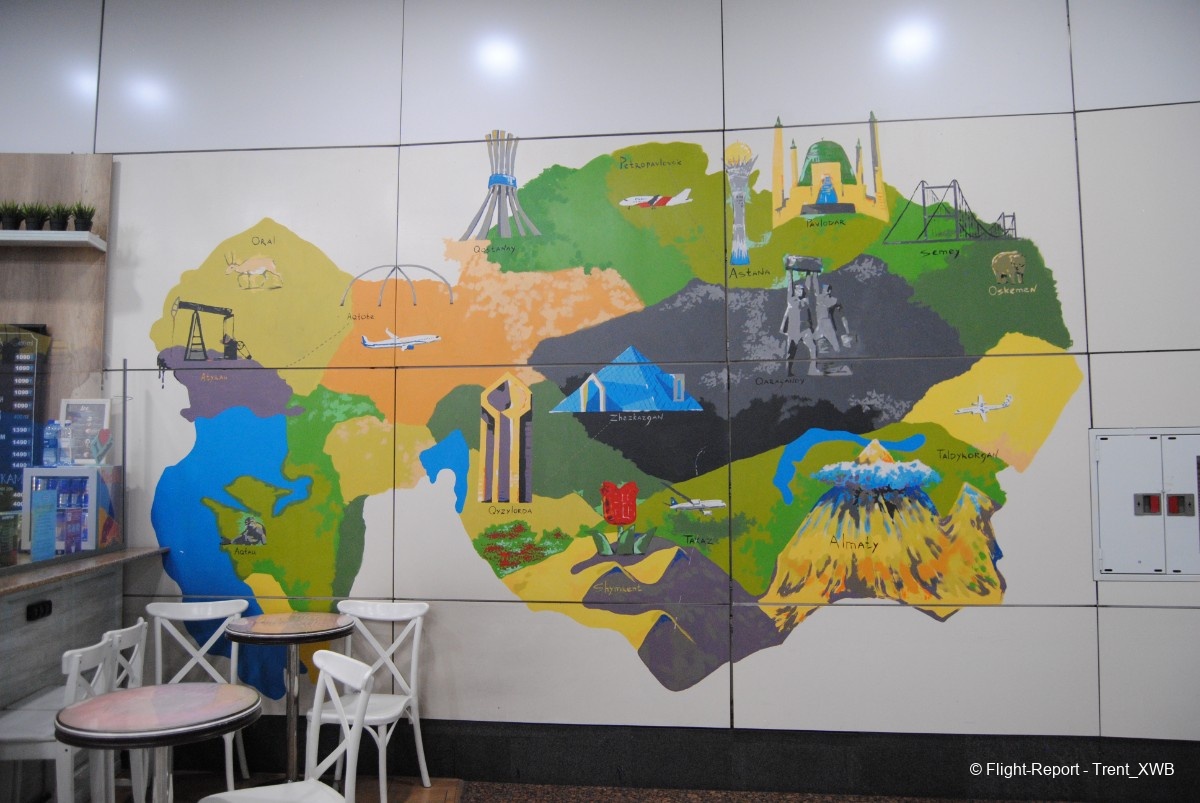
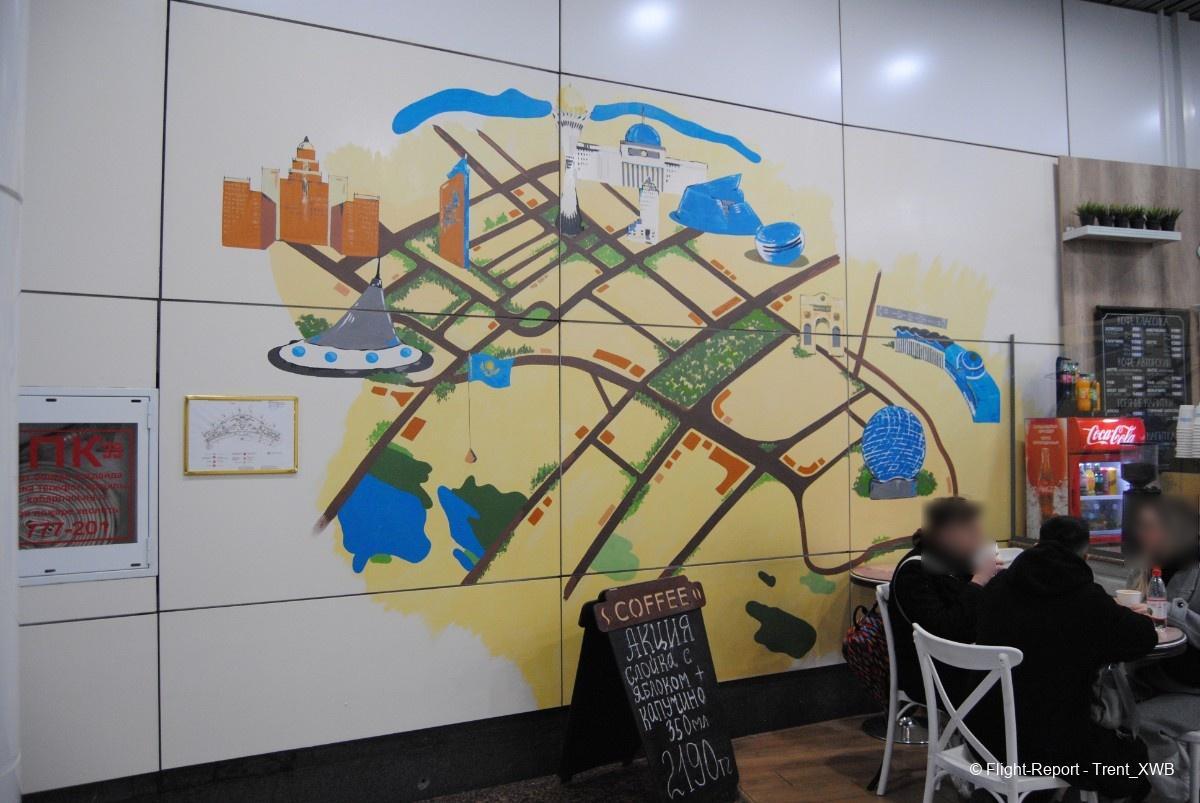
Murals on Kazakhstan's and Astana's sighseeing theme on the lower level.
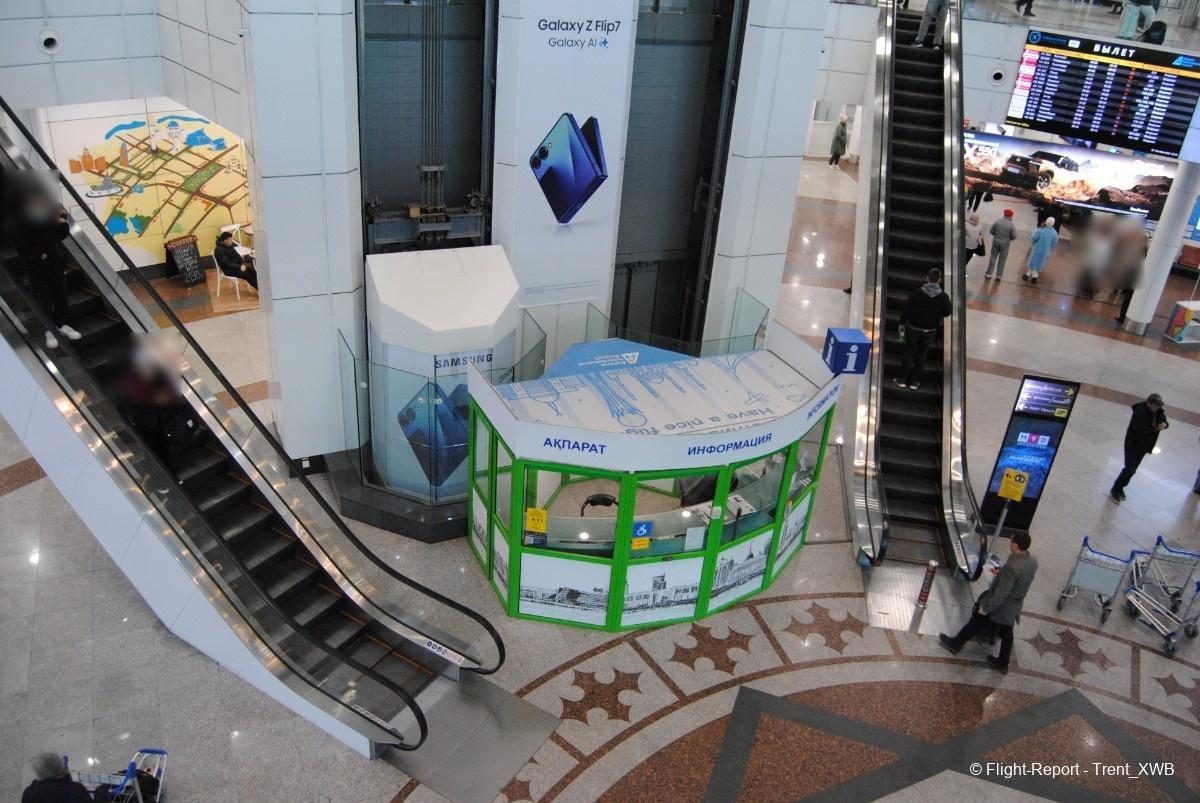
Escalators and elevator to the check-in hall.
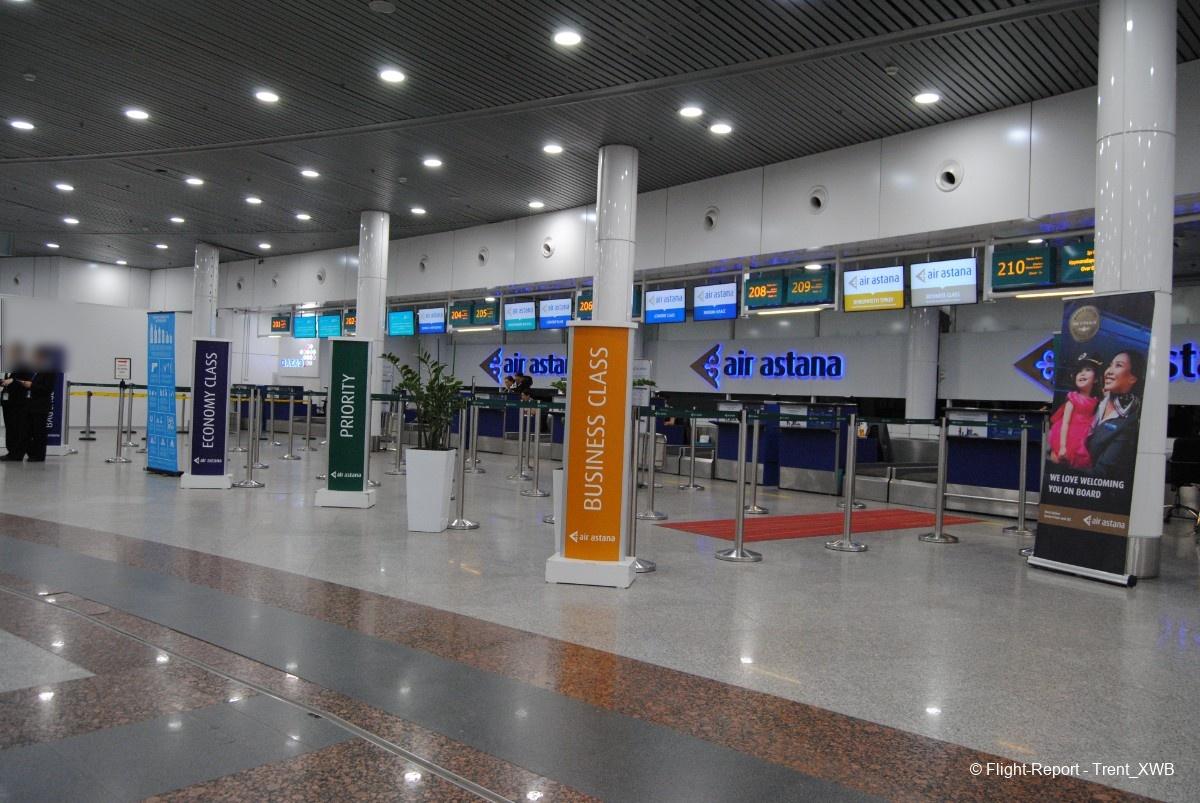
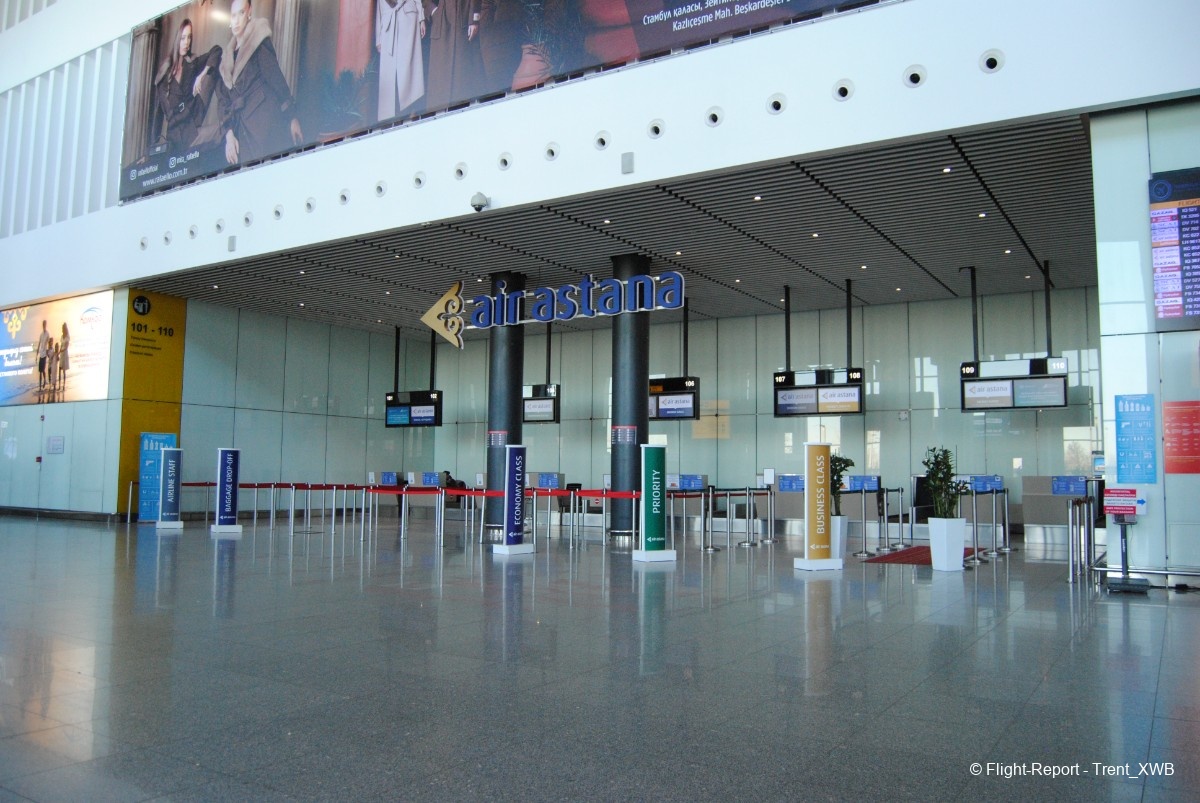
KC check-in desks.
Astana NQZ International T1
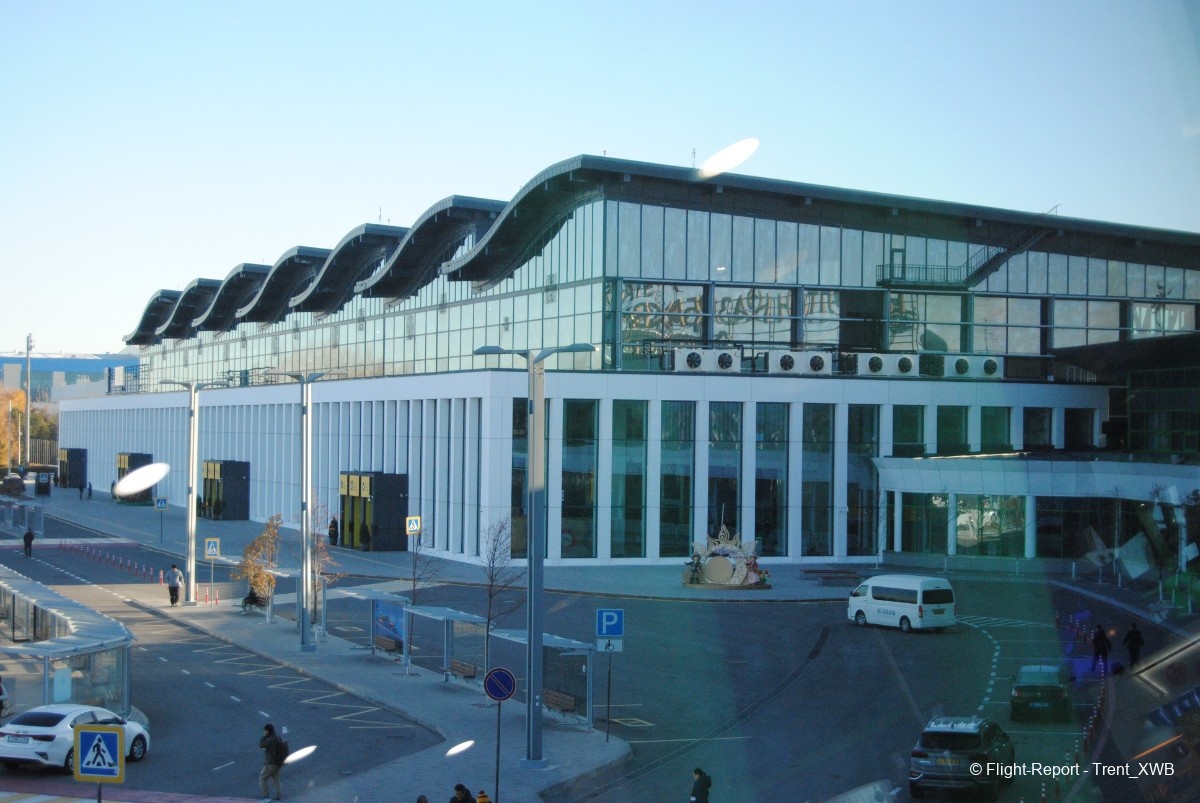
I also explored a bit the international T1, built in 2017 which is more modern. T1 is connected with T2.
T1 from outside.
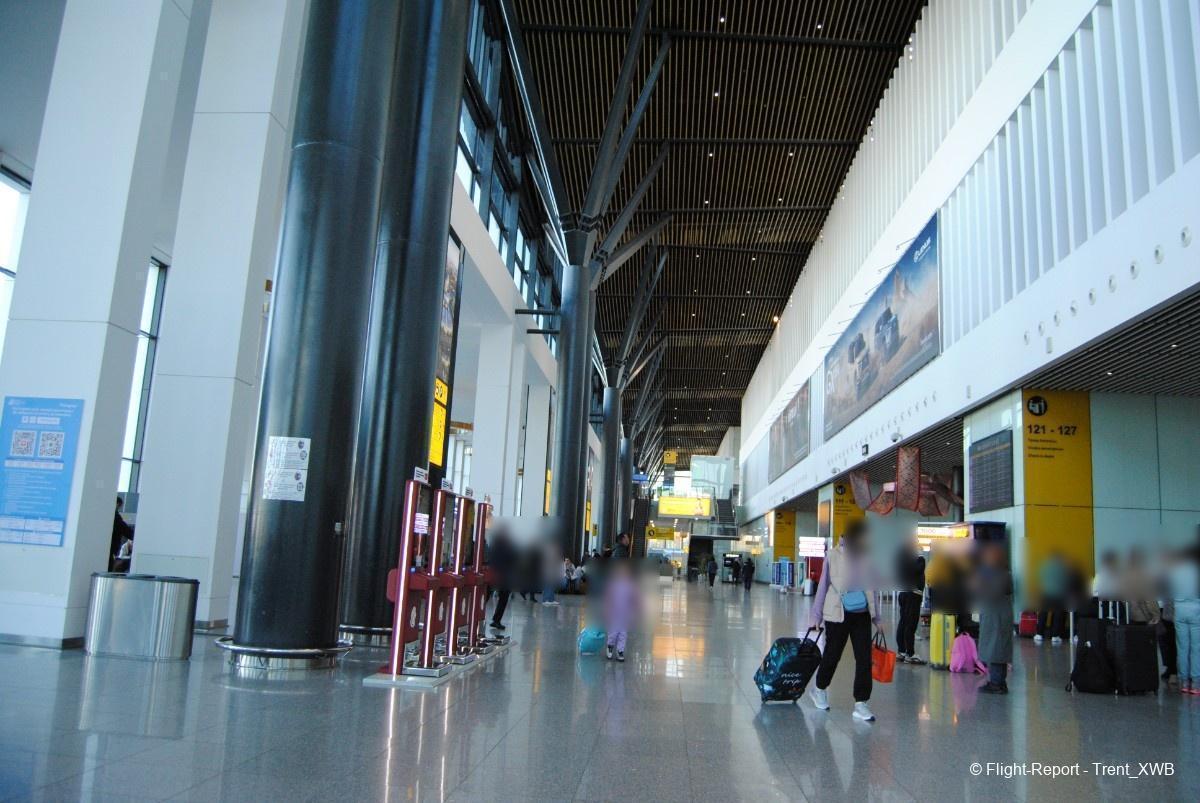
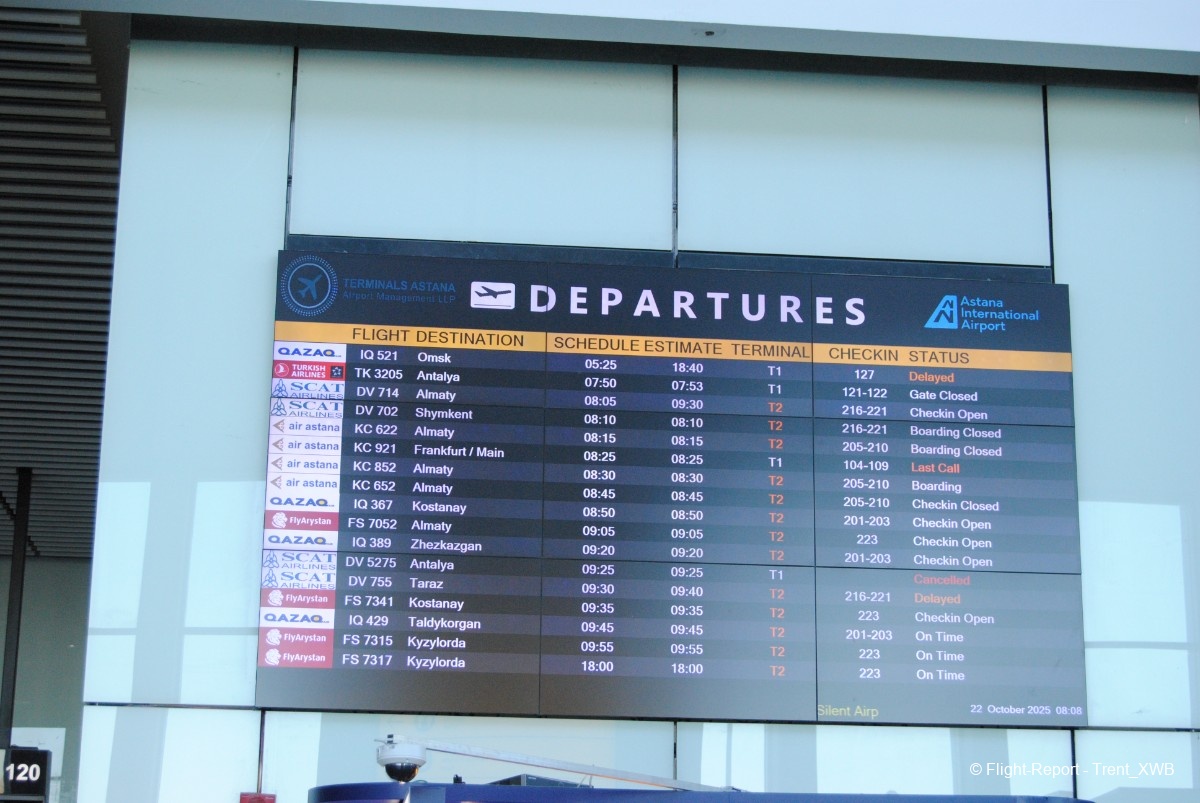
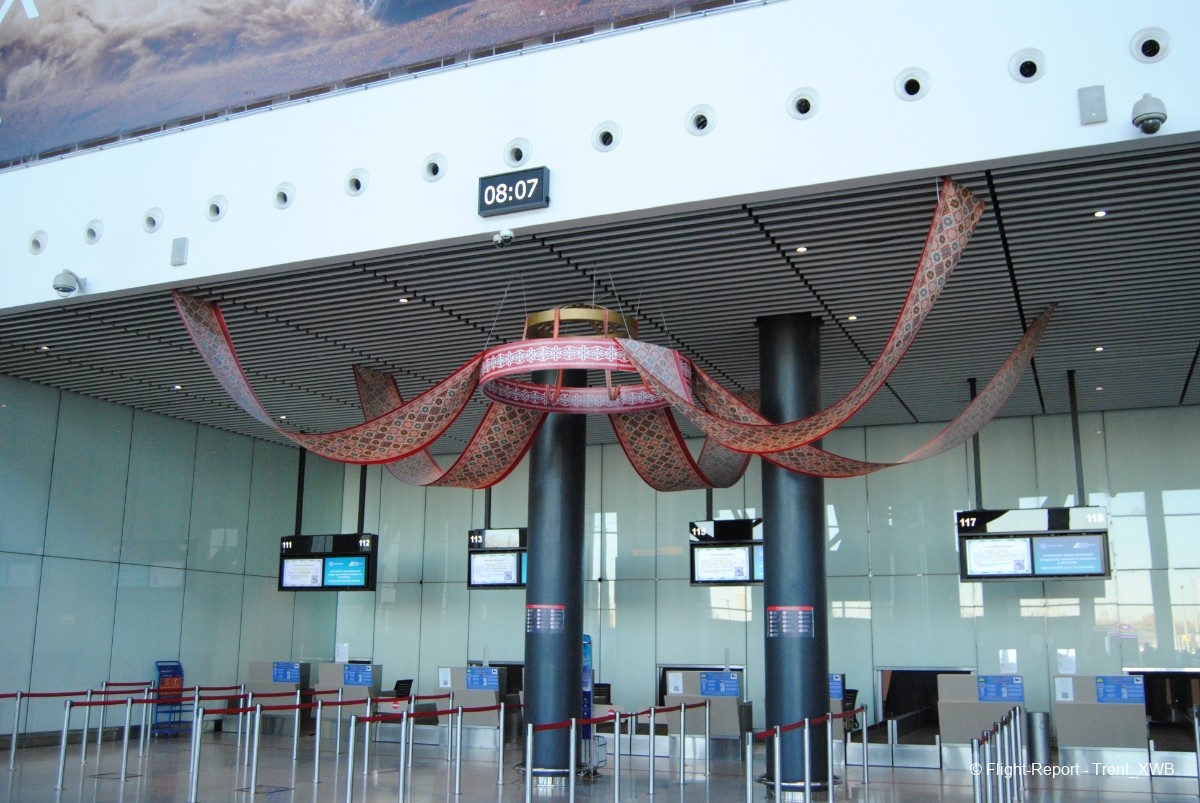
Some views of T1 check-in hall.
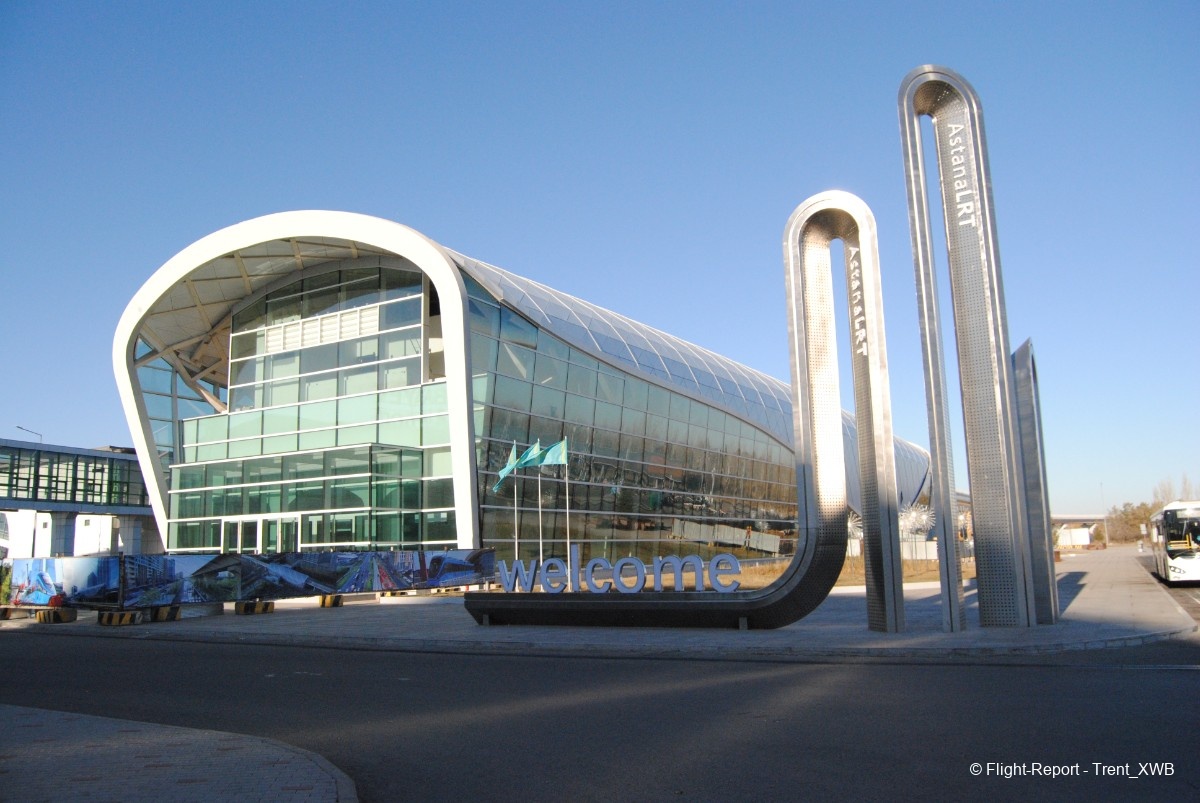
Astana NQZ LRT Station
Near T2 the station of the future LRT, connecting NQZ with the new Astana Nurly Zhol railway station. The construction of LRT is underway. Currently NQZ is connected with the city by bus service, which is dirt cheap and frequent.