

Welcome back to the final flight of this trip
After spending a few nights in Hanoi, it is time to return home. This time, I will be flying on Thai Airways’ refurbished A320, which features the airline’s updated short-haul Business Class product. I am particularly curious about the service differences between narrow-body and wide-body aircraft, as Thai Airways’ A320s were previously operated by the now-defunct Thai Smile (WE), whose premium cabin service resembled the European Business Class model.
Flight routing
- 1
- 2SQ194 - Business - Singapore → Hanoi - Boeing 787-10
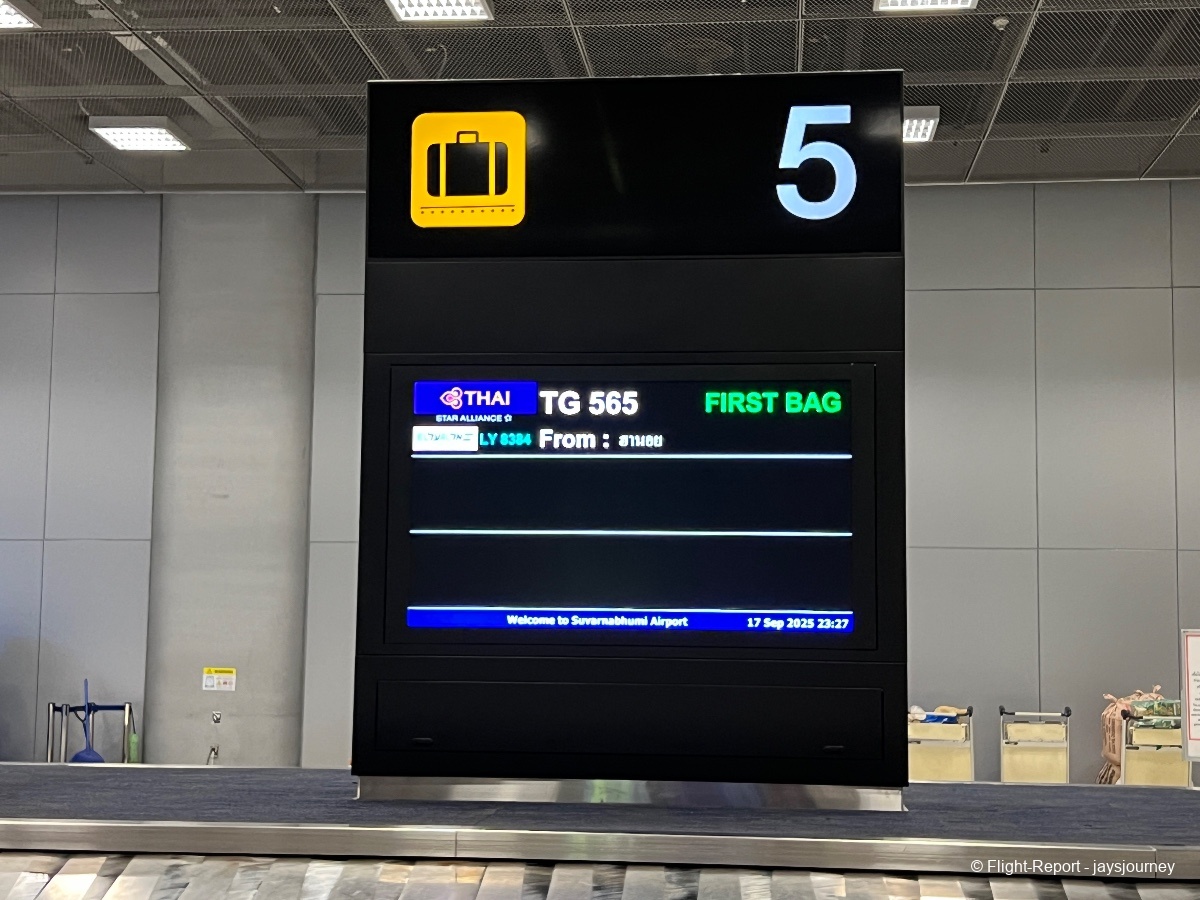
- 3TG565 - Business - Hanoi → Bangkok - Airbus A320
Check-in and lounge
Hanoi’s Nội Bài International Airport is approximately 45 minutes from the hotel where I was staying, located near the Opera House. Traffic was relatively heavy, particularly due to earlier rainfall. Fortunately, the airport itself was not overly crowded. I arrived roughly 30 minutes before the scheduled check-in time, so I took some time to walk around. The terminal felt somewhat small in scale, although various expansion projects appeared to be underway.
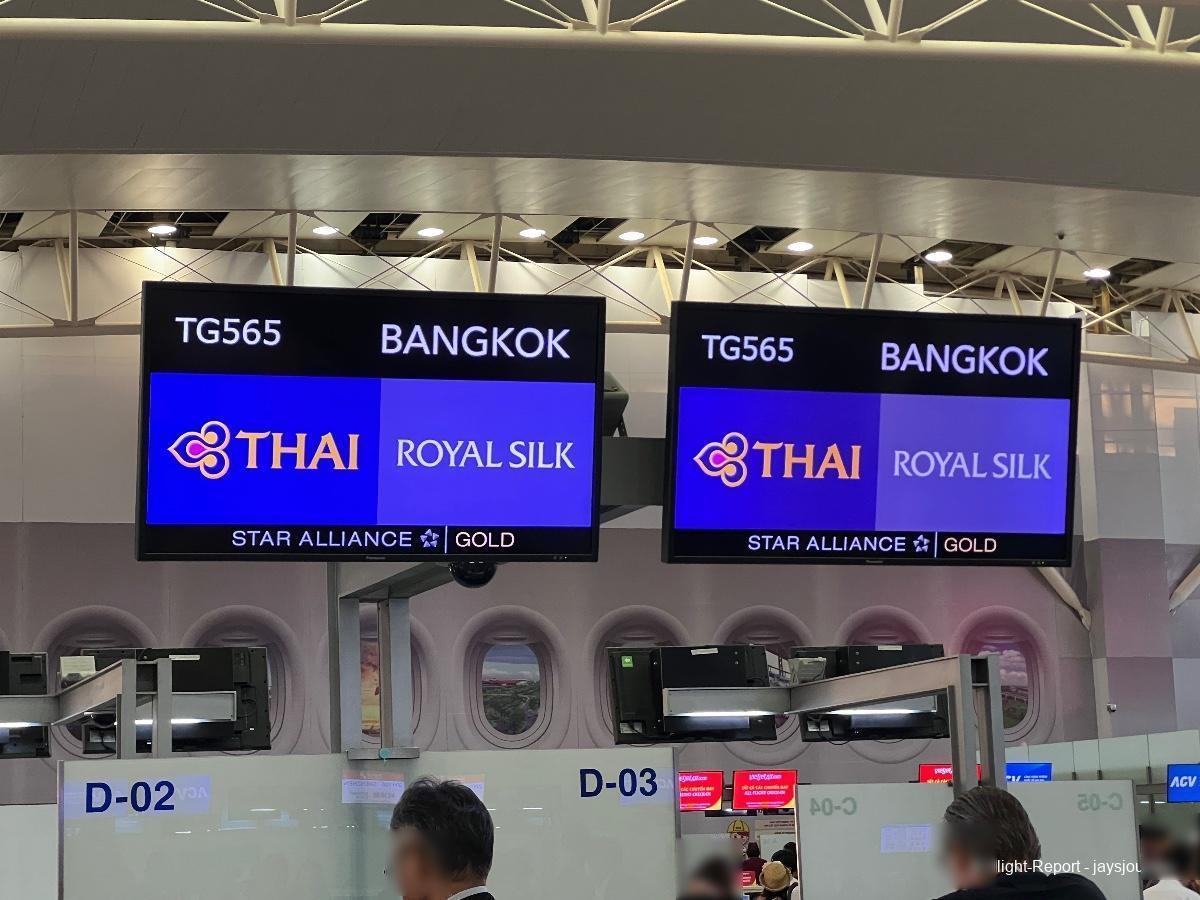
Shortly thereafter, the check-in counters opened slightly ahead of the scheduled time, and I joined the queue for the two Business Class counters. Both the passport control and security checks were efficient, with only one or two people ahead of me. I have been quite fortunate on this trip, encountering minimal wait times throughout.
ACV Lounge
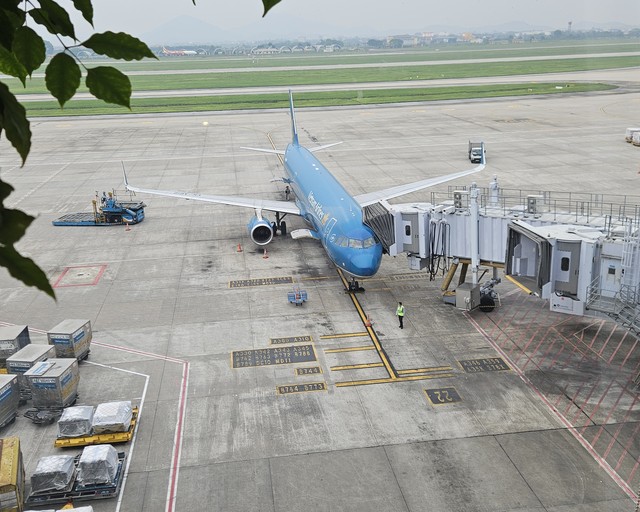
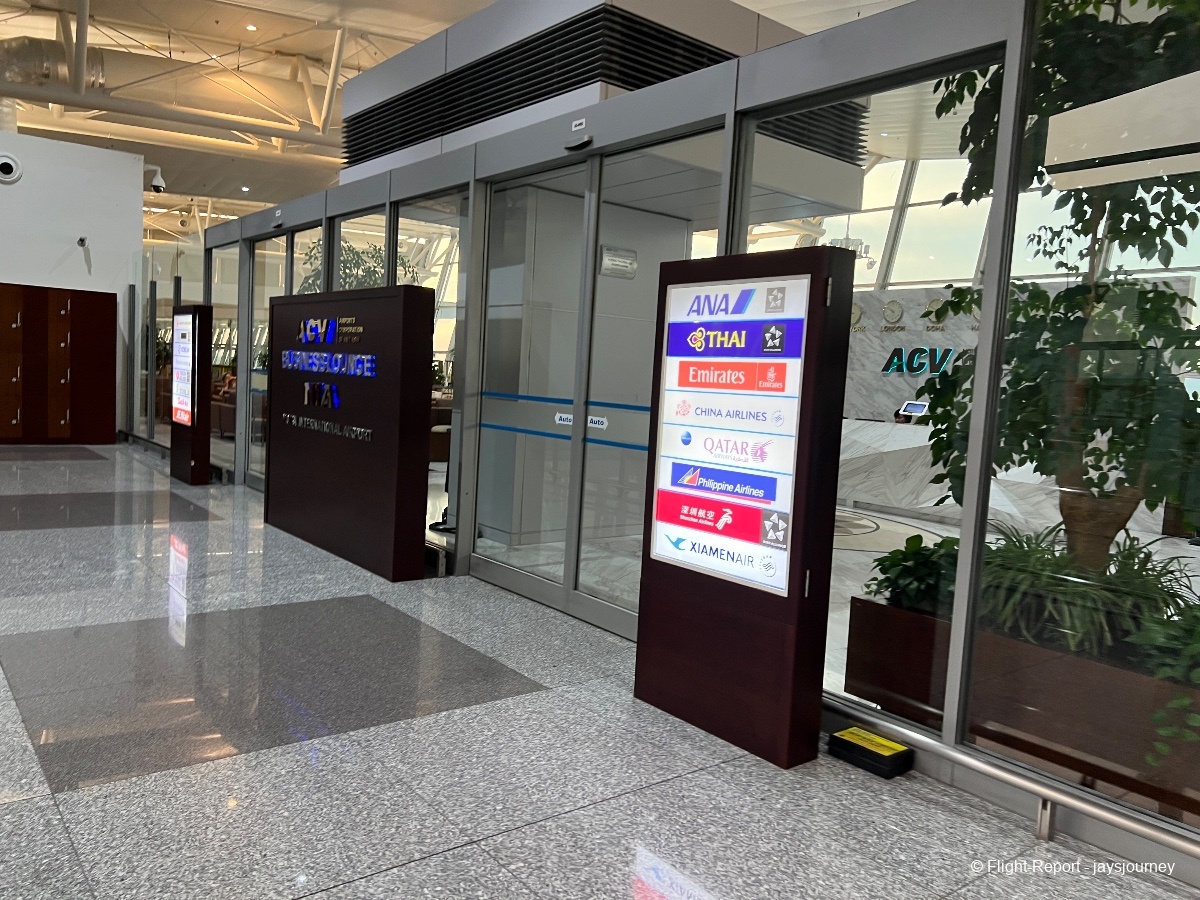
All TG's Royal Silk Class passengers will receive a voucher to access the ACV lounge, which once you are through security, just turn left for a bit, and then up the escalator. In addition to Thai Airways, several other international carriers such as ANA, China Airlines, Emirates, Qatar Airways, Philippine Airlines, Shenzhen Airlines, and Xiamen Air also direct their premium passengers to this facility. The lounge itself is spacious and offers an excellent view of the tarmac, notably superior to those available in some lounges at Bangkok (BKK) and Singapore Changi (SIN) airports.
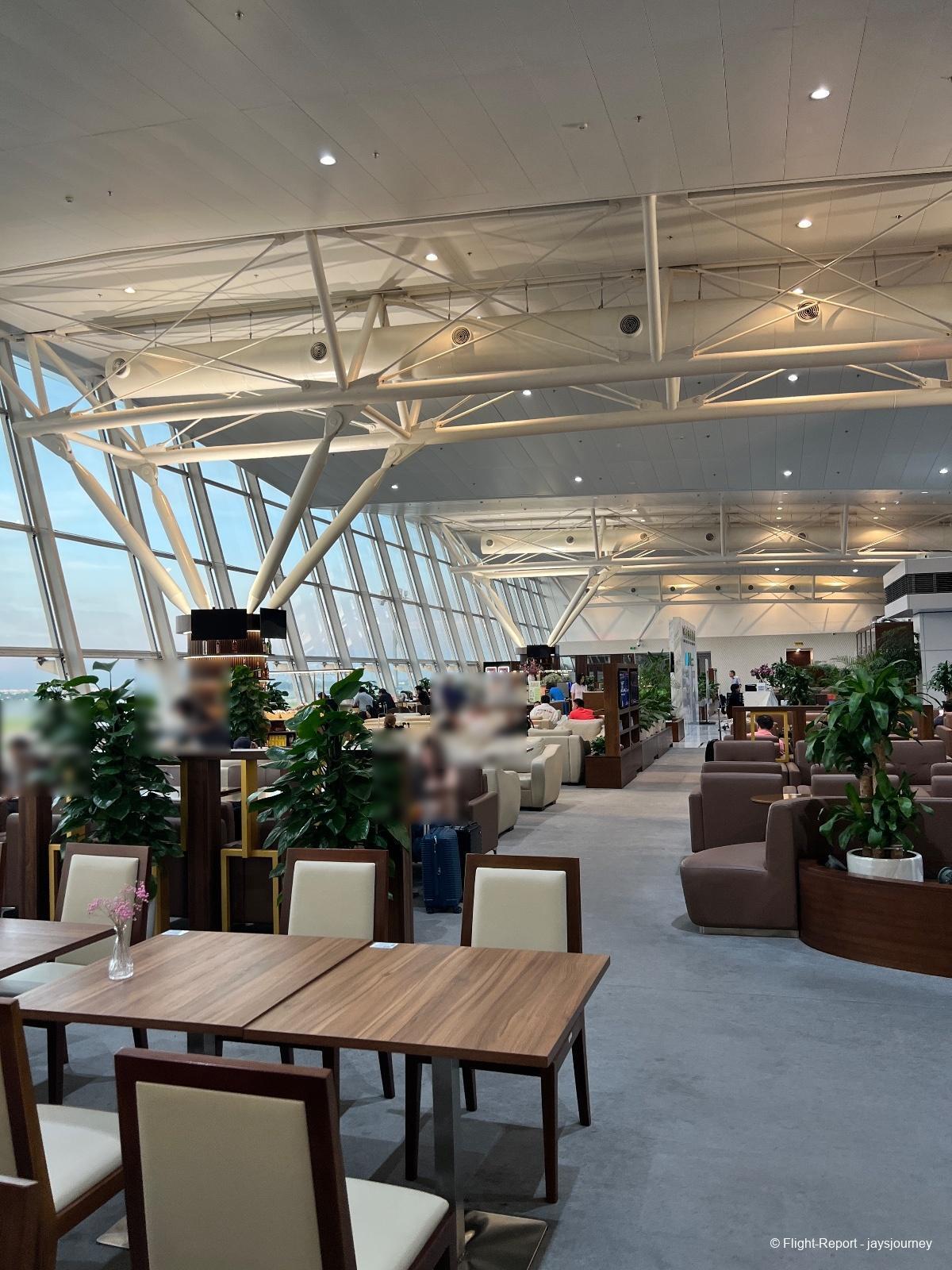
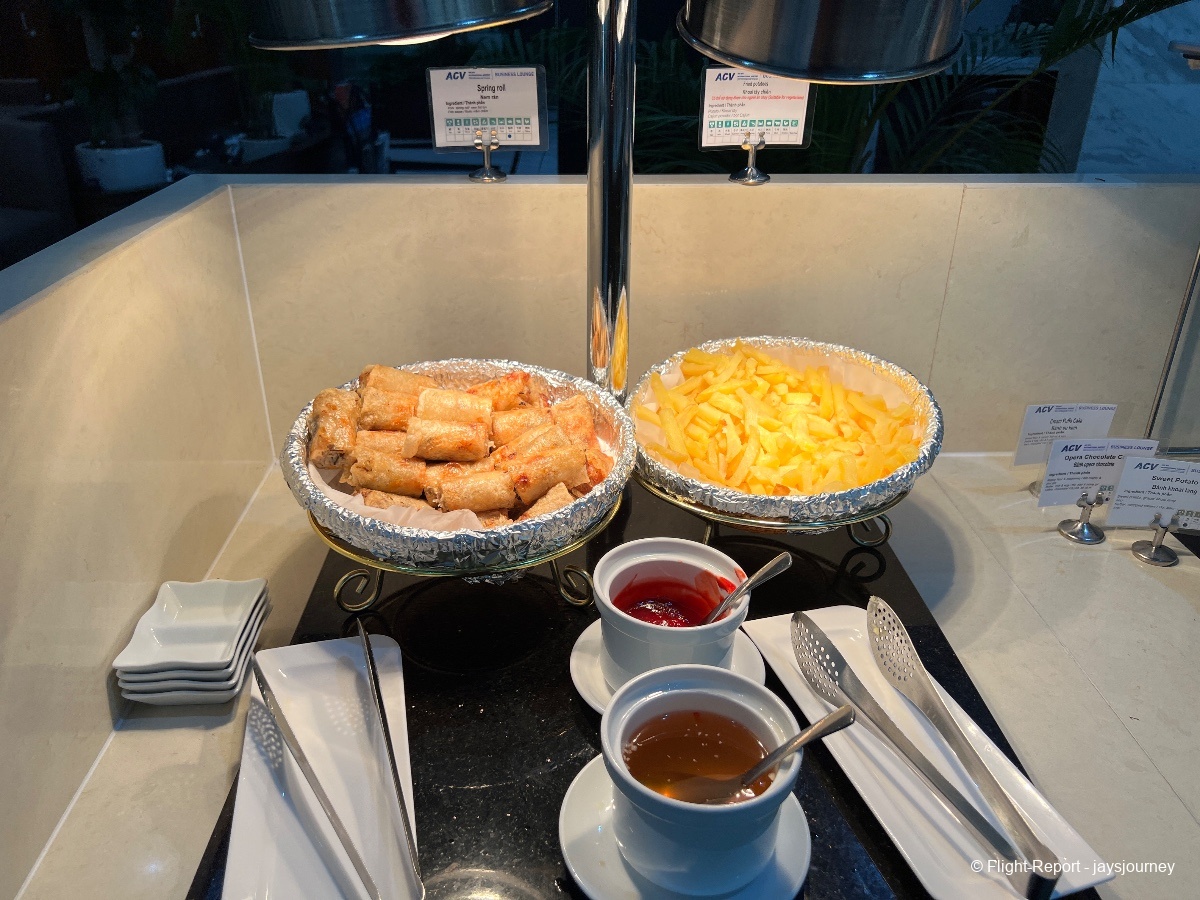
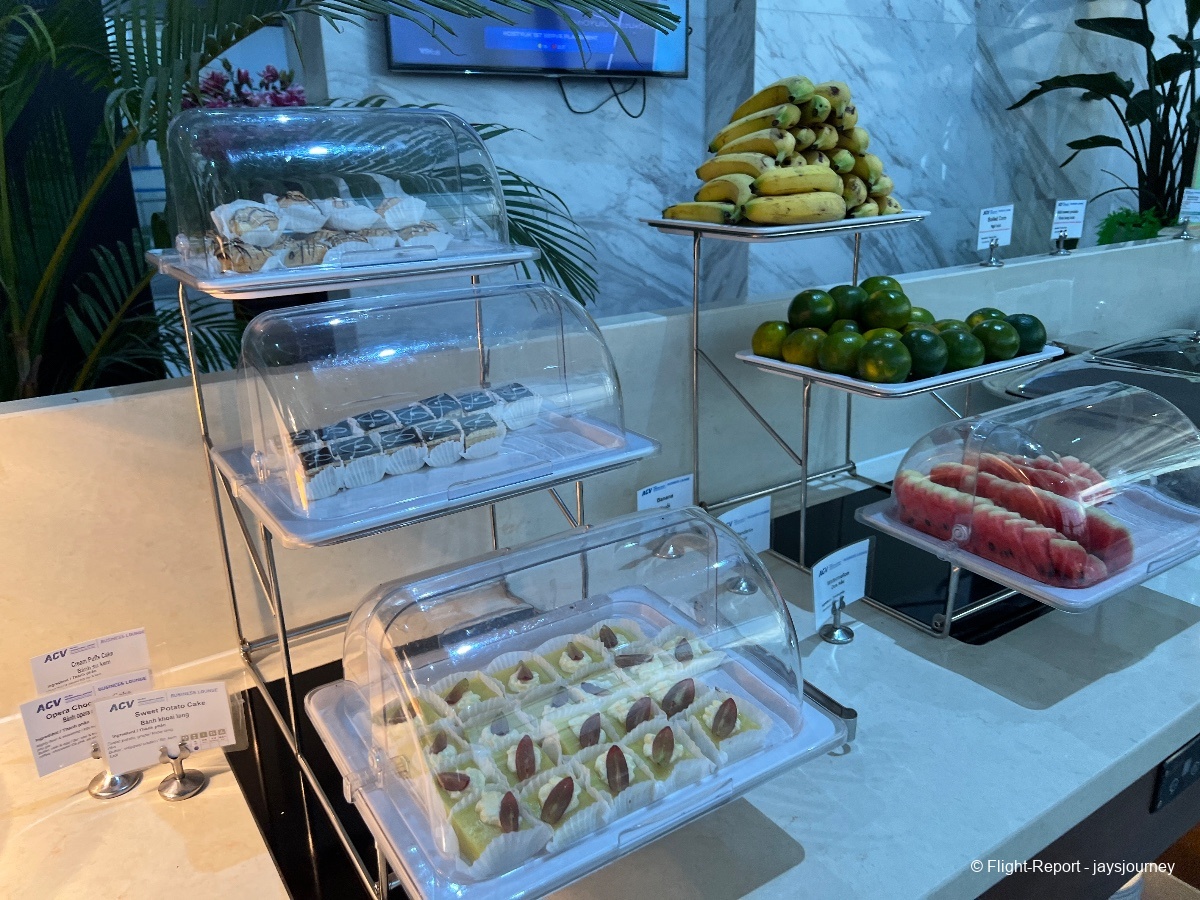
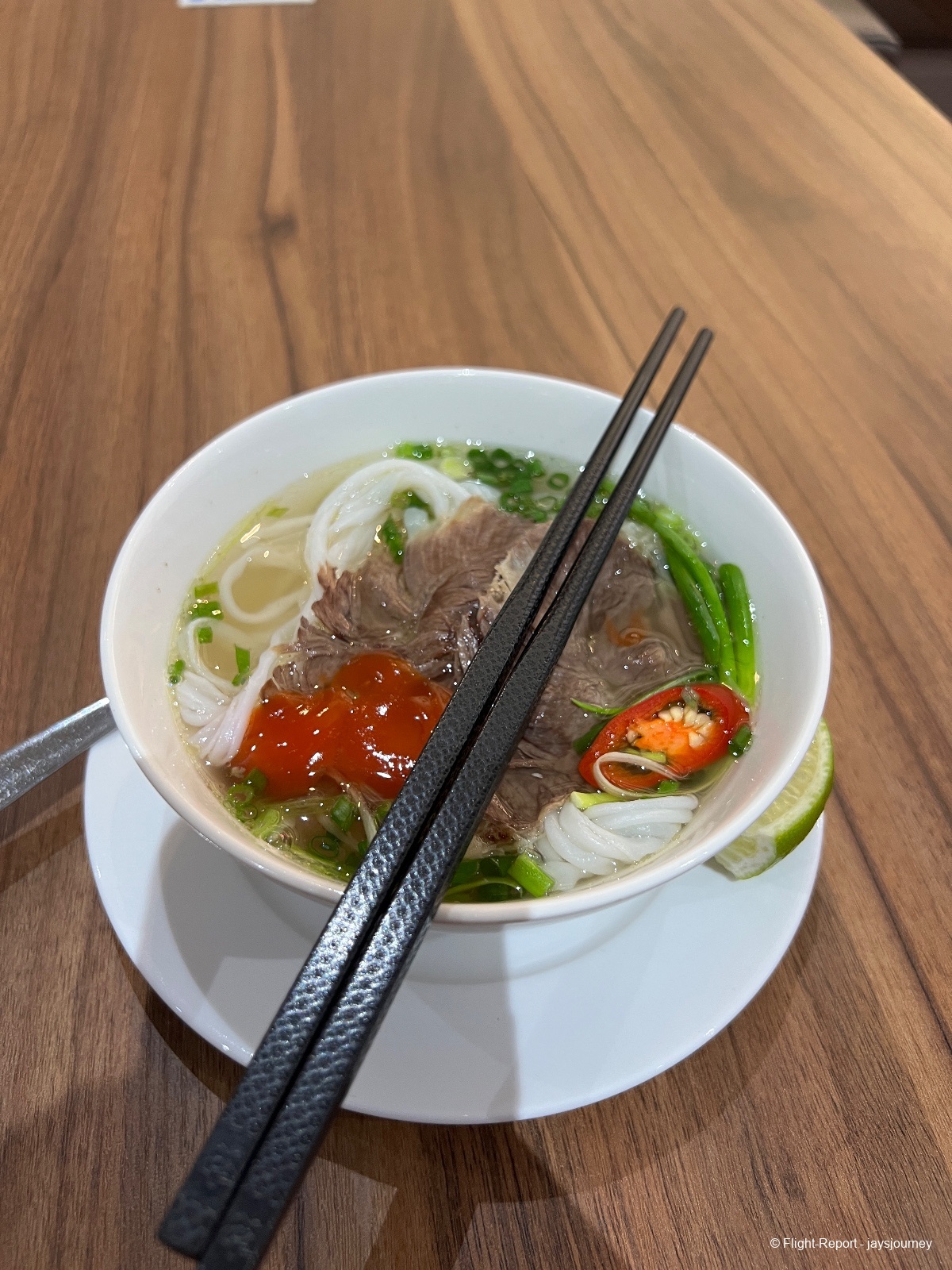
The lounge occupies a large area and offers ample access to power outlets; however, the overall design is rather utilitarian. The food selection is quite extensive and could easily satisfy a full meal. I sampled the beef pho, which was reasonably good. The beverage selection is adequate, although the spirits and wine offerings are fairly standard.
Around this time, I was informed that the inbound flight would be slightly delayed due to heavy rainfall in Bangkok. Hopefully, the ground crew can perform a rapid turnaround, as I am not eager to arrive in Bangkok around midnight.
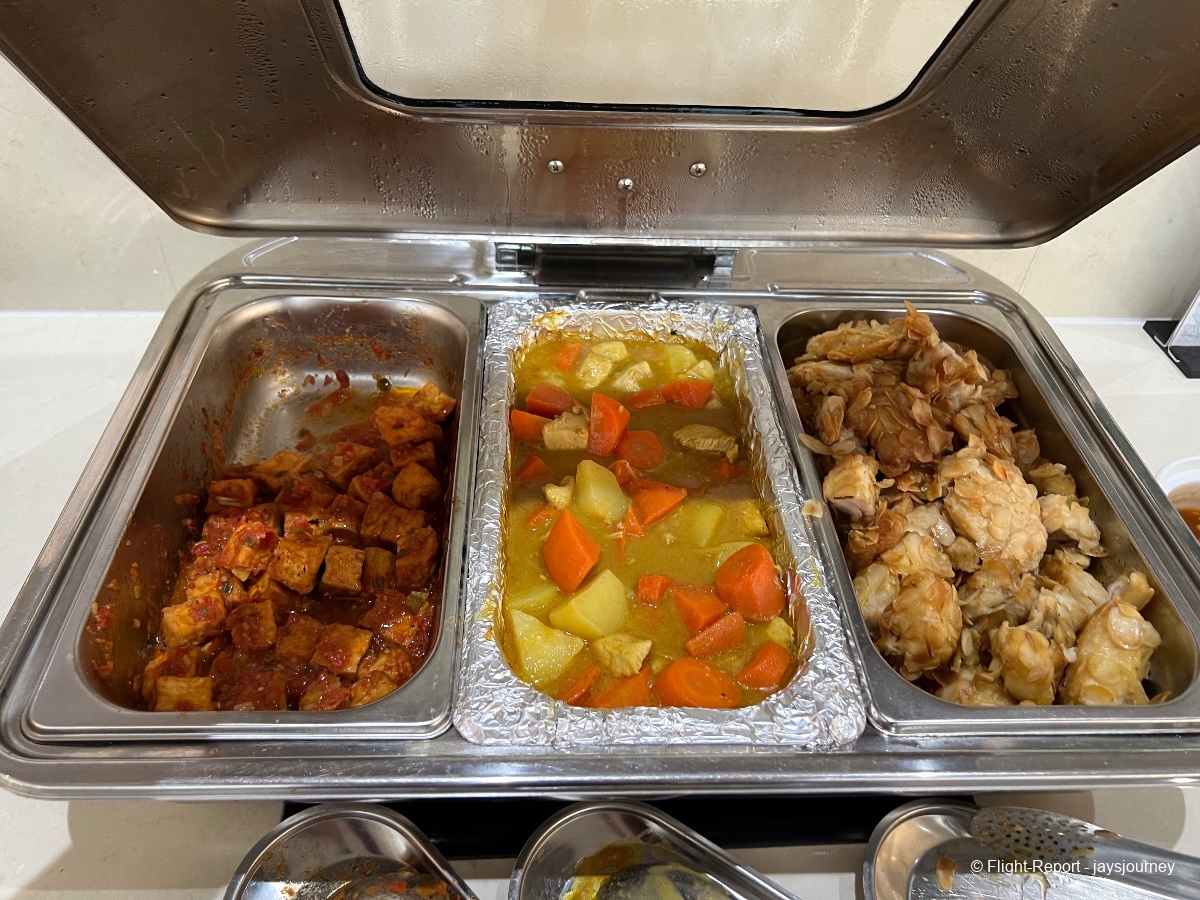
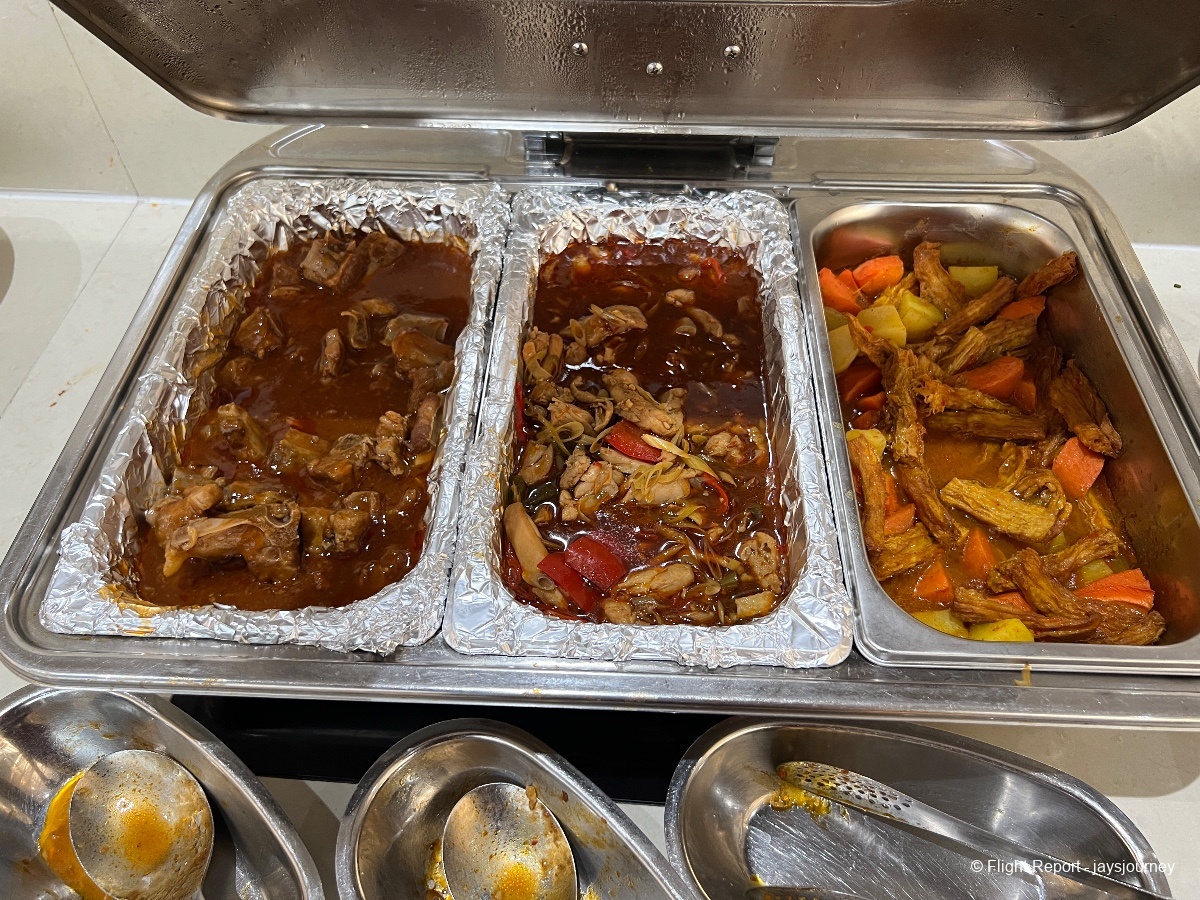
SH Premium Lounge
After spending approximately an hour in the ACV Lounge, I began to feel a bit bored. I considered doing some shopping, but although the duty-free selection at Hanoi (HAN) is adequate for an airport of its size, there is relatively little to browse, and the prices are not particularly competitive.
I then recalled that my credit card grants access to additional lounges at this airport. Two options were available: the Vietnam Airlines Lounge and the SH Premium Lounge. Judging from its exterior appearance, the latter seemed more promising.
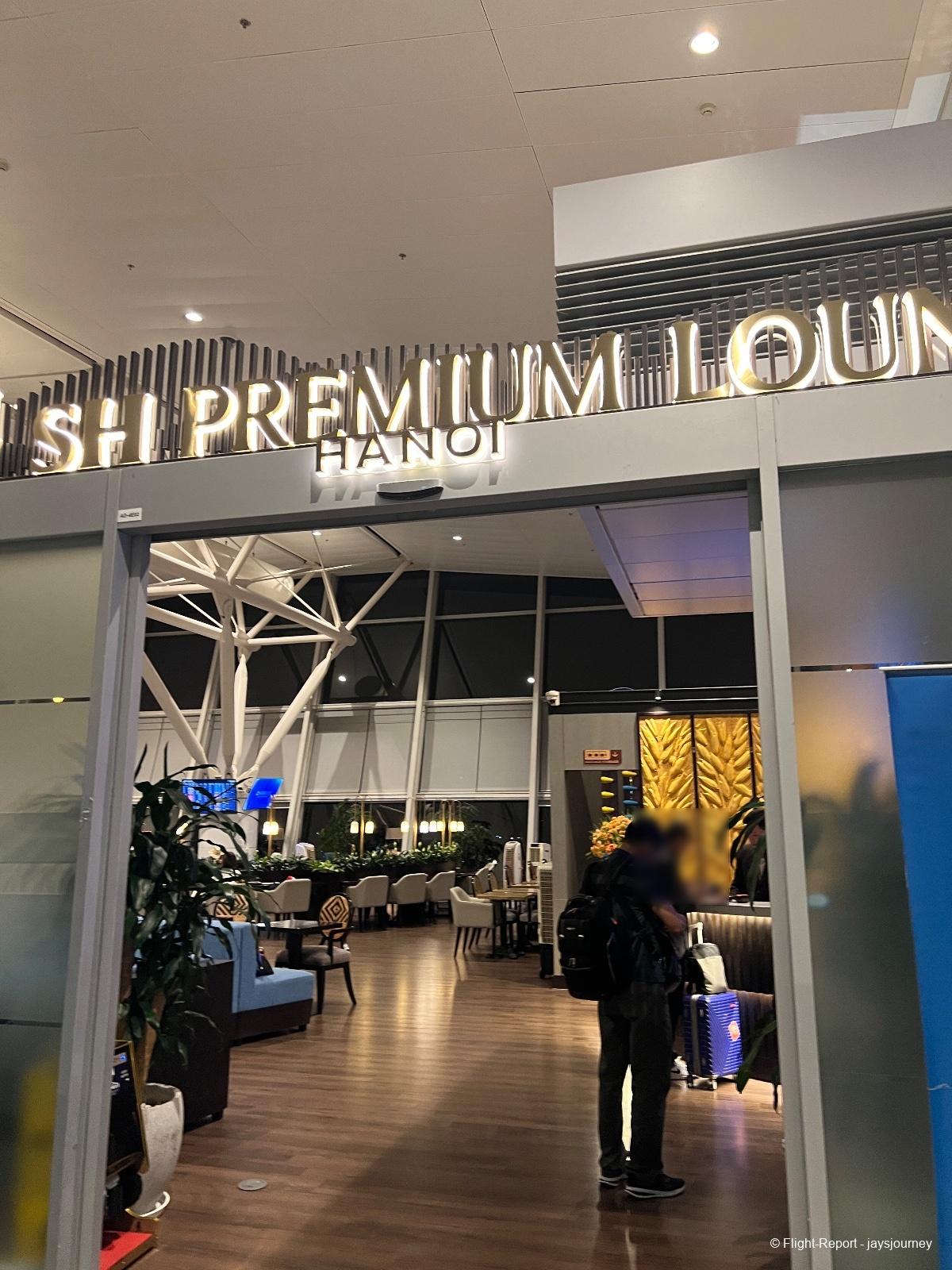
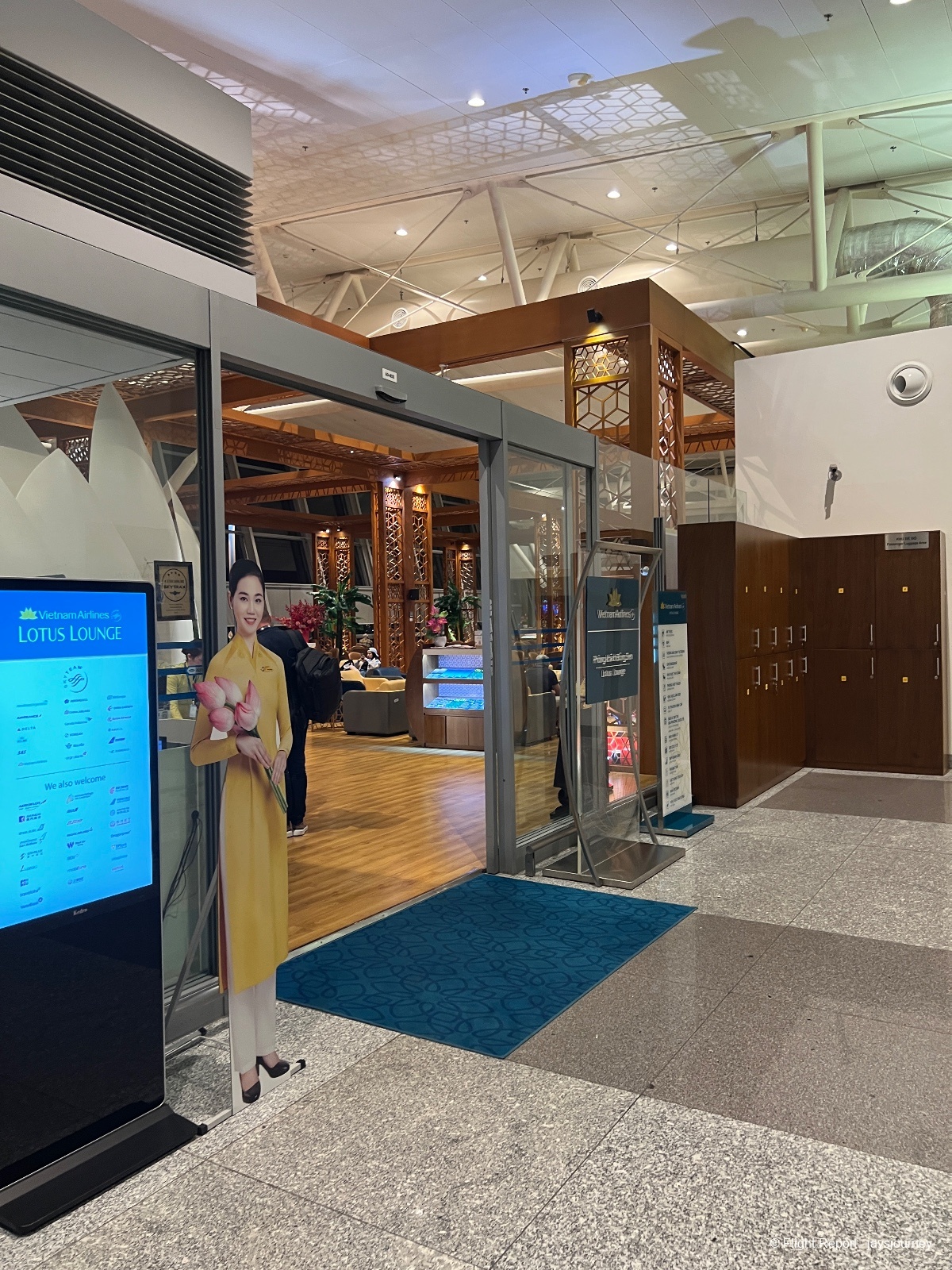
Maybe next time, I will try this lounge.
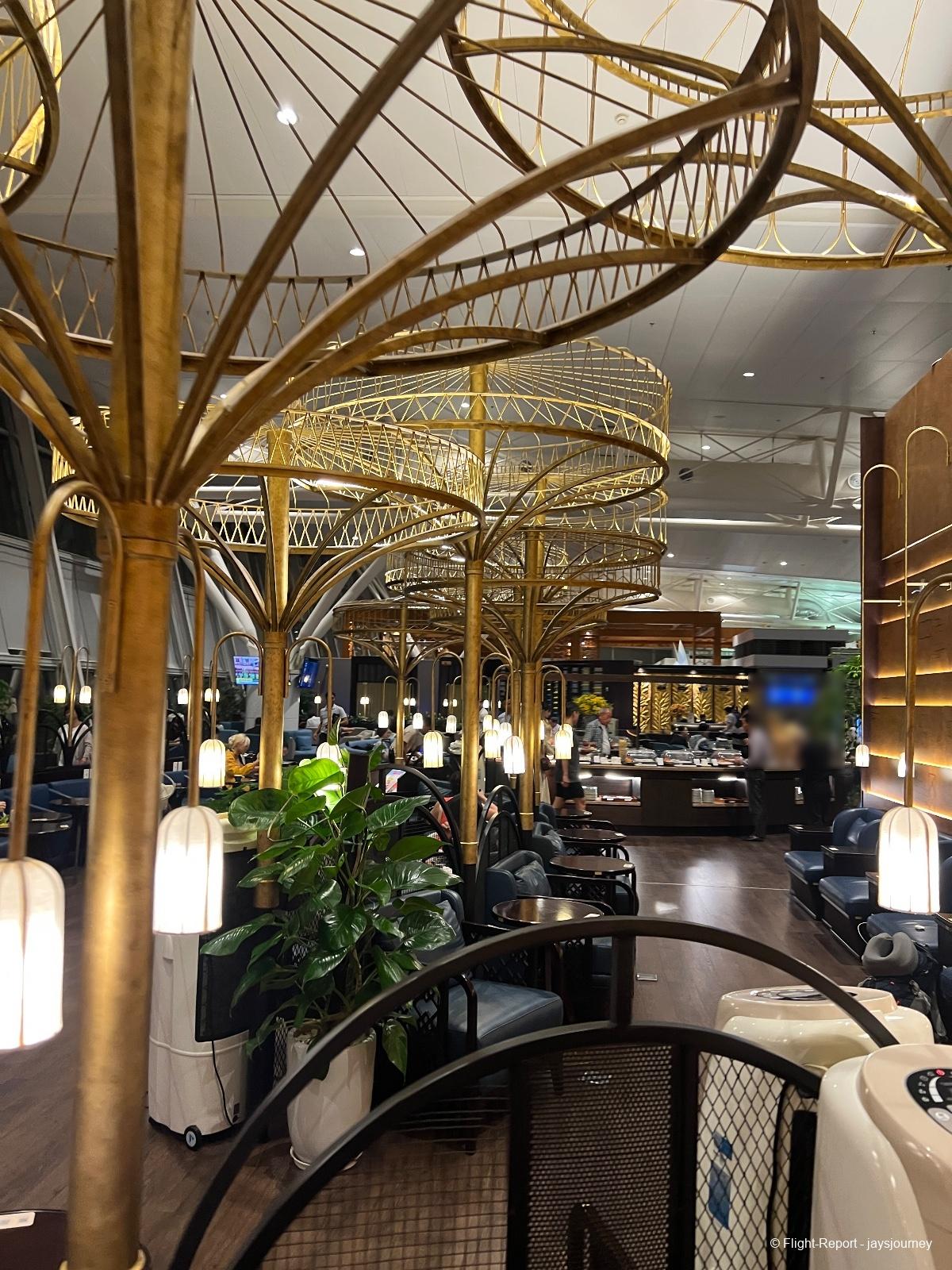
The SH Premium Lounge is smaller than the ACV Lounge, but its design and lighting create a noticeably more relaxing atmosphere. In terms of food, I would rate the ACV Lounge slightly higher due to a broader range of offerings; however, the difference is minimal.
The beverage service at SH Premium is much better, as the lounge is staffed with a bartender who can prepare cocktails upon request and they even have signature menu as well.
The lounge was quite crowded during my visit, particularly around the buffet area, making it difficult to photograph the full layout. As a result, I captured only a single image for review purpose.
The flight
The inbound aircraft arrived and parked at the gate at approximately 20:25 hrs, with the scheduled departure for the return flight set for 20:45 hrs. I observed a flurry of activity on both the ramp and the jet bridge, and I boarded the aircraft at 20:44 hrs. Impressive! If operations continued at that pace, the delay would likely be minimal.
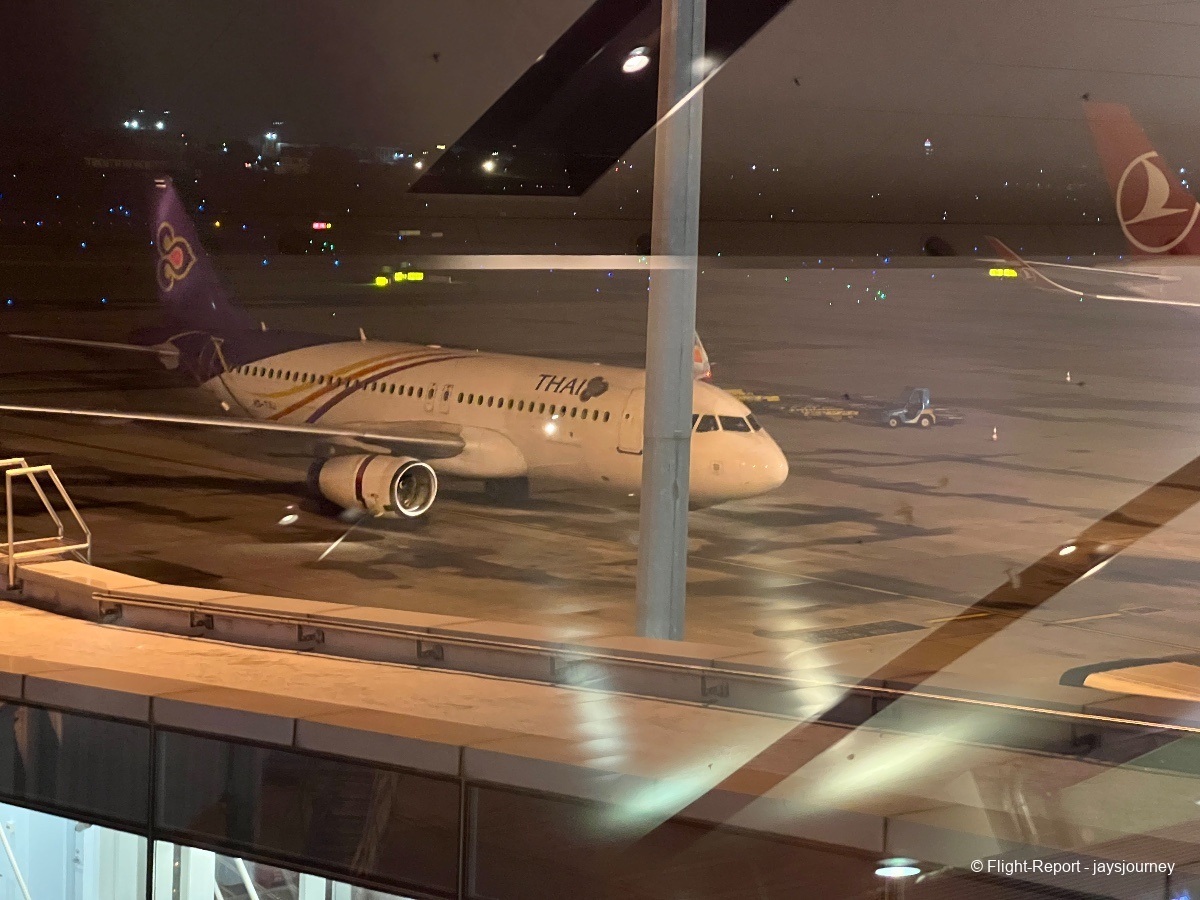
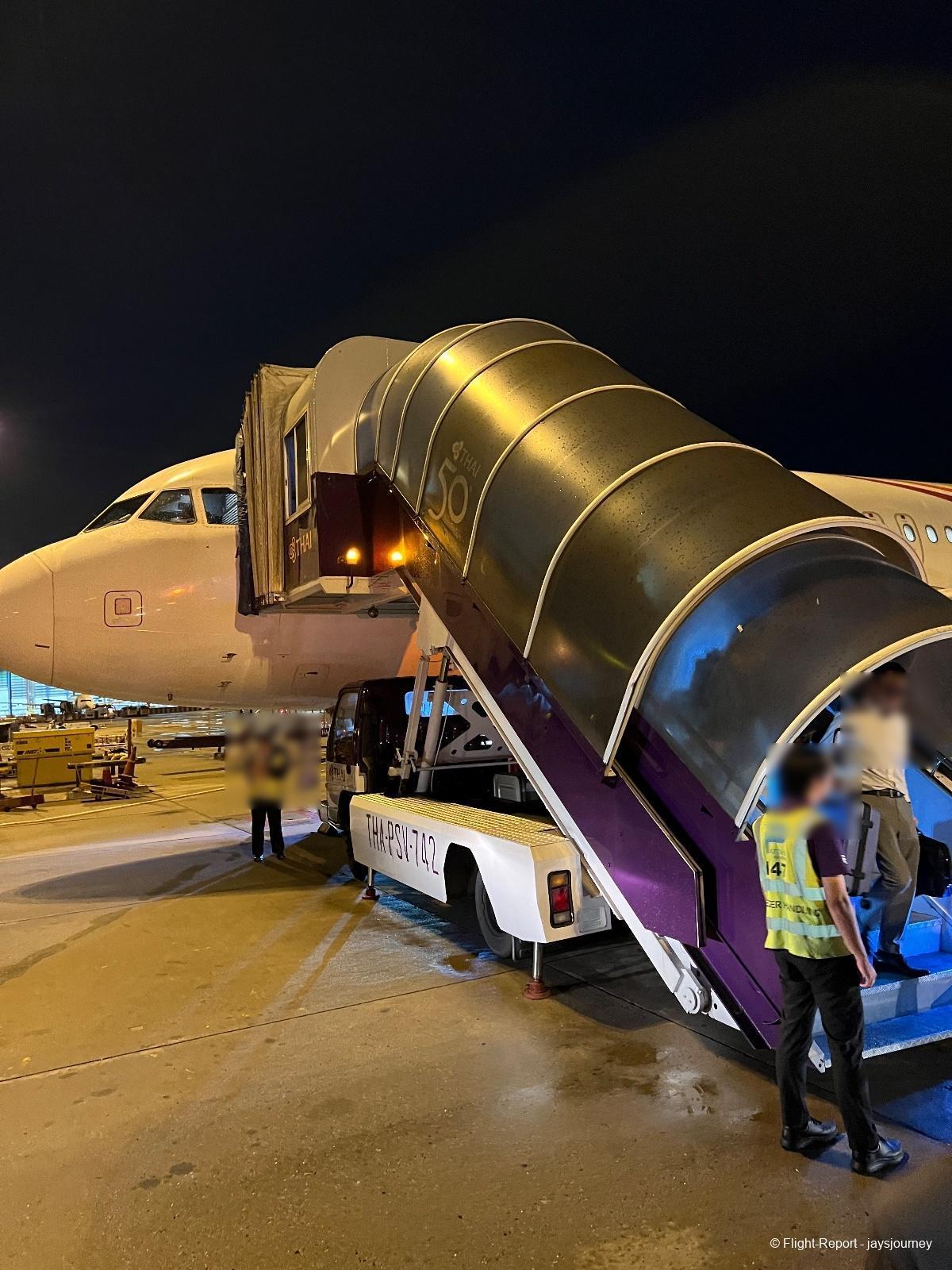
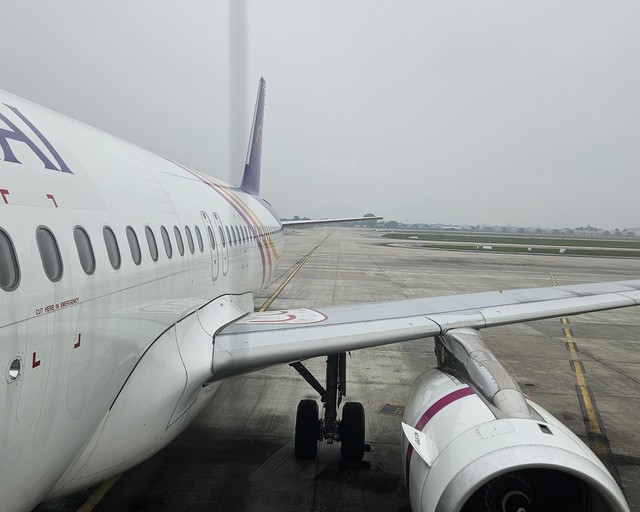
Thai's A320 HS-TXJ, still in Thai Smile livery. About a month-ish after this flight, the plane went into the hangar and now featured a regular TG livery.
The cabin
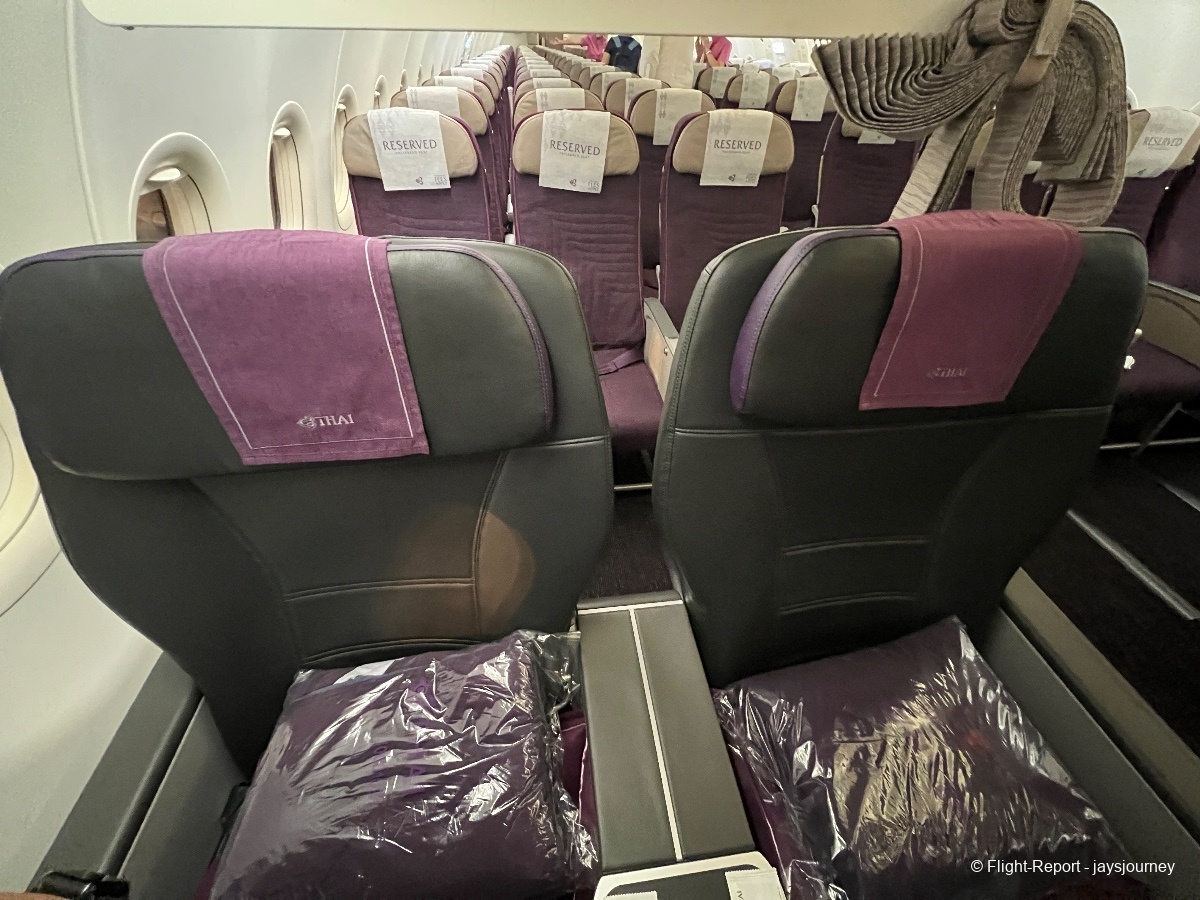
Although this aircraft wore Thai Smile (WE) livery at the time of flight, its interior has since been retrofitted and refurbished. The forward section of the cabin now features 12 Royal Silk Class seats manufactured by Recaro, while the economy class seats have been reupholstered with a new seat fabric design. A new curtain separates the two cabins, and it appears that new carpeting may also have been installed.
All Business Class seats were occupied on this flight, and there was a healthy passenger load in Economy Class as well.
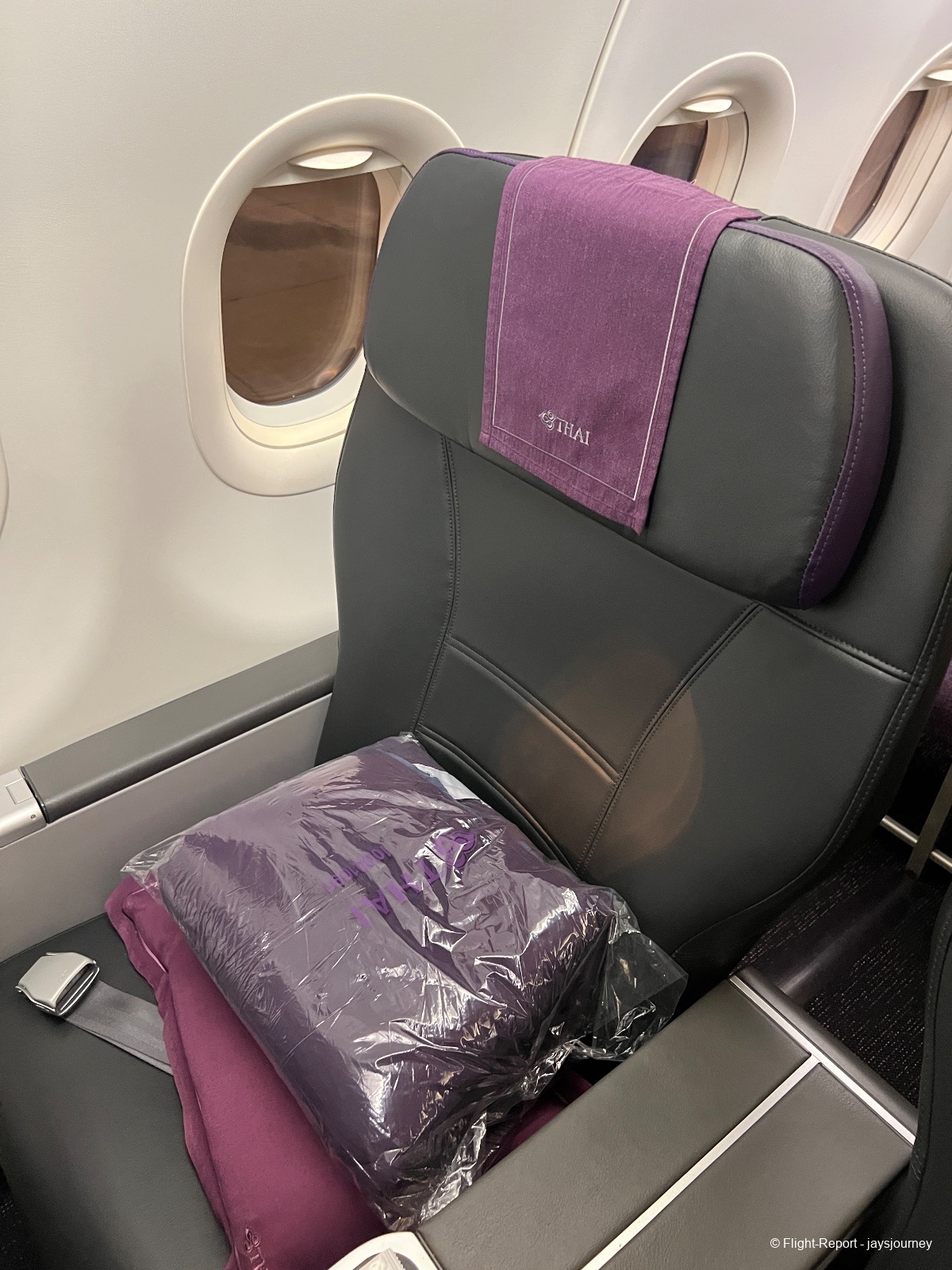
Here is my seat for the flight, 14K, last row in the cabin. Awaiting for me are a rather plush pillow and blanket along with refreshing tissue and a bottle of water.
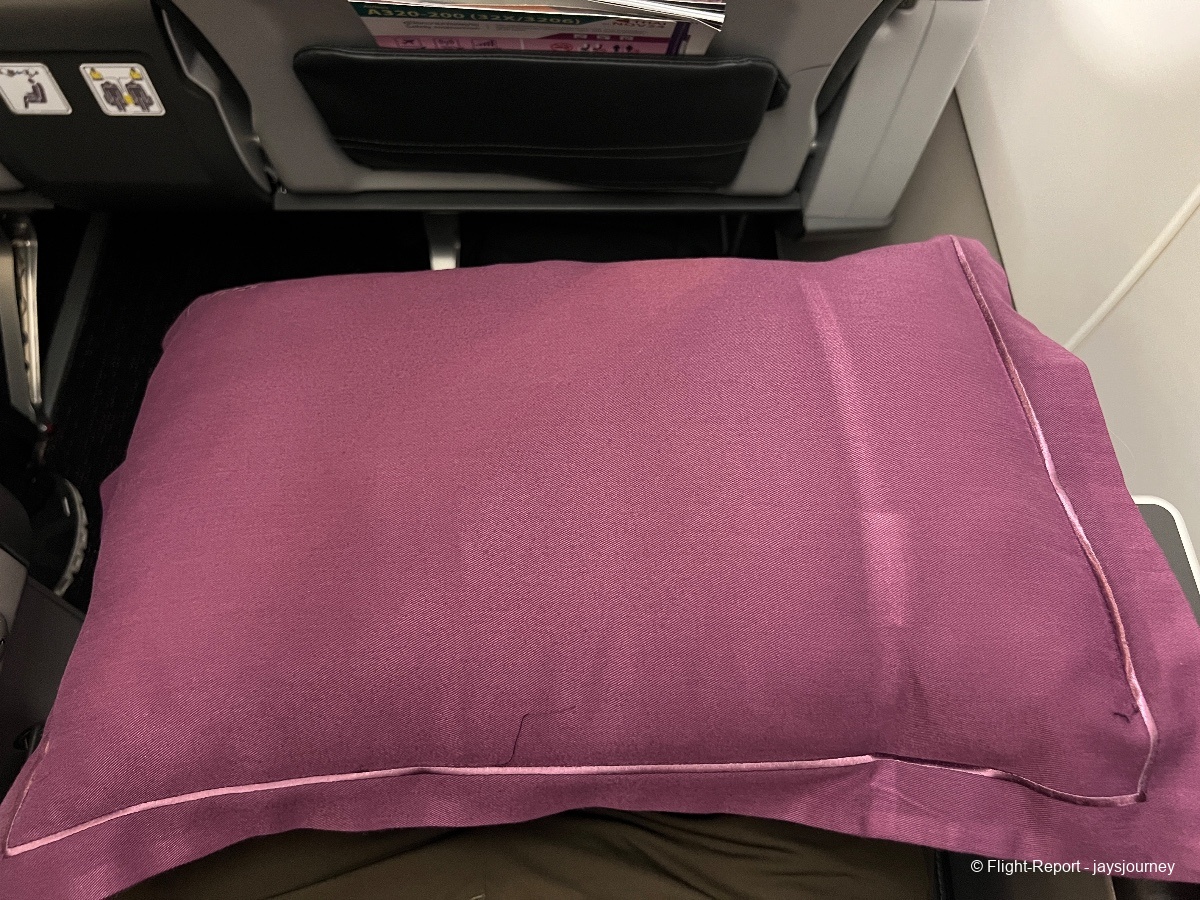
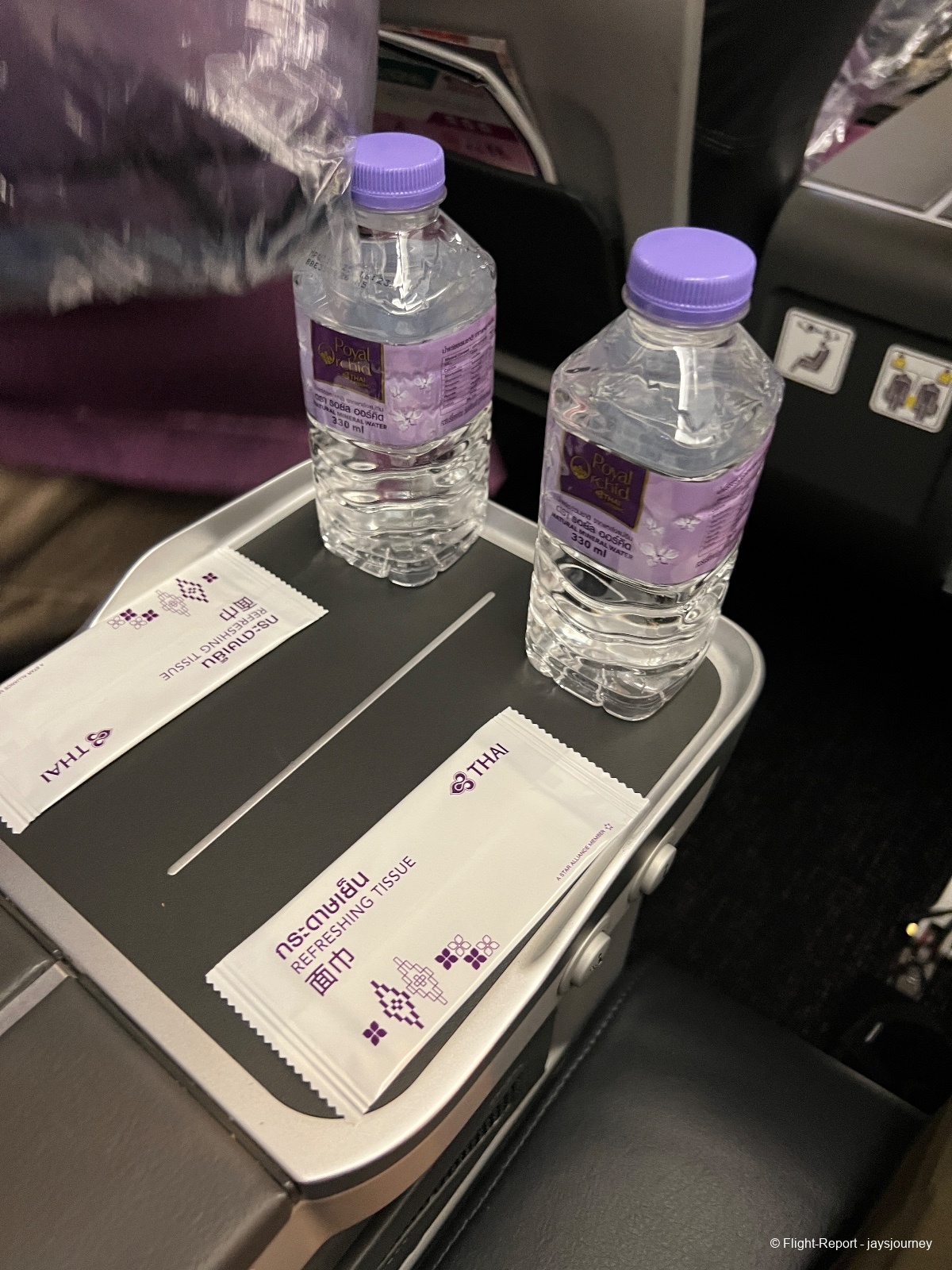
These new seats are relatively basic and appear to have been installed hastily following public criticism that Thai Airways should offer a proper Business Class product if it intends to charge a premium.
The seats feature only wireless in-flight entertainment, with no Wi-Fi connectivity and no power outlets available. The seatback includes only a storage area, a literature pocket, and a coat hook.
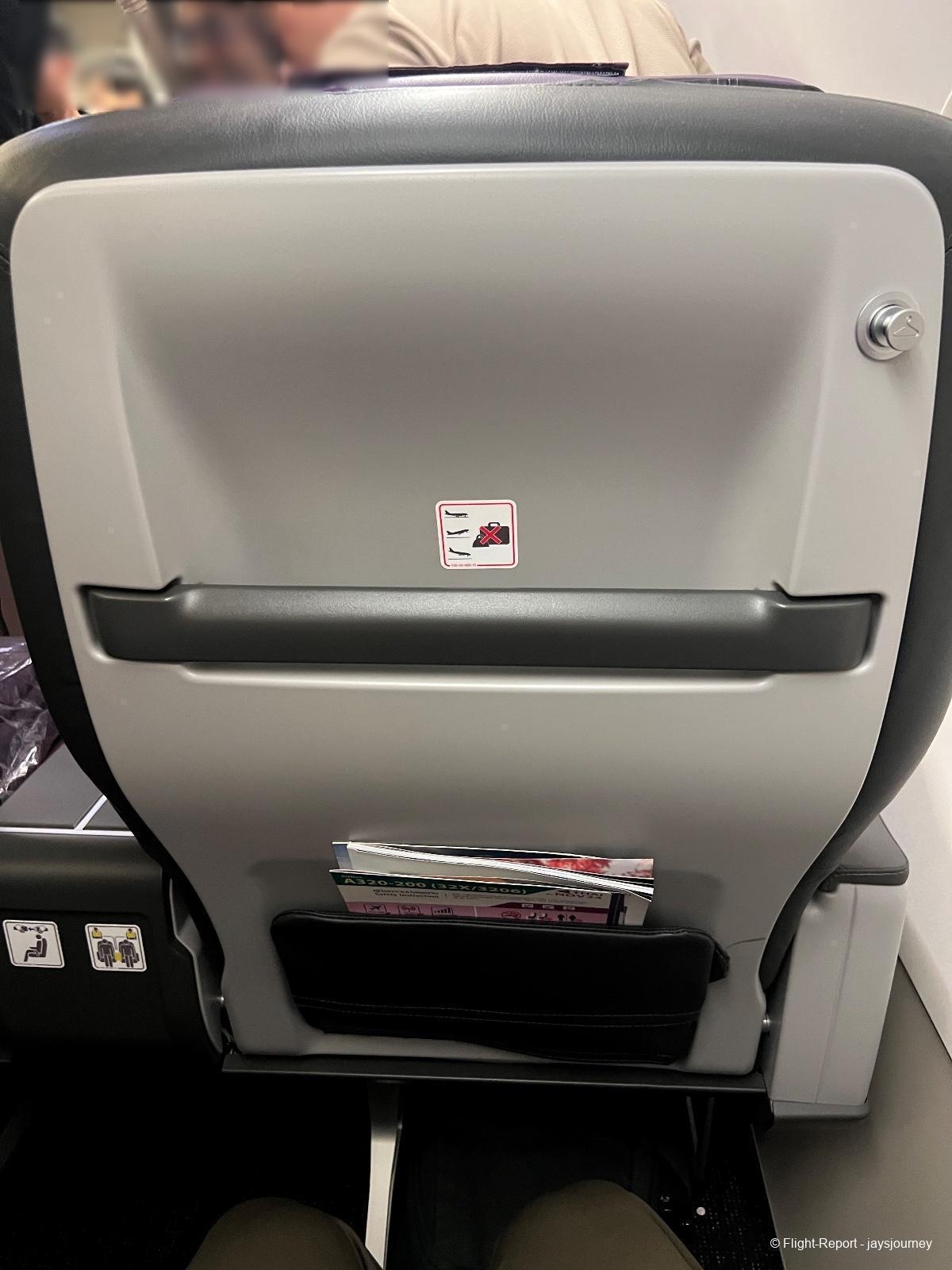
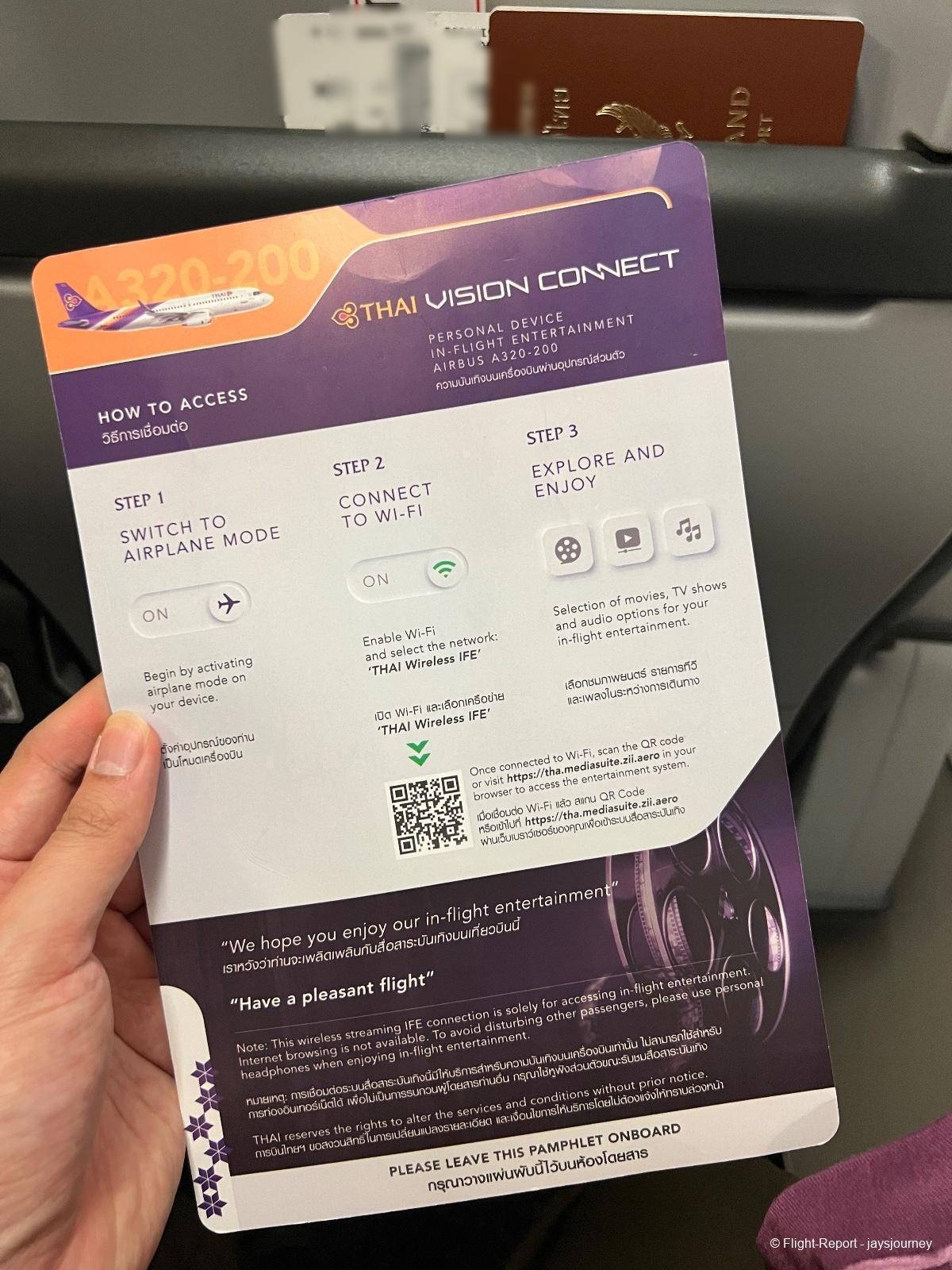
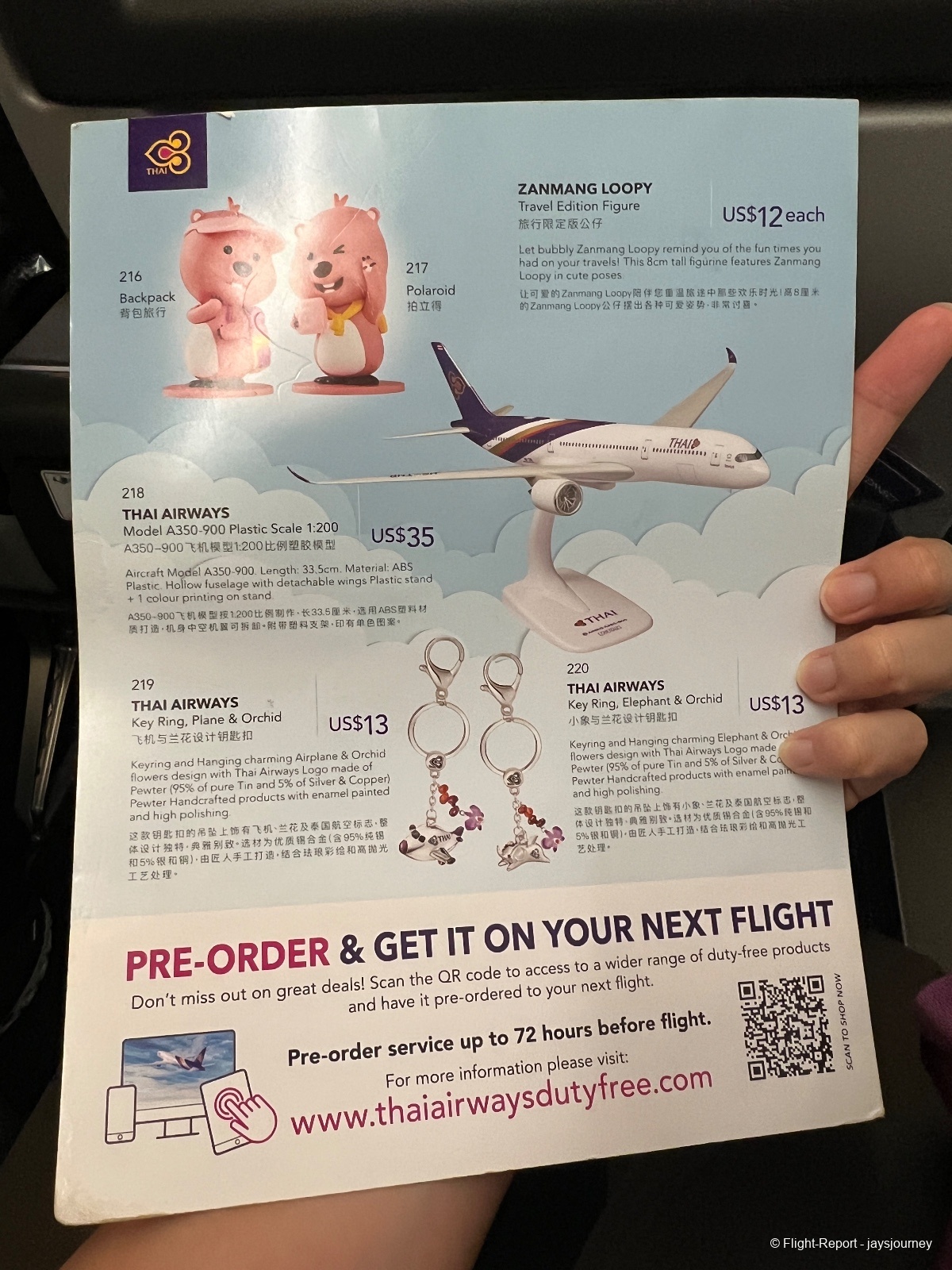
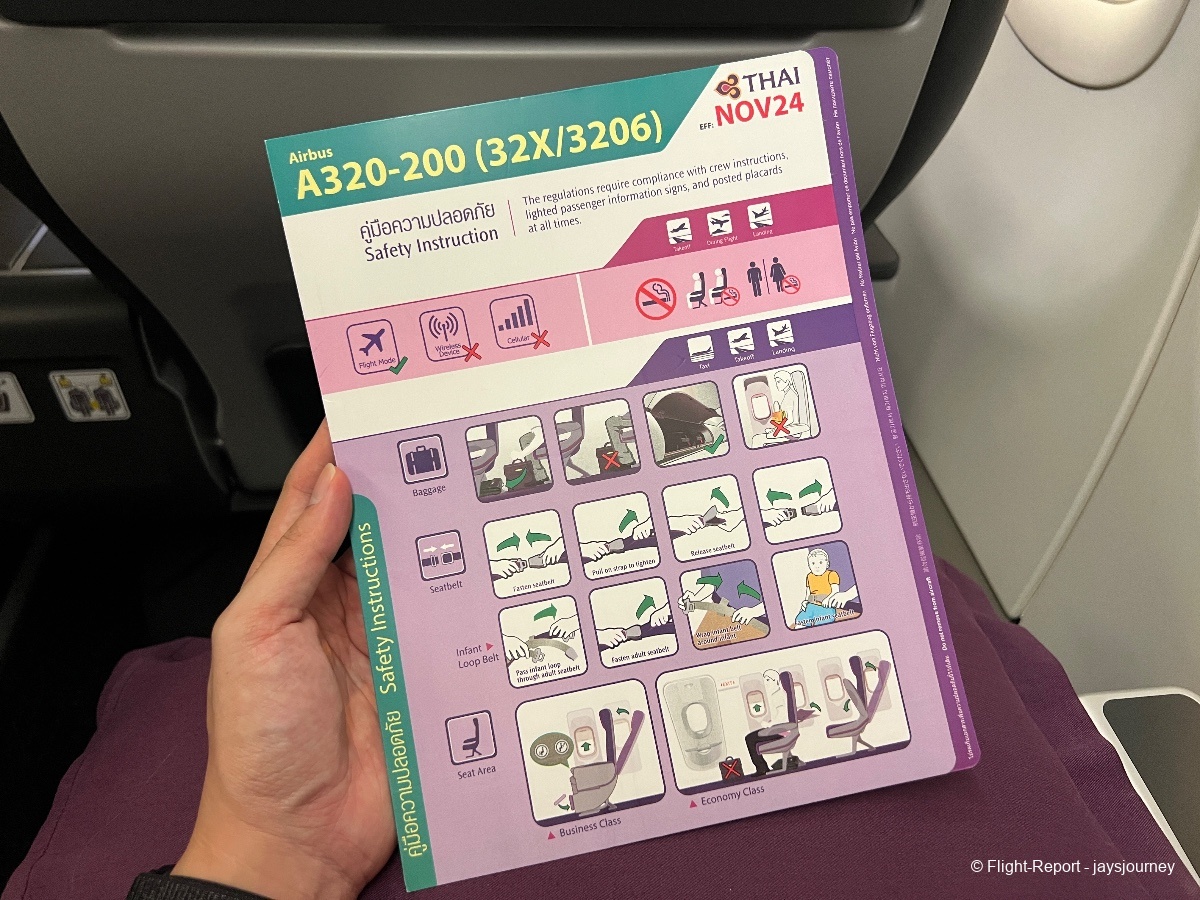
The literature pocket contains the following: Sawasdee Magazine (not pictured), Safety information, Duty-free (much smaller than ones on their widebodies), wireless IFE instructions and a waste bag.
Around 10 minutes after our scheduled departure time, we were finally pushed back.
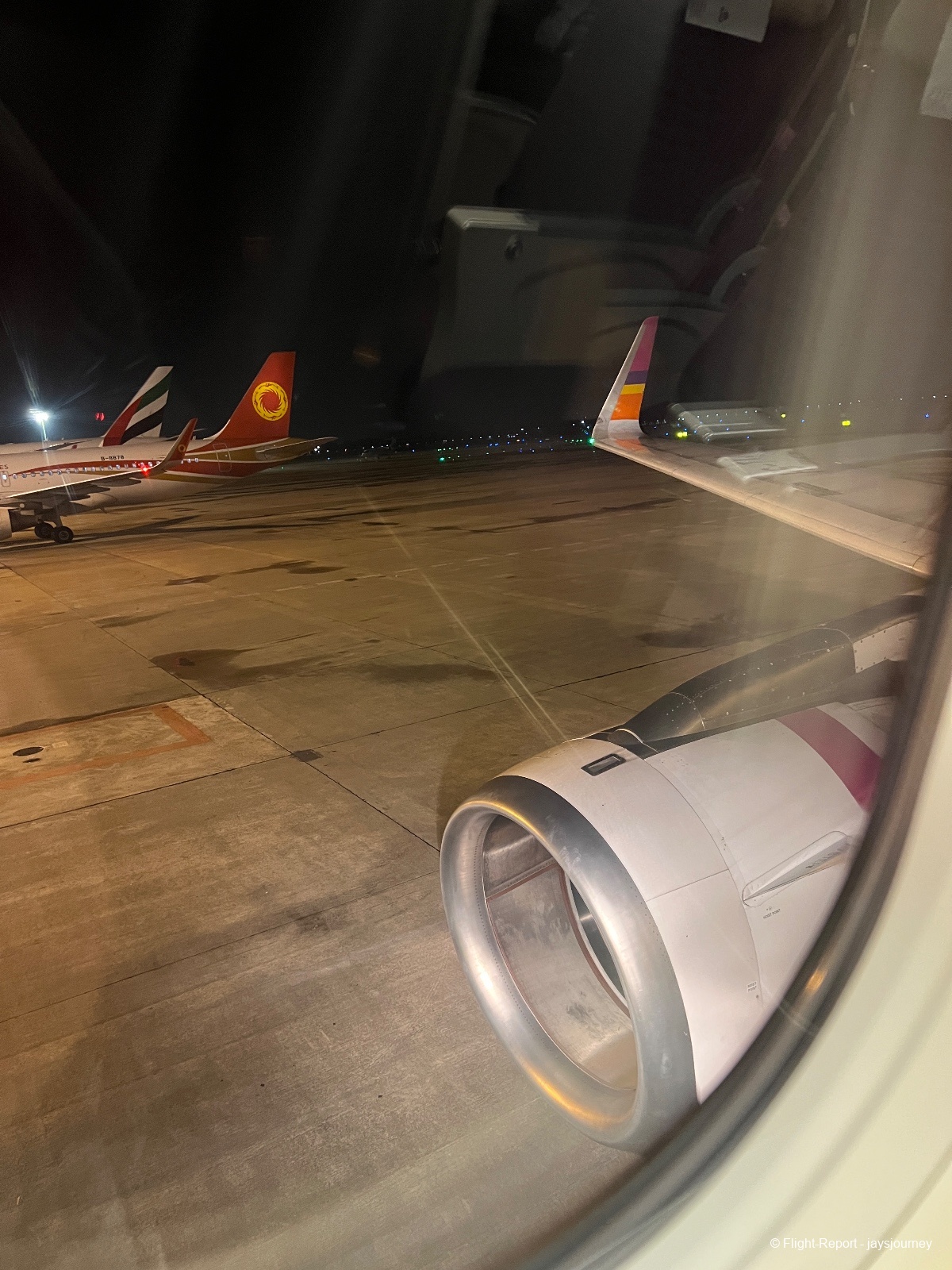
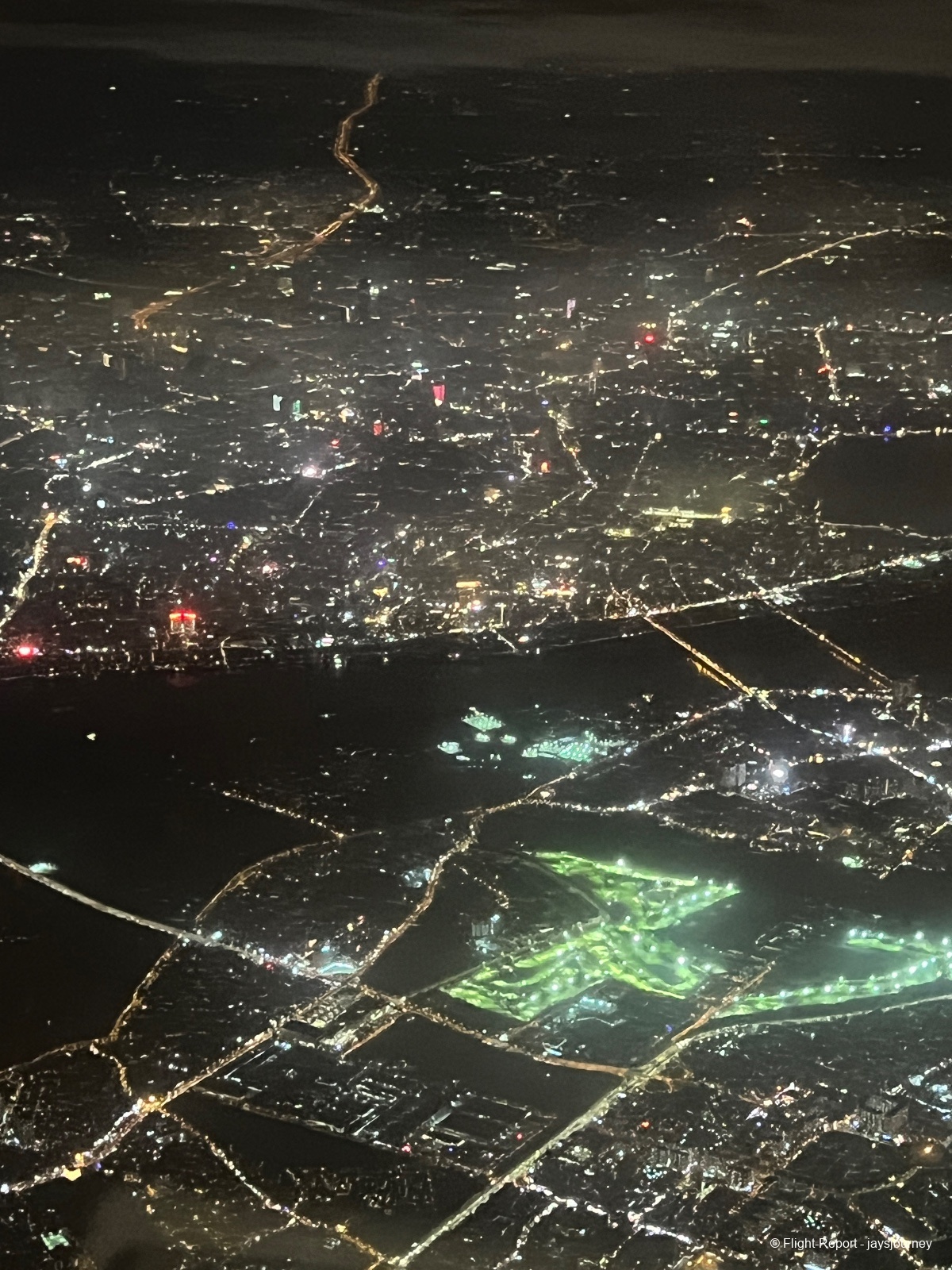
View departing Hanoi.
In-flight
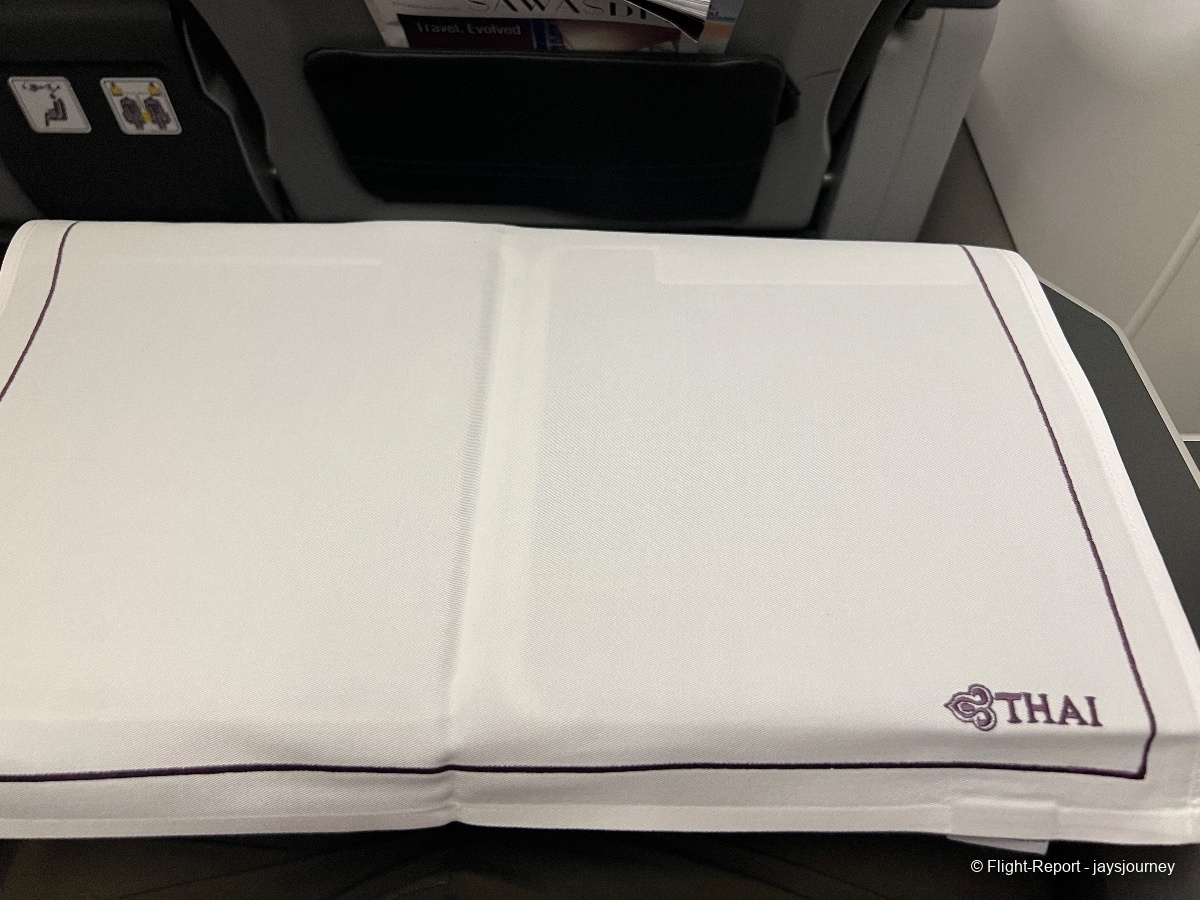
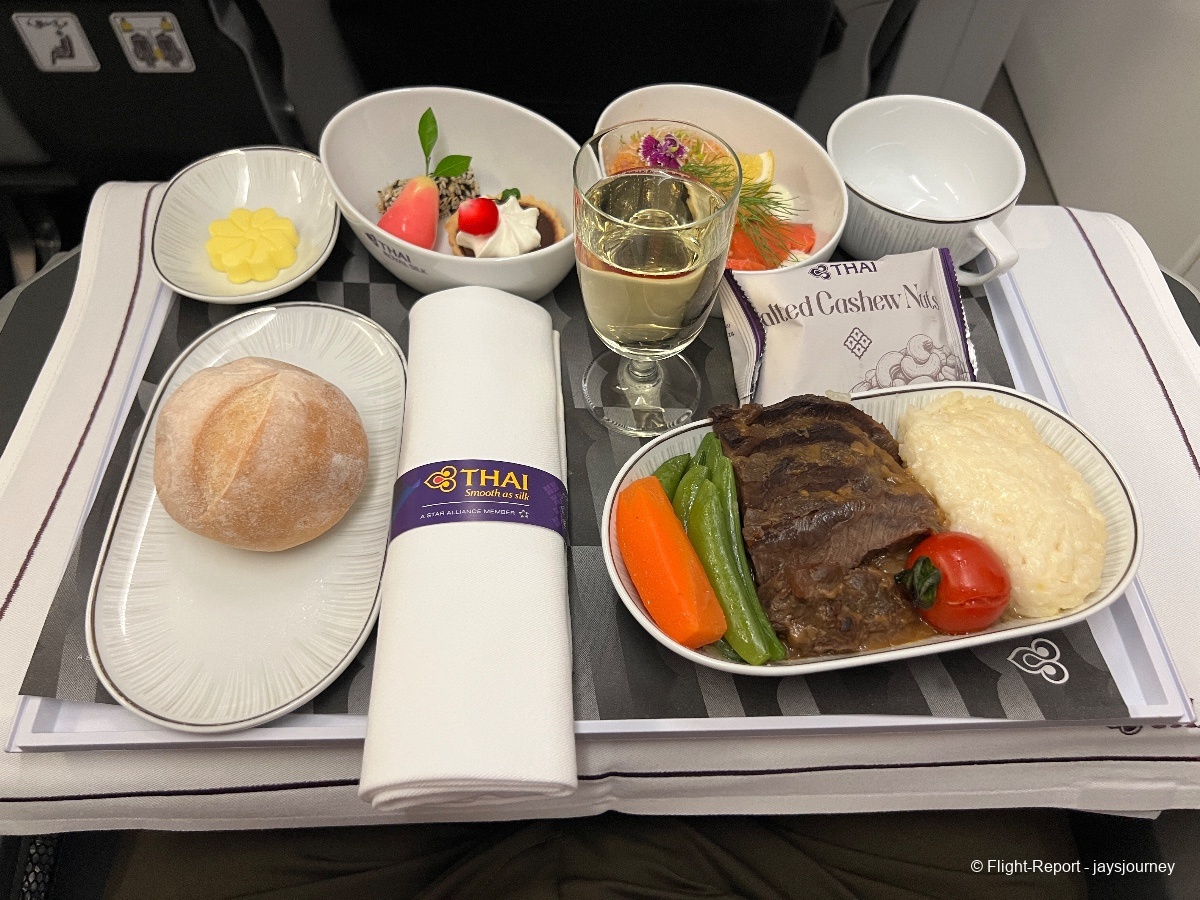
Soon, tthe cabin crew began dinner service. Meal and beverage orders were taken while we were still on the tarmac. For this flight, the choices included braised beef cheeks with risotto or Thai green curry with rice. I selected the former and opted for Champagne as my beverage.
The meal was accompanied by lukewarm bread and butter, a smoked salmon salad, a trio of desserts—two traditional Thai sweets and a chocolate tart—and a small serving of salted cashew nuts.
As this was an A320 flight, specialty cocktails were not offered due to galley limitations. I hope that this constraint will not apply to Thai Airways’ upcoming factory-fresh A321neo aircraft.
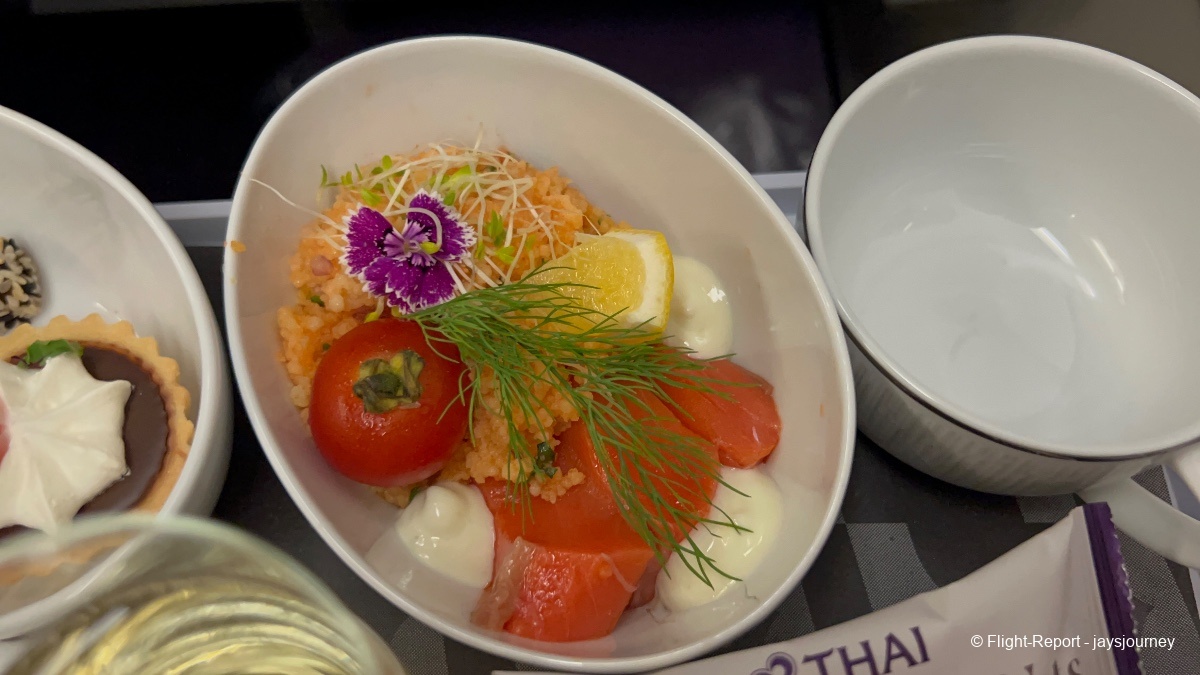
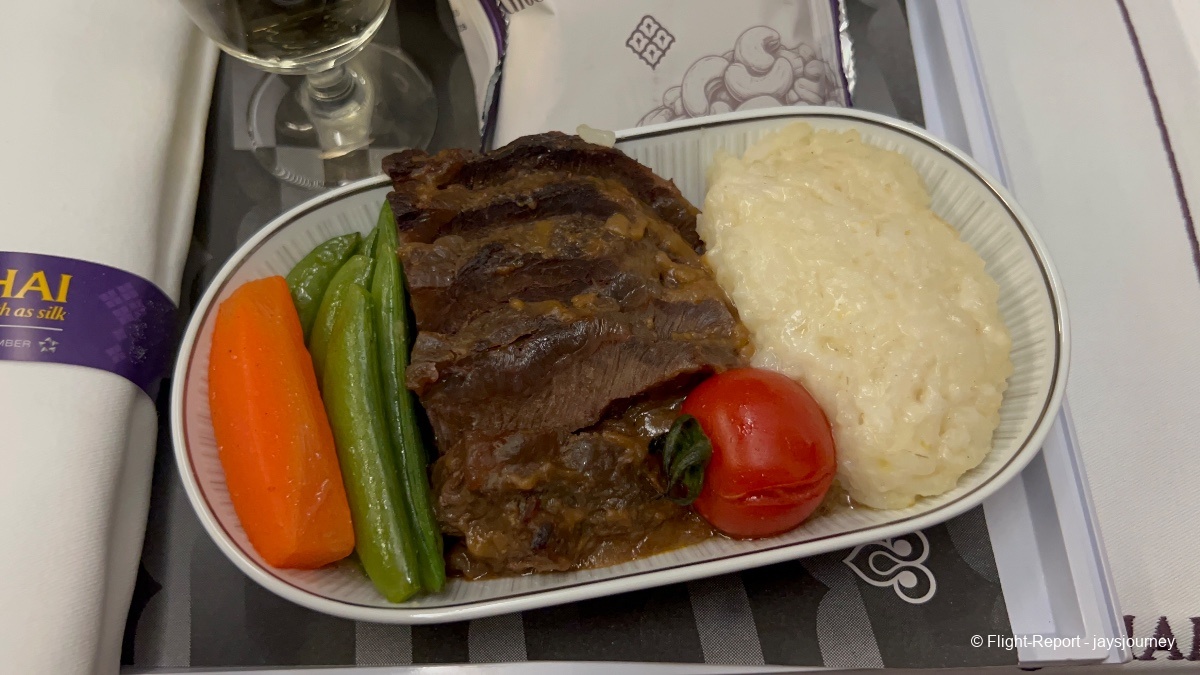
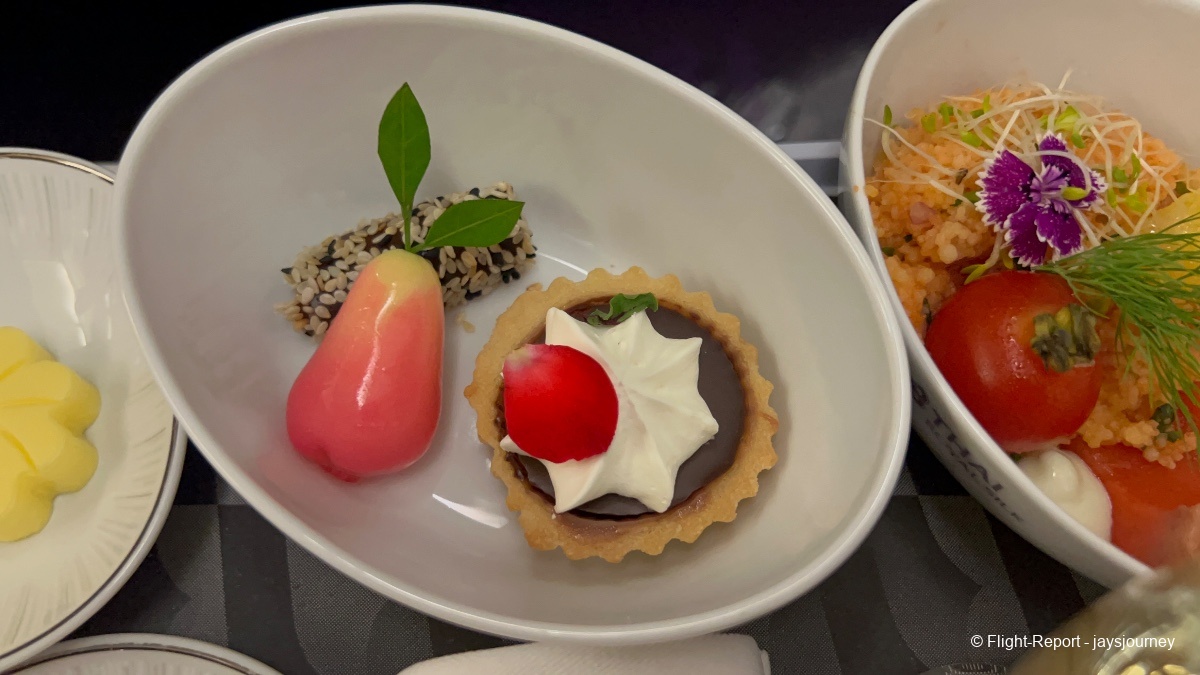
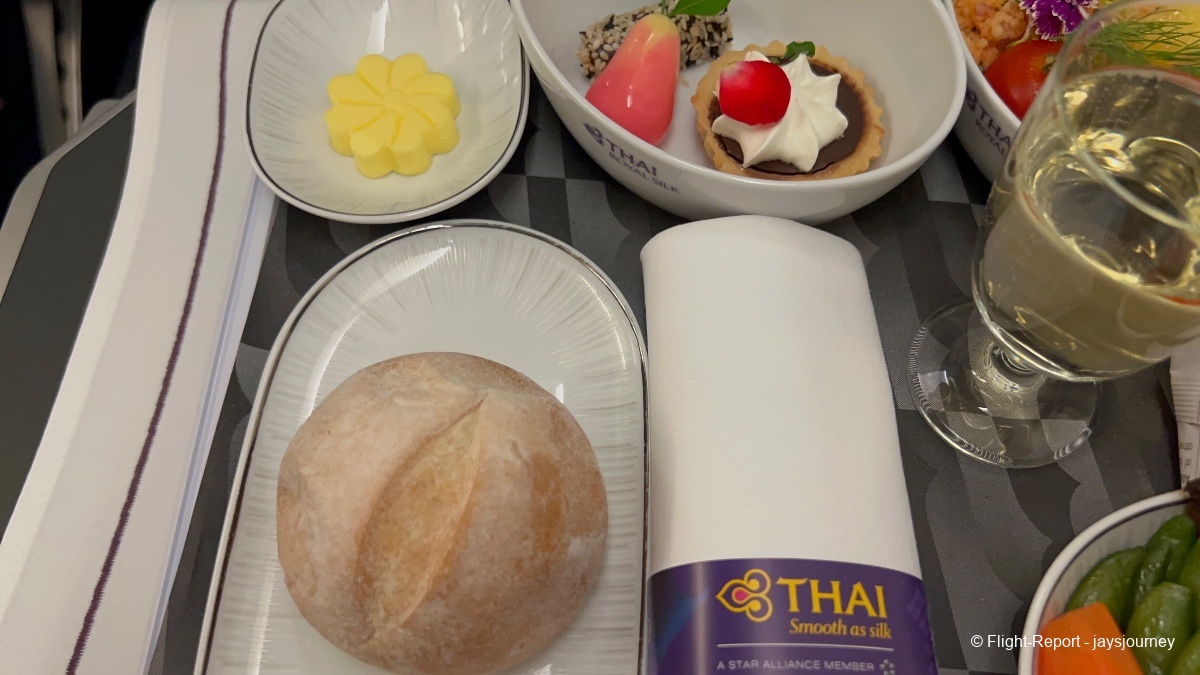
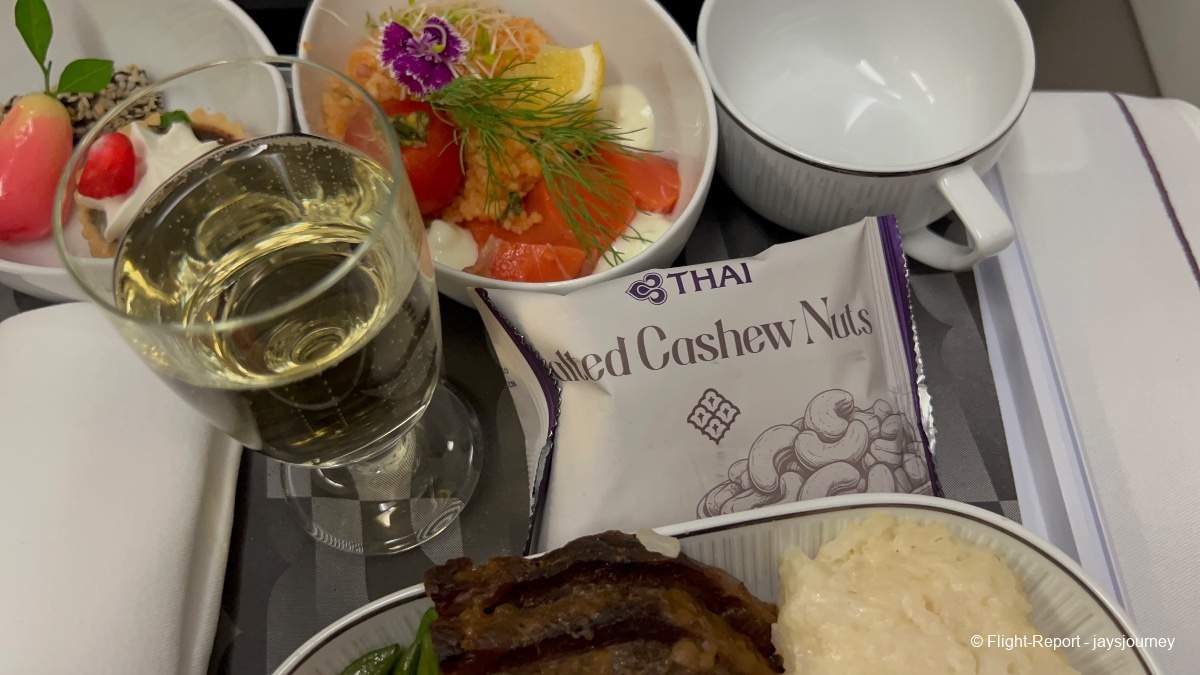
The portion sizes were generous. The smoked salmon salad included several thick slices of salmon, and the main course was quite substantial, featuring four pieces of braised beef cheeks accompanied by a generous serving of risotto. The overall taste was very good, although the risotto could have been slightly less creamy.
I flew with Thai Airways on five occasions in 2025 and I would say that their onboard catering has improved significantly compared to several years ago, particularly in premium cabins and in regional or short-haul economy class.
One area still in need of improvement is the second meal service on long-haul flights. I sincerely hope the airline will consider offering an Asian option in place of the standard omelette and invest in a better quality croissant. On my most recent LHR–BKK flight, the omelette was bland, and the croissant was chewy and brioche-like in texture.
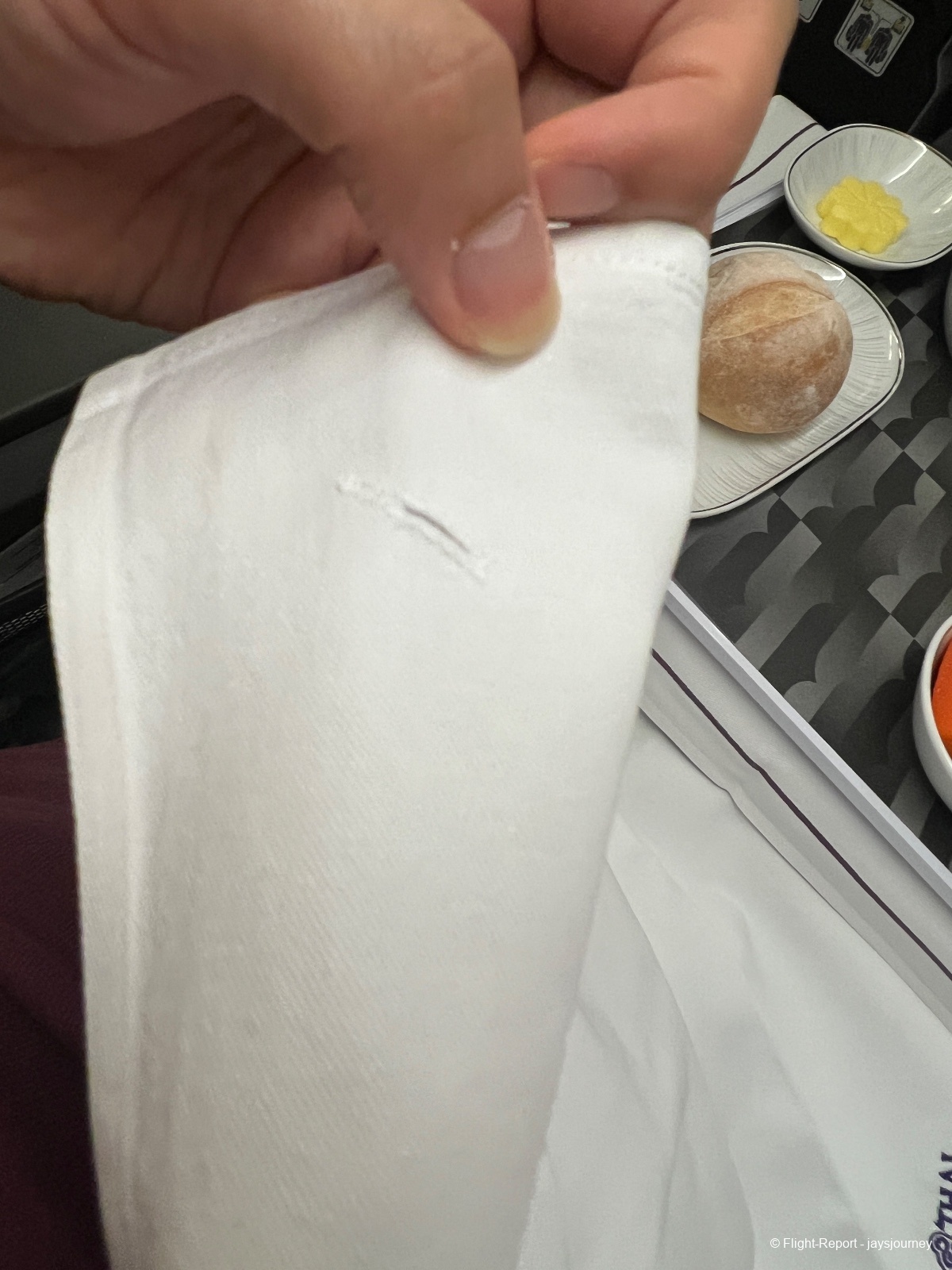
Additional point for having this cut out for button in the napkin.
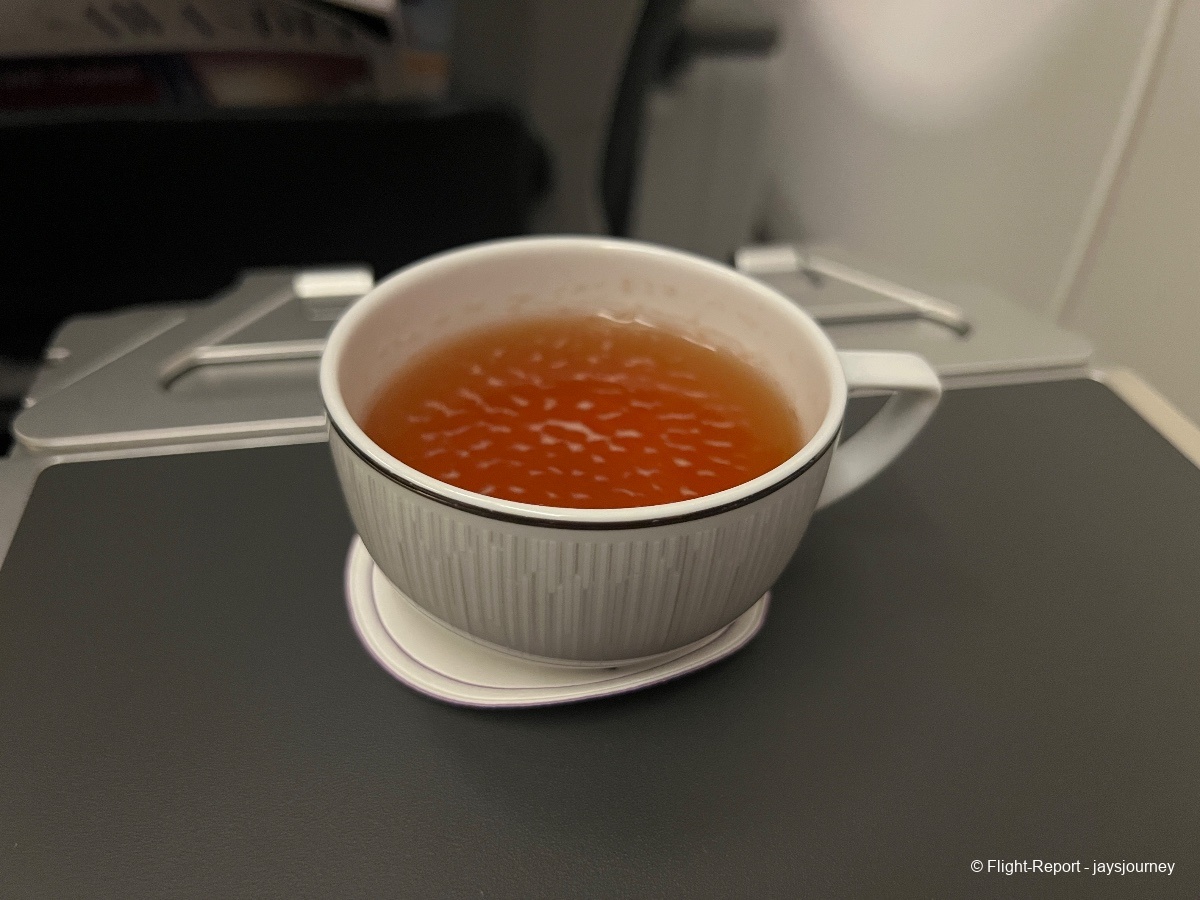
To finish the meal, I had a cup of black tea.
In flight entertainment
None of Thai Airways’ A320 aircraft are equipped with PTV screens. Instead, the airline offers a streaming service called Thai Vision Connect. While it may present some usability issues in Safari due to browser security settings, it functions properly on Microsoft Edge and Google Chrome.
These aircraft are also not equipped with internet connectivity. Additionally, there are no power outlets on board, so make sure that your devices are fully charged prior to boarding and to consider enabling low power mode during the flight.
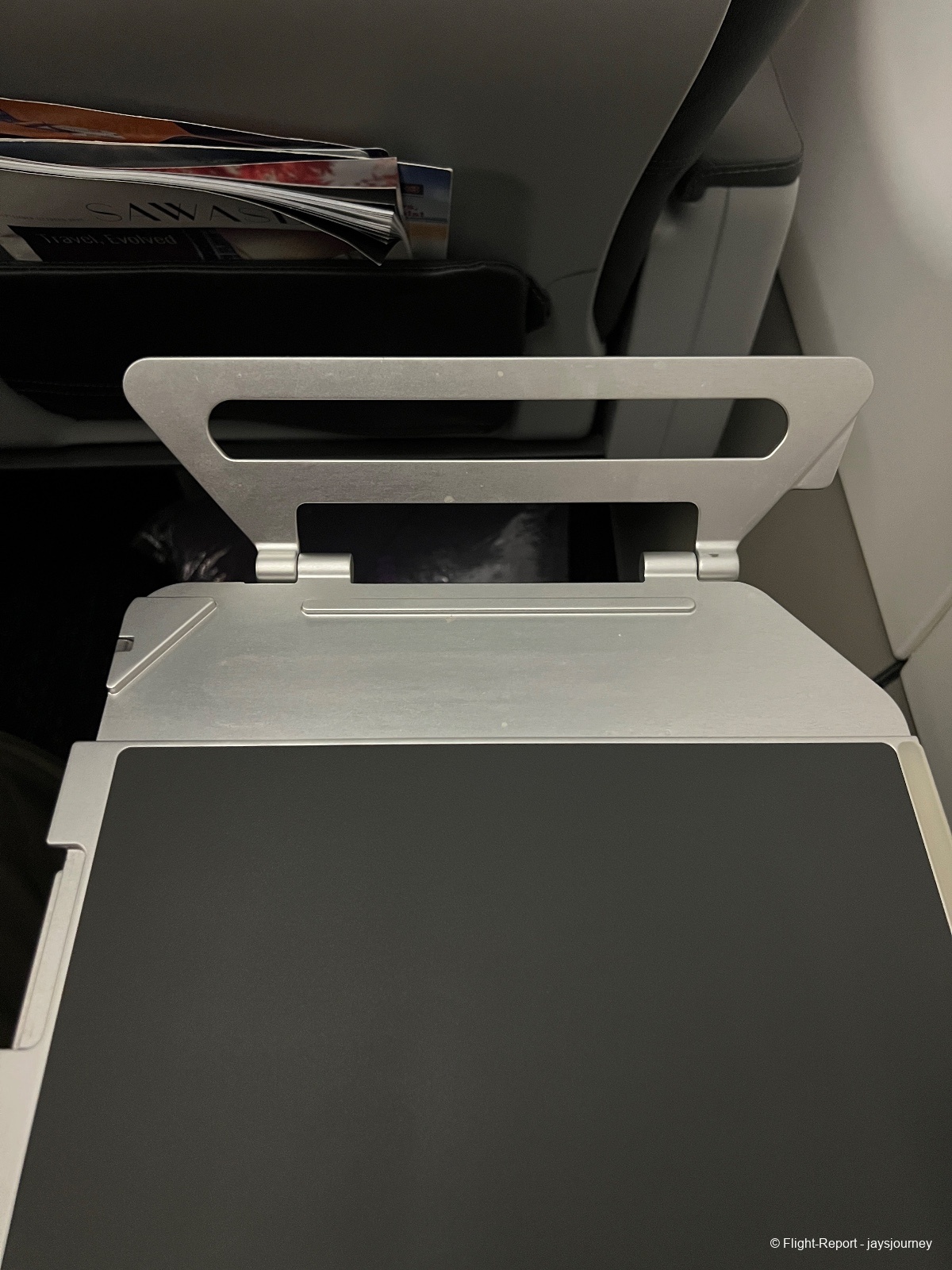
The tray table also comes with a tablet stand
Arrivals
After a brief period of rest, we began our descent into Bangkok Suvarnabhumi Airport. The aircraft entered a holding pattern for a short time north of the city, followed by an uneventful landing. We were then directed to a remote stand near Concourse A, which resulted in a long, circuitous drive around the tarmac. The transfer by bus took approximately 10 minutes before passengers were dropped off near the immigration area.
It is worth noting that no separate bus was provided for Business Class passengers.