


As 2025 draws to a close, I intend to publish these two instalments on Japanese domestic flights — on ANA’s 777-200ER and JAL’s A350-900 — before the year ends. Thereafter, I’ll resume with my other flights in 2025, though these need not be in chronological order — far from it!
Introduction: Domestic flights in Japan, a heaven on Earth for avgeeks
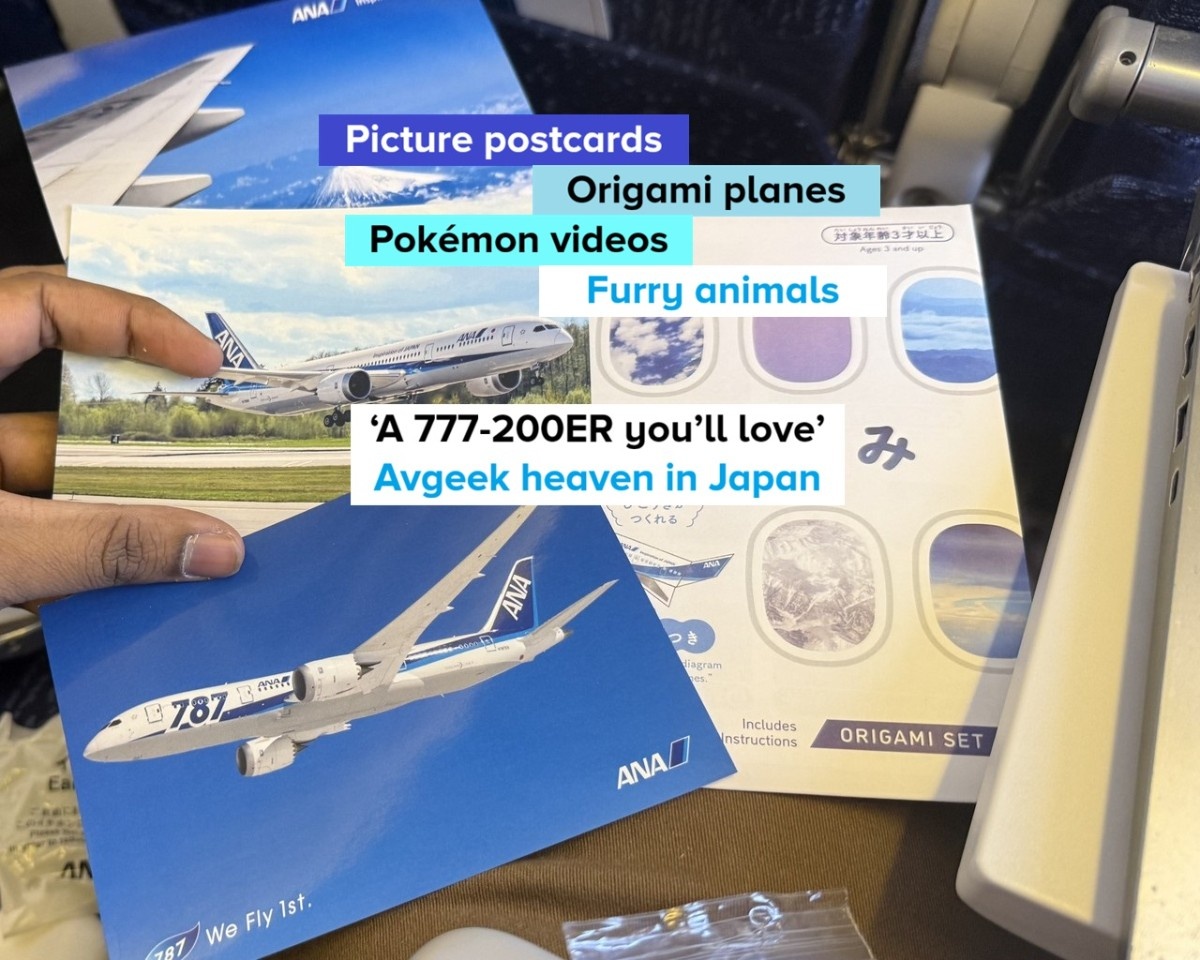
As I’ve been writing about for a few months now, I went on a four-day, five-flight Japan trip in mid-May 2025, overlapping with Vesak, or the Buddhist New Year. One of the key objectives — other than flying Asiana Airlines’ A350 and A380, not long before the brand is retired and merged into Korean Air — was to experience the two big Japanese airlines, All Nippon Airways and Japan Airlines, on domestic widebodies. Specifically, for JAL, I targeted the domestic A350-900 (of course!), while for ANA I decided to fly the domestic 777-200ER. Having only flown Thai Airways’ disgusting 777-200ERs before, including three times on HS-TJW alone, I wanted to see how a 777-200ER that’s actually nice from the inside looked like… and ANA sure didn’t disappoint. (I nicknamed it ‘a 777-200ER you’ll love’!)
I come from India (in case you don’t know from my previous reports!), one of the largest domestic aviation markets globally… but one with almost zero domestic widebodies. This is thanks to the utter, near-total dominance of IndiGo and its completely no-frills, bare-bones A320/1neo product, with some presence from Air India (Express), Akasa Air and others. (However, since 2024, Air India’s A350 has operated some domestic routes on an on-and-off basis, as I’ve flown before.) So for an Asian country other than China to have such an extensive domestic widebody offering, with dedicated, modern subfleets and a superior passenger experience — not to mention free Wi-Fi, inflight gifts and a huge shopping offering (though very little catering) — was a revelation to me.
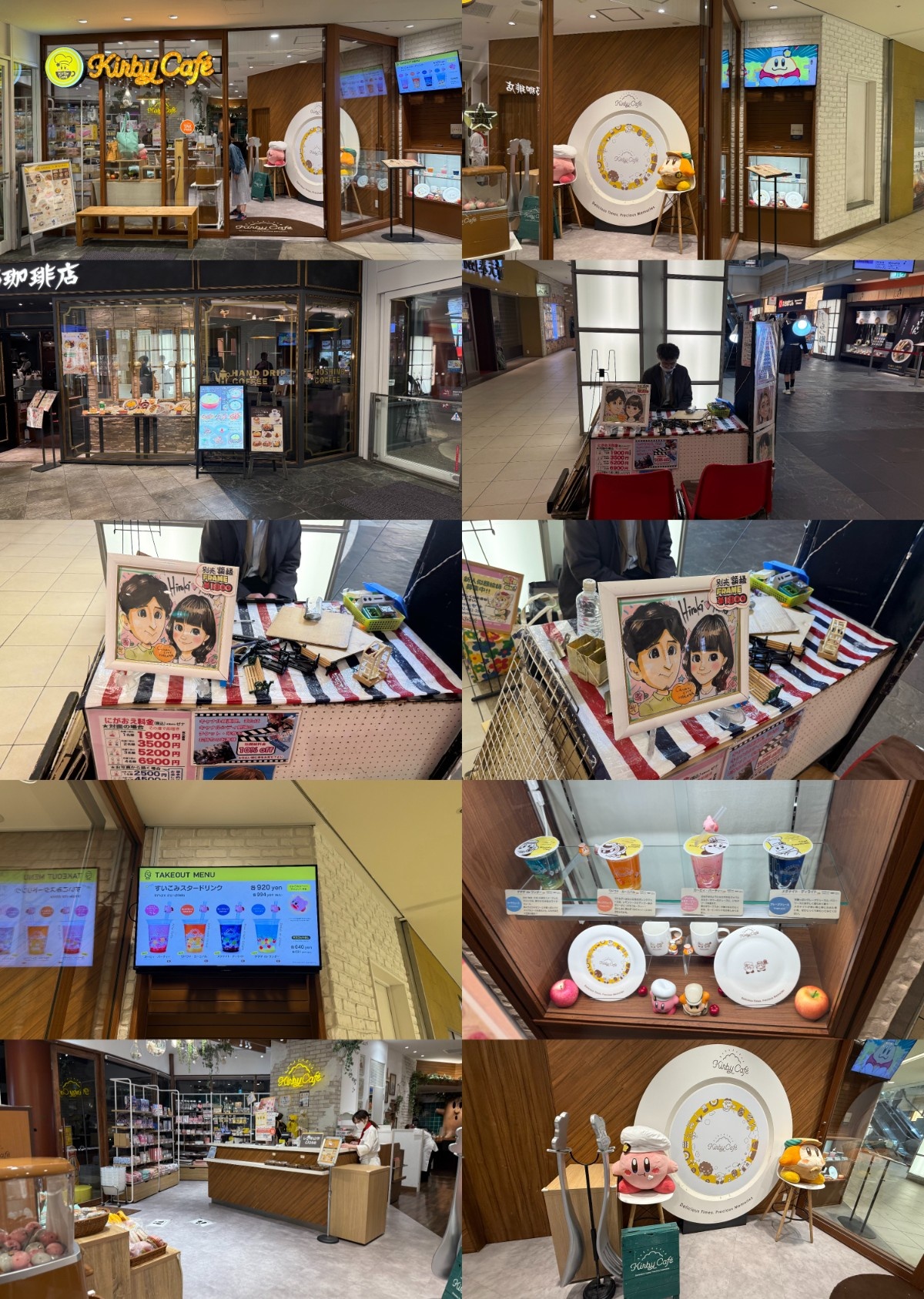
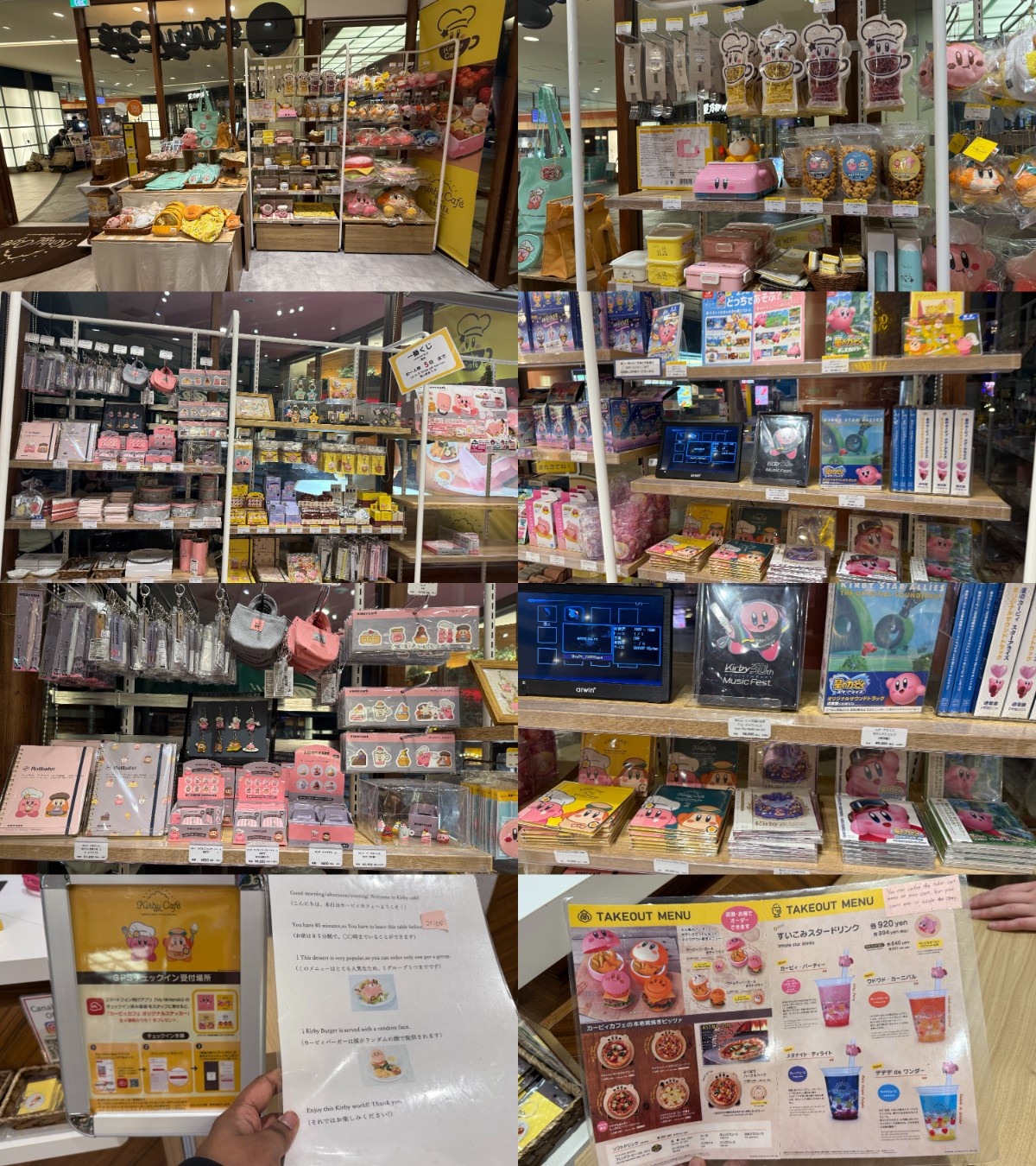
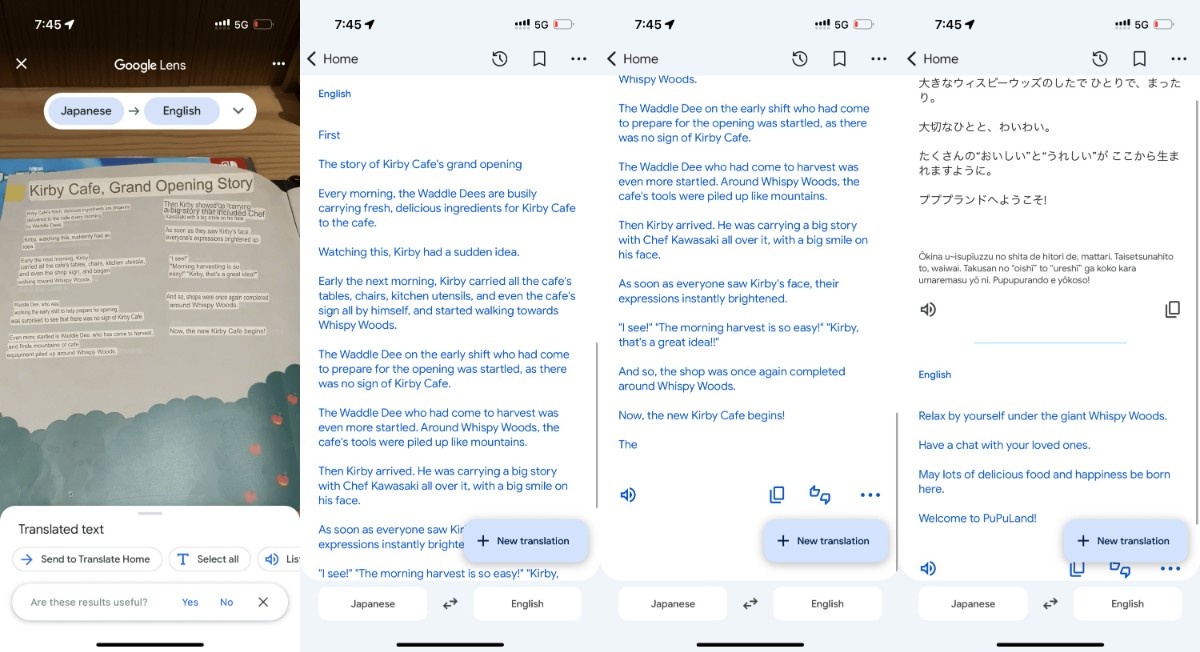
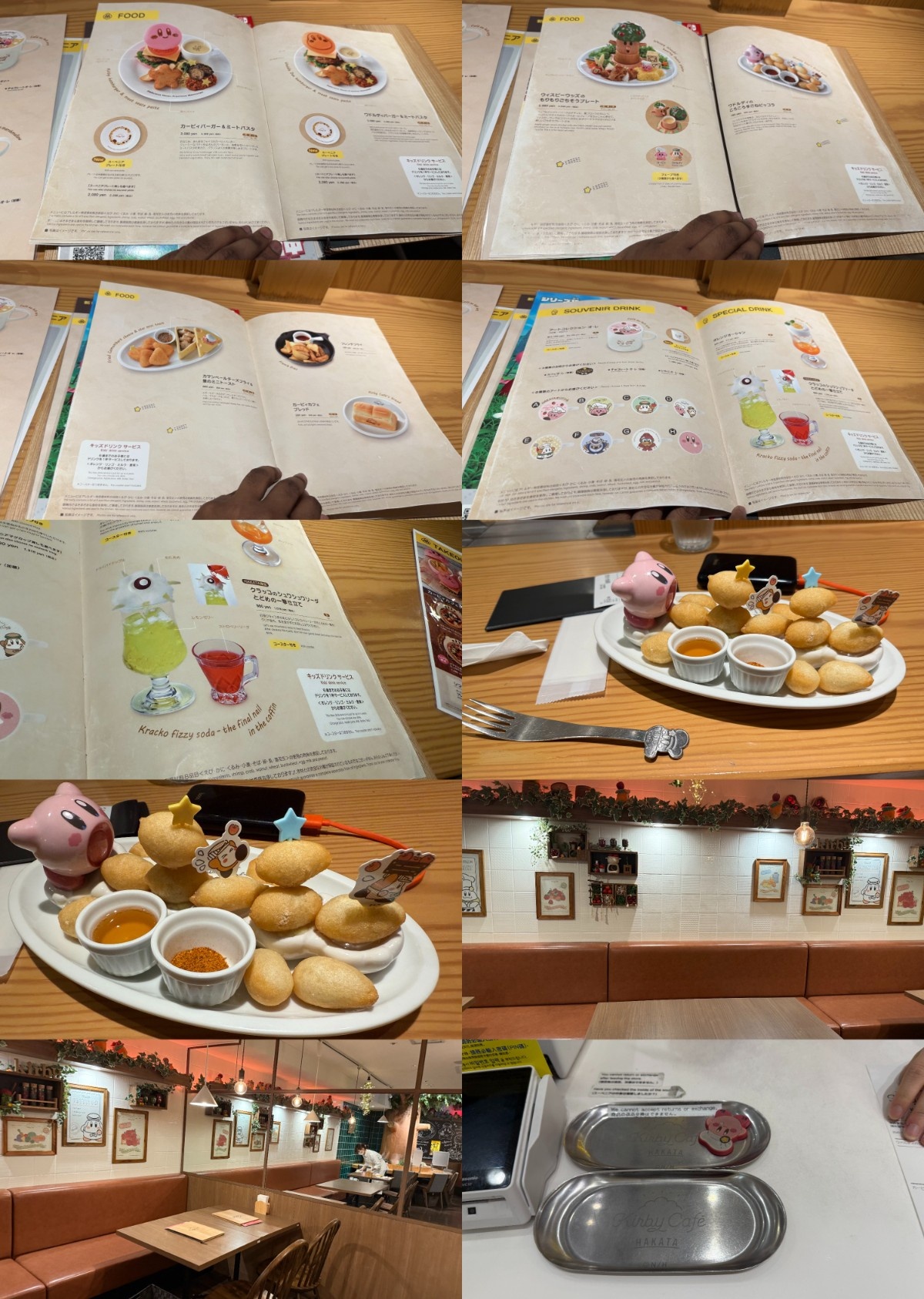
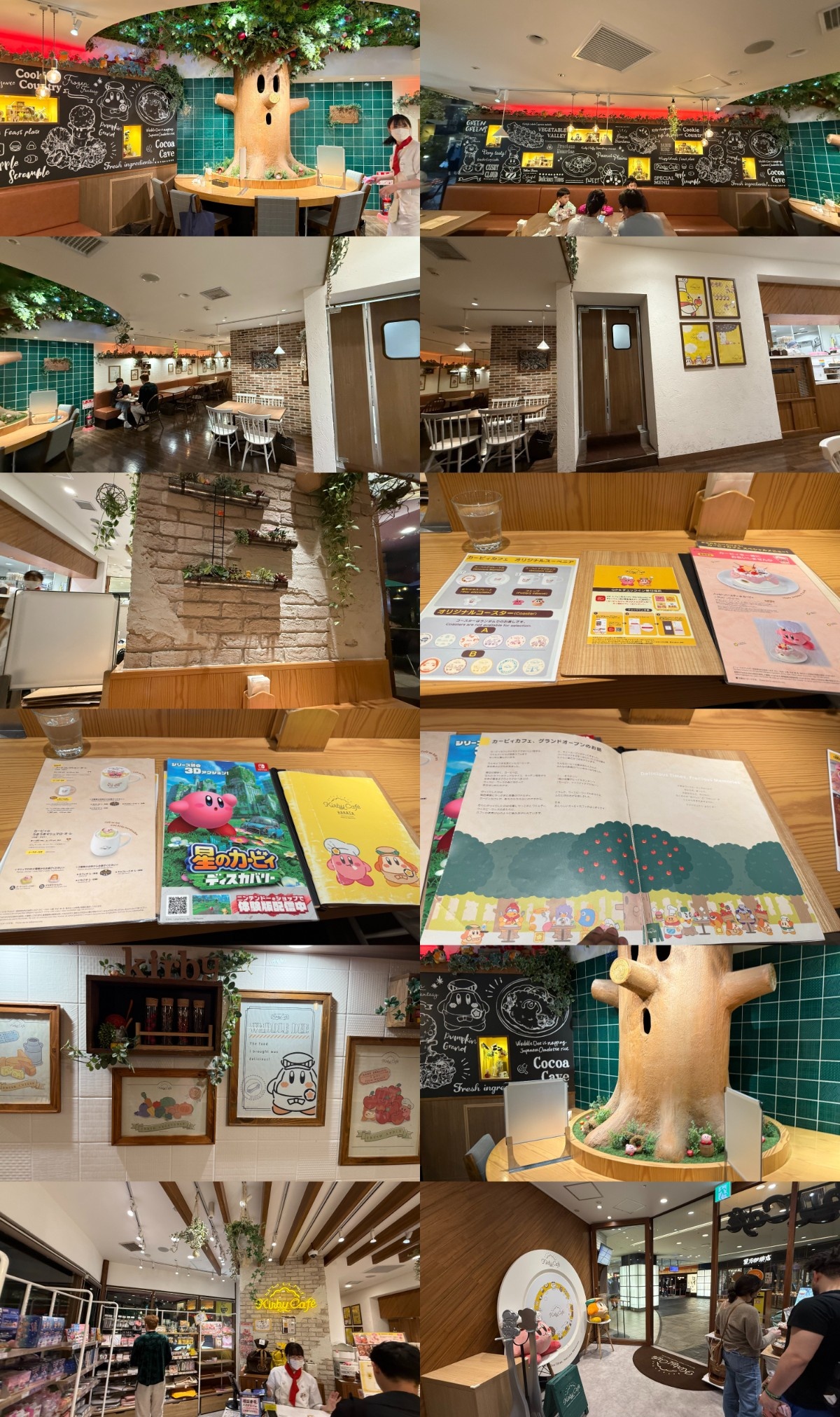
As for where to fly from Tokyo–Haneda (HND), the best city that I could plan for with my brief four-day trip was Fukuoka (FUK), the biggest city on Kyushu island in the far southwest of the country. Osaka, Japan’s second-largest city, does not receive any A350s from JAL, and Sapporo was too far north for comfort, so it had to be Fukuoka. And since Fukuoka is the home of Ramen Ippudo, how can one resist going there — even if only for one night, as I did — and sampling the gustatory delights on offer? (Indeed, I visited the Hakata, Fukuoka, location of the impossibly CUTE Kirby Café — one of only three across the country — as you’ll see in the Travelling Bonus at the end.)
Moreover, Japanese airlines know an avgeek when they see one, and, more often than not, tend to pamper them with onboard gifts that they weren’t even expecting. All you need to do is take a bunch of pictures — of course, respecting others’ privacy — in the airport and on the plane. Chances are you’ll be informed by one of the friendly flight attendants that she has a gift for you to take home. While ANA gave me a bunch of picture postcards and an origami (paper-folding) plane, no sooner did the JAL A350’s lead cabin attendant see my enthusiasm than she posed to take a picture with me in front of the Tsurumaru crane logo at the entrance! They may not have the Westernised branding perfection of Cathay Pacific or Malaysia Airlines, but perhaps no one else in the world — not even SriLankan, surprisingly! — can do what ANA or JAL can in terms of honest, heartfelt hospitality. Let’s get into it!
Flight routing
- 1
- 2
- 3NH259 | Tokyo–Haneda to Fukuoka | 12 May 2025 | 777-200ER | JA742A
- 4JL310 | Fukuoka to Tokyo–Haneda | 13 May 2025 | A350-900 | JA06XJ (Class J)
- 5
Pre-departure: The nearest airport bus is just round the corner
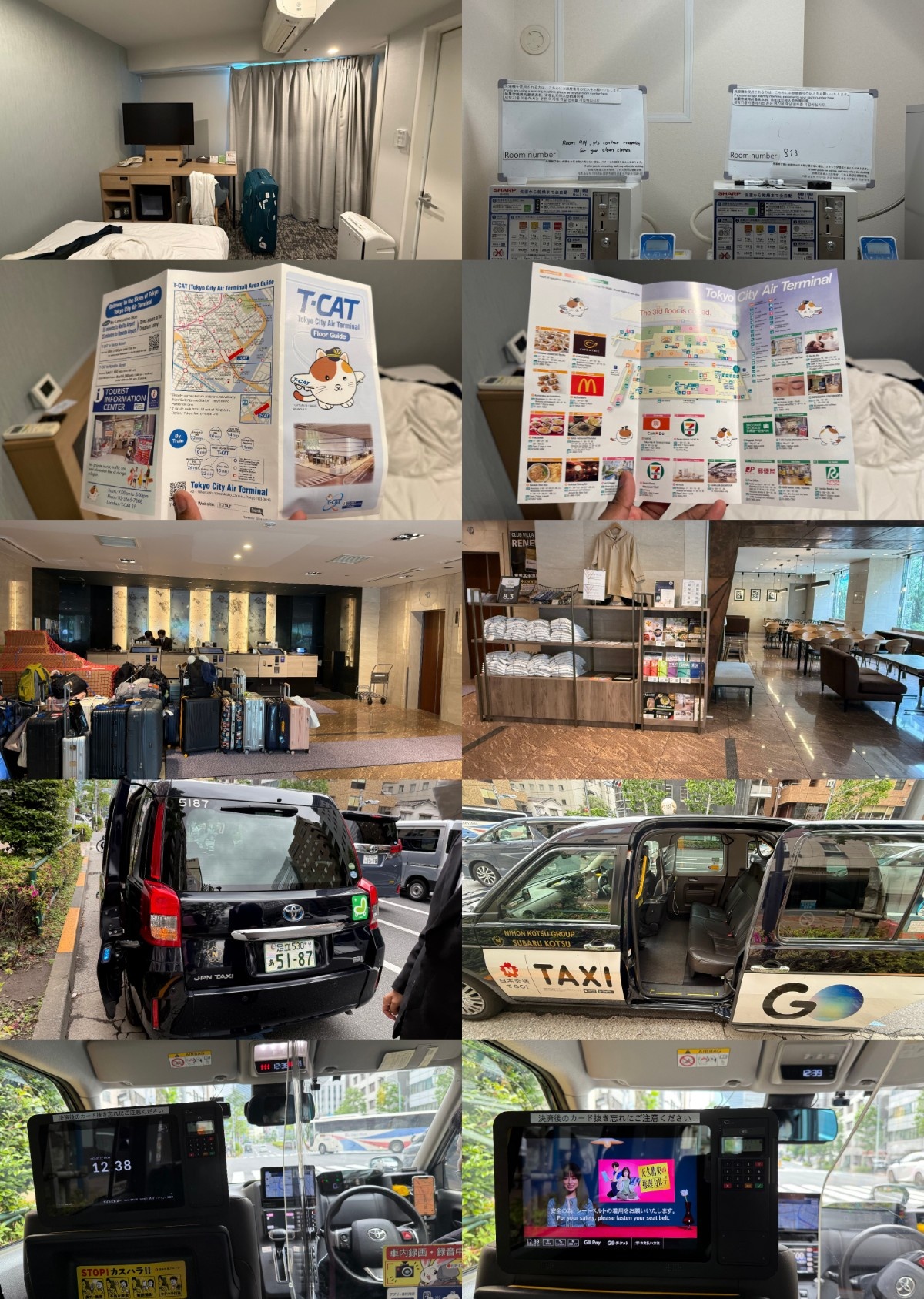
Monday, 12 May, noon. Vesak Day. It was my good fortune that the Tokyo City Air Terminal, or T-CAT, was a stone’s throw away from the Hotel Villa-Fontaine Tokyo Kayabacho, where I stayed for two nights. All my worries of hauling bag and baggage to the nearest subway station disappeared. An Uber to this place did not cost as exorbitantly as it usually does in Tokyo. Indeed, the hotel had given a brochure on T-CAT’s facilities, including round-the-clock buses to both Haneda and Narita Airports, so all I had to do was read it.
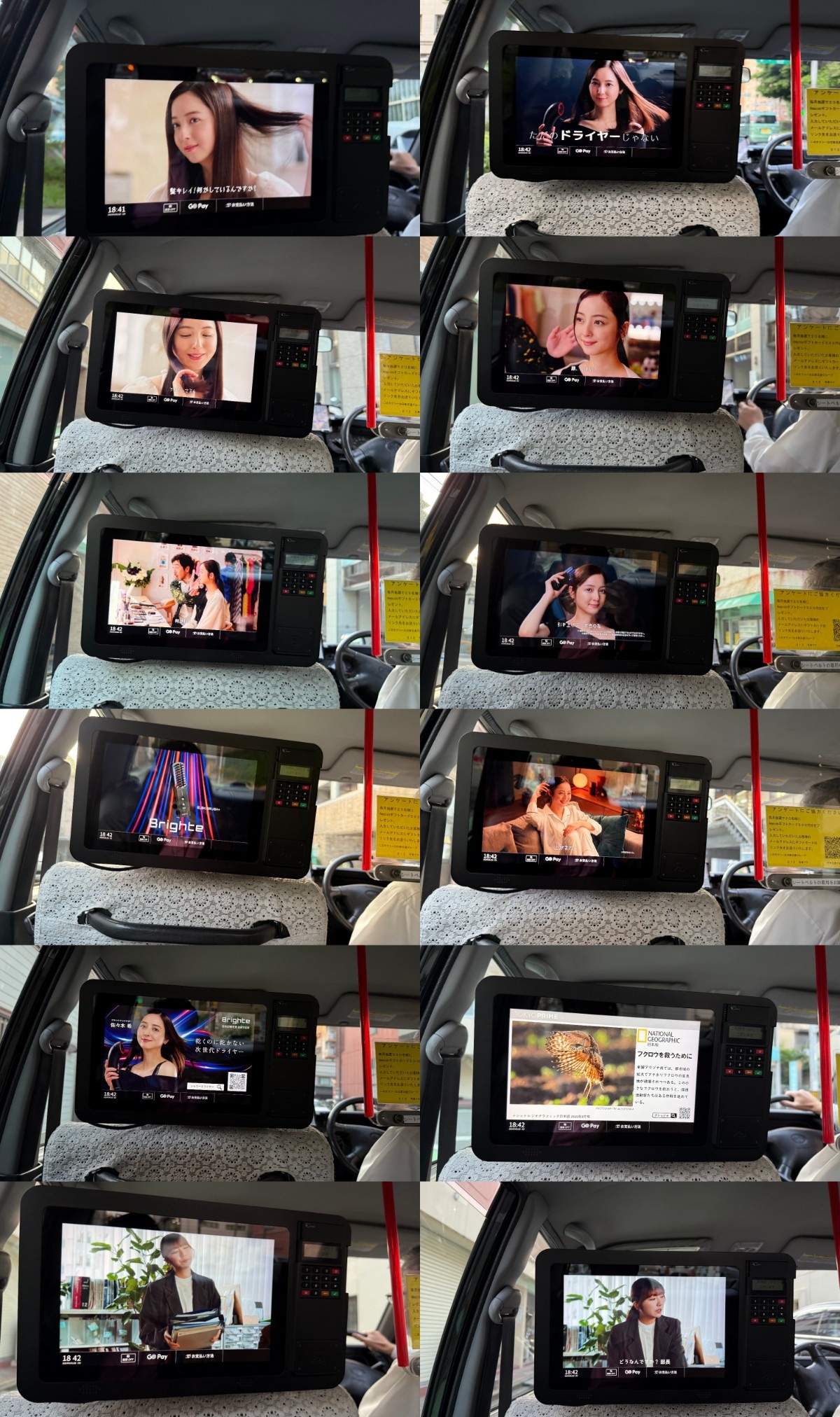
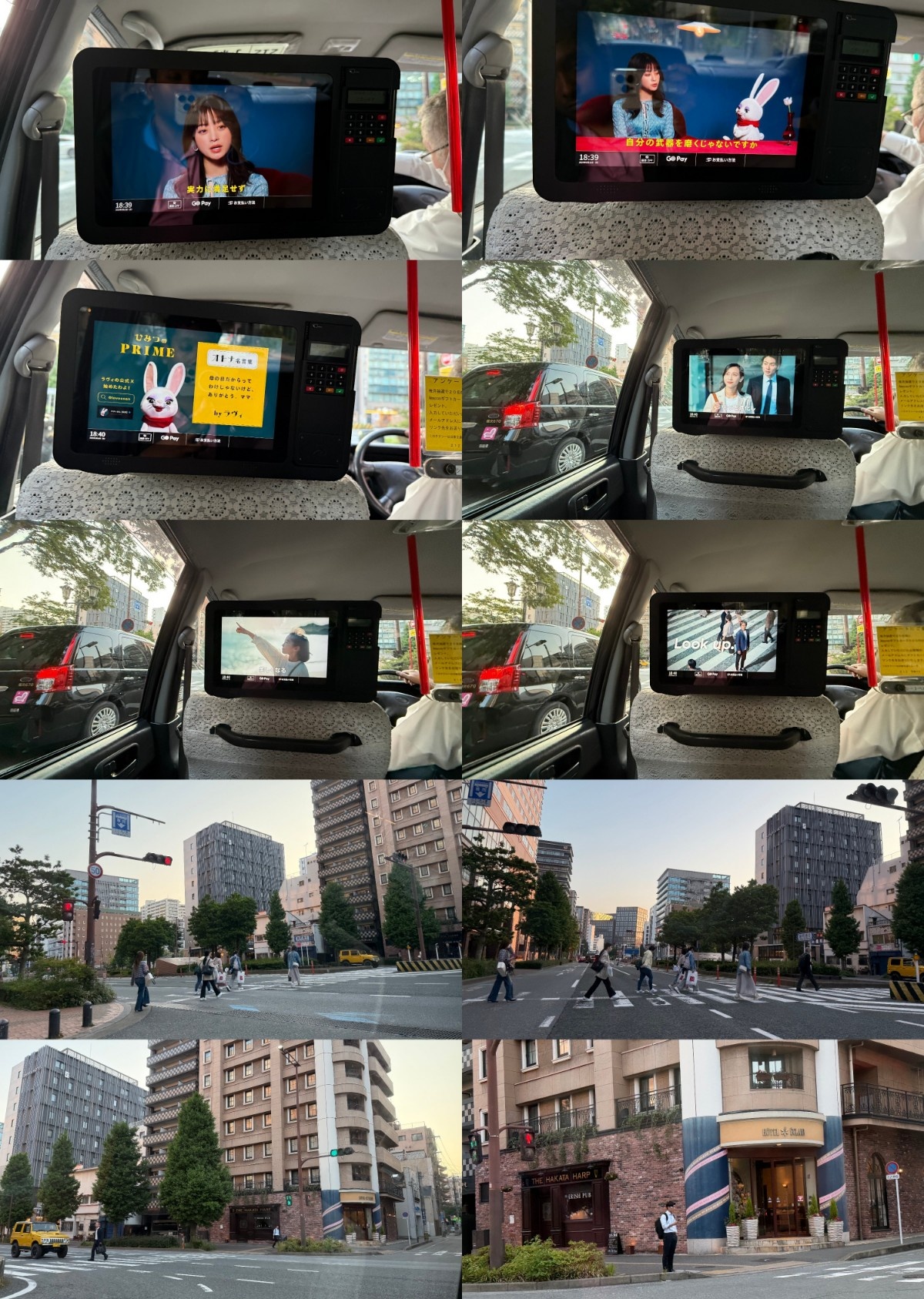
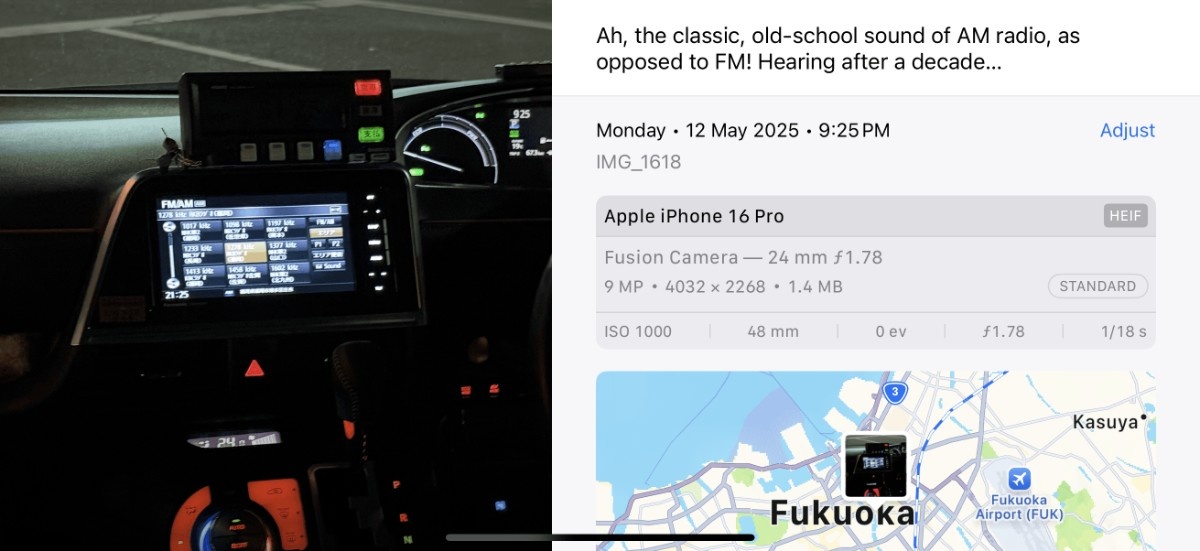
At half-past twelve, after checkout, I summoned an Uber for T-CAT, and a sleek back Toyota JPN Taxi — also found on Hong Kong roads as the Comfort Hybrid — turned up. With its big square windows, overhead clock and modern rear display including payment methods, the JPN Taxi is as sexy (from the inside, that is) as taxis can get.
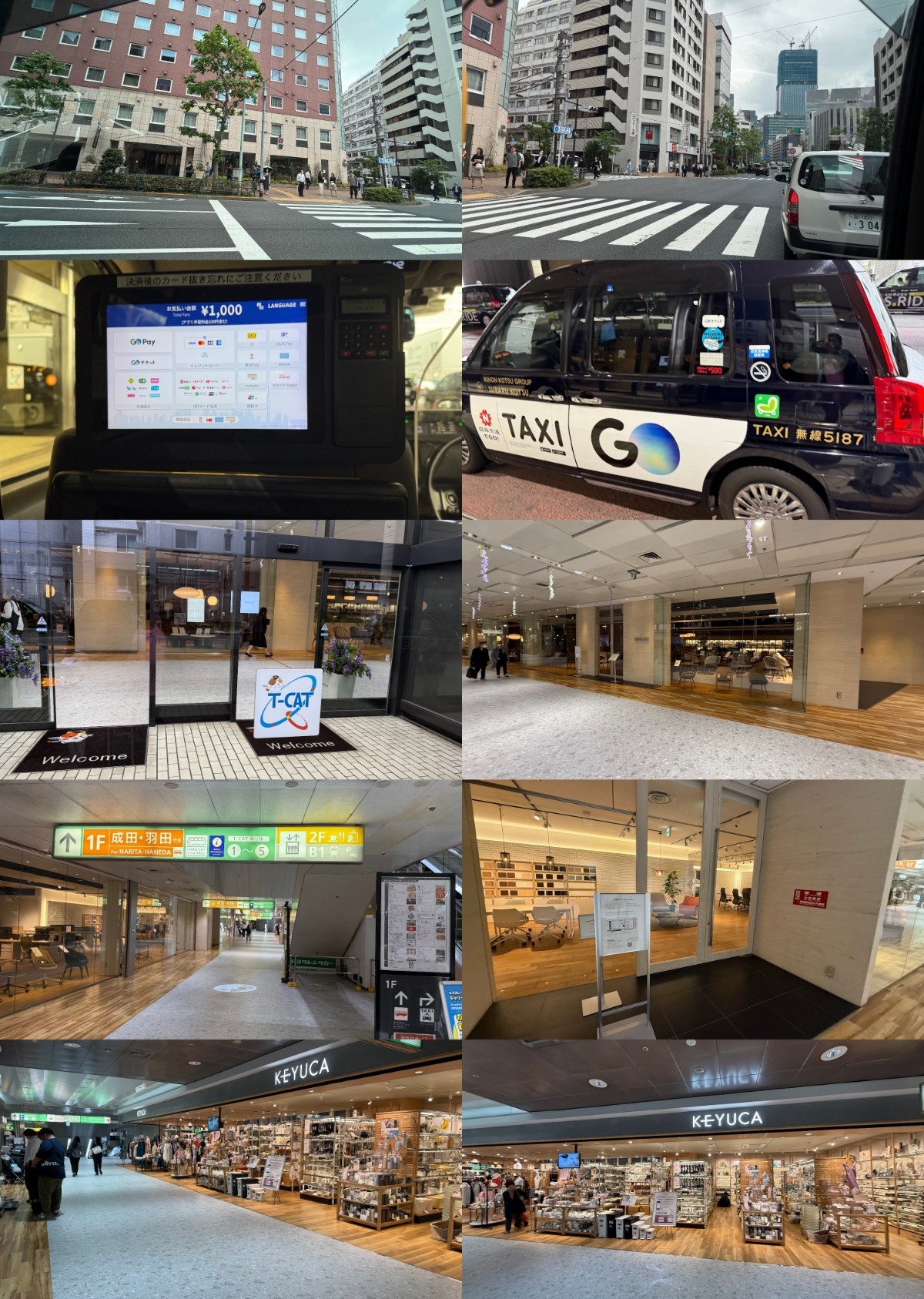
The fare was a mere ¥1,000 for the five-minute trip across the Kamejima River, a far cry from the tens of thousands of yen it can be otherwise. This was hence the only time I didn’t feel guilty for spending on a taxi in a city with such strong public transport!
And then, hey presto, I reached the place, and was welcomed by the feline mascot on its logo at the entrance. (This is Japan, after all: here, corporate mascots are a way of life!)
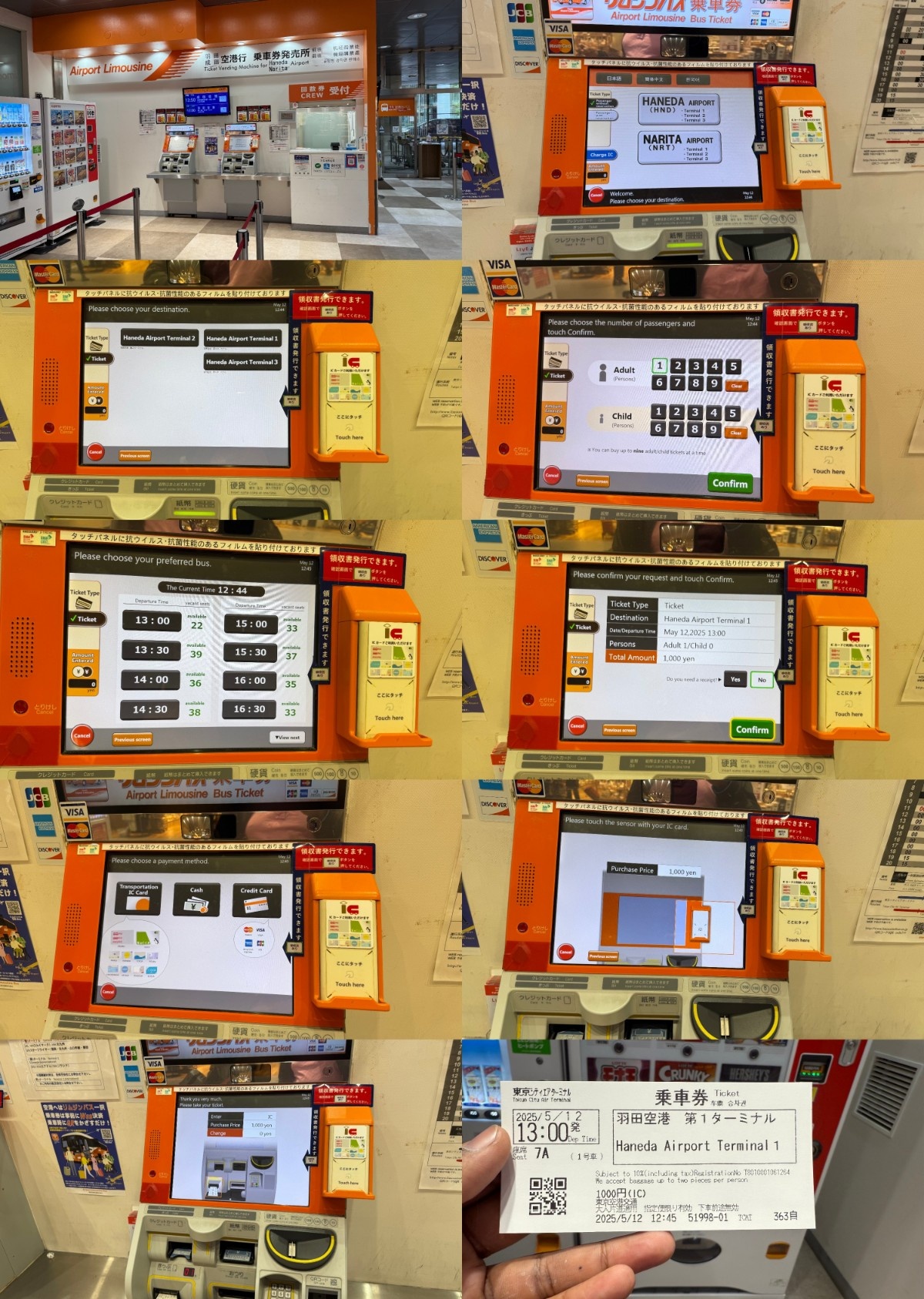
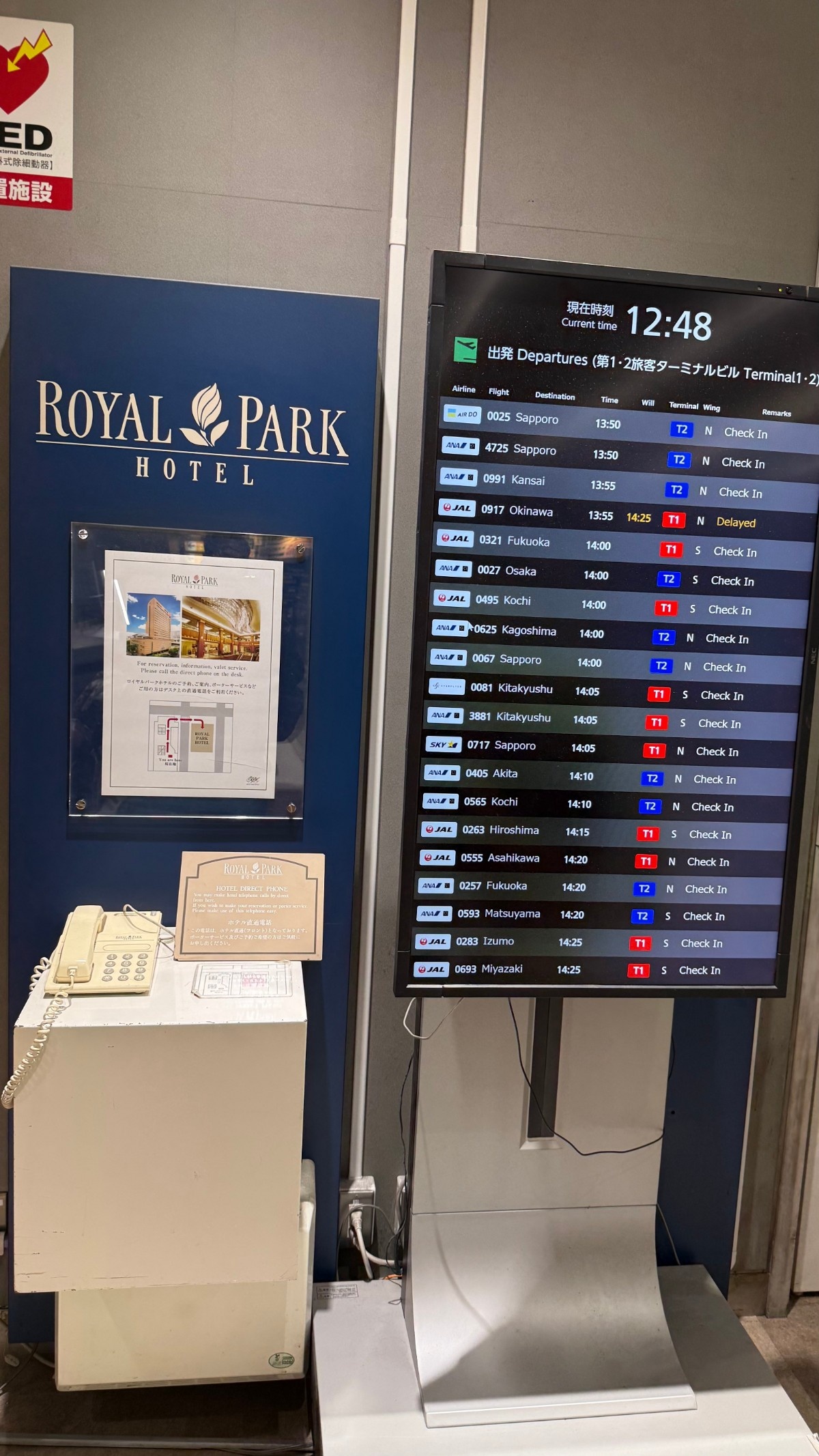
I approached the Airport Limousine buses’ vending machine, and, with a few button-presses and a tap of my virtual Suica card, was issued a ticket. I was briefly tempted by all the vending machines, but restrained myself. People waited as a list of upcoming domestic departures at HND was shown on a nearby screen.
And, of course, English was never a problem — at least in the written form — as all instructions were clearly given.
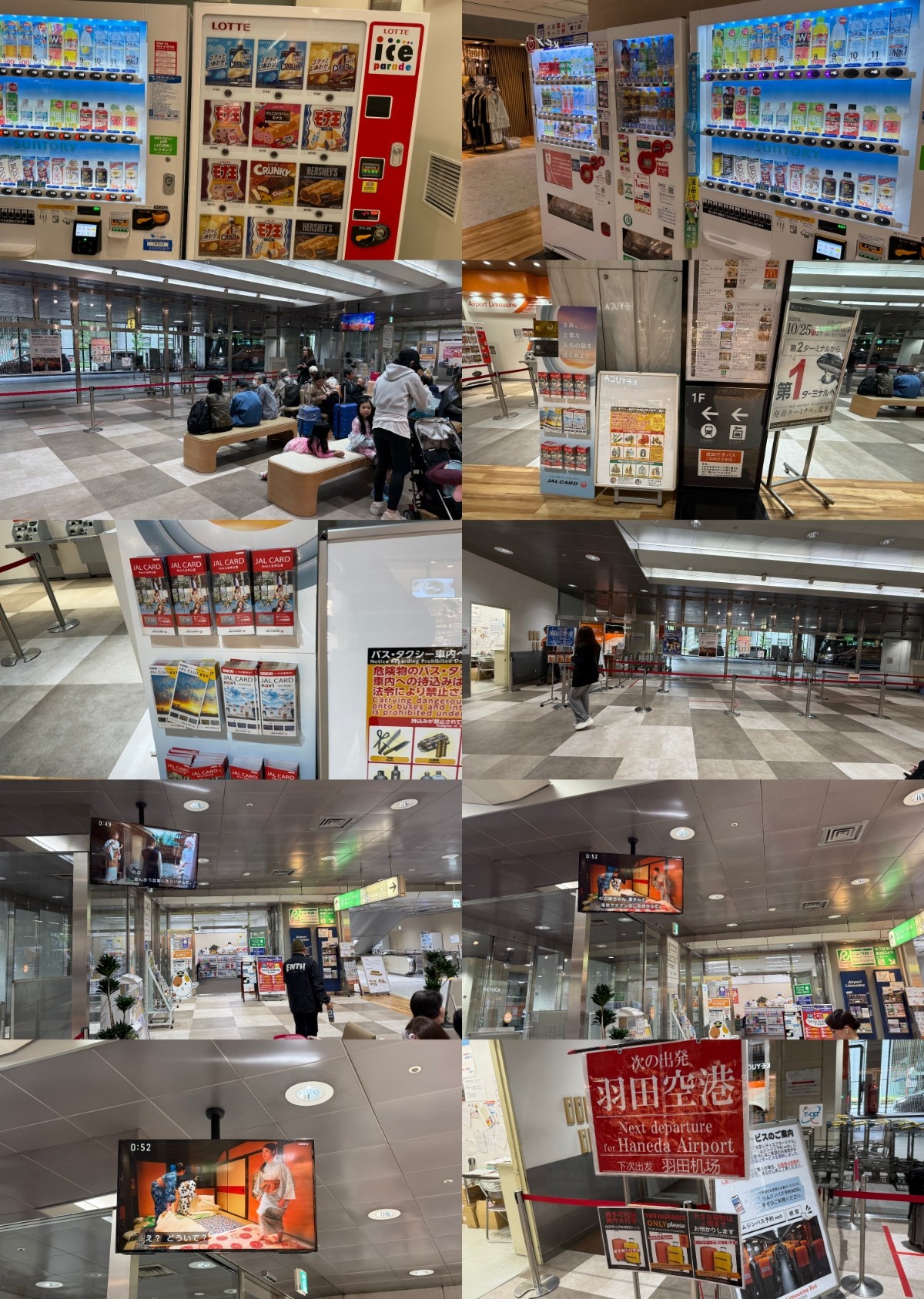
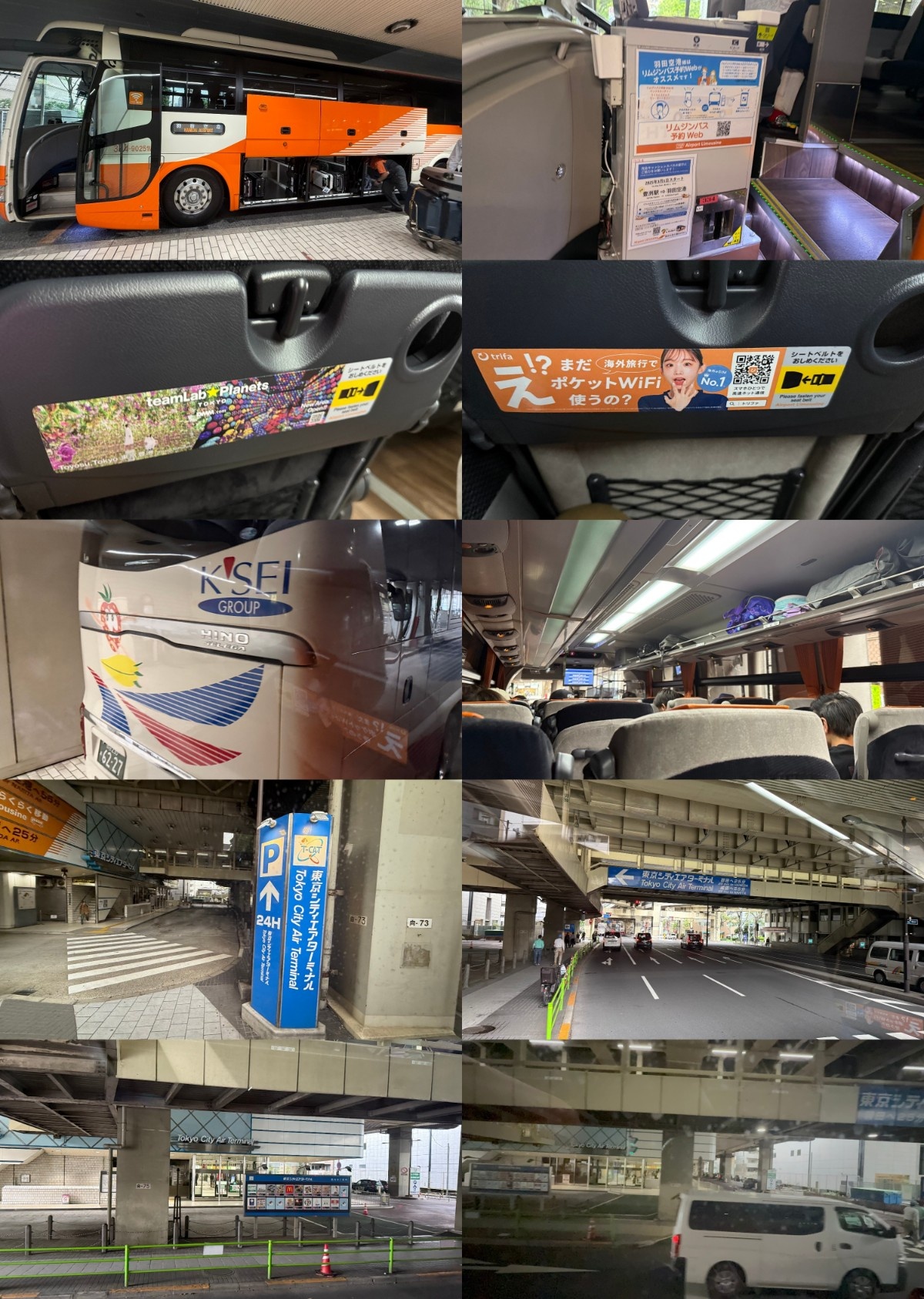
Presently a bus bound for HND turned up, and I handed all my luggage to a porter, who stowed it in the hold below the seats. With free Wi-Fi and charging all around, what wasn’t to like?
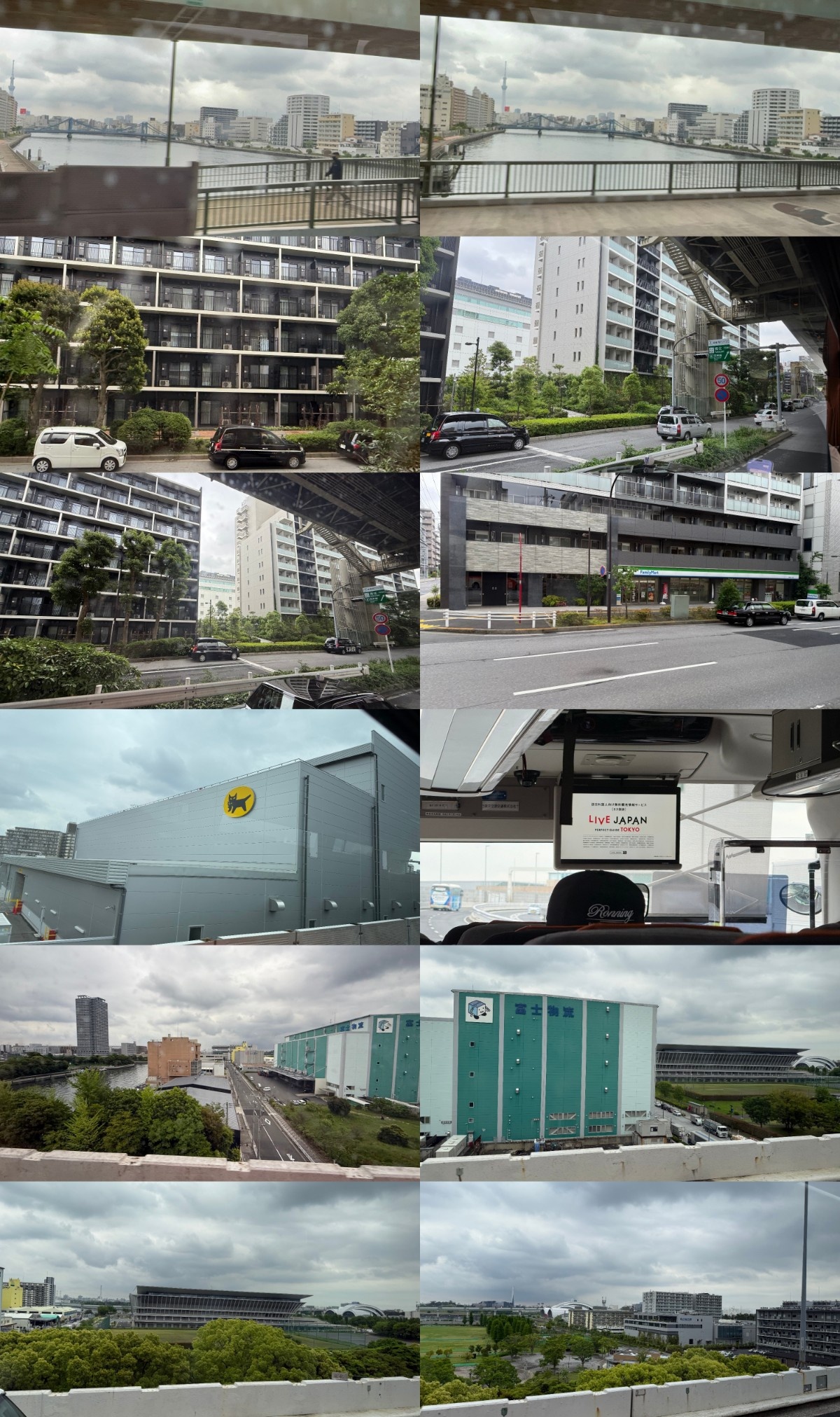
In no time, the wide, modern apartment blocks gave way to more industrial-looking surrounds, with warehouses that included the famous black-cat logo of Yamato Transport. This country loves cats, it was plain to see…
I used the free Wi-Fi to check out the onboard offerings on my upcoming flight — which also had free Wi-Fi, plus a digital inflight magazine! — and book a similar limousine bus for the next day, from HND to NRT. My mom’s good wishes remained with me, as always, even in this distant land!
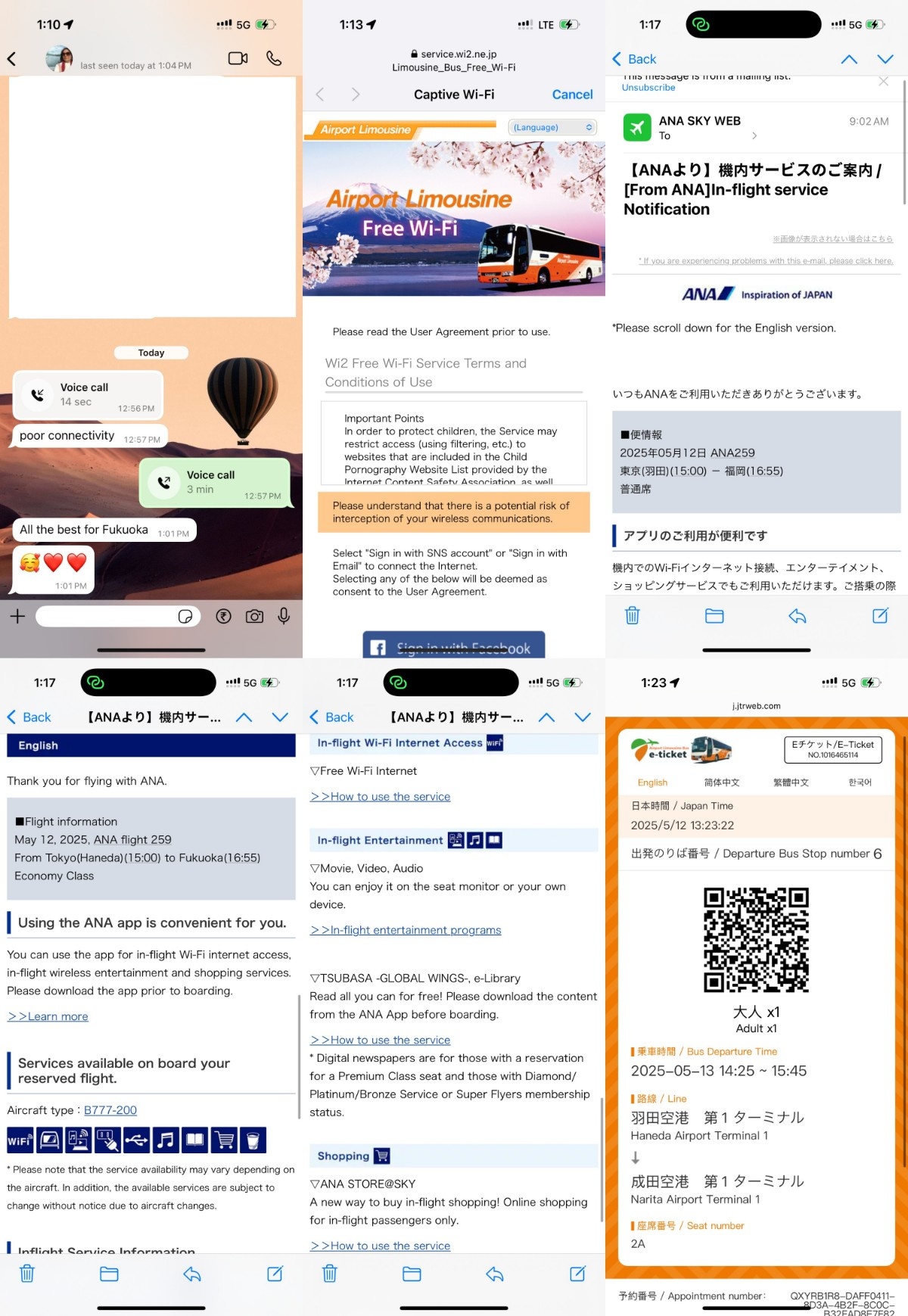
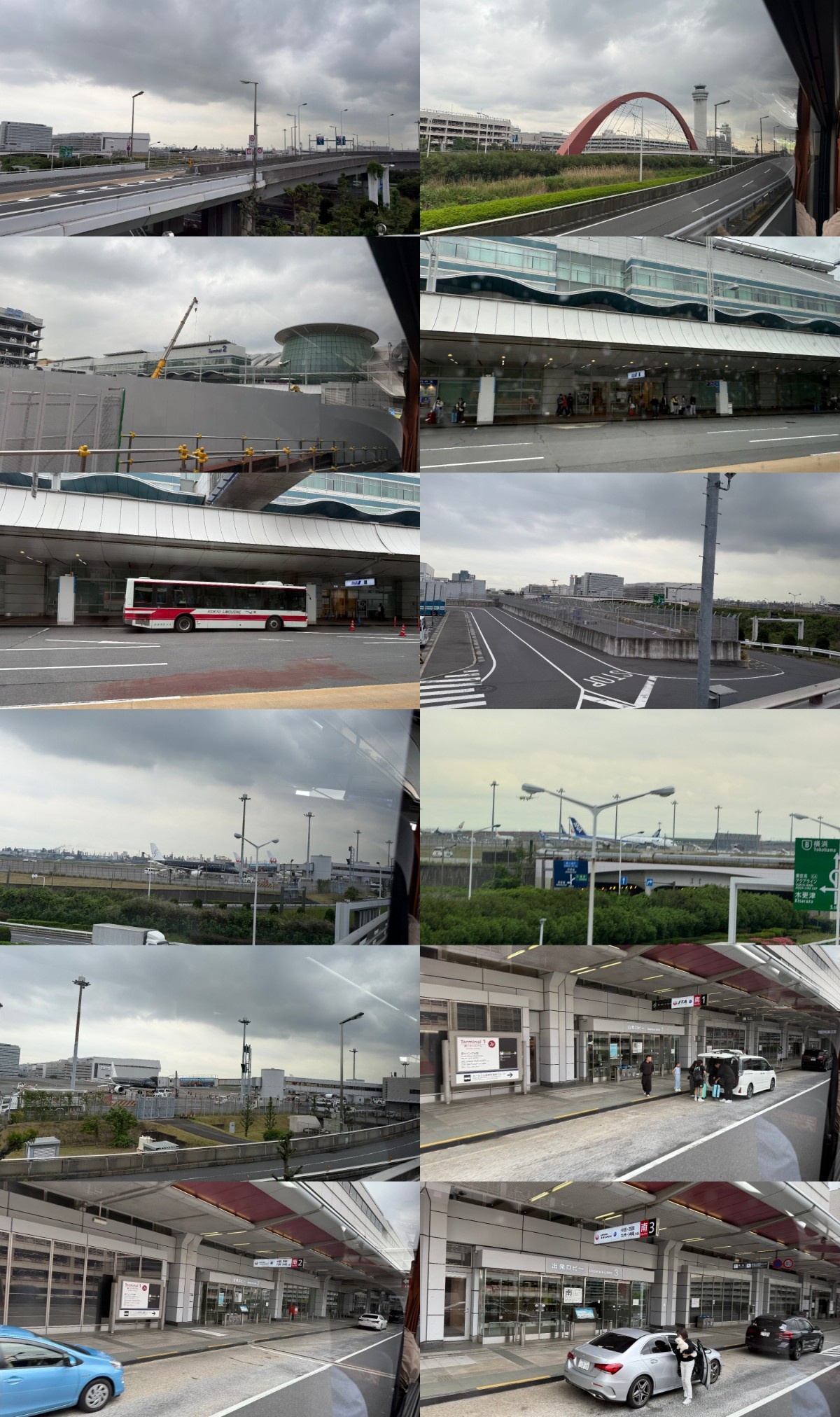
After a half-hour journey, we reached HND Terminal 2, where my flight was going to depart from (besides other ANA domestic flights), but…
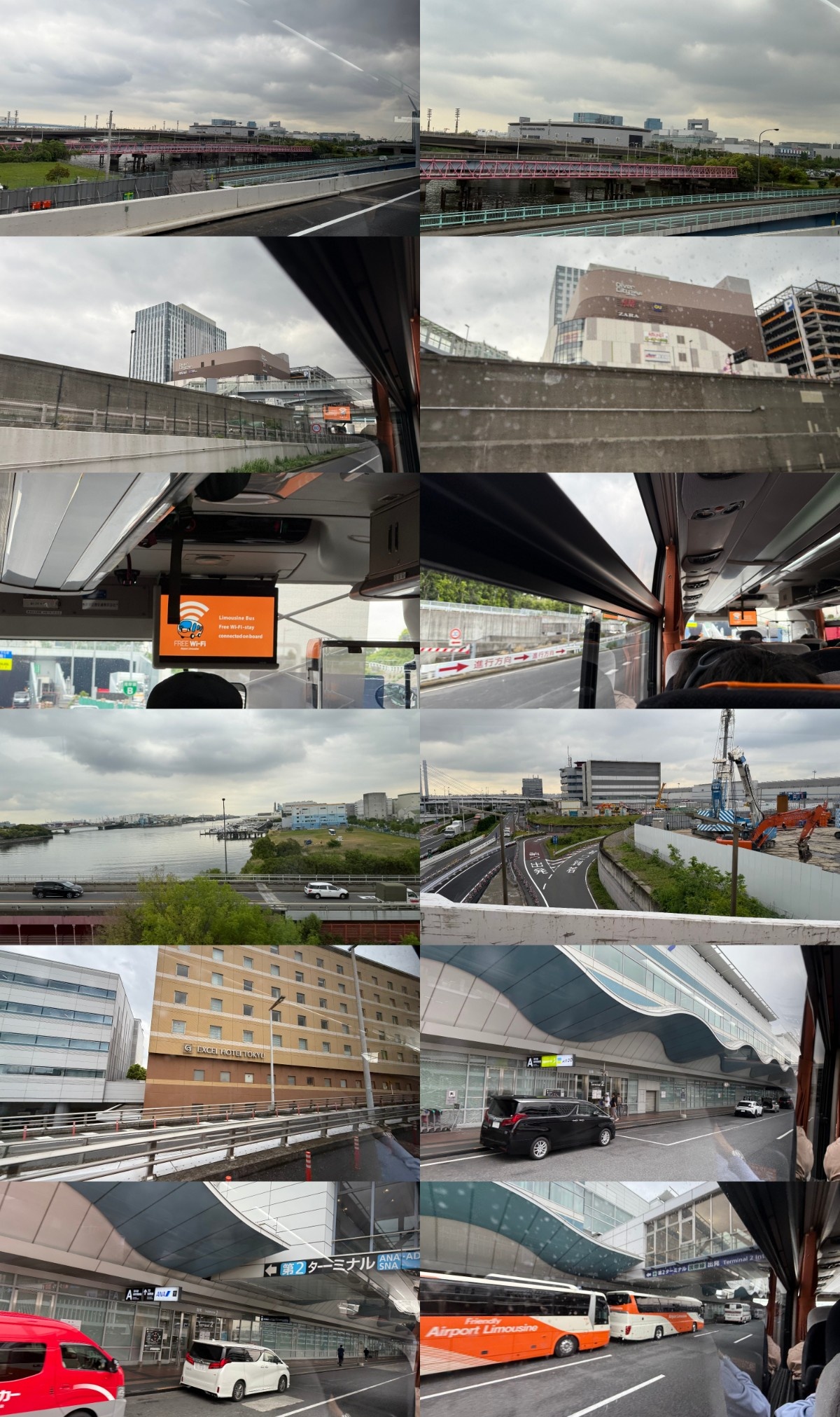
…I had a different objective altogether, and so stayed on until the bus reached Terminal 1, which is where JAL and some other airlines have their domestic operations.
But what objective exactly? Hold on — just scroll down a bit!
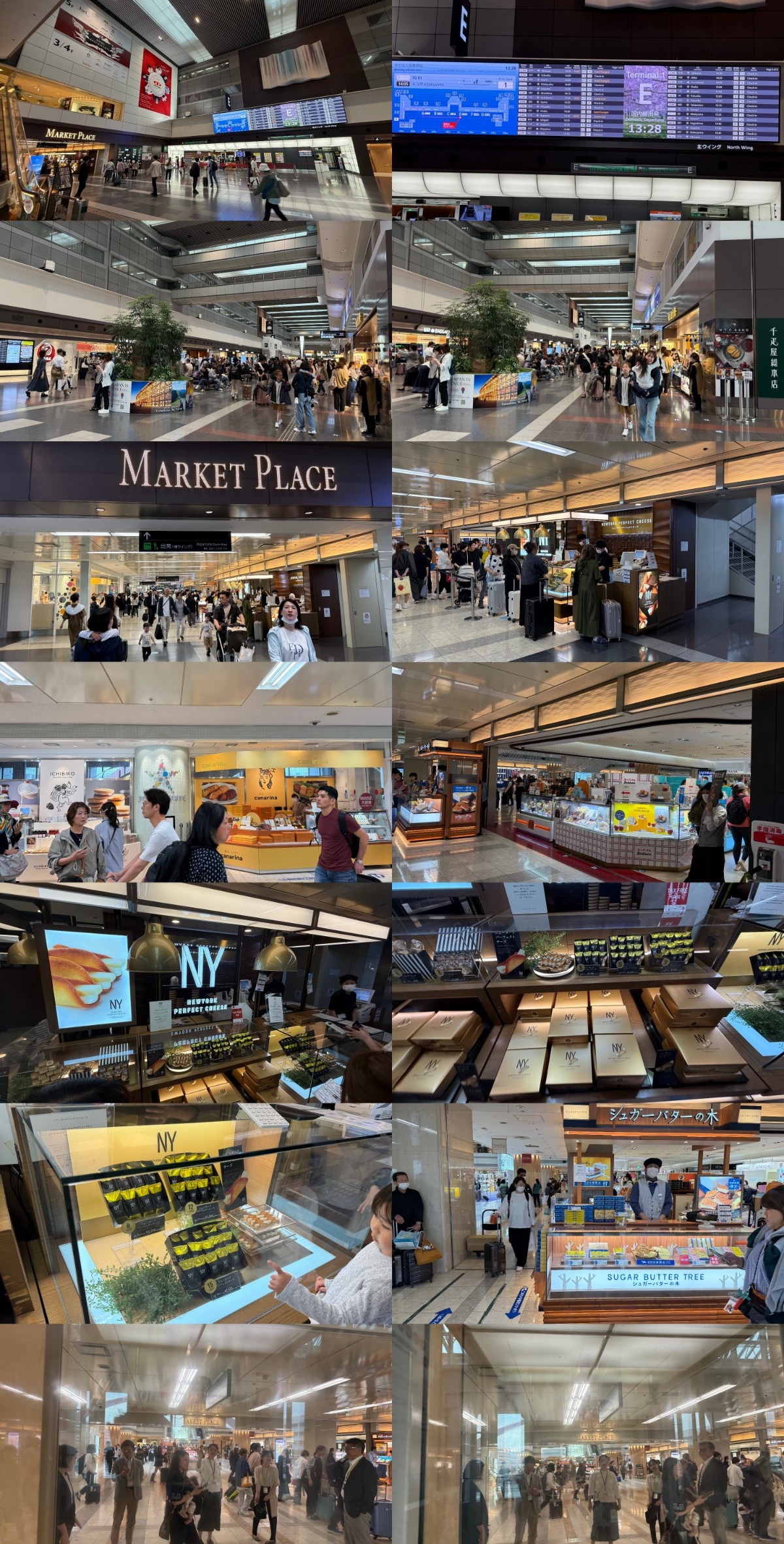
HND Market Place: An array of sweetmeats and savouries!
I had the specific goal of buying famous Tokyo sweets like New York Perfect Cheese, Sugar Butter Tree and Butter no Itoko, which were all found at the Market Place retail area at Terminal 1. My gosh, the variety of sweet-shops was breathtaking — my word! I wasted no time to plop down at least ¥2,500 (US$16) at New York Perfect Cheese.
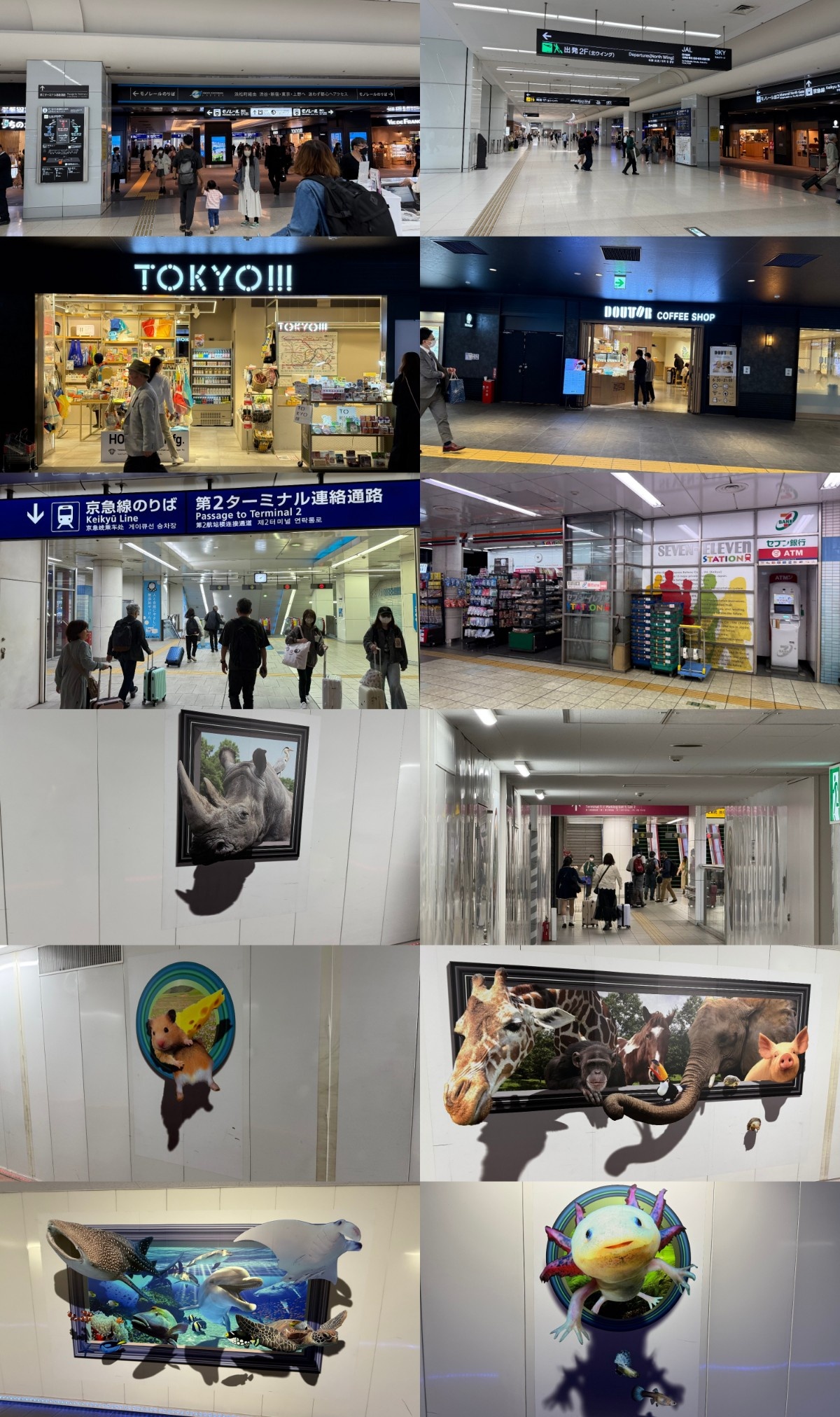
This done, I headed to the underpass connecting Terminals 1 and 2, which was lined with 3D cutouts of wild animals that had been transformed into cute critters.
On reaching Terminal 2, I could have parted with some more of my money at the shops in the basement…
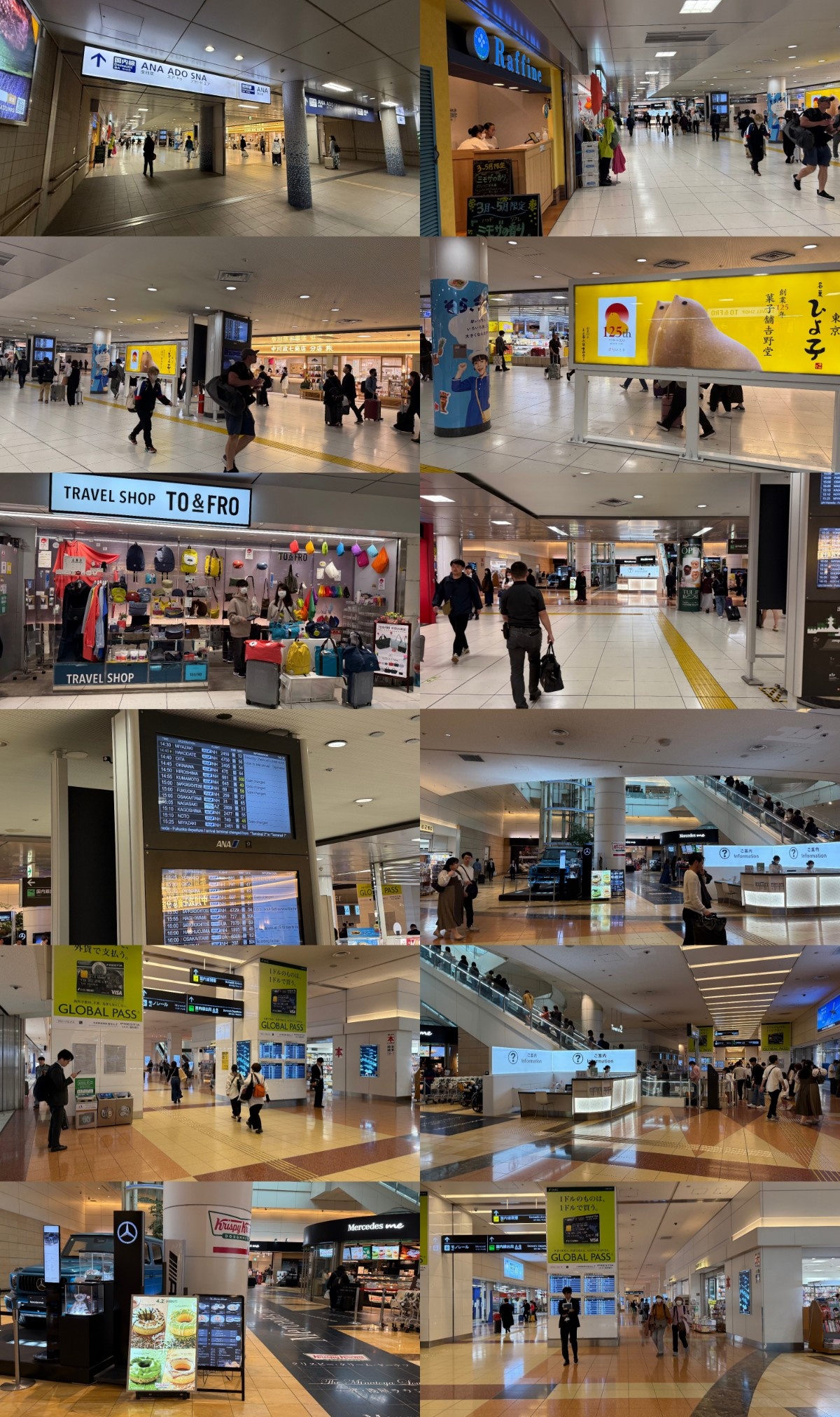
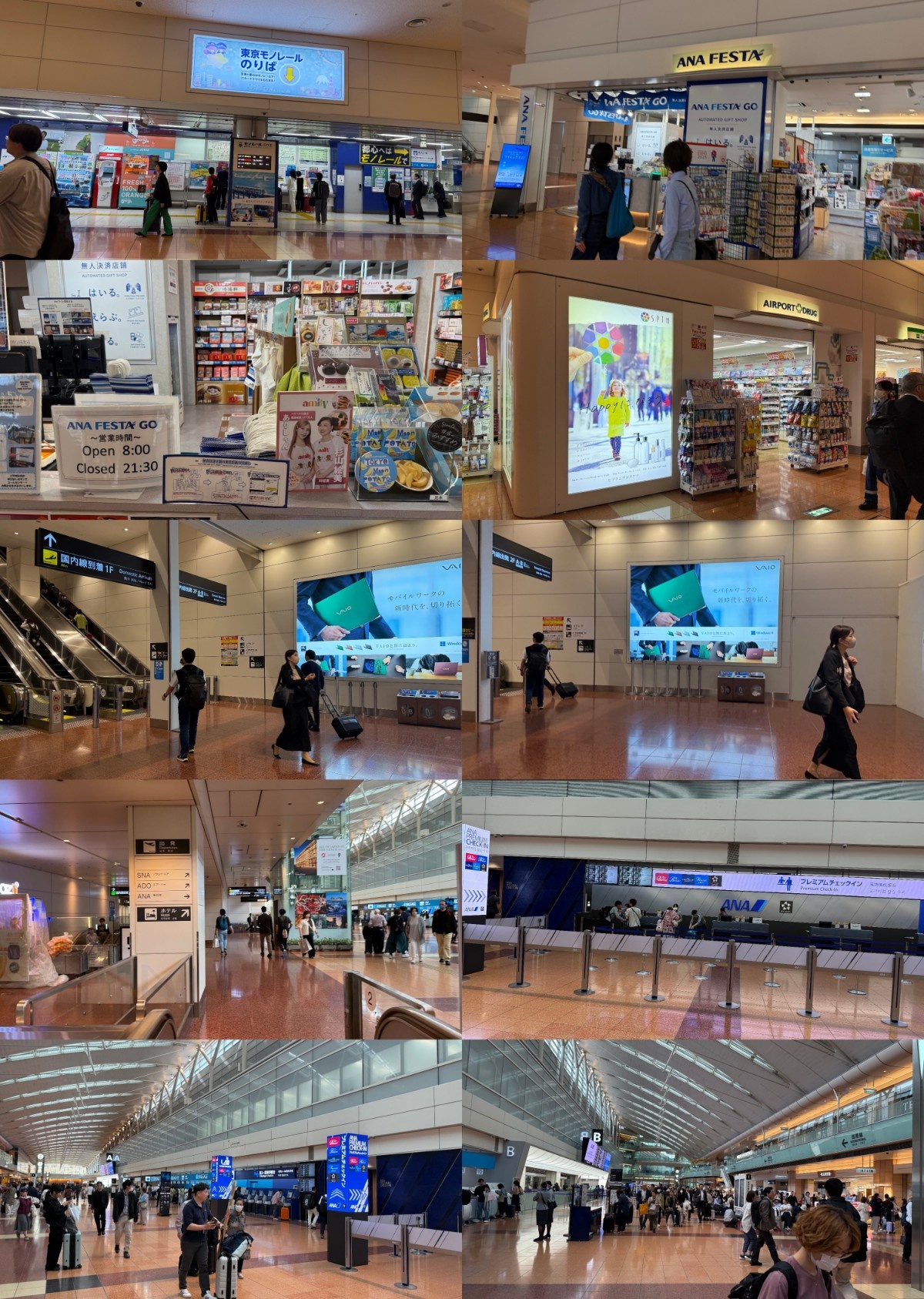
…including this ANA Festa convenience store, but I refrained, and went up a level to the ANA check-in counters. (Also, this was my first time encountering an ad for a Vaio laptop without the Sony branding, more than a decade after the electronics and entertainment giant sold Vaio to an independent holding company.)
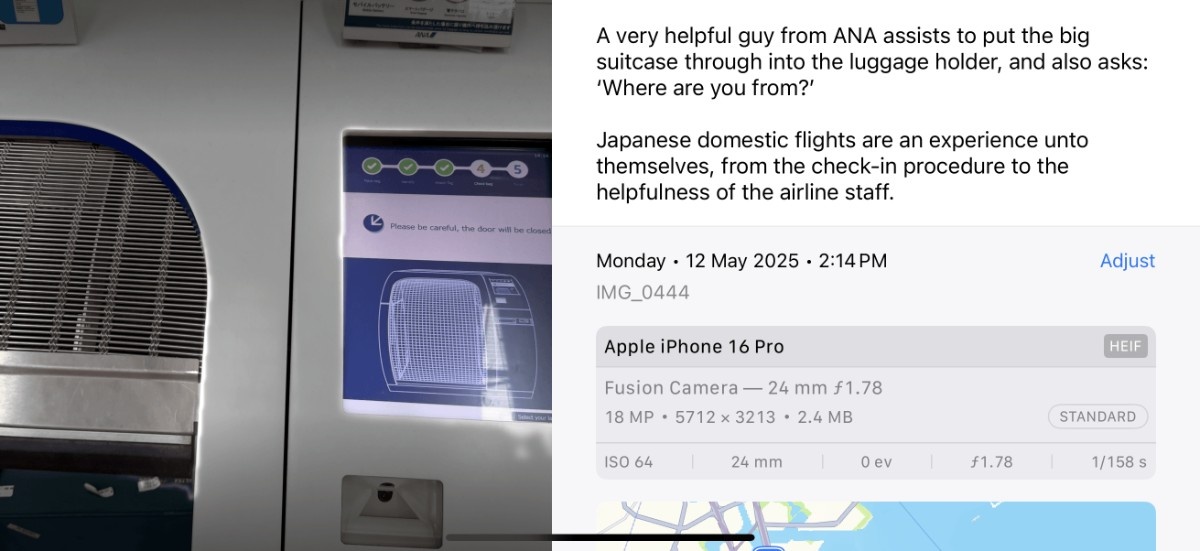
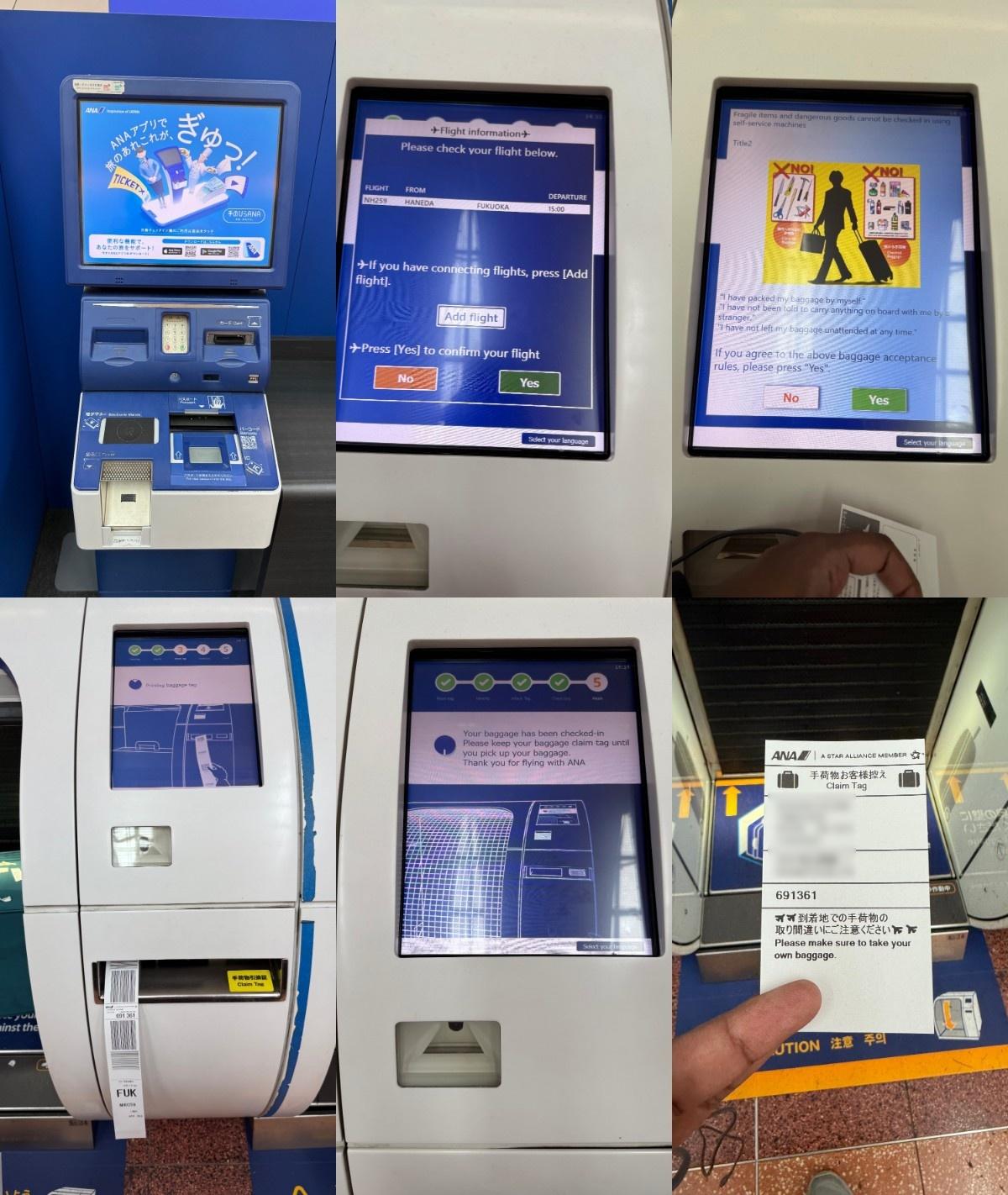
From thereon, the check-in process was entirely automated and straightforward. Enter passenger details, get boarding pass, place bag into loading machine, get baggage tag… Not that it was entirely human-free: a helpful guy from ANA assisted with putting my luggage into the holder, and asked where I was from. This was my first brush with ANA’s hospitality.
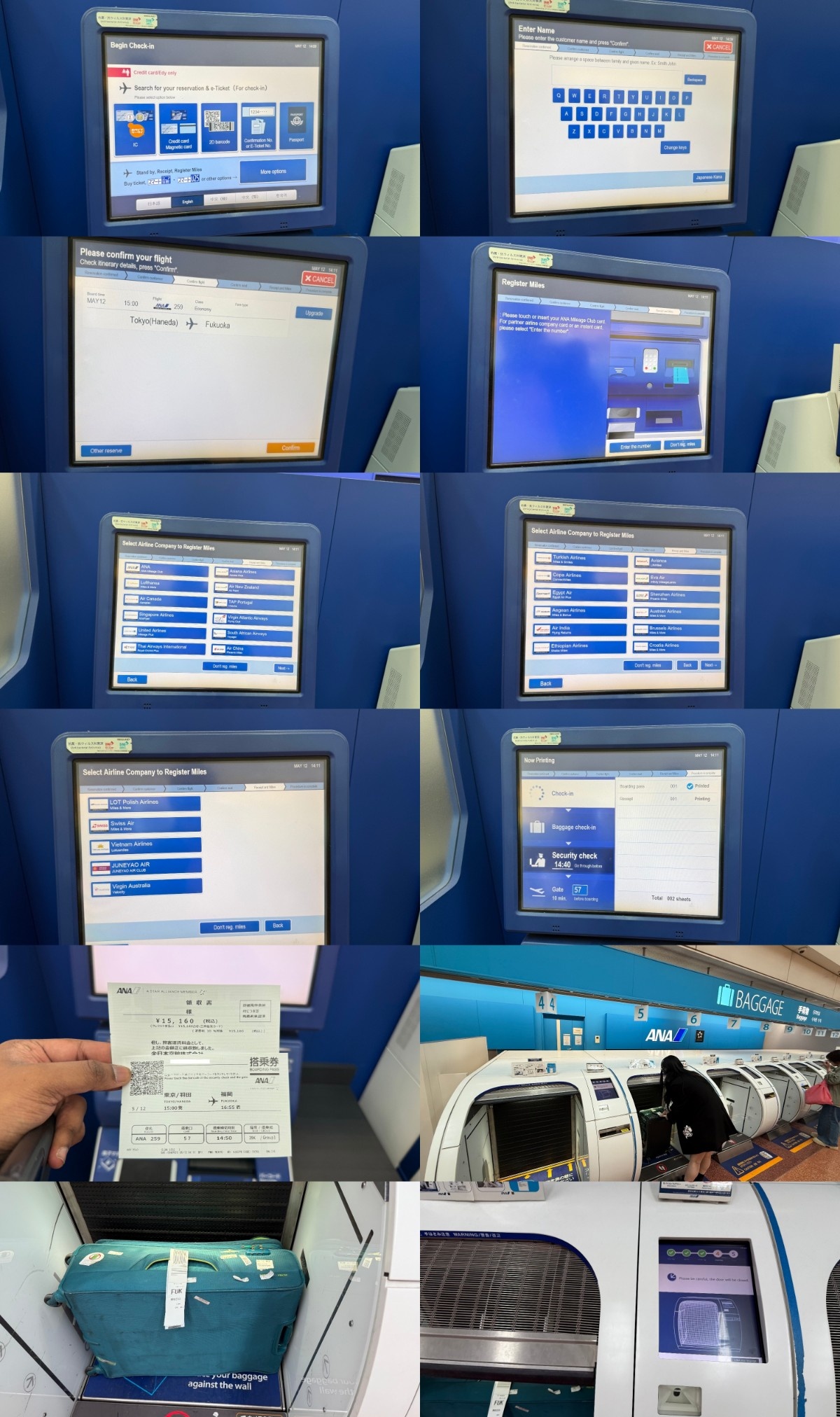
It was only now that I started to witness for myself just how much of a tailored and unique boarding experience Japanese airlines have built for domestic flights. You don’t need to reach the airport more than an hour before your flight; you don’t show any sort of ID; you don’t receive a standard rectangular boarding pass, but instead a smaller slip with a QR code… As I noted, Japanese domestic flights really are an experience unto themselves!
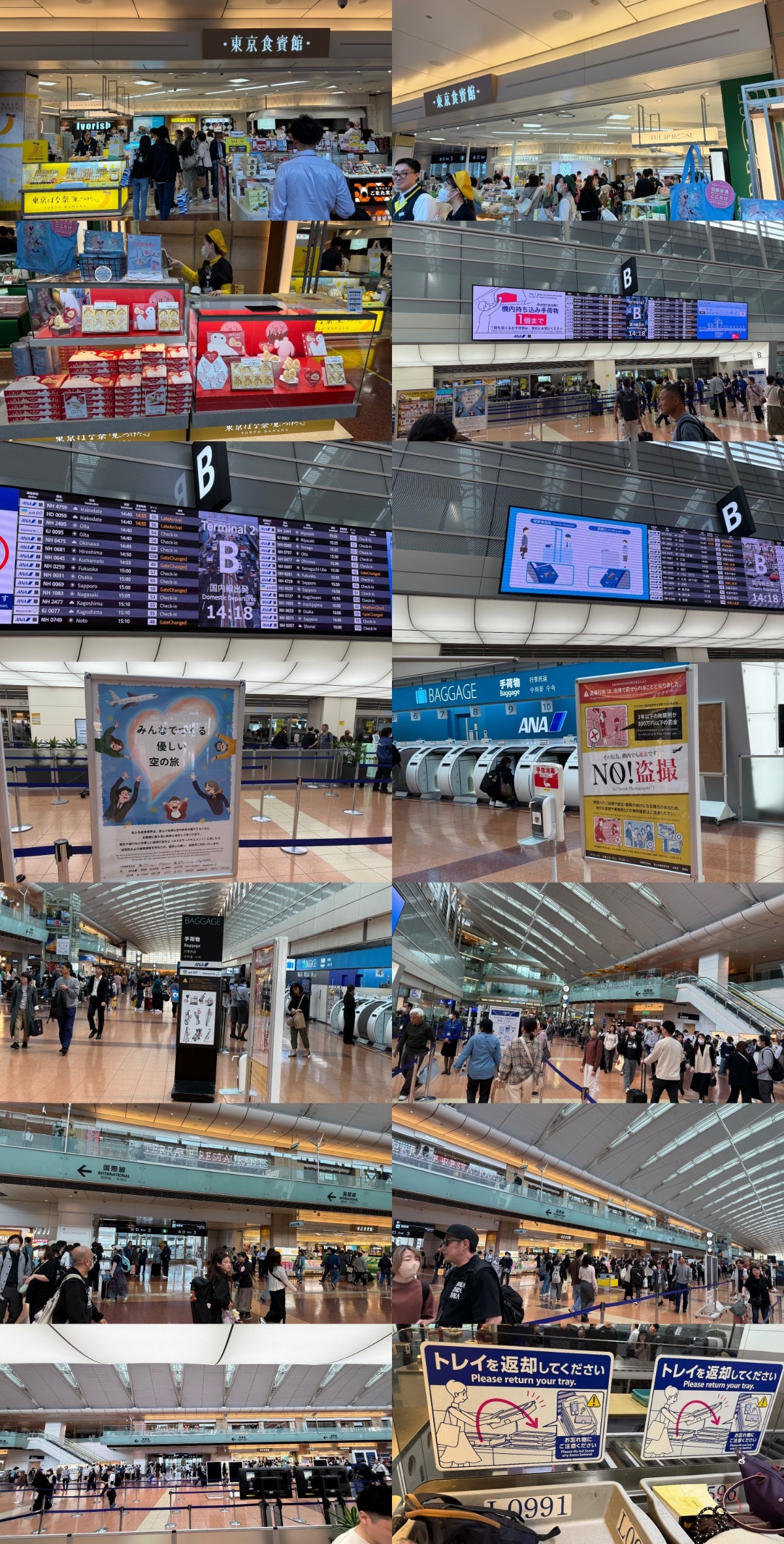
Again, I could have indulged myself a little more with Terminal 2’s own selection of sweet-shops, but thought the better of it. I took some more pictures of the sprawling retail area and food courts before proceeding to the security queue — there being no immigration, of course!
Airside: A parade of planes and sweets — and Samantha Thavasa
Once airside, I was greeted by two more ANA Festa stores, this time another sweet-shop followed by a sit-down ramen-and-udon restaurant, but again chose to pass. Why oh why do Japanese airports have to be so tempting in their restaurant offerings?!
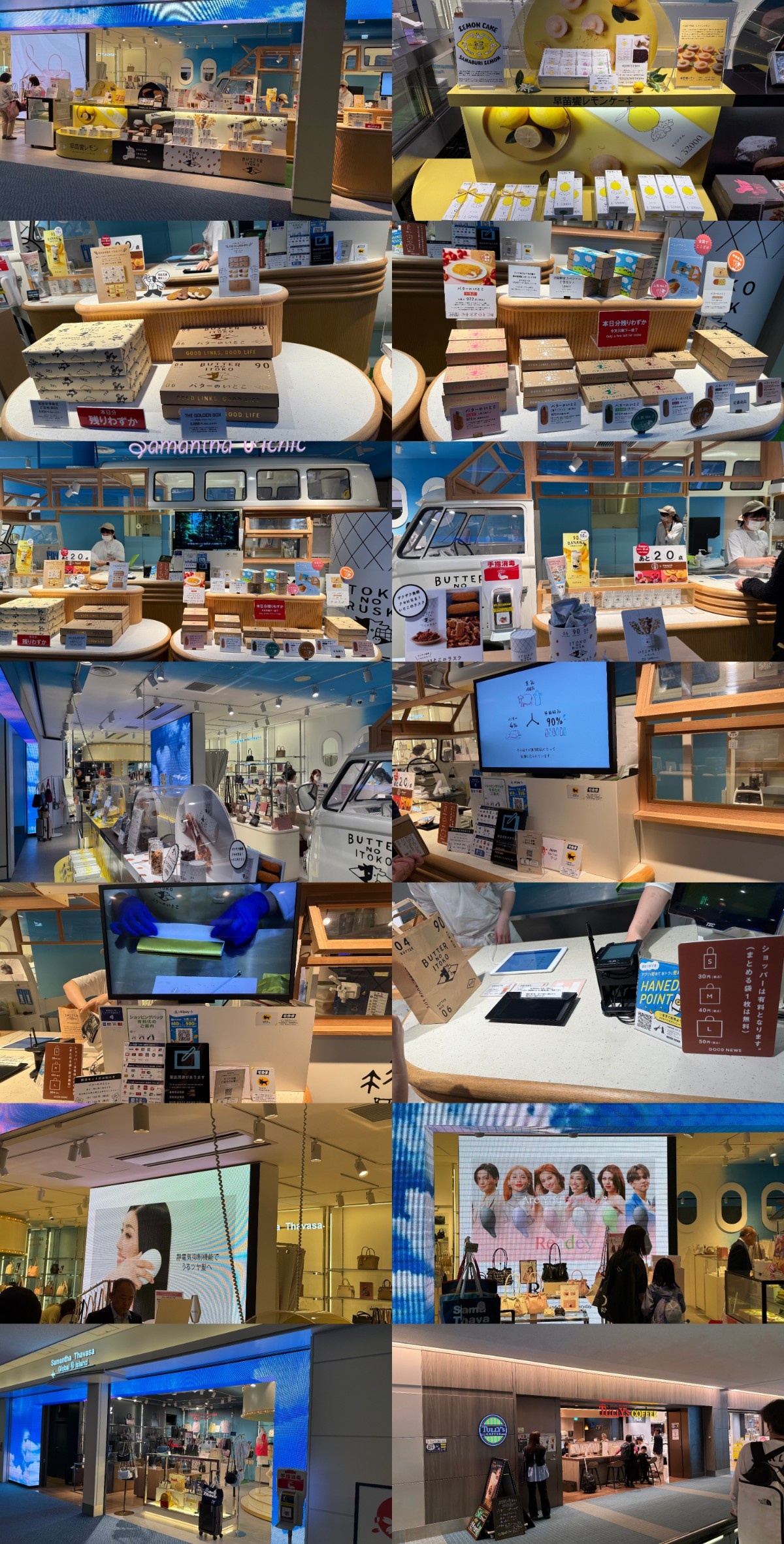
This done, I stepped on the moving walkway and passed by a see-me, don’t-miss-me boutique of Japanese couturier fashion house Samantha Thavasa…
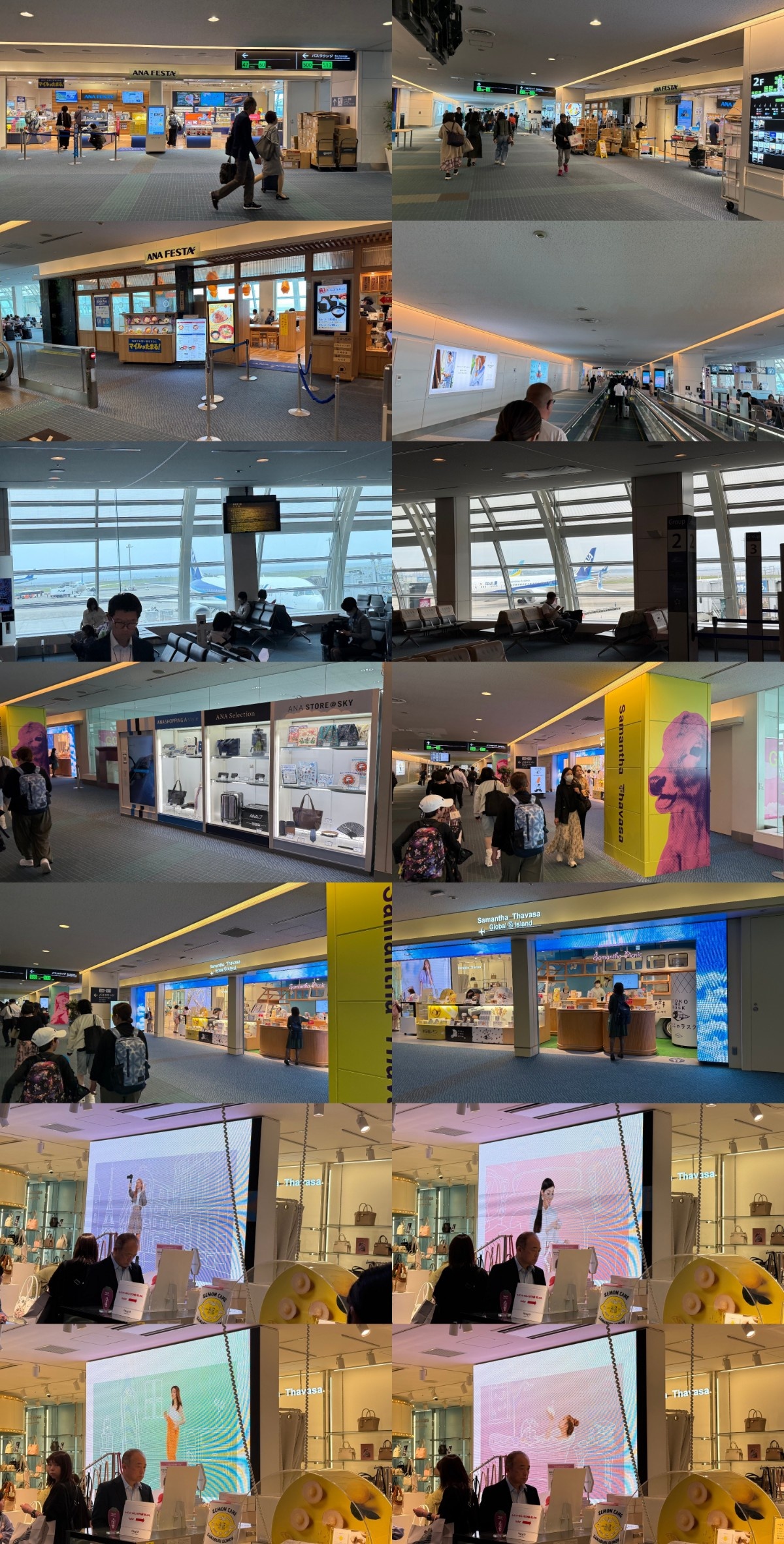
…which was accompanied by an eye-poppingly decorated store for more sweet brands, among them Butter no Itoko. Unfortunately, I could no longer pretend to ignore it or pull myself away.
I am sorry to say that I could not restrain myself. My resistance gave way, and no sooner had I spotted the shop than I’d bought two boxes of Butter no Itoko for nearly ¥1,000 each — goaded, no doubt, by the red sign that said ‘Only a few left for today’! So much for my exercise goals…
As if to tempt me even further, some more Samantha Thavasa ads, all with pretty girls, grabbed my attention — but not for much longer, as I had a flight to catch.
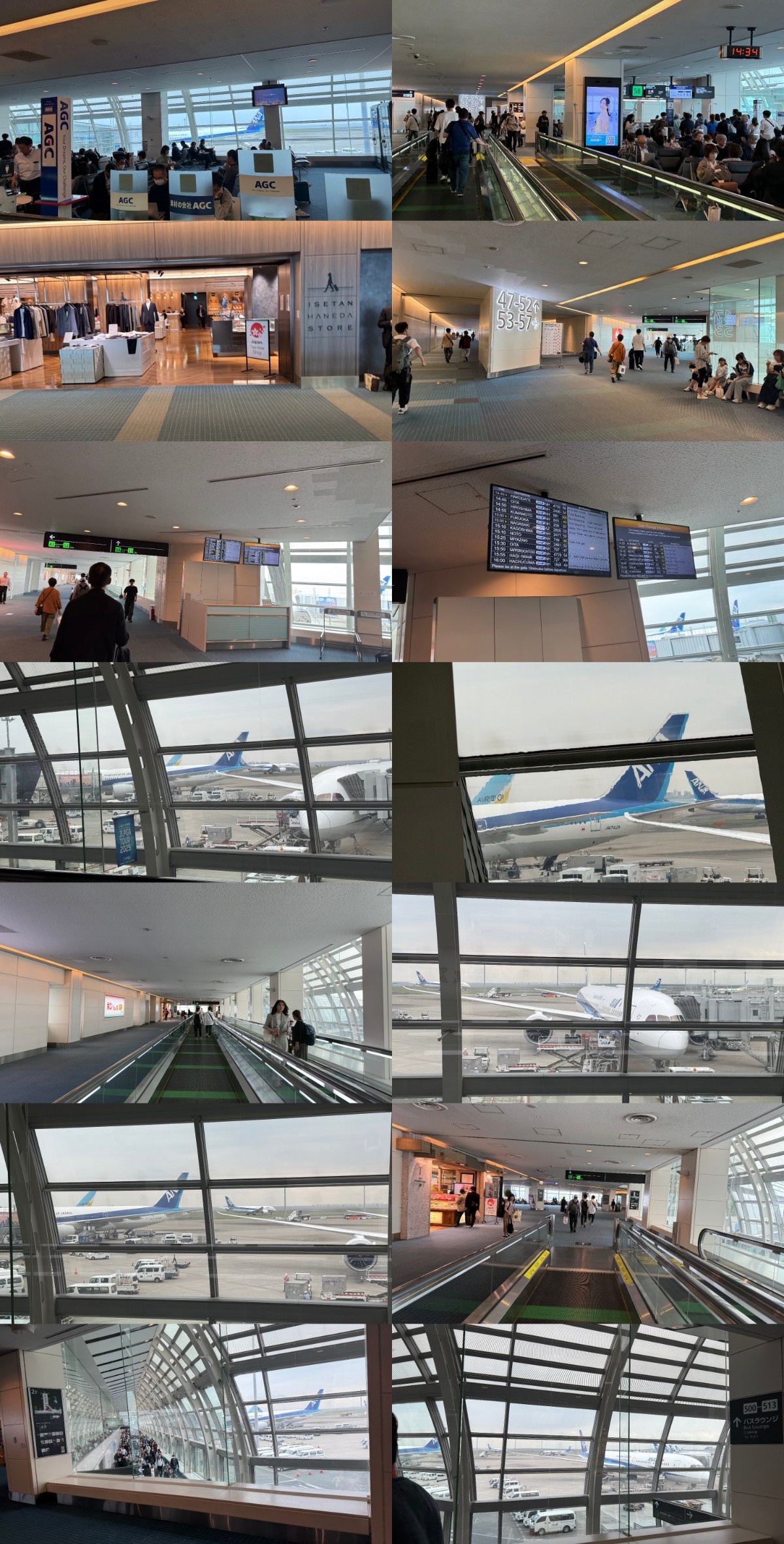
This aside, it was now time to take in the actual purpose of this place: the rows upon rows of ANA domestic 777s, 787s and occasionally 767s and 737s — none of the A320/1neos here, though (ANA has plenty of those too) — as I approached the fork in the road that would take me to Gate 57. These were peppered by the occasional 767 of Air Do, an ANA partner that flies mainly to Hokkaido.
At length I reached a play area for children, near a large rotunda with an escalator that presumably led to more restaurants and lounges, followed by another ANA Festa shop.
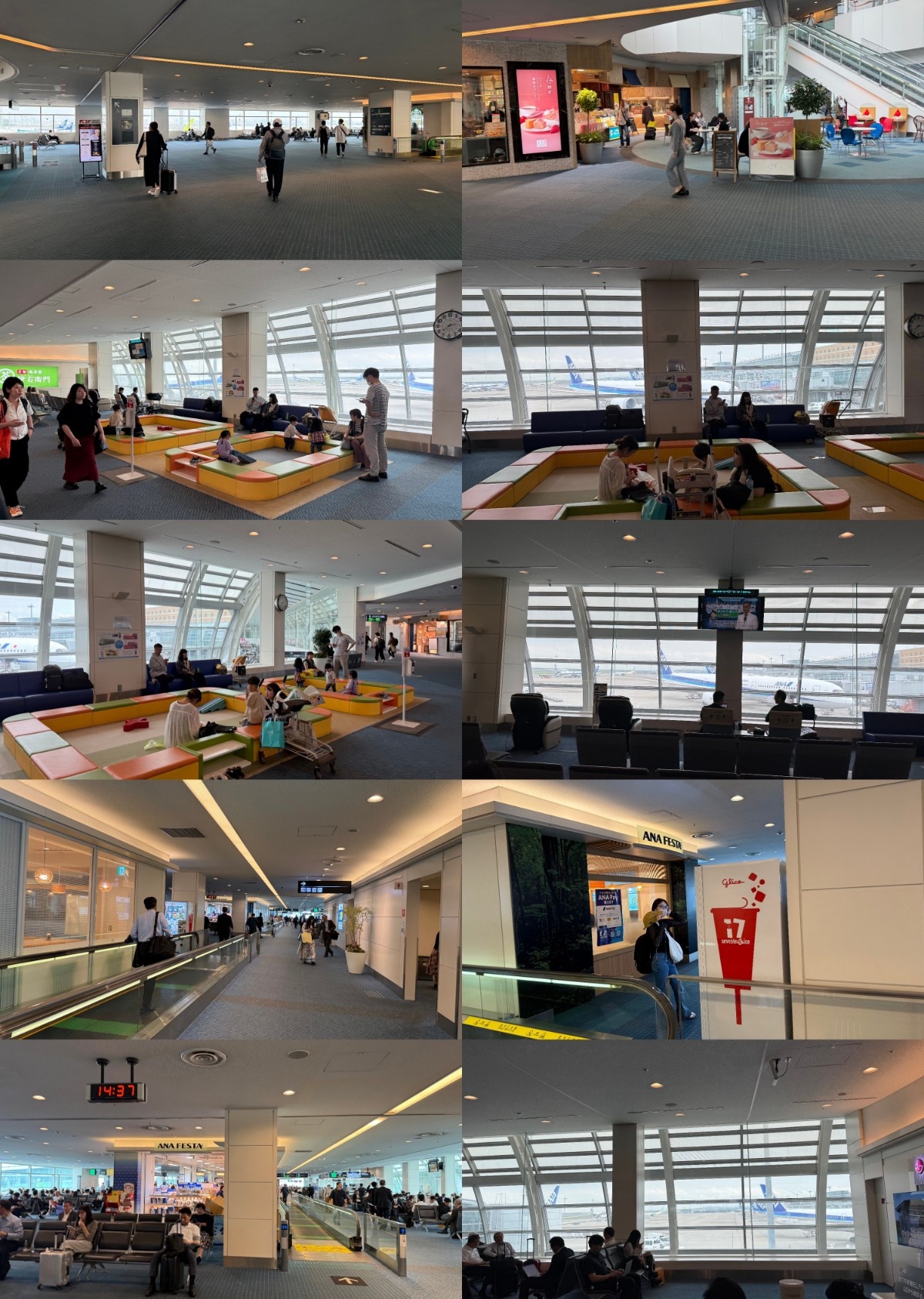
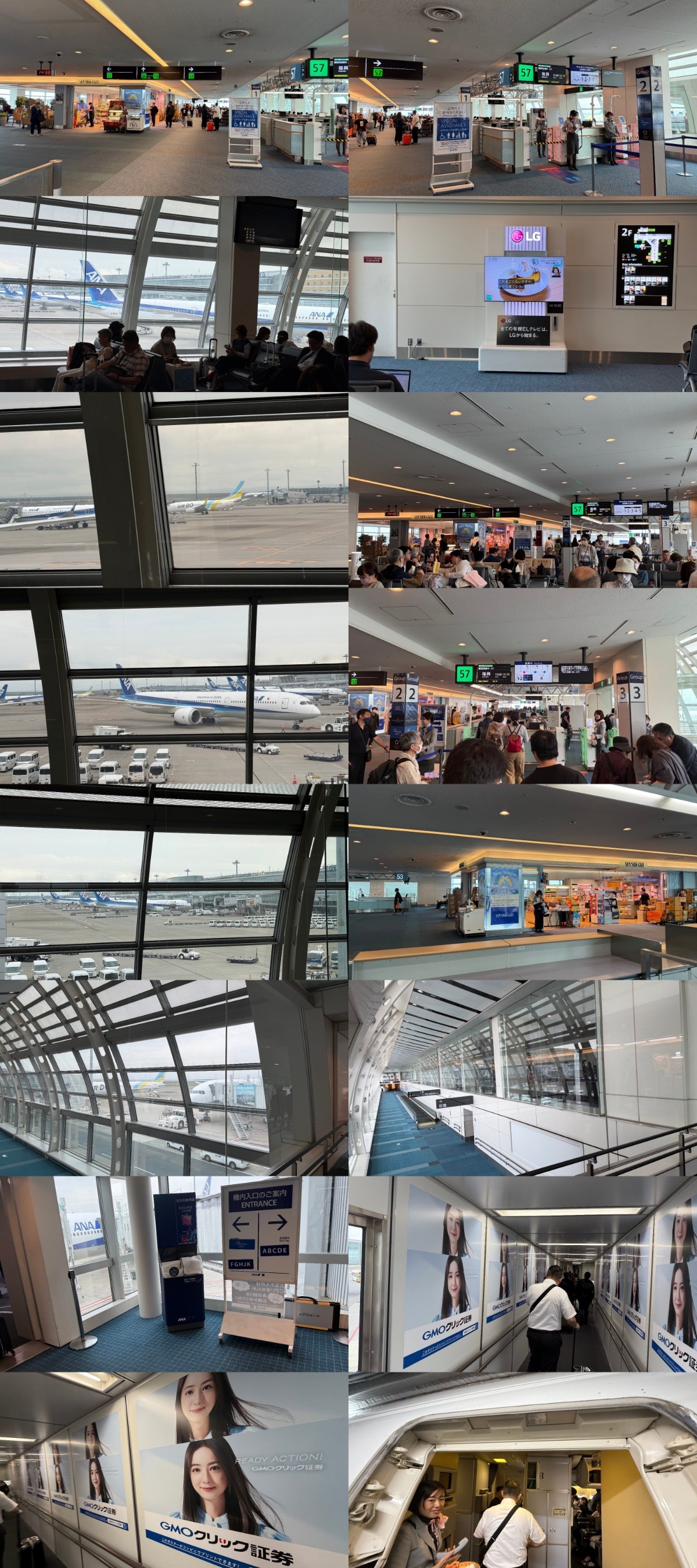
There I finally was, at Gate 57, where the incoming aircraft was delayed by ten minutes. This being Japan, even a two-minute boarding delay is reason enough to be announced to passengers!
Before long, people were lining up to board, while I caught sight of the registration of the first non-horrible 777-200ER that I’d ever fly. JA742A it was, and who said that 42 is considered to be an unlucky number in Japan?! For me, at least, it would break the spell of Thai Airways’ awful 777-200ERs that had been forced upon me, time after time… This was as good a way as any to mark my first flight on a Japanese airline — and it would only get more memorable from here!
The flight: Boarding and departure
Flight: All Nippon Airways NH259/ANA259
Date: Monday, 12 May 2025
Route: Tokyo–Haneda (RJTT/HND) to Fukuoka (RJFF/FUK)
Aircraft: JA742A, Boeing 777-200ER (domestic)
Age: EXACTLY 13 years at the time! (built: 7 May 2012, delivered: 23 May 2012)
Seat: 39K (starboard side, window)
Boarding: 3:00pm Japan Standard Time (JST), UTC +9
Departure: 3:30pm JST
Arrival: 5:20pm JST
Duration: 1 hour 50 minutes
Notes:
• First flight on ANA, which became my sixth Star Alliance airline flown — the fifth being South Korea’s Asiana Airlines just a couple of days before, on both the A350 (SIN–ICN) and the A380 (ICN–NRT).
The following weekend (24 May), Taiwan’s EVA Air became my seventh Star airline, with a 777-300ER flight from Bangkok to Taipei. And in January 2026, United Airlines will become my eighth — on the 787-9 fifth-freedom route from Bangkok to Hong Kong, one of many that the US airline operates in Asia alone!
• First flight on a 777-200ER that wasn’t one of Thai Airways’ horrible old 777-200ERs, and fifth 777-200ER flight overall — indeed, the first one that I actually, unironically enjoyed due to its modern onboard product.
The following evening, I’d fly back from Tokyo–Narita to Changi on ANA’s 787-9, landing after midnight: my second flight on ANA. (The flight from FUK back to Tokyo–Haneda was on JAL’s domestic A350, and that airline became my fifth Oneworld airline flown.)
More fascinations in Japanese domestic aviation — including refreshed seats
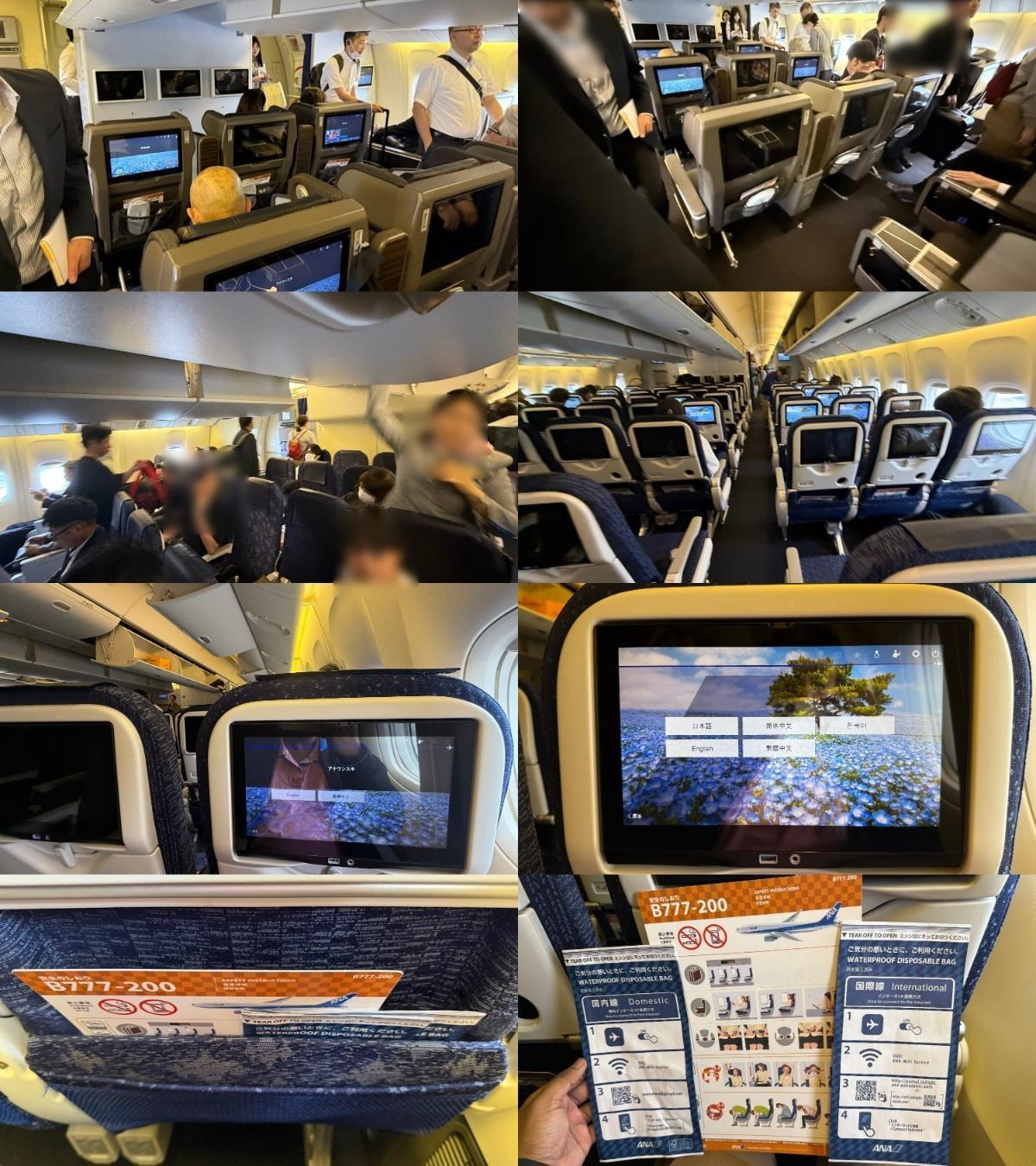
It was clear from the outset that this aircraft featured ANA’s new refurbished domestic cabins — and, indeed, I’d specifically sought out the 777-200ER for this purpose. (There are some domestic 787-8s that have only overhead screens, without personal monitors — as the inimitable SANspotter found out to his chagrin.) The Economy seats were designed by Toyota Boshoku (a top automotive seat designer) with the rollout starting from end-2019, and were made with ergonomic considerations in mind.
Premium Class (NH’s domestic business-class product) had nice big screens and reclining seats, while good old Economy, too, had a refreshed IFE product that was far better than the dated blue IFE I’d see the following evening on the 787-9 back to Changi. In addition, I lucked out by having two empty seats beside me — the poor man’s Business Class, if you will.
While there was no physical magazine in the seat pocket, there did exist a digital inflight magazine (as you’ll see later below) — unlike Asiana Airlines, which had nothing of the kind. The waste-disposal bags doubled up as entertainment and Wi-Fi connection guides: a nifty touch!
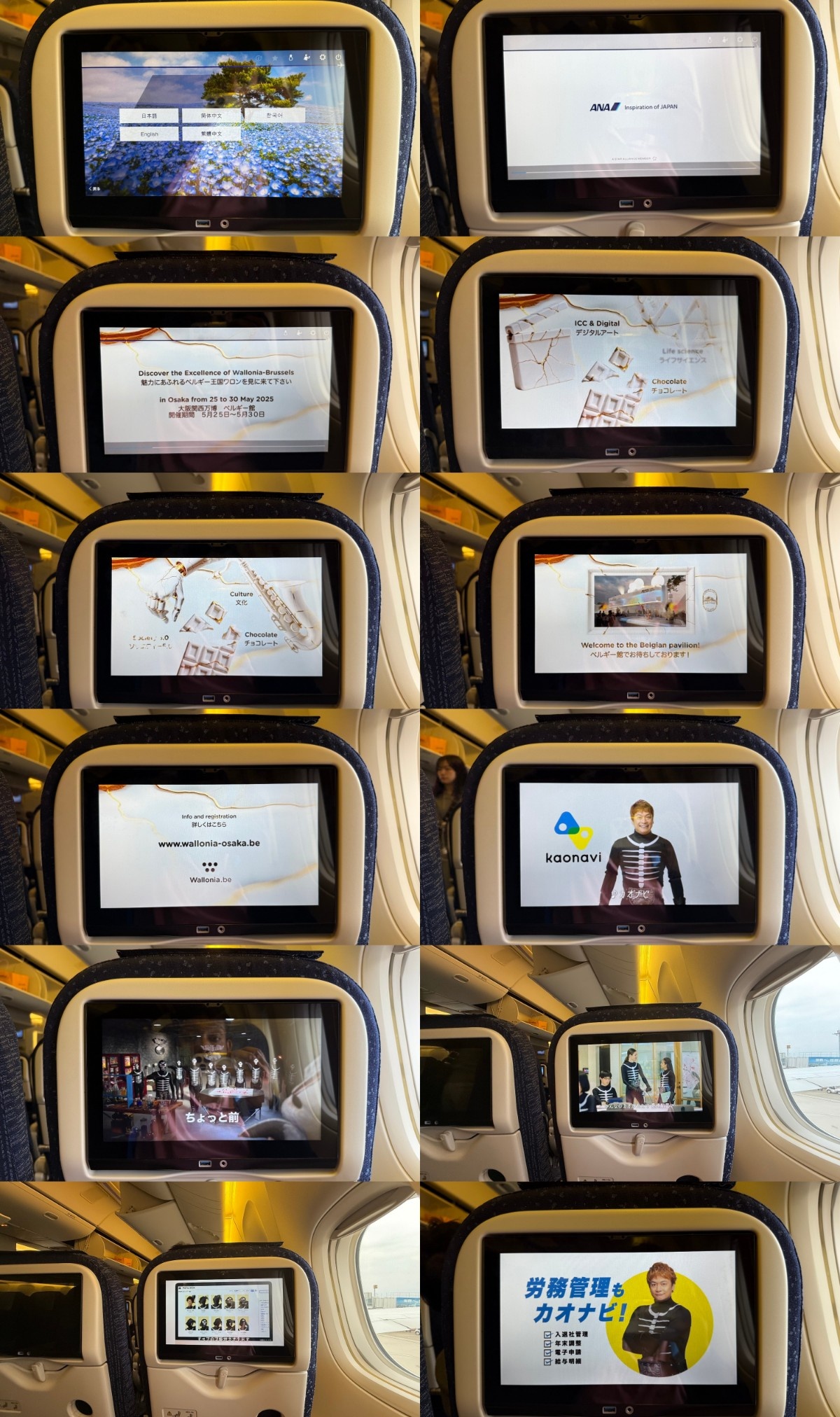
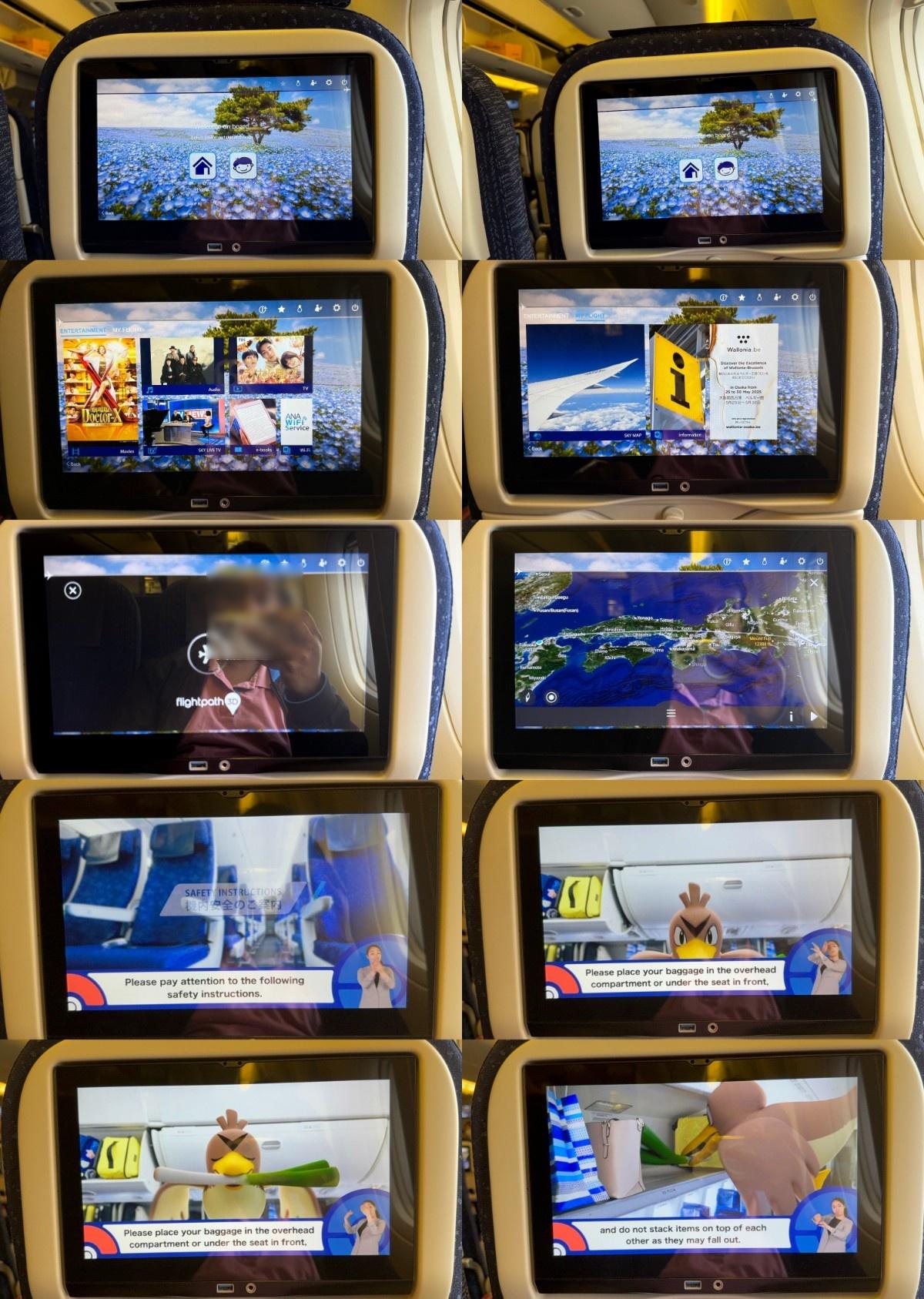
No sooner did I try to choose my on-screen language in the IFE than a couple of ads started to play. Among them was Belgium’s Wallonia (French-speaking) region, advertising its pavilion at the Expo 2025 in Osaka, and then there were a couple of others in Japanese.
Indeed, NH has been flying to Brussels since 2015 — though briefly interrupted by COVID-19 — but BRU is its only European destination served from Narita rather than Haneda! Several European cities have been added to NH’s European roster in 2024–25, including Vienna, Stockholm, Milan and Istanbul.
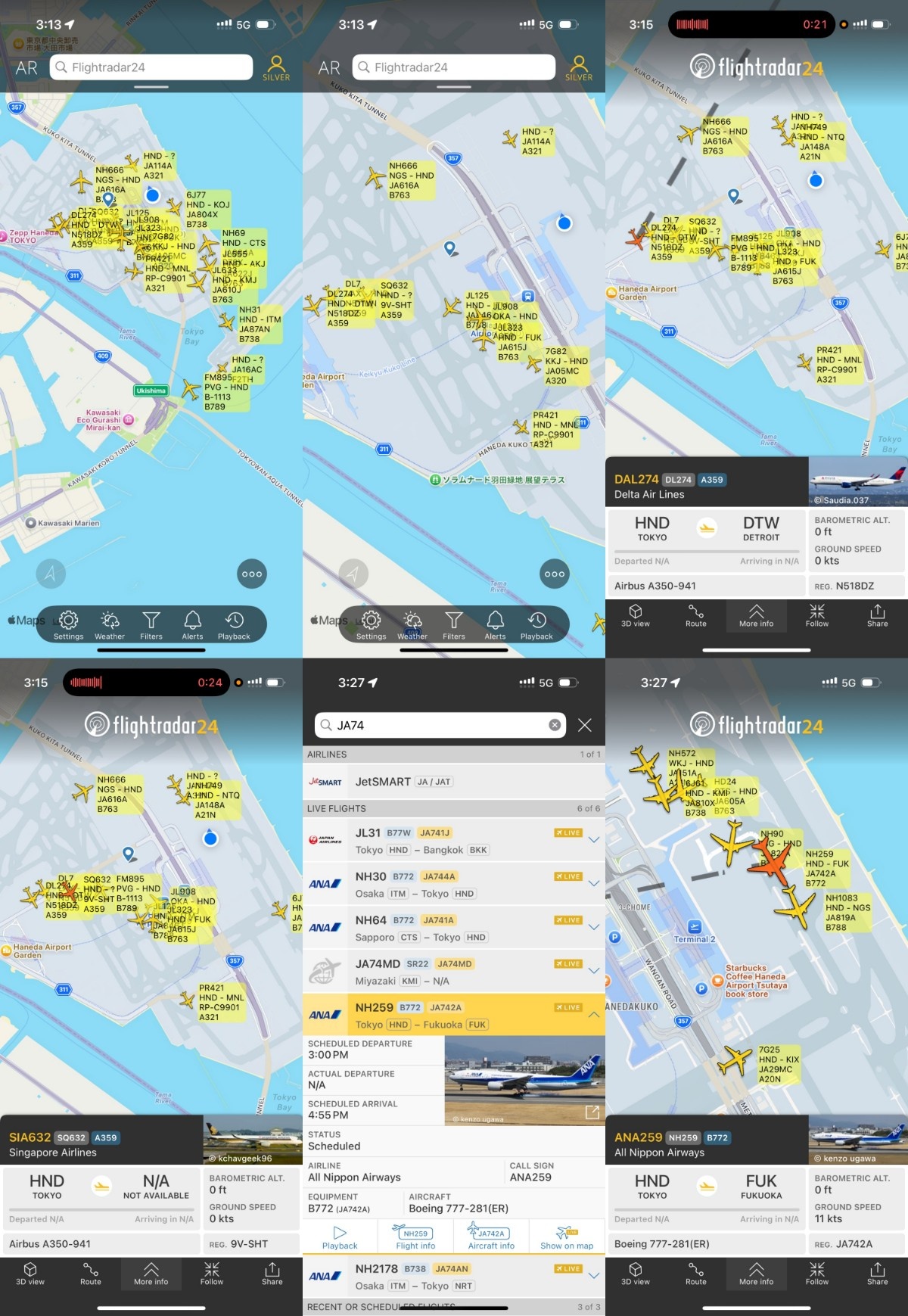
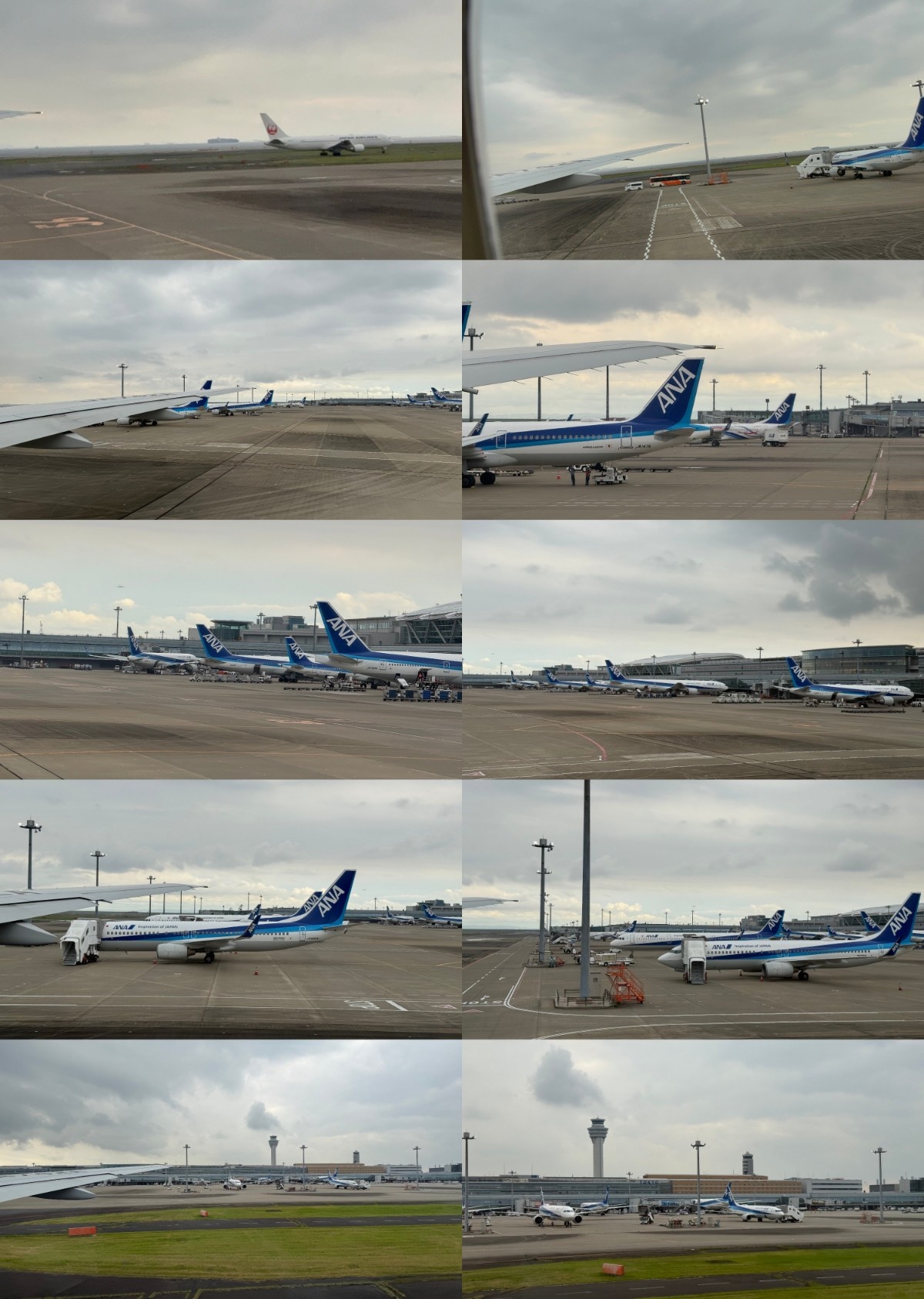
But a more fascinating form of entertainment was playing outside the window. A myriad of unique, colourful domestic aircraft continued to taxi or land in the near distance. These were all airlines I’d remotely heard of, but never saw until now — a 767-300ER of Hokkaido-based Air Do; a 737-800 of its sister company Solaseed Air, which flies mainly to Kyushu (where I was also headed now) and the Ryukyu Islands; an Embraer 190 of JAL’s regional subsidiary J-Air…
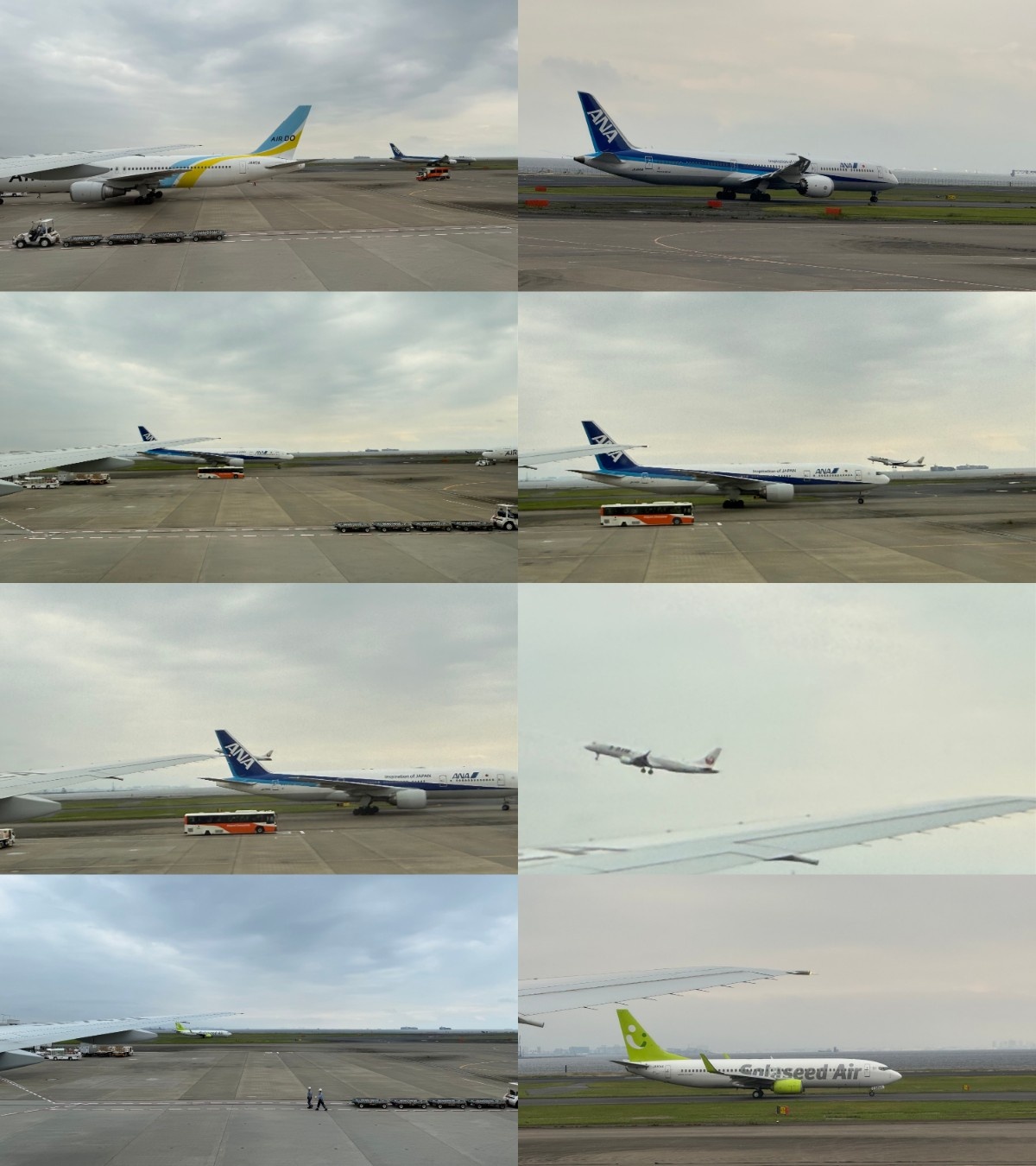
And if all of this wasn’t enough, a JAL 767-300ER in the Tokyo DisneySea Fantasy Springs livery (JA622J) took off as JL555, bound for Asahikawa (AKJ) in Hokkaido. In fact, the following day, upon returning to HND on the JAL A350, a flight attendant at the exit door gave me a postcard with the exact same livery… 🤩🎉
Wow, wow, wow!!!
Sadly, JA622J’s special livery was removed in November 2025, but this plane is no stranger to Disney special liveries. Previously (November 2020–March 2022), it also featured a Tokyo Fantasia 80 Years special livery, continuing JAL’s longstanding partnership with Disney. ANA, too, has several planes painted in Star Wars — owned by Disney — special liveries, but the arrangement comes to an end in 2026.
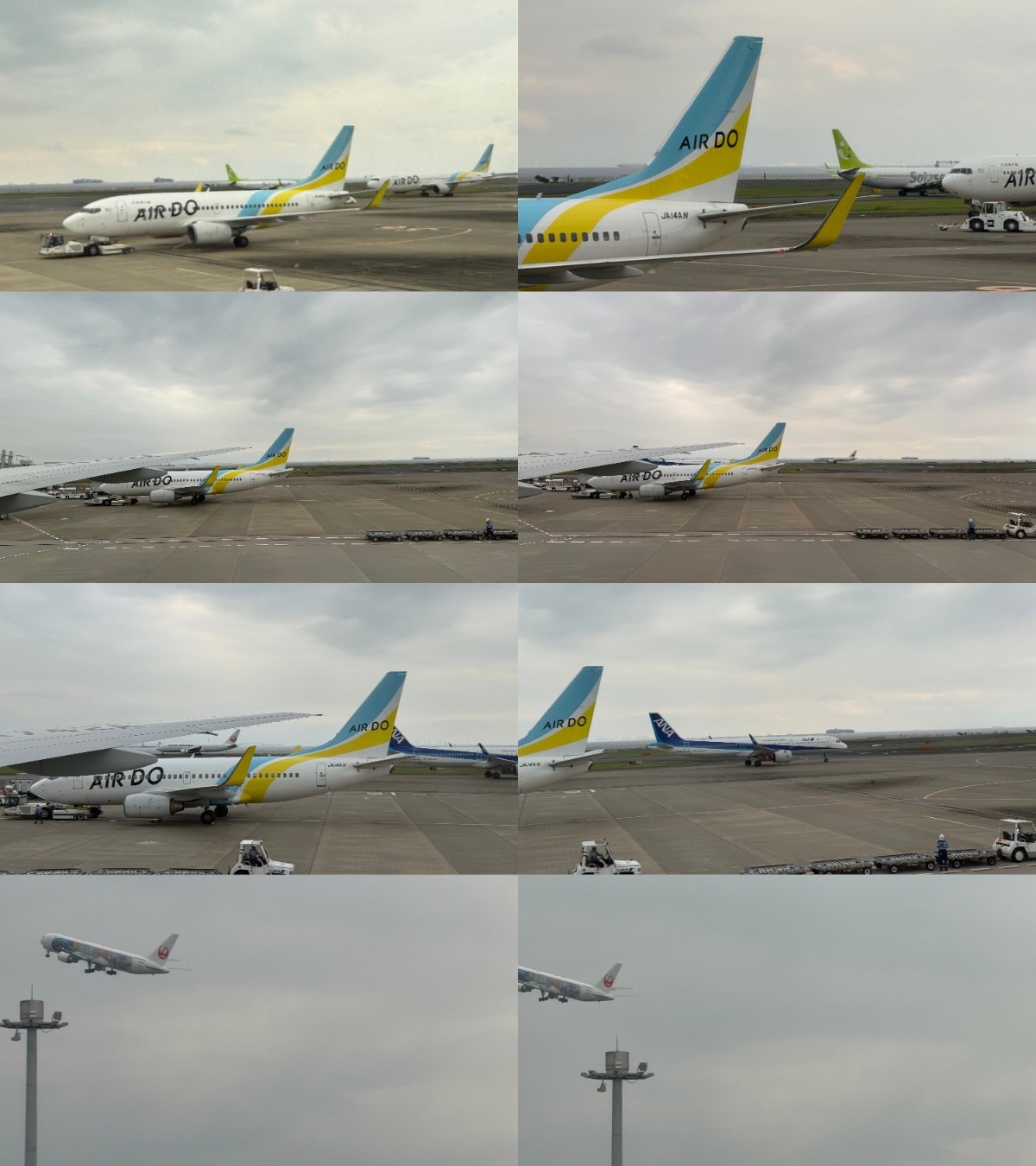
On the international front, too, there was plenty of action on the runway. Two A350s, of Delta Air Lines (to Detroit) and Singapore Airlines, prepared to return to their origins. In a few minutes more, my 777 also appeared on Flightradar24, by which time the safety video (see below) had been played.
For the record, all crew announcements were made only in Japanese, which is fair enough… not that they’d have expected a foreigner on a domestic flight, much less a dark-skinned person like me! (There were a couple of automated English announcements, though.)
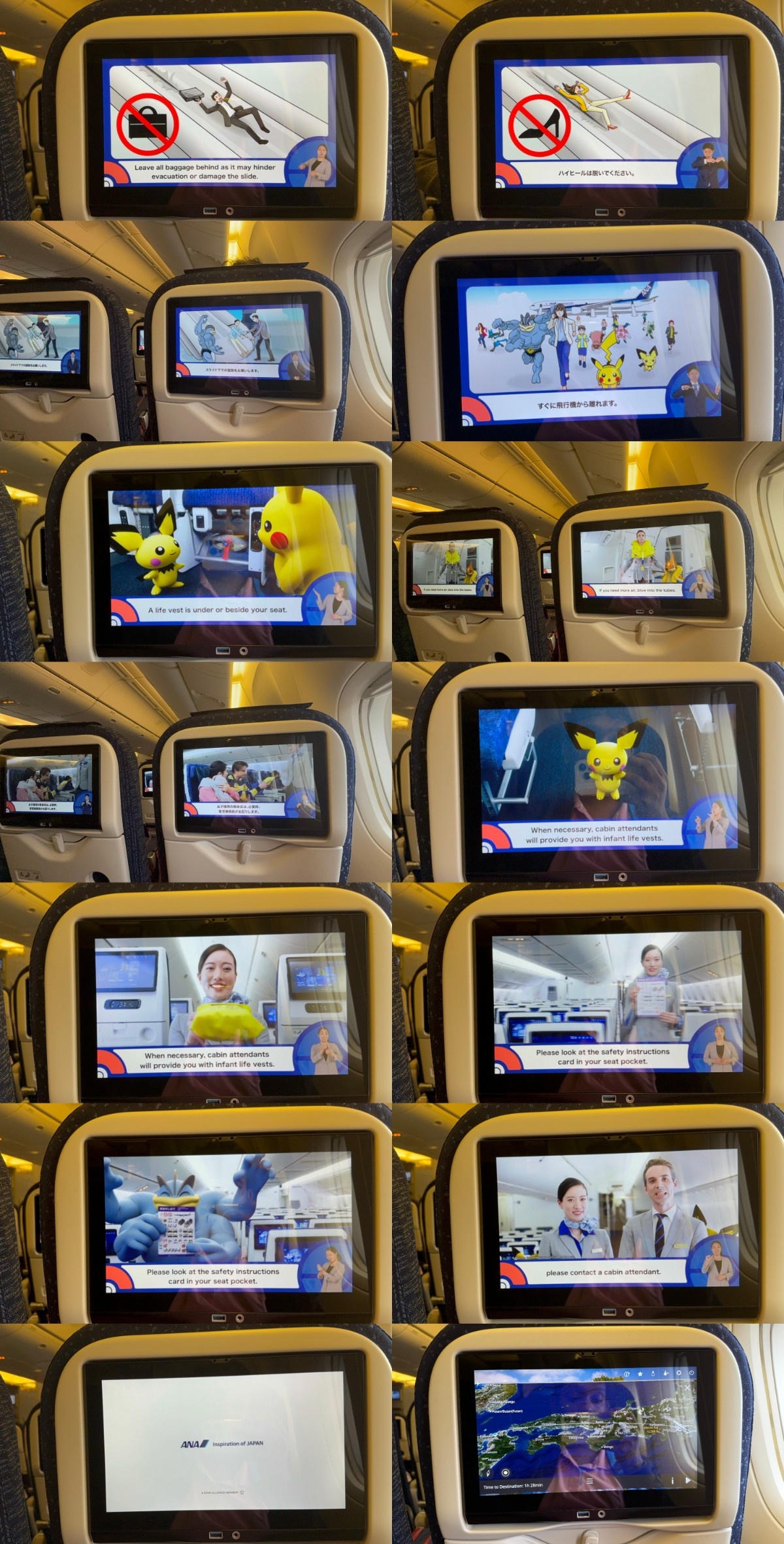
Kawaiiness takes centrestage: ANA’s Pokémon-themed safety video
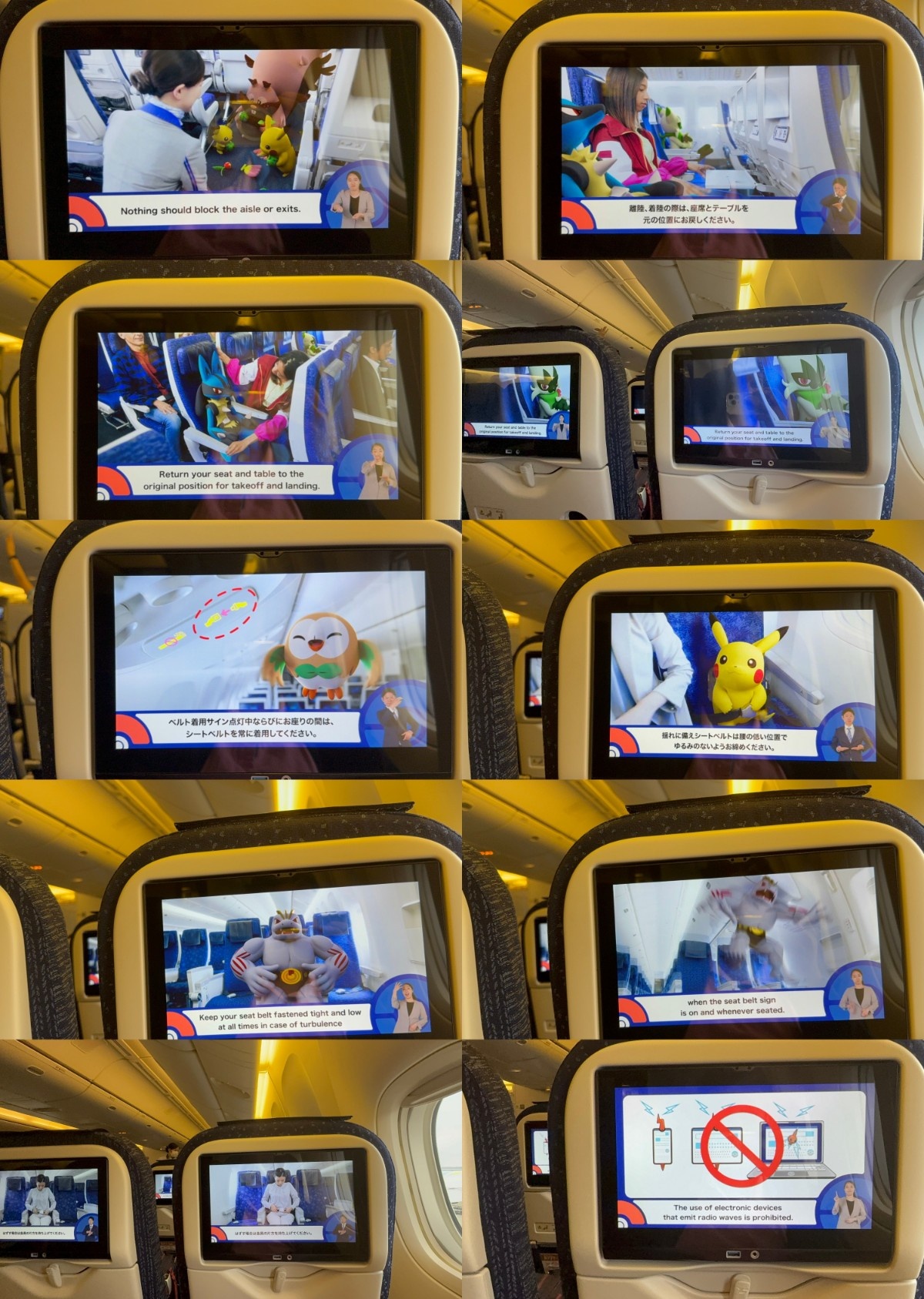
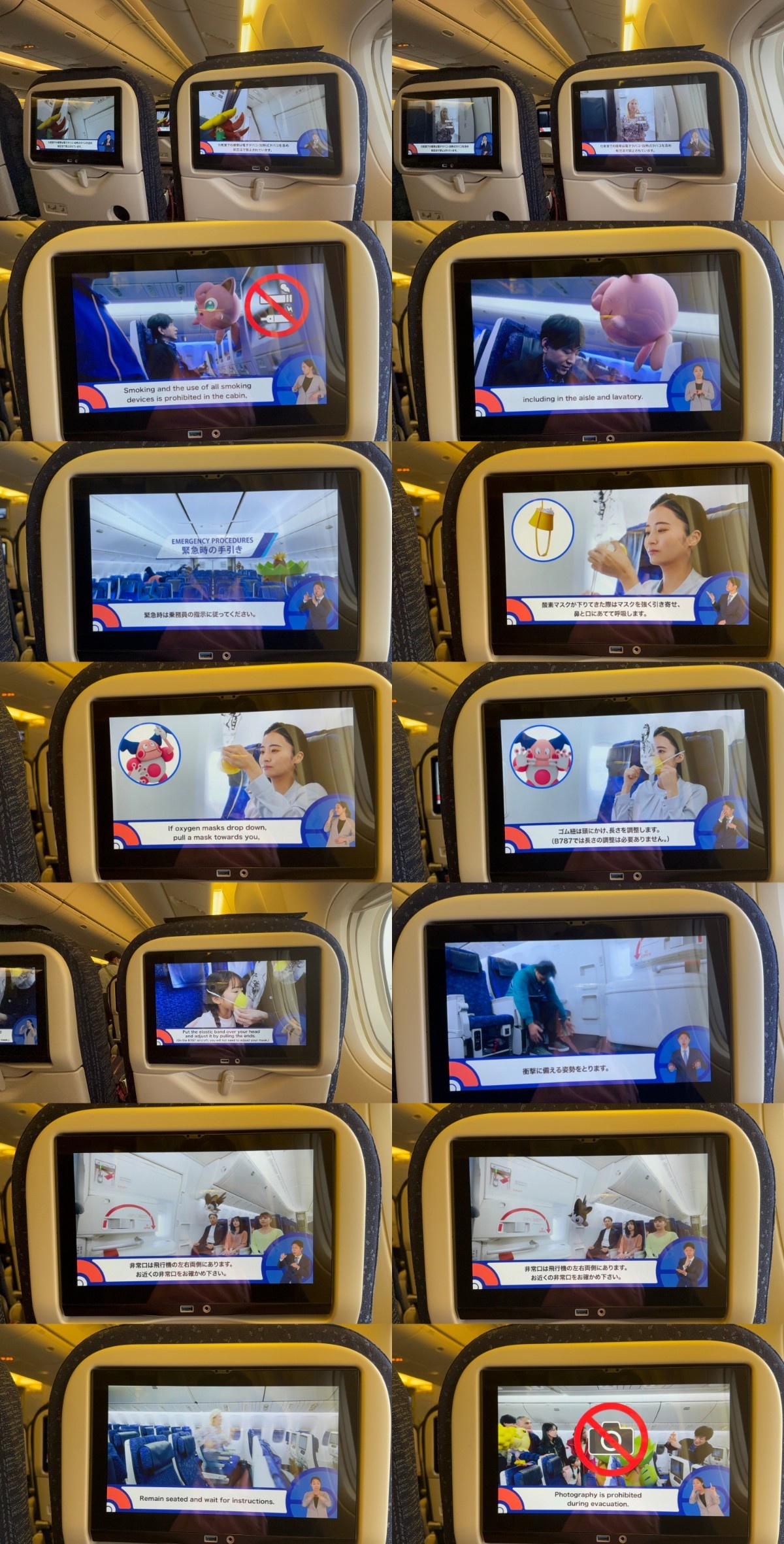
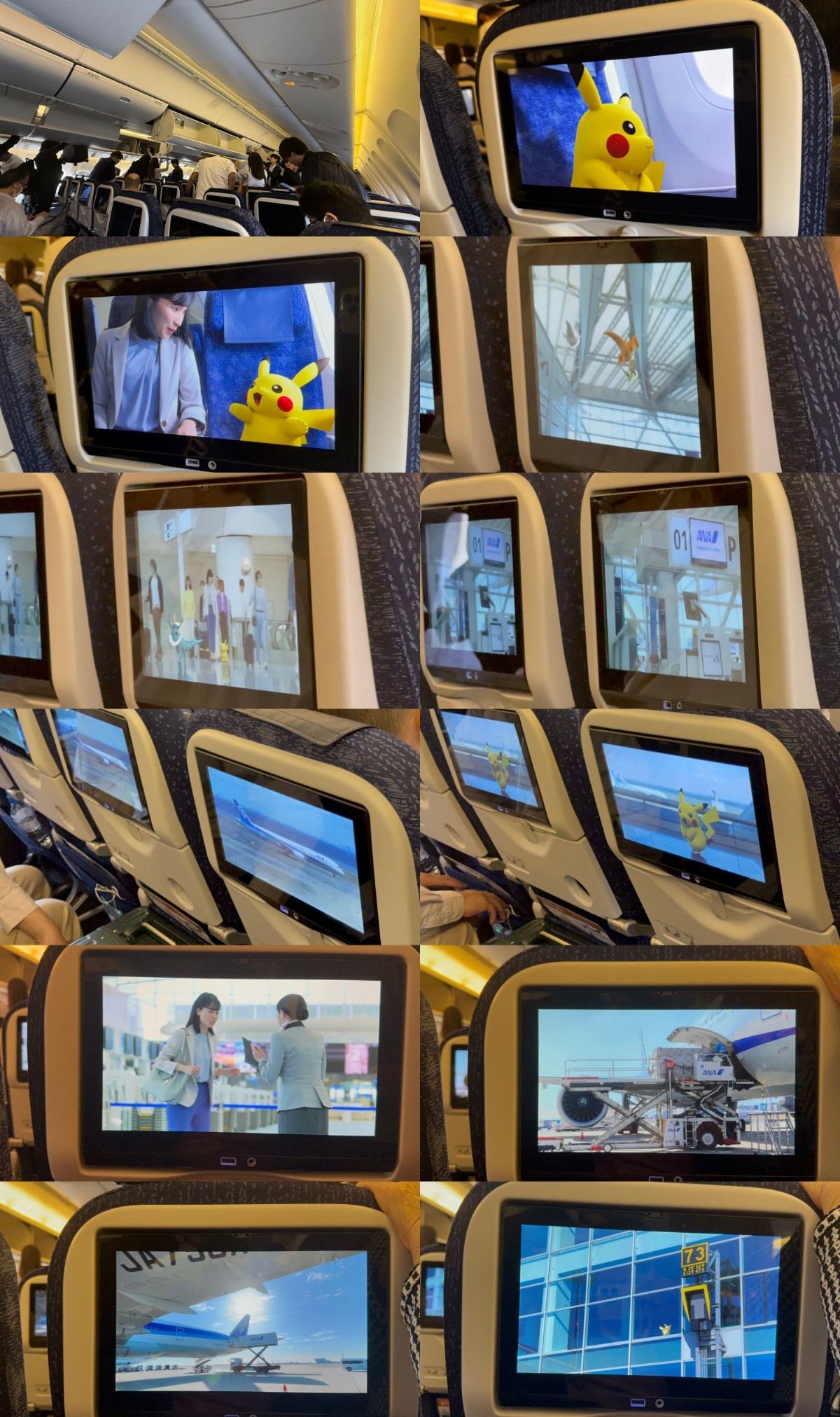
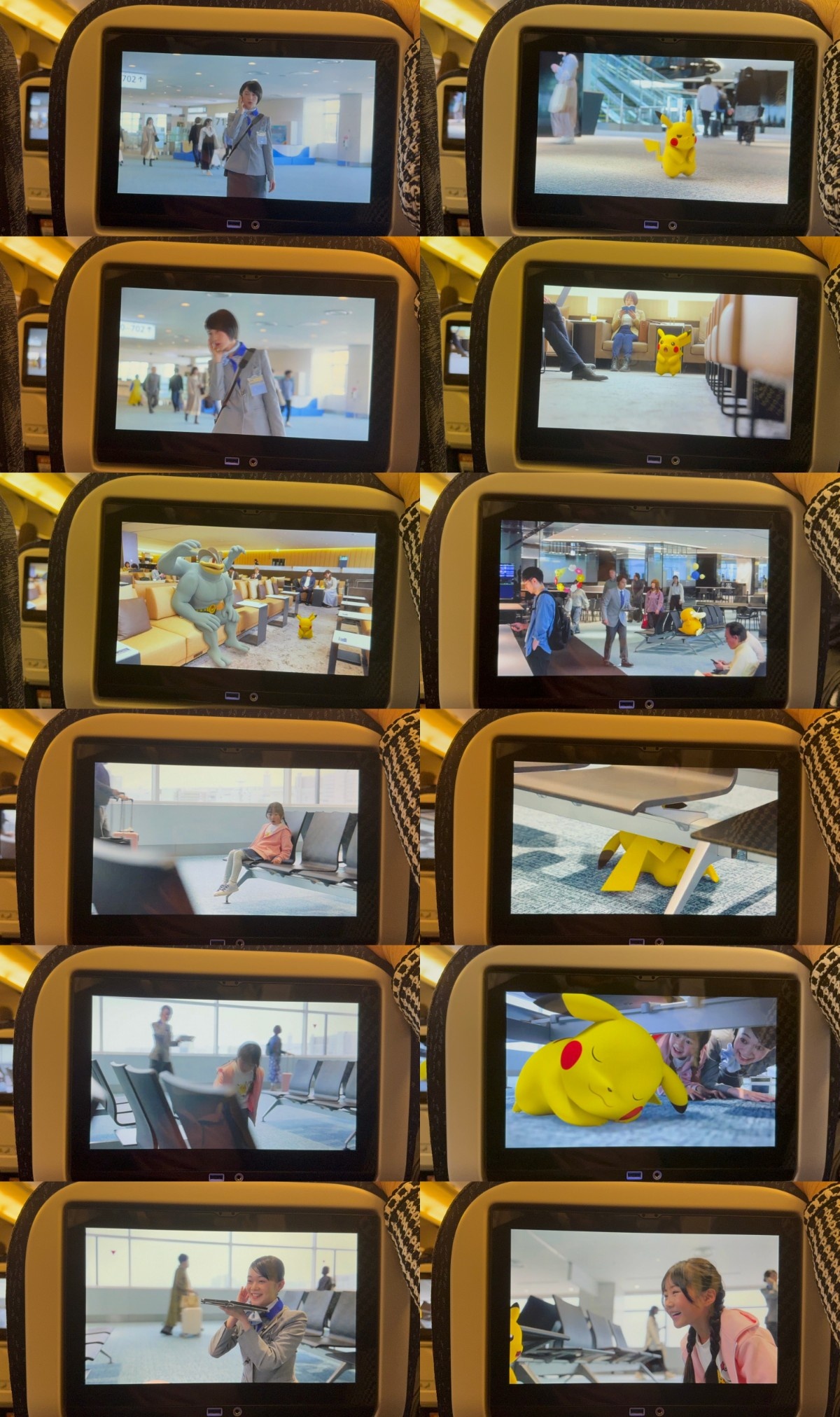
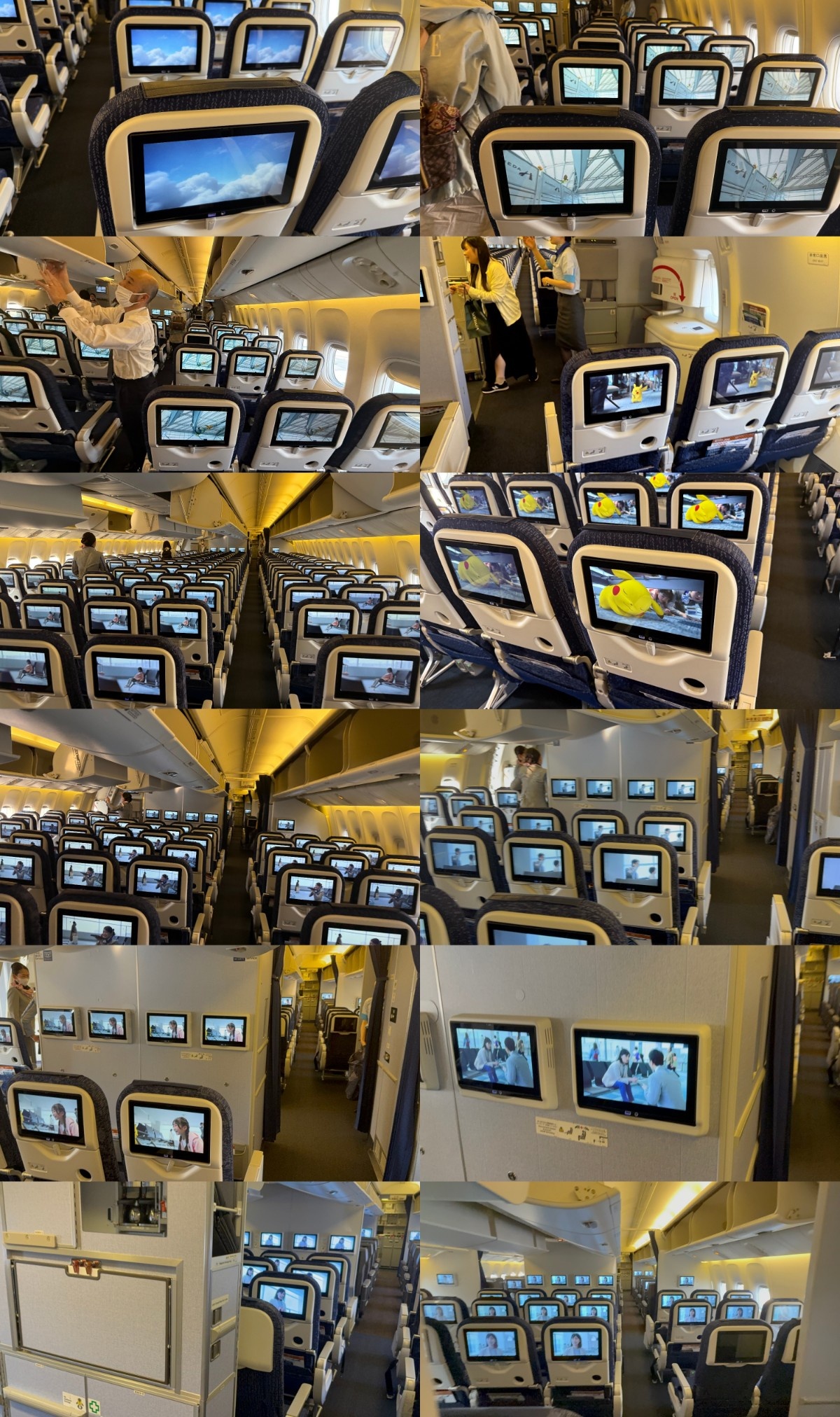
Before long, bouncy Pokémon critters started to take over the cabin screens, thanks to ANA’s recent themed safety video. I don’t know my Rowlet from my Jigglypuff — indeed I know nothing besides Pikachu in this universe — but it made sure that there was not a dull moment on board. I sure had a whale of a time, and there aren’t that many videos nowadays where animated characters are superimposed upon real-life surrounds.
While a far cry from the tranquility of equally acclaimed alliance partner Singapore Airlines’ safety video — including the recent refresh in October 2025 — it injects a great deal of levity and fun to the safety proceedings, while ensuring that the focus on safety is not lost.
This was in great contrast to the dull-as-dishwater video I’d seen some days before on Asiana, which was shot on a green screen and was as uninspired as it was meh. And I’m not the only one who feels so: just see how ANA’s Pokémon video was praised in glowing terms by Runway Girl Network when it was released. (Emphases mine.)
ANA says the video is designed to help passengers “deepen their understanding of safety and provides easy-to-understand explanations of safety-related information and precautions in various inflight situations, guided by Pokémon characters”. And it succeeds on that front.
Indeed, at a time when a troubling number of airline safety videos are infotainment-focused, and strongly deviate from the aircraft cabin setting, it’s refreshing and impressive to see ANA convey the gravitas of what can happen if safety instructions are not followed, whilst remaining engaging for children and adults.
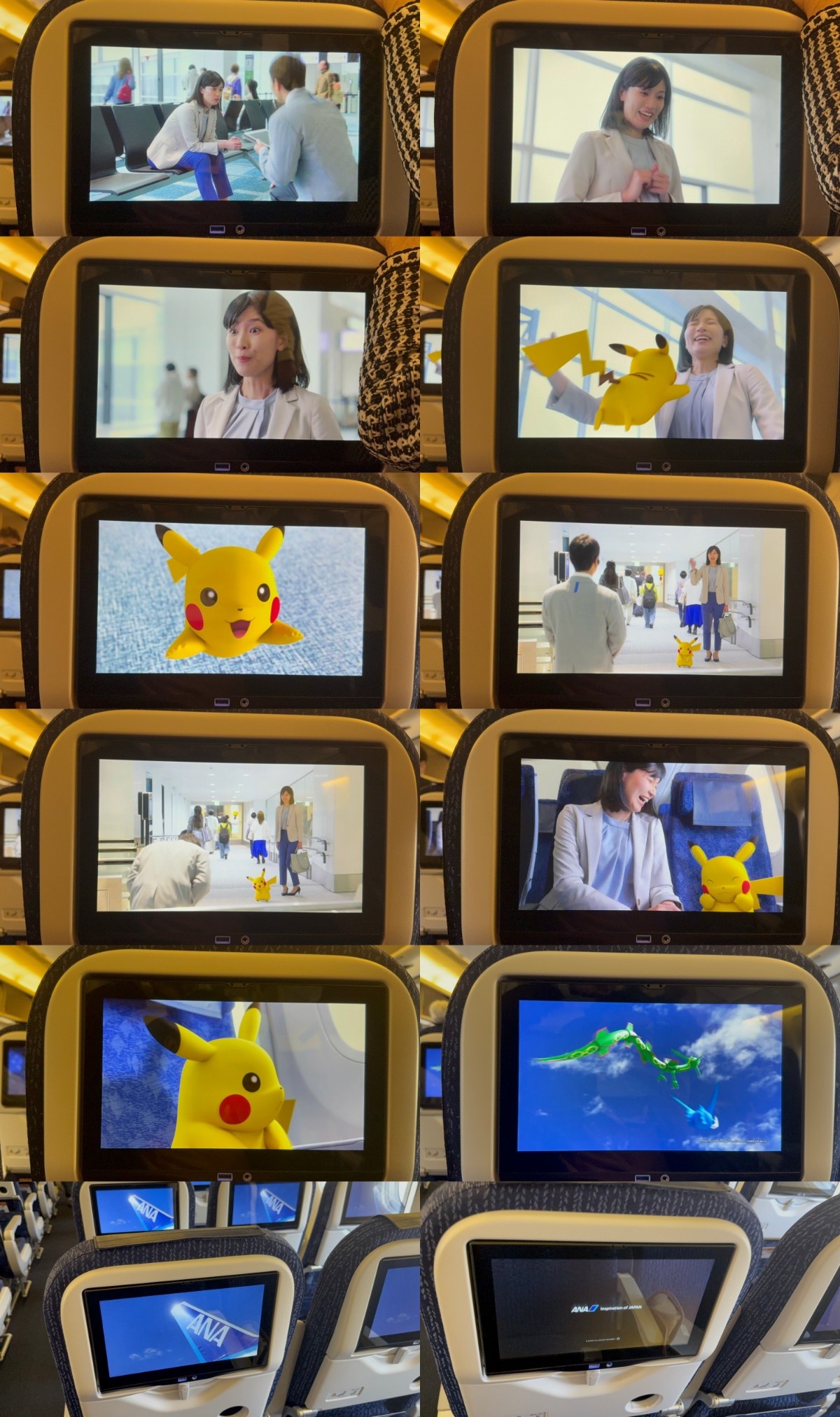
In a separate disembarkation video, Pokémon character Pikachu gets lost on its journey and is reunited with its trainer through the cooperation of ANA airport staff. What’s striking about this video is the gentle way ANA imparts a safety message to small children, whilst reminding them that ANA team members work together for positive outcomes.
— Runway Girl Network, August 2024
We taxied out and made our way to the runway, passing scores and scores of ANA jets, including a few from the A320 family that I couldn’t see from the terminal.
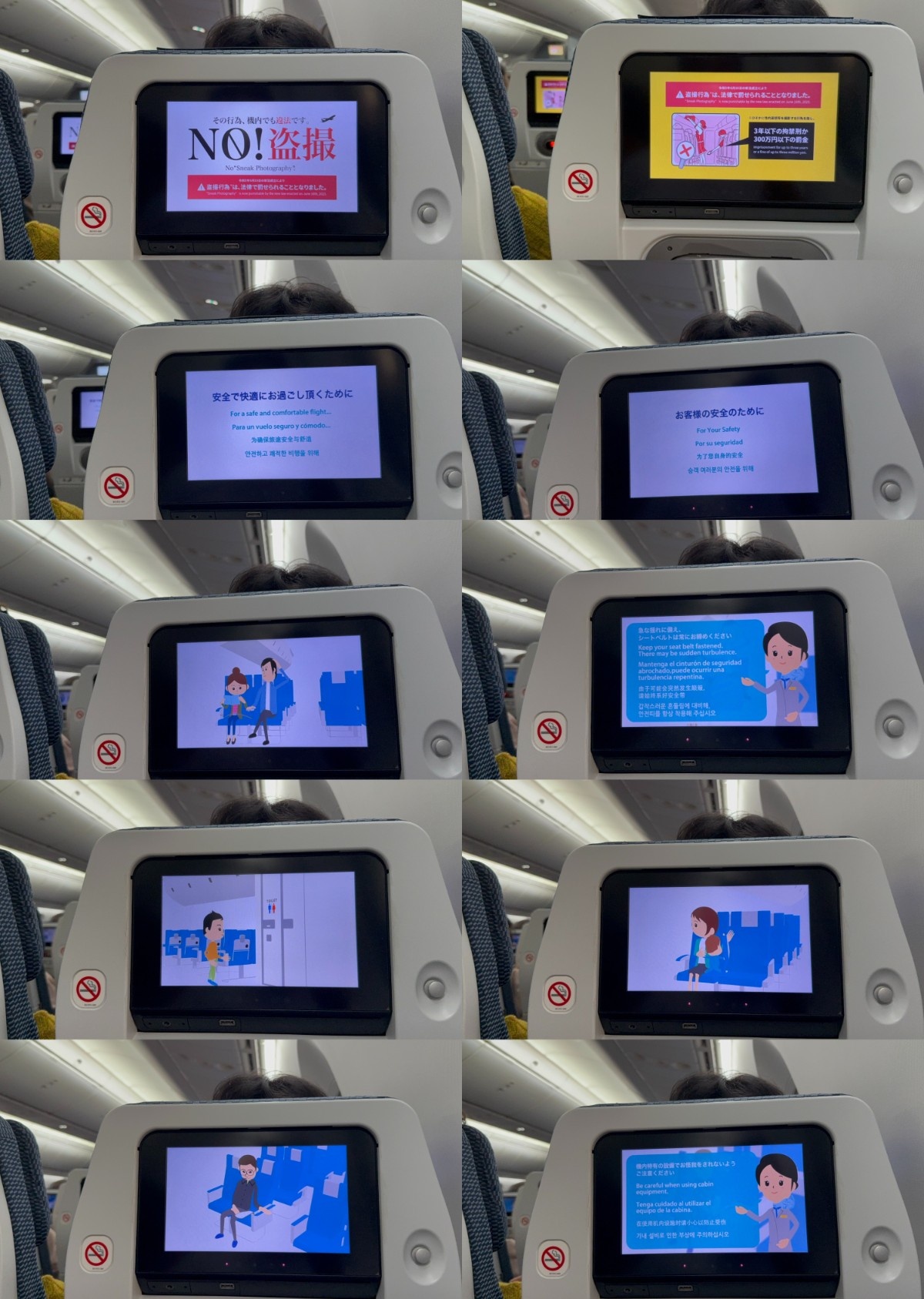
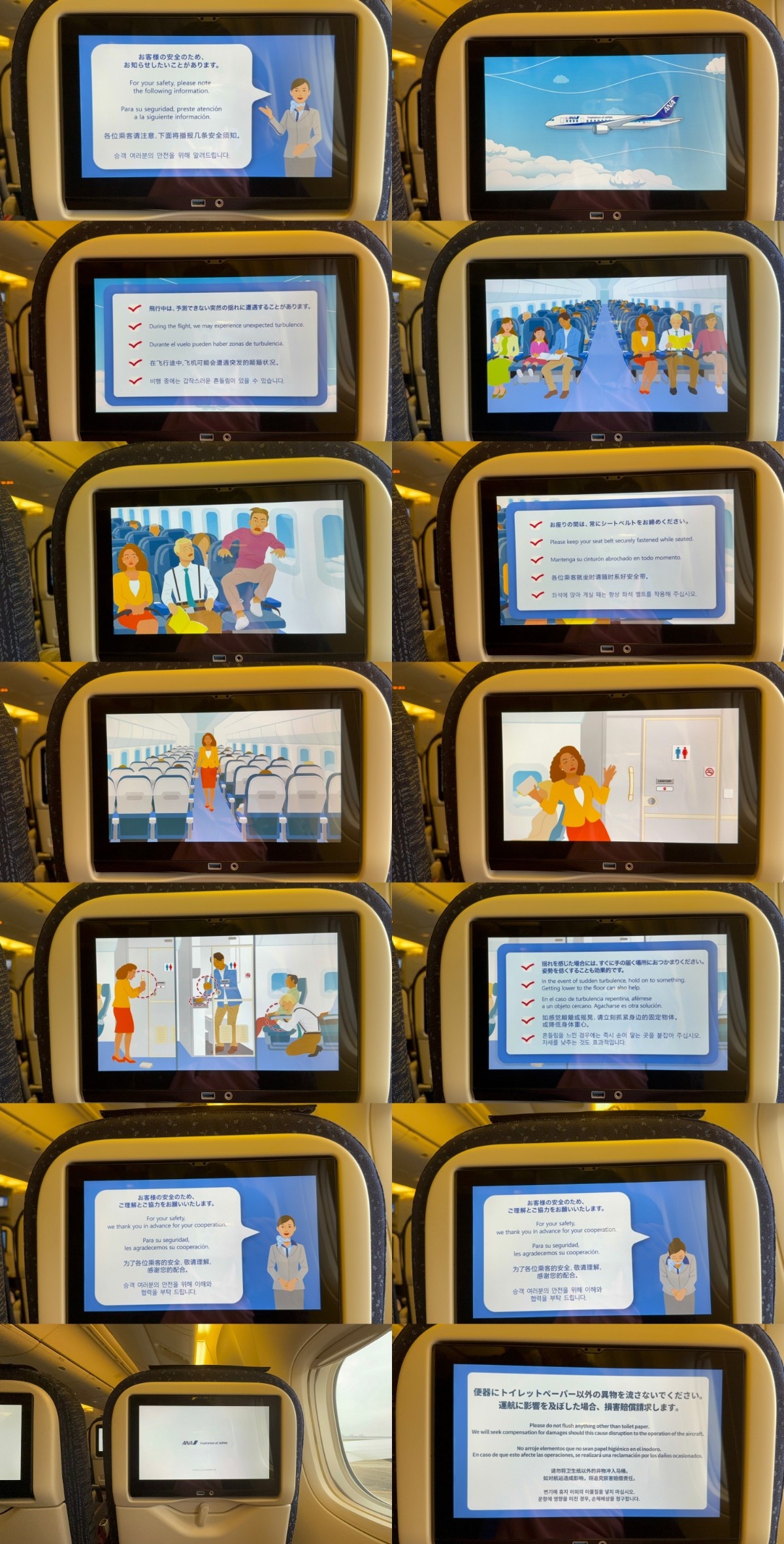
As is the norm in Japan, another video was screened that focused more on handling turbulence in the air, and had advisories in a number of languages including Spanish. I will say, though, that this was nowhere as cute as the secondary video (after the main safety video) I’d see the following evening on NH801 back to Changi.
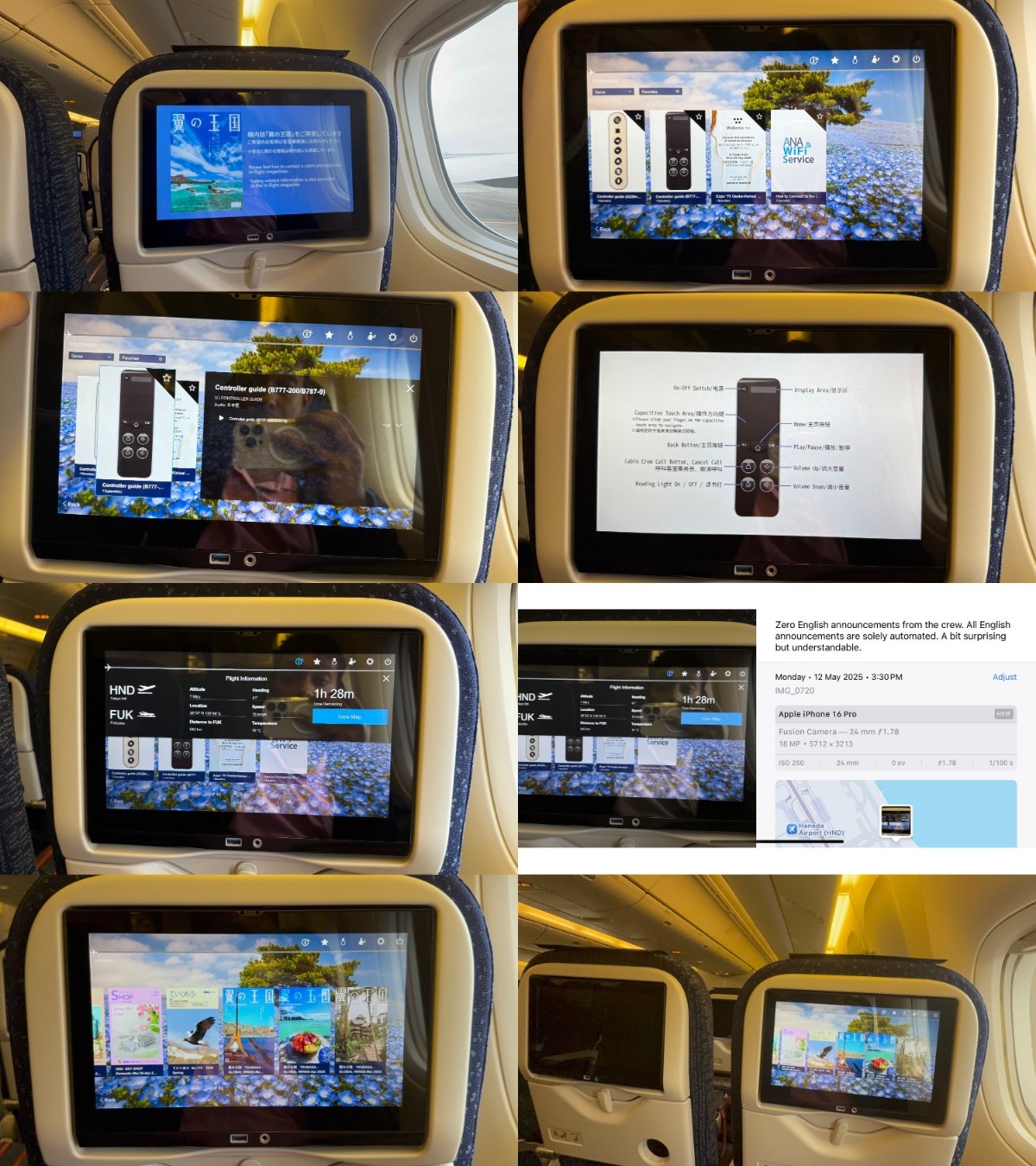
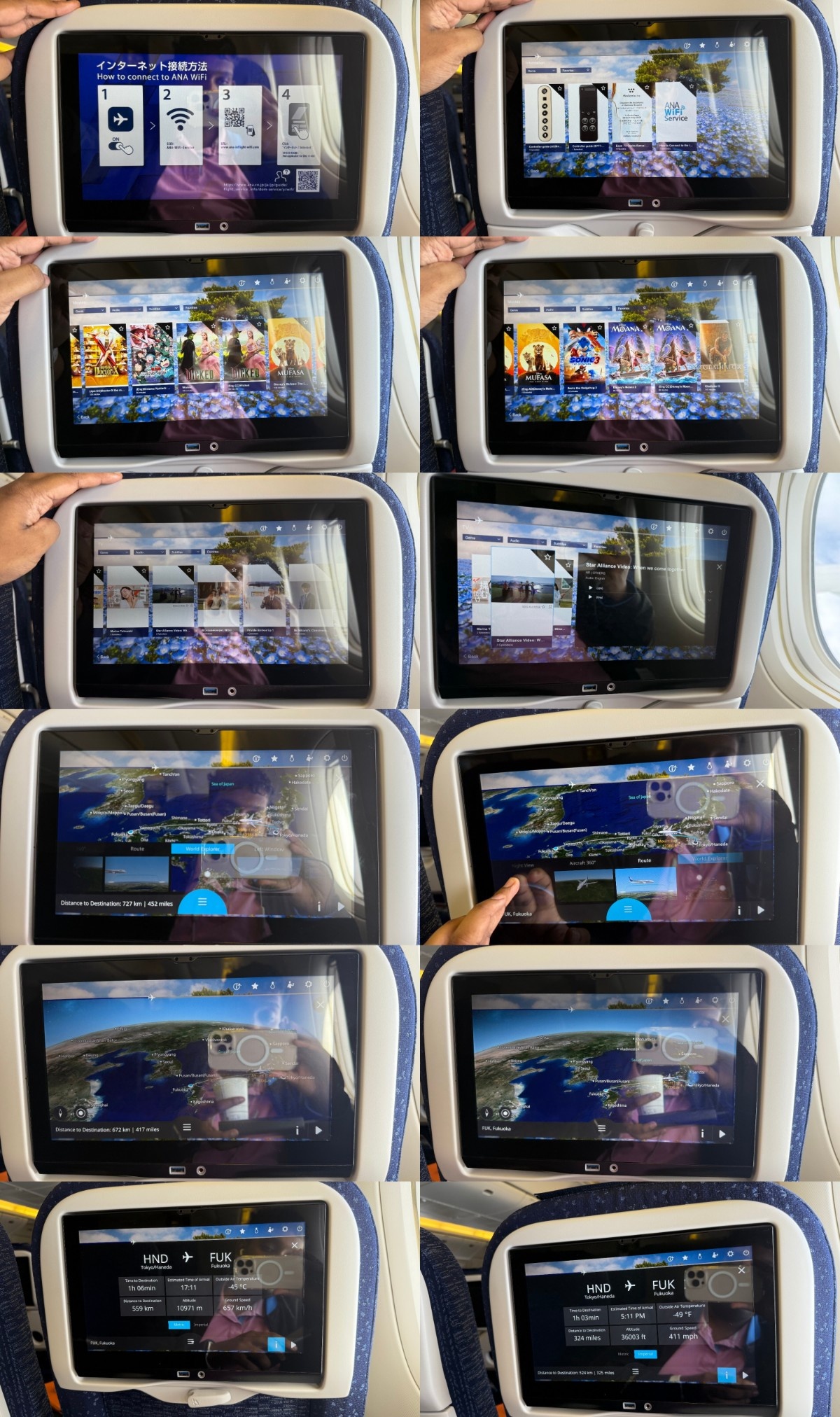
This done, I moved on to exploring the IFE interface, as I always do. Besides the guide to the sleek-looking in-seat remote, there were also a bunch of Japanese digital magazines. And that’s saying nothing of the free Wi-Fi and online entertainment portal after takeoff…
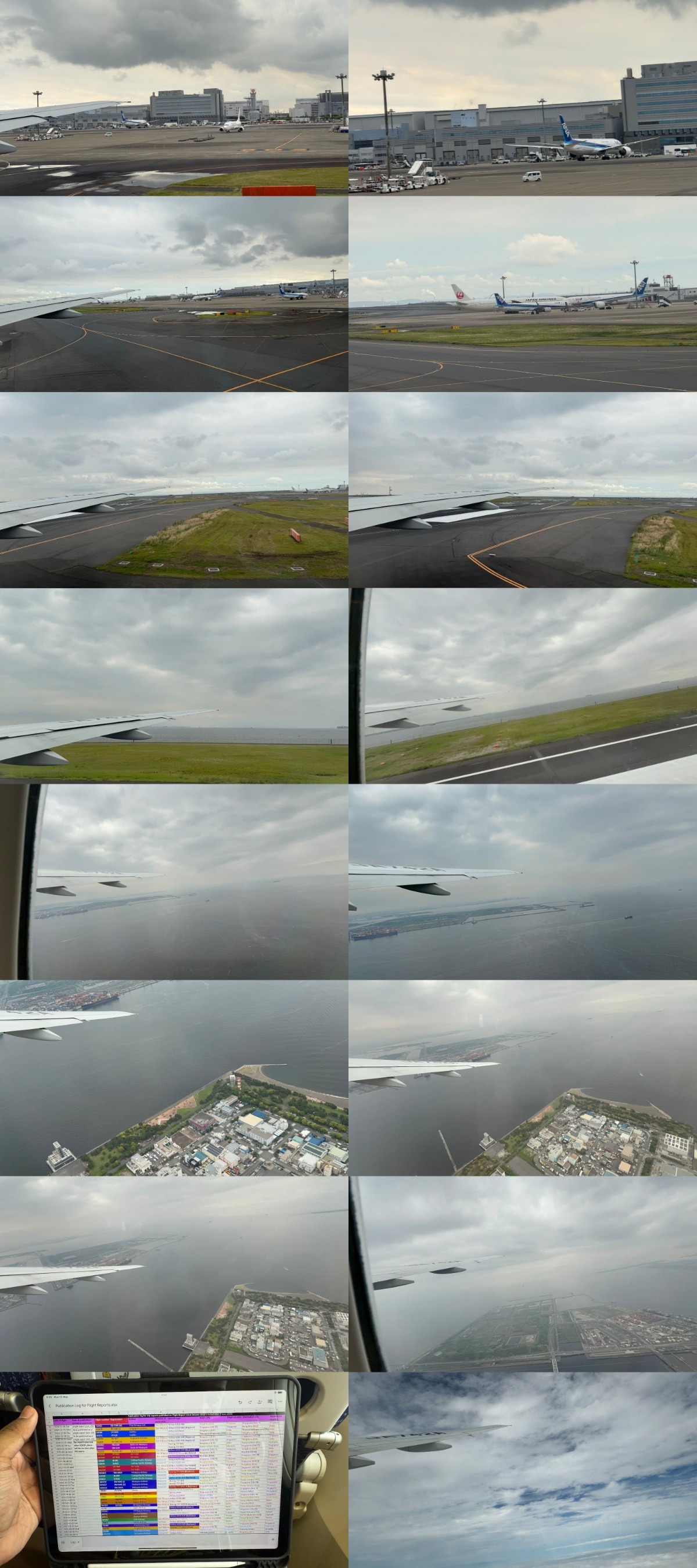
At half-past three sharp, JA742A hurtled into the cloudy grey skies above. For the first time I witnessed for myself just how AWESOME the seaside views taking off from HND are. I’ve seen a lot of pictures of planes at HND, with a magnificent backdrop in the form of the sea, but this put me in the centre of the action for the first time.
I mean, I lived near Changi long enough to marvel at the ships in the sea on every departure from there, but these views were no less majestic in their all-encompassing nature. It brought to mind my departure from Denpasar in June 2023 on Garuda Indonesia’s A330-300, over an aquamarine expanse of water. If only the skies here were a little less overcast, it would have been perfect.
And it would get even better the next day, with the JAL A350’s tail camera providing a simply BREATHTAKING view of the overwater approach to HND. Tranquility personified!
Entertainment, digitally and otherwise — plus drinks and toffees
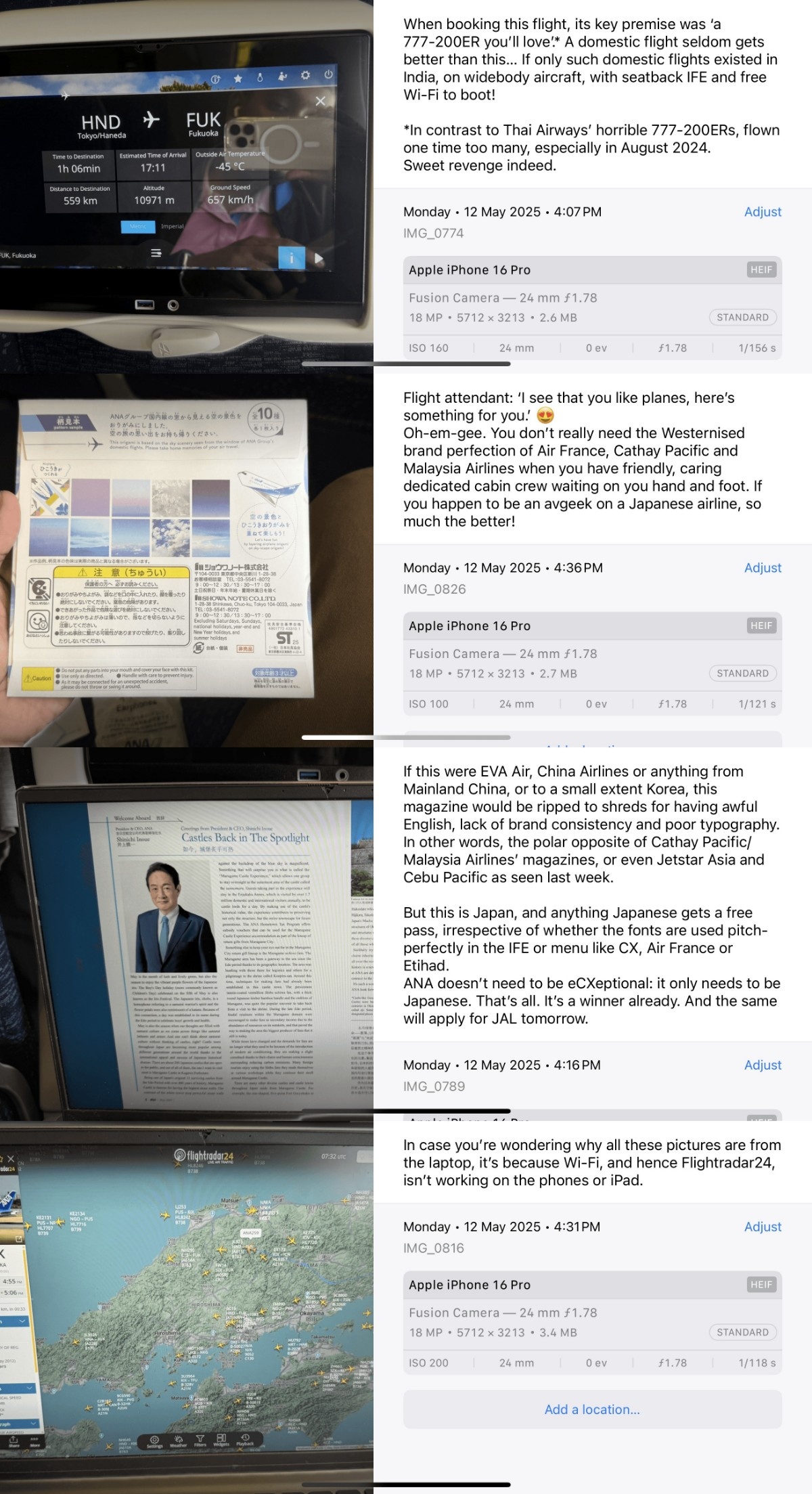
Immediately after takeoff I had a look at the movie selection — which wasn’t a lot, honestly (and neither do these short flights need them) — before moving to the moving map, which greatly underestimated the time it’d take to fly to Fukuoka. It ended up being almost 2 hours, compared to the 1 hour 20 minutes that the map showed.
But when was more time spent on a plane ever a problem for me — all the more so in Japan?!
Very soon, groups of flight attendants in pretty white-and-powder-blue gowns statted to make their way down the aisles with drinks. Bear in mind that Japanese domestic flights do NOT have a meal service other than these beverages — and toffees, as you’ll see later below — unless you’re flying in Premium Class on ANA or domestic First Class on JAL.
I kept it straight and simple, and ordered an orange juice. The flight attendant knew enough English to be able to repeat the drink options, which weren’t a lot to begin with. At least she competently conversed with me, a gaijin, which you can’t take for granted in Northeast Asia.

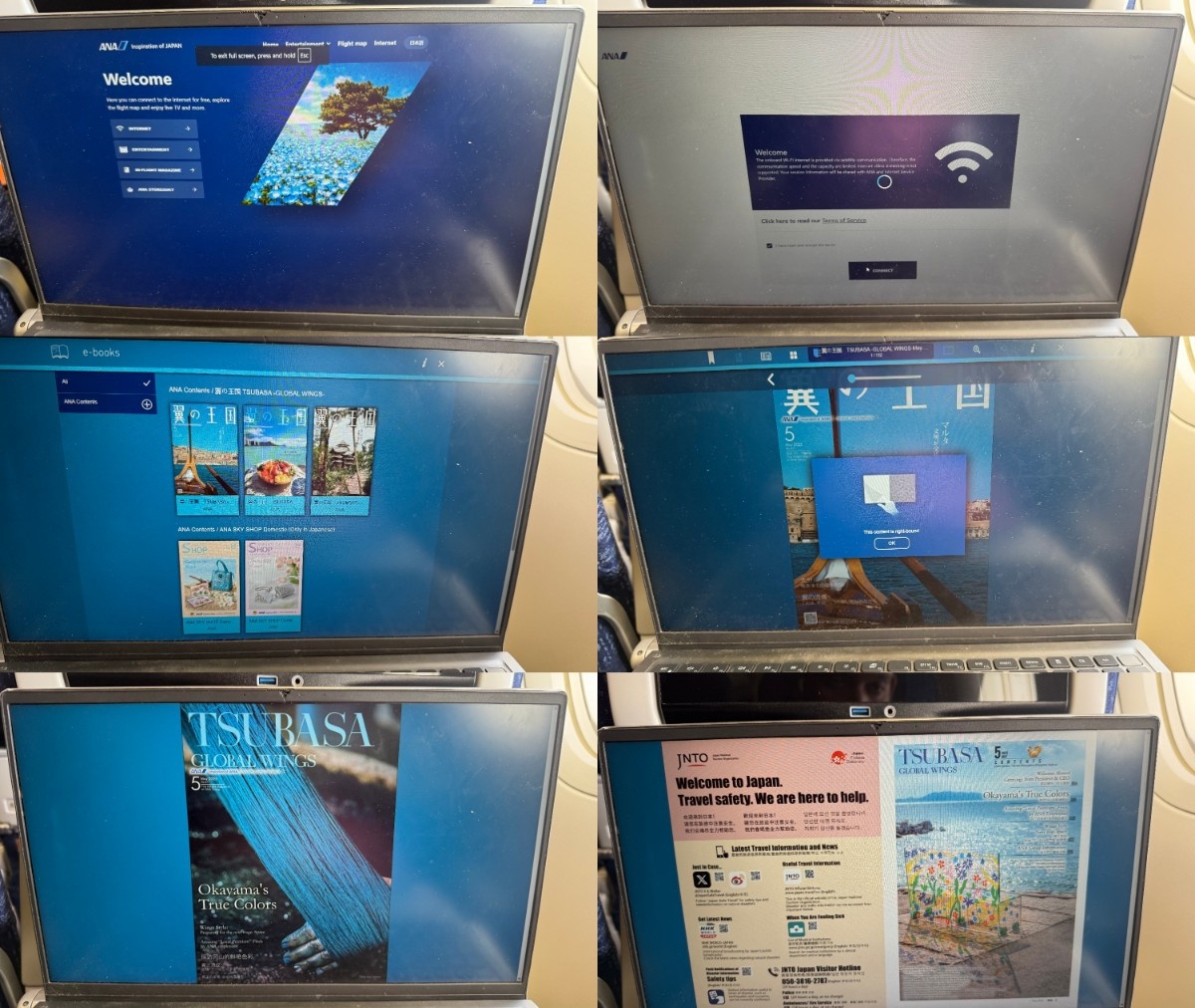
For some reason I could not get the free onboard Wi-Fi to connect from my iPad or phone. Never mind: I always carry my laptop everywhere I go, and used it to peek into the airline’s digital magazine, entitled Tsubasa Global Wings. While of course a physical magazine would’ve been better — and indeed ANA had one, called Wingspan, before the pandemic — at least ANA took the effort to launch a digital magazine in its stead. (For the record, JAL still maintains a physical magazine called Skyward, as I saw on my A350 flight the next day.)
However, I can’t say it had an especially refined look. Indeed it was more Japanese-centric — similar to Vietnam Airlines’ Heritage magazine — than Western-focused in its outlook like the eponymous Cathay magazine is. (Or, for that matter, the incredibly modern and hip magazines by Ink Global, including for Ethiopian Airlines, Malaysia Airlines and the now-defunct Jetstar Asia.)
Nevertheless, I certainly appreciated the effort, at a time where some airlines (like Thai Airways and Malaysia Airlines) have brought back their physical magazines, and others, like Singapore Airlines and all Middle Eastern airlines other than Etihad Airways, have permanently ruled out bringing back any sort of physical or digital magazine.
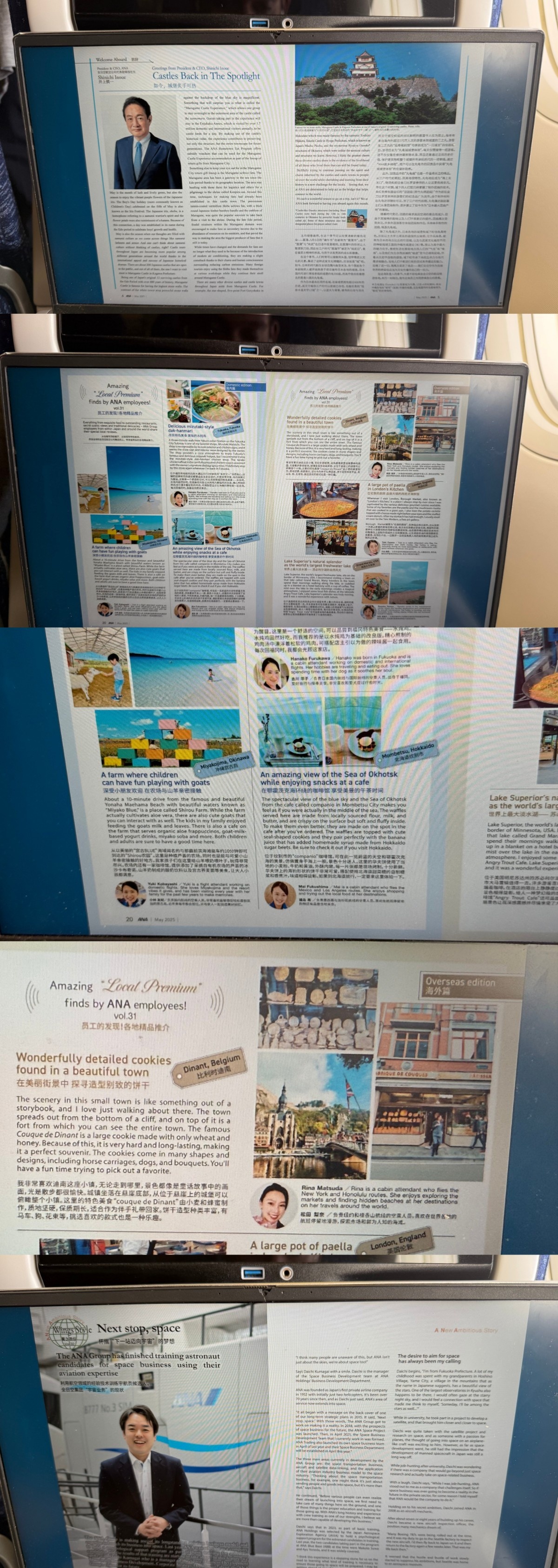
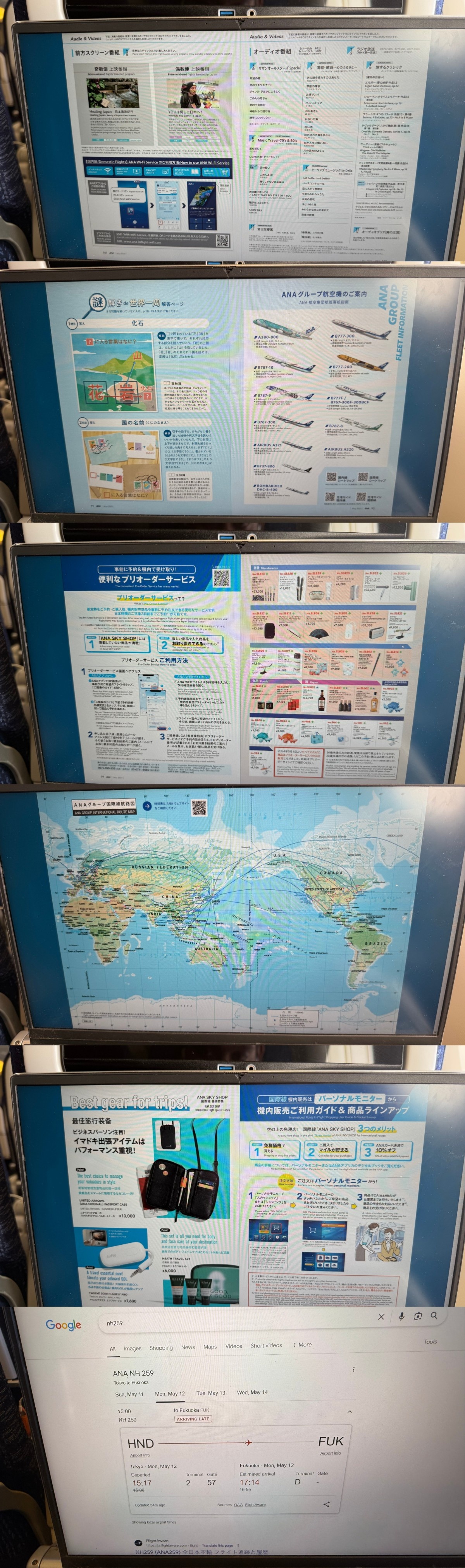
Here’s a glance at some of the pages, including the chairman’s address, and some flight attendants — yes, actual cabin crew, not magazine staff writers! — writing about their favourite destinations. (Full resolution here.)
And here’s the airline information pages, including the fleet — look at that Flying Honu A380, and that Star Wars 777-200ER and 787-9! — and route network. (Full resolution here.)
For what it’s worth, here’s a link to the May 2025 edition of the magazine that I was reading, available from ANA’s dedicated Tsubasa website.
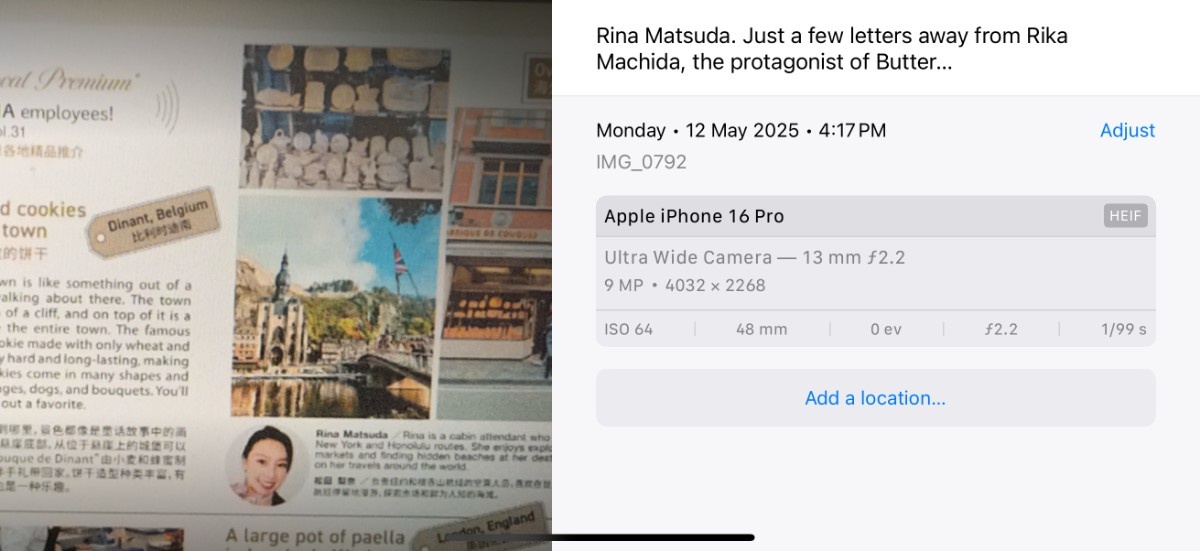
On seeing the name Rina Matsuda, I could not resist slipping in a small note about how similar it was to Rika Machida — the protagonist of Asako Yuzuki’s award-winning novel Butter, which I was reading at the time. (And would continue to do so in a tempura restaurant in Fukuoka that evening!)
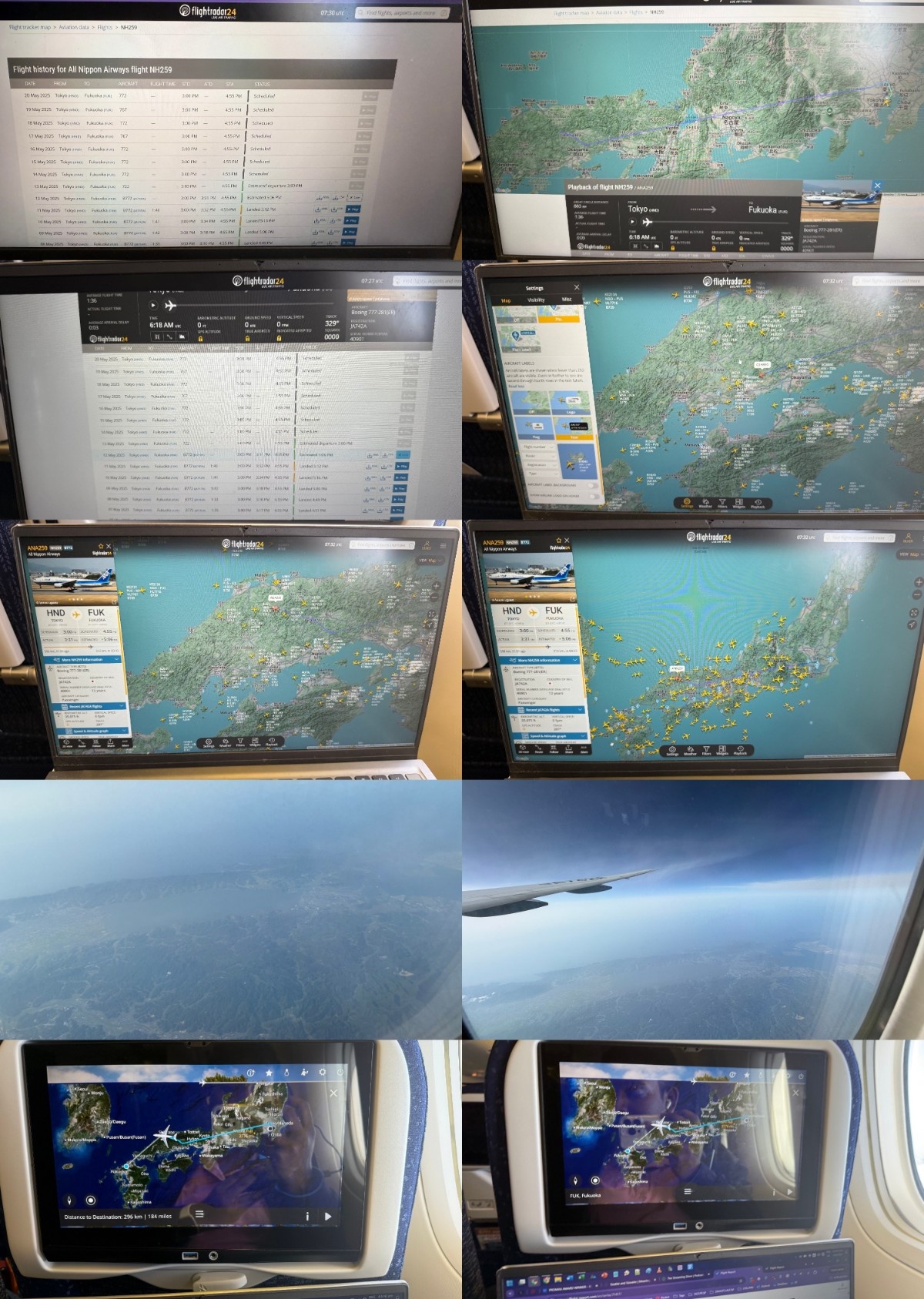
Since my phone couldn’t connect to the Wi-Fi, I had to make do with tracking the flight with Flightradar24 on my laptop. Honestly, I almost never use Flightradar24 tracking on the big screen, and it felt awesome to be doing so this way — especially as I was literally on the plane!
This is something that I always do when connecting to inflight Wi-Fi, and it’s much easier on Singapore Airlines than others, since few other airlines provide free Wi-Fi for all.
A shining example of Japanese hospitality and courtesy
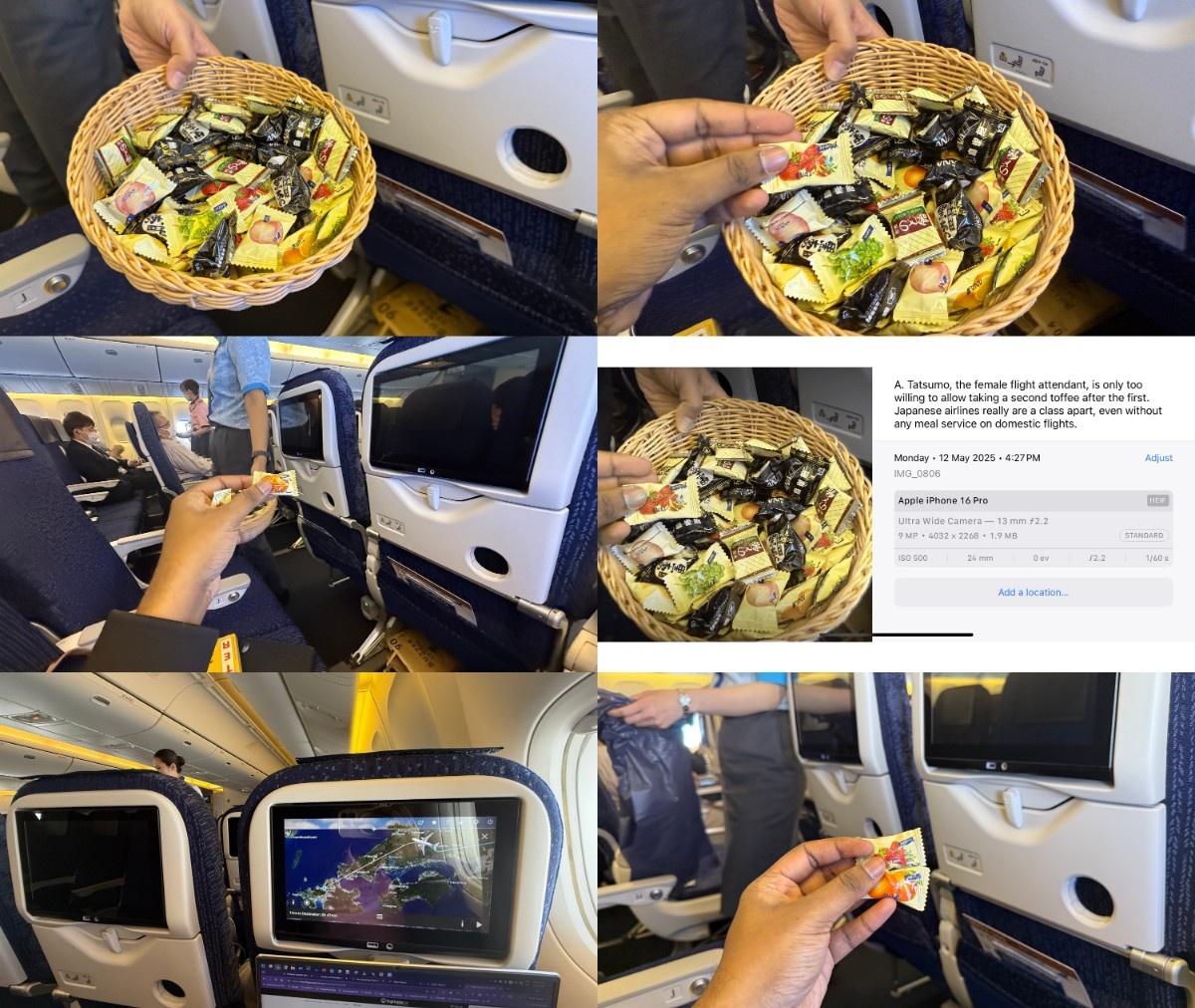
Even though there is no meal service on Japanese domestic flights outside Premium Class (ANA)/domestic First Class (JAL), the cabin crew still came around with toffees for everyone. And even after I’d taken one orange-flavoured confection, she was all too willing to let me take a second. How hospitable! Can you even imagine most Western airlines handing out toffees, let alone letting you take two?
But that was not the end of my interaction with the cabin crew — far from it! Closer to final approach in Fukuoka, the FA gave me the surprise that I’d all too eagerly been waiting for from a Japanese domestic flight. She said, ‘I see that you like planes, so here’s something for you.’
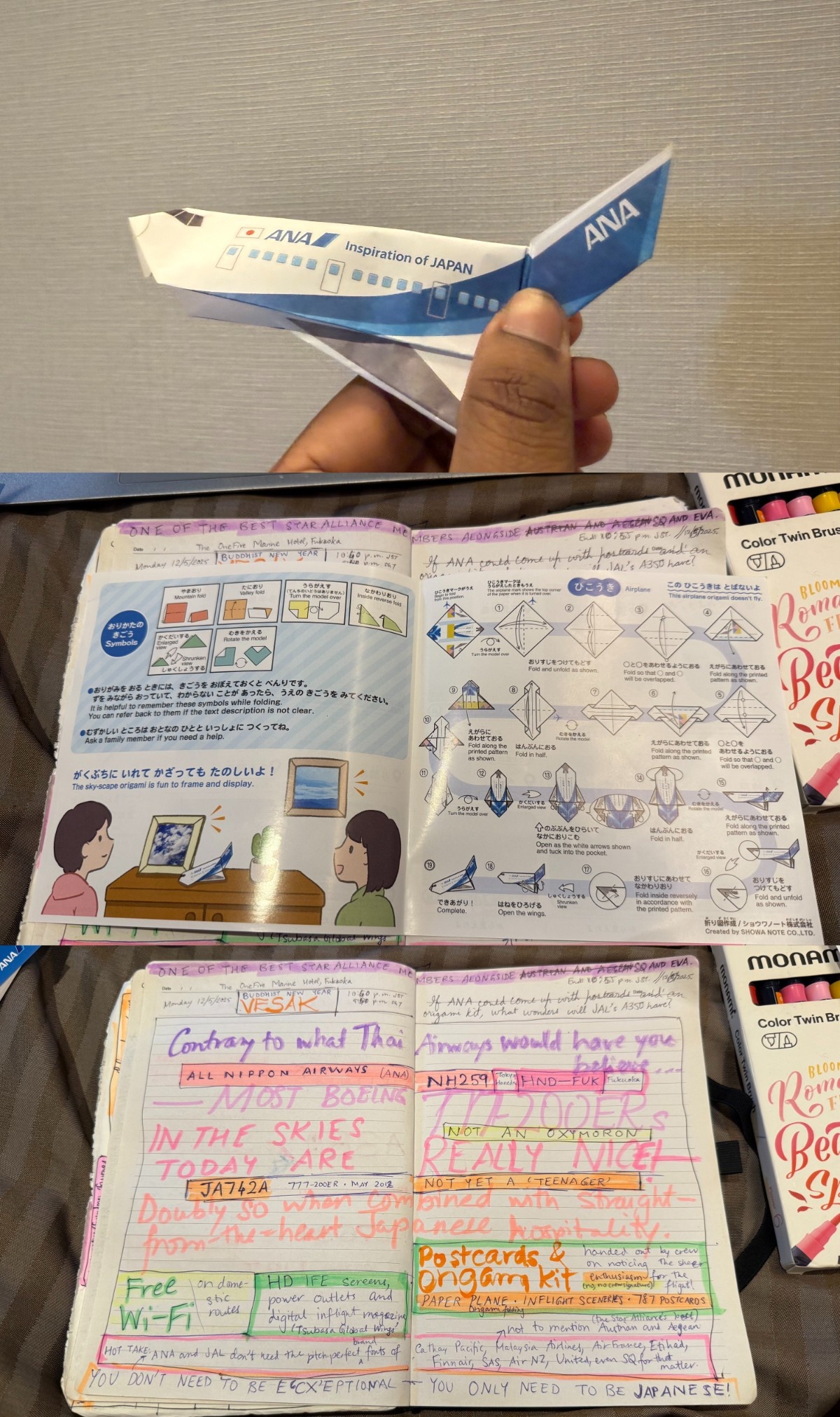
Lo and behold, she pulled out a pack of 787 postcards and an origami (paper-folding) plane kit!!! As a big origami fan when I was a kid, I cannot imagine how big of a smile this brought as I opened the kit, which also contained pictures of the inflight scenery from ANA domestic flights.
This is no different from what Ben Schlappig of OMAAT experienced in early 2025 when flying JAL’s A350 (in Class J, the same as me) from Sapporo to Tokyo–Haneda. They gave him A350-1000 postcards and Hokkaido Air Commuter keychains, simply by sensing the passion for aviation that he had. Seldom will you find this sort of proactive and attentive embracement (is that a word?) of avgeekery outside of Japanese shores.
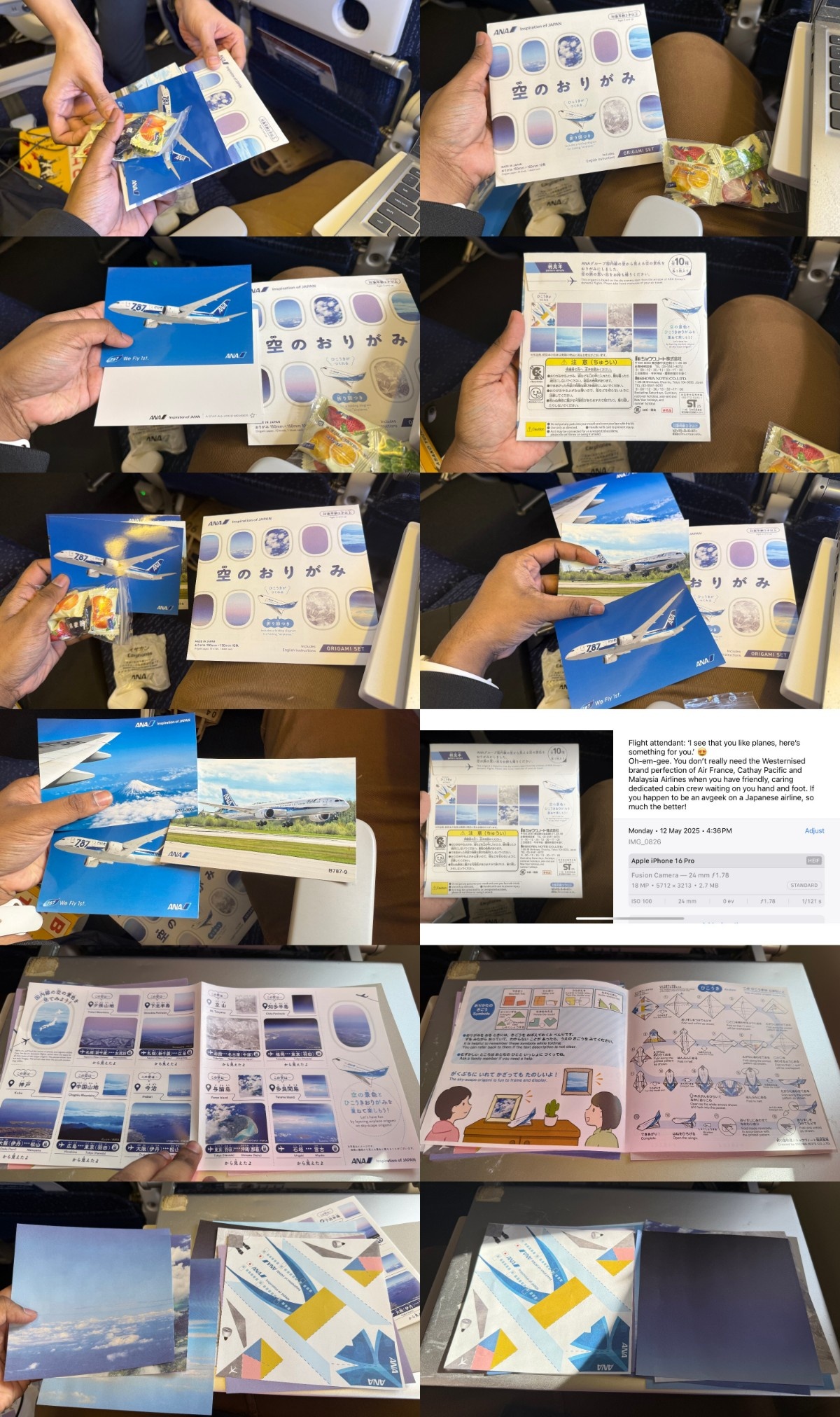
Simply incredible, where I’m concerned, and indeed the flight very much lived up to its billing as ‘a 777-200ER you’ll love’ — as reasonably high-tech as possible for a domestic flight, with the only thing lacking being a meal.
As for the relatively low levels of Westernised branding compared to other top airlines like Air France, Cathay Pacific and Etihad — as well as other typography standouts like Saudia, Qantas and Malaysia Airlines — I was more than willing to let it slide. For it isn’t really fair to expect this from Japanese airlines (not just ANA and JAL!), given how much their focus is on providing a lovely, hospitable experience that no amount of European, Gulf or US airlines’ sexy ads and fonts can provide.
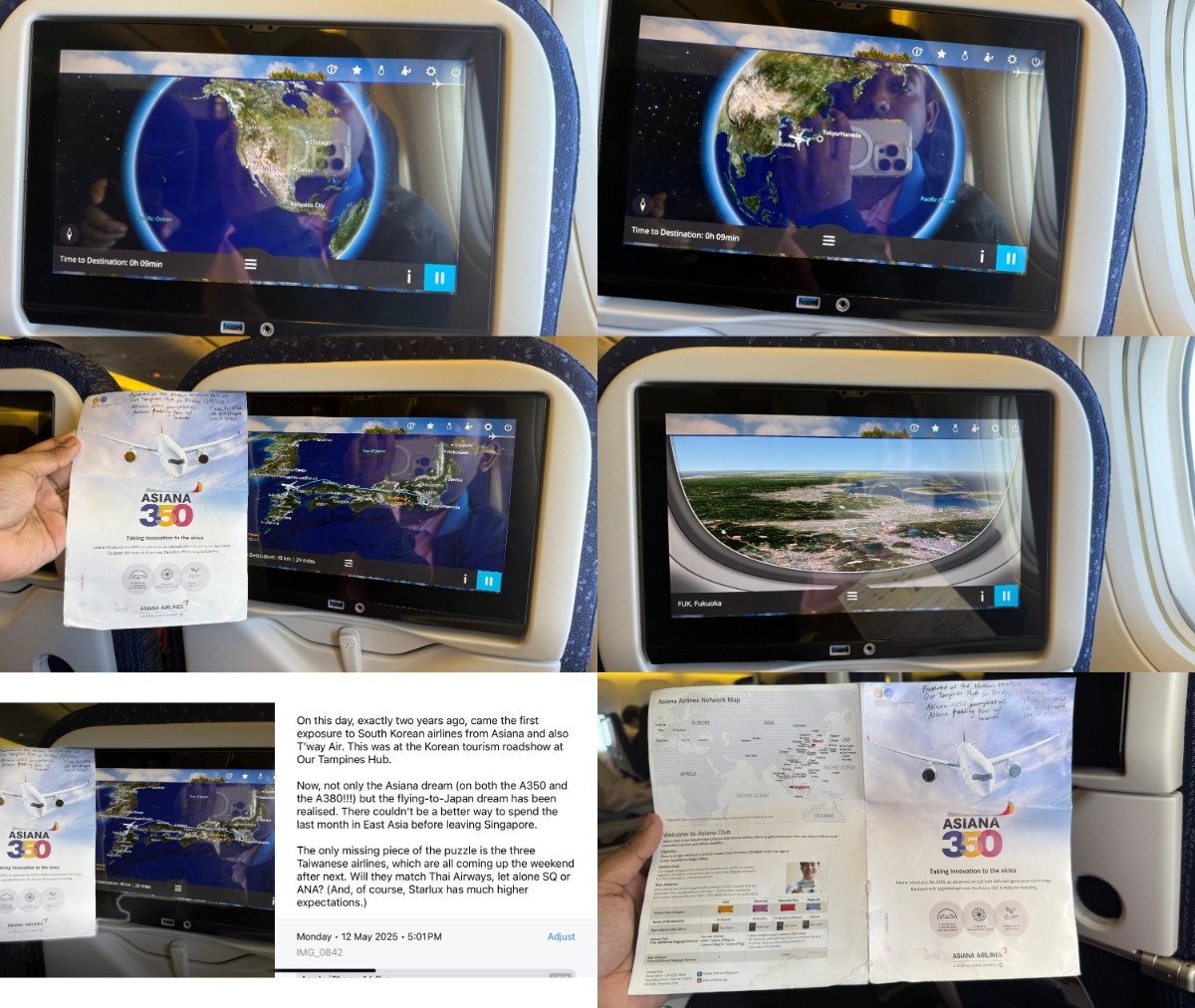
The moment would be incomplete without the original reason for making this Japan trip in the first place. I now held in my hand a brochure for the Asiana A350, which I received at a tourism fair in Singapore exactly two years before (to the day) — 12 May 2023 — and now here I was, having flown not only the Korean airline’s A350 but also its A380 upper deck in one trip! Special memories indeed…
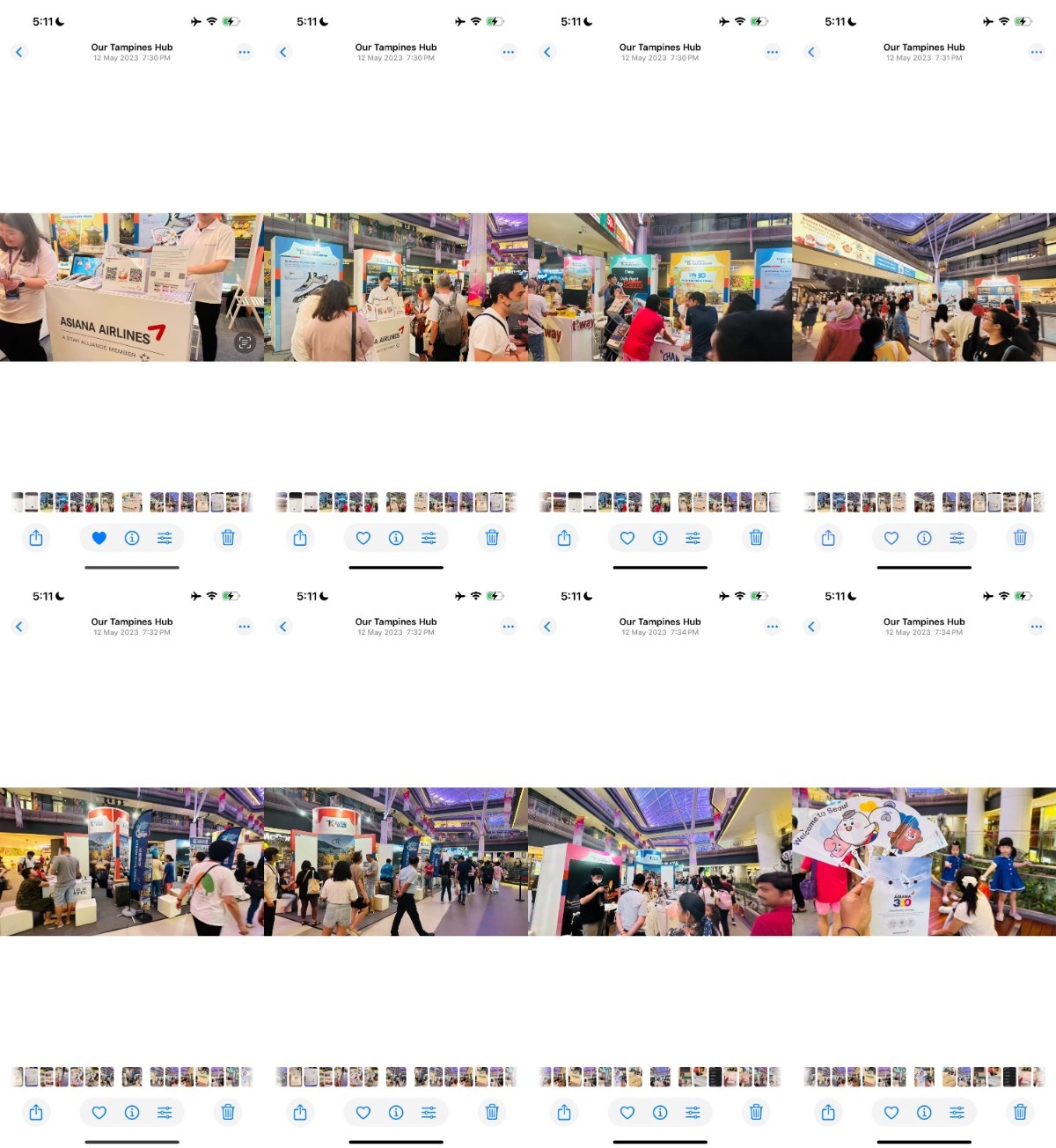
And then I scrolled through some pictures of the said Korean tourism fair, where not only Asiana Airlines but the low-cost carrier T’way Air — which will rebrand as Trinity Airways in 2026 — had large presences.
Holy FUUUUUUUUK — what brilliant views on descent!
At 5:15 we were on final approach to Fukuoka, located in the northwest of Kyushu island. As the setting sun extended its radiant glow over the urban sprawl of Fukuoka by the seaside, right beside rolling hills, I imagined just how these views would look like with an A350’s tail camera.
In any case I’d be getting the answer the very next day, taking off in broad daylight in JAL’s Class J cabin!
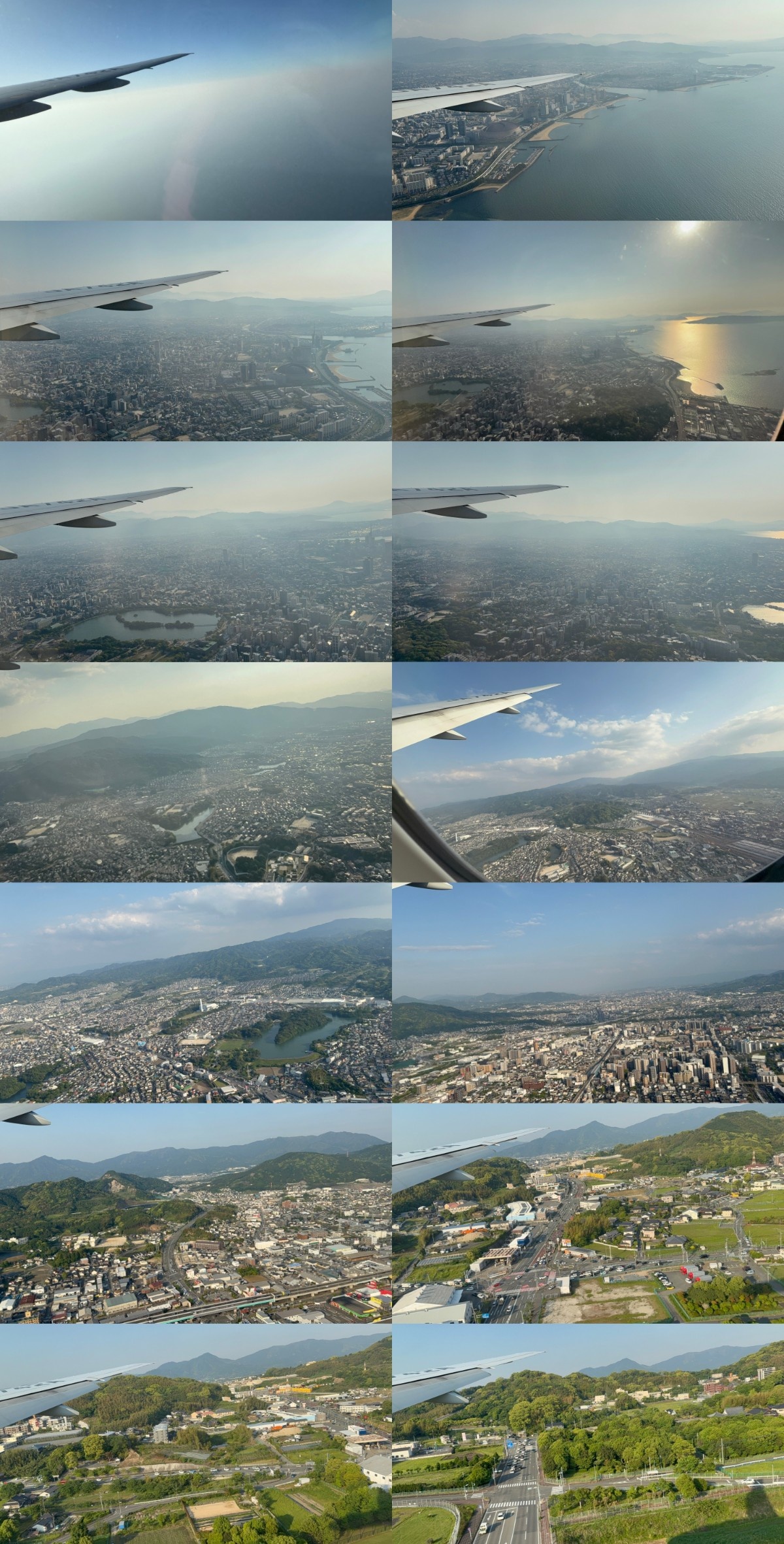
One hour and 50 minutes after takeoff, my first legitimately nice 777-200ER flight came to an end after a smooth touchdown at Fukuoka’s unnamed airport. No Narita, or Itami, or Centrair, or any other such fancy name: it’s just Fukuoka Airport, period. But it does have the distinction of having a rather unfortunate (if you will) IATA airport code — as I’ve hinted at above!
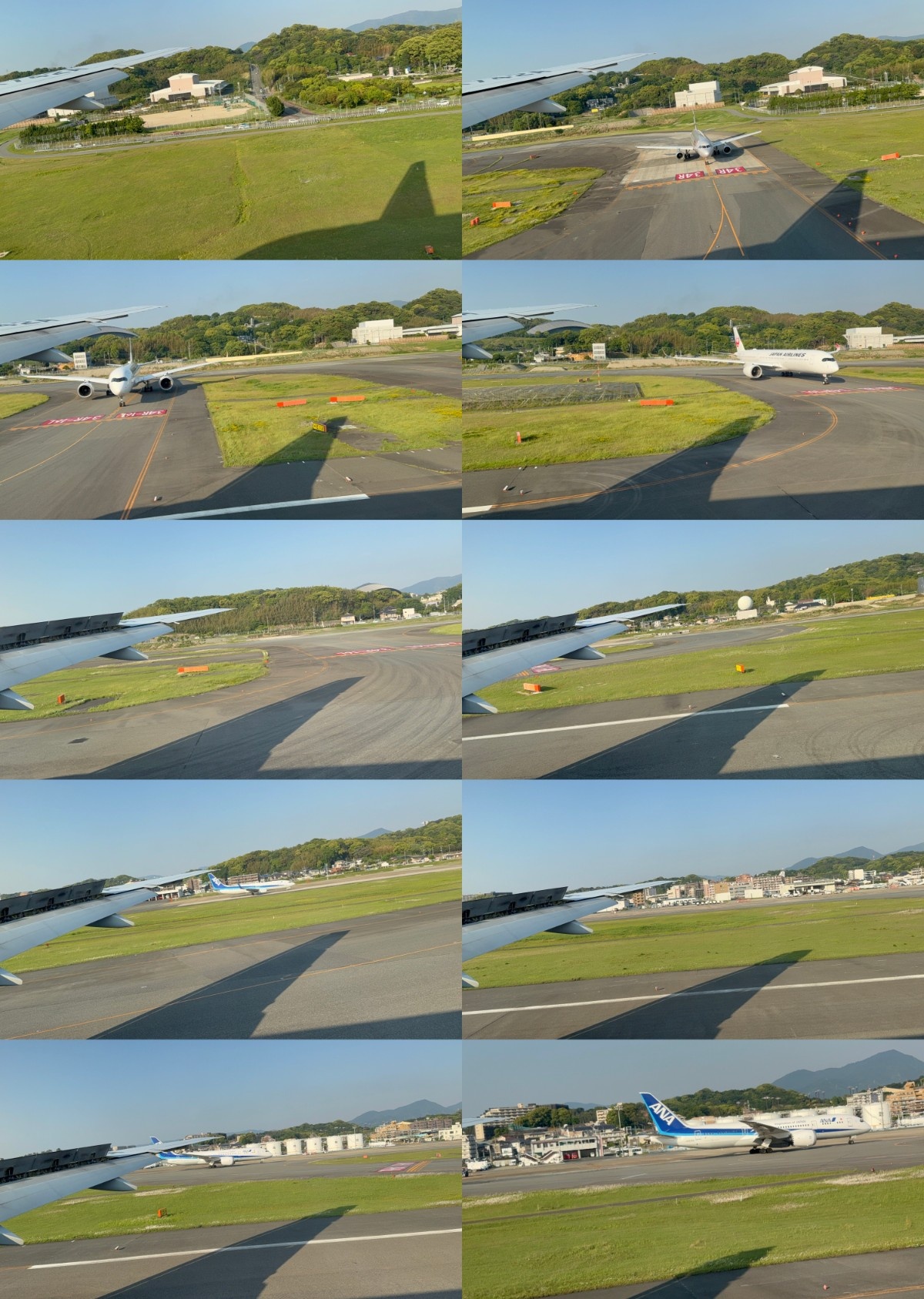
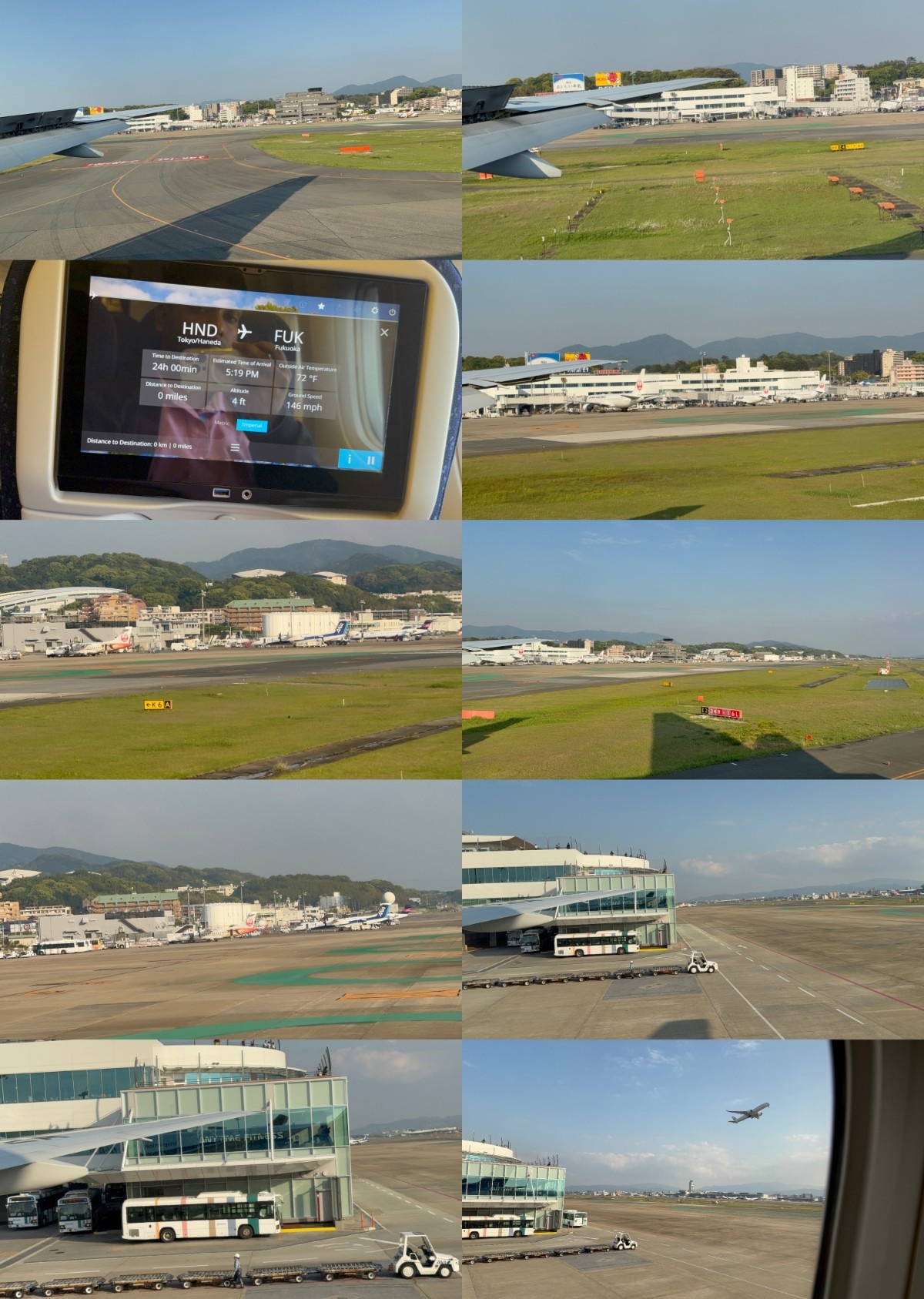
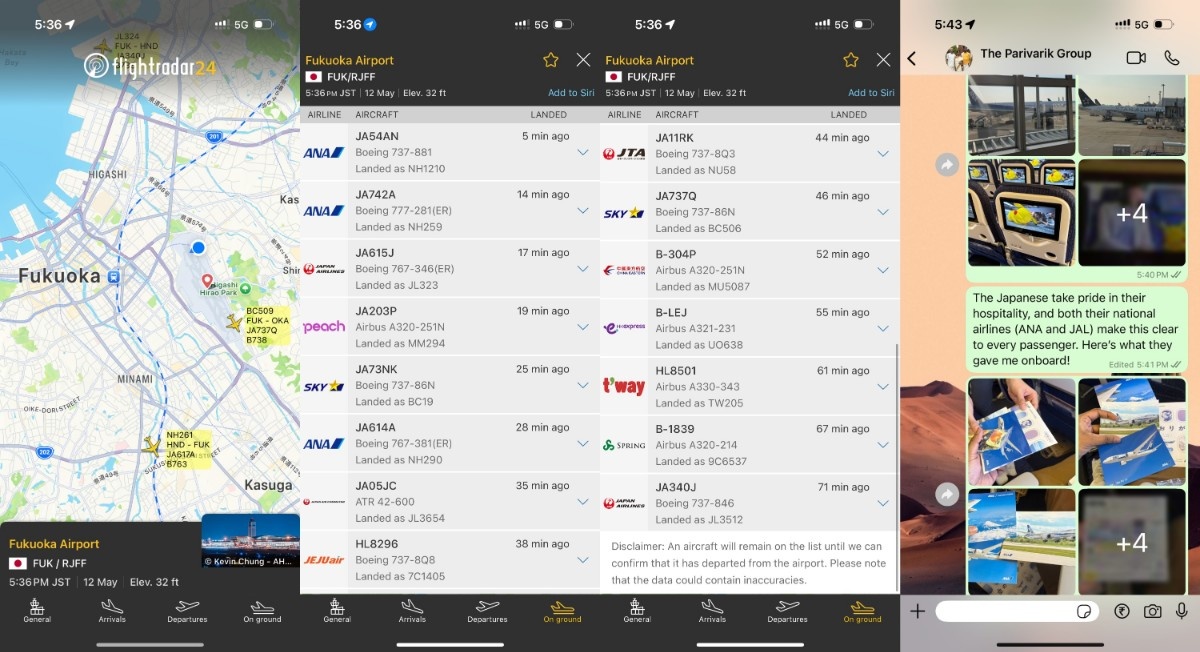
It wasn’t very long before we taxied to the domestic terminal building, as I feasted my eyes on the various turboprops and regional jets on offer. Surprisingly, there was an Anytime Fitness gym — which I was a member of at the time! — visible in plain sight, as a JAL A350 took off.
Third row below, left: (a) An ATR 42 of Japan Air Commuter by JAL; (b) a Q400 of ANA subsidiary ANA Wings; and © a CRJ700 of Ibex Airlines, a regional operator (having a tie-up with ANA) with bases at Fukuoka and Sendai (SDJ) in the northeast of the country.
And now it was time for Pokémon to take centrestage again, this time with a disembarkation video where Pikachu gets lost in the airport terminal. It takes the combined efforts of ANA’s dedicated support staff to get him back on track. Along the way, he has a brush with a little girl searching for a lost item, which she soon finds thanks to an ANA ground-staff agent. The look on the kid’s face thereafter is one of amazement and joy.
Seriously, if you don’t have a heart of stone, you can’t help but smile yourself at these adorable antics. As I left the plane I was chuckling inwardly.
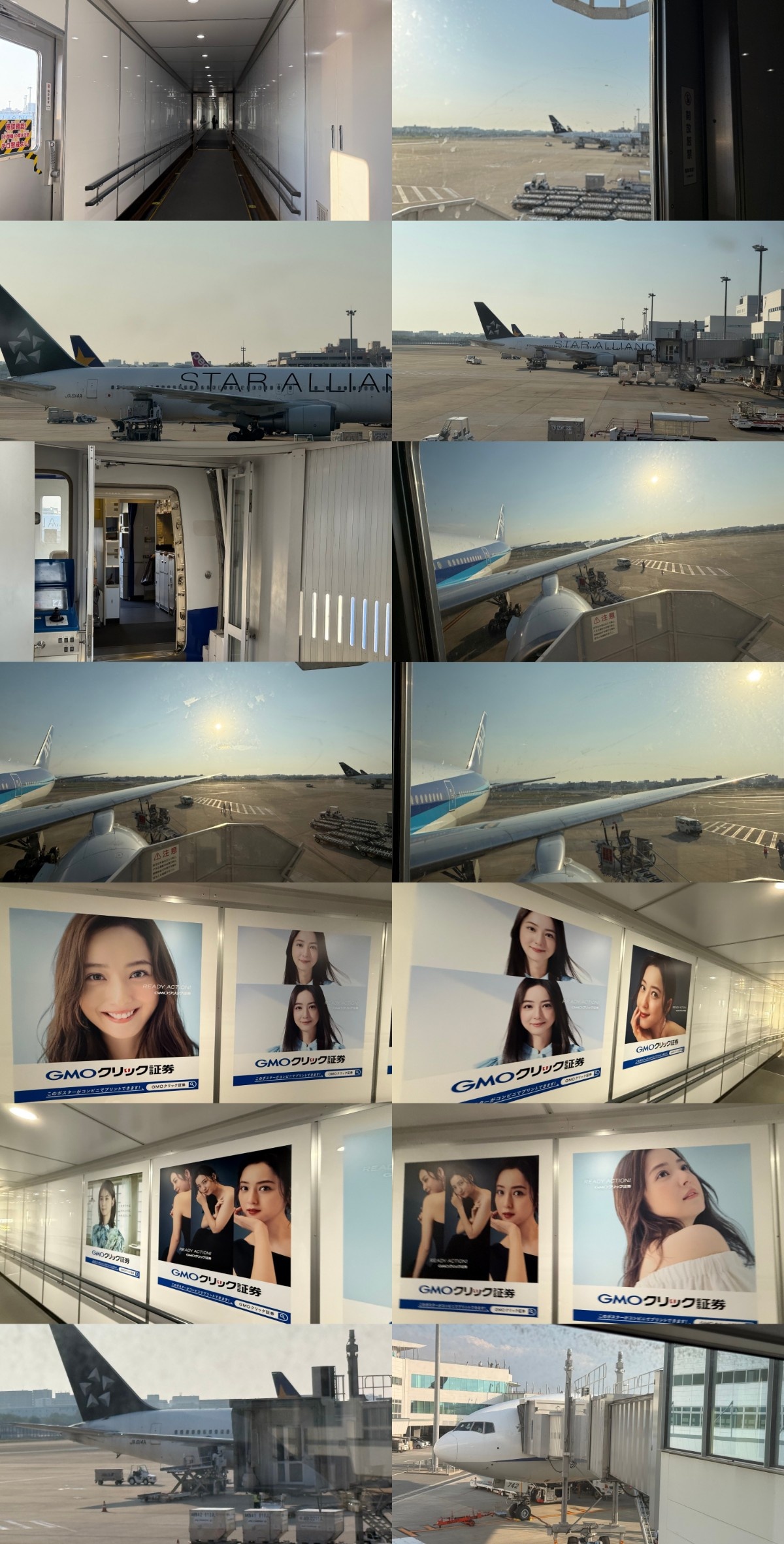
No sooner had I said my arigato-gozaimasu to the cabin crew at the exit door than there was another treat lying in store for me outside the jetbridge. A 767-300ER (JA614A) in Star Alliance livery was standing at the adjacent gate, and I wasted no time in capturing as many pictures of it as I could.
In fact, this bird had recently turned 20 years old (built April 2005) and had been wearing the Star Alliance colours since inception — pretty incredible, eh?
As was the case at HND, the jetbridge was plastered with ads for what I initially thought was some beauty company — going by the pictures of pretty women — but instead turned out to be GMO Click Securities, a financial services operator!
Besides domestic aircraft, FUK gets Korean and Chinese visitors throughout the day. At this time there were two each from Seoul/Incheon (Jeju Air 737 and T’way Air A330) and Shanghai–Pudong (A320s from China Eastern and Spring Airlines), in addition to an HK Express A321. The following morning I’d also see a Korean Air A350-900 — one of only two in its fleet at the time — when departing.
I took the opportunity to send my family pictures of the postcards and the origami kit that the crew gave me. One of those few priceless moments in my flying history to be cherished and protected.
Today Singapore is the furthest destination served nonstop from here — SQ655/656 on Singapore Airlines — now that Hawaiian Airlines has discontinued its Honolulu to Fukuoka route (HA827/828) since November 2025, along with Seoul/Incheon. ICN is now served nonstop from Seattle (instead of HNL) by Hawaiian’s now-parent Alaska Airlines, using Hawaiian A330-200s.
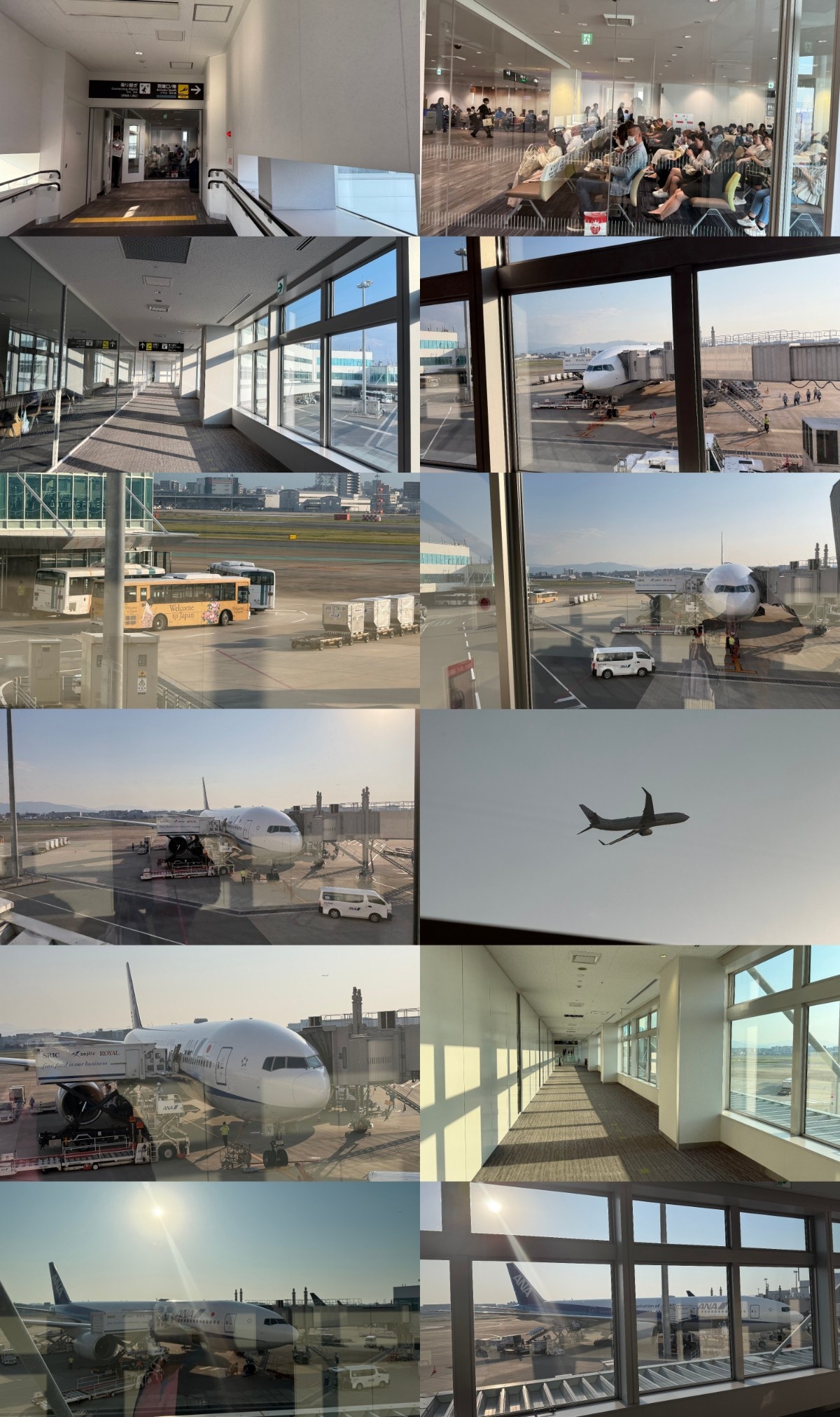
After filling my heart’s content with these pictures, I turned towards the arrival corridor and took some more pictures of my own 777-200ER, somewhat unattractive though it was.
Never, perhaps, have I been so fascinated by a 777-200ER despite its short and stubby nature, for the simple reason that this was the very first 777-200ER I’d flown that wasn’t horrible or outdated. It proved that, given the right airline, 777-200ERs can actually be decent — as seen with ANA, JAL, Asiana Airlines and (now retired) Korean Air — though most definitely not Thai Airways (gasp!).
And that’s saying nothing of European airlines’ 777-200ERs, from KLM to Air France to Austrian to British Airways, which despite their ancient age — pushing 30 years in BA’s case — are all fitted with the latest premium cabin products.
Everywhere a stone’s throw away: A centrally located airport
Thereafter it was a speedy walk to baggage claim, where it took all of 20 minutes for everyone — an entire plane’s worth of passengers (though it wasn’t too full) — to pick up their luggage. As clear an example of Japanese efficiency as ever.
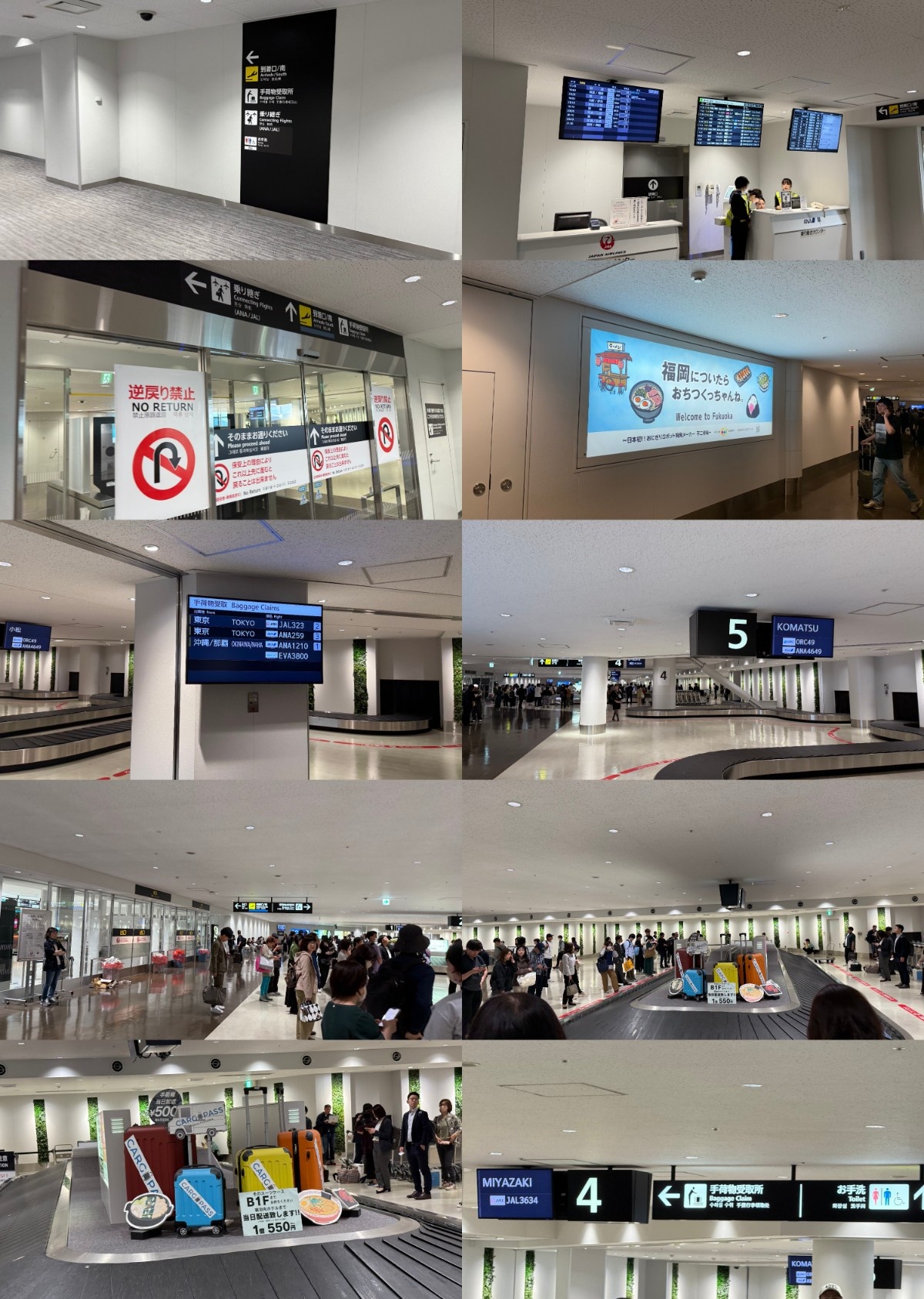
And now I strolled further on, bypassing the vending machines with a ‘Welcome to Fukuoka’ sign on top, encountering the domestic check-in counters (where I’d be the following morning)…
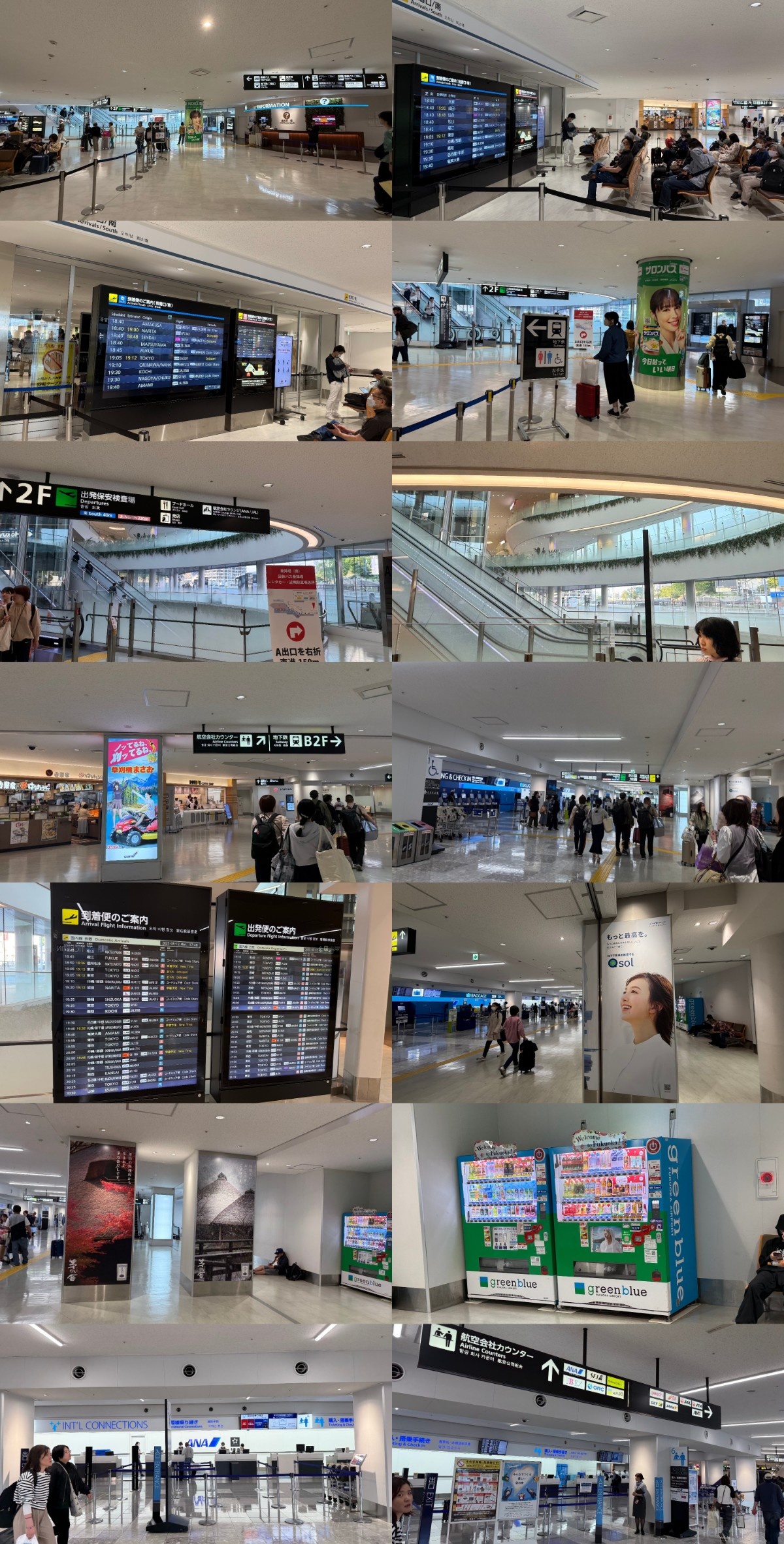
…with airlines ranging from ANA and JAL to Fuji Dream Airlines (third row below, left), Jetstar Japan and the independent Skymark Airlines, before going down a level to the subway.
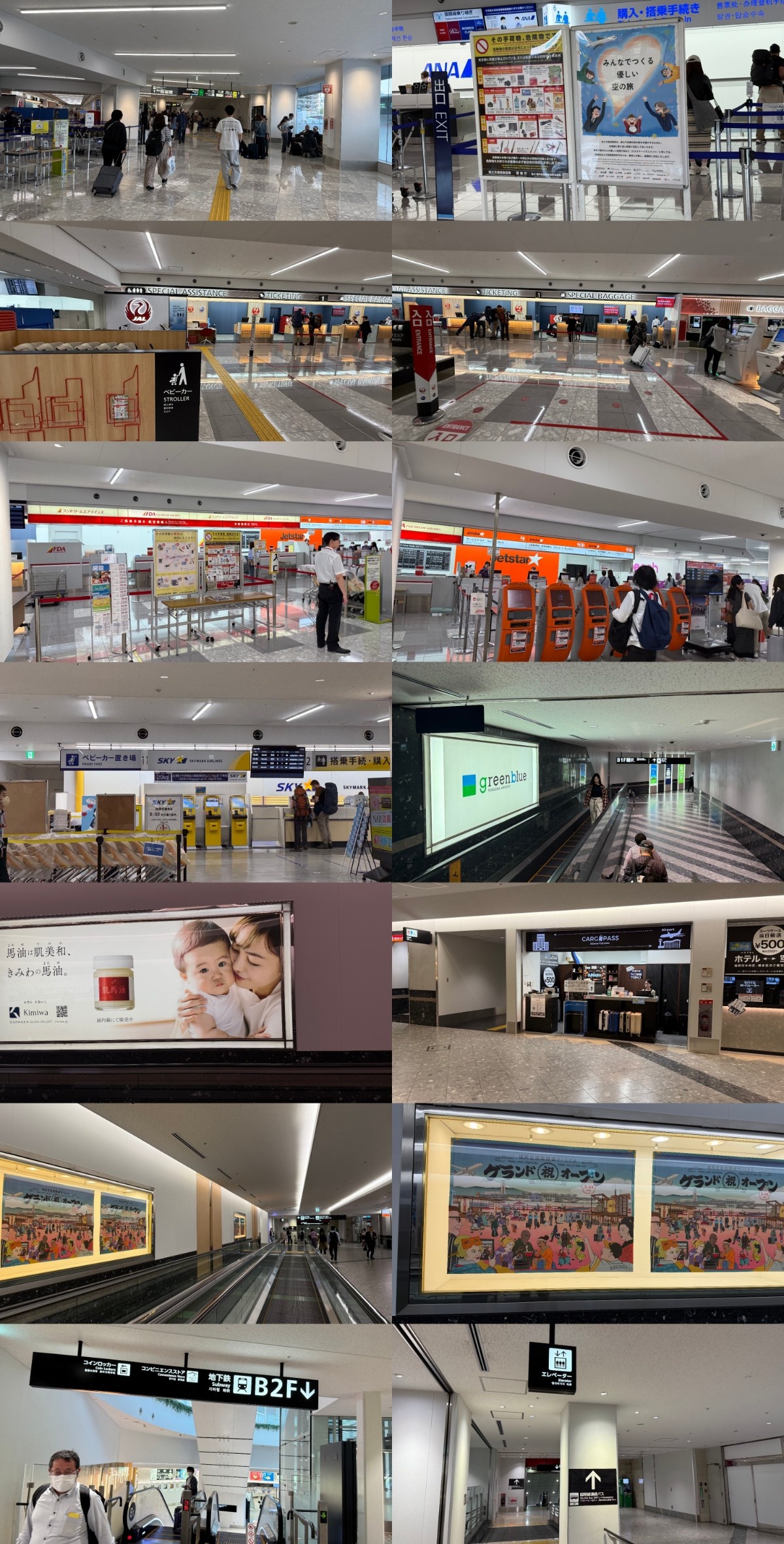
In a matter of moments, I was standing by the train platform doors, ready to hop on board a short ride towards the main Hakata Station — though I’d get down long before. Given the airport’s proximity to the city — one of the closest airports to the city centre I’ve seen (along with Ho Chi Minh City) — it never takes too long to go anywhere in Fukuoka.
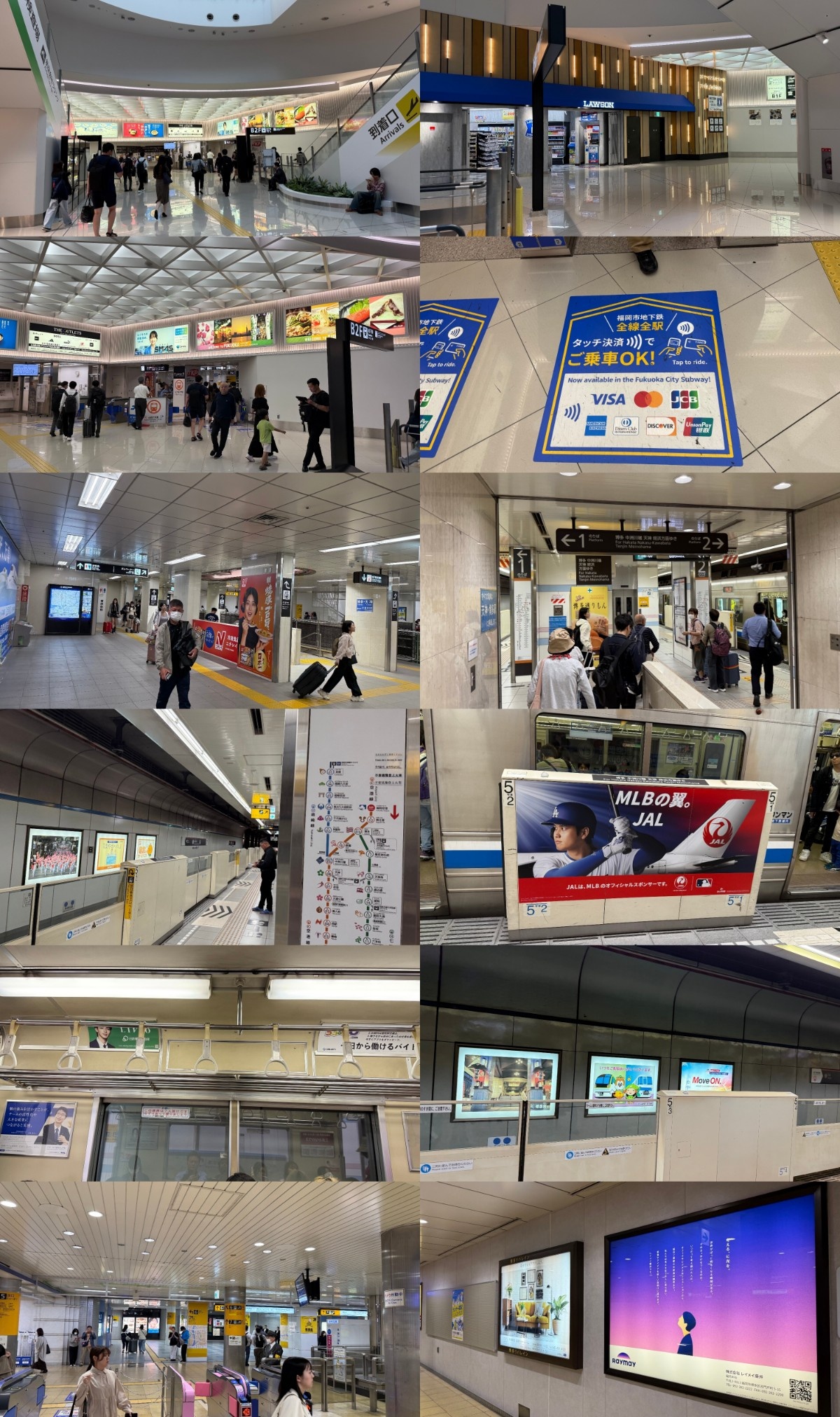
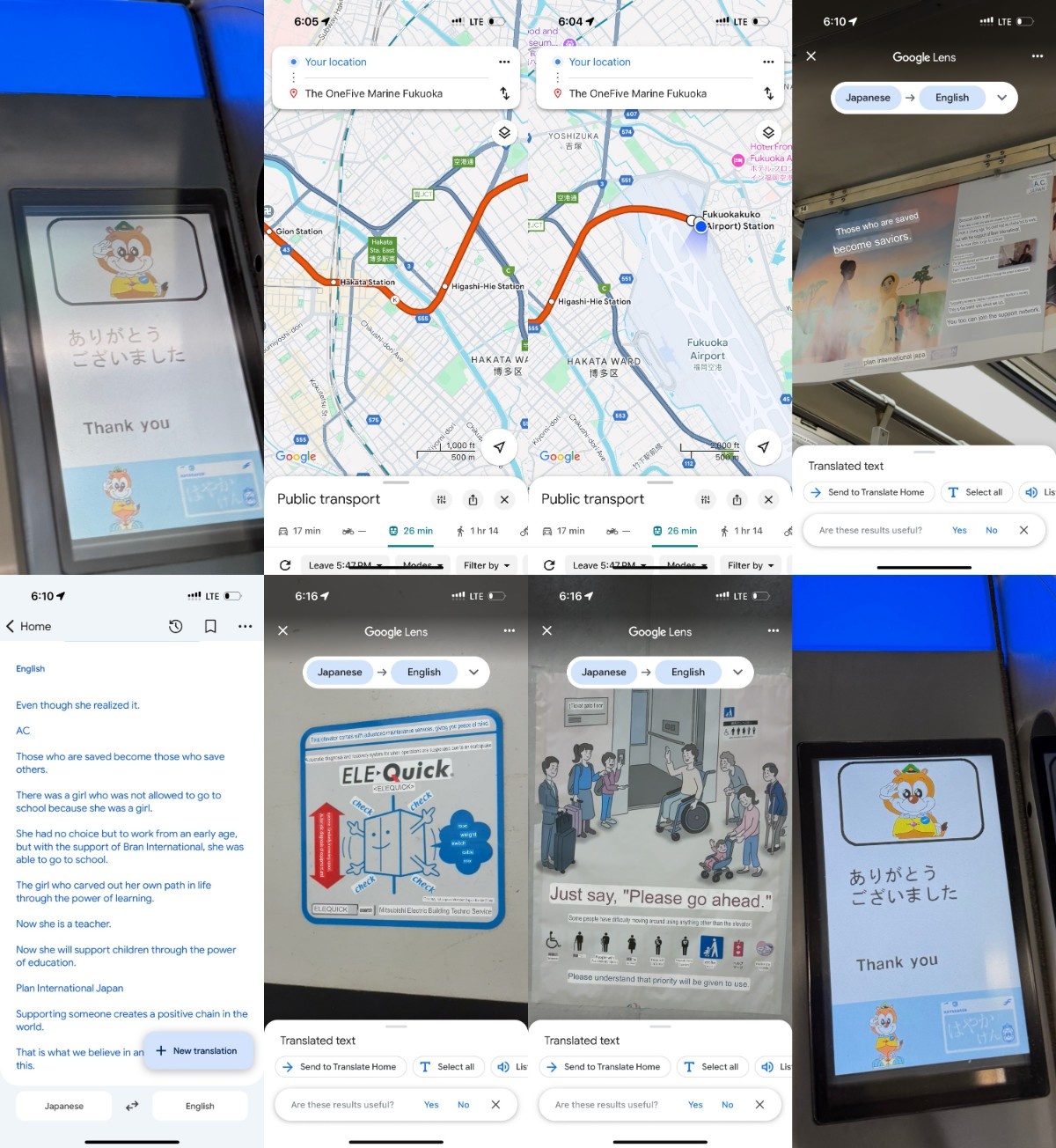
In the train were thought-provoking ads: one for a girl who struggled to go to school but herself became a teacher later; another for courteous behaviour towards the physically challenged. Not that the Japanese need any training on how to be compassionate!
As I tapped at the turnstile, the Fukuoka transport system’s big-eyed cat mascot — is there any city in Japan without one?! — waved me out.
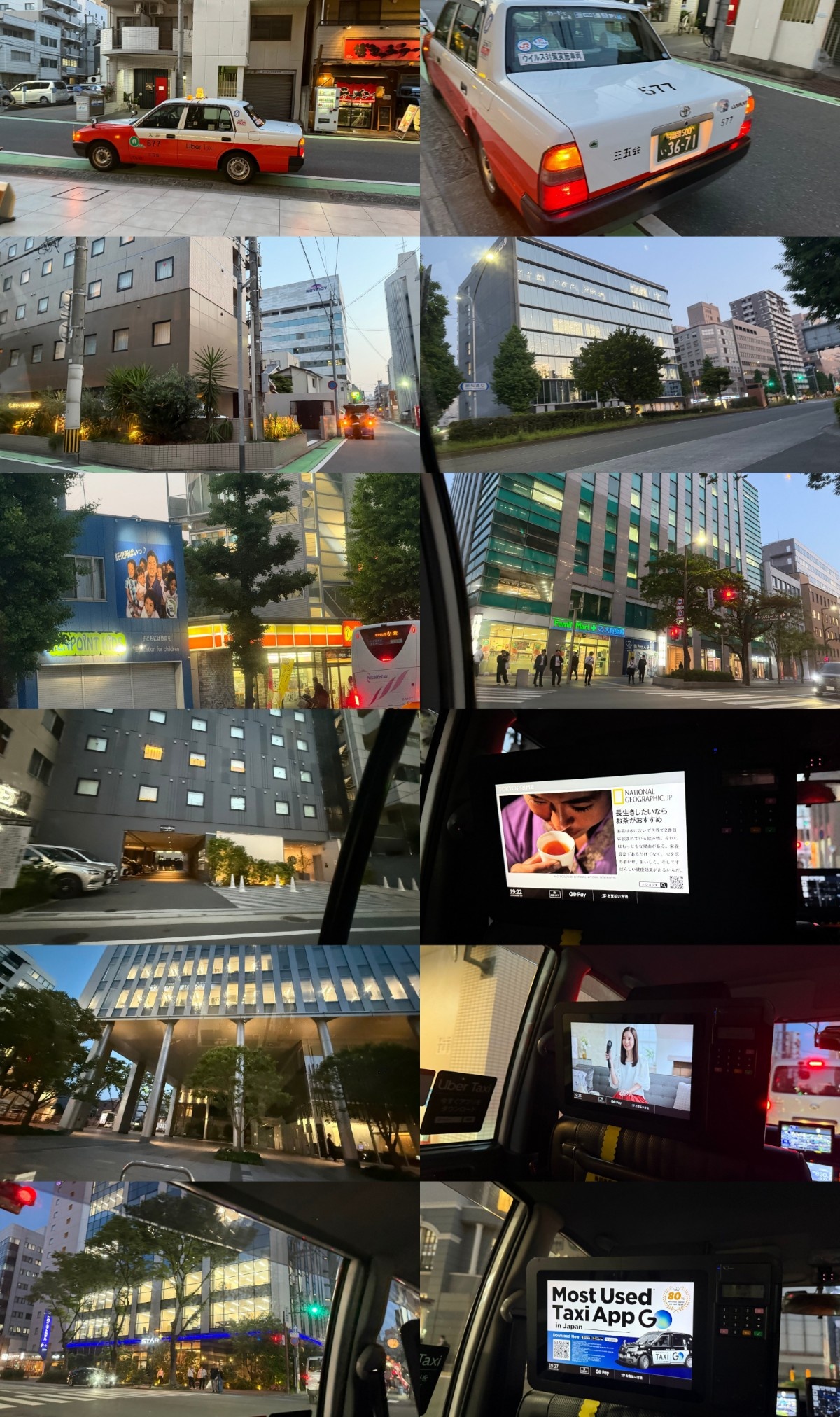
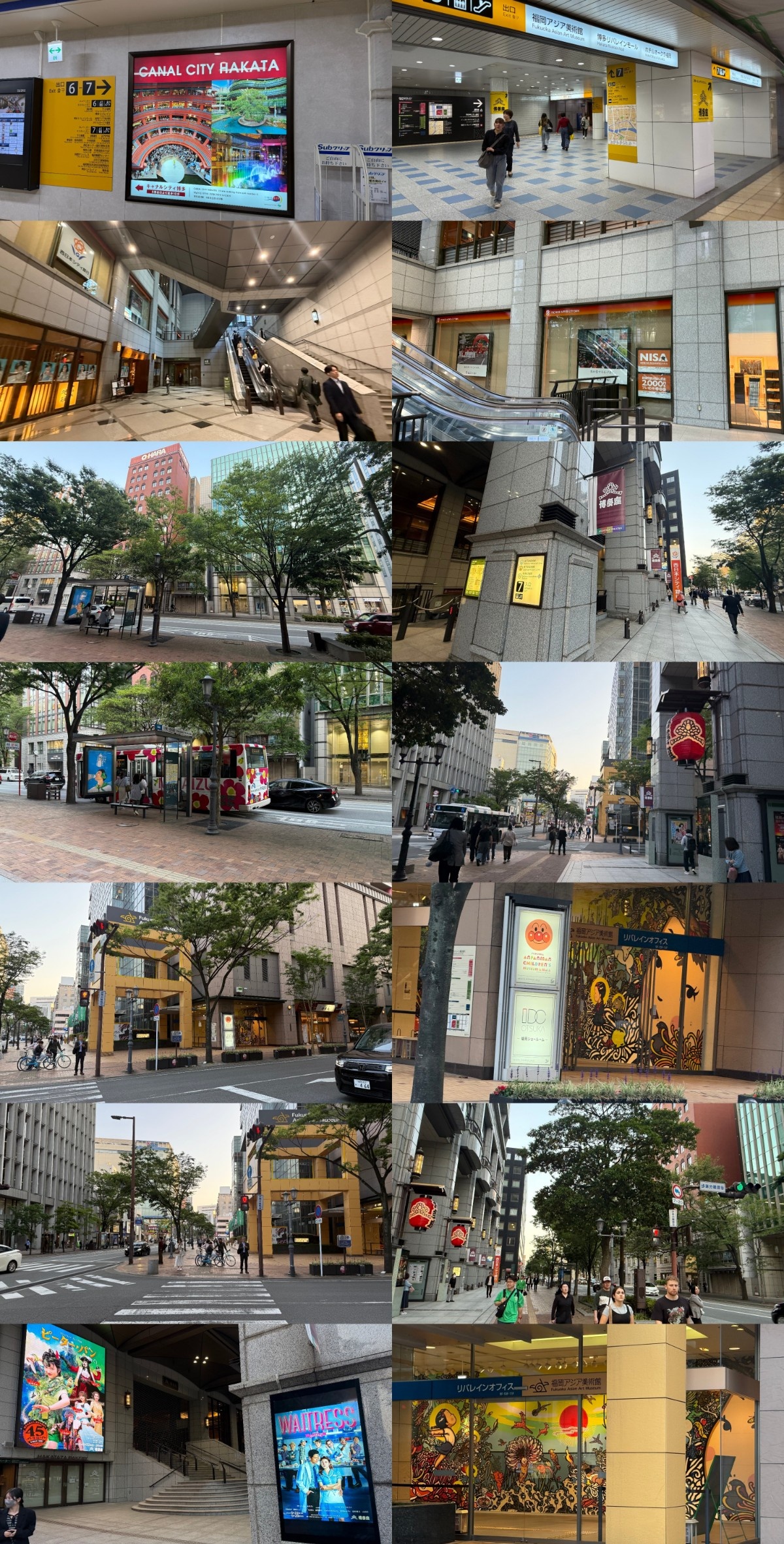
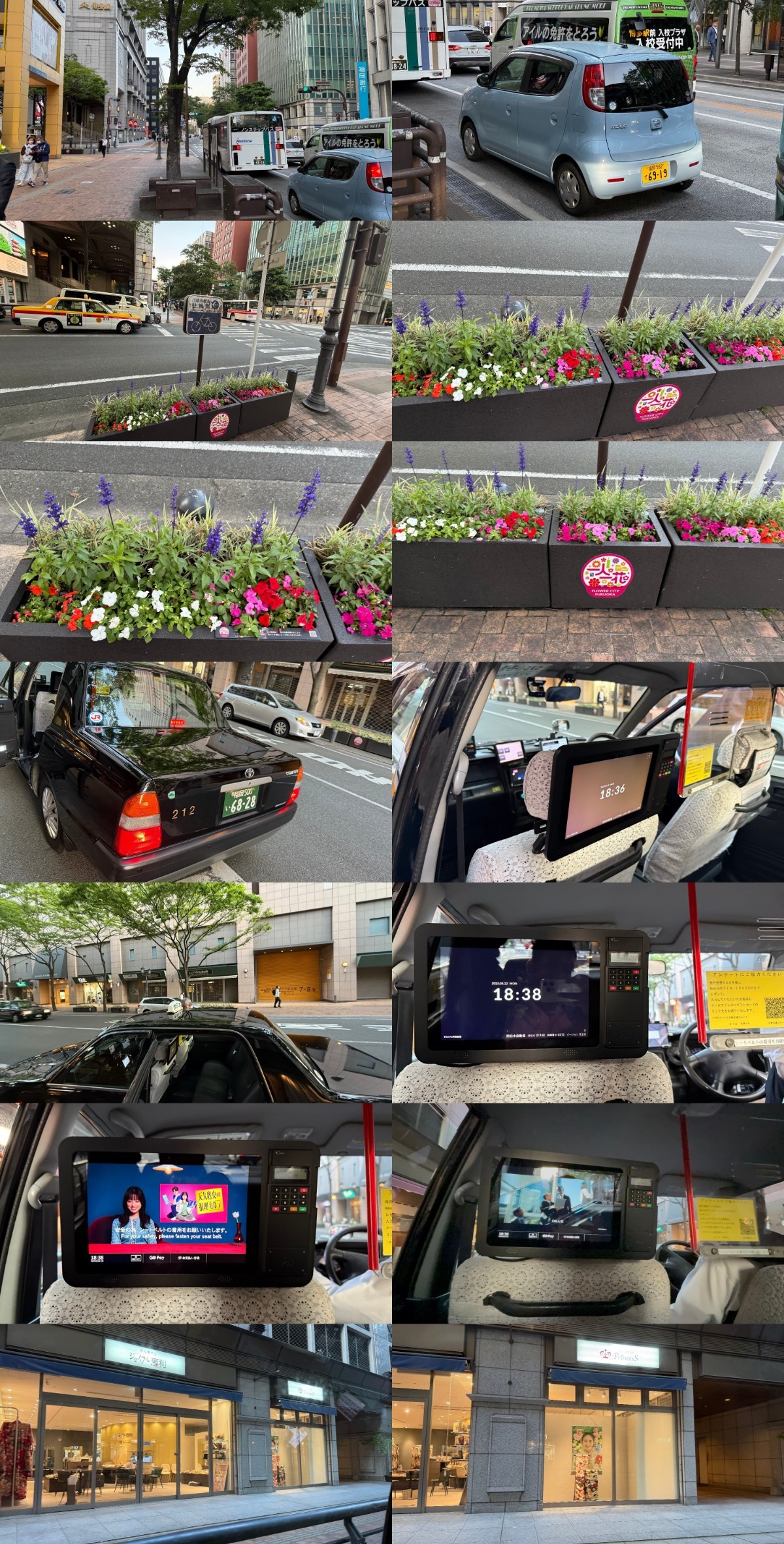
At length I alighted at Nakasu-kawabata station, and found myself in the middle of a pretty road, with the Fukuoka Asian Art Museum on one side followed by the Hakata Riverain Mall. I could’ve kept staring at all the pink flowerpots reading ‘Flower City Fukuoka’, but instead I called an Uber, which turned out to be an ancient Toyota Comfort sedan that quickly and cheaply whisked me to my hotel.
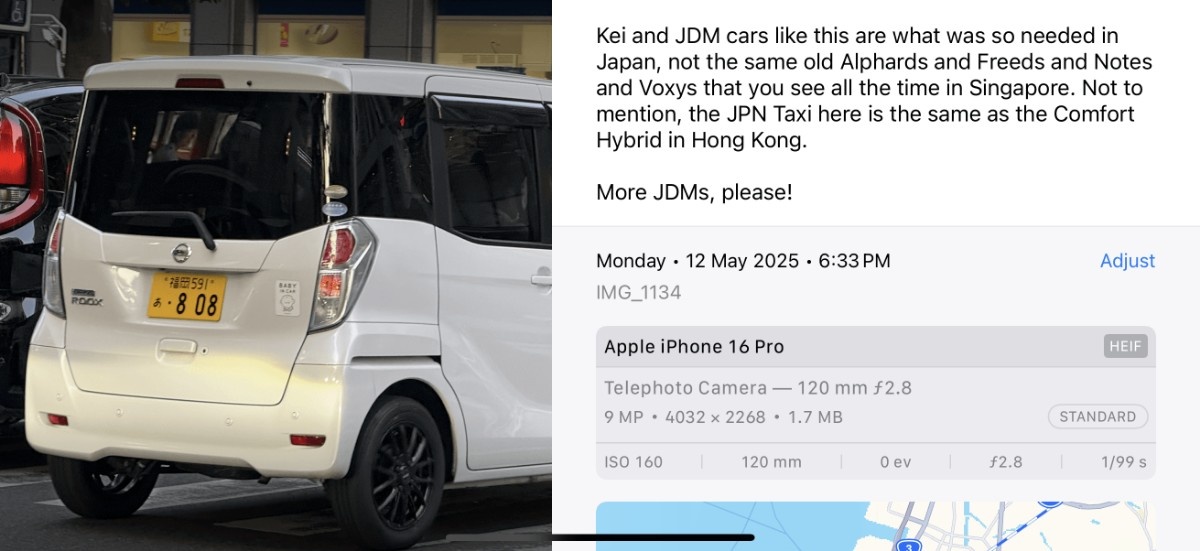
If only I saw more of these unique cars during my Japan trip — like the Nissan Moco hatchback and Nissan Roox kei car pictured here — instead of the typical Toyota Sientas and Voxys and Honda Freeds that are dime-a-dozen in Singapore (though not other Southeast Asian countries)!

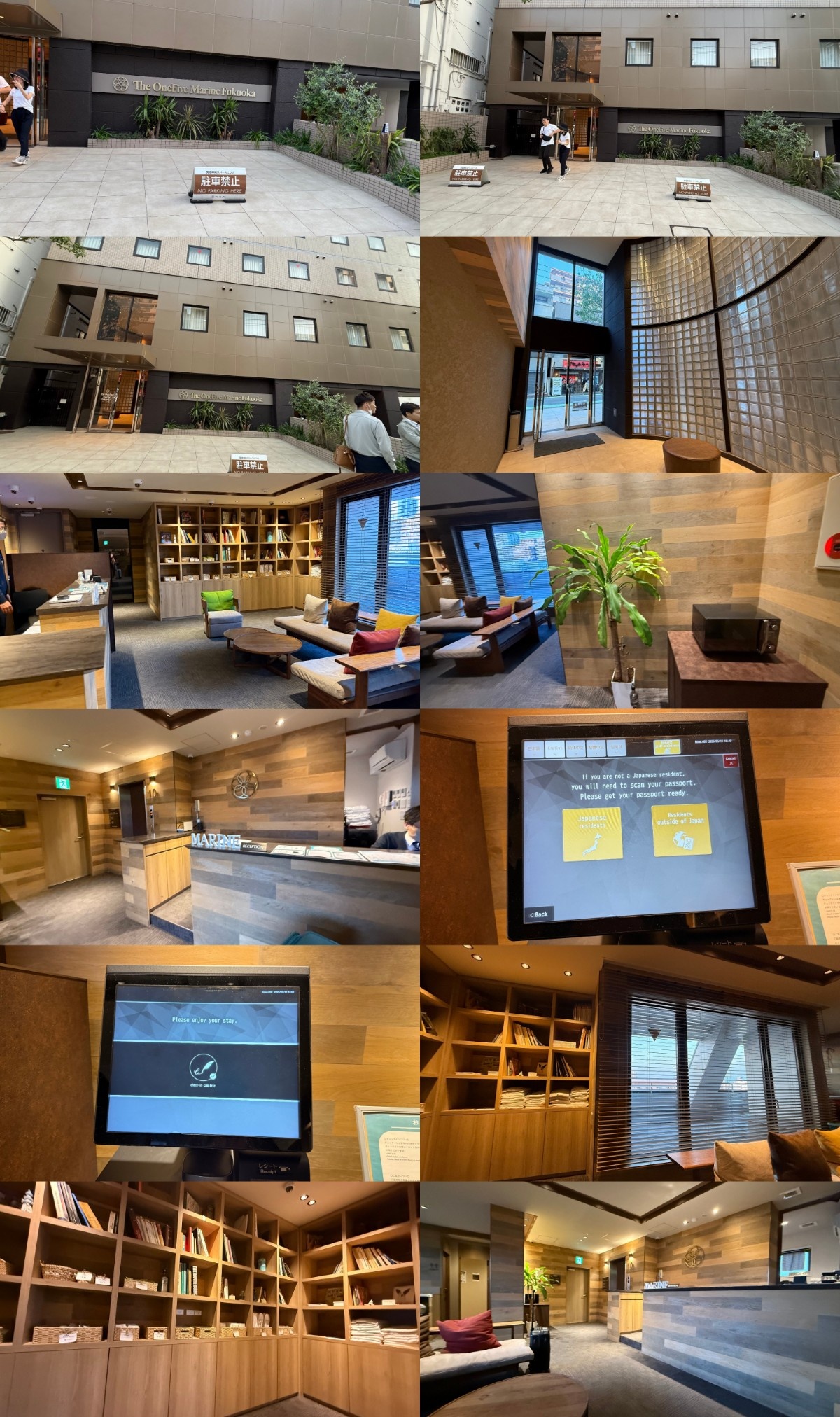
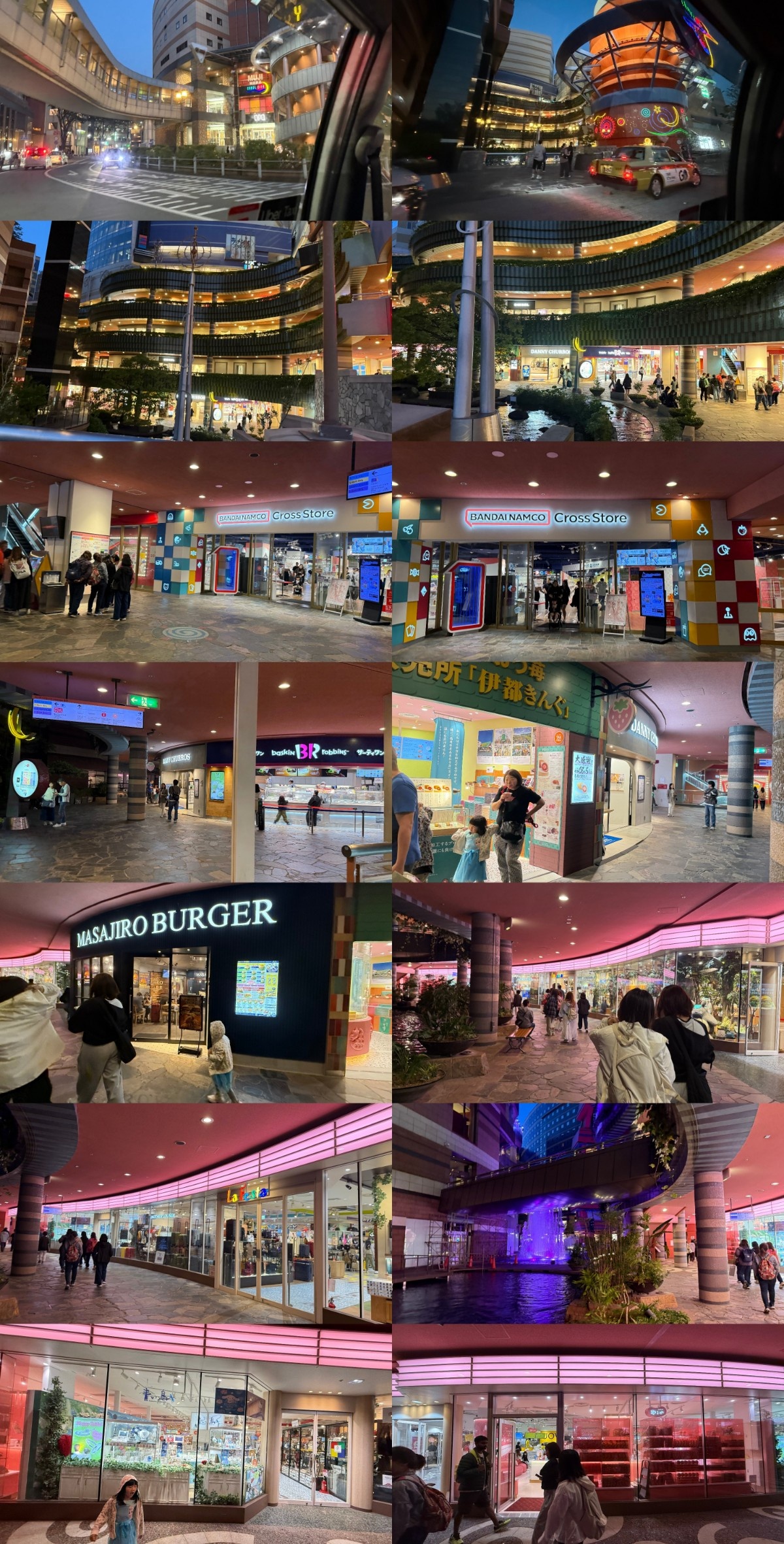
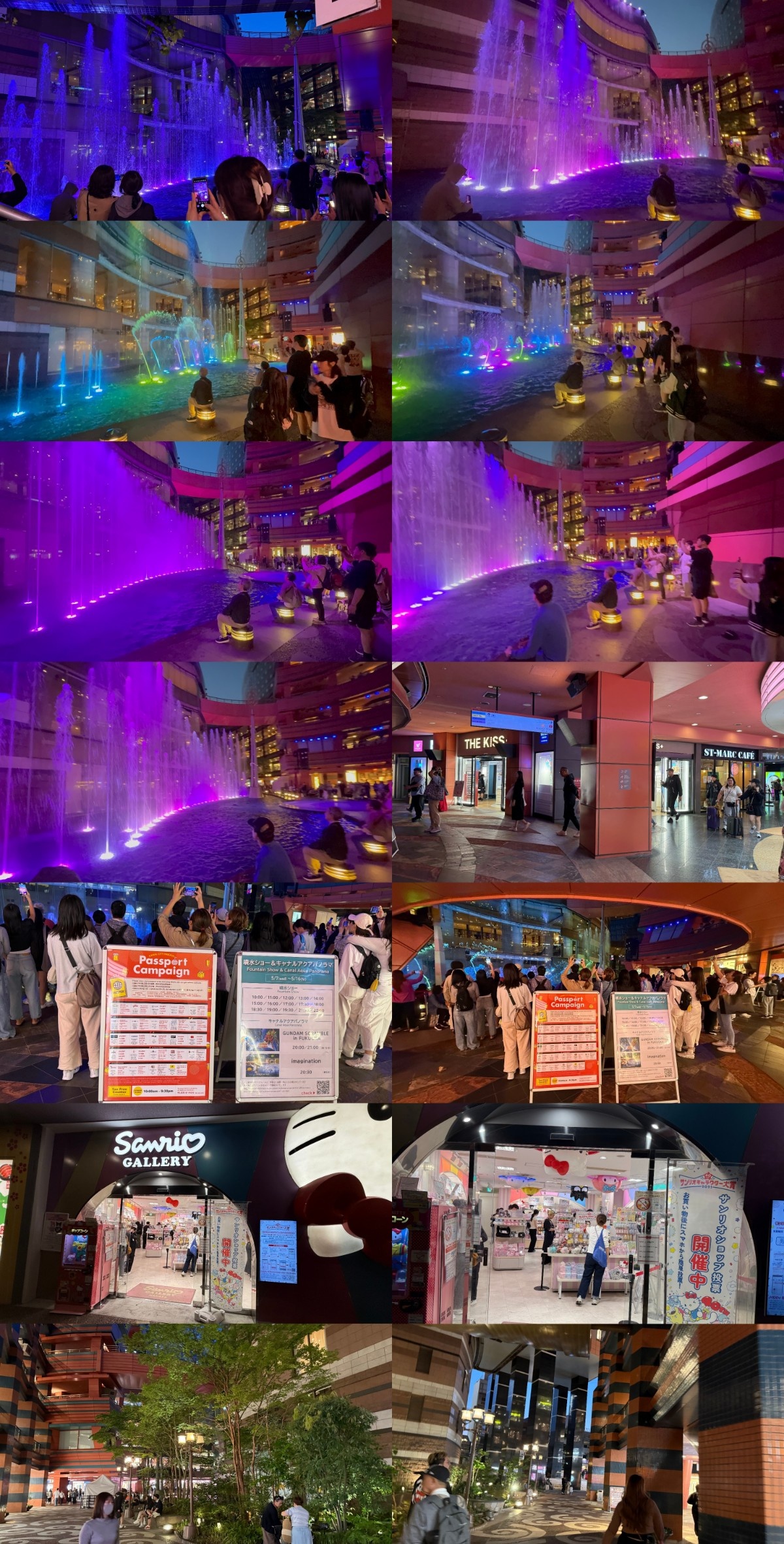
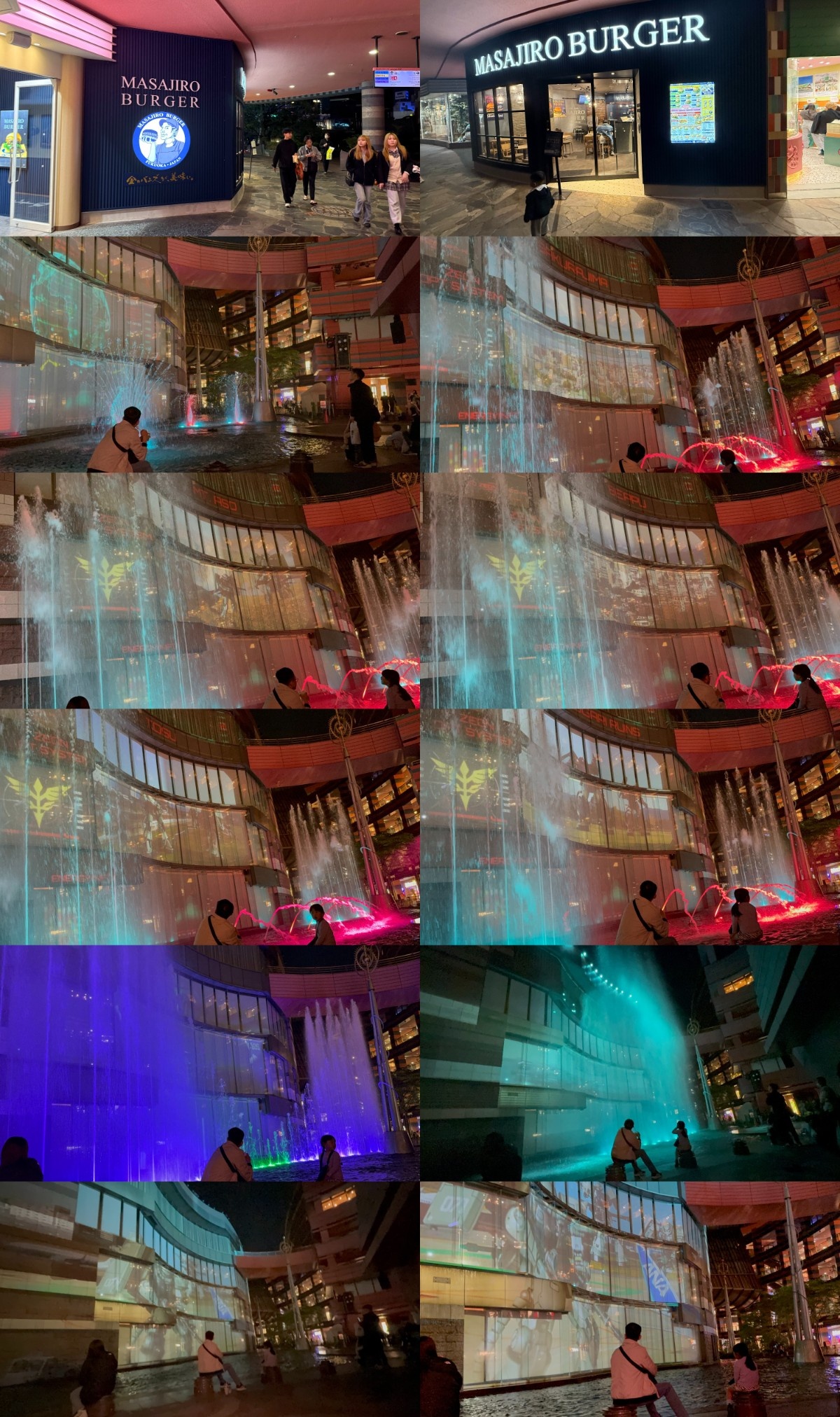
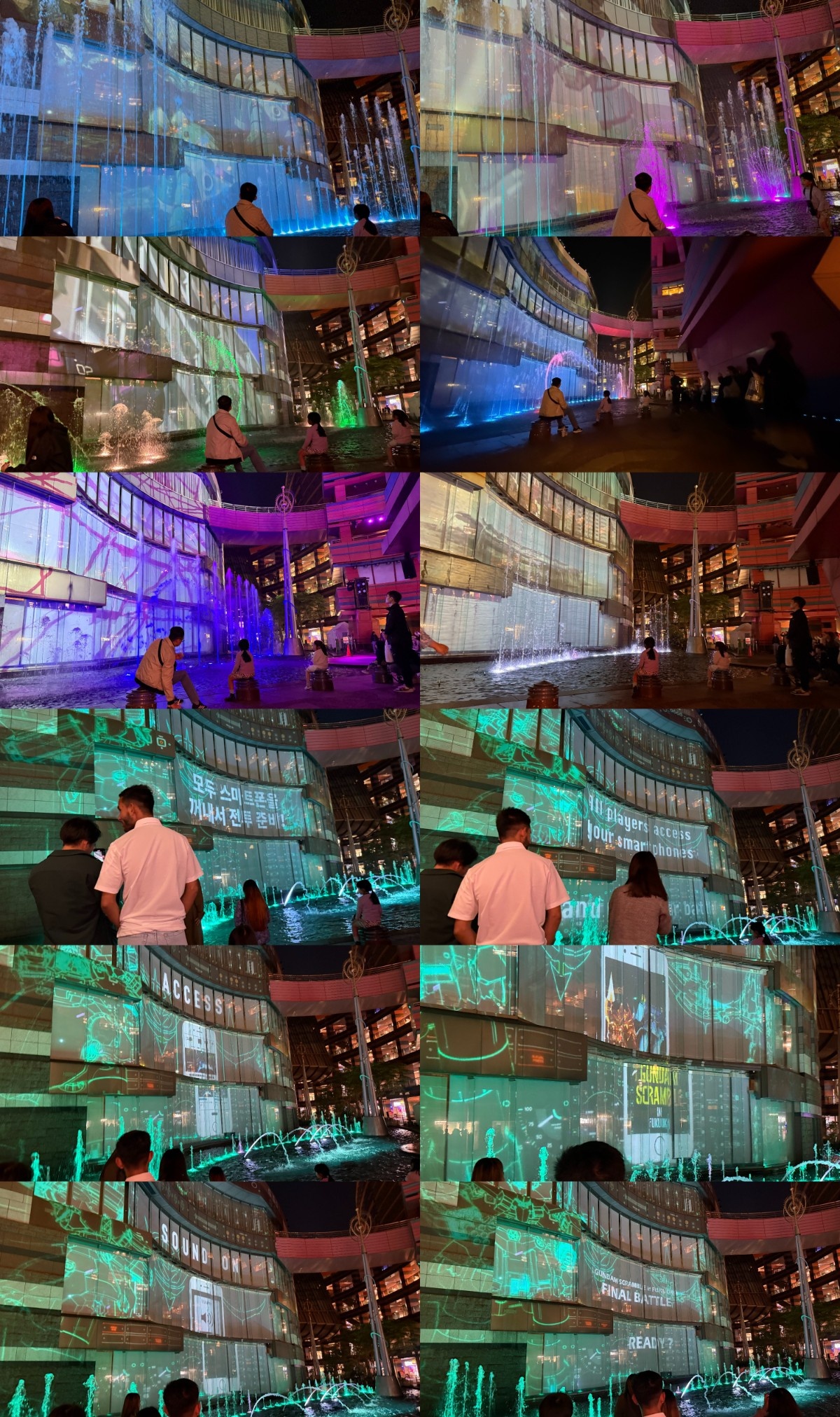
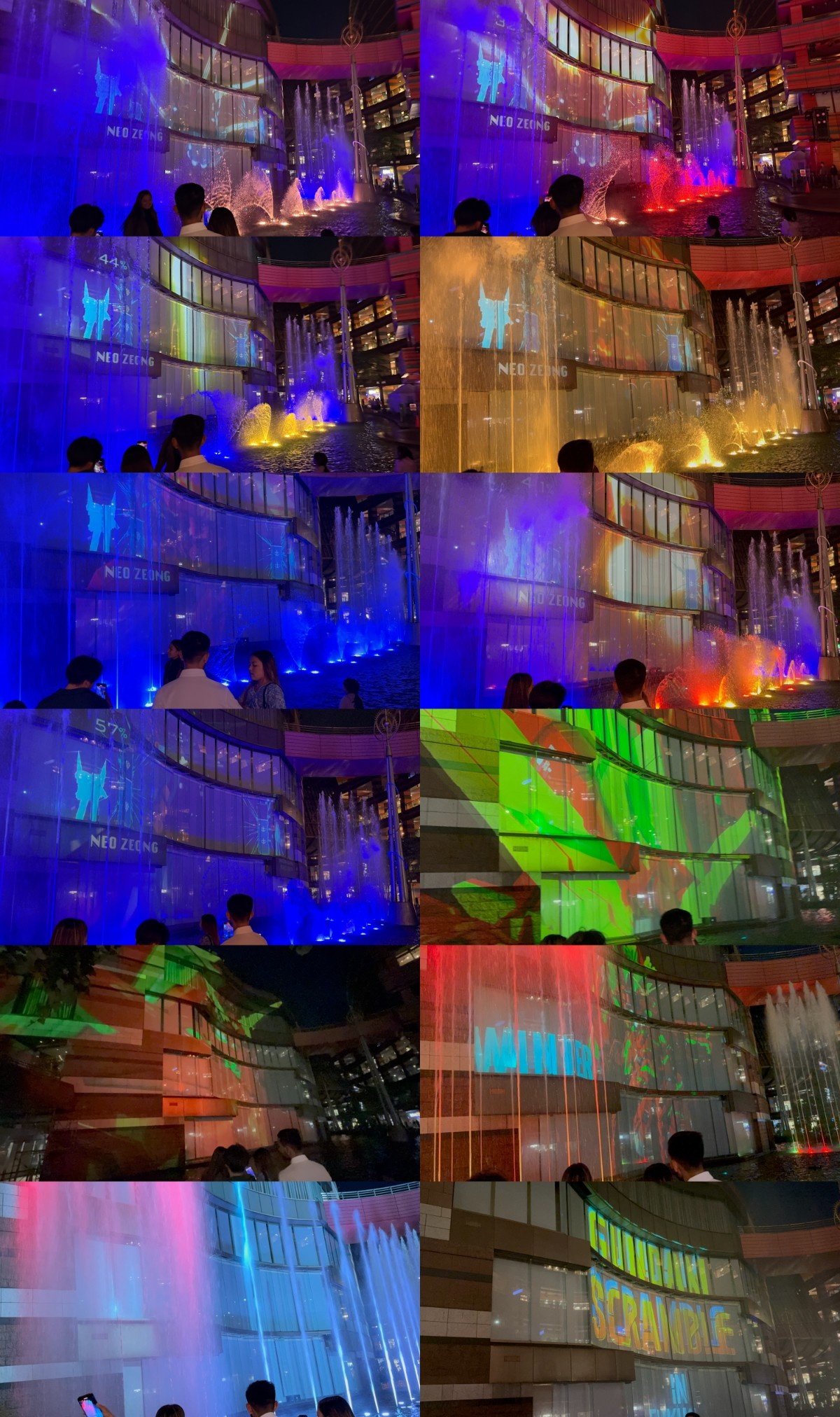
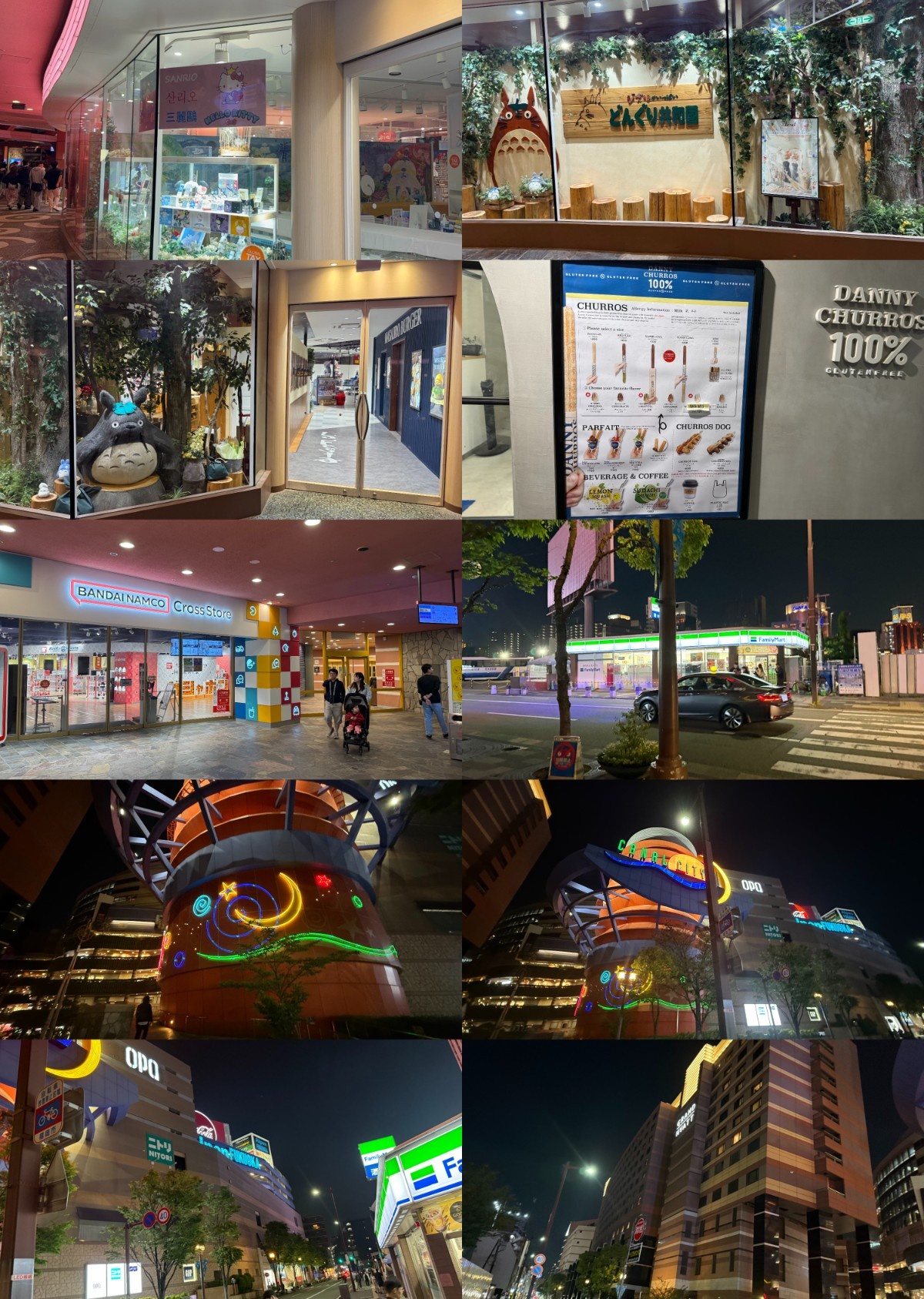
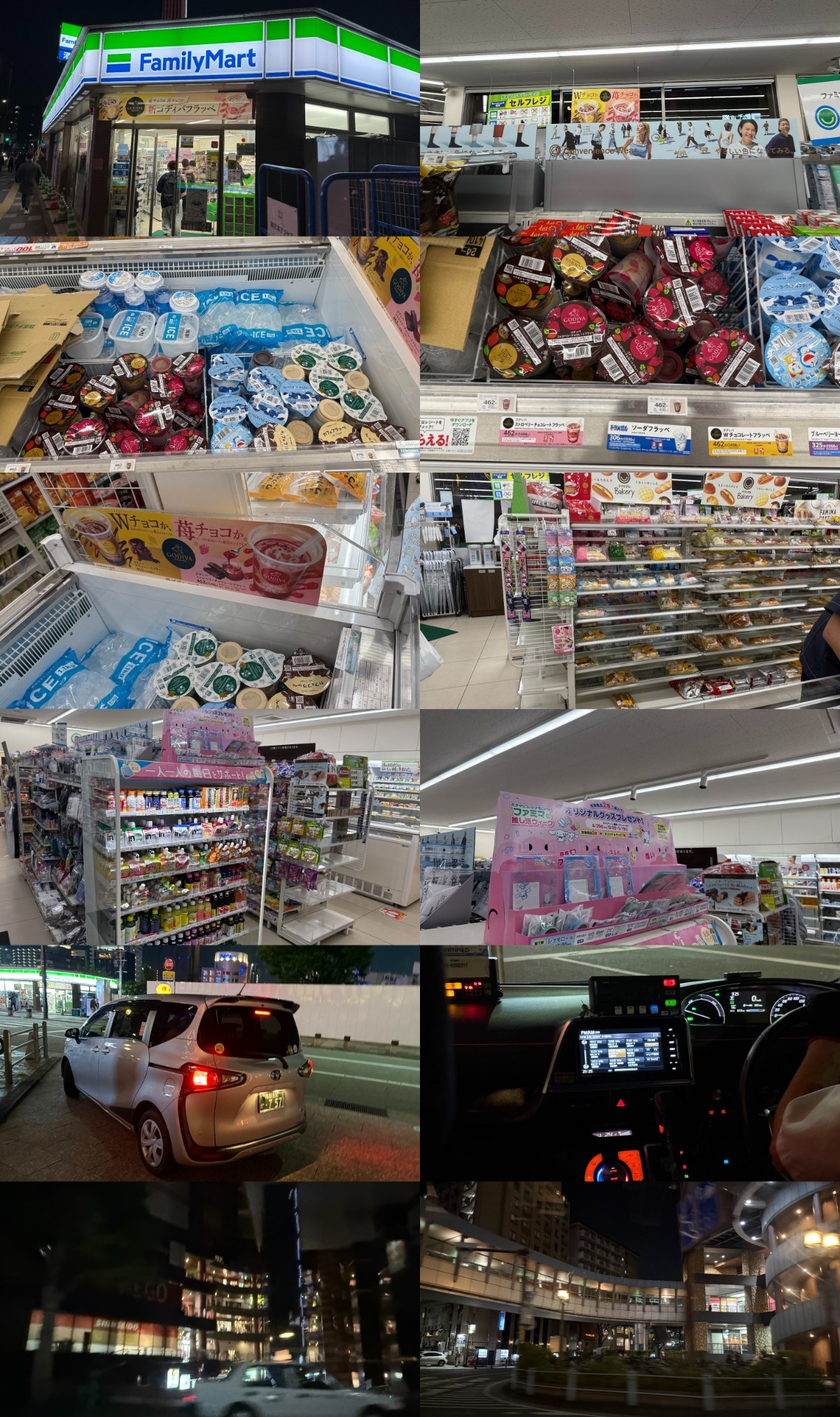
Much later at night, after returning from dinner at the Canal City Hakata mall, I folded the paper from the origami kit into a plane and wrote my colourful journal entry about my adventures on ANA. Details of the night — including the delightful Kirby Café and the crazy fountain show — are in the Travelling Bonus section below, so be sure to read it!