


WARNING: This report will be longer than most of my recent ones, as it’s packed to the brim with pictures. With business-school life at IIM Bangalore (where I’m studying) finally starting to ease, as 2025 draws to an exciting close, I’m putting in a bit more effort to churn out the reports from my Japan trip in May.
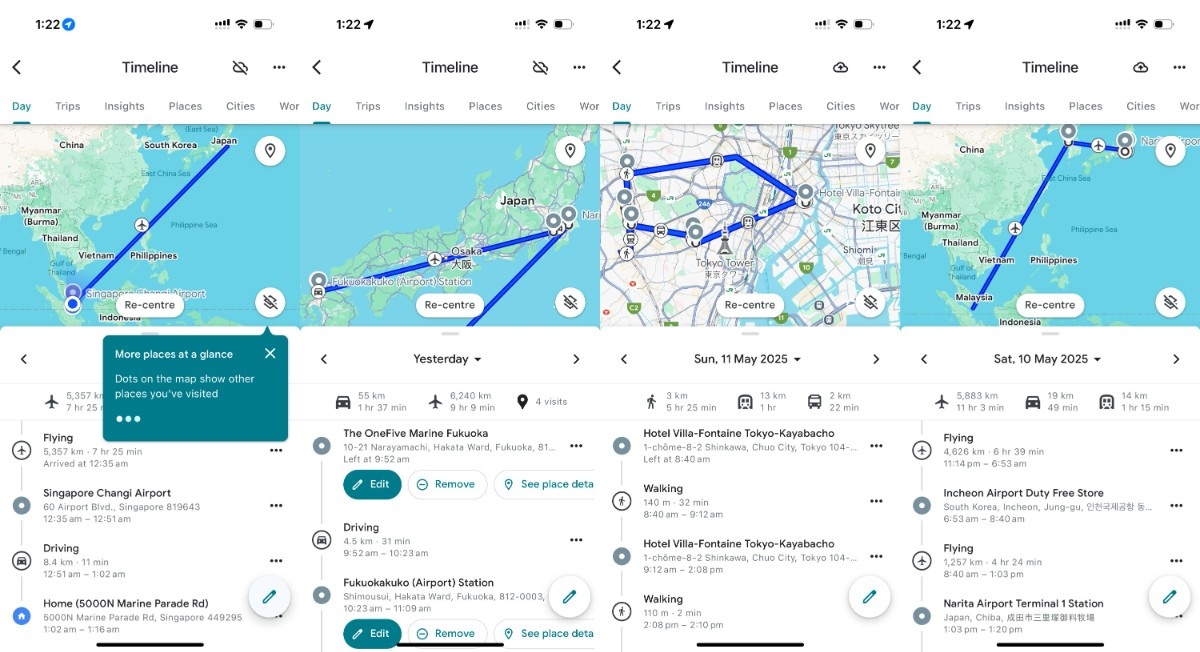
Introduction: A grand finale to my 4-day, 5-flight Japan trip (May 2025)
Chronologically, this may be the last flight of the five that I took during my Japan trip in May 2025 — my first to Northeast Asia beyond Hong Kong, starting with Asiana’s A350 and A380. However, I’ve decided to publish this segment — All Nippon Airways’ evening 787-9 service from Narita Airport outside Tokyo, reaching Singapore after midnight — before the domestic flights that I took between Tokyo–Haneda and Fukuoka on ANA and JAL. That’s because I want to save the best for the last: Japan Airlines’ domestic A350-900 was a treat to behold, from both inside and outside. Not to mention I was flying in what JAL calls ‘Class J’ (domestic premium economy) for an even better experience, so that report is what I intend to finish 2025 with. Moreover, ANA’s domestic 777-200ER was a very pleasant surprise as well, a far cry from Thai Airways’ atrocious and ancient 777-200ERs, and the flight attendants on both airlines even went out of their way to give me onboard gifts!
To finish my Japan trip on Tuesday, 13 May 2025, I could well have taken the easy way out by flying Singapore Airlines’ afternoon flight (SQ633) from Haneda back home to Changi. Instead, I decided to spice things up and take the ‘Friendly’ airport limousine bus from Haneda (HND) — Tokyo’s closer-by and more premium airport, where JAL A350-1000s are based — to Narita Airport (NRT), a whopping 70 km out of town but with more international airlines. If you remember, I’d entered Japan via NRT as well, on Asiana Airlines’ A380 flight from Seoul/Incheon (on the upper deck!). So of course I was curious to see what NRT looked like when departing, as it’s a hub for not only ANA and JAL but also ANA’s Star alliance partner United Airlines. Not to mention, this is where ANA bases its three colourful A380s that fly only to Honolulu, Hawaii, and I wanted to spot those as well.
It was only fitting that I make my exit from Japan from NRT, and what better way to do so than on All Nippon Airways: one of the world’s most-awarded and -renowned airlines, which along with Singapore Airlines is one of the main luxury pillars of the Star Alliance. Having already flown ANA the previous evening to Fukuoka on the 777-200ER, as mentioned above — and received lovely gifts from the cabin crew — I couldn’t wait to see what Japan’s largest airline had to offer on a nearly 7-hour medium-haul sector. On the whole, while the 787-9 hardware and IFE was slightly on the older side, I was proven once again that you simply cannot go wrong with a Japanese airline’s service and hospitality — though the branding and corporate identity leaves a bit to be desired compared to the likes of Cathay Pacific. It’s hard for Western travellers to go back to flying Delta, United, Lufthansa, etc. once they’ve had a taste of ANA or JAL (or for that matter Cathay Pacific or SQ!).
I’ve flown so many more flights in 2025 since then — Singapore First Class and SriLankan Business via Jakarta and Colombo (June); Etihad’s A350-1000 to Mumbai (September); Saudia’s 787-10 fifth-freedom from Singapore to Denpasar, plus Malaysia Airlines’ spanking-new A330neo from Denpasar (November)… The list is endless, but where exactly should I get the time to write all this? Hence I need to prune, pick and choose!
Flight routing
- 1
- 2
- 3NH259 | Tokyo–Haneda to Fukuoka | 12 May 2025 | 777-200ER | JA742A
- 4JL310 | Fukuoka to Tokyo–Haneda | 13 May 2025 | A350-900 | JA06XJ (Class J)
- 5NH801 | Tokyo–Narita to Singapore | 13 May 2025 | 787-9 | JA888A
Prelude: The ‘Friendly’ airport limousine bus from HND to NRT
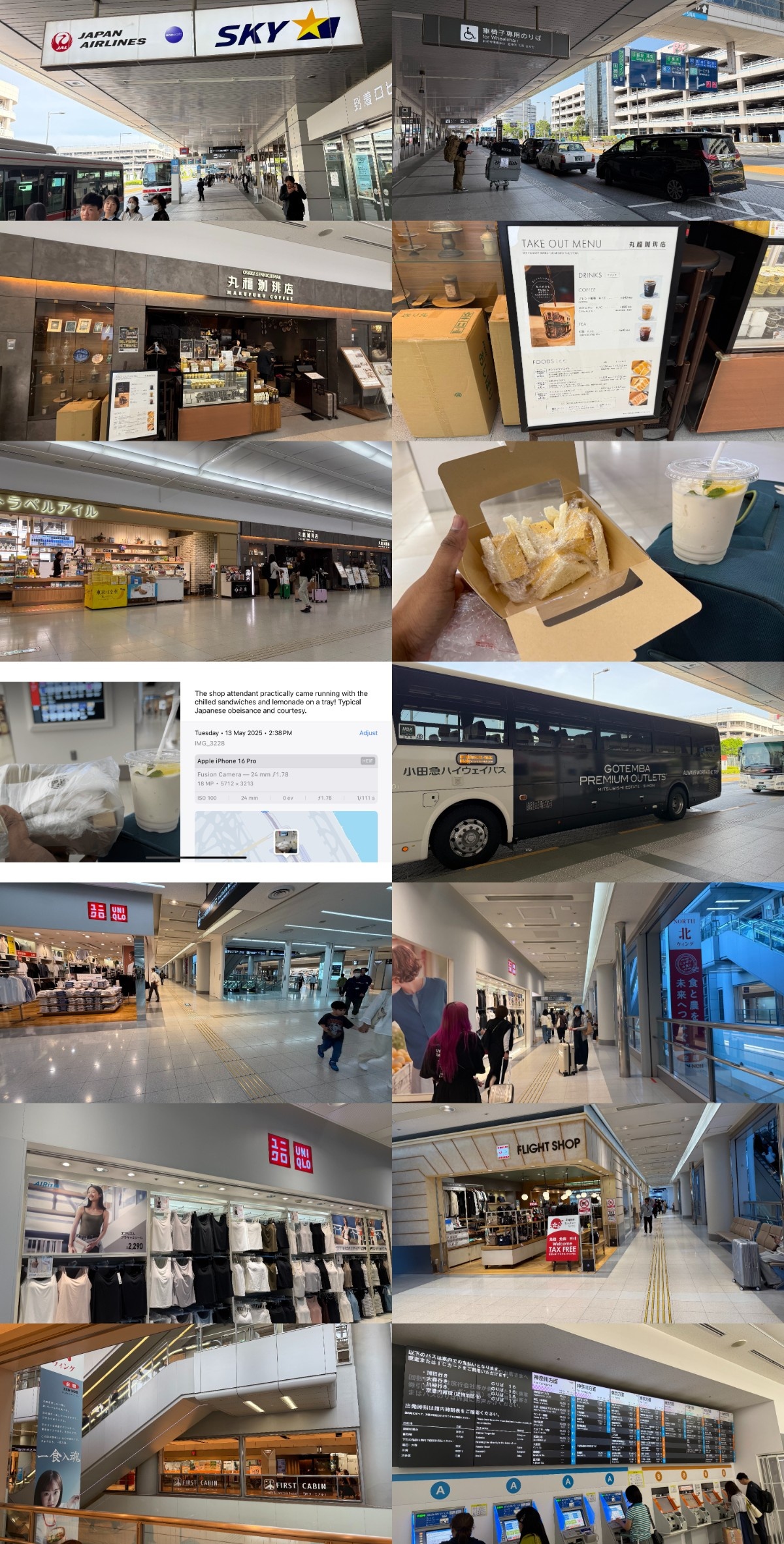
Tuesday, 13 May, afternoon: Haneda Airport arrivals. It’d been an hour and a bit since I arrived from Fukuoka (FUK), where I spent just the one Monday night, on JAL’s domestic A350. Having shopped to my heart’s content from the JAL Plaza store — a haven for avgeeks — at the exit of Haneda Airport’s domestic Terminal 1, I now needed to take the limousine bus to Narita Airport. These were cheap and plentiful, and I’d booked my tickets in advance. Honestly, I should’ve gone for this option when arriving in Tokyo as well, instead of the Keisei Skyliner train that I took, as I had to haul bag and baggage from station to station when reaching the city.
Moreover, I quite enjoy long road journeys to far-flung airports. While close-to-the-city airports (like Denpasar, Ho Chi Minh City, Manila and now HND and FUK) have the advantage of time savings, there’s something rather poetic about whooshing on a highway to an airport many miles from the city centre, like Kuala Lumpur, Jakarta, Taipei–Taoyuan or my Indian home airport of Bengaluru.
(Also, NRT is closed from 12 midnight to 6 in the morning, so you’ll almost certainly be using it during the daytime or evening.
I’d prepared for the hour-long ride by buying an egg sandwich and iced lemonade from Marufuku Coffee, and soon enough a young waitress presented the items to me with Japanese efficiency. In fact, she came running after me after noticing me strolling around — such is the Japanese’s innate nature of going out of their way to serve others!
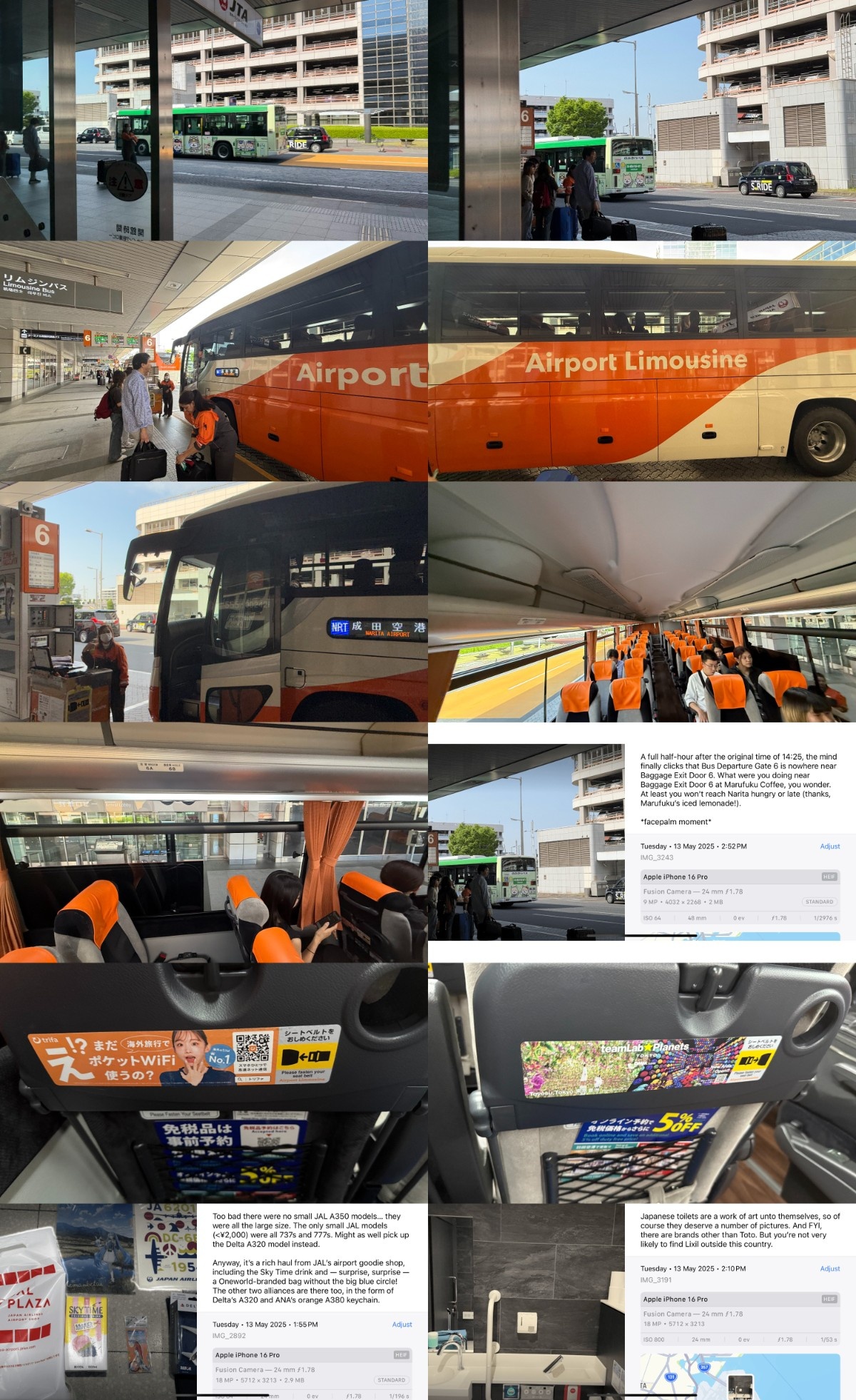
But there was only one small problem. The bus was supposed to depart from Bus Departure Gate 6 (out of 20+ gates), and yet I was standing near Baggage Exit Door 6, at the very end of the terminal! I kept waiting and waiting at the bus departure gate outside Baggage Exit Door 6, only for the bus not to come, and I wondered what was wrong. 🤔 It was only much later that it clicked for me, and I dragged everything to Bus Departure Gate 6 at a quarter to 3 in the afternoon.
Presently the bus arrived, and a friendly (living up to the name!) attendant flashed a smile and stored all my luggage in the cargo hold below. I stepped on board the comfy bus with 2-2 seating and free Wi-Fi, and started noting down a couple of things about what I’d bought from the store — as well as Japanese toilets, ‘a work of art unto themselves’ as I wrote.
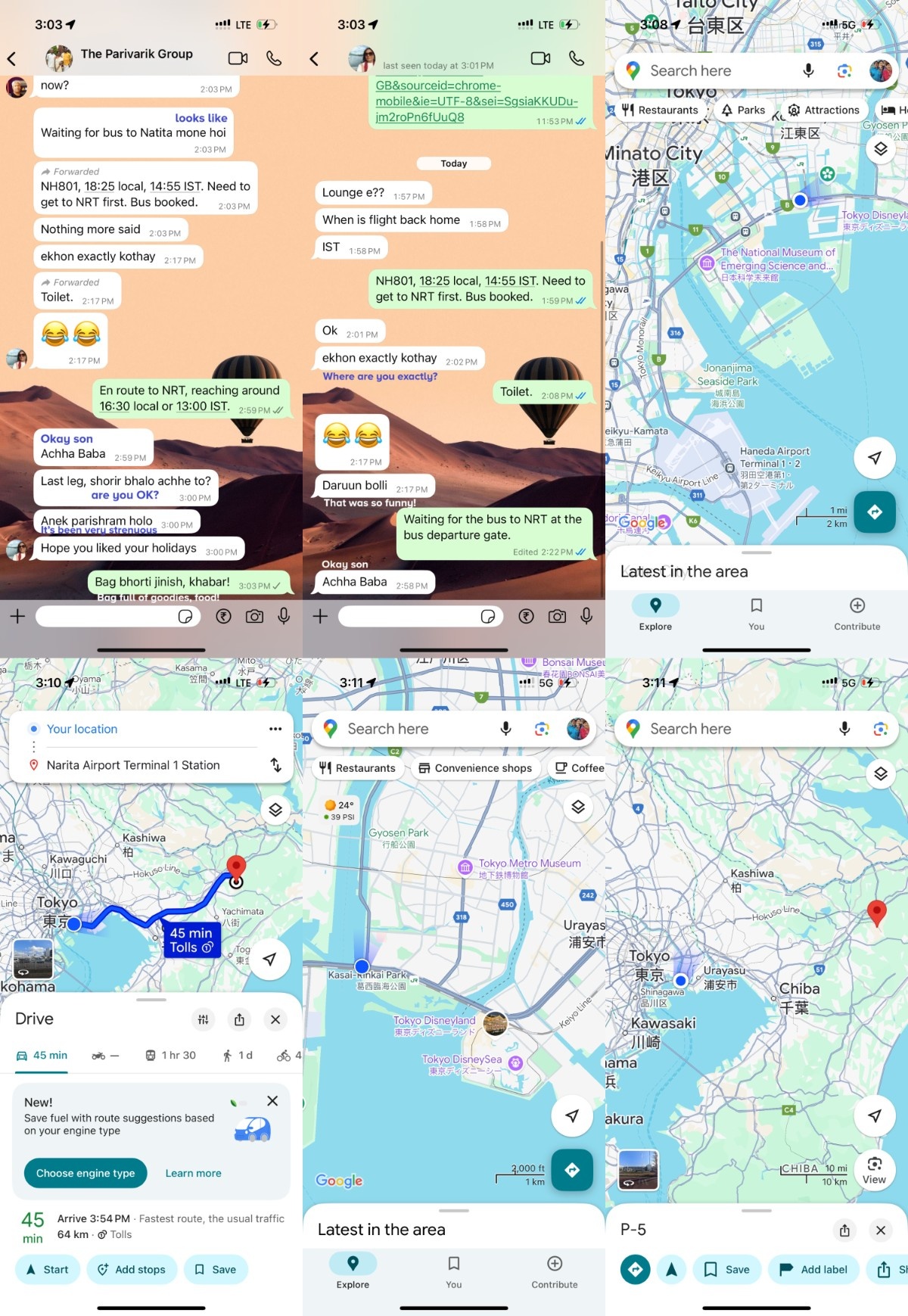
The final leg of my Japan journey was just starting, and I couldn’t wait for the finish! My mom asked me where I was going and when, and commended me for travelling solo with so much luggage in a foreign land. Before long we were on the hour-long journey to NRT, a whopping 60+ km away from the seaside location near the city that HND enjoys.
The orderly, methodical way of Japanese life extended to the highways, with neat, modern skyscrapers slowly giving way to wide expressways with car showrooms and the odd container truck or pitstop mall.
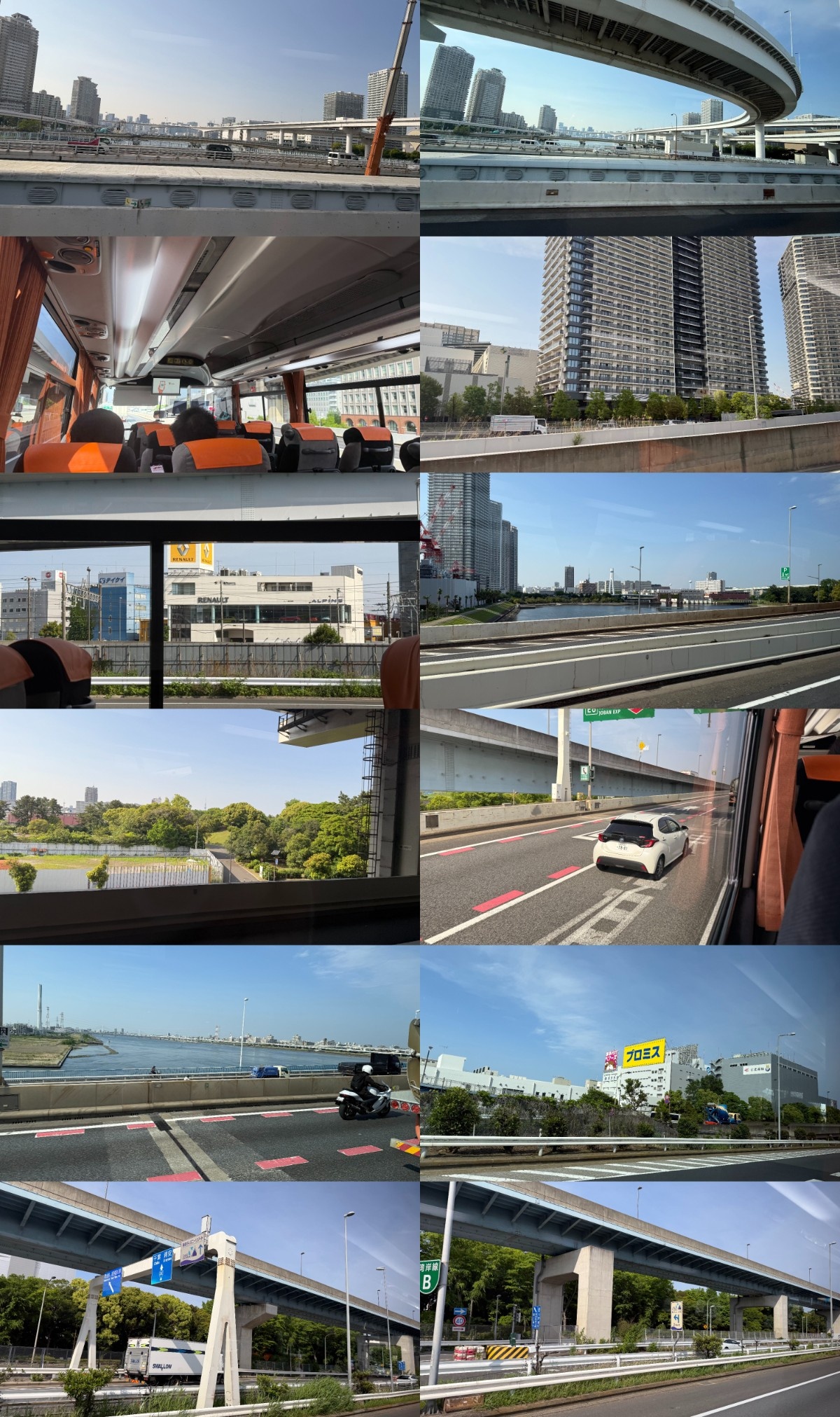
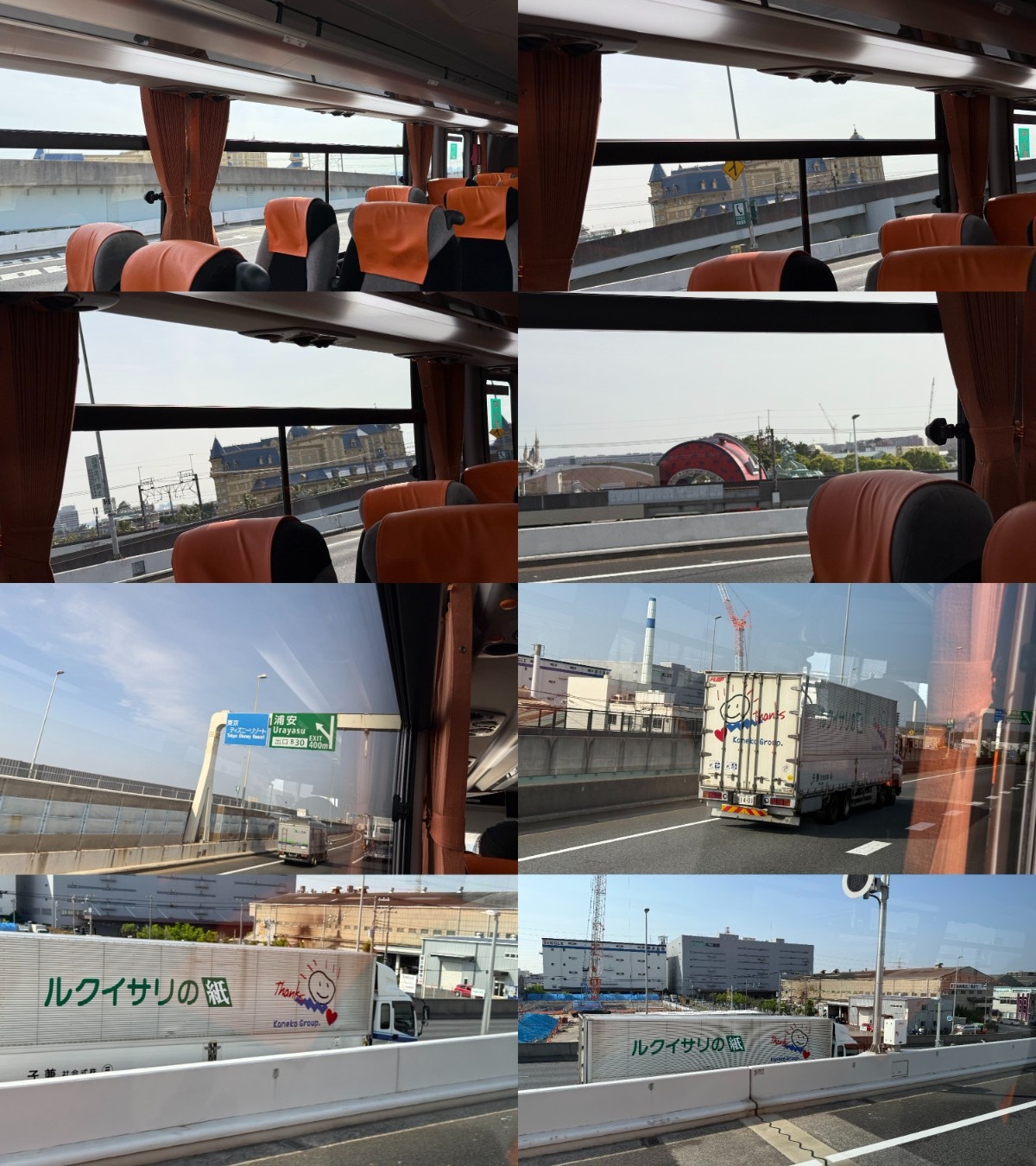
Before very long I found myself in Chiba Prefecture, adjoining Tokyo, where Tokyo Disneyland made an appearance. Though I was on the other side of the bus, I couldn’t help myself from snapping whatever little I could of one of the country’s premier family destinations.
(Even in Hong Kong, the Disneyland is on the road between the airport — on a separate island, though not as far-flung as NRT — and the city!)
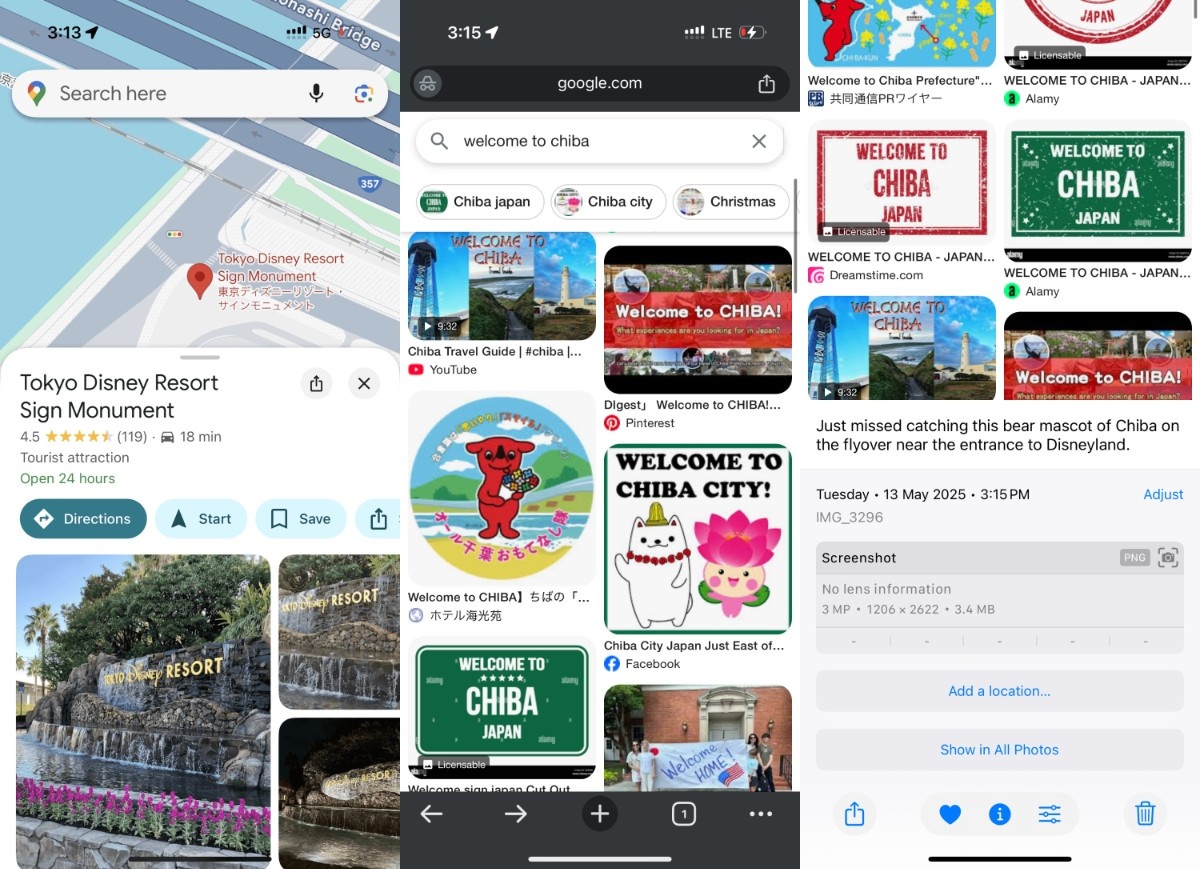
Too bad I could not take a picture of an overhead sign of Chiba’s bear mascot, as the bus whooshed past far too fast for me!
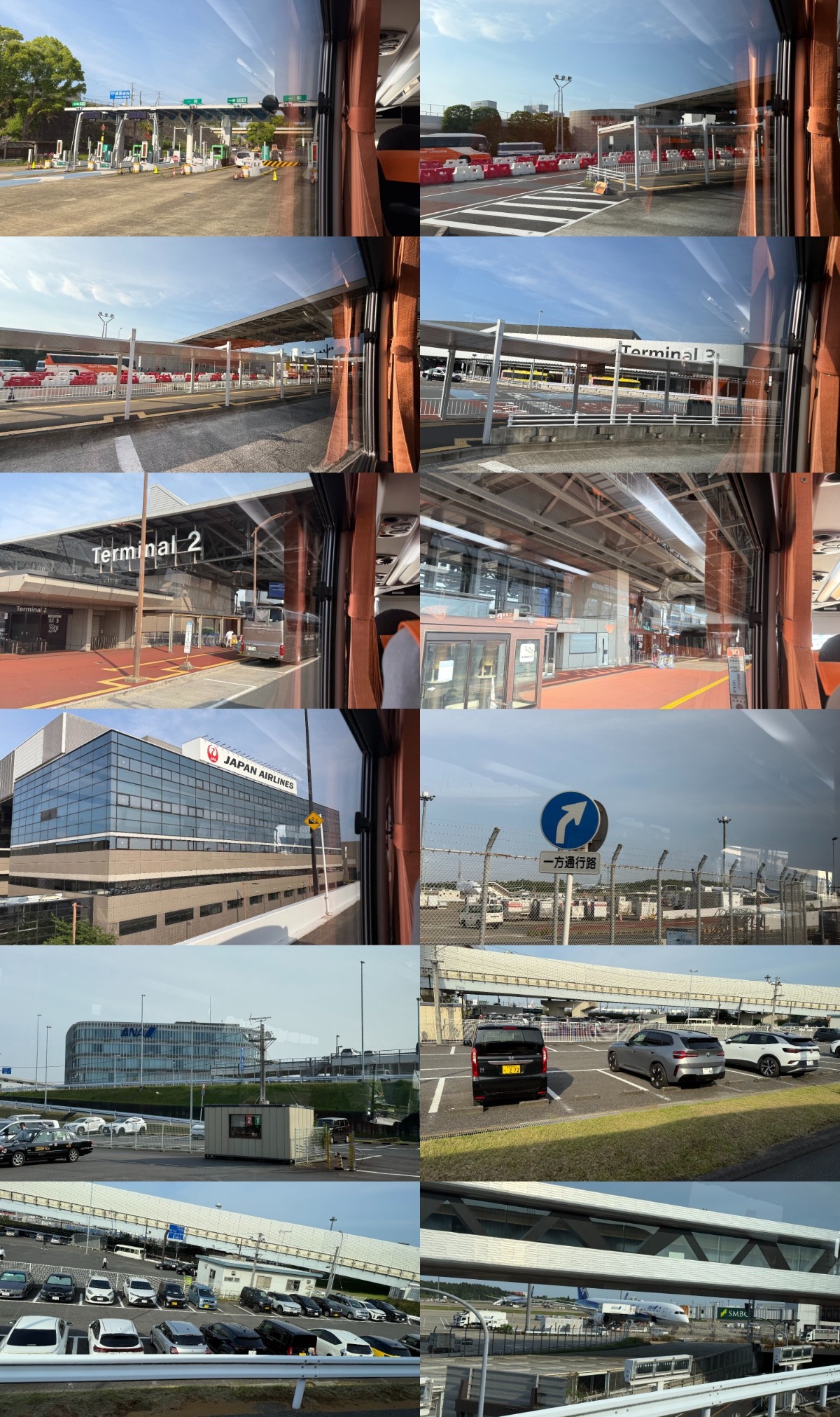
Suddenly, at 3:45, I found myself at the entrance to Narita Airport. For all its immense distance from Tokyo — perhaps the furthest major global airport from the city (though fortunately HND is a fantastic substitute) — it actually doesn’t take that long to reach NRT, provided you’re travelling this way.
(This is in great contrast to Bengaluru, my Indian home city, where the airport is far but not this far, yet it takes so much longer to get there. The reason, in a word: traffic. It’s not at all uncommon to travel TWO hours, or more, between the southern suburbs (where I live and study) and the airport 35–40 km northeast of the city centre.)
After looping past Terminal 3, home to low-cost carriers like Jetstar Japan and Peach, and Terminal 2, where JAL and other Oneworld airlines are based, I had a look at the office buildings of Japan’s two largest airlines along with some planes which happened to be parked nearby.
Let me make this very clear: the limousine bus is far and away the BEST way to travel between Narita Airport and several key stops in Tokyo. It’s on the cheaper side compared to those outrageously expensive taxis — some ¥3,500, though the Low Cost Bus is cheaper still — the porters handle your luggage (unlike the Keisei Skyliner — which I took on the way in — or Narita Express), you get to kick back and lounge in your seat, and there’s even free Wi-Fi, plus the journey can take under an hour if you’re lucky — as I was.
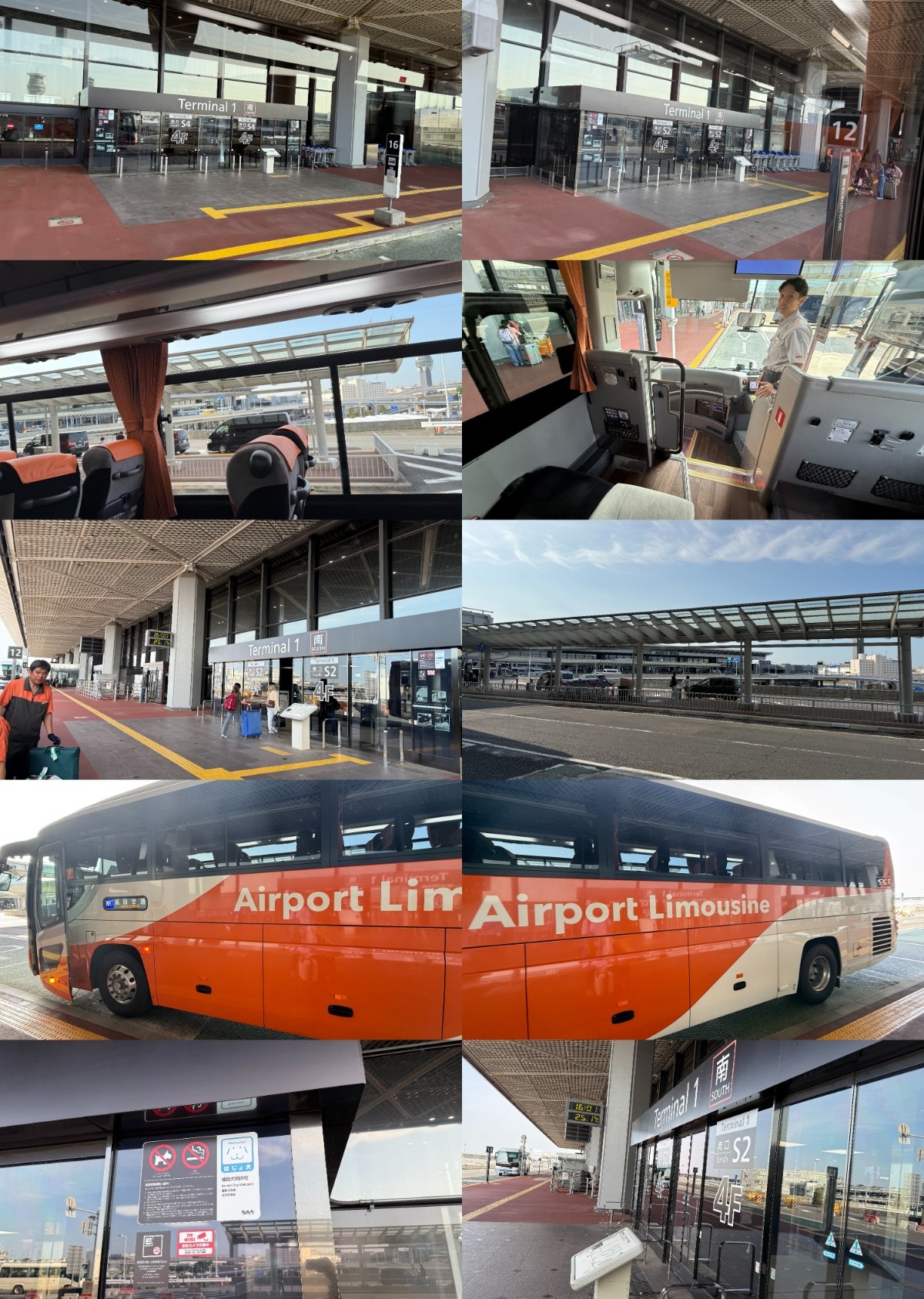
Eventually I made it to Terminal 1’s South Wing, the home of ANA, United and other Star Alliance carriers. (Terminal 1’s North Wing is used by SkyTeam airlines, among some others.) I stepped down from the bus as the friendly — again, pardon the pun — attendants unloaded my luggage and waved farewell, which would be my last time outdoors during this Japan trip.
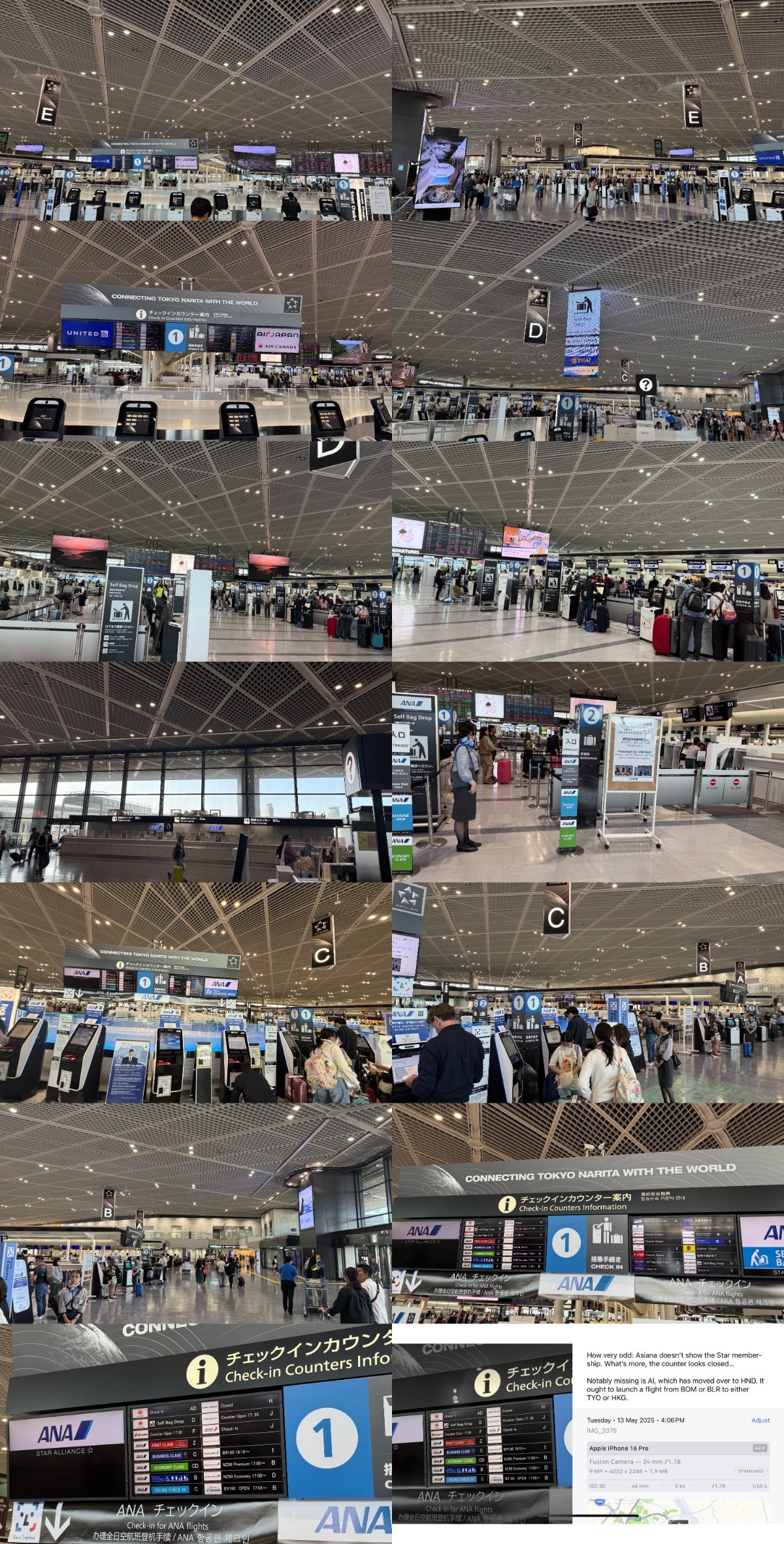
How does an alliance-branded terminal look like? The Star Alliance Terminal 1 South is the answer
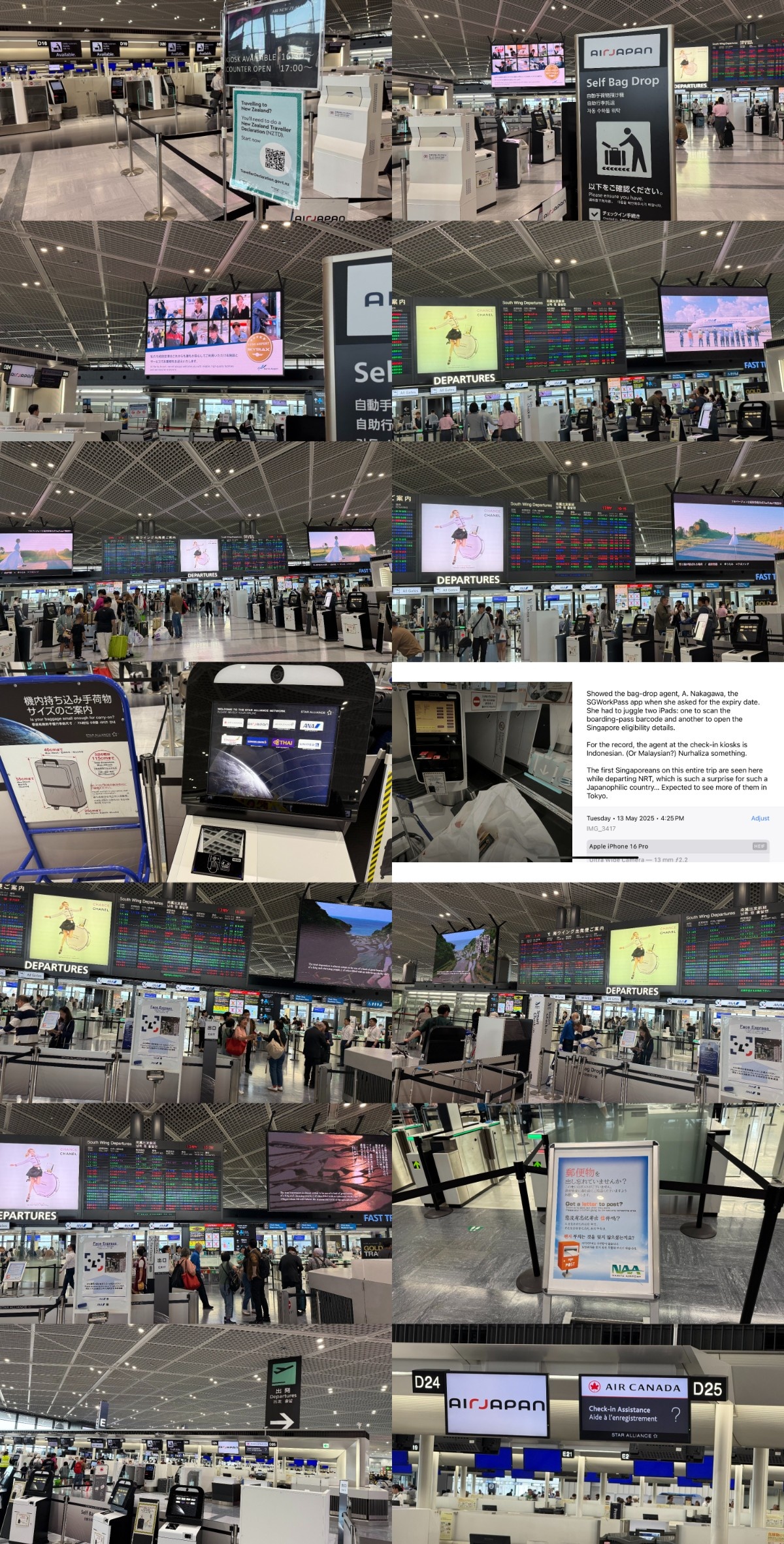
Once I stepped in, I was bowled over: the entire place was branded by the Star Alliance, the first time I have ever seen an airline alliance take over all the signs at an airport terminal. While I’d arrived here on Asiana’s A380 three days before, I hadn’t seen anything resembling an alliance branding effort in the arrivals area. Can you imagine this being done at Changi Terminal 2 or 3, or Heathrow Terminal 2? I think not!
(SkyTeam — despite not having a Japanese member, or even Delta (today Korean Air has the biggest presence here) — does the same at Terminal 1 North. But JAL’s home of Terminal 2 is devoid of any Oneworld advertising other than pasting the alliance’s logo on every check-in pillar, so there is no overarching alliance-wide effort as you see with Star below.)
At every corner you get the impression that the Star Alliance treats NRT T1 South as one of its most important hubs globally. Many members besides ANA and United — including Air Canada, Air China, Ethiopian, EVA Air, Swiss, Singapore Airlines and Thai Airways — are here, though several of those fly to HND as well. (Notably missing, however, is Air India, having switched its Delhi–Tokyo service — its only route to Japan — from NRT to the much more convenient HND in March 2025. Lufthansa, too, flies only to HND in Tokyo, though Austrian and Swiss serve NRT.)
In contrast, HND is not exactly divided by alliance the way NRT is. Terminal 3 handles almost all international flights, irrespective of alliance, while Terminal 1 is for the domestic flights of JAL and its partners, and Terminal 2 for the domestic flights of ANA and its partners plus a few international ones.
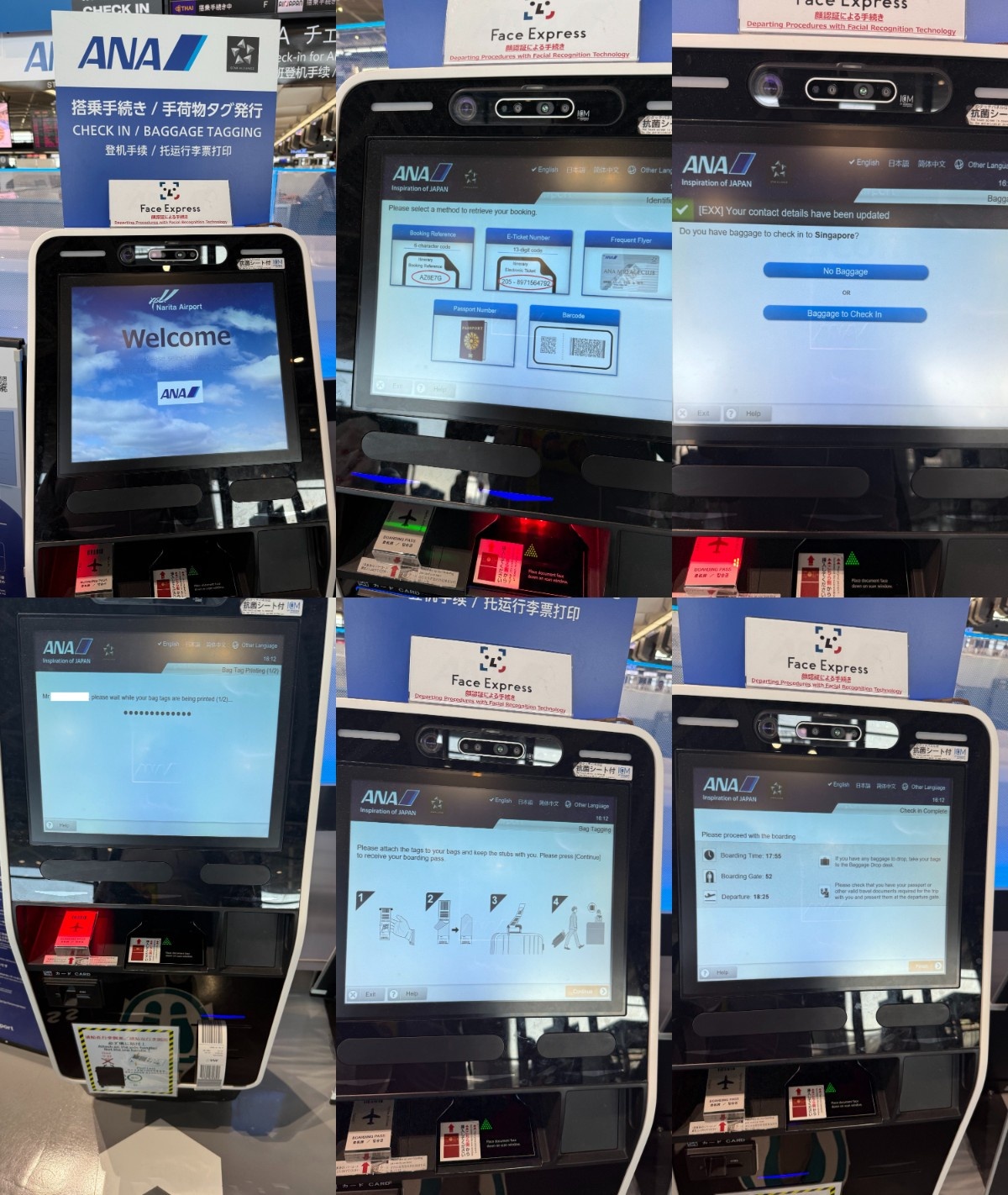
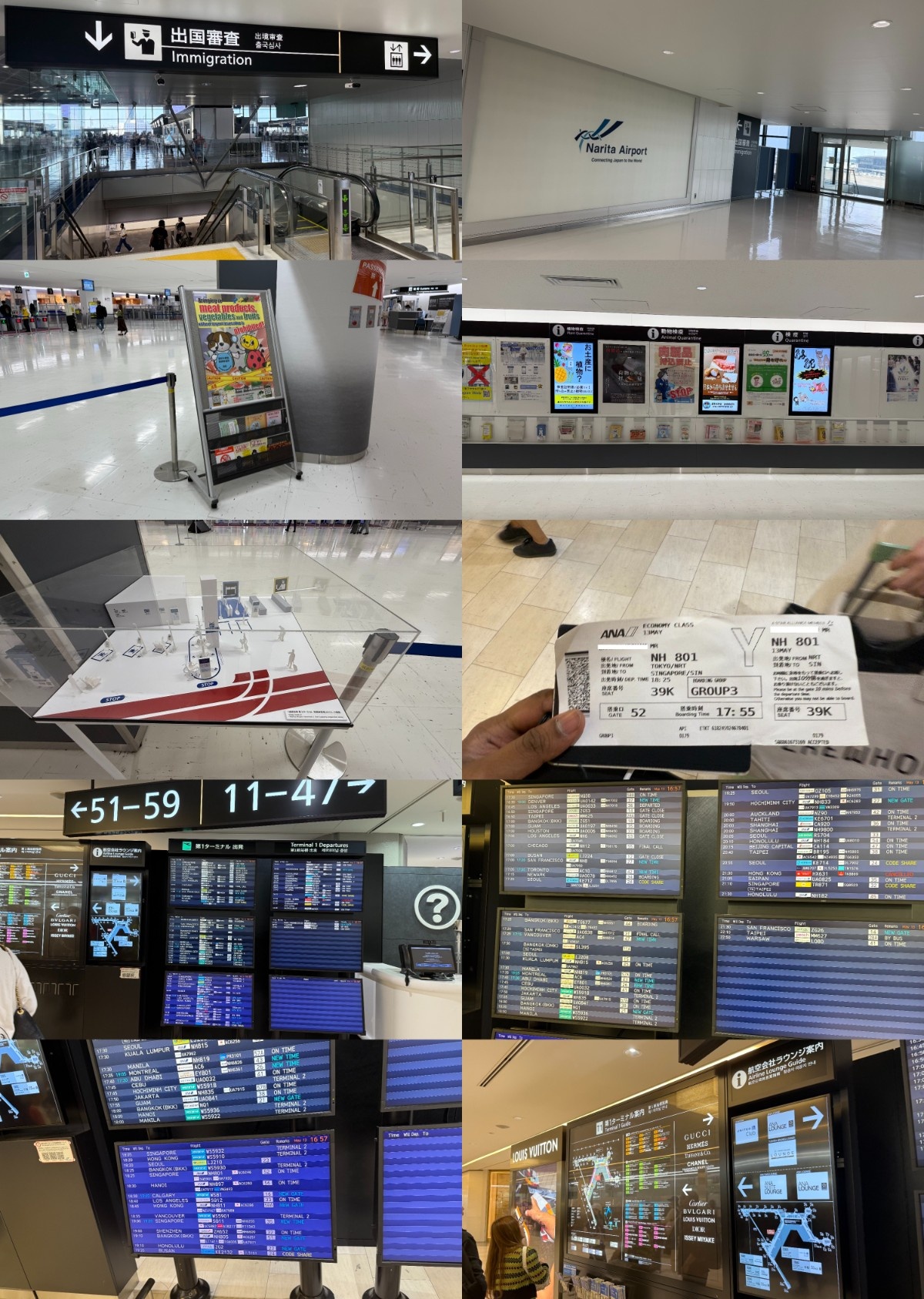
With ANA being the home airline at this terminal, it was easy to get to the rows and rows of automated check-in kiosks for my flight, NH801, and the initial steps were smooth. However, I invariably ended up calling an agent to help, and she had to examine my documents to let me through — including my Singapore employment pass, which I surrendered the following month on returning to India permanently.
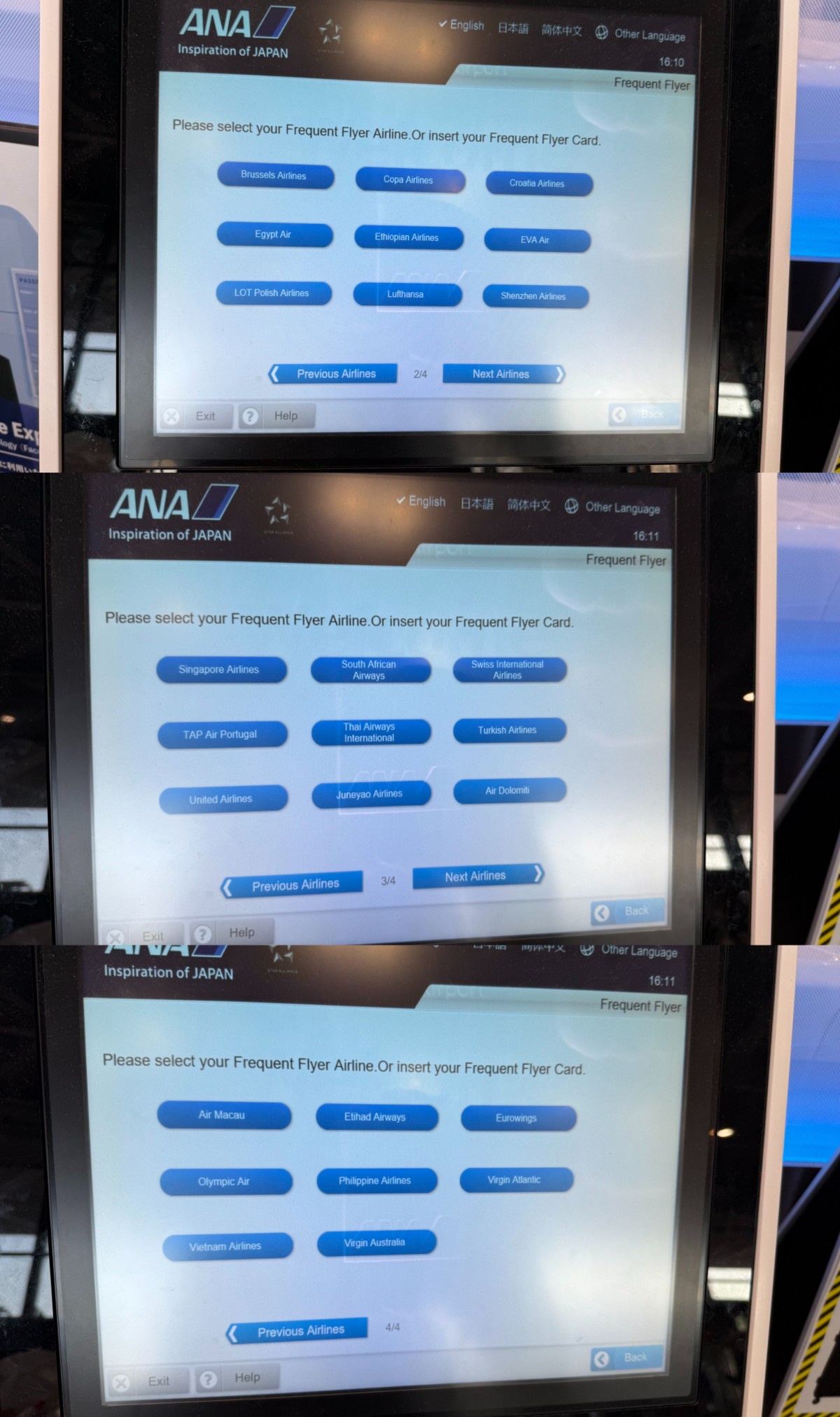
Interestingly, the list of frequent-flyer airlines included not only all Star Alliance members but also a bunch of others like Etihad, Philippine Airlines, Virgin Australia and the SkyTeam pair of Virgin Atlantic and Vietnam Airlines — which might not be as surprising as you think.
(Virgin Atlantic Flying Club points are the very best way to book ANA’s incredible new first- and business-class products, while ANA is a strategic partner and shareholder in the Vietnamese flag carrier.)
One of the few non-Star Alliance airlines at the terminal was AirJapan (code: NQ), ANA’s low-fare widebody subsidiary with a fleet of two 787-8s. Perhaps unsurprisingly, AirJapan announced in October 2025 that it would completely cease operations in March 2026, after only two years of service. It certainly couldn’t replicate the success of ZIPAIR Tokyo, JAL’s similar 787-operating budget subsidiary, which has a basic business-class product (which AirJapan didn’t have) with lie-flat beds and free Wi-Fi, but no TVs.
2025 has been a torrid year for smaller low-cost carriers, including Singapore’s Jetstar Asia (which I flew shortly before its closure), Wizz Air Abu Dhabi and Iceland’s PLAY Airlines — and AirJapan only adds to that list, though it still has a few more months left in its short history.
This is not to be confused with Air Japan (with a space), a rather little-known subsidiary of ANA that operates many of its 787s — including JA888A, my aircraft today — and that one’s not going away any time soon.
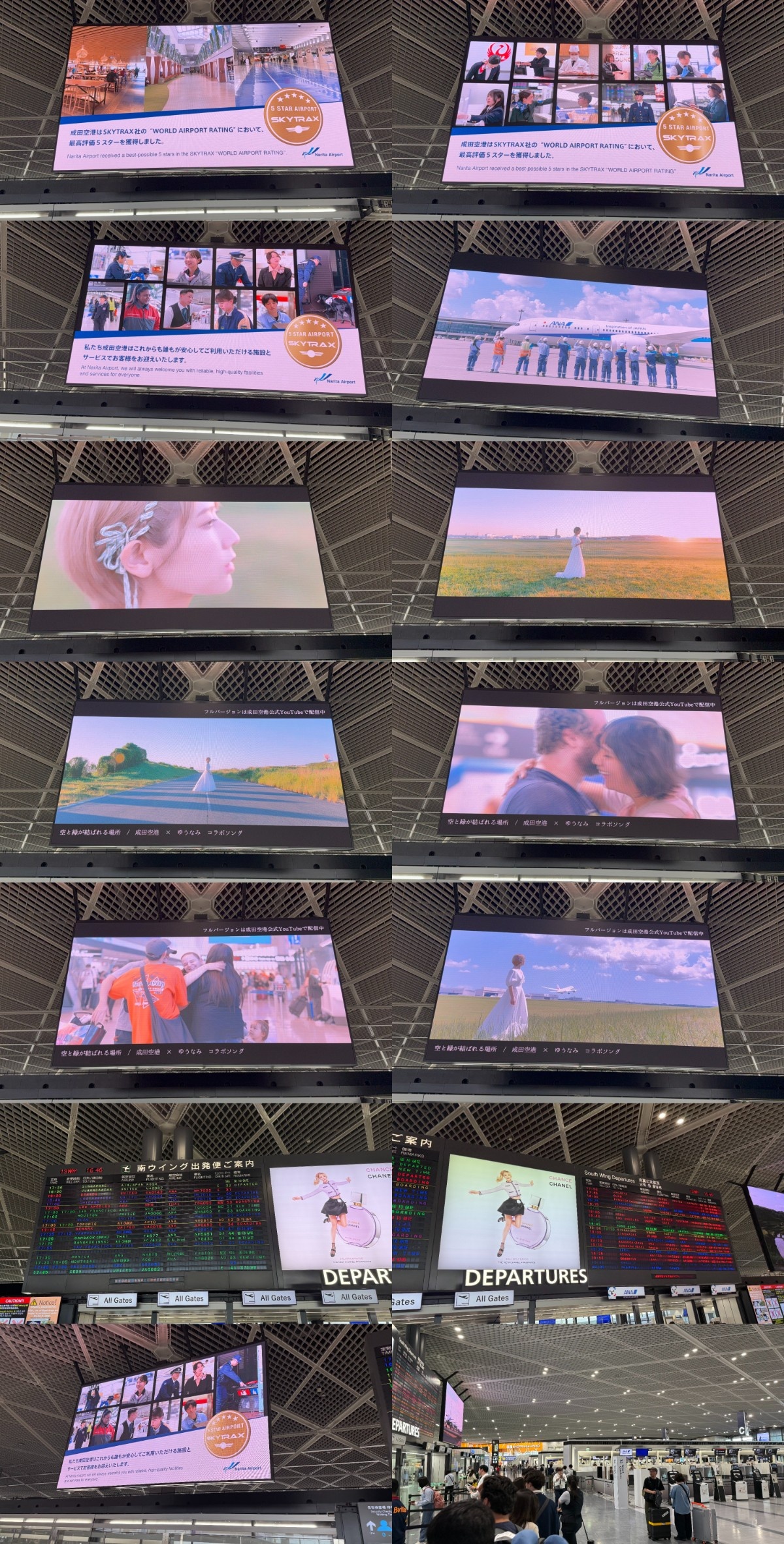
Meanwhile, the overhead displays alternated between NRT’s Skytrax 5-star rating, Chanel’s Chance fragrance and some cool Japanese dance videos showcasing the country’s rich cultural heritage.
‘At Narita Airport, we will always welcome you with reliable, high-quality facilities and services for everyone.’ — Second row, left
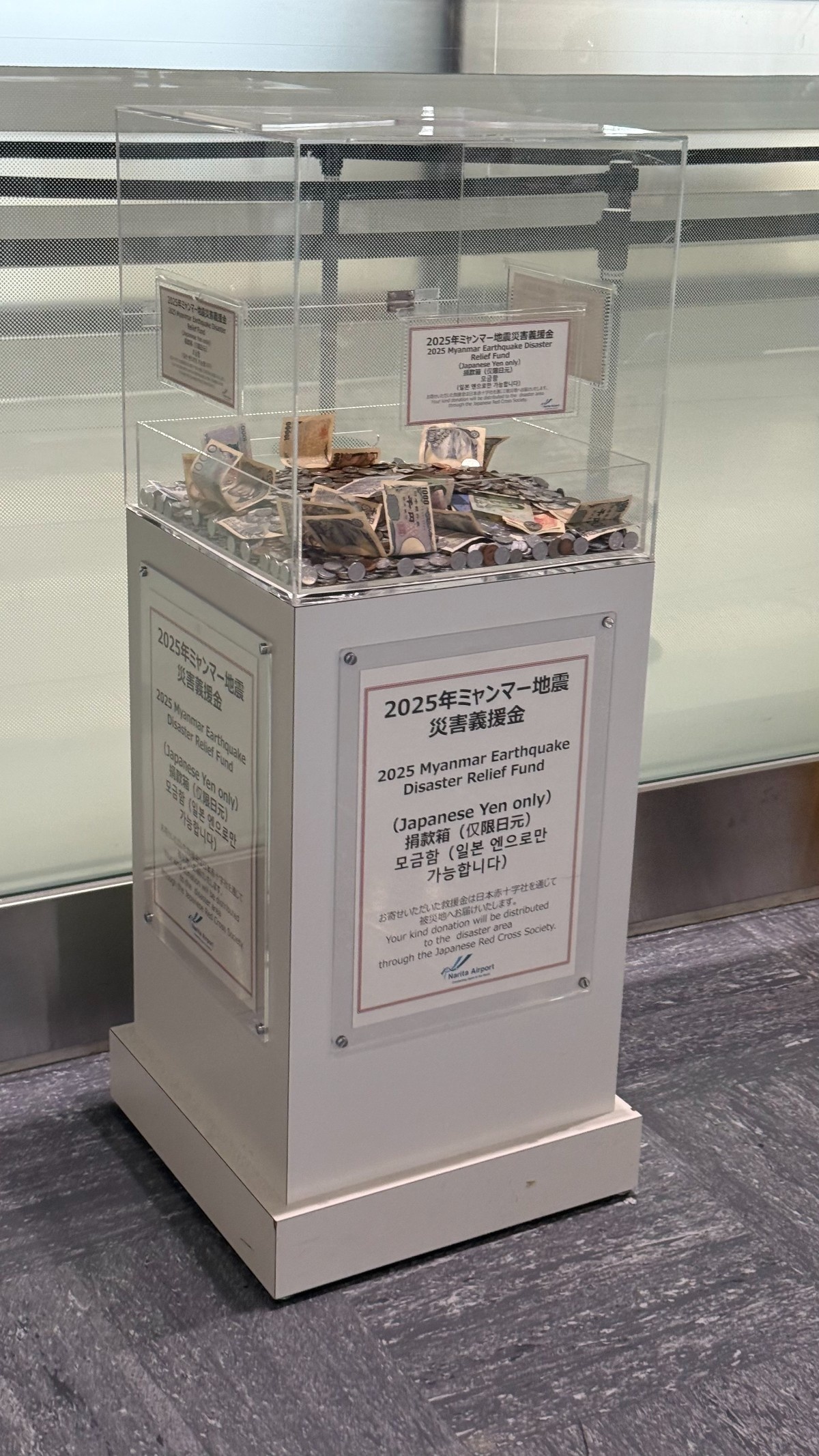
After strolling around for a bit, during which I encountered a Myanmar earthquake relief donation box, filled to the brim with notes…
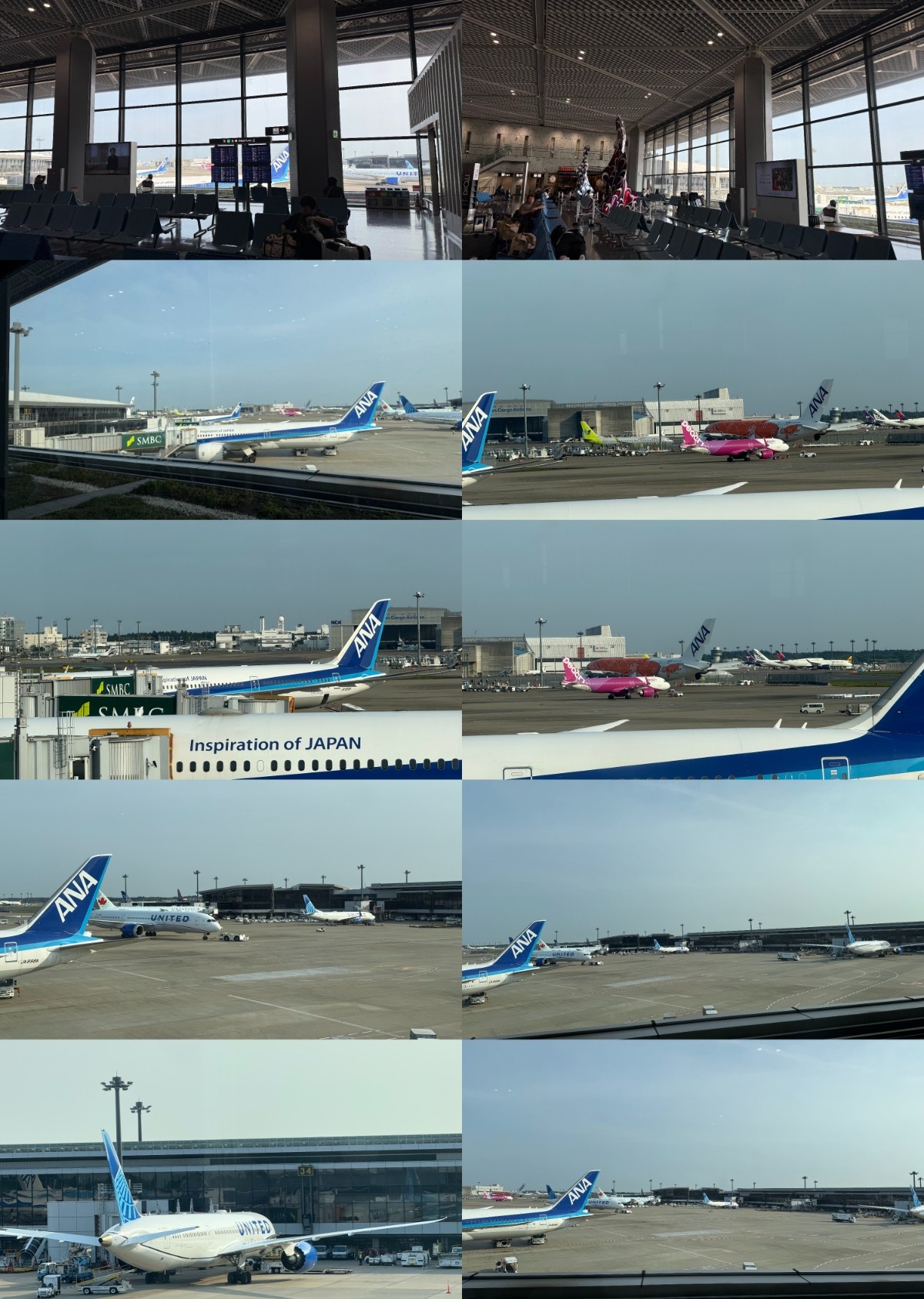
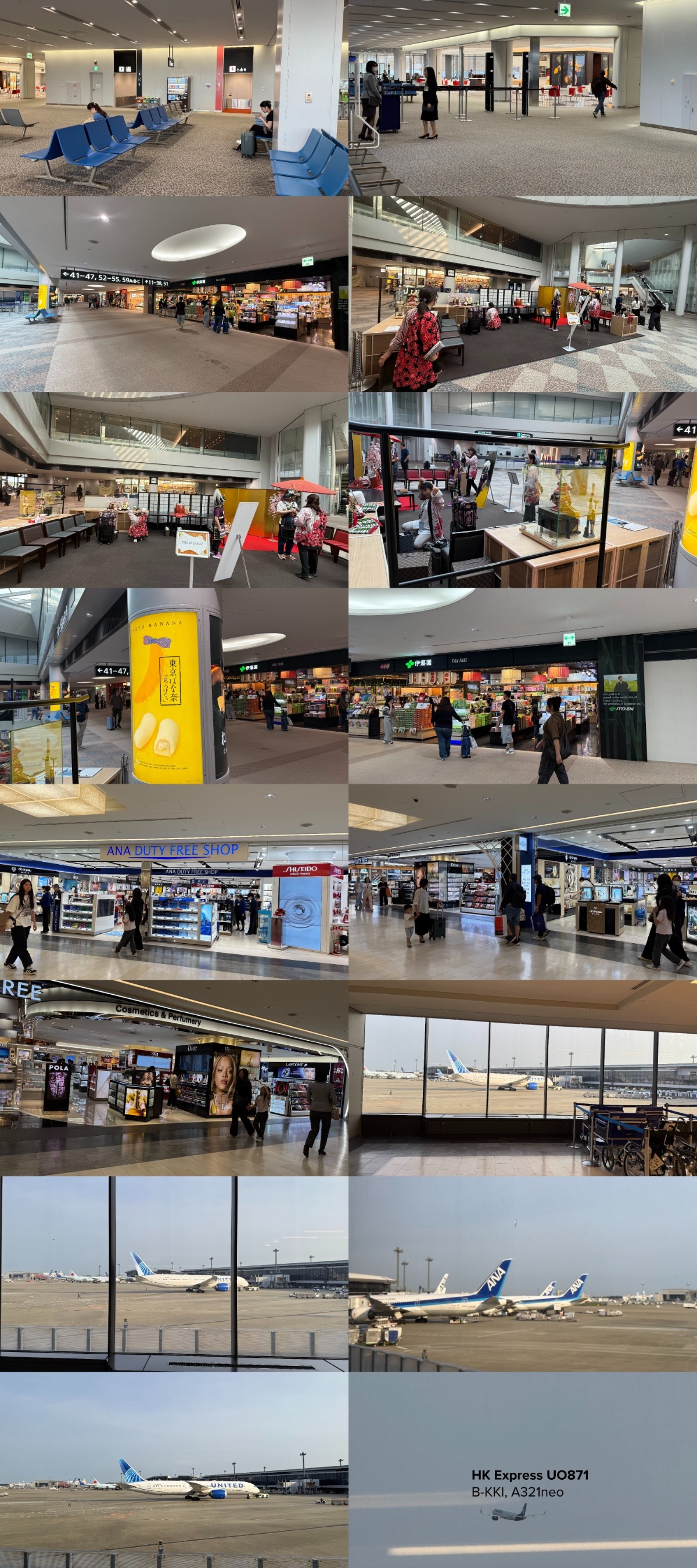
…I chanced upon a splendid viewing gallery, with sweeping views of the activity on the apron — including the orange-coloured JA383A, ANA’s third (and last) A380!!! There were ANA 787s, pink A320s from its low-fare subsidiary Peach, a bunch of 737s and 787s from Star Alliance partner United Airlines — I hadn’t seen a single United plane when arriving on Asiana’s A380 three days before! — and a lime-green and silver 737 from Jin Air, the low-cost subsidiary of Korean Air.
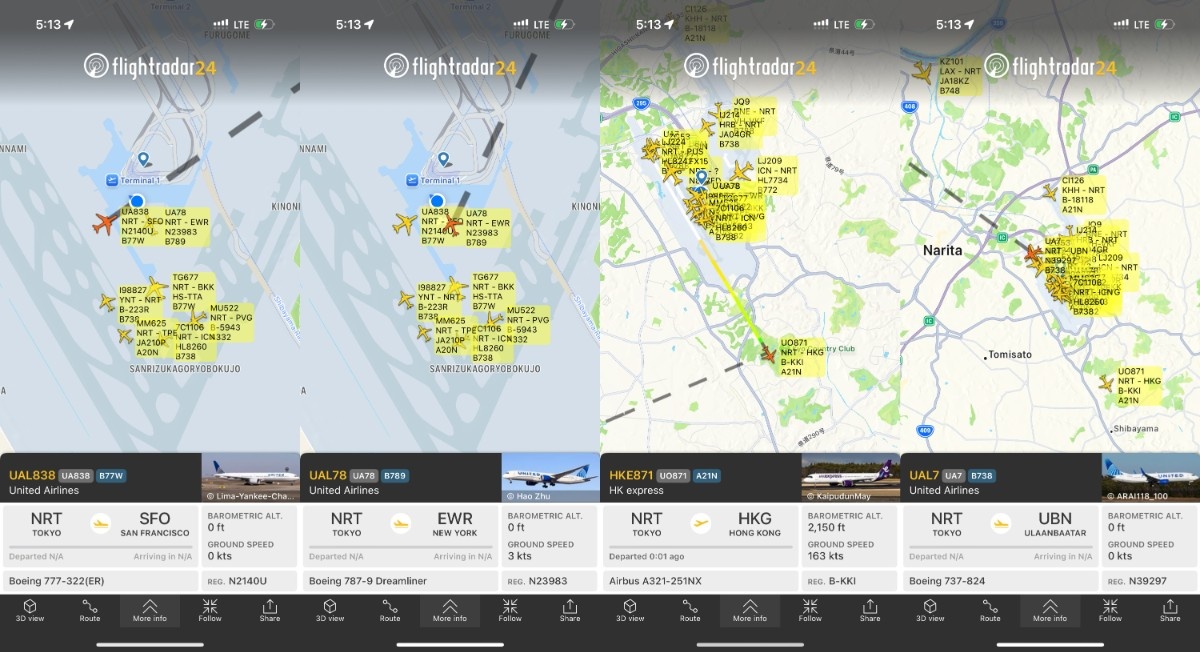
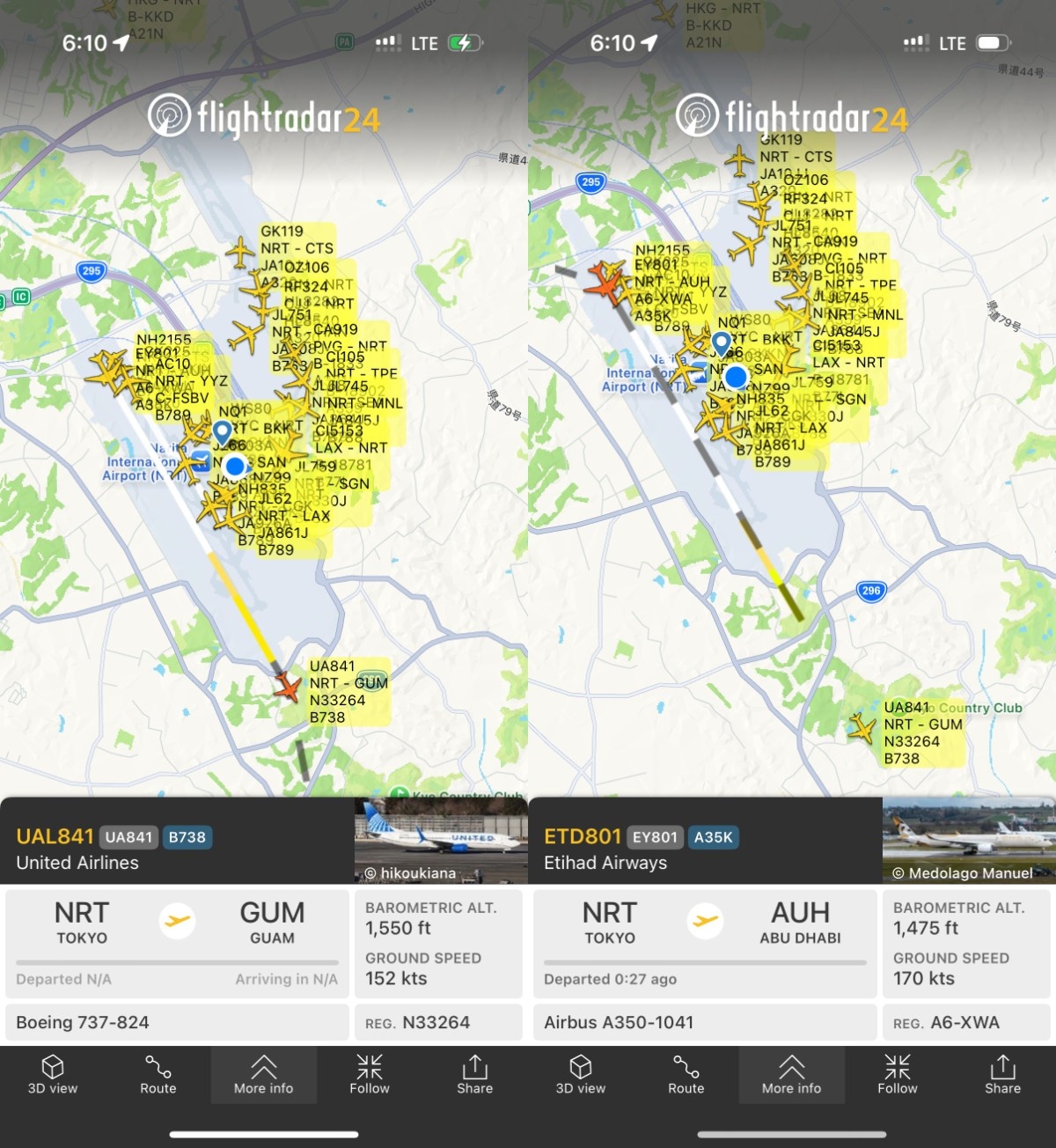
To see just how globally connected an airport NRT is, I only needed to look up the recent arrivals on Flightradar24. Beyond the local JA-registered and Korean HL-registered aircraft, there were the likes of an Air Tahiti Nui 787-9 and A350s from Finnair and Etihad on the ground. And then, taxiing on the runway, there was United’s flight to Ulaanbaatar, the capital of Mongolia — a route launched just that month! HOW COOL IS THAT?!?!
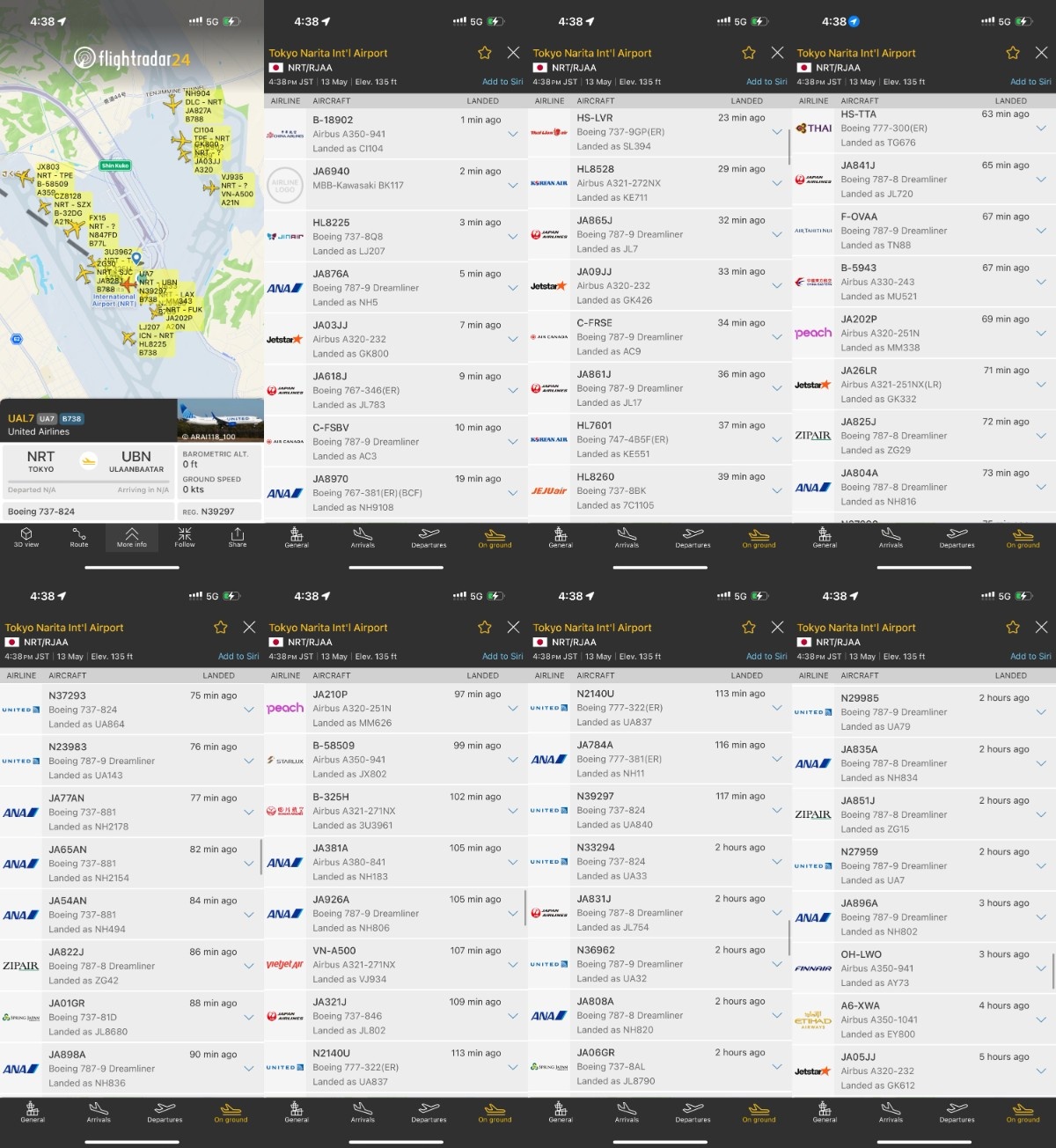
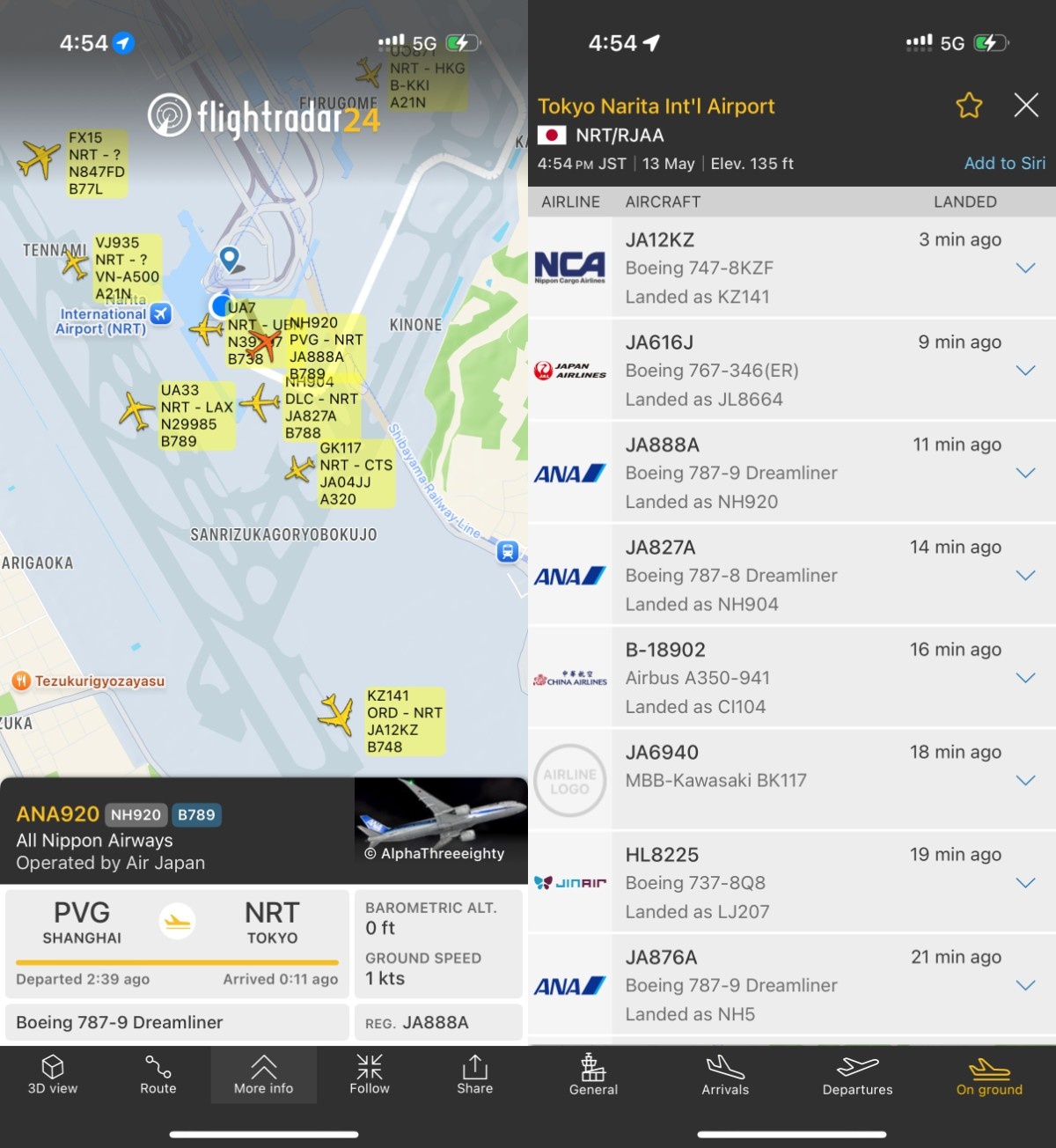
In the distance stood JA382A, ANA’s second A380, while JA888A, a 787-9 arriving from Shanghai as NH920 — which would turn out to be my own plane — slotted in just next to sister-ship JA898A before coming to a stop.
Another cool recent arrival — in terms of both the flight number (unusuall 4 digits) and the aircraft — was JL8664 from Taipei, operated by a JAL 767-300ER. There aren’t that many of those nowadays! (This flight has been scrapped in the winter 2025 schedule, with JL802, operated by the 737-800, being JAL’s only arrival from TPE.)
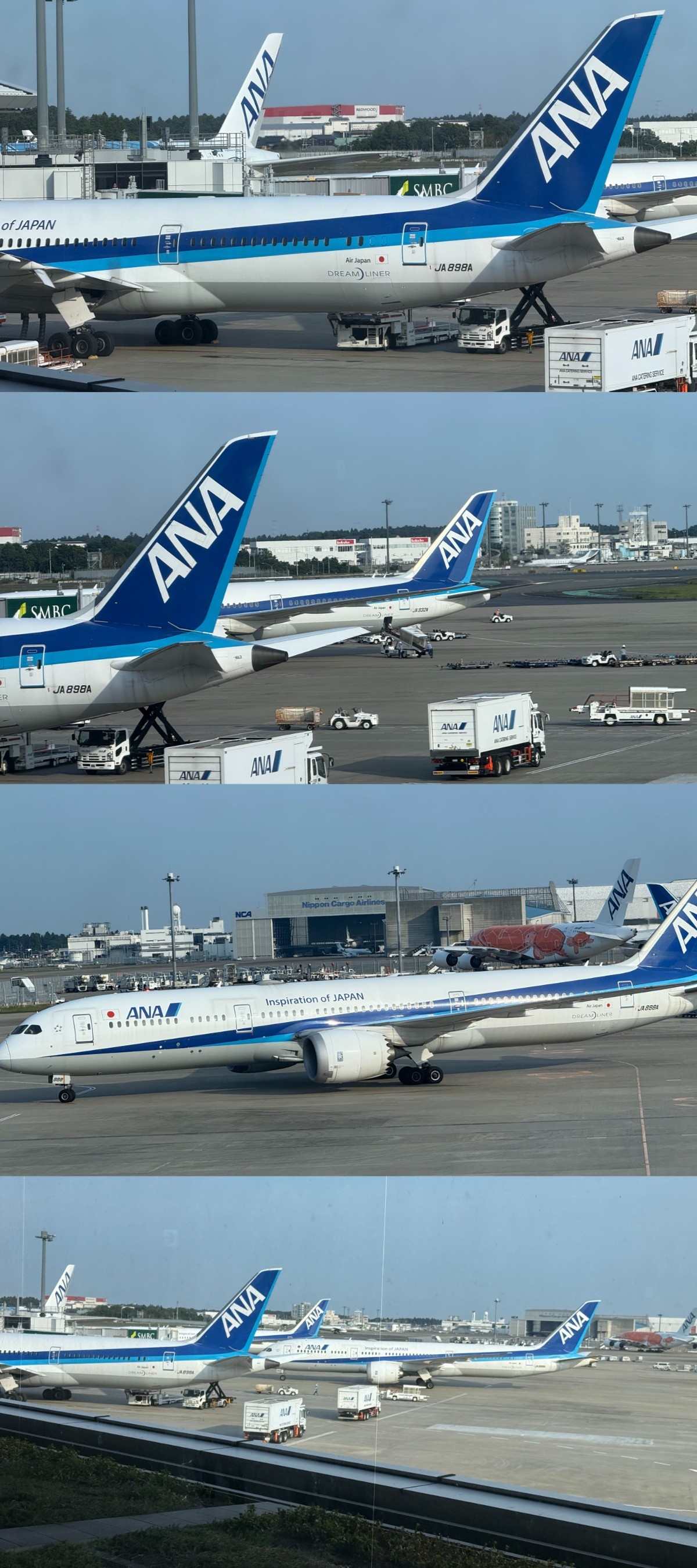
One level below: Immigration and retail options
As I completed the security screening and went down a level to the immigration counters, Bruno Mars and Lady Gaga’s smash hit from 2024 continued to loop unabated in my ears. Somehow I hadn’t heard Die With a Smile before May 2025 — and the same goes for the other Bruno Mars chartbuster from 2024: APT. featuring Blackpink’s Rosé. I must be living under a rock! (No, I’m not really on social media, and so the first time I hear a song is often on the radio. My first love is aviation, not social-media trends!)
If the world was ending, I’d wanna be next to you
If the party was over and our time on Earth was through
I’d wanna hold you just for a while and die with a smile
If the world was ending, I’d wanna be next to you
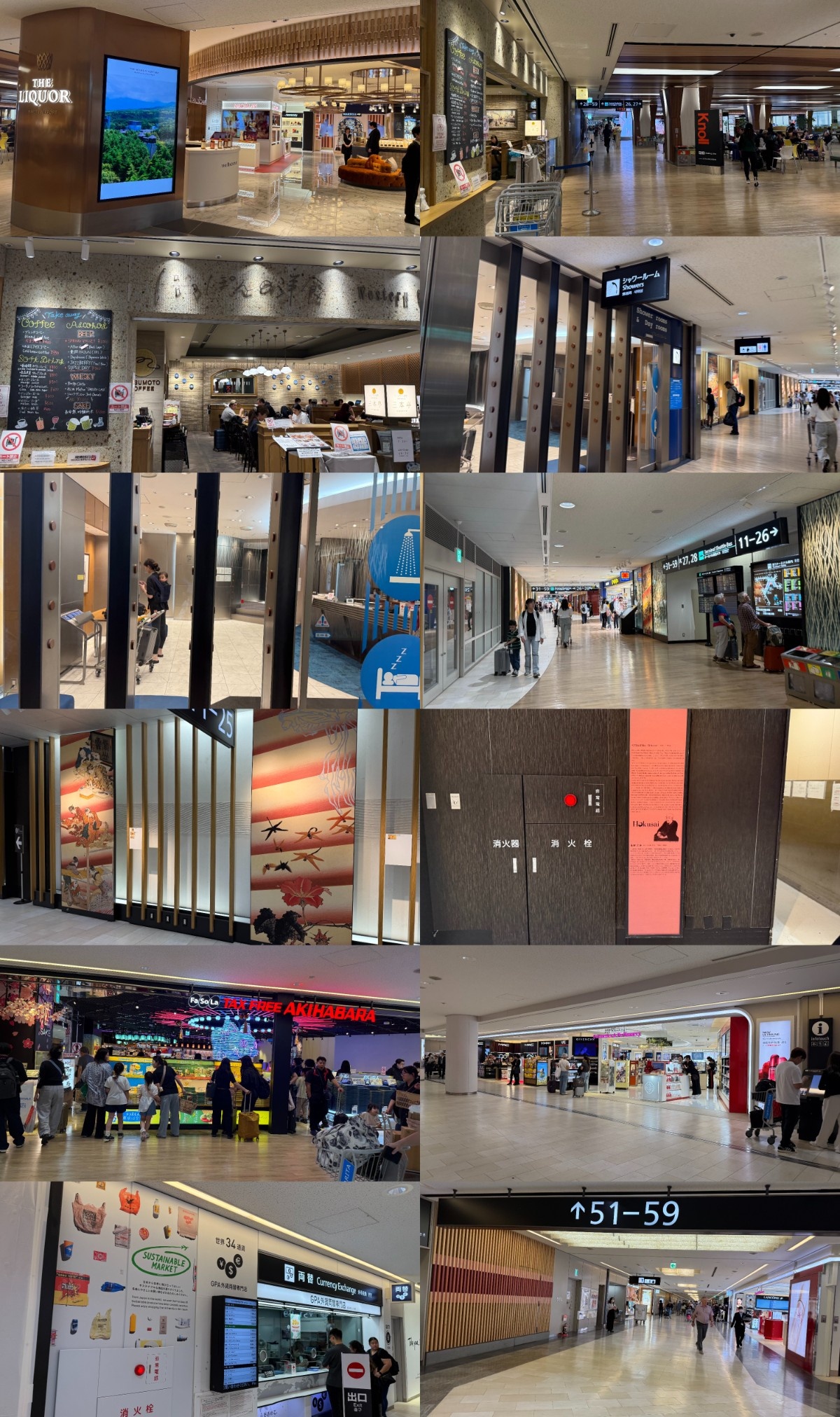
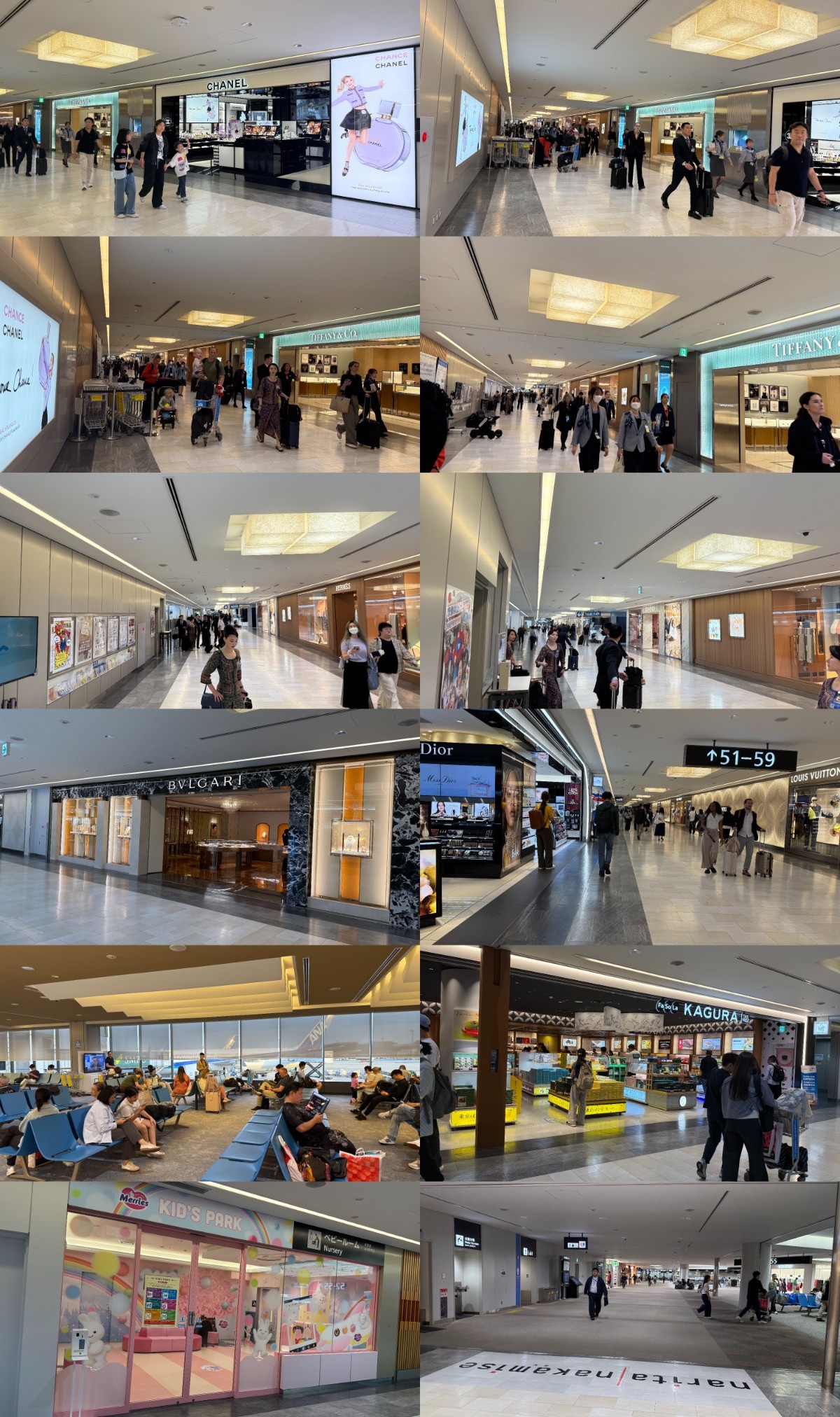
It was in this gloriously melancholy mood, set no doubt by the song, that I turned left towards the fancy luxury shops. As someone who LOVES low ceilings (yes, we do exist!), I was having a merry time clicking away, between one jewellery/apparel boutique after another on the left side, and all the (especially ANA and United) planes on the right.
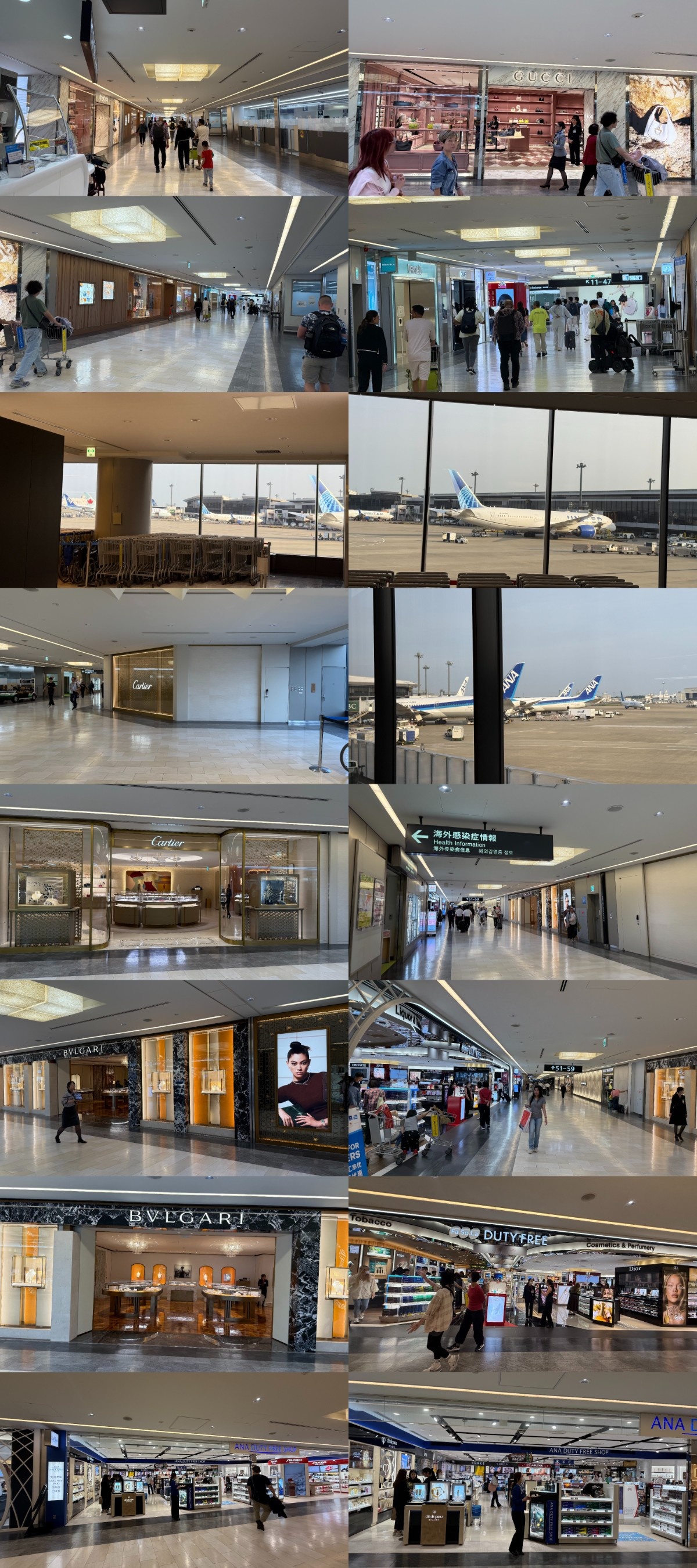
Beyond a point all the Louis Vuitton and Chanel stores gave way to comparatively more affordable places, ranging from food courts and cafés to duty-free shops. And all the boarding gates with magnificent views of the planes glinting against the evening sun.
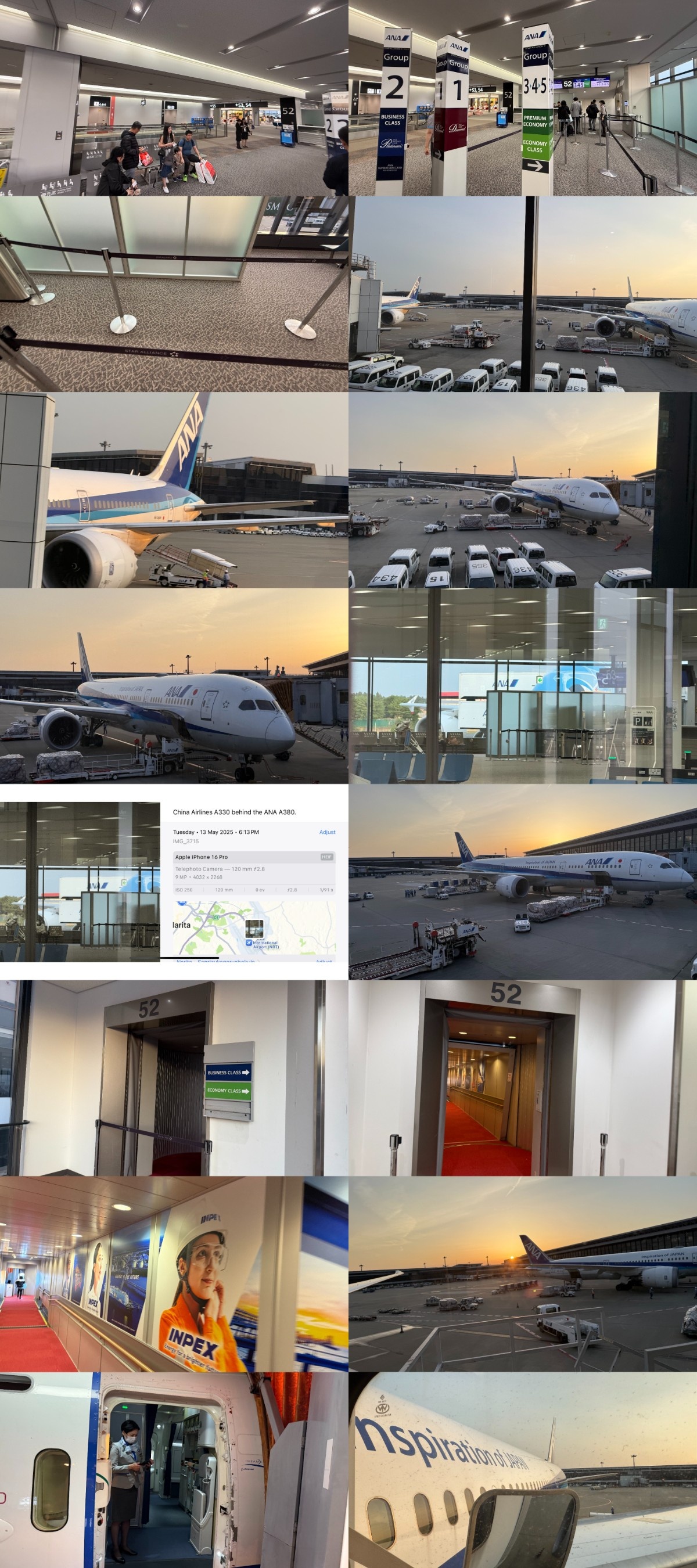
At length I reached the 52–59 gates, and my flight would depart from gate 52, the closest of these. JA888A was having a rest, sunning her wings at the nearest gate, while a nearby TV played a sumo-wrestling match, as I looked around the retail area filled with minimalist Scandinavian Japanese décor.
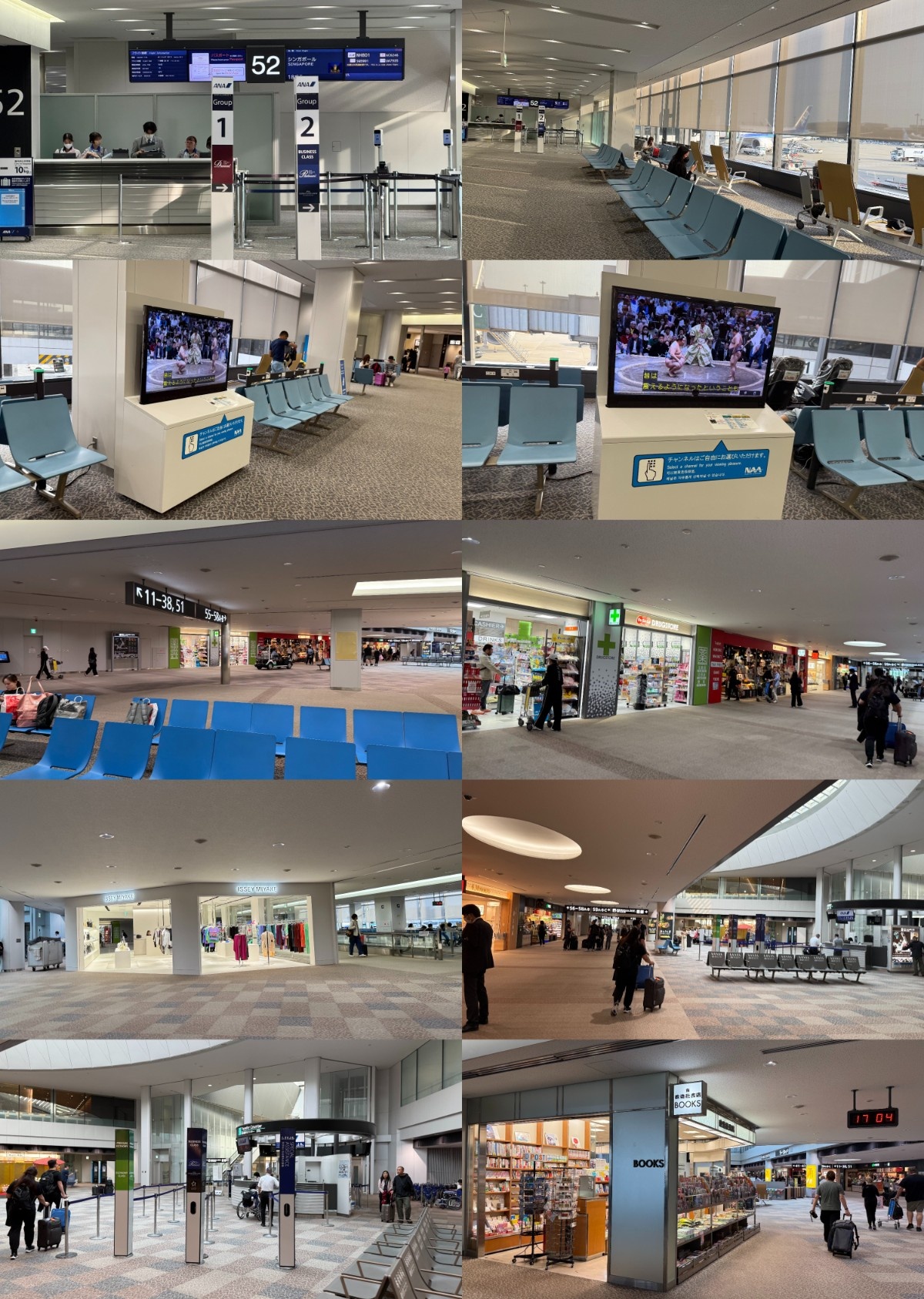
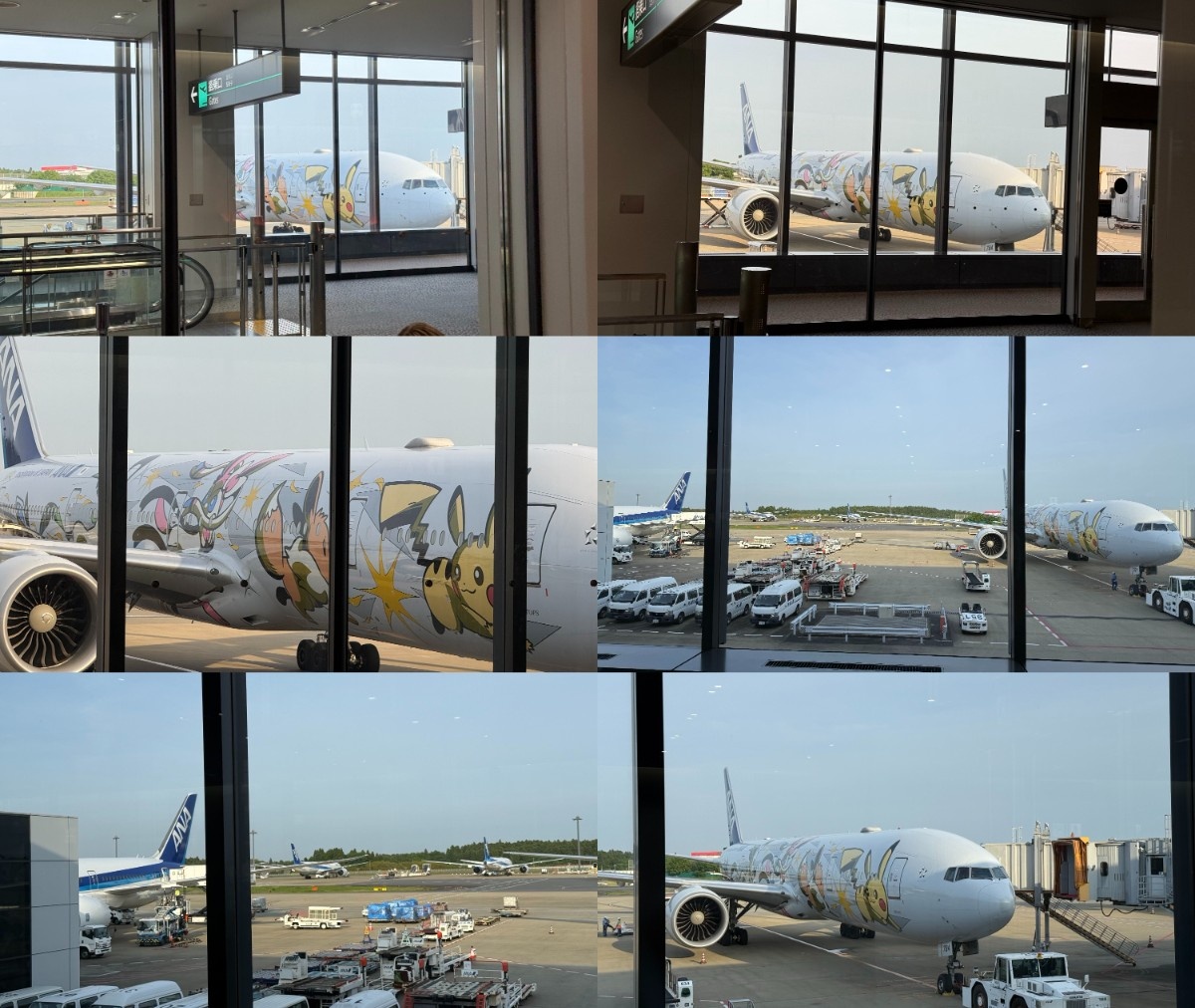
And there — lo and behold — stood a Pokémon-liveried 777-300ER (JA784A), the Eevee Jet: there was no mistaking this from a distance. Goodness, what a fascinating airline, I thought. As acclaimed for its authentic Japanese premium service as proud as it was to celebrate its unique pop culture. Can you even imagine SQ, the prim and proper airline that it is, doing a special livery of this sort?!
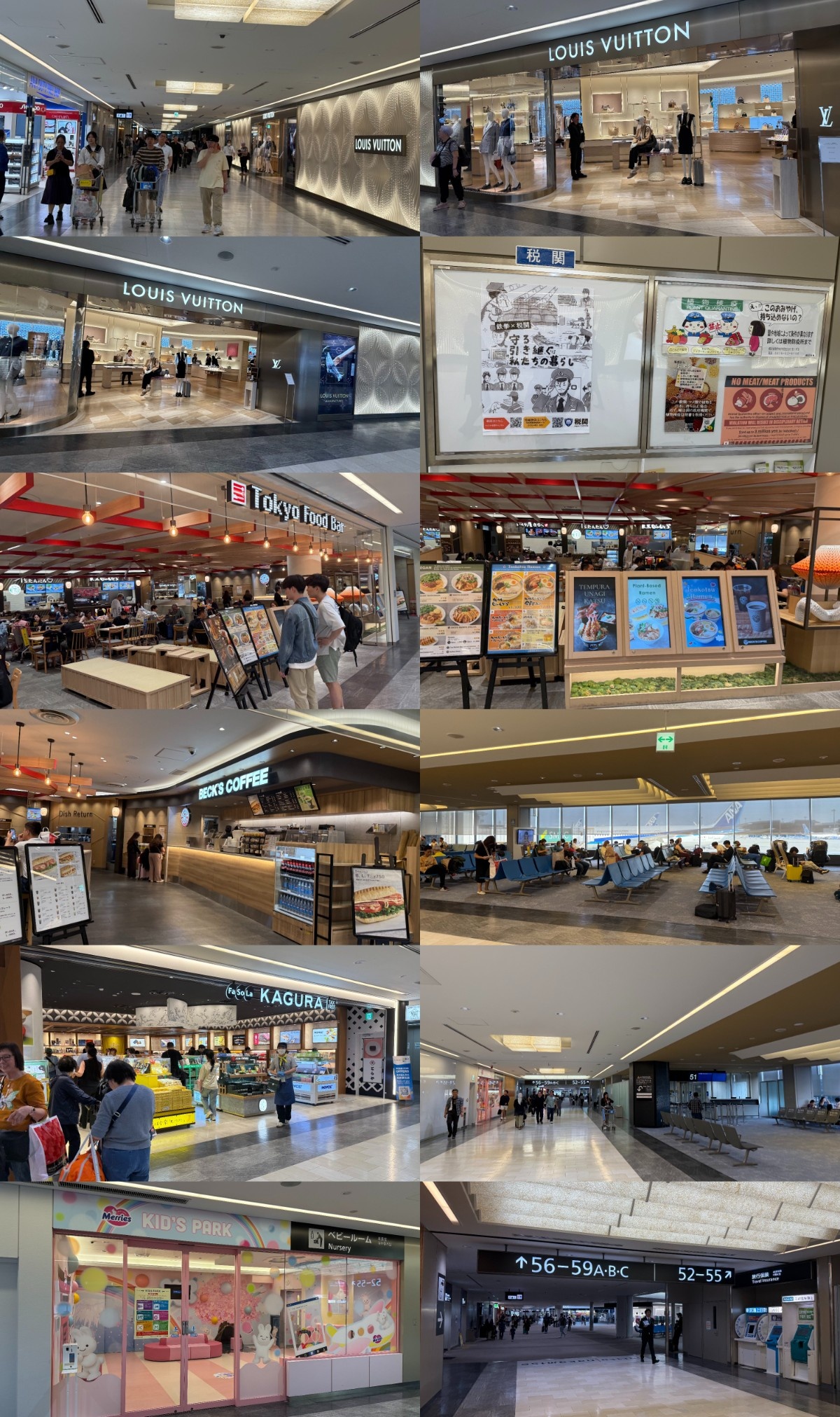
A last taste of ramen before leaving Japanese shores
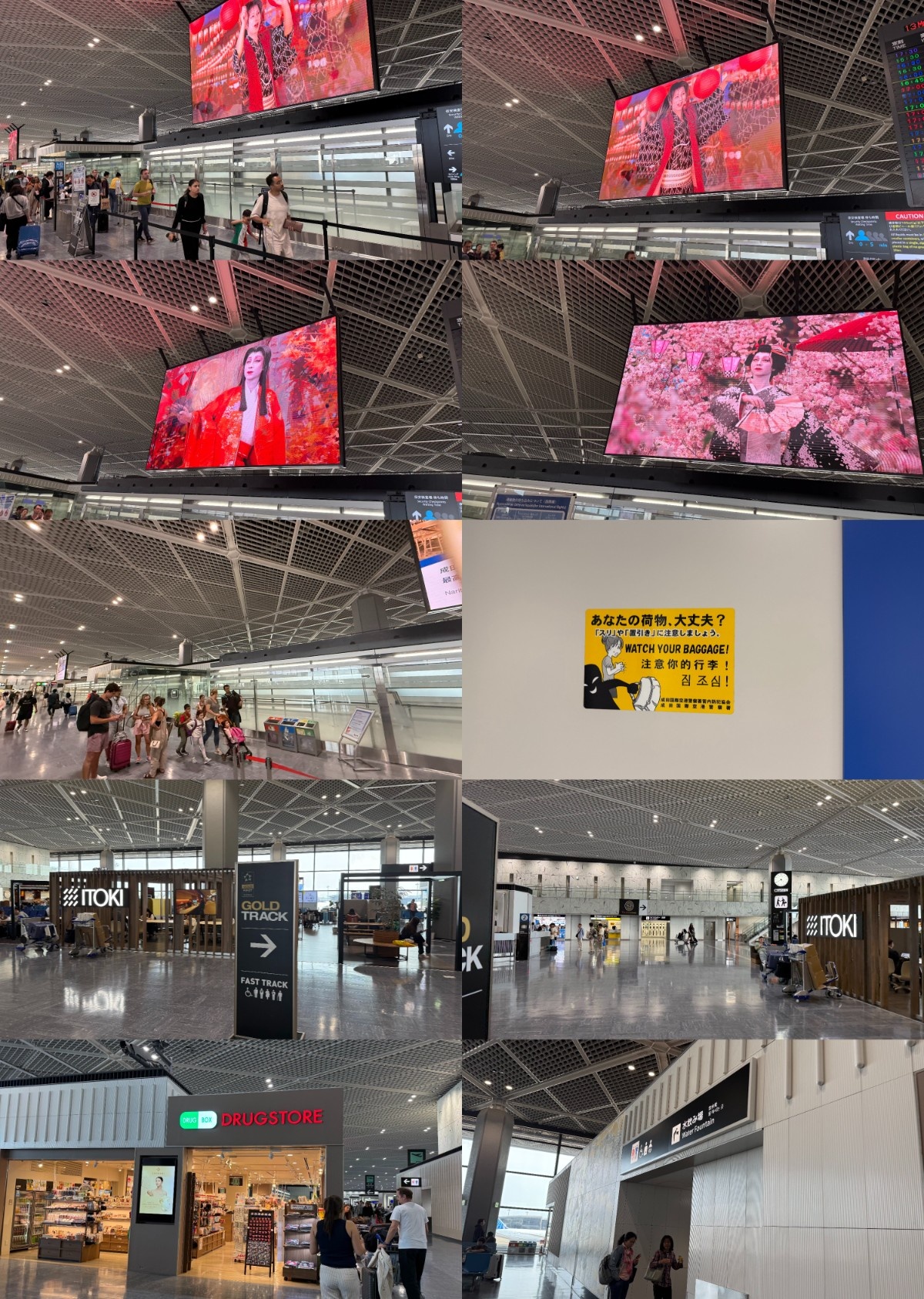
I strolled around the gate area, with such distractions as this free cultural exhibition — handicrafts? kimonos? fancy dresses? — in the background. Eventually I tired of it, as this area had far fewer restaurants than the region to the right of the immigration counters, with the lower gate numbers.
As I strolled past all the ANA/United aircraft taxiing or parked, I had a look at Flightradar24 — and, my goodness, this was peak hour for United departures! A 777 heading for San Francisco, a 787 bound for Newark, and a 737 MAX flying to Ulaanbaatar(!!!) (and another departing an hour later for Guam)… This really was a one-of-a-kind global hub.
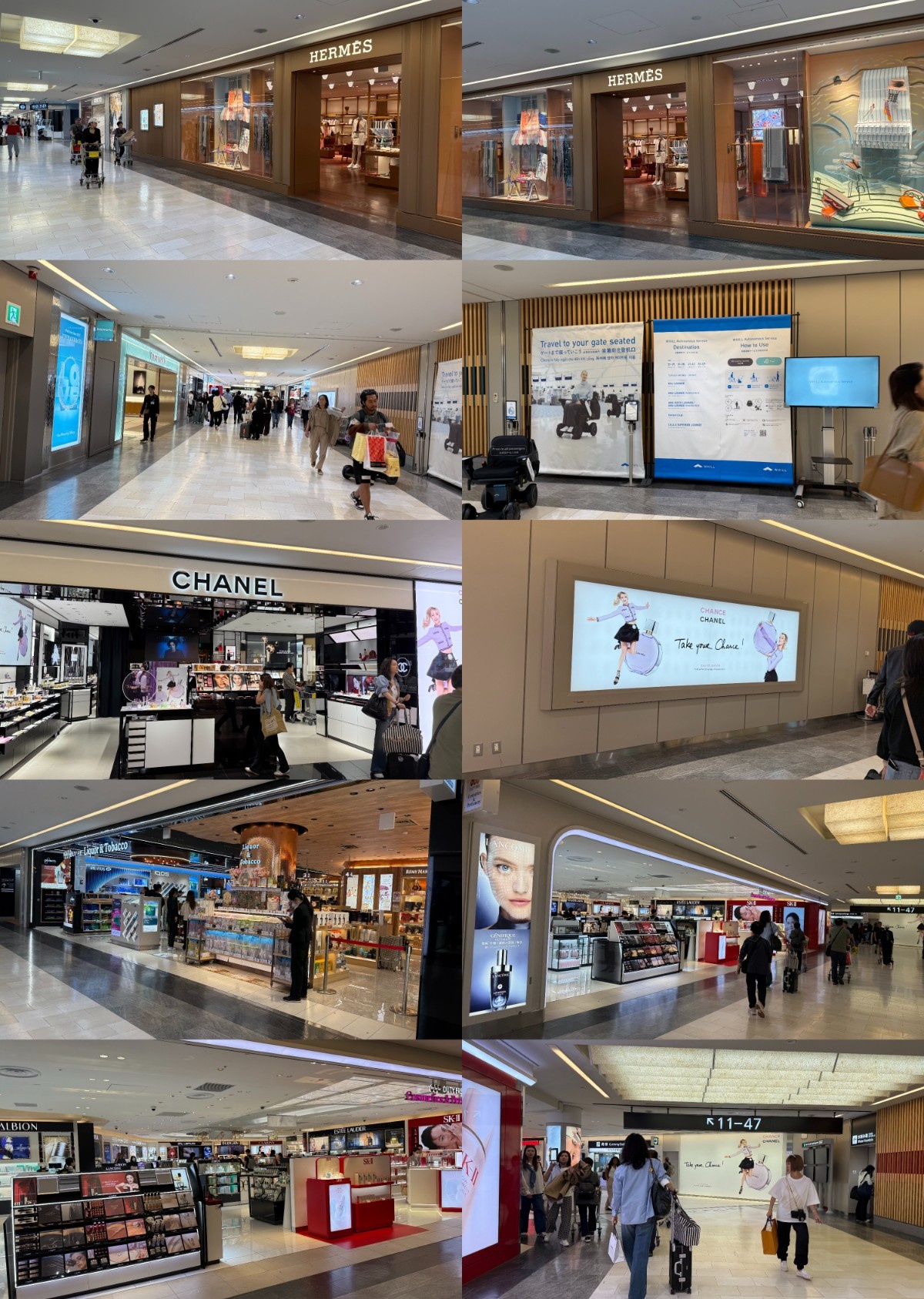
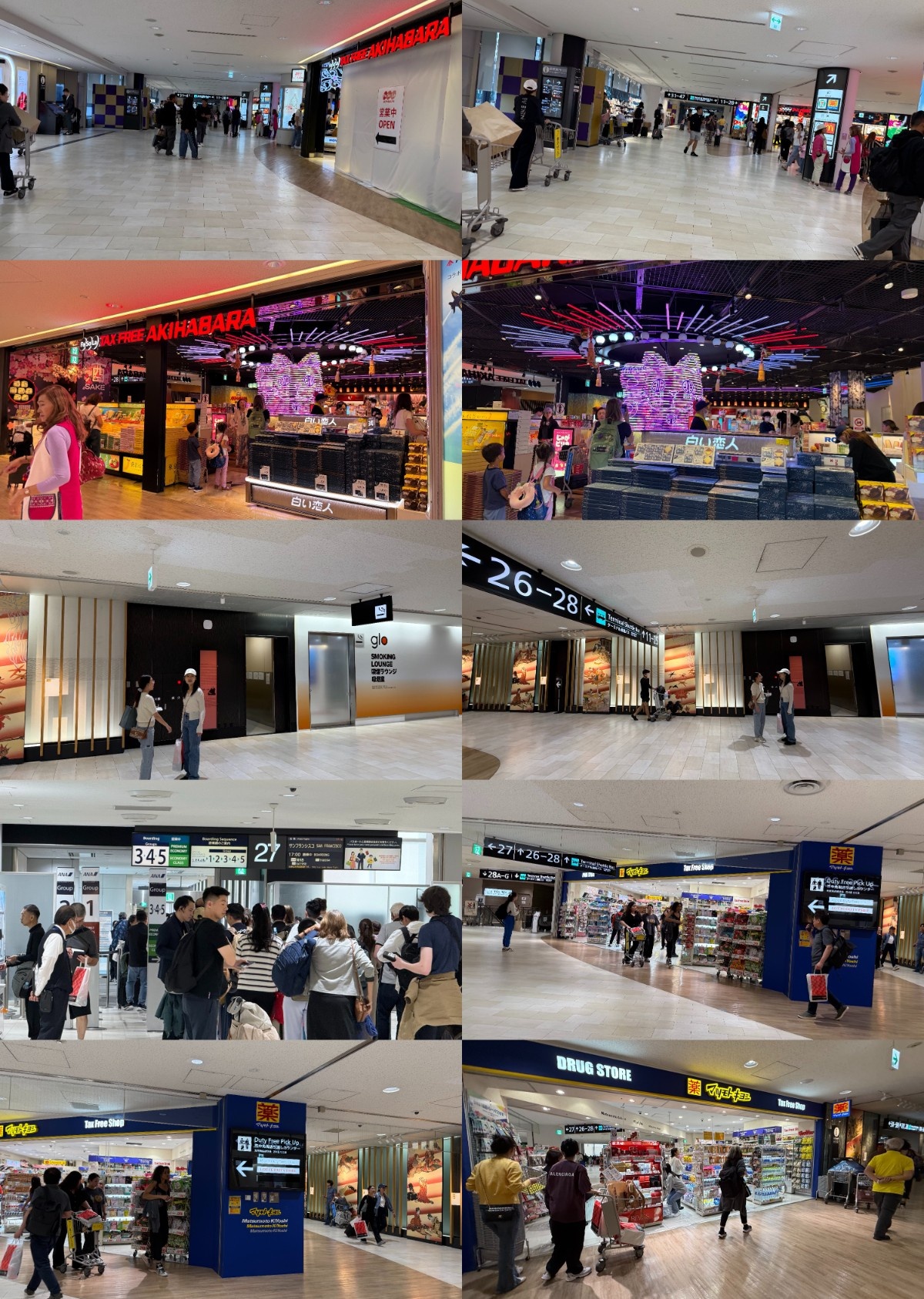
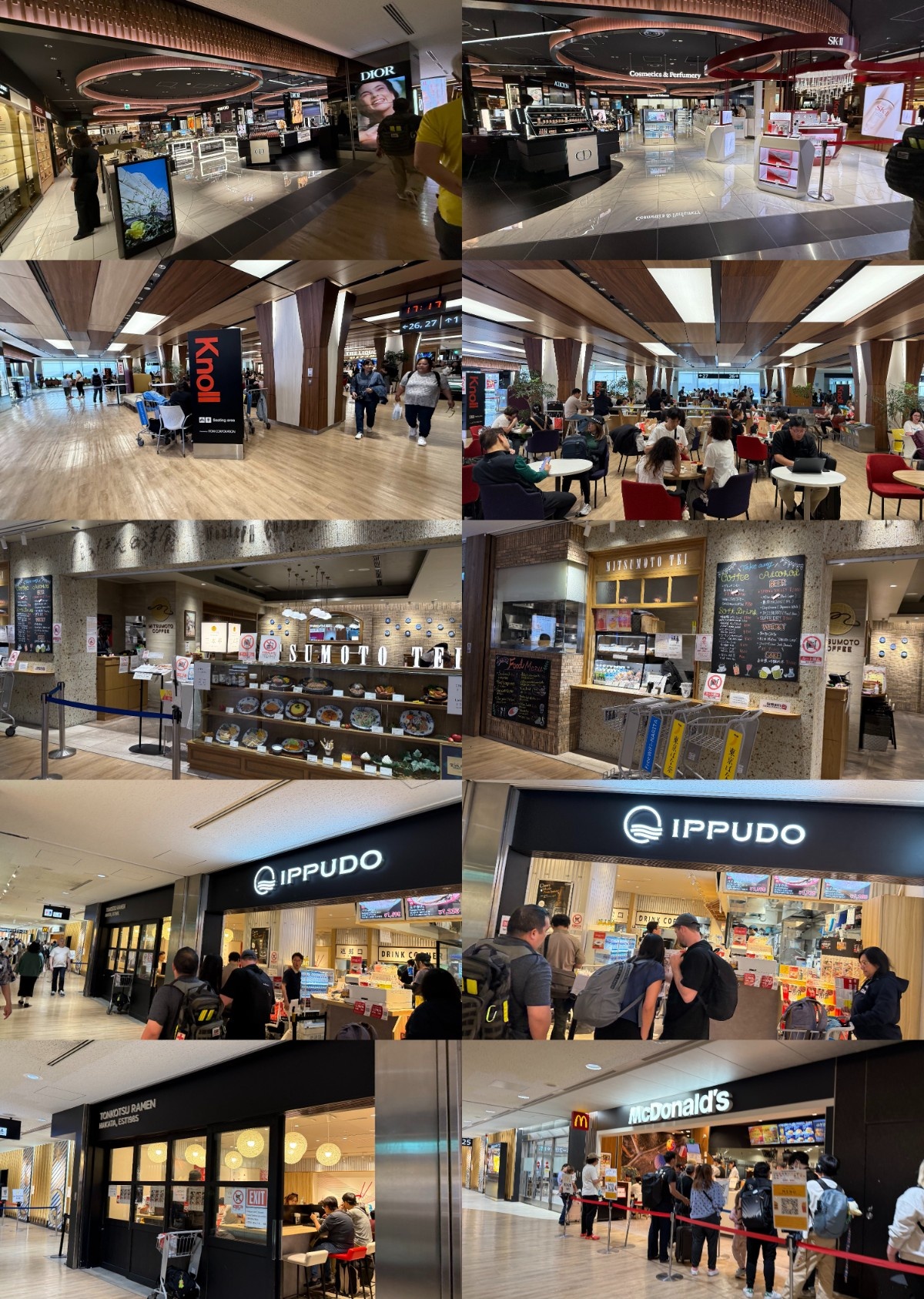
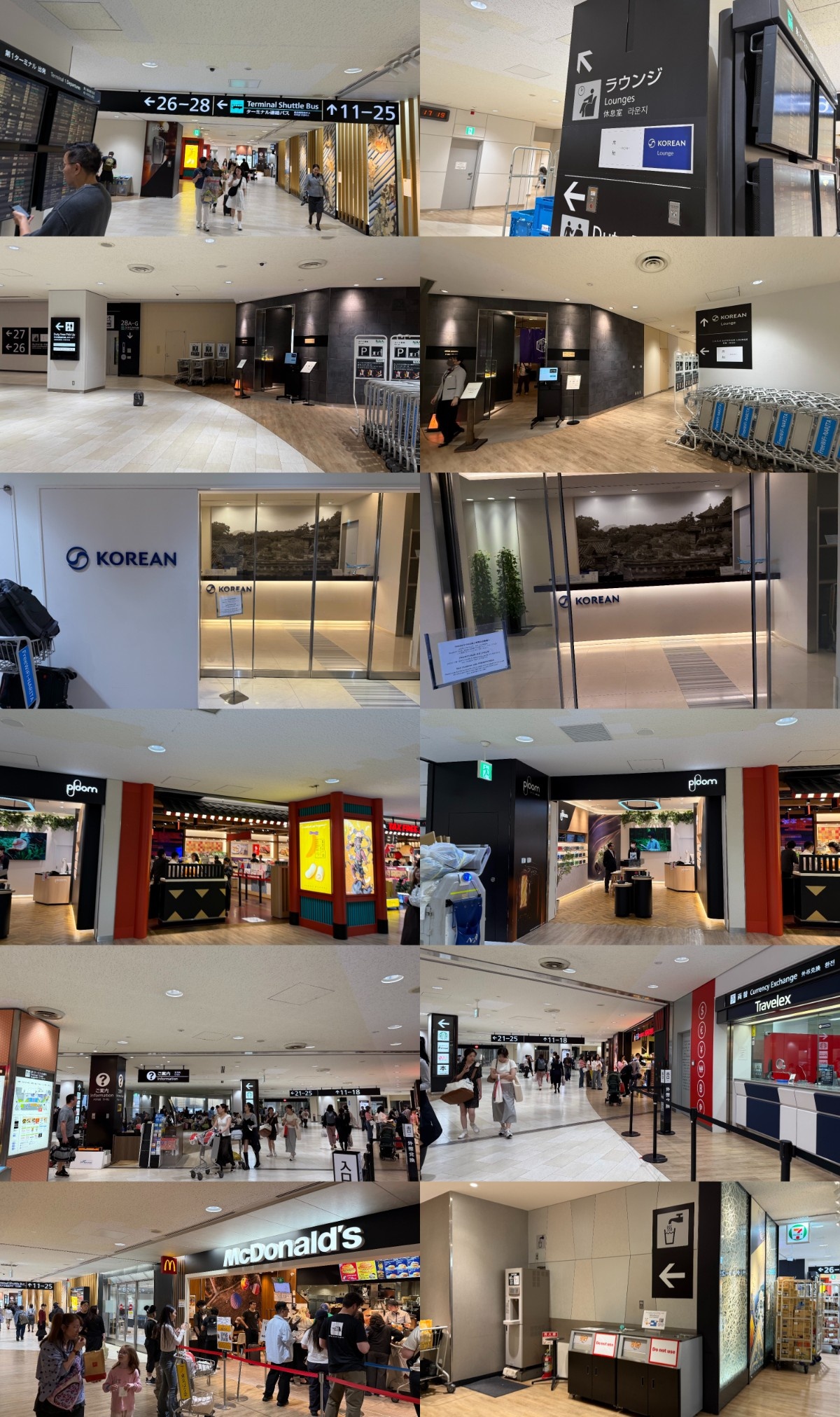
On the other side of the departure area, turning right after the immigration counters, lay most of the duty-frees, shops and restaurants. I paid no heed to the Hermès and Chanel boutiques, which you will find at almost any major international air hub, and instead checked out the other spaces:
• an Akihabara tax-free store with funky lighting;
• some co-working spaces with people clustered around tables;
• a McDonald’s with an unending queue;
• an Ippudo ramen store, where I ended up eating;
• a Korean Air Lounge — the first time I’ve ever seen one. Outside Korean shores, they’re only present in Japan and the US.
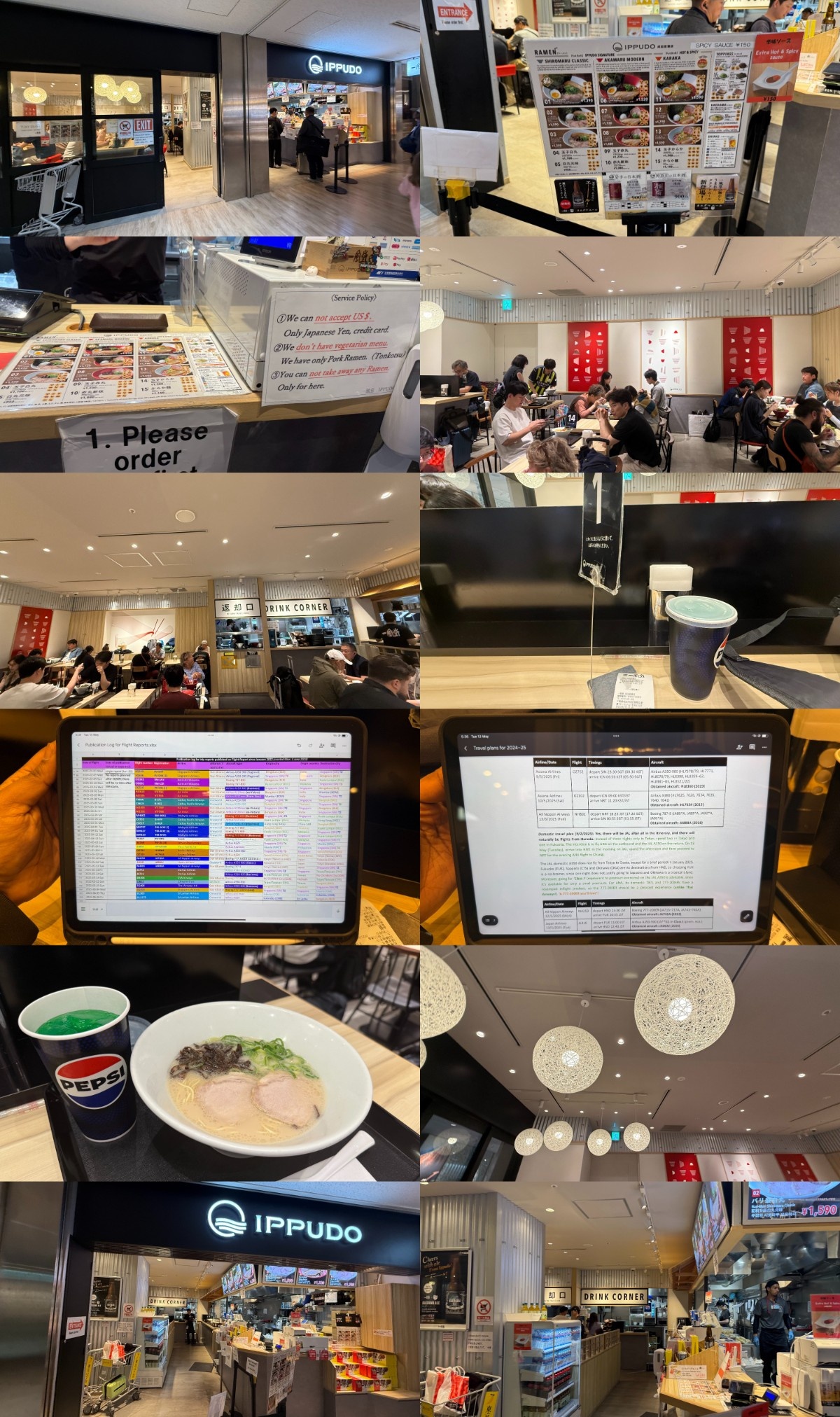
It was a no-brainer when deciding where to eat. It was past 5 in the evening, and as the McDonald’s queue wasn’t getting any shorter (and I wanted to have something Japanese) — plus I couldn’t see a food court anywhere — I went to Ramen Ippudo and took a seat.
Indeed, Ippudo hails from Fukuoka, where I’d been the previous evening — though I instead ate other Japanese foods there! I ordered a simple chashu shiromaru pork ramen (it couldn’t have been more than ¥1,300) along with a green melon soda. Yum, yum, yum, I munched and slurped, scrolling through my recent flight history. What a month (and year) in my aviation history — and this was only in May!
This done, it being a quarter to six, nearly boarding time — I sprinted past the minimalist, elegant shops (plus some sort of an art exhibit) and ran all the way back to the gates from 51 onwards.
En route, in the central concourse, I saw some Singapore Airlines and ANA flight attendants — the latter all masked, the former not — strolling past with their hand luggage. Needless to say, they made for a very elegant sight.
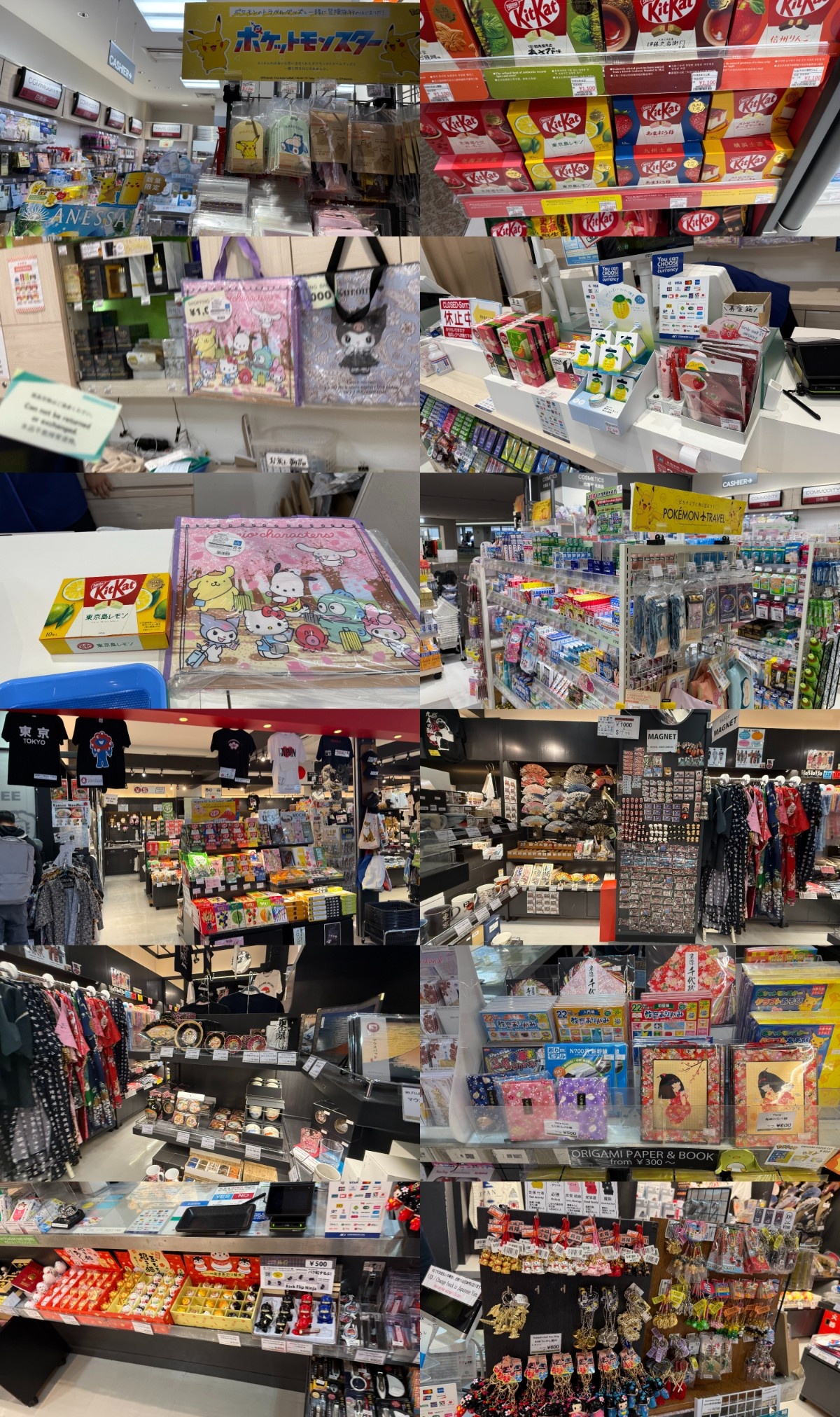
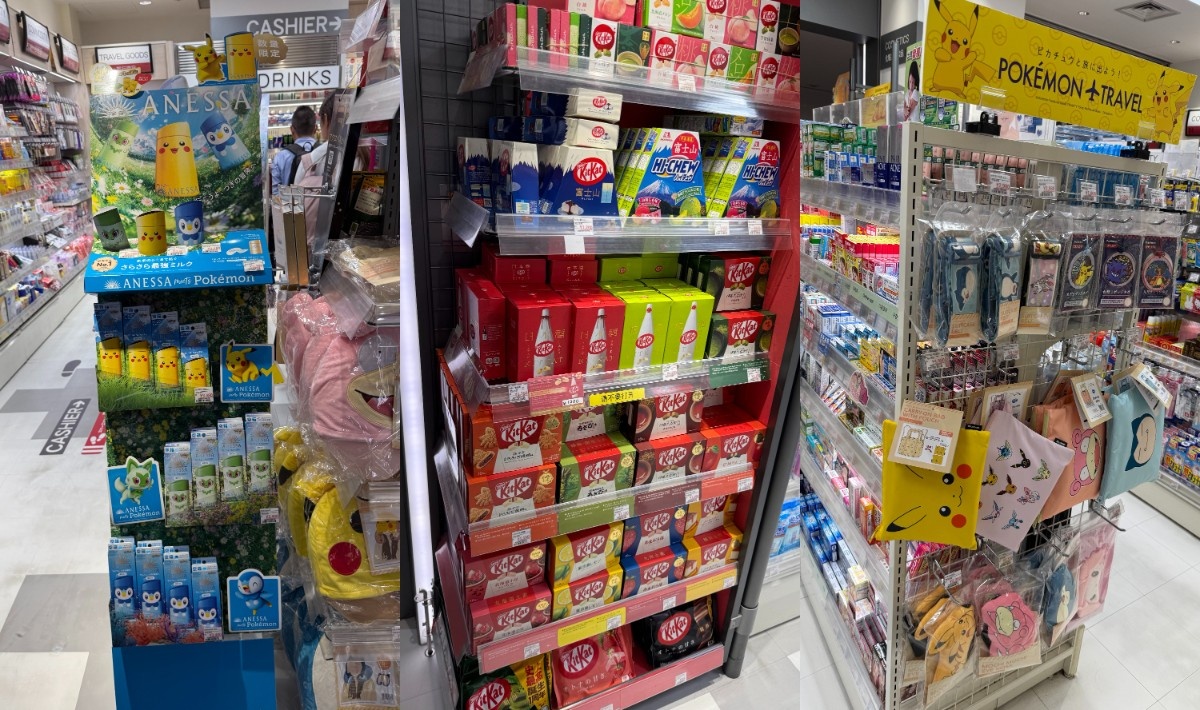
The clock was exactly 6, and people had started to line up for NH801 to Singapore, most of them Singaporeans speaking in English. Wisely, I avoided the throngs of crowds and took the opportunity to buy some last few souvenirs from Japan — because how do you prove you’ve been to Narita Airport without a red FaSoLa duty-free bag?!
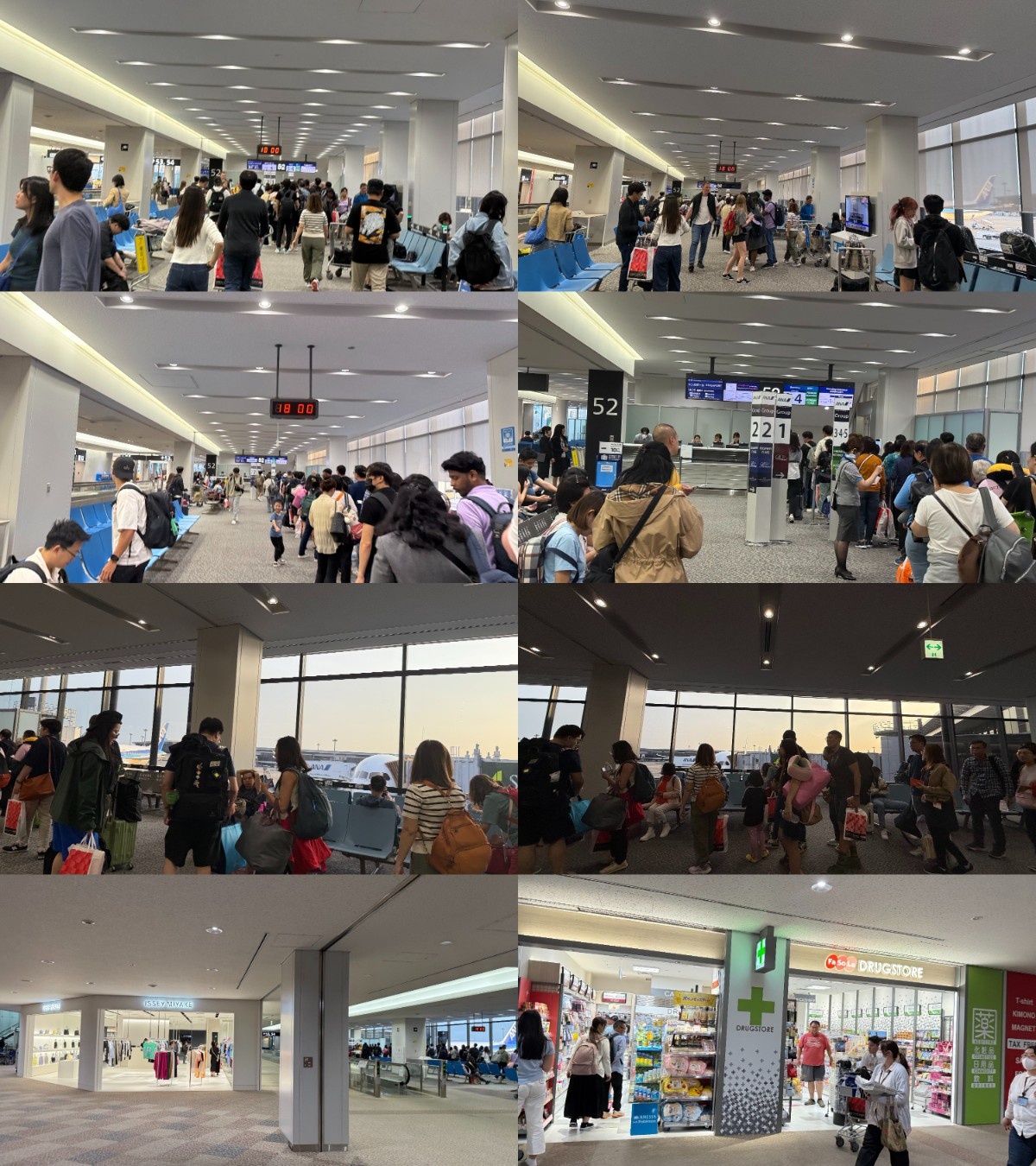
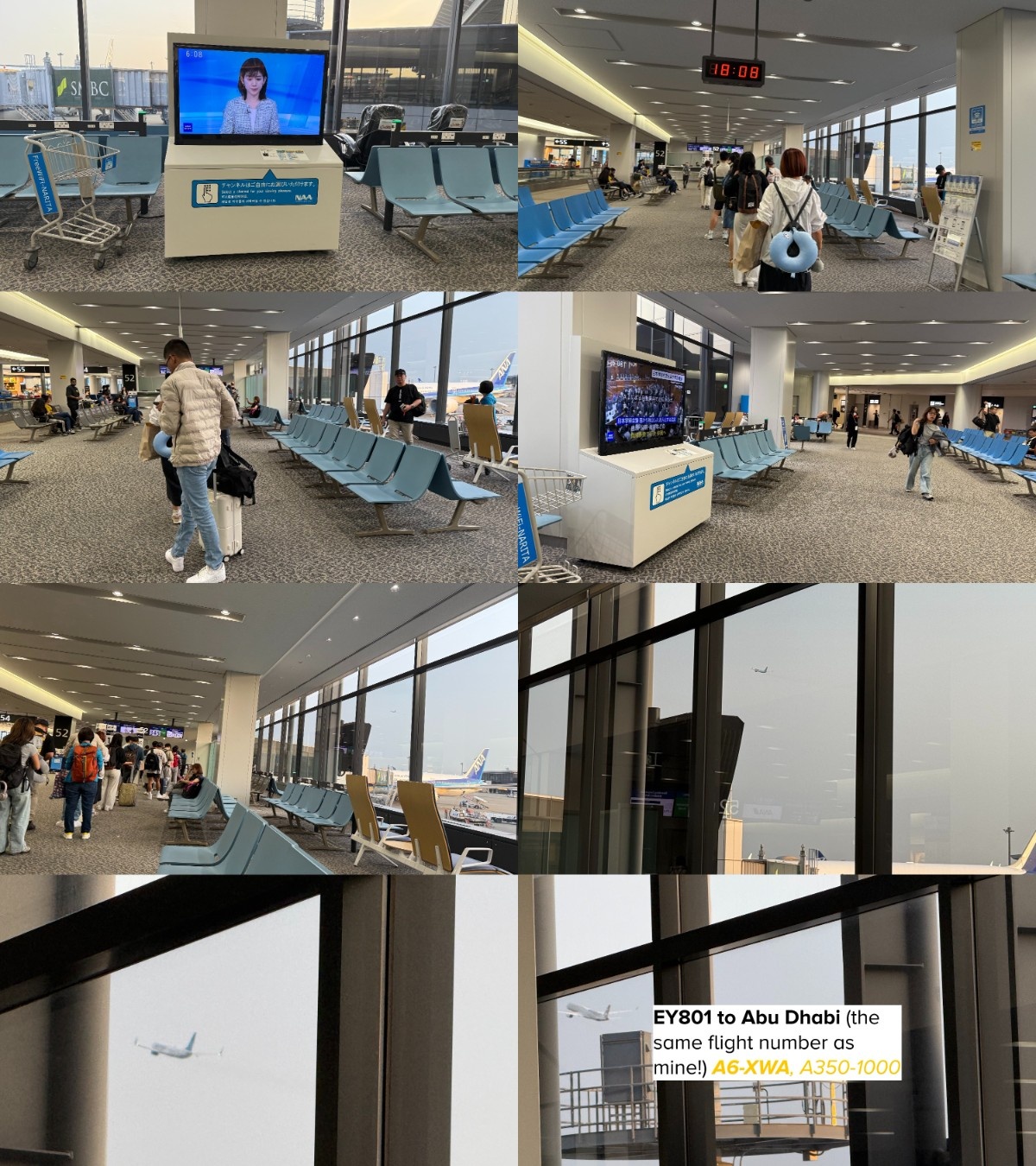
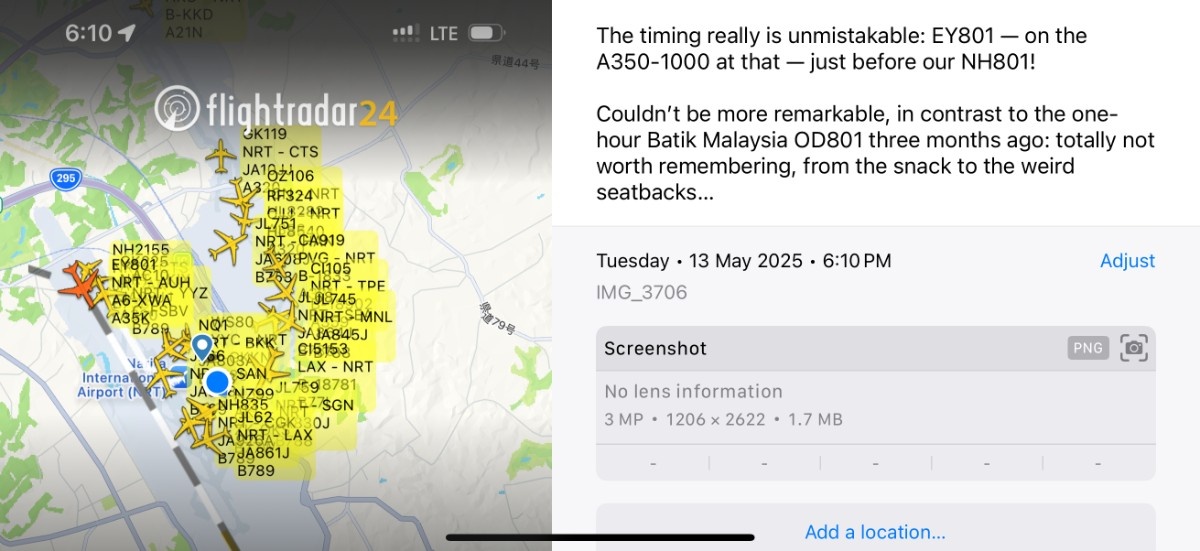
Before that, an Etihad A350-1000 with exactly the same flight number — 801! — took off for its Abu Dhabi home, while a nearby TV showed the NHK evening news.
NH801 was a significant flight for me, in contrast to the previous time I flew a Flight 801, which was merely three months before. Both the airline (Batik Air Malaysia) and the route (Kuala Lumpur to Singapore) were far too ordinary and underwhelming to merit any attention at all!
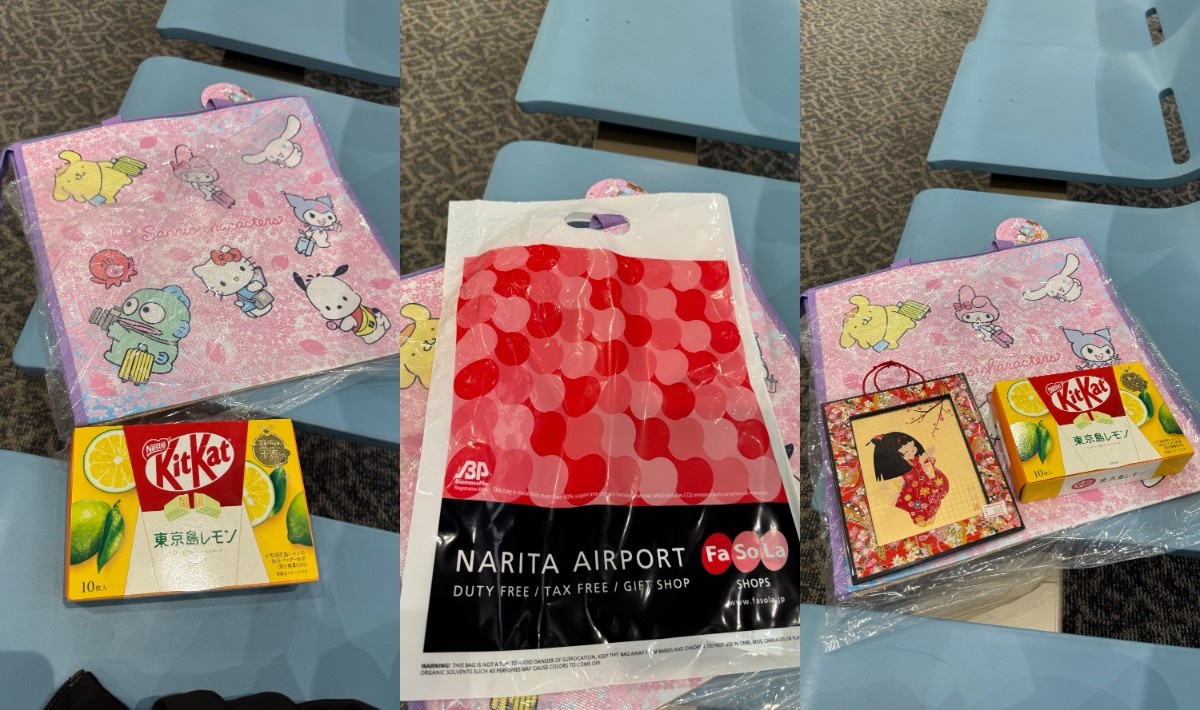
I visited two shops for knick-knacks and trinkets, and bought whatever I liked, including a box of Tokyo Shima lemon-flavoured KitKats (which I enjoyed for months afterwards), a Sanrio Characters tote bag and a framed portrait of a little girl in a intricate kimono with folded hands. 🥰
All this done, the boarding queue had mostly emptied, and I could finally step on board the Boeing 787-9 with the registration JA888A — that luckiest of East Asian digits, three times over — and off the soil of this unique and delightful country. Sayonara, I say!
The flight: Boarding and departure
Flight: All Nippon Airways NH801/ANA801
Date: Tuesday, 13 May 2025
Route: Tokyo–Narita (RJAA/NRT) to Singapore Changi (WSSS/SIN)
Aircraft: JA888A, Boeing 787-9 Dreamliner
Age: 8 years 6 months at the time (built: 25 October 2016, delivered: 6 November 2016)
Seat: 39K (starboard side, window)
Boarding: 6:00pm Japan Standard Time (JST), UTC +9; 5:00pm Singapore Time (SGT), UTC +8
Departure: 6:43pm JST (5:43pm SGT)
Arrival: 12:03am SGT (1:03am JST)
Duration: 6 hours 20 minutes — unusually short for this flight, which usually comes near or crosses 7 hours. Still, this was easily the year’s longest flight for me, as none of the others — not even Asiana’s A350 to Seoul/Incheon — crossed 6 hours.
Notes:
• Second time flying ANA, after NH259 from Tokyo–Haneda to Fukuoka just the previous day. This was operated by JA742A, a domestic 777-200ER that more than surpassed my expectations (unlike Thai Airways’ horrible old 777-200ERs!).
• As a result, NH became my sixth Star Alliance member flown after SQ, AI, TG, Ethiopian and most recently Asiana, whose A350 and A380 I flew on this Japan trip.
The following weekend (24 May), EVA Air of Taiwan became my seventh, as part of a back-and-forth routing involving all three major Taiwanese airlines across Bangkok, Taipei and Manila!
• Fifth flight on the 787-9, having flown it previously on Thai Airways (BKK–MAA), Ethiopian (SIN–KUL), Gulf Air (BKK–SIN) and KLM (CGK–KUL) — all except Thai on fifth-freedom routes!
How Japanese: stately blue and cream (if a tad outdated)
ANA’s 787-9 business-class cabins aren’t the most cutting-edge out there, and the same largely goes for arch-rival JAL — except those that are fitted with the Apex Suites with their unrivalled privacy. Both operate the oldest and largest 787 fleets in the world, but these are decidedly underwhelming compared to their flagships: the 777-300ER with the unbelievable ‘THE Suite’ first-class and ‘THE Room’ business-class products for NH, and more recently the A350-1000 with its outstanding bespoke first-class and Safran Unity-based business-class suites for JL.
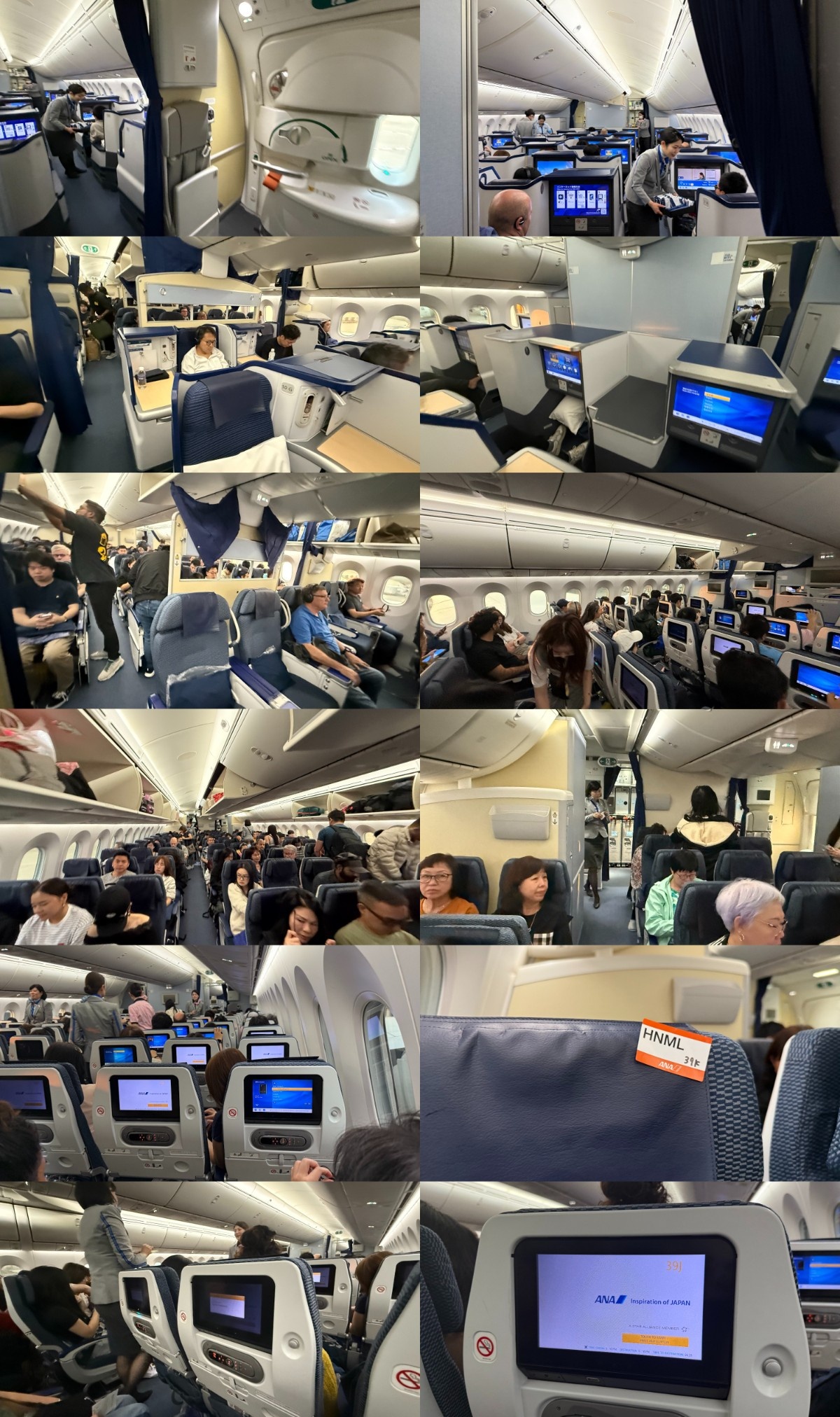
Naturally, I was more inclined to proceed to the back of the bus the soonest I could, and settle into my seat, 39K — which had helpfully already been marked with an ‘HNML’ (Hindu Non-Vegetarian Meal) sticker. Sadly, ANA, like Asiana’s A350 four days before, is one of those airlines where row numbers on 787s don’t exceed 45 at most… I wish more airlines adopted CX and SQ’s approach of having row numbers reaching the 60s and even 70s on A350s, 787s and 777s!
For the time being, I feasted my eyes on the gorgeous and majestic ANA A380s that stood outside the window. Of ANA’s three A380s, two were standing right here! There were some more Star Alliance aircraft over there, including an SQ 777-300ER which had arrived from Los Angeles as SQ11 and would continue to Changi alongside us. There were also the Mainland Chinese mother-and-daughter pair of Air China and Shenzhen Airlines.
In the distance stood an A350 of Delta Air Lines (!!!), this being an airline you won’t find anywhere south of Taipei in Asia. In fact, Delta does not even fly to NRT — all its Tokyo operations are concentrated at HND — so I’m not even sure what this A350 was doing here!
Not long after, I’d see an American Airlines 787 depart ahead of us as well. As such, it was immensely gratifying to see US airlines other than United — and it’s not like American flies to Hong Kong either; Delta will only resume its HKG route in 2026.
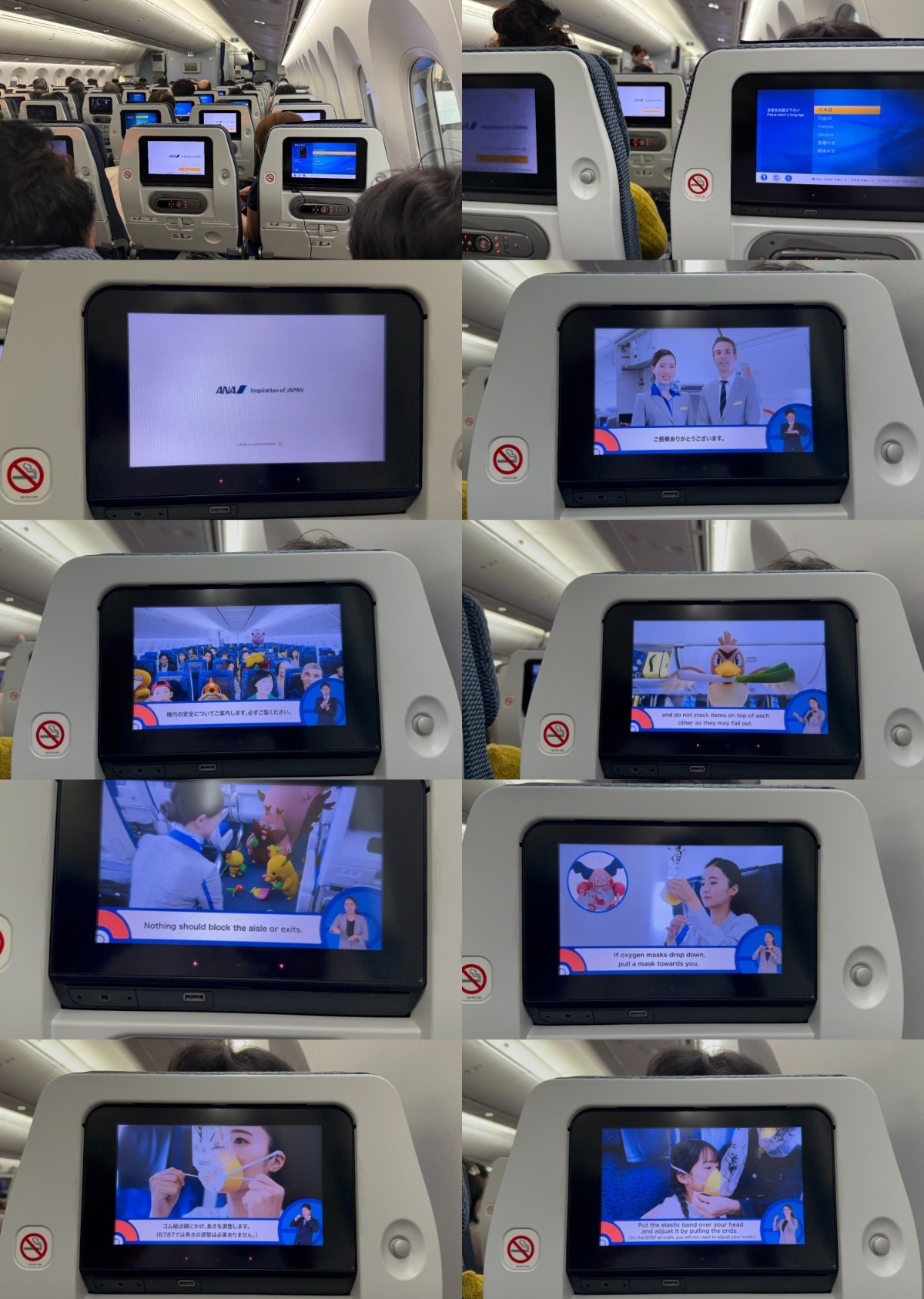
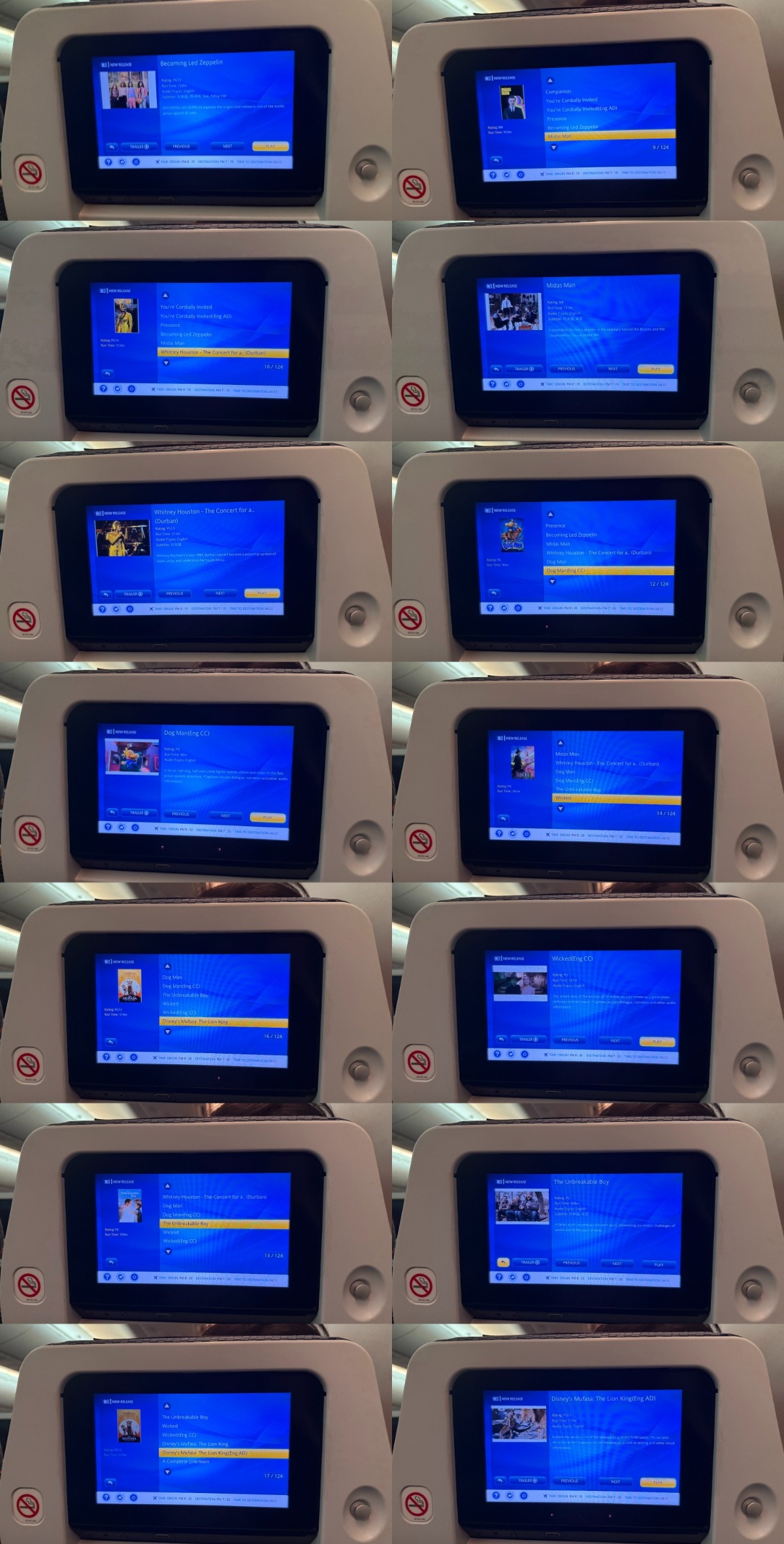
Meanwhile, back inside the cabin, I must say that this 787-9 had a comparatively dated IFE system, with the previous day’s domestic 777-200ER having a slightly more modern interface. Not horrendous, to be sure, but this was most definitely not half as cutting-edge as what I saw on JAL’s domestic A350 earlier that day. The IFE was far too blue and generic, looking like a Windows XP desktop screensaver. The welcome screen was just the airline name, slogan and alliance logo, and the seat number — a bit like those Sony CRT TVs back in the early 2000s.
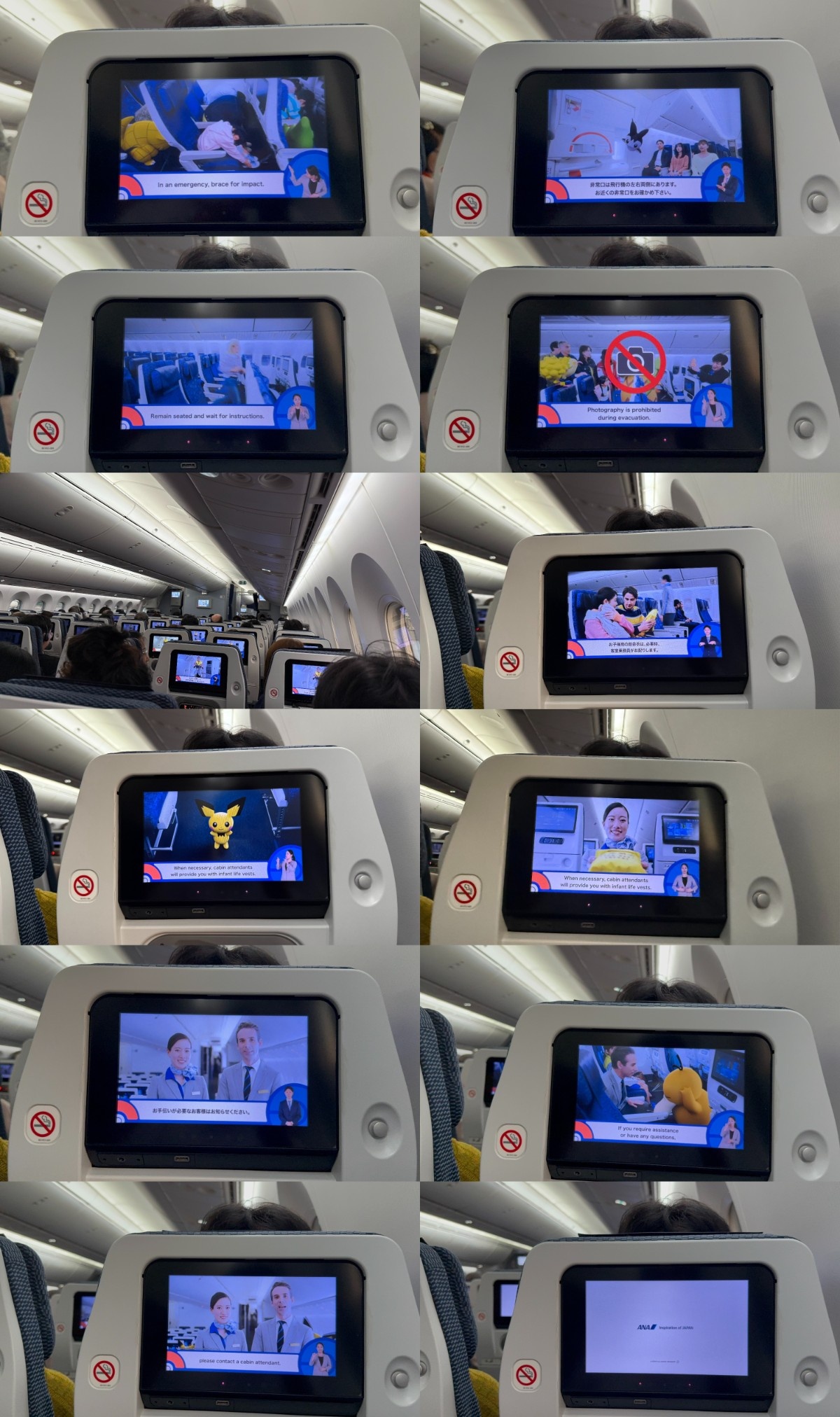
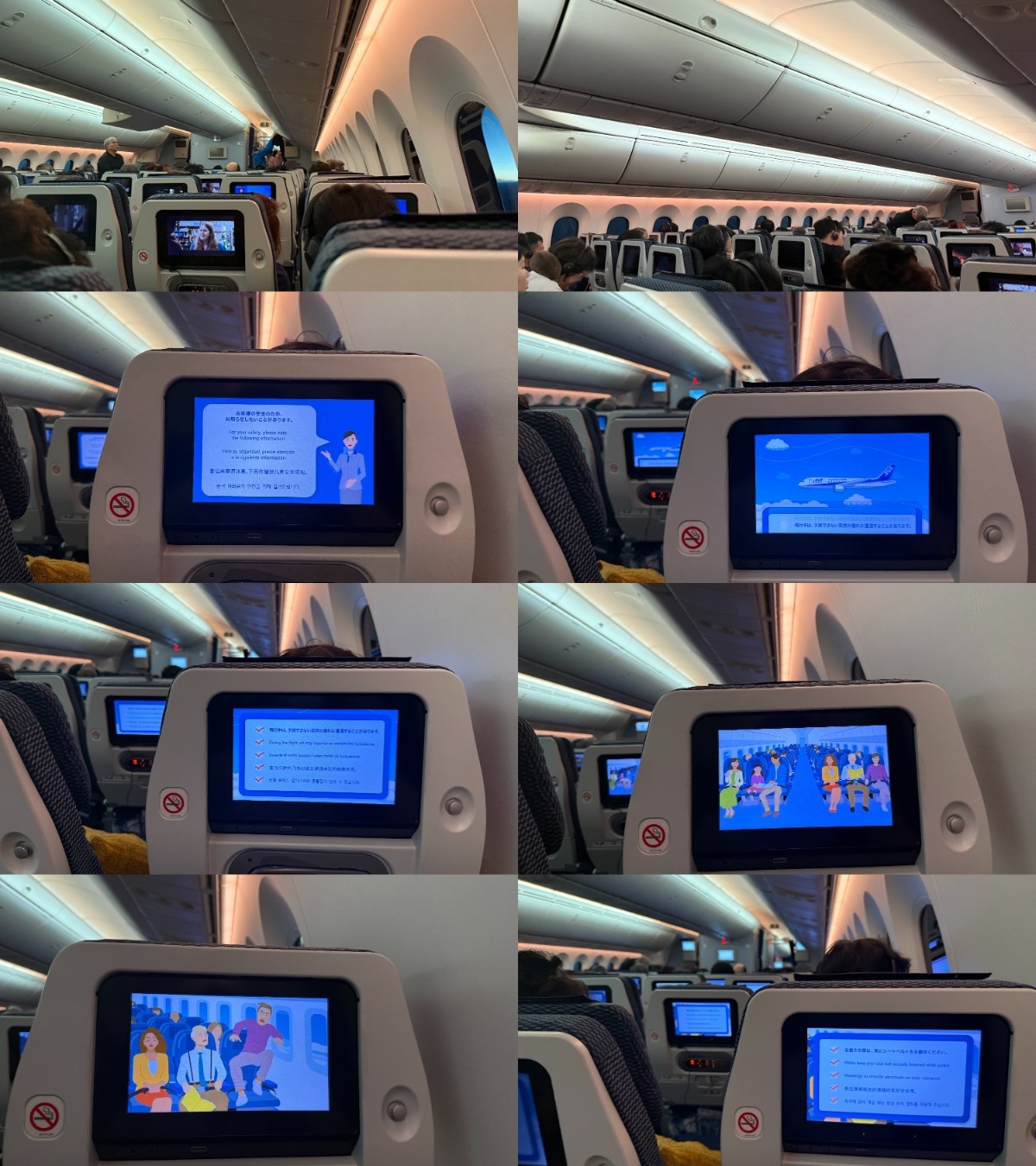
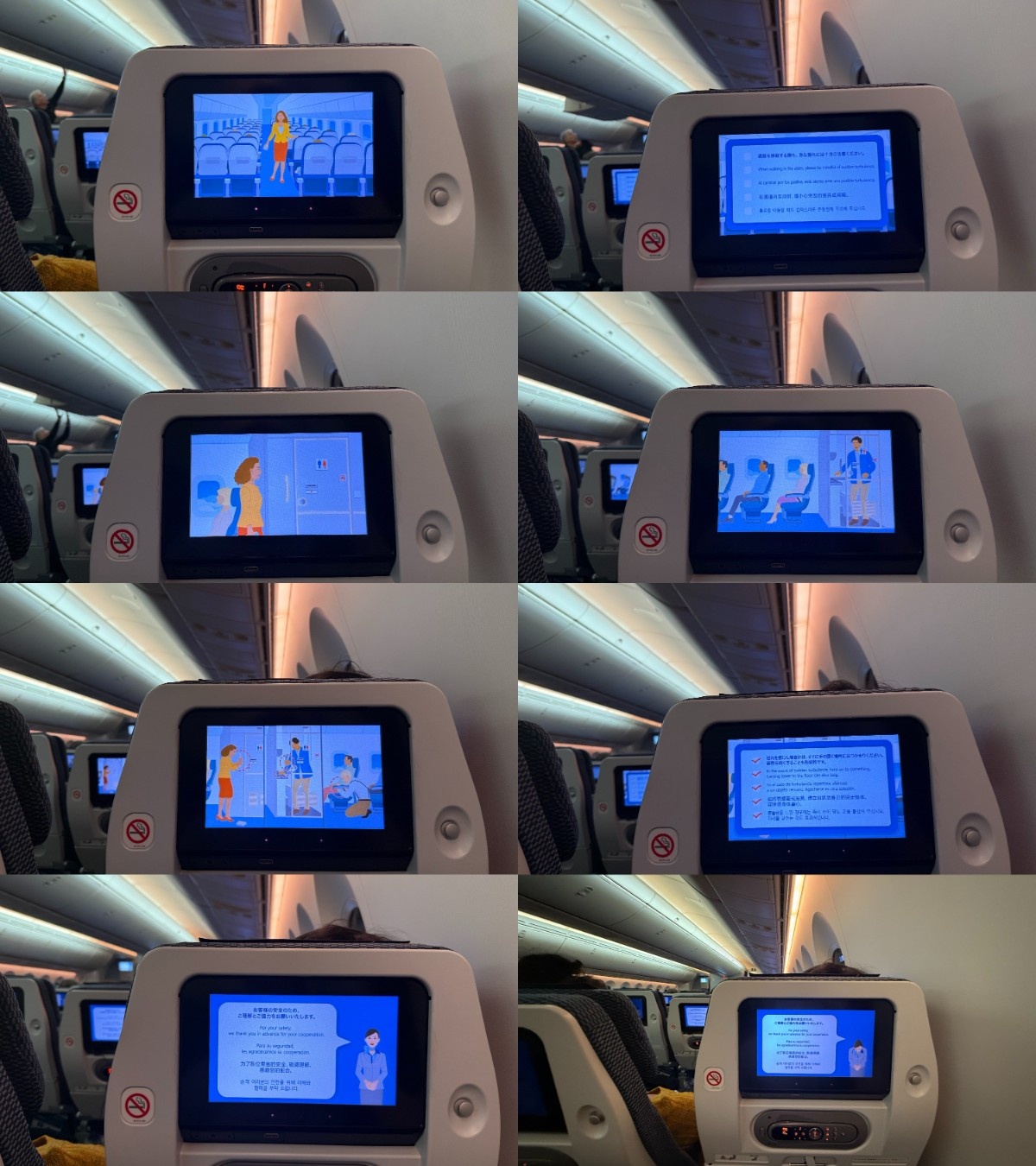
But my apprehensions would soon be put to rest by ANA’s cute, cute, cute safety video featuring Pokémons clattering all around the cabin! I’d seen this the previous day too, on the flight to Fukuoka, but it more than helped to add a bit of Japanese charm and kawaii-ness to the otherwise predictable video — a bit like what Star Alliance partner Turkish Airlines did with their LEGO-themed safety video. ANA doesn’t have to exude the effortless, quiet elegance of Singapore Airlines, and this shows that it can afford to have a bit of fun from time to time, given its long-standing Pokémon partnership. (The Star Wars one is coming to an end in 2026, though.)
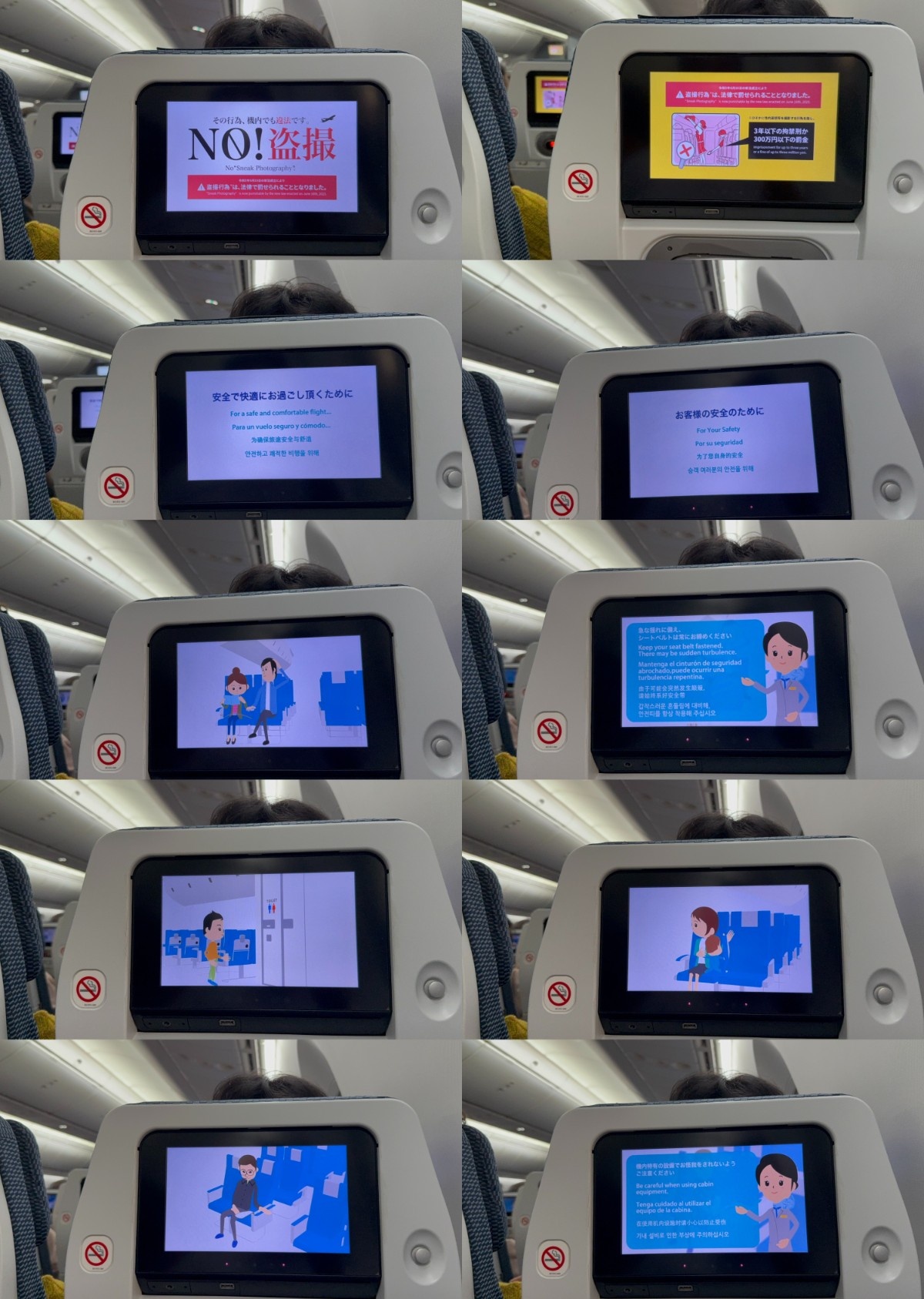
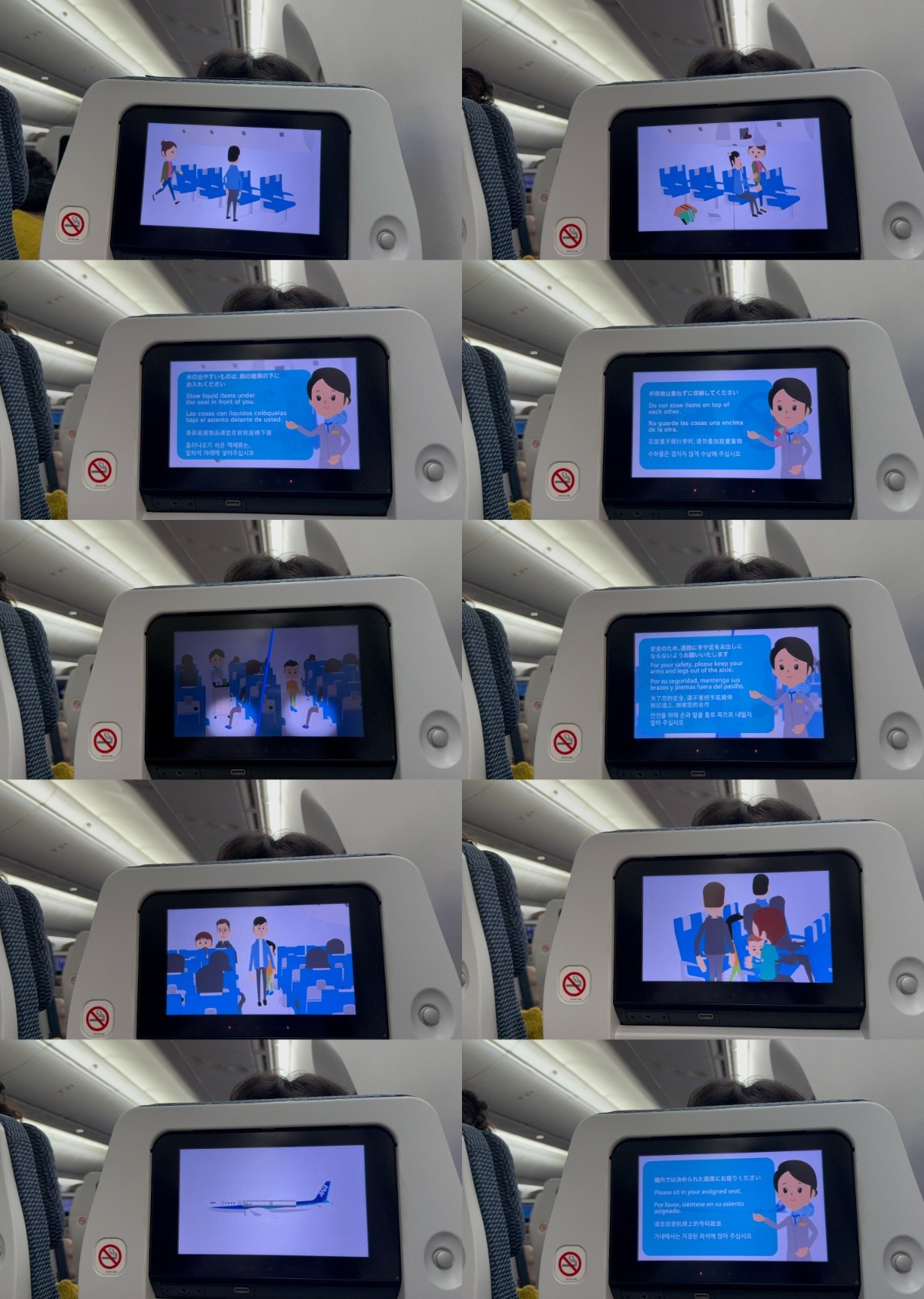
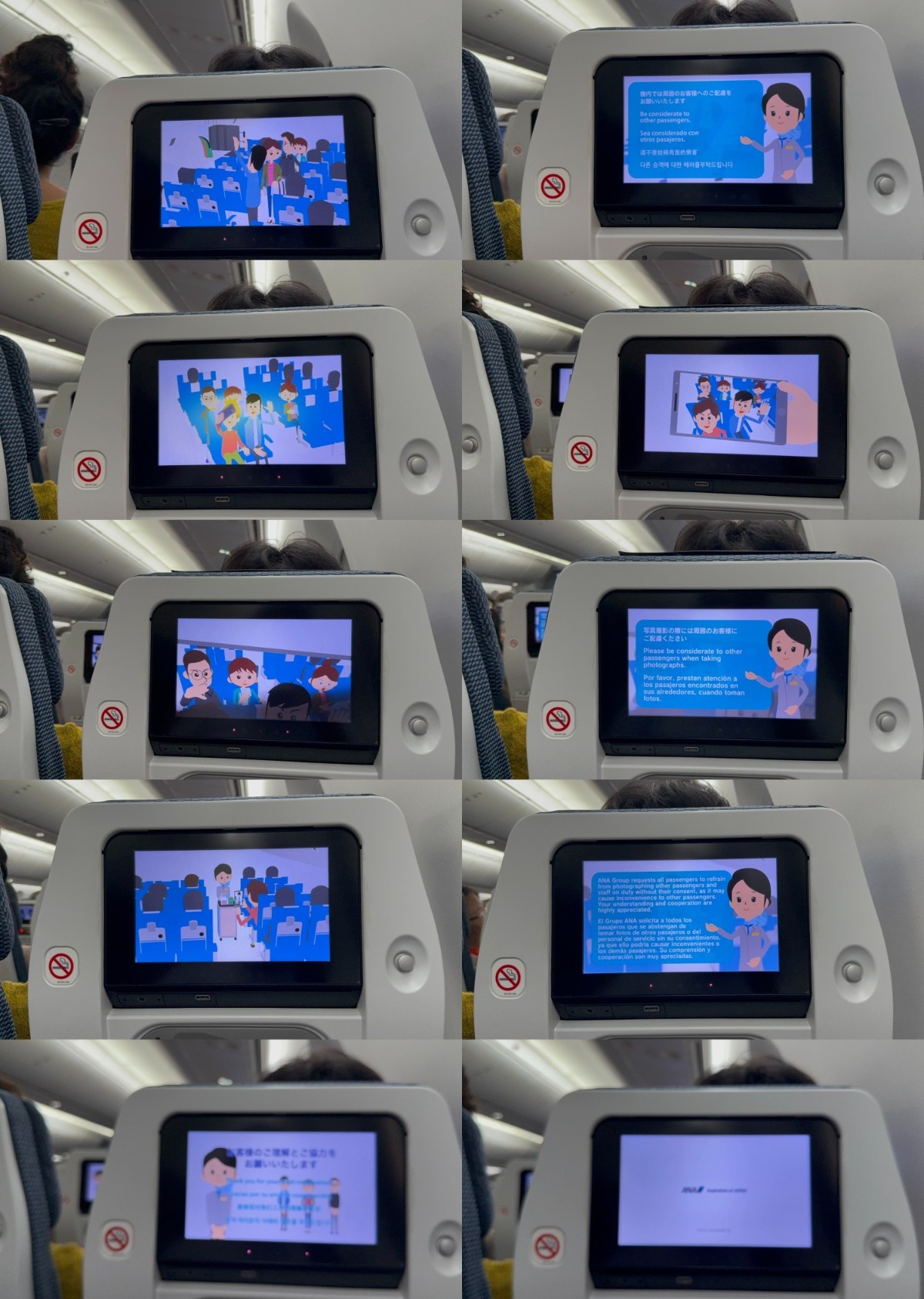
This being a Japanese airline, of course there HAD to be another video about onboard good practices, etiquette and manners, and this too had lovely animated characters that couldn’t help but put a smile on my face. 😇
<i style="">Note: ANA doesn’t have a physical inflight magazine, but it does have a digital magazine entitled Tsubasa Global Wings. As I’d read through it on my previous day’s flight to Fukuoka, I haven’t touched upon it again here.
Also, I didn’t really note the names of any of the flight attendants, not that they were especially legible to begin with. Neither did I think the captain’s and lead FA’s announcements were anything special to write home about.
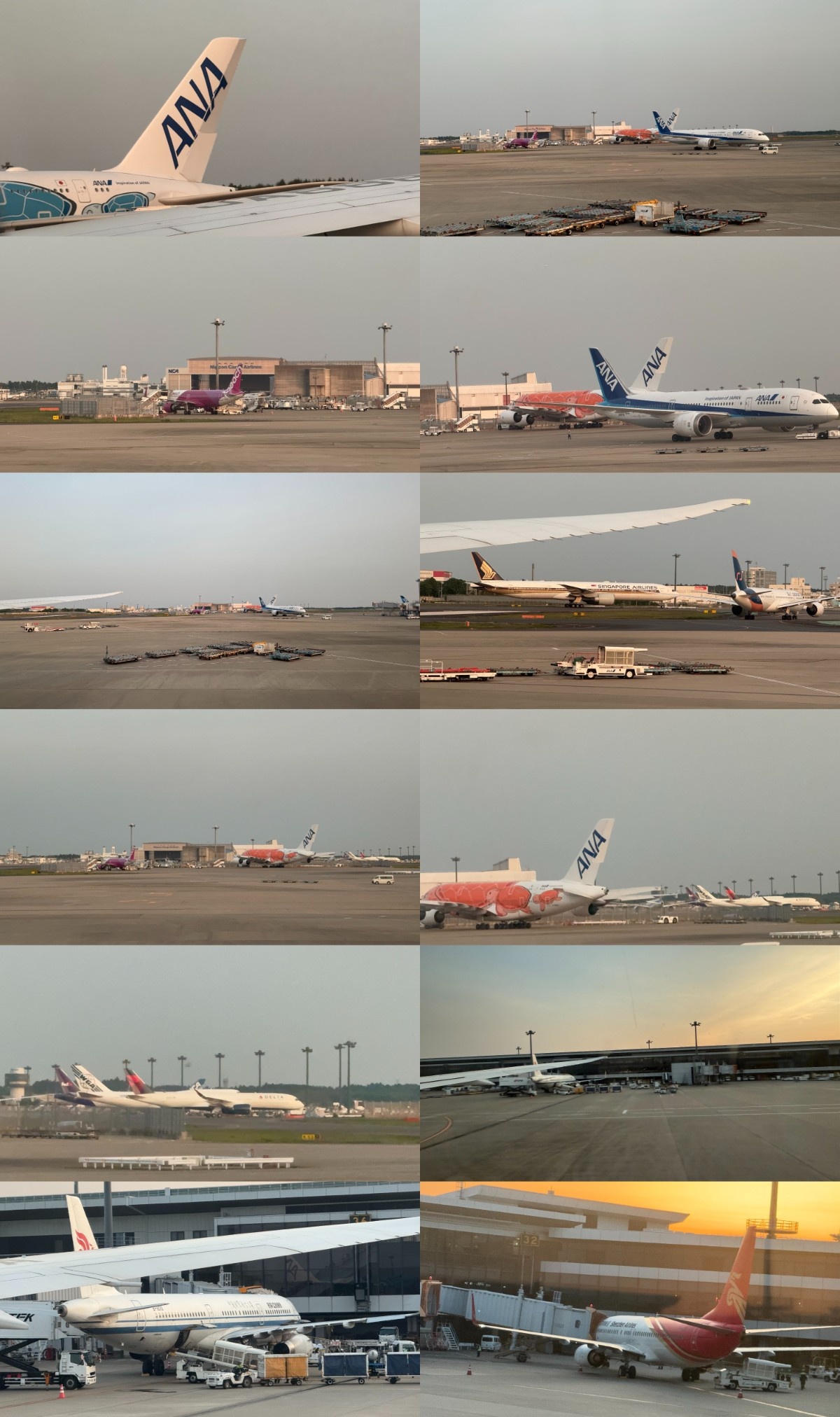
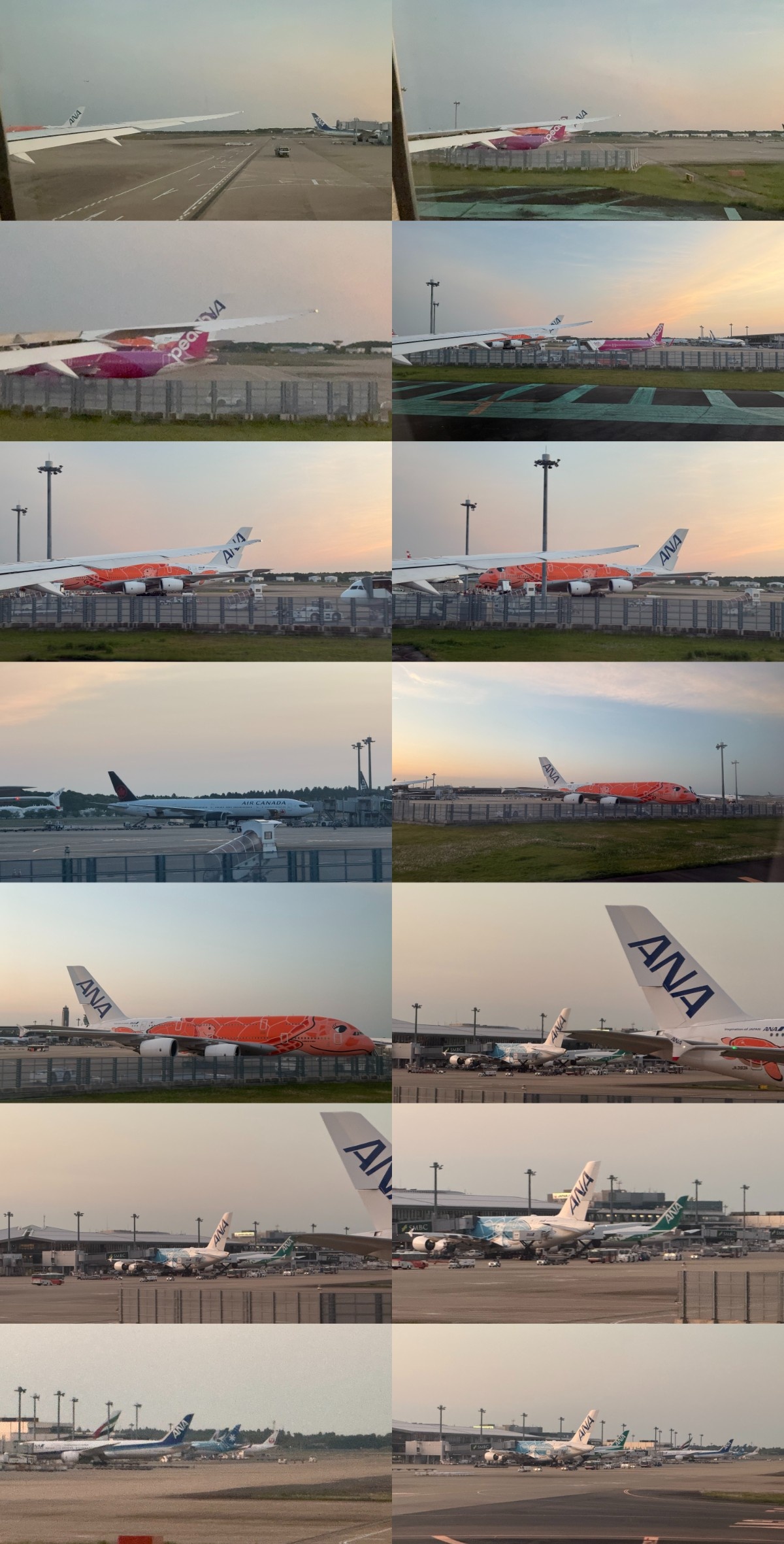
At 6:30, we were all ready to roll, and I couldn’t believe my good fortune at all the sexy, colourful views of the orange ANA A380 (JA383A) and the purply-pink A320 of low-cost subsidiary Peach passing in front. There was also a green-tailed 787-9 (JA871A) in ANA’s ‘Future Promise’ livery, parked next to the other ANA A380.
This aside, there was an exotic Air Tahiti Nui 787-9 — oh, the airlines you’ll find at Narita! — and also an Emirates 777-300ER, aside from Malaysia Airlines and Cathay Pacific widebodies standing at the Oneworld-dominated Terminal 2.
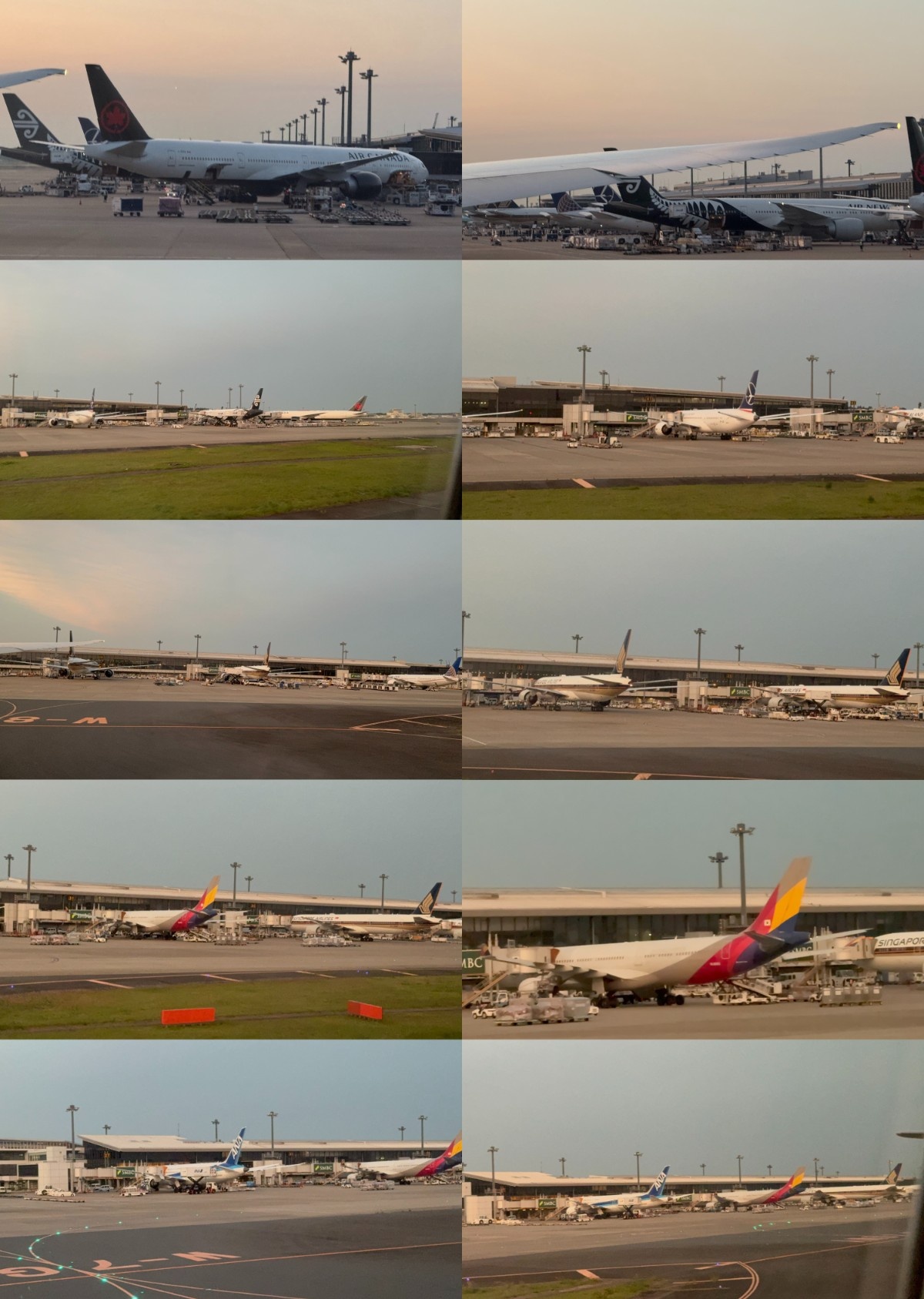
As we taxied along, more and more planes from across the world came into view. This was still a decidedly Star Alliance-dominated part of the airport, but with a multitude of airlines rather than just ANA and United. These included Air Canada, Air New Zealand, LOT Polish Airlines, Asiana Airlines (as I’d flown three days before) and, of course, SQ.
Moving on to the SkyTeam side (Terminal 1 North), there stood a big — but old and outdated — 777-200ER of Jin Air, and a small (but just as old) 737 of its parent, Korean Air. And then came another surprise: yet another 787-9, this time of the Canadian airline WestJet (a Delta partner), having flown here all the way from its base in Calgary!
To my very South/Southeast Asian eyes, the very sight of Delta, WestJet and later American was as exotic as flying a widebody domestically in India — that is, a very rare thing indeed. 🍀🤩 Heck, even Aeroméxico (another SkyTeam member) flies to NRT, all the way from Mexico City, making a stop in Monterrey…
Before long we’d moved to the cargo side of the terminal, with the likes of UPS Airlines, FedEx Express, Air Hong Kong (a DHL affiliate), China Airlines Cargo and ANA’s own cargo division having several (mostly Boeing) widebodies parked.
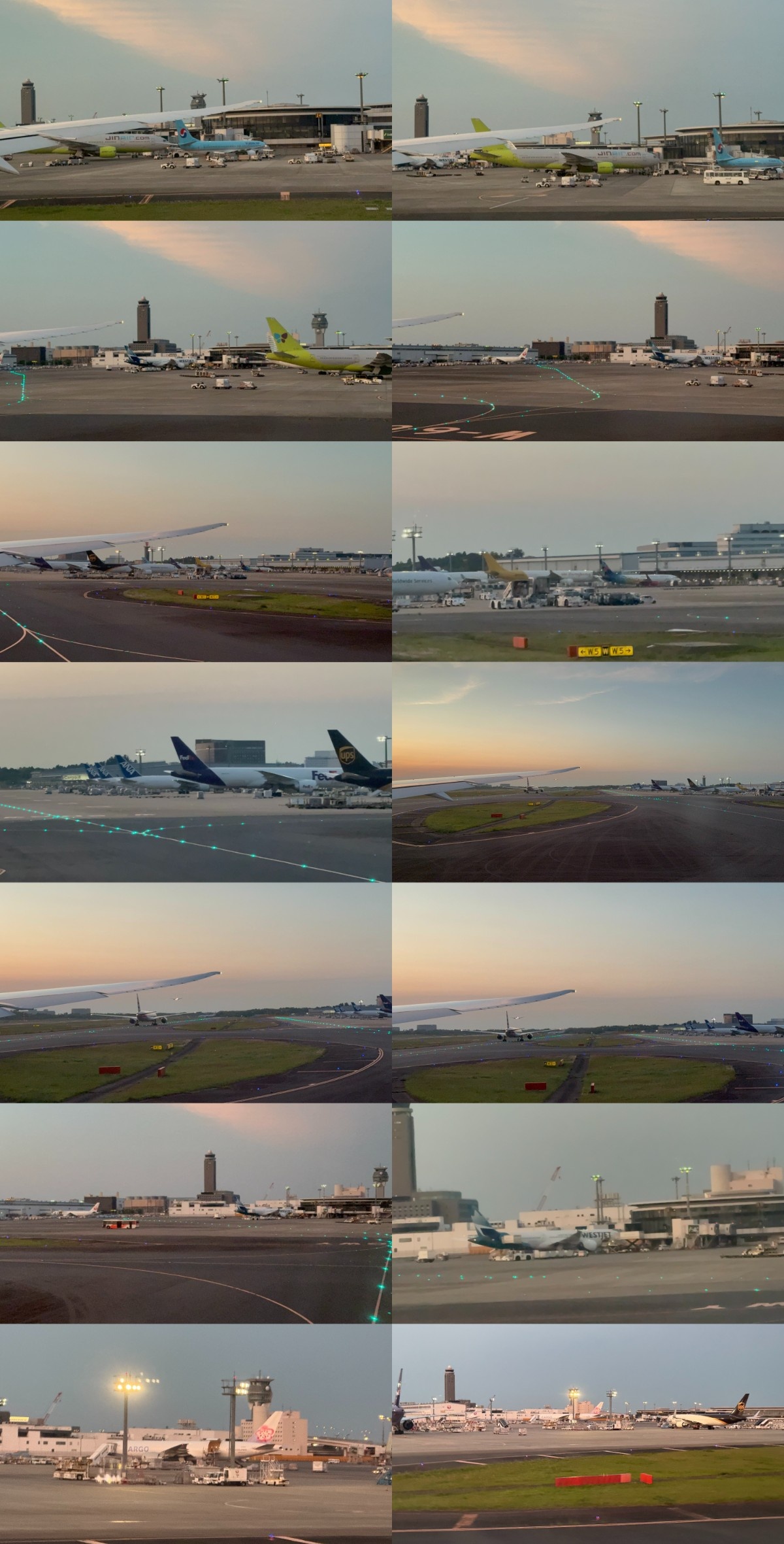
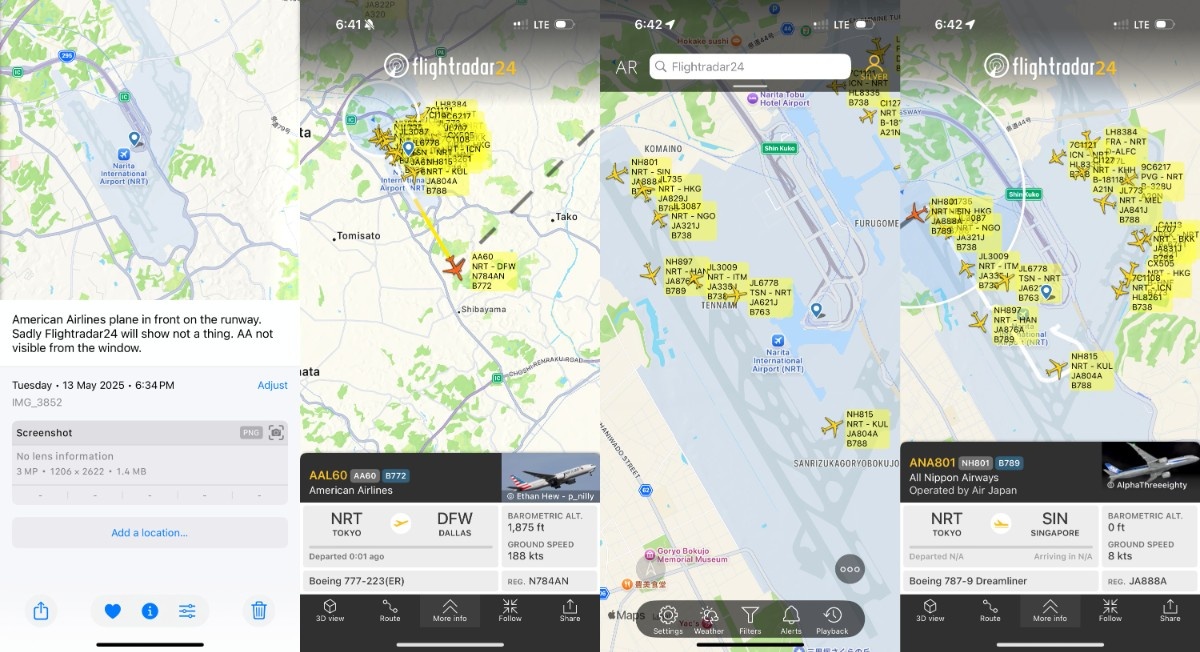
Just as we were about to depart, I spied an American Airlines 787 on the runway, but couldn’t take a picture of it until it had left. I was, however, able to catch its departure on good old Flightradar24, despite not being able to track it initially.
This was peak hour for departures to Southeast Asia, with NH815 to Kuala Lumpur, NH897 to Hanoi and also JL707 to Bangkok, JL735 to Hong Kong and JL773 to Manila all queueing up for takeoff besides our NH801.
At long last, at a quarter to seven, JA888A took wing amid the sunset, its glow providing for a scintillating backdrop to my first sayonara from the Land of the Rising Sun. We whooshed above the village of Narita, nowhere near Tokyo, which just so happens to host one of the world’s biggest international airports. All too soon, the more than six-hour haul to Singapore had begun.
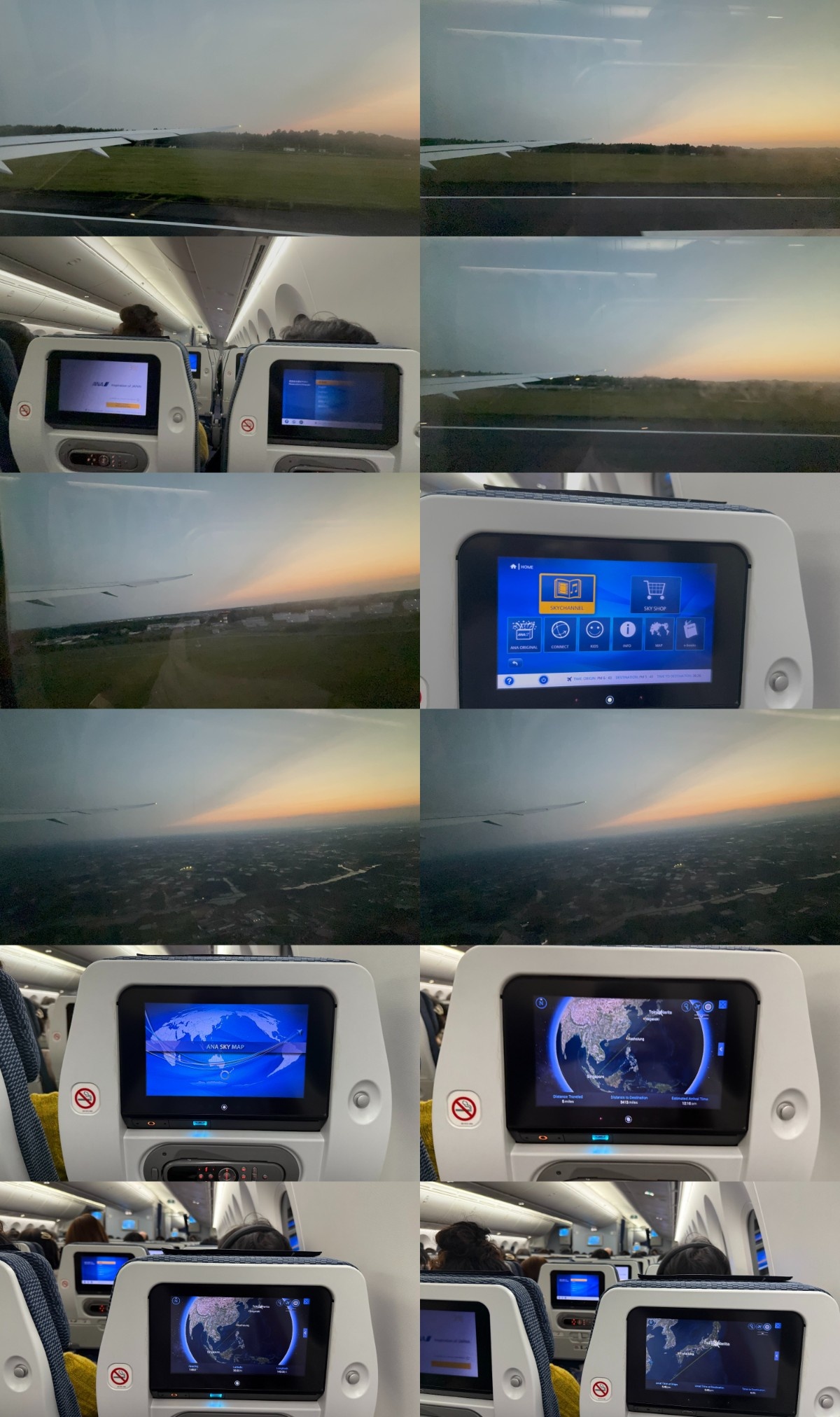
This being a Boeing 787, there was no question whatsoever of an inflight camera — or winglets, or even window shades — but all I needed was the view from the window to reflect and wistfully ruminate on my whirlwind Japan trip, and to feel both sad (that it was getting over) and happy (that a long flight stretched ahead of me)!
A curate’s egg: Catering, entertainment and amenities
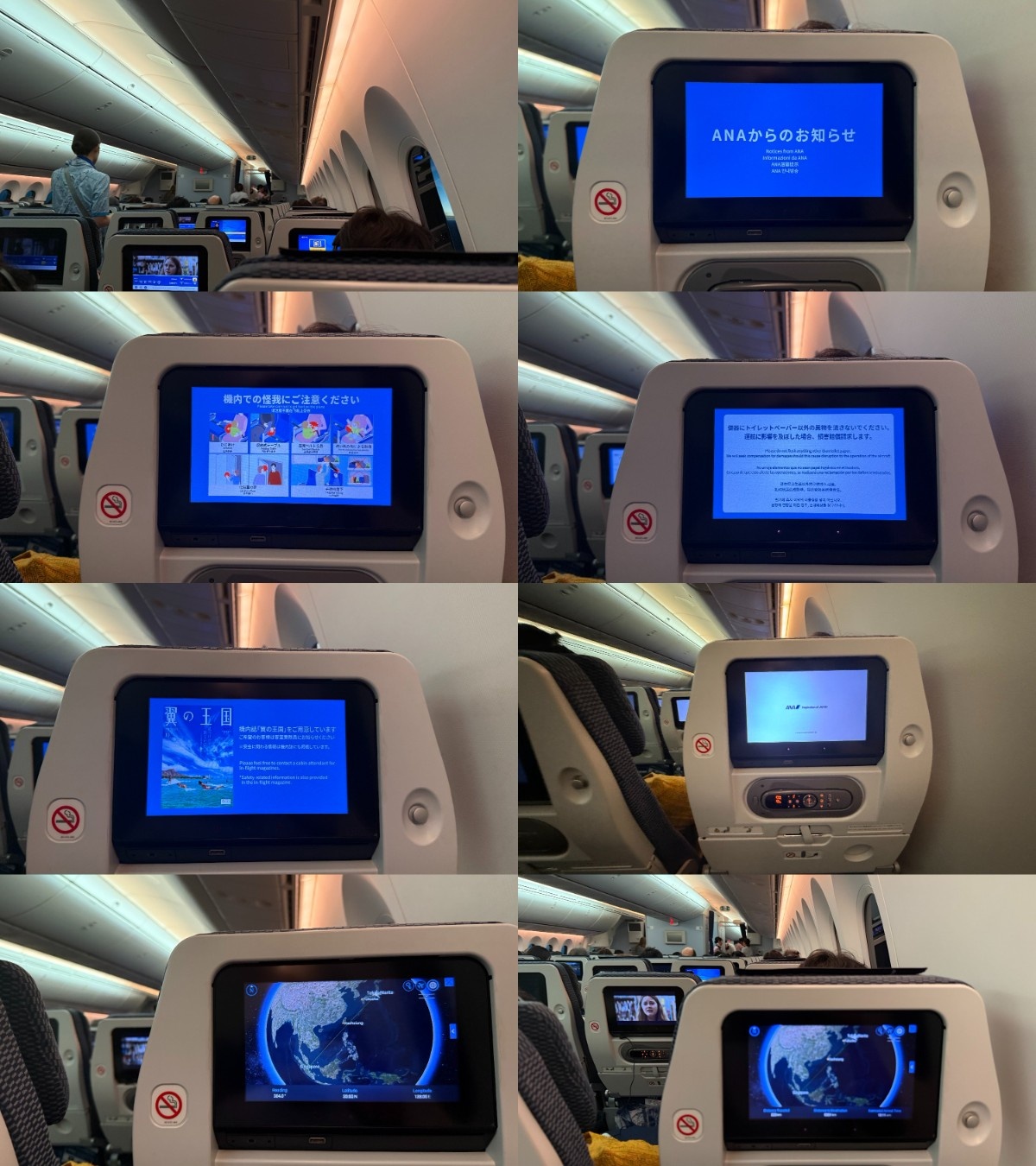
Immediately after takeoff, yet another video on inflight safety — especially during turbulence — was screened, with advisories in a number of languages including Spanish. The Japanese (and, as I found out the following week, the Taiwanese) sure do love these post-departure advisories…
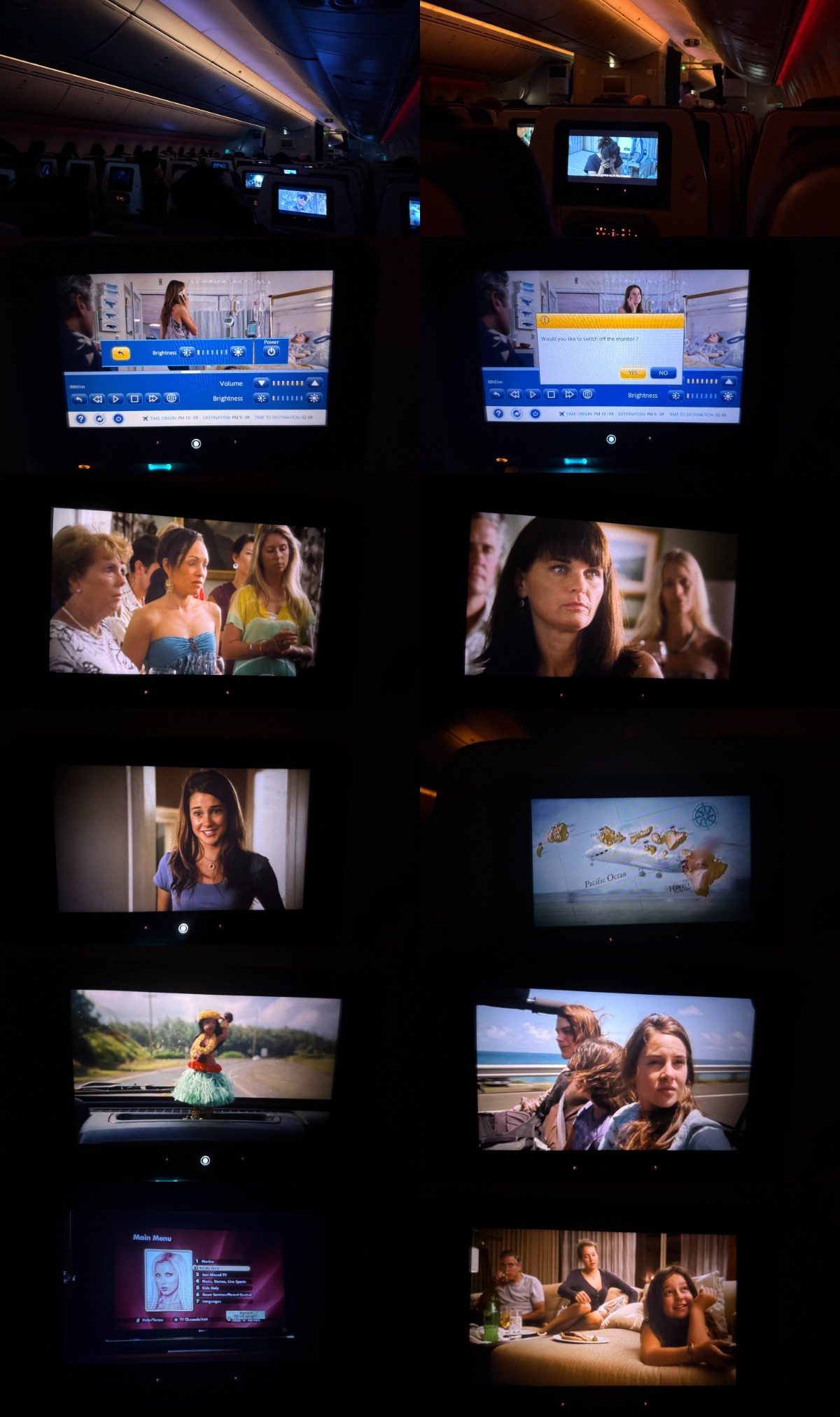
As I said above, the IFE was as blue as it was outdated, and gave away the fact that this 787 was nearly a decade old. But that wouldn’t stop me from going to the help section and trying to navigate and fiddle around the clunky-looking remote, a cute relic of nostalgic value that I always appreciate.
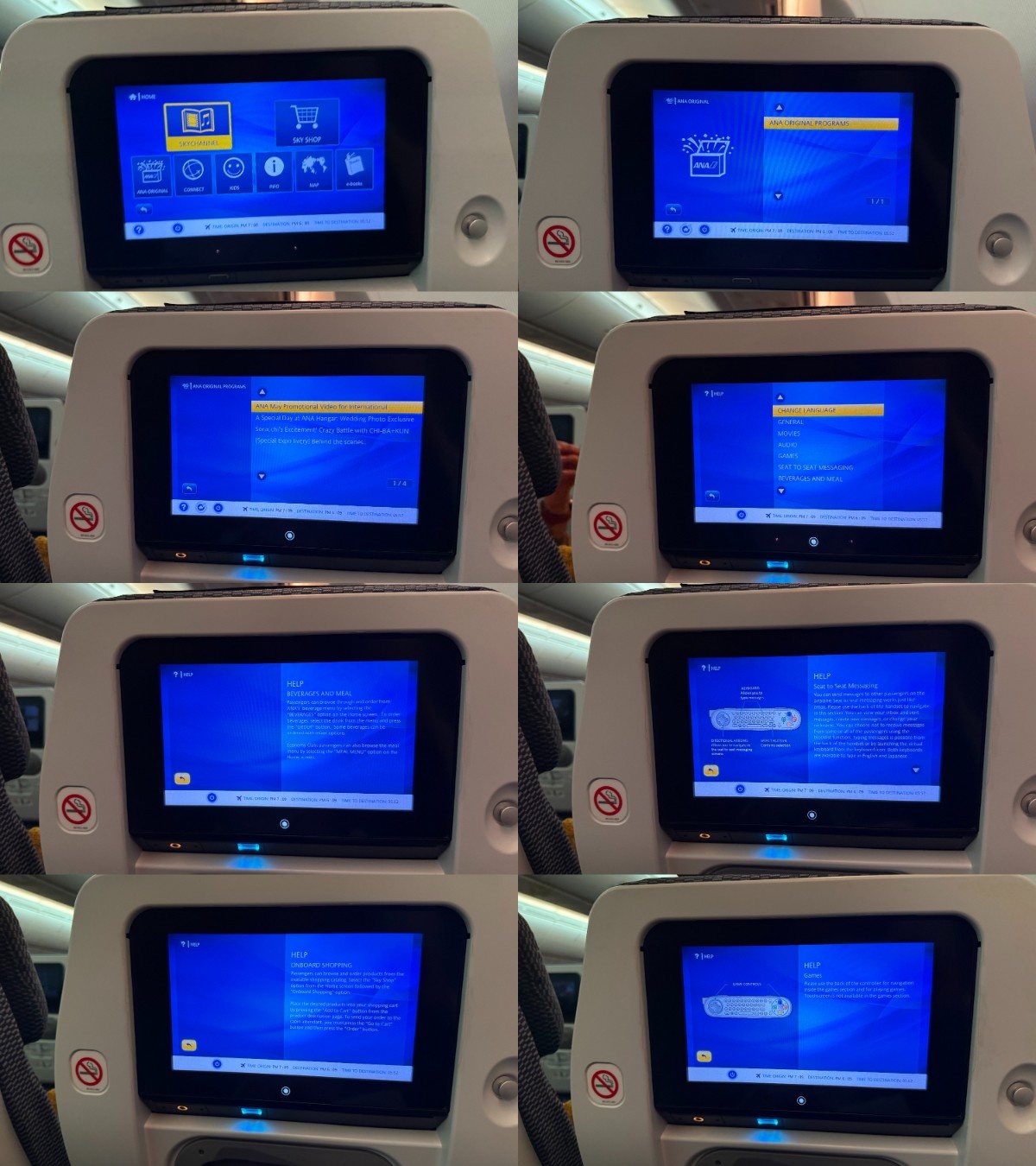
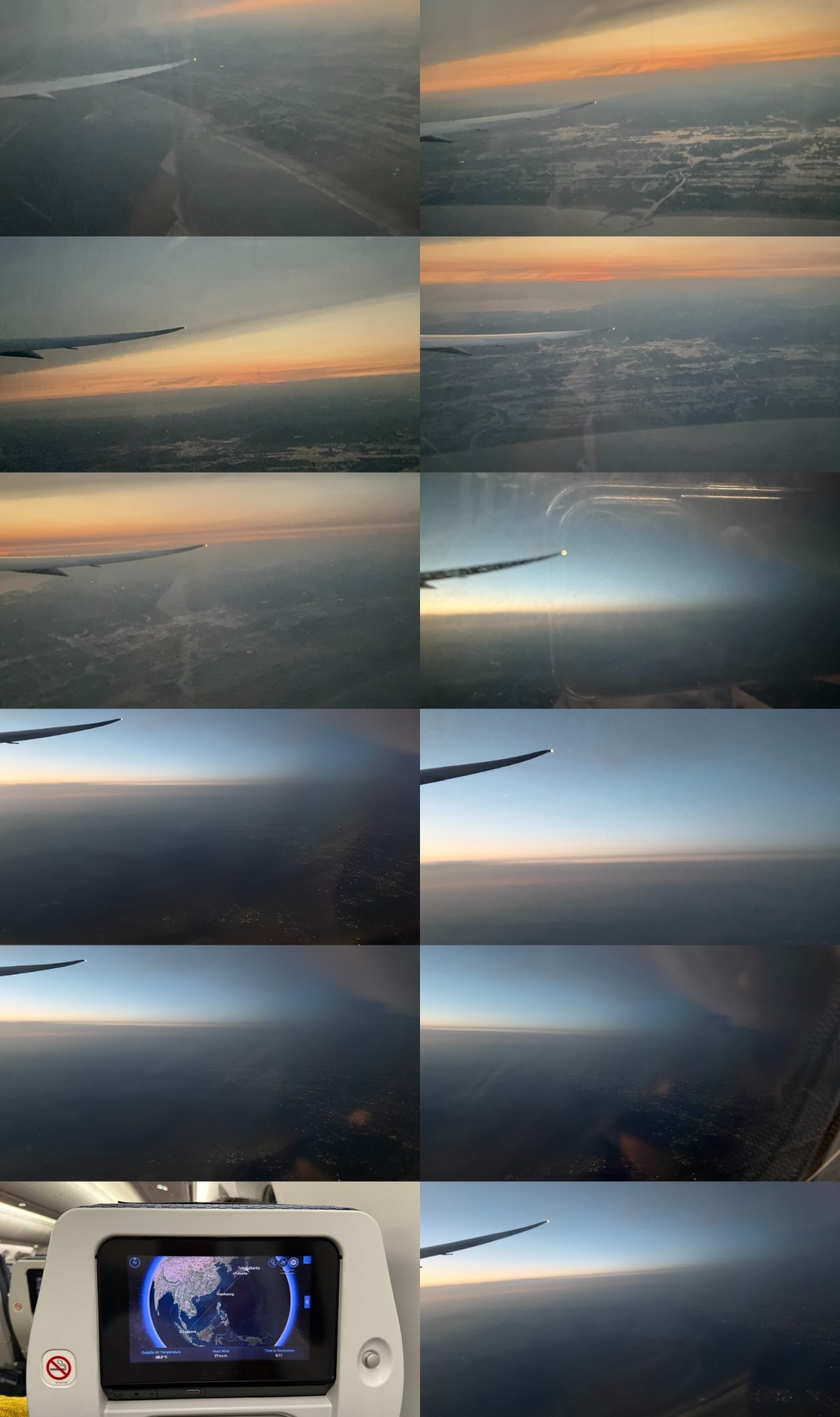
I’m not a huge fan of 787s in general, given that they lack not only tail cameras and winglets (as I said above), but even something as basic as window shades. So whenever I looked out the window, there was still a bit of Japan below for an hour after departure. The cabin crew came around to serve drinks as the last vestiges of the sun gradually faded from view.
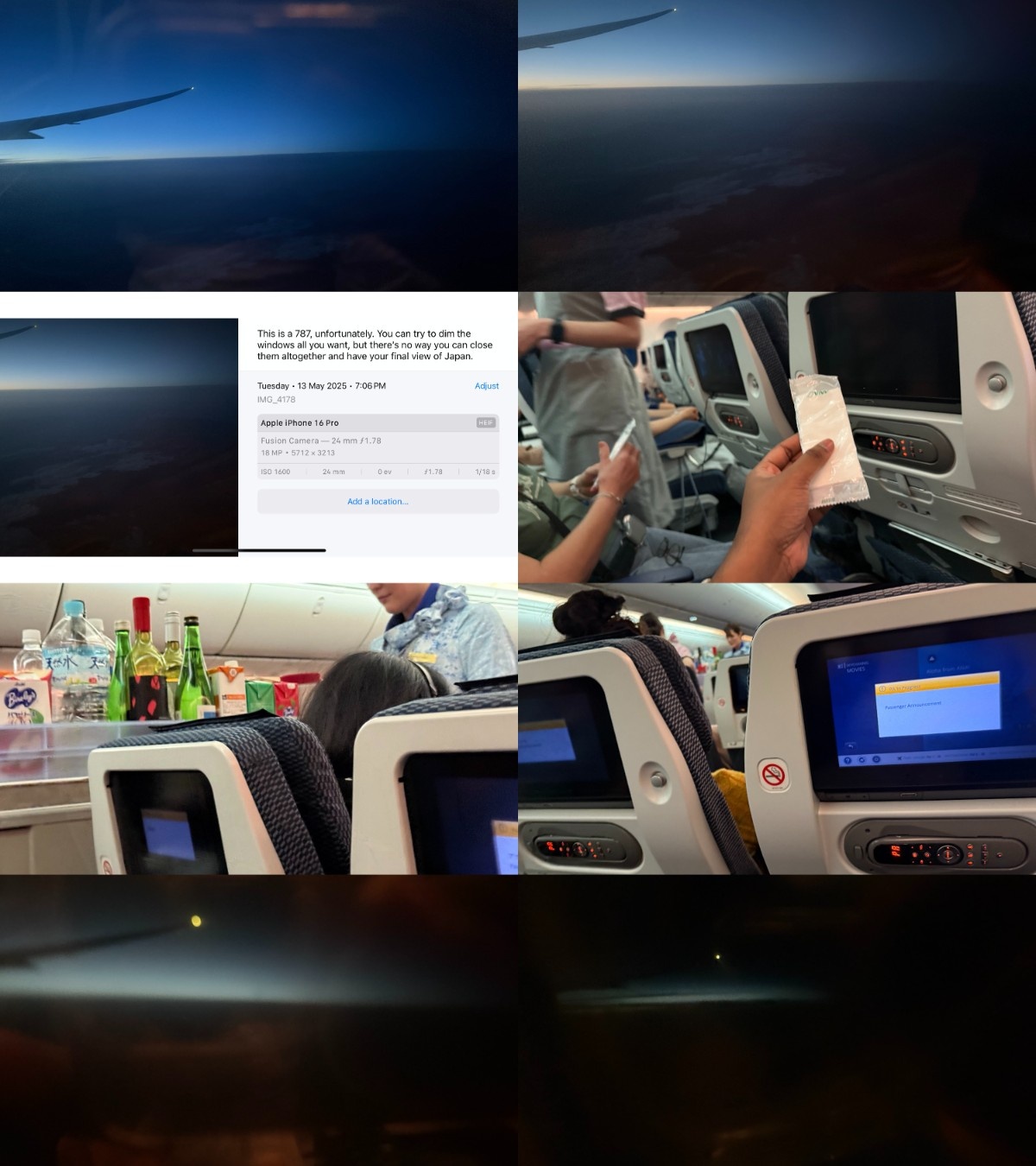
I don’t normally go #2 on aircraft, but now, on a Japanese airline, was as good an occasion as any to visit the rear lavatory. Yay for bidets! No matter how (comparatively) outdated the IFE and other seat hardware was at the seat itself, I’ll never take bidets on a plane for granted again.
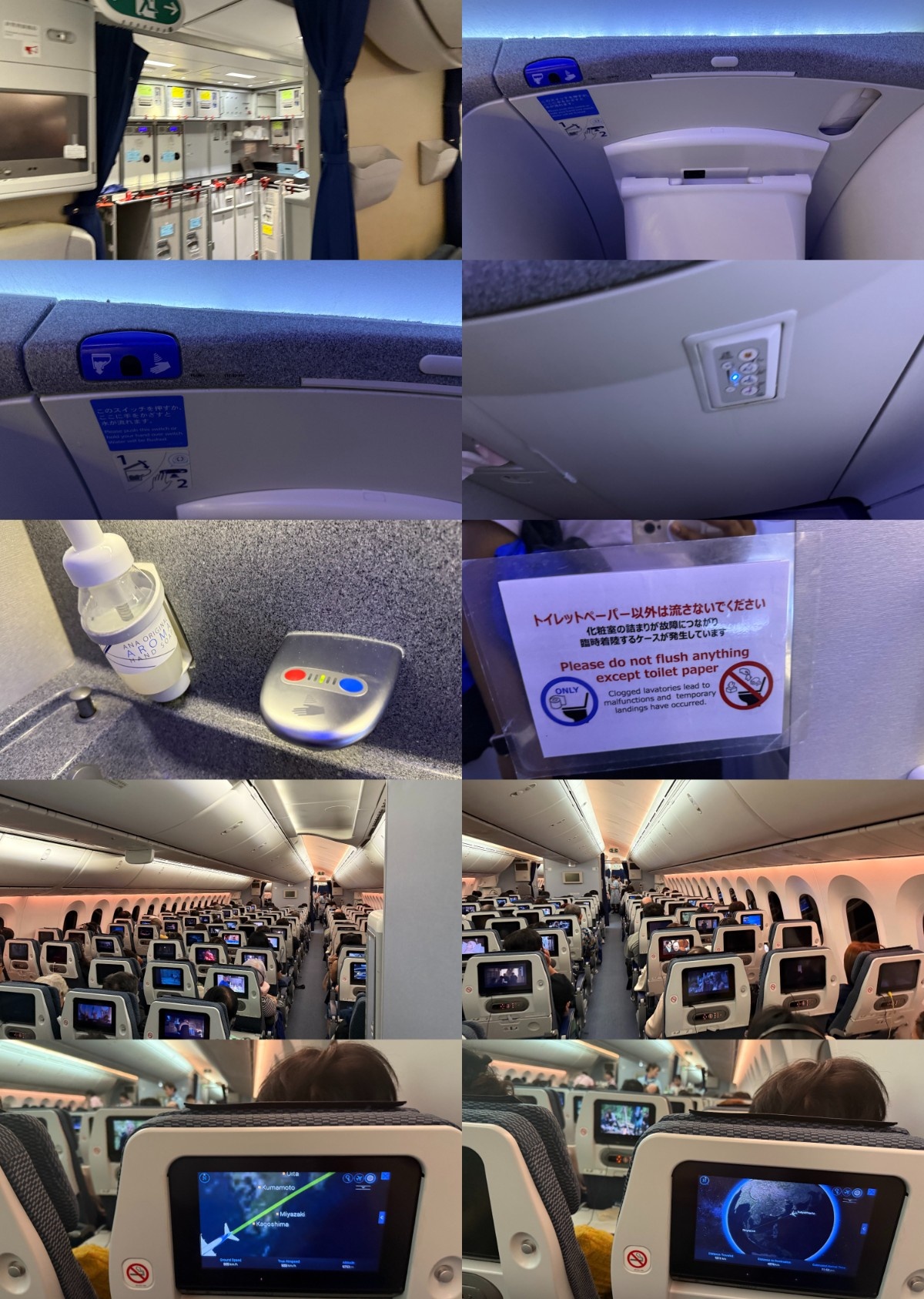
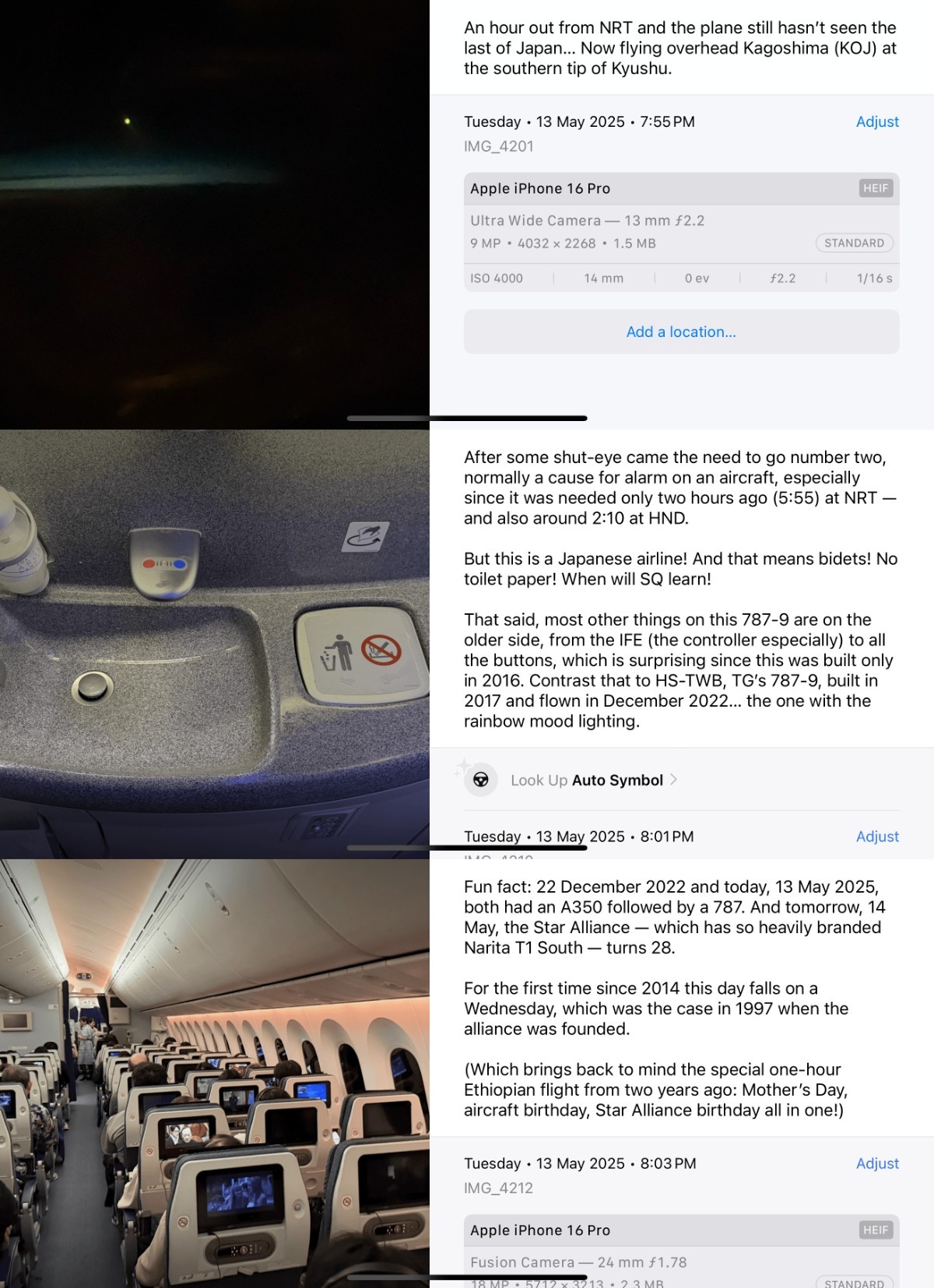
These were the comments I’d made on some of these pictures, including my final sighting of Japanese soil and a remarkable coincidence regarding the Star Alliance’s birthday (14 May), which came the very next day.
This brought to mind my memorable late-night fifth-freedom flight in May 2023 on Ethiopian Airlines’ 787-8 from Kuala Lumpur to Singapore. Not only was it on 14 May, but the aircraft operating it, ET-AOV, was built on exactly that day nine years before!
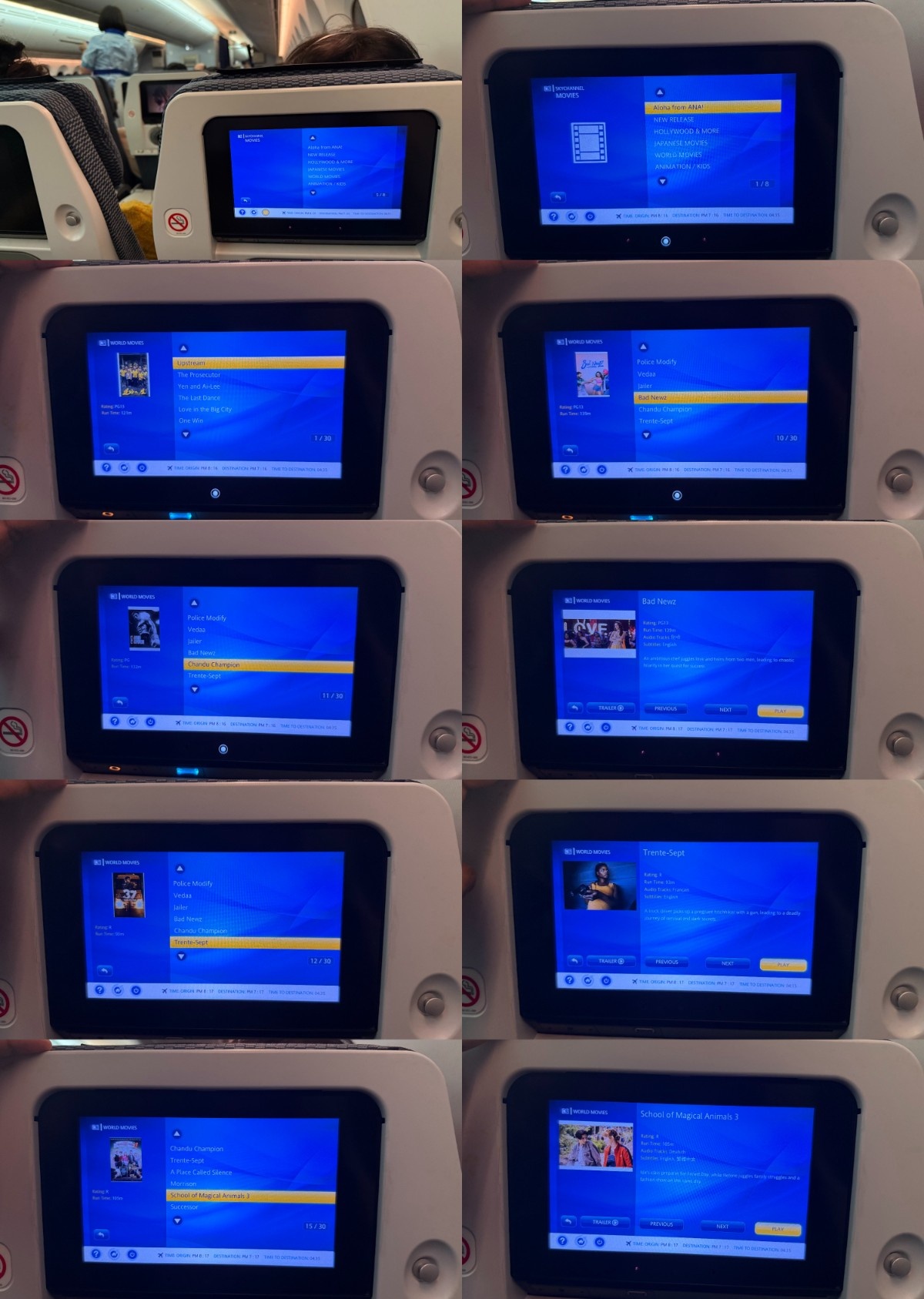
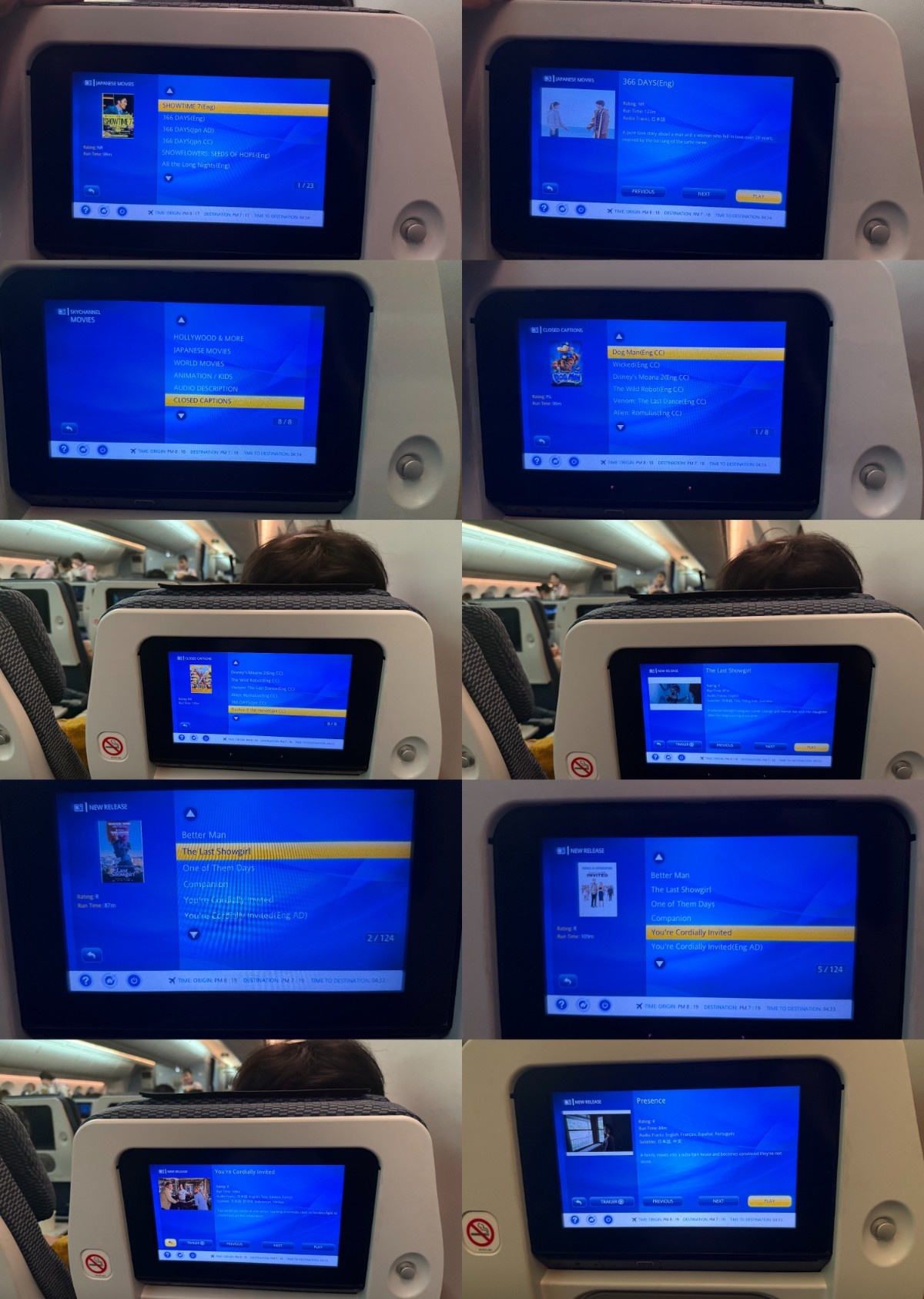
Having finally seen the last of Japan, I was determined not to feel as blue as the IFE interface, and so set out to explore its entertainment offerings. Surprisingly, while ANA is no CX or SQ, it did have a couple of newer Bollywood releases (Bad Newz and Chandu Champion), which I appreciated. But this wasn’t the day for the same old Indian movies — why not be a little adventurous on a trip that had been precisely that?
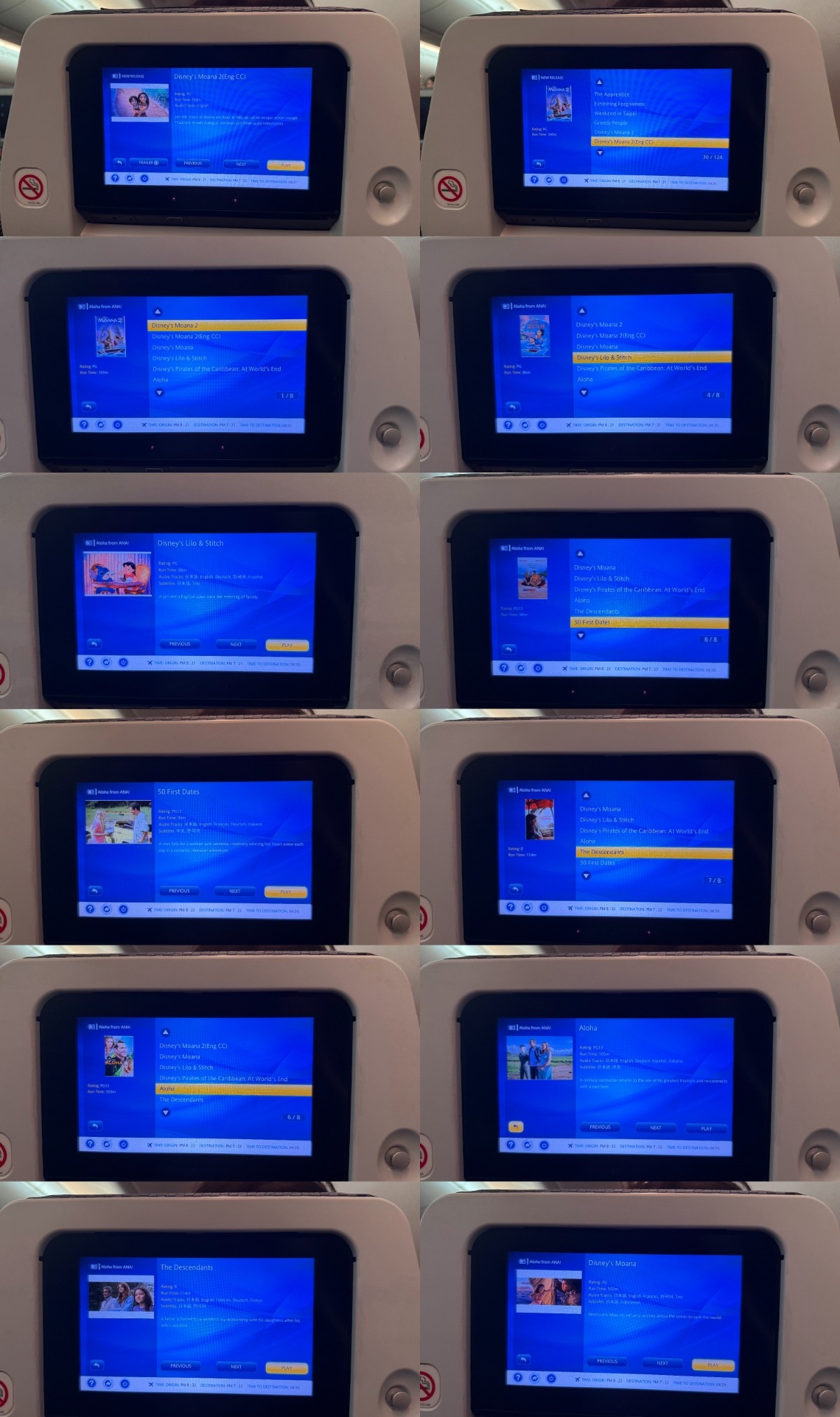
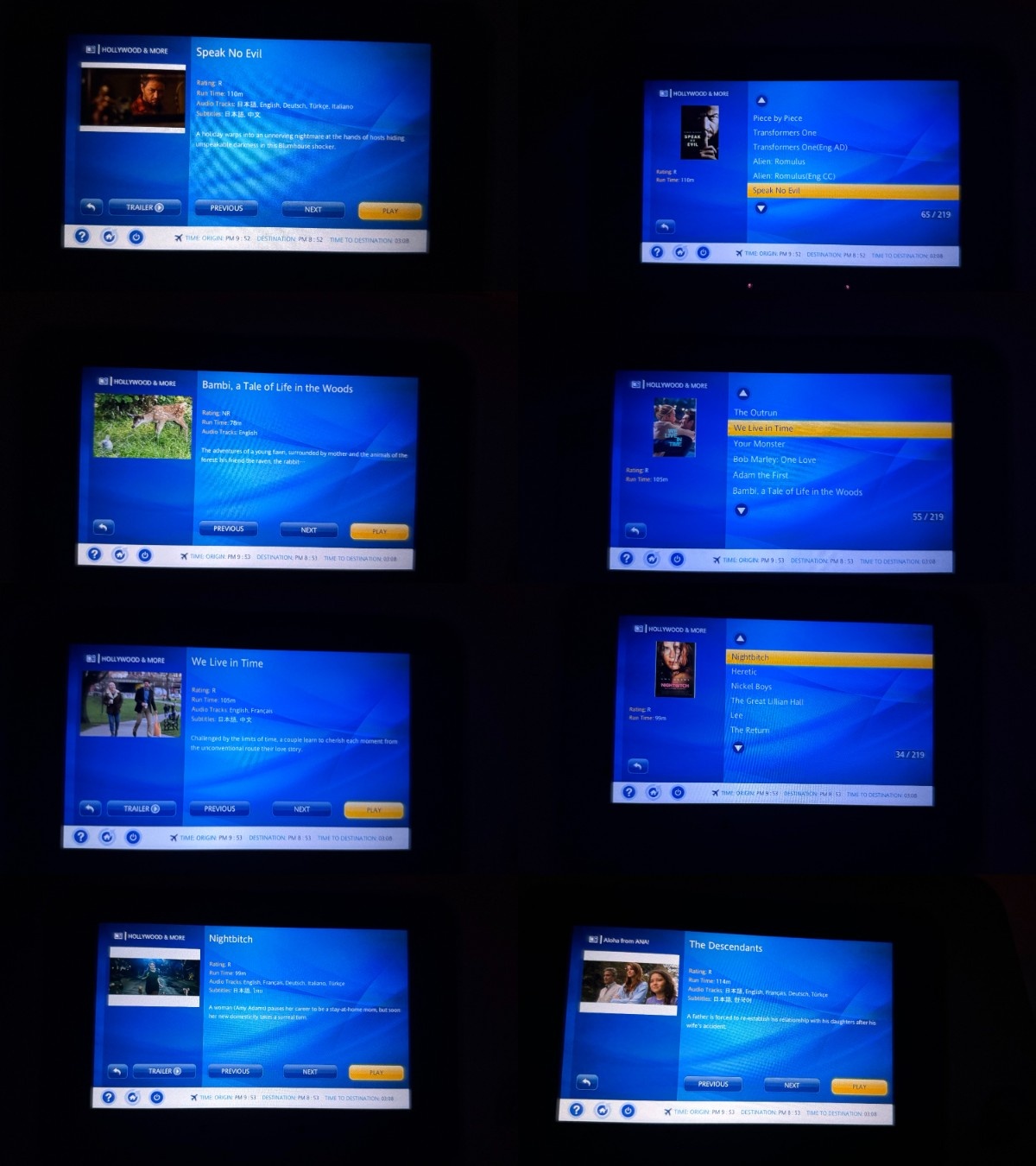
So I moved to the latest releases across all genres, and eventually chanced upon the Aloha from ANA! section of Hawaii-themed movies. Whether this was done for the A380 service to Hawaii, I don’t know, but I was certainly going to pick one from here. Among the other movies, I watched the 2025 comedy release You’re Cordially Invited just 10 days later, on the Starlux A330-900neo to Taipei.
(Full resolutions: Page 1, Page 2, Page 3, Page 4.)
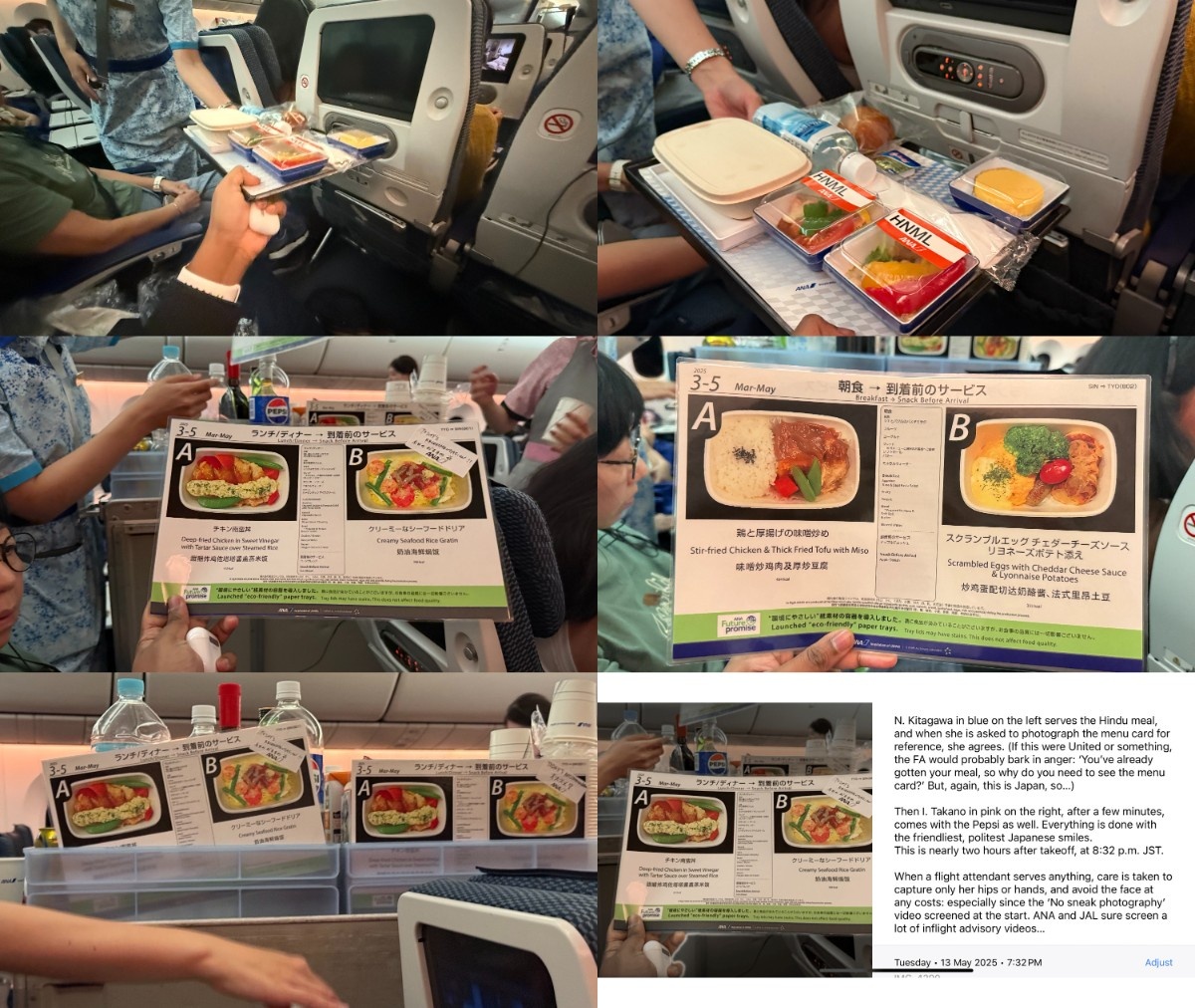
Before I could do so, a pretty flight attendant came out with the meals. Having opted for a Hindu non-vegetarian meal (HNML) in advance — not knowing what a regular meal on a Japanese airline might taste like (in contrast to the beef bibimbap on Asiana’s A350) — I was served exactly that. Still, I was curious to see what the regular meal options were, and I asked the FA to show the menu card. She duly complied, and smiled beneath her mask.
Another excellent sign of Japanese service and hospitality… If you tried this on a Western airline (asking for the menu card even after being served your meal), you’ll very likely be shouted at! (Too bad it wasn’t easy to get a better view of the flight attendant’s name badge — this isn’t exactly evident on many Northeast Asian airlines…)
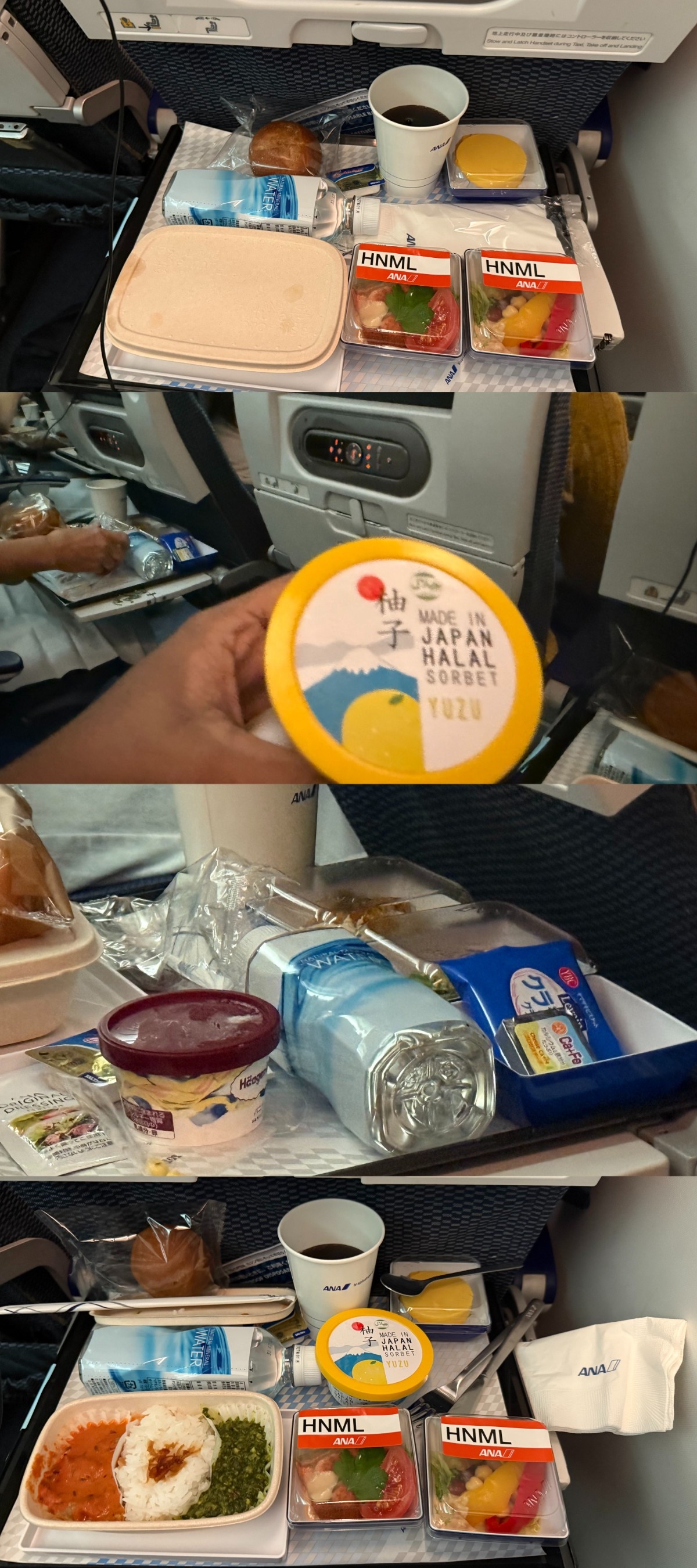
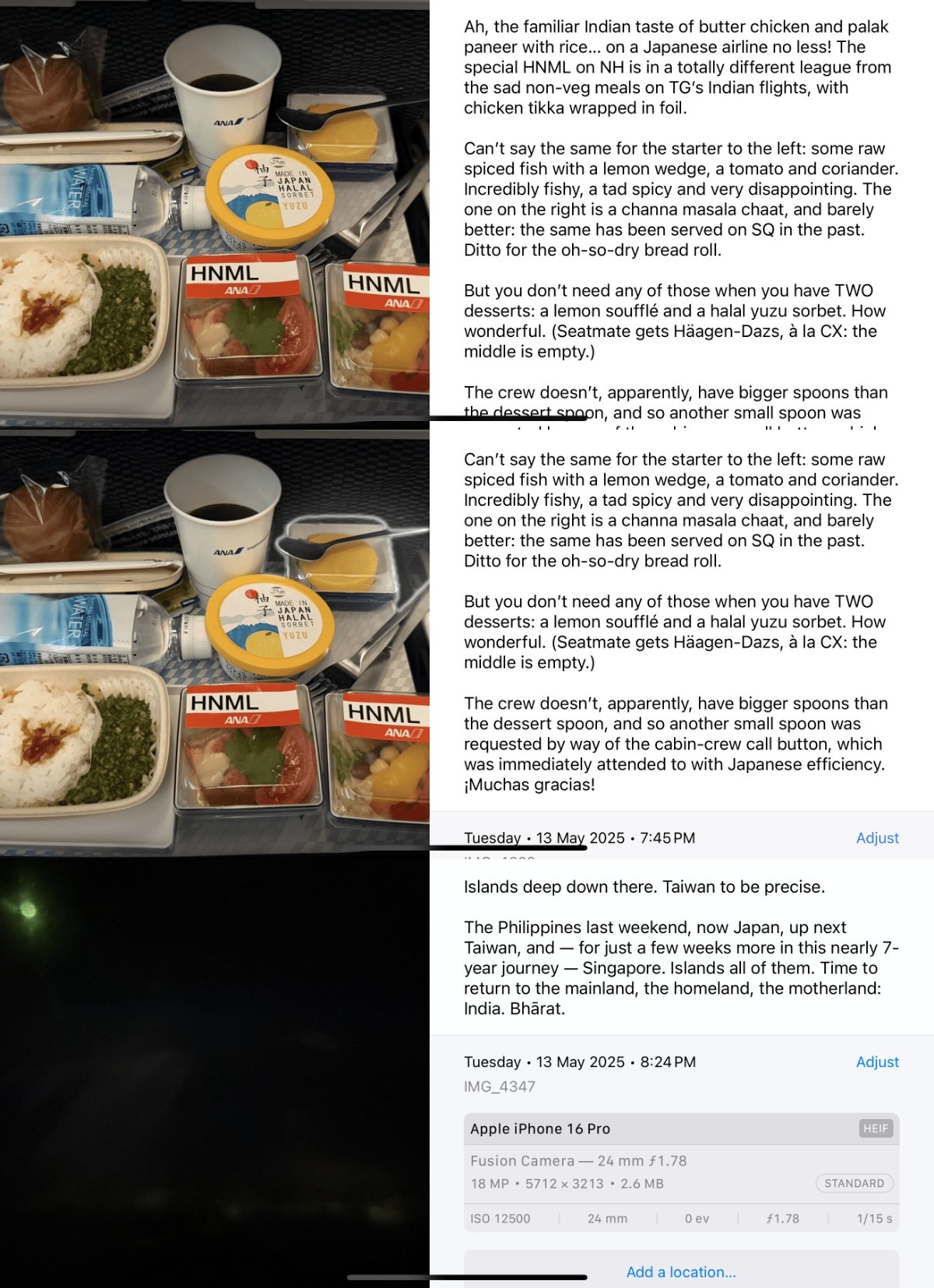
In any case, the HNML was a bit of a mixed bag, with the main course being familiarly superb for my Indian palate — butter chicken, palak paneer and basmati rice — but the fish-based salad starter being abominable. It was too fishy and raw for my liking, and spicy to boot, so I had no choice but to leave it aside. Fortunately, the Indian main course was so good that I didn’t need to bother with the other starter, a humdrum channa masala chaat.
However, the real highlight was the desserts (yes, desserts, in plural!): a lemon soufflé AND a halal yuzu sorbet, both of which were outstanding and much more creative than the typical cake or cut fruits that airlines serve. On top of which my neighbour got Häagen-Dazs vanilla ice-cream, which I’ve had several times on Cathay Pacific. All things considered, I was more than happy to give beyond-passing marks to the meal, whih I duly washed down with good ol’ Coke.
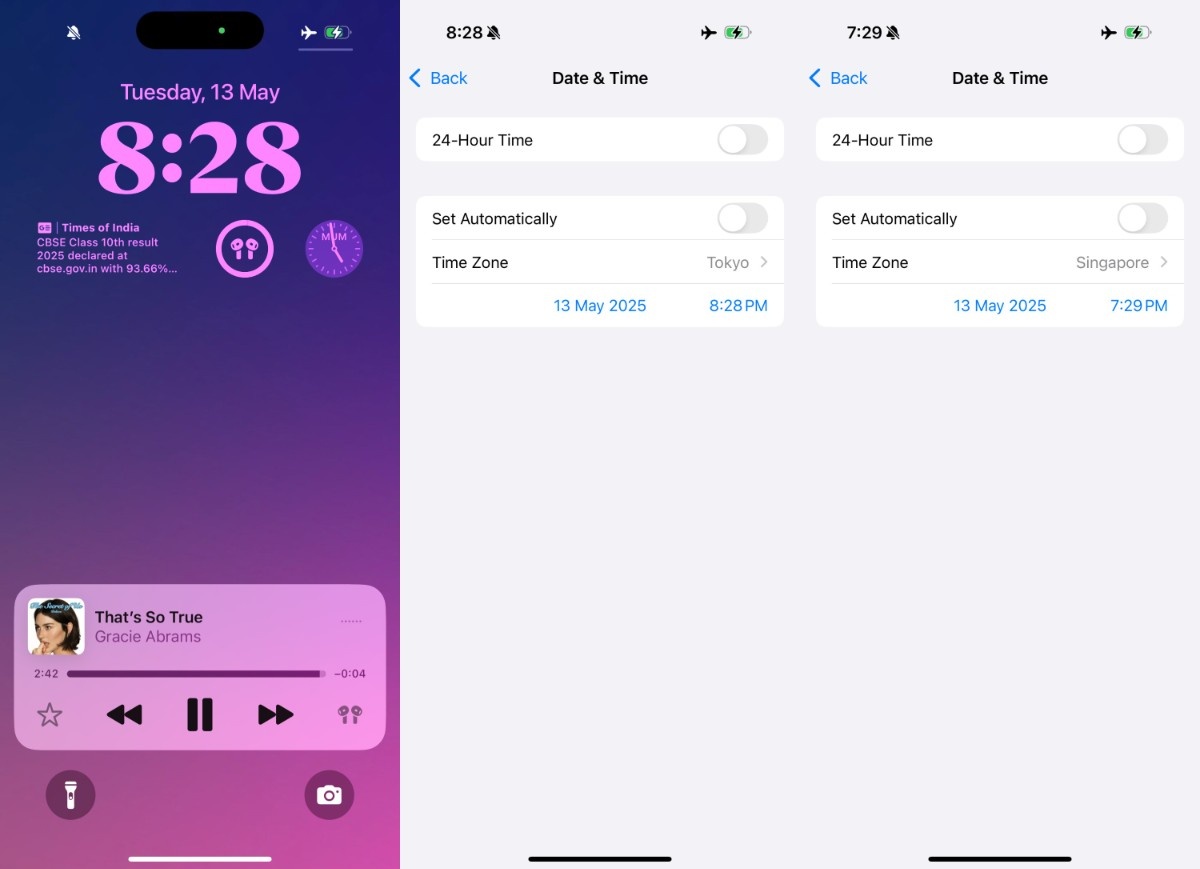
At this point, nearly two hours after departure, I turned the clock back by an hour to Singapore time, as I listened to some recent hits that I’d downloaded in Apple Music.
A celebration of Hawaiian life and spirit: The Descendants (2011)
Only two hours were done into the more than six-hour flight, making it a good time to watch a movie — a rarity on most of my flights, which tend to be under four hours long.
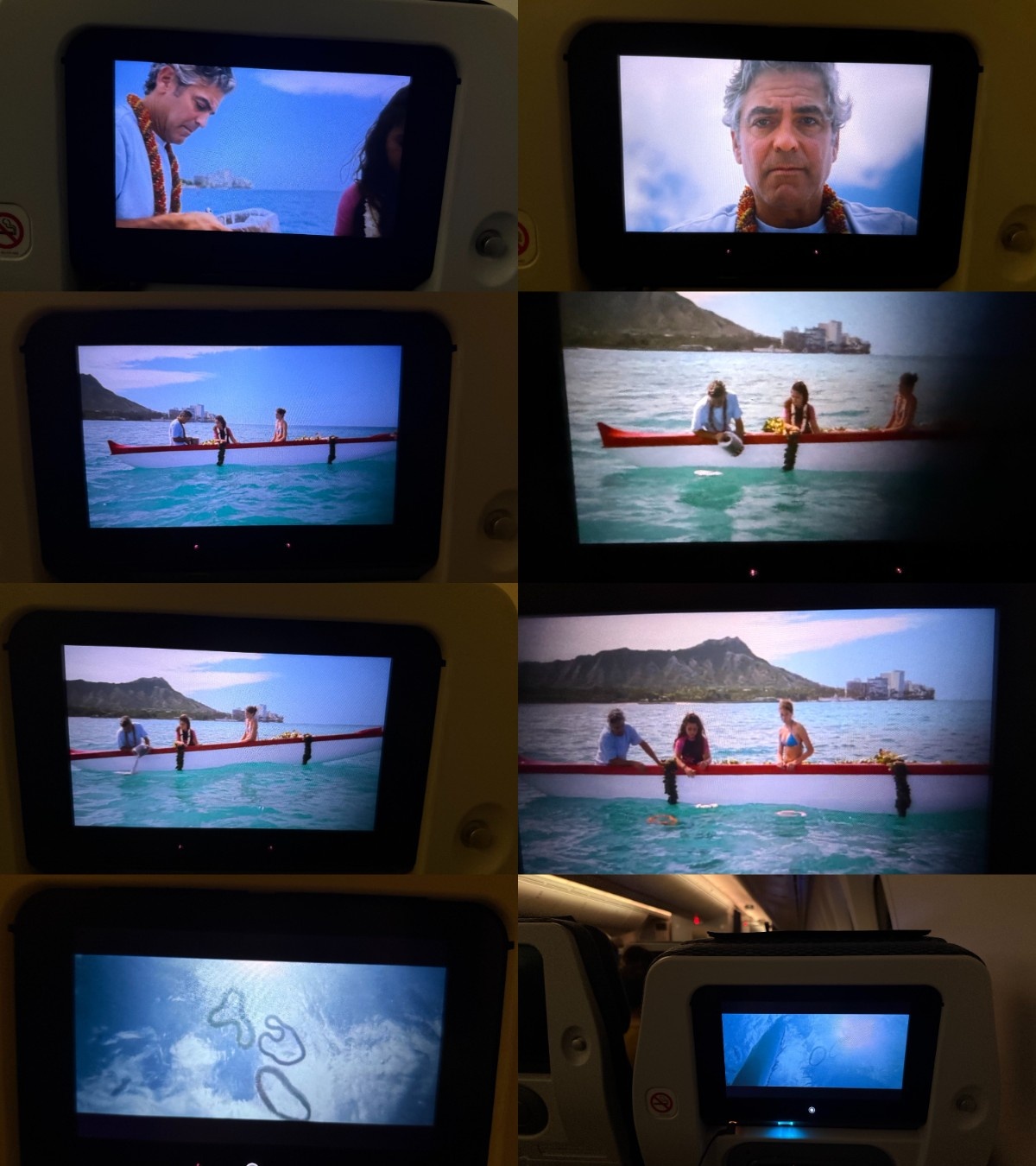
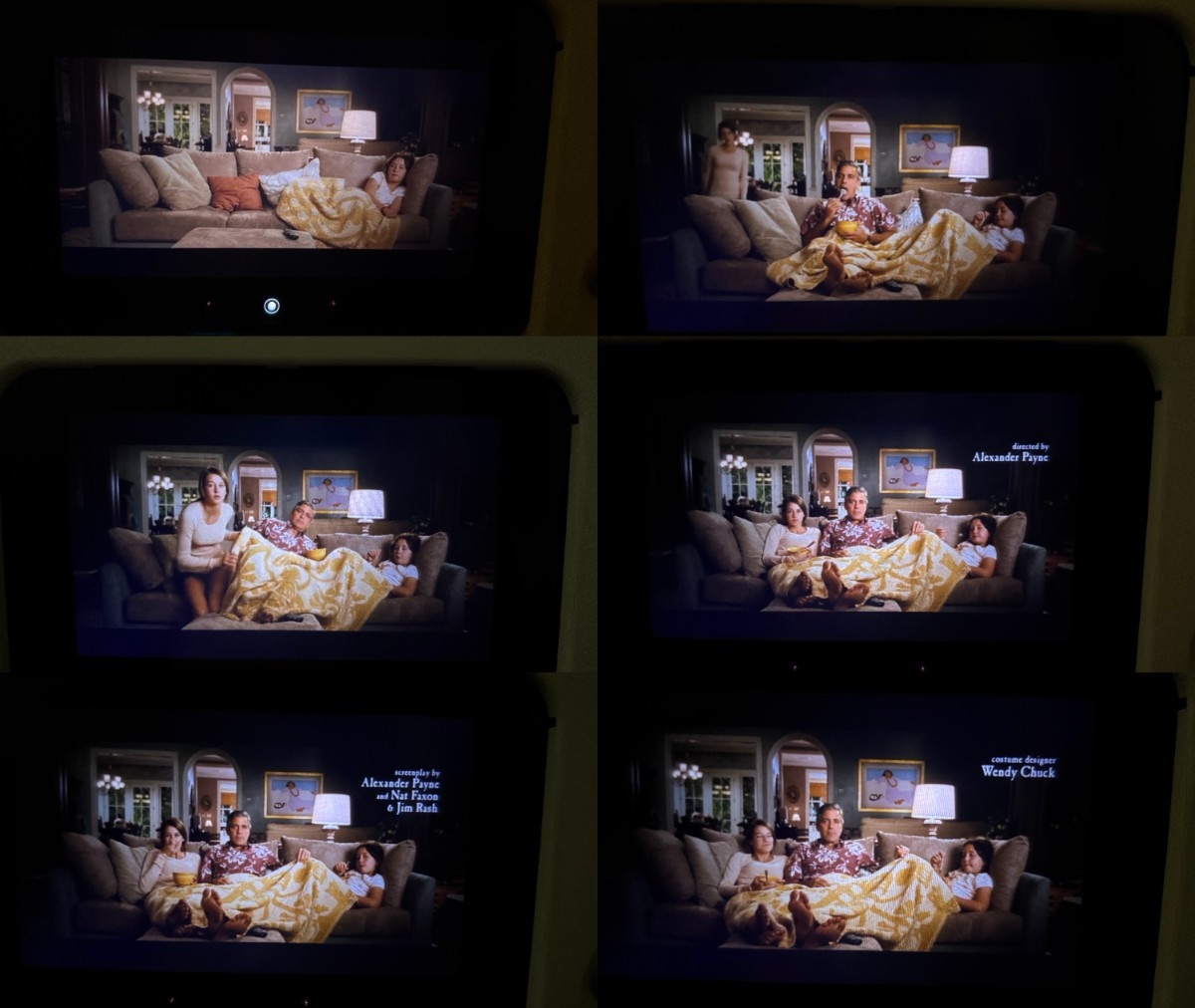
As above, I moved to the Aloha from ANA! section of Hawaii-themed movies, and chose the most emotional-looking movie of the lot. This was The Descendants (2011), where George Clooney battles the impending loss of his vivacious wife from a surfing accident, while also having to prepare two young, impressionable daughters through the stages of grief and acceptance.
The elder, teenage daughter is played by Shailene Woodley, who would not long thereafter earn her fame in The Fault in Our Stars (2014) — a far bigger tearjerker than this one.
It was obvious from the get-go that the mother/wife wouldn’t make it, so the crux of the movie revolved around the so-called five stages of grief in a Hawaiian setting. In the background was the unmistakable strain of hauntingly beautiful Hawaiian music.
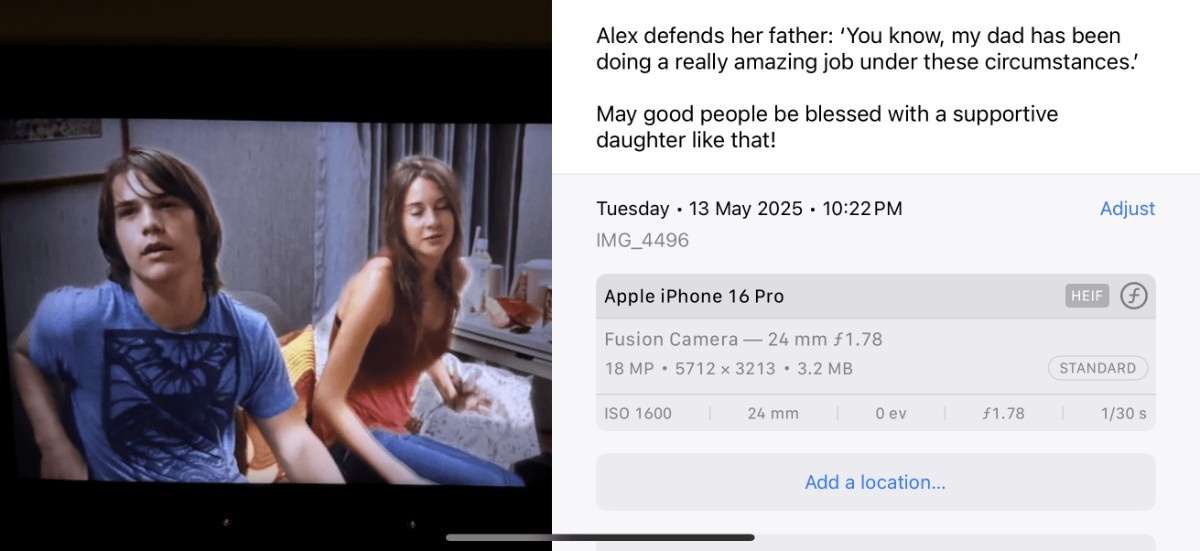
As you see below, much of the movie involves the two girls — a young adult, Alex, and a preteen, Scottie — come to terms with bidding their mom goodbye. There are various other subplots involving a property sale and an extramarital affair, but the most poignant scenes were by far the ones with the daughters.
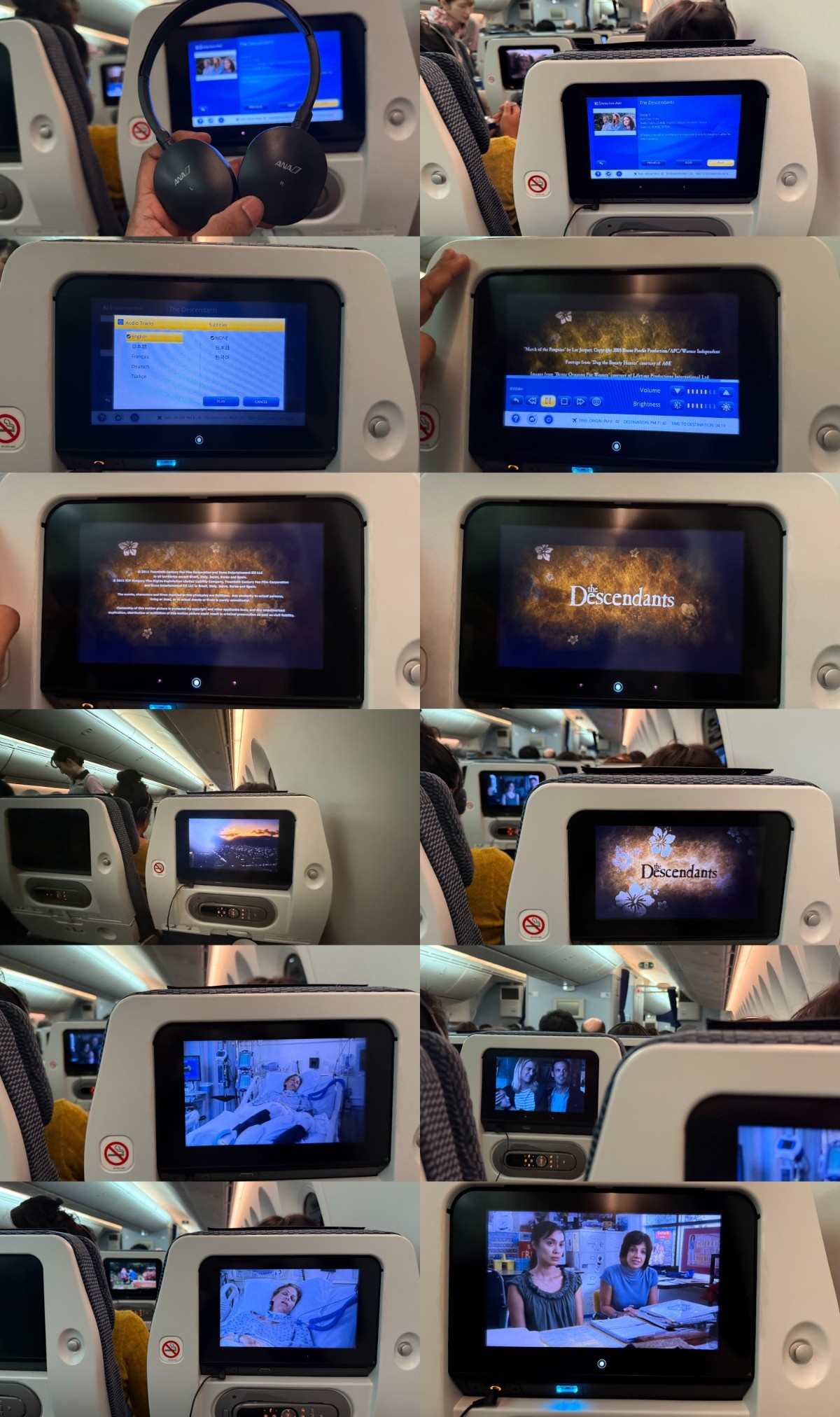
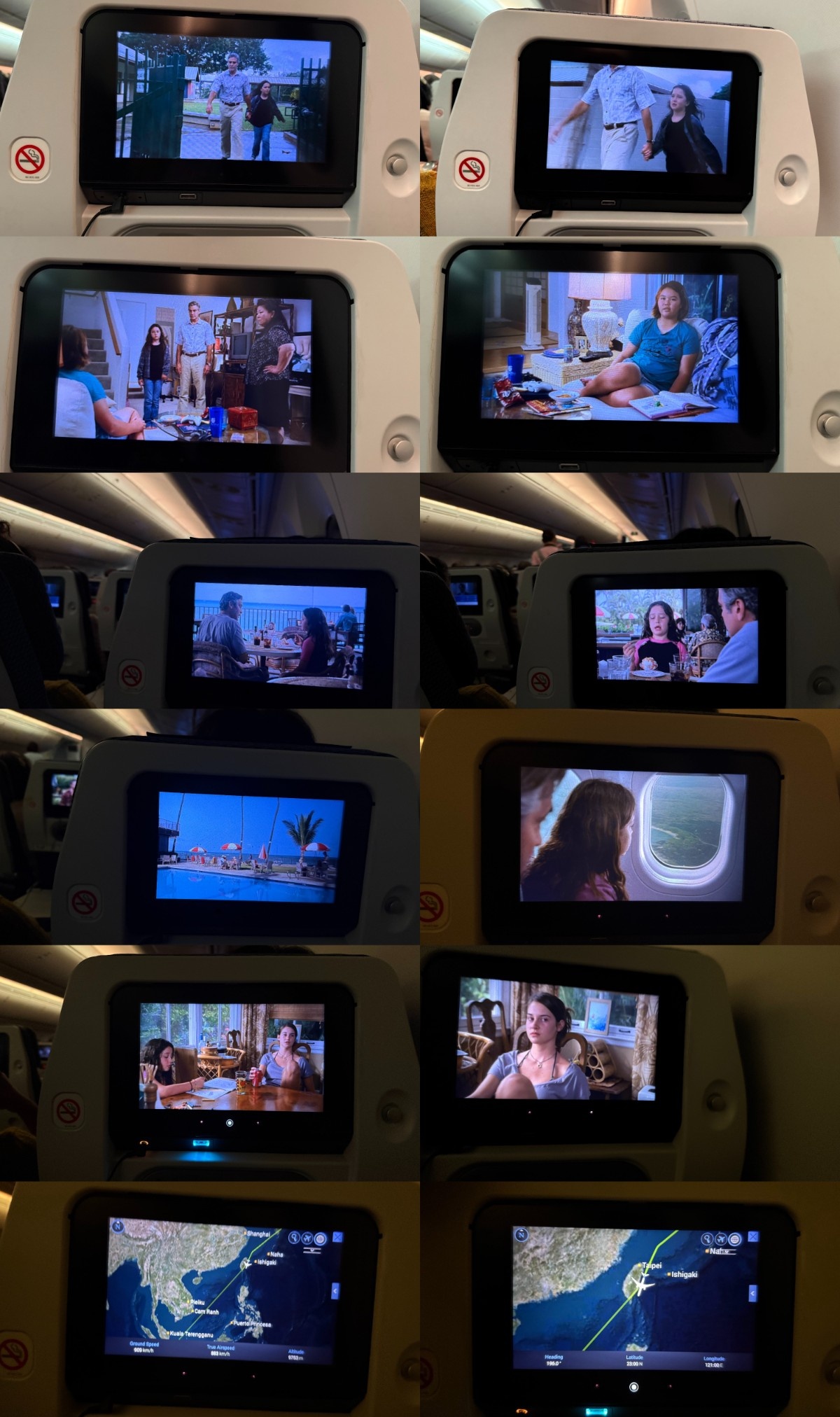
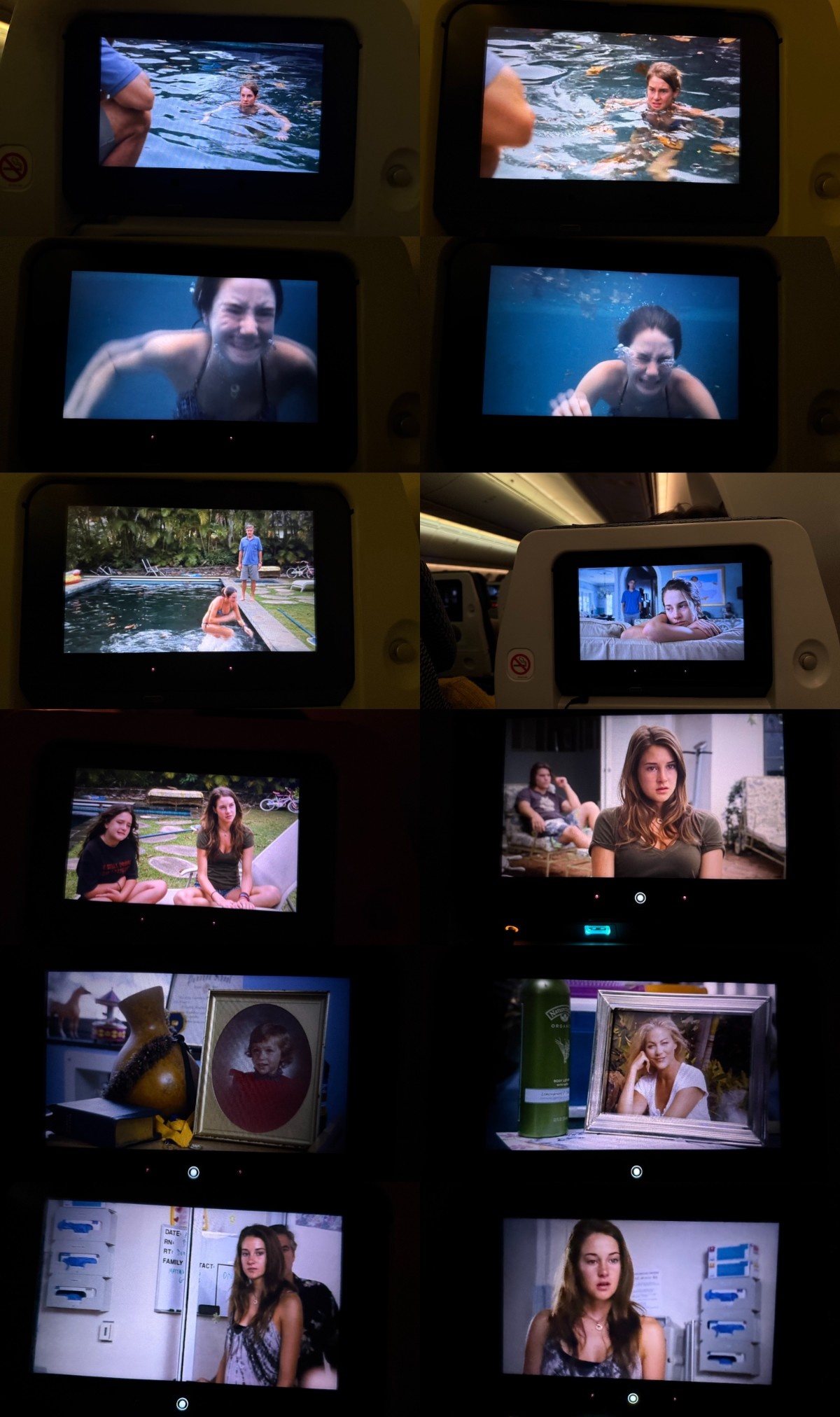
At the end, the mother is given a farewell that brings both tears and closure, and she is laid to rest at sea, with her daughters pouring out the ashes along with typical Hawaiian lei garlands. A moving scene, make no mistake.
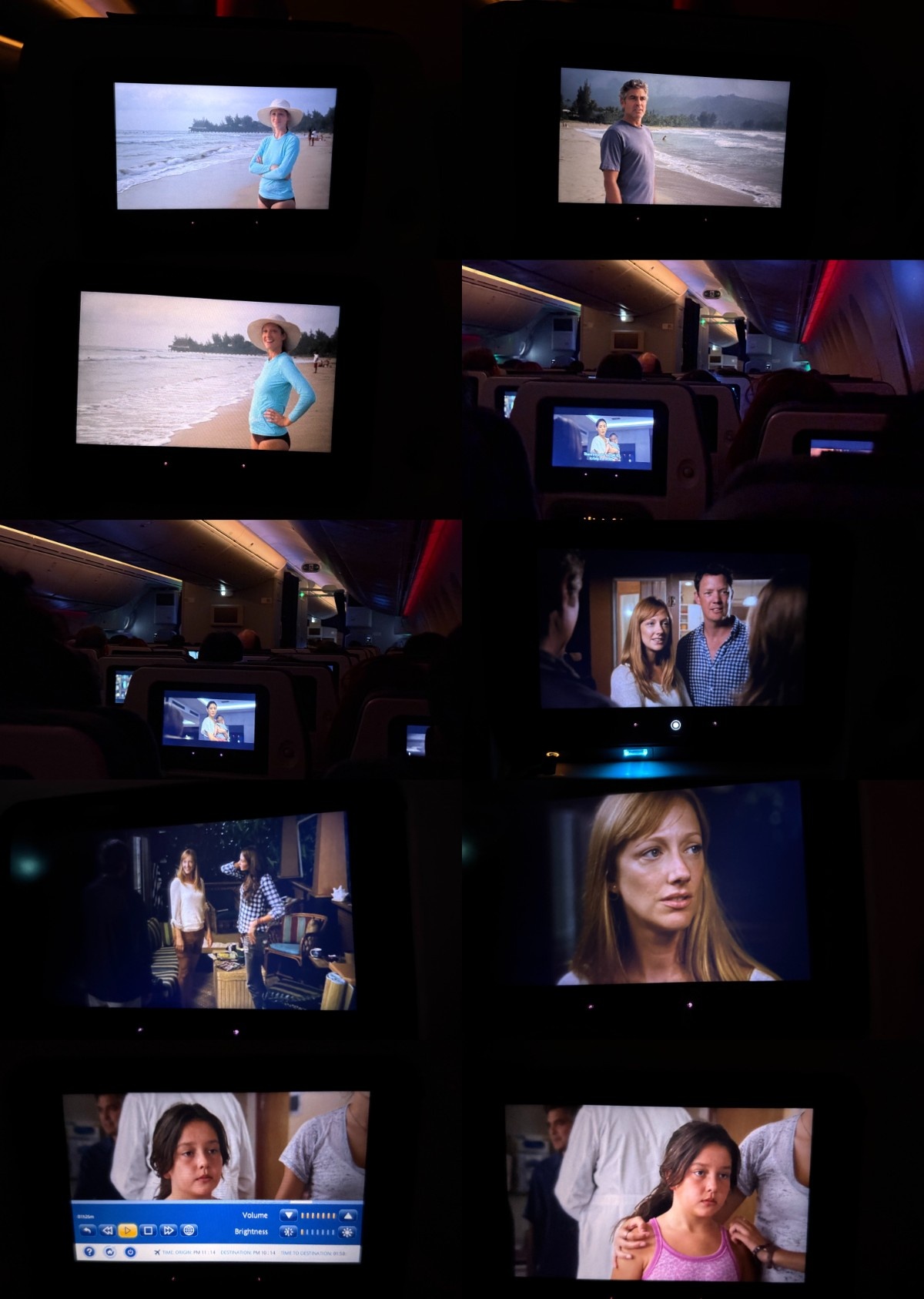
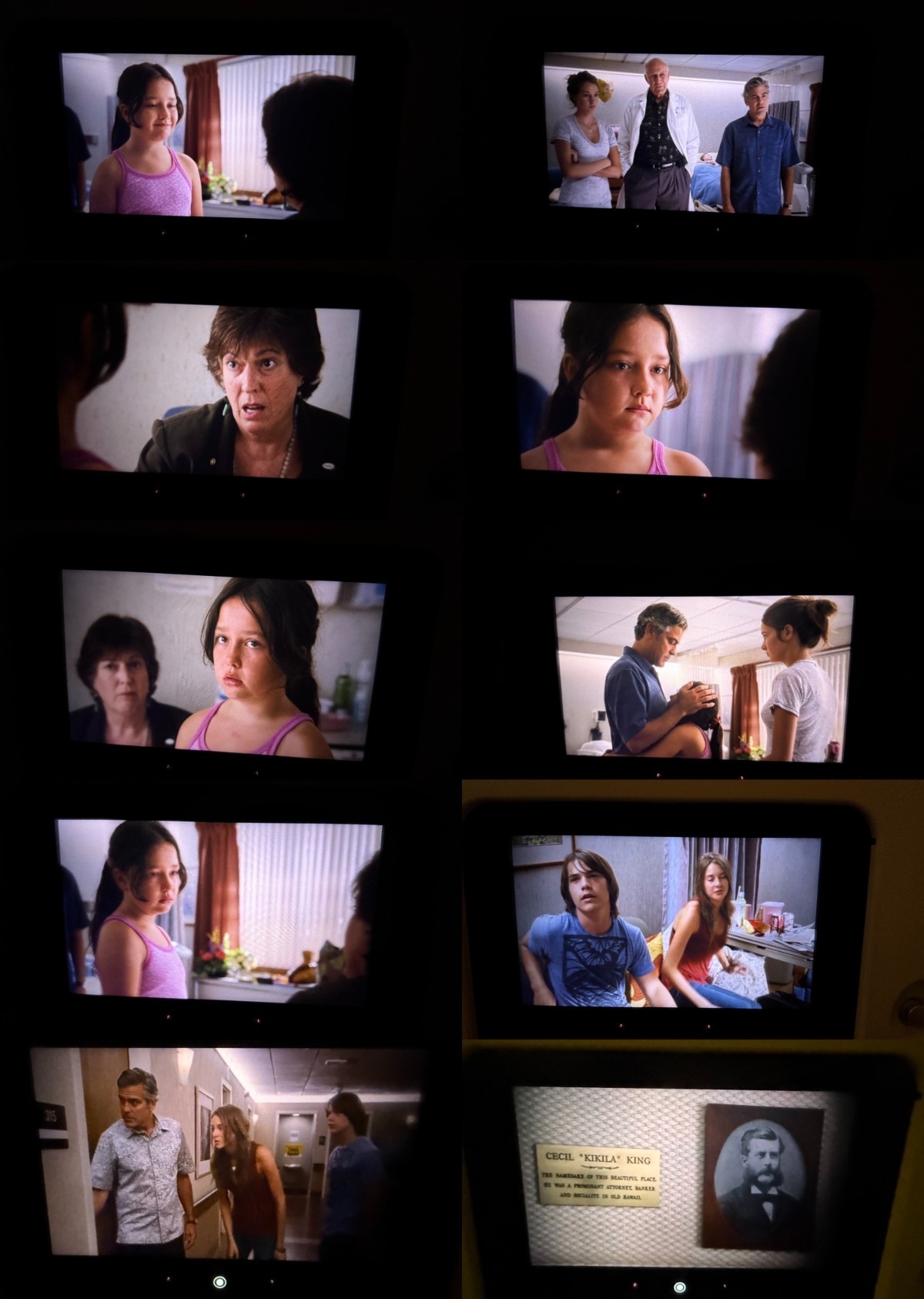
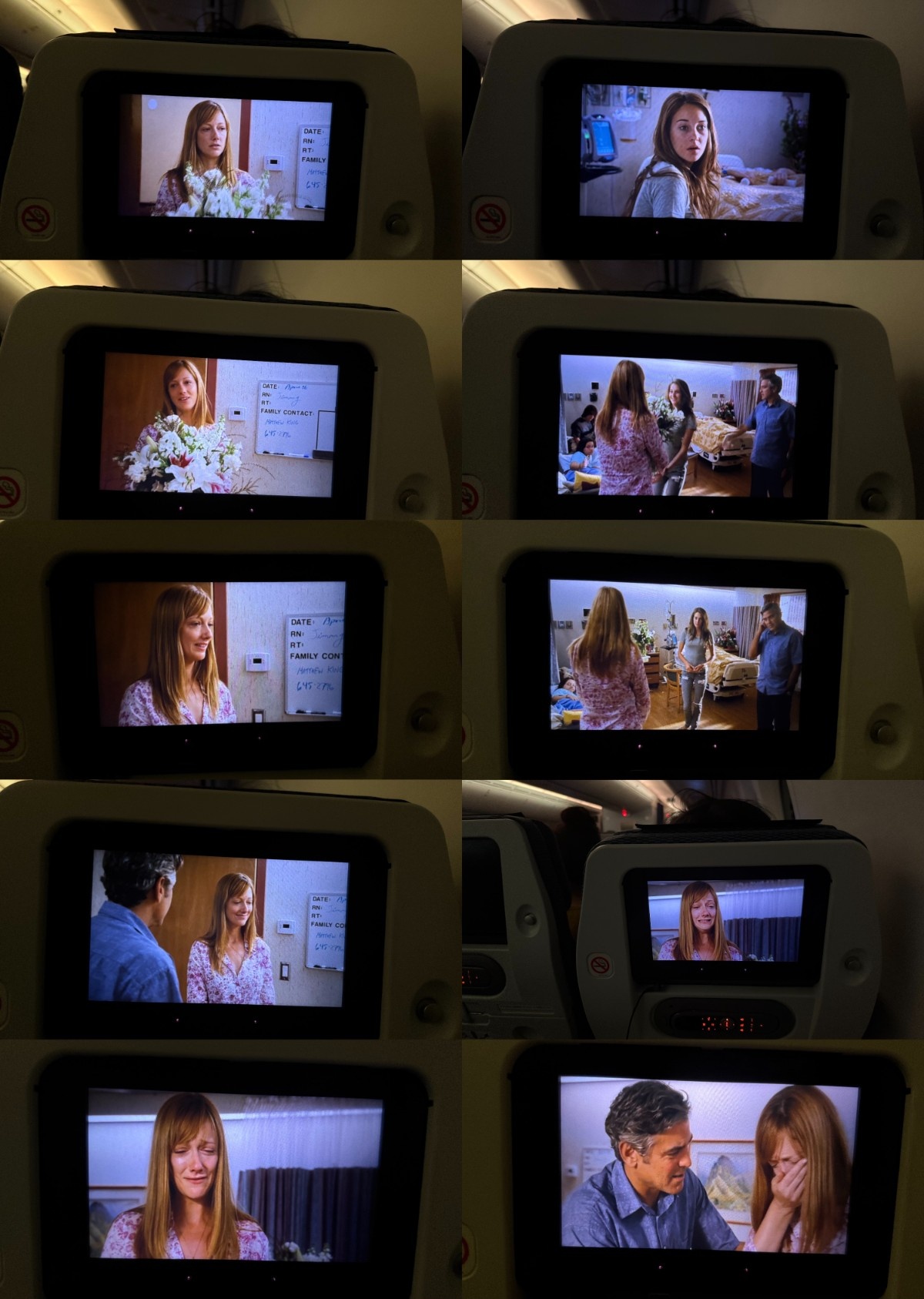
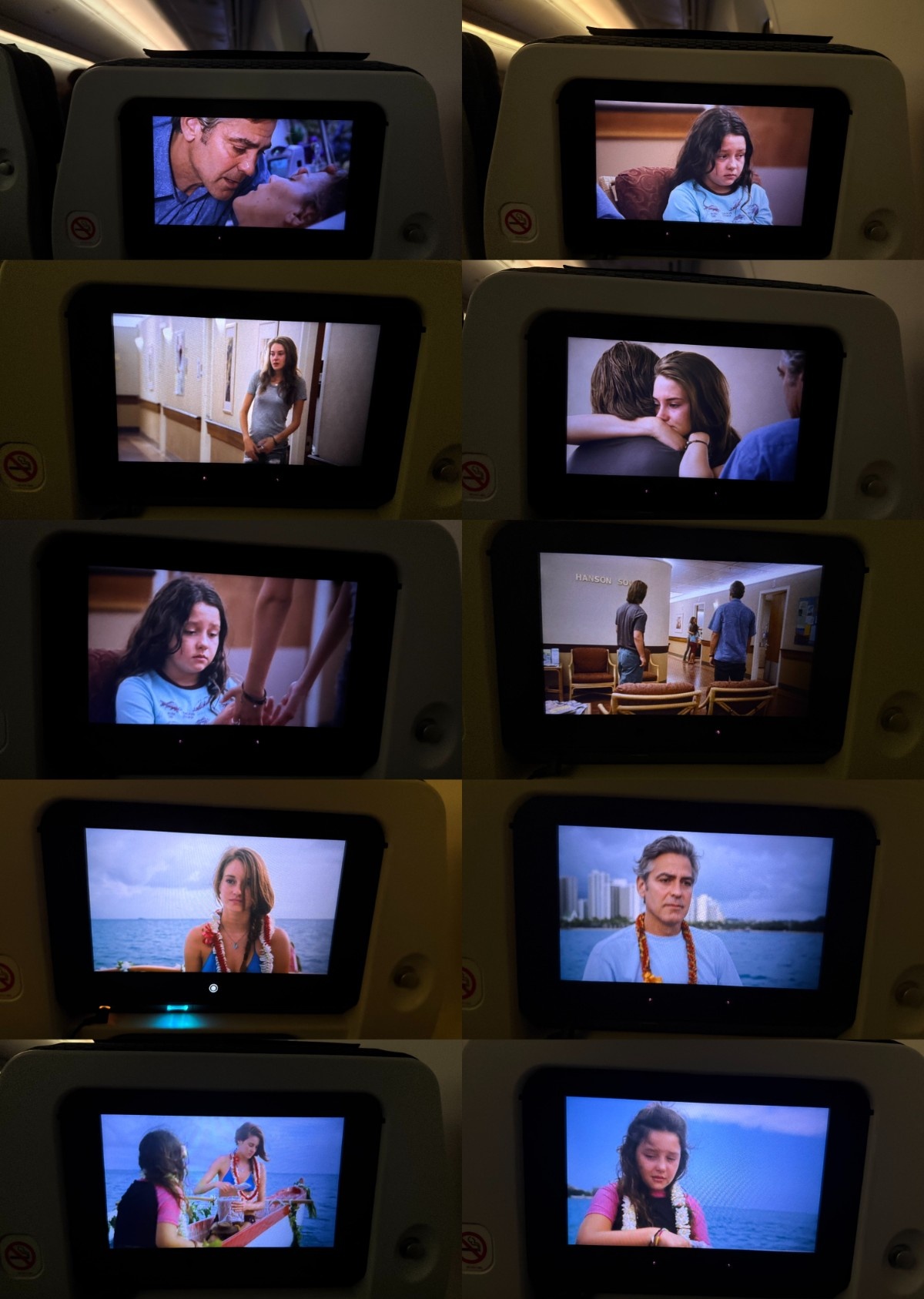
Alex may be short-tempered and a bit bratty, as teenage girls often tend to be. Her boyfriend, too, is a bit too casual, which often comes across as disrespectful to the traditional Hawaiian elders. But Alex is also strong-willed and fiery, and eventually stands up for her dad where it counts.
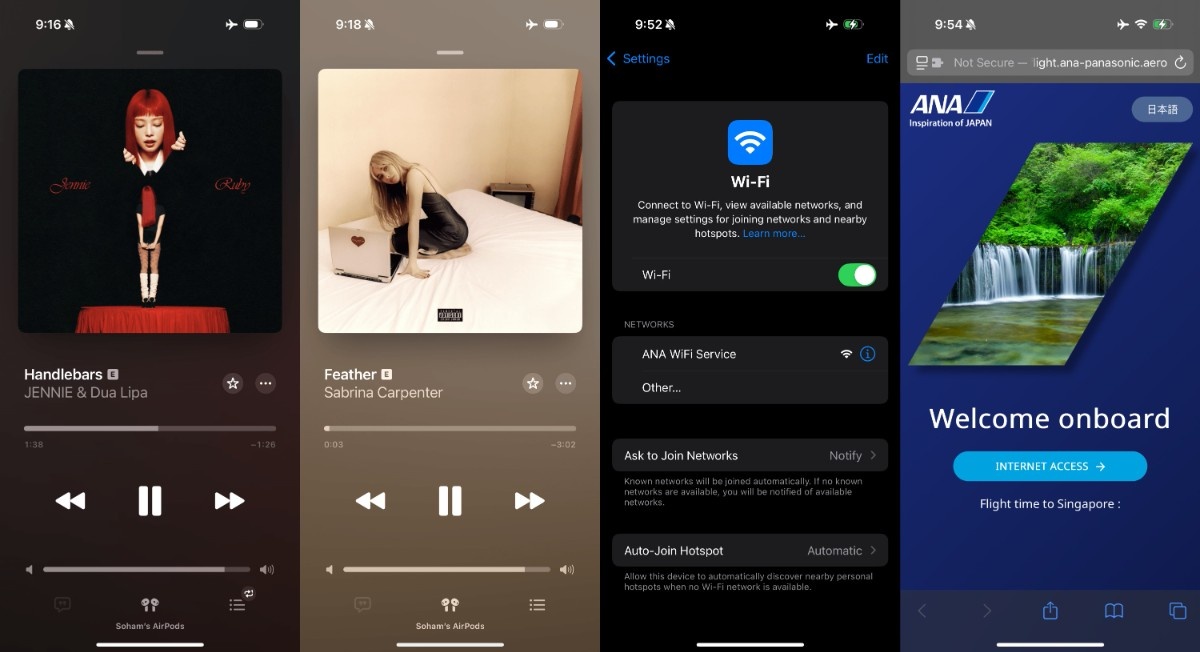
In between, I paused the movie a couple of times, and put on some trending tracks that had become earworms for me lately. Aside from Die With A Smile as I’ve said above, these included Handlebars featuring JENNIE with Dua Lipa — from the Blackpink megastar’s recent album, Ruby — and Sabrina Carpenter’s Halloween 2023 release, Feather.
And was there also a chance that an airline from such a technologically advanced country would have functional Wi-Fi? Nope, as it turned out… in great contrast to the domestic flights to and from Fukuoka with unlimited FREE Wi-Fi!
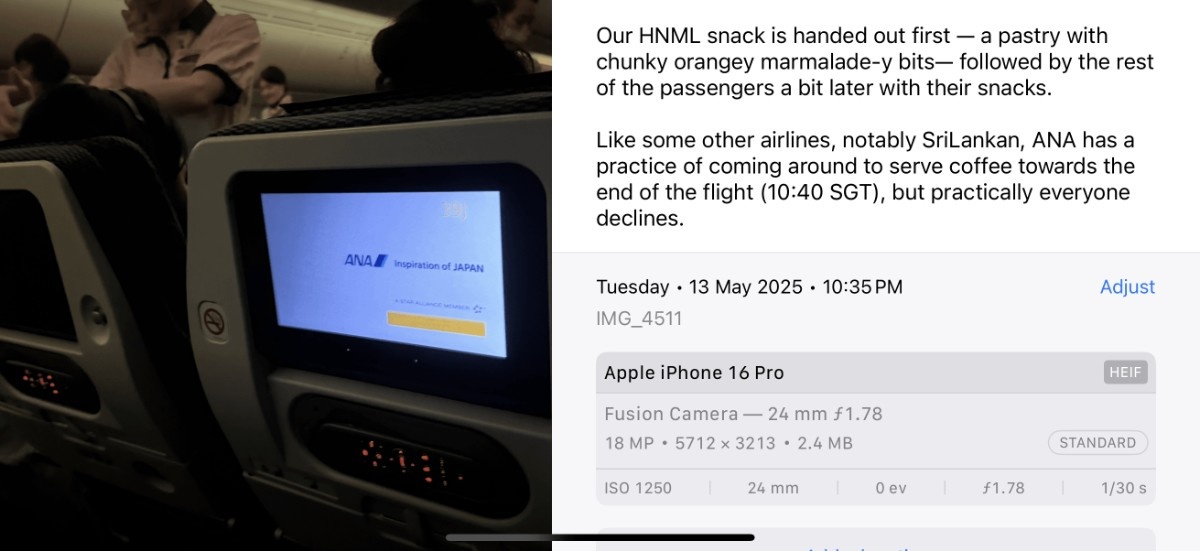
ANA may have had an outdated IFE and less-than-usable Wi-Fi, but it certainly spared no expenses when it came to the catering. A couple of hours before descent into Changi, I was presented with an HNML-marked sweet pastry that tasted a bit like orange marmalade filling, which I quite enjoyed. I’m not sure whether it was because of the slightly longer length of the flight, but I certainly appreciated this gesture. (Also, it seems no one wanted to partake of the tea/coffee service closer to arrival in Singapore.)
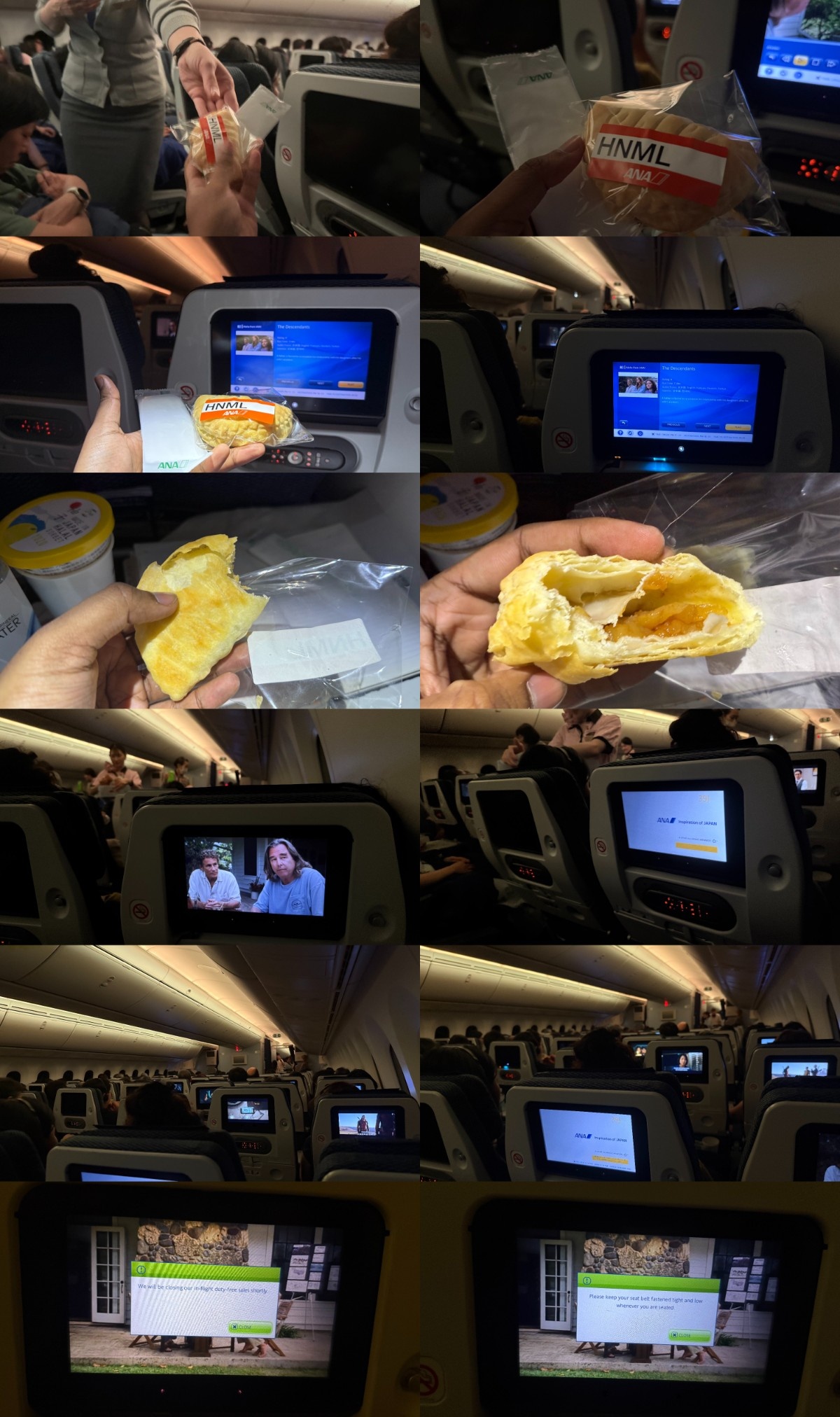
The movie ended on a satisfying note, where the girls, having patched up with their dad, settle with him in front of the TV and tuck into a big tub of ice-cream. Not exactly a happy ending, since their mother had to die and all, but certainly one with closure!
Changi approaches at Cinderella hour
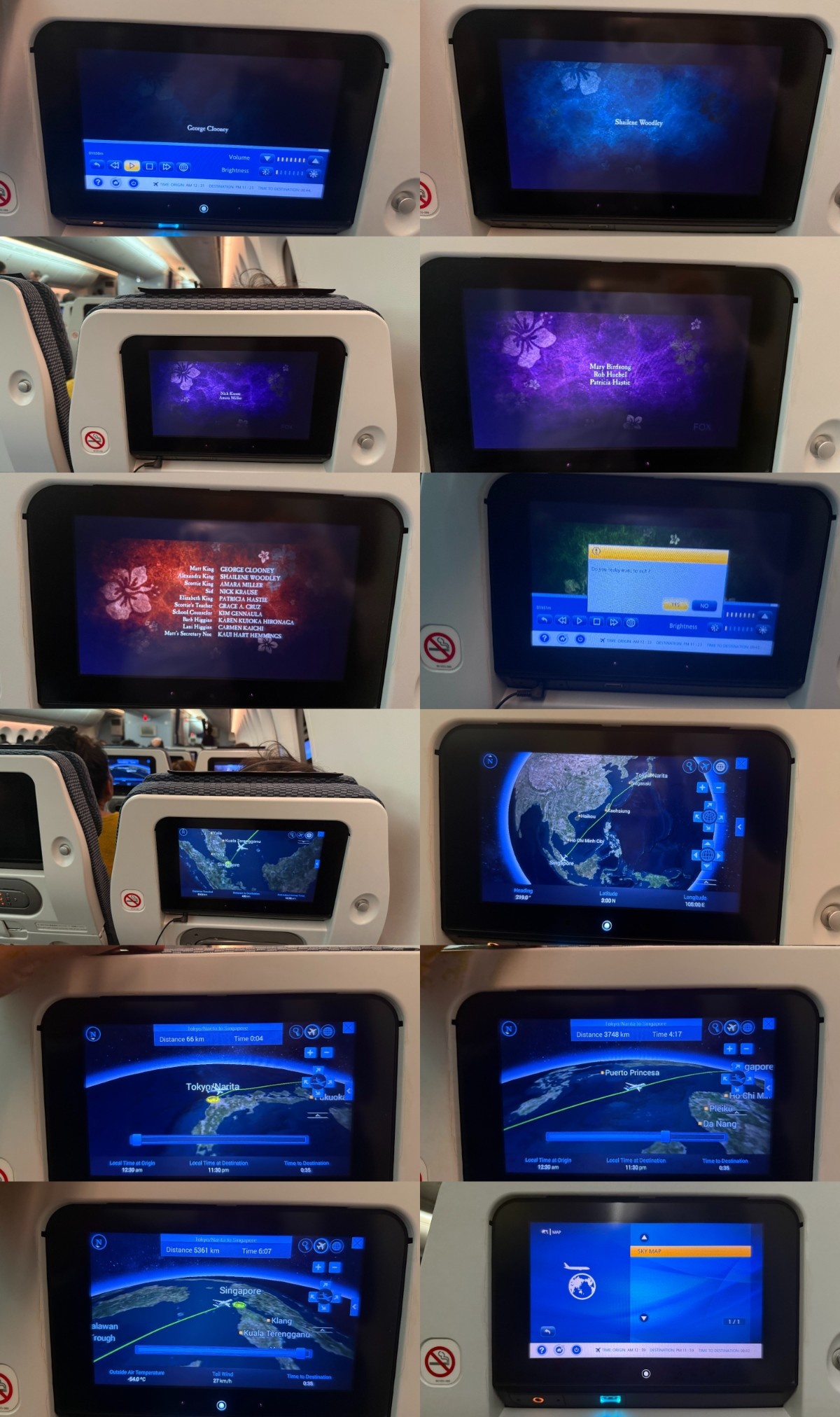
As the ending credits rolled, only an hour remained into the flight. I must emphasise here again that the IFE was painfully slow to fast-forward and rewind, and that it was glaringly obvious that it’d been designed in a time well before Netflix and Amazon Prime Video, with their instant skippability (or skip-forwardability, if you will), became global forces.
I opened the moving map, the familiar Panasonic Voyager3D interface, around half an hour before landing. We were flying just east of the peninsular Malaysian coastline, and the cabin crew had already announced their final safety checks.
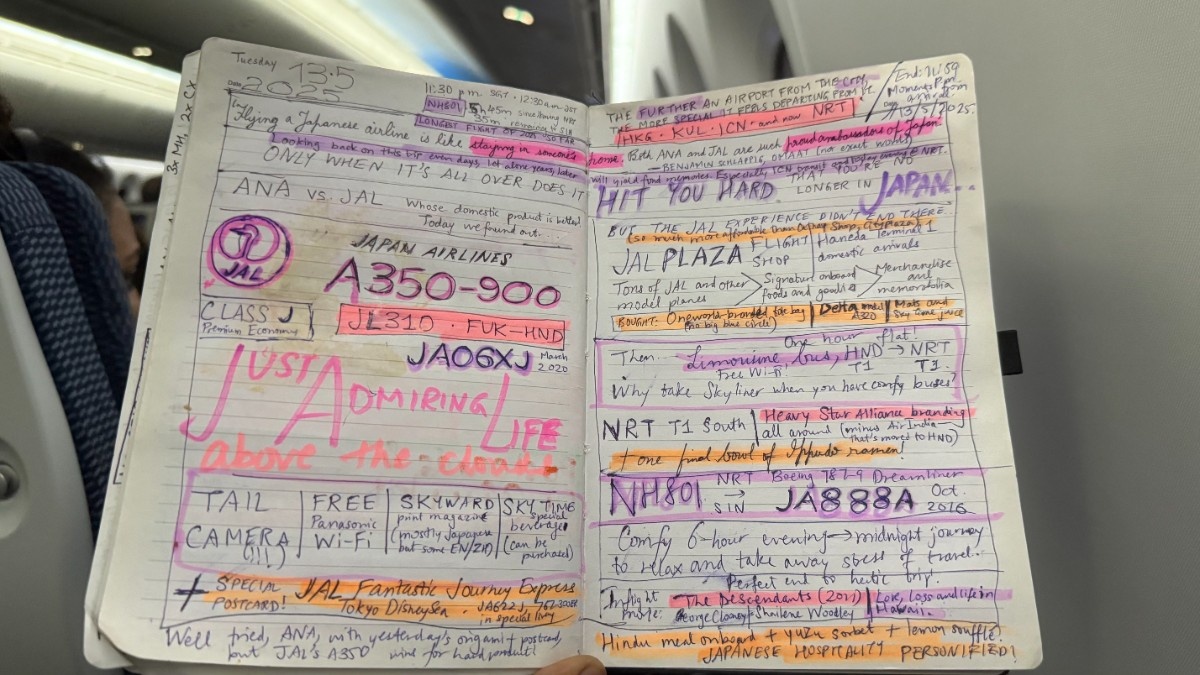
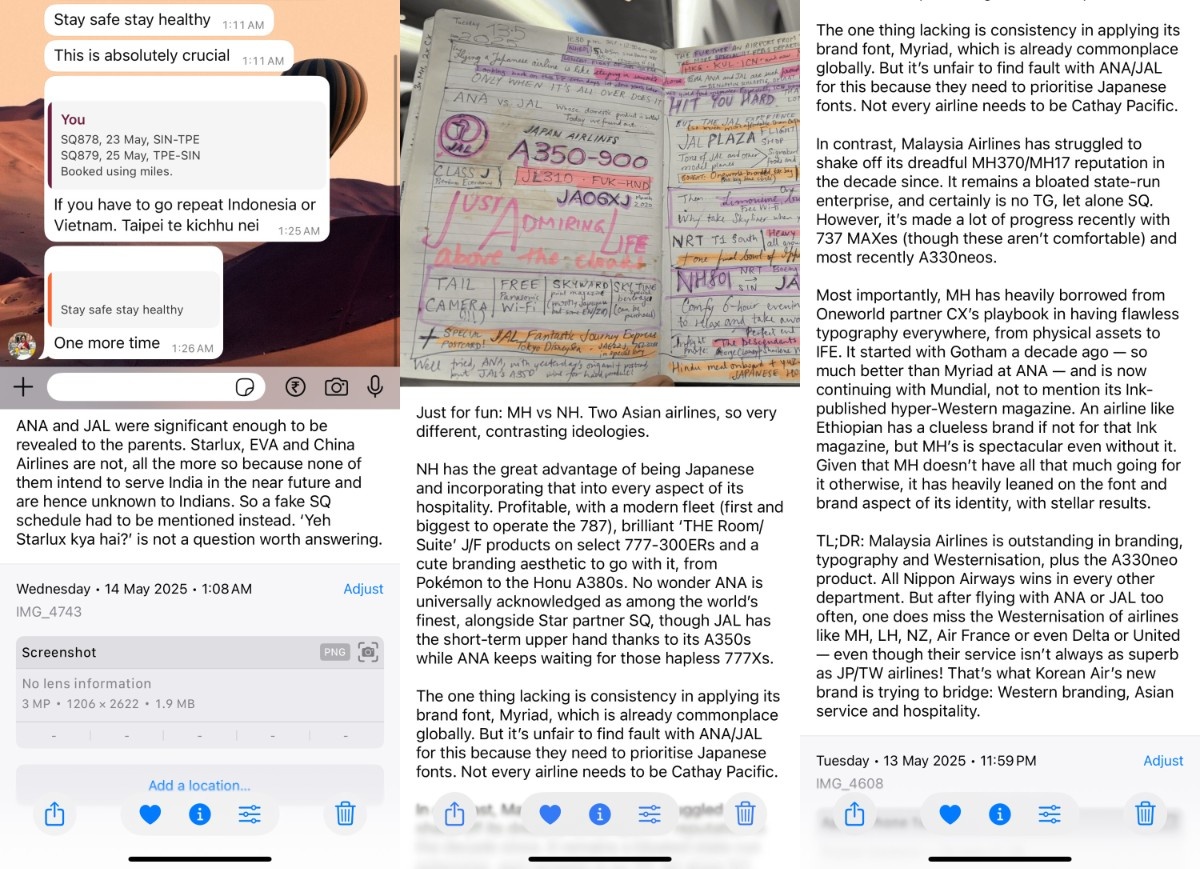
It was a good time to reminisce on the day’s flights through my noisy and colourful journal entry. In terms of the aircraft itself, there was simply no beating the JAL A350-900, with its HD tail camera and sexy winglets — not to mention I was flying in ‘Class J’ or premium economy. However, there was no food served (though there were beverages) — unless you’re flying in domestic First Class — and so ANA handily trumped its competitor in the catering department (two desserts FTW!), never mind the subpar starters.
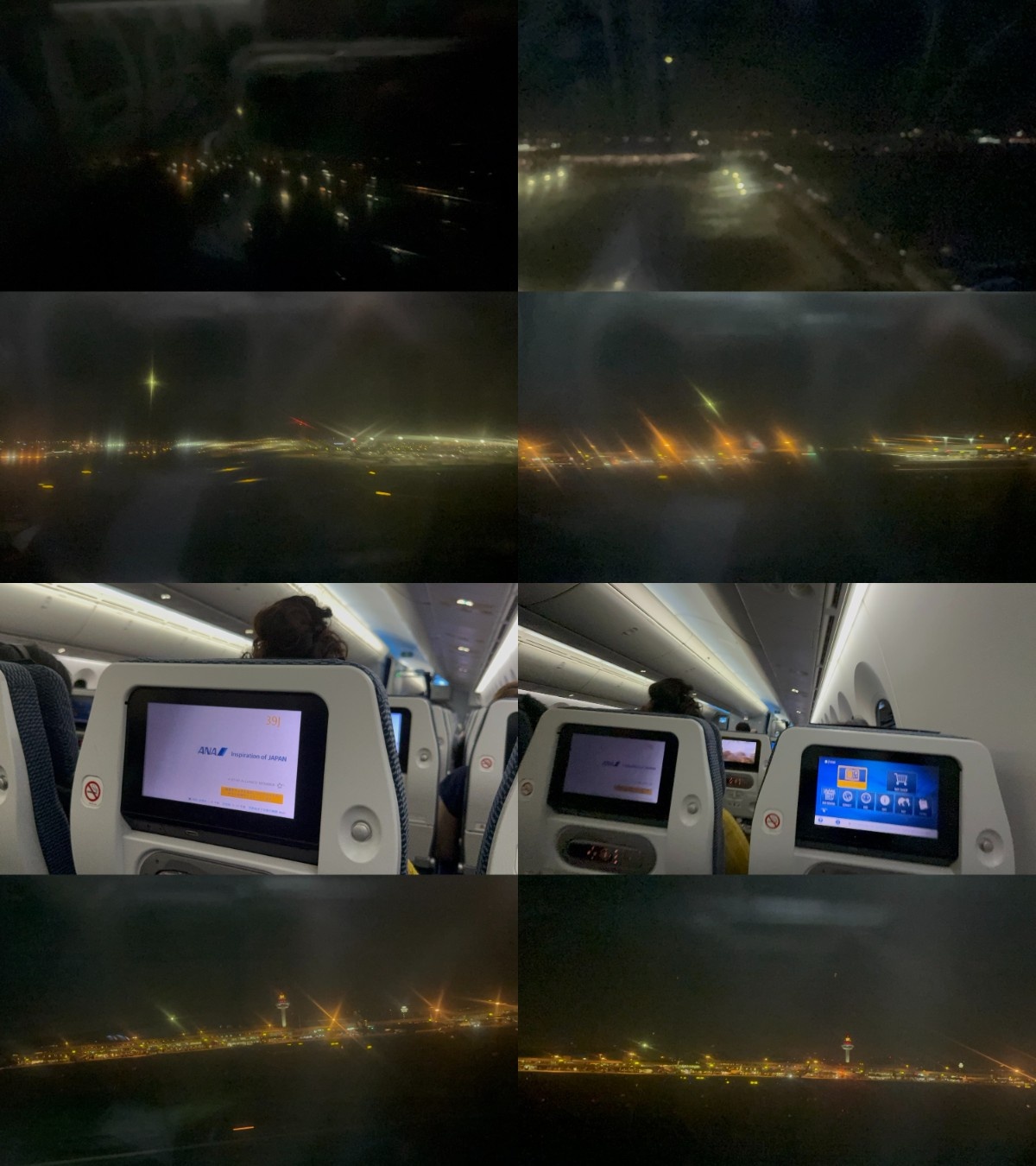
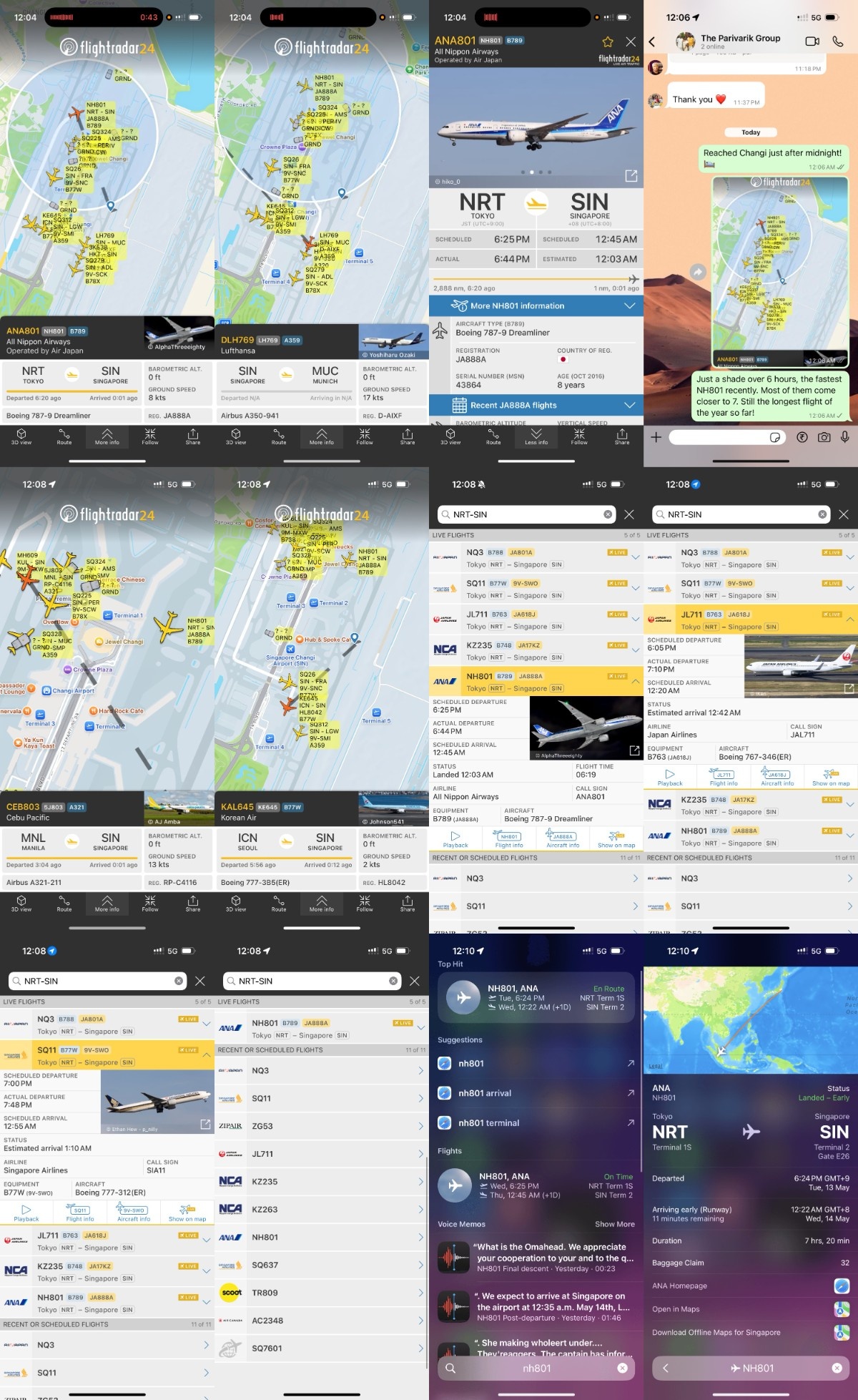
The clock had just struck midnight when the tell-tale ships in the seas surrounding Singapore came into view. Ordinarily NH801 lands at around 12:30 or 12:45 at night (Singapore time), but this time JA888A made a butter-smooth landing at only 3 minutes past midnight (after only 6h20m in the air) — one of the fastest NH801 flights during that period.
After three exhilarating days in Japan (with a brief Korean transit), it was lovely to be back home at Changi — for one of the final times during my seven-year stay in Singapore.
As the Dreamliner coasted to a halt, I informed my parents that this was by far one of the fastest landings that NH801 had performed. Even so, a six-hour flight was nothing to be scoffed at, especially for someone like me who rarely takes flights of over four hours, and so this was easily the year’s longest flight for me. Anything above seven hours — like Emirates between Singapore and Dubai in July 2024 — is practically a marathon!
In contrast, among the other NRT–SIN flights in the air at the time, JAL’s equivalent JL711 — operated by the rarer 767-300ER — would be landing much closer to 12:45, with Singapore Airlines’ SQ11 landing well after 1.
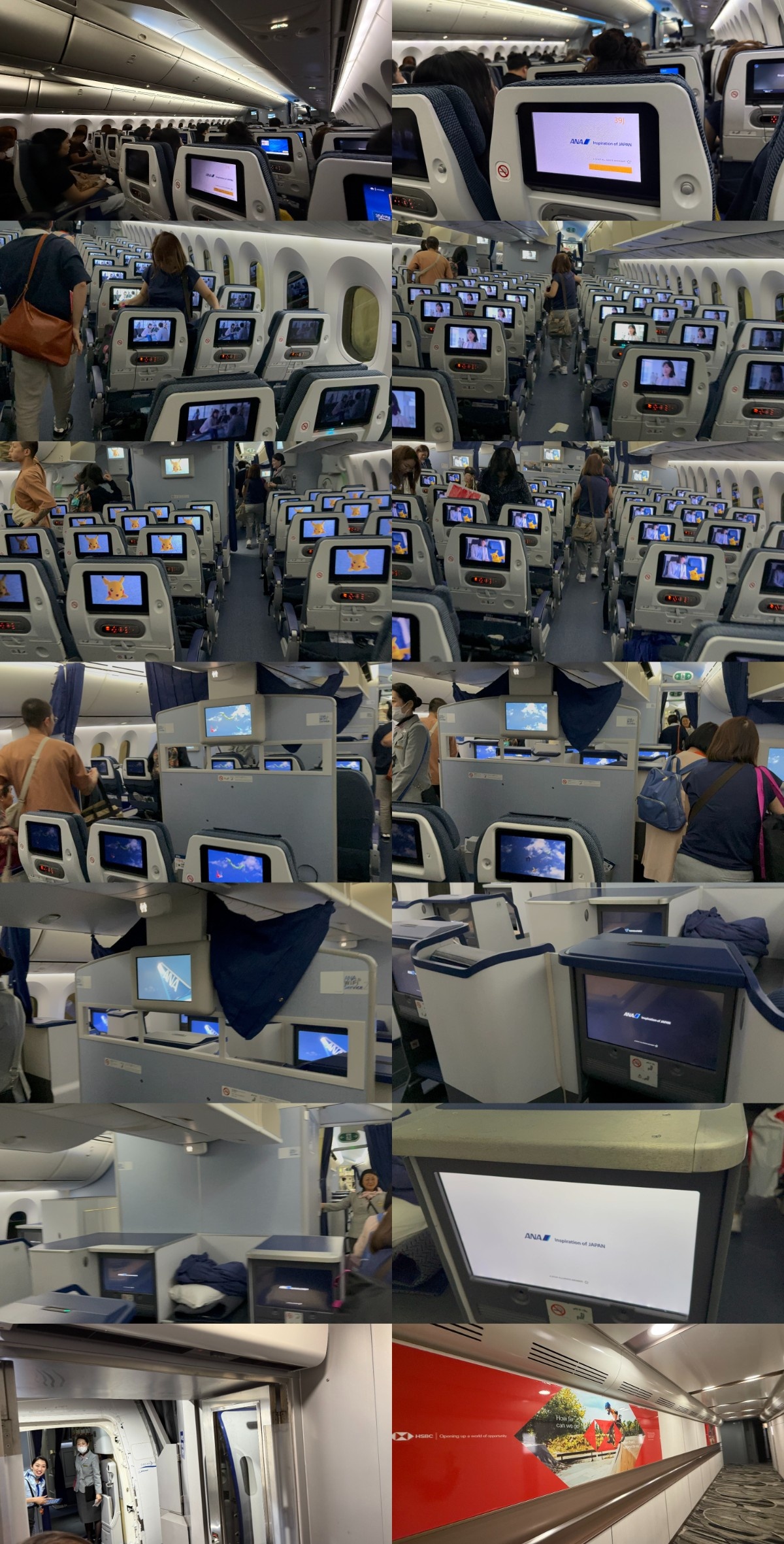
The passengers, being after all Japanese with their immaculate sense of decorum and regard for others, filed out of the aircraft in an orderly exit, while NH’s Pokémon safety video played once again. I walked past the business-class mini-cabin, wished the flight attendants at the exit door a cheery Sayonara, and traipsed out into Changi’s familiar HSBC-branded jetbridge.
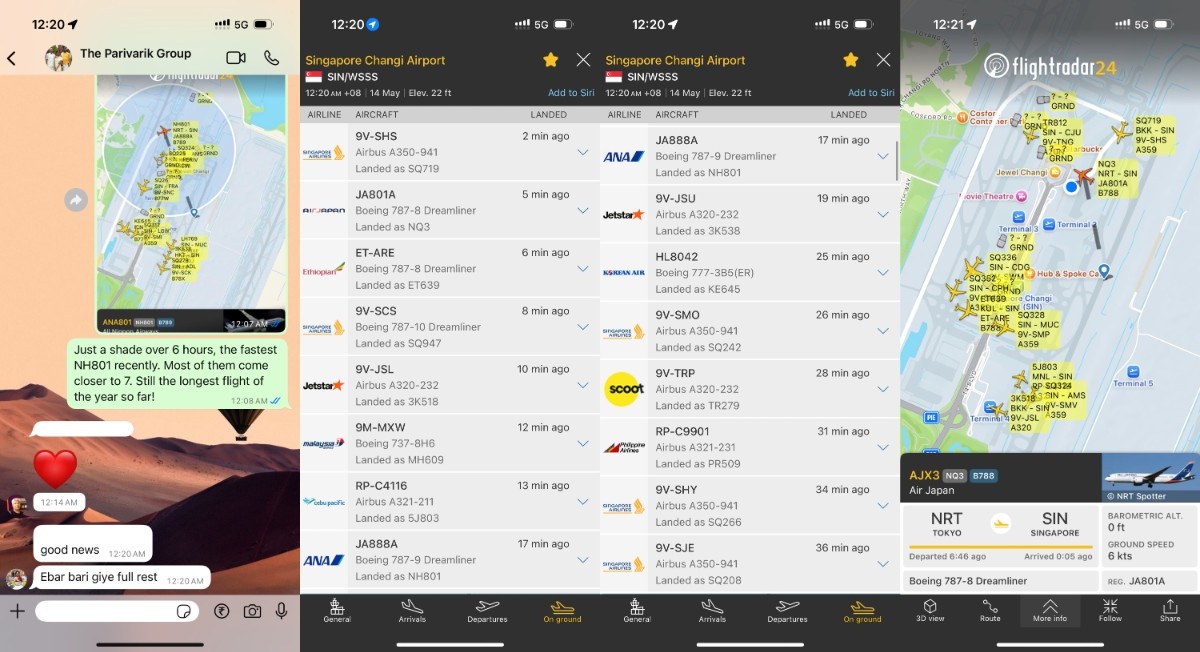
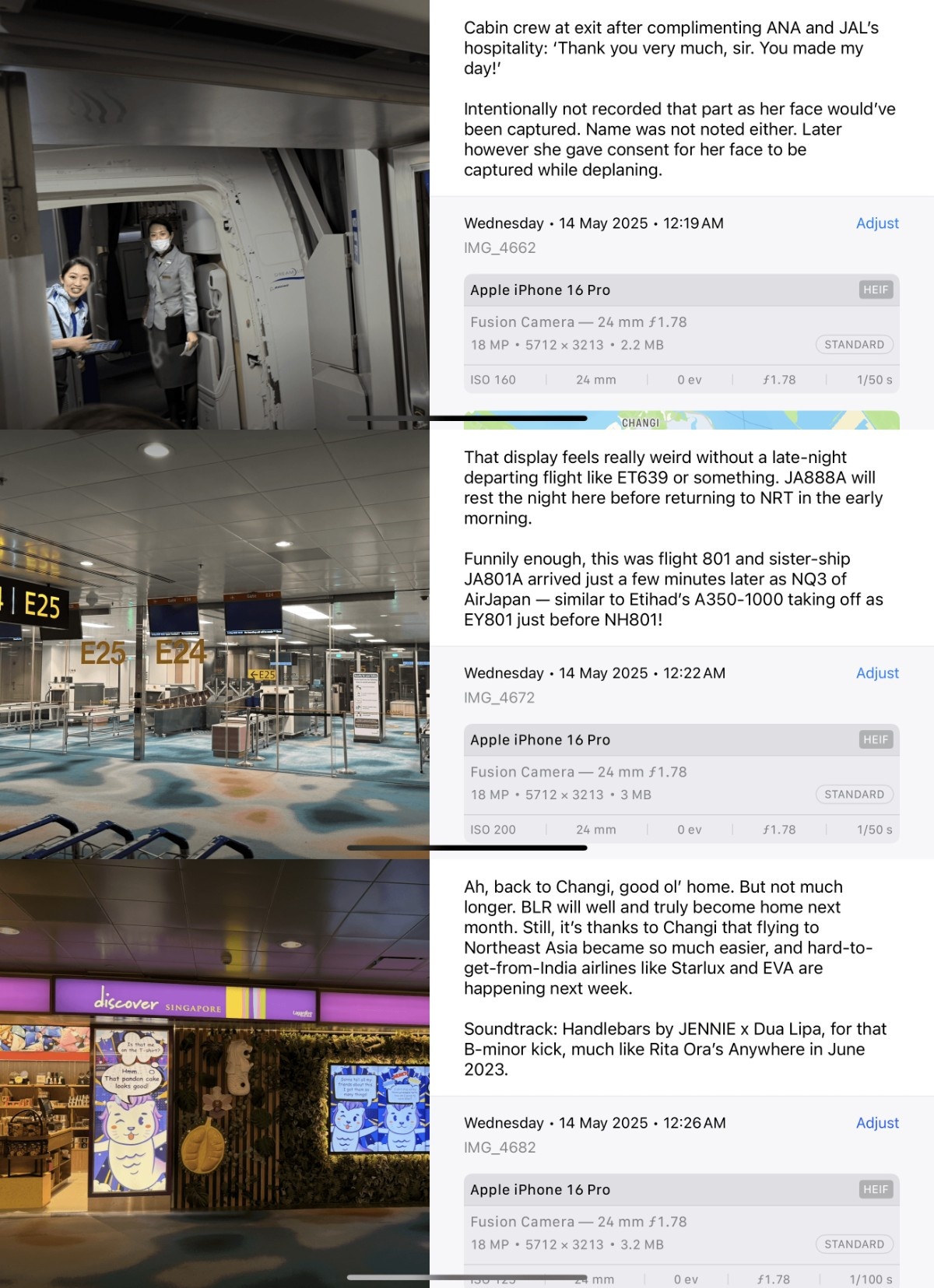
Now low-fare subsidiary AirJapan’s 787-8 landed as NQ3, this being a much less comfortable way to spend nearly 7 hours in the air. And what do you know: the registration was JA801A, the same number as my flight!
Anyway this won’t last for much longer, given that AirJapan will cease to exist after the end of March 2026. But JAL’s equivalent, ZIPAIR Tokyo, has been much more successful with its own 787-8 fleet with basic lie-flat business-class seats.
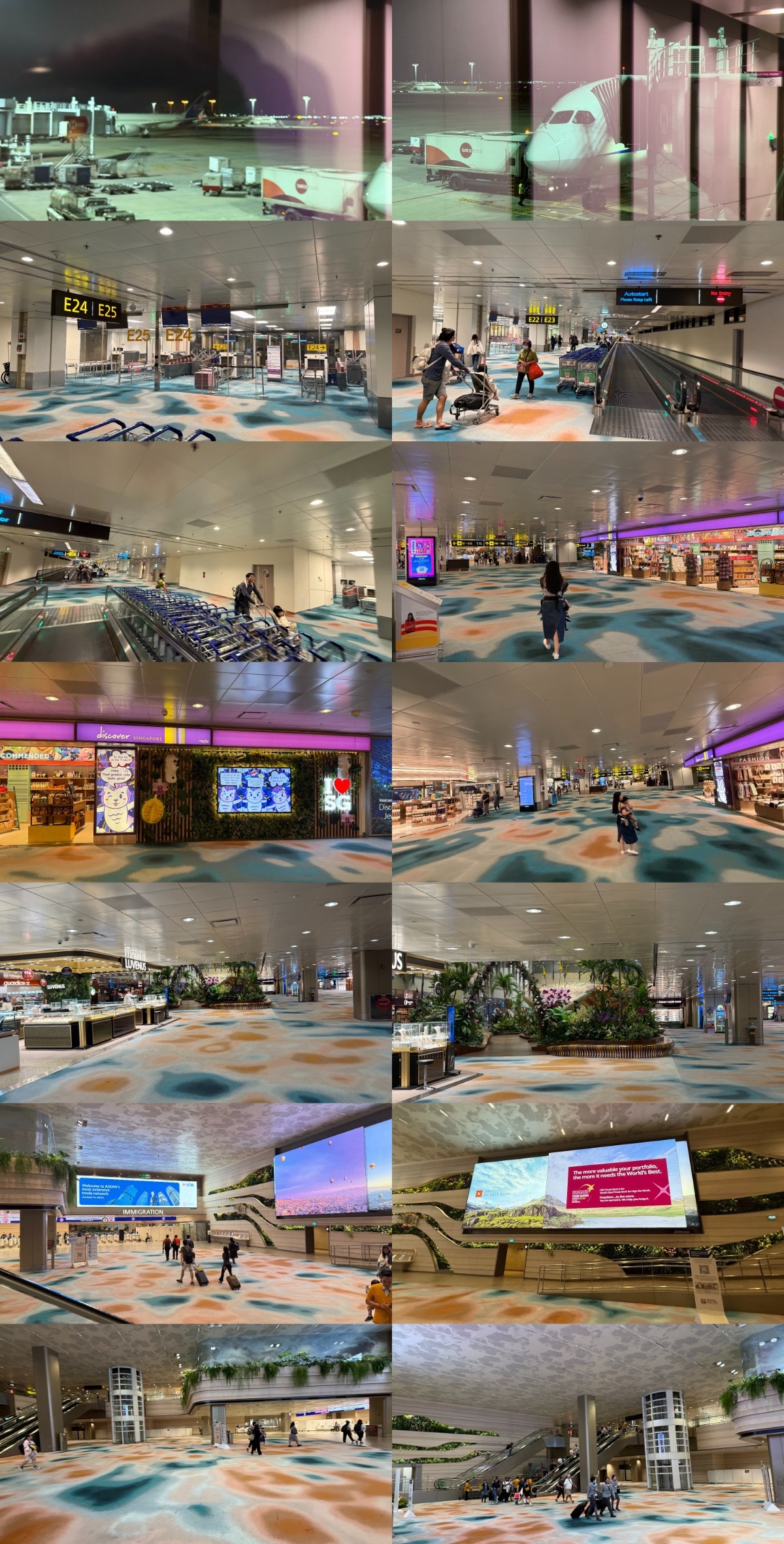
With one final look of both my and the AirJapan 787s, I turned into the familiar, comforting low-ceilinged gates of the highly revamped Changi Terminal 2. Amid all the travellers making their exit into the sprawling, breathtaking Immigration hall, I was probably the only one whose mind was looping back and forth with music.
As I caught sight of ANA’s beautiful cabin crew from my flight (last picture below, bottom row), I couldn’t help but think back at what a great success this avgeek-driven Japan trip had been.
These are the notes that I’d written at the time. Indeed, the number 801 was quite involved that day: beyond being my flight number, it was also the flight number of Etihad’s A350-1000 departing Narita just before me, as well as the registration of the above AirJapan 787.
I had only a few weeks left before leaving Singapore permanently and returning home to India, so it was imperative that I make the most of travelling in East Asia while I could. And I jolly well did so the very next weekend, with another five-flight mini-trip involving Starlux, EVA Air, China Airlines and Philippine Airlines — none of which fly to India!
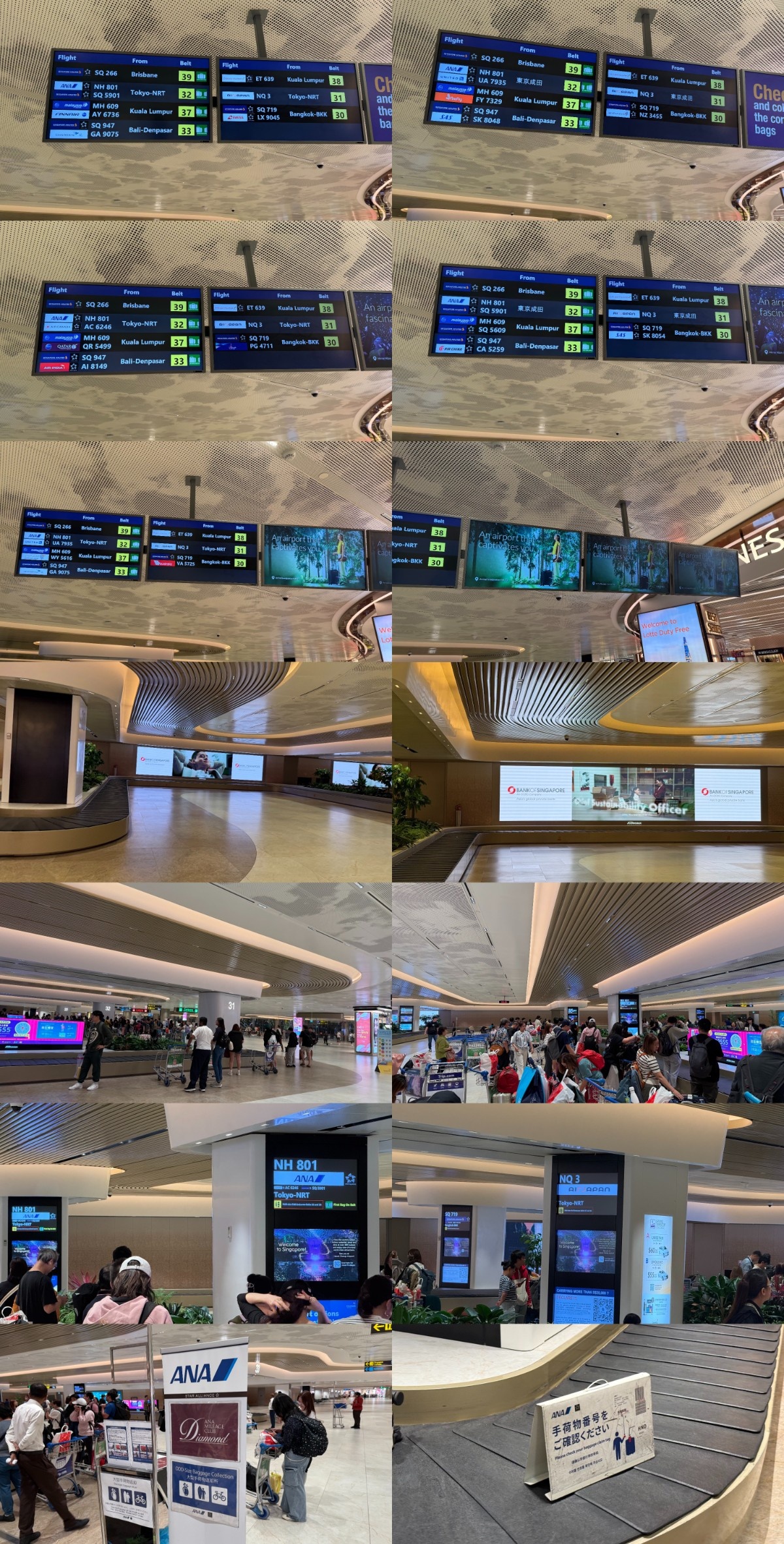
Most of the recent arrivals had plenty of codeshares, but not Ethiopian’s fifth-freedom ET639 from Kuala Lumpur, which I’d taken exactly two years before! With so many passengers, it was but a given that the luggage would take a fair bit of time to arrive, and the crowds continued to cluster around the conveyor belts.
My only beef is that Changi Airport still thinks that SAS belongs to the Star Alliance — well over a year after it switched to SkyTeam… (SQ is indeed the only Star member with which SAS still has a partnership.)
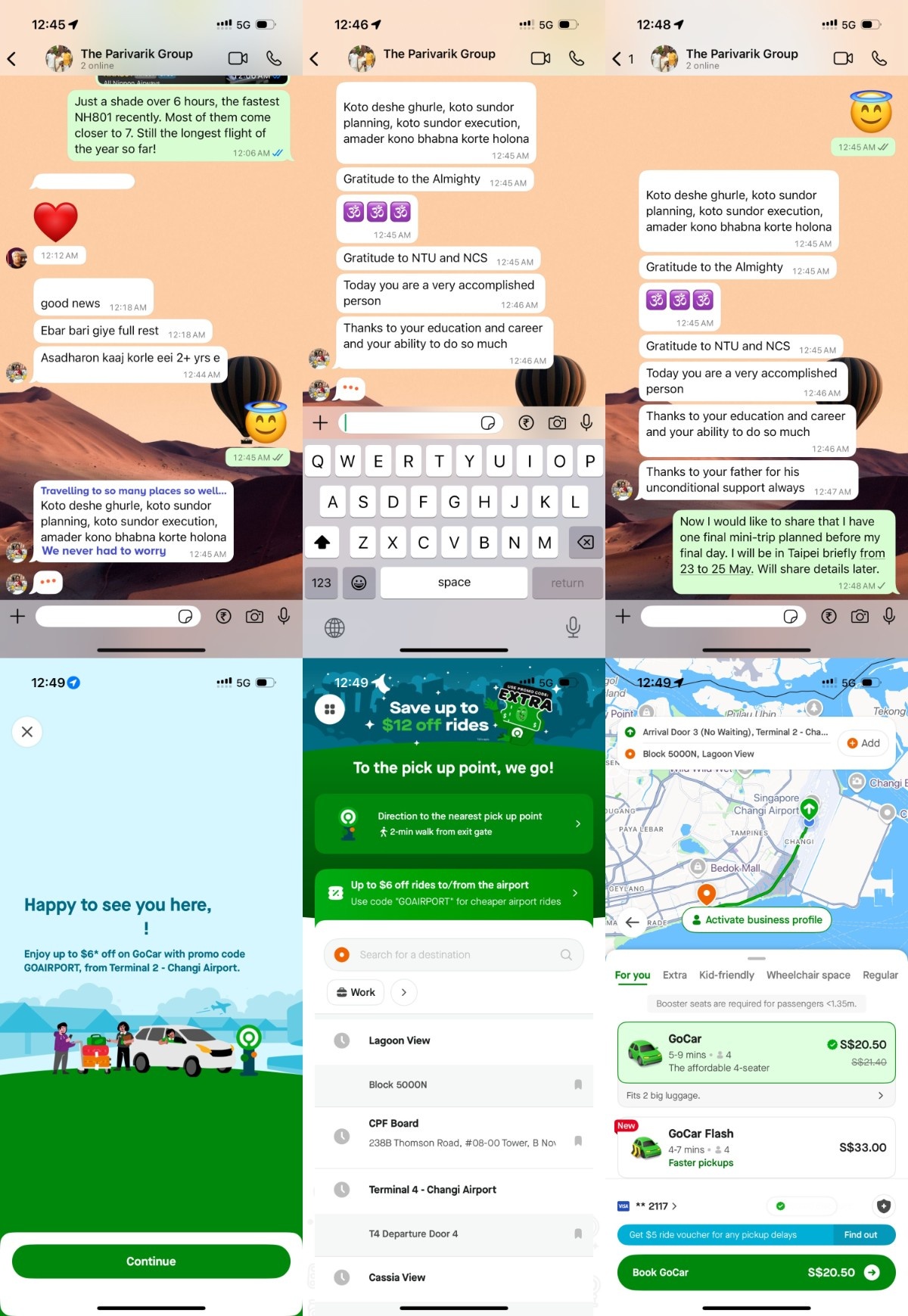
My mom congratulated me for so seamlessly handling a solo trip as far afield as Japan, also thanking my university and employer for enabling all these travels. But then I dropped a kind of bomb: I intended to visit Taipei over the next weekend, which my family was somewhat apprehensive of, given the importance of staying healthy before returning to Indian shores.
Even so, to comfort them, I later lied that I’d be flying SQ there, instead of the convoluted Starlux/EVA/China Airlines trip — airlines they’d never heard of — that I’d actually be taking.
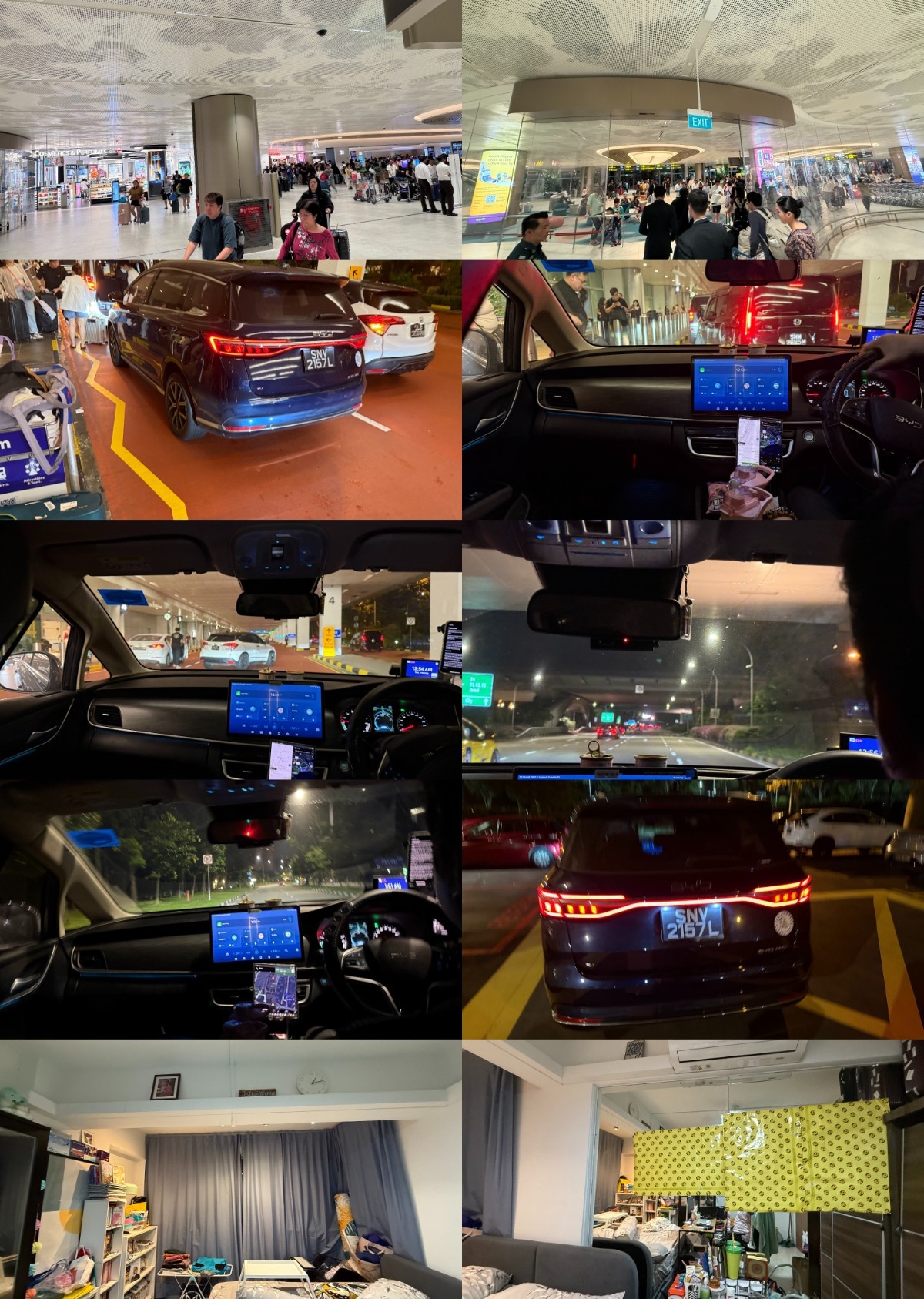
As the dust slowly settled on this epic Japan-via-Korea trip, I ordered a good ol’ Gojek that — while slightly more expensive than normal, at S$20 for a 15-minute ride — reminded me just how close I lived to Changi all these months. This could not be more different from my current reality: living in the IIMB campus in the deep south of Bengaluru, and undertaking two-hour, 45-km voyages to and from BLR Airport — though the distance is still way shorter than NRT!
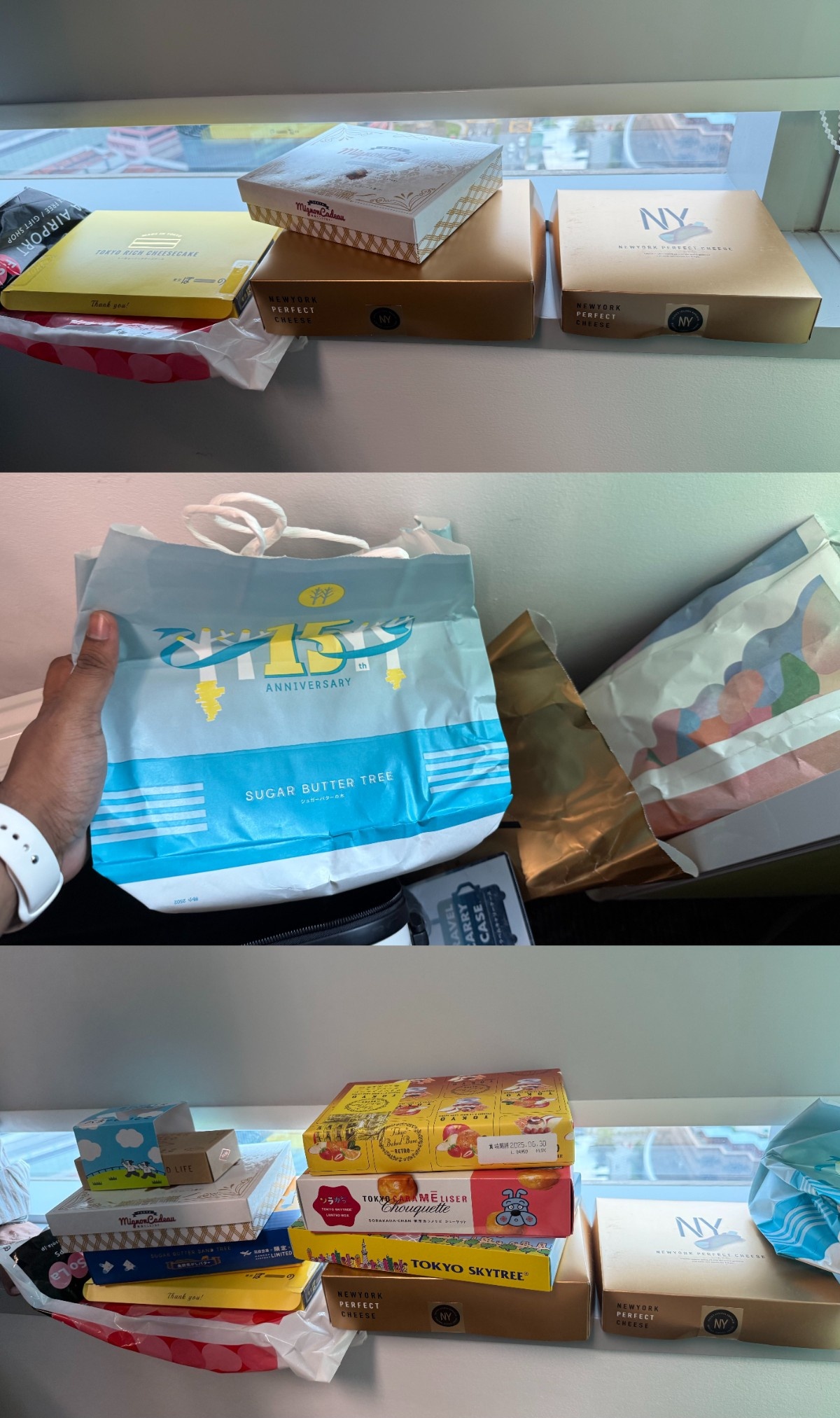
A nice big BYD MPV, after I loaded my luggage (including all manner of gifts and sweets from Japan), whisked me away and boom! No sooner, it seemed, that I’d set out on an exciting Asiana A350 flight four days before than I was back at my spacious abode by the east coast of Singapore — though not for many days longer!



I'm guessing that was N528DN, it was delivered to NRT since DL still has a maintenance base there, and there were (and probably still are, but seemingly not as restrictive since the newest delivery went straight to ATL) tariffs for Airbus aircraft from France.